
St. Paul in Ephesus: What Visitors Can See Today
See what visitors can still connect with St. Paul in Ephesus today, including the key biblical locations, historical context and which stops matter most on a biblical route.
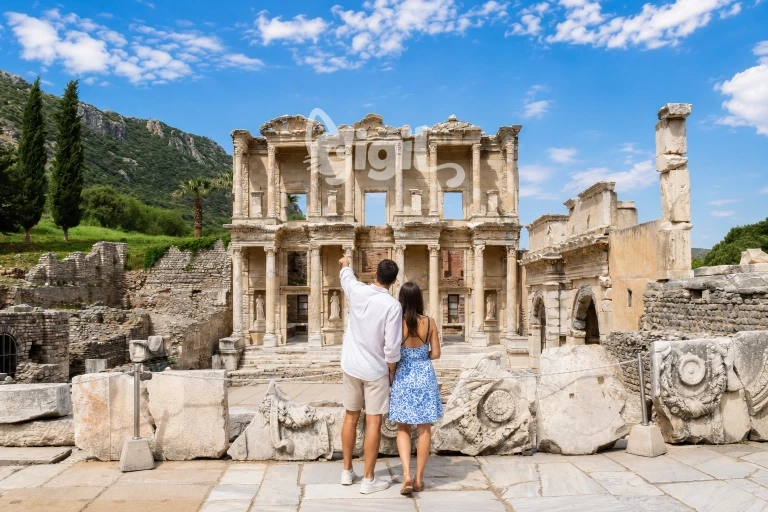
If you are interested in St Paul in Ephesus, the most important thing to understand is that visitors are not looking for one single preserved “Paul site” in the modern tourism sense. Instead, what you see today is a combination of the ancient city itself, key biblical context and several places that help explain how Paul at Ephesus fits into the wider story of early Christianity. For most travelers, the best visit is the one that connects the physical site with the biblical story rather than expecting one standalone monument that explains everything by itself.
Quick summary: Visitors interested in St Paul in Ephesus should focus on the ancient city, the Church of Mary Ephesus, the wider context of Ephesus in Acts and the places that help explain the St Paul missionary journey Ephesus connection. The Great Theatre Ephesus Bible association is especially important for many biblical travelers. A well-planned St Paul Ephesus Tour works best when it combines site interpretation with biblical context instead of treating the visit as only a standard ruins walk.
Why St. Paul matters so much in Ephesus
The connection between St Paul in Ephesus and the city is important because Ephesus was one of the major places associated with early Christian teaching and mission in the New Testament world. This makes Ephesus more than a beautiful ruin for Christian travelers.
For many visitors, the city matters because it helps turn biblical reading into physical geography. That is exactly why a Paul-focused route feels different from a general sightseeing visit.
Can visitors still see places directly connected to Paul today?
Visitors can see places strongly connected with the story of Paul at Ephesus, but not in the sense of a single preserved personal landmark. What survives today is the city where that story unfolded, along with several biblical and historical reference points that help interpret his presence there.
This is why expectations matter. The visit works best when travelers are prepared to connect site, scripture and context rather than look for one isolated “Paul building.”
Why the Great Theatre is so important in a Paul-focused visit
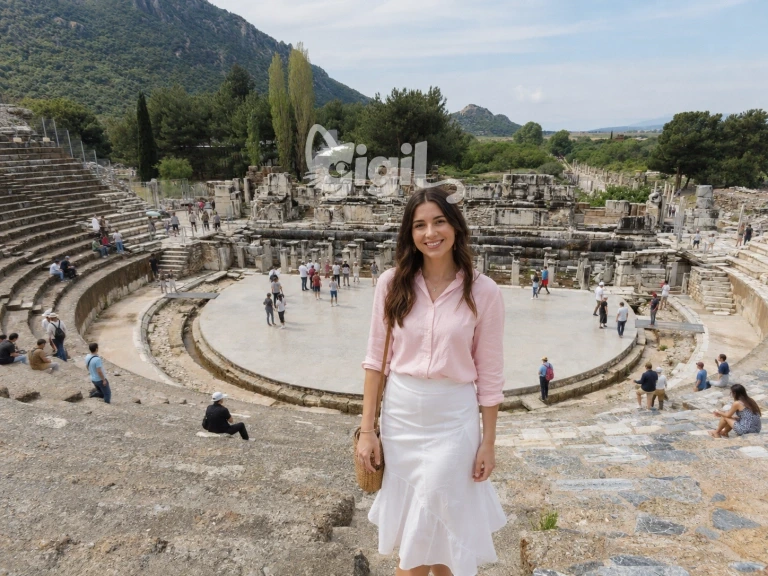
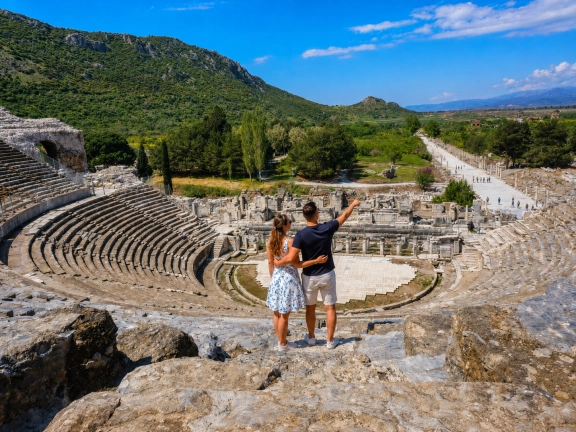
The Great Theatre Ephesus Bible connection is one of the strongest reasons biblical travelers care so much about this city. For many visitors, this is the place where the world of Acts starts to feel immediate rather than distant.
It is also one of the most visually powerful locations in the ancient city. That combination of biblical relevance and physical scale makes it one of the most important stops on a St Paul Ephesus Tour.
What does the Church of Mary add to the route?
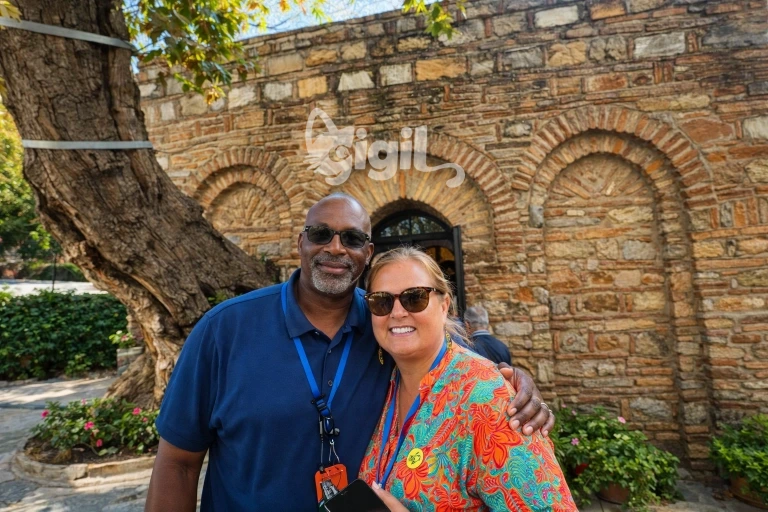
The Church of Mary Ephesus helps visitors understand that biblical Ephesus is not only about Paul’s missionary era, but also about the Christian legacy that developed in the city afterward. It adds a wider early church layer to the visit.
For travelers trying to understand what to see in biblical Ephesus, this stop often helps connect apostolic memory with later Christian history. It makes the route feel more complete.
How does Ephesus in Acts shape the visit today?
Ephesus in Acts gives the city much of its meaning for Christian travelers. Without that biblical framework, the ruins are still impressive, but they do not carry the same spiritual and scriptural significance.
This is why a Bible-oriented Ephesus tour should never be treated as only an architecture tour. The site becomes more meaningful when the guide or route structure helps visitors read the city through Acts and early mission history.
Is this route mainly for biblical travelers?
Mostly yes. A St Paul missionary journey Ephesus route is especially relevant for Christian visitors, Bible study groups and travelers who want to understand the city as part of early church history rather than only as a Greco-Roman archaeological site.
That said, even non-religious visitors often find this layer interesting because it adds a human and historical story to the stones. It gives another reason for the city’s importance beyond architecture alone.
Which stops matter most for a Paul-focused visit?
For many visitors, the strongest combination includes the ancient city itself, the Great Theatre Ephesus Bible connection and the Church of Mary Ephesus. These stops help create the clearest and most meaningful Paul-centered route.
Some travelers may also want nearby biblical add-ons, but the core experience should stay centered on the places that best explain St Paul in Ephesus through both site and scripture.
Should you choose a classic Ephesus tour or a Paul-focused biblical route?
If your main interest is archaeology, the classic route may be enough. But if you care about biblical Ephesus sites and want to understand how Paul’s story fits into the city, then a more focused biblical structure is usually much better.
This is especially true for travelers who already know the scriptural background and want the site interpreted through that lens. For them, a general route often feels too broad and not focused enough.
What can visitors really see today?
What visitors can see today is the city where the Pauline story unfolded, not a museum built around Paul alone. The value comes from standing in the setting, identifying the strongest biblical reference points and understanding how the ancient city relates to the New Testament world.
That is why what to see in biblical Ephesus is really a question of interpretation as much as location. The best visit is one that makes those locations meaningful in the right order.
So what should a visitor interested in St. Paul look for in Ephesus?
They should look for the parts of the city that bring Acts and early Christian history into physical focus, especially the ancient city core, the Great Theatre Ephesus Bible connection and the Church of Mary Ephesus. Those usually form the strongest Paul-centered experience.
If you want the simplest rule, choose a route that explains the city through biblical meaning rather than only through monuments. That is what makes a private Christian Ephesus heritage tour feel truly worthwhile.
Ready to explore Ephesus through the story of St. Paul?
If your main interest is early Christianity, compare the most relevant St Paul Ephesus Tour options below and choose a route that clearly focuses on biblical interpretation, not only the standard ancient city highlights.
FAQ
Can visitors still see places connected with St. Paul in Ephesus today?
Yes, but mostly through the ancient city and its biblical context rather than one single preserved personal monument. The key value lies in seeing the setting where the story of St Paul in Ephesus unfolded.
What is the most important Paul-related site in Ephesus?
For many travelers, the strongest site is the Great Theatre Ephesus Bible connection. It is one of the clearest places where the biblical story feels physically real.
What should I see on a St. Paul Ephesus Tour?
A good St Paul Ephesus Tour should usually include the ancient city, the Church of Mary Ephesus and the main stops that help explain Ephesus in Acts.
Is Ephesus mainly important because of Paul?
Paul is one of the main reasons the city matters so much for biblical travelers, but Ephesus is also important because of its wider place in early Christian history and later church memory.
Is this route better for biblical travelers than for general tourists?
Usually yes. Travelers interested in biblical Ephesus sites often gain much more from a Paul-focused route than from a standard general-history visit.