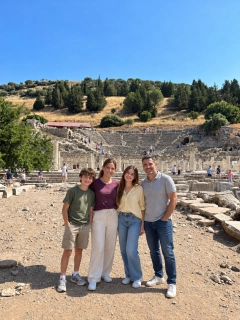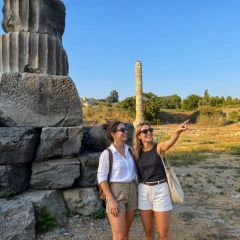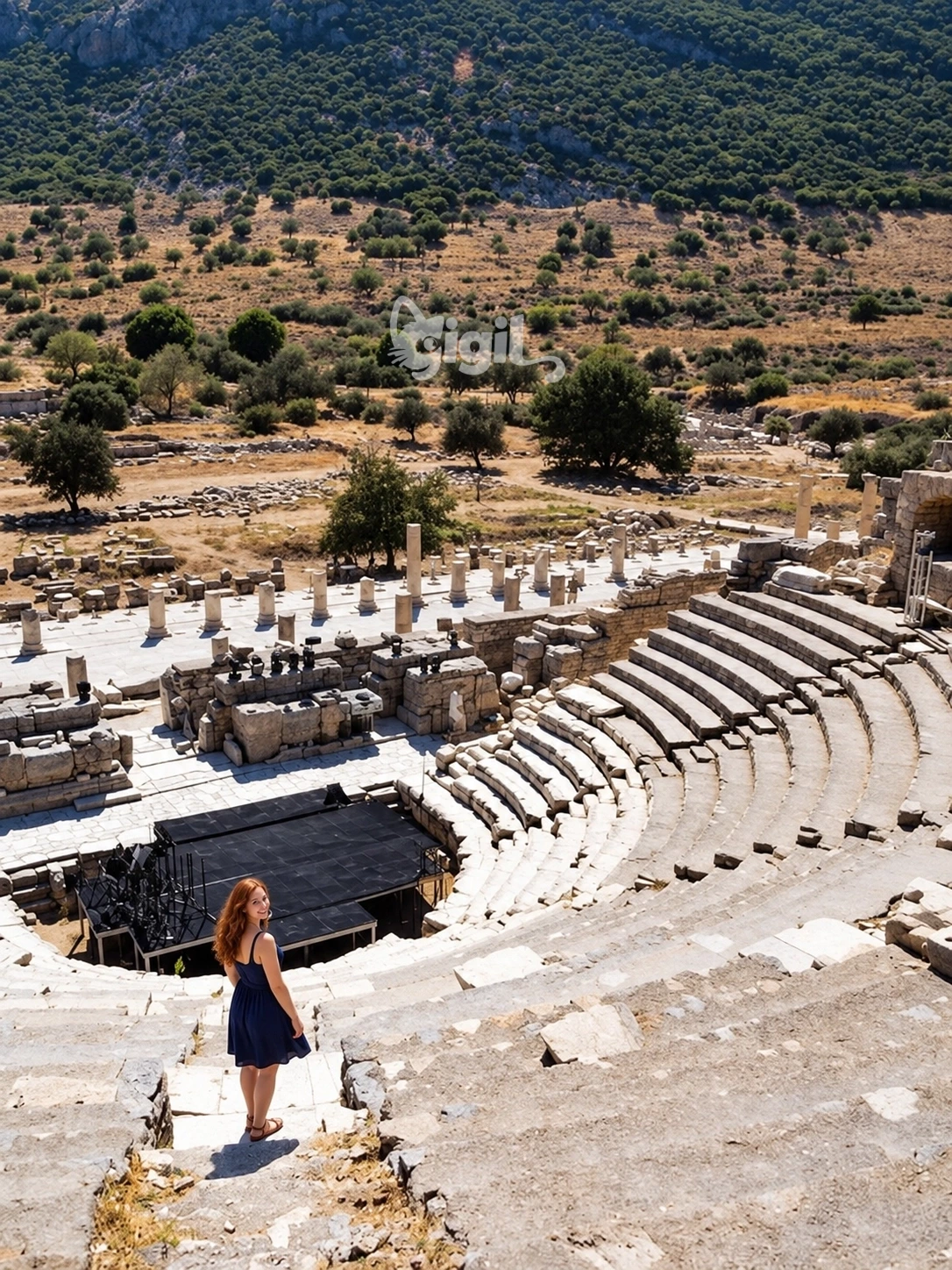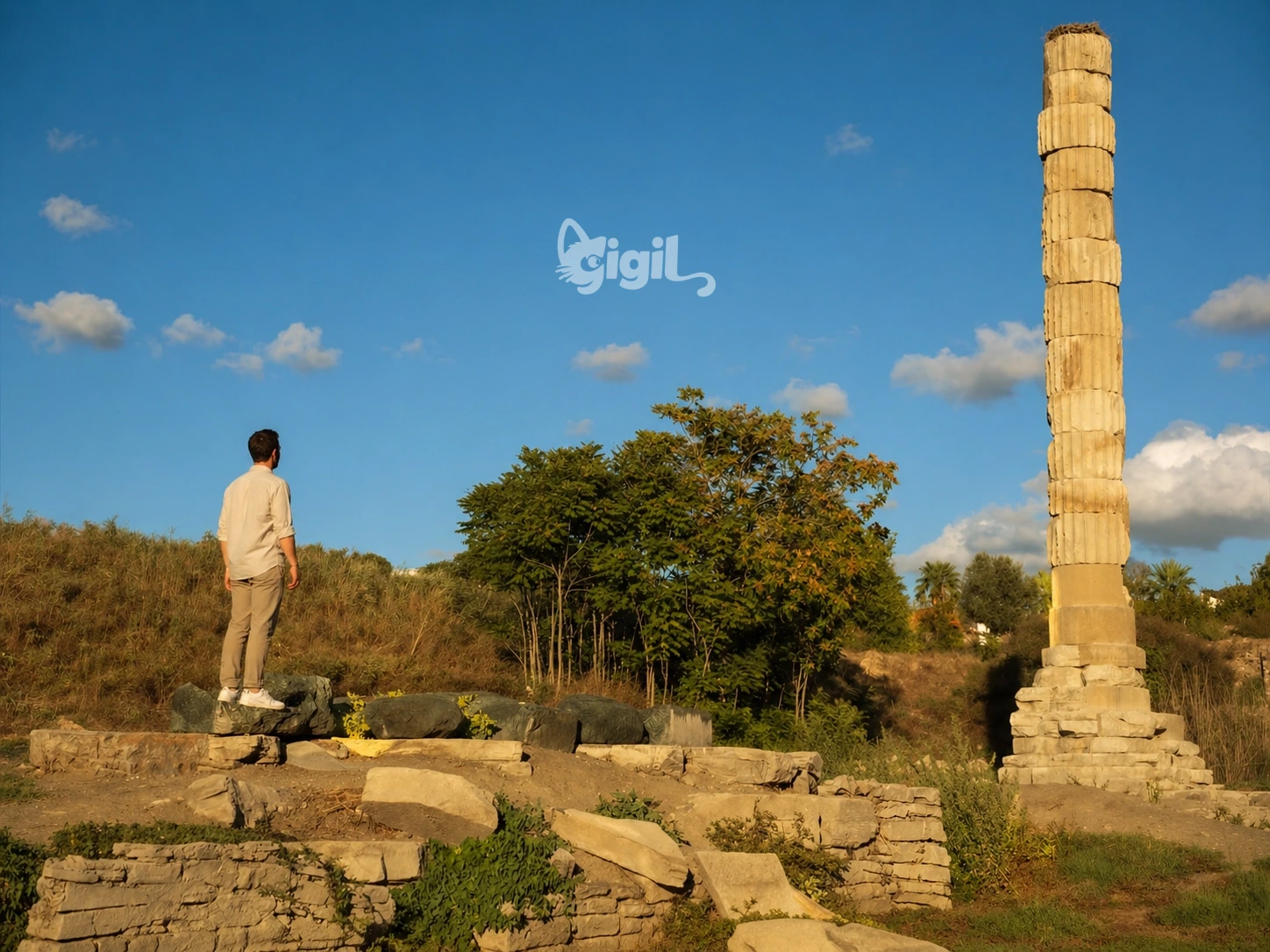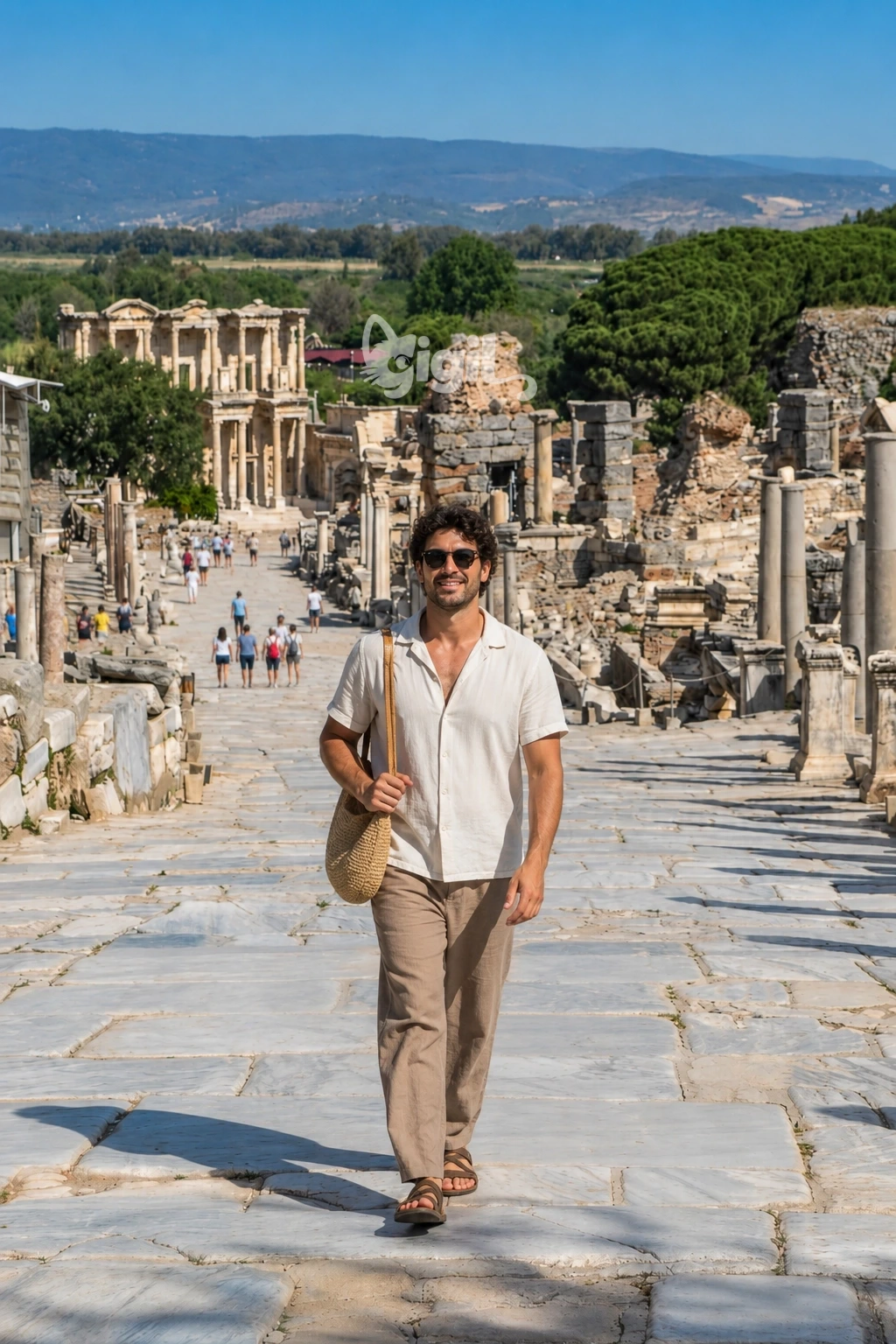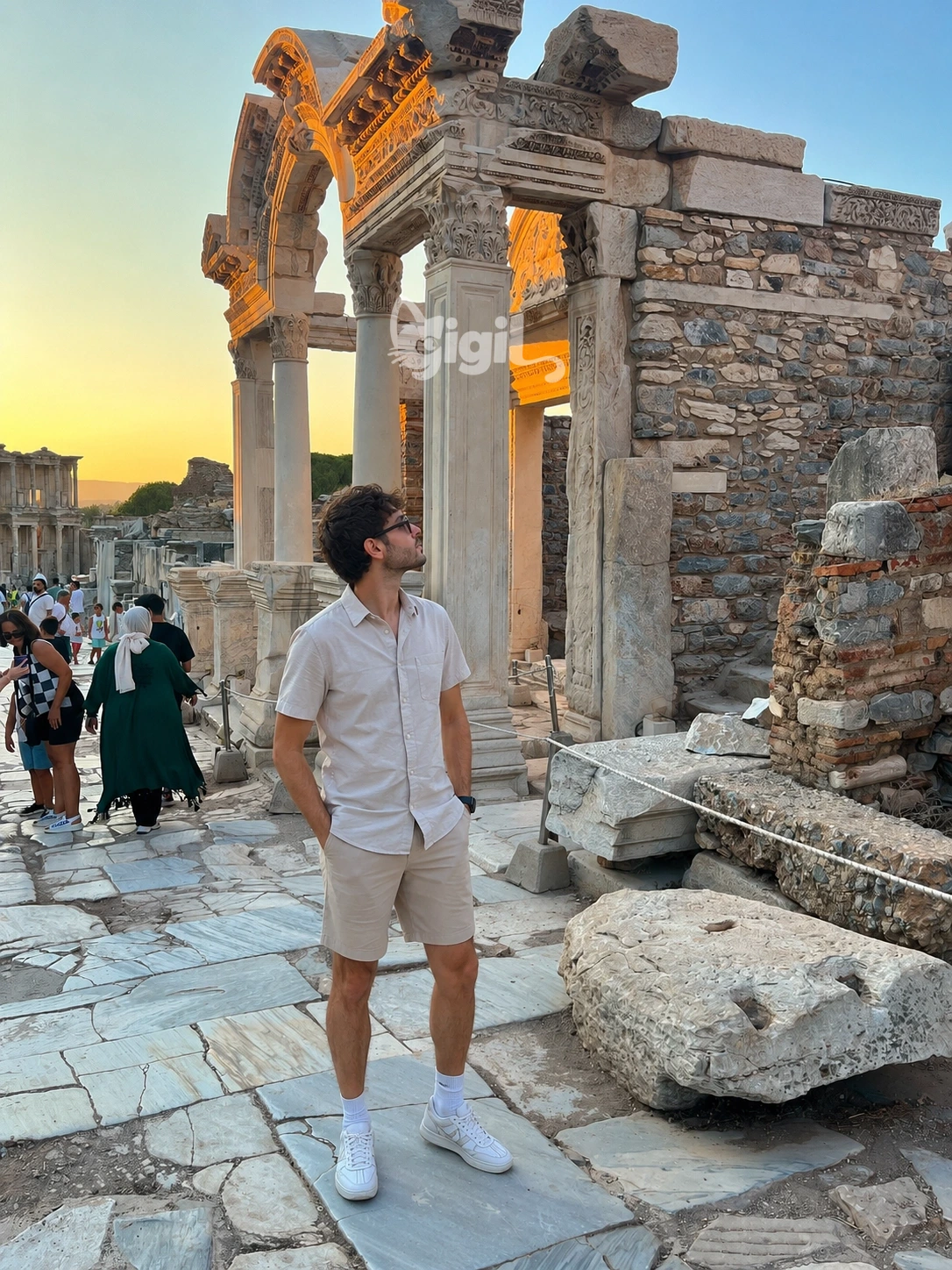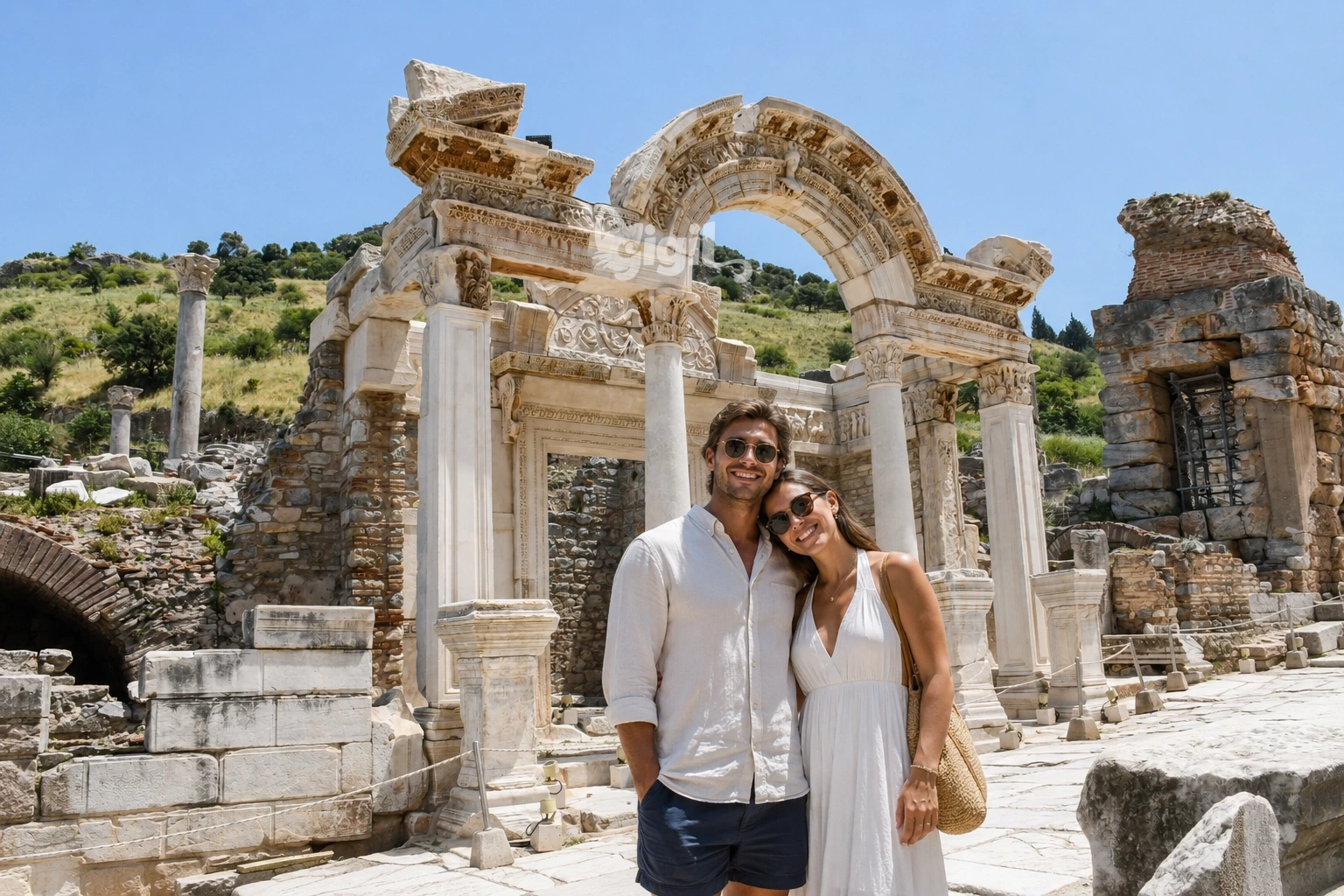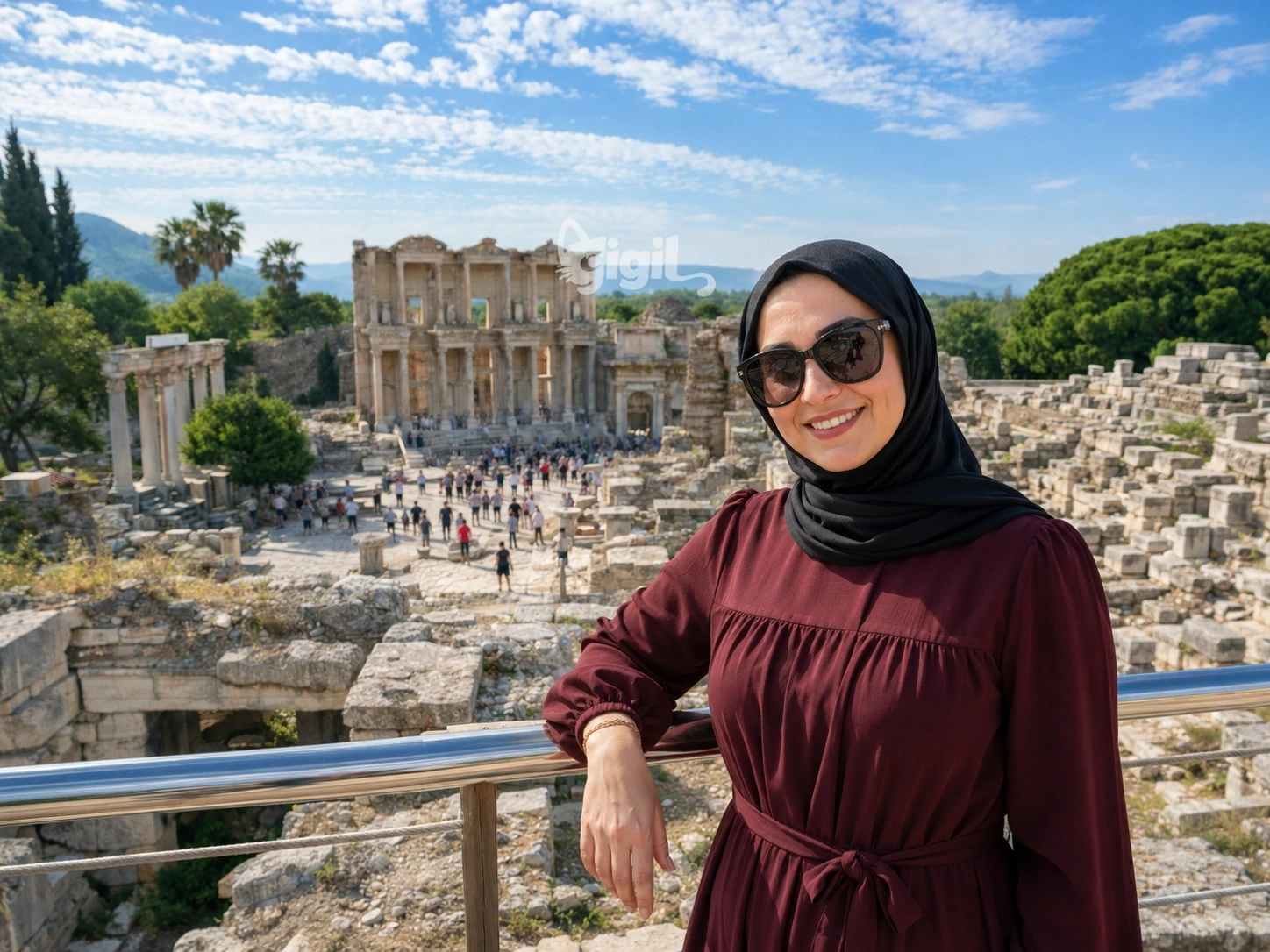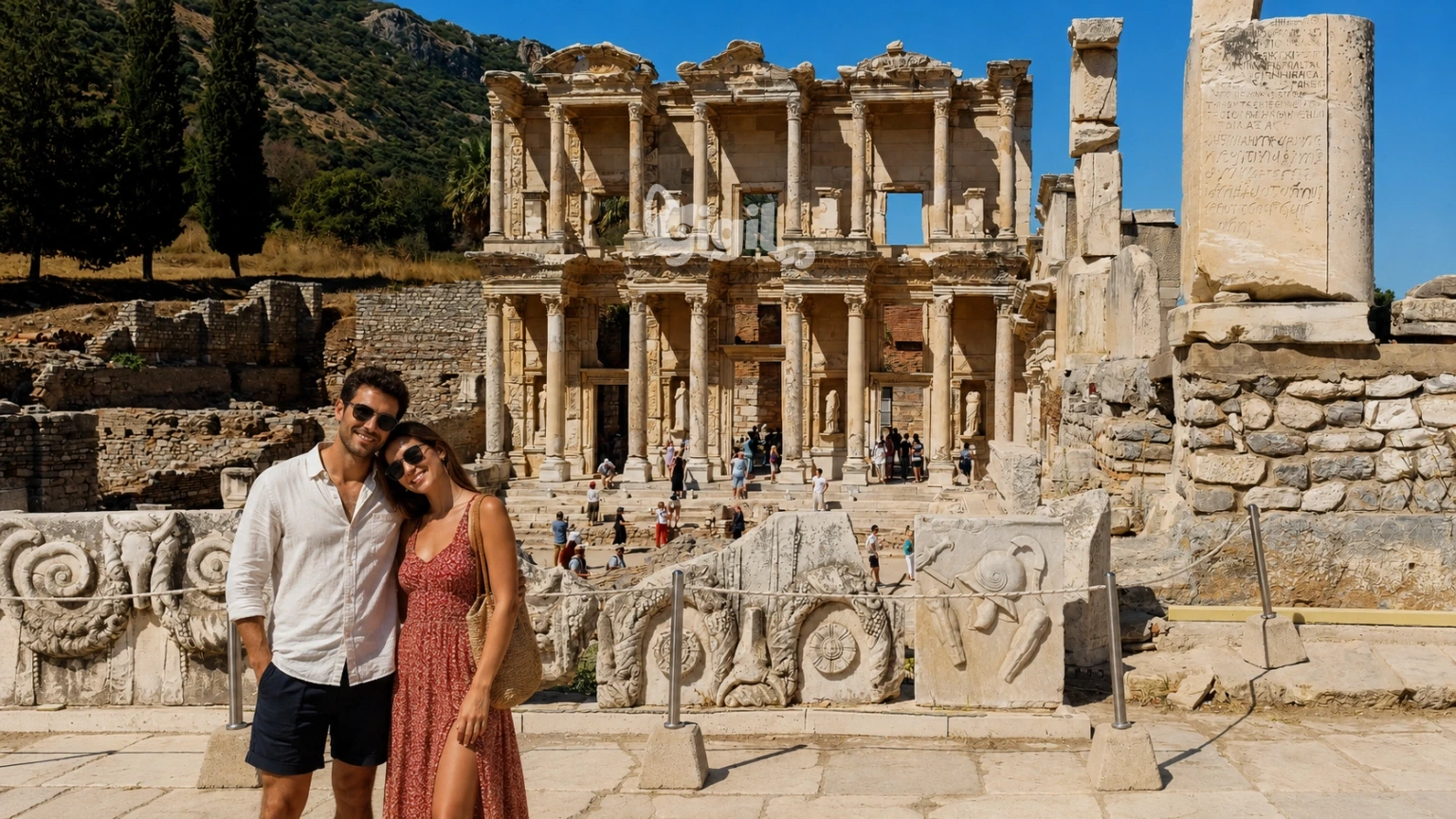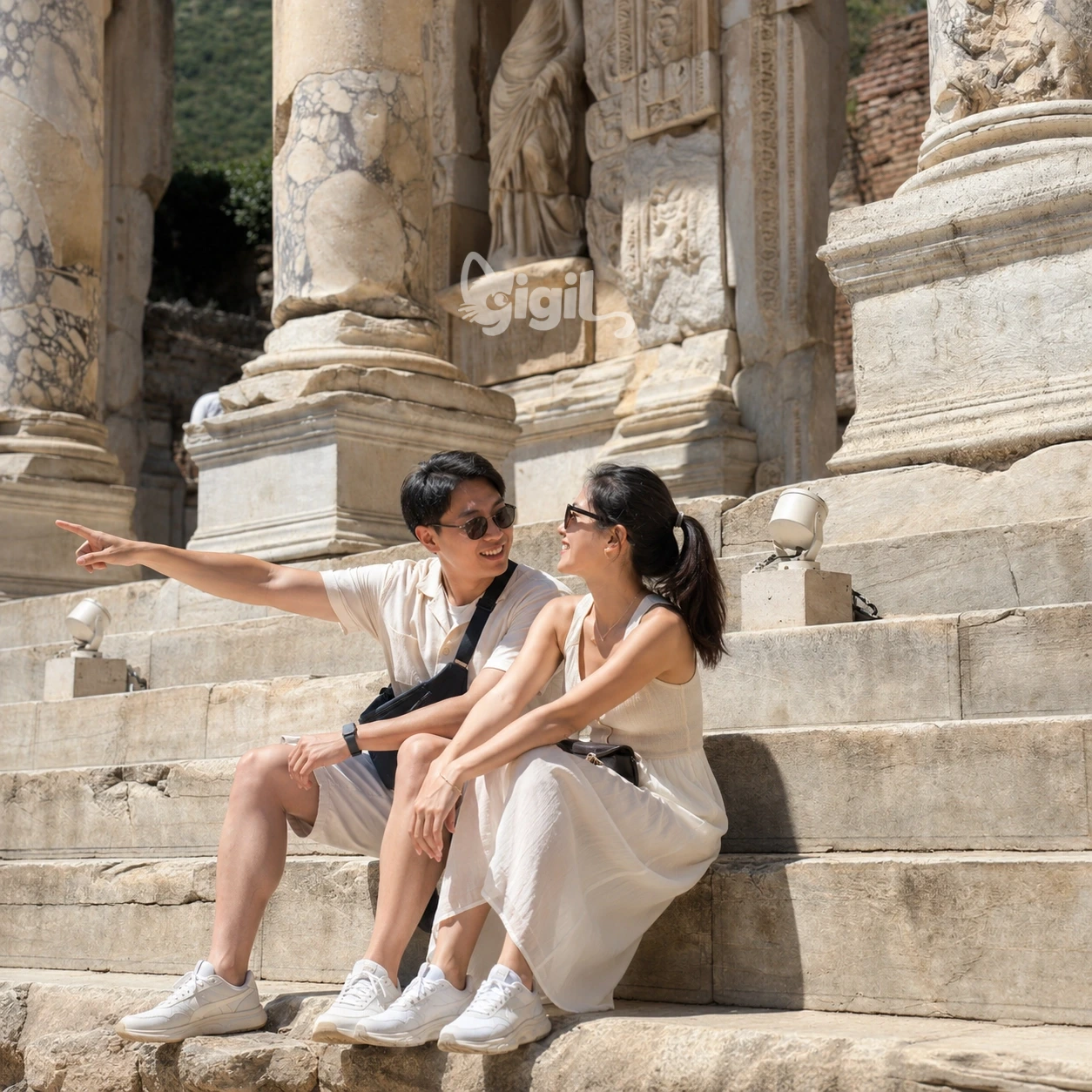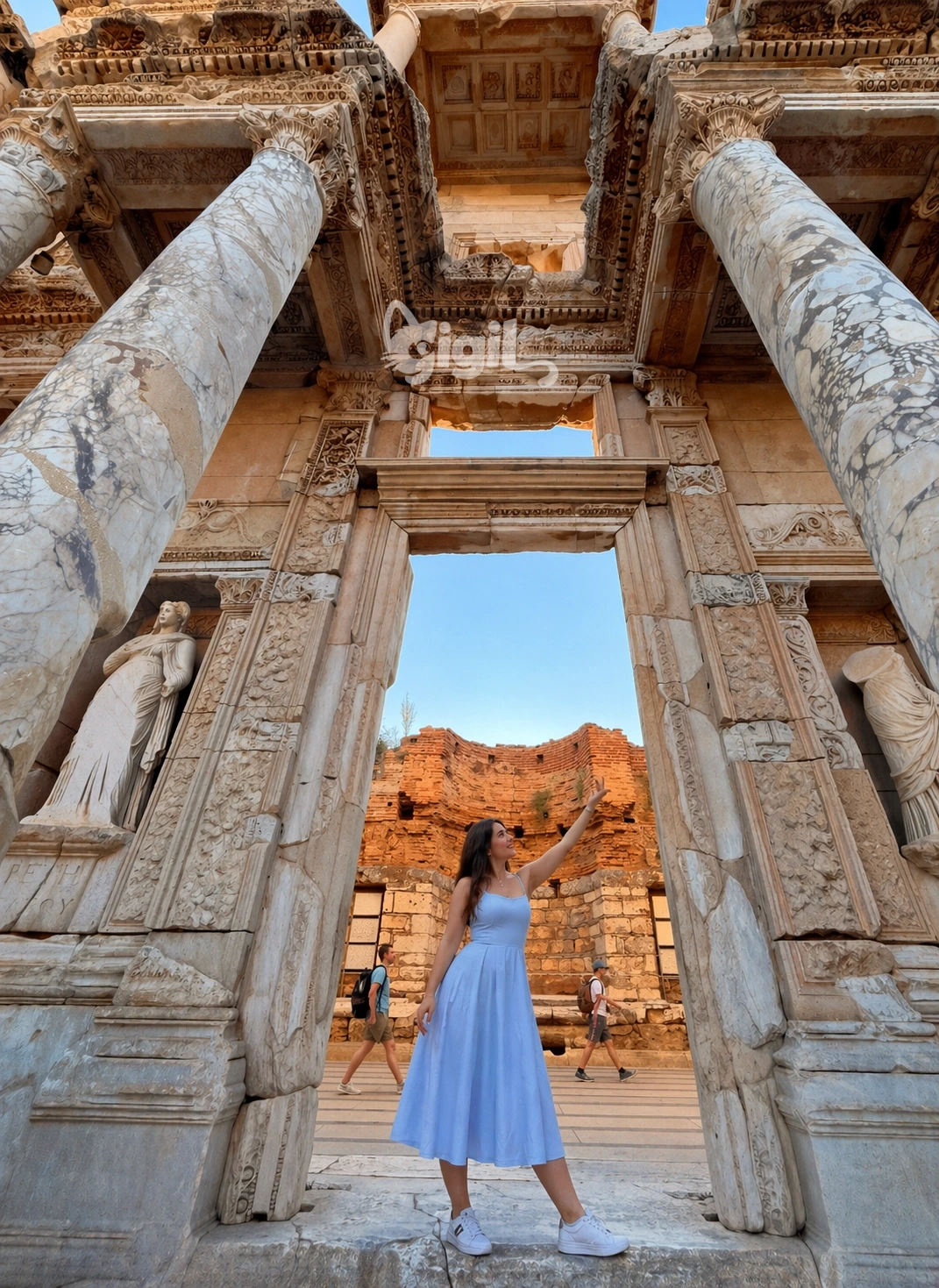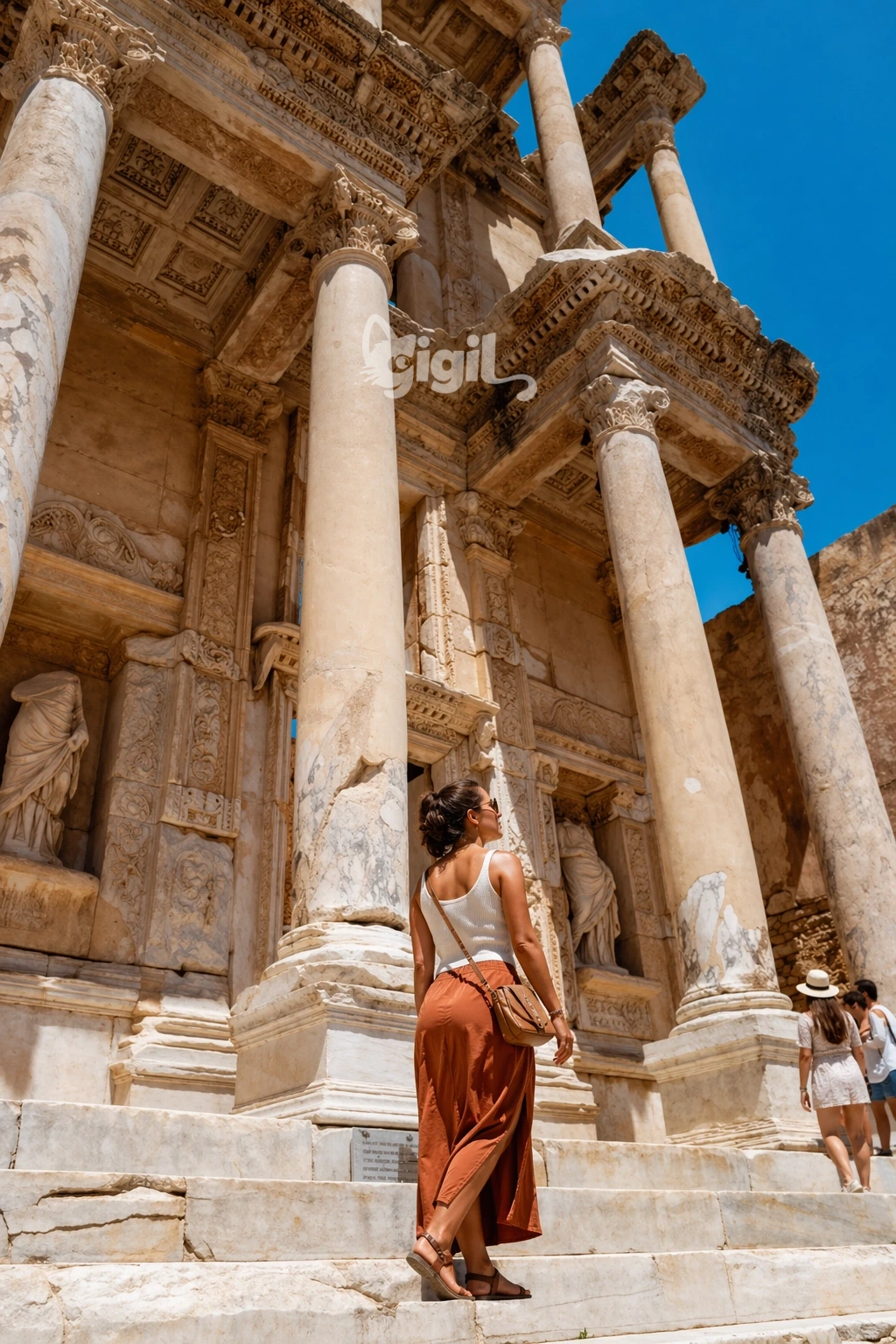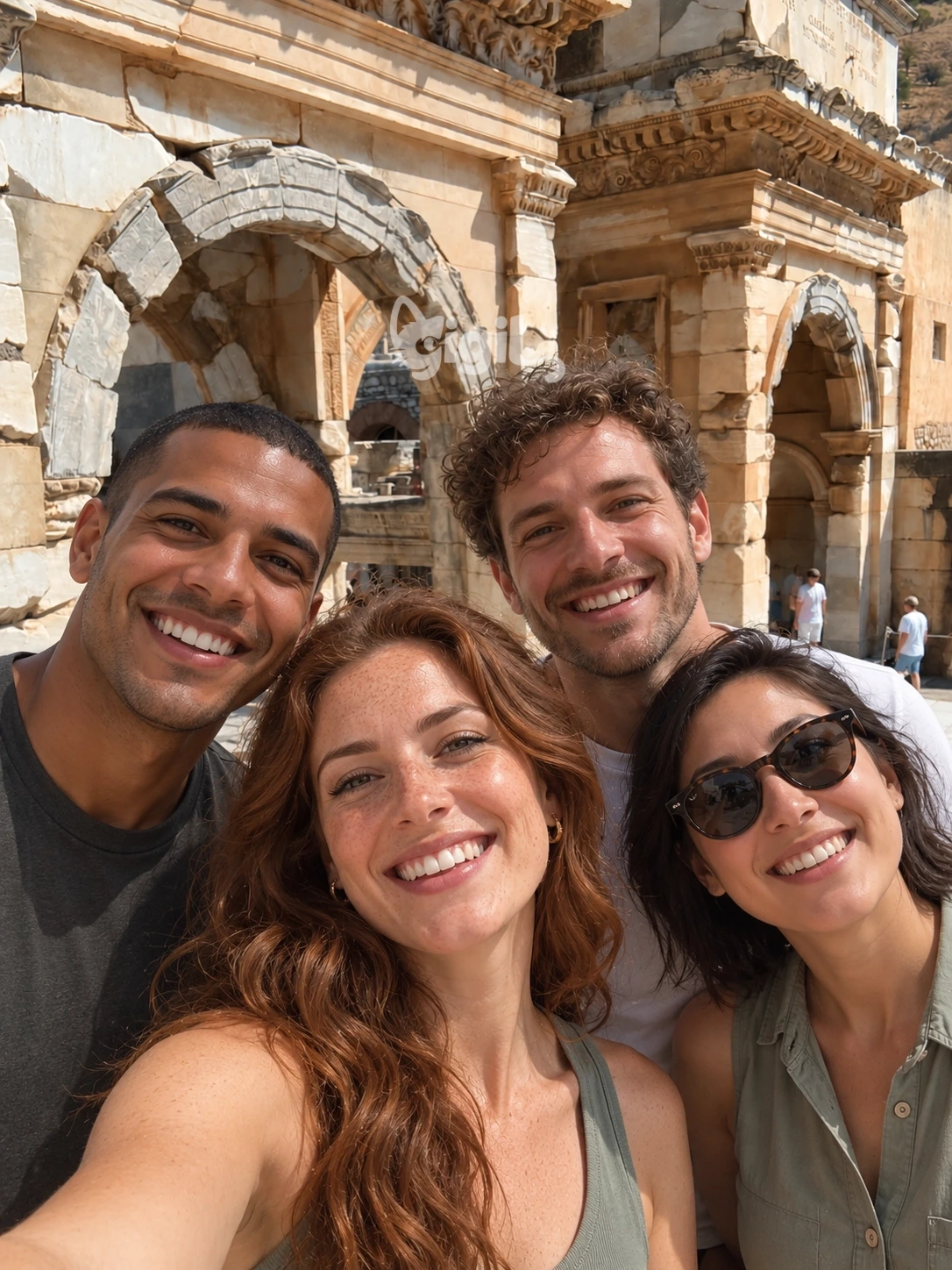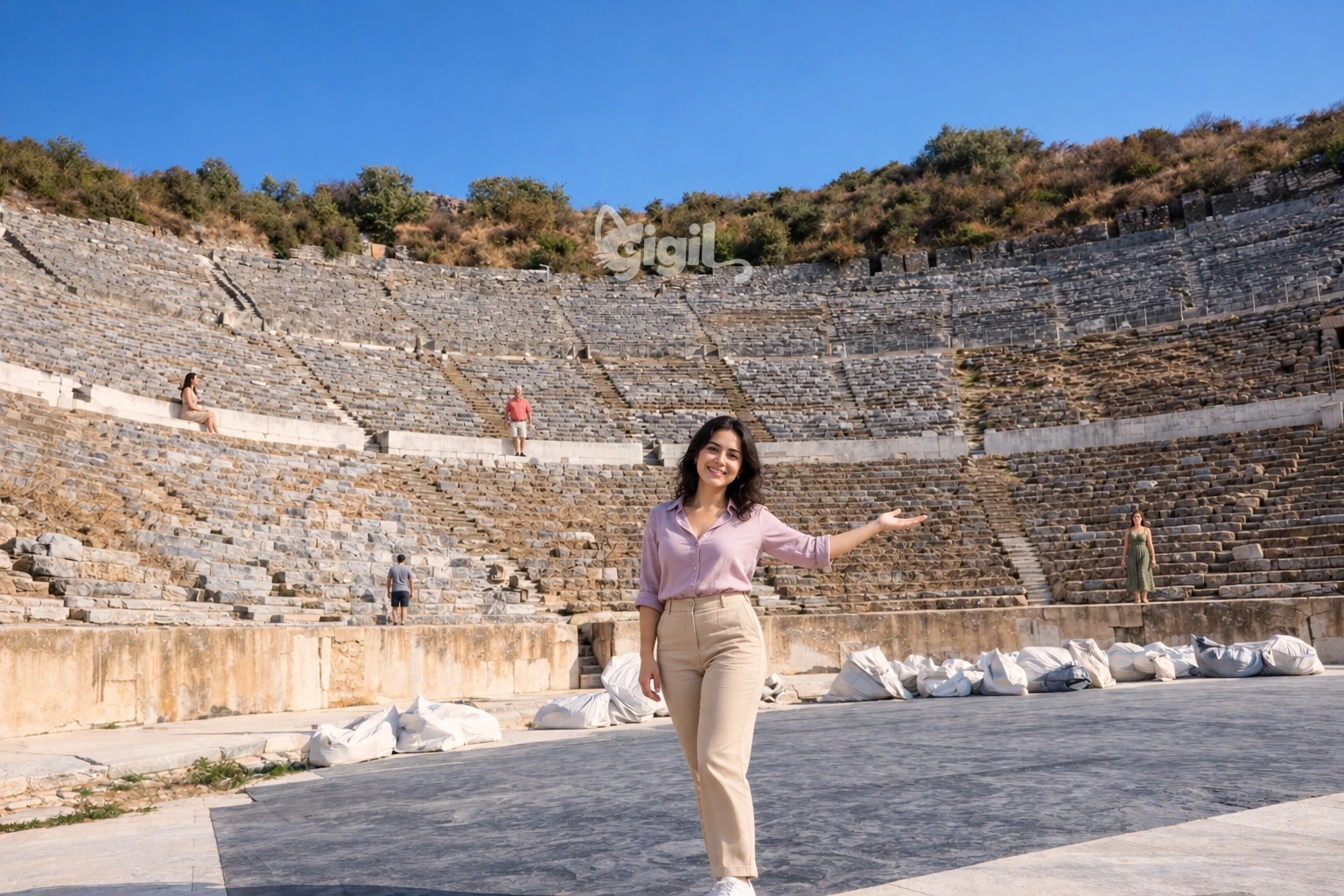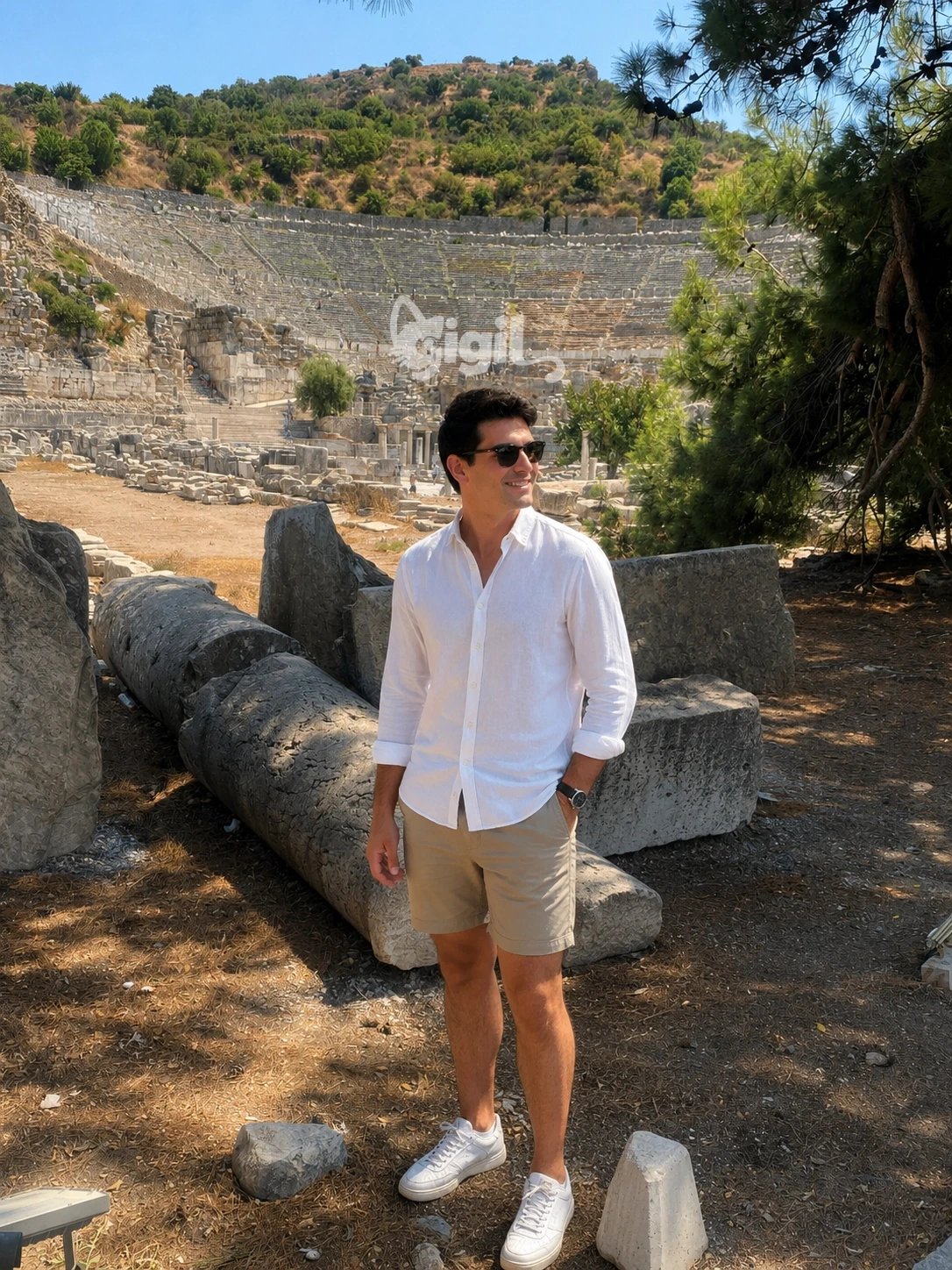








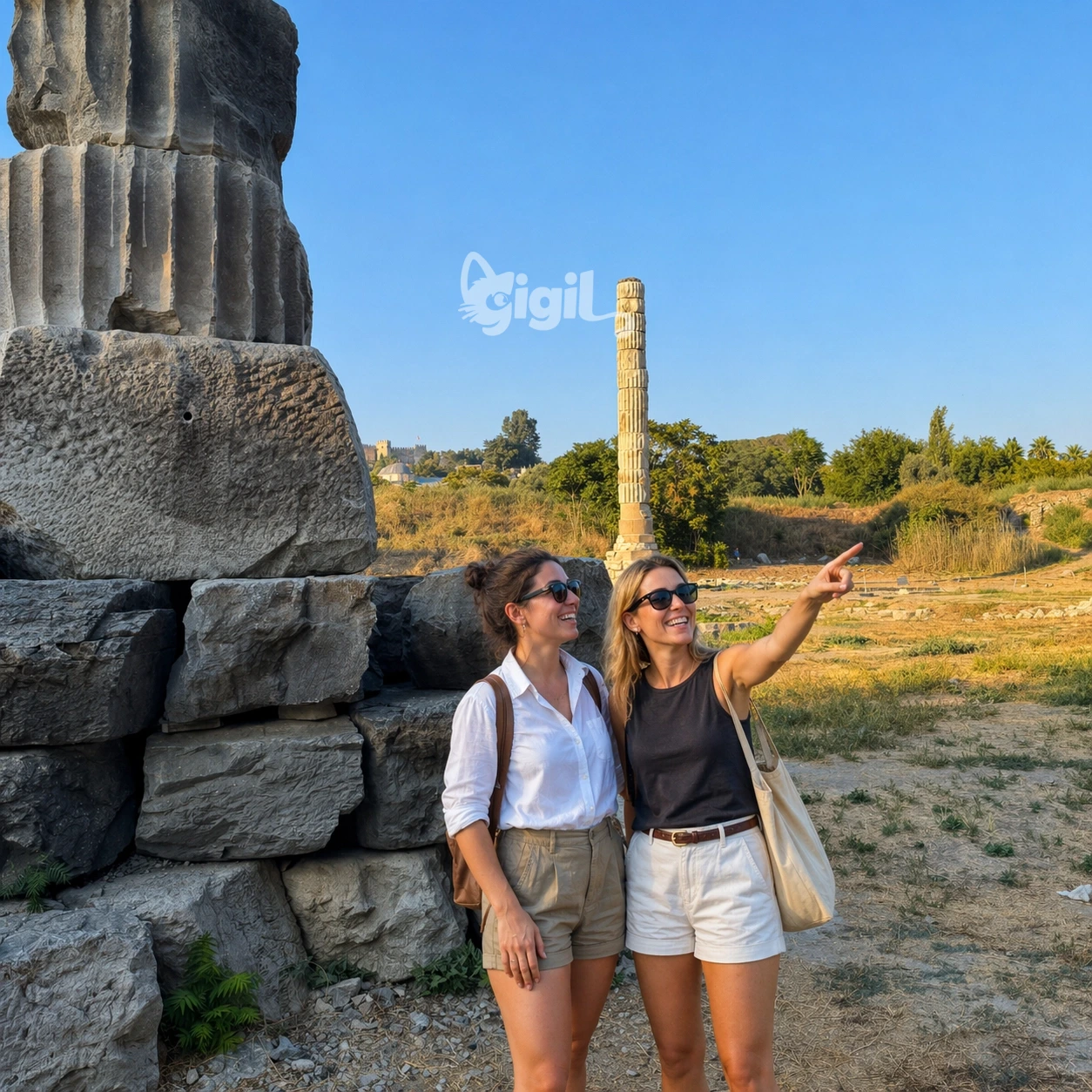
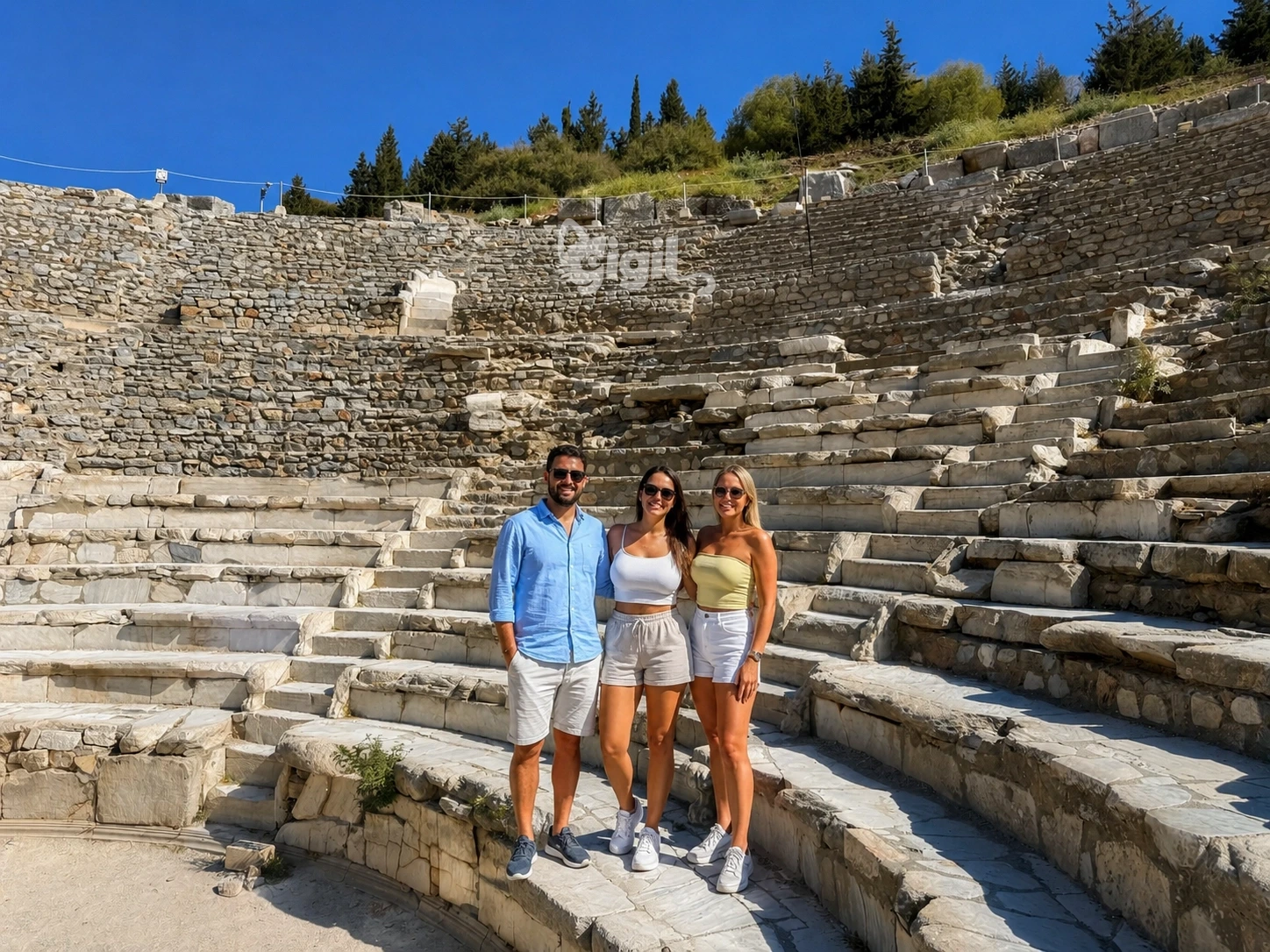
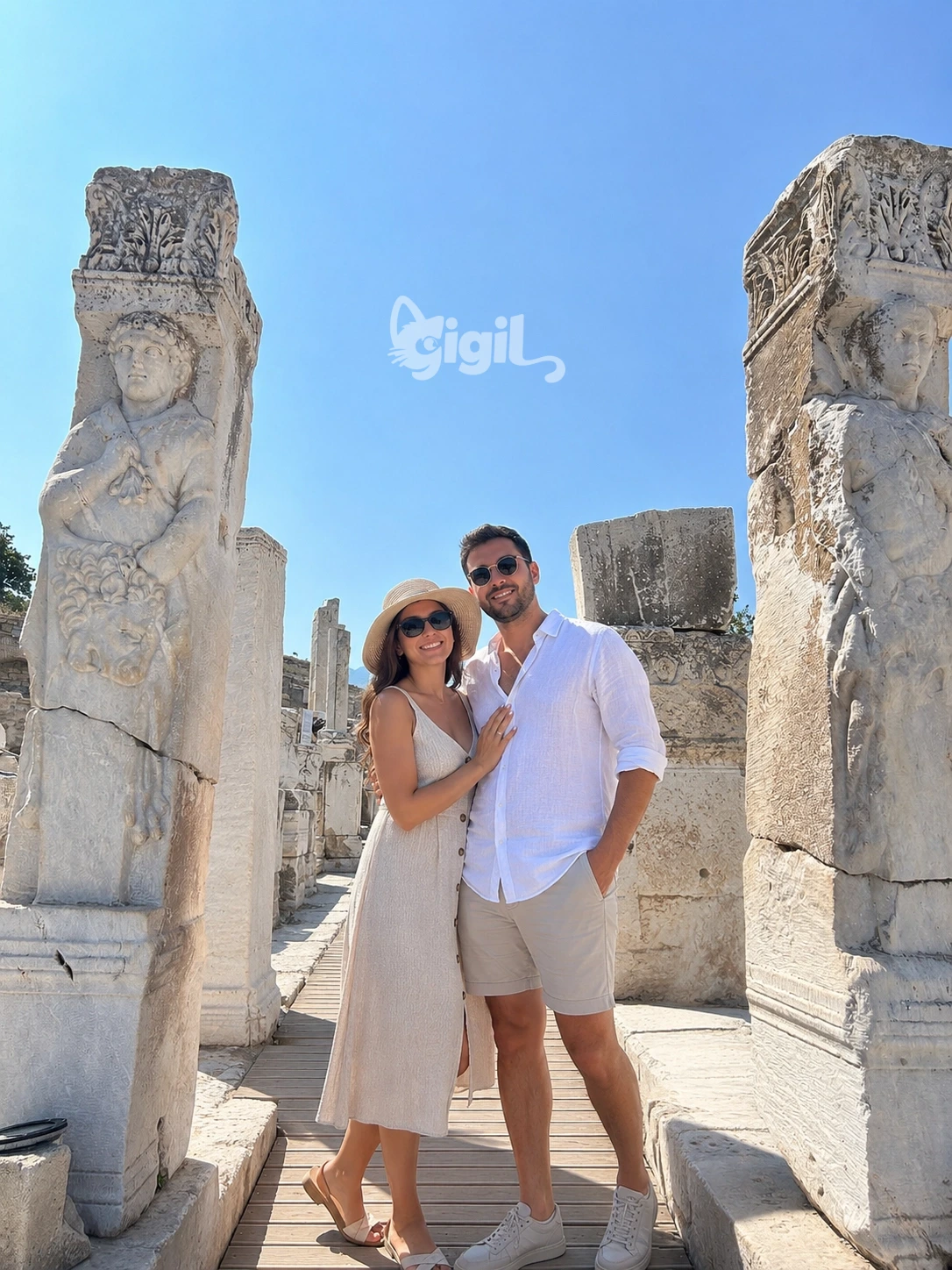
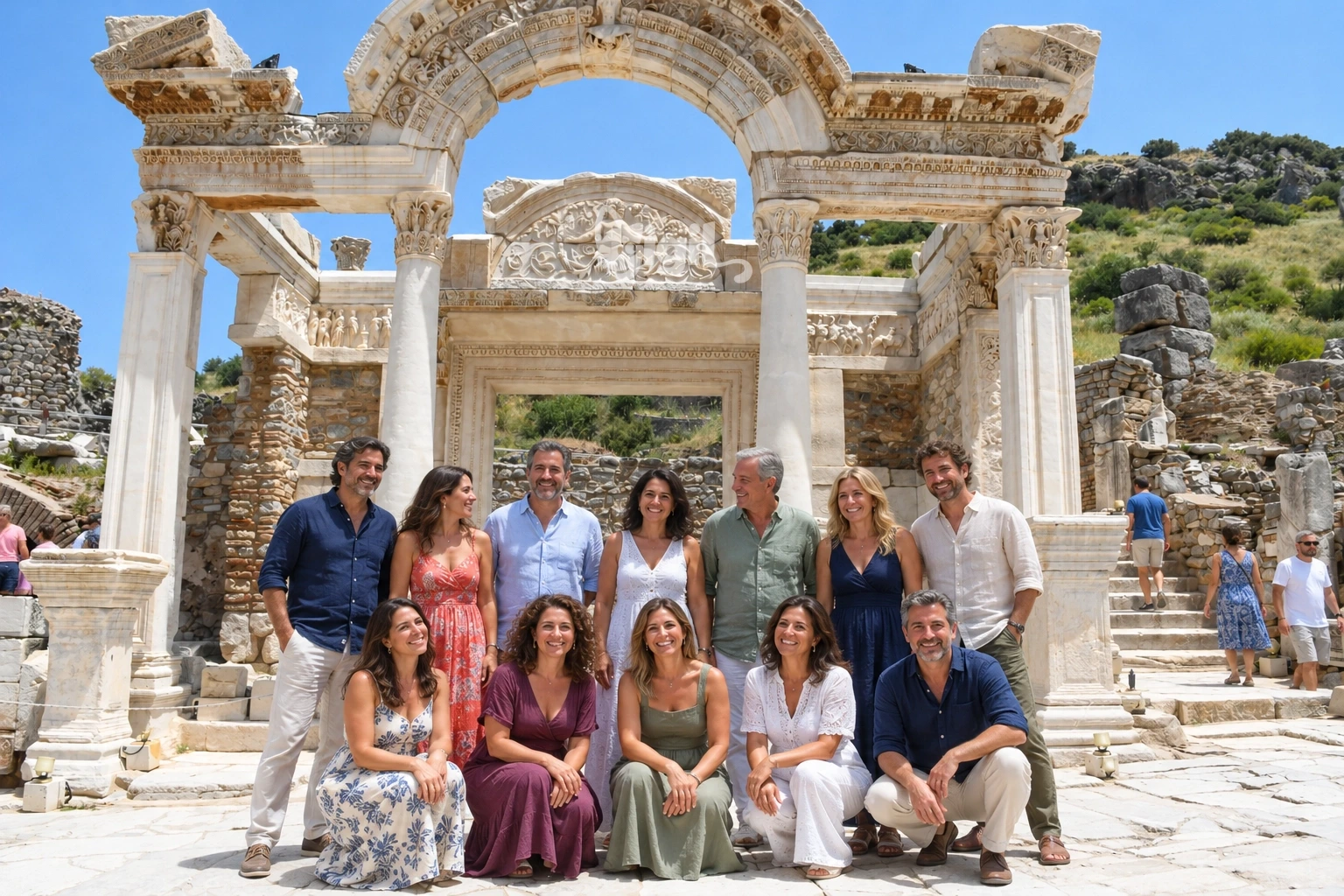
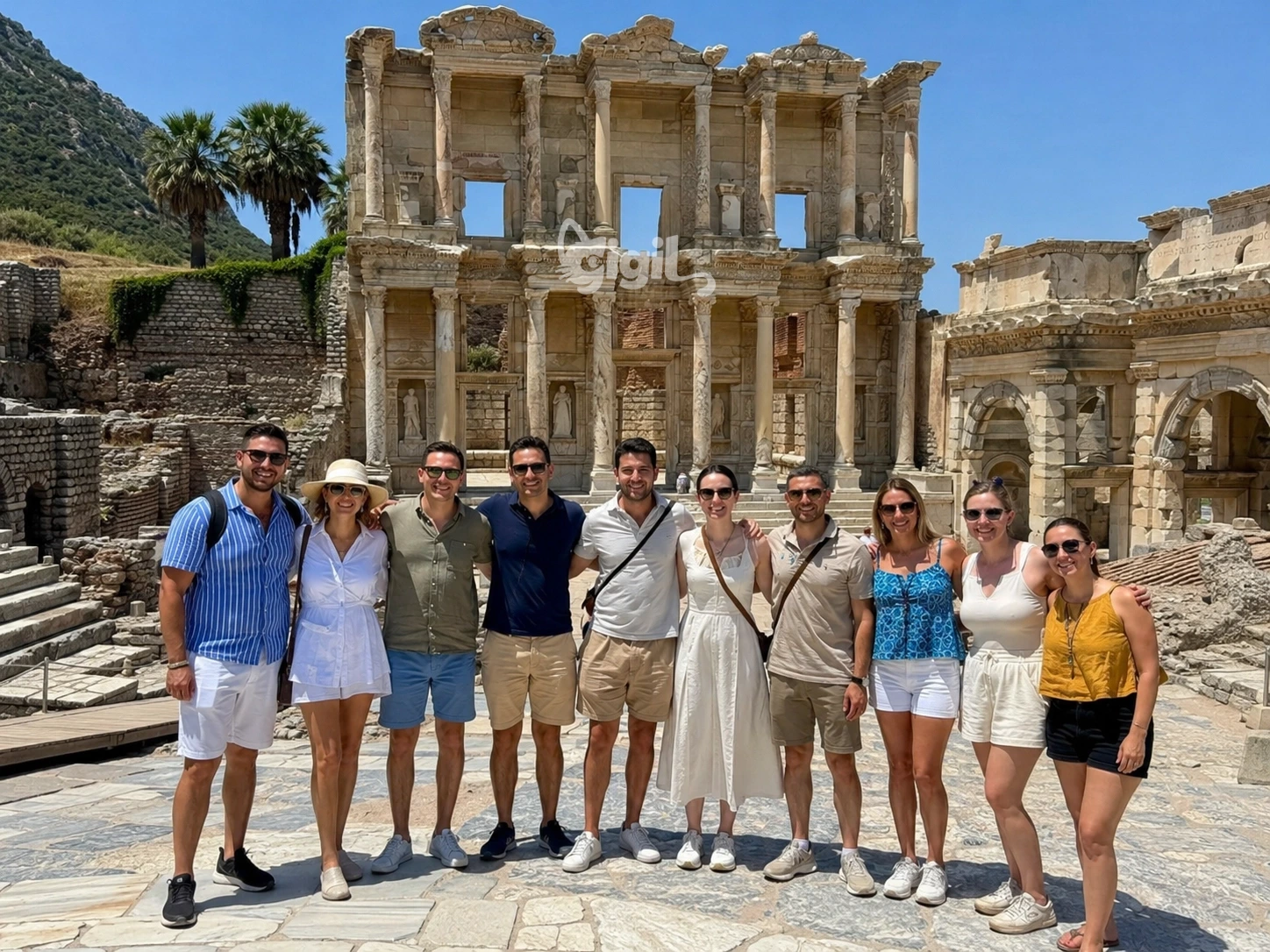
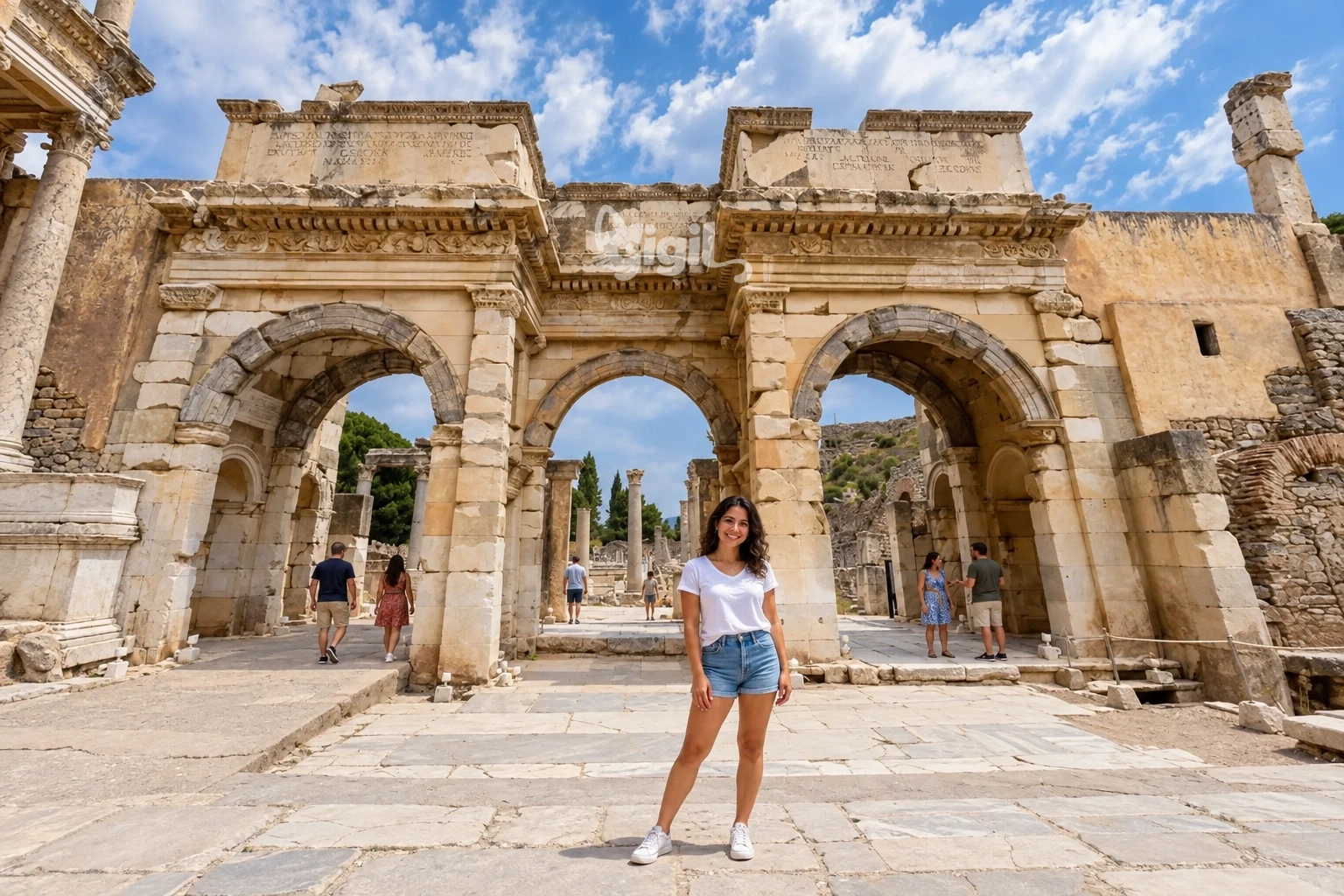
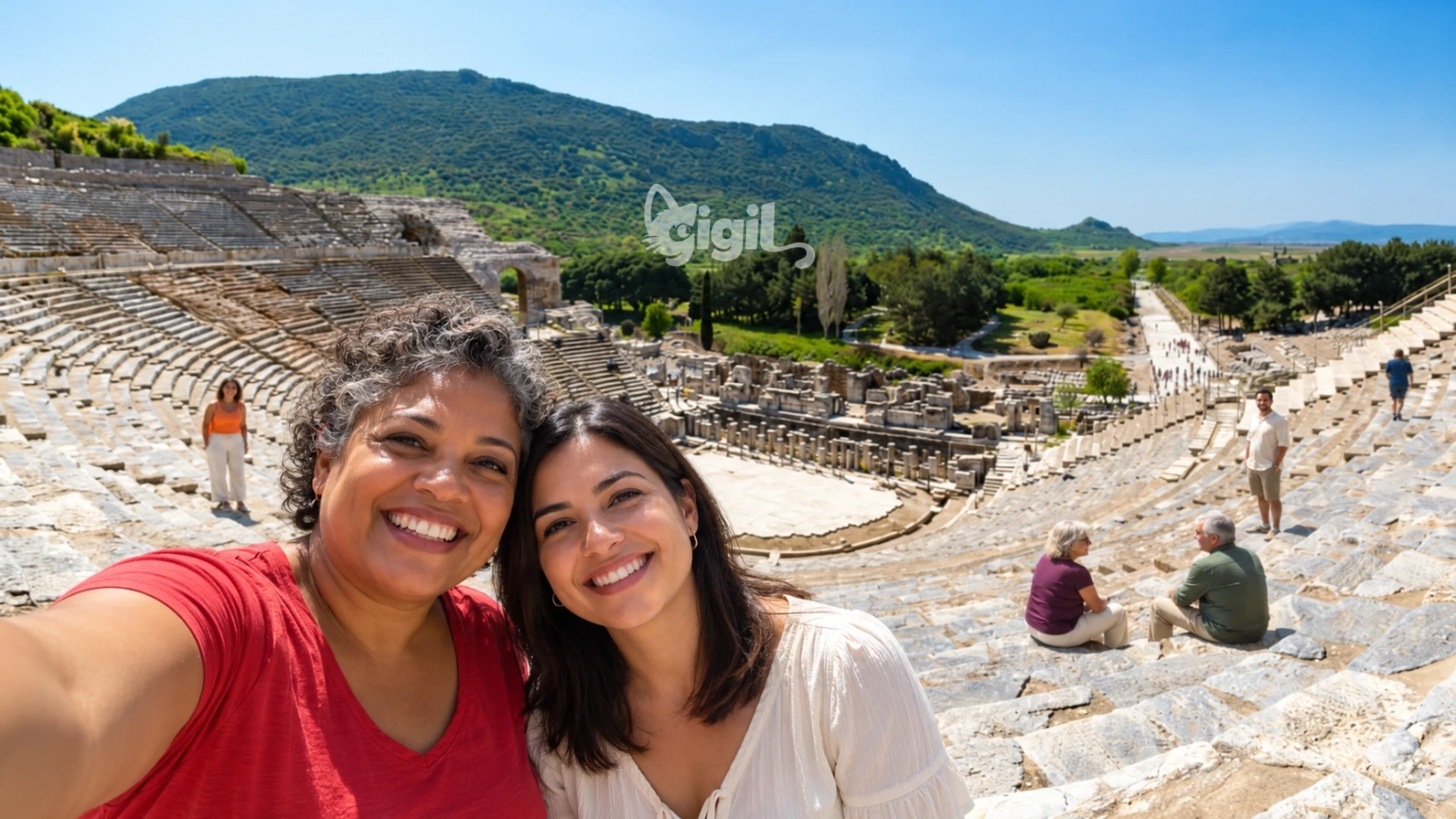
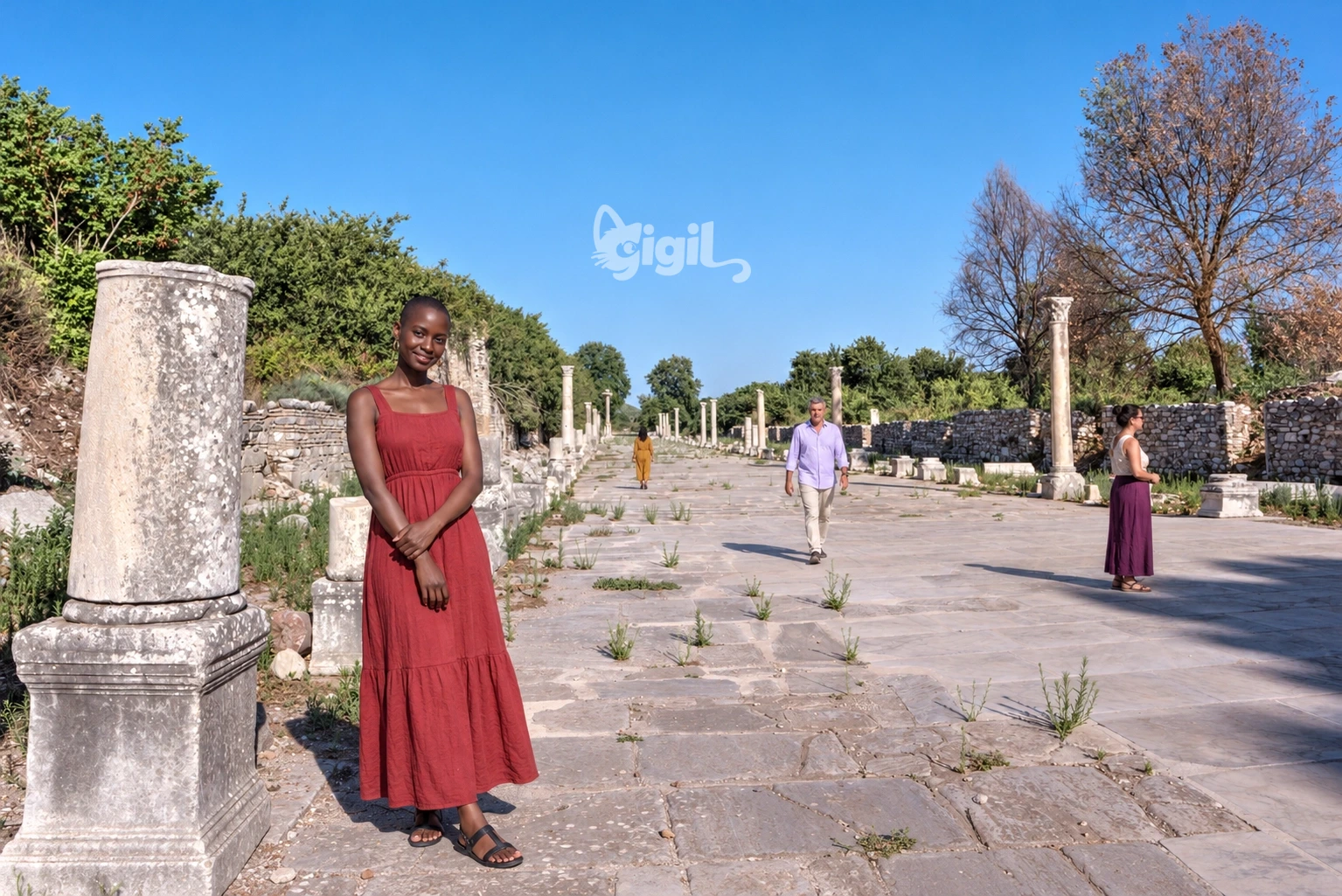

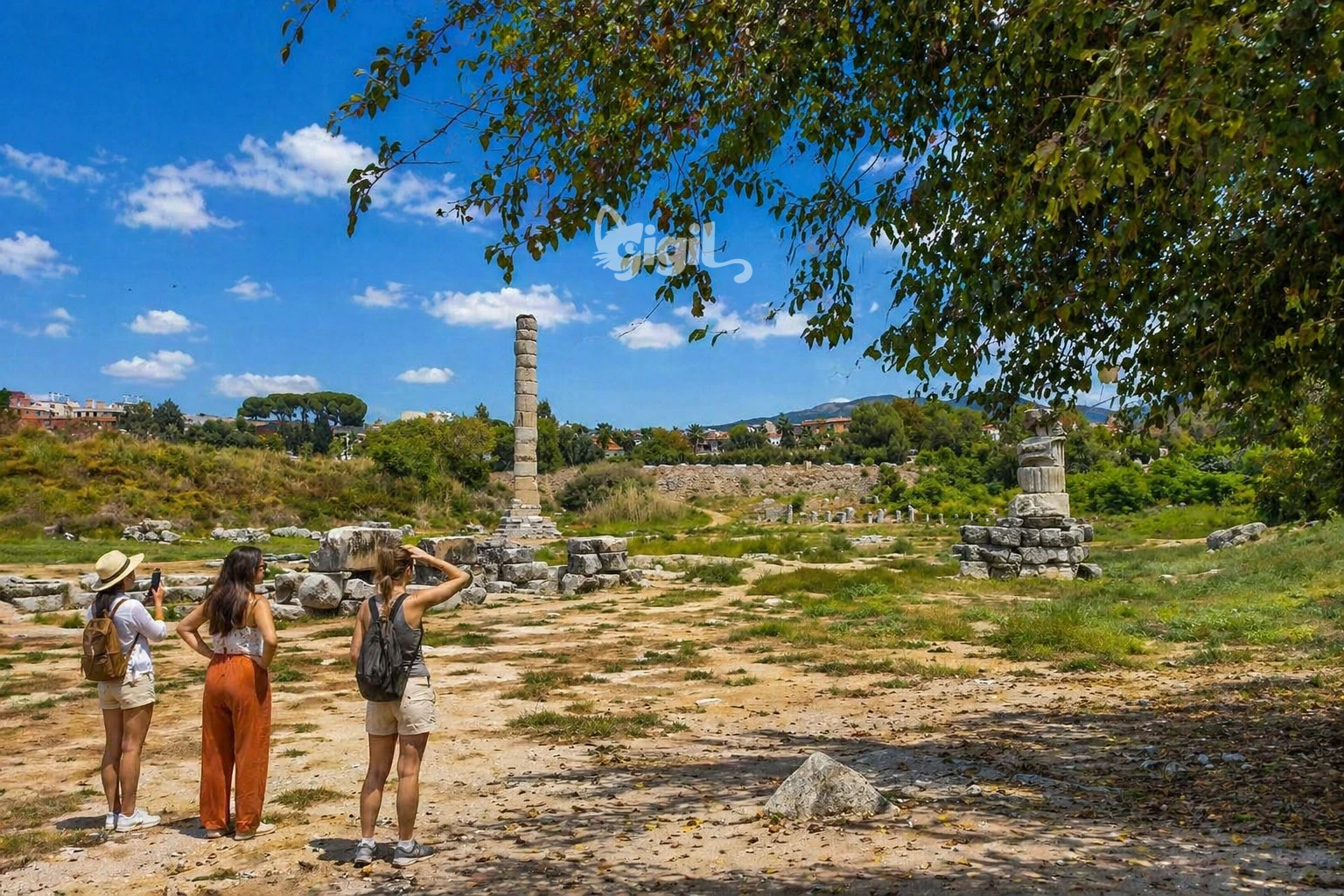
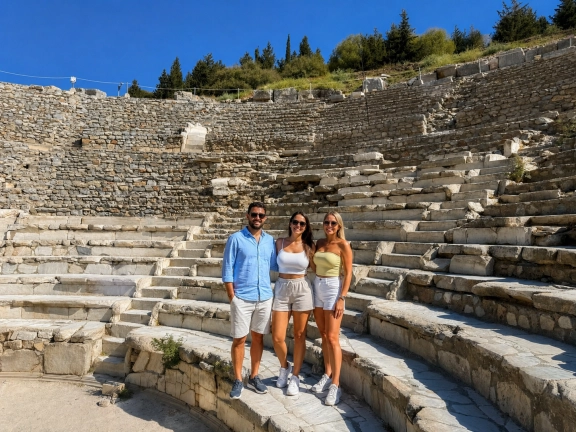
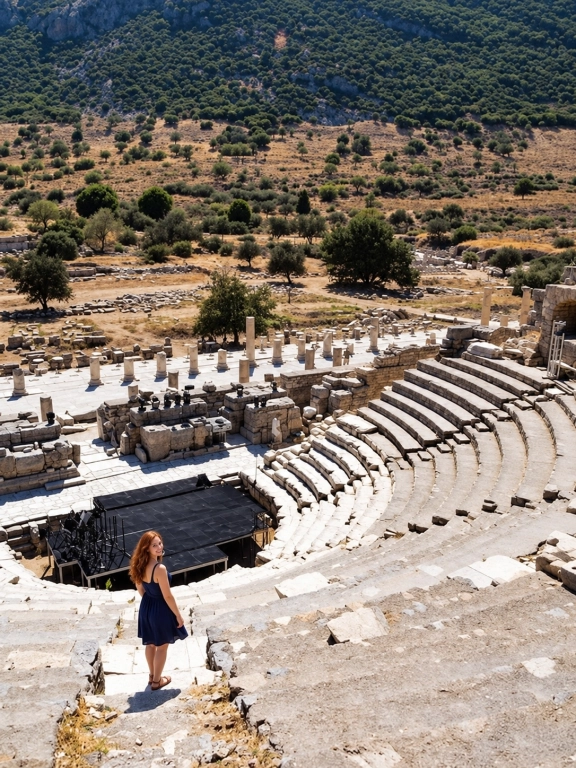
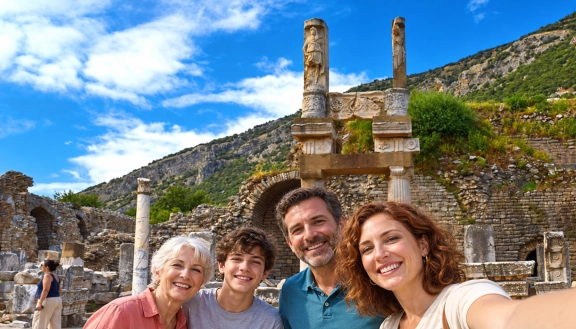

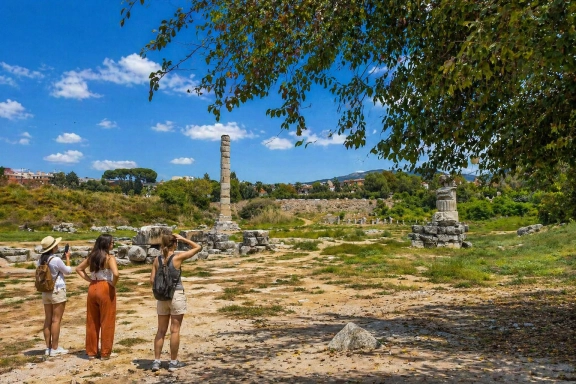
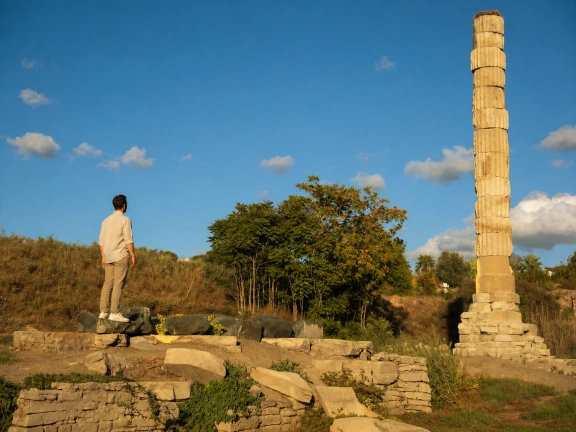

At Ephesus Ancient City, a street is part of the historical evidence, not merely the way between sights. It connects monumental spaces such as the Library of Celsus and Great Theatre and makes their place in the ancient settlement easier to grasp.
Notice the shift between broad public settings and more confined approaches. These contrasts help explain how people moved and gathered. The city has a layered history, and its surviving architecture includes conservation and reconstruction rather than a complete, unchanged picture of antiquity.
Questions
Are the paths between monuments historically meaningful?
Yes. The street framework helps explain the arrangement and use of the ancient urban spaces.
Why compare the scale of different spaces?
The contrast makes the relationship between everyday circulation and monumental gathering places more understandable.
Does the library survive as a fully complete ancient structure?
No. Its present facade includes reconstruction, and the whole building has not remained complete.
What is missing from an architecture-only view of Ephesus?
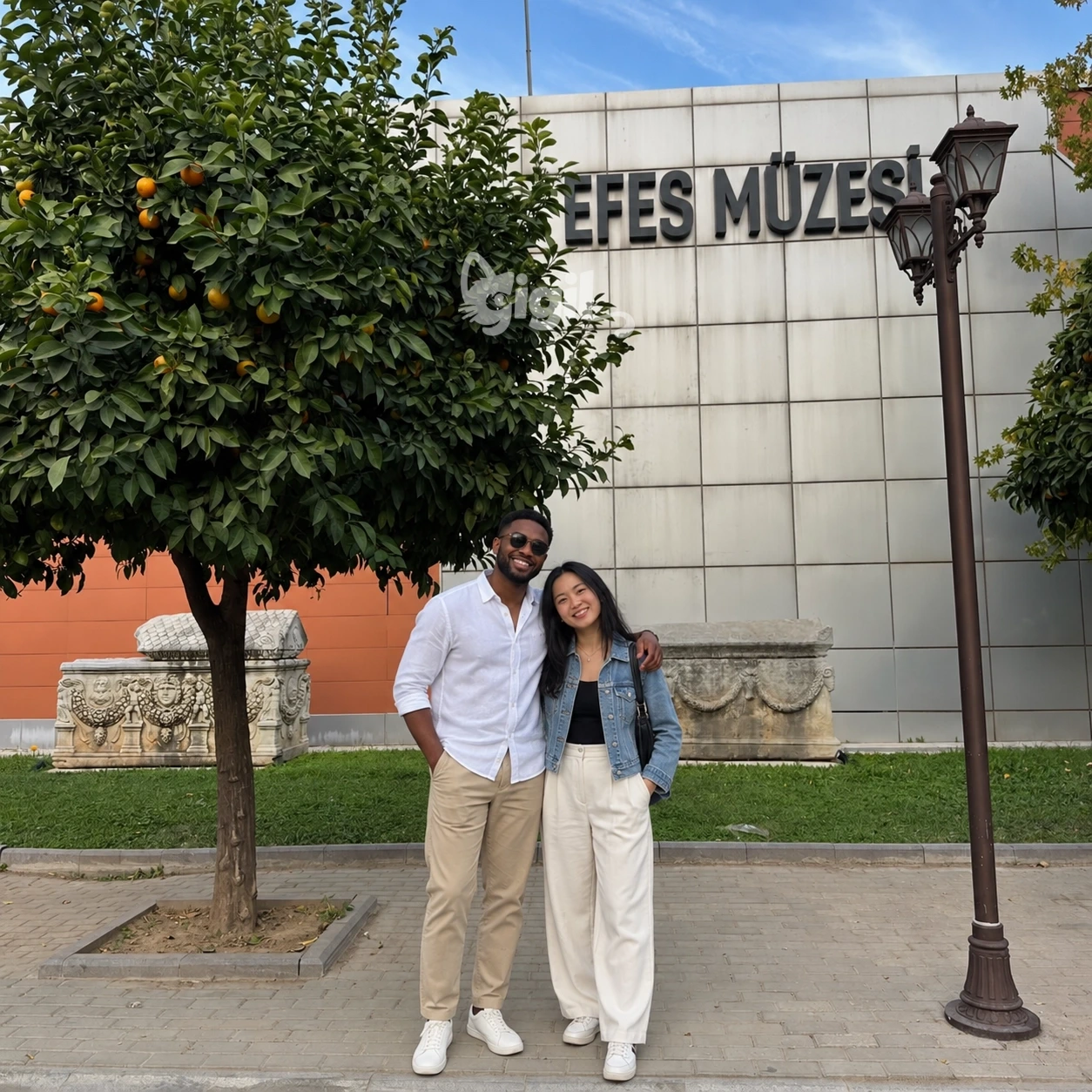
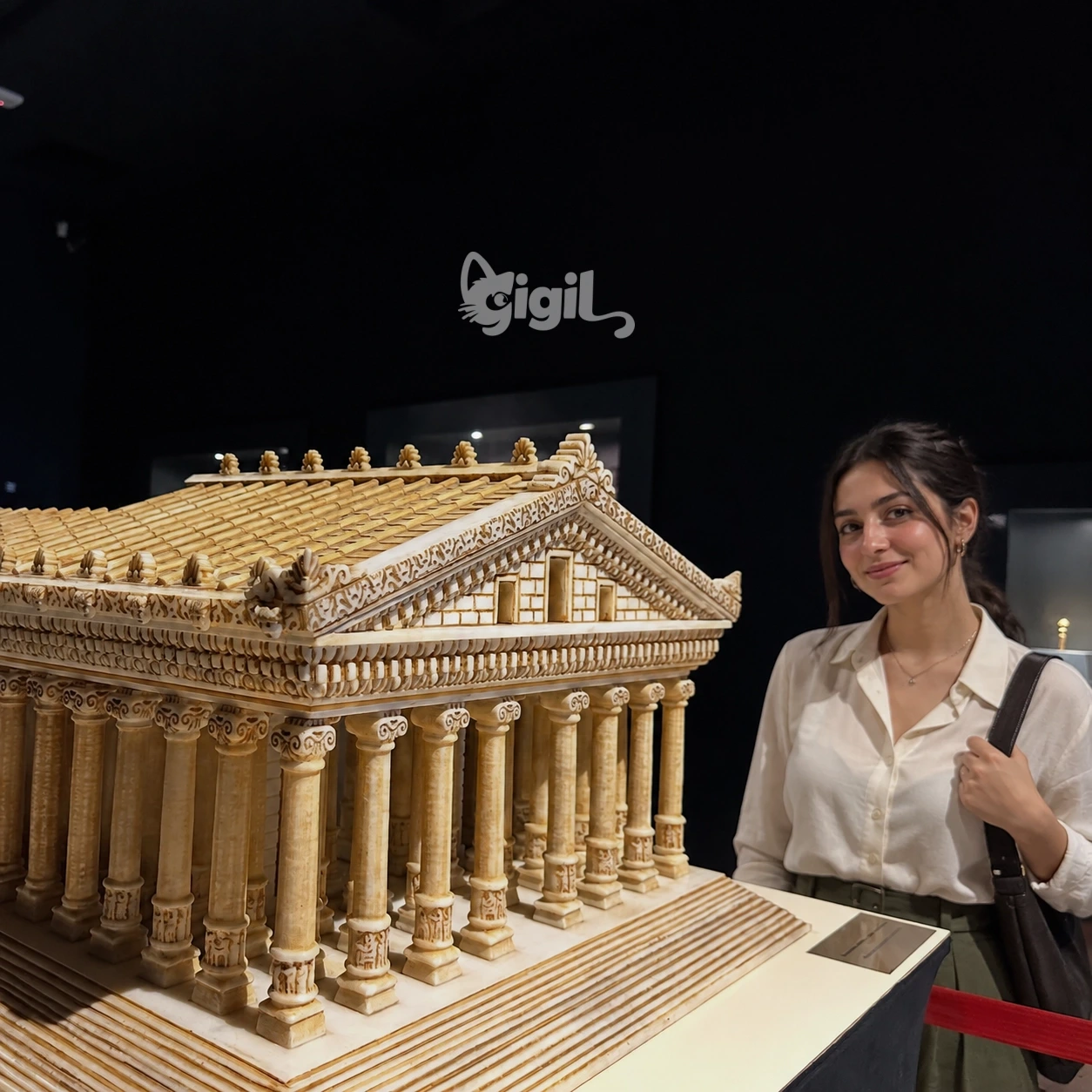
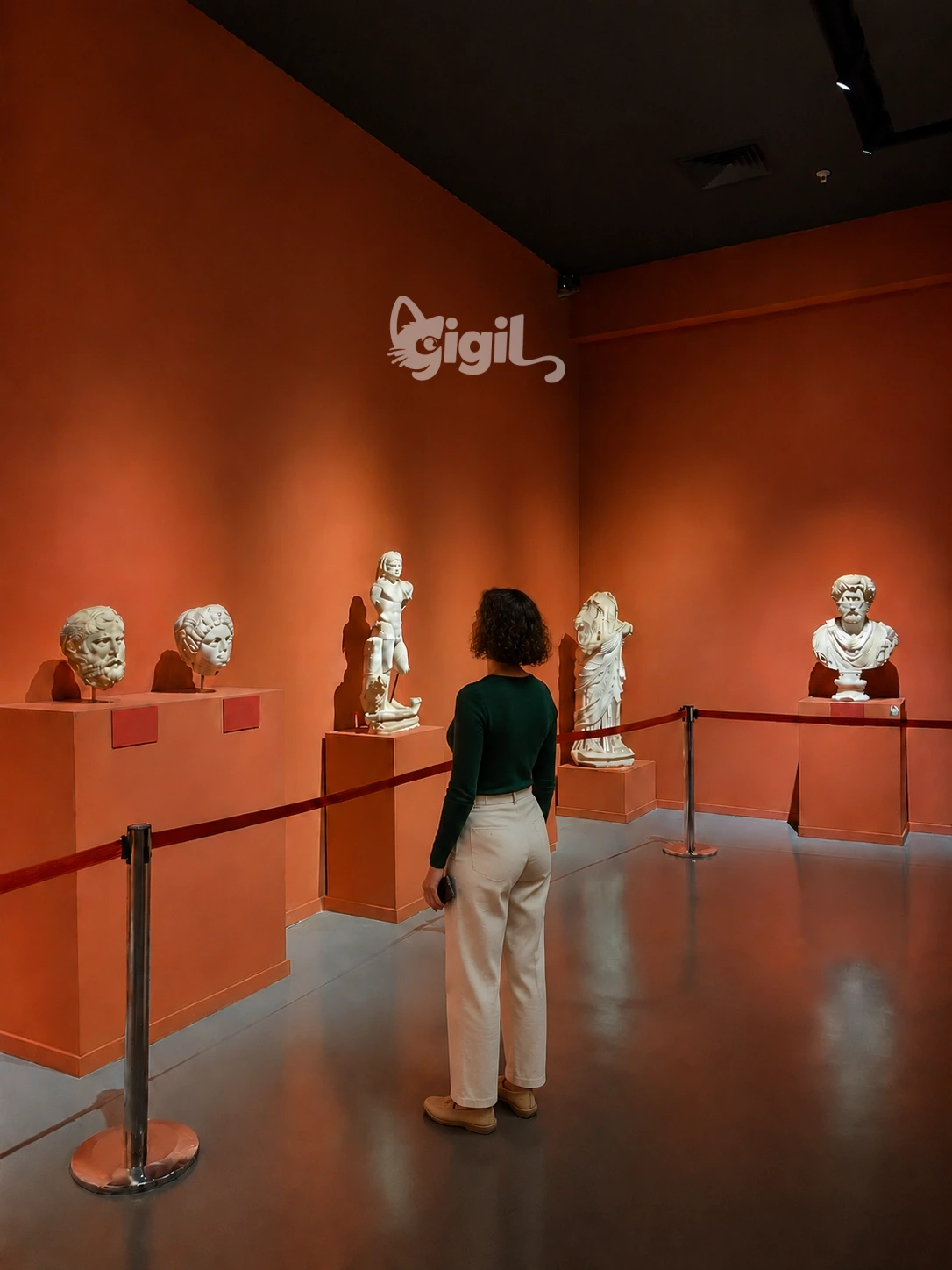
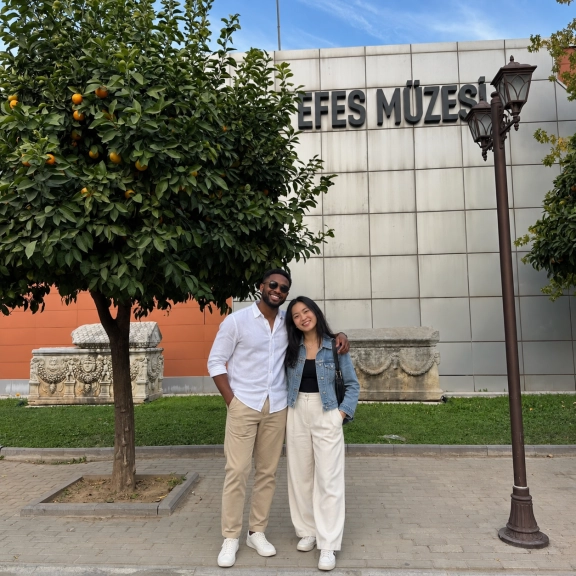
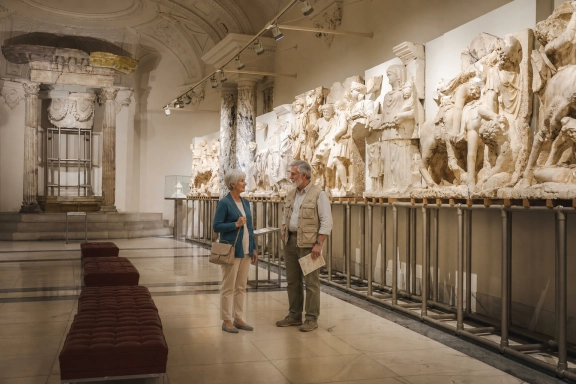
Small objects and other evidence of people's lives, which the later museum visit helps bring into focus.