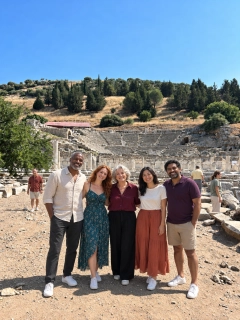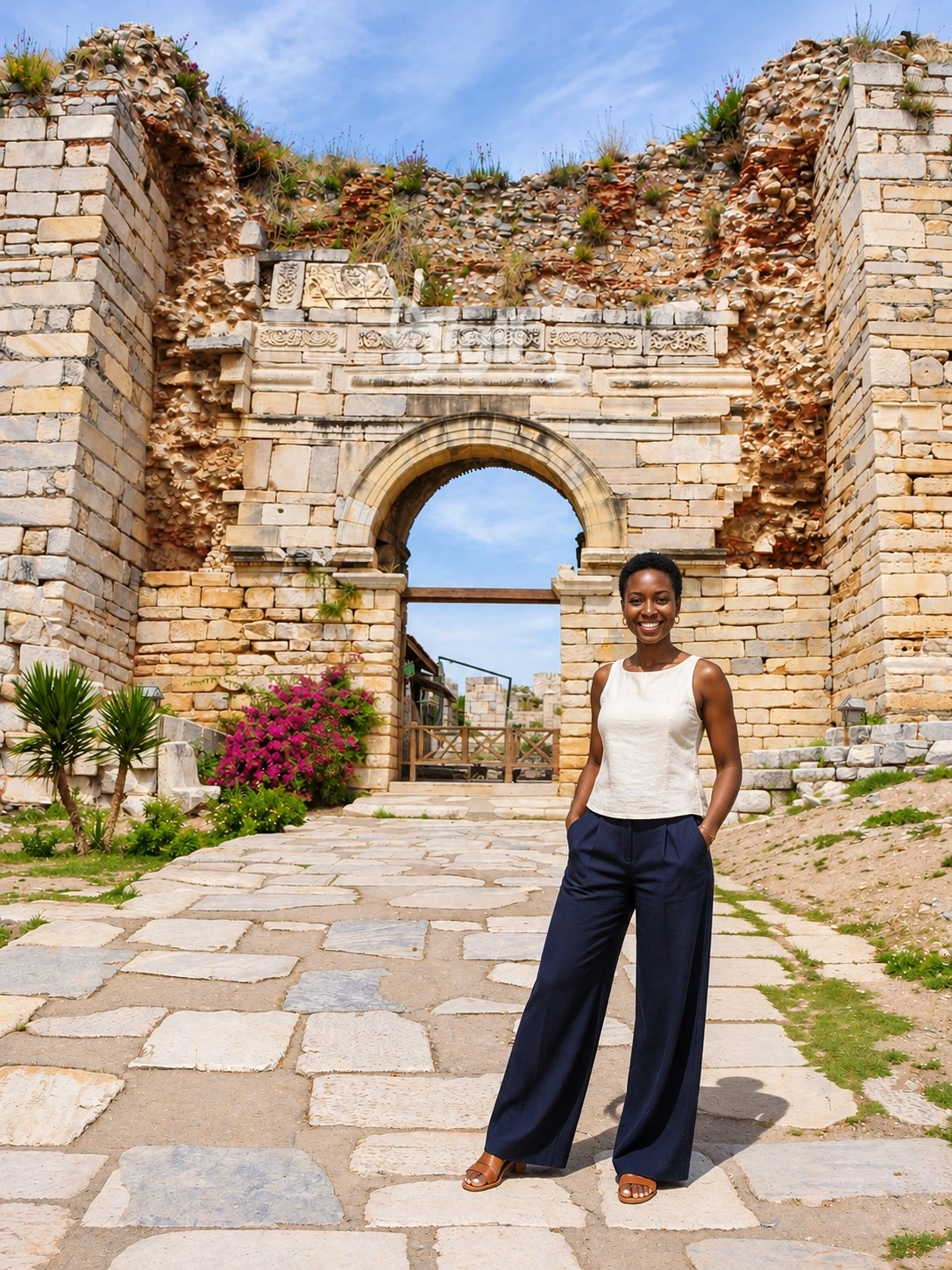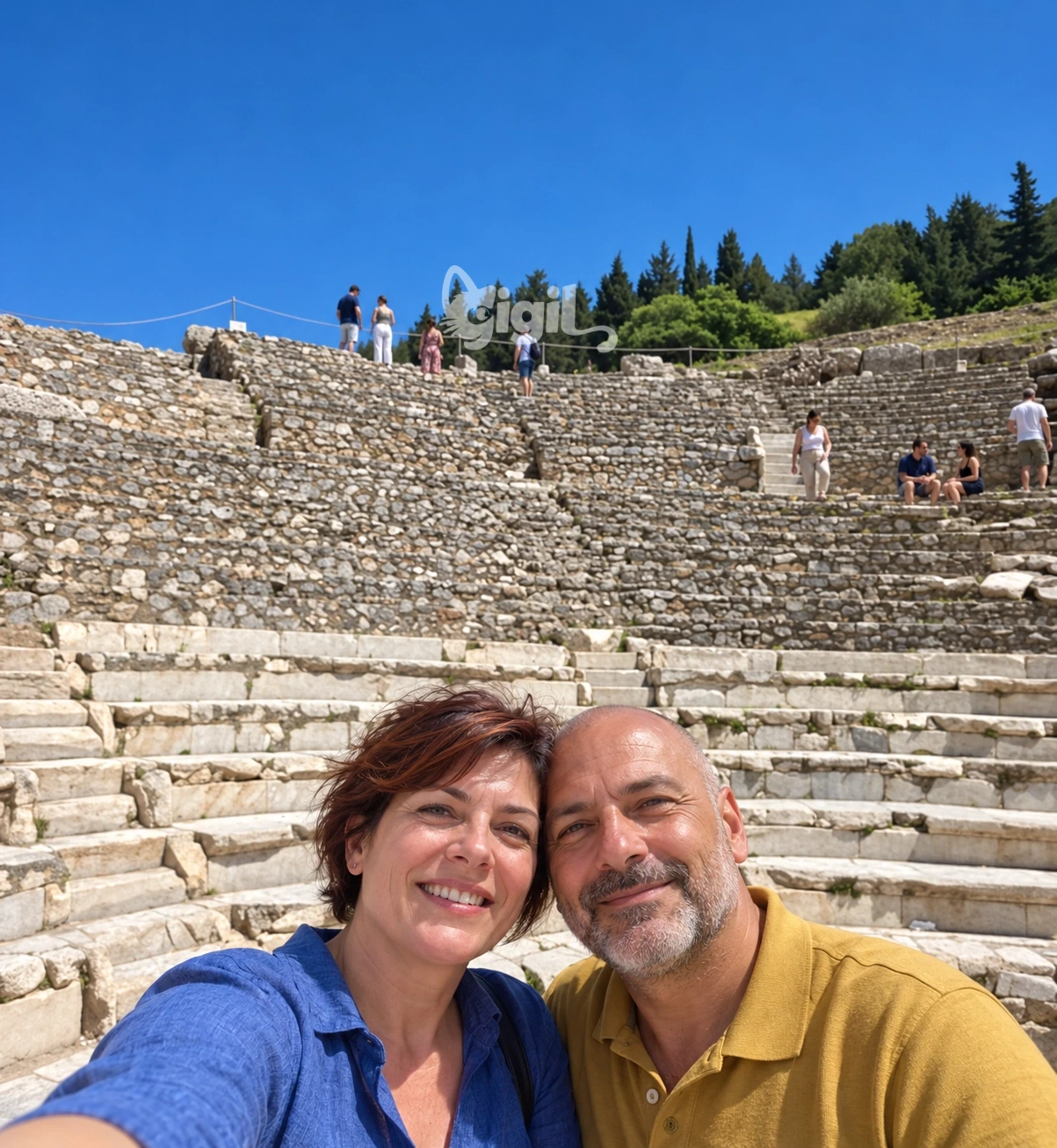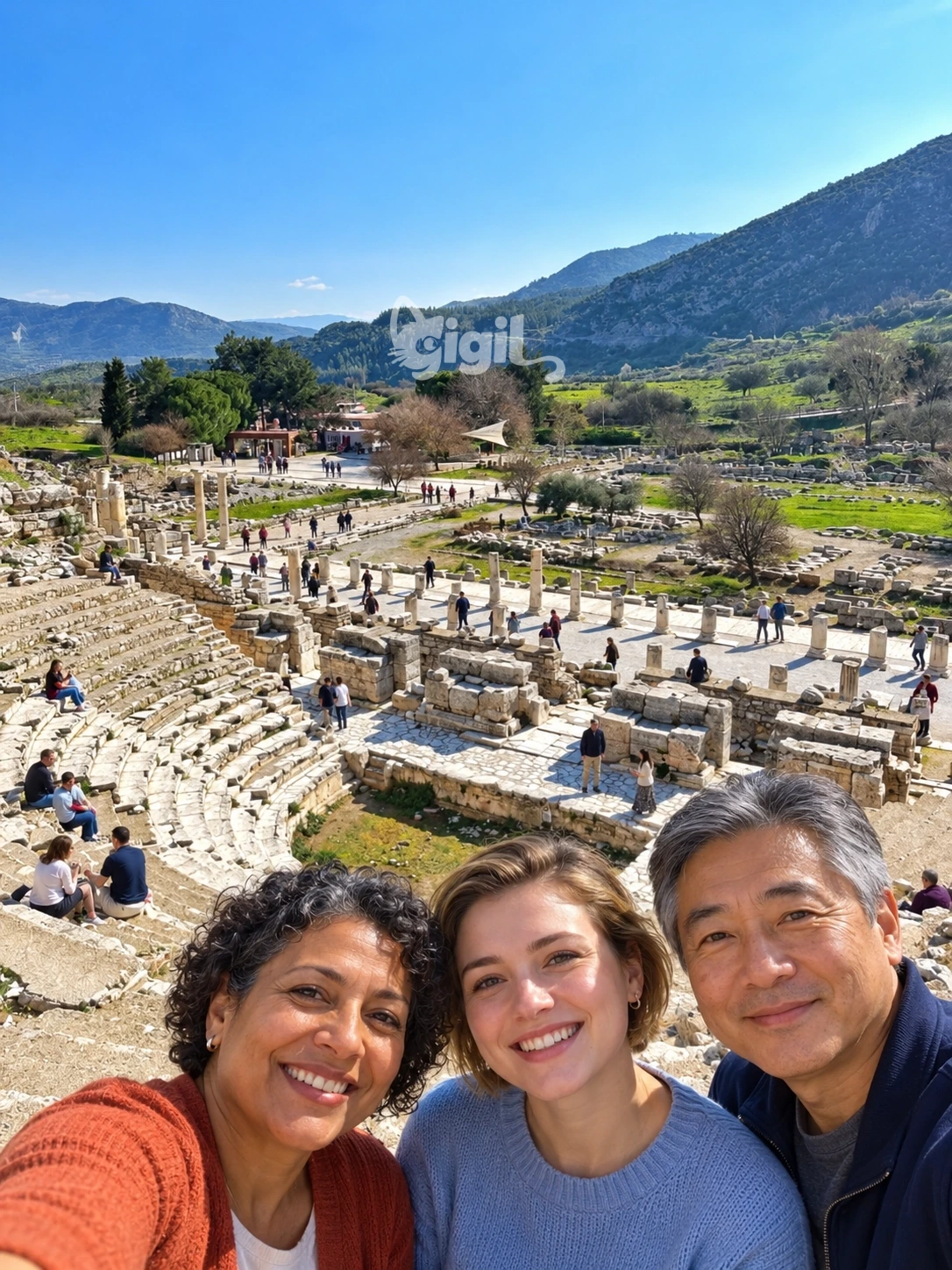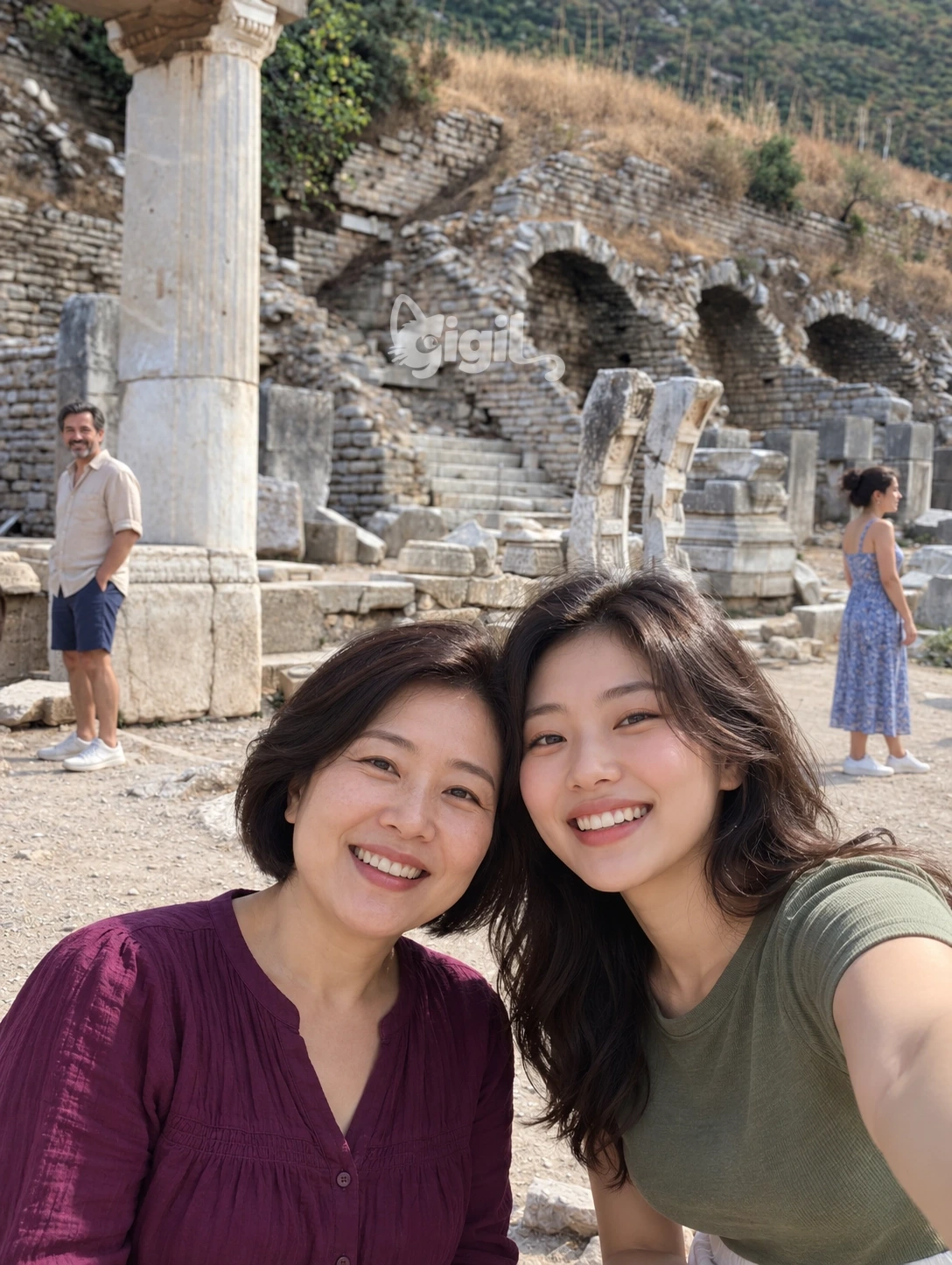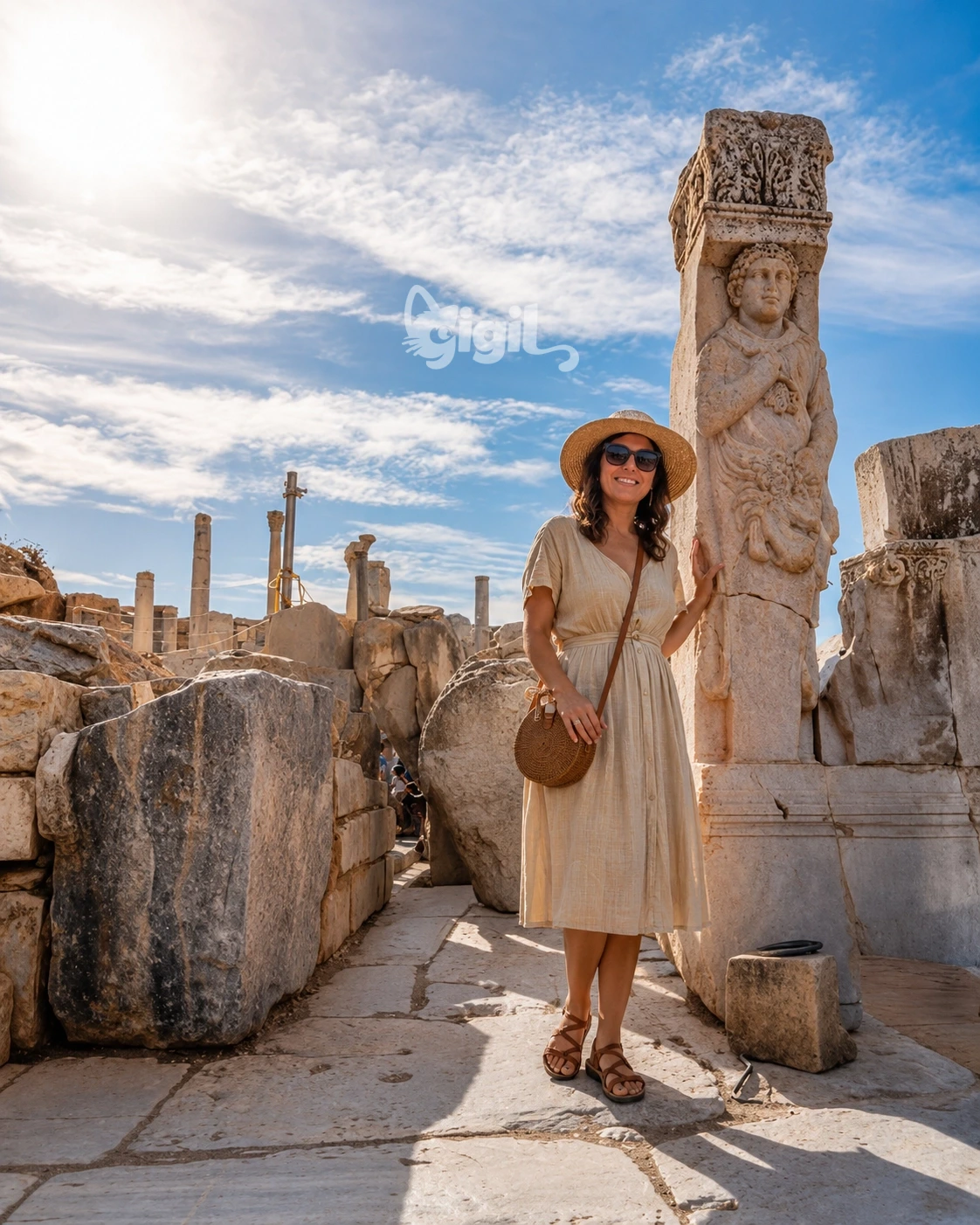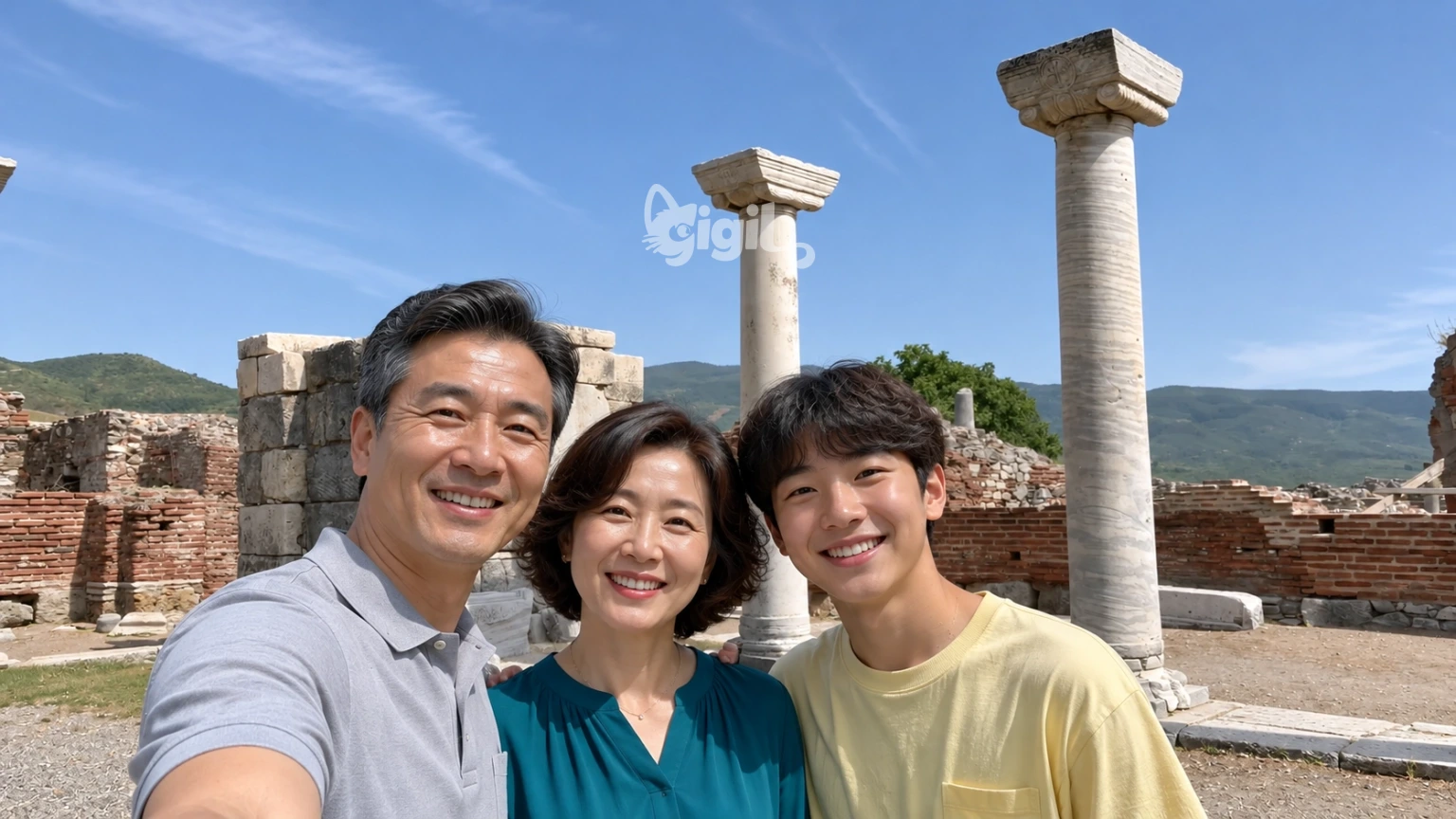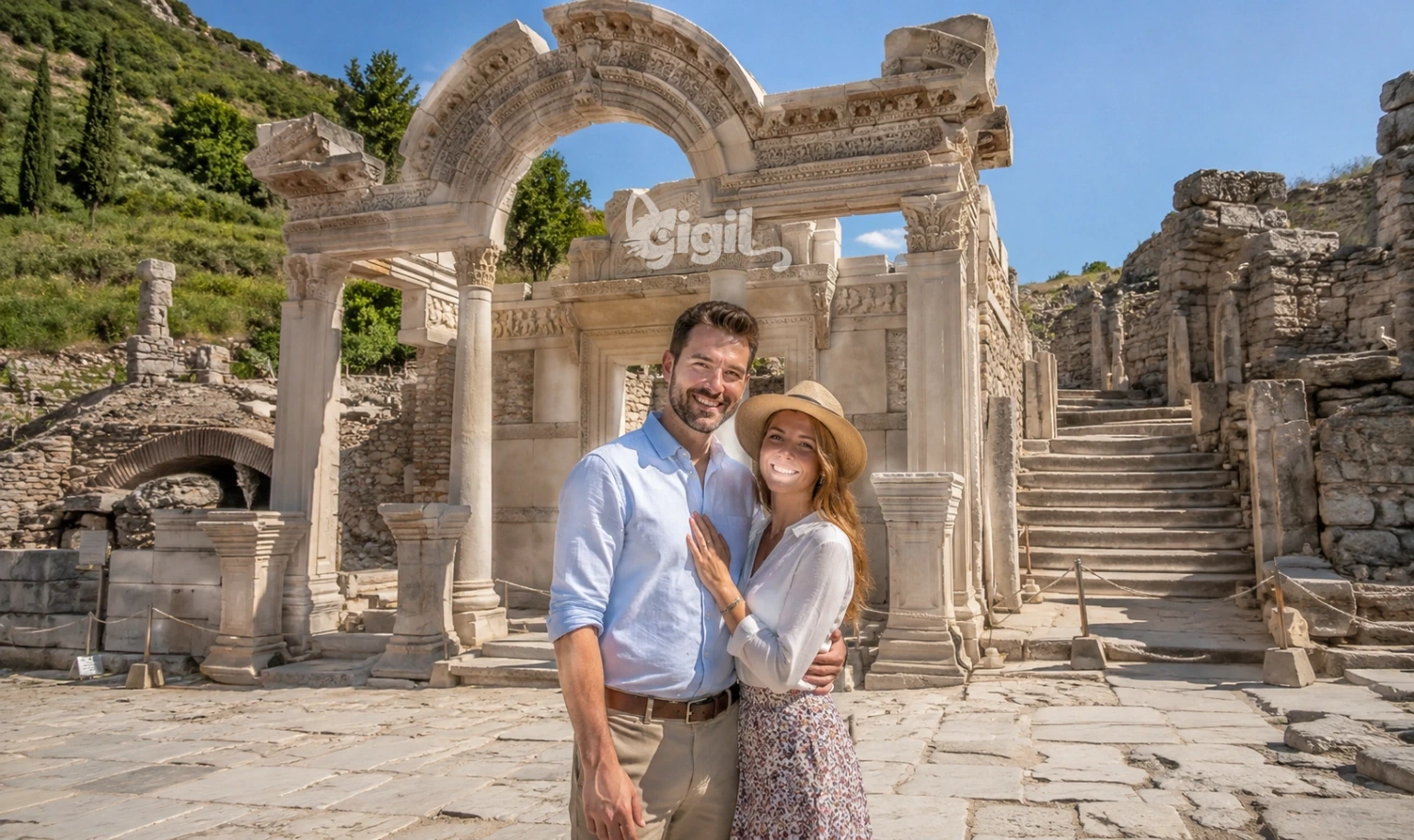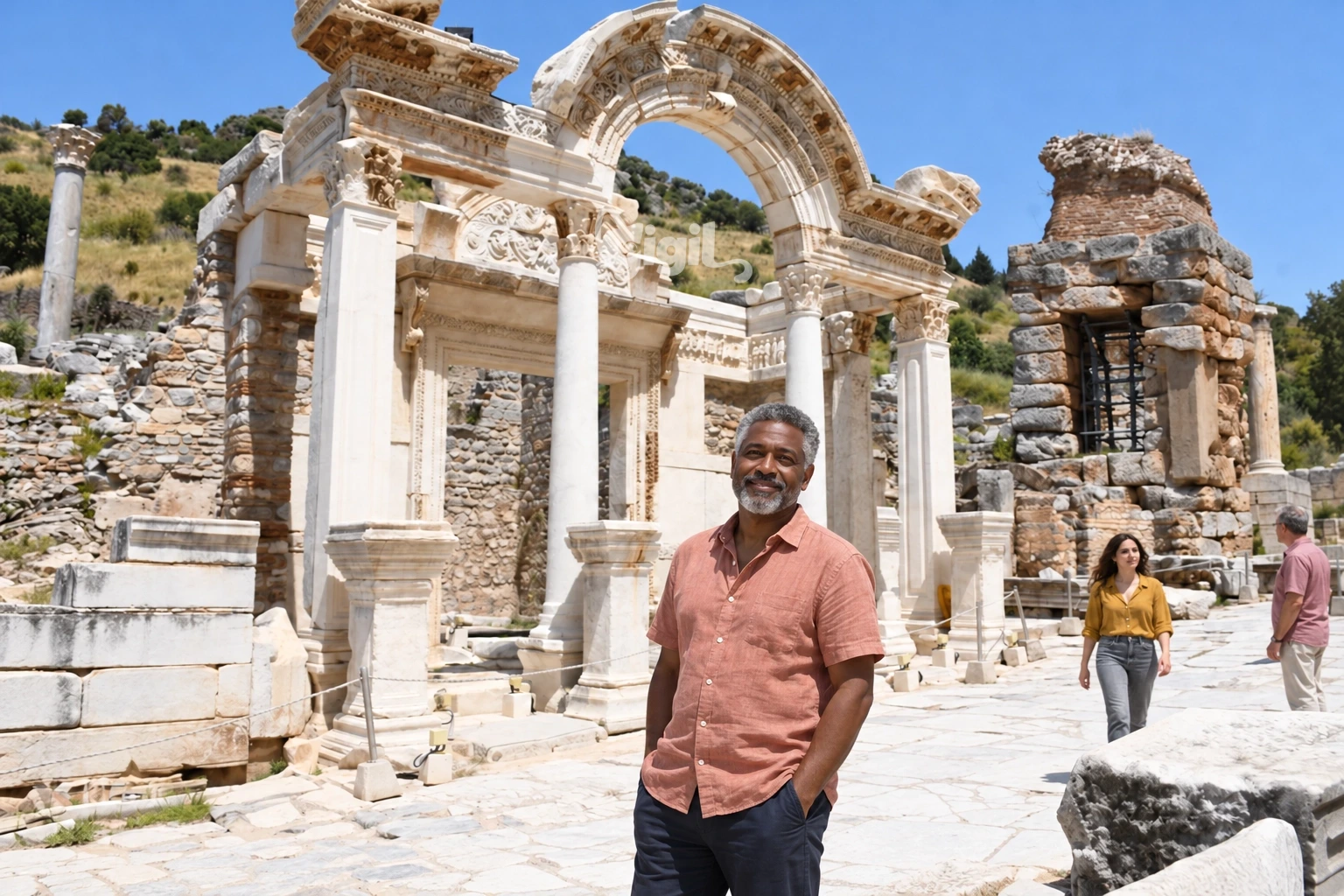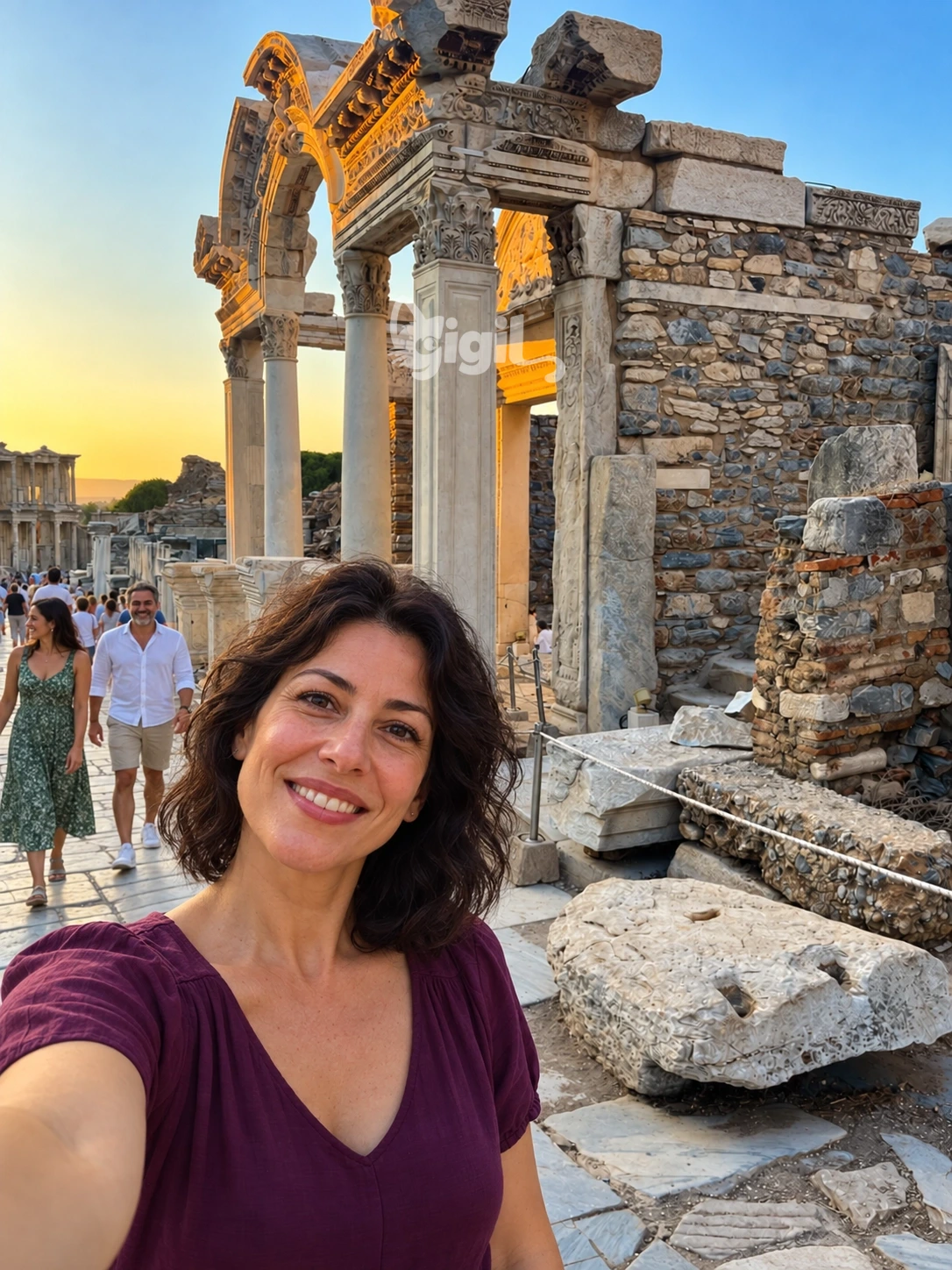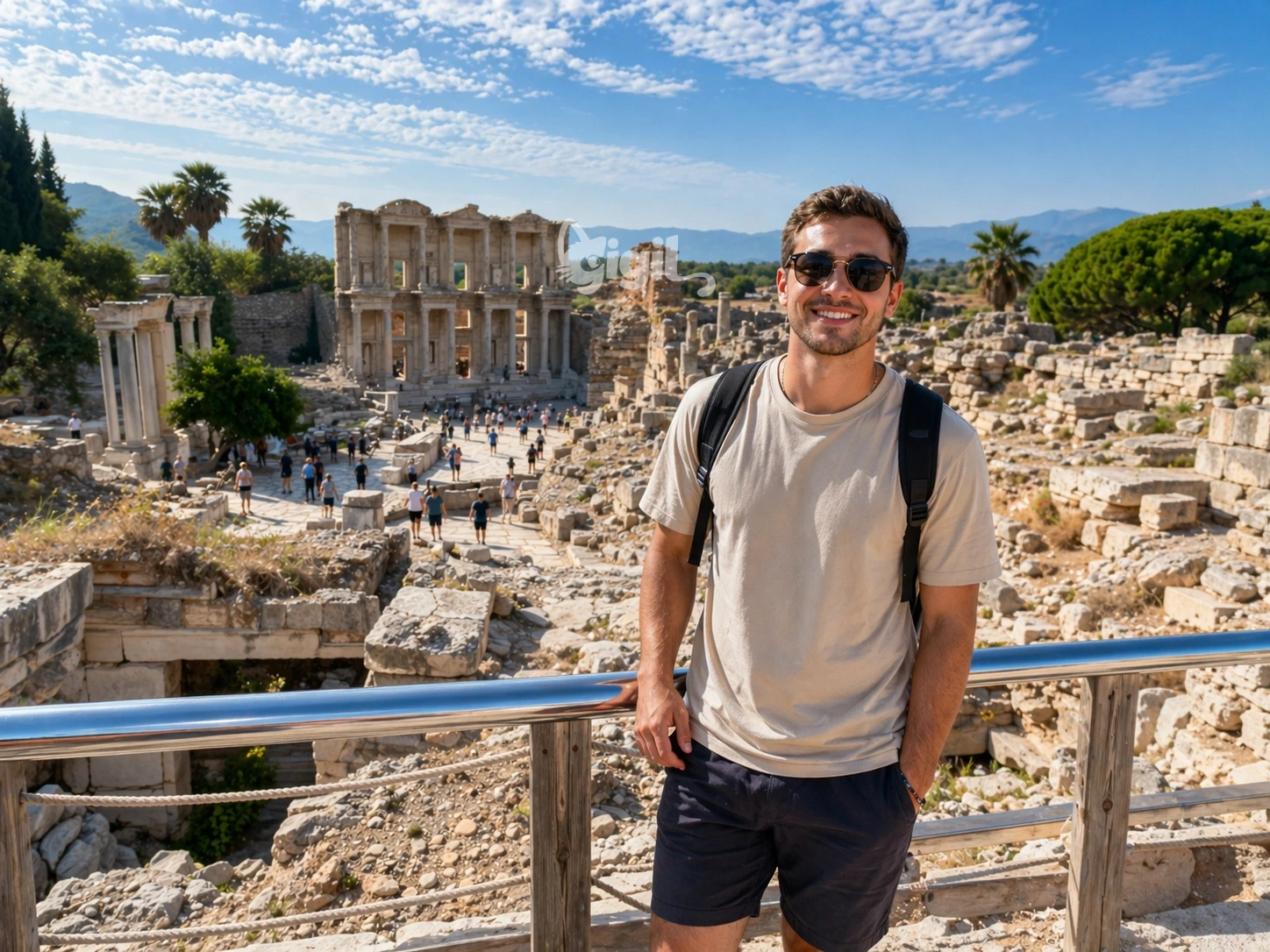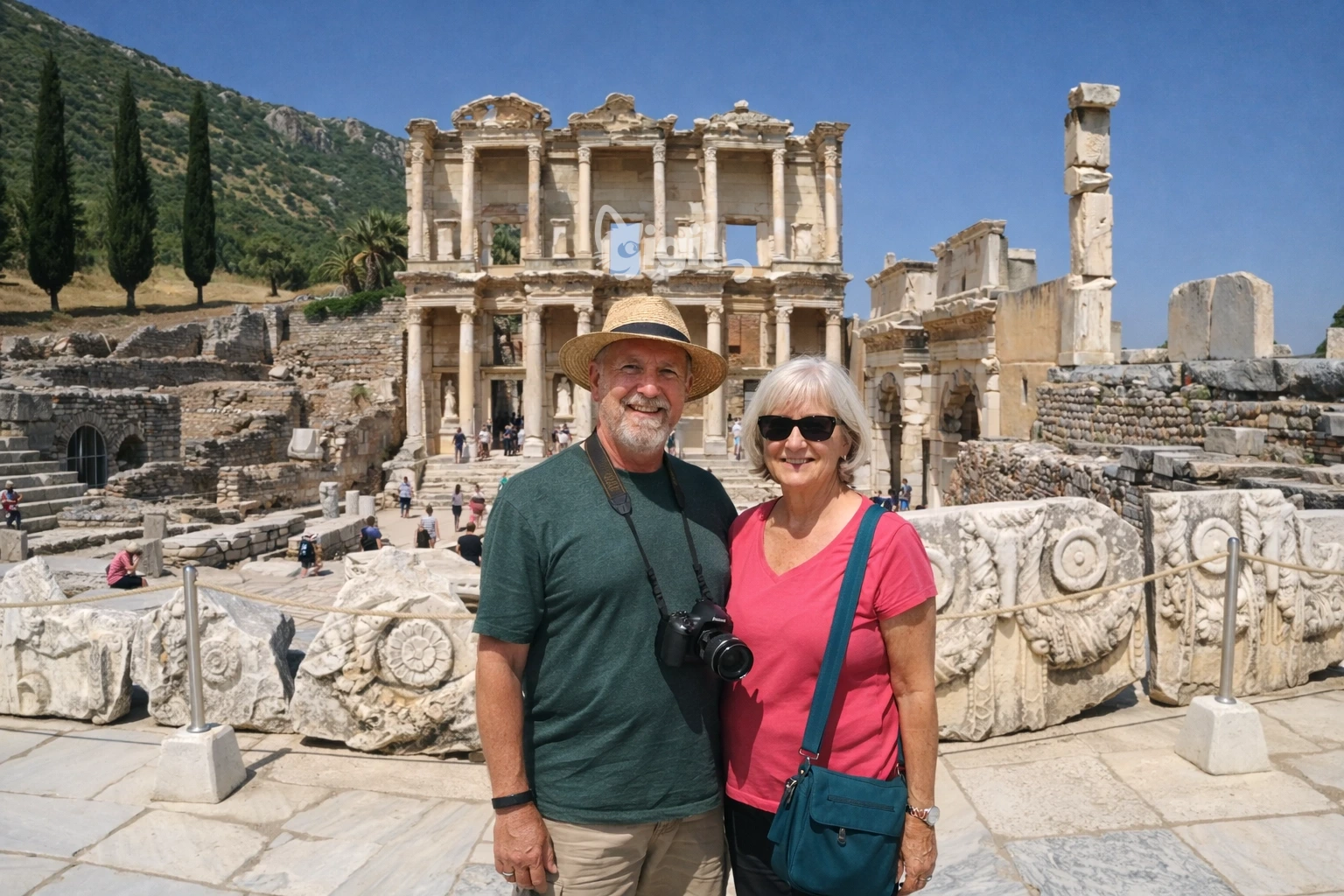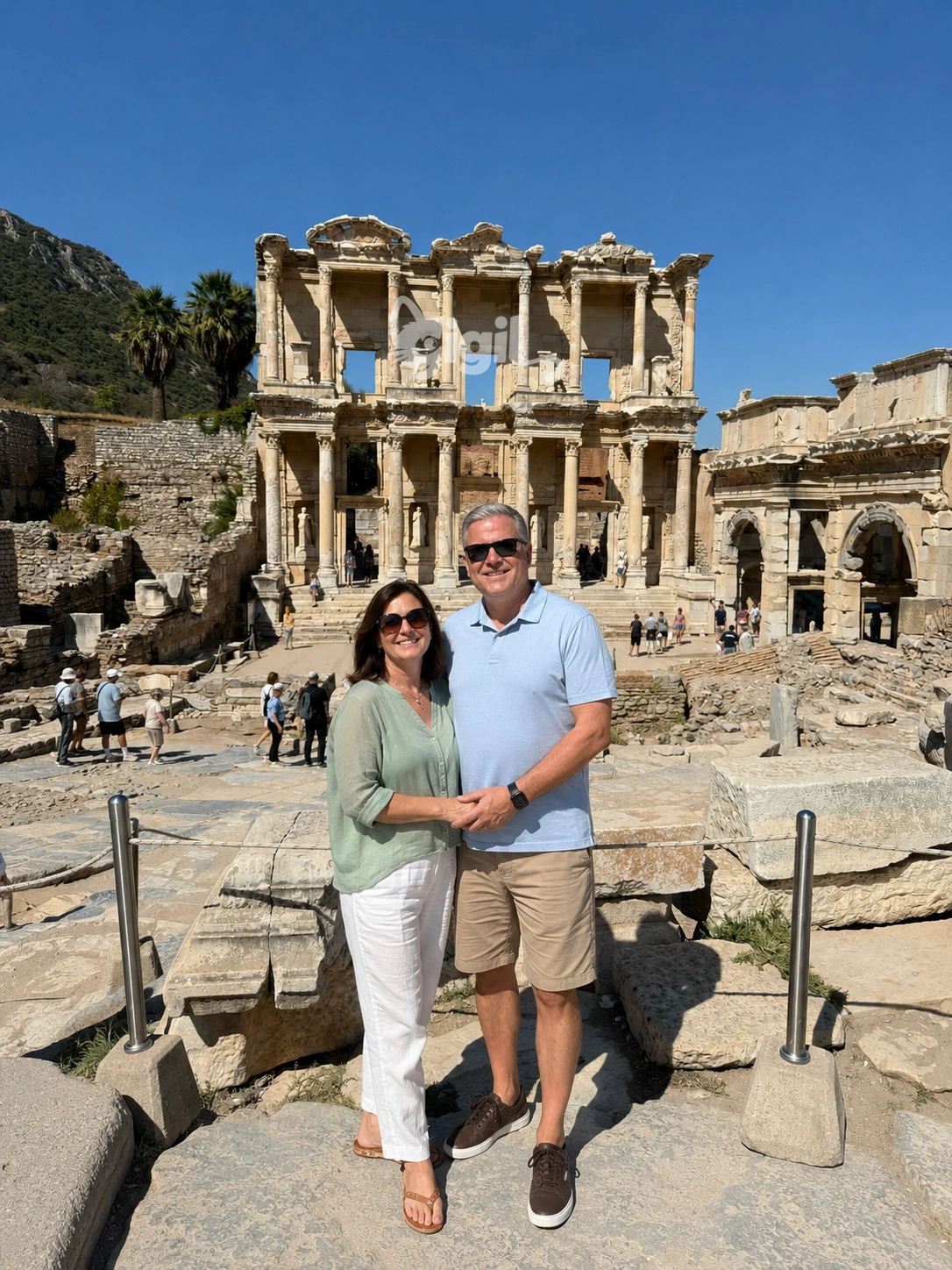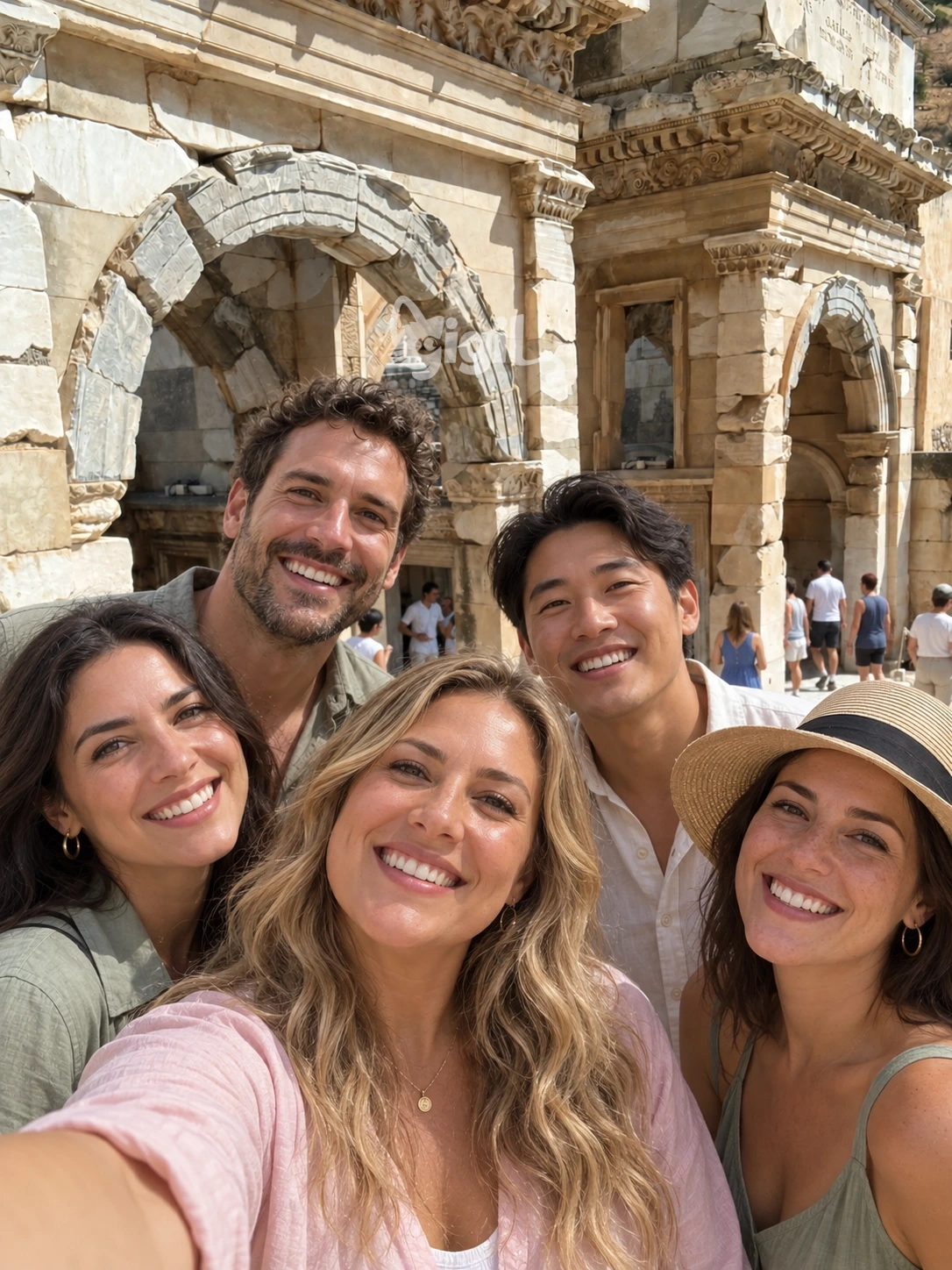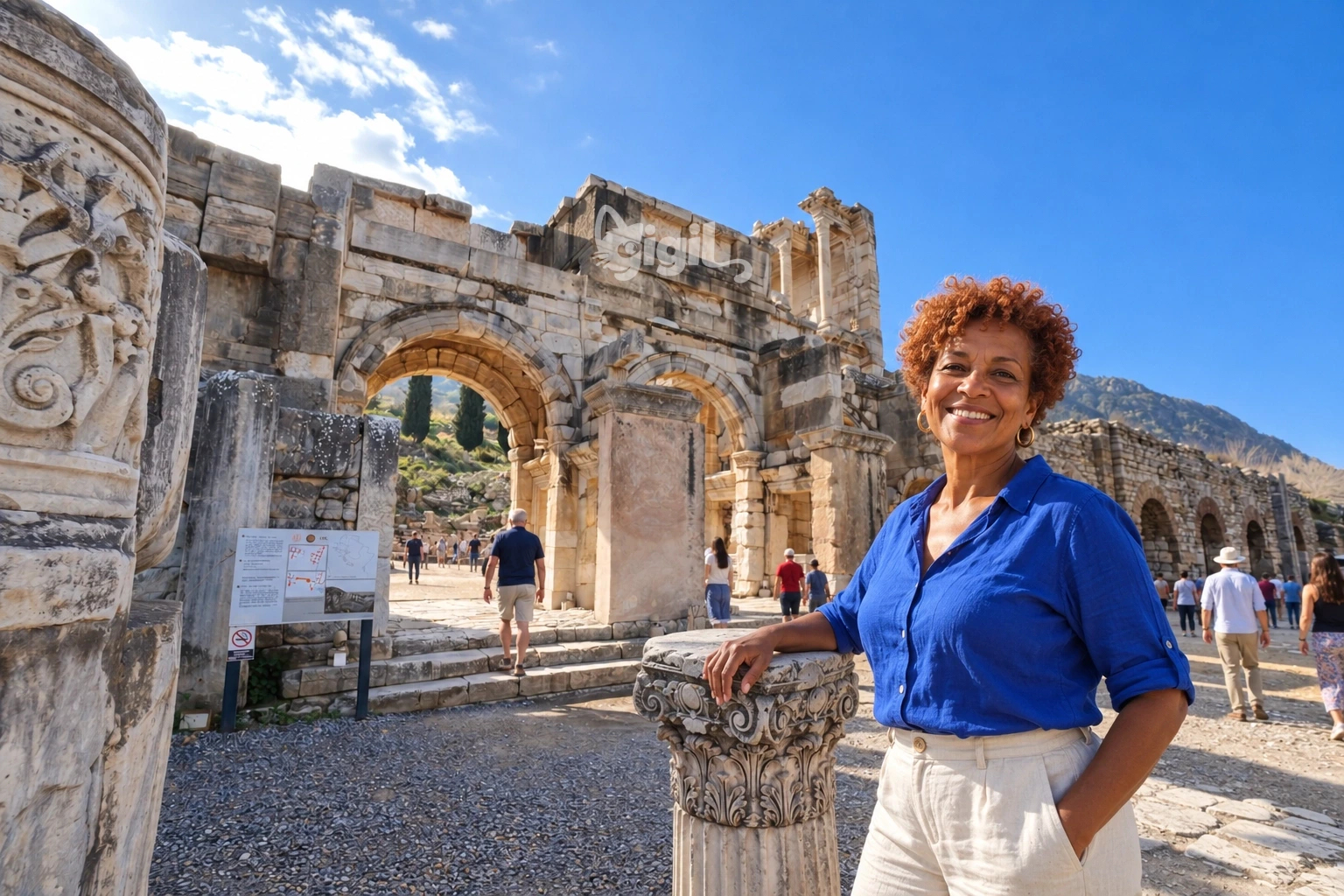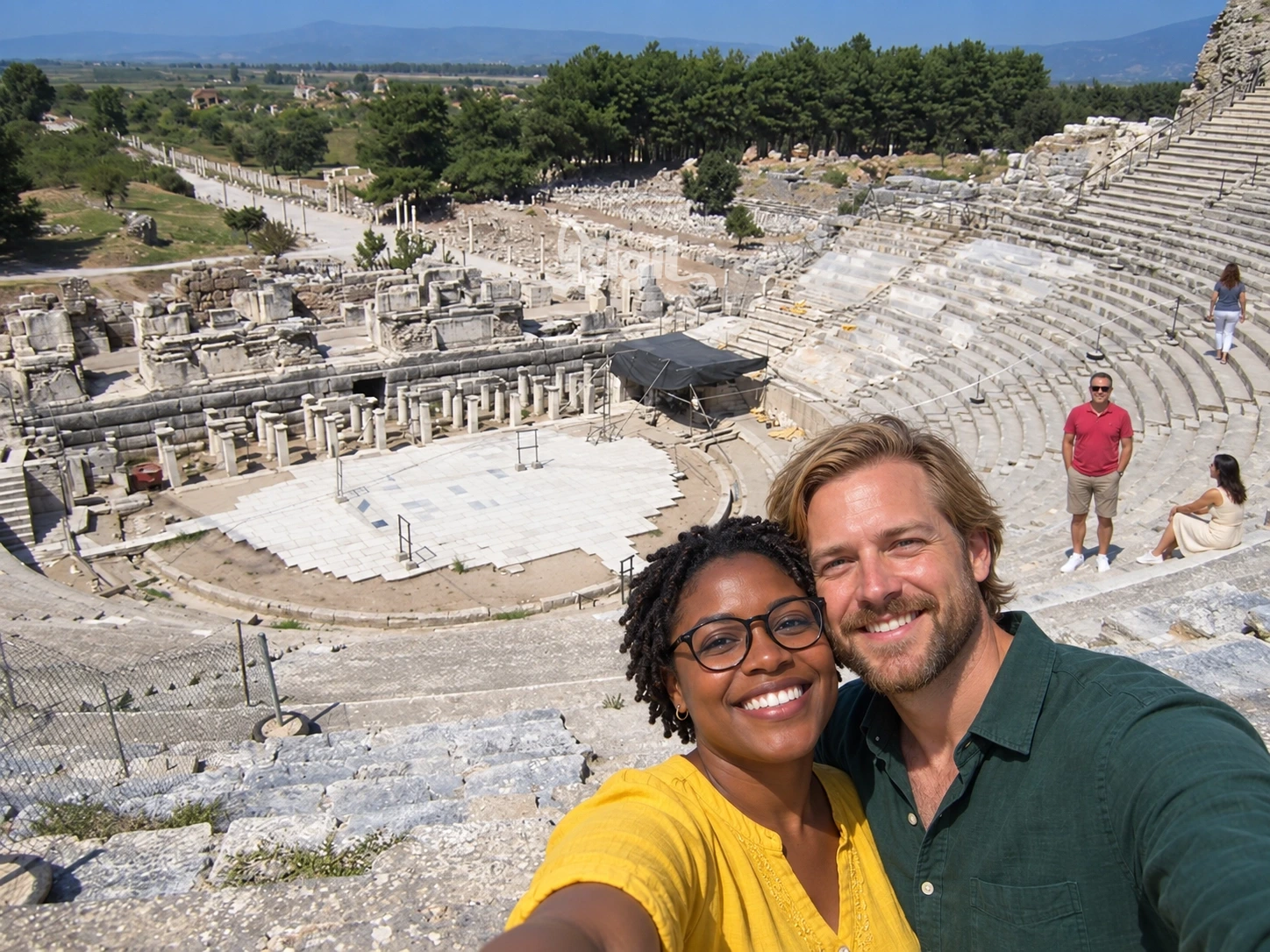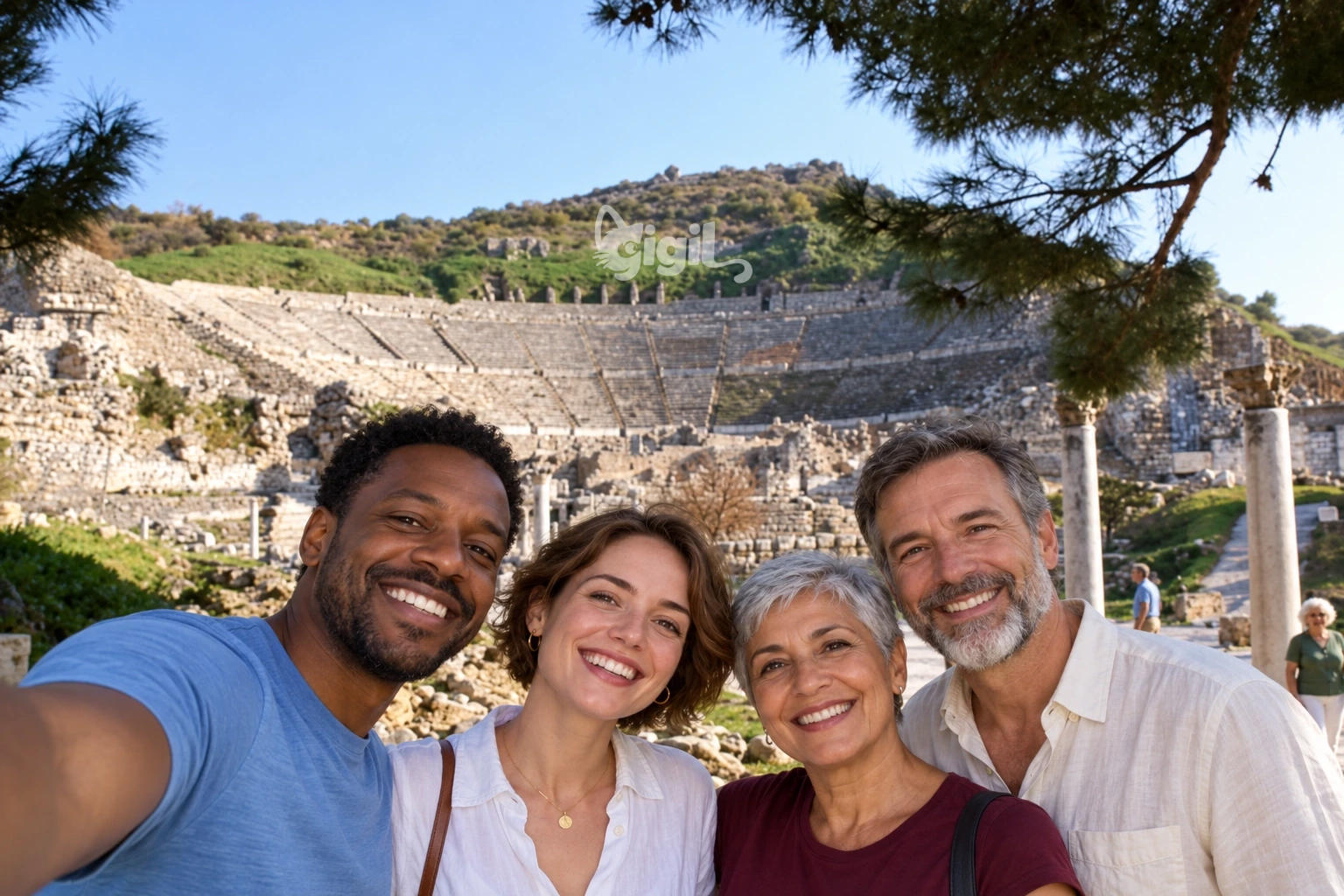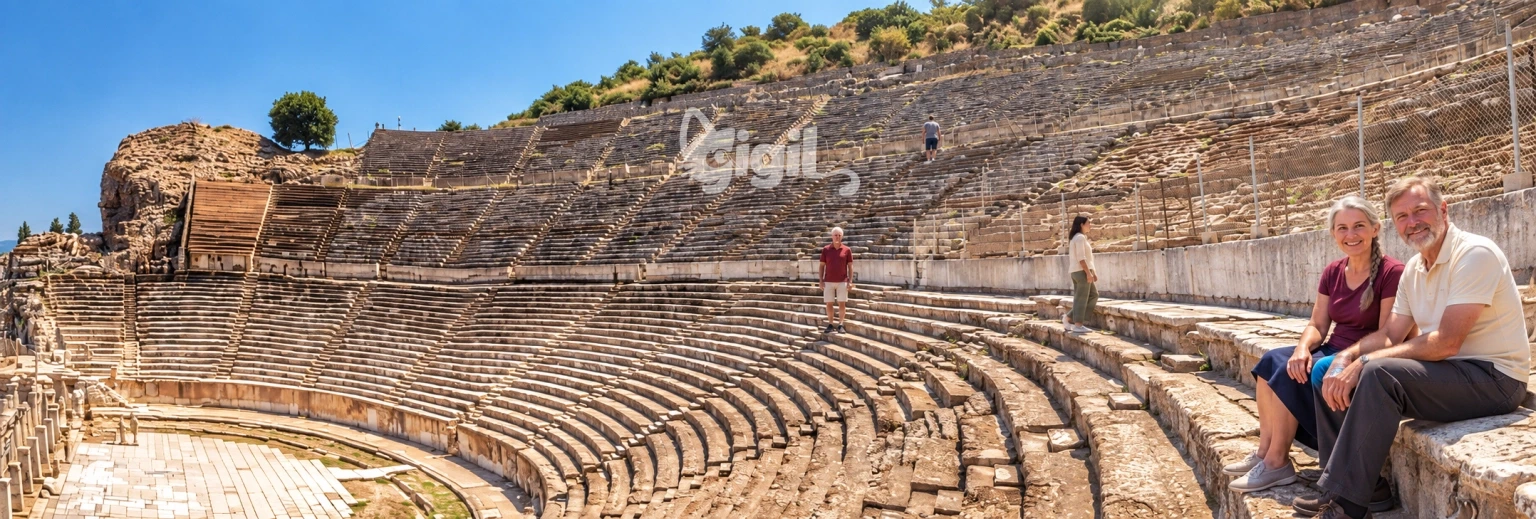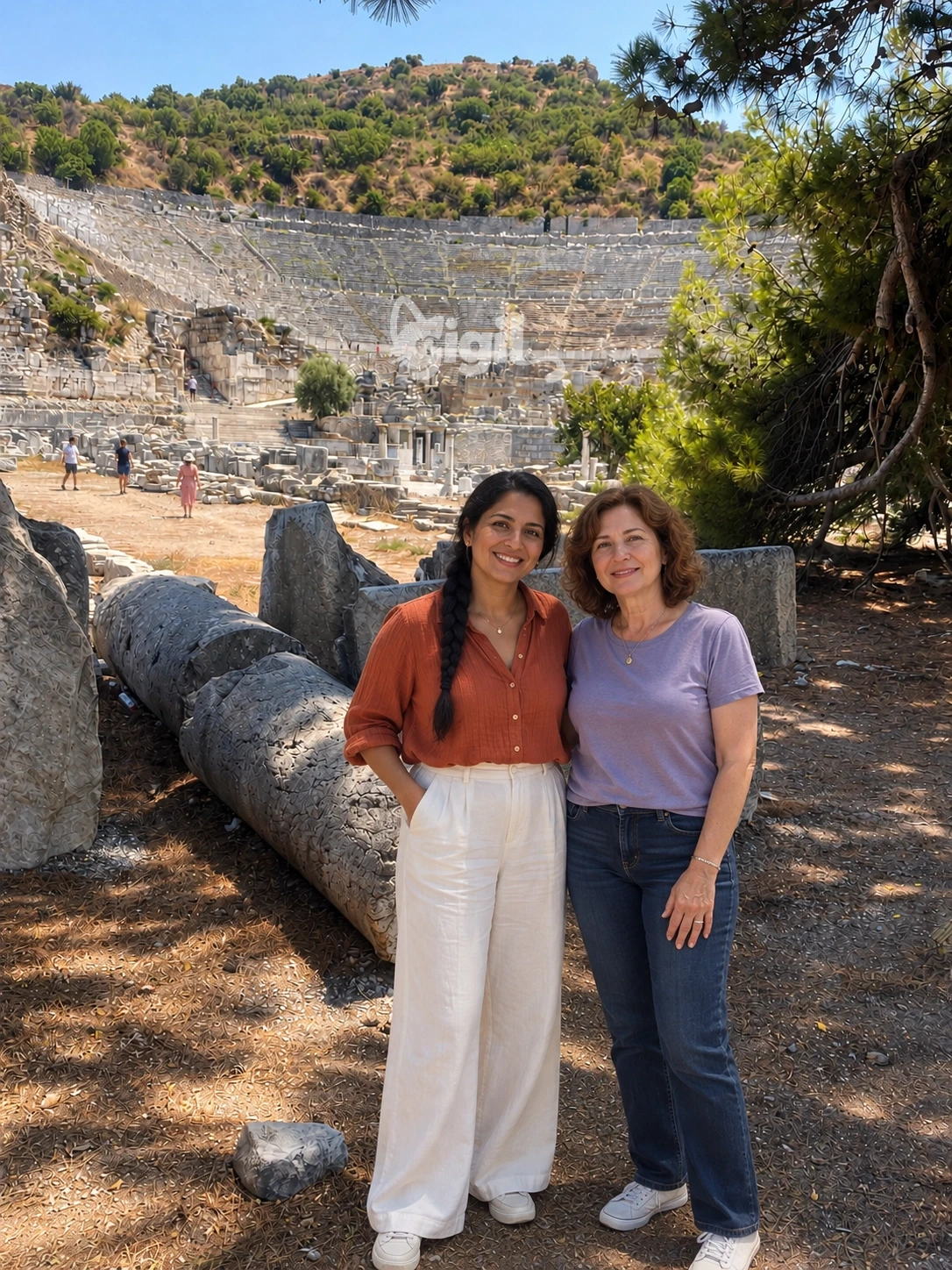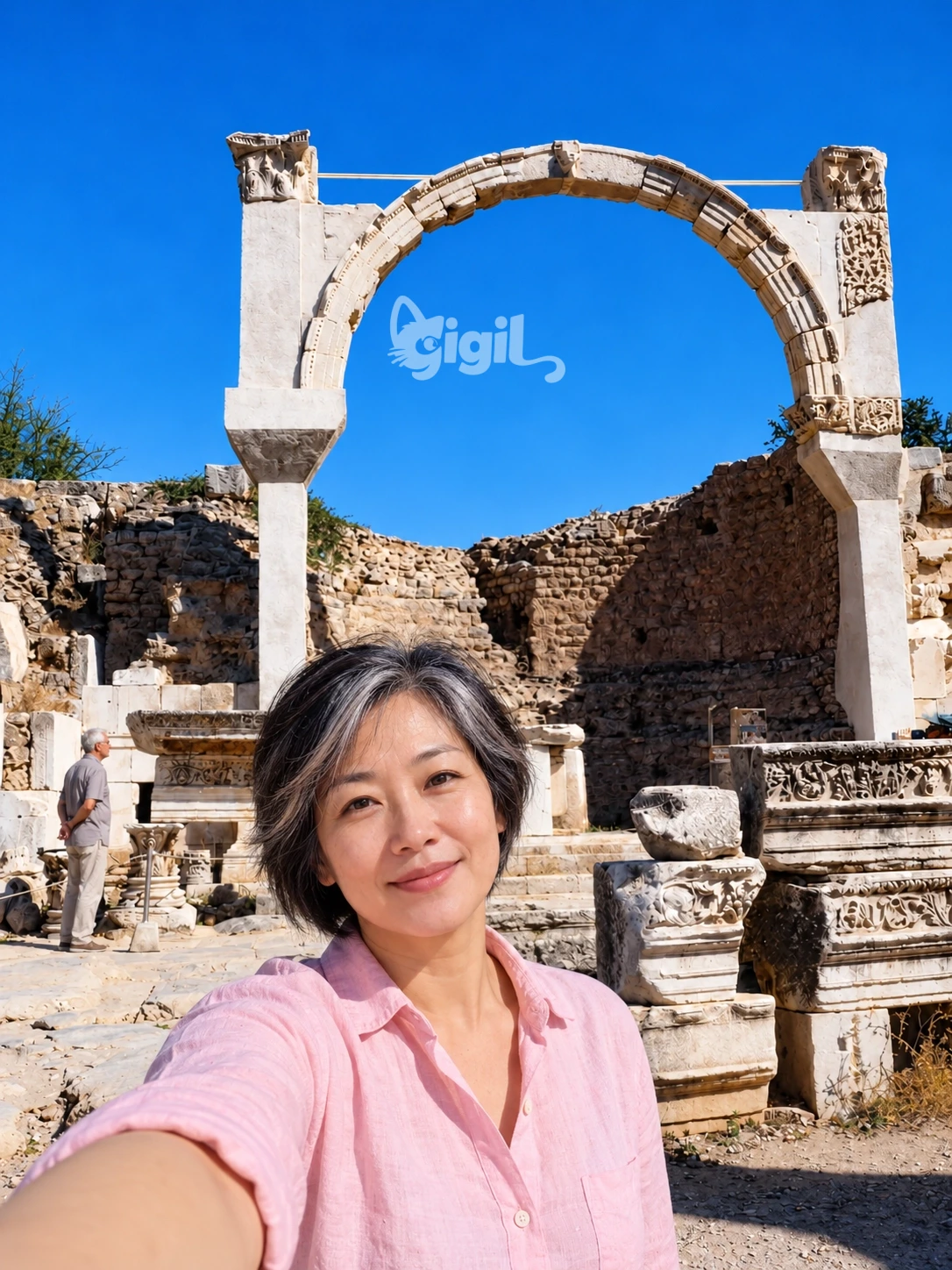
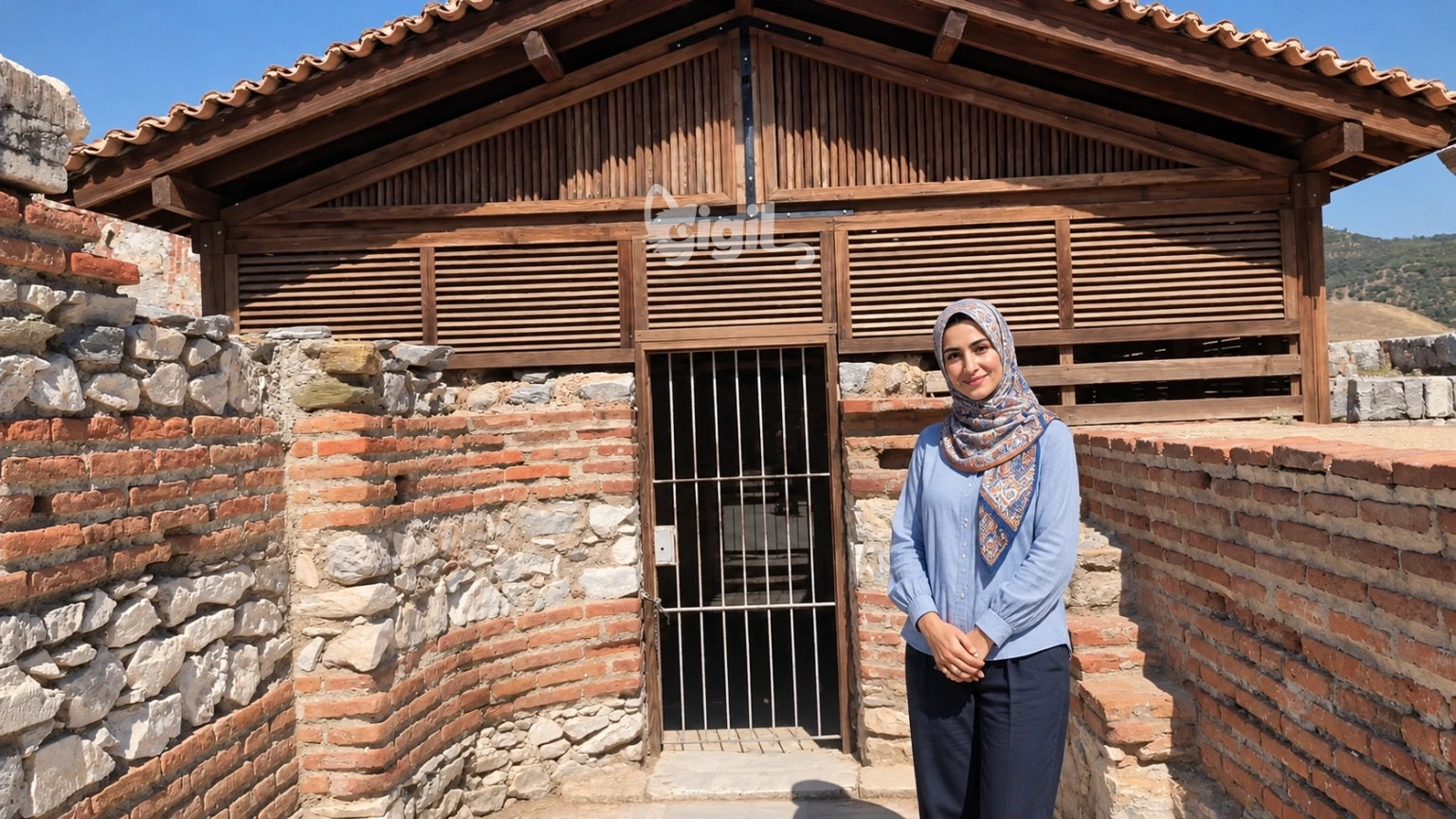
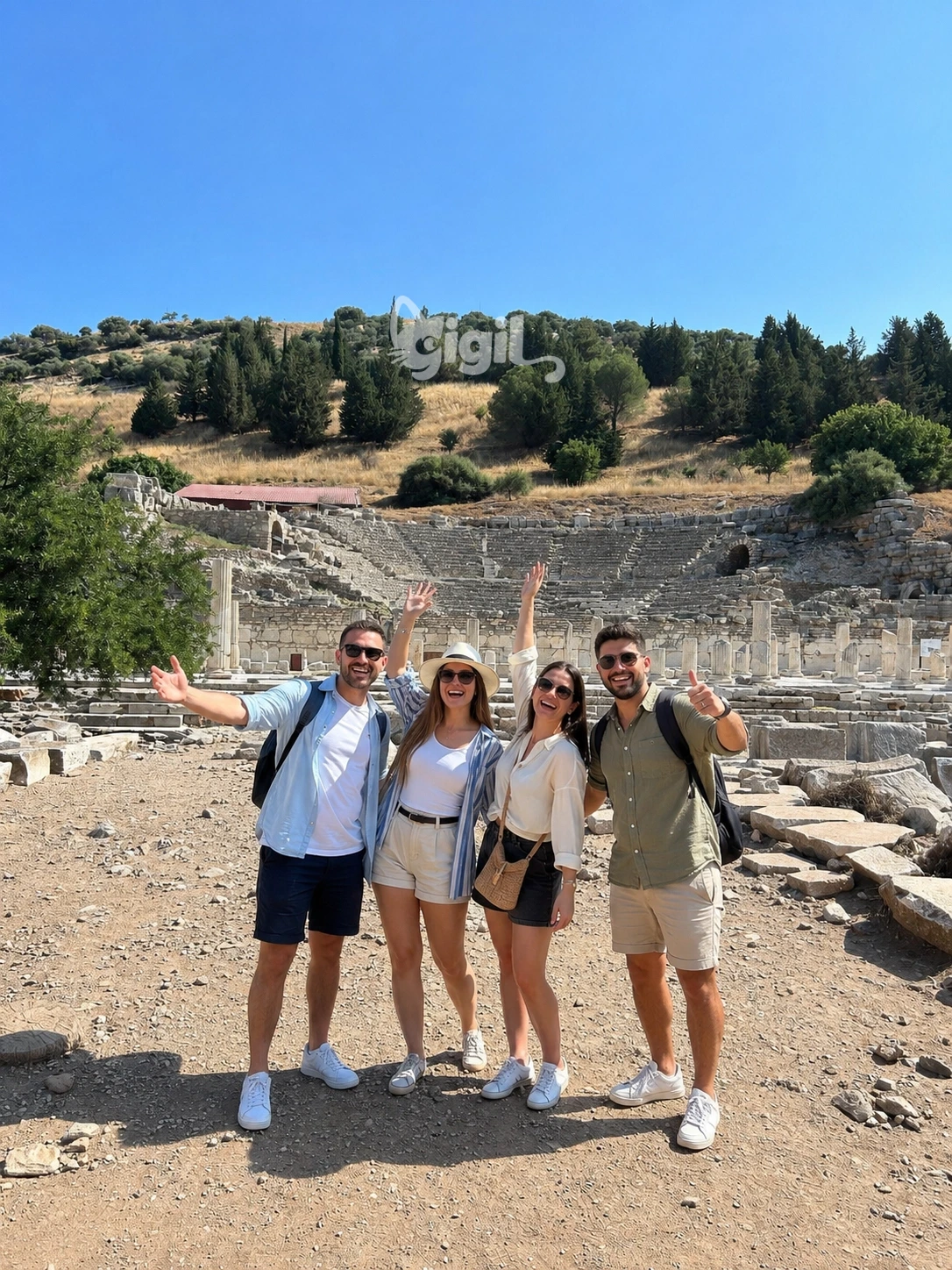
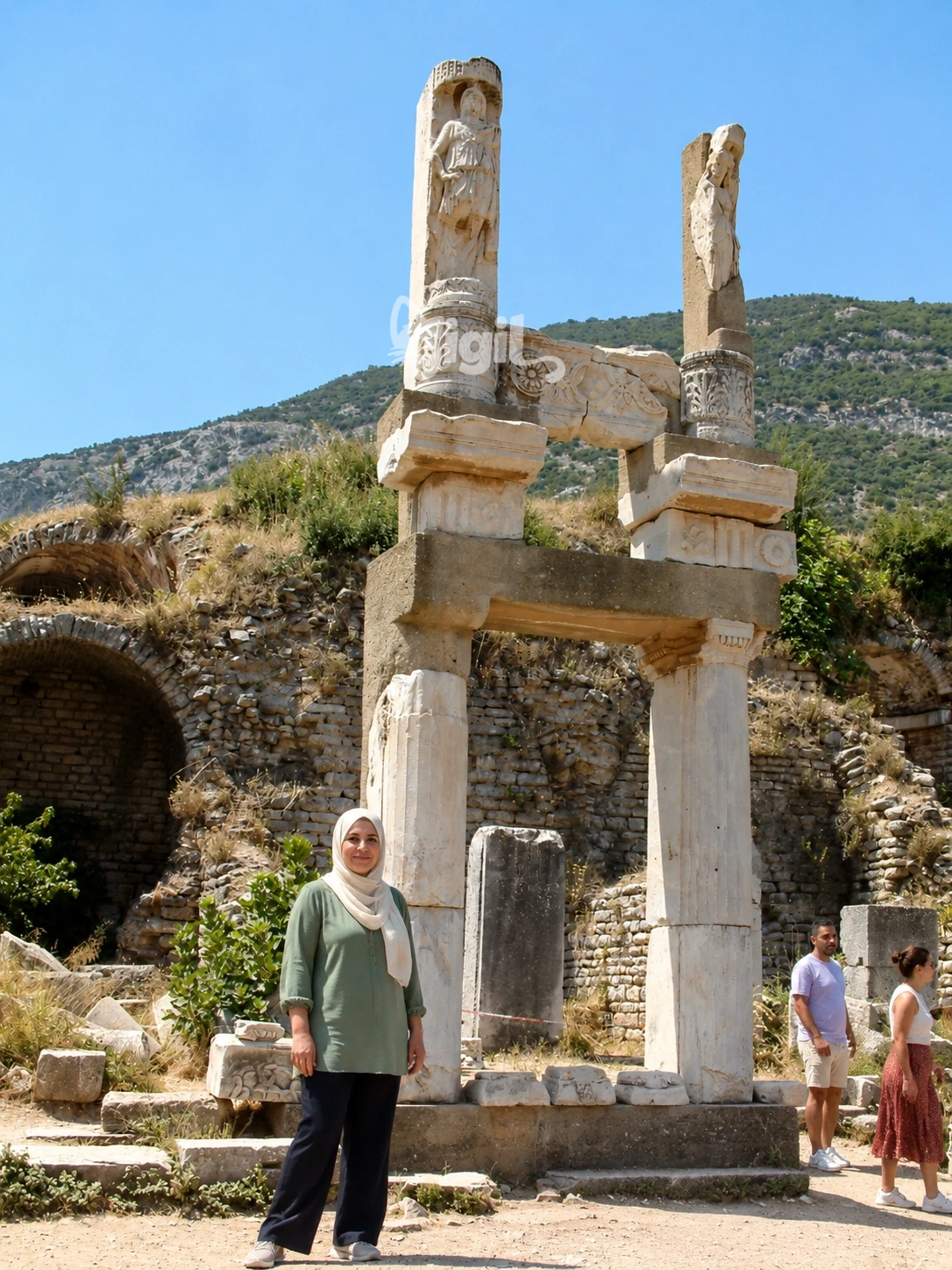
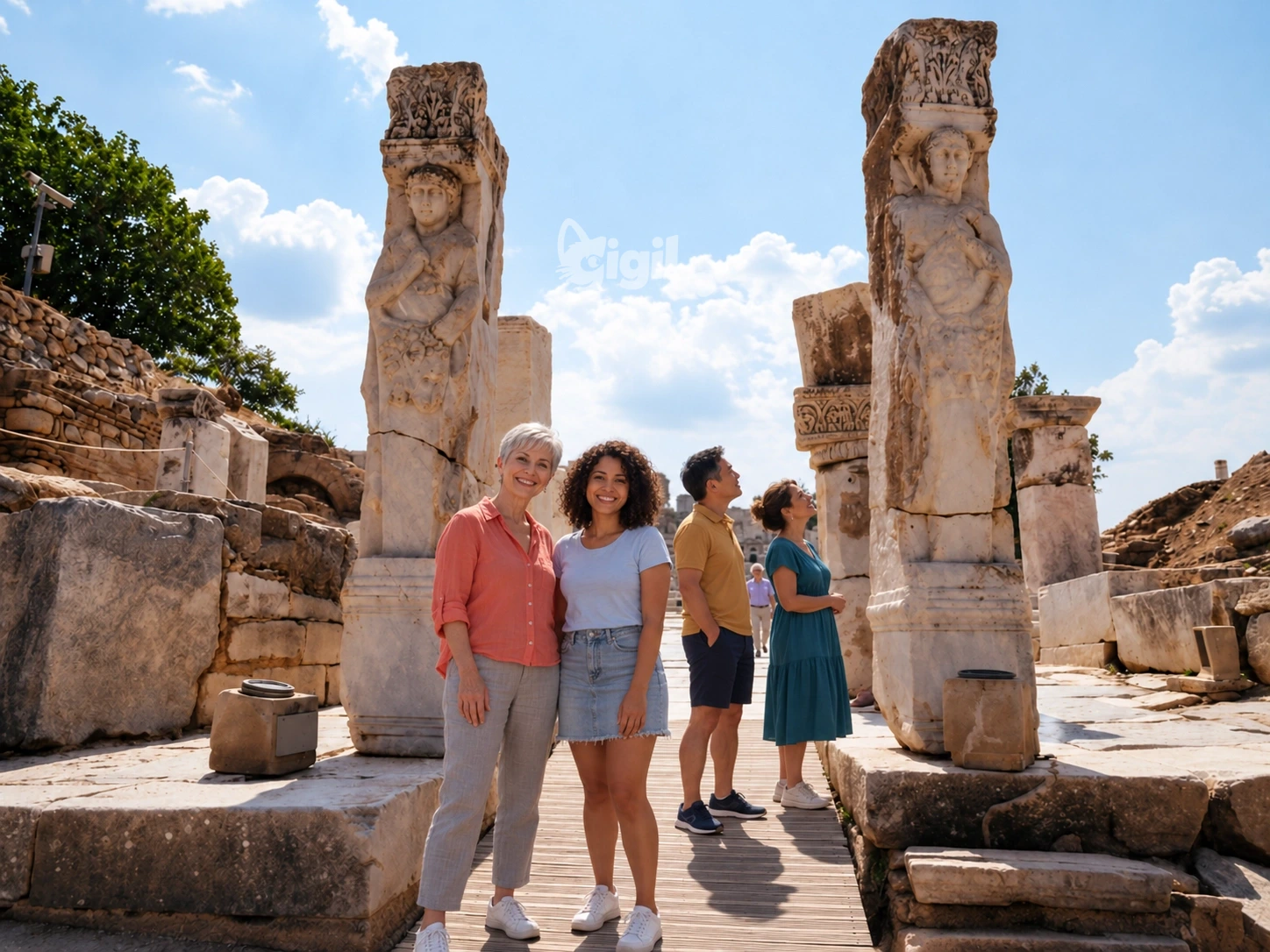
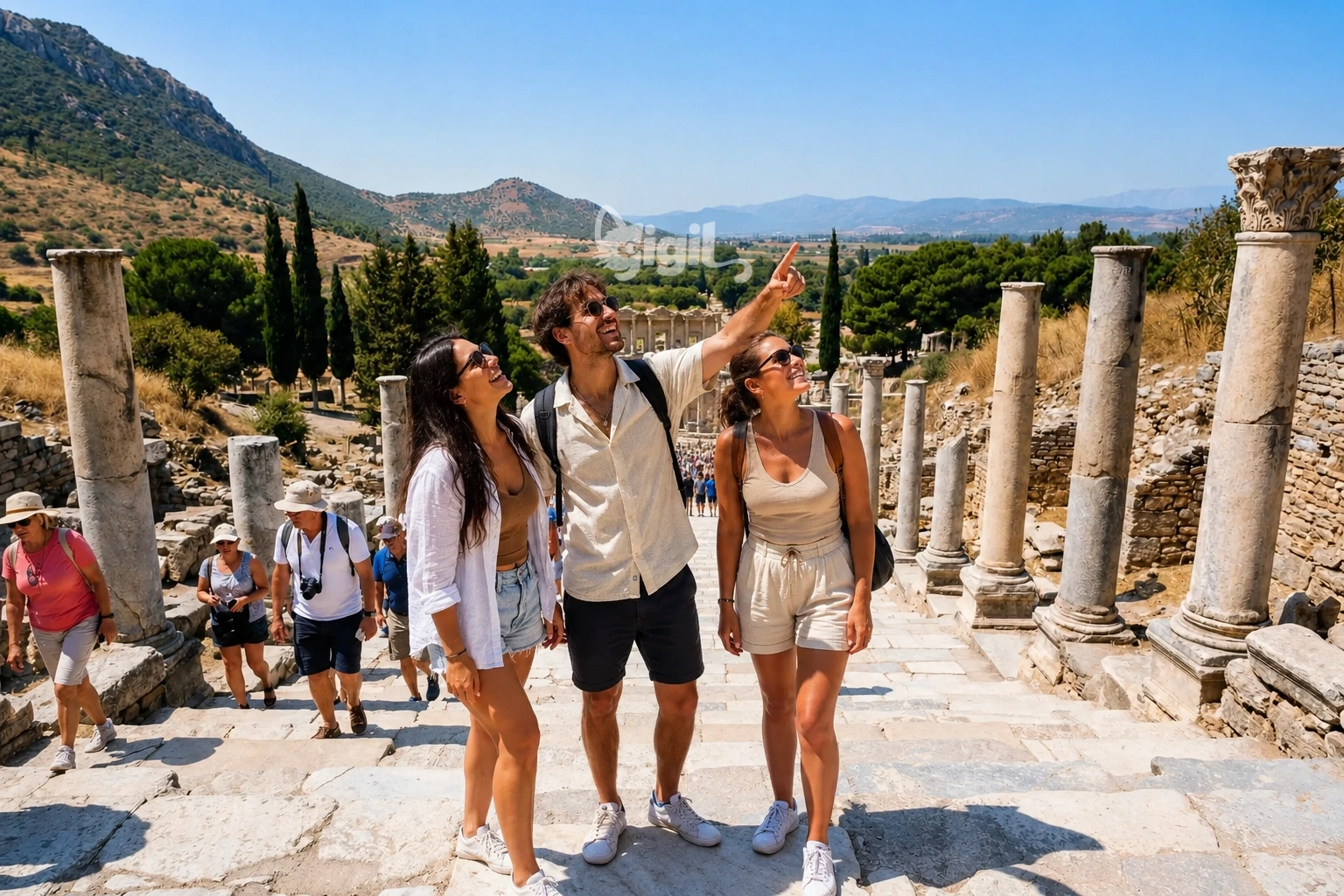
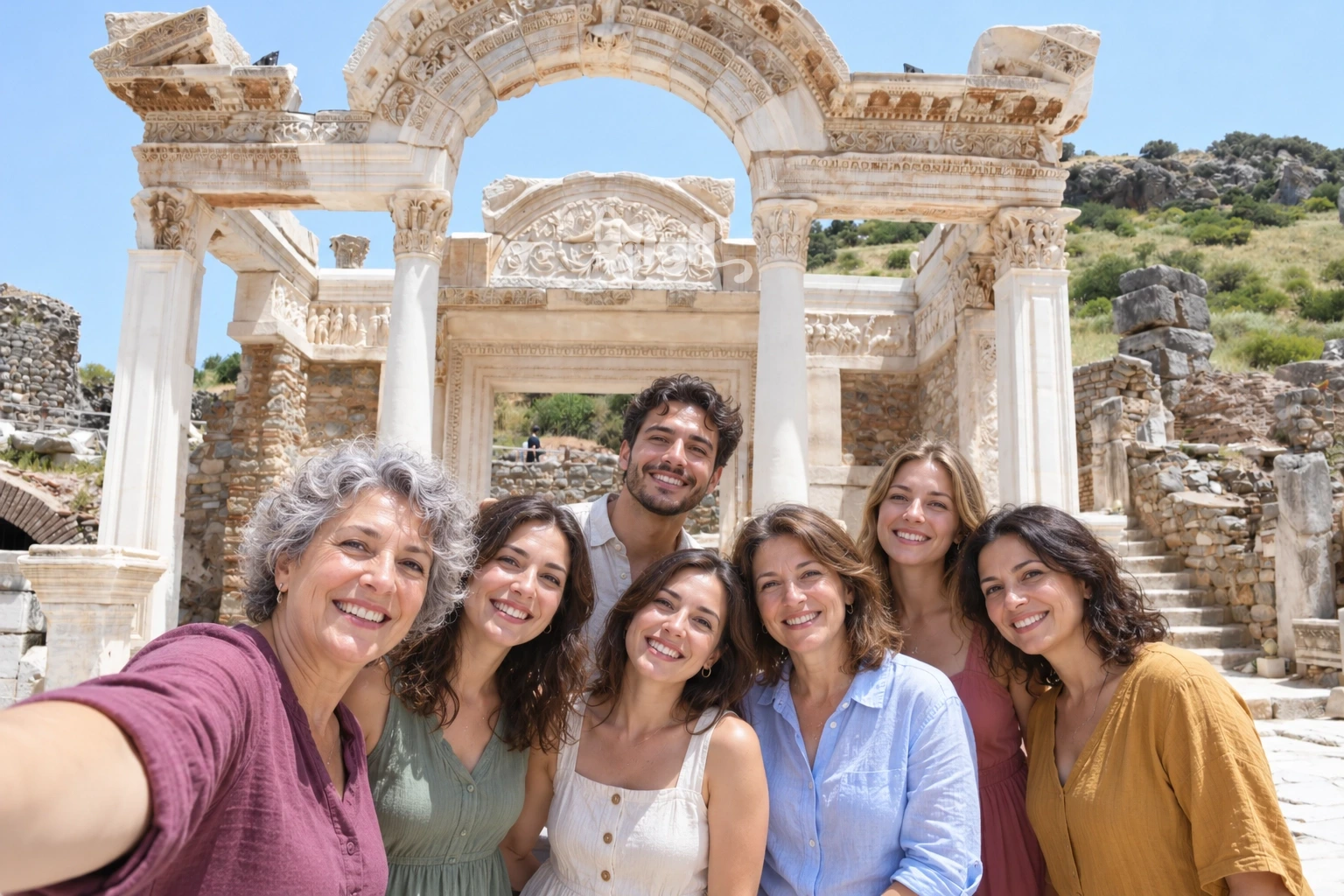
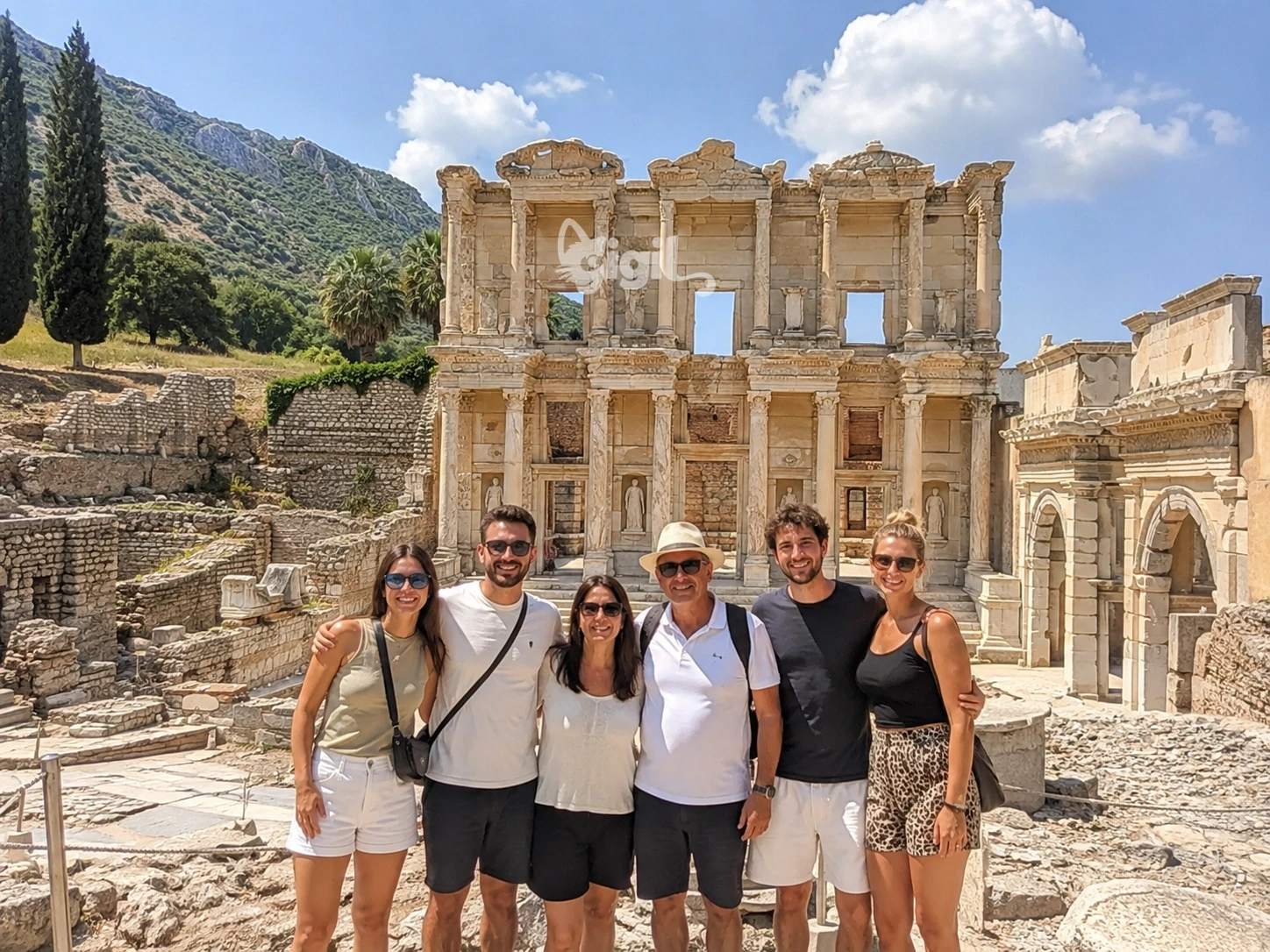
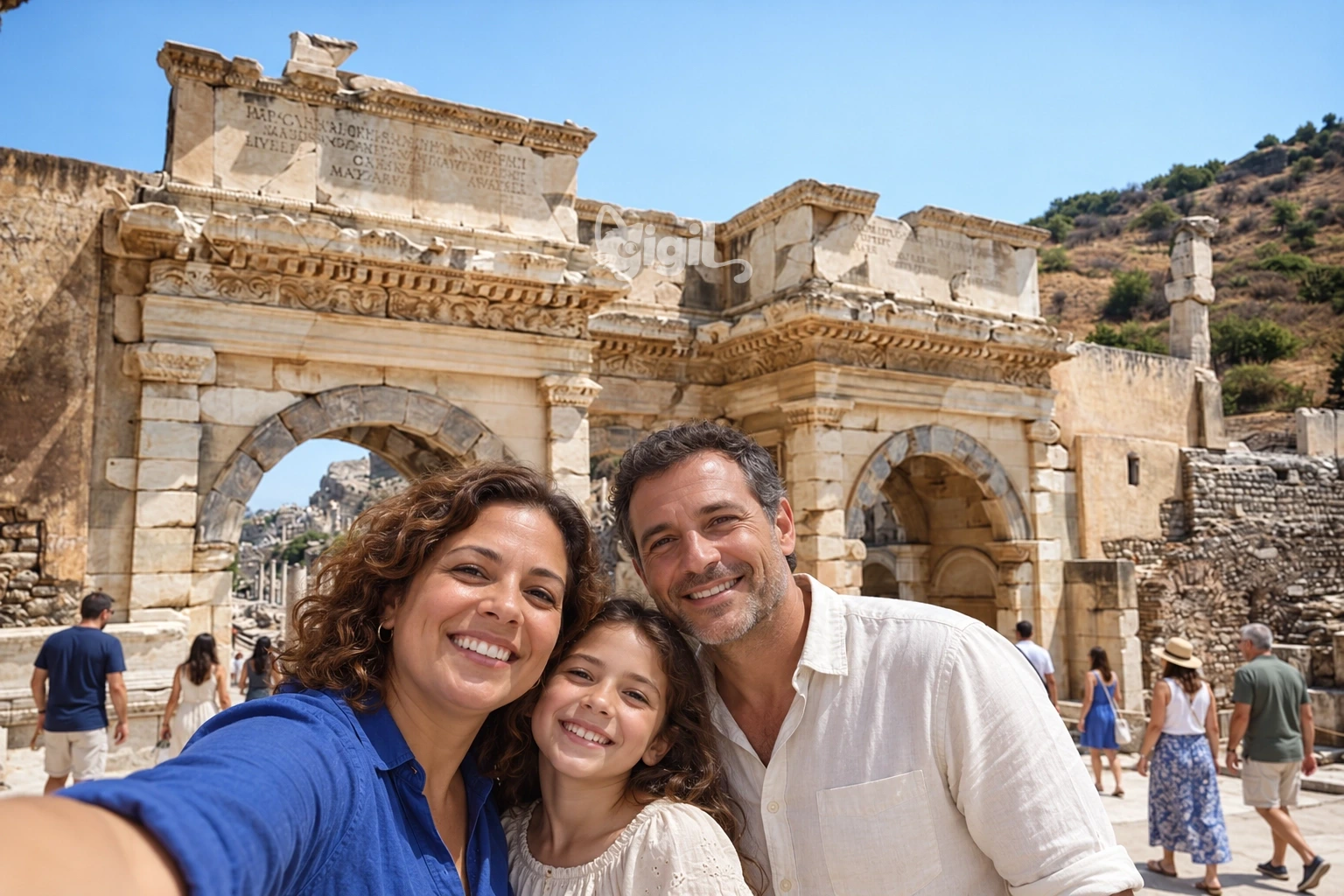
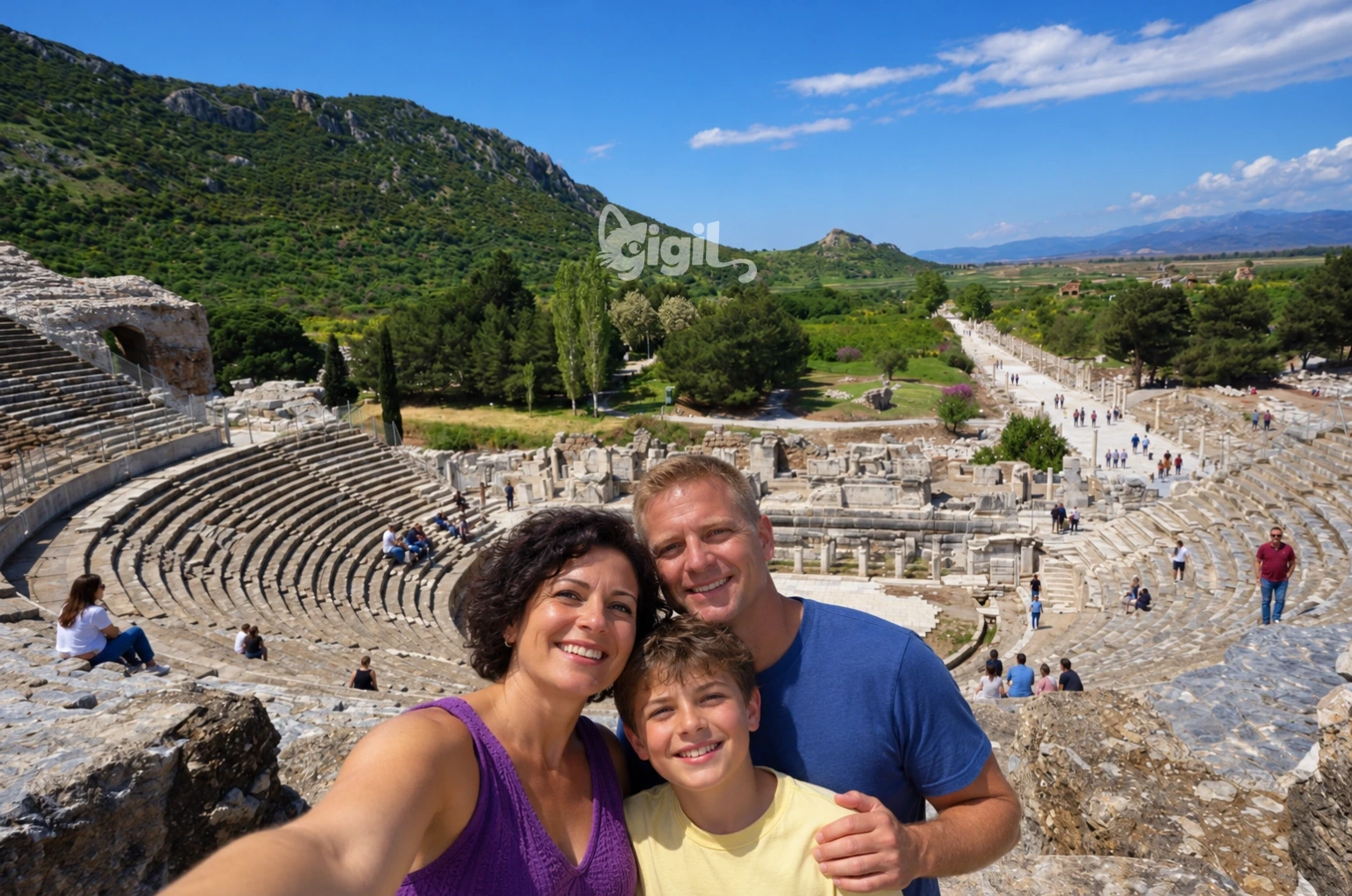
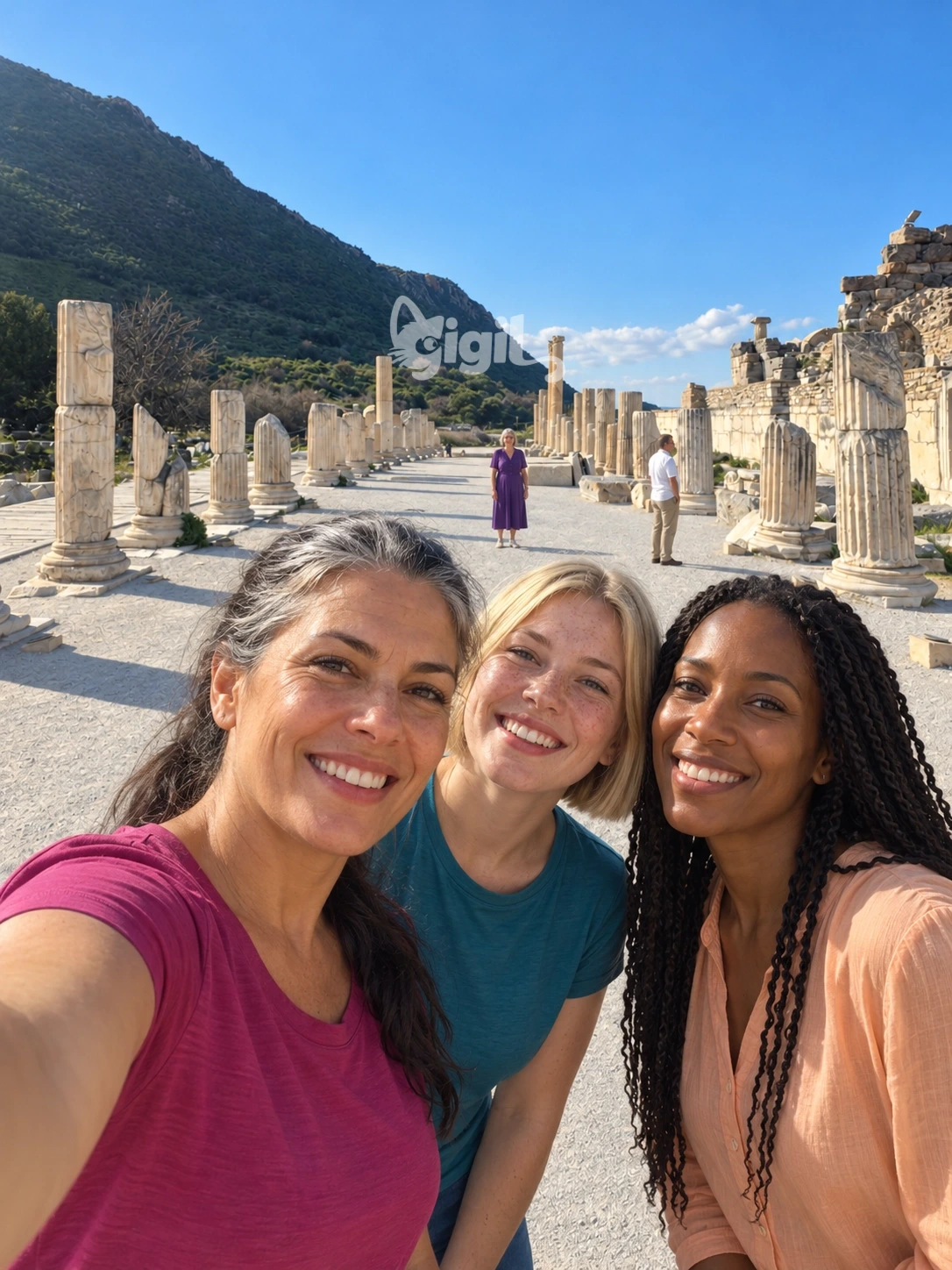
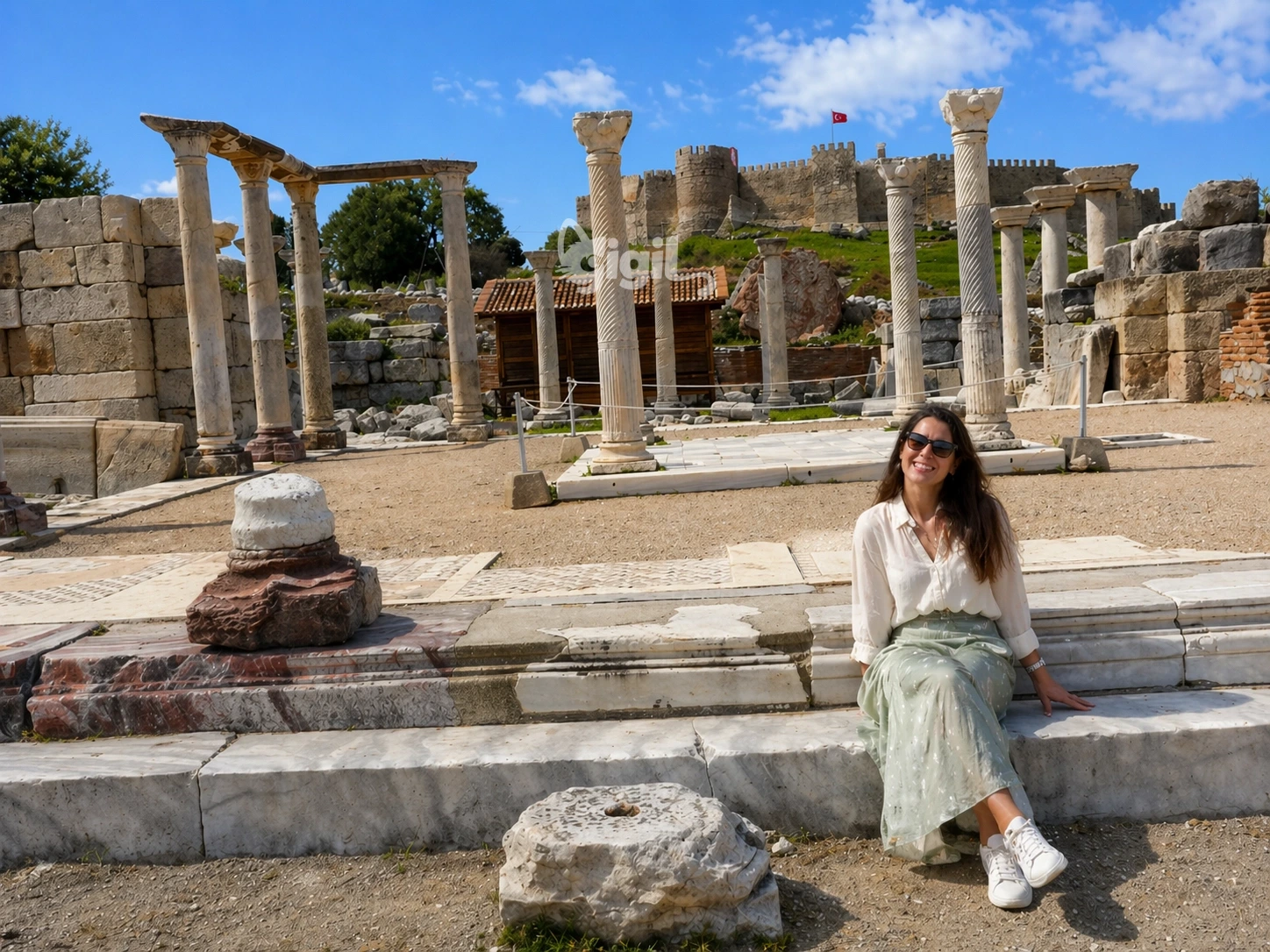
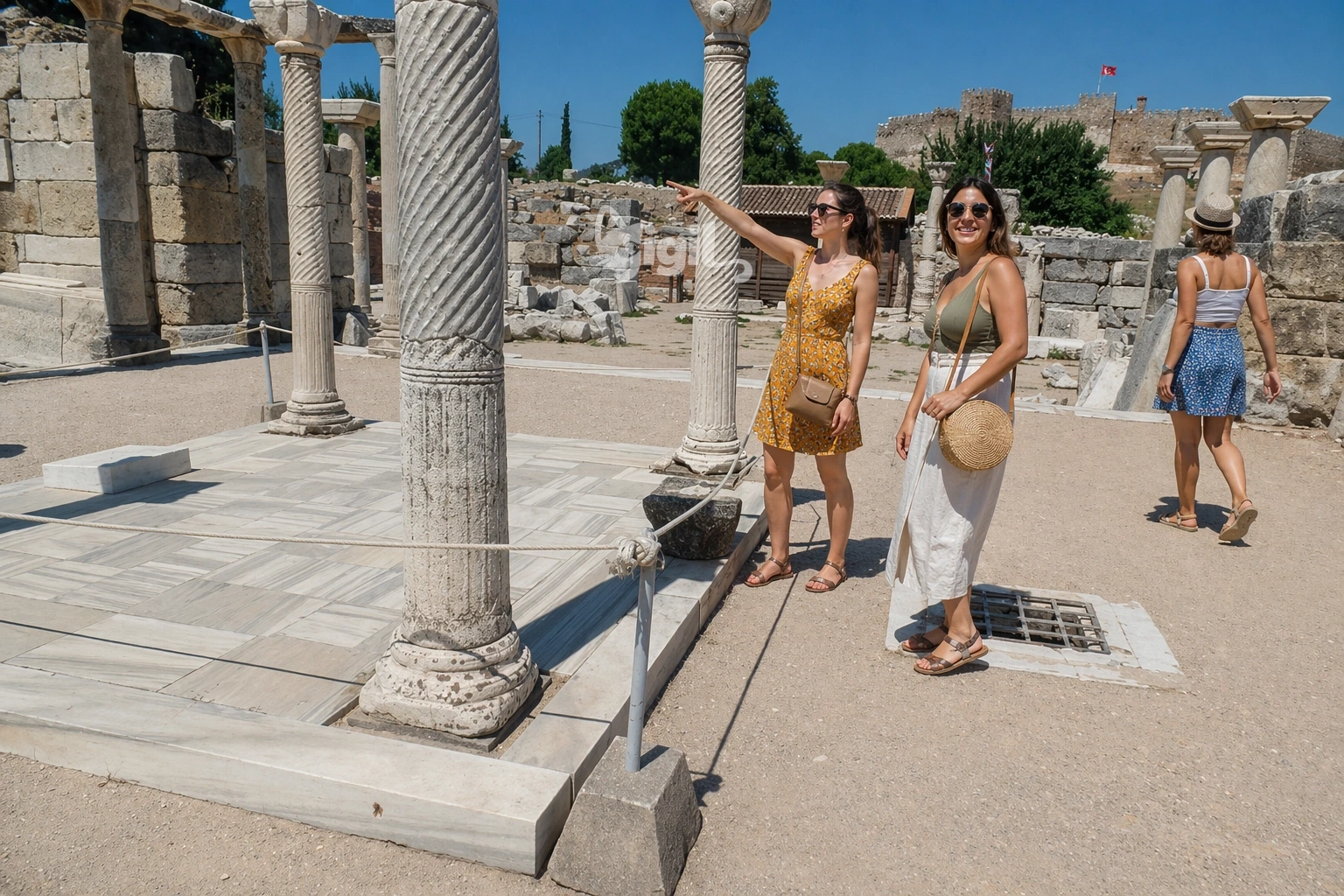
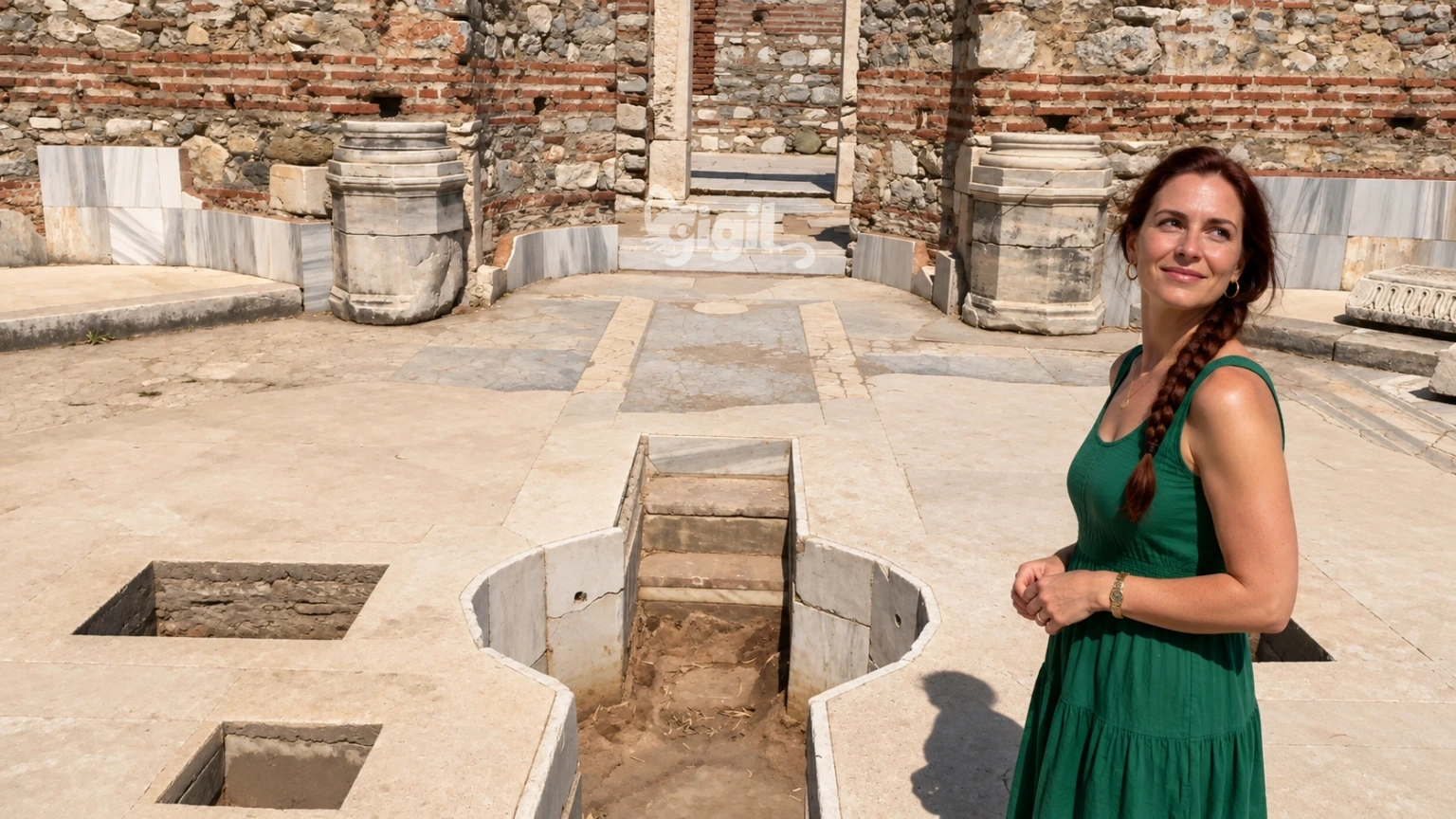
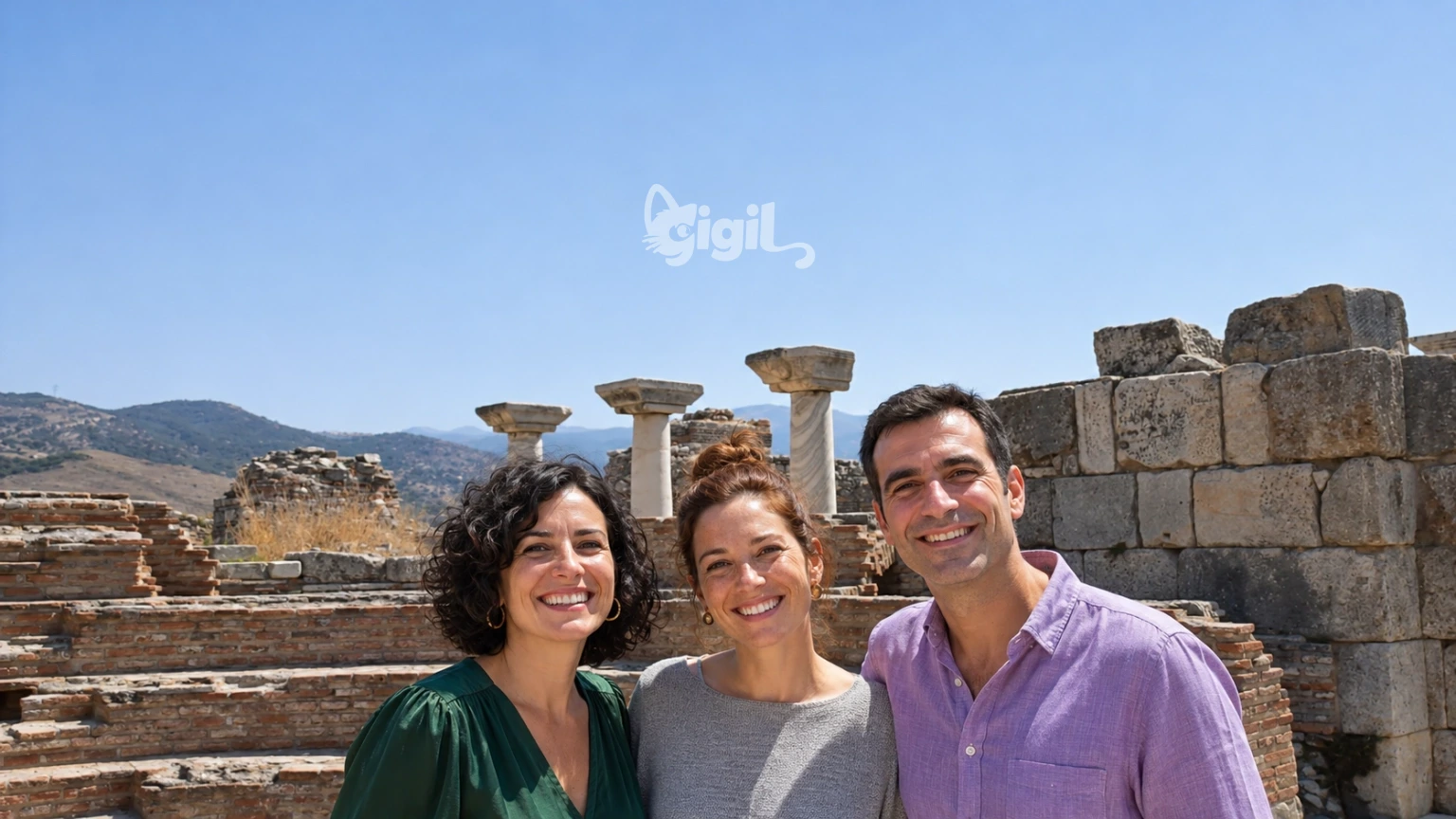
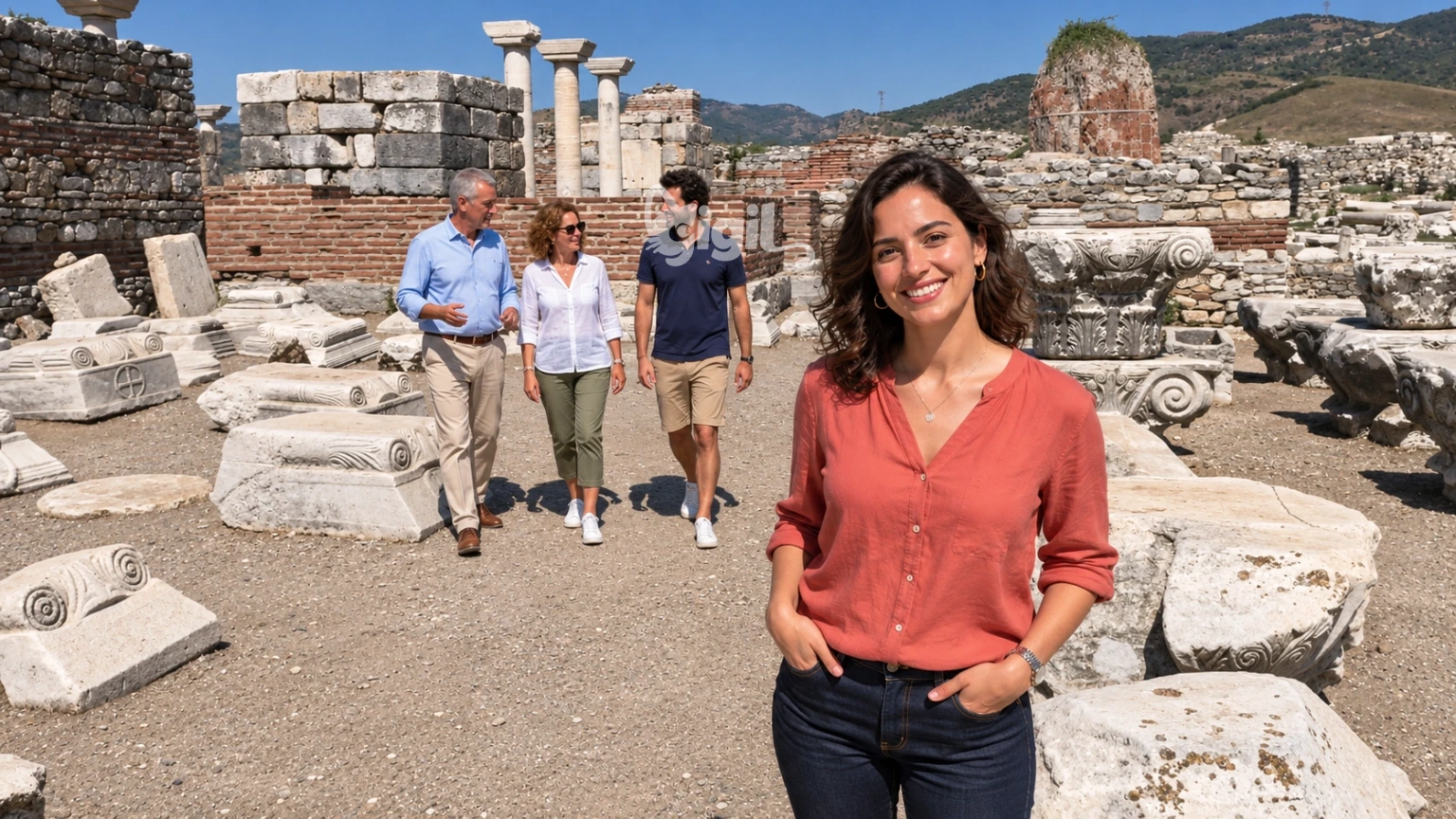
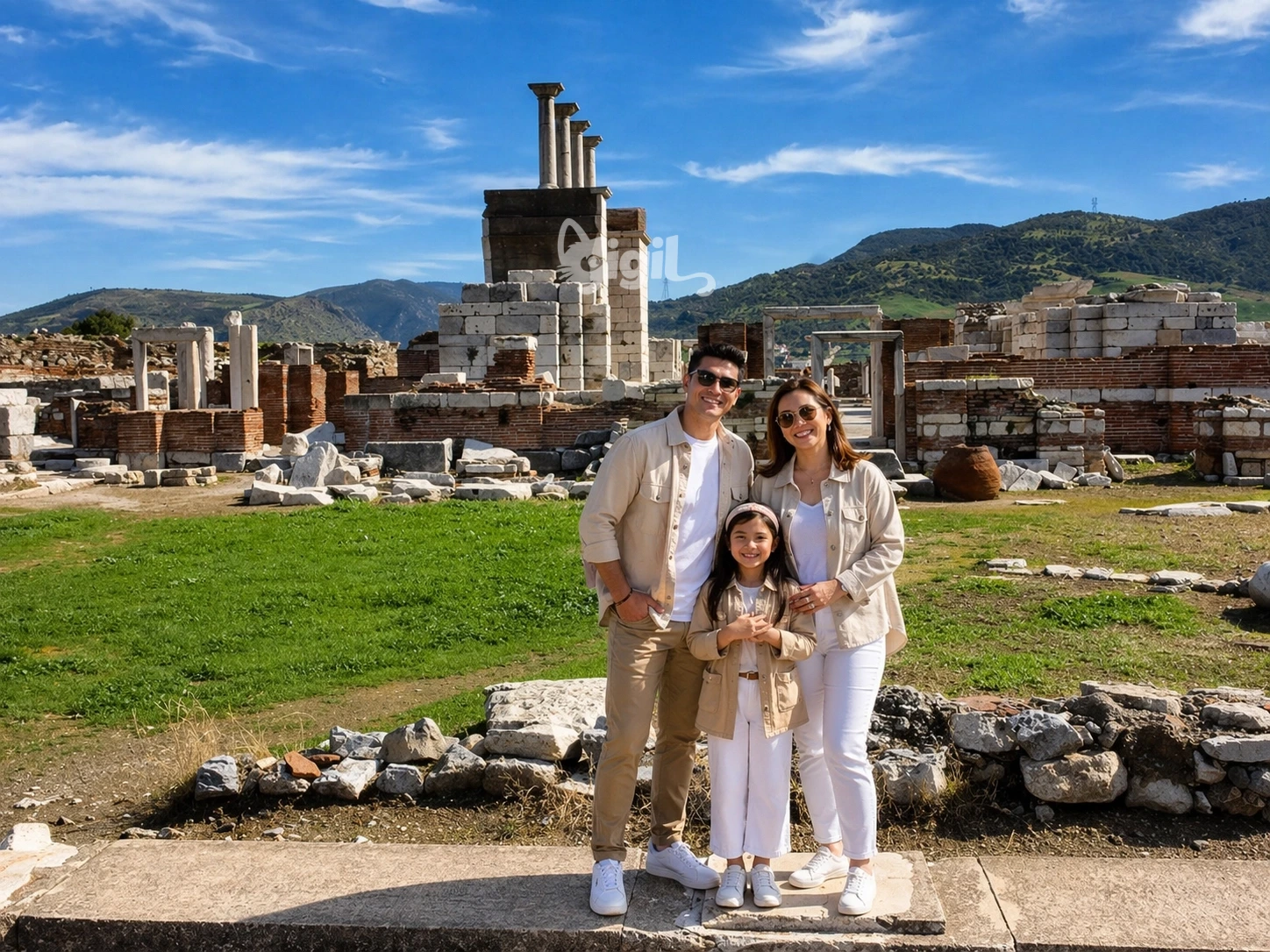
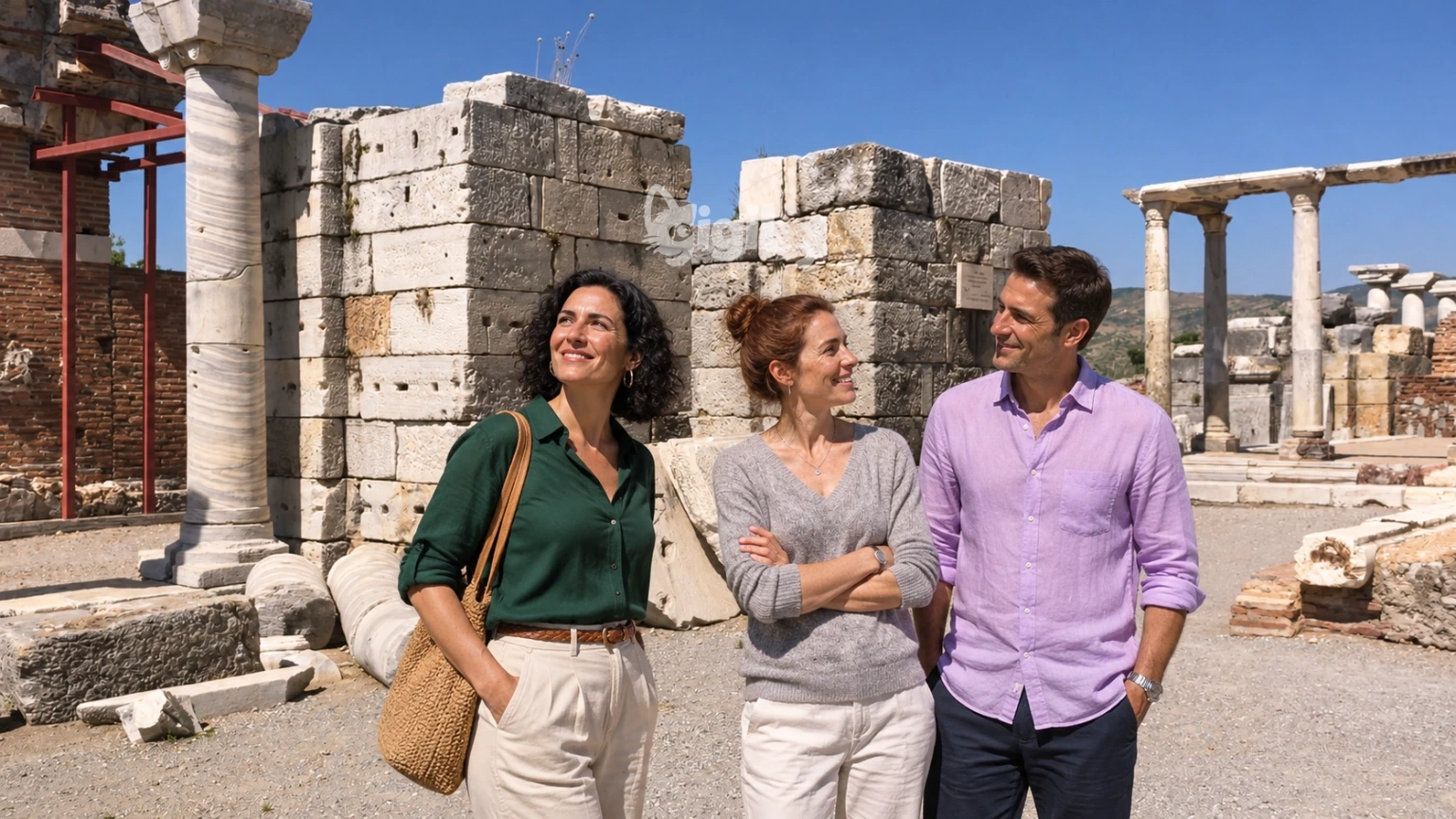
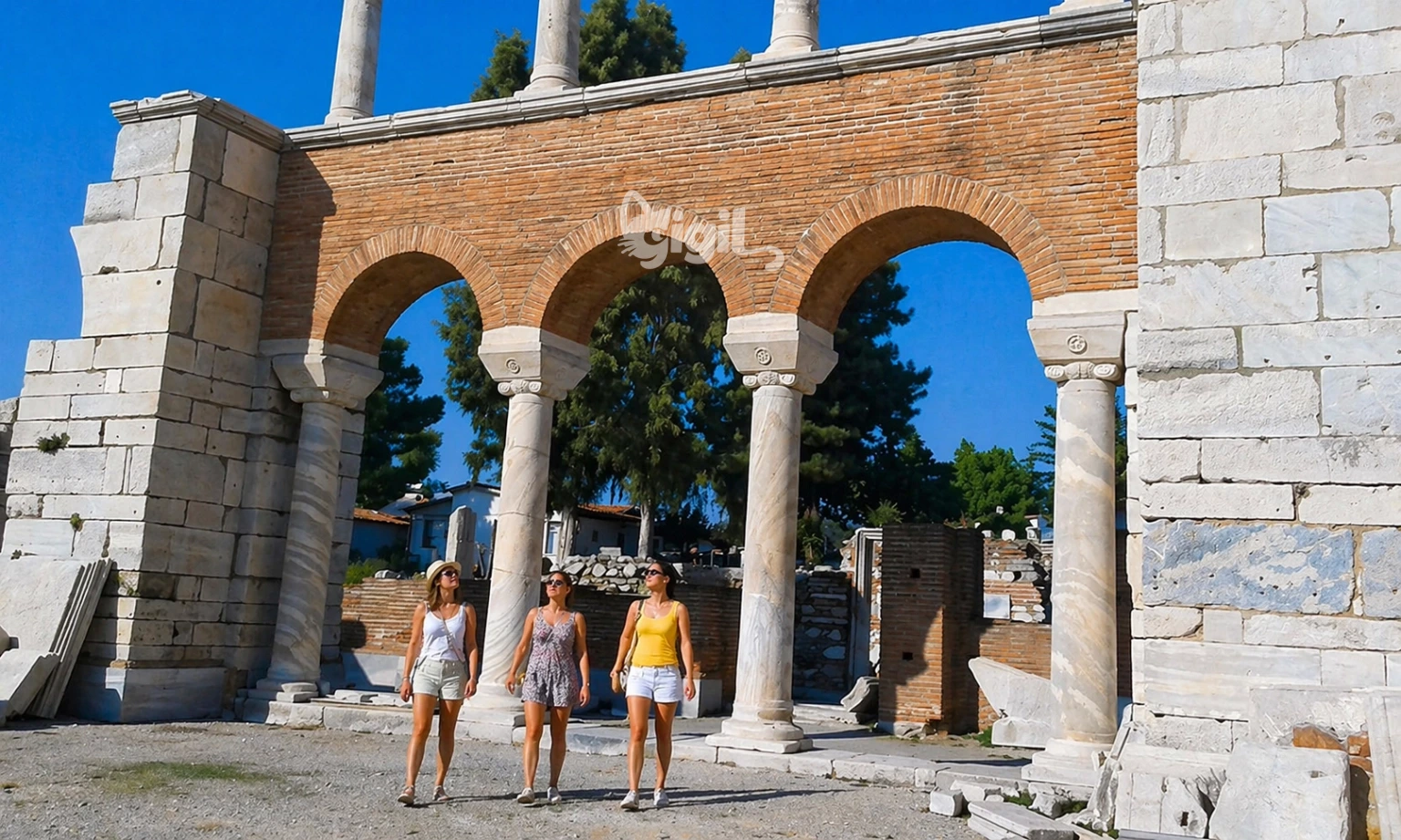
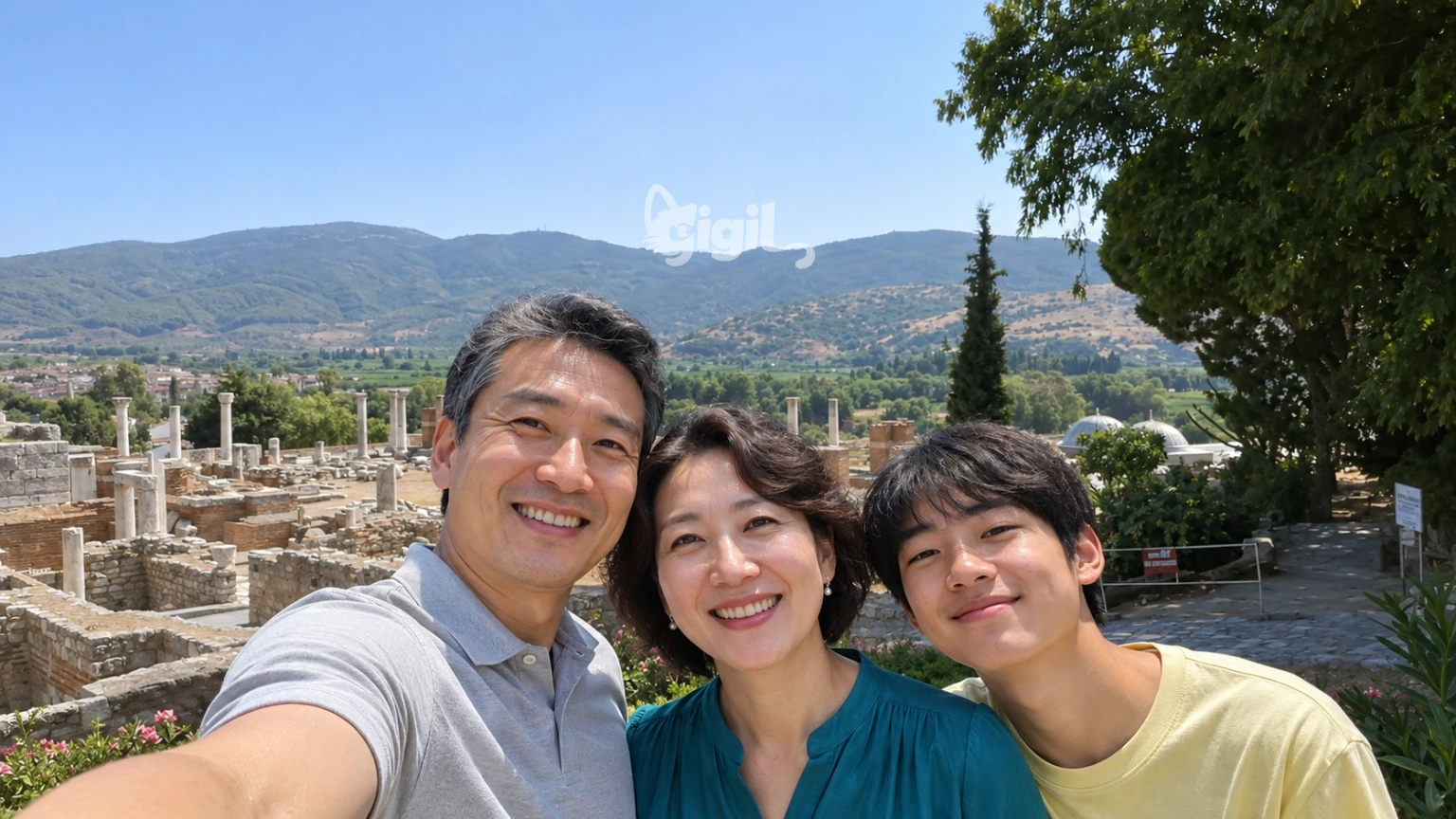
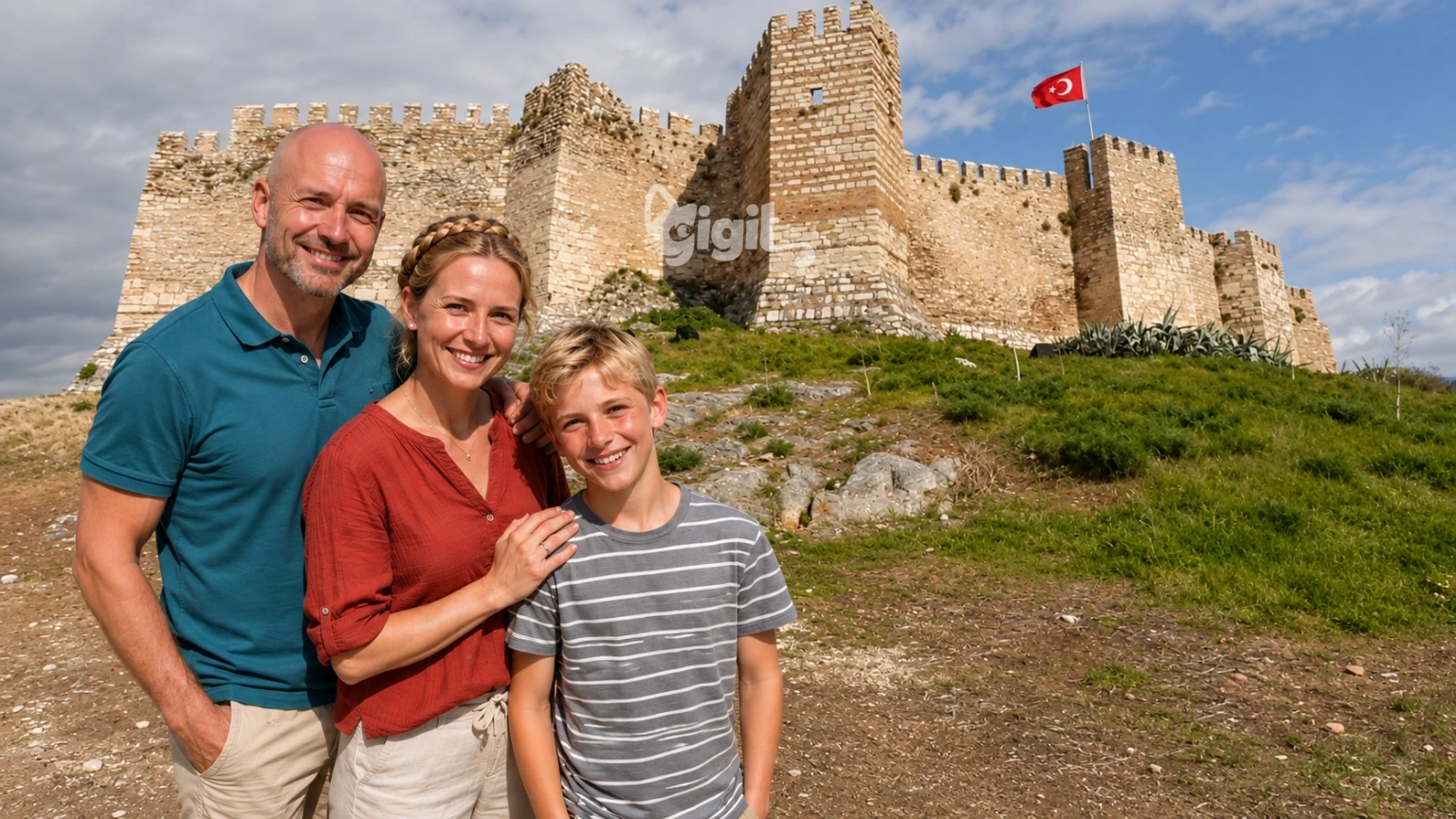
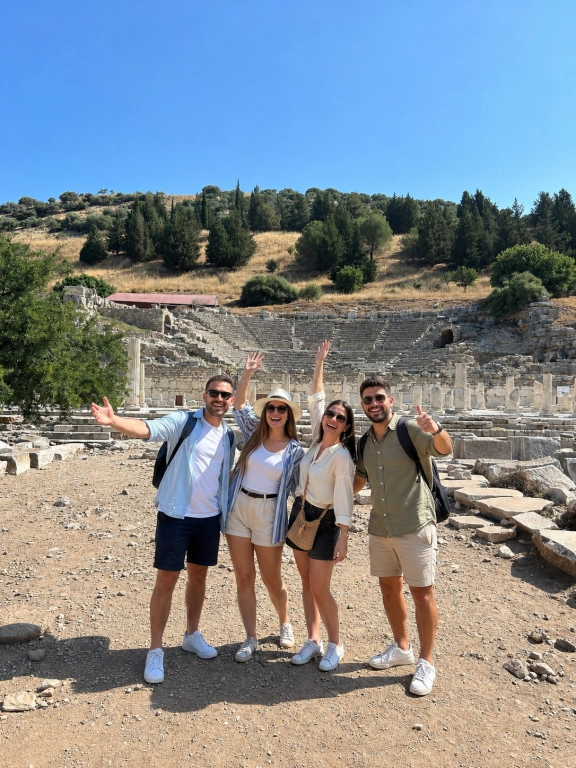
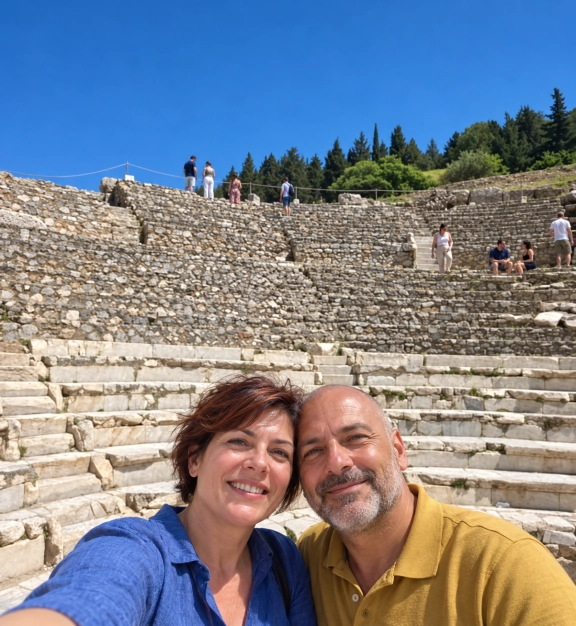
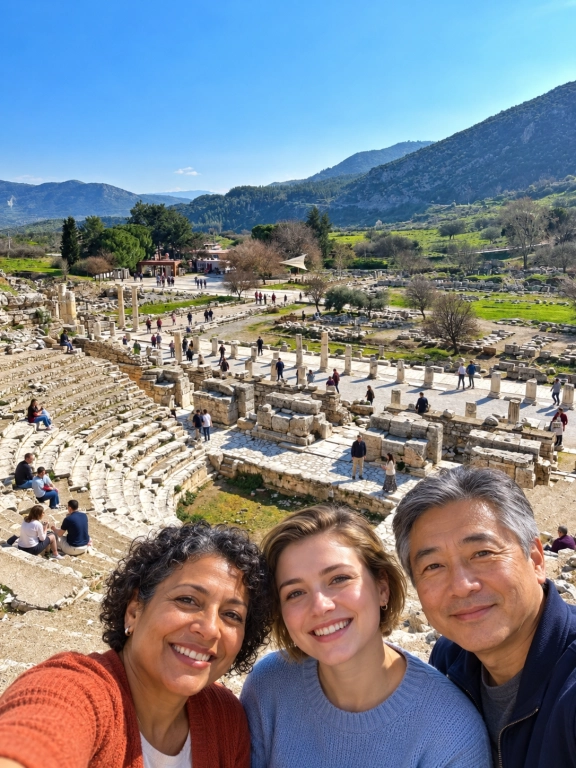
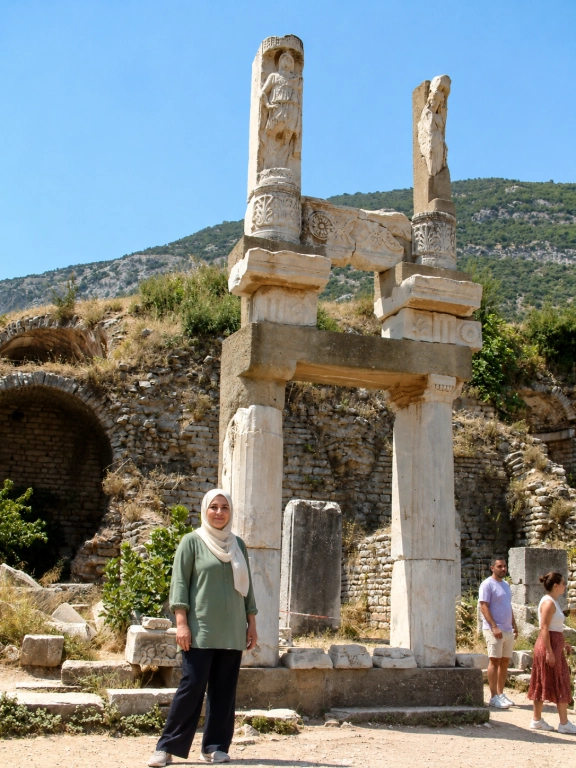
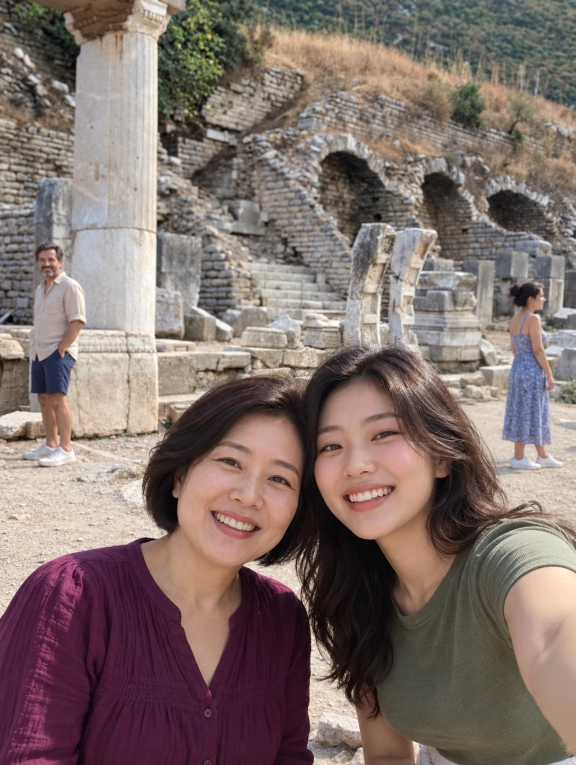
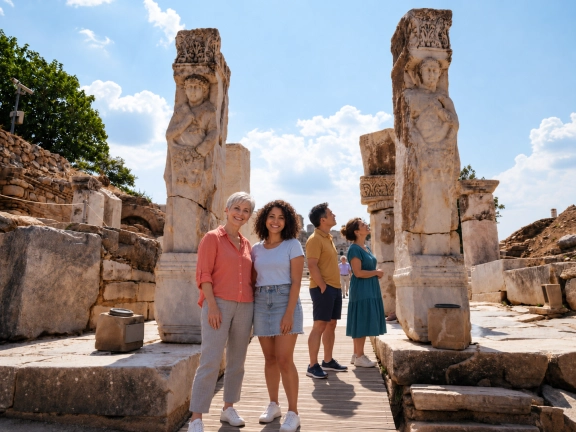
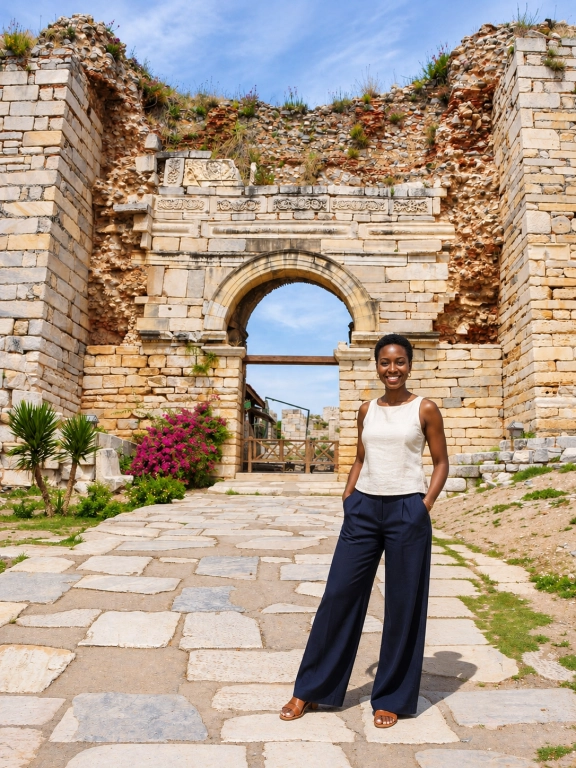
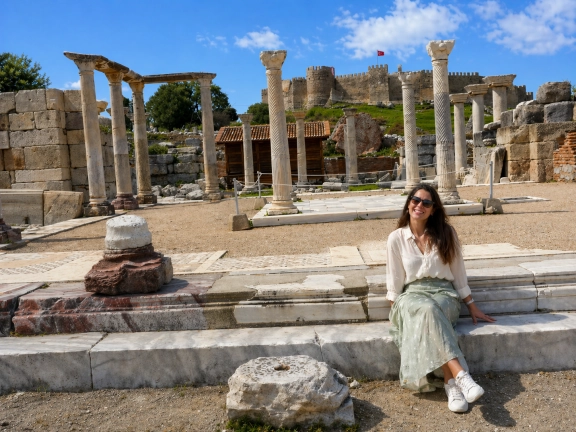
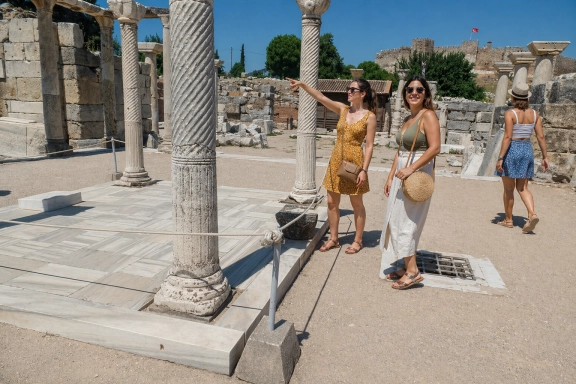
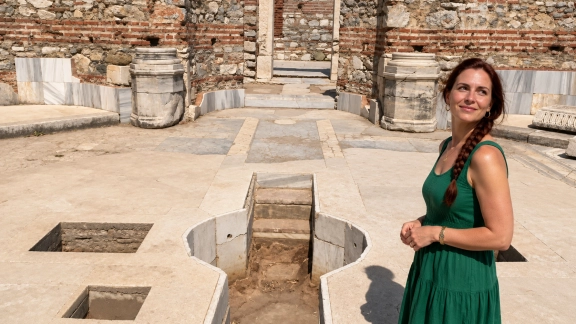
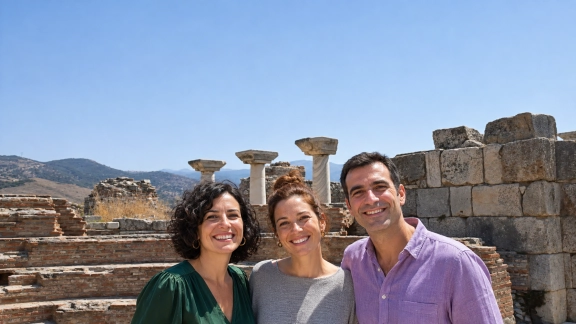
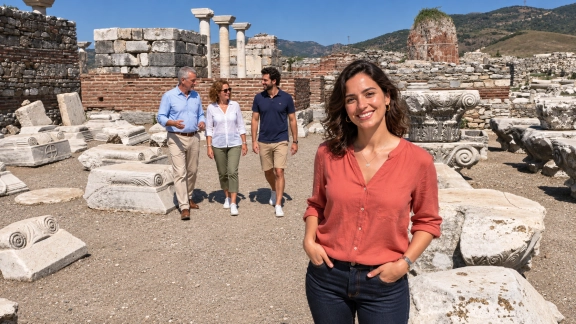
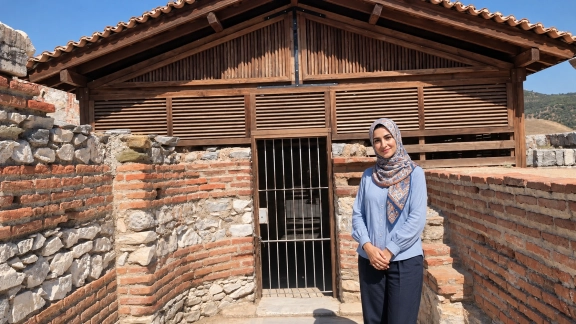

Ephesus is best understood as an archaeological townscape, not a single building. Streets and squares connect the Library of Celsus with the Great Theatre and other remains, illustrating the public life of a major ancient city.
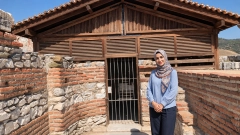
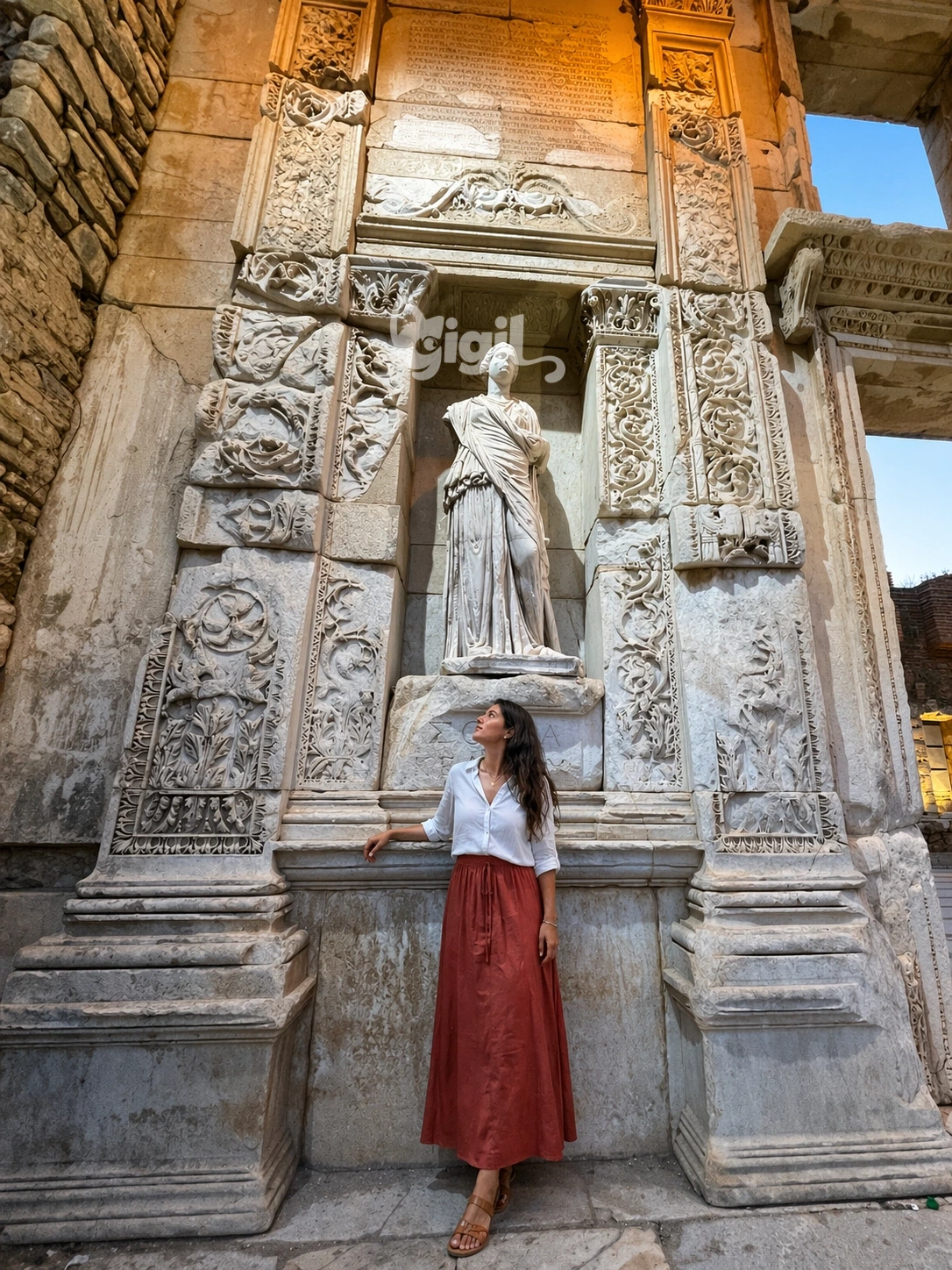
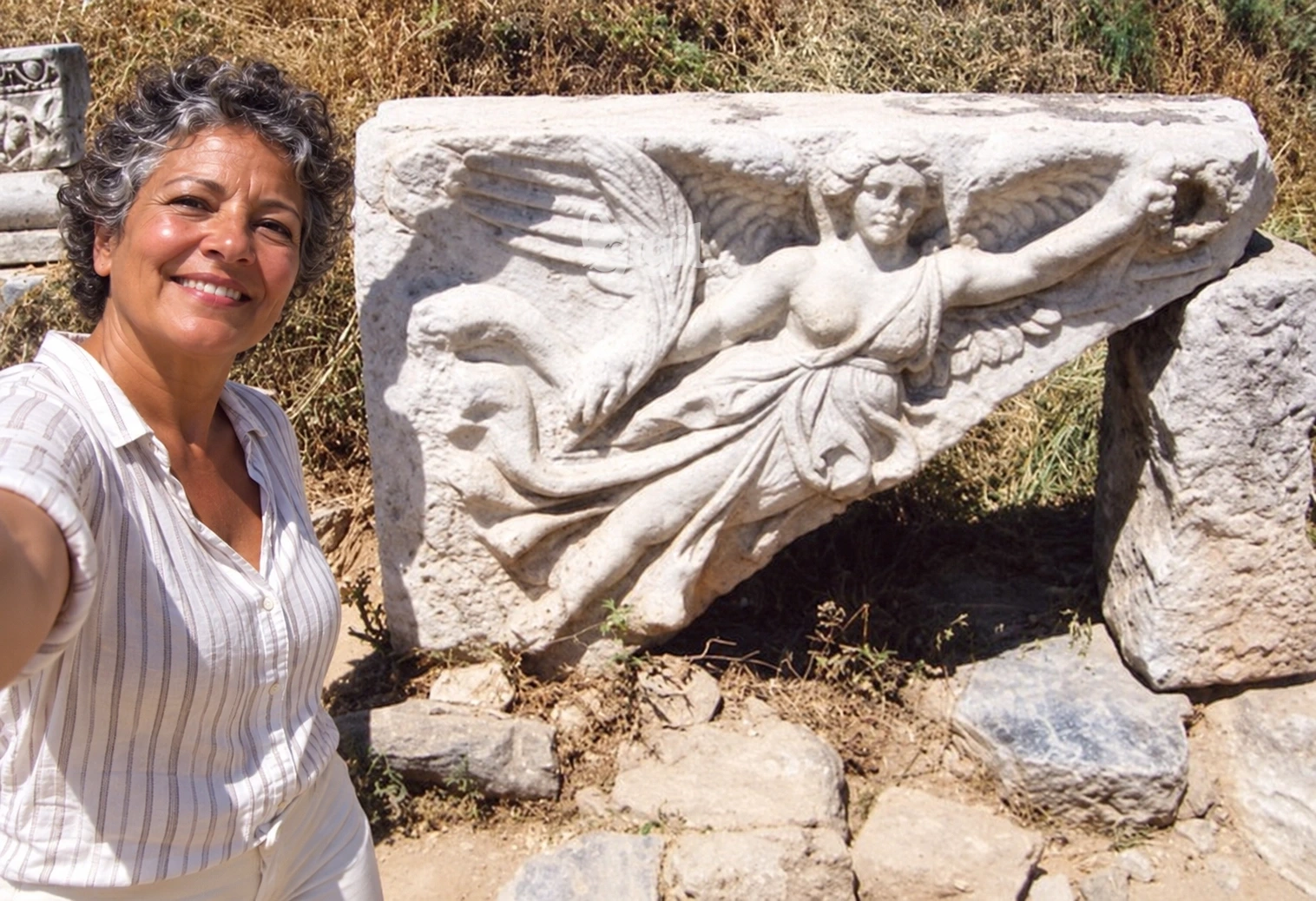
Compare the long views along paved routes with close details of masonry. The larger perspective explains connections, while the fragments reveal how much has been lost, excavated or reassembled since the buildings were in use.
Questions
What should I alternate between while looking around?
Switch between broad street views and small architectural details to connect the urban plan with surviving material.
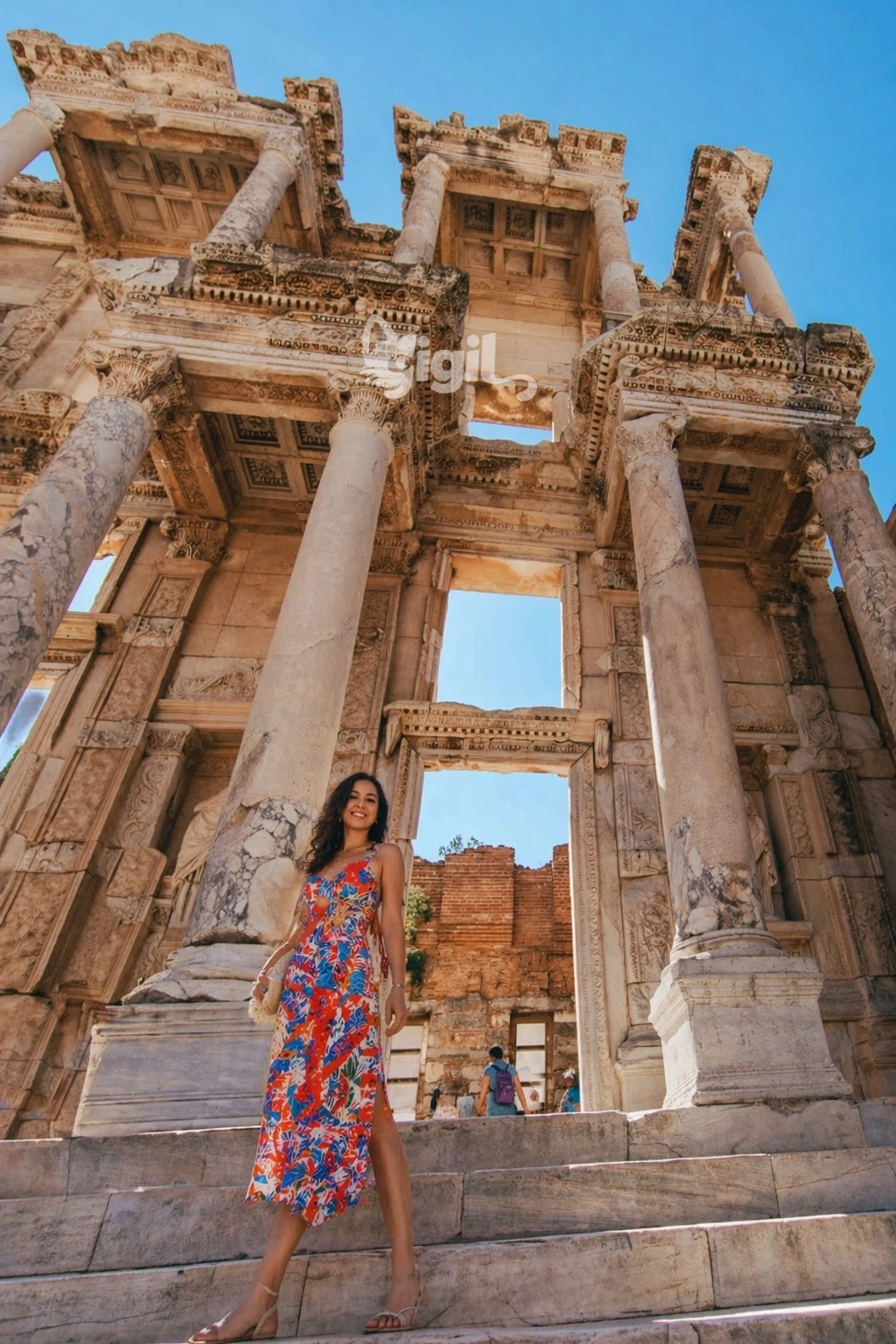
Is today's library facade the whole original monument?
No. It is a reconstructed architectural front associated with a larger ancient library building.
Why is the Great Theatre more than another ruin?
It represents the city's capacity for collective gathering, contrasting with movement through the streets around it.
What links the ancient city to Selcuk's later heritage?
They belong to a wider settlement landscape whose centres and functions changed through time.