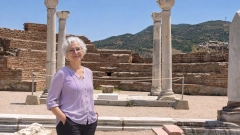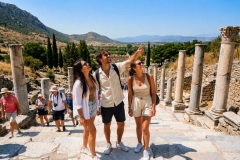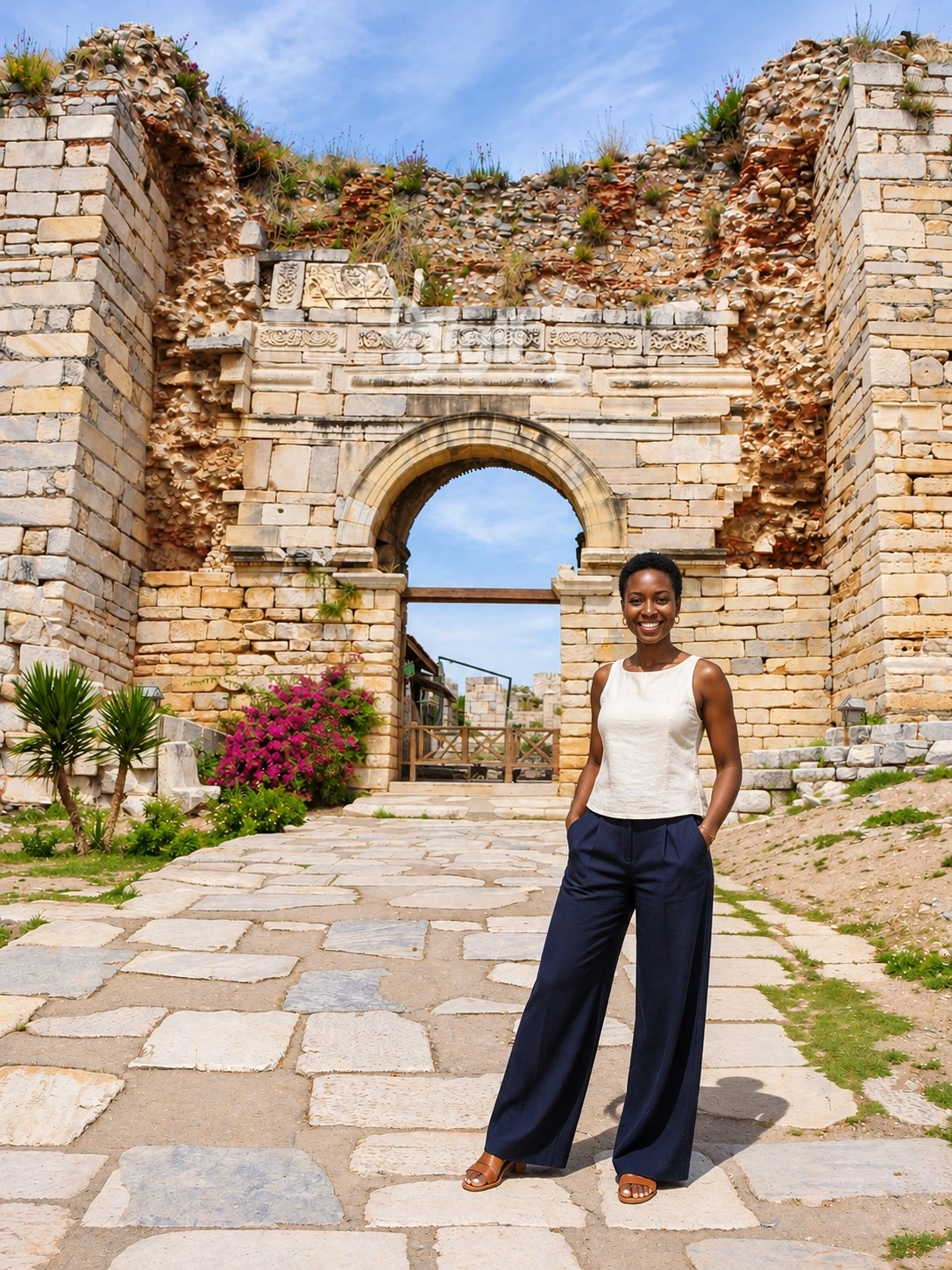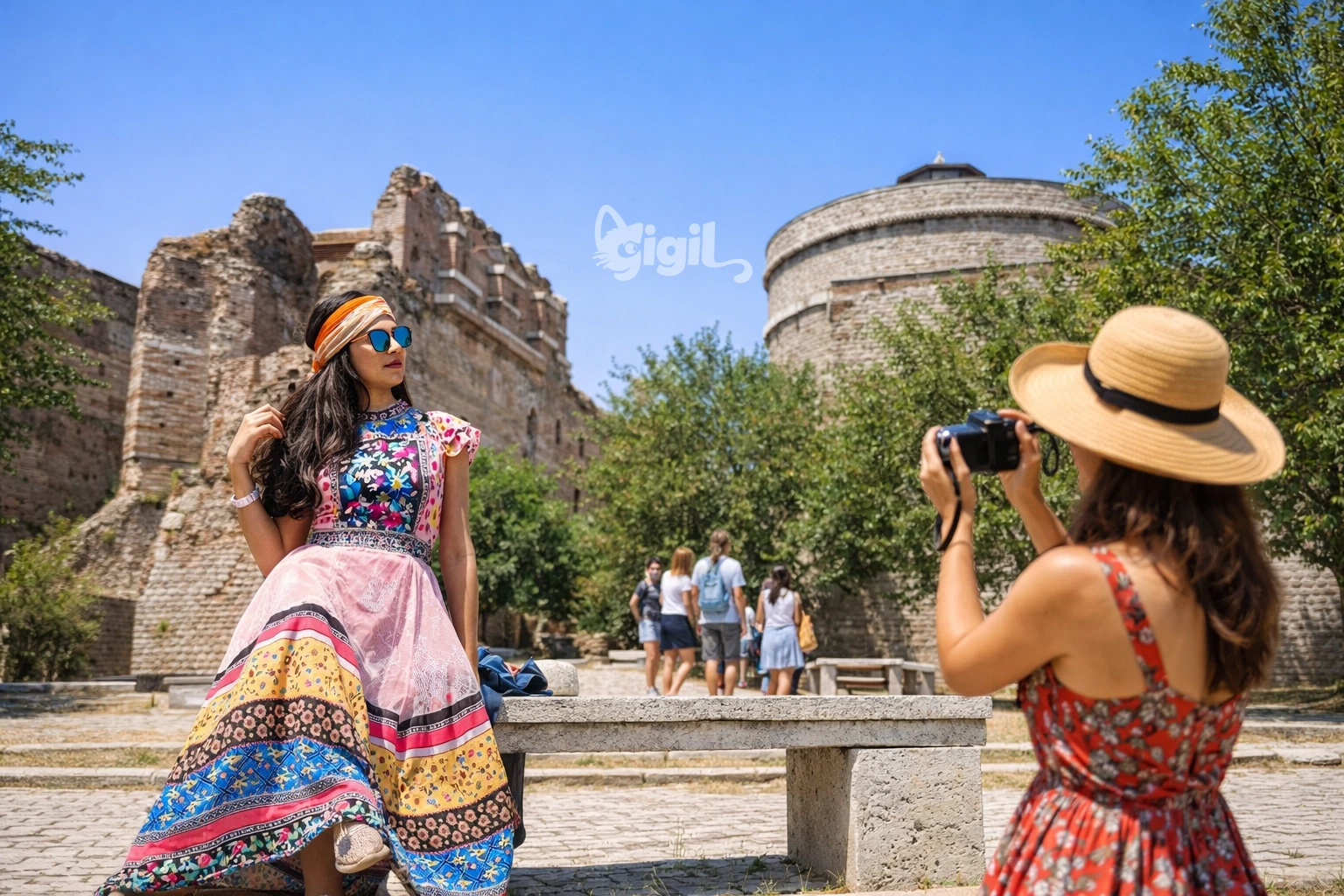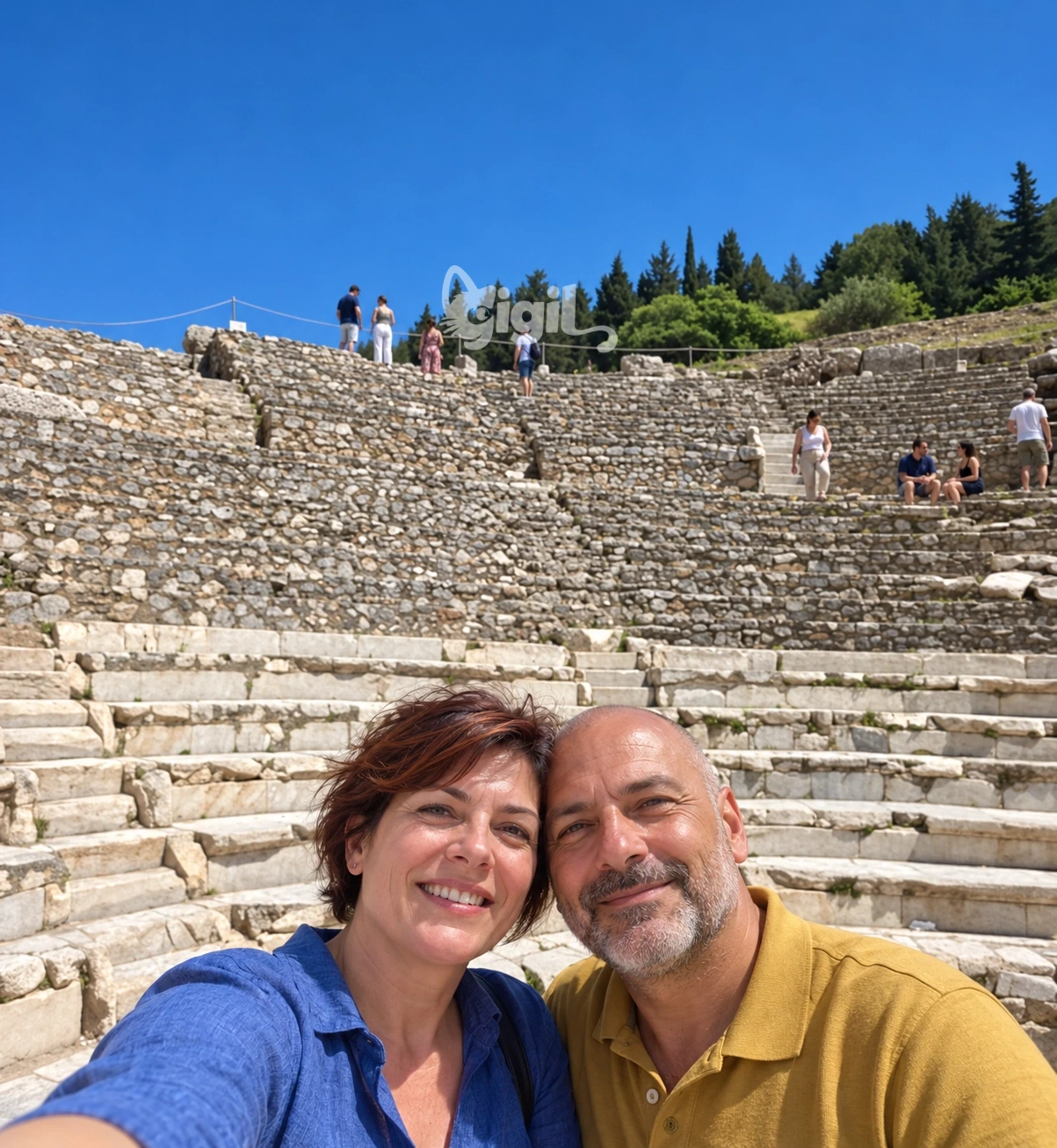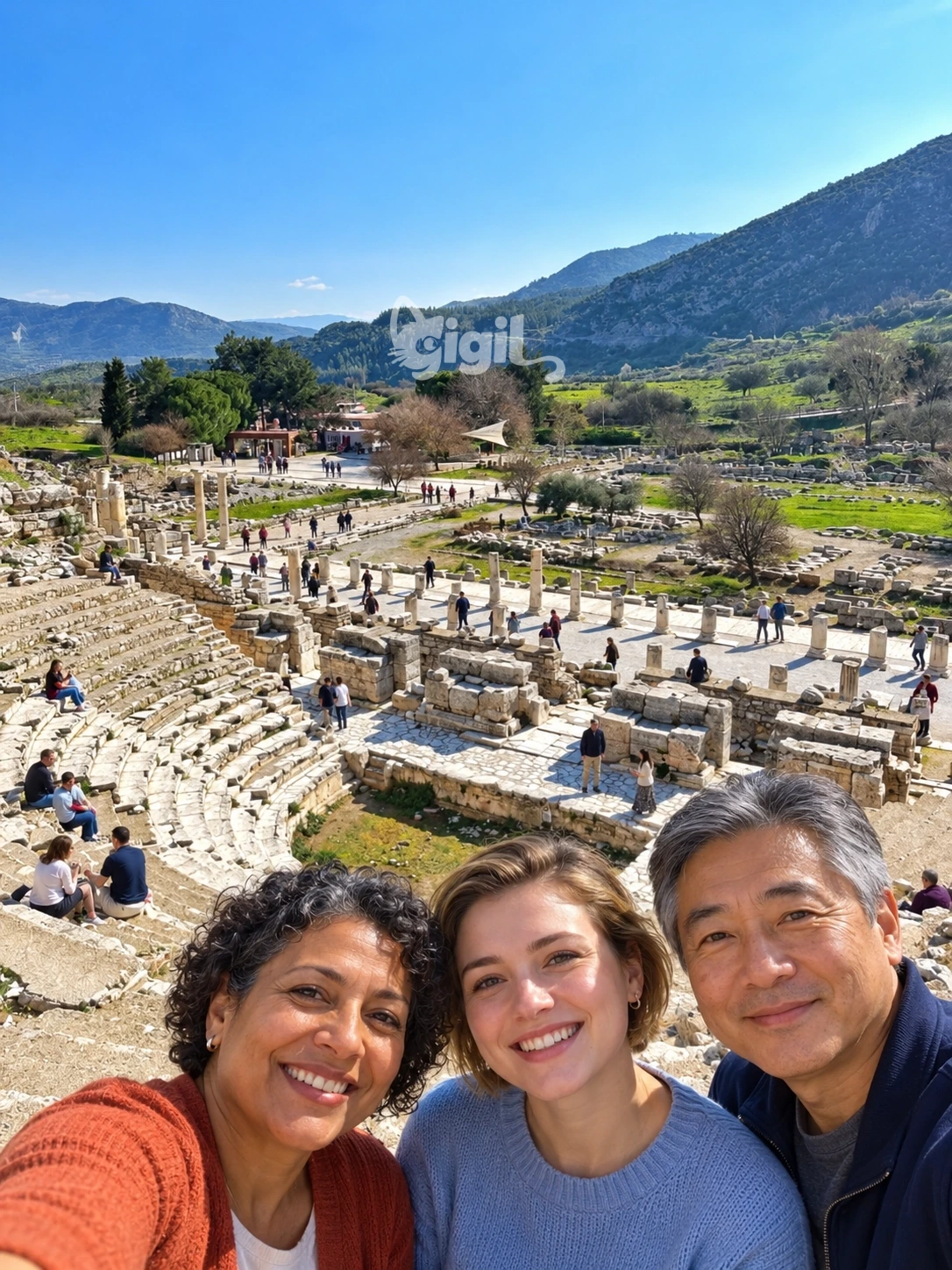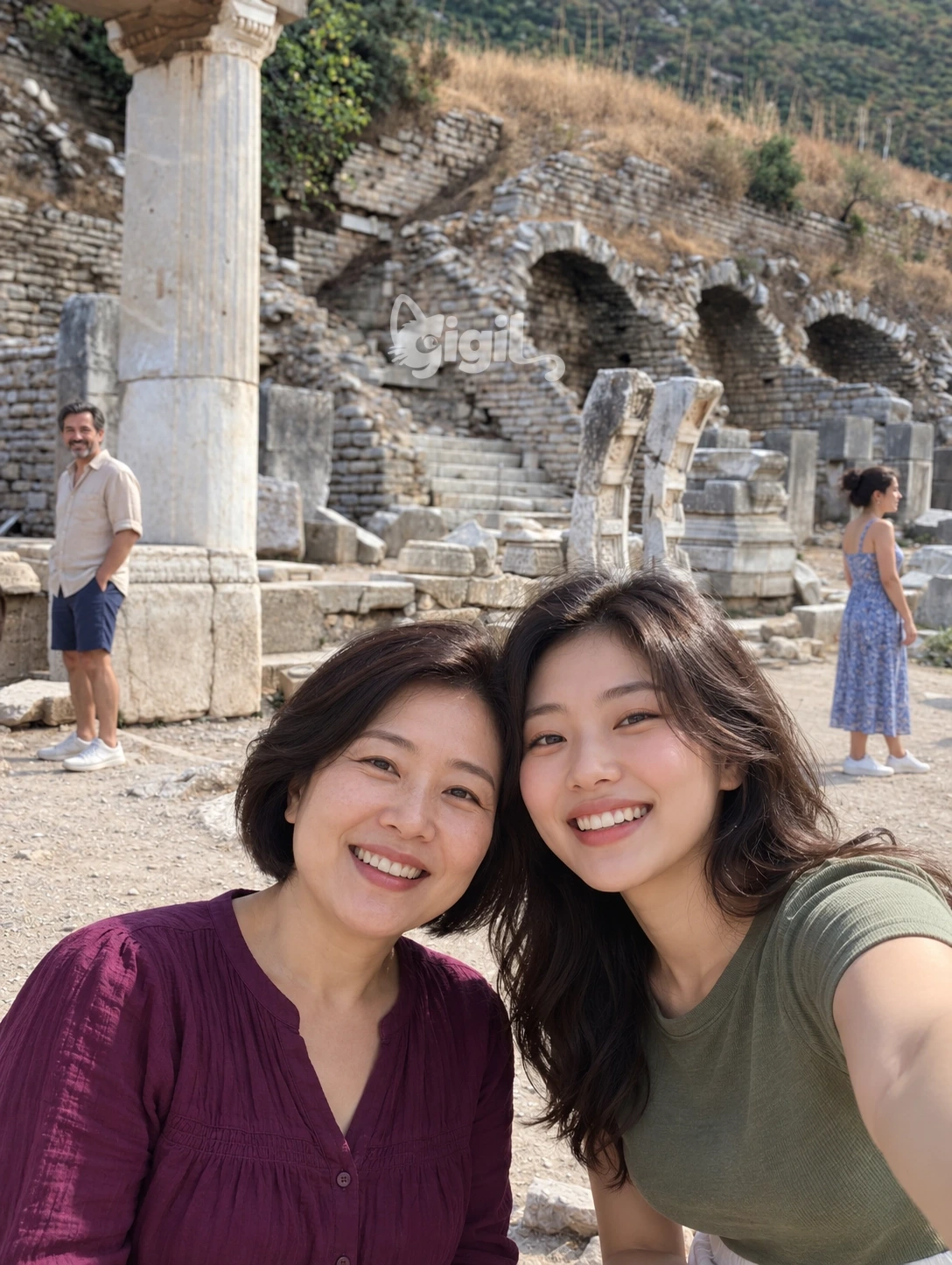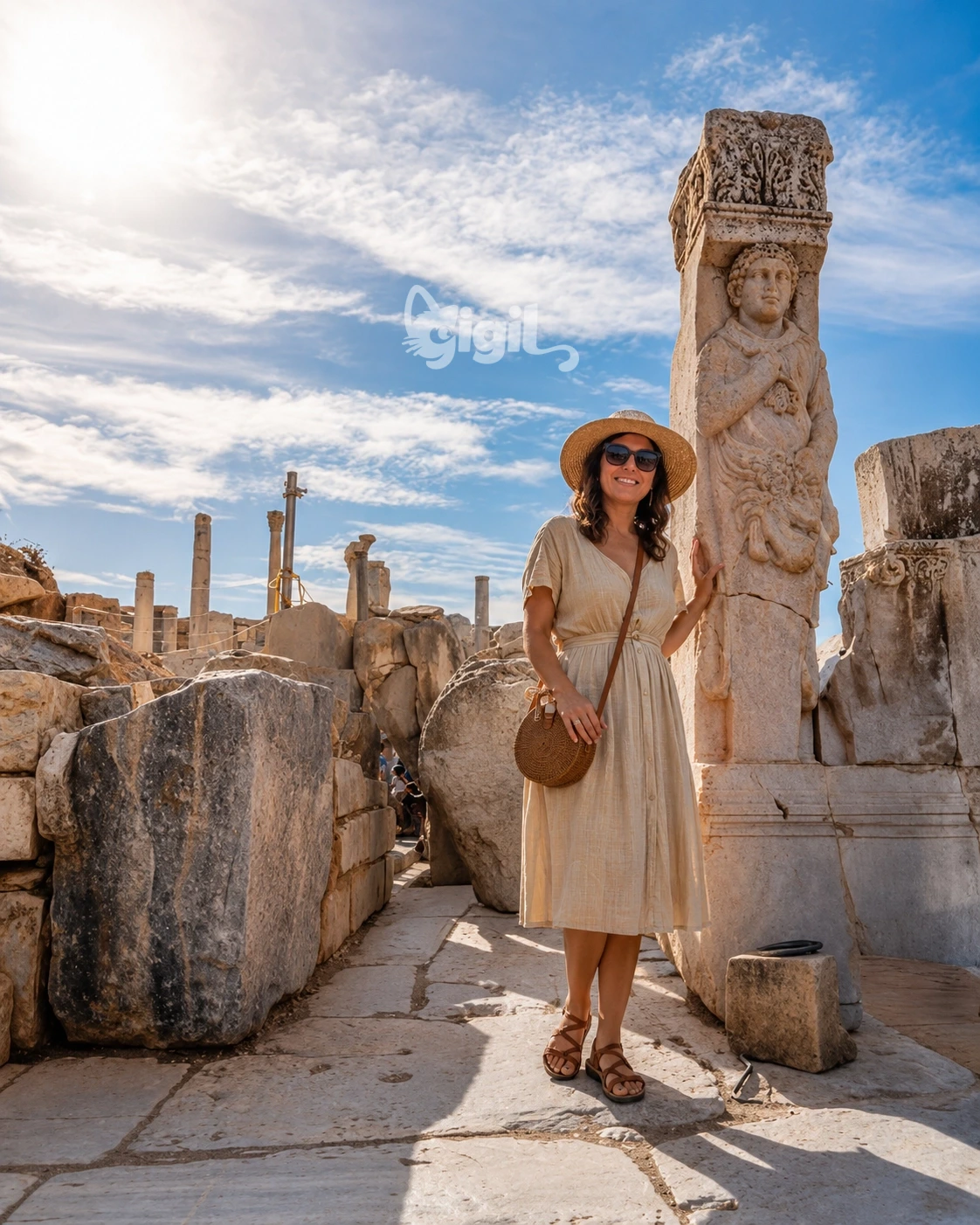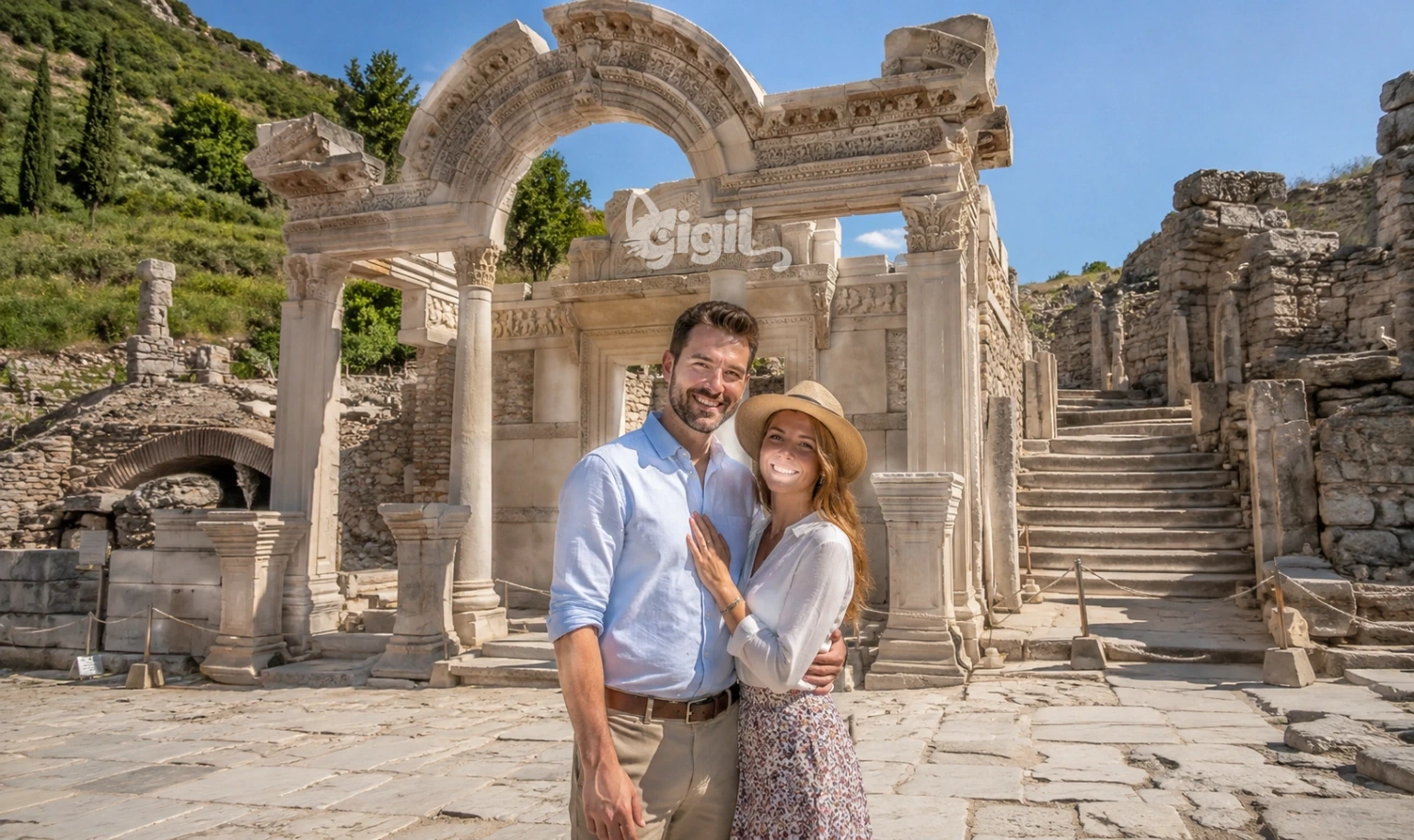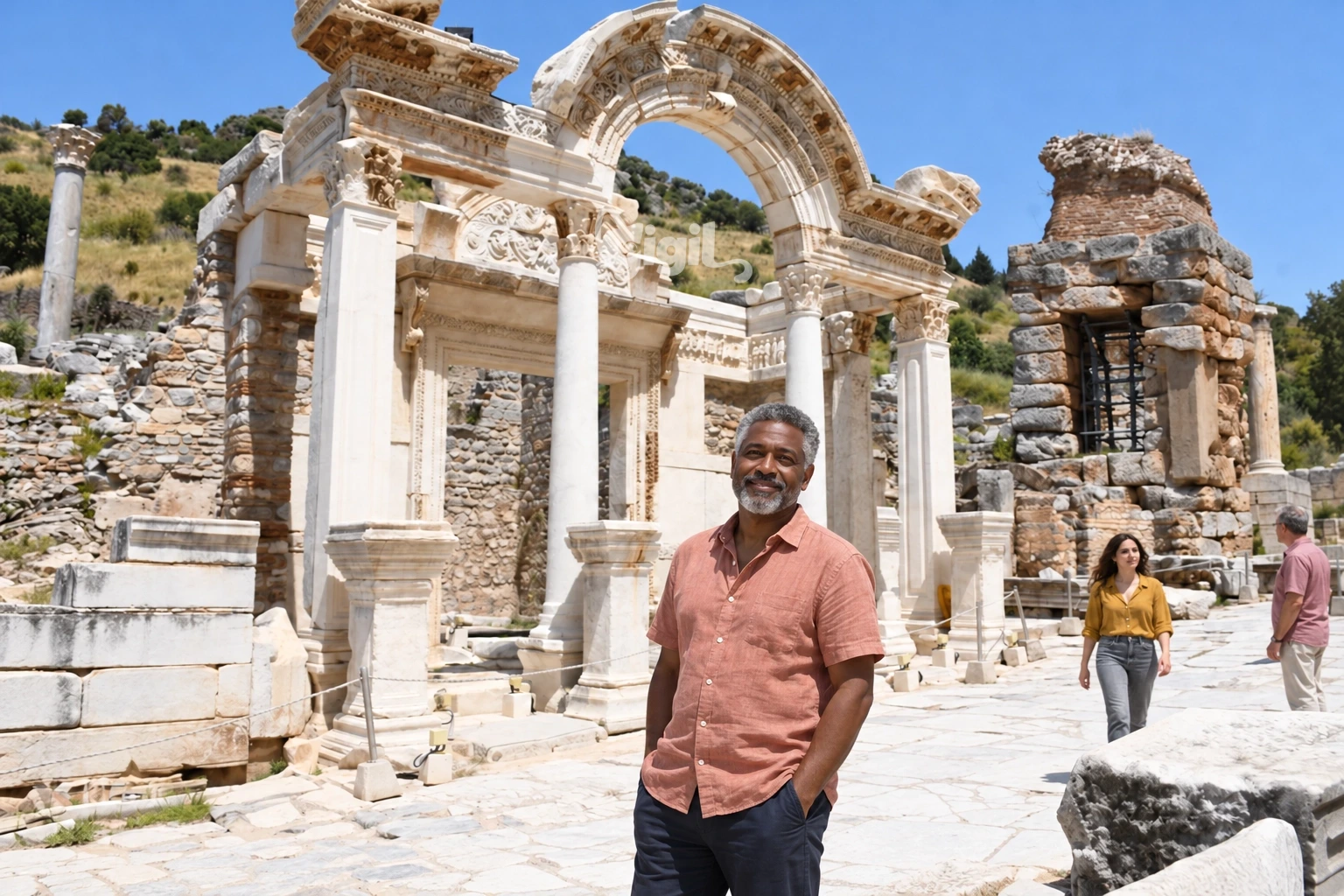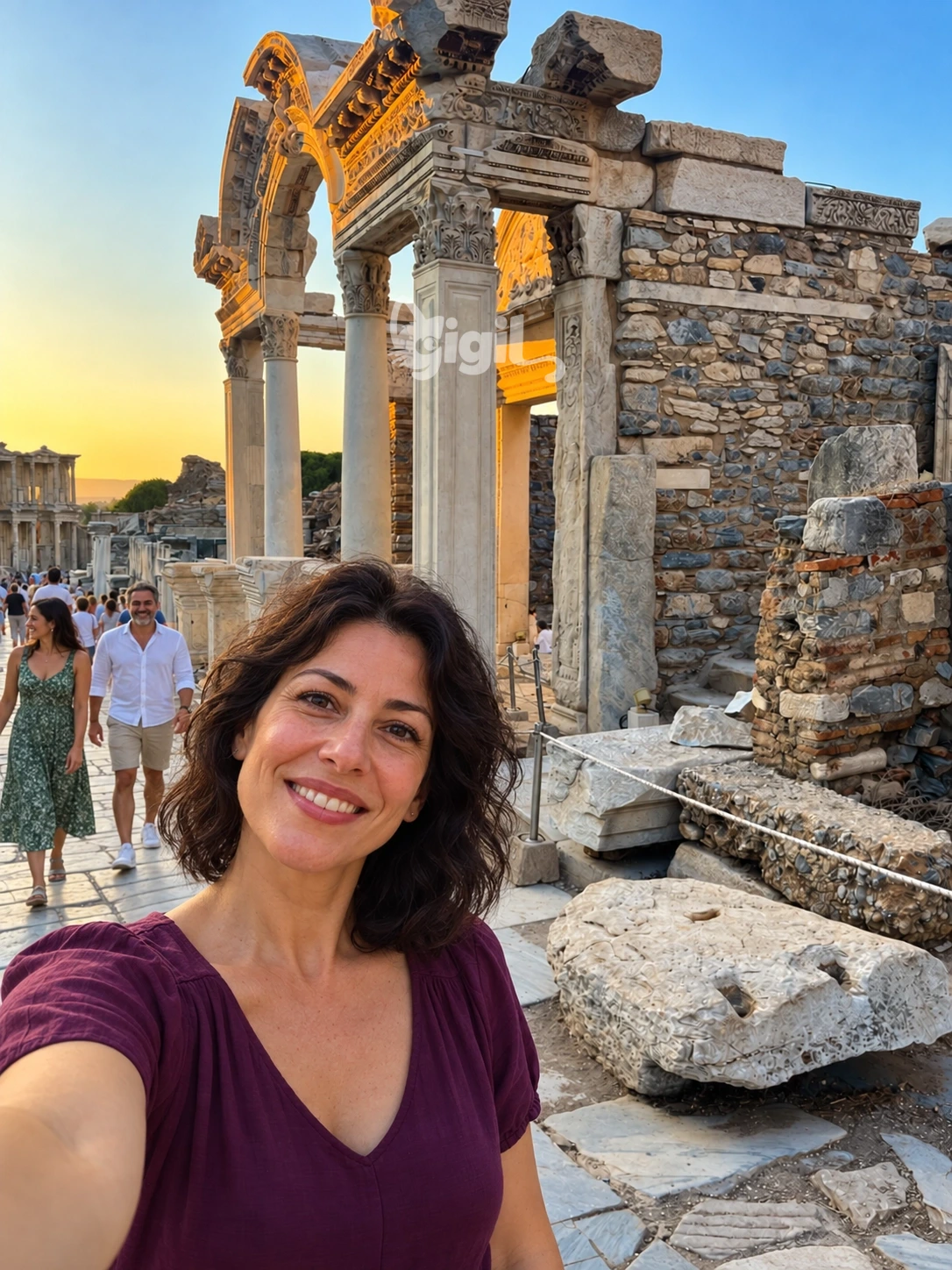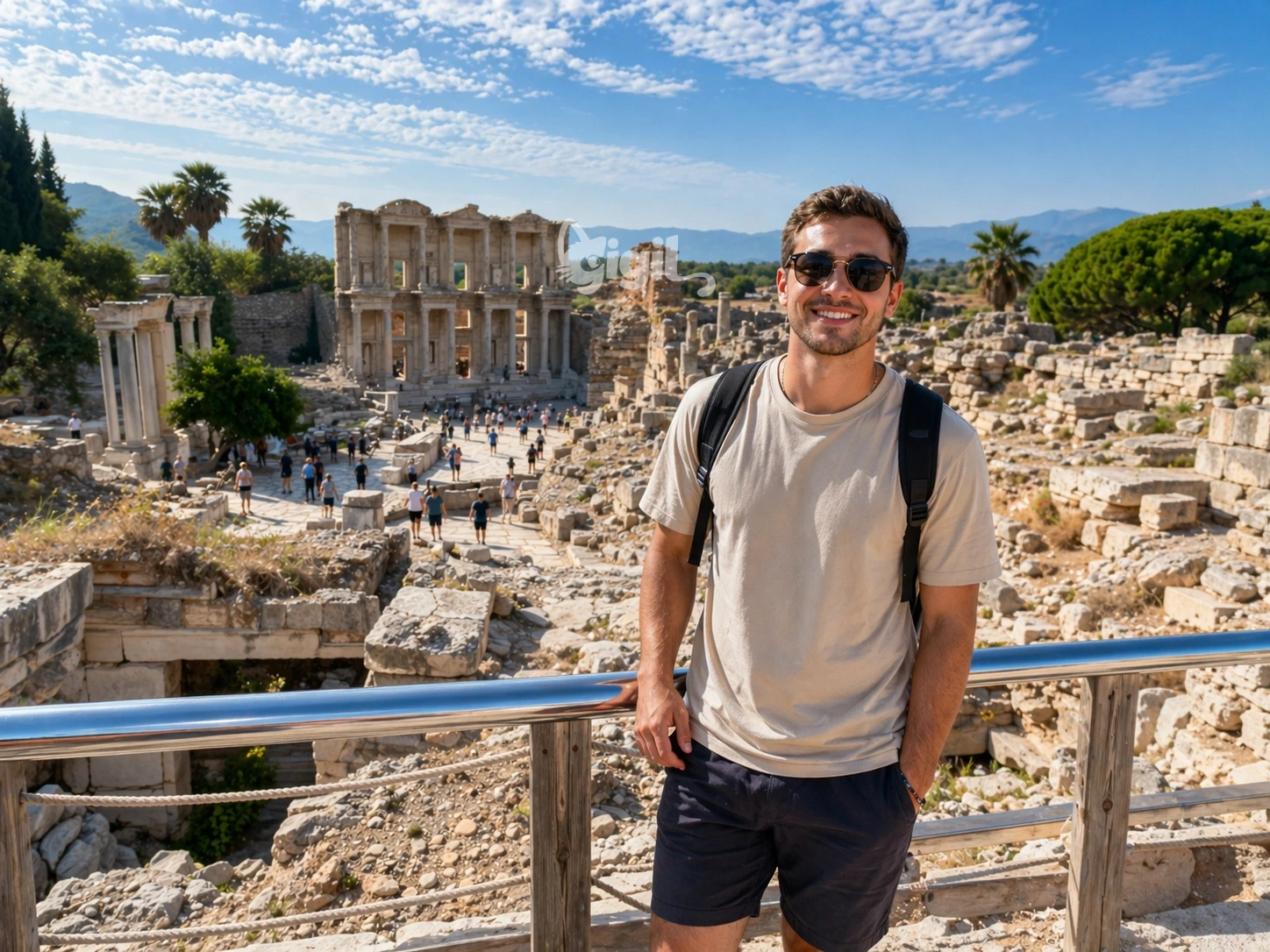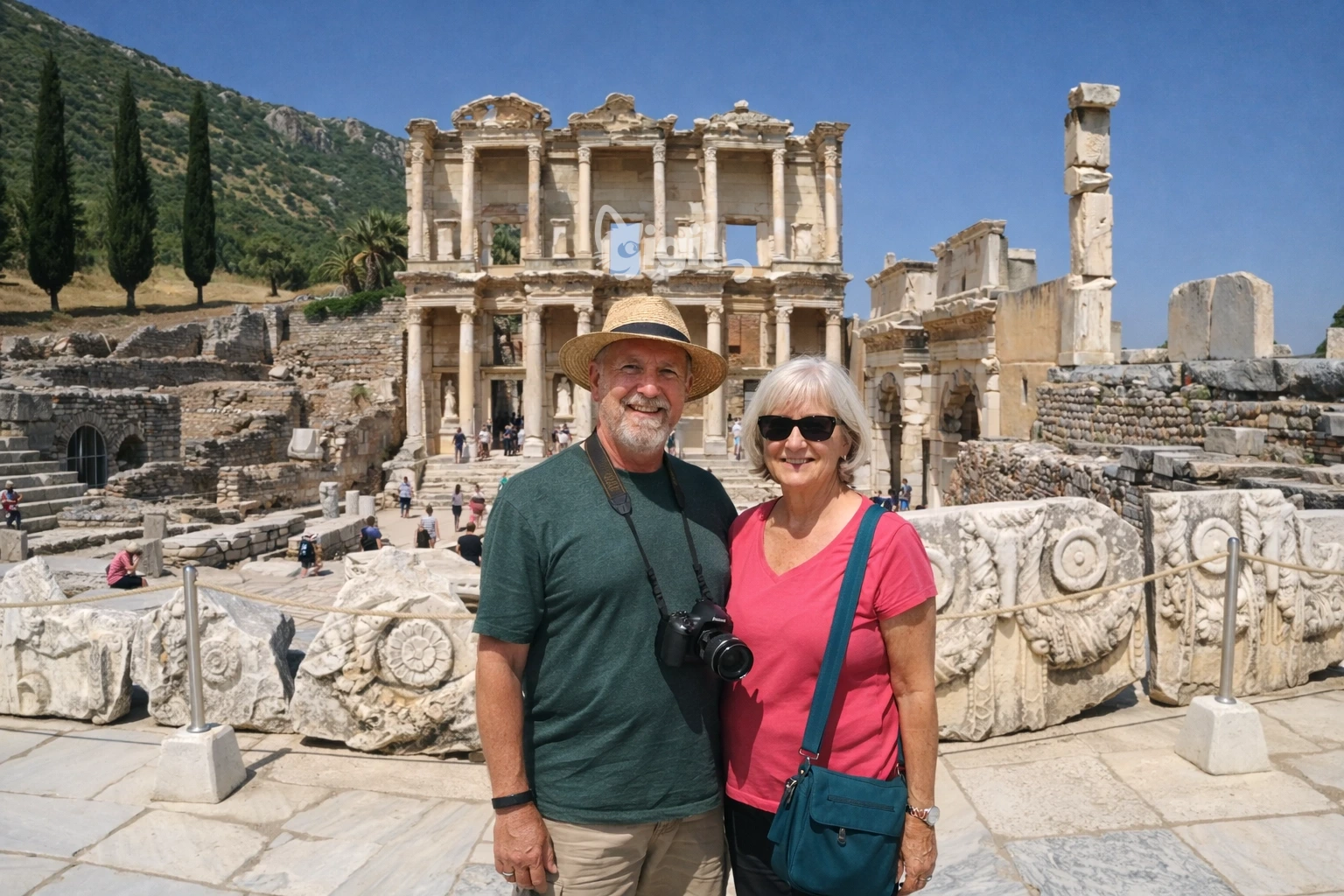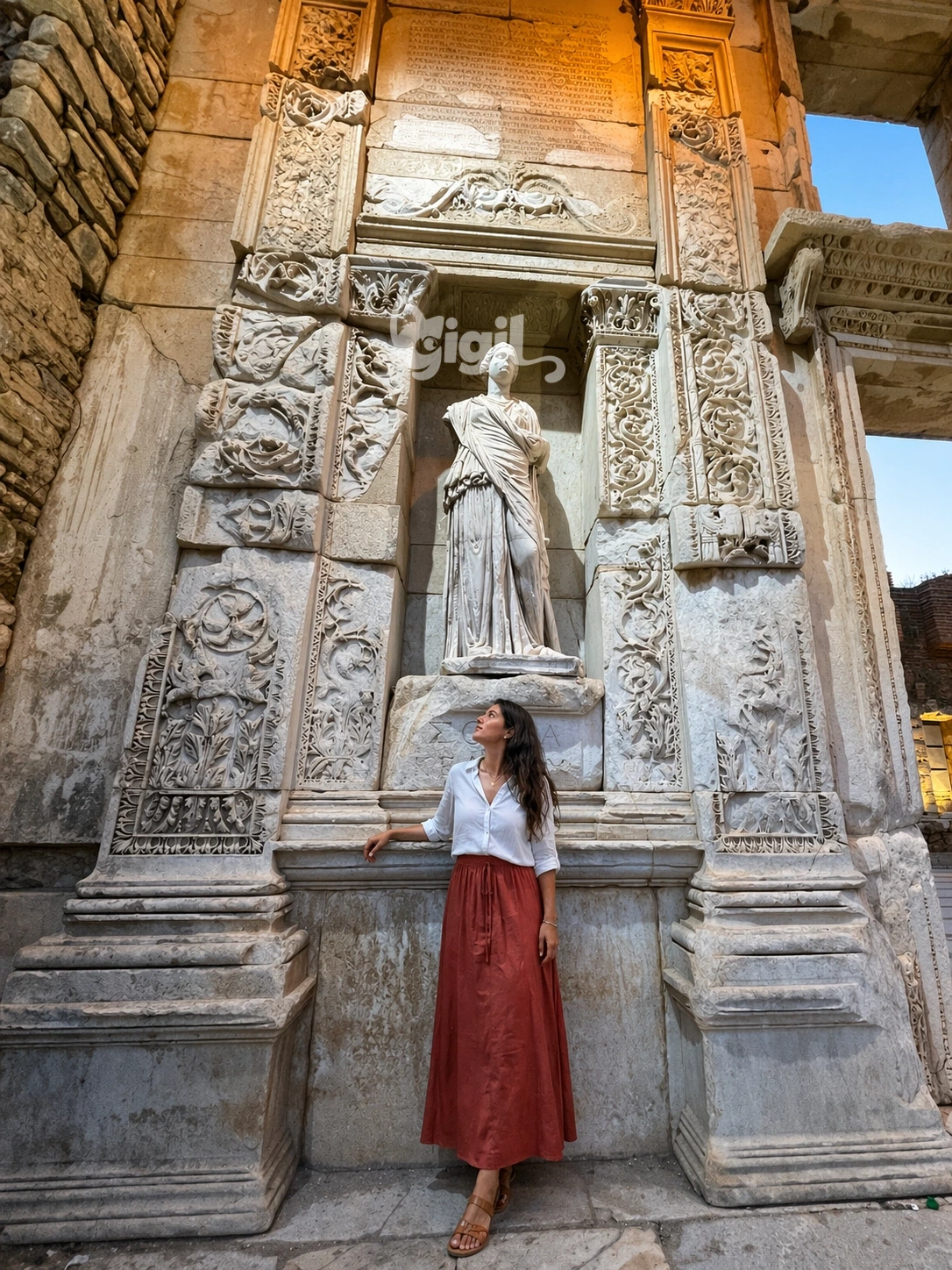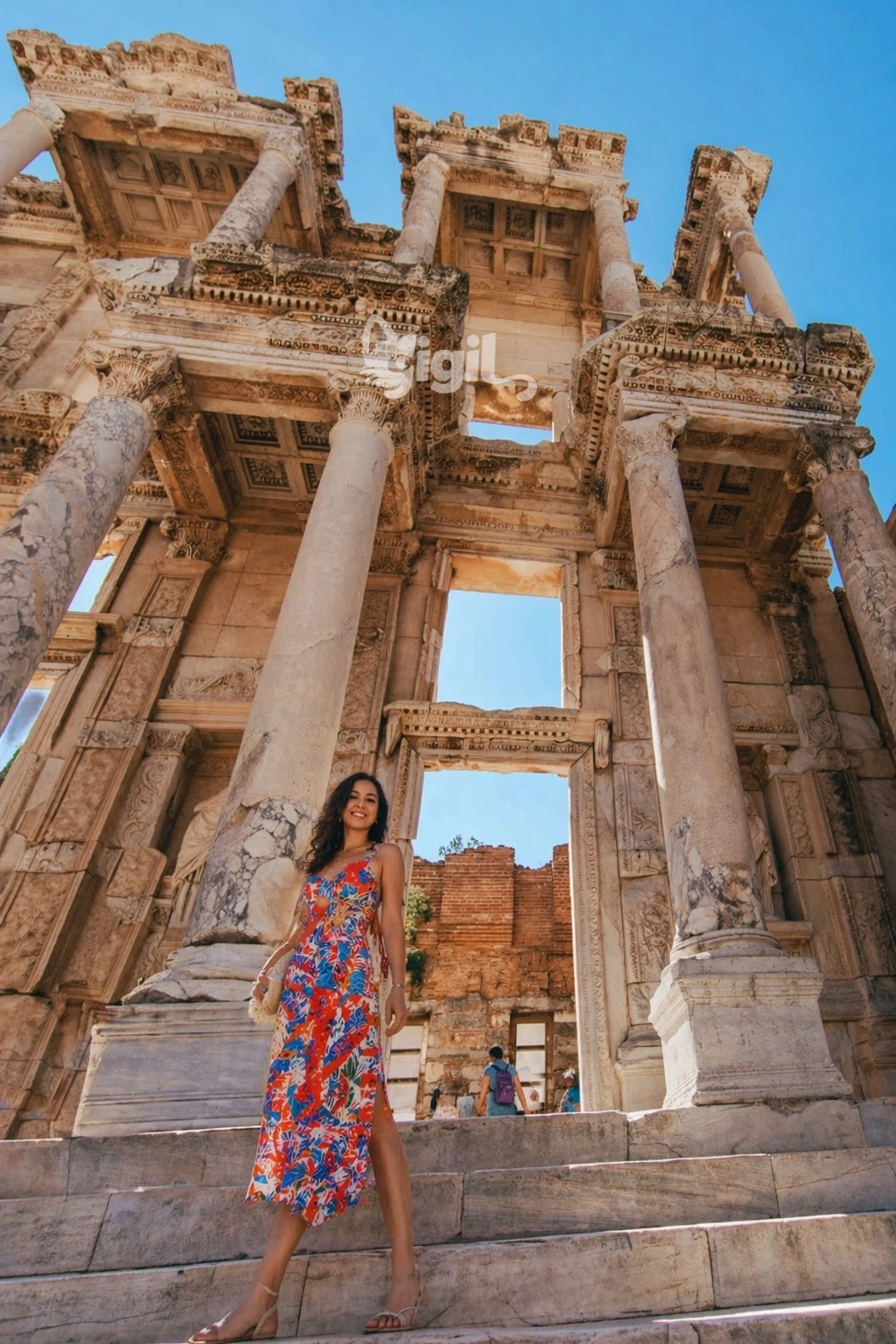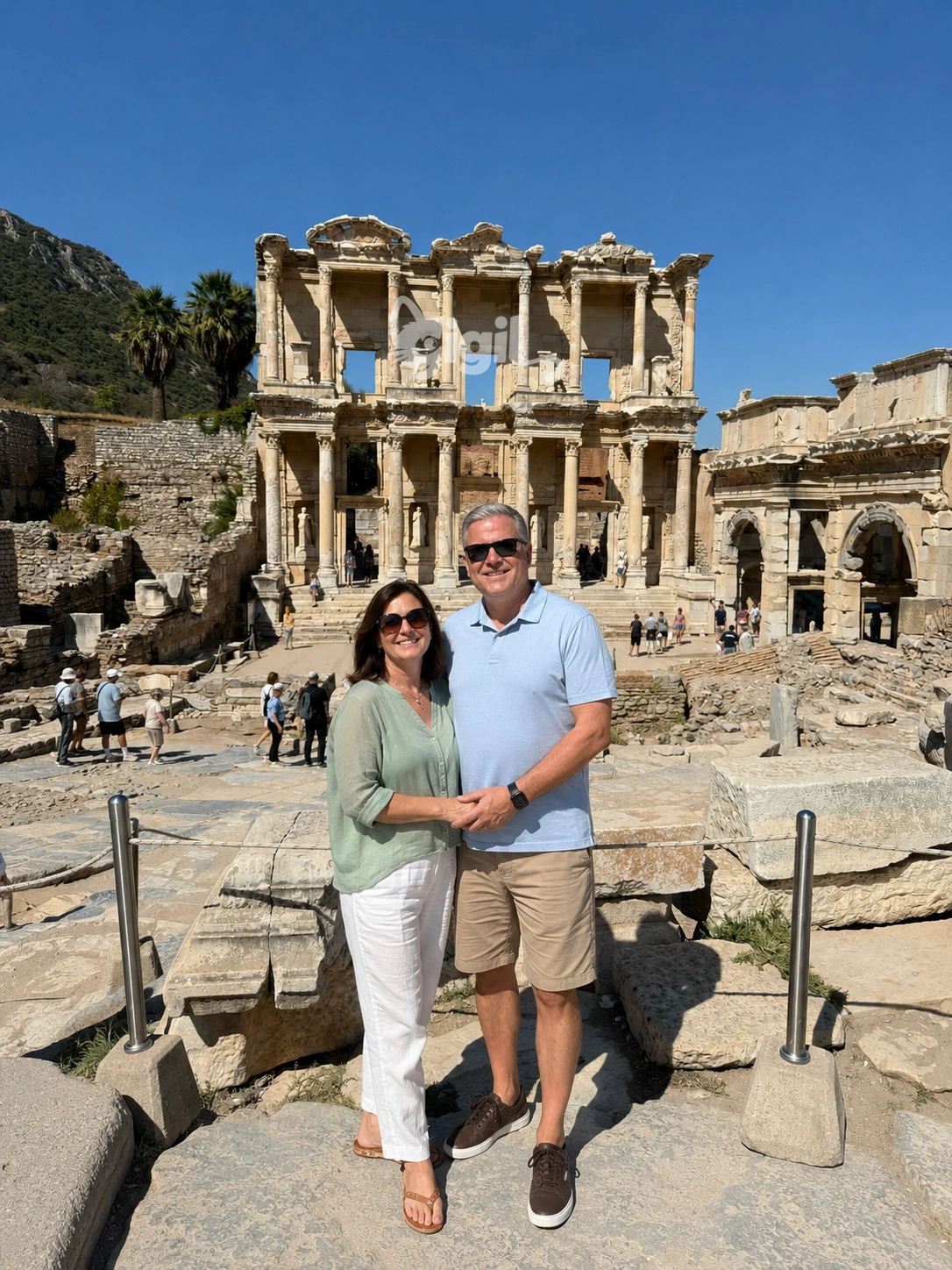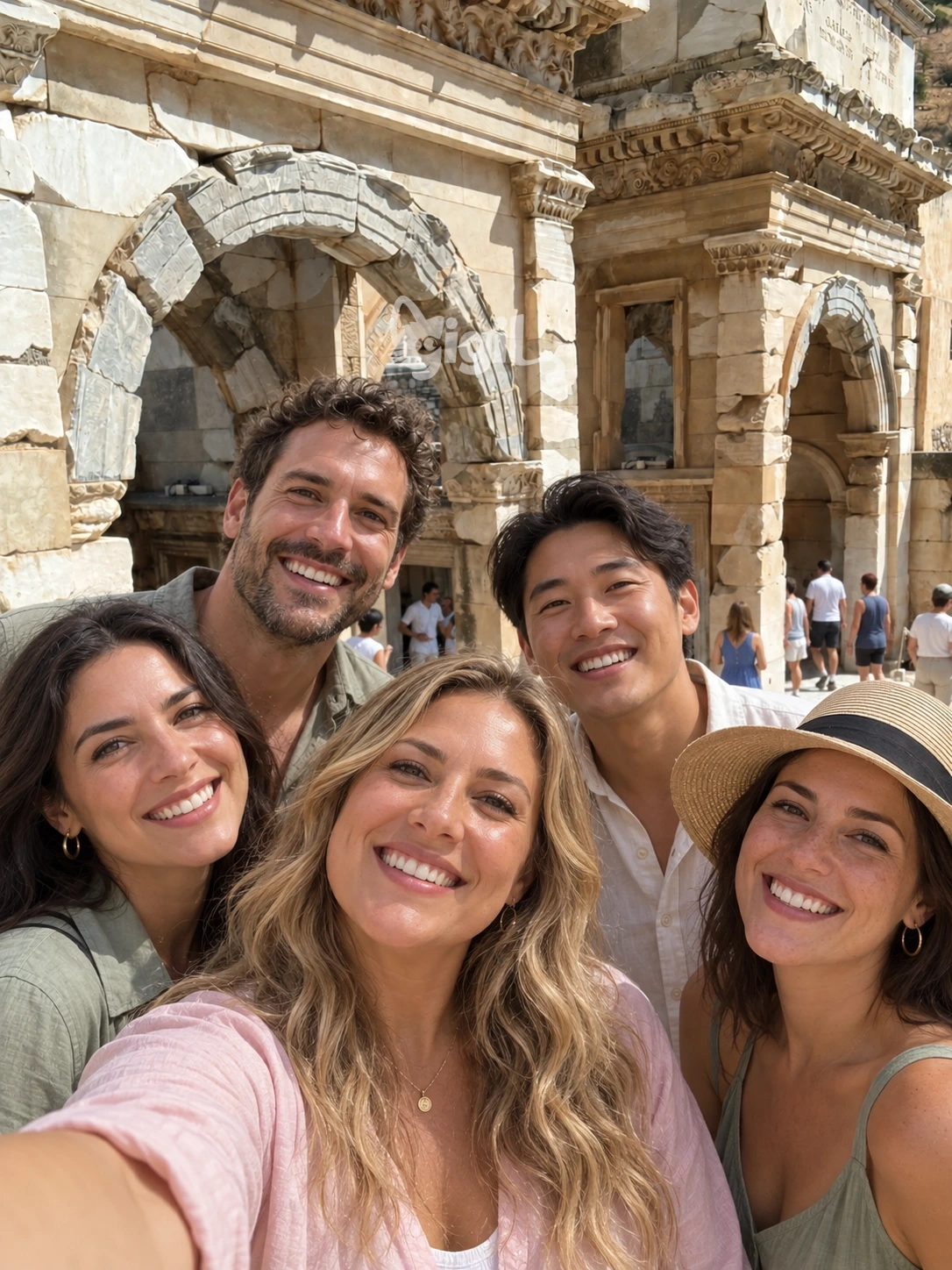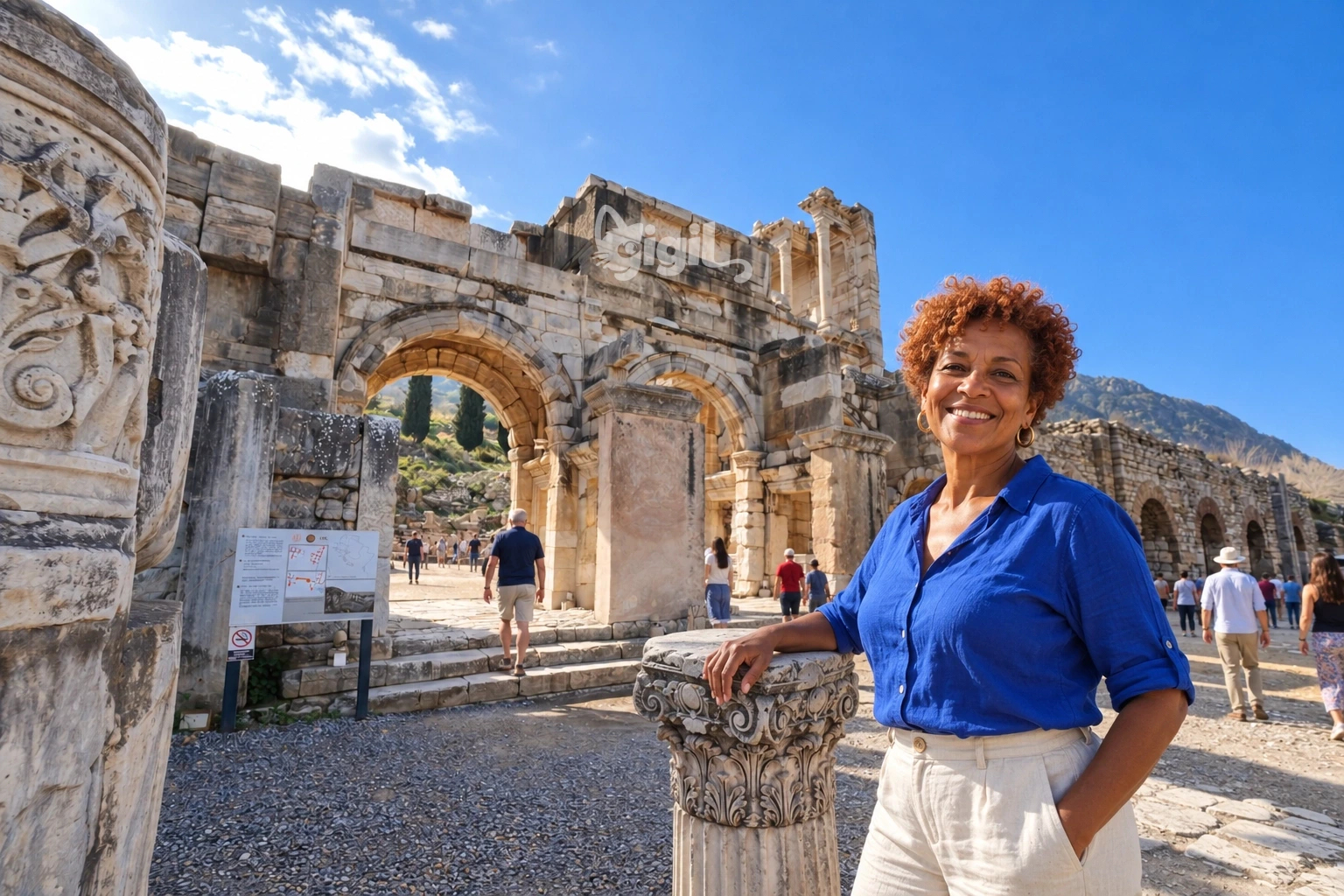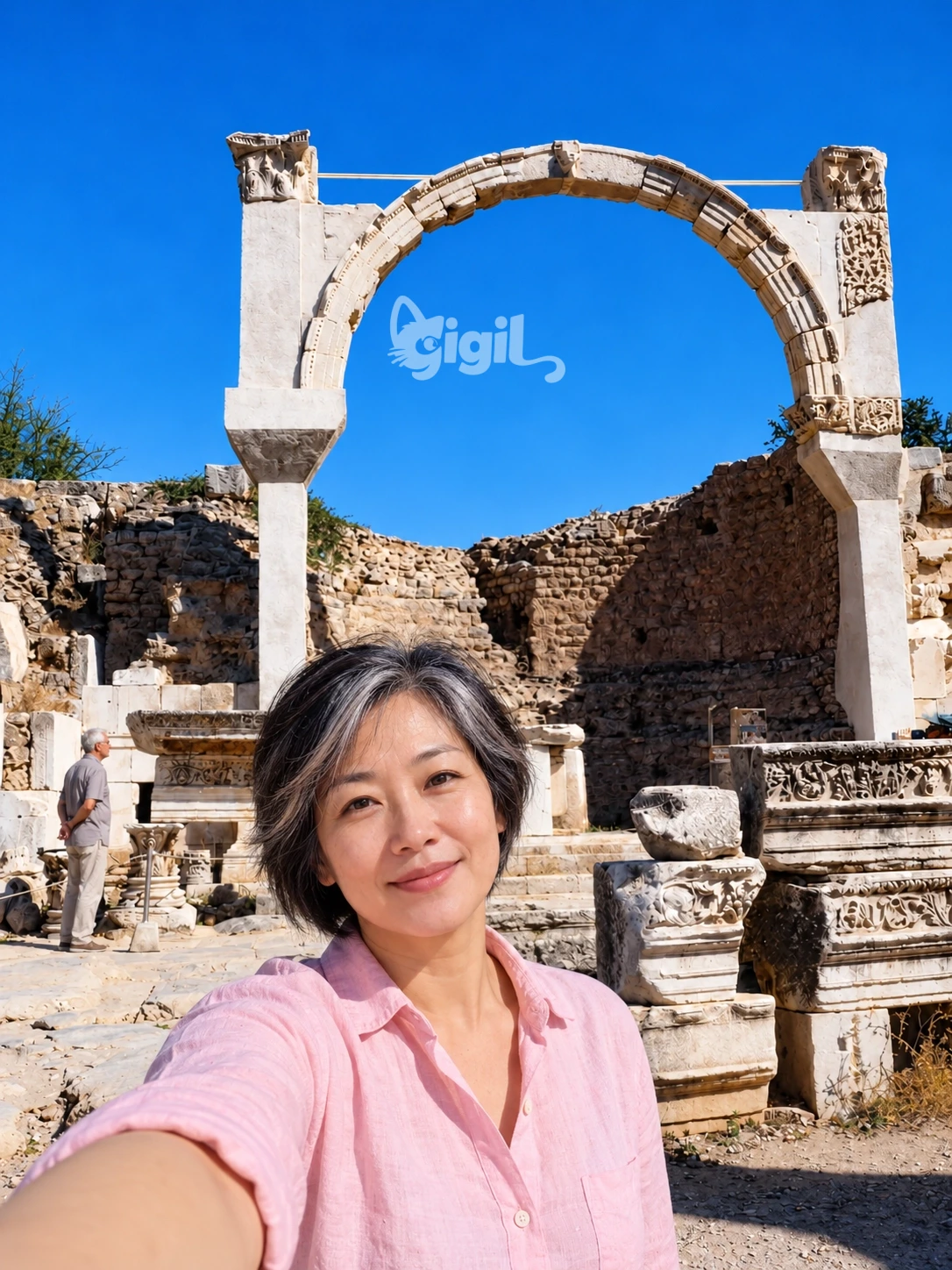








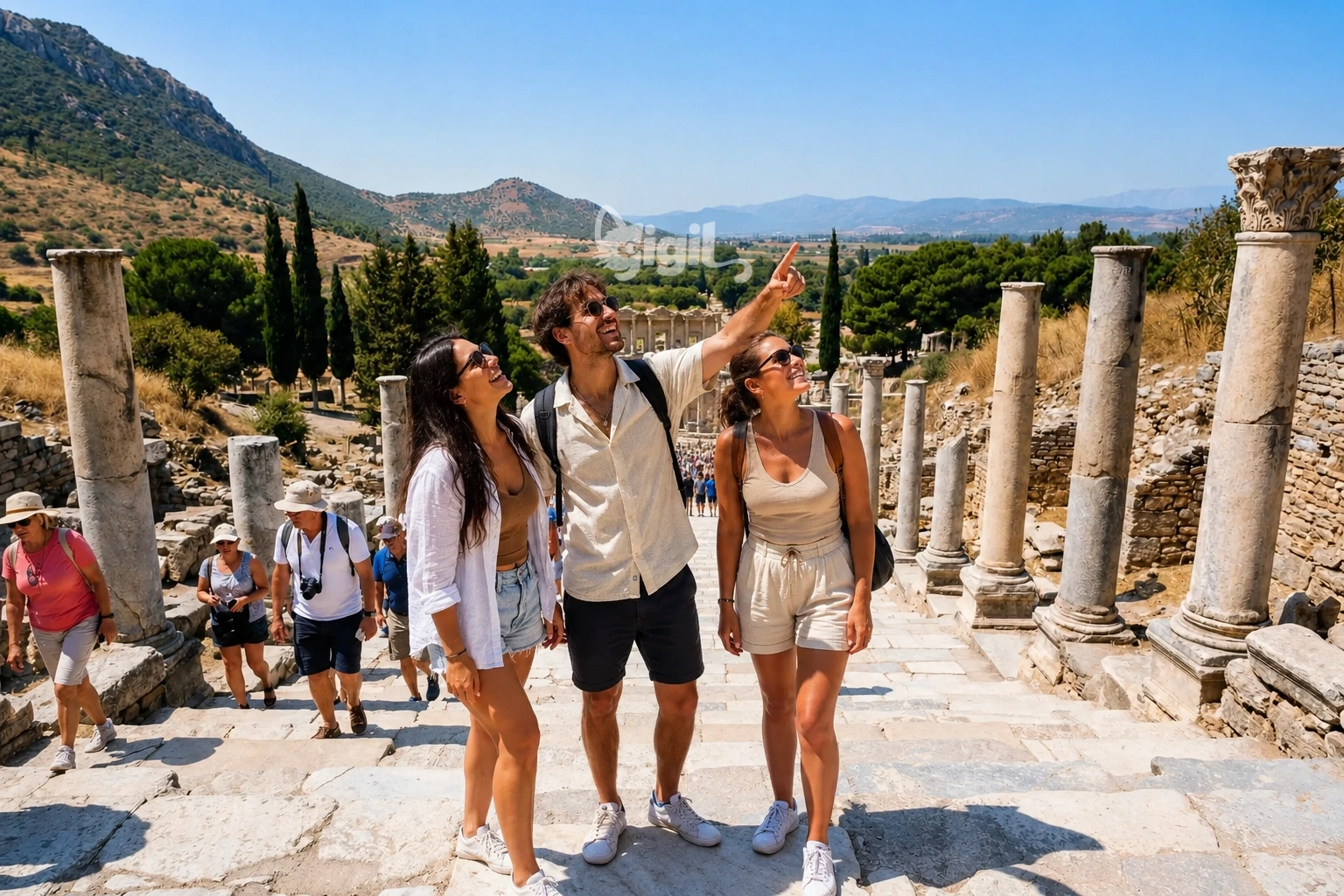
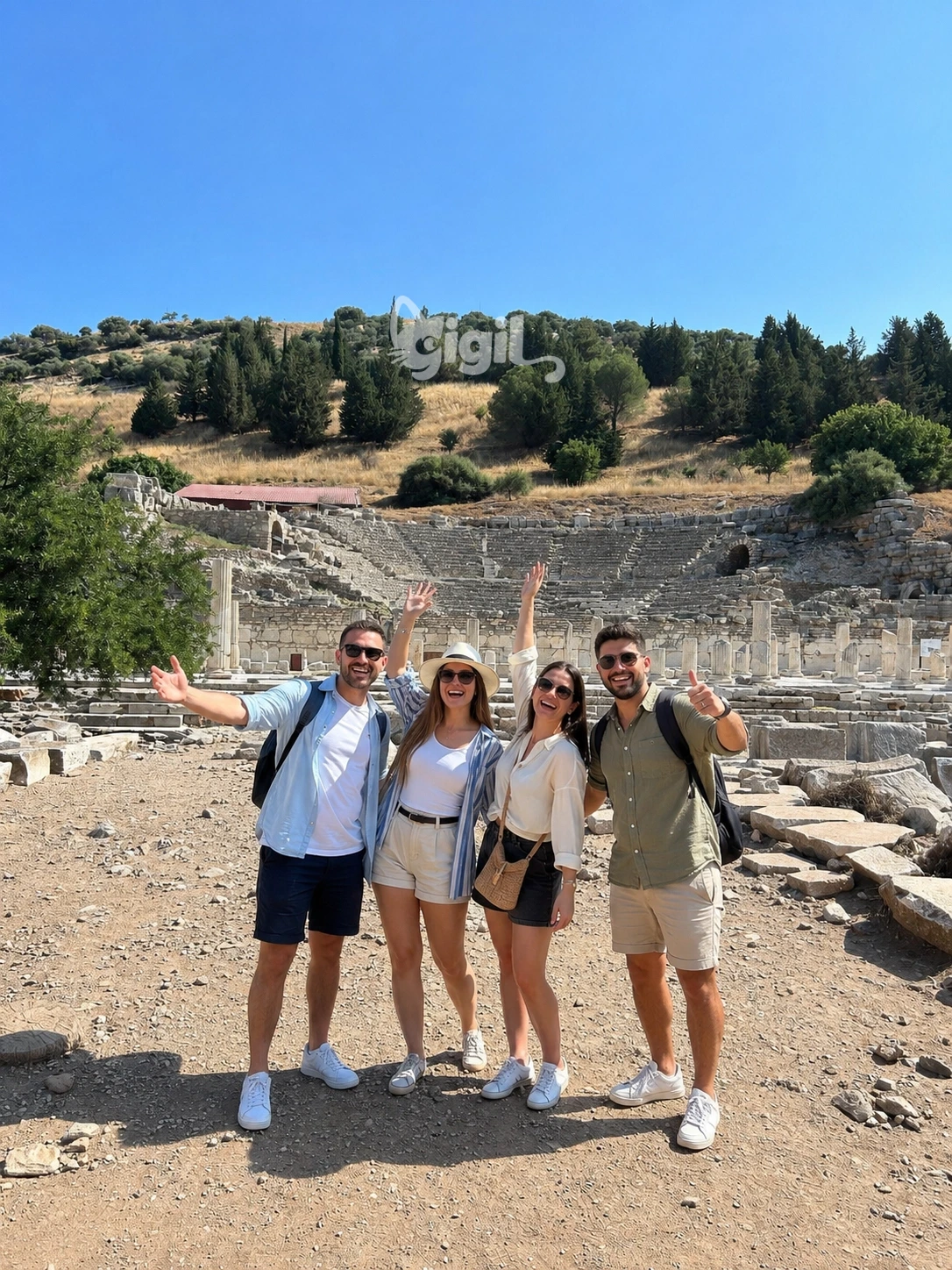
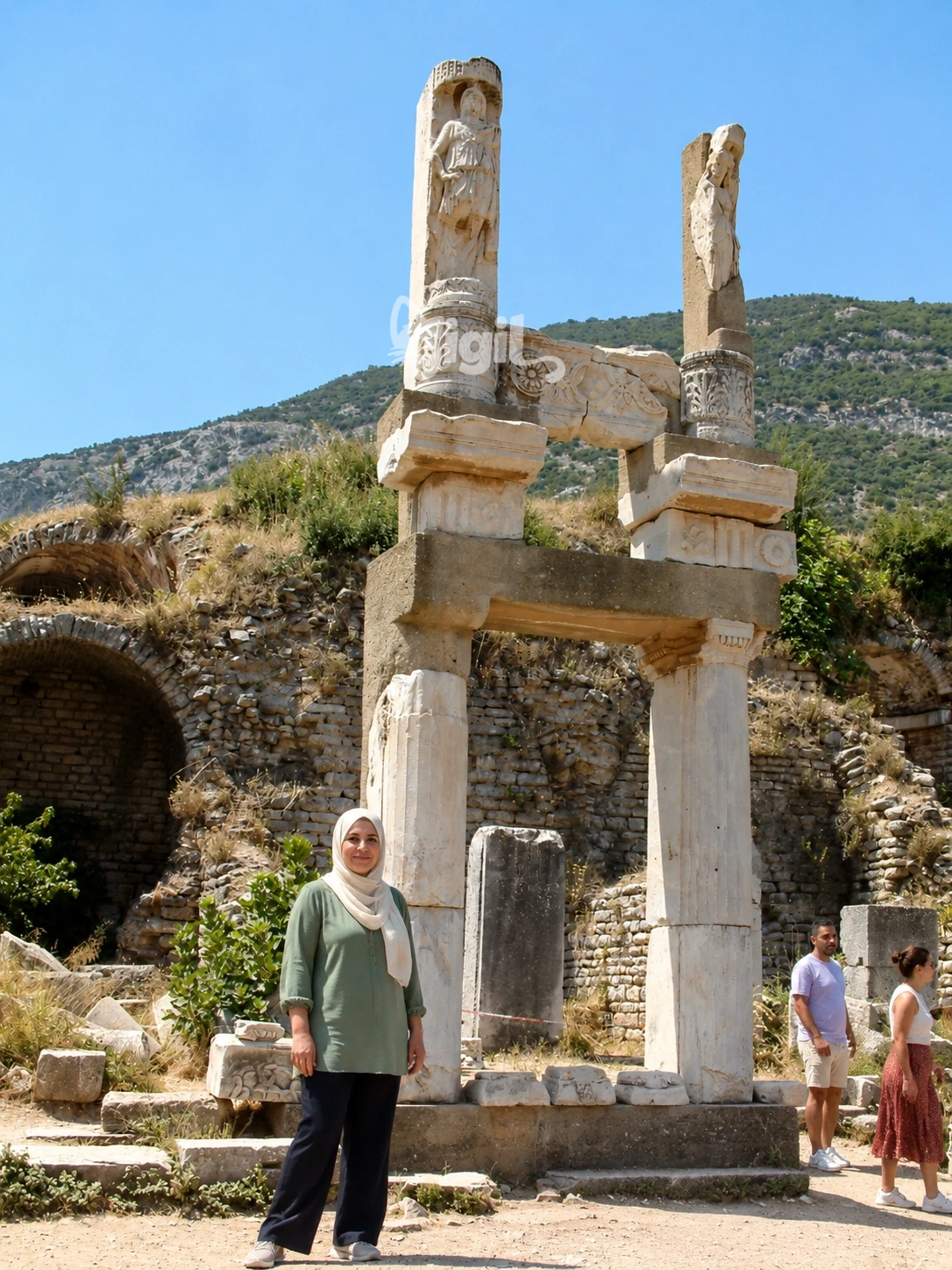
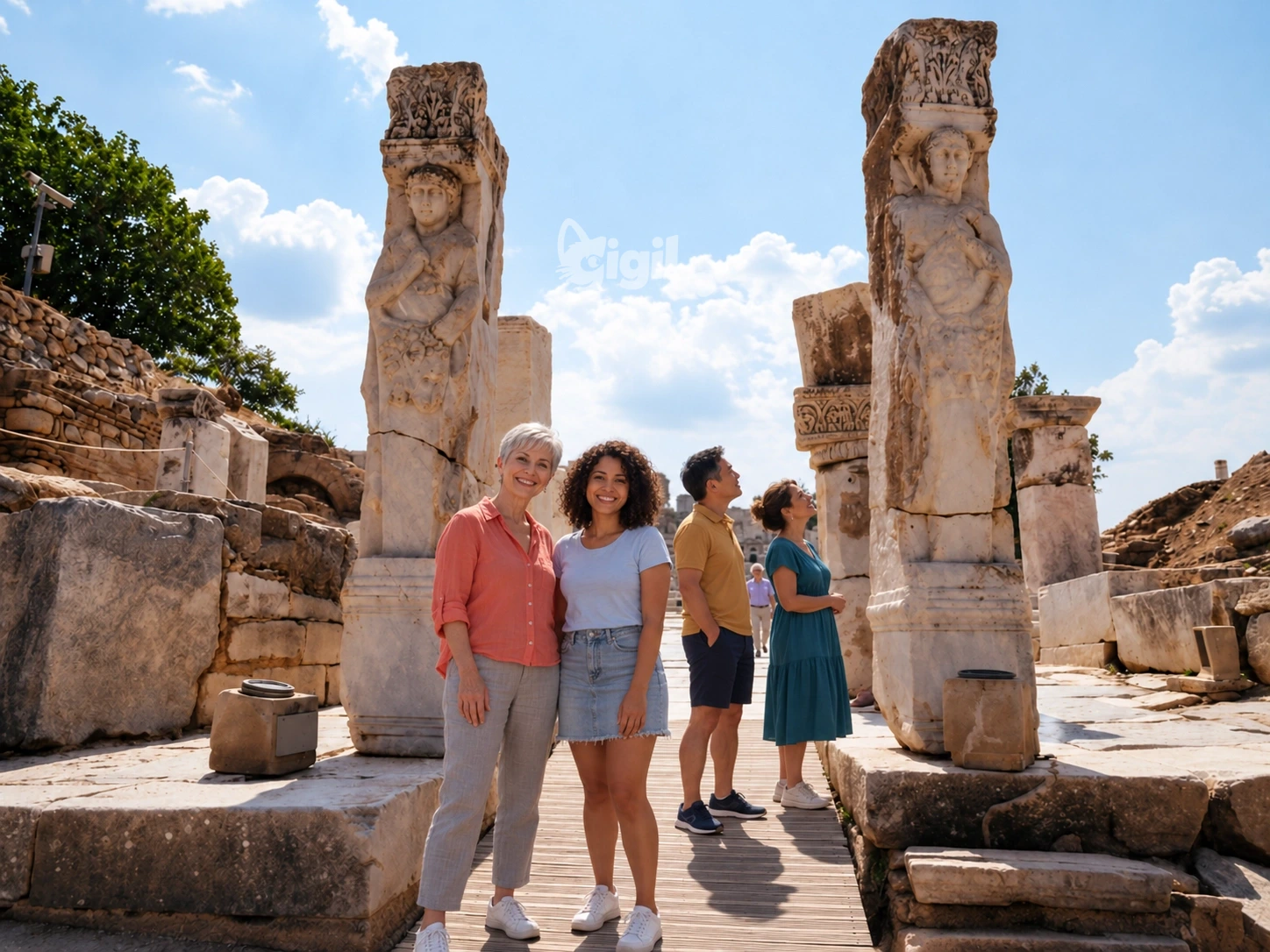
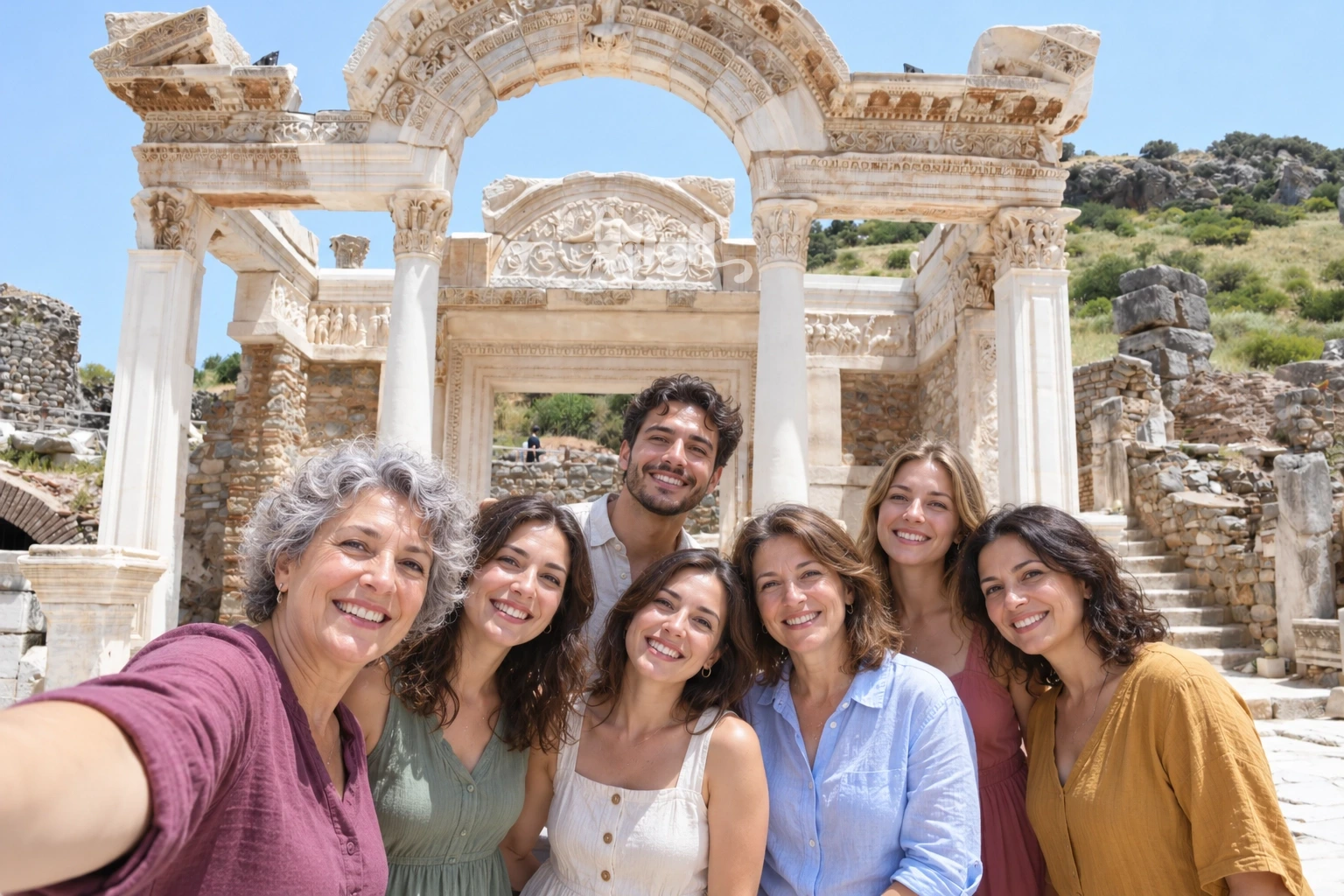
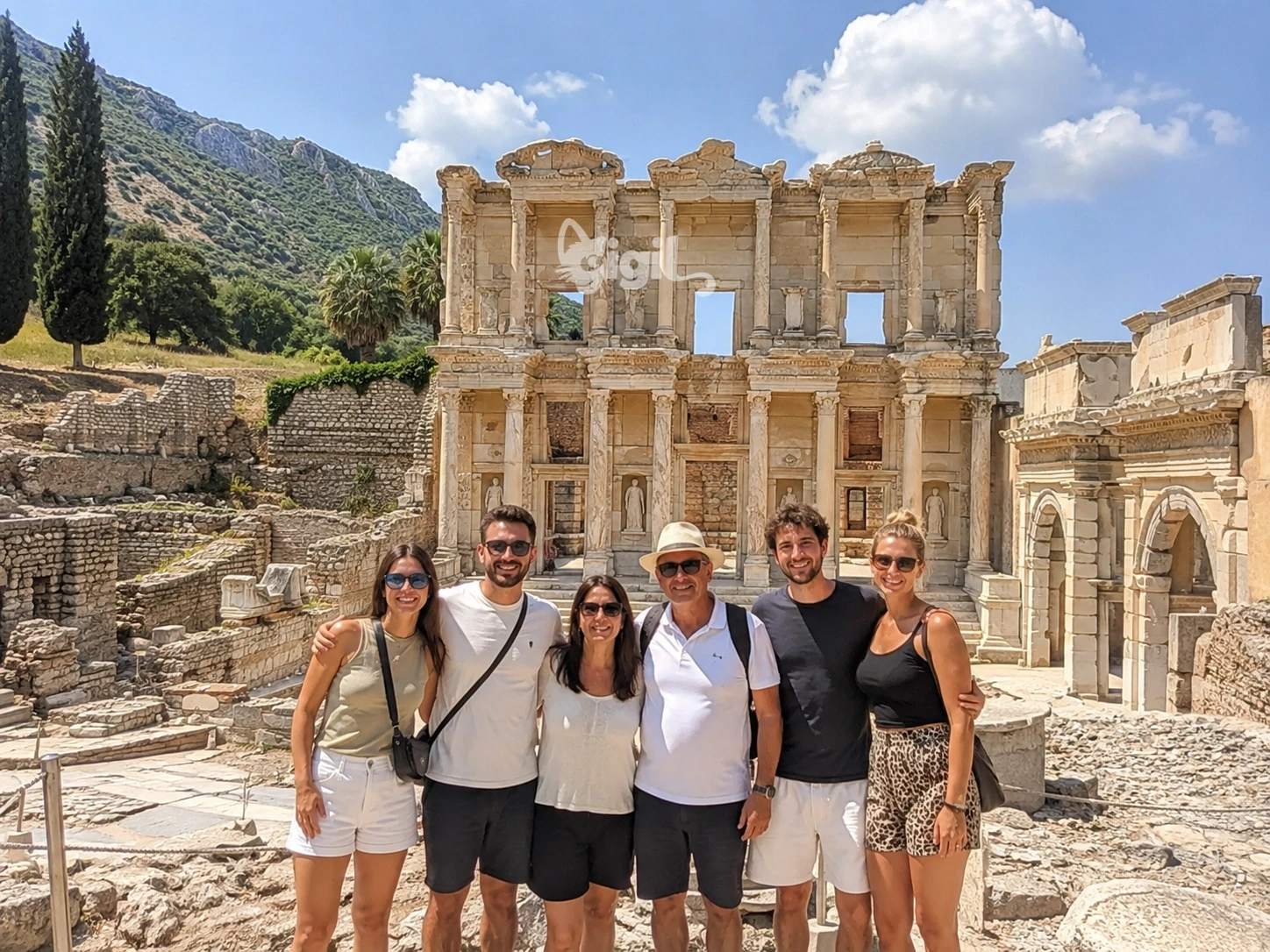
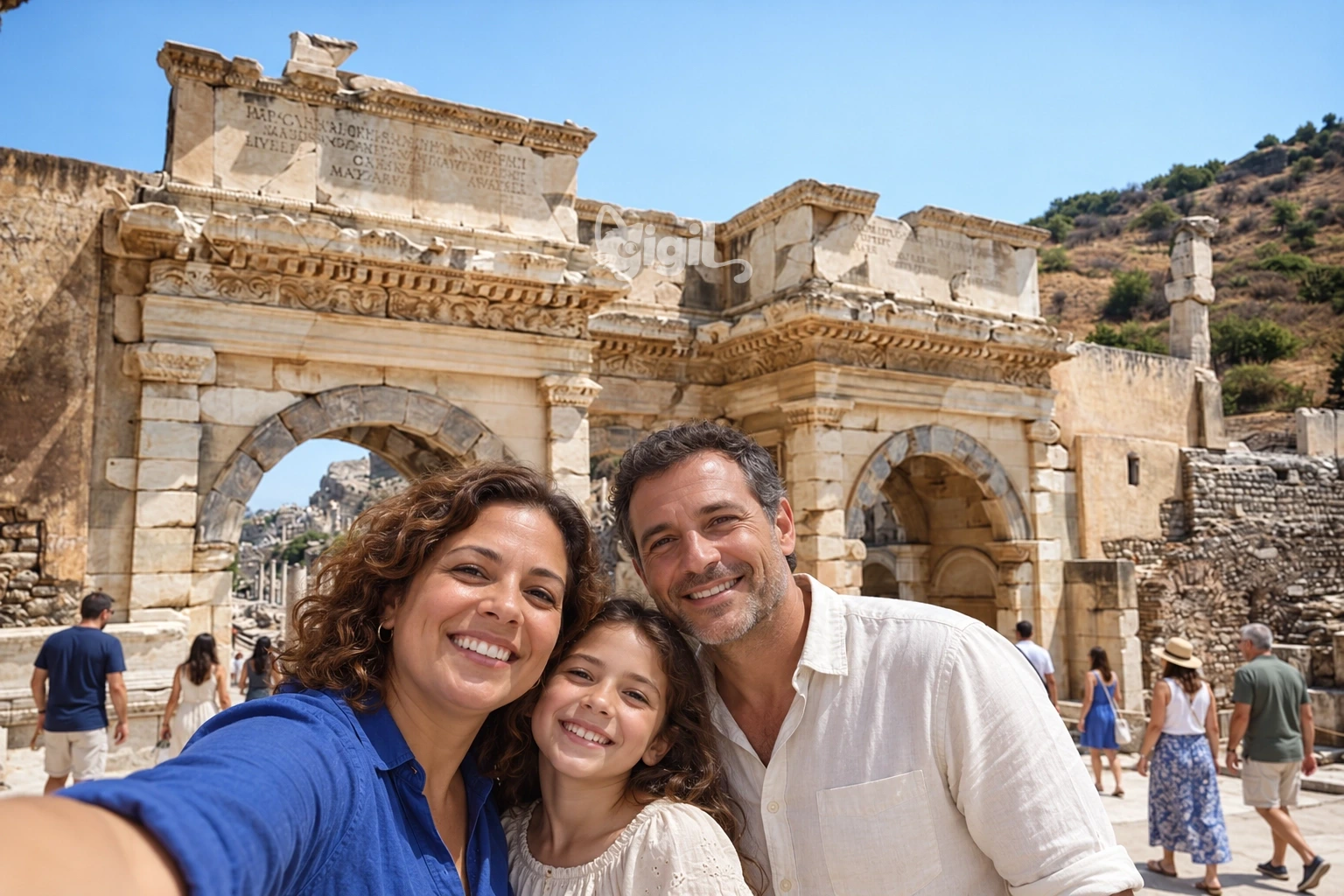
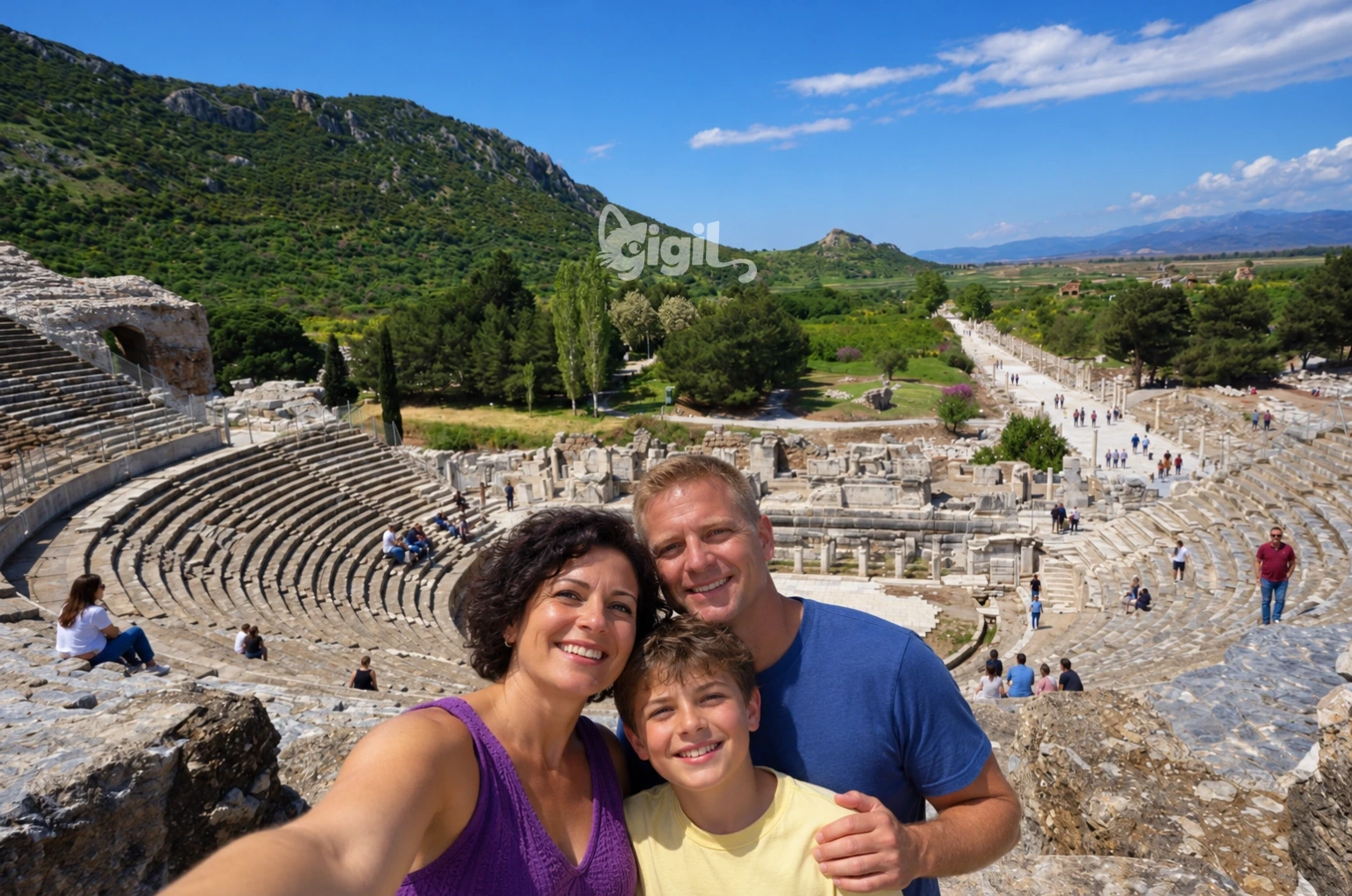
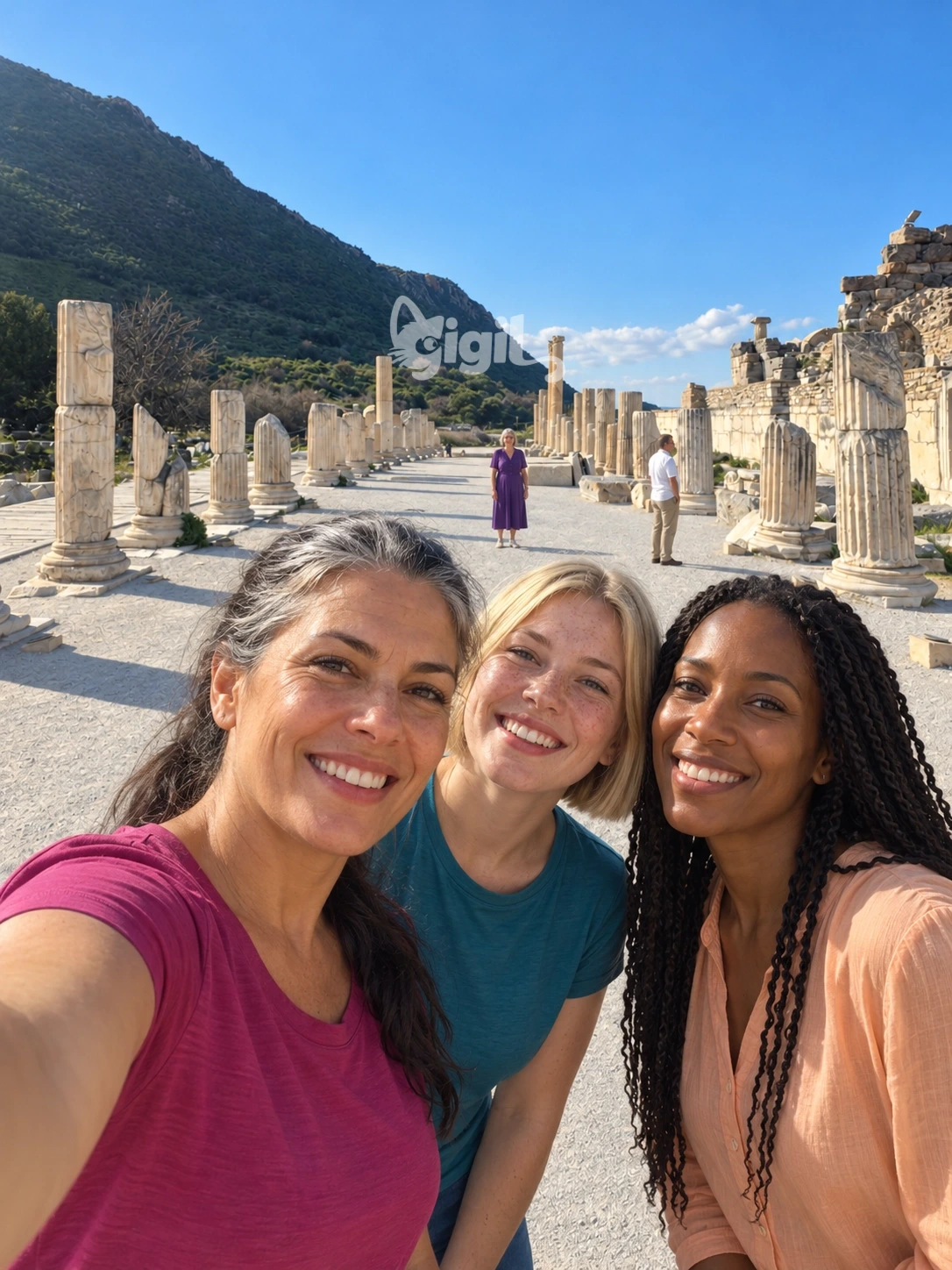
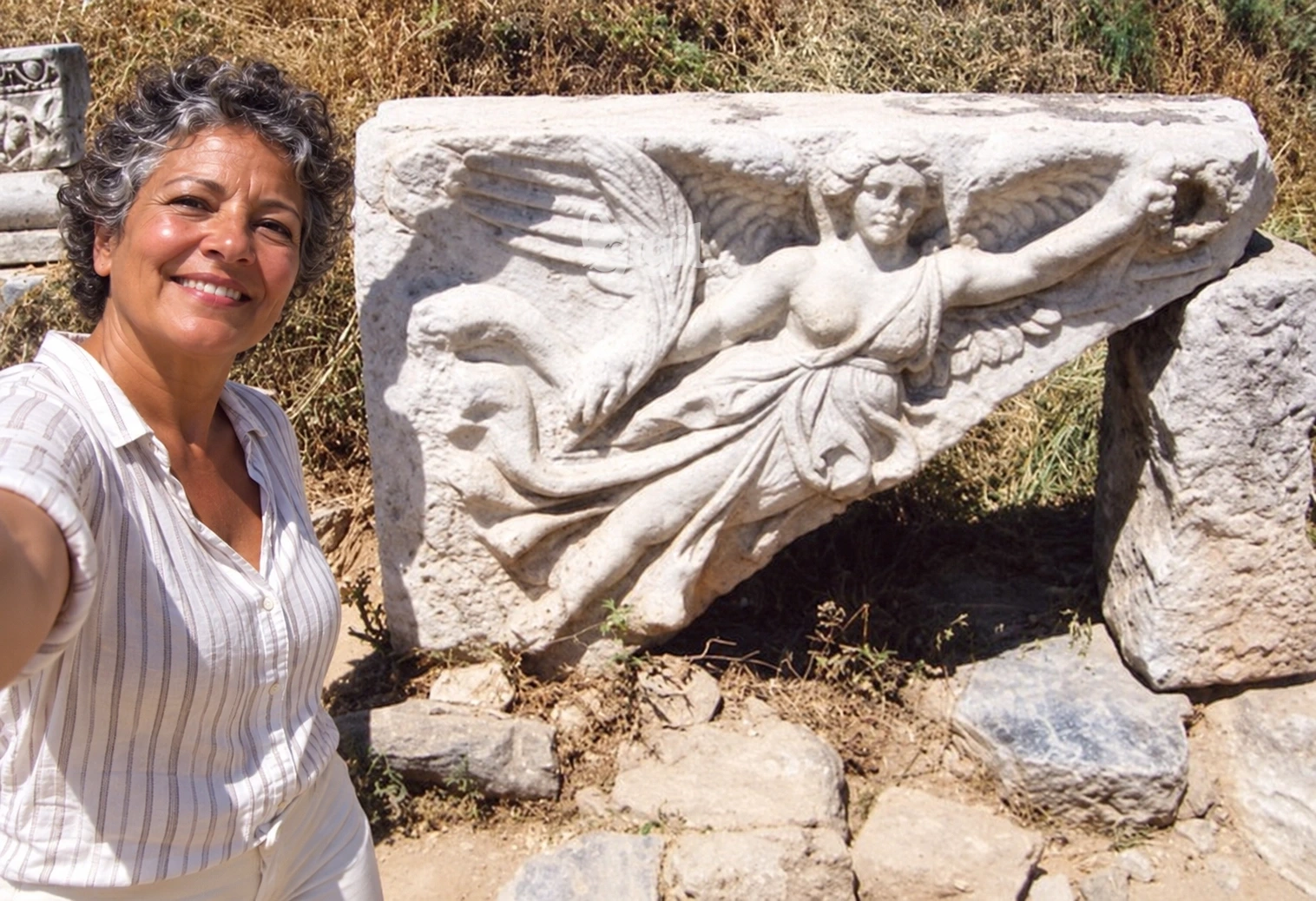
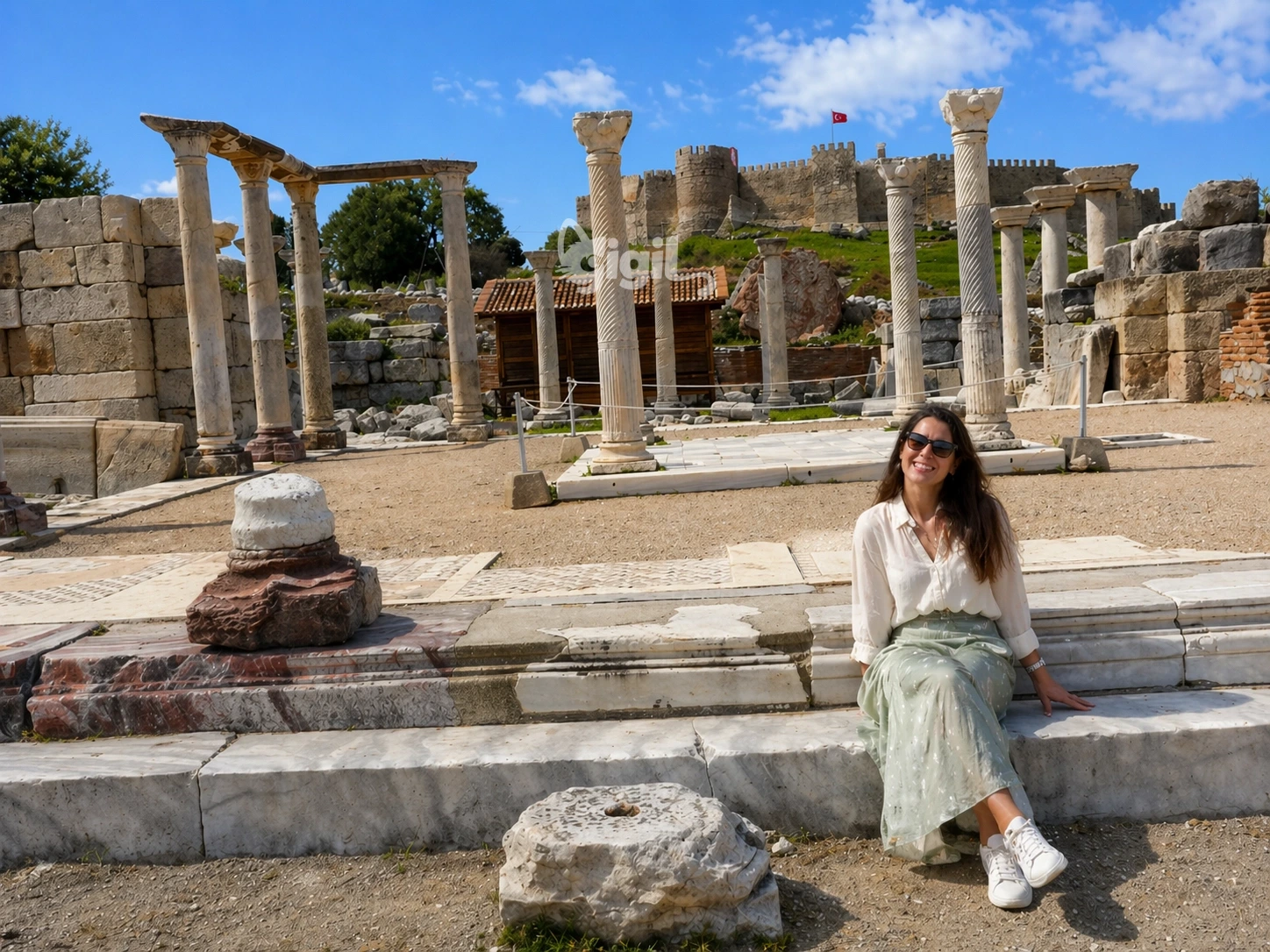
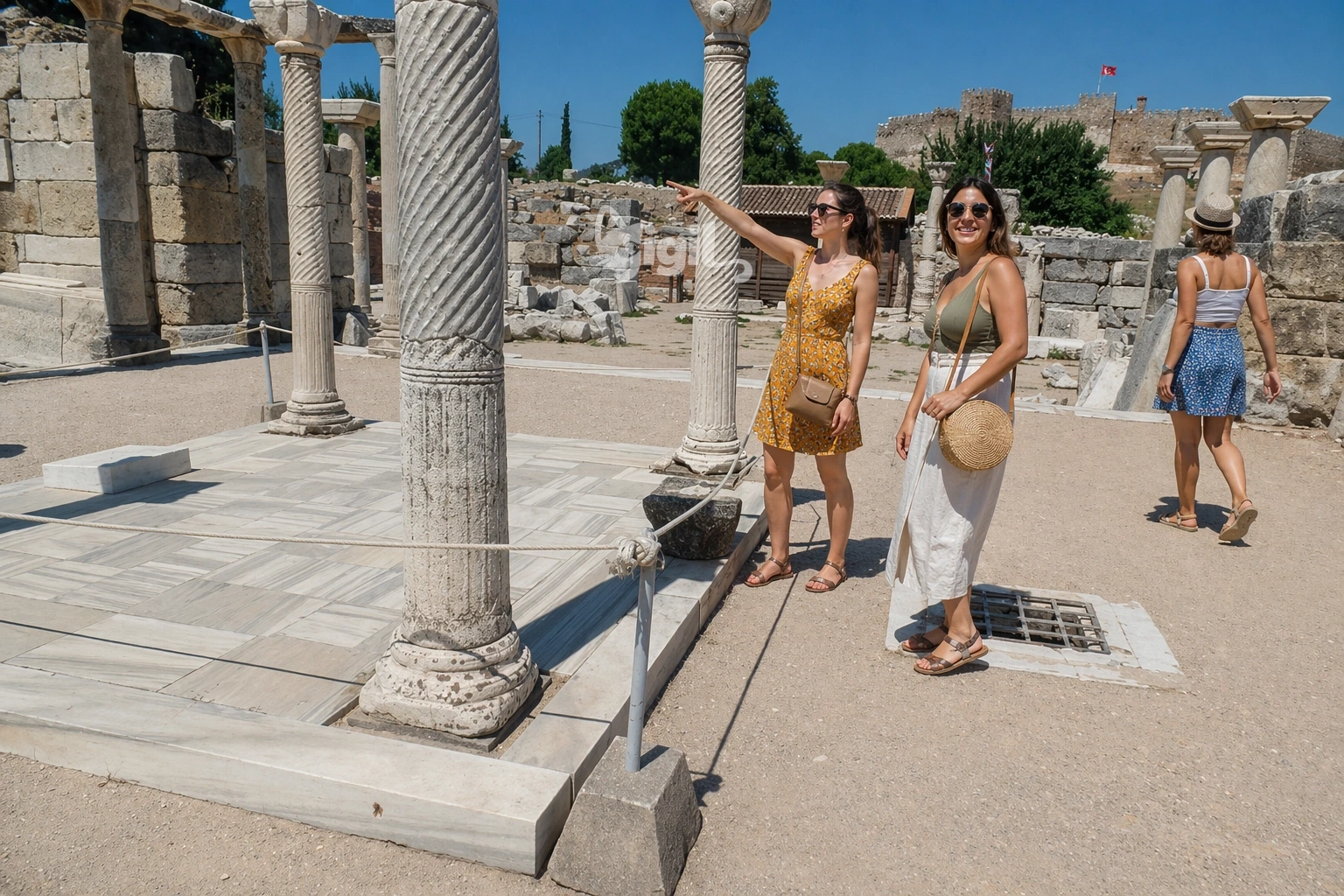
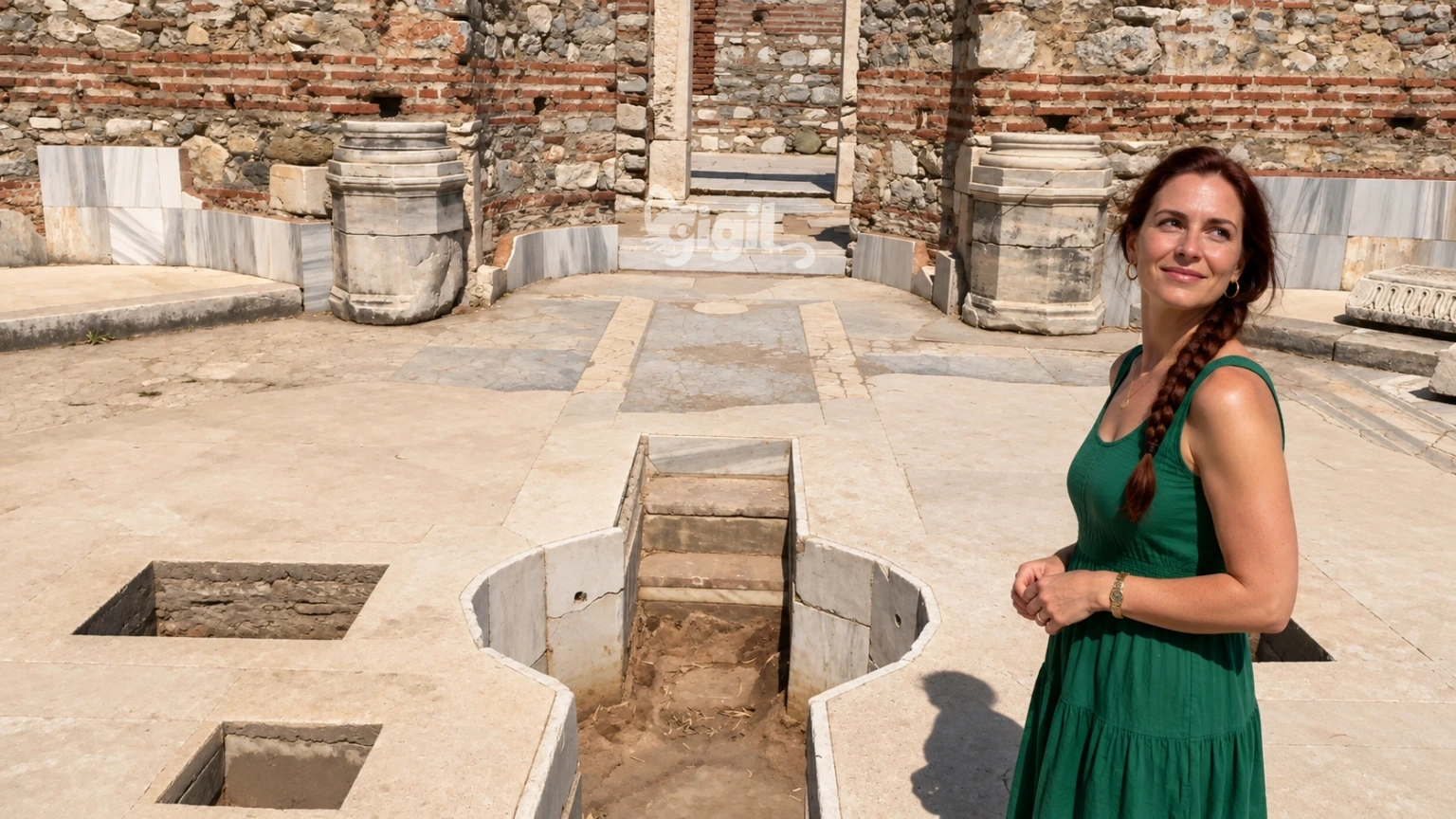
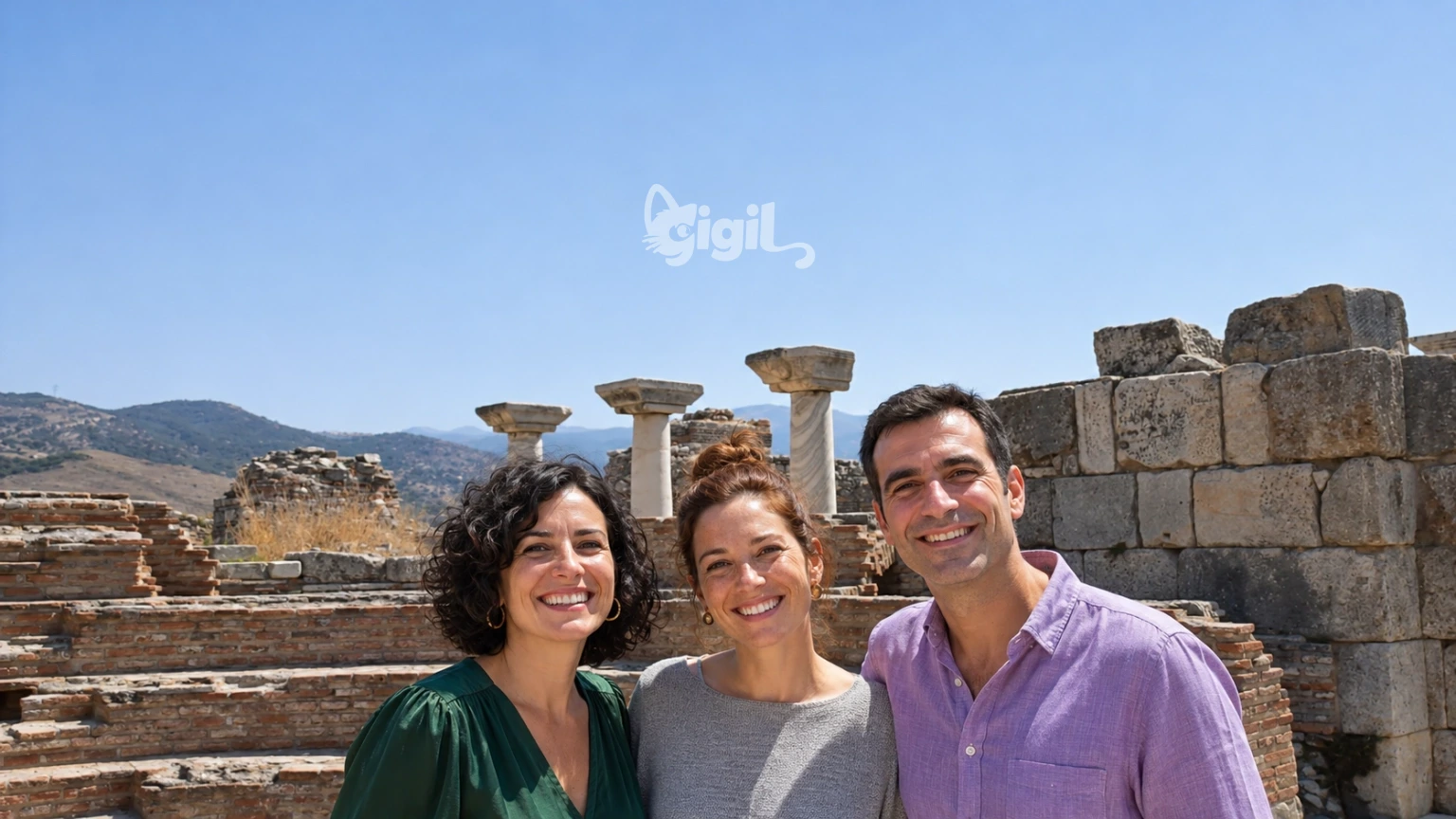
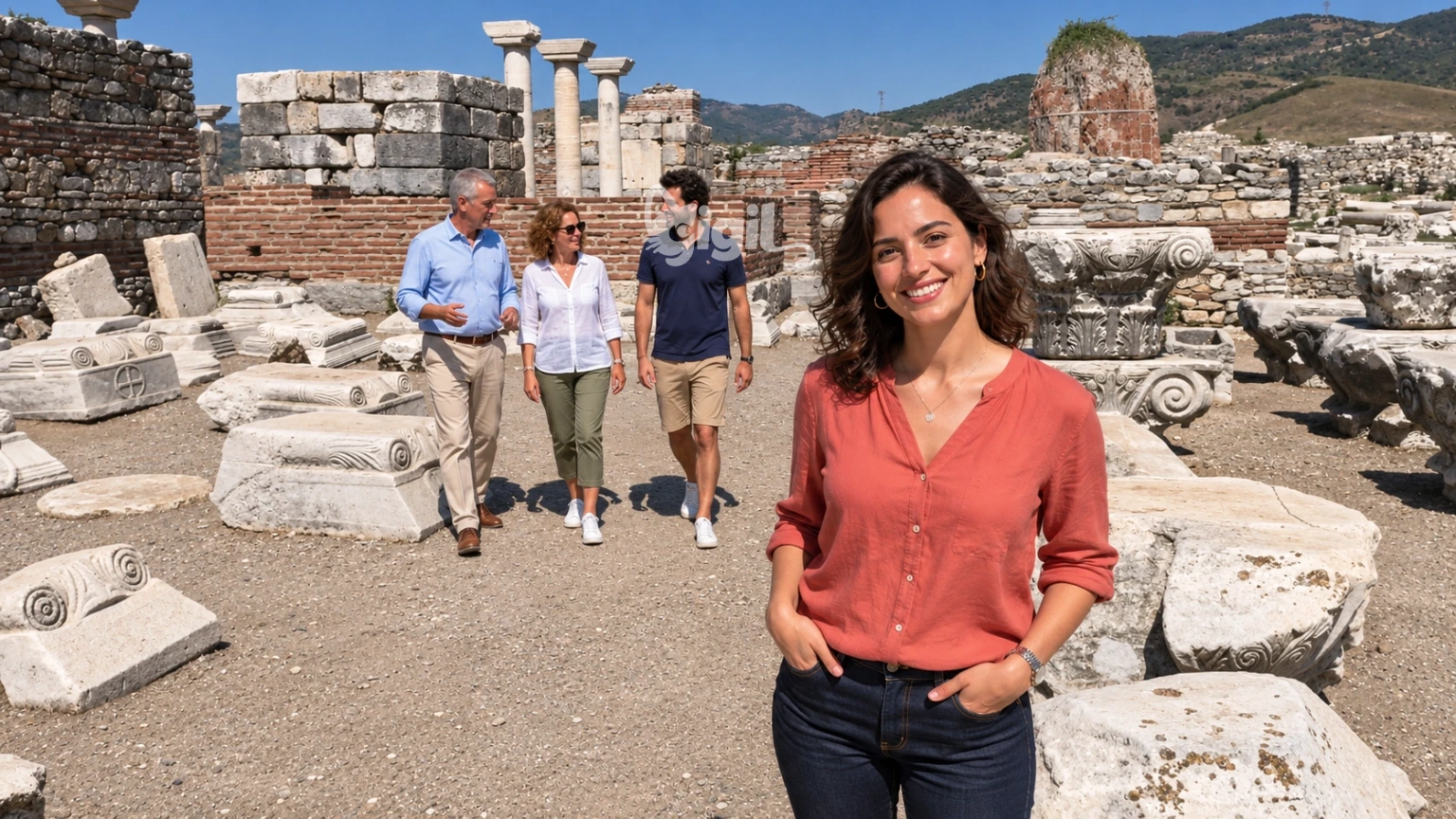
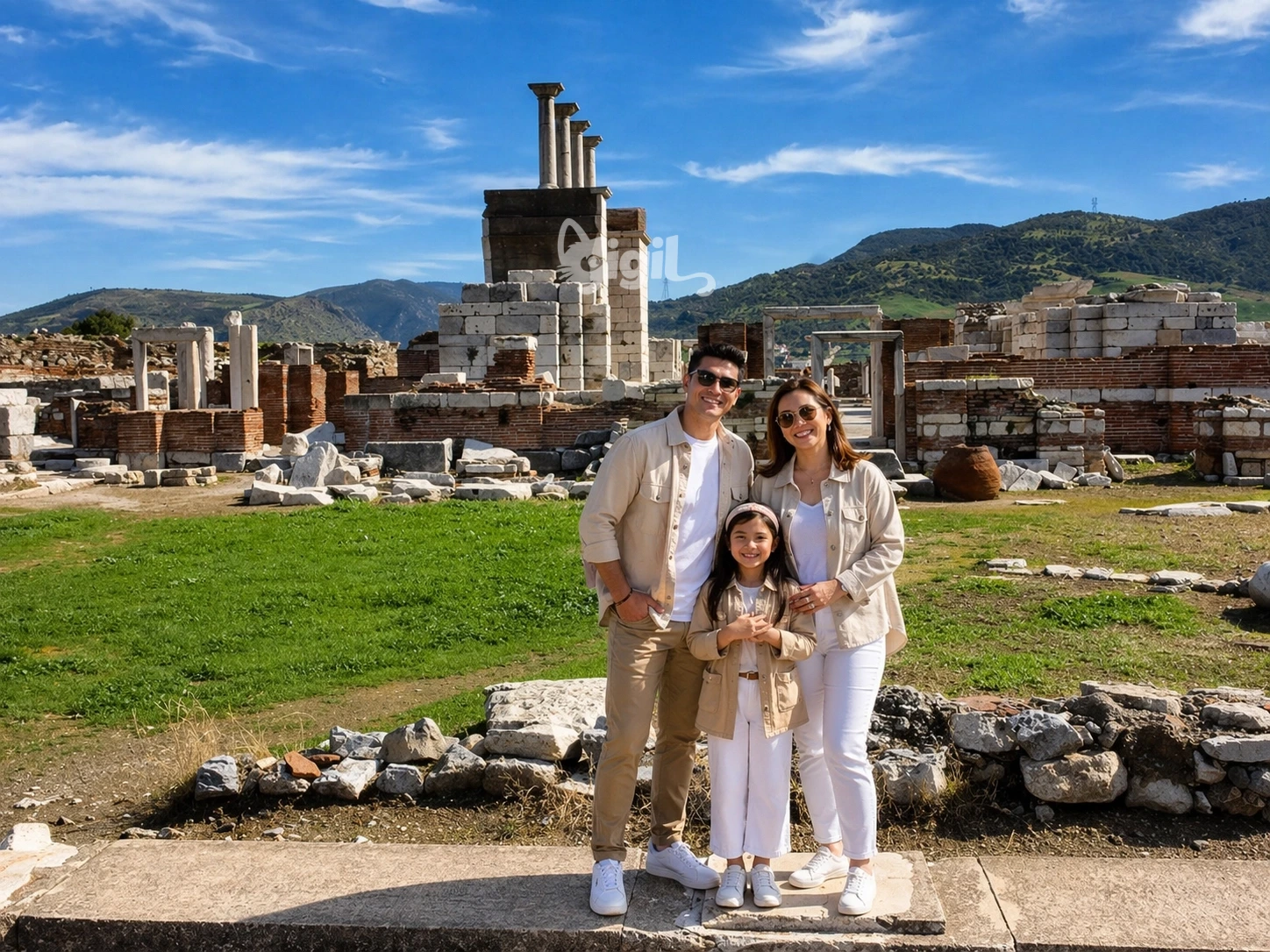
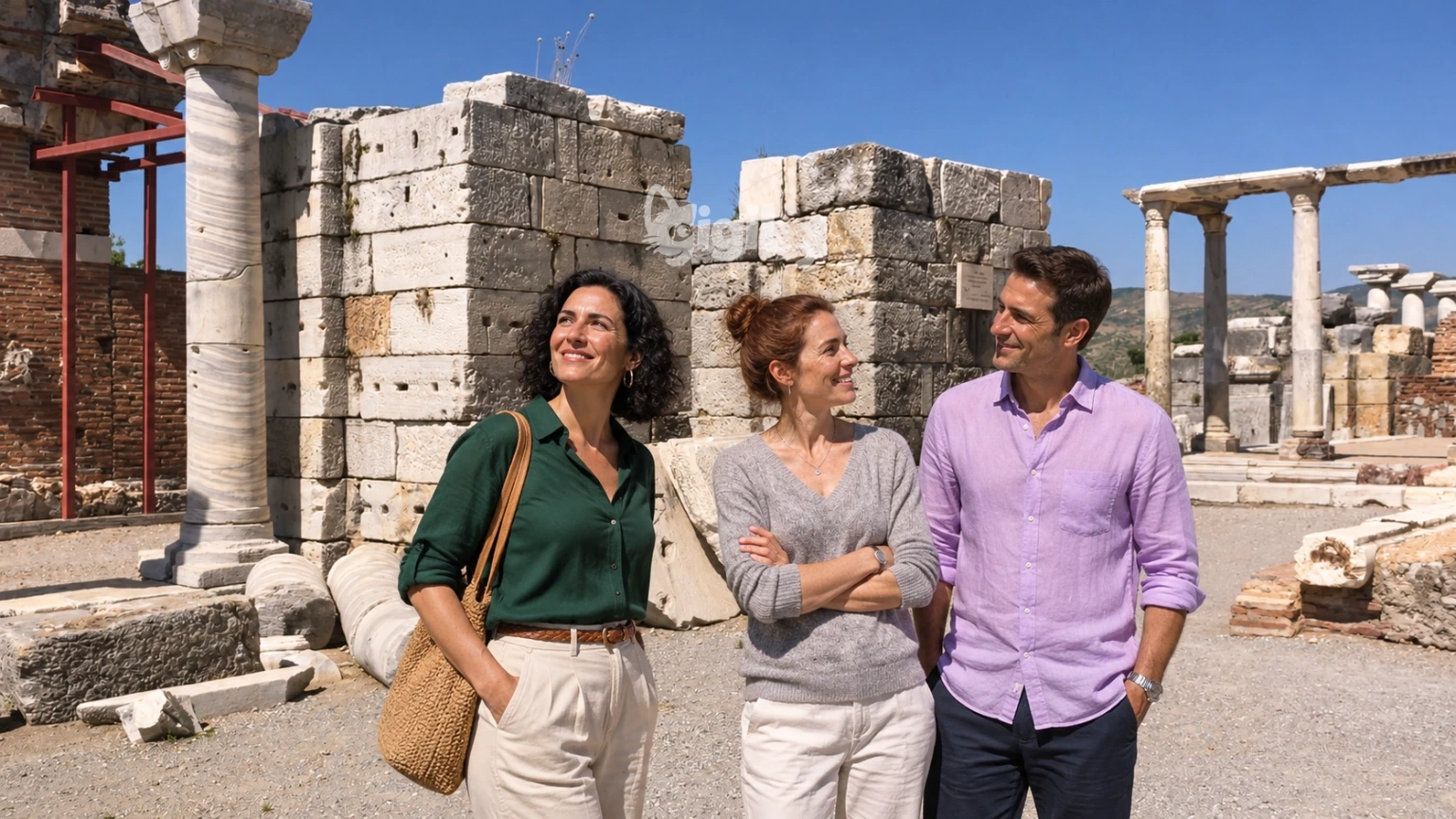
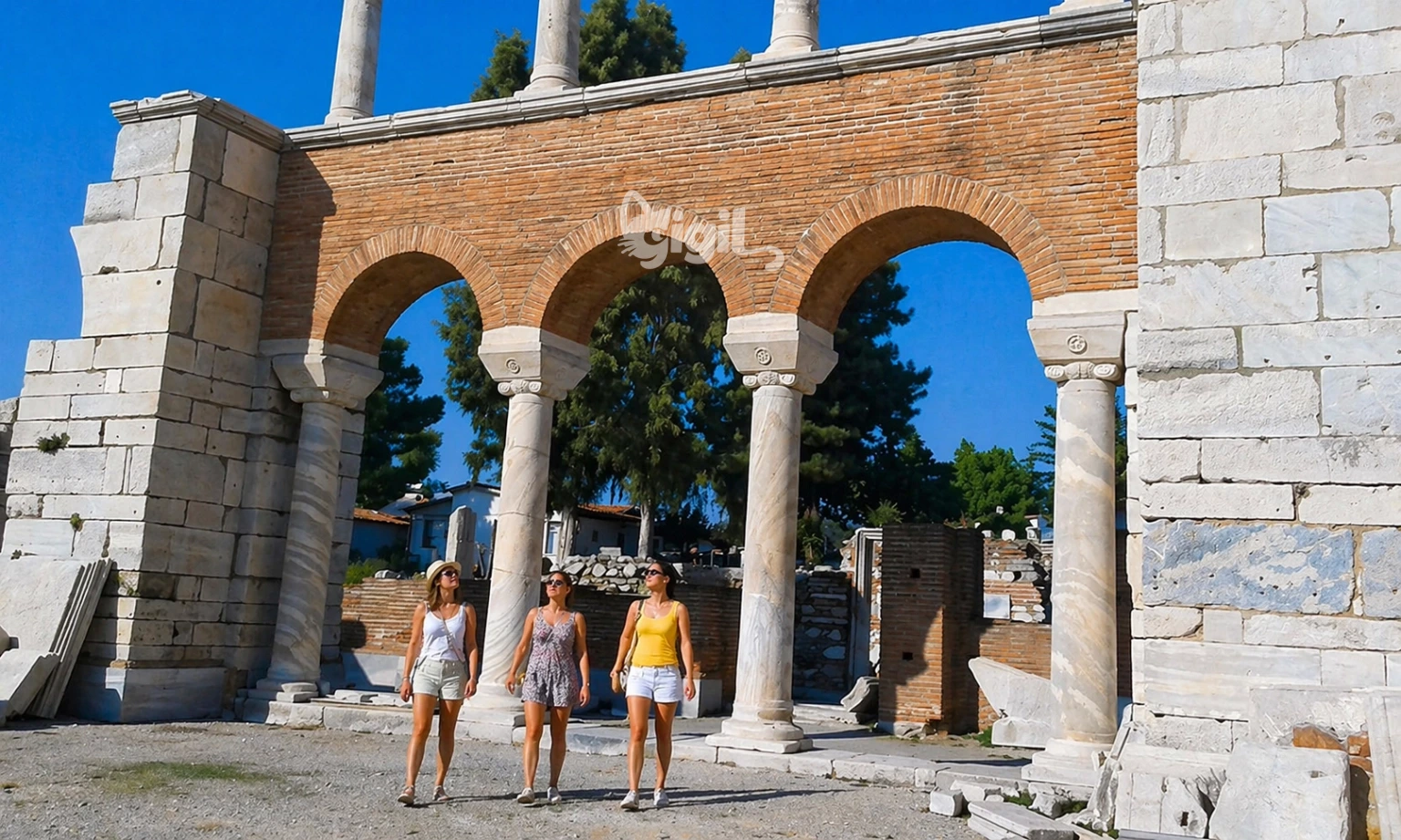
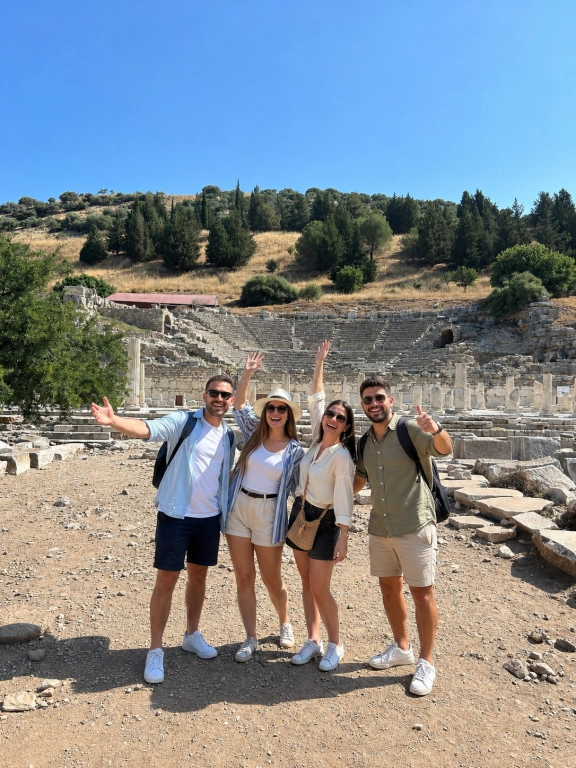
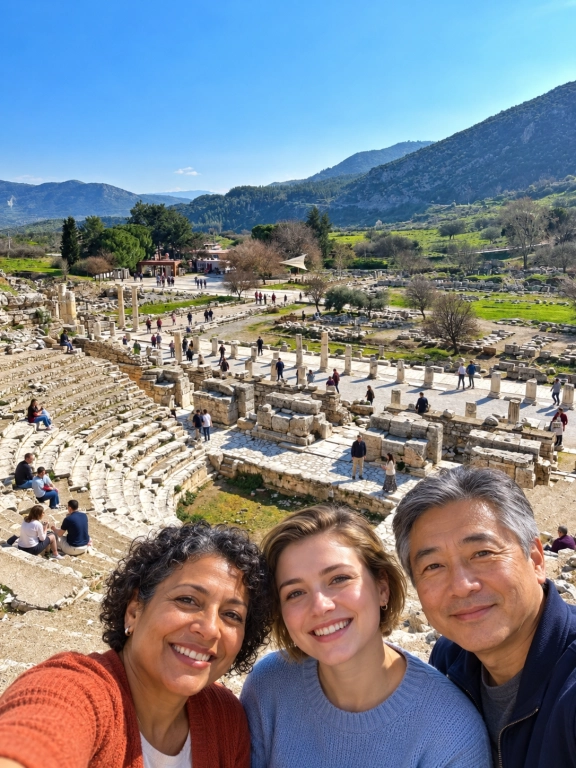
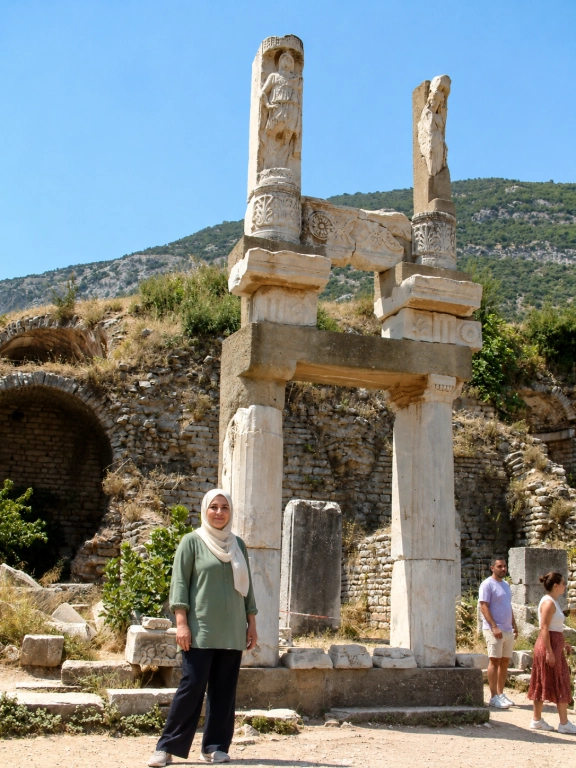
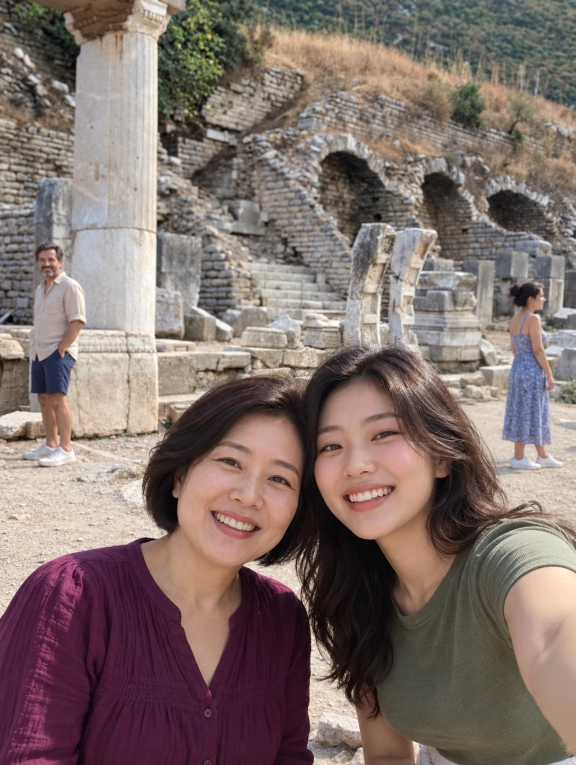
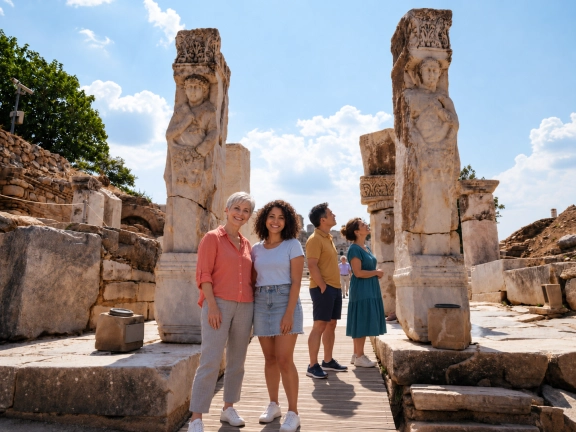
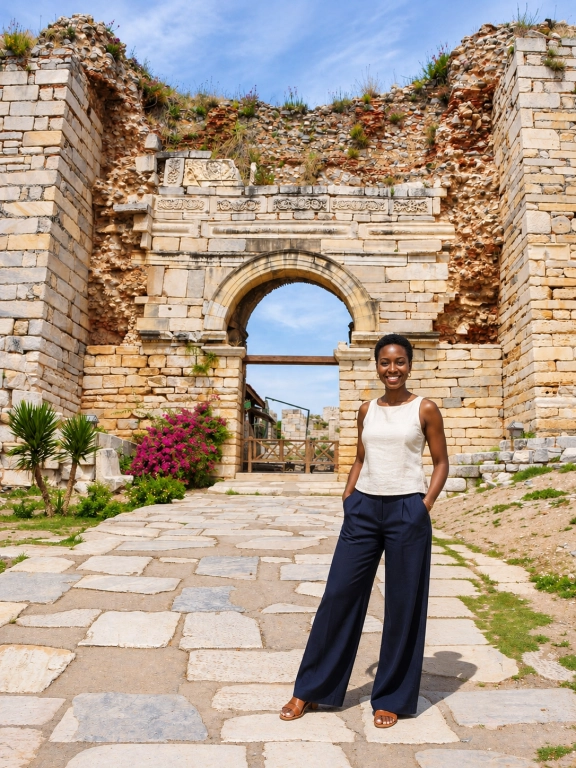
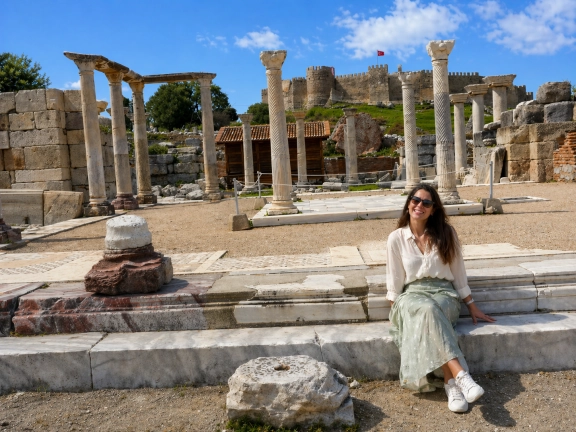
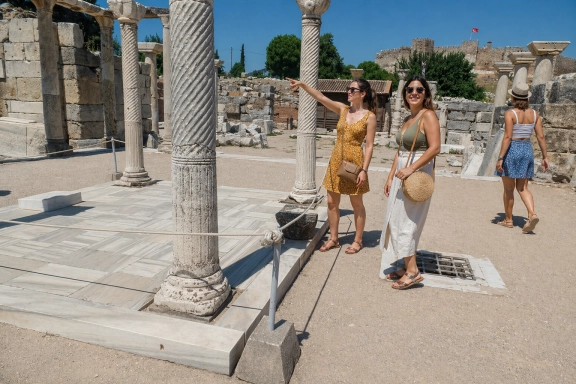
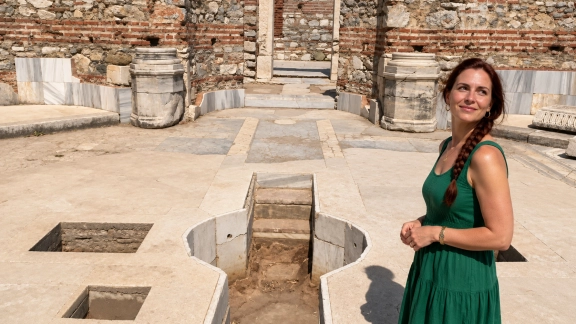
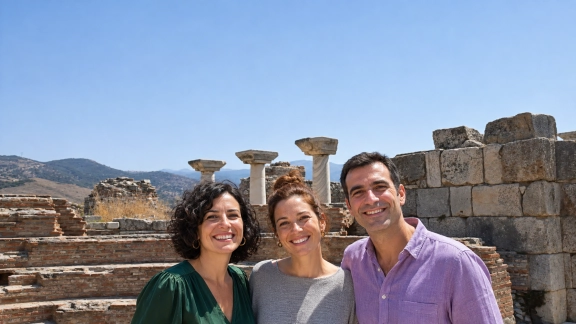
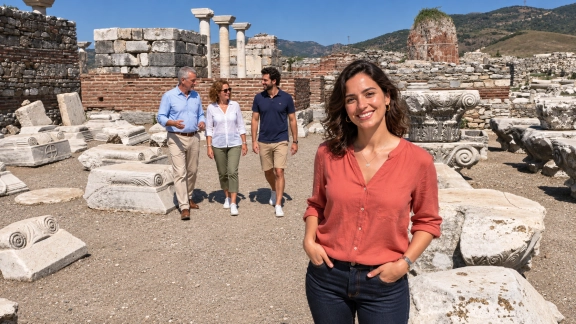
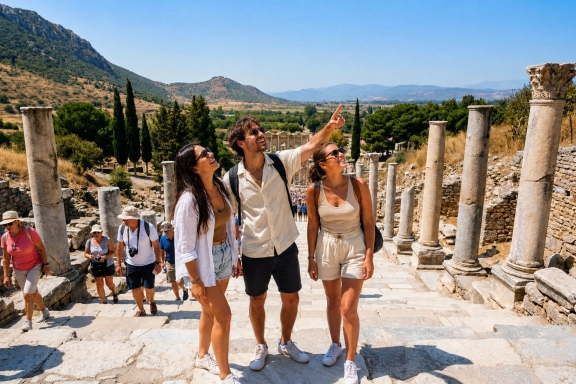

Treat Ephesus as an urban landscape that has been partly revealed, not as a single preserved monument. Its streets connect the Library of Celsus, public gathering areas and Great Theatre within a city of considerable scale.
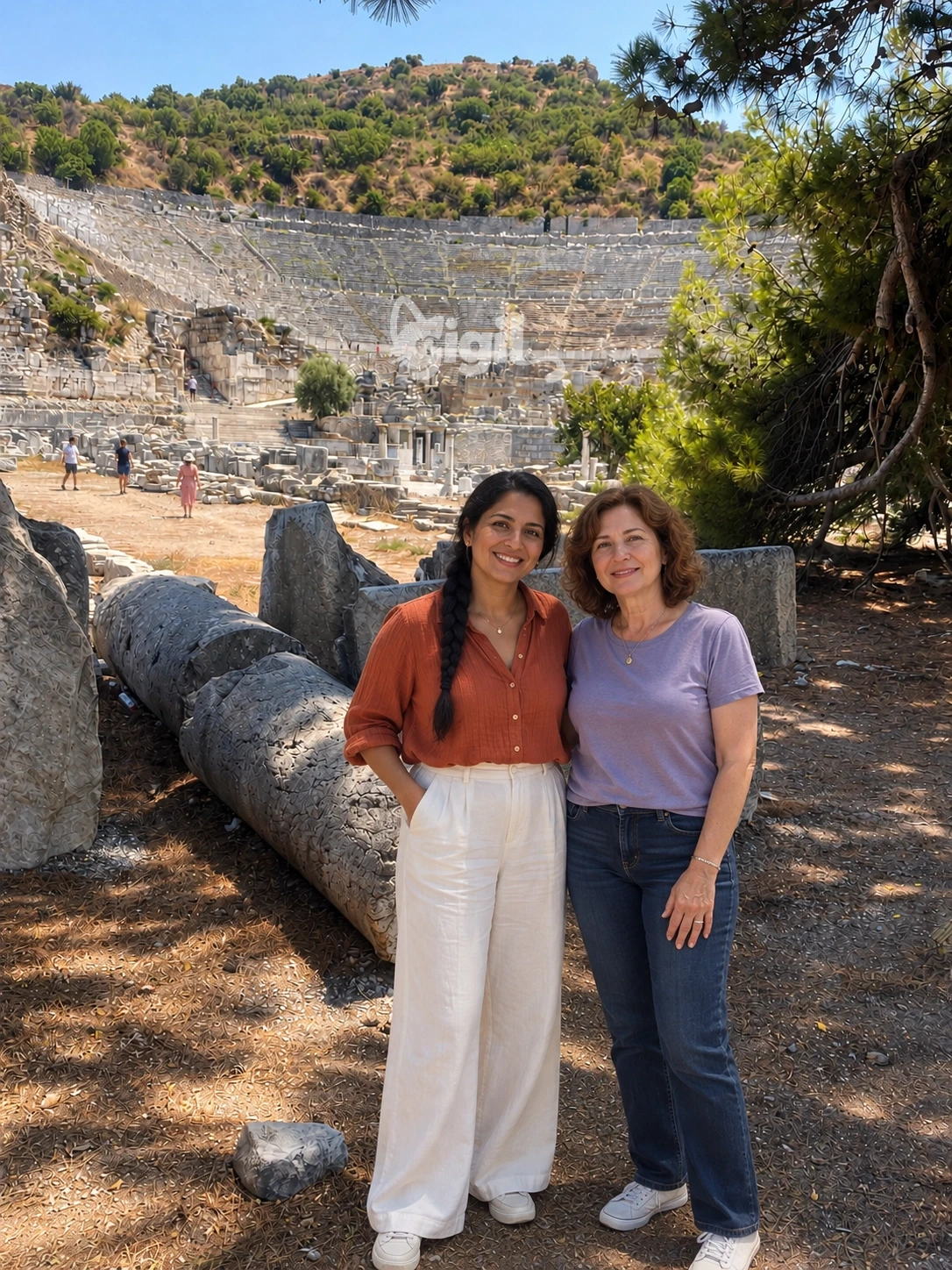
Compare the breadth of a public space with the detail of its surviving boundaries. That contrast helps explain how people occupied the city, while missing roofs and upper walls remind you that much remains outside the visible picture.
Questions
What makes this an urban landscape rather than one monument?
The remains include connected streets, public spaces and buildings with different roles in the ancient city's life.
How should I interpret the library's more complete appearance?
Recognise the facade as a reconstructed presentation rather than assuming the whole library survived at that height.
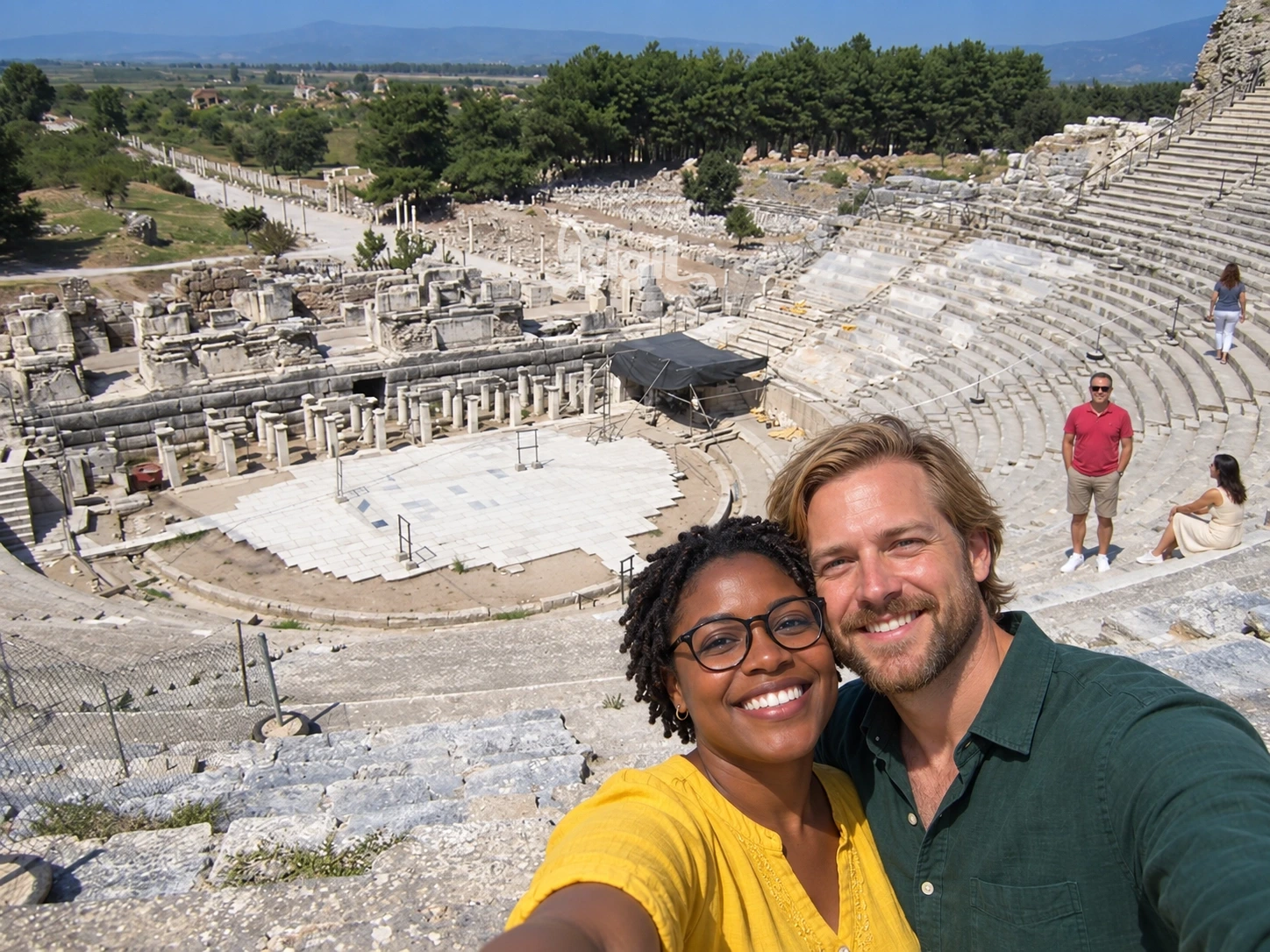
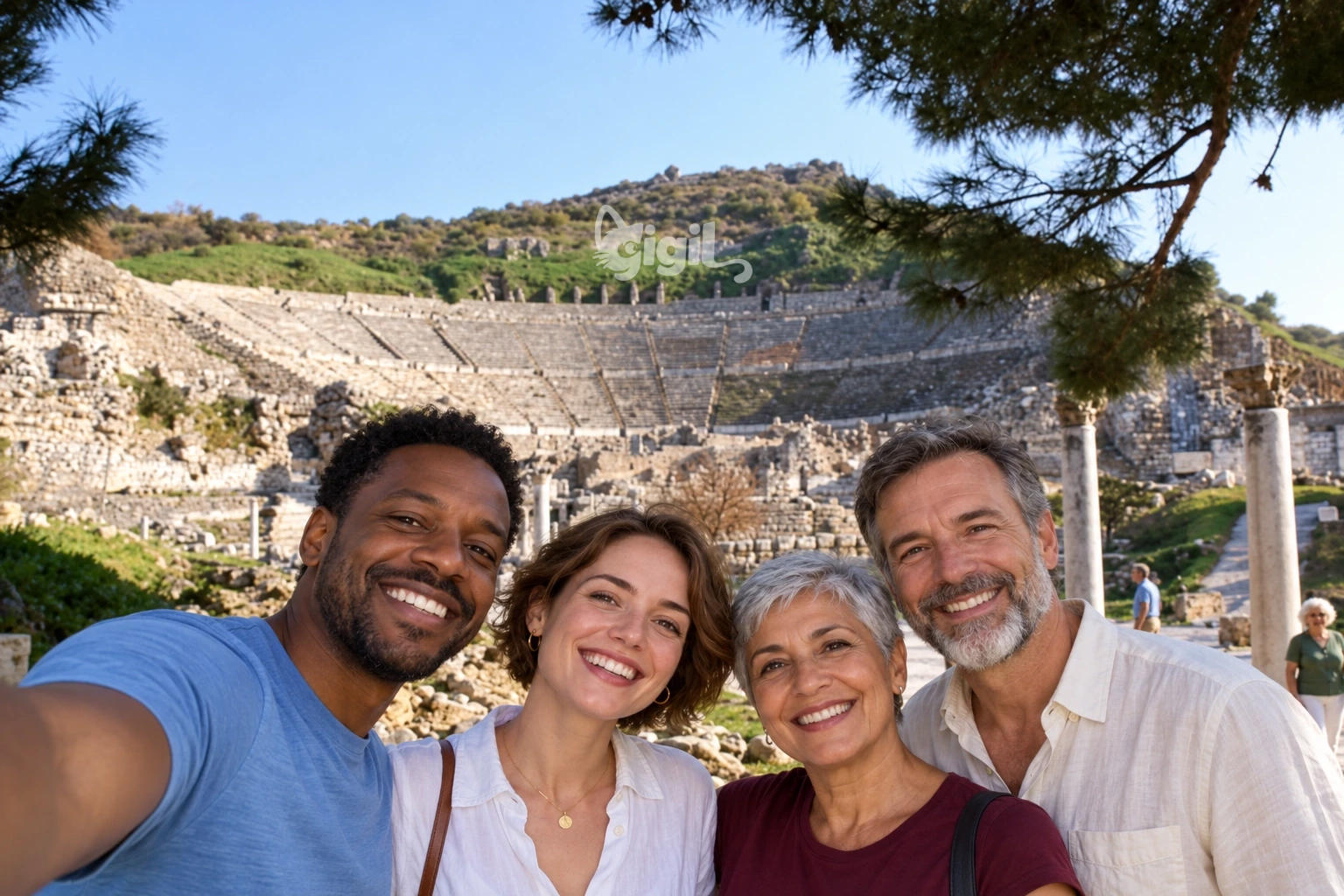
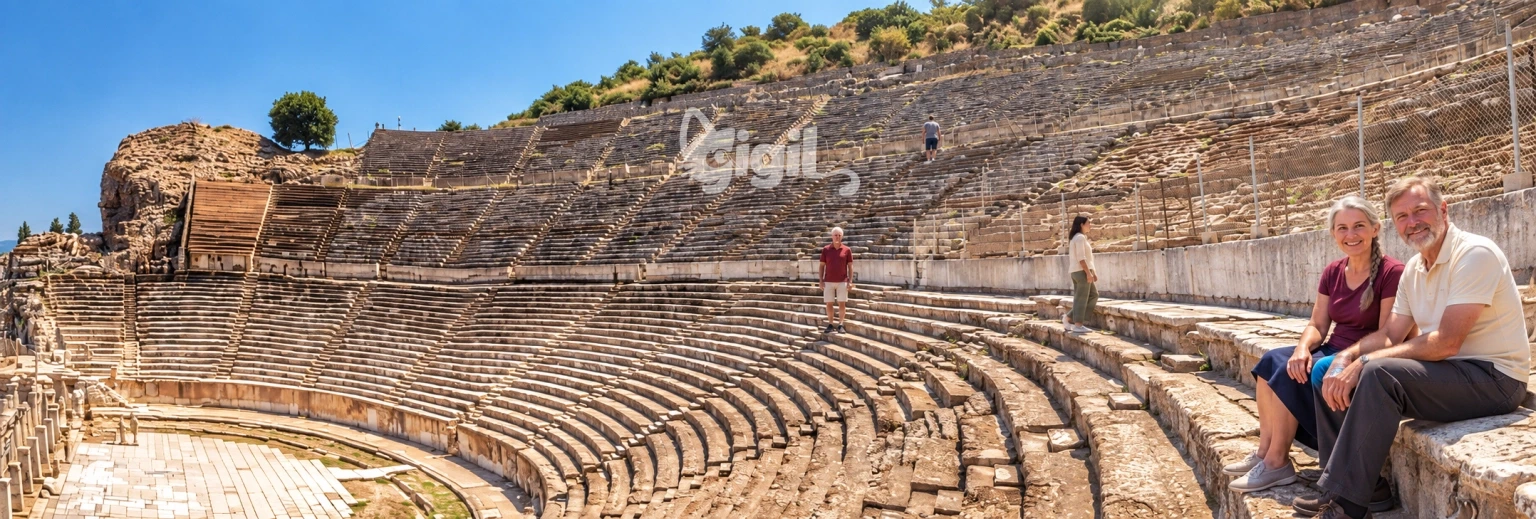
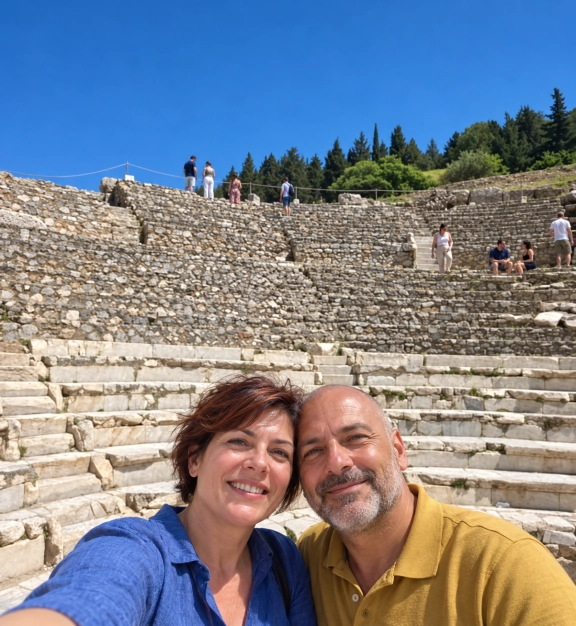
What does the theatre help you imagine?
Its audience arrangement gives a tangible sense of people gathering together, unlike the movement suggested by streets.
Why look at the edges of an open space?
Wall lines and approaches can reveal how that space was framed and connected to surrounding buildings.