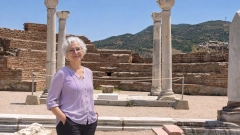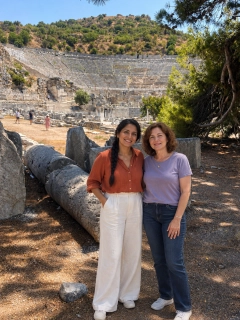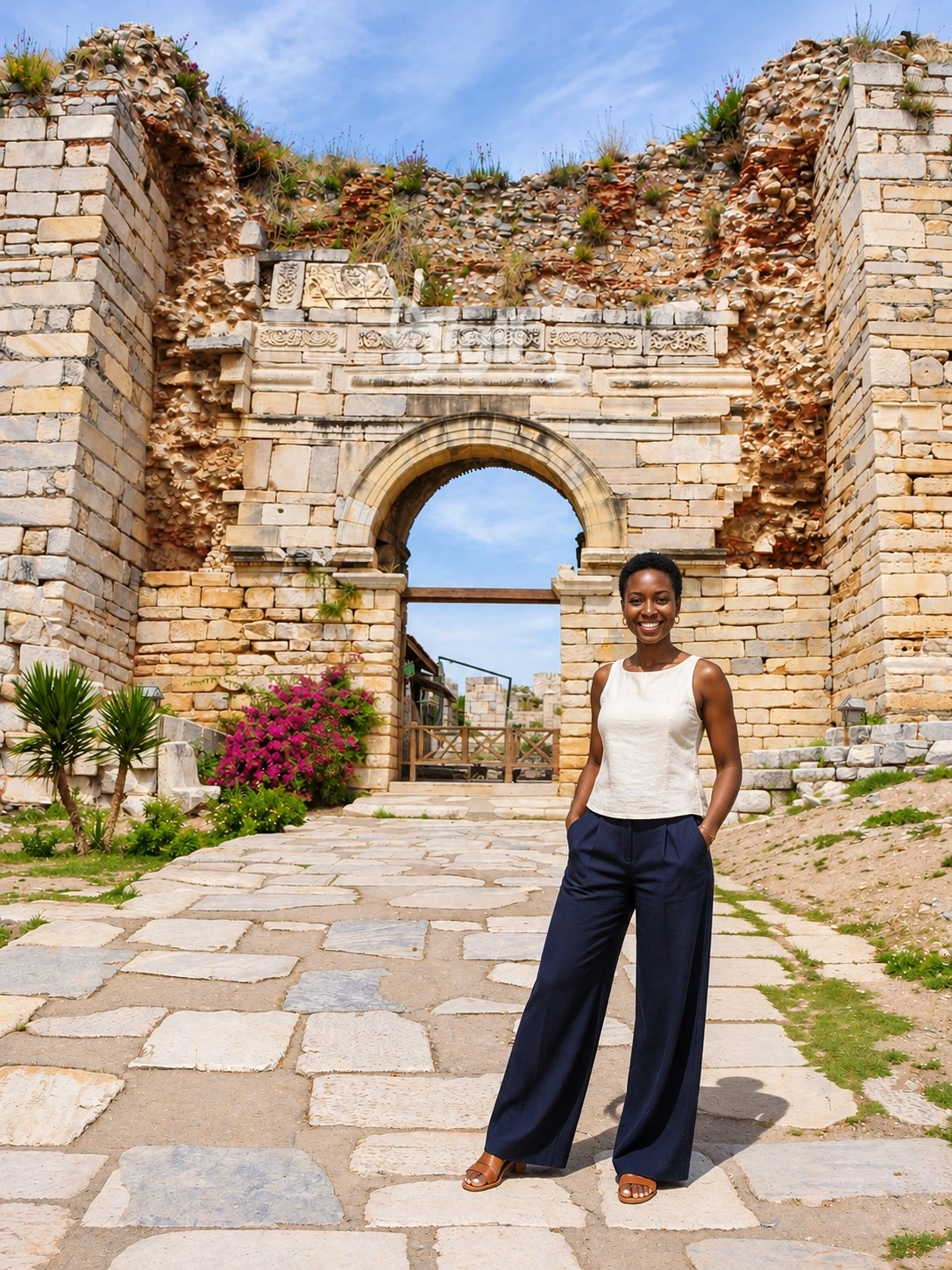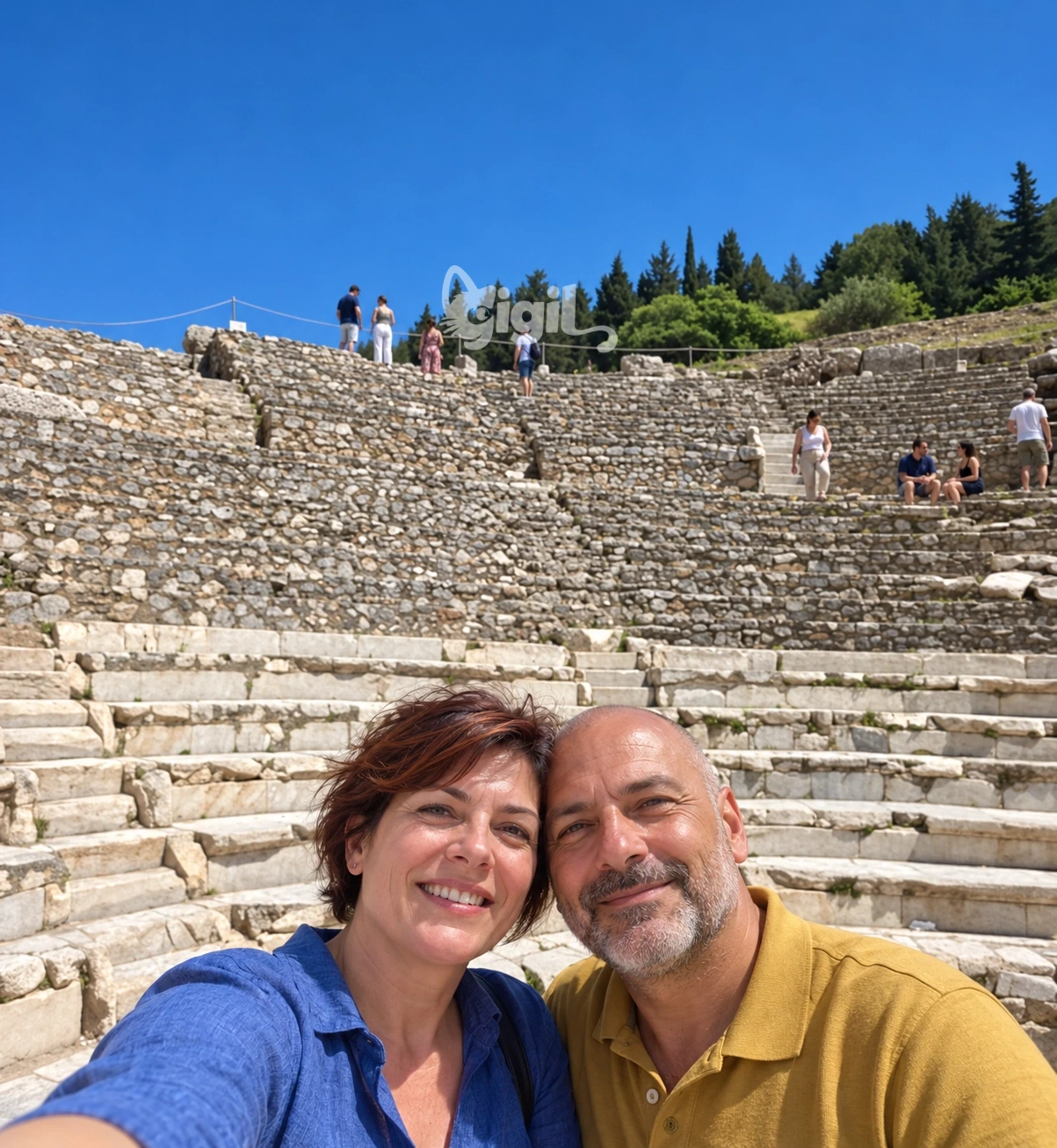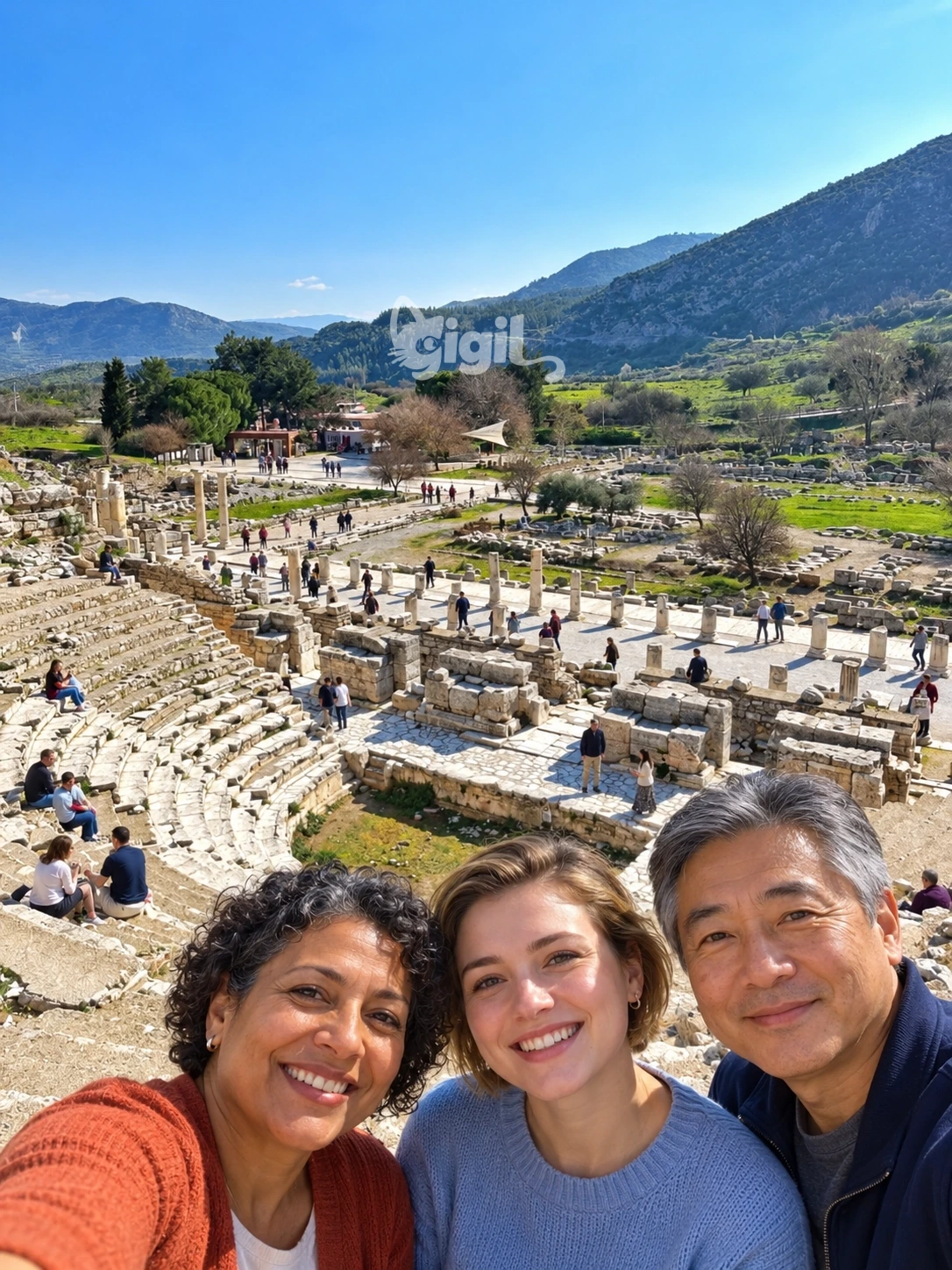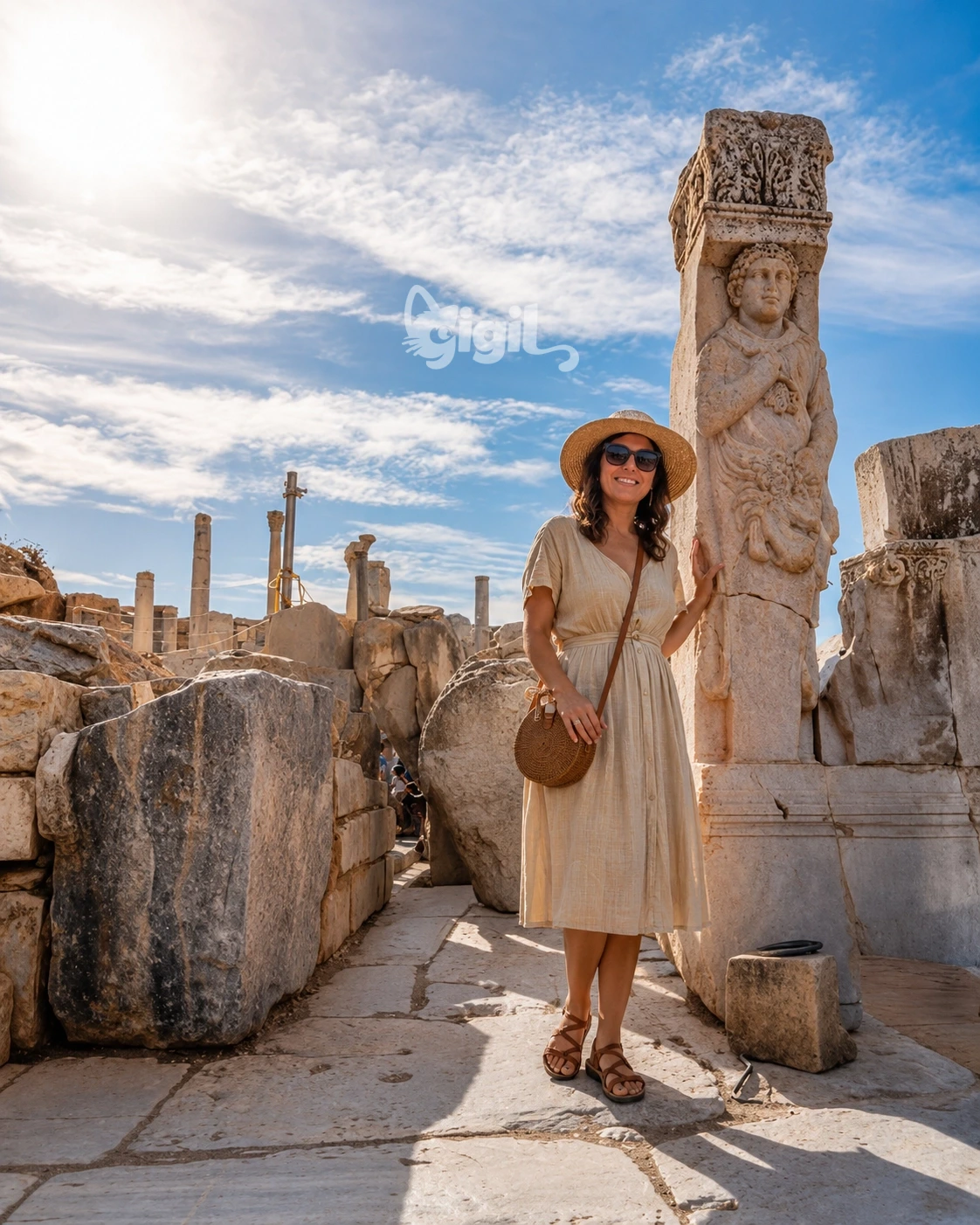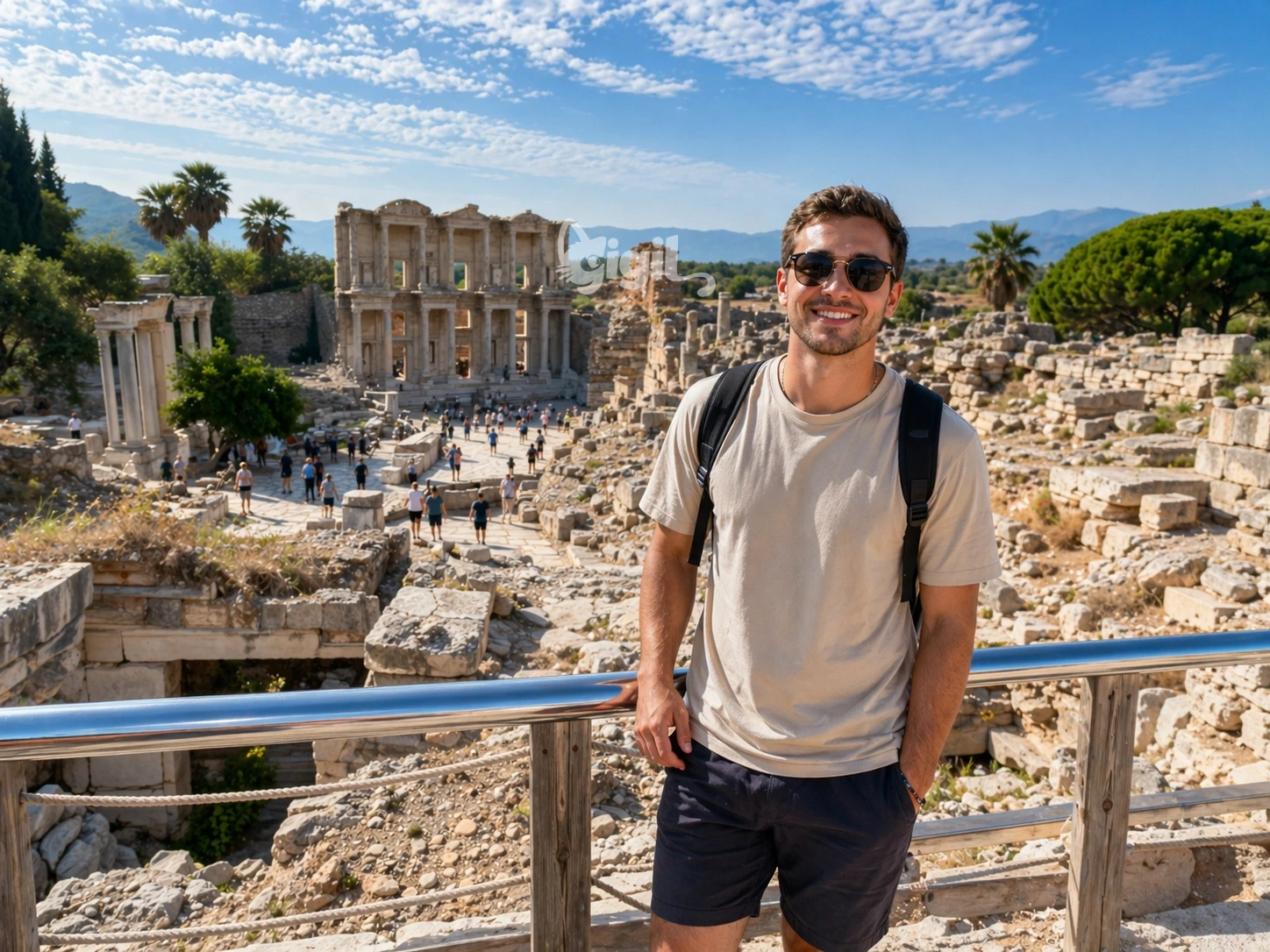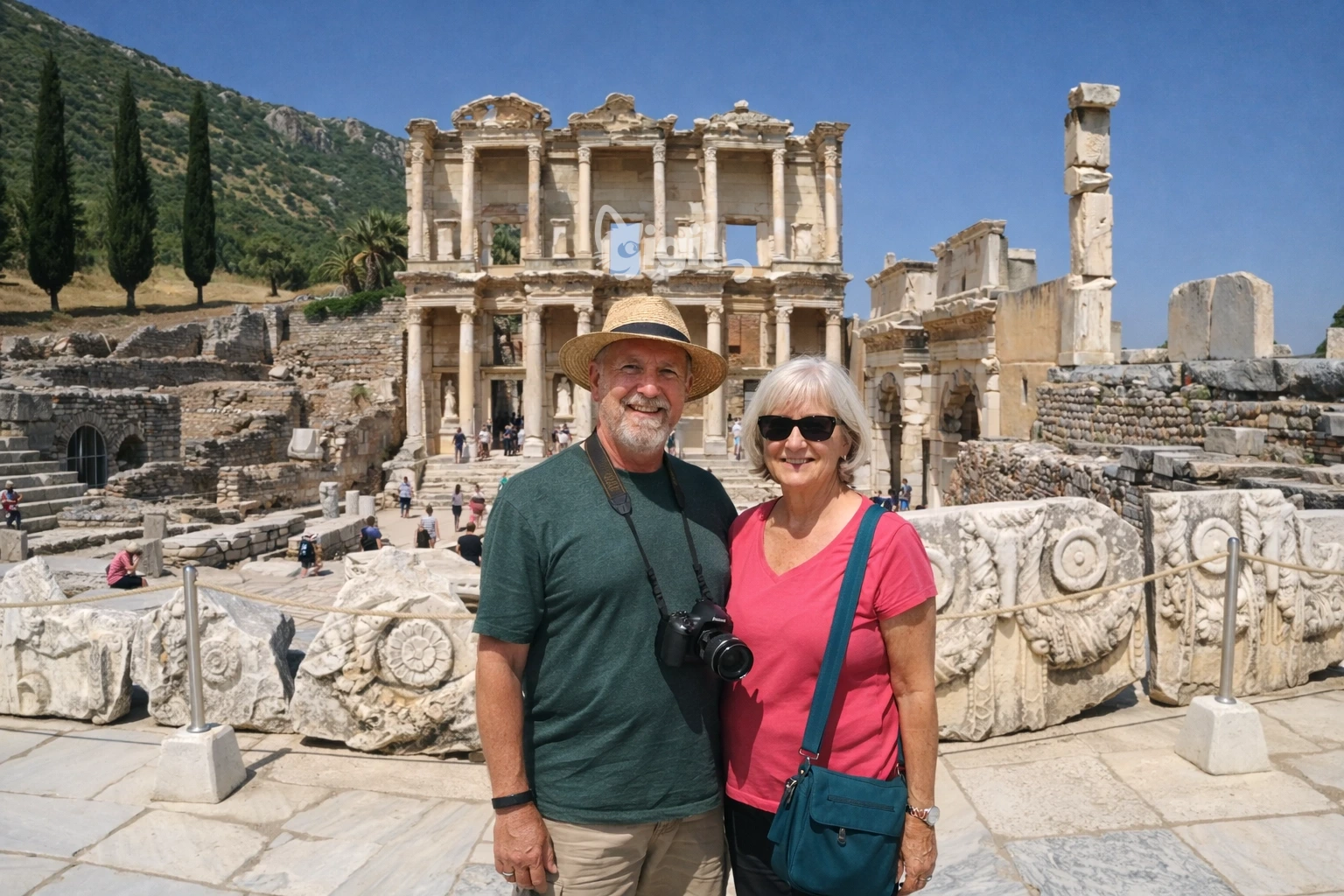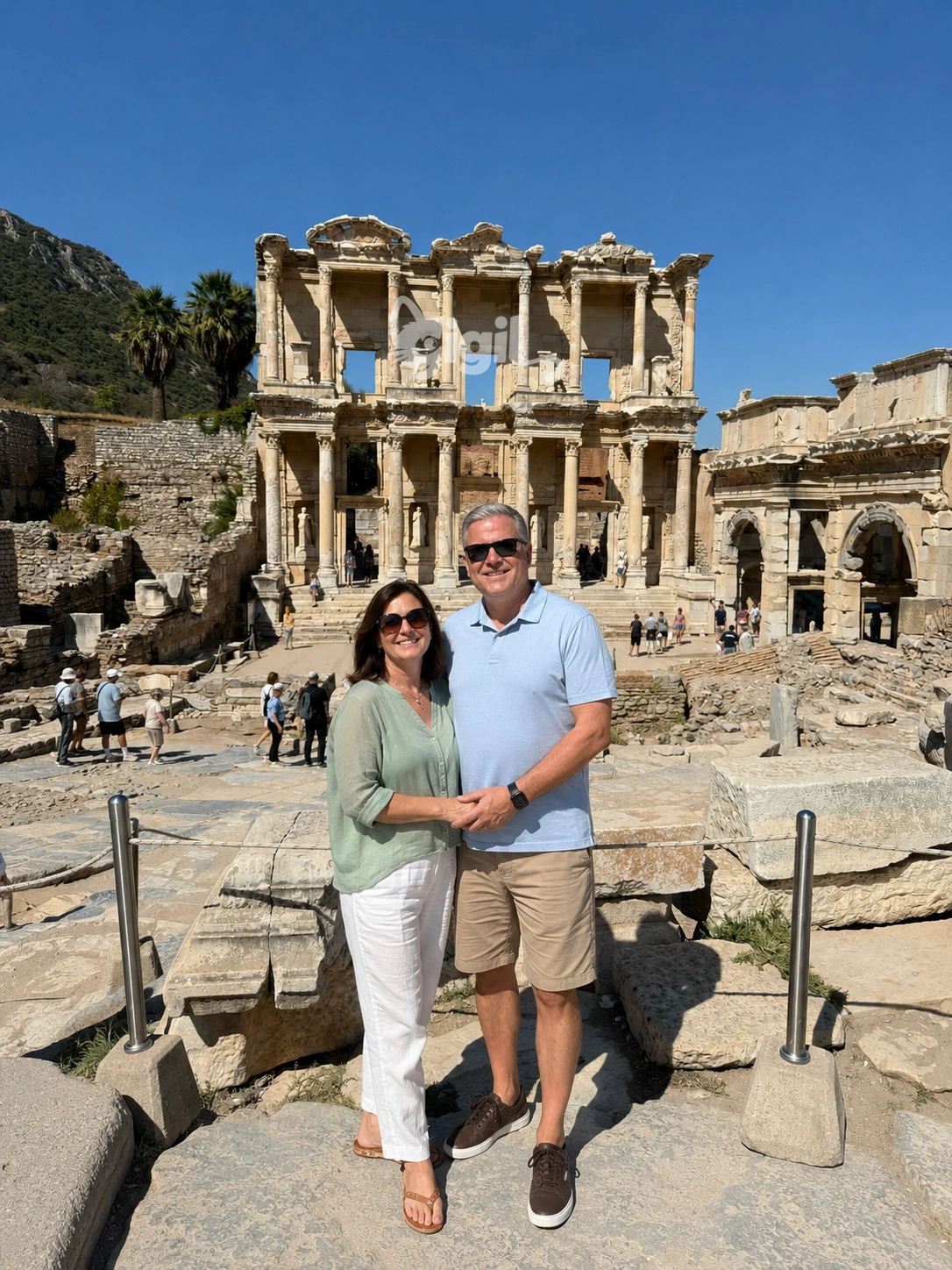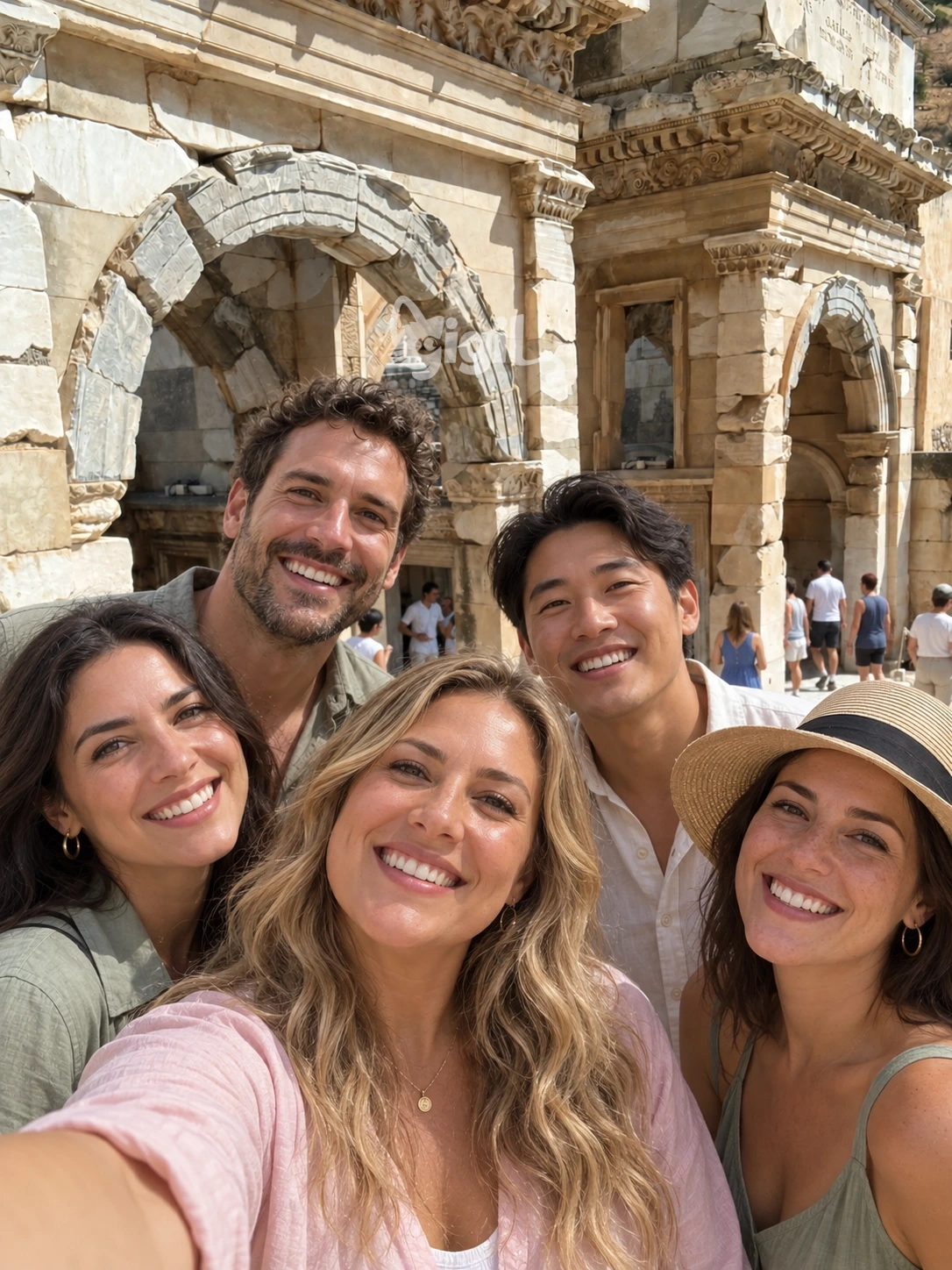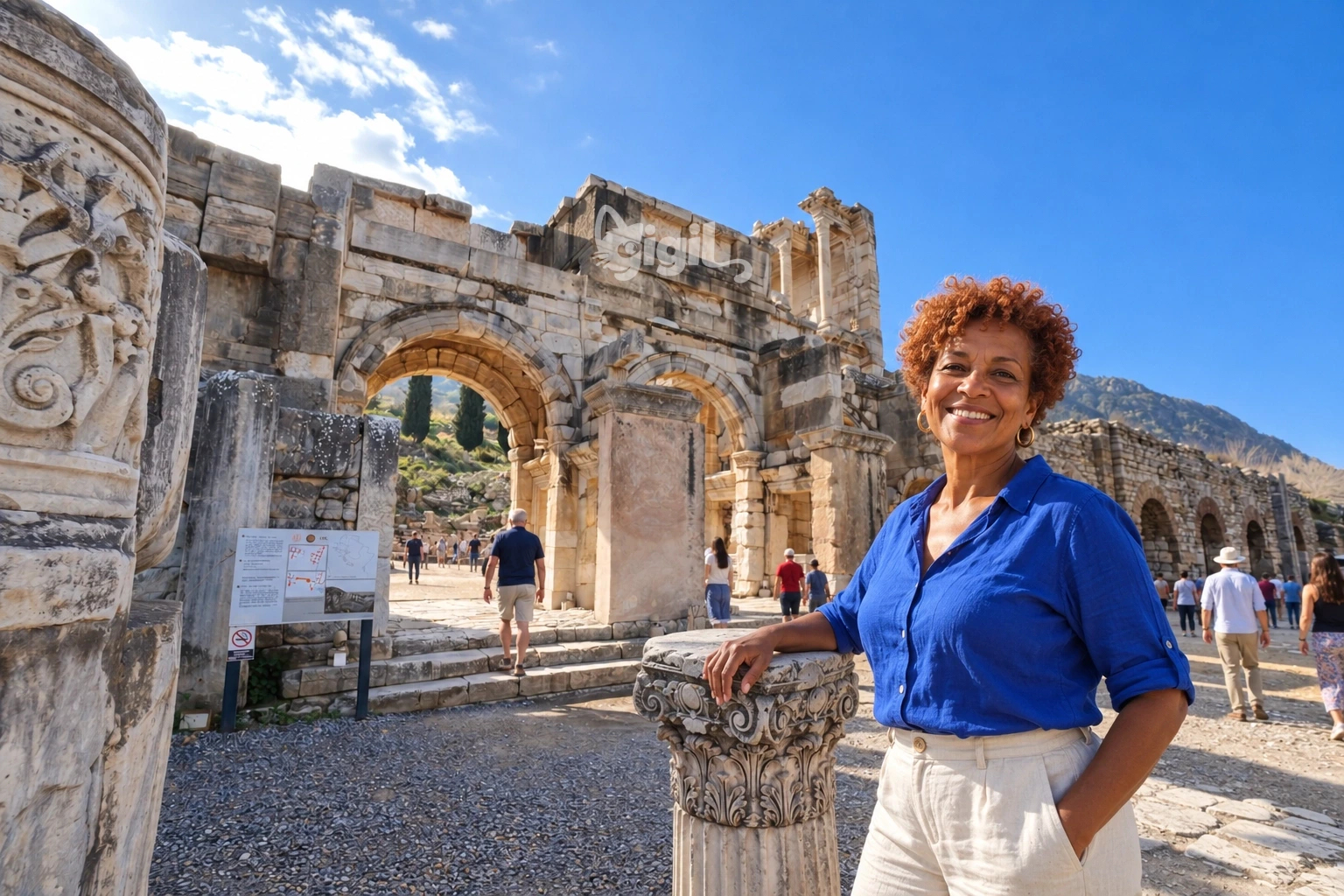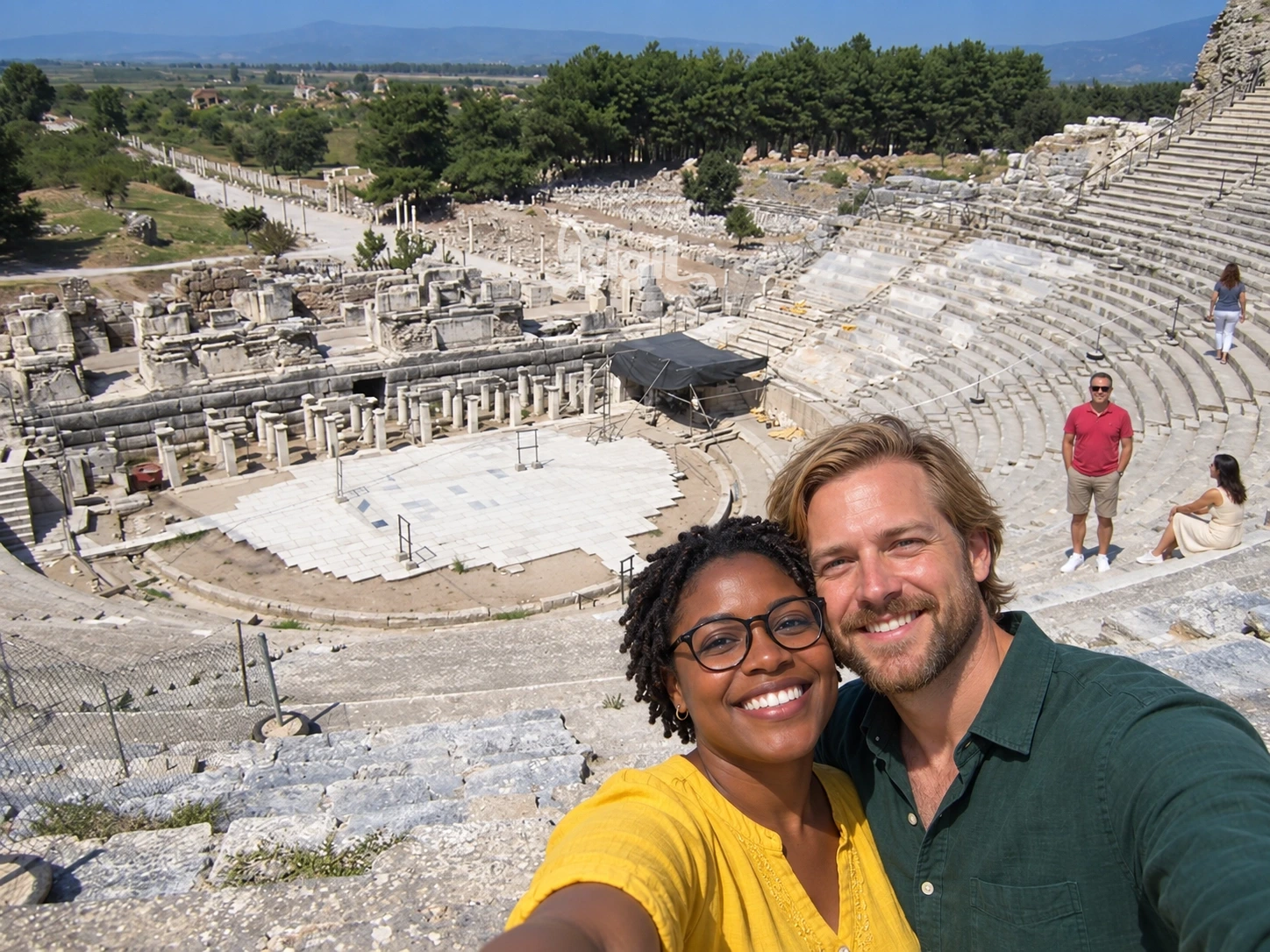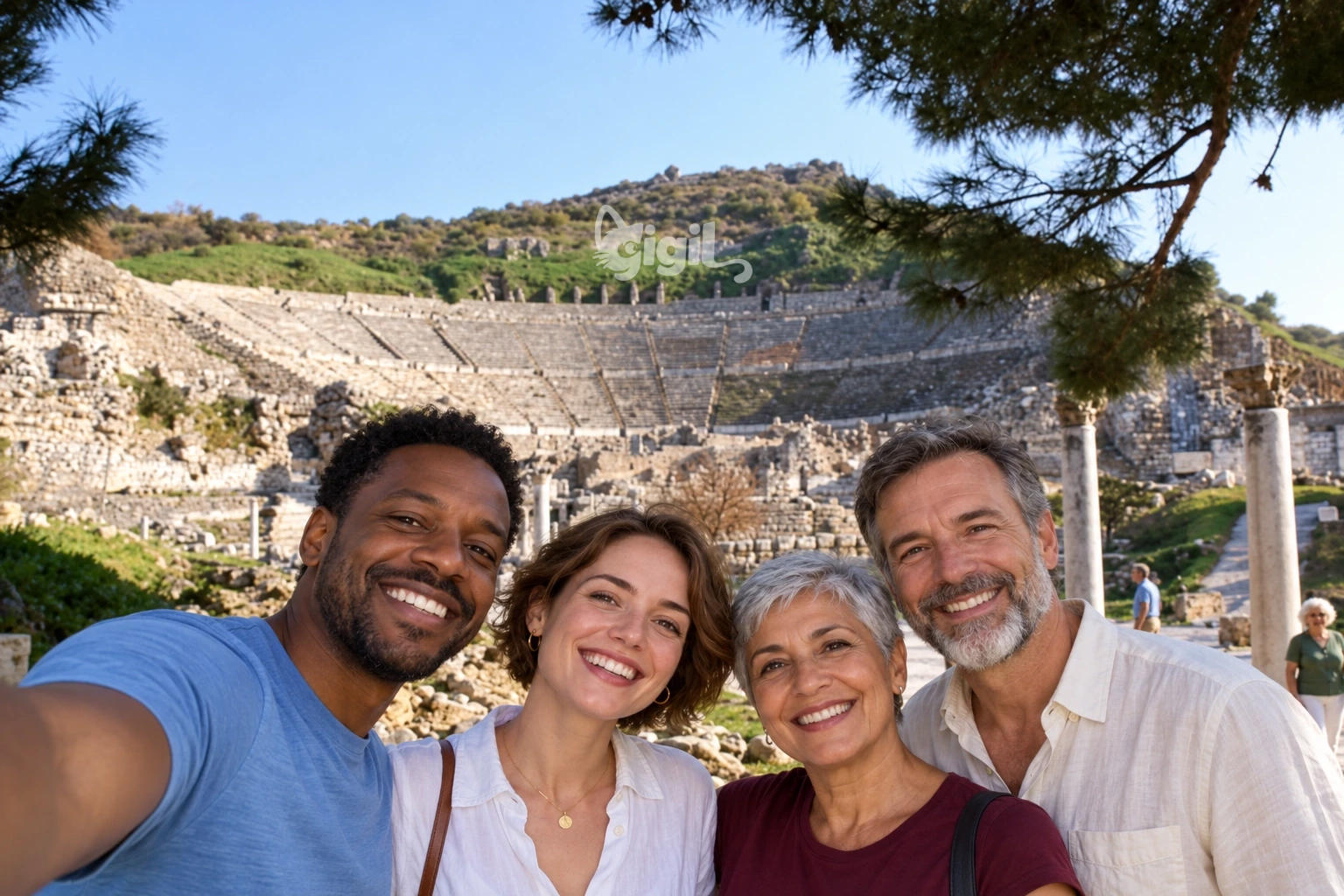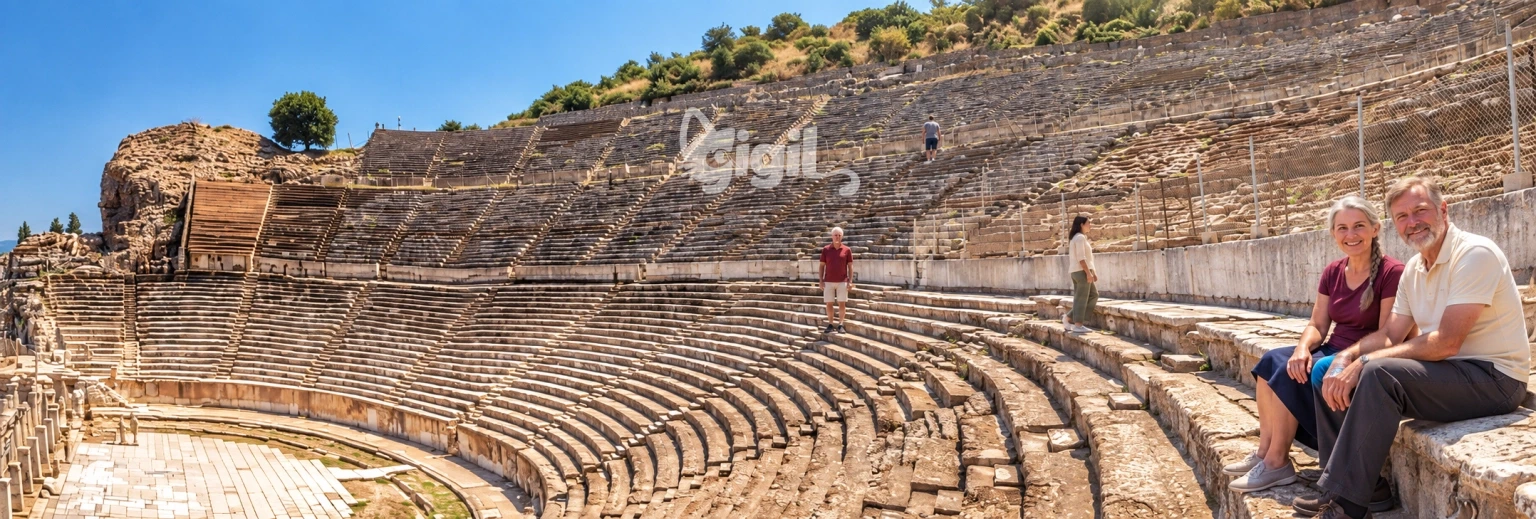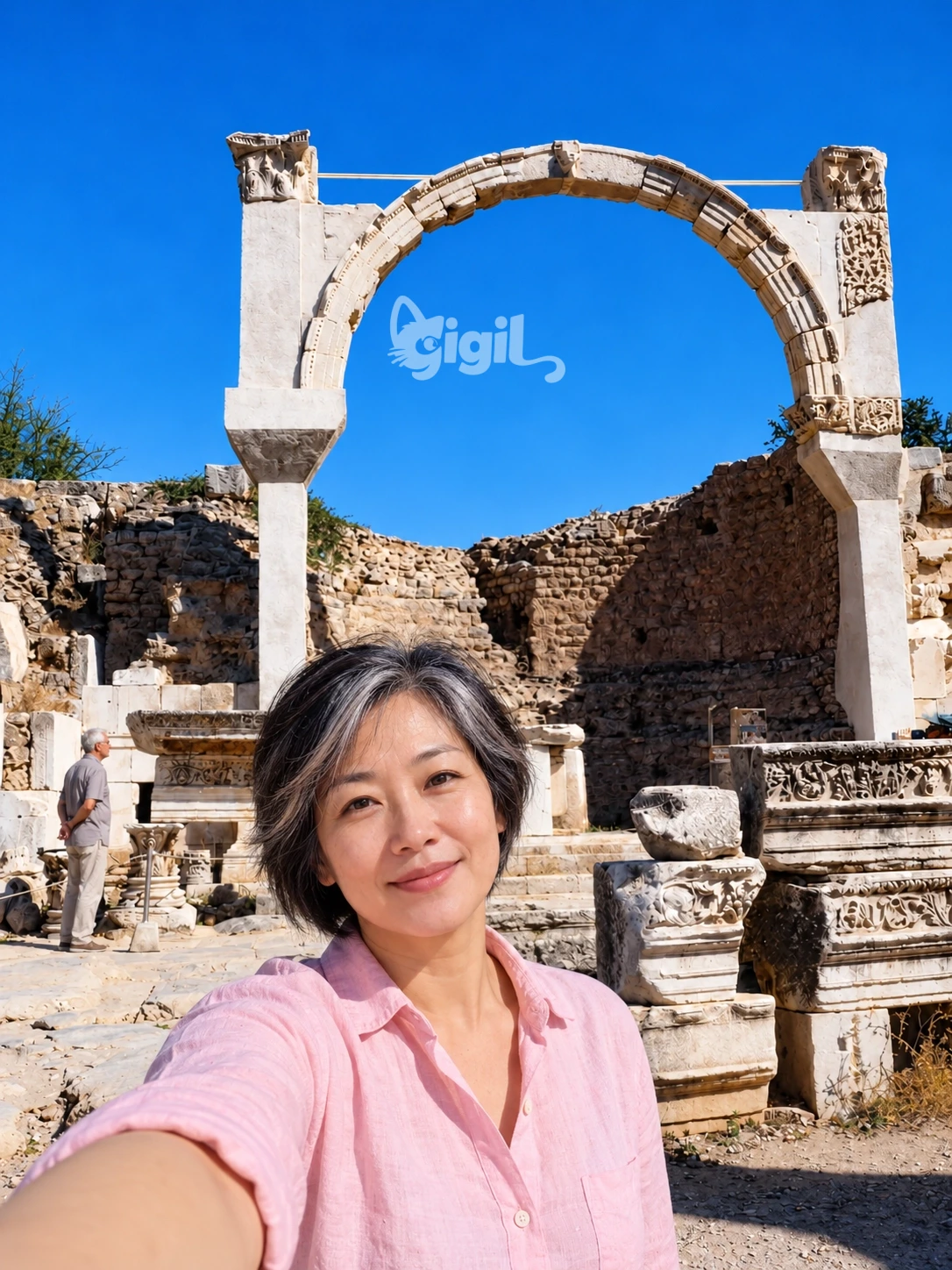








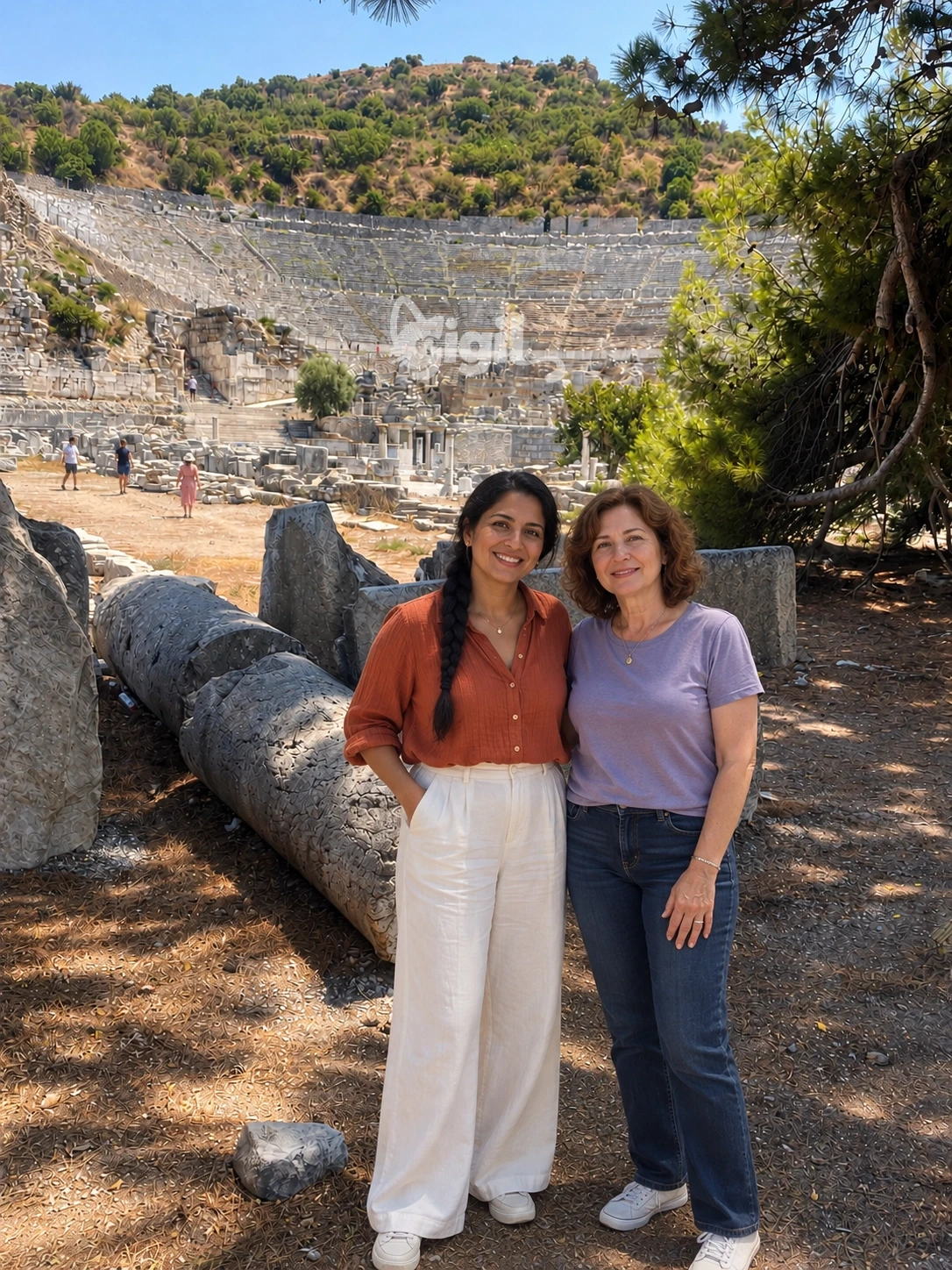
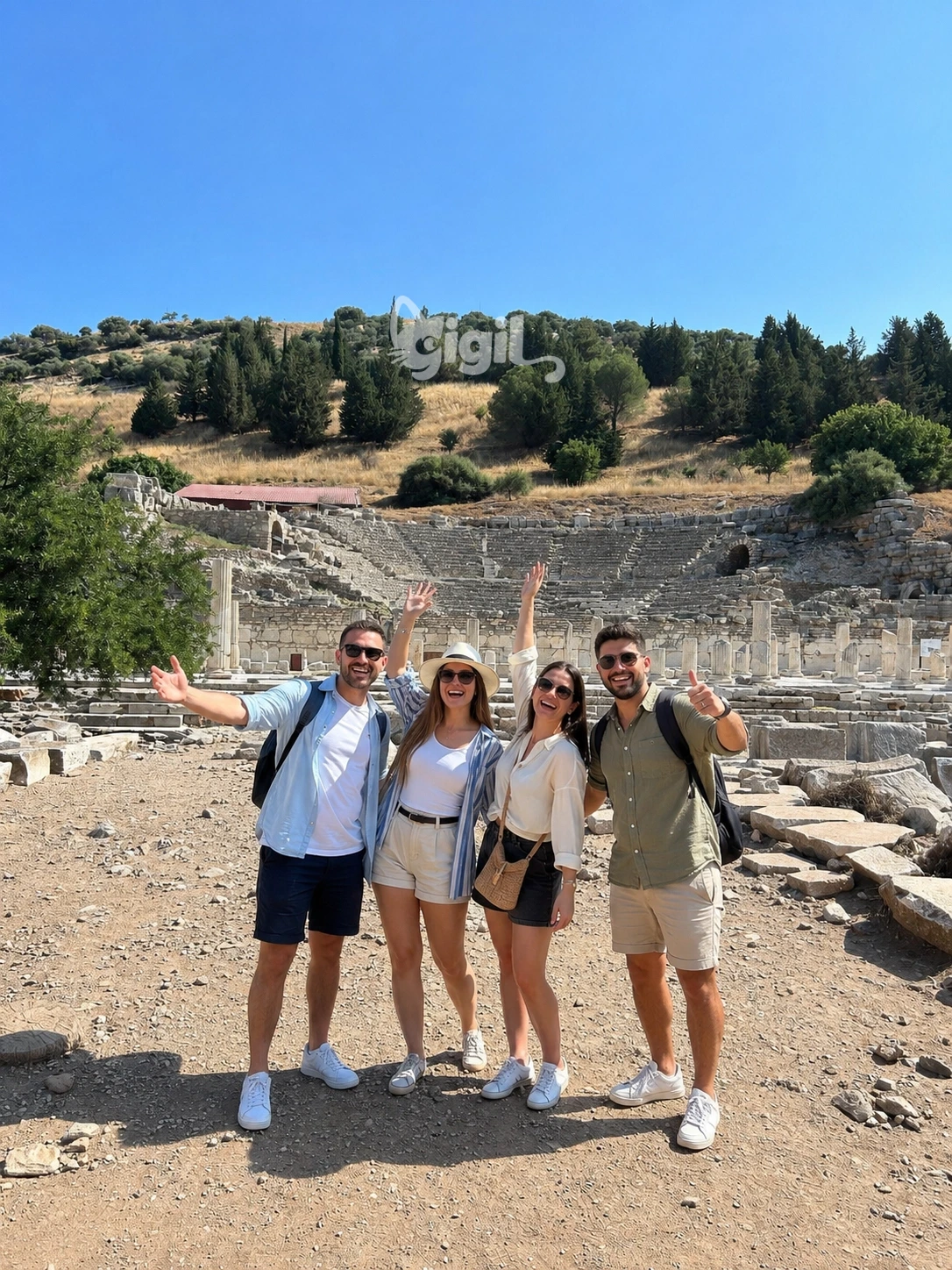
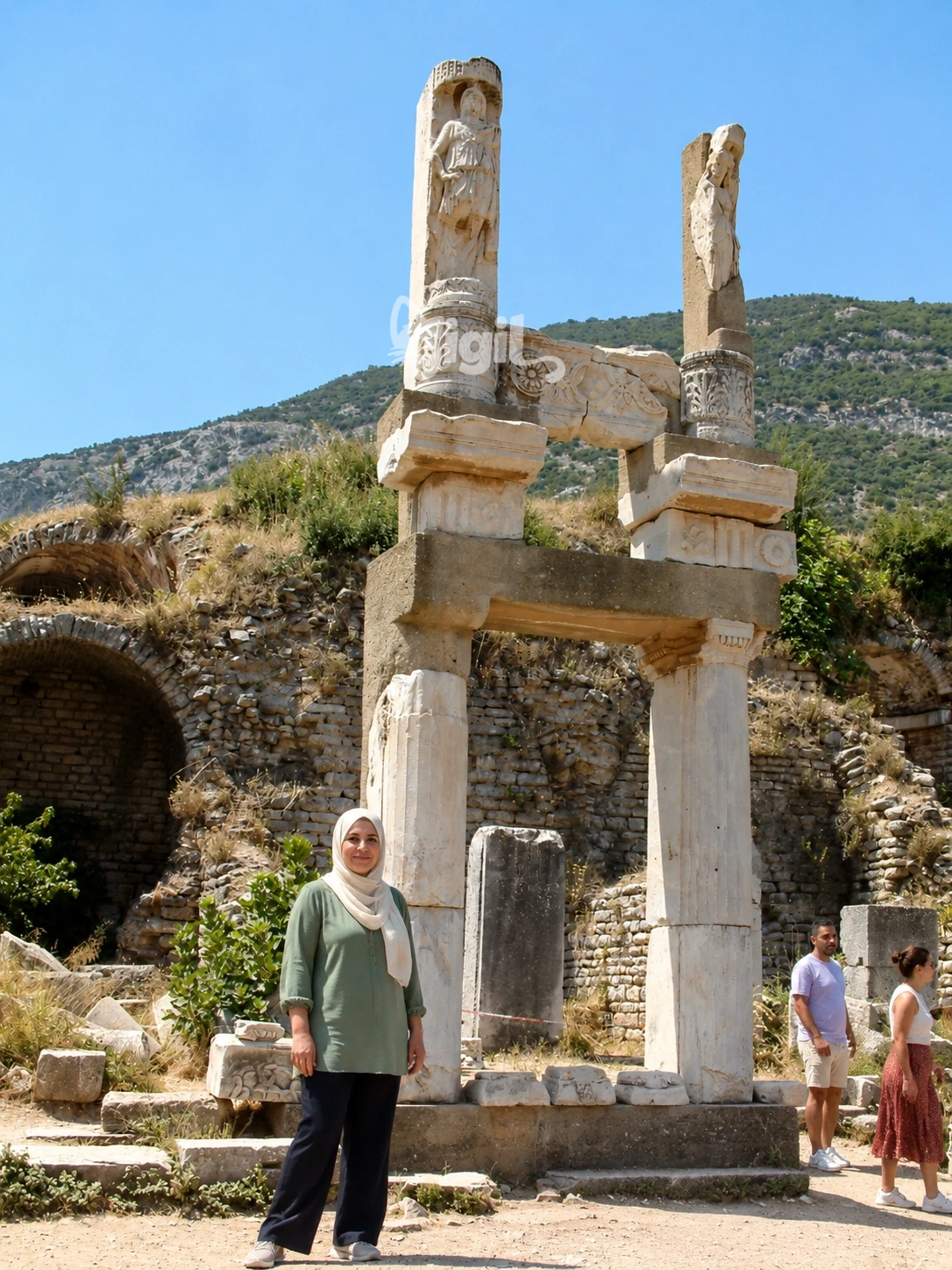
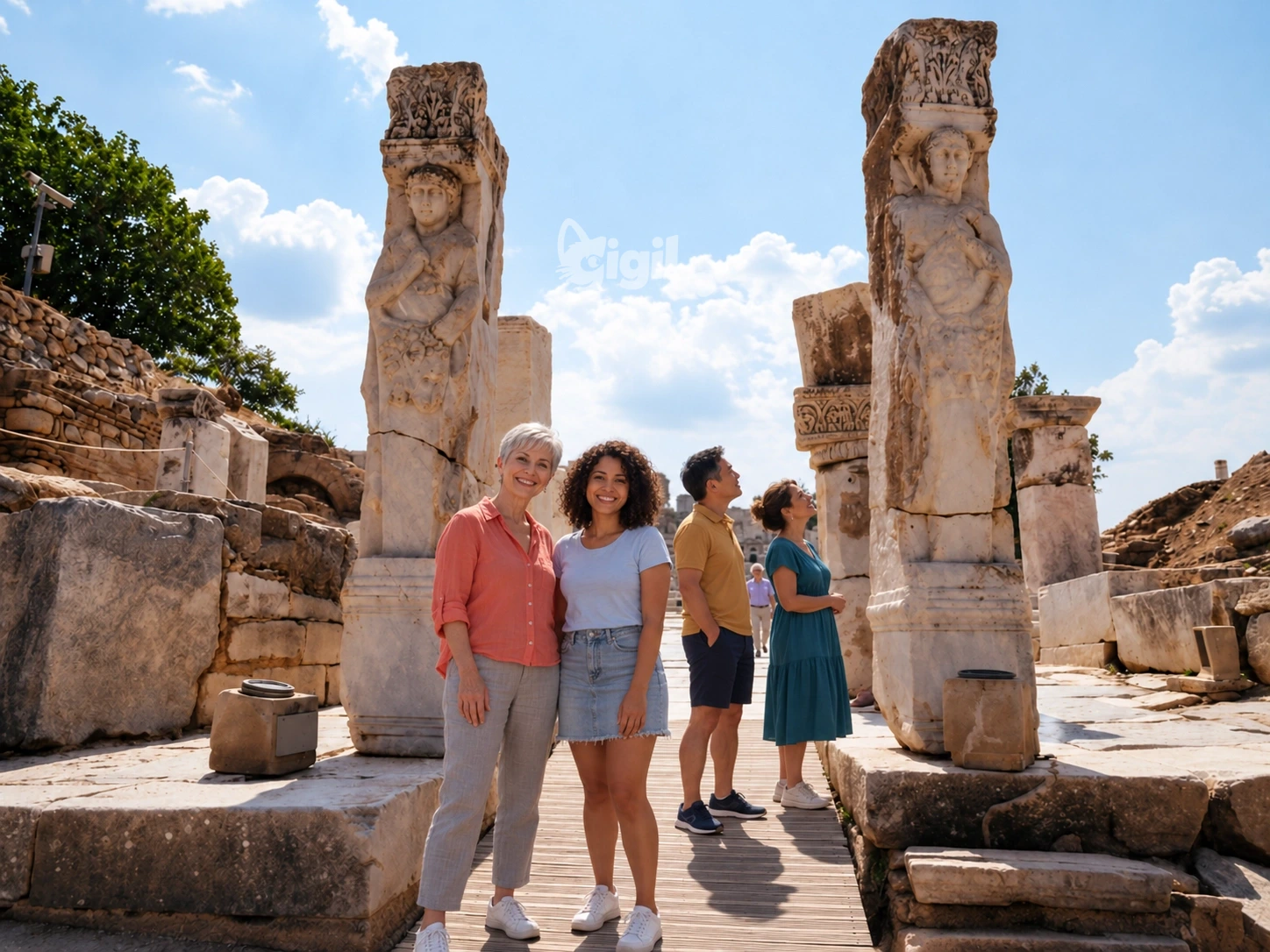
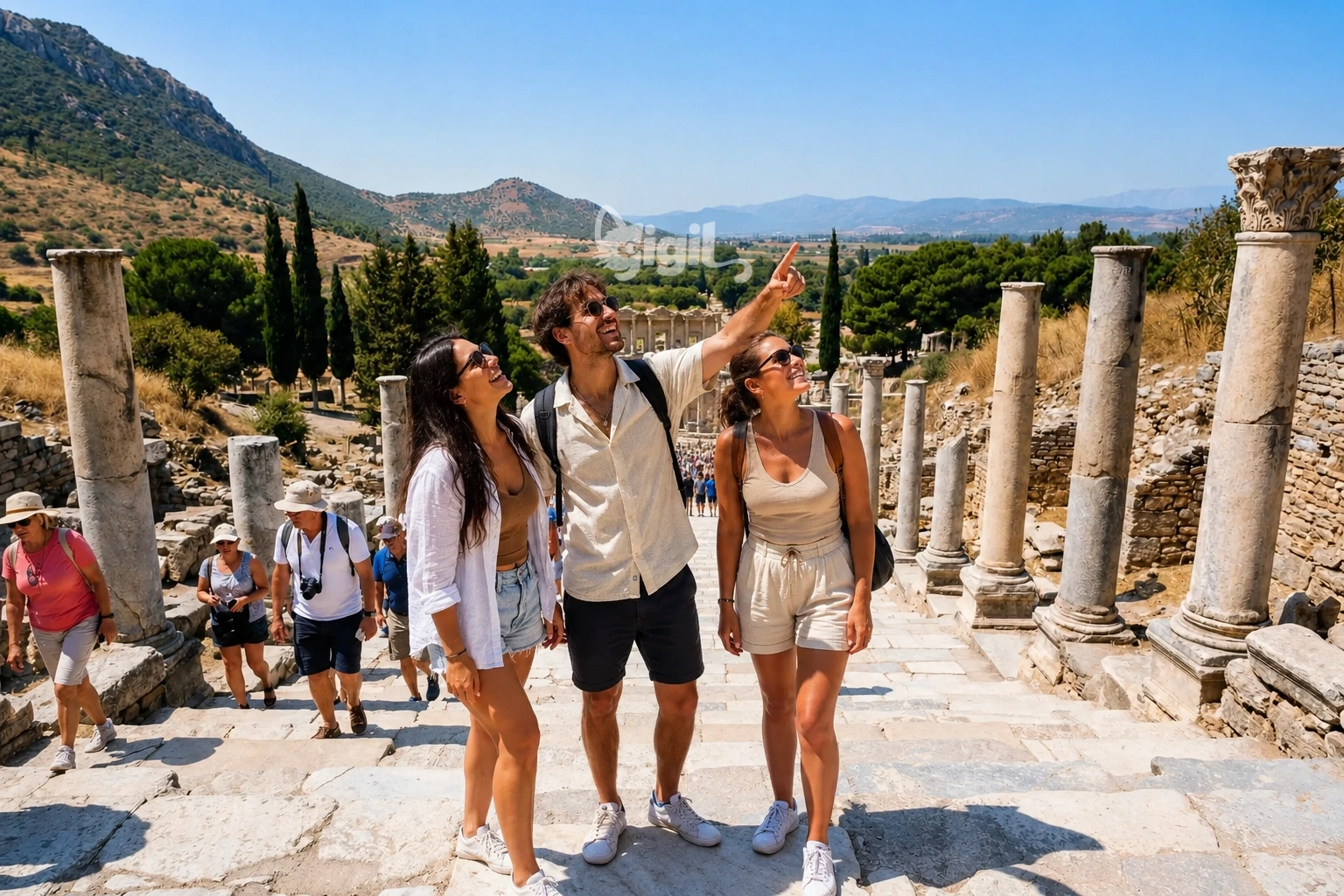
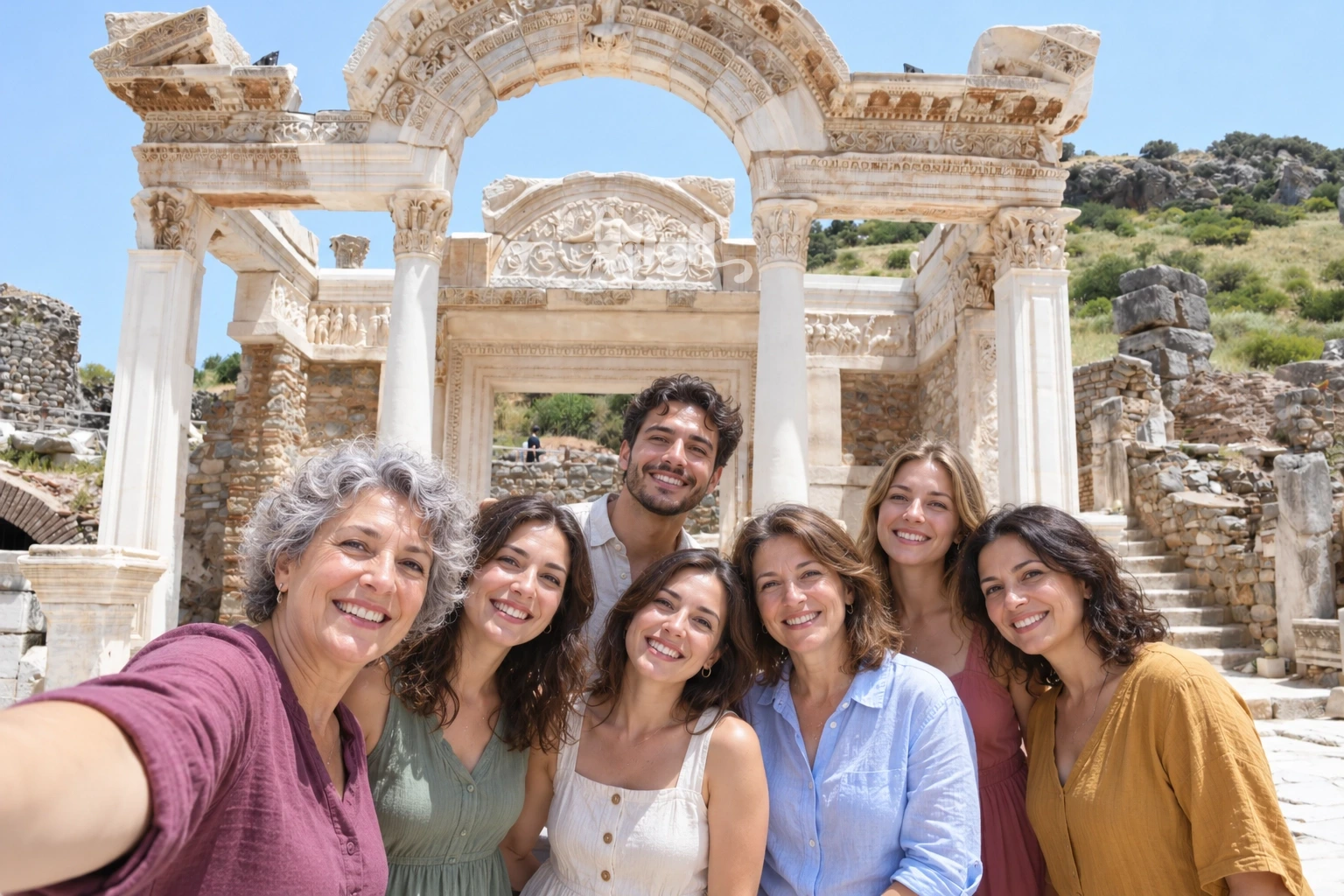
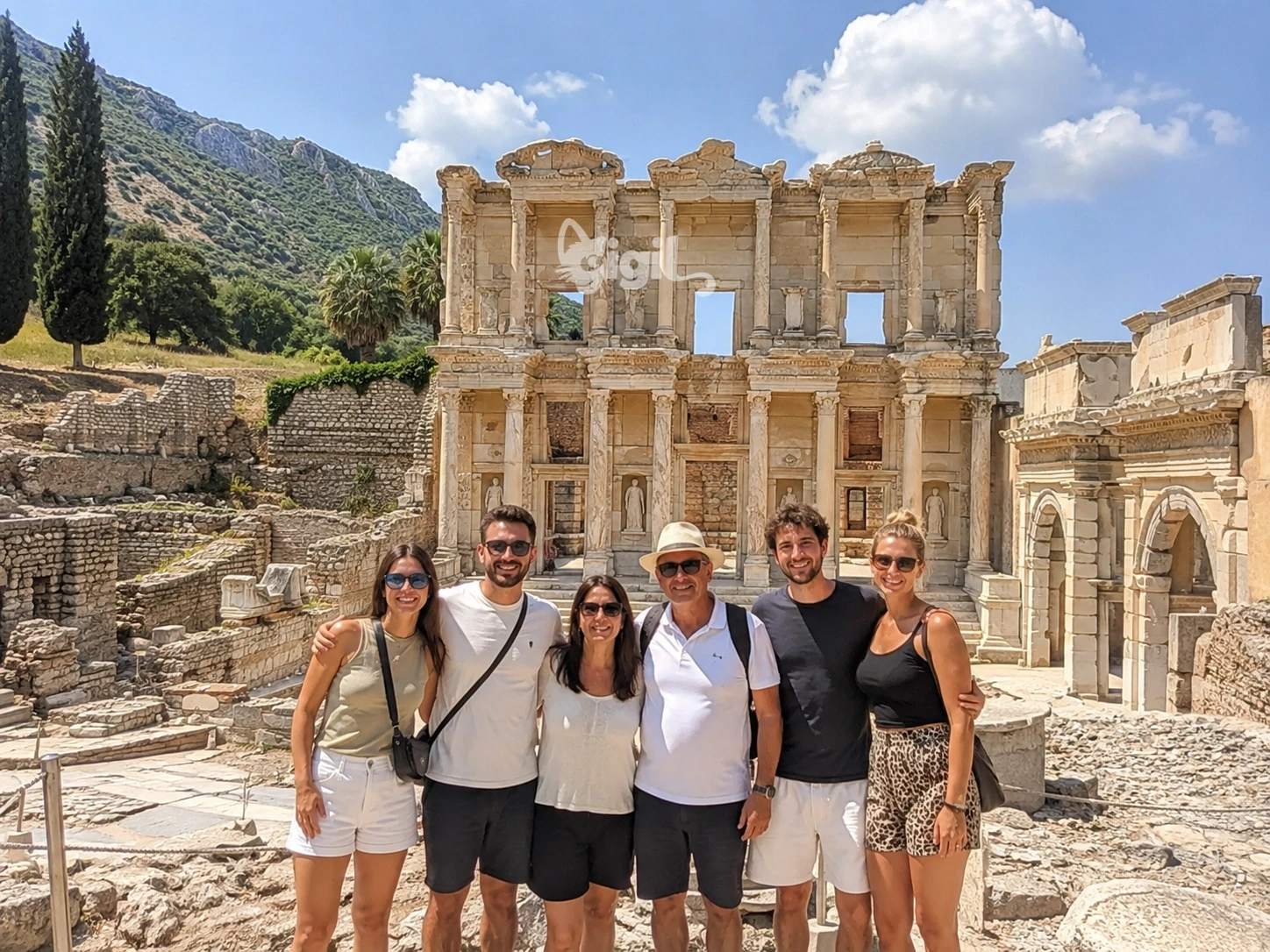
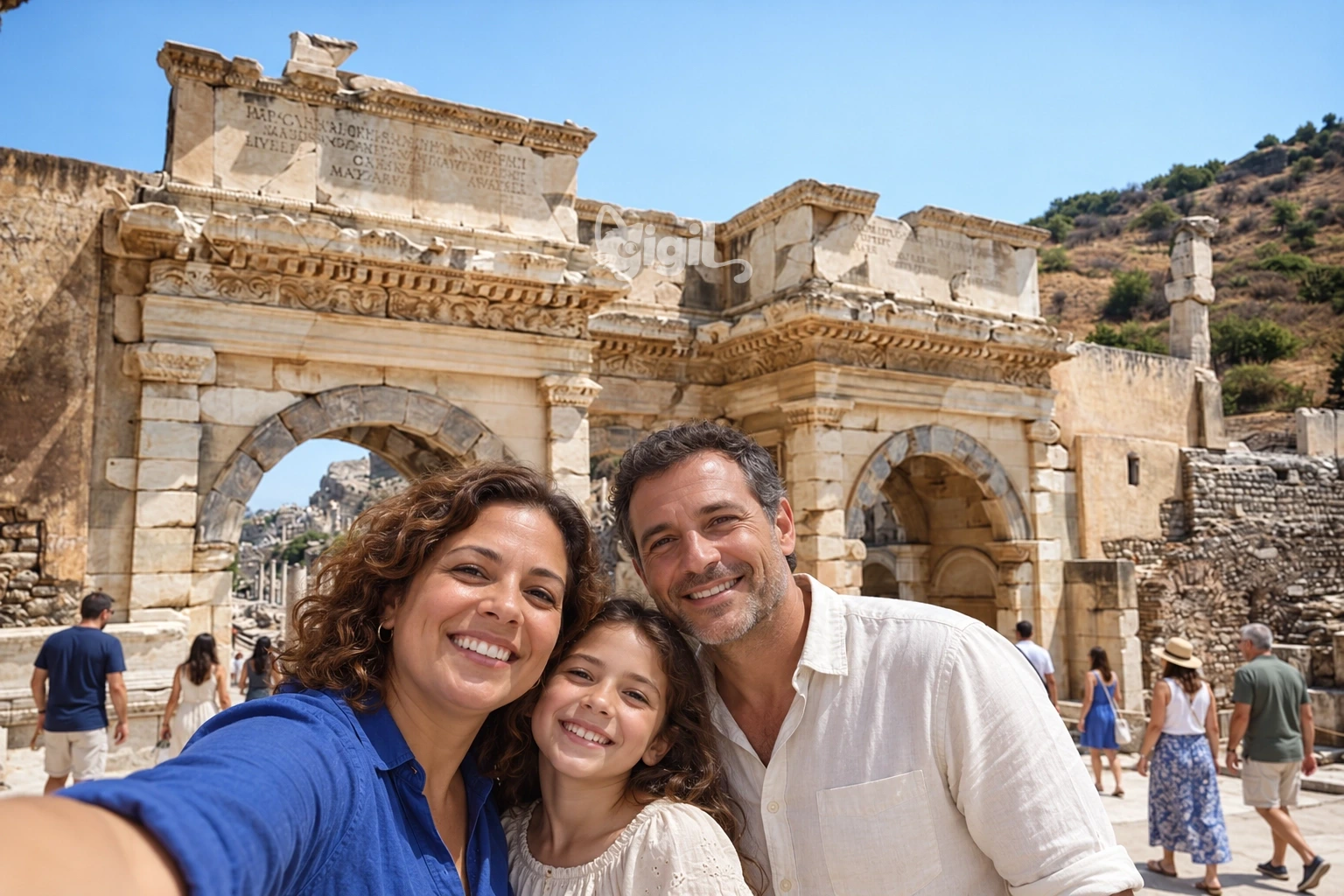
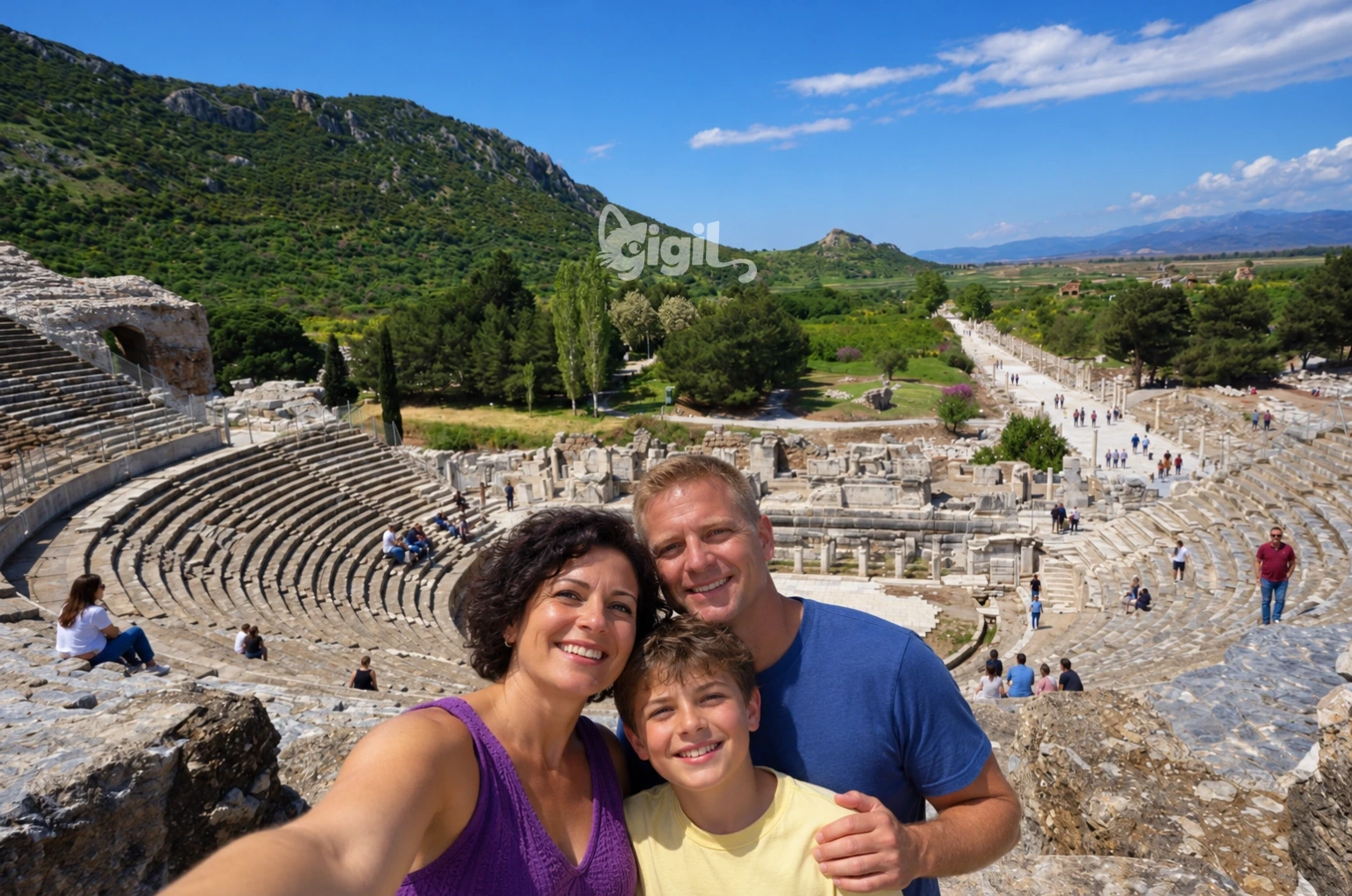
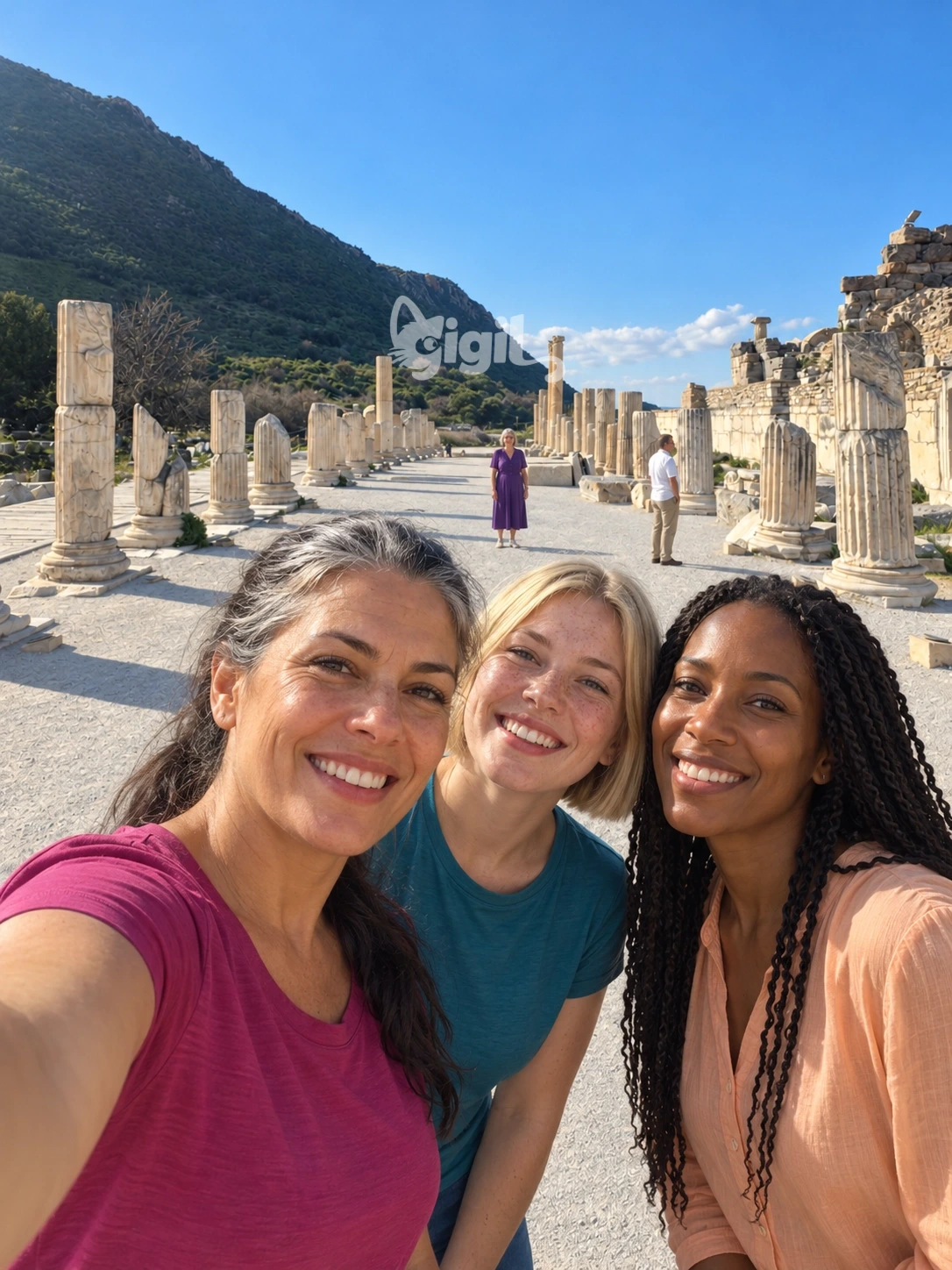
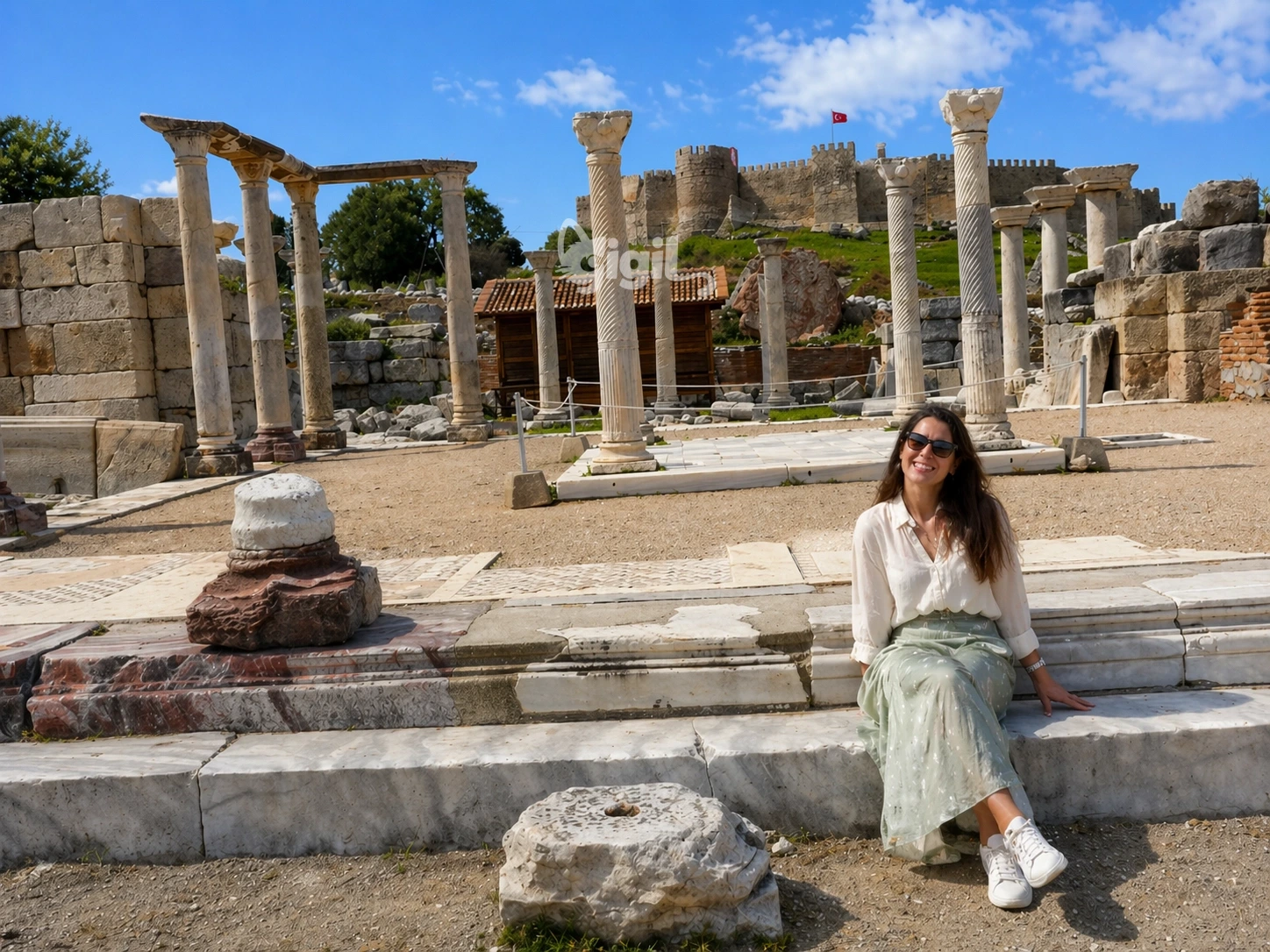
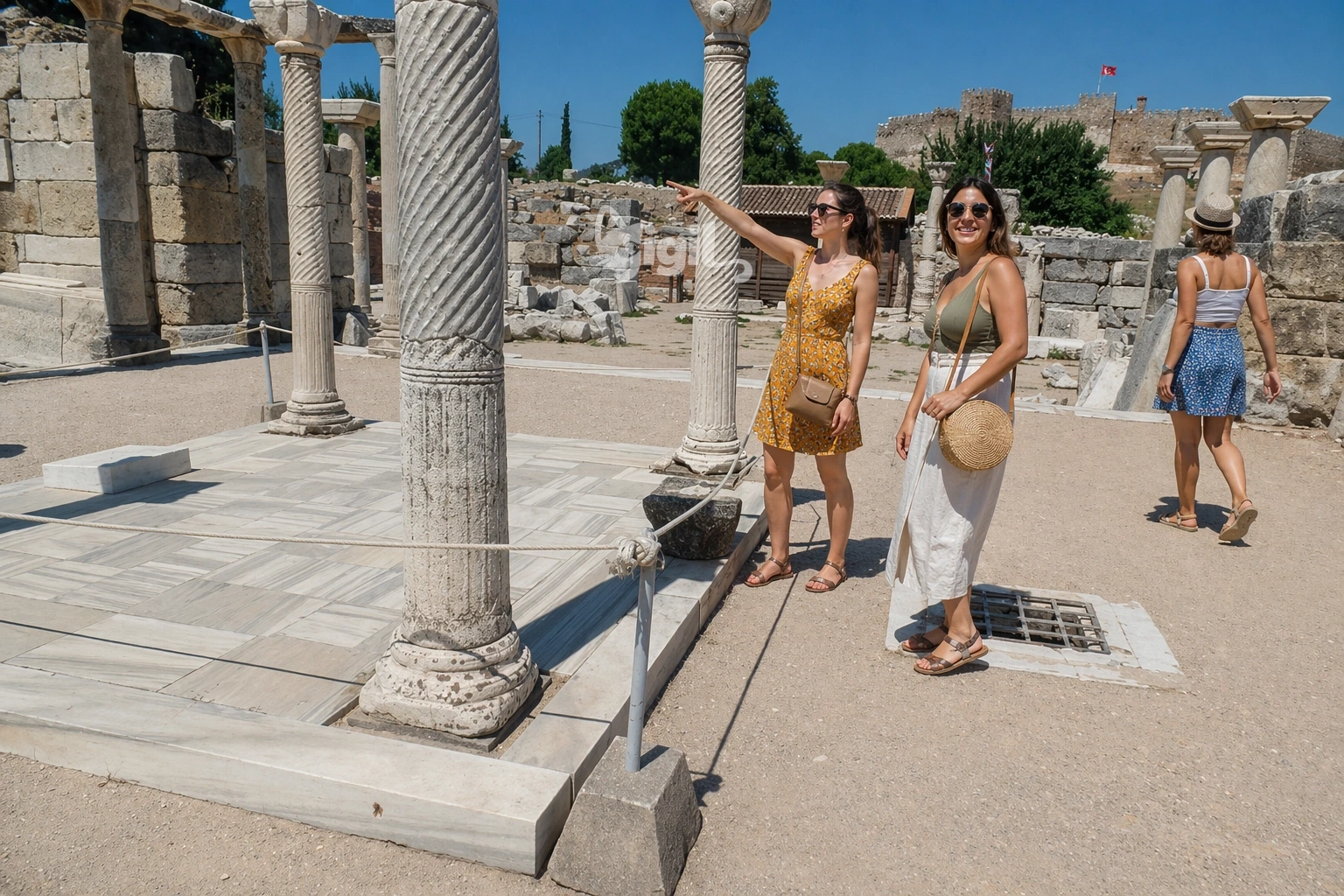
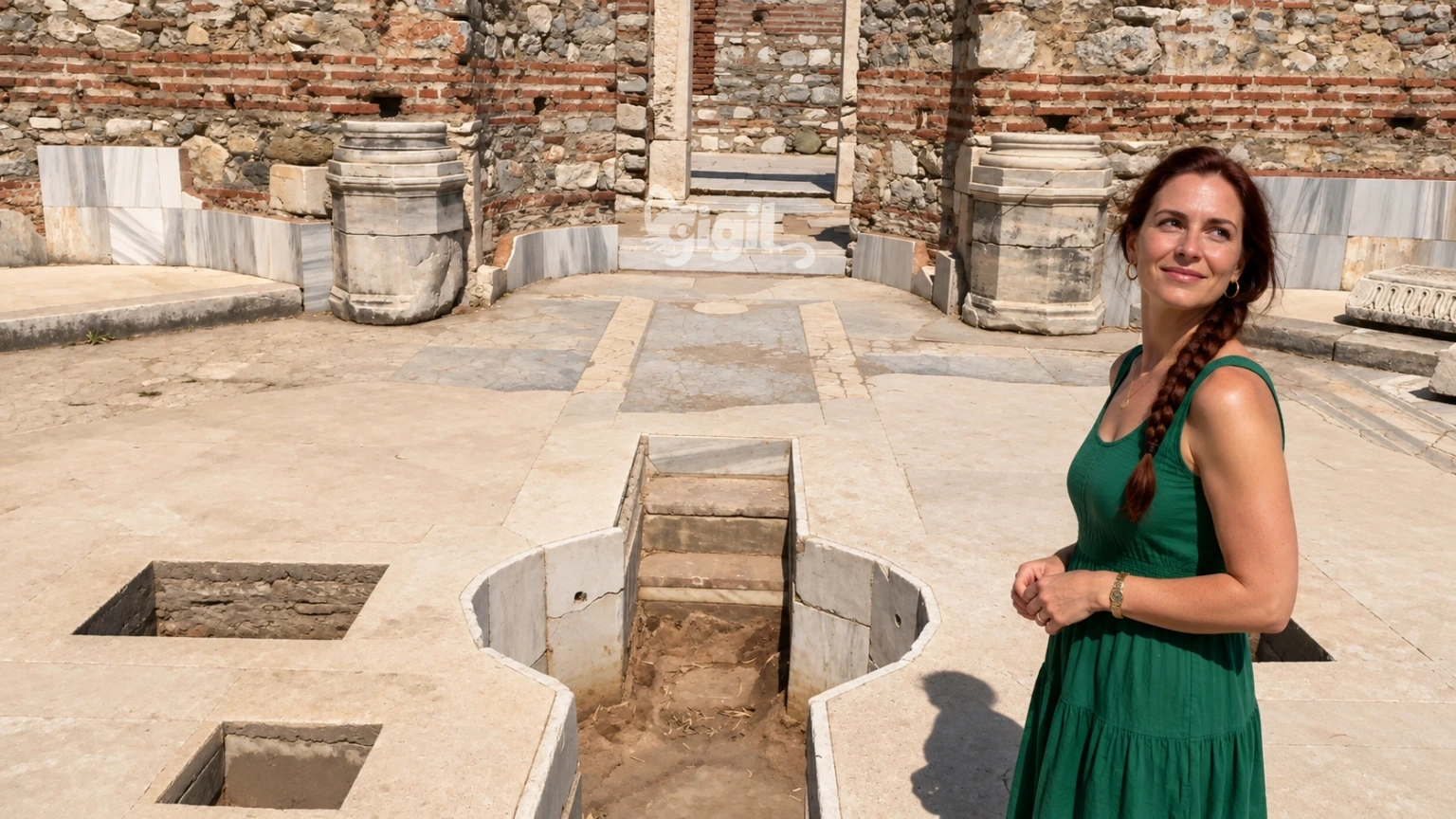
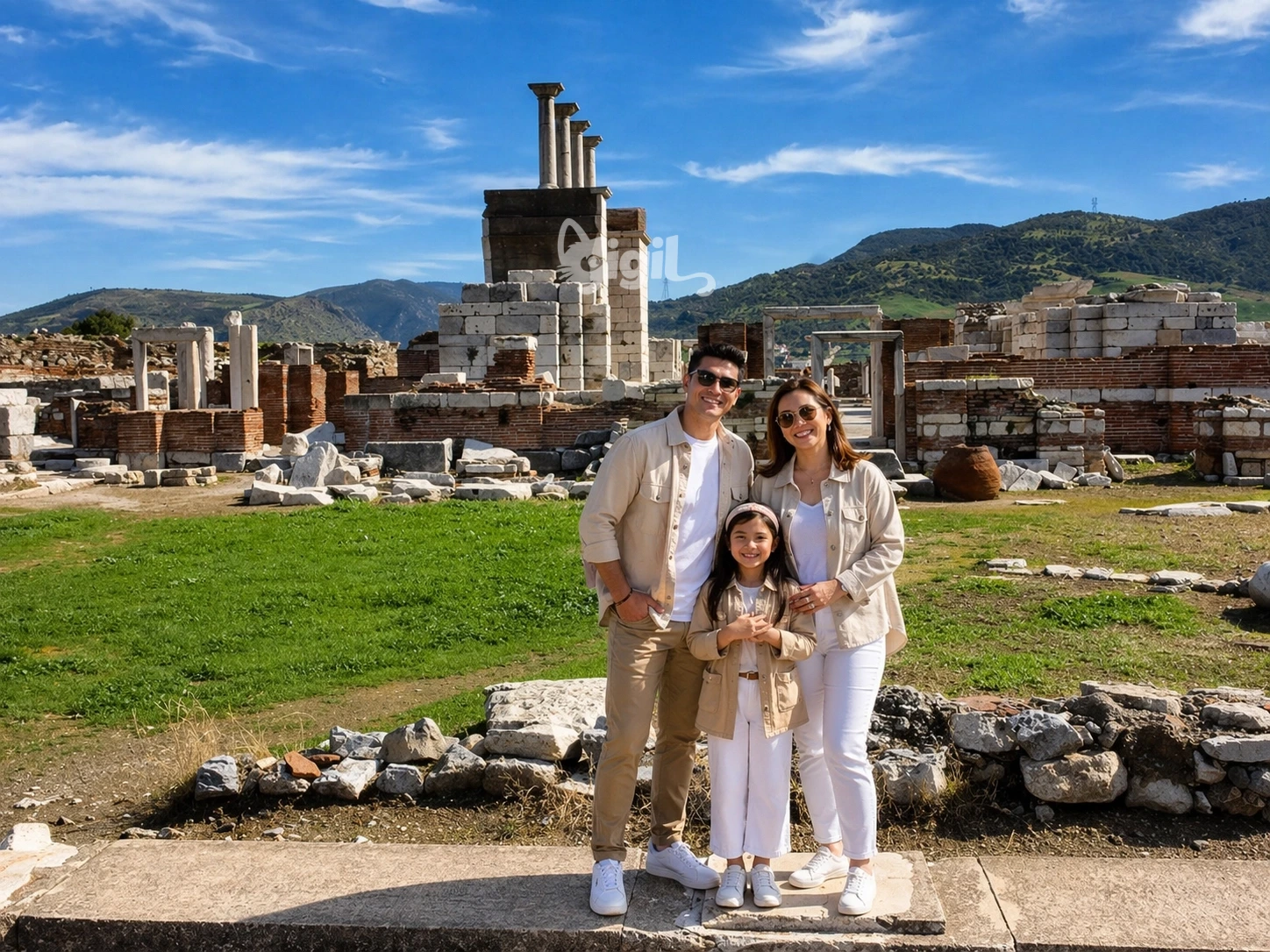
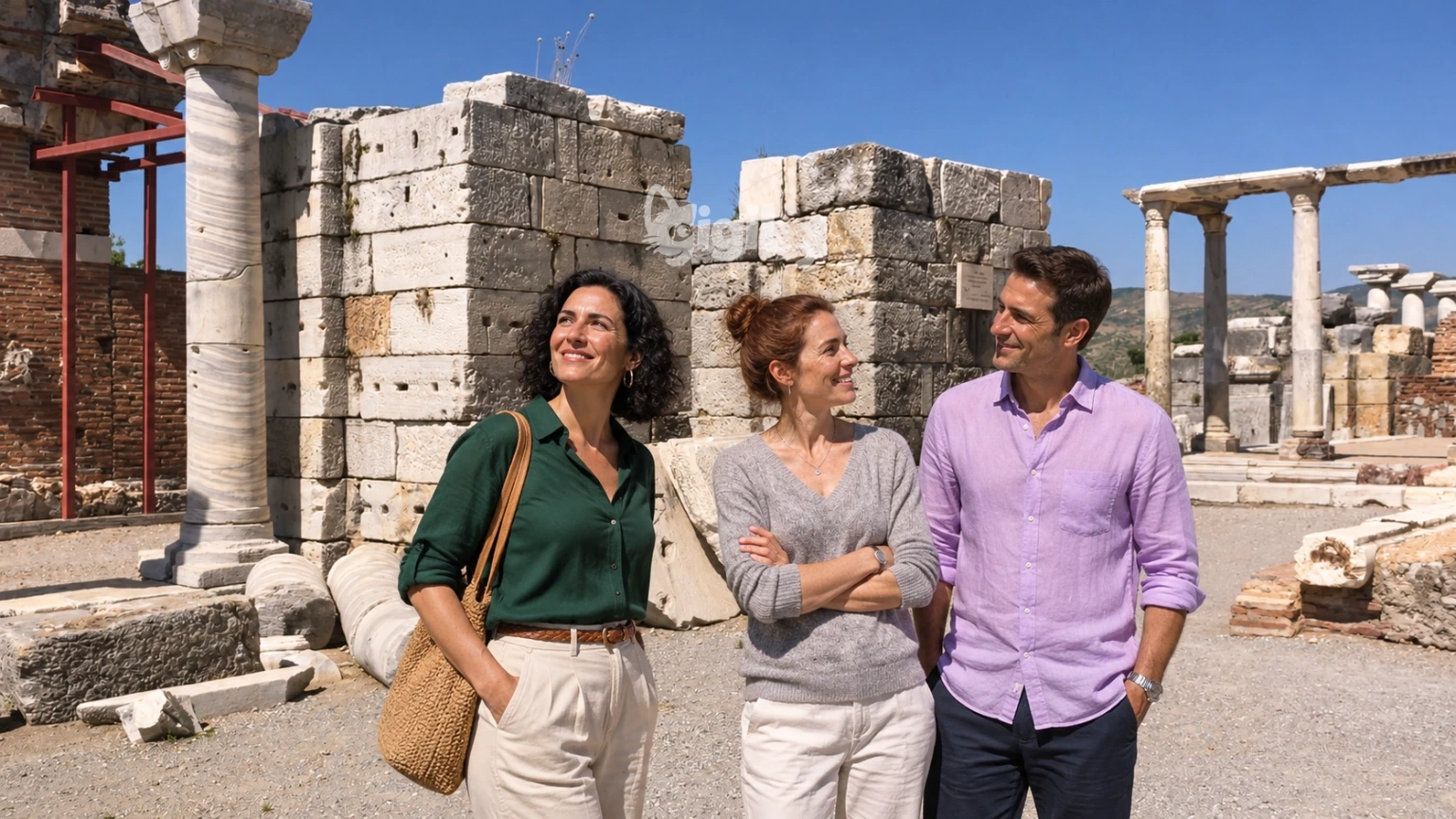
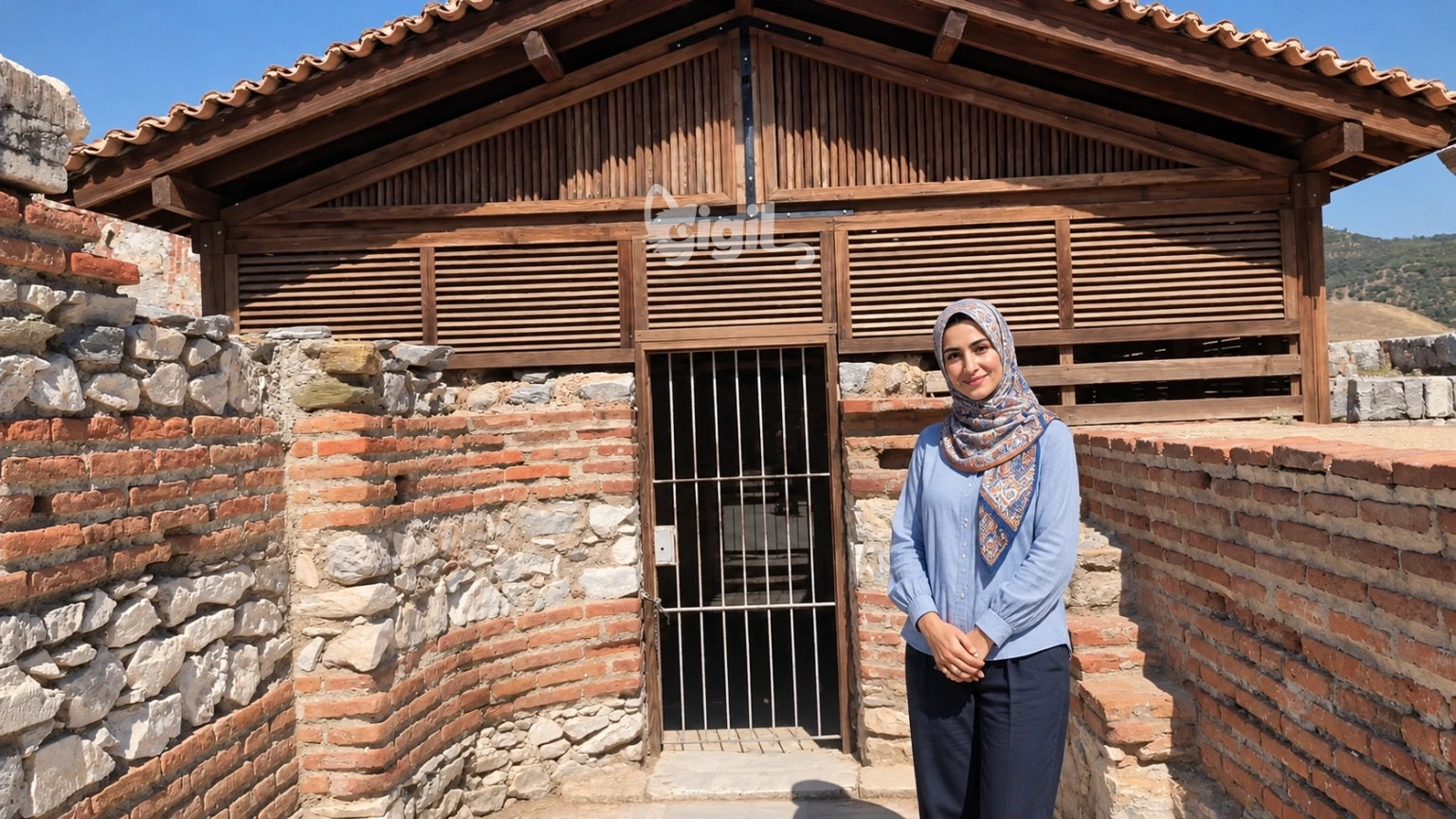
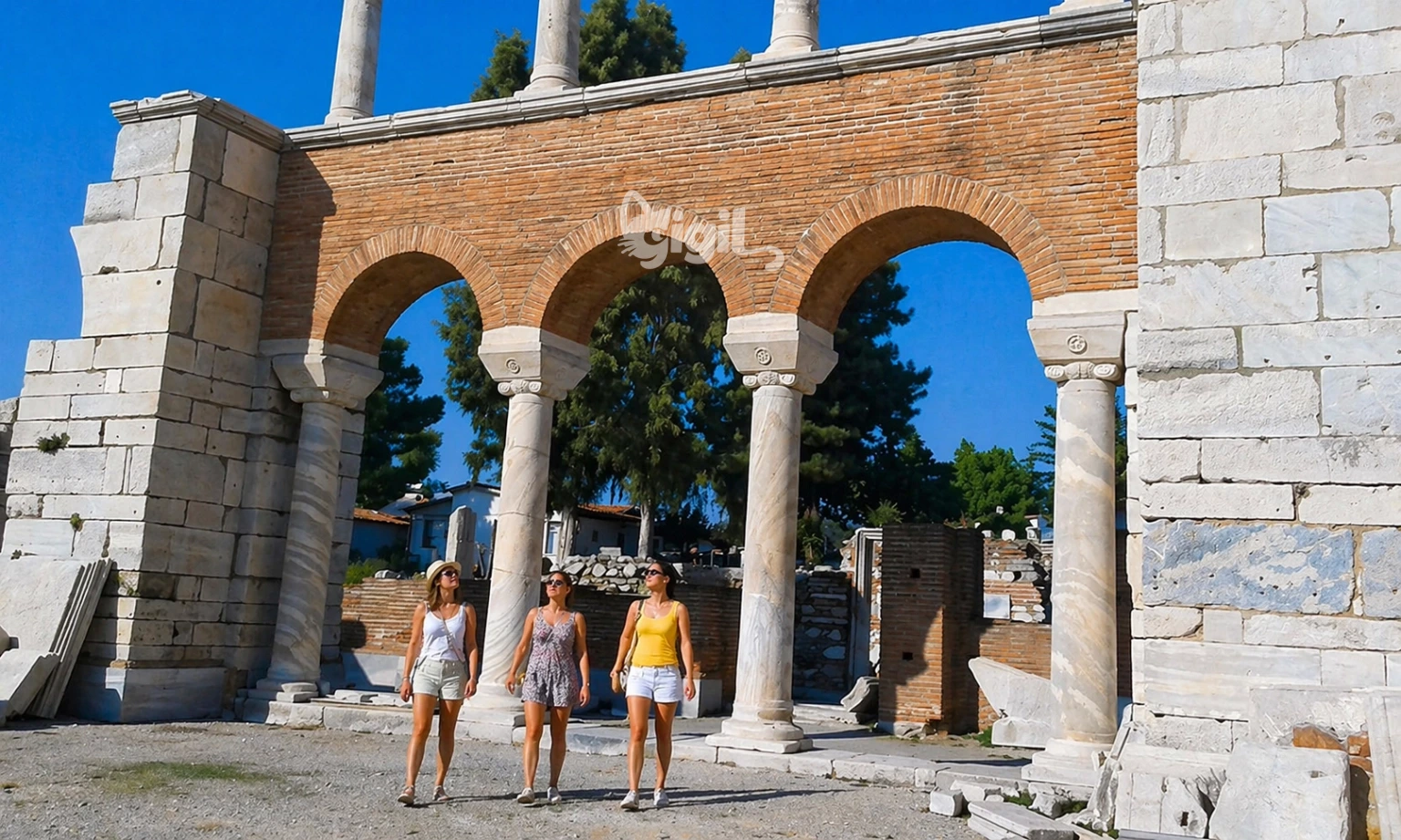
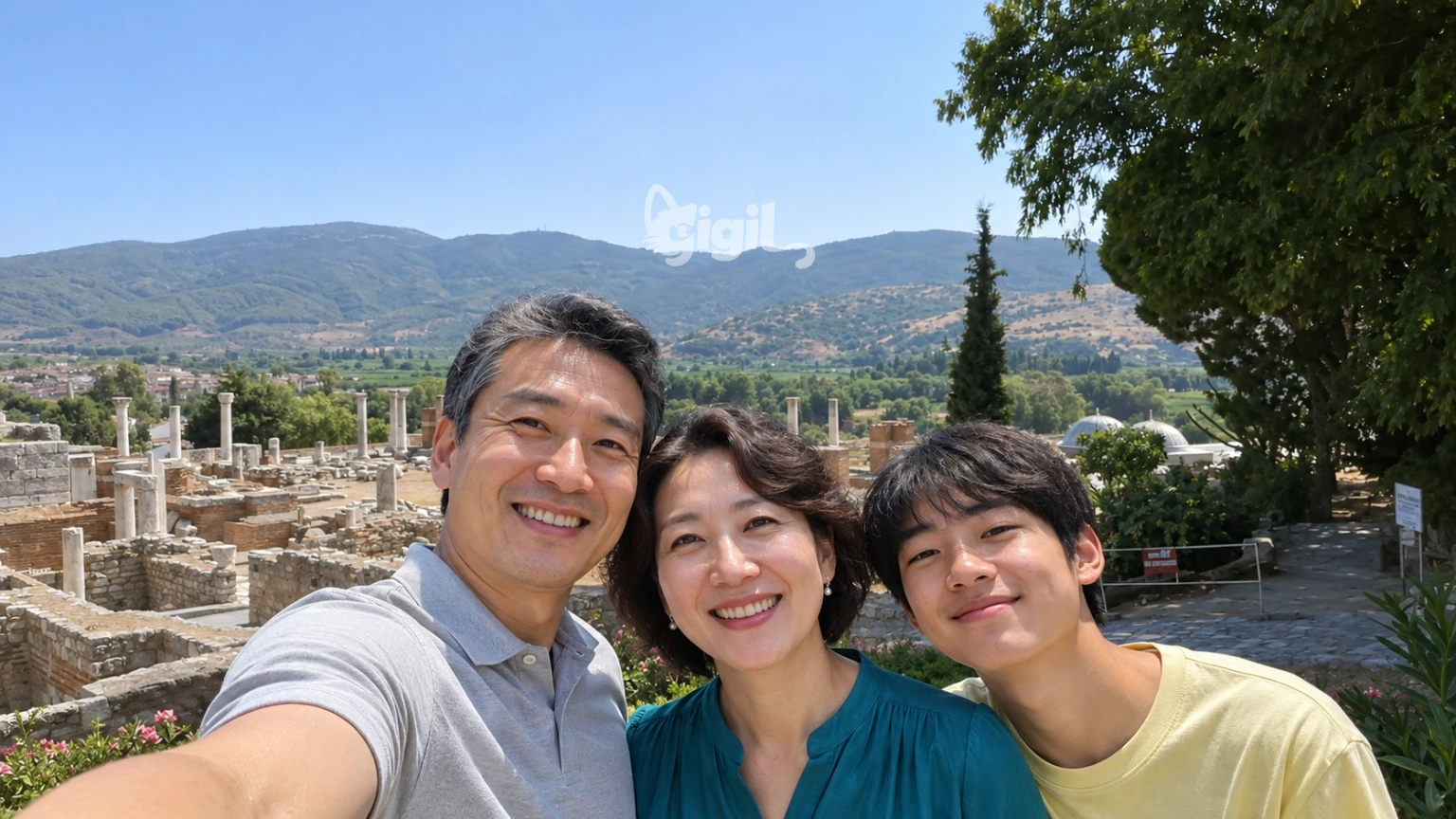
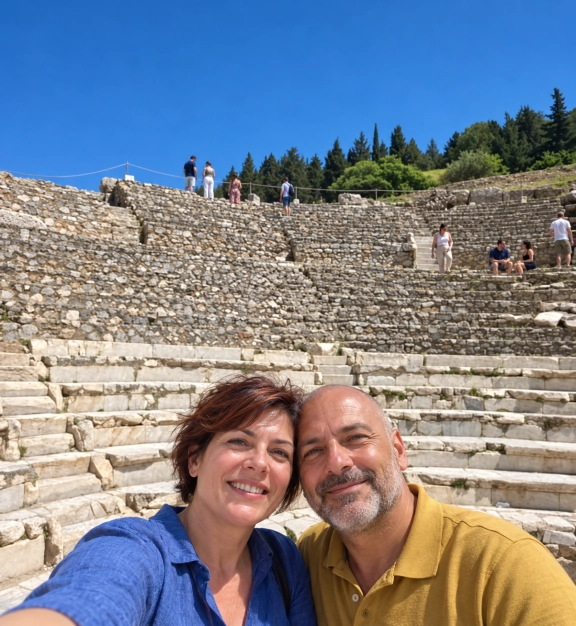
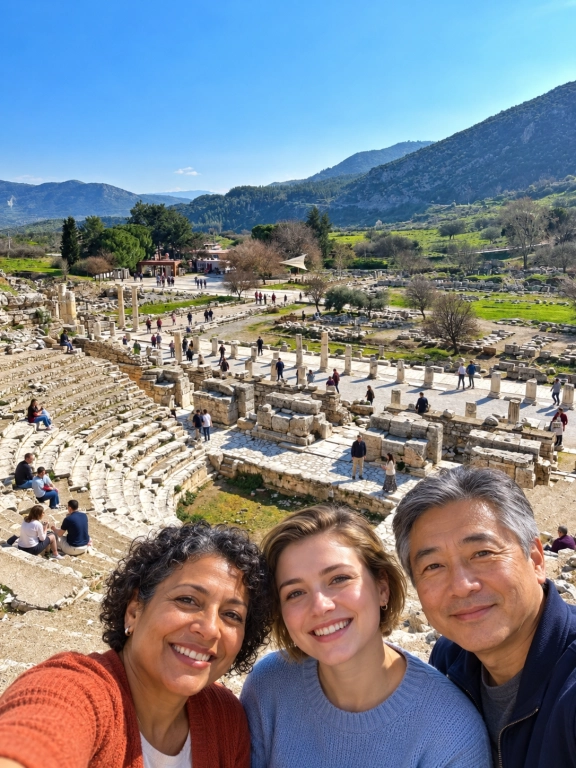
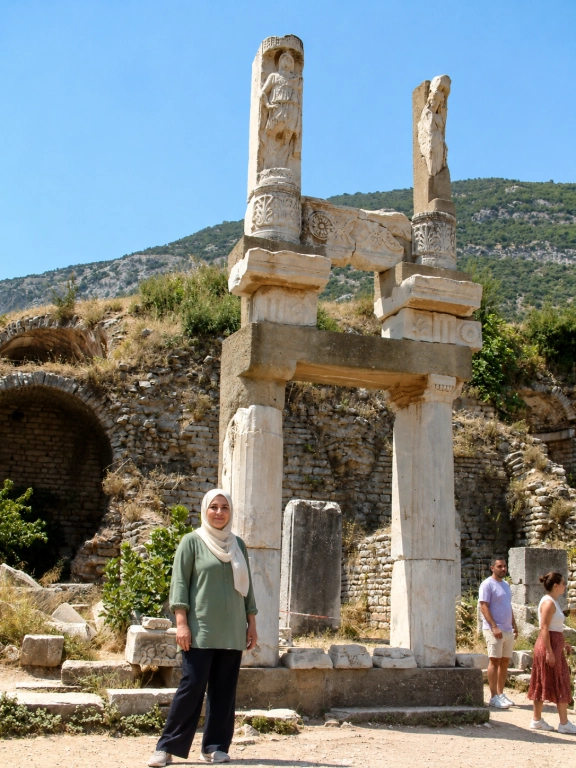
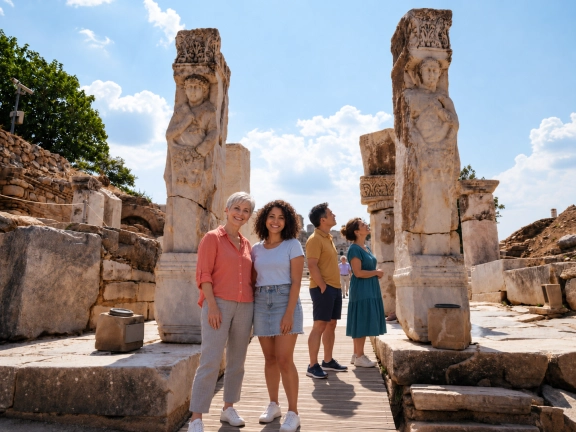
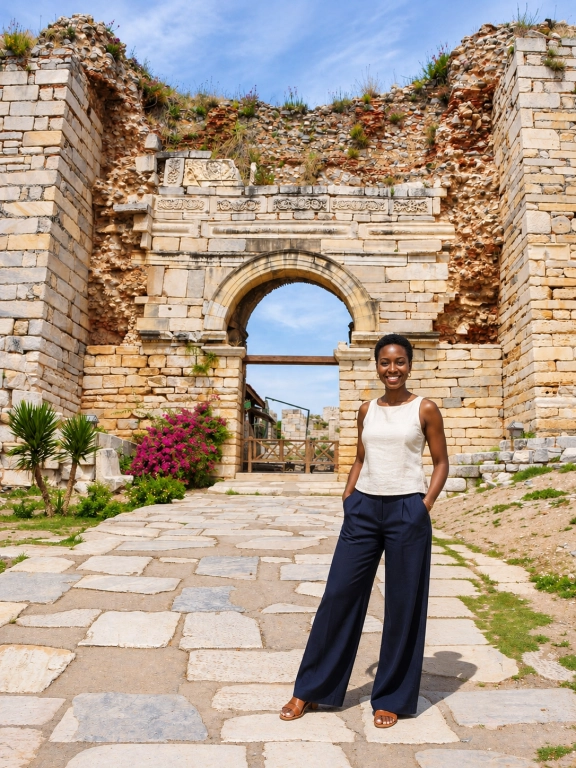
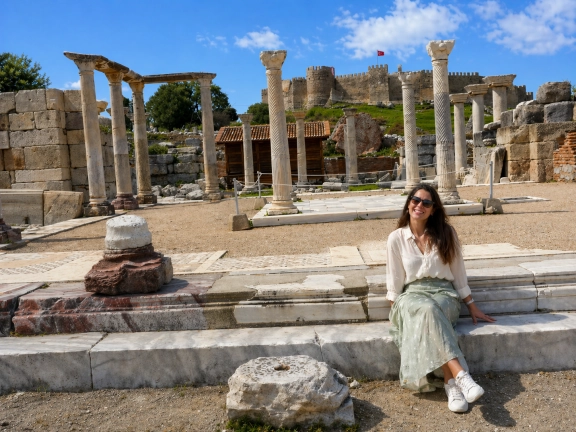
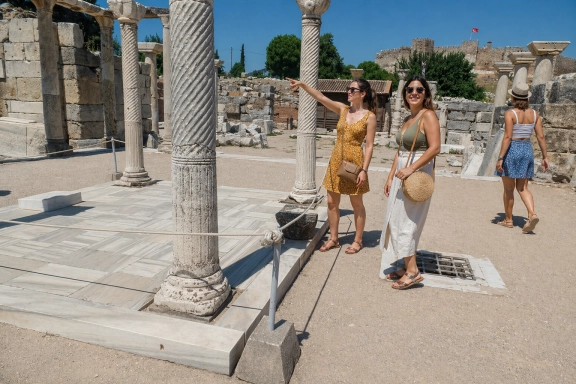
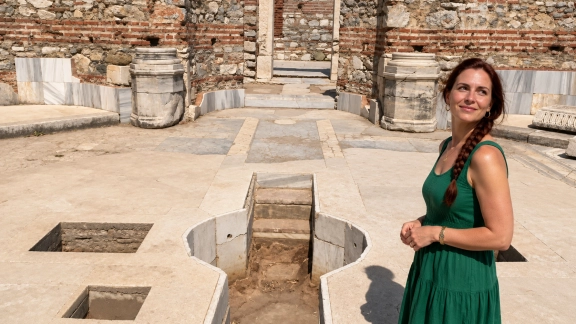
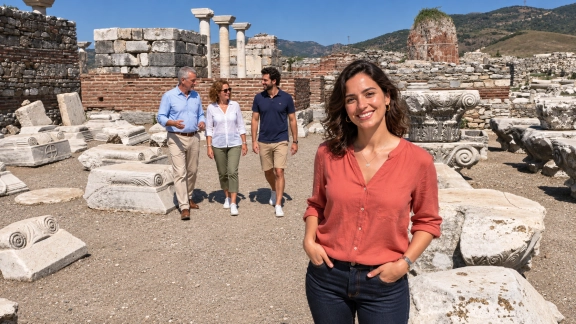
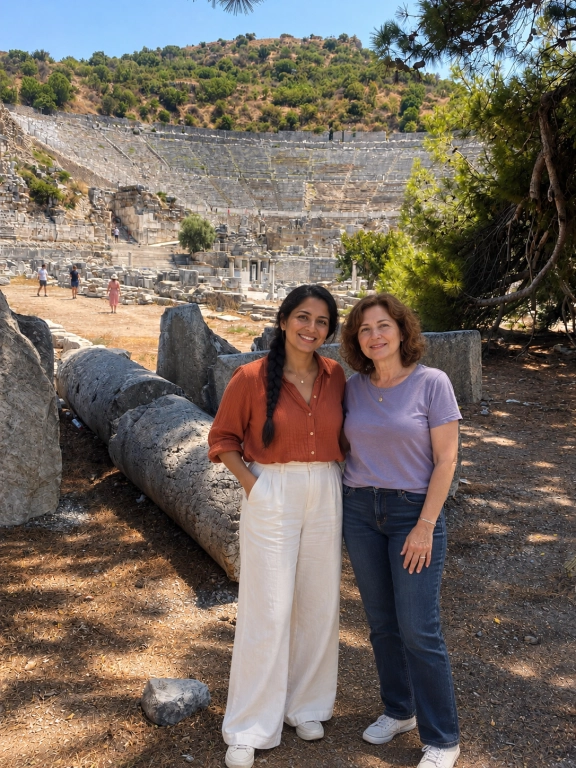

At Ephesus, the spaces between monuments are as revealing as the monuments themselves. Follow street lines to connect the Library of Celsus with other public areas and the Great Theatre, building a mental map of the ancient city.
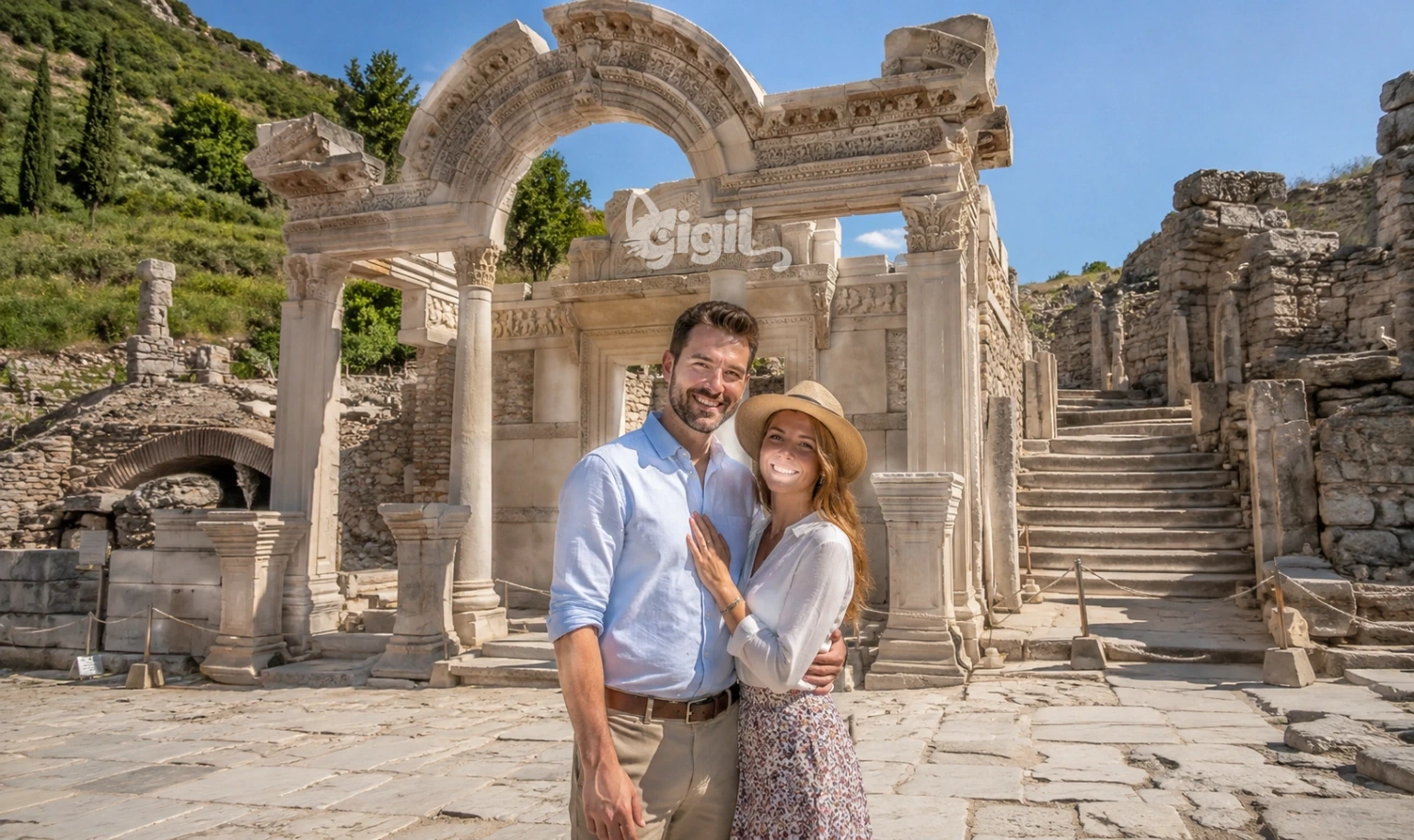
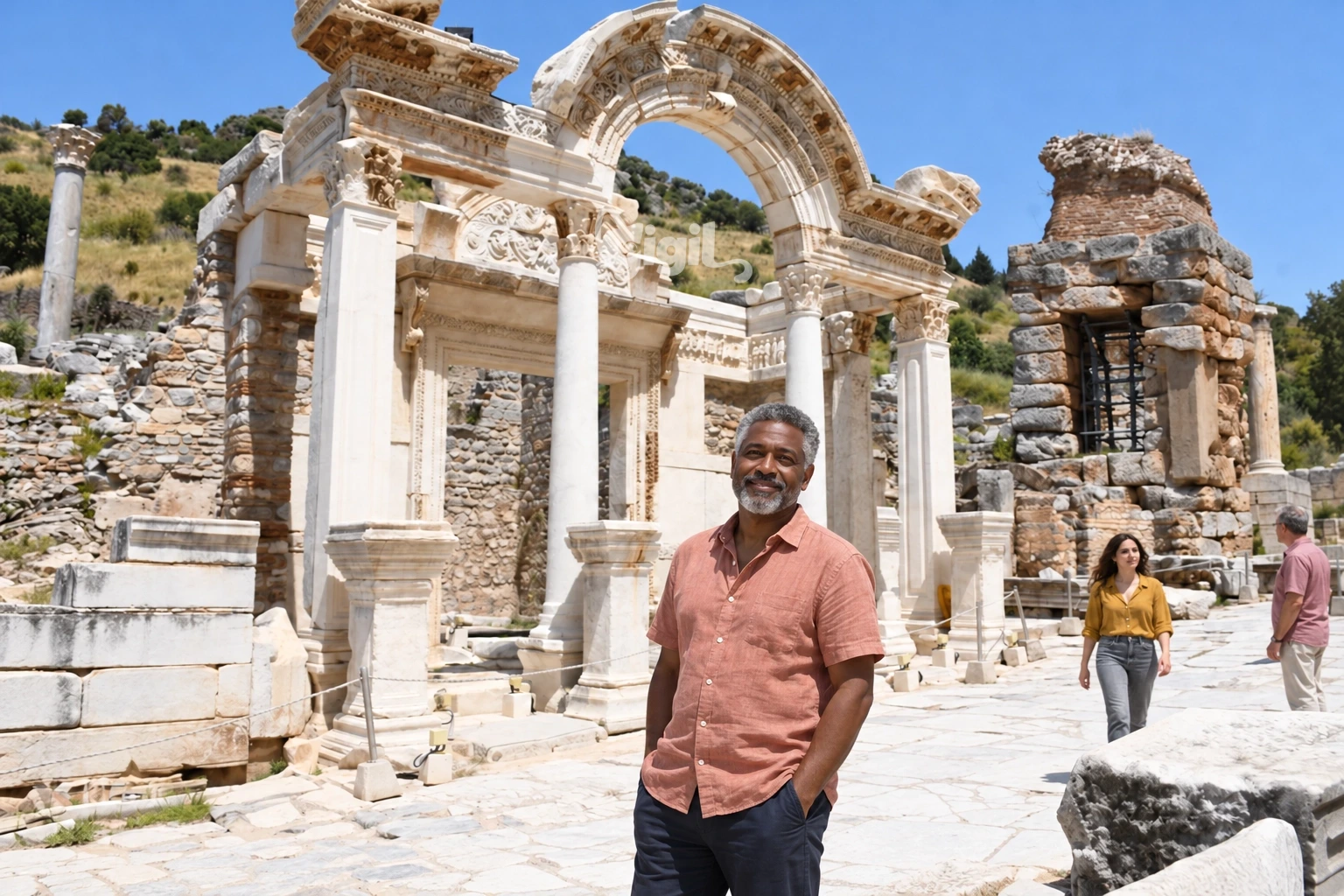
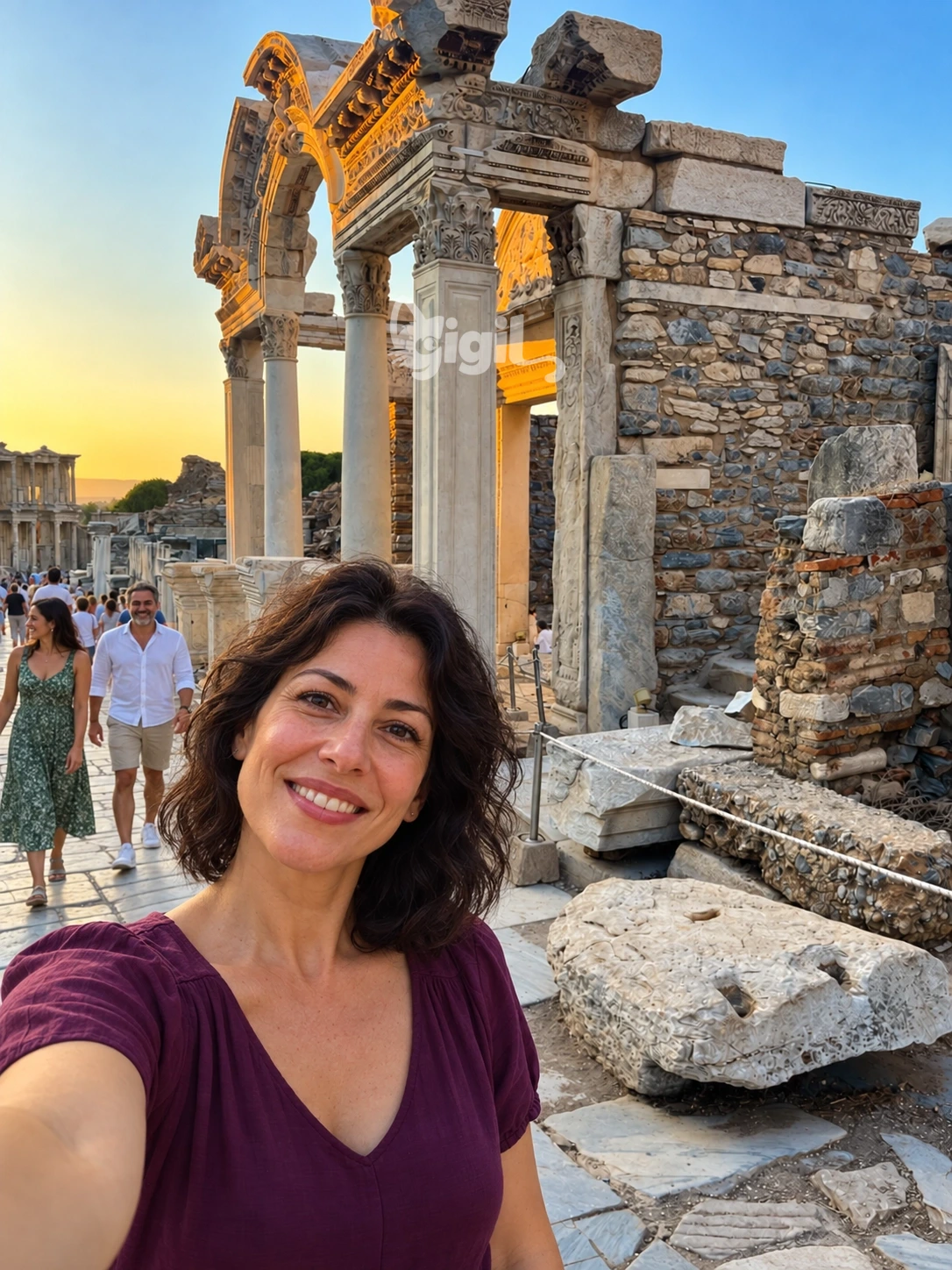
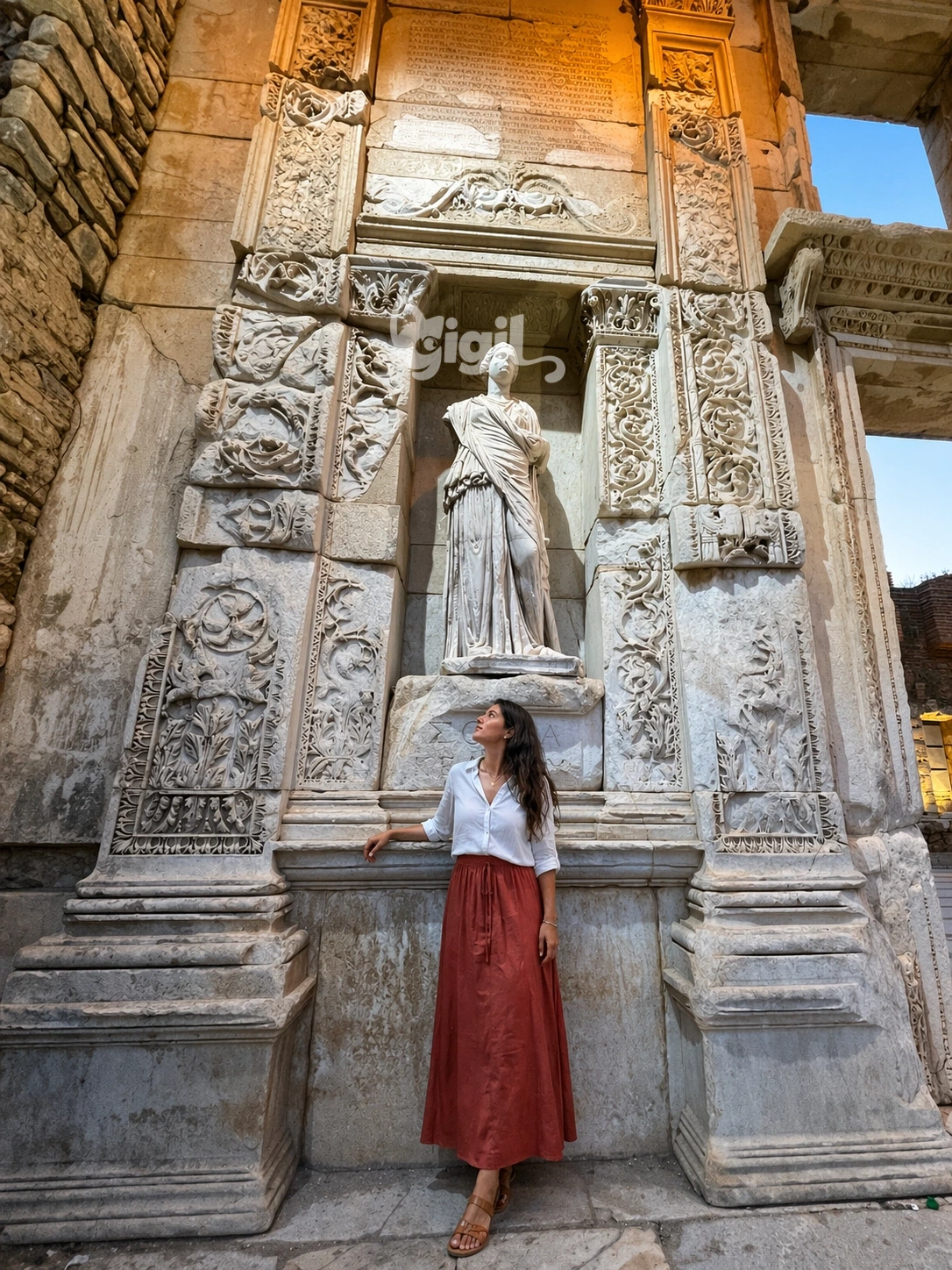
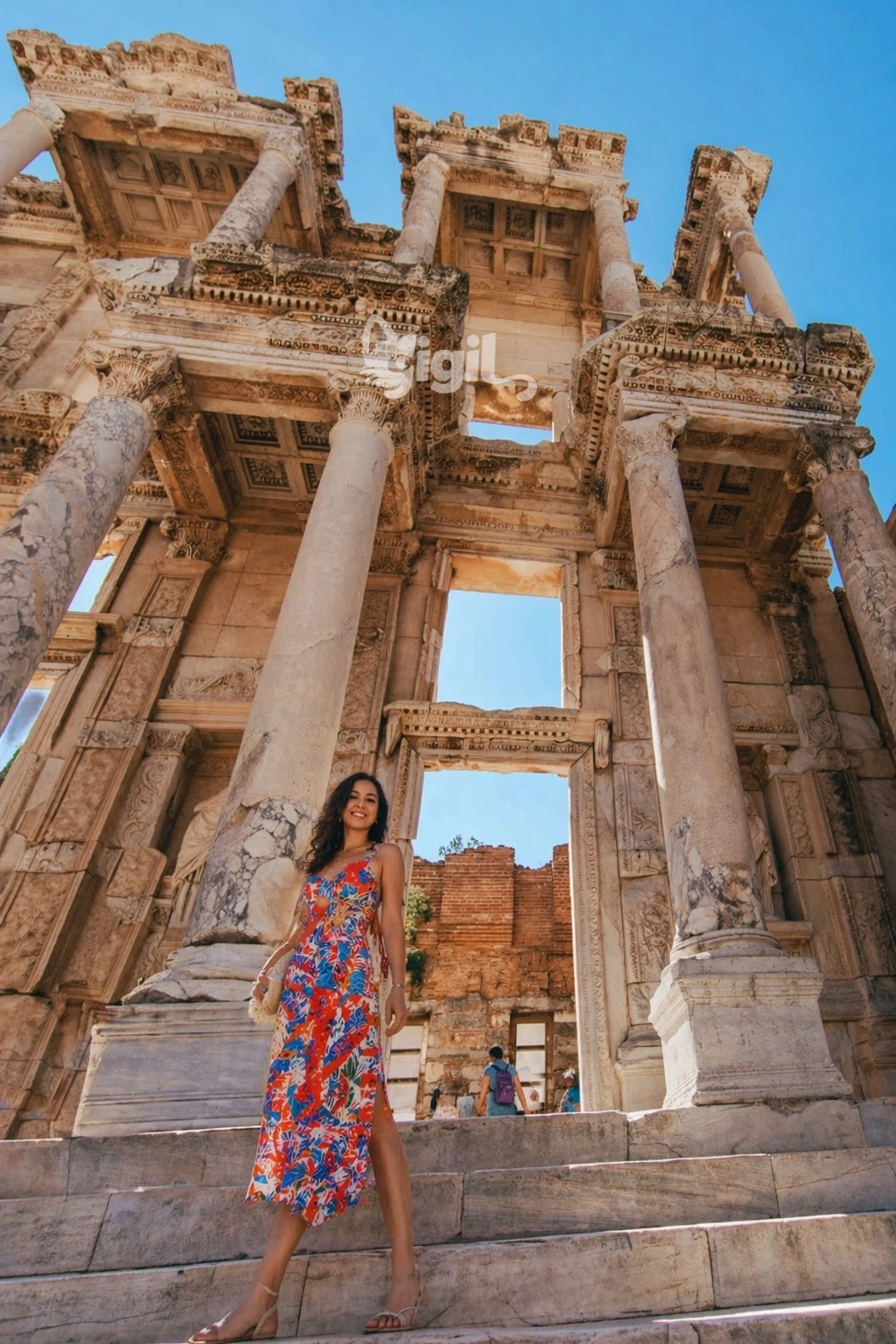
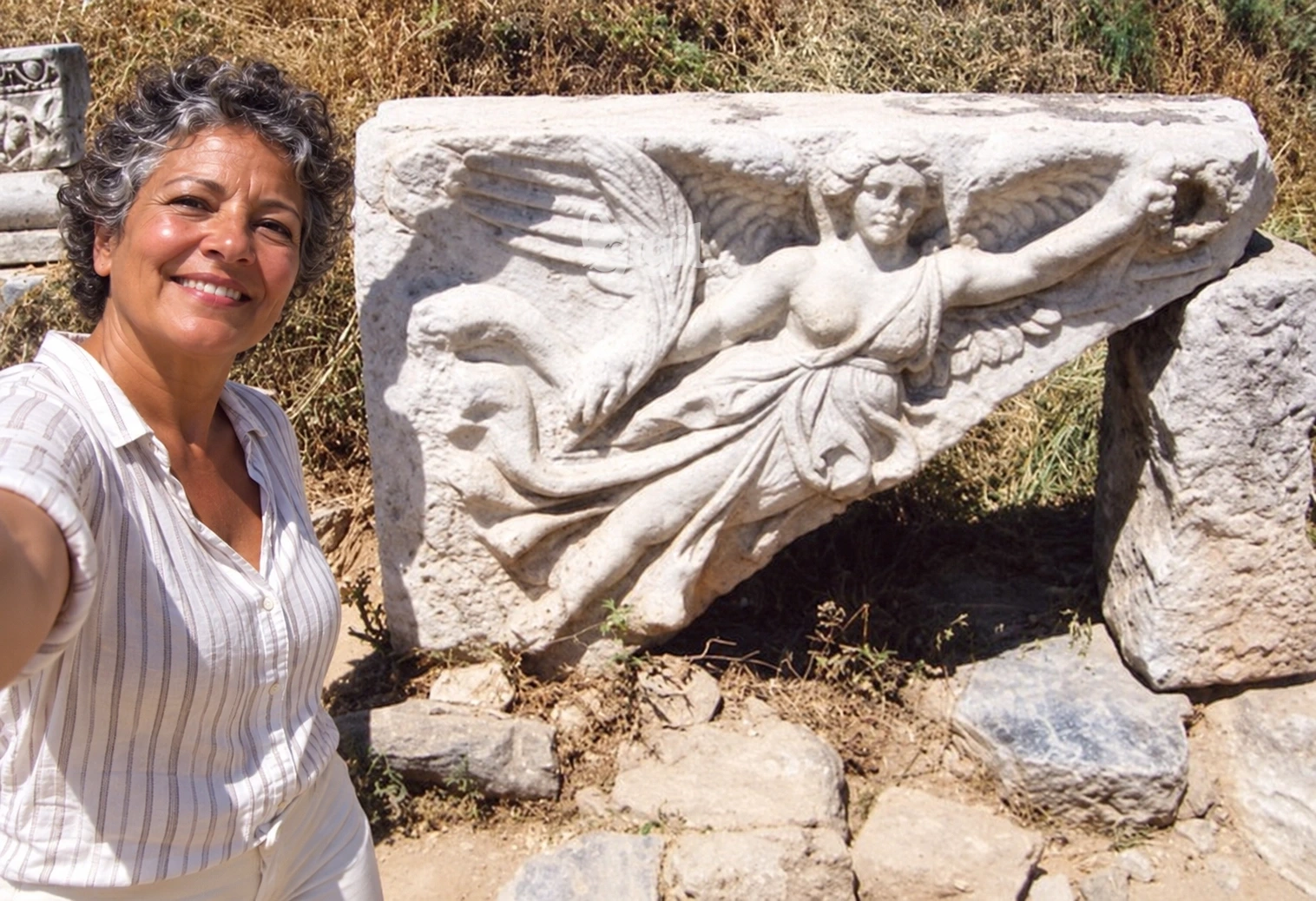
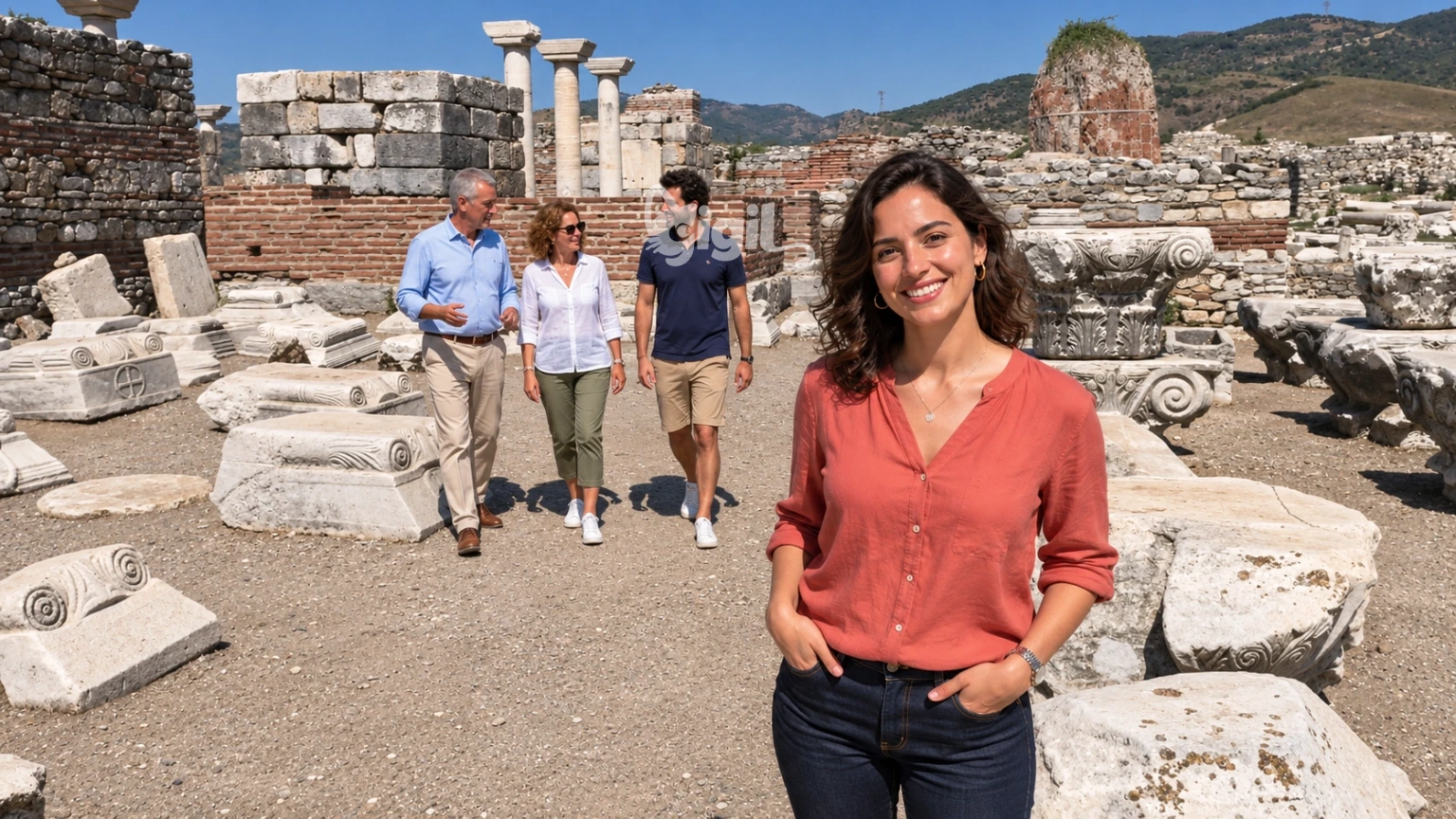
A reconstructed facade can help suggest former grandeur, but surrounding fragments offer a different kind of evidence. Read both together: one makes architectural scale visible, while the other shows the incomplete nature of what survives.
Questions
How can I build a mental map of Ephesus?
Relate the main landmarks to the streets and open spaces between them rather than memorising buildings alone.
What should I remember about the library reconstruction?
The standing facade helps interpret the monument, but it is not an entire library preserved in place.
Why compare the theatre with nearby streets?
The contrast highlights the difference between everyday circulation and space designed for a large audience.
Are the ruins a complete record of ancient daily life?
They preserve valuable evidence, but missing buildings and later changes leave much to archaeological interpretation.