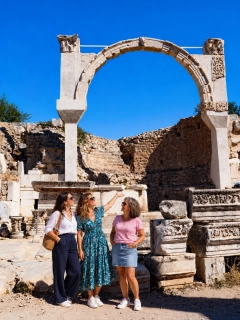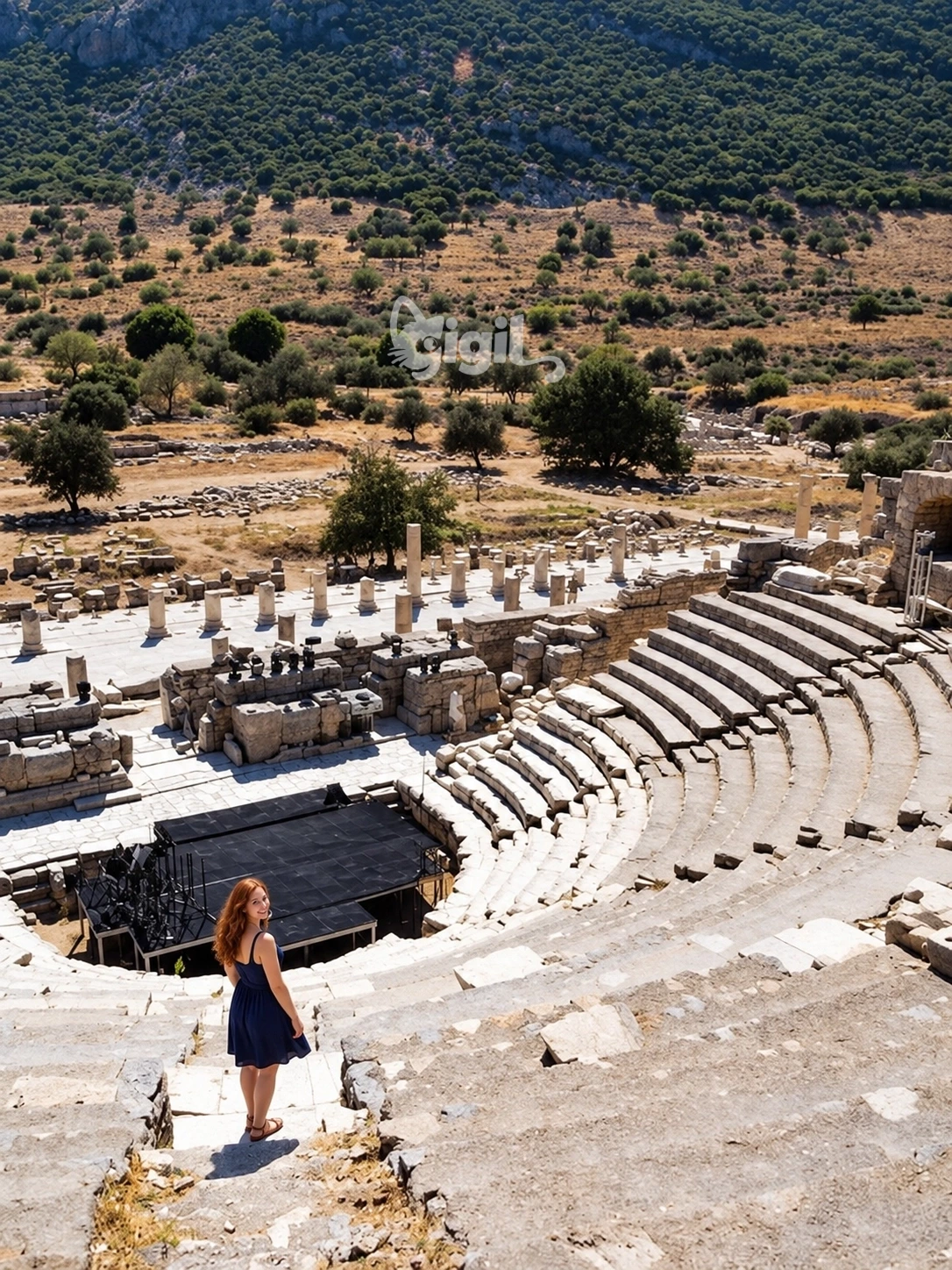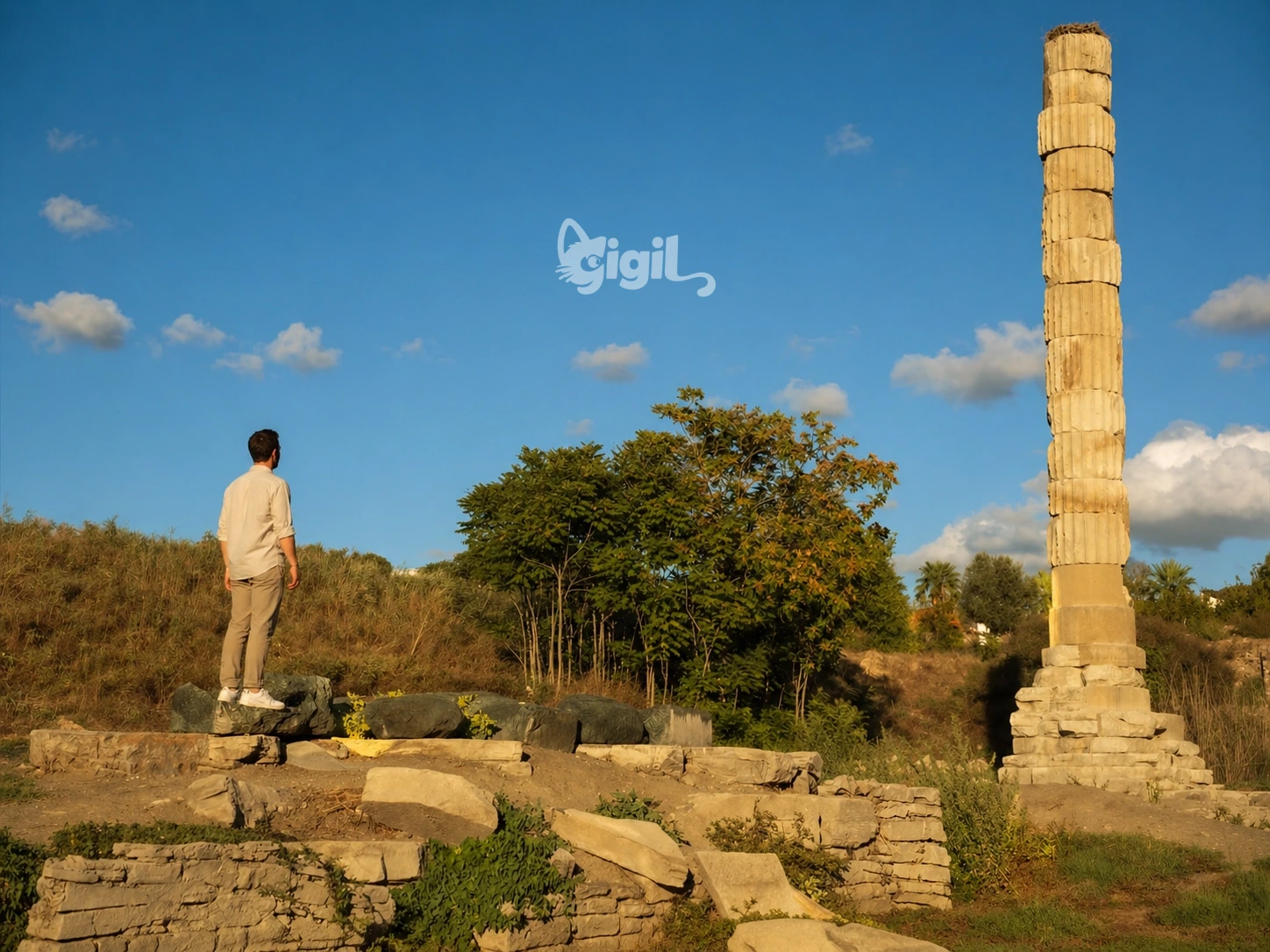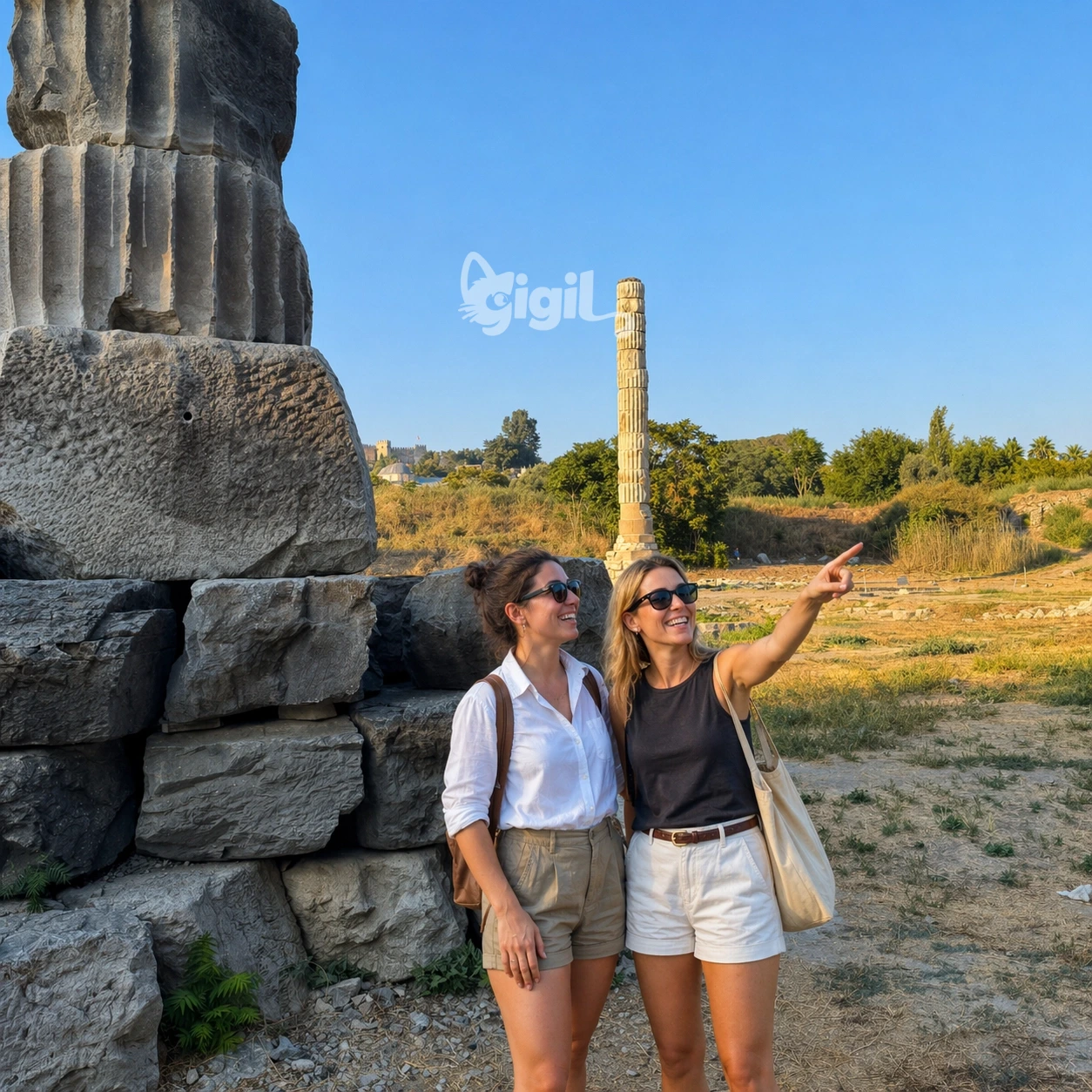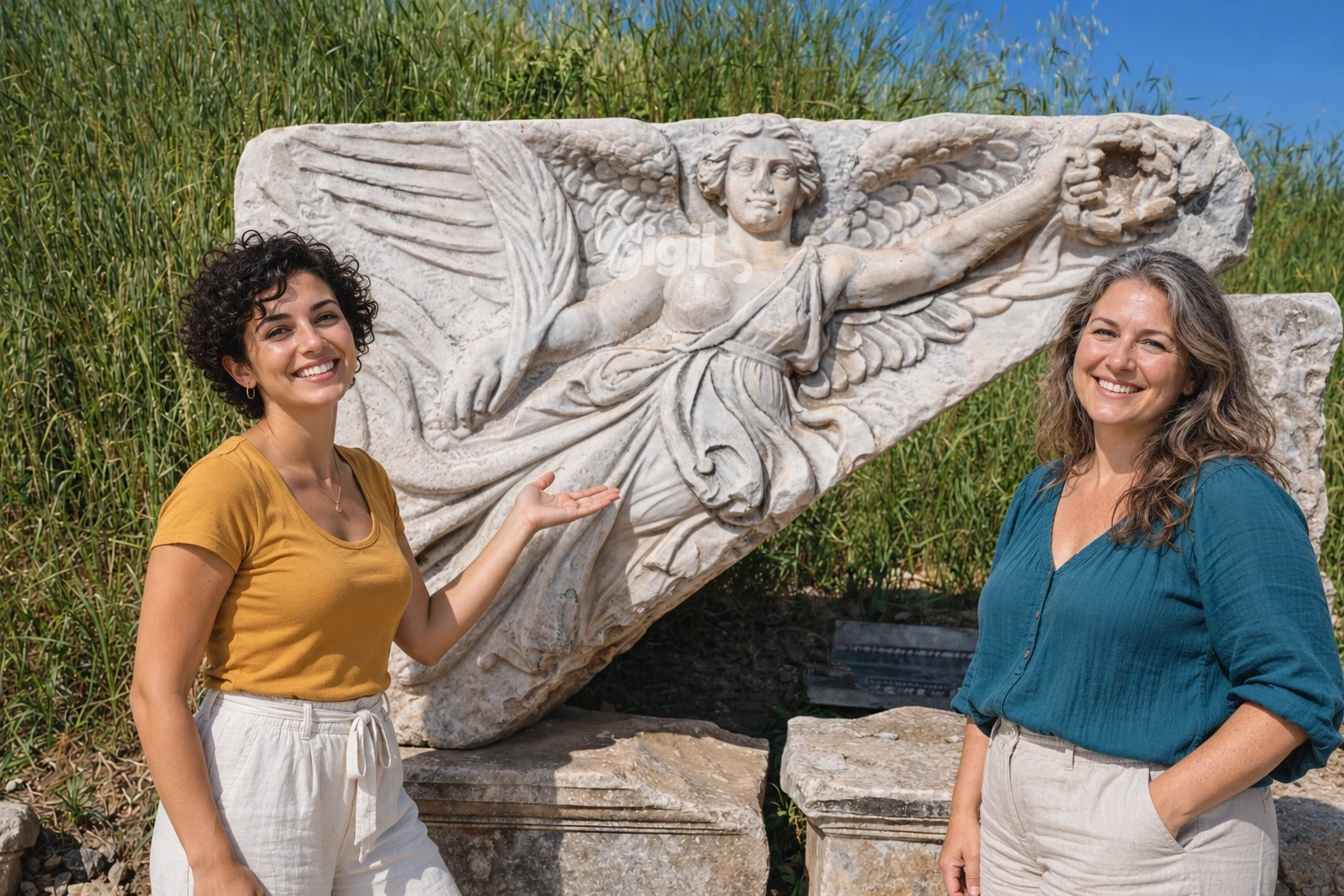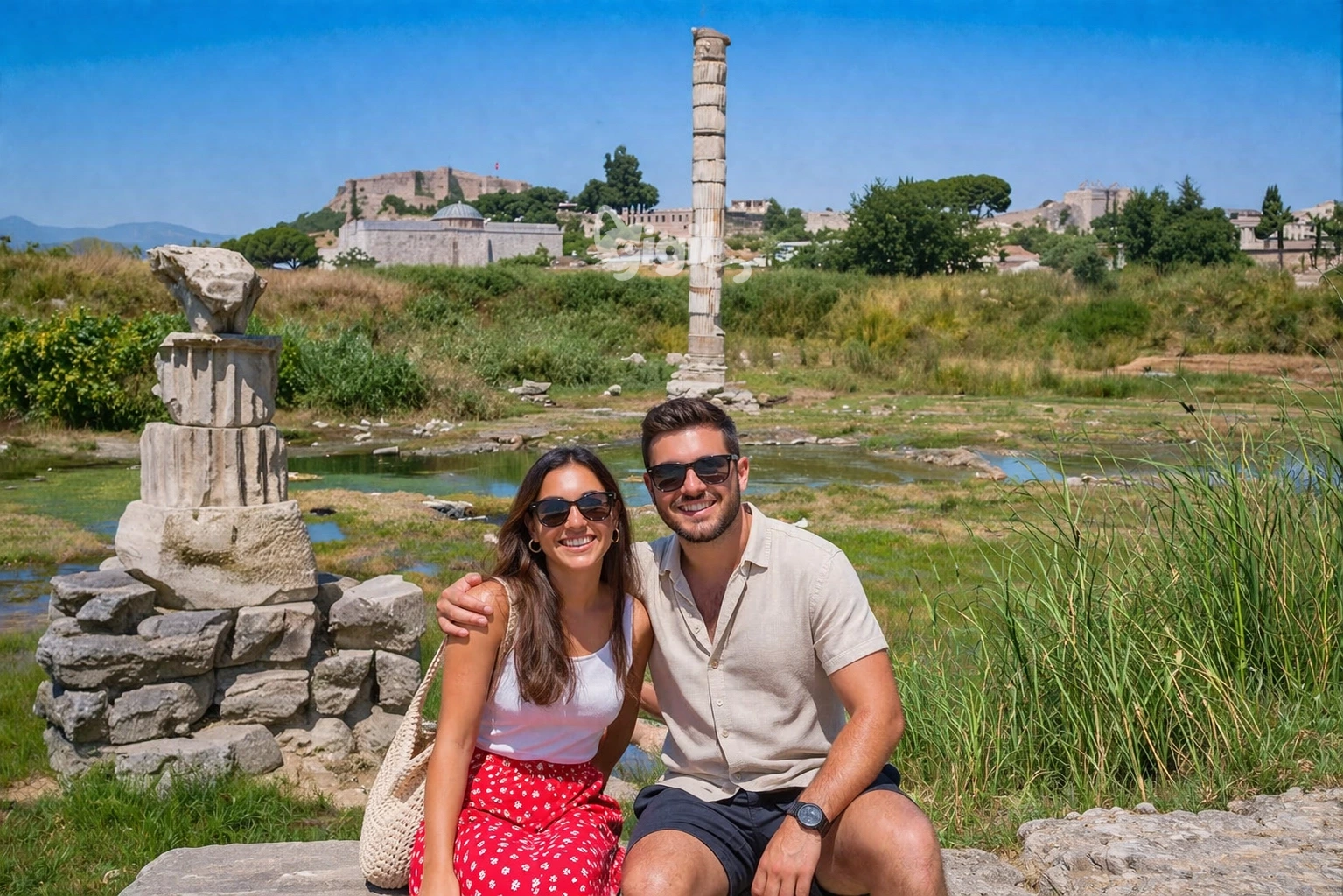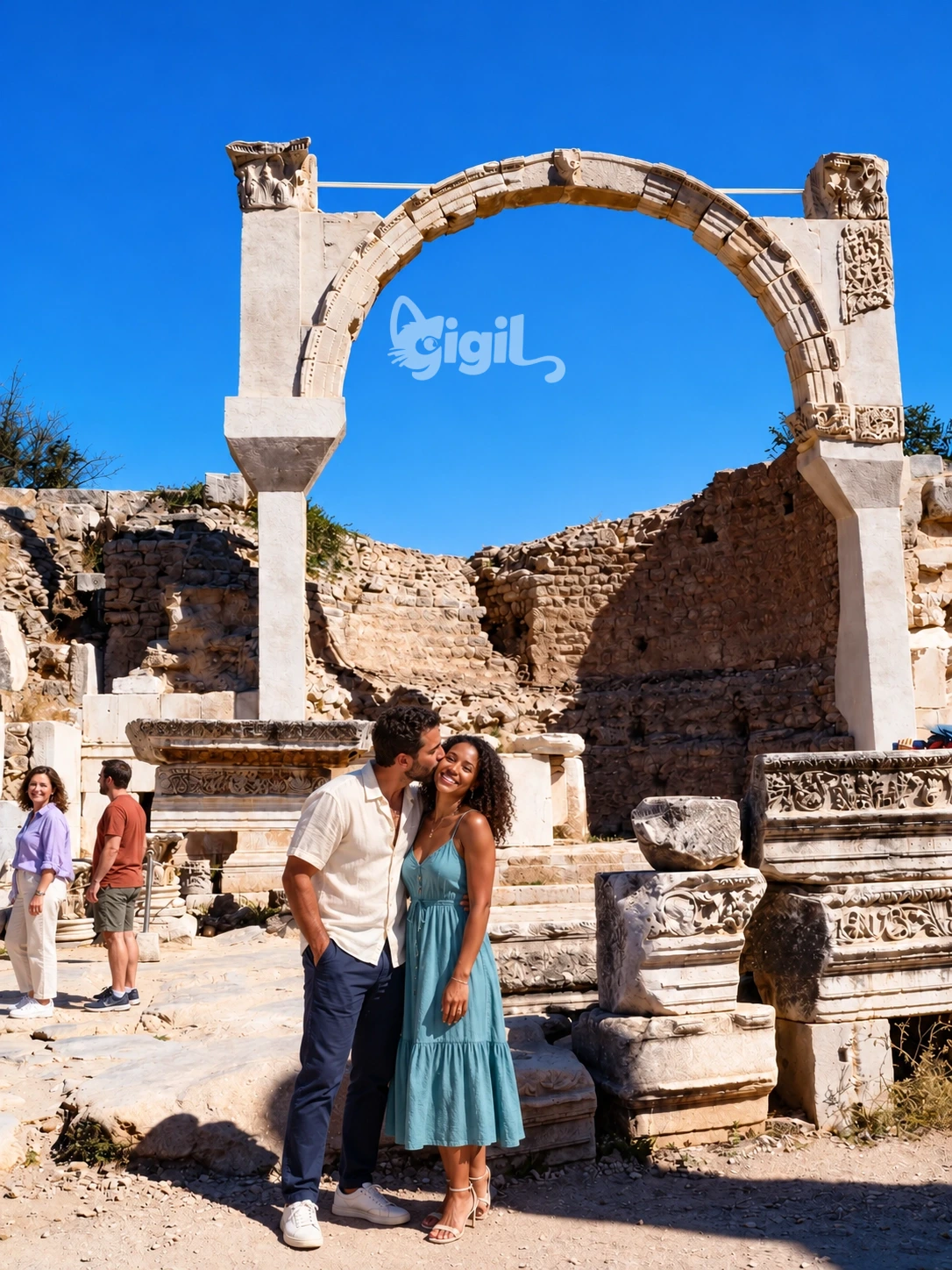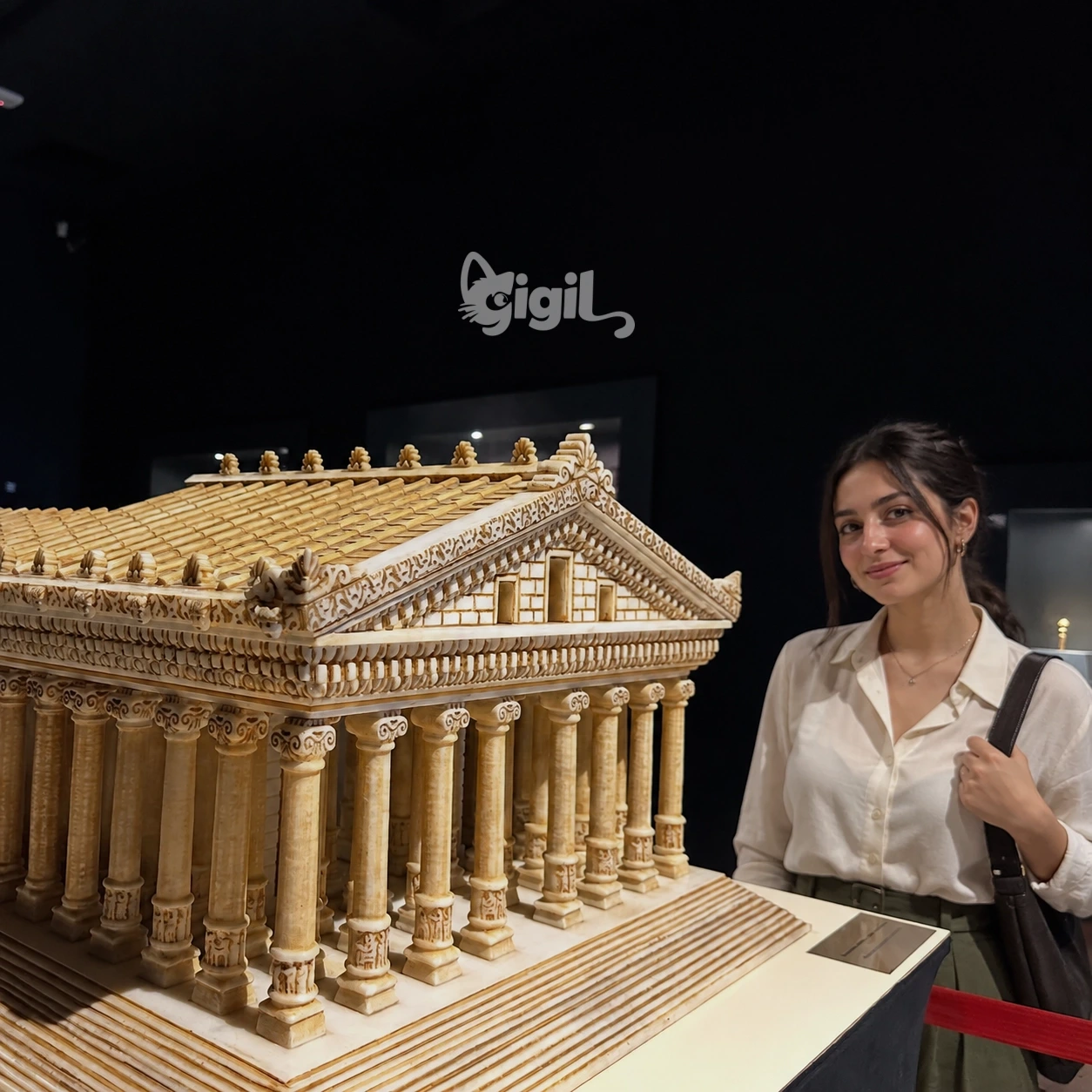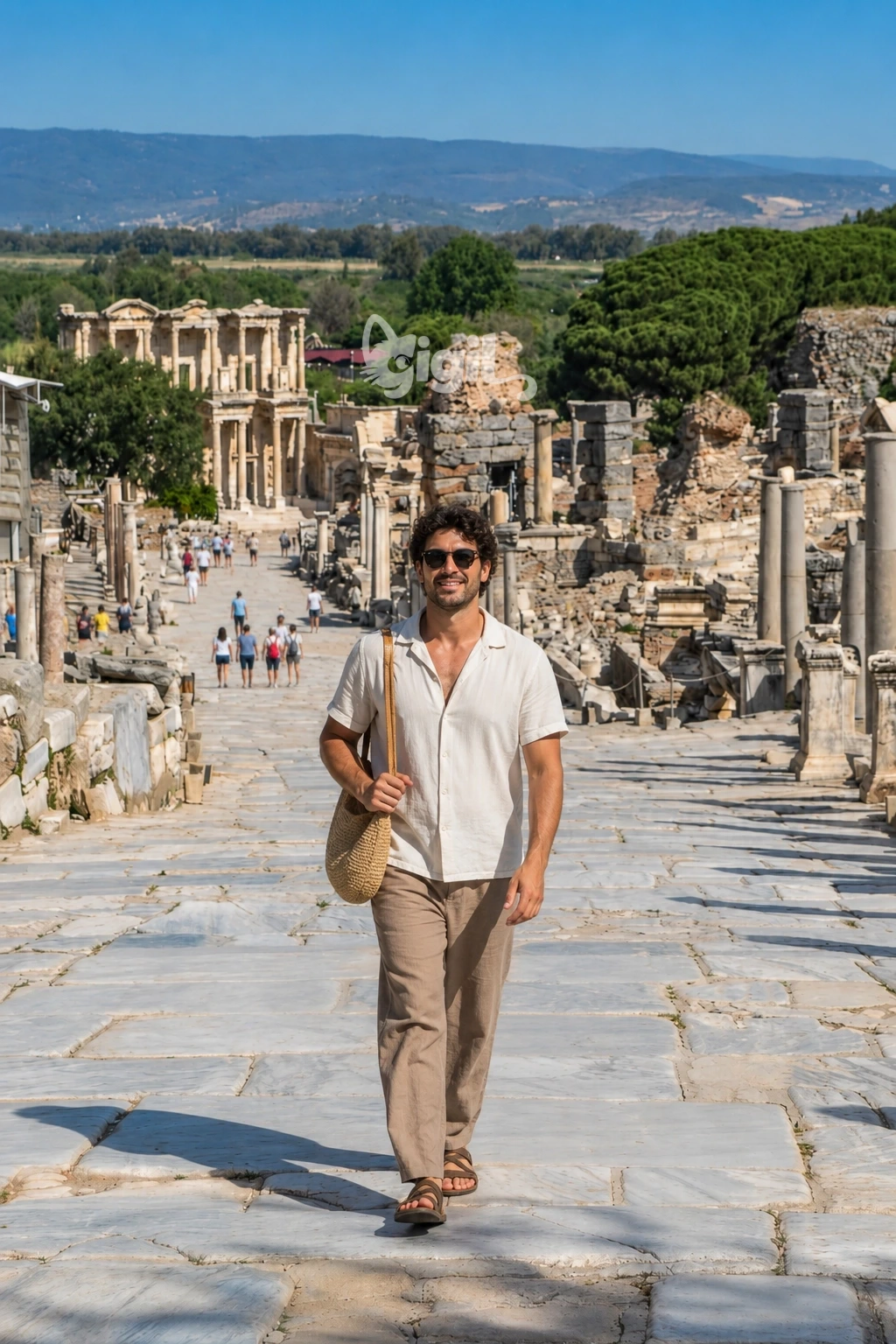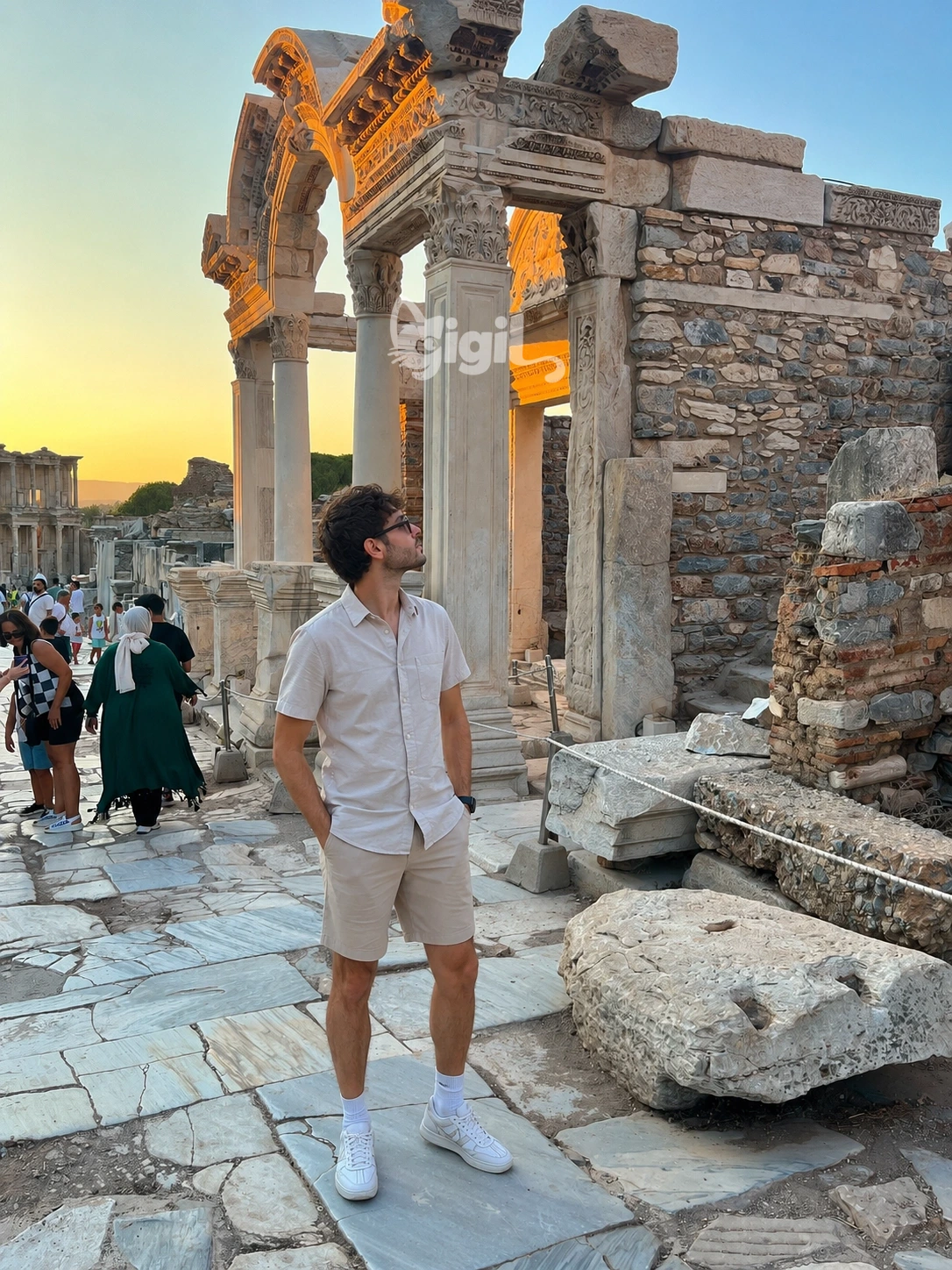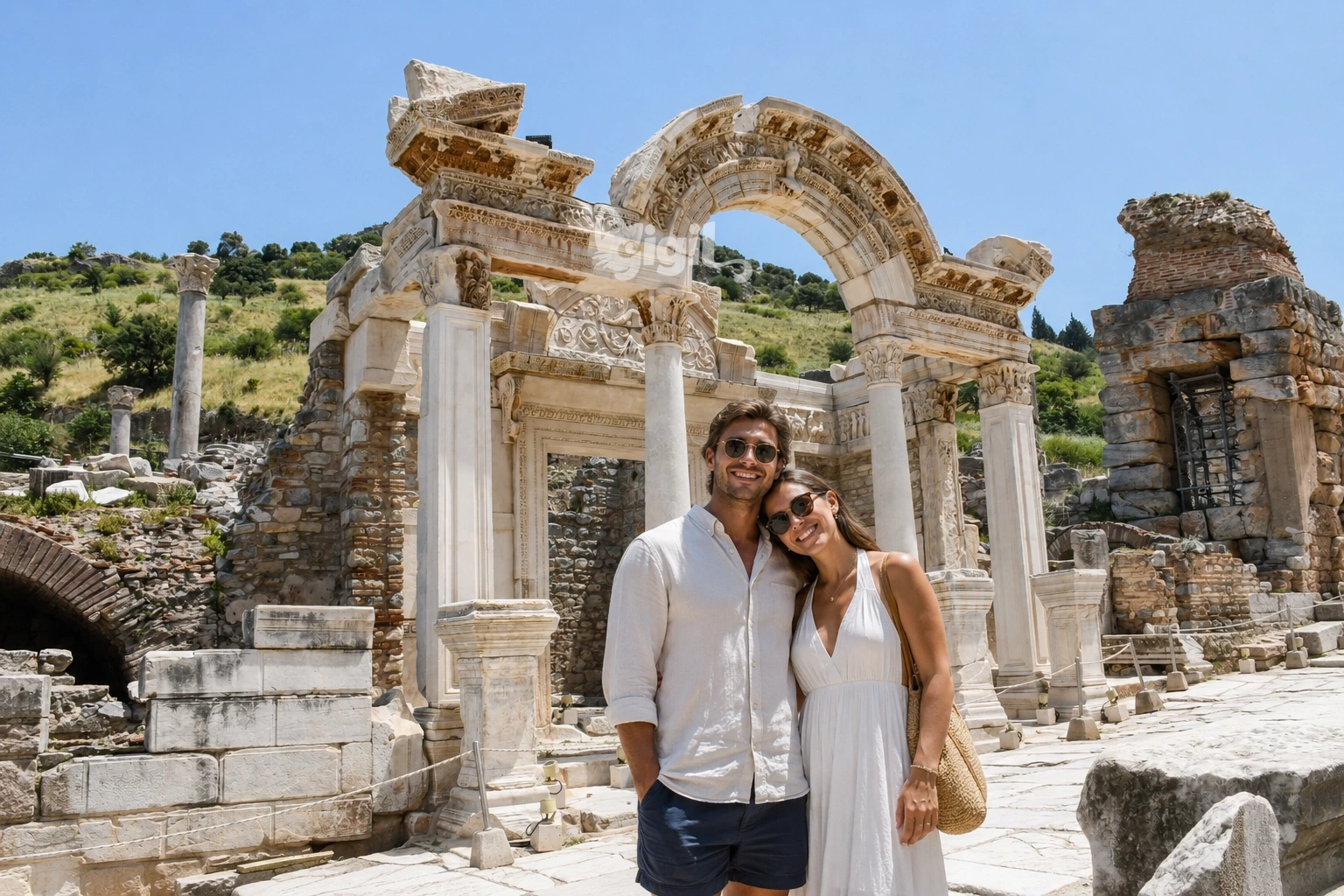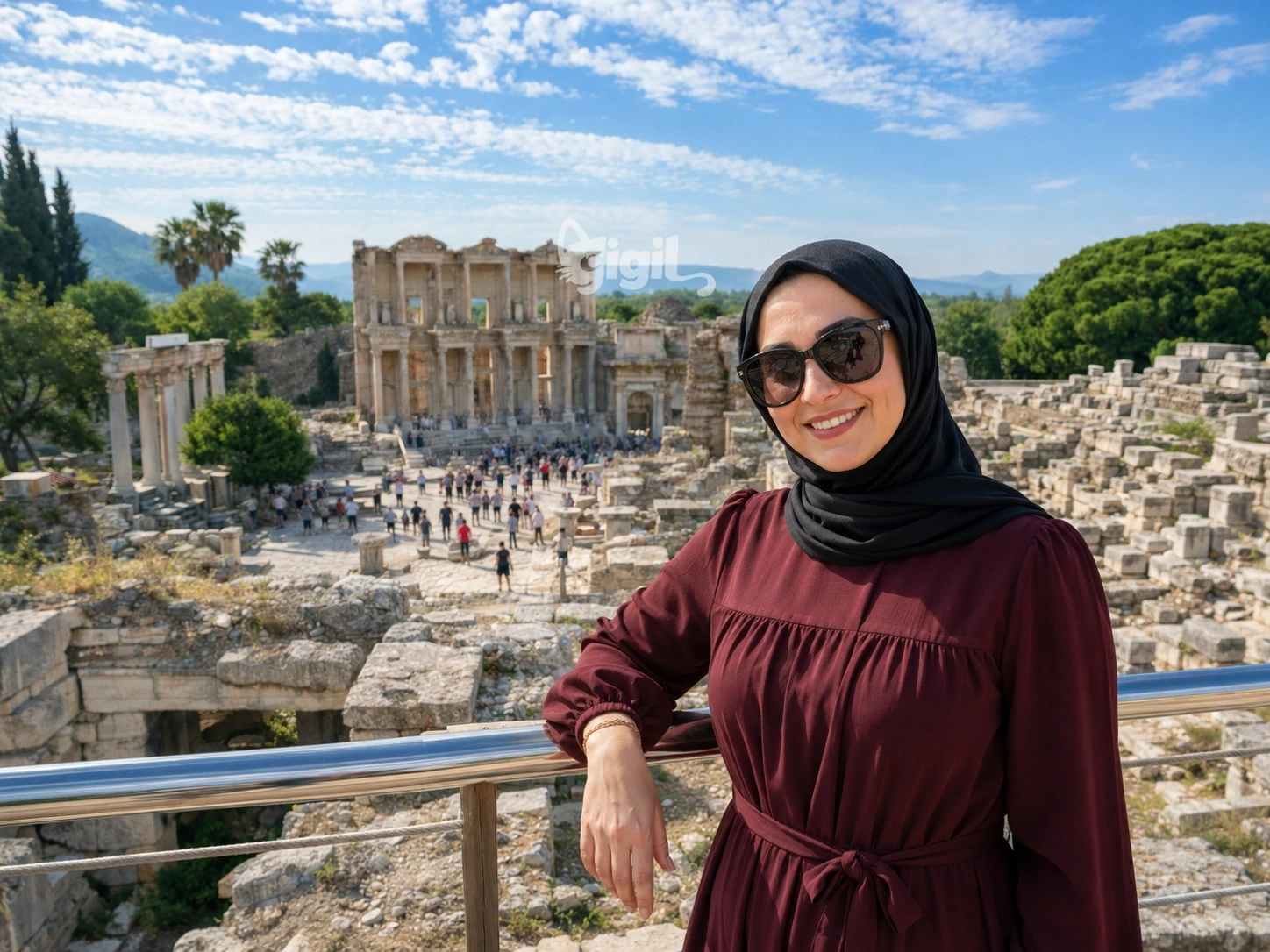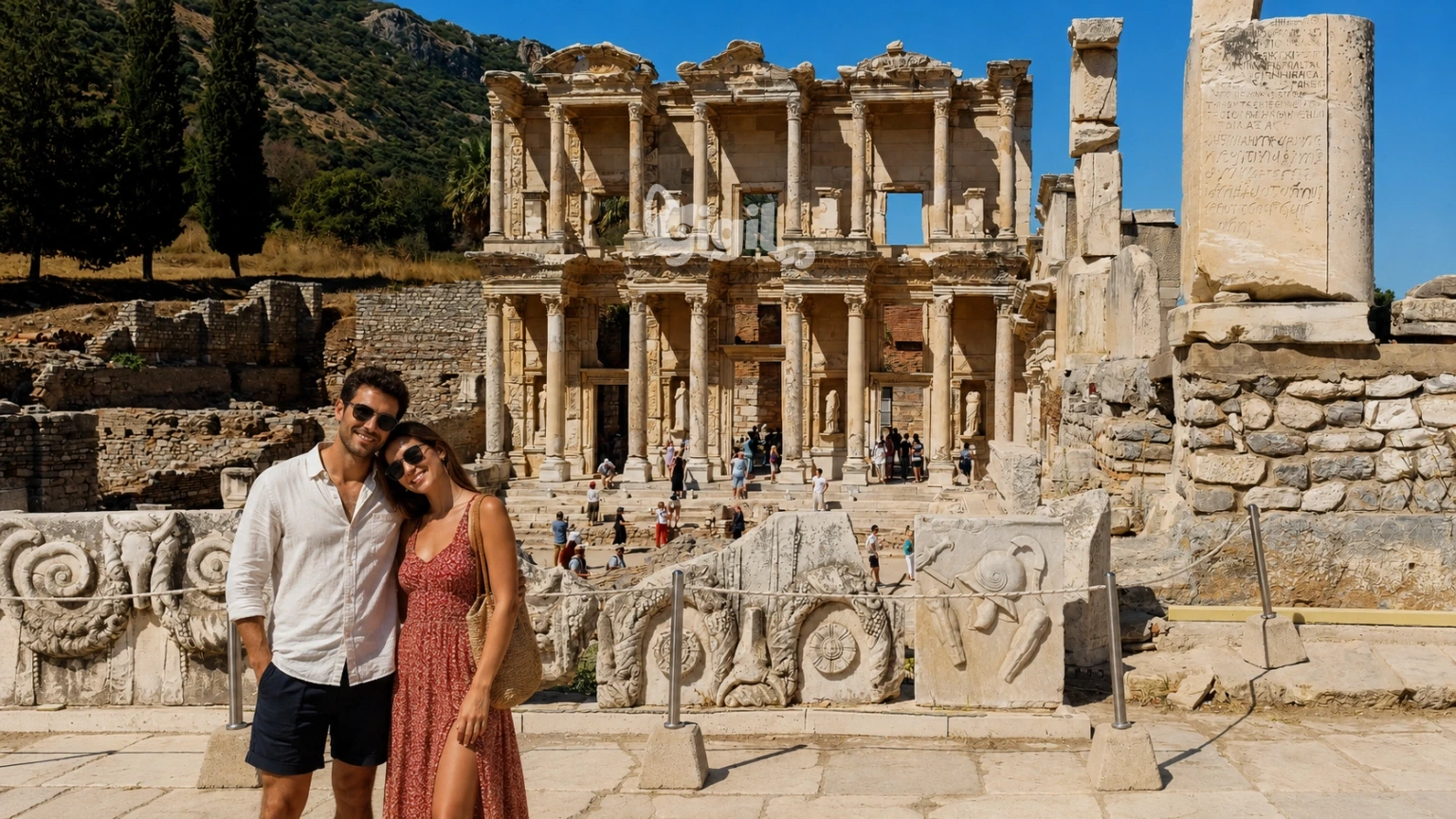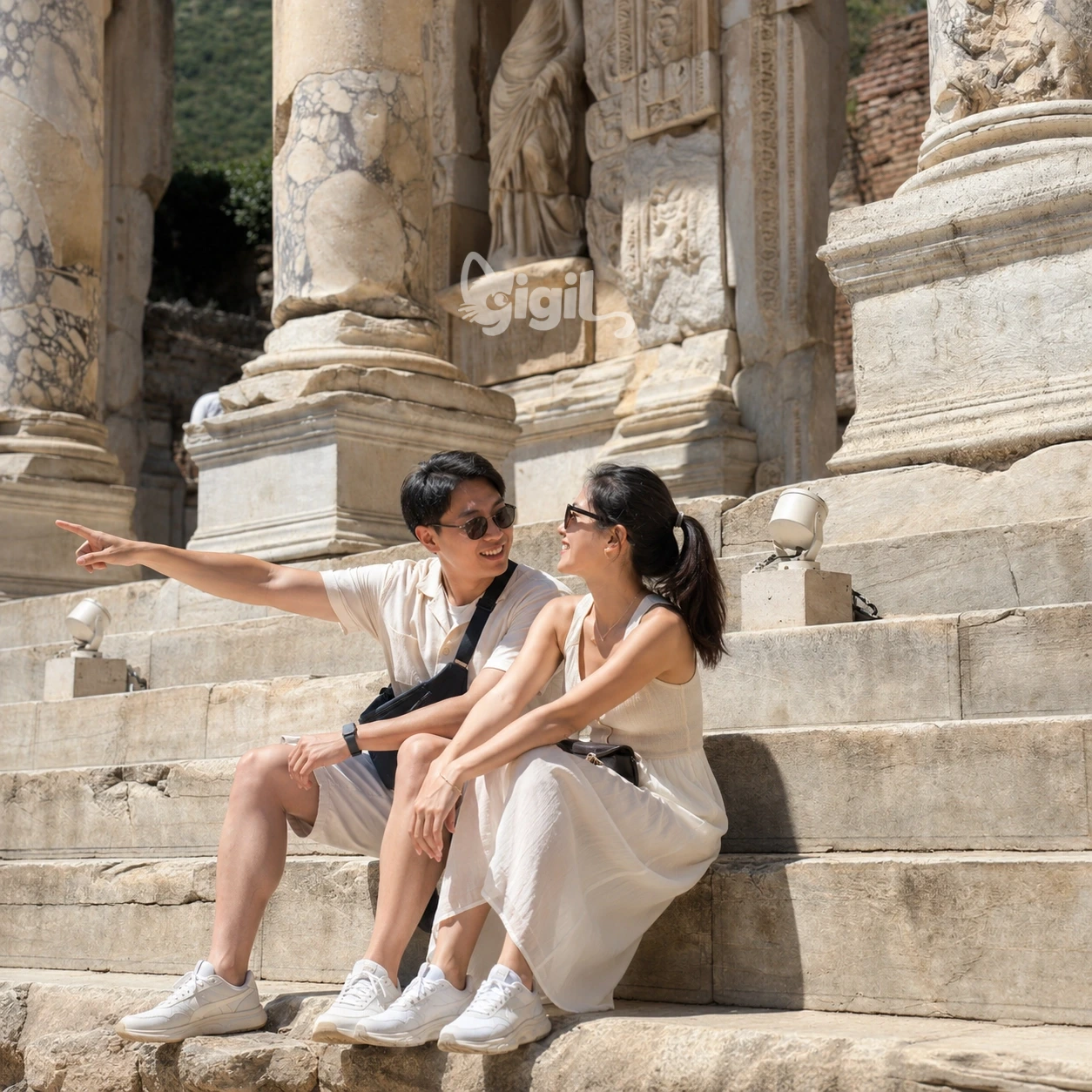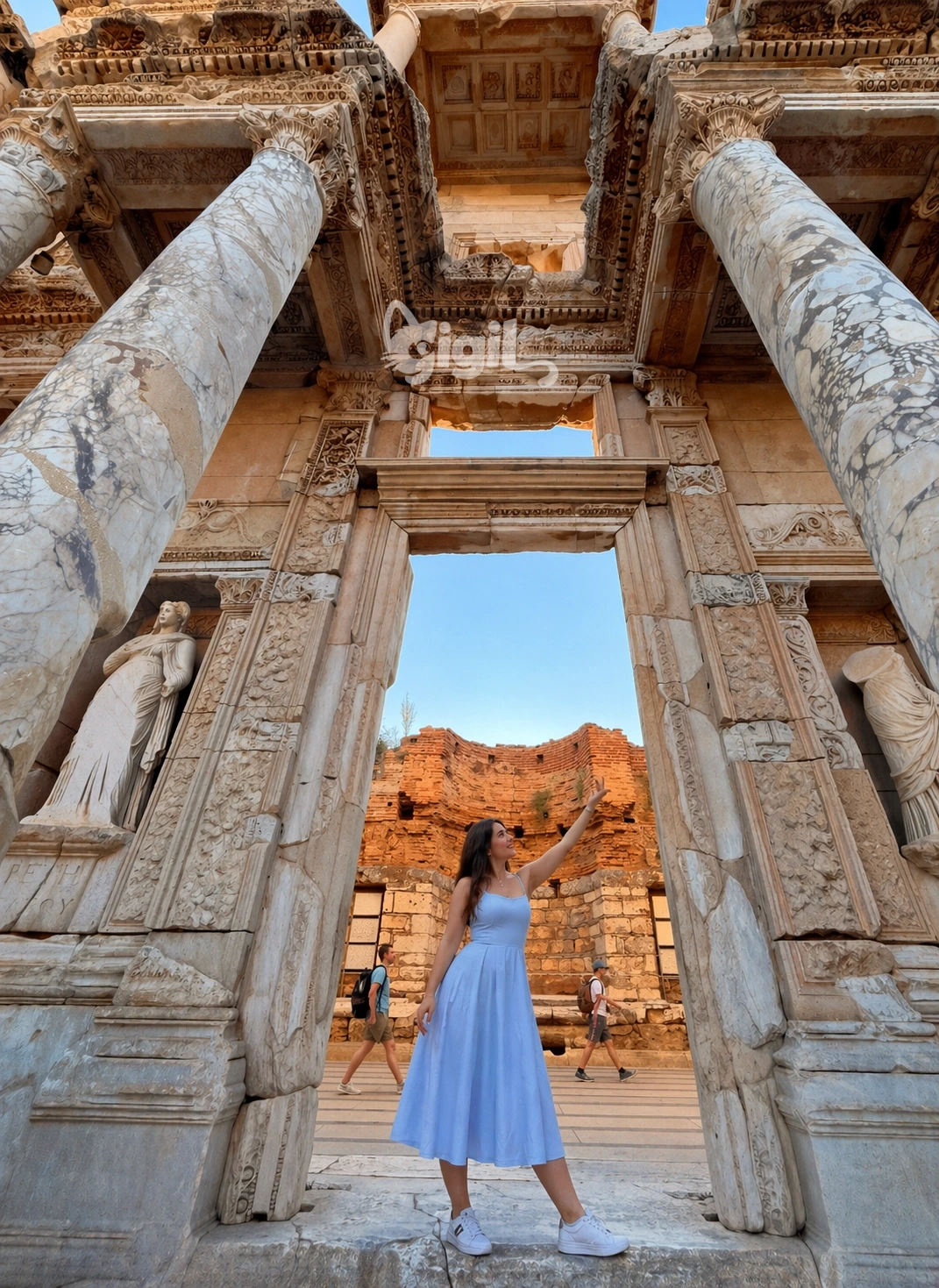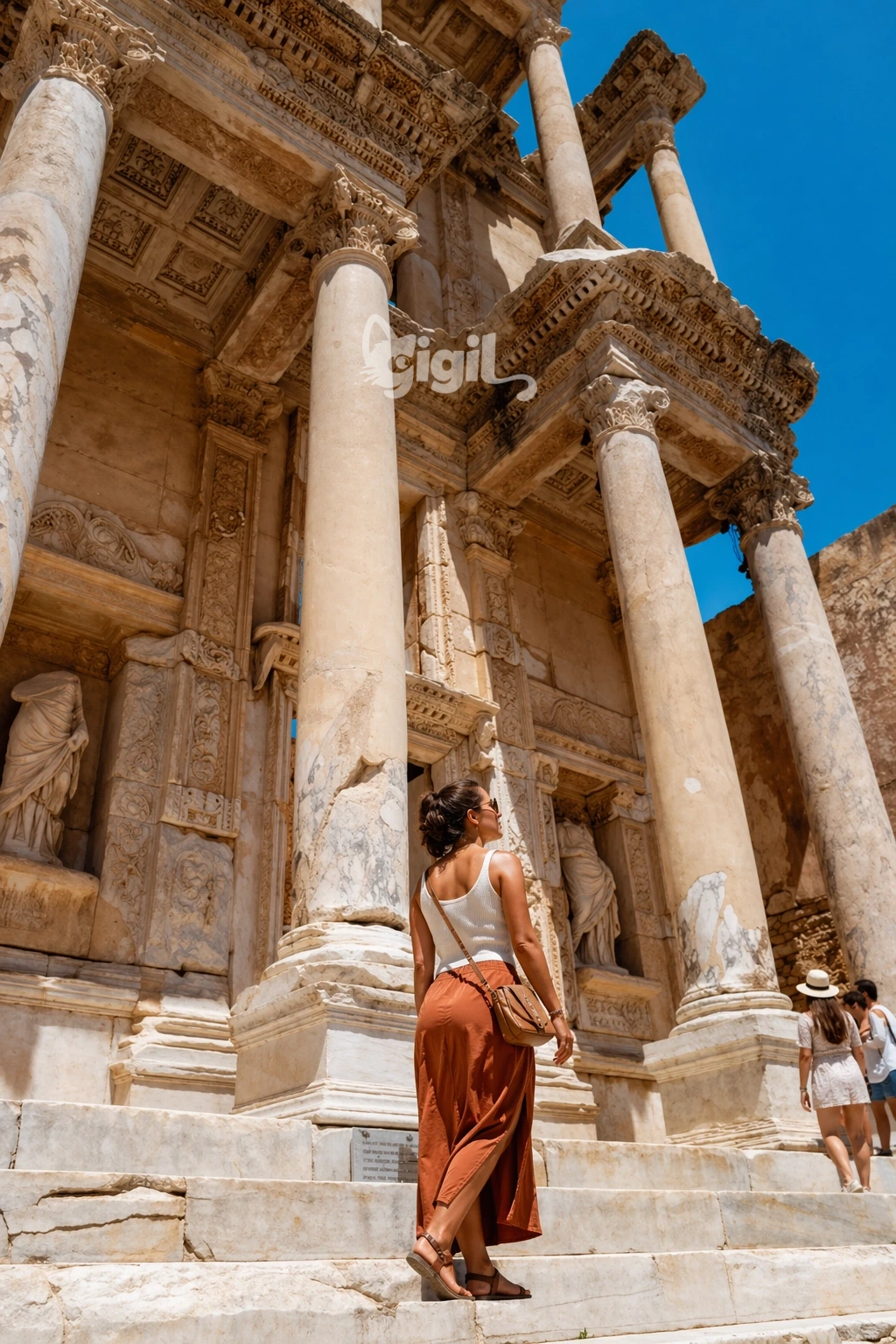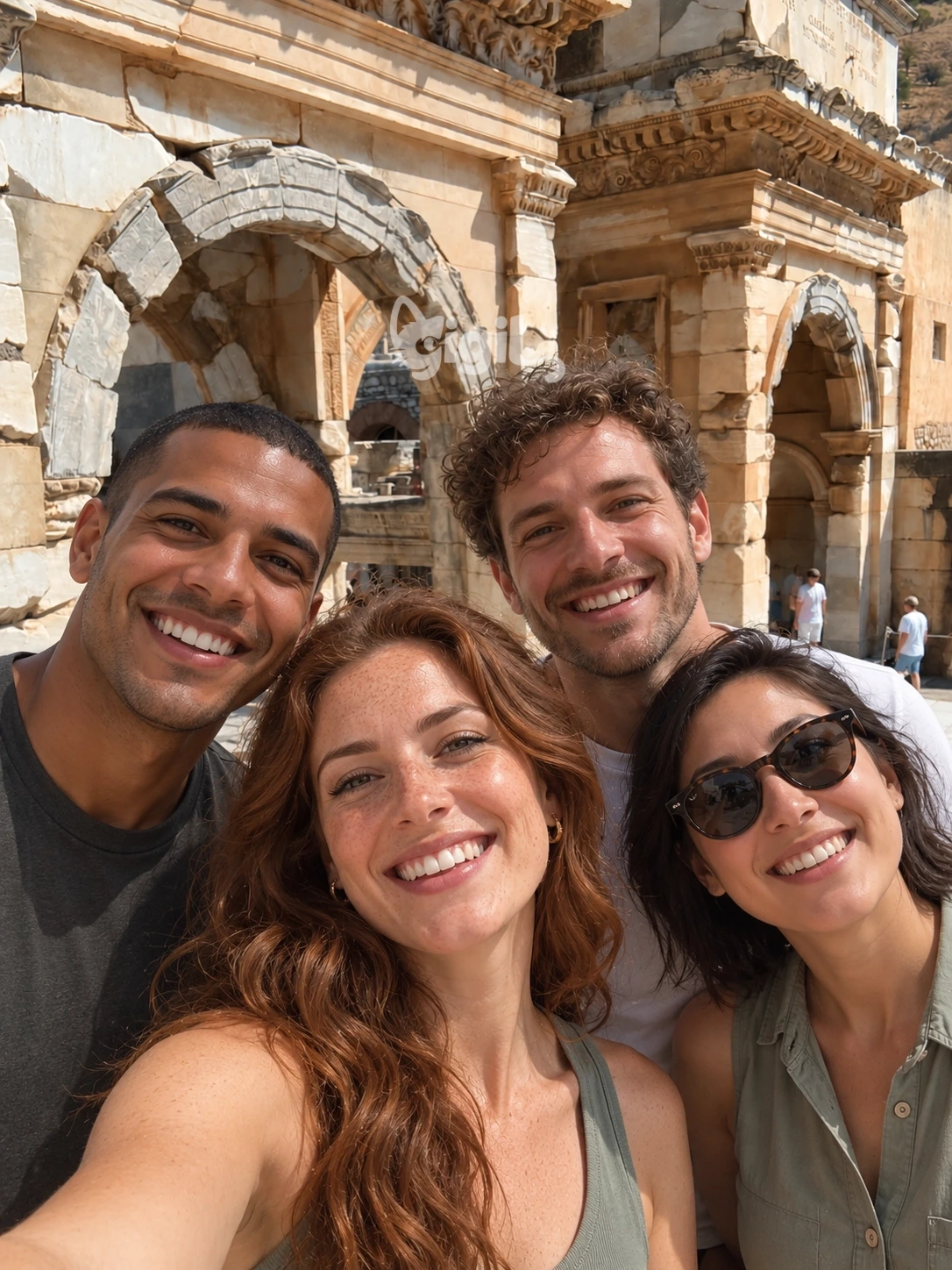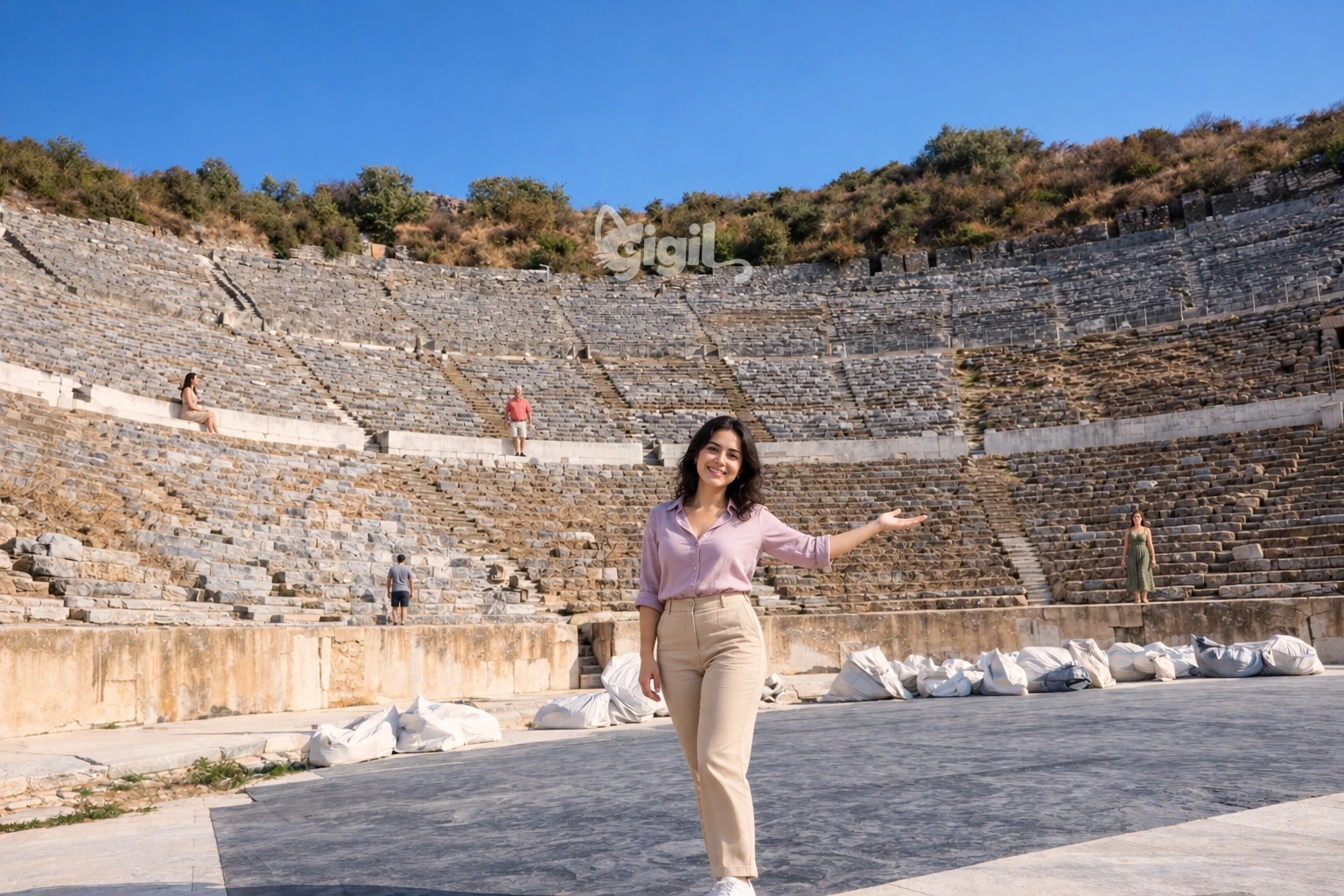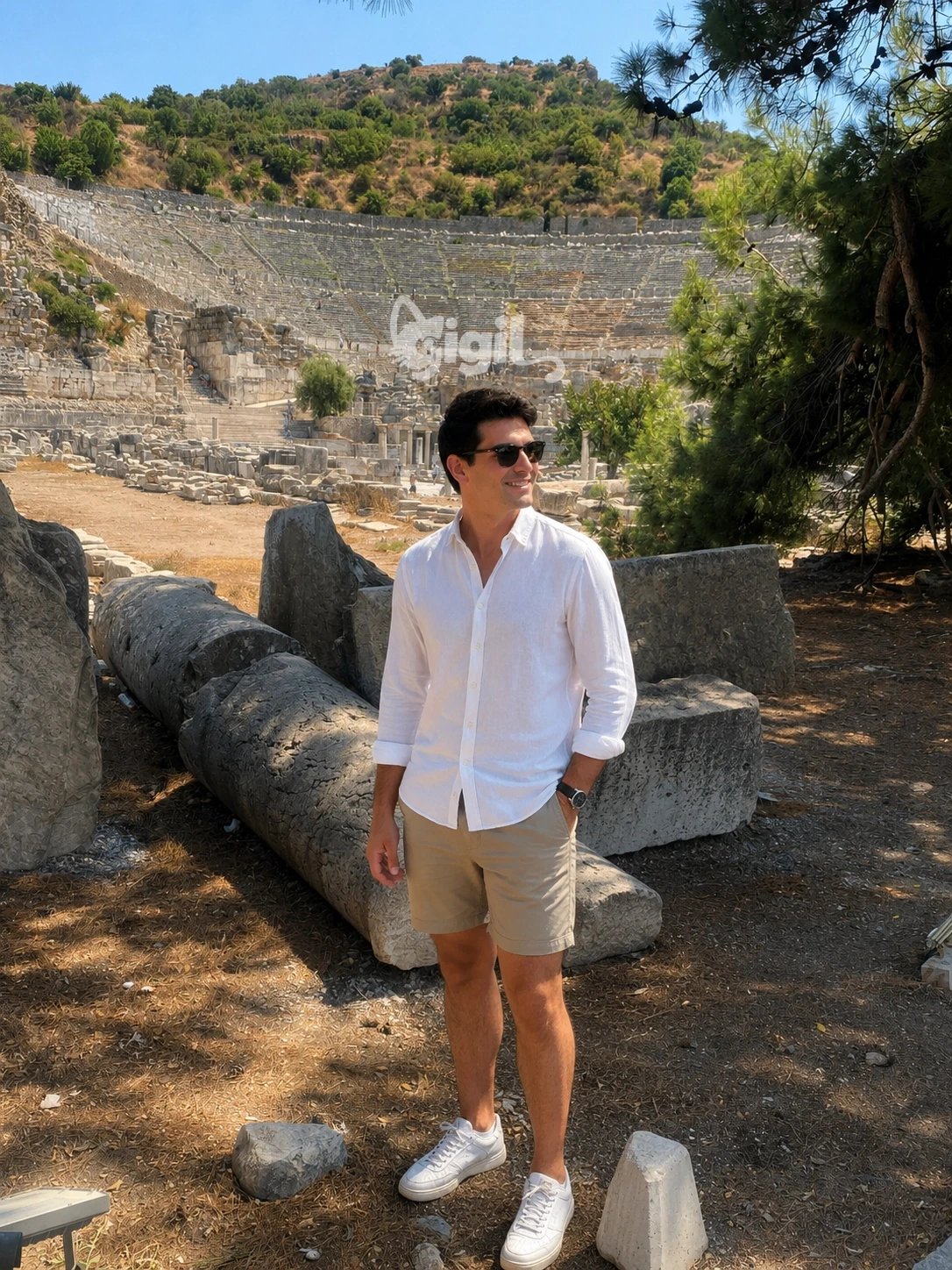
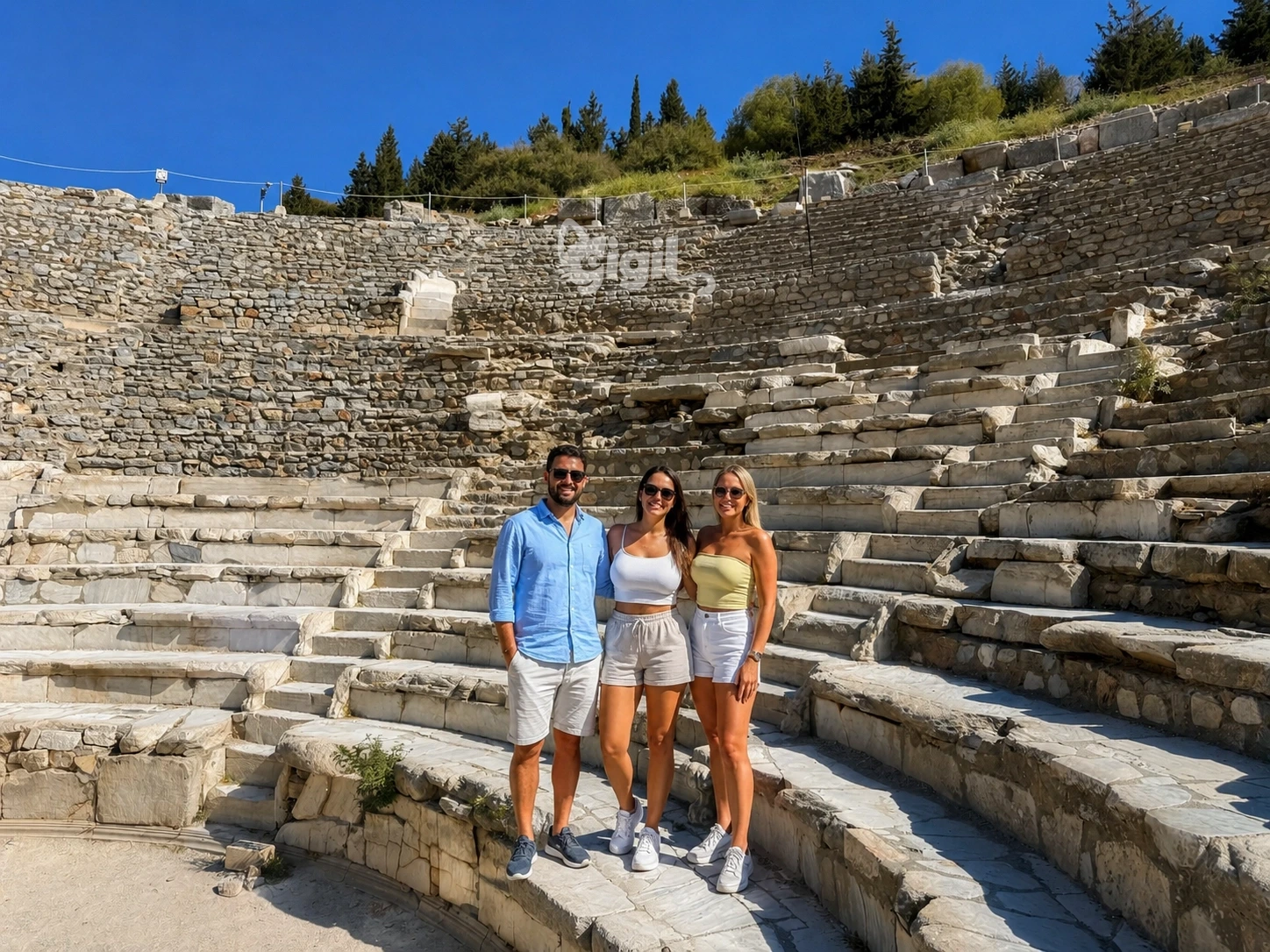
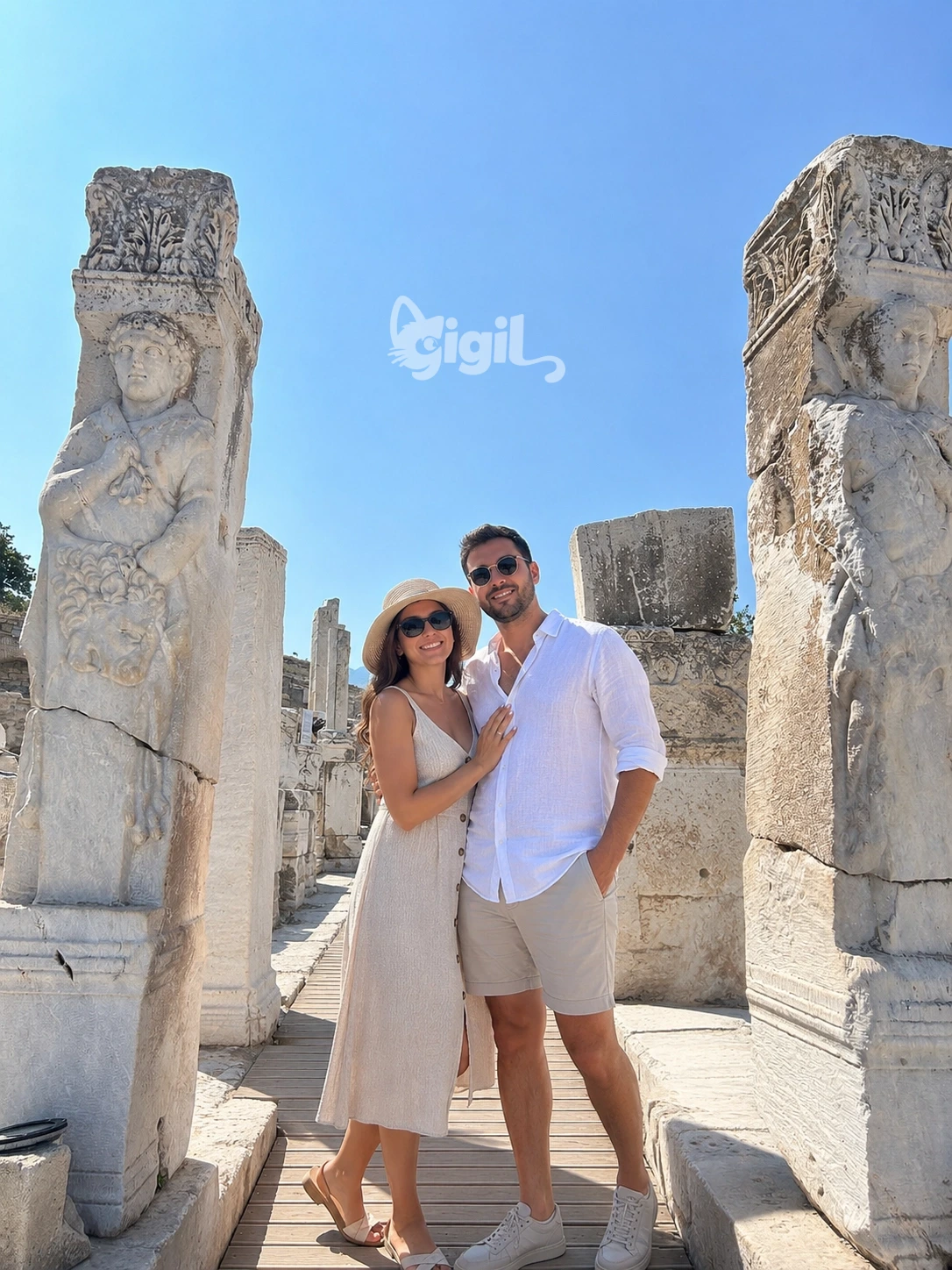
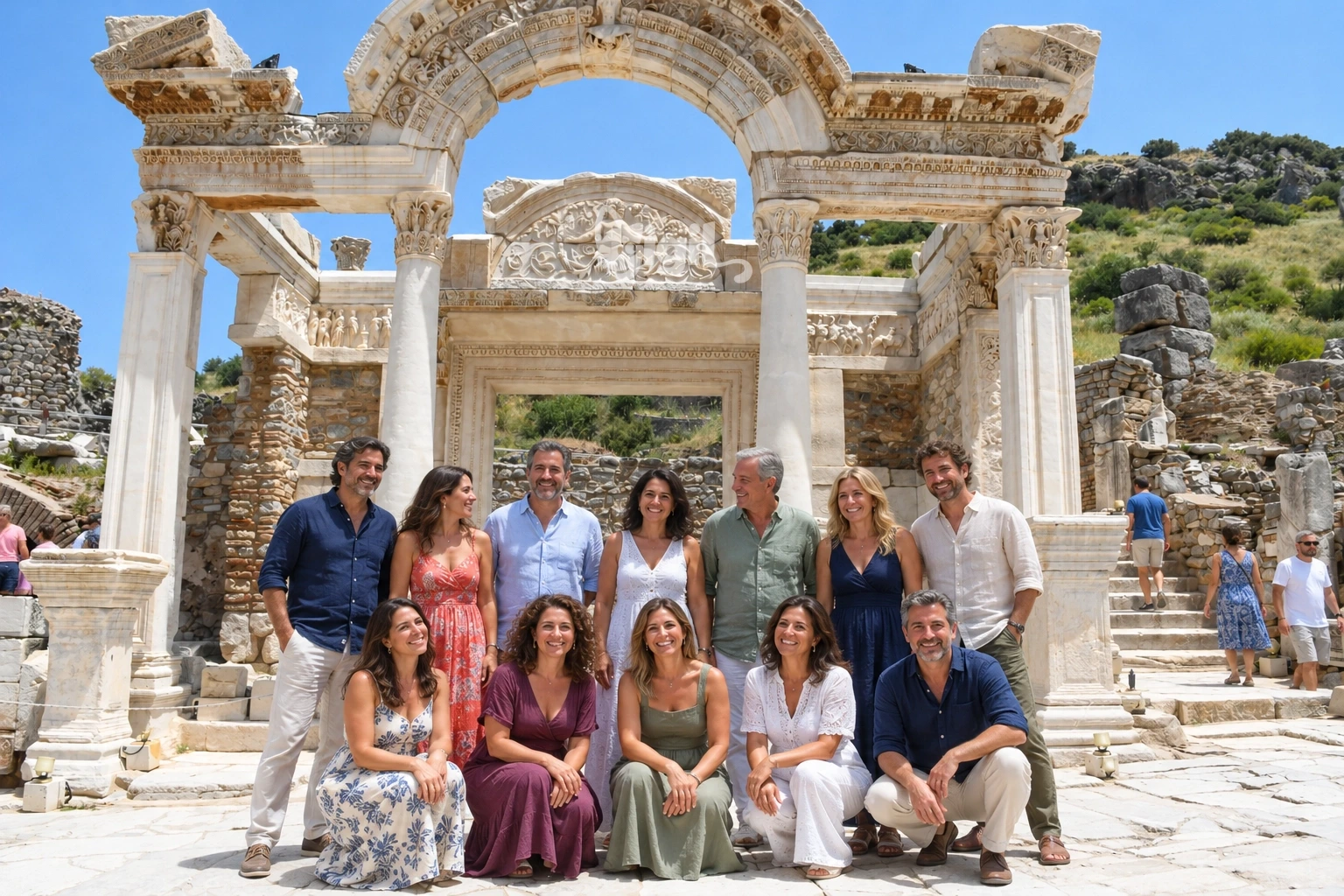
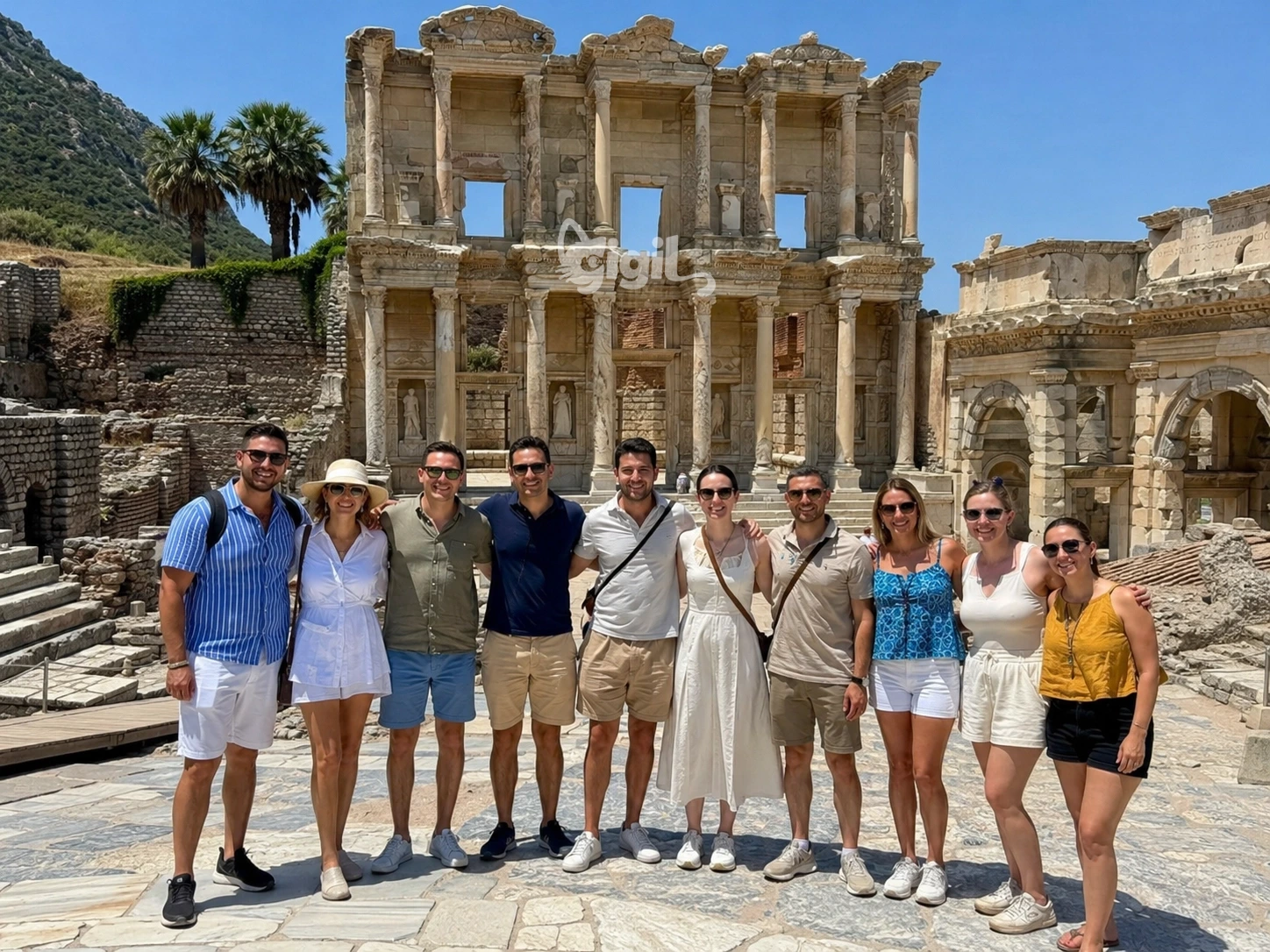
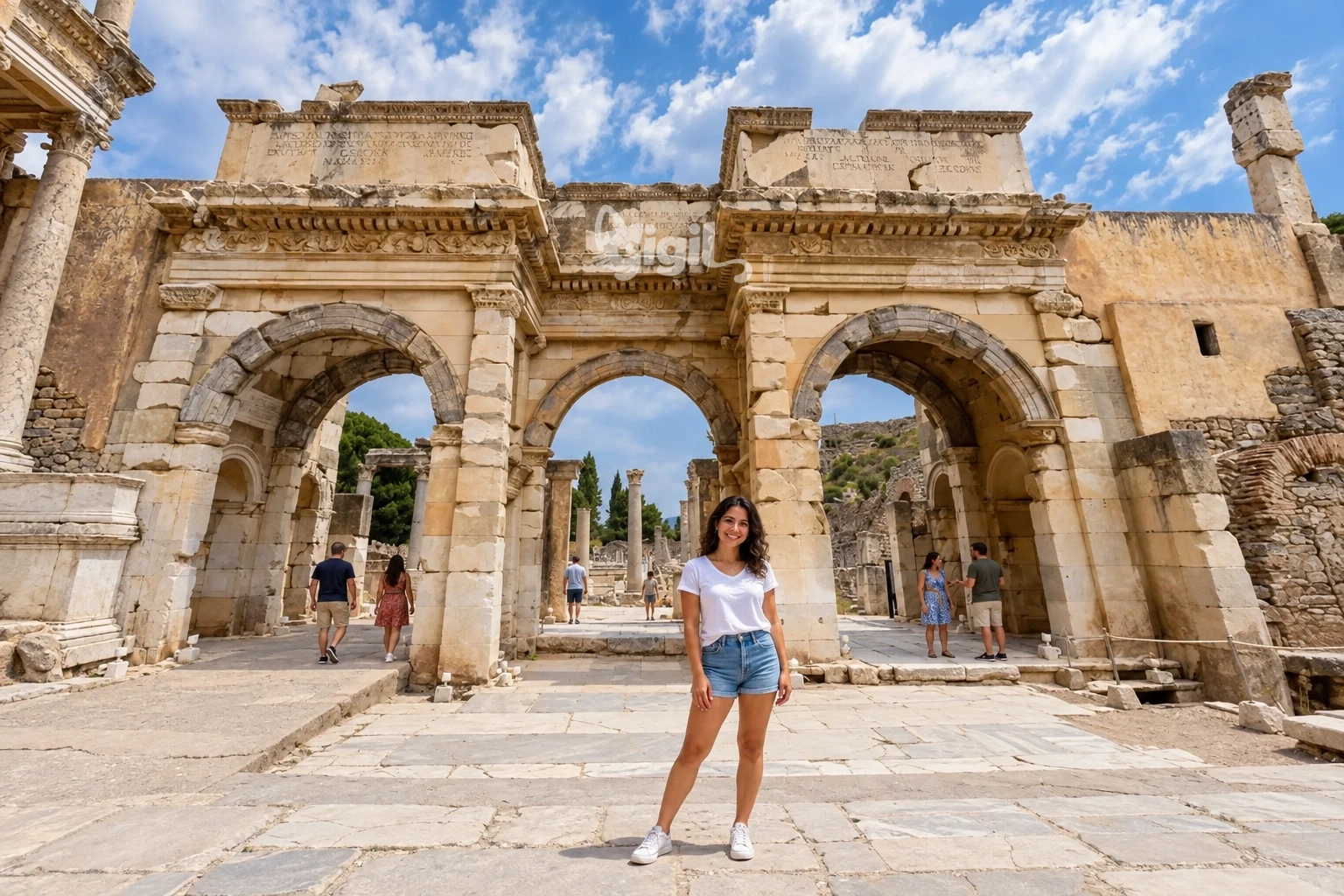
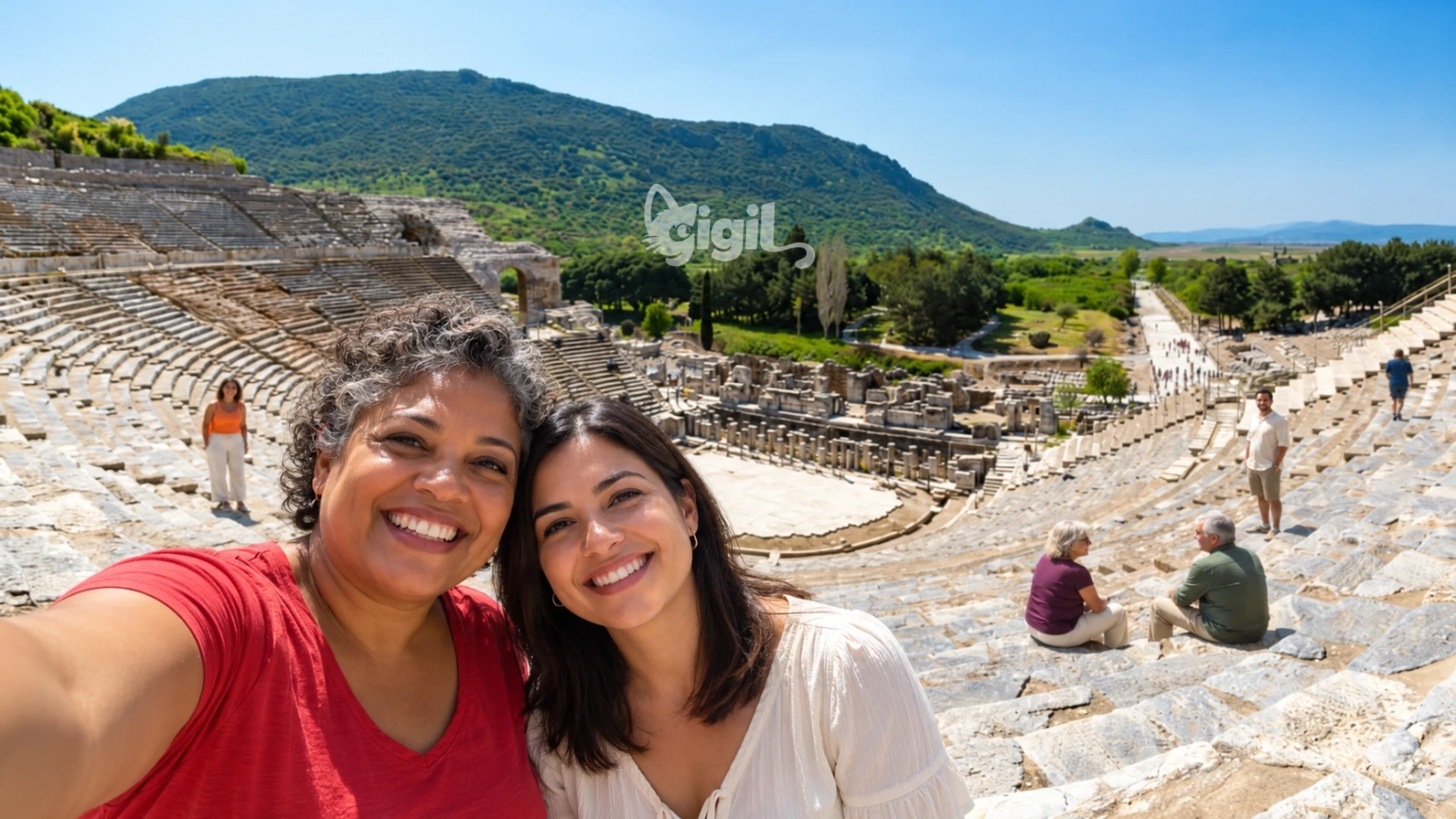
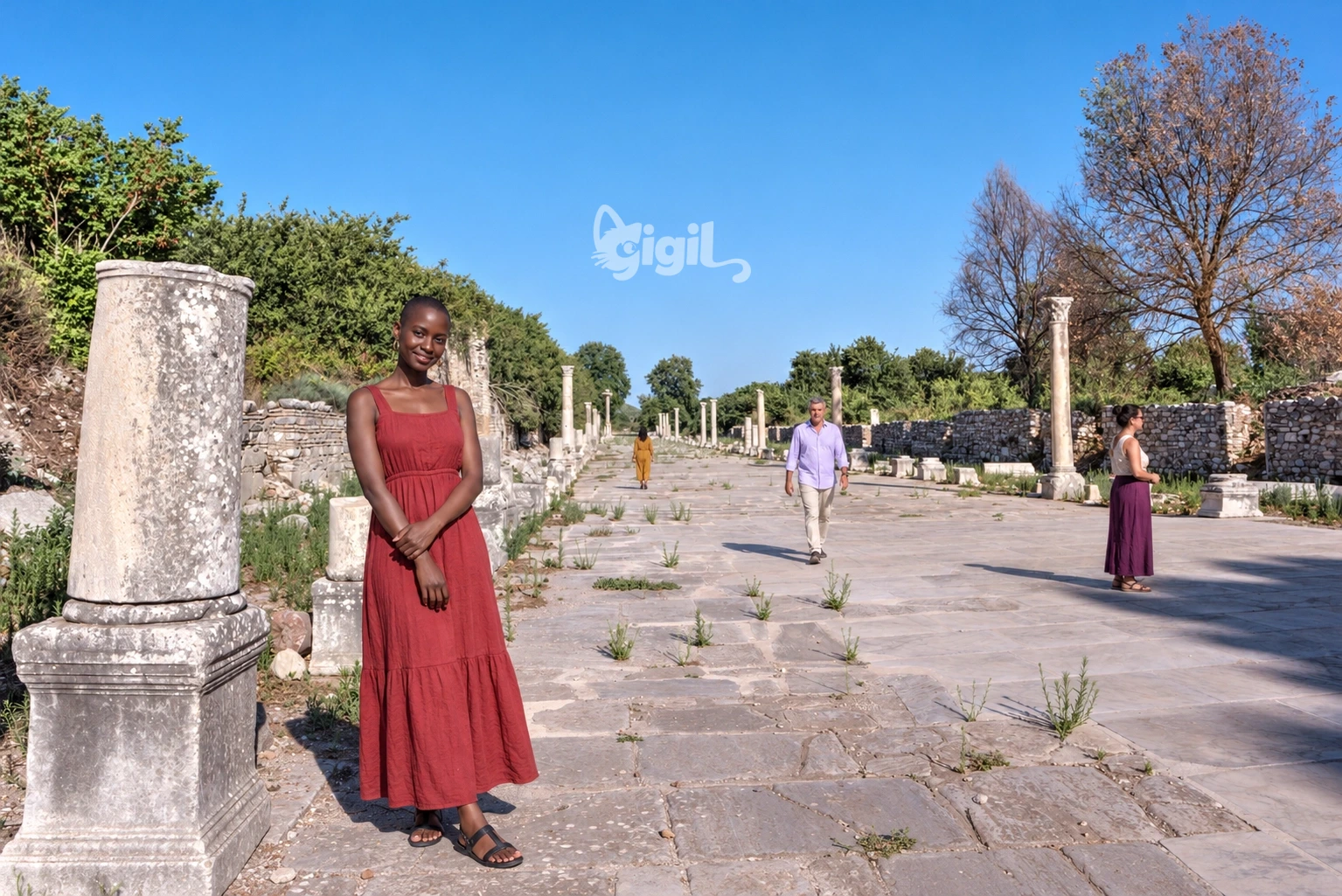
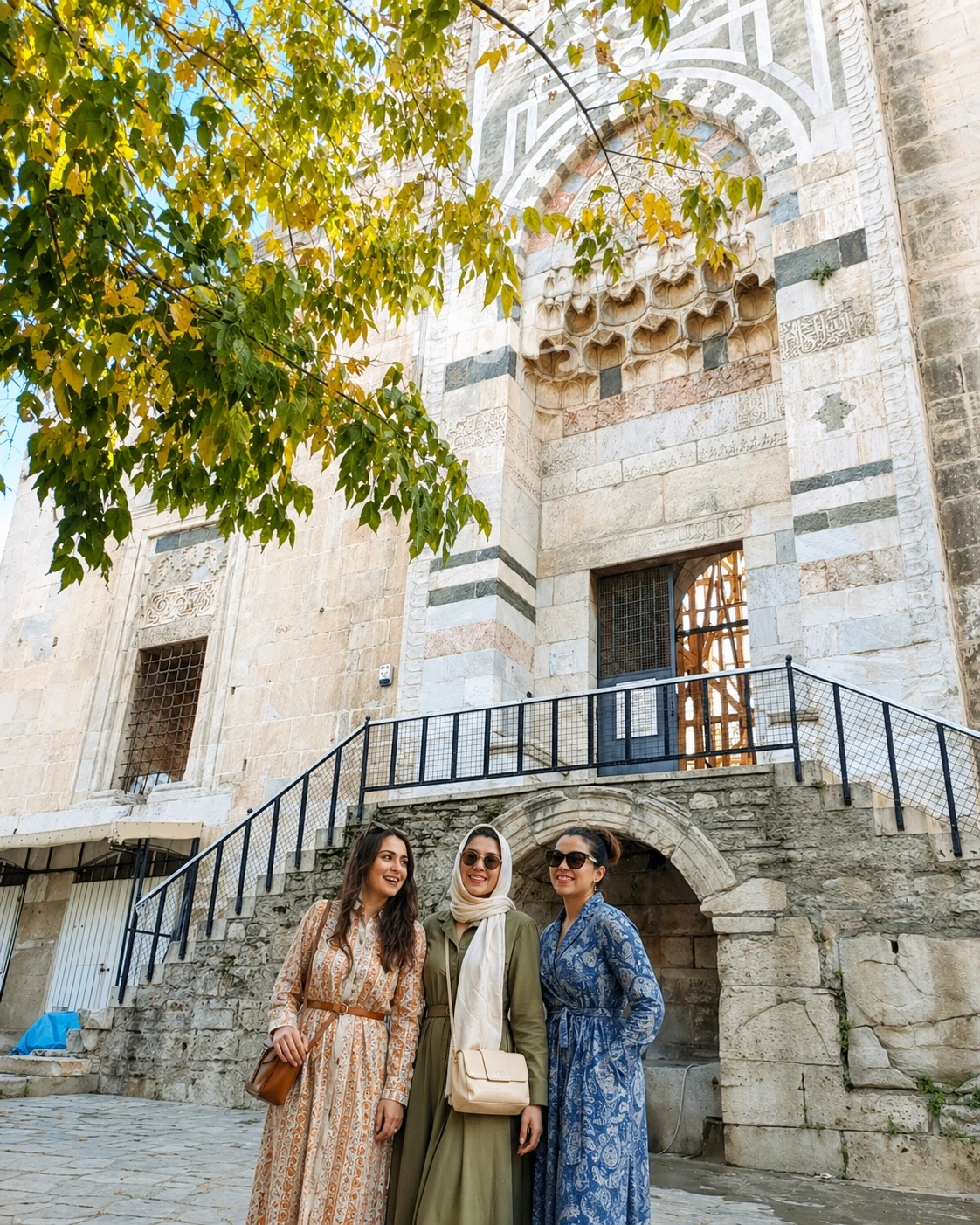
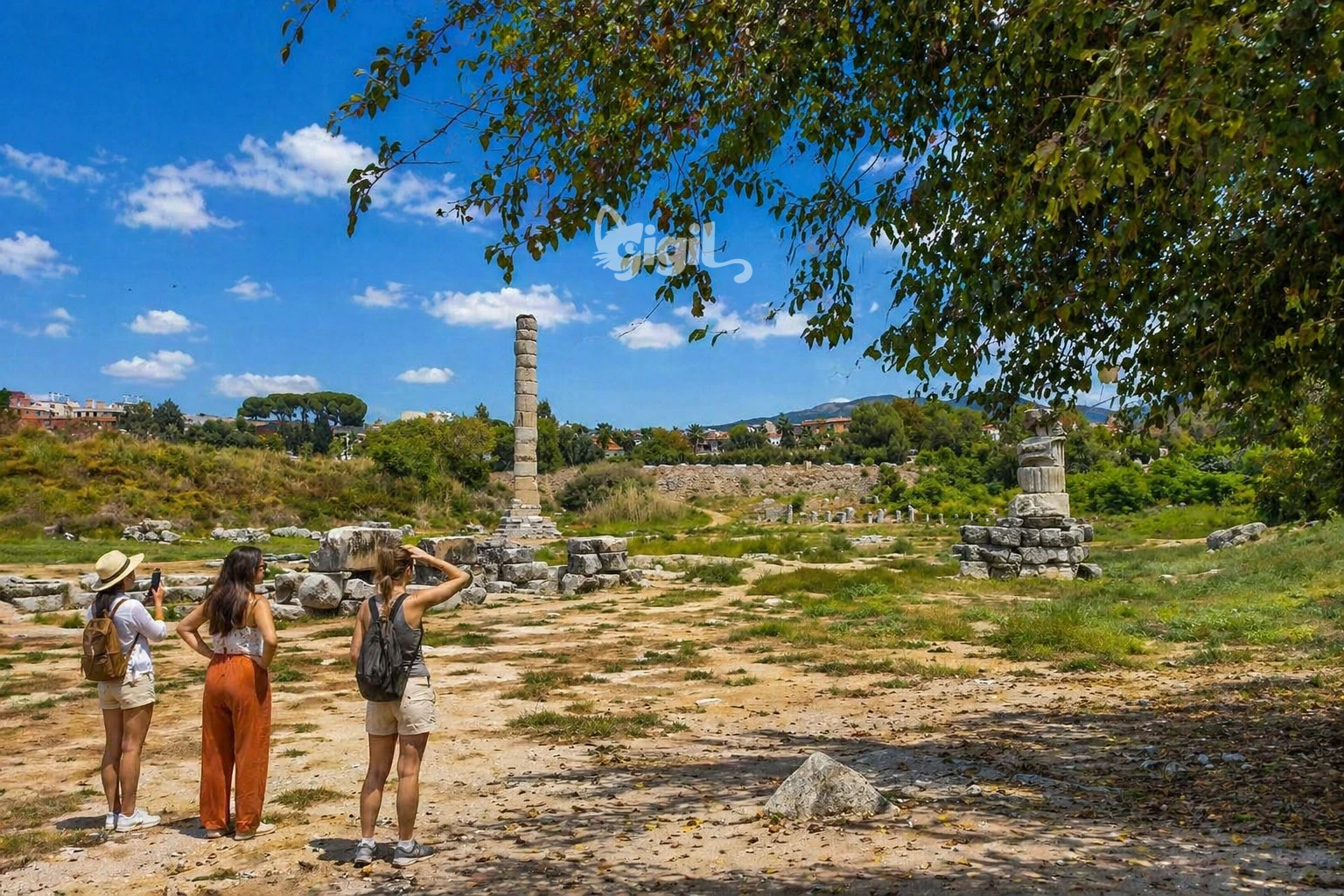
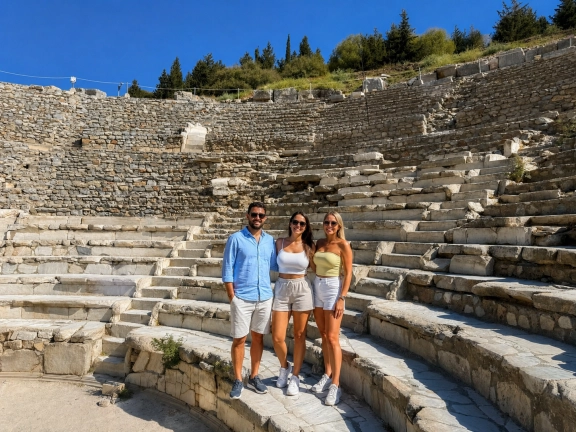
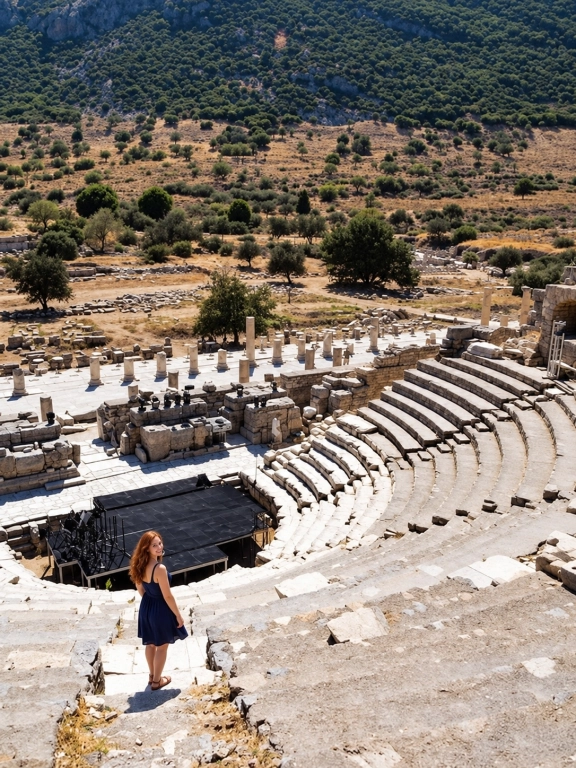
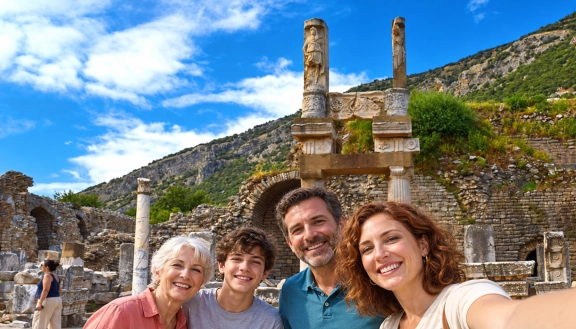
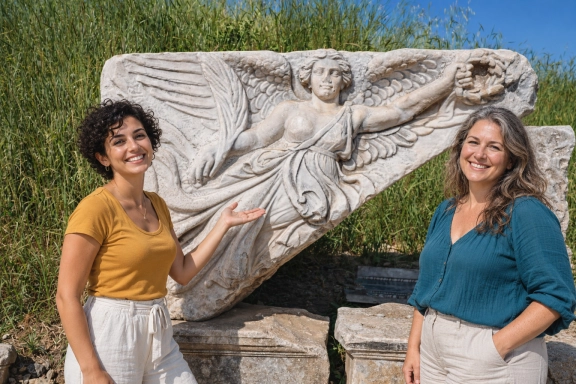
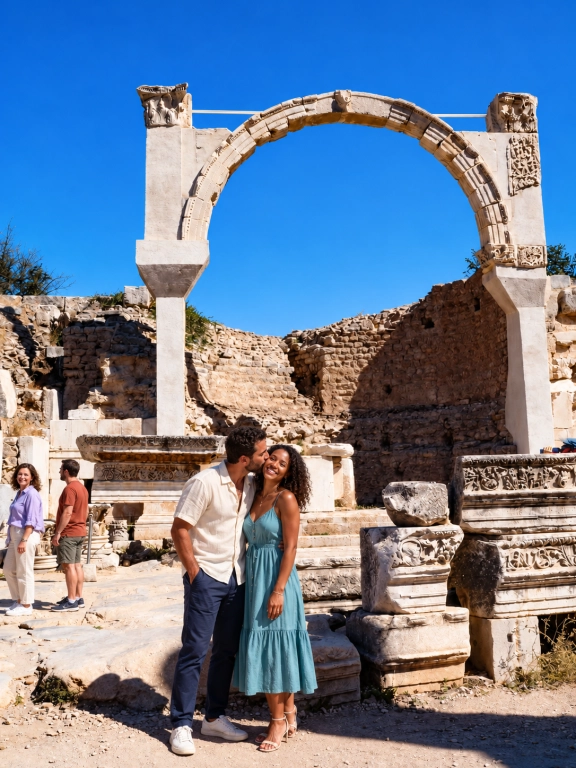
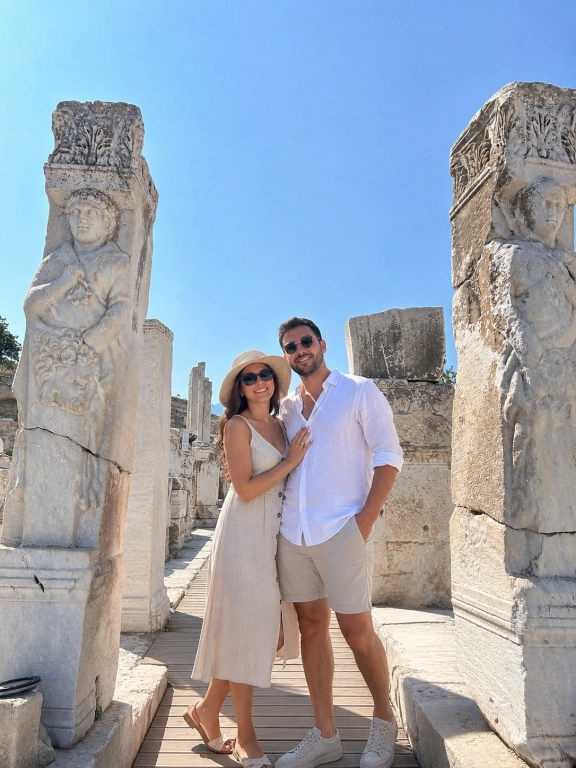
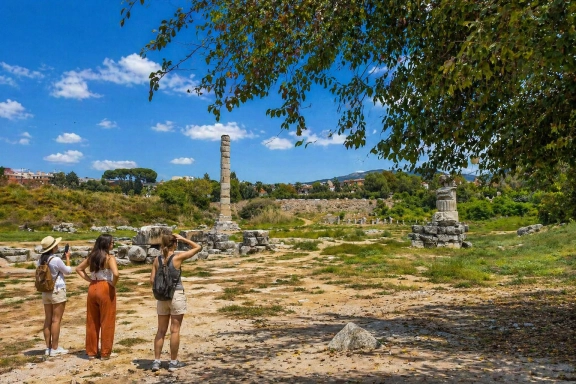
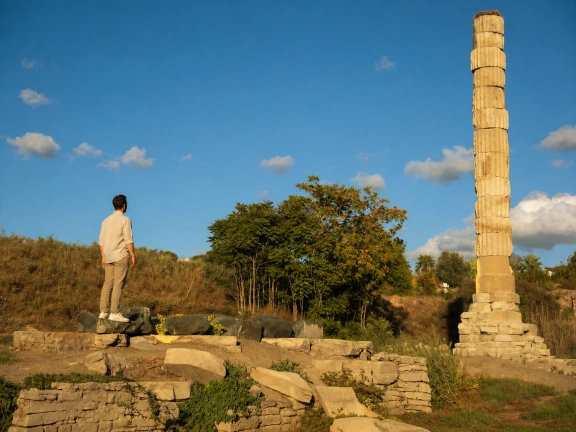
Ephesus Ancient City is a place to connect architecture with the movement of people. The Library of Celsus and Great Theatre reveal major public ambitions, while the street system makes their relationship to the surrounding settlement visible.
Look at the spaces that a building faces, not only at its decoration. Public architecture was experienced through approaches, gathering areas and changing views. The archaeological remains preserve parts of that setting, with reconstruction helping interpretation without restoring the whole ancient city.
Questions
What can a building's position tell me?
It helps explain how the structure addressed people approaching through the surrounding streets and spaces.
Why is Ephesus described as a city rather than one monument?
Its extensive urban remains connect many buildings and uses within a shared settlement landscape.
Is the library's current appearance entirely ancient?
The surviving material has been supplemented by reconstruction and conservation in its modern presentation.
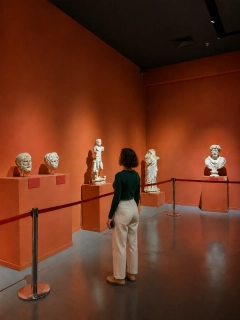
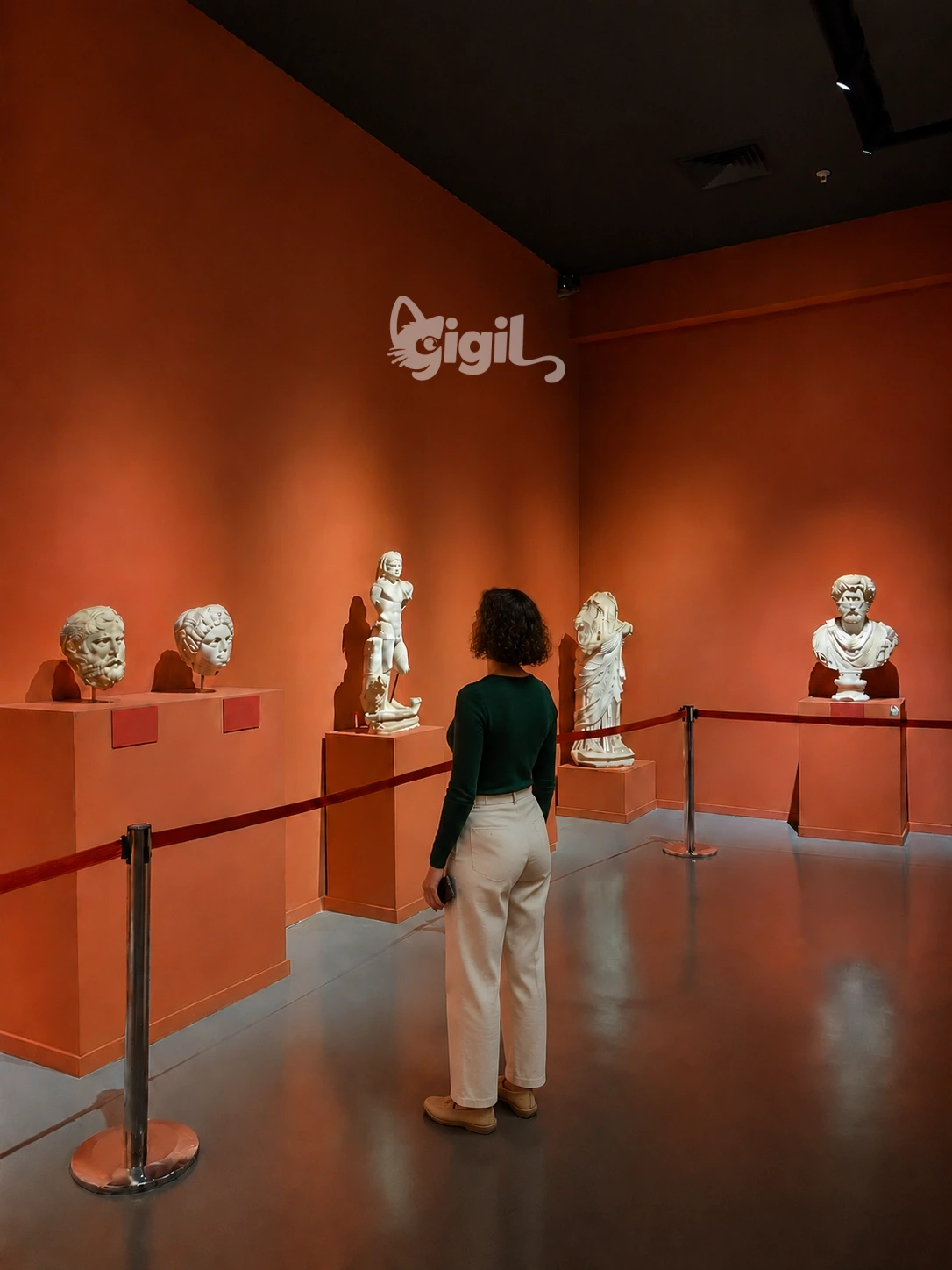
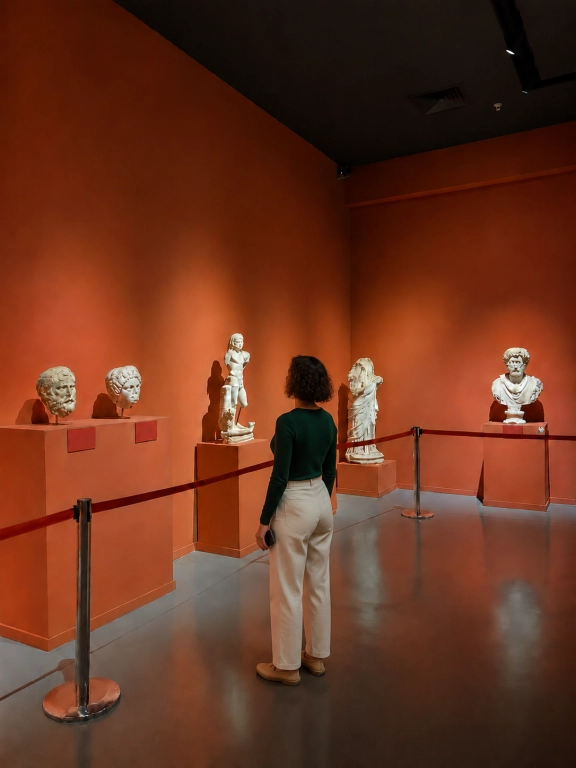
What should I carry from this visit into the museum?
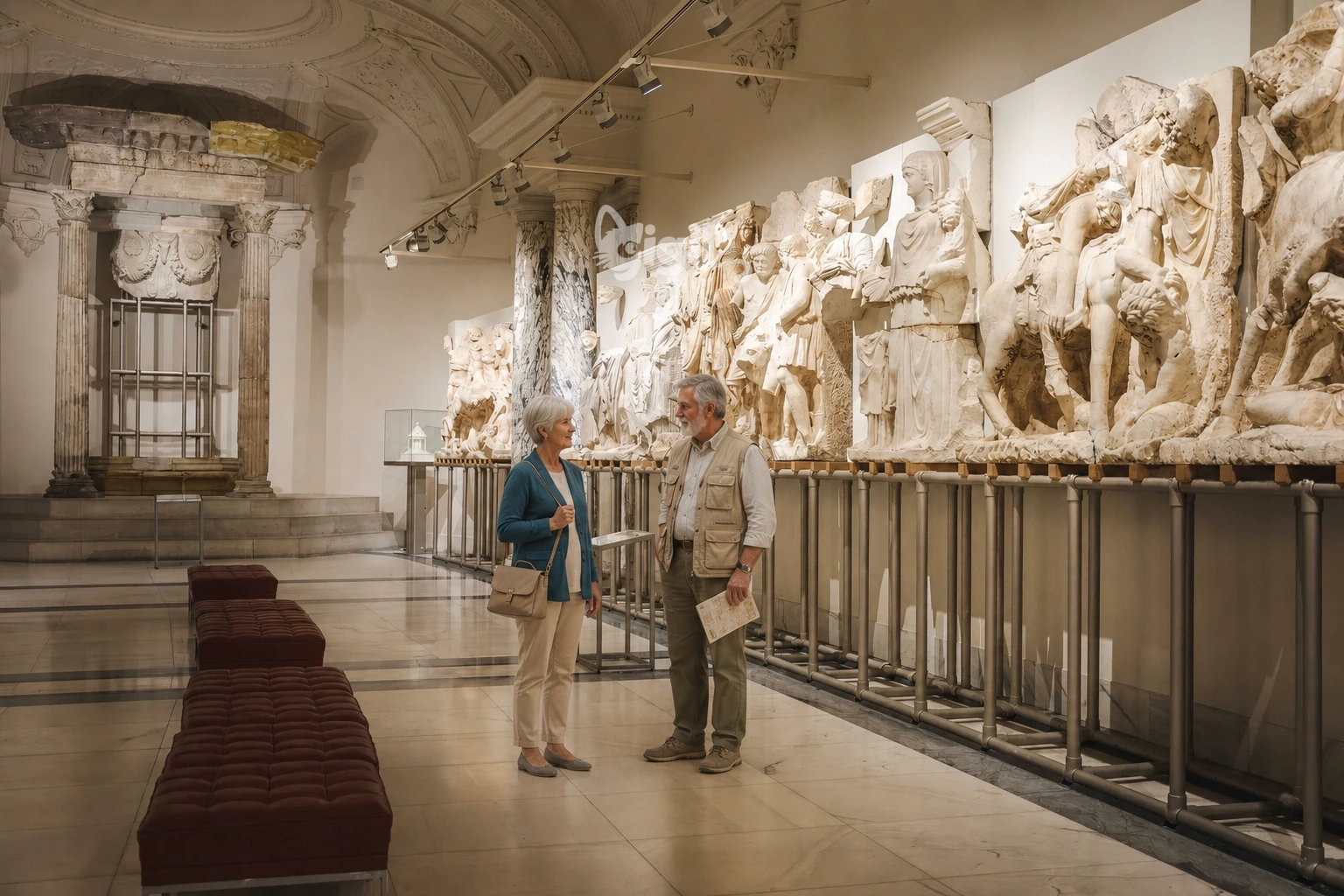
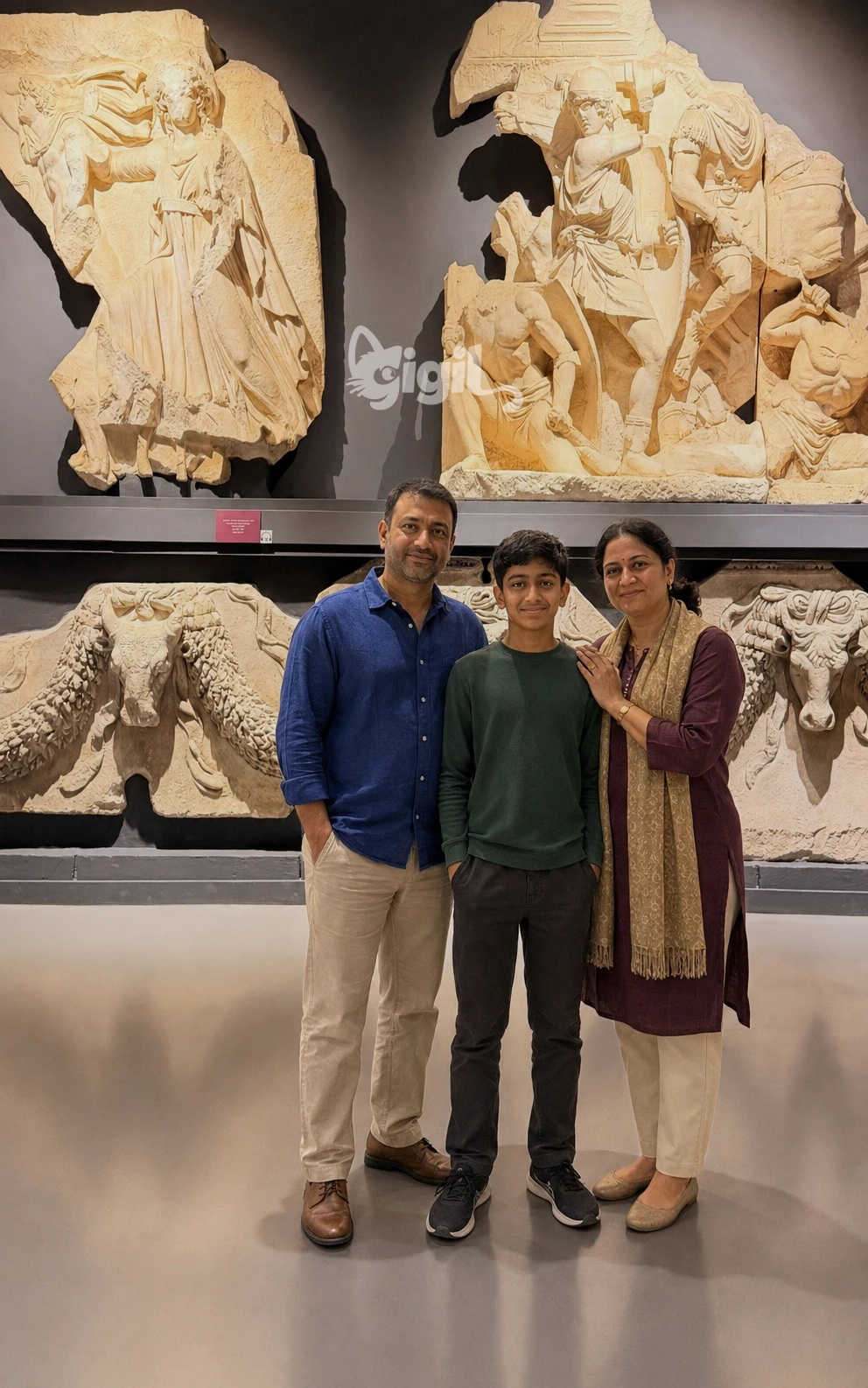
A sense of the city's scale and setting, against which smaller archaeological objects become easier to interpret.