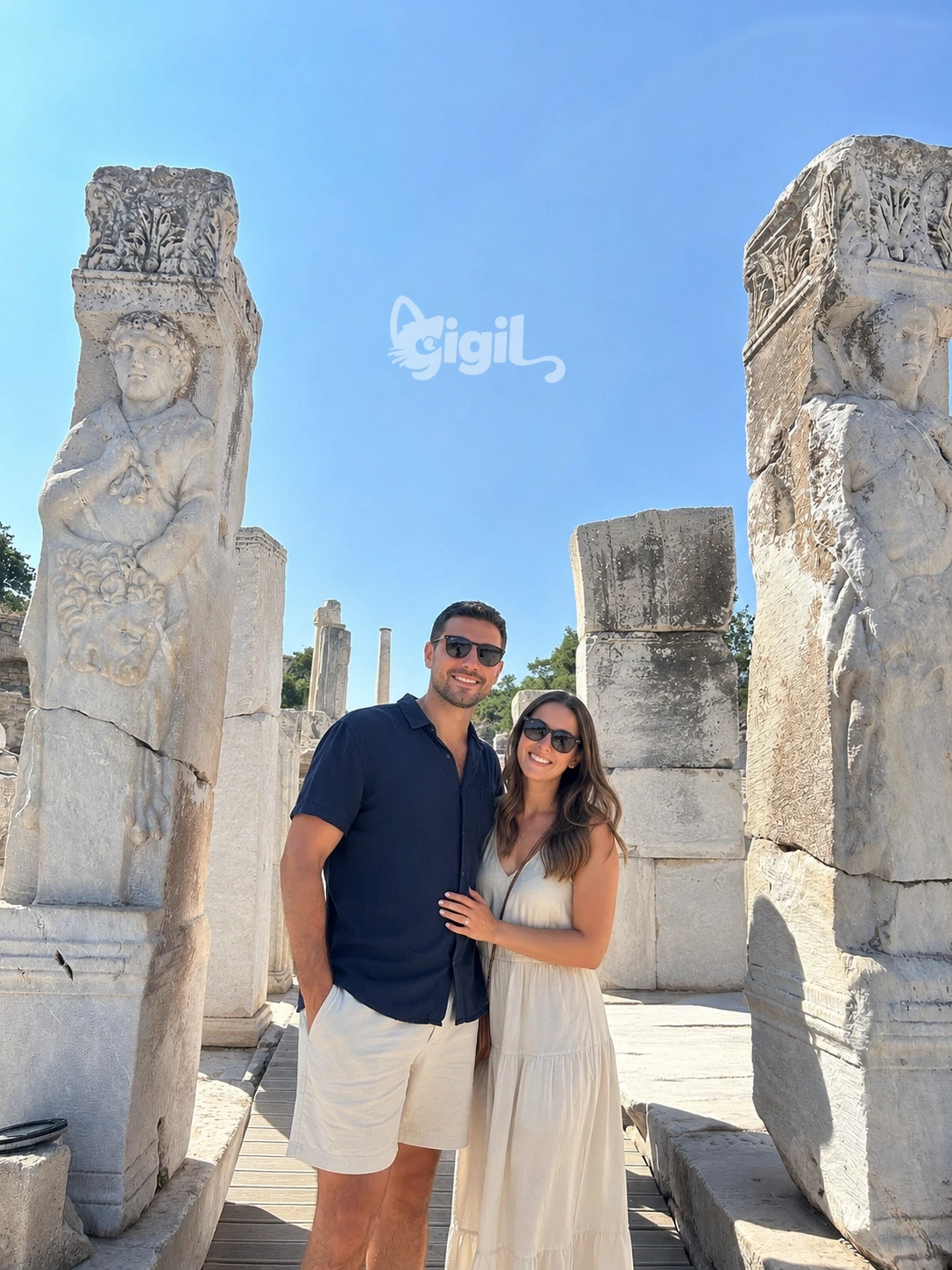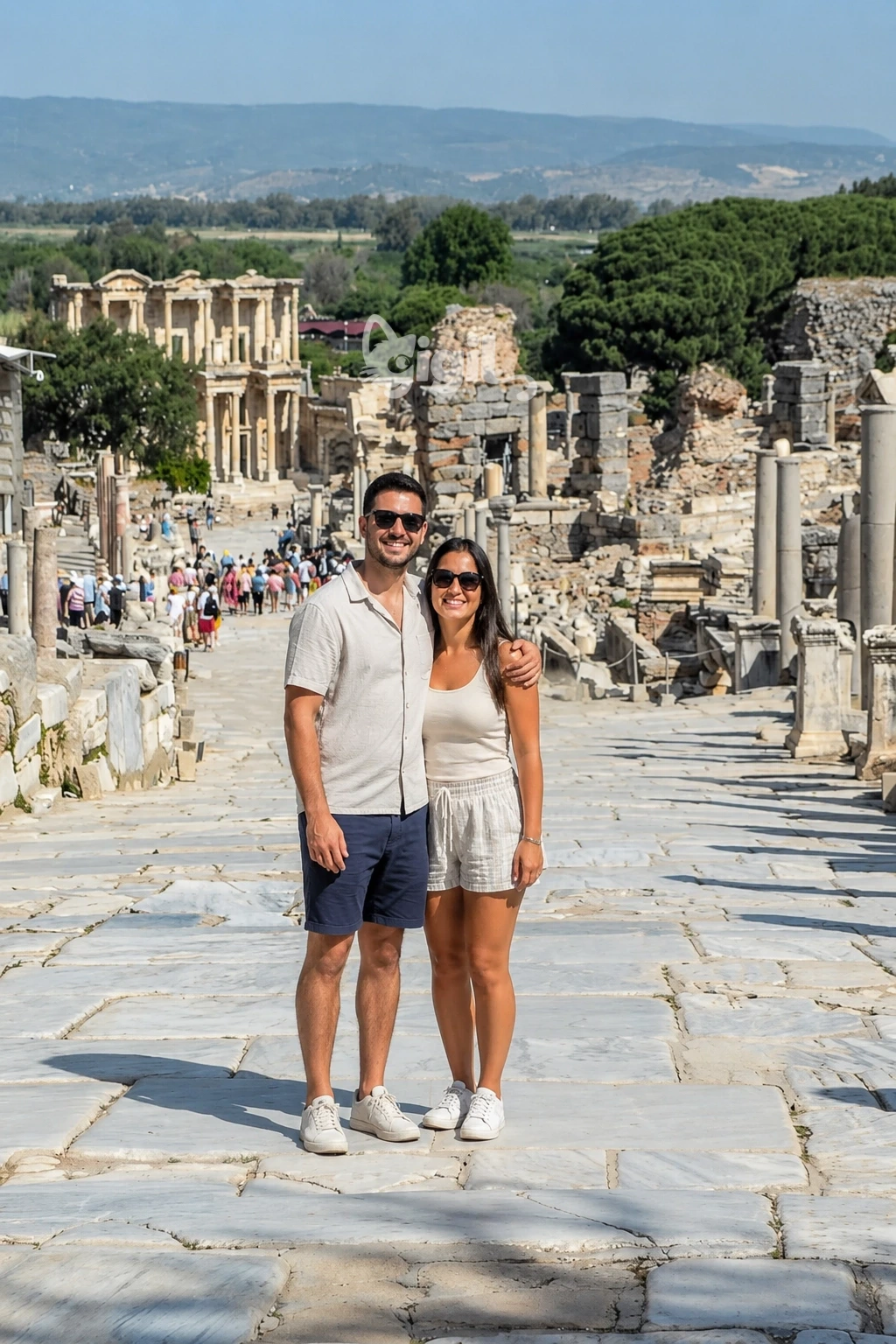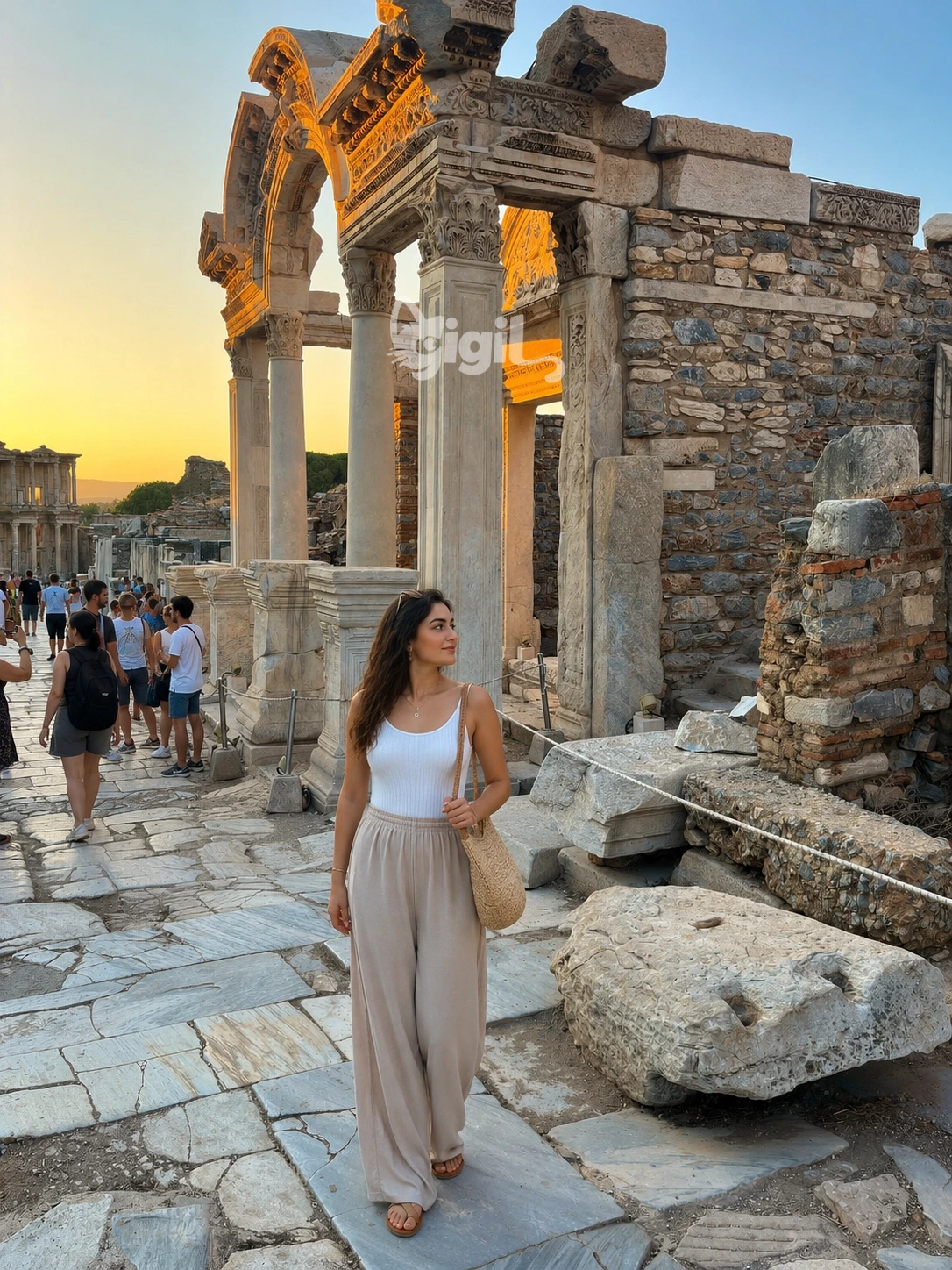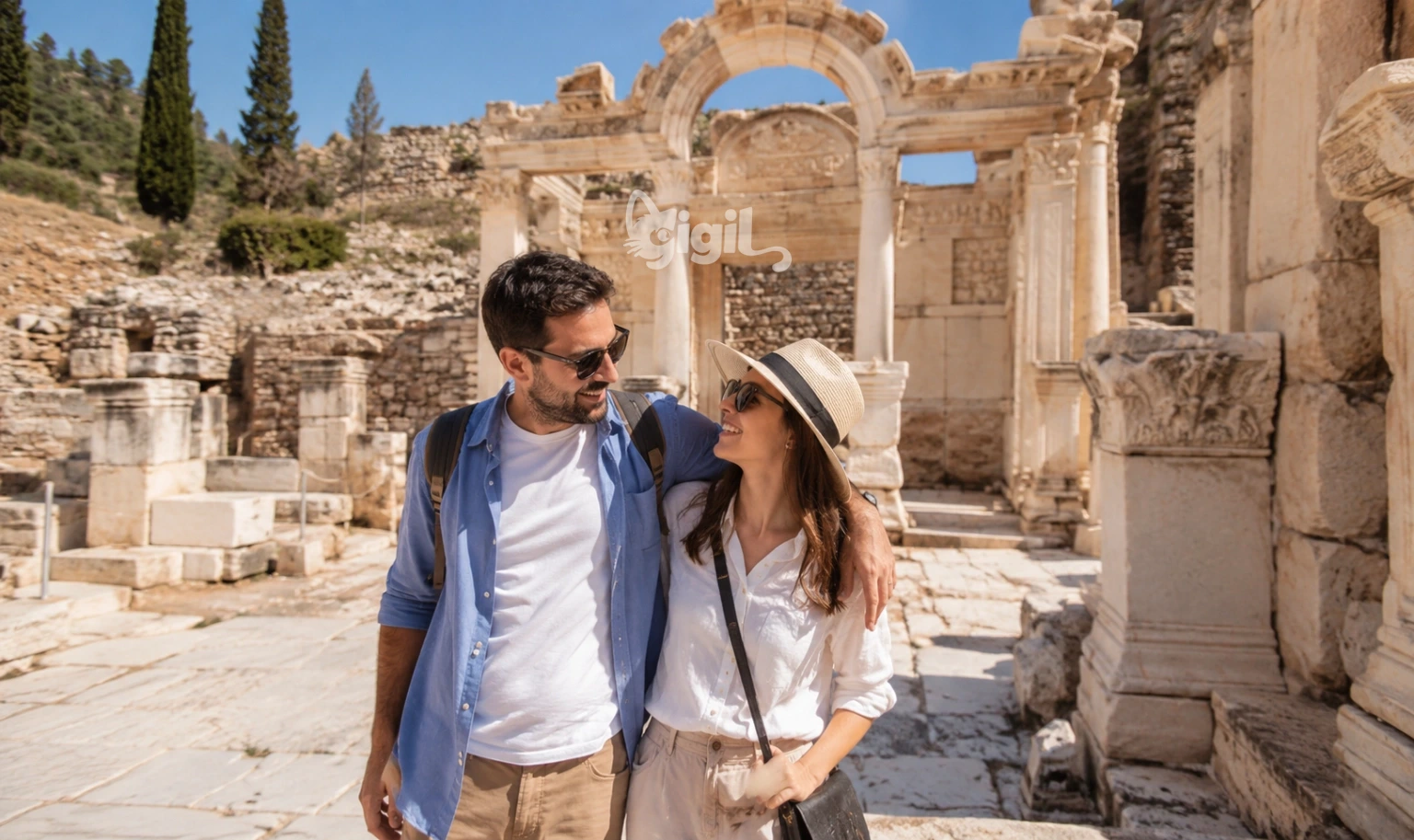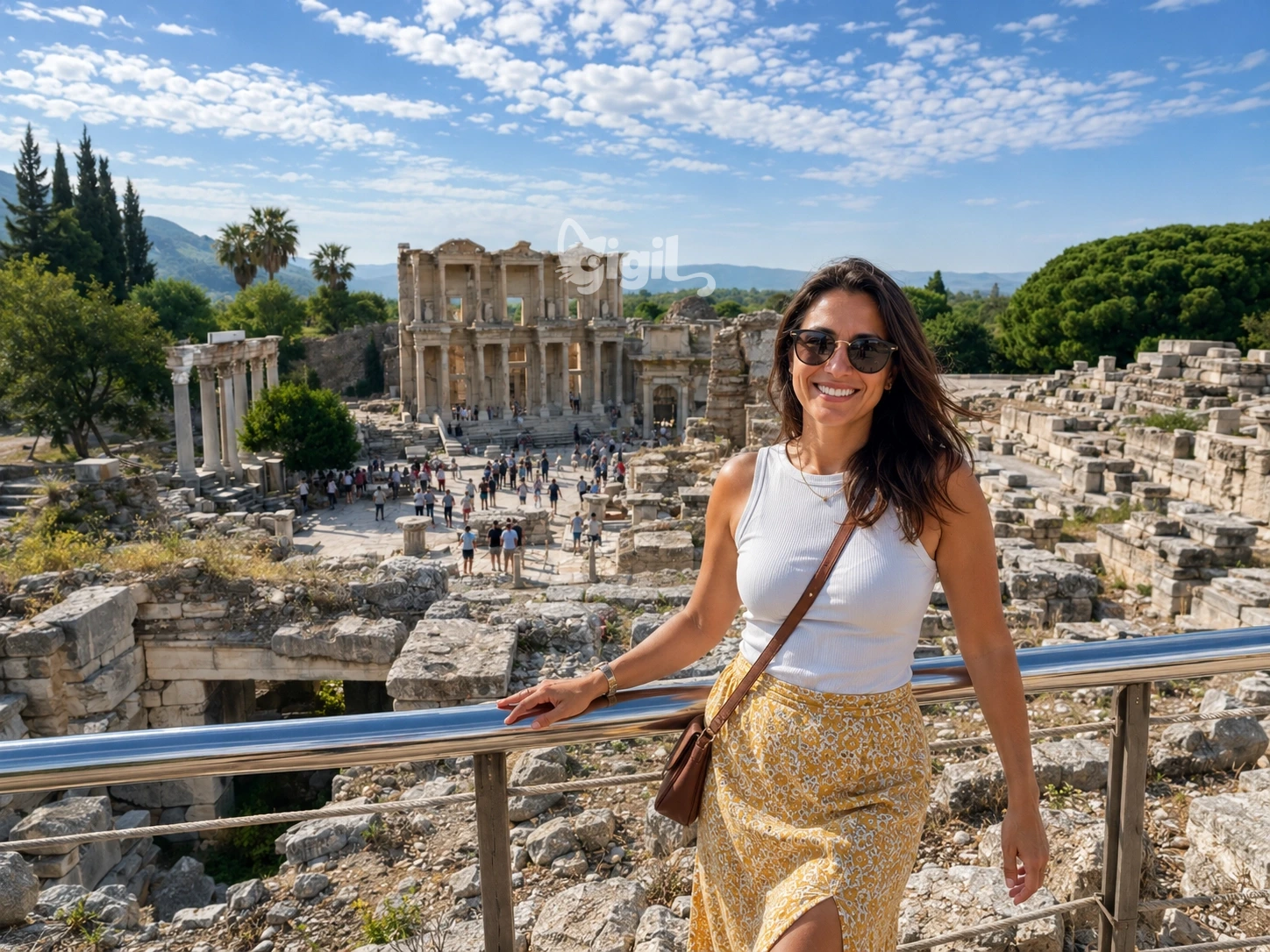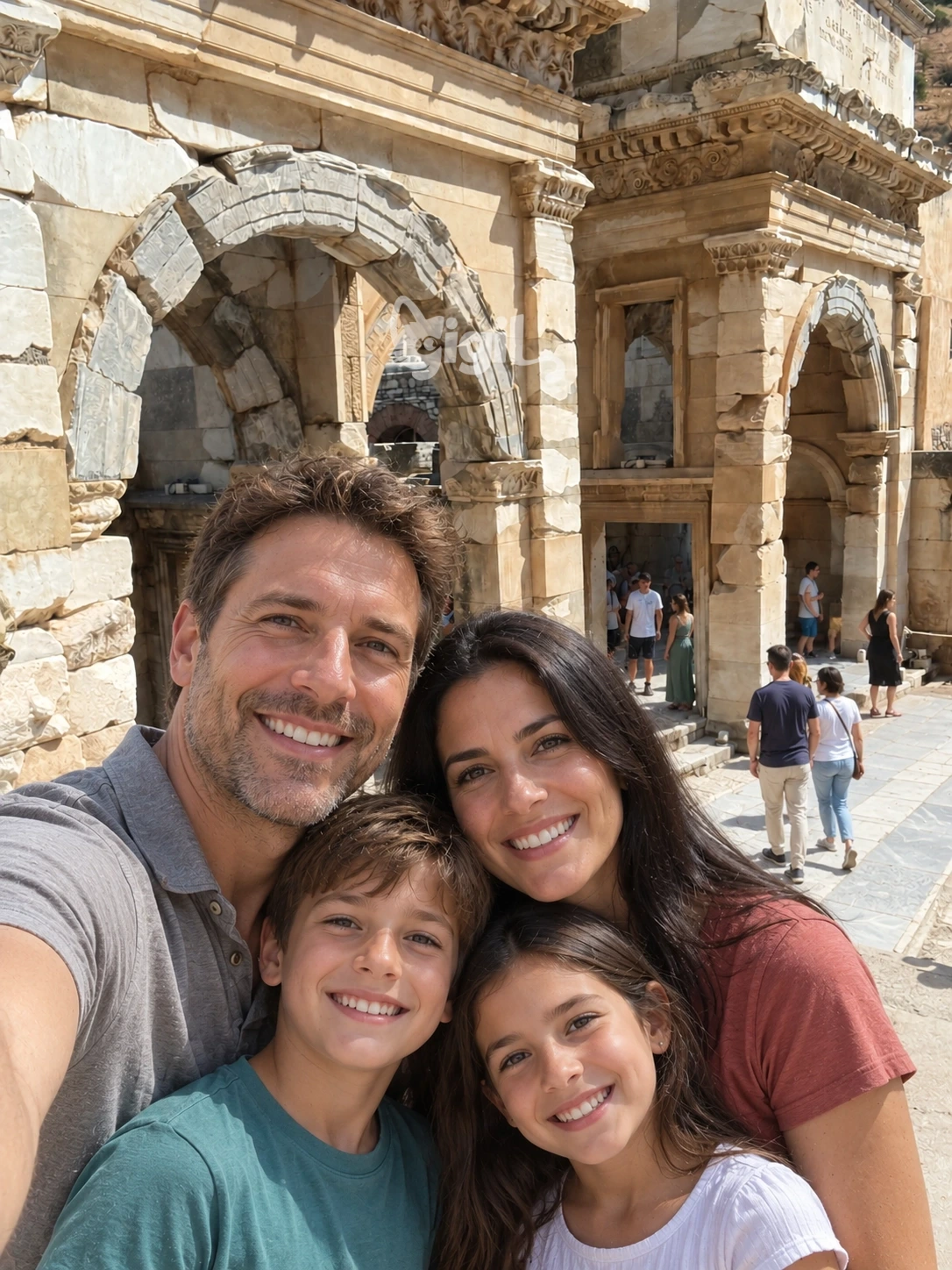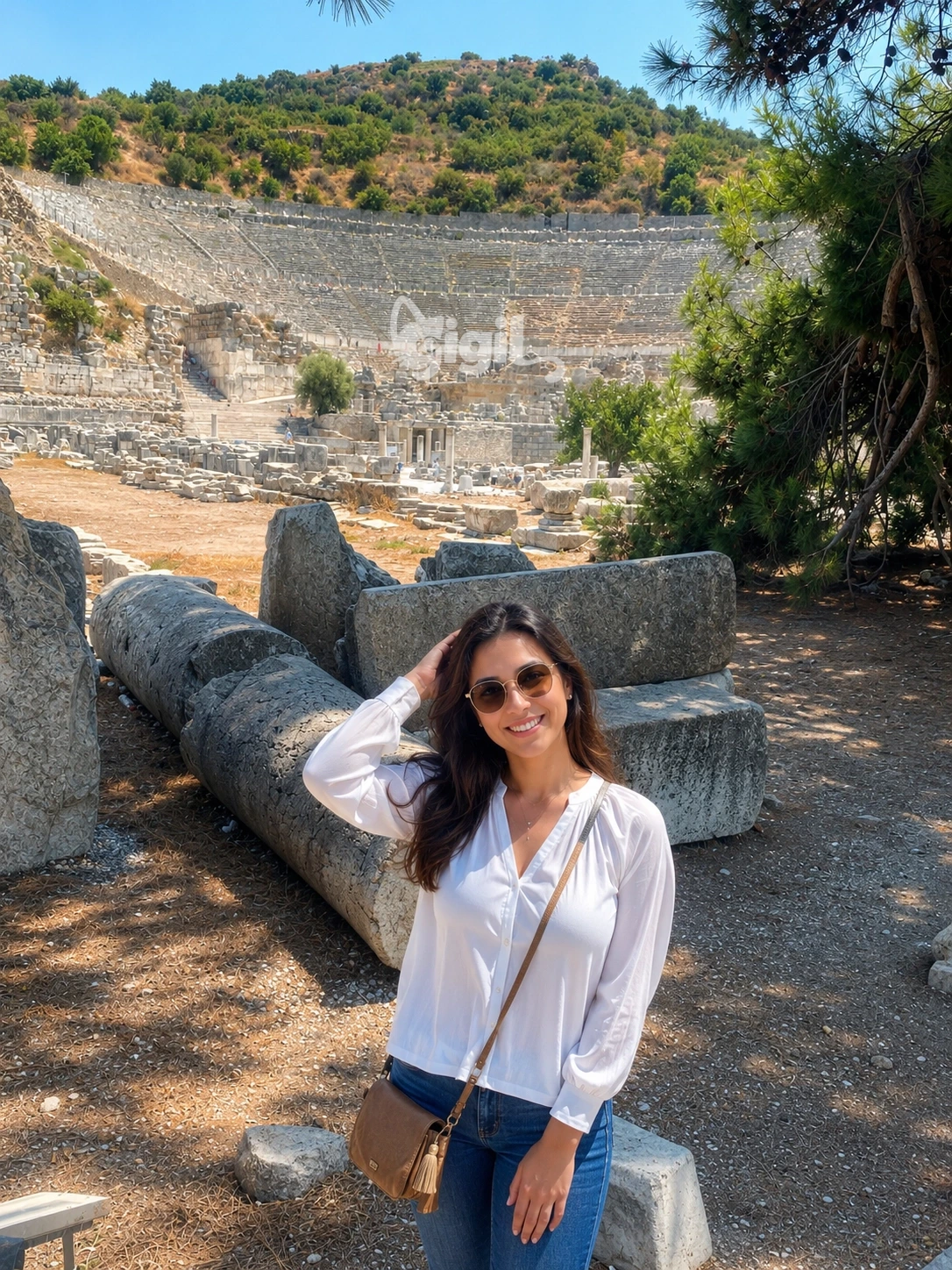








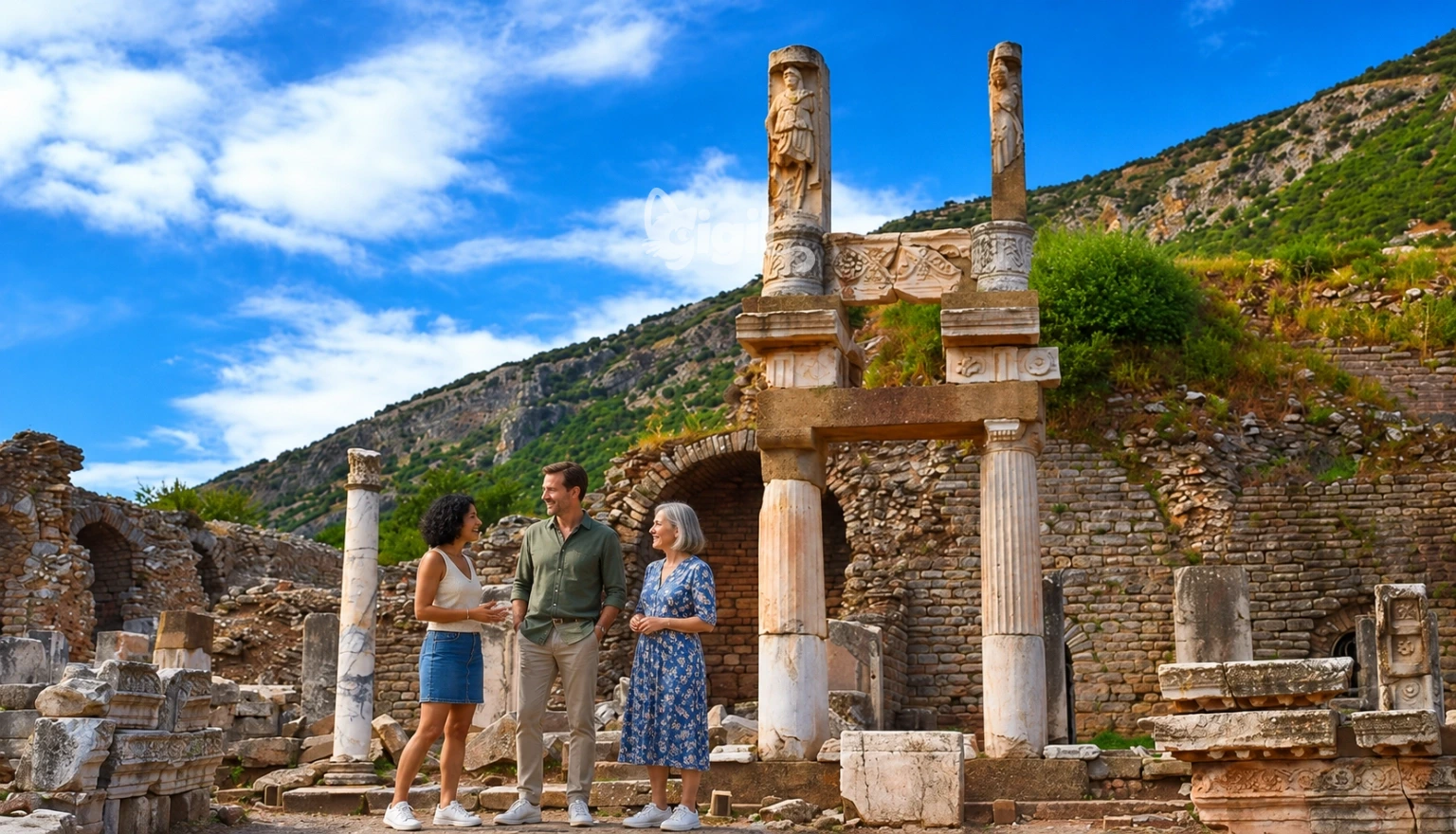

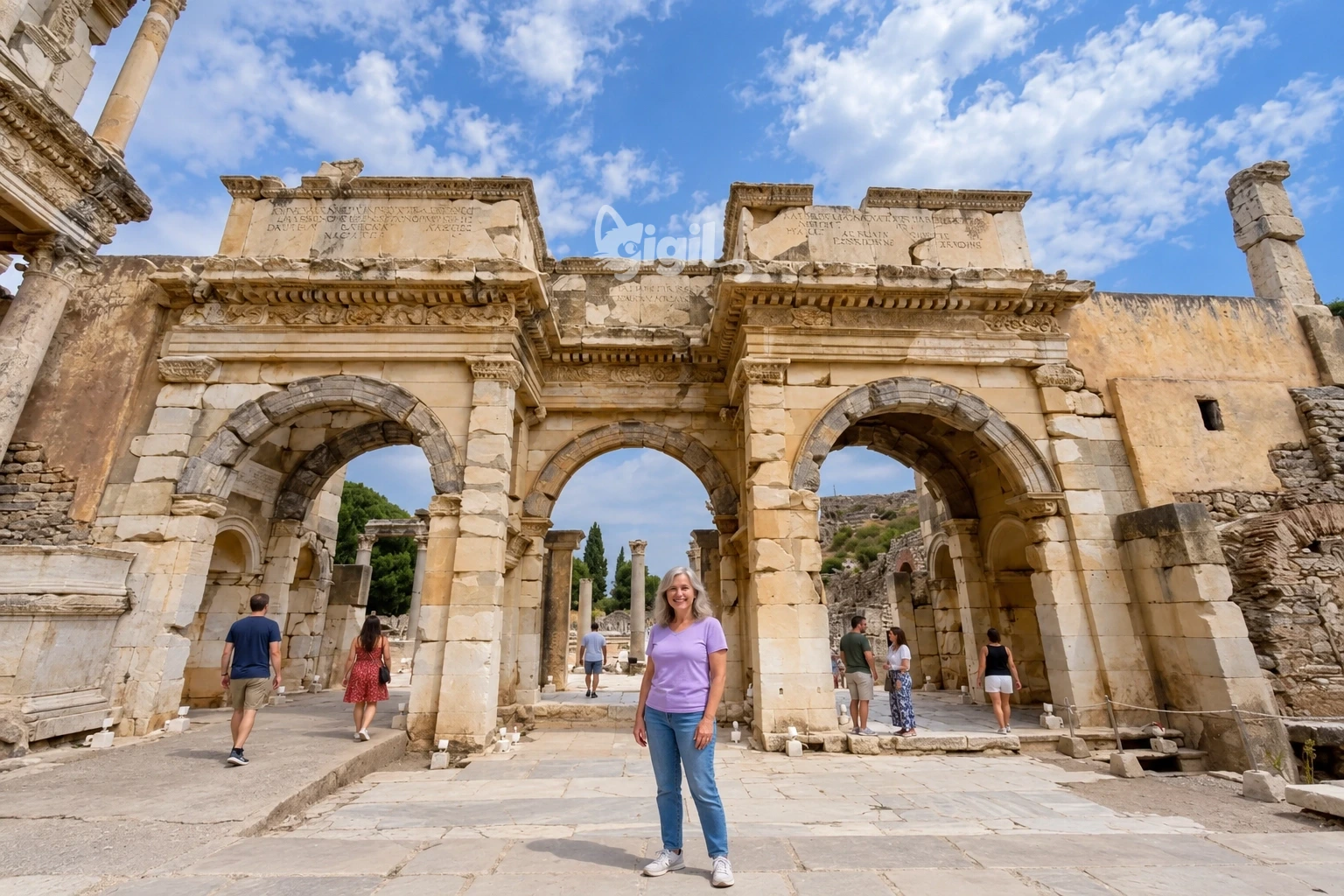
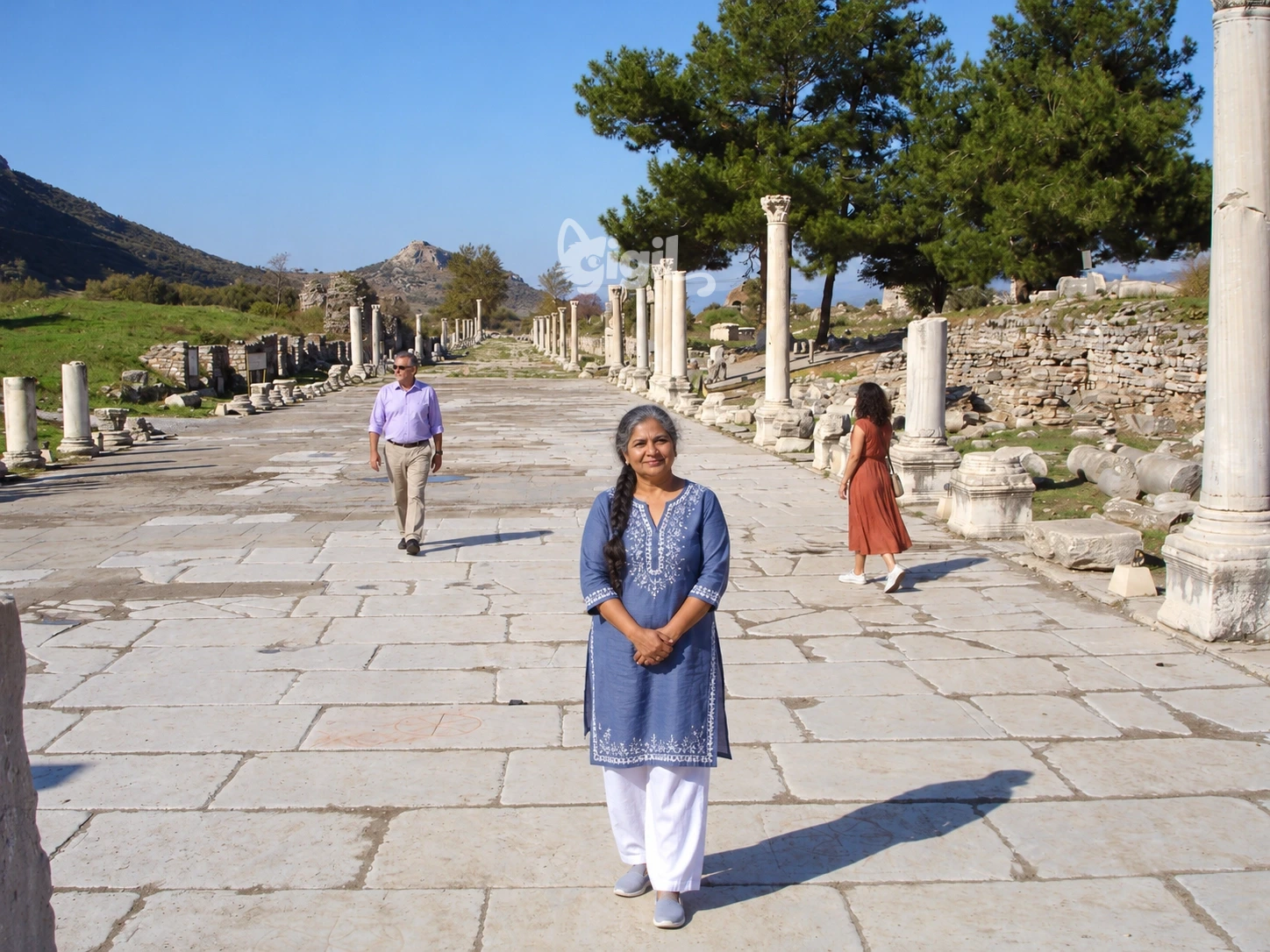
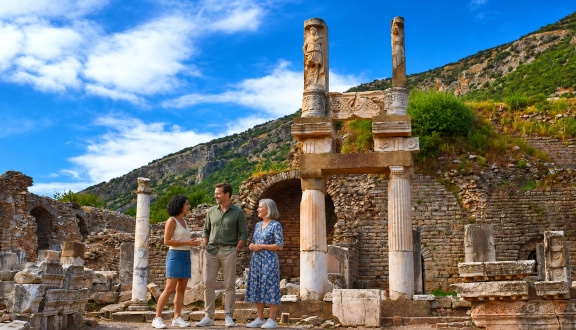
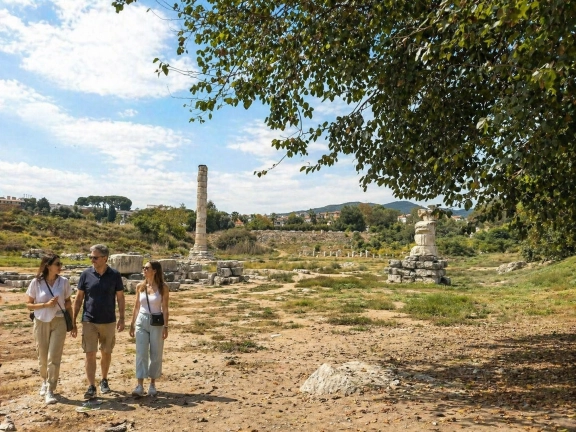
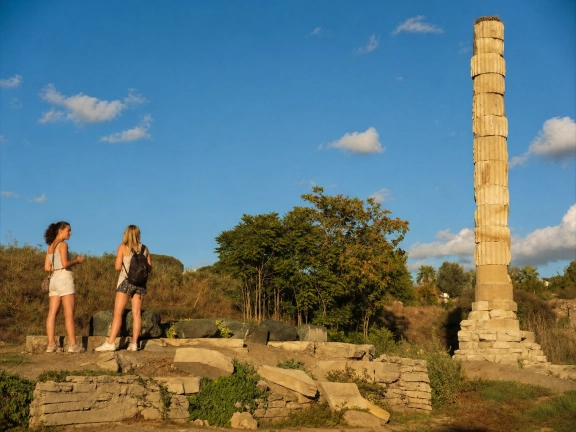

A street in Ephesus is more than a line through ruins: it links public buildings, open areas and the different activities of an ancient city. Those relationships help make the archaeological landscape legible.
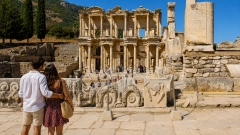
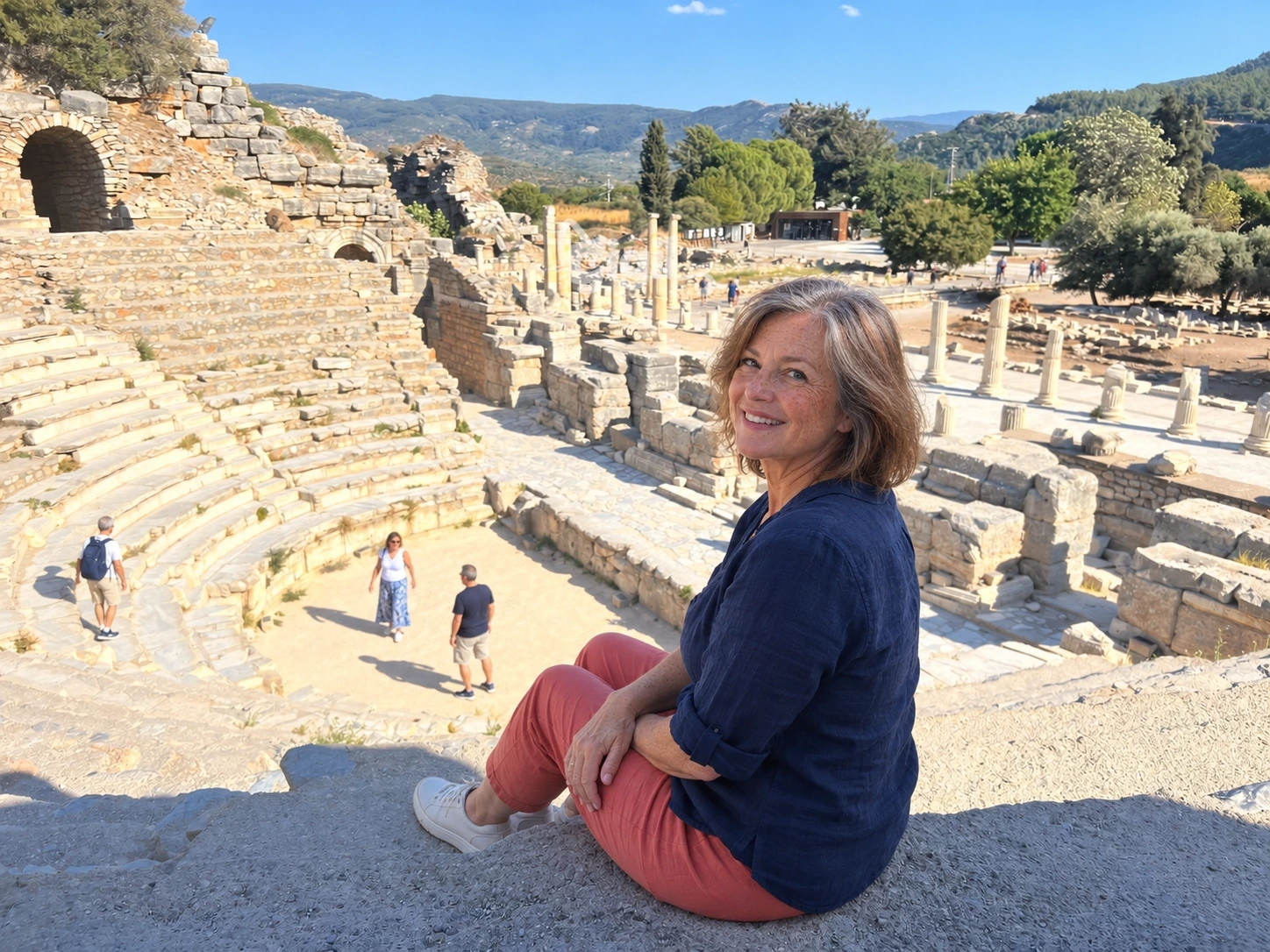
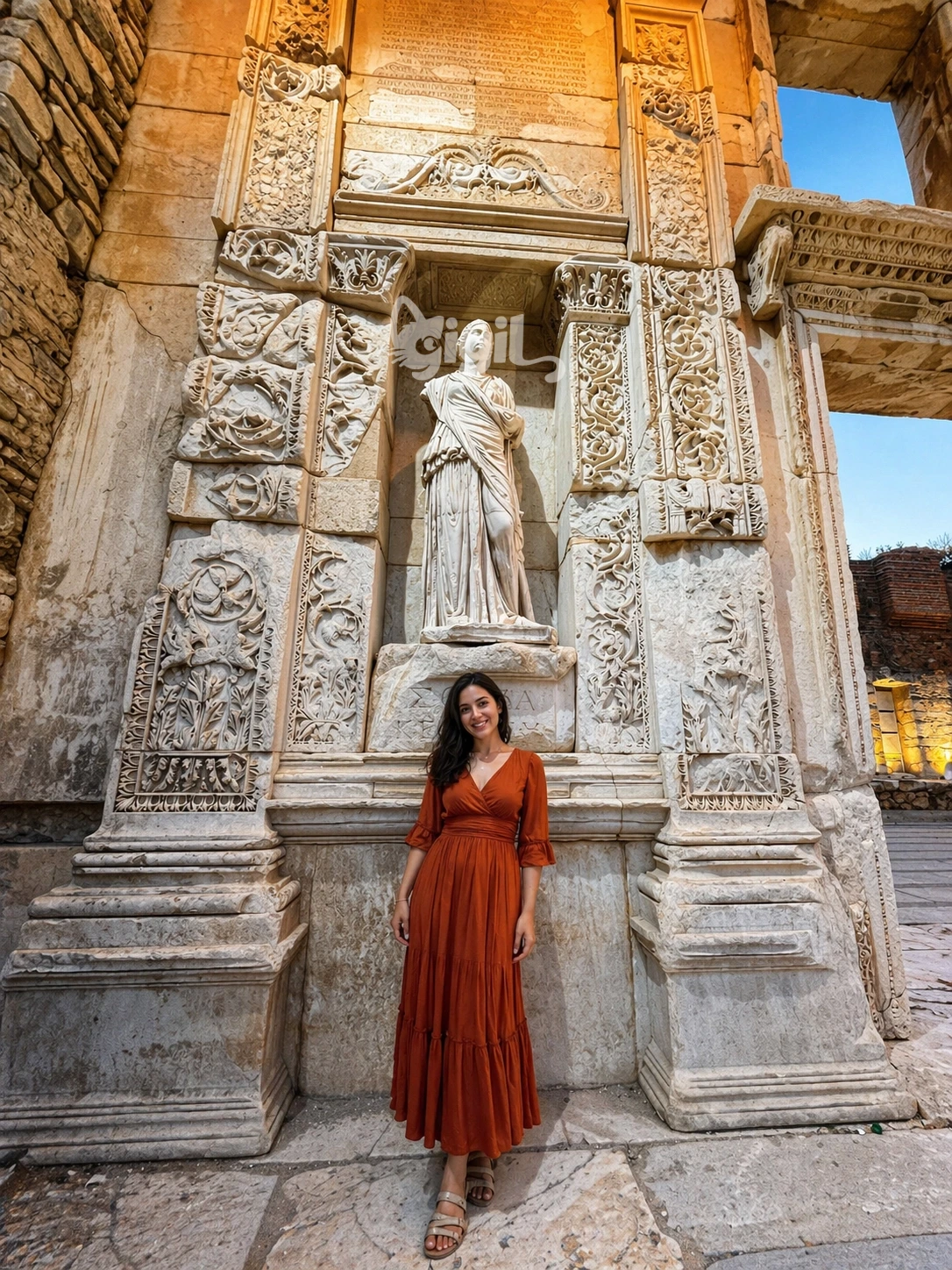
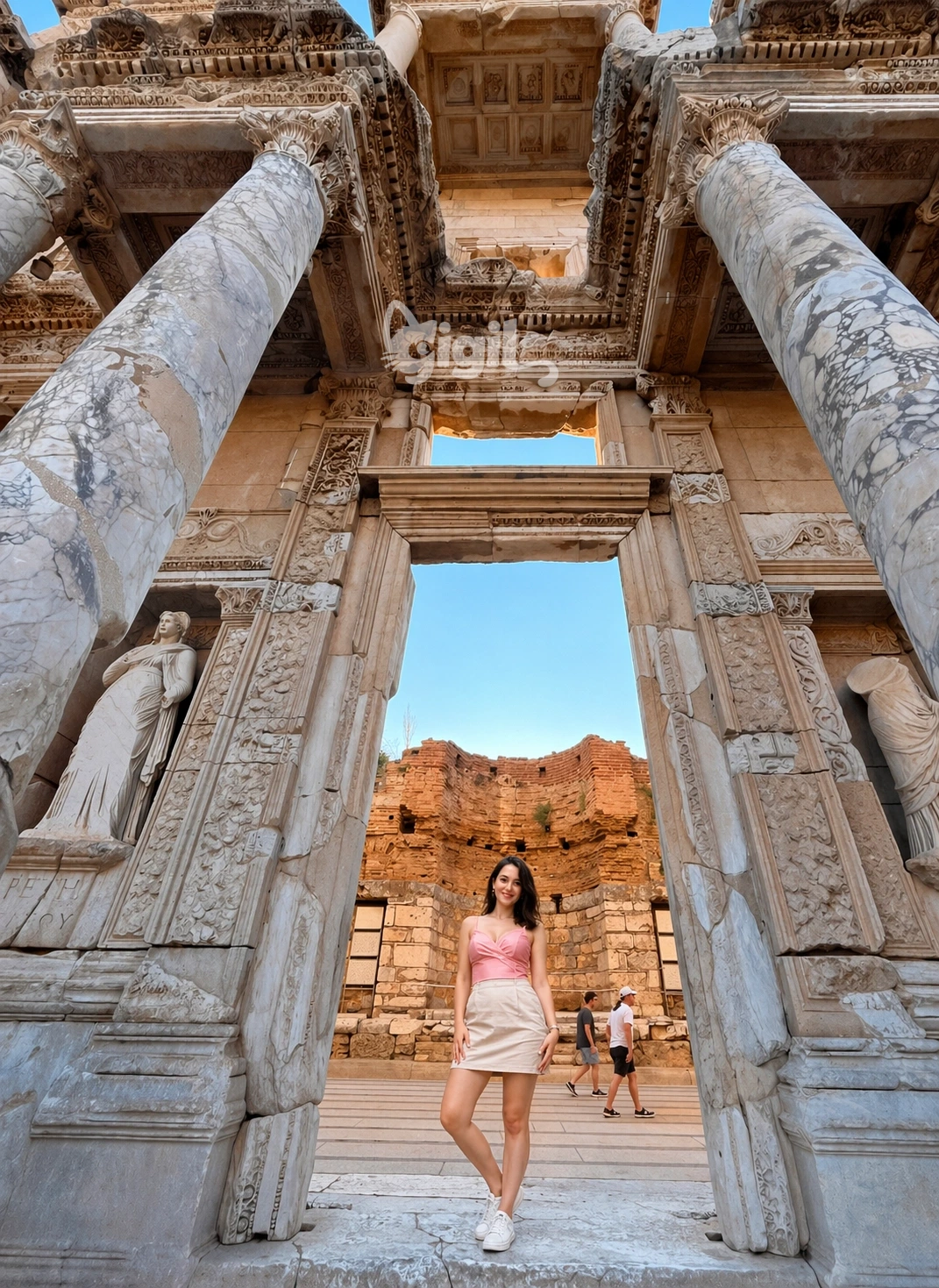
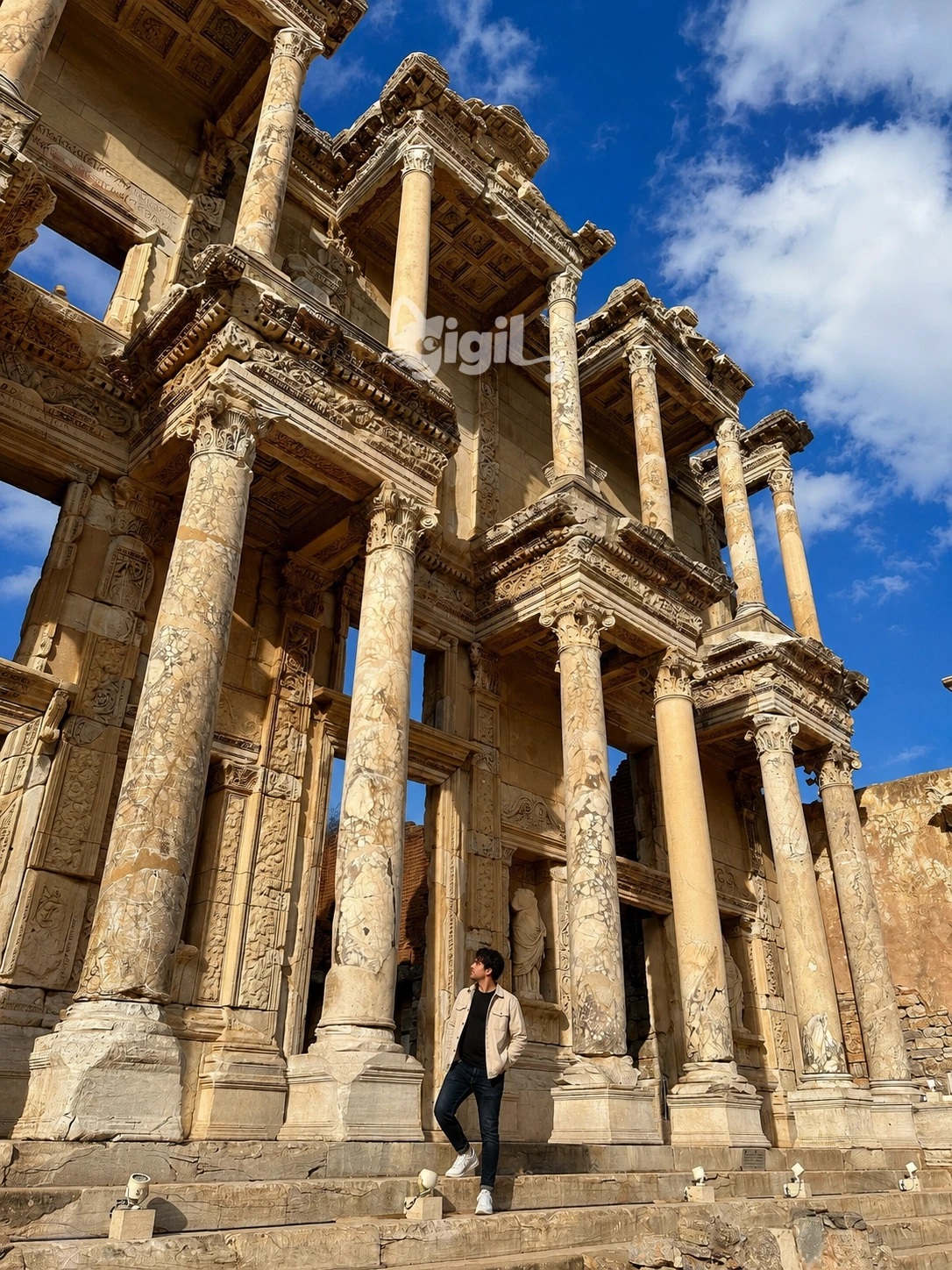
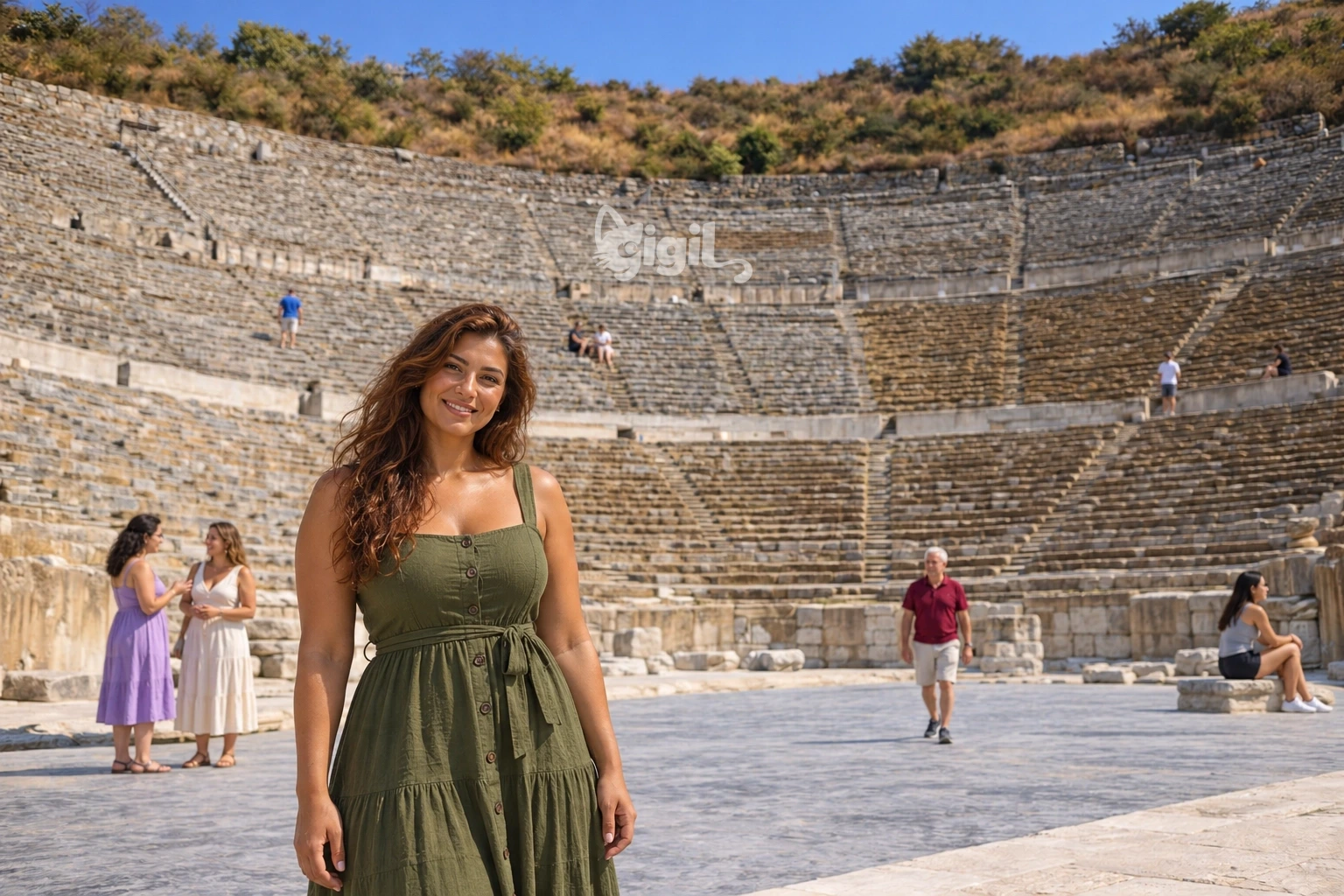
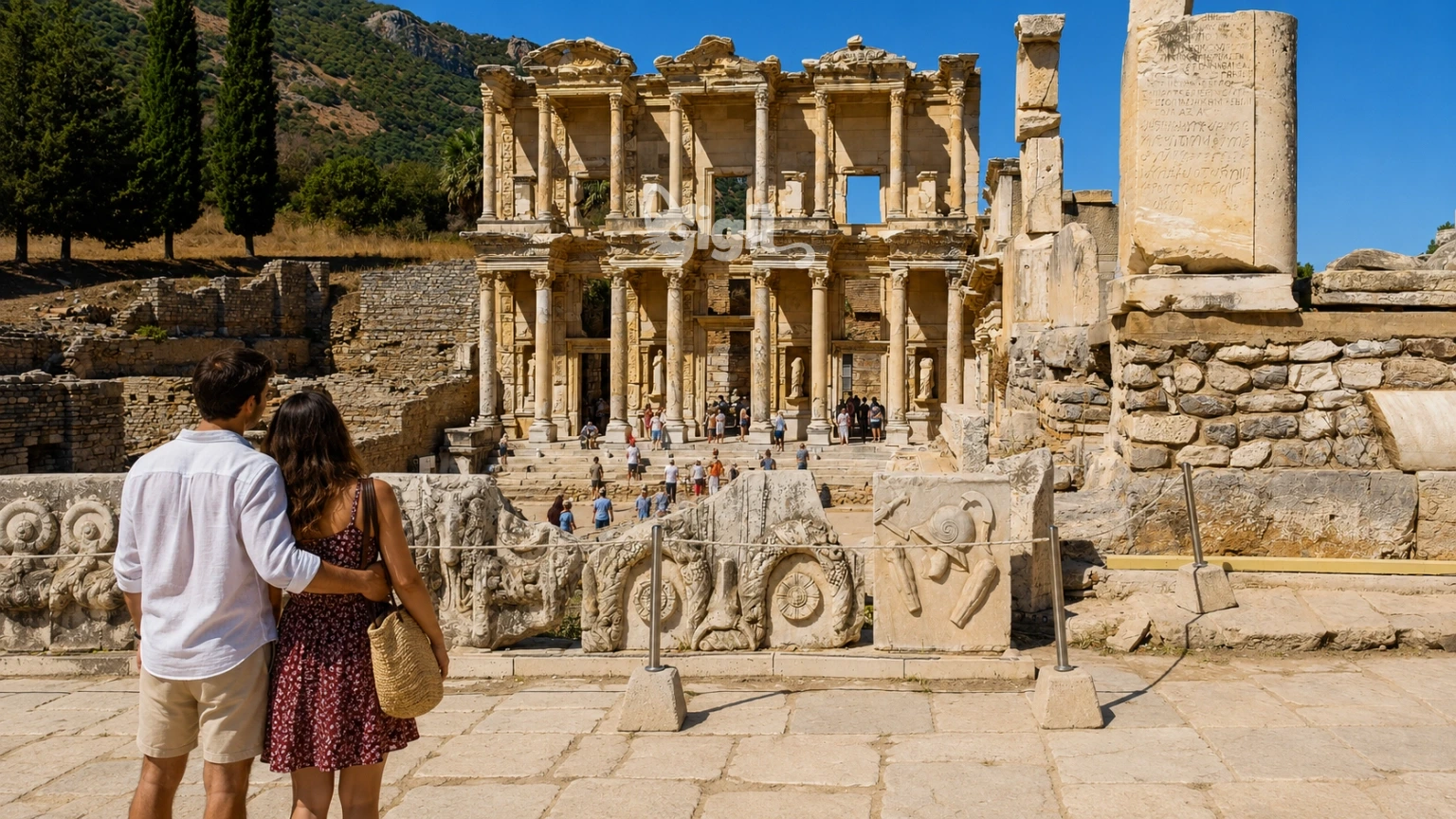
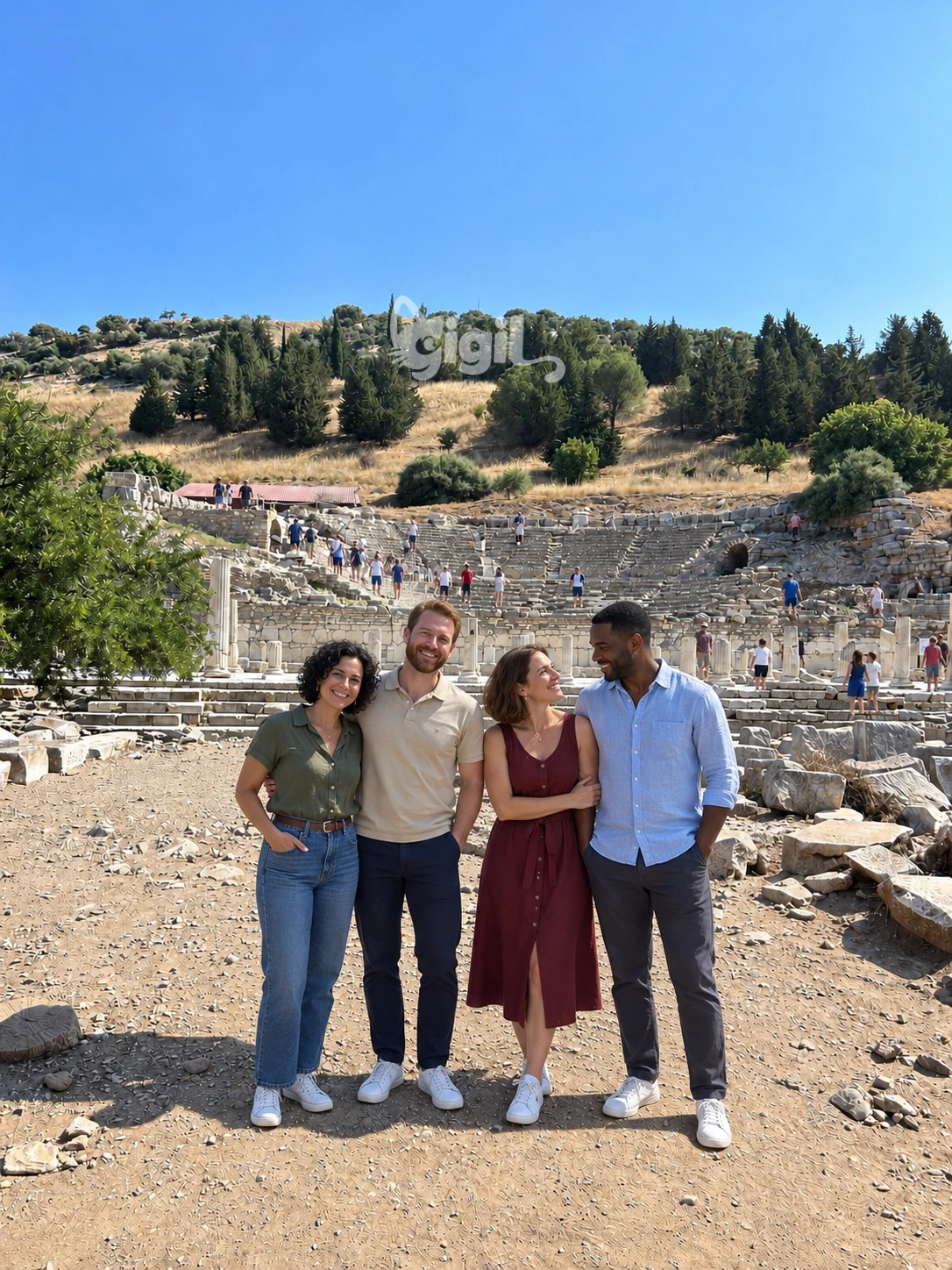
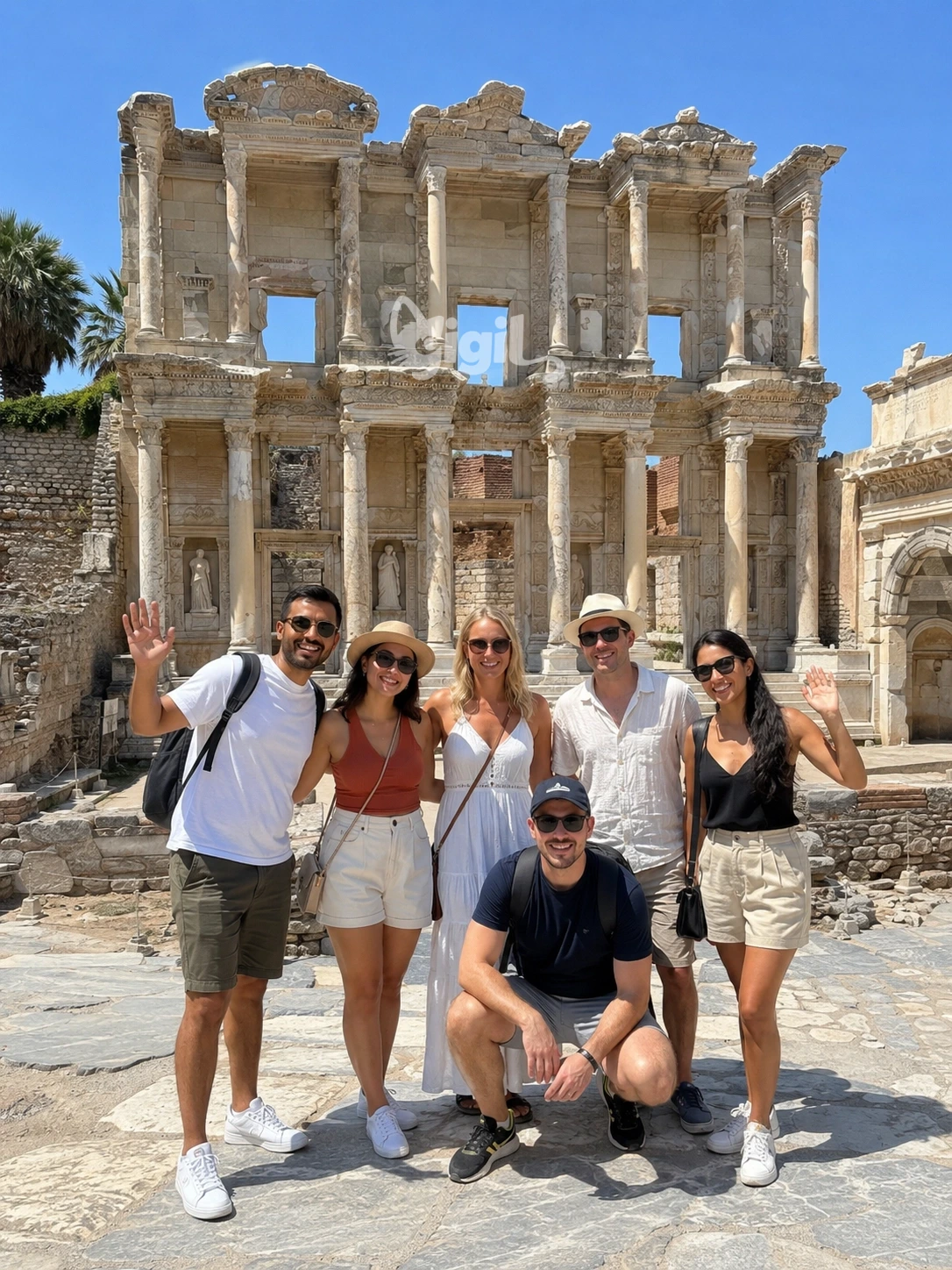
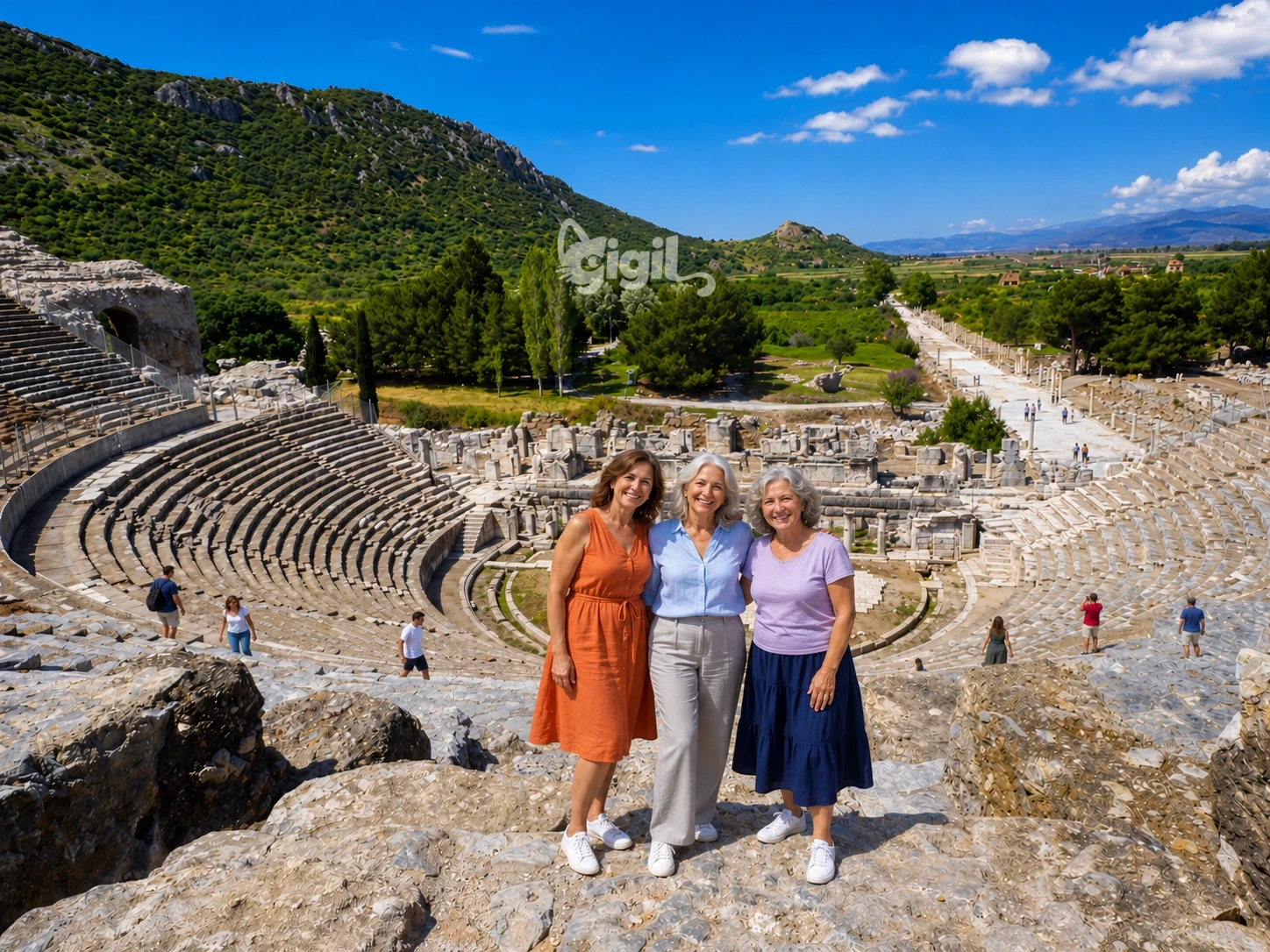
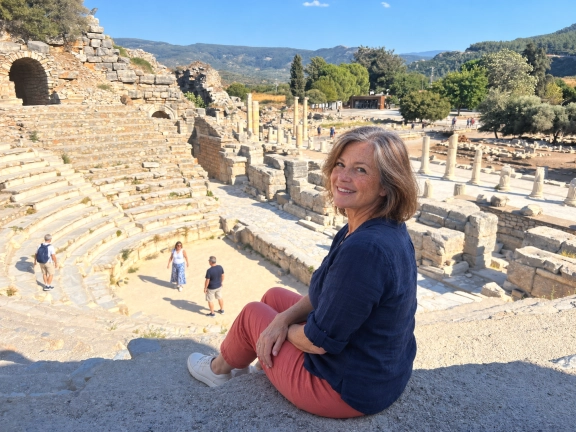
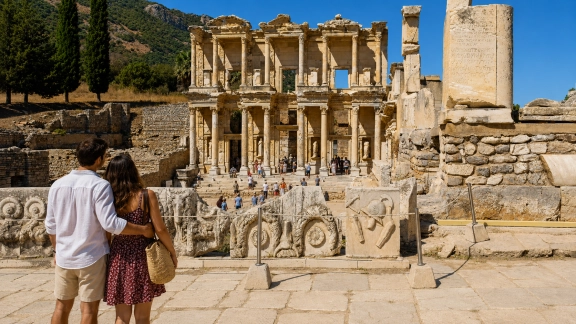
The Library of Celsus offers a distinctive facade, while the Great Theatre expresses the scale of public gathering. Look at how both sit within their wider surroundings. Their remains are part of a changing city, not proof that all its buildings existed or survived in the same condition at once.
Questions
What should I notice beyond individual buildings?
The connections between streets, entrances and open spaces reveal how the city's public landscape was organised.
Why is the library's appearance not simply an ancient survival?
Its facade has been archaeologically reassembled, combining surviving elements with restoration work rather than remaining wholly intact.
What does the theatre's scale suggest?
The size and arrangement of its audience space show how significant public gathering was within the ancient urban setting.
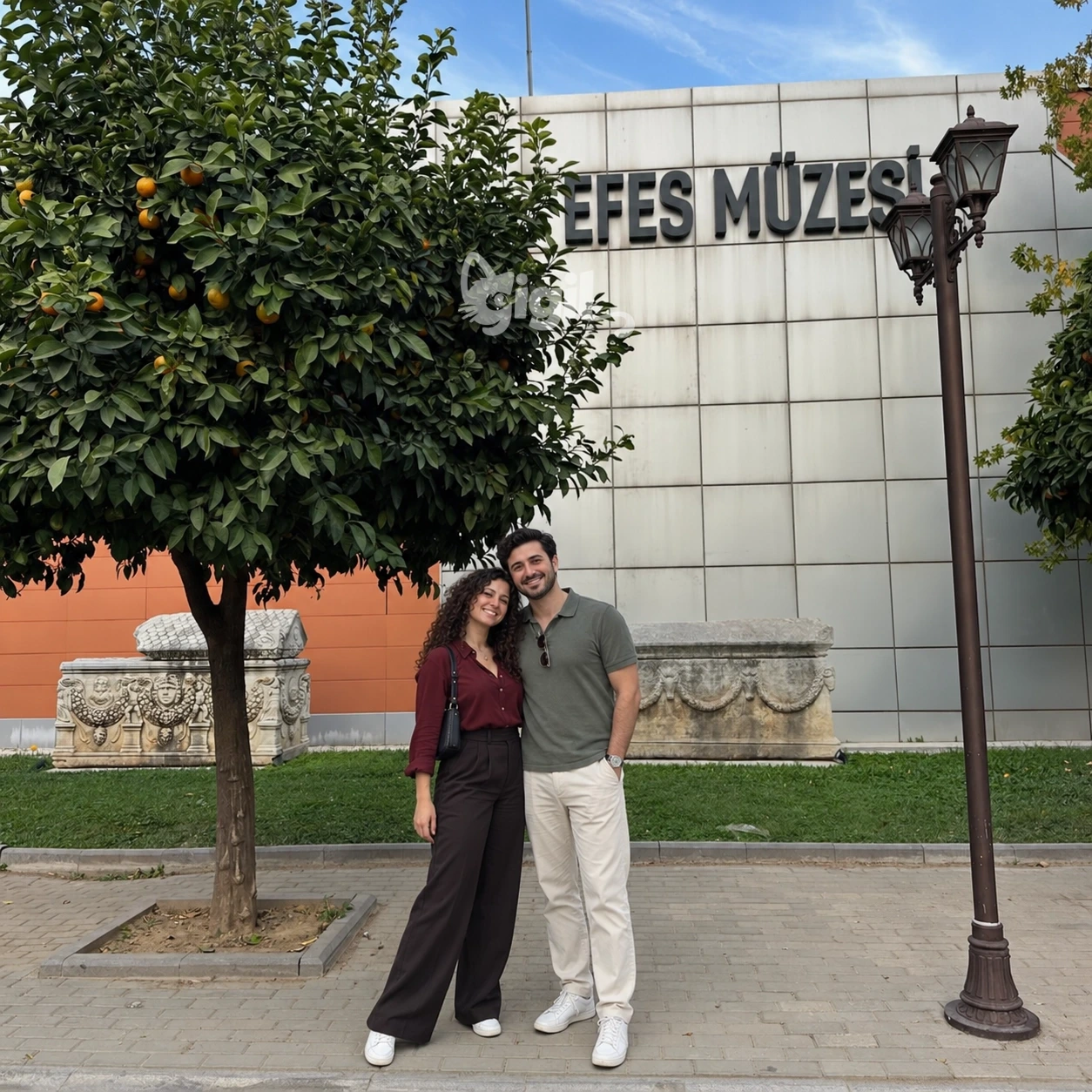
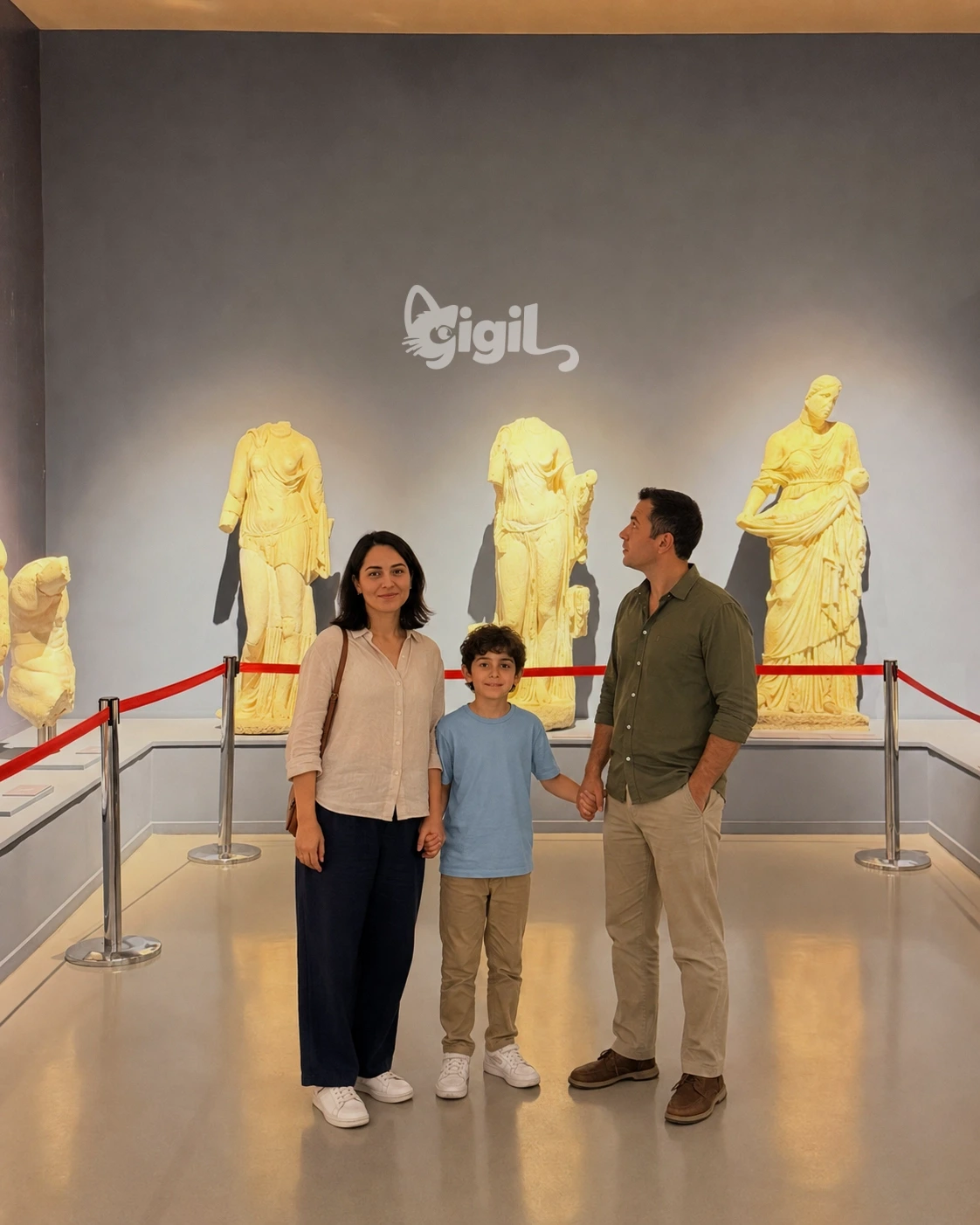
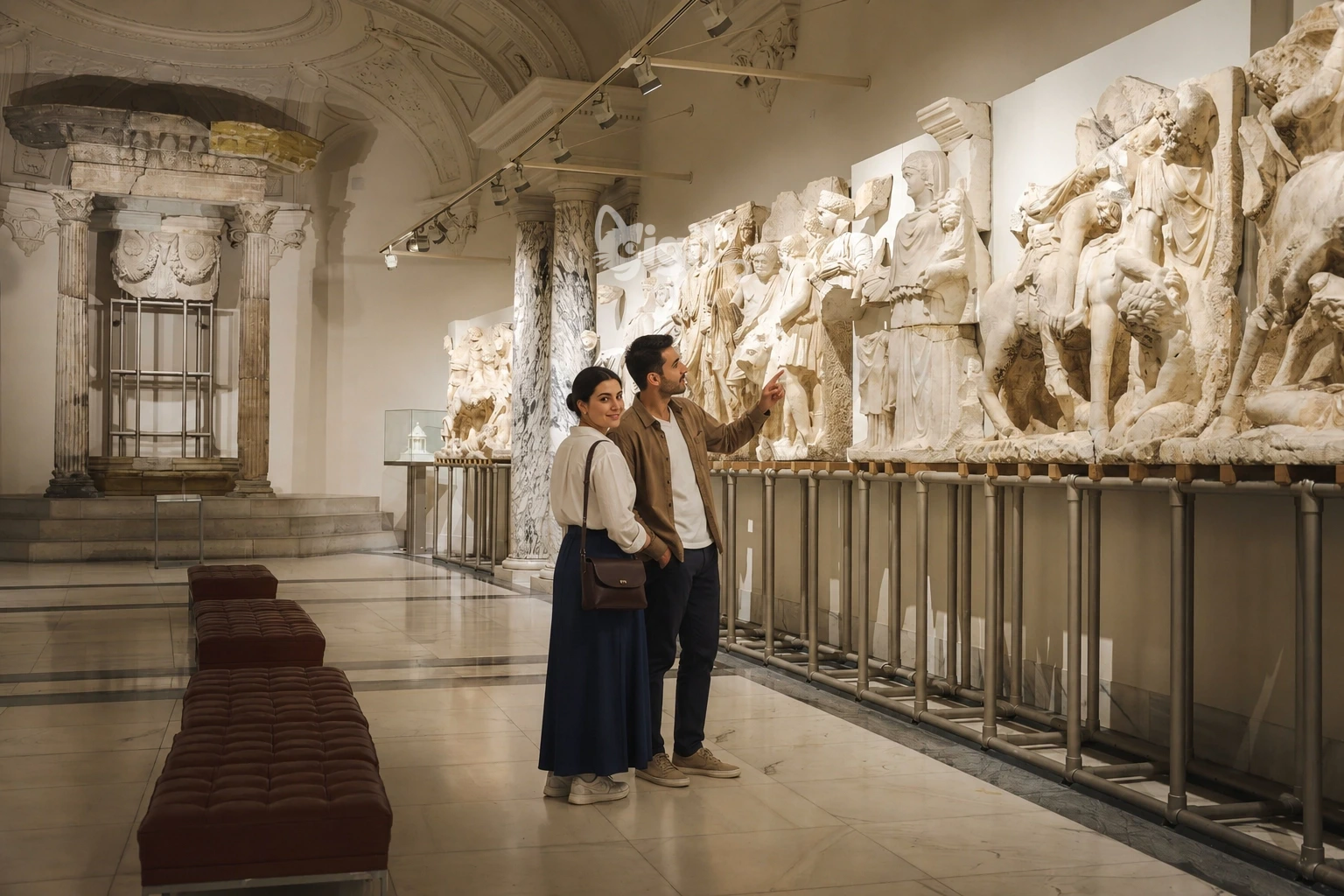
How are the ruins and museum complementary?
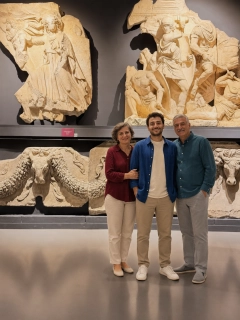
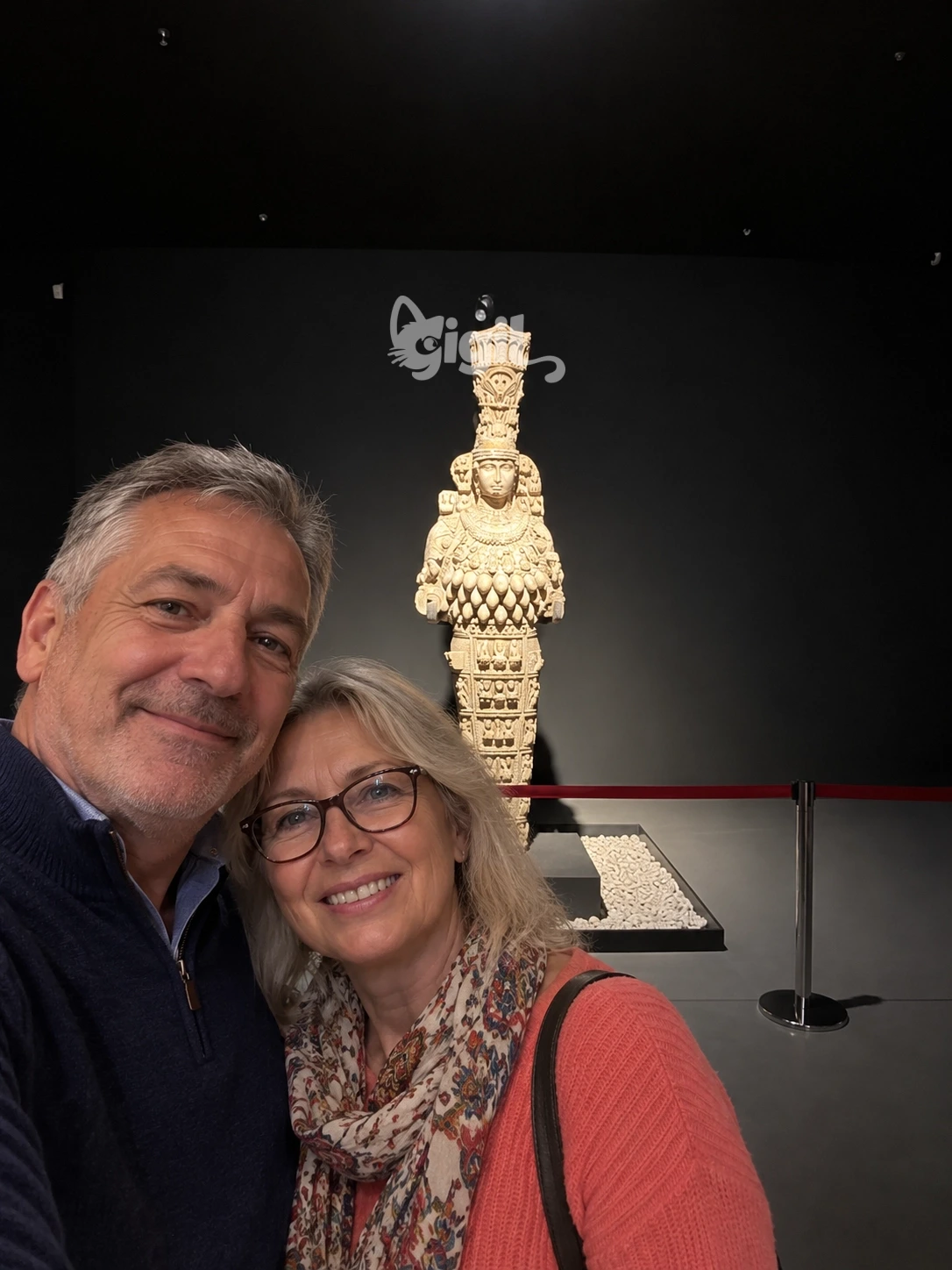
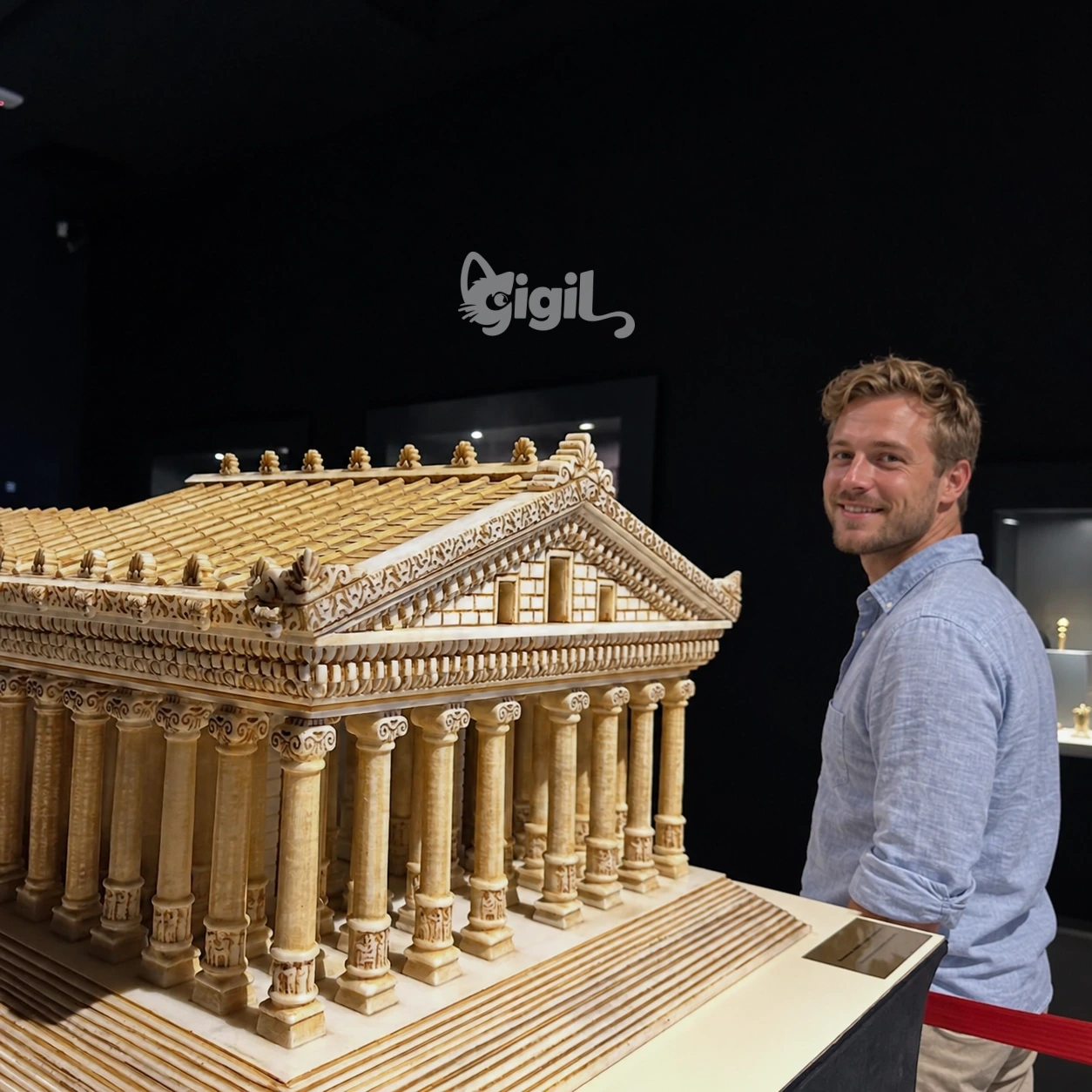
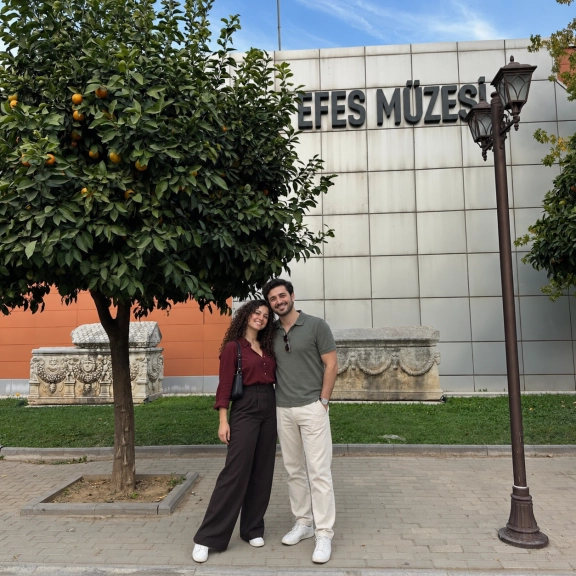
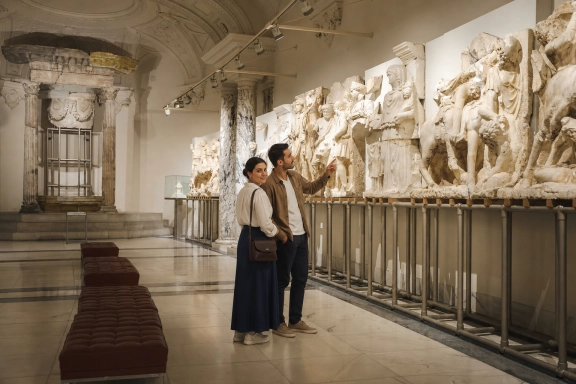
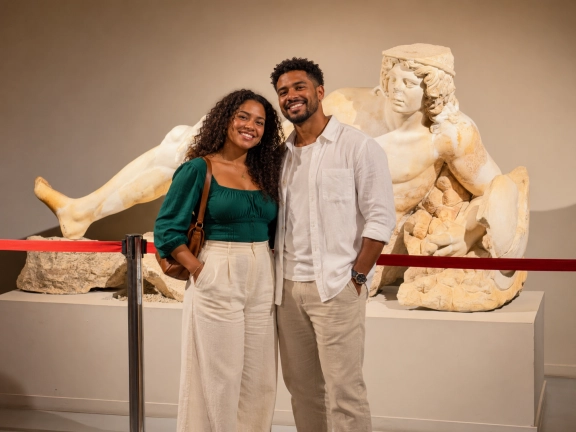
The ruins explain architectural space, while museum finds introduce objects that can deepen an understanding of the same regional history.