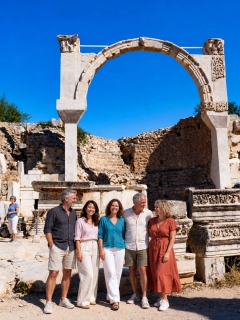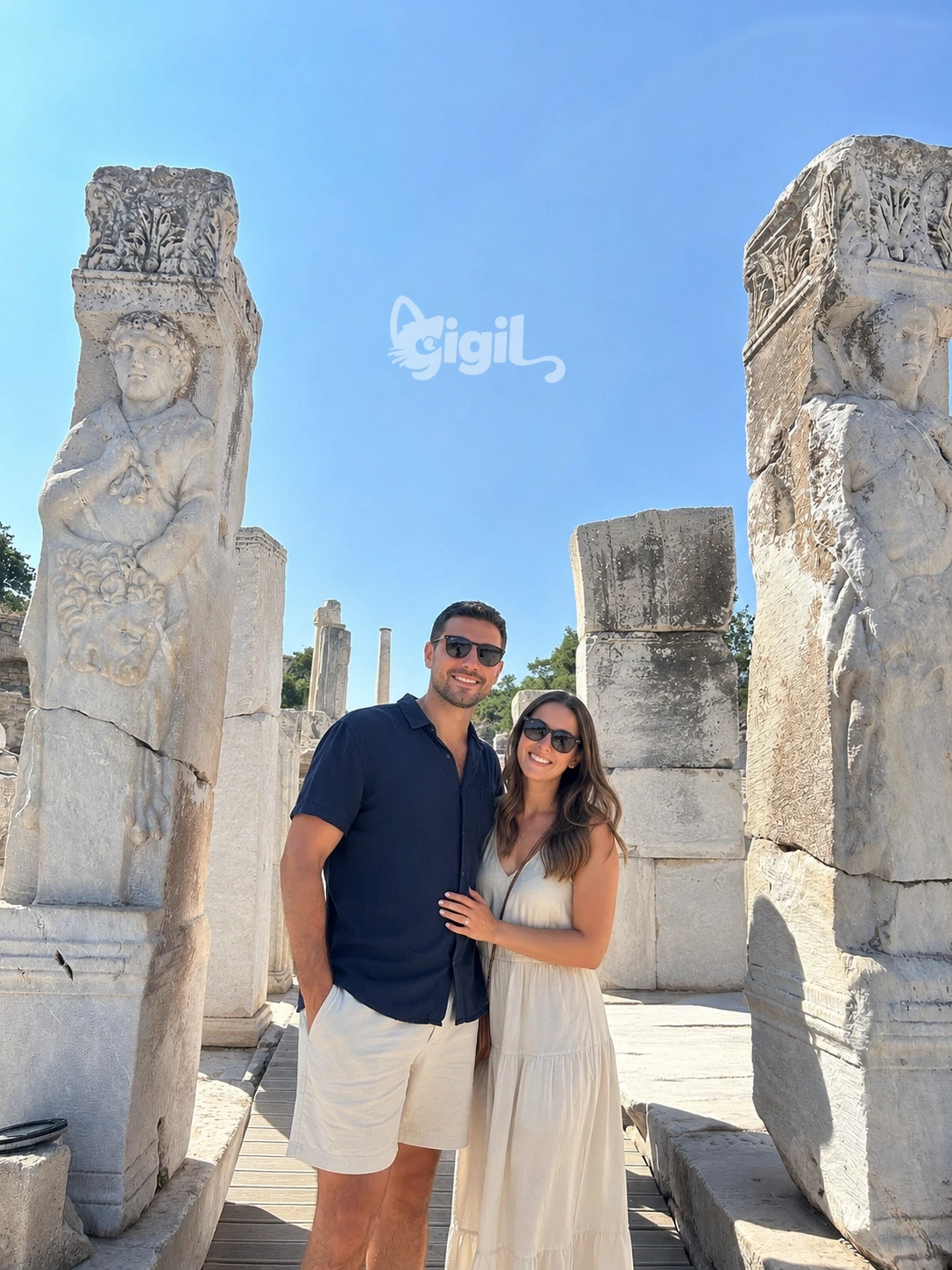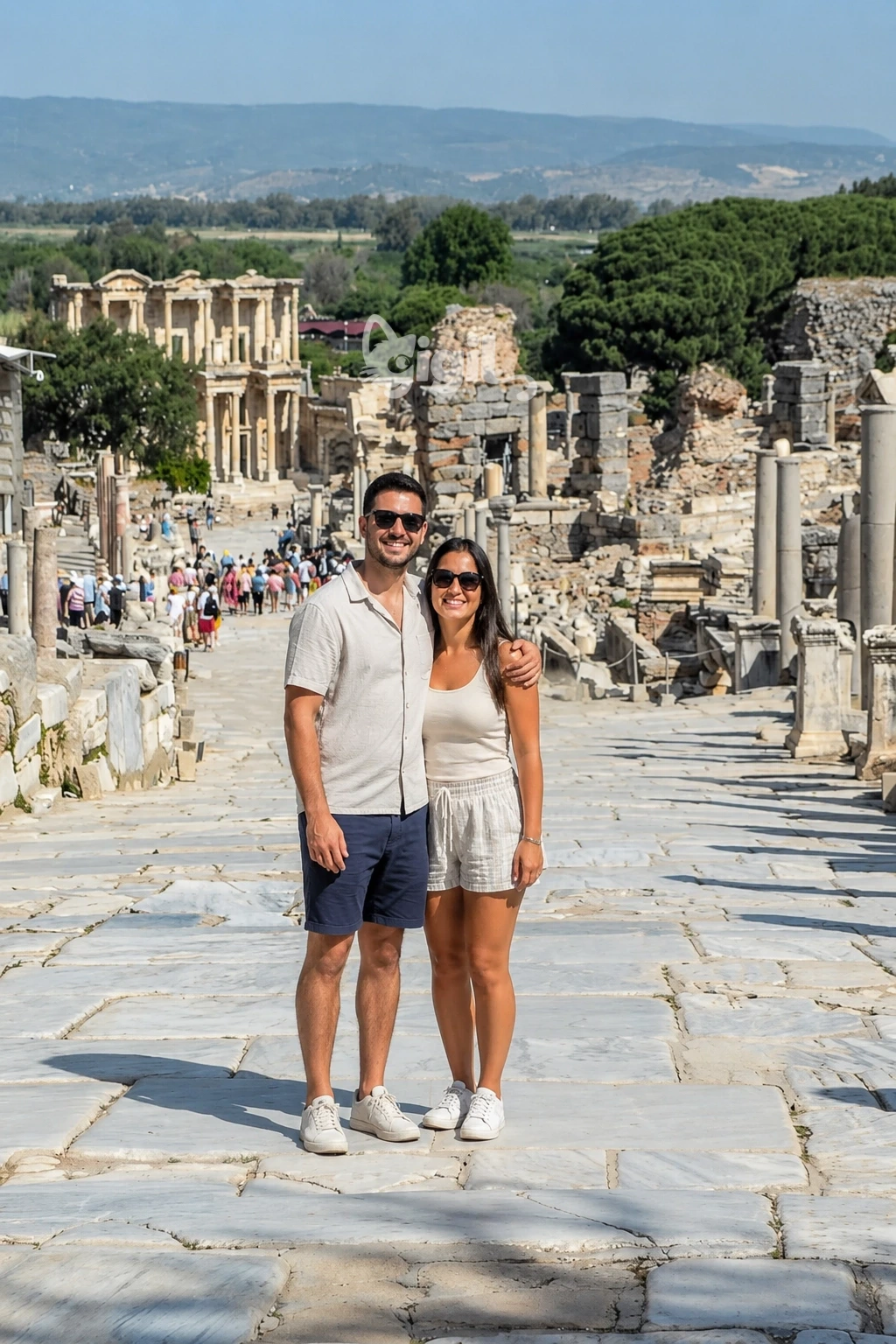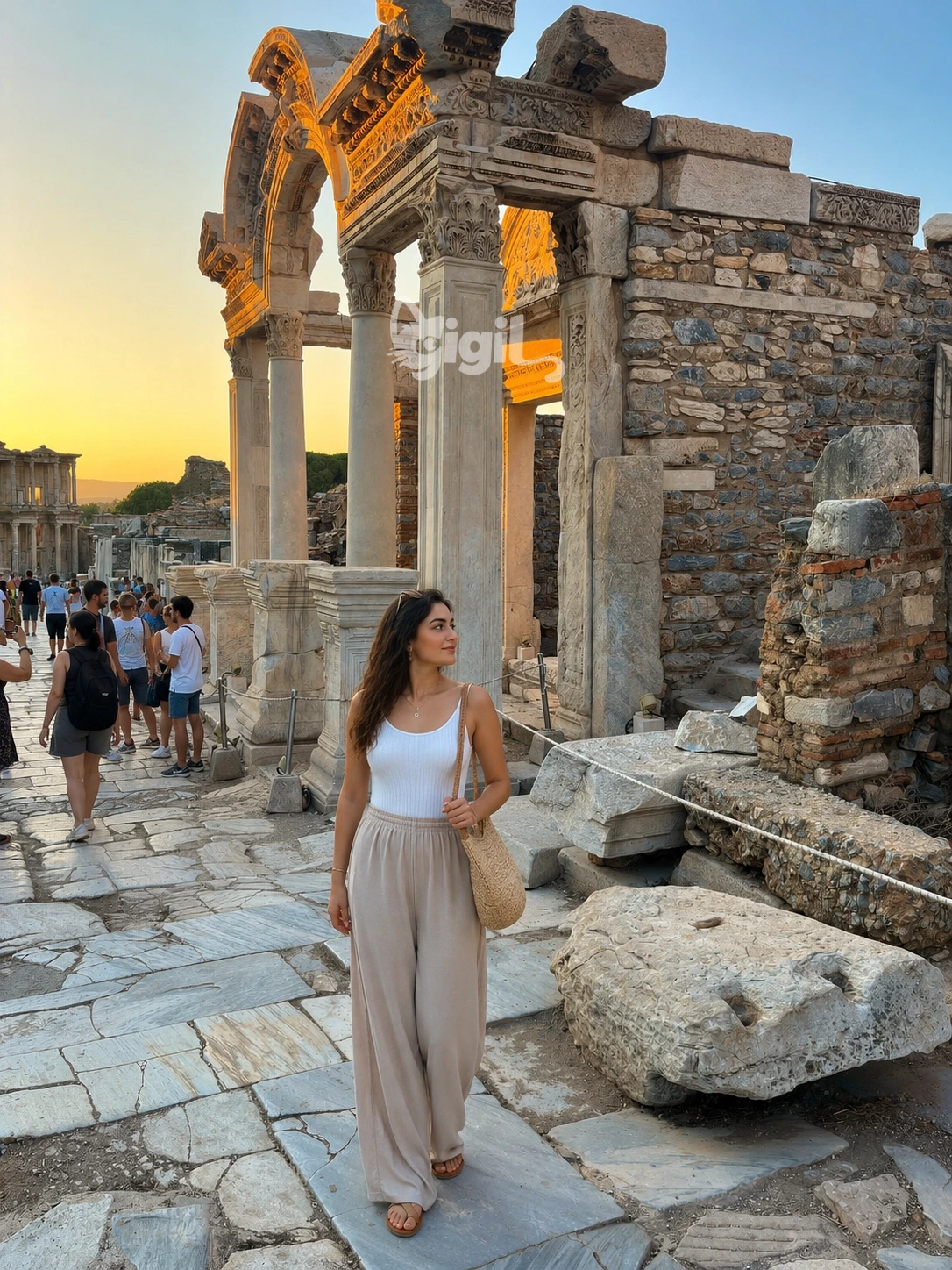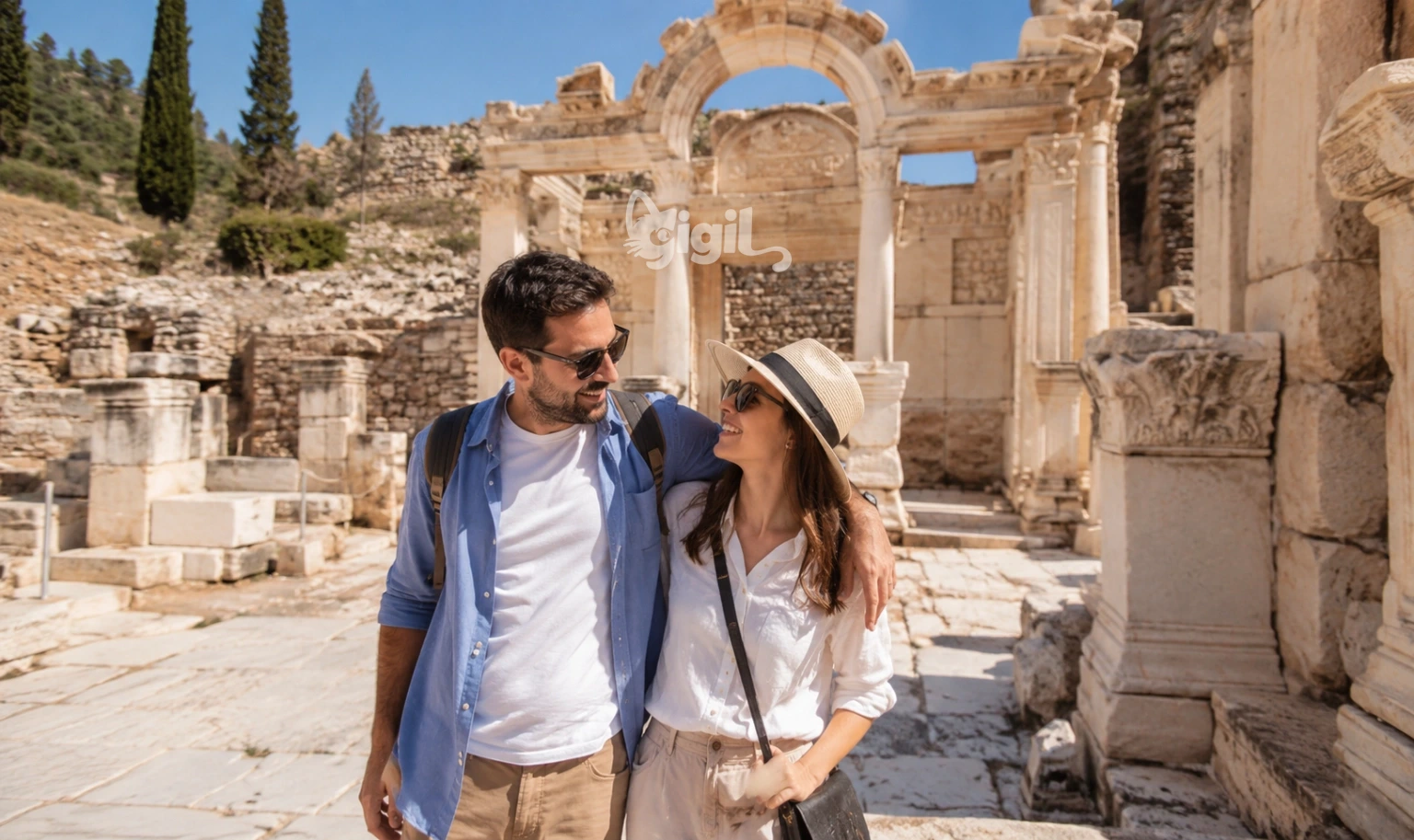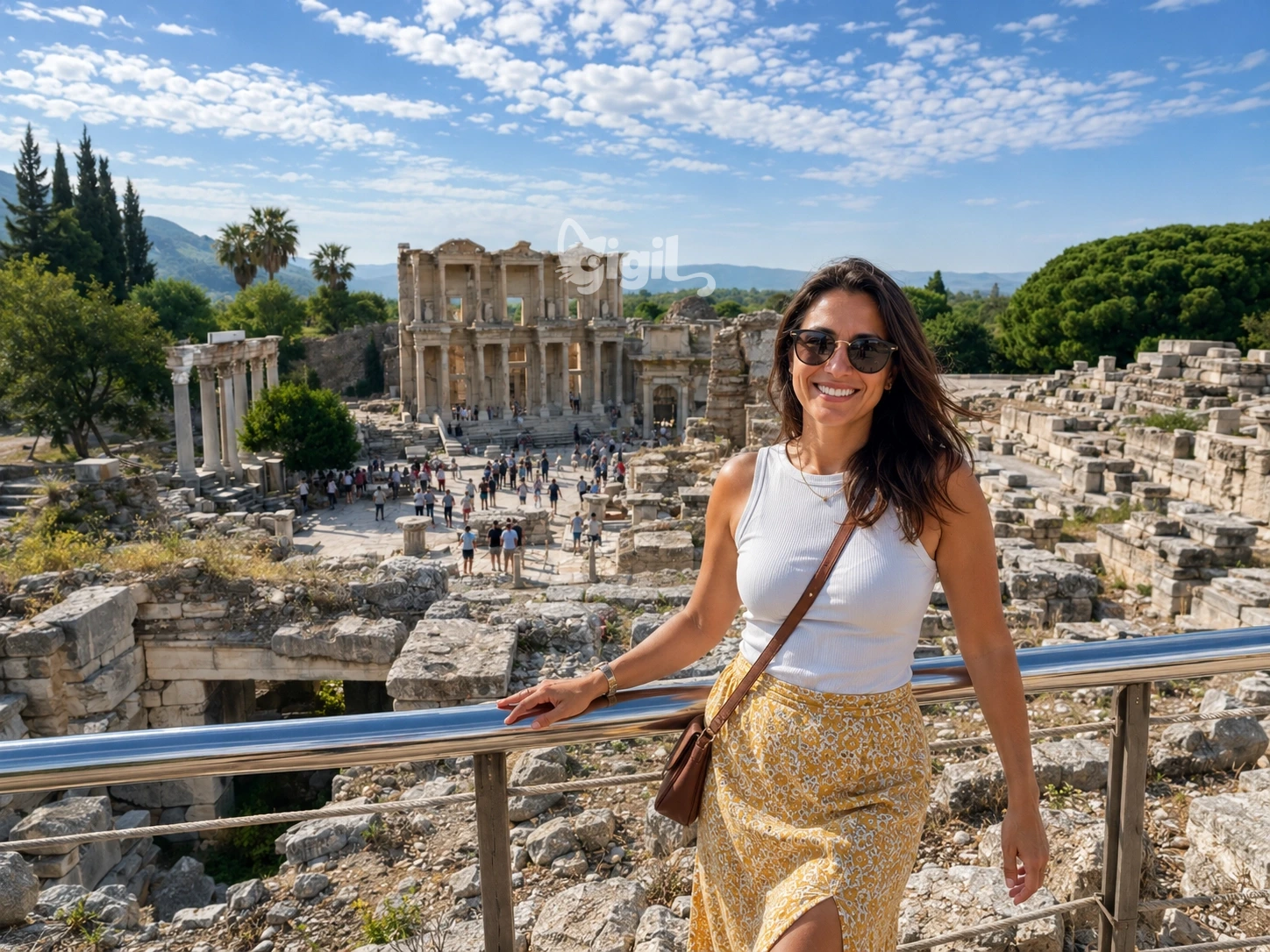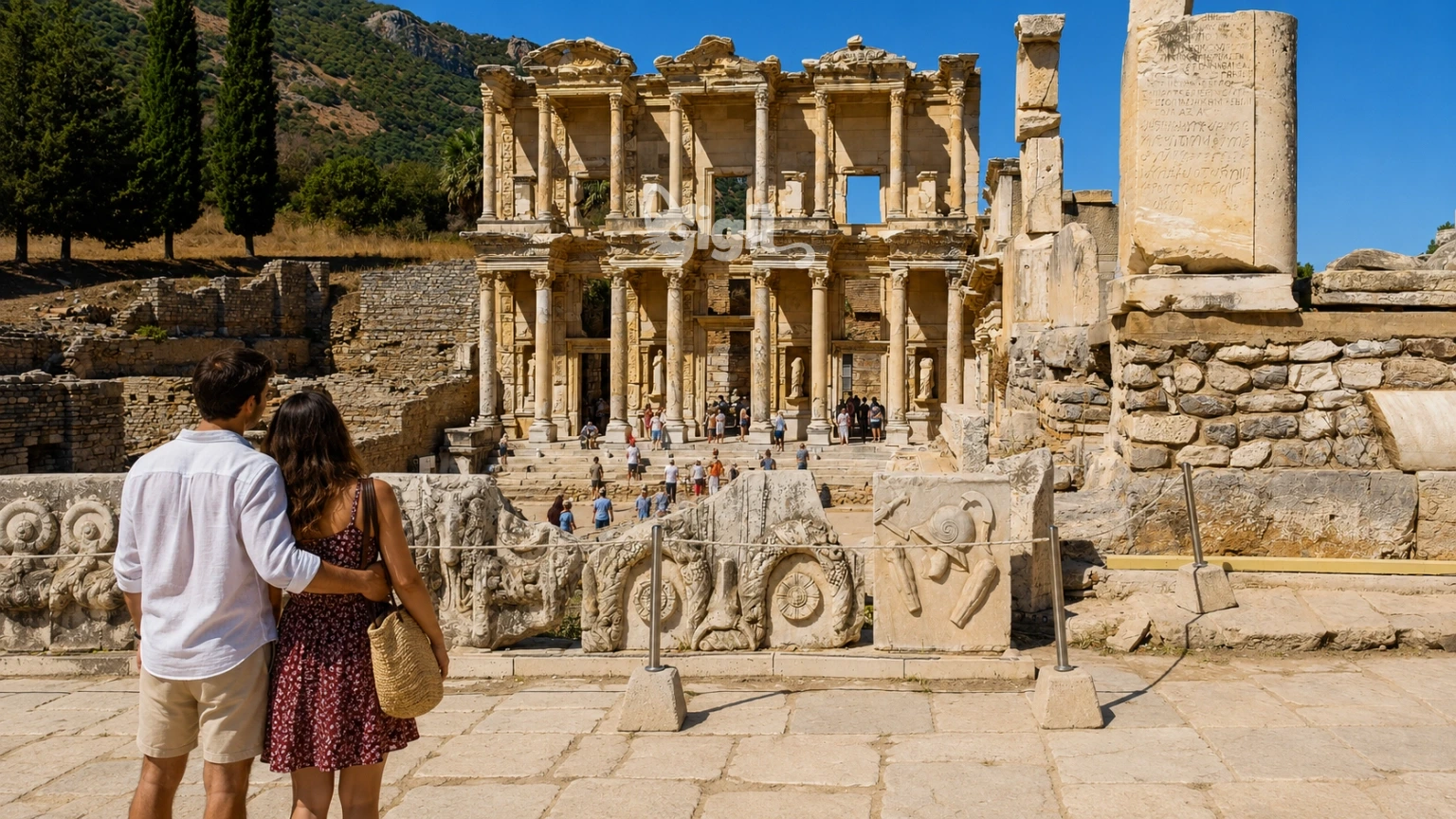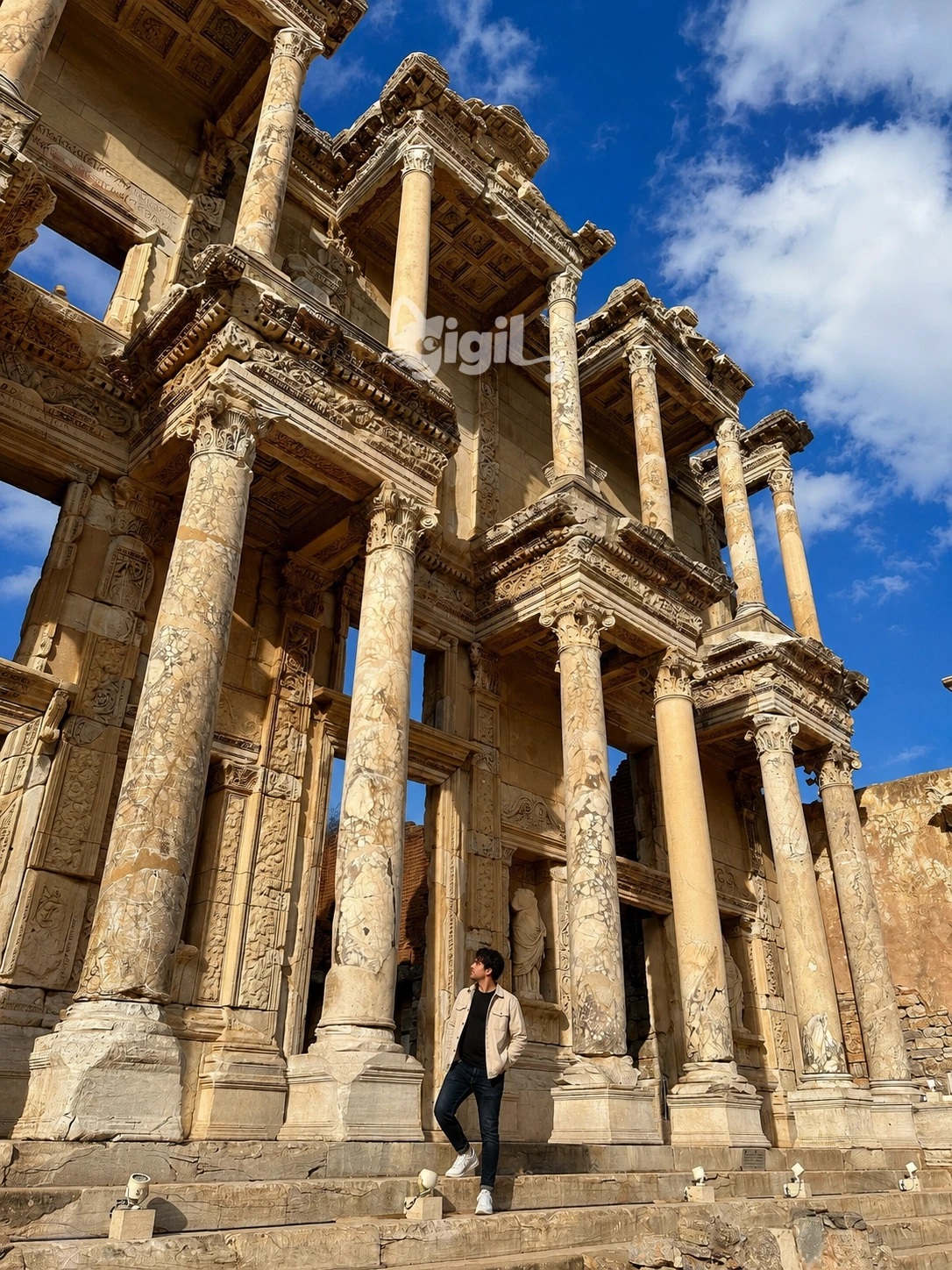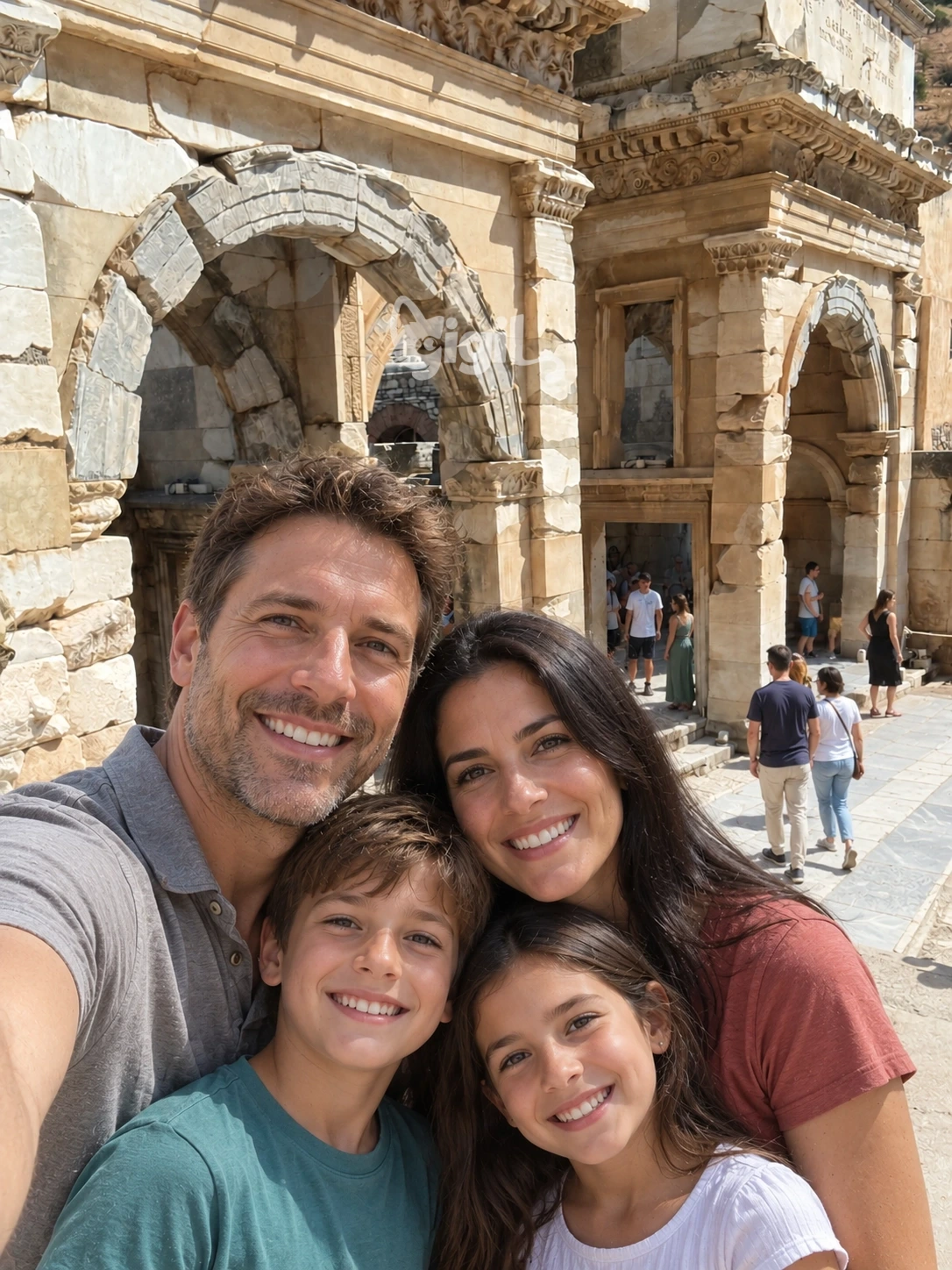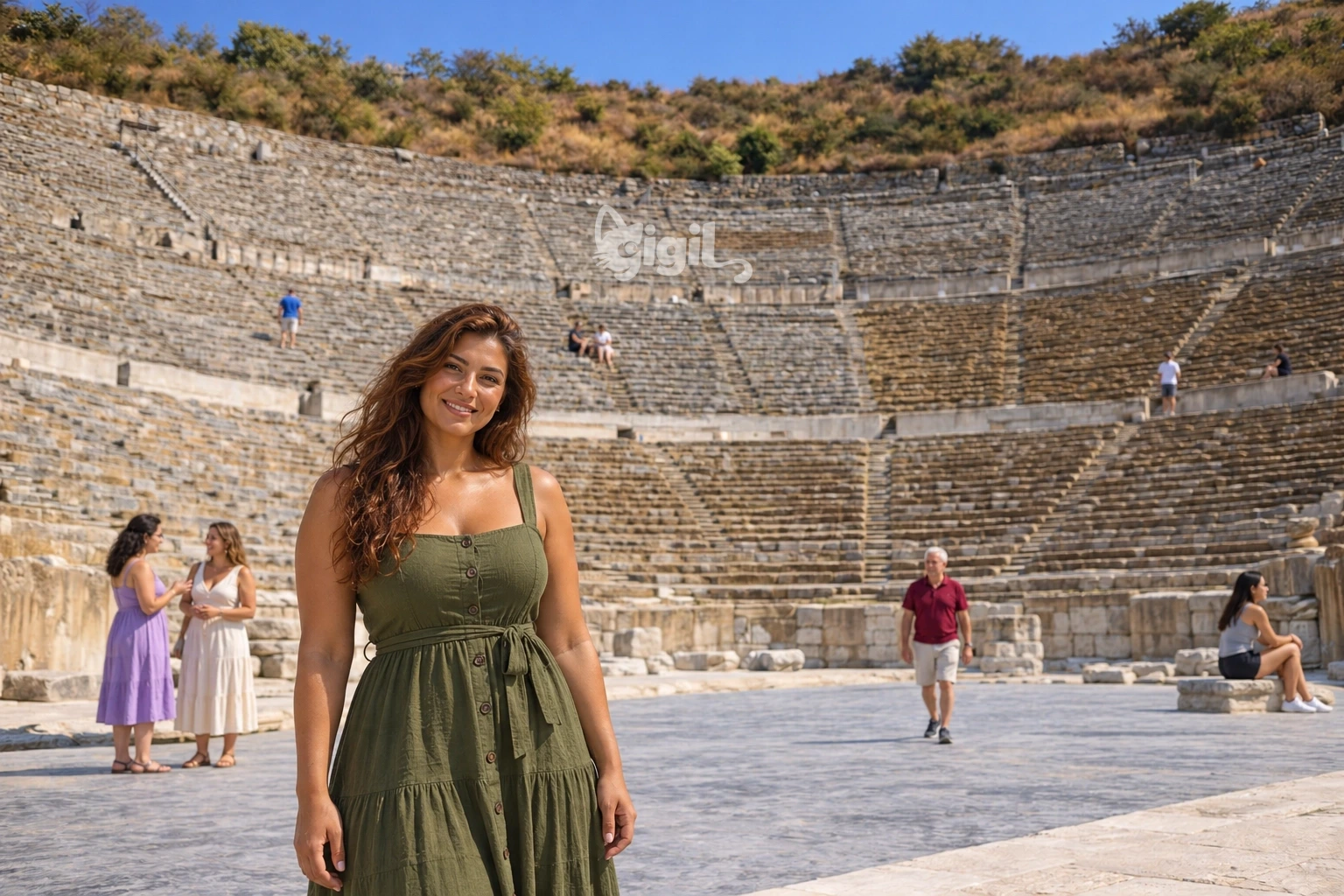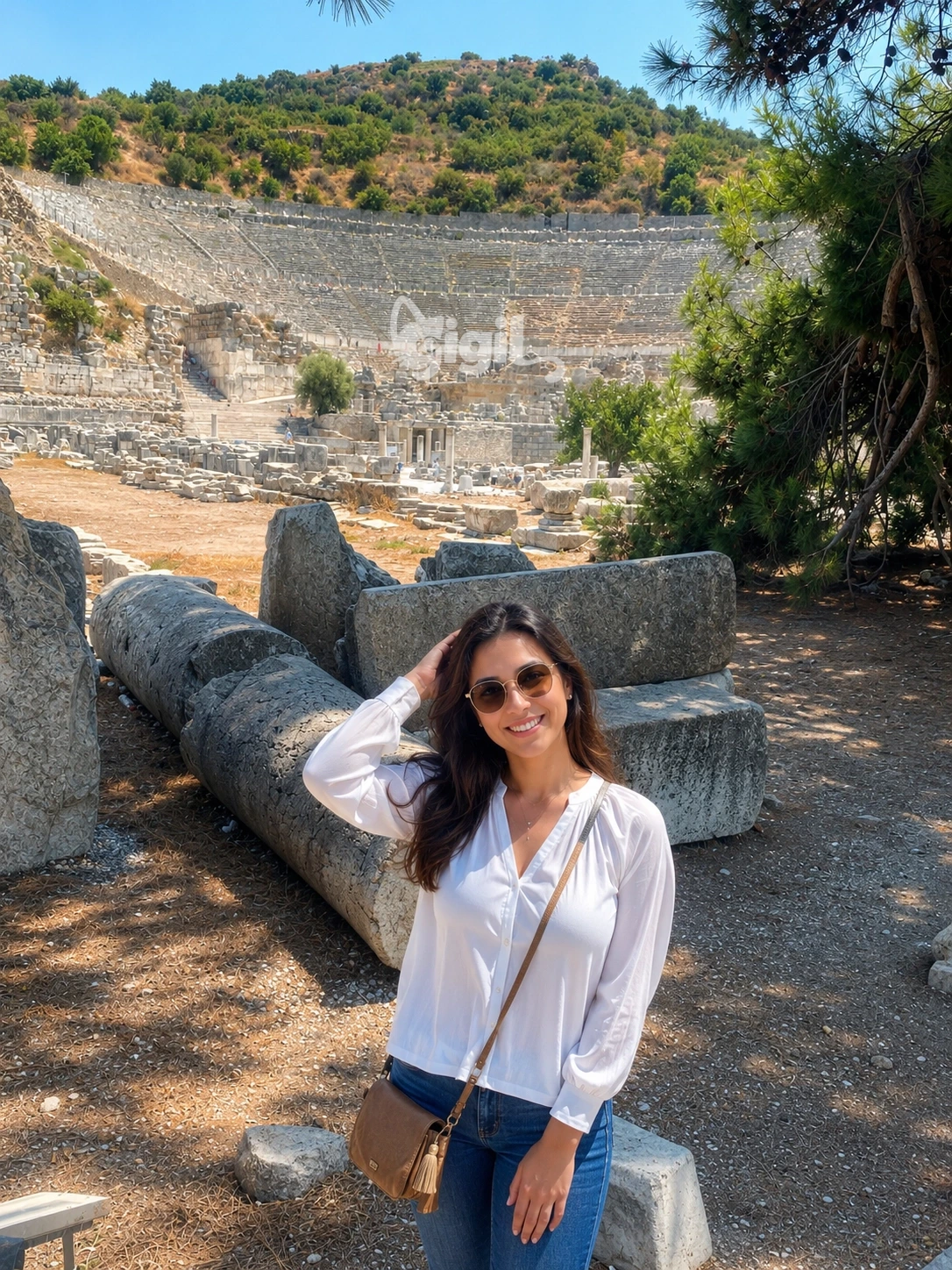








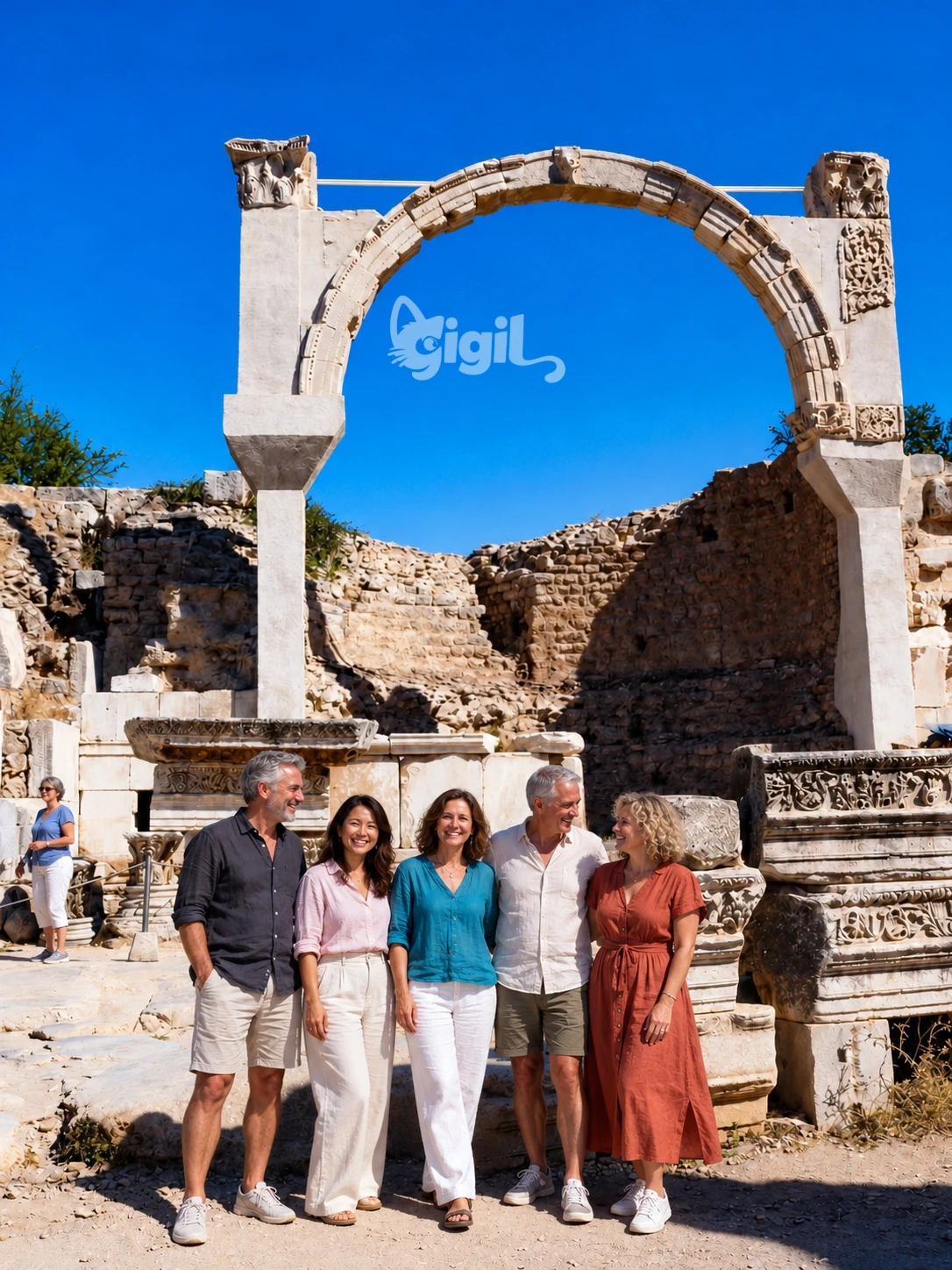
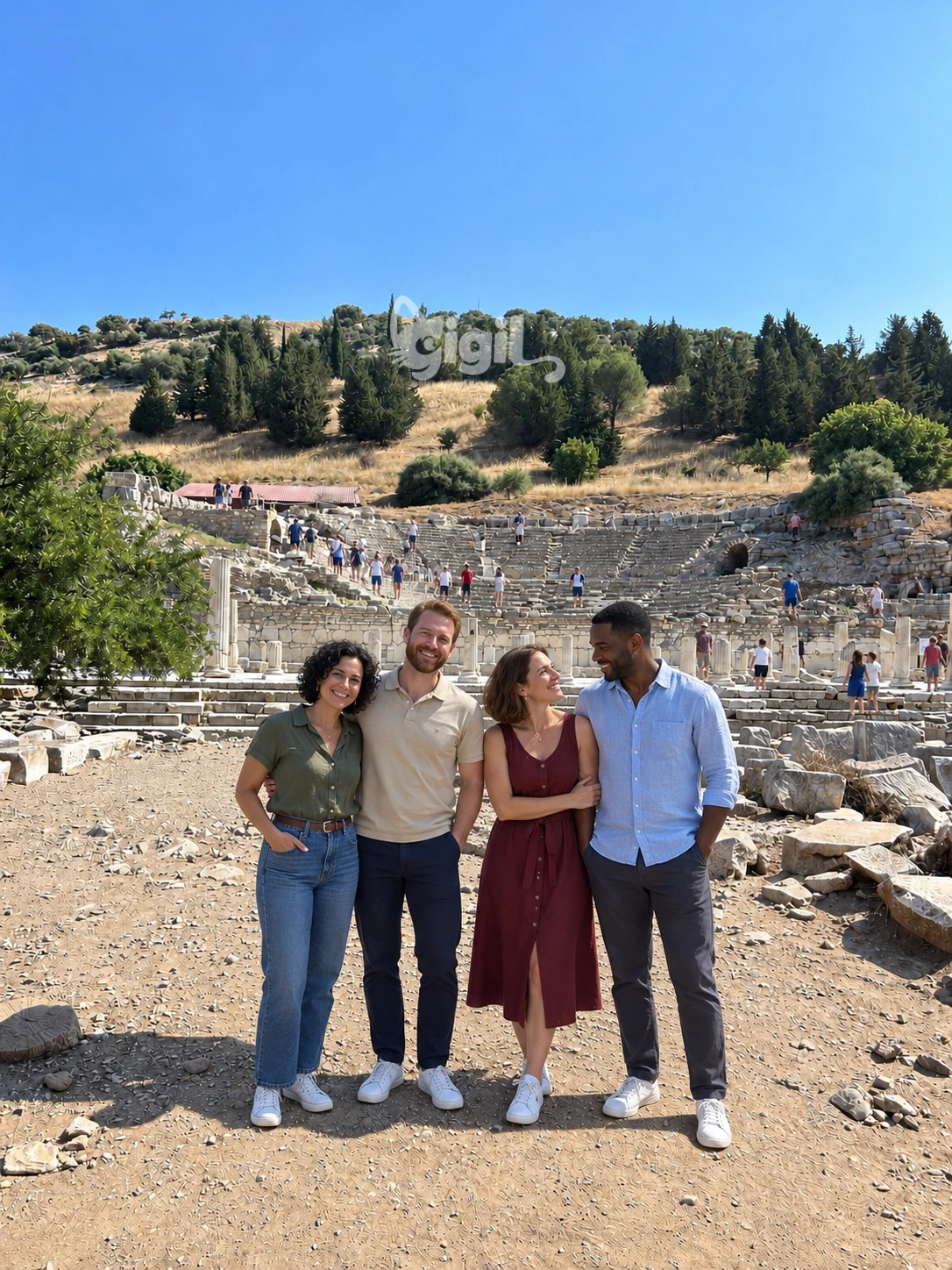
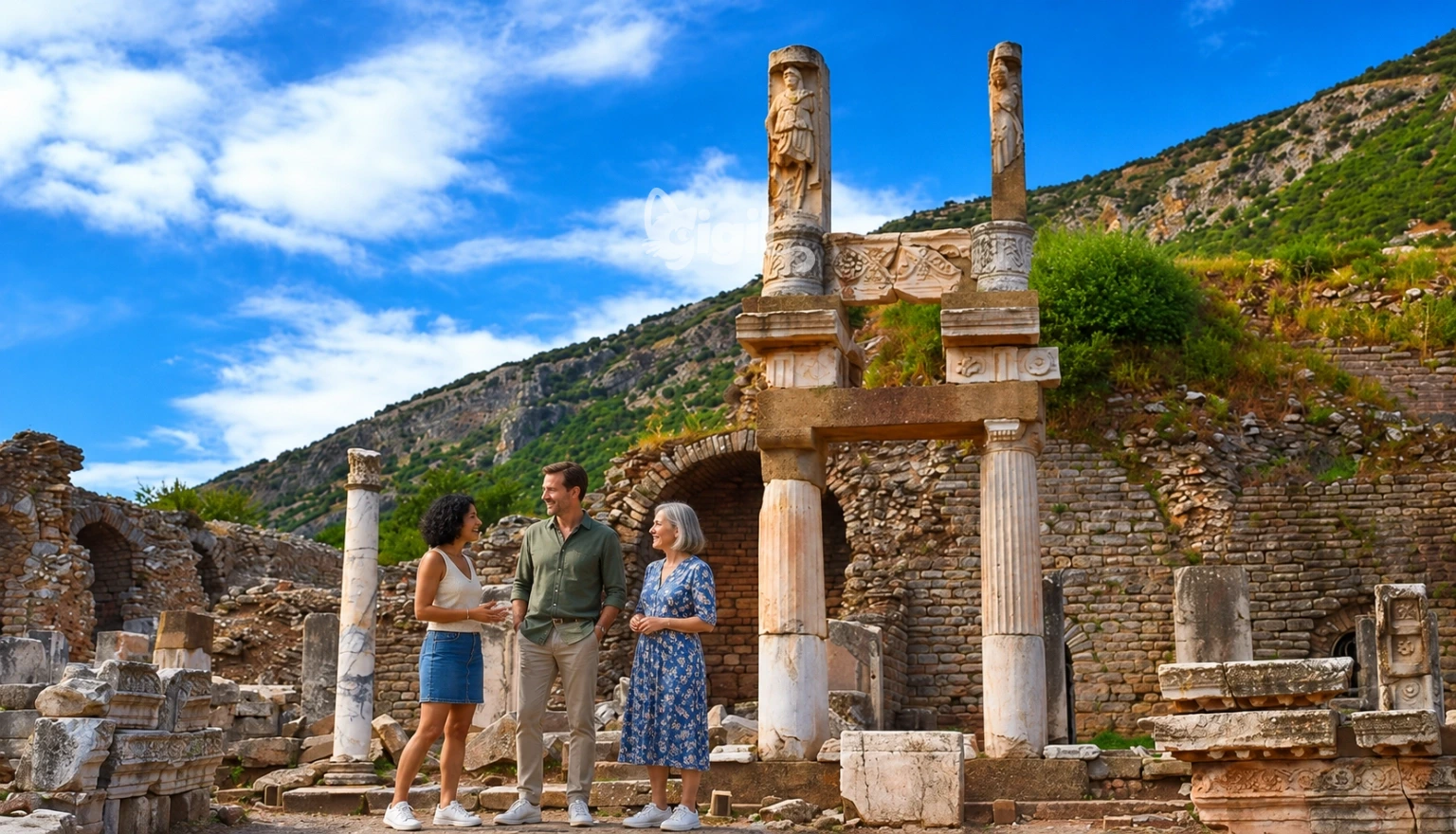
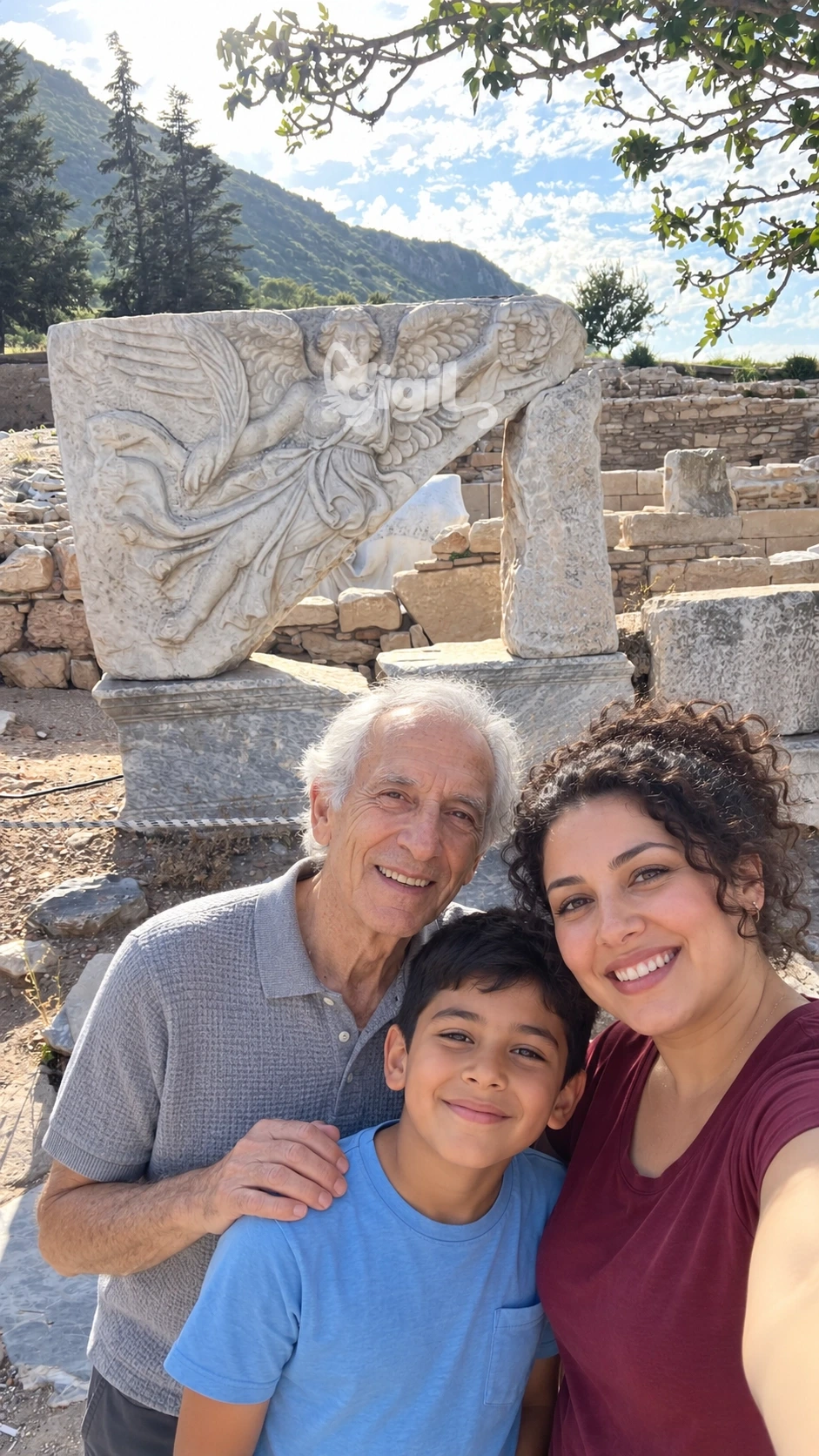

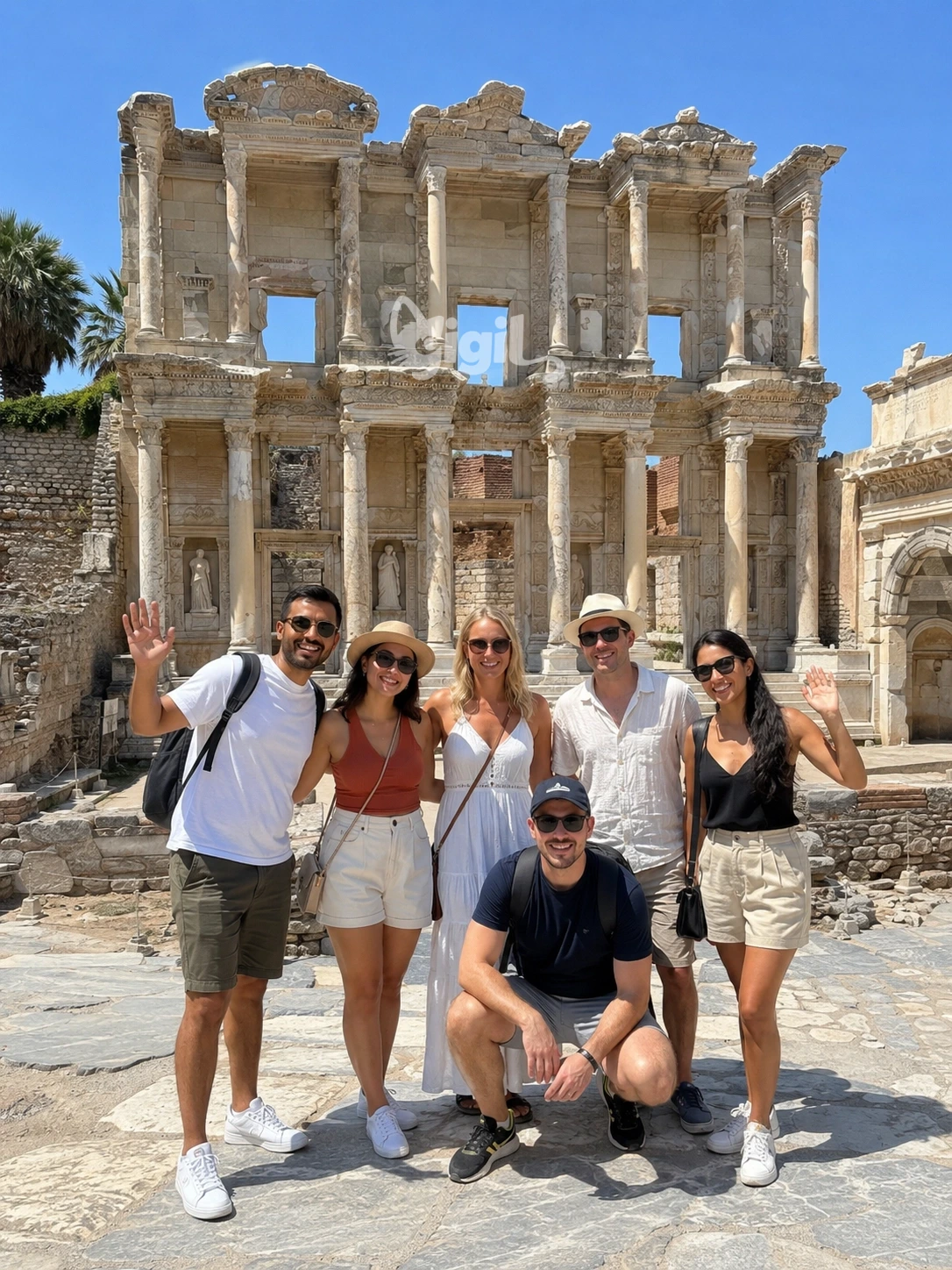
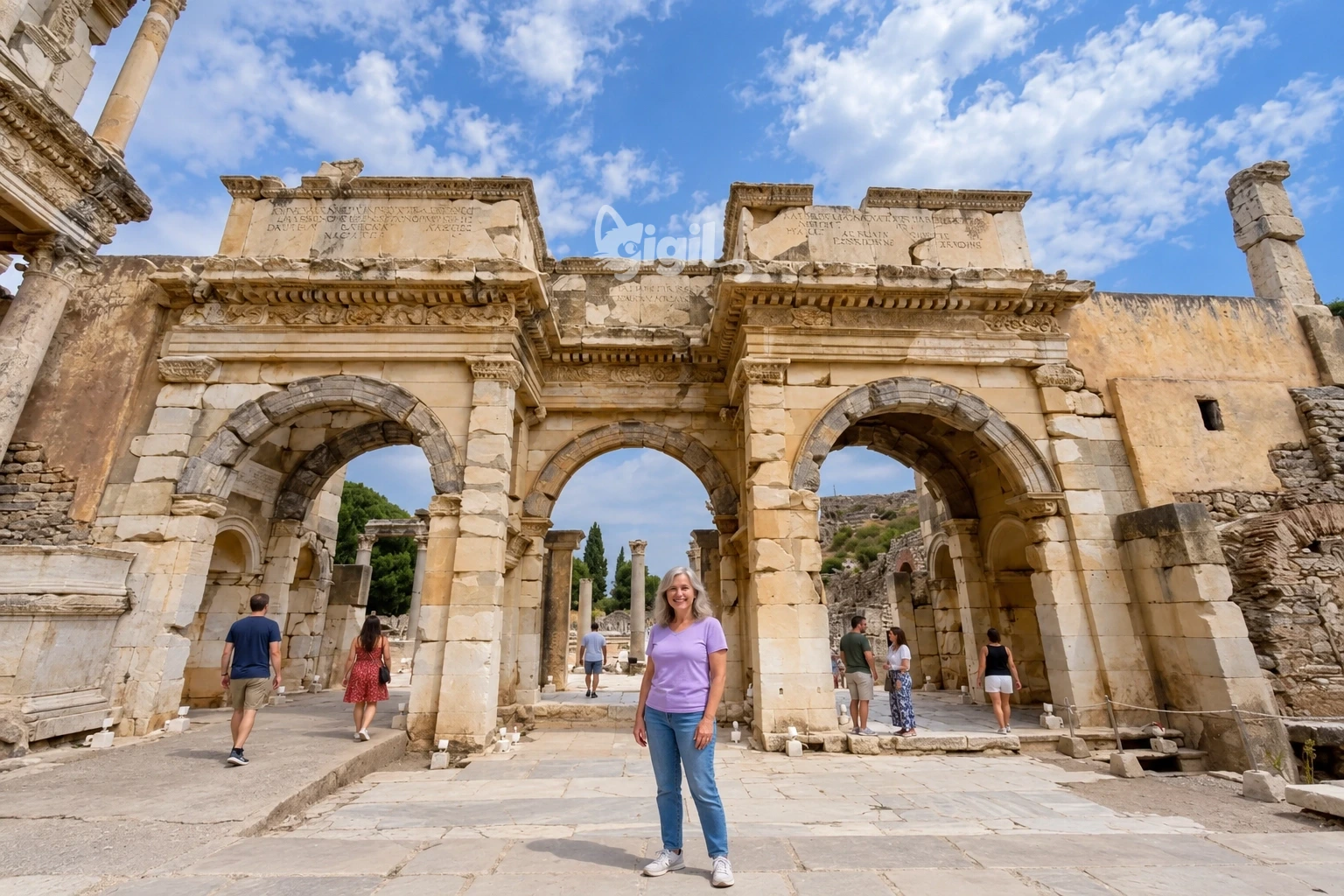
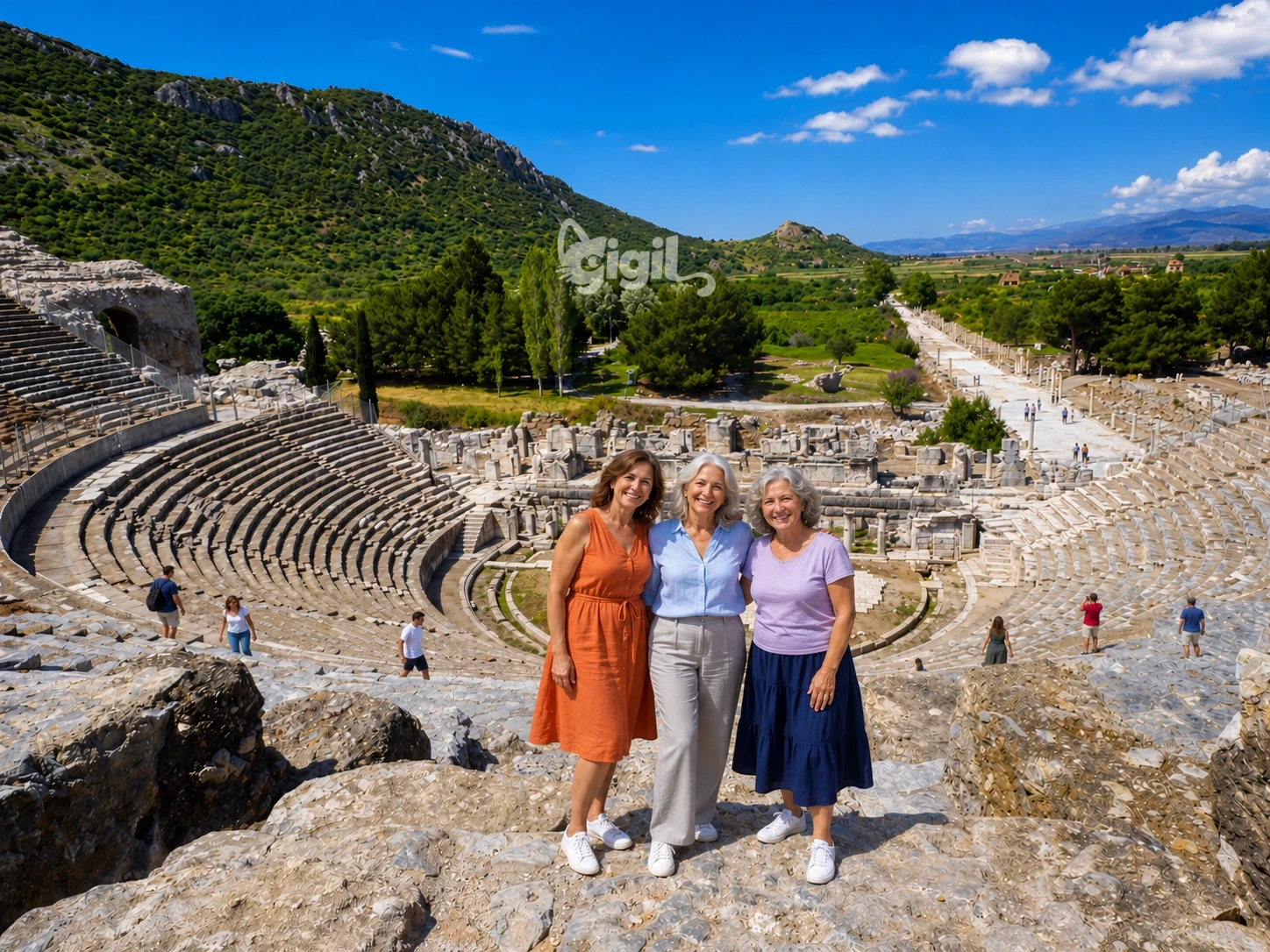
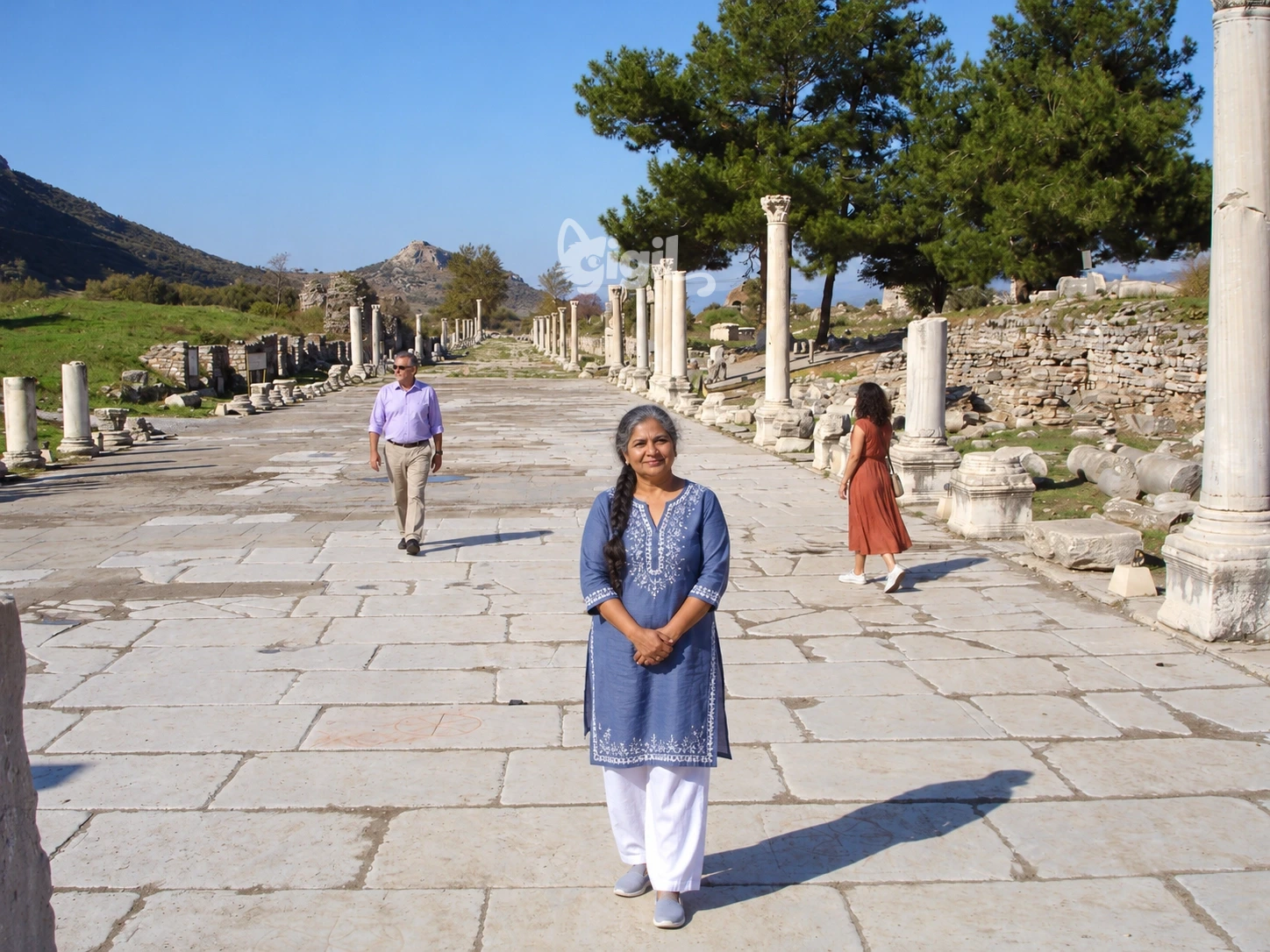
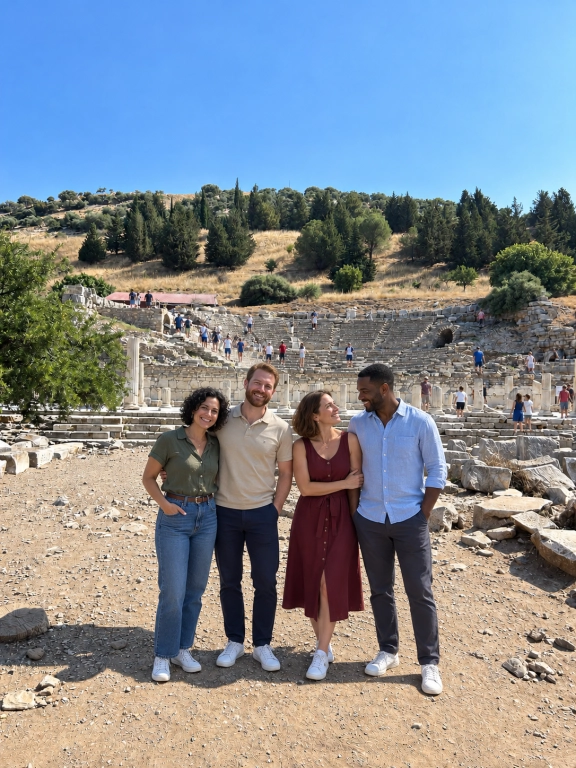
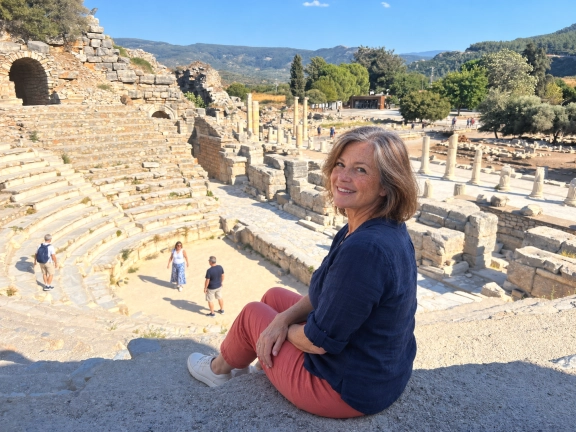
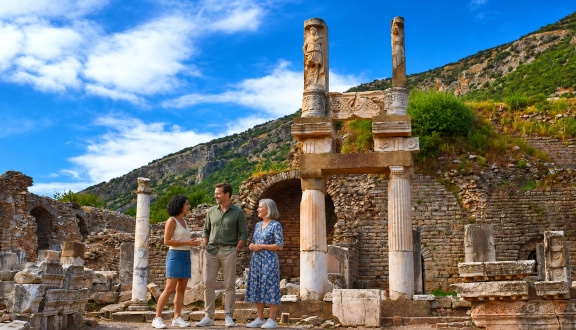
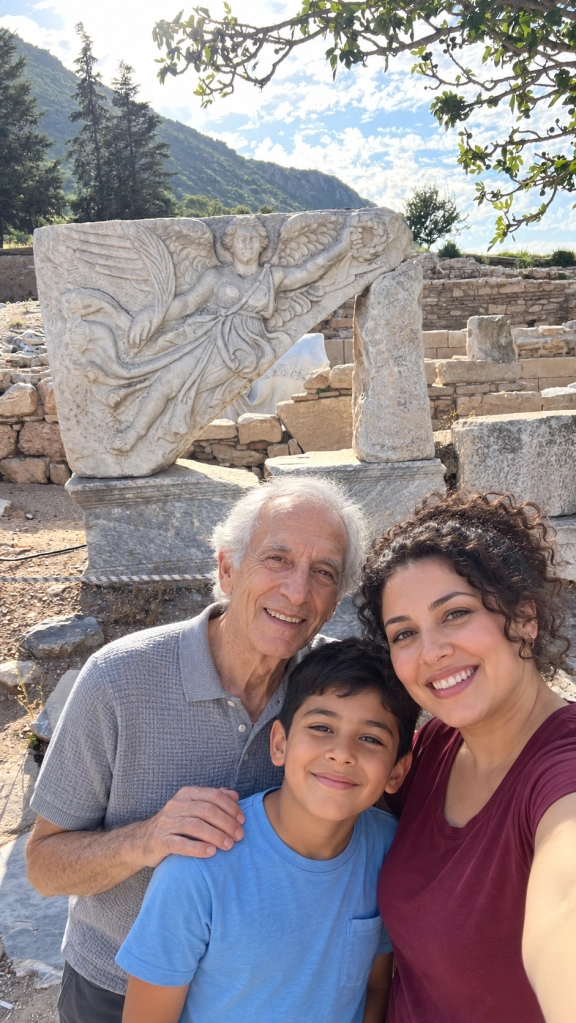
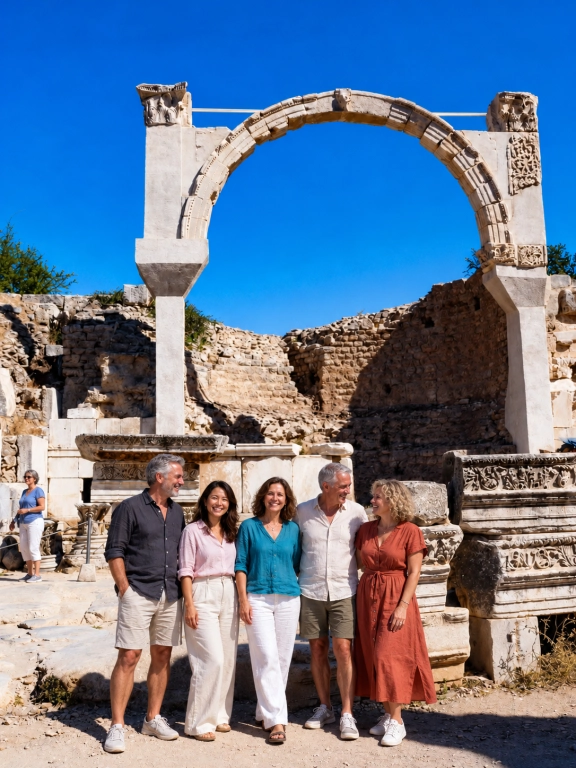
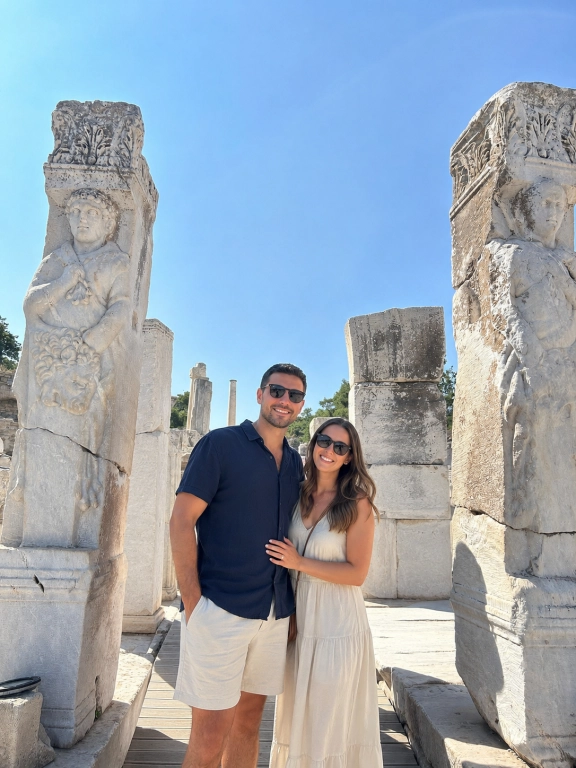
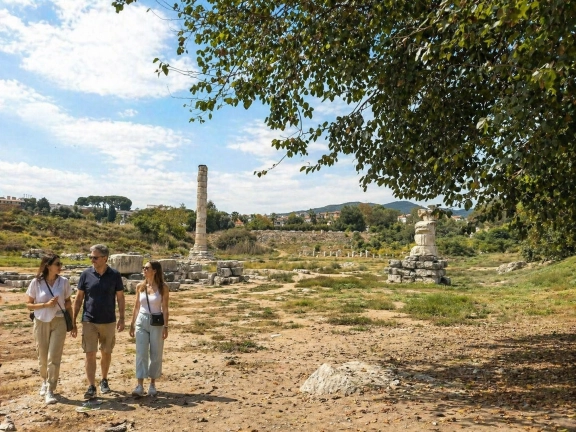
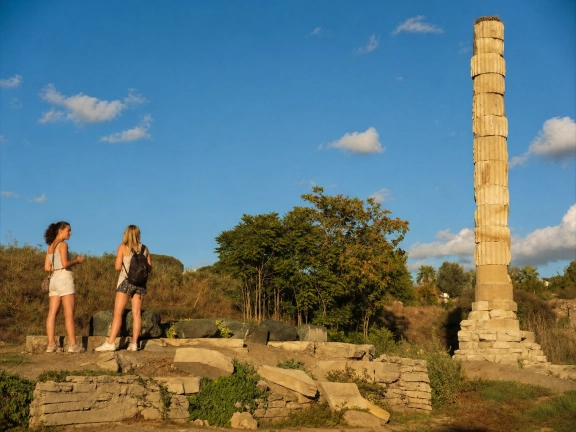
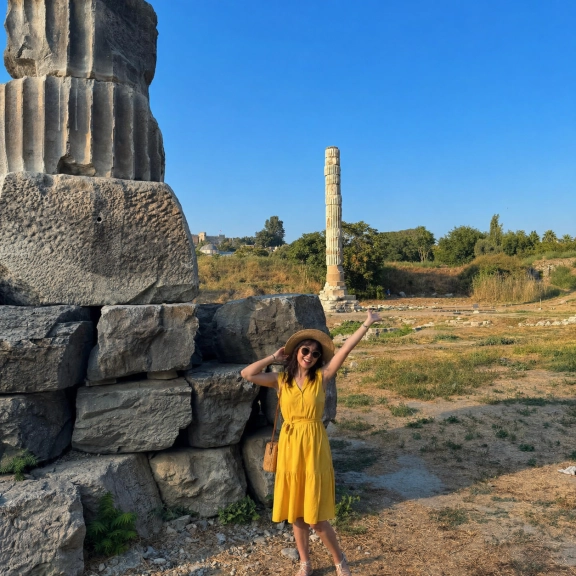


The public face of Ephesus emerges through its street network and monumental buildings. Look at how spaces join together: the city is more understandable as an urban setting than as a handful of famous views.
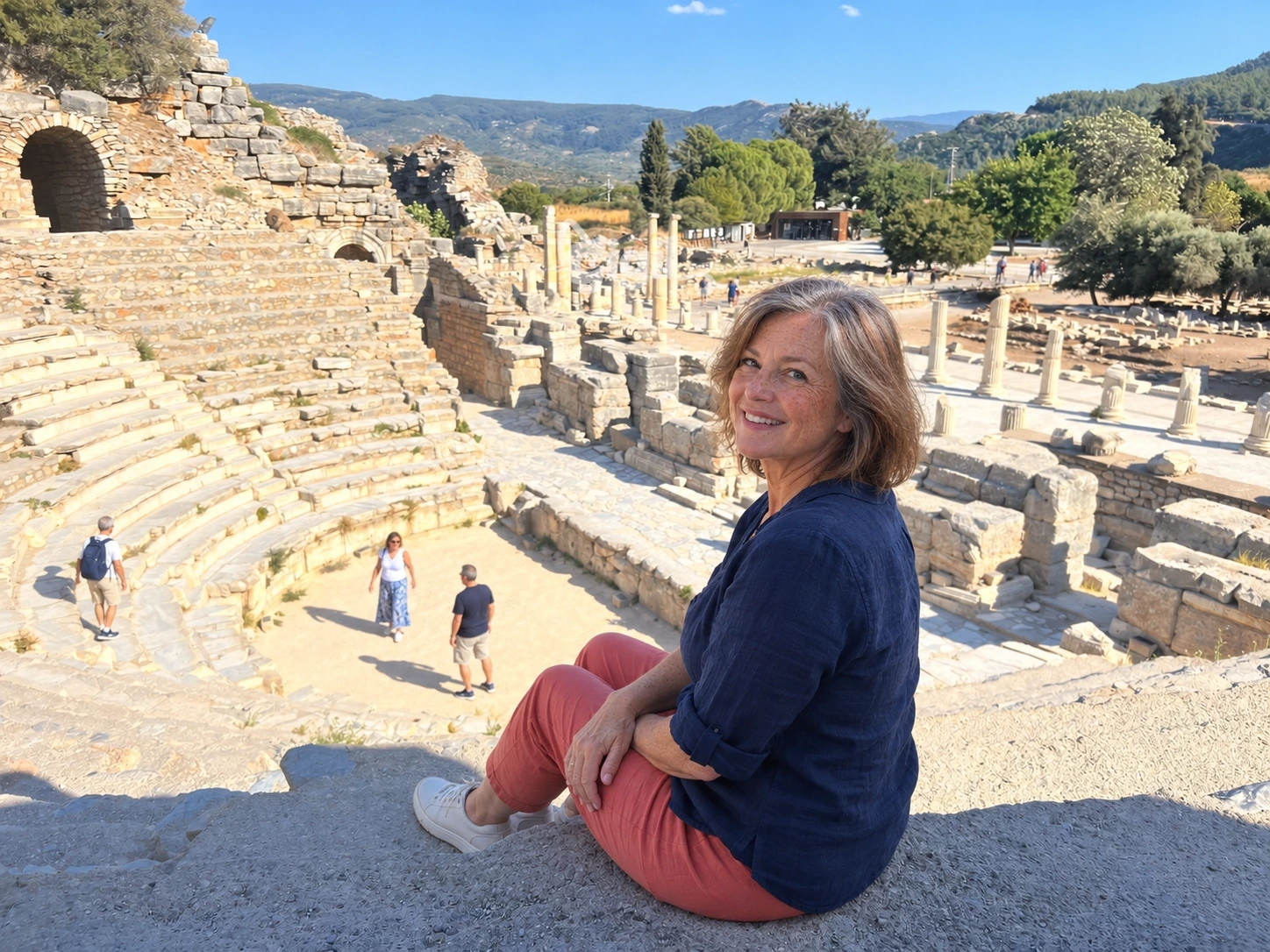
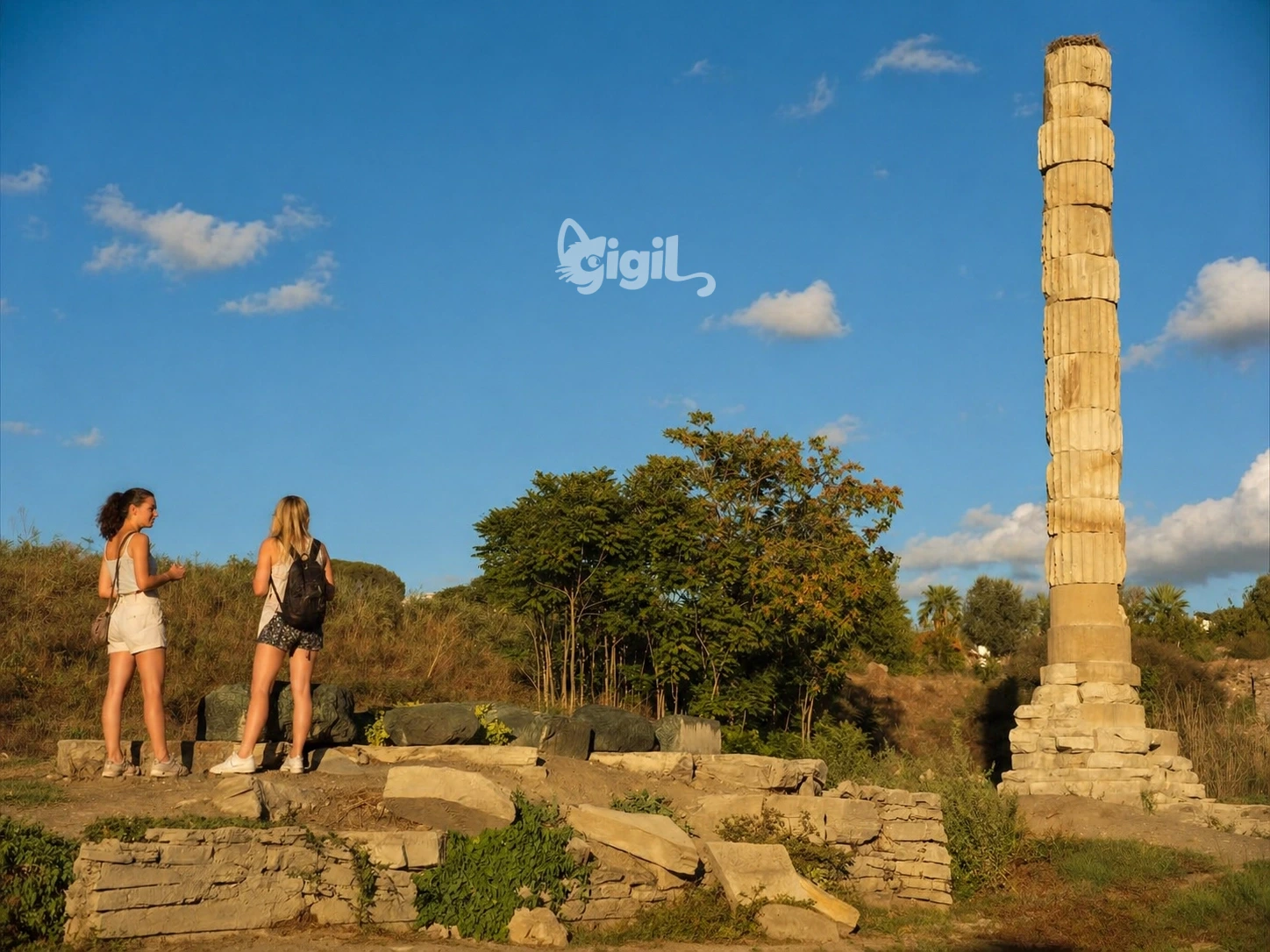
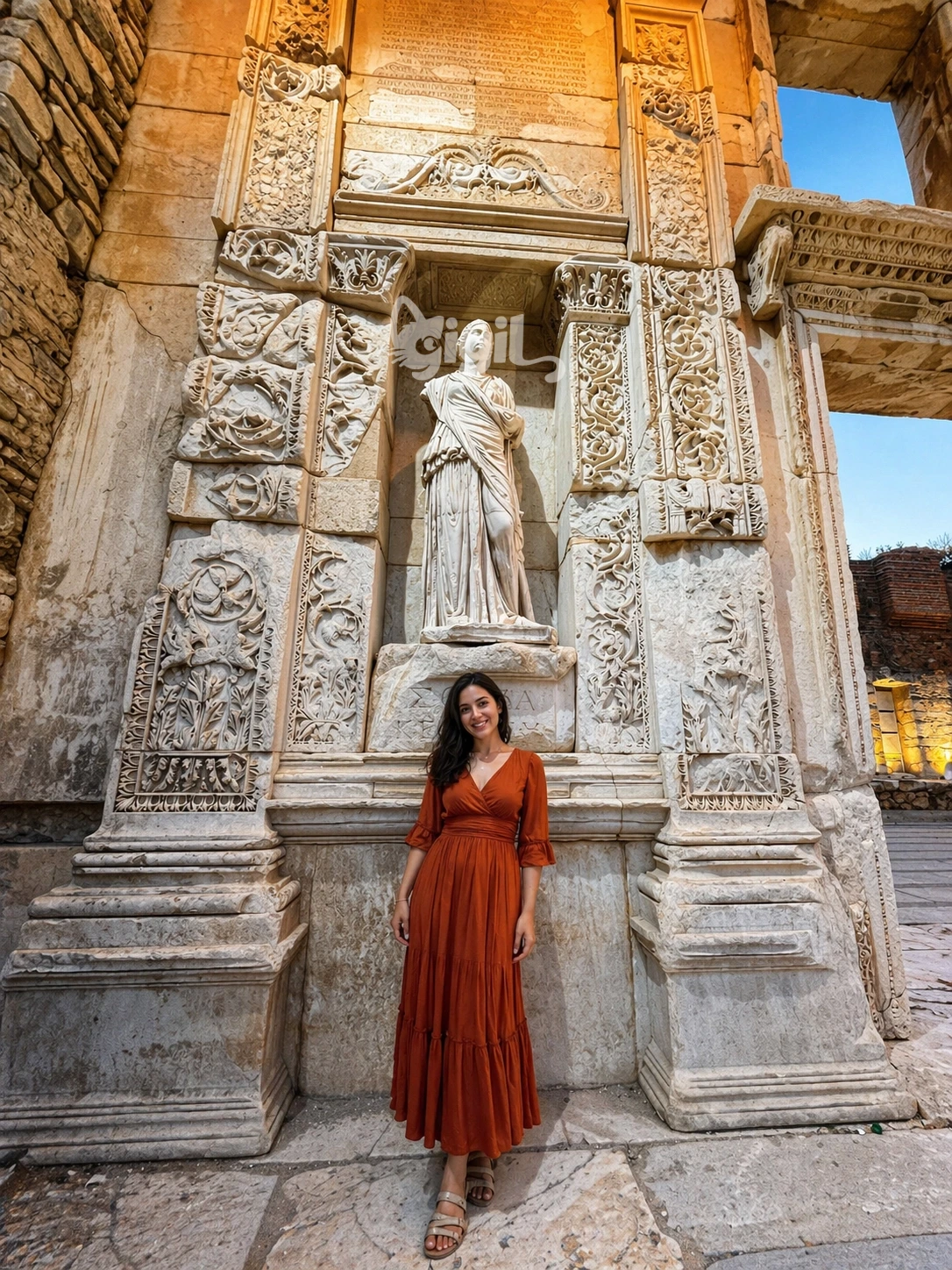
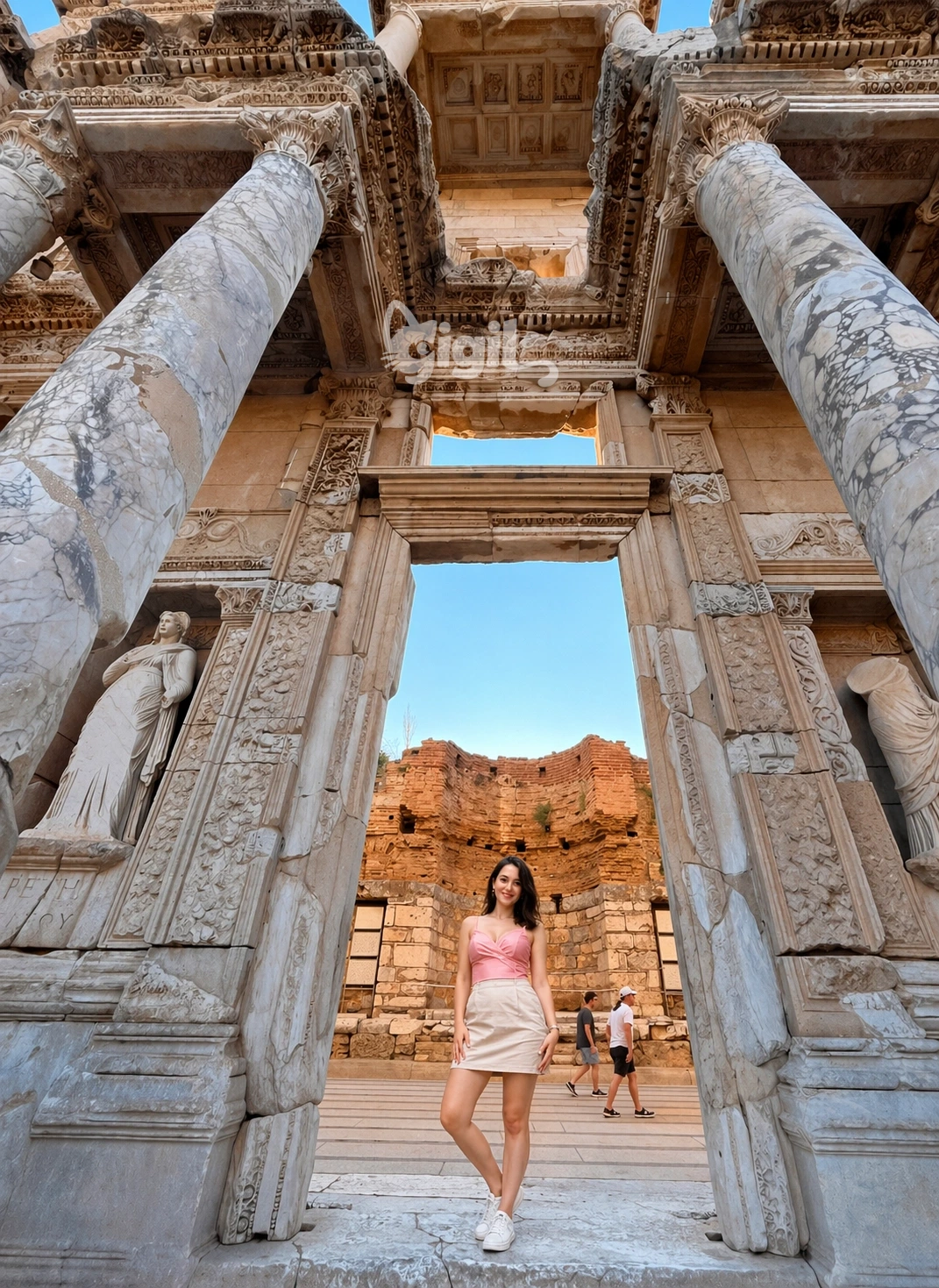
The Library of Celsus draws the eye through its facade, while the Great Theatre gives a sense of gathering on a different scale. Both belong to a landscape that changed through construction, reuse, decay and excavation; visible ruins should not be read as an untouched city.
Questions
What is a useful way to approach the site?
Read the streets and public spaces together, using the major buildings as landmarks within the wider archaeological city.
What does the library facade tell a visitor?
It shows the importance of architectural display in public life, while its reassembled state also reflects modern conservation work.
What should I look for at the Great Theatre?
Notice the form and breadth of the seating as evidence of an architectural space intended for a large gathered audience.
Why is there more than one historical layer?
Ephesus was inhabited and adapted across many centuries, so its remains combine different building phases rather than one single moment.