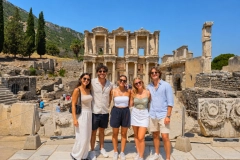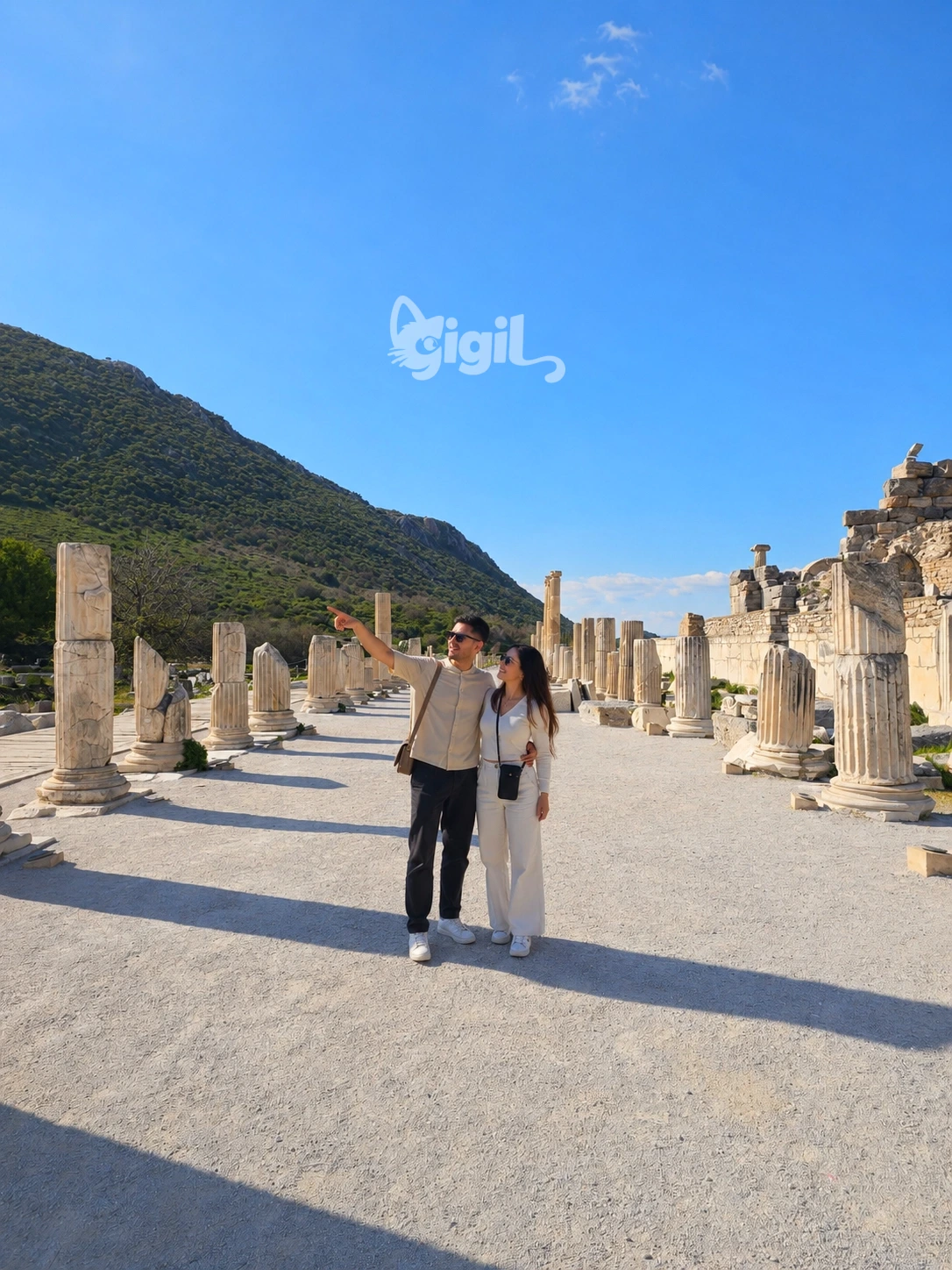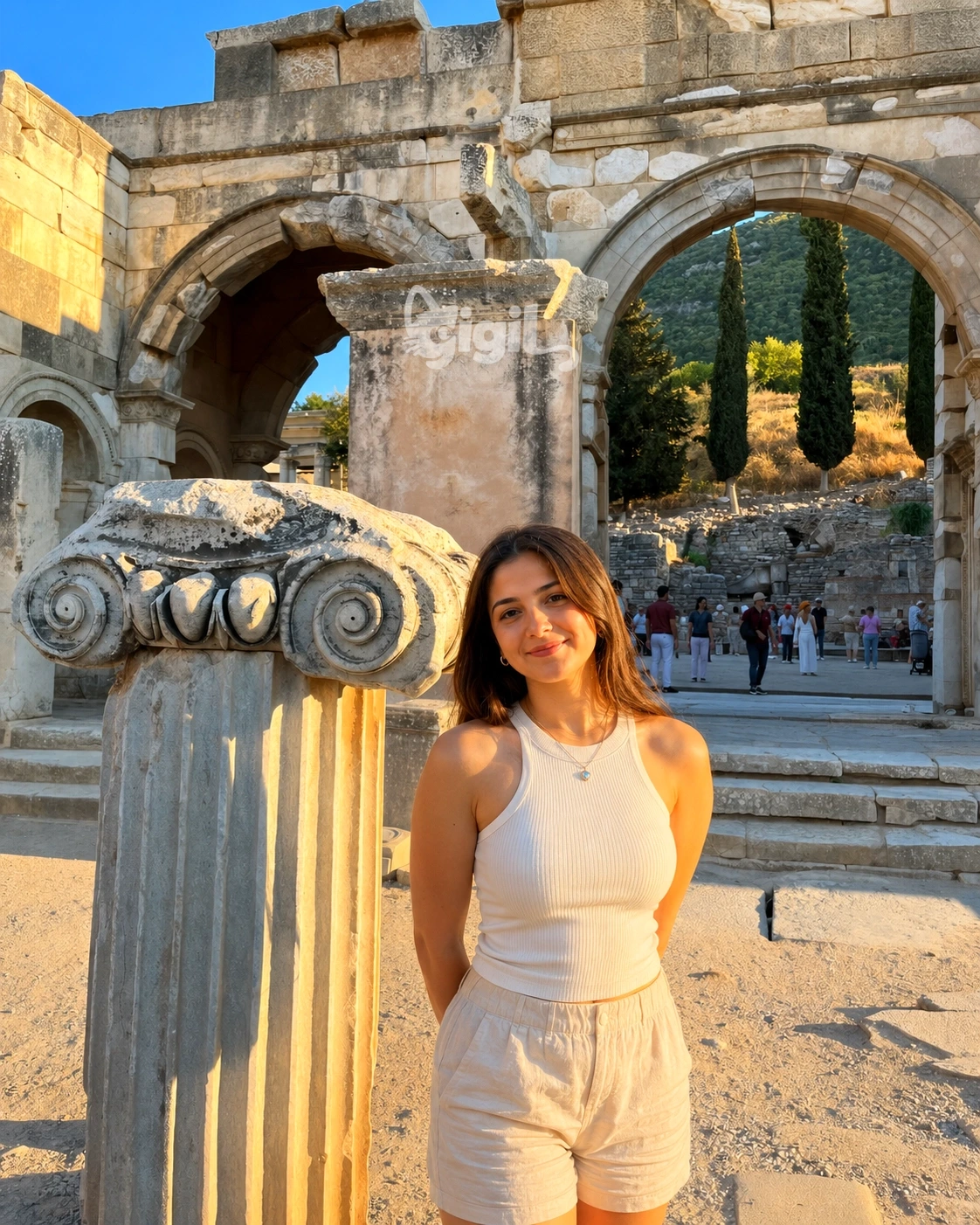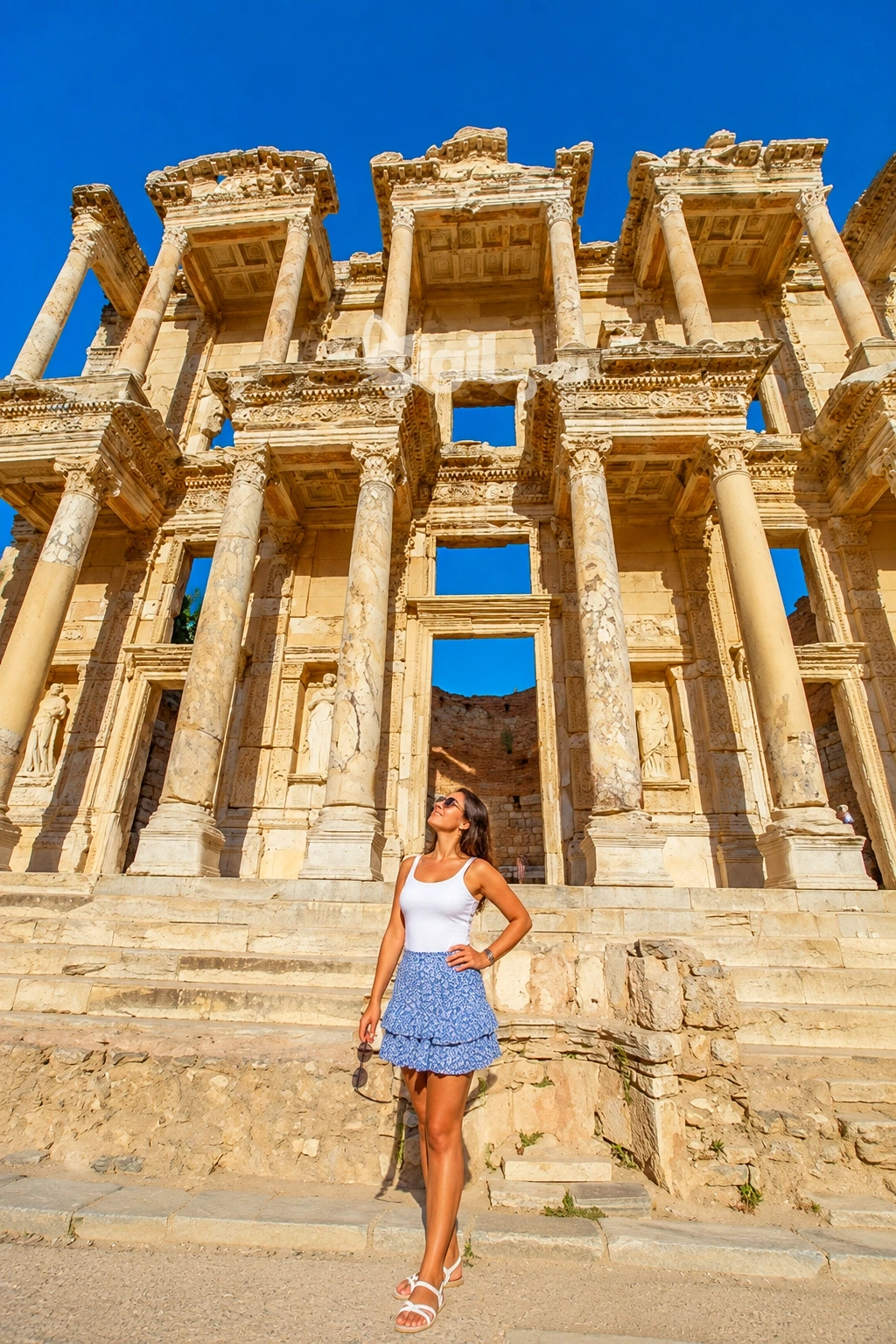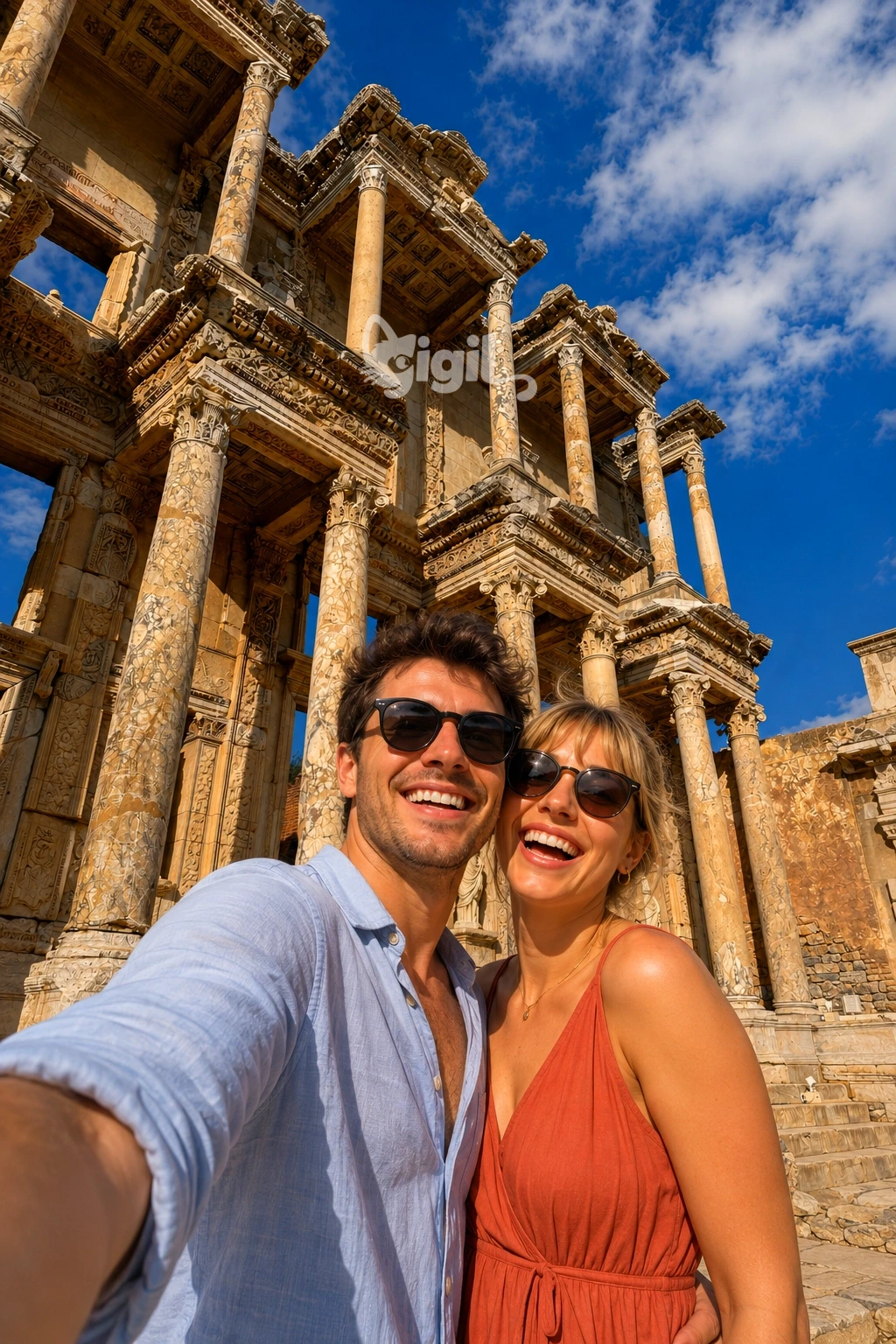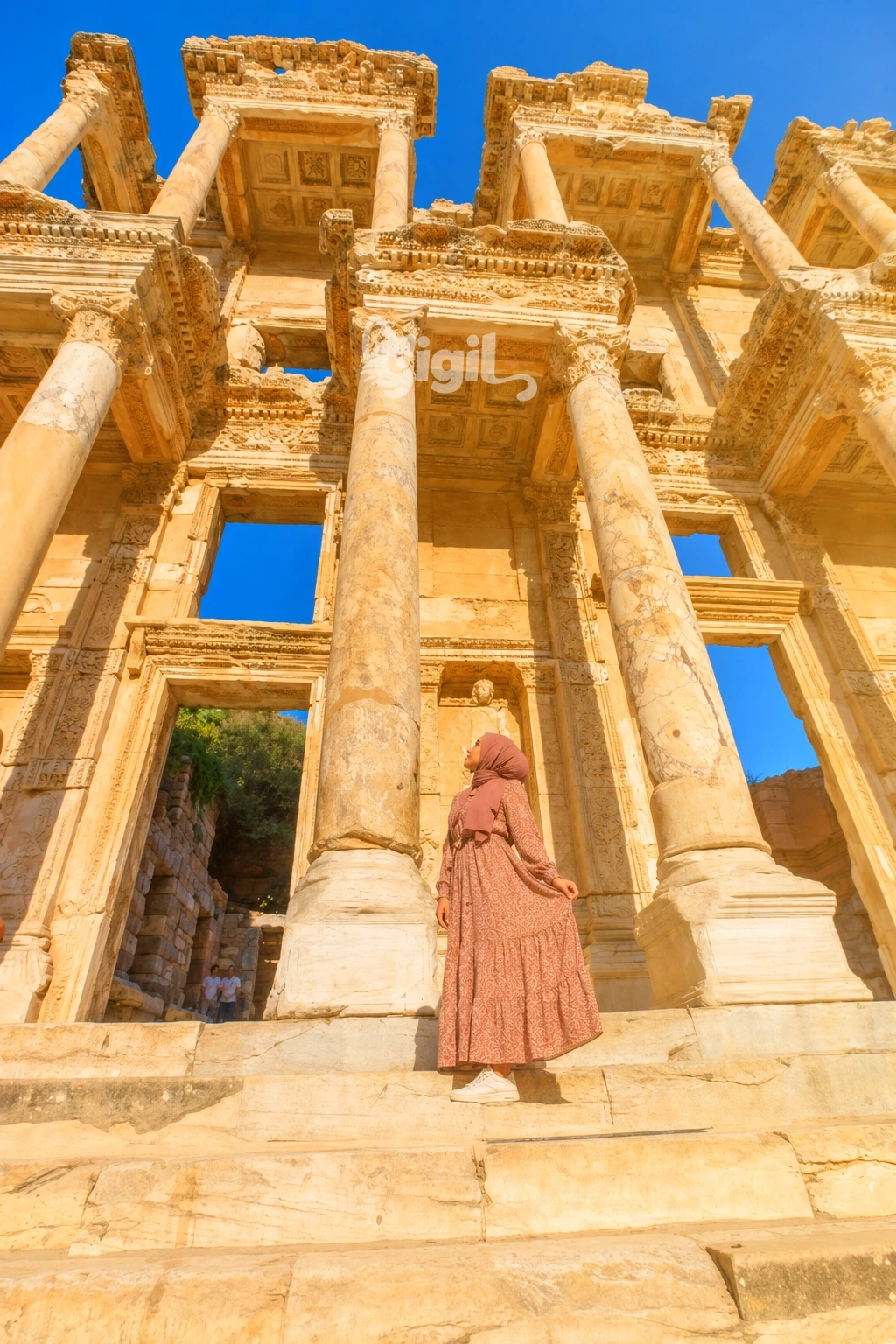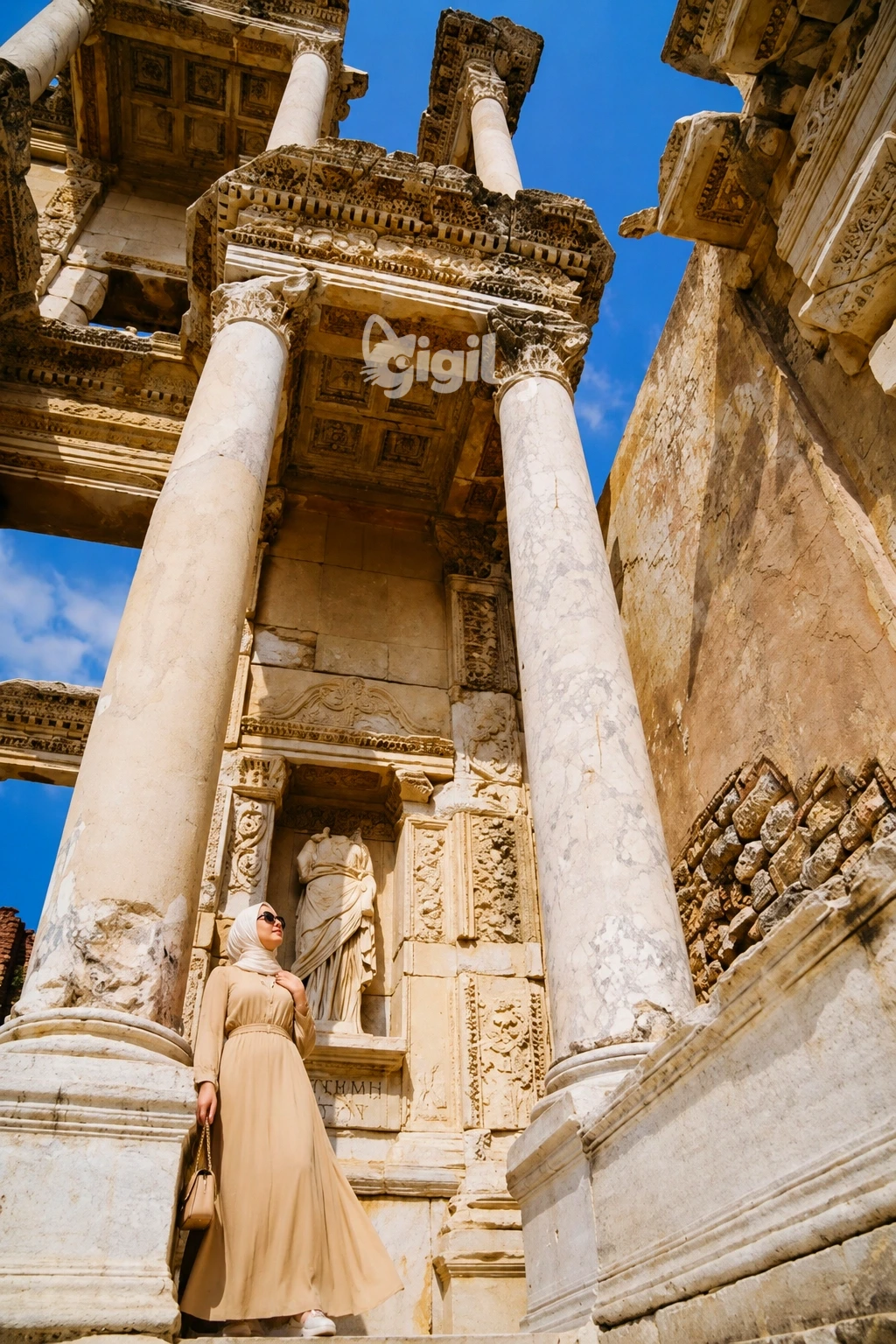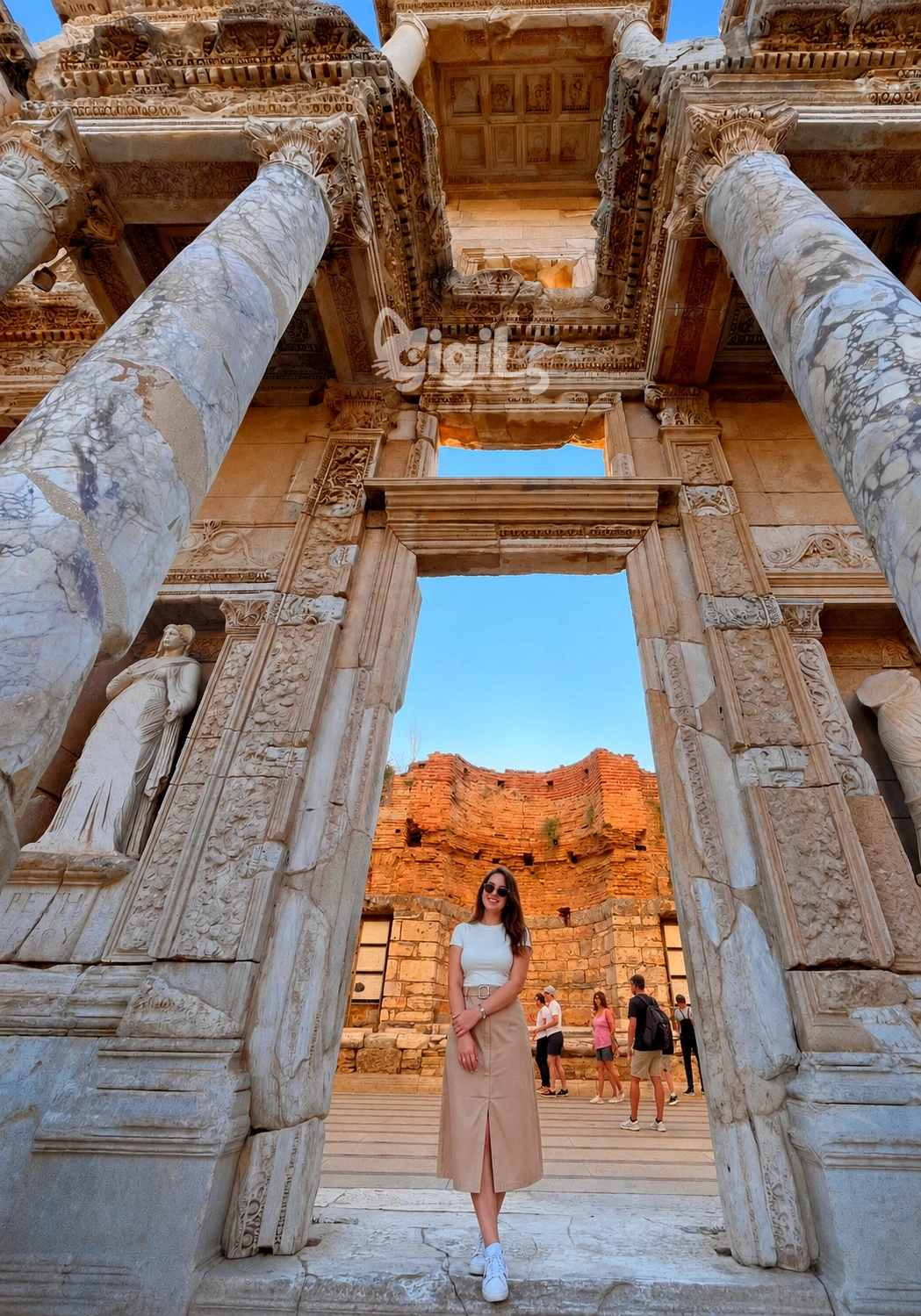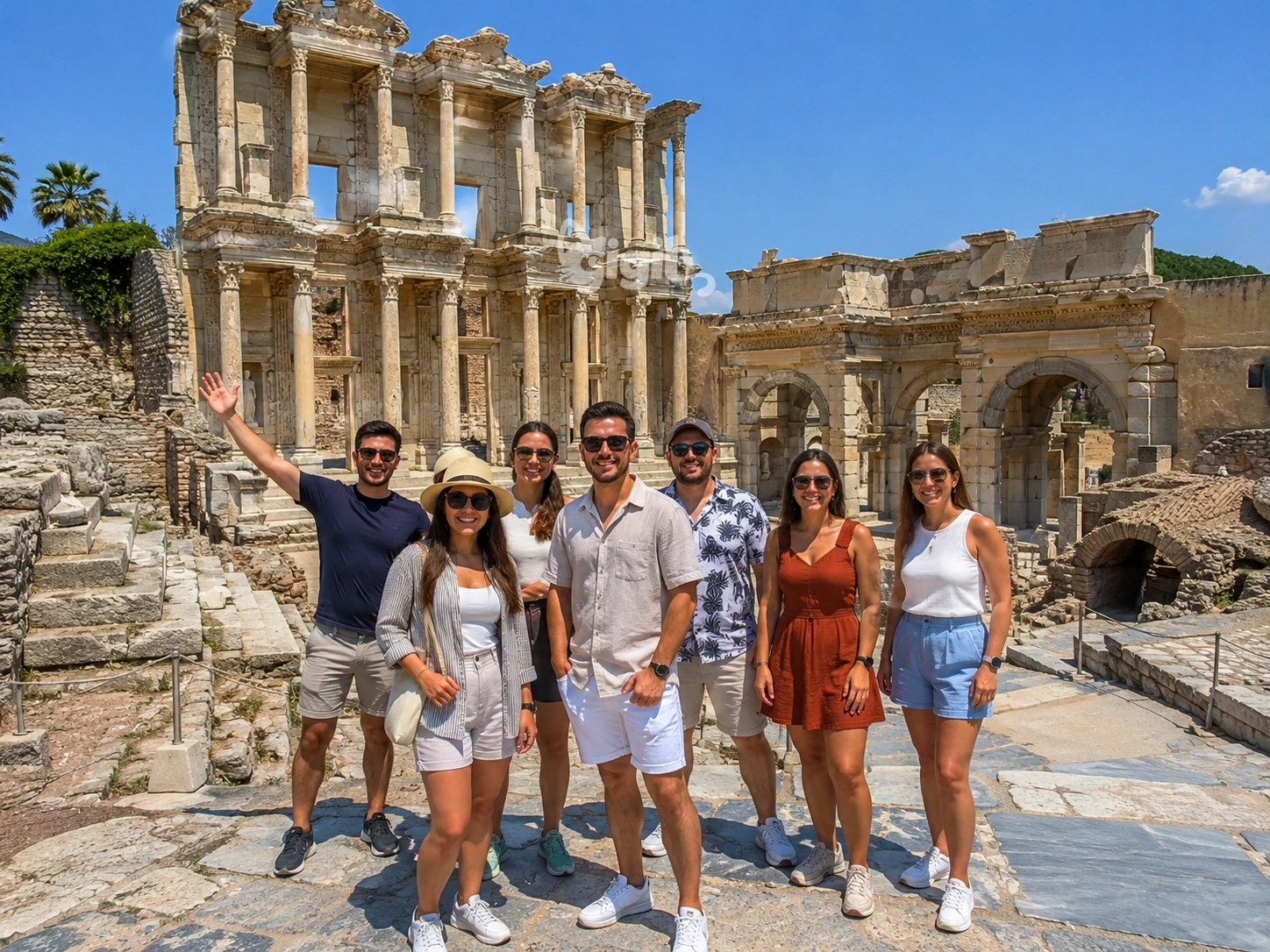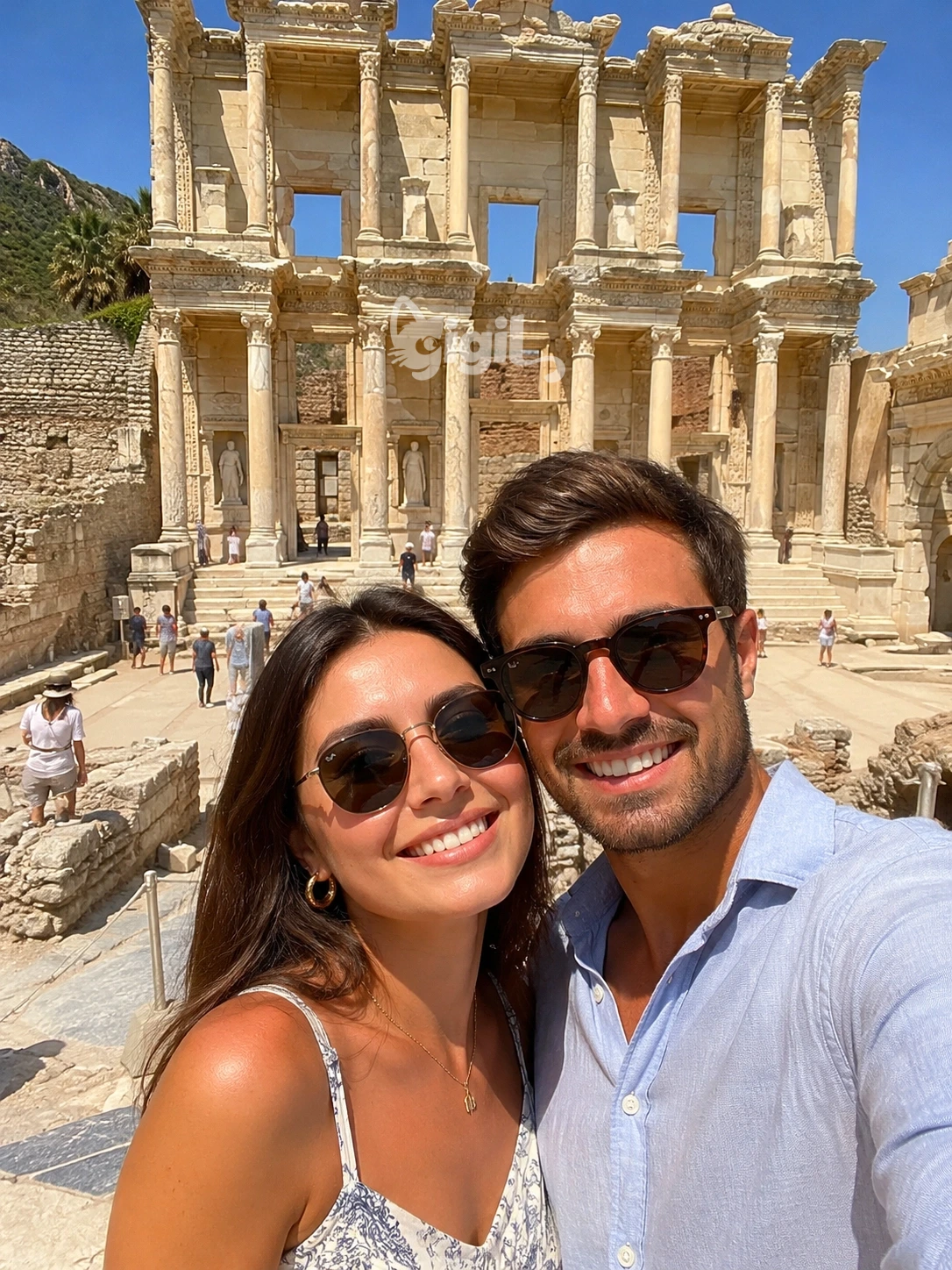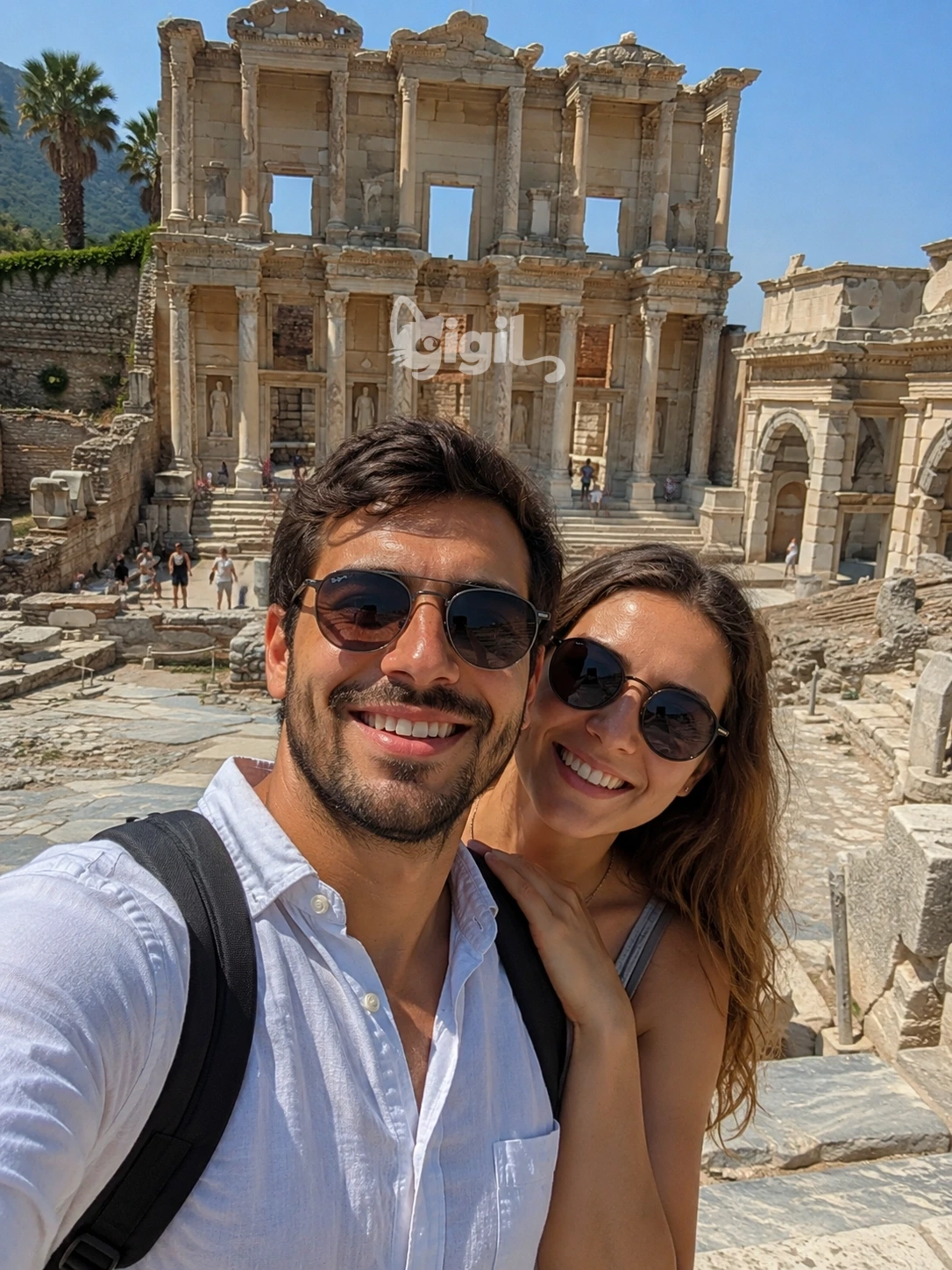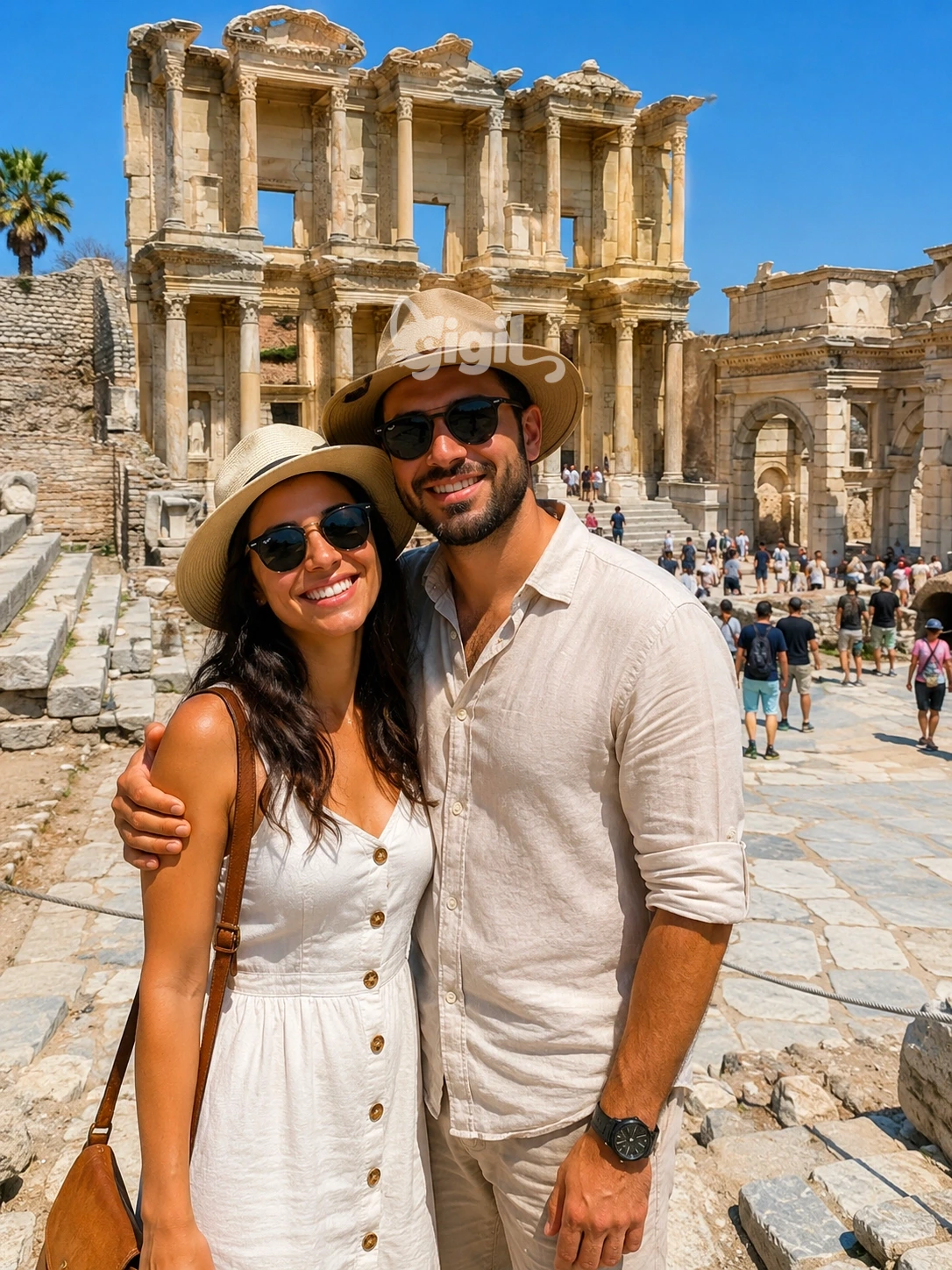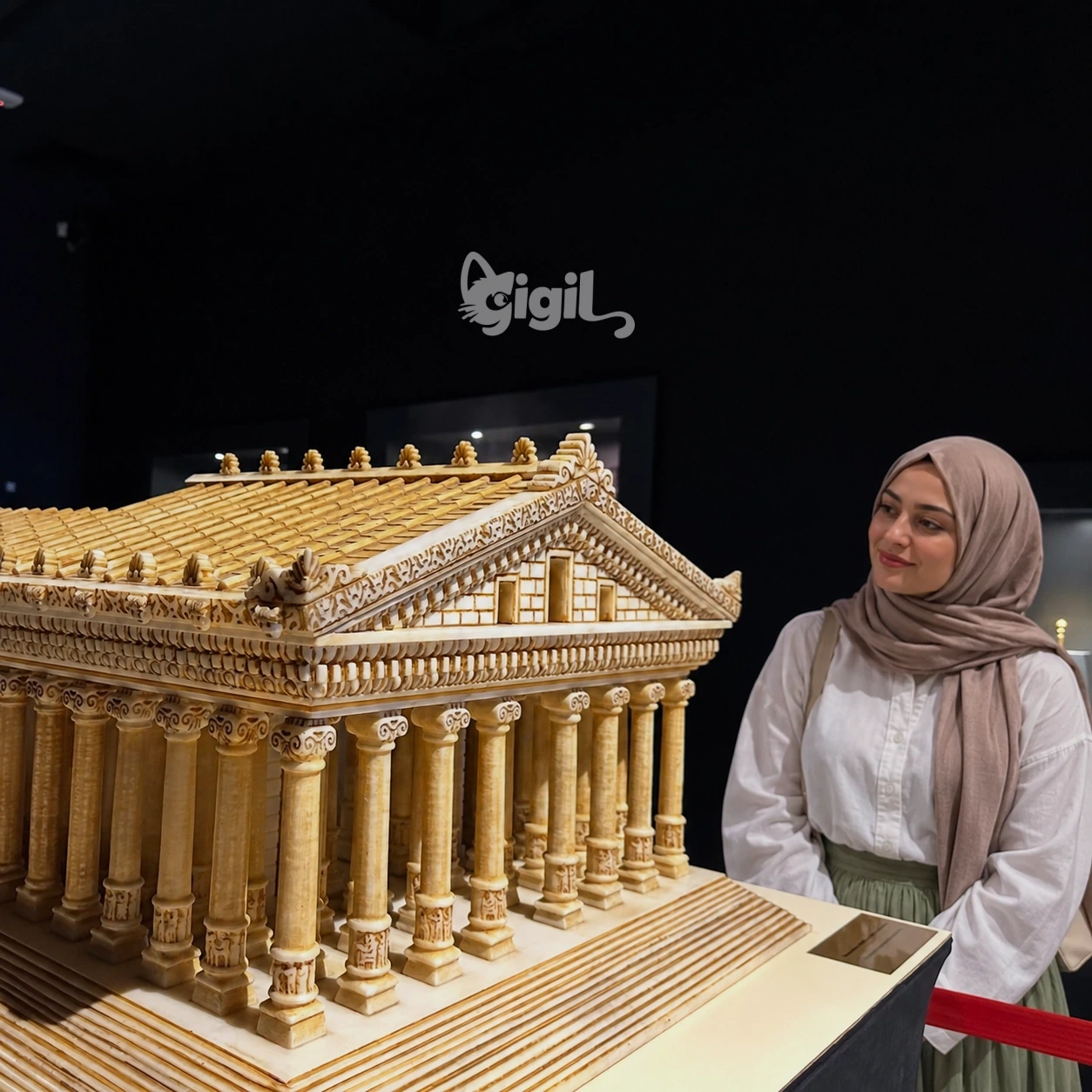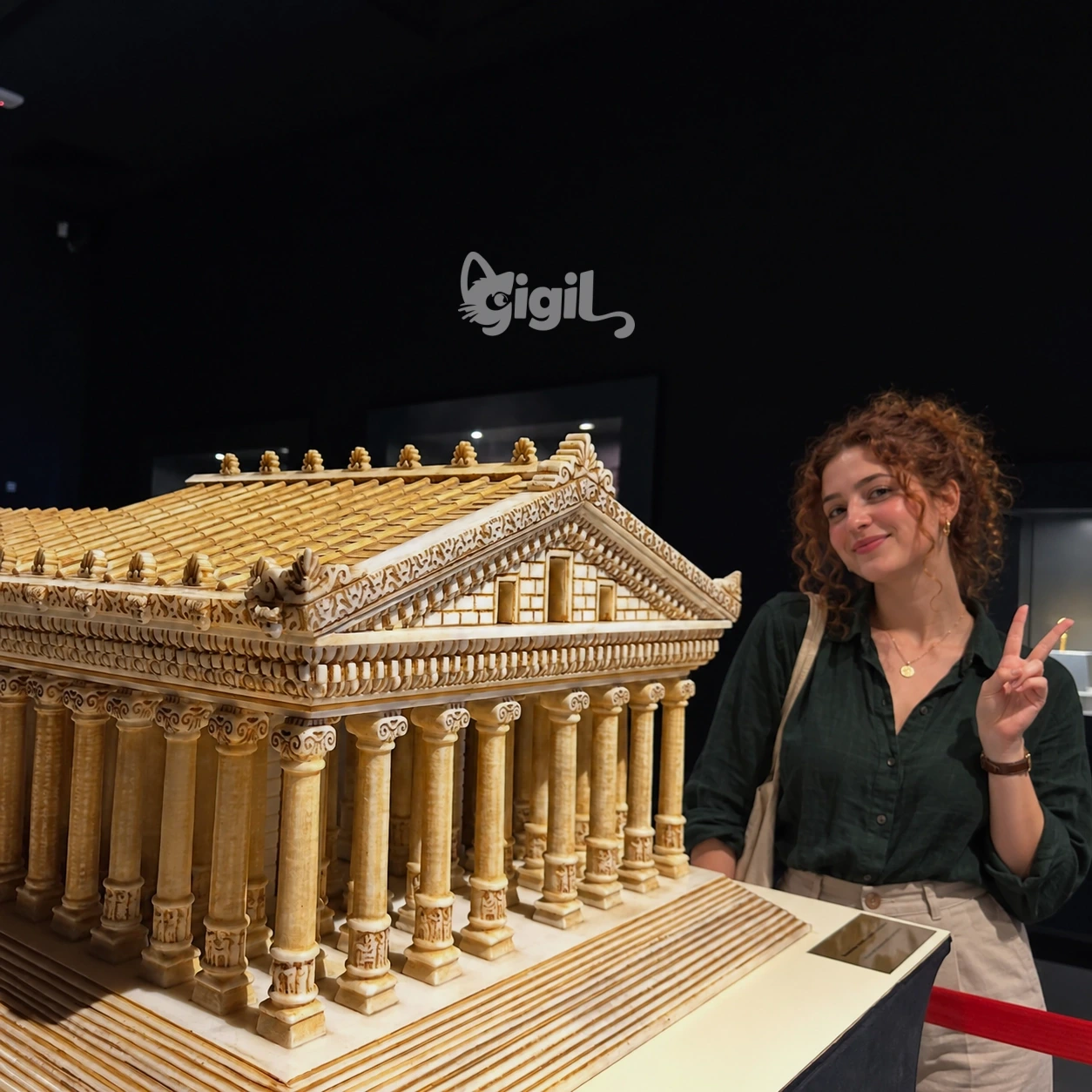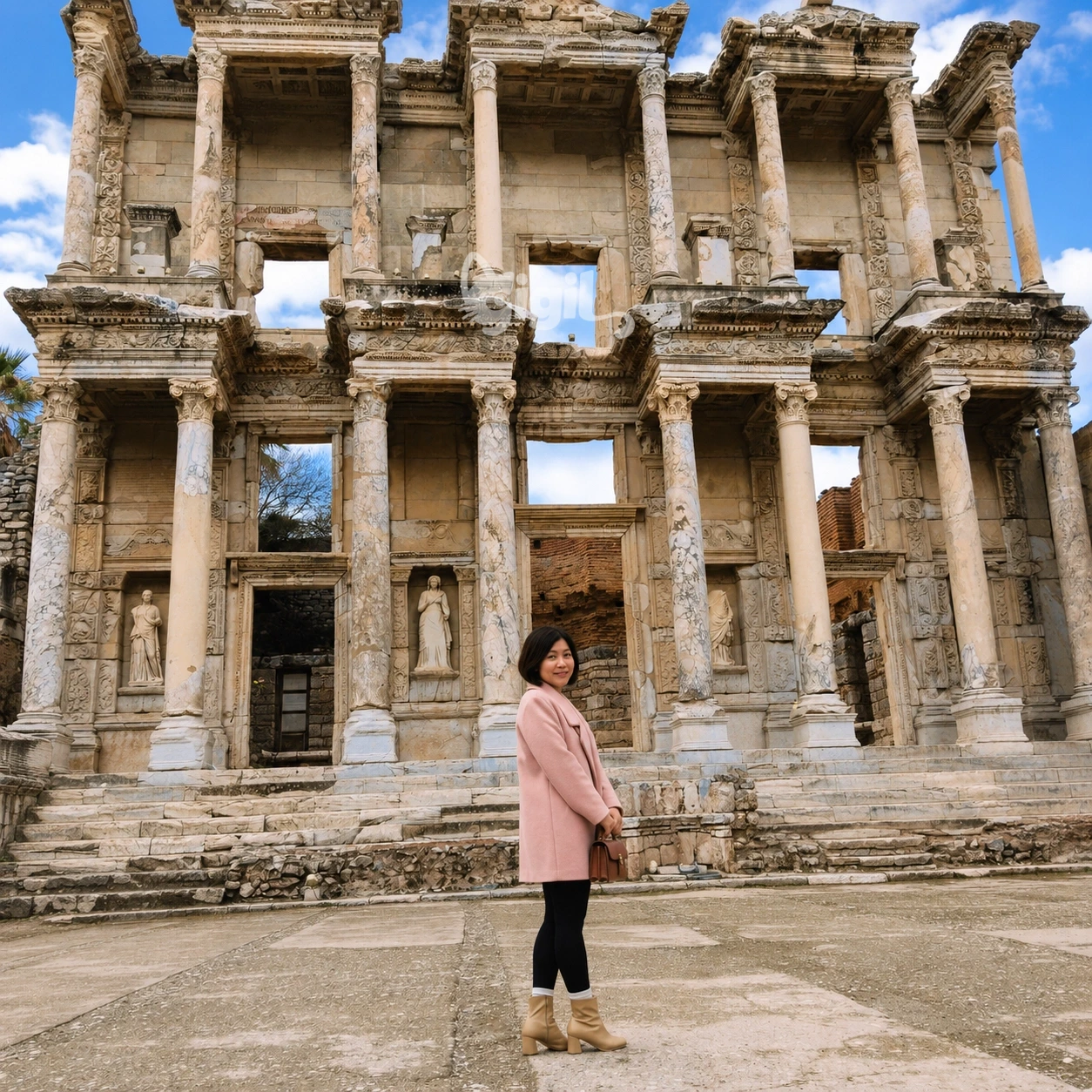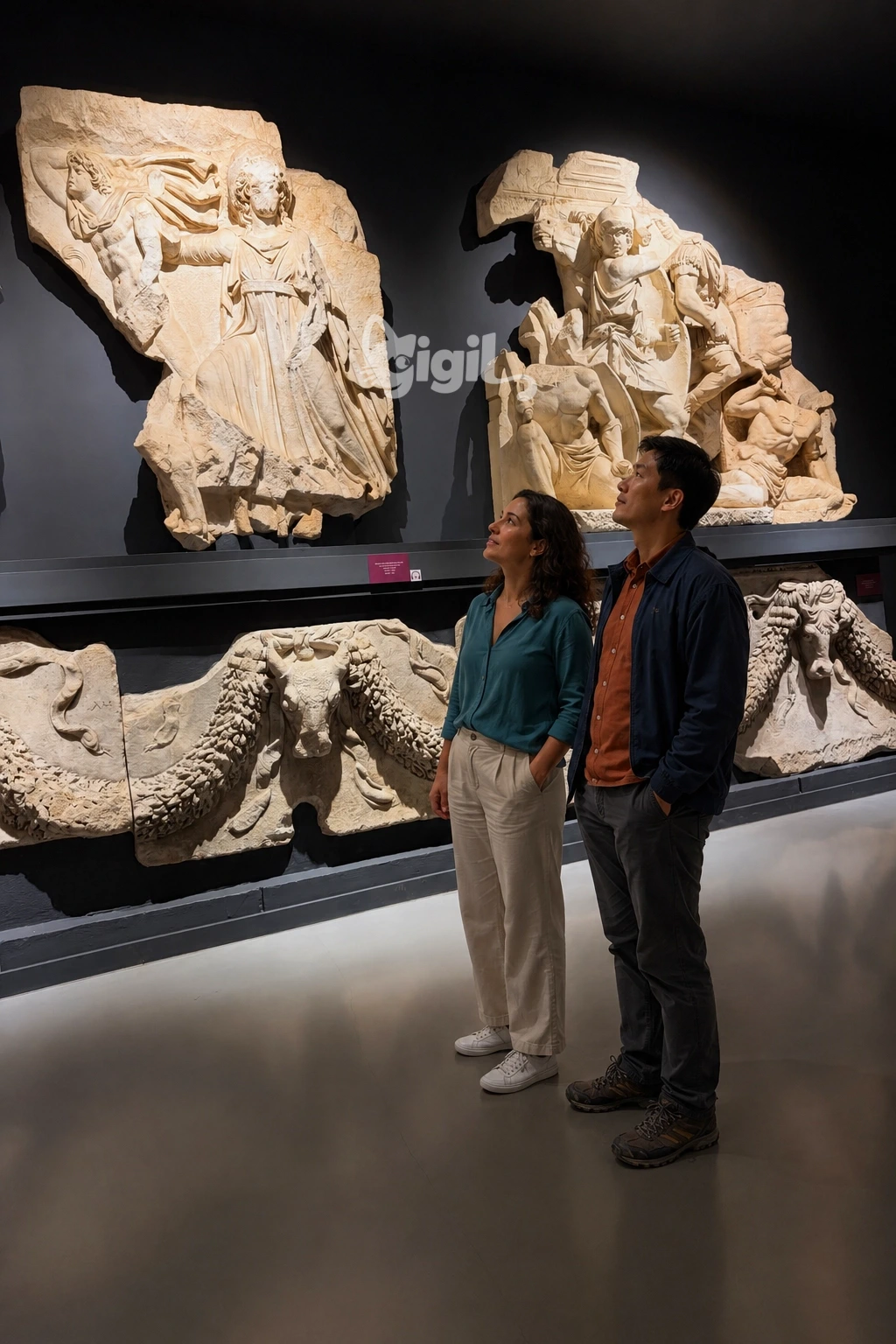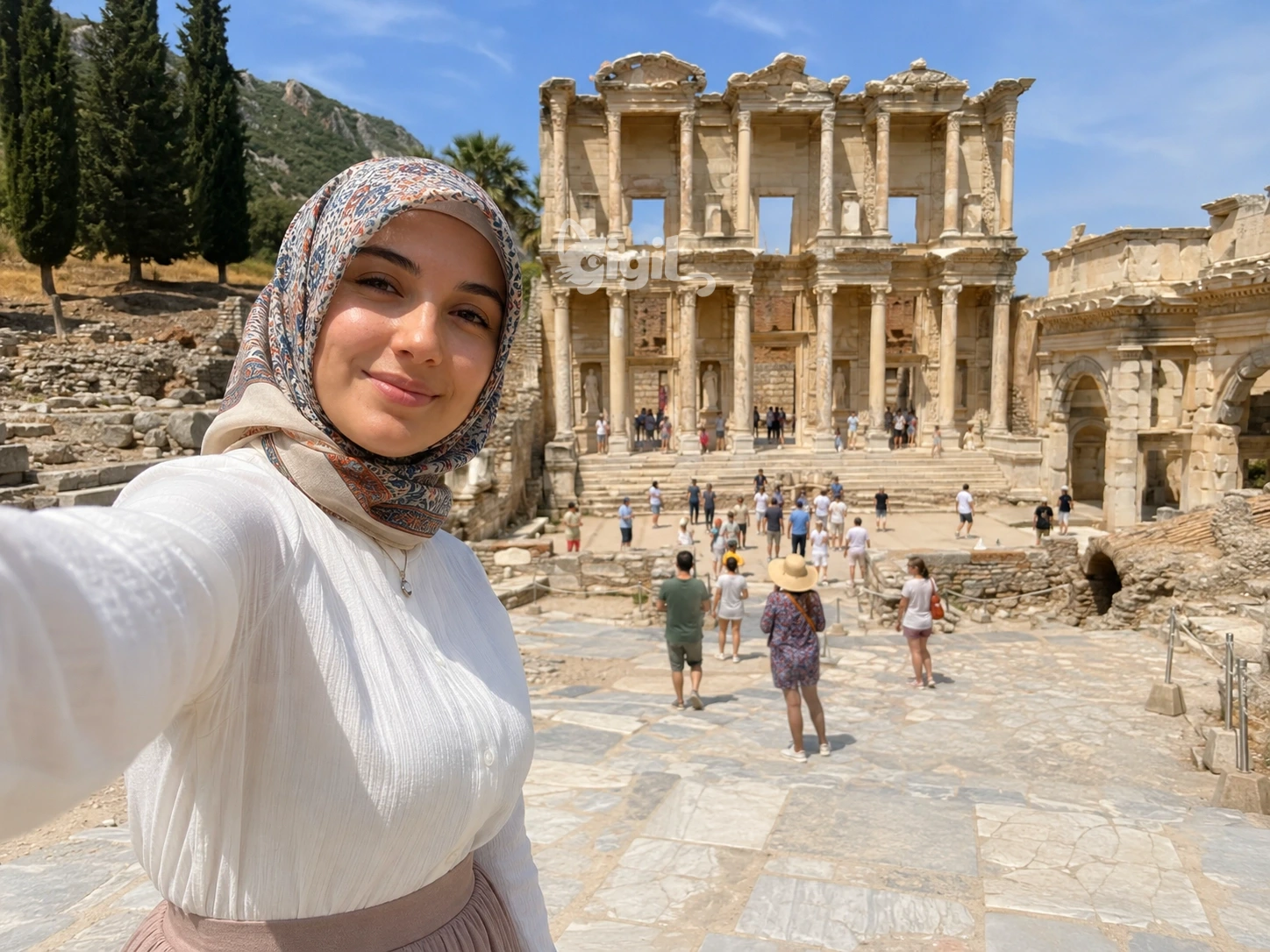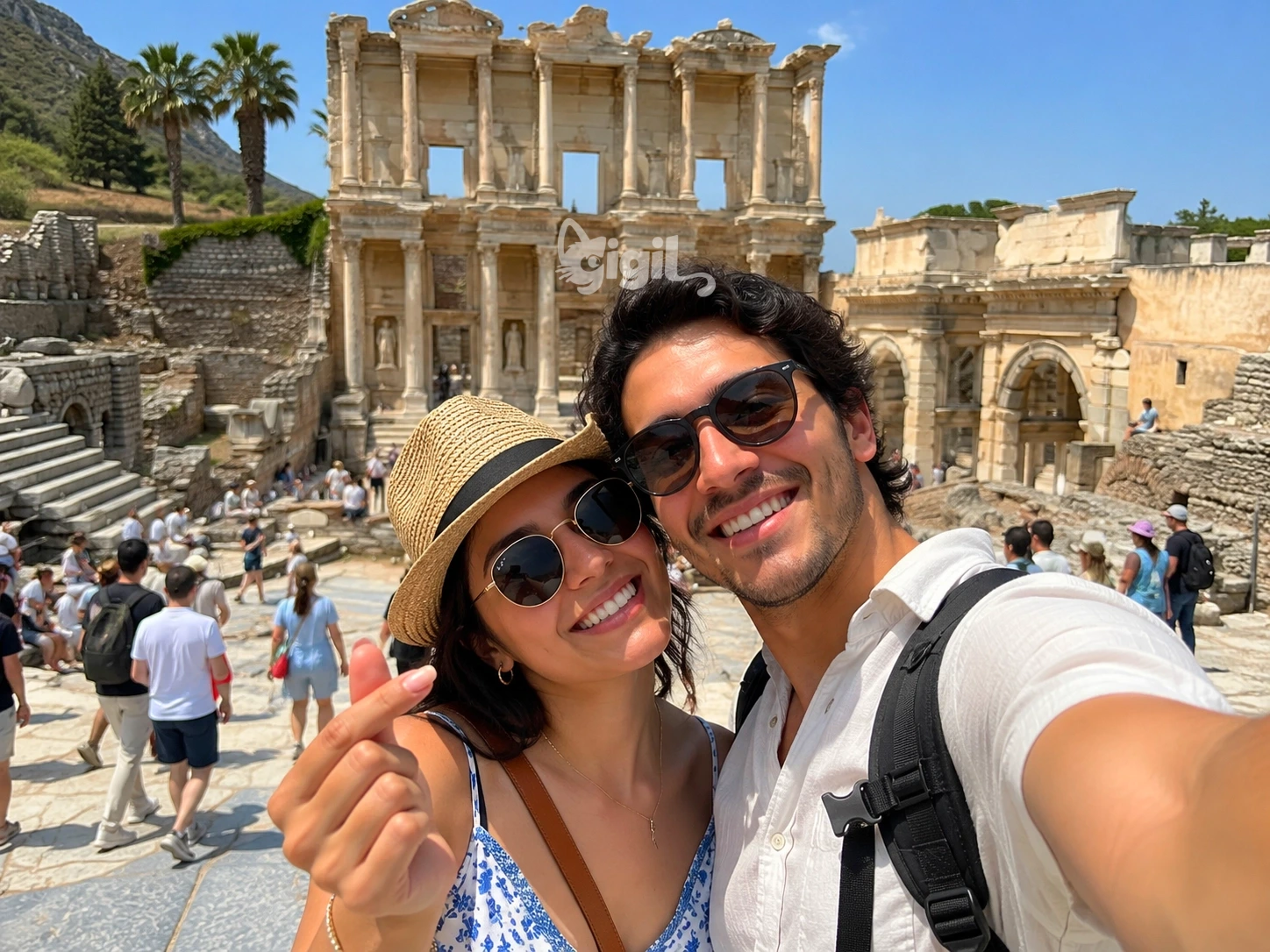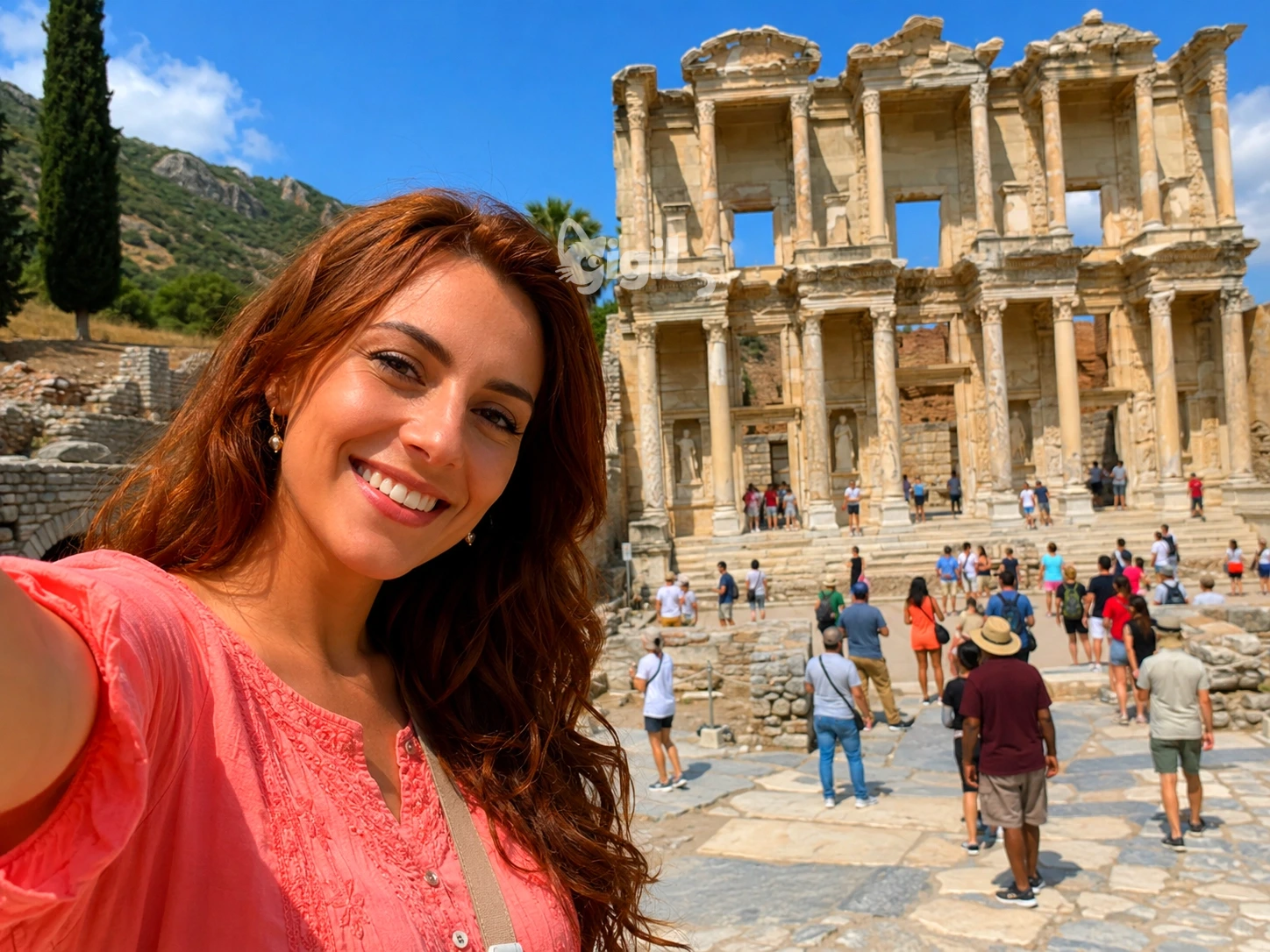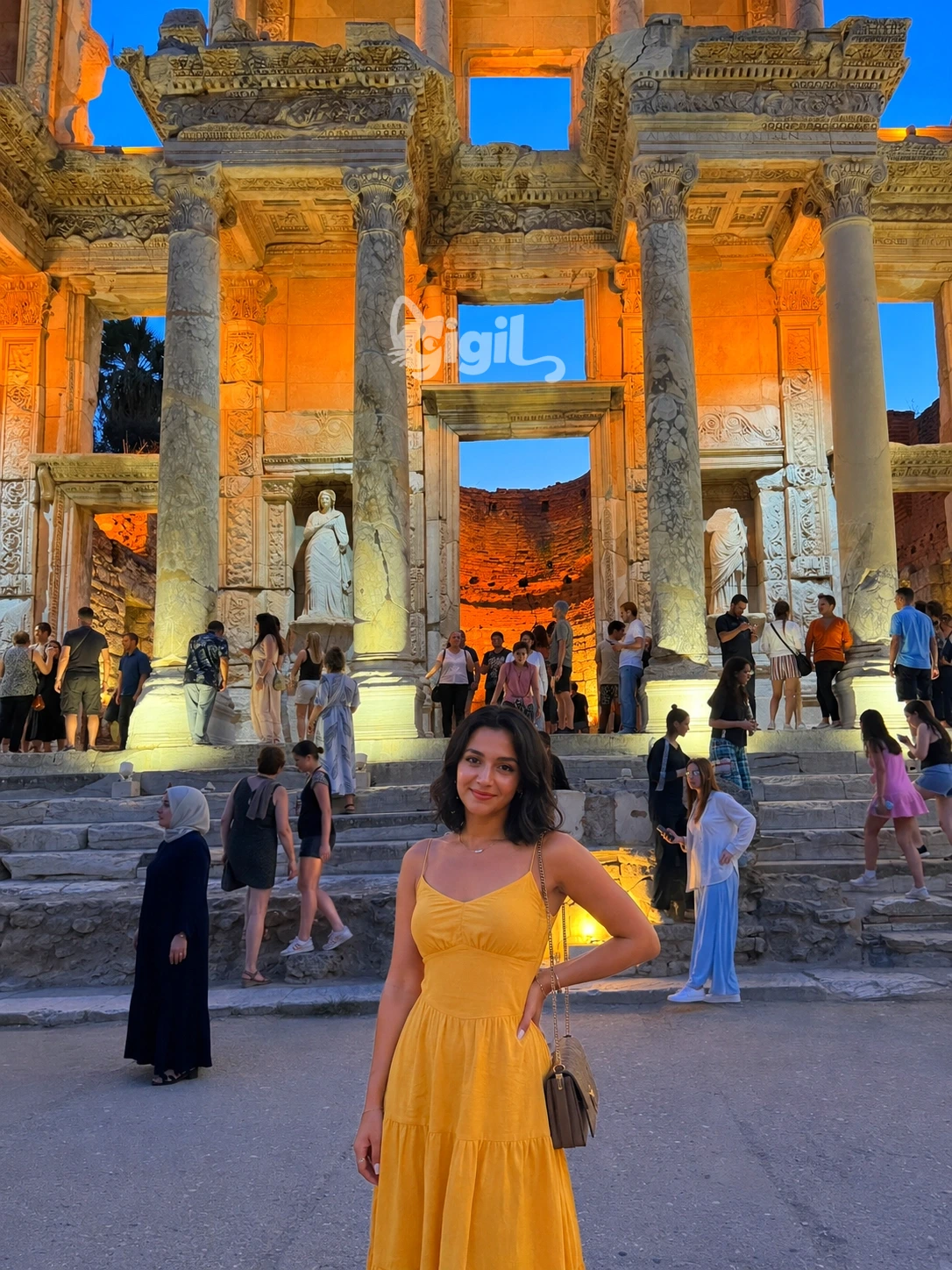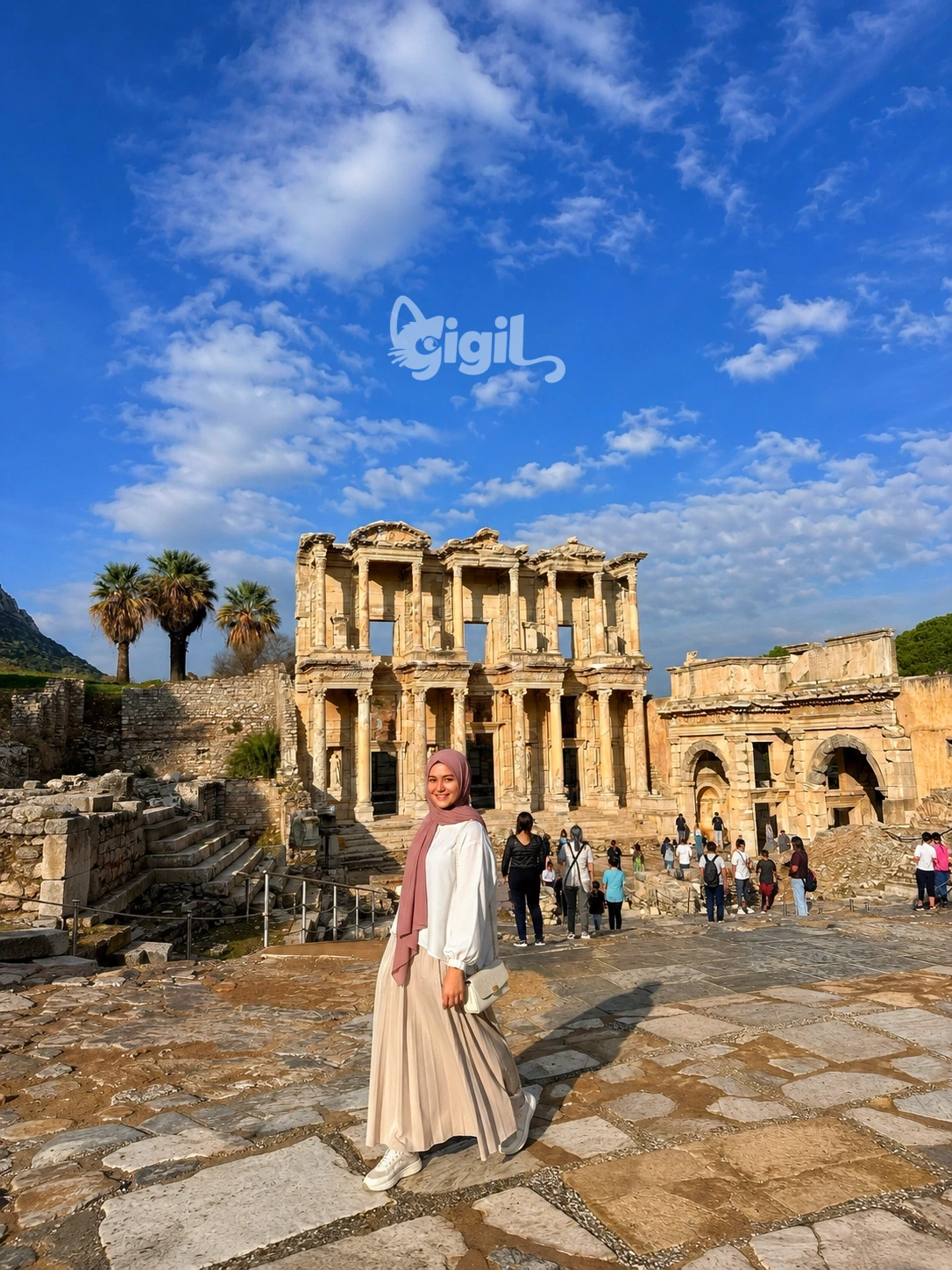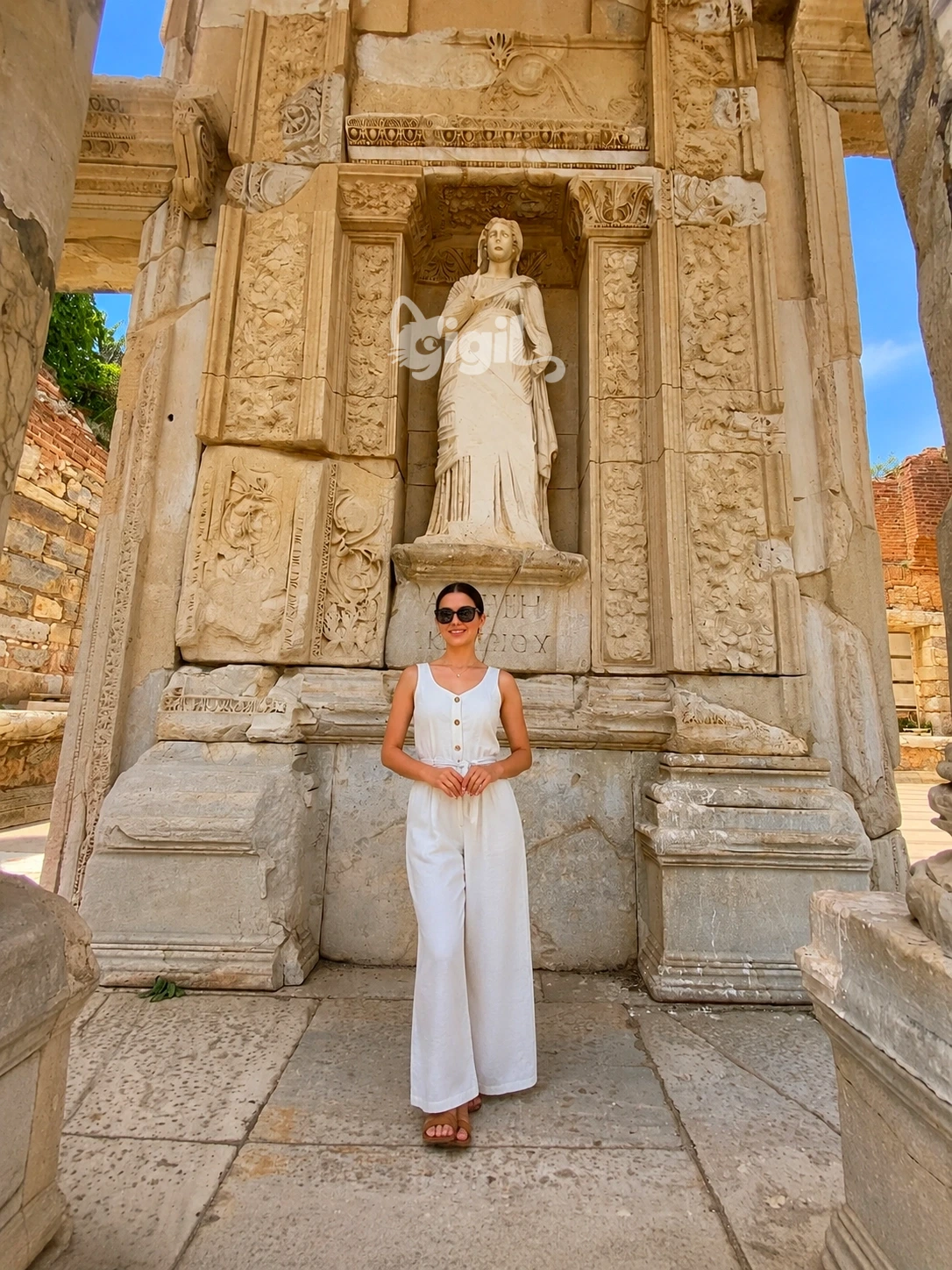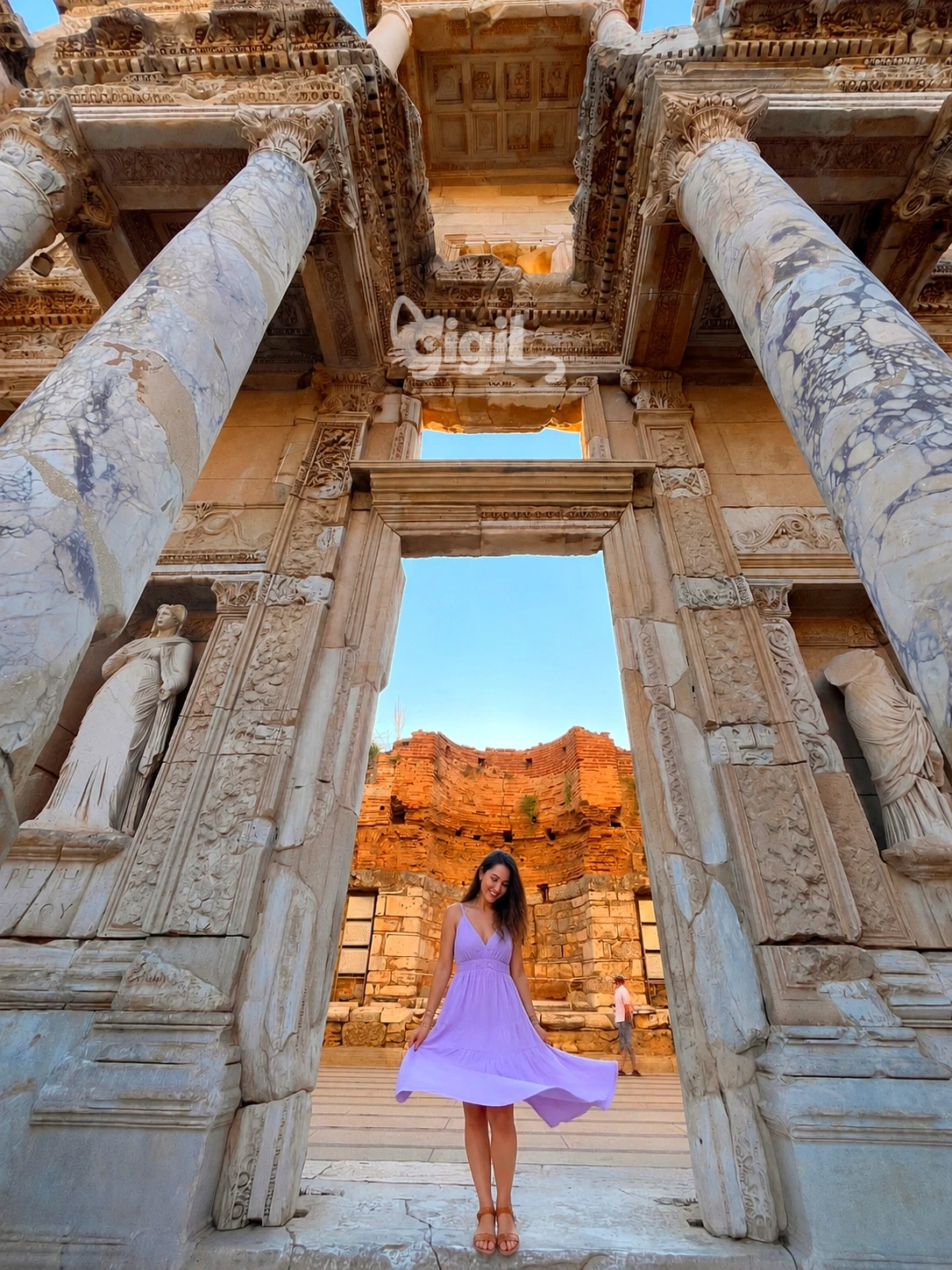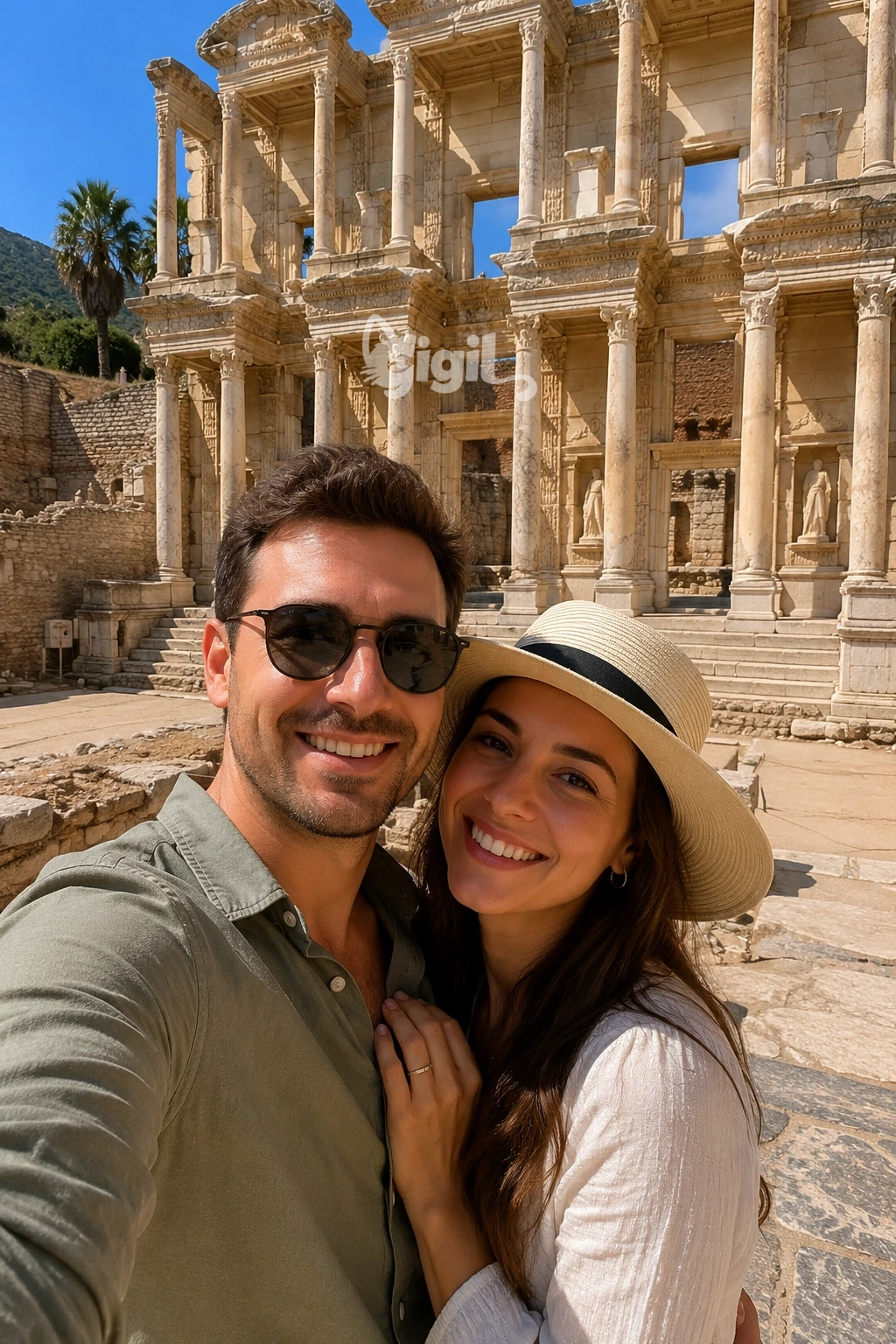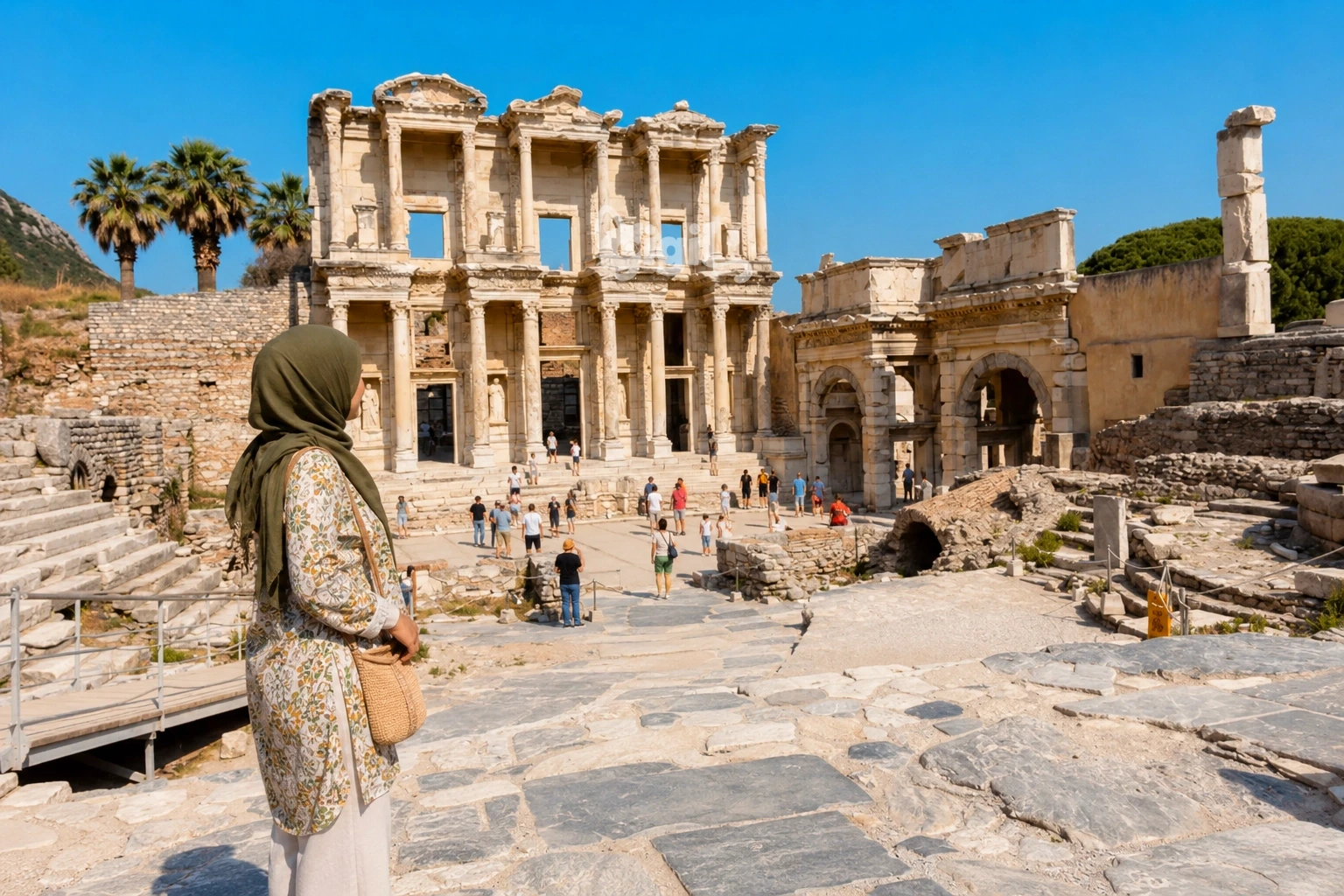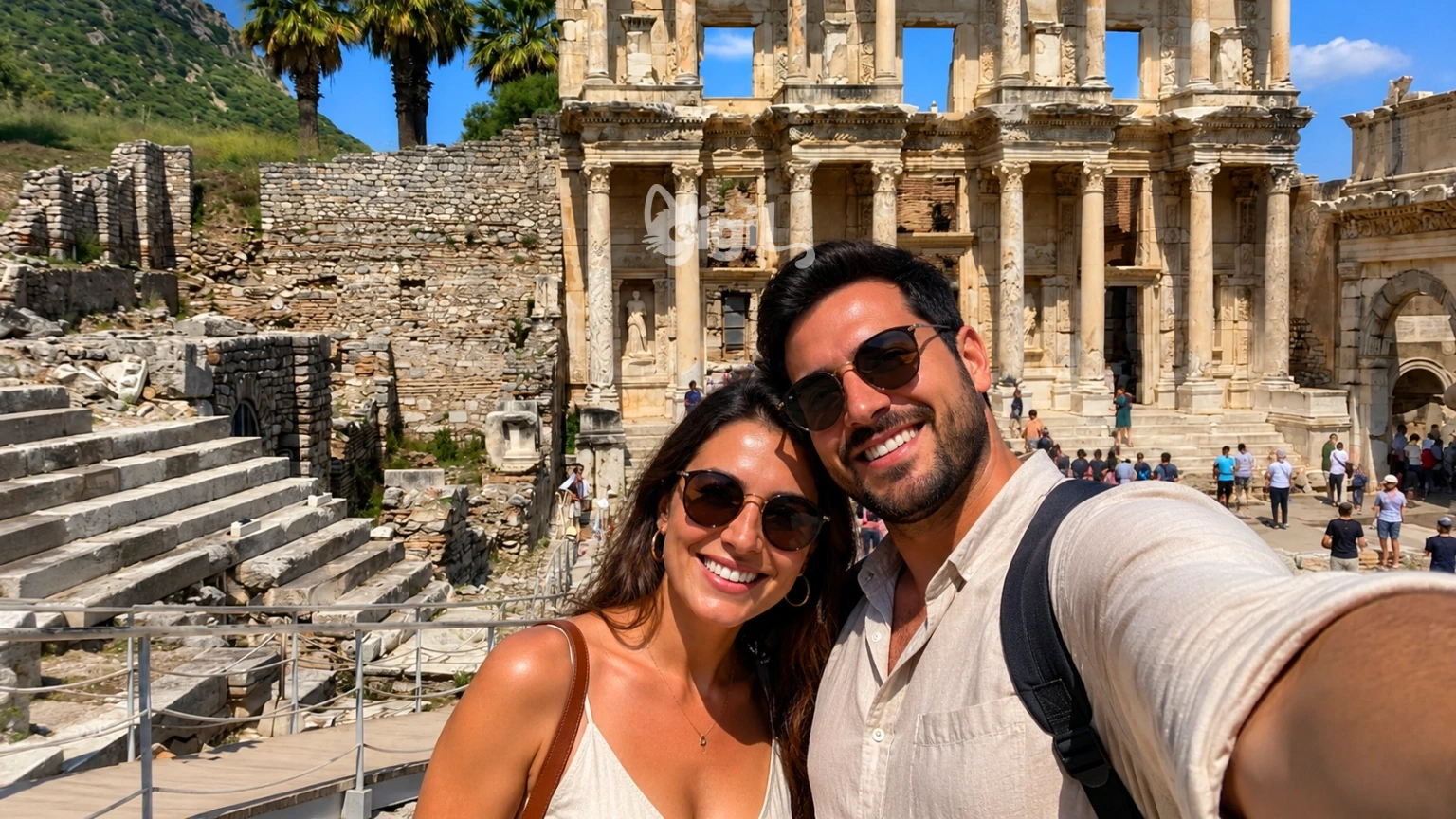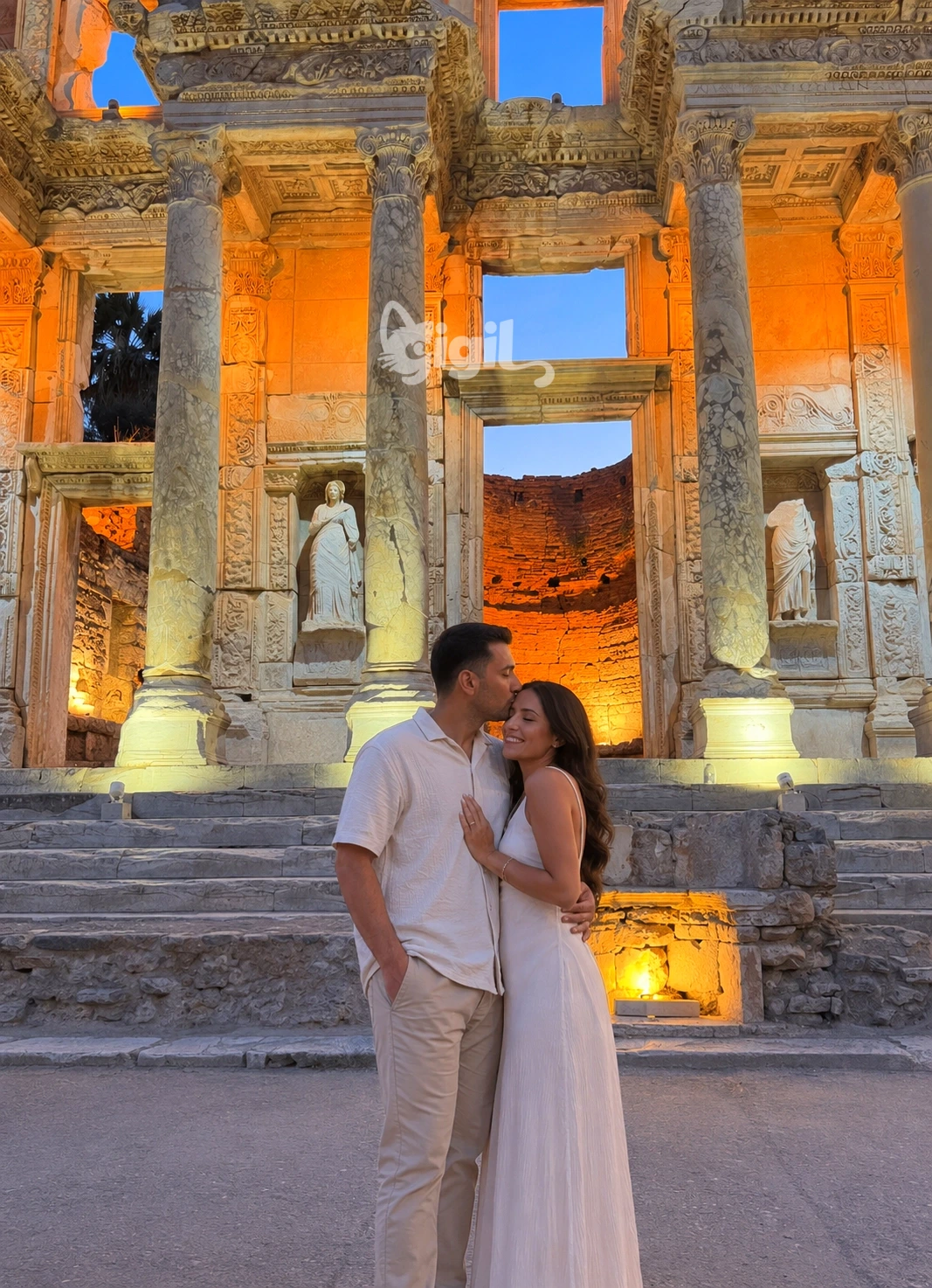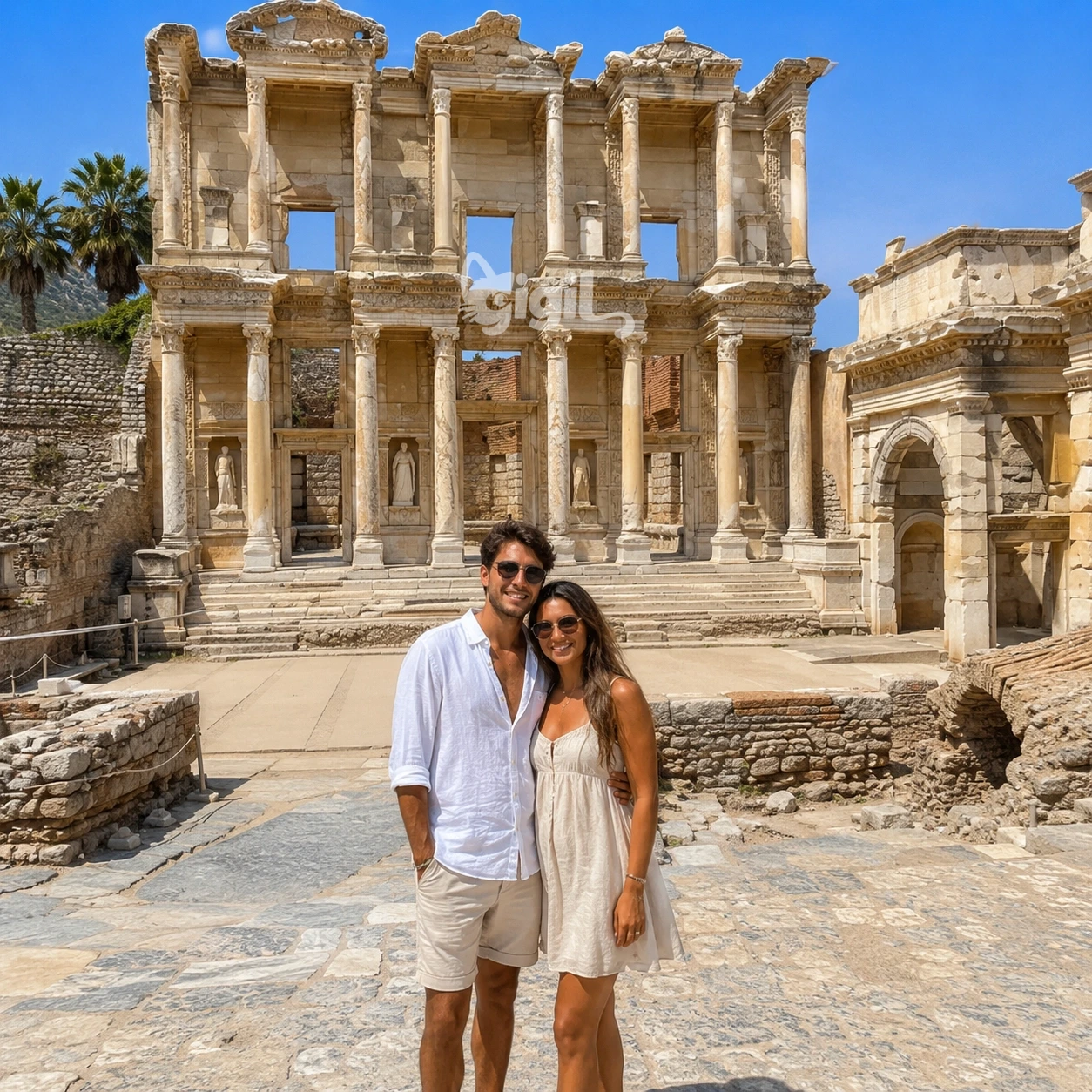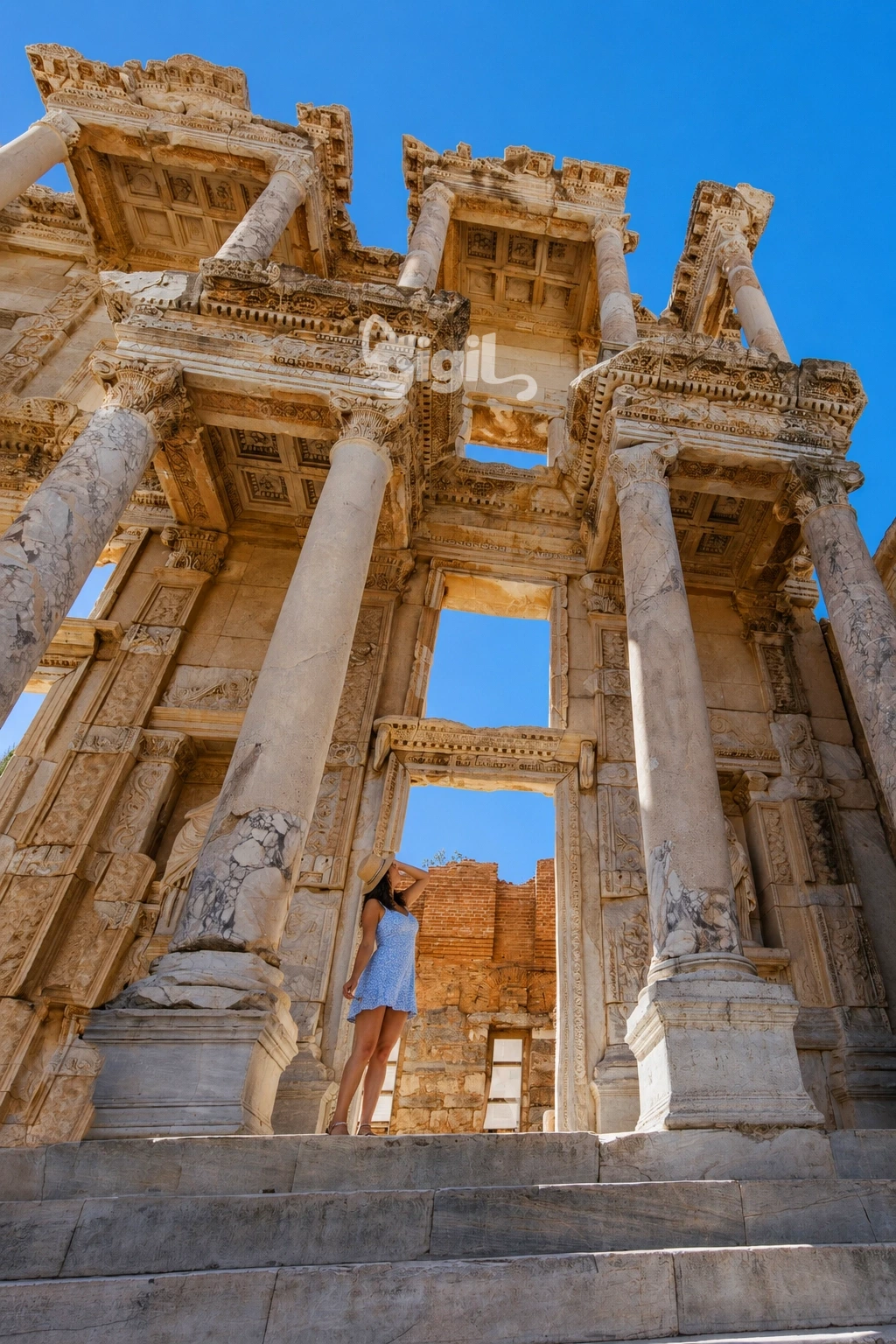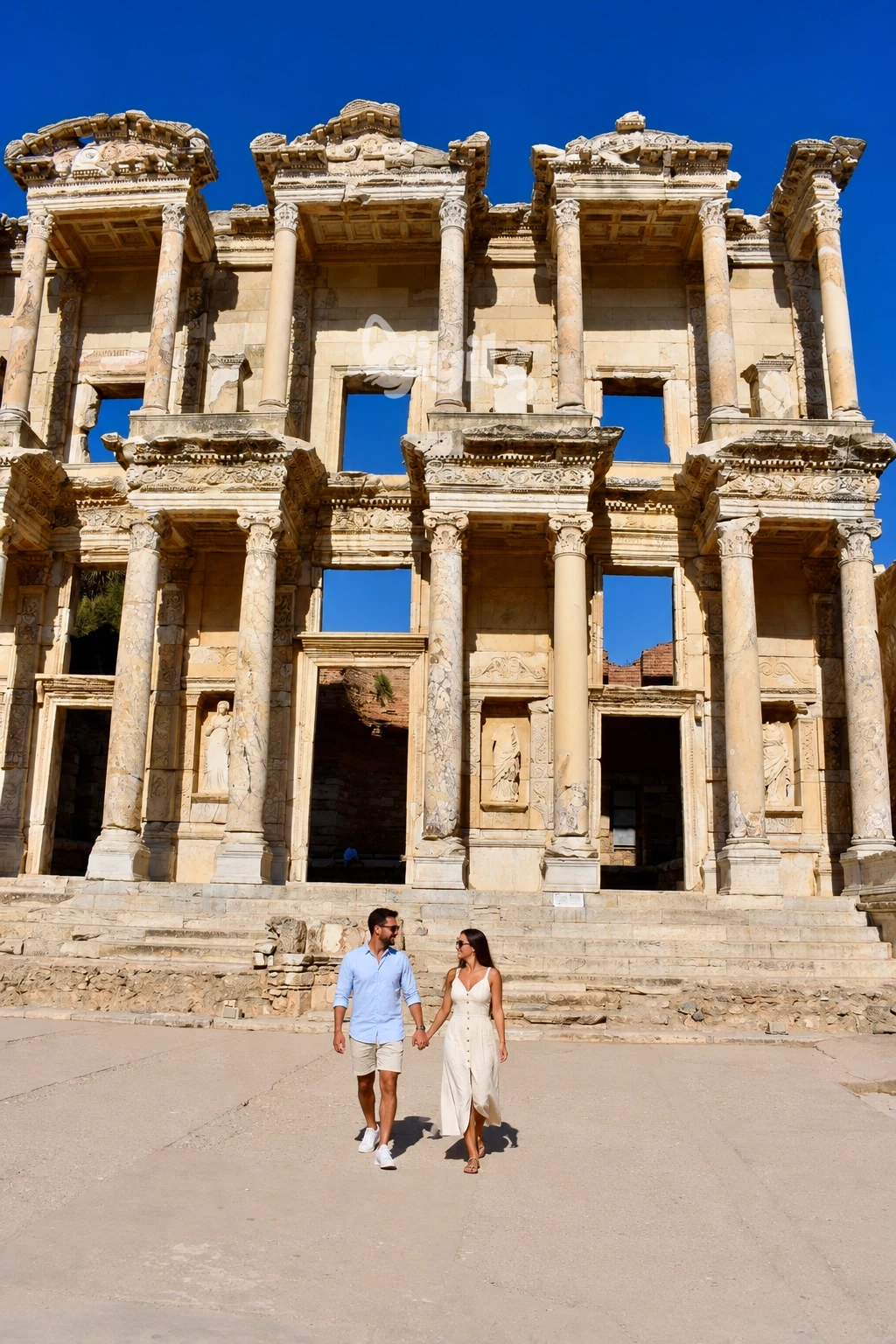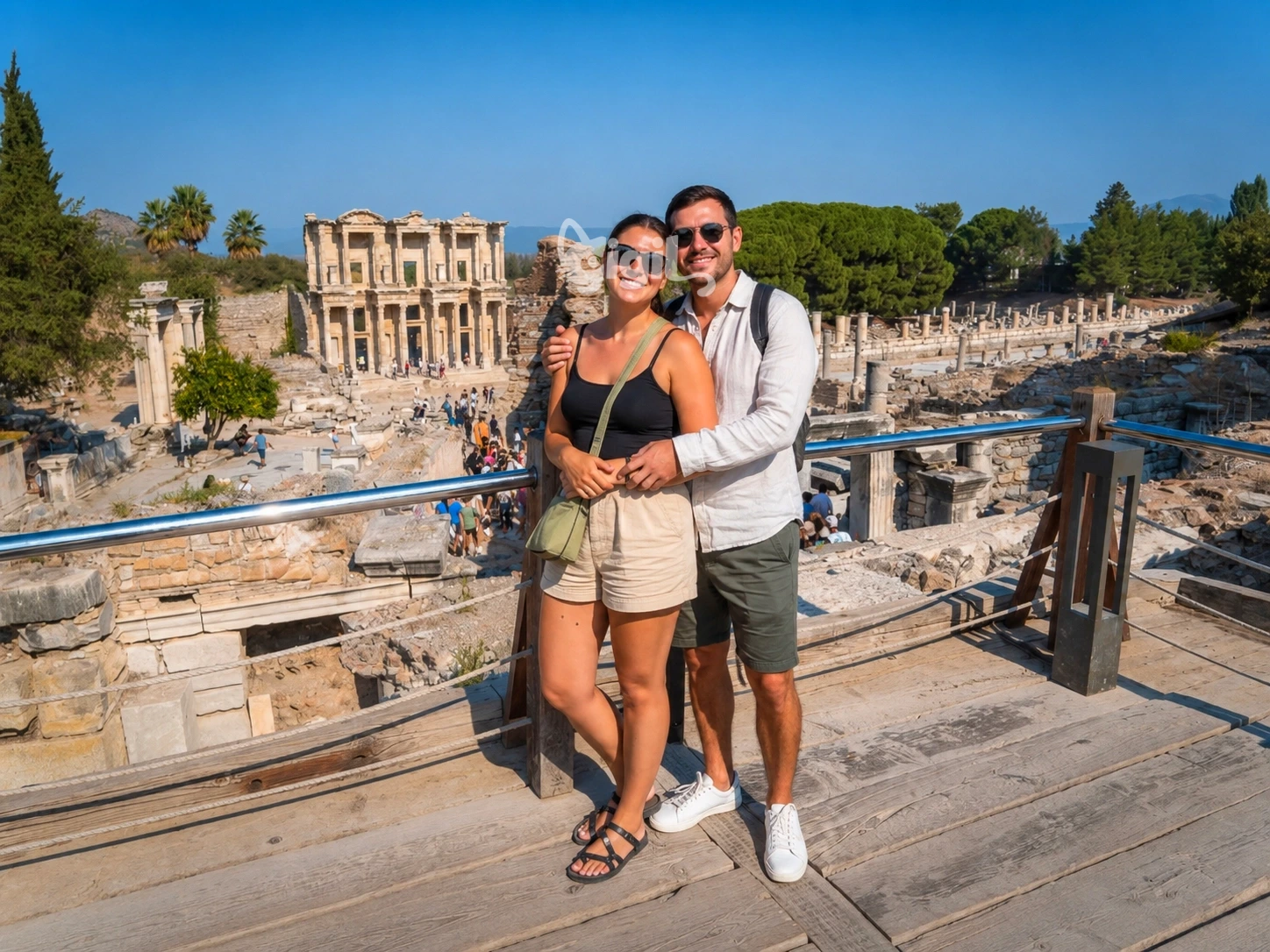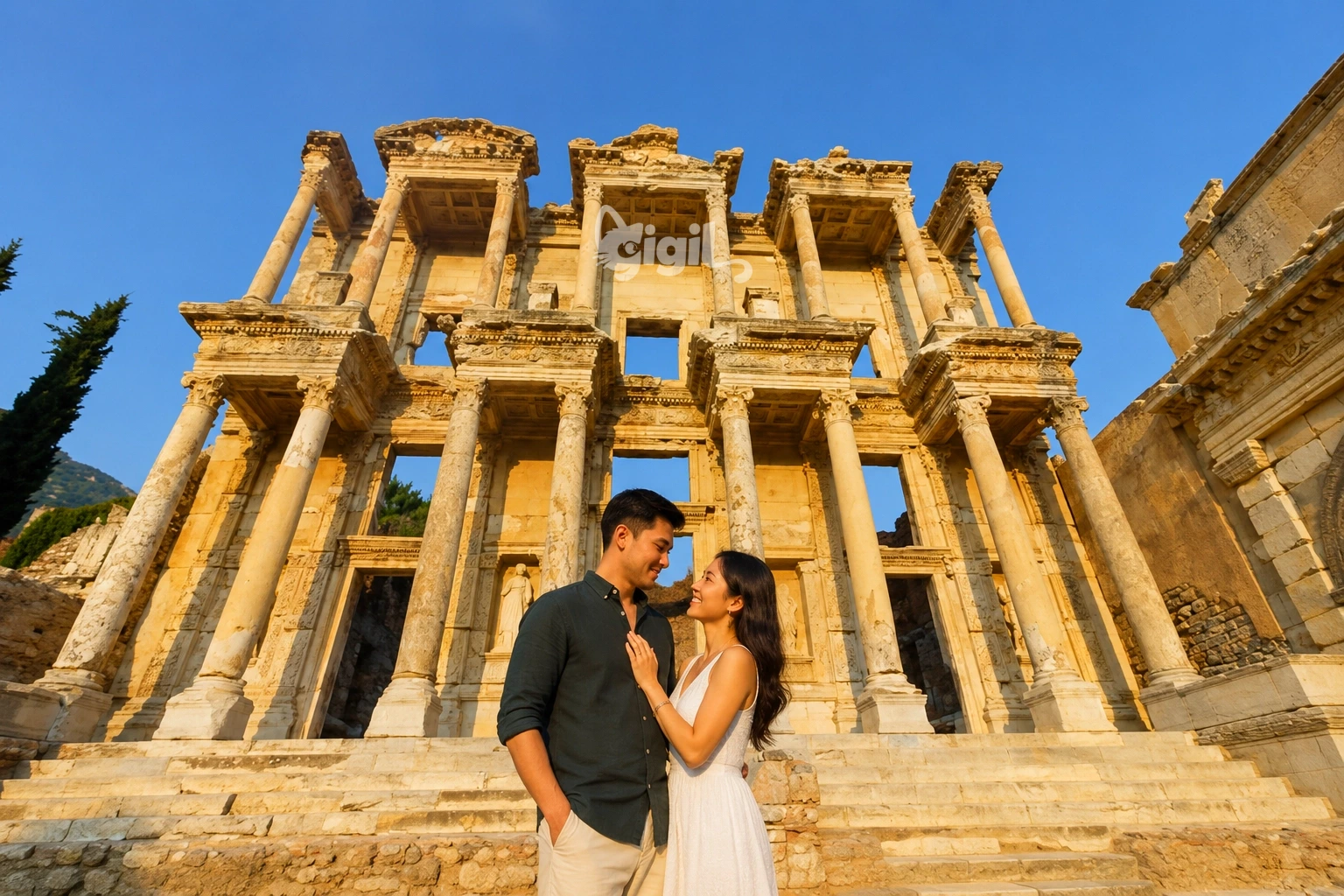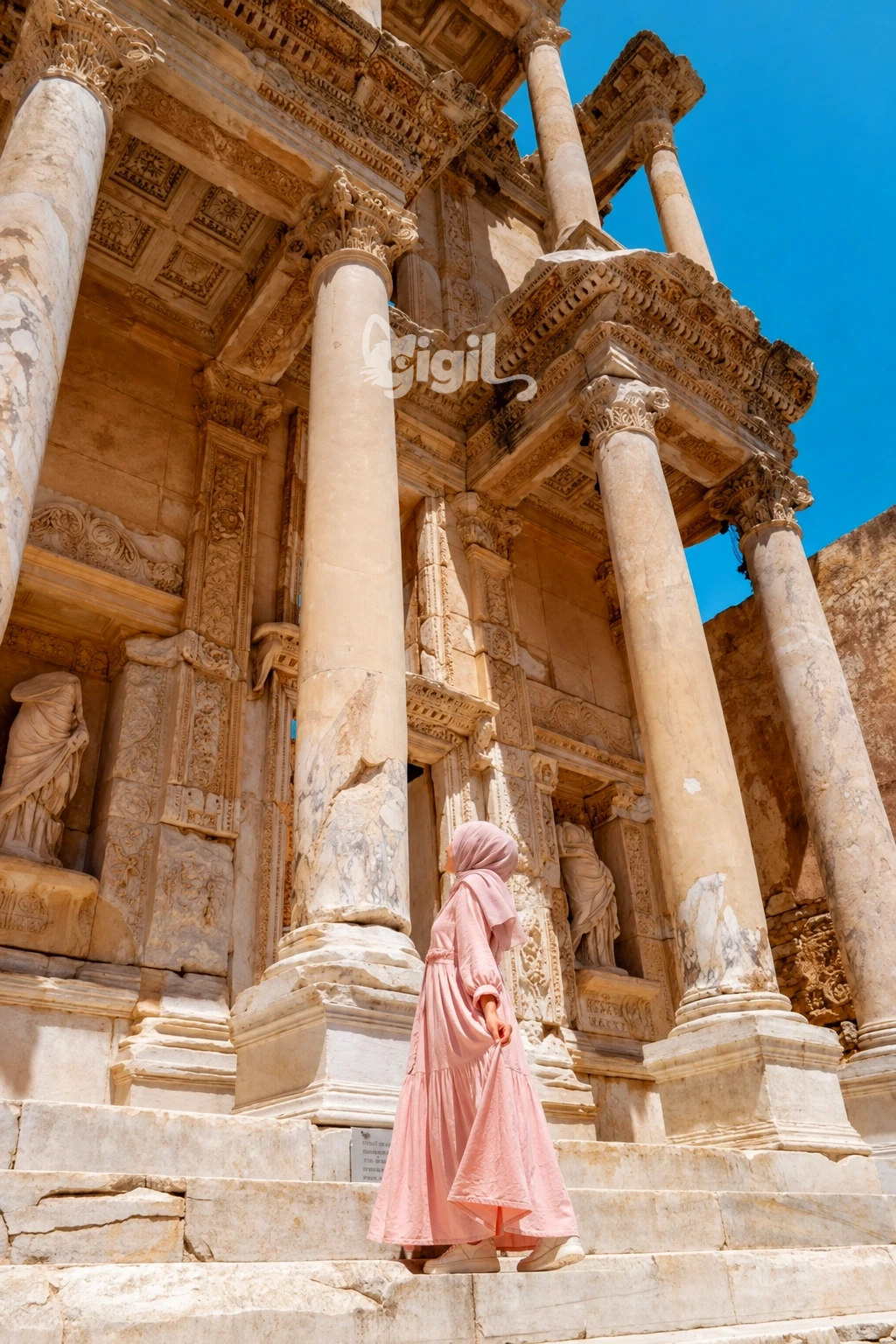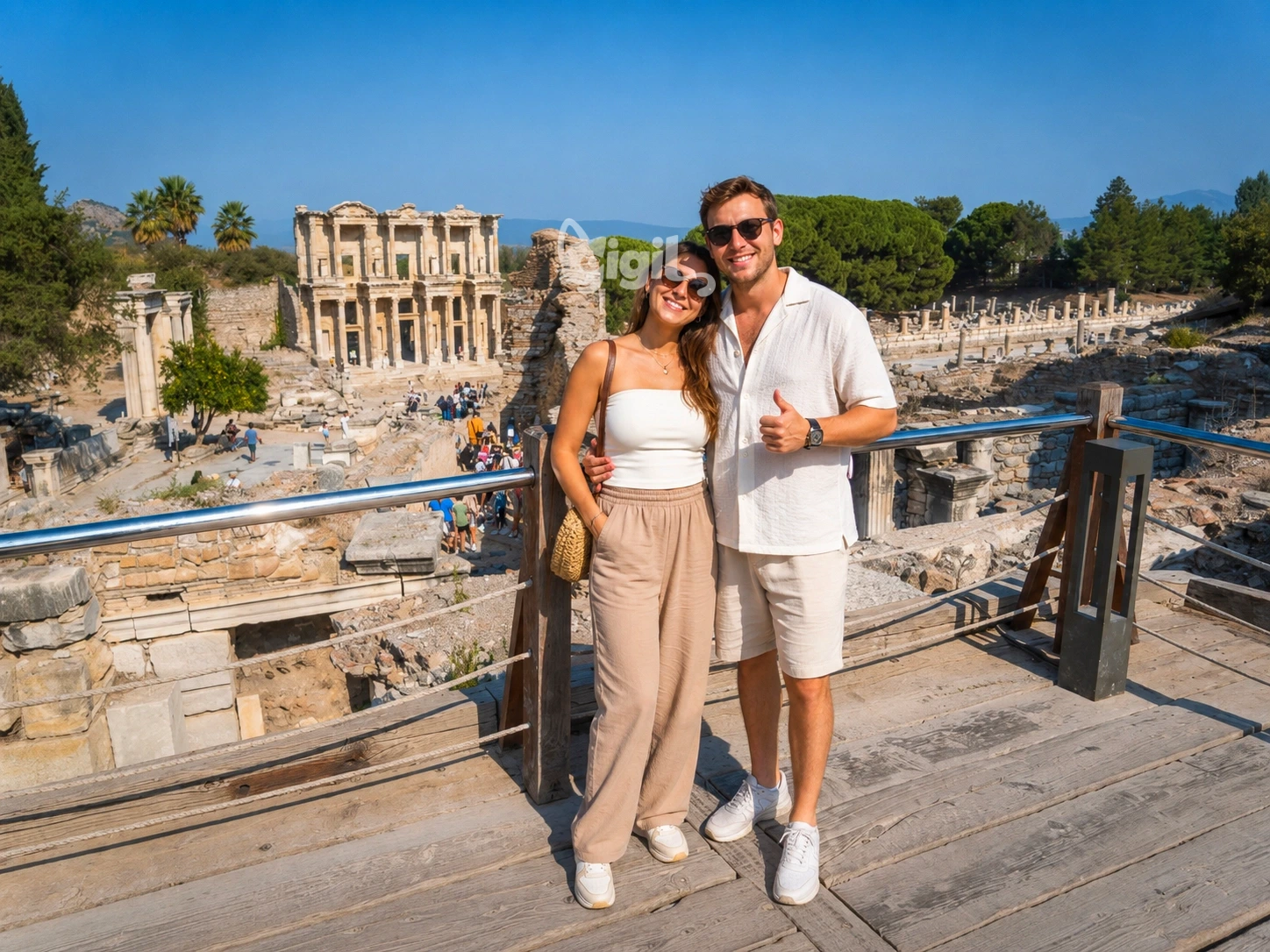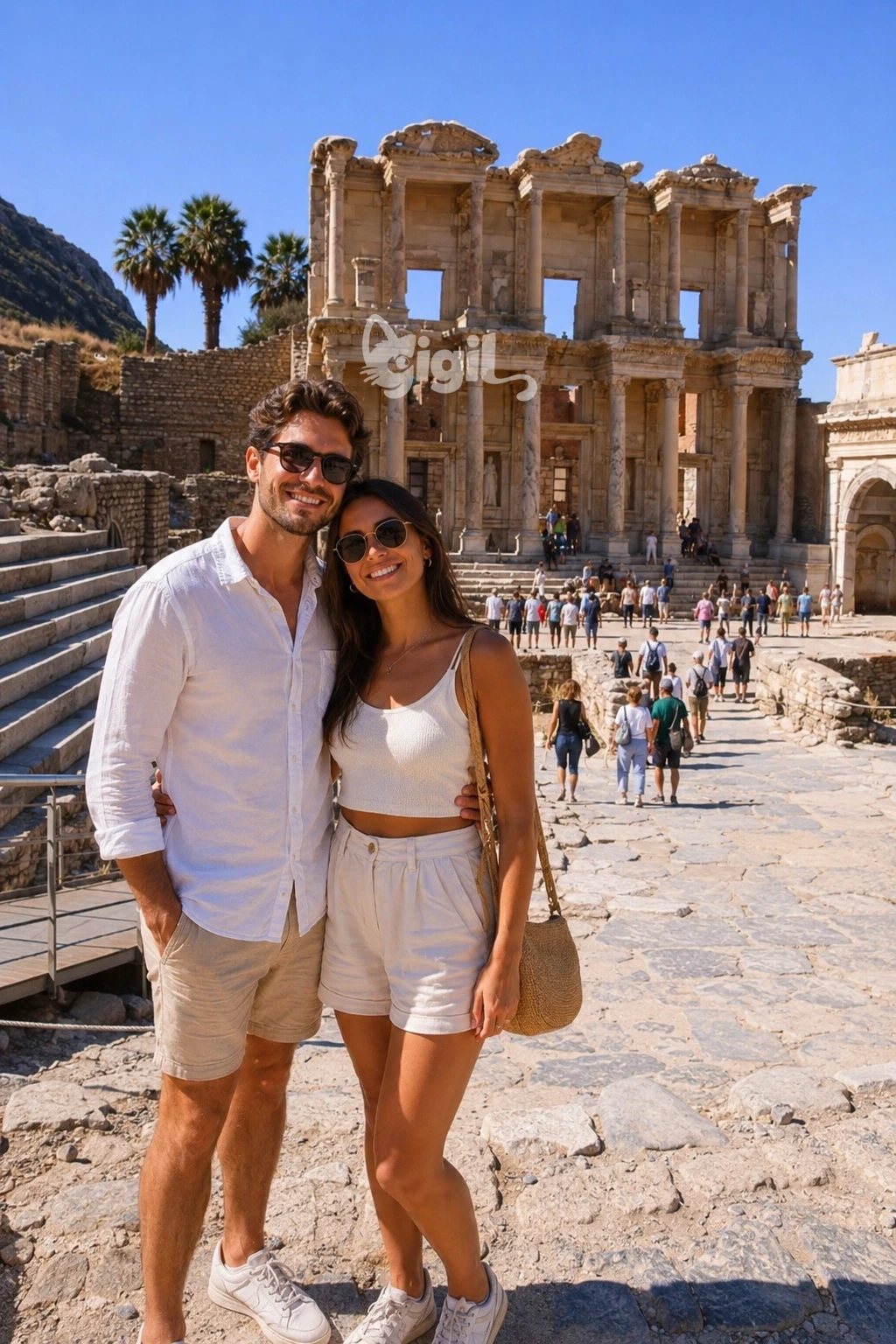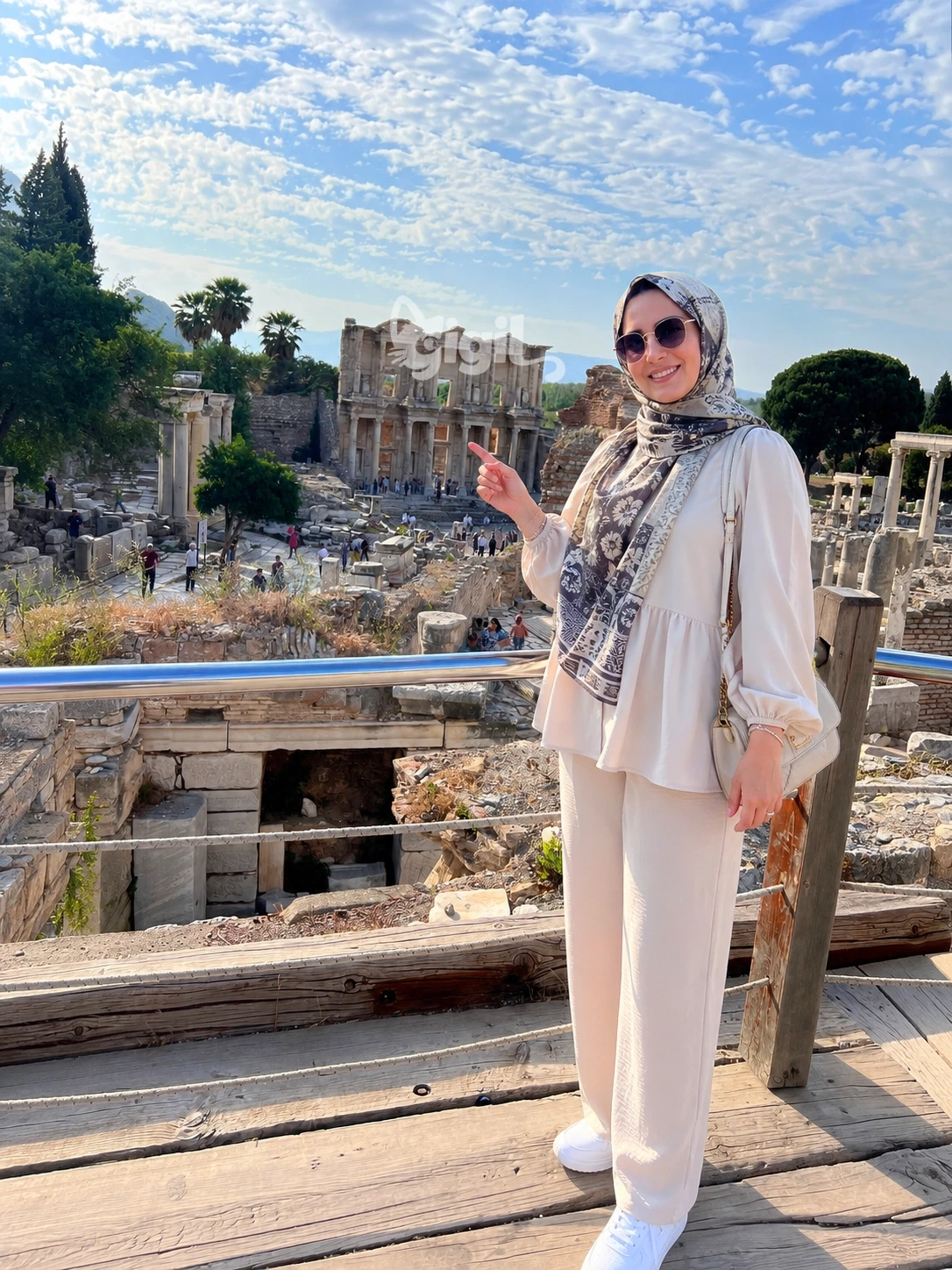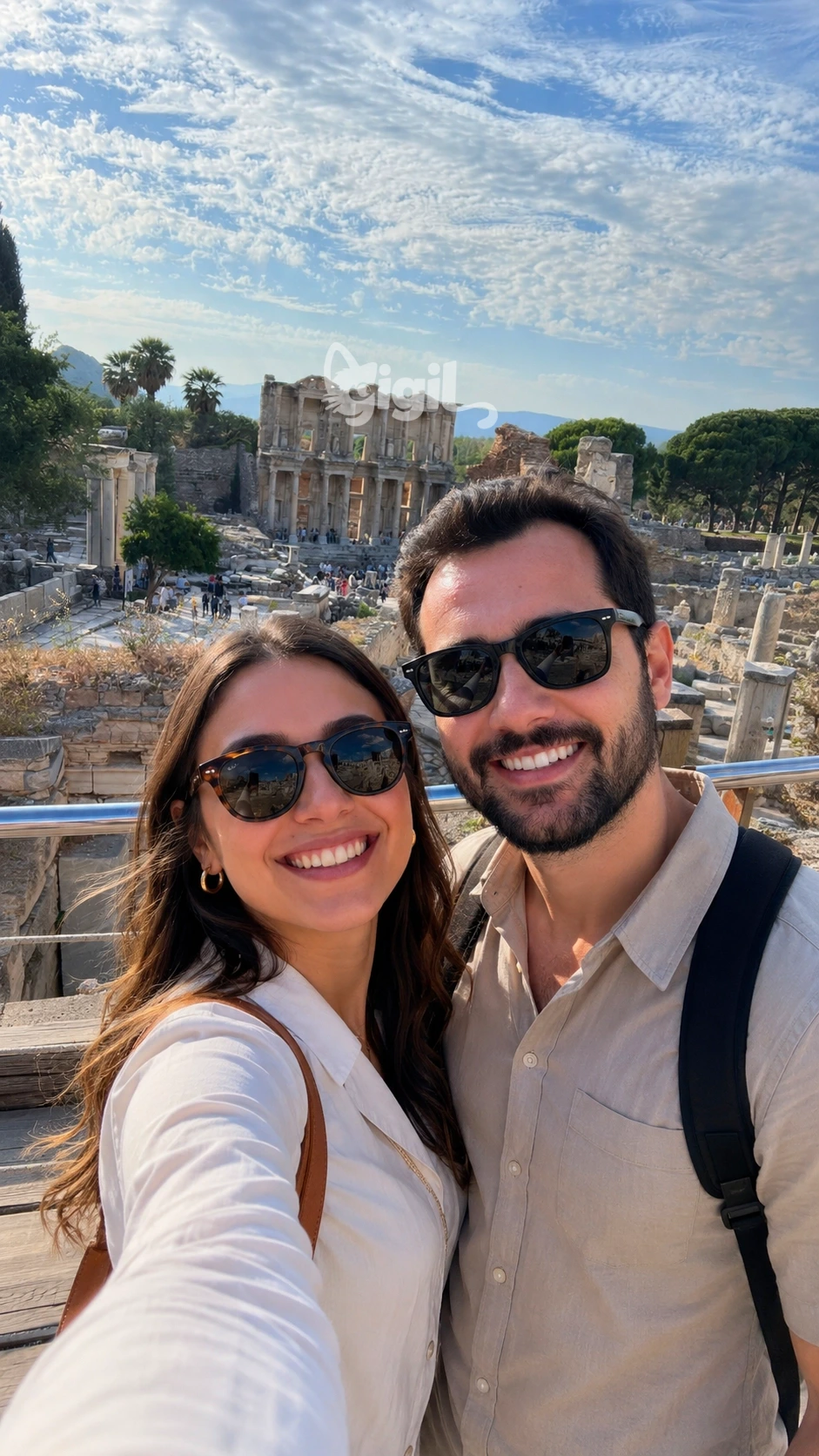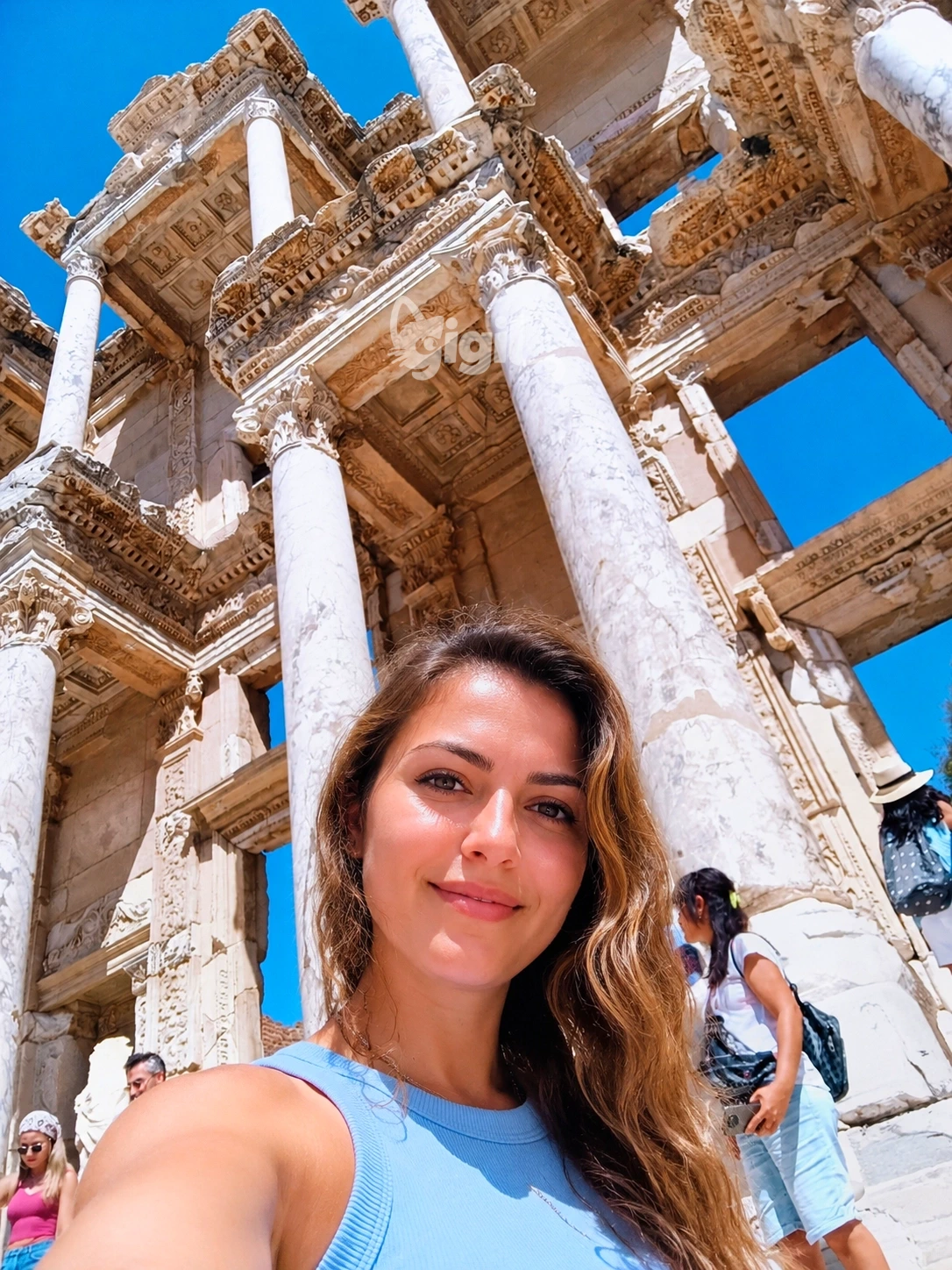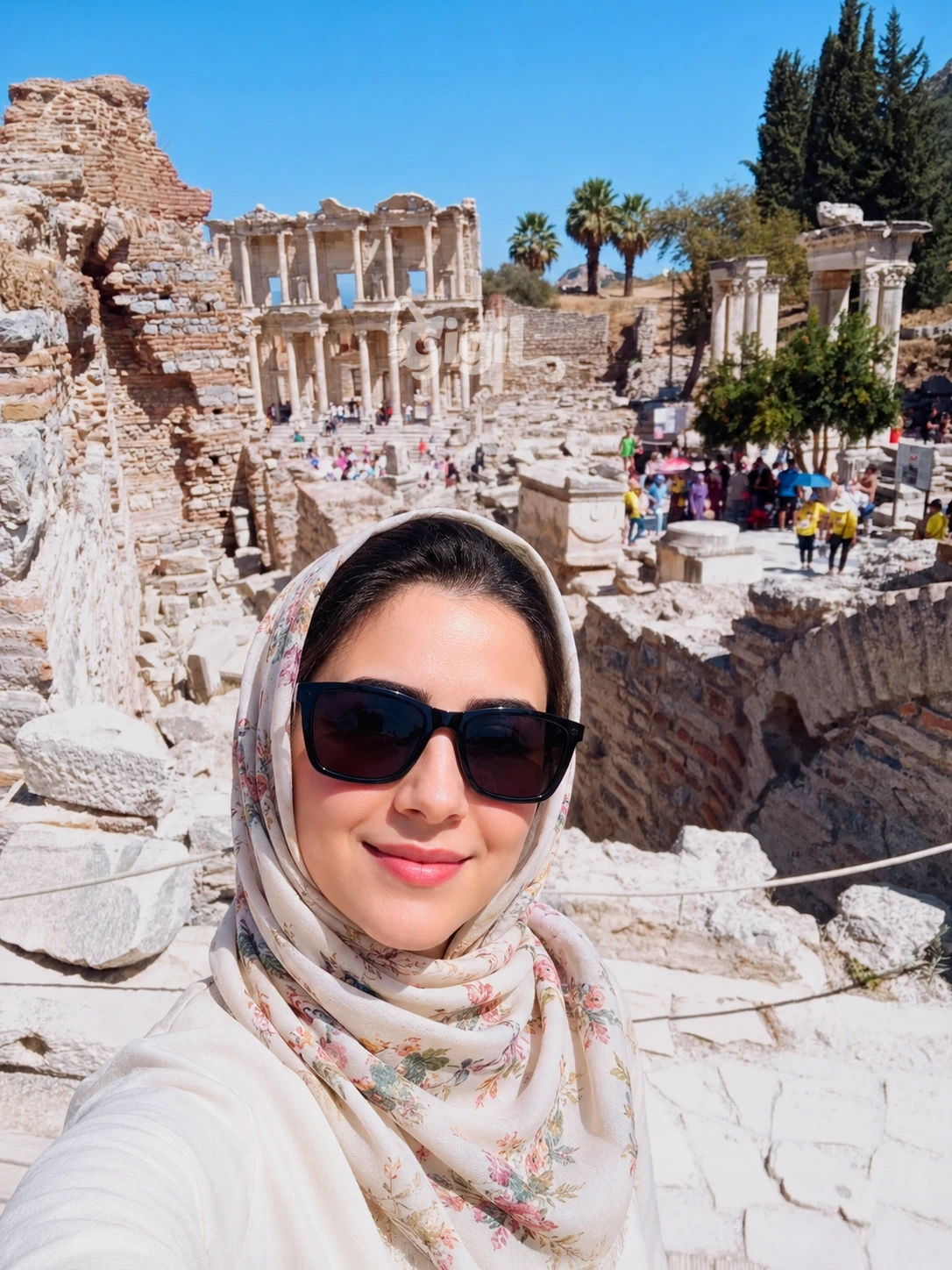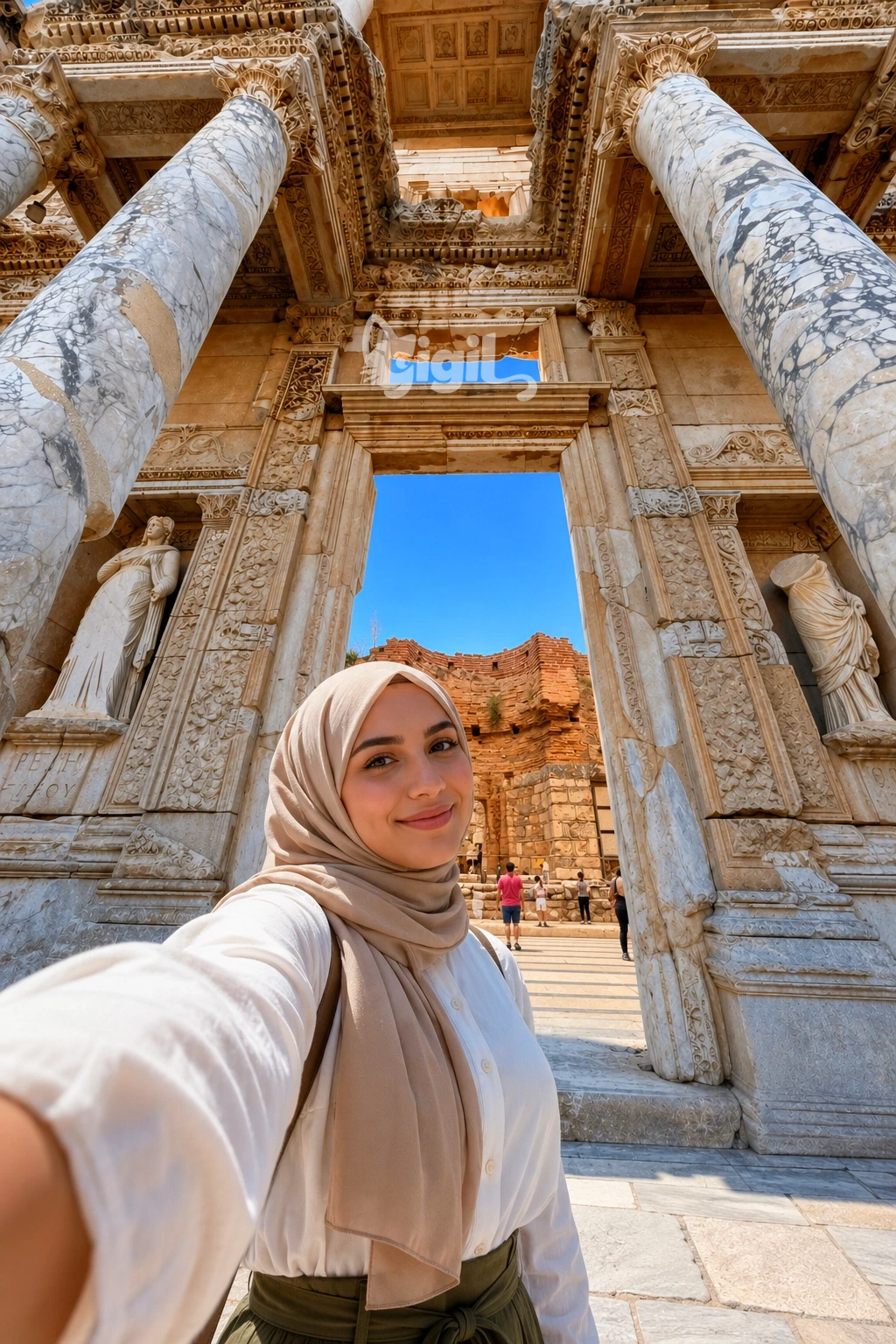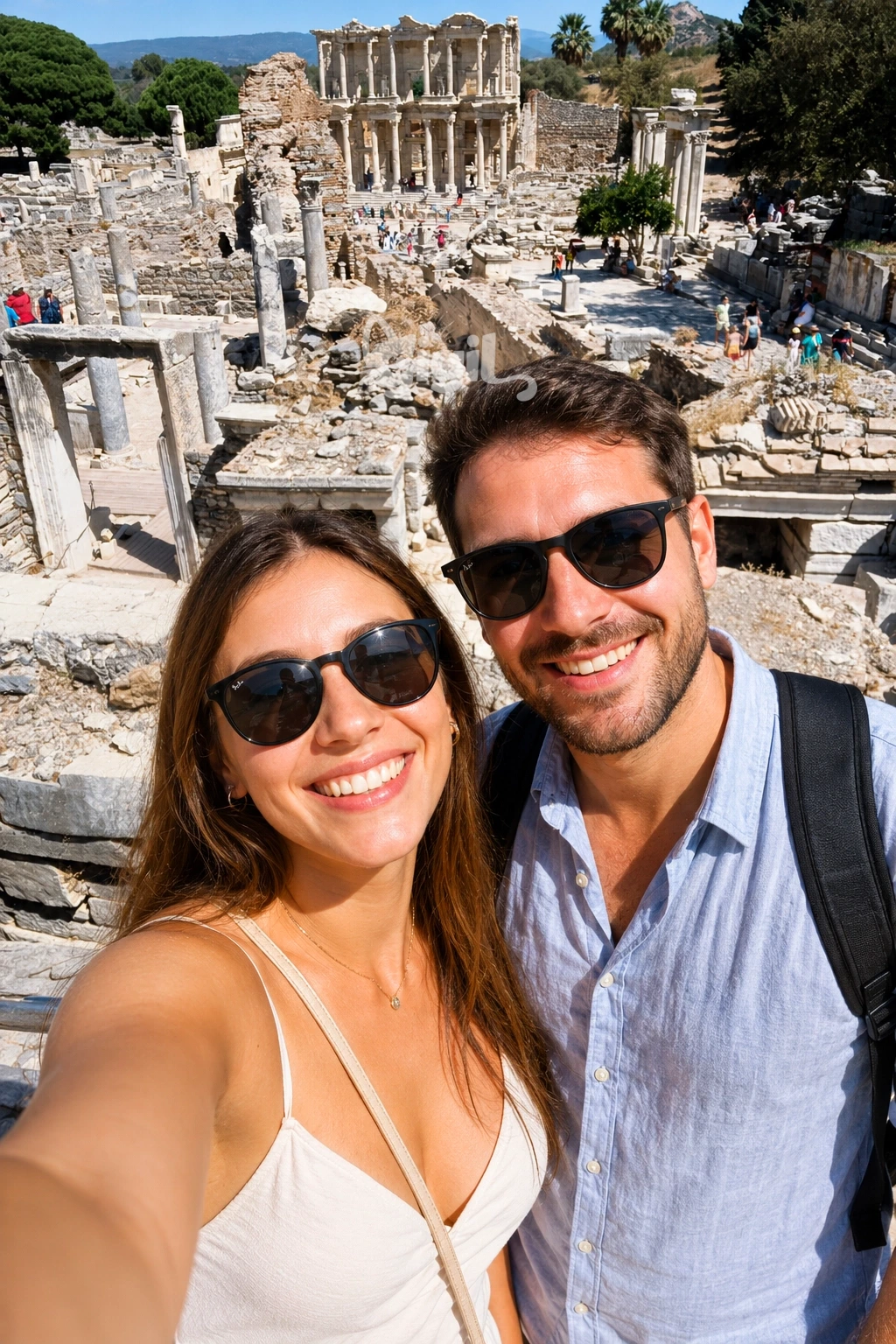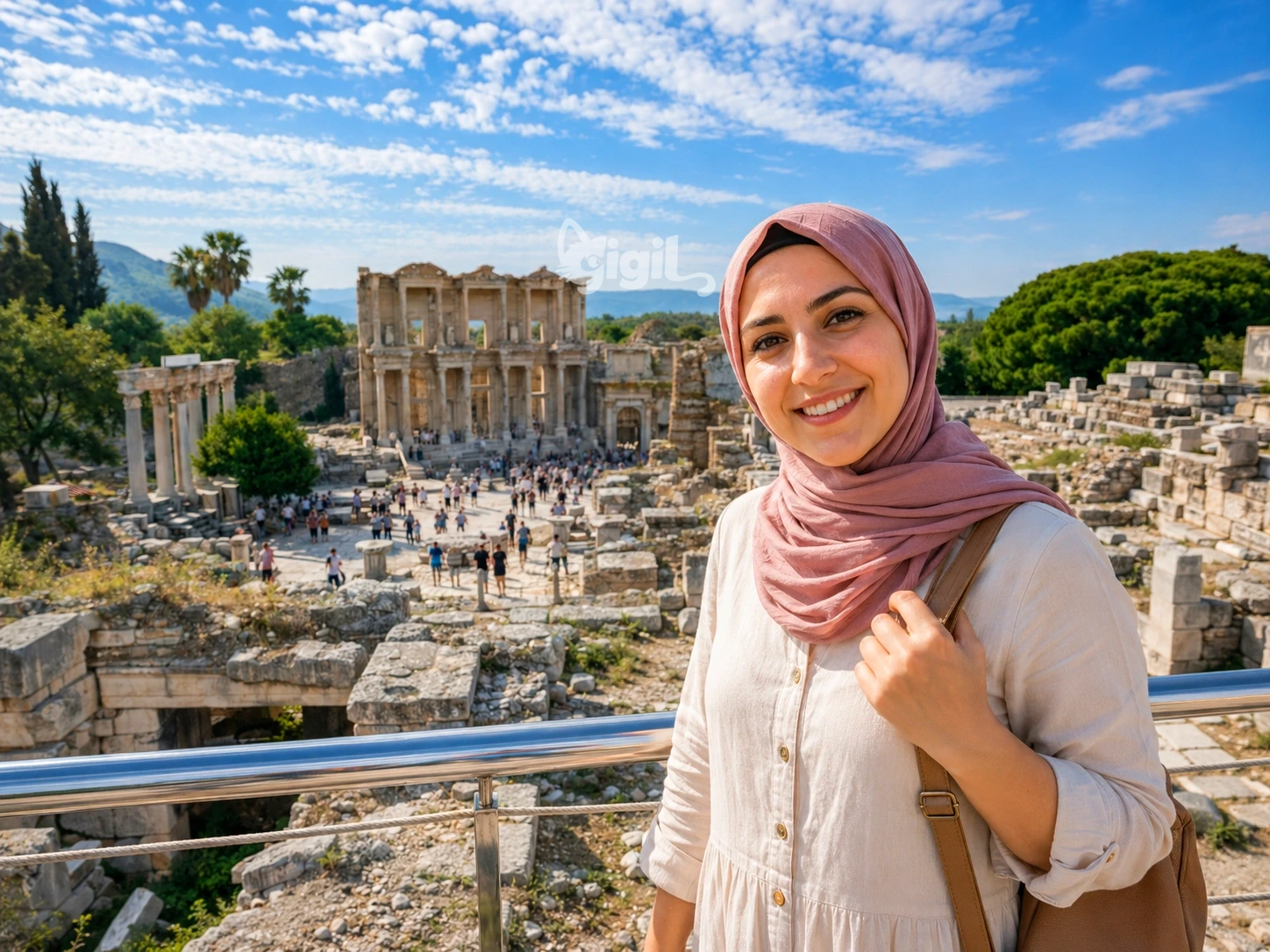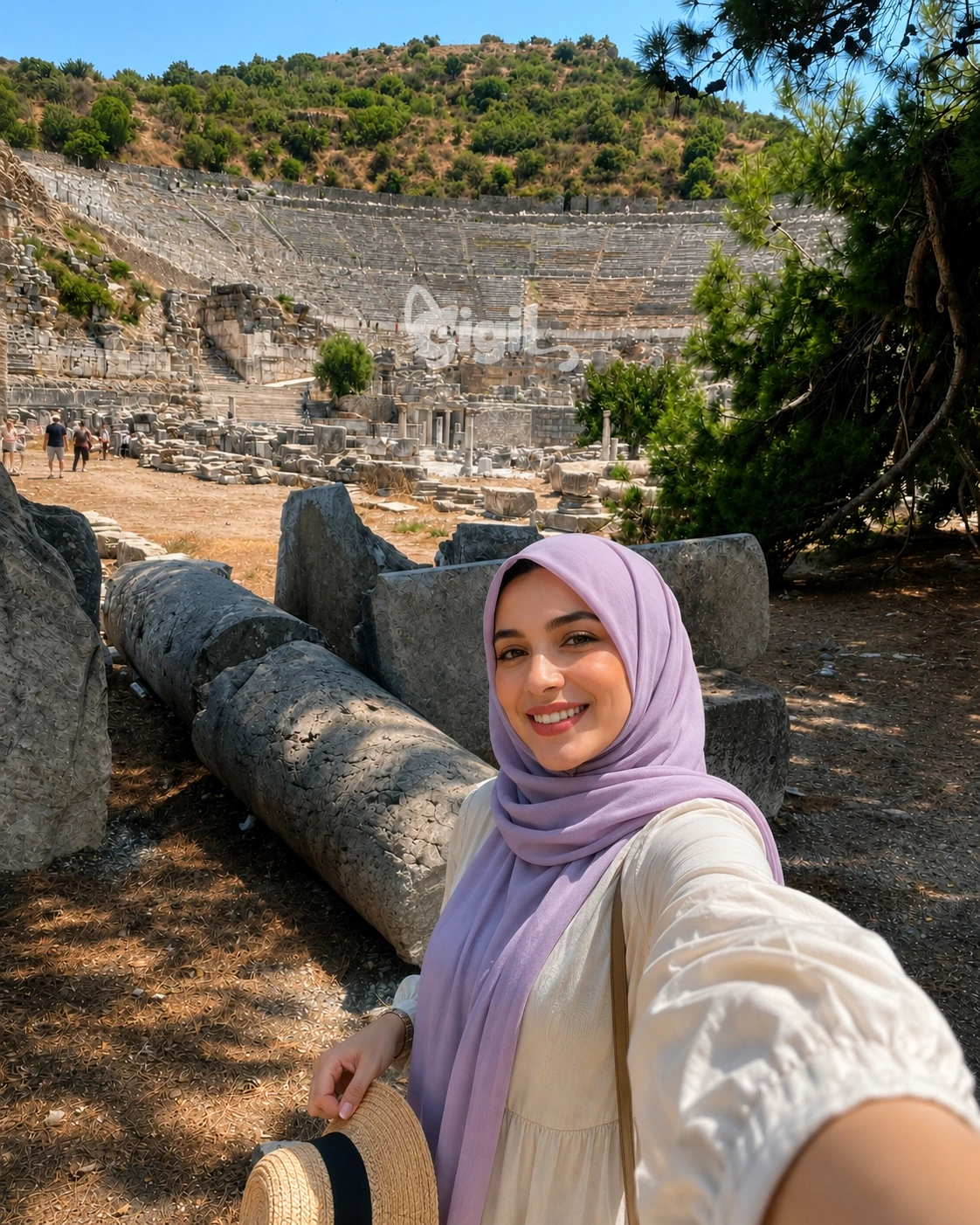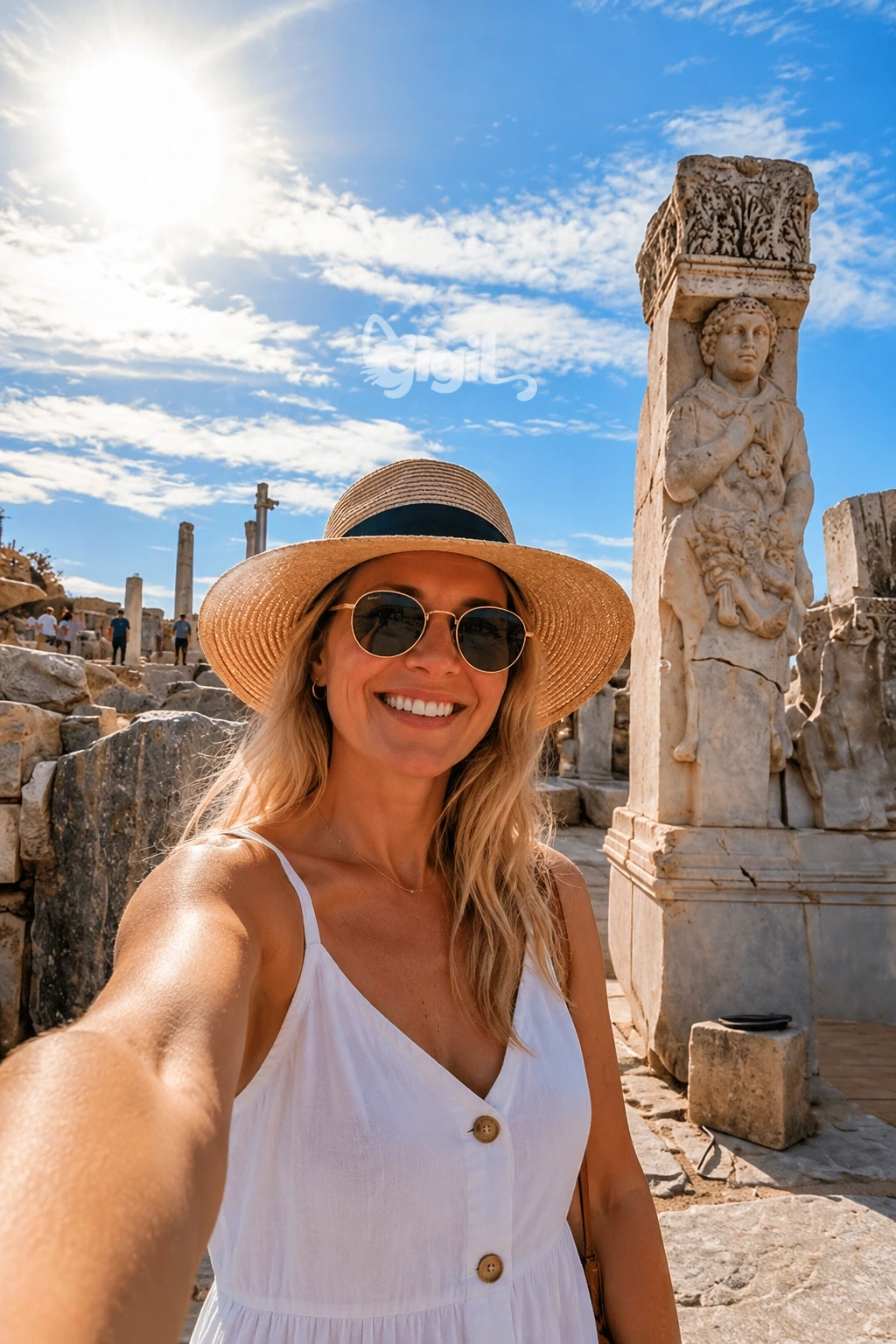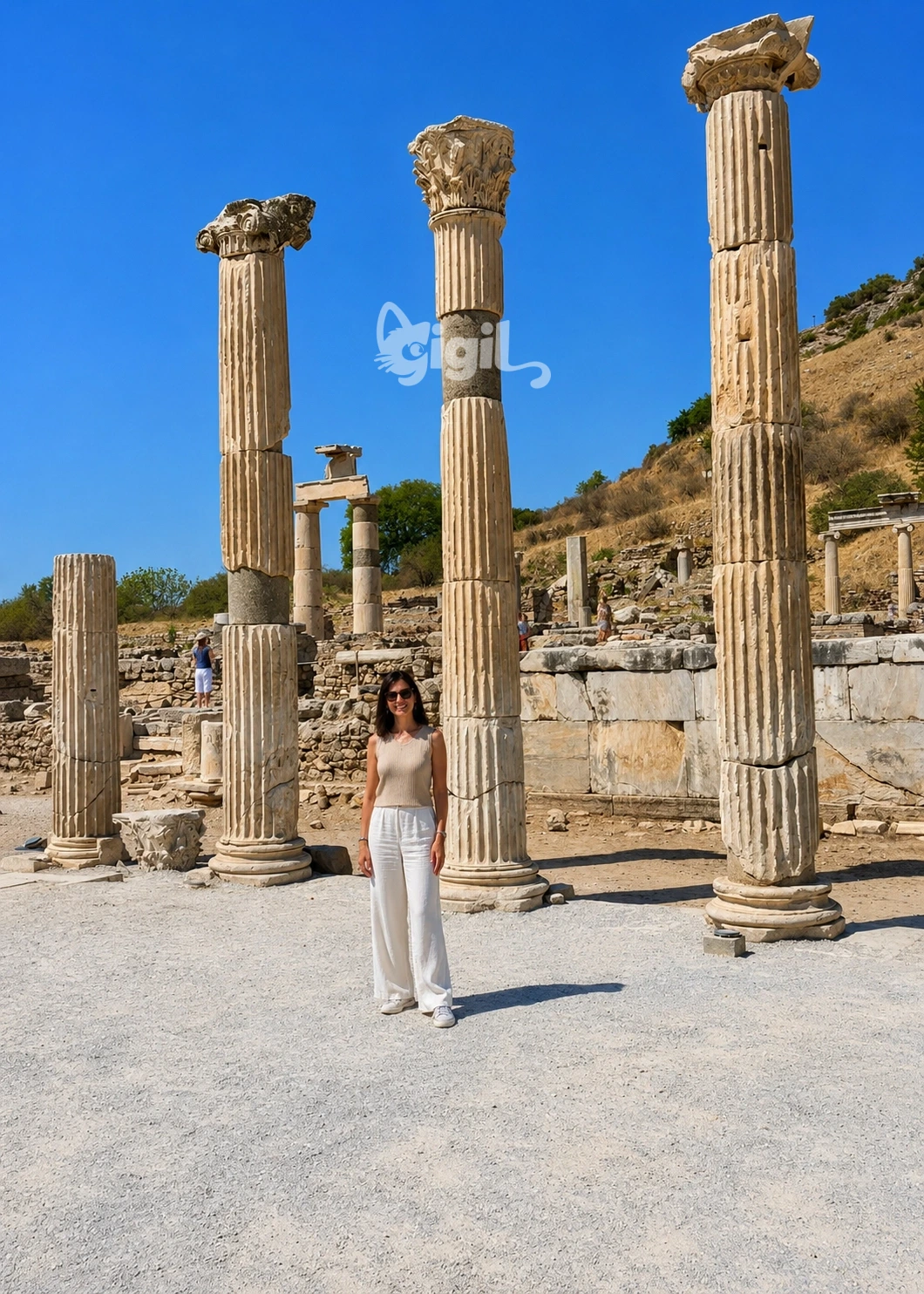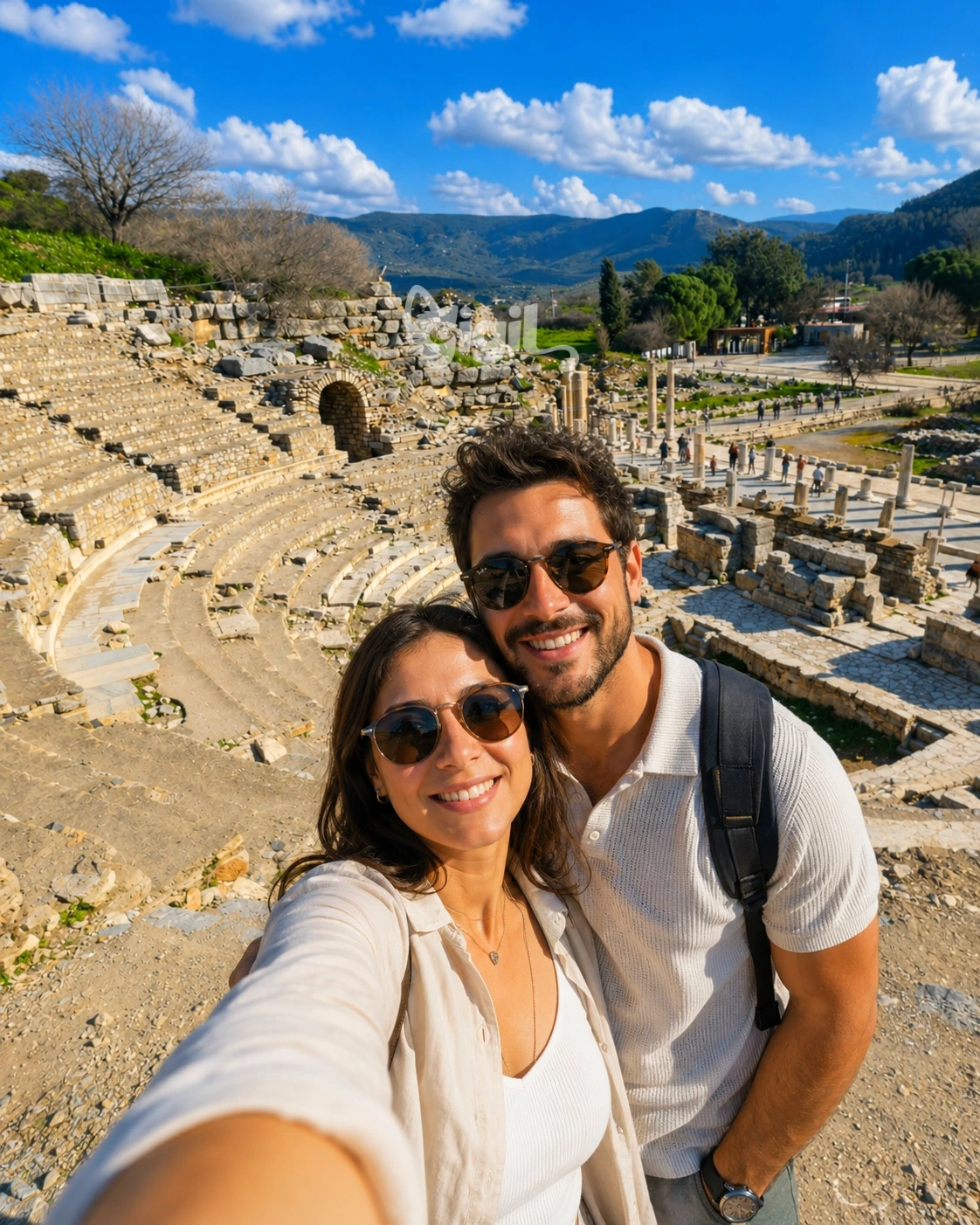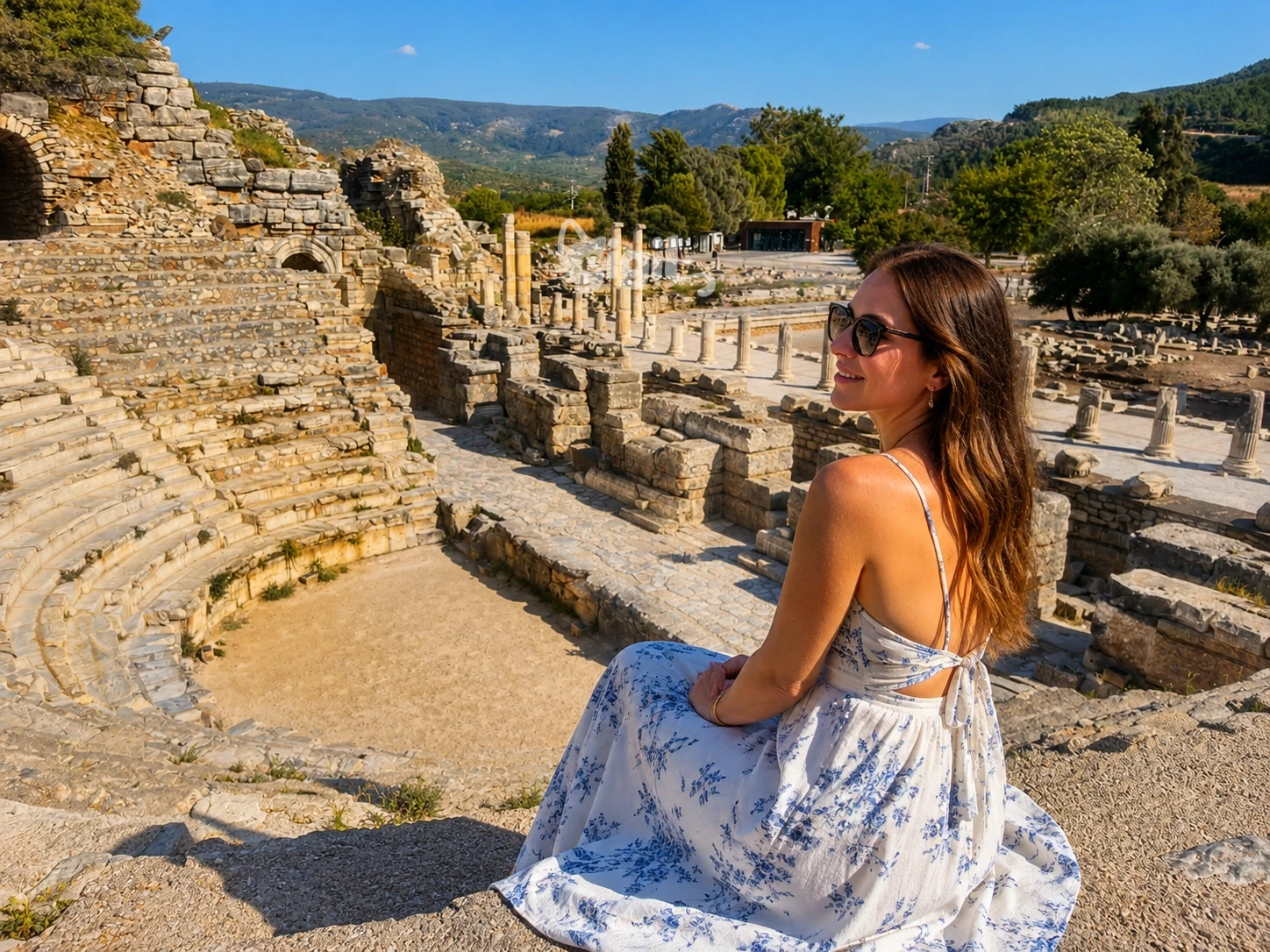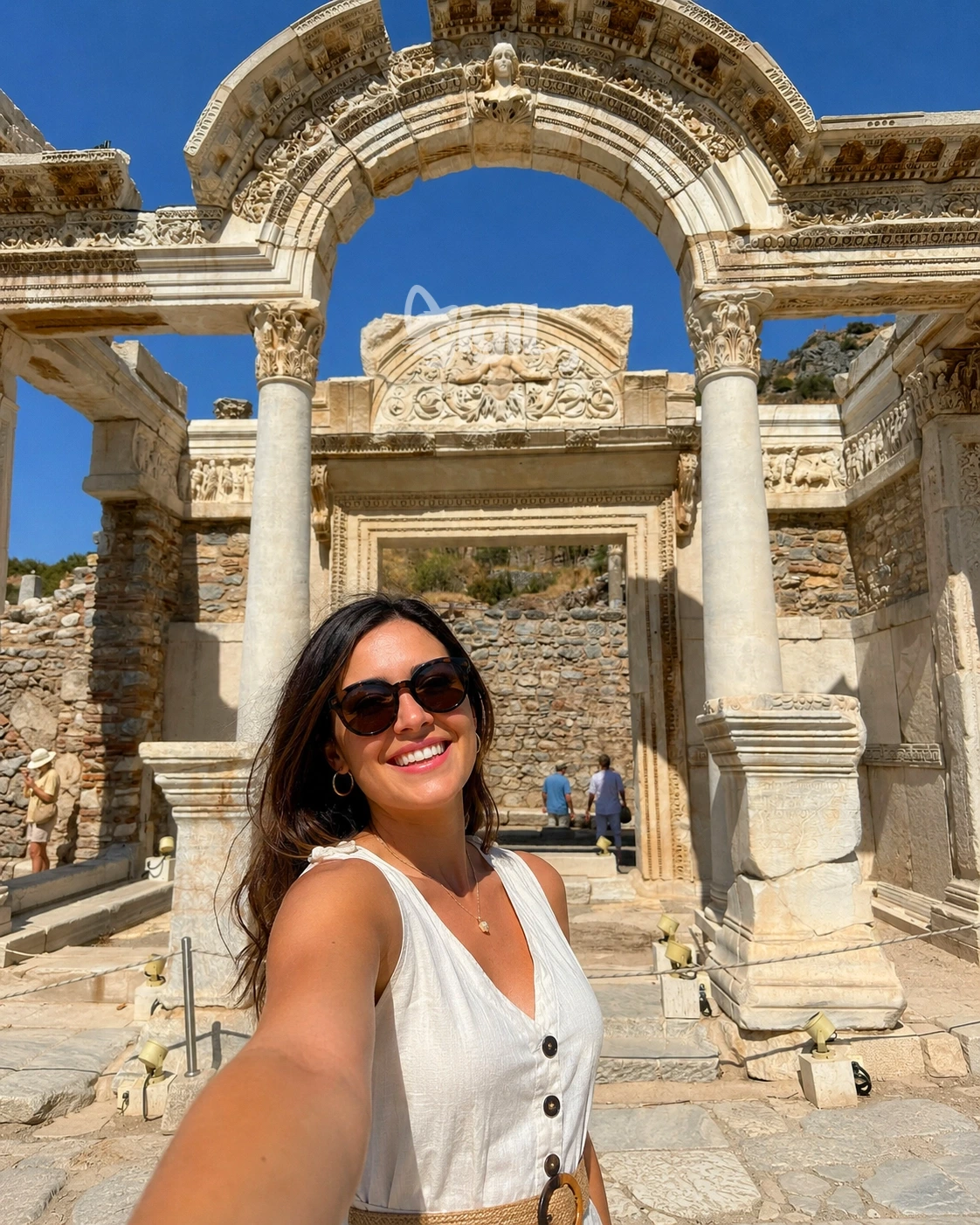








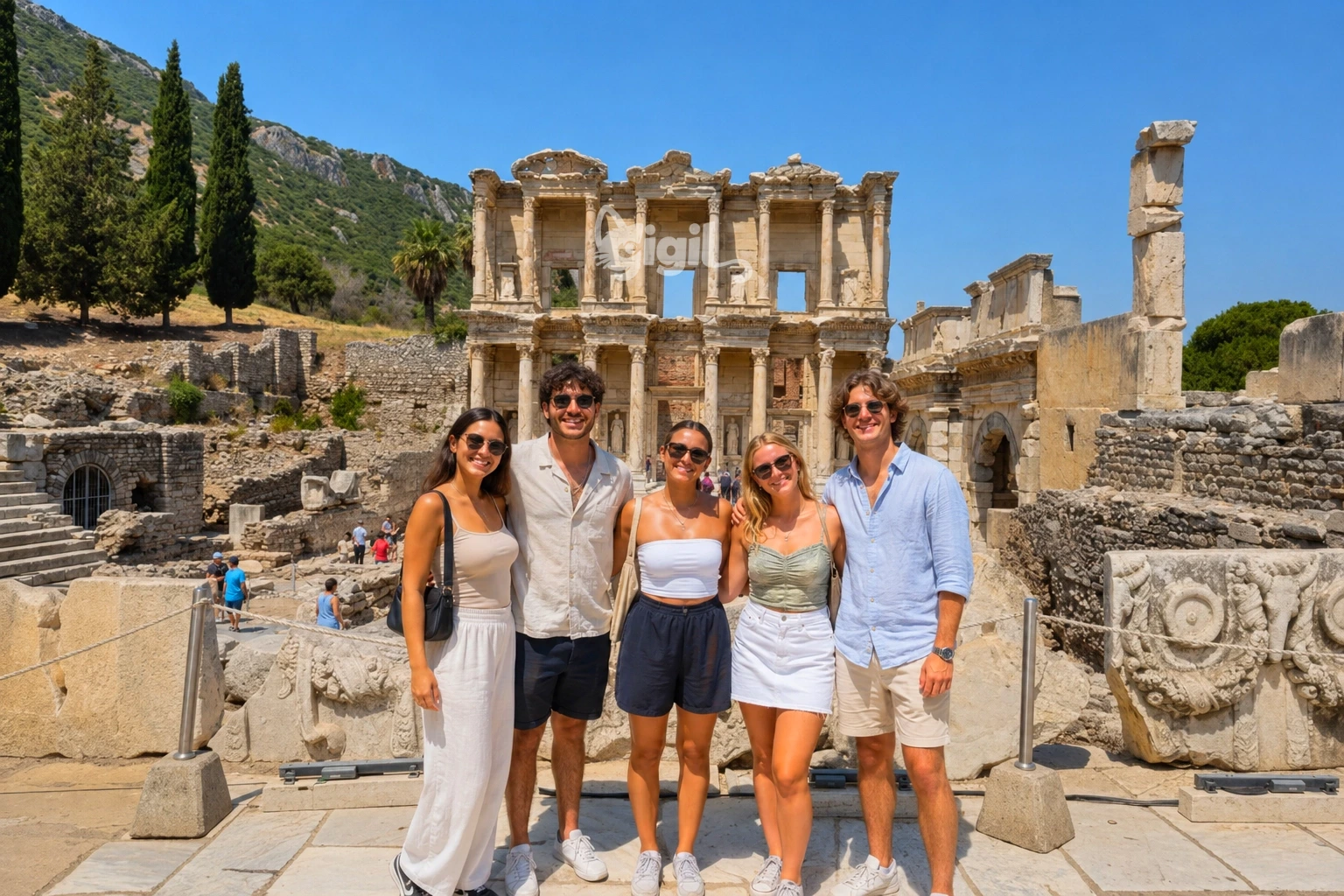
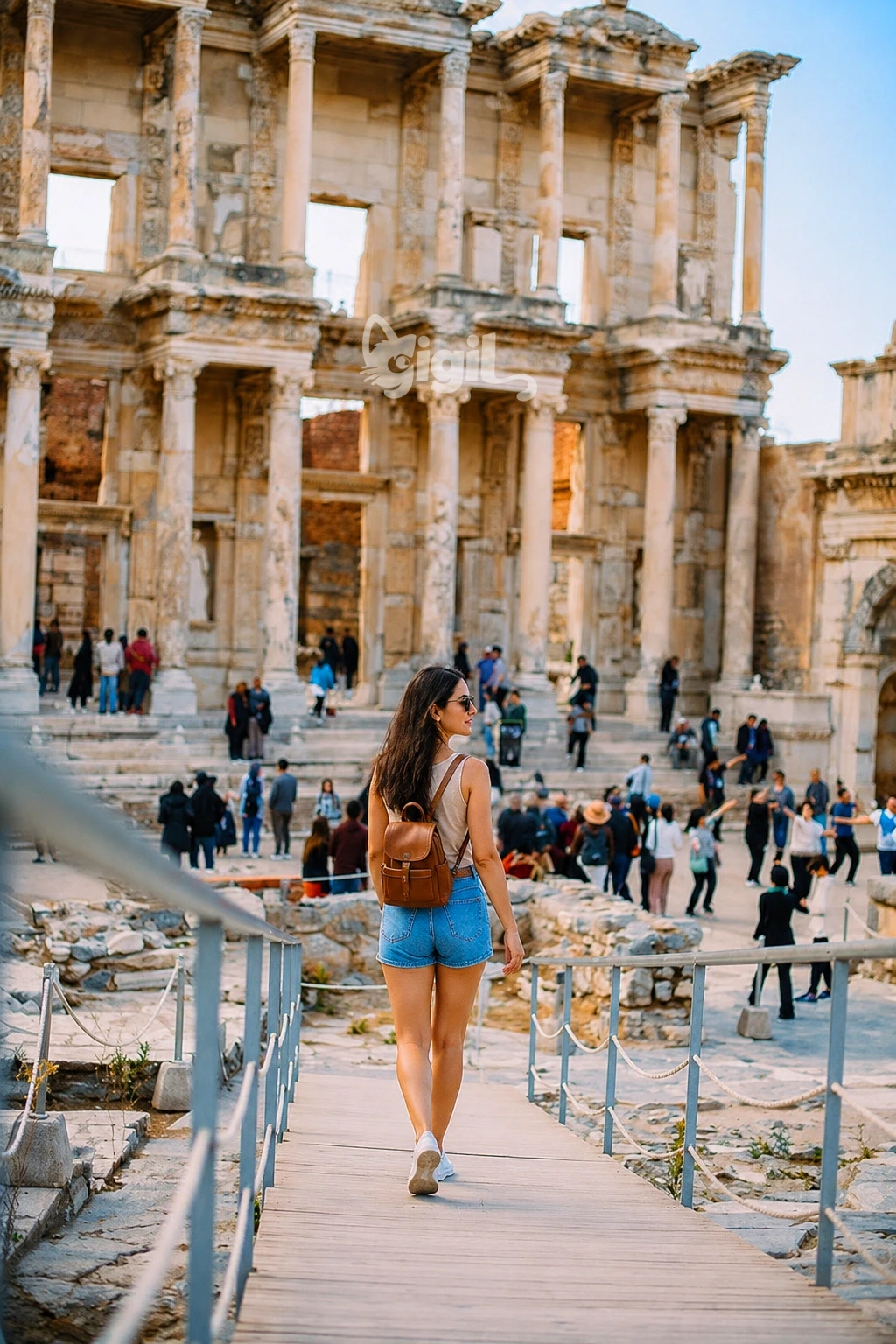
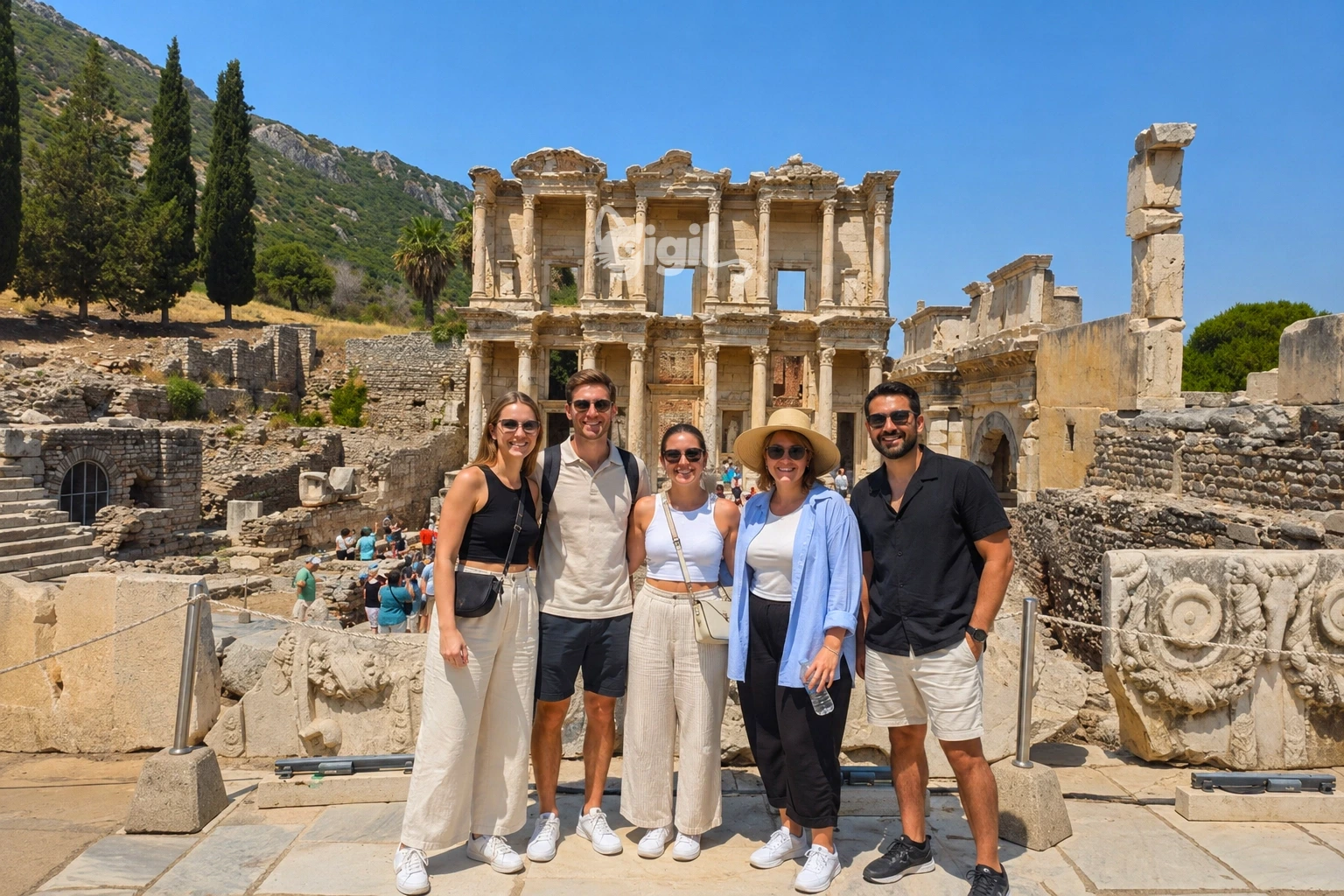
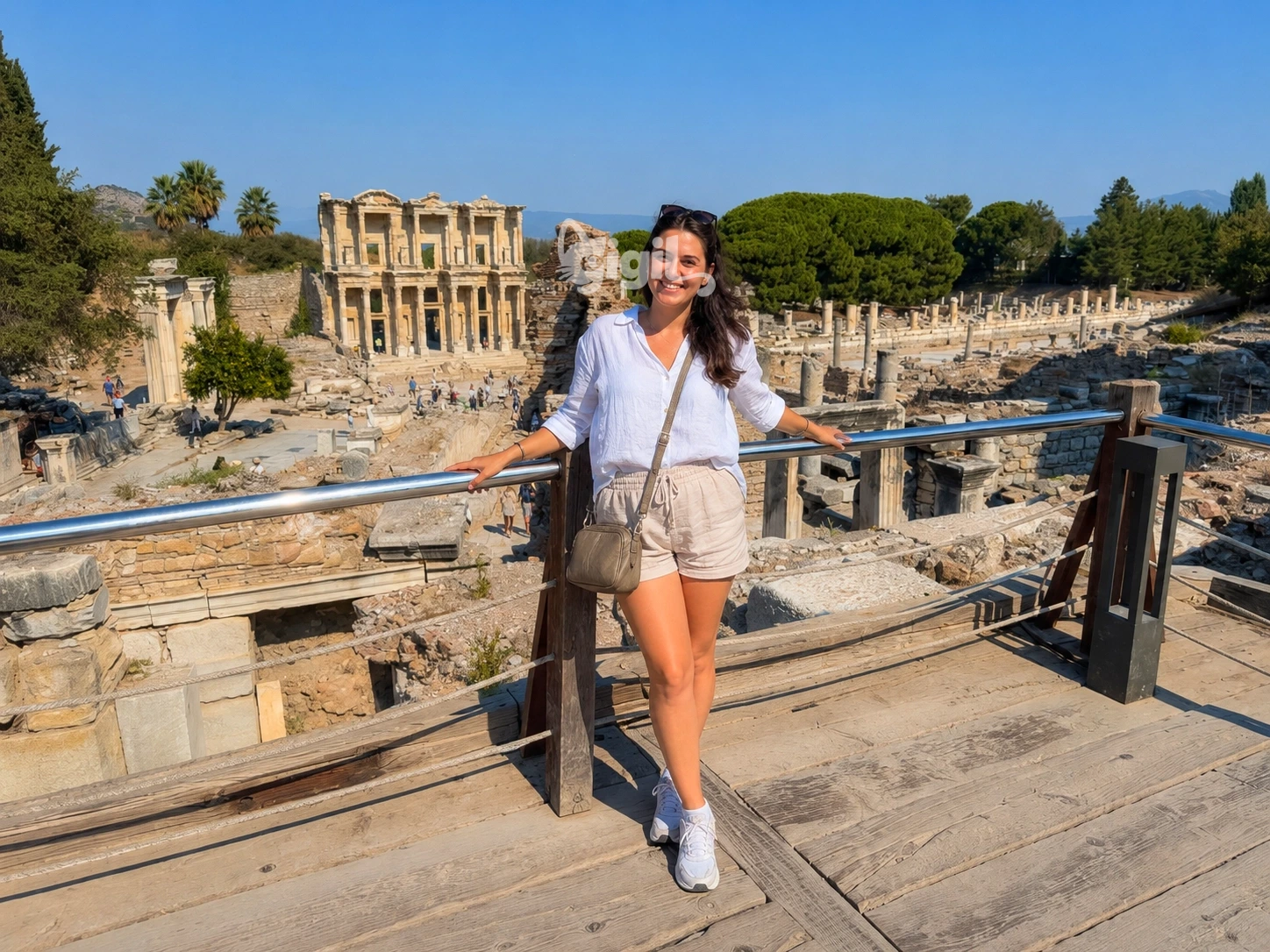
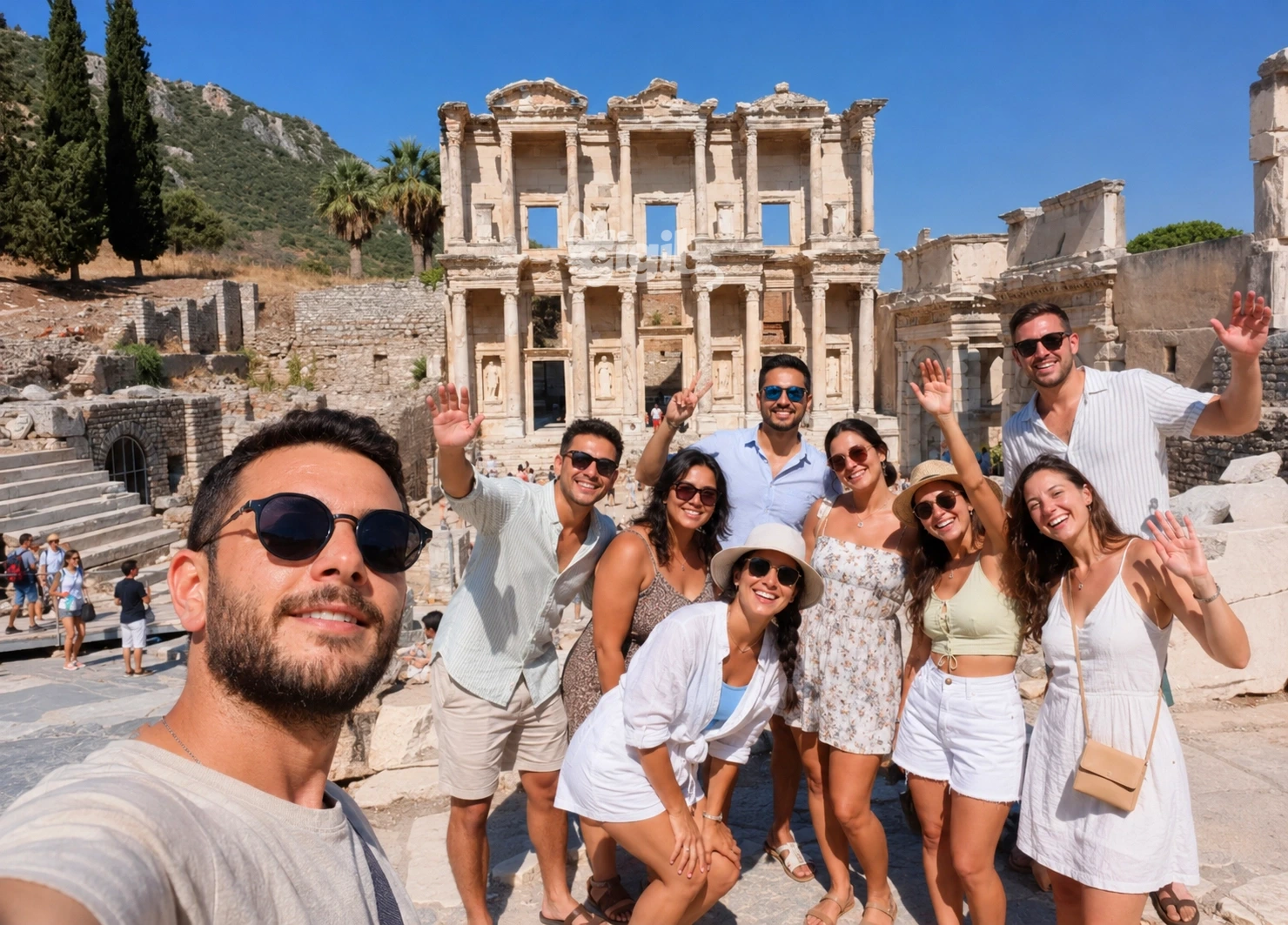
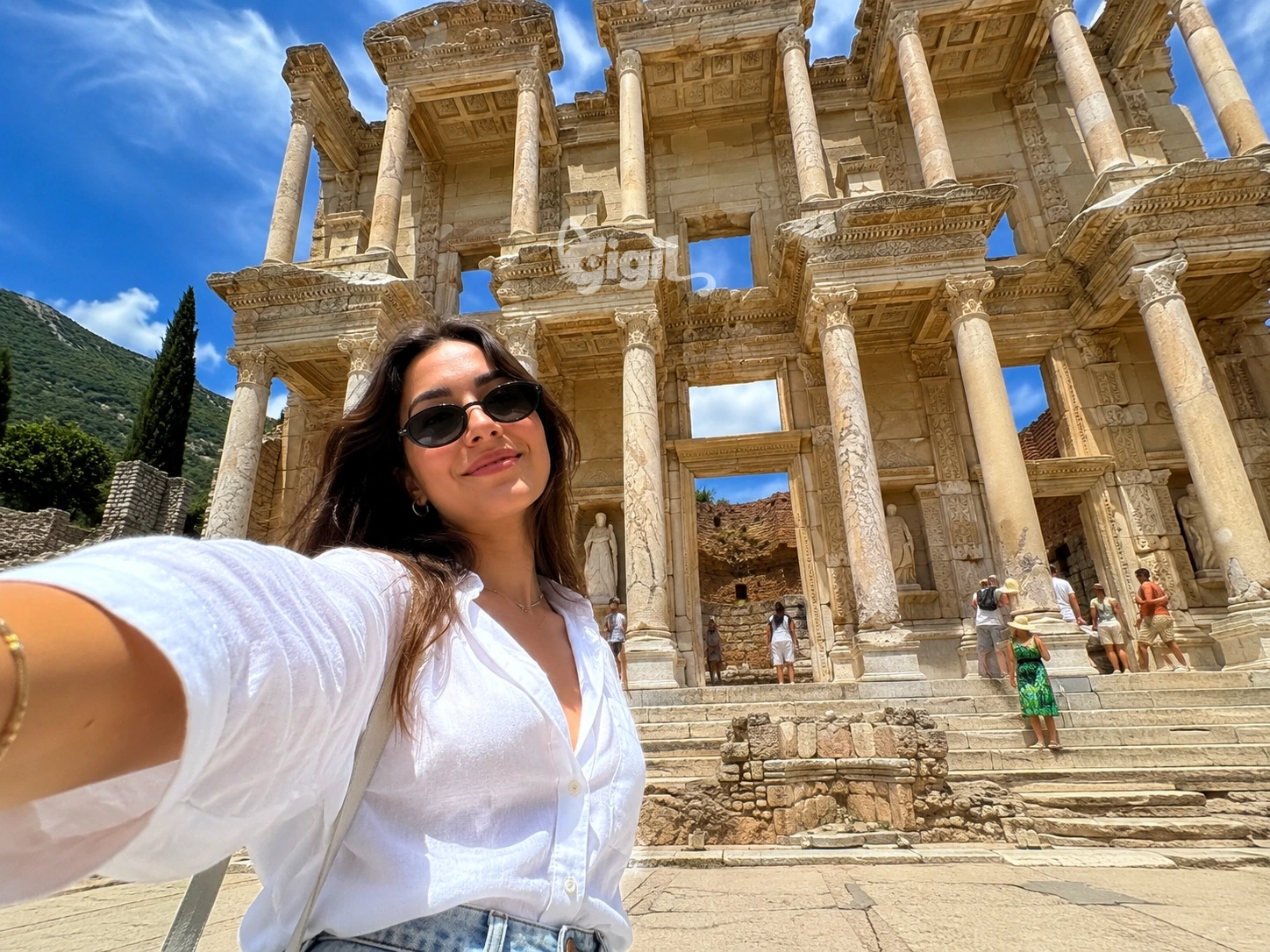

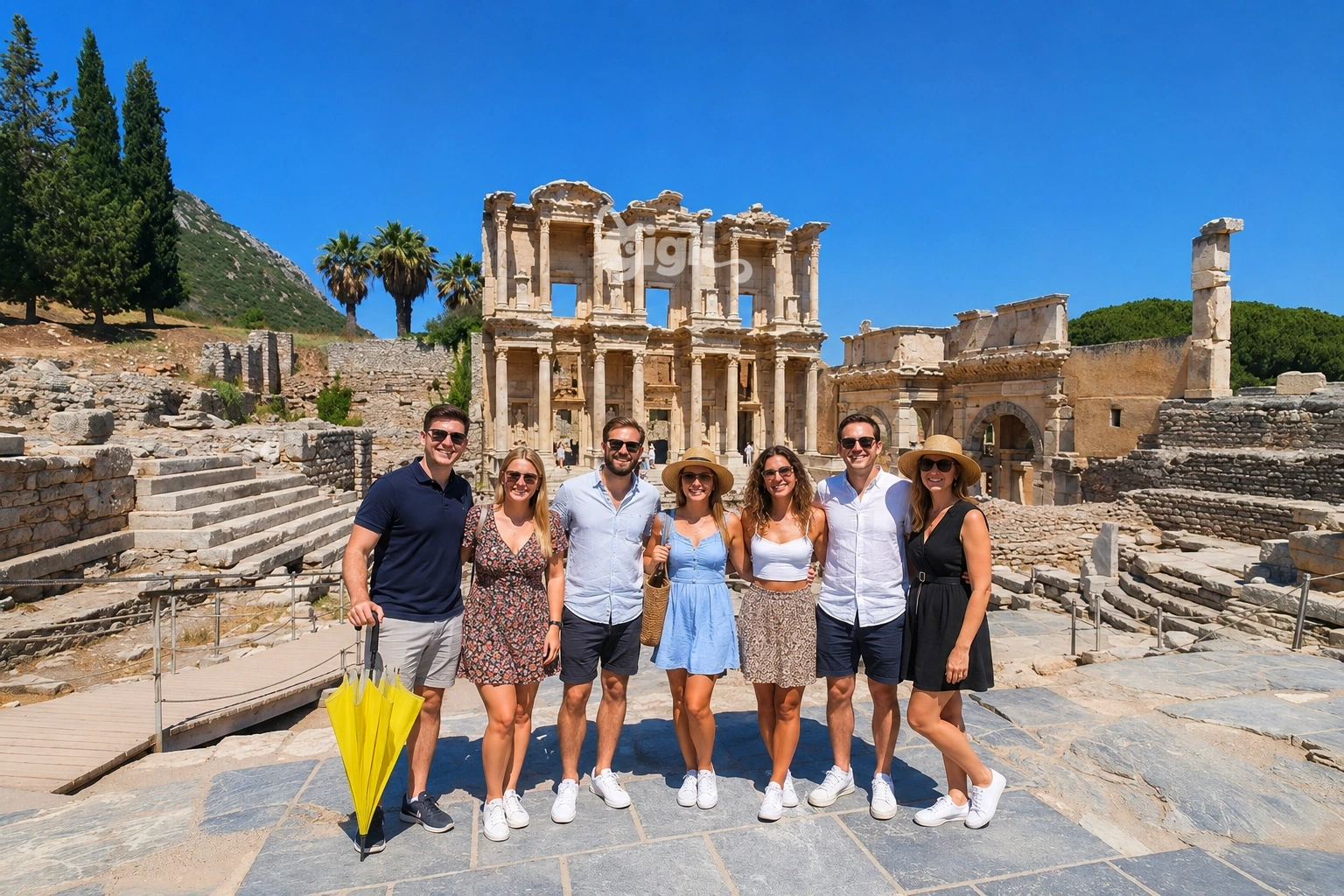

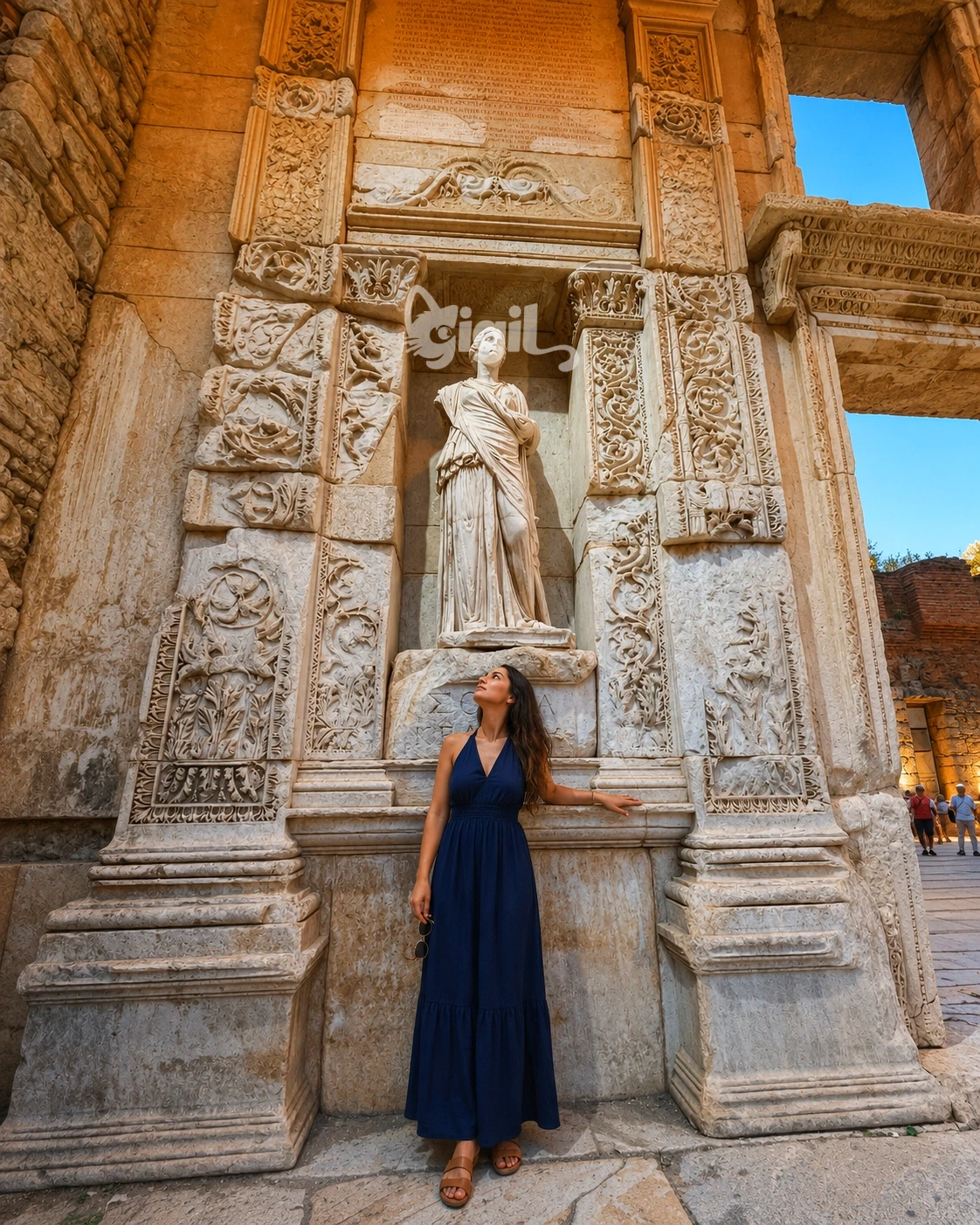
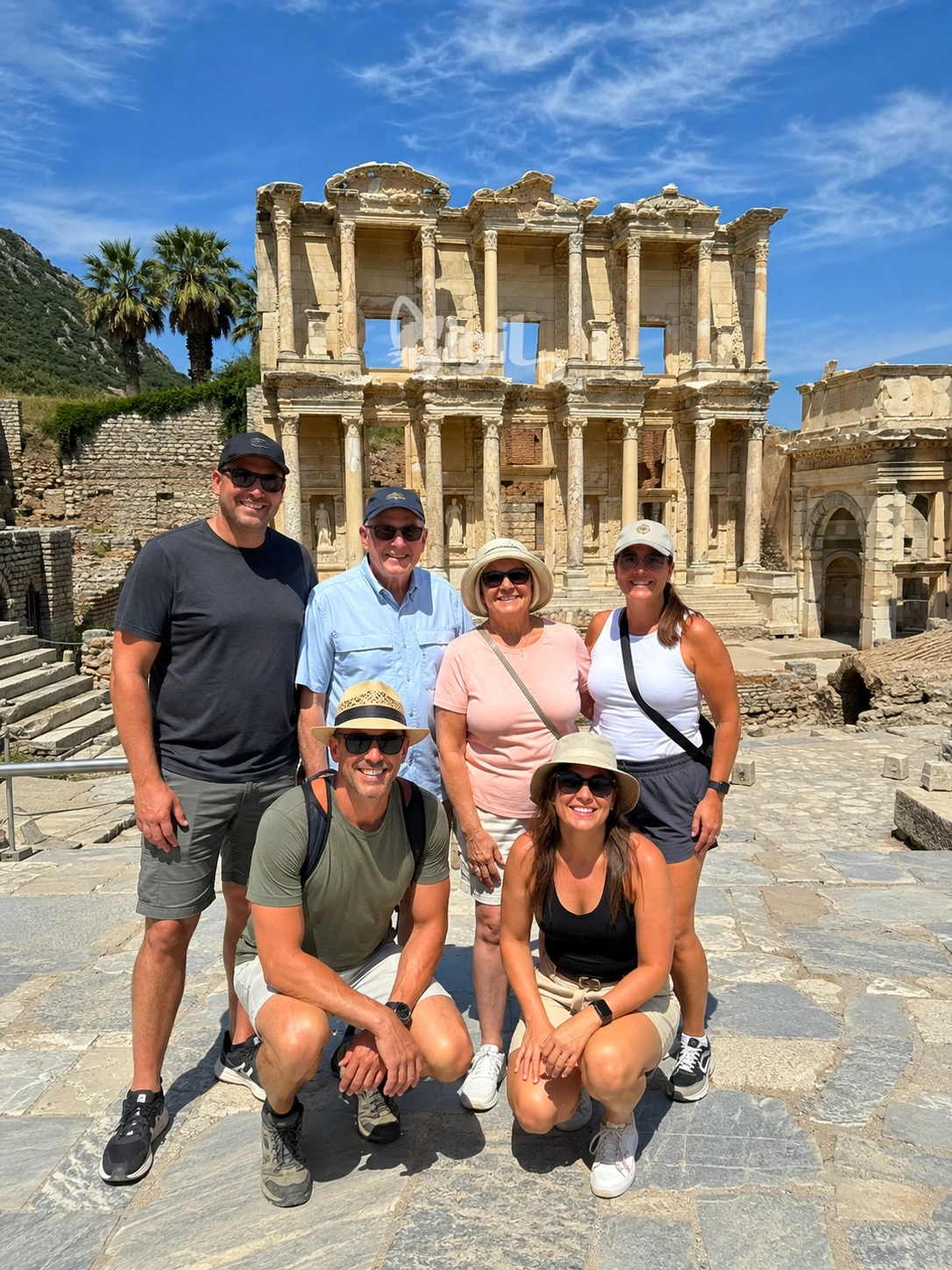
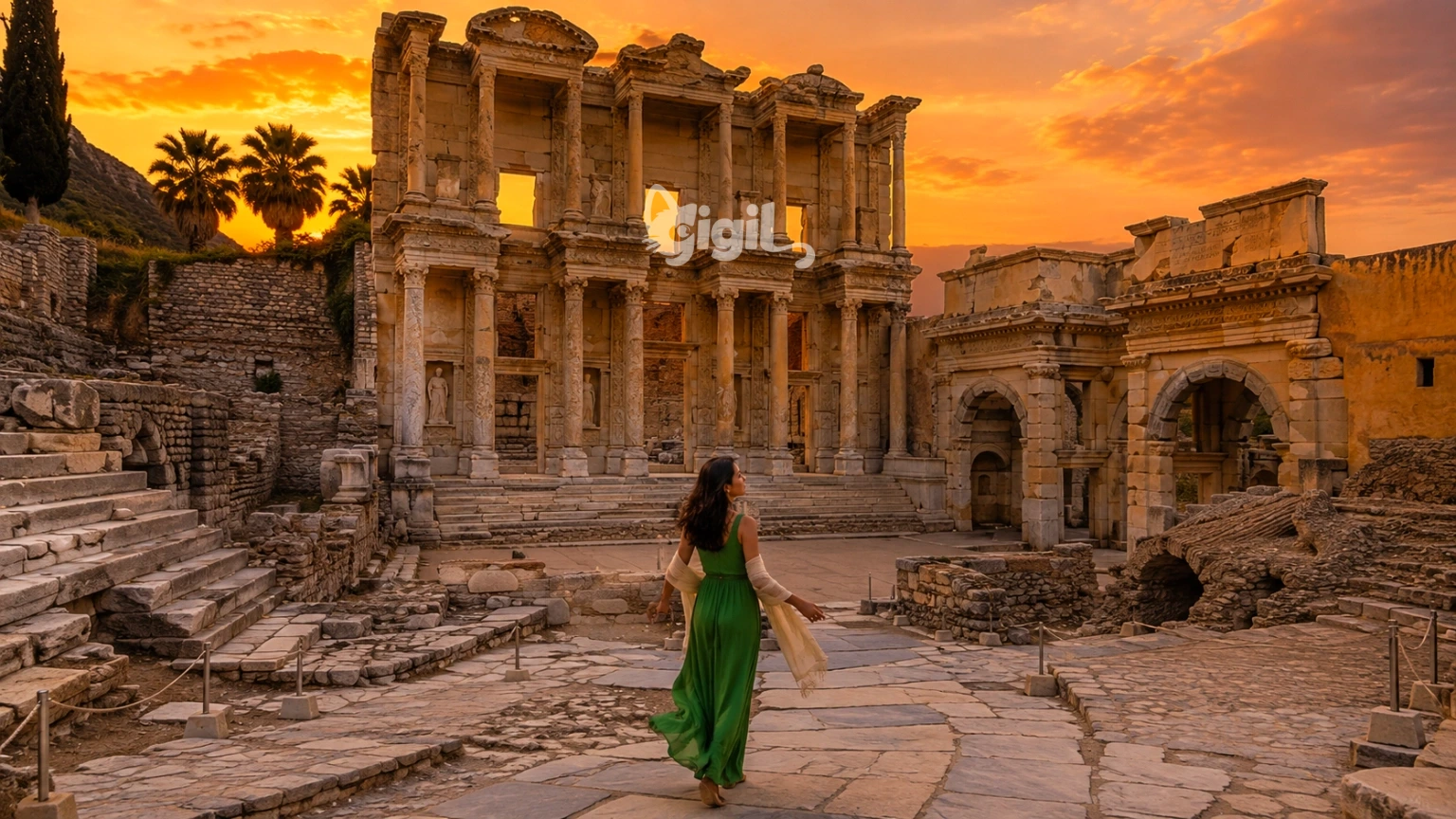
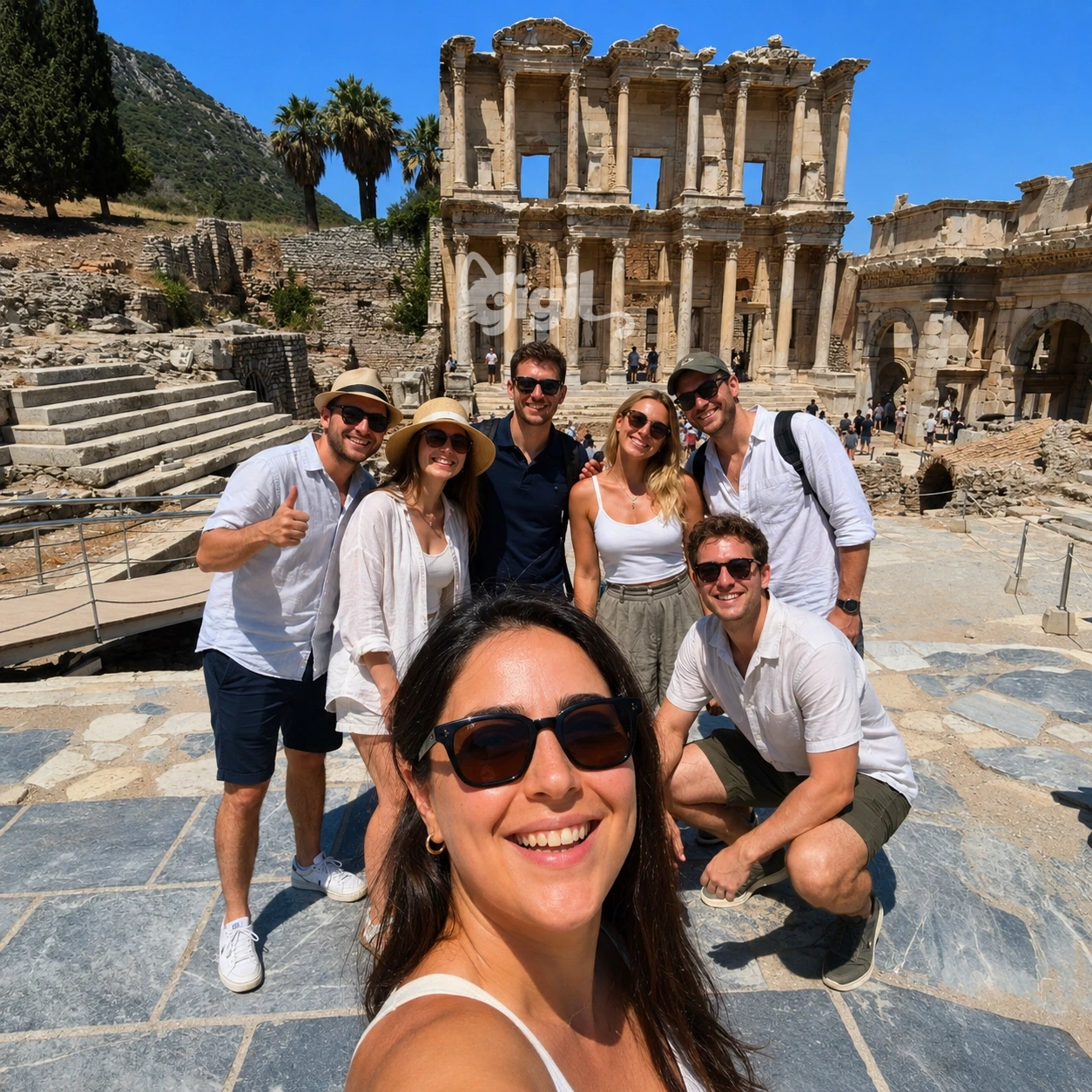
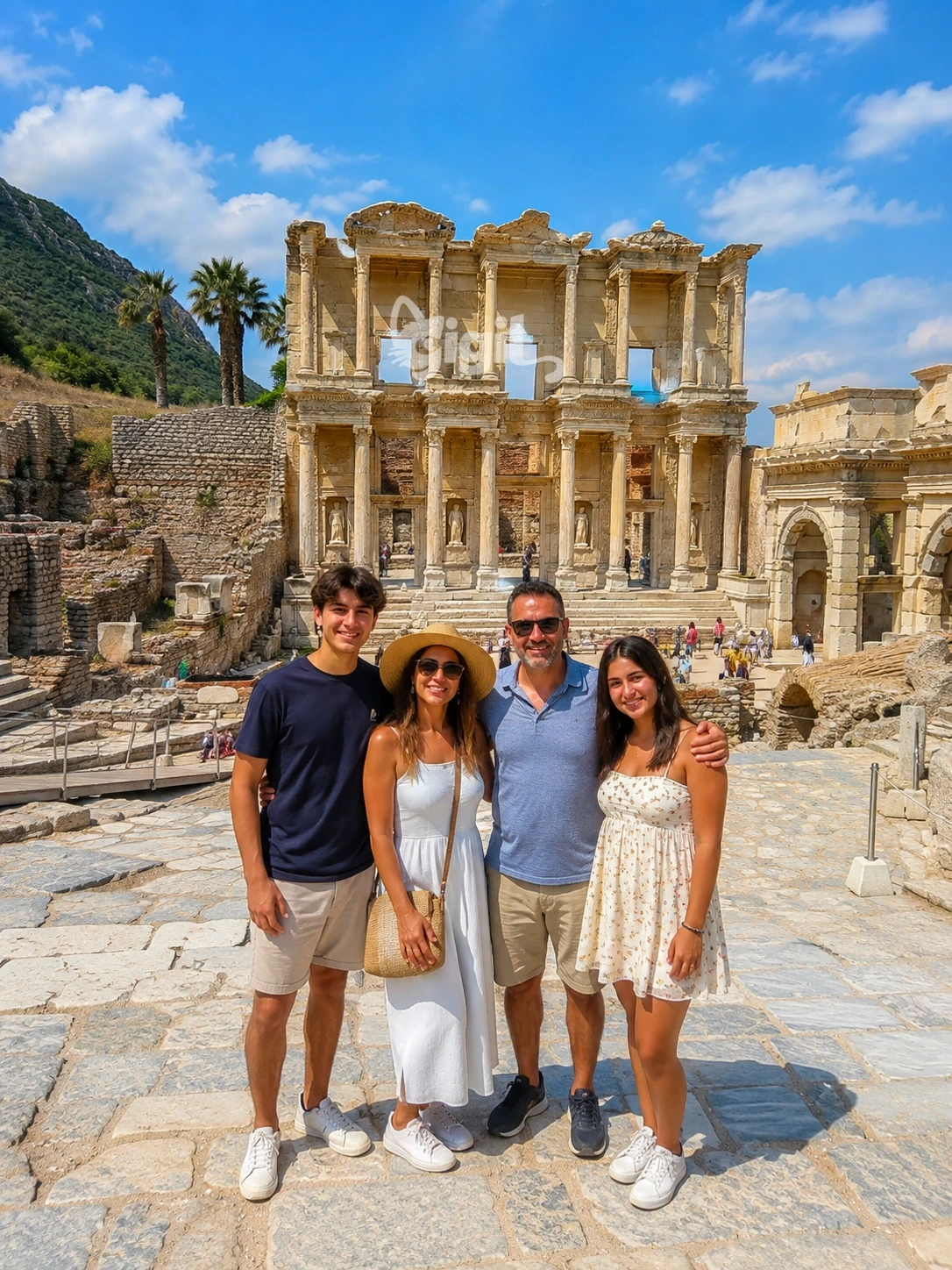

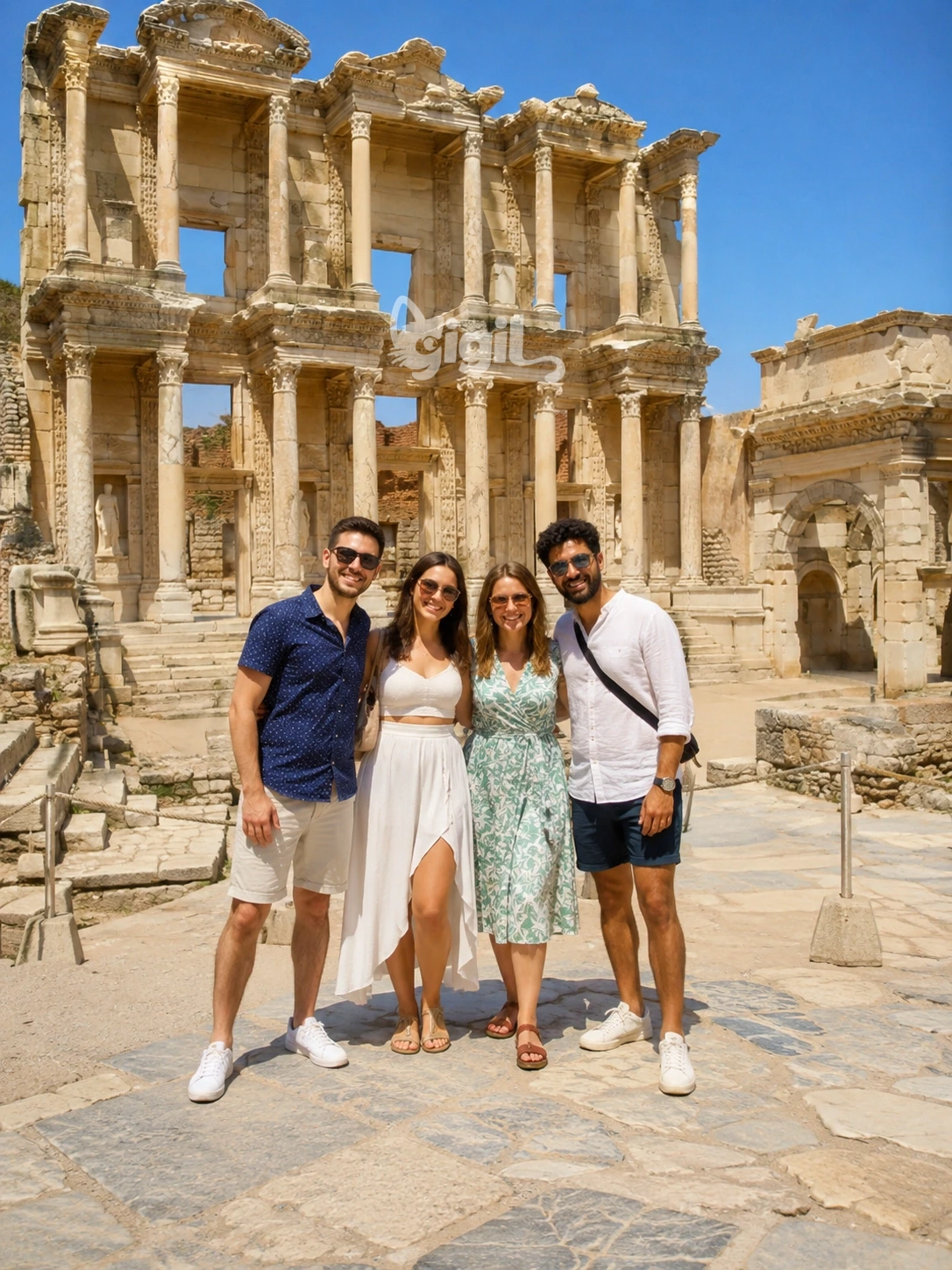
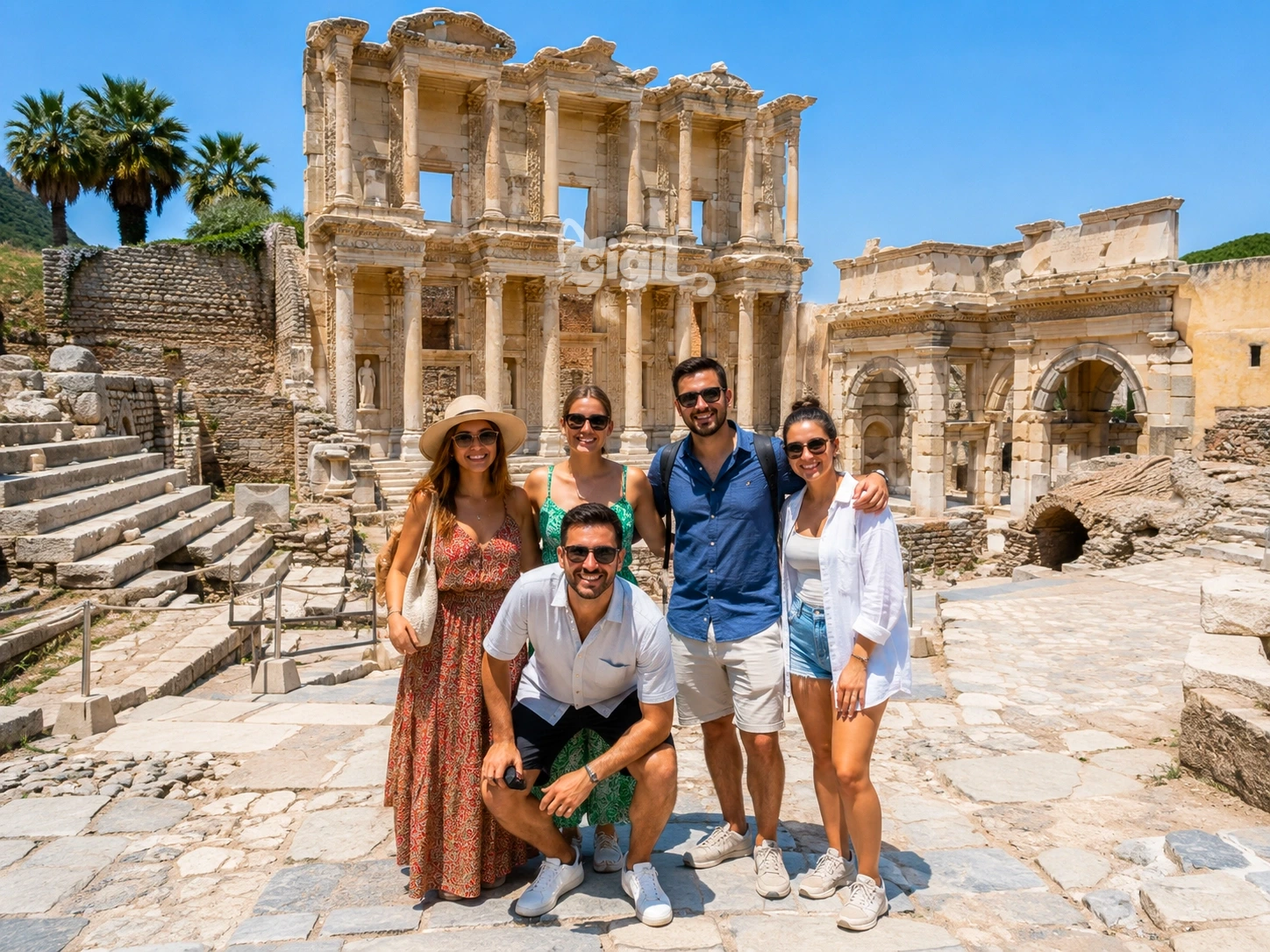
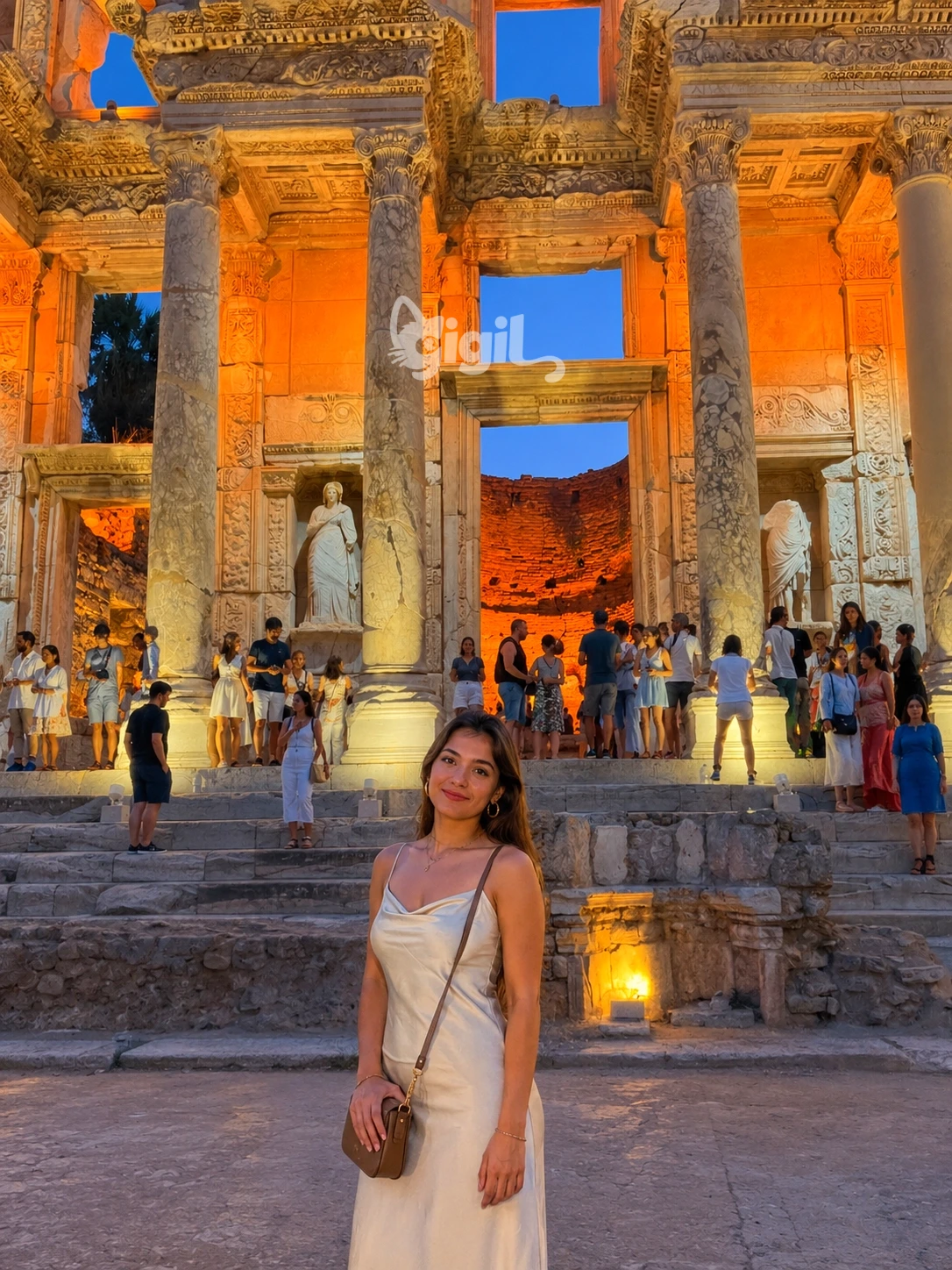


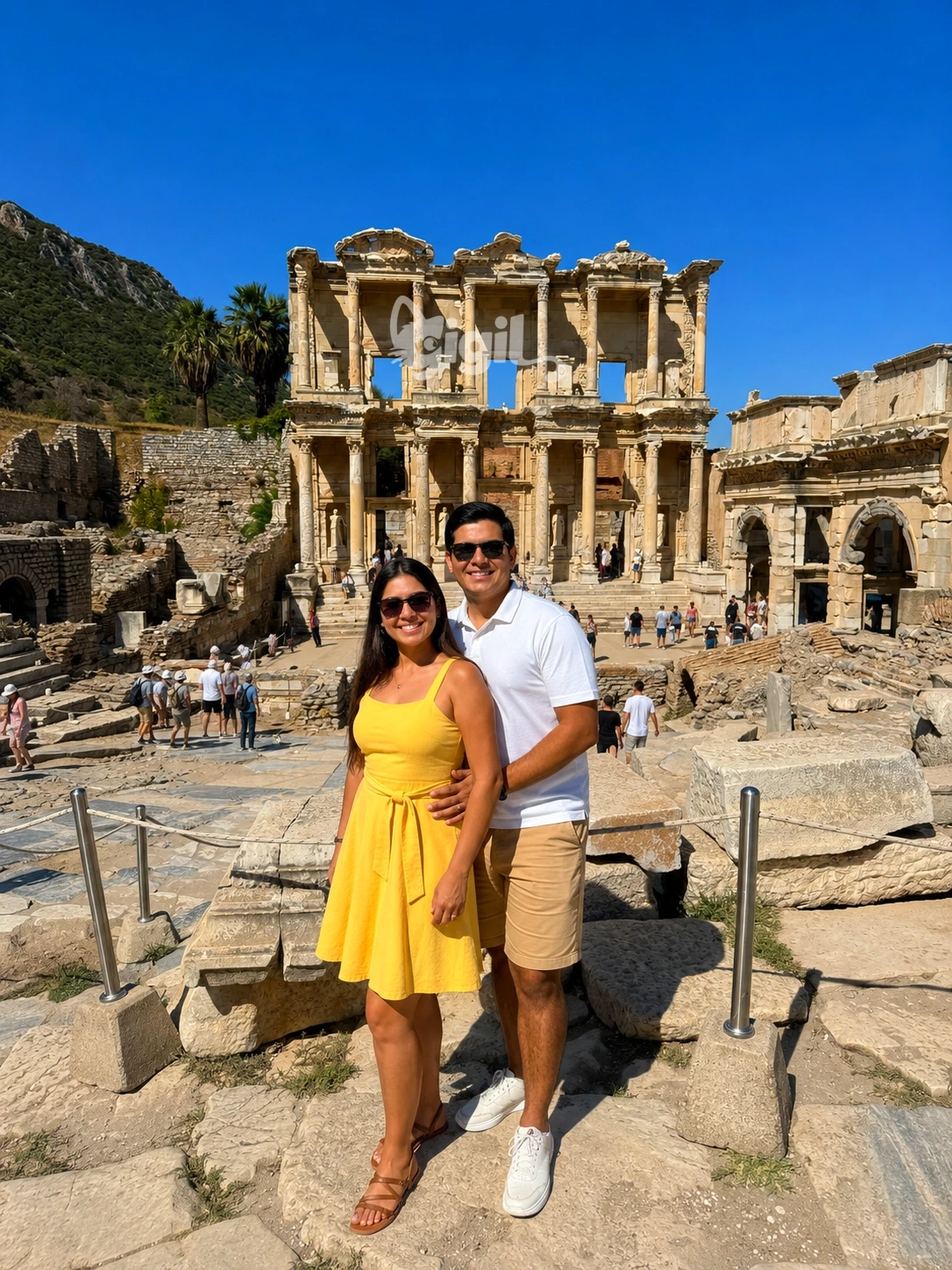
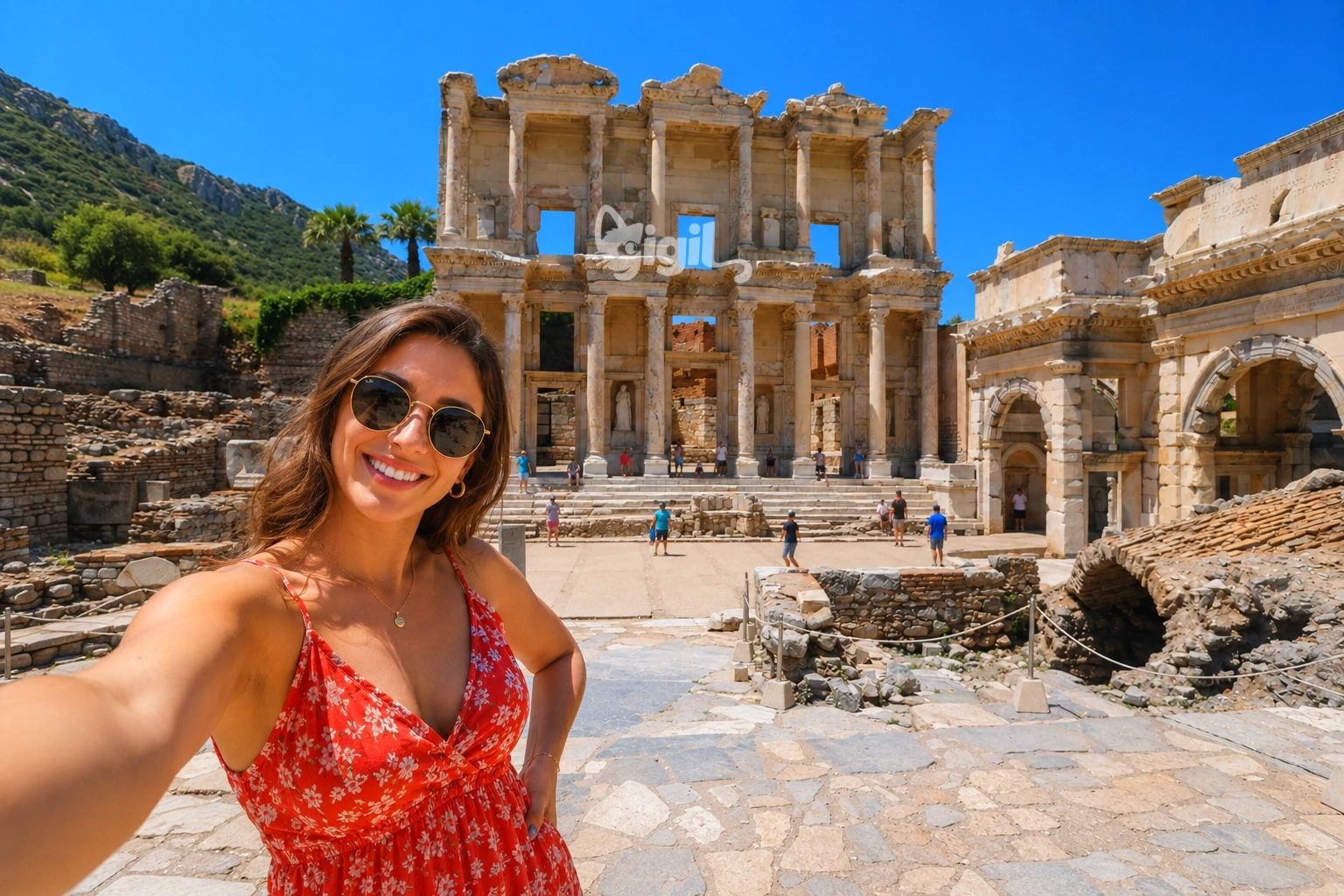
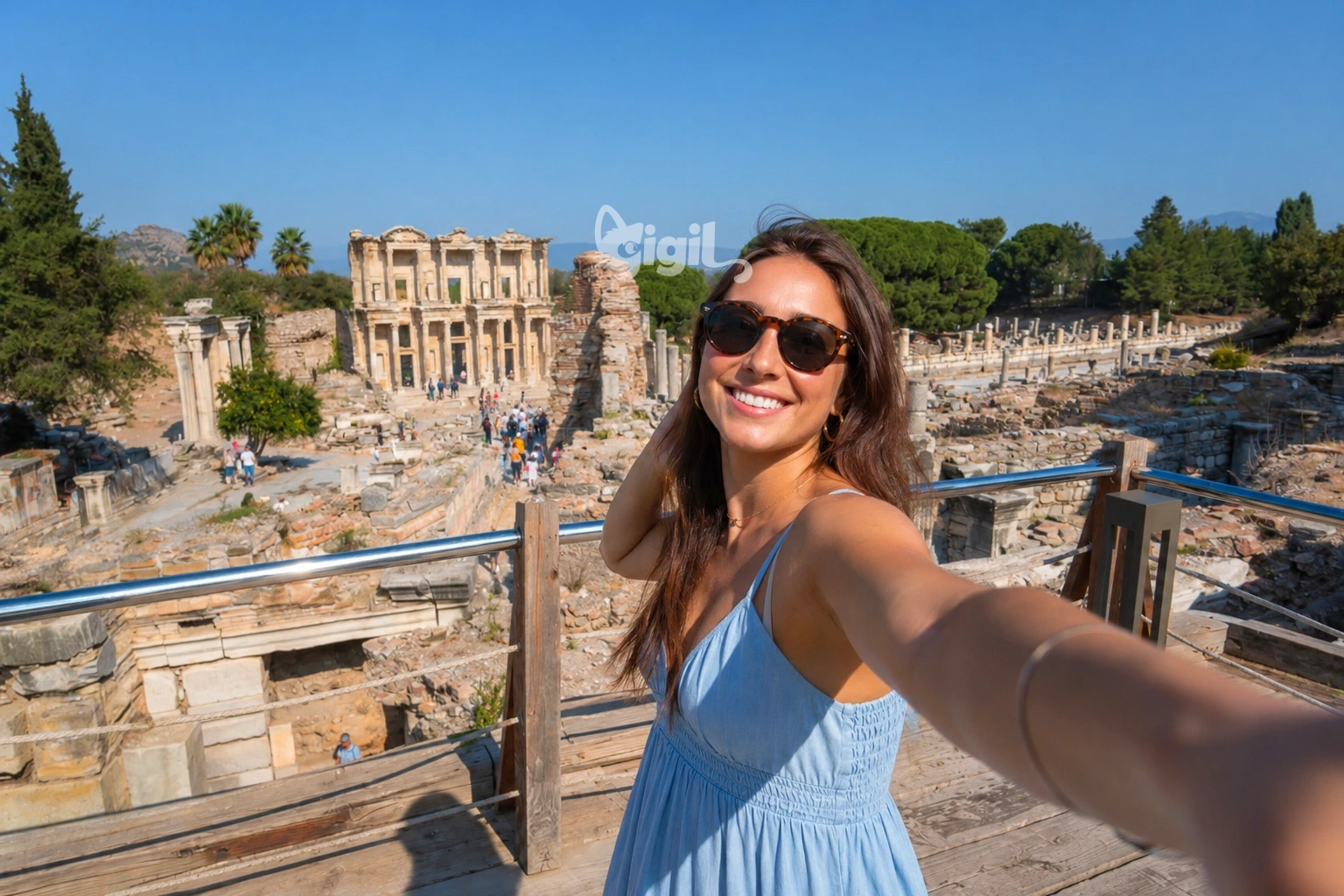
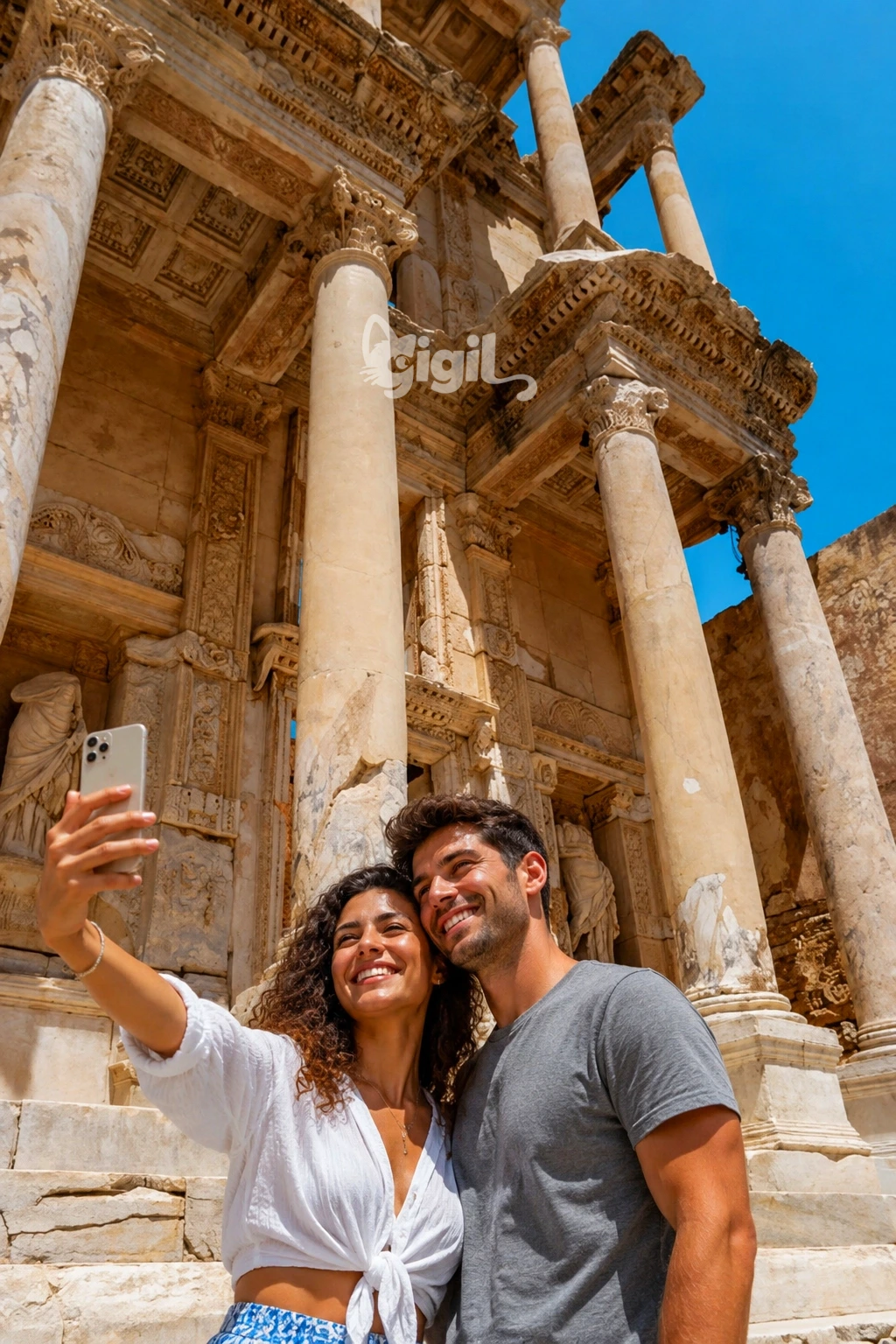
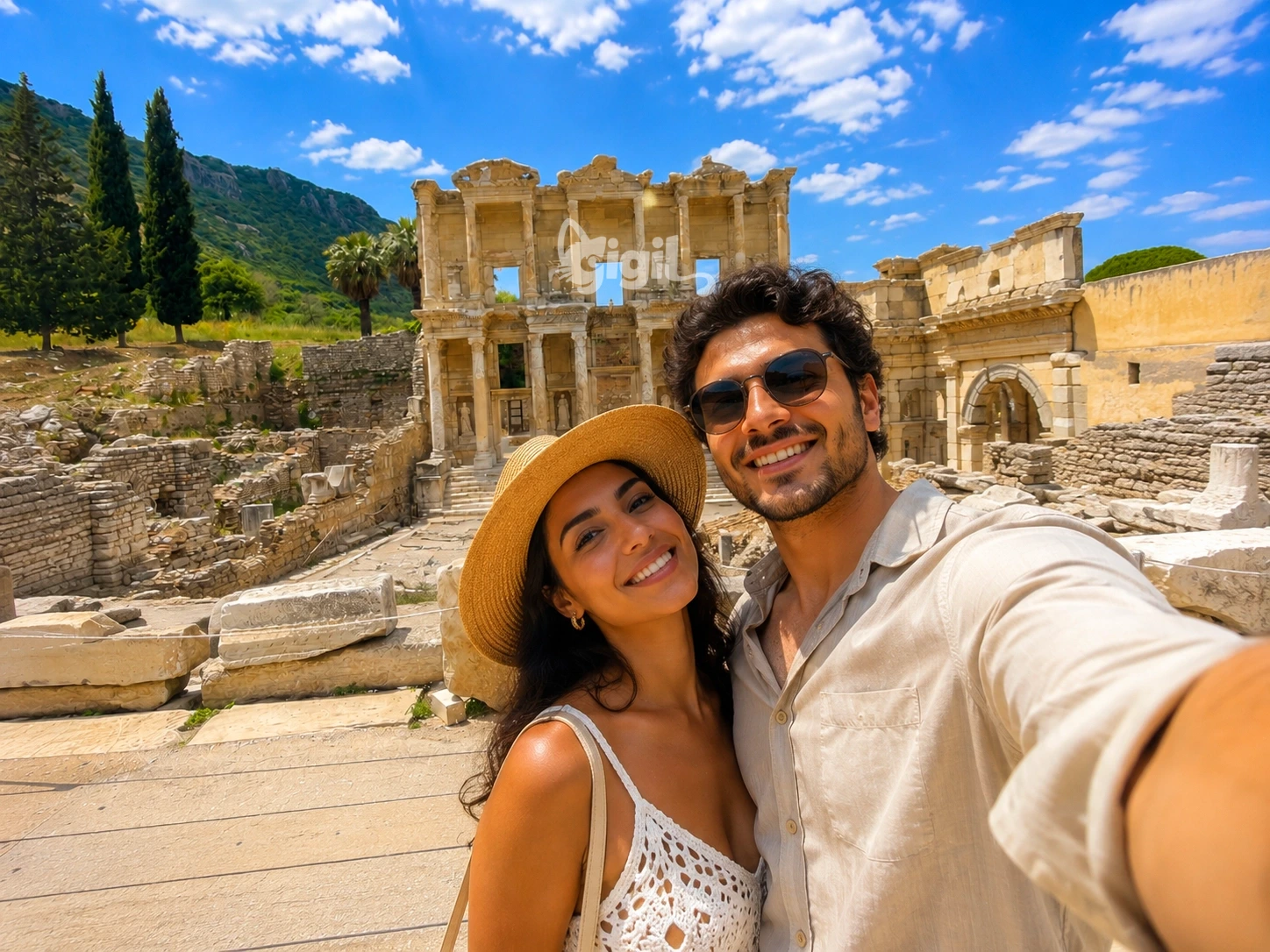
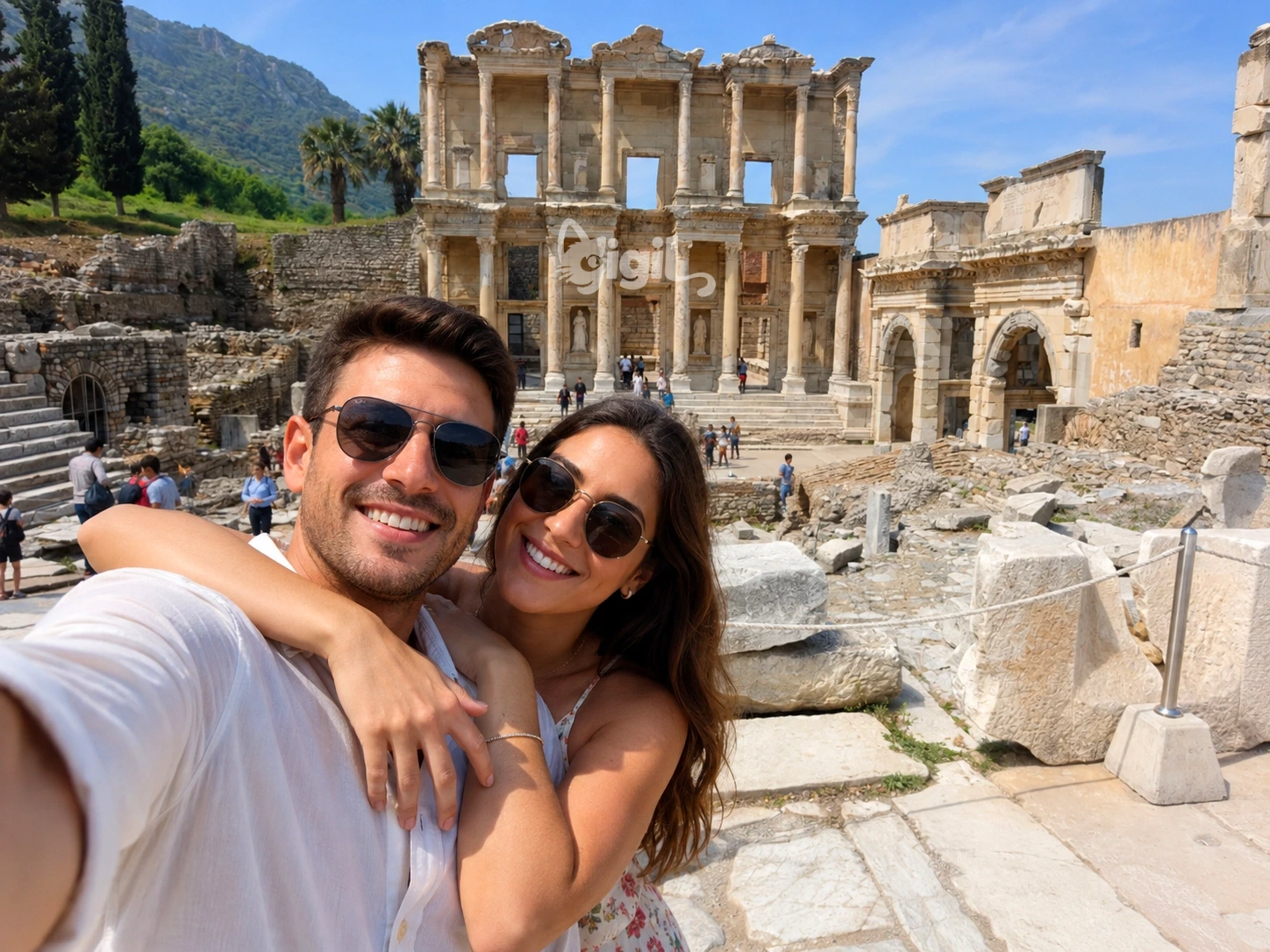
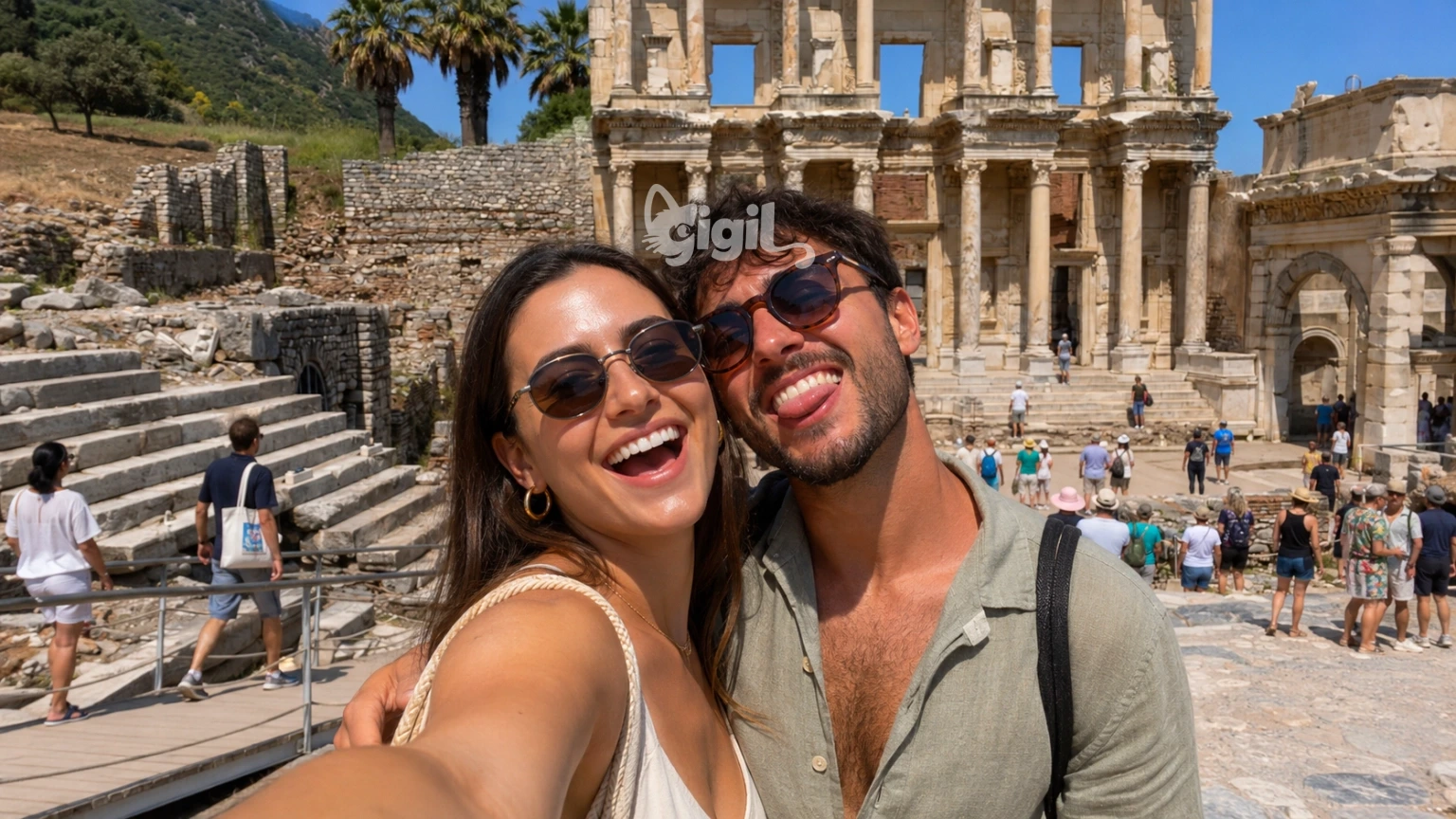
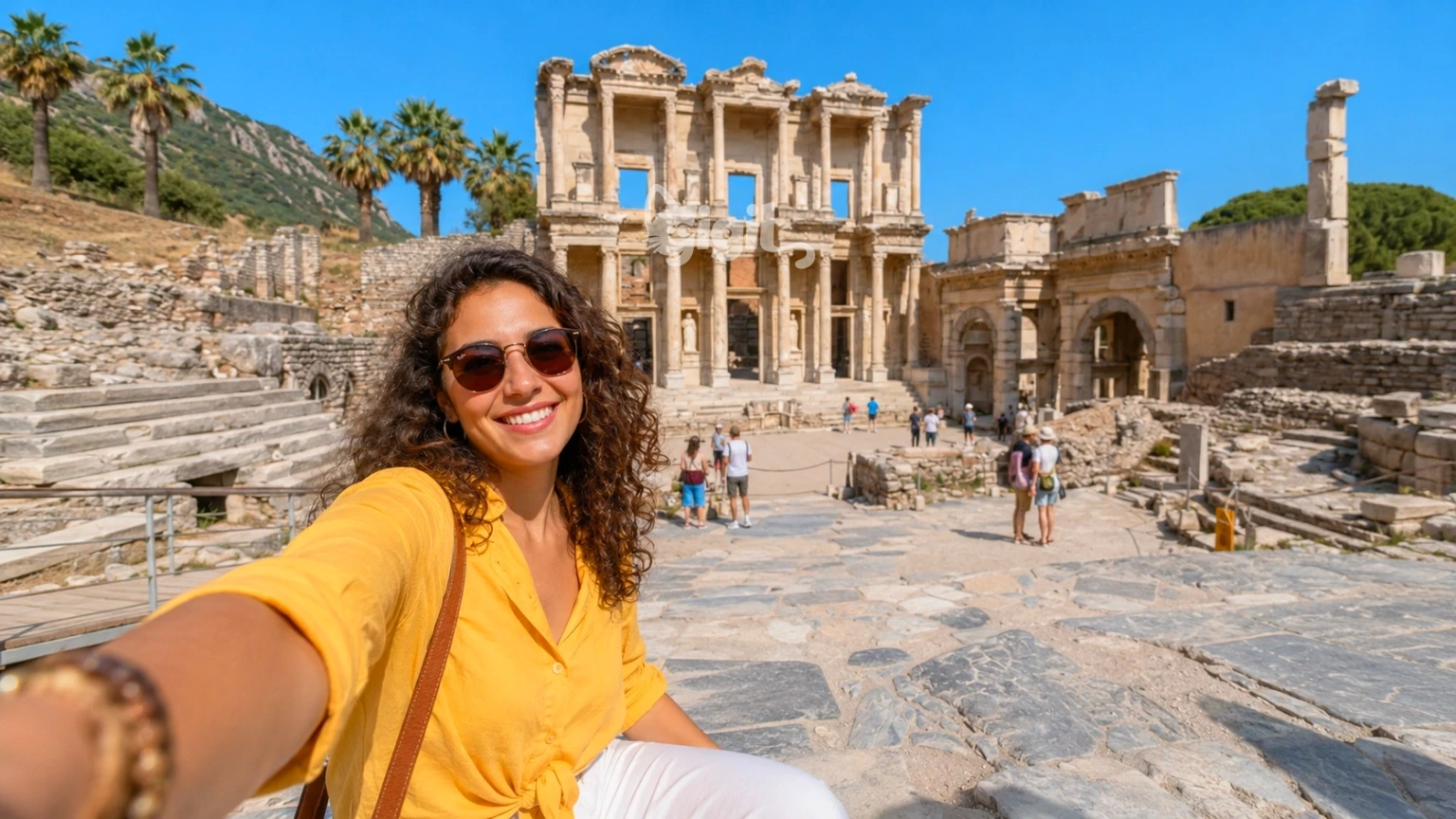


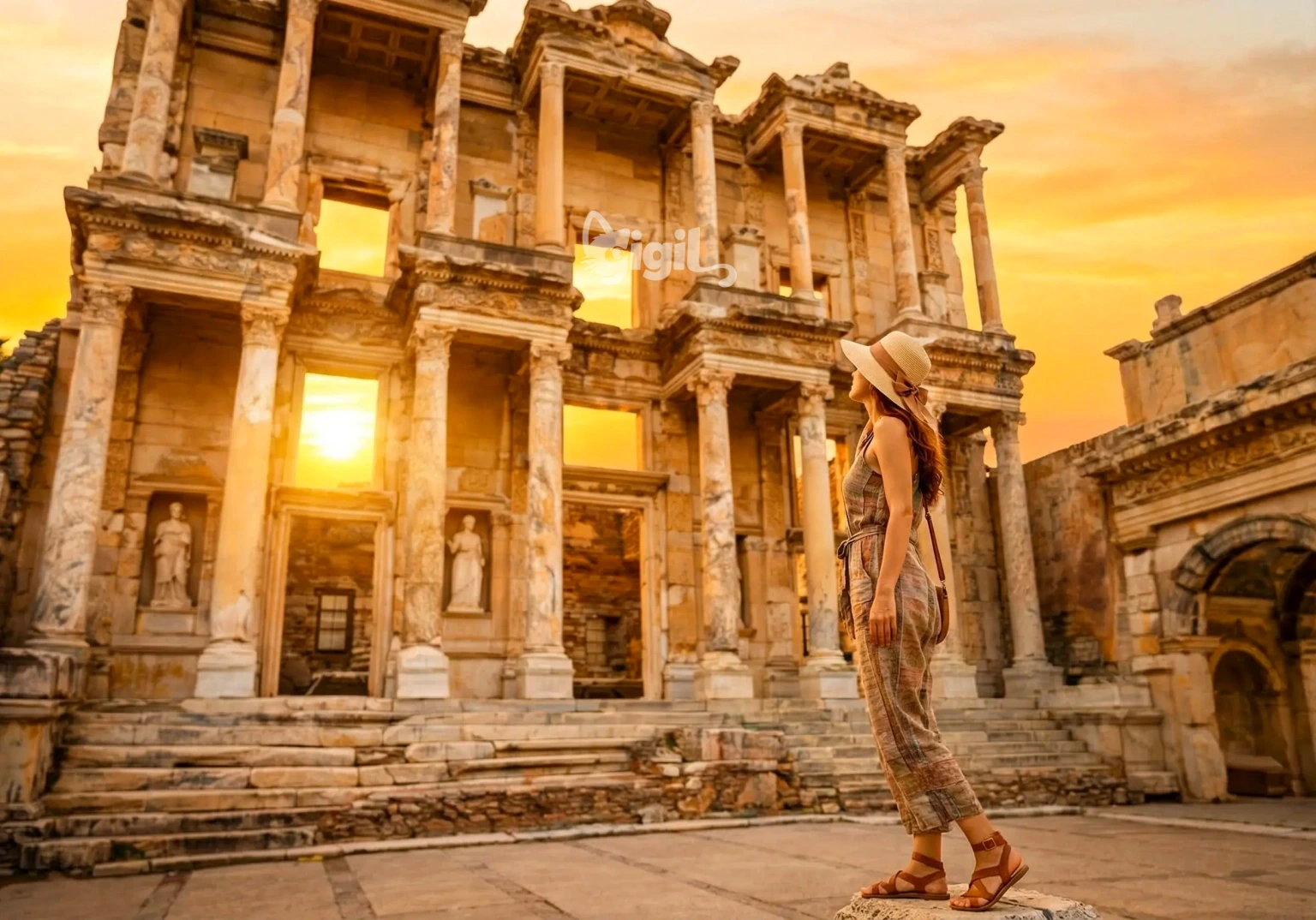
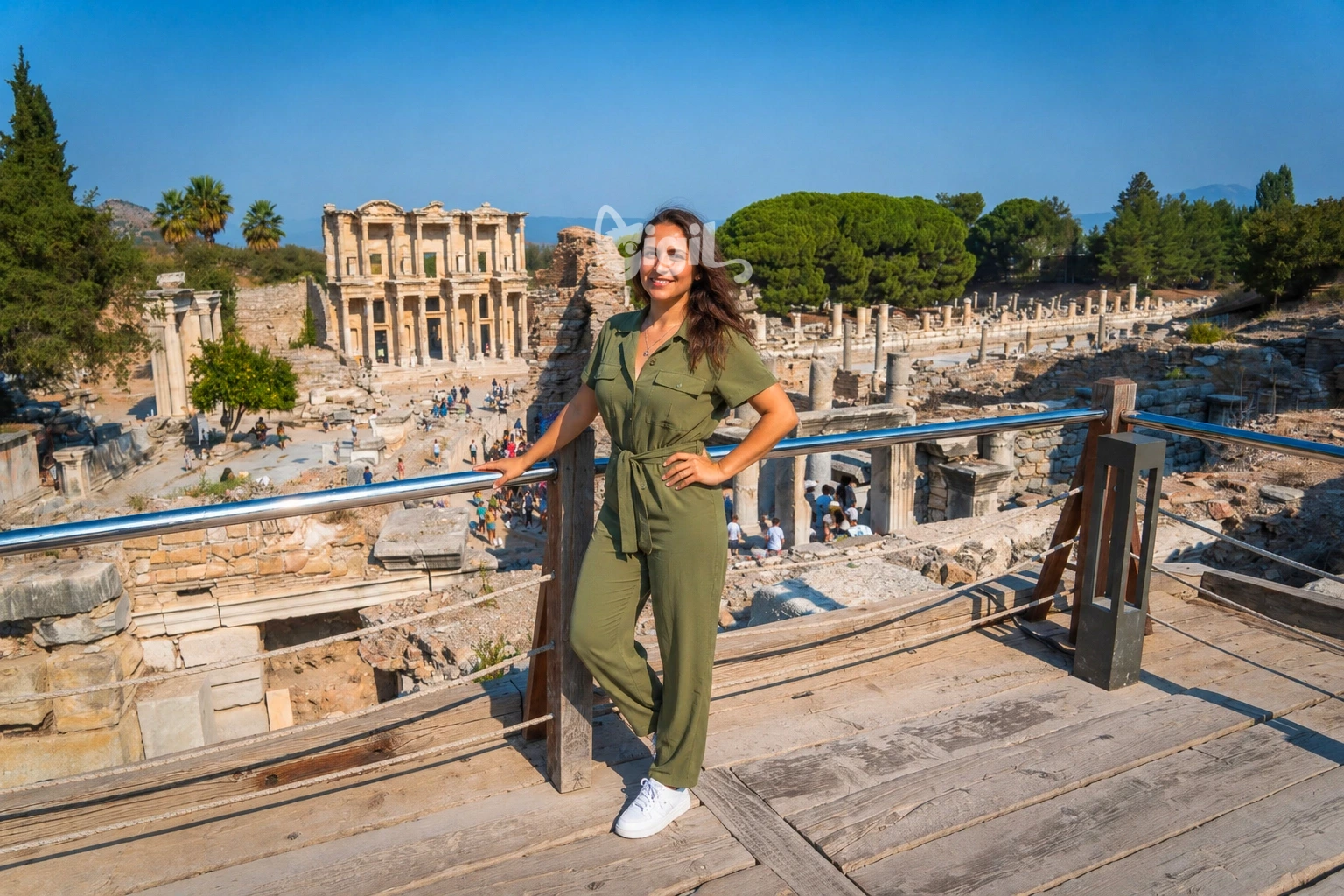
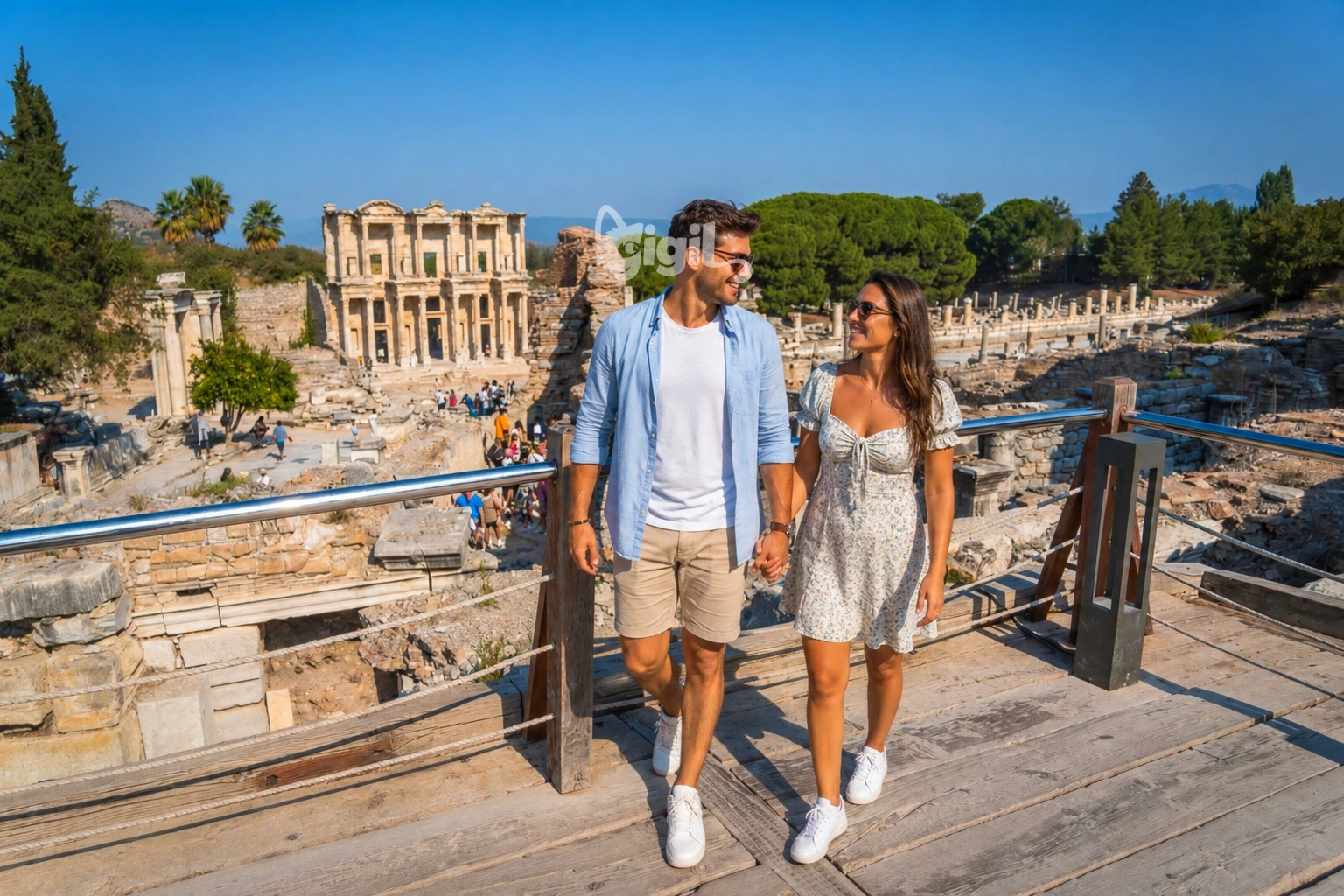

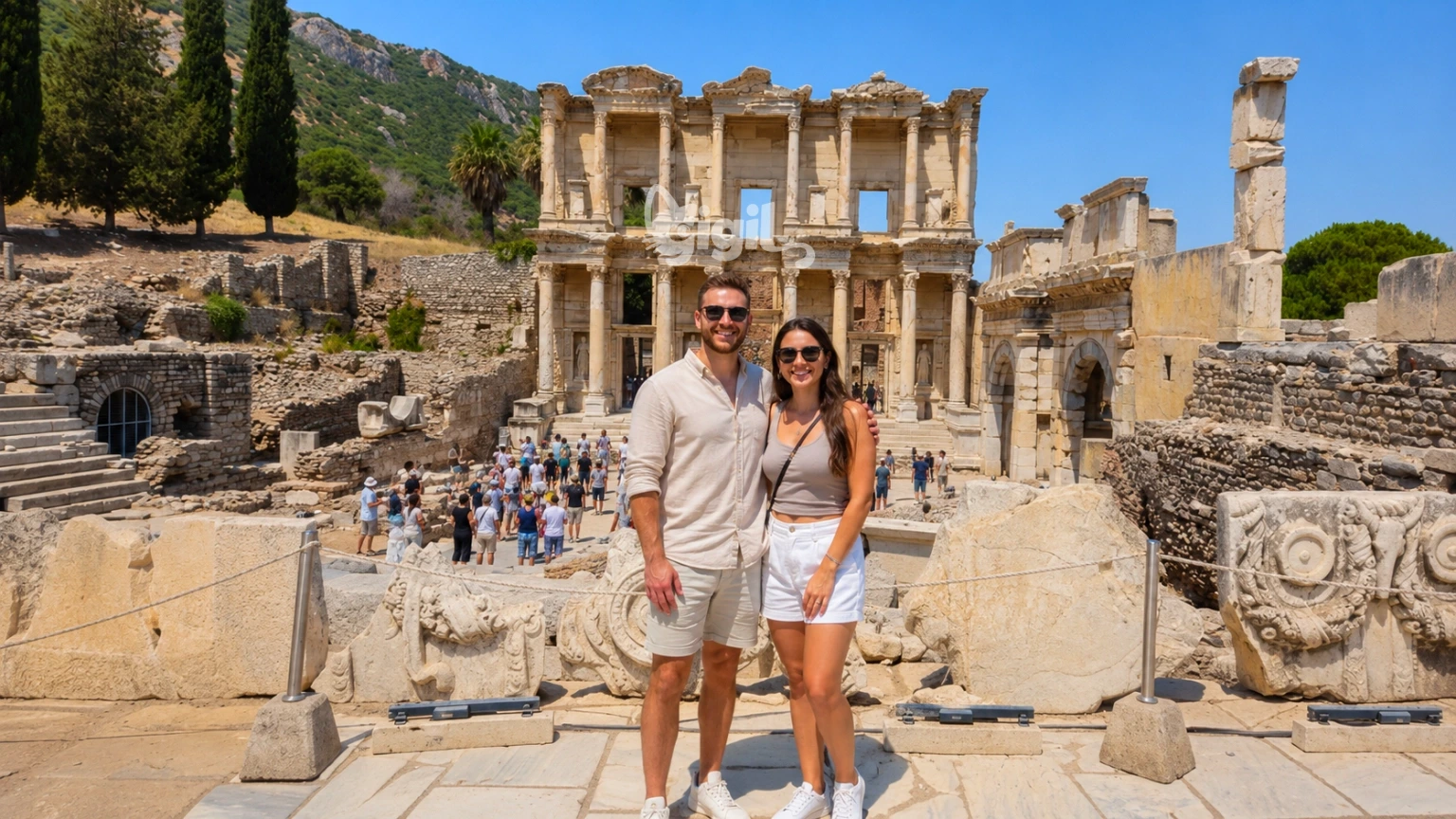
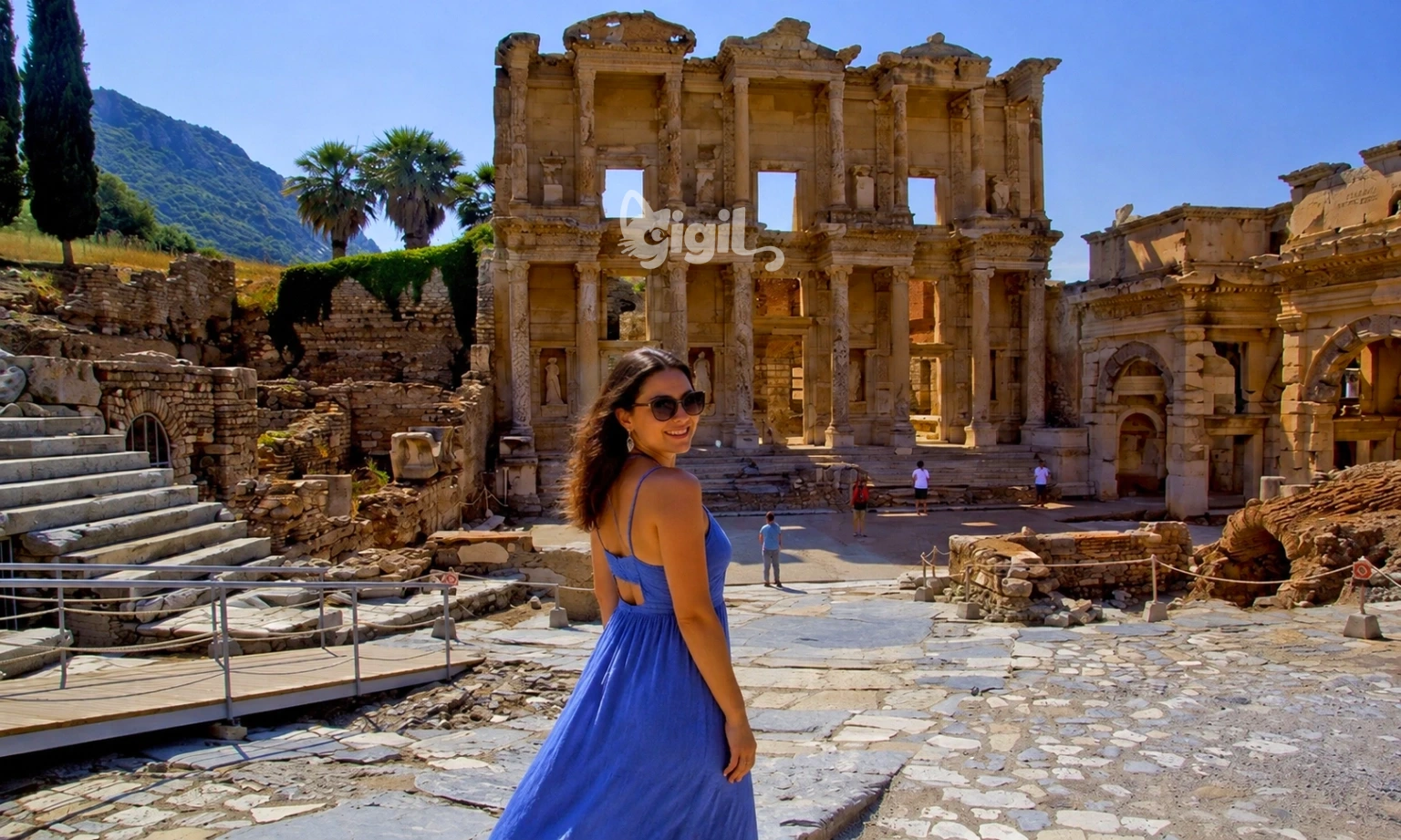
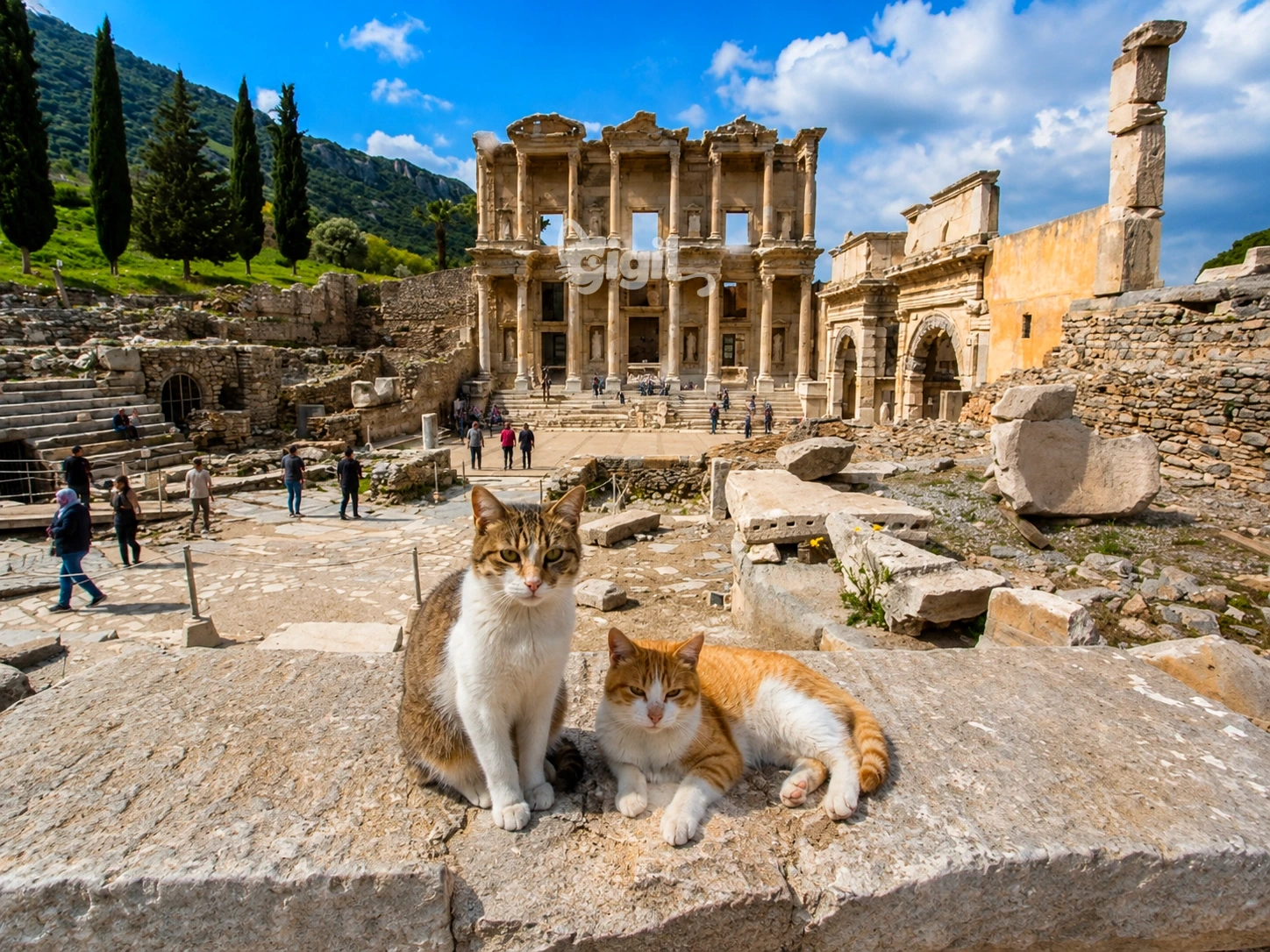



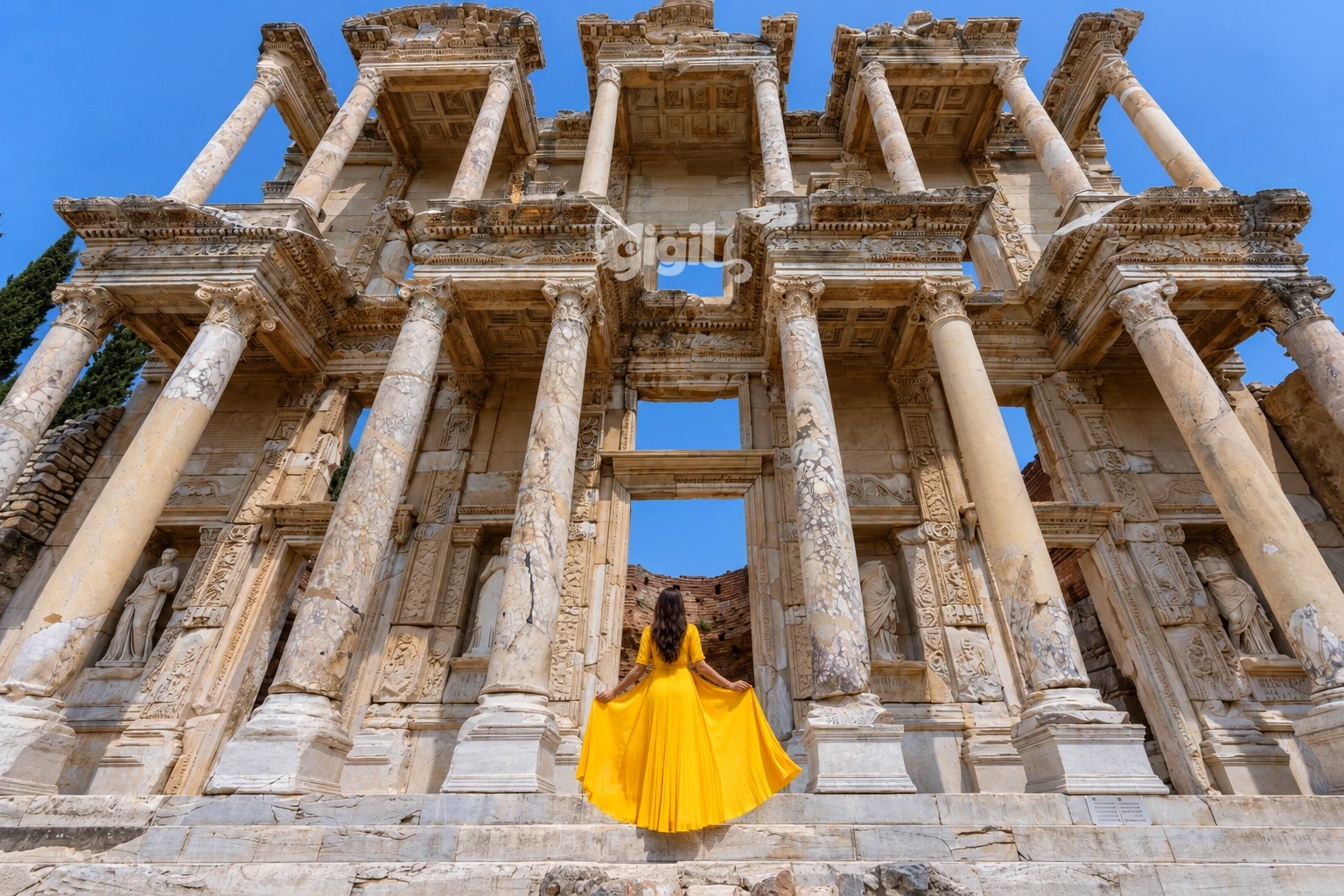
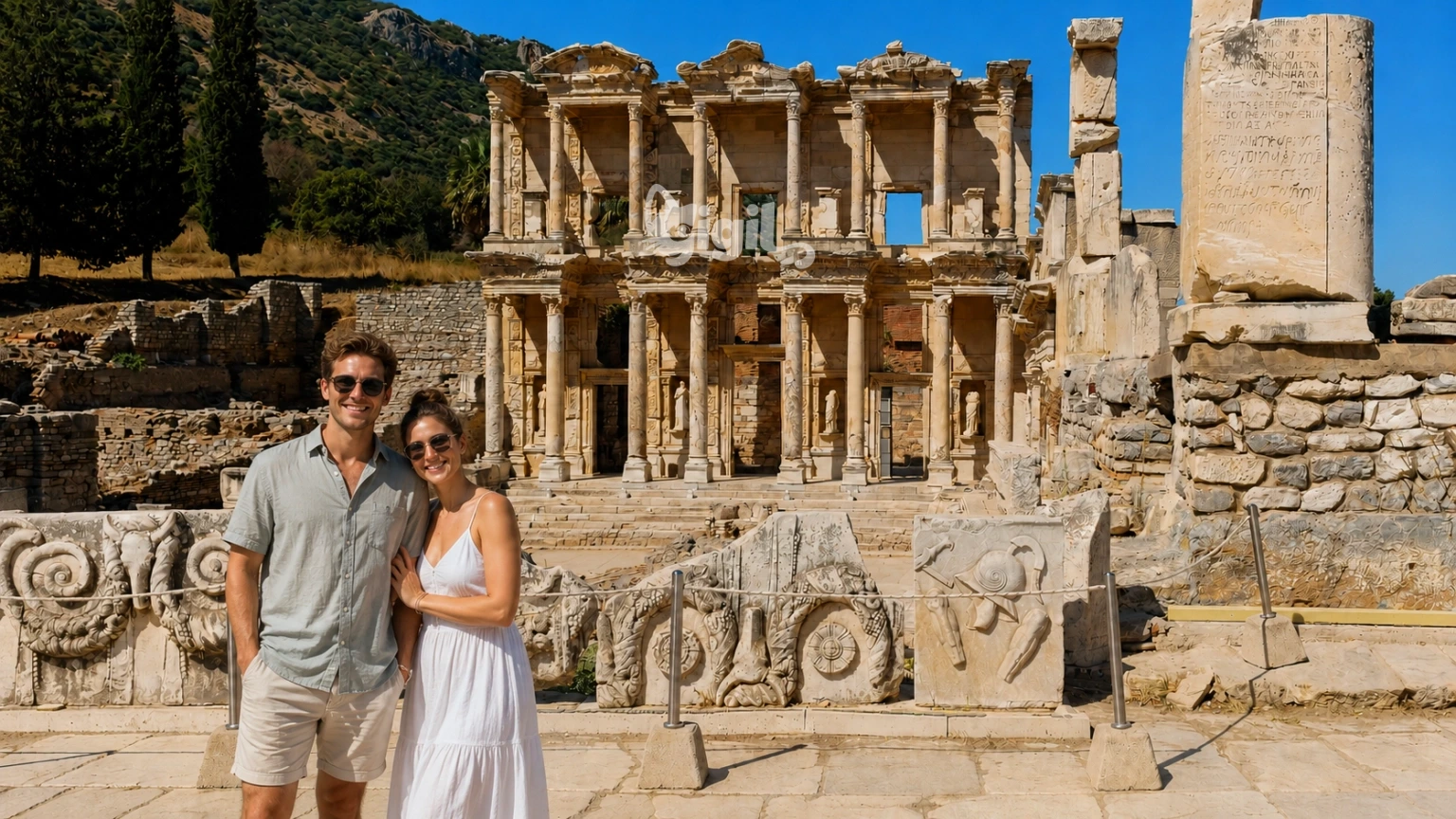
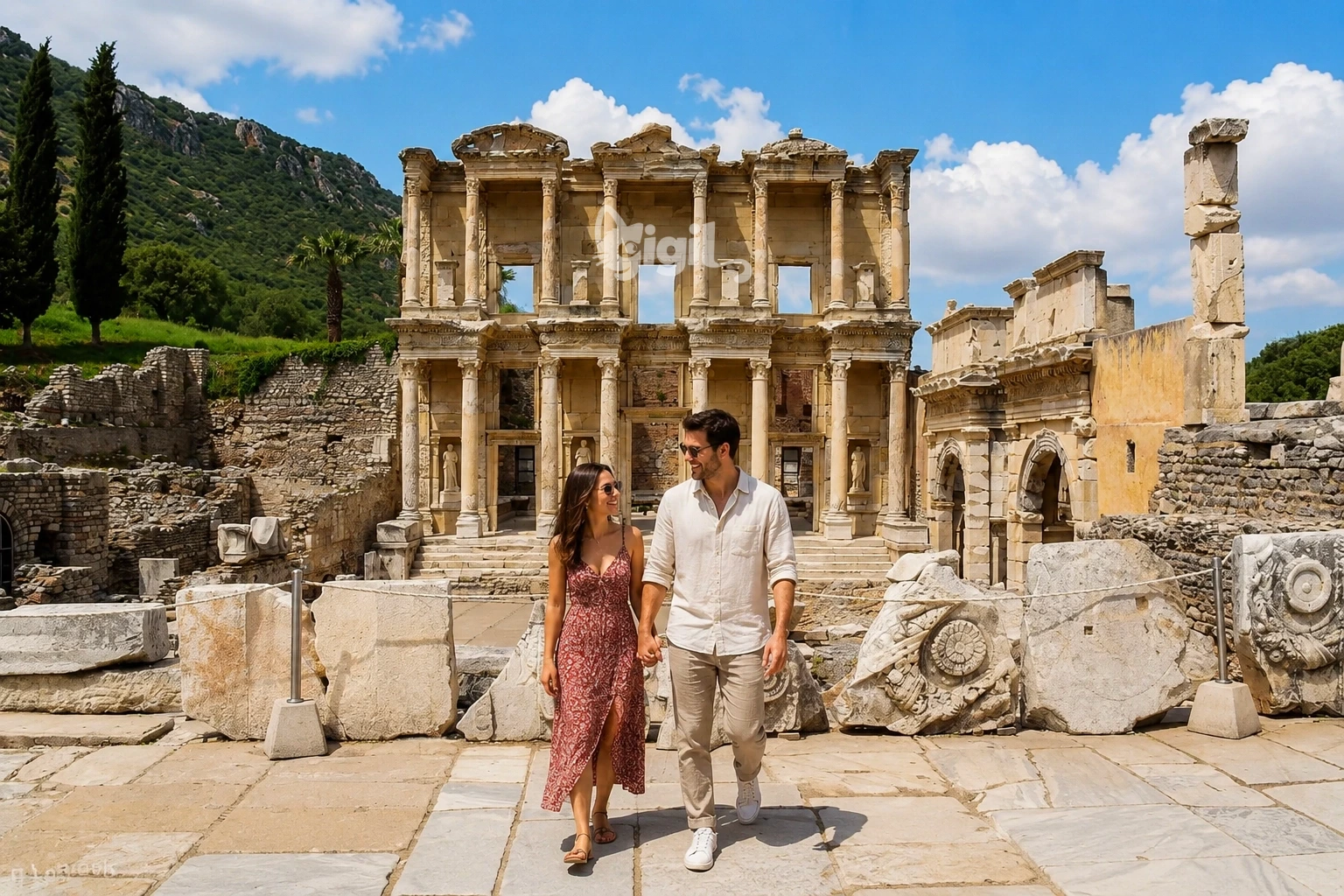
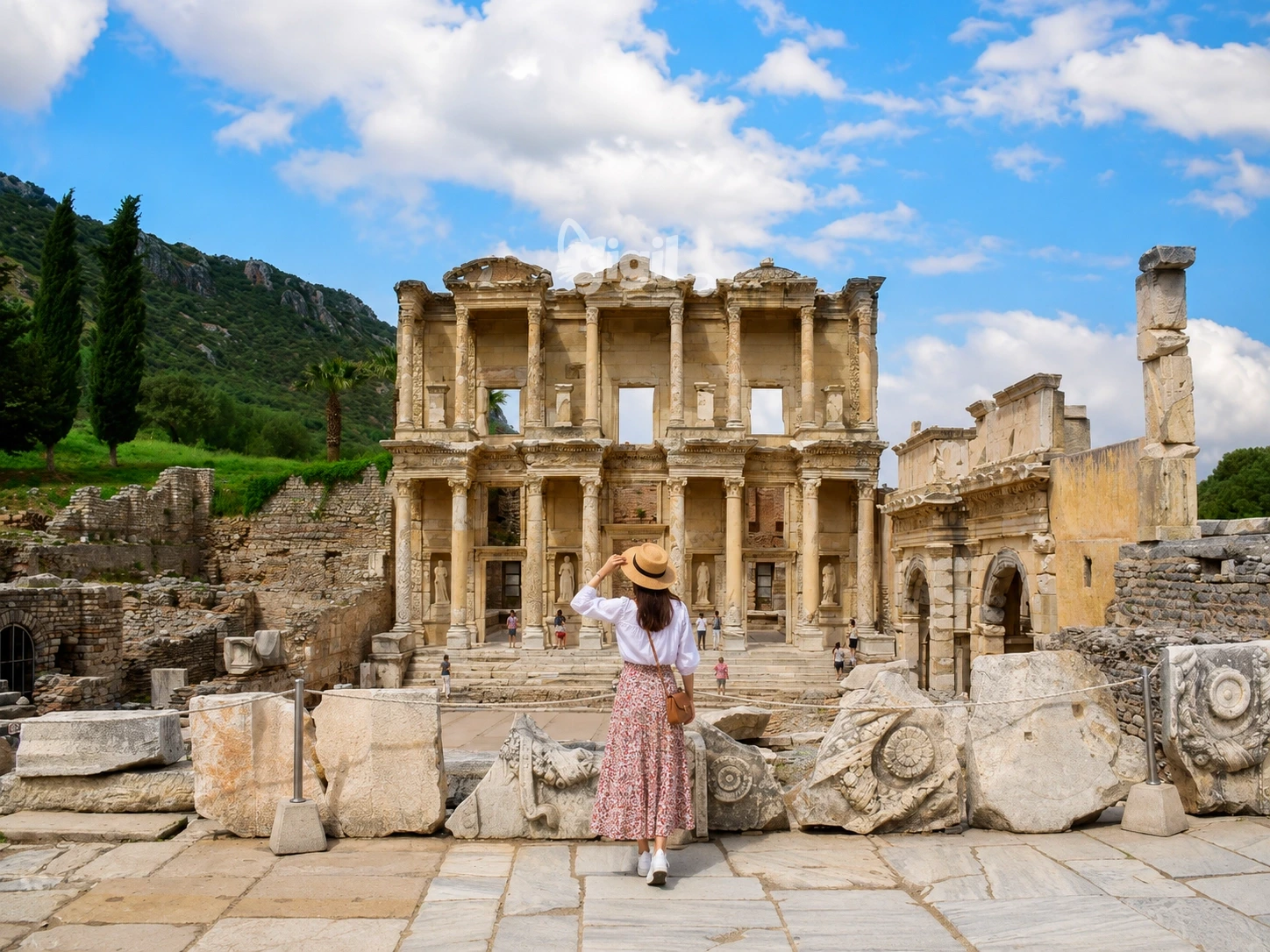

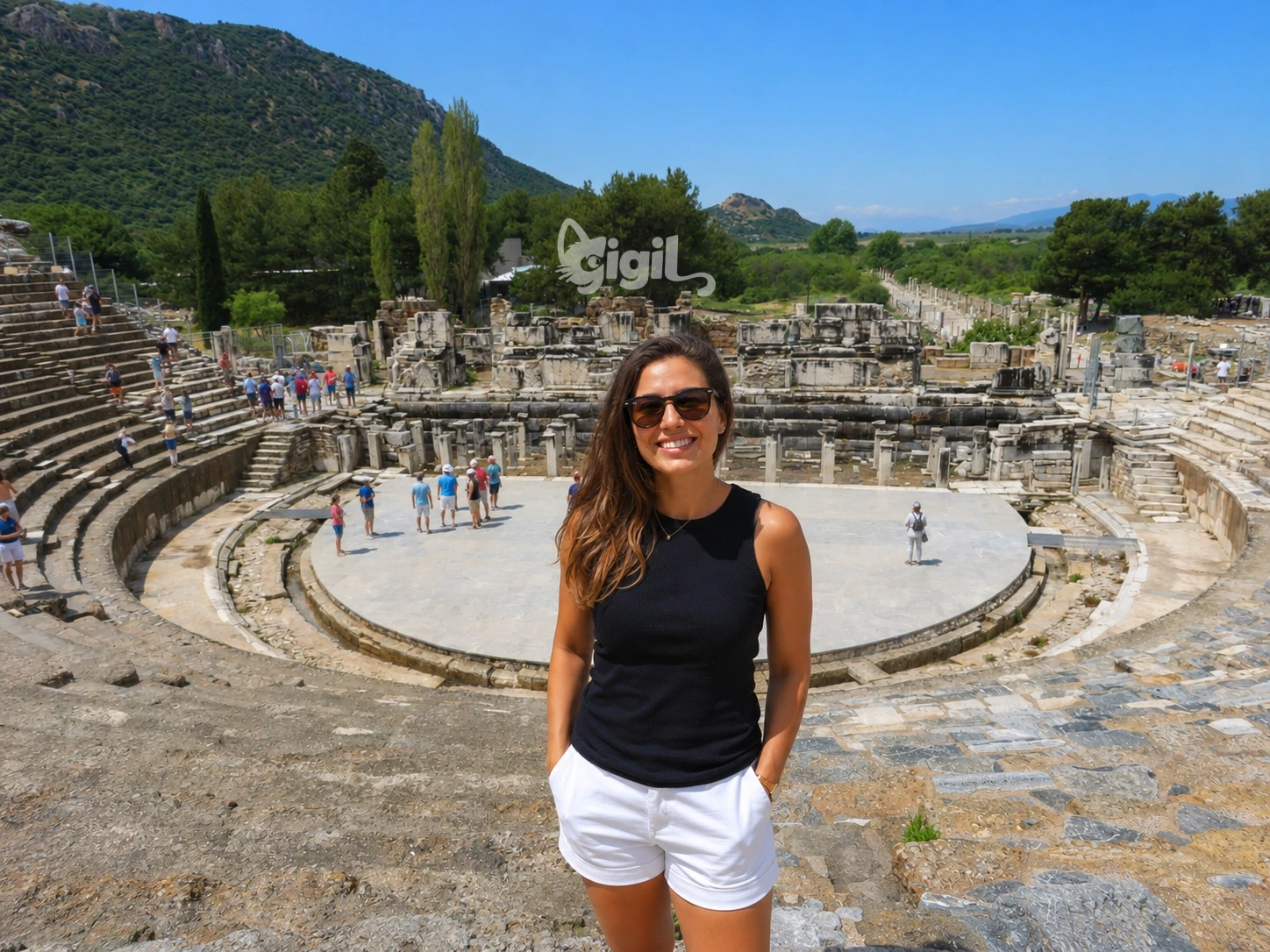

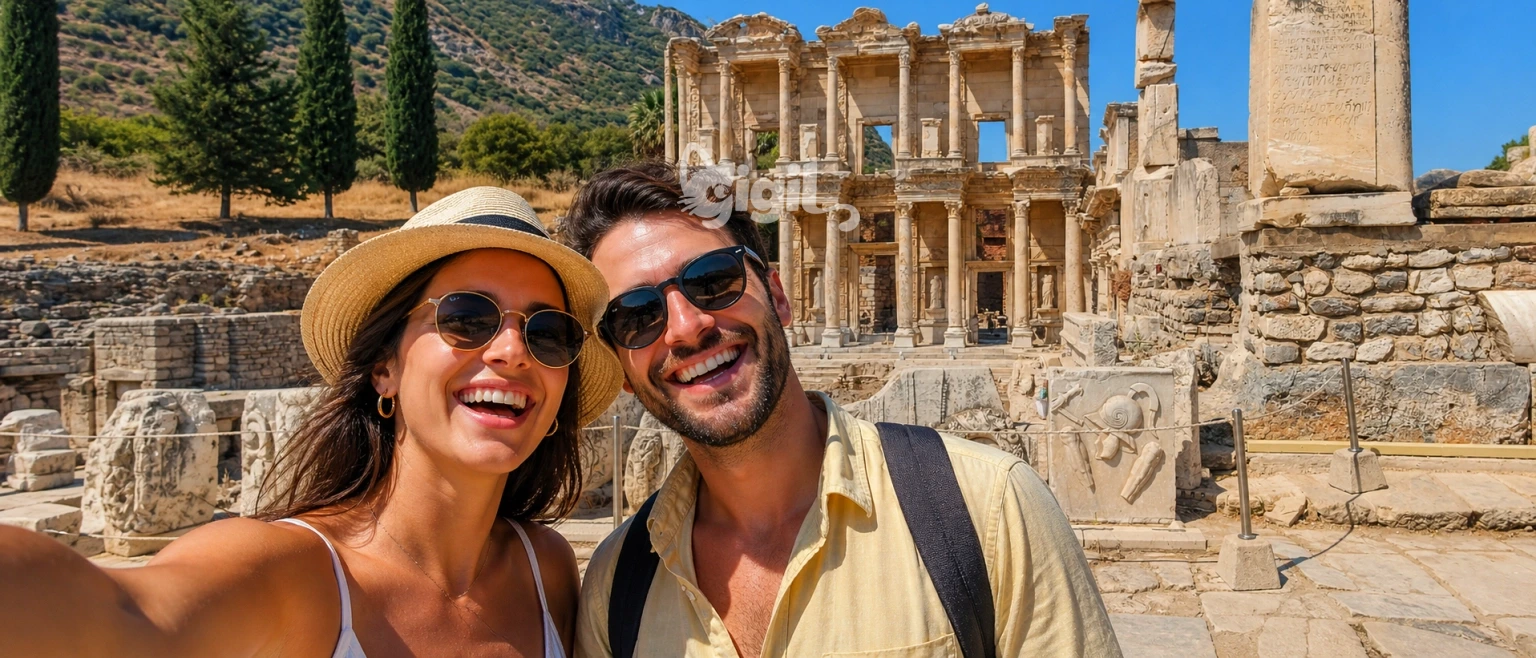
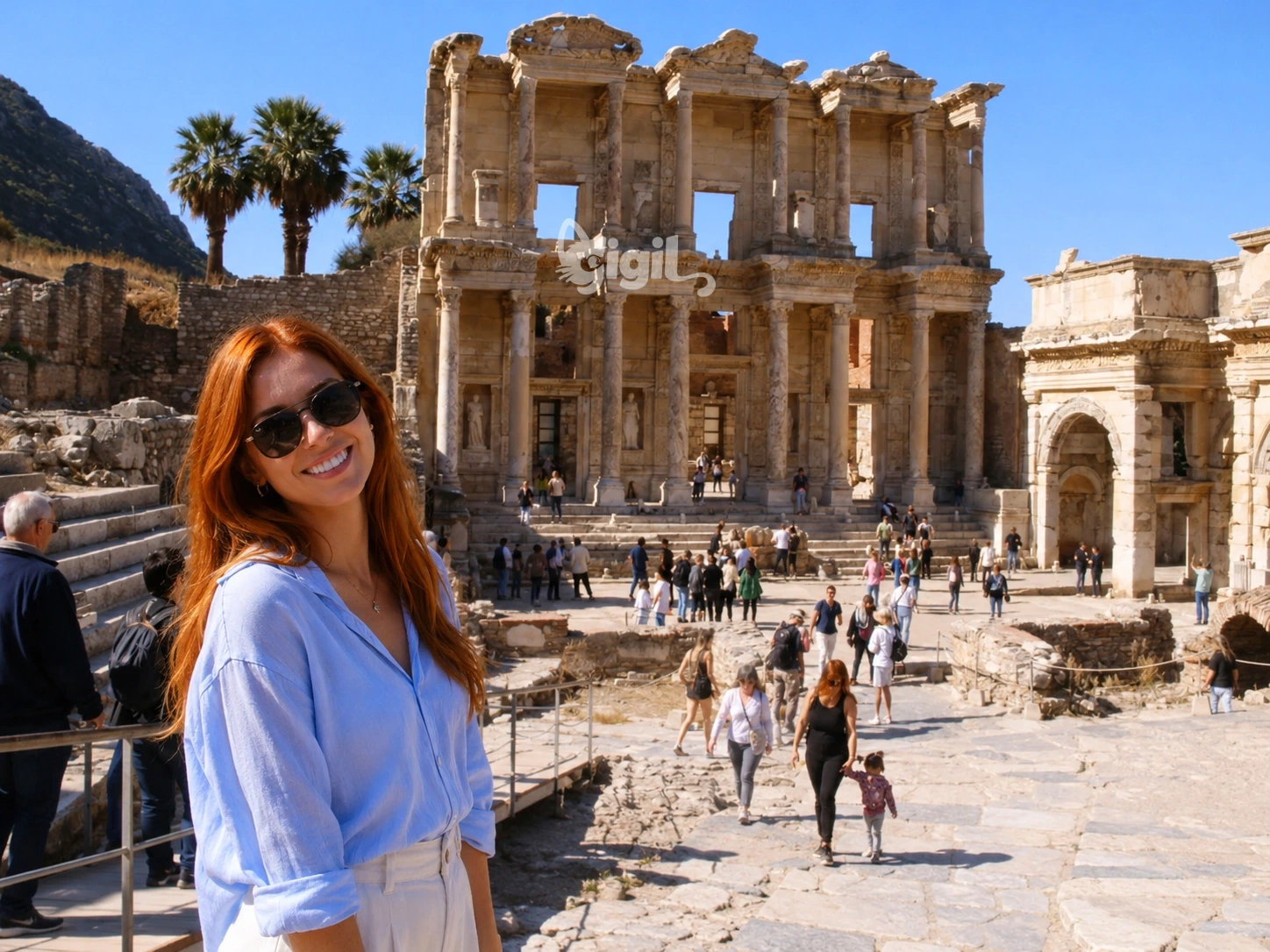



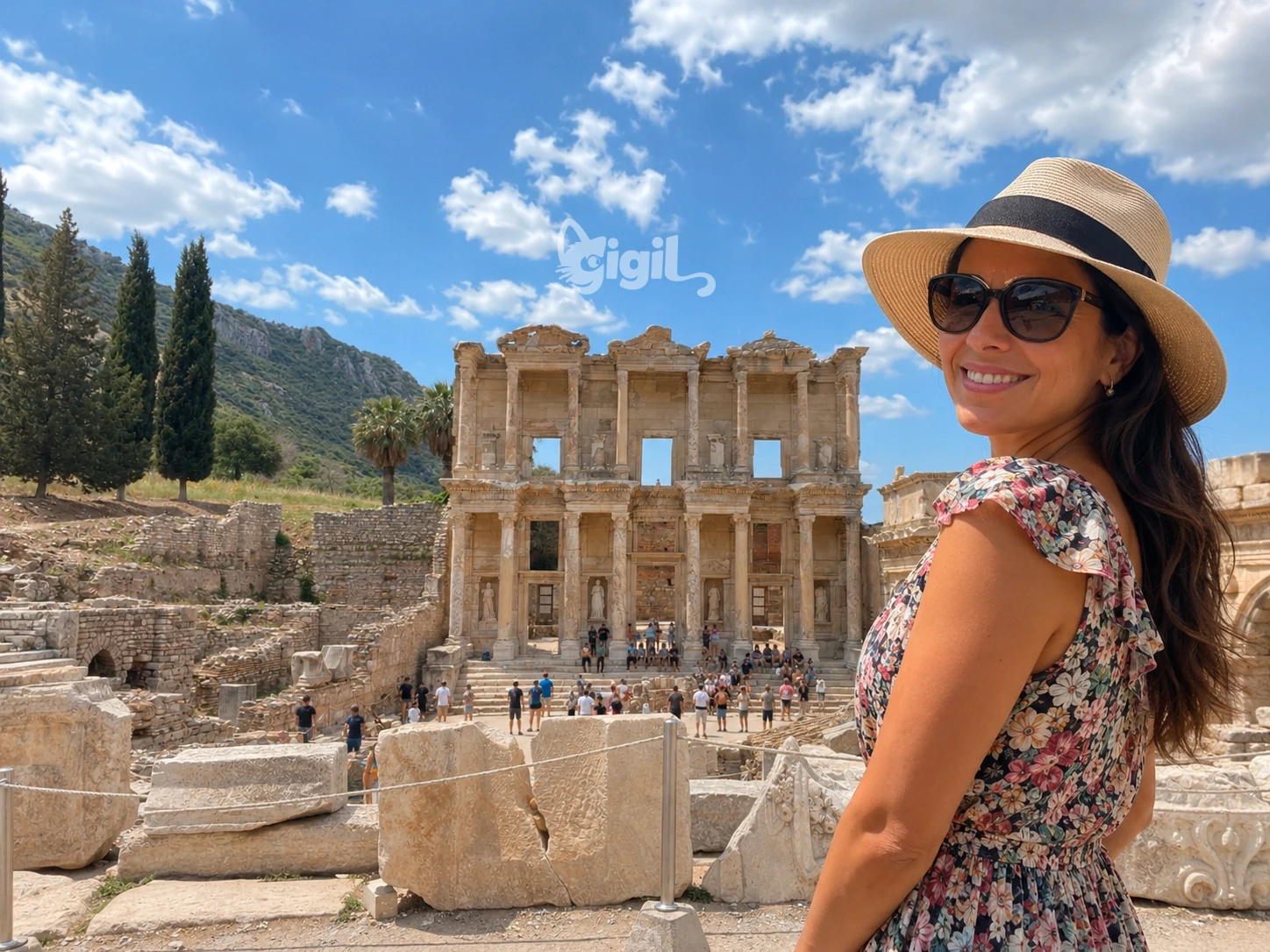
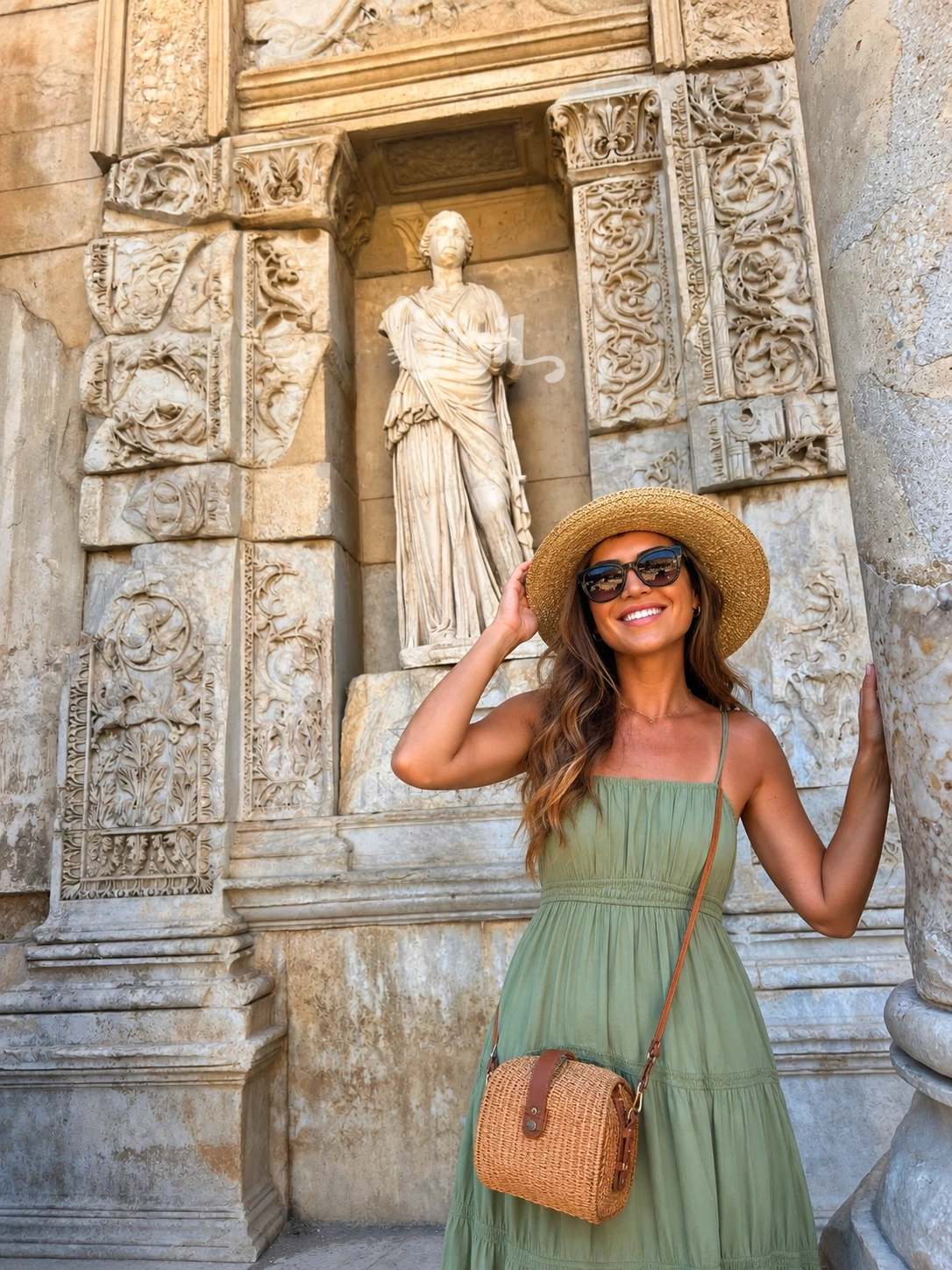
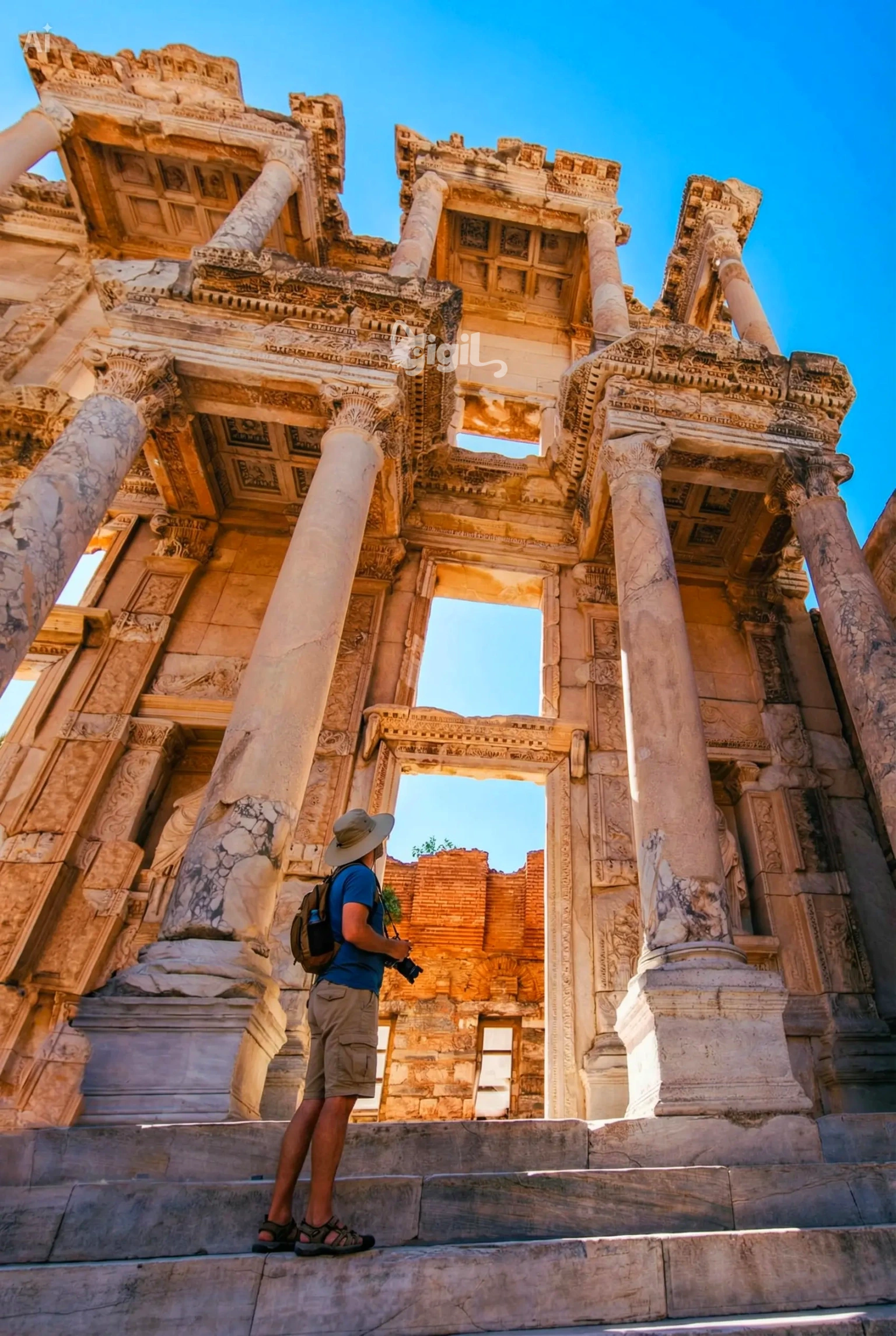
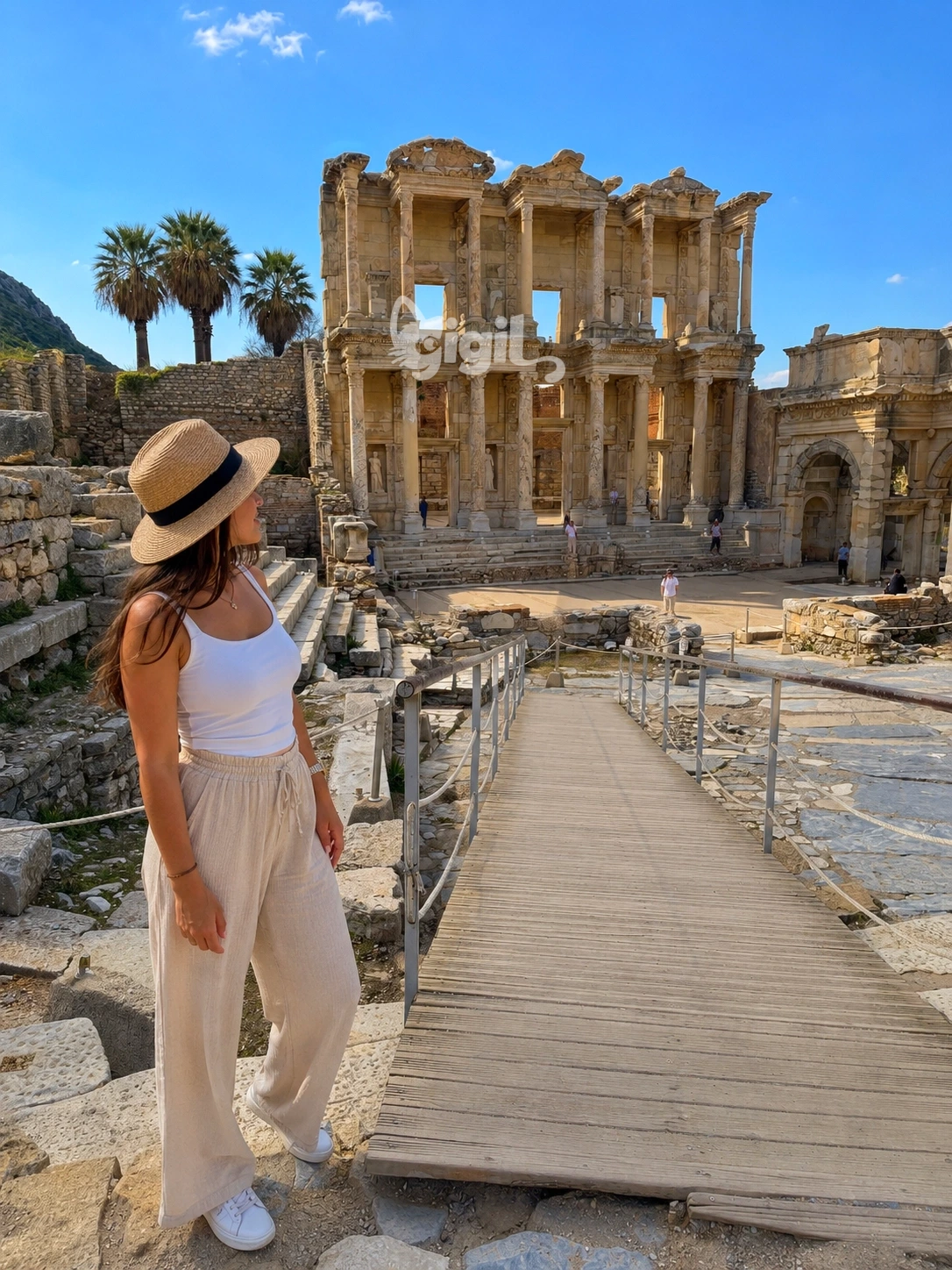
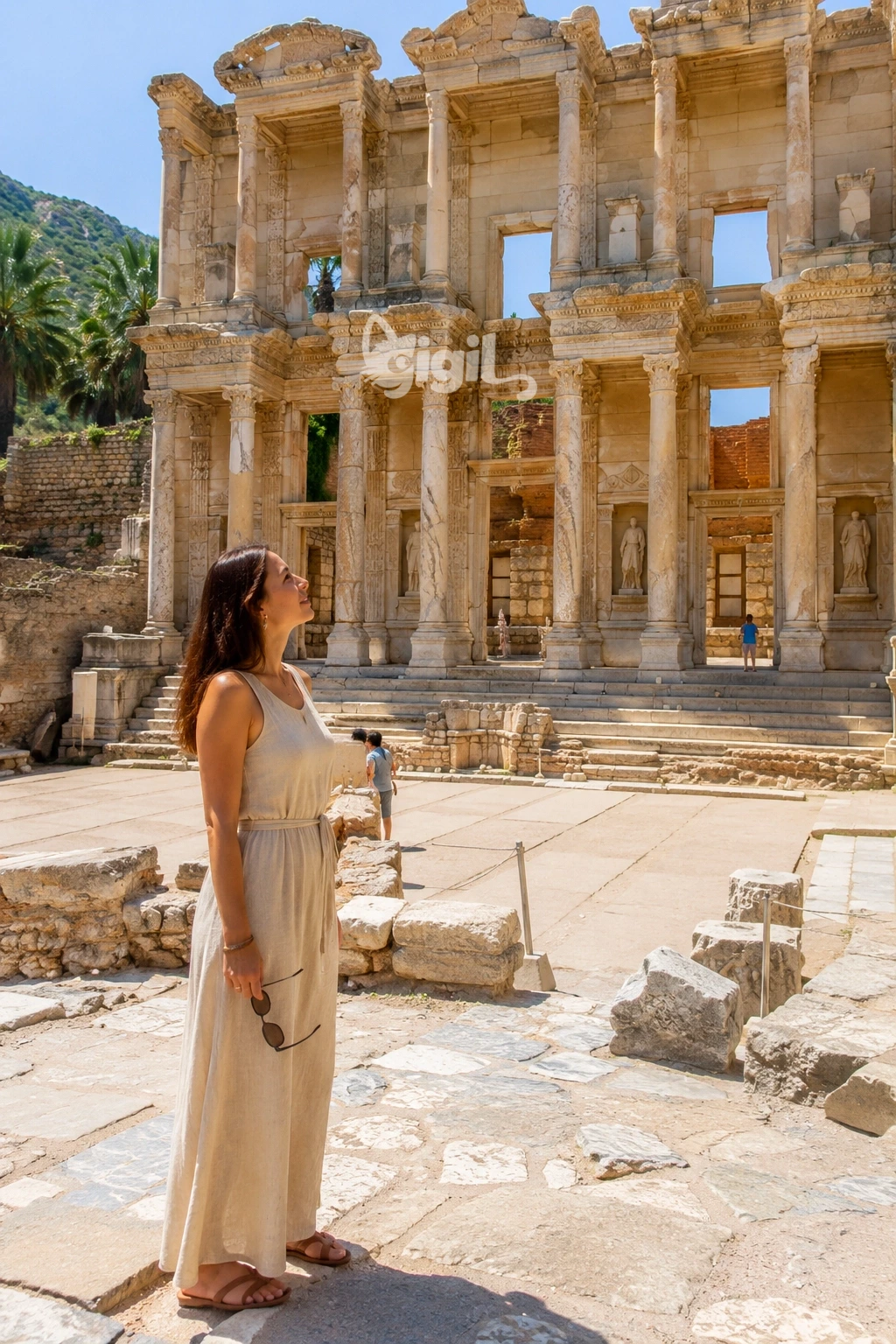

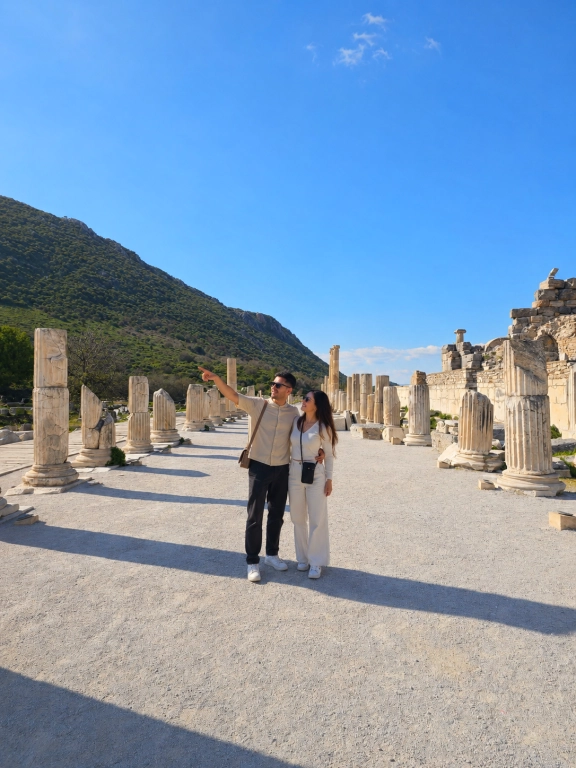
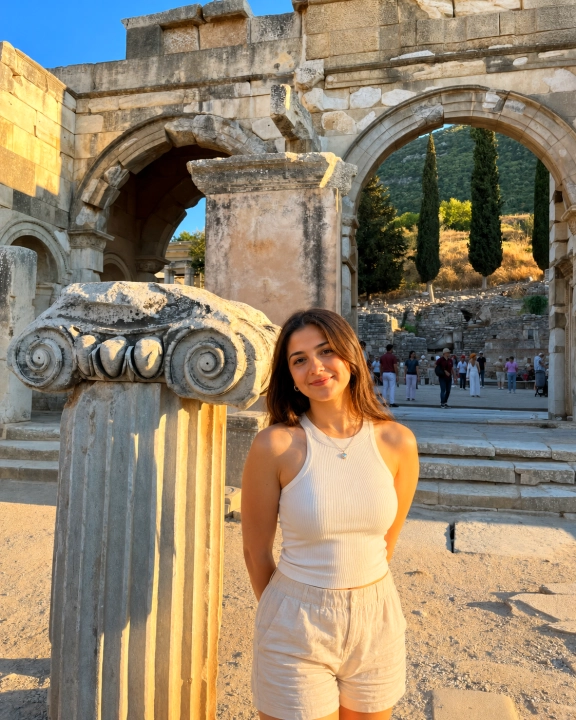
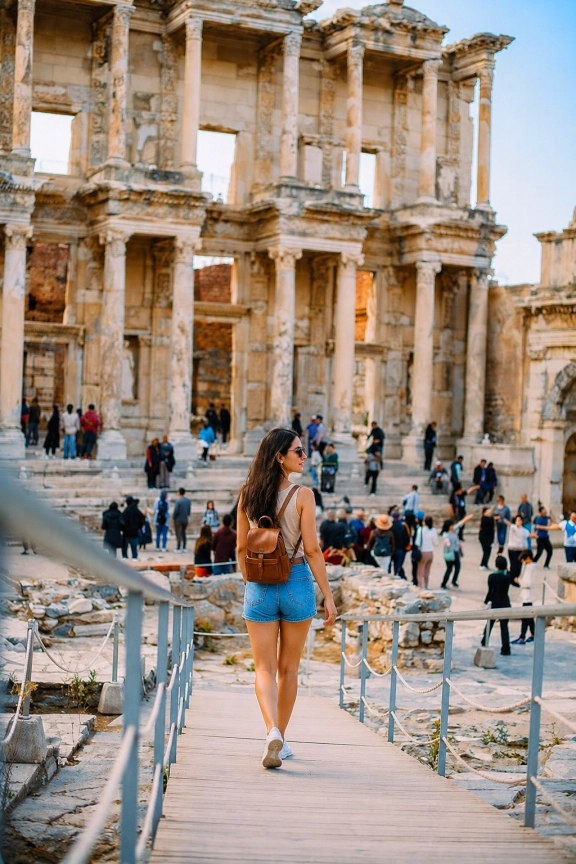
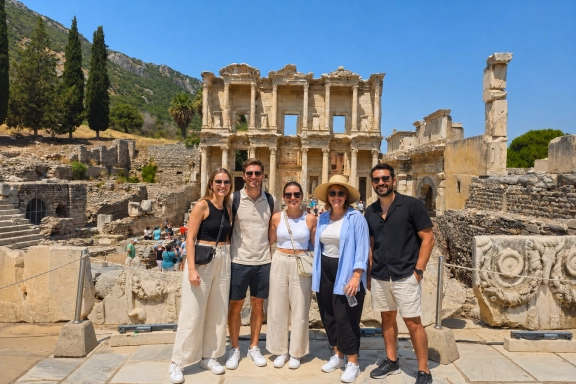
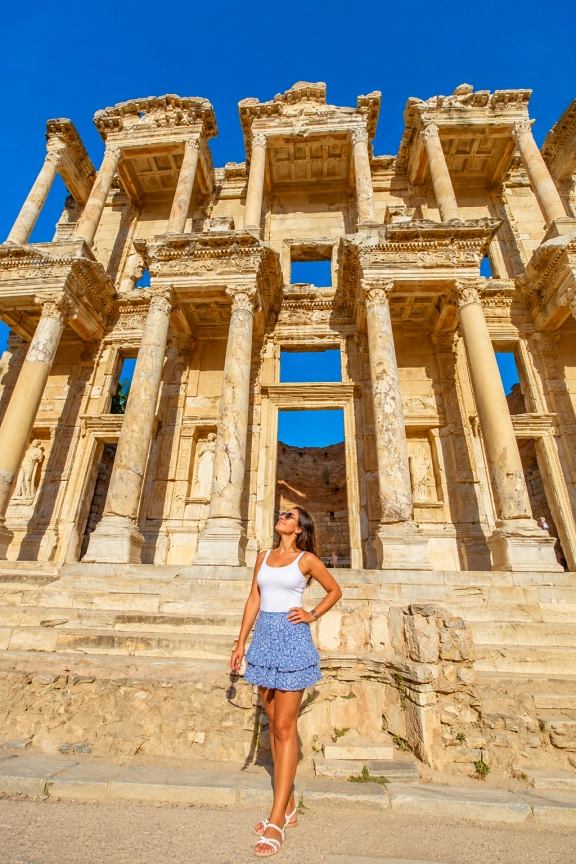
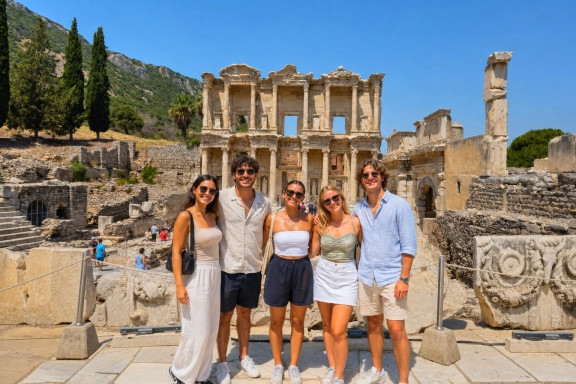
Ancient Ephesus was a network of streets and public places, not just a setting for individual monuments. The Library of Celsus and Great Theatre are major points of reference within that wider urban fabric.
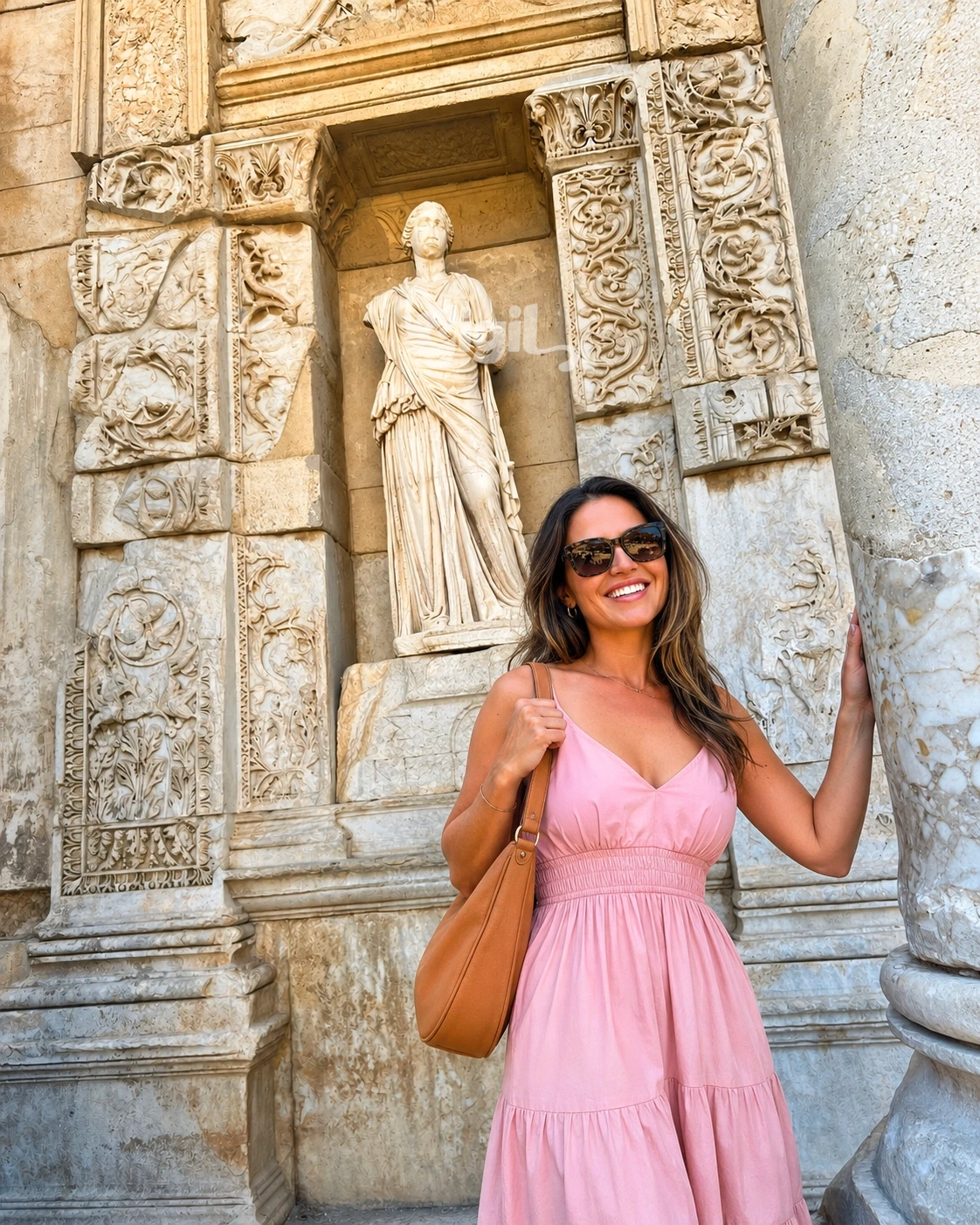
Look for the spaces between prominent buildings and the routes that connected them. Different levels of preservation affect the view, and some standing elements depend on reconstruction. Understanding those differences helps separate the ancient city's organisation from the appearance of the site today.
Questions
Why think about the spaces between buildings?
Those spaces explain circulation and the relationships between monuments, revealing how the city functioned beyond its most recognisable architecture.
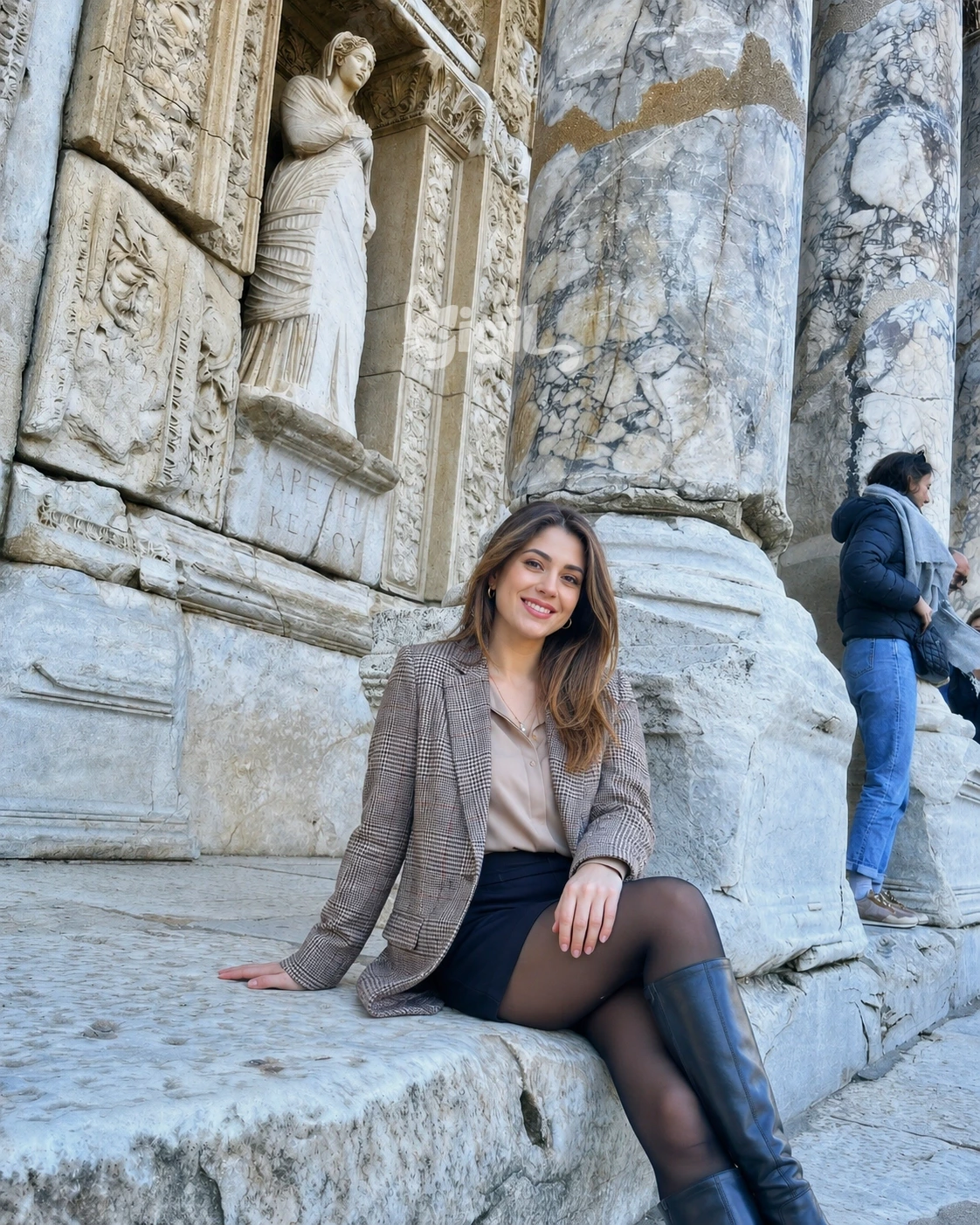
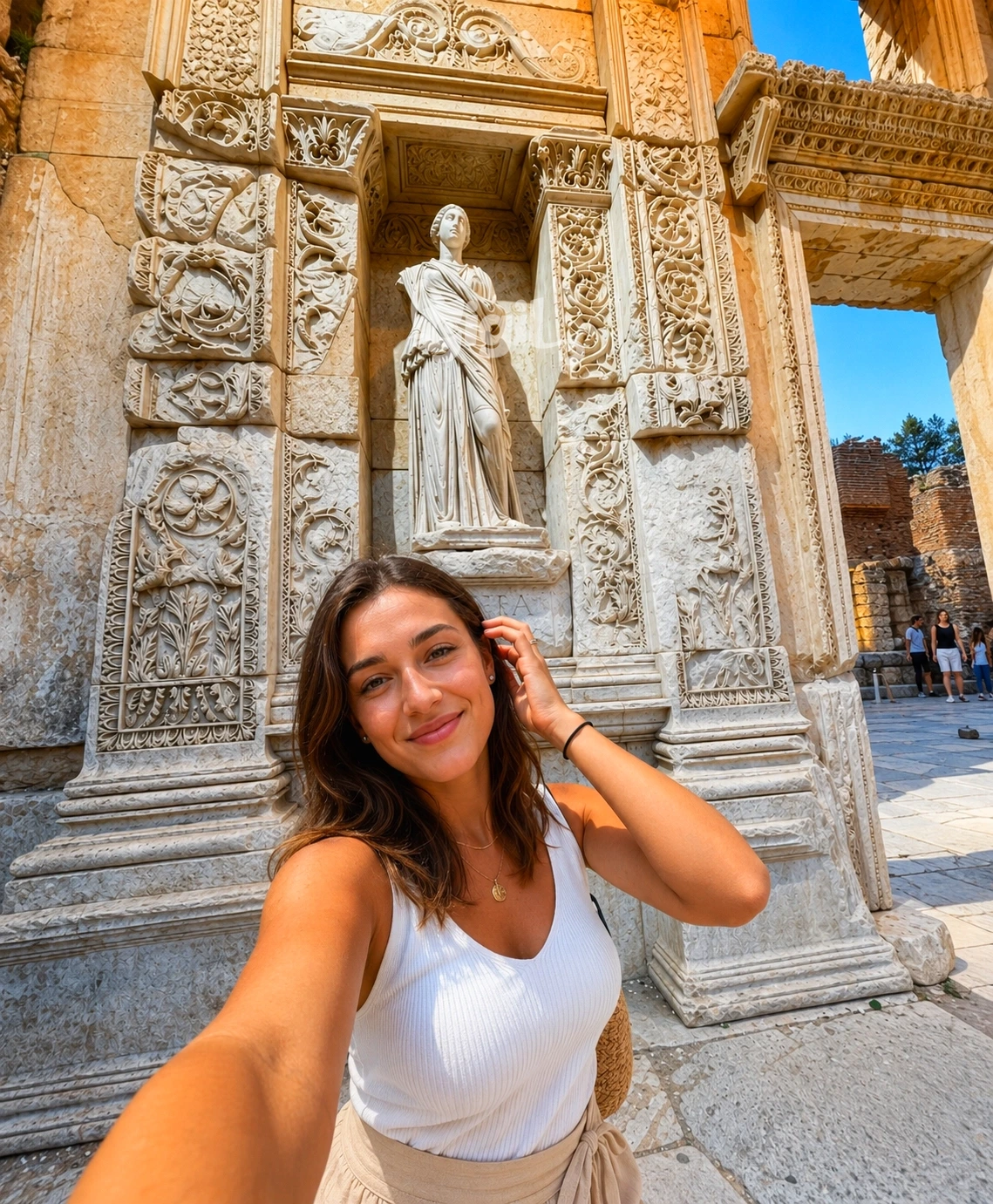
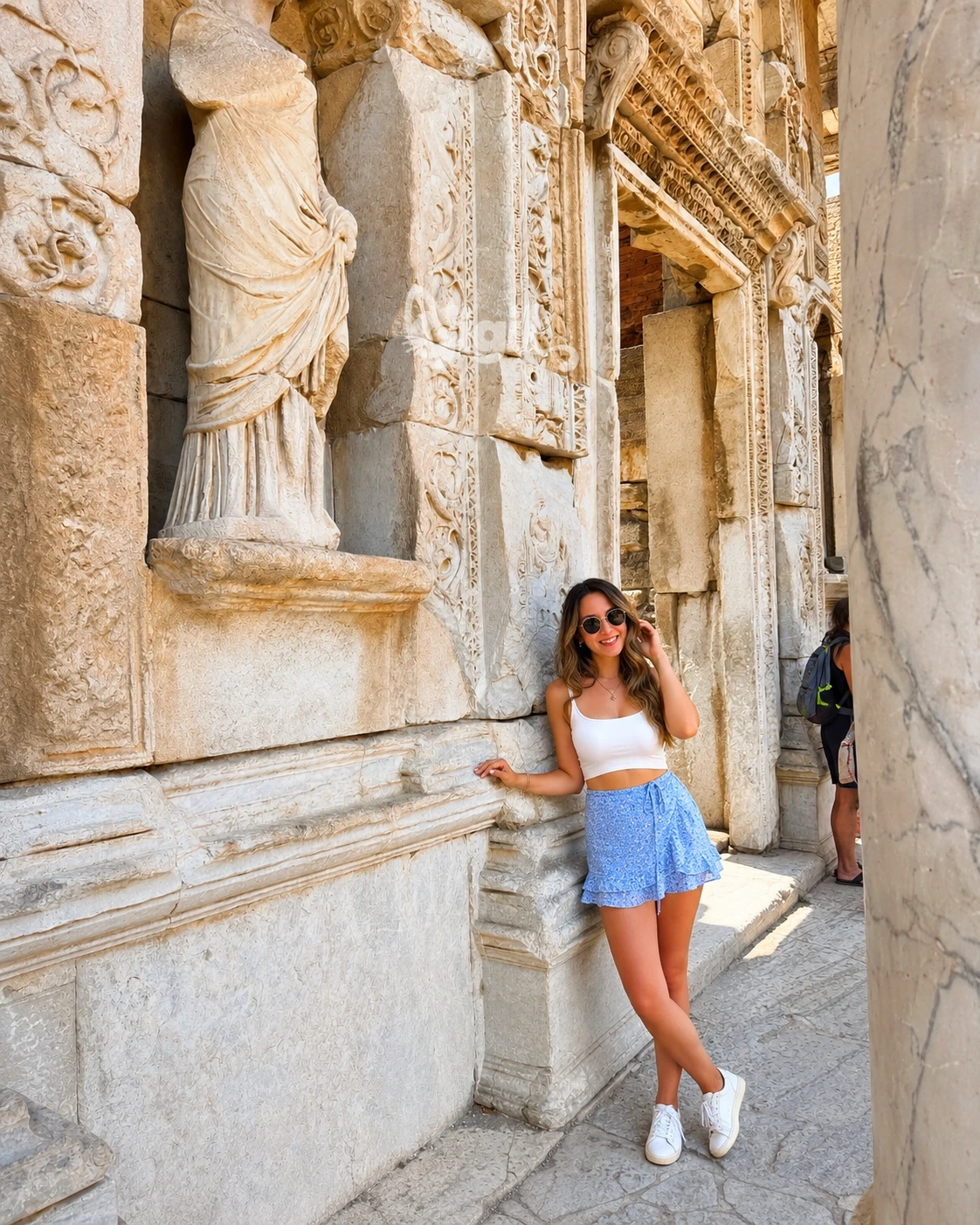
Does the library survive as a complete interior?
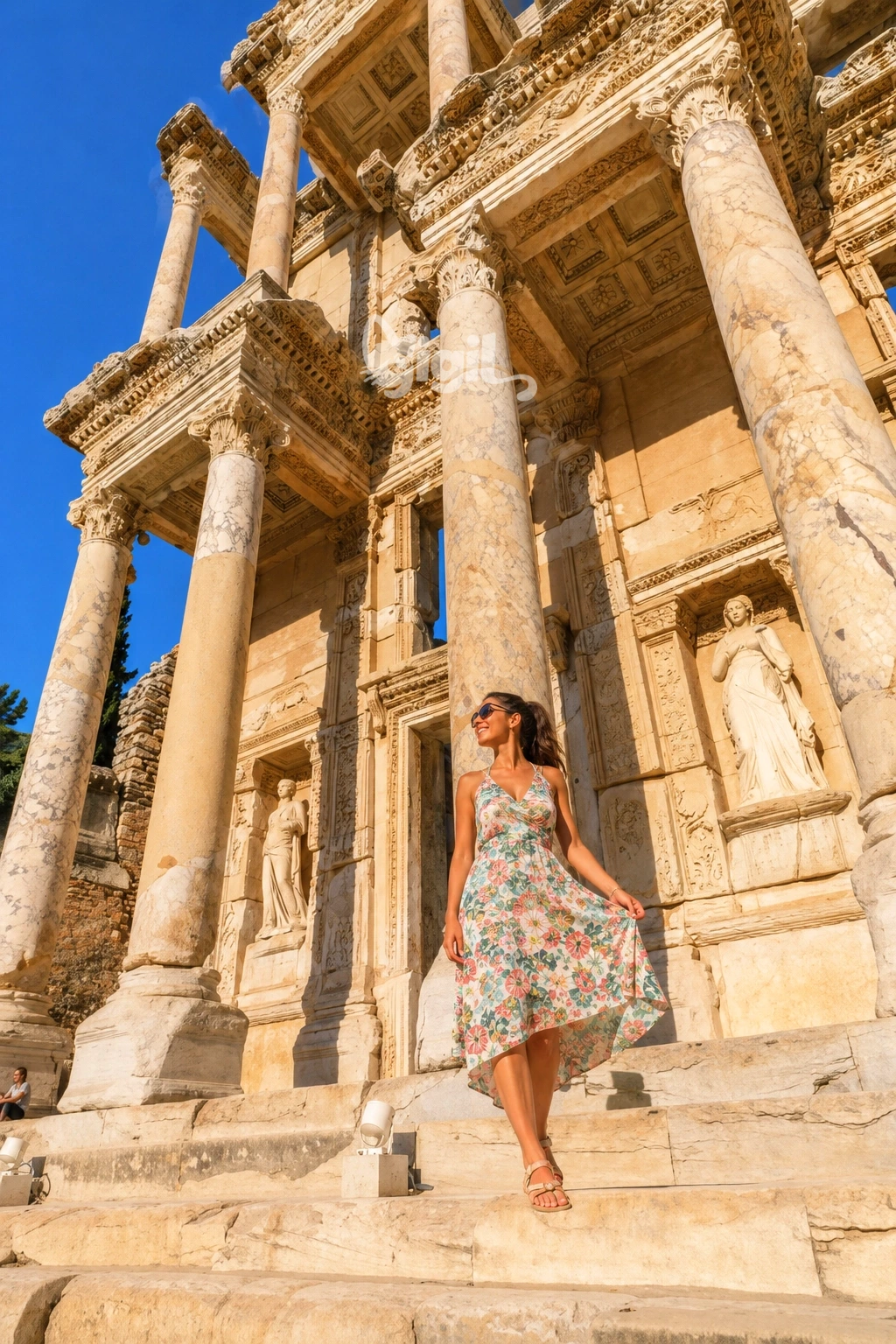
The reconstructed facade does not mean a fully preserved ancient library interior survives behind it; frontage and complete building are different things.
What can the theatre show about communal life?
It expresses the scale of a place designed for people to gather, adding a public dimension to the surrounding urban remains.
How did the city's coastal relationship change?
The former harbour setting was altered by sedimentation and the movement of the shoreline, leaving the ancient remains away from the sea.