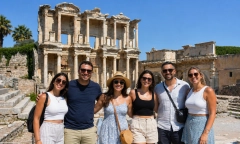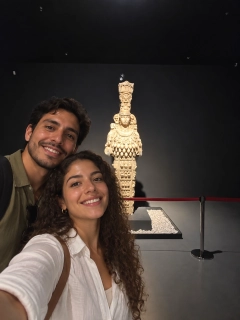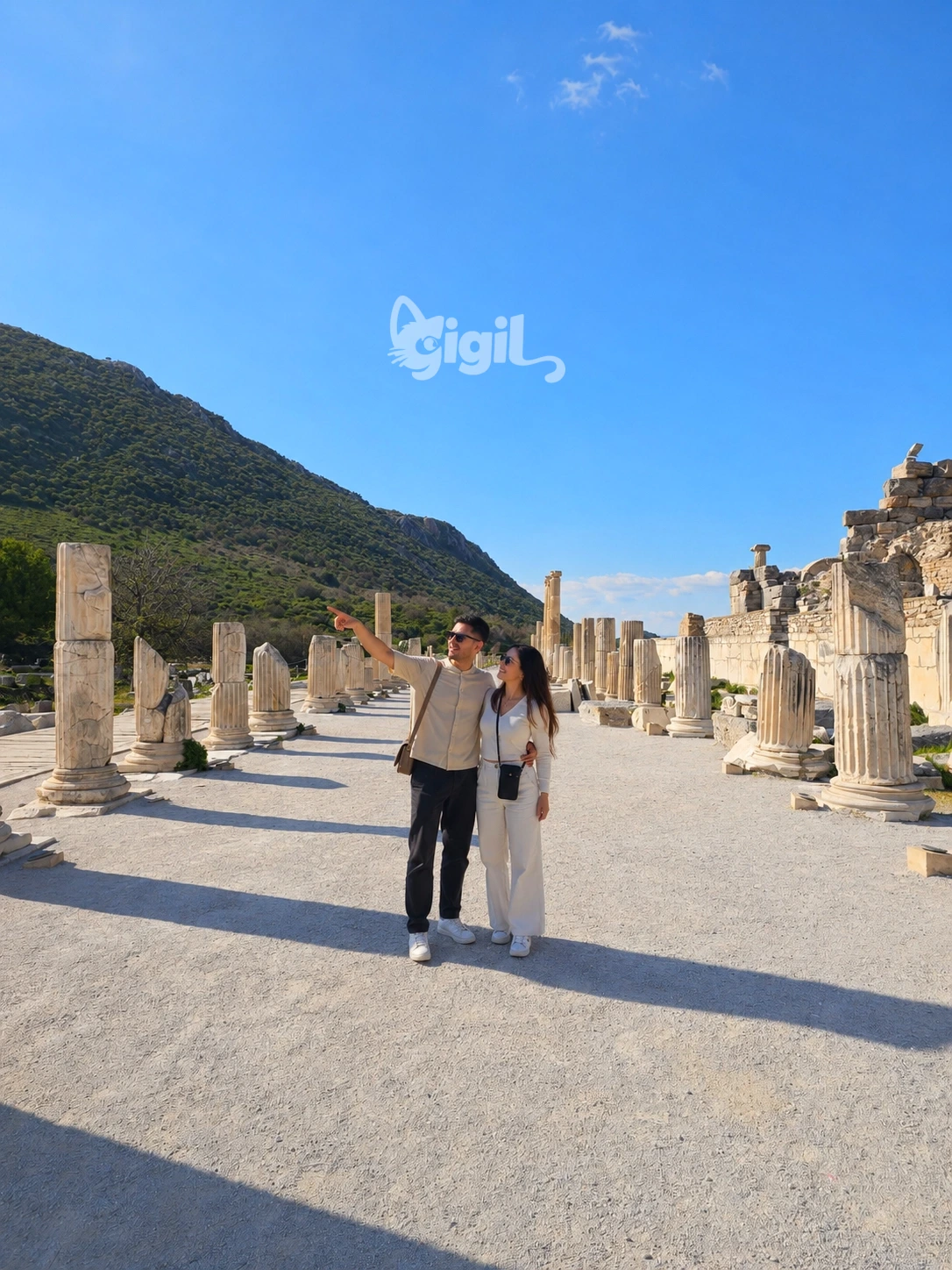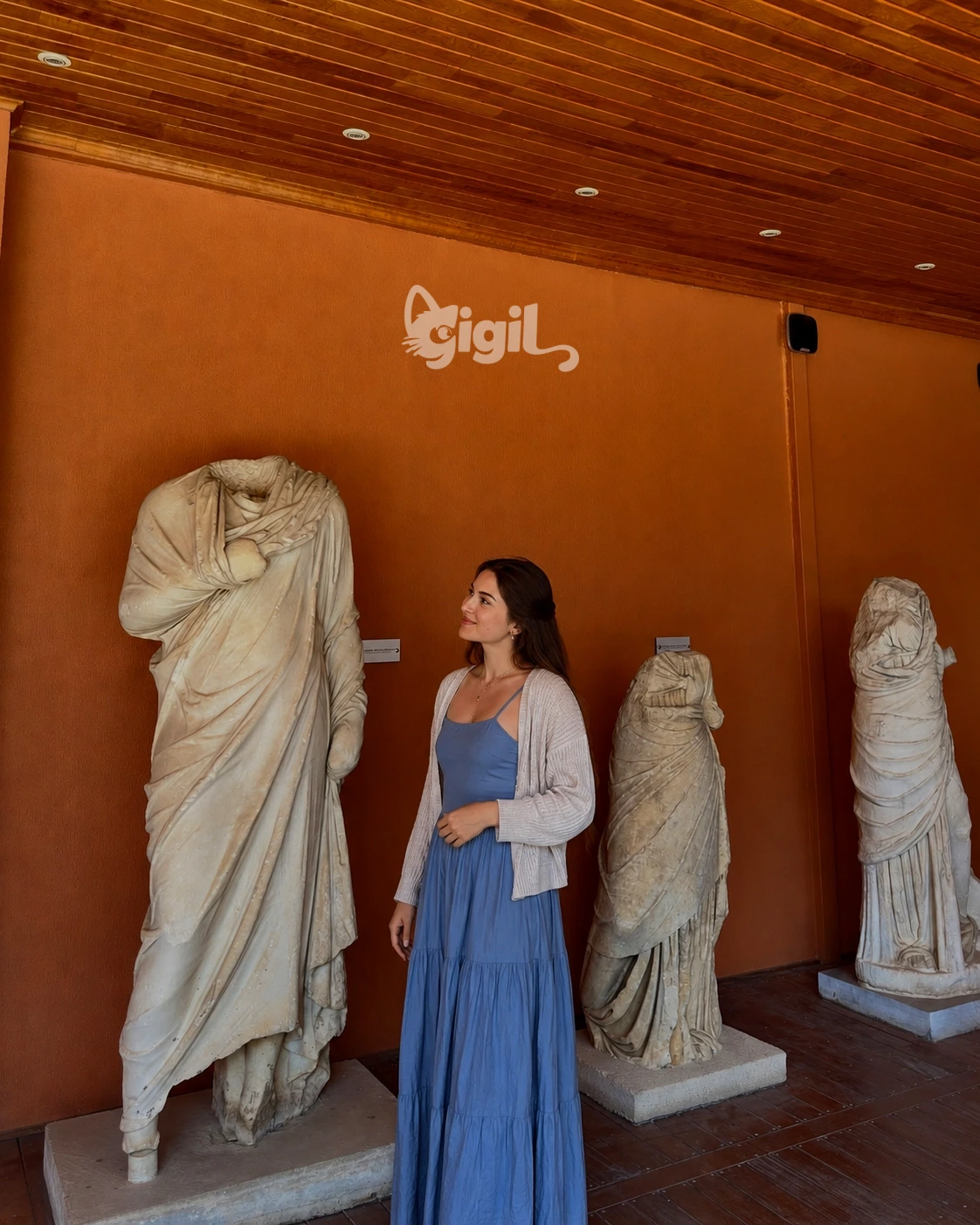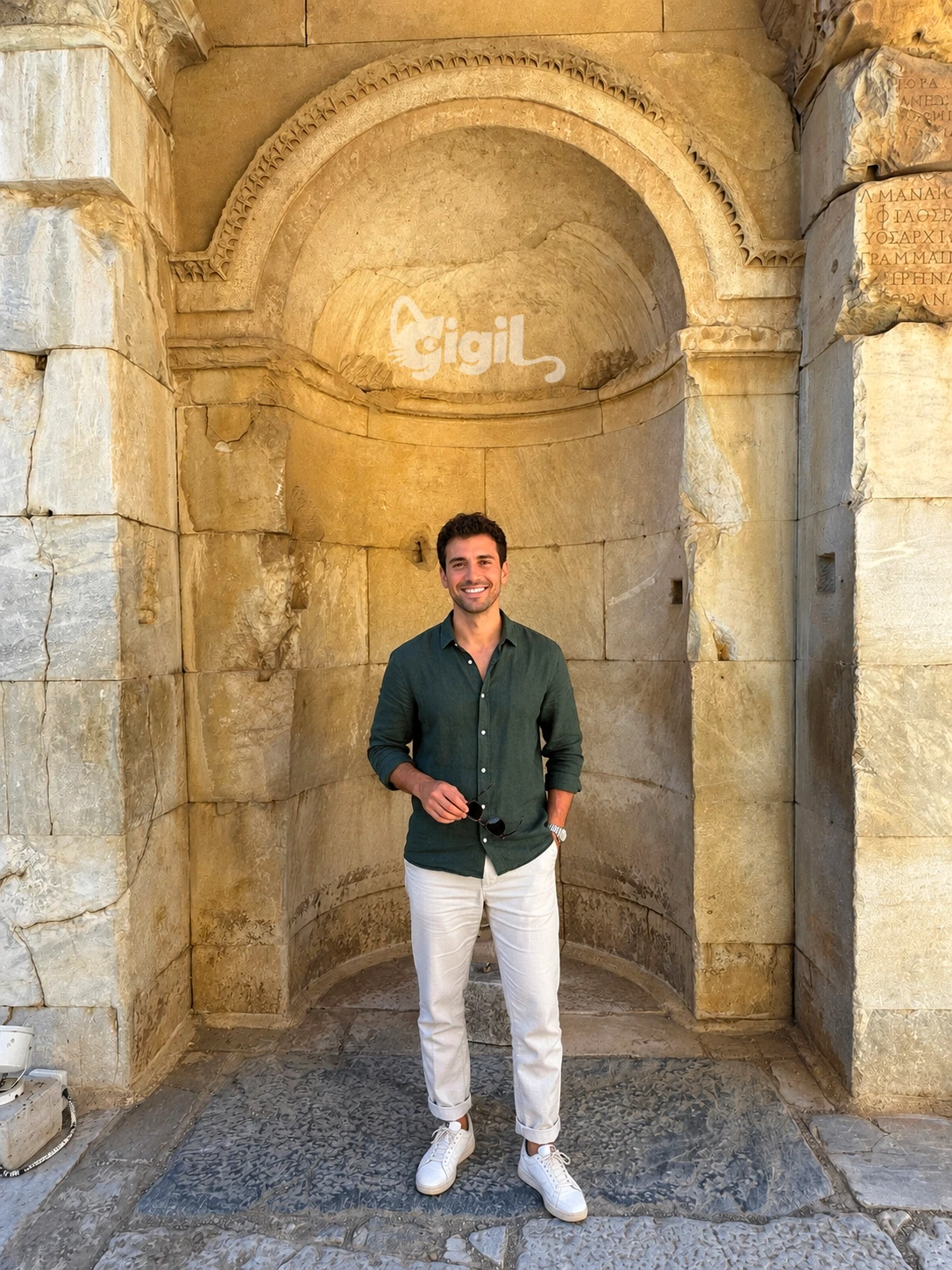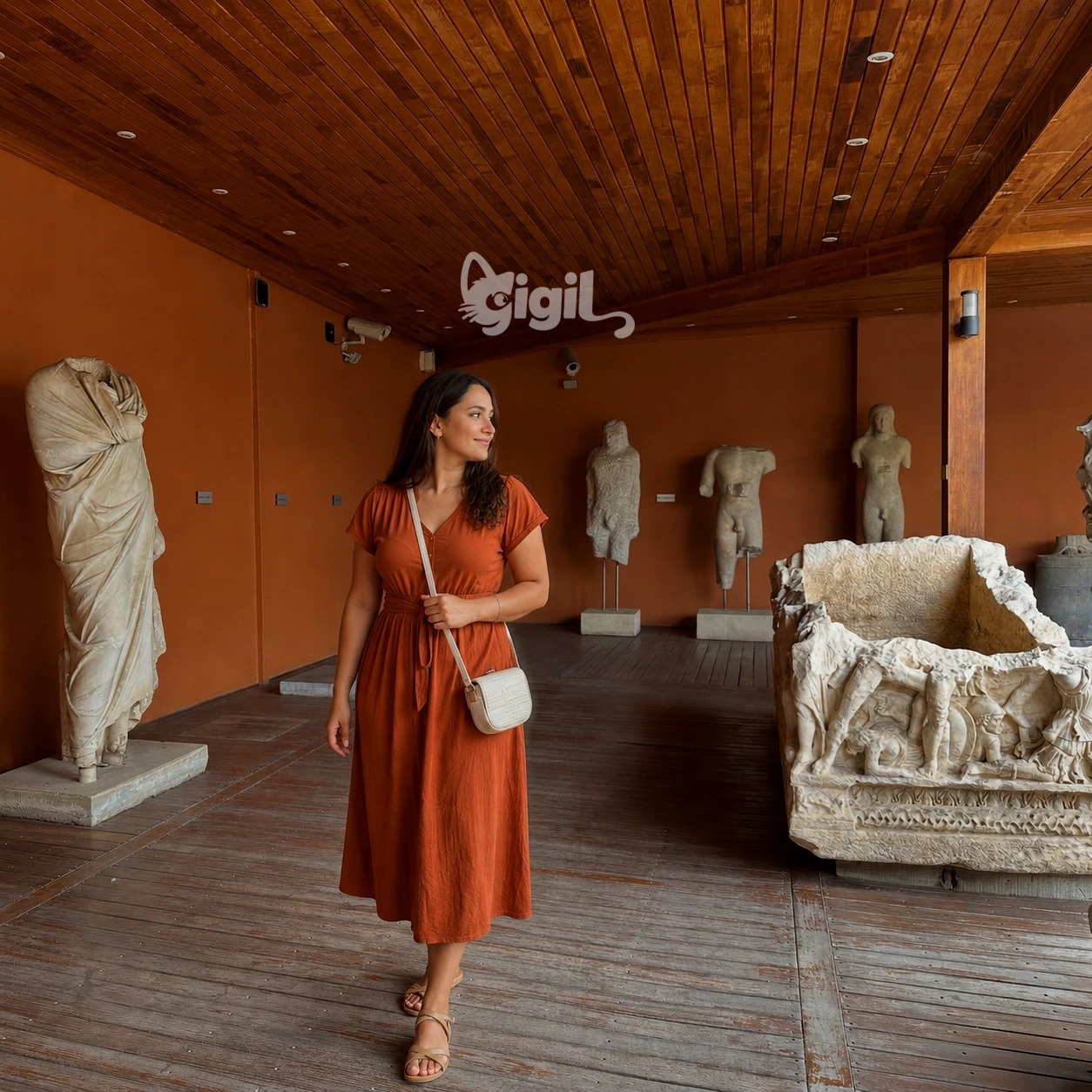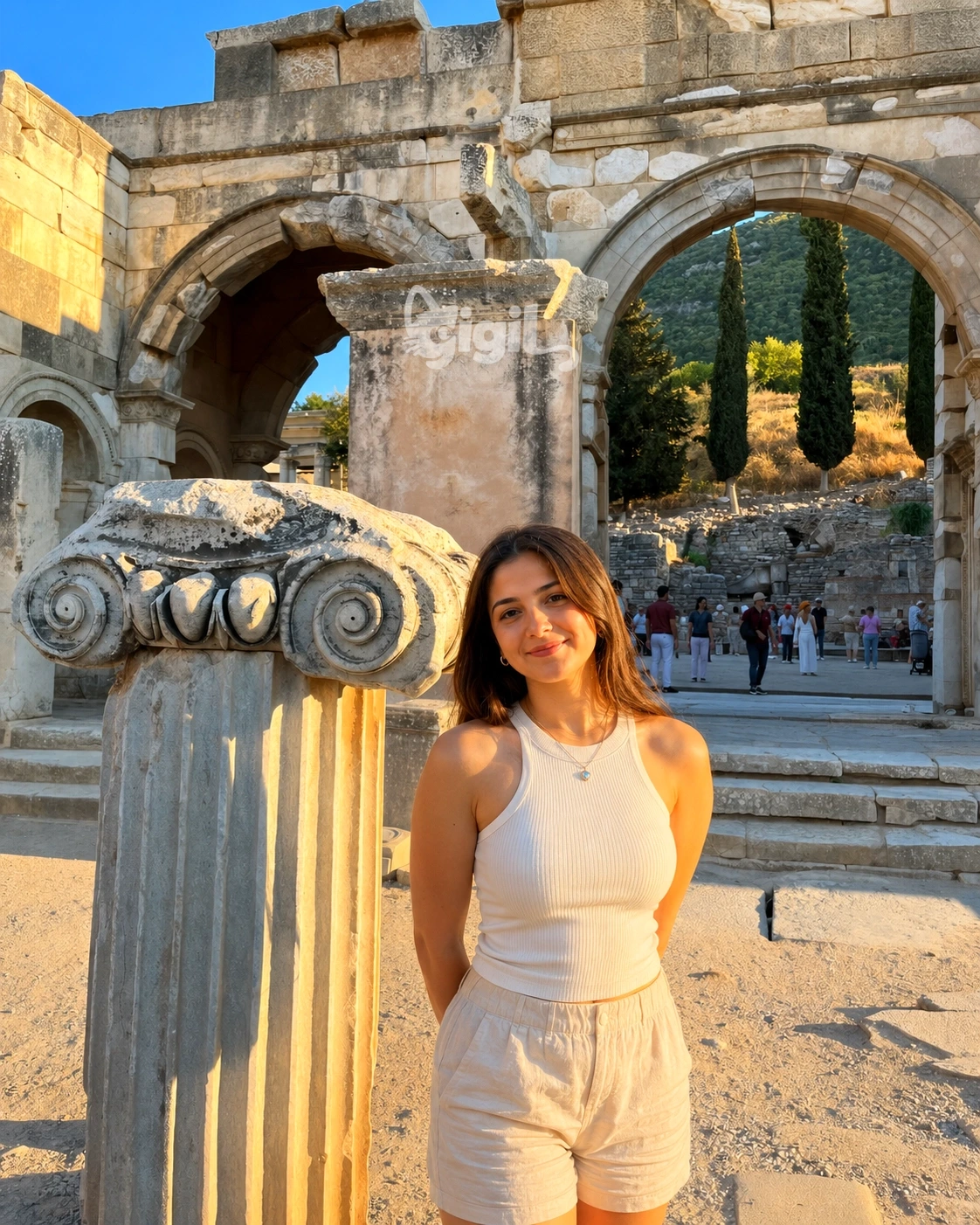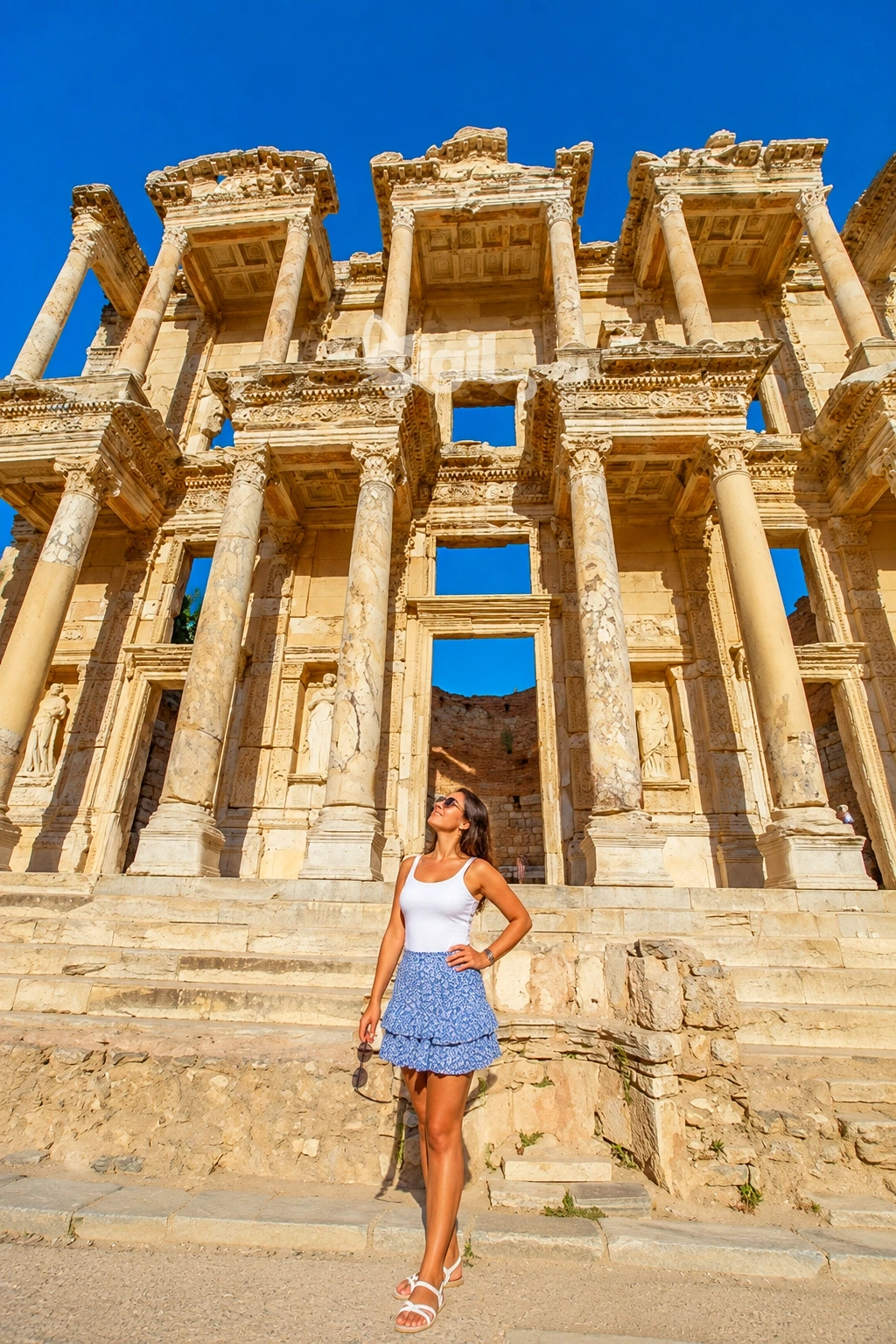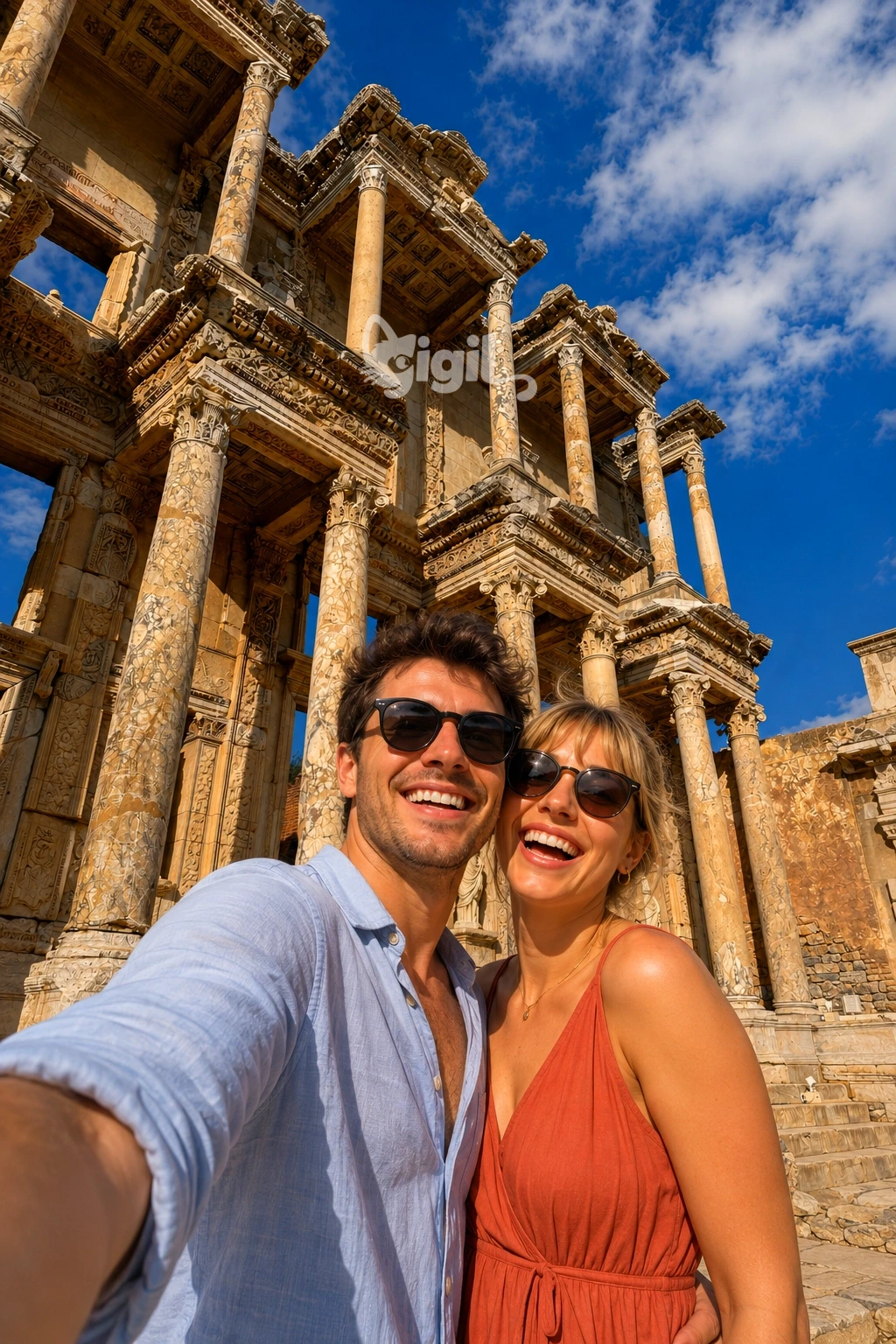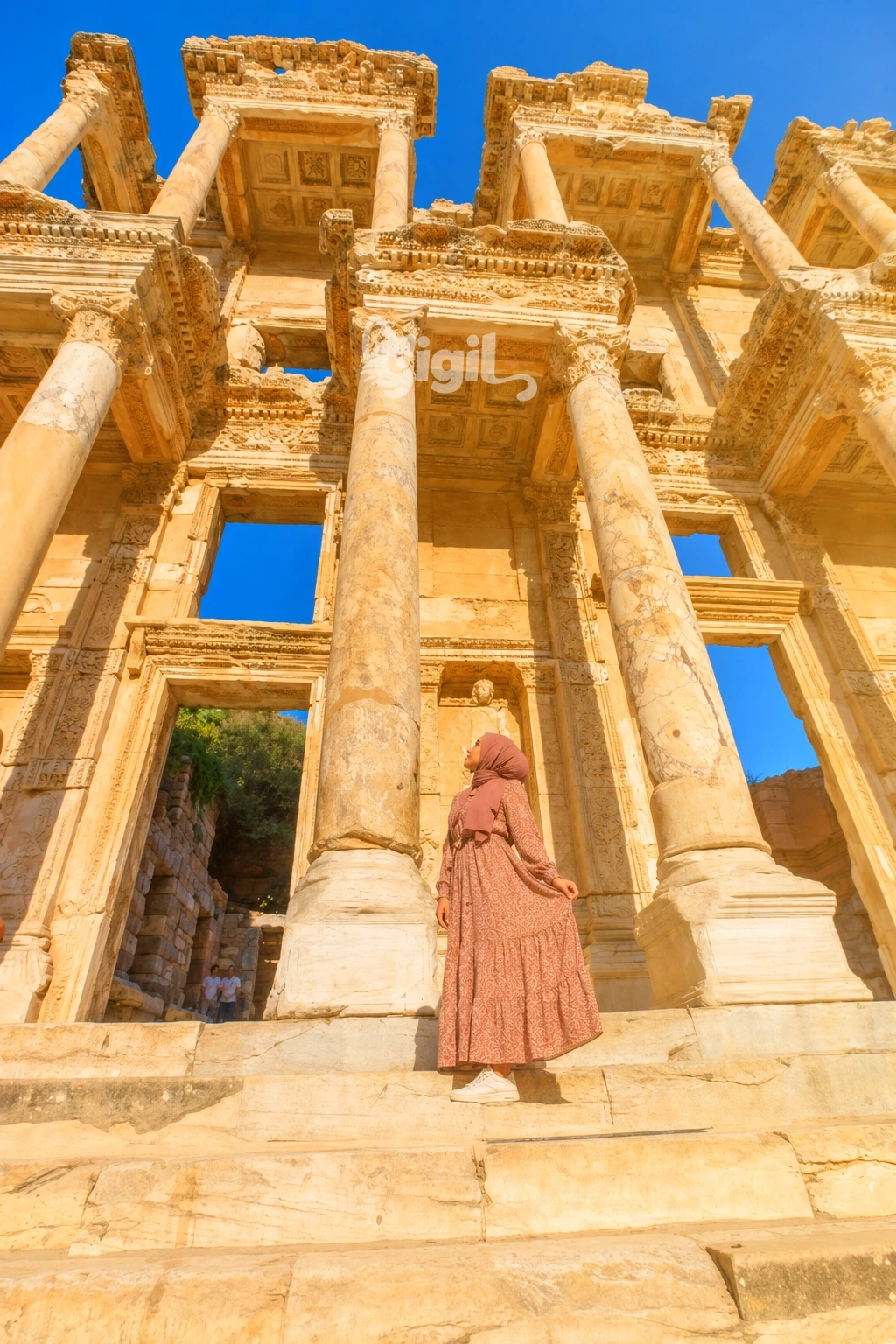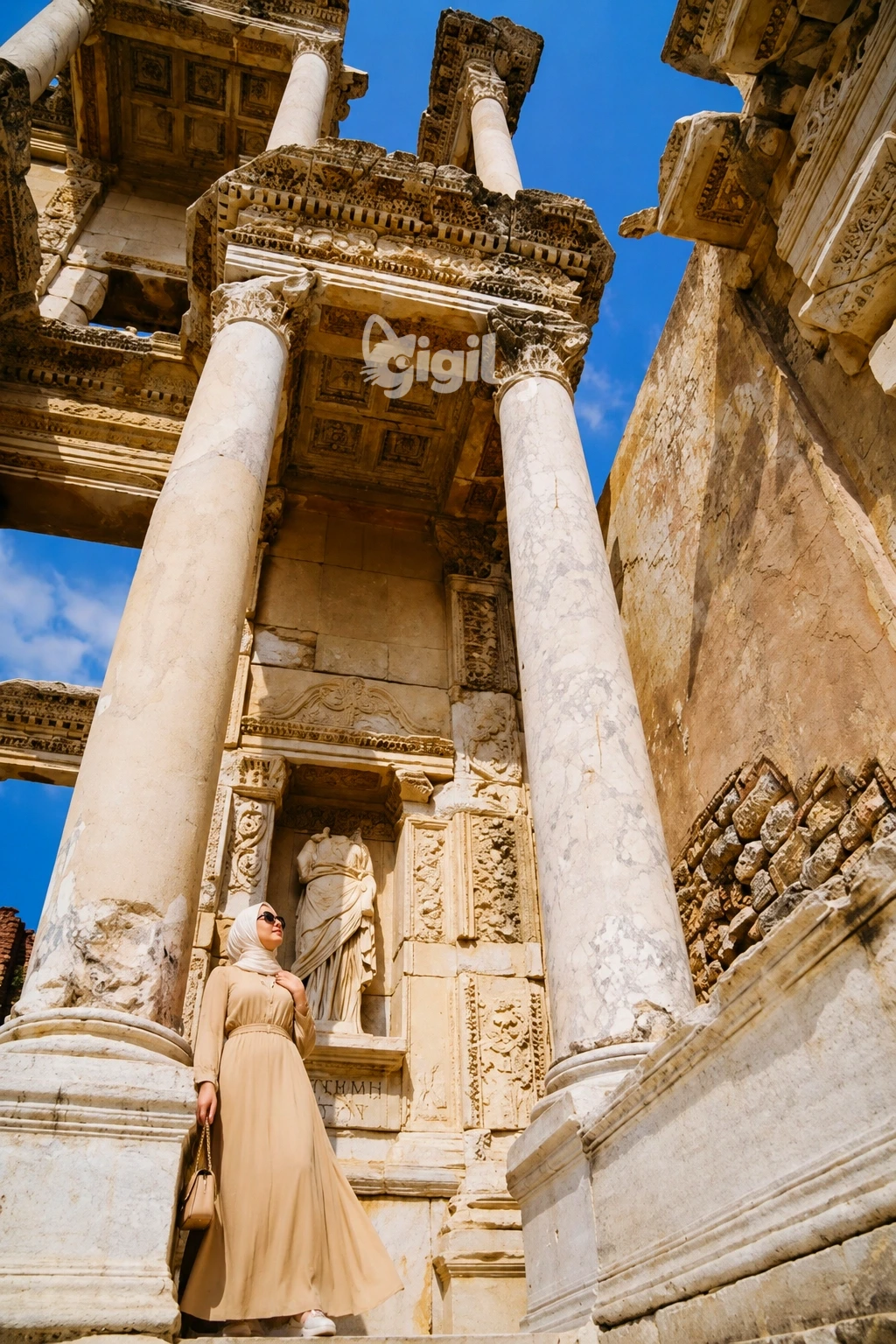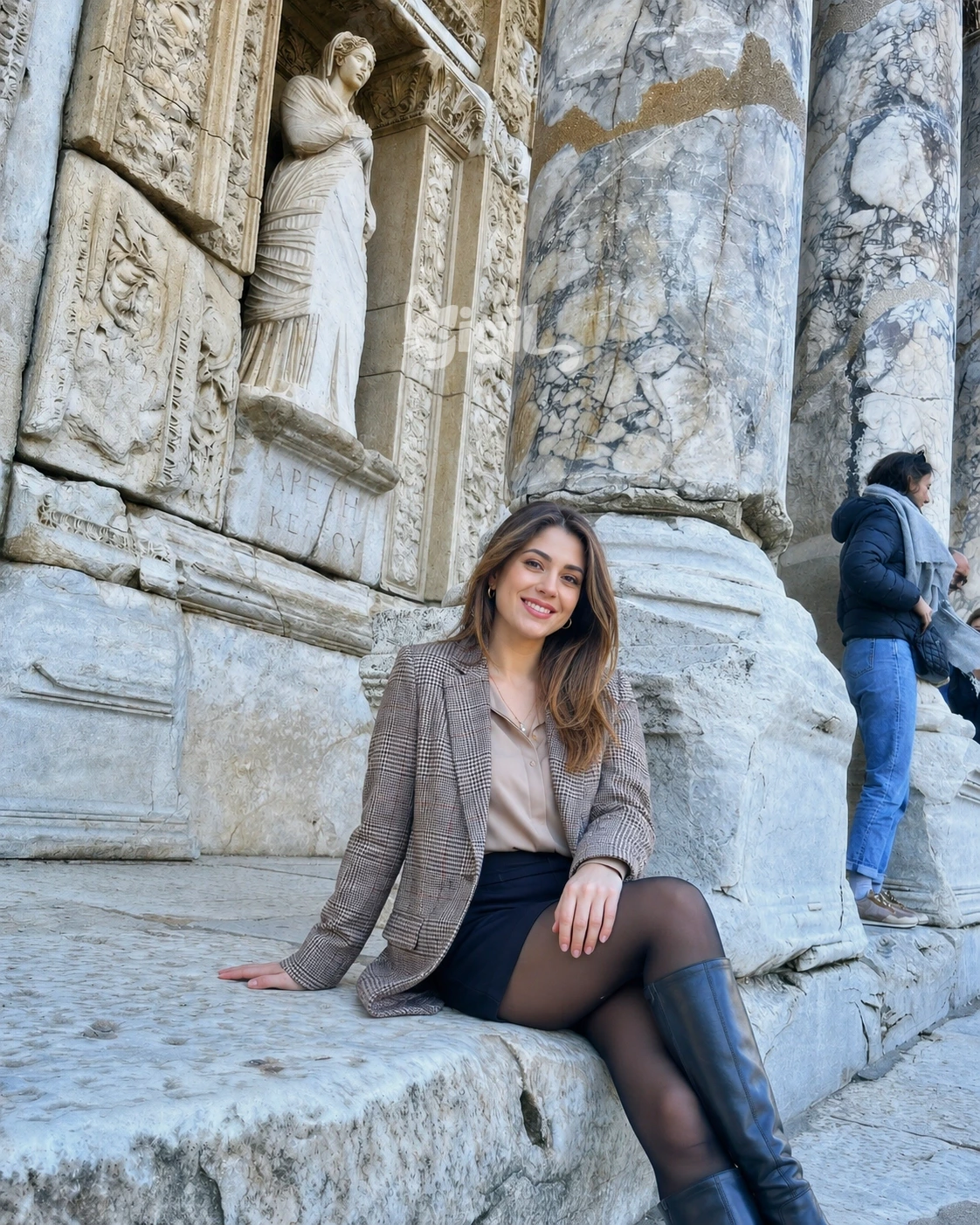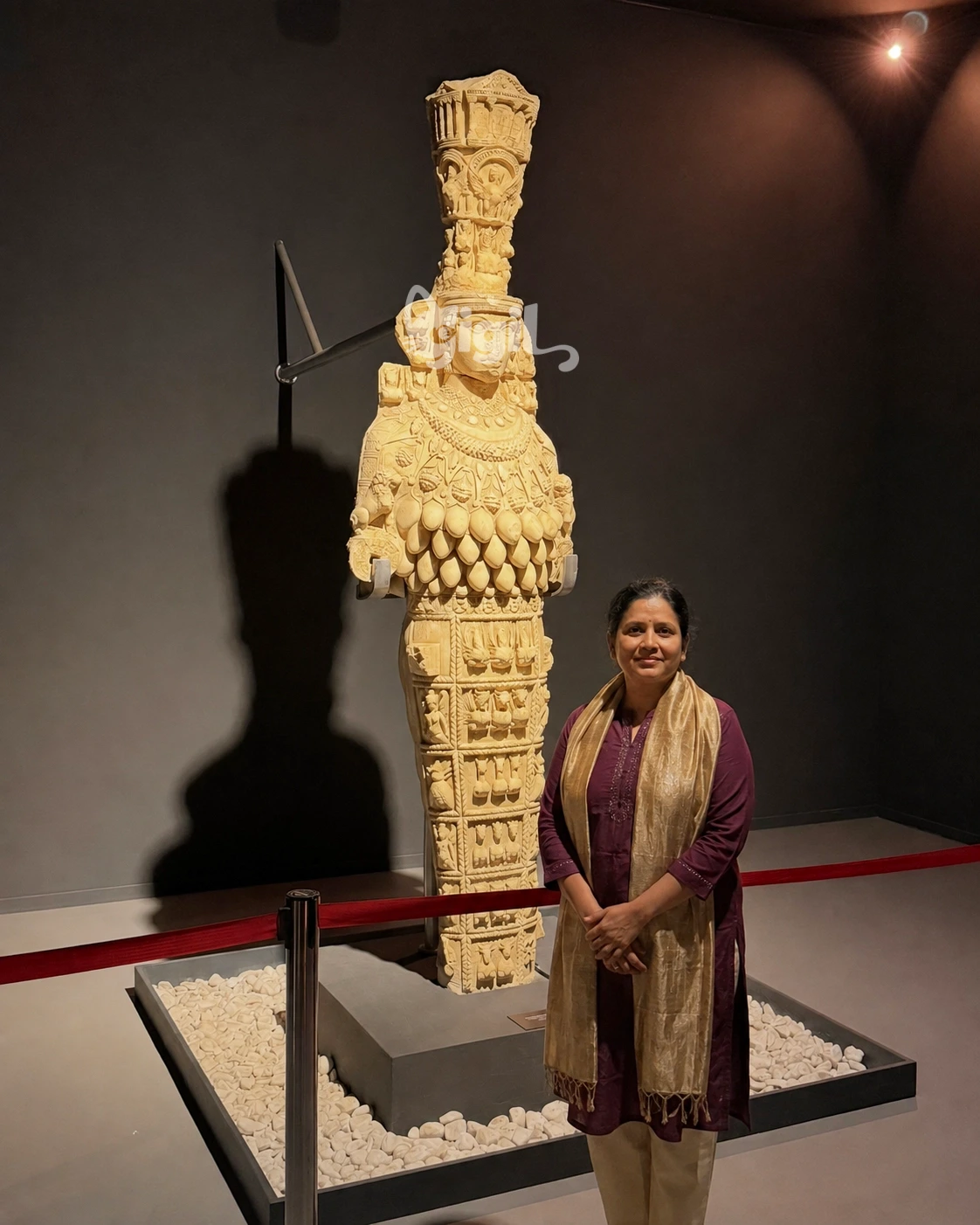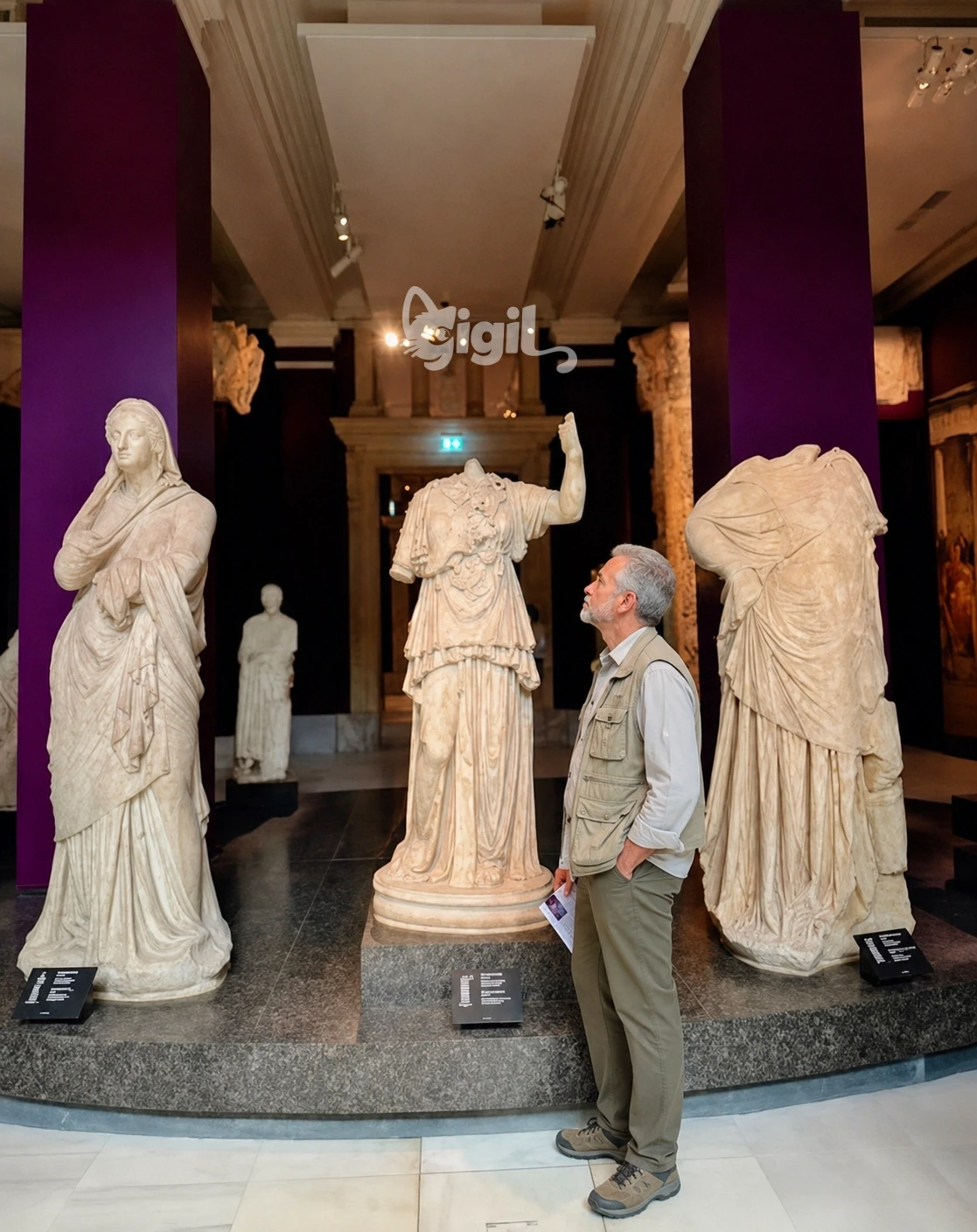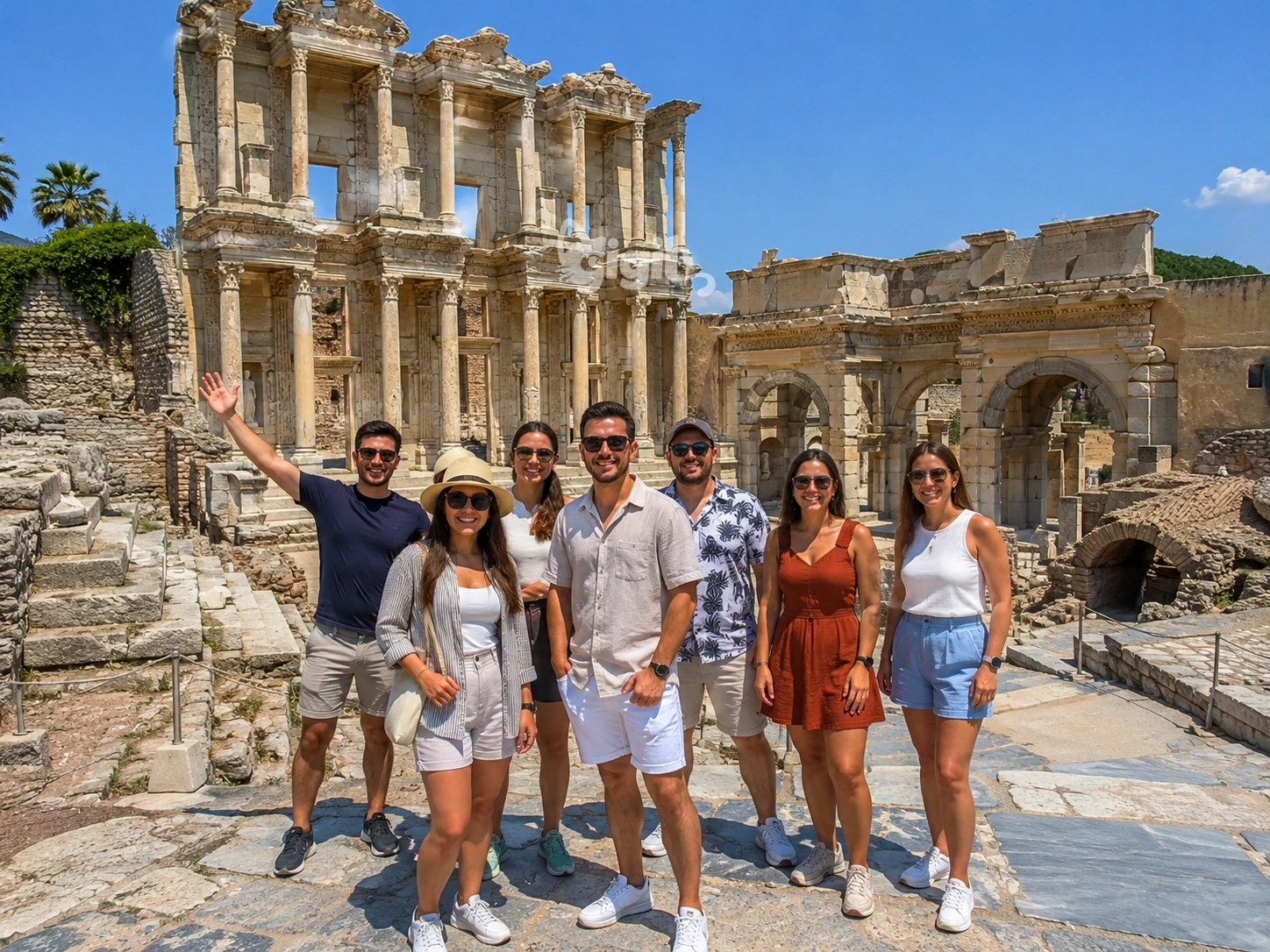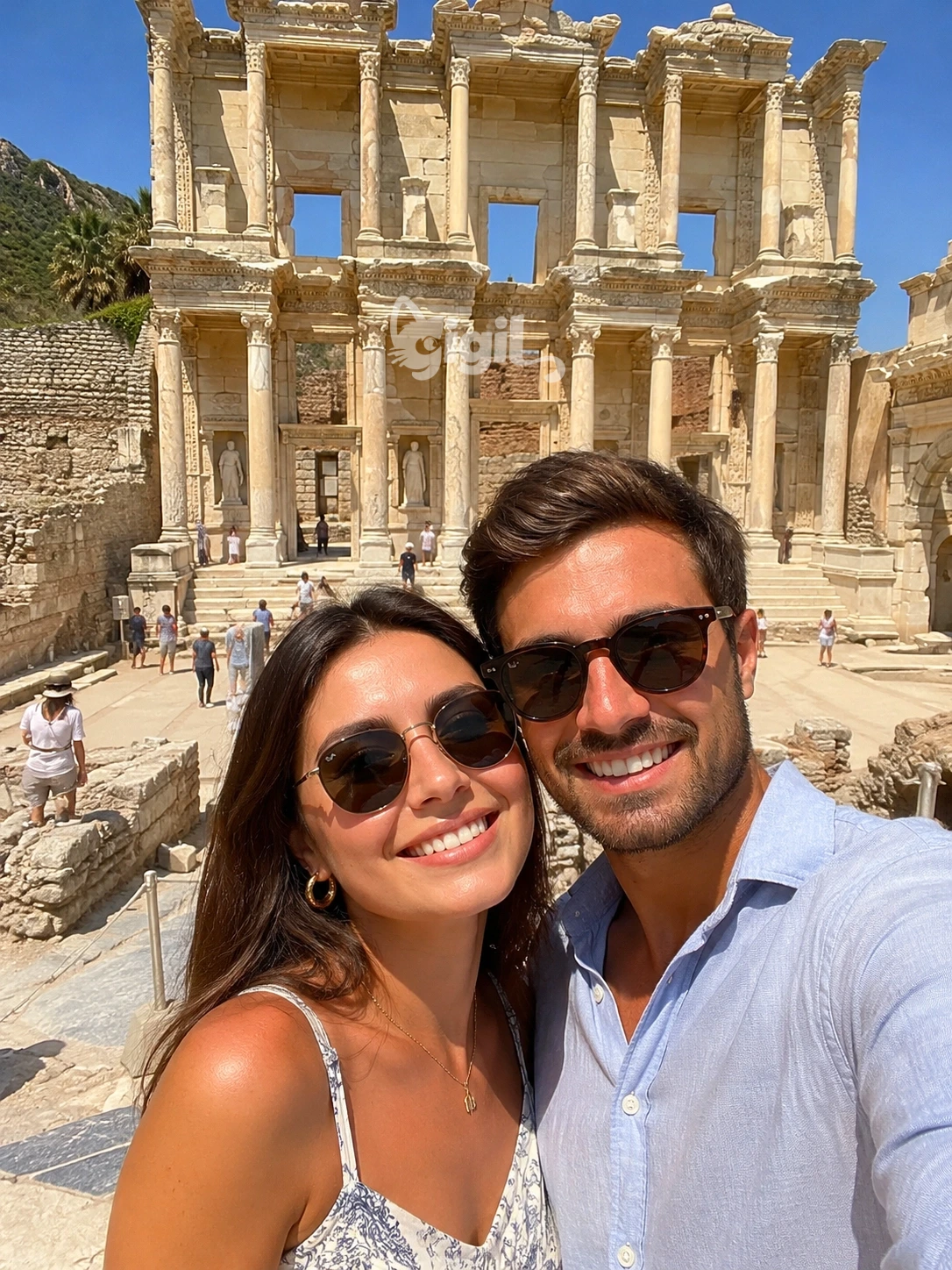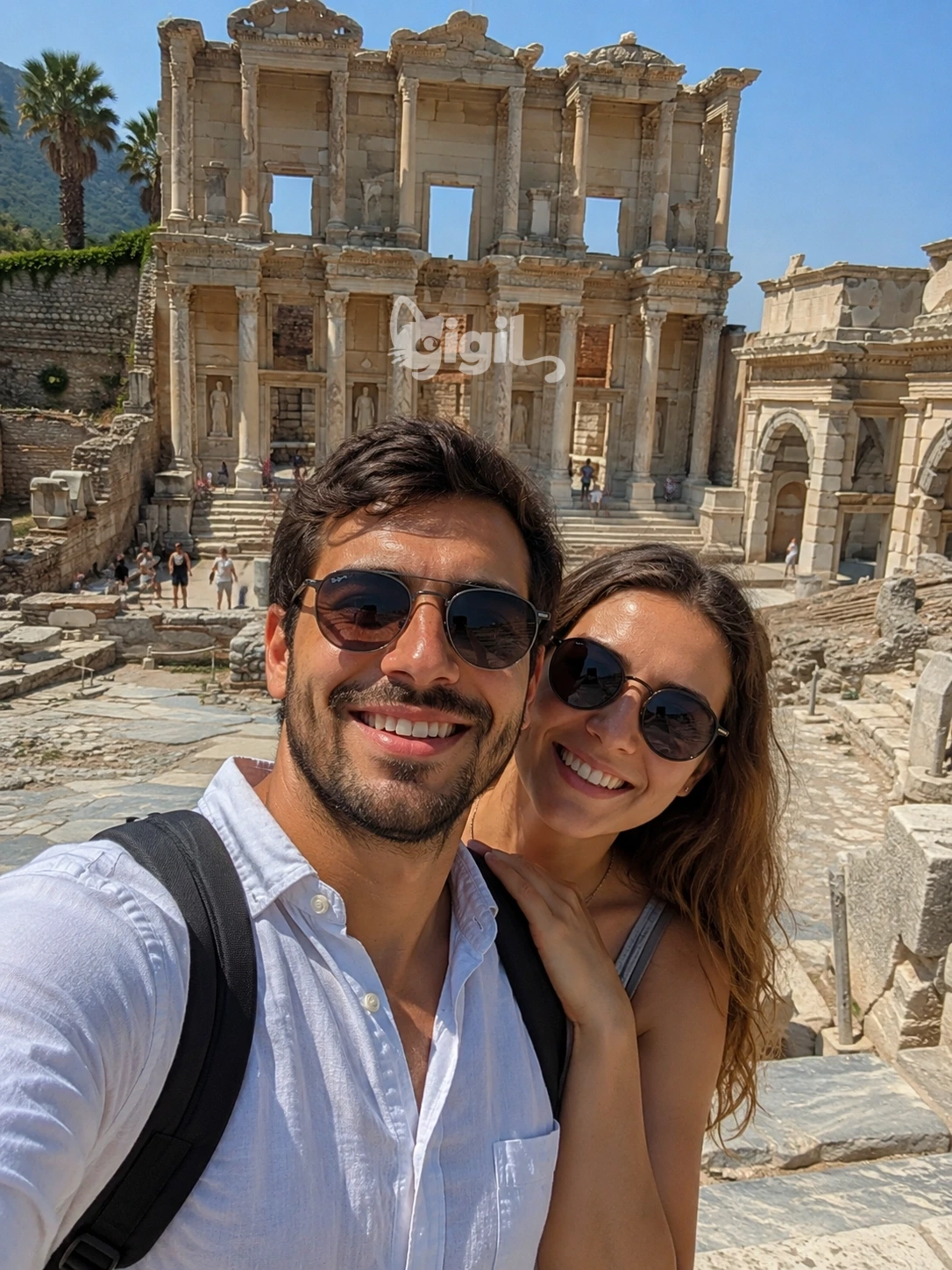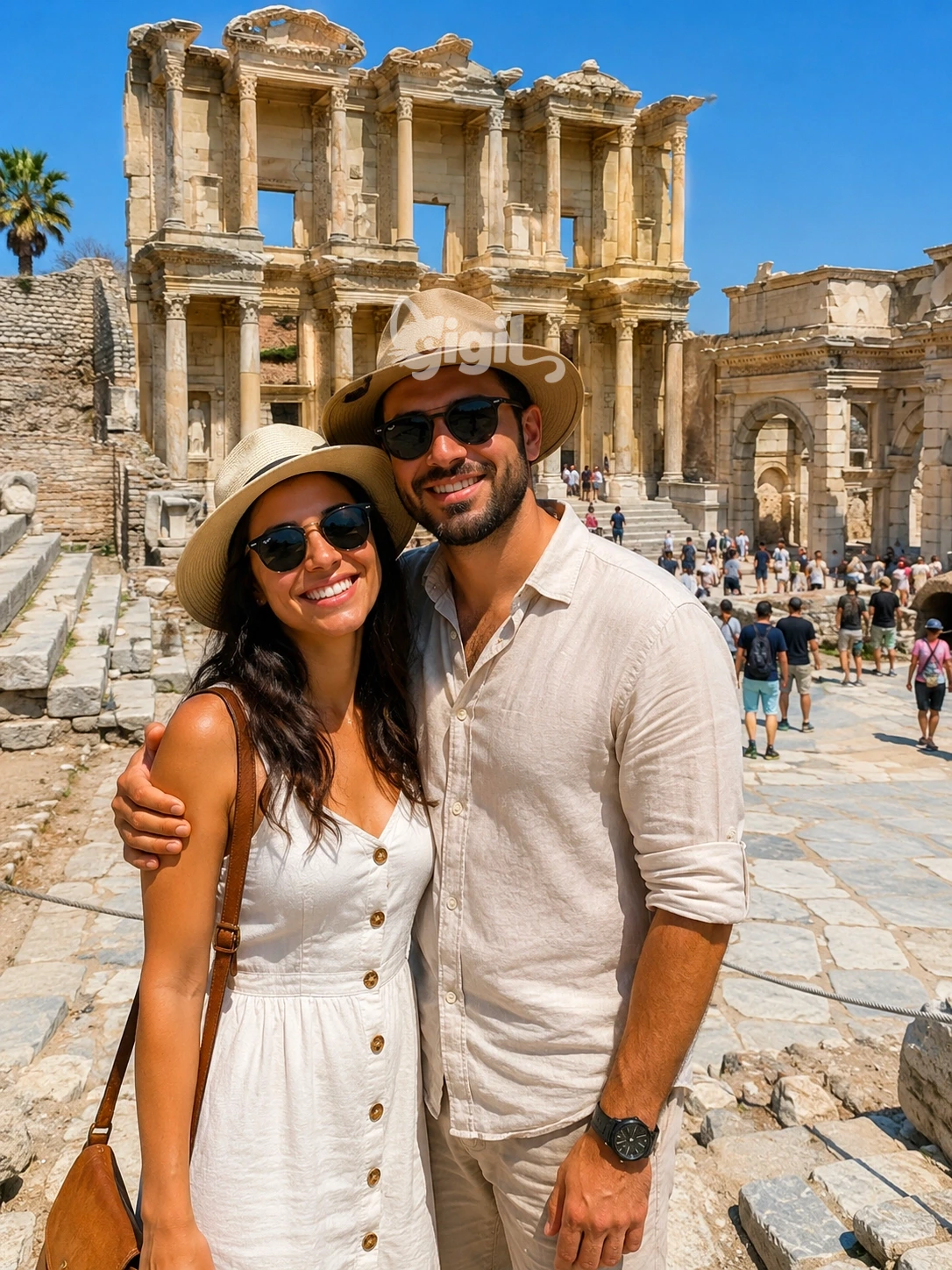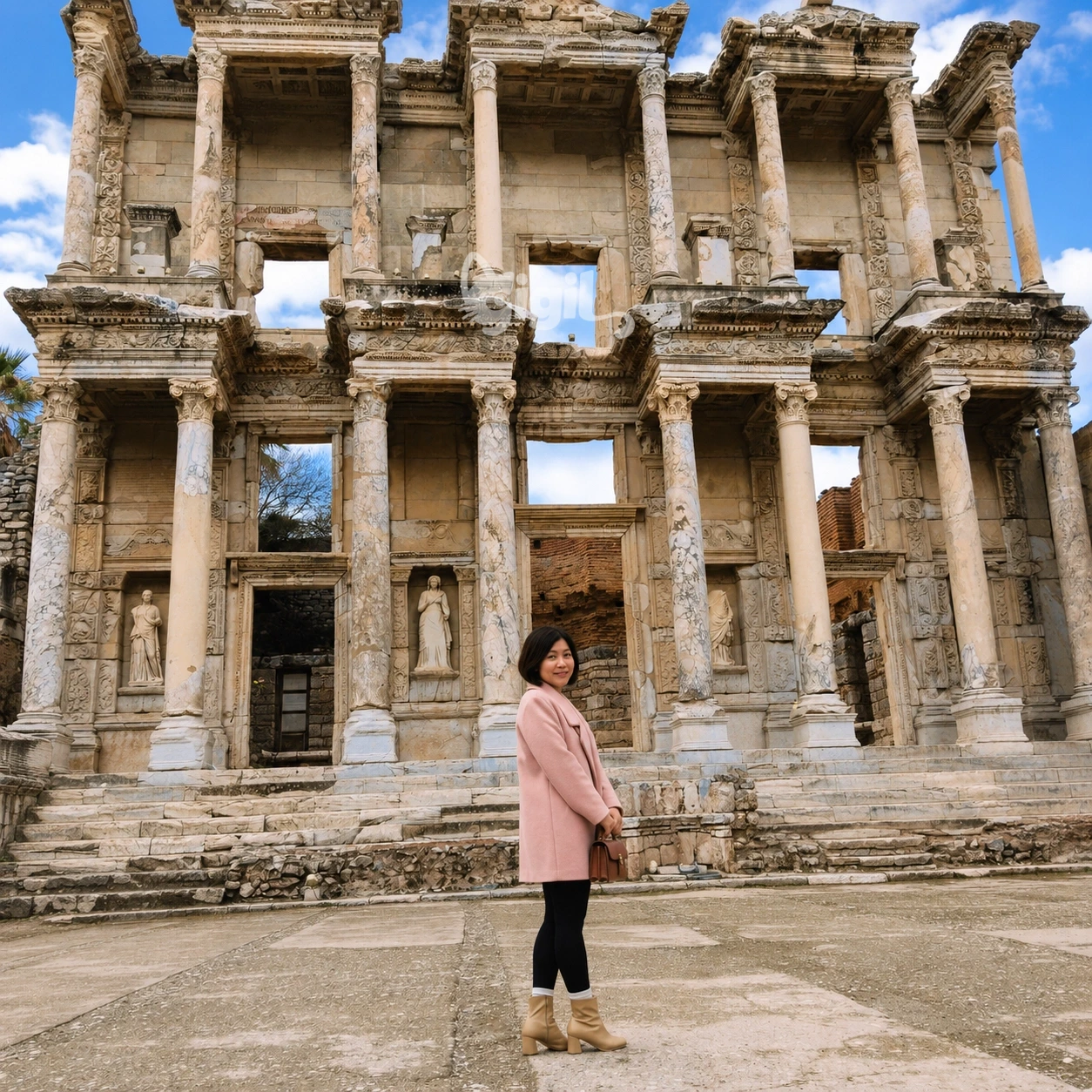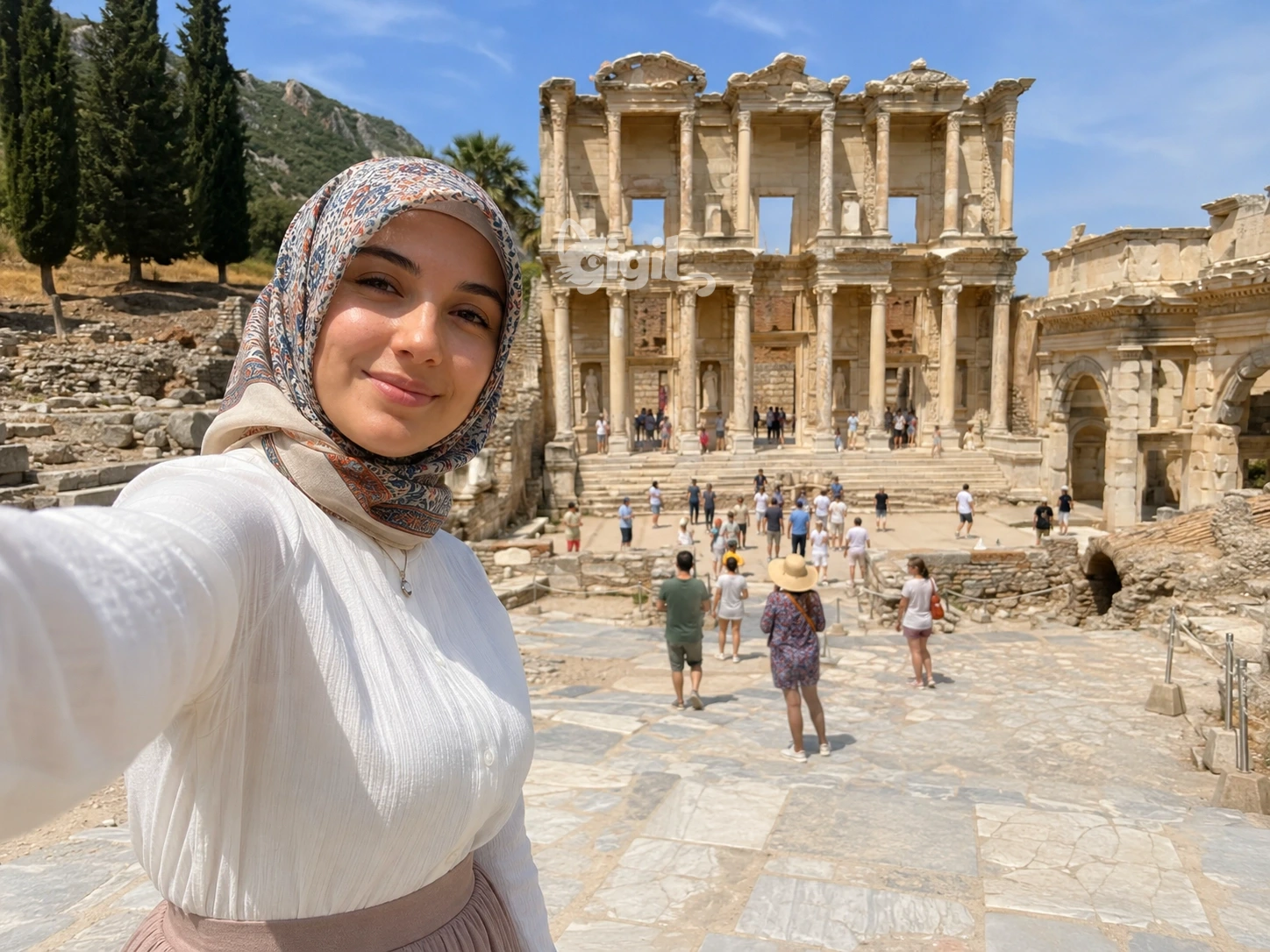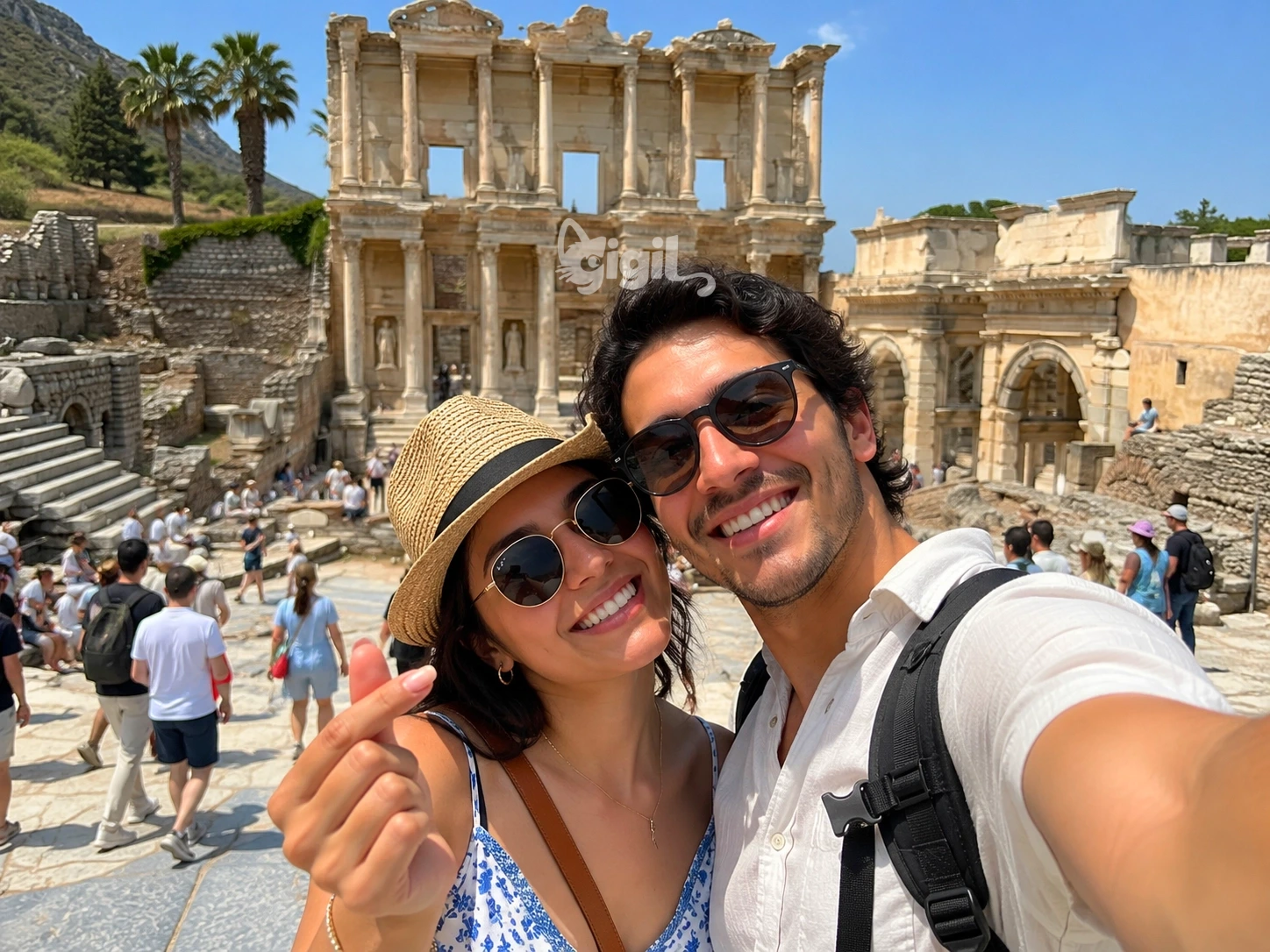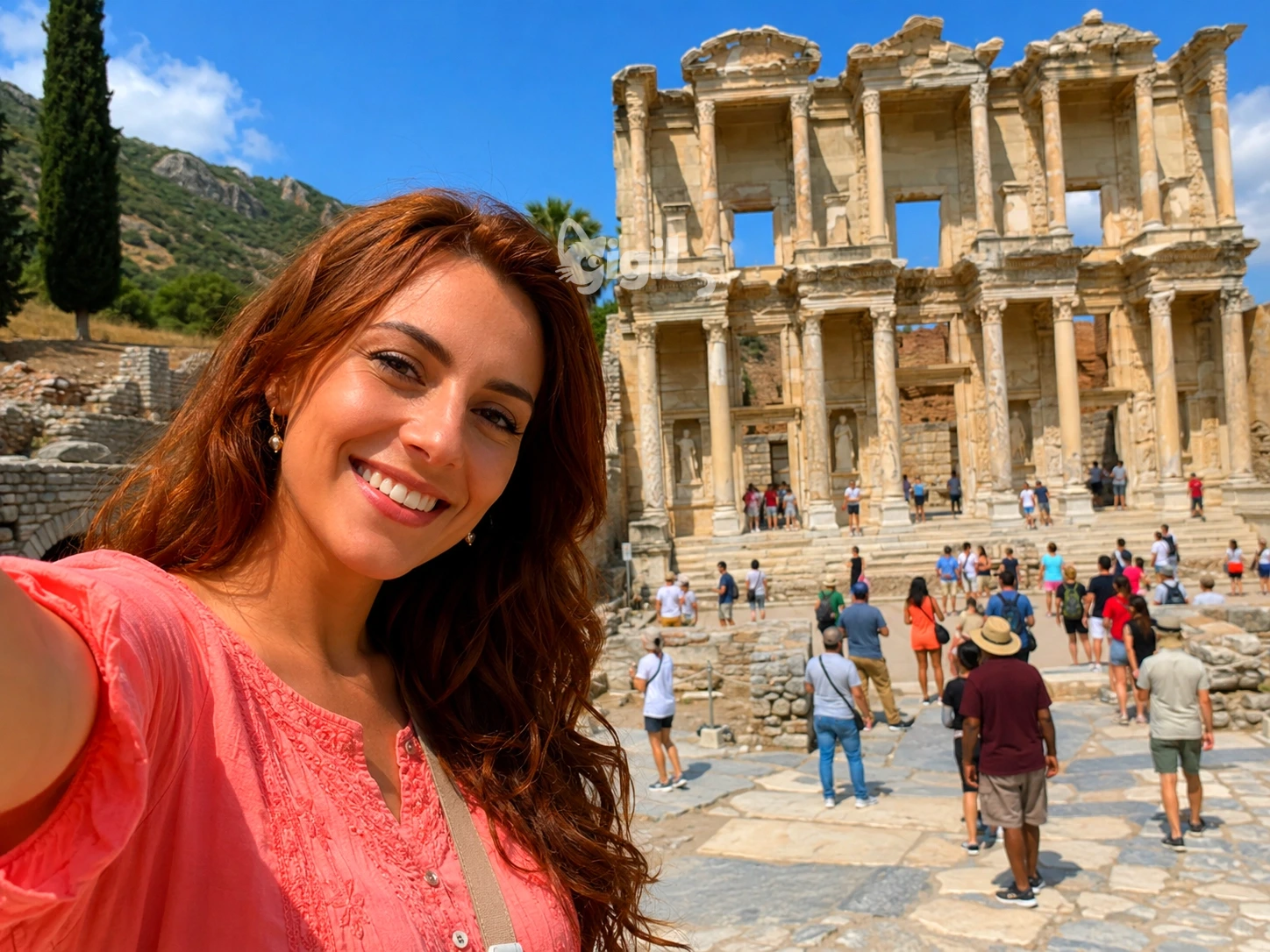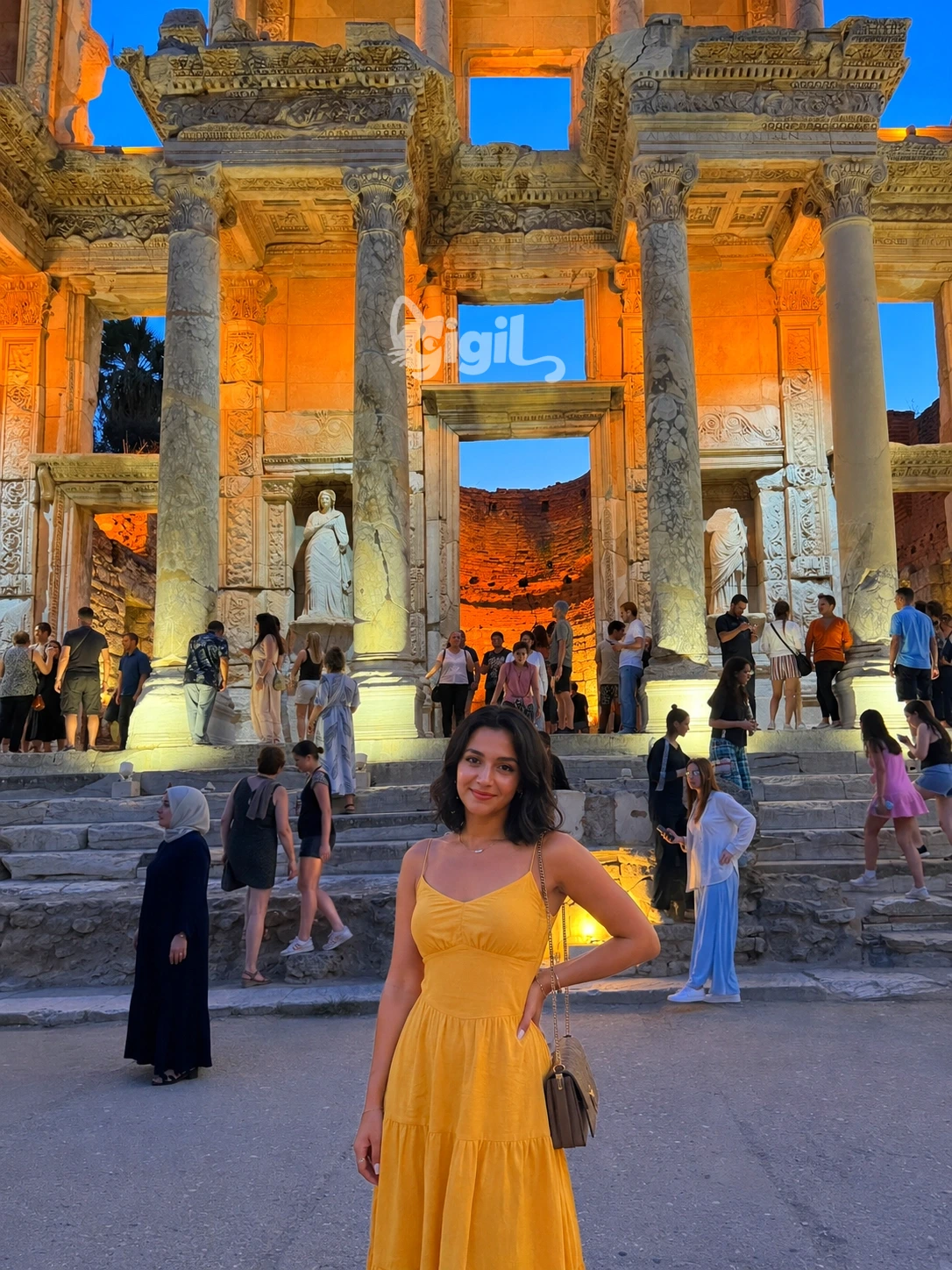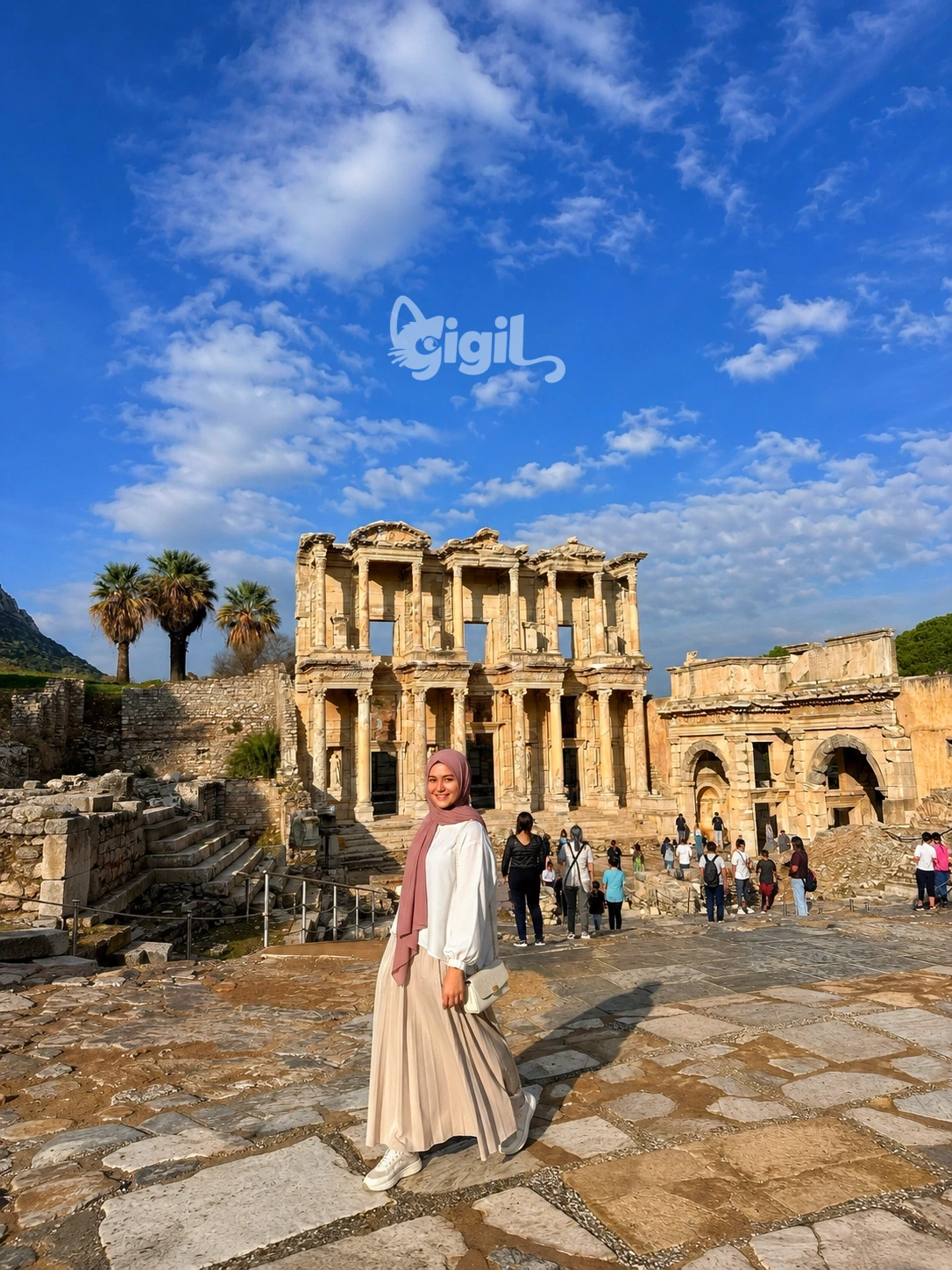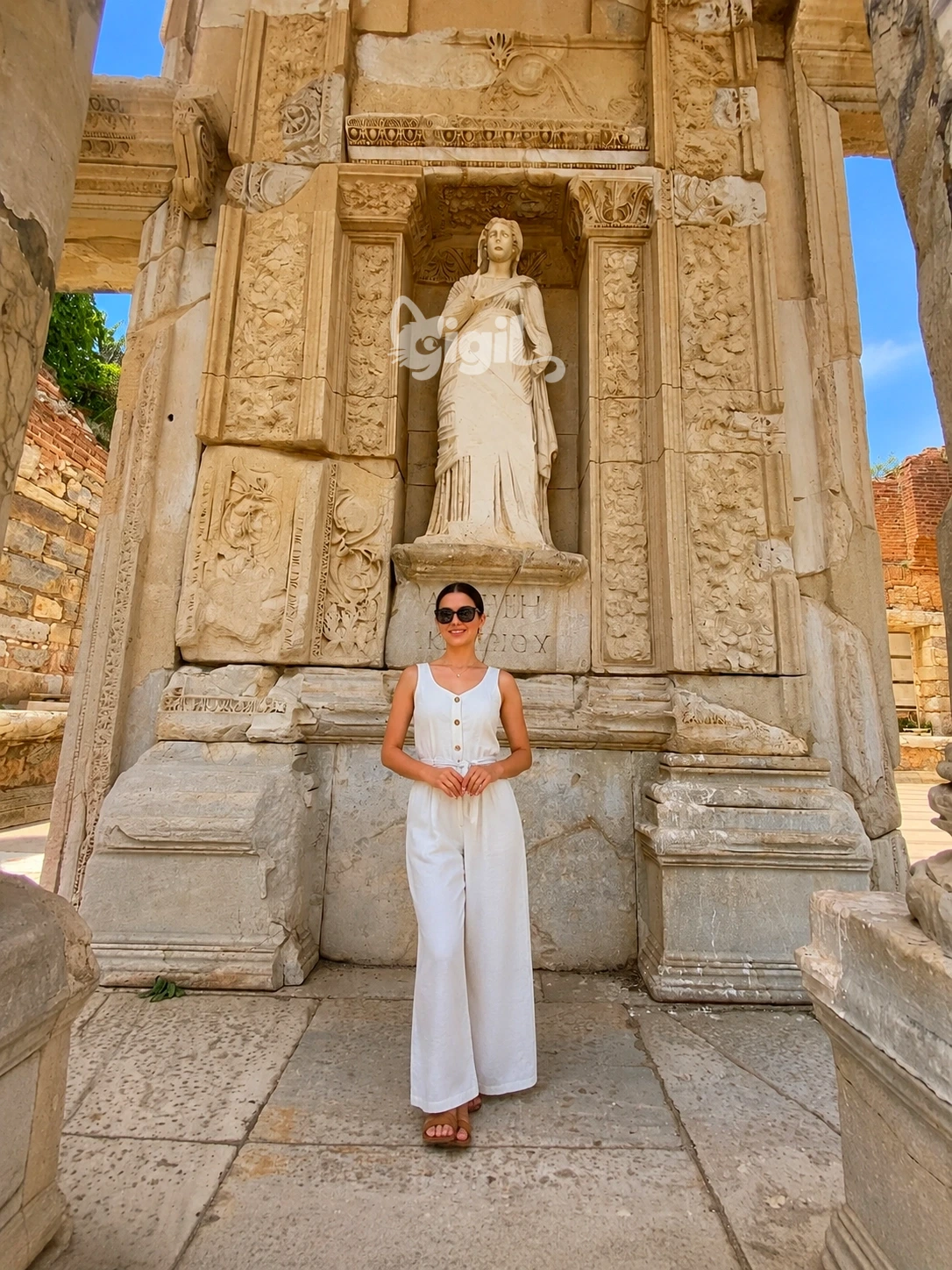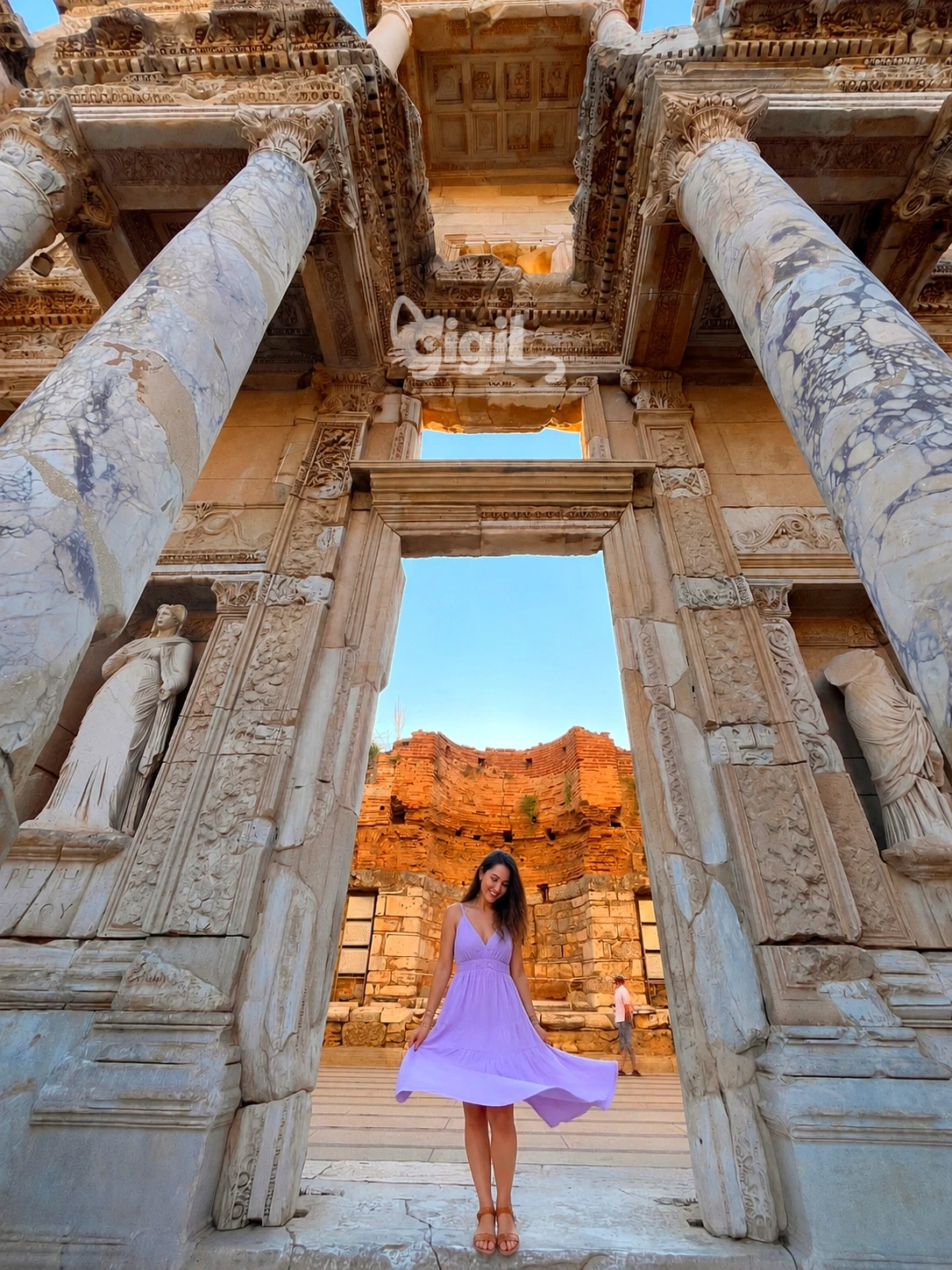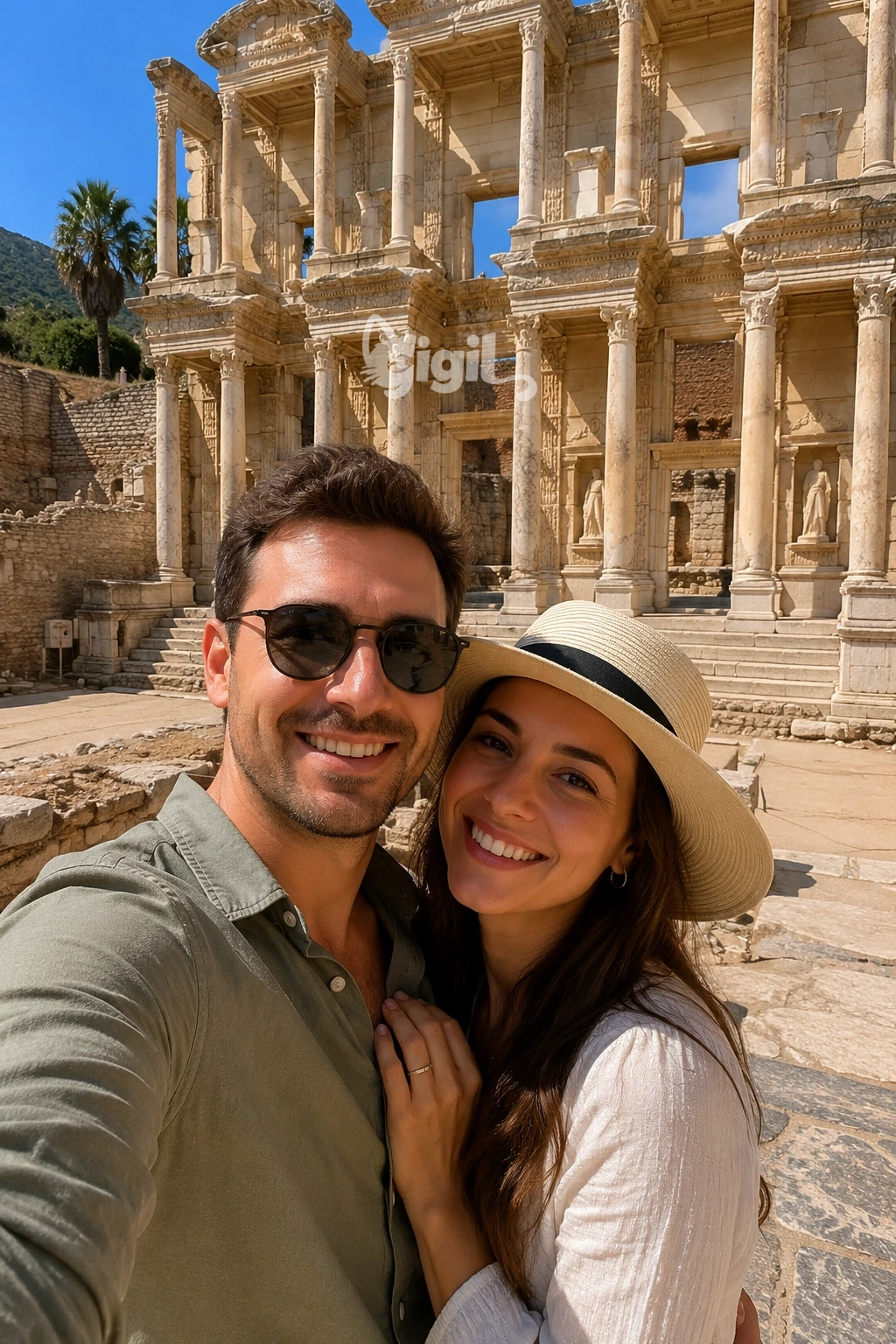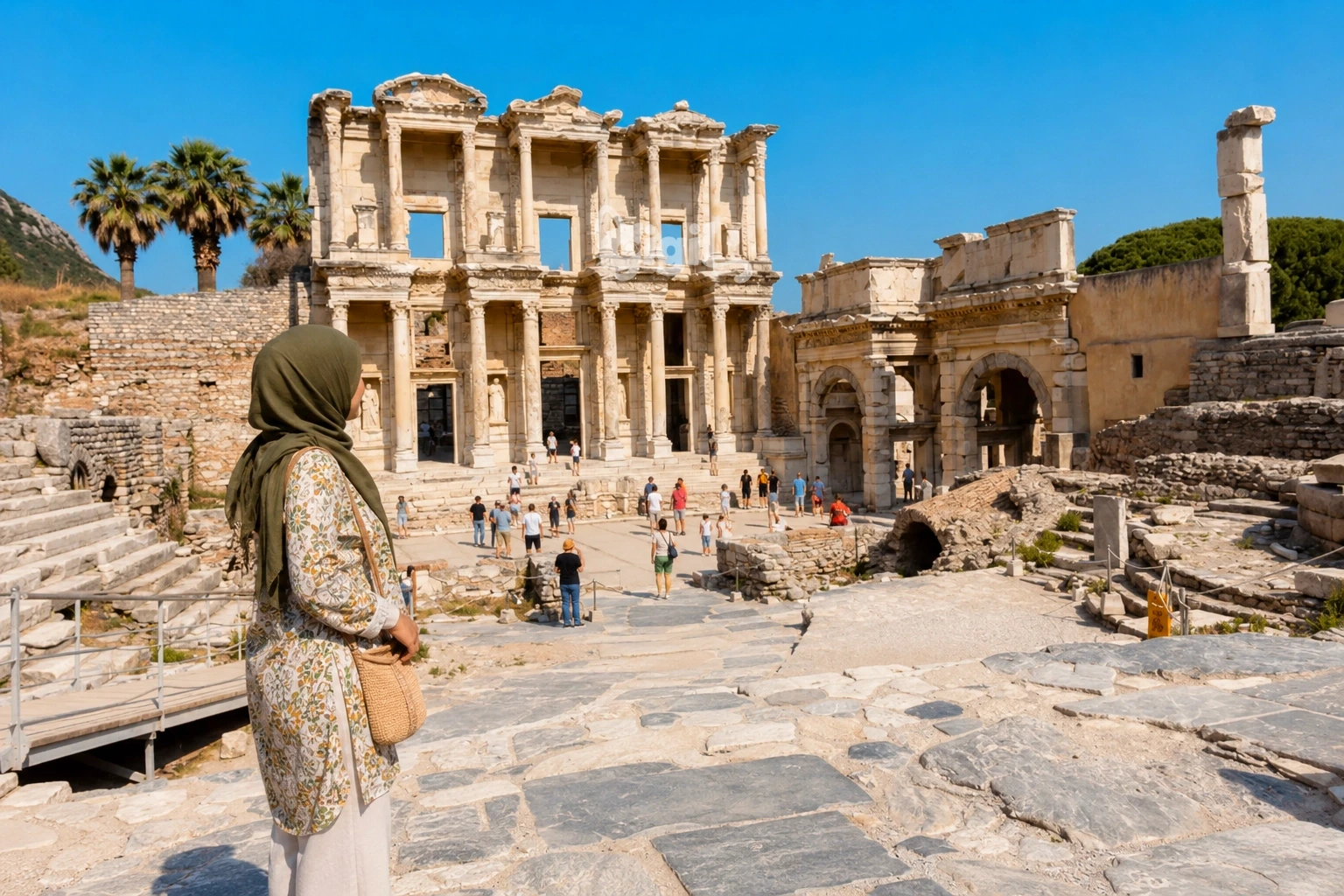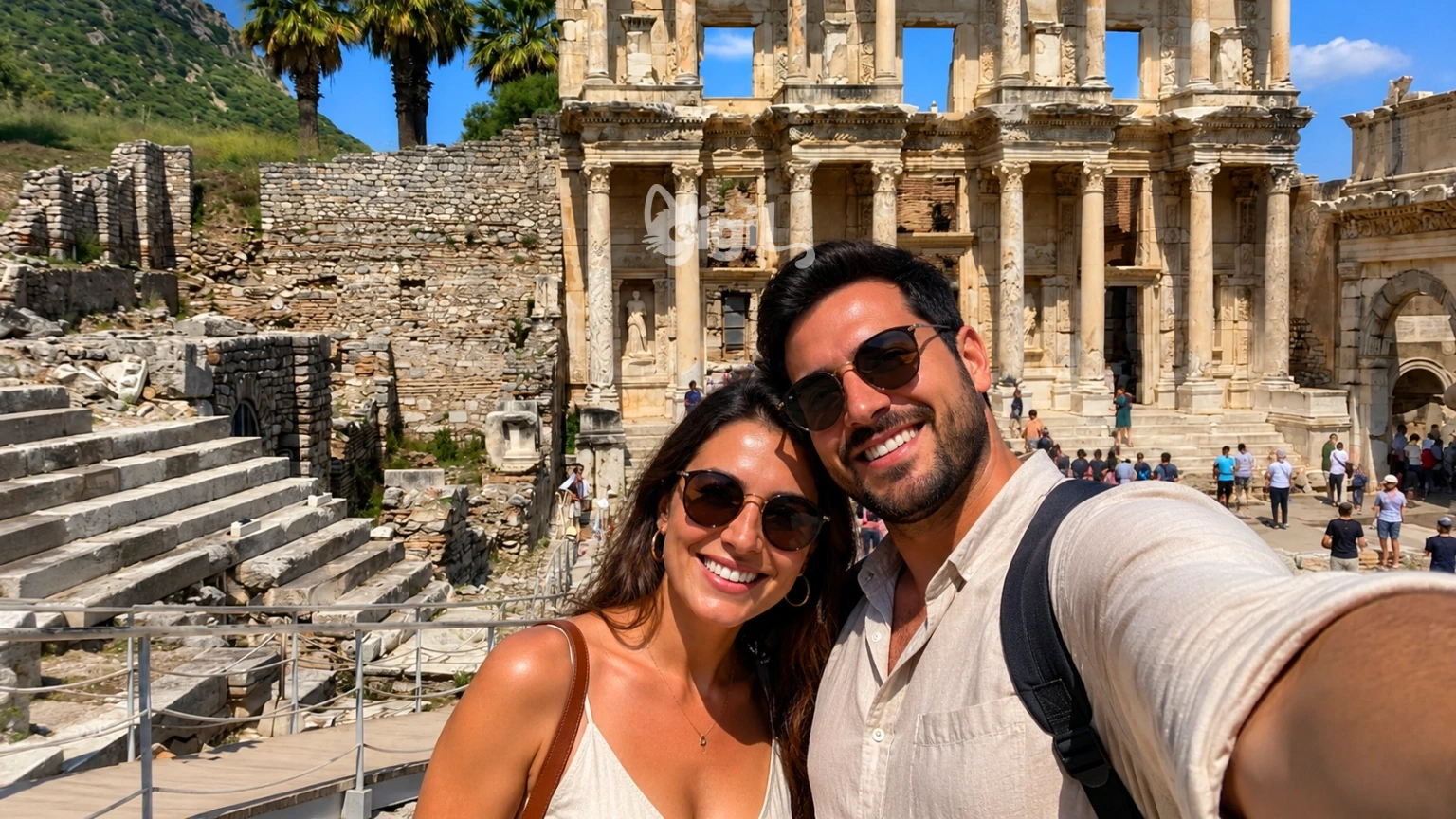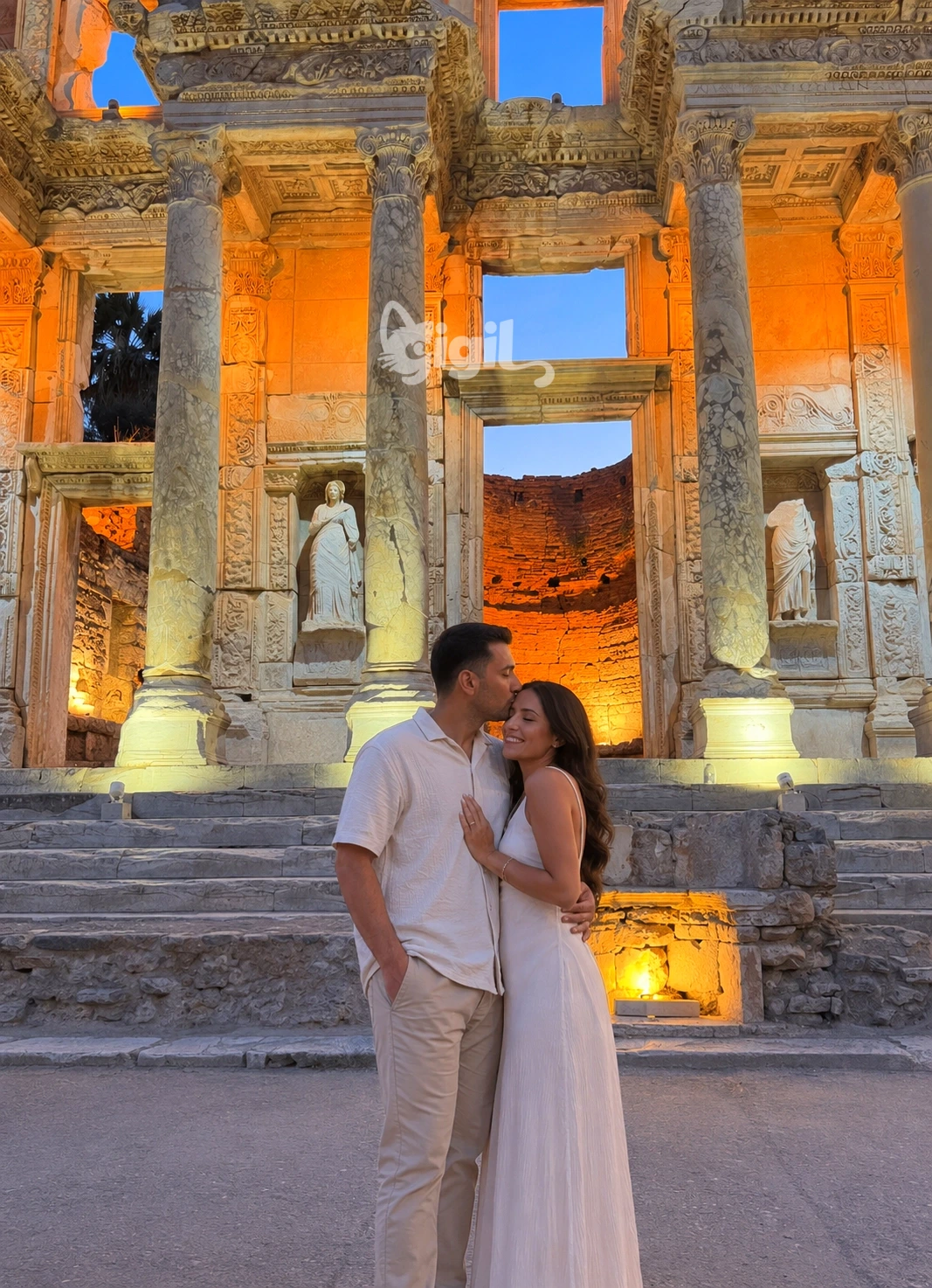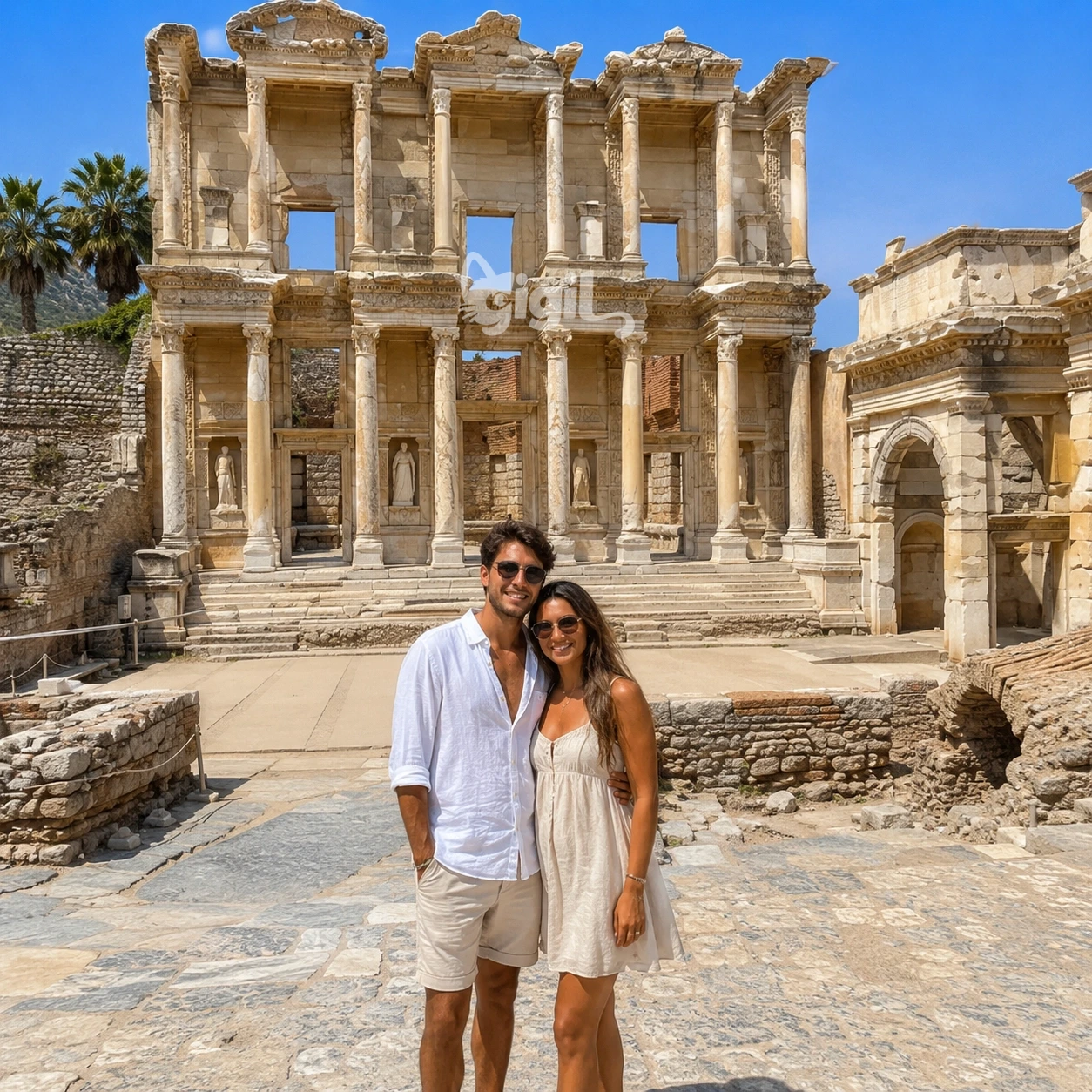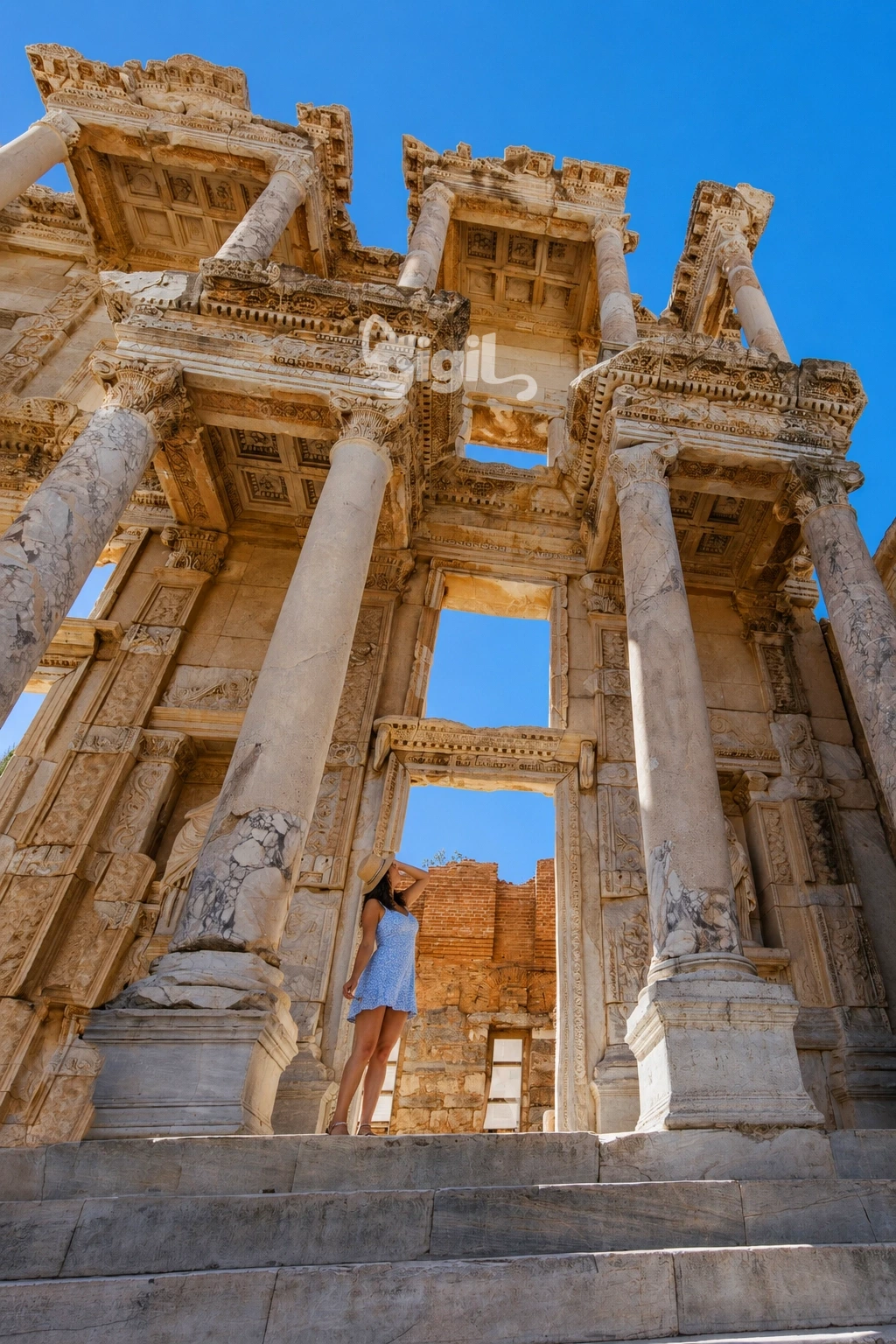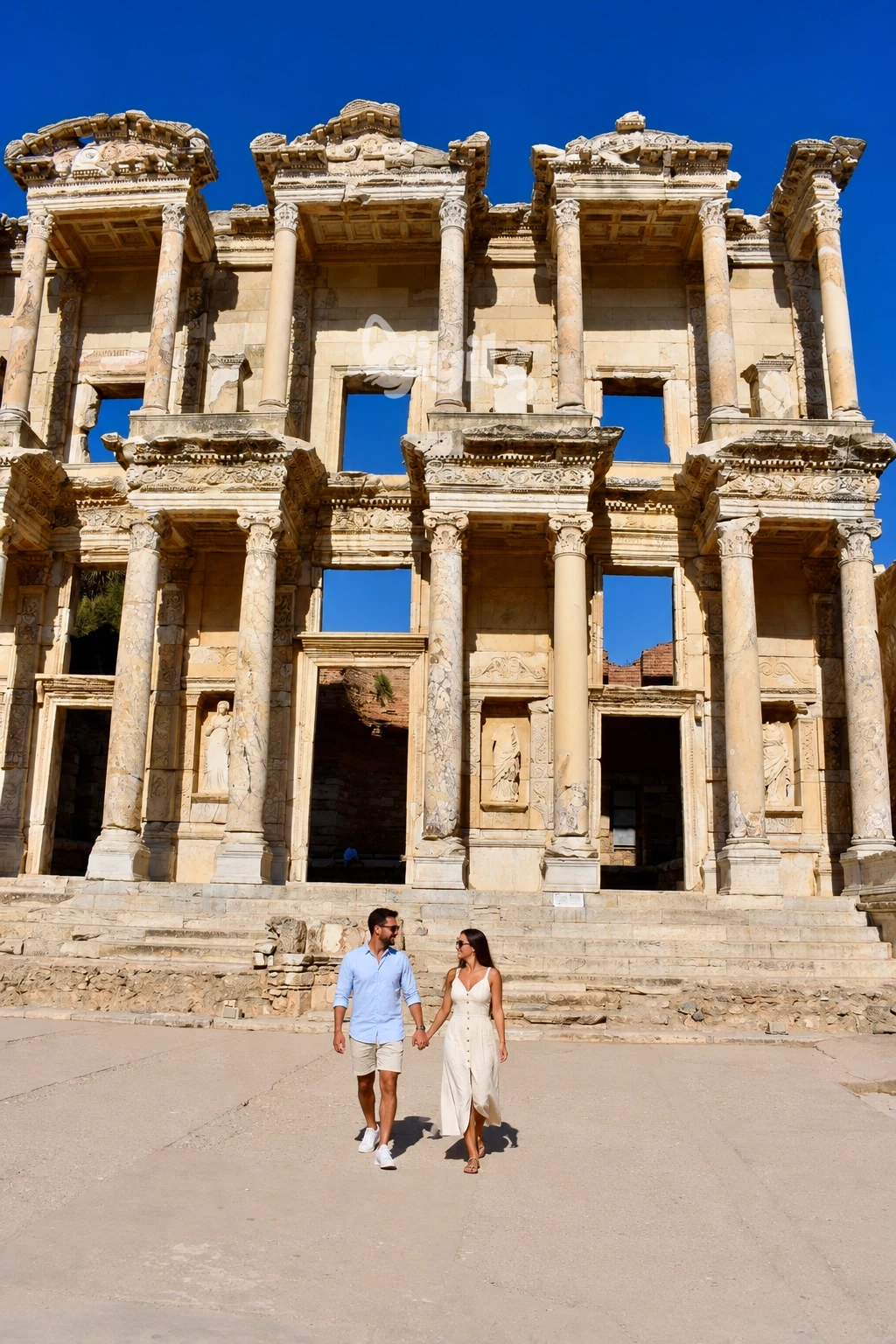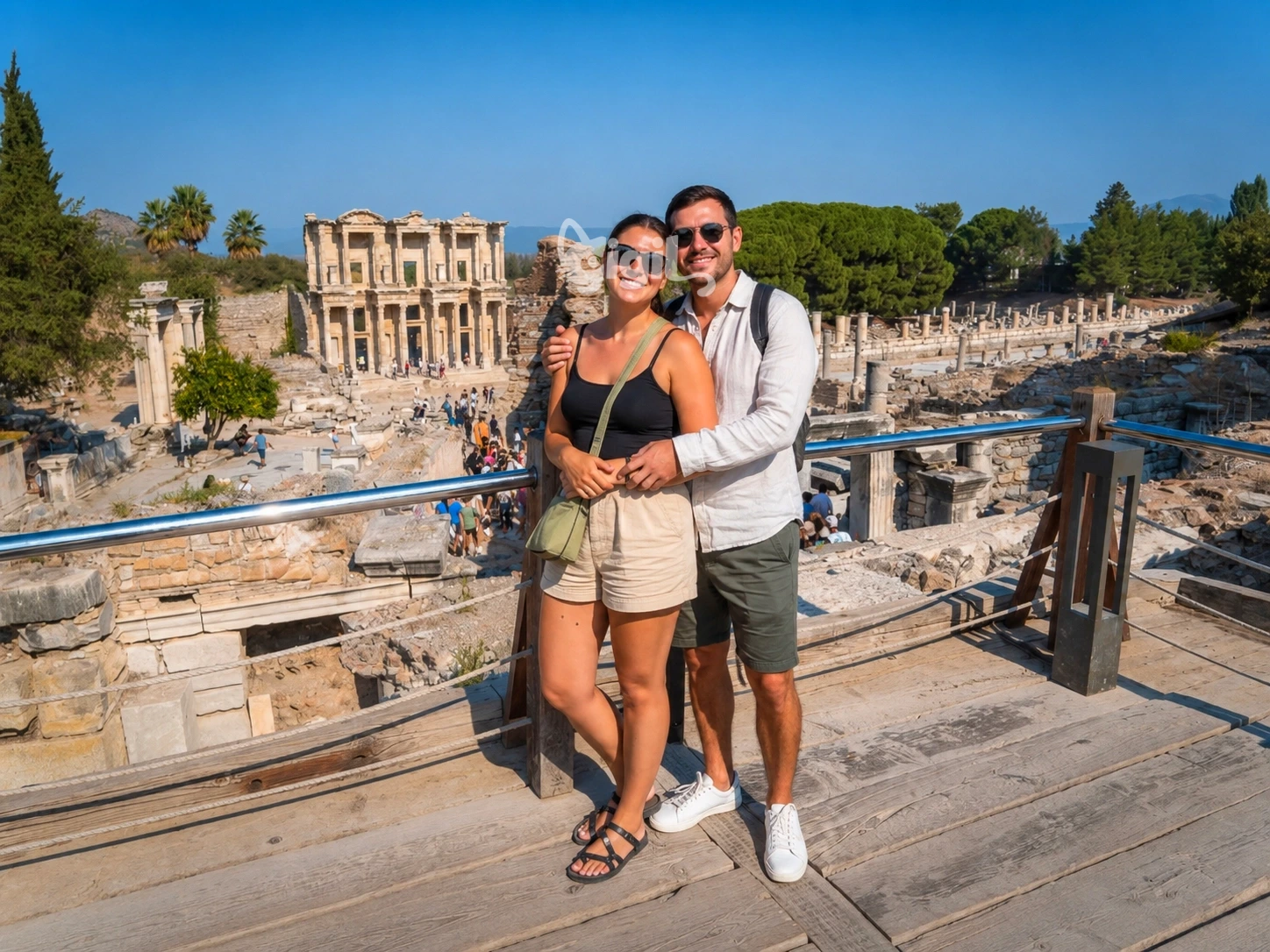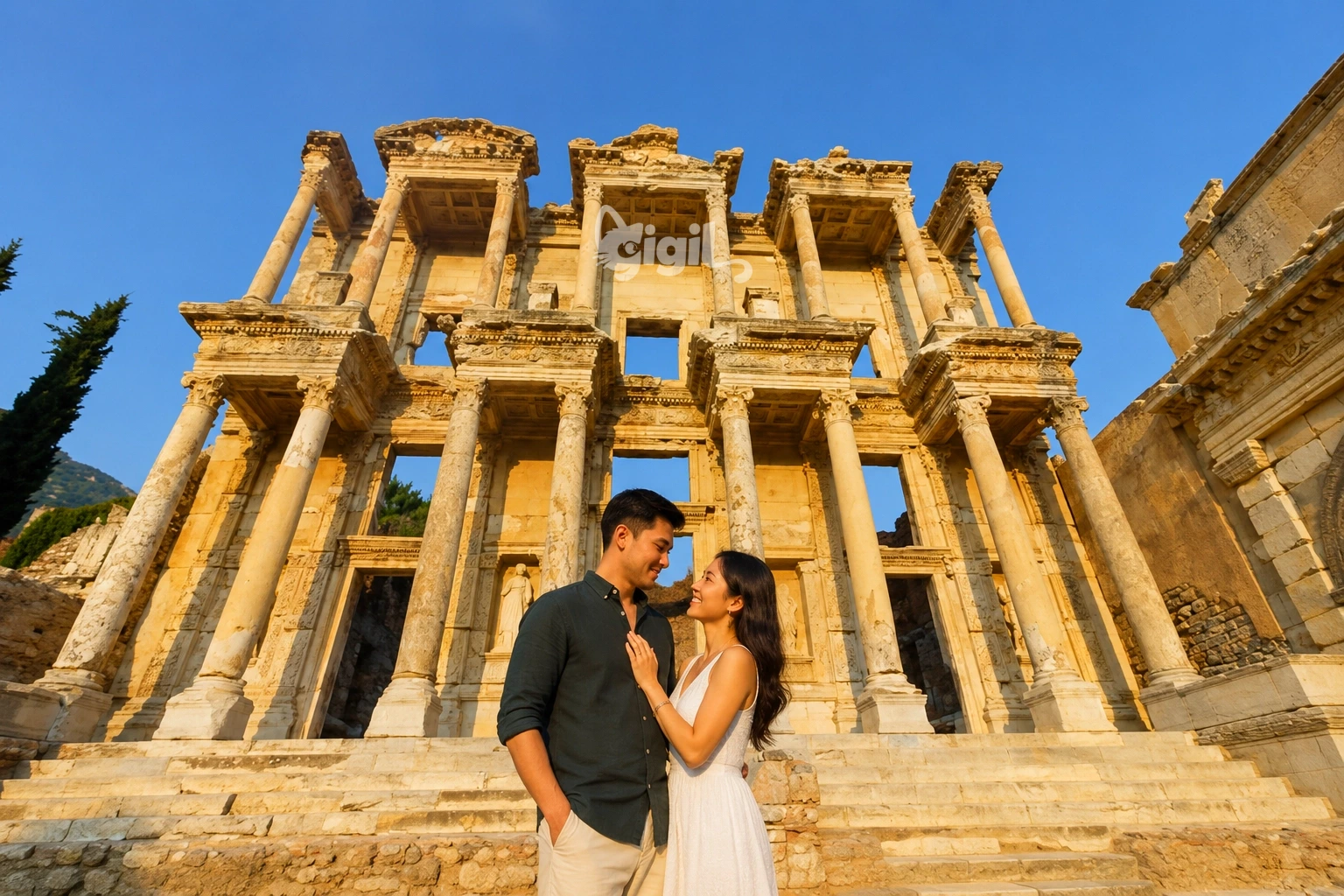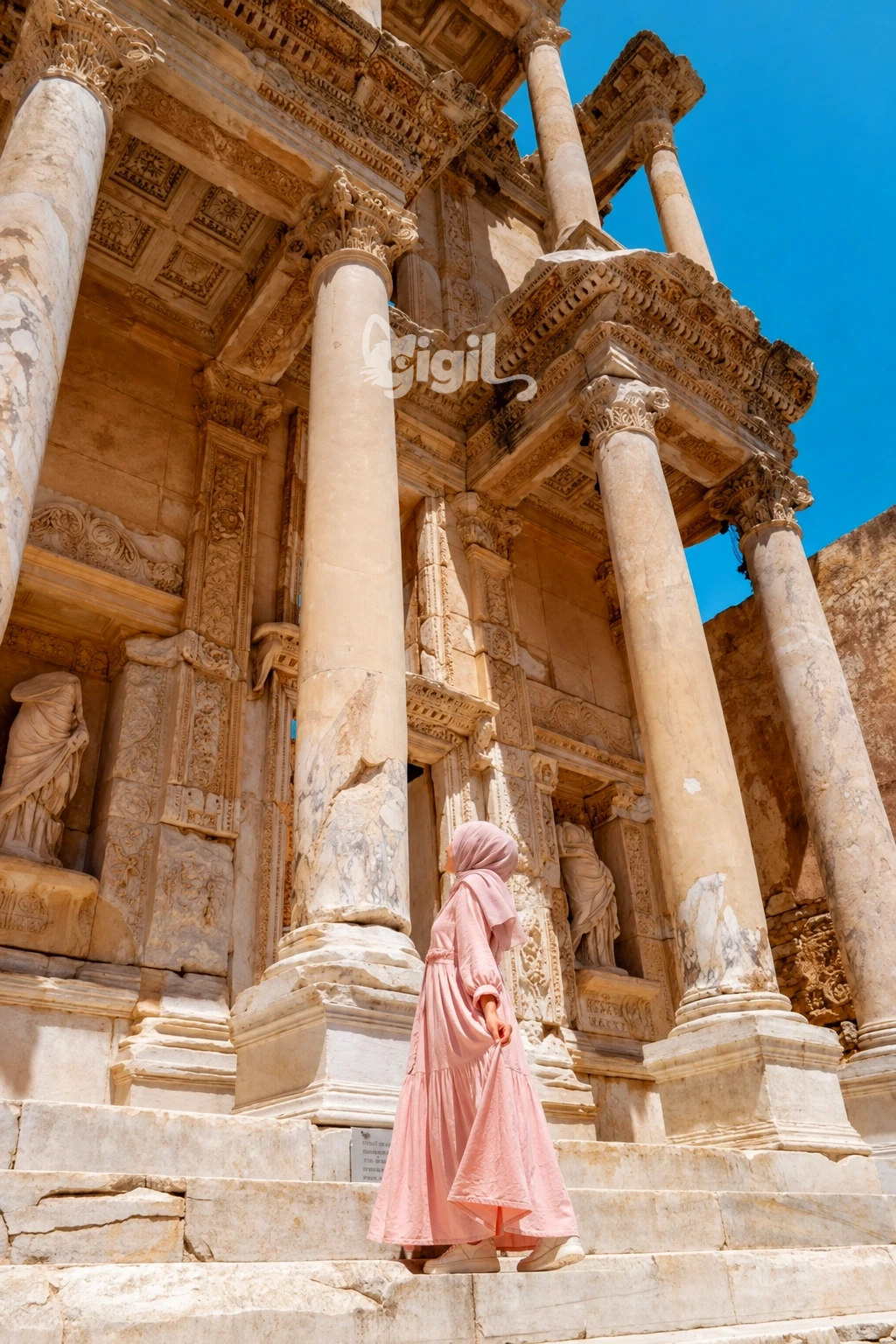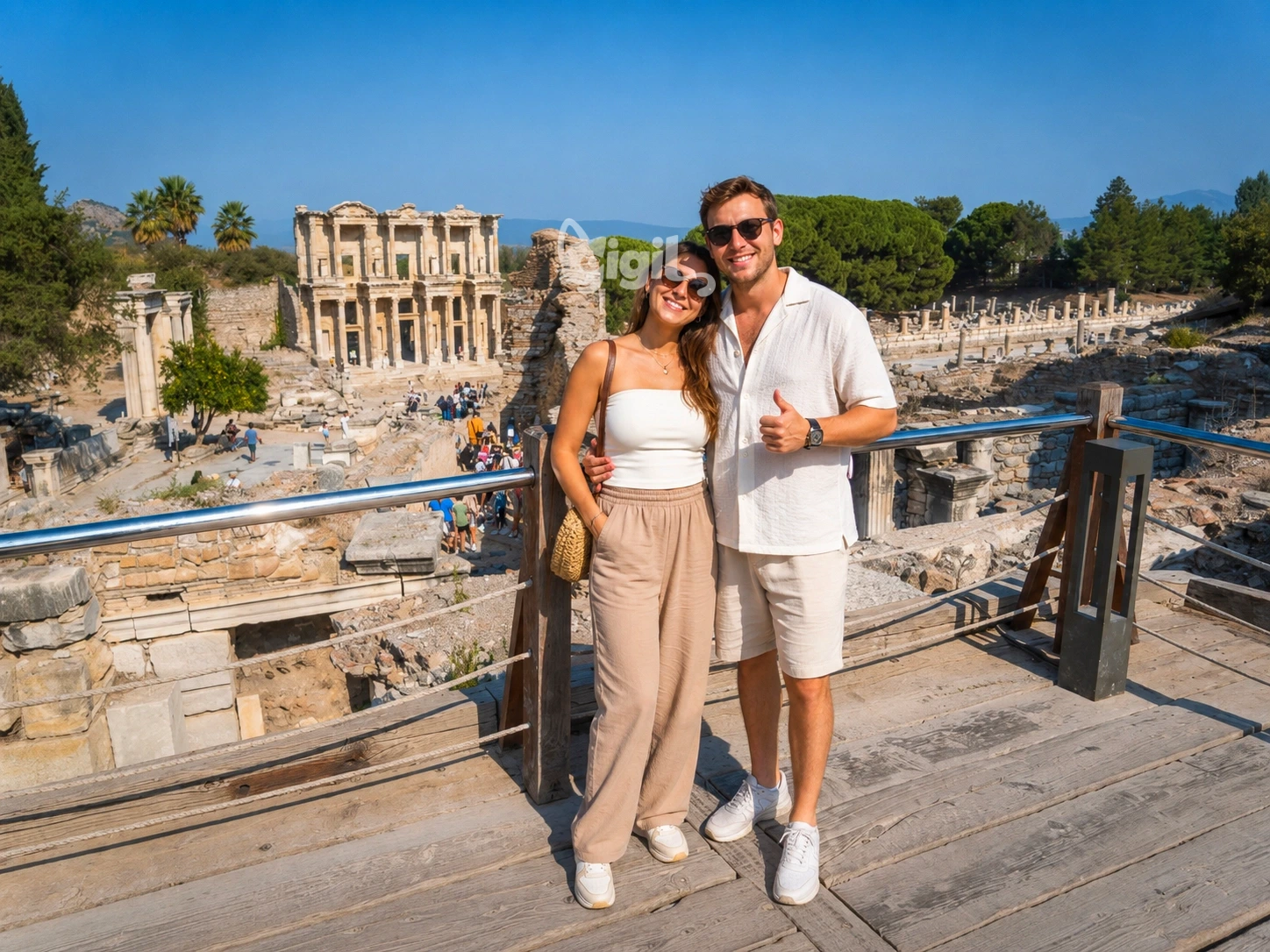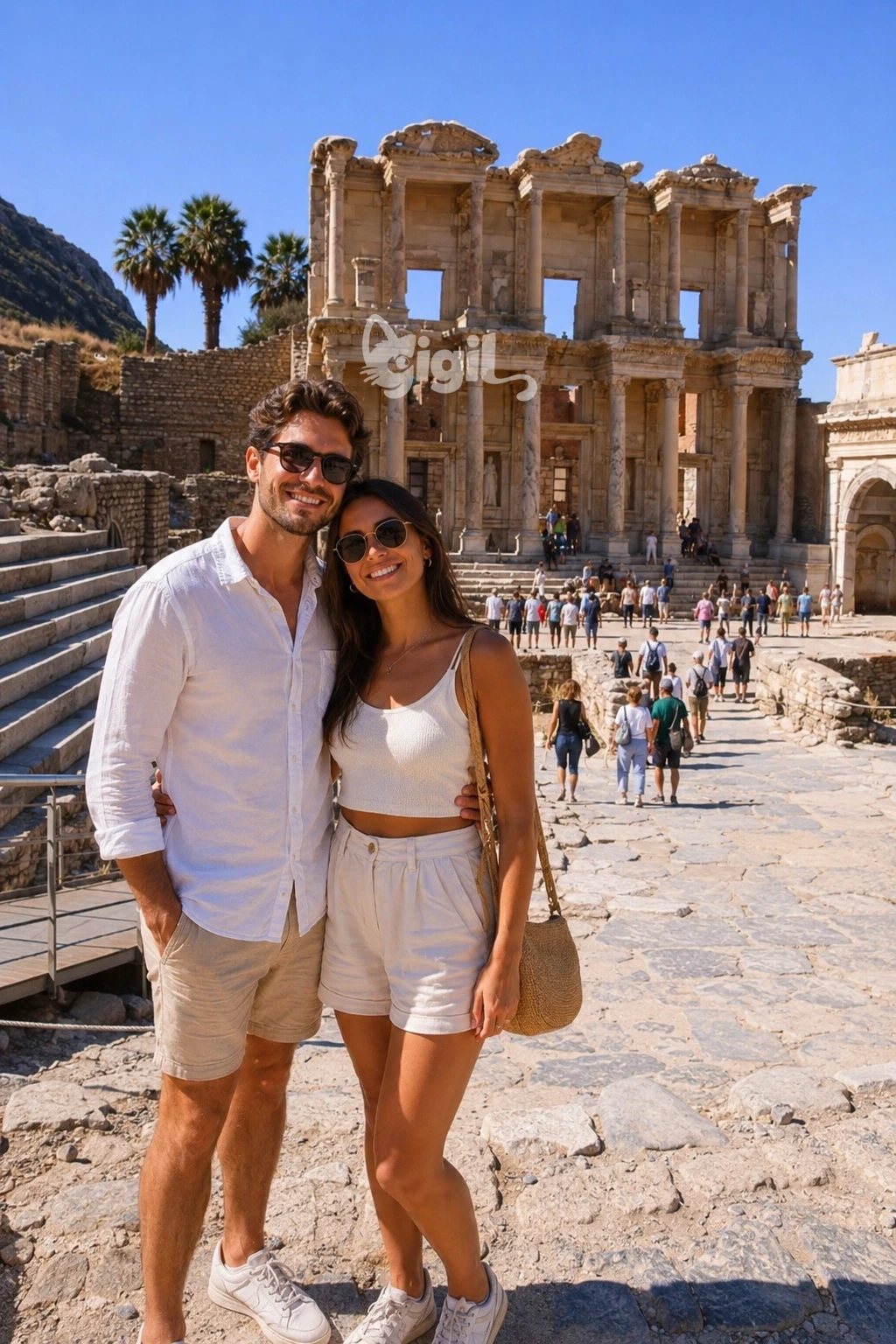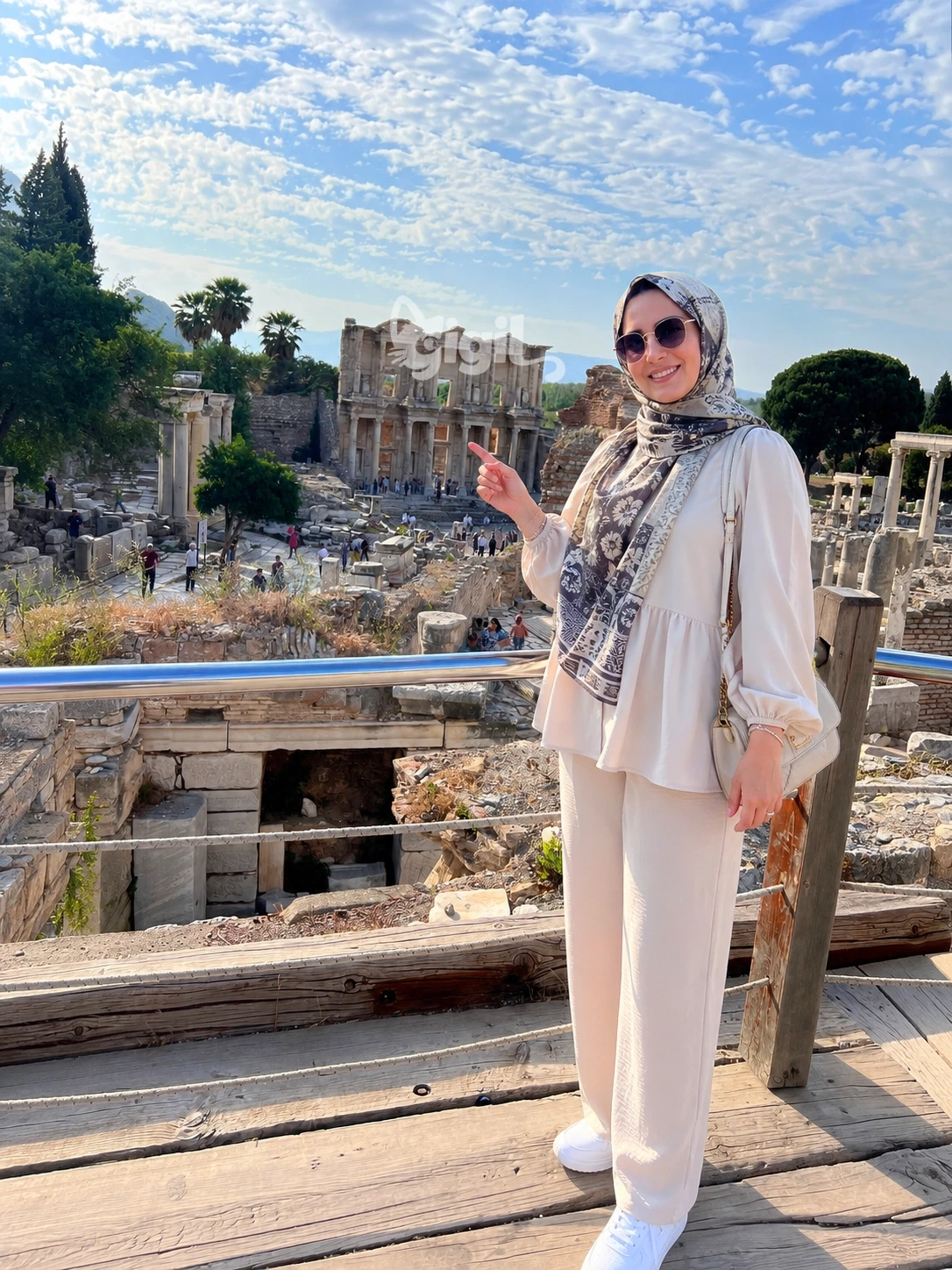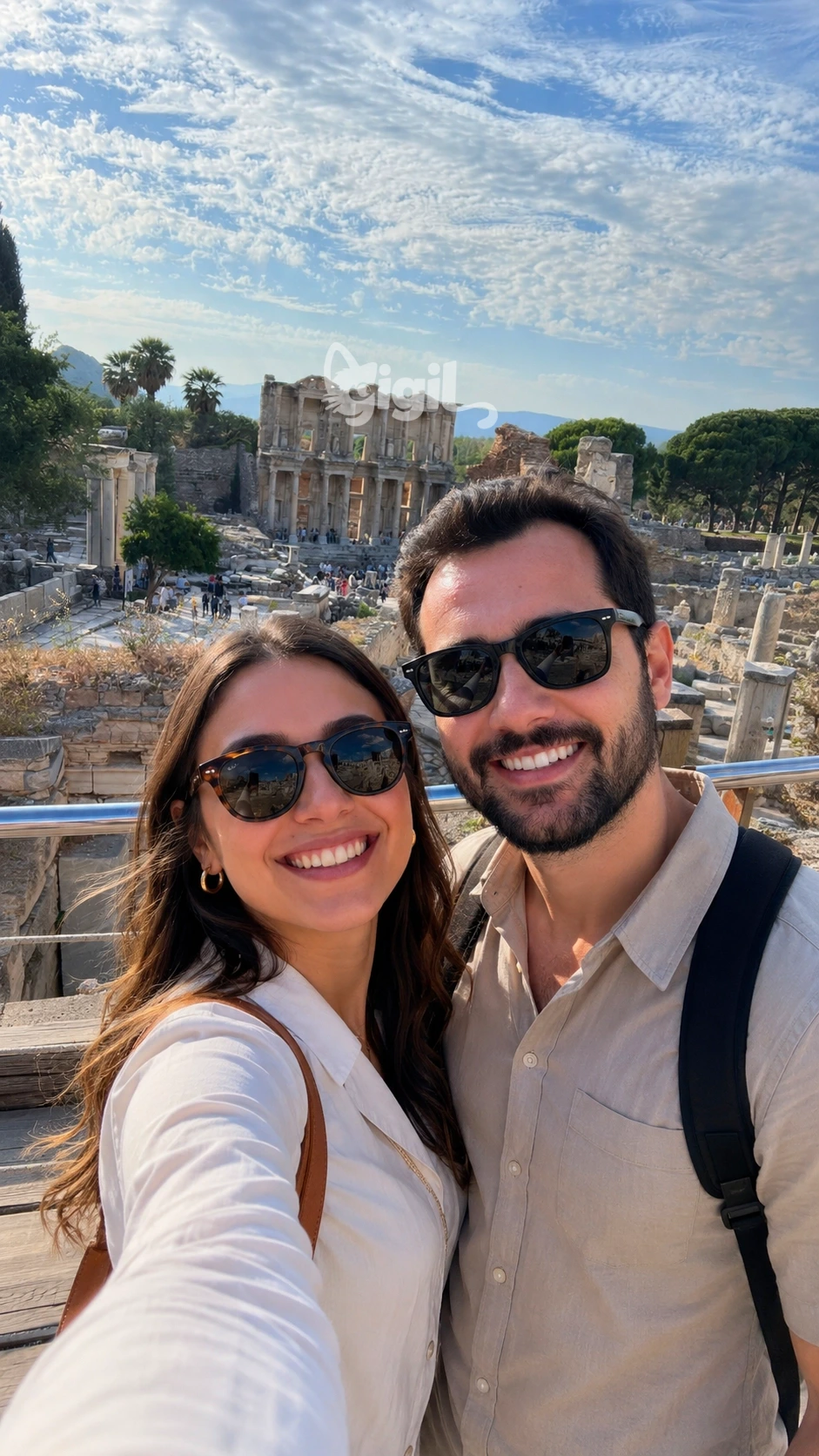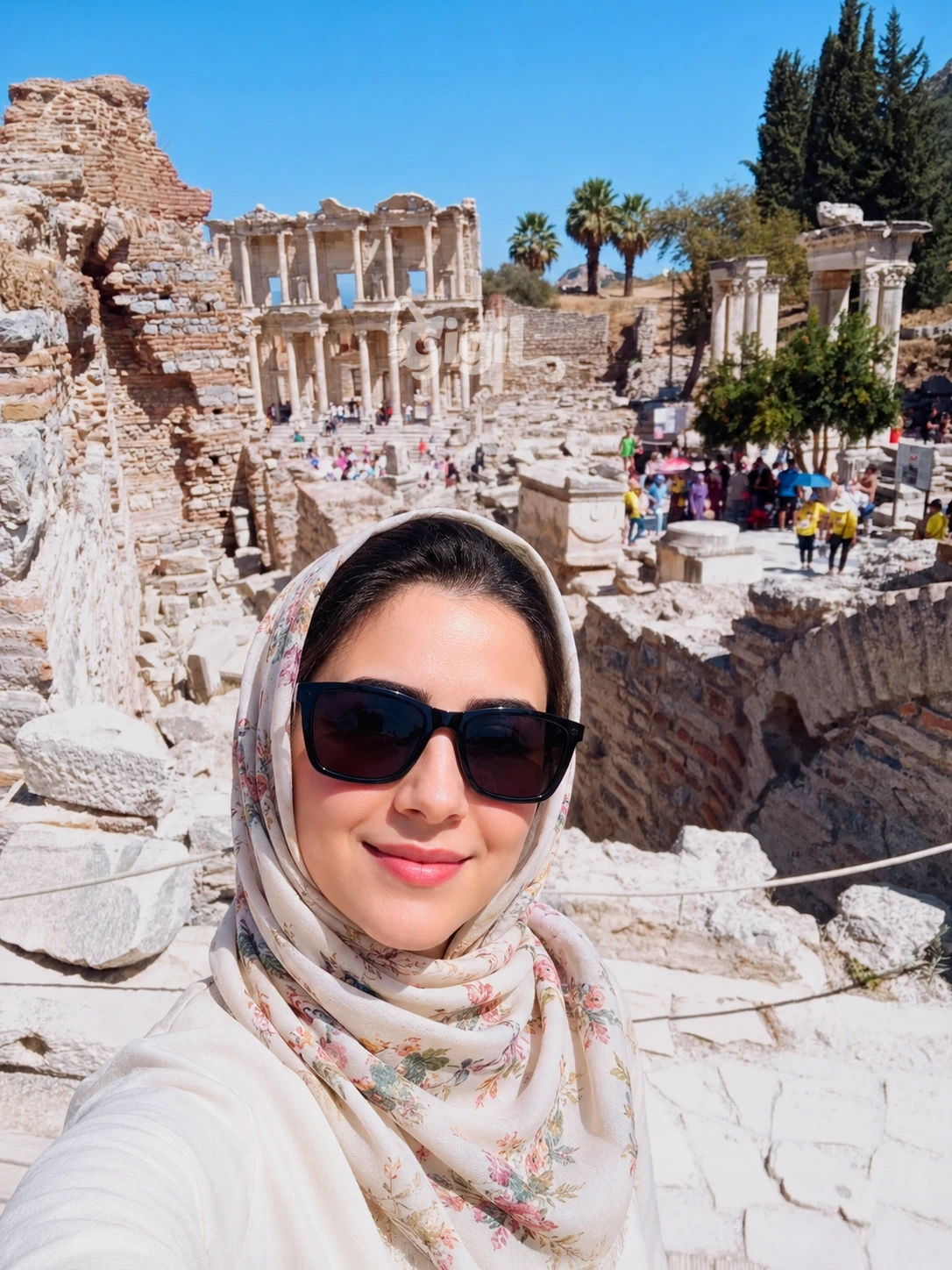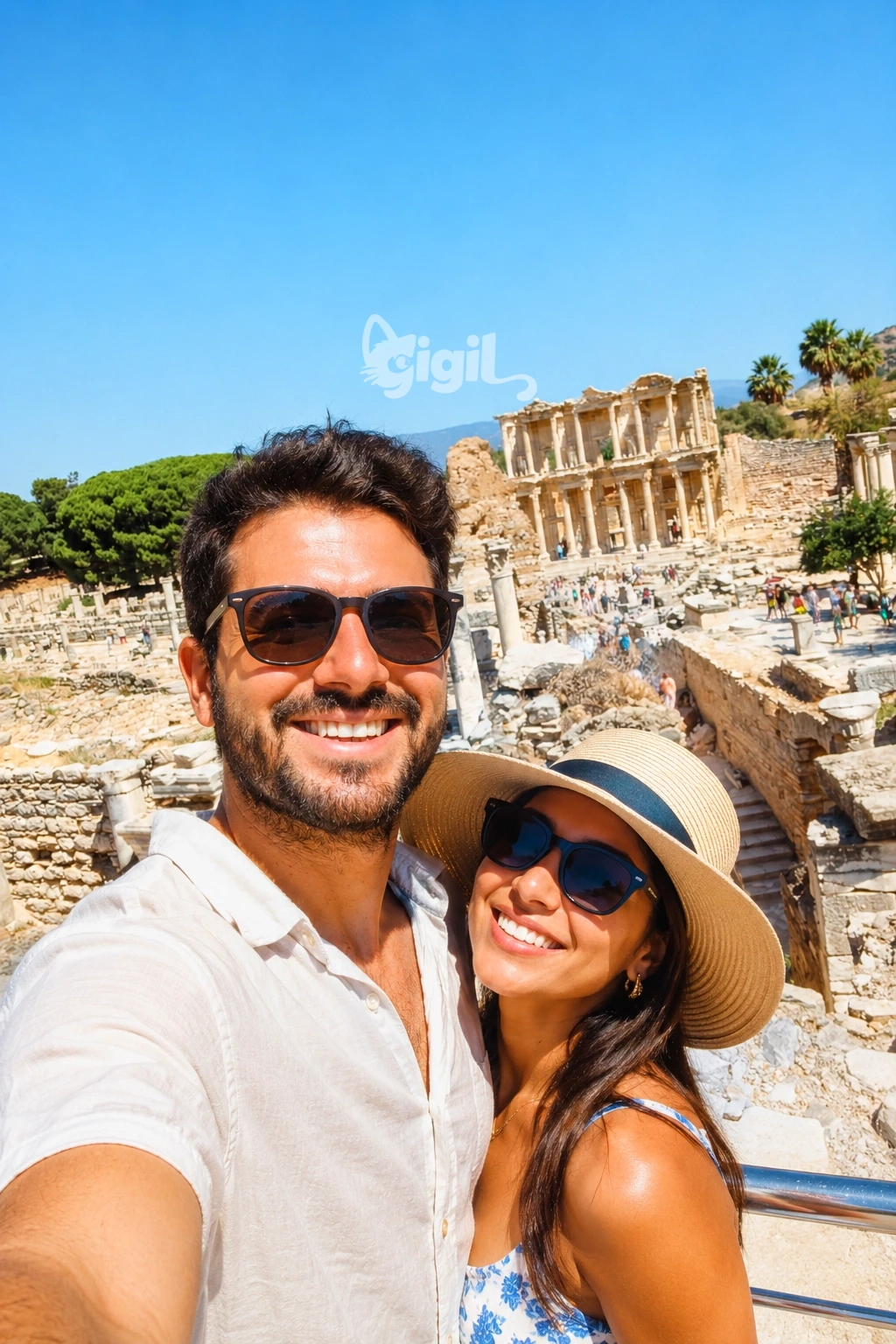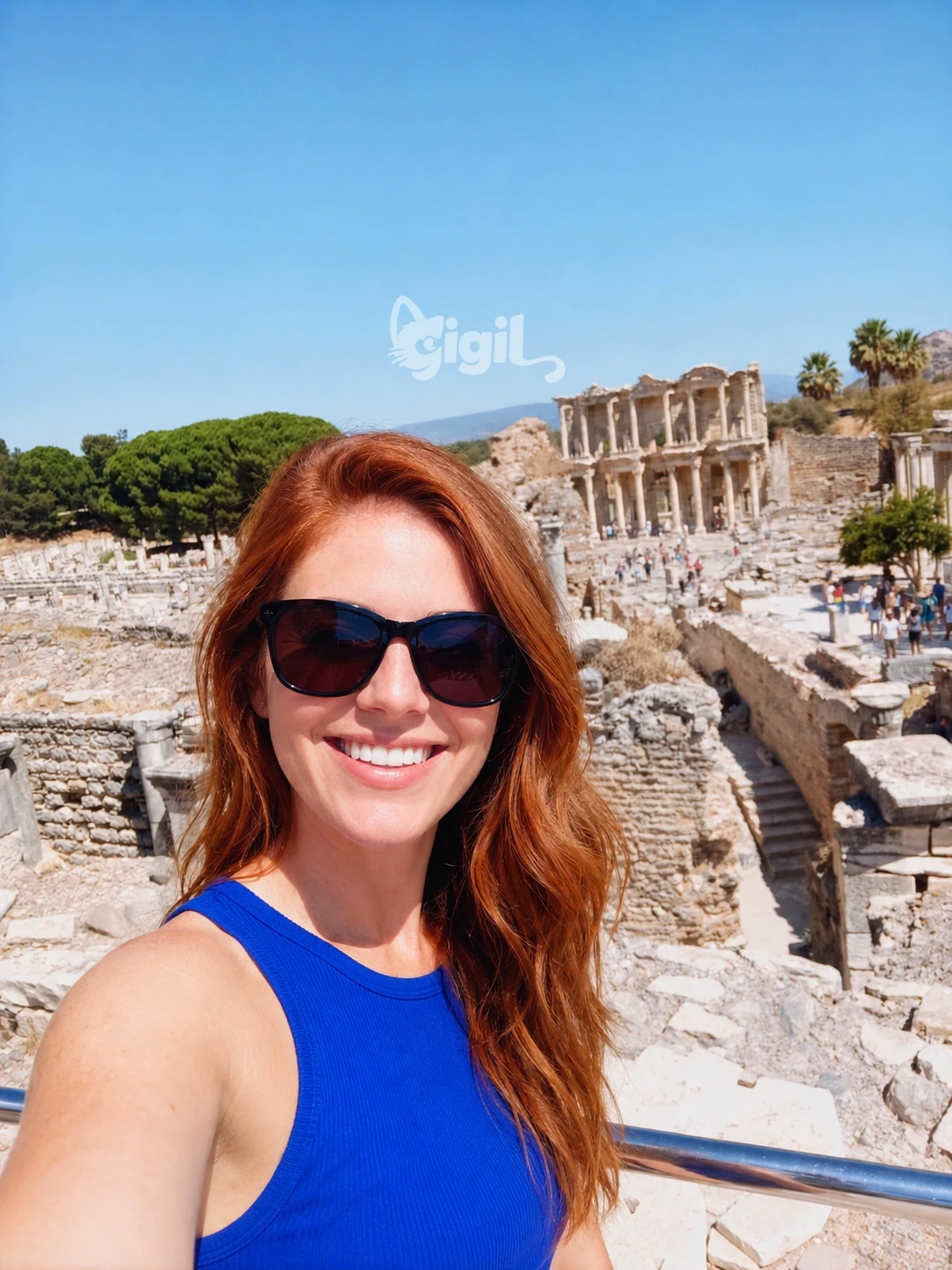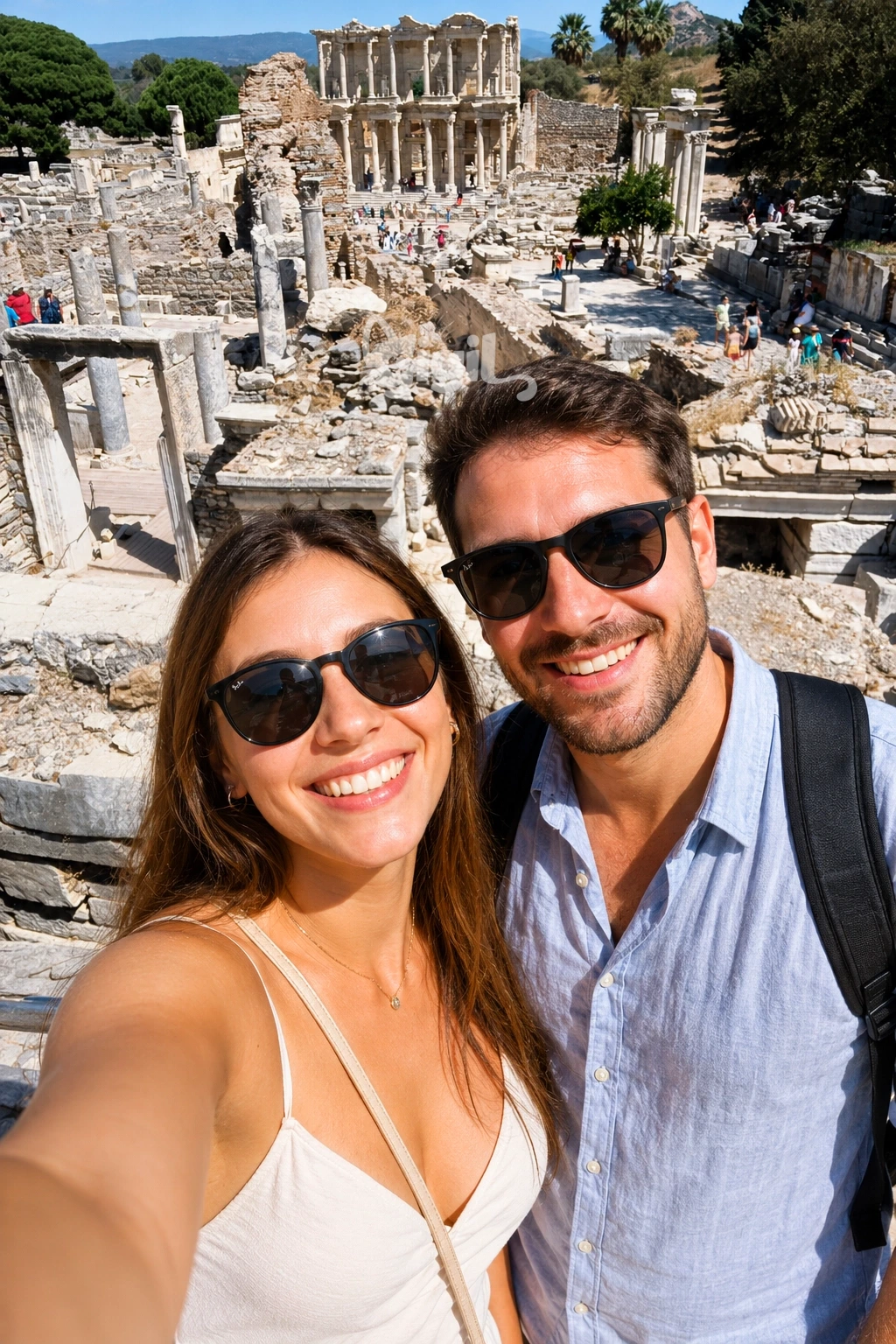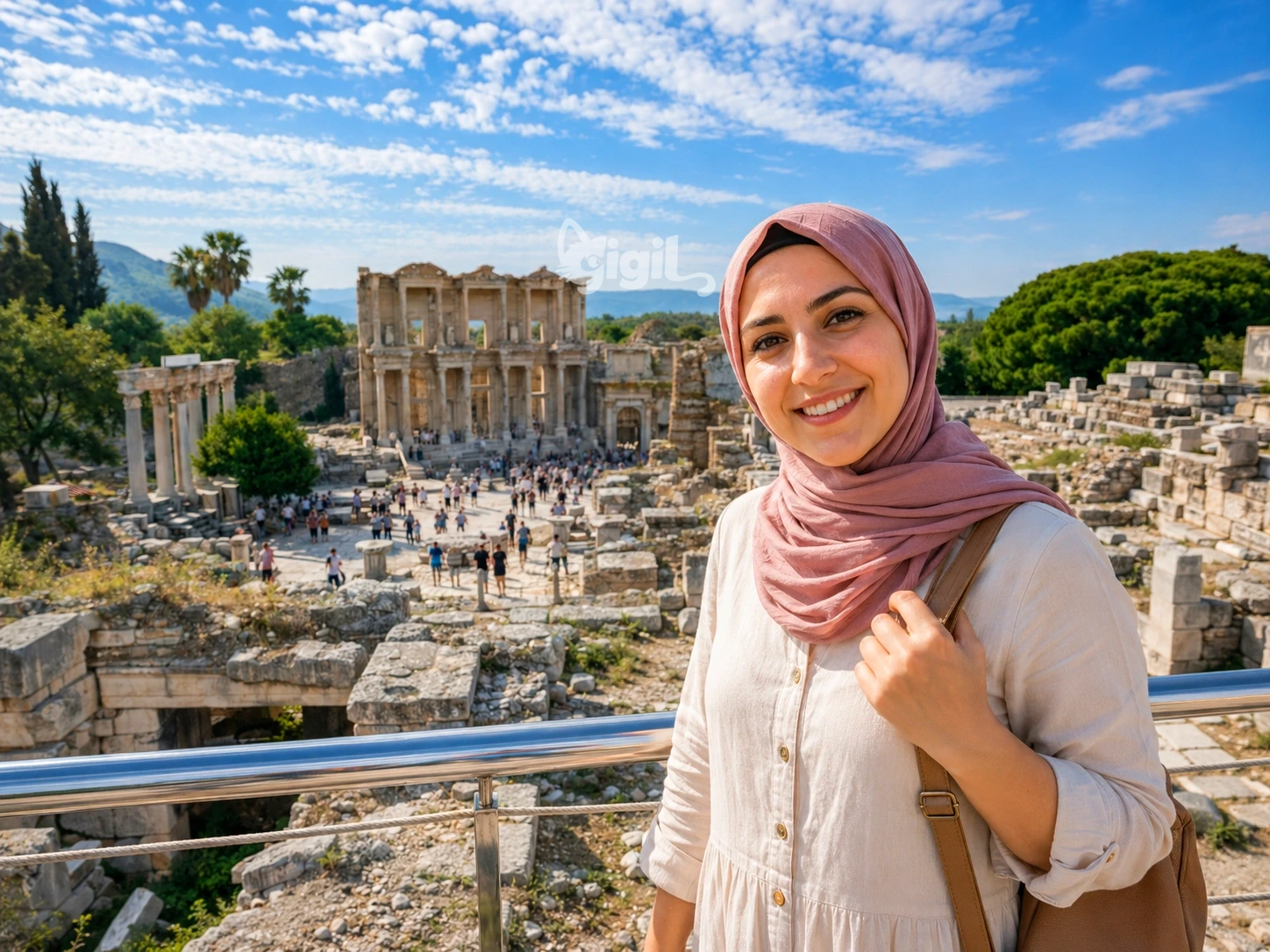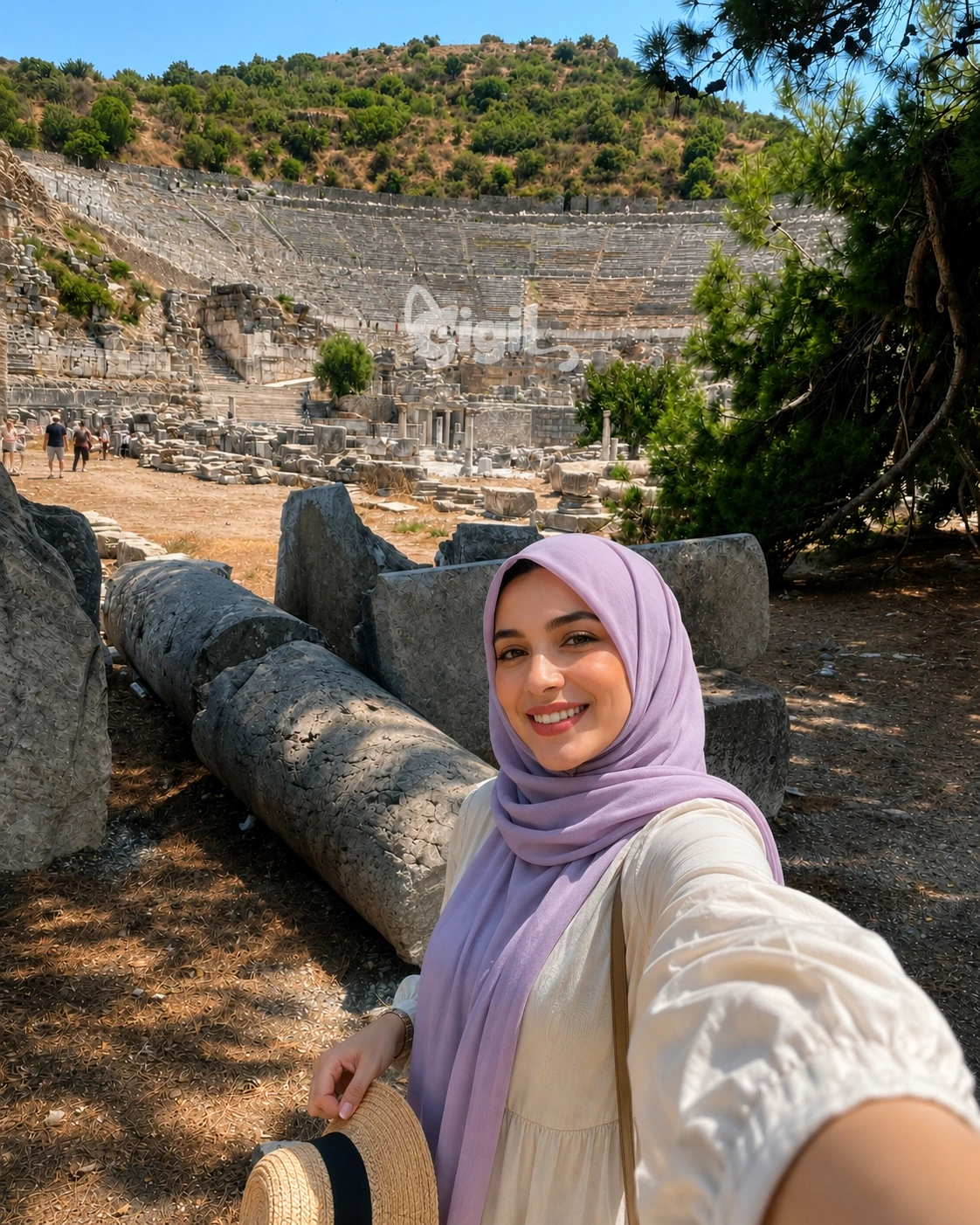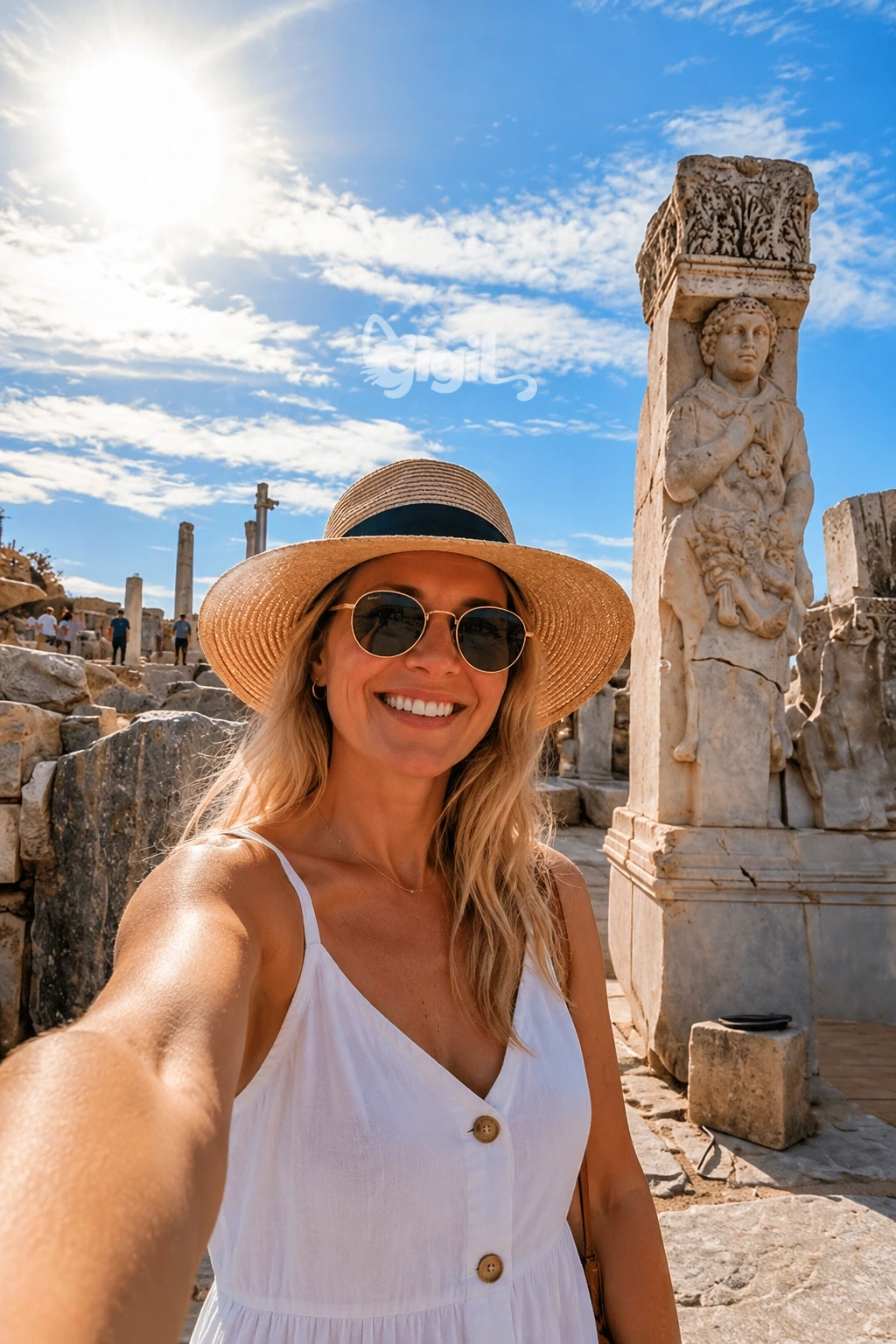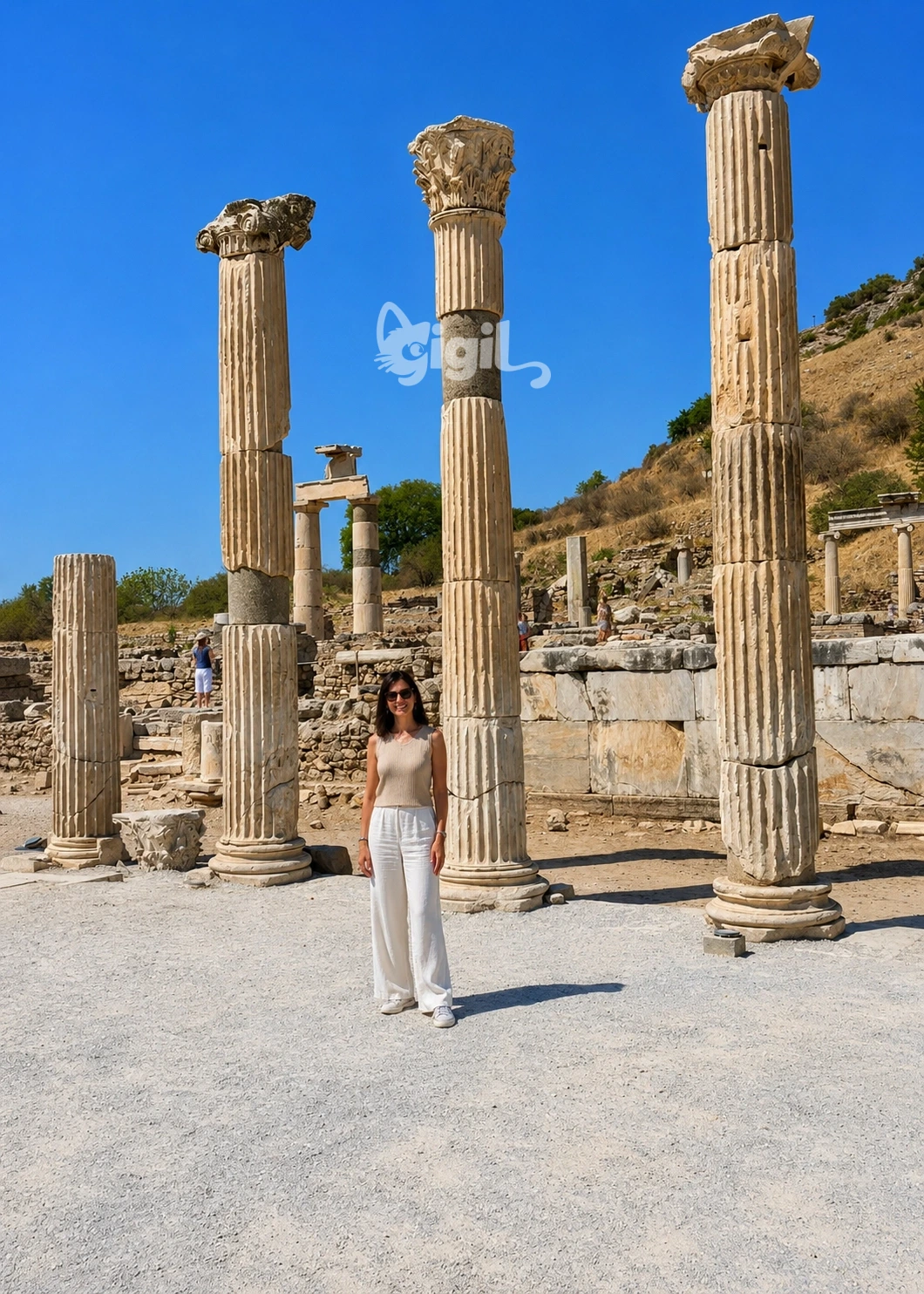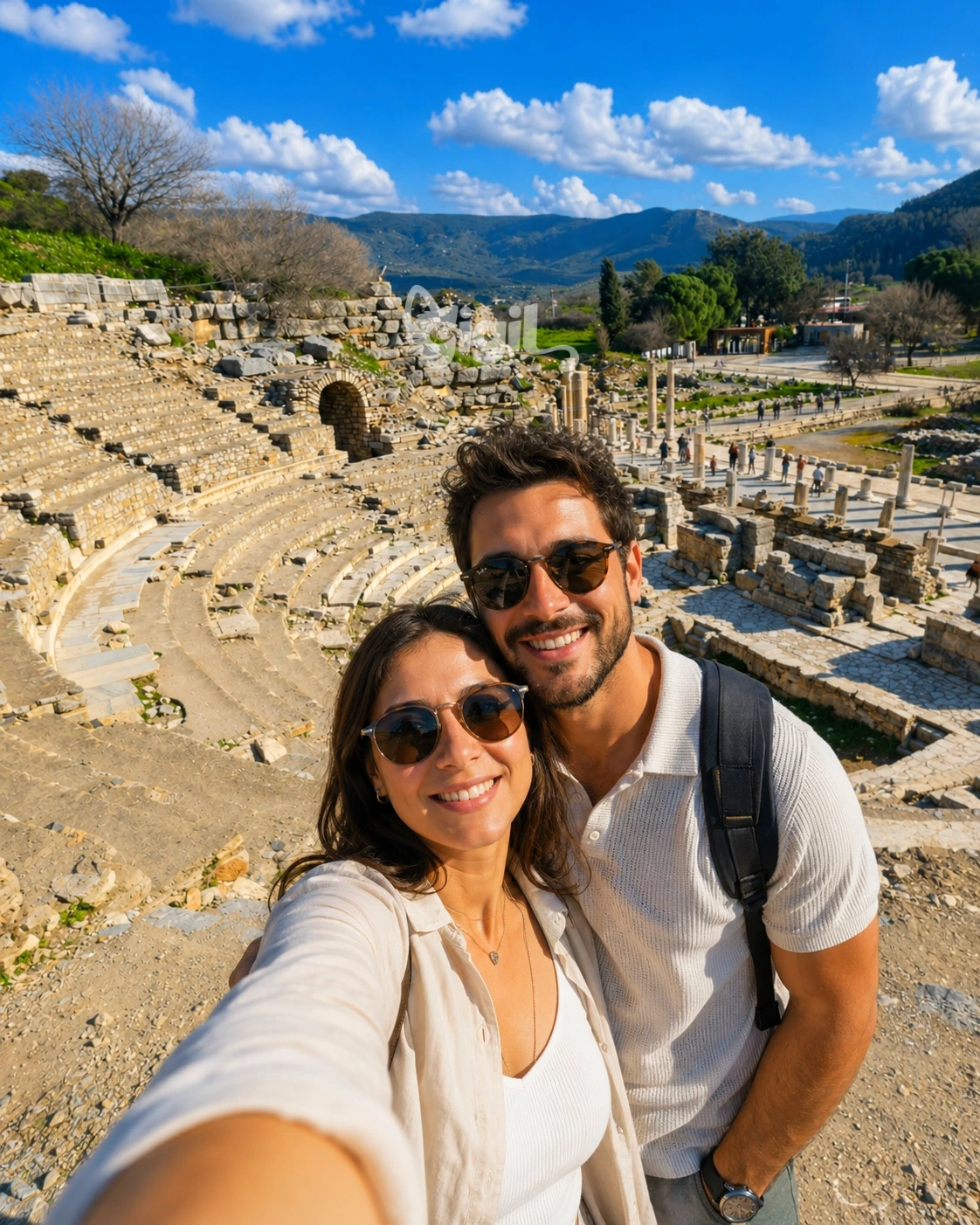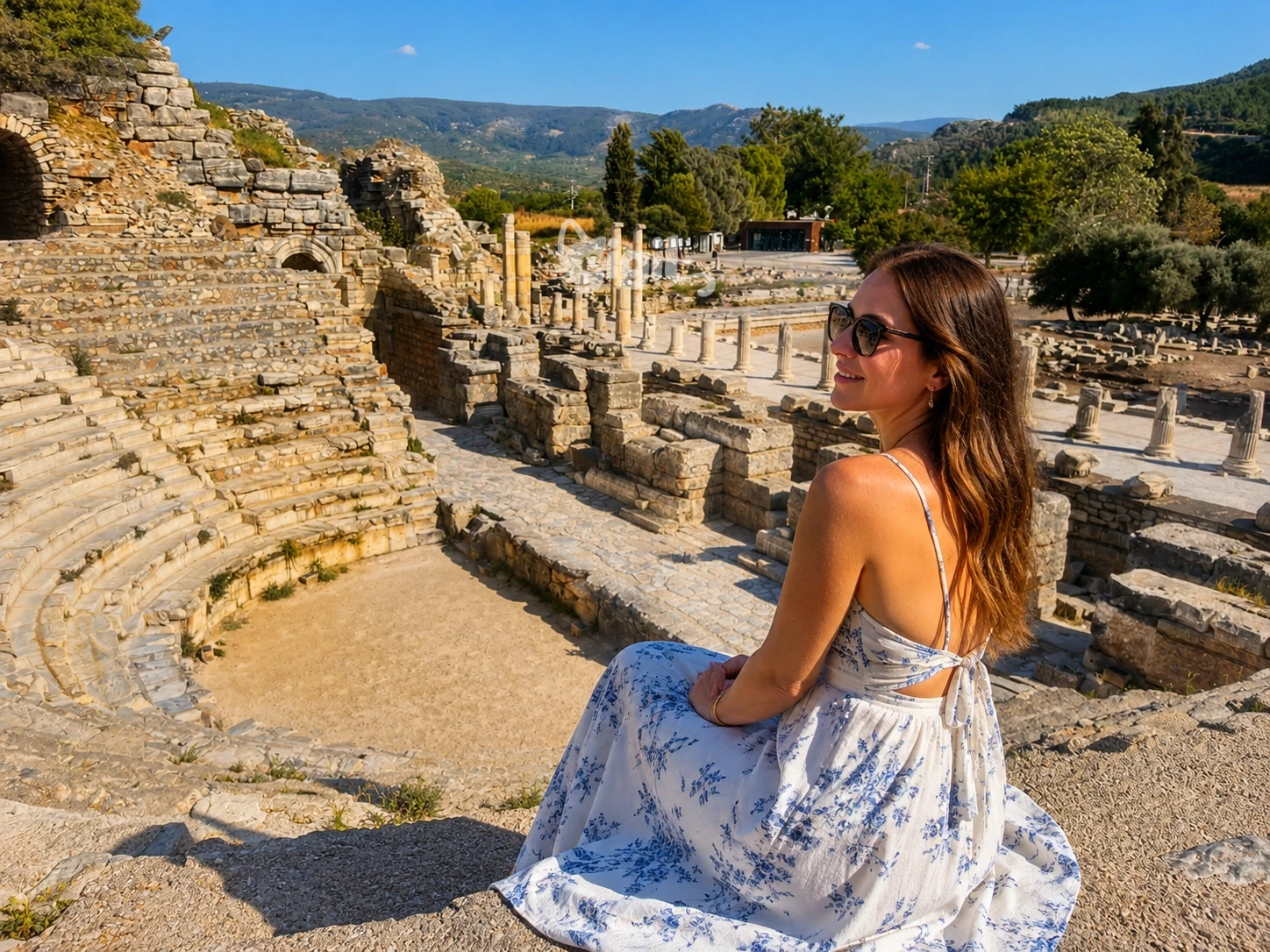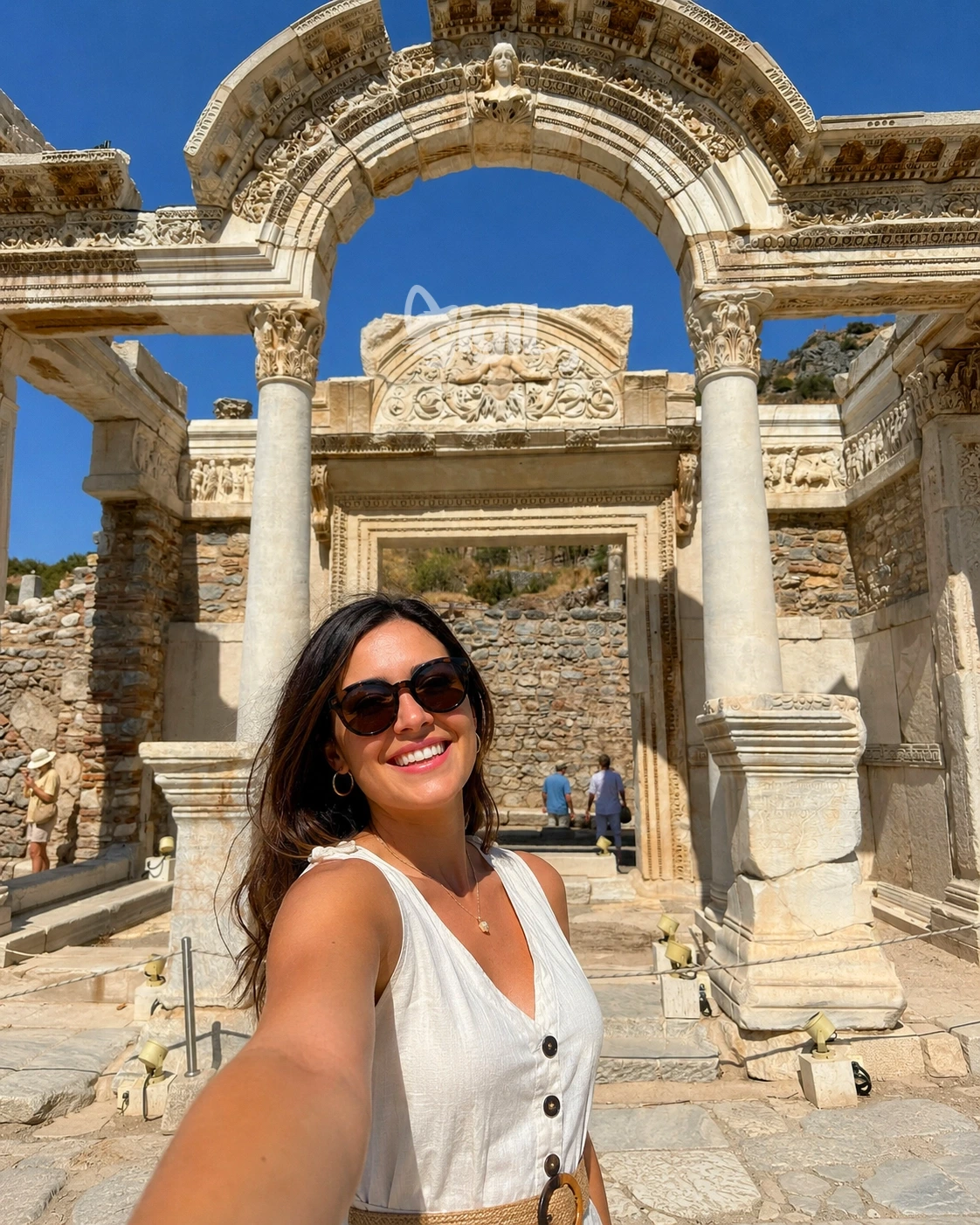








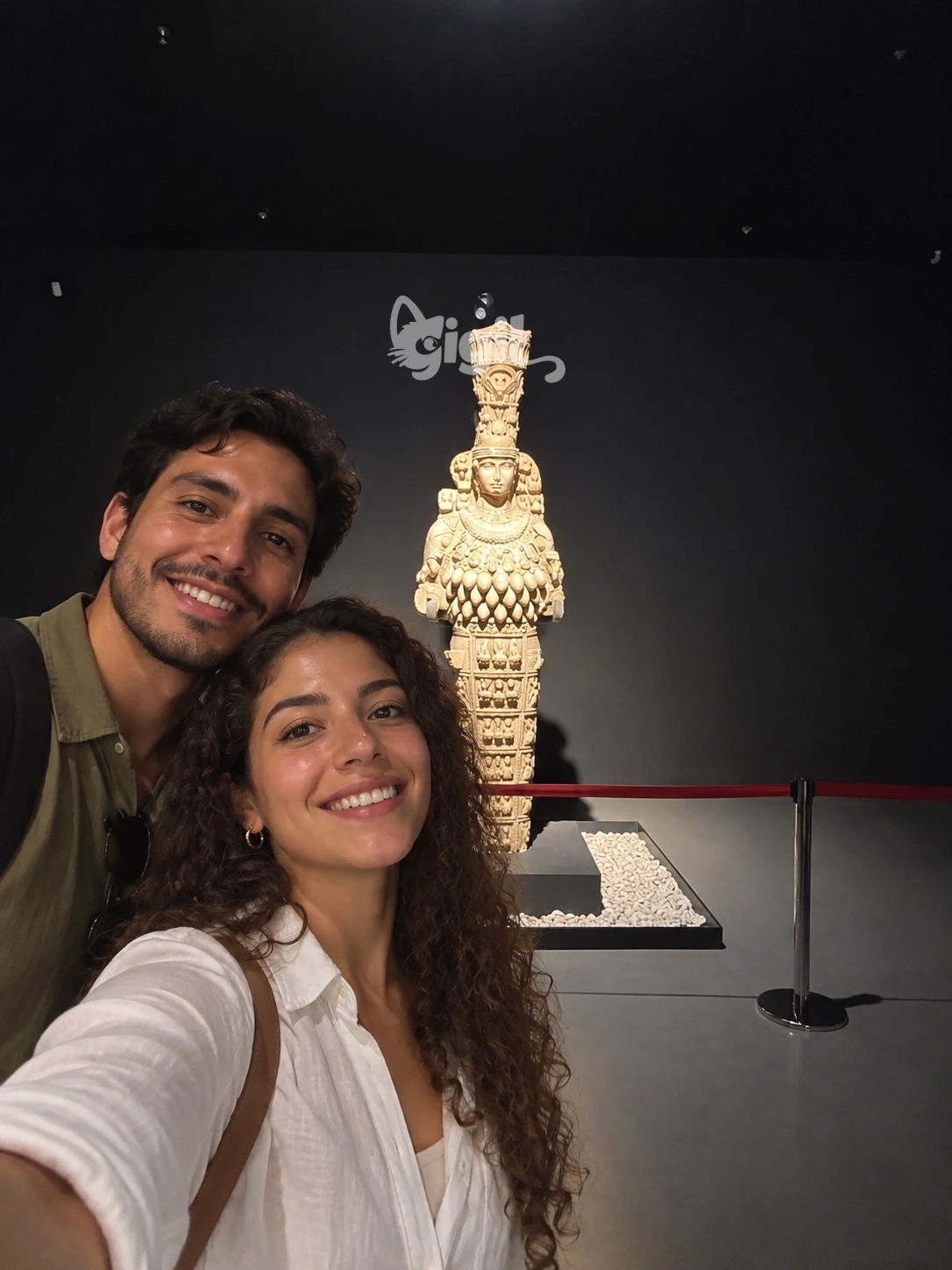
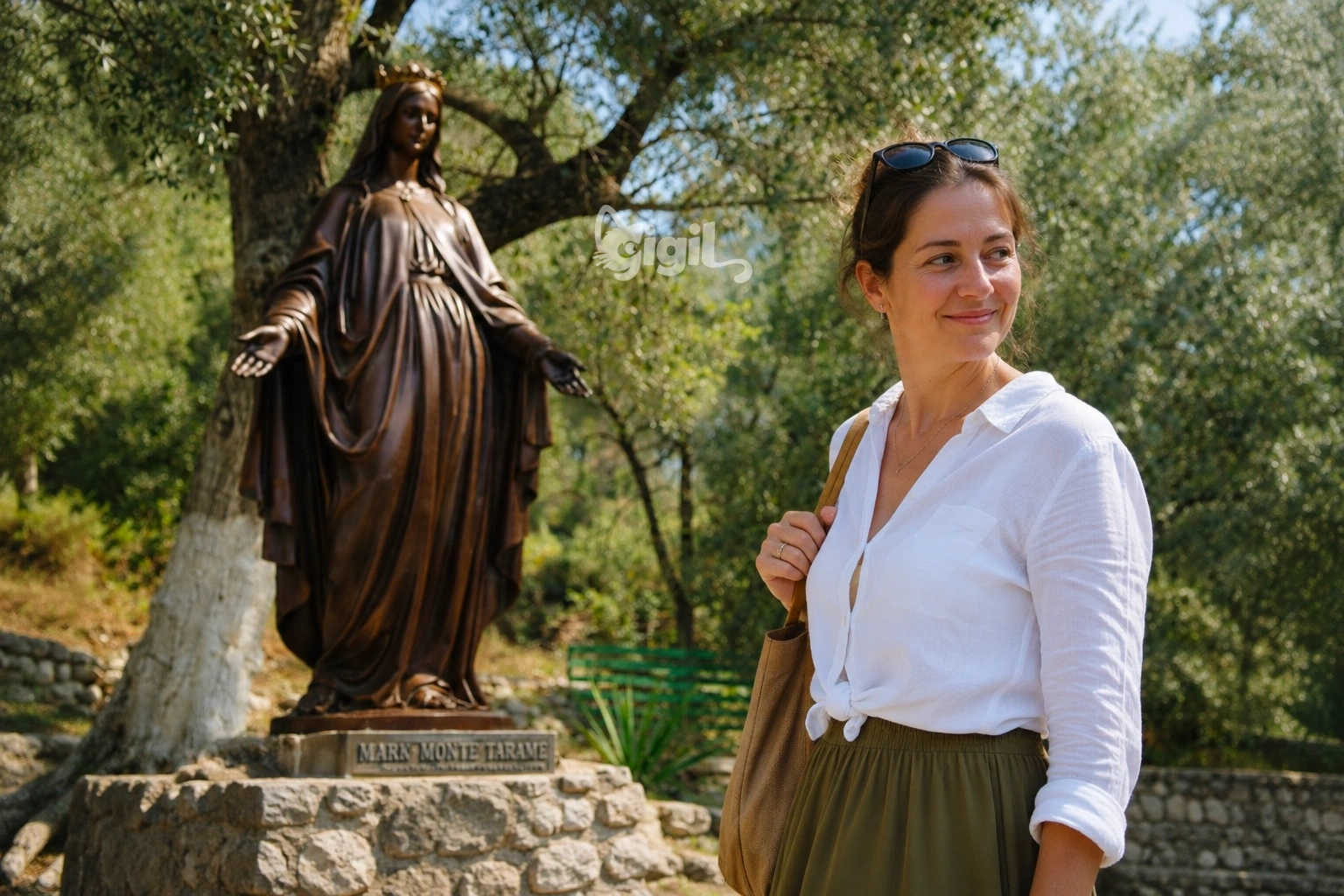
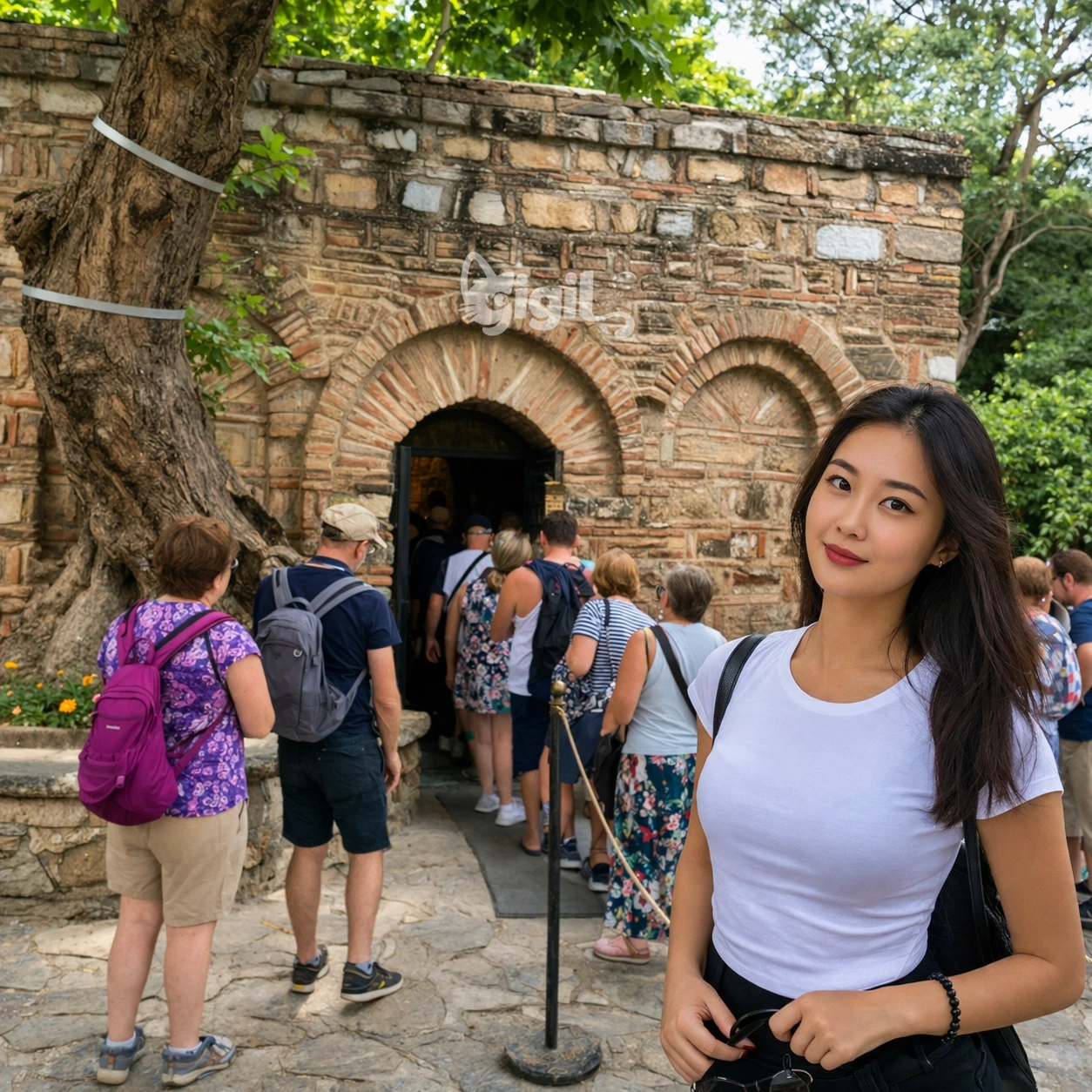
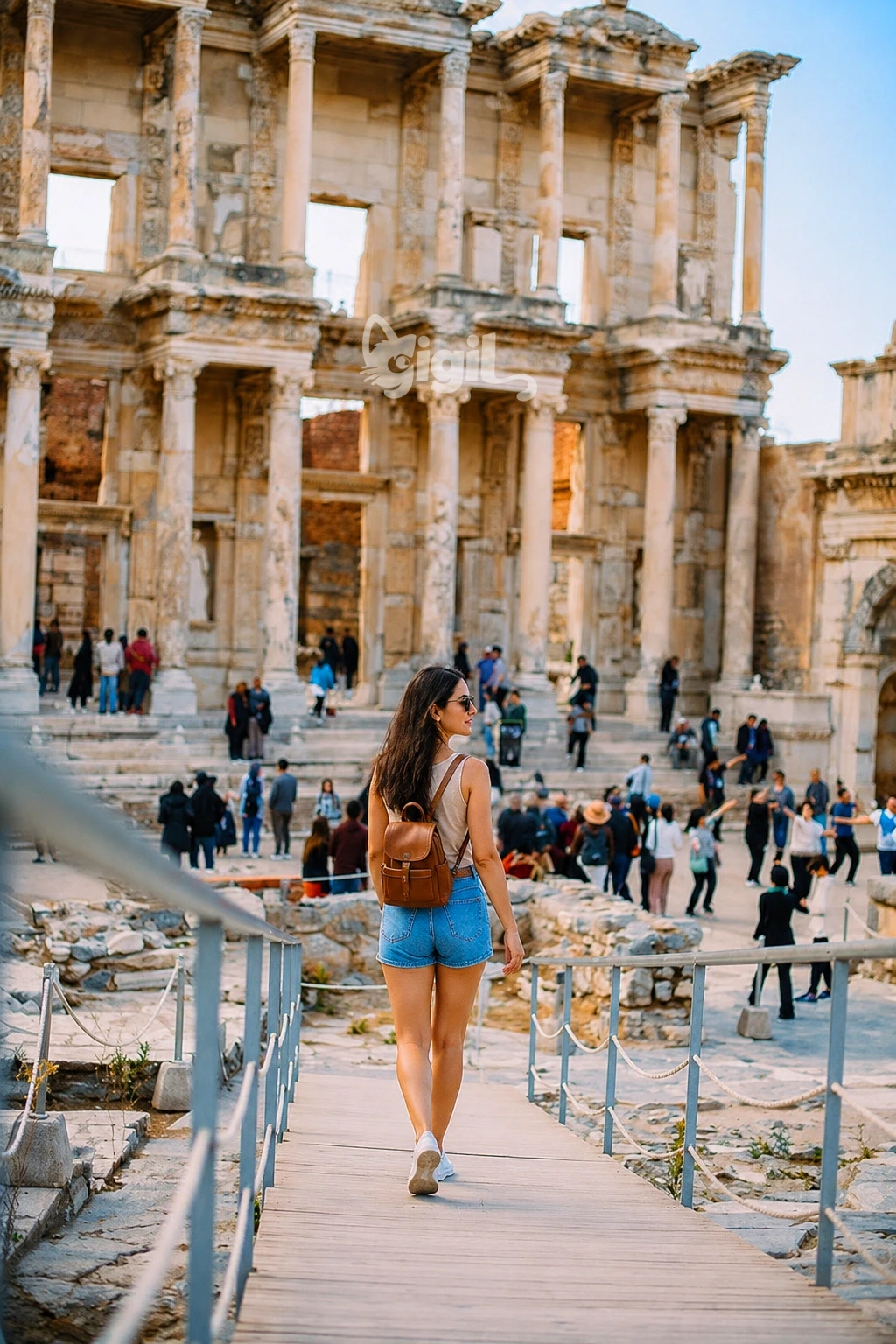
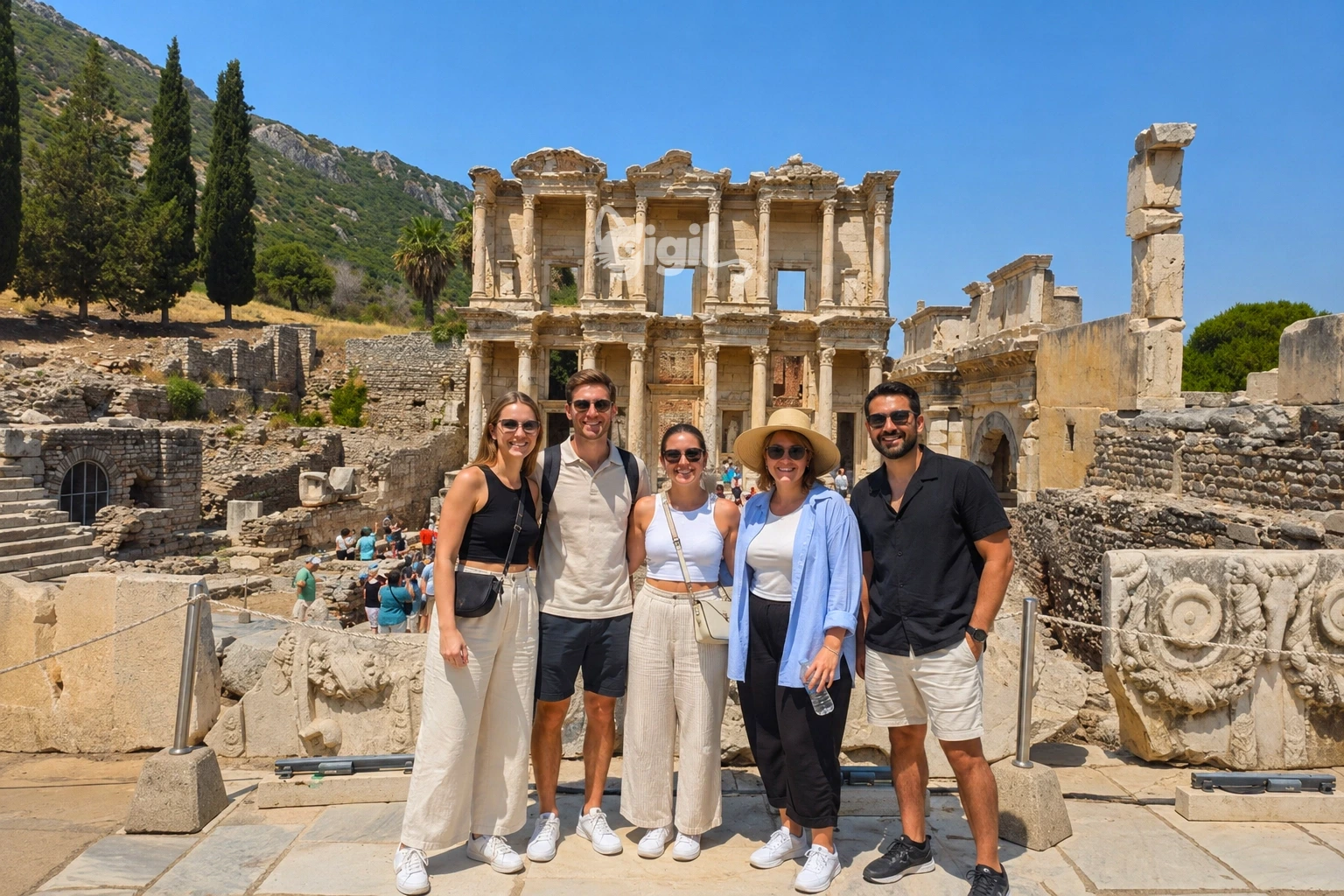
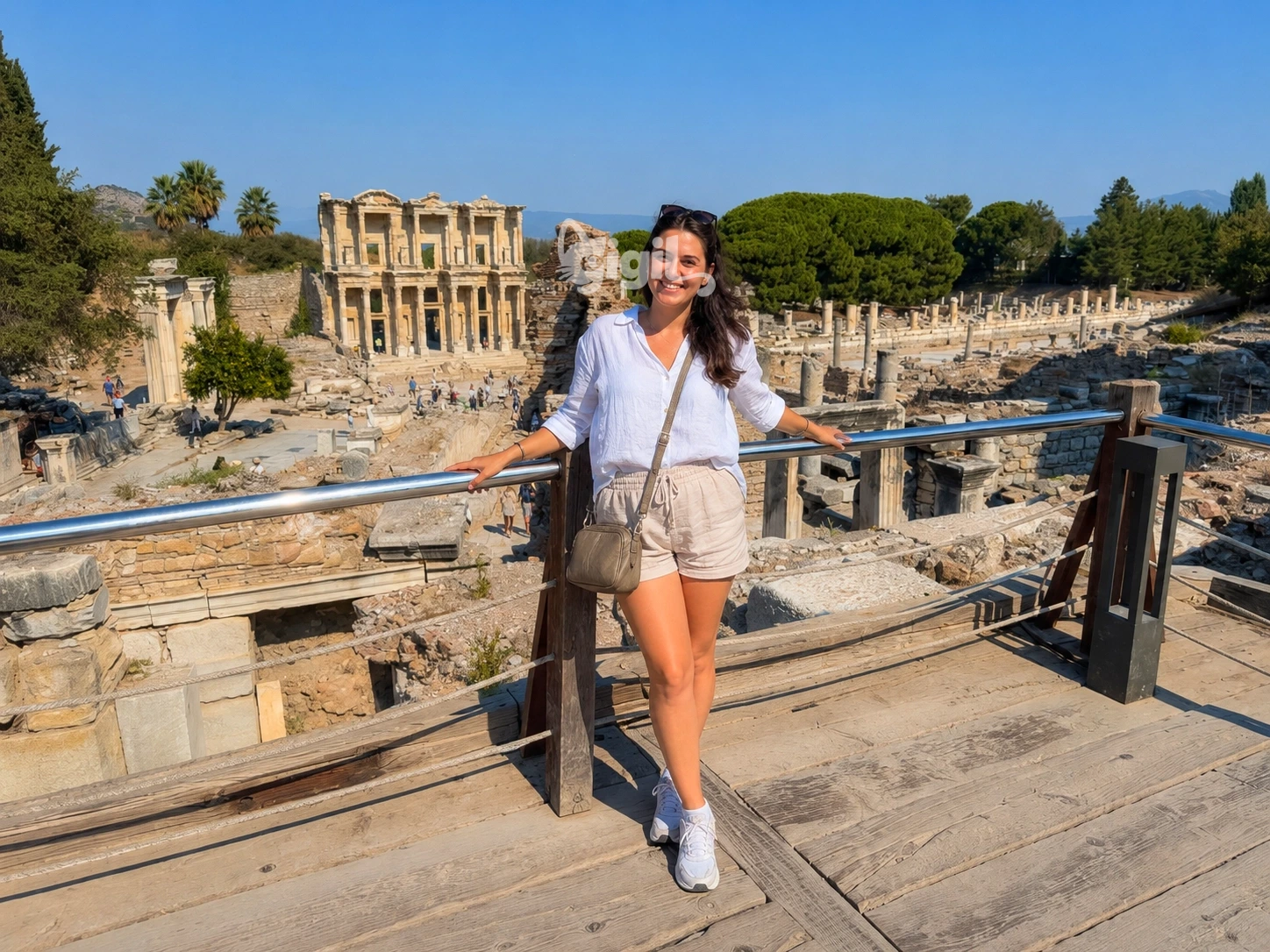
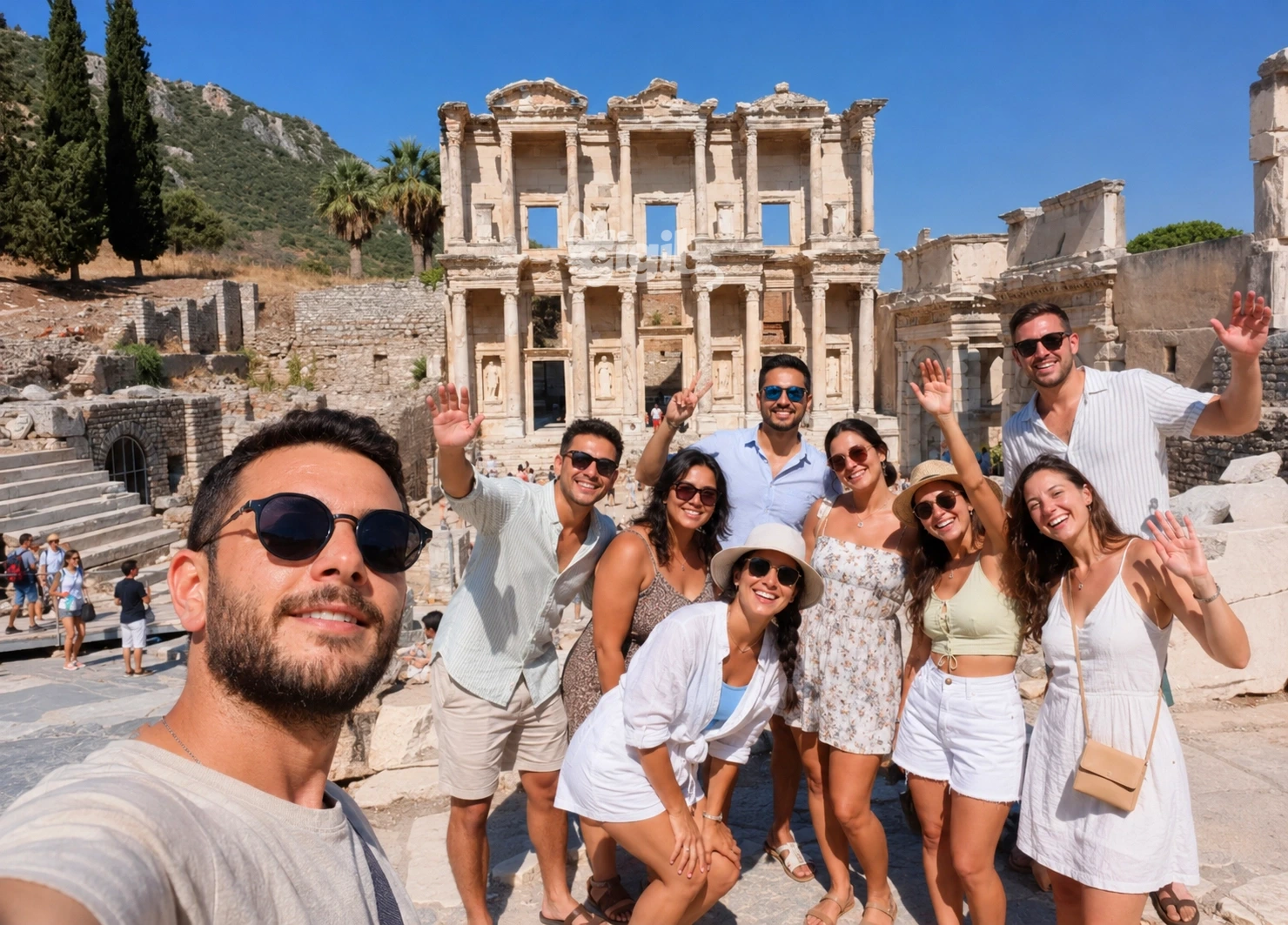
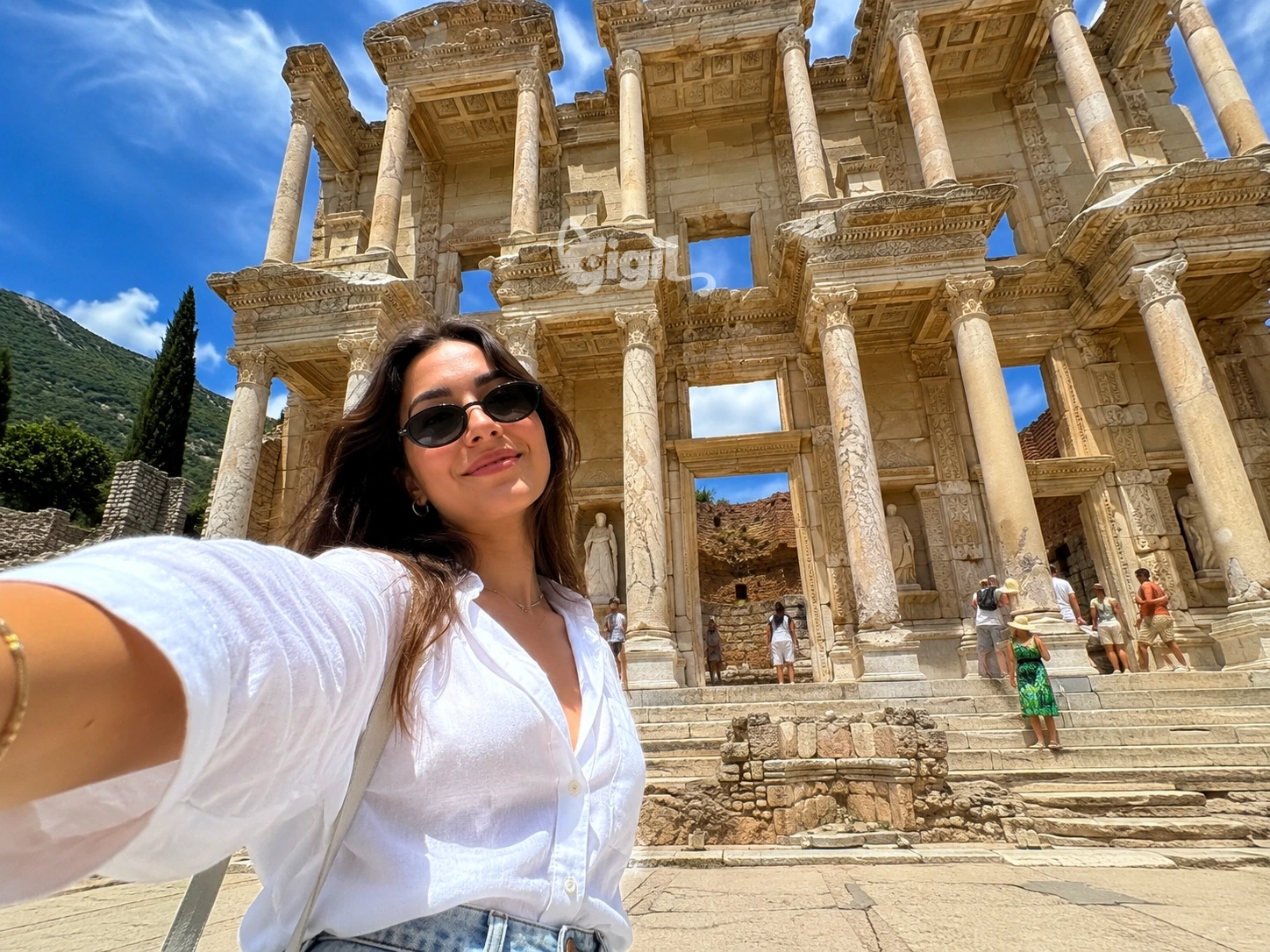
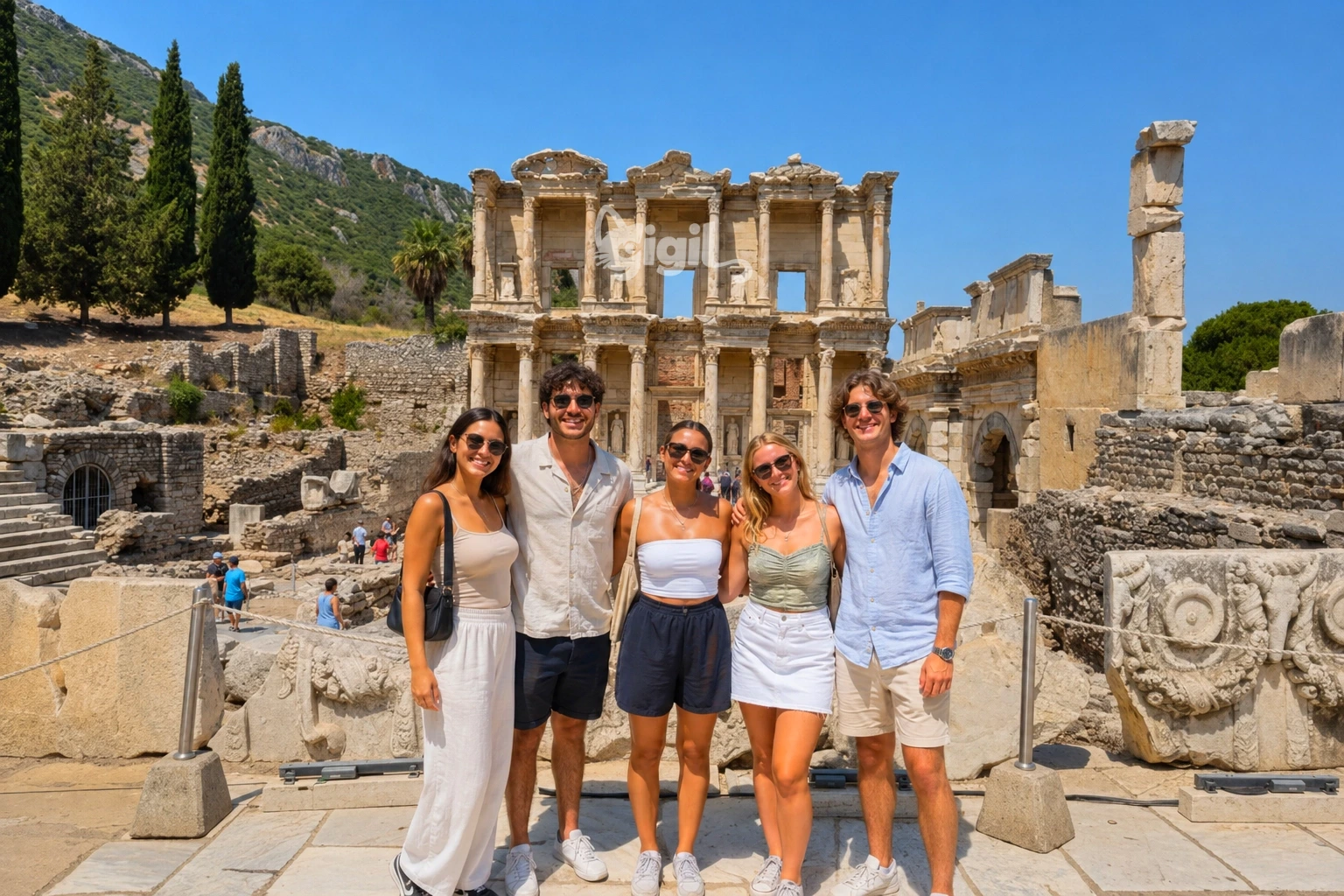
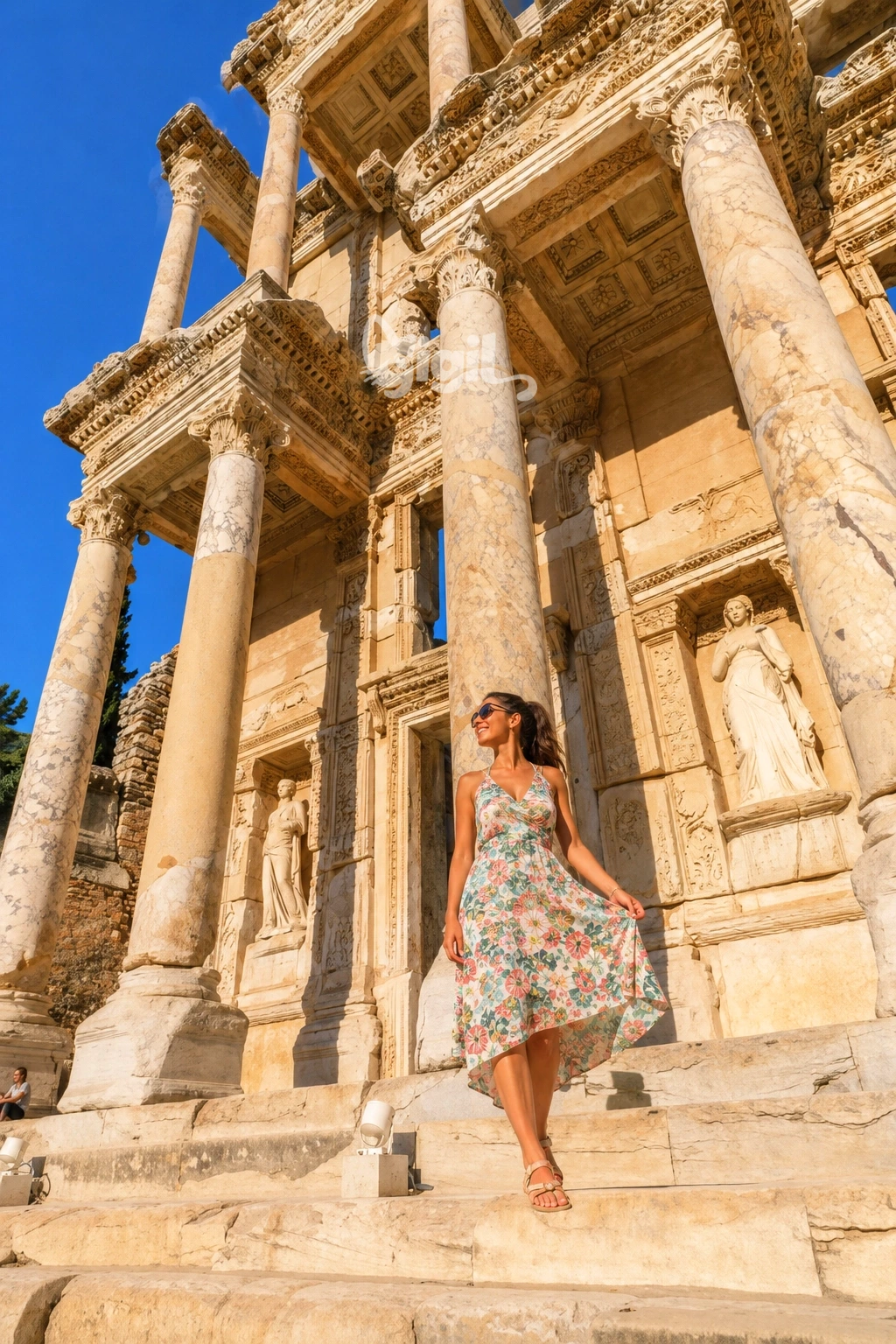

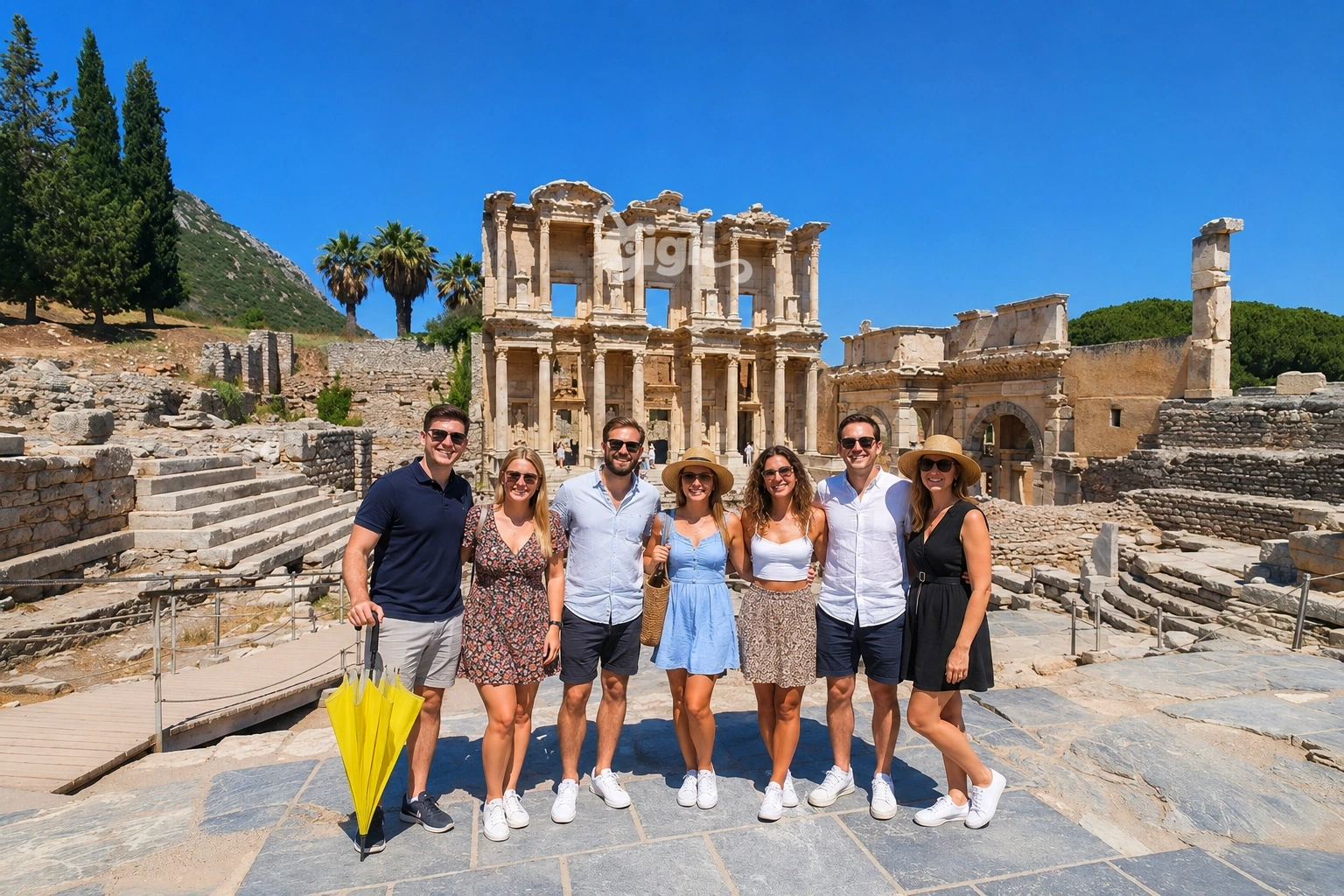
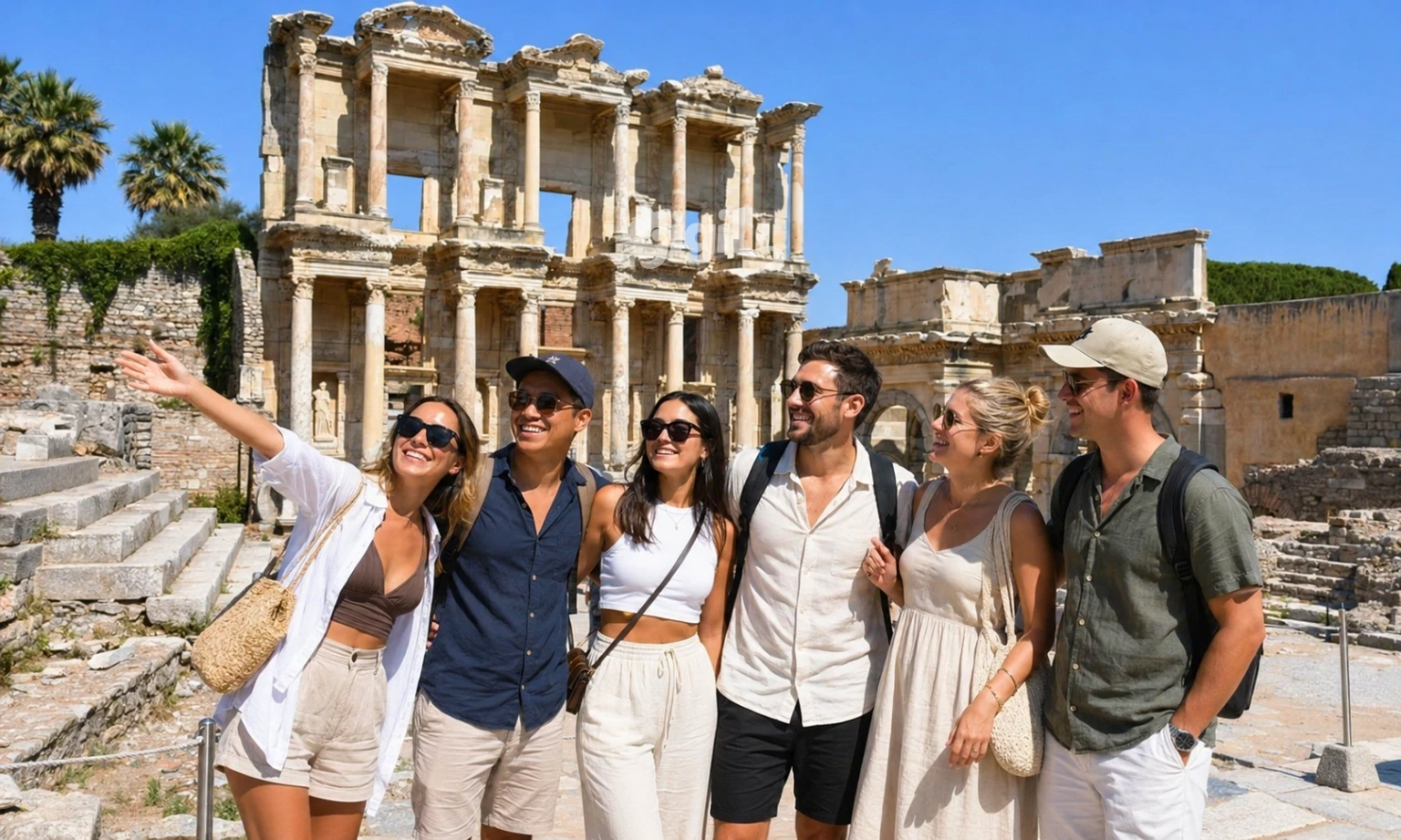
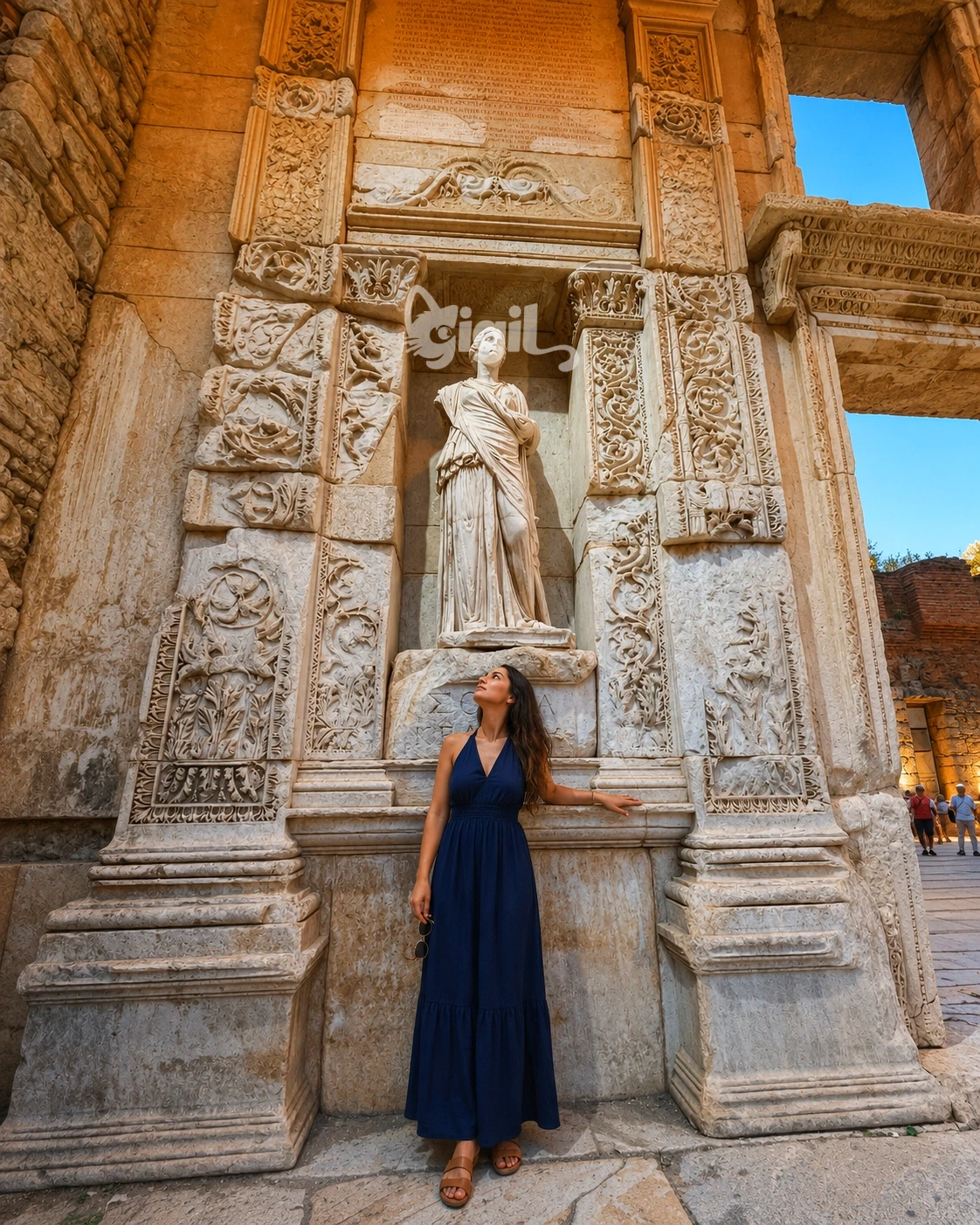
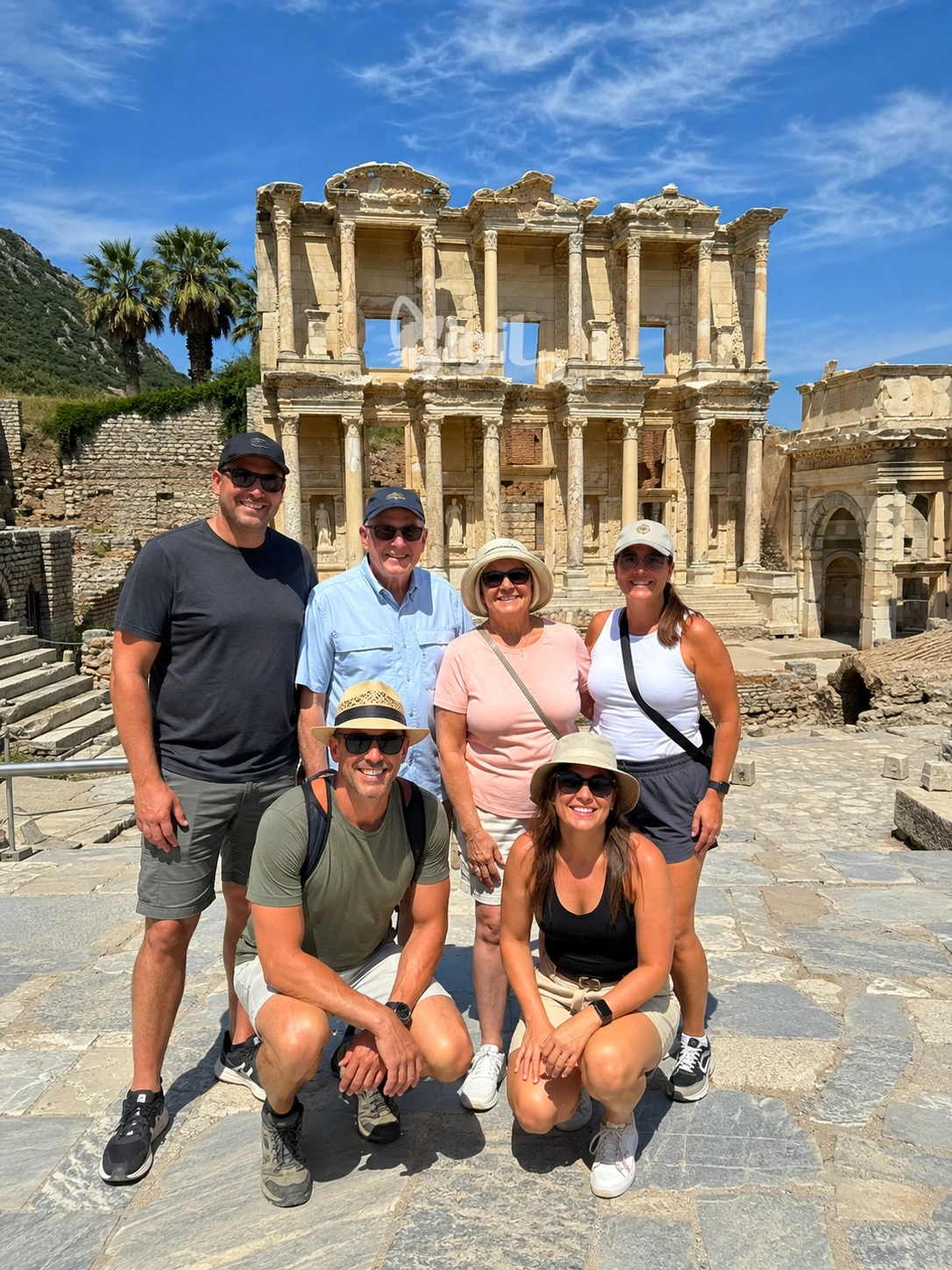
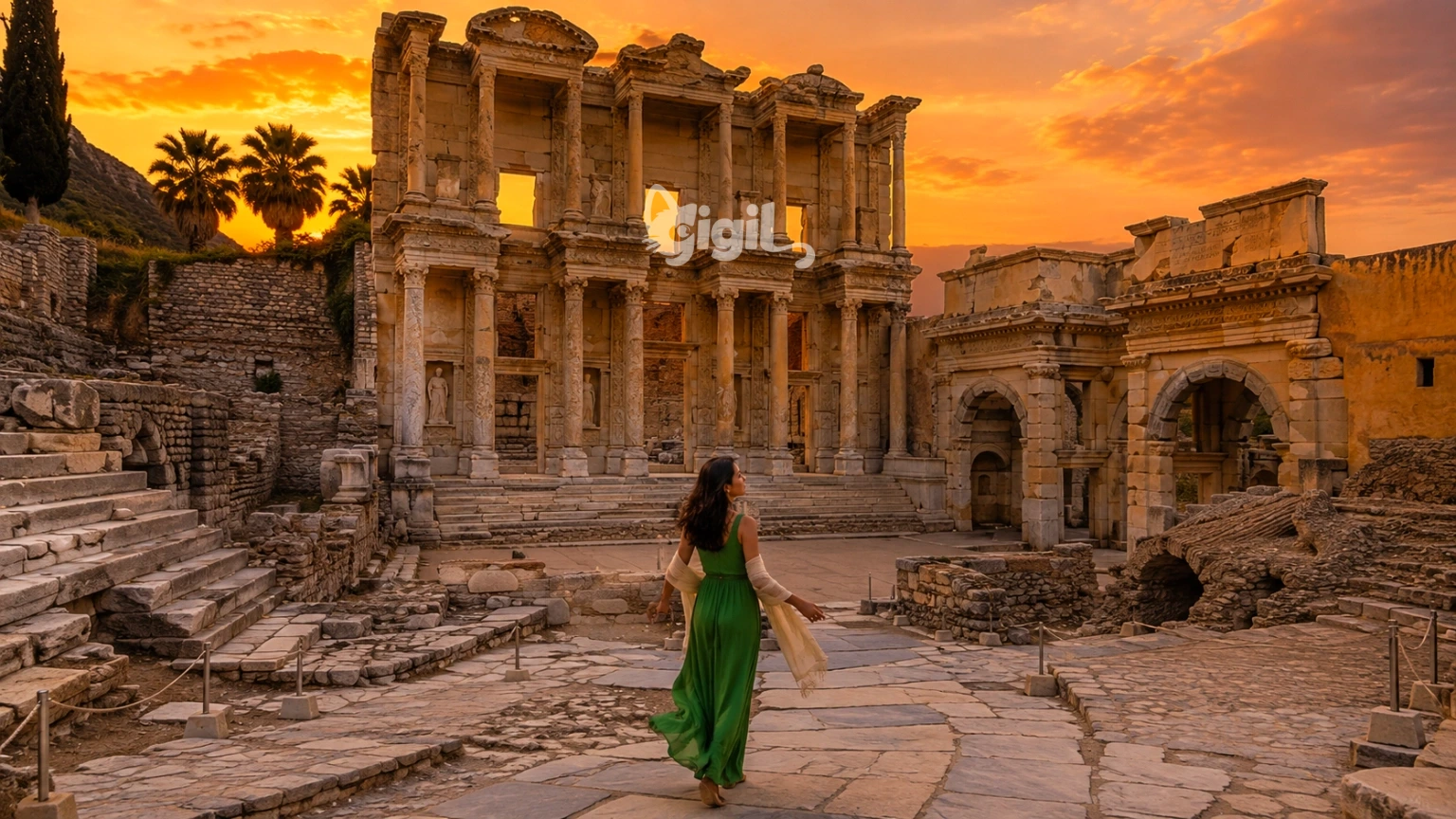
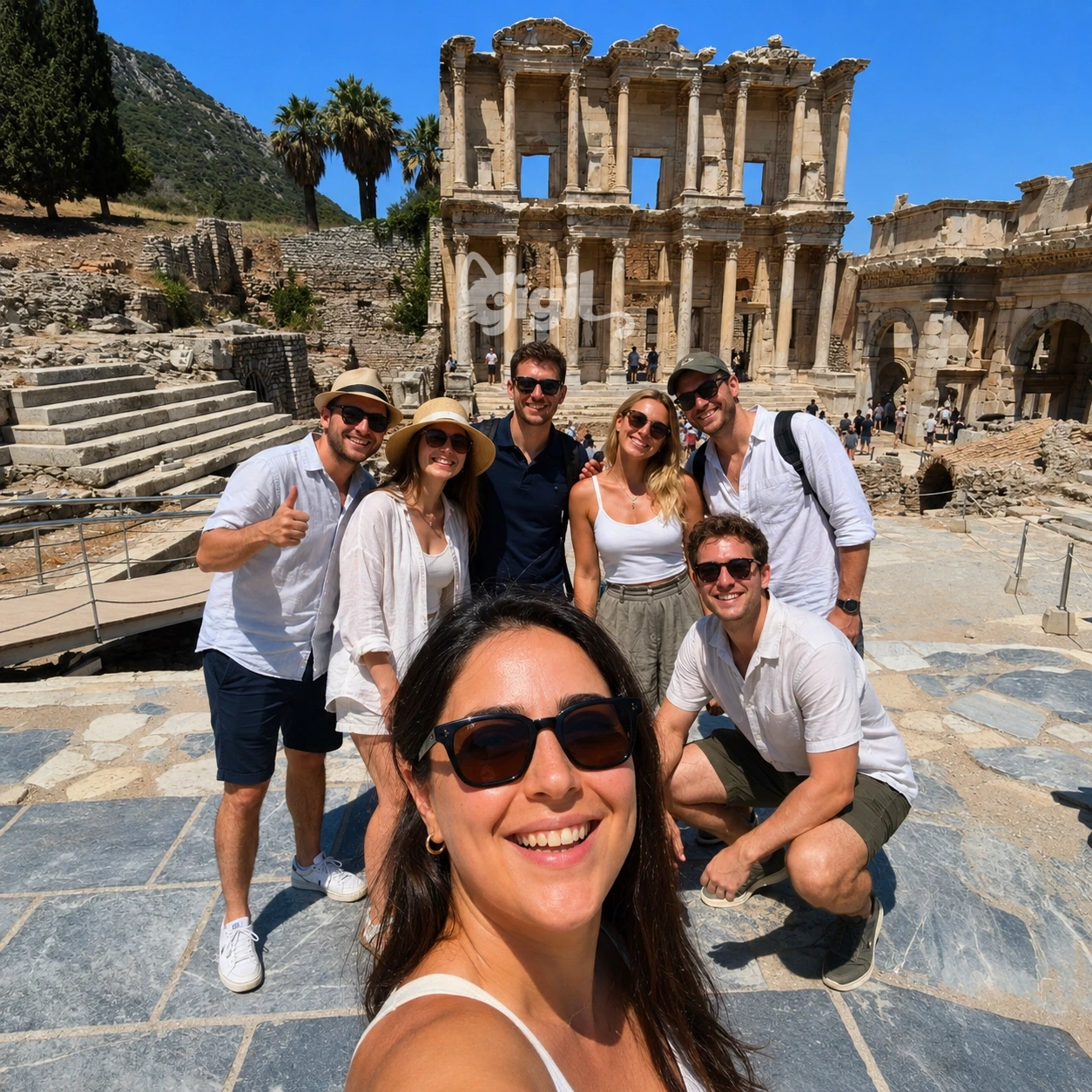
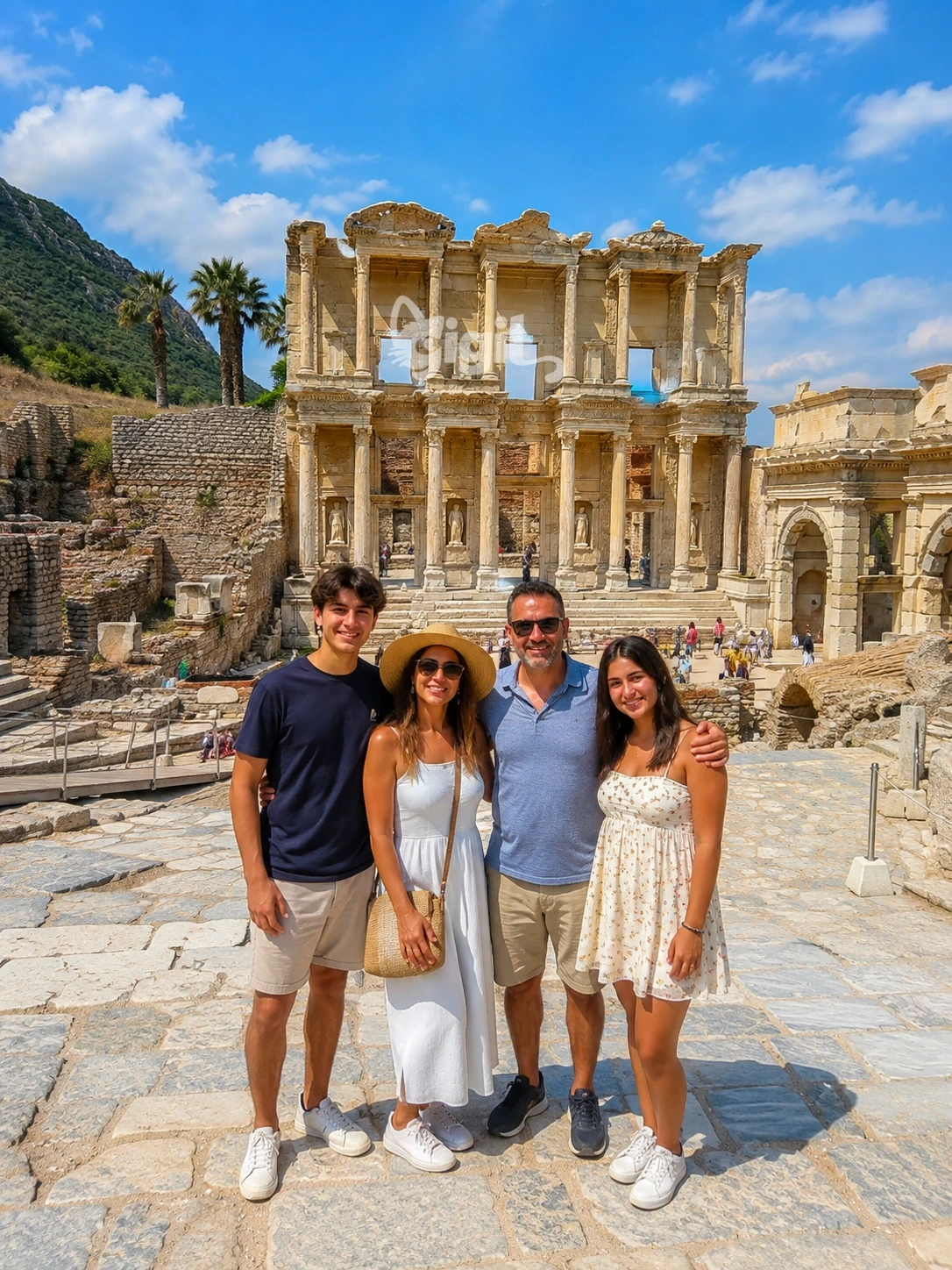

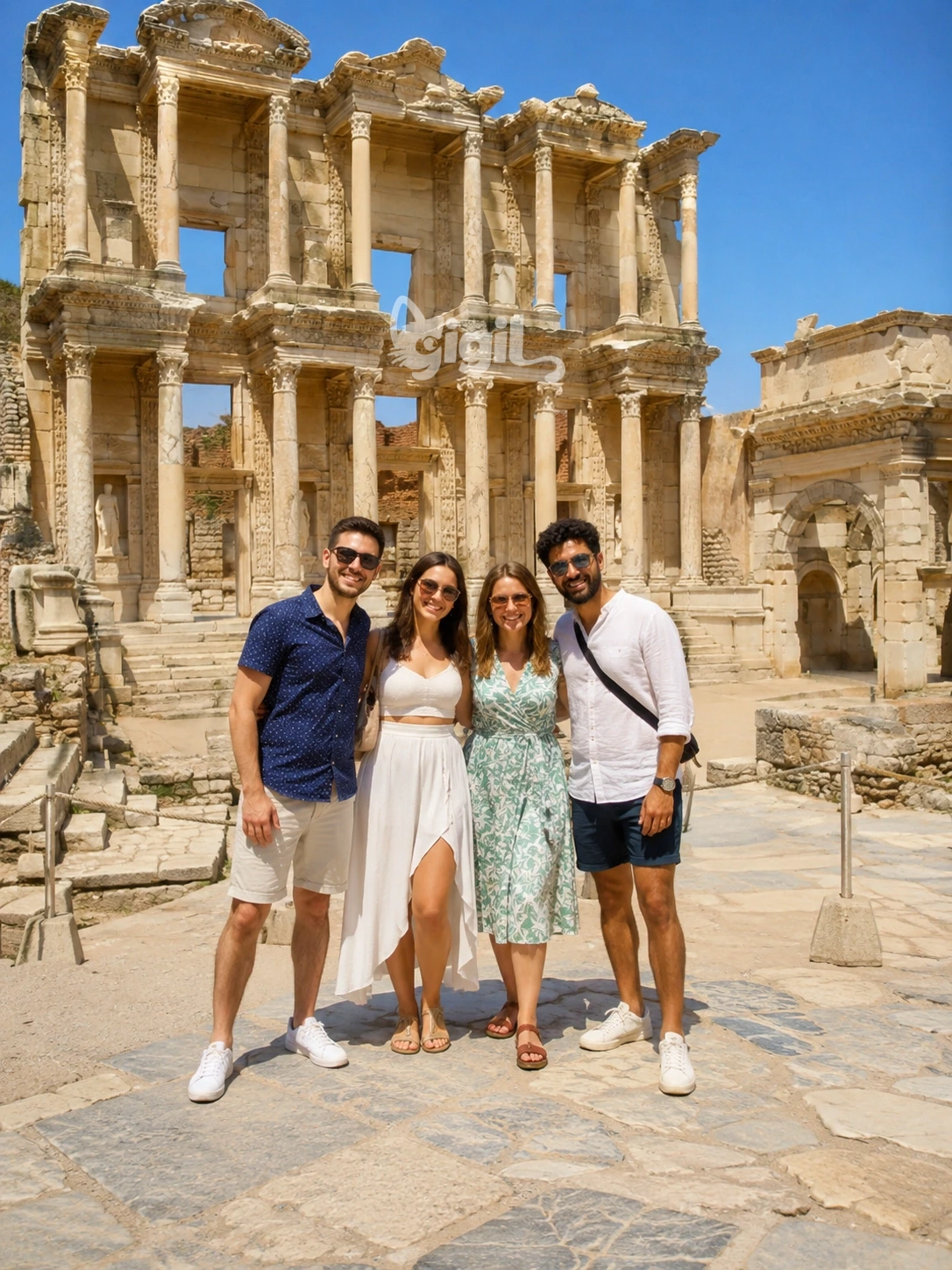
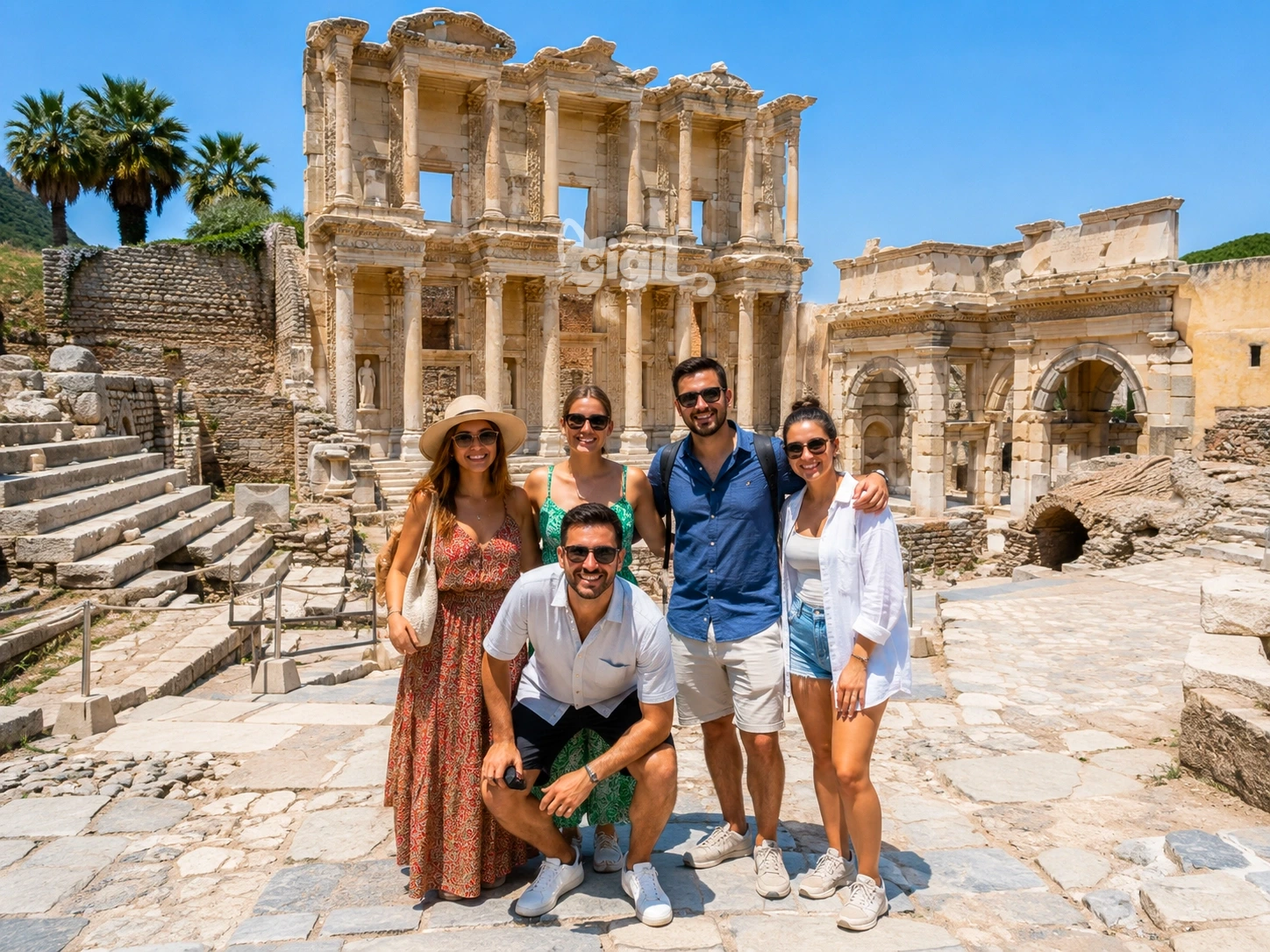
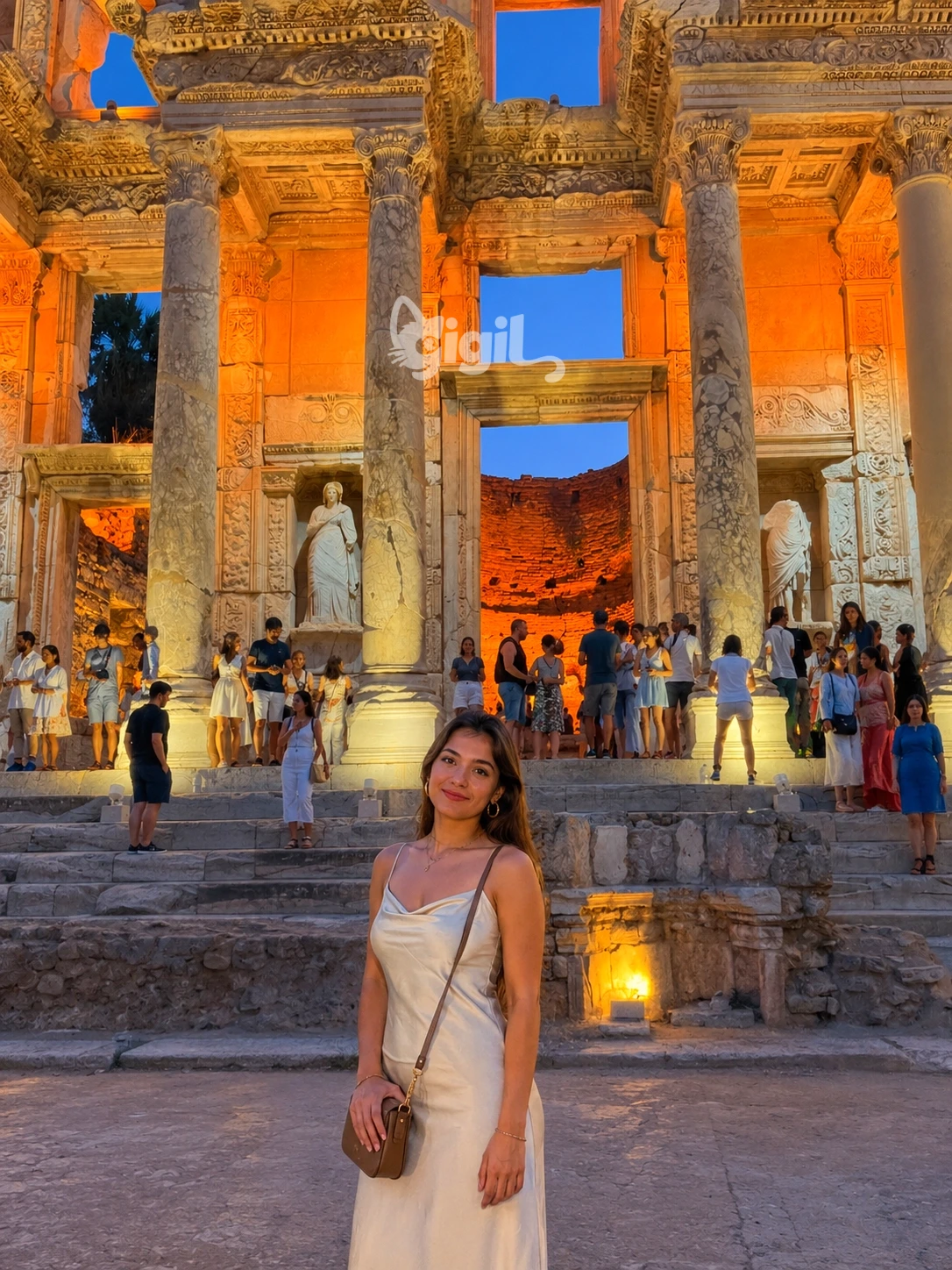
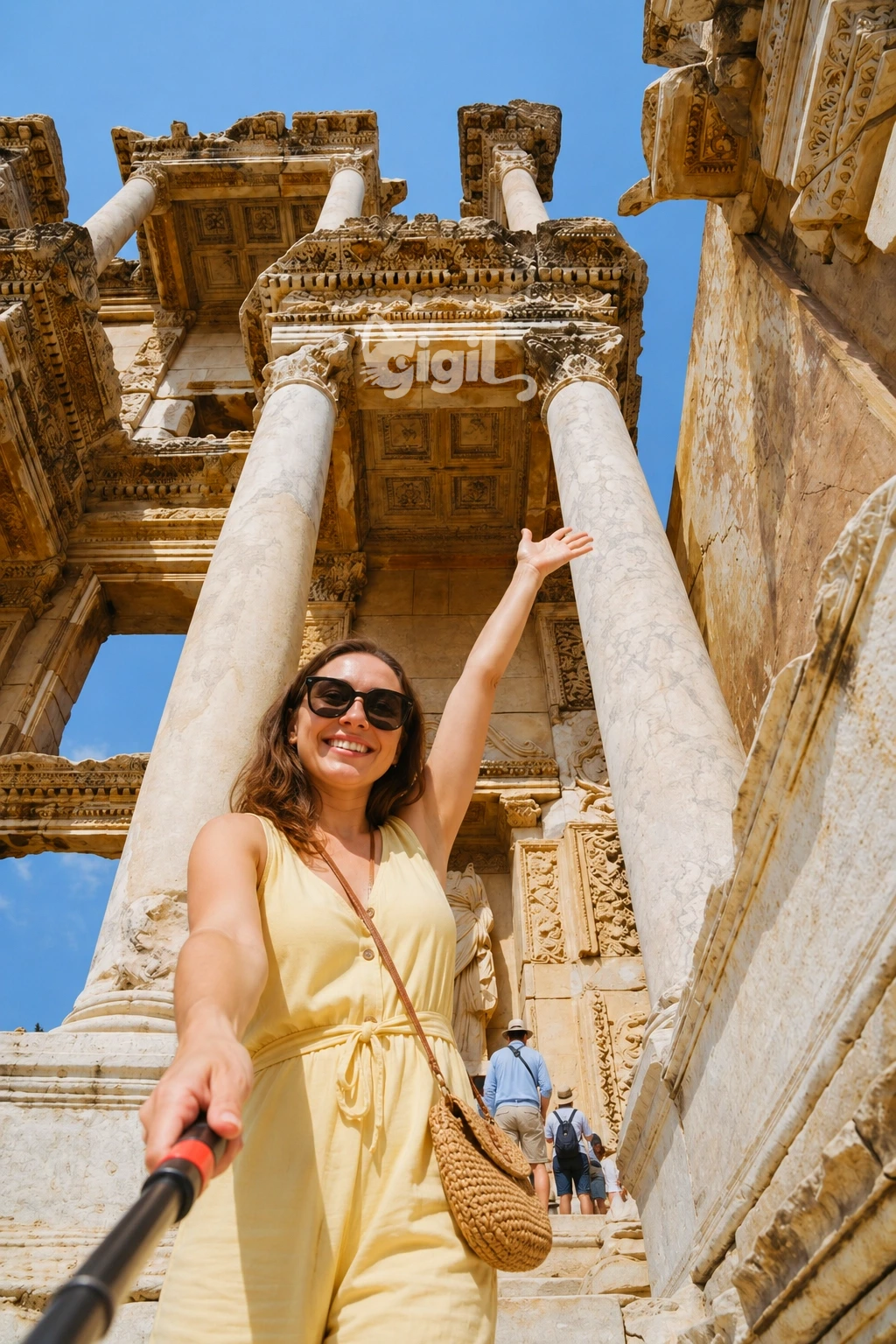

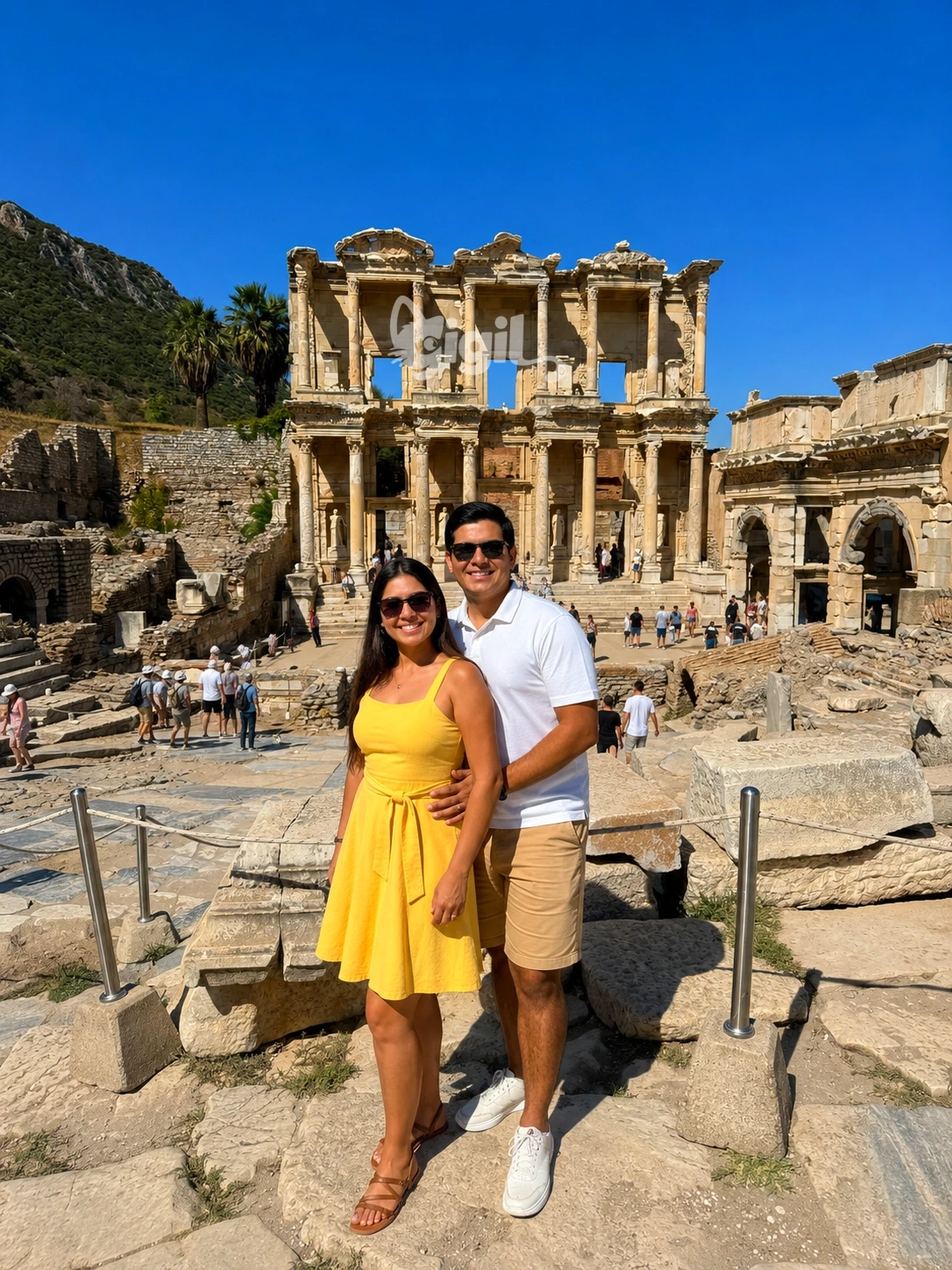
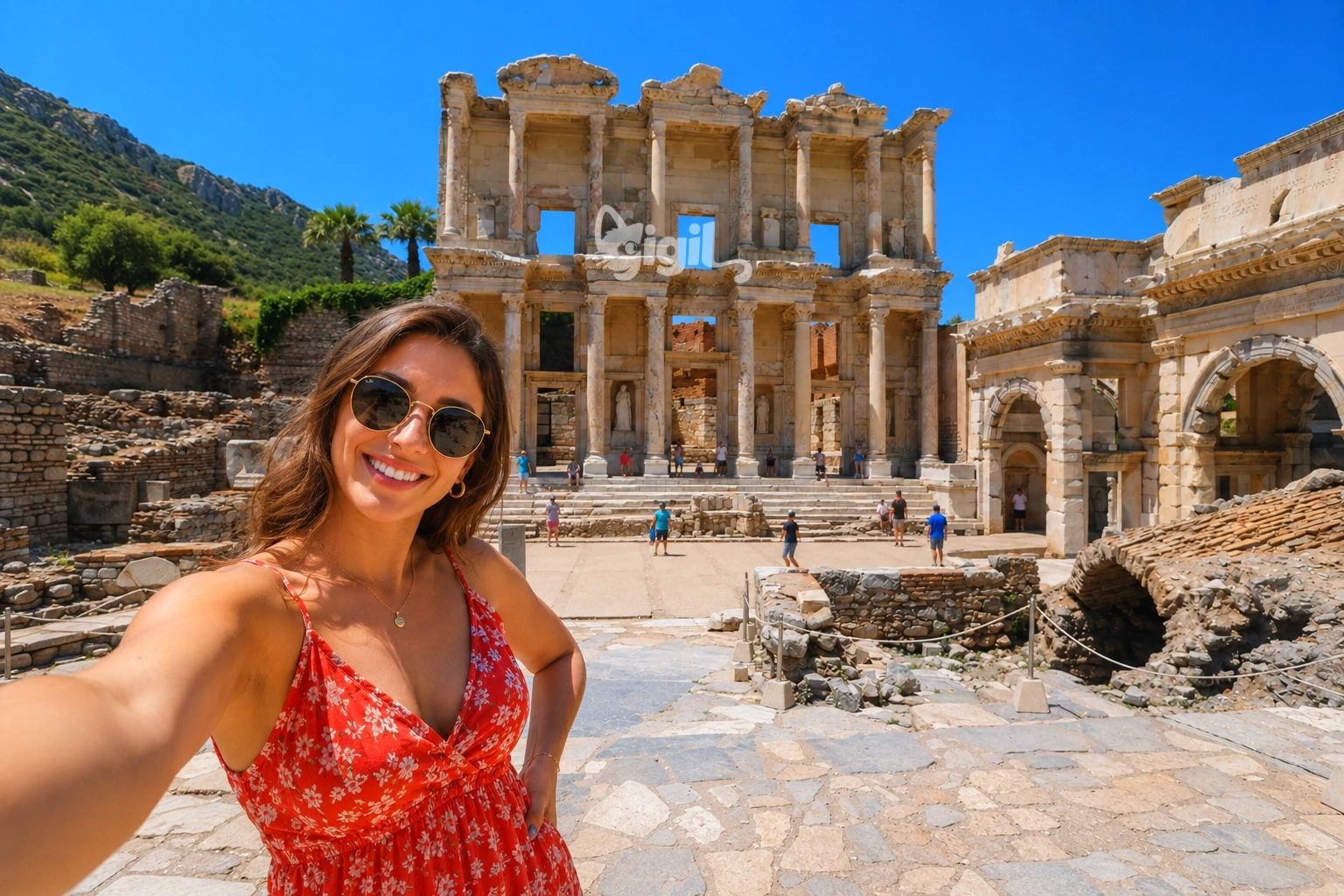
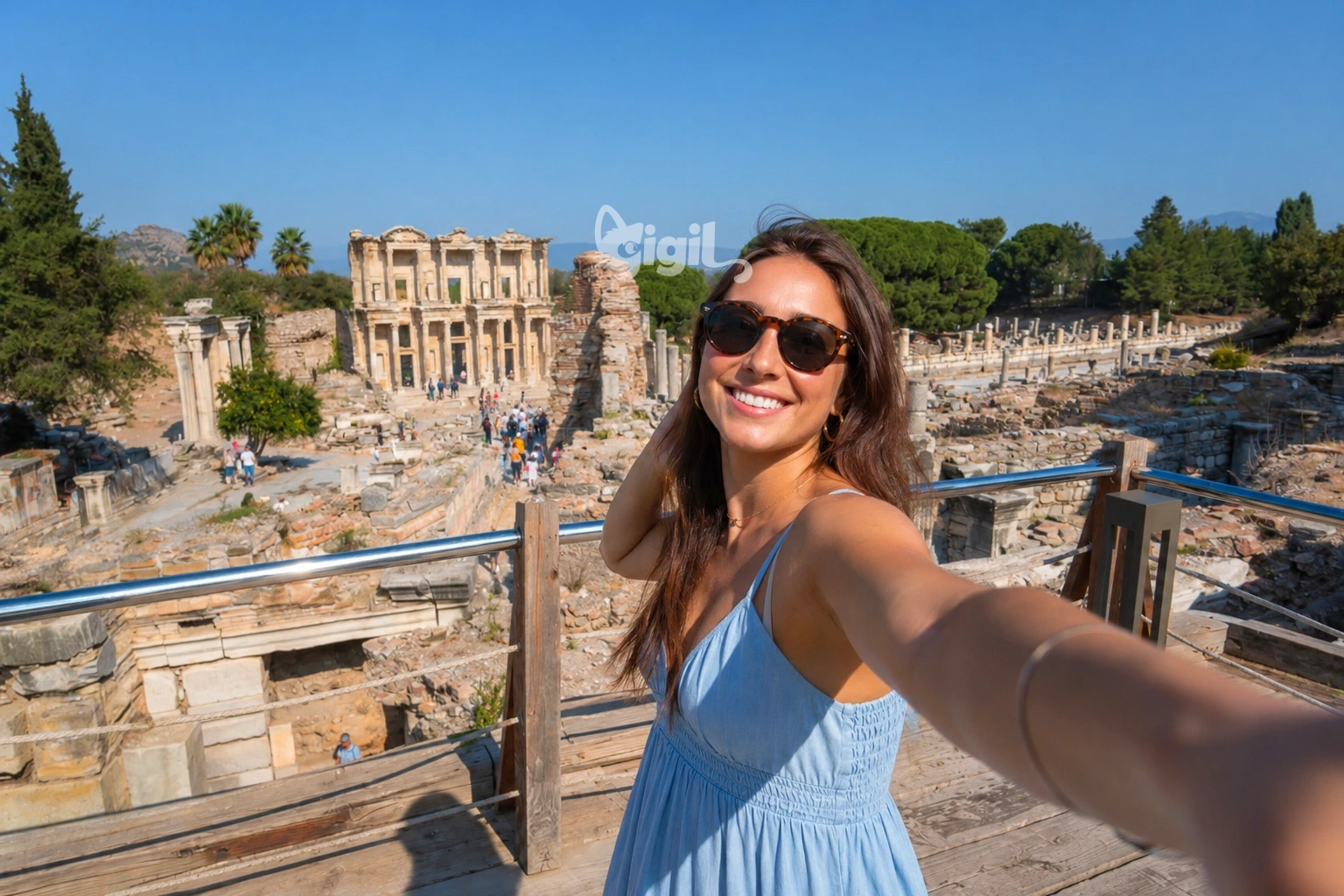
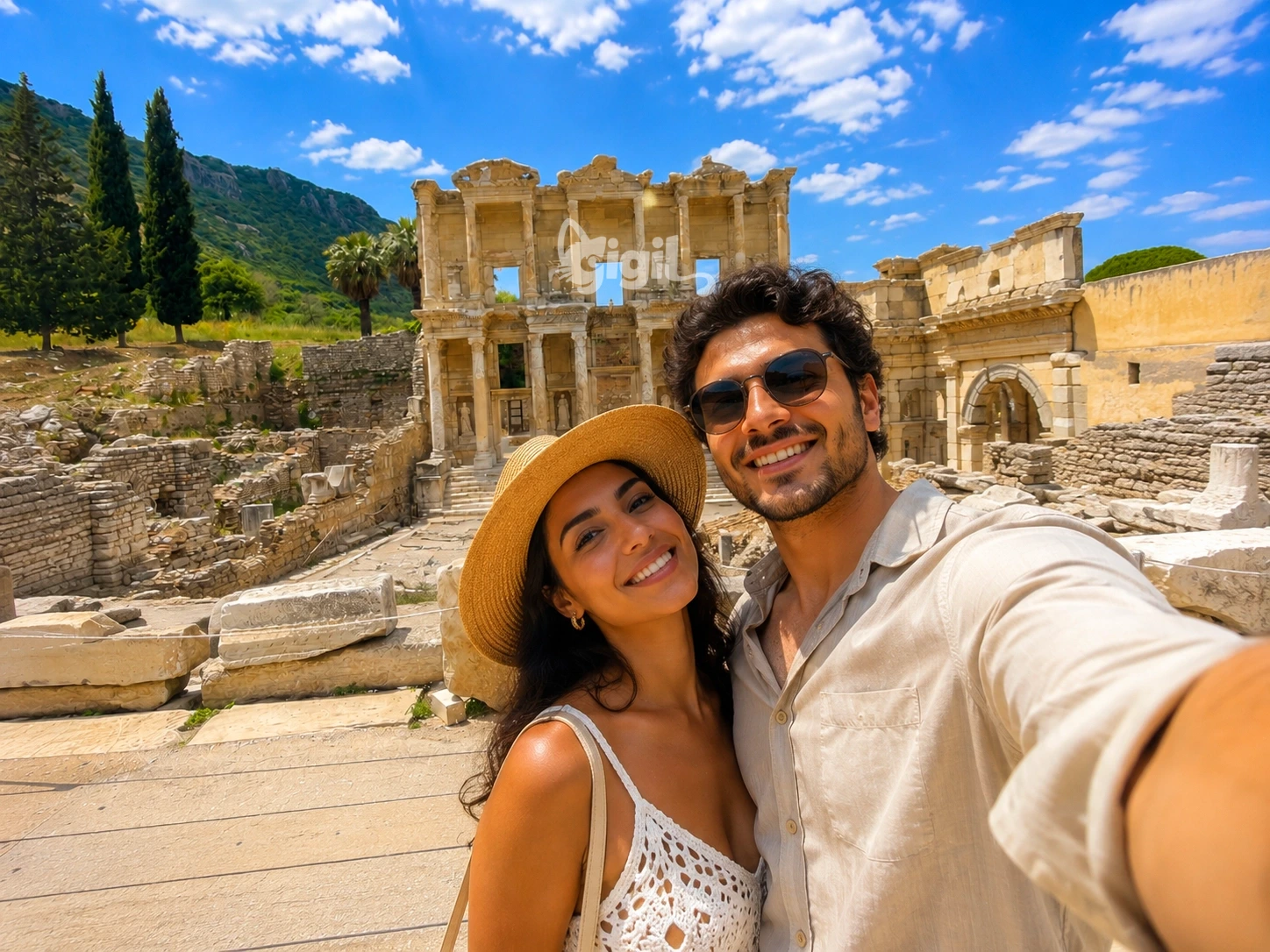
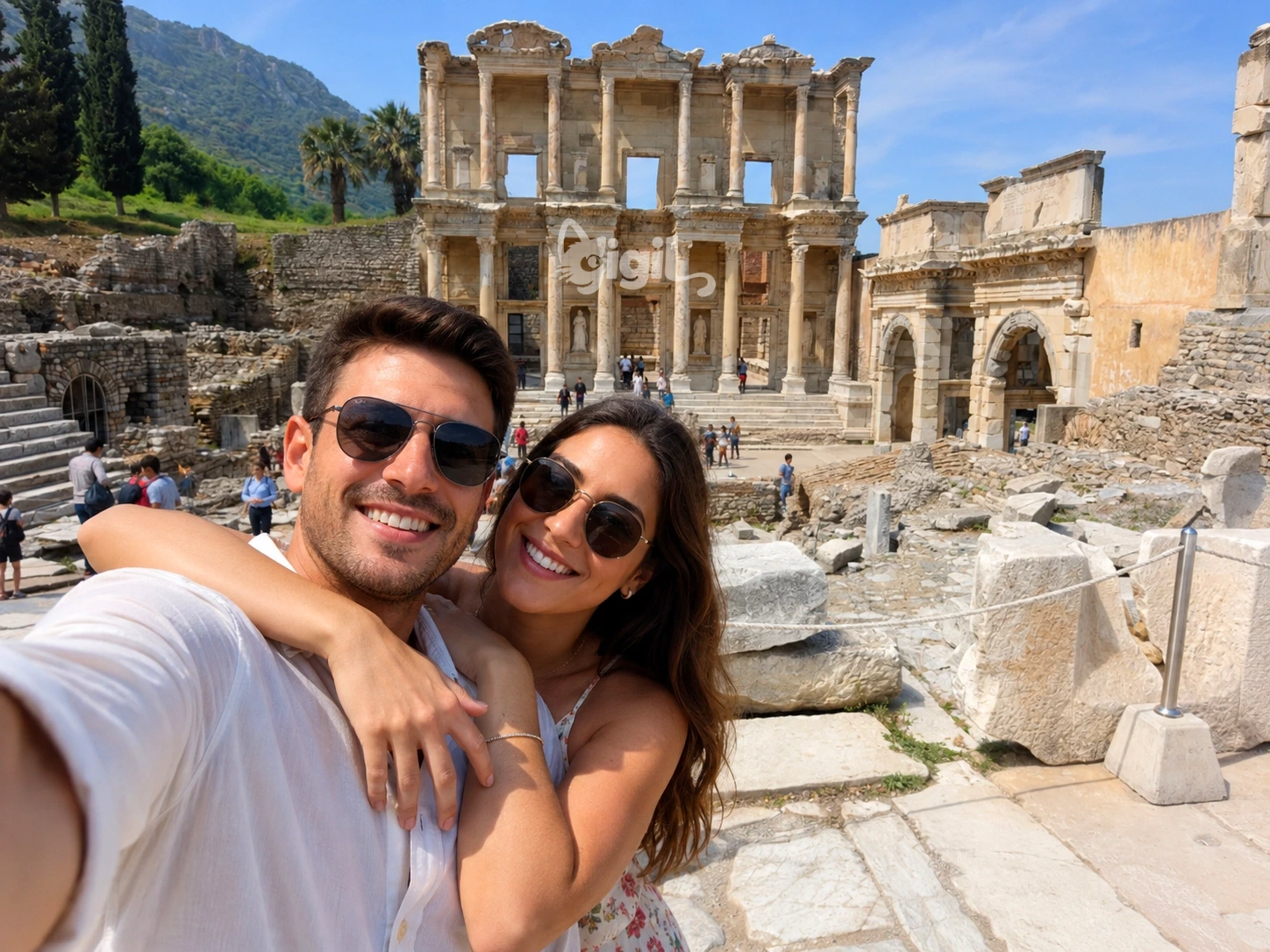
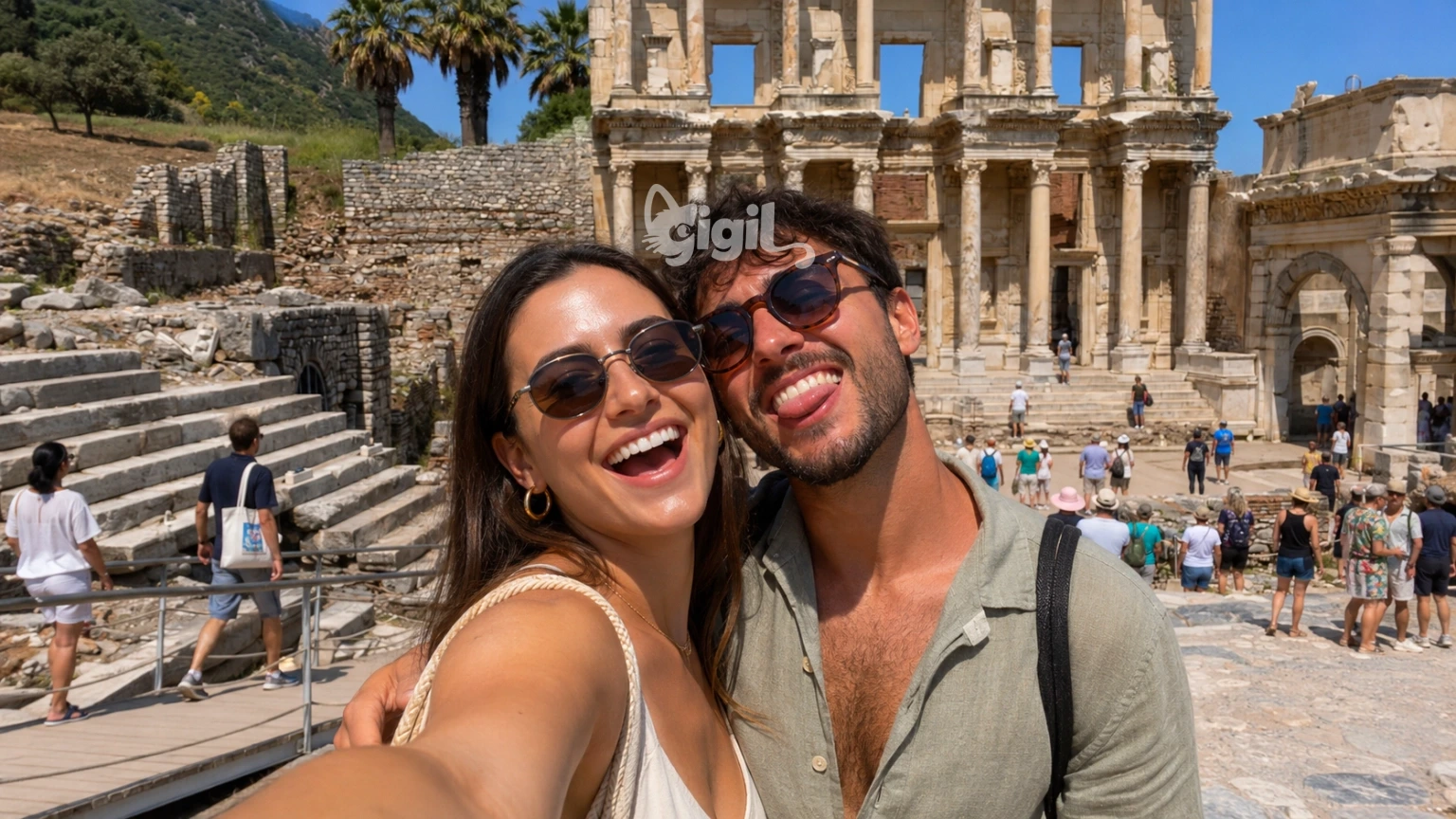
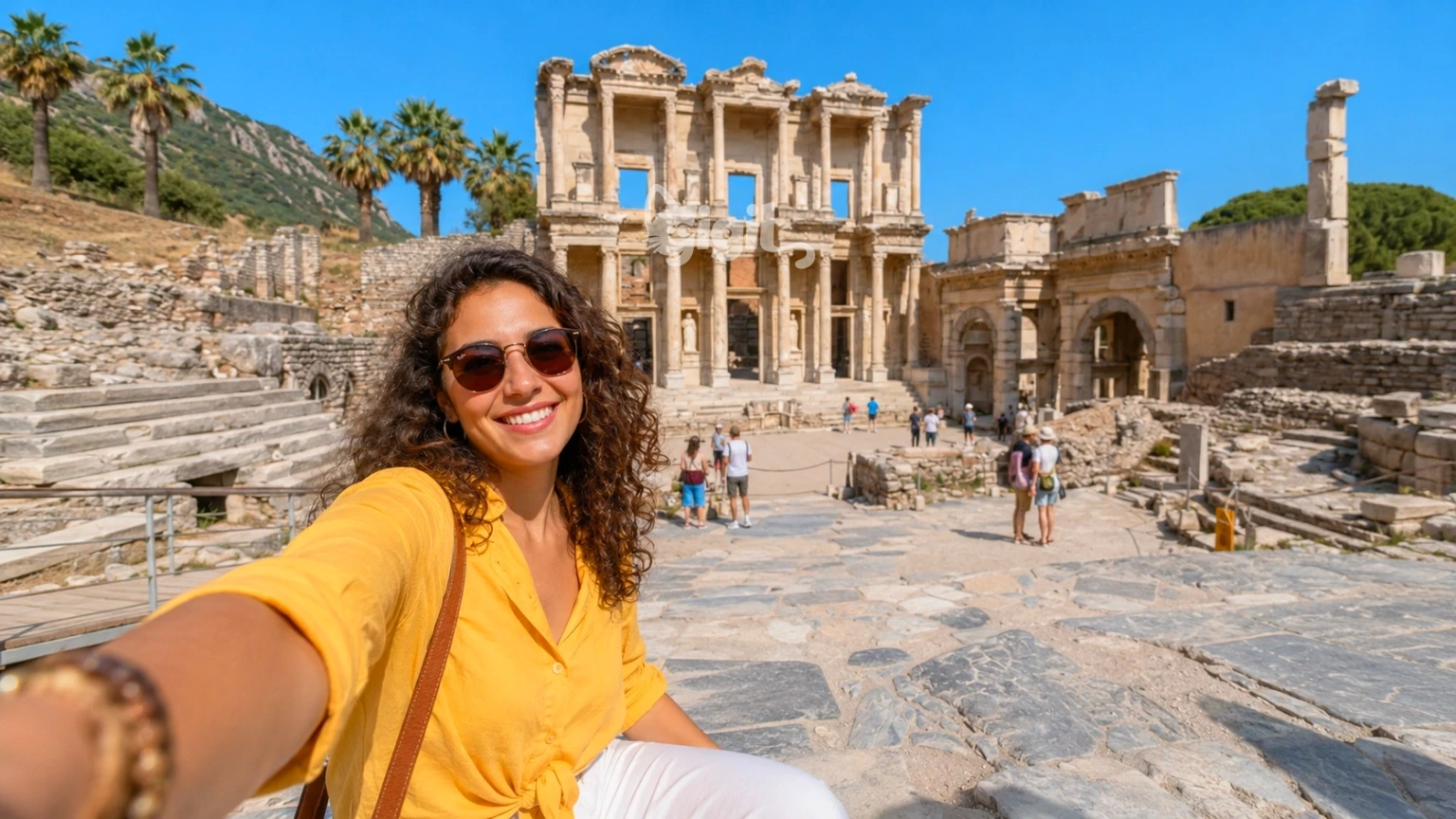
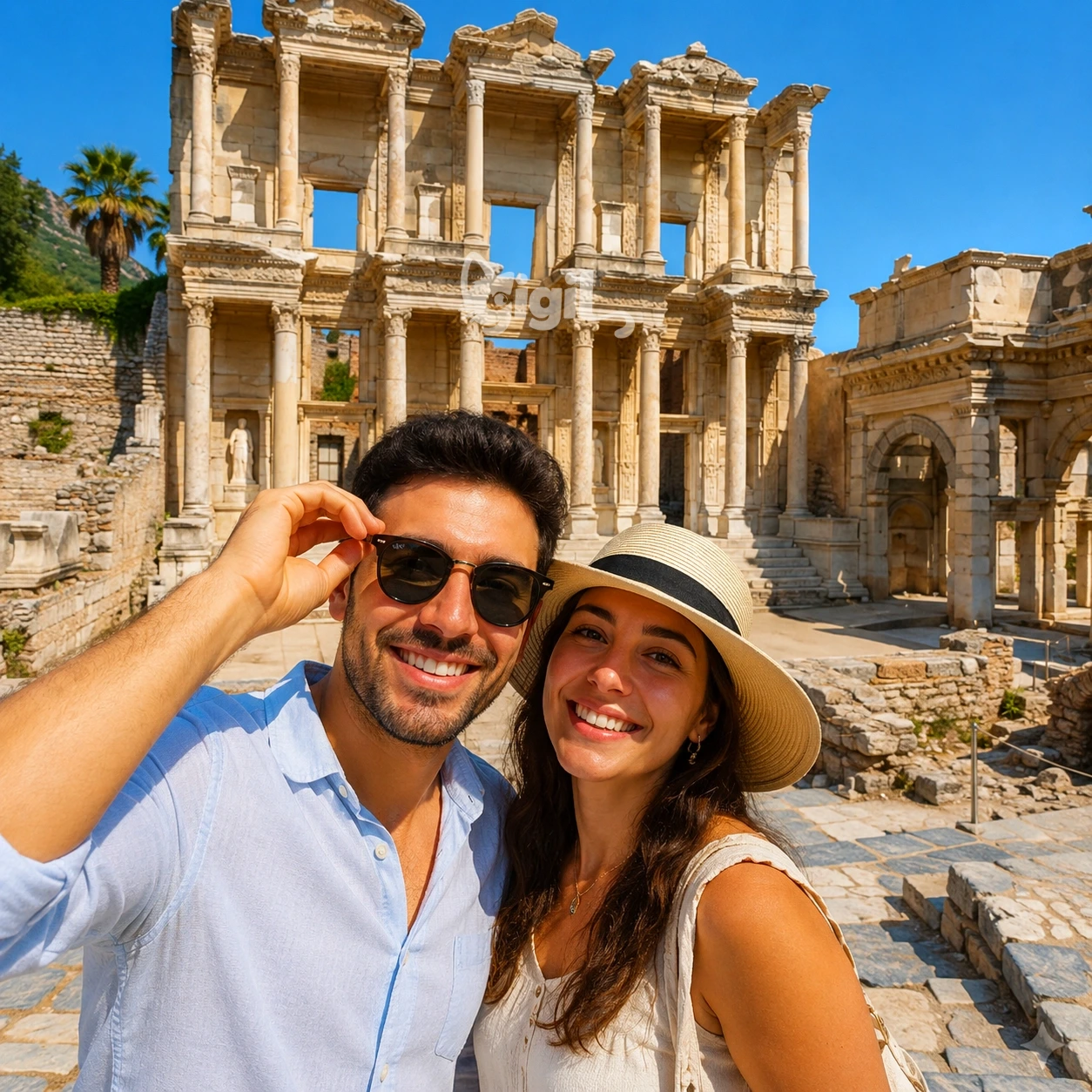
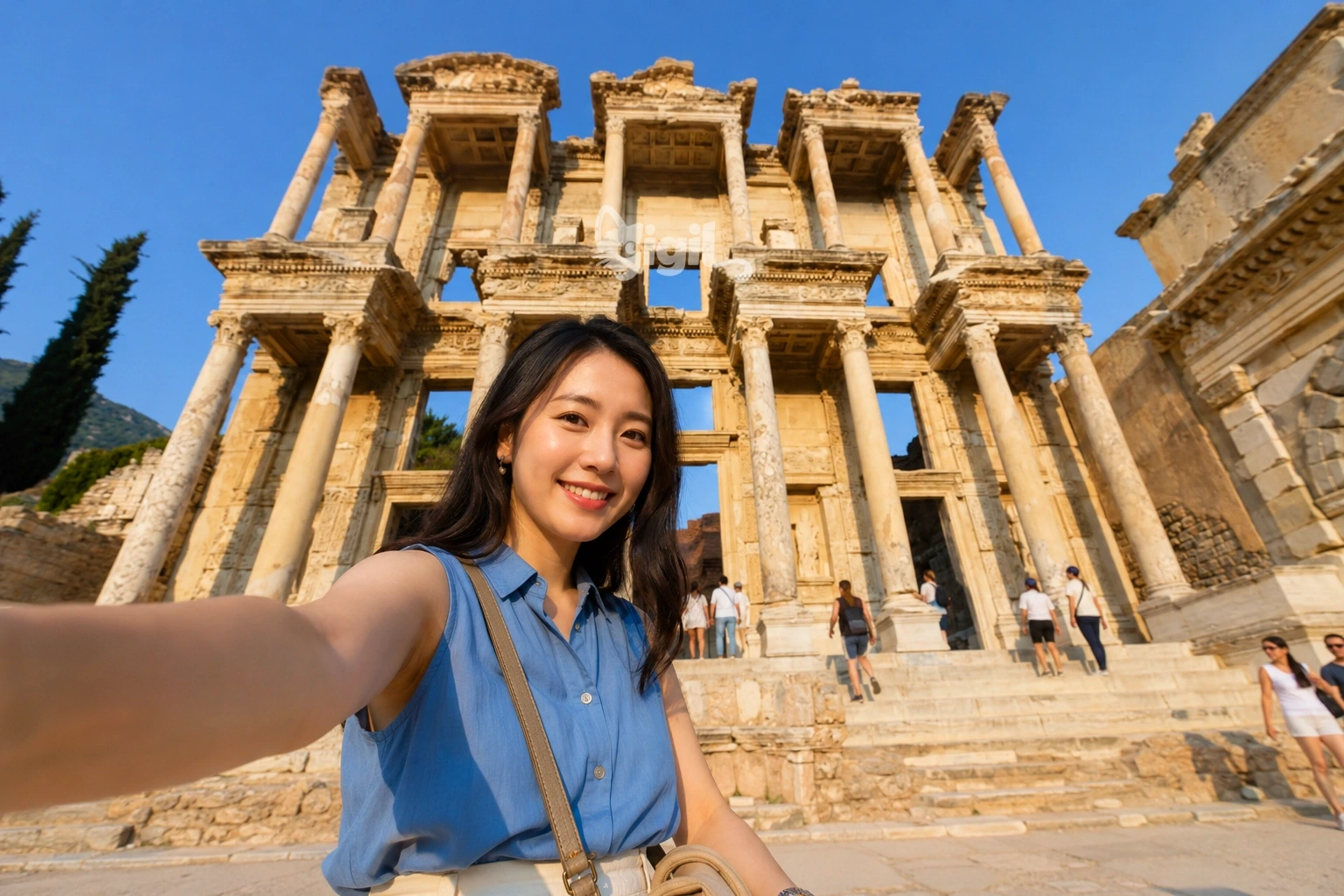
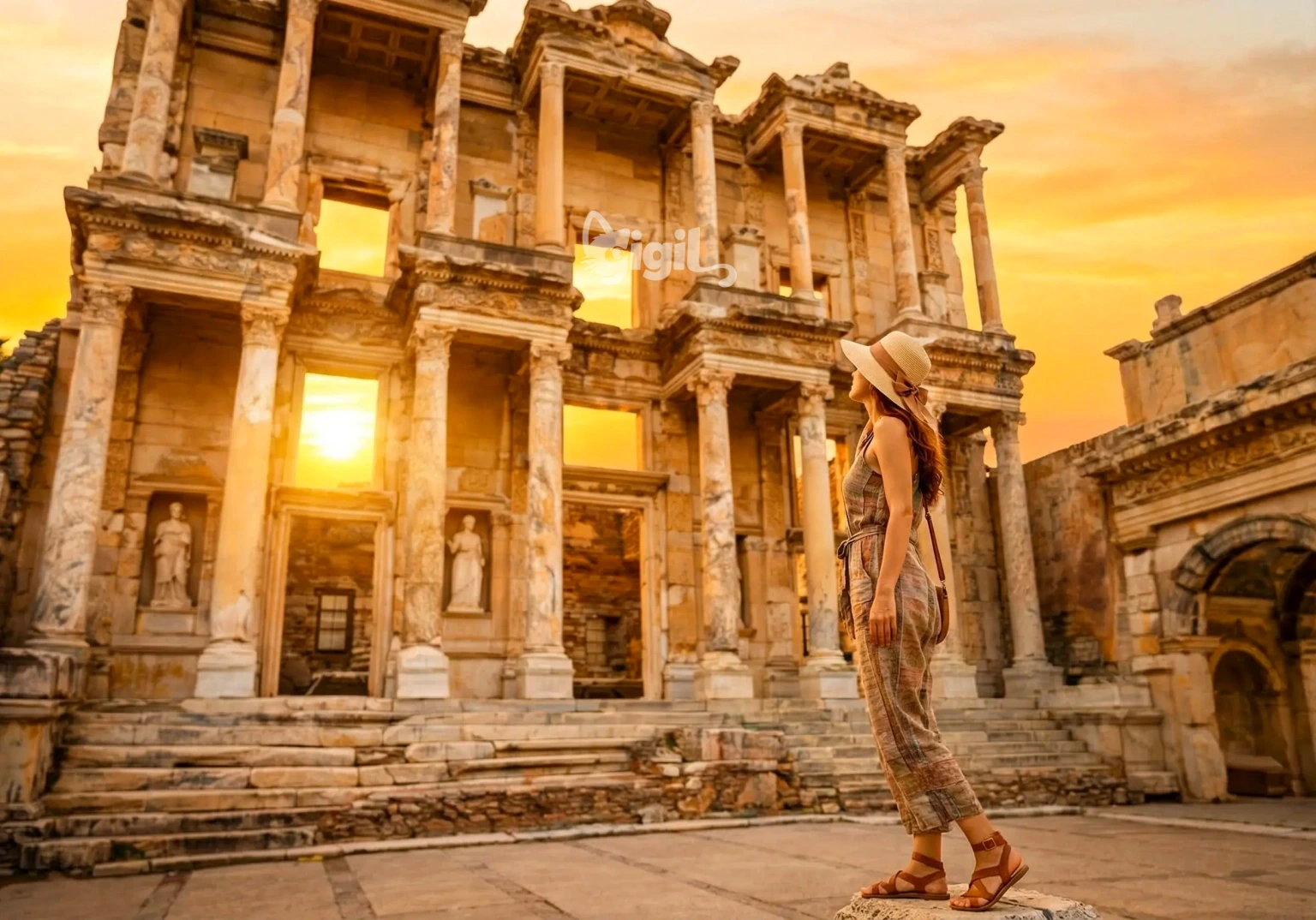
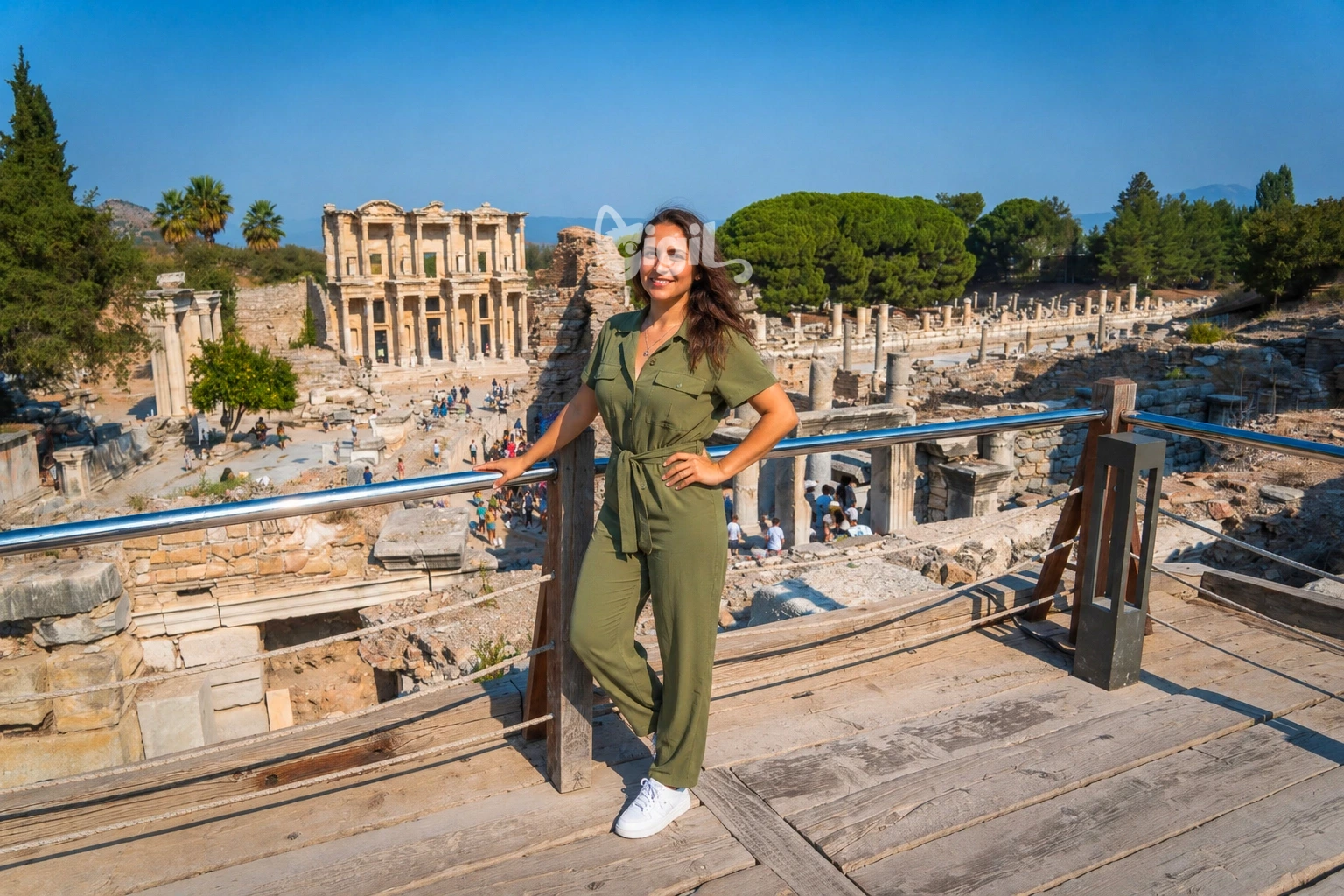
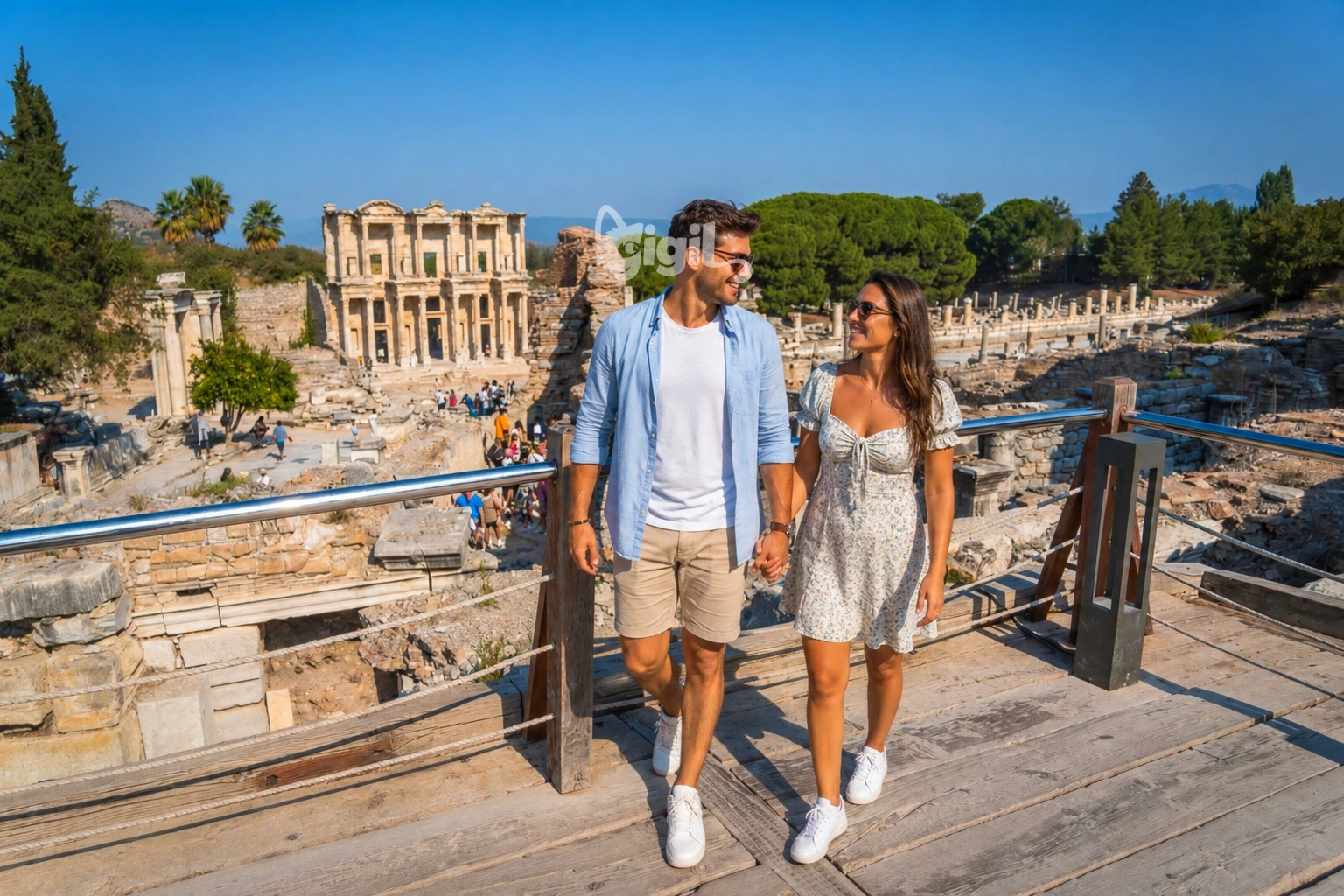

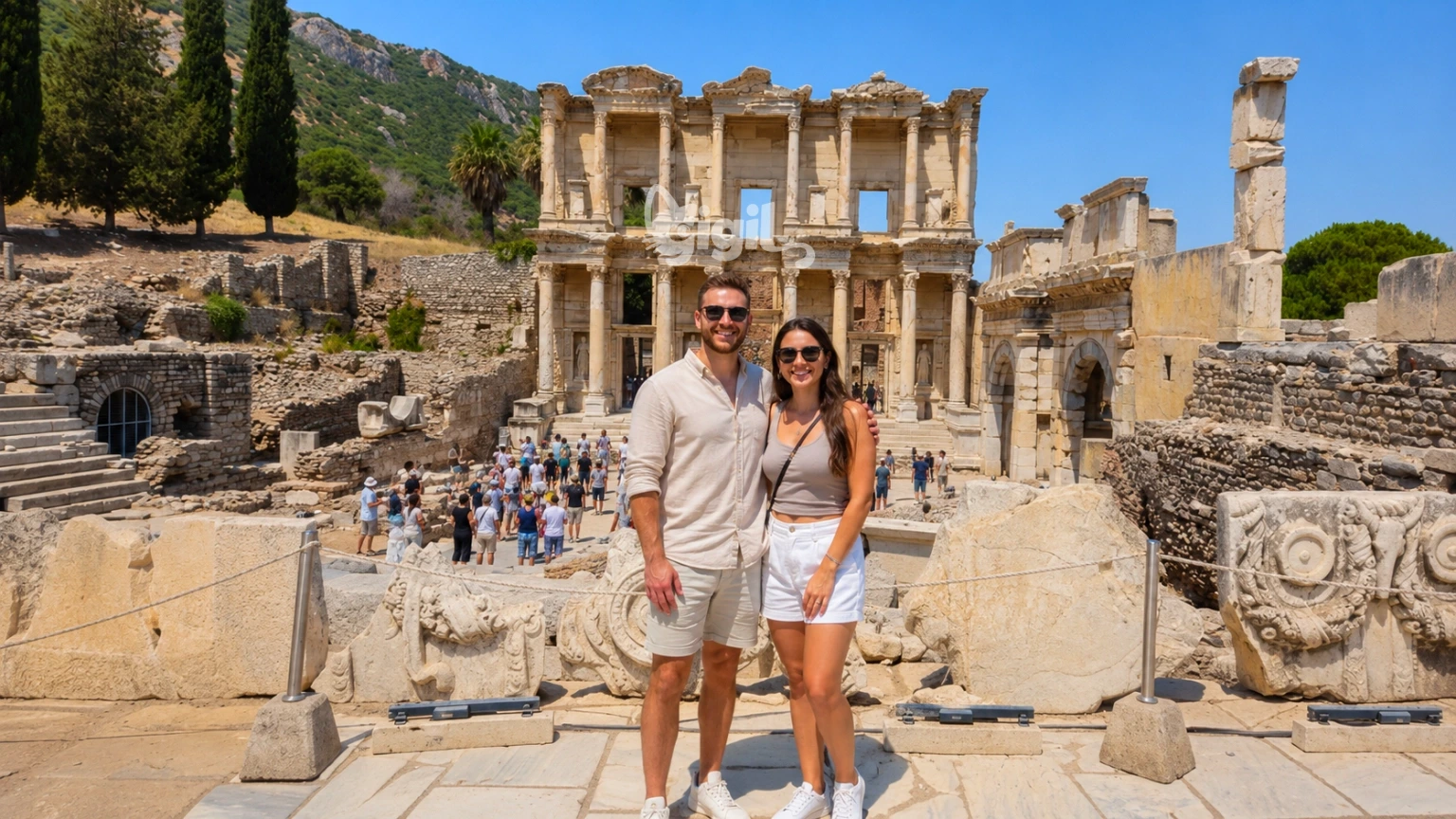
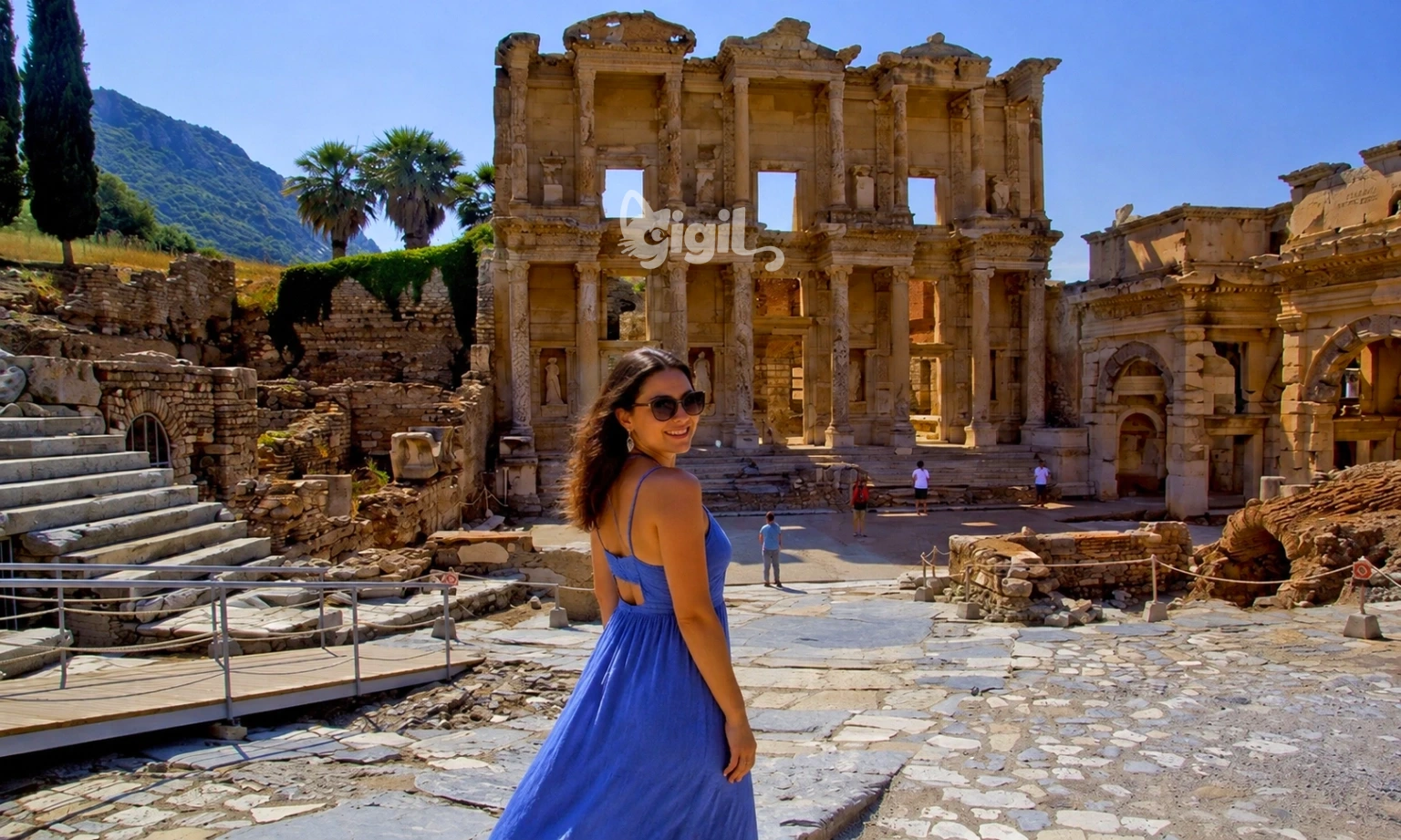
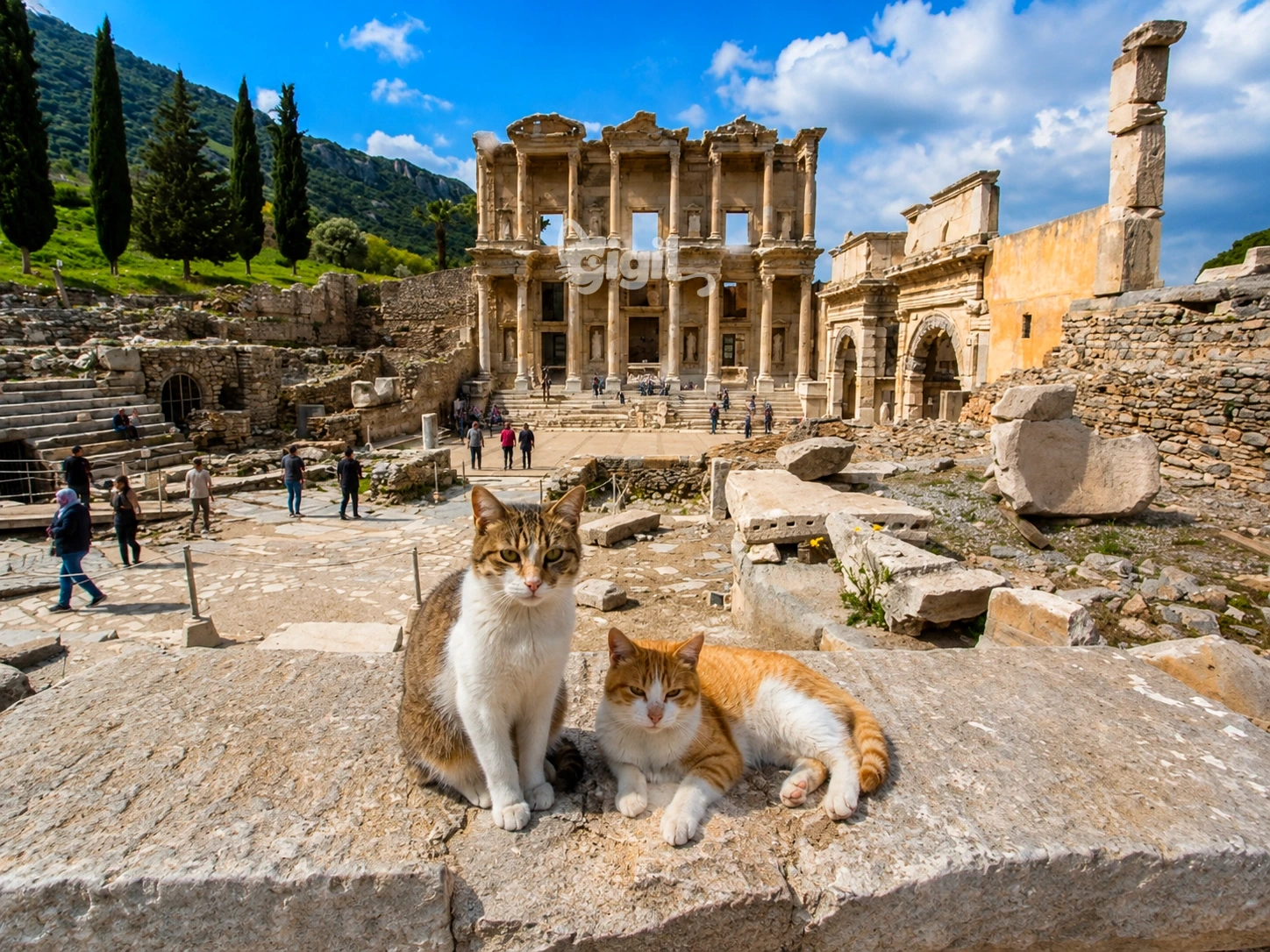
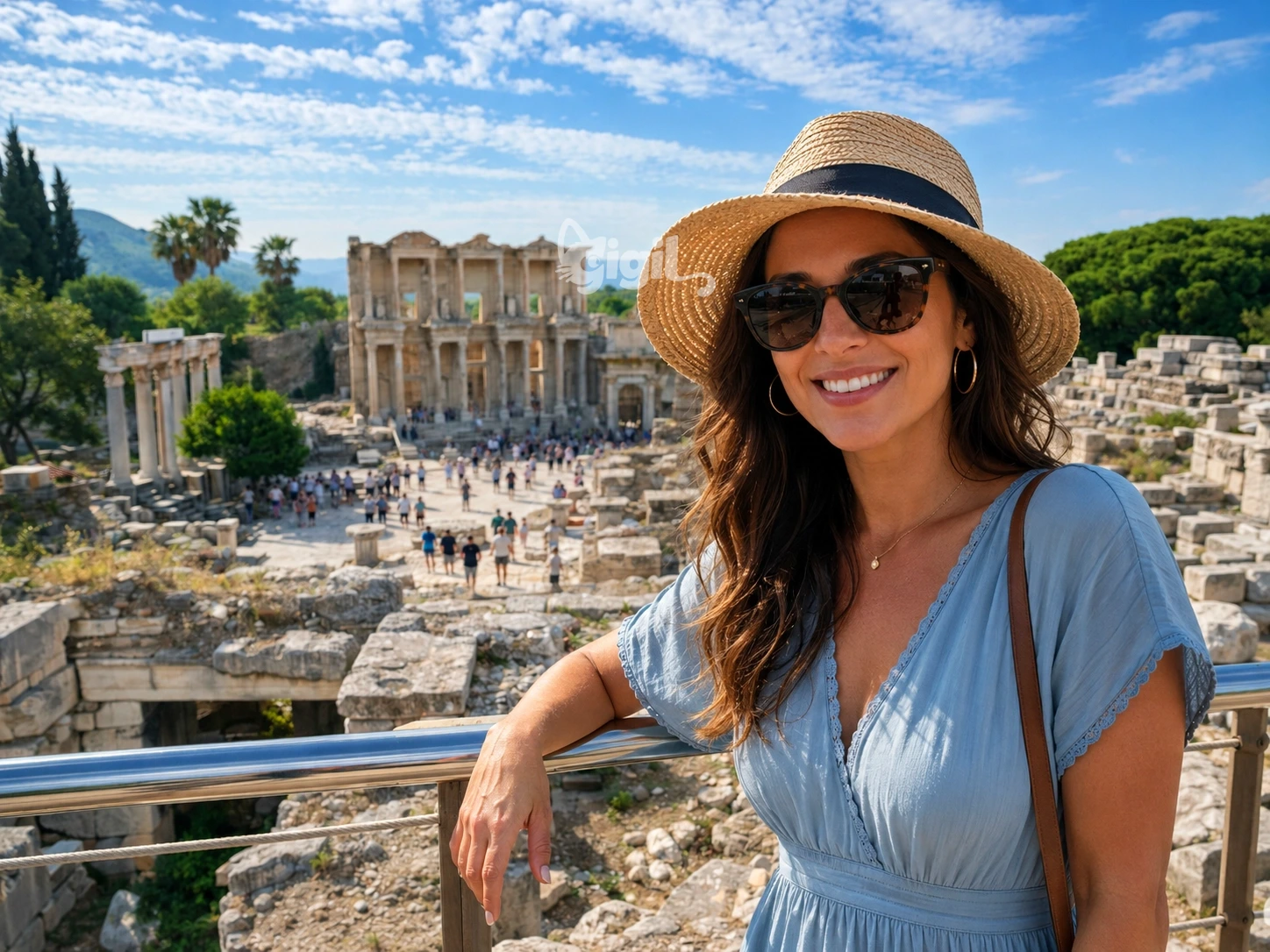


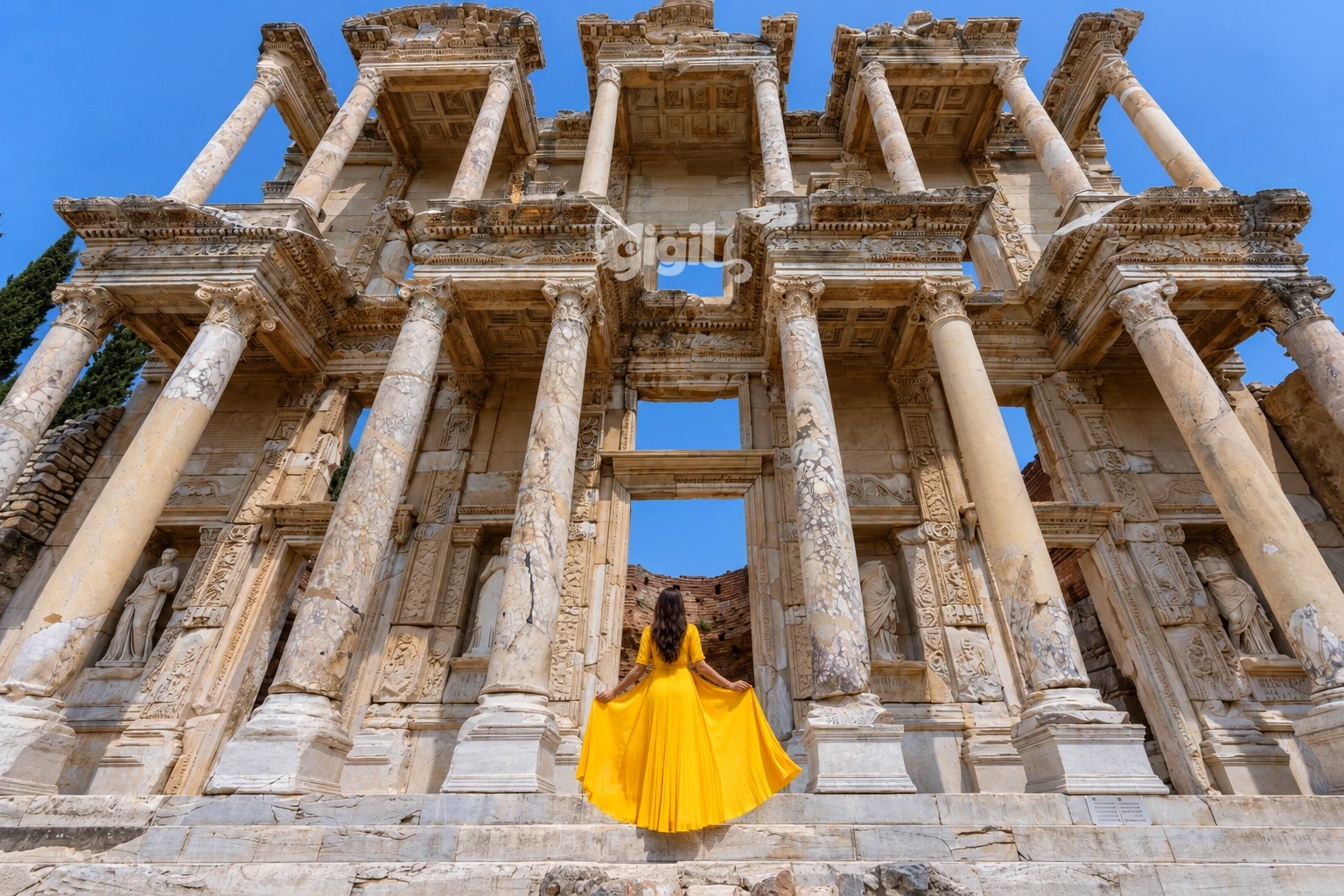
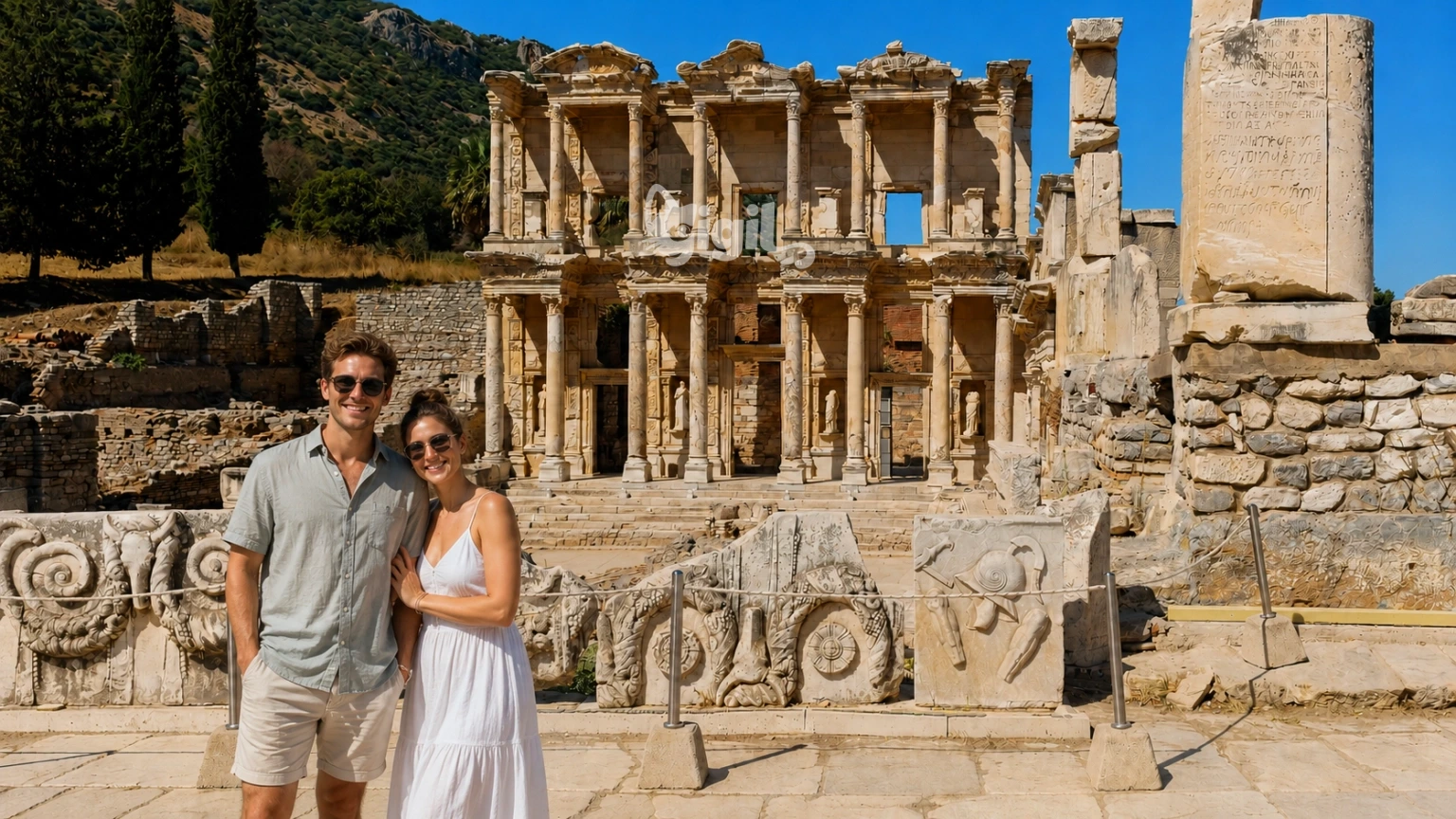
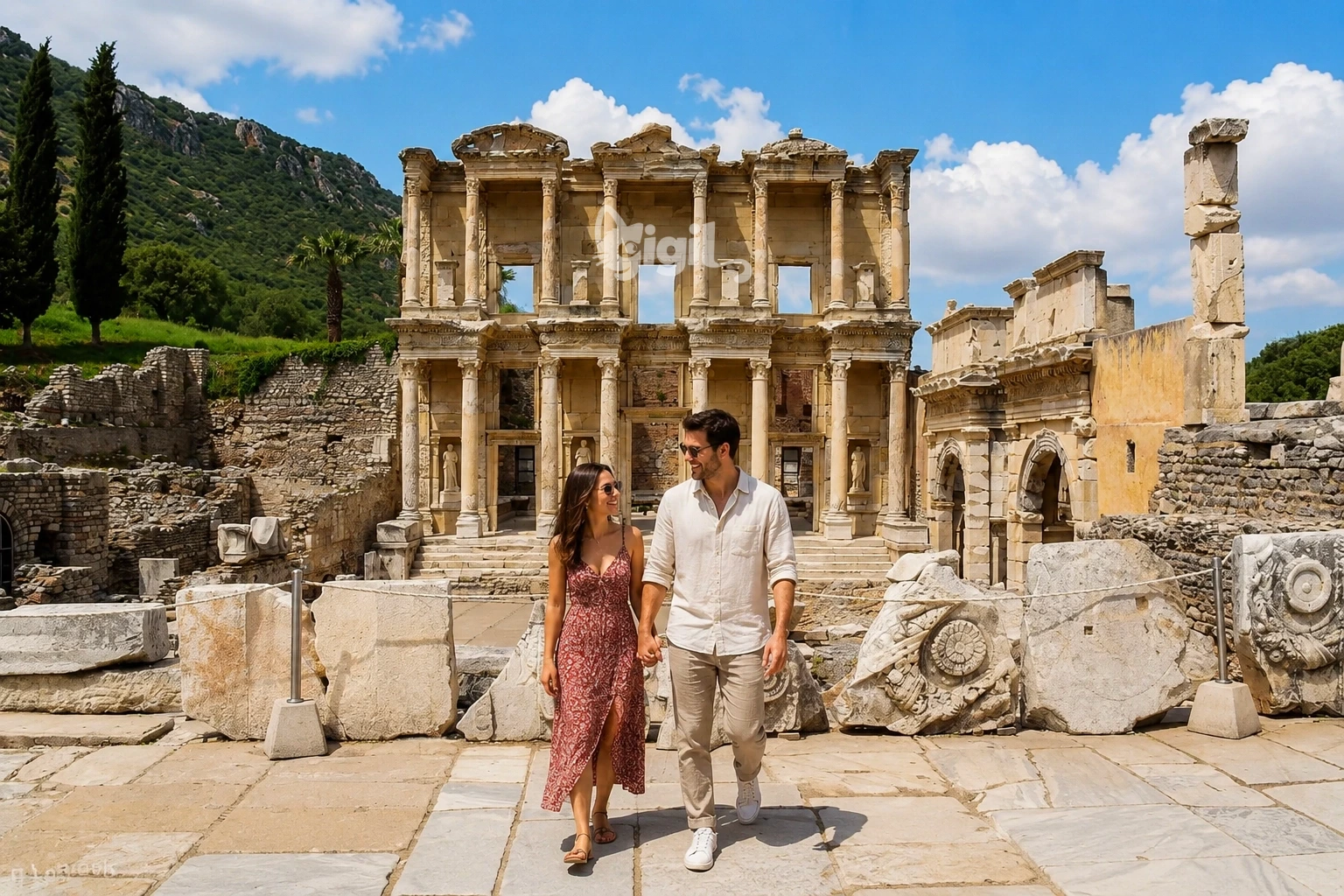
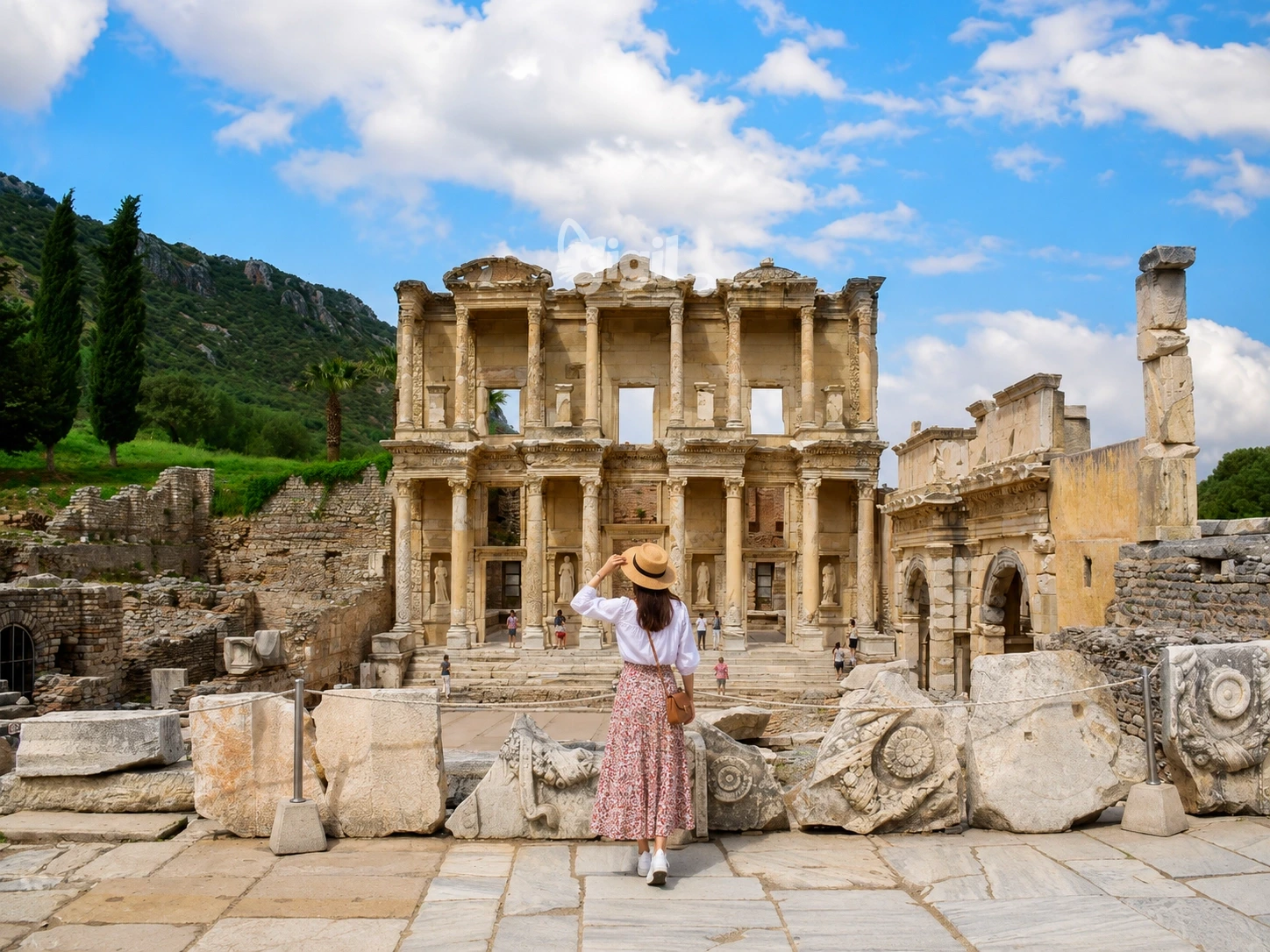

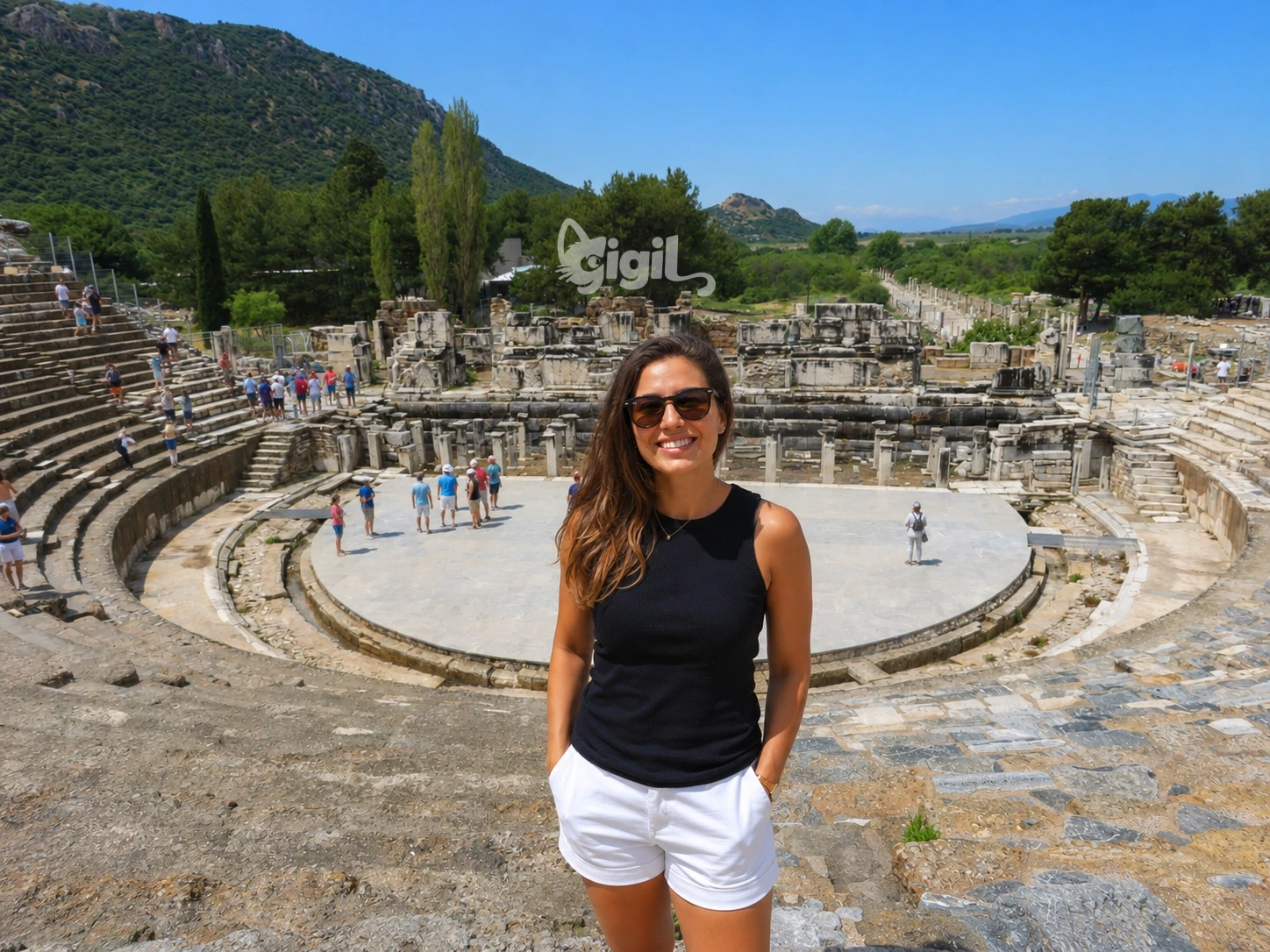

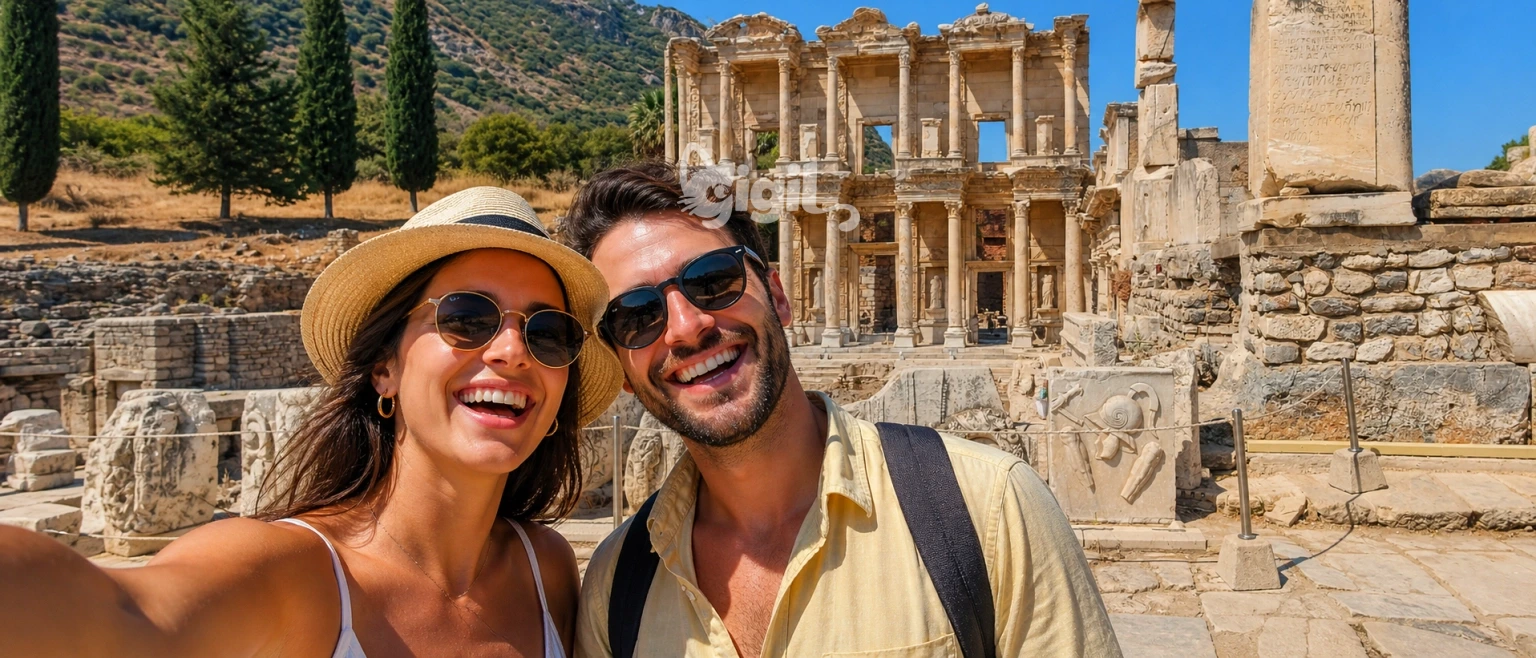
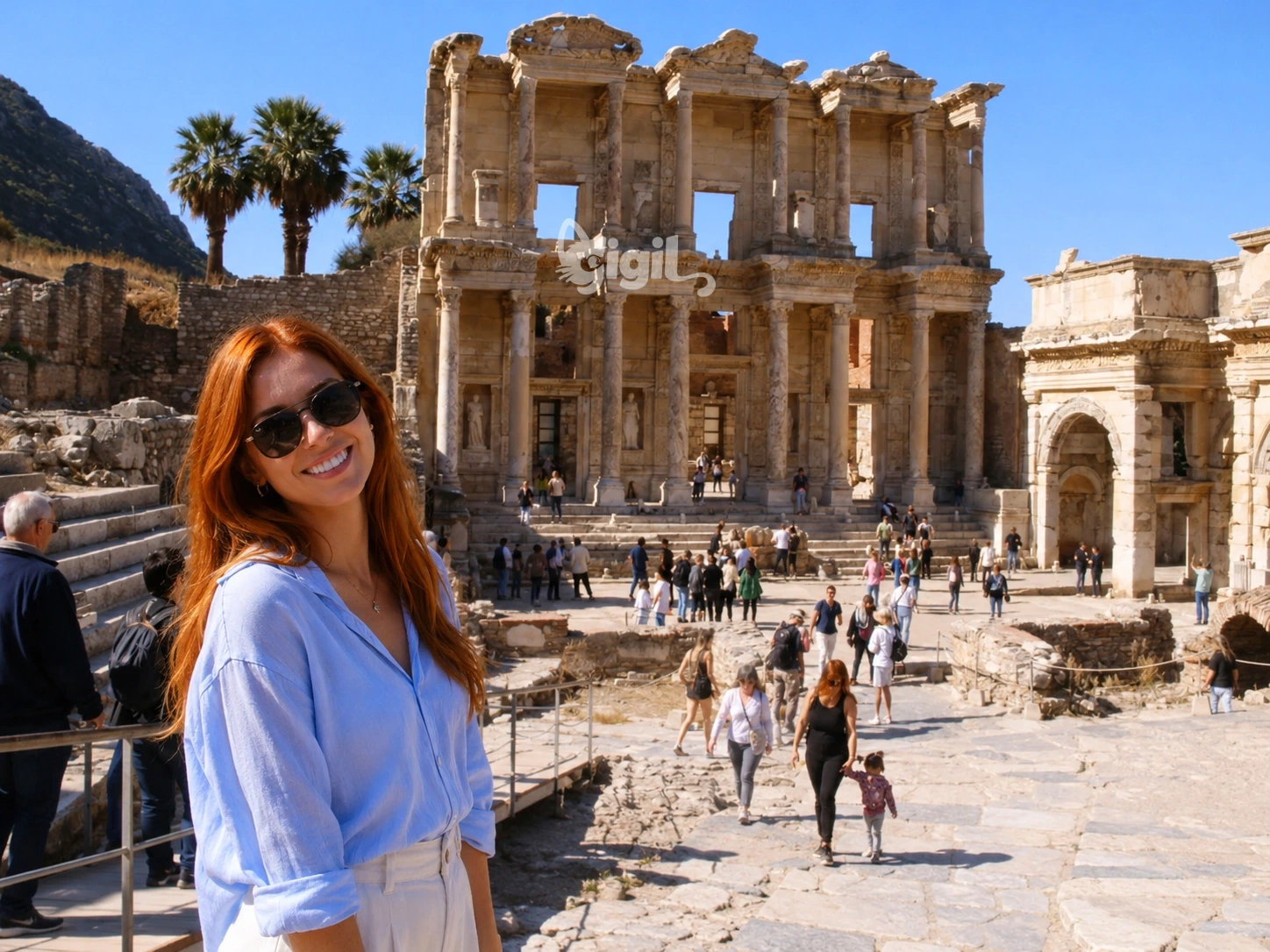
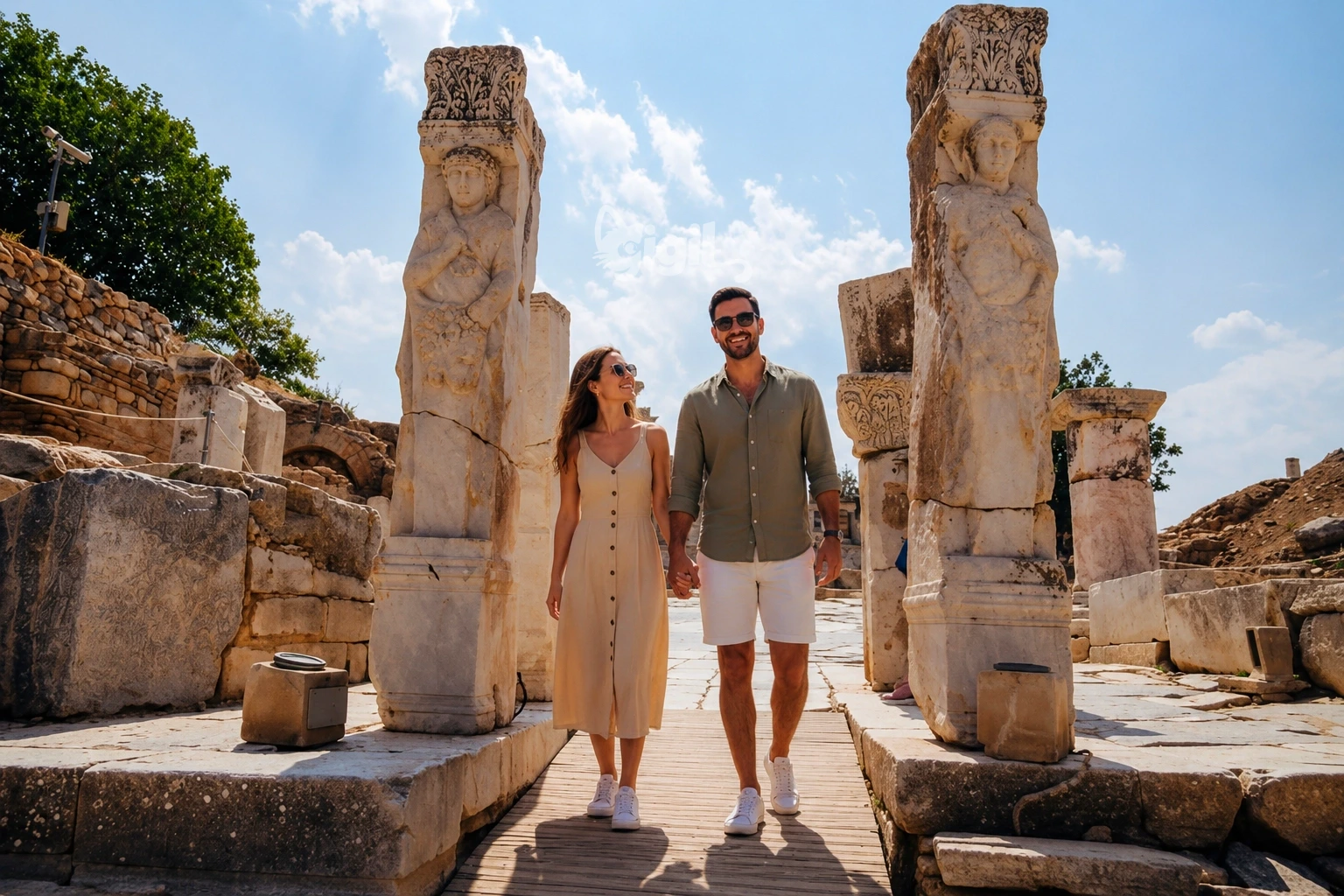

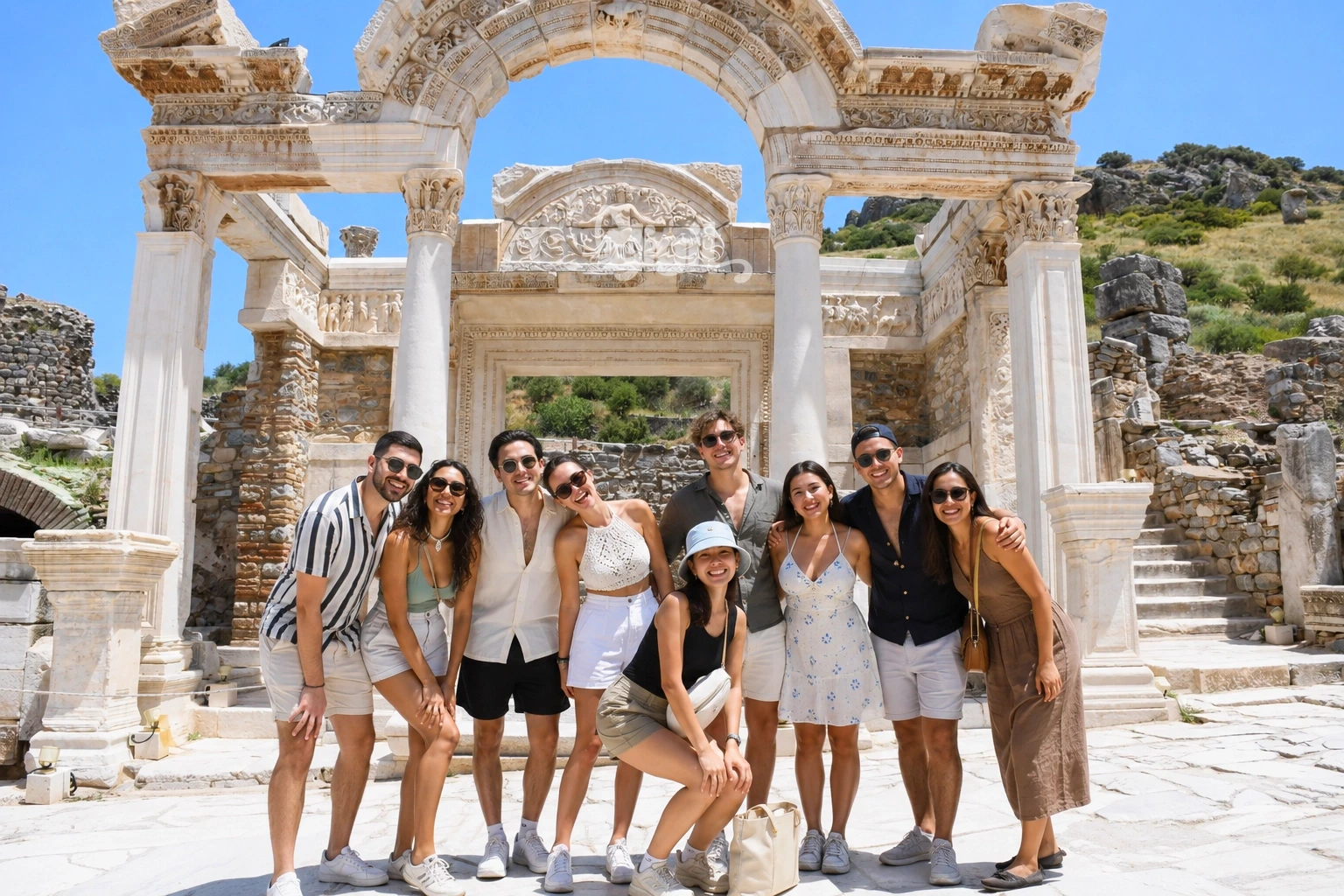
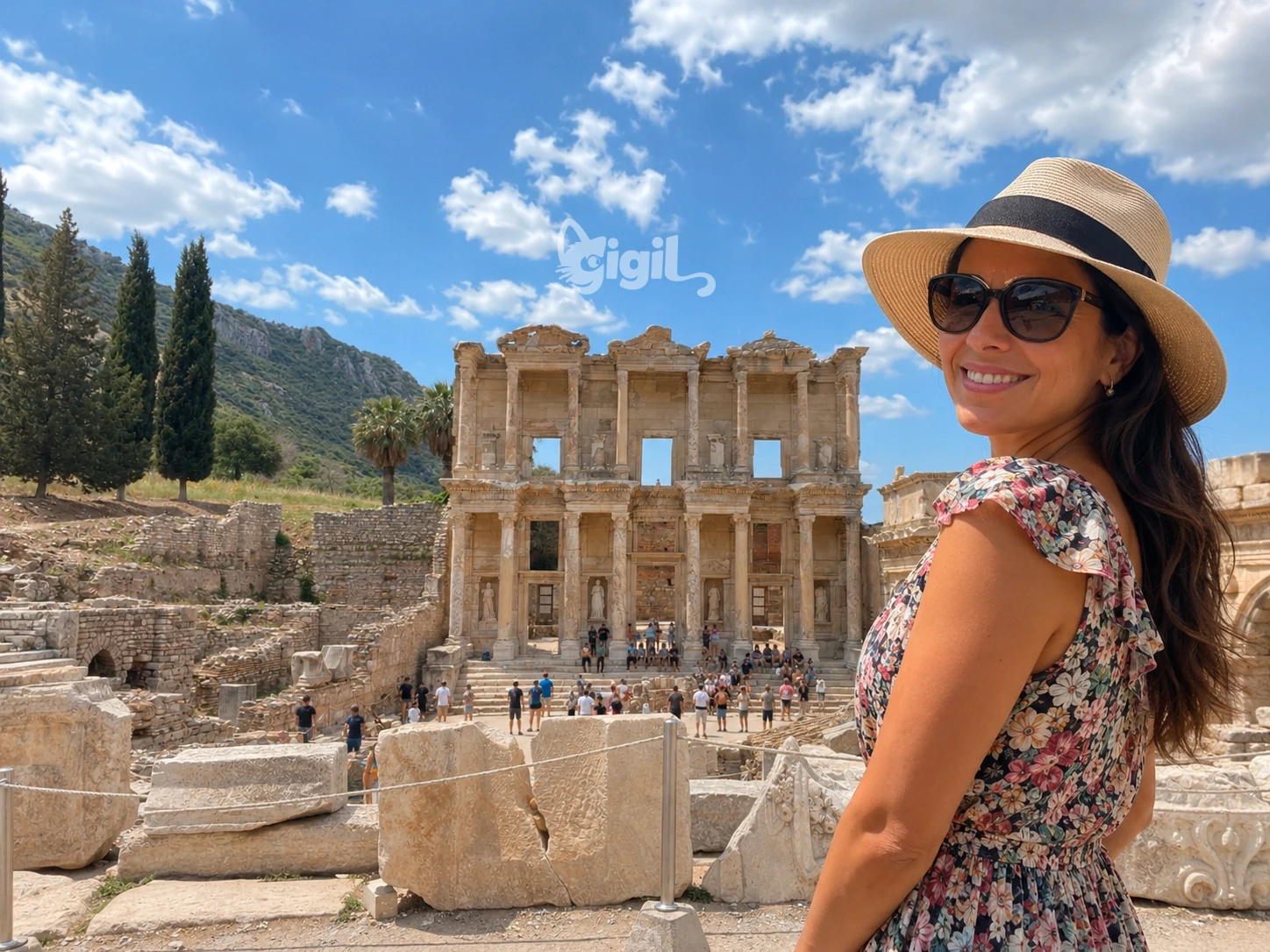
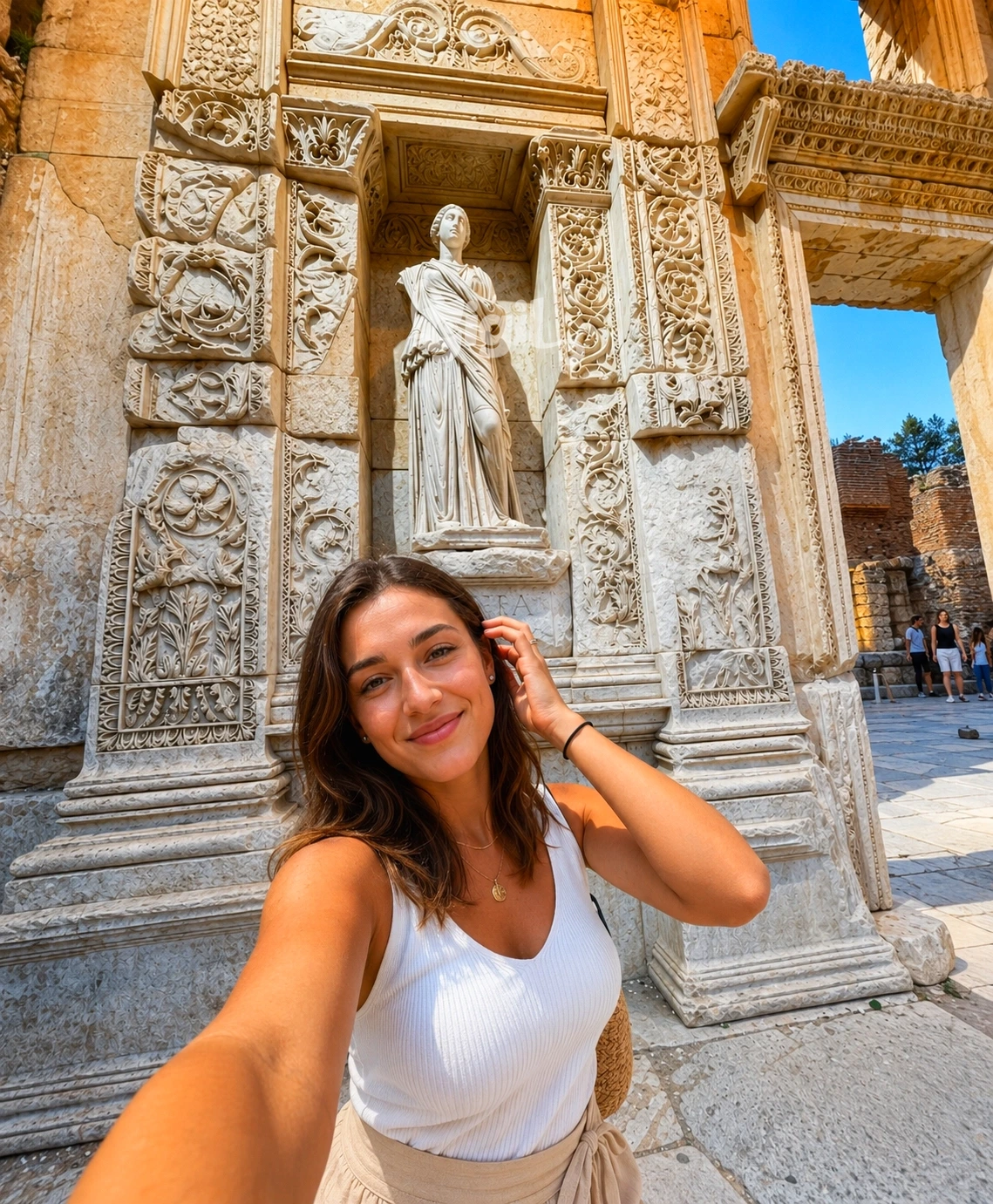
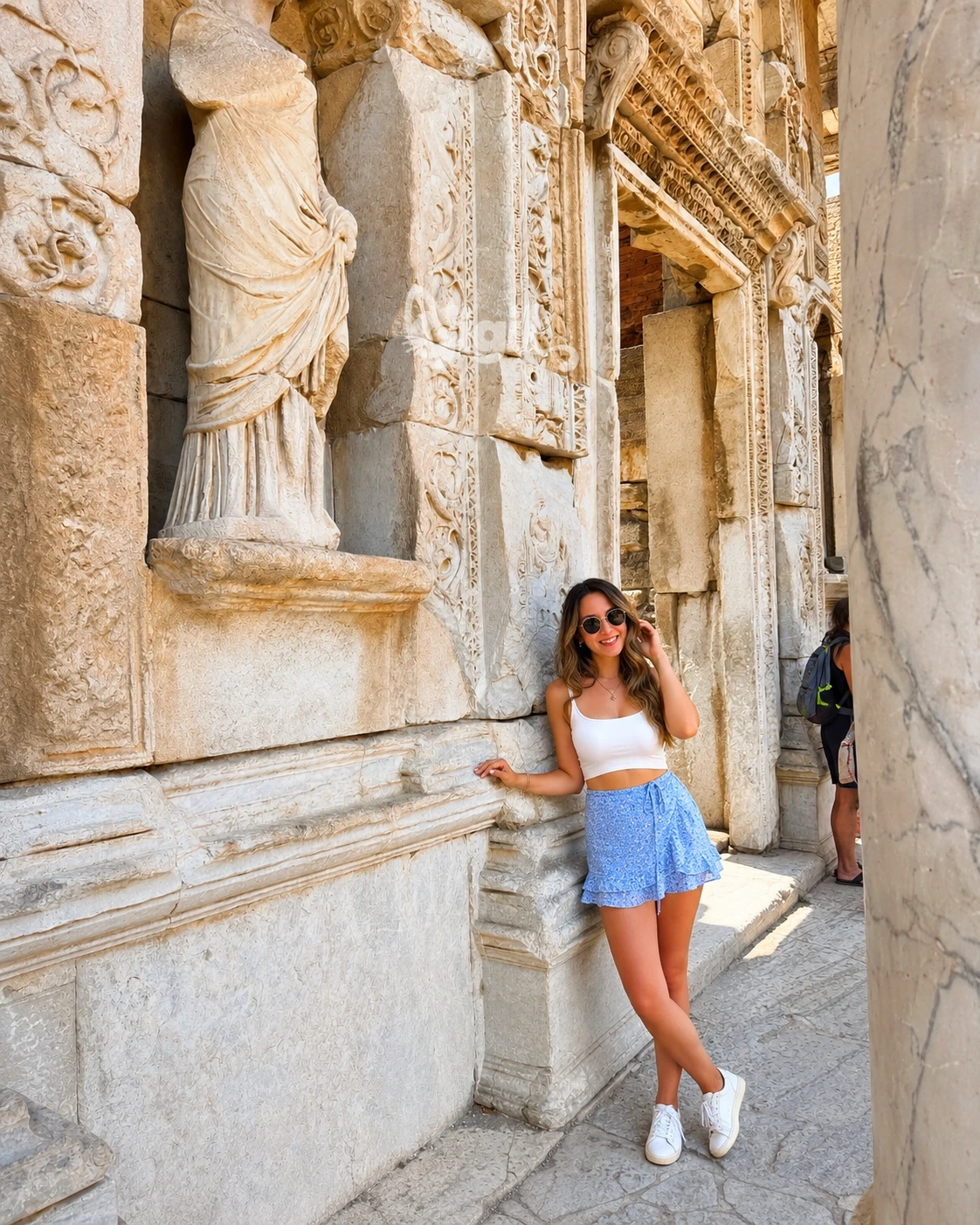
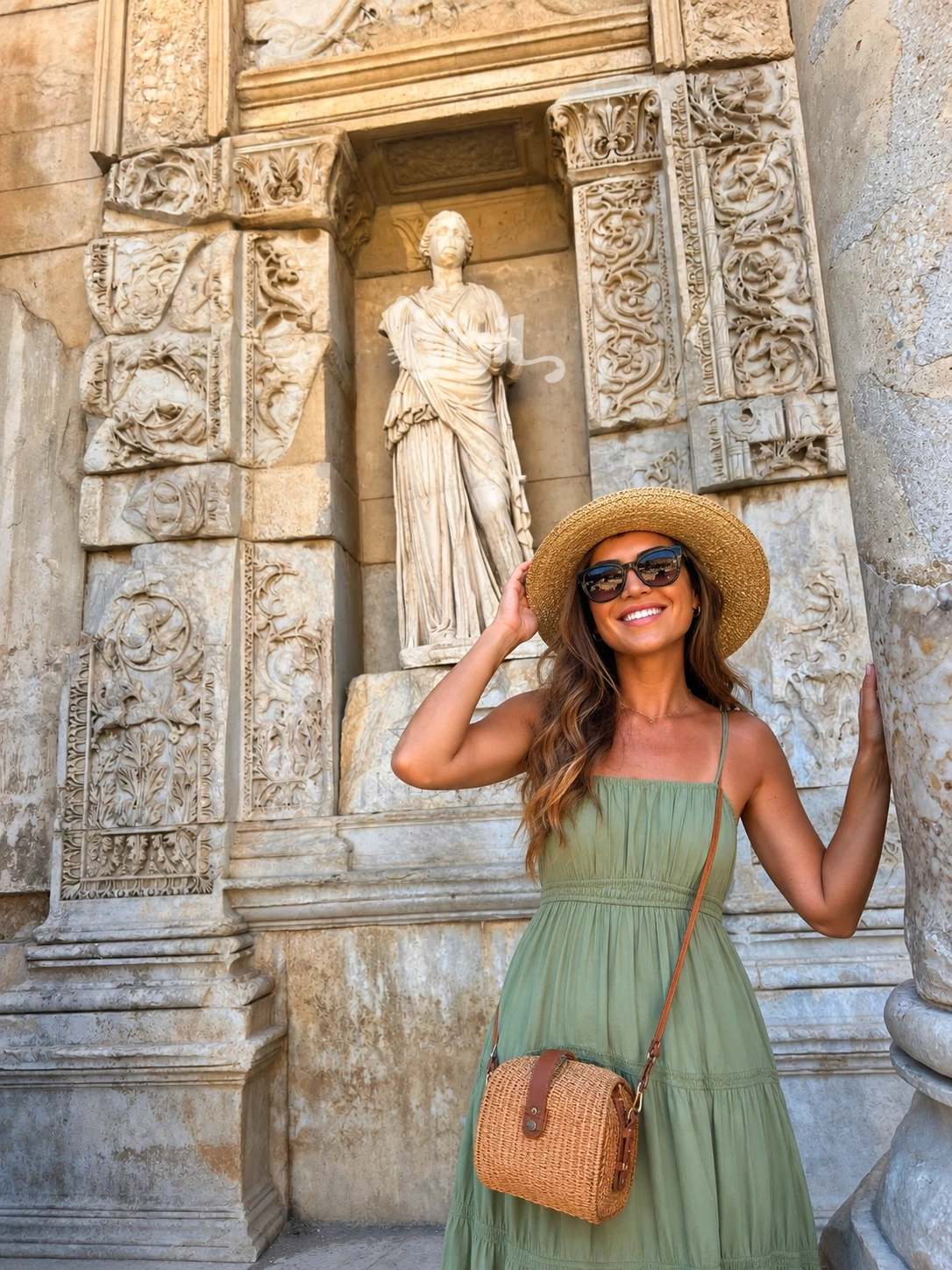
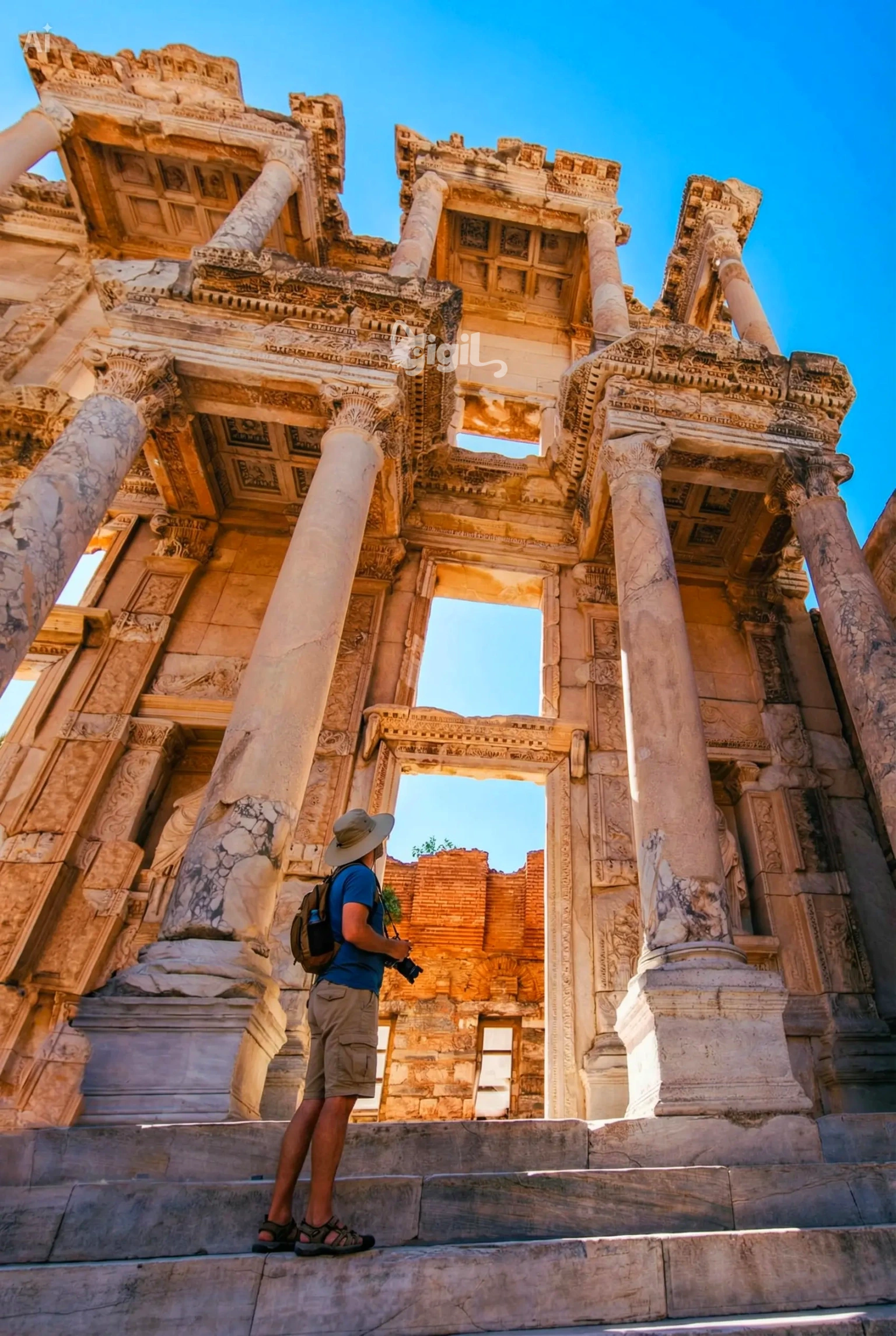
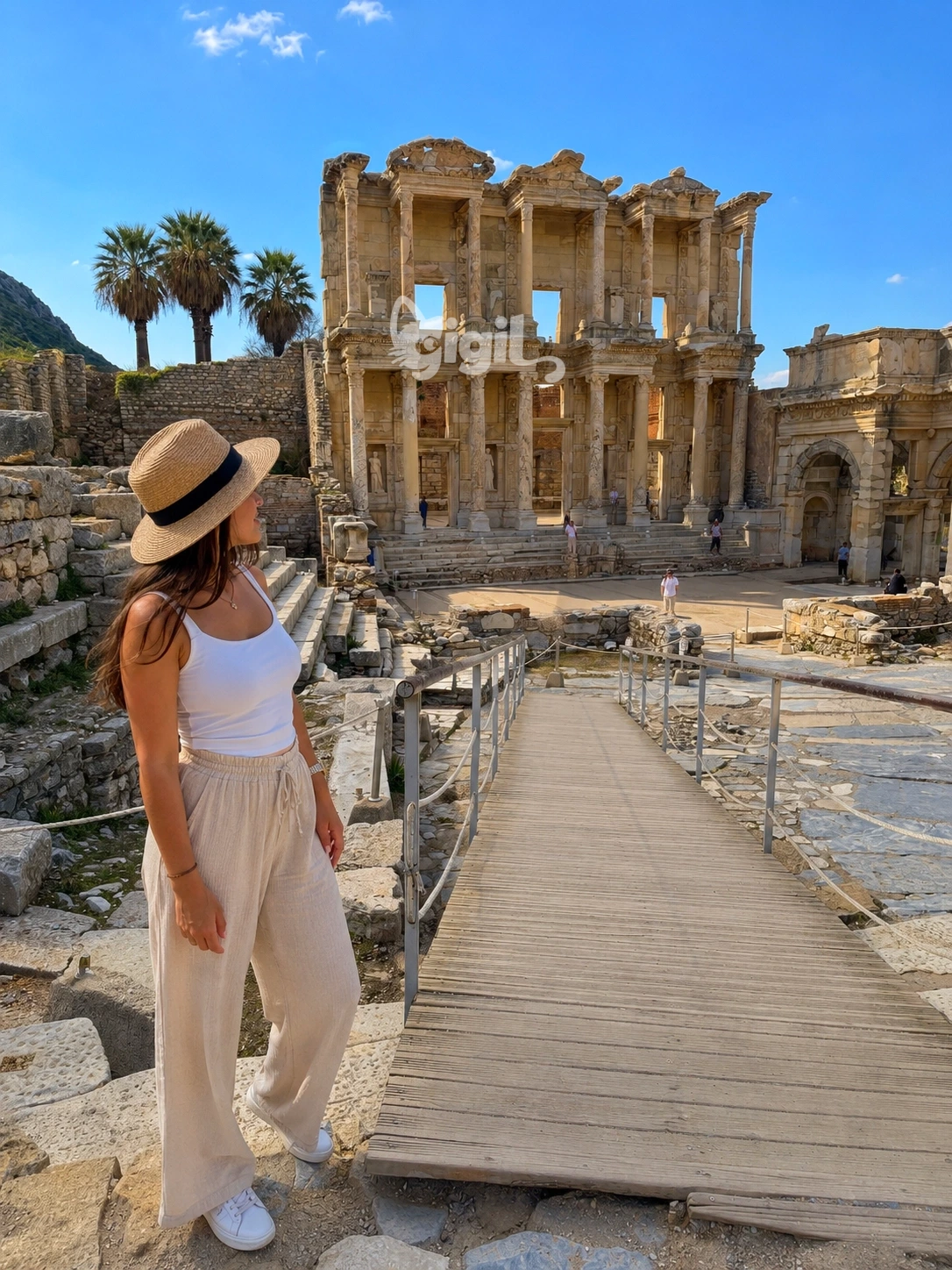
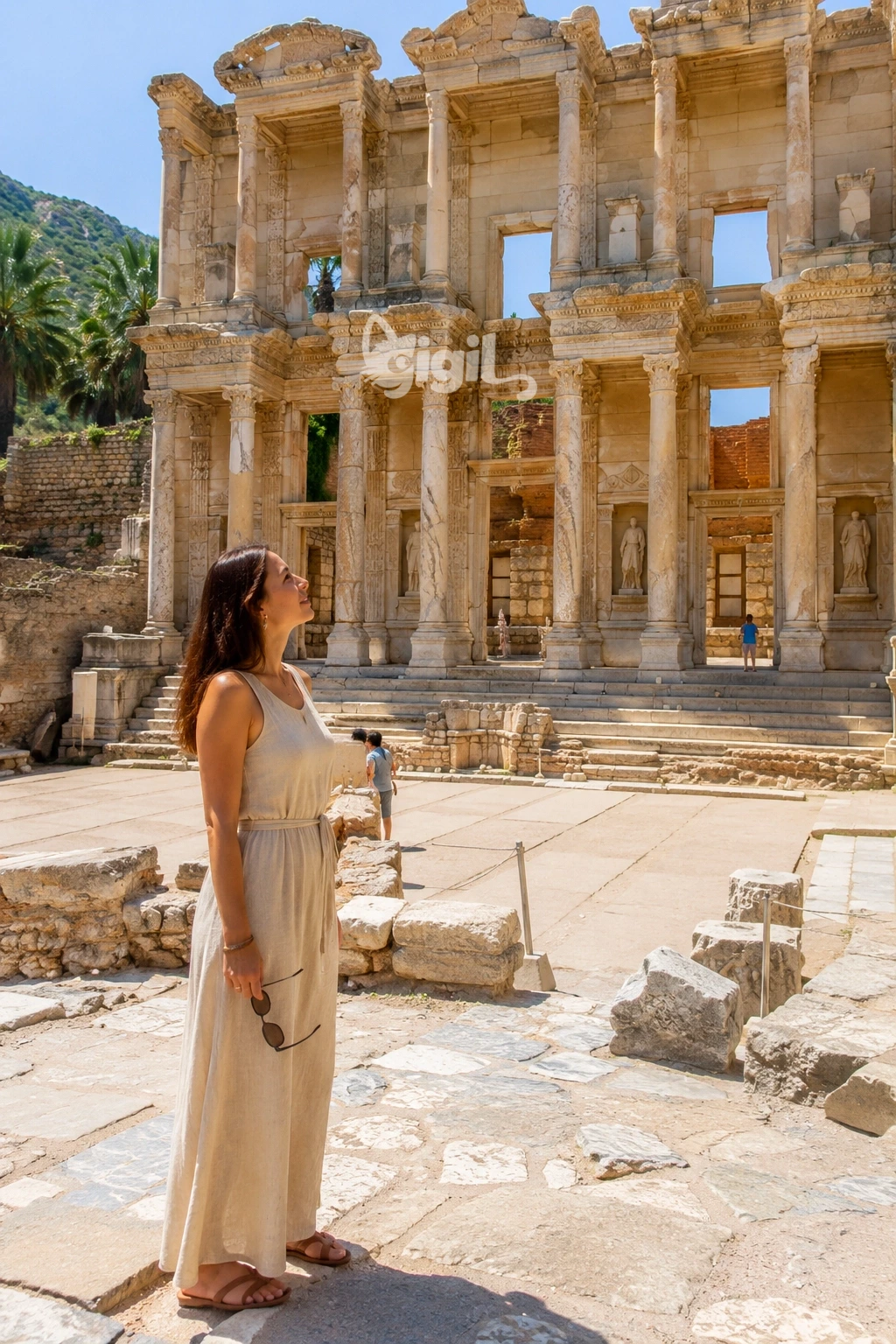

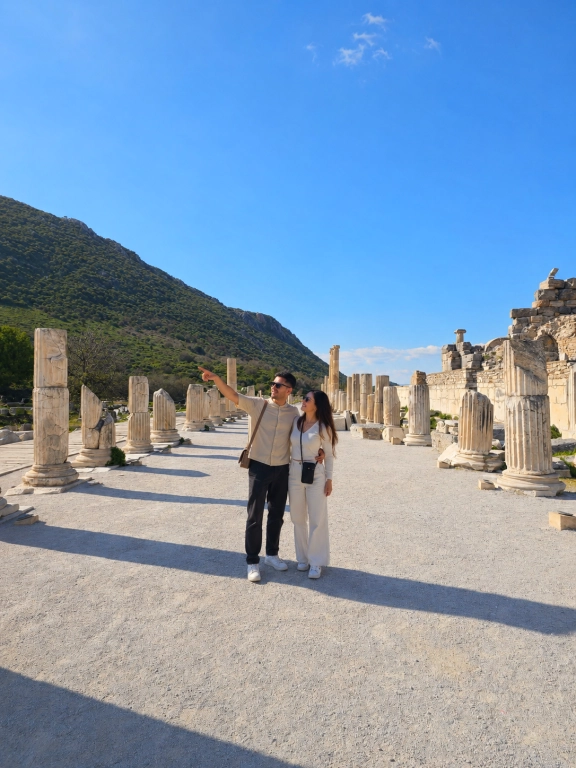
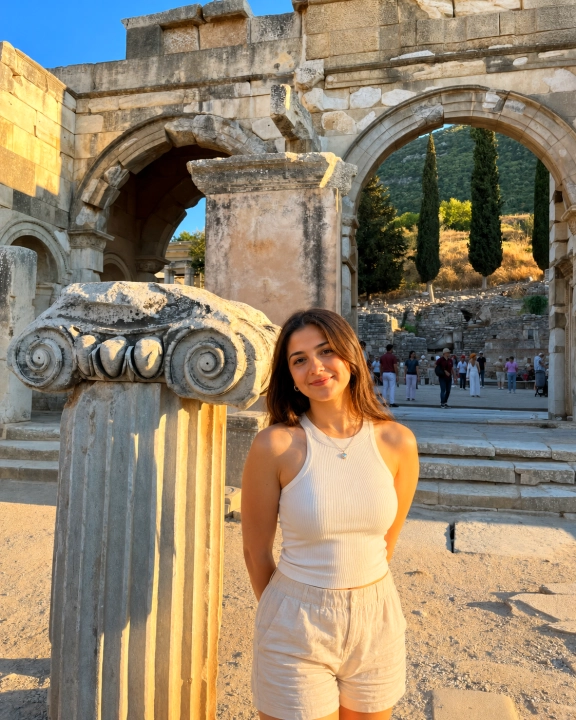
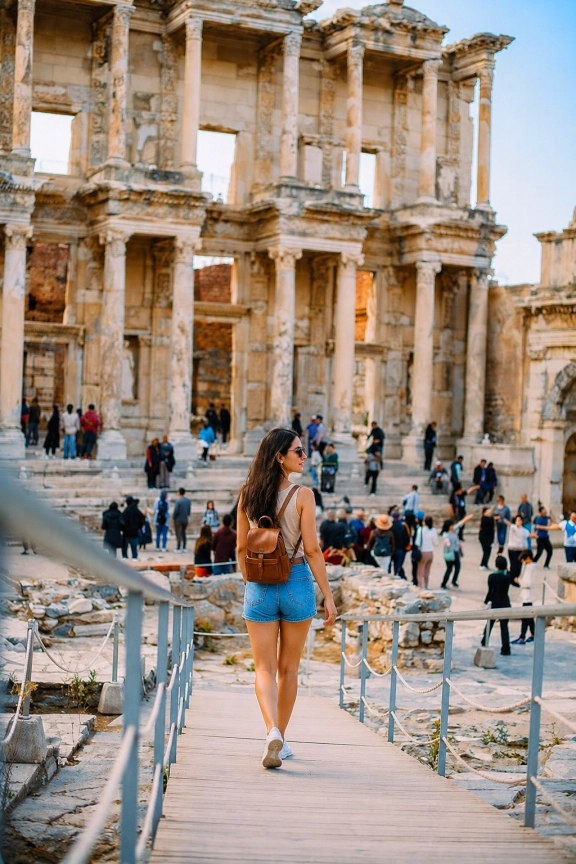
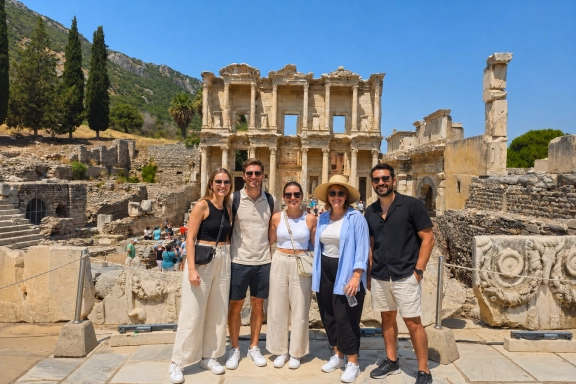
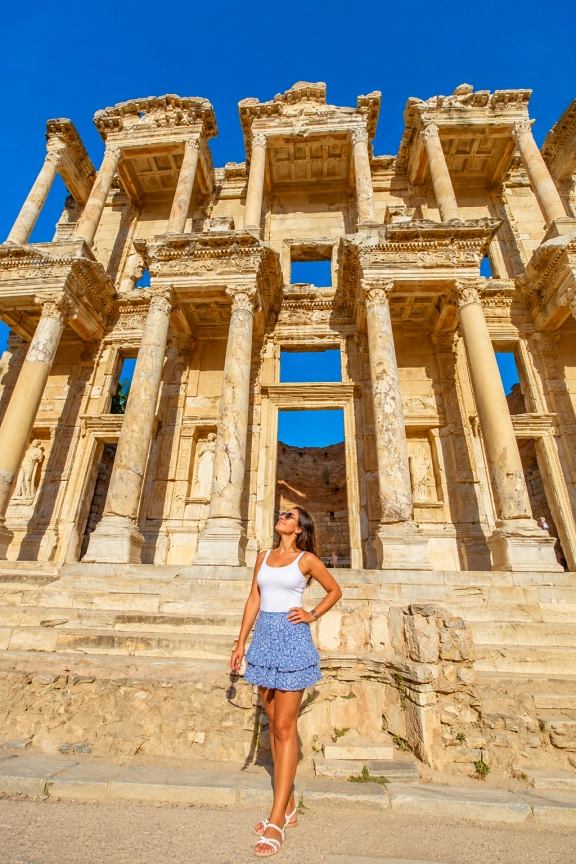
Ancient Ephesus was organised through streets, public buildings and shared spaces. The Library of Celsus and Great Theatre are useful anchors for understanding that organisation, rather than substitutes for looking at the wider city around them.
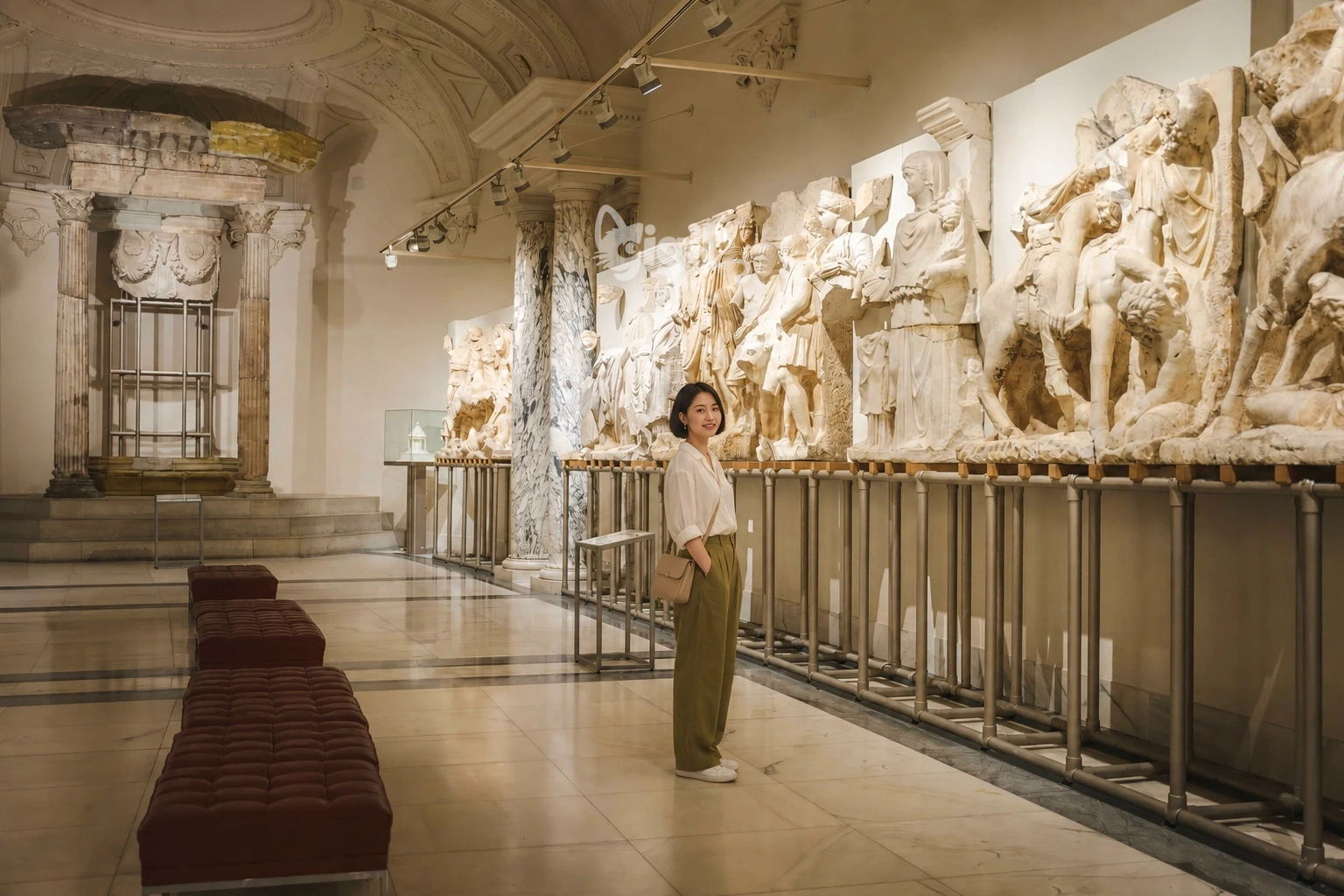
Follow the visual connections between a frontage, the ground before it and neighbouring remains. Some structures are legible through reconstruction, while others survive at a lower level. Compare their roles in the city instead of equating the tallest remains with the most complete survival.
Questions
What is a useful starting point for reading the ruins?
Think about the street system and the public spaces it connects before considering individual buildings only as separate attractions.
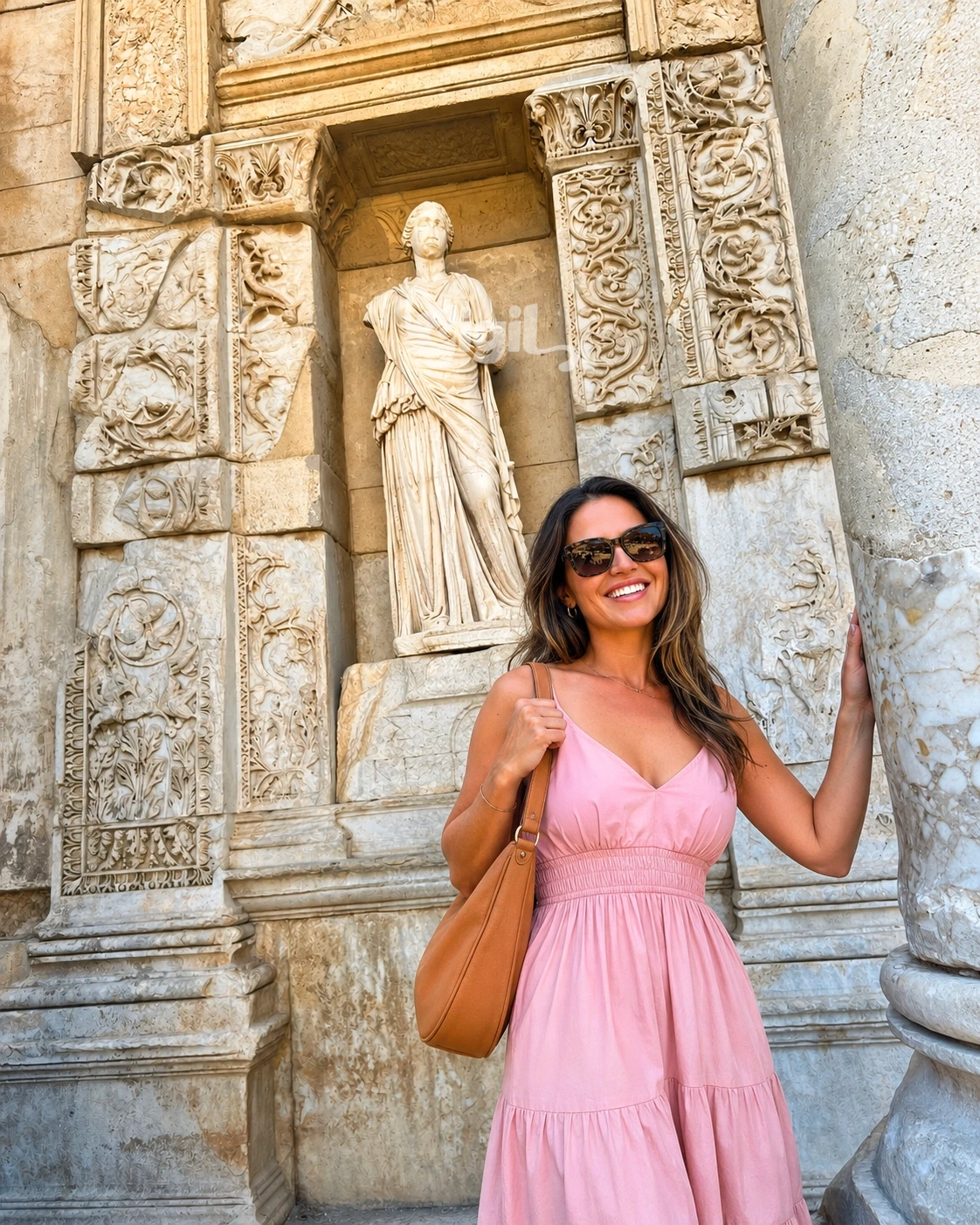
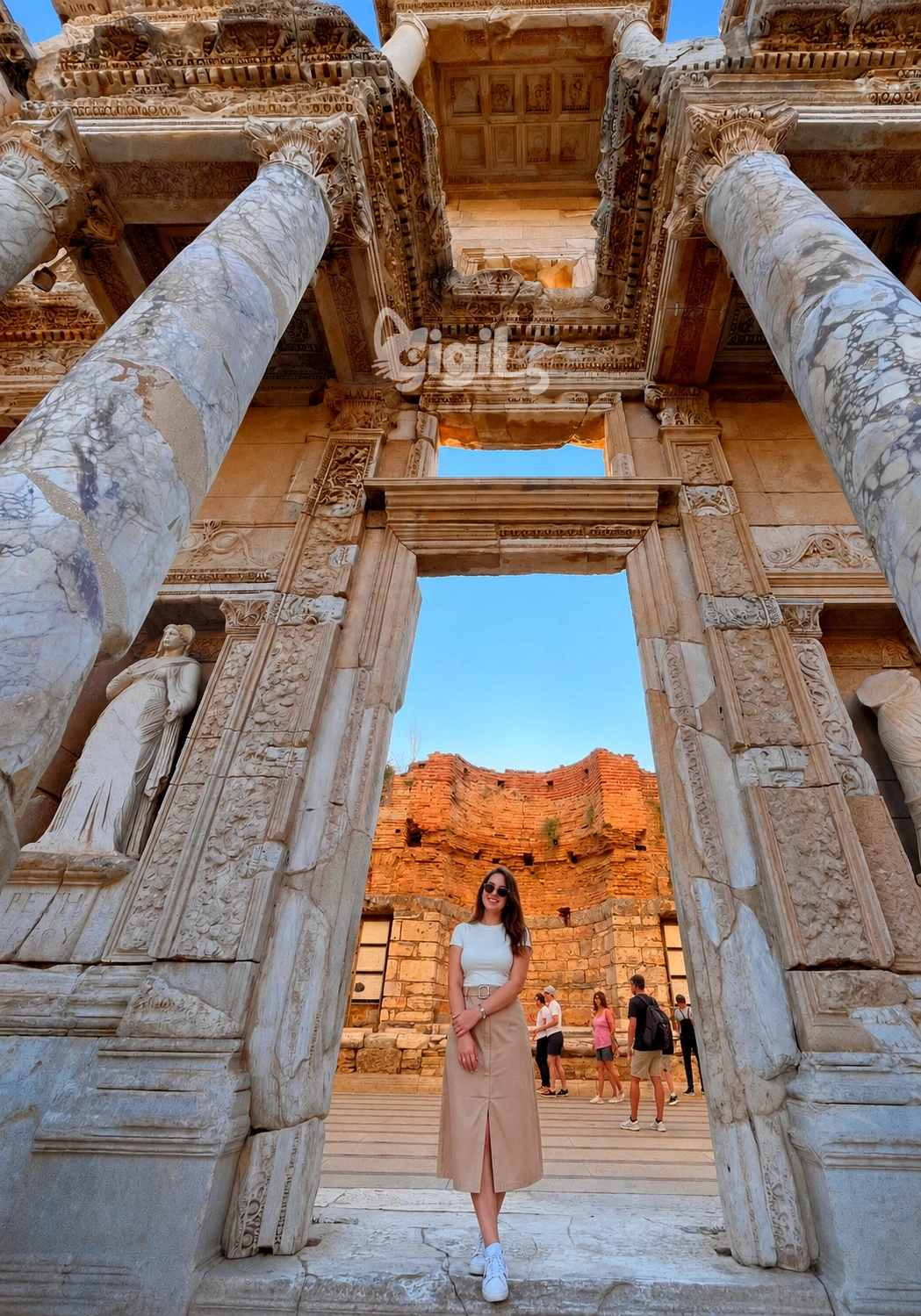
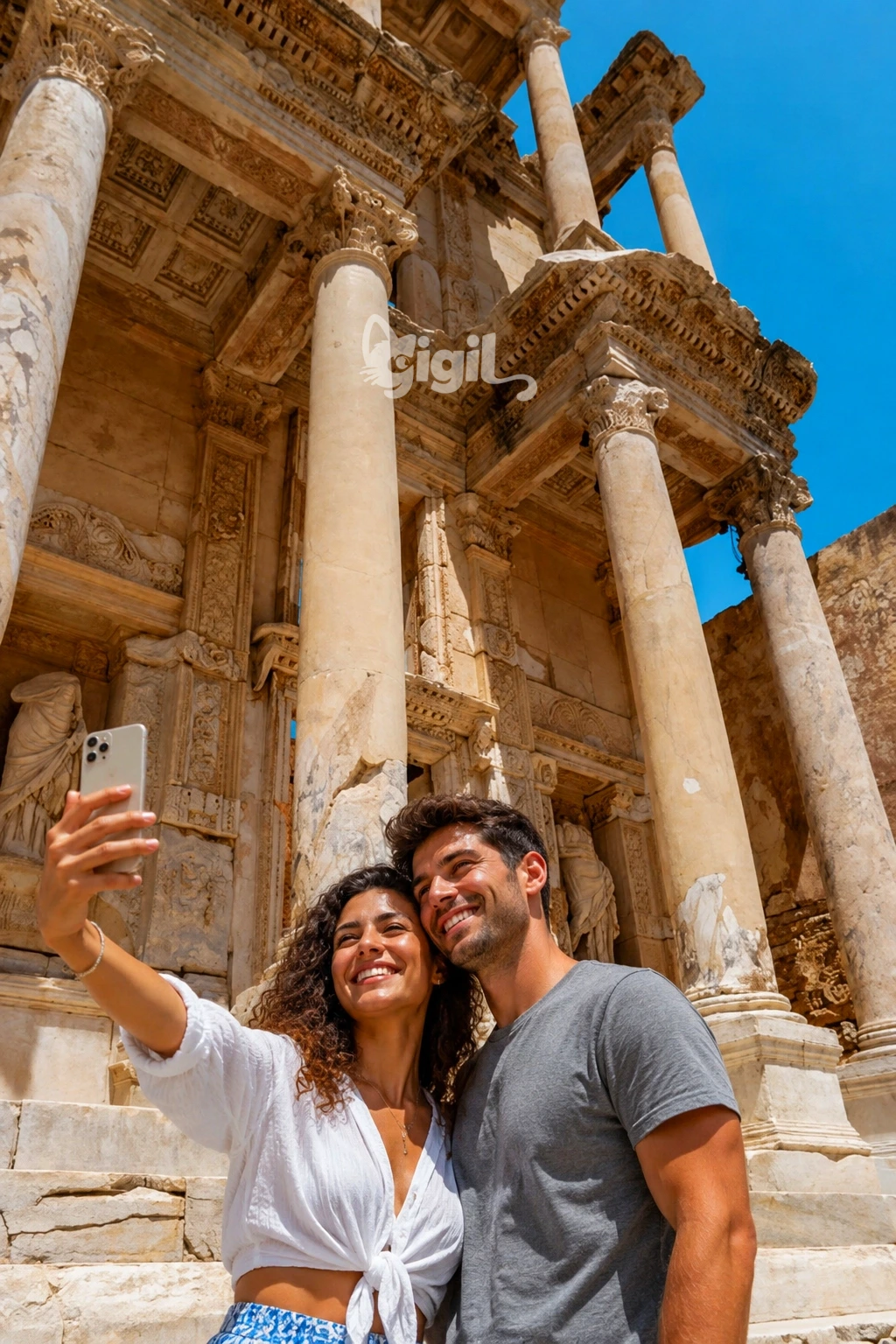
Does the library facade represent the entire building?
No. The reconstructed frontage is one part of the ancient library's story, not evidence that its whole interior and structure survive intact.
What should I consider at the theatre?
Look at the relationship between a large audience space and the surrounding city, which helps explain the monument's public role.
Why do some remains survive only near ground level?
Survival, later change and conservation differ between structures; low remains can still preserve important evidence of a building's layout and use.