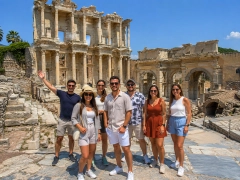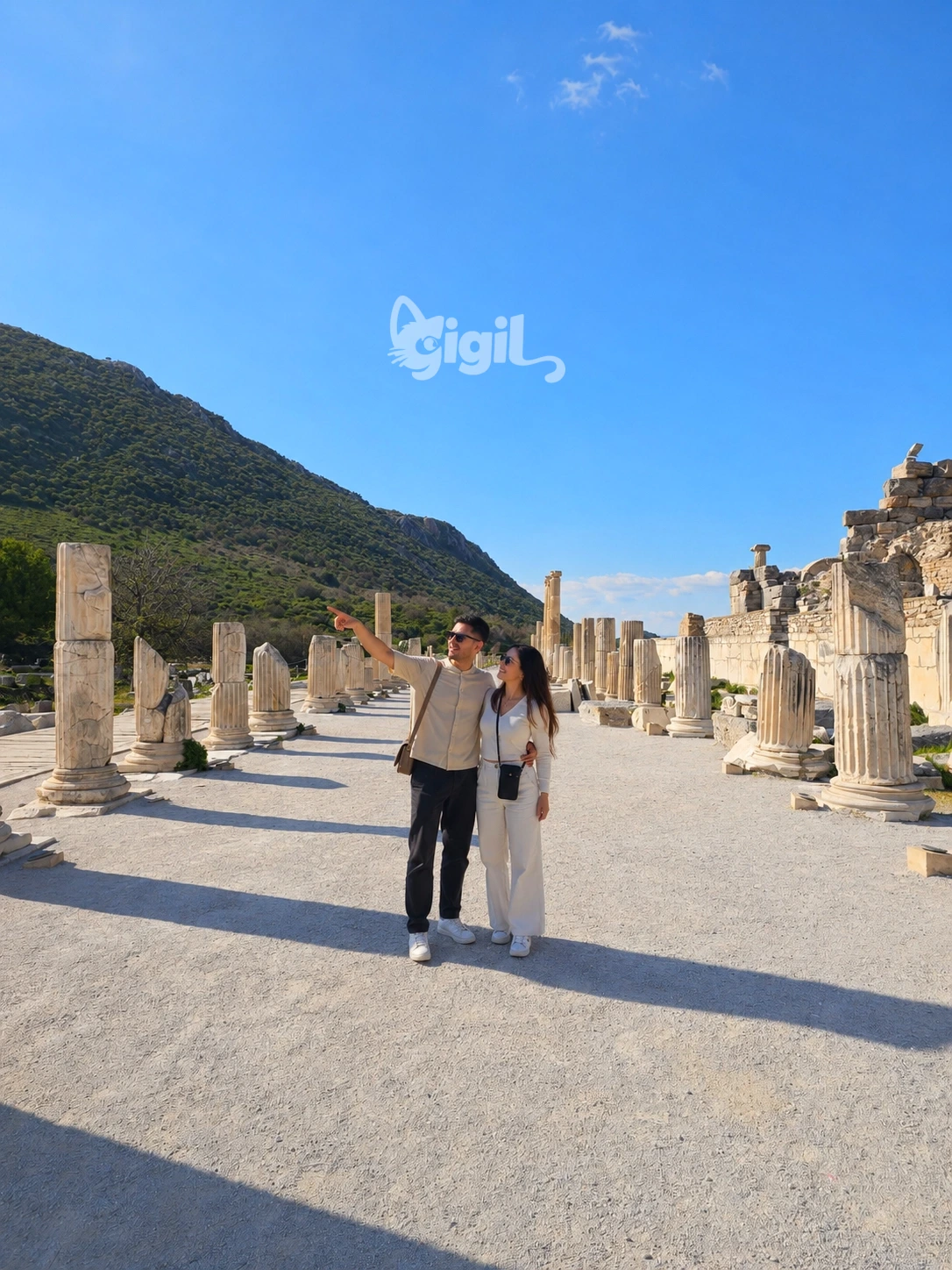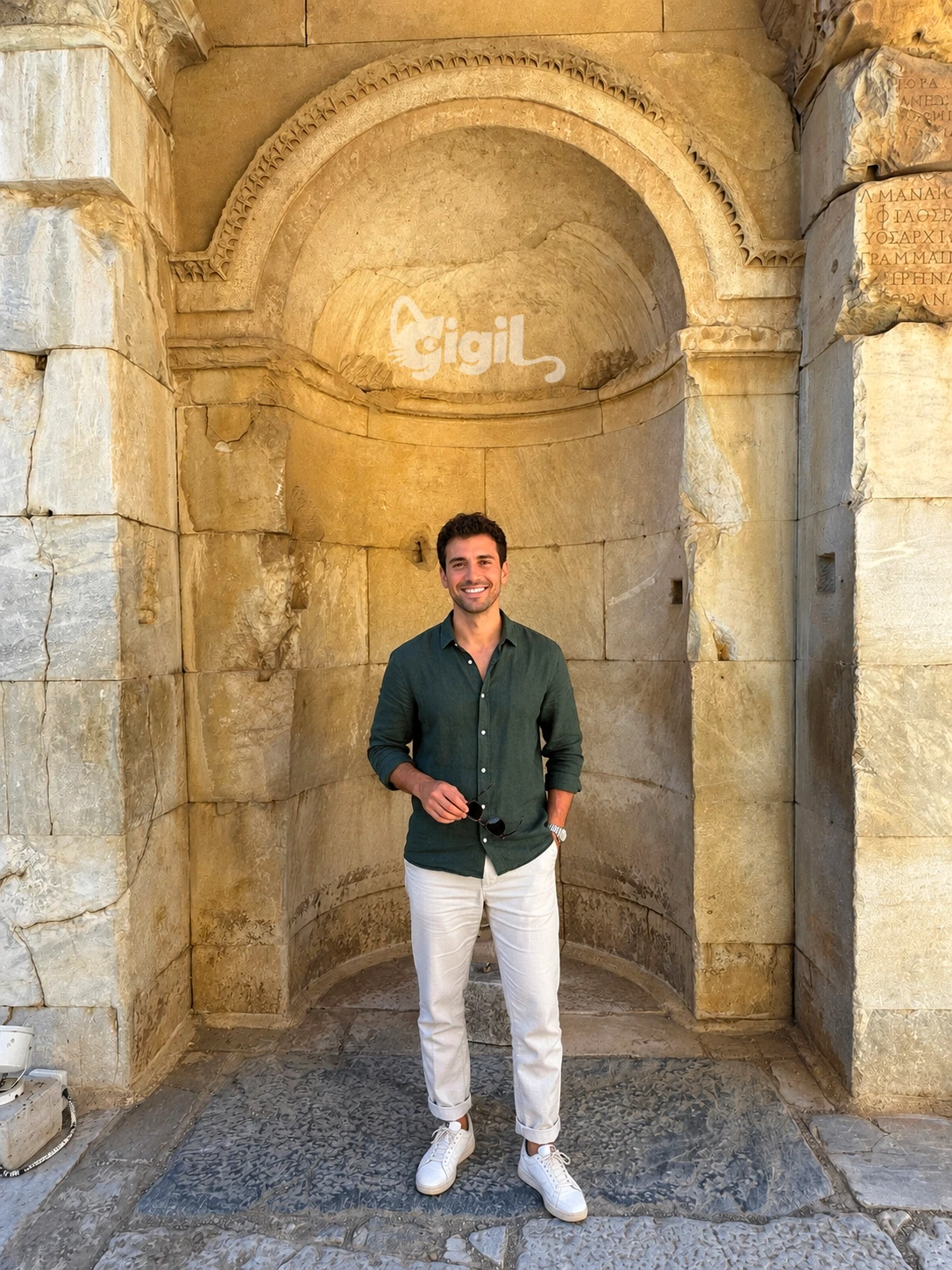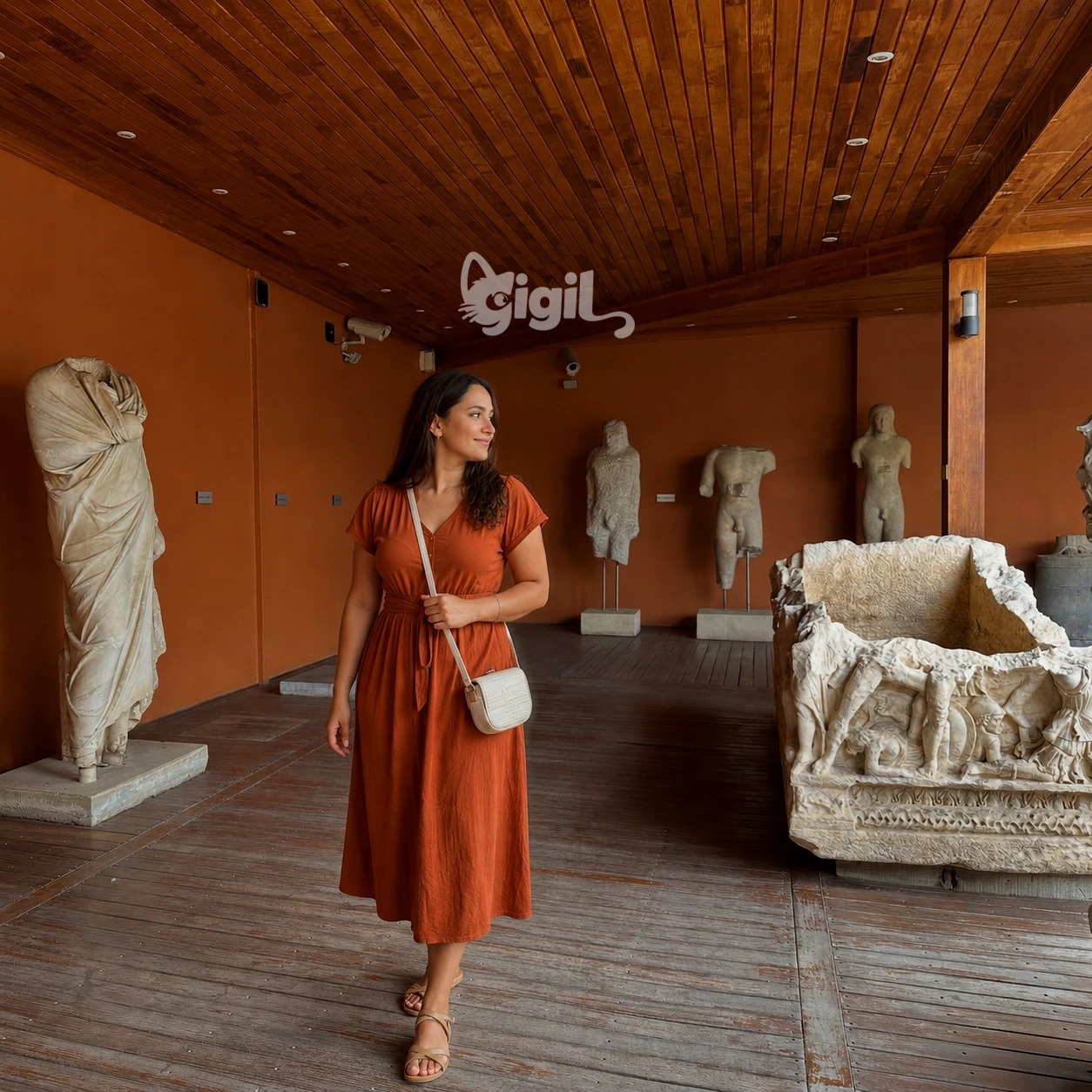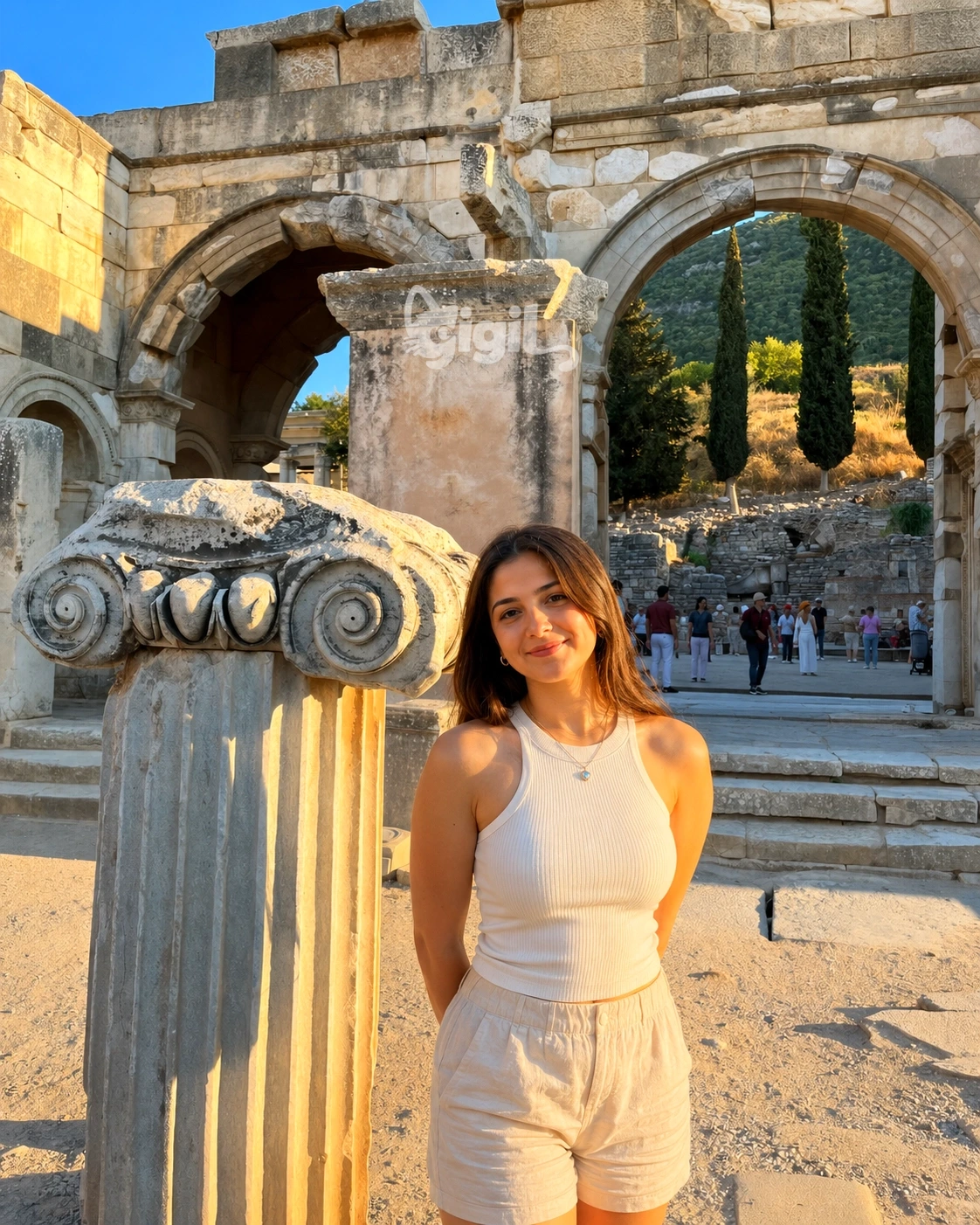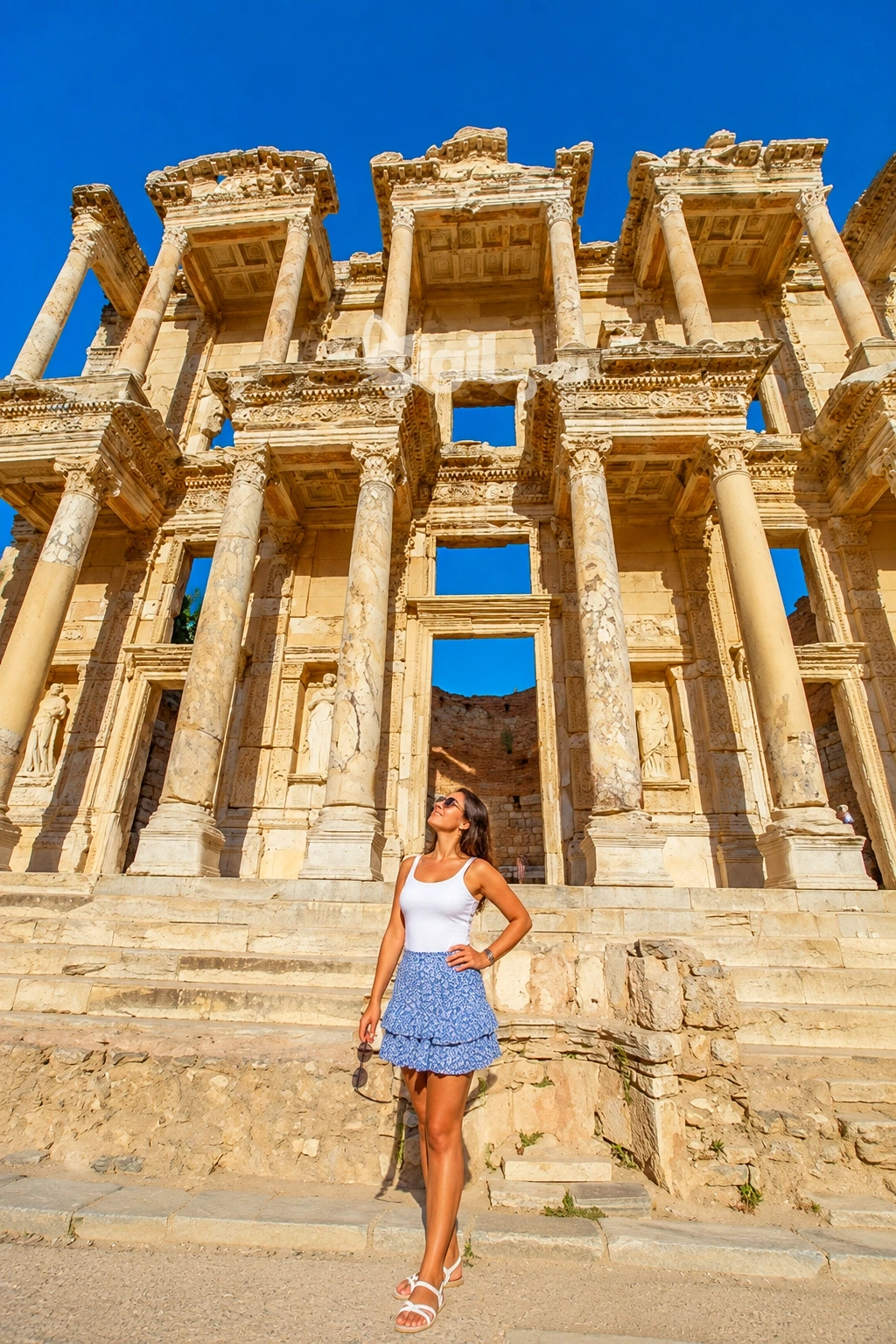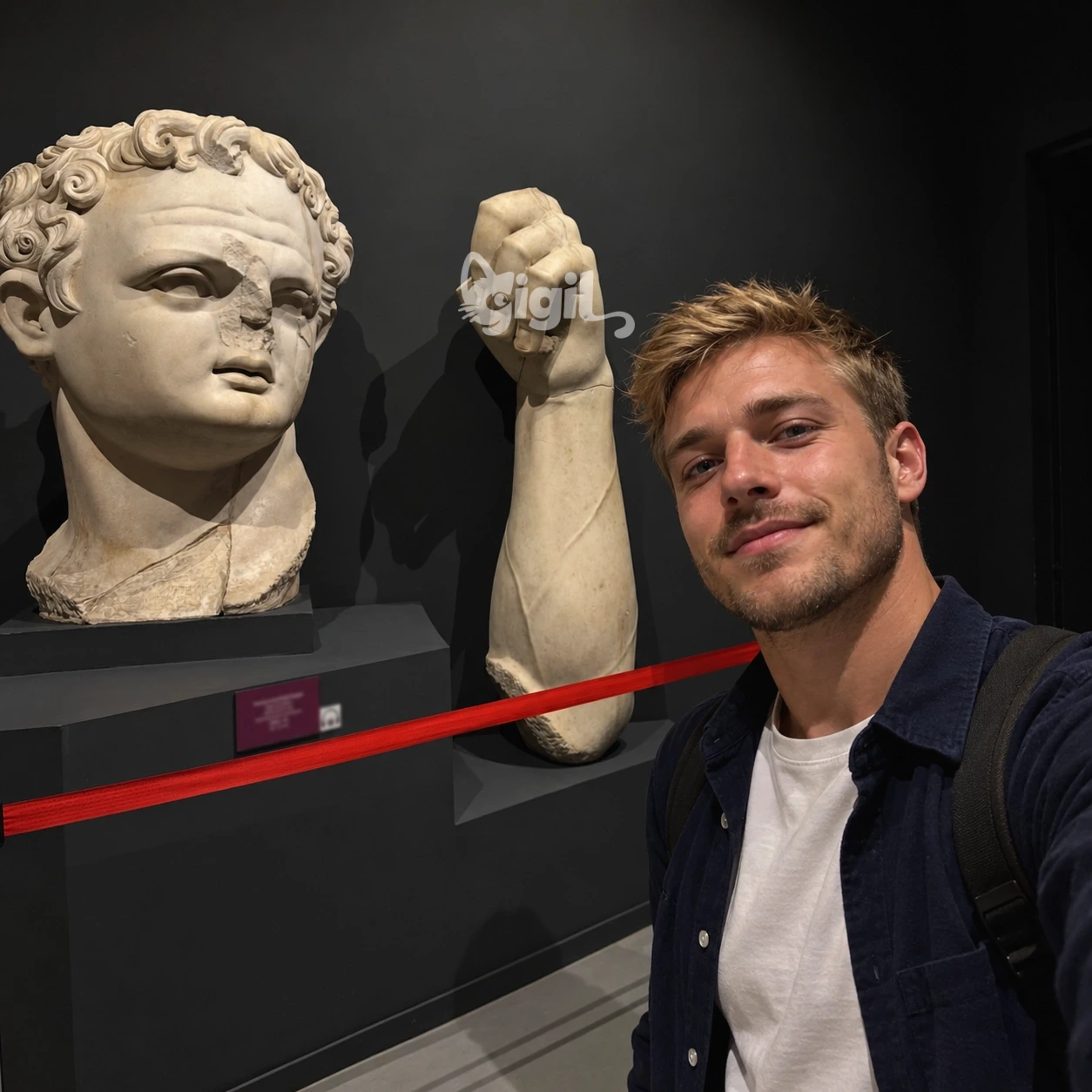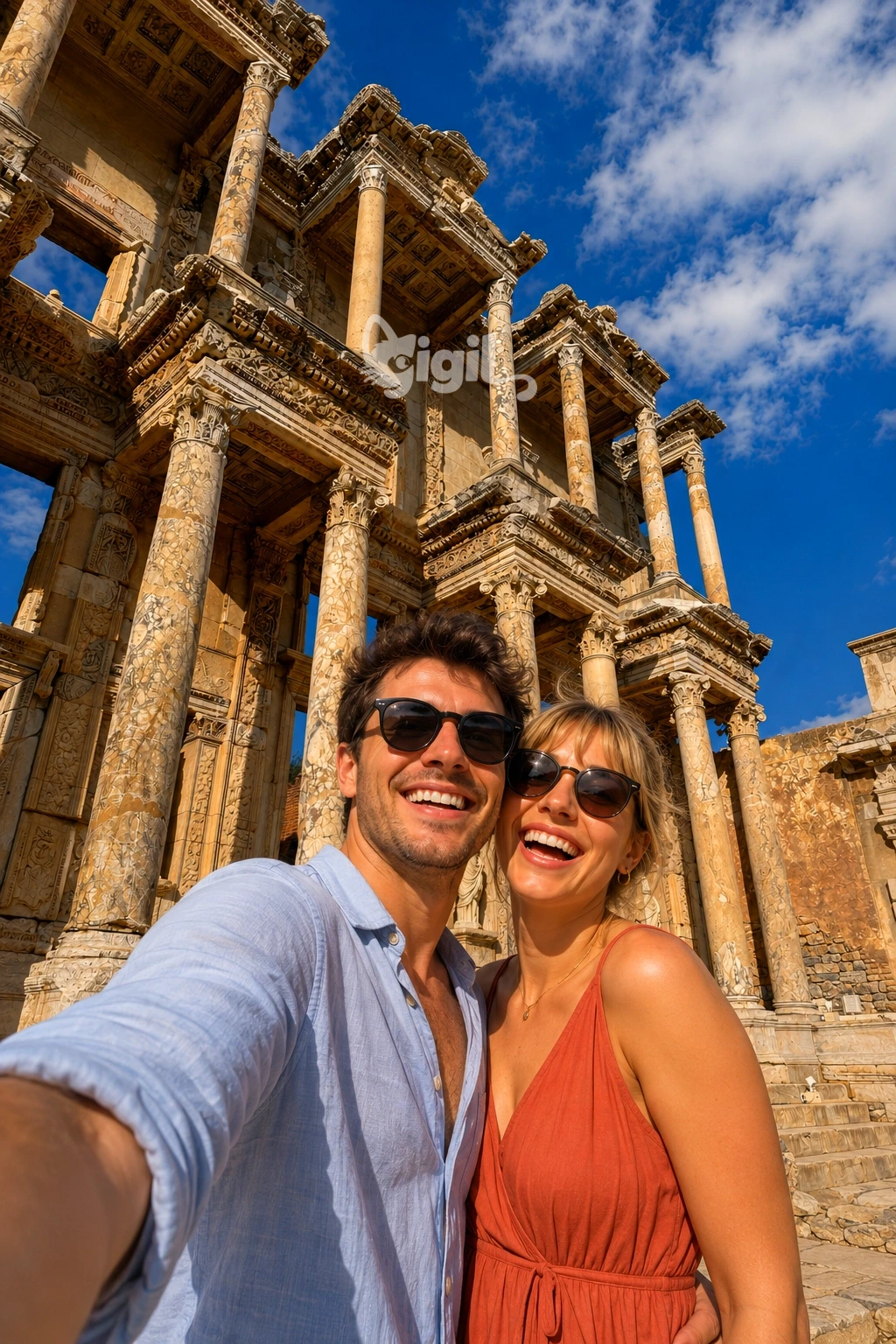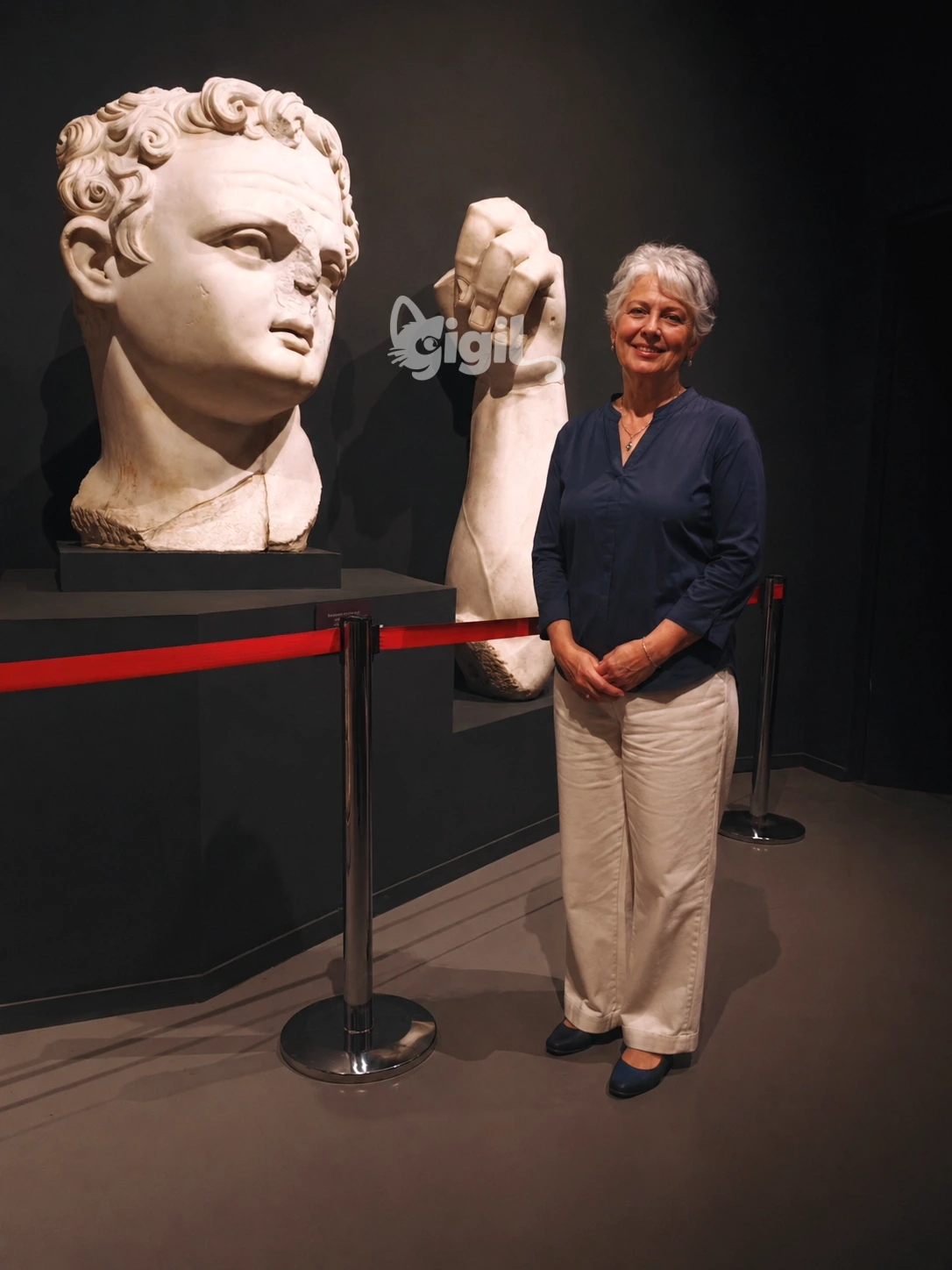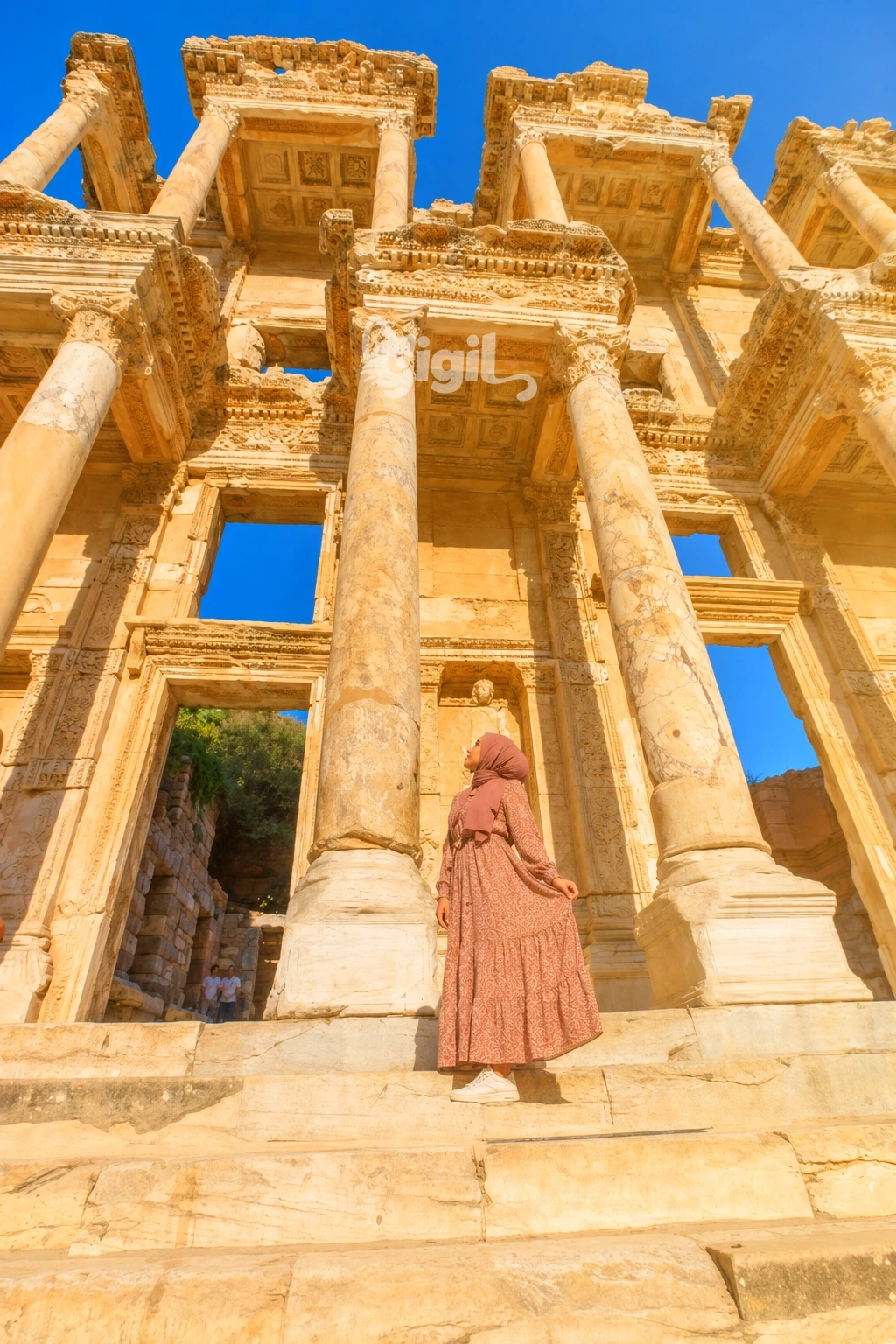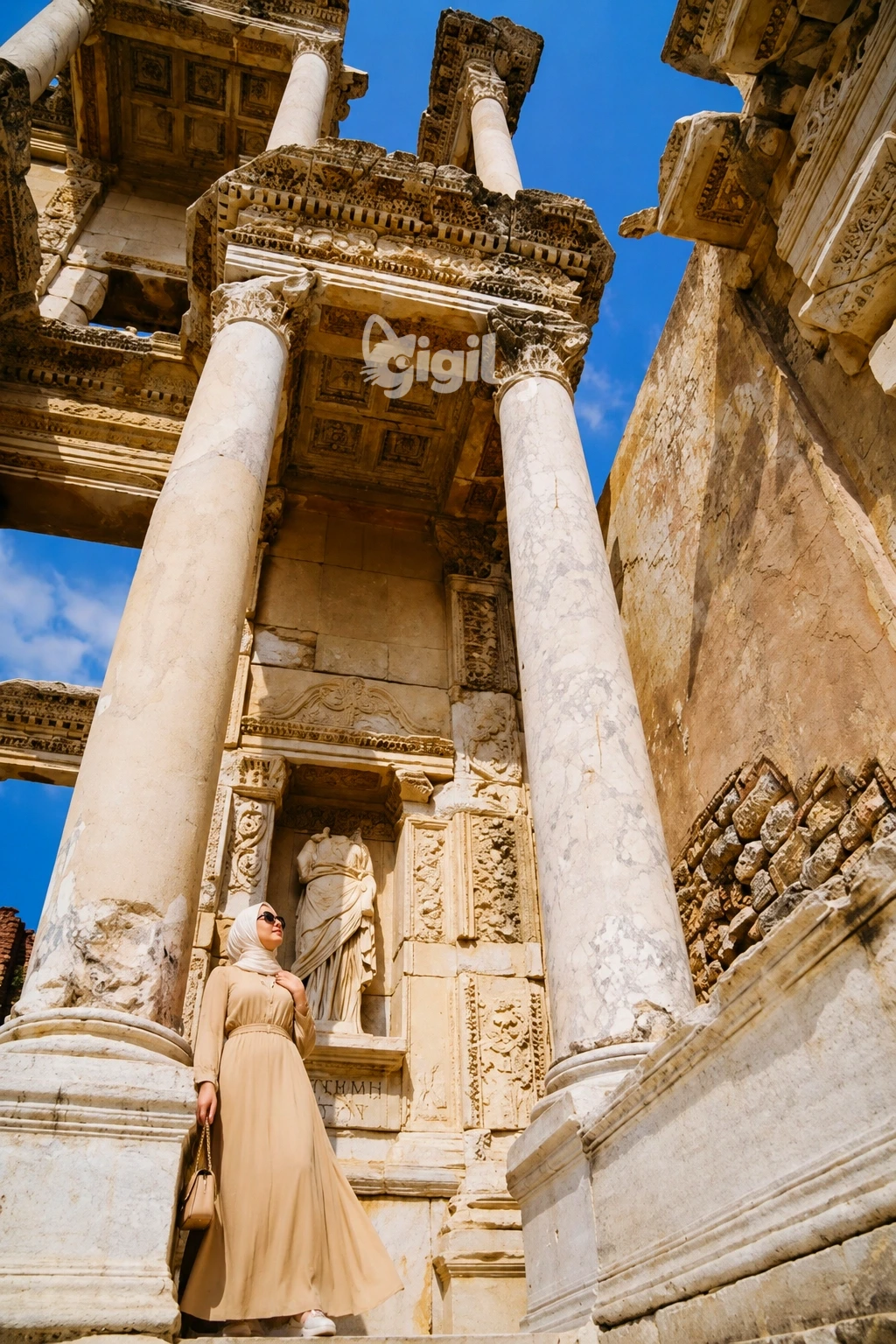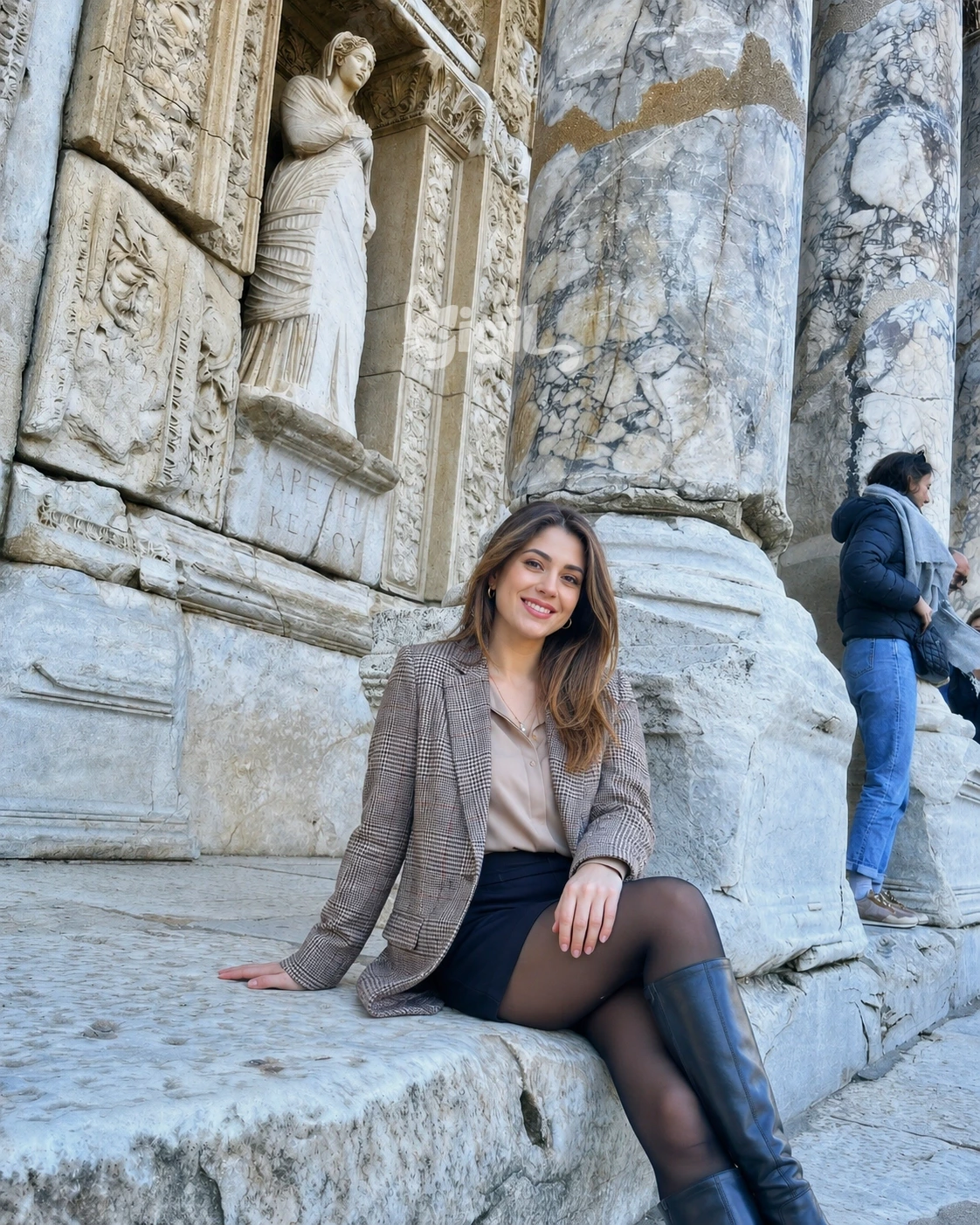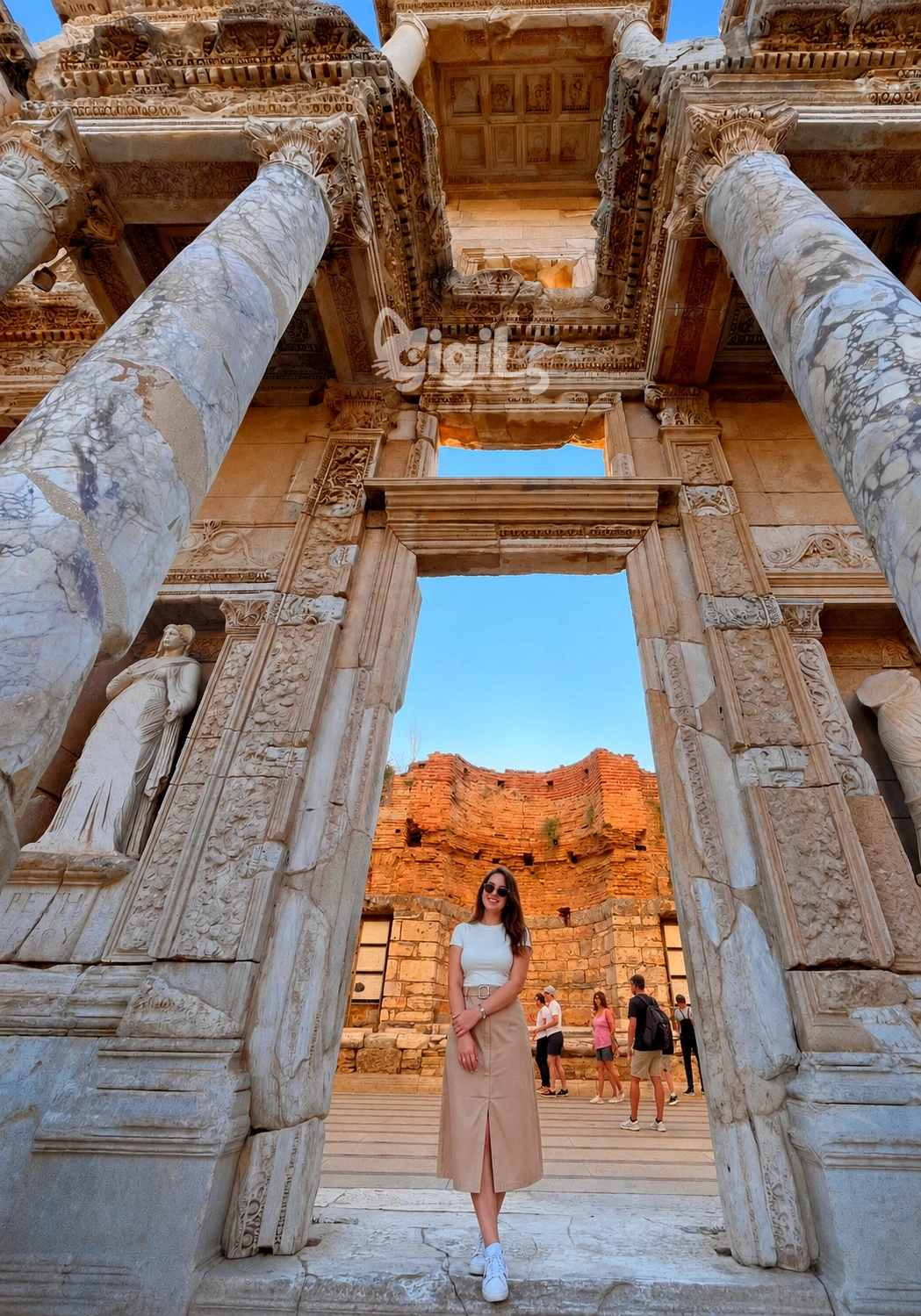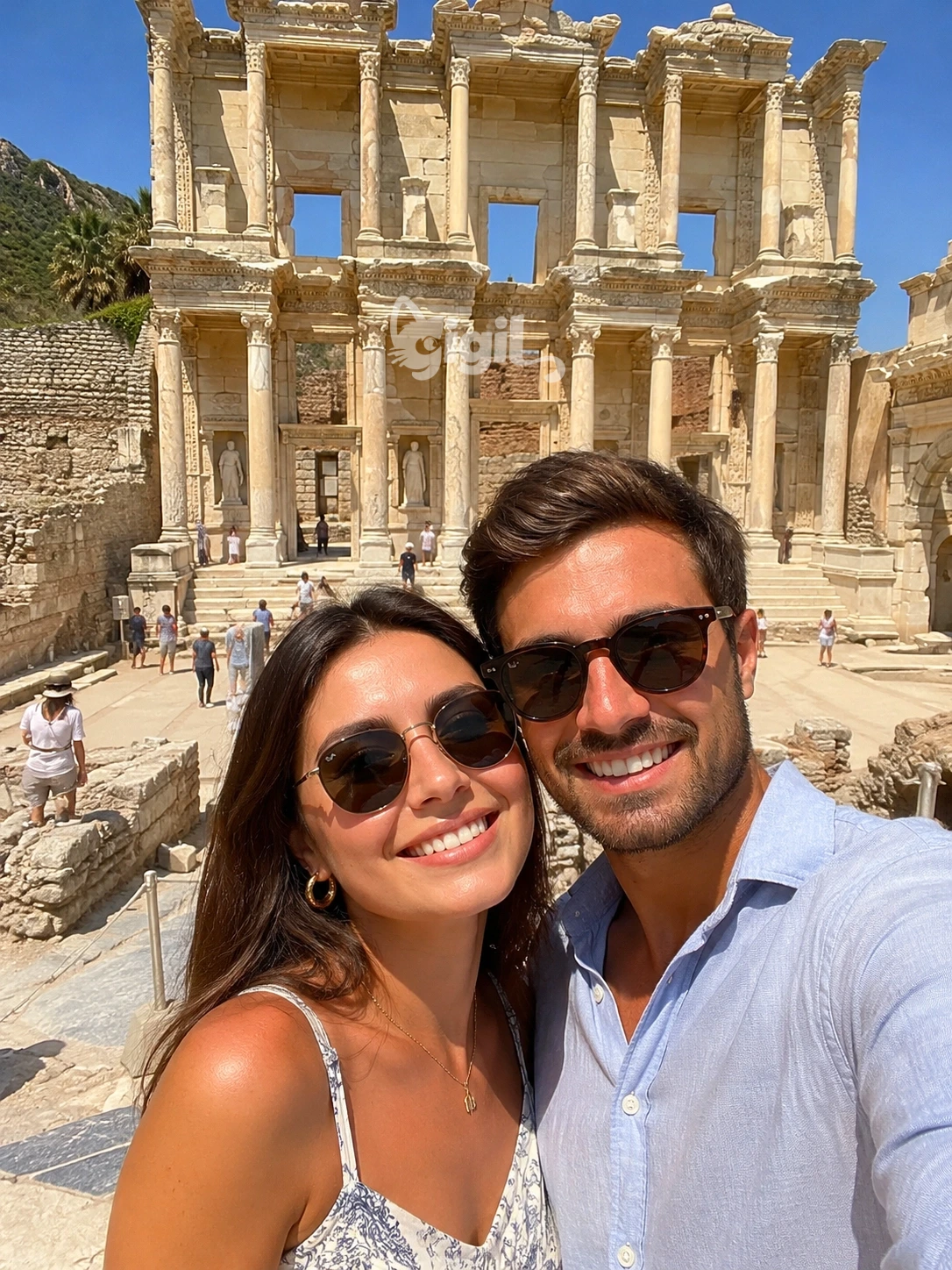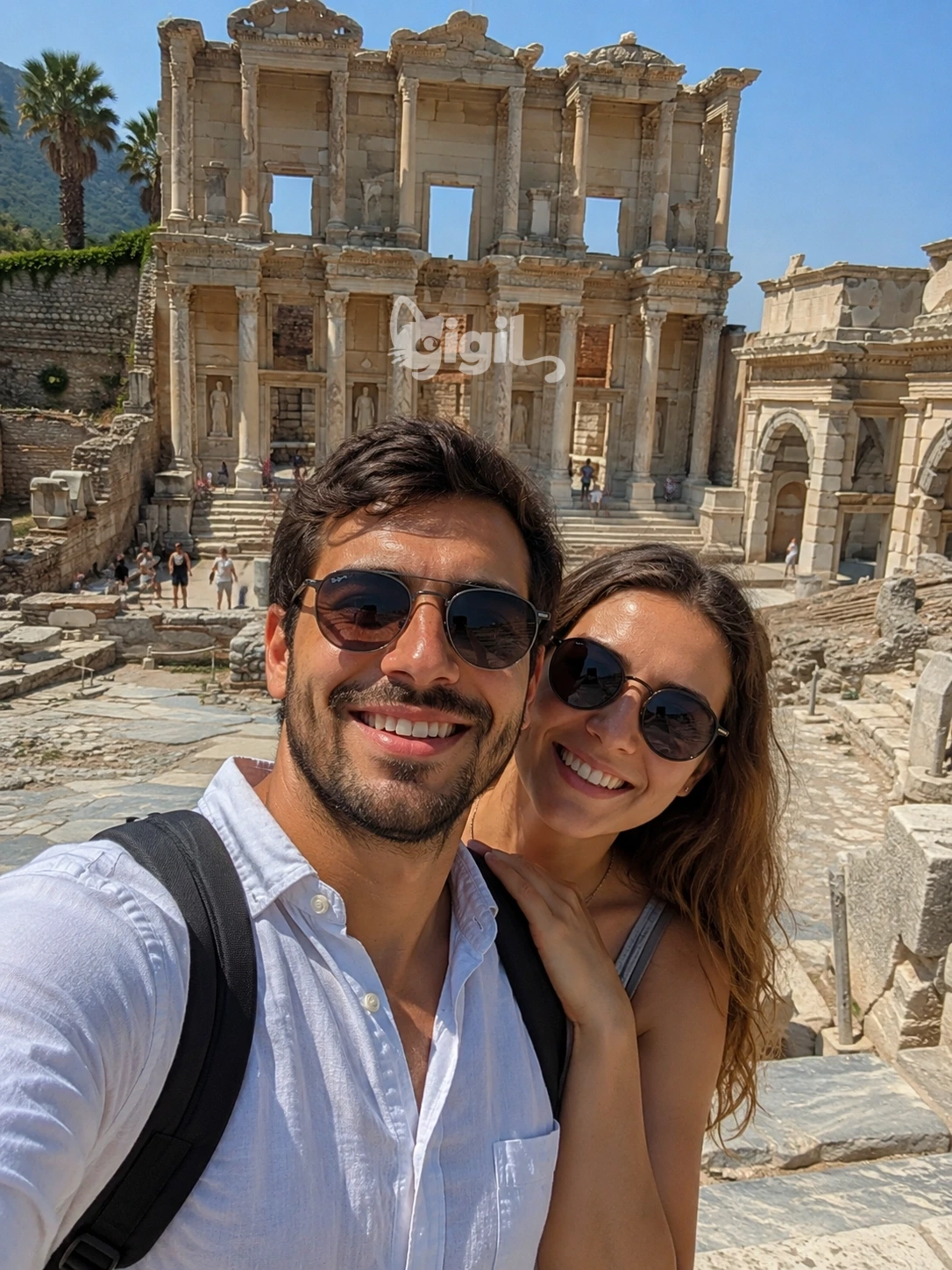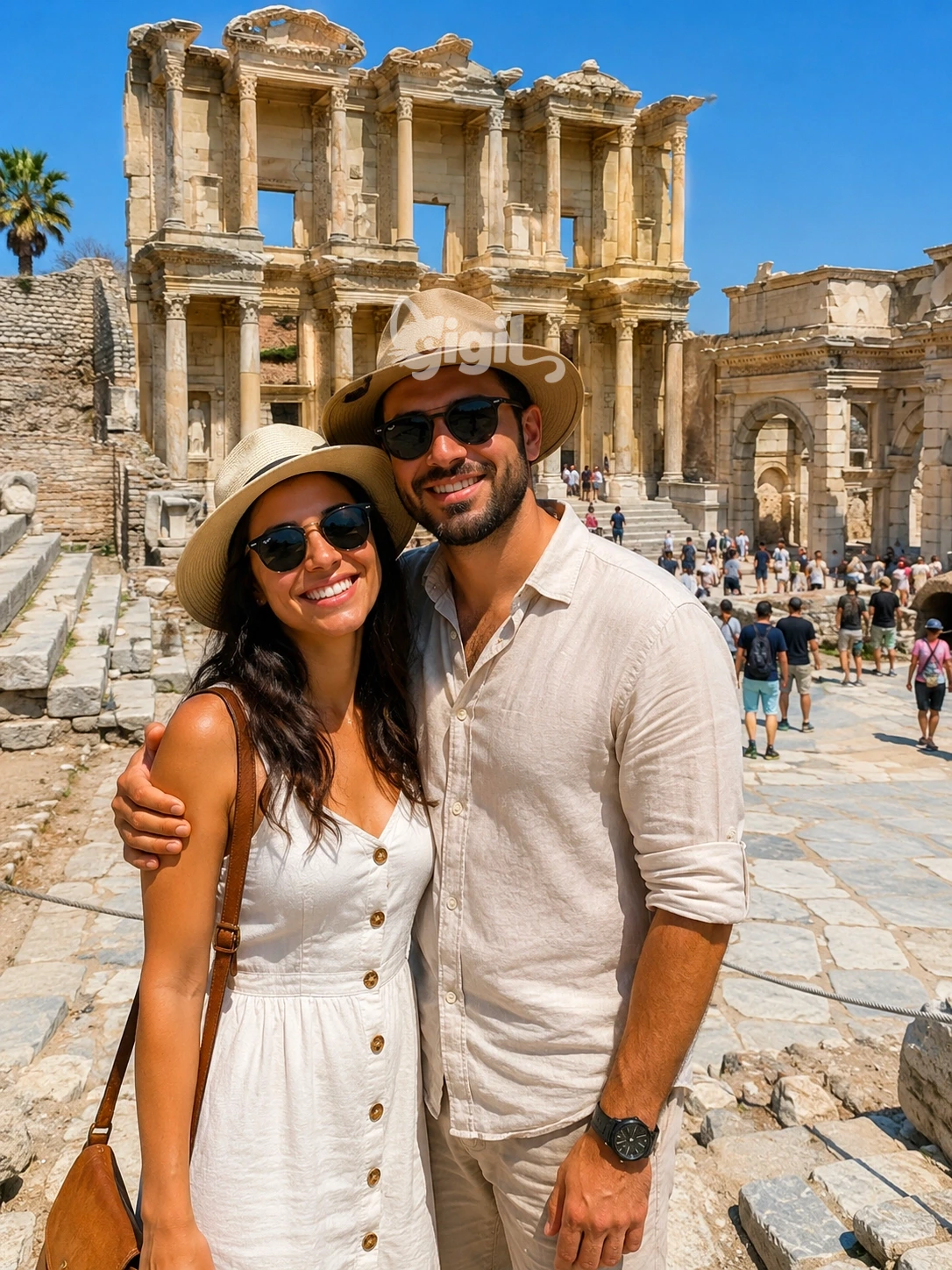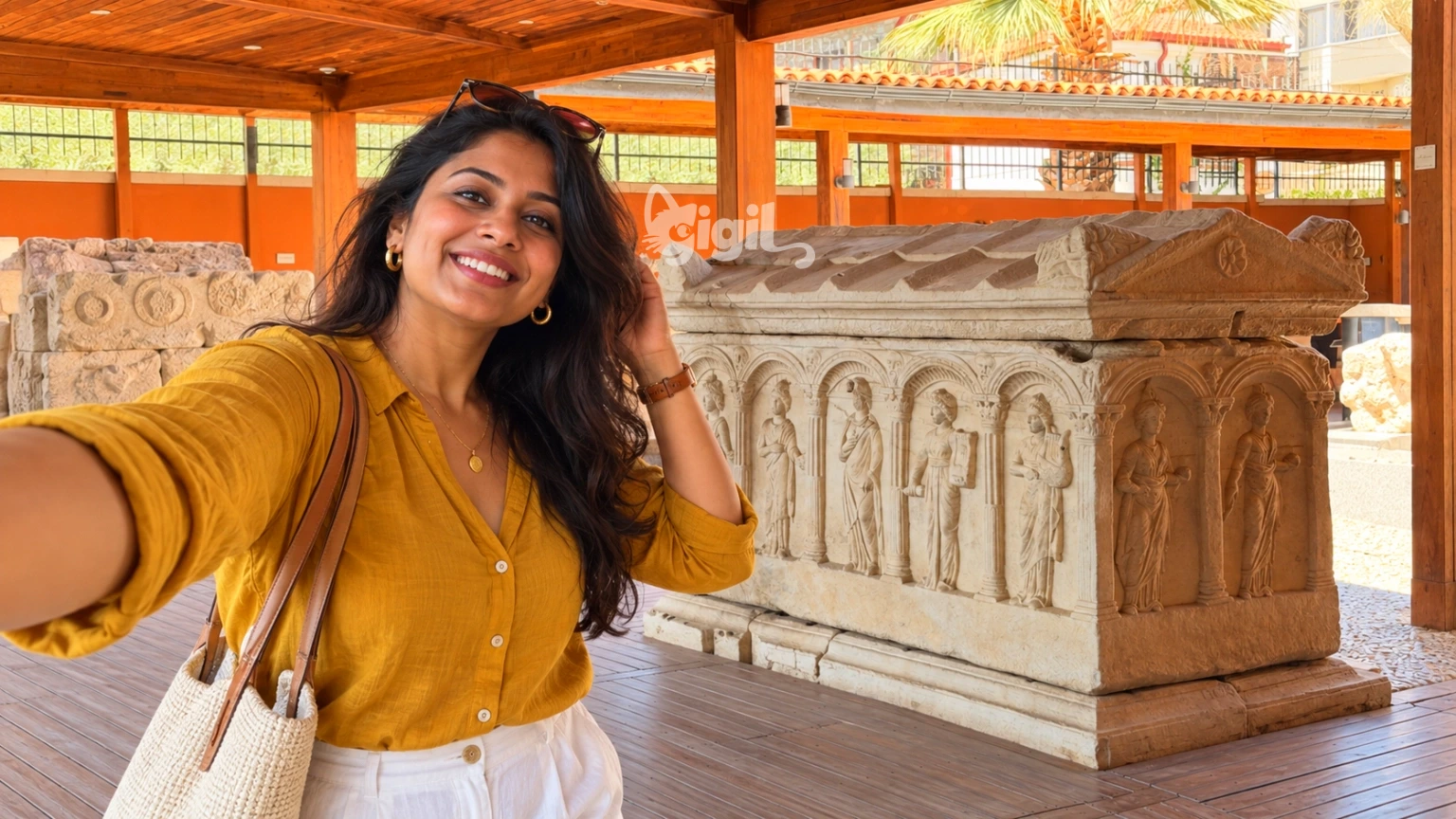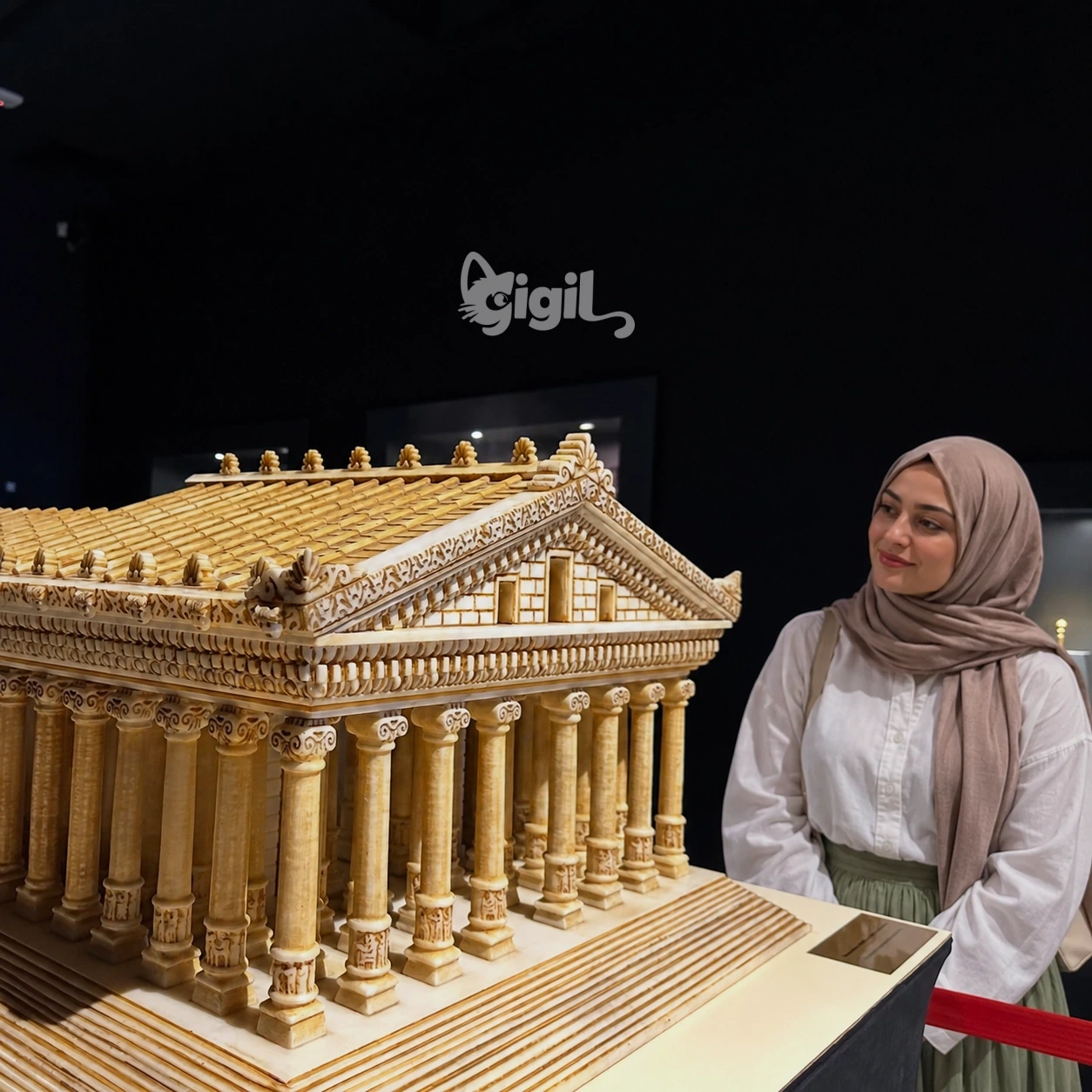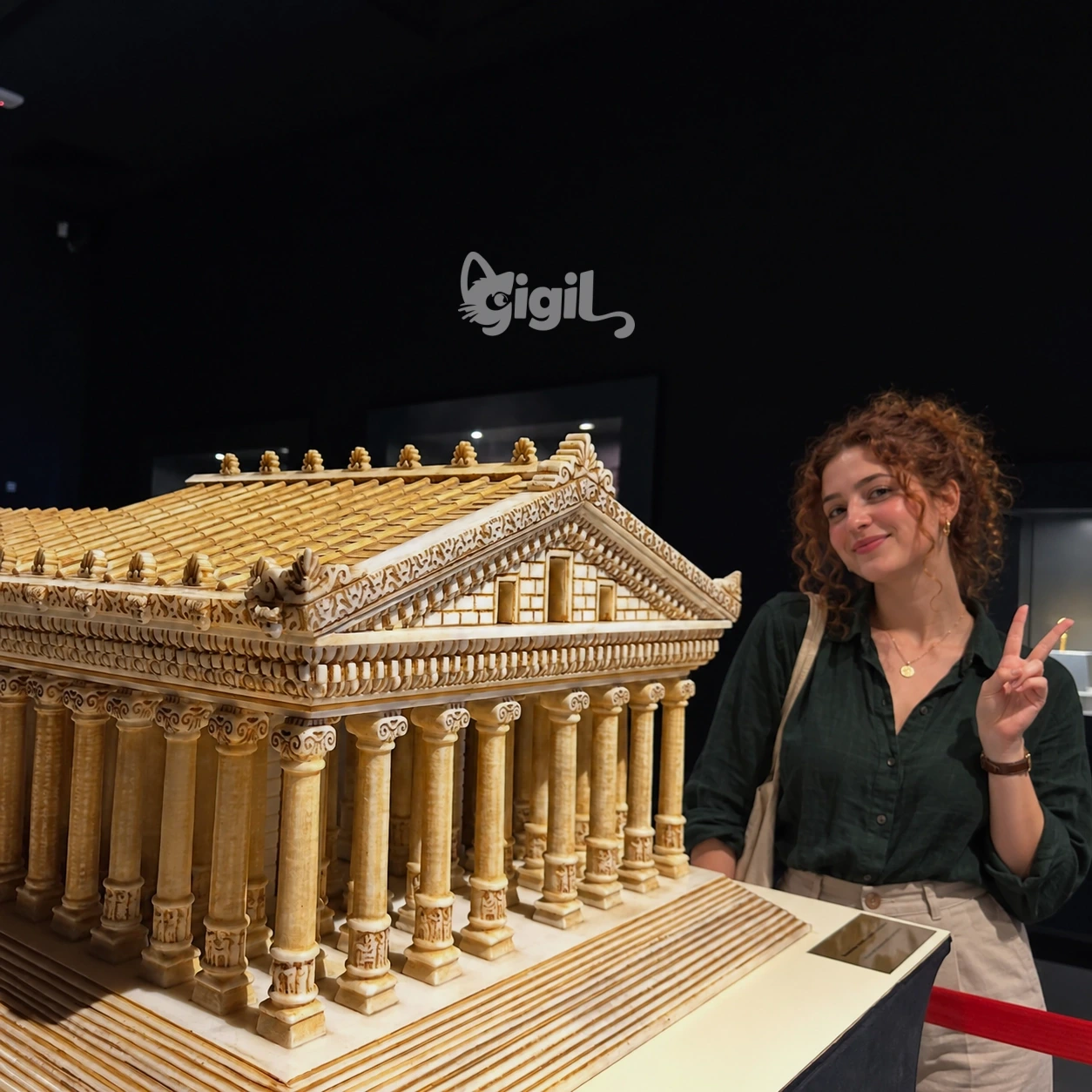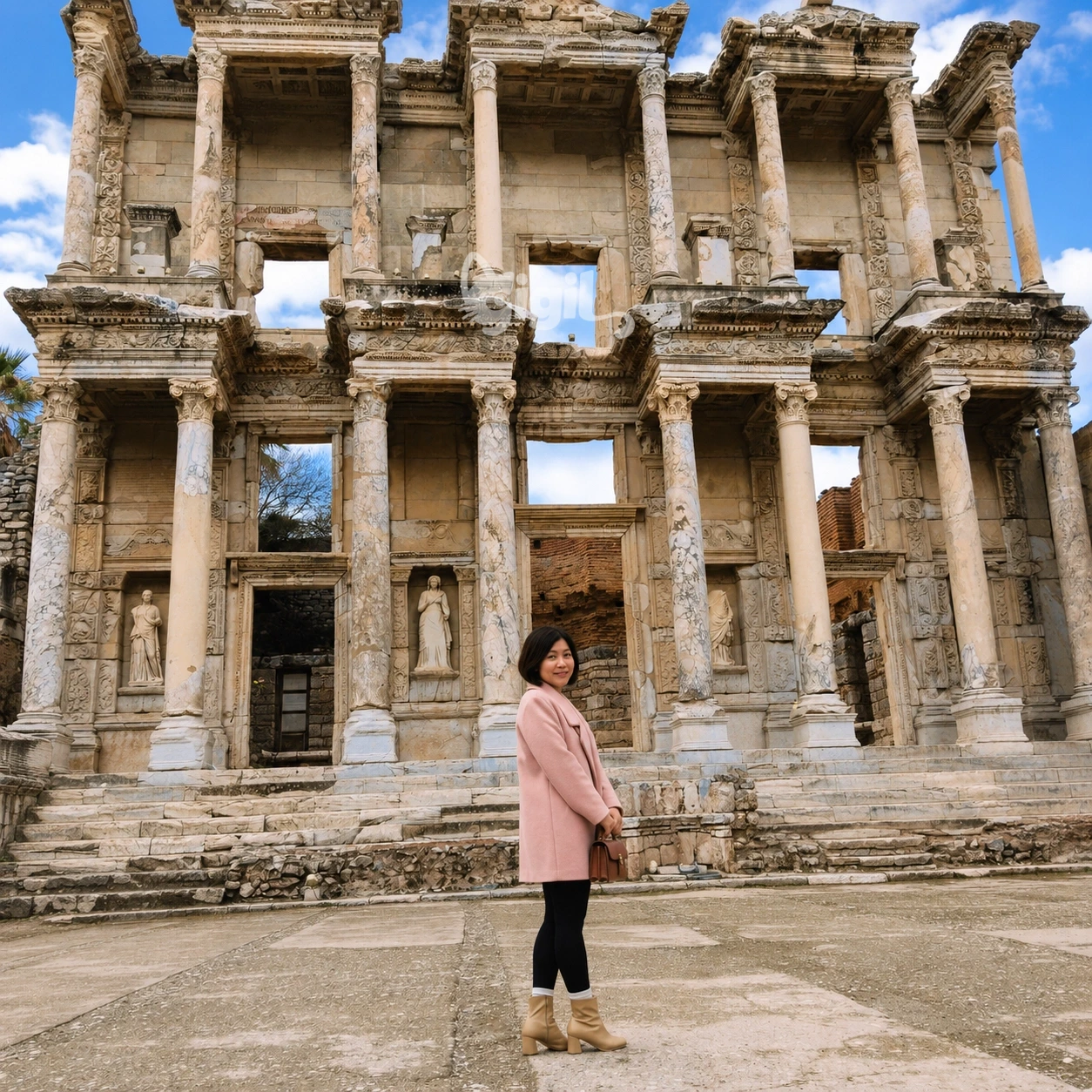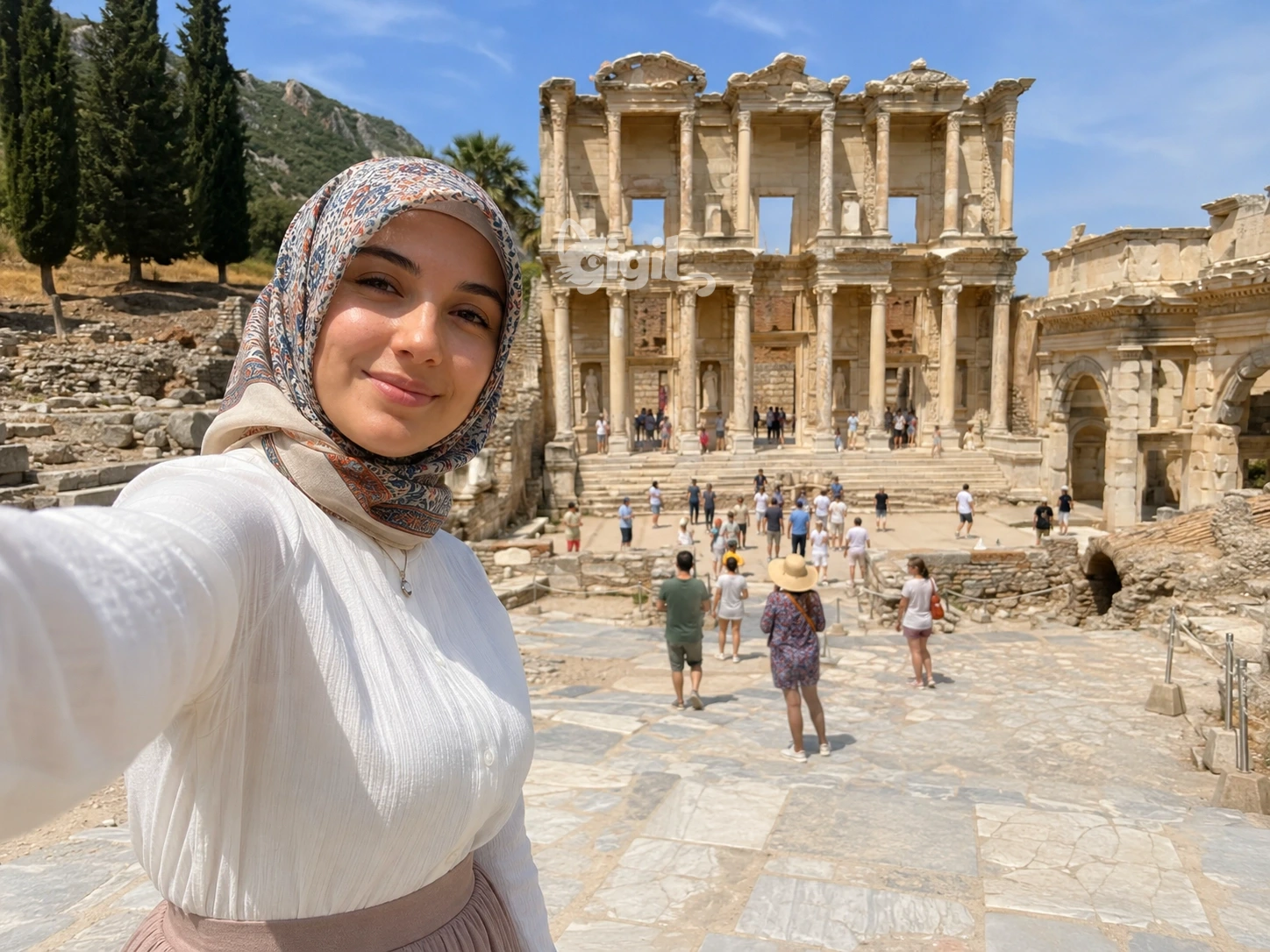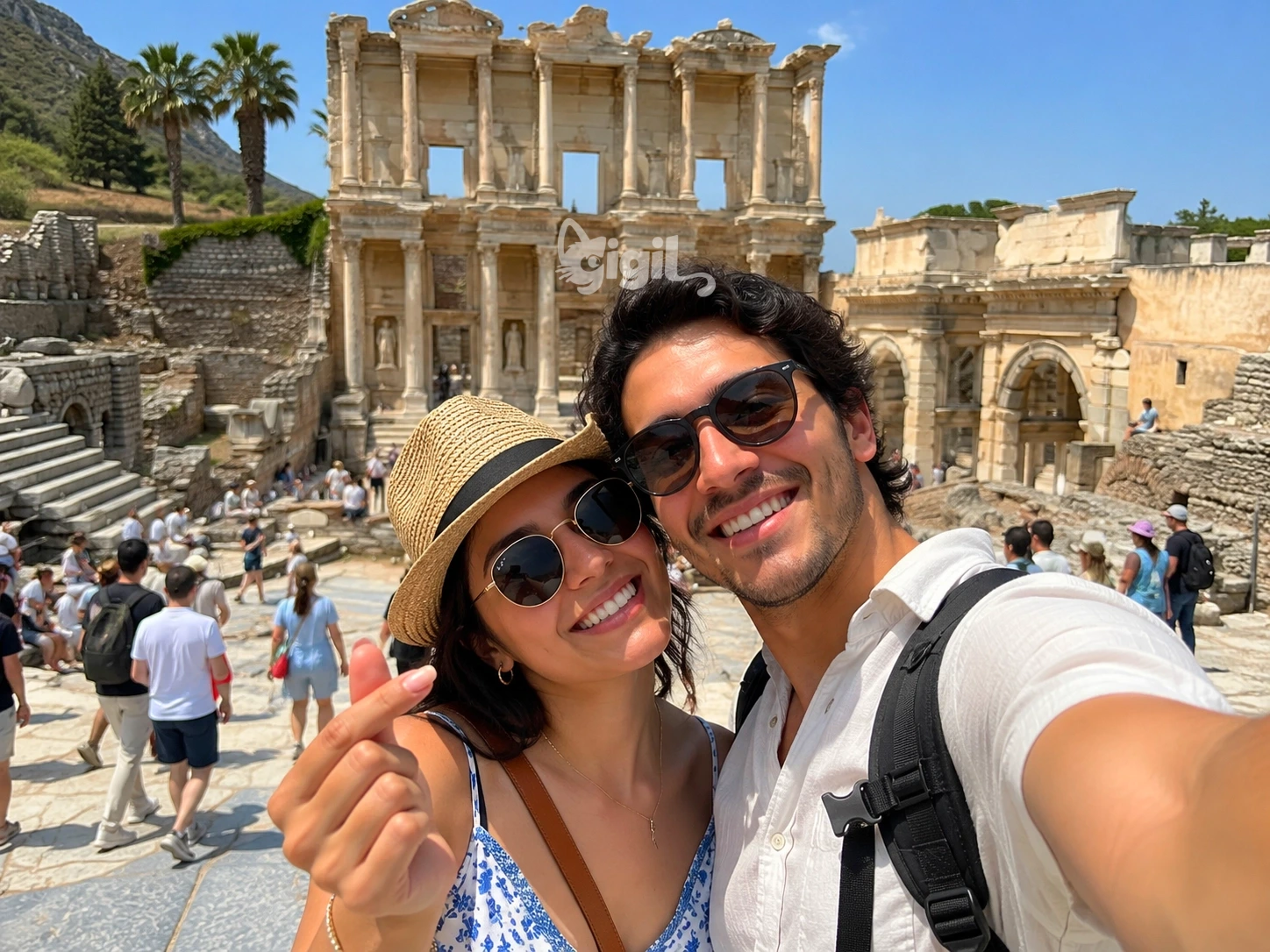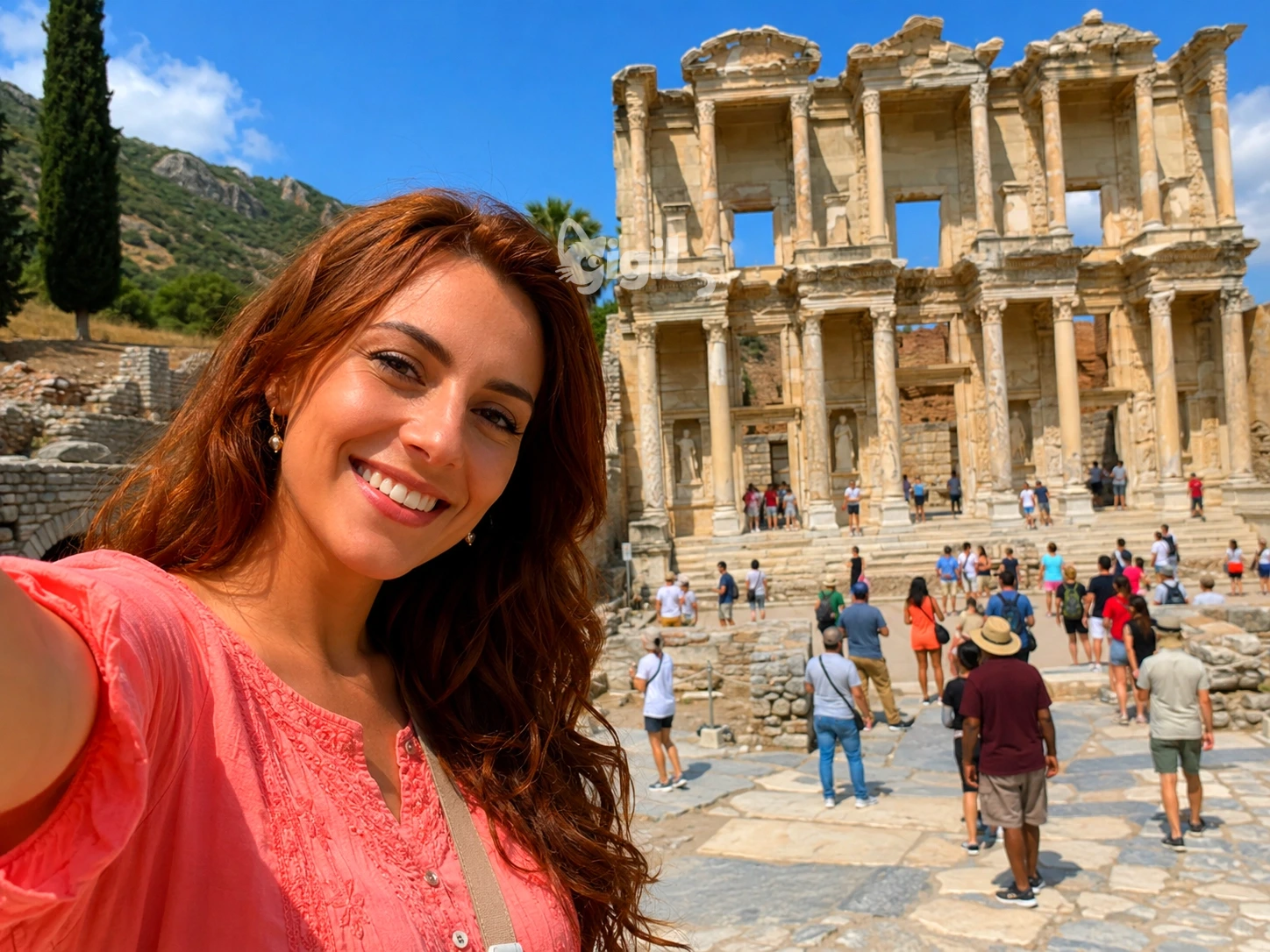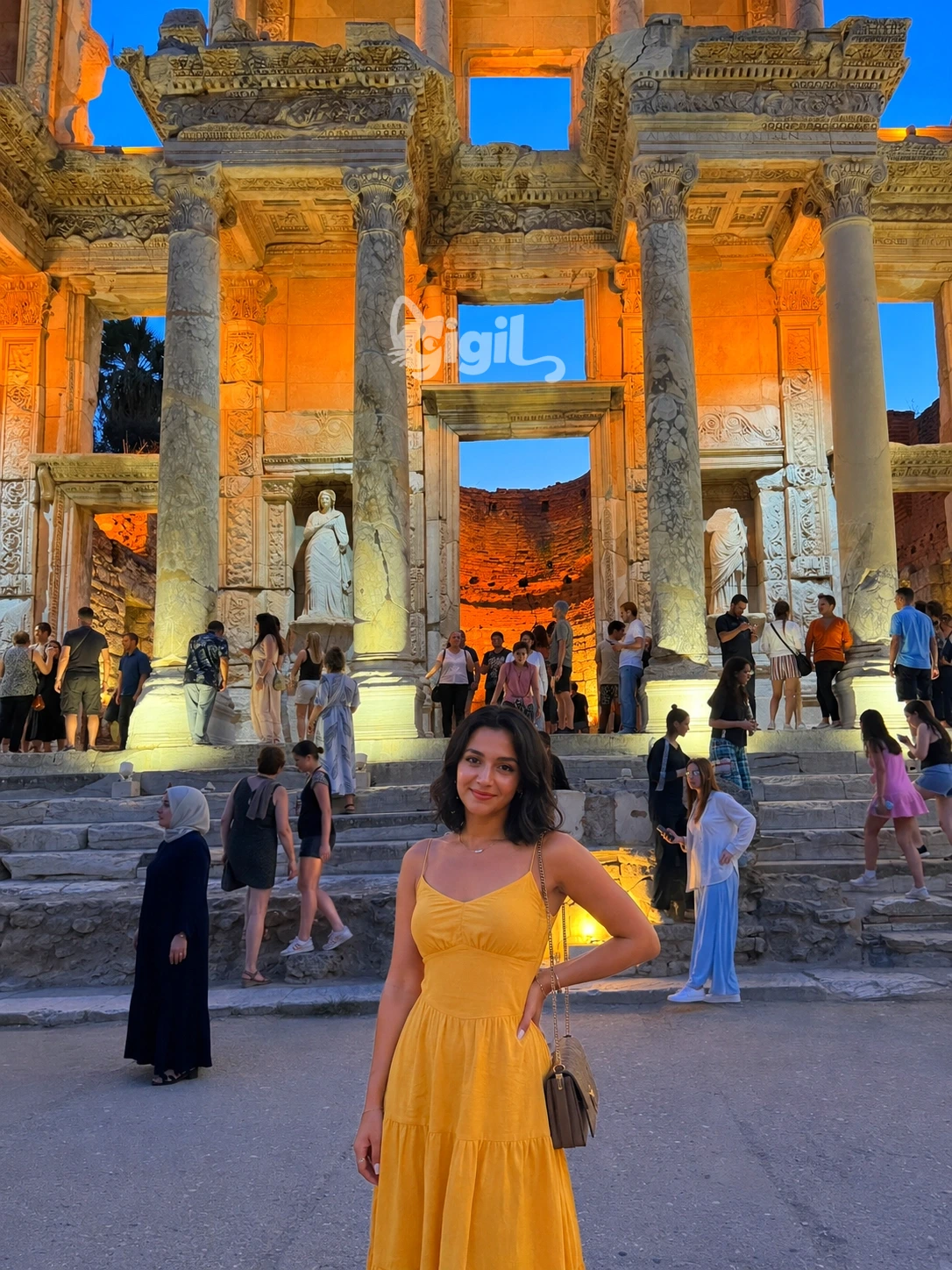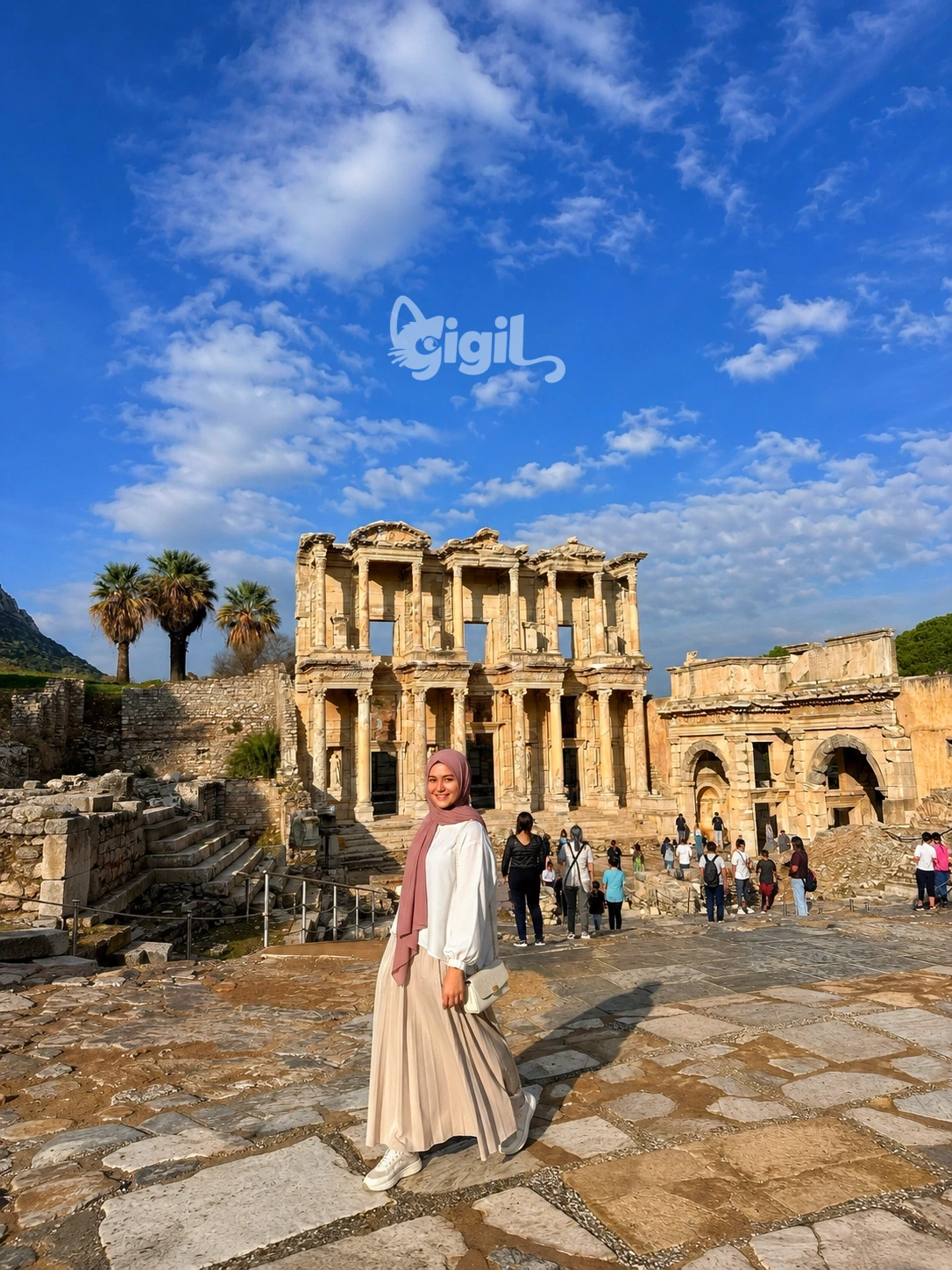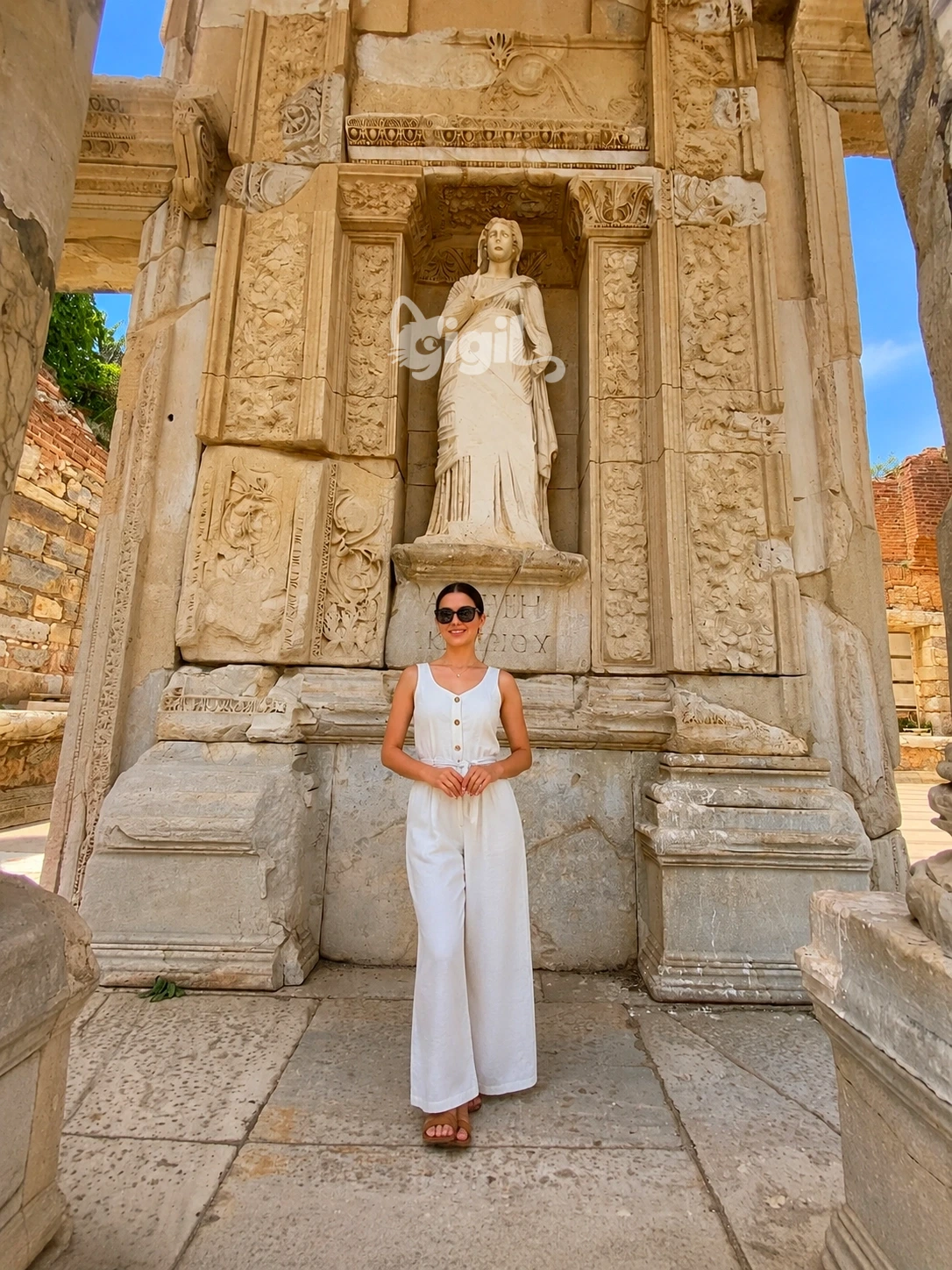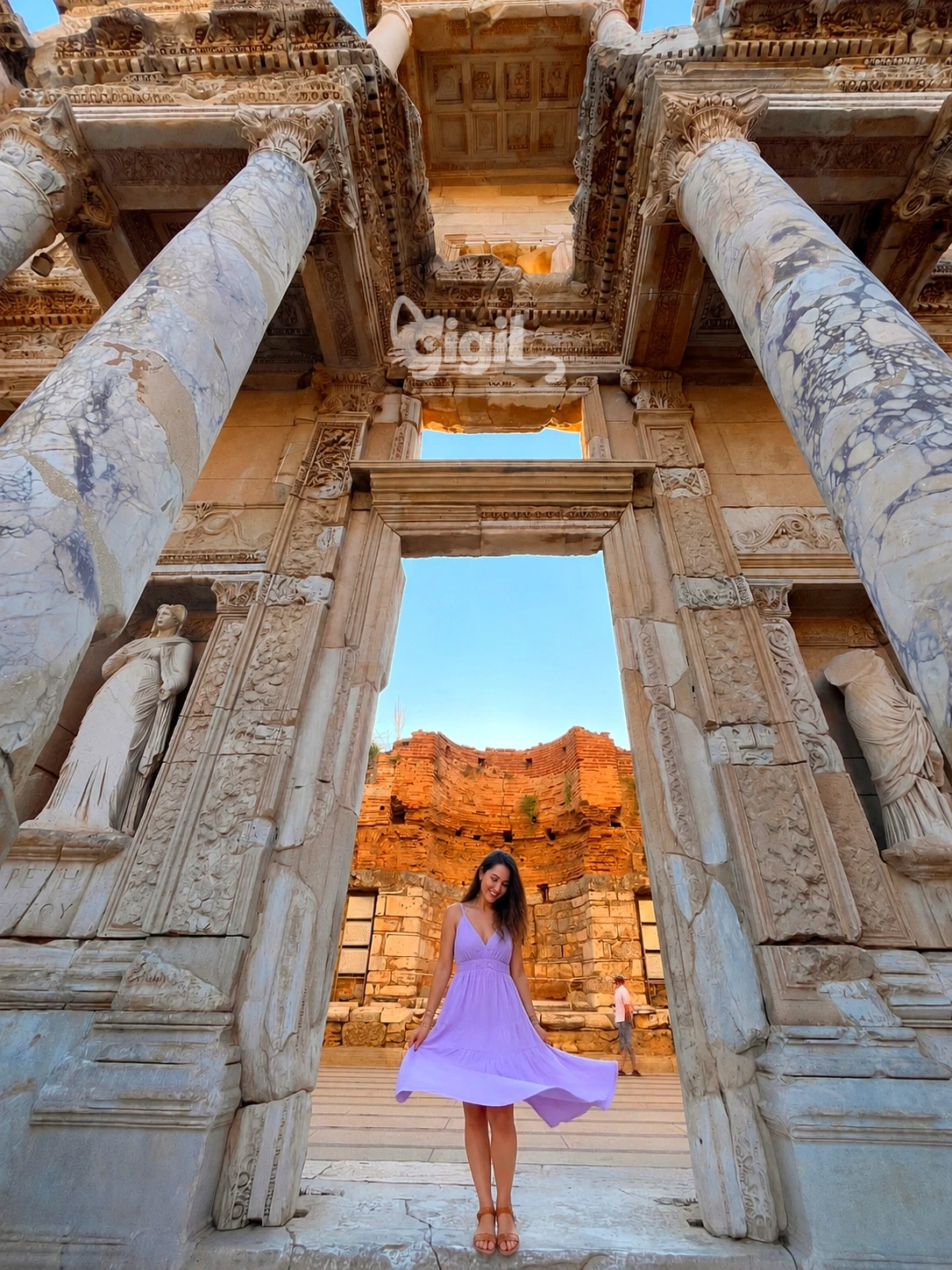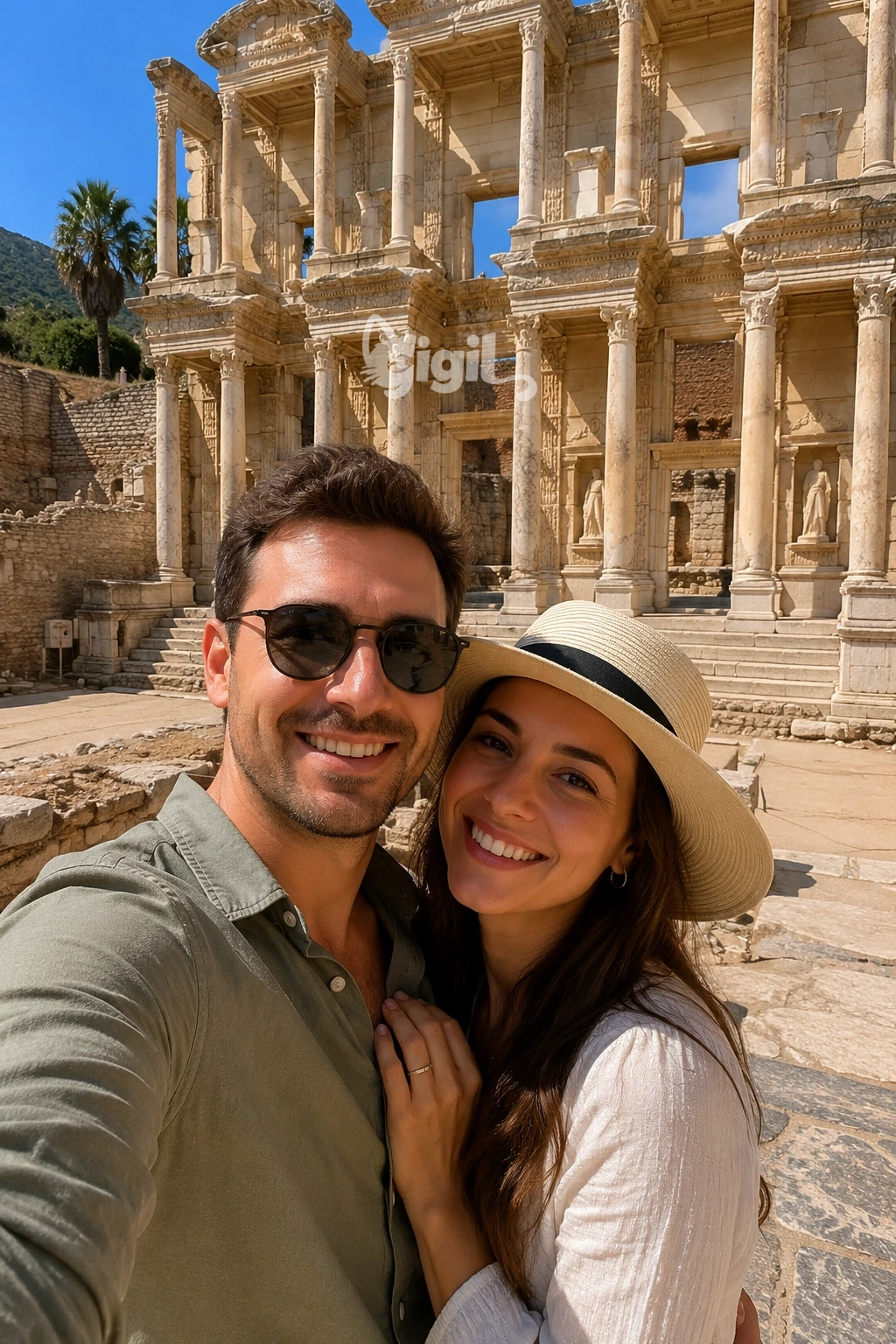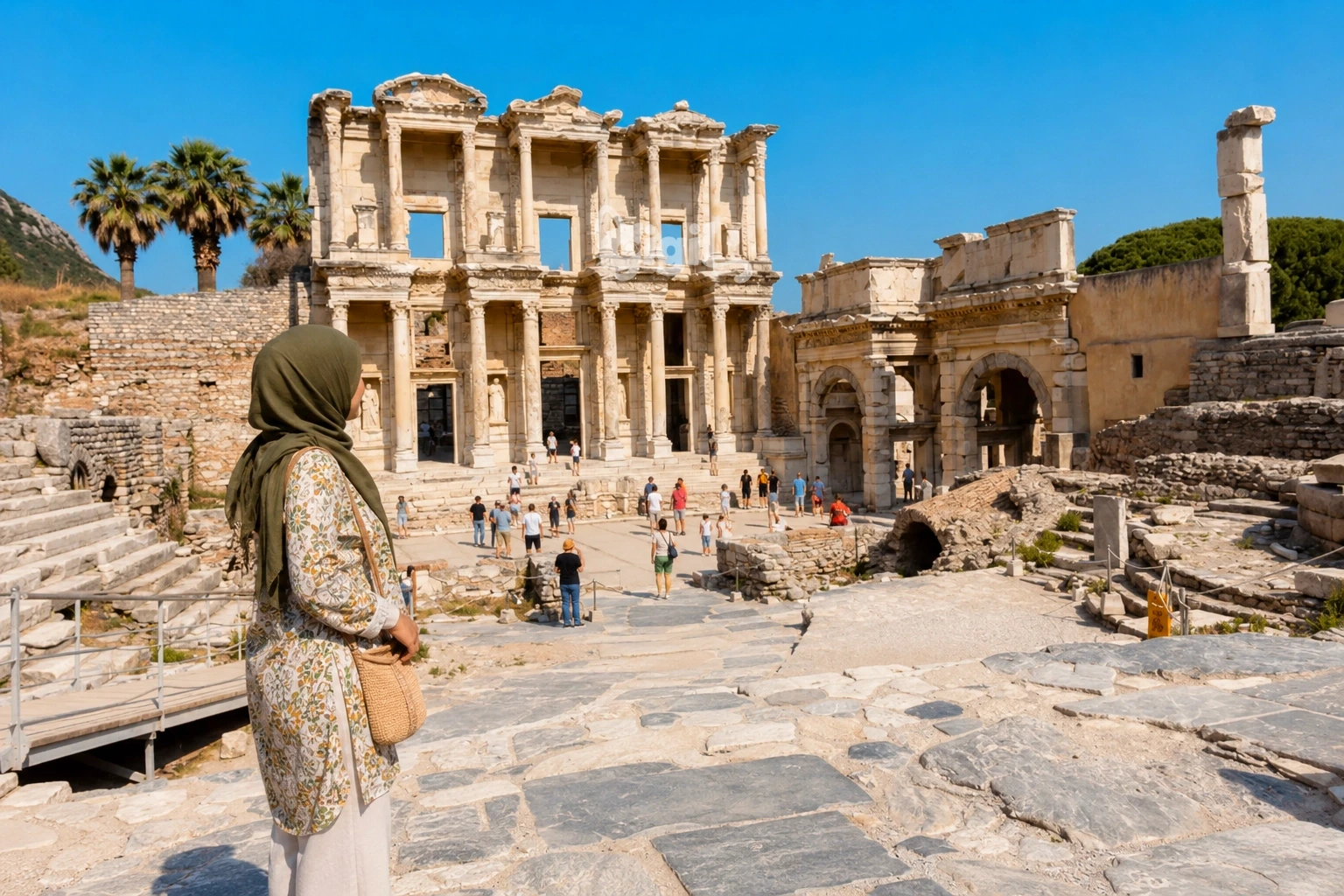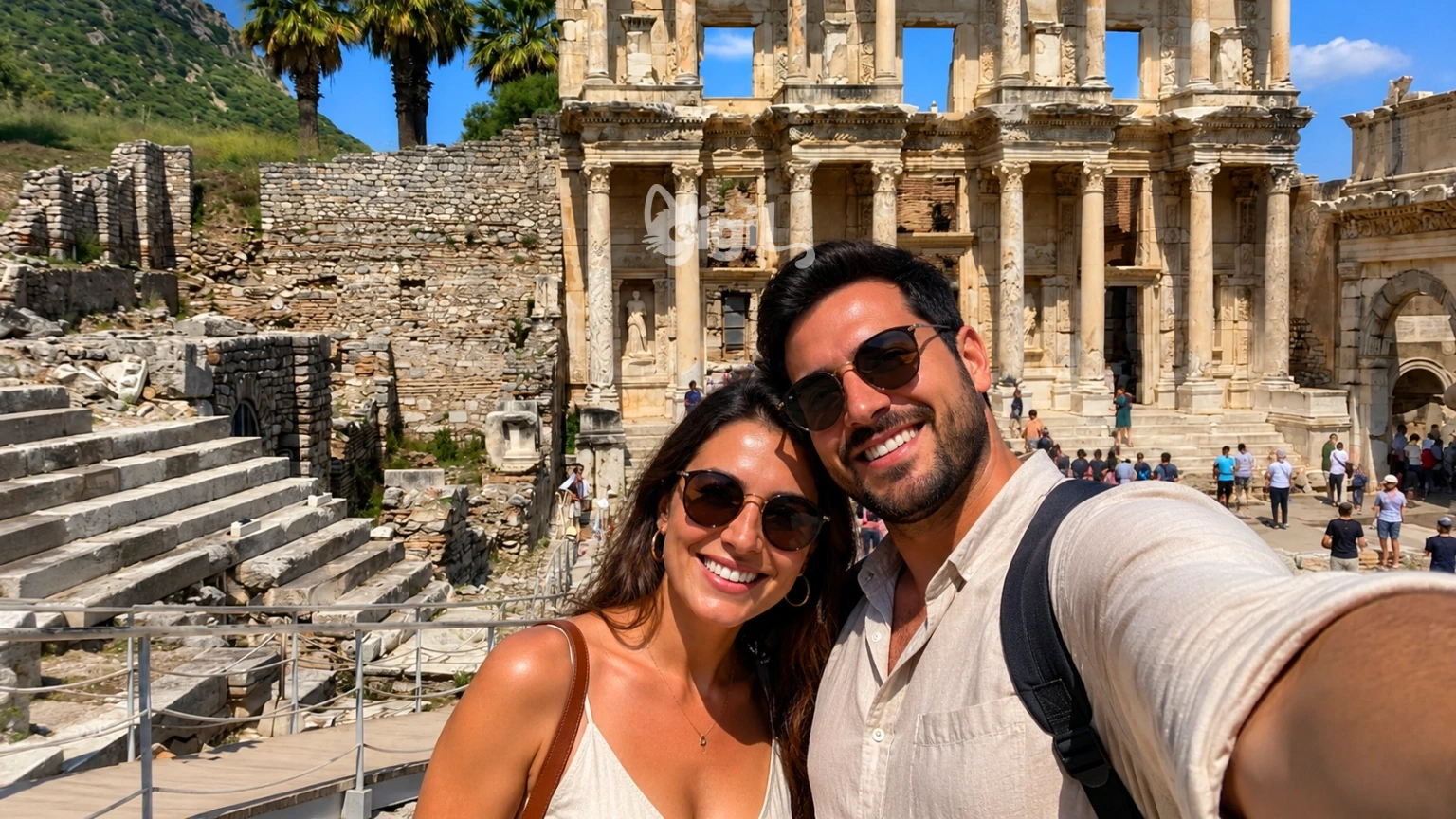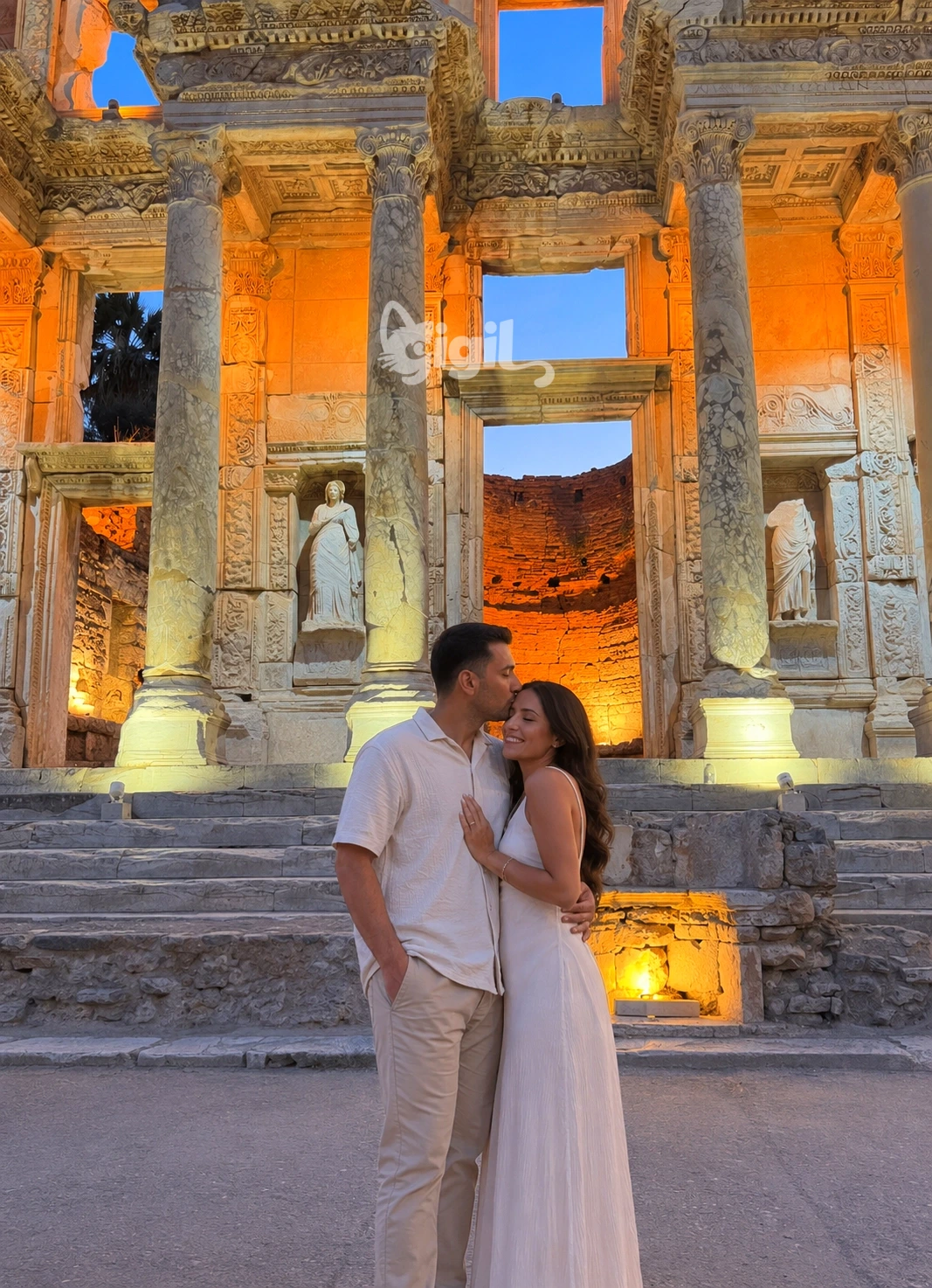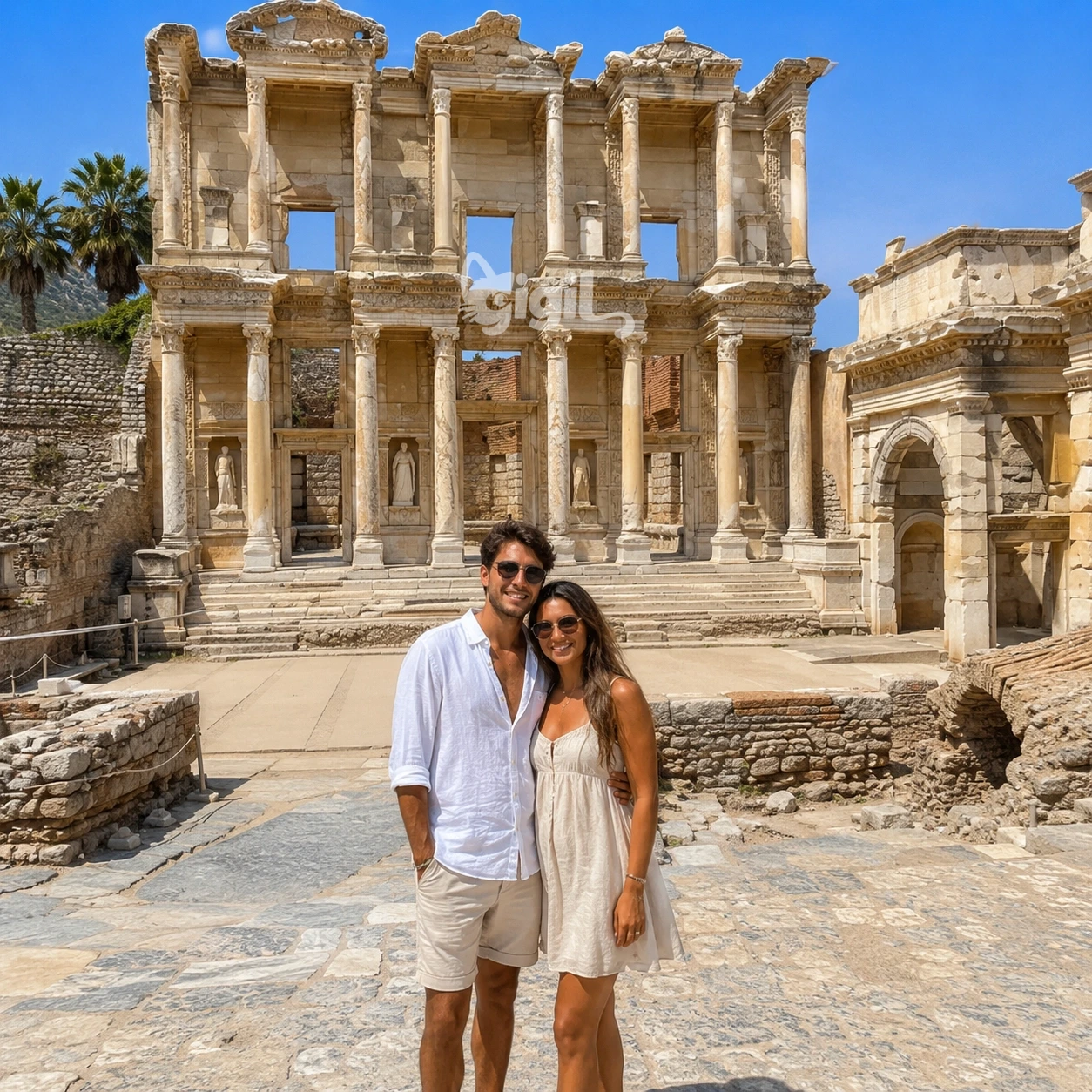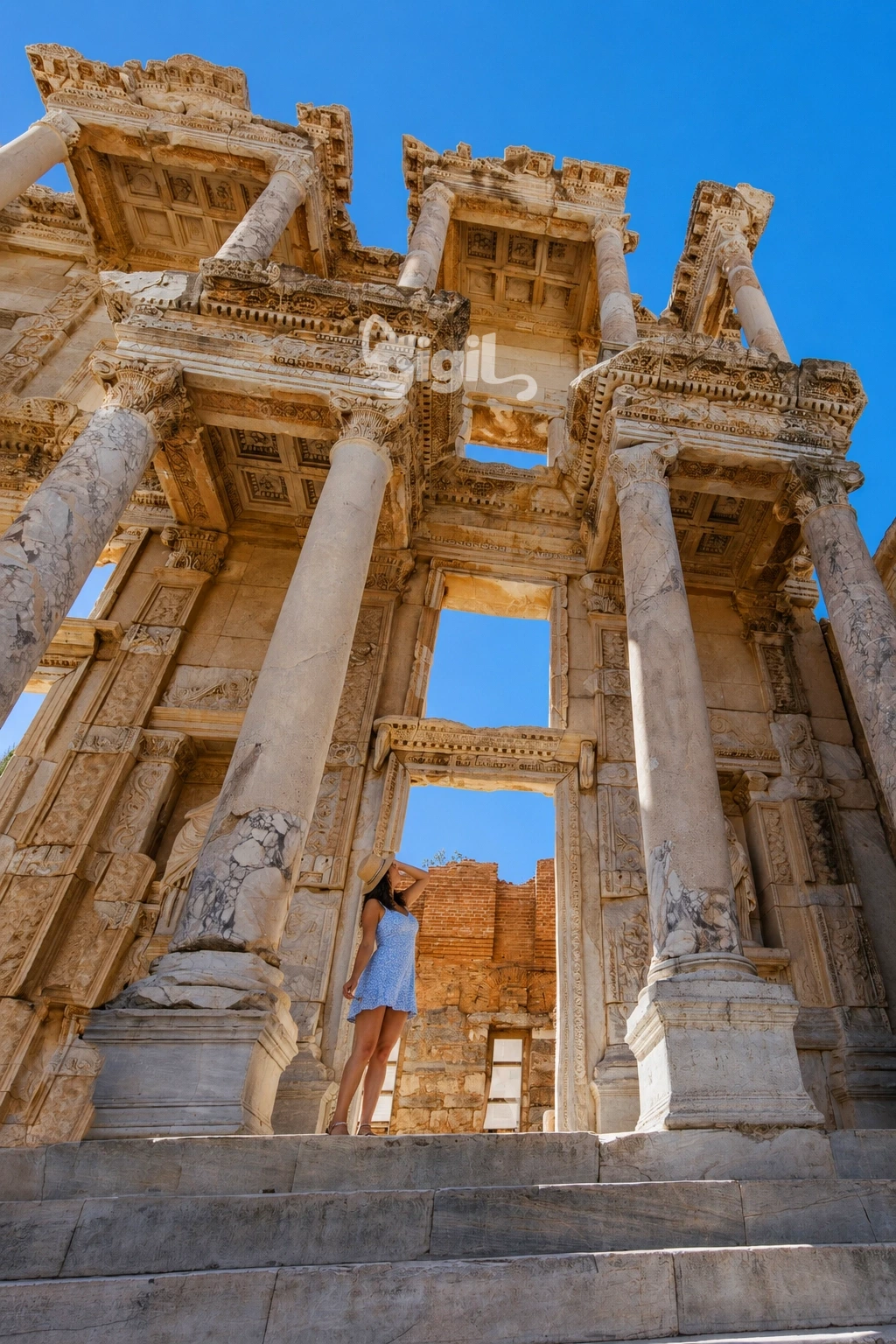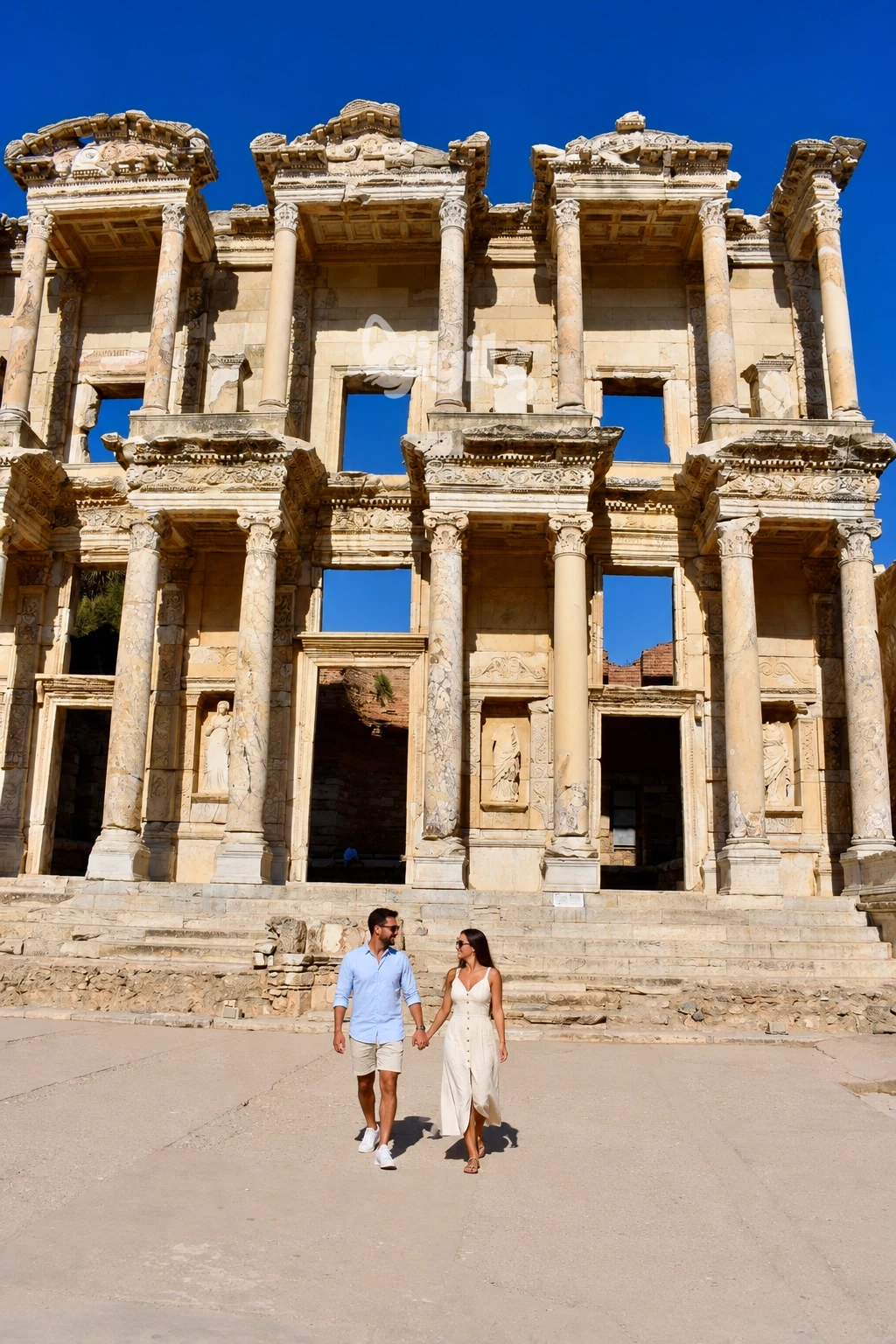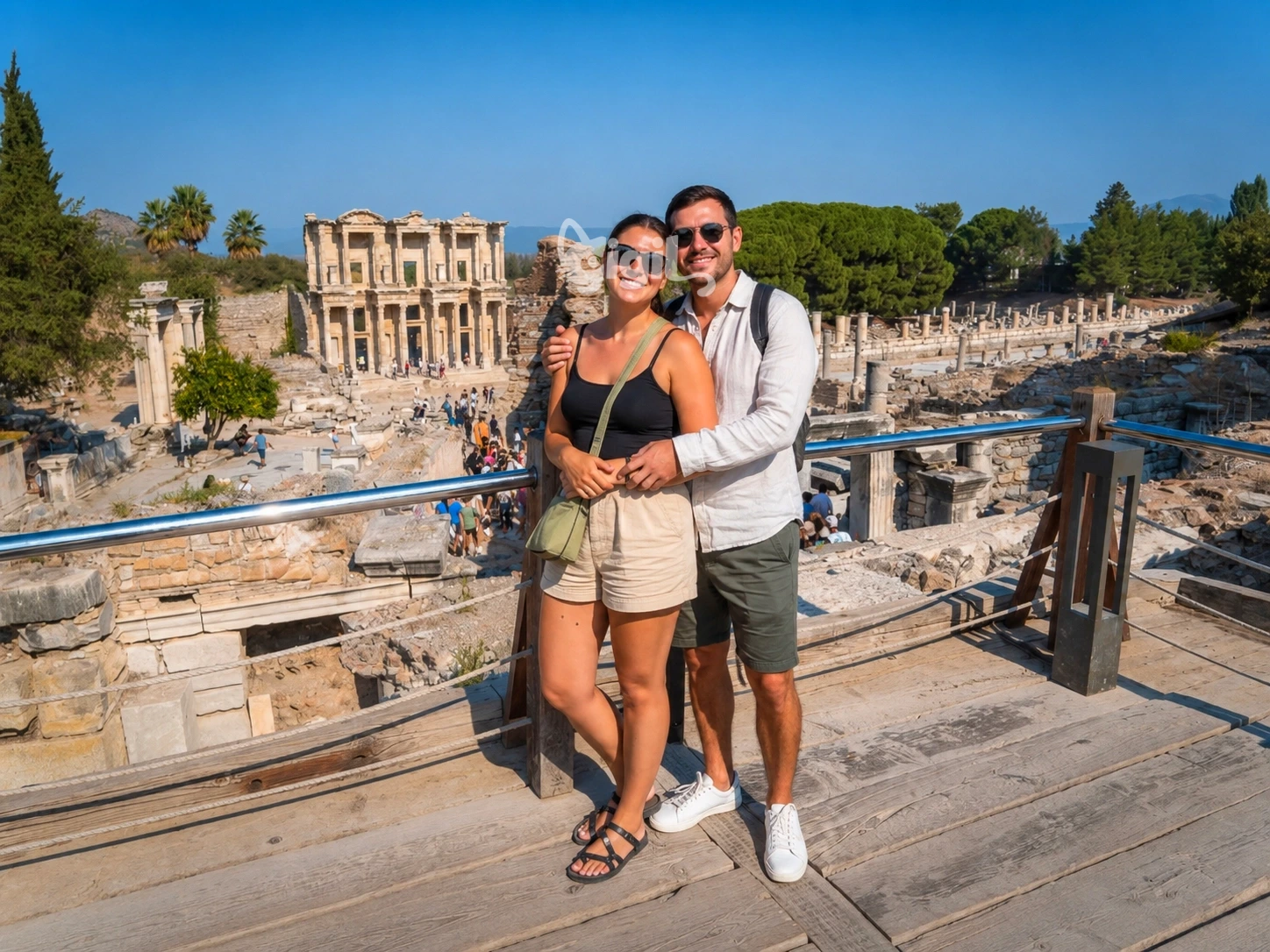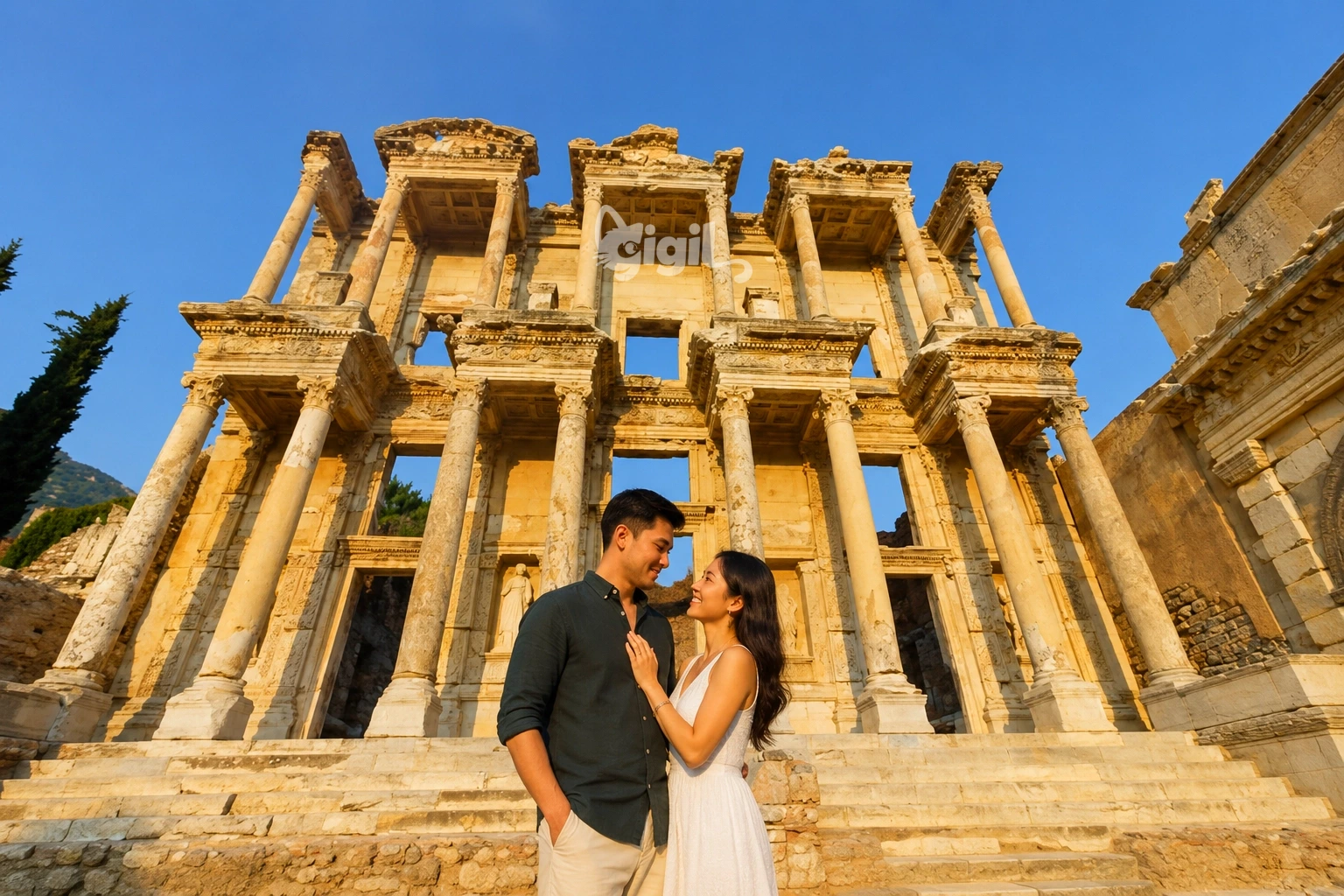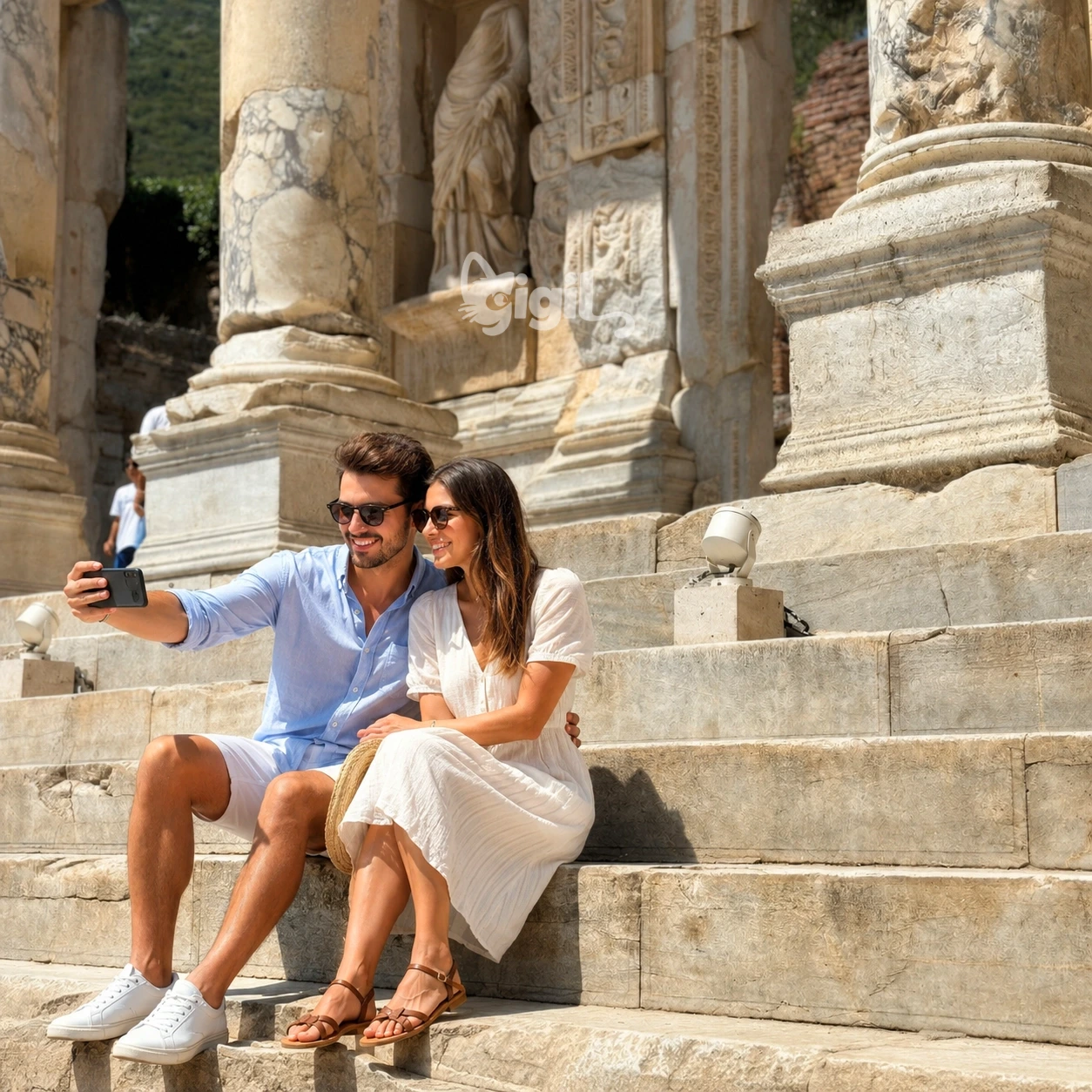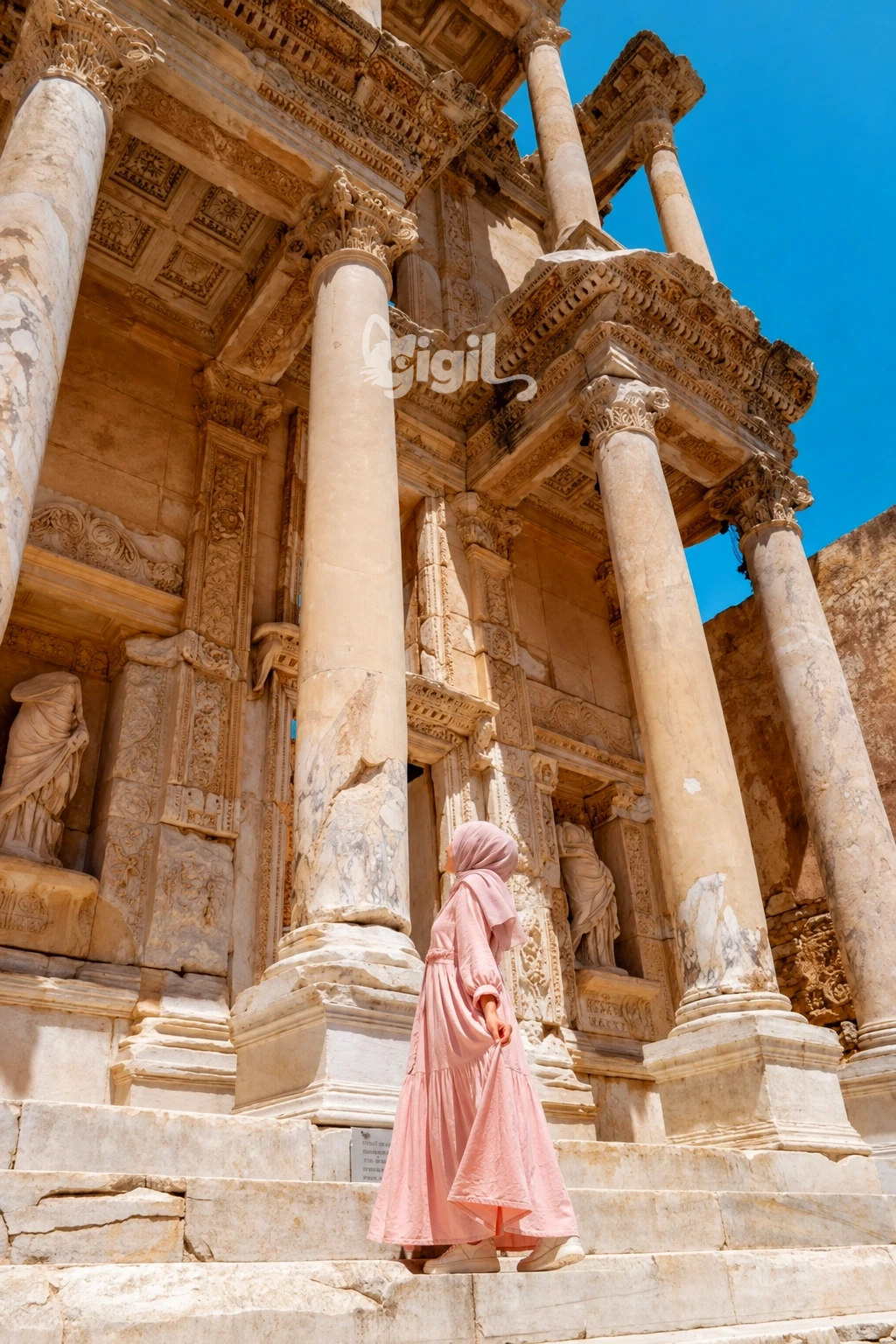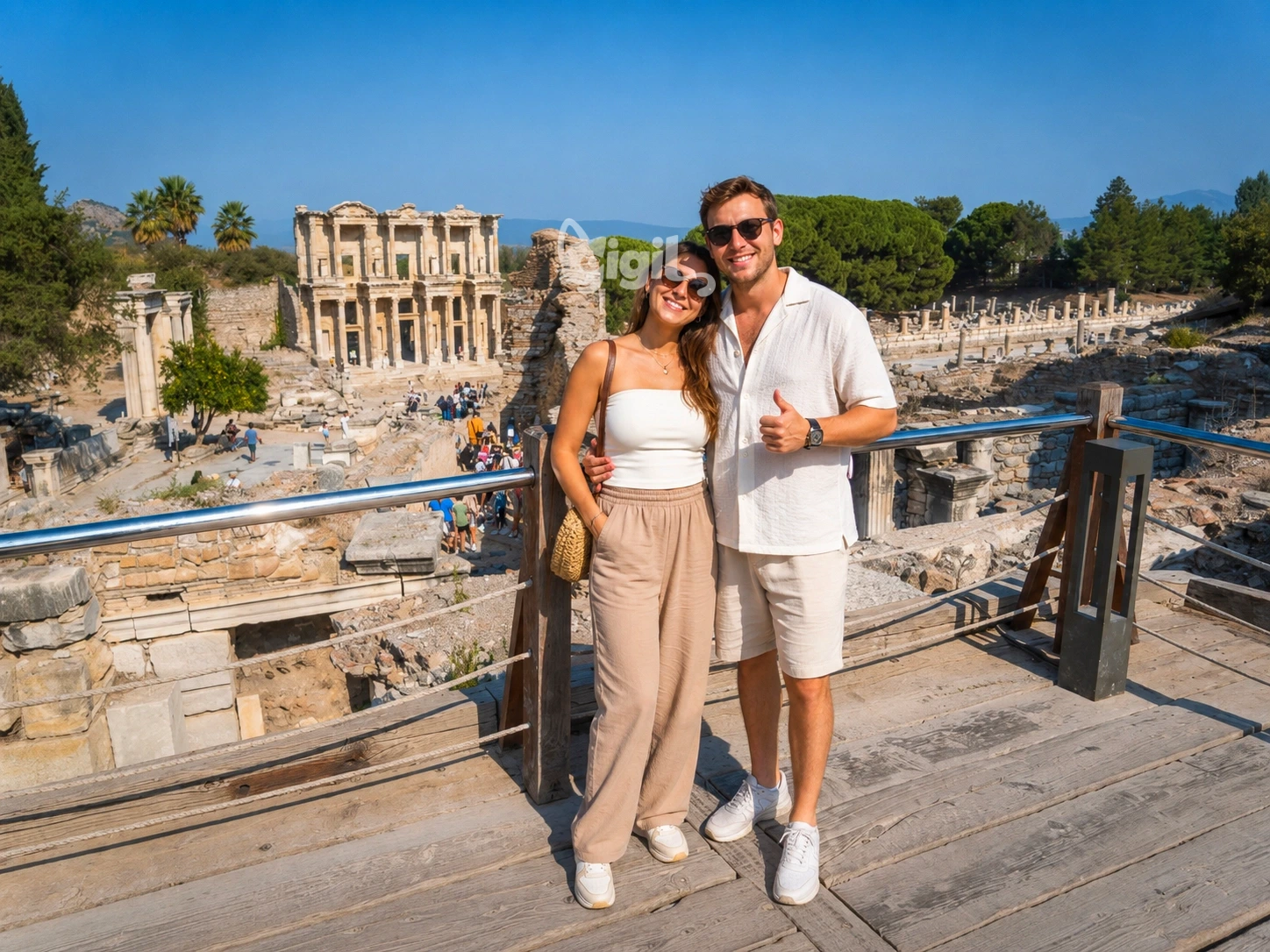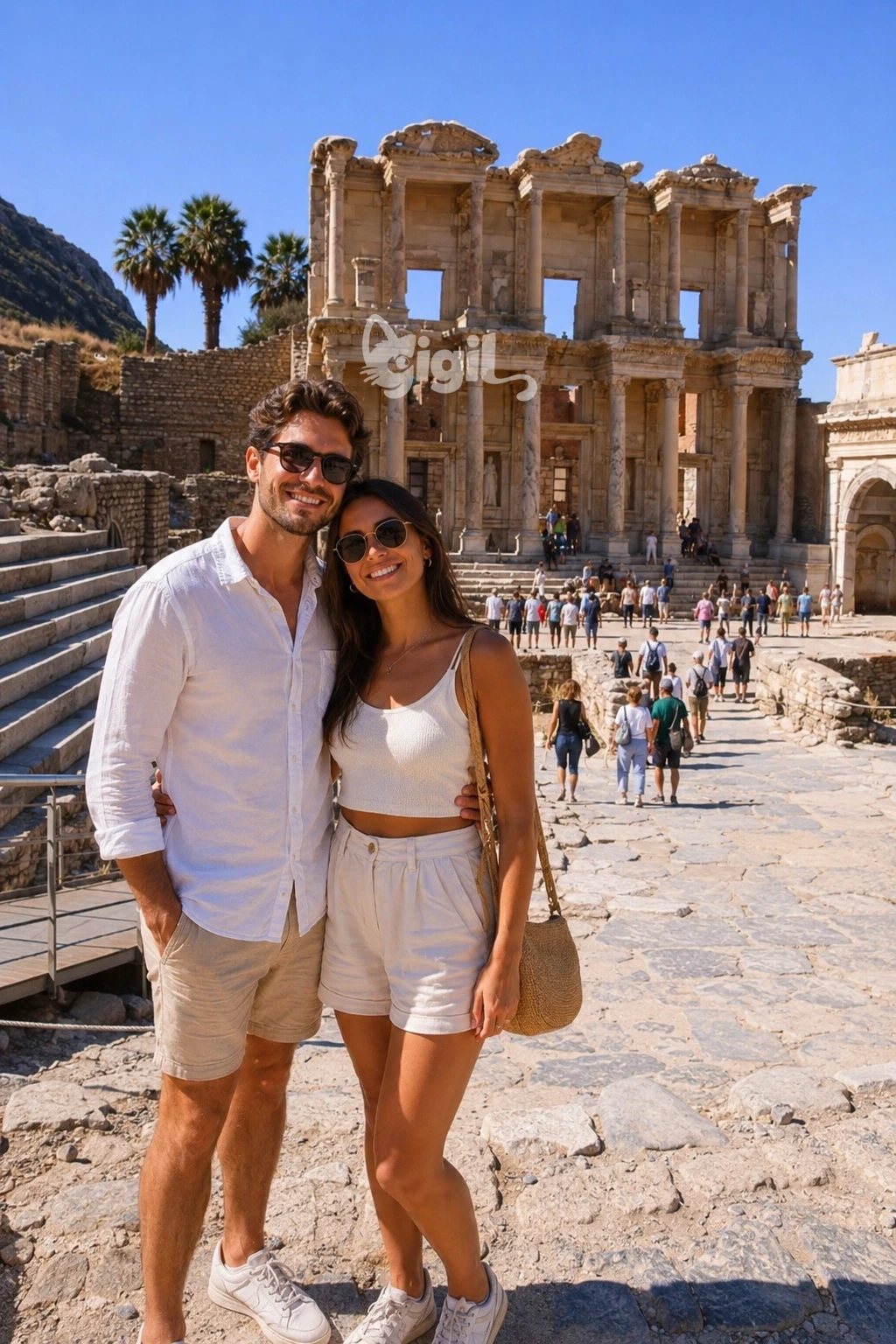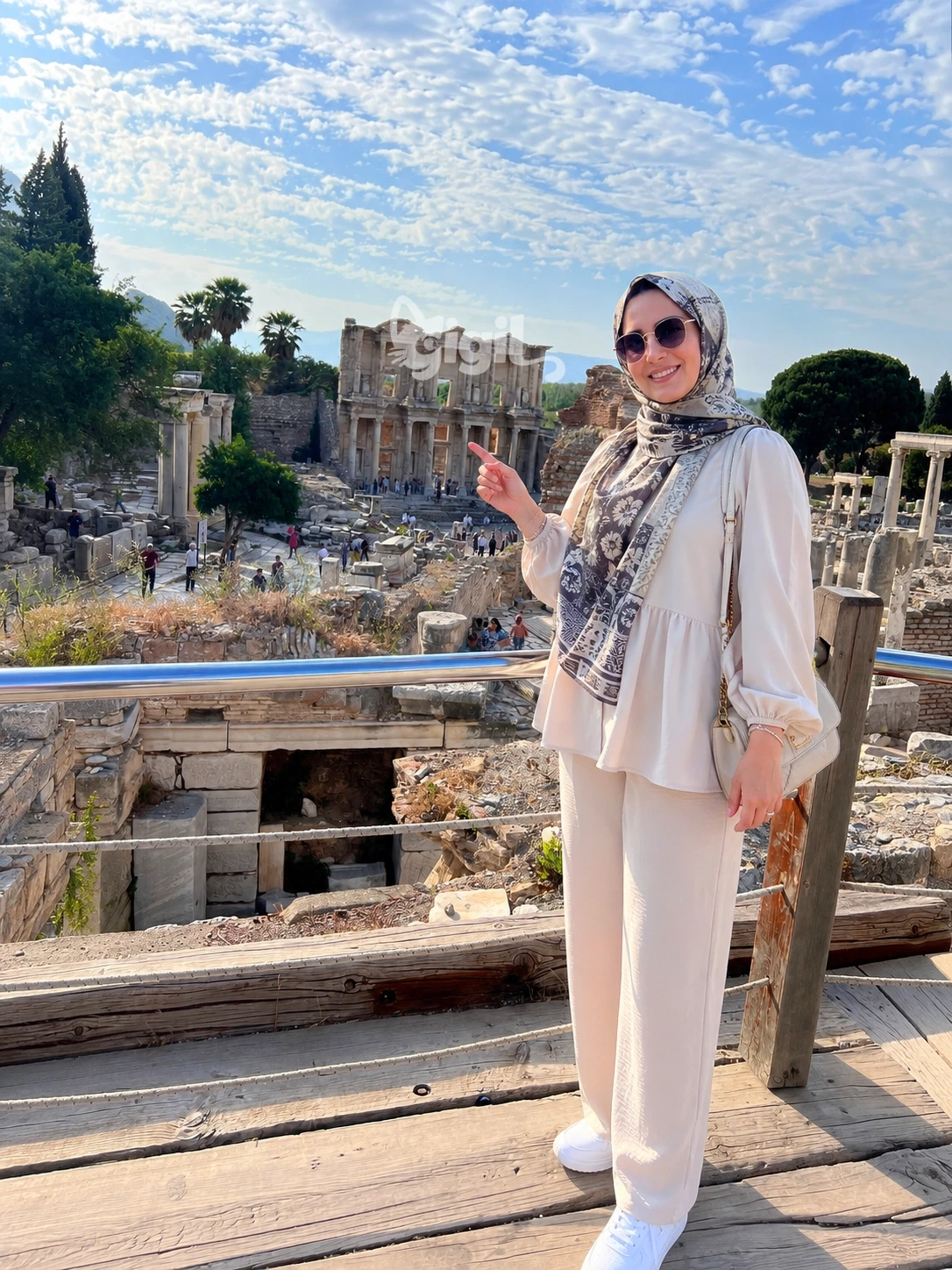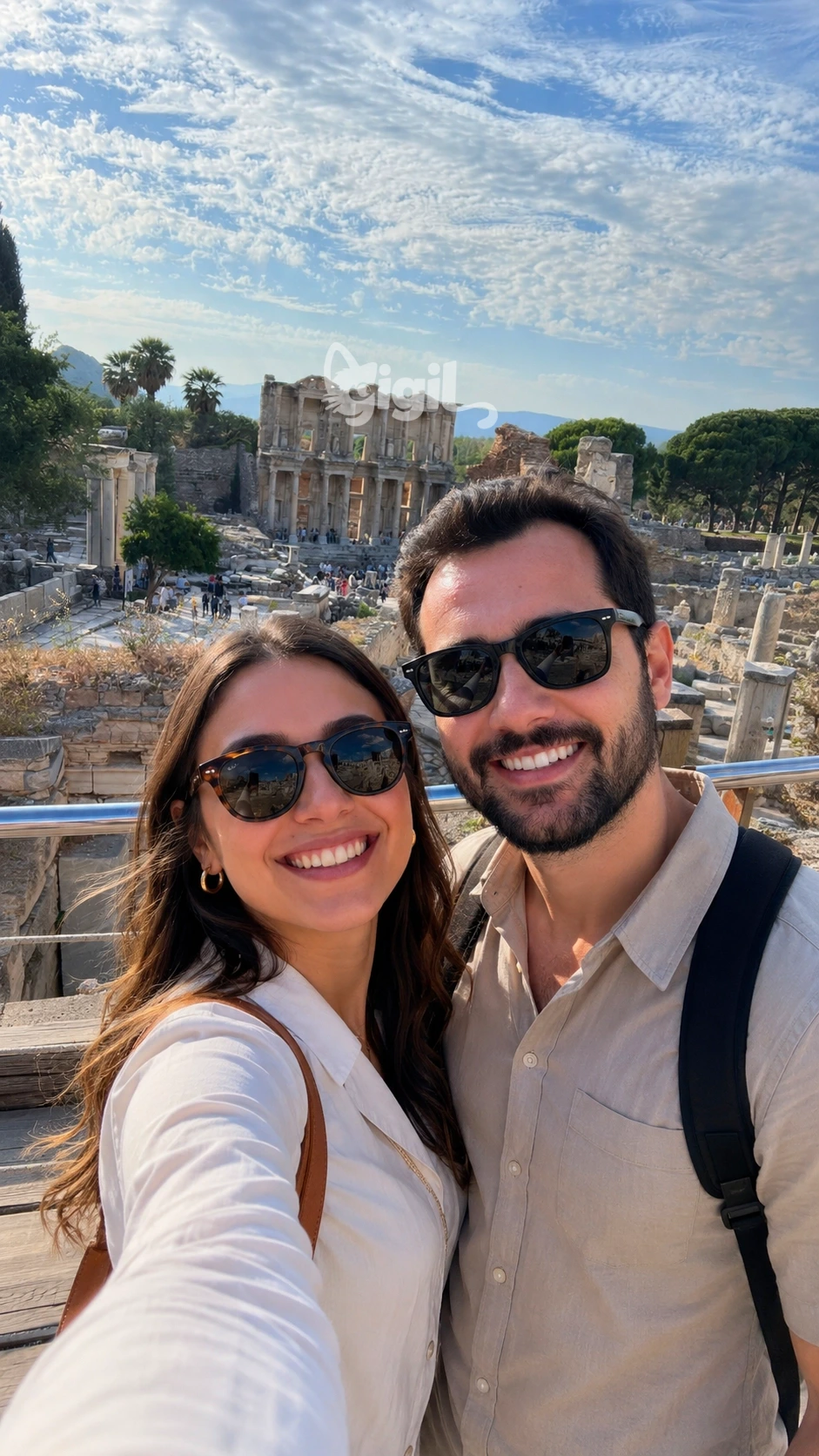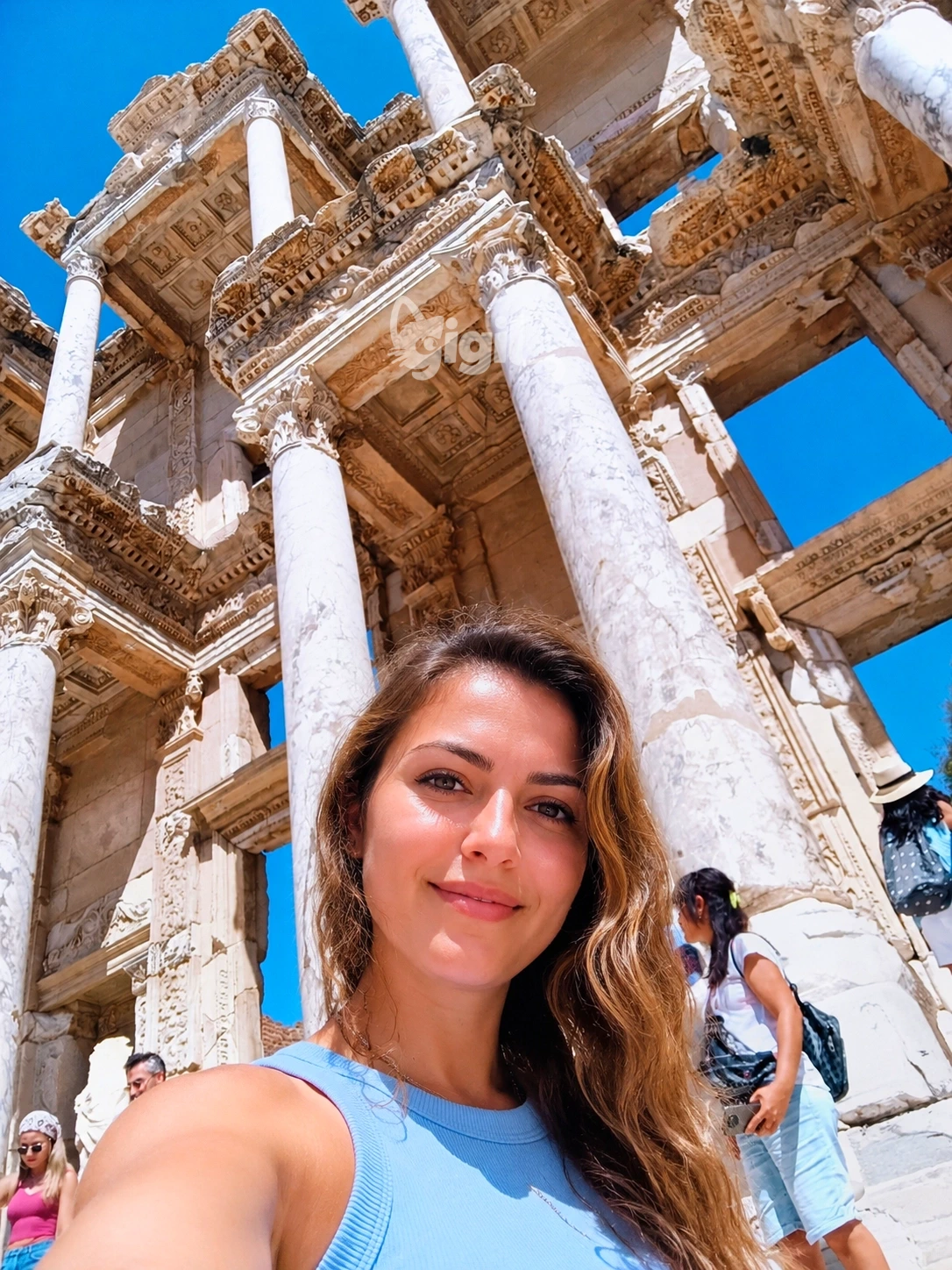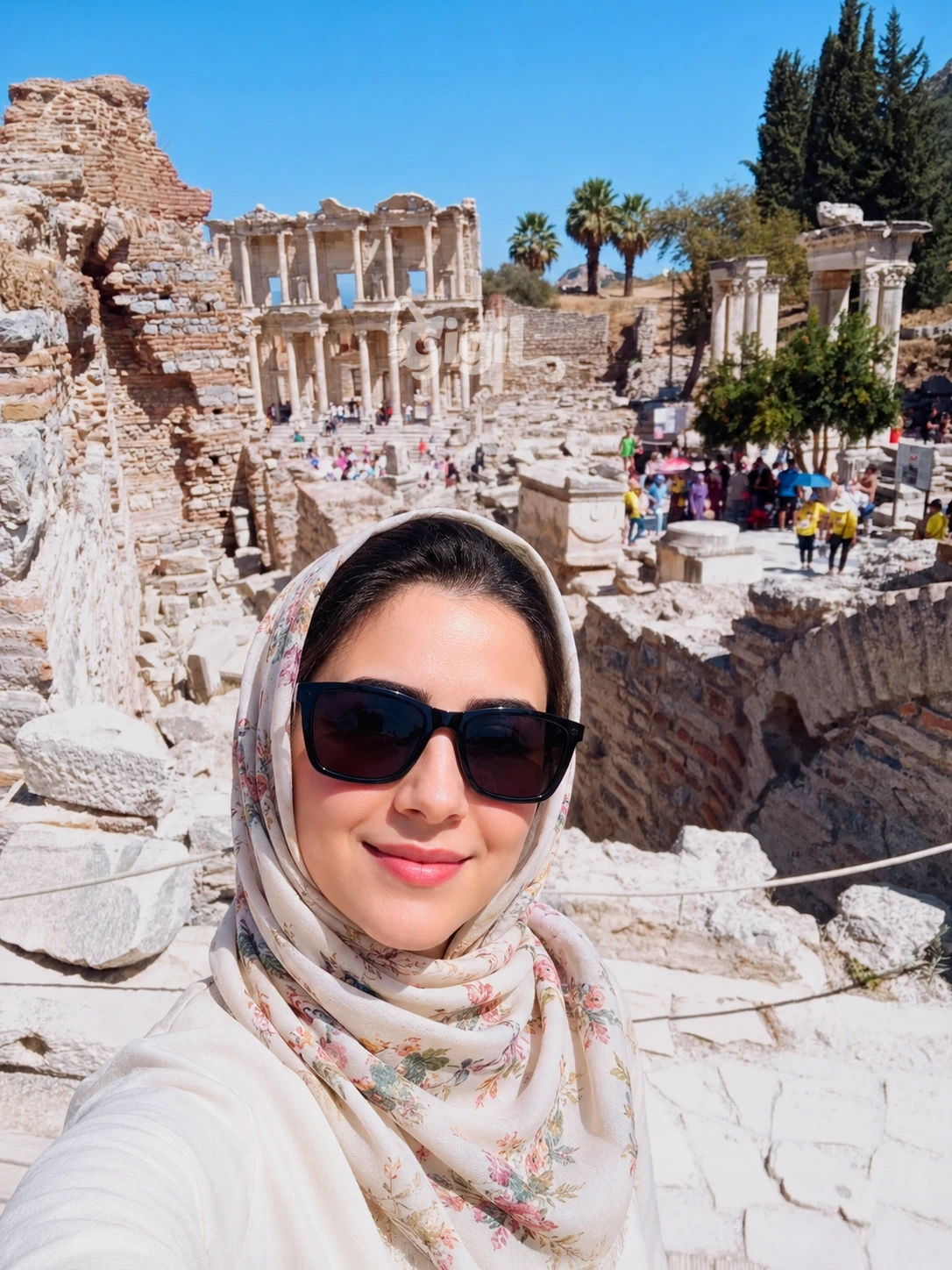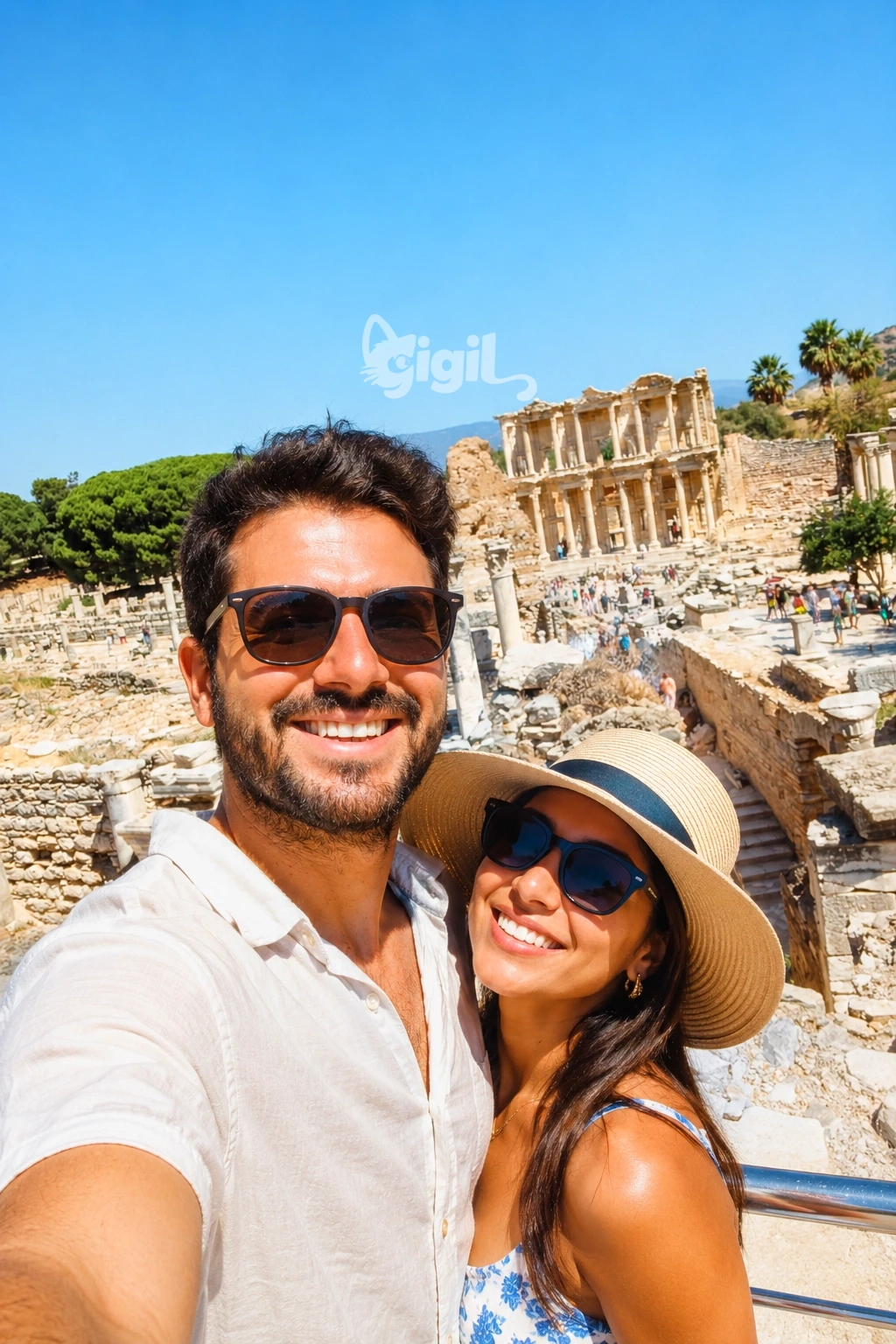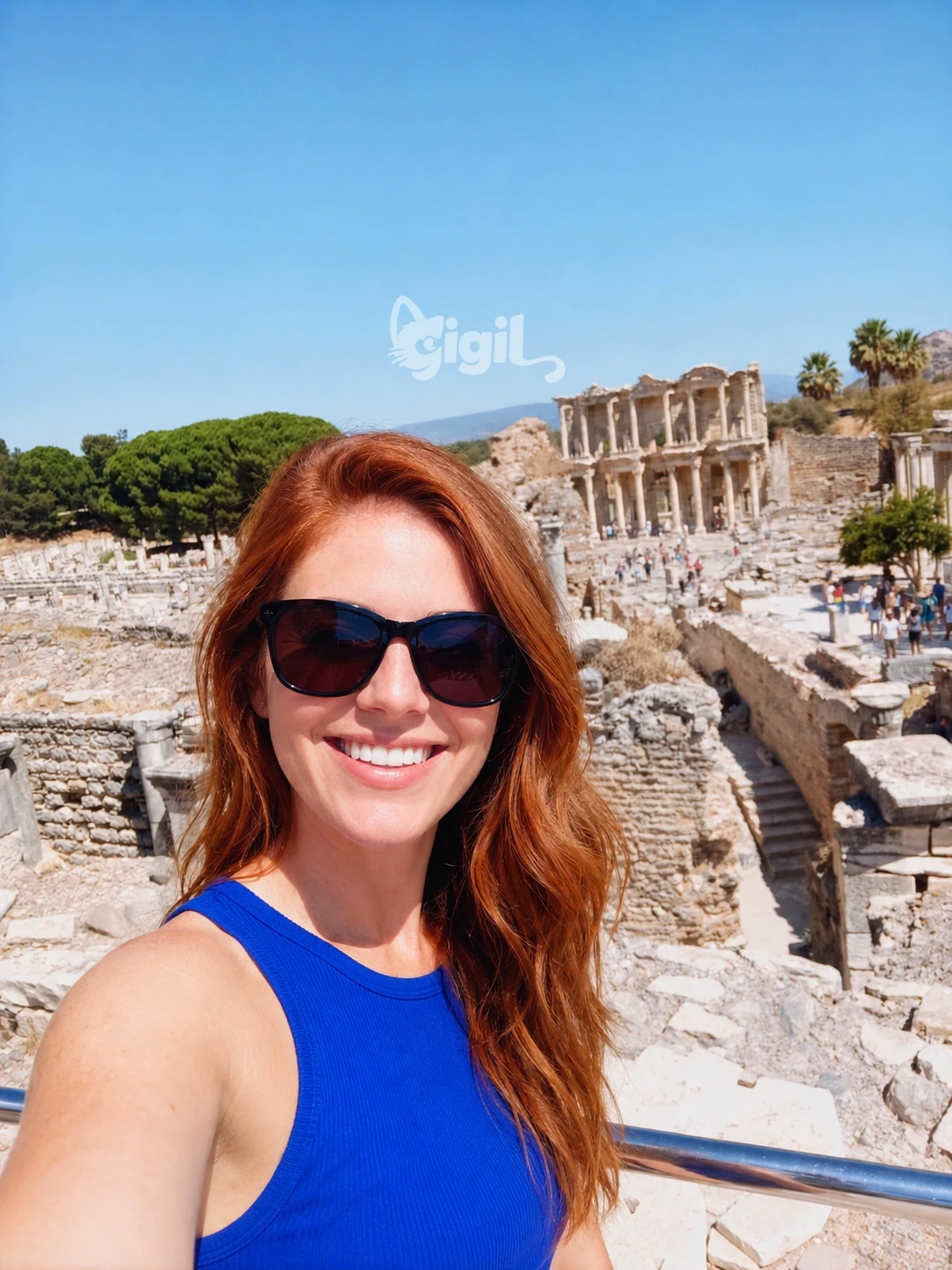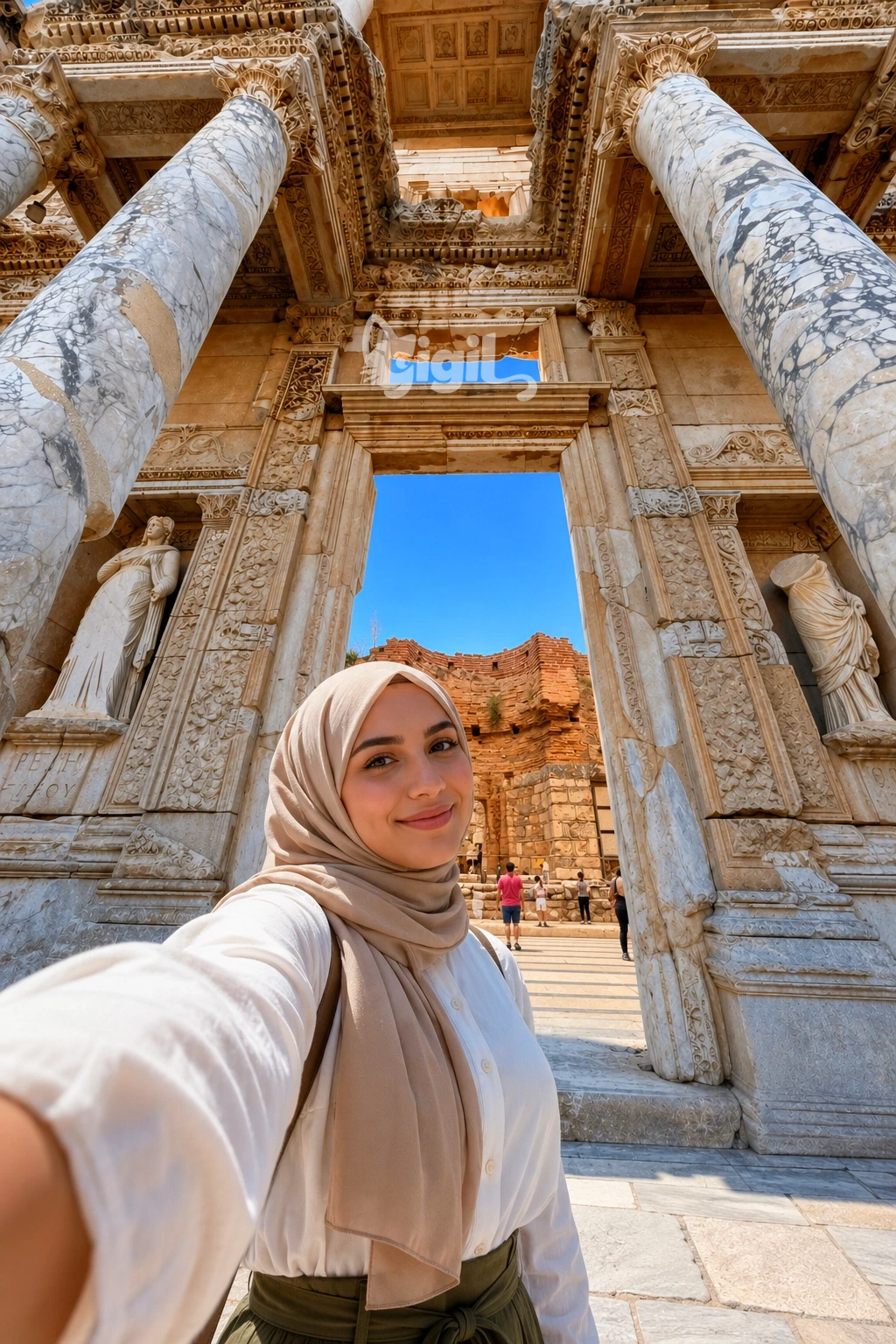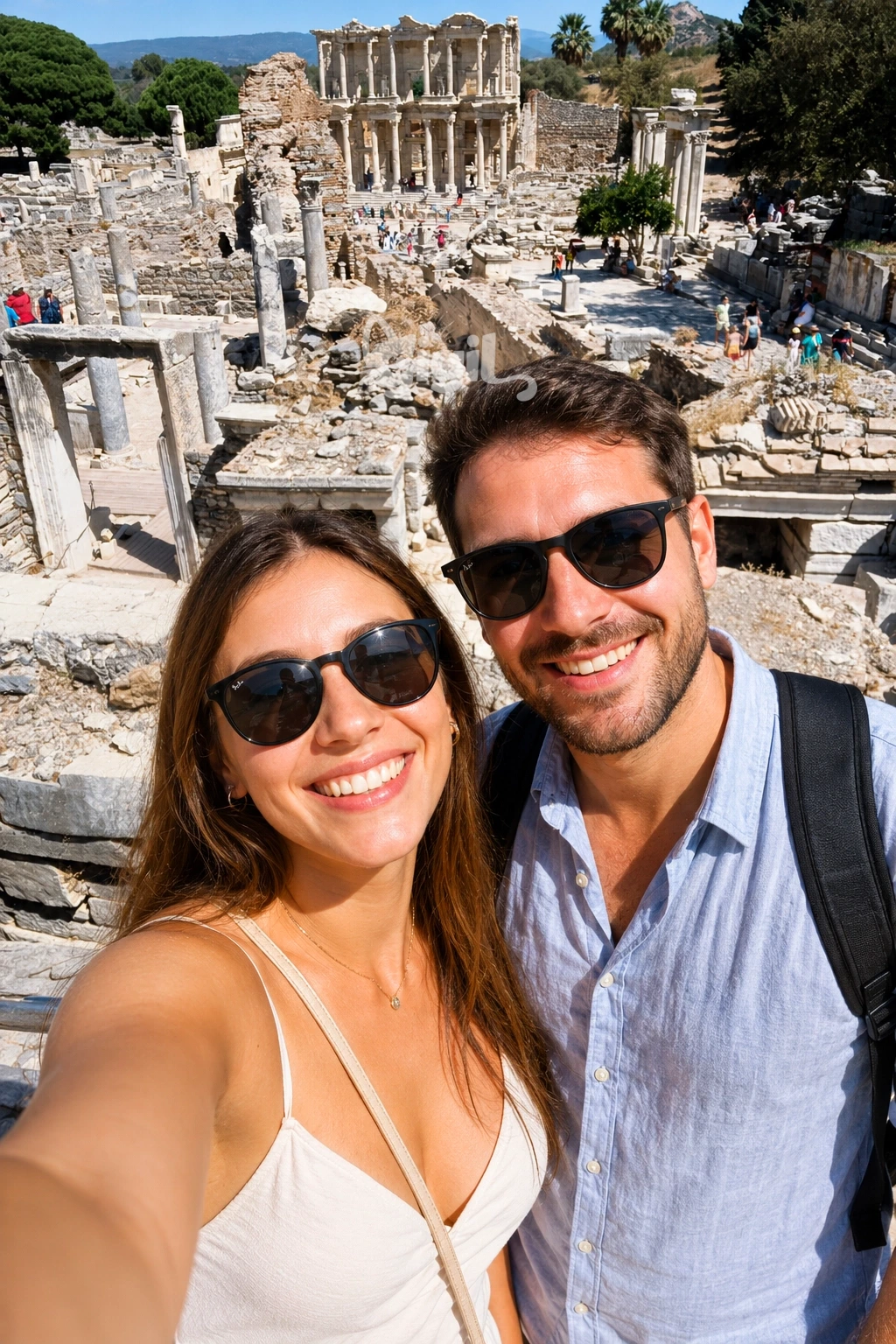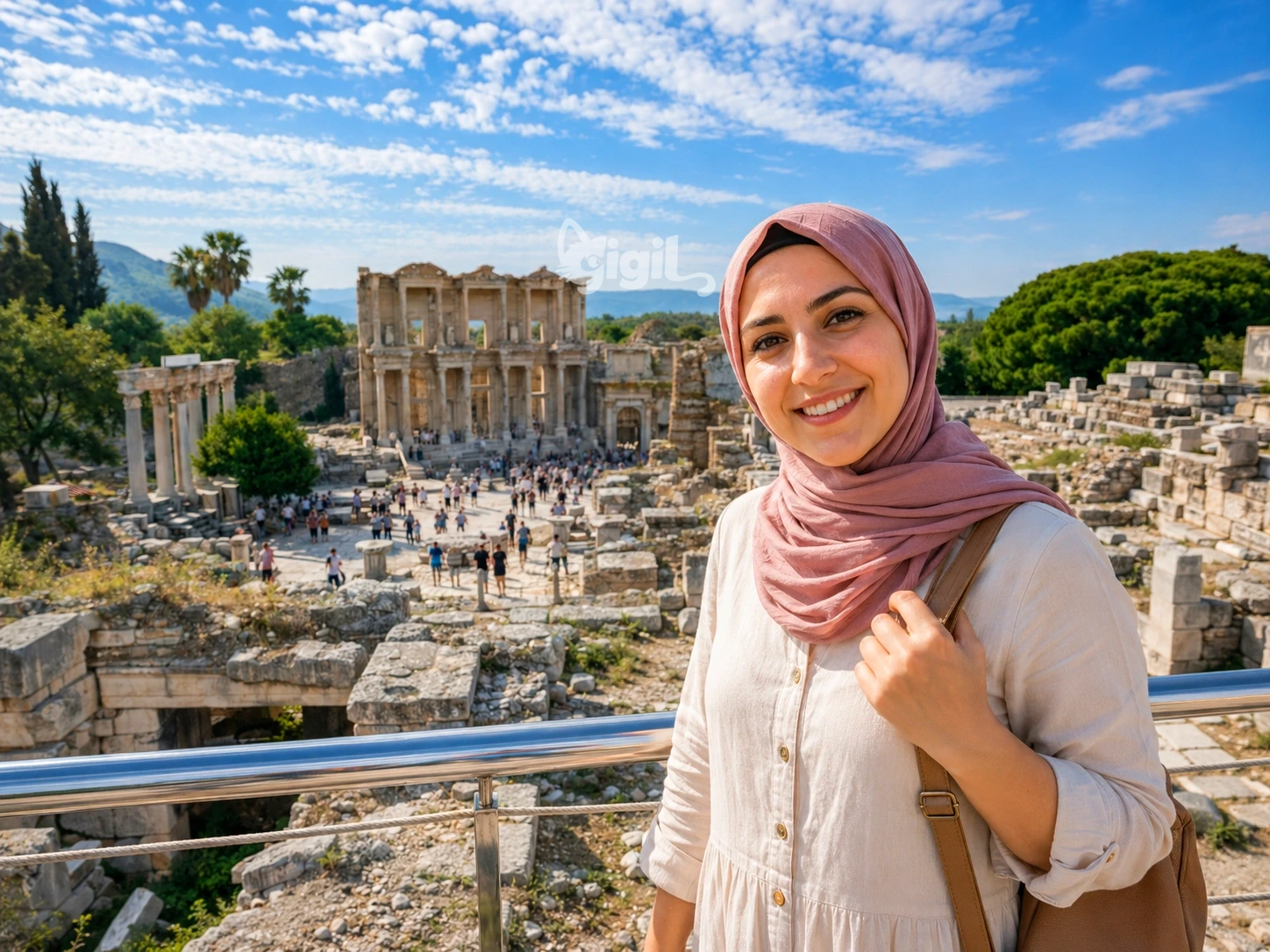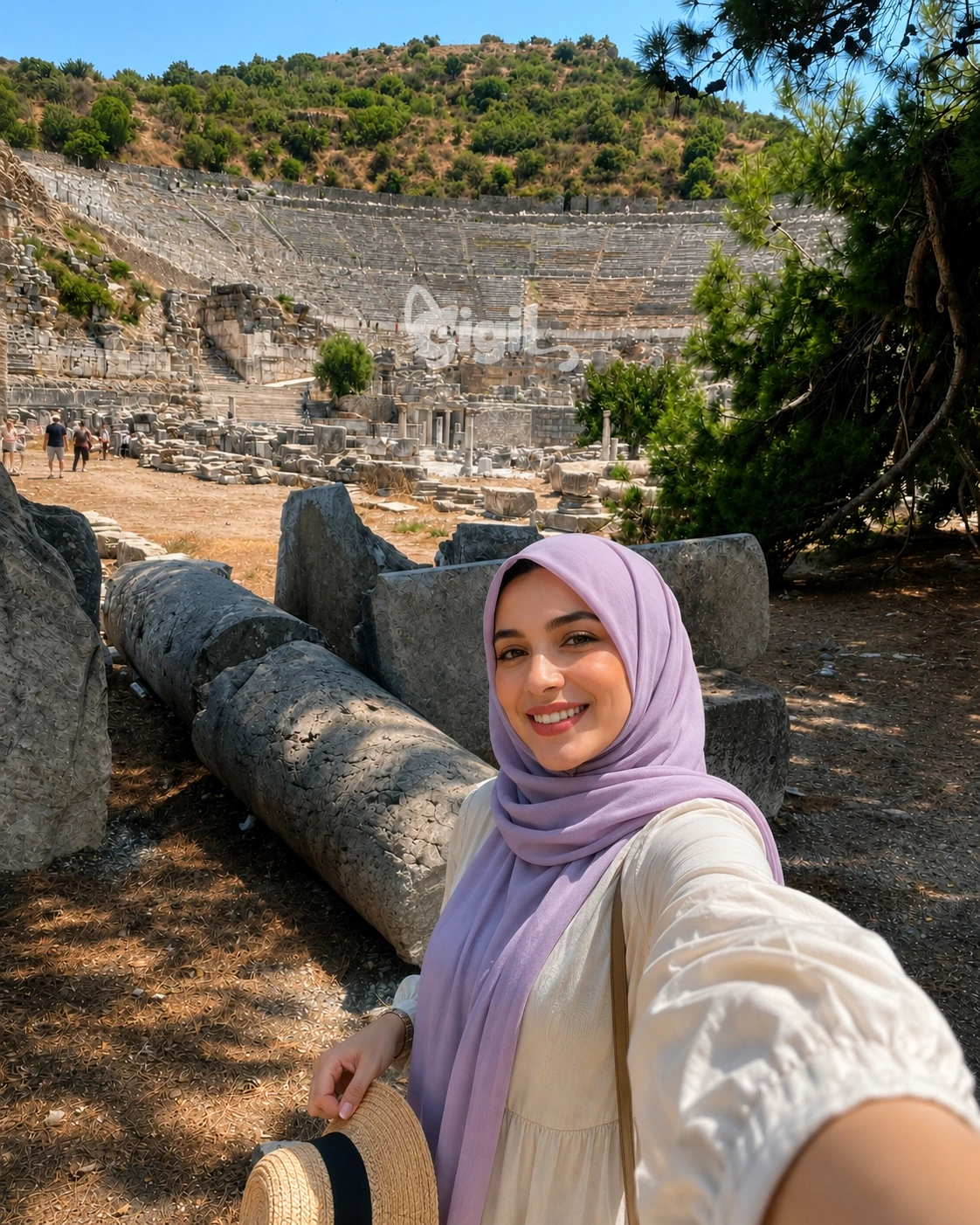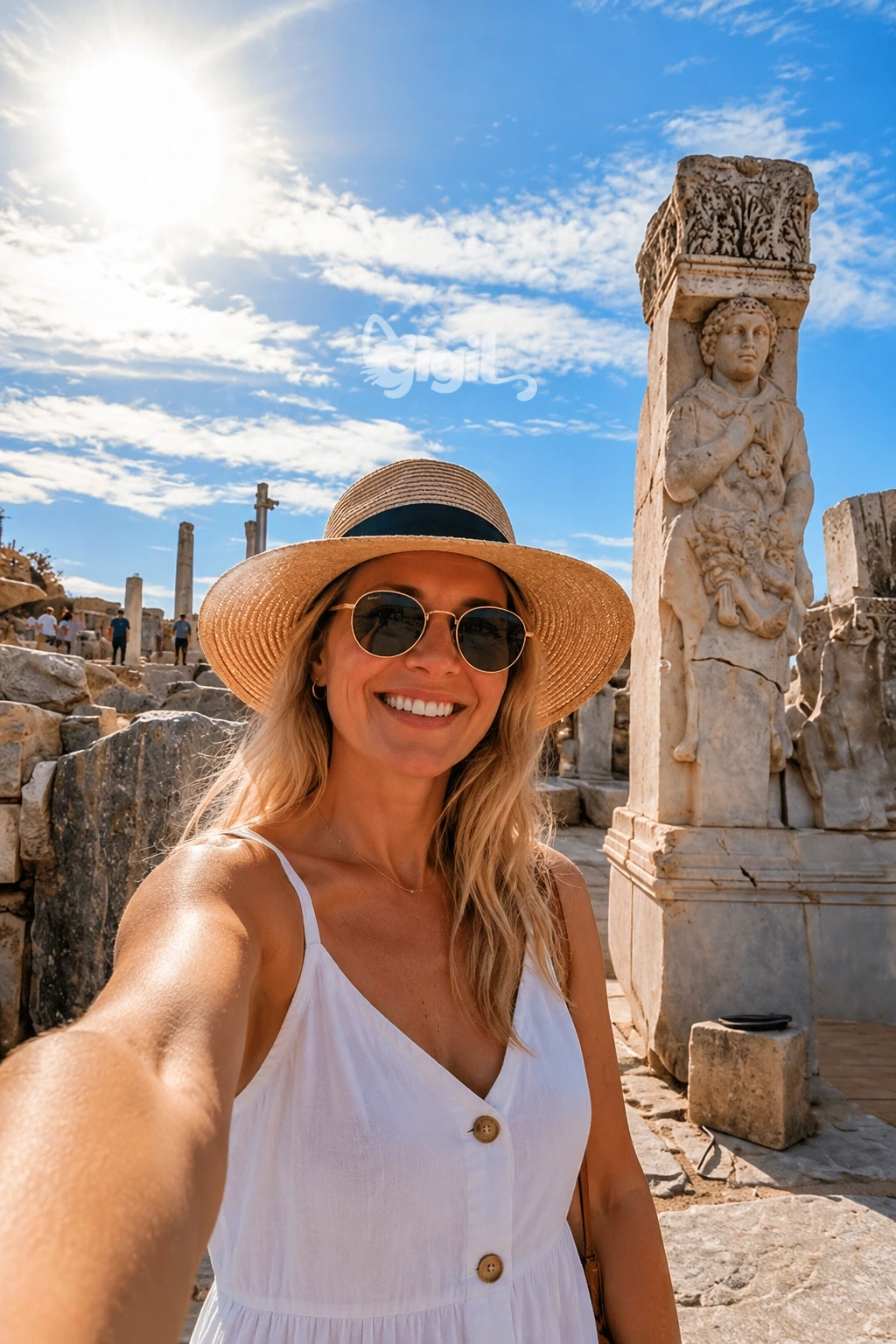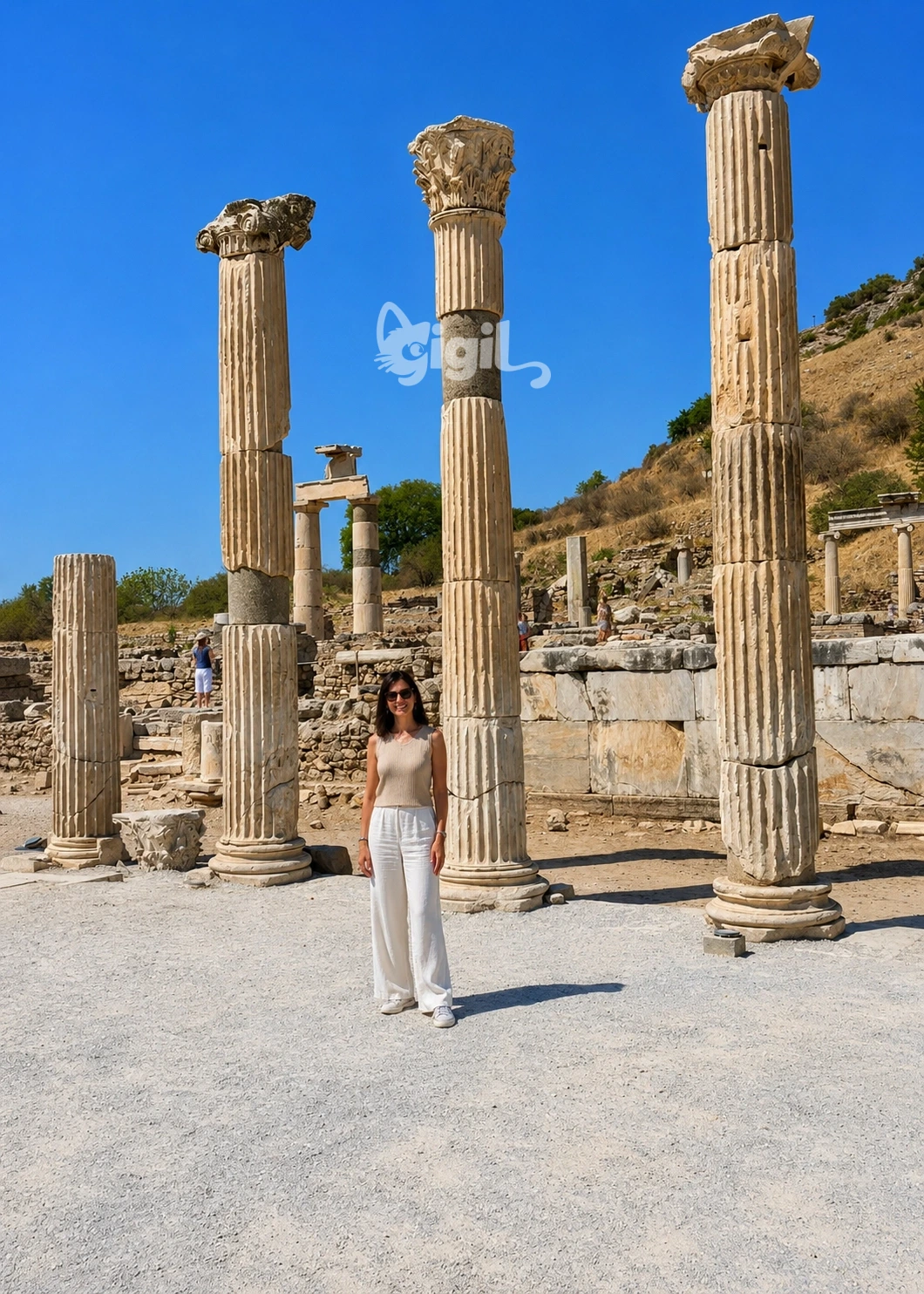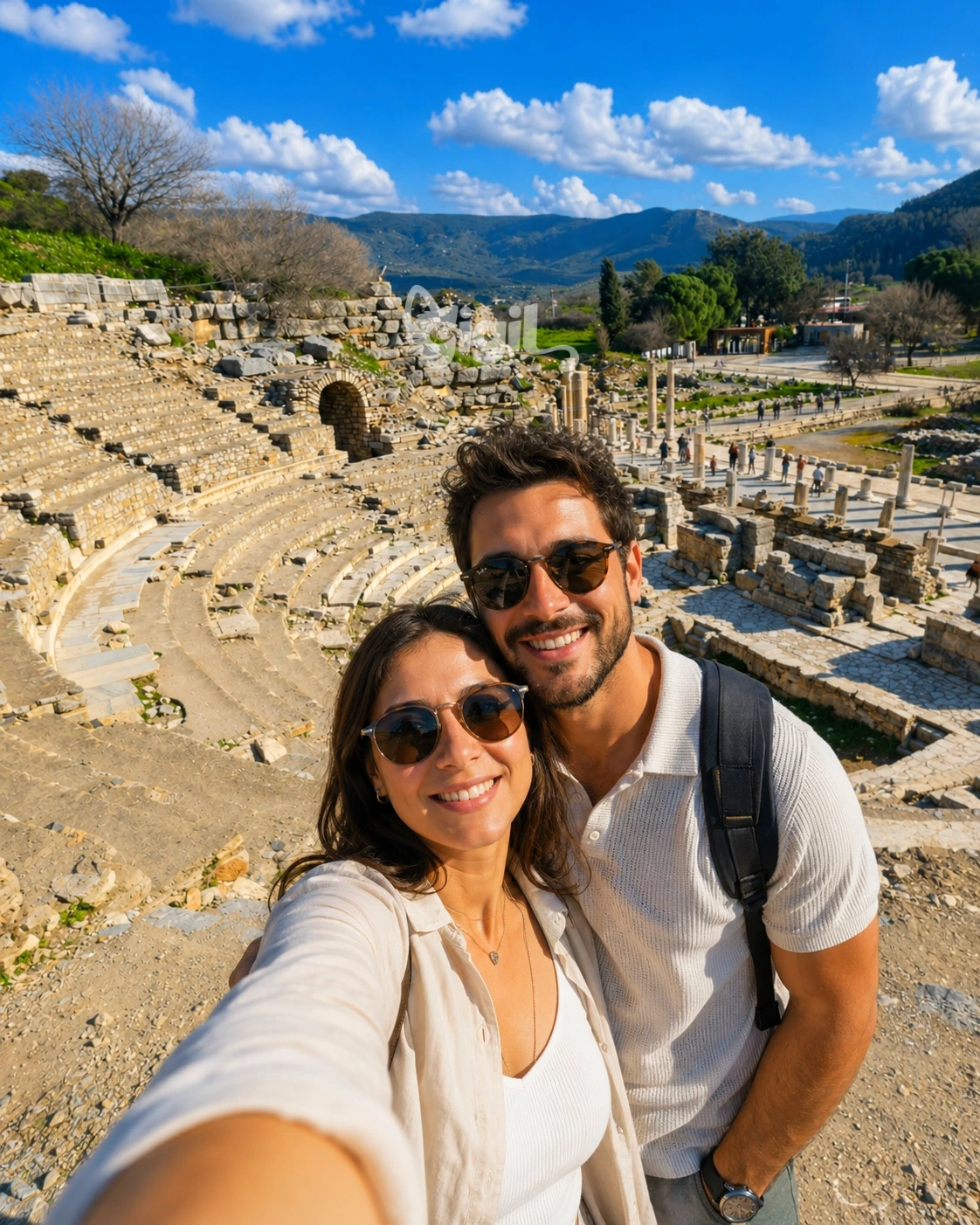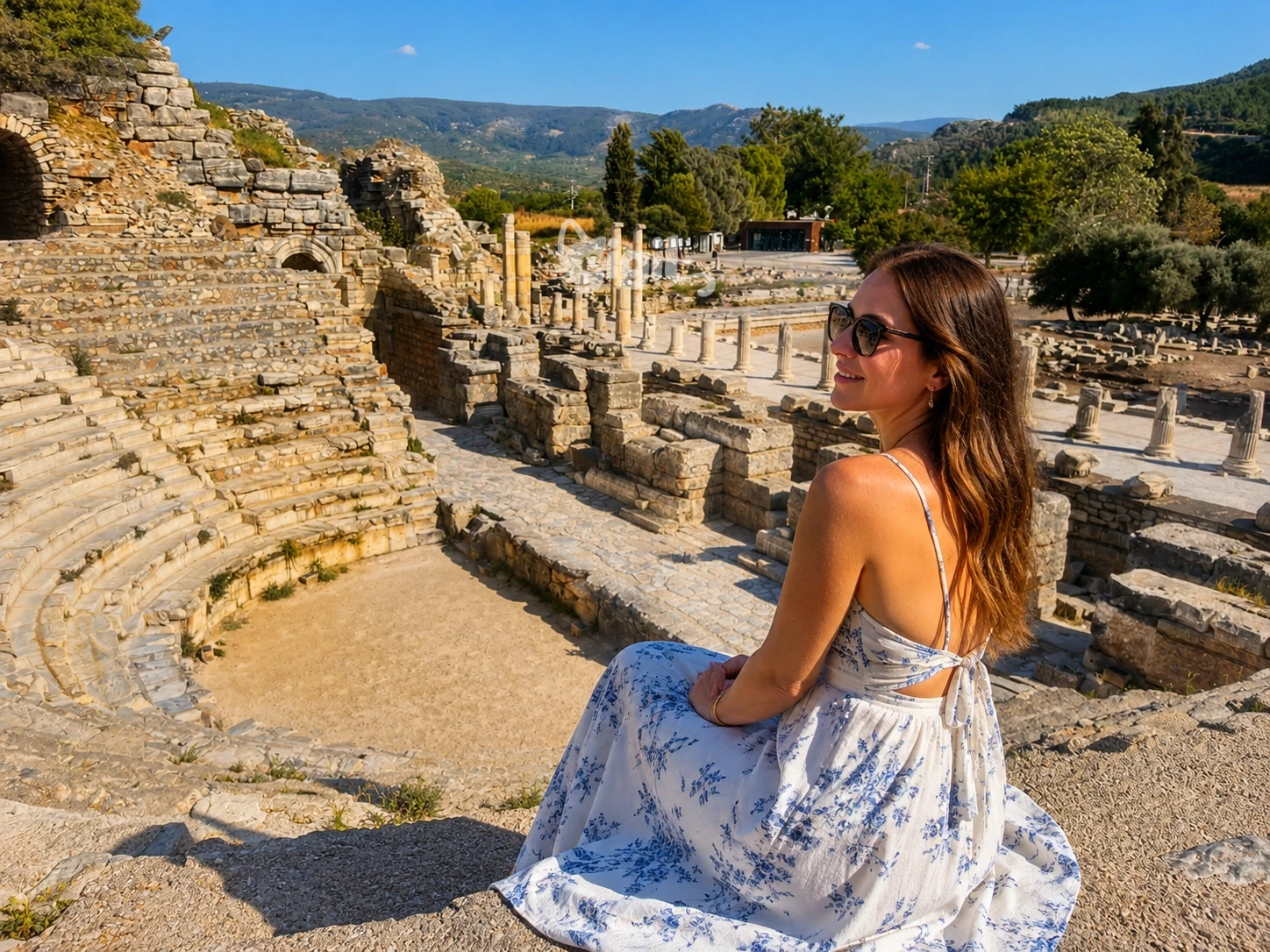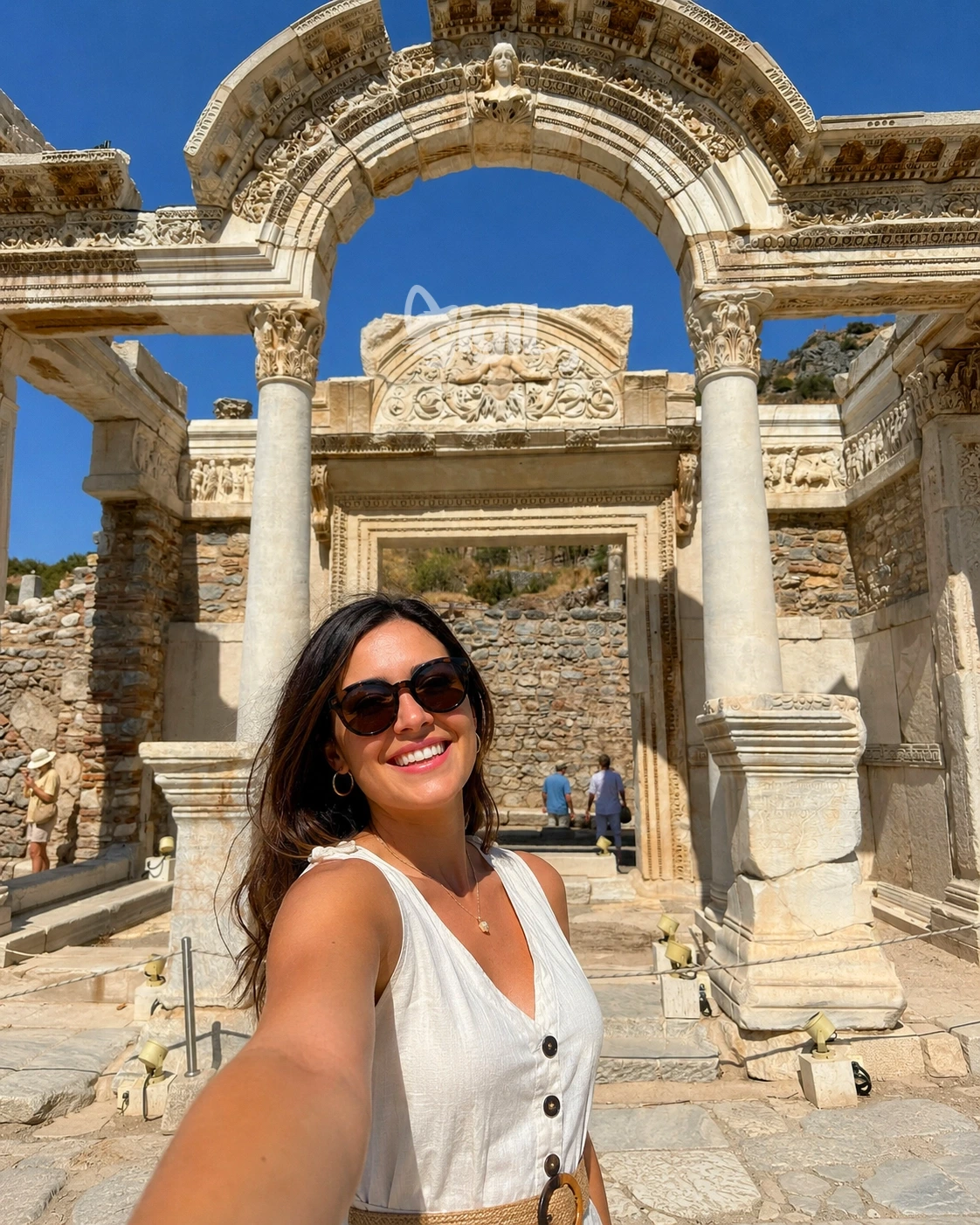








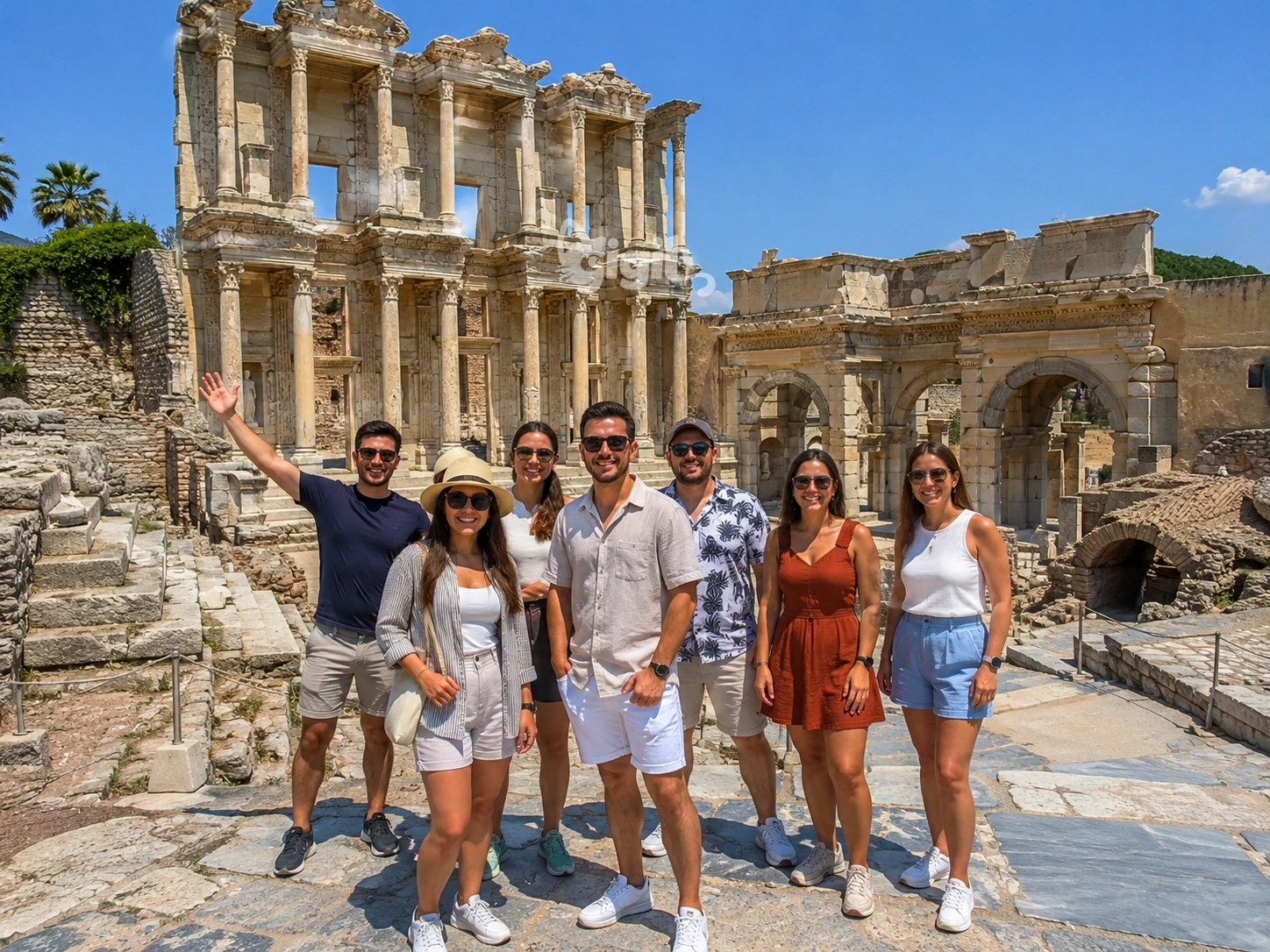
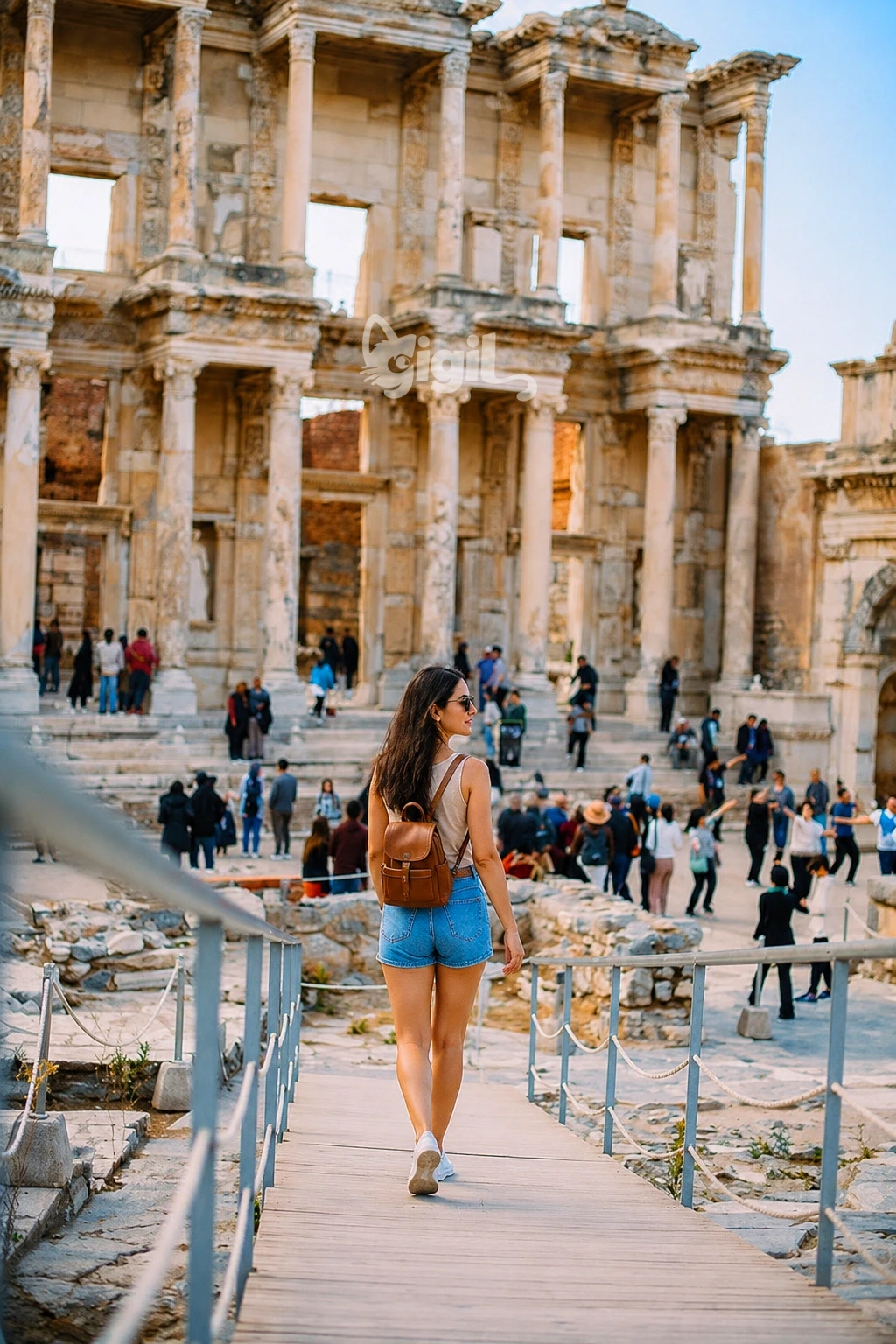
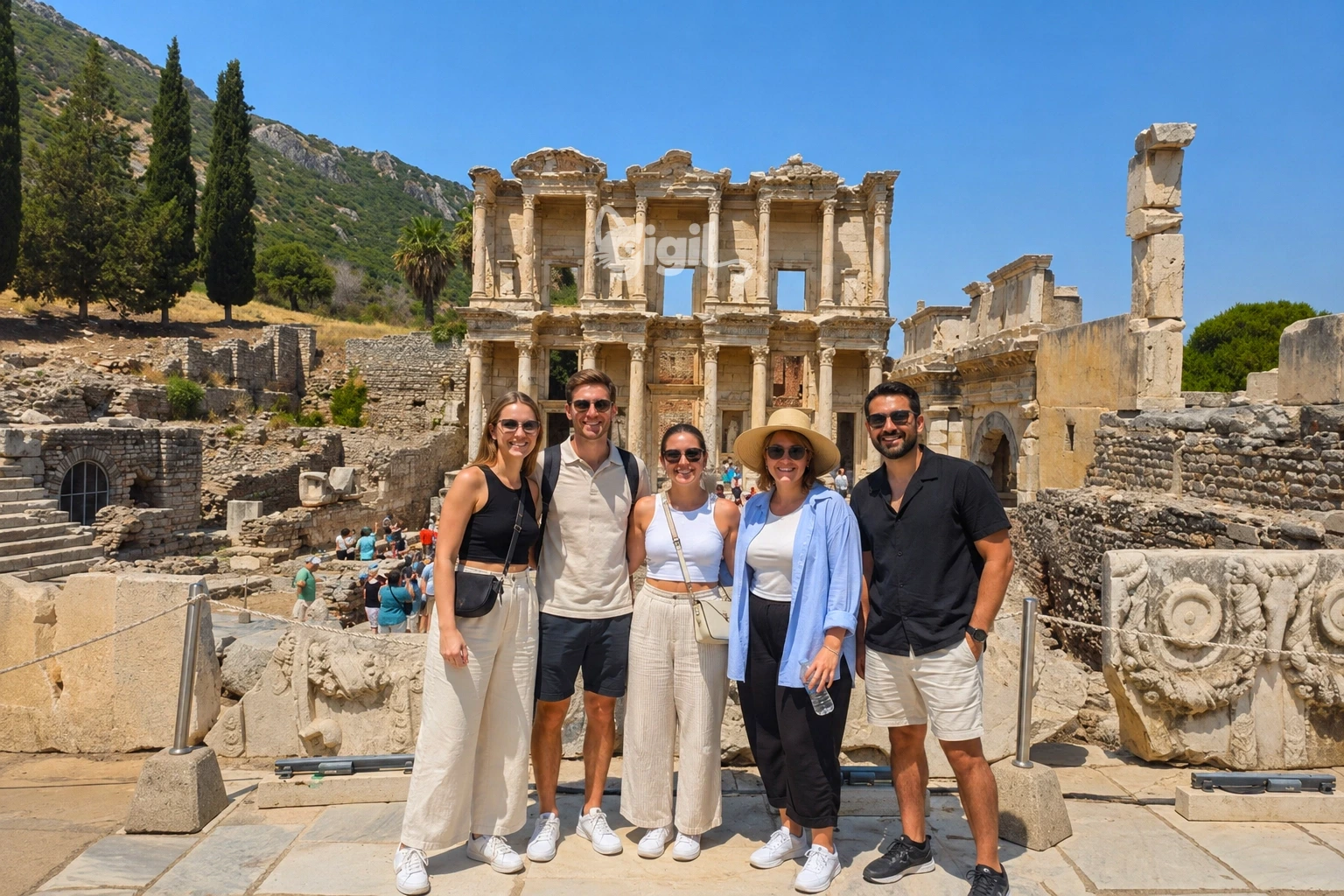
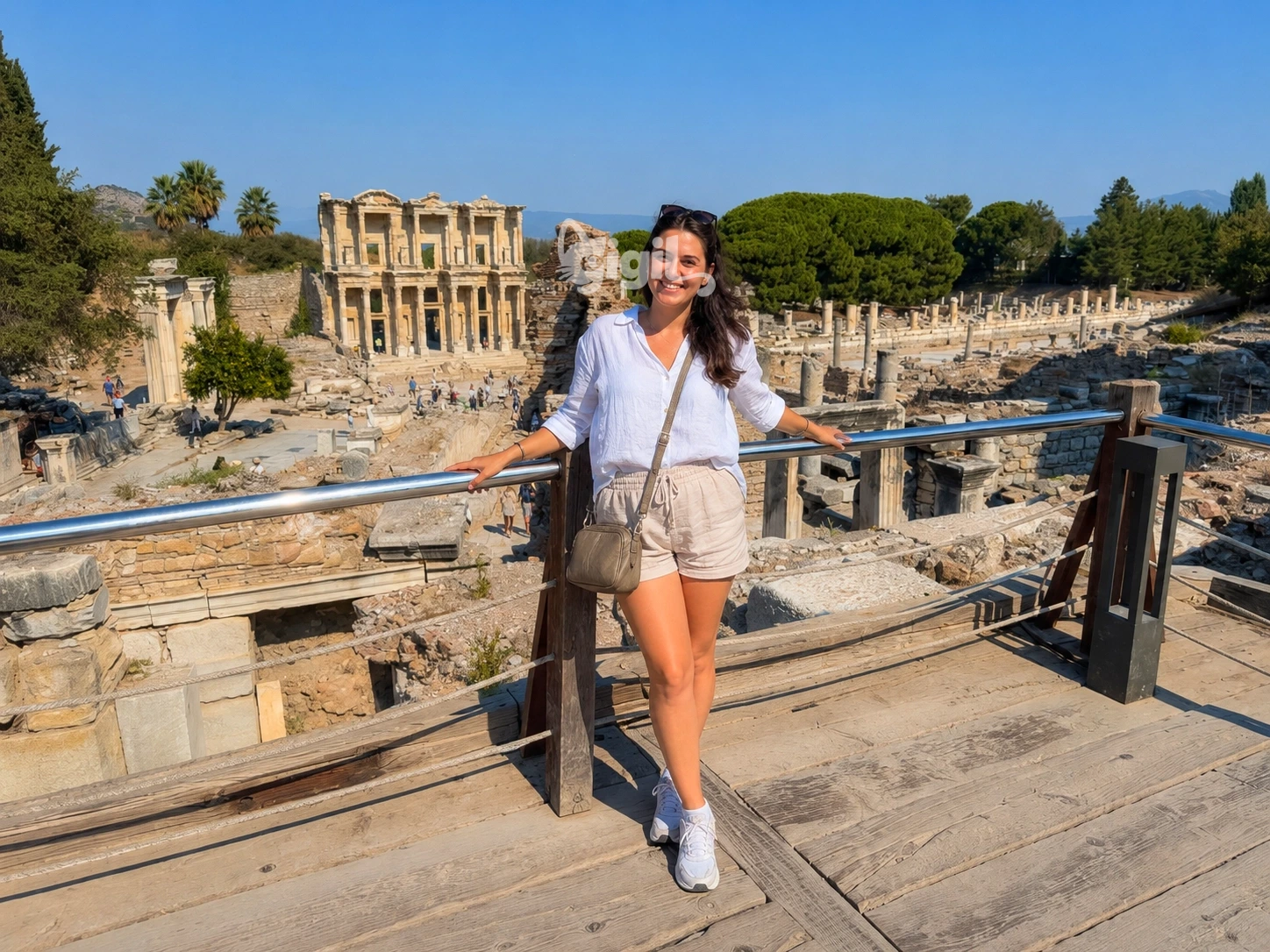
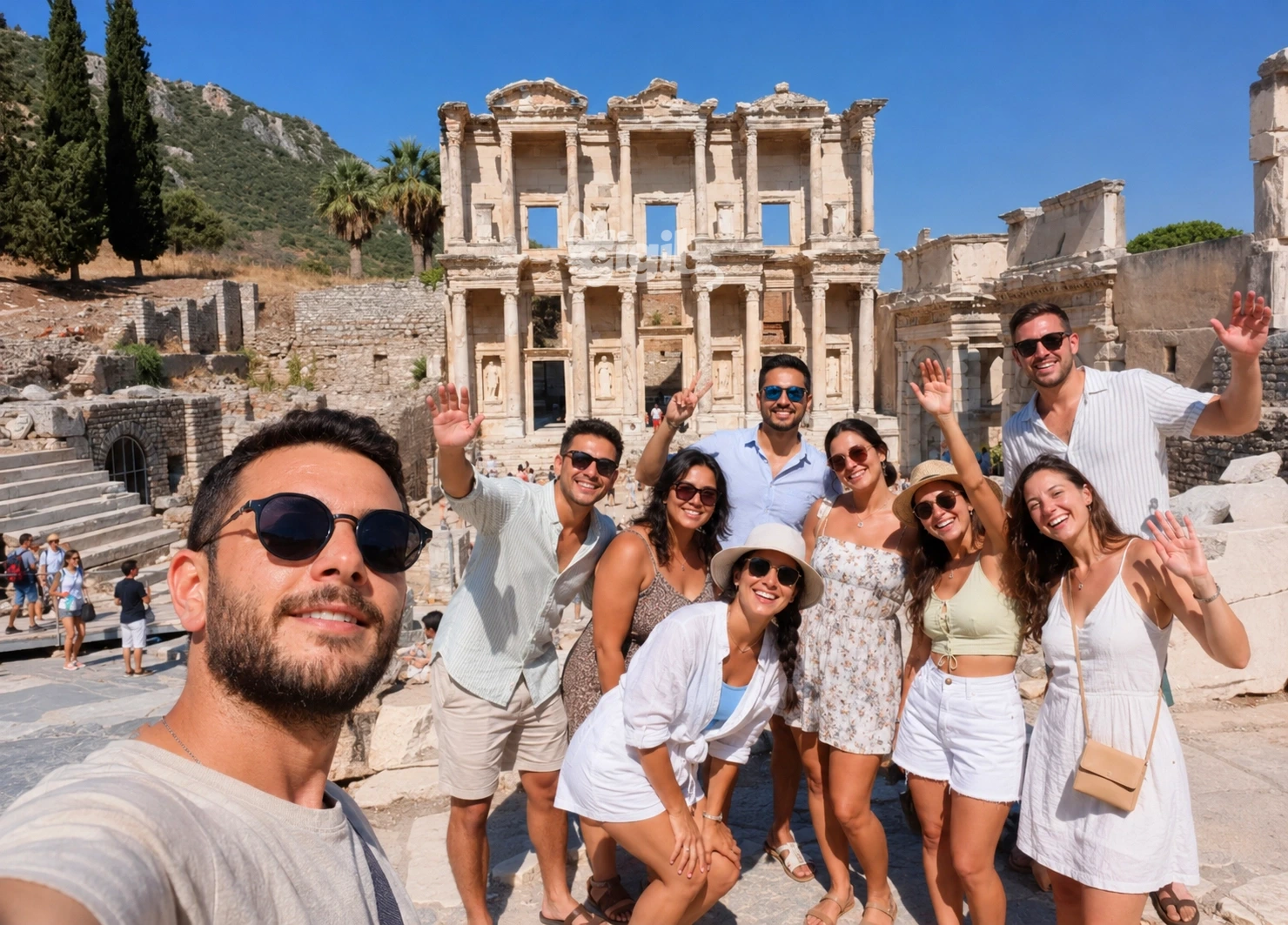
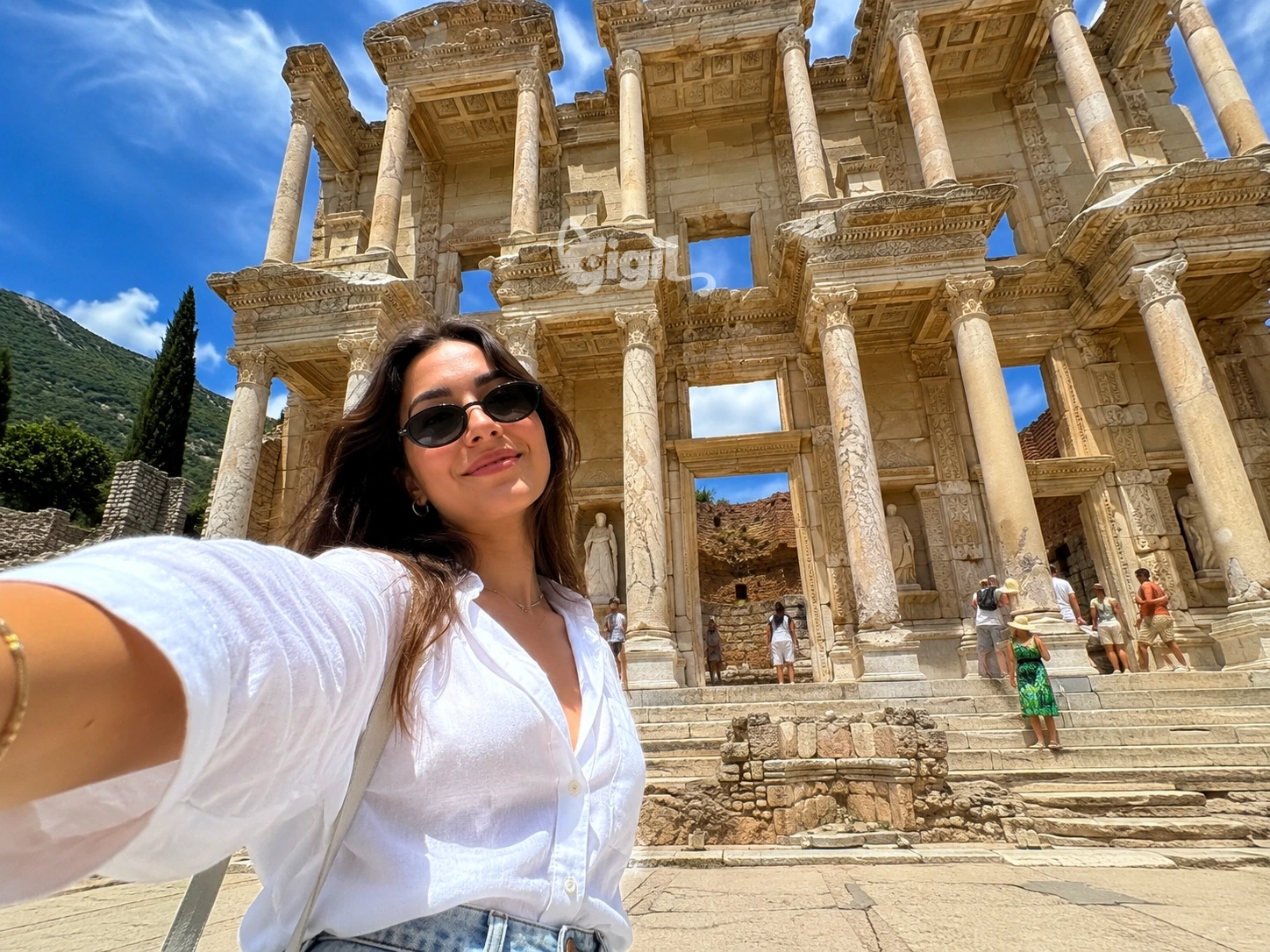
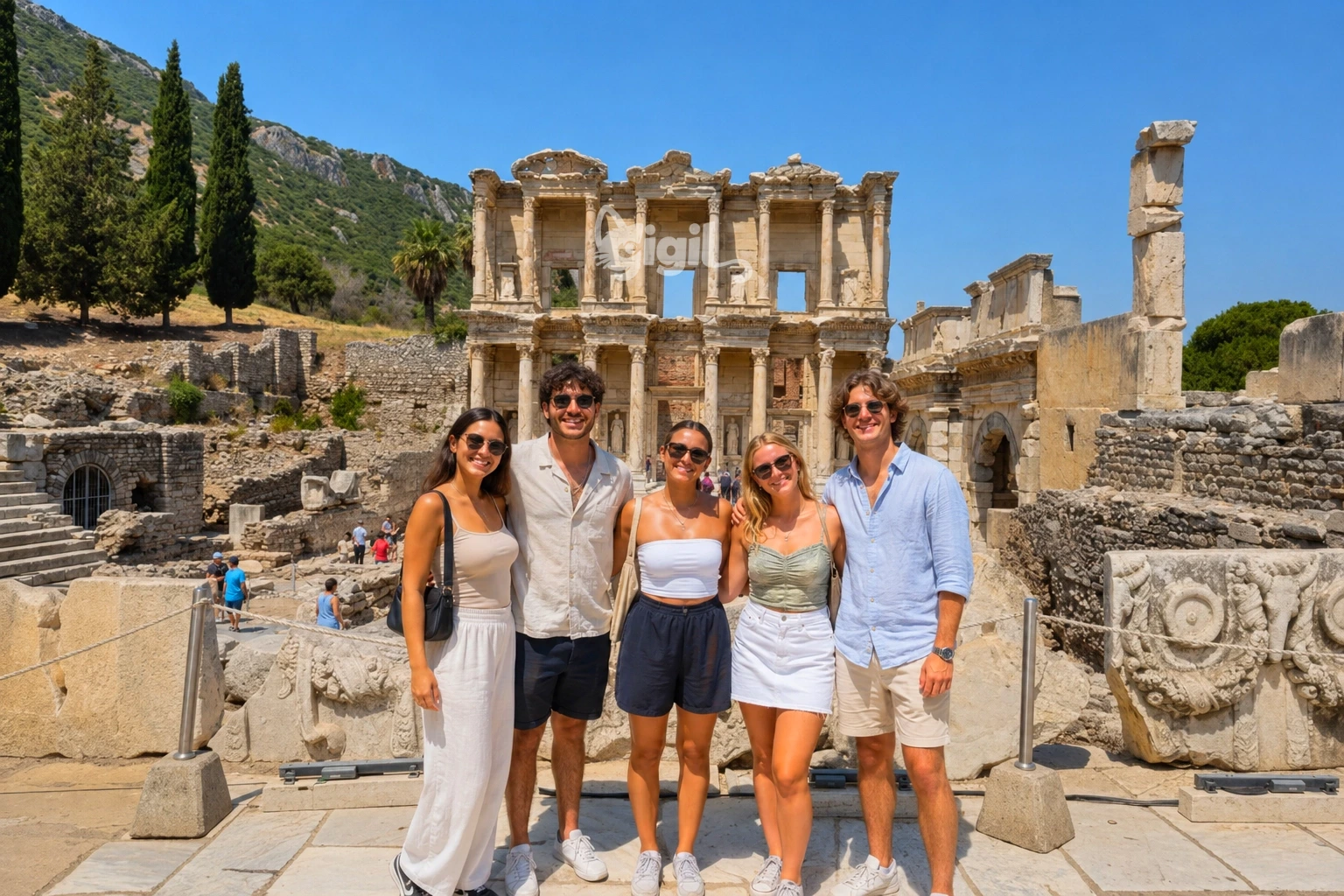
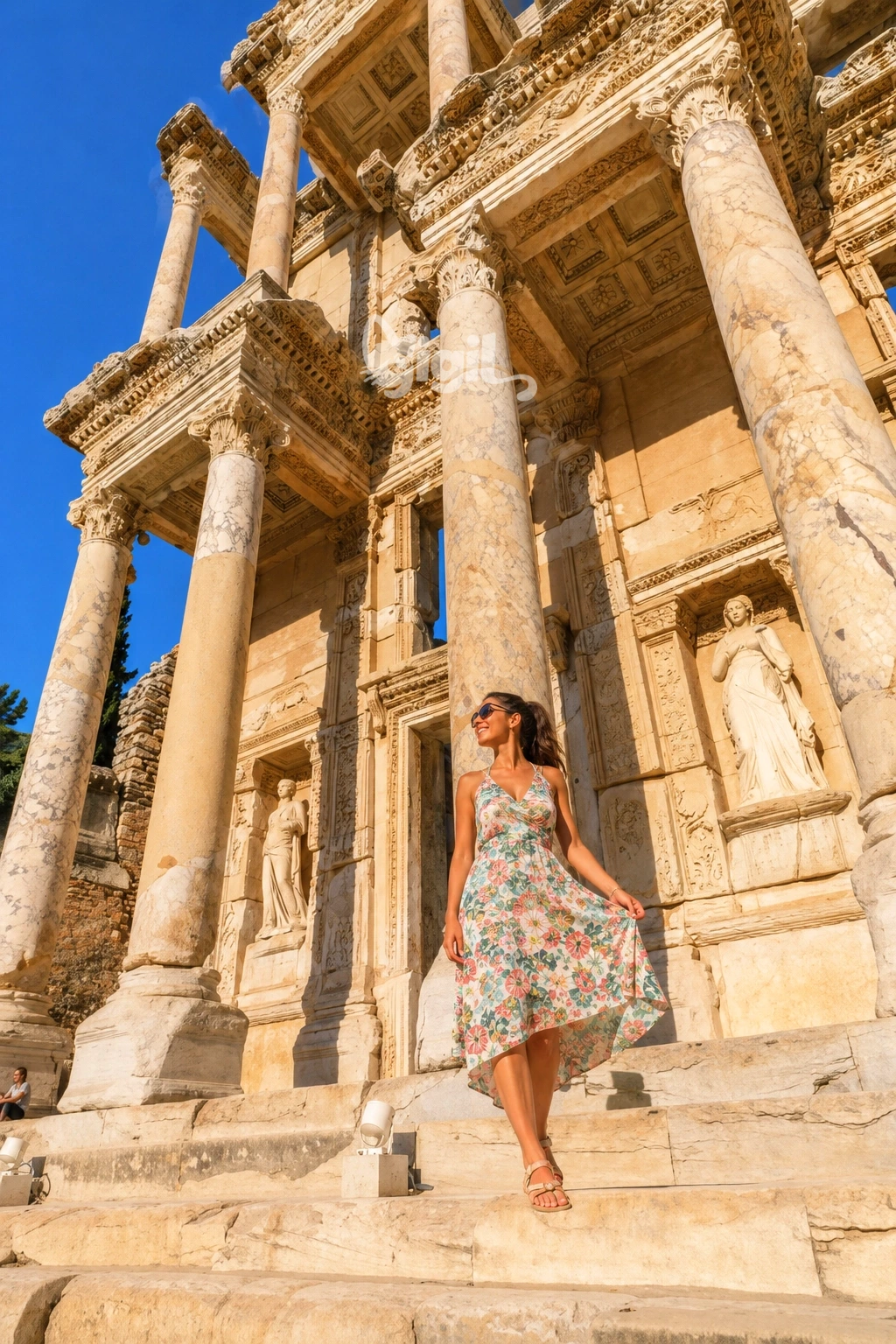

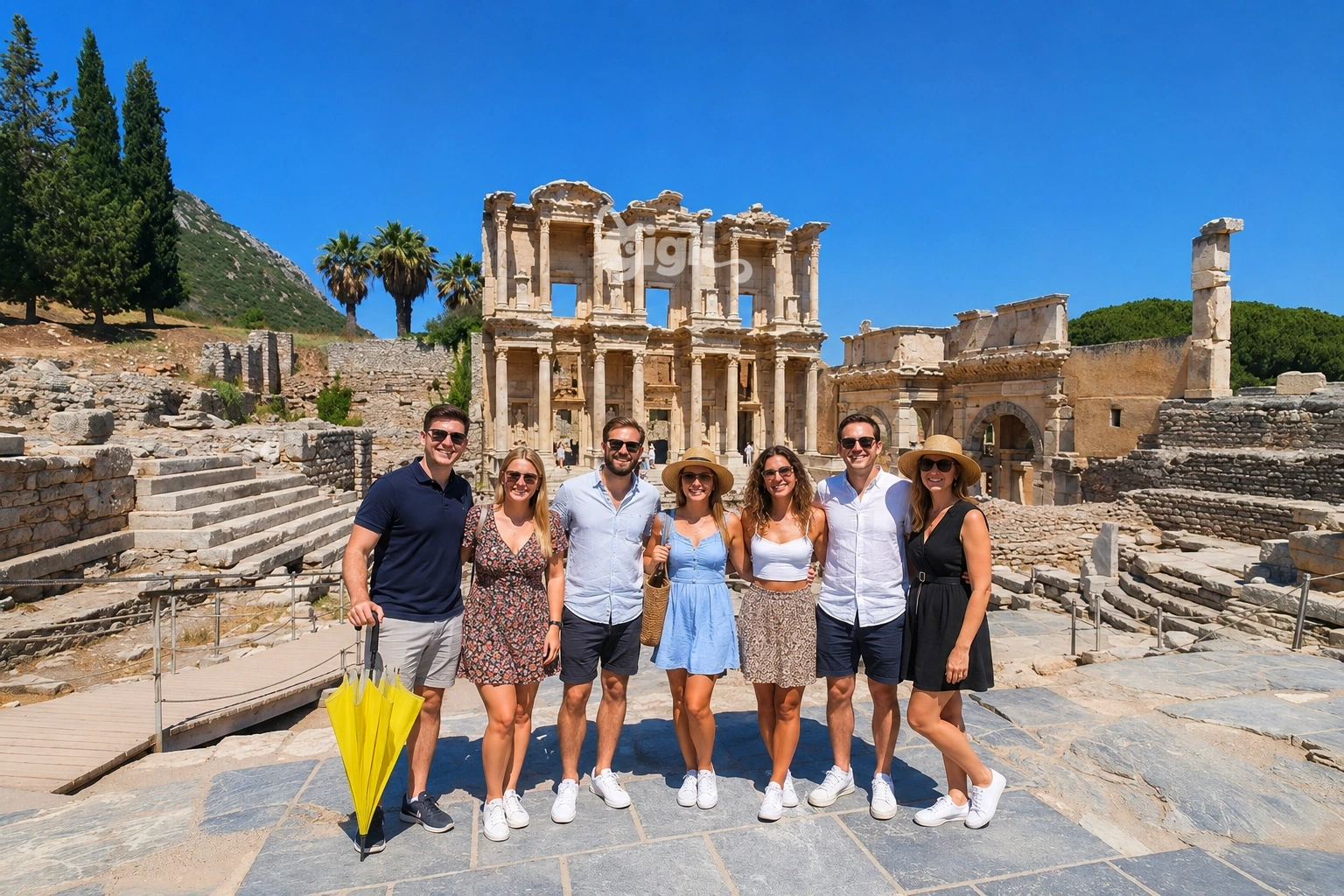
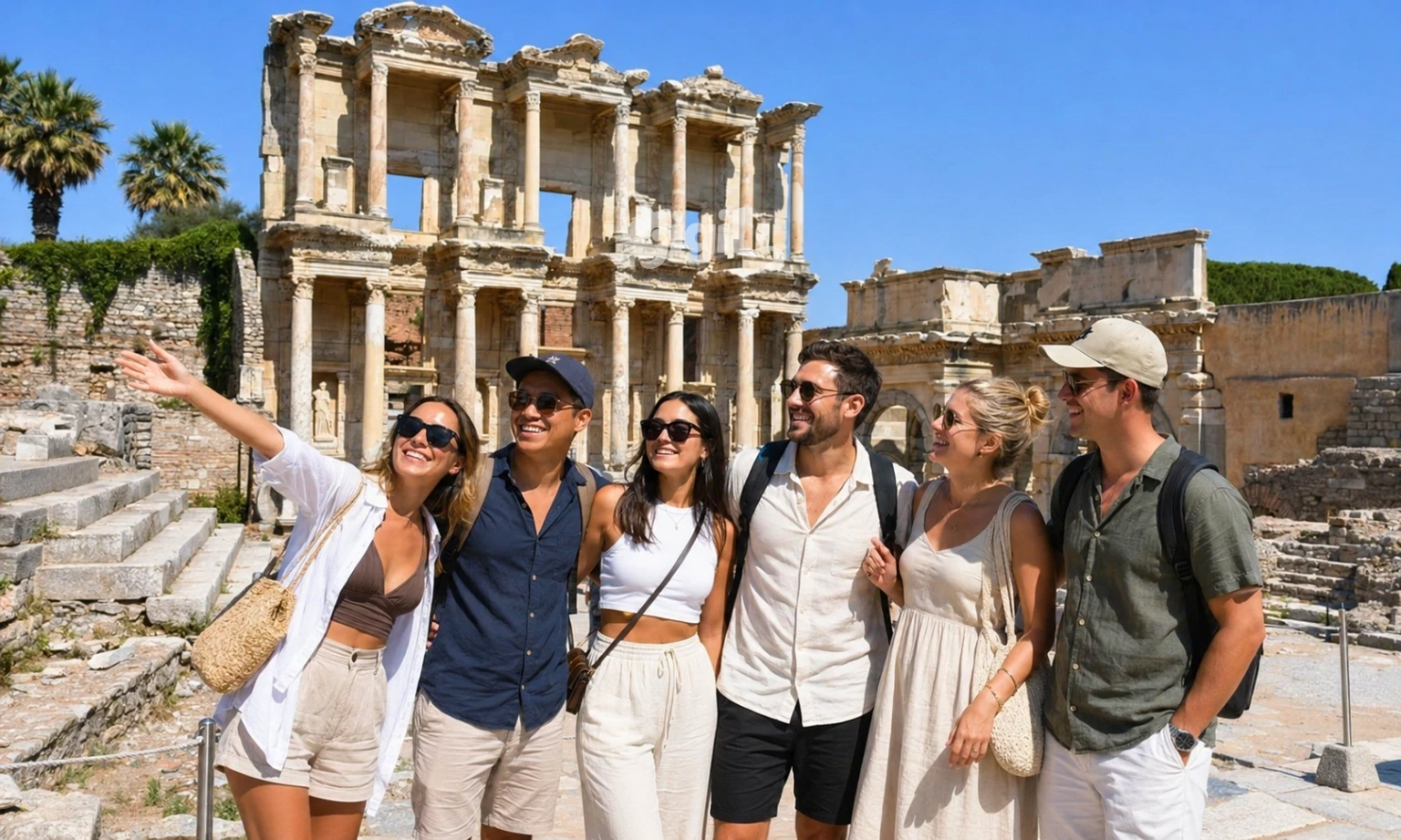
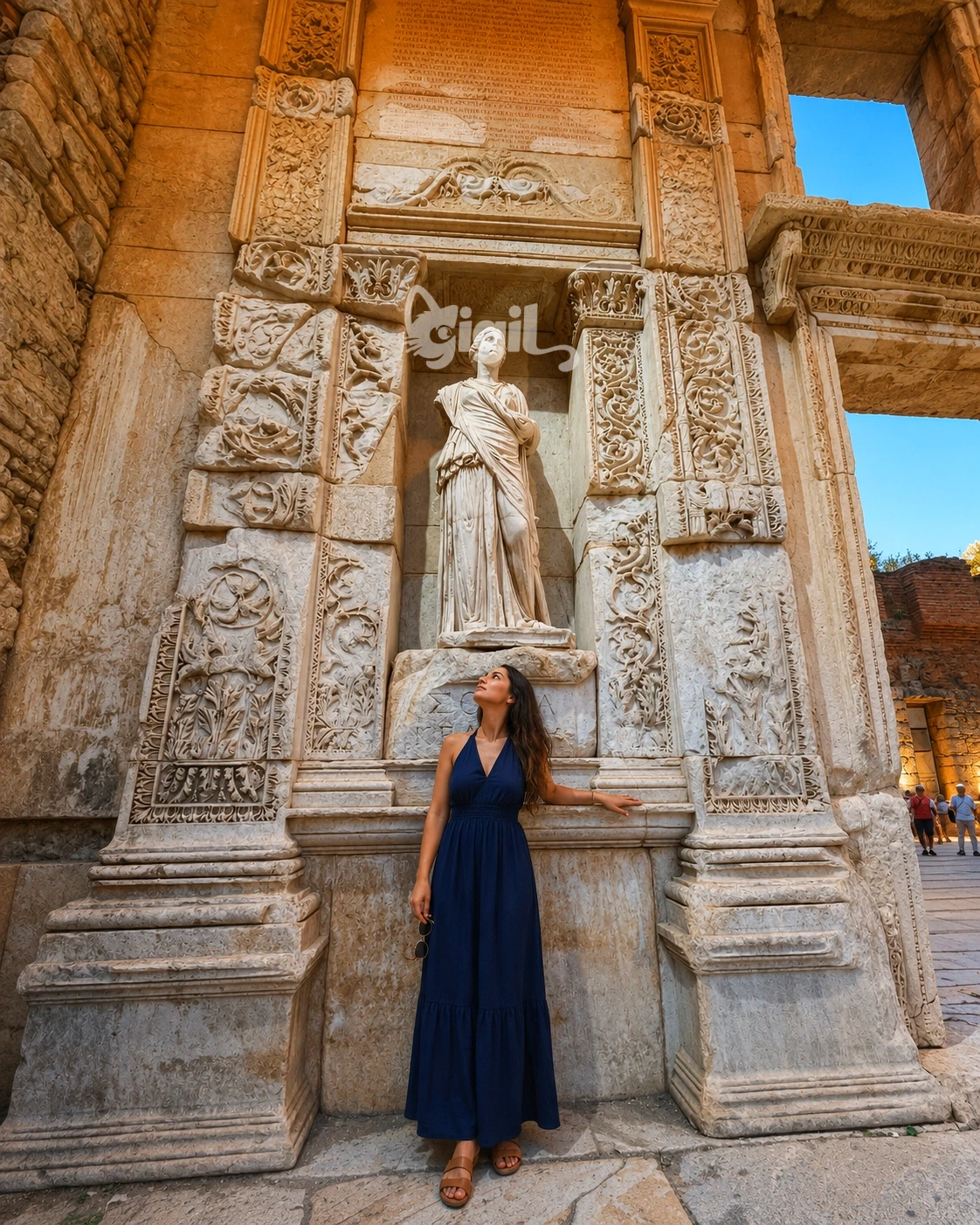
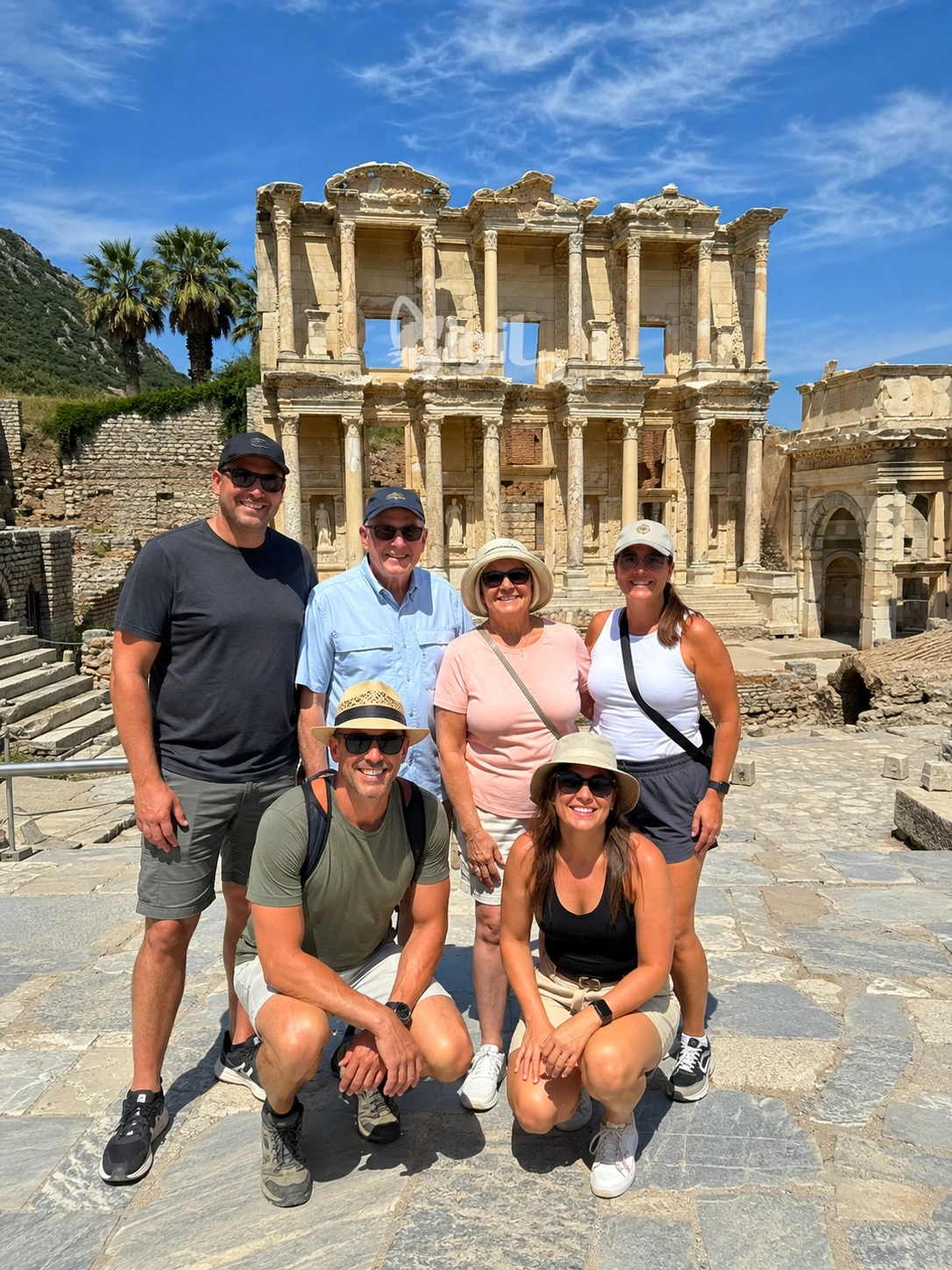
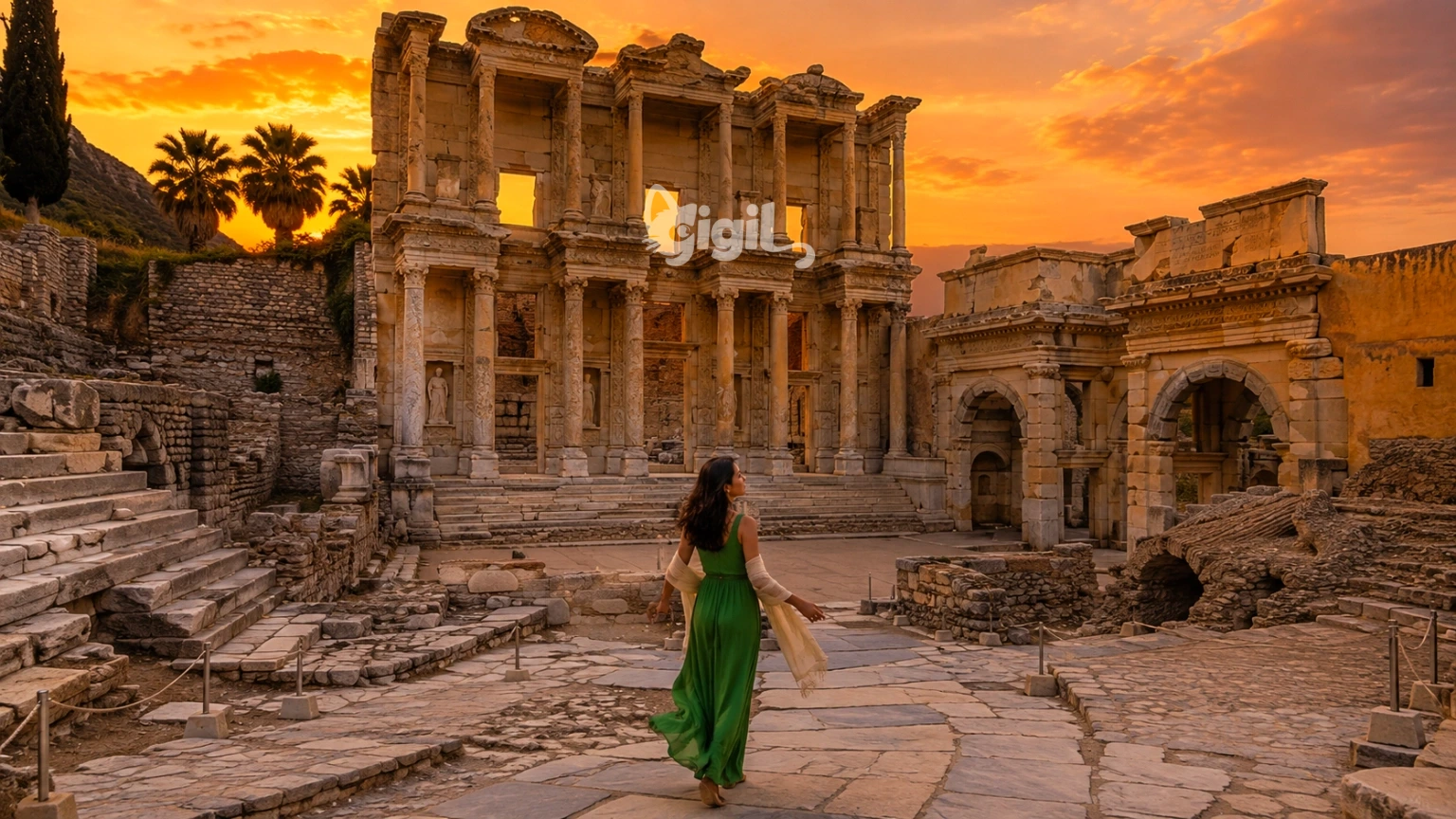
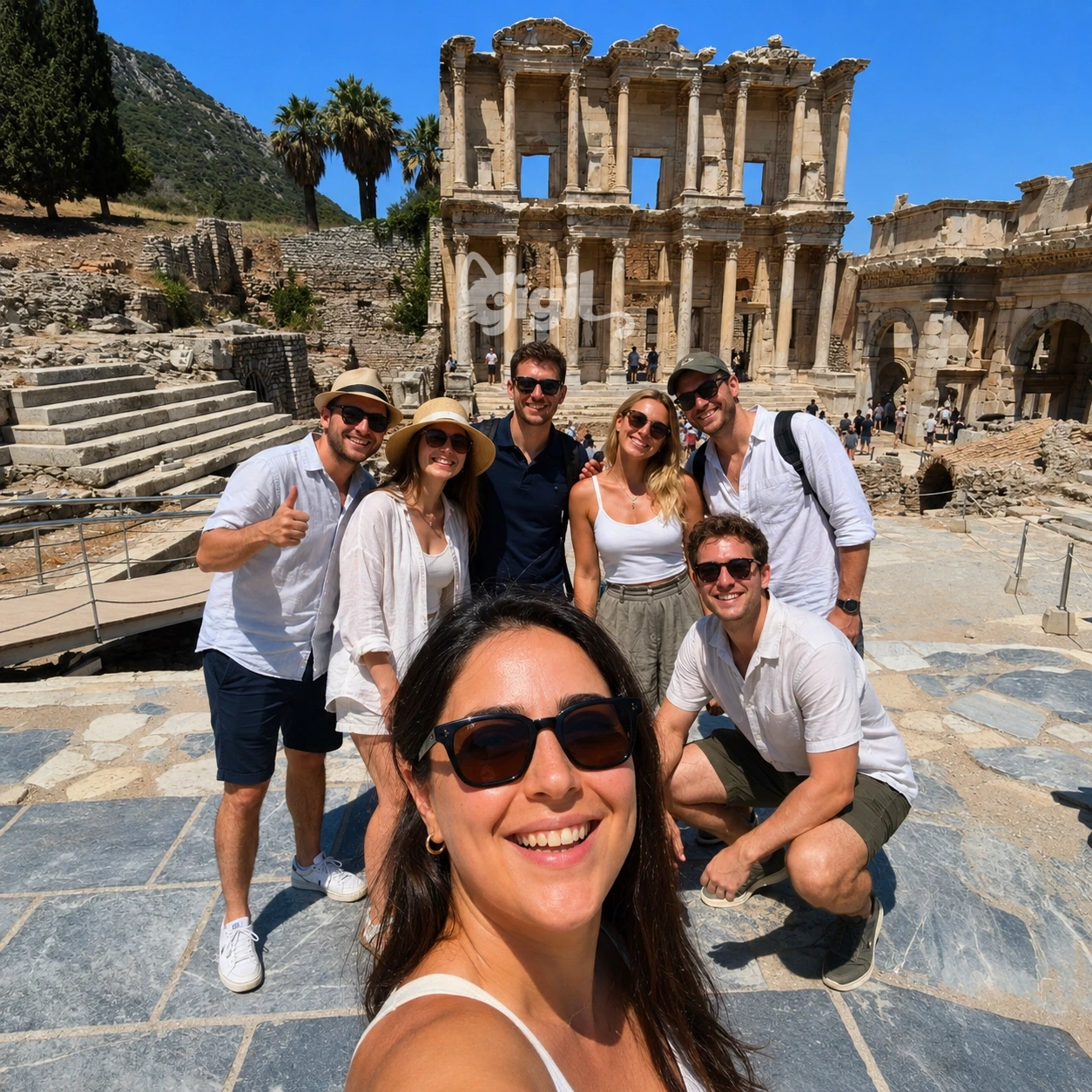
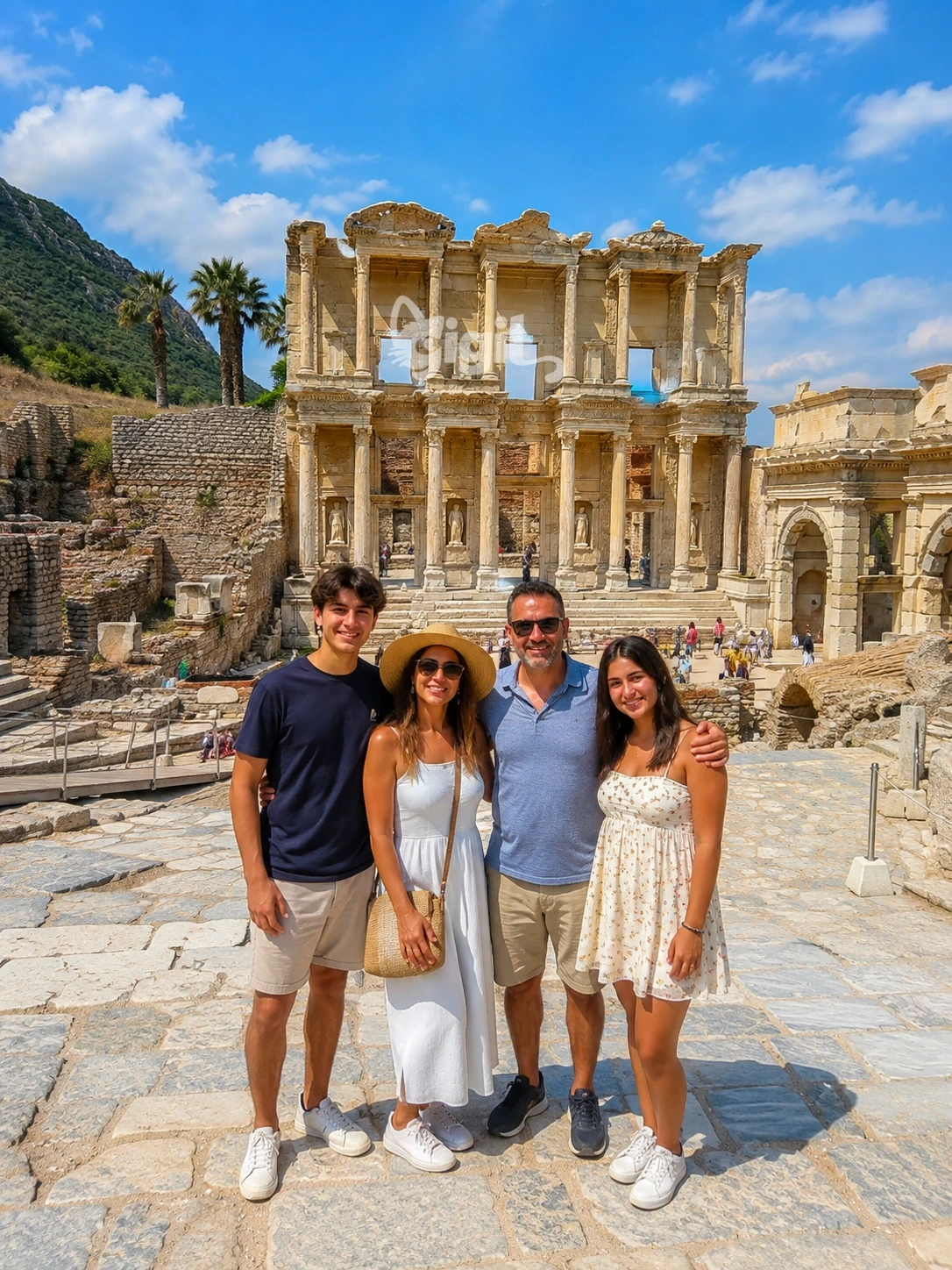
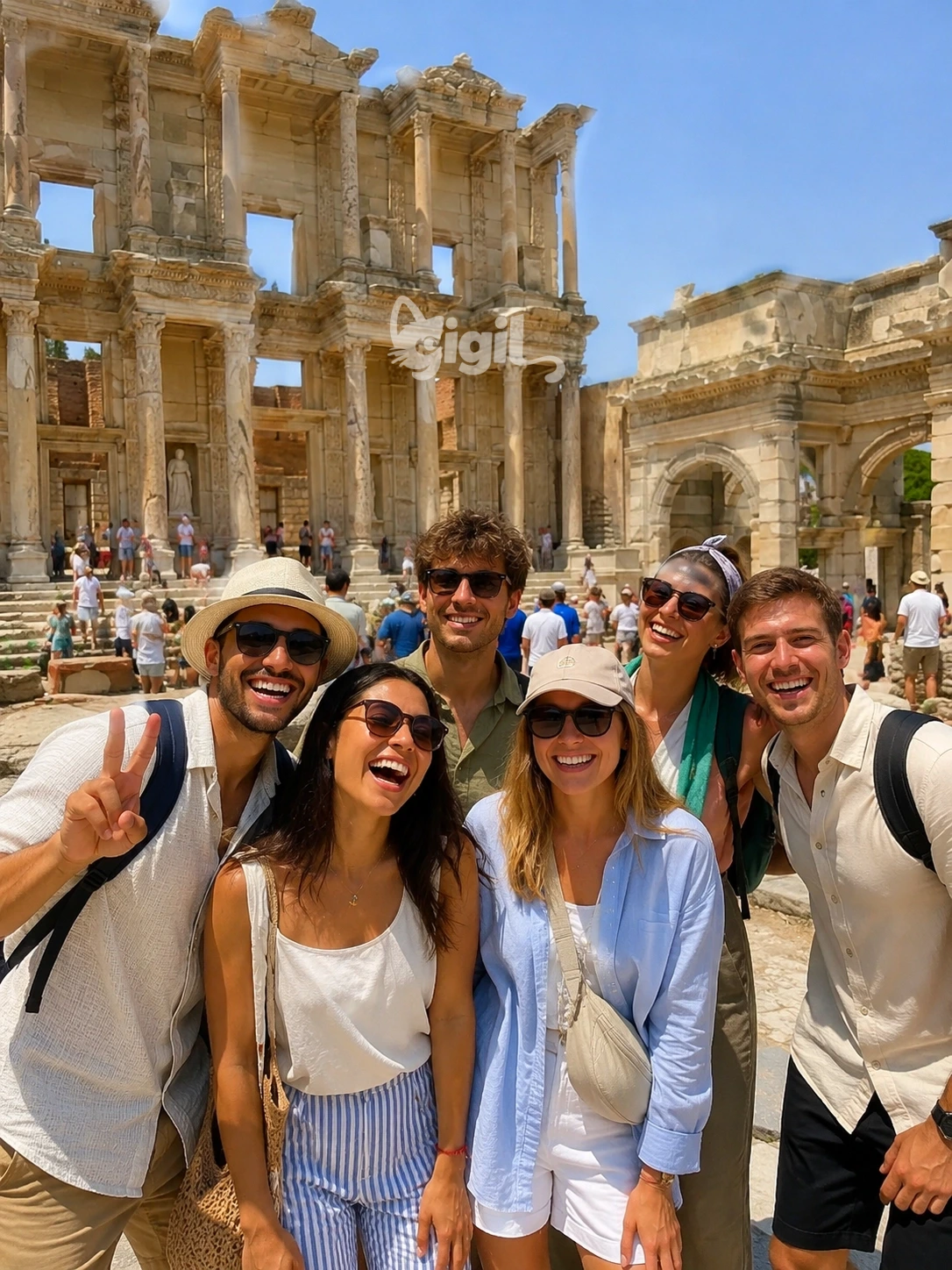
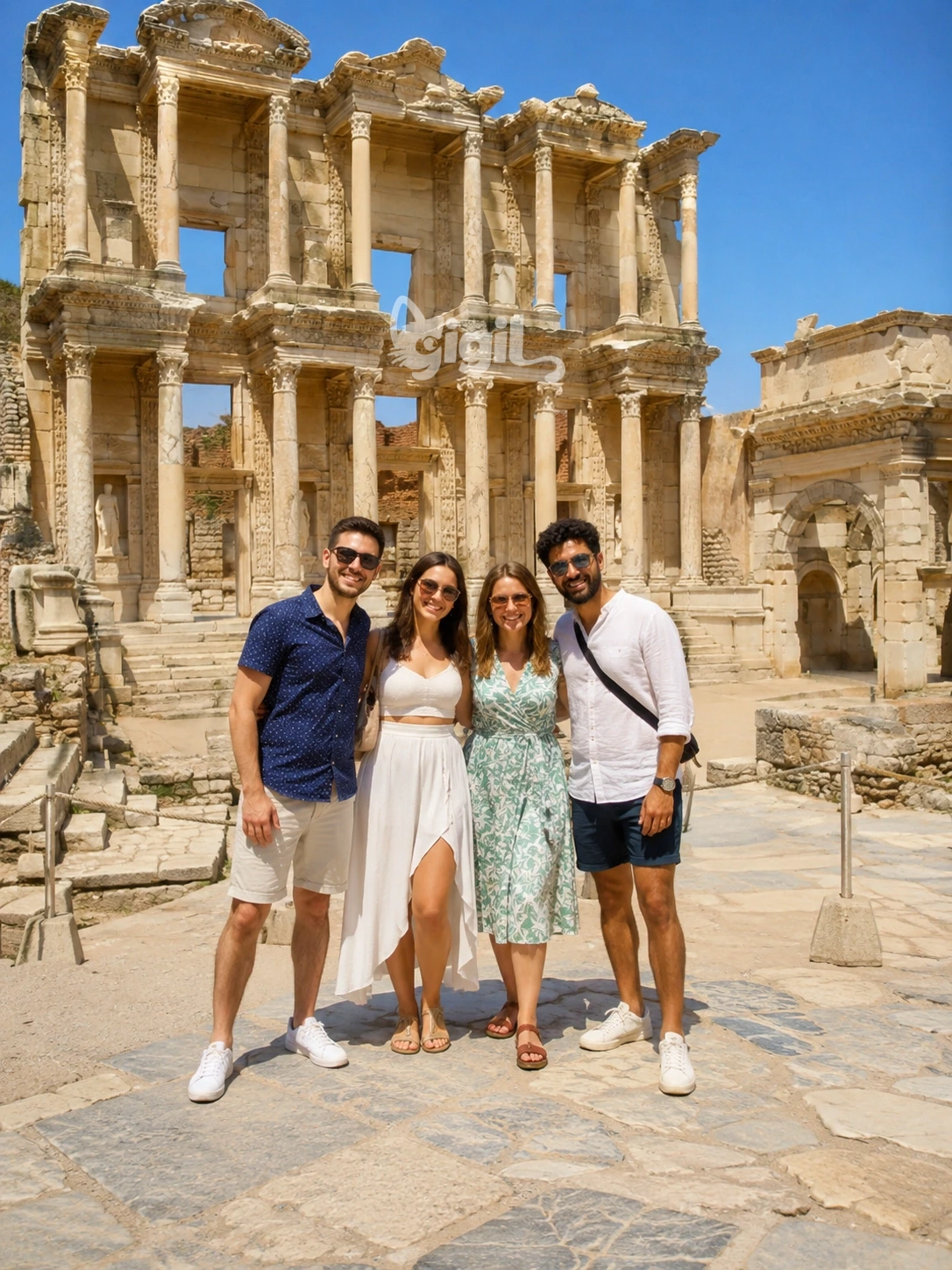
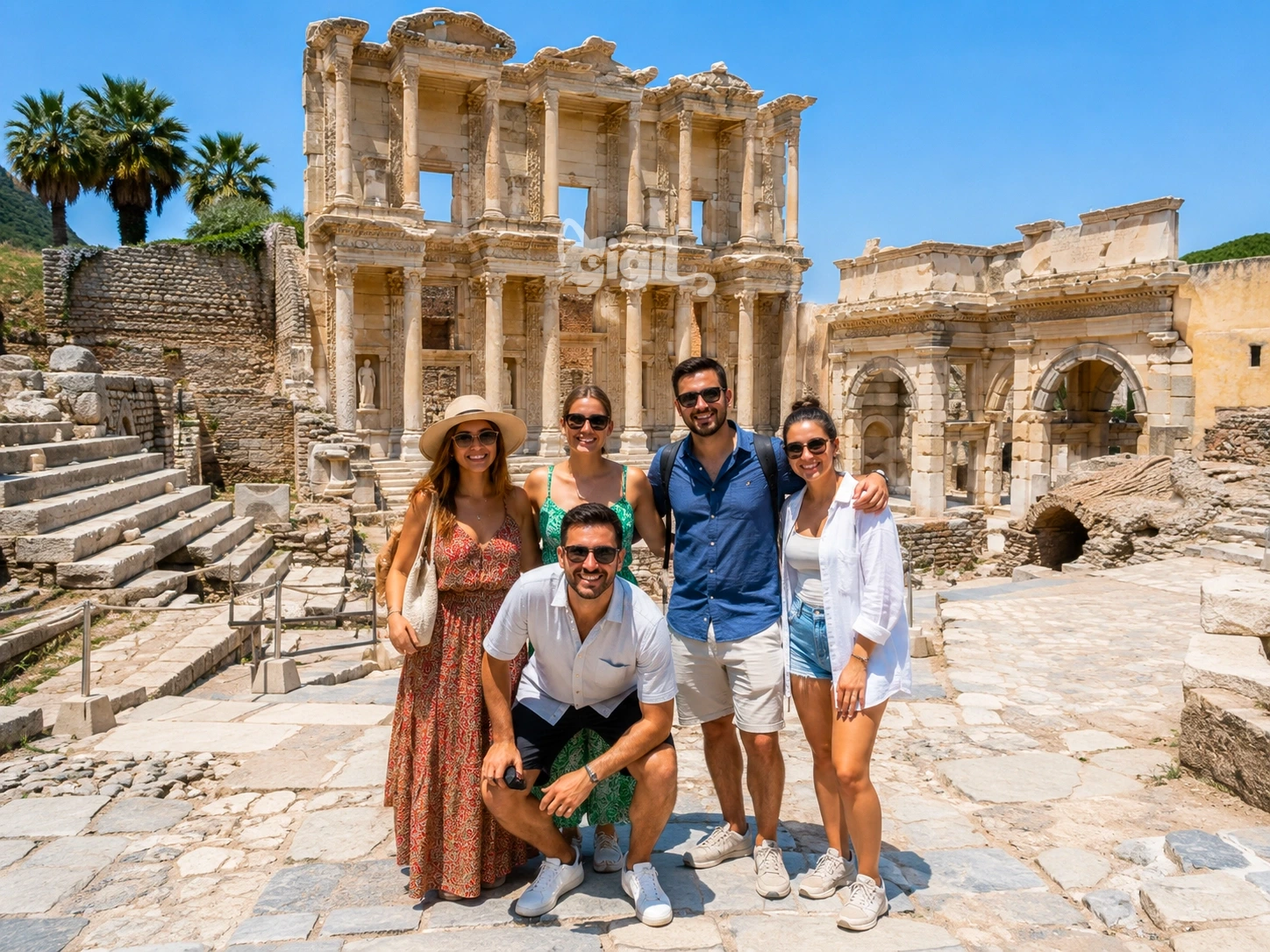
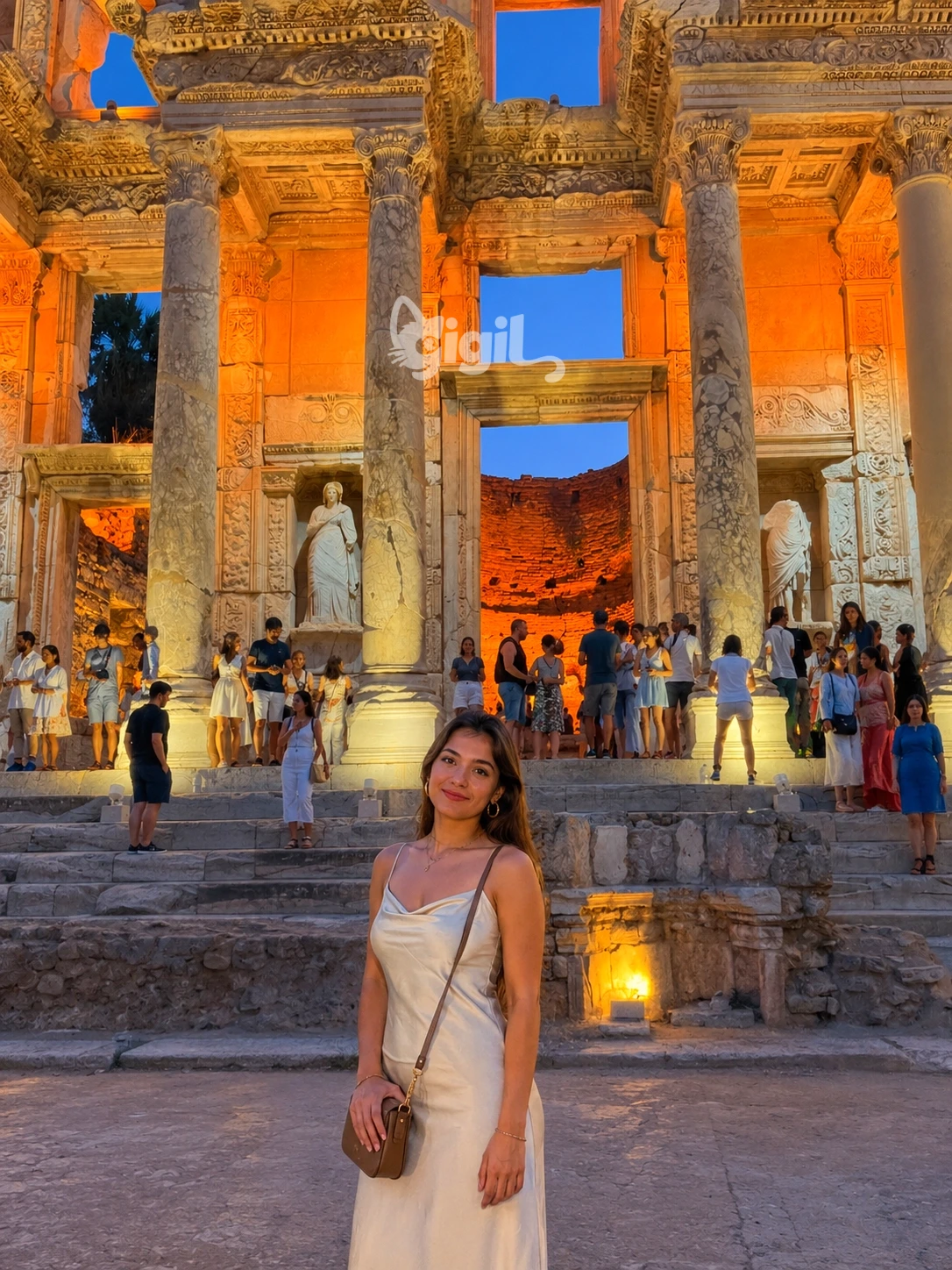
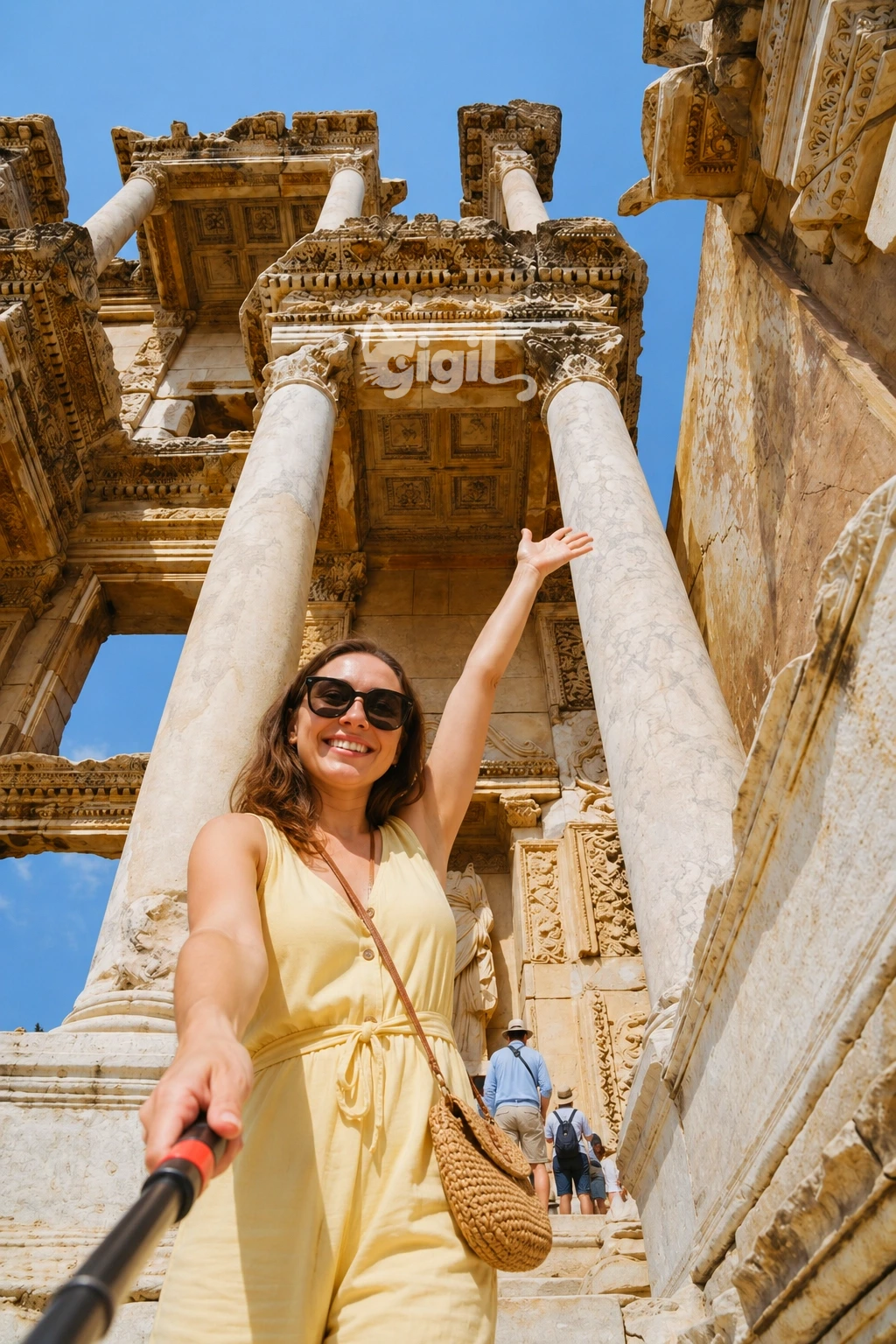
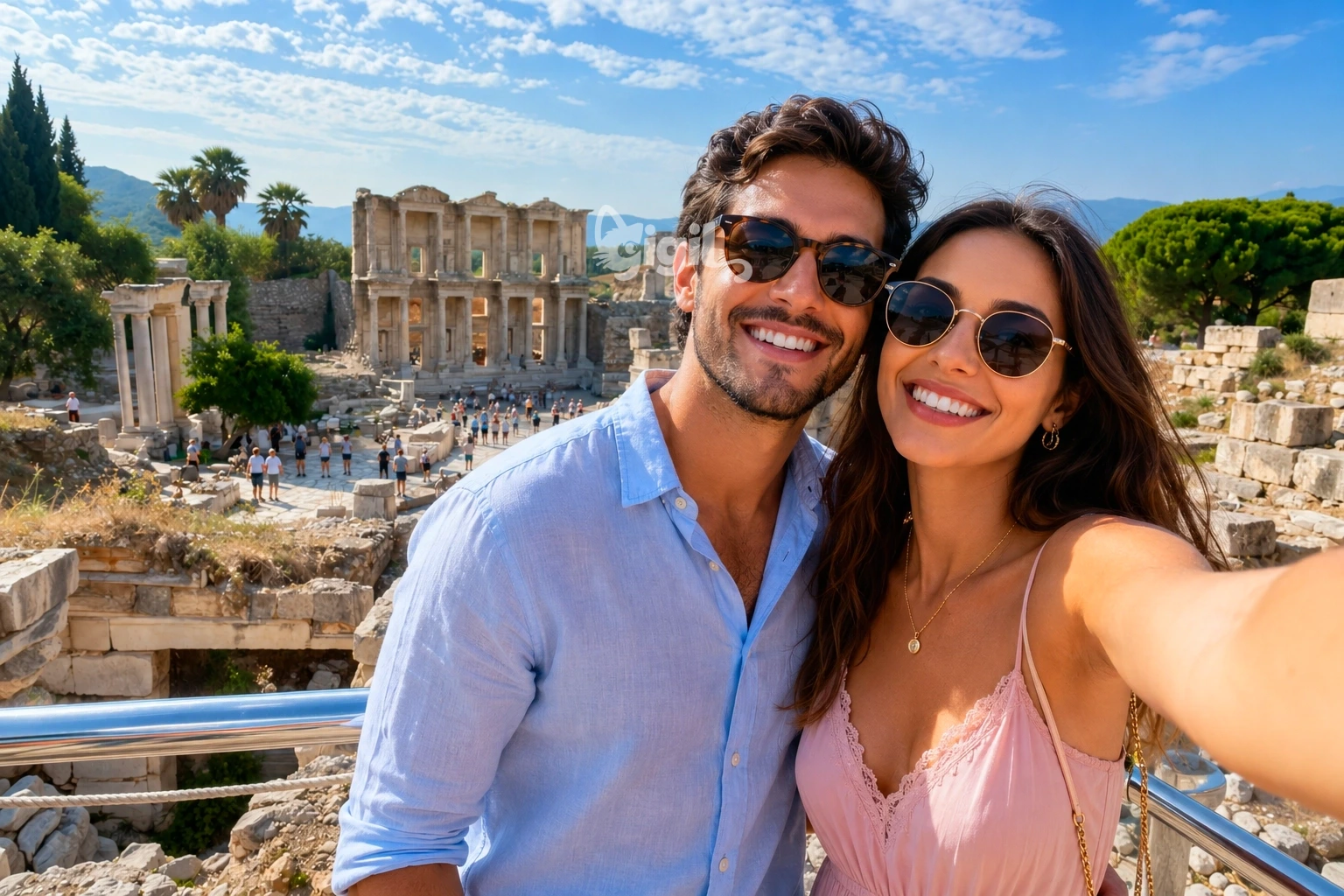
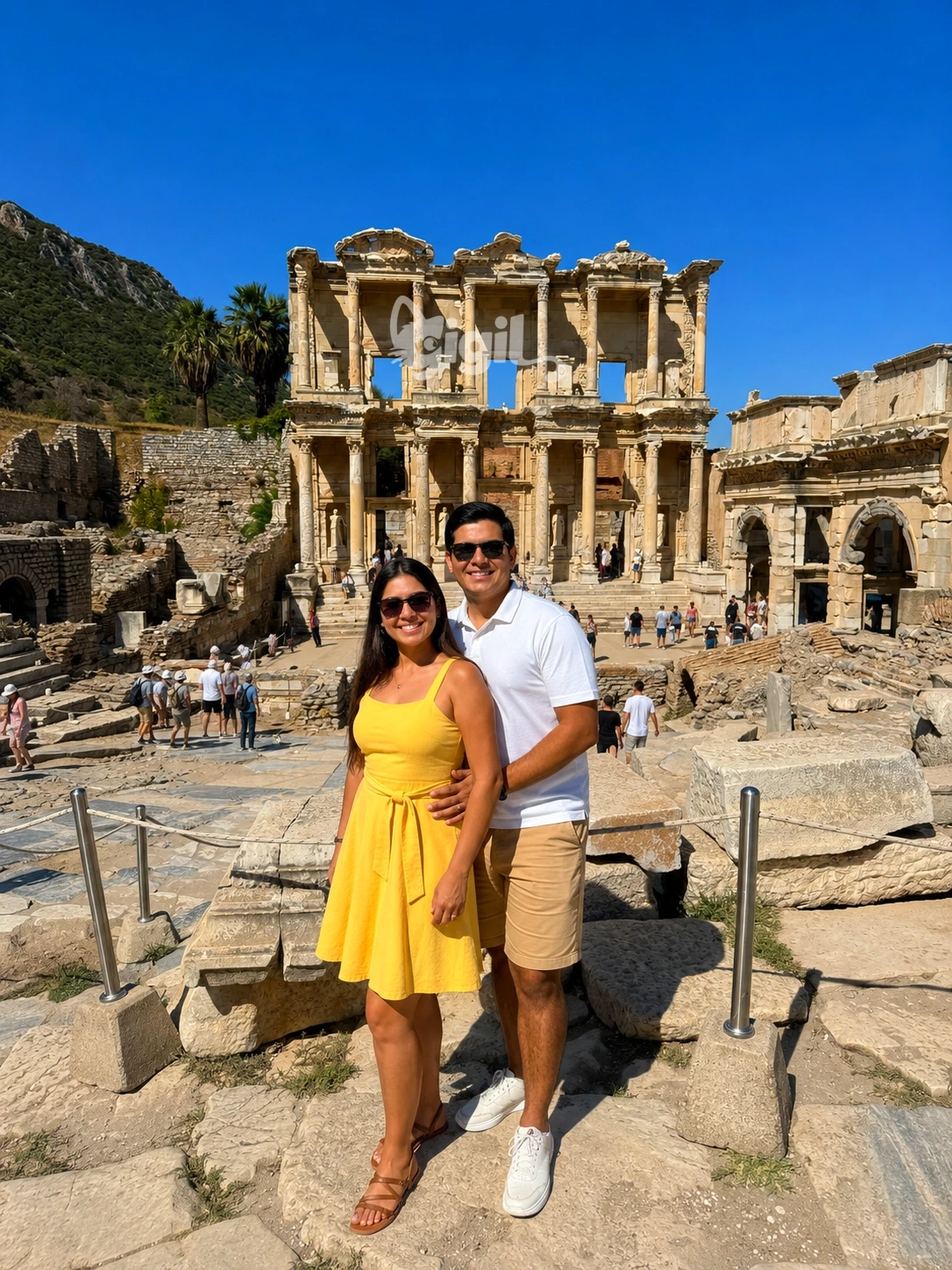
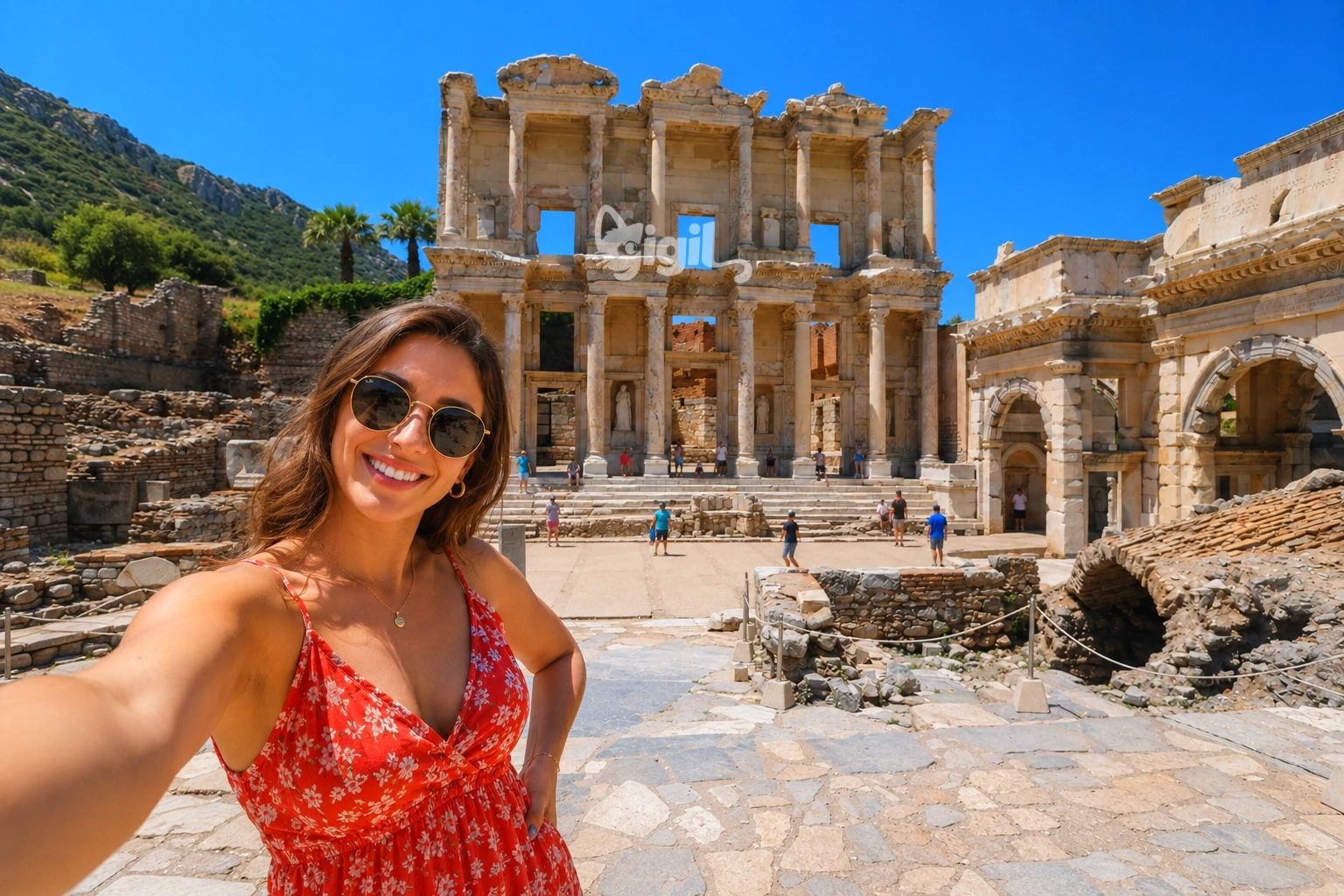
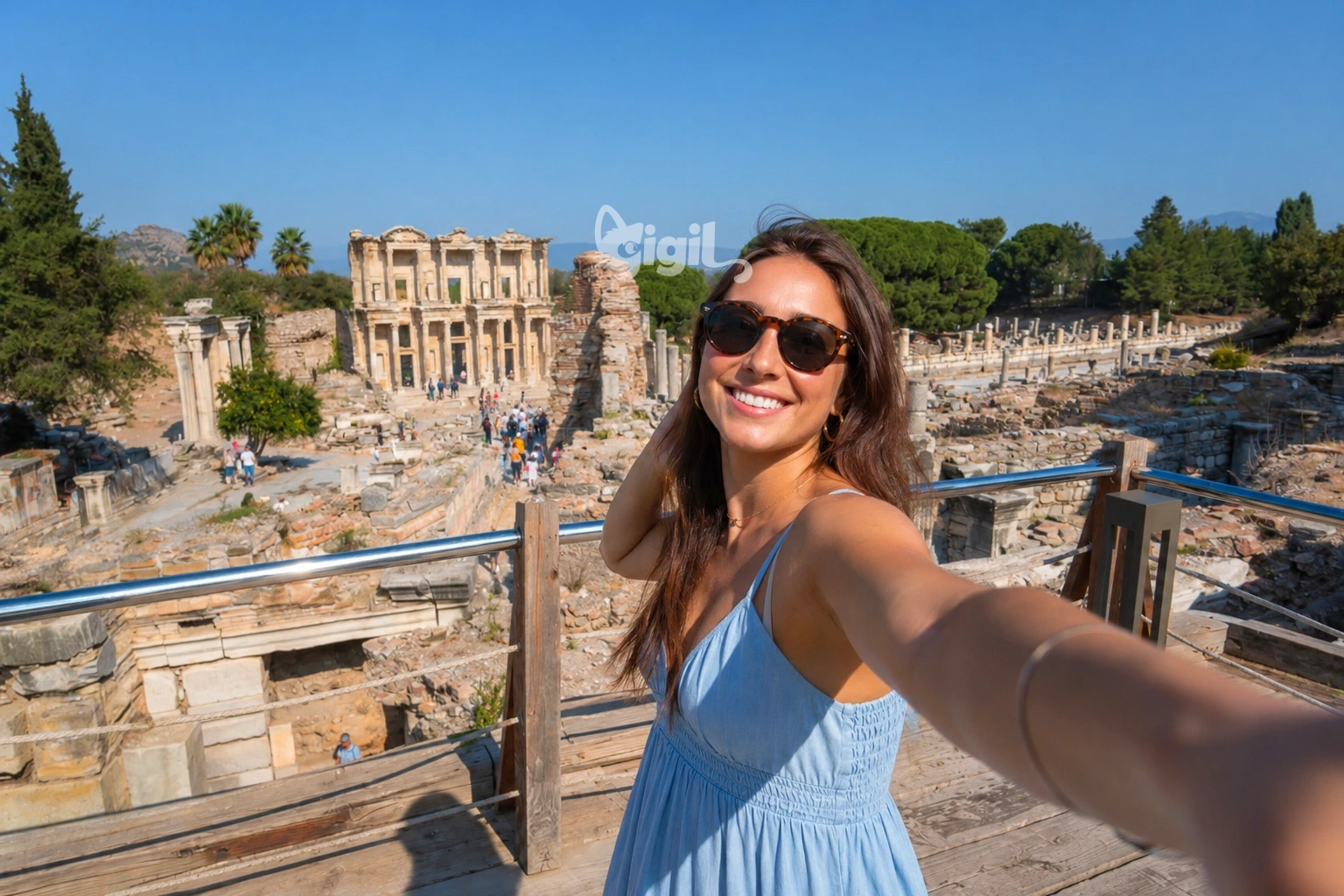
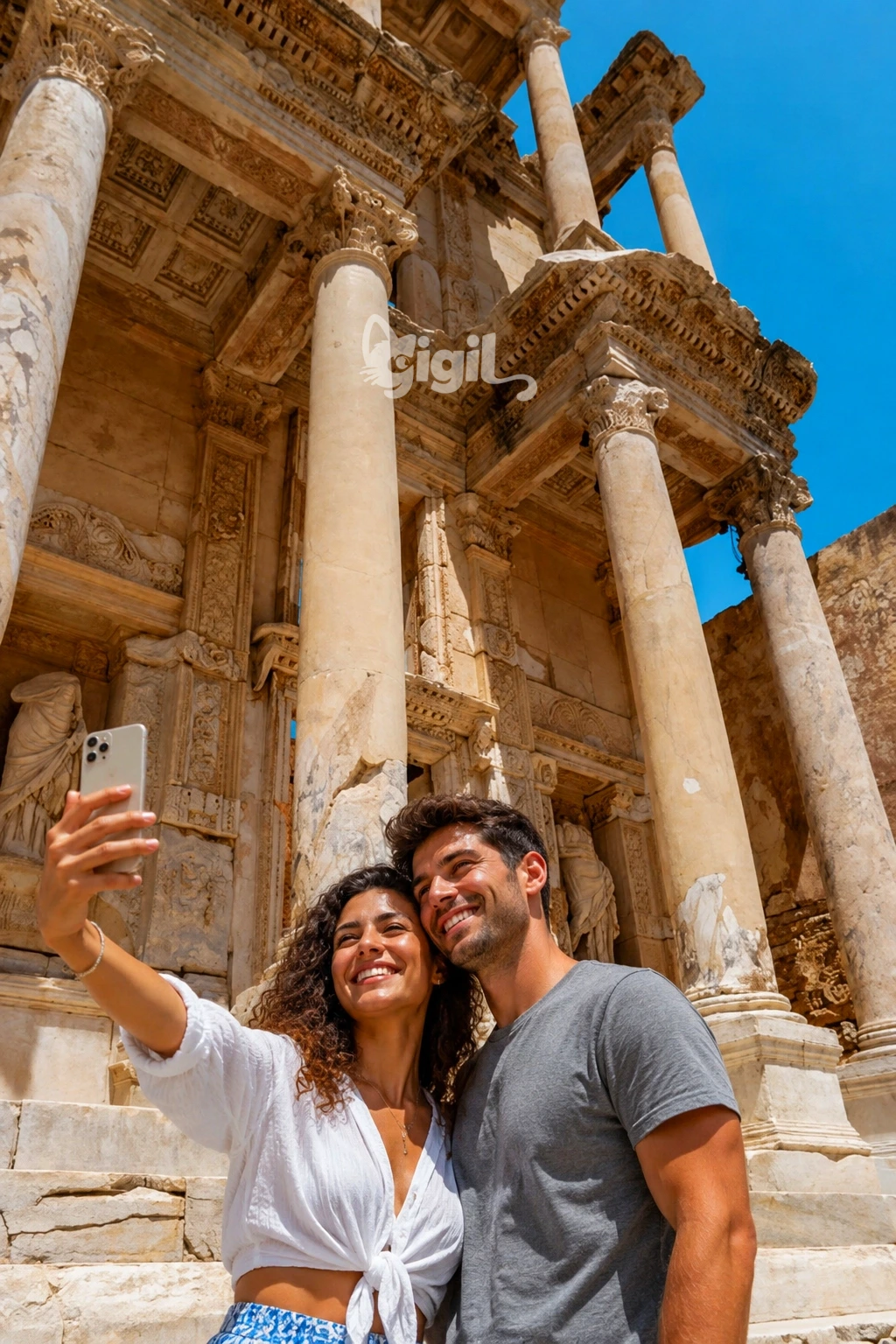
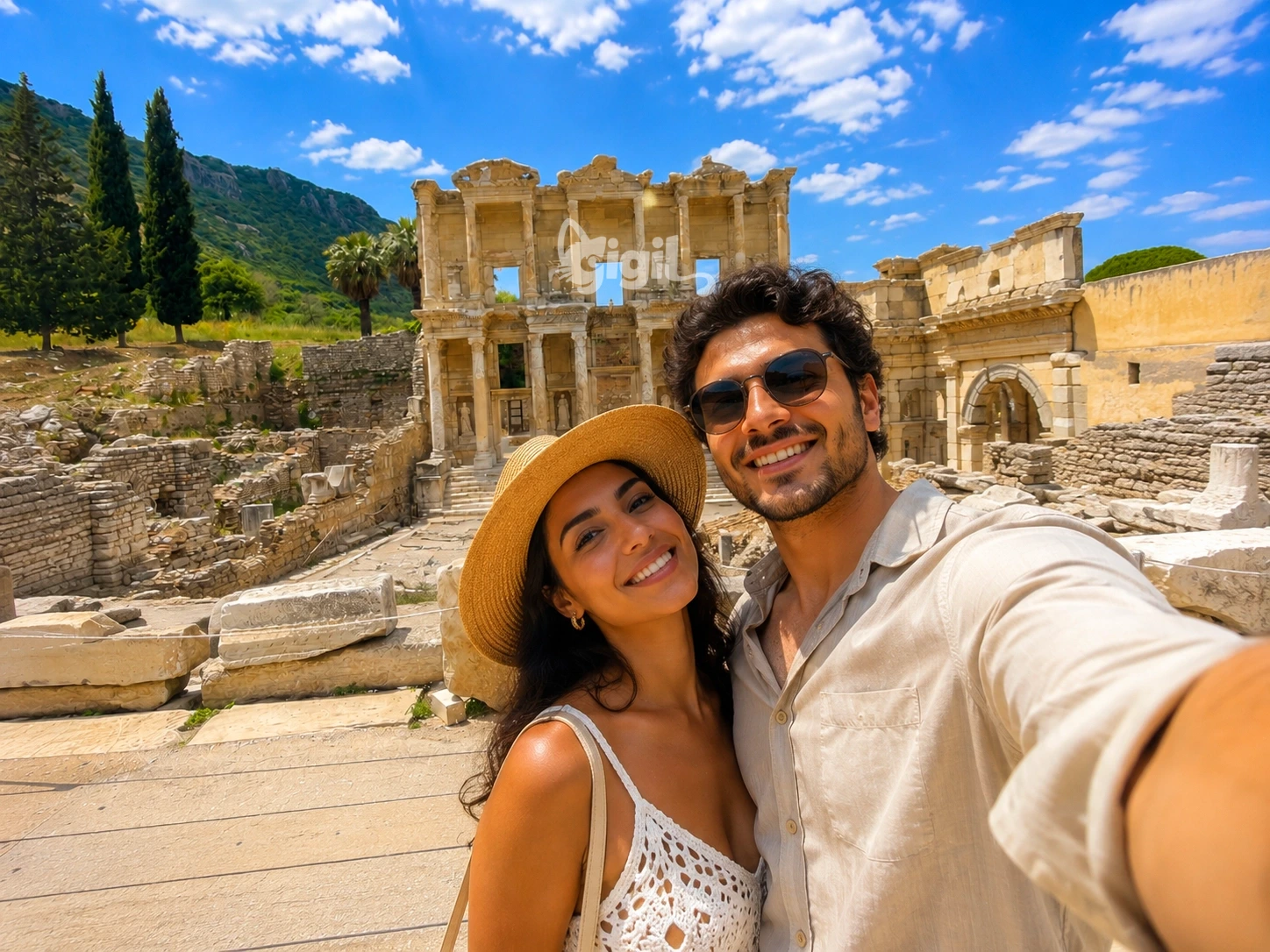
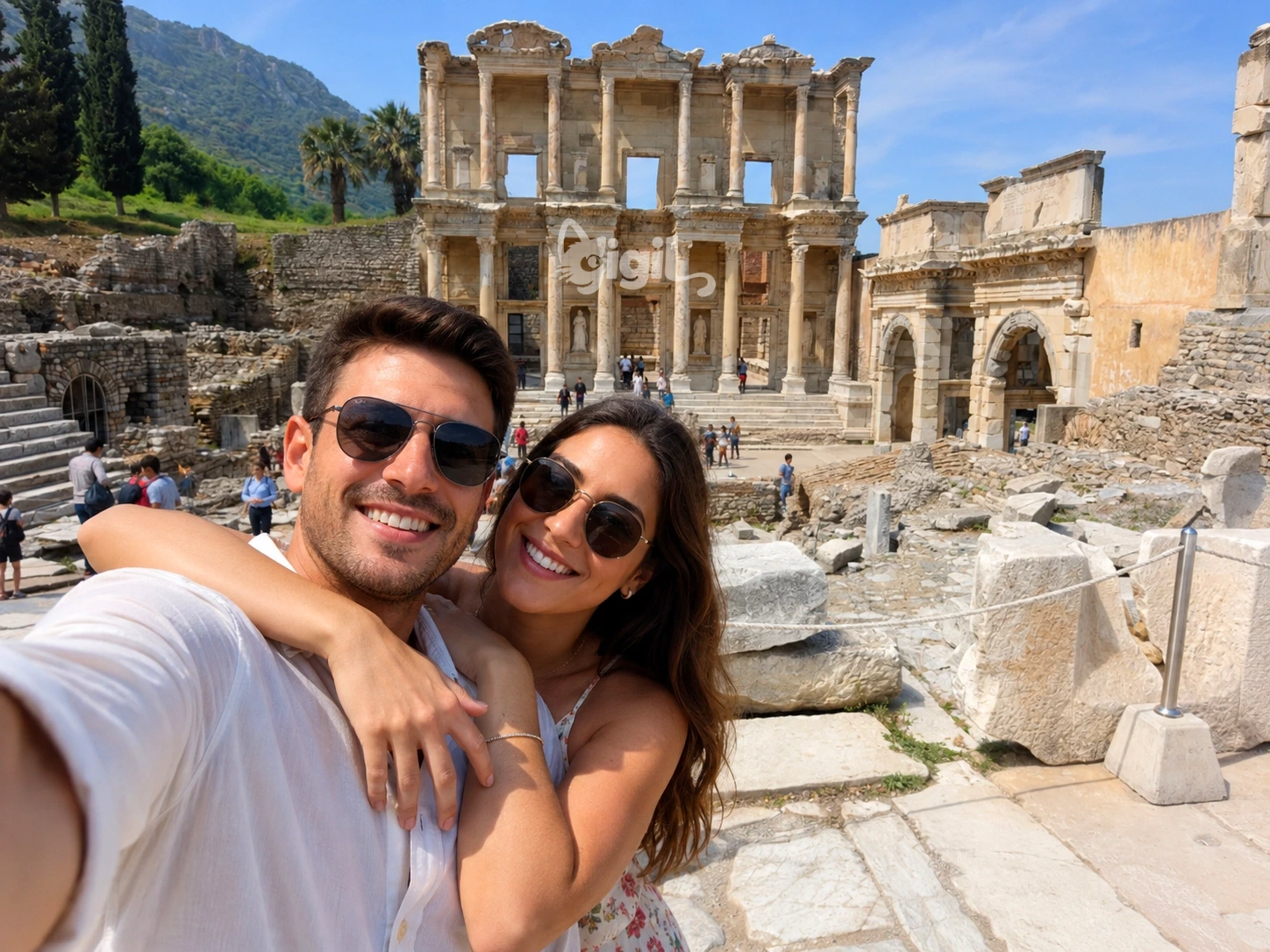
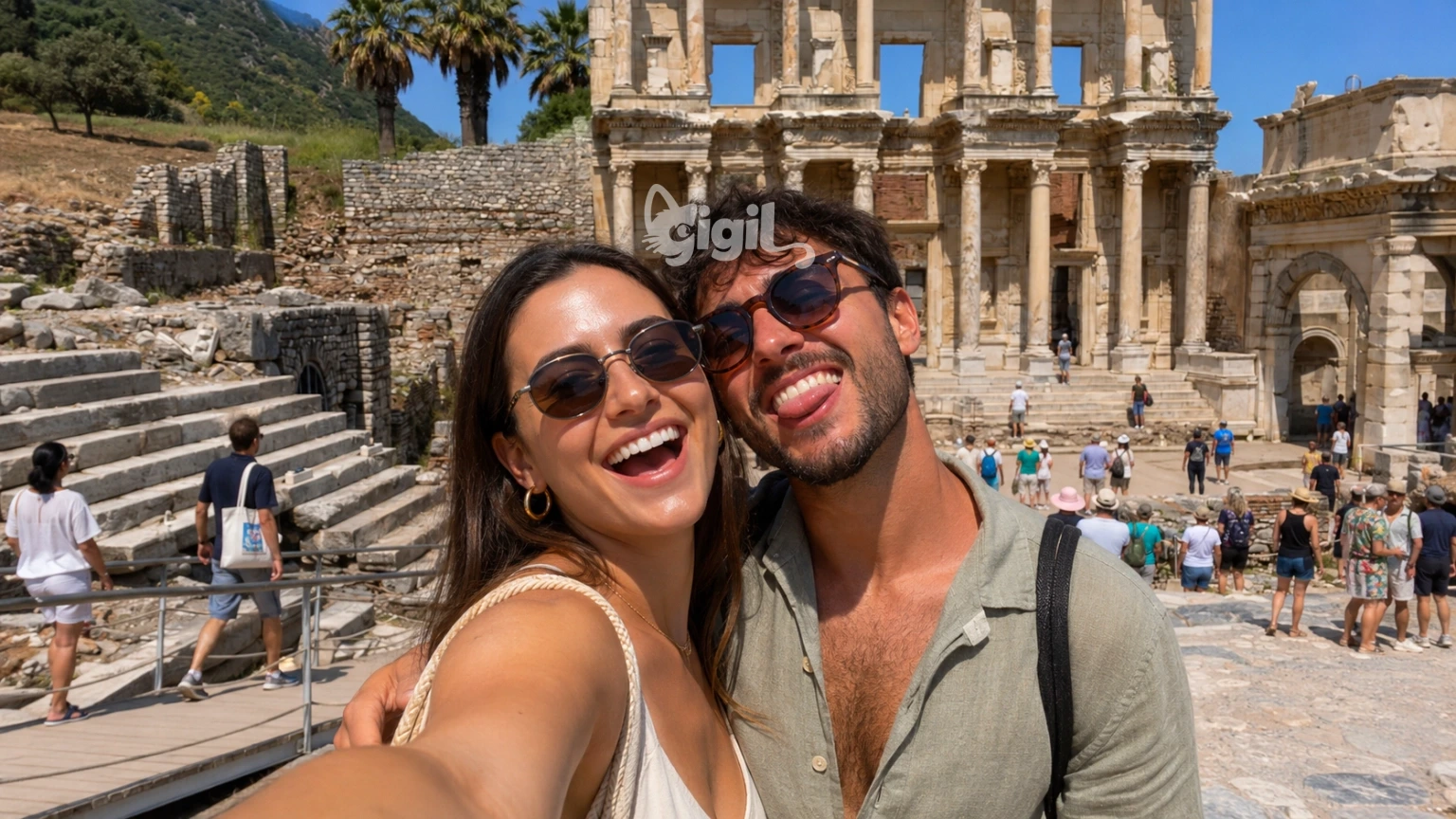
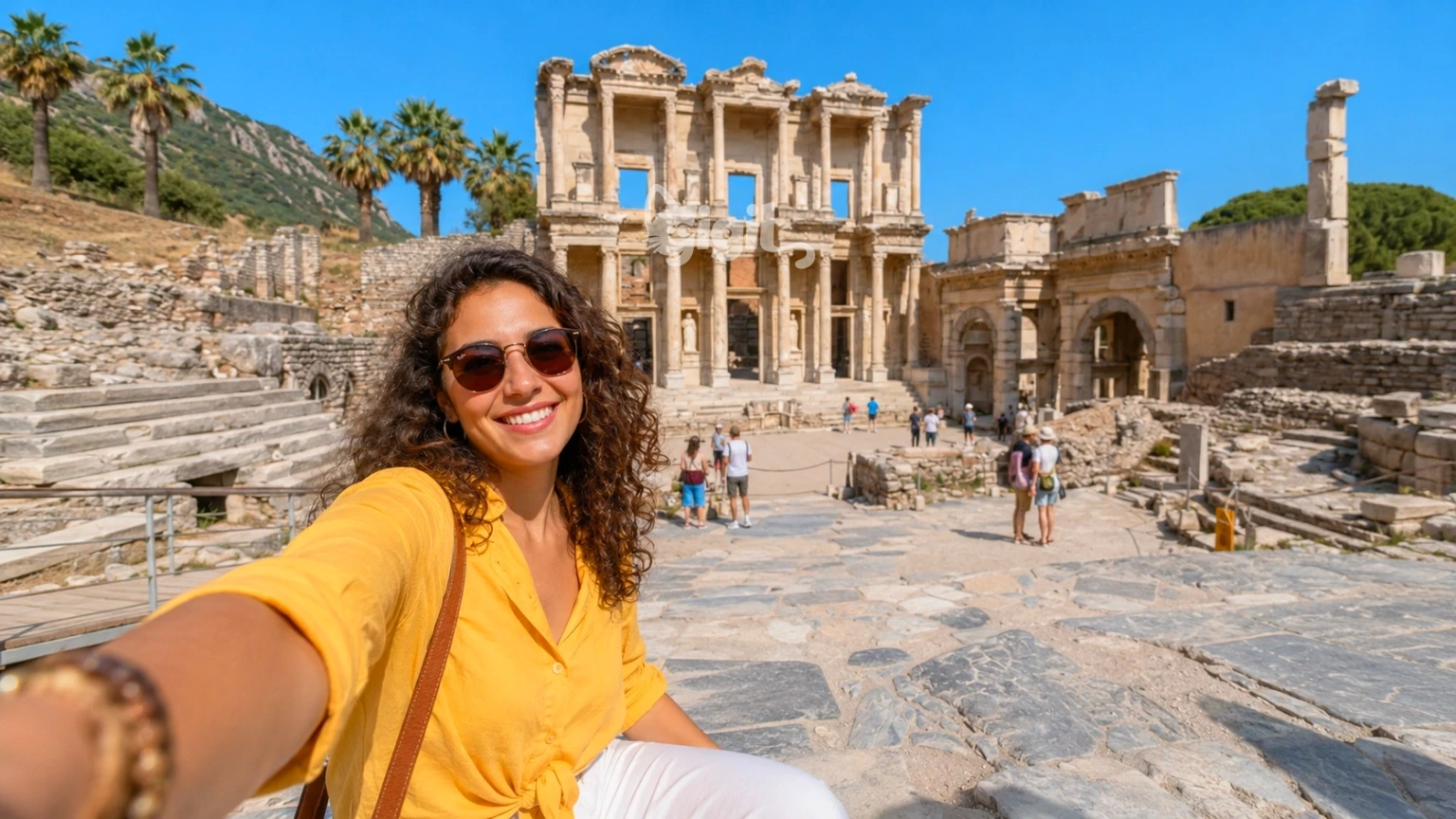
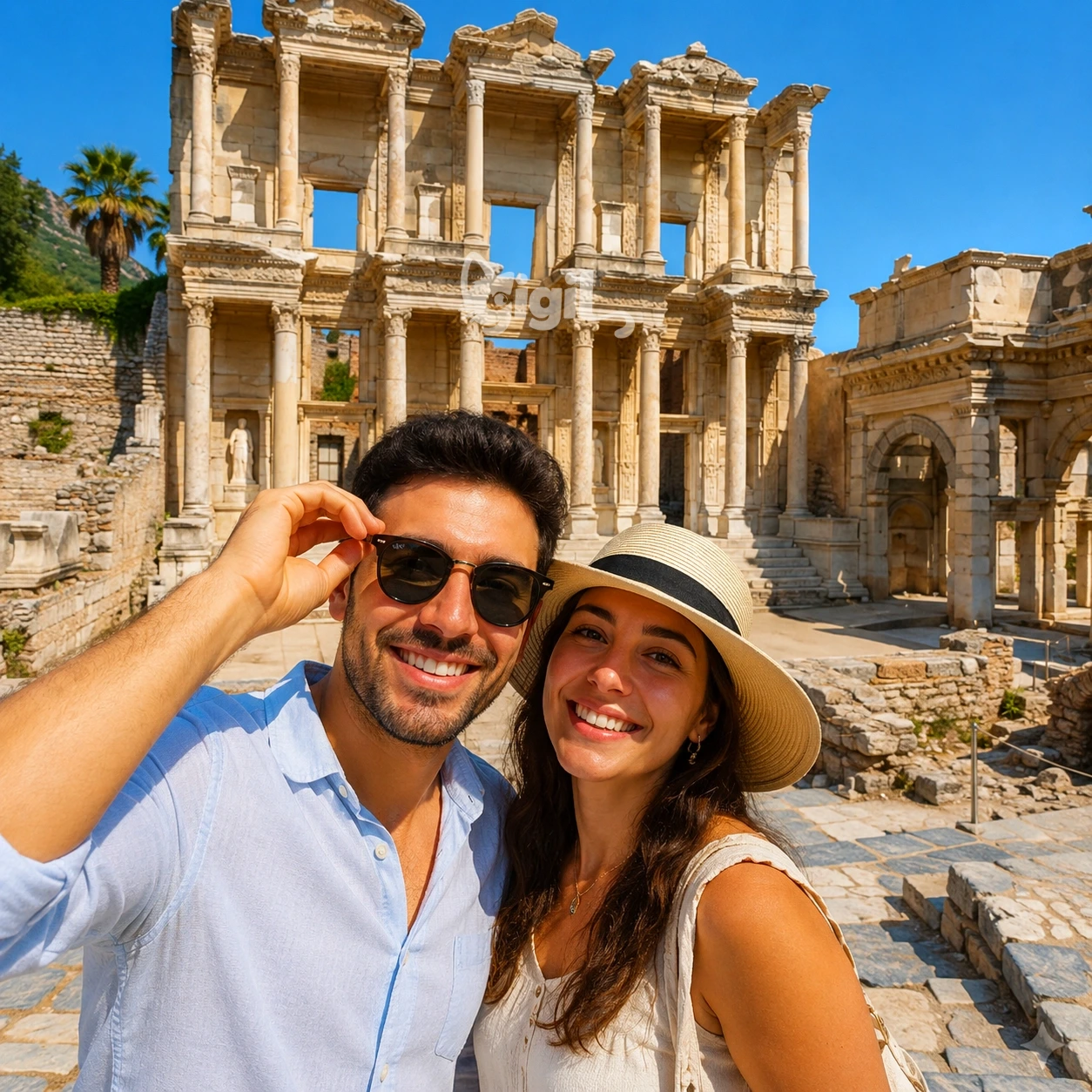
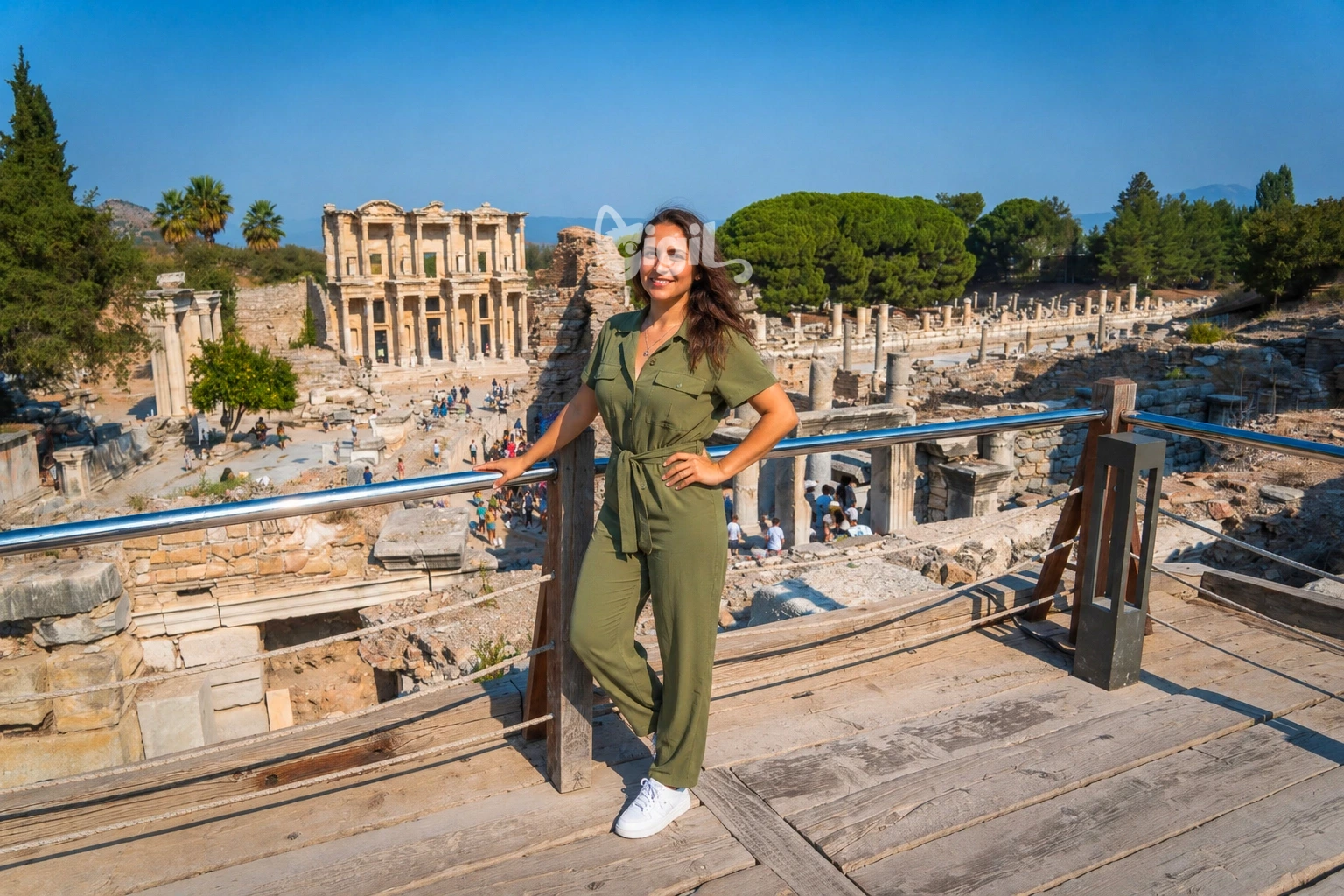
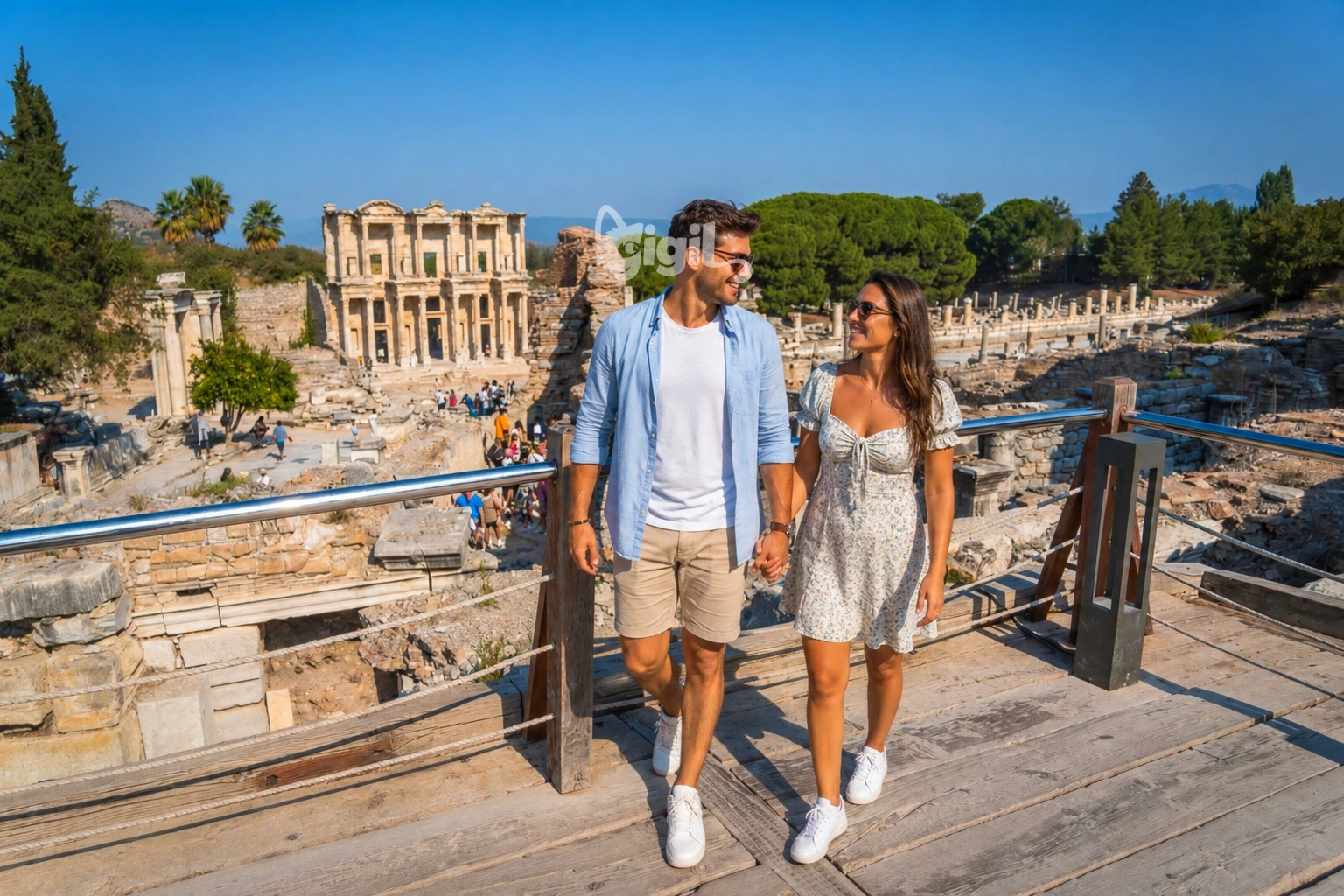

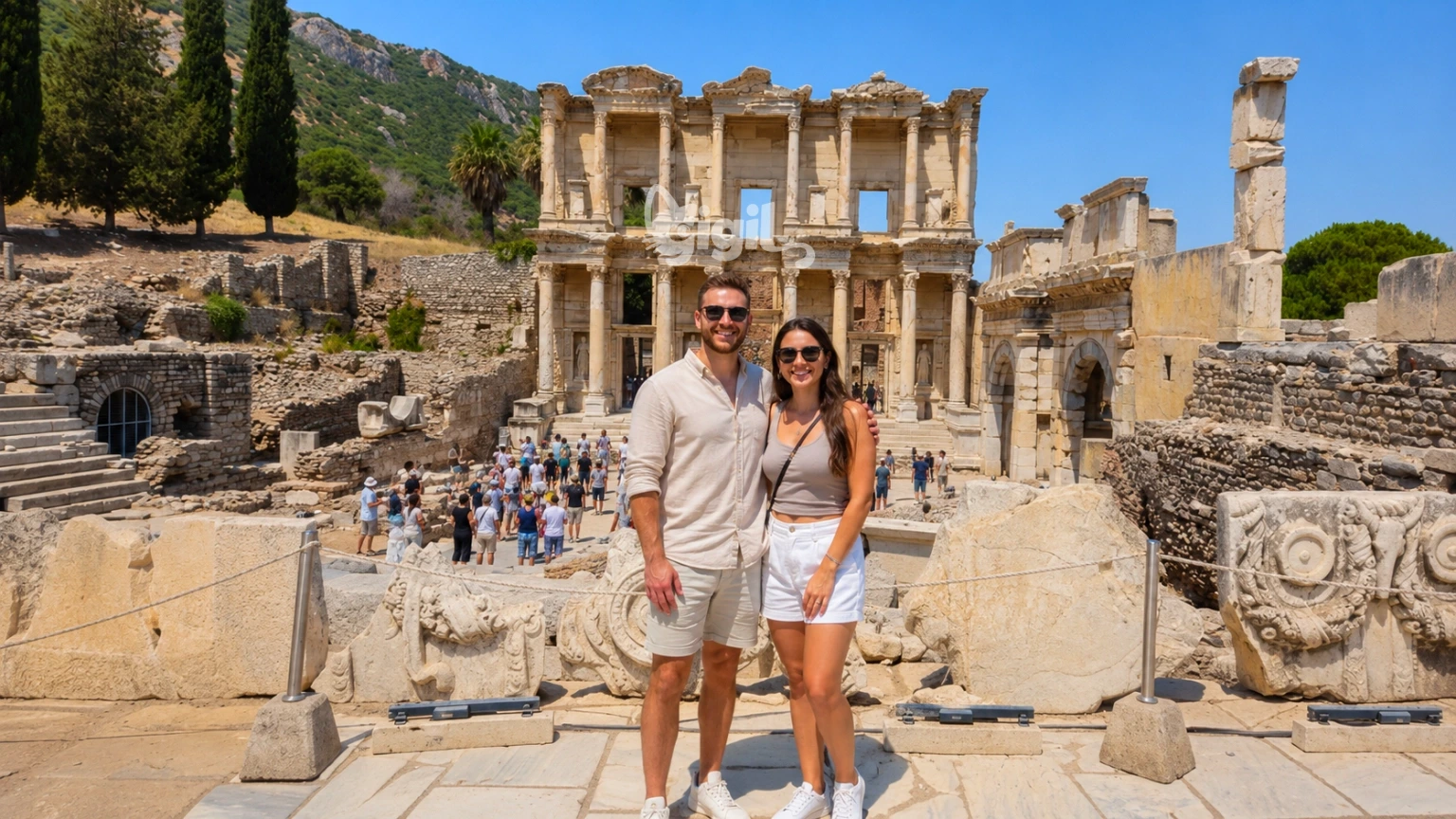
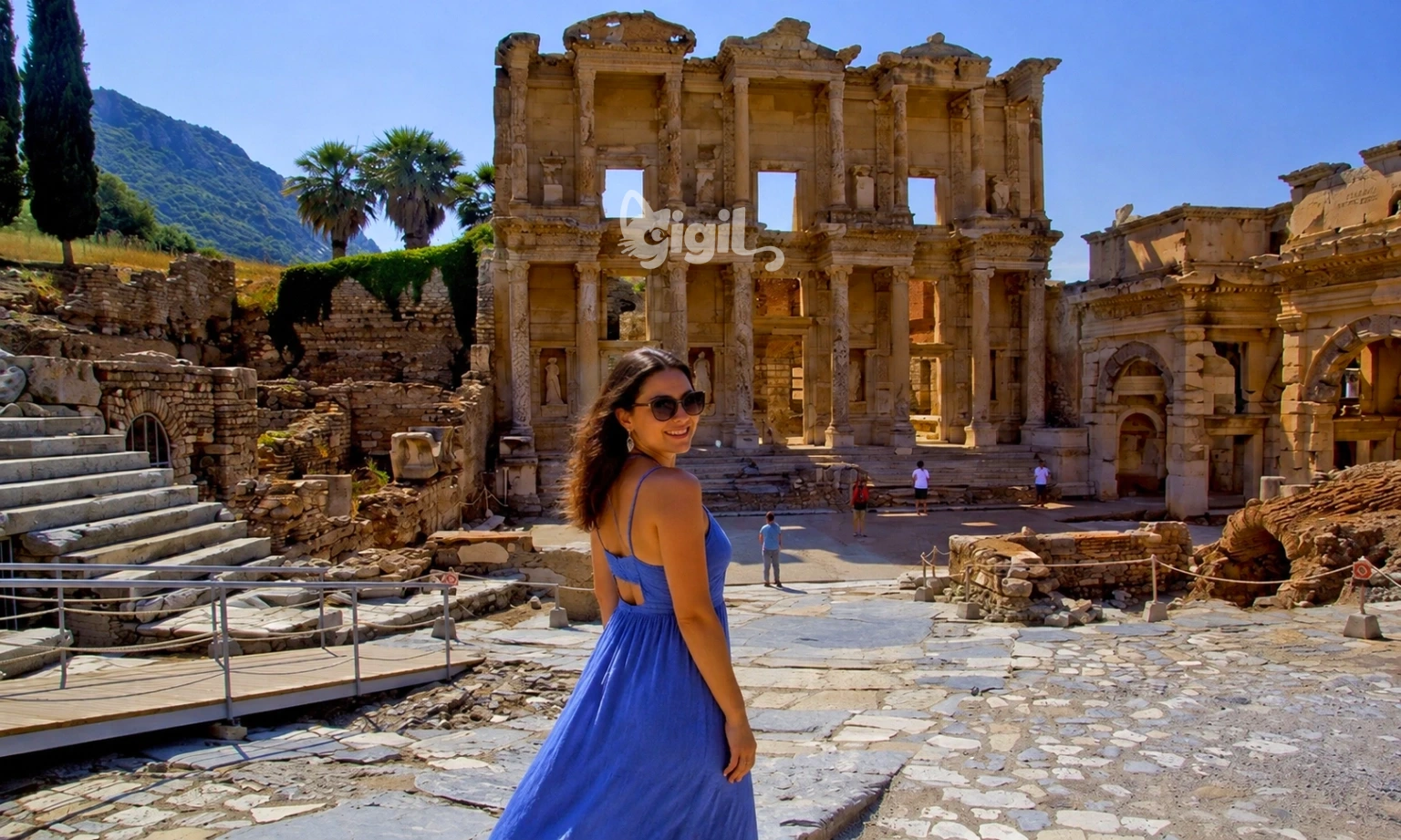
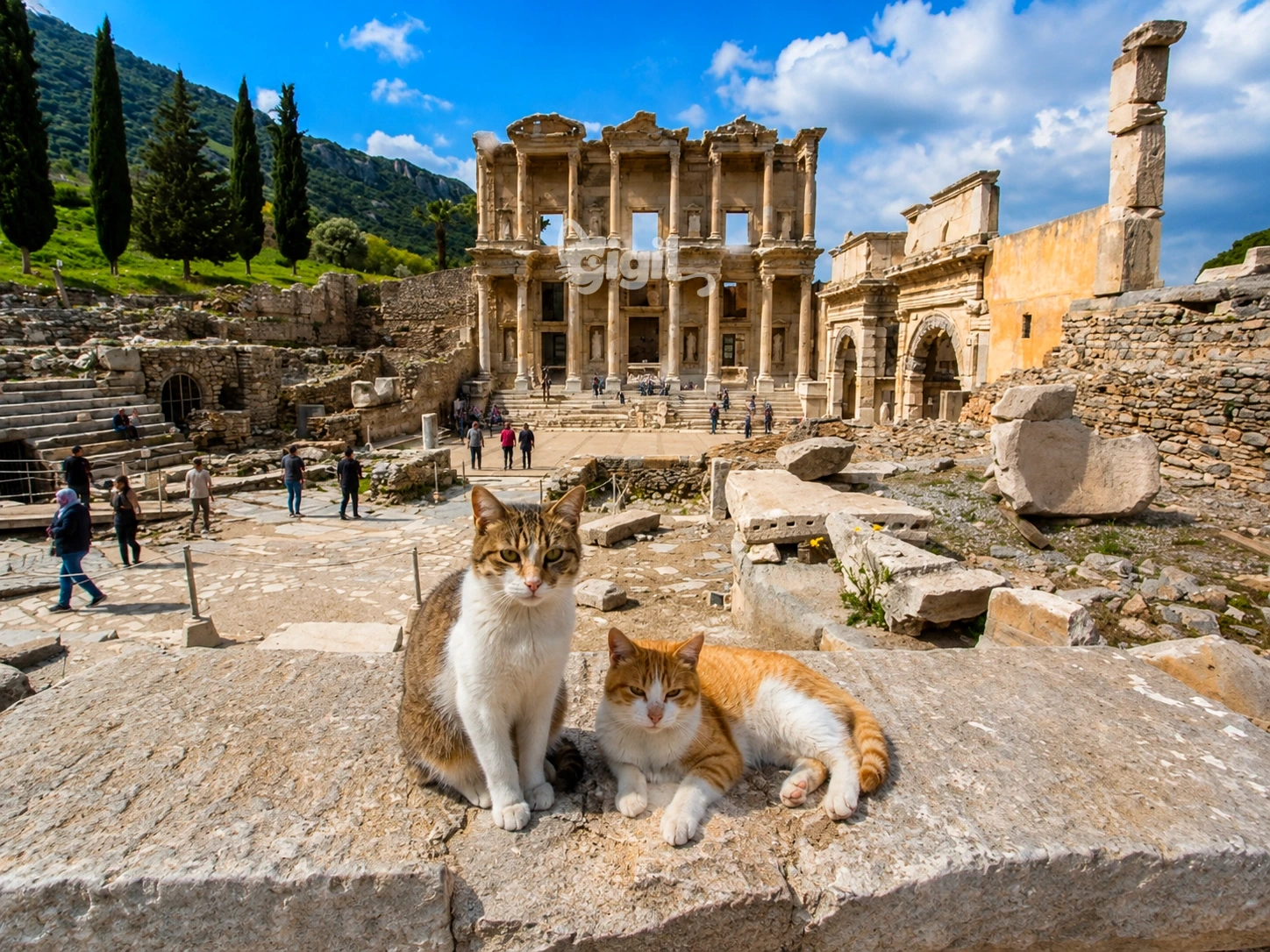
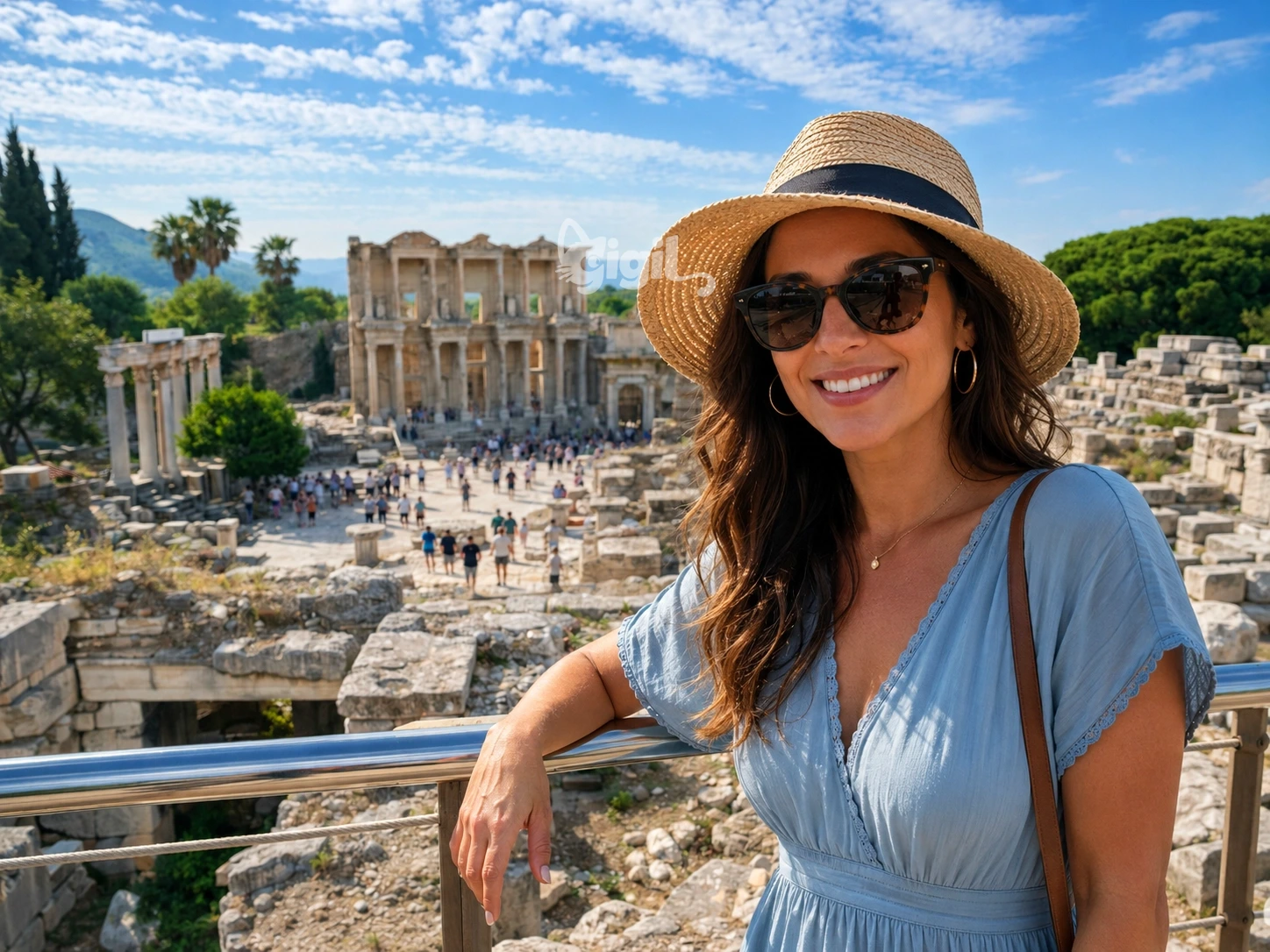
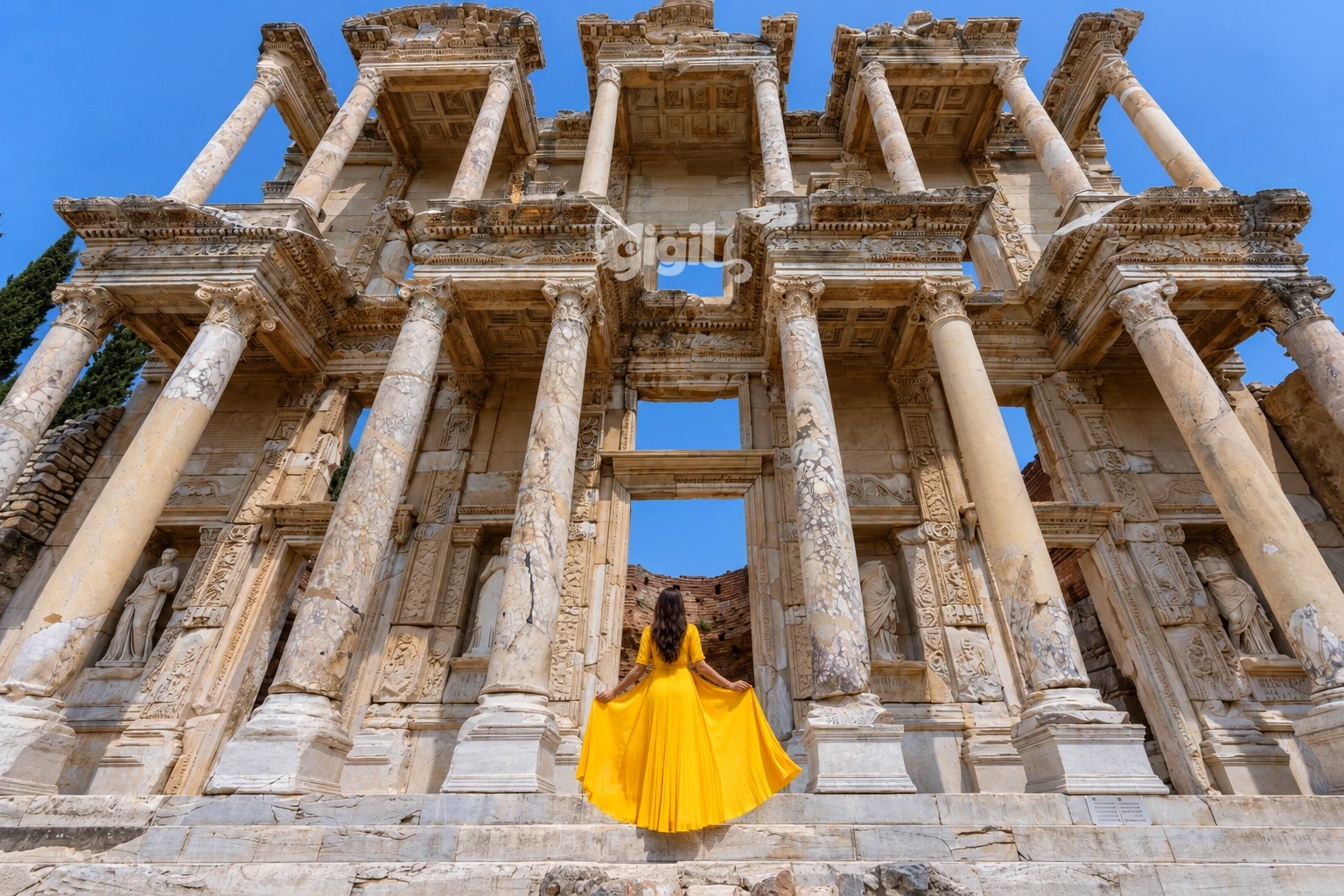
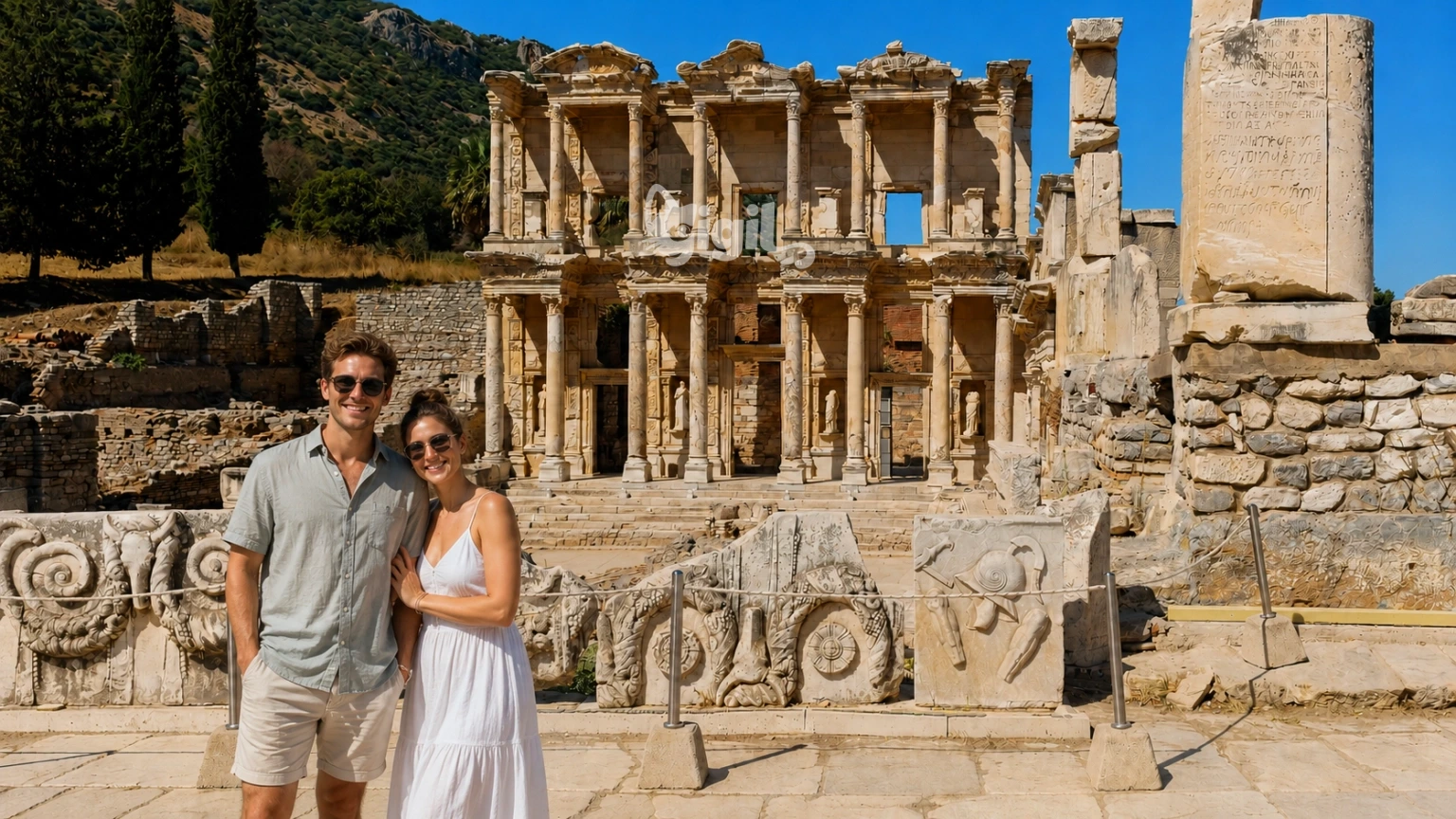
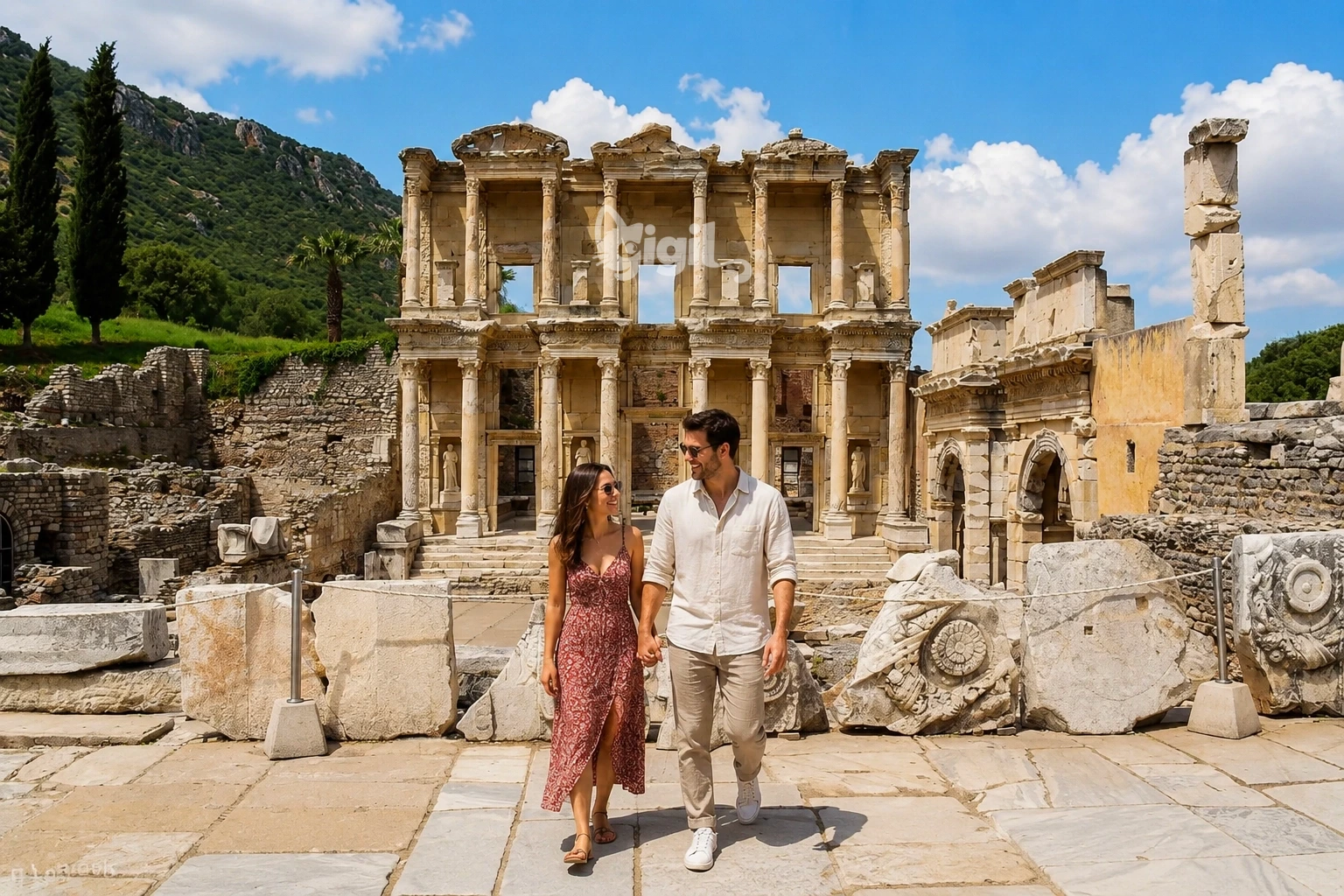
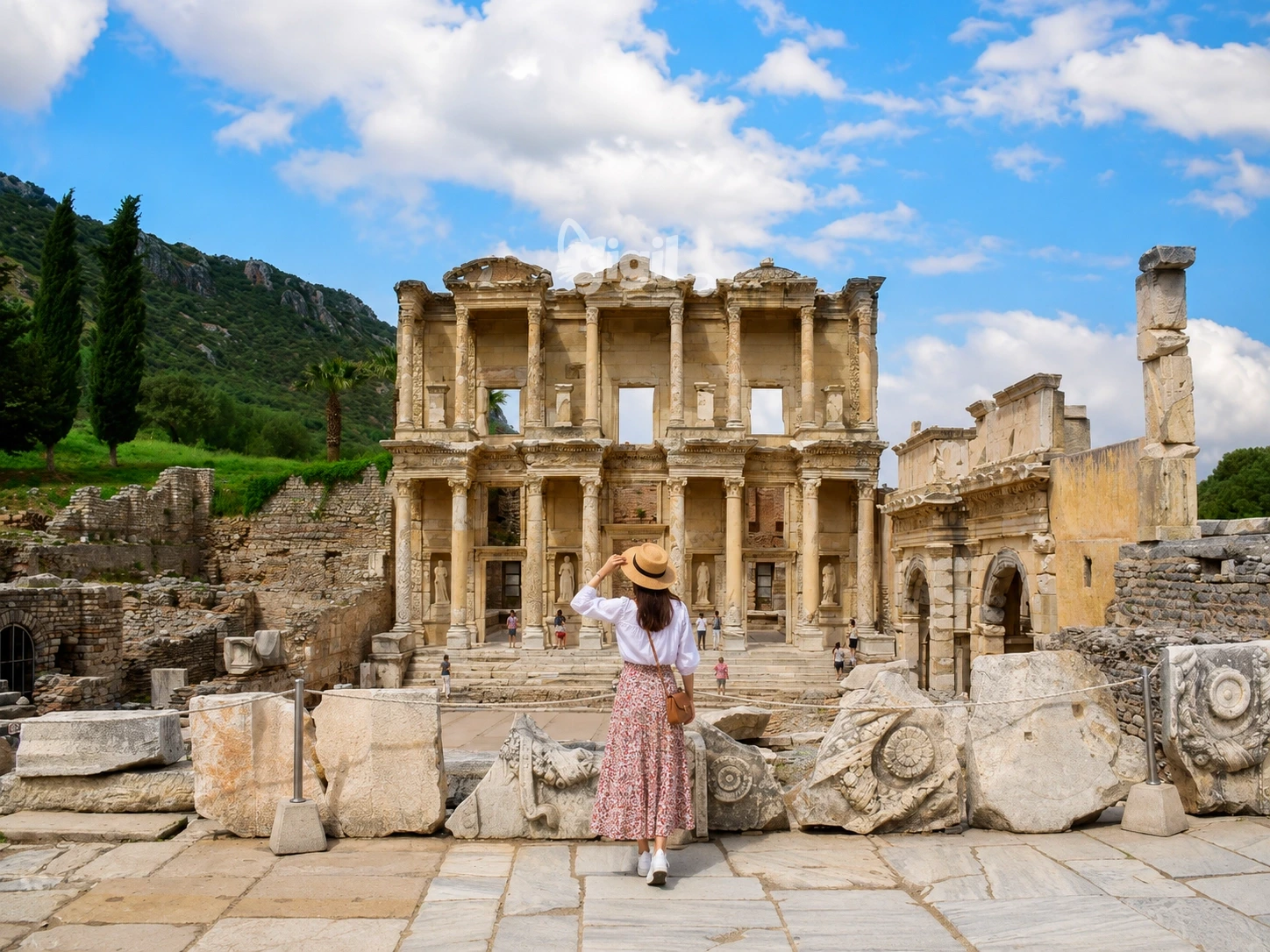
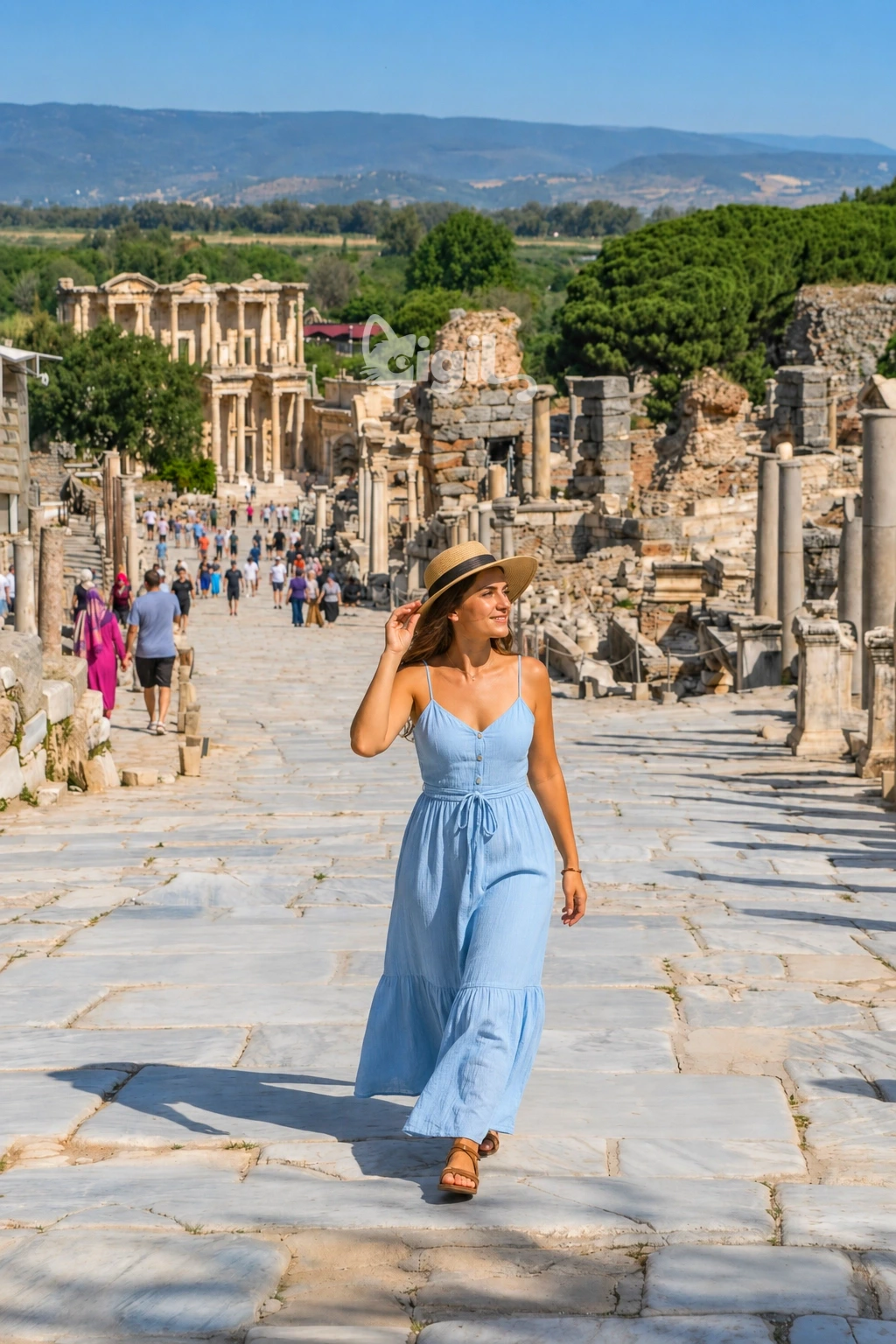
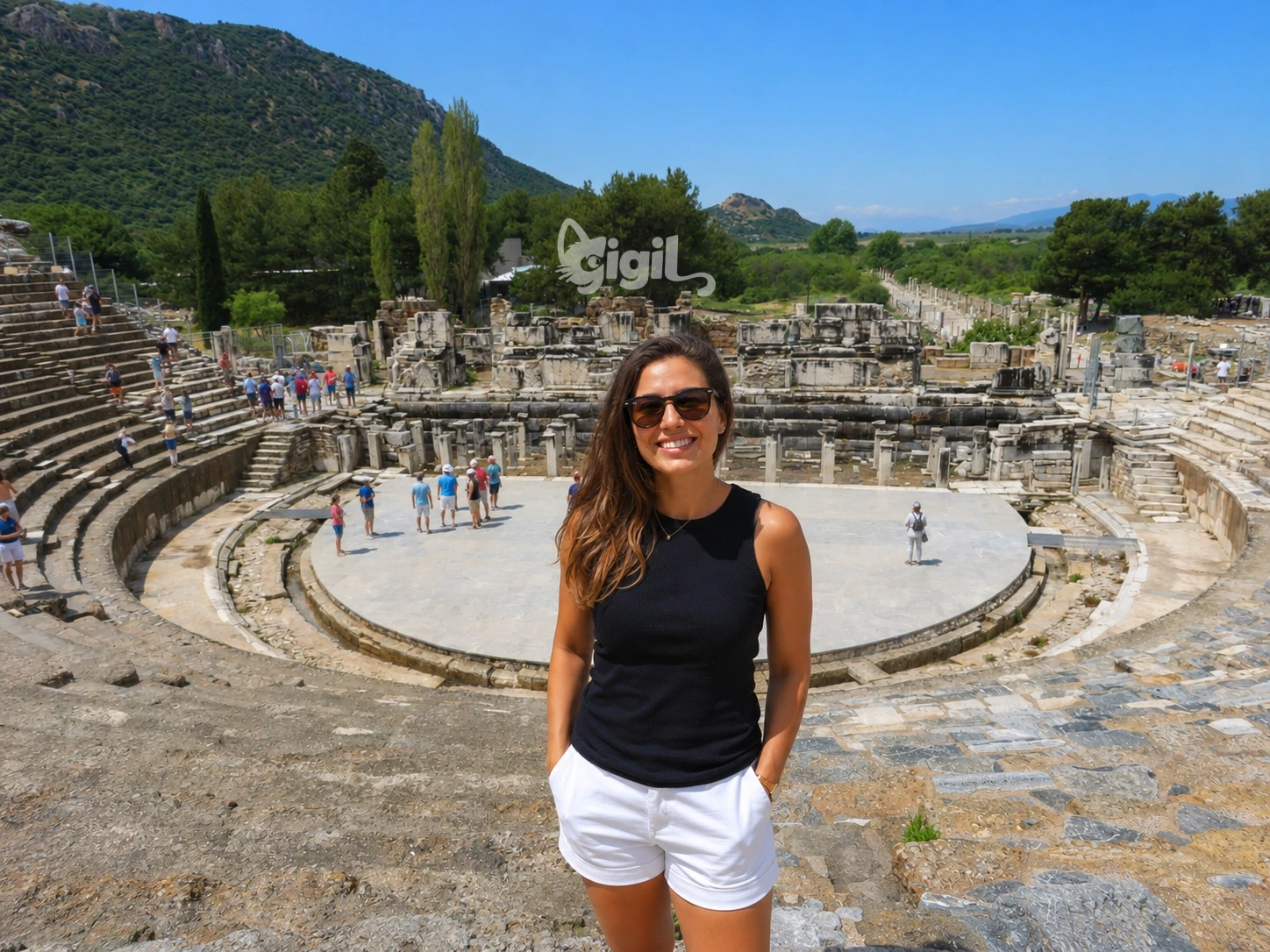

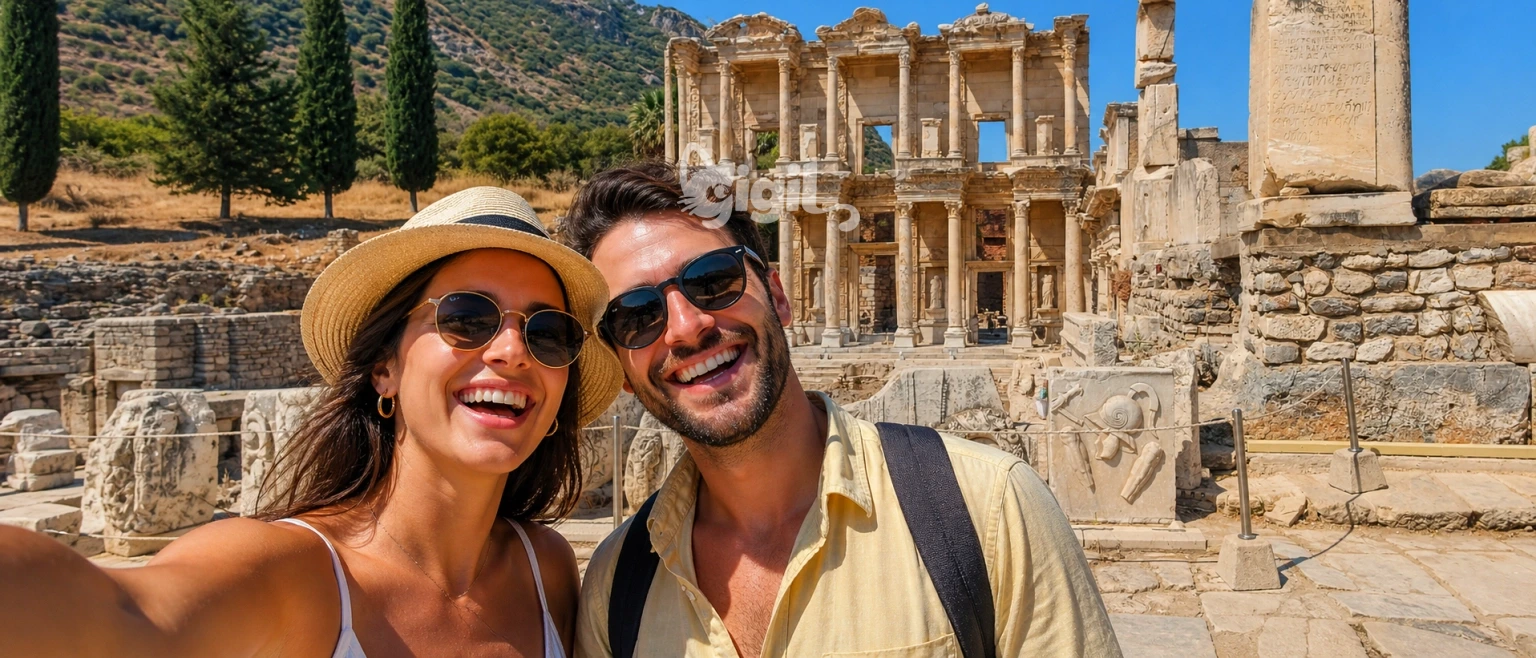
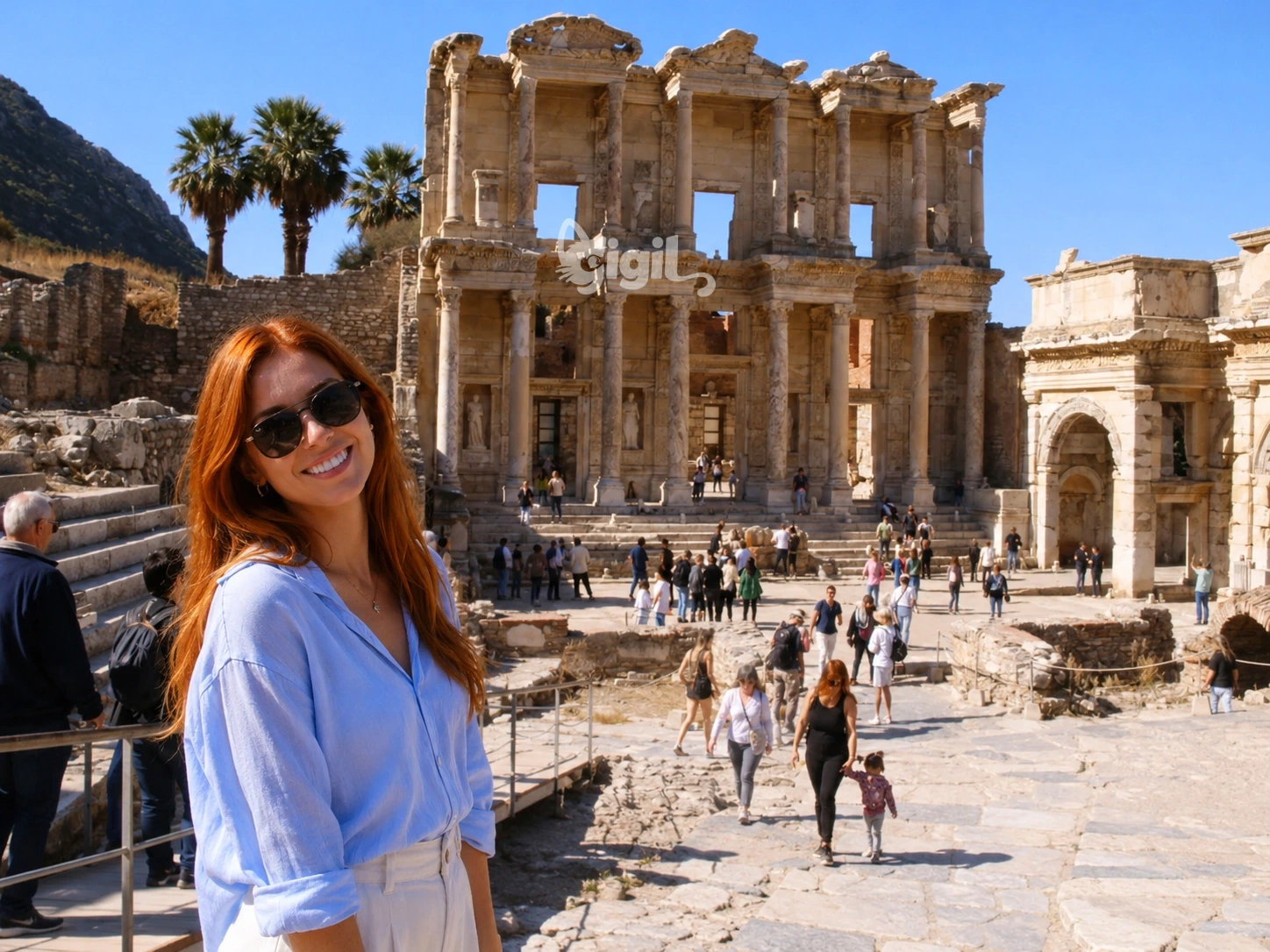
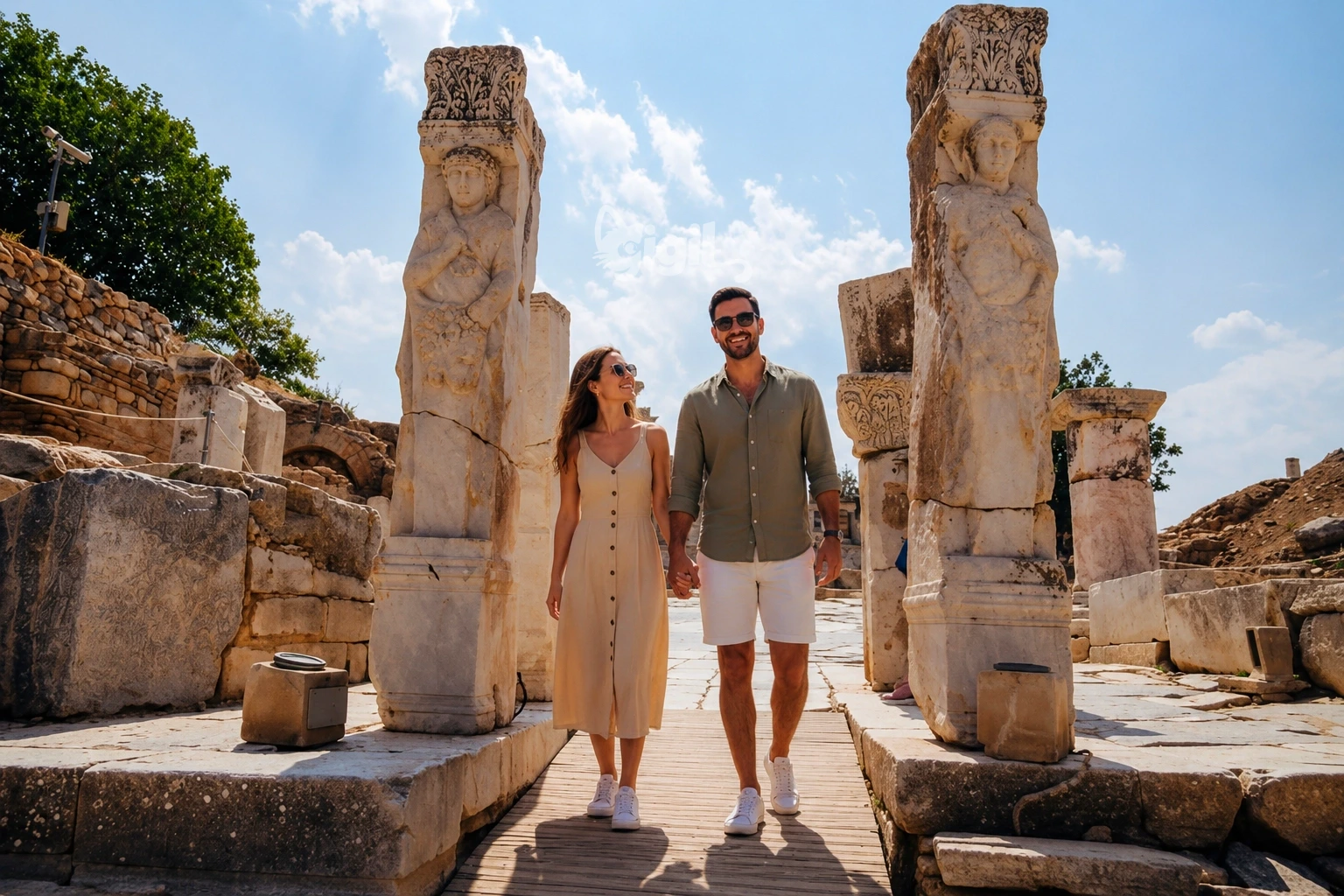
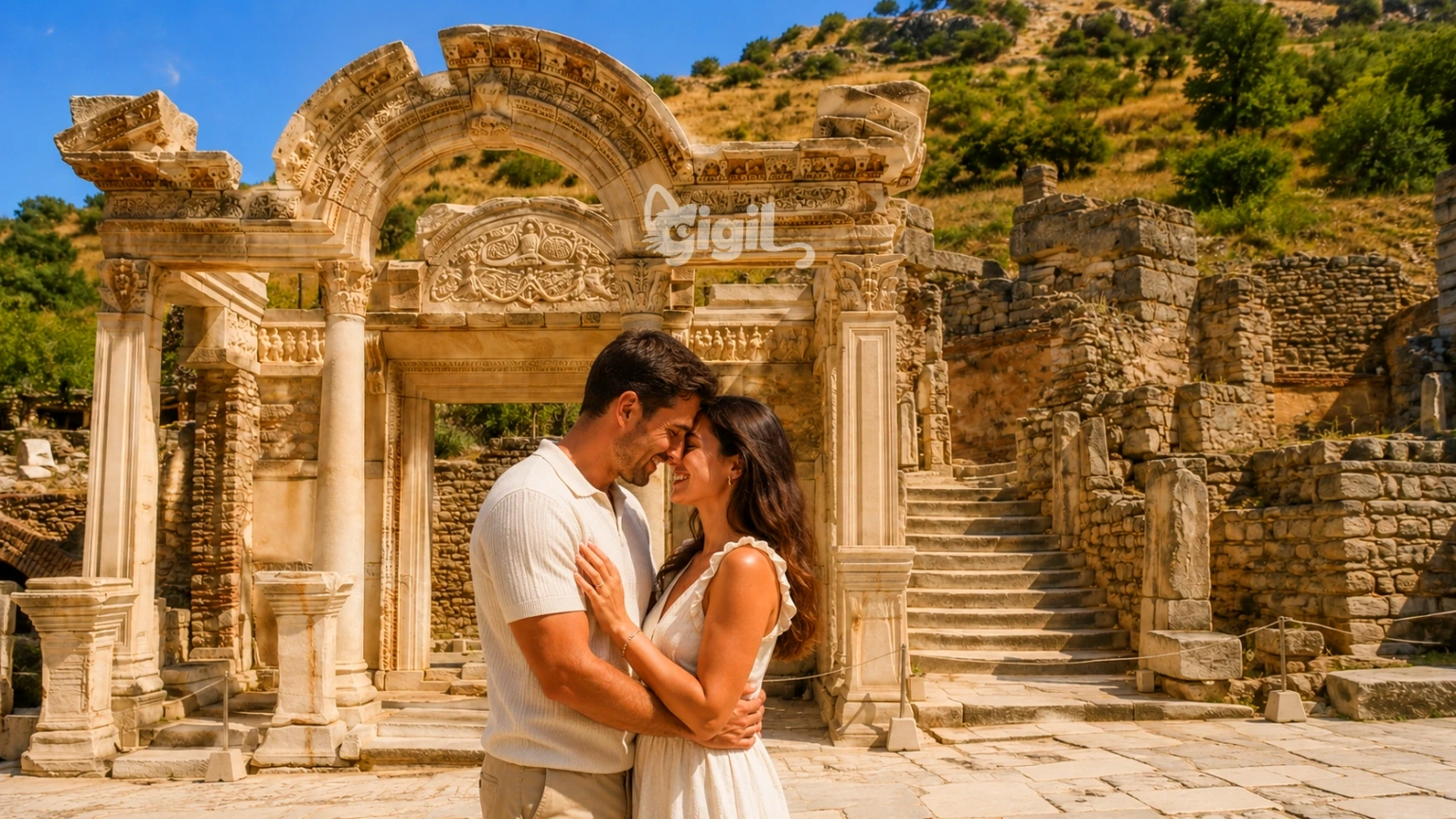
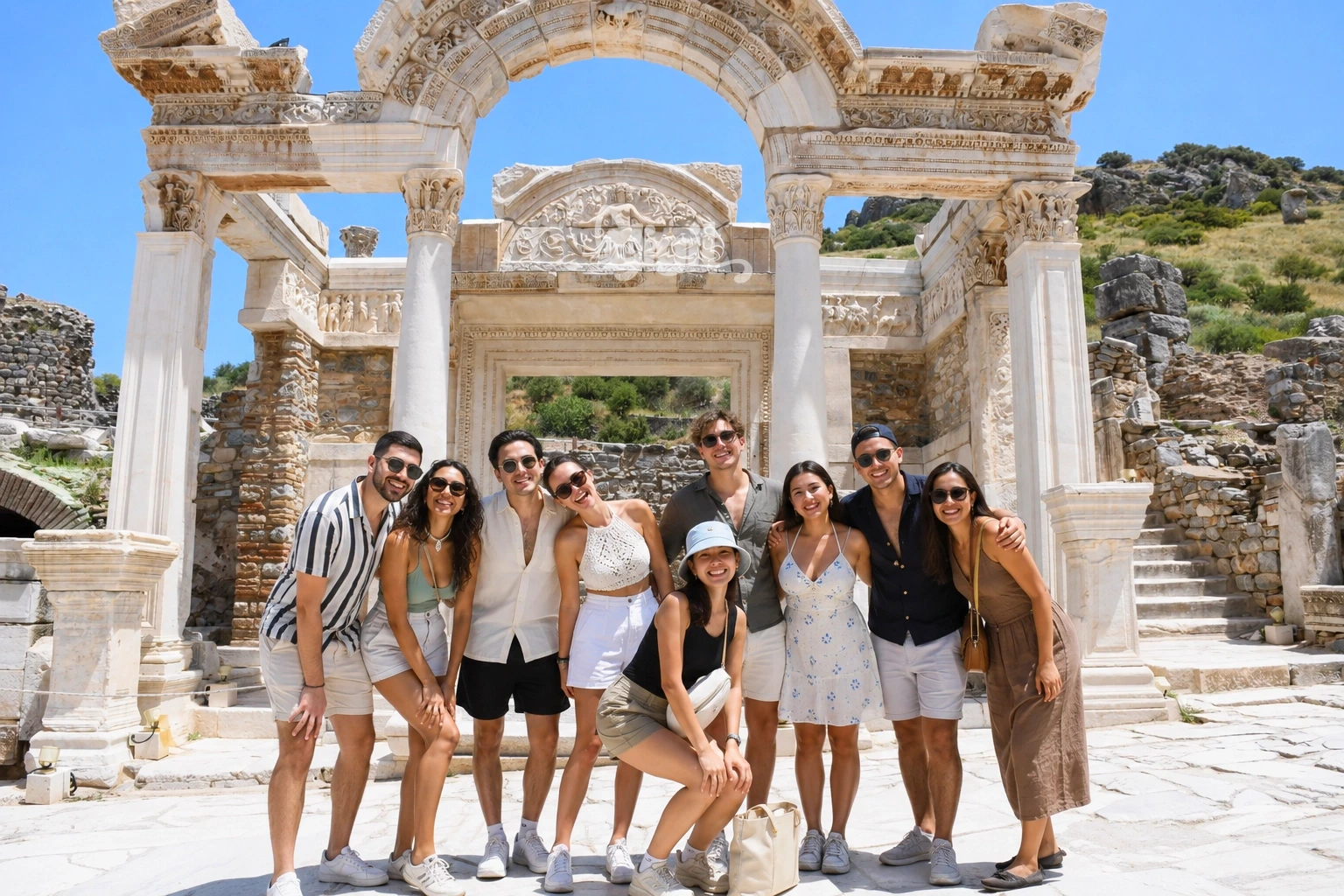
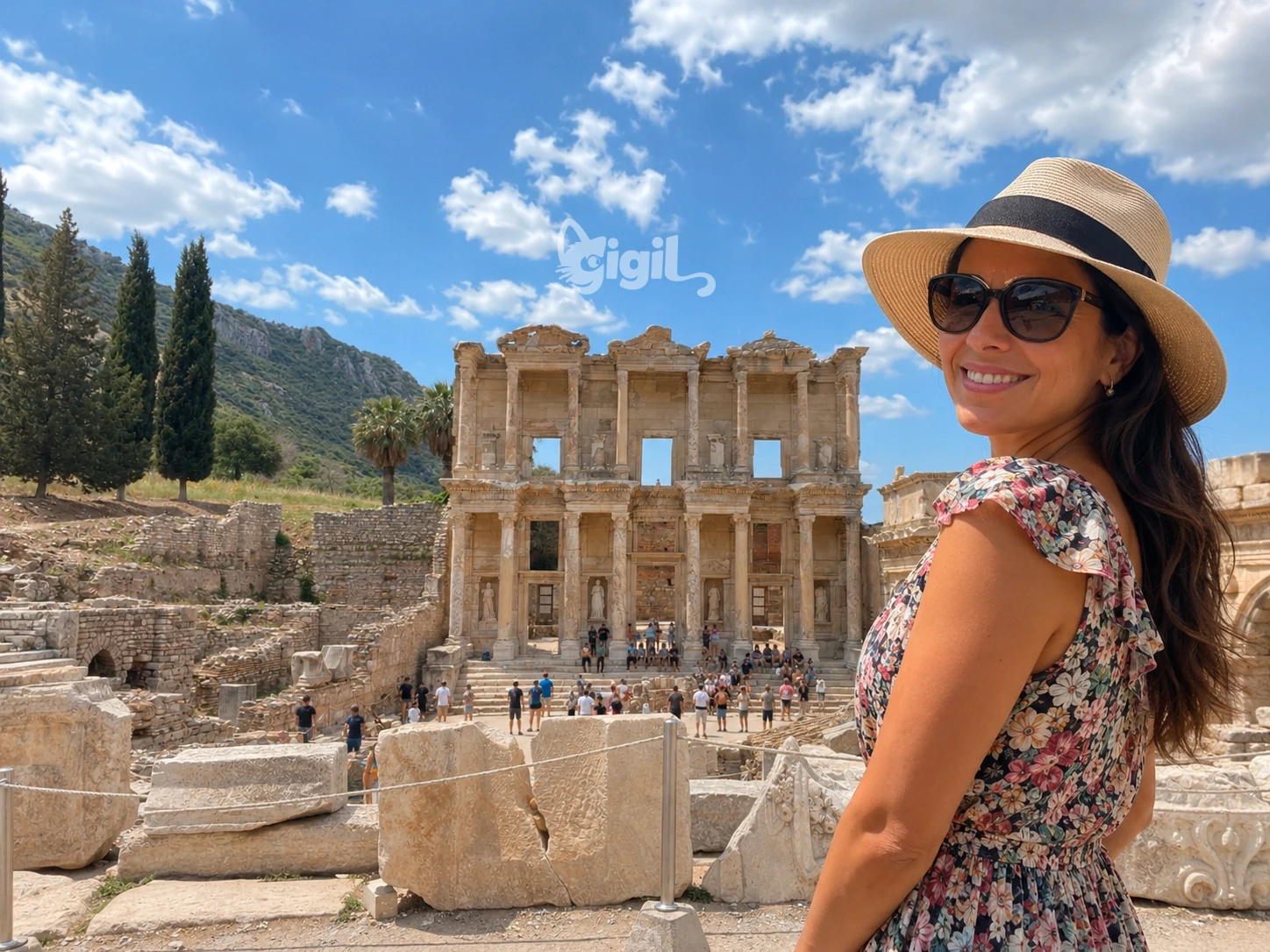
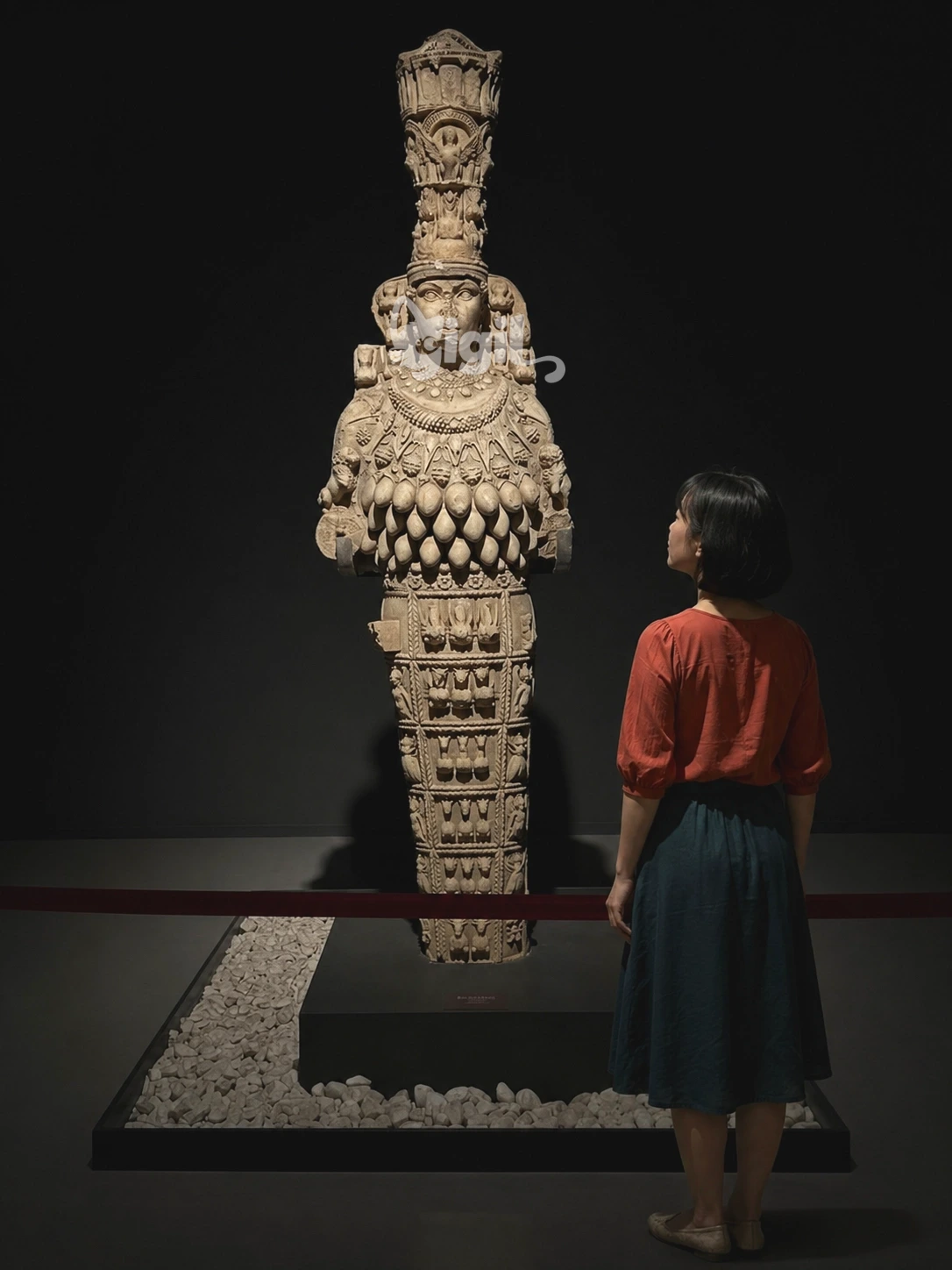
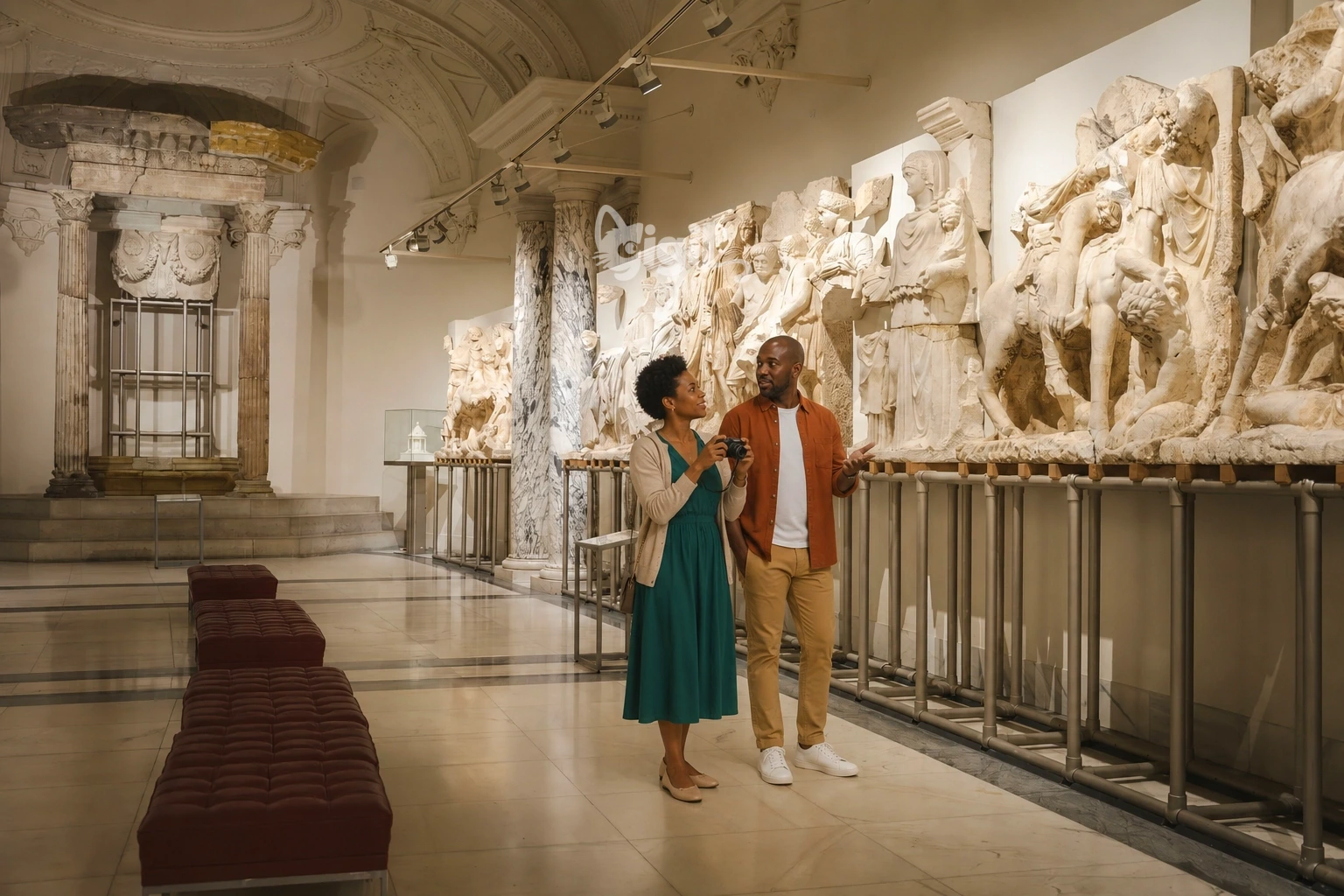
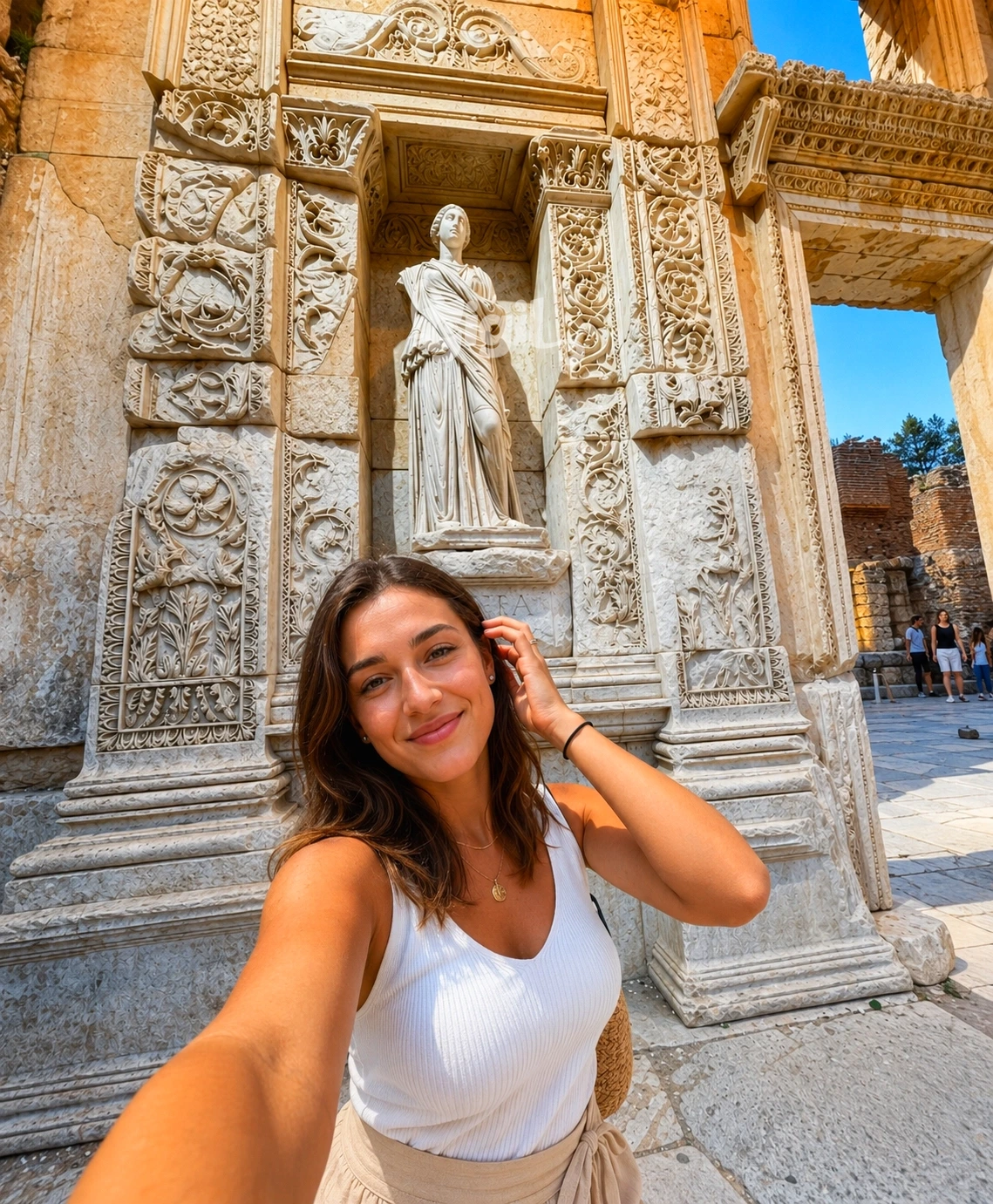
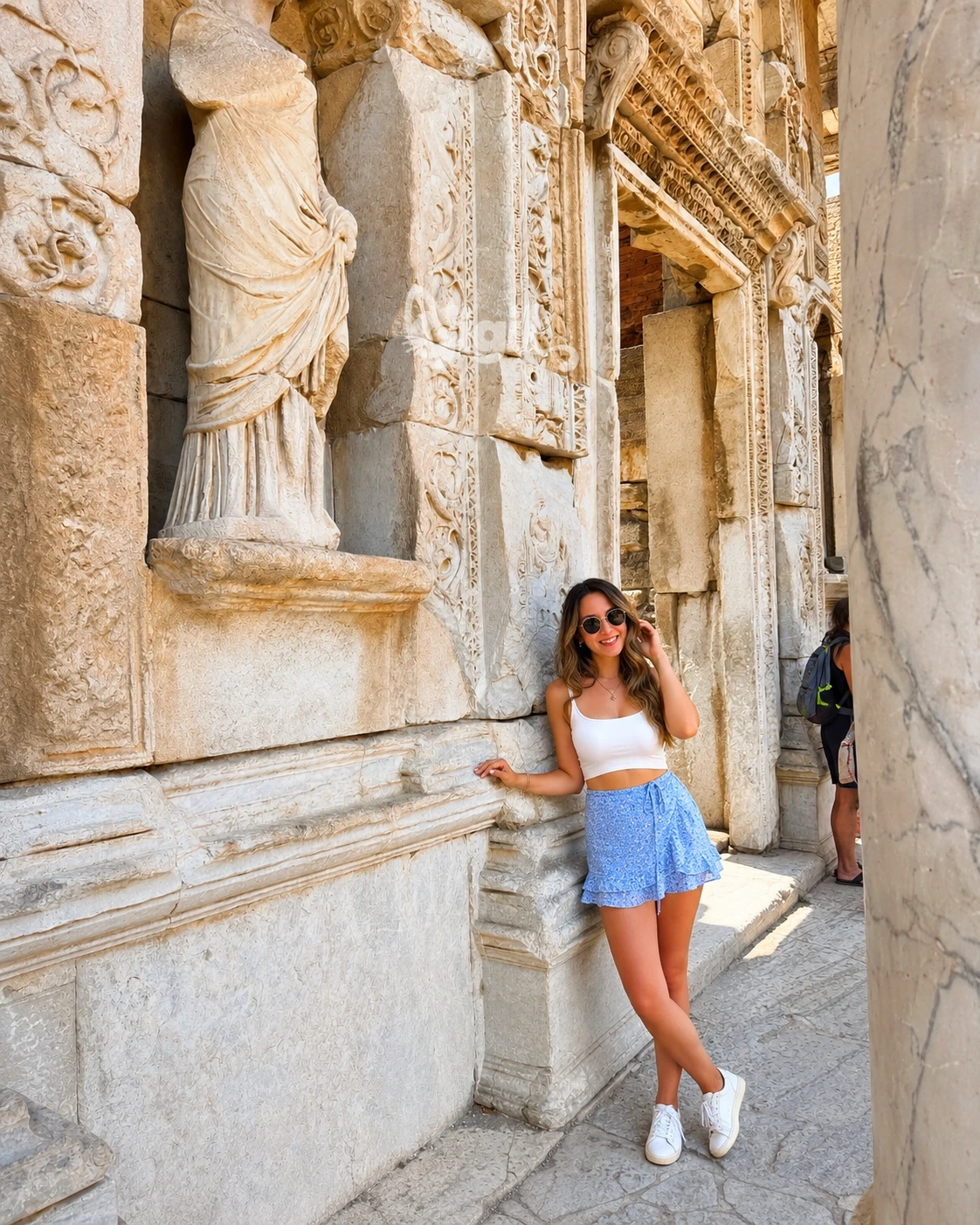
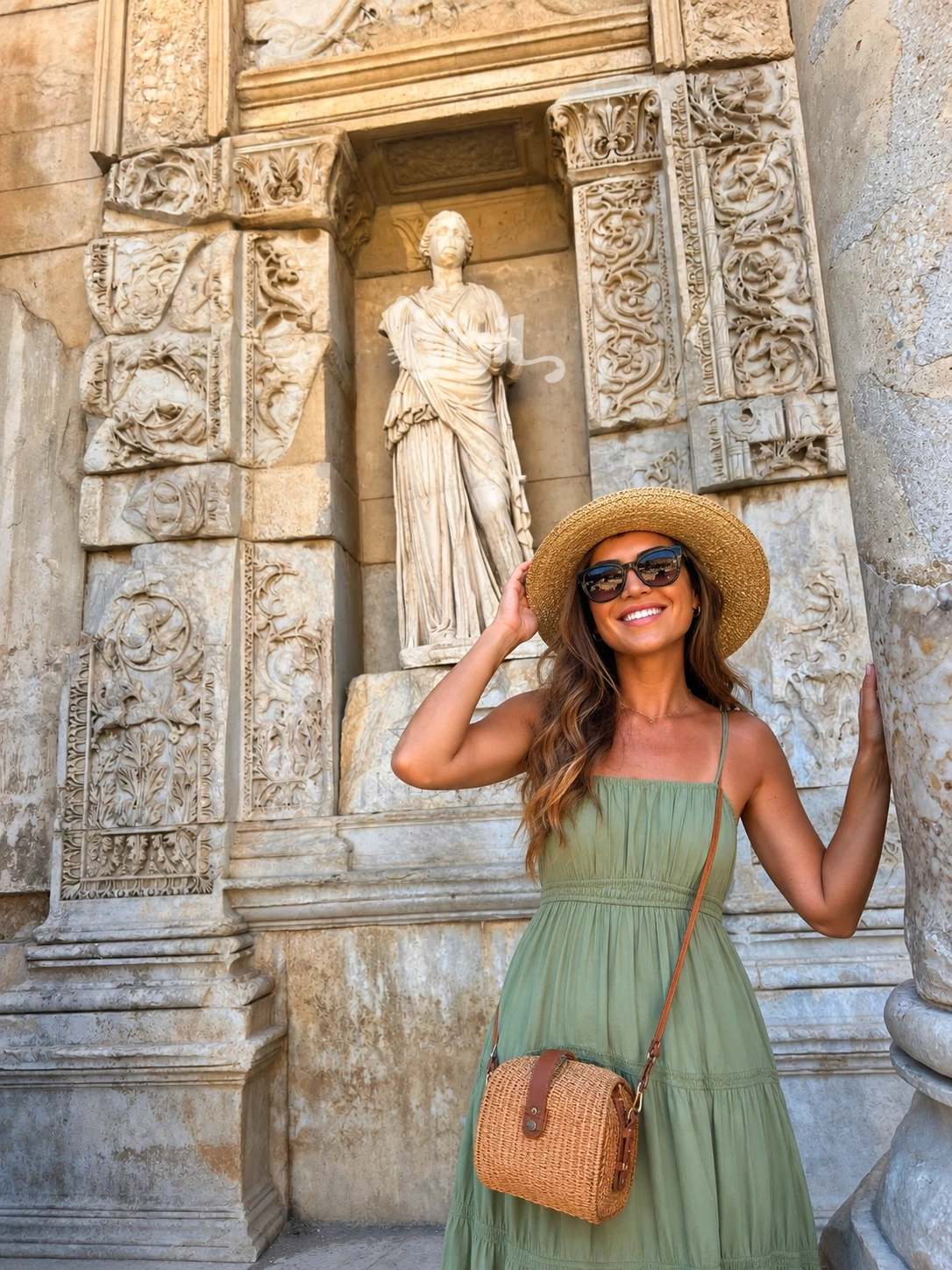
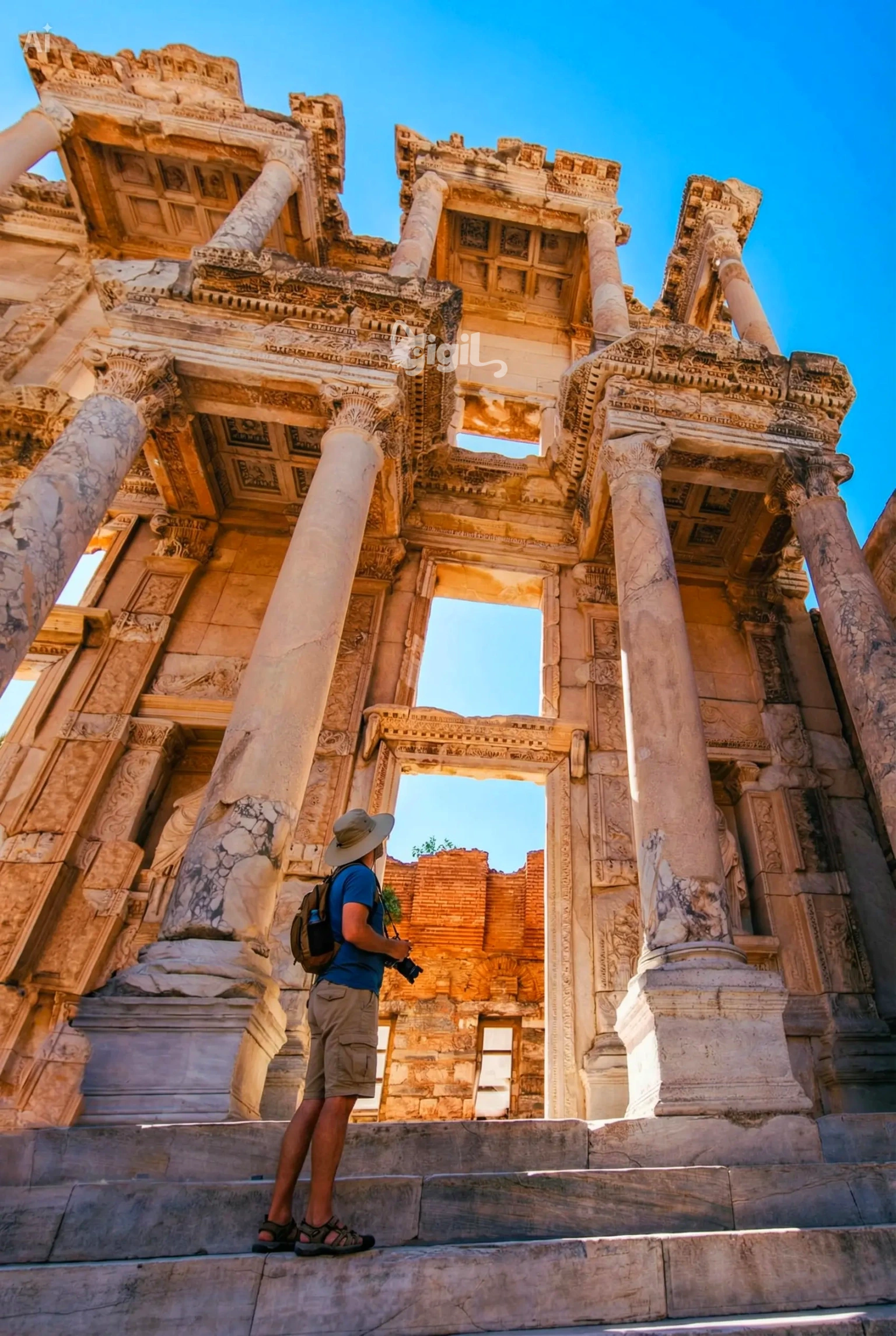
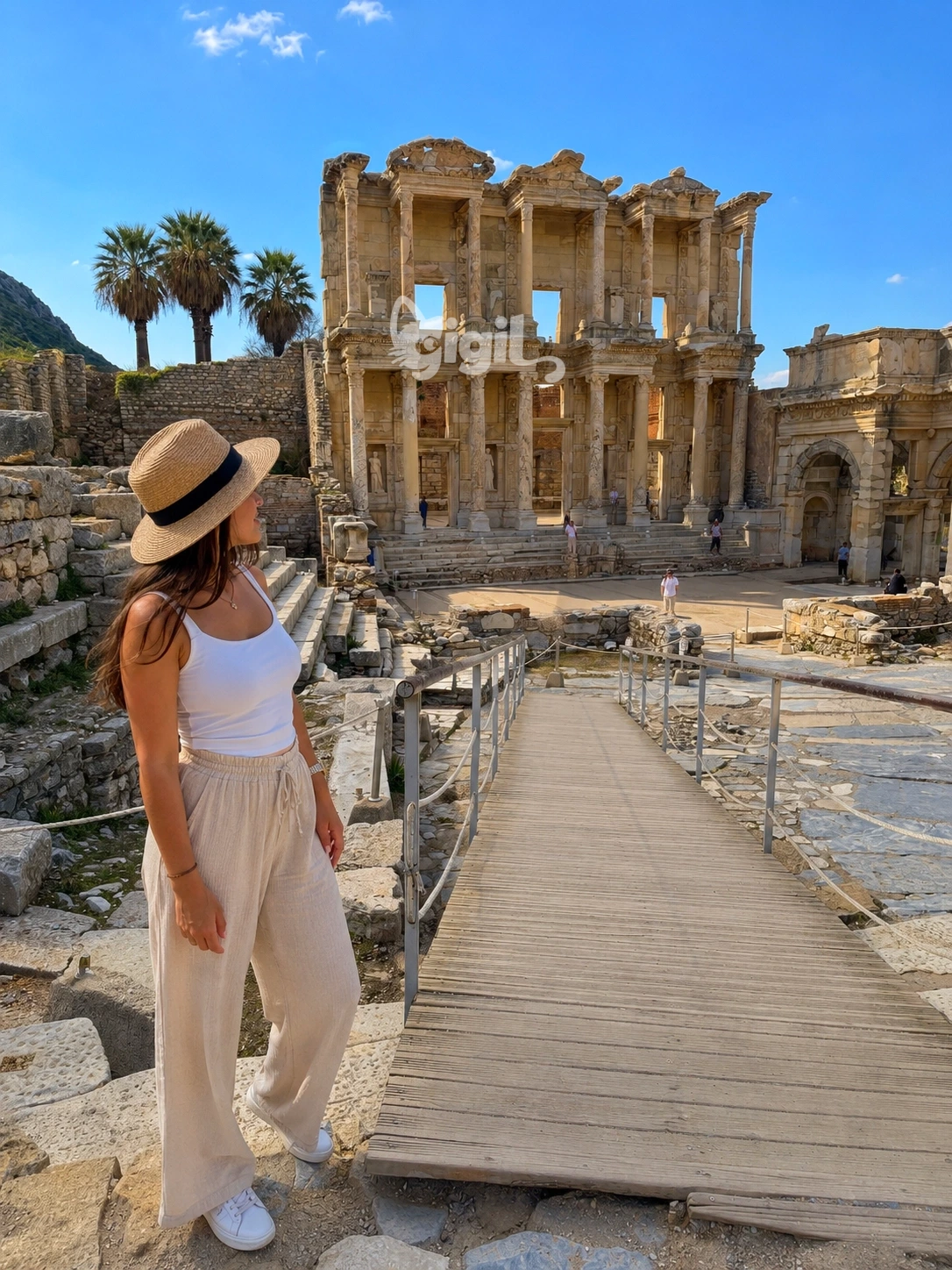
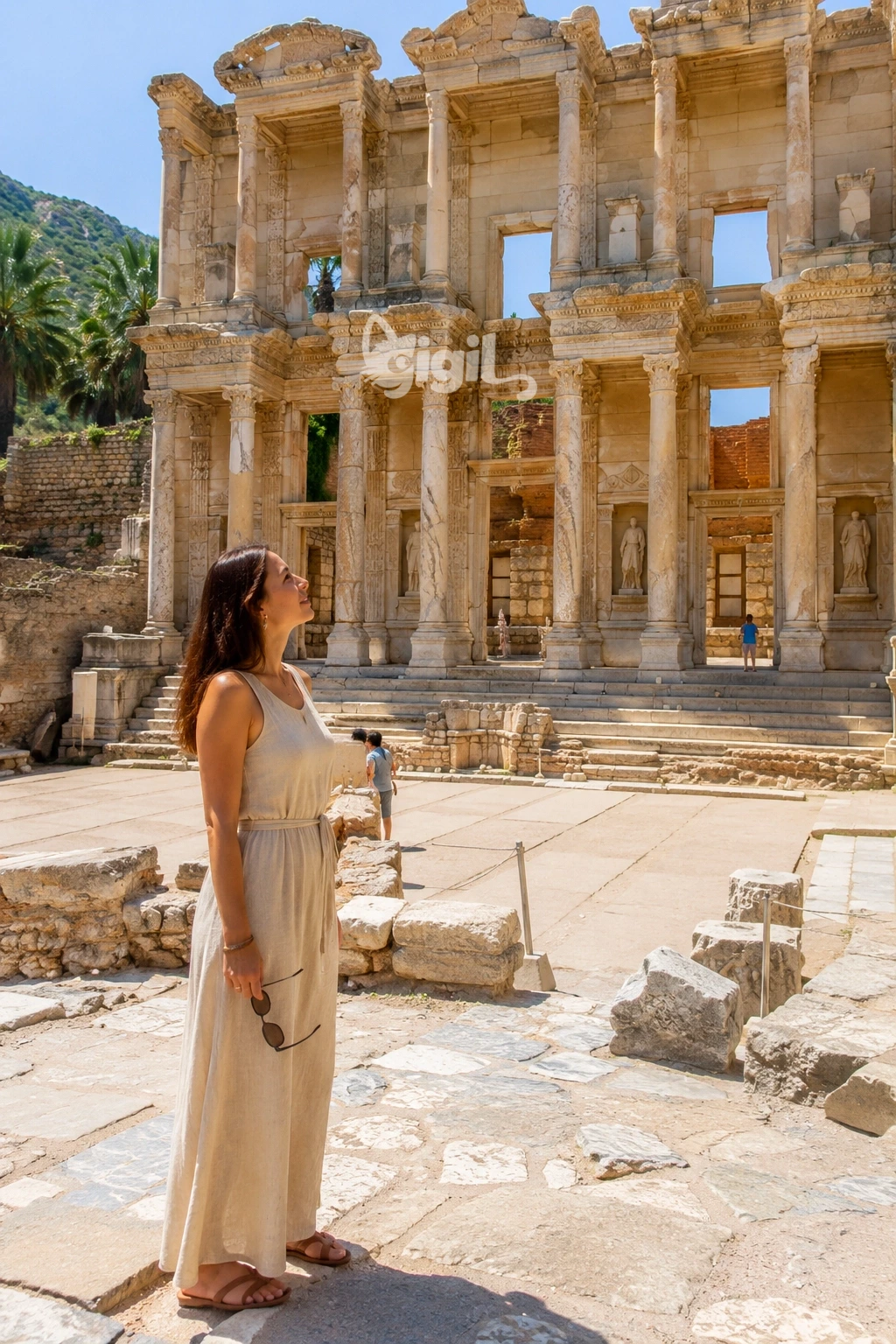
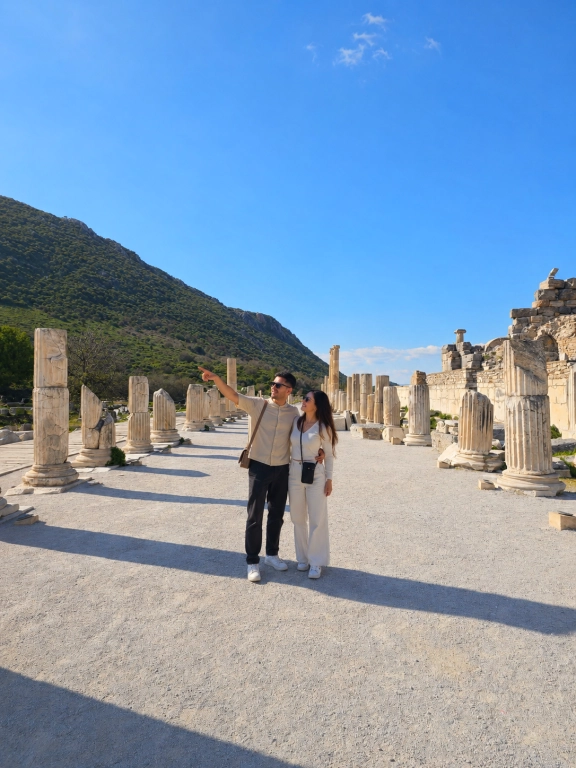
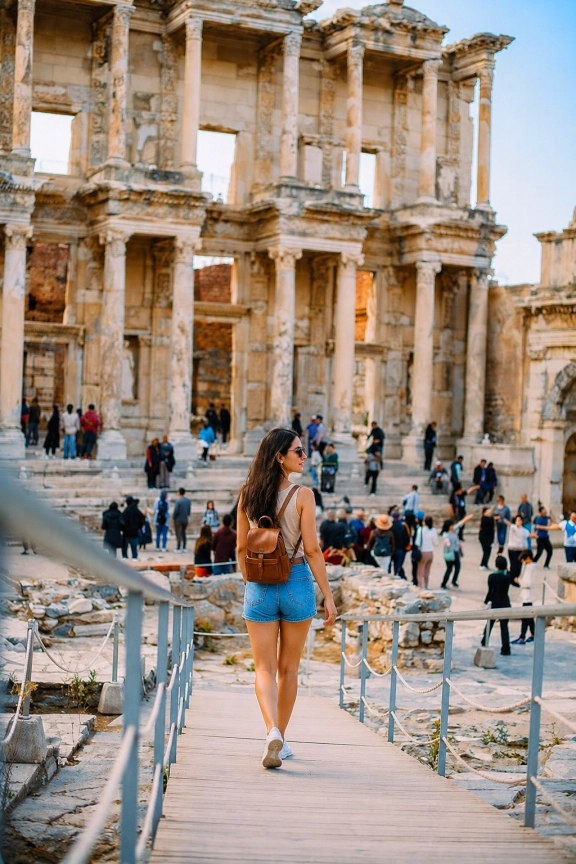
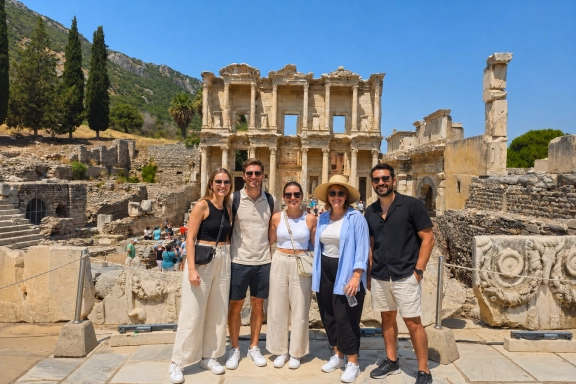
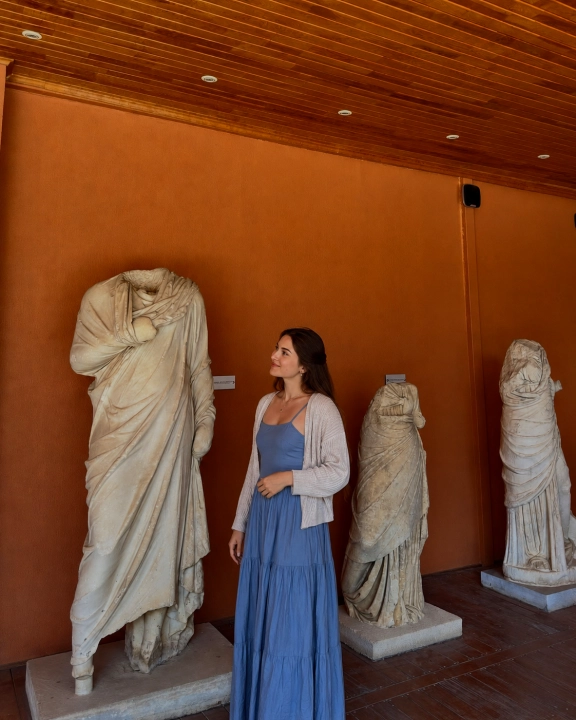
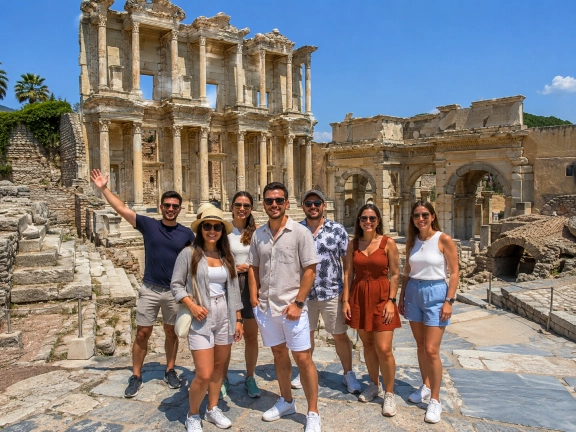
The Library of Celsus and Great Theatre belong to an ancient urban setting at Ephesus. Streets and open areas connect these landmarks, showing that public life depended on relationships between spaces rather than monuments standing independently.
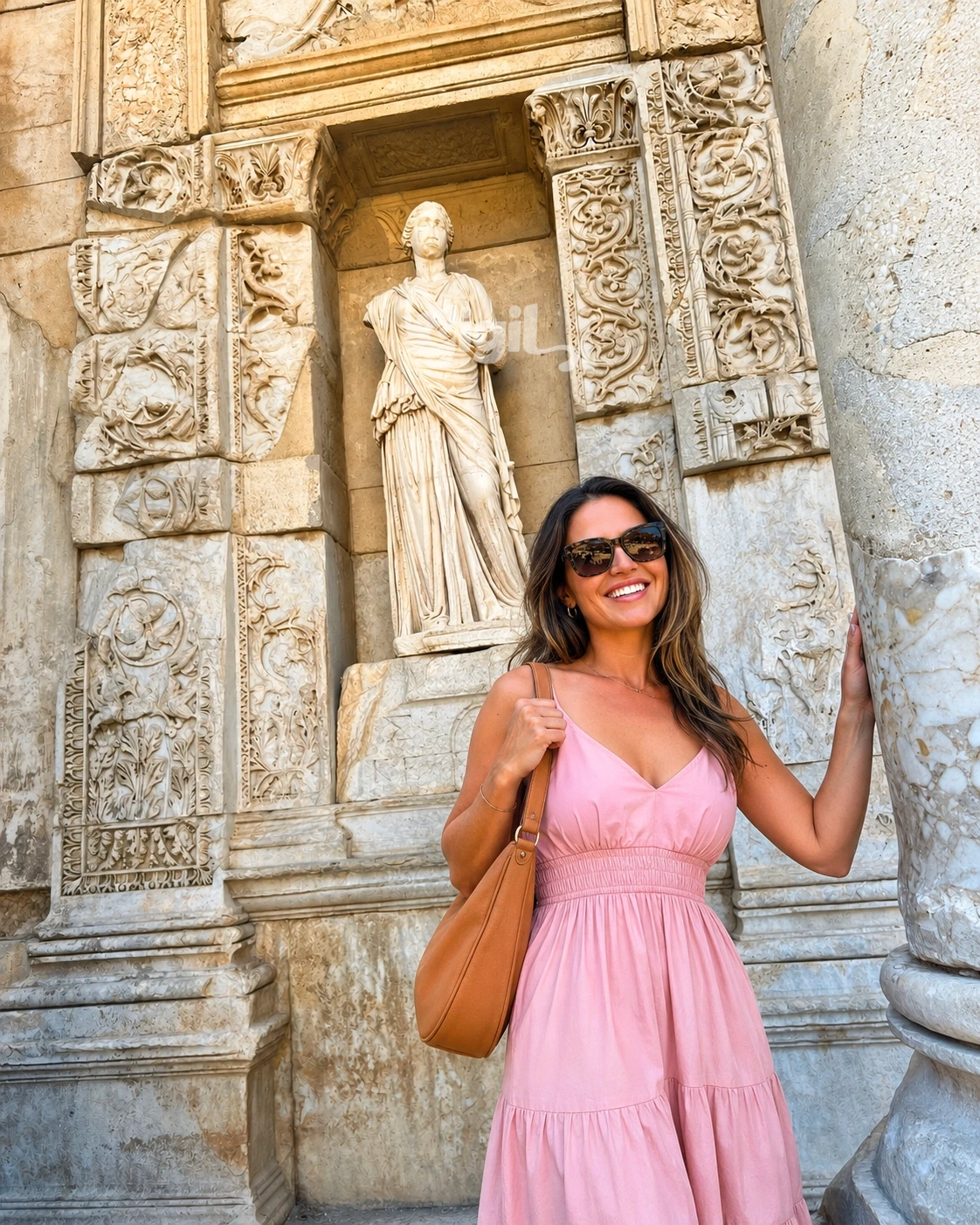
Look from the buildings to the ground around them. Surviving paving and outlines can reveal circulation and scale. Reconstruction also contributes to the present appearance, making it useful to distinguish an ancient architectural idea from a structure preserved completely without change.
Questions
What ties the different monuments together?
The streets and shared spaces provide a framework for understanding how the monuments related to movement and activity in the city.
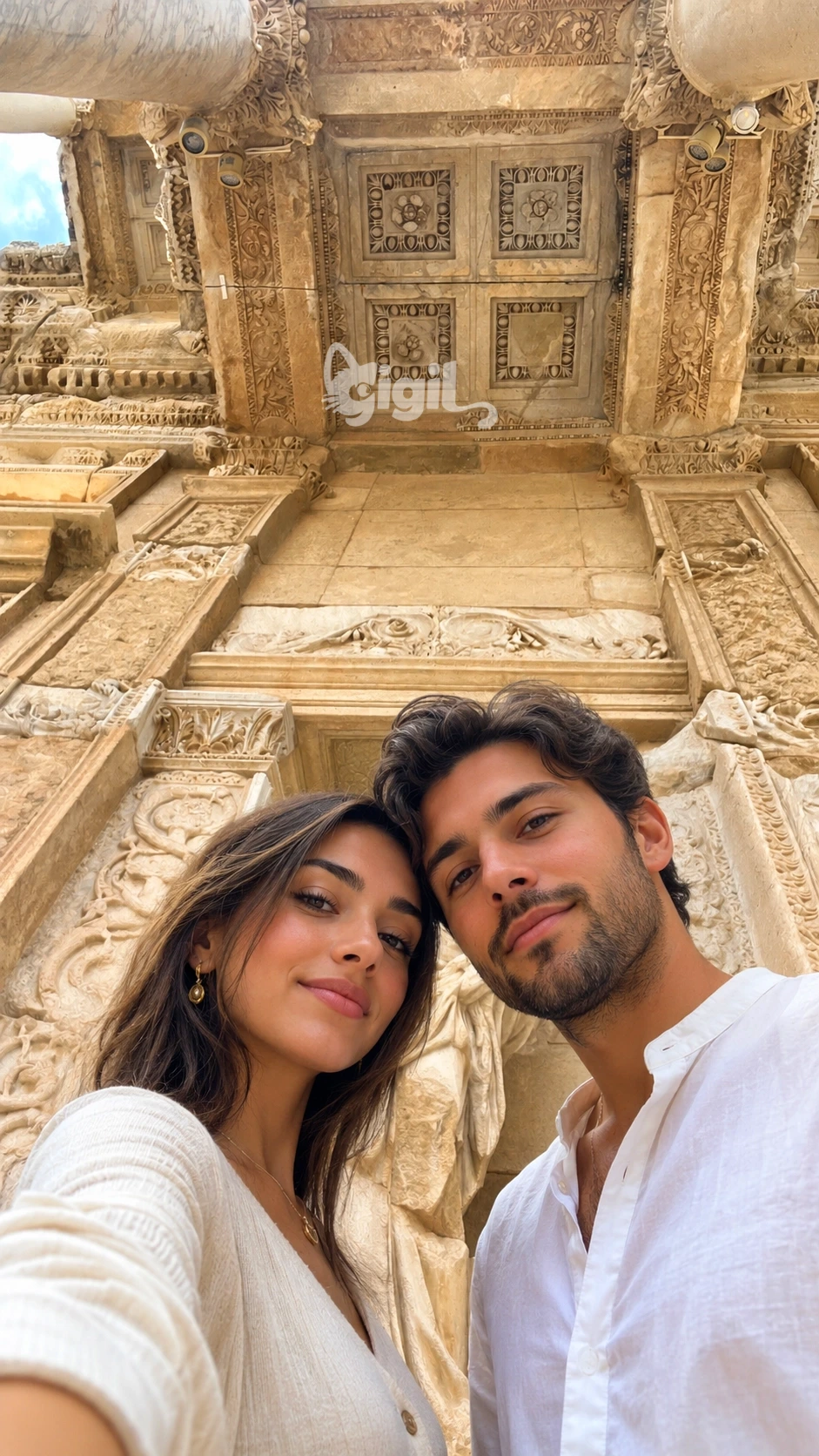
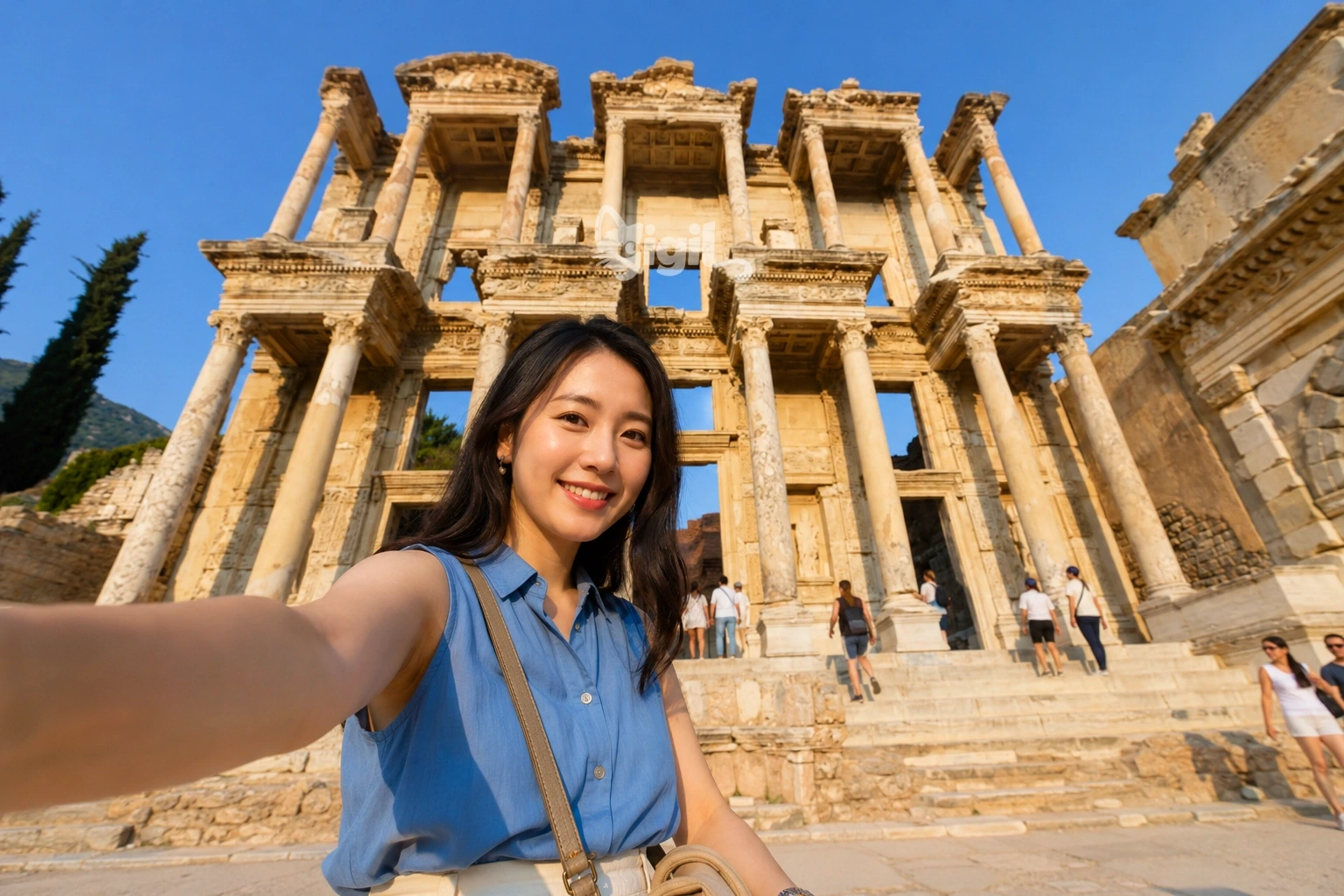
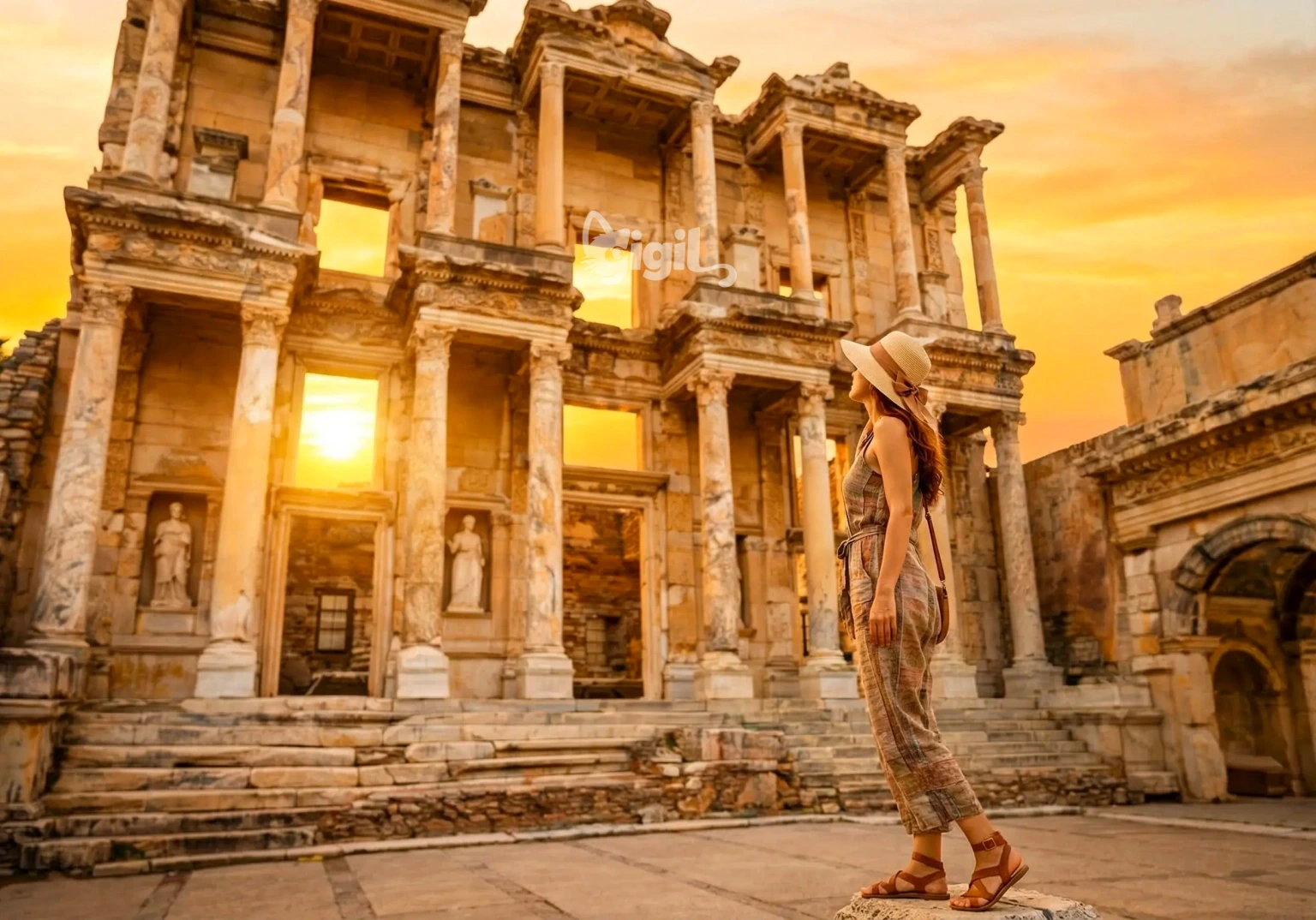
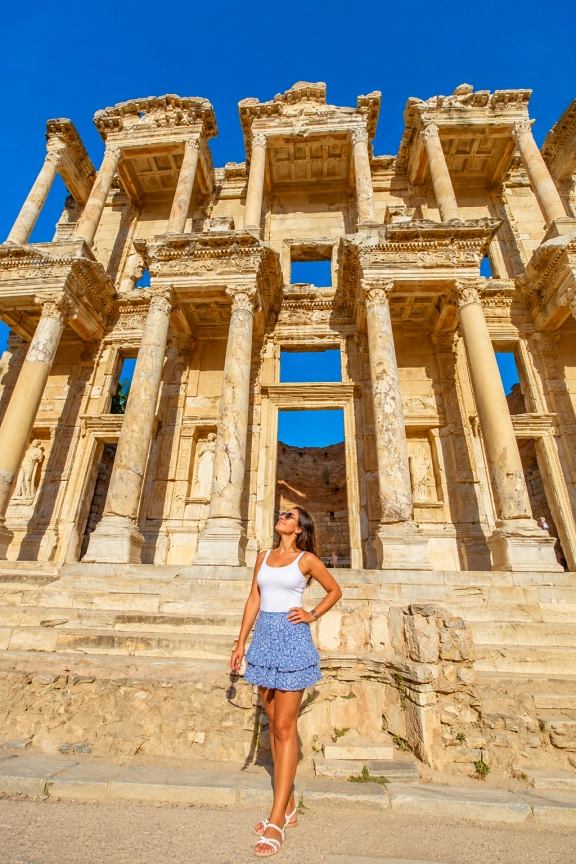
Does the library's facade mean the full building remains?
The frontage includes reconstruction; its prominent form should not be taken as proof that the complete ancient library survives intact.
What does the theatre say about public space?
It provides a large setting for collective gathering, showing a different urban scale from the routes and smaller buildings around it.
How should I imagine the ancient shoreline?
Remember that Ephesus was a harbour city in a changing river landscape, not always an inland ruin field like the one seen today.