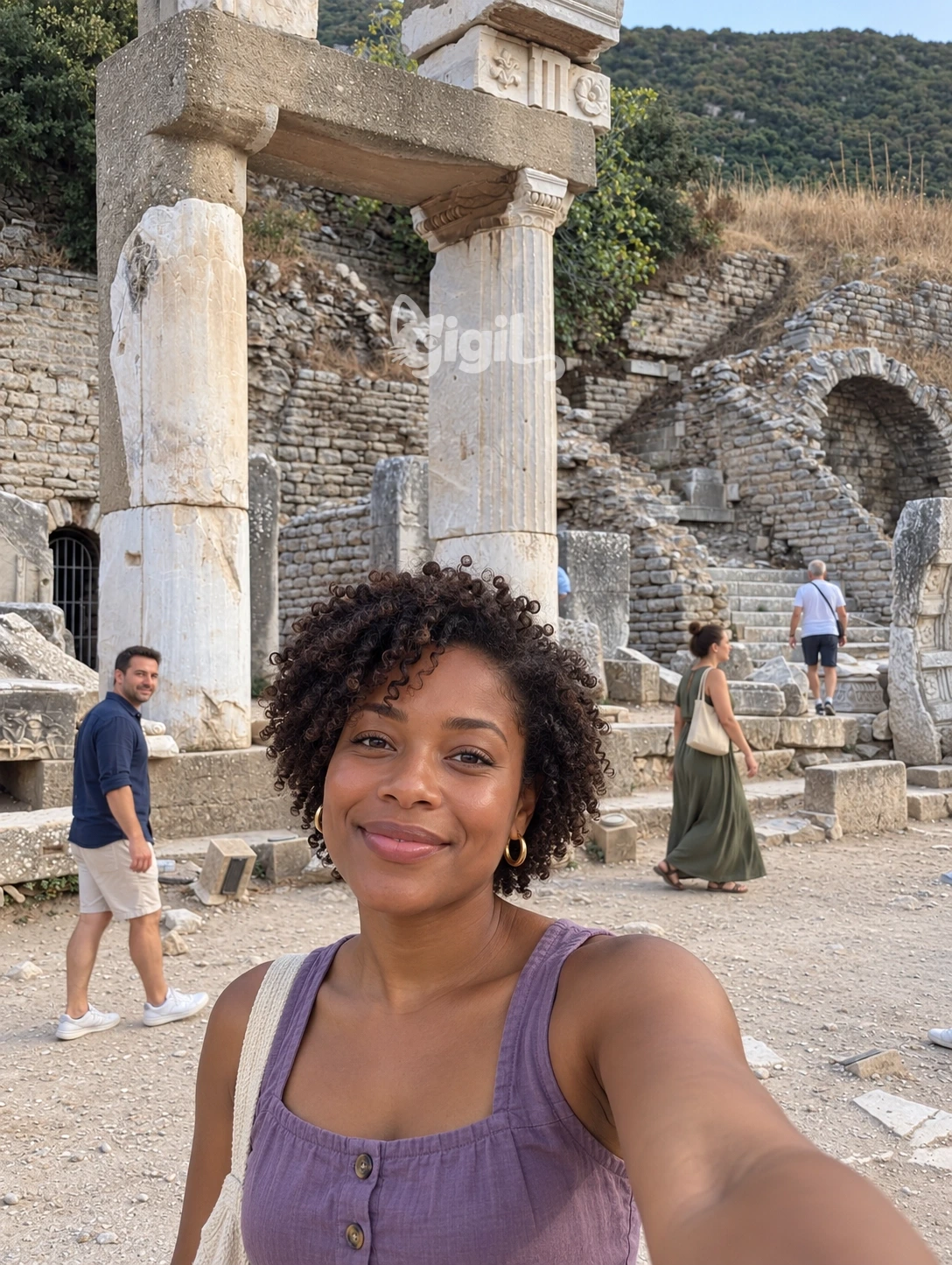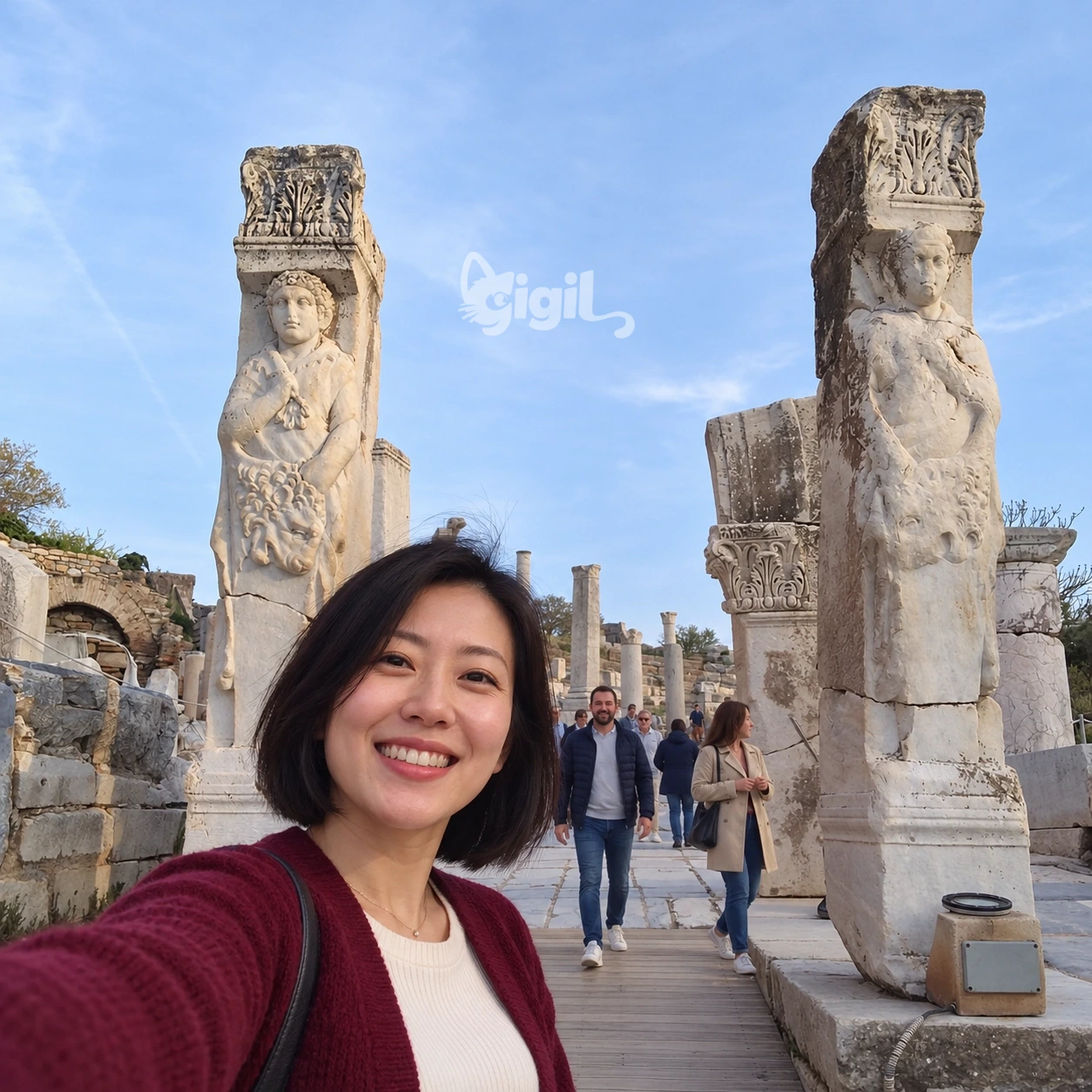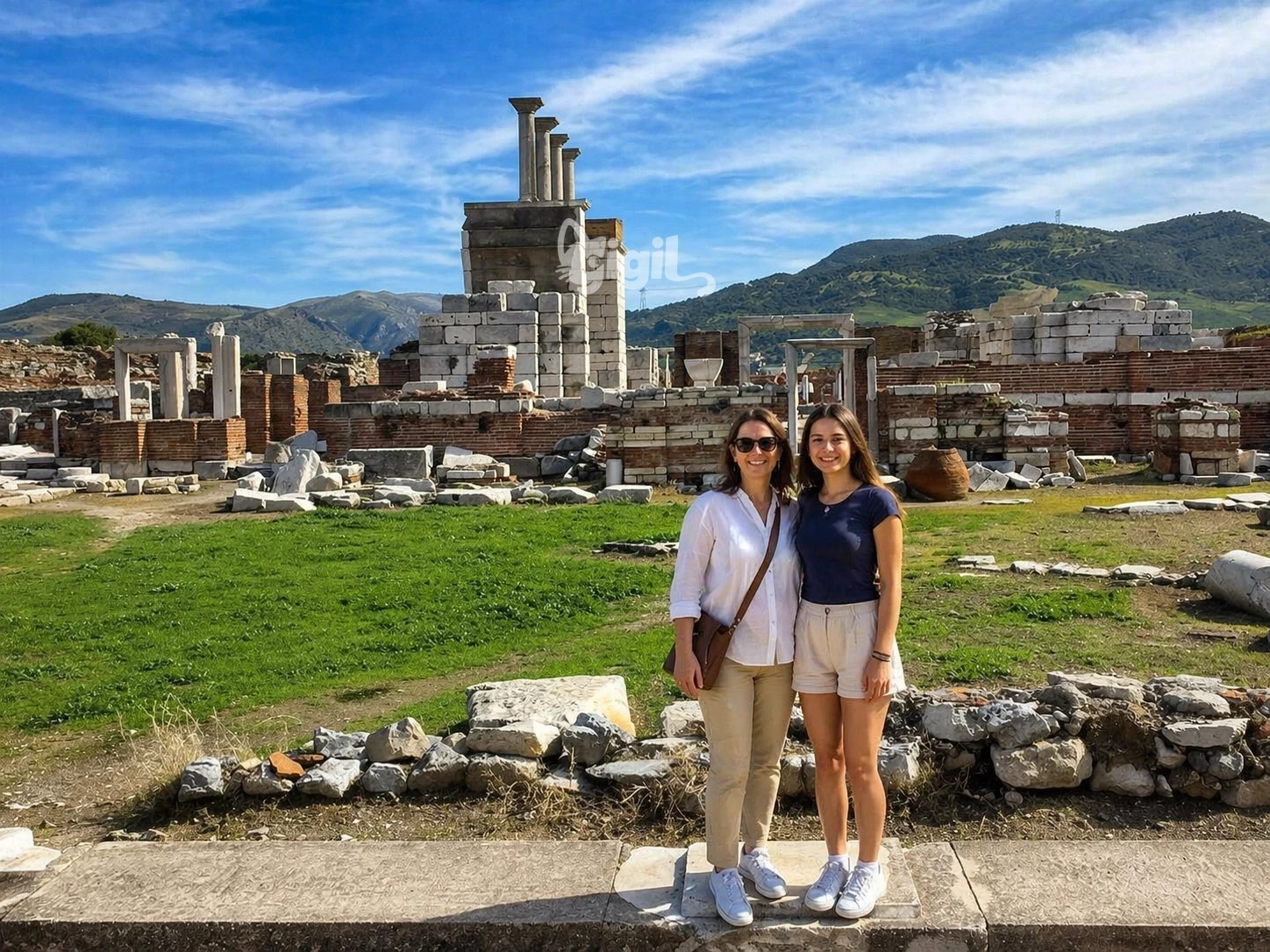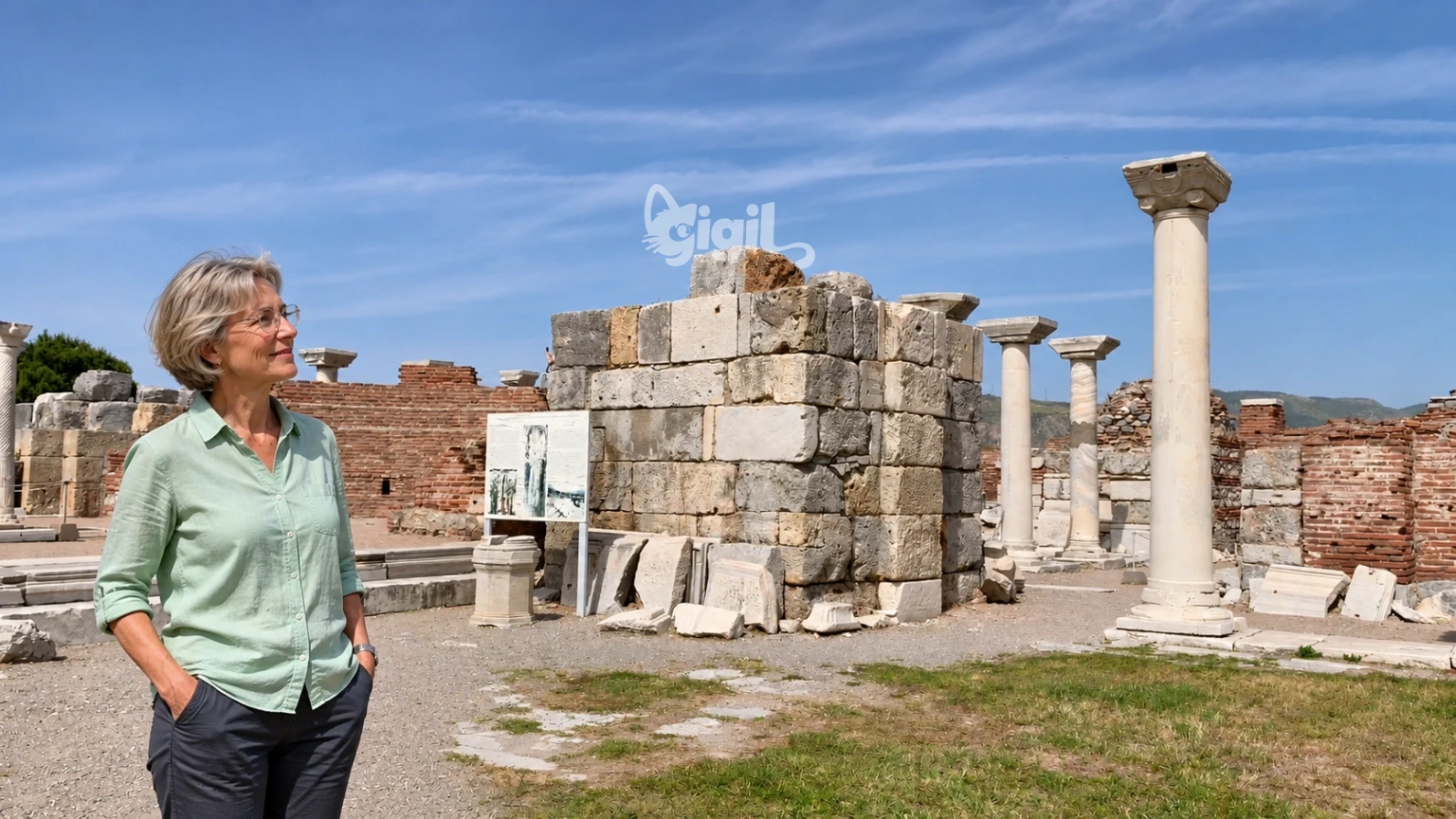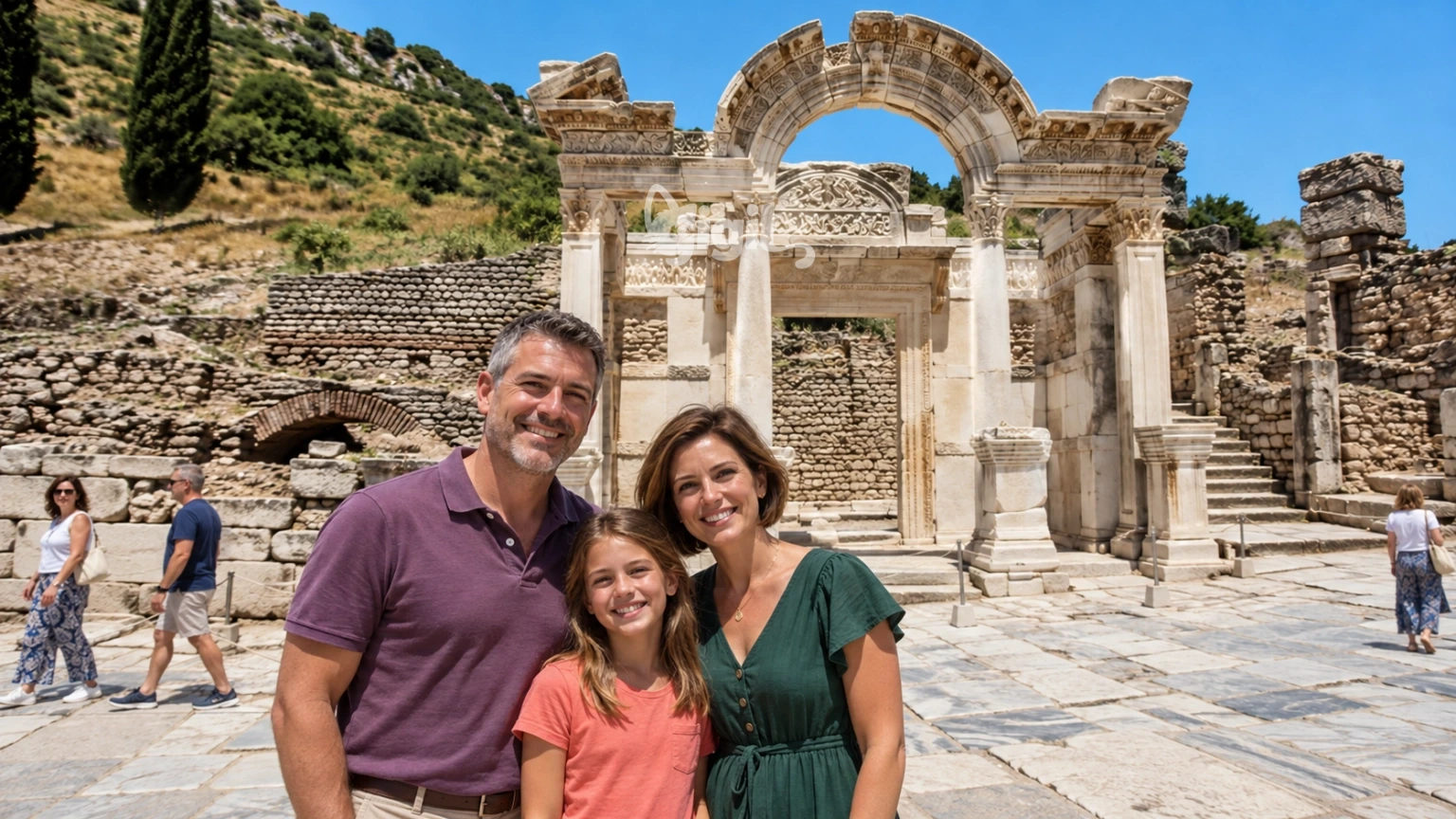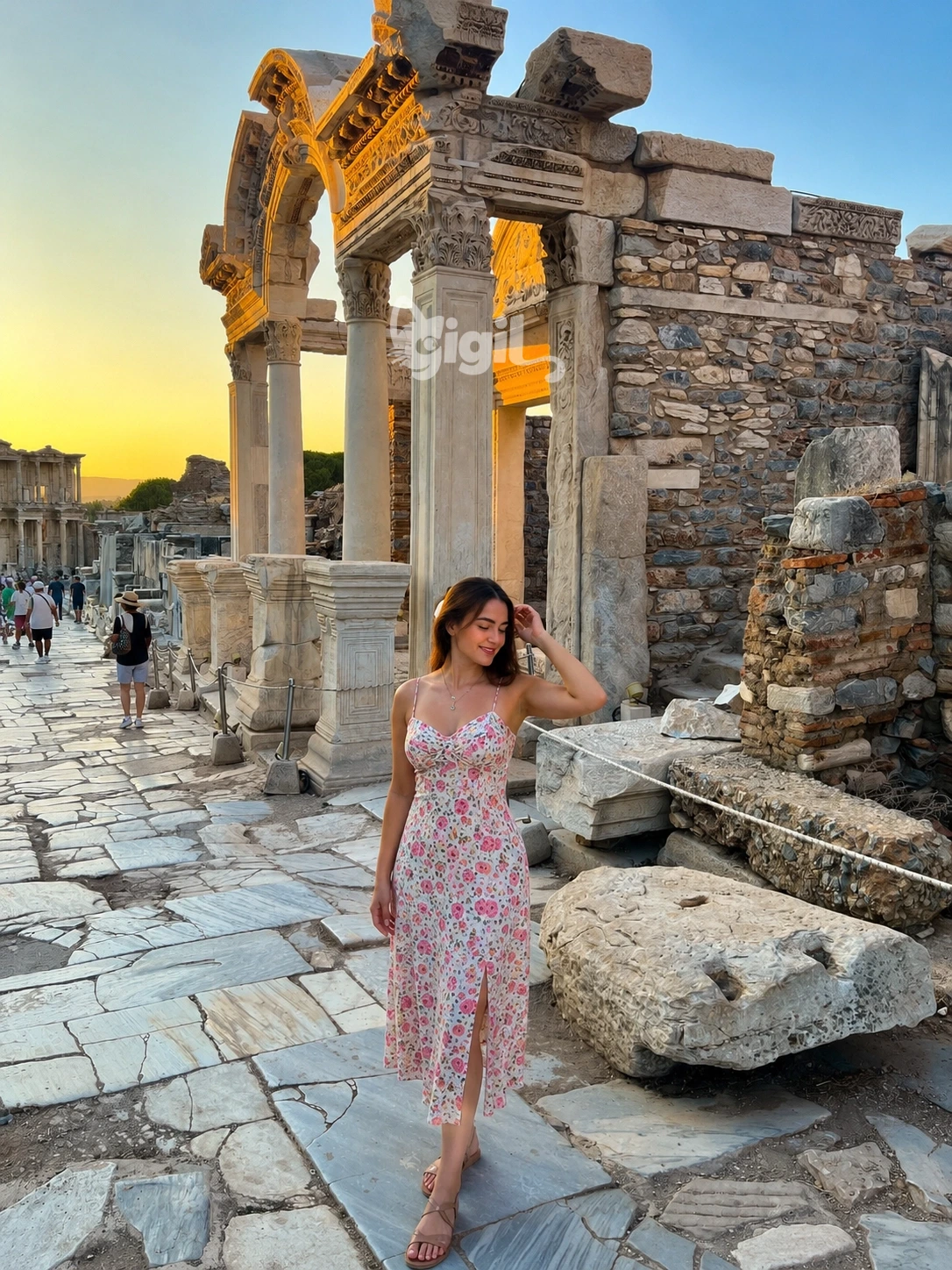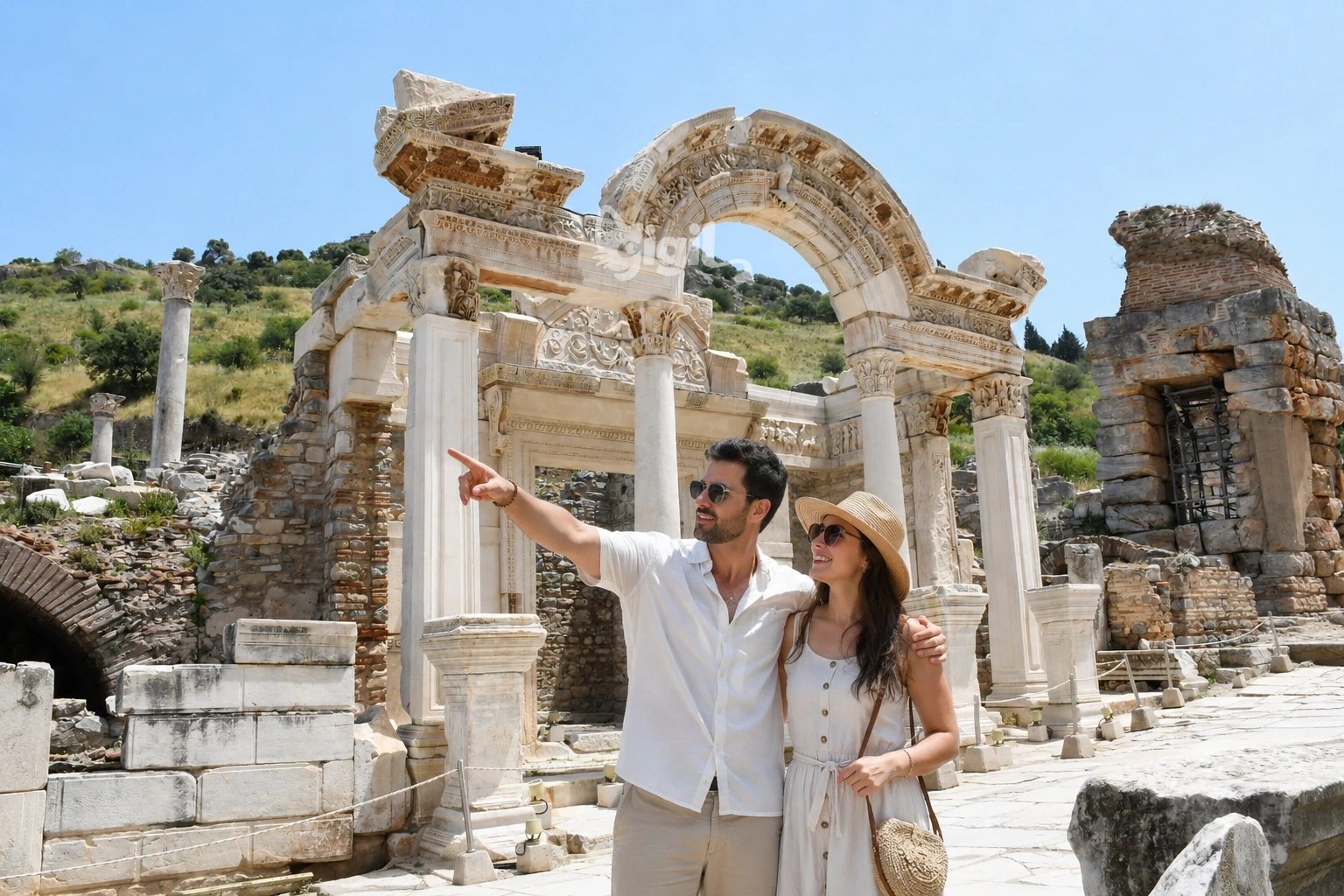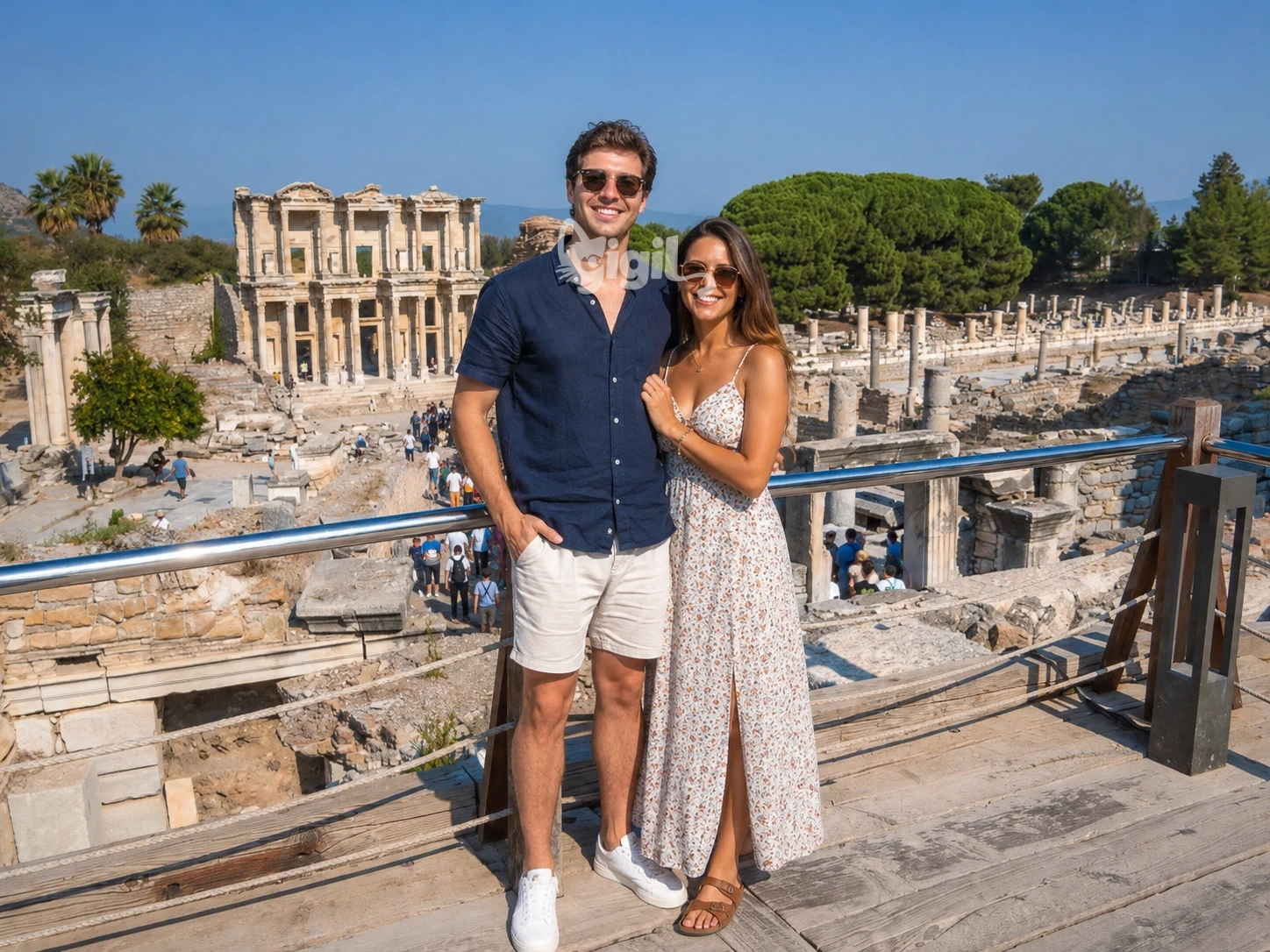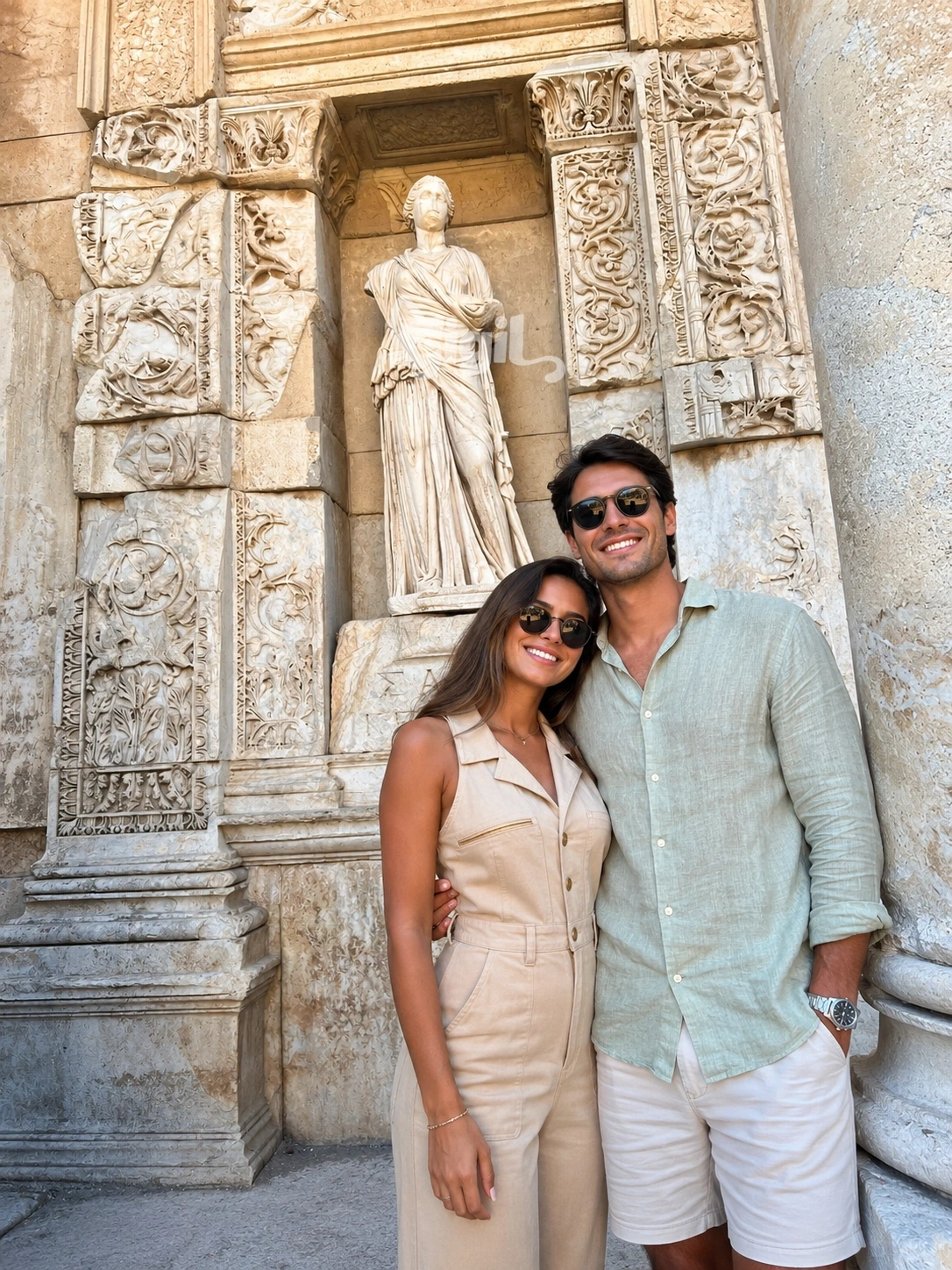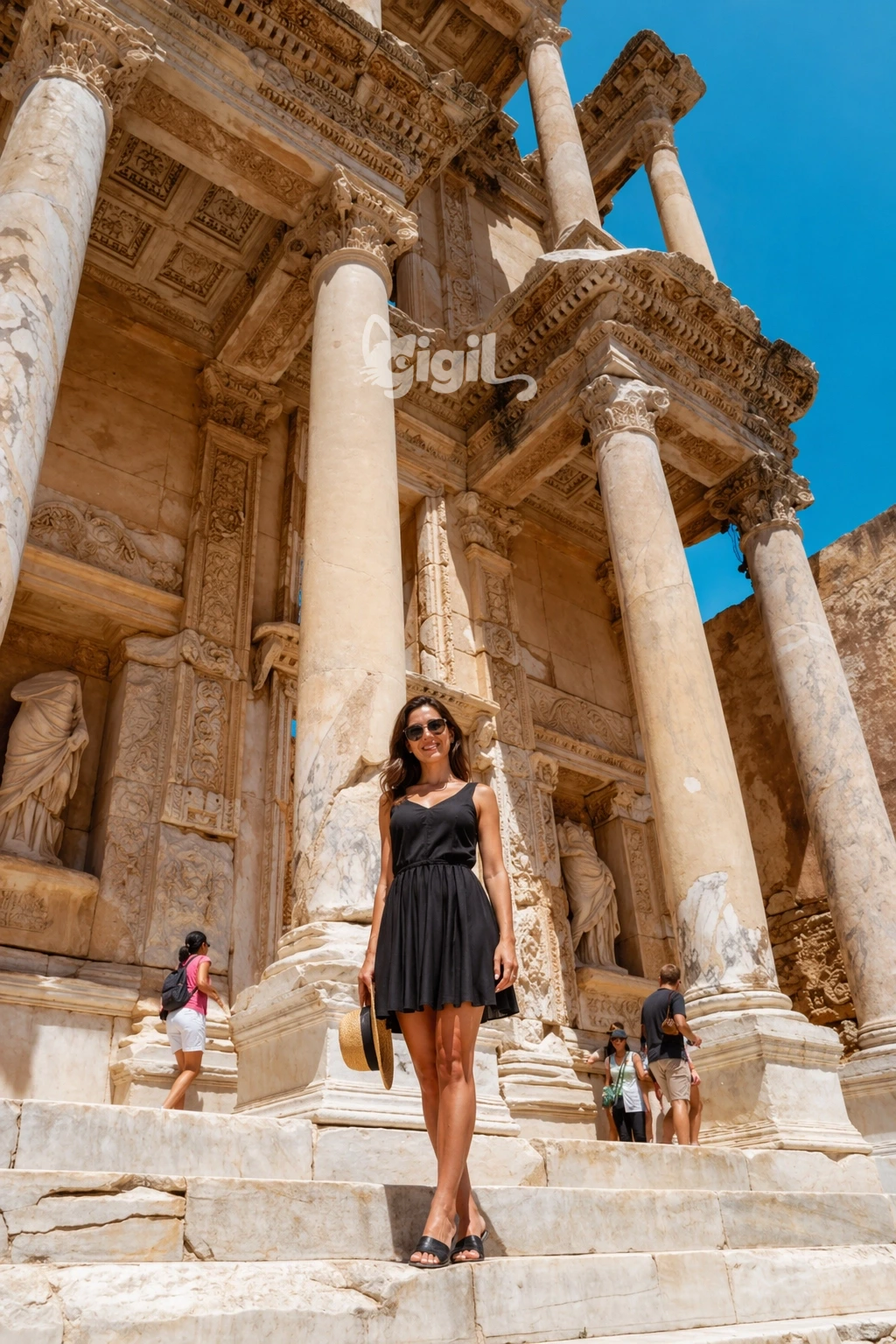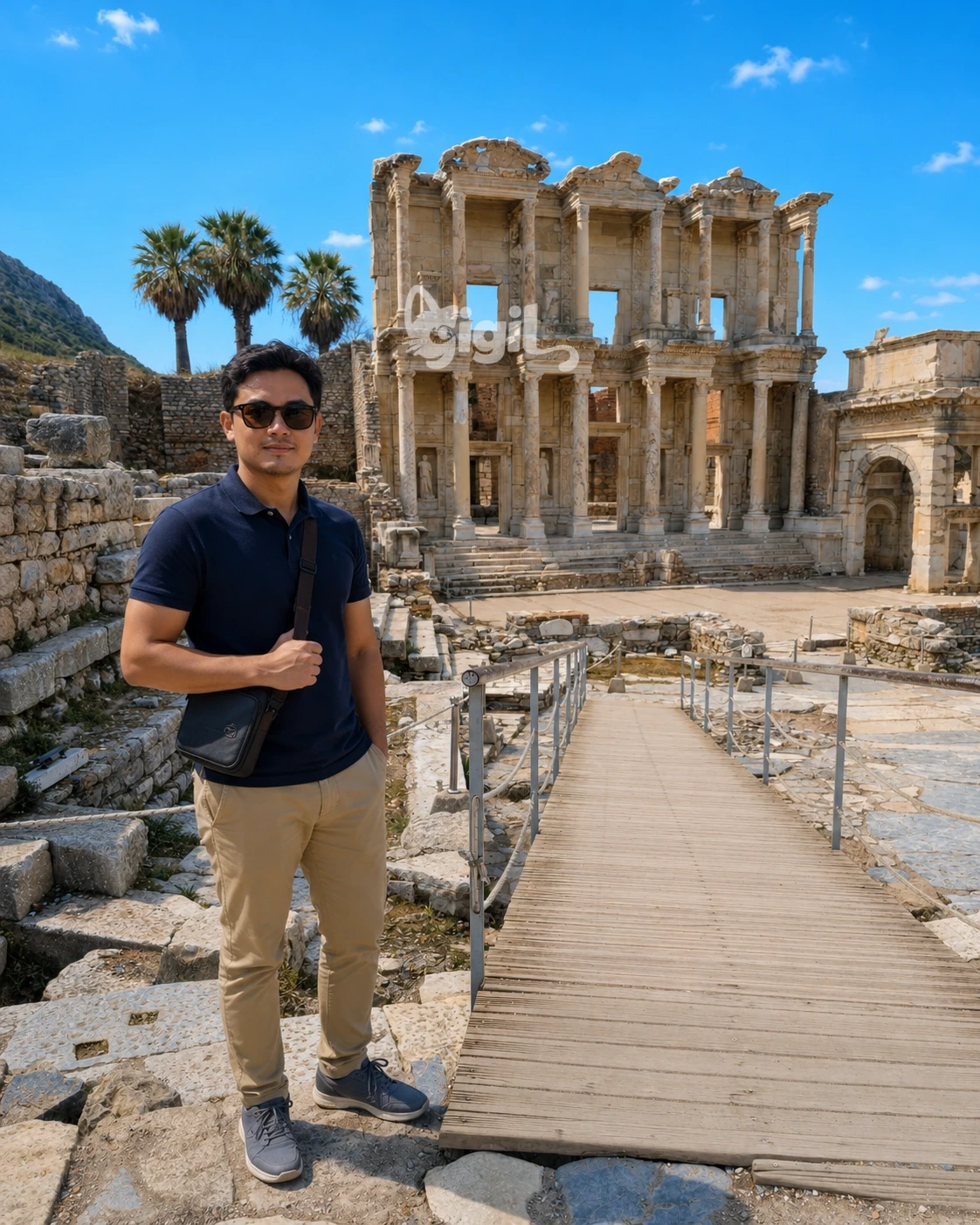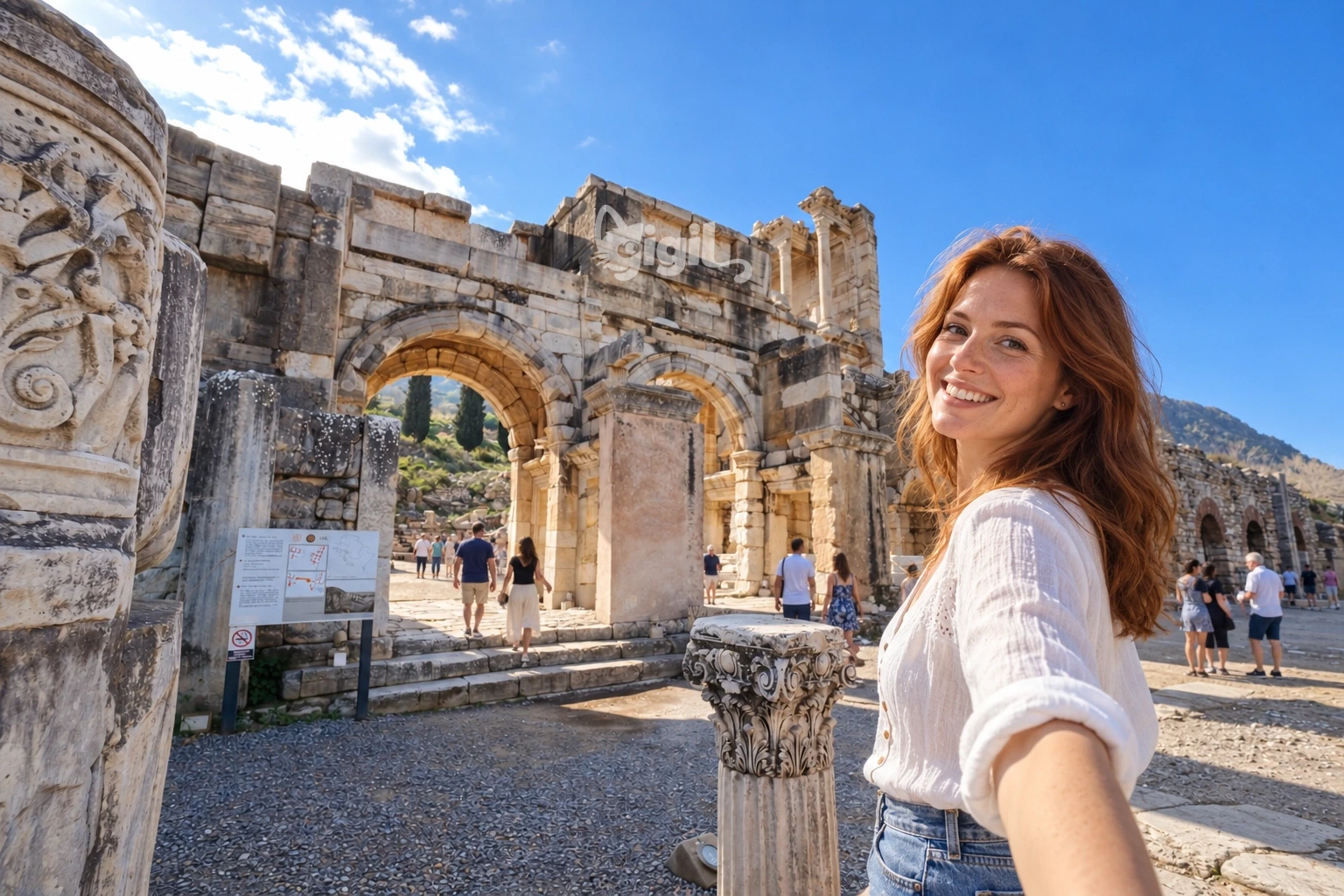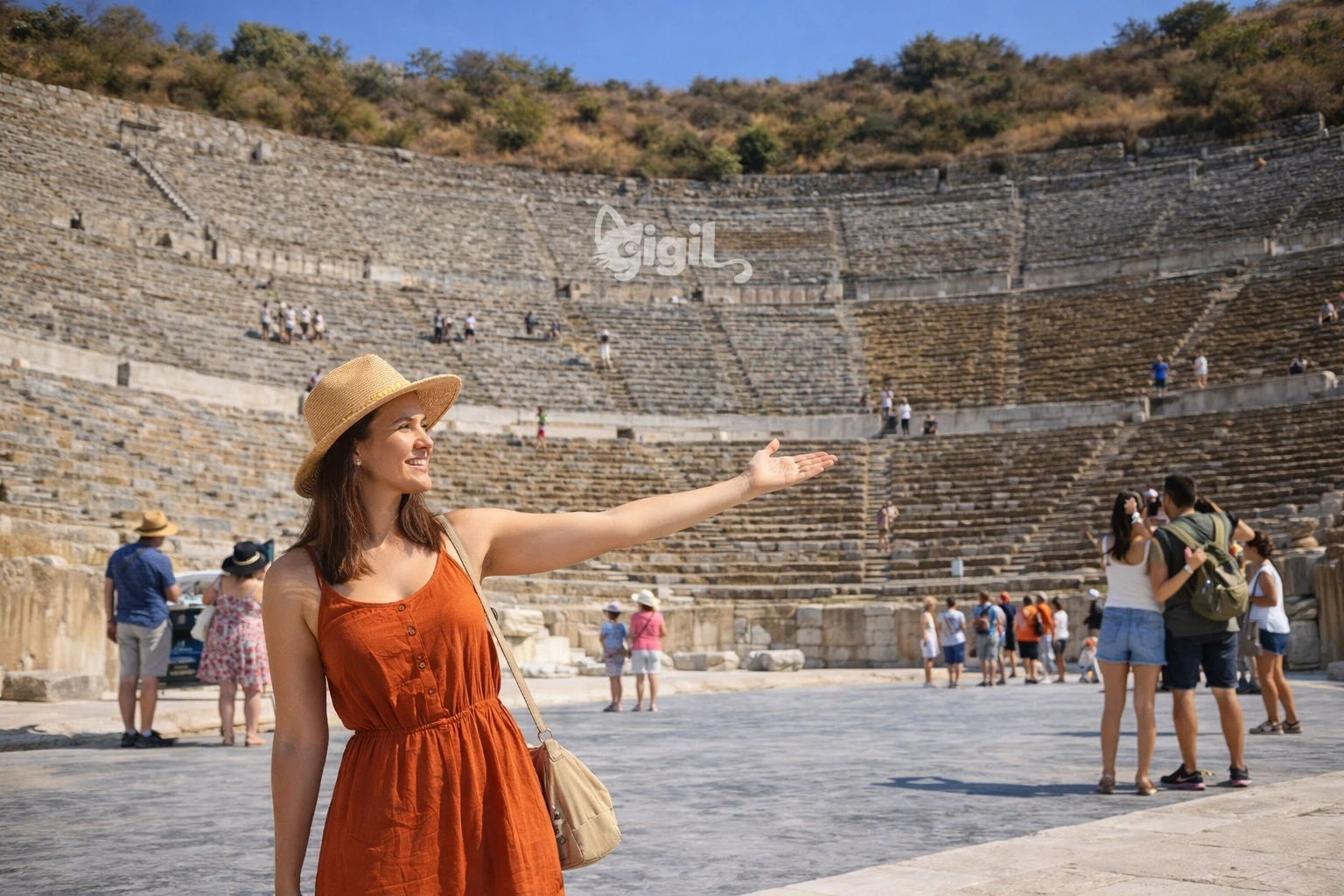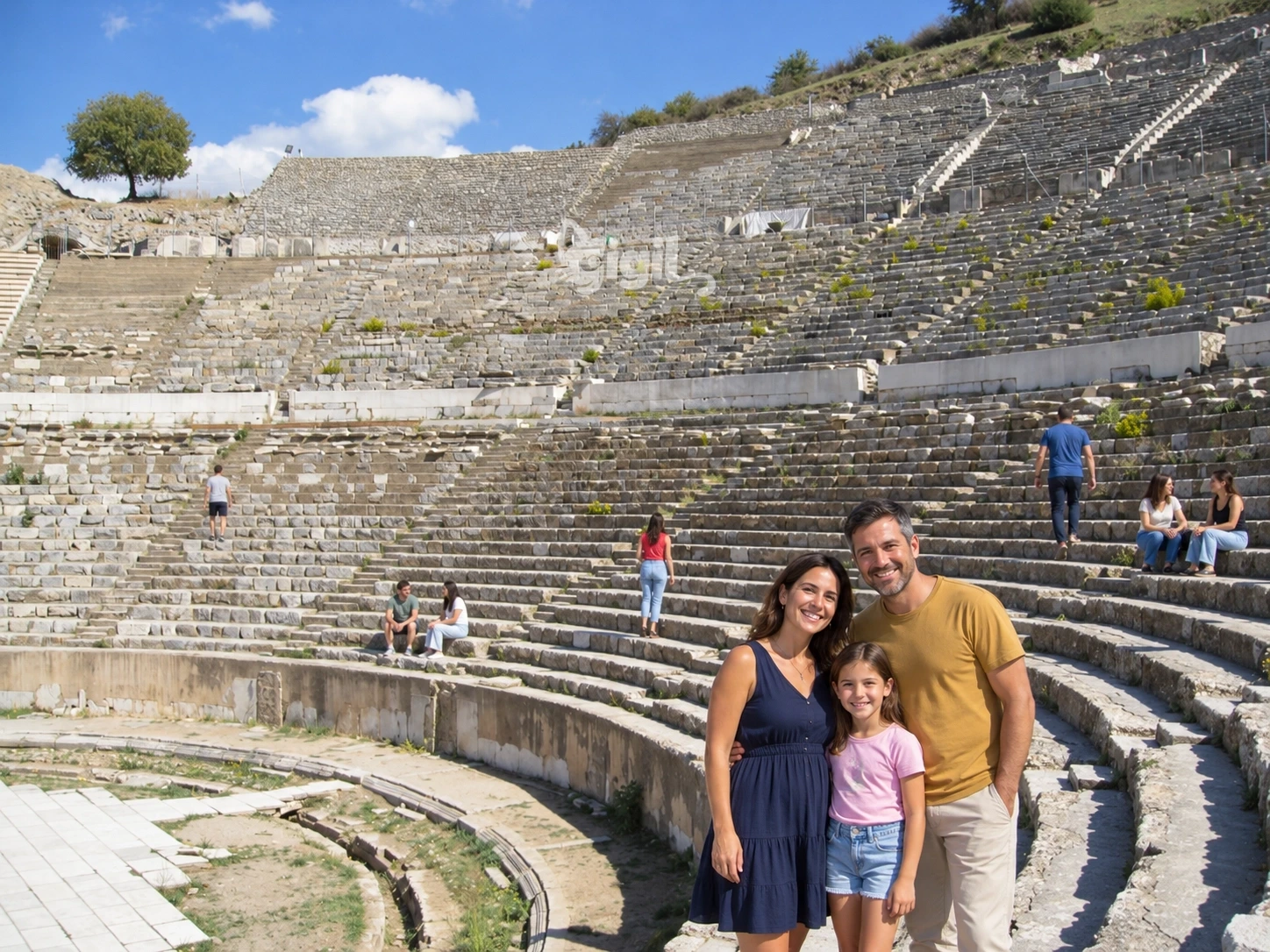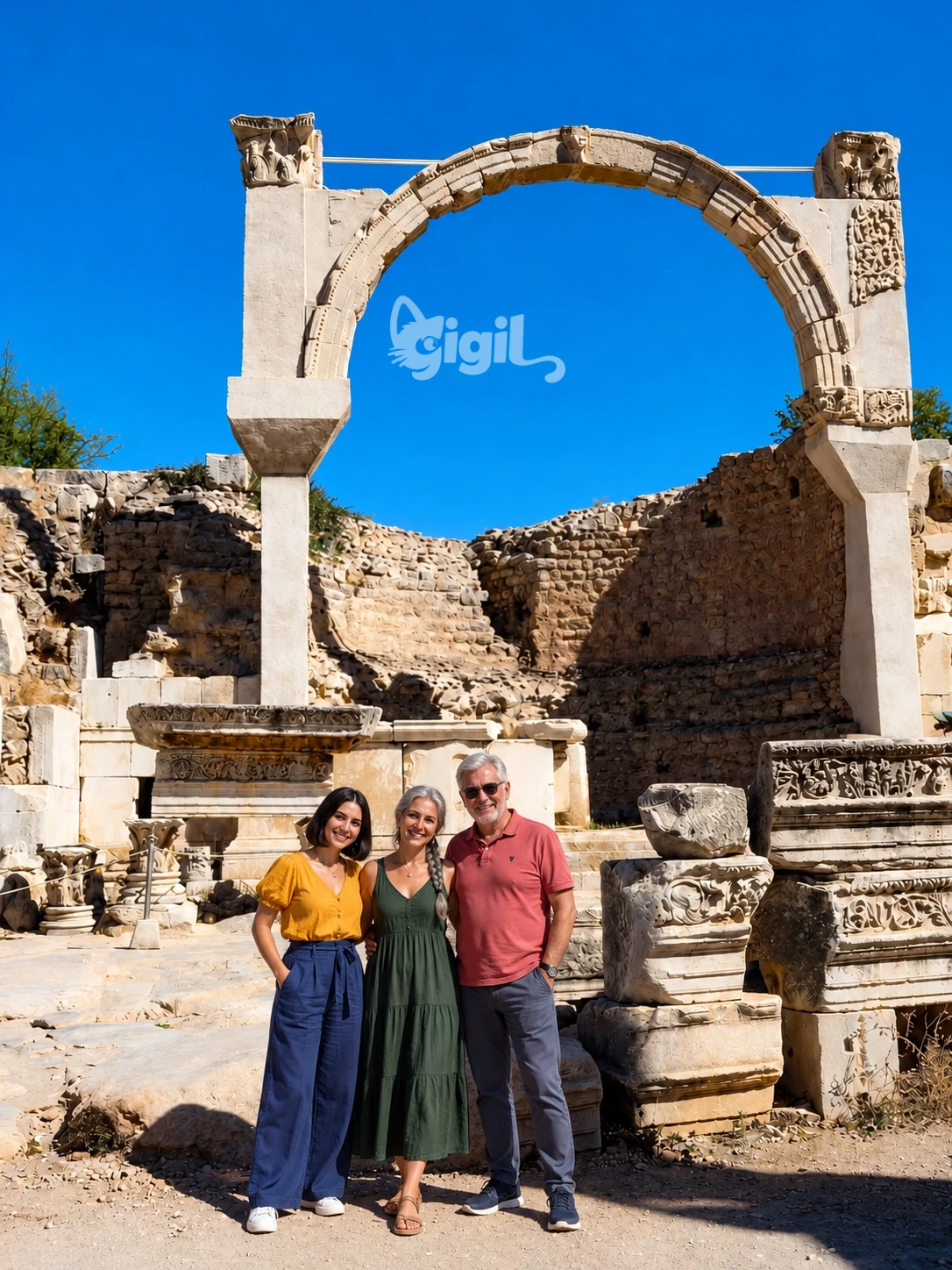








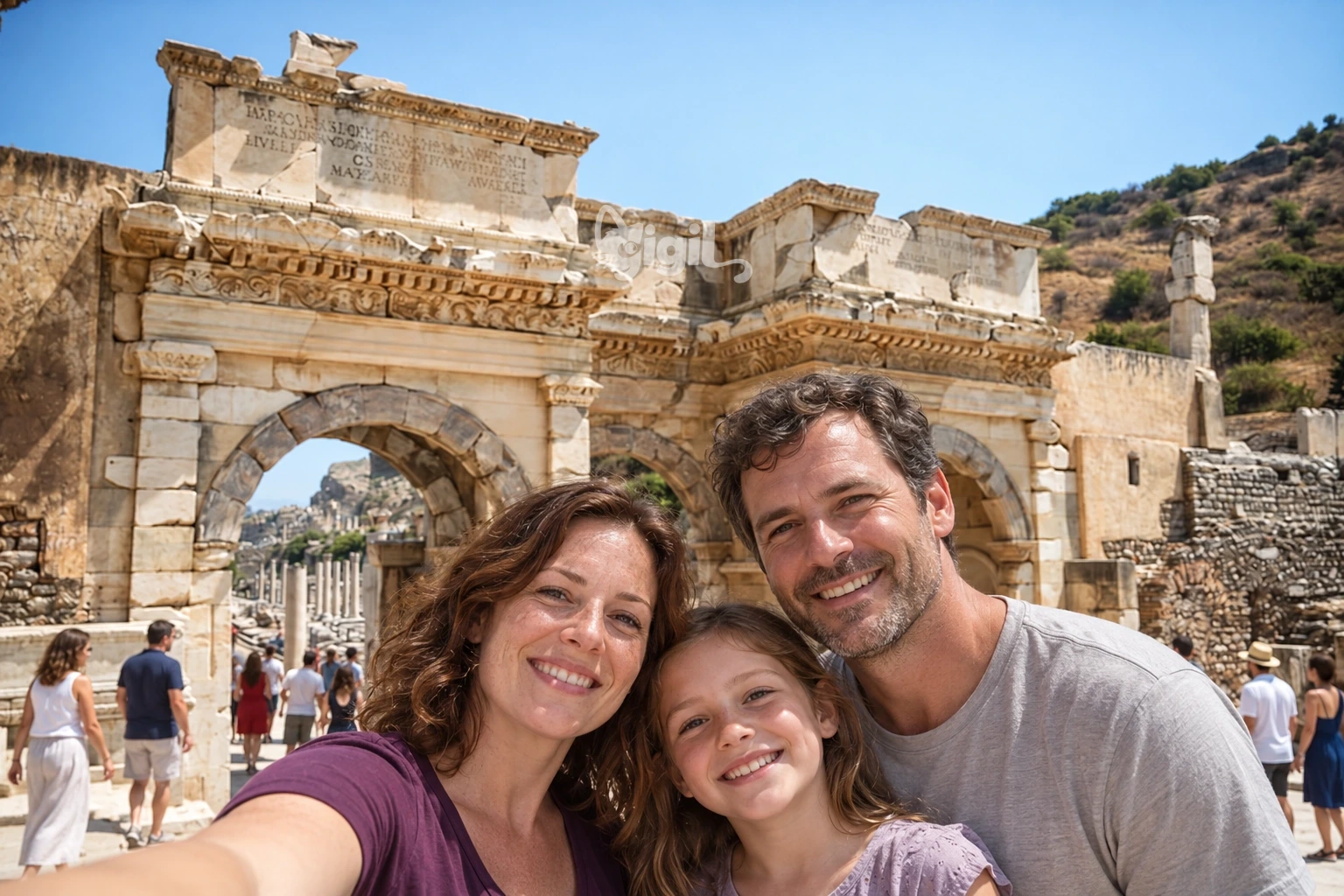
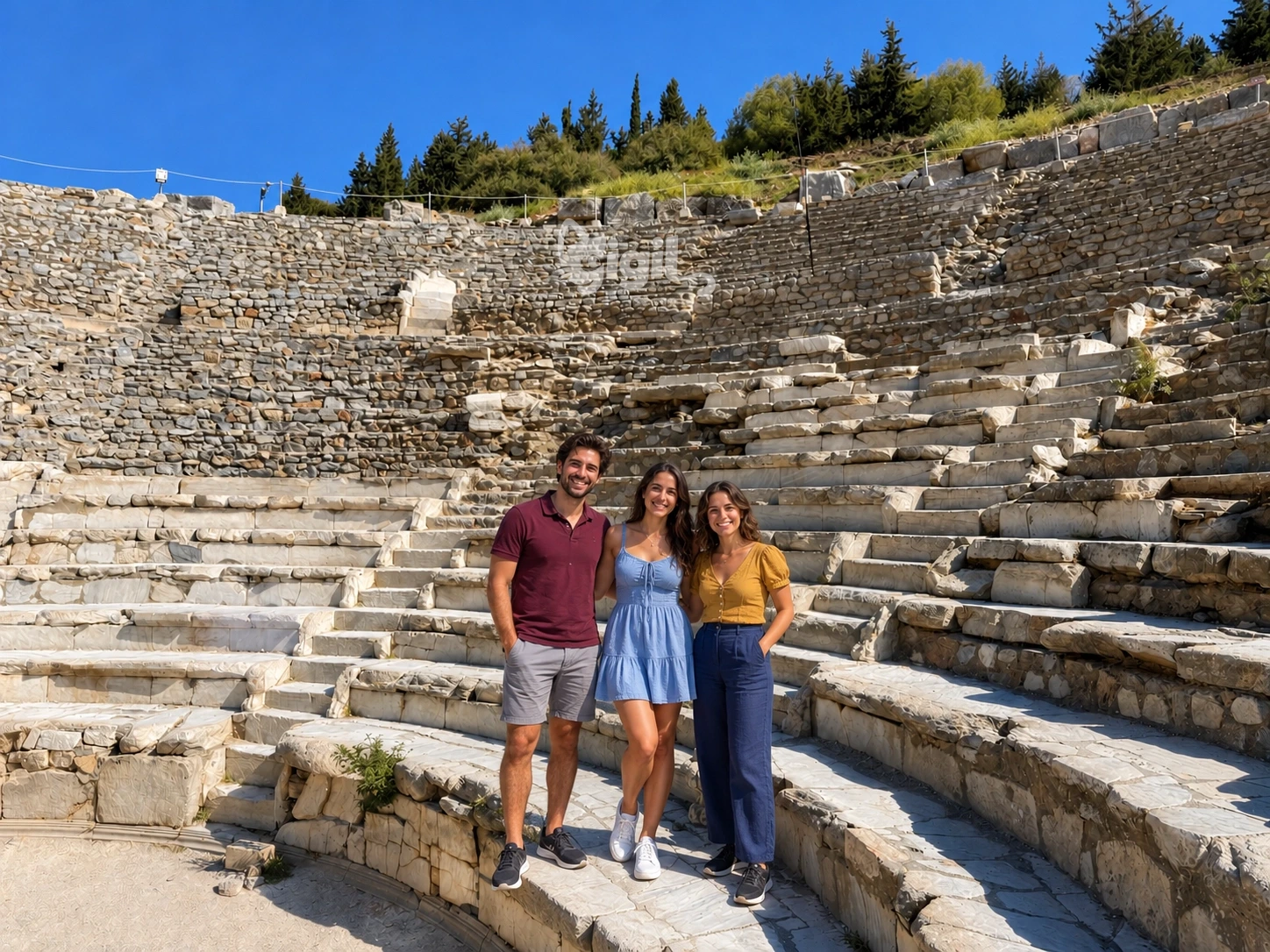
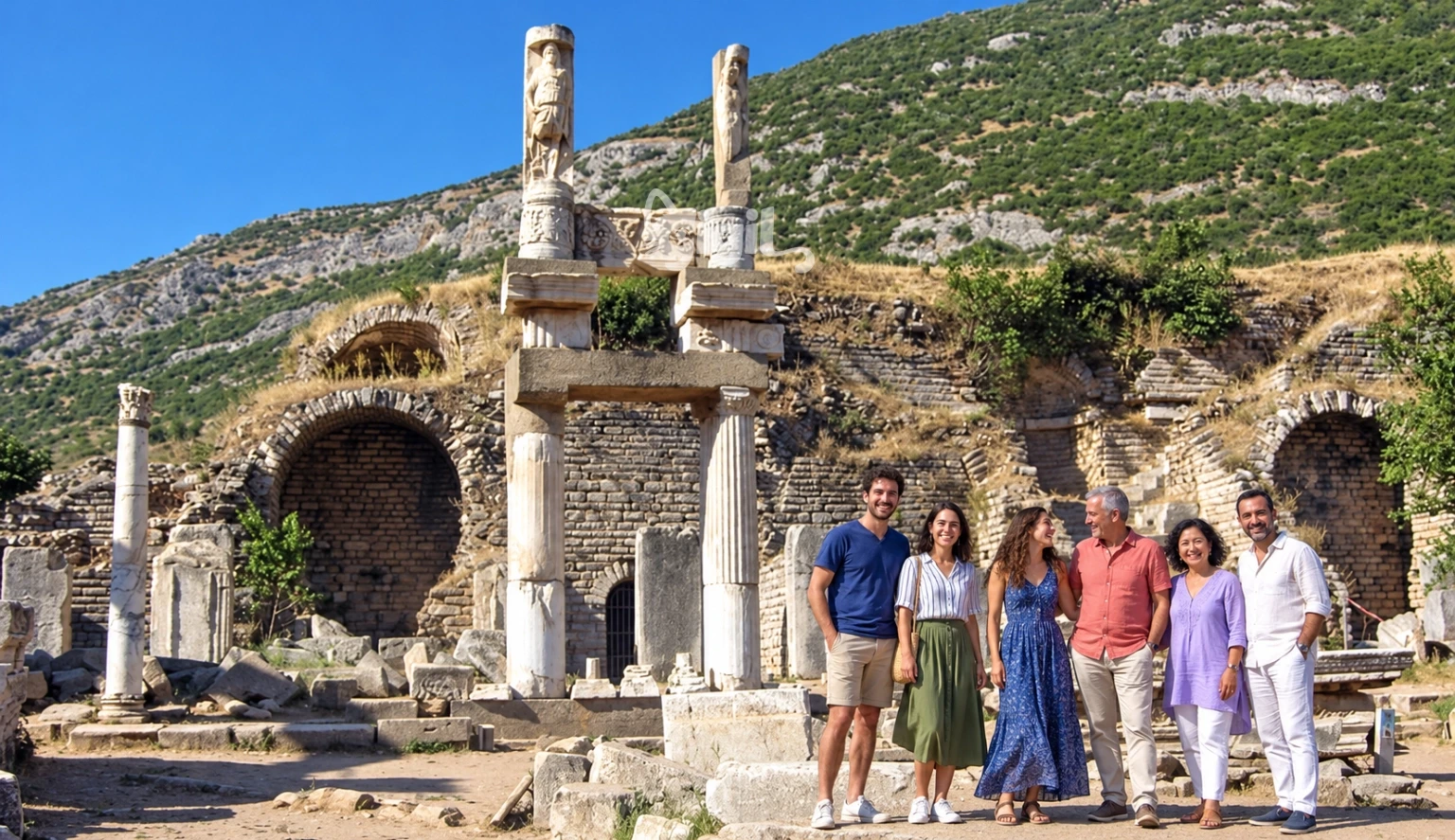
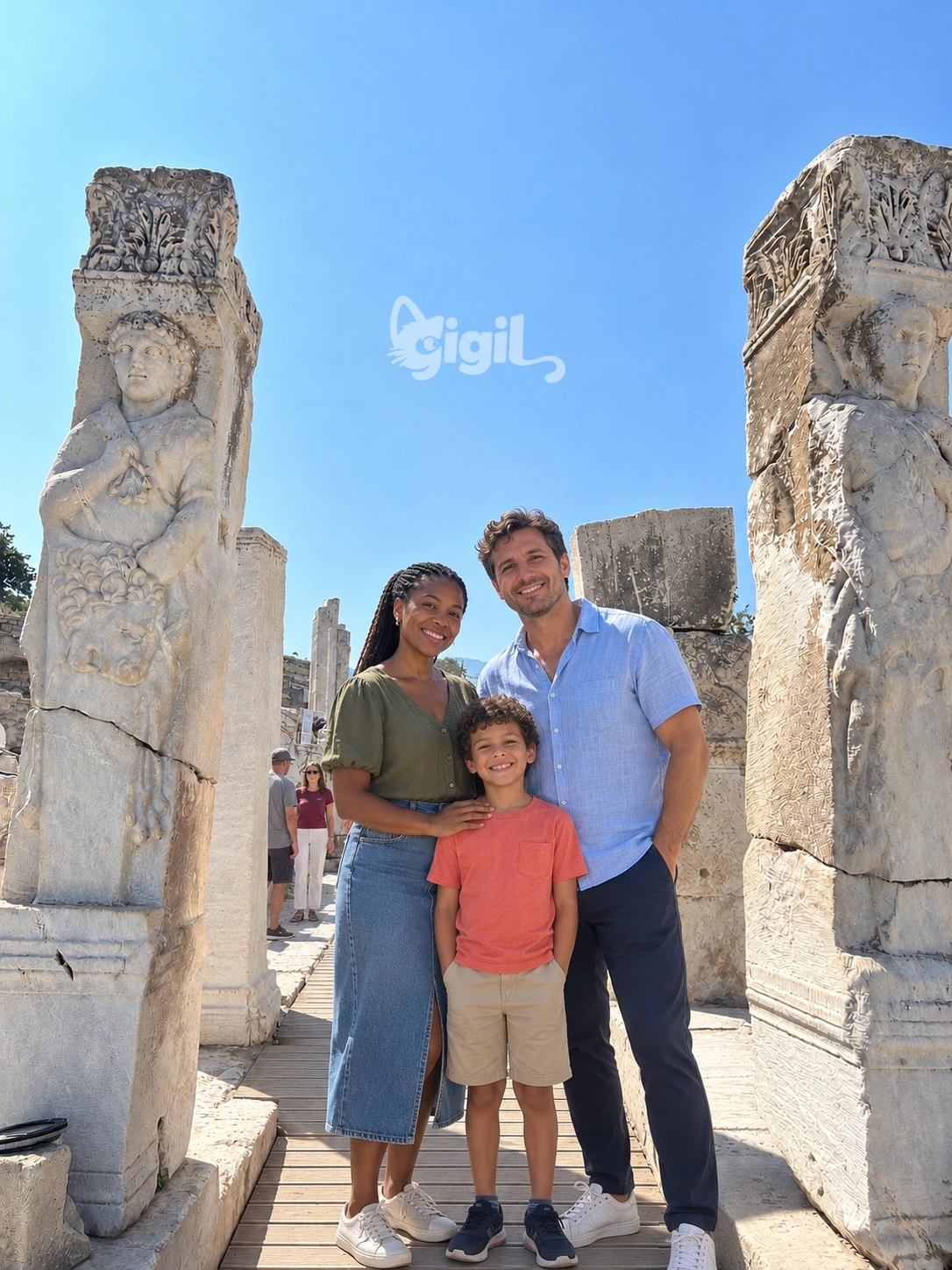
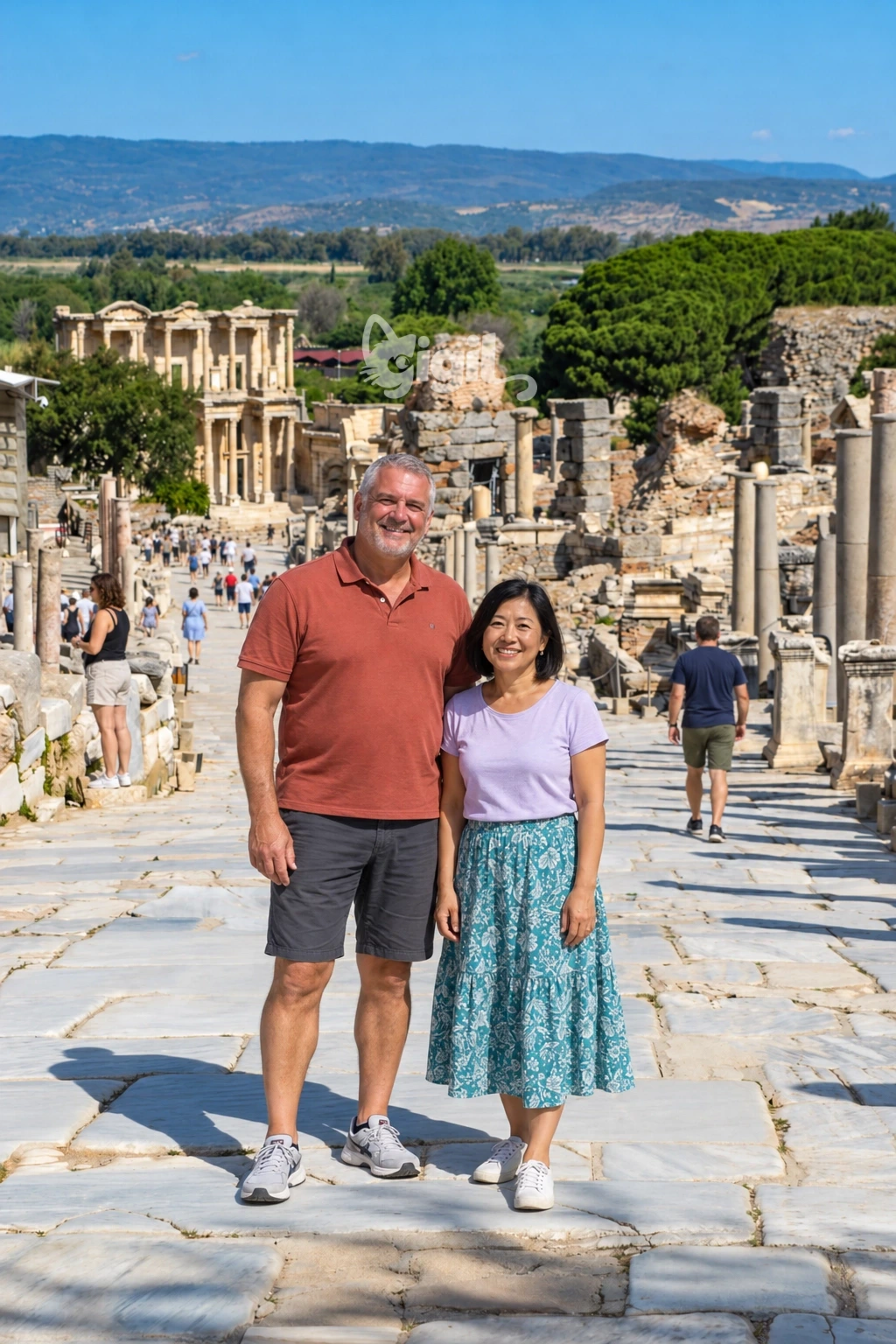
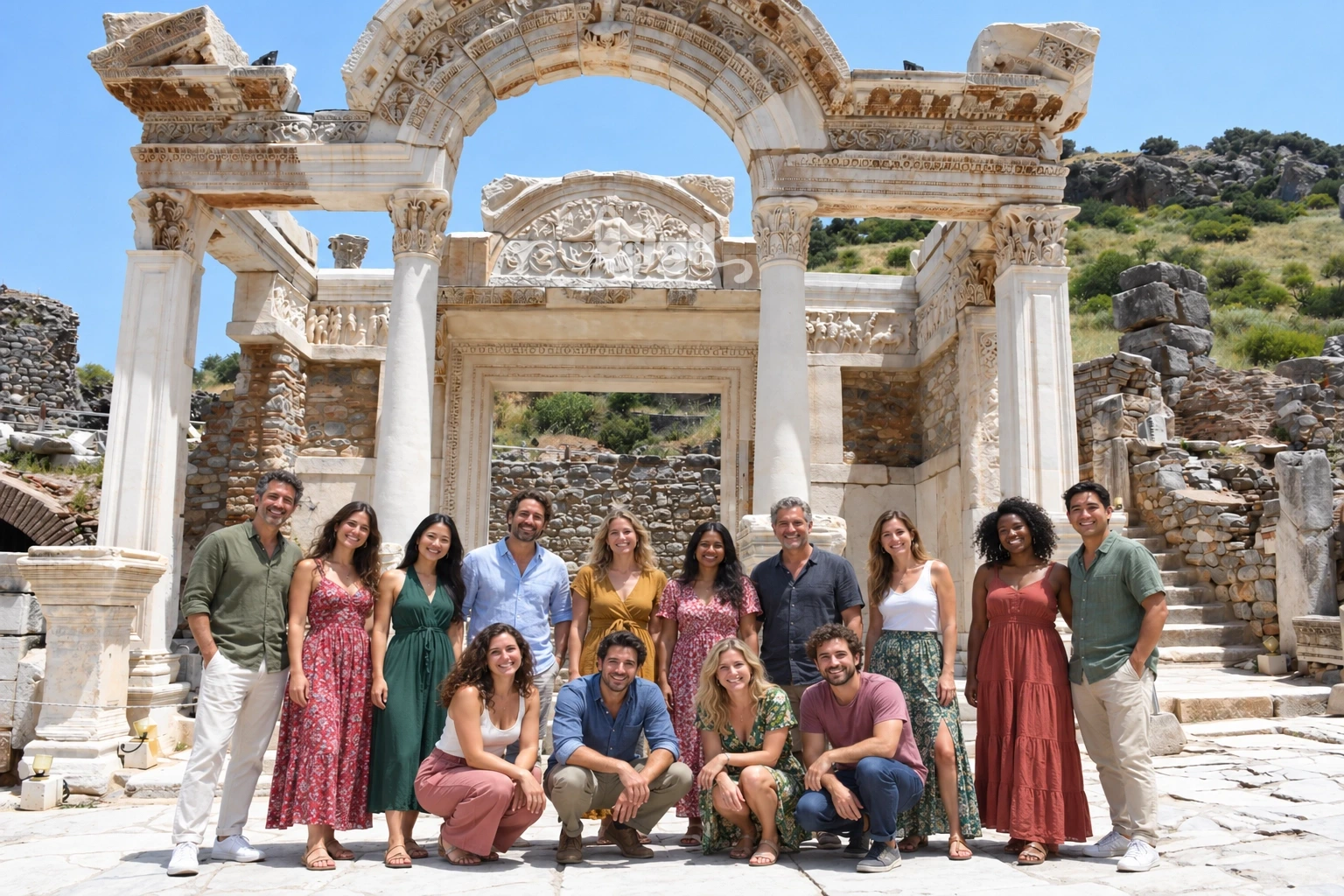

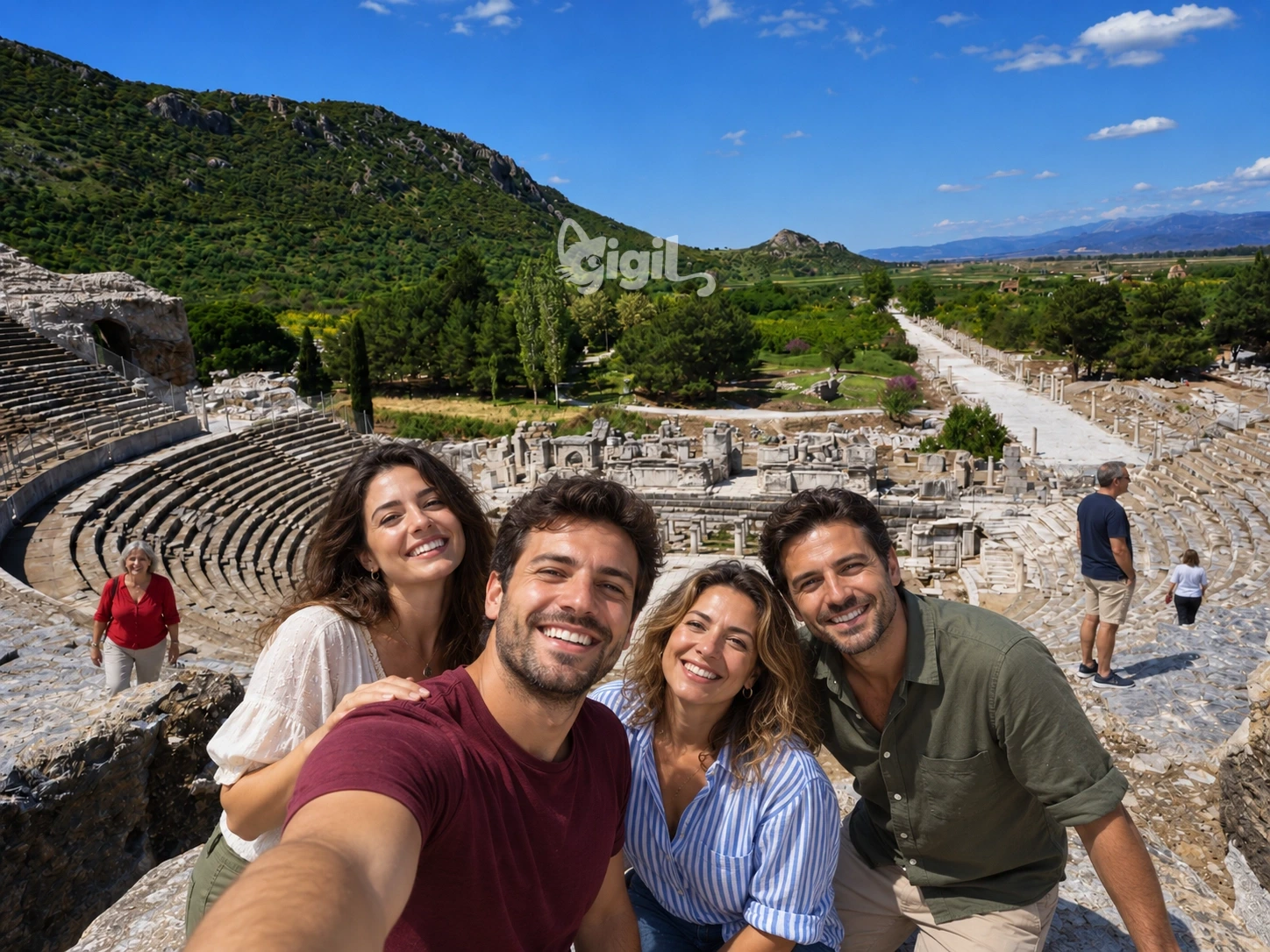
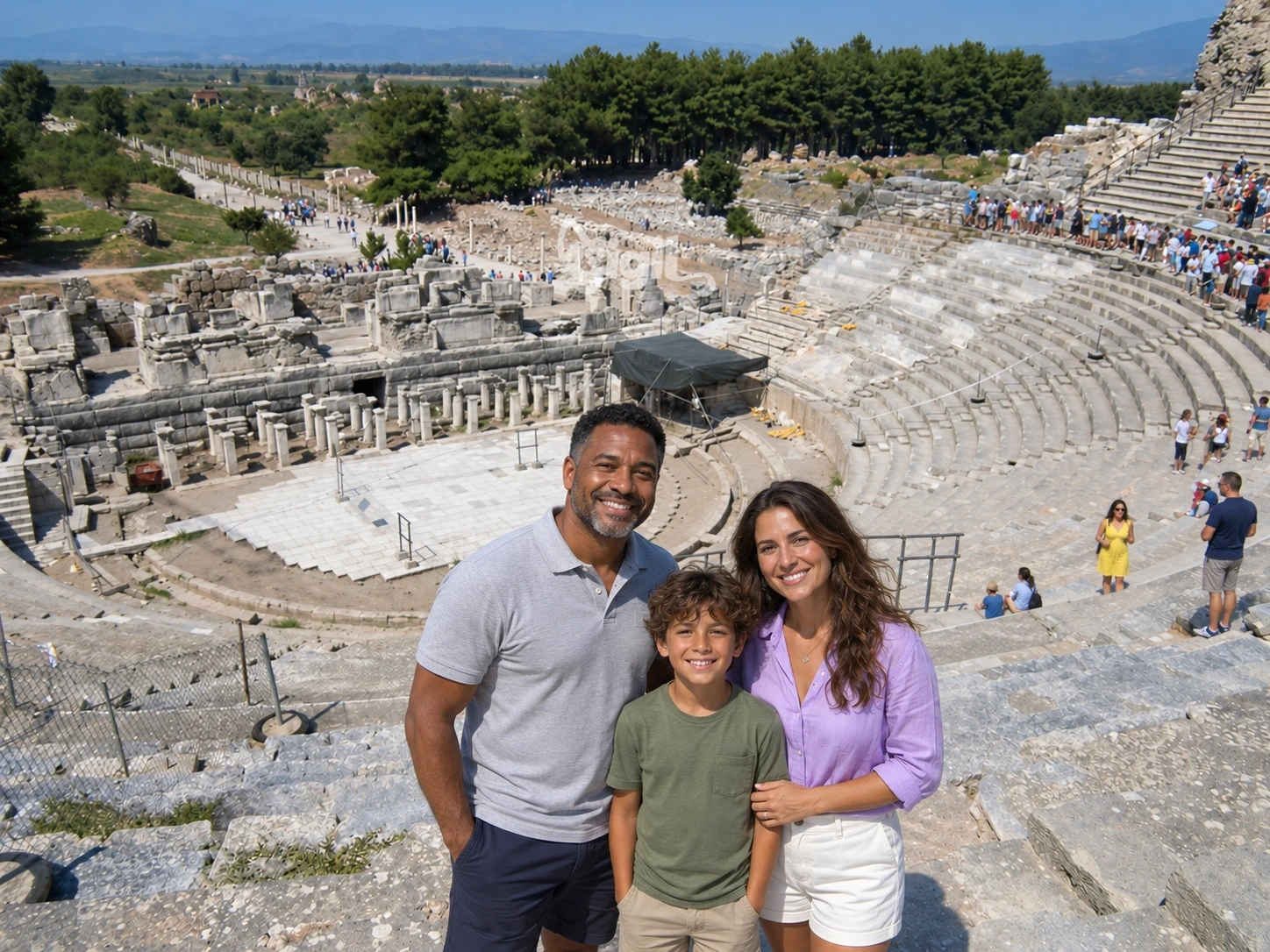
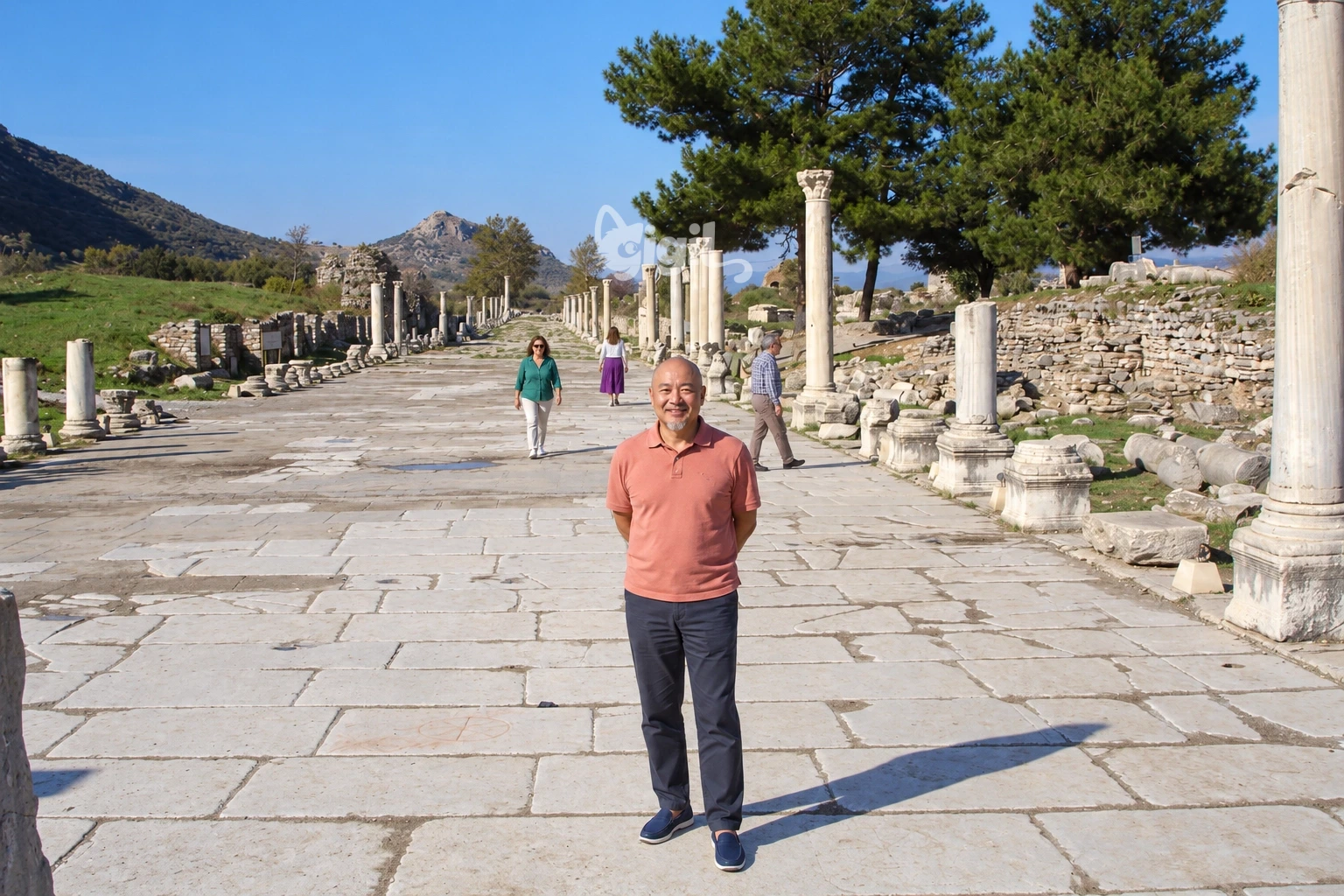
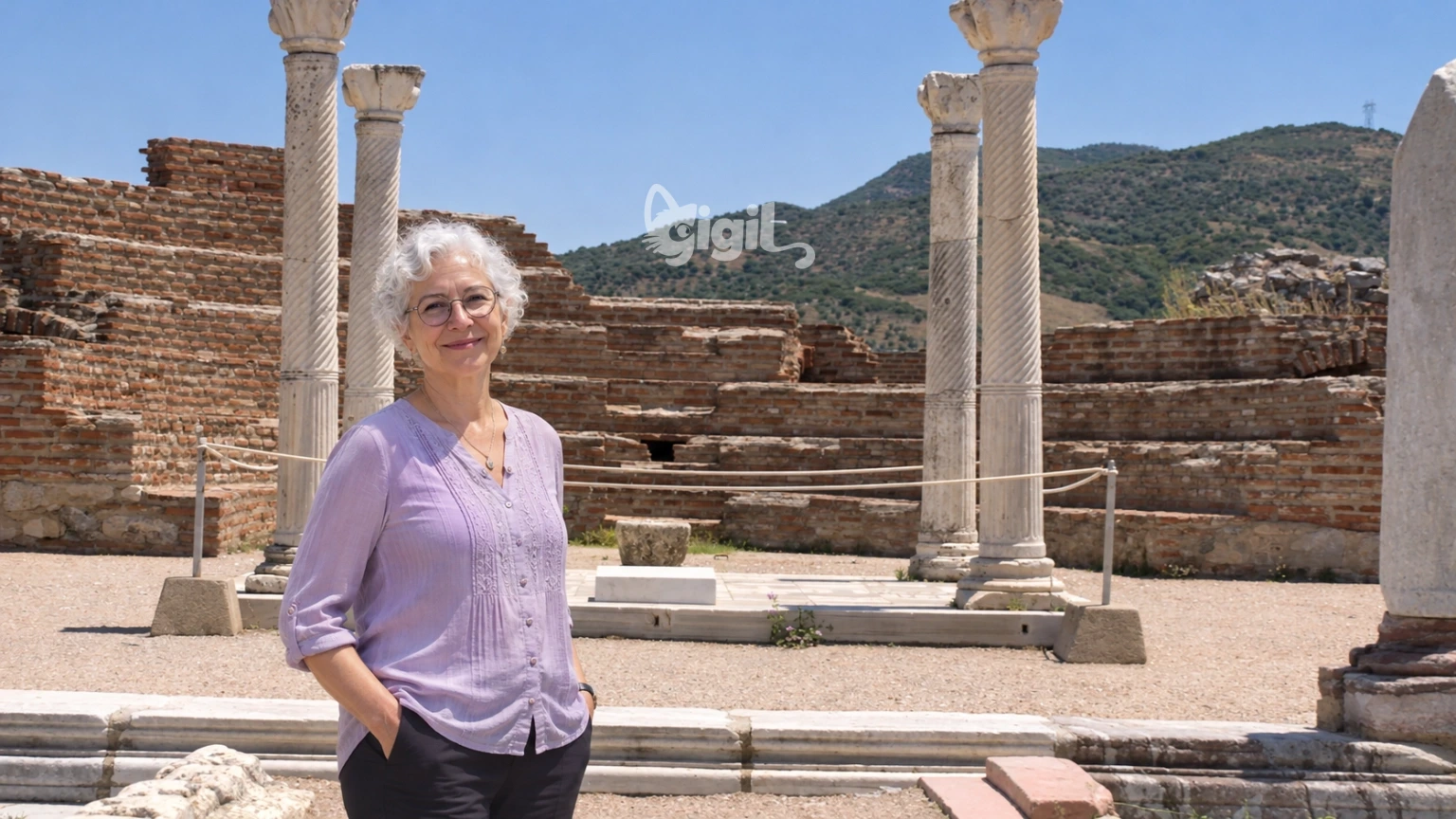
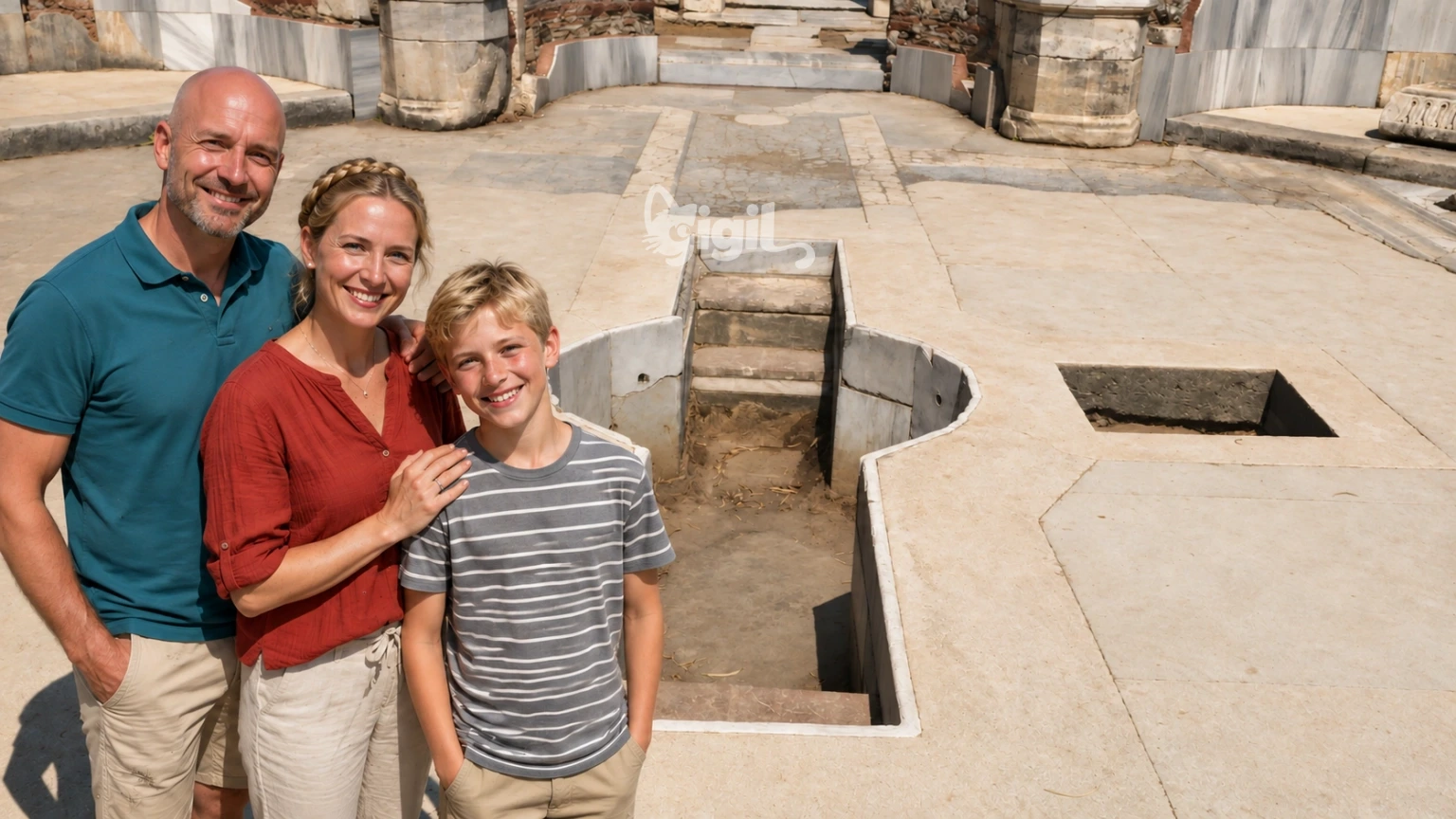
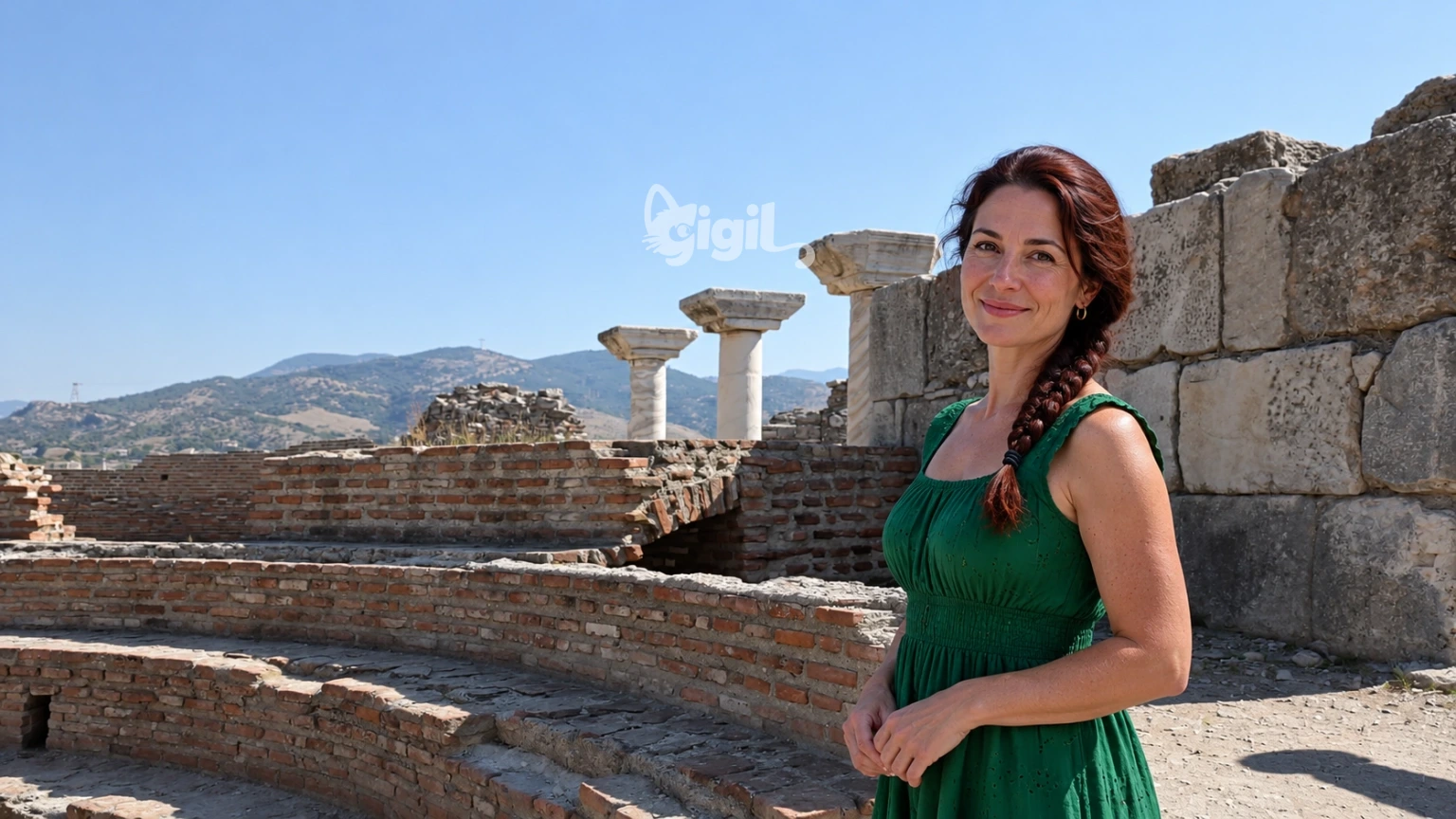
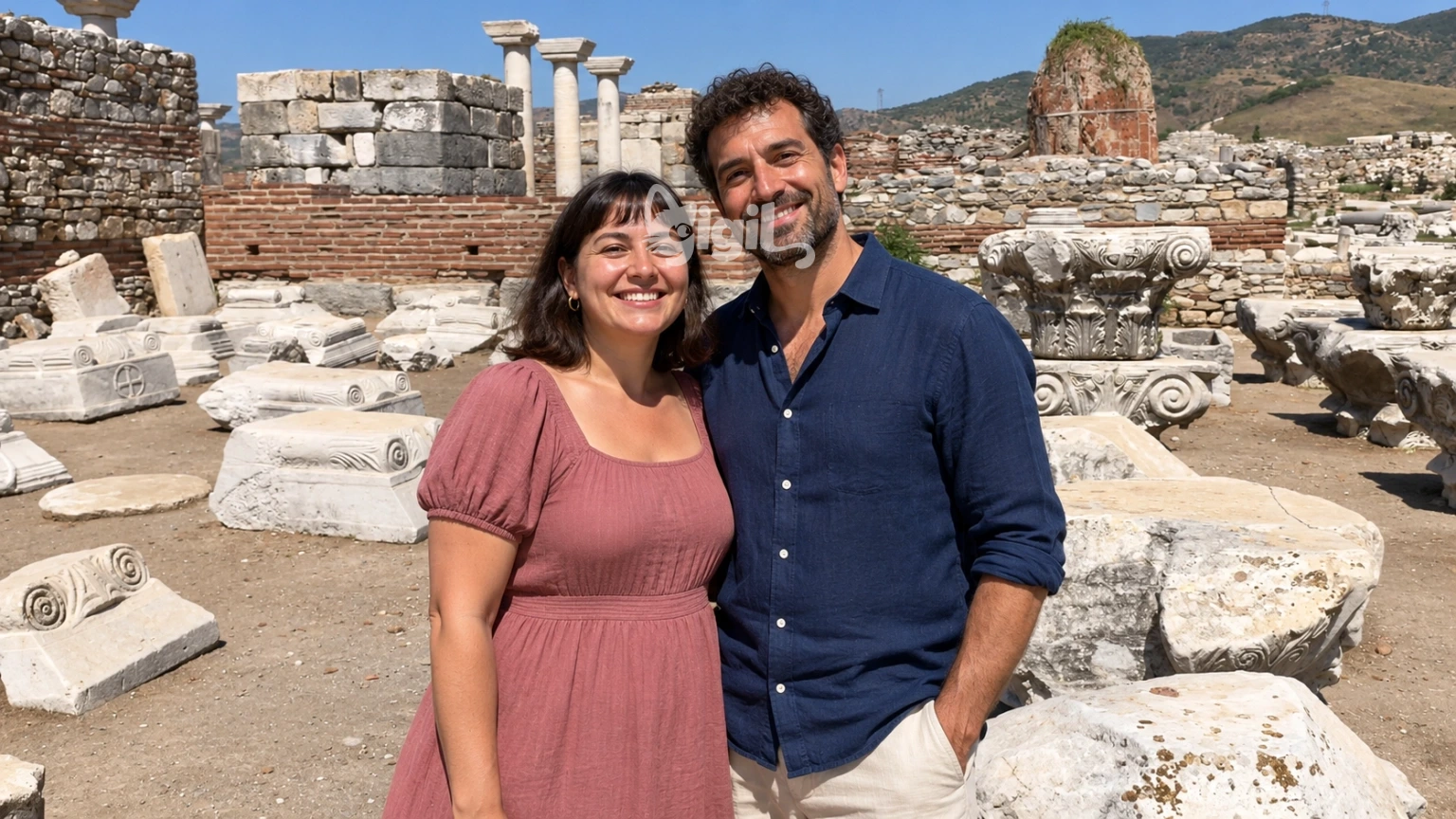

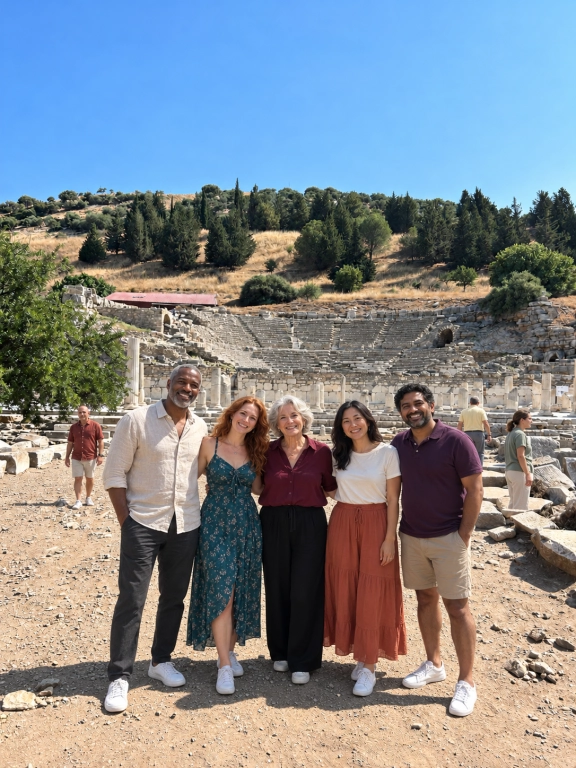
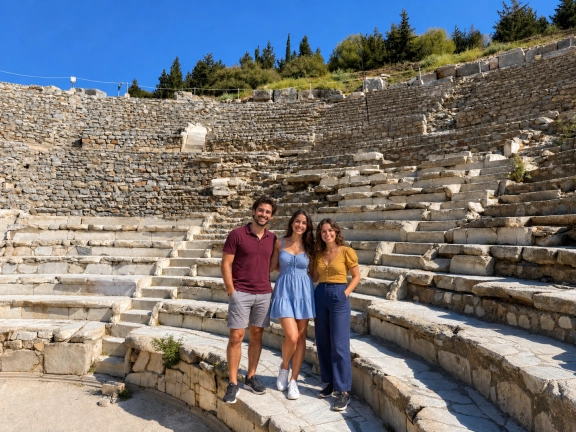
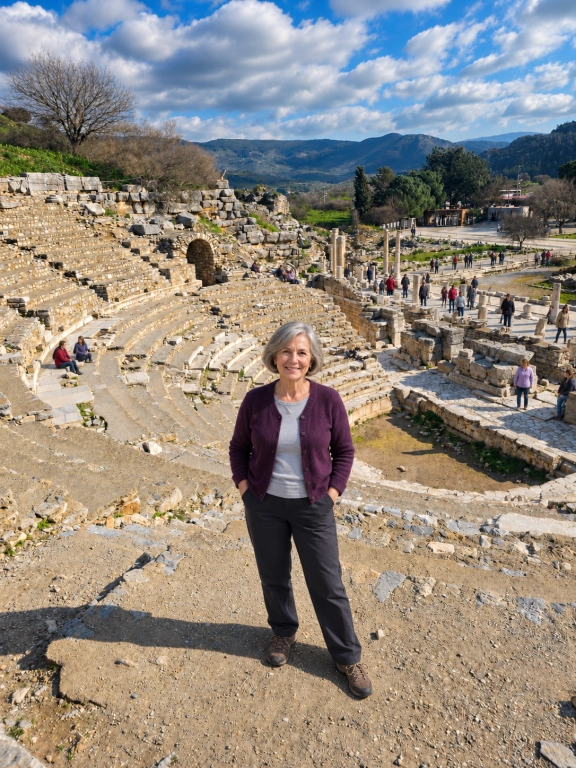
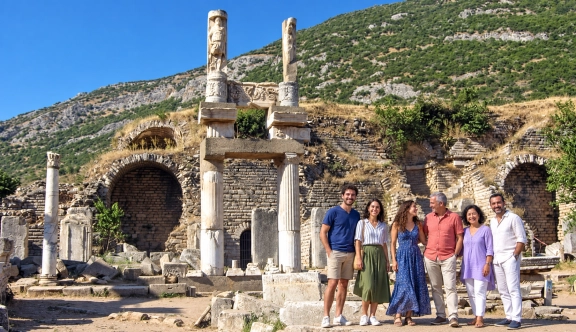
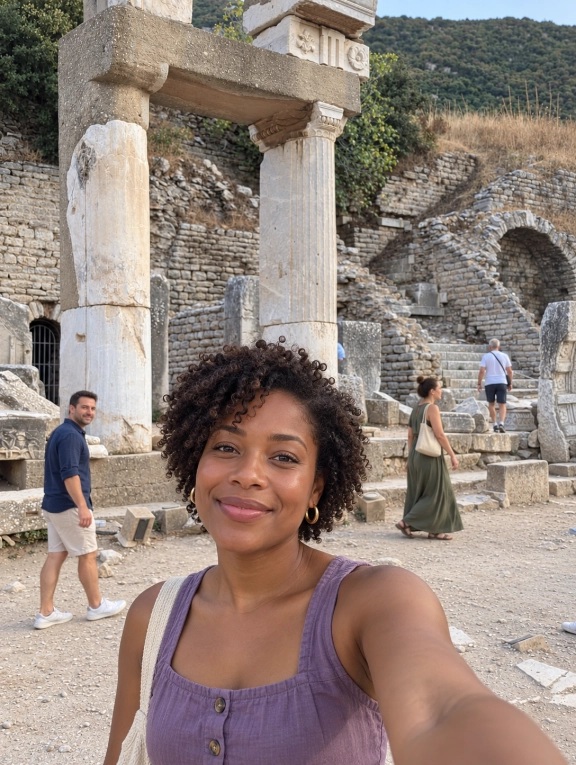
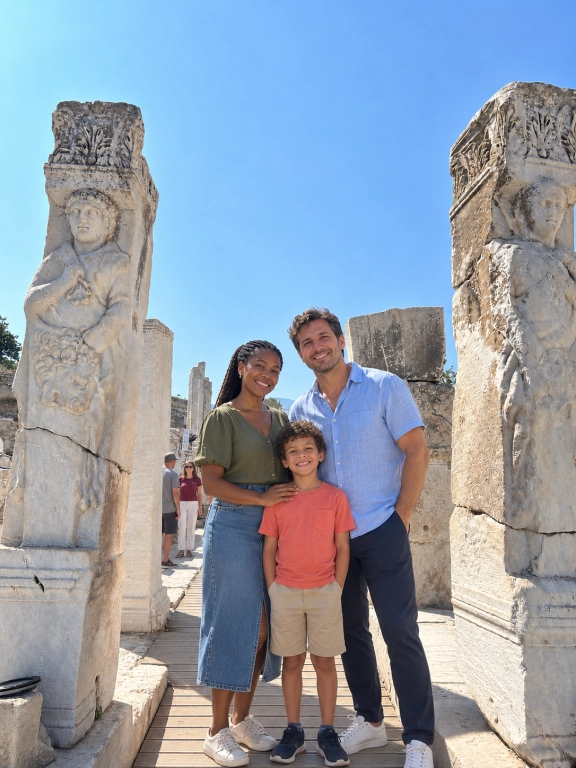
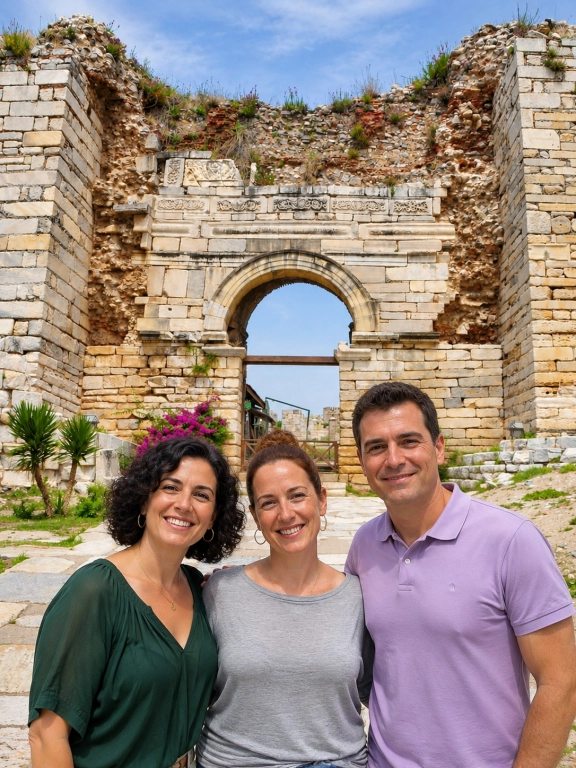
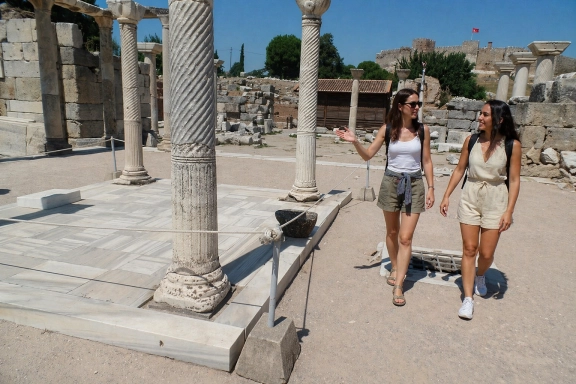
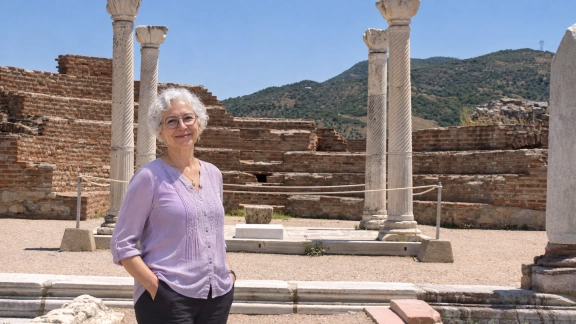
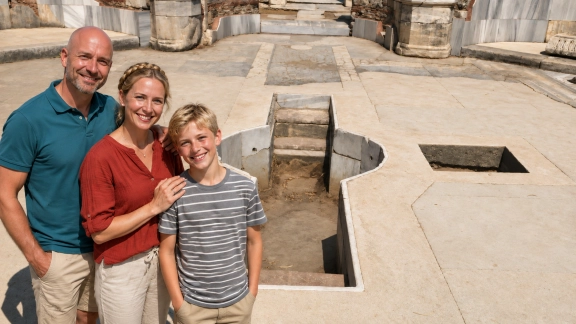
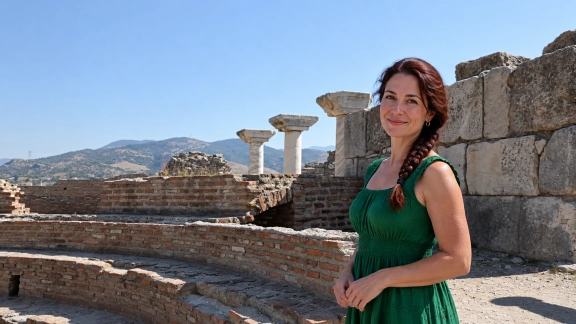
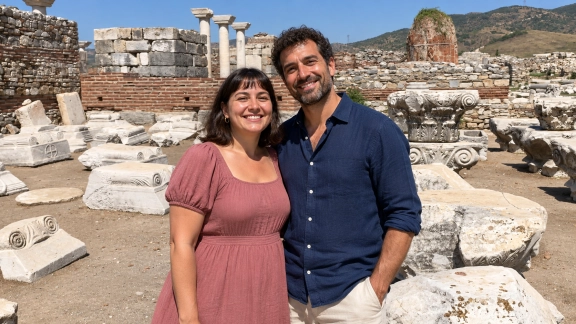
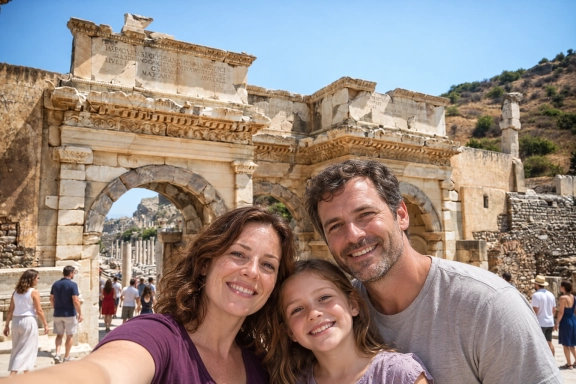

At Ephesus, an ancient street can be as informative as a monumental facade. It shows how the Library of Celsus, other public areas and the Great Theatre related to the movement of people through the city.
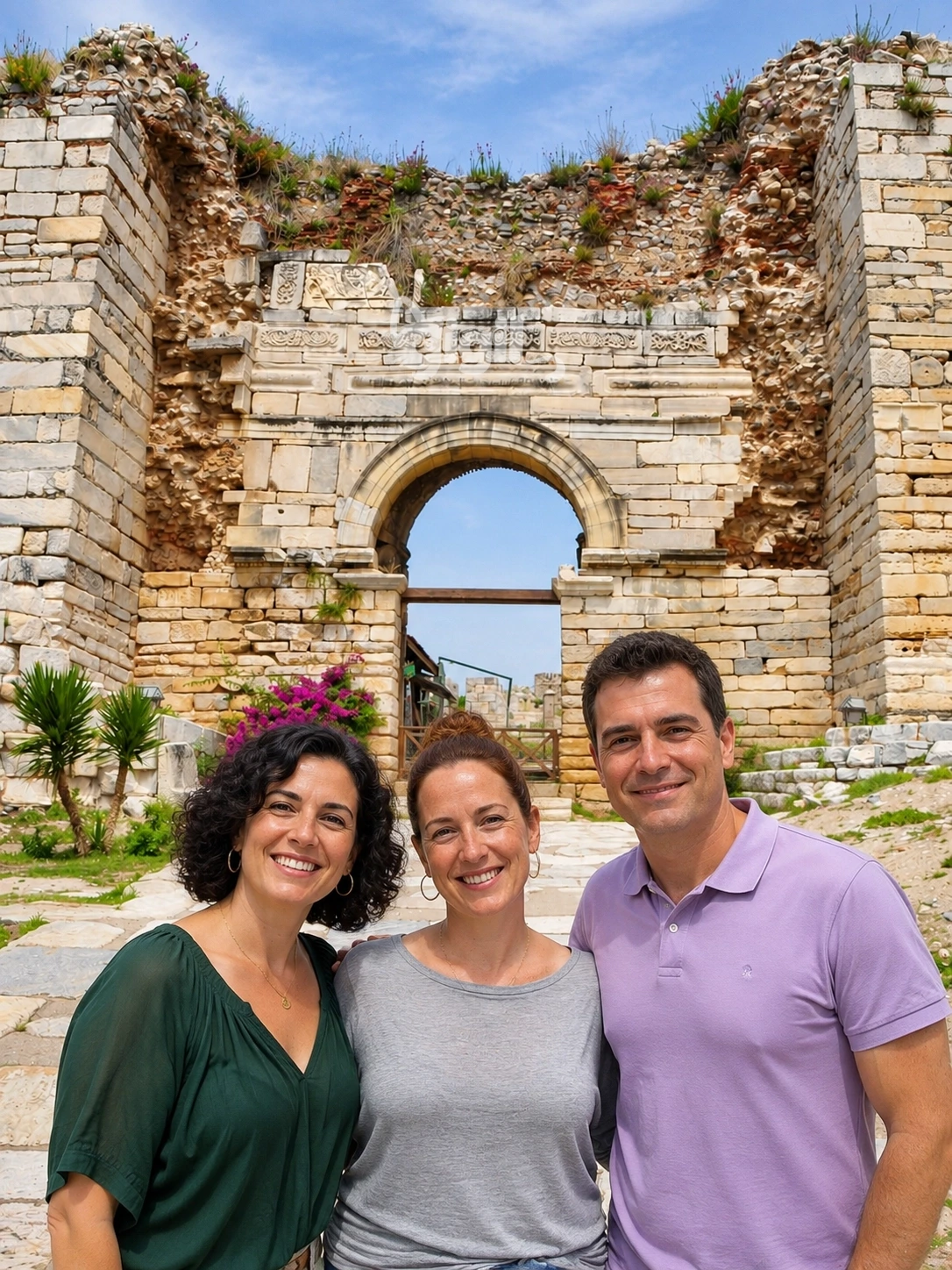
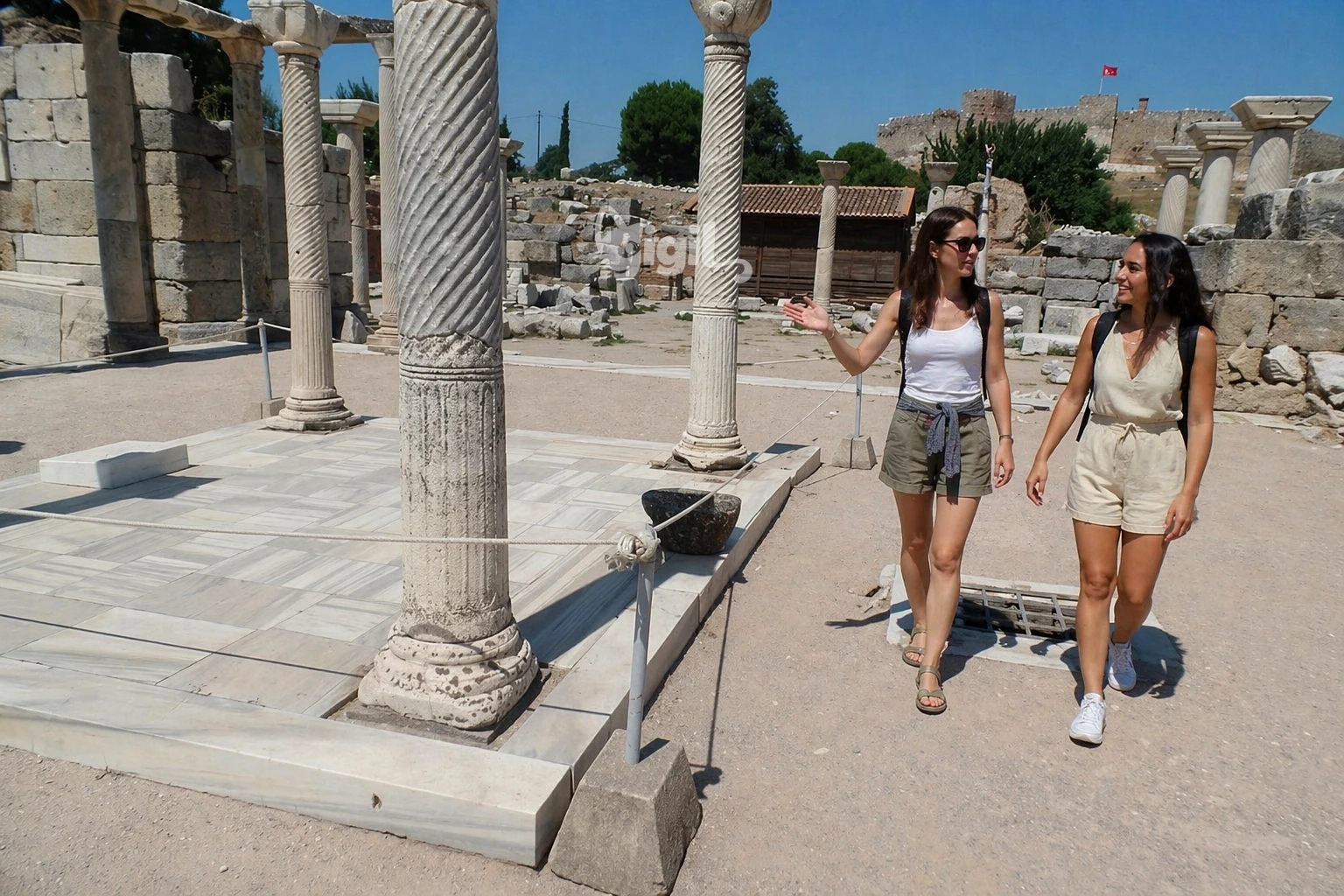
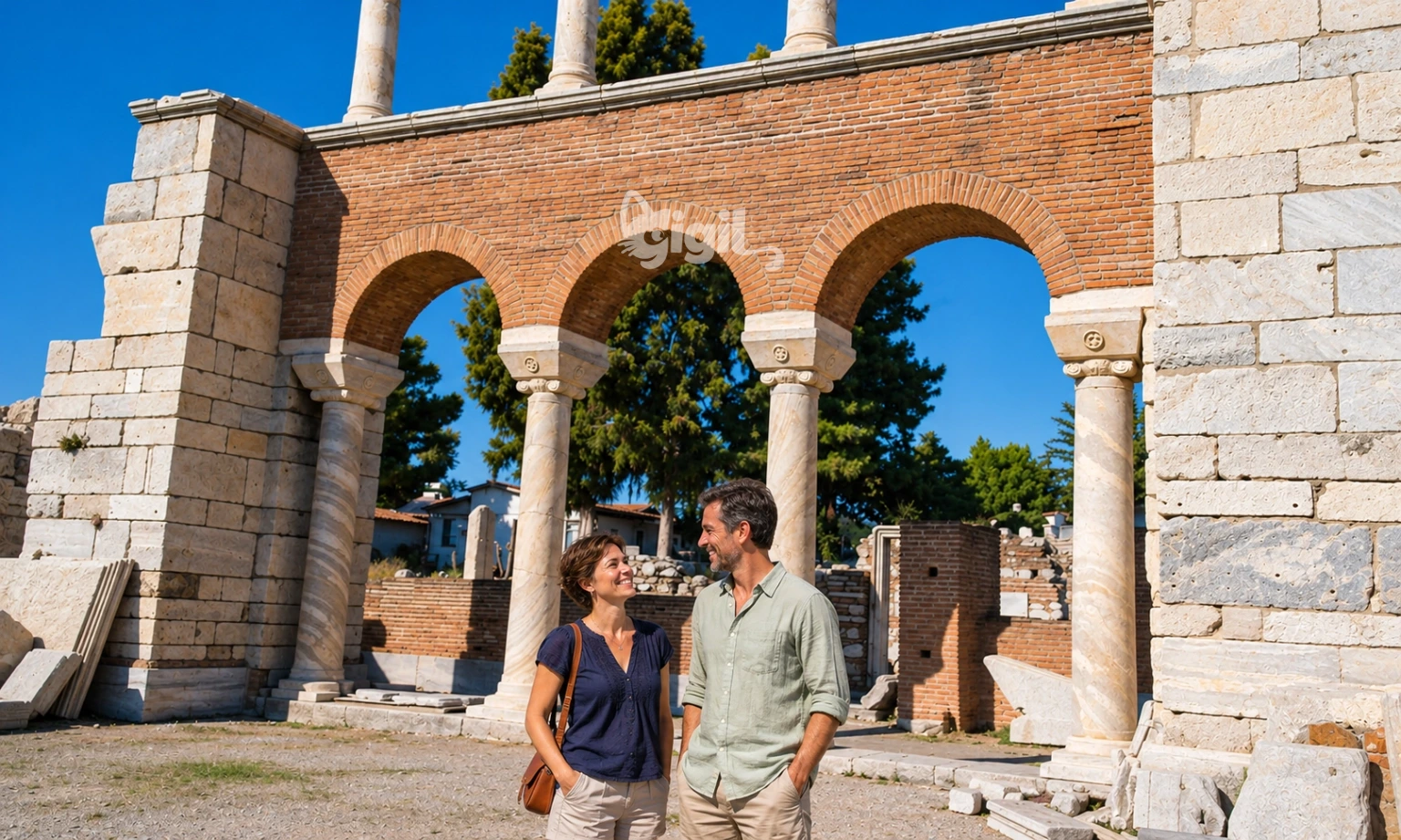
Begin with those relationships before concentrating on decoration. A column, an opening or a surviving foundation gains meaning from its position, and reconstructed elements should be read alongside the more fragmentary remains around them.
Questions
Why begin with relationships rather than decoration?
The urban layout helps explain a building's function and setting before you focus on its individual details.
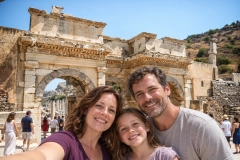
What can the library's facade show?
Its reassembled architecture suggests monumental design, while the missing building behind it limits how complete the picture is.
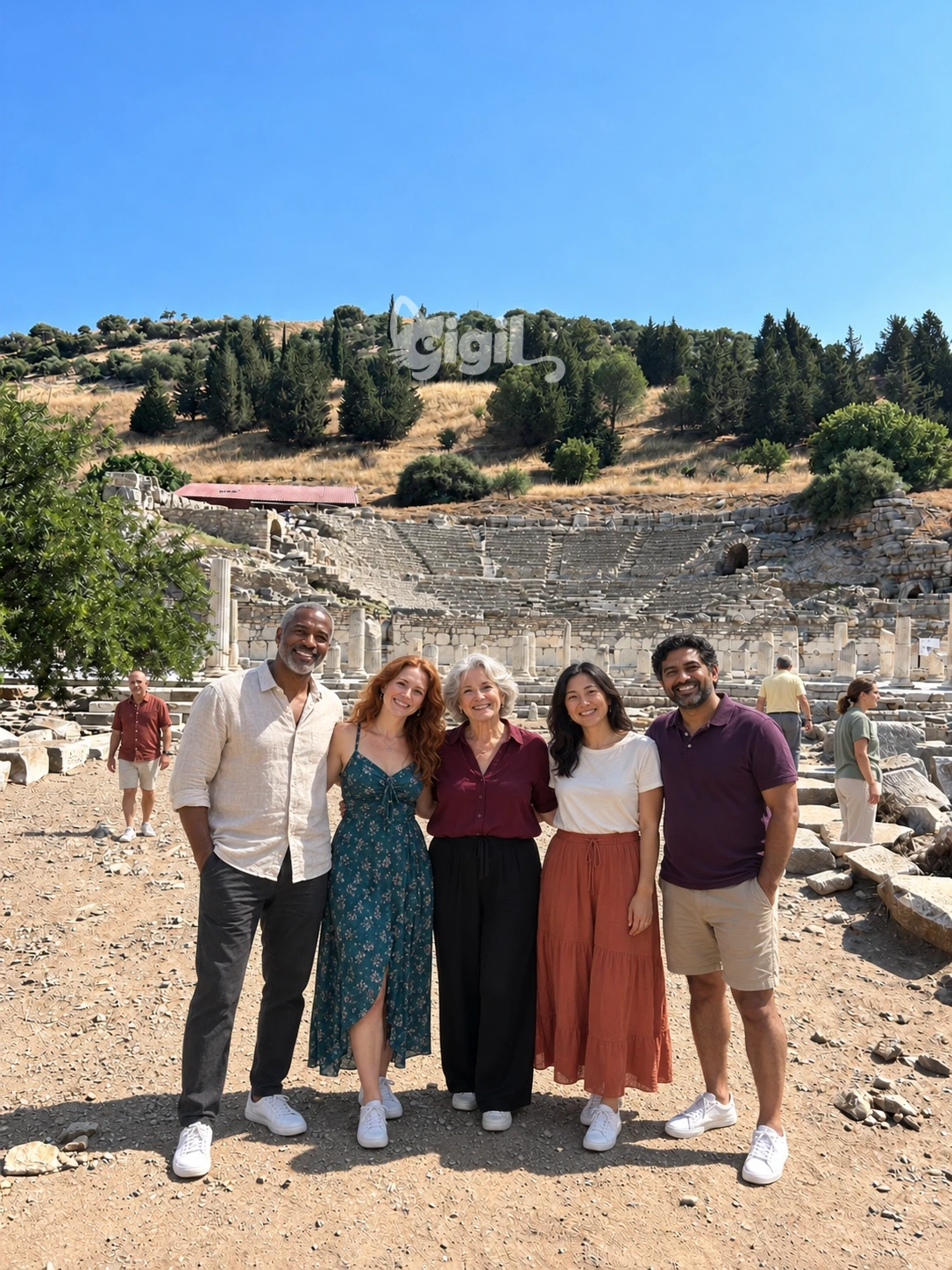
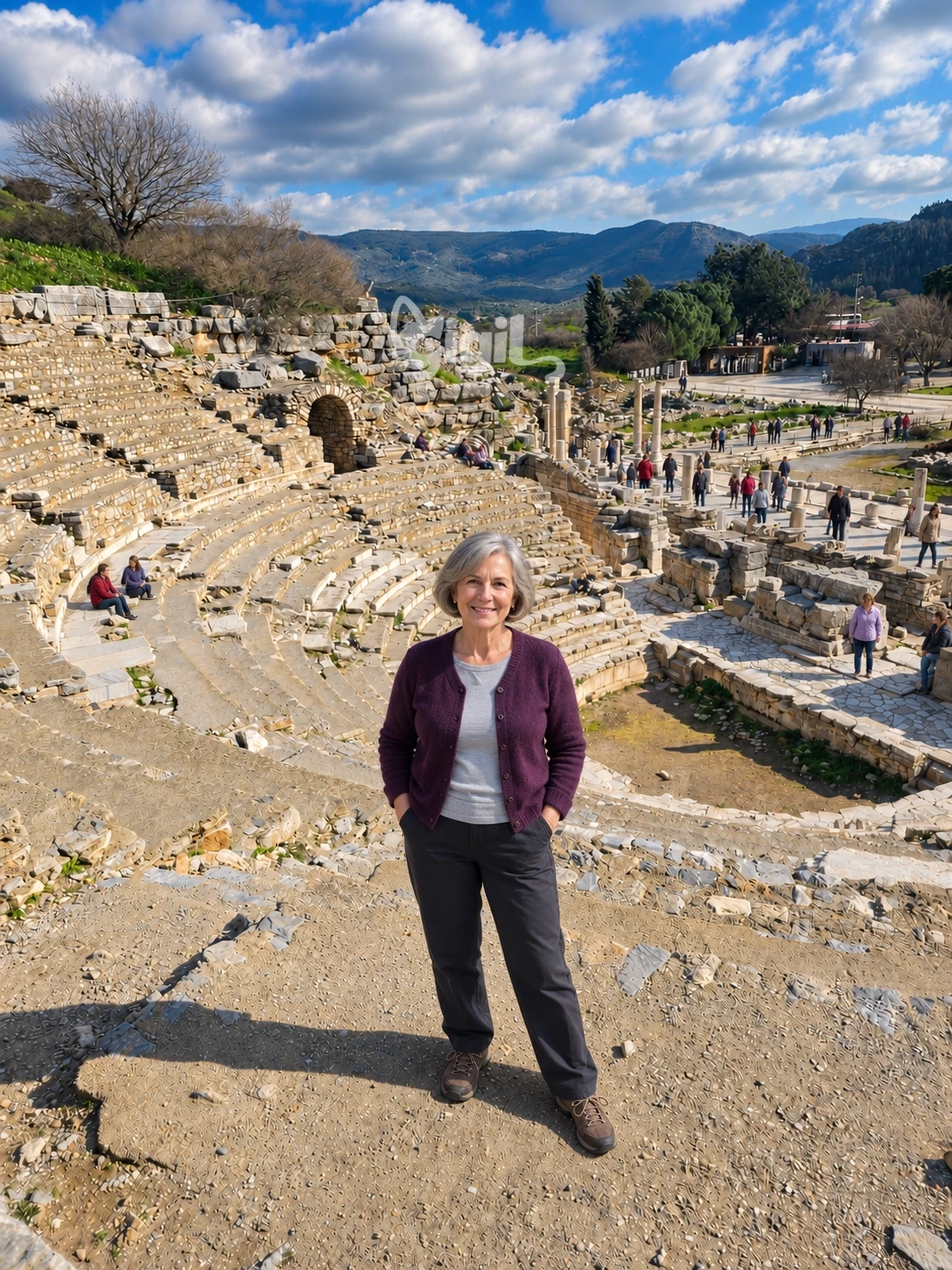
What is the value of looking at the Great Theatre?
The theatre reveals the scale and spatial organisation of a gathering place within the wider ancient city.
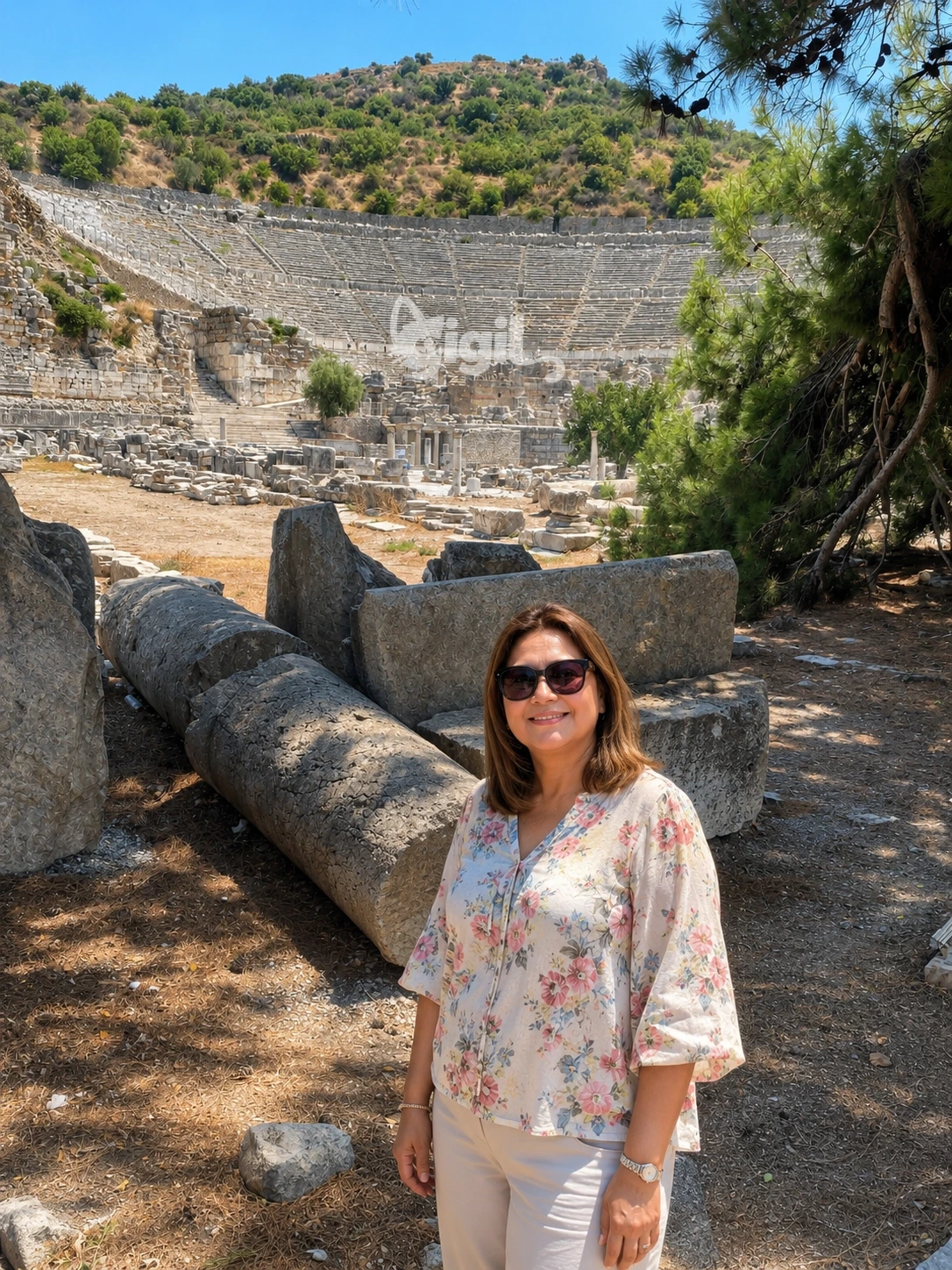
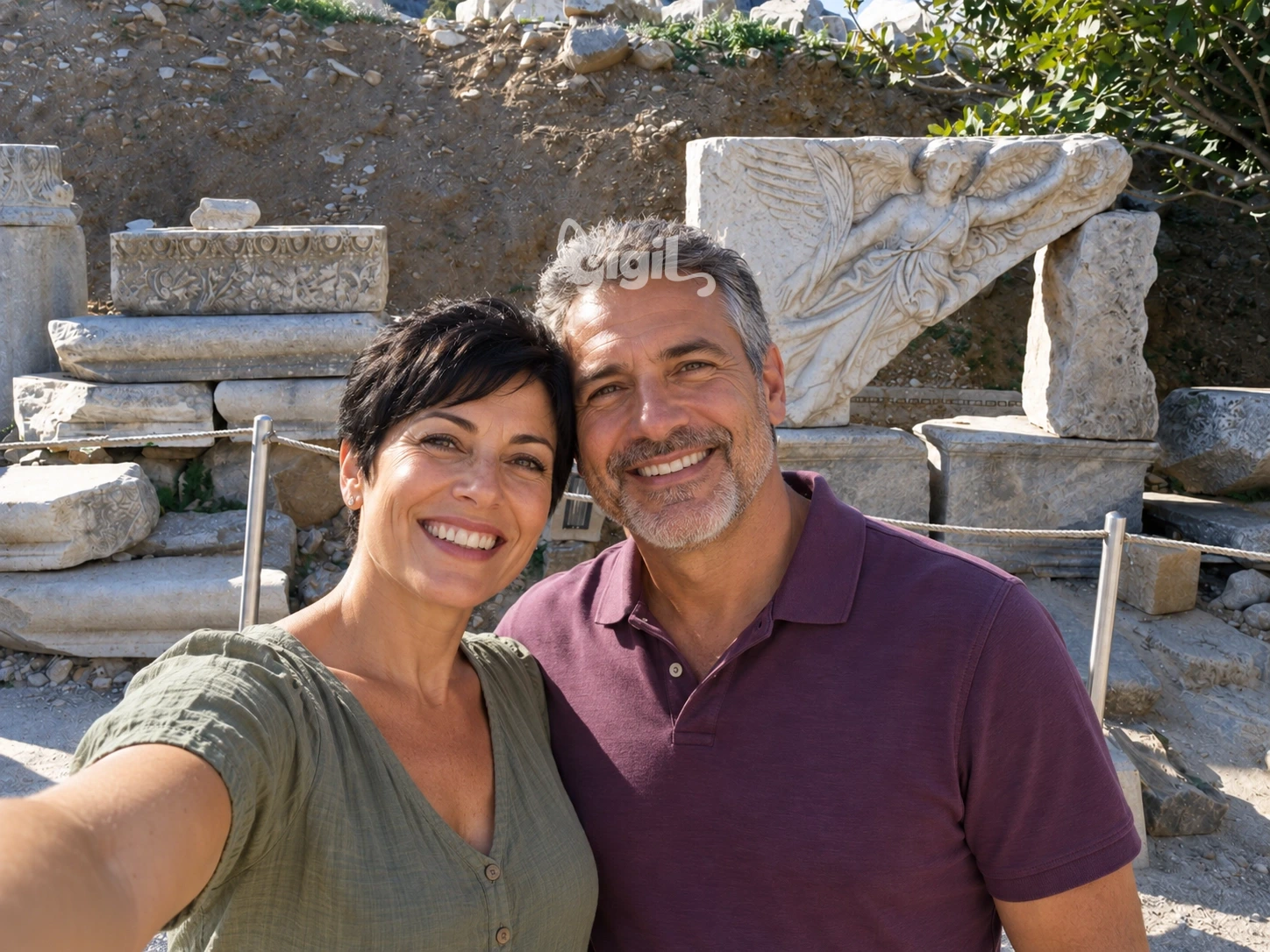
How do I keep interpretation grounded in the ruins?
Distinguish visible evidence from imagined missing structures and remember that conservation affects what stands today.