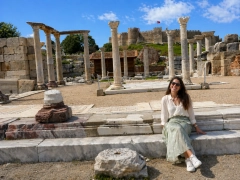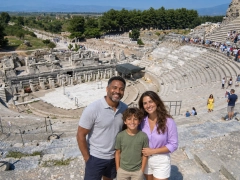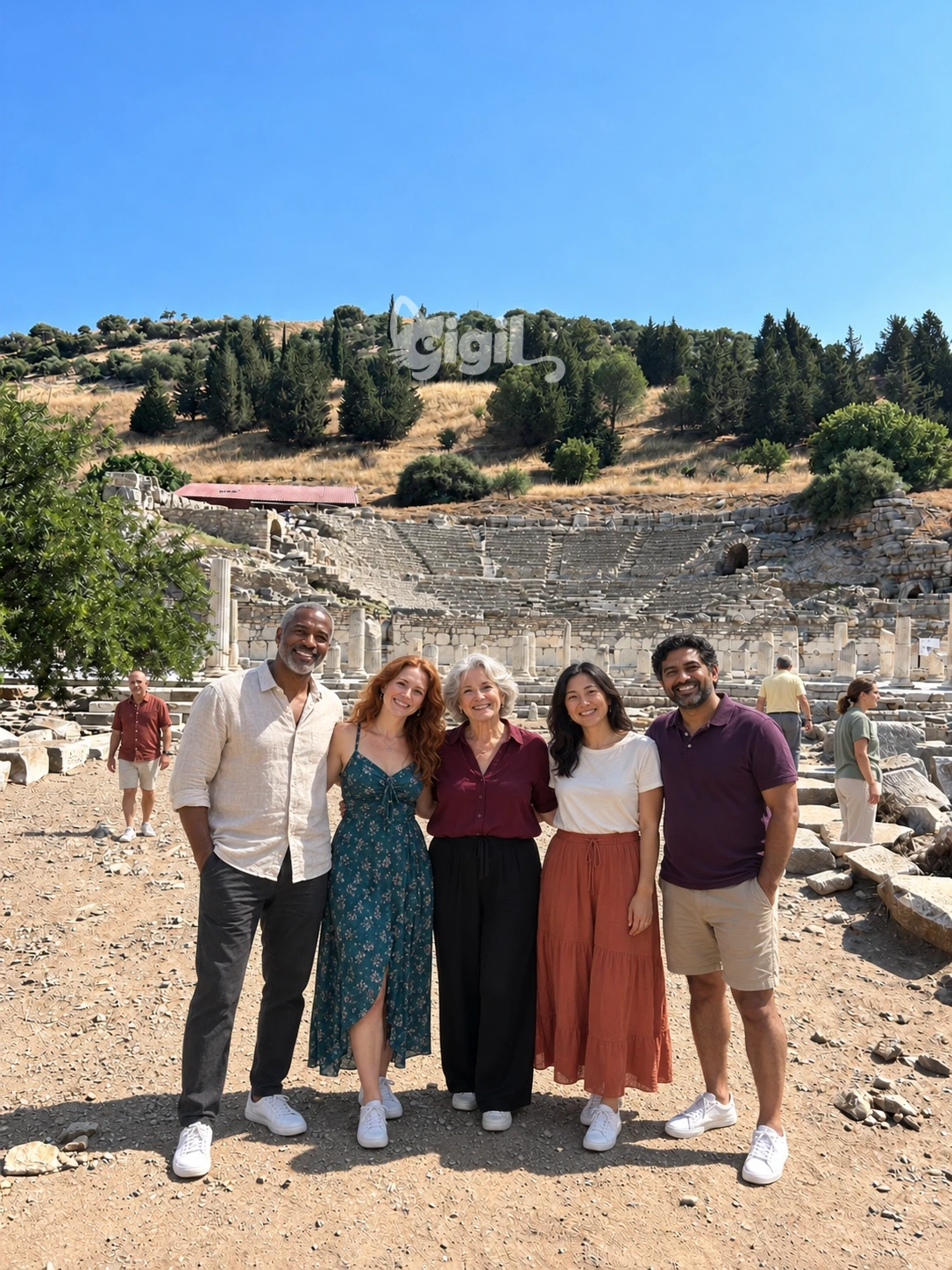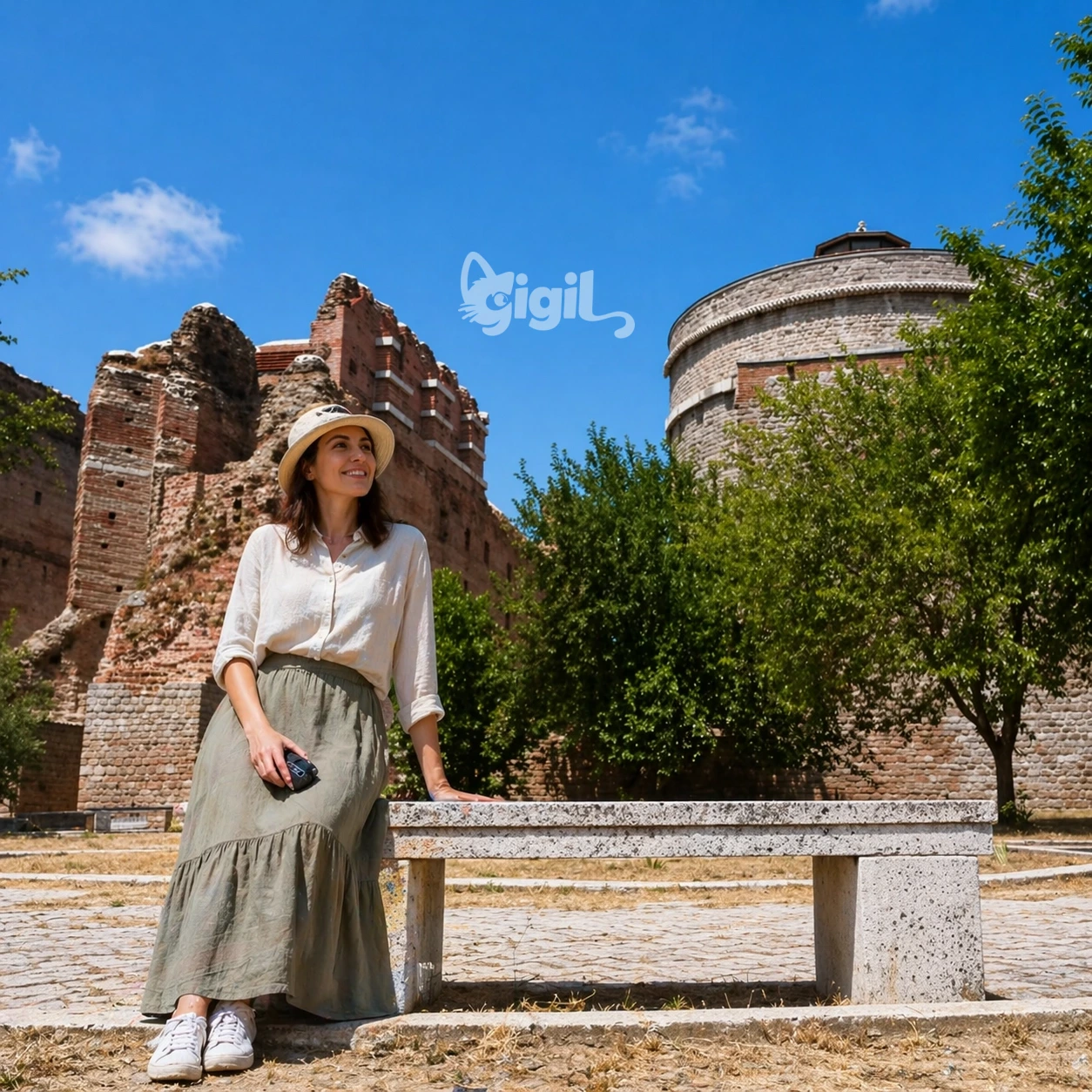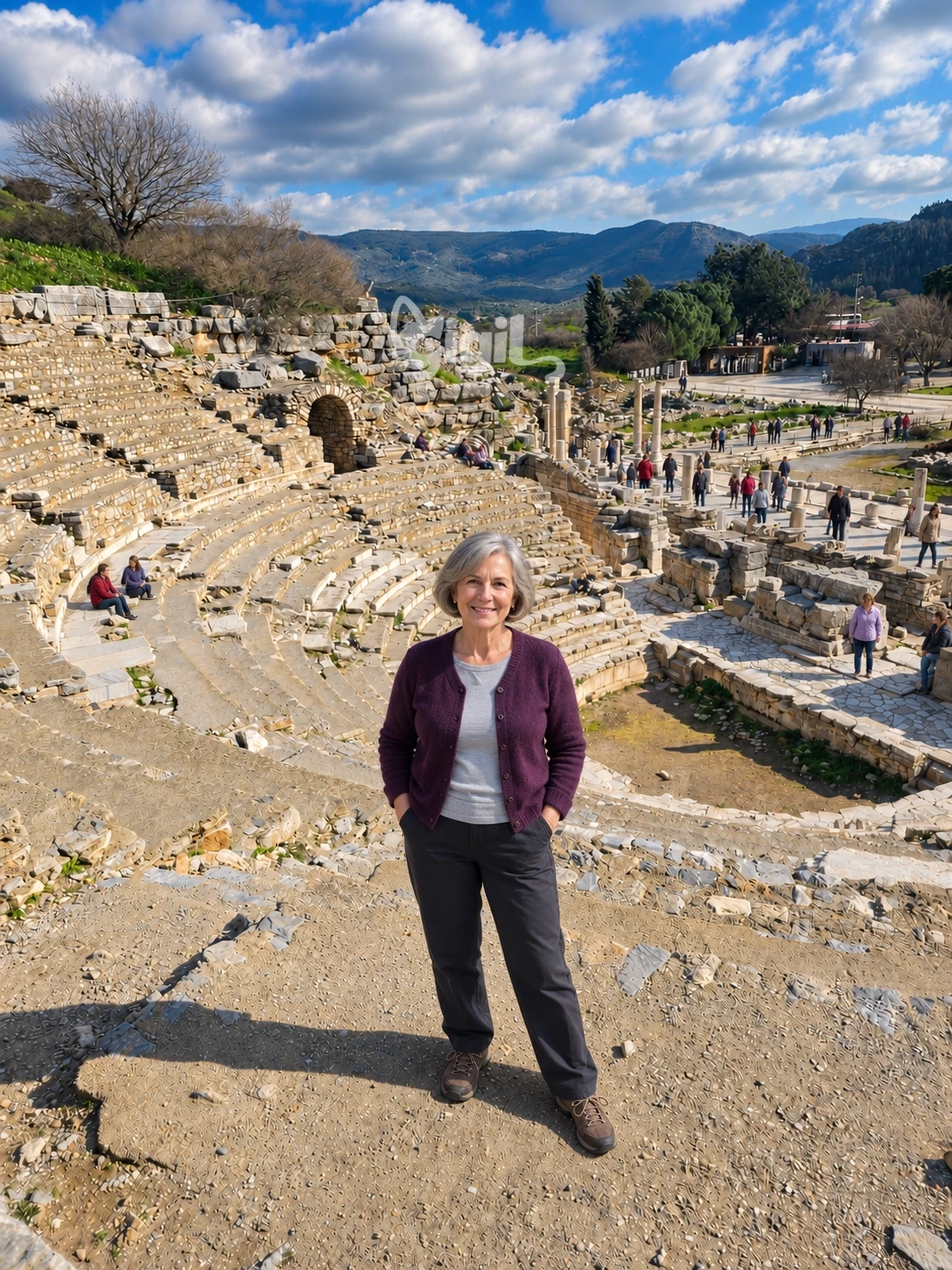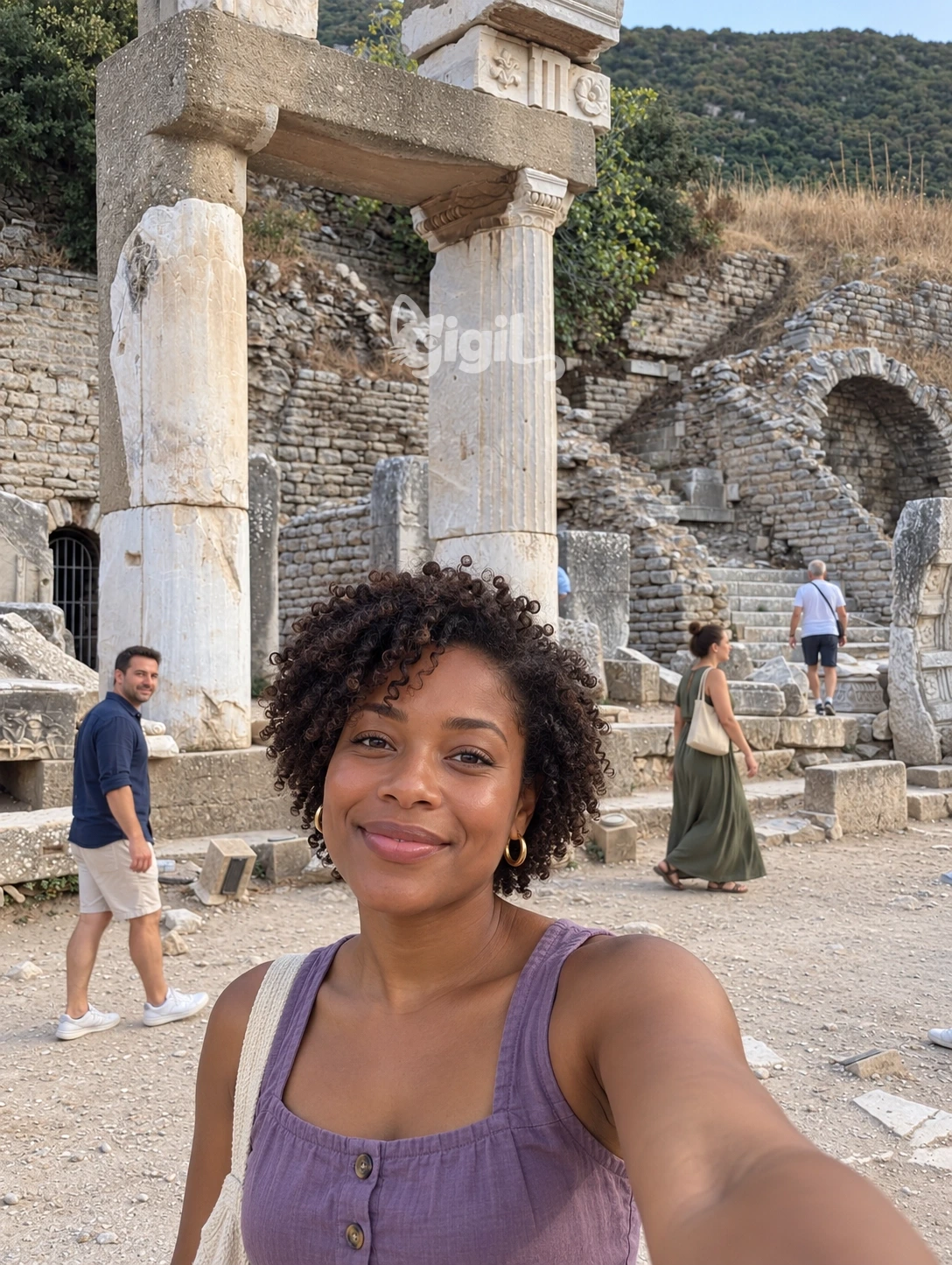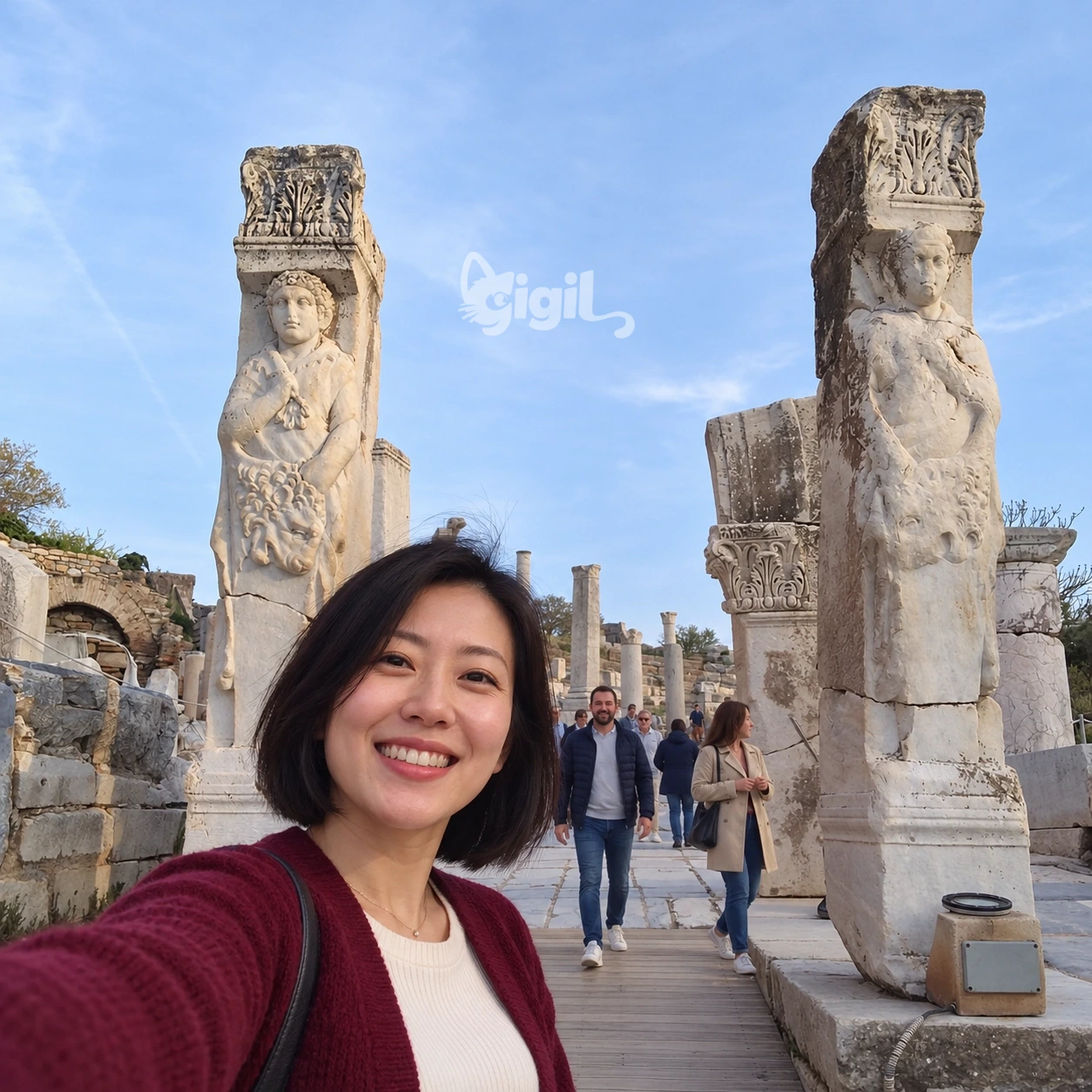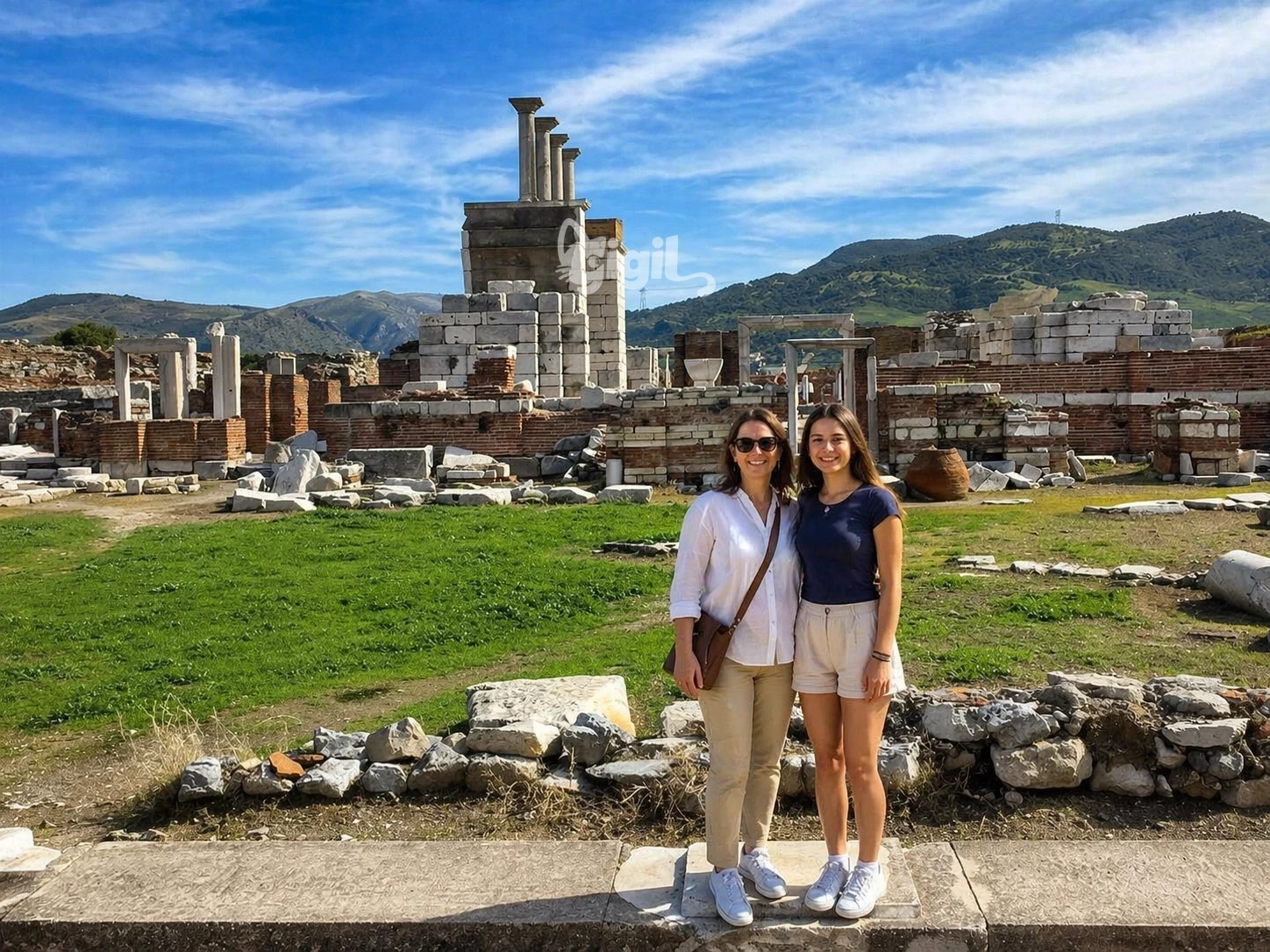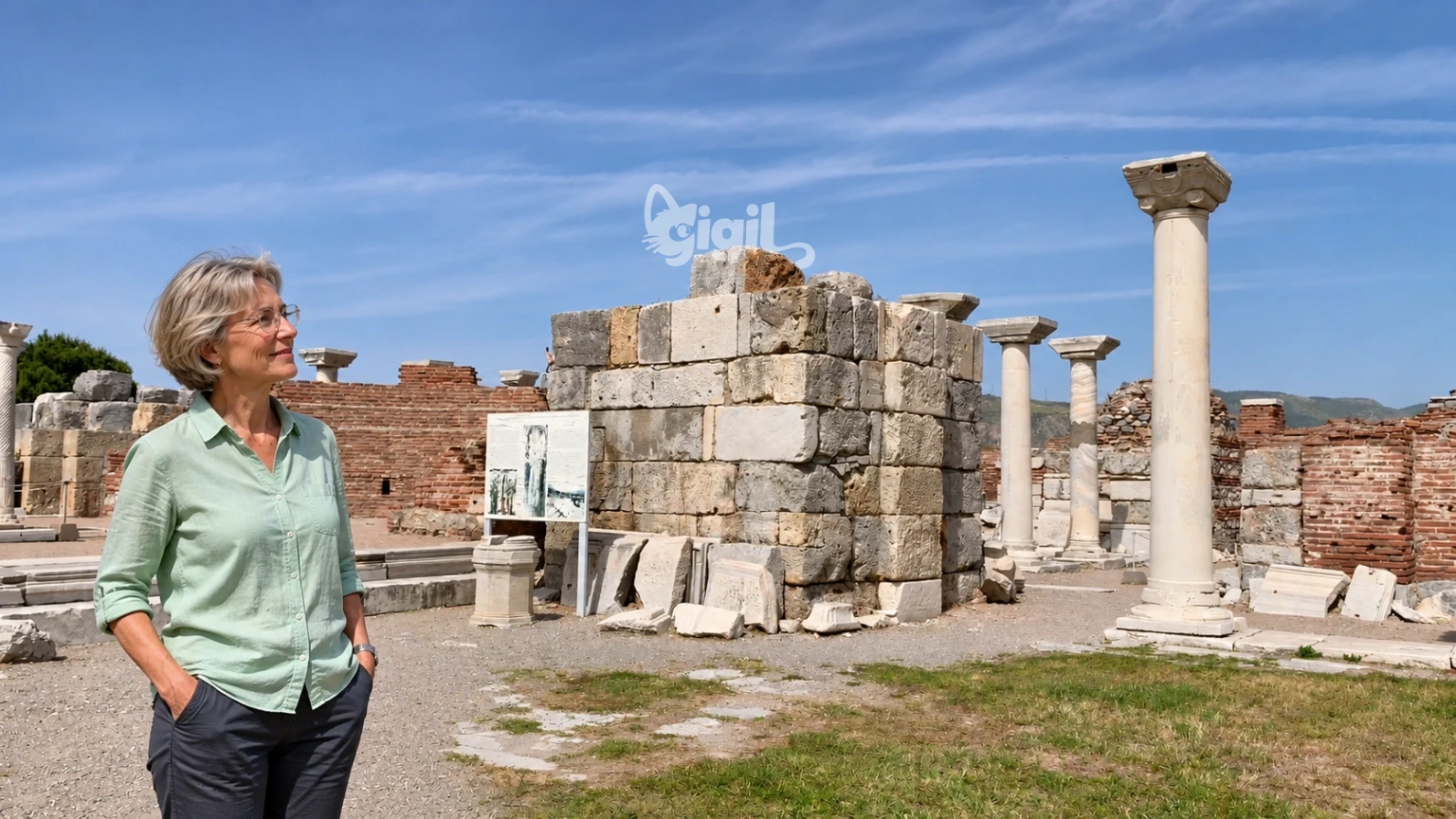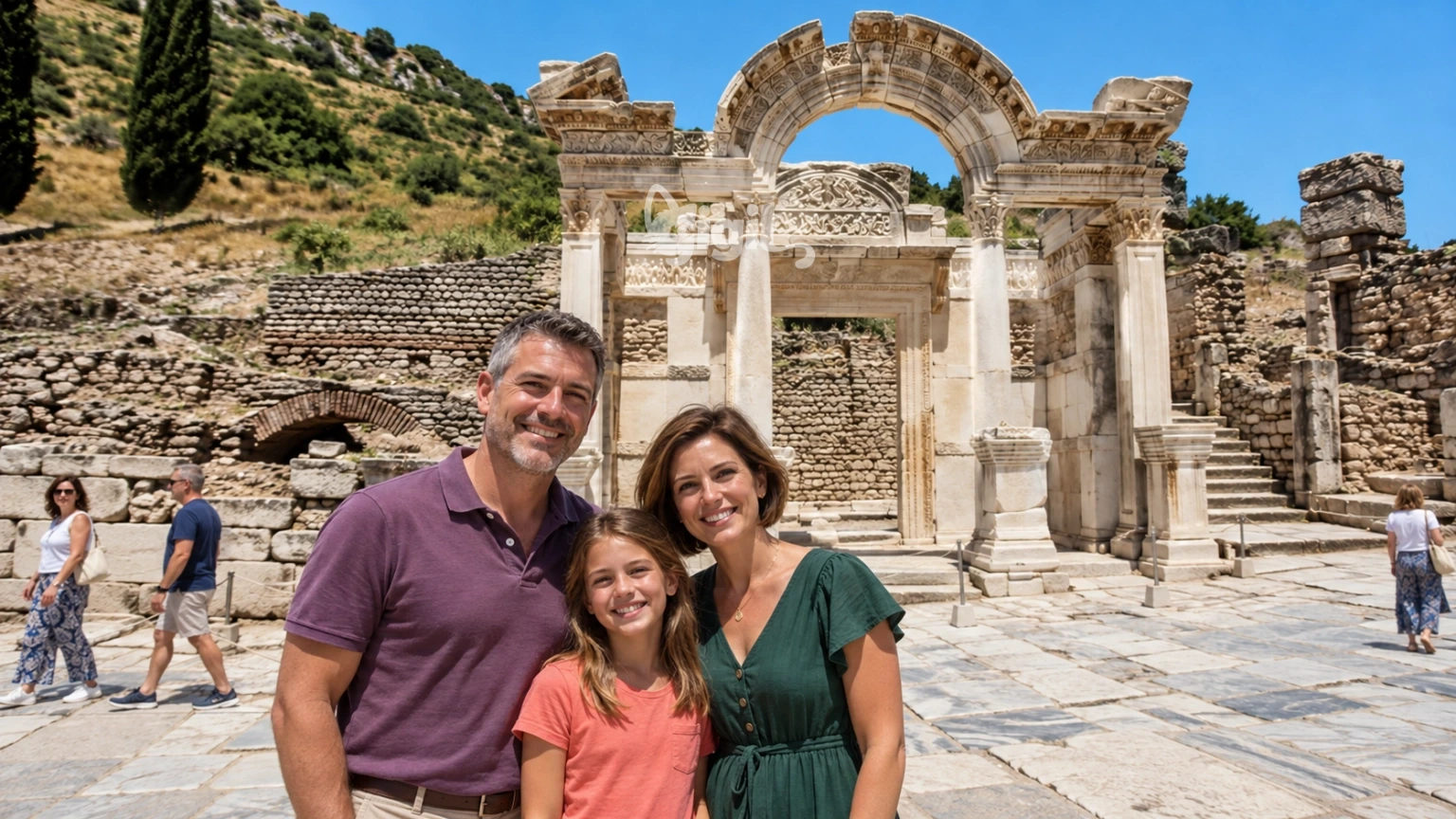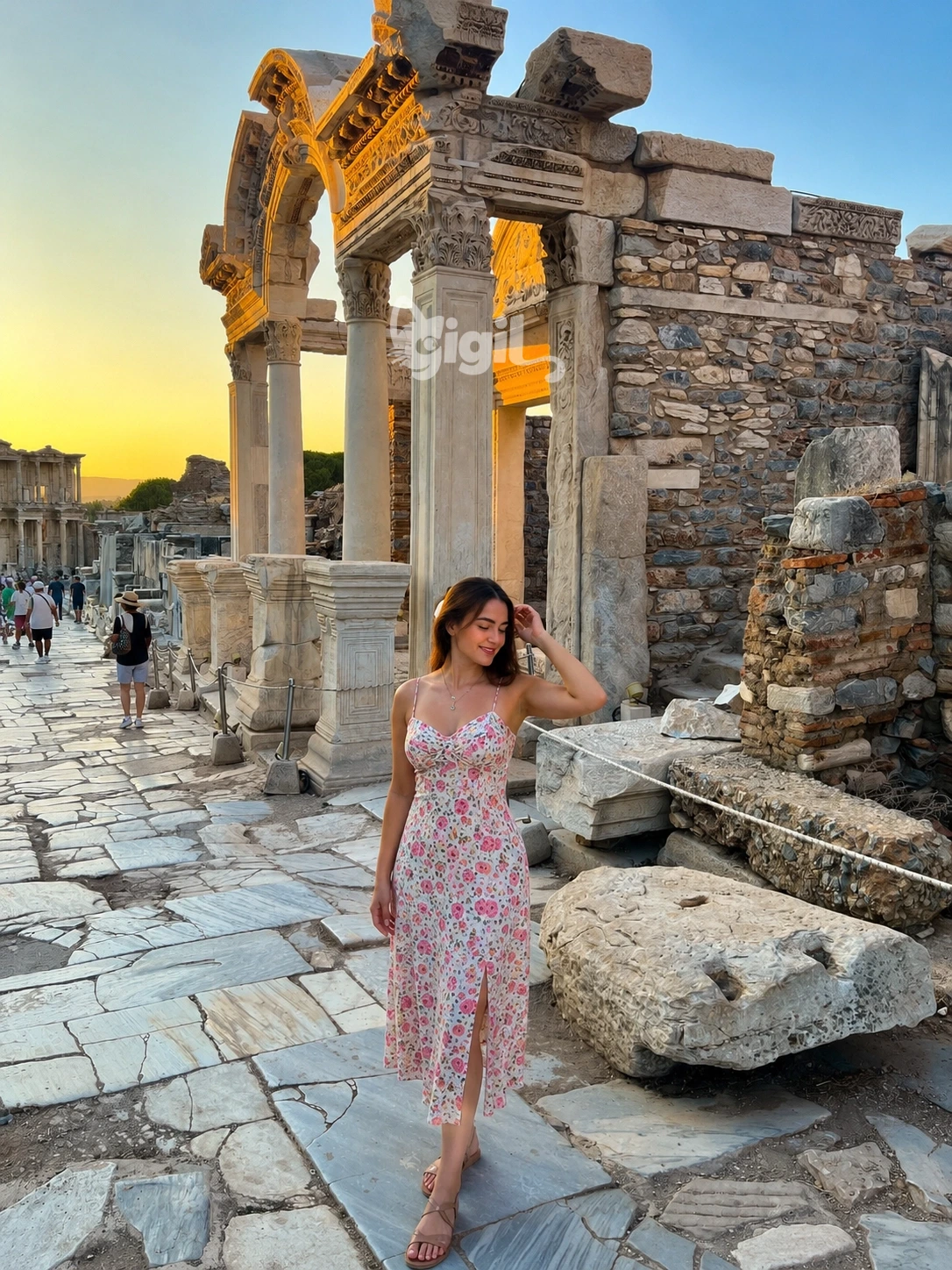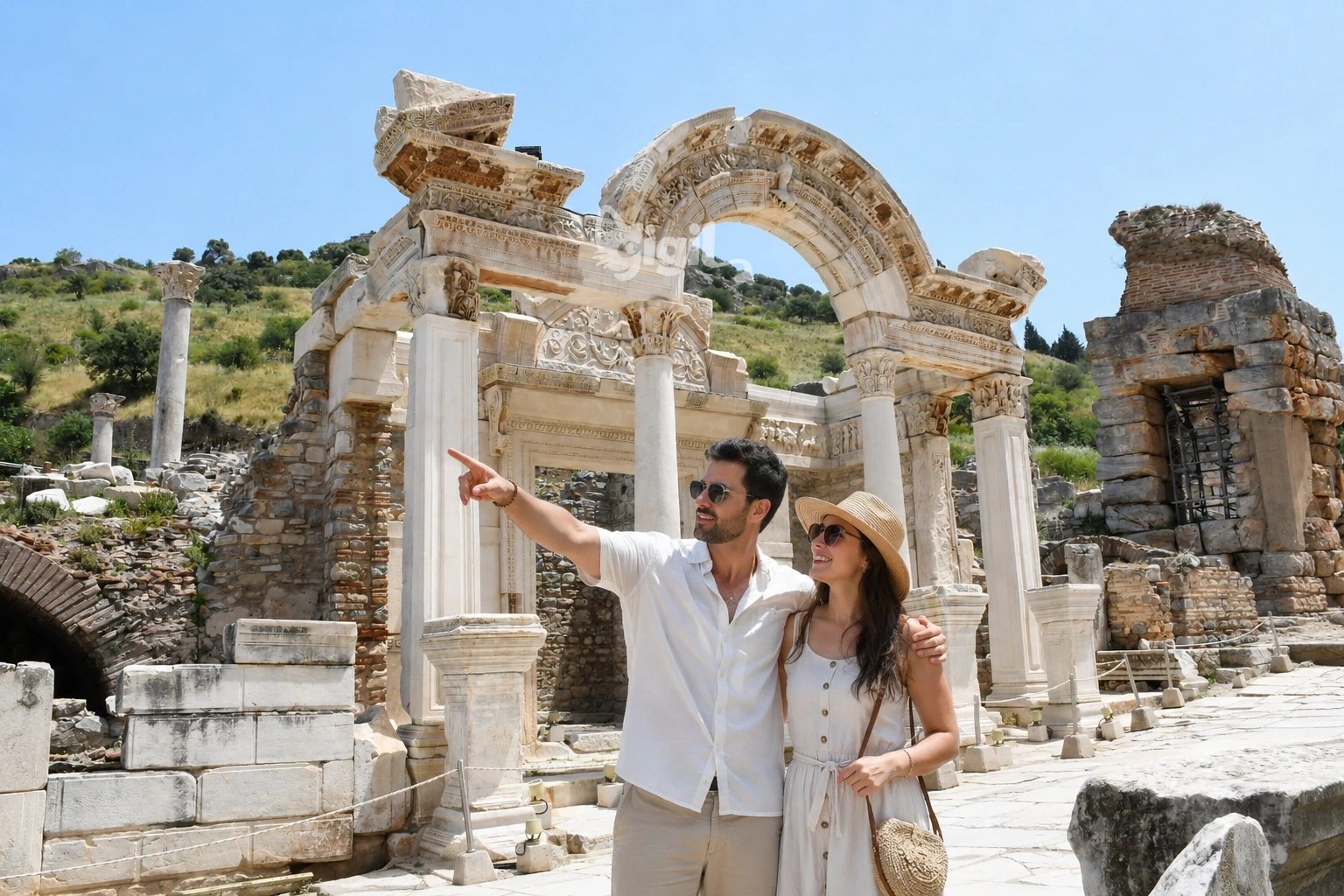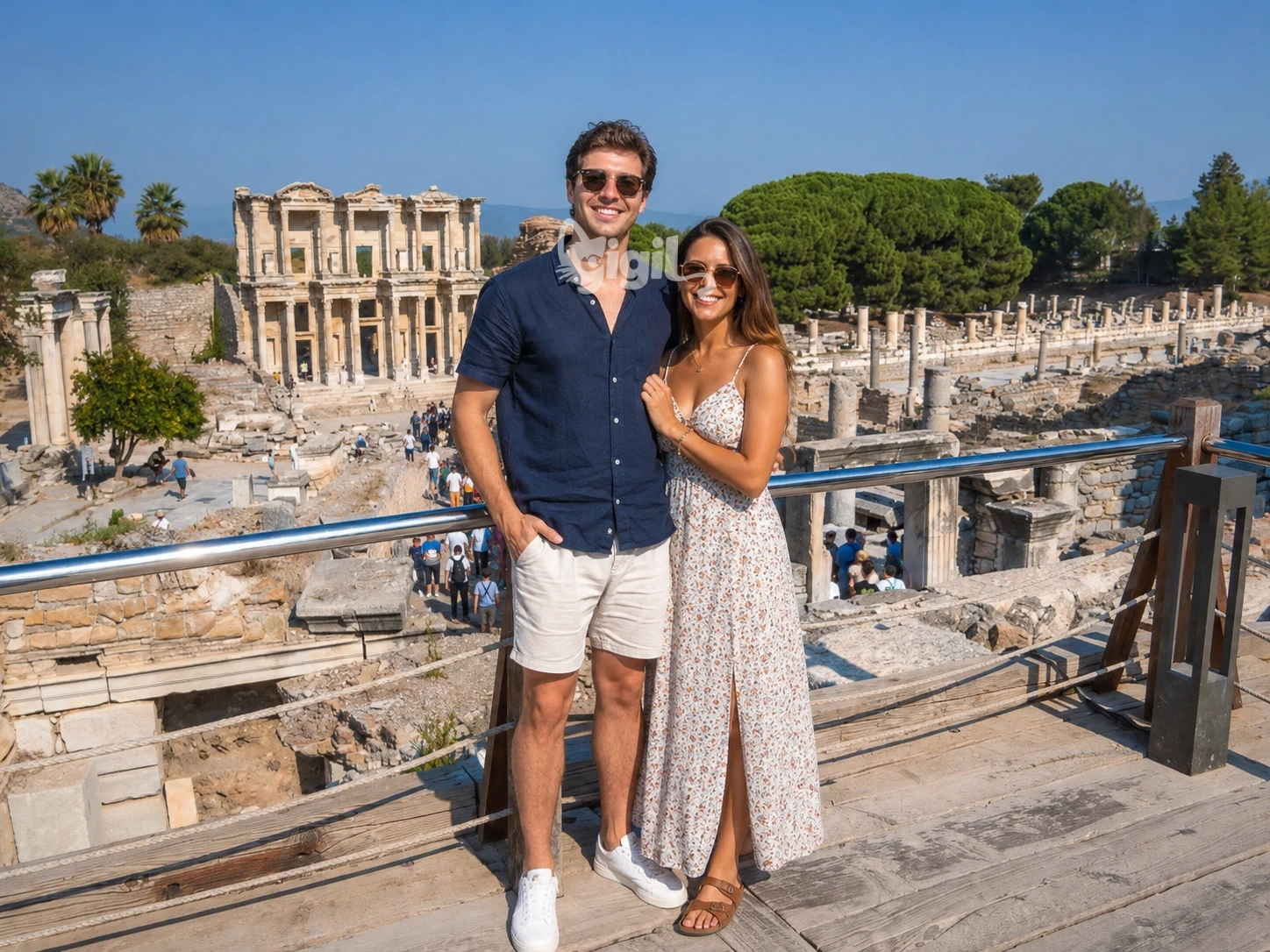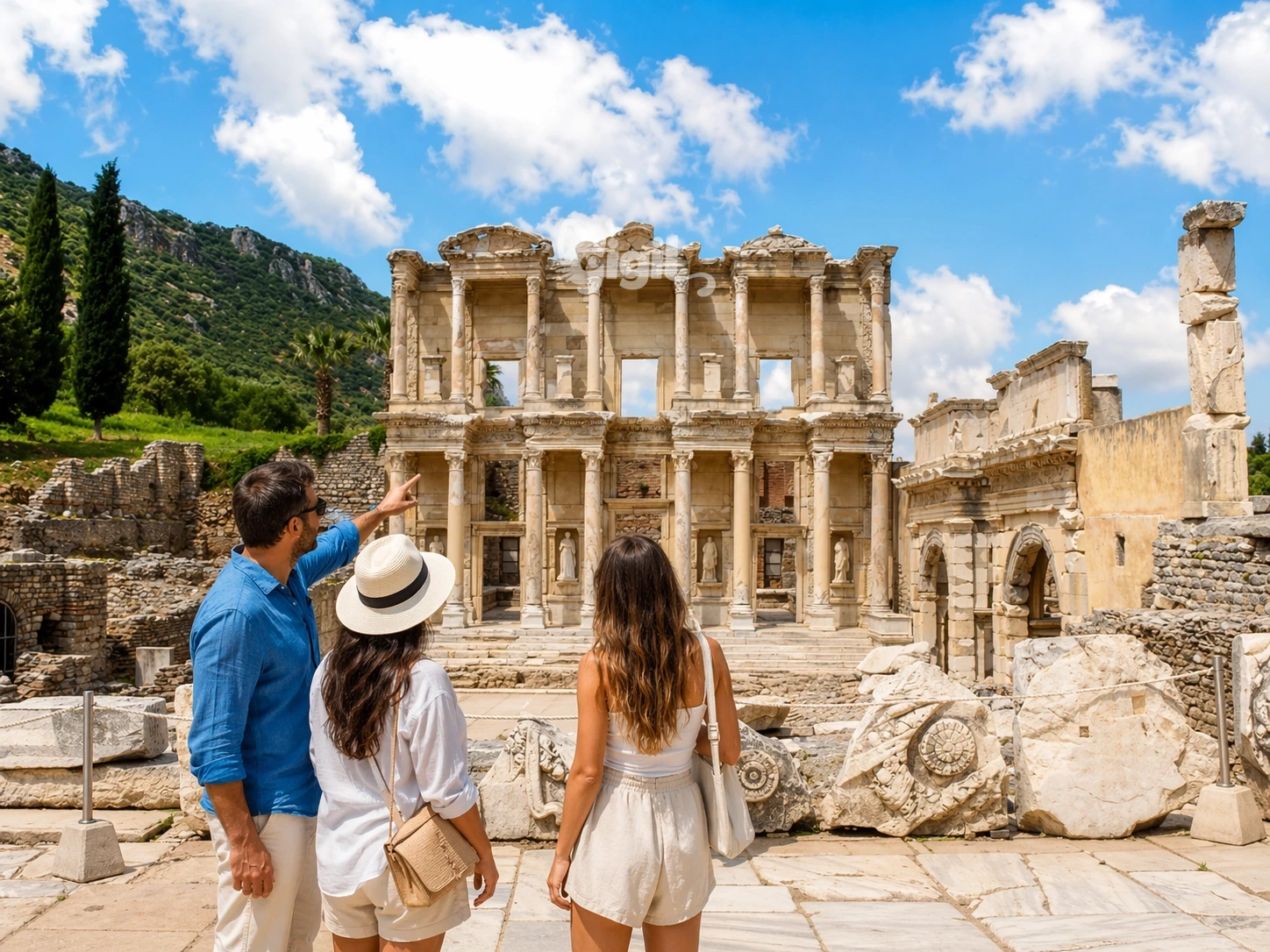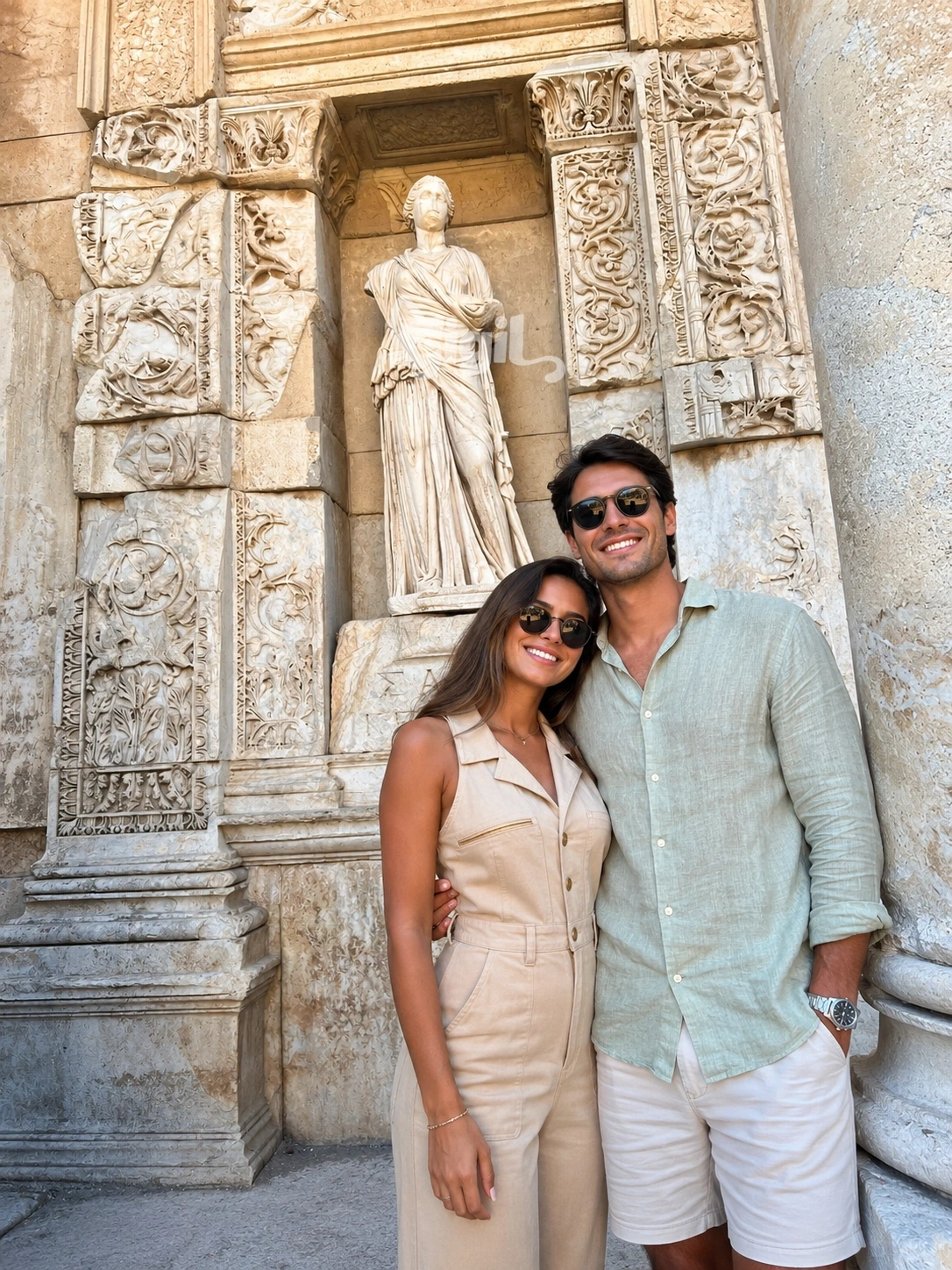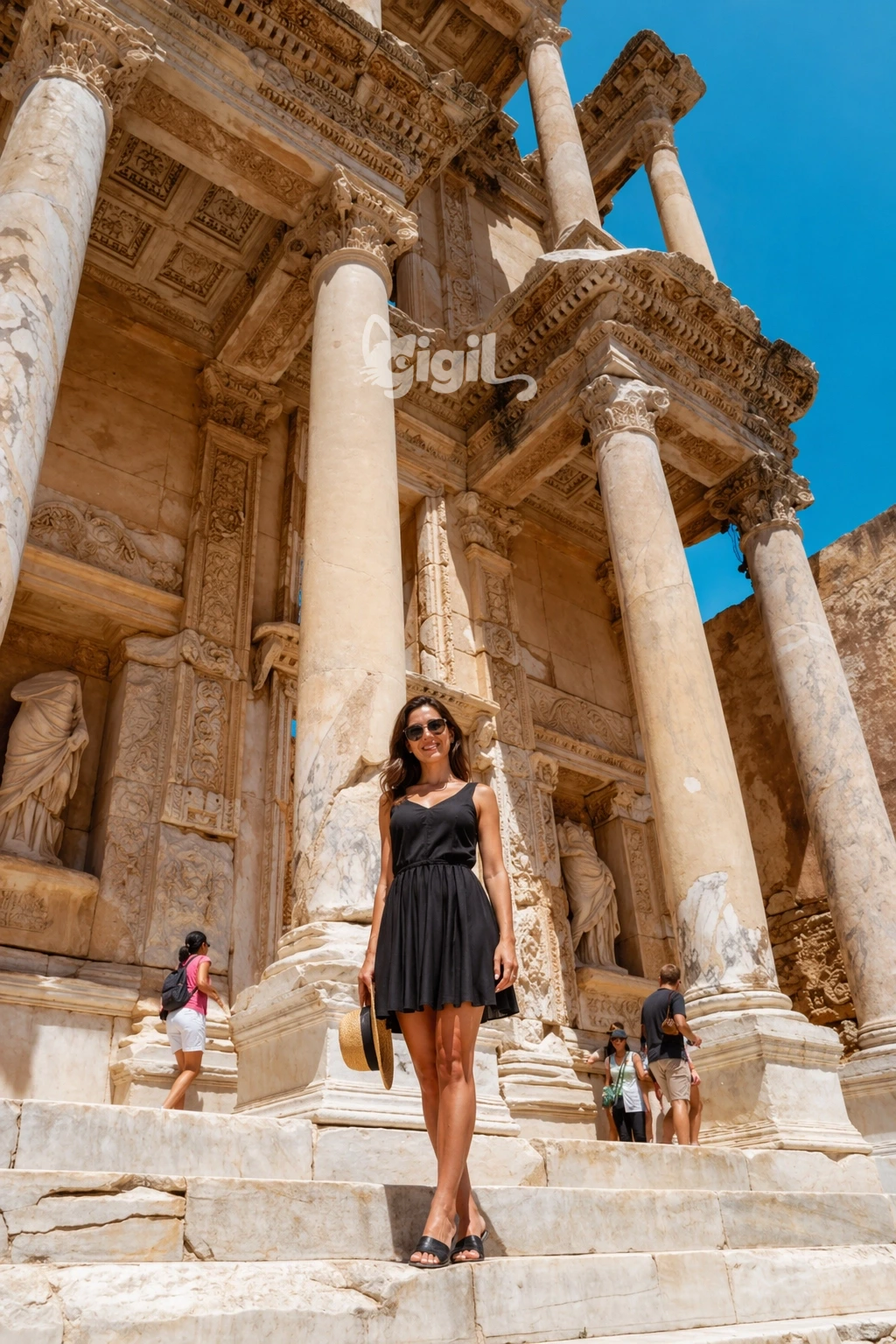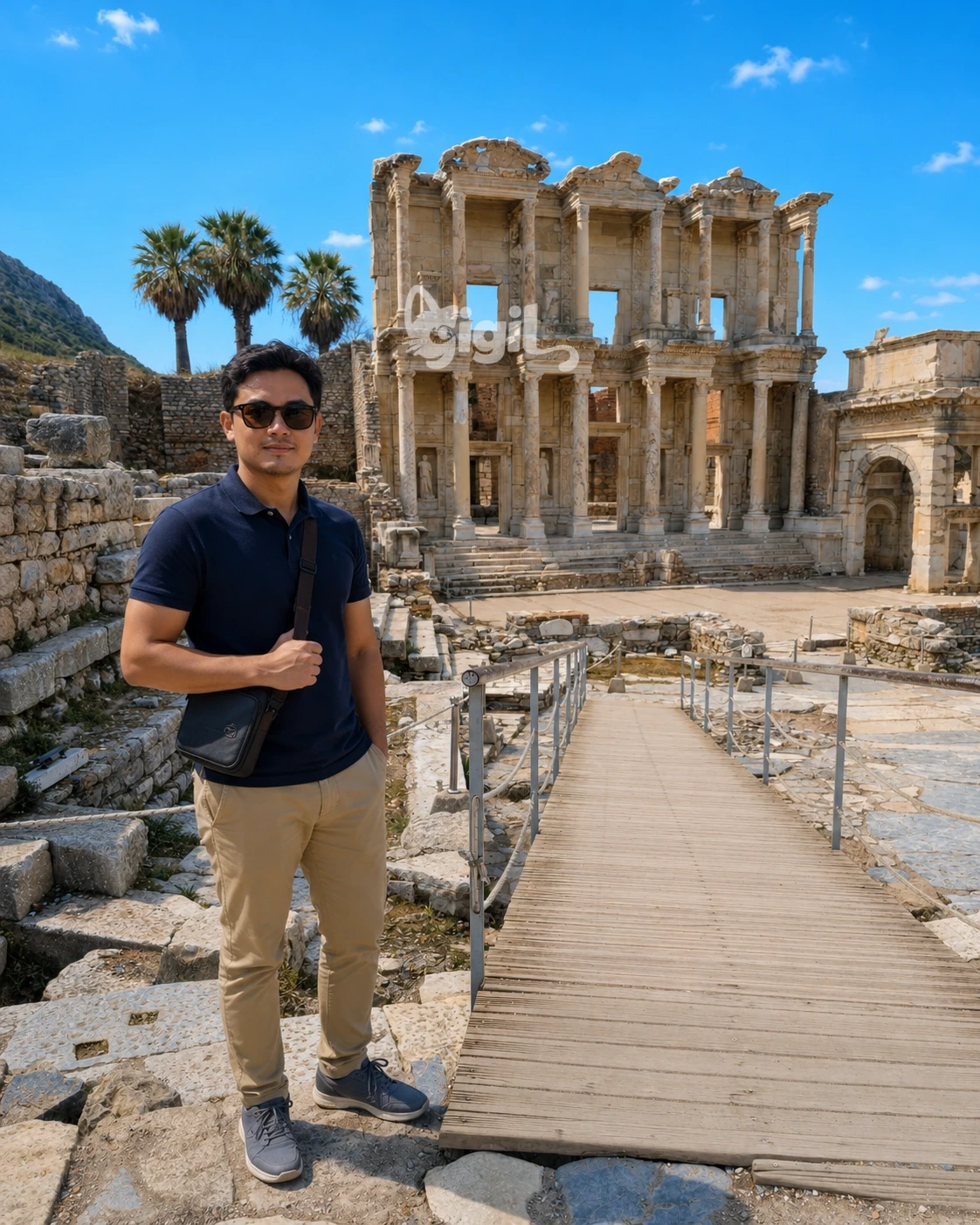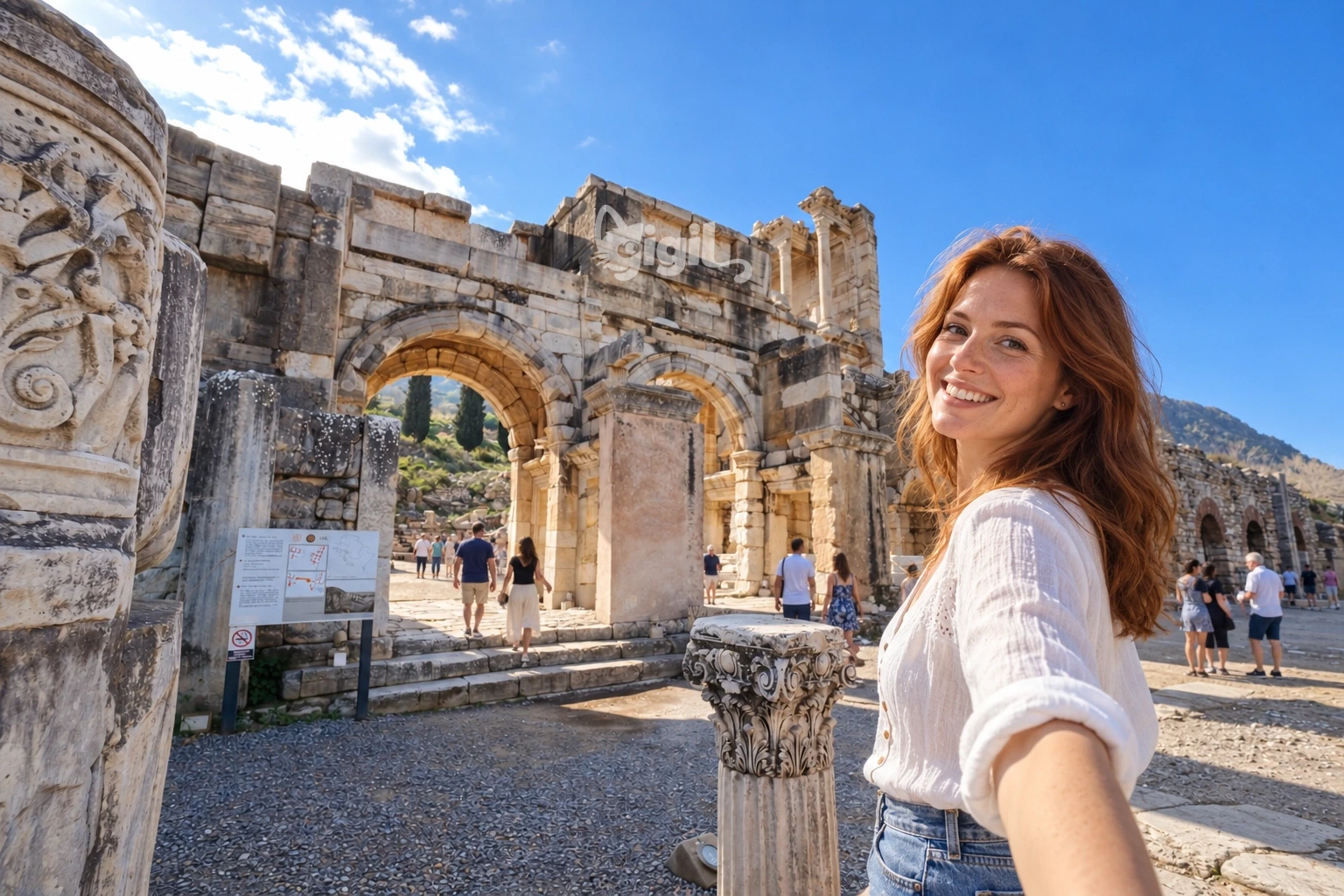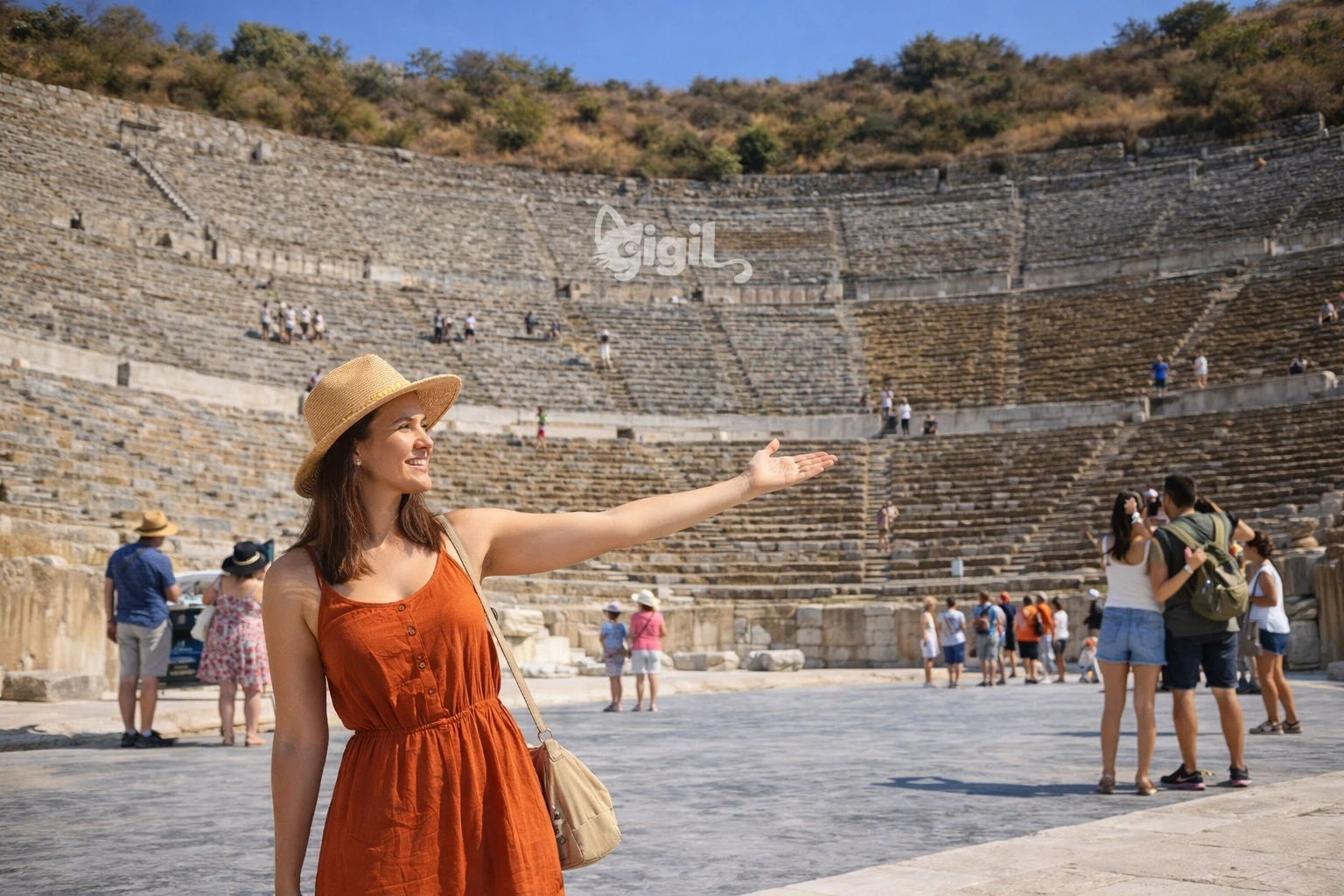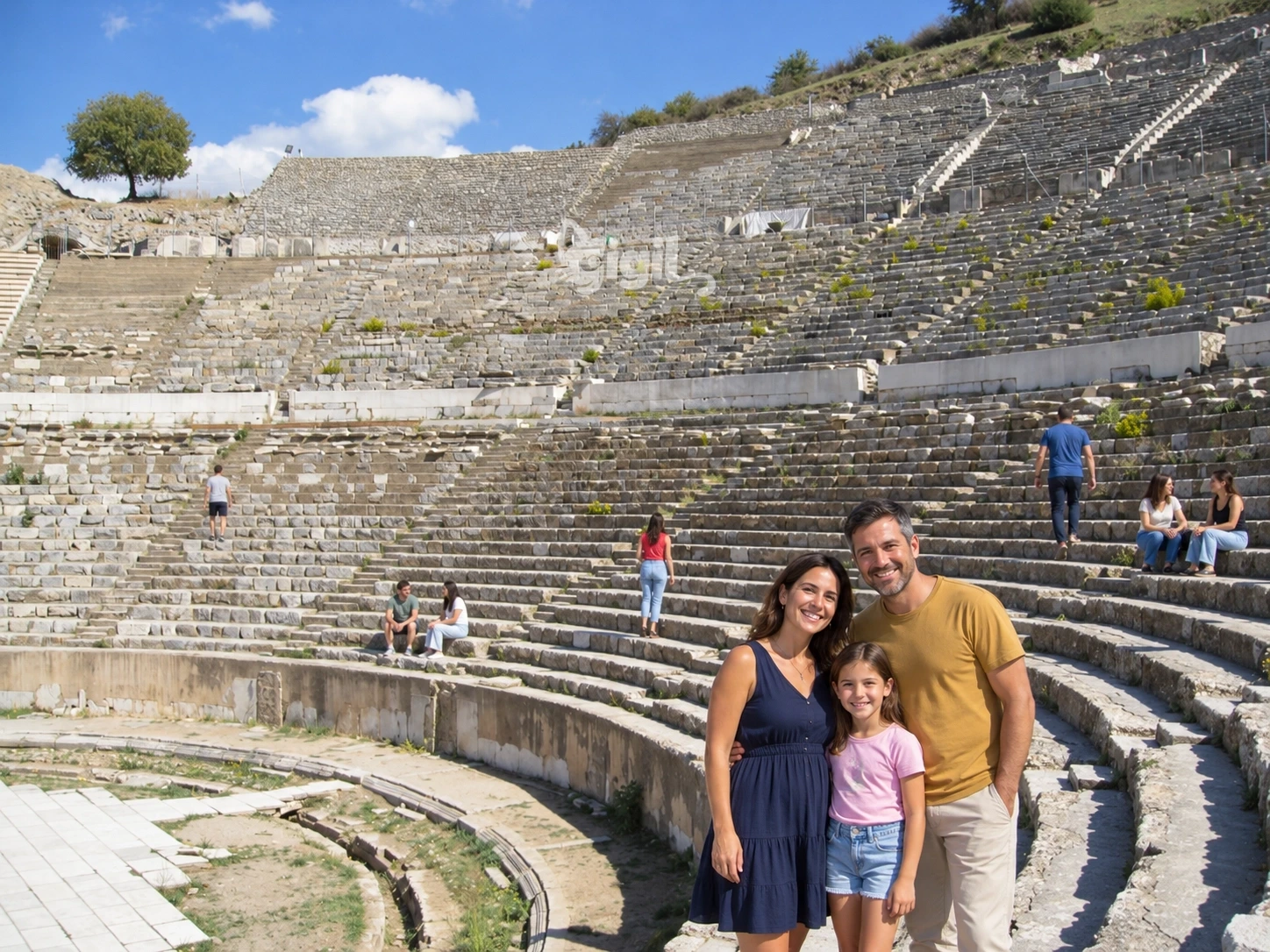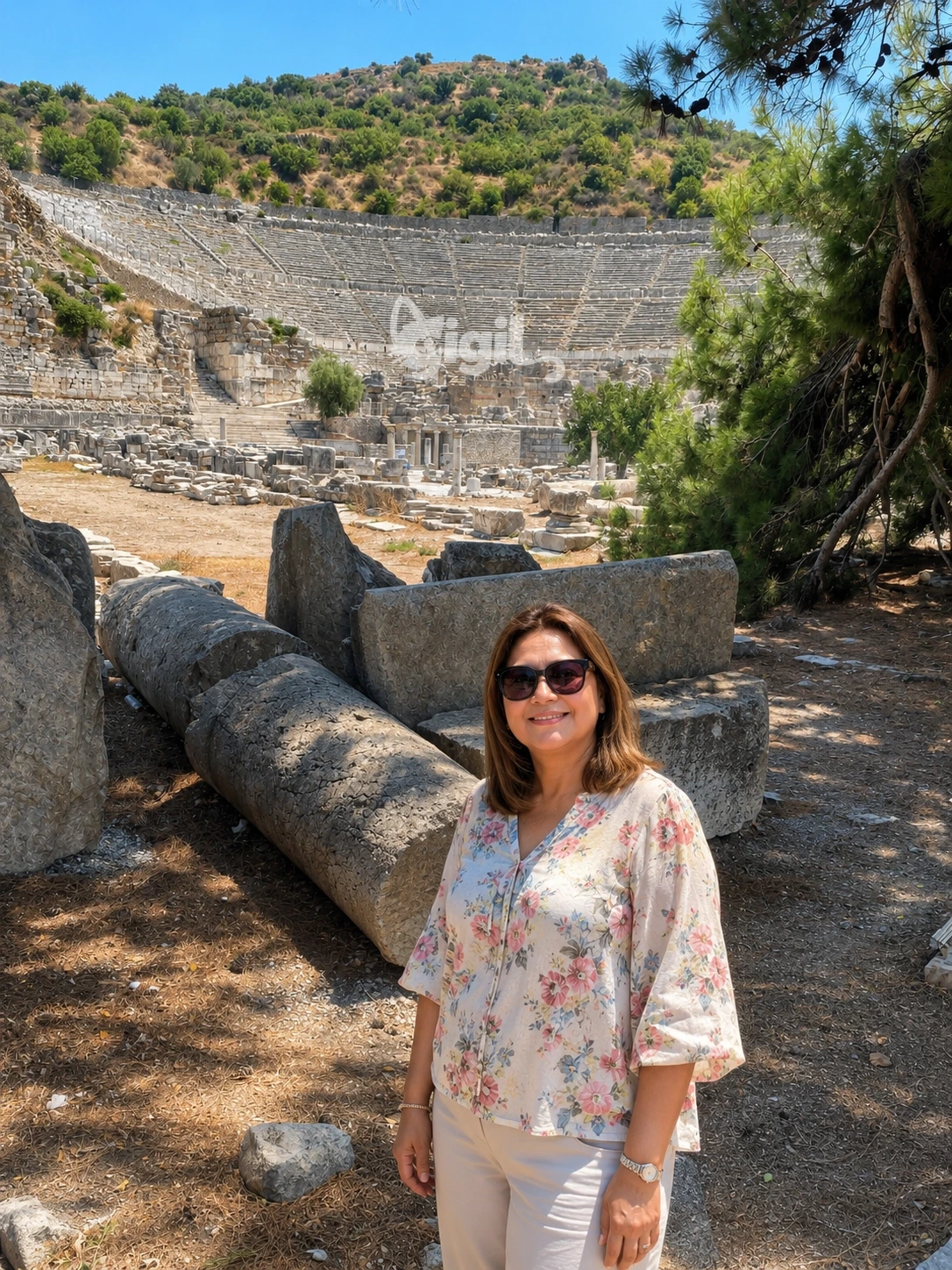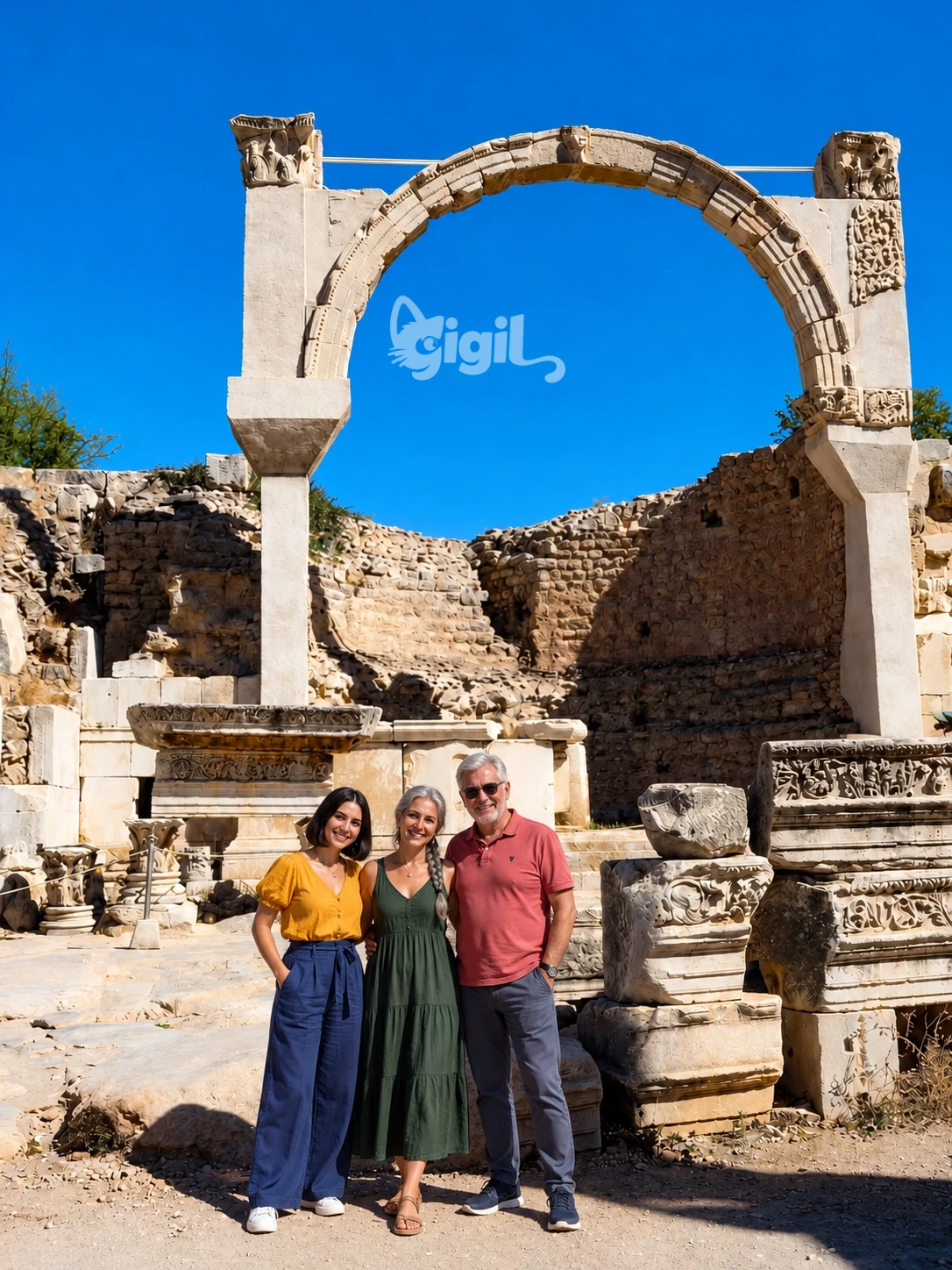








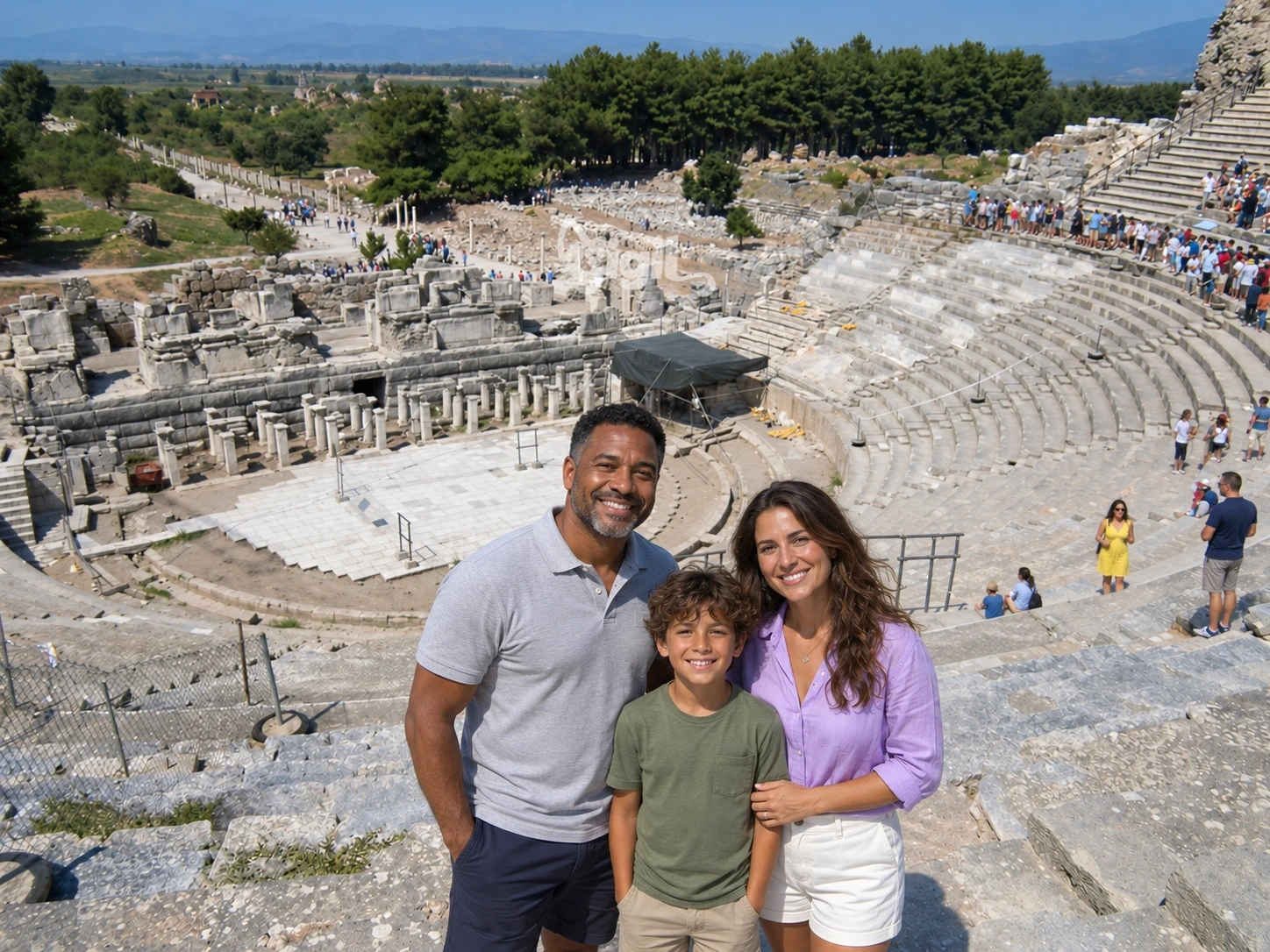
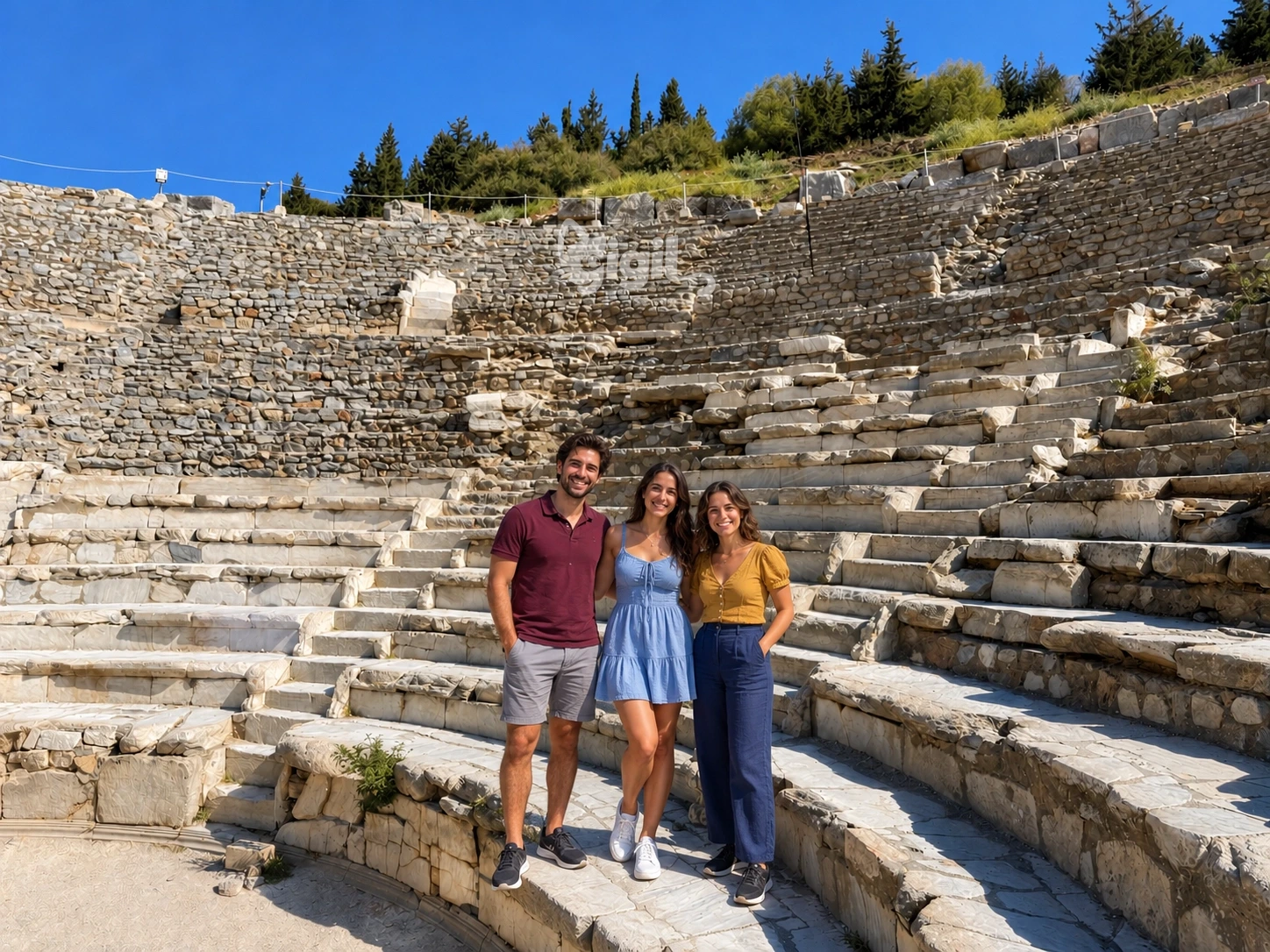
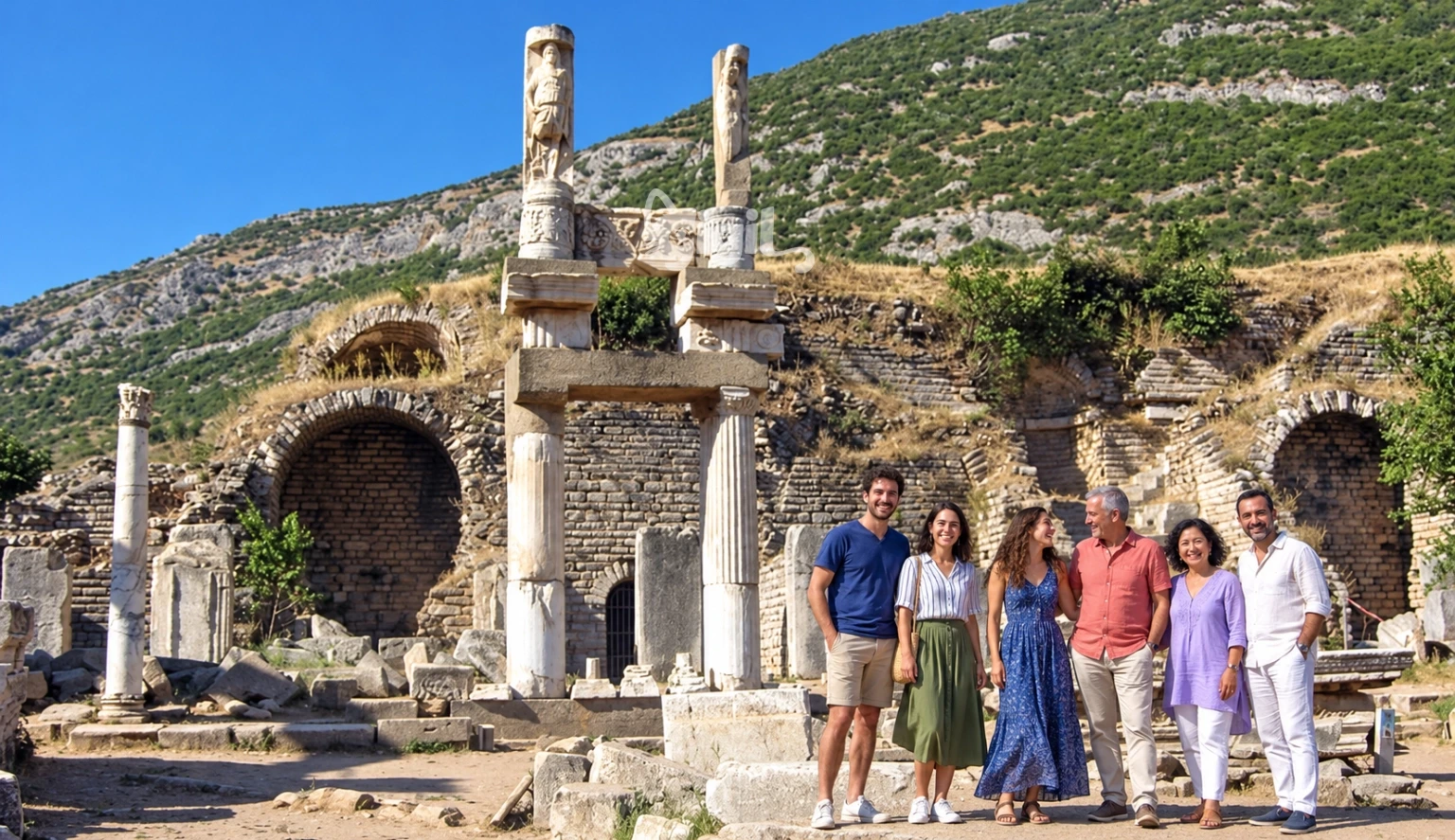
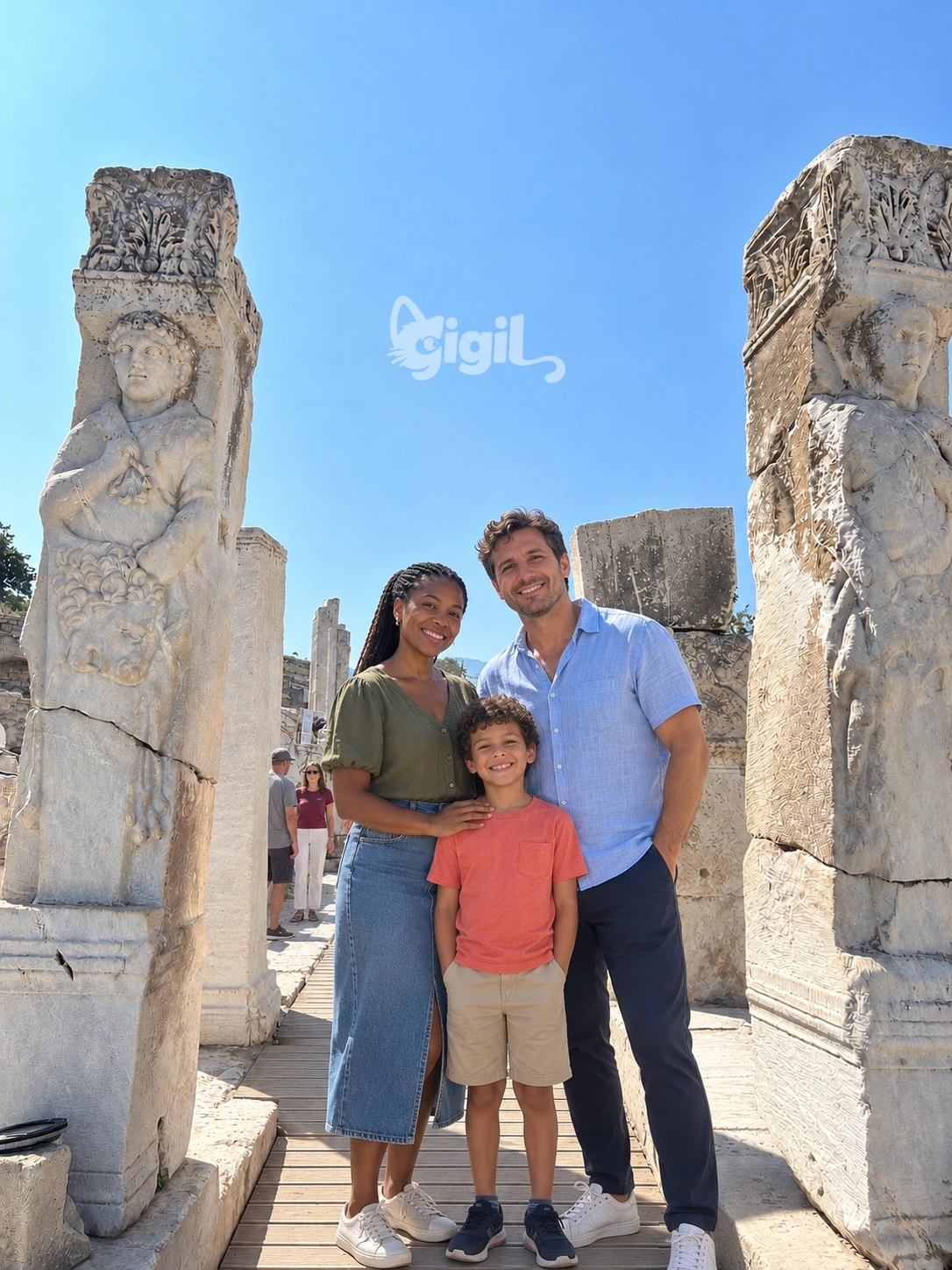
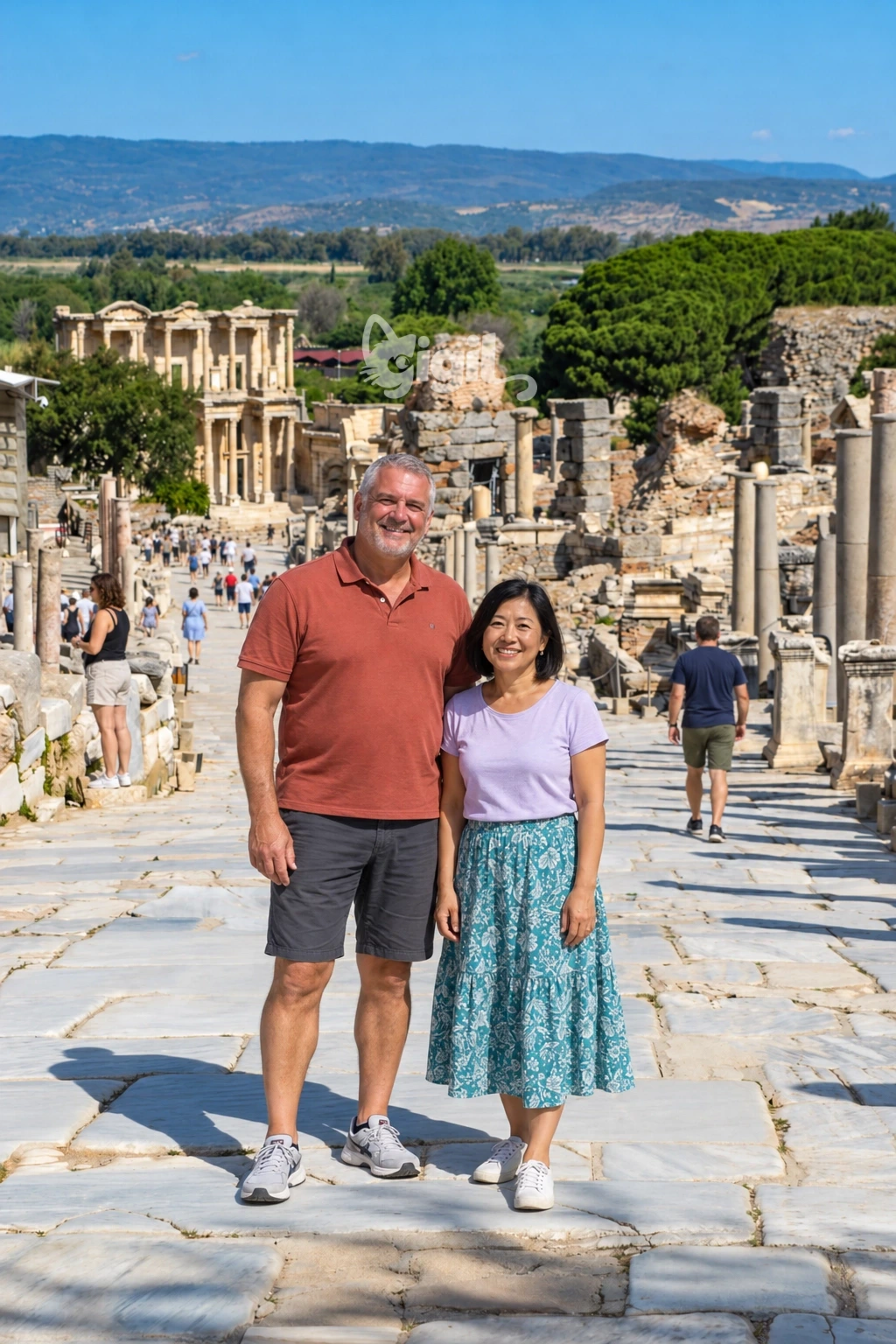
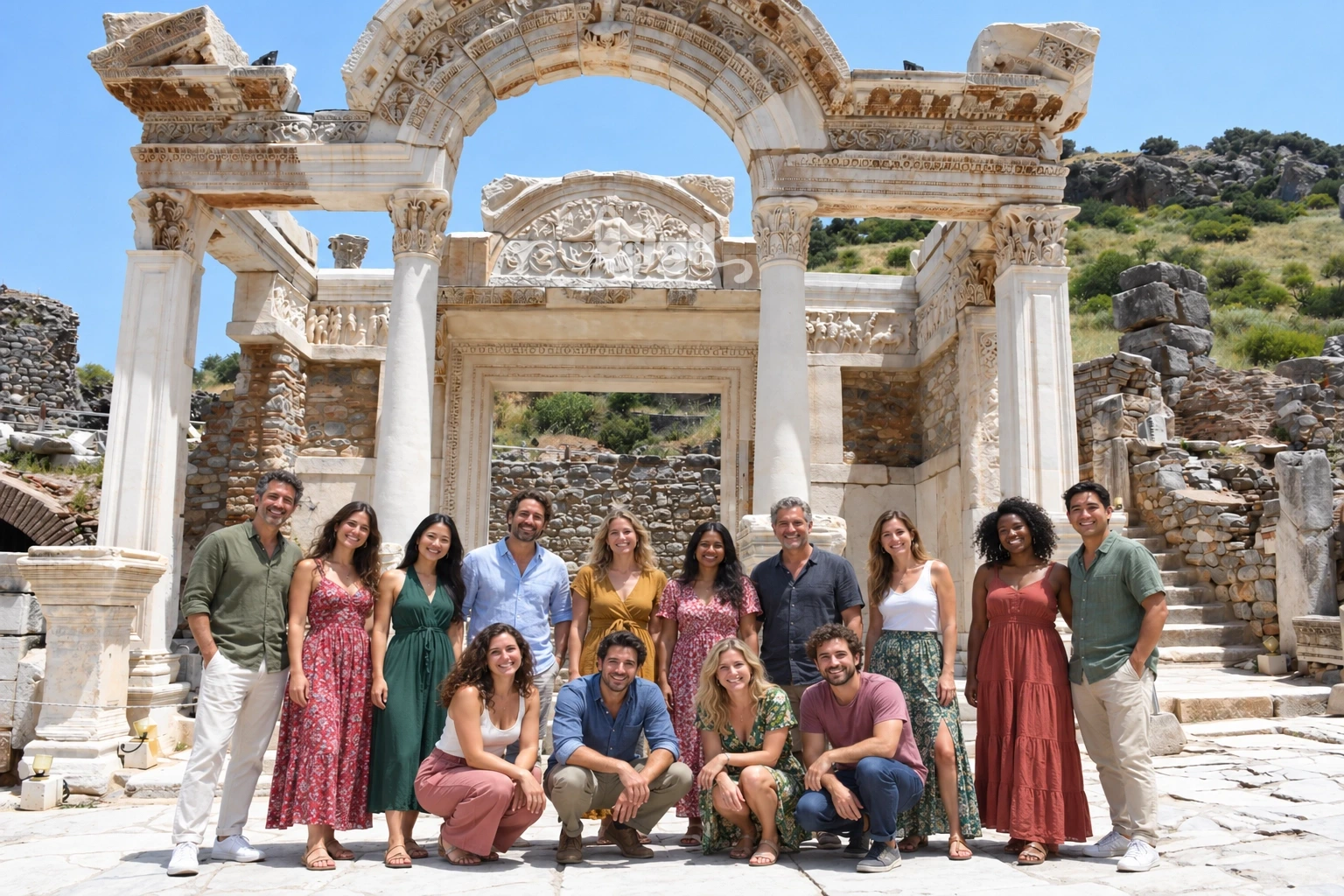
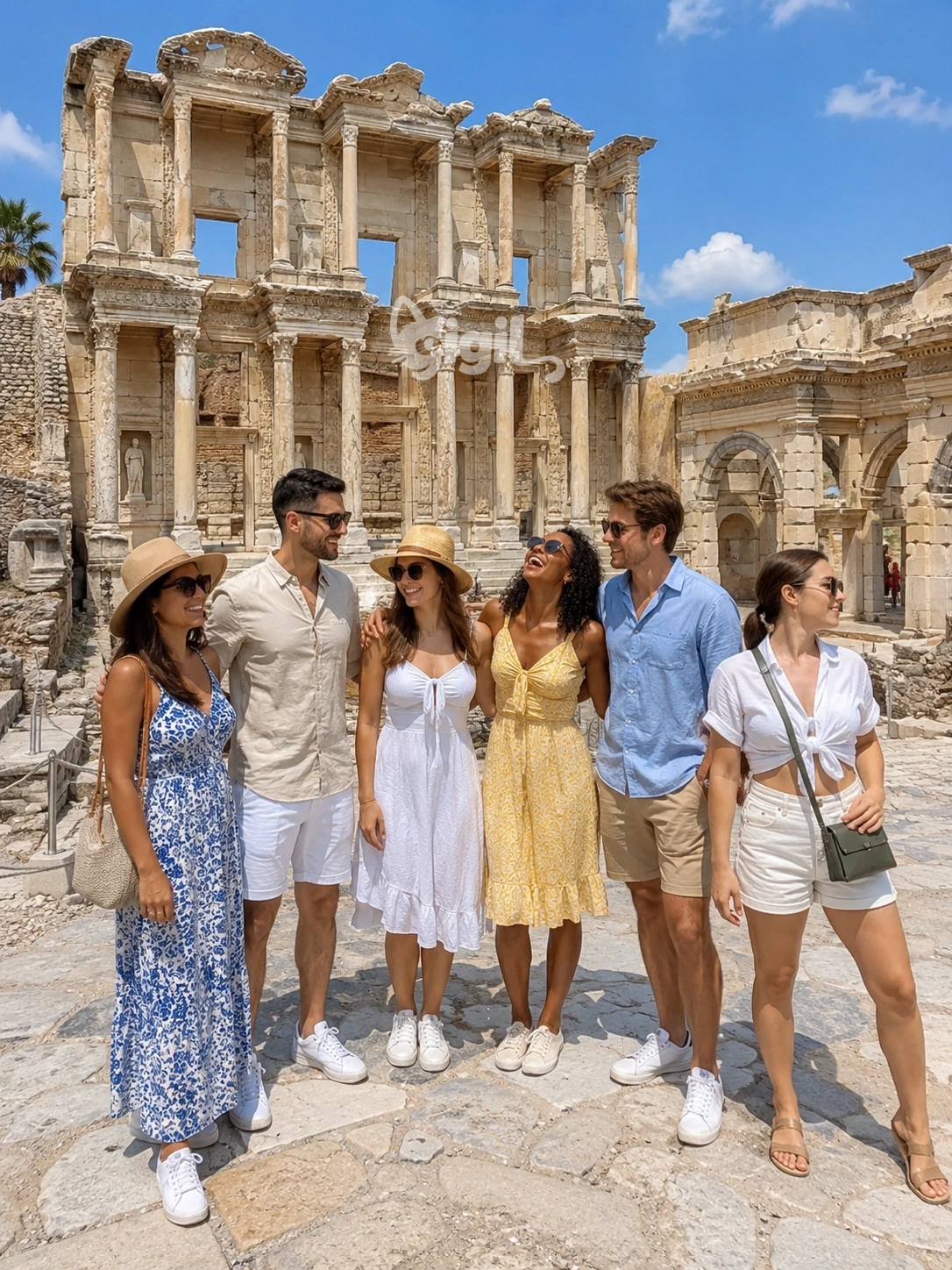
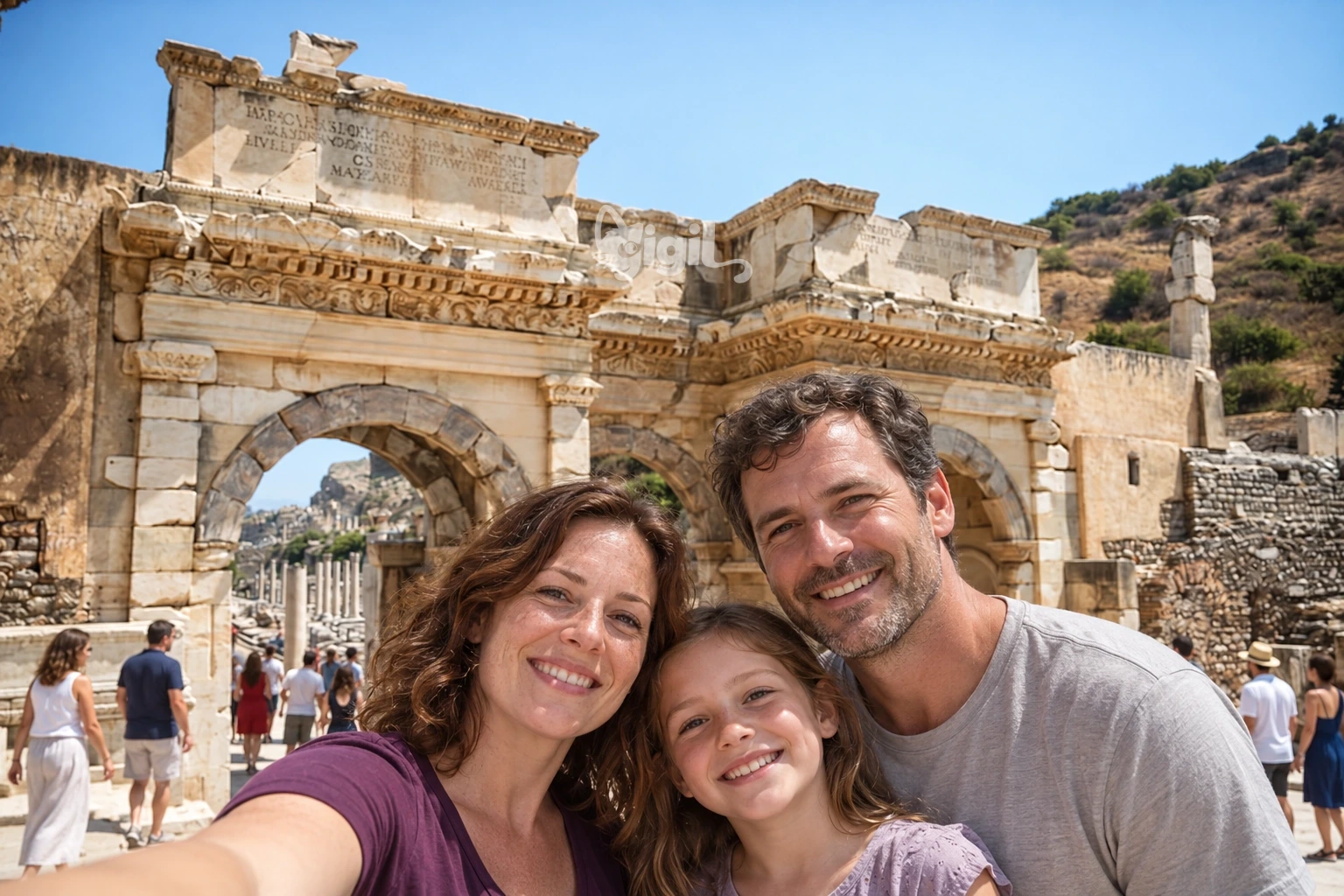
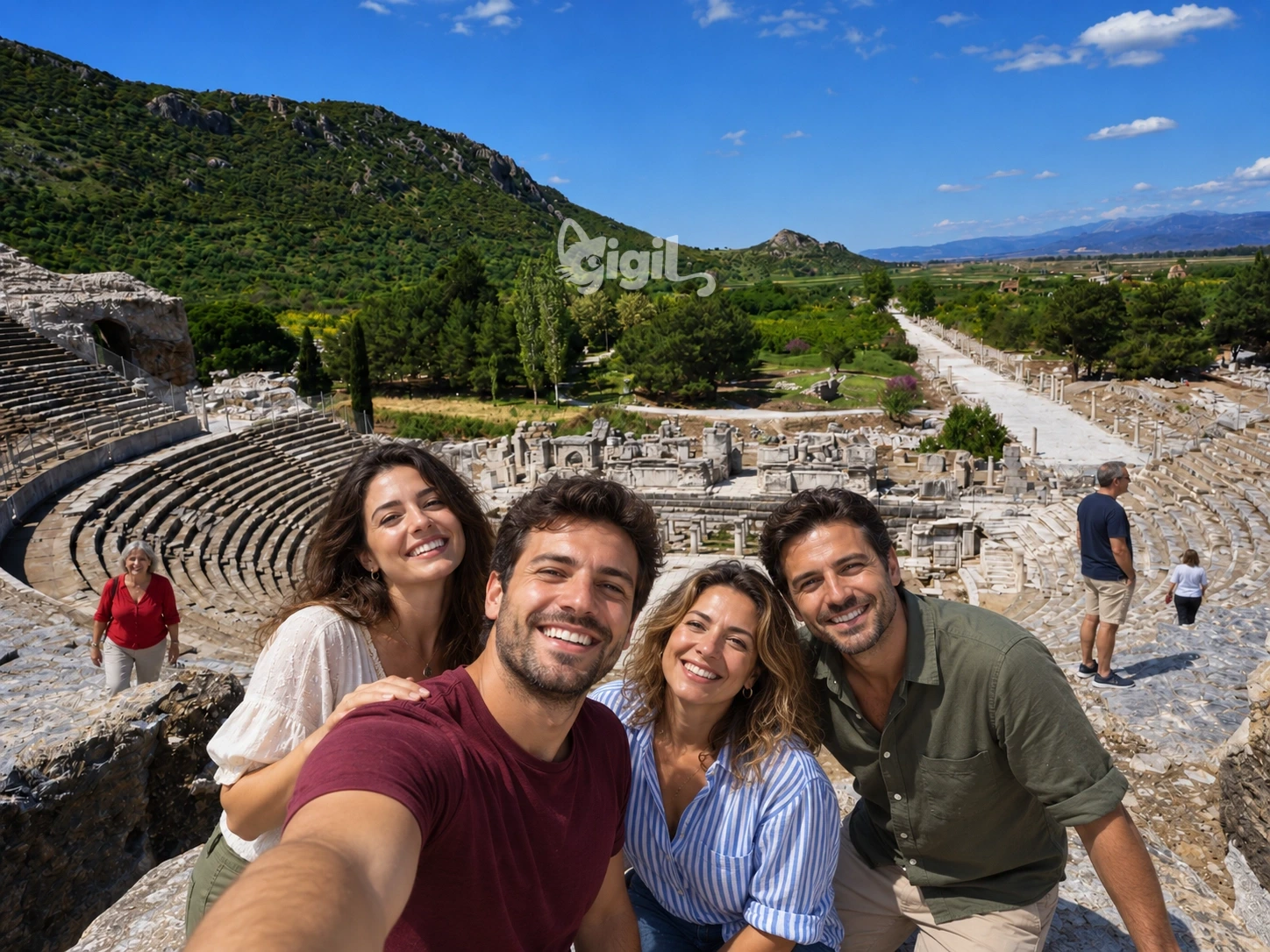
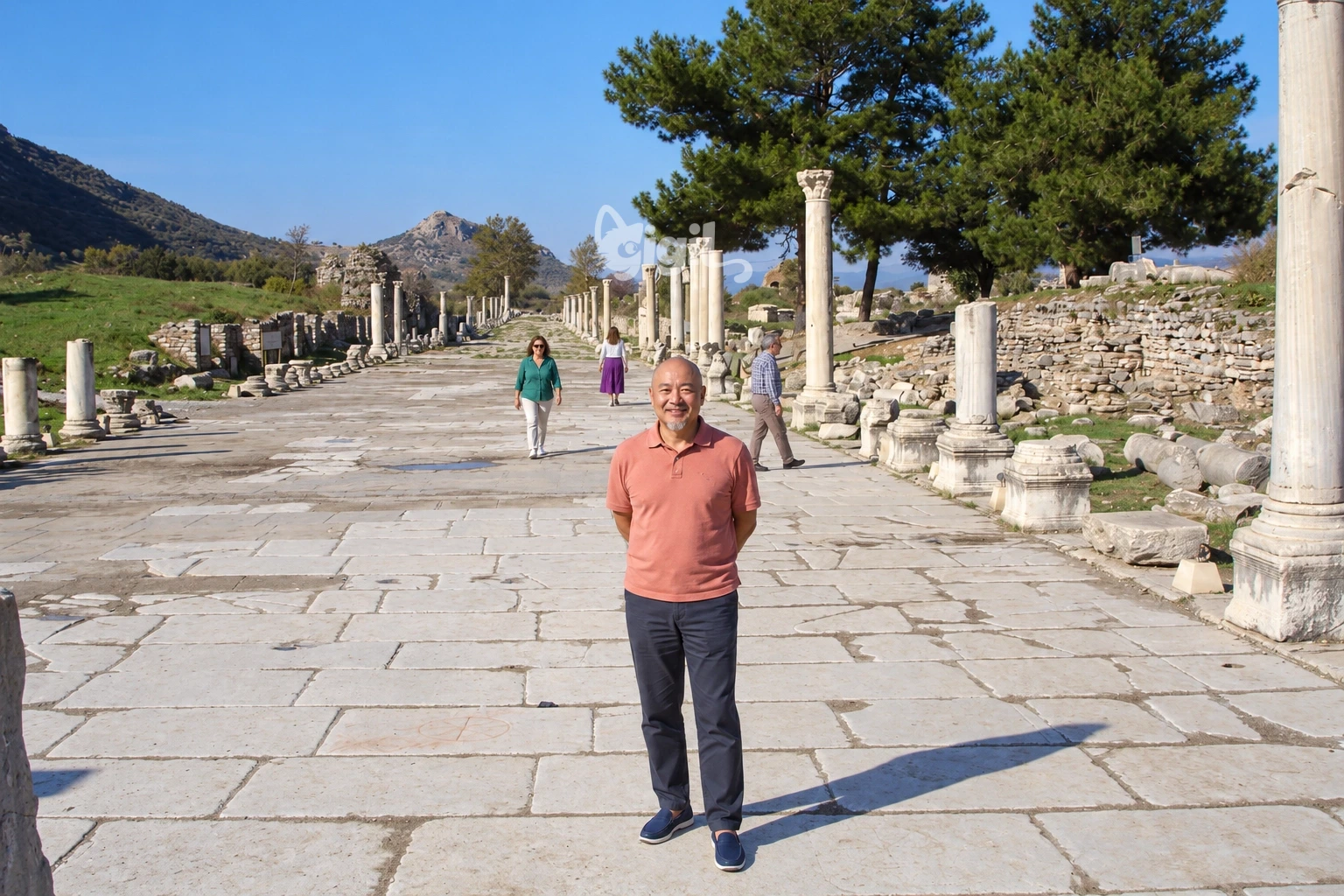
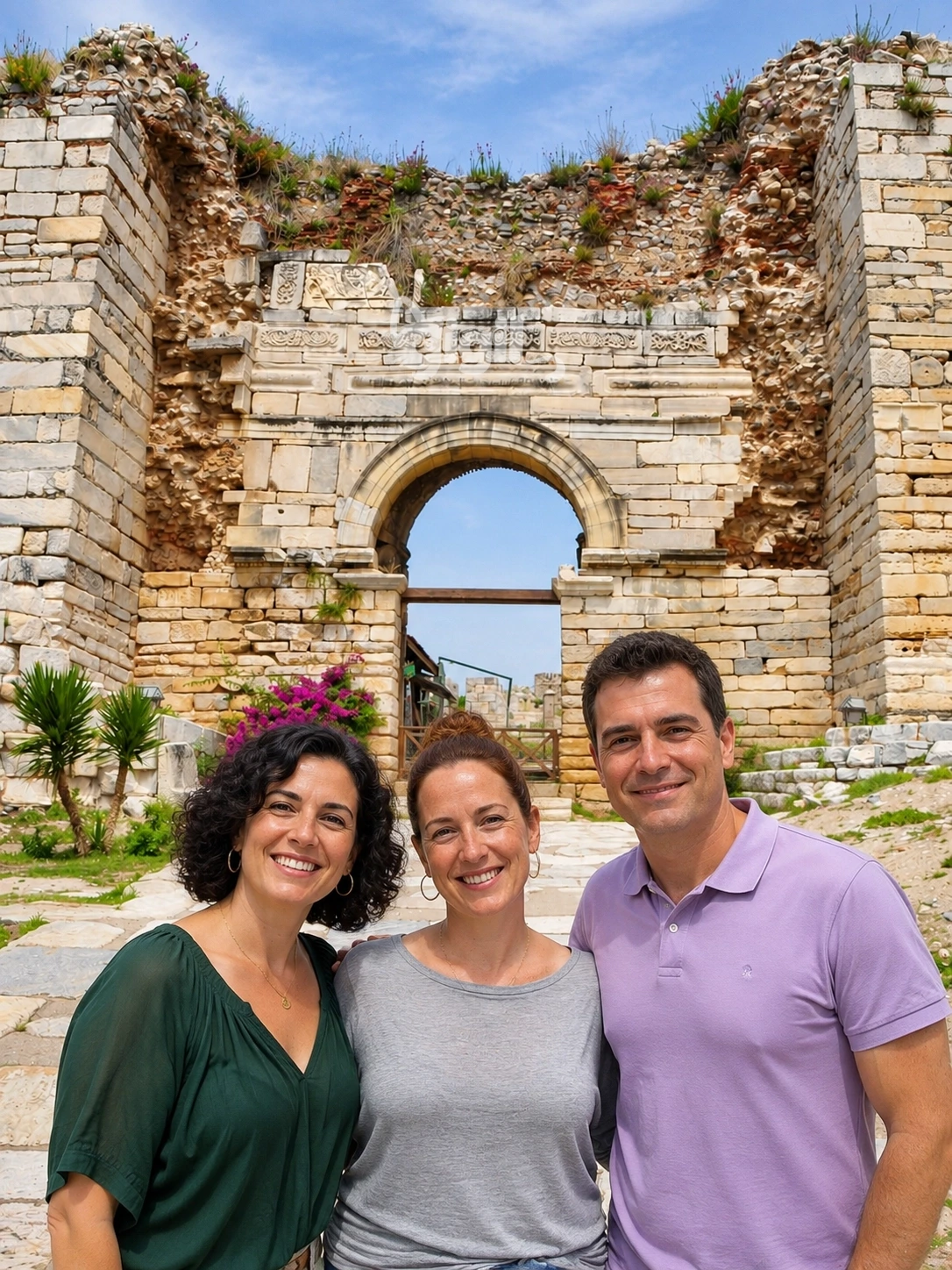
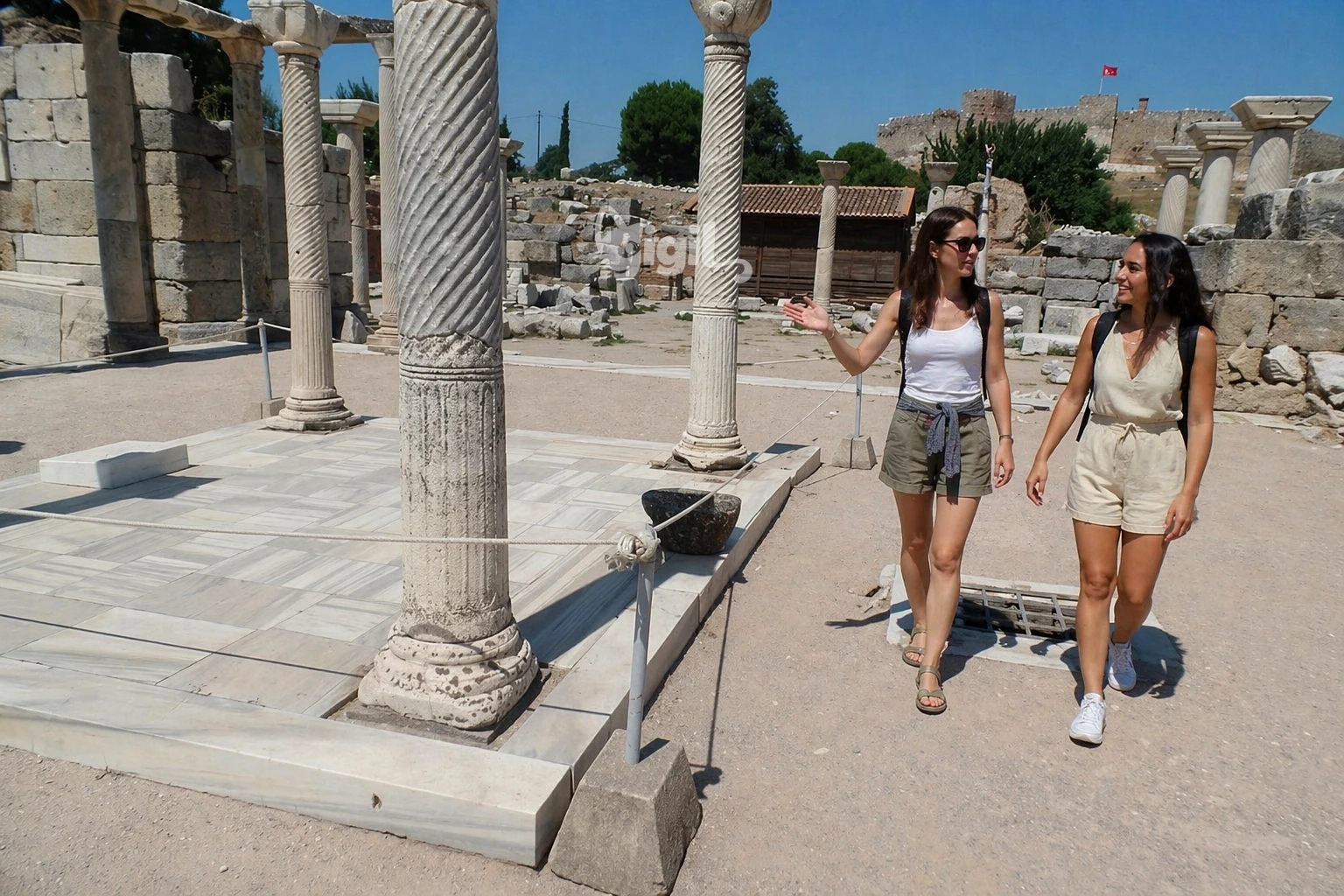
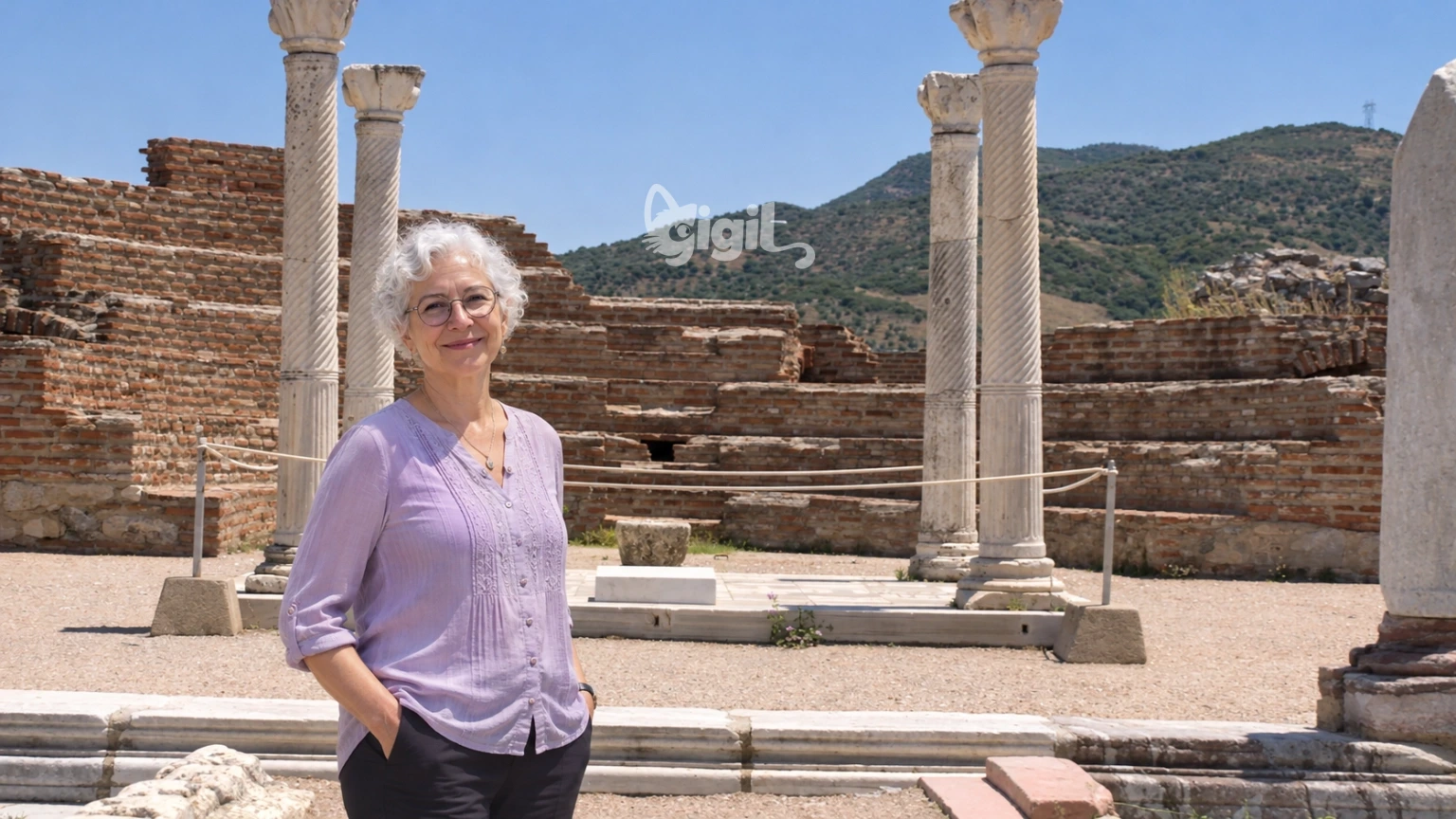
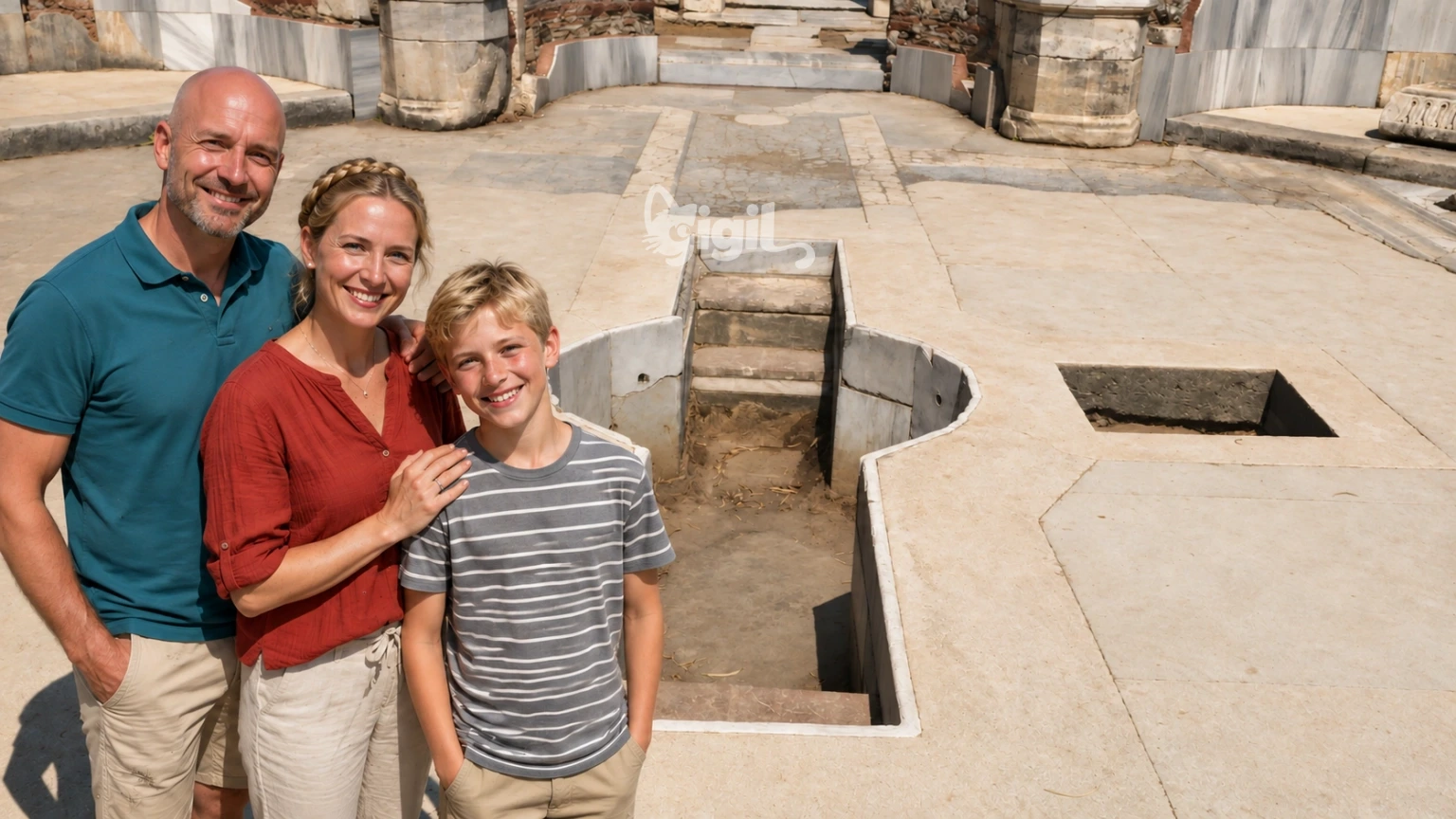
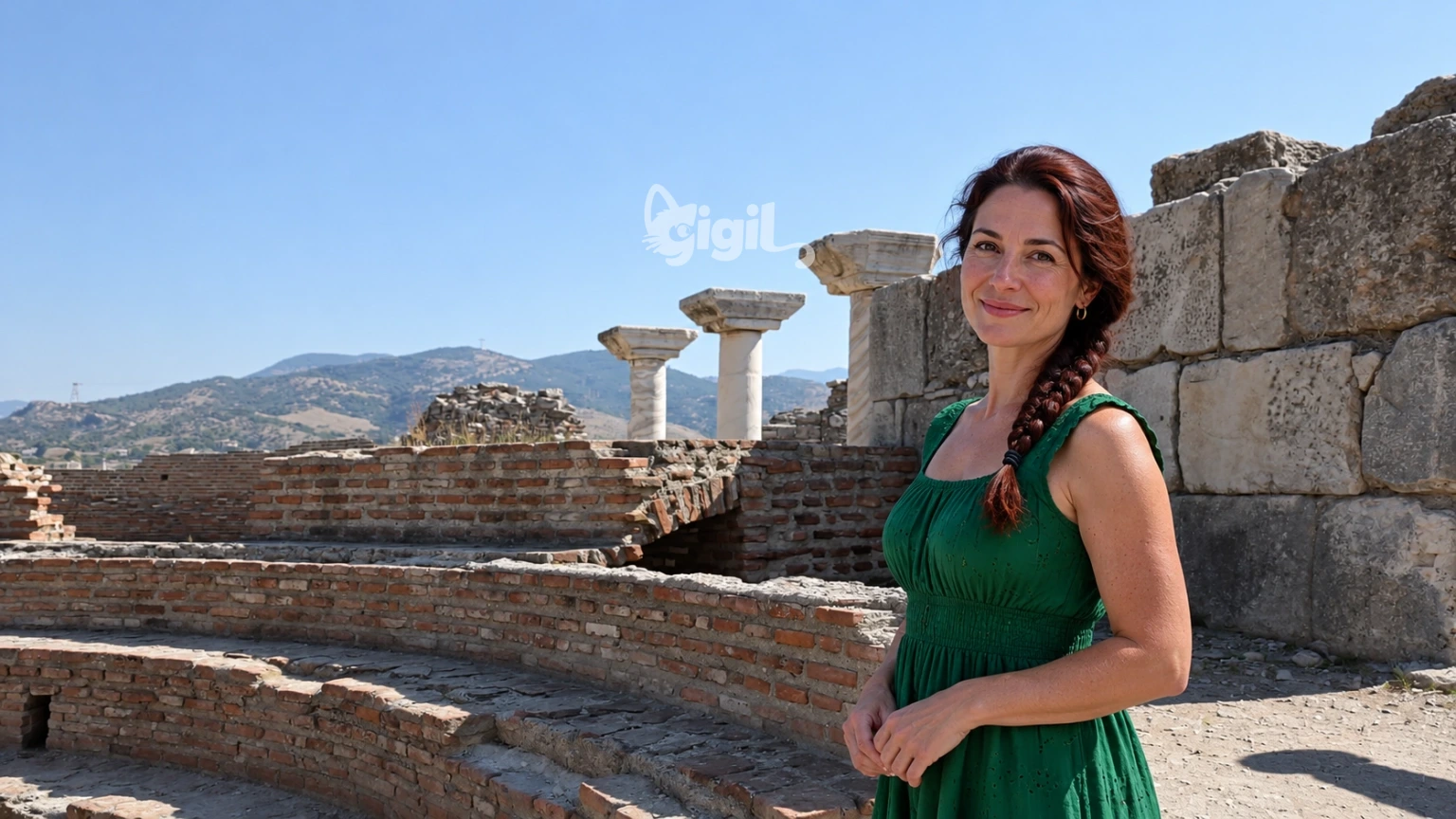
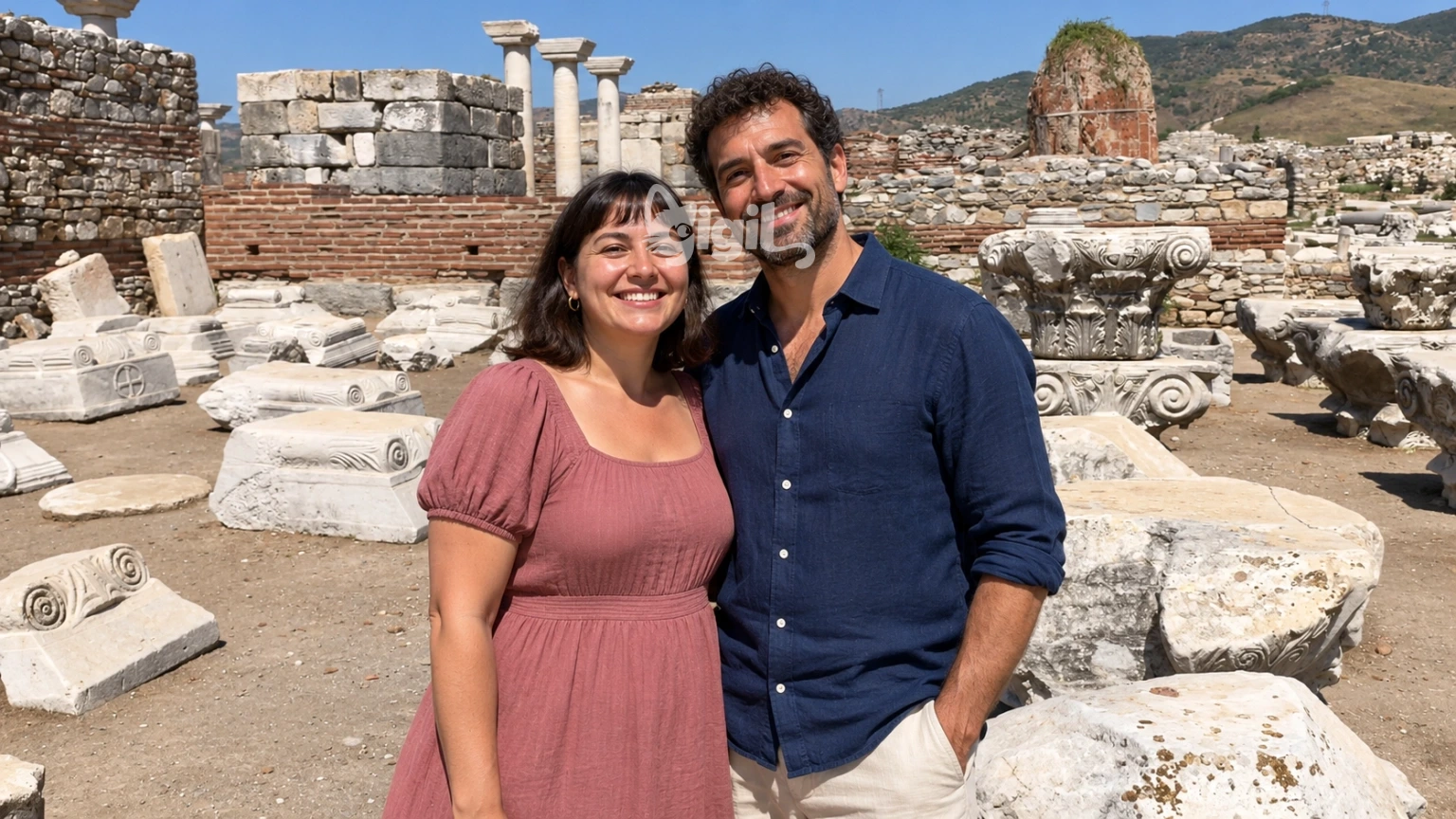
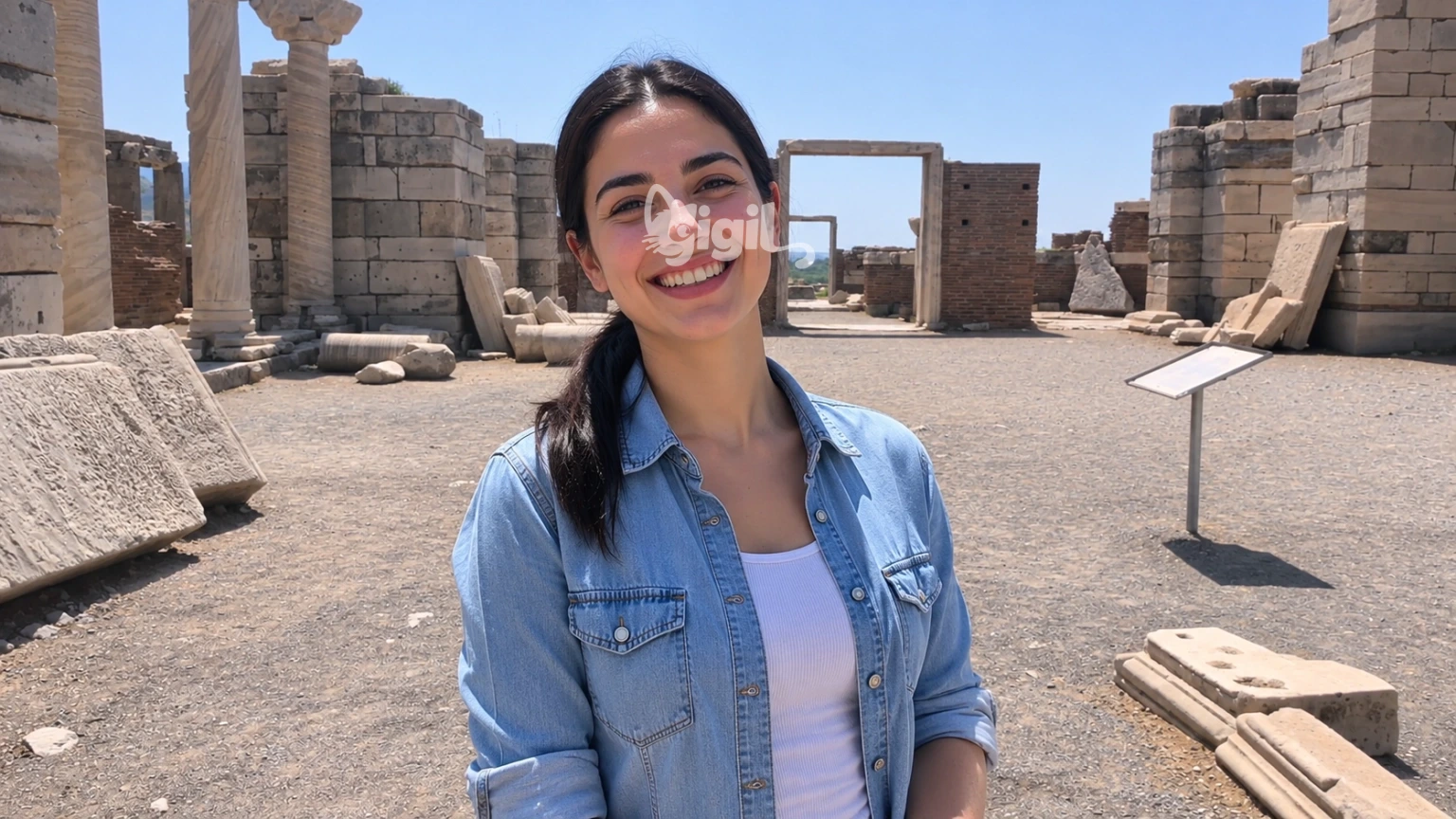
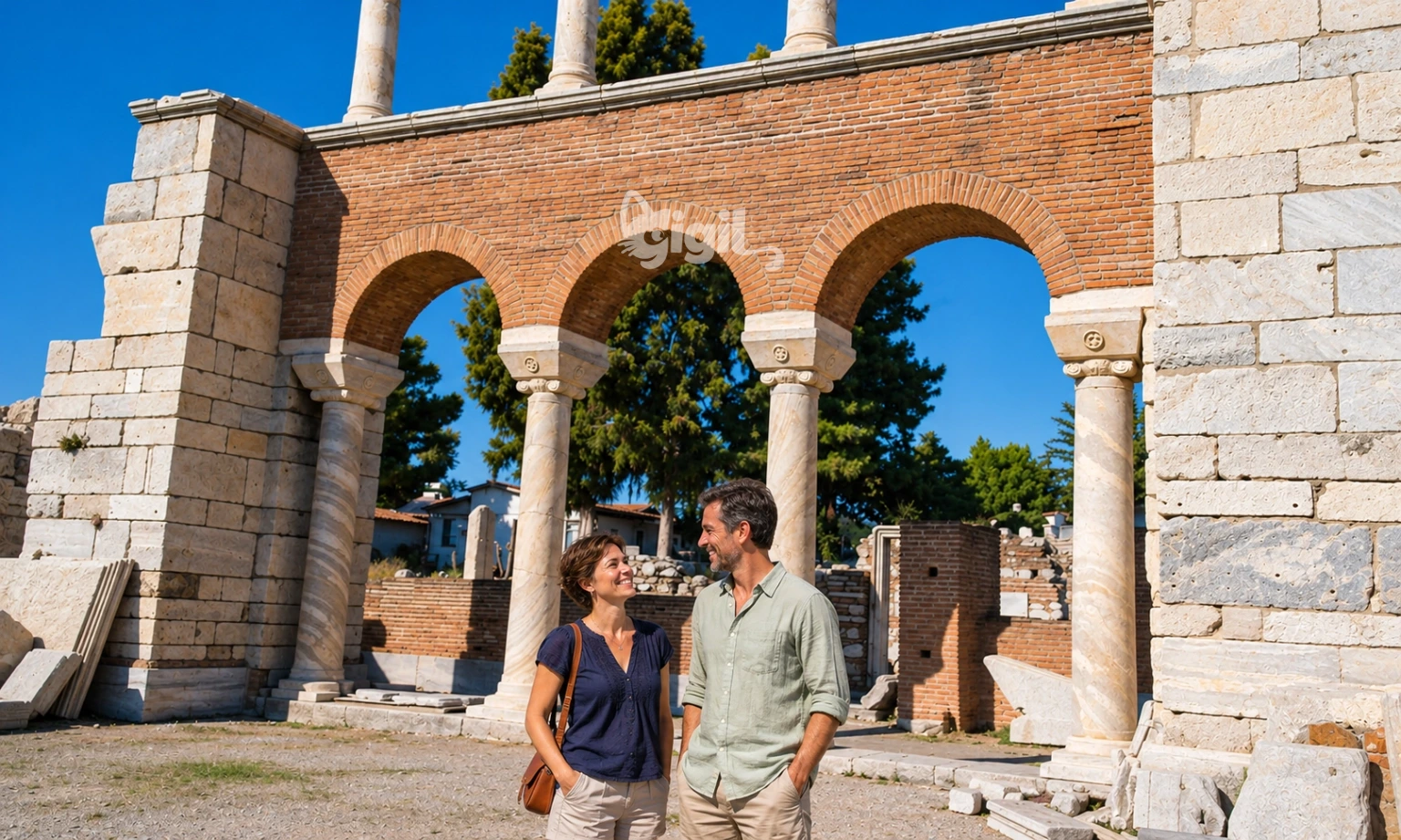
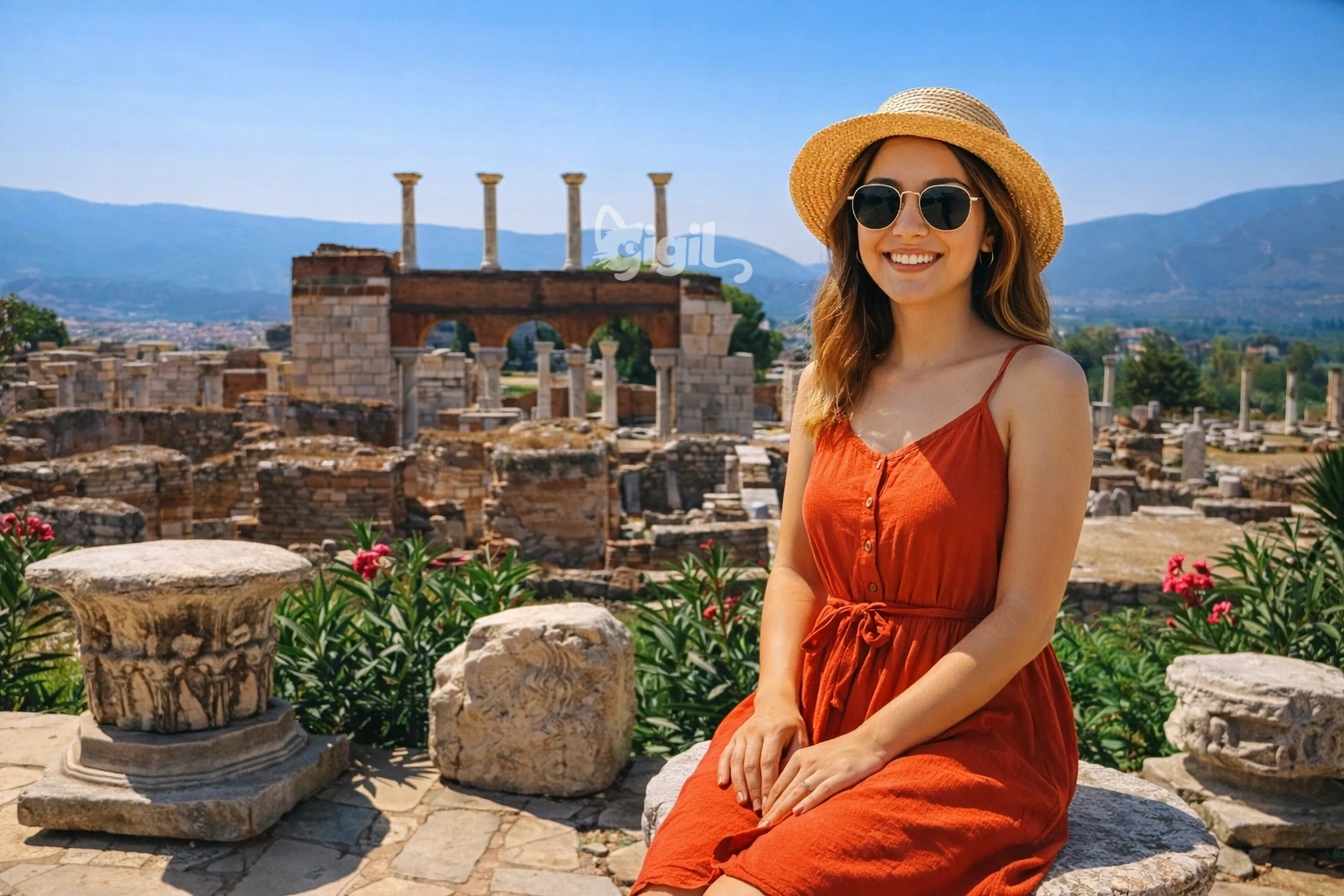
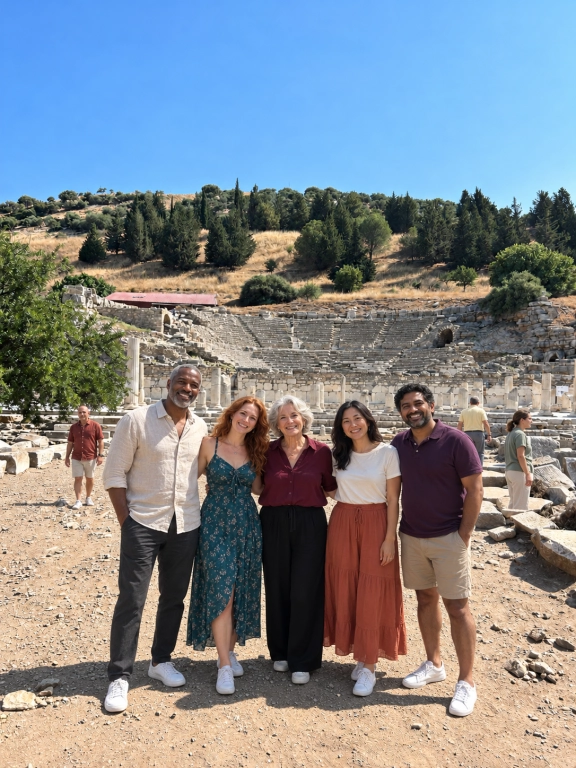
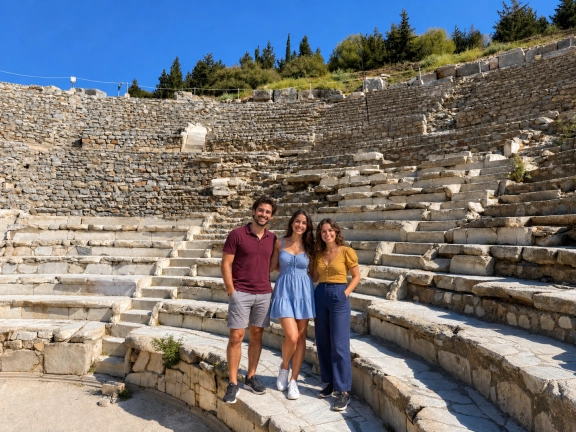
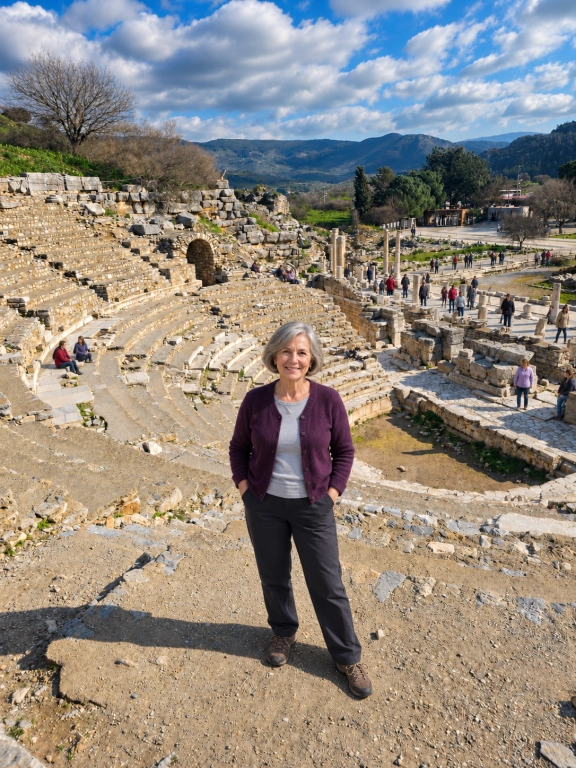
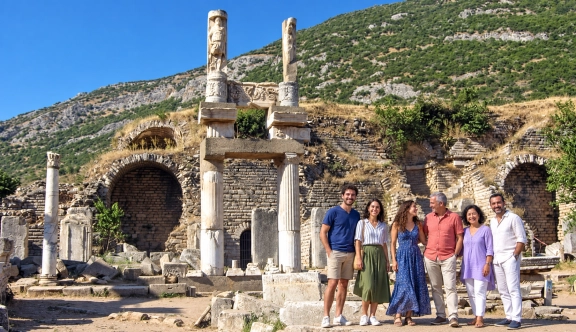
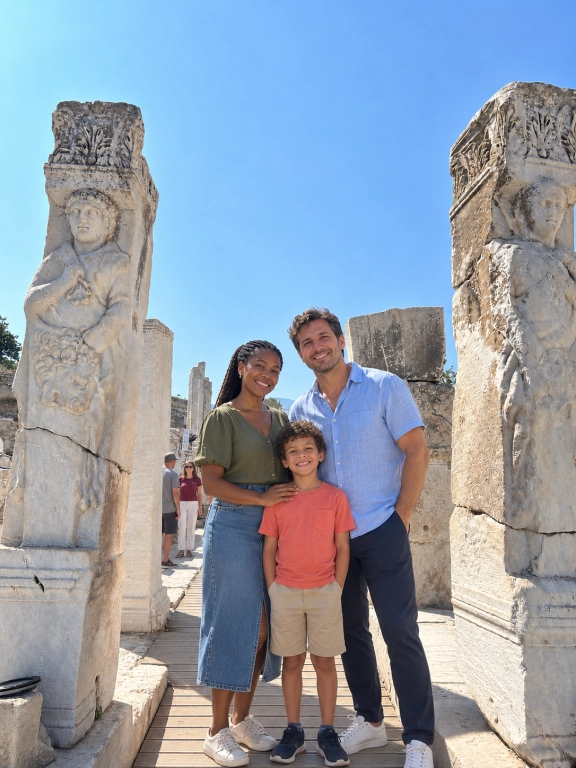
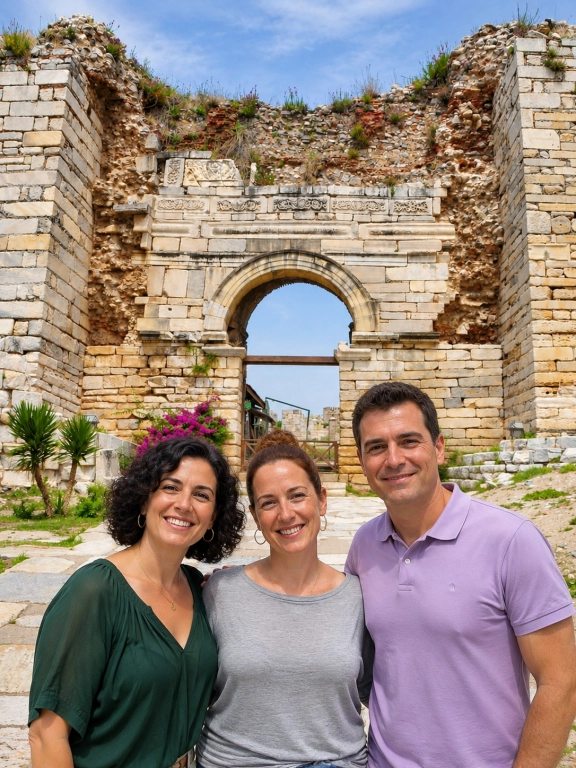
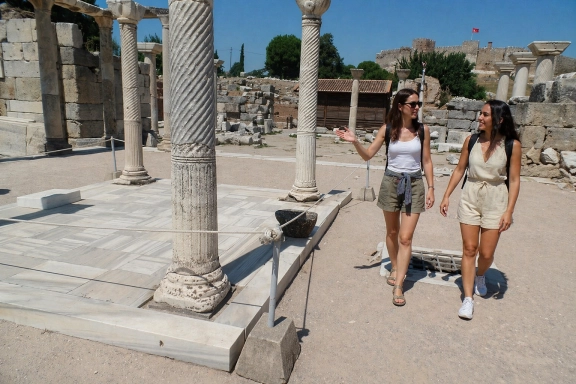
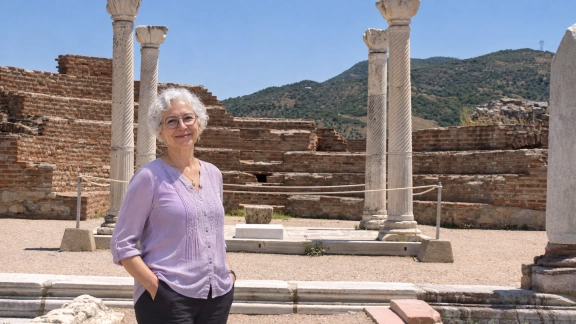
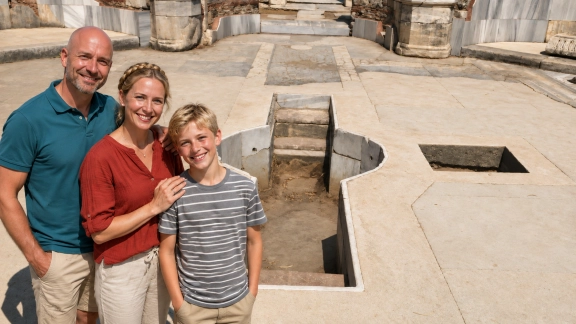
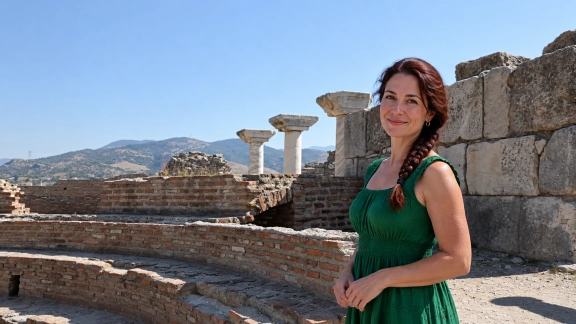
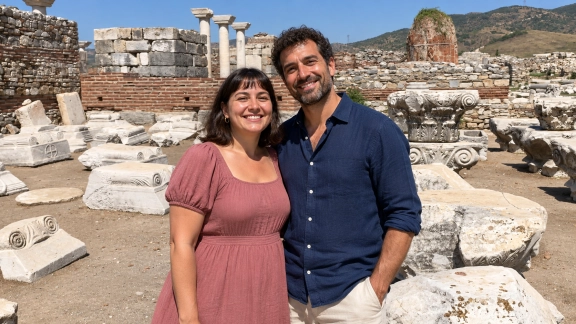
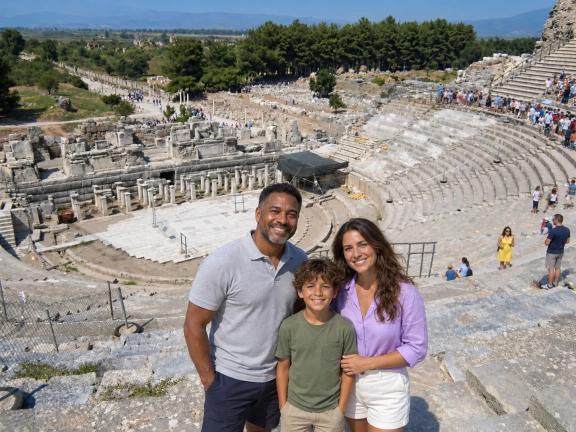
Ephesus rewards attention to connections: a street opening into a public space, a column marking an edge, a monumental front drawing the eye. The Library of Celsus and Great Theatre are anchors within that larger cityscape.
Try comparing the scale of a single architectural fragment with the spaces around it. This helps turn abstract ruins into evidence of buildings used by people, while keeping clear that much of the original construction no longer stands.
Questions
How can I give the ruins a more human scale?
Compare doorways, columns and street widths rather than looking only at the largest surviving monuments.
What is the library facade telling us?
Its columns and openings express monumental architecture, although their present arrangement includes modern archaeological reconstruction.
Why include the theatre in a reading of the city?
The Great Theatre shows a different kind of public space from the streets and civic fronts.
Is the present landscape the same as the ancient one?
No. The former harbour setting changed as sediment built up and the coastline shifted.