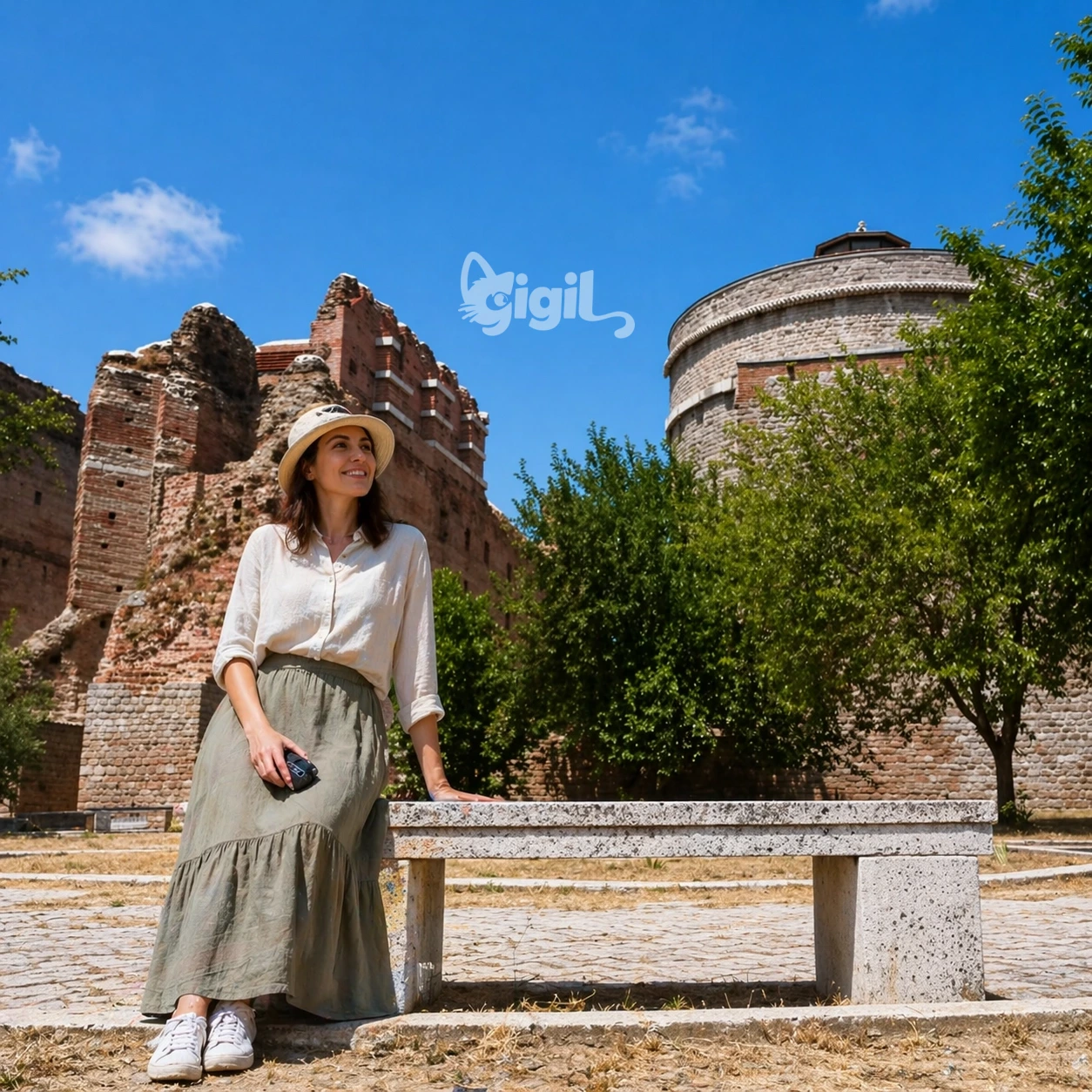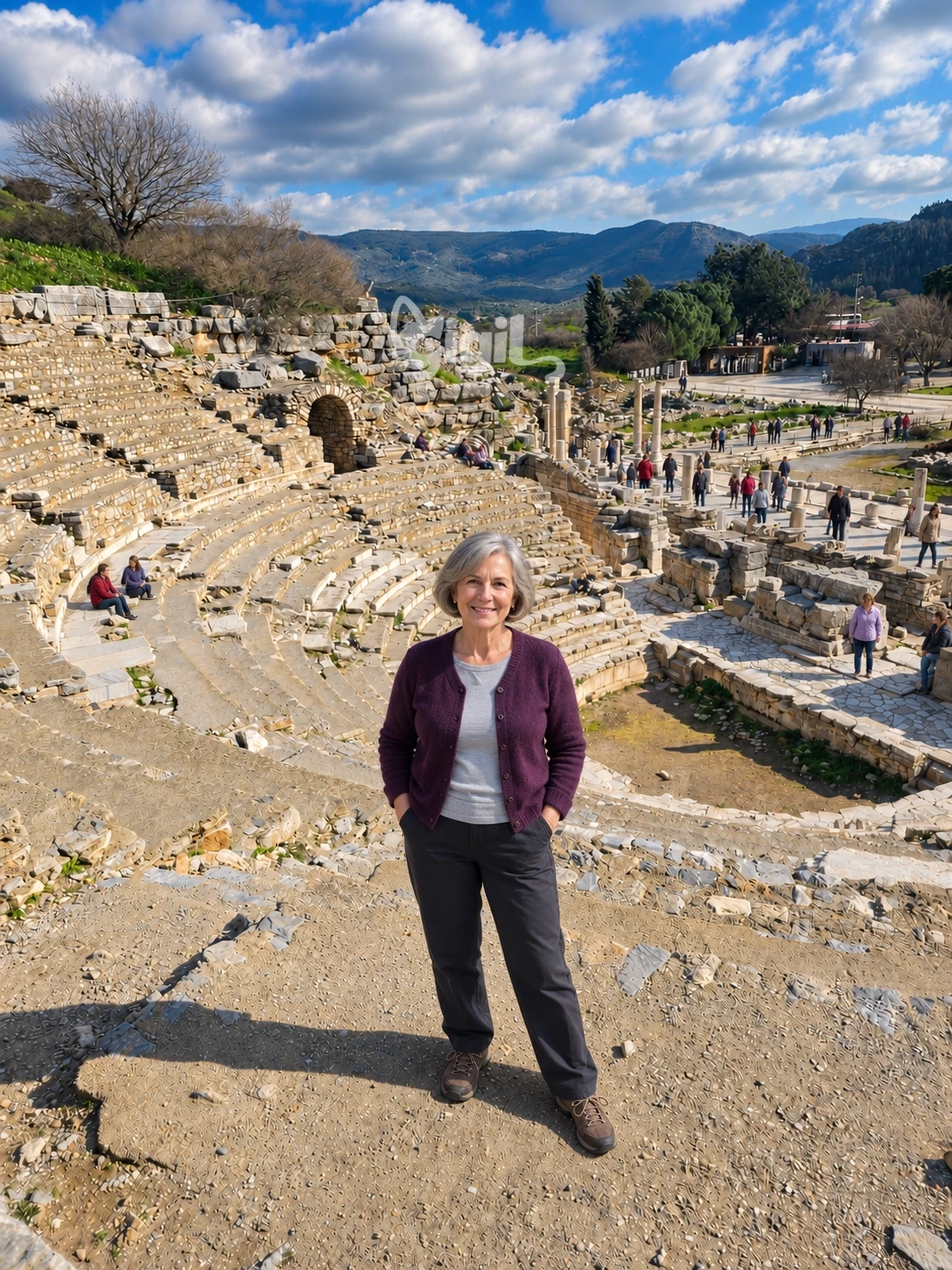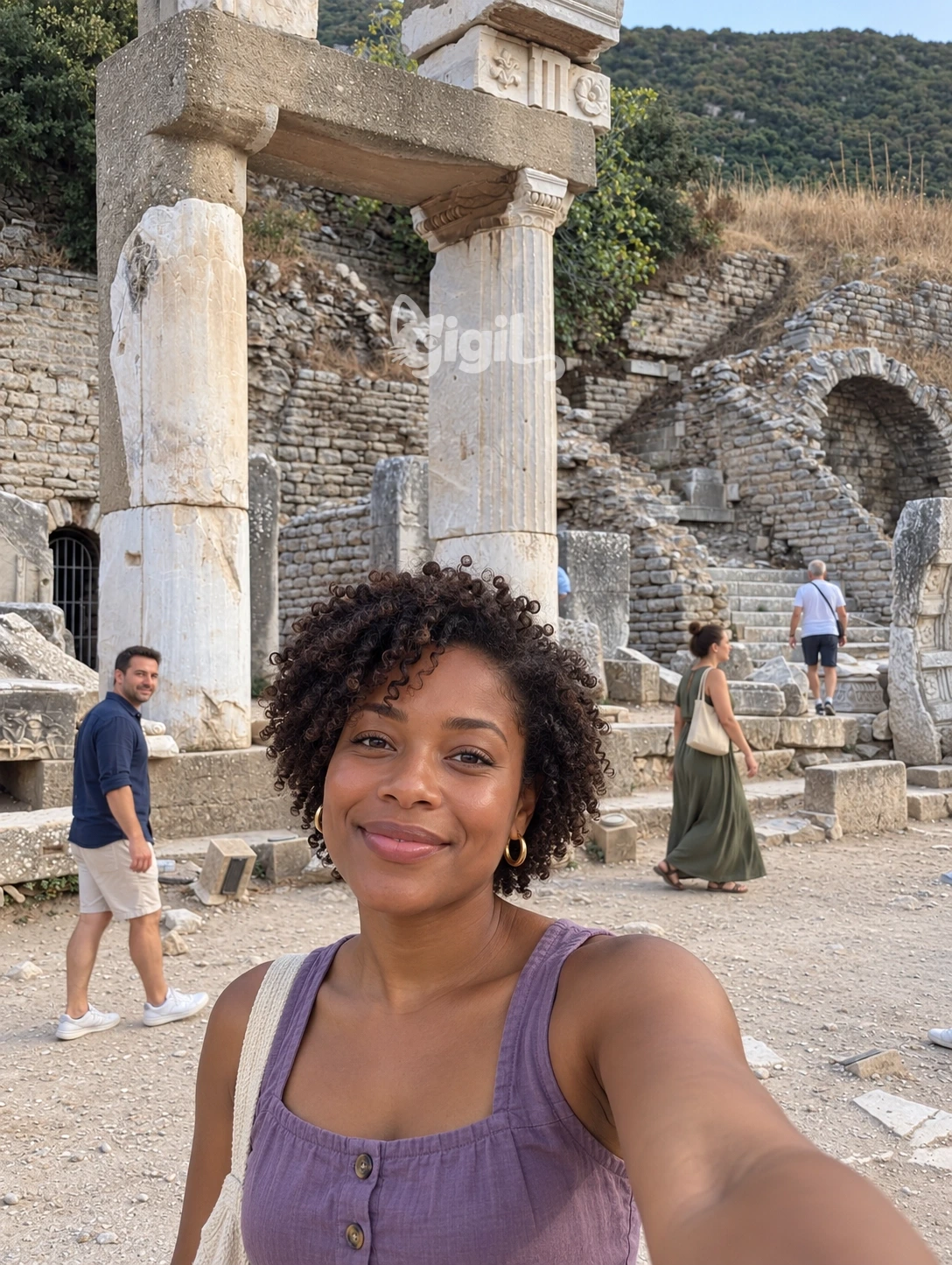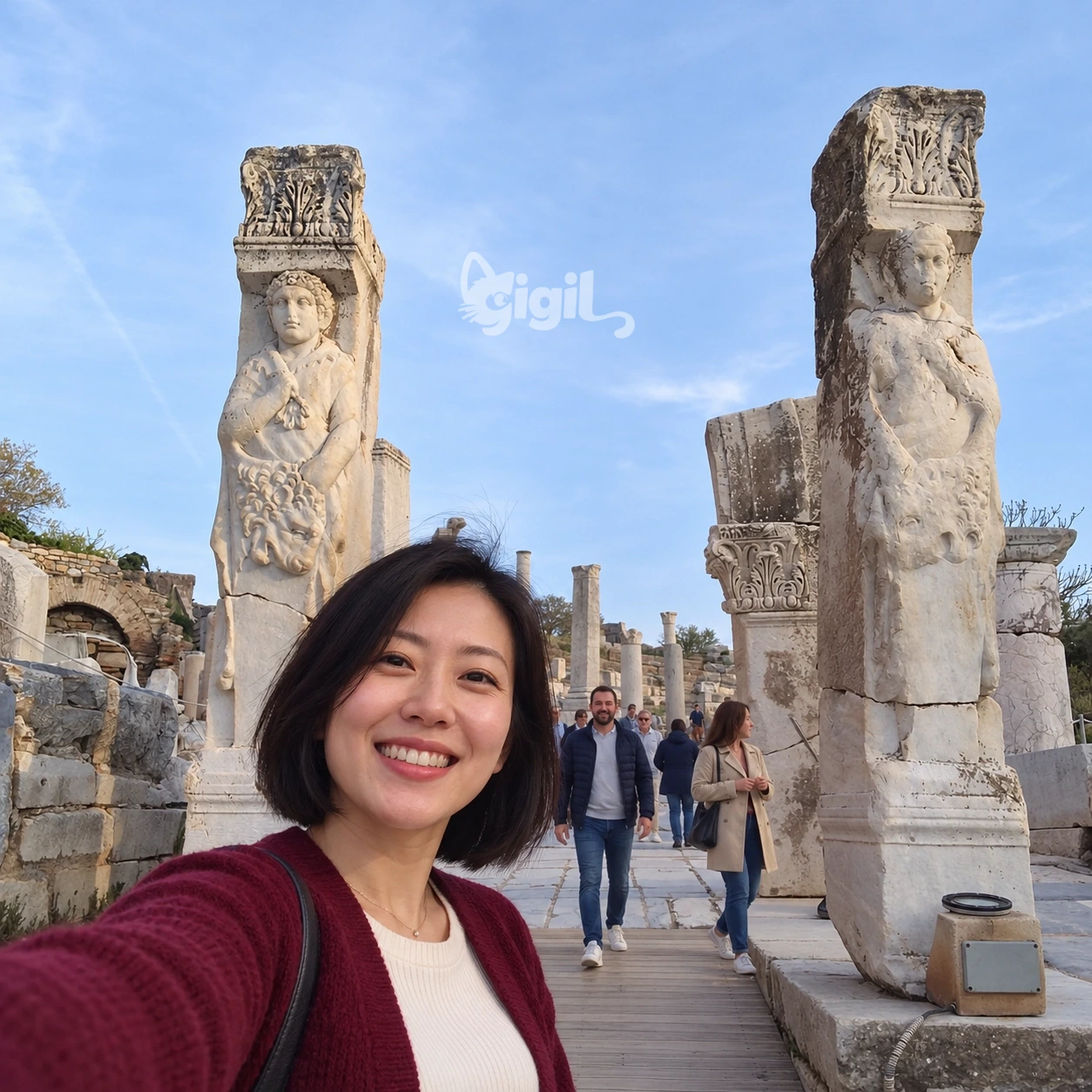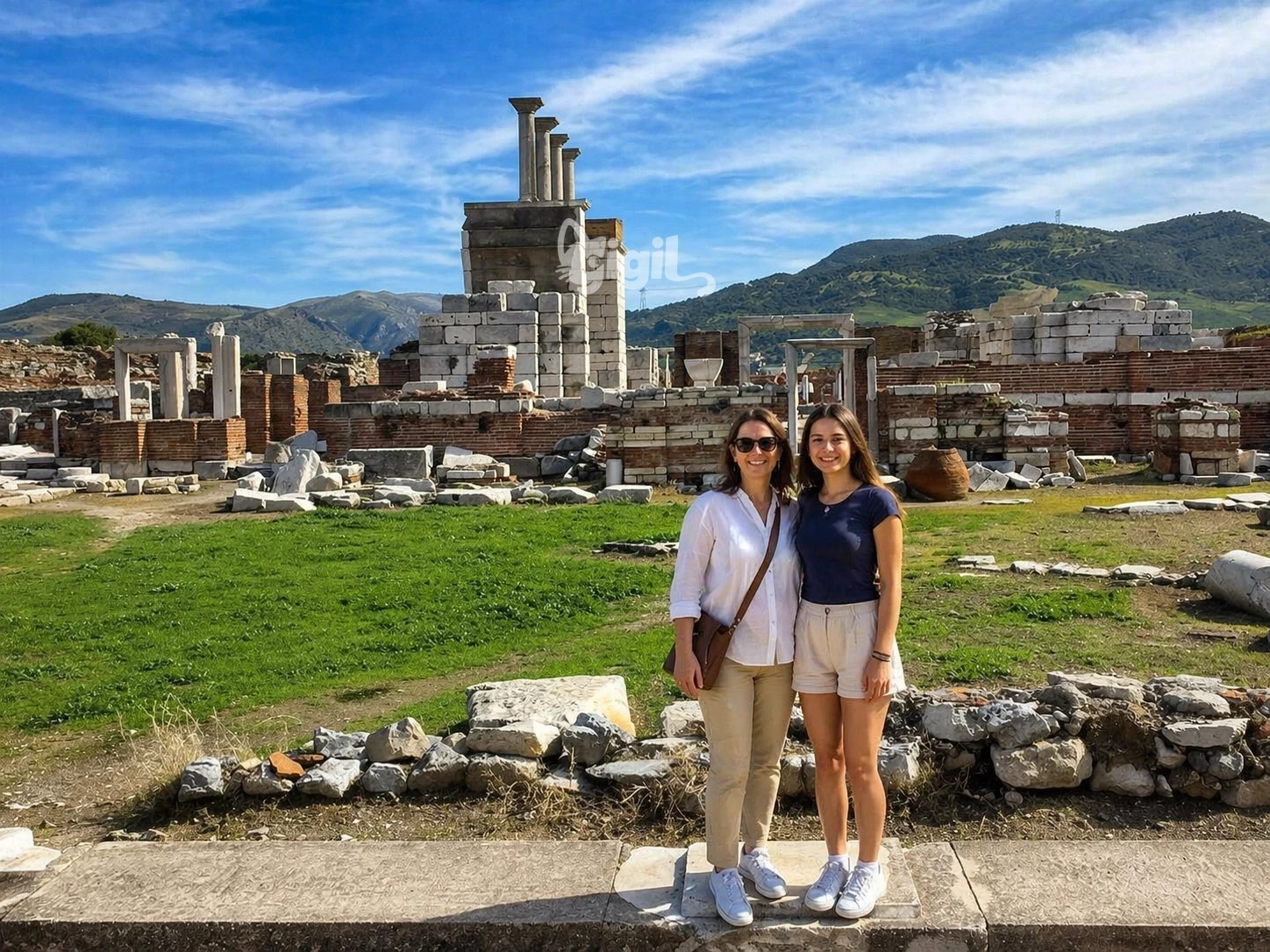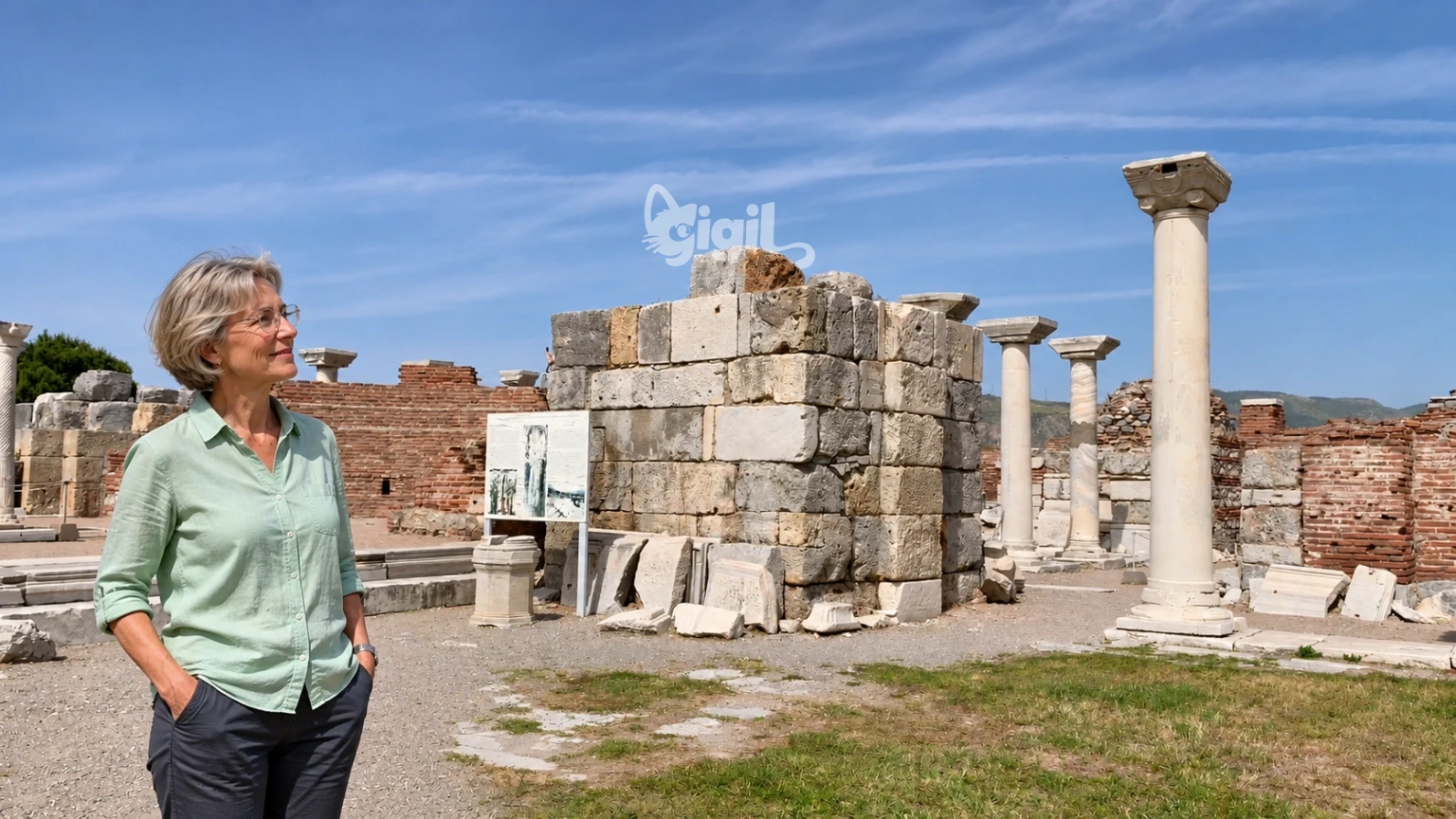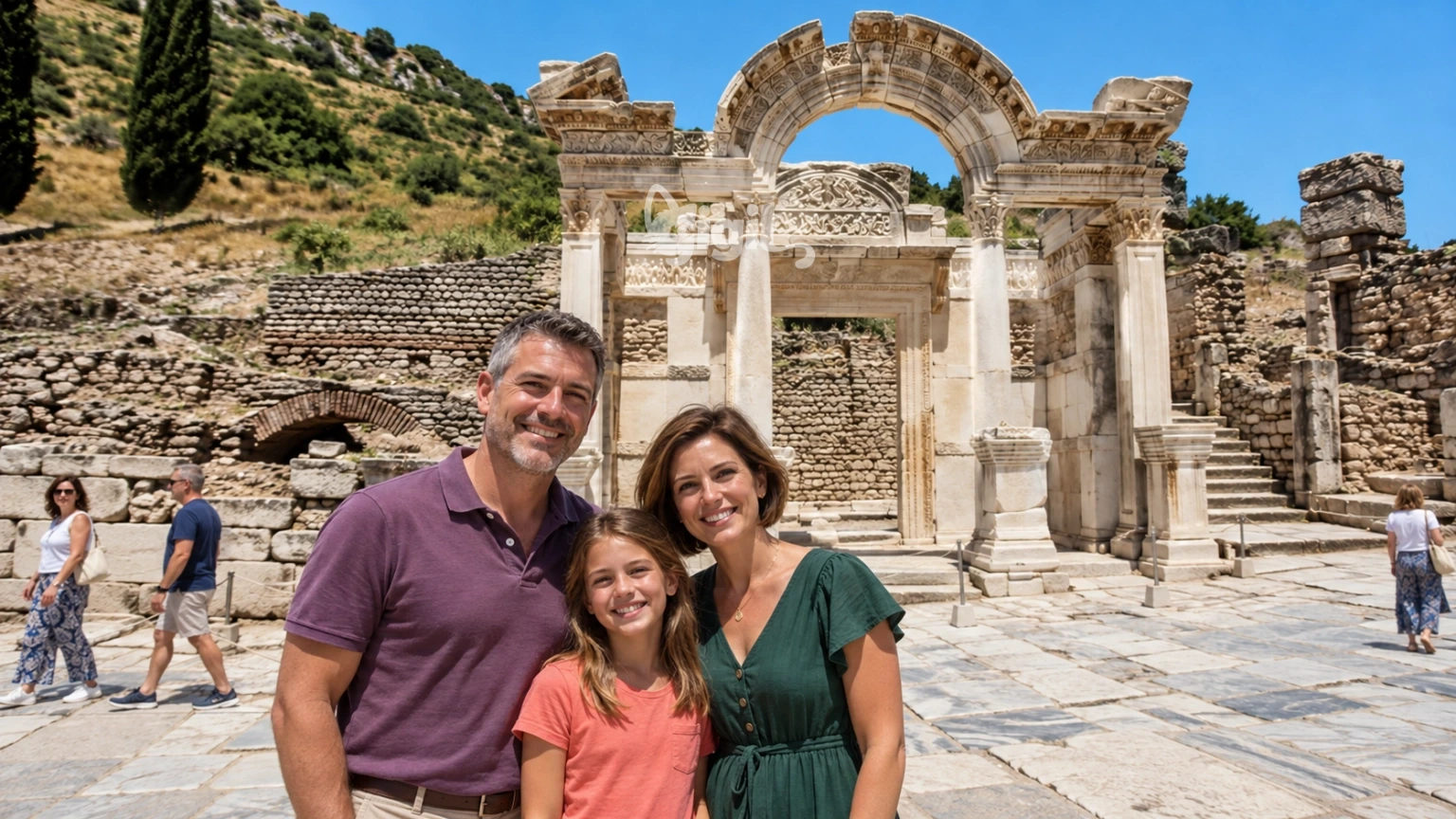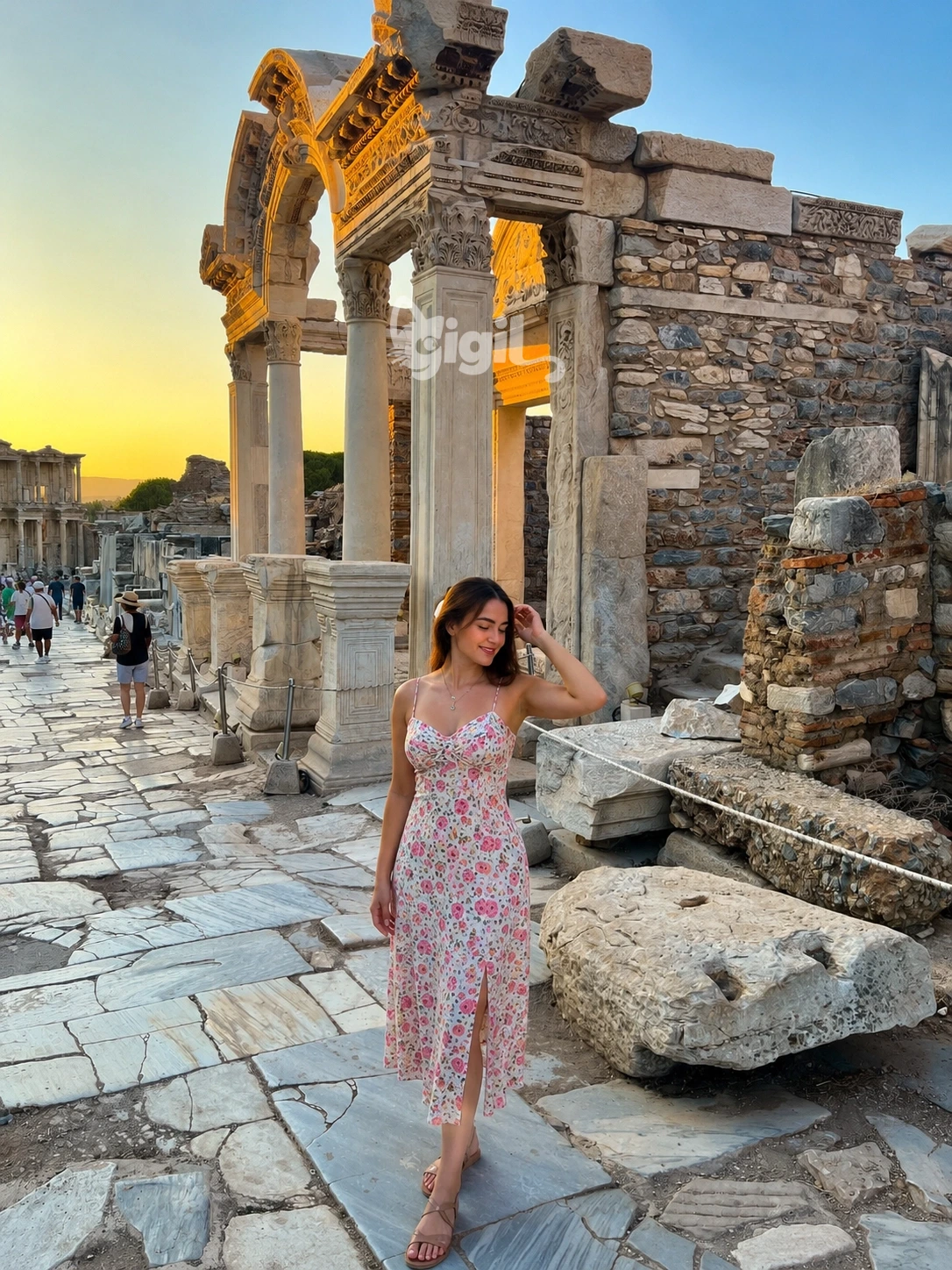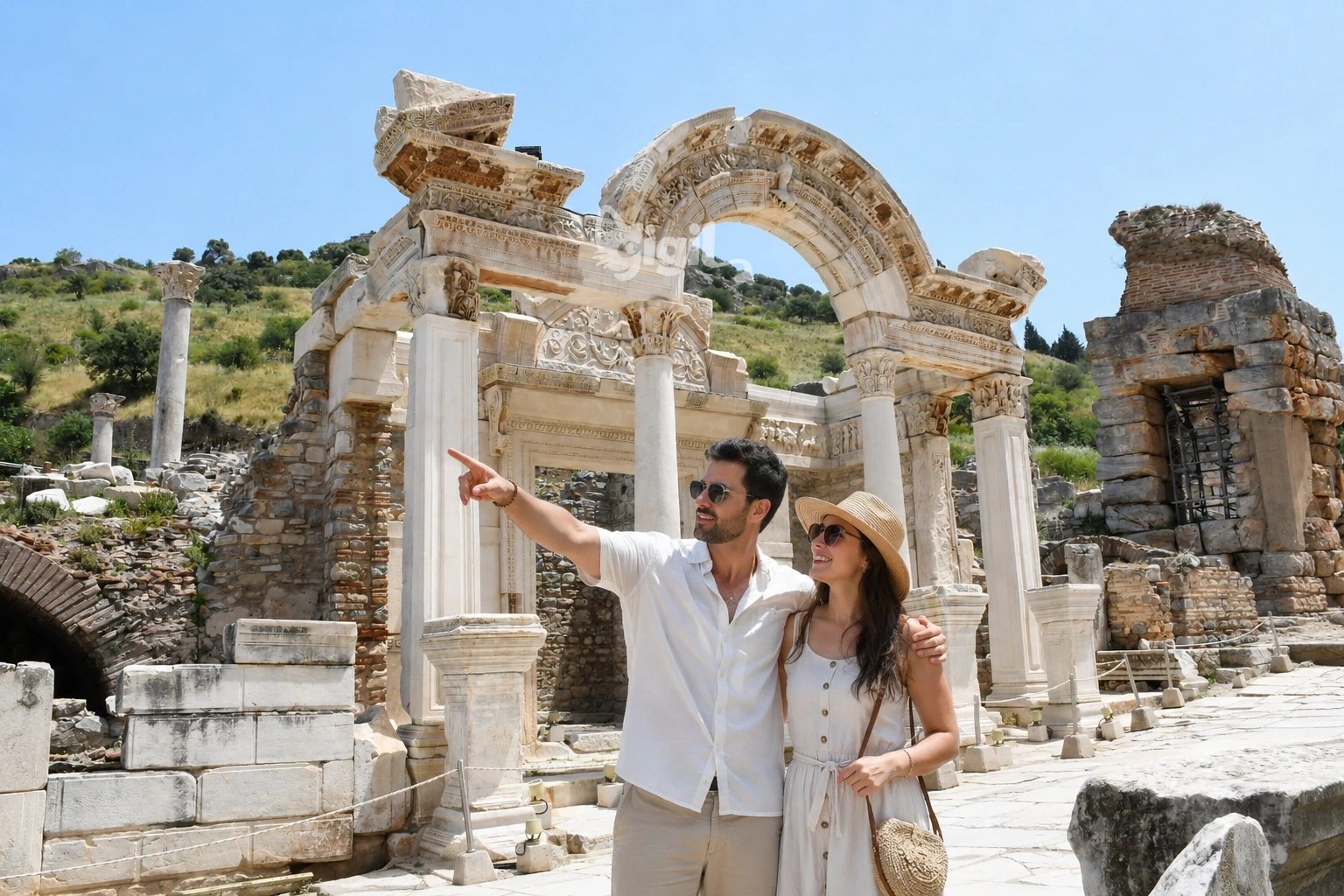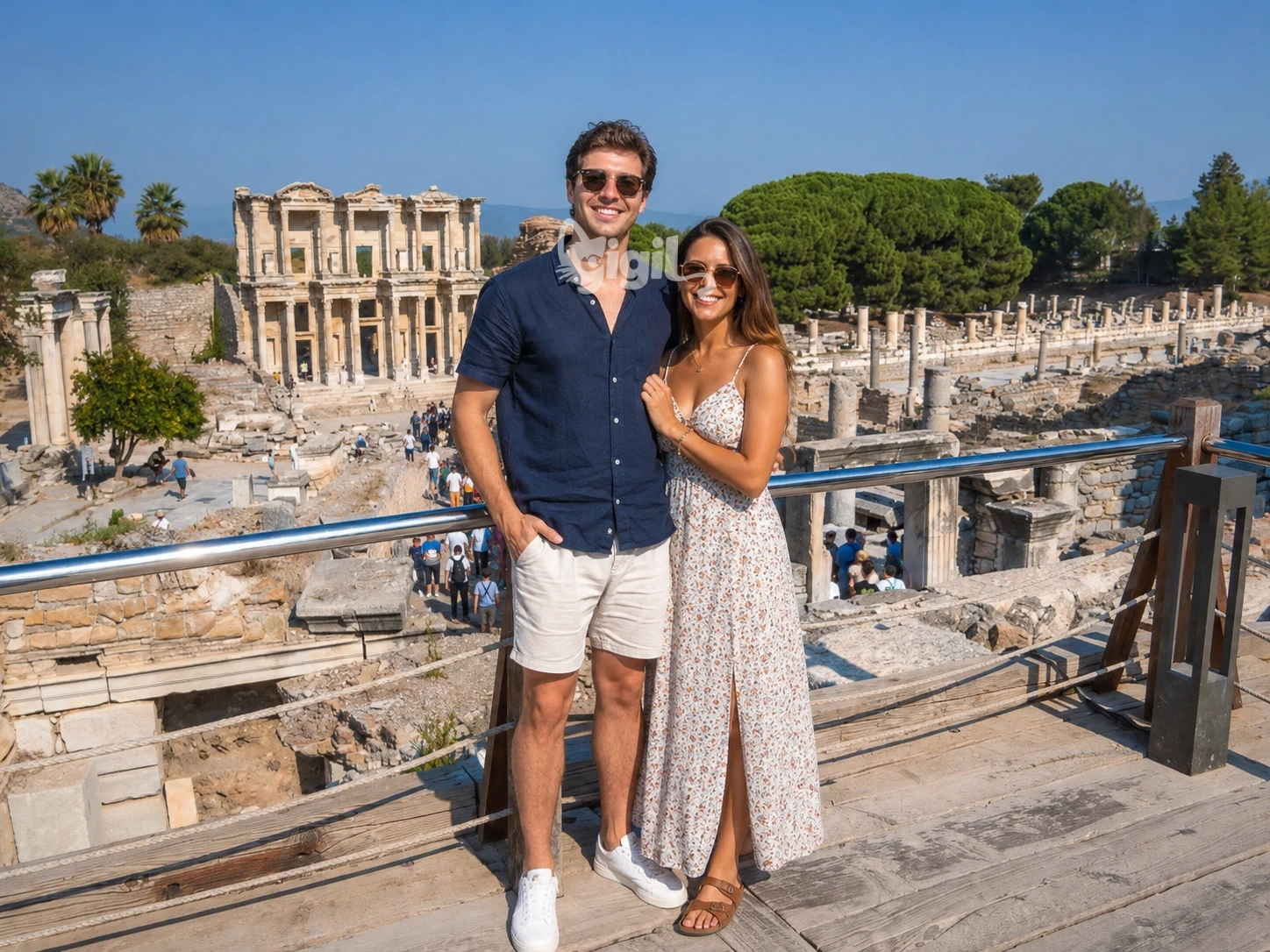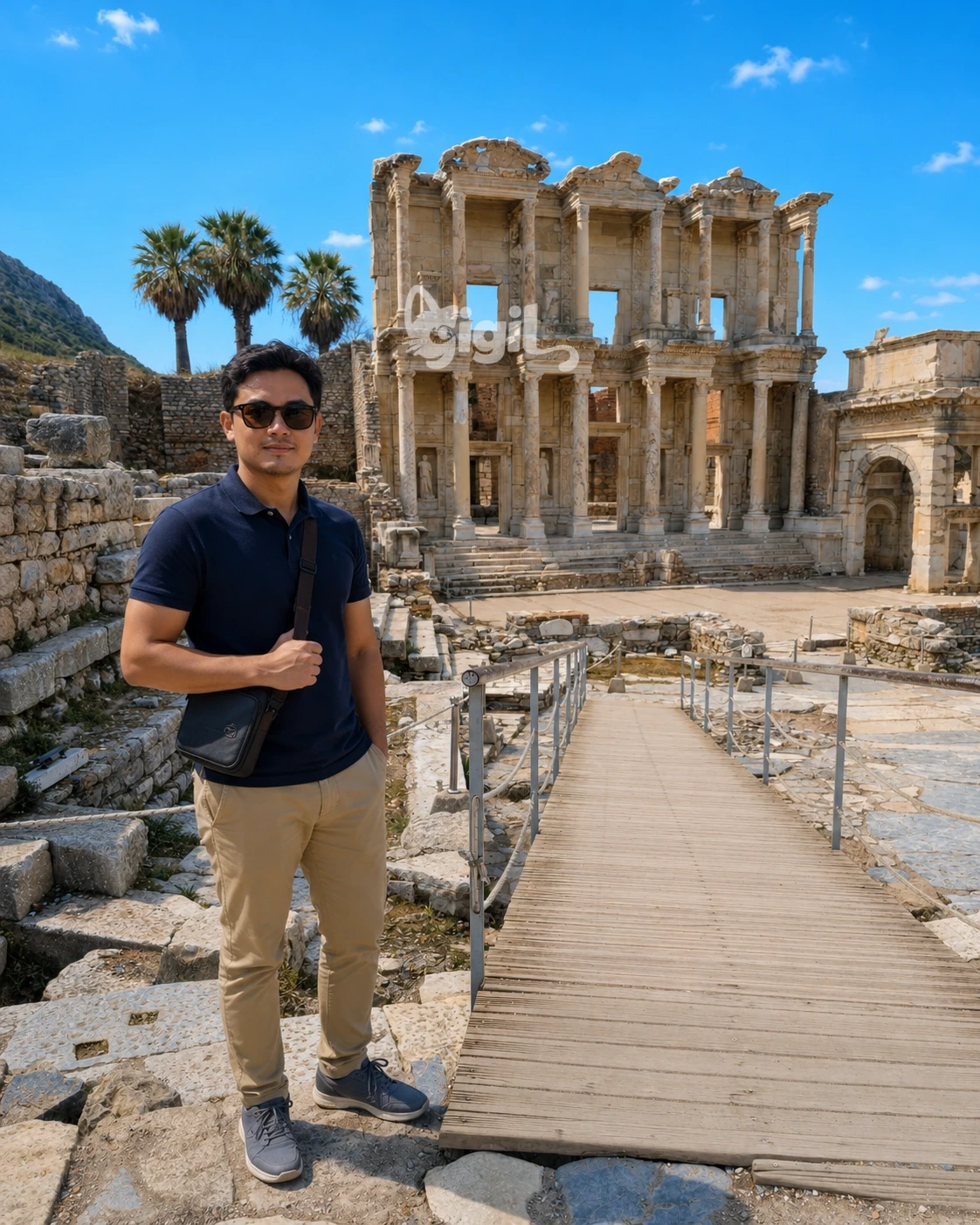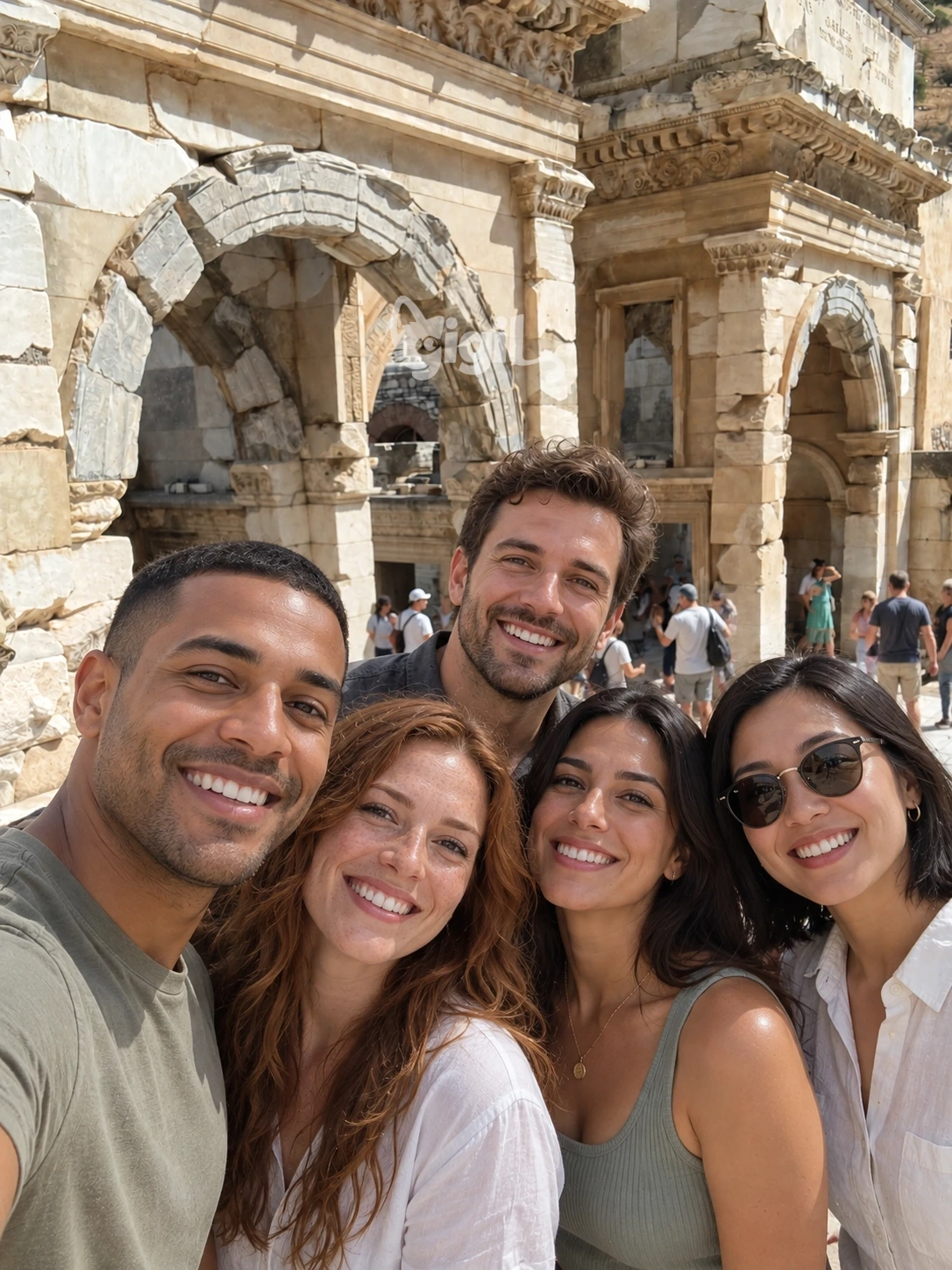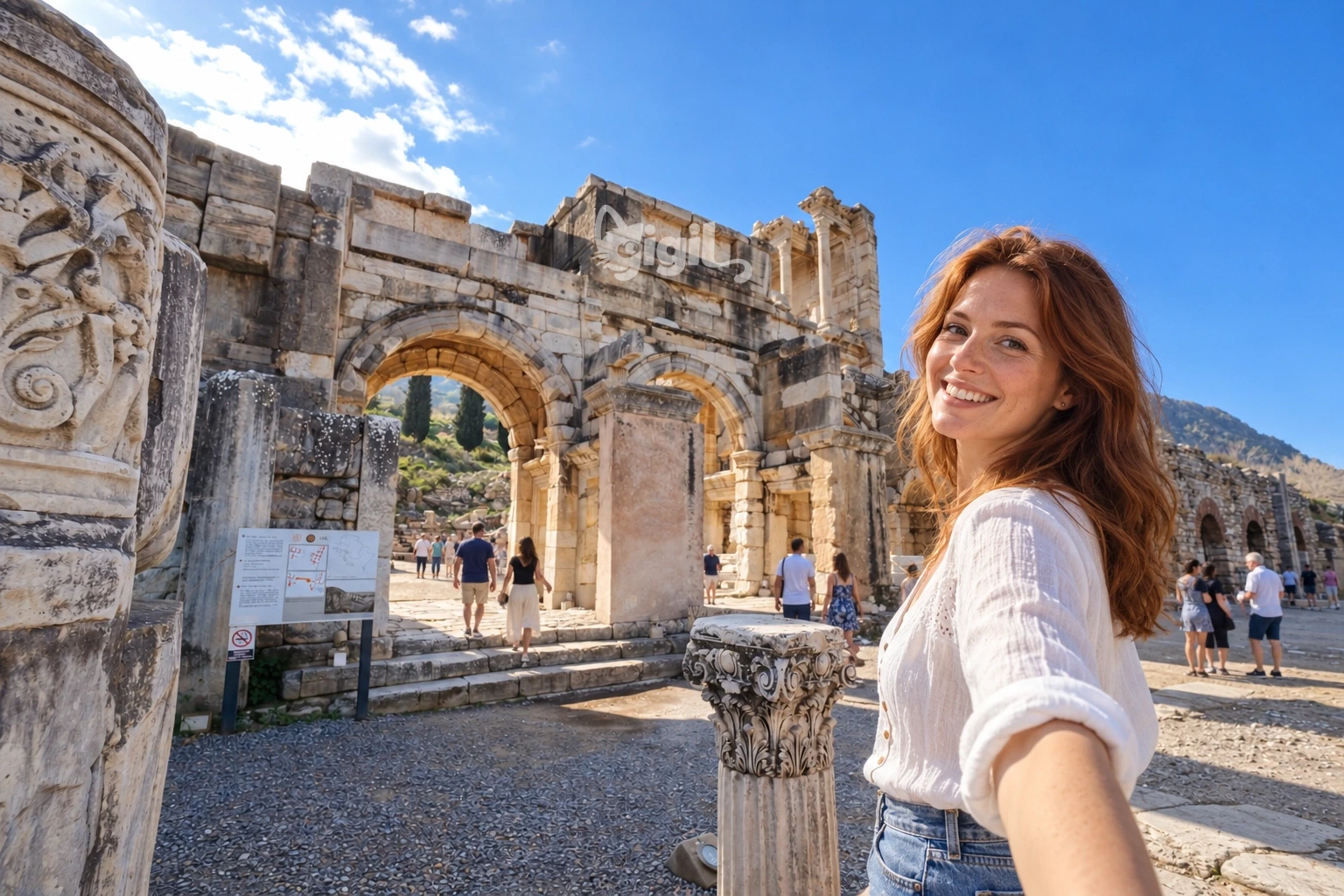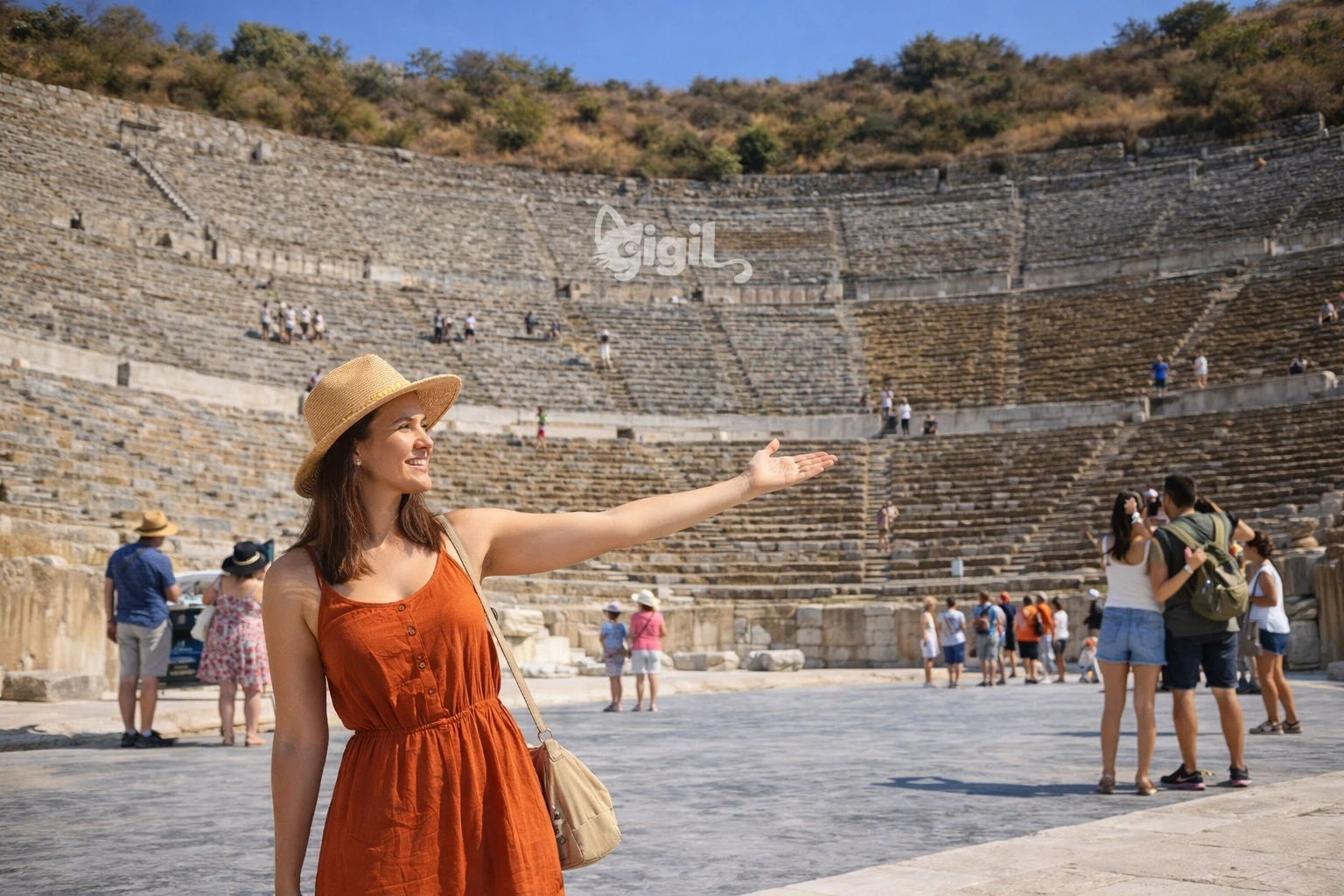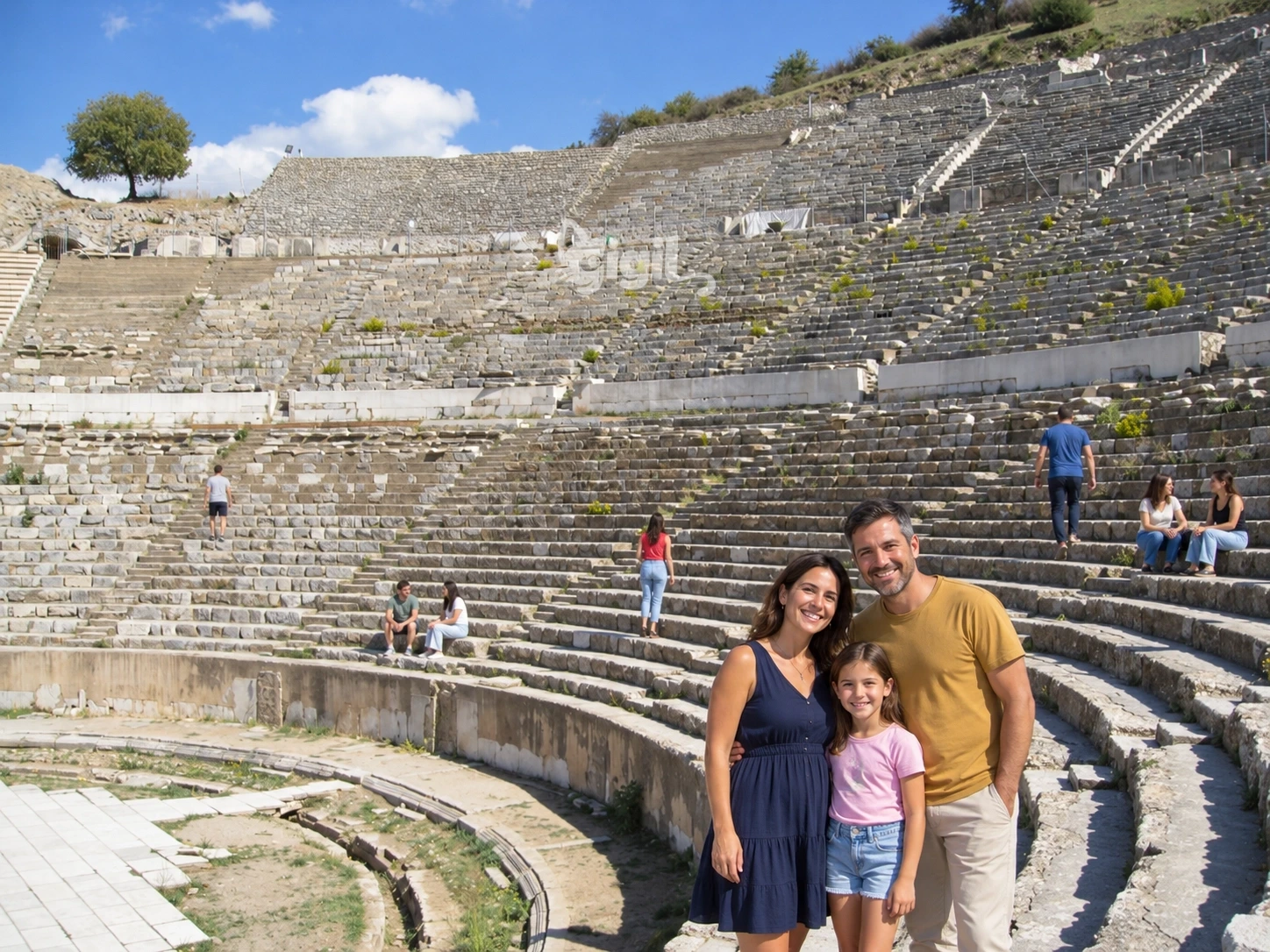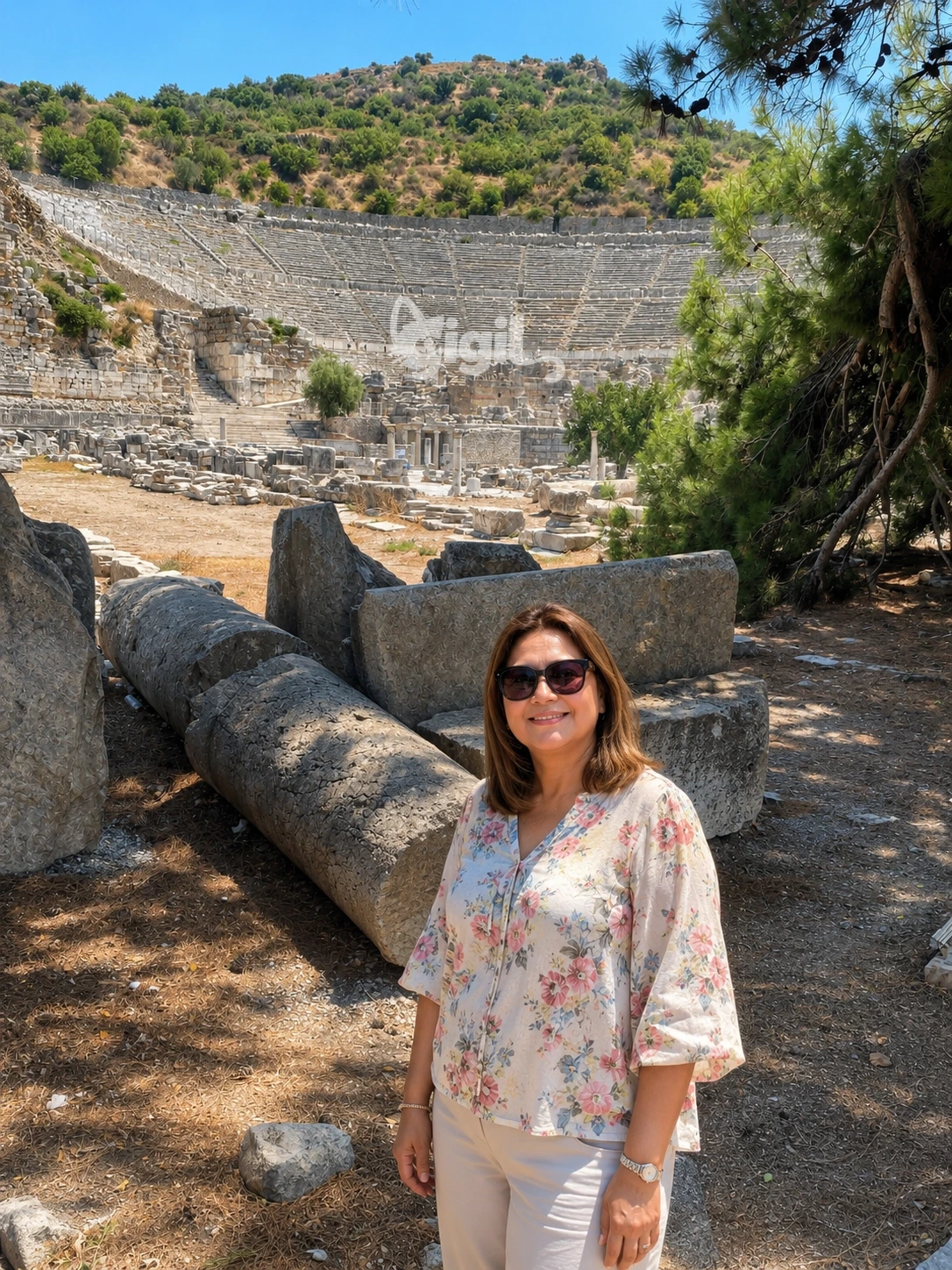








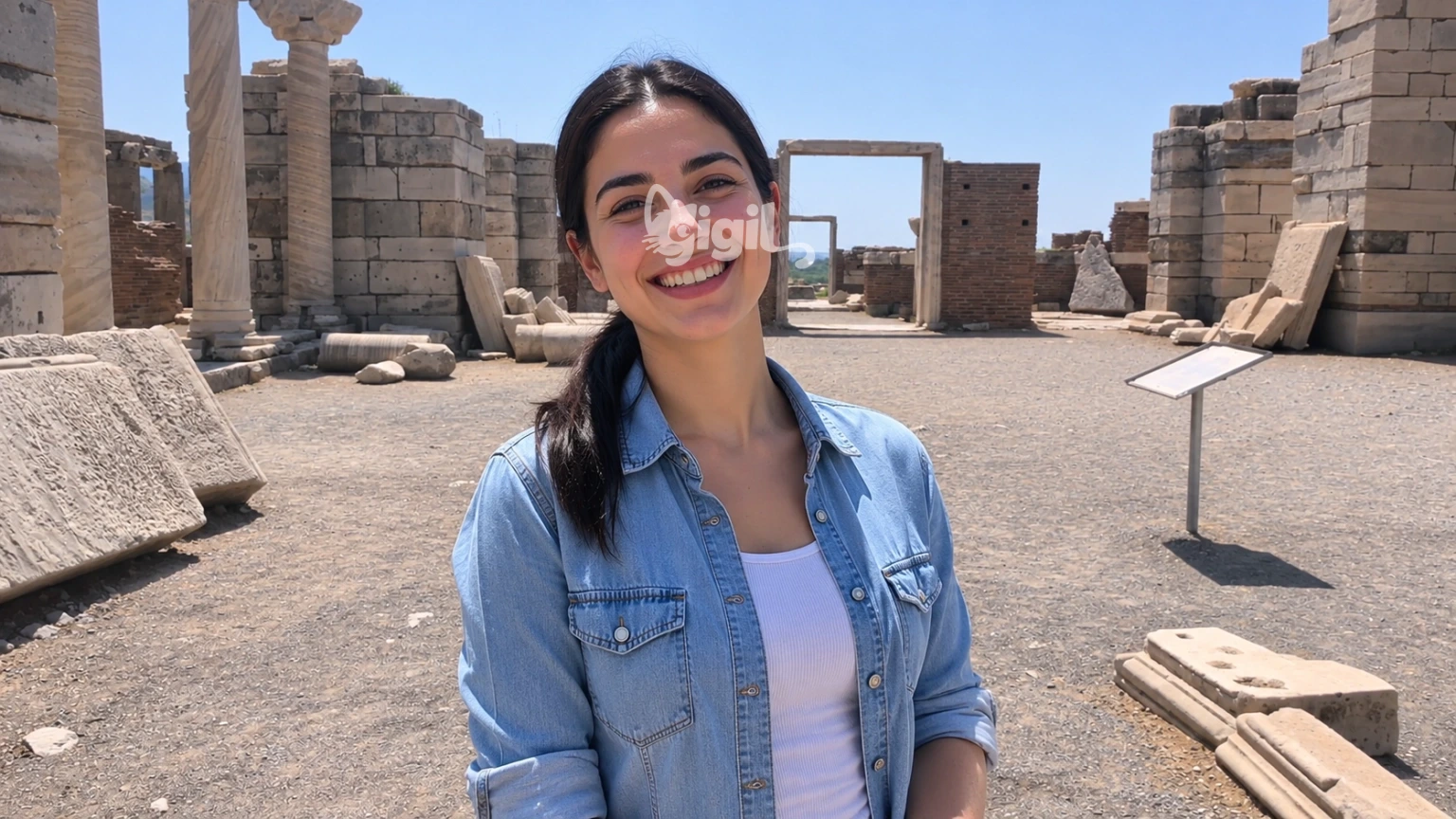
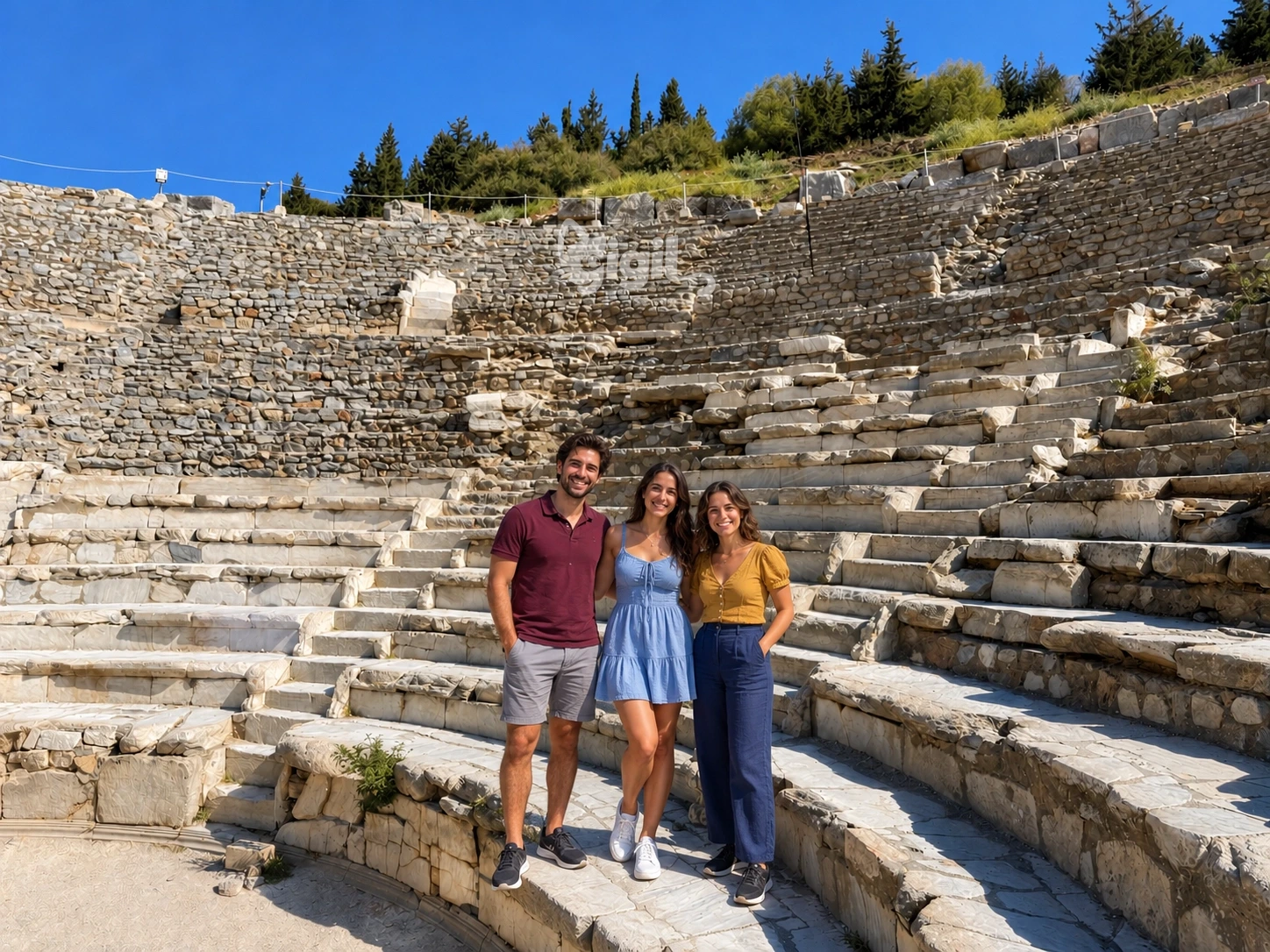
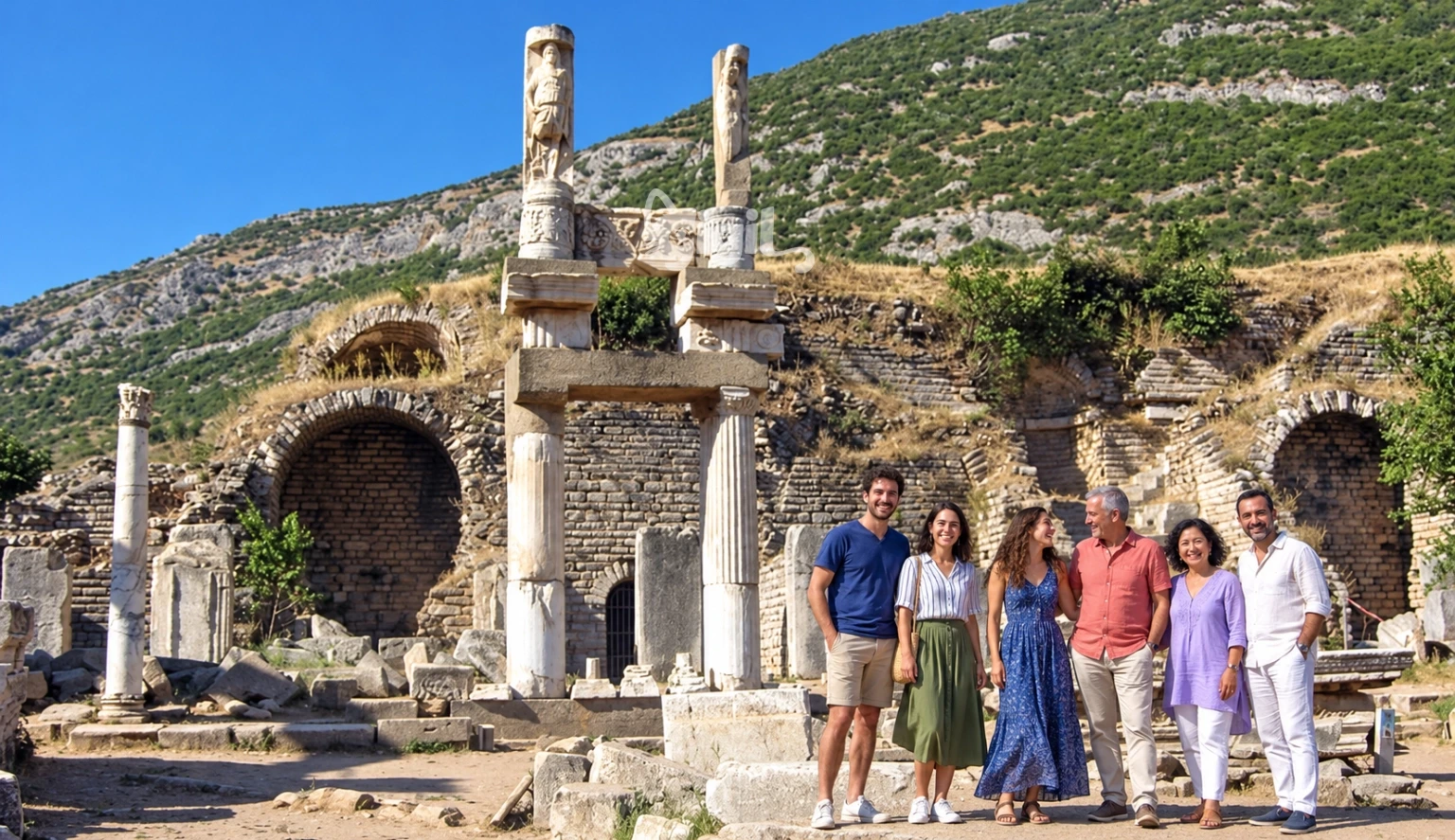
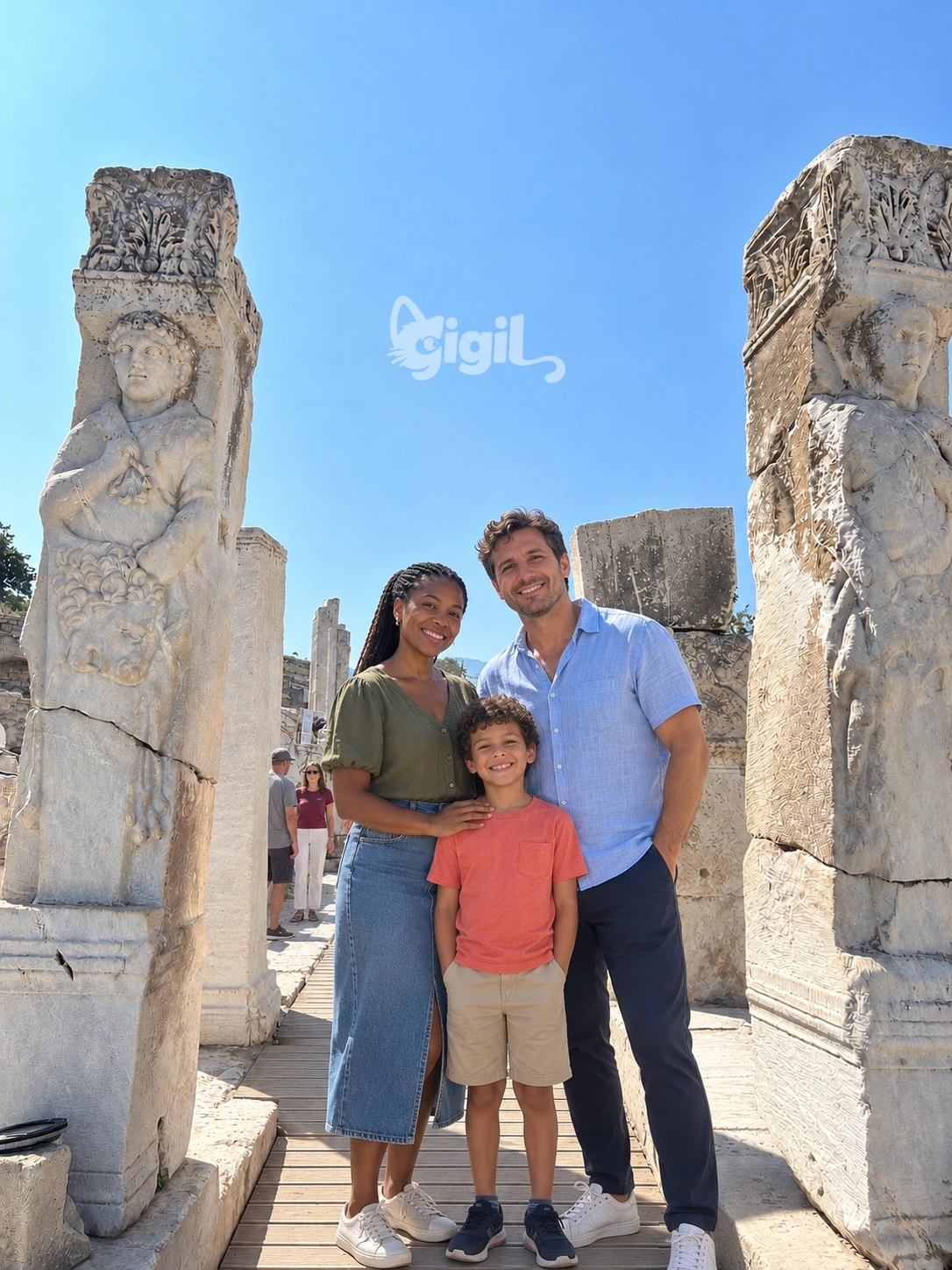
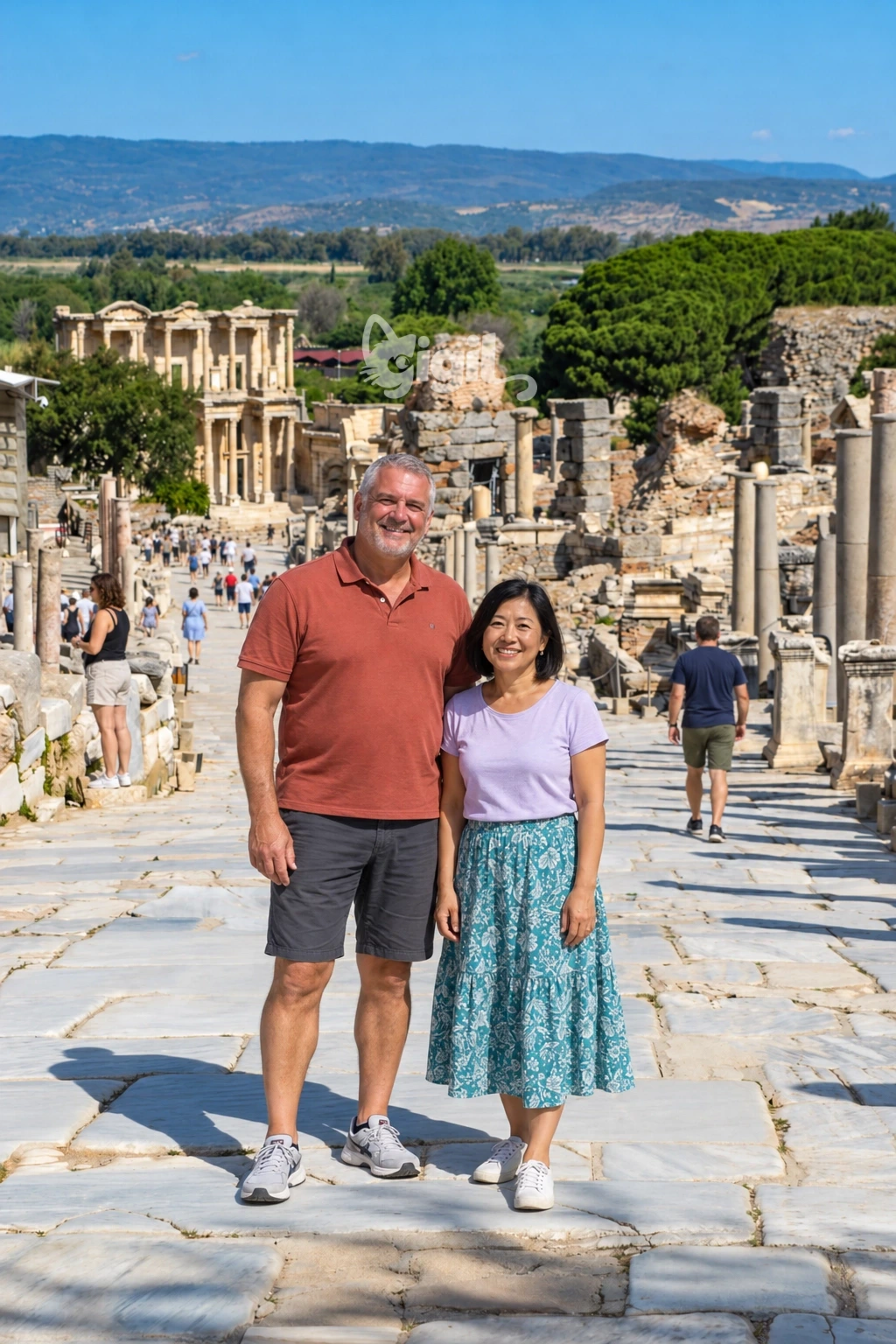

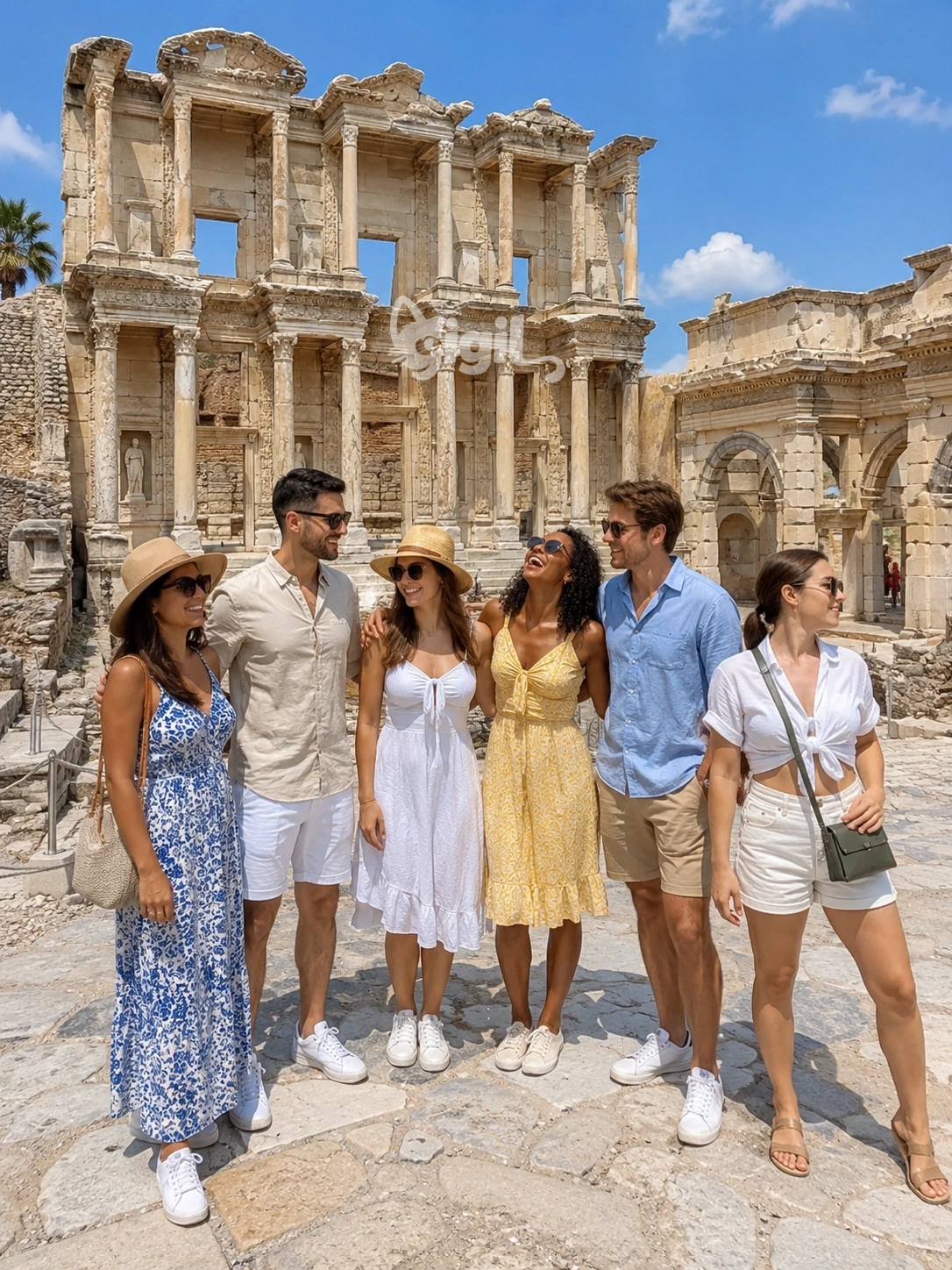
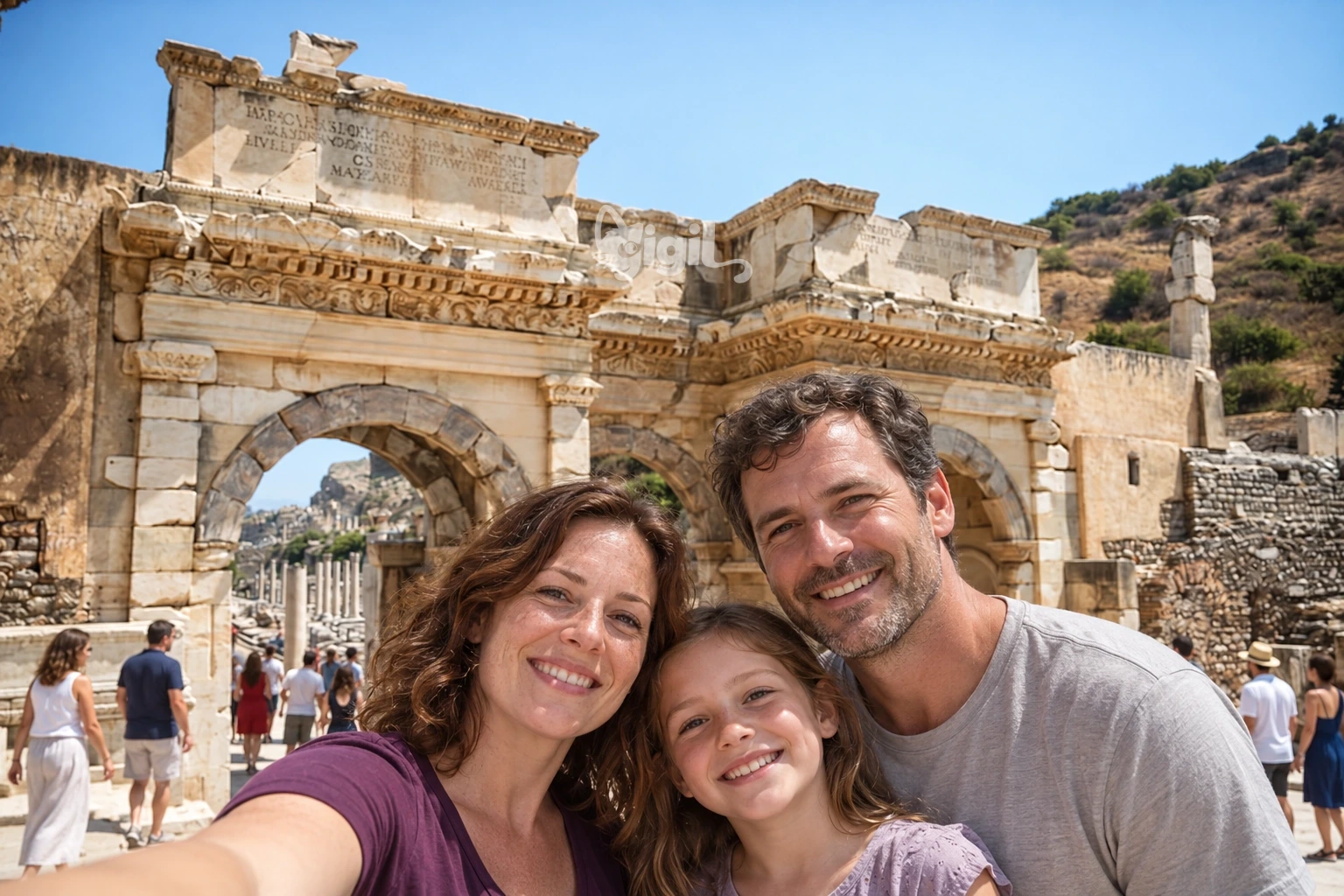
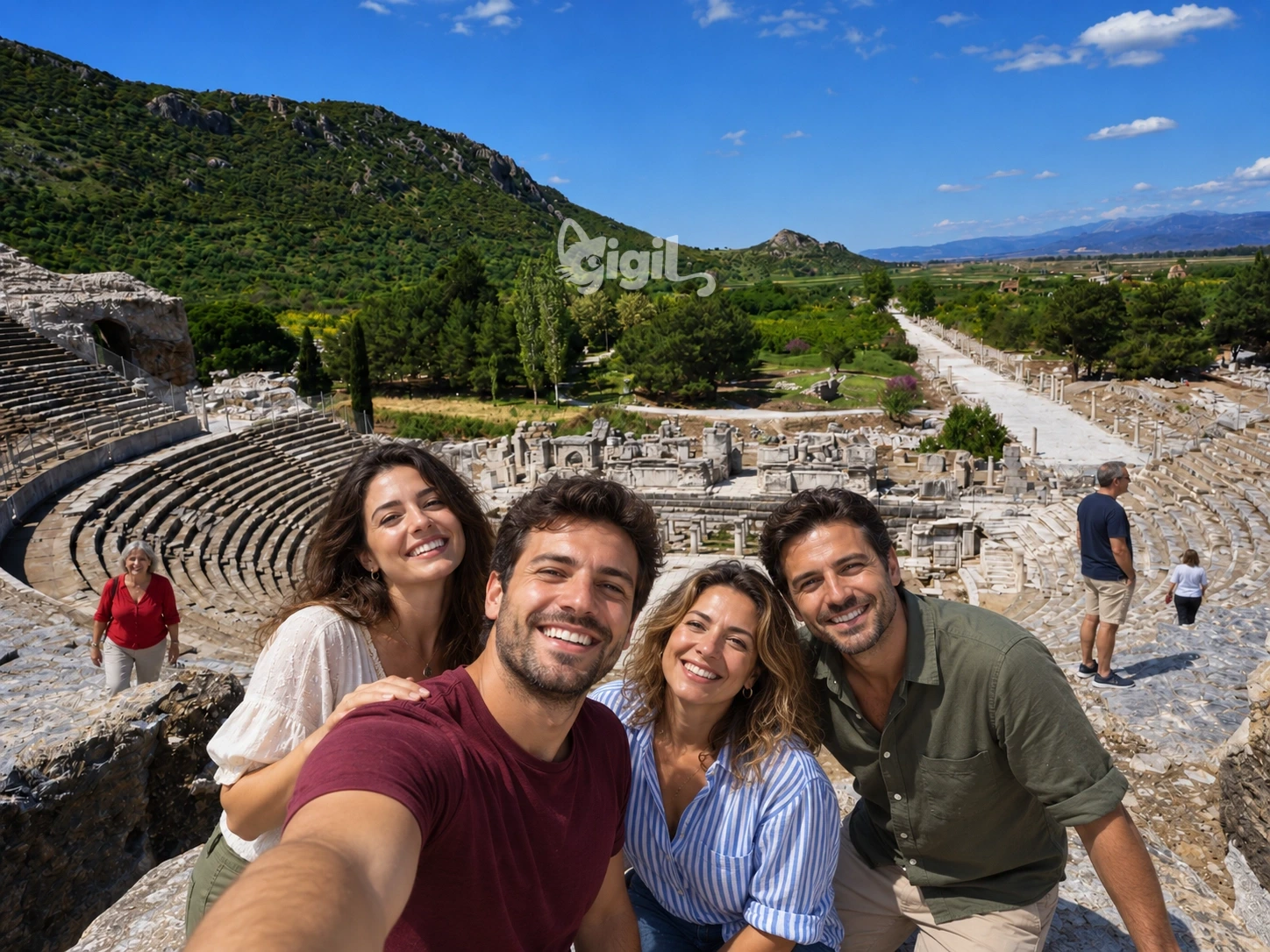
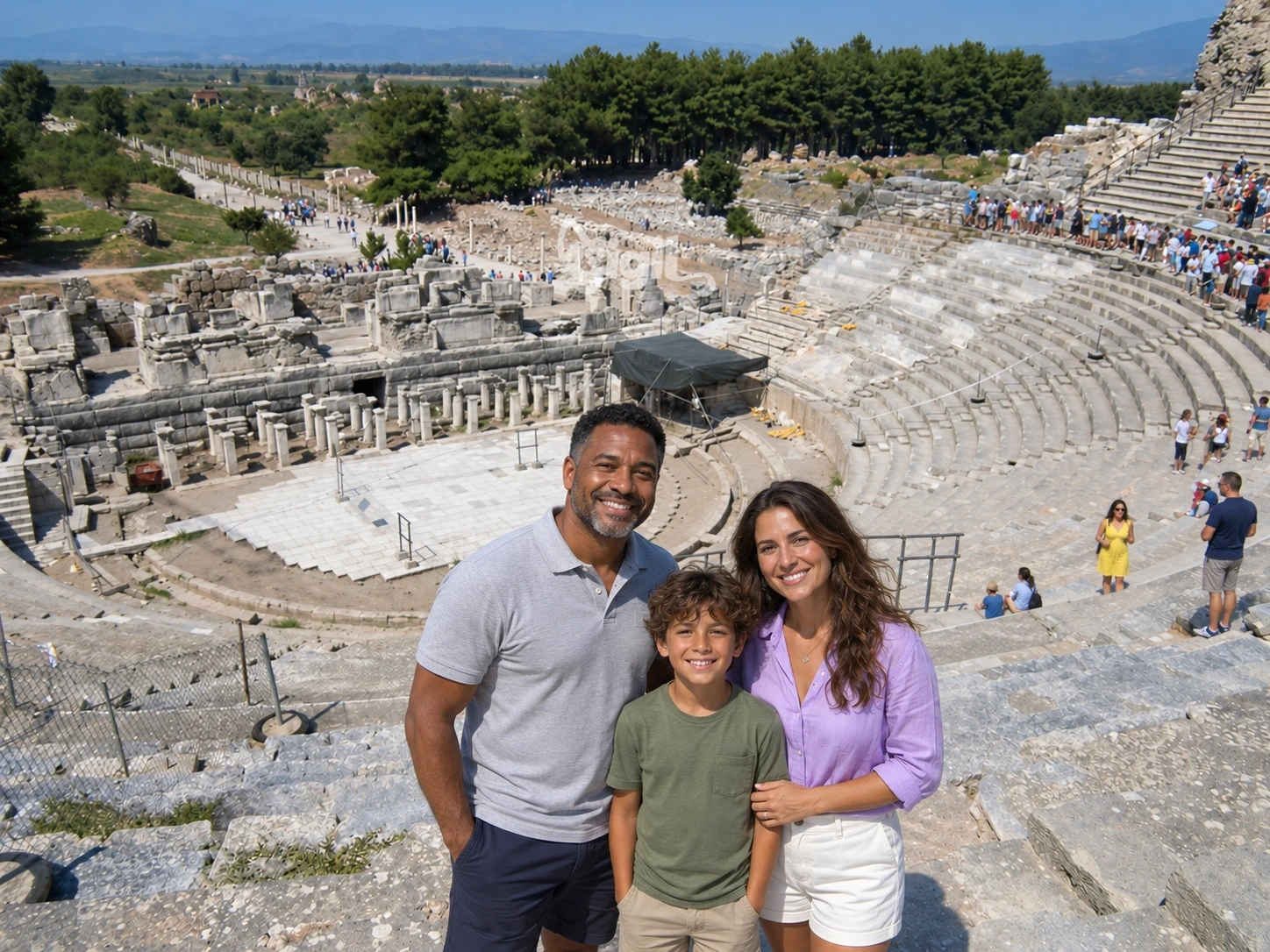
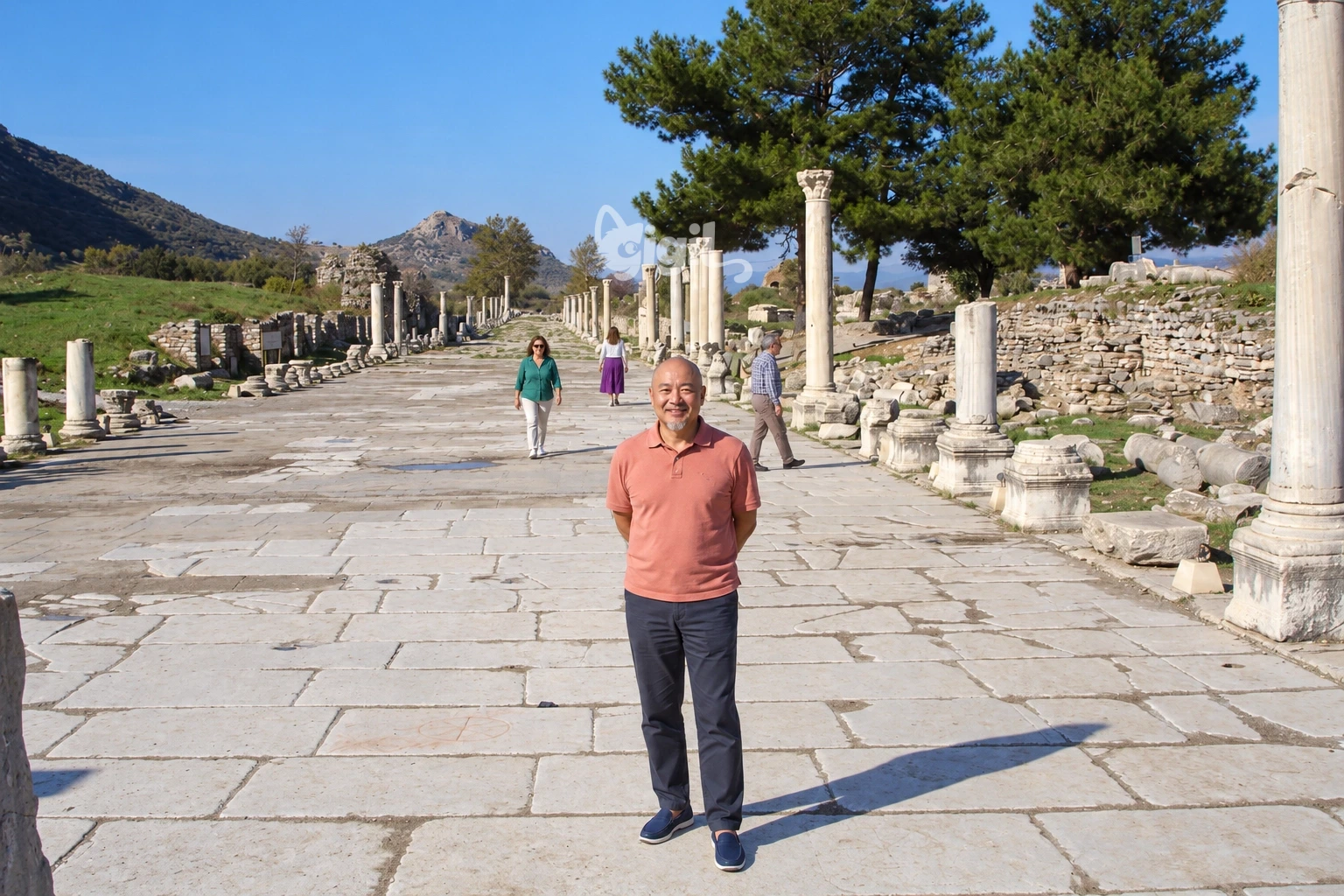
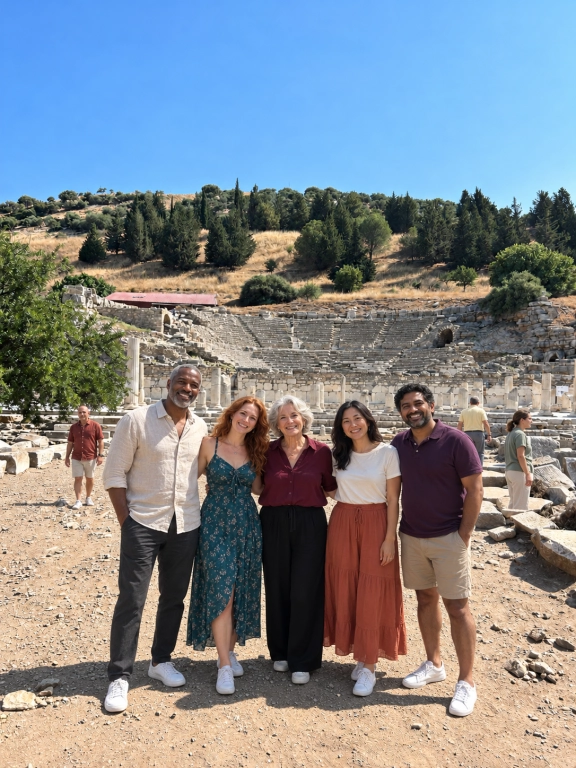
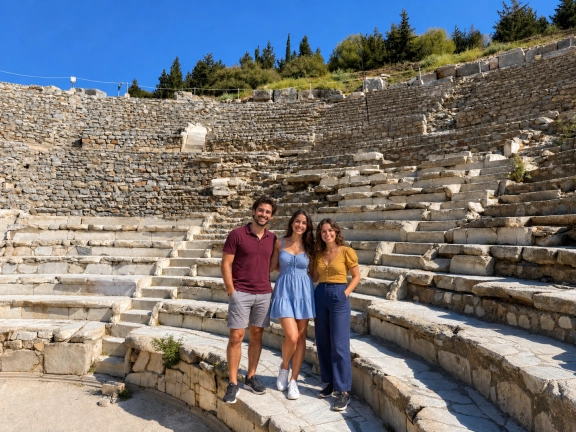
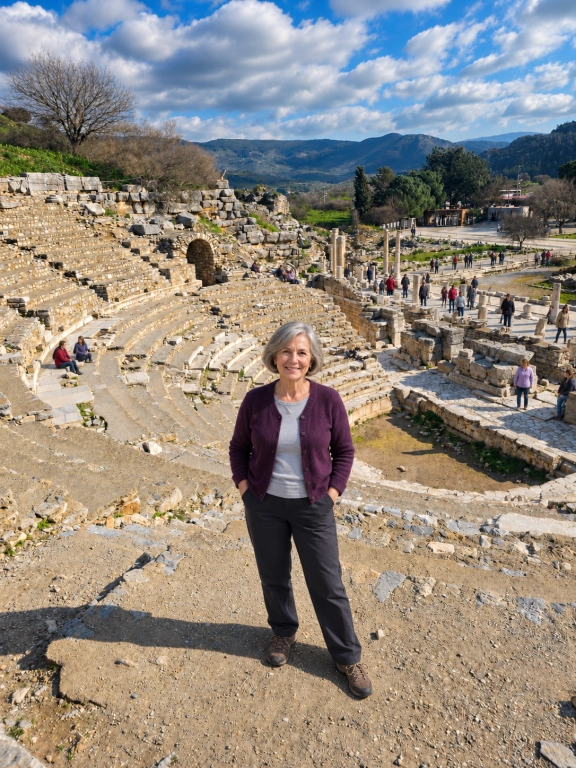
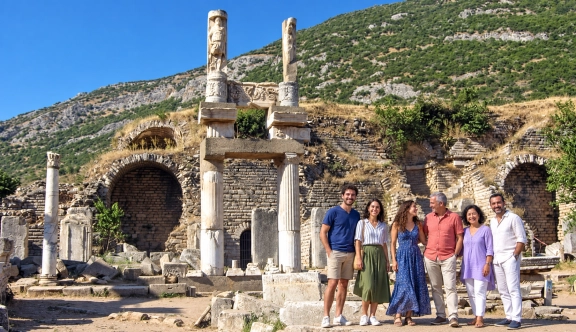
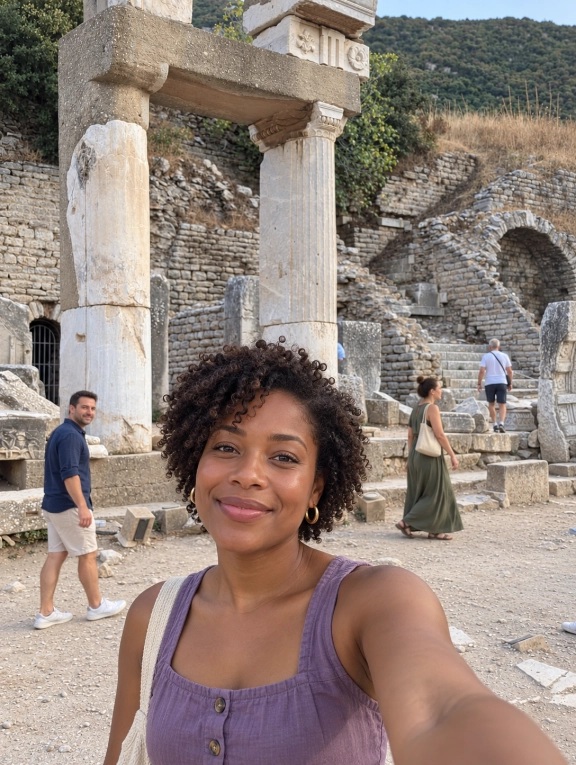
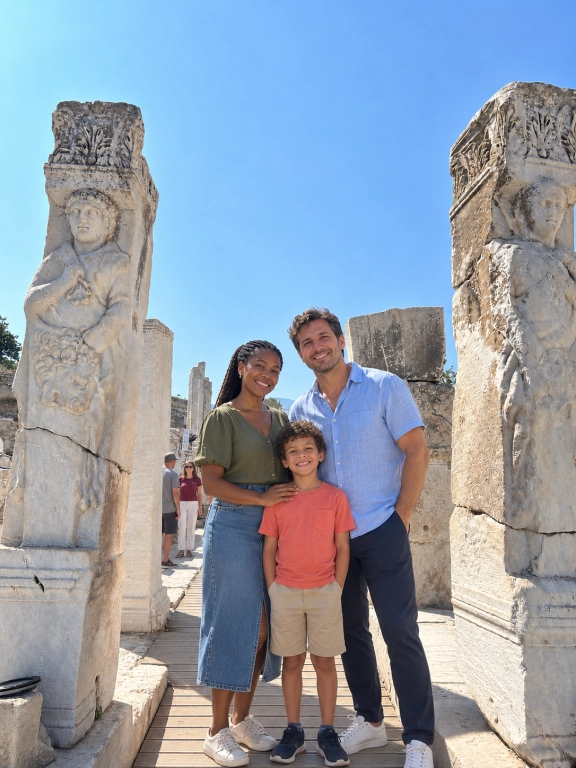
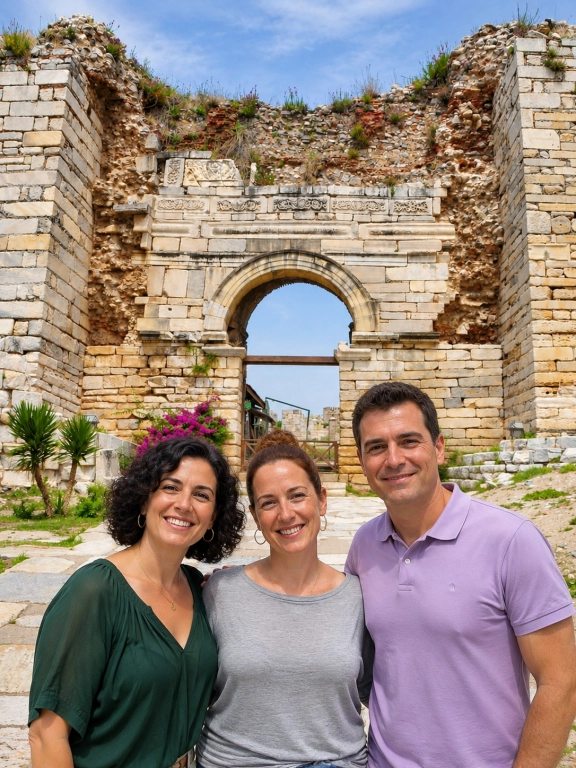
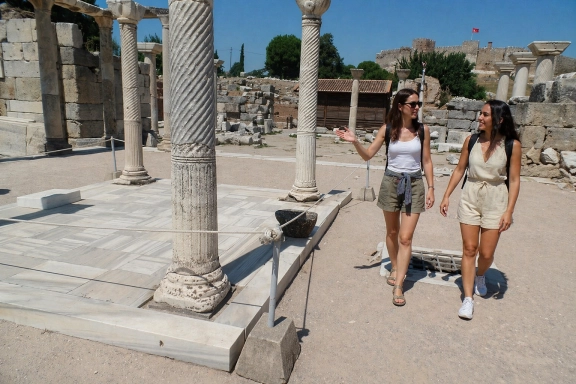

The stone streets at Ephesus once belonged to a busy urban world. Relate their lines to the Library of Celsus, public spaces and Great Theatre to see how movement and gathering shaped the ancient city.
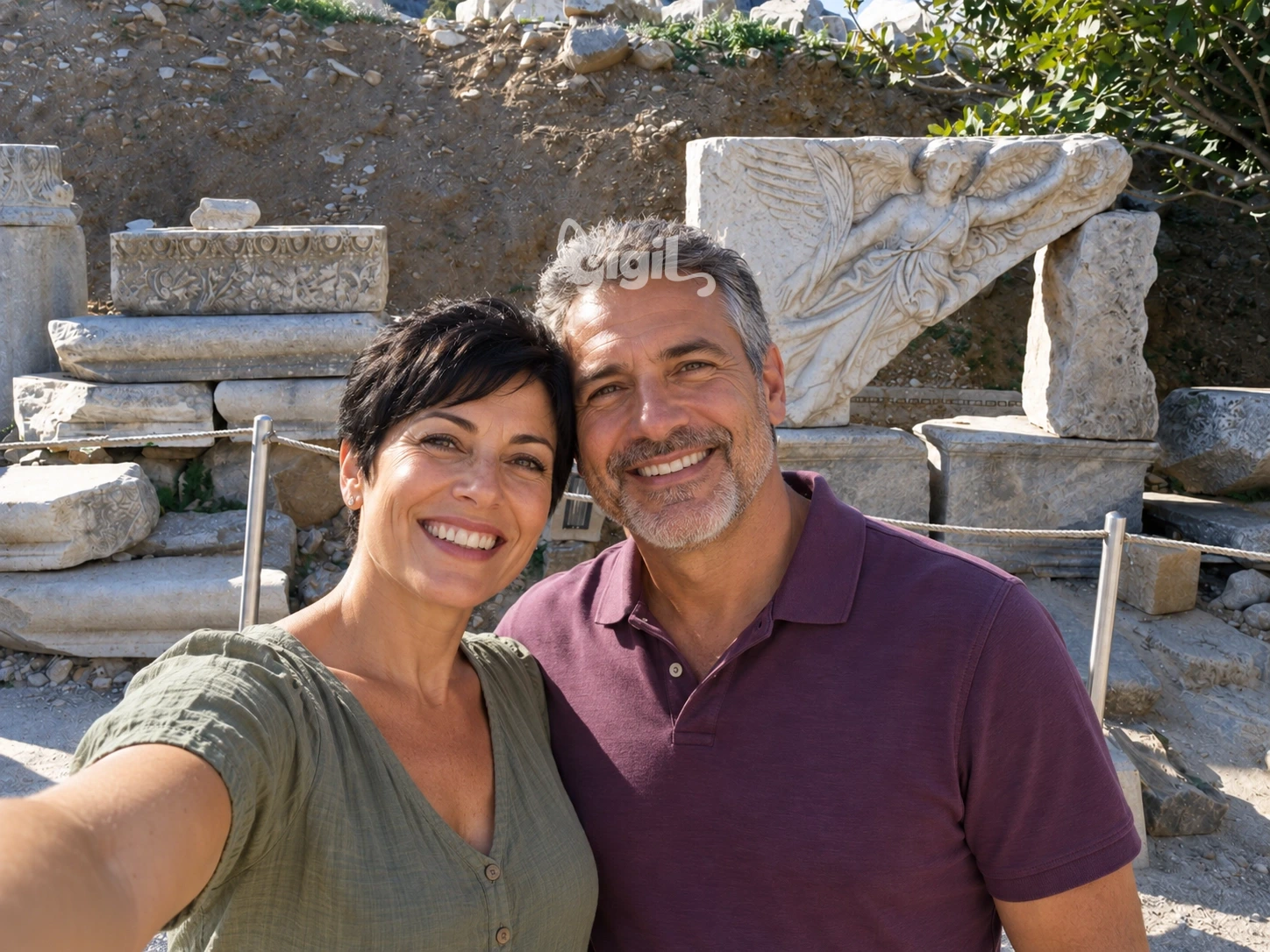
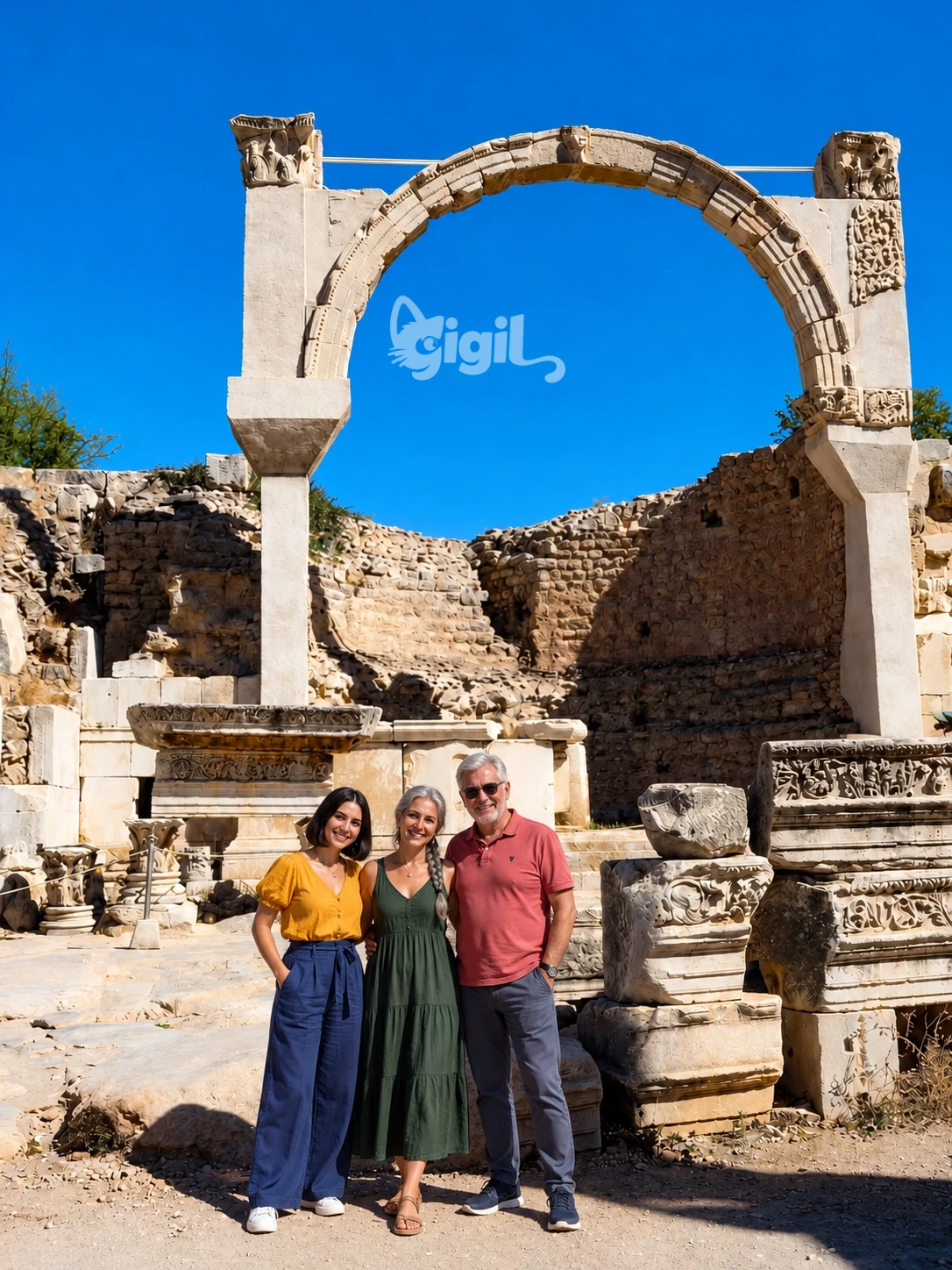
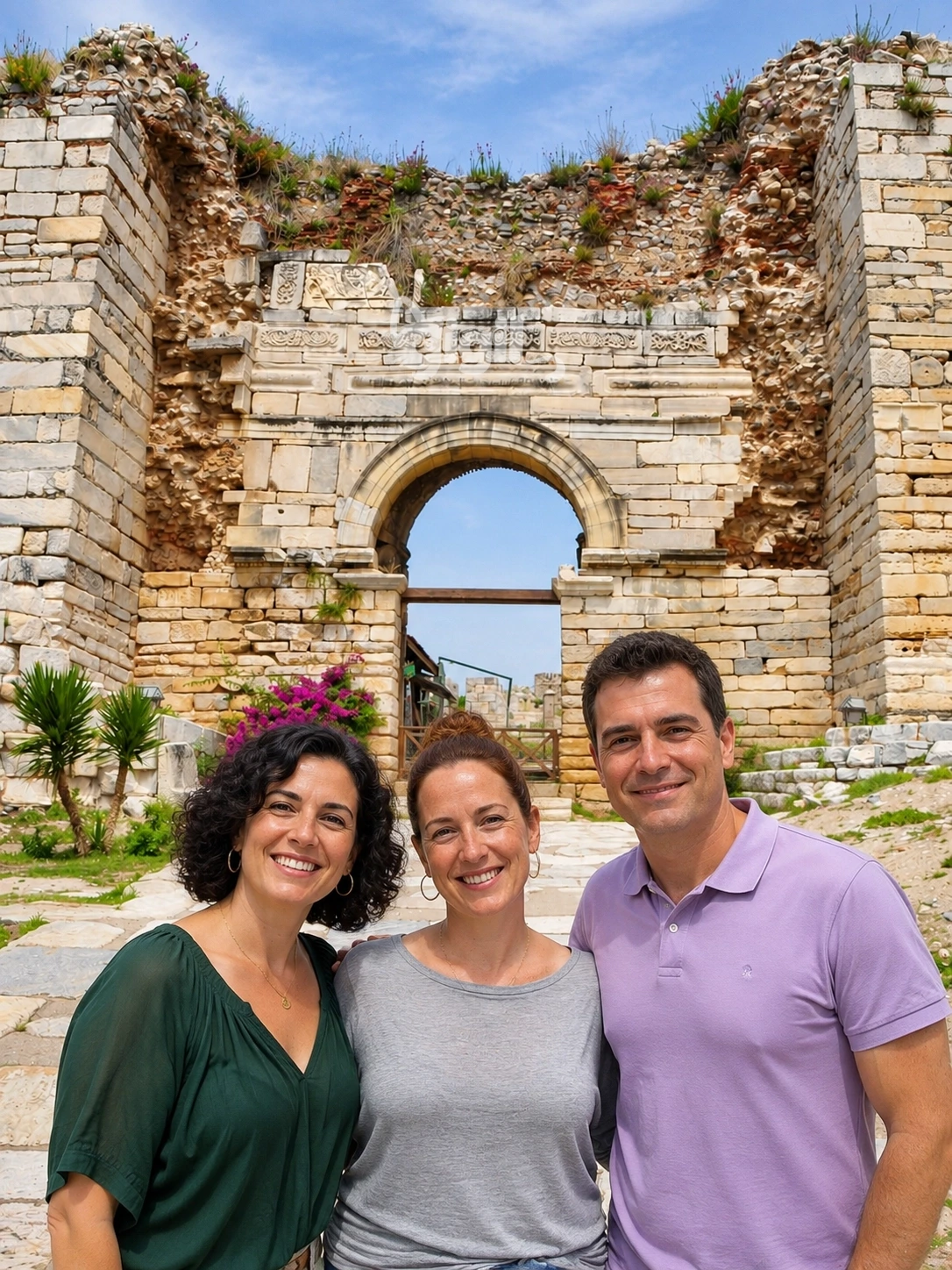
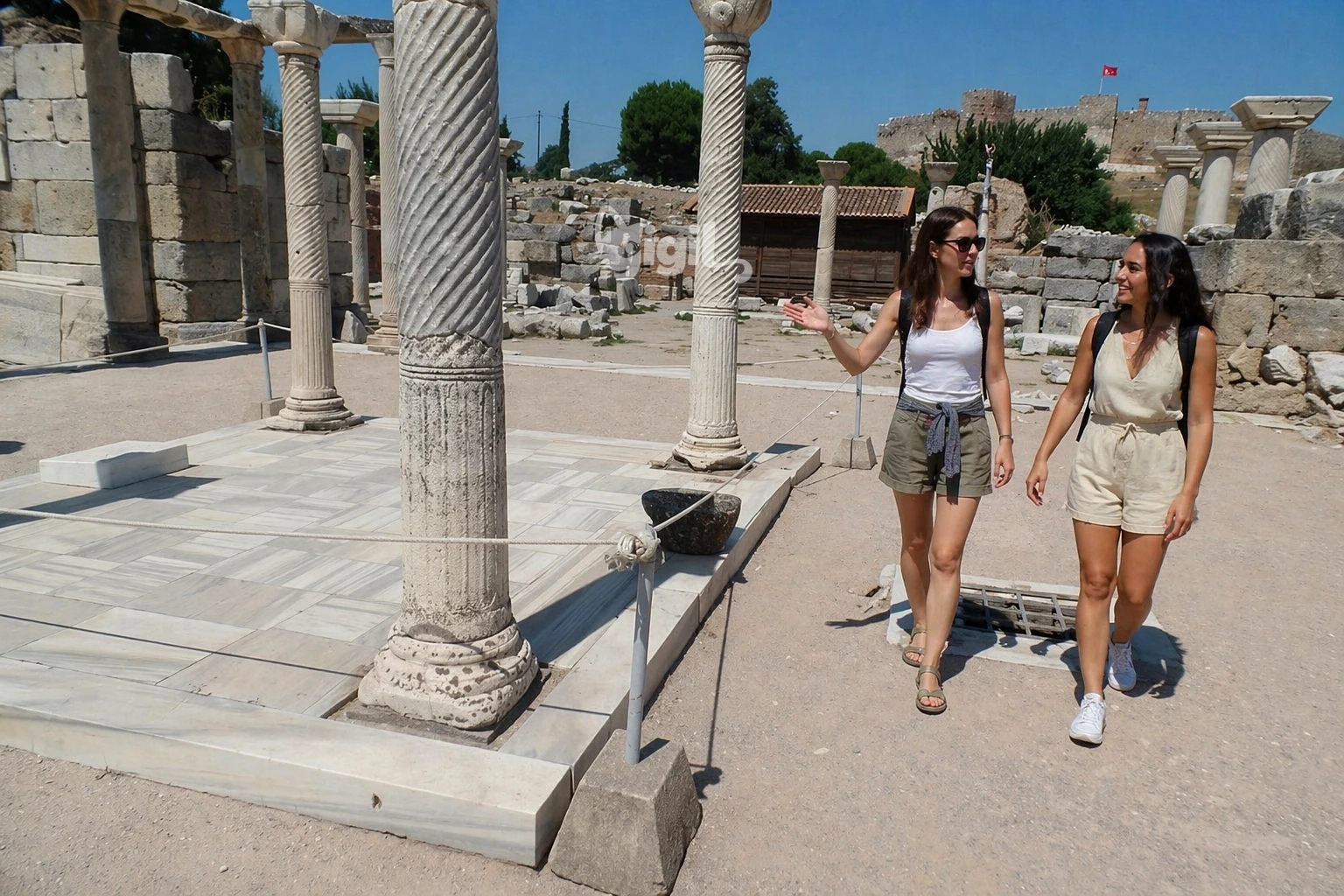
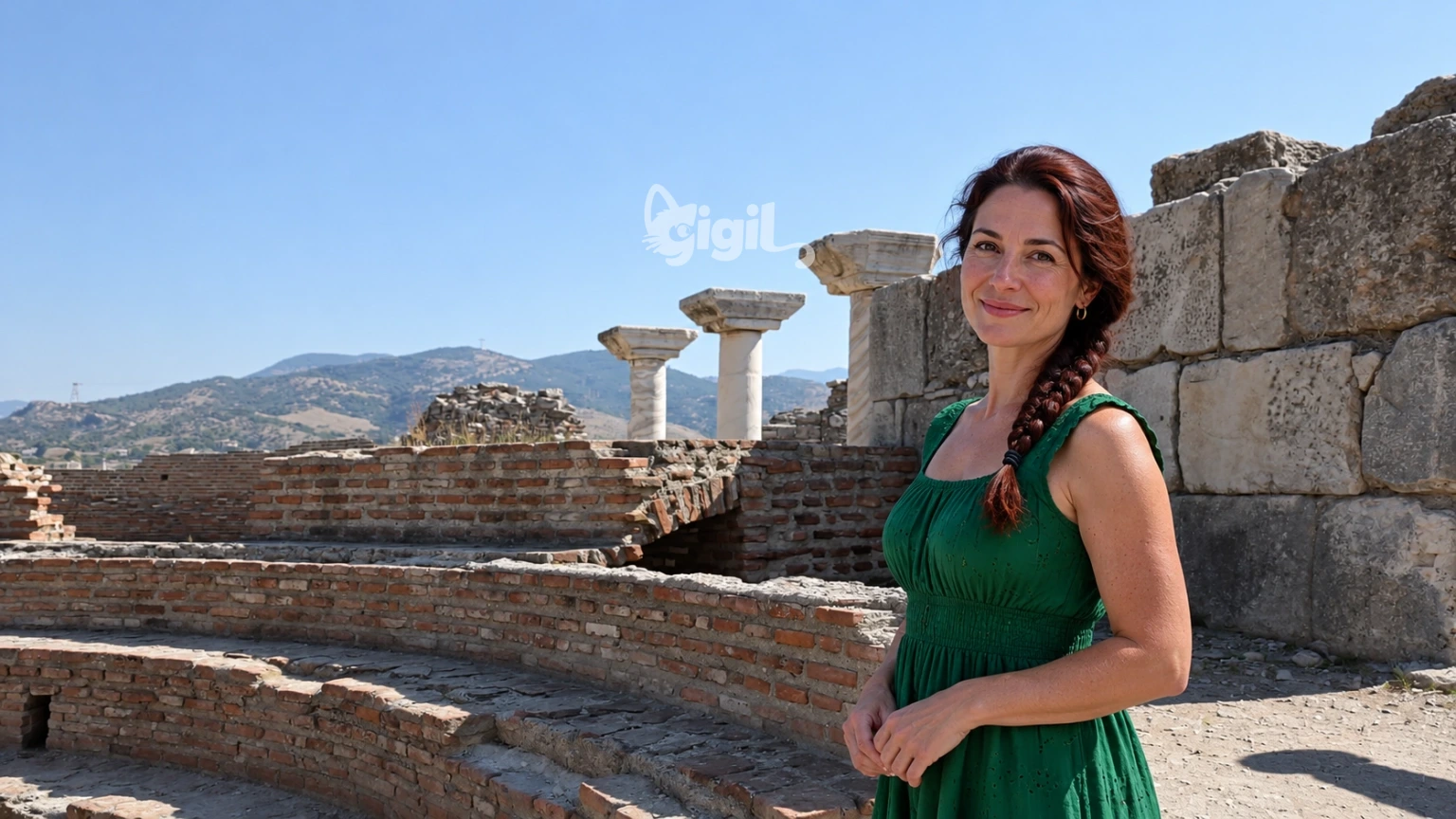
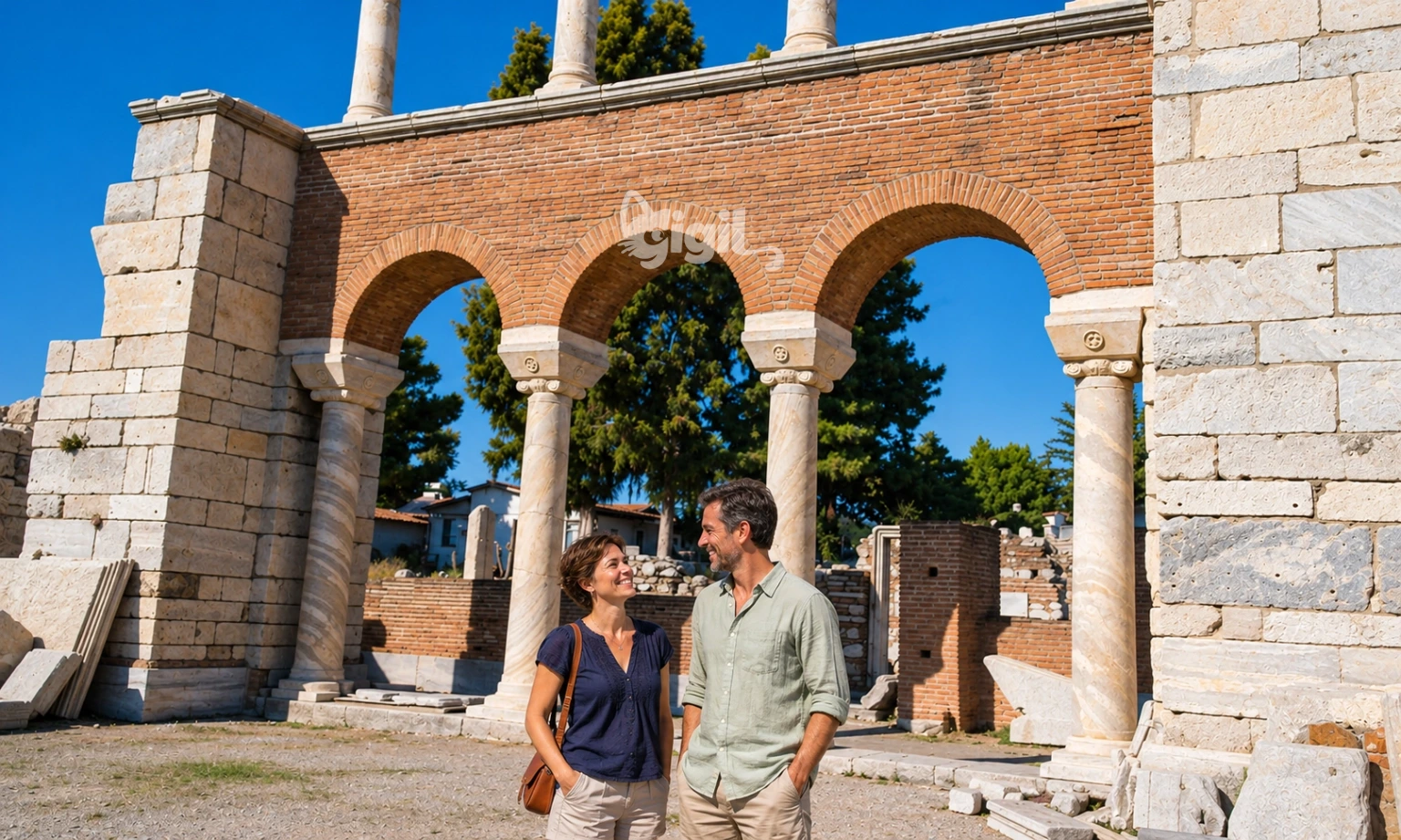
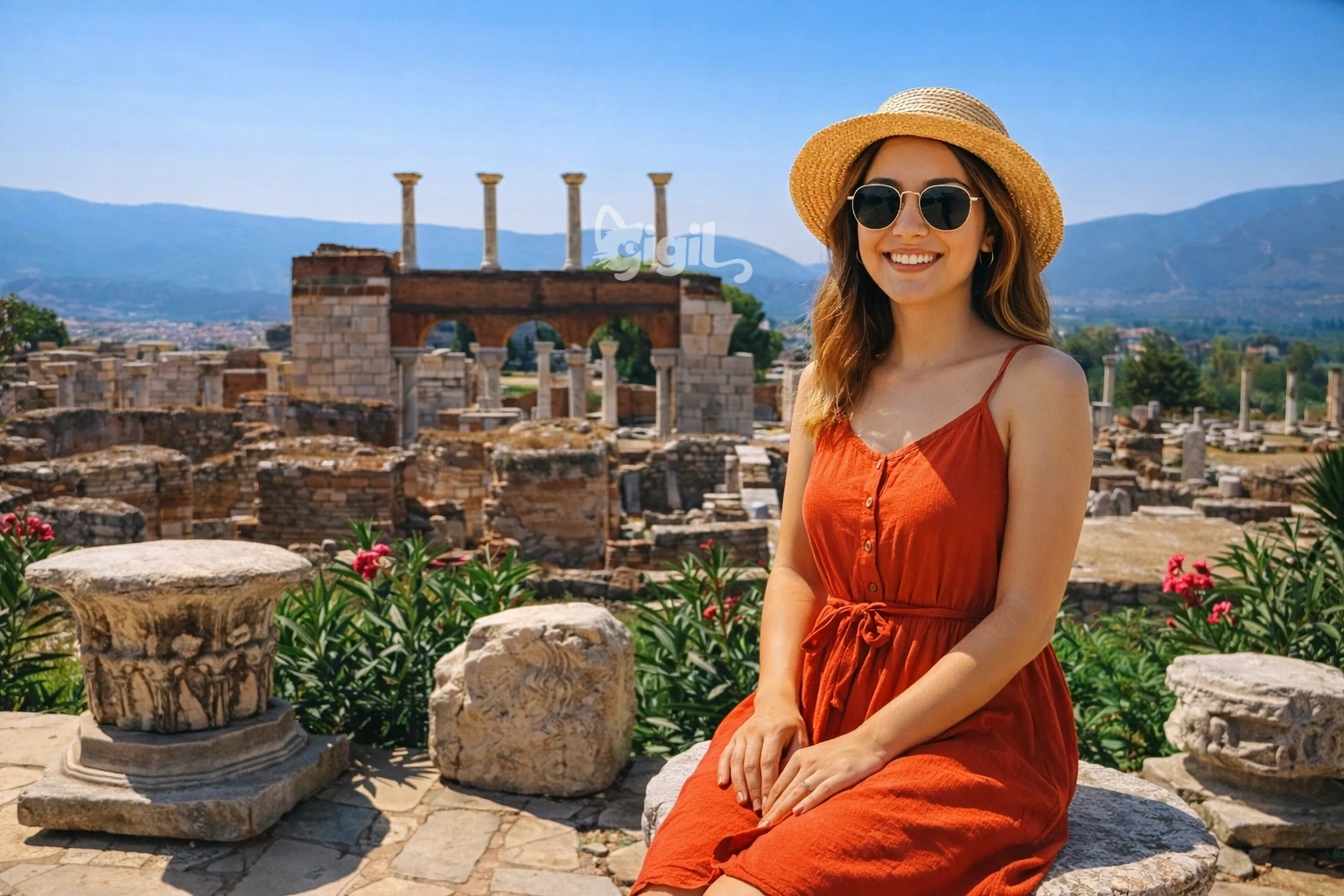
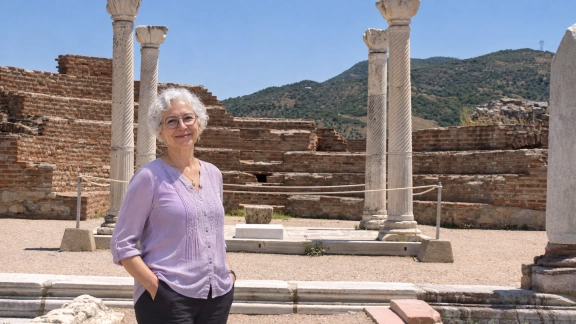
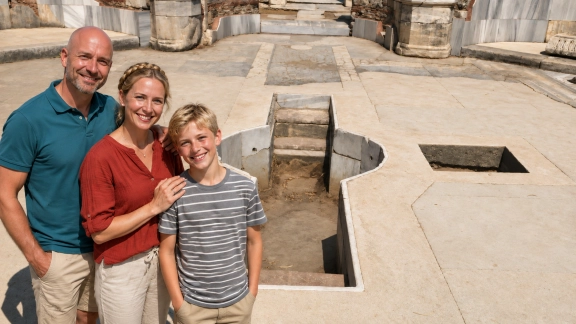
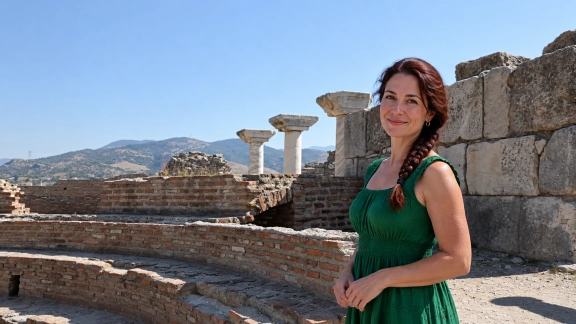
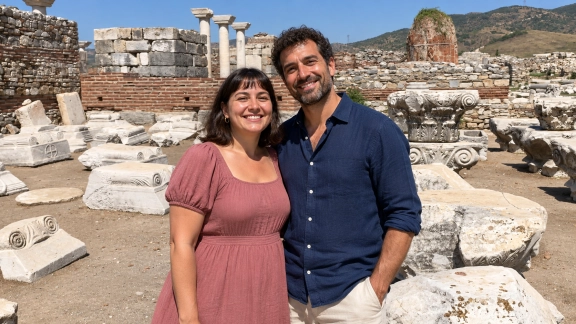
Instead of imagining every ruin fully rebuilt, begin with what is actually visible. Foundations, columns and surviving surfaces offer clues to arrangement and scale, while reconstructed sections show how archaeological interpretation can make a fragmentary monument more legible.
Questions
Where should I begin when interpreting a ruin?
Start with visible walls and alignments before imagining the missing roofs, upper floors or decoration.
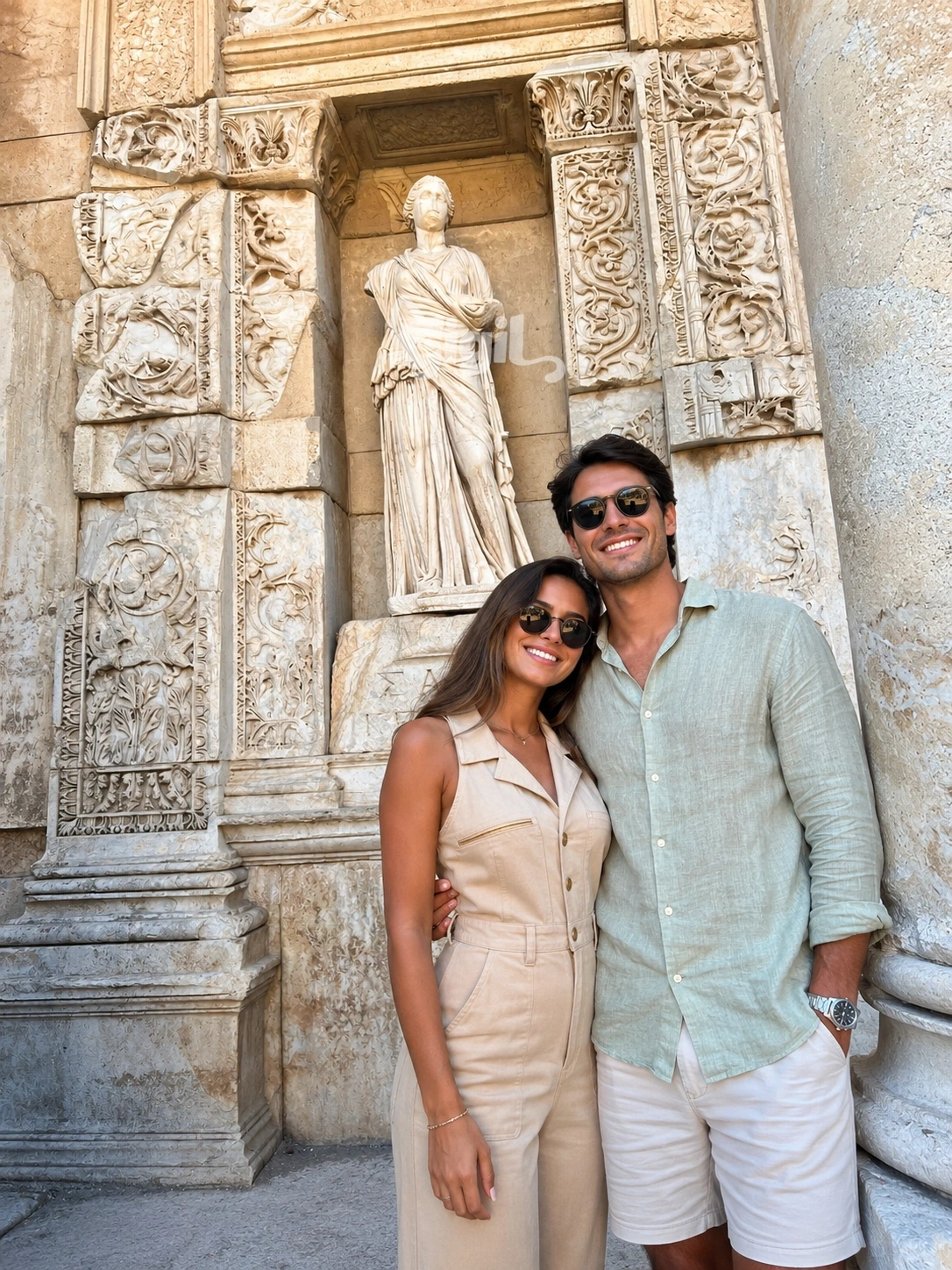
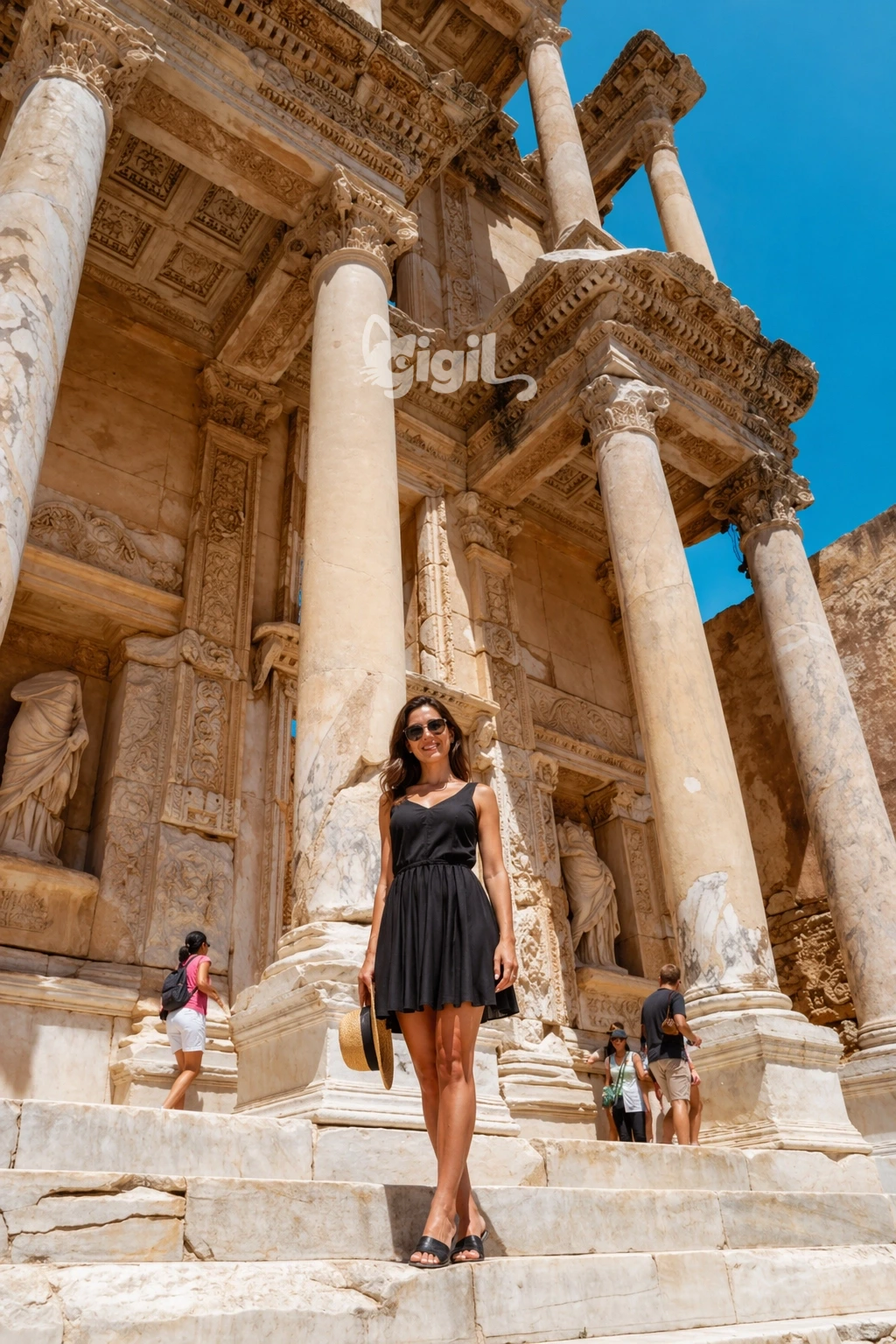
Why does the library facade require a careful reading?
Its current appearance combines ancient remains with reconstruction, so it is not evidence of an intact surviving library.
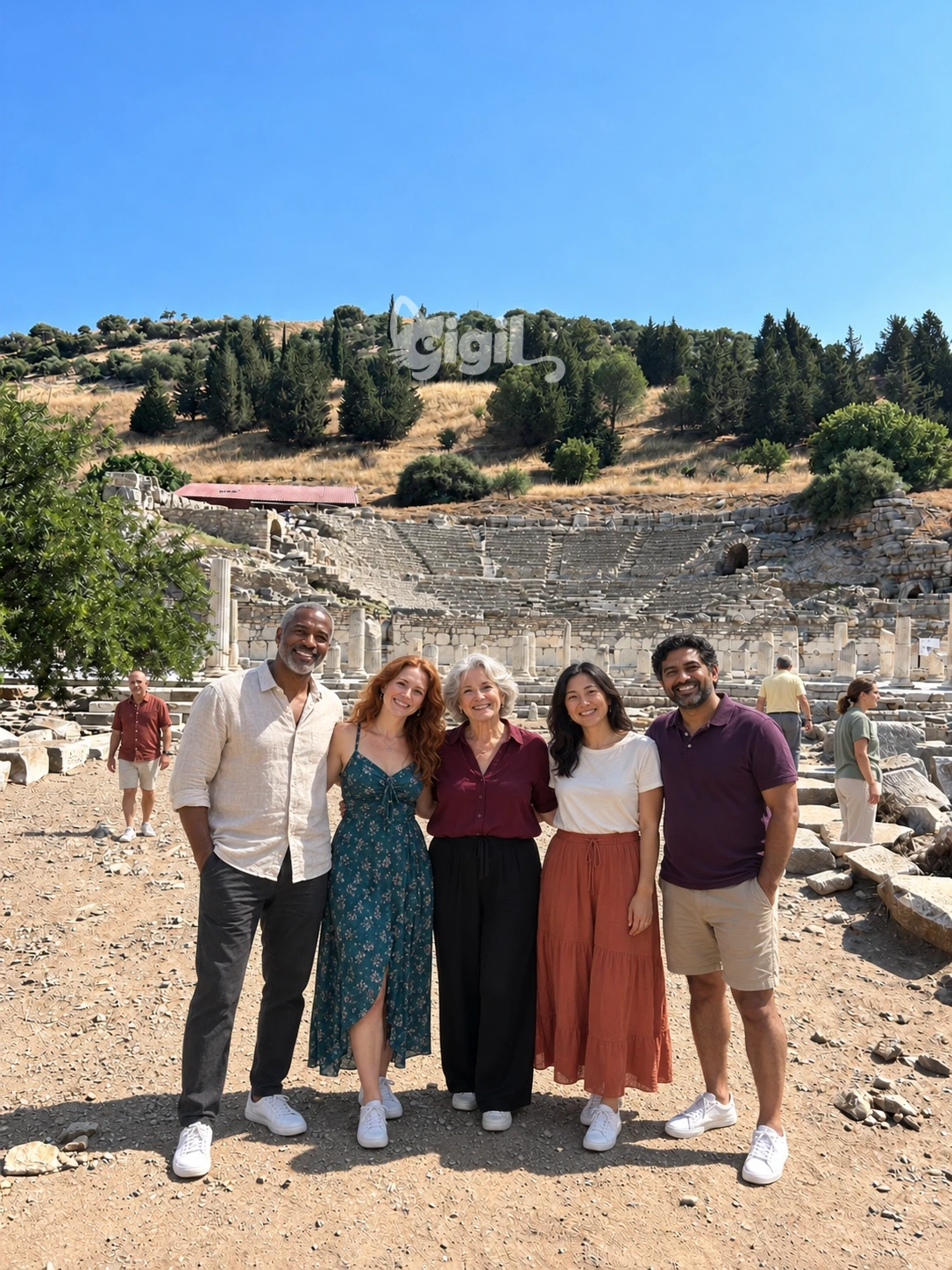
What role does the Great Theatre play in this city reading?
Its seating area suggests the organisation of a large audience within the urban landscape.
Why is the former port setting hard to recognise?
Long-term sedimentation shifted the coast, leaving the ancient harbour area inland rather than beside the present shoreline.