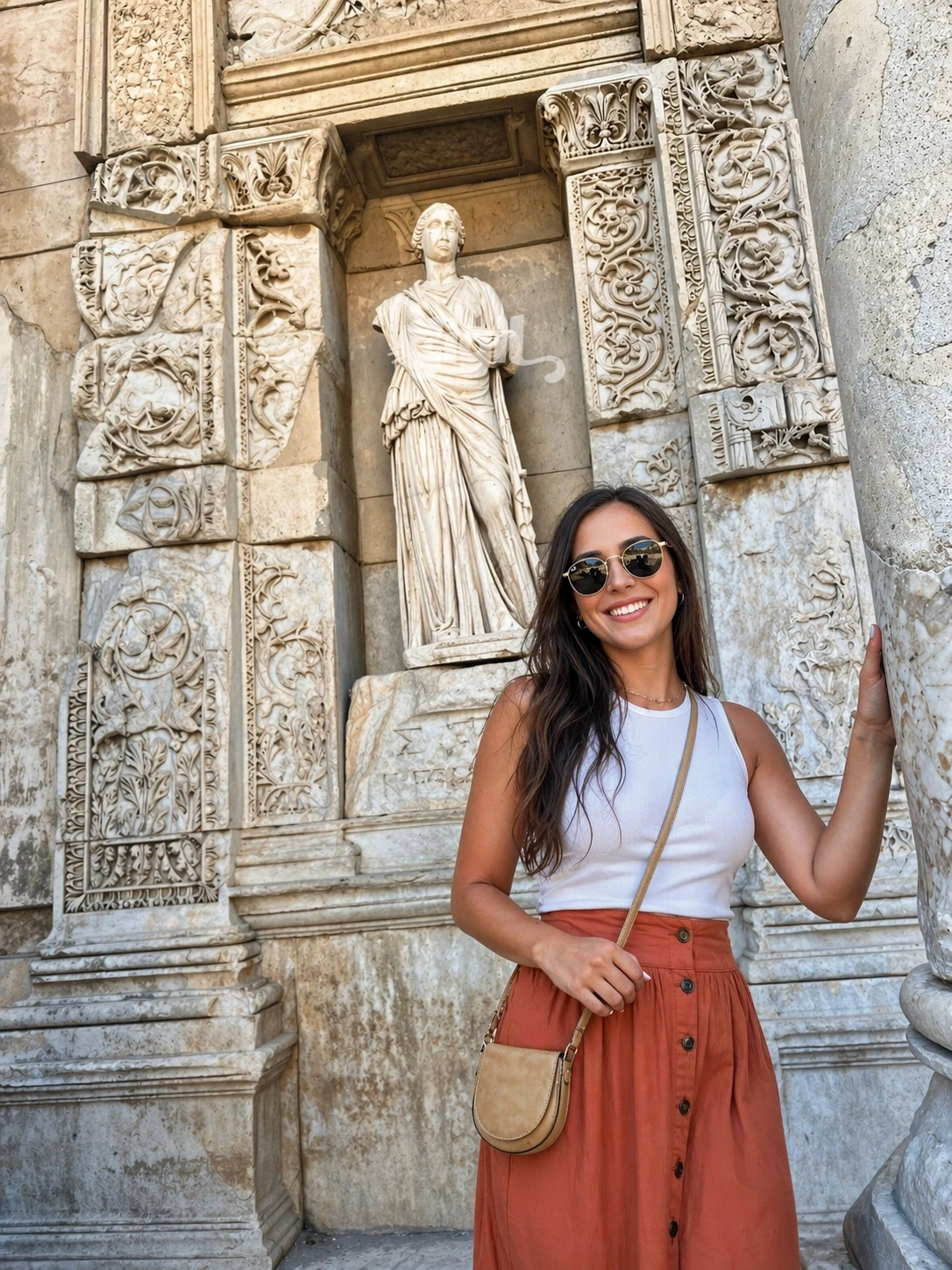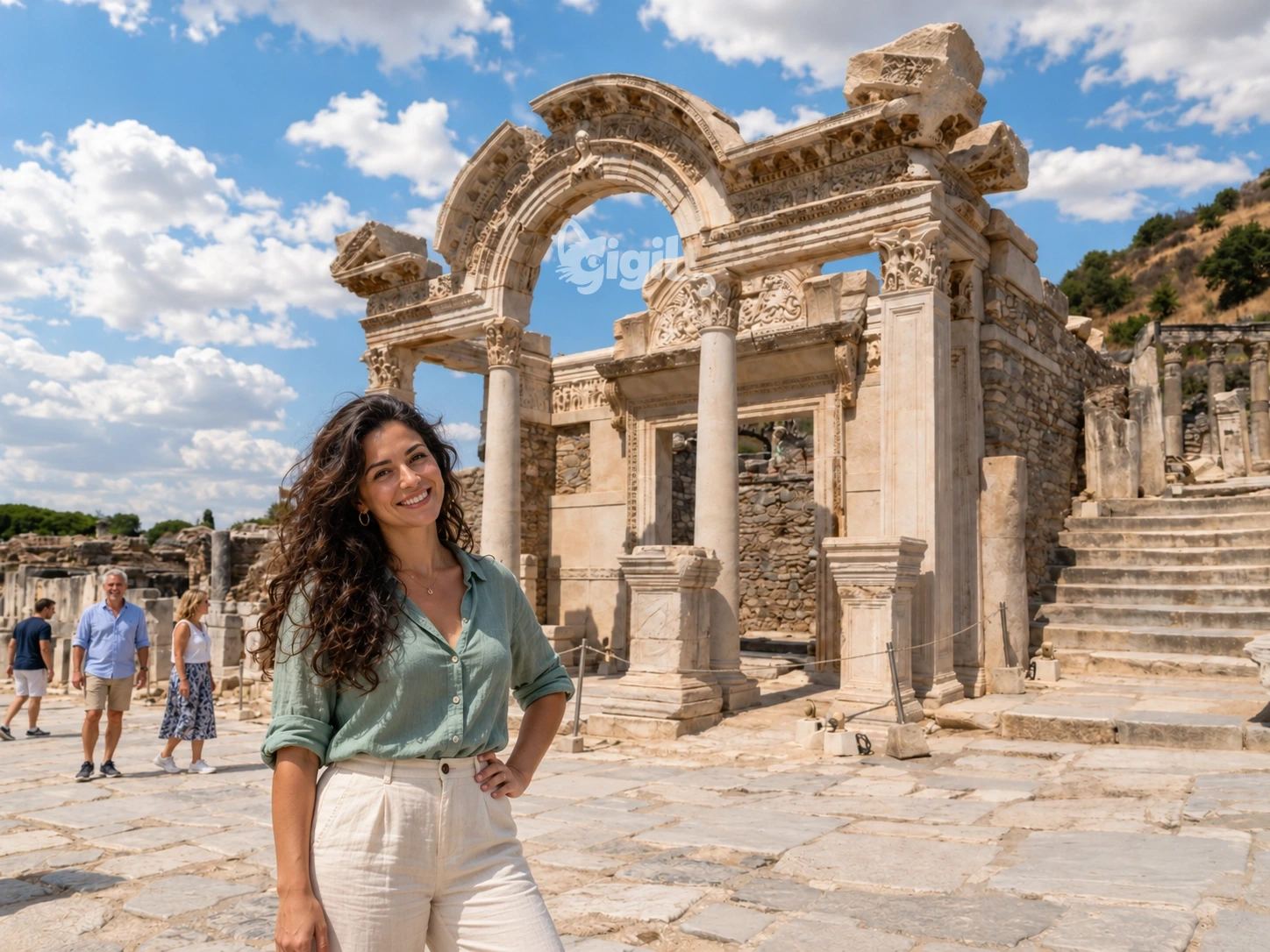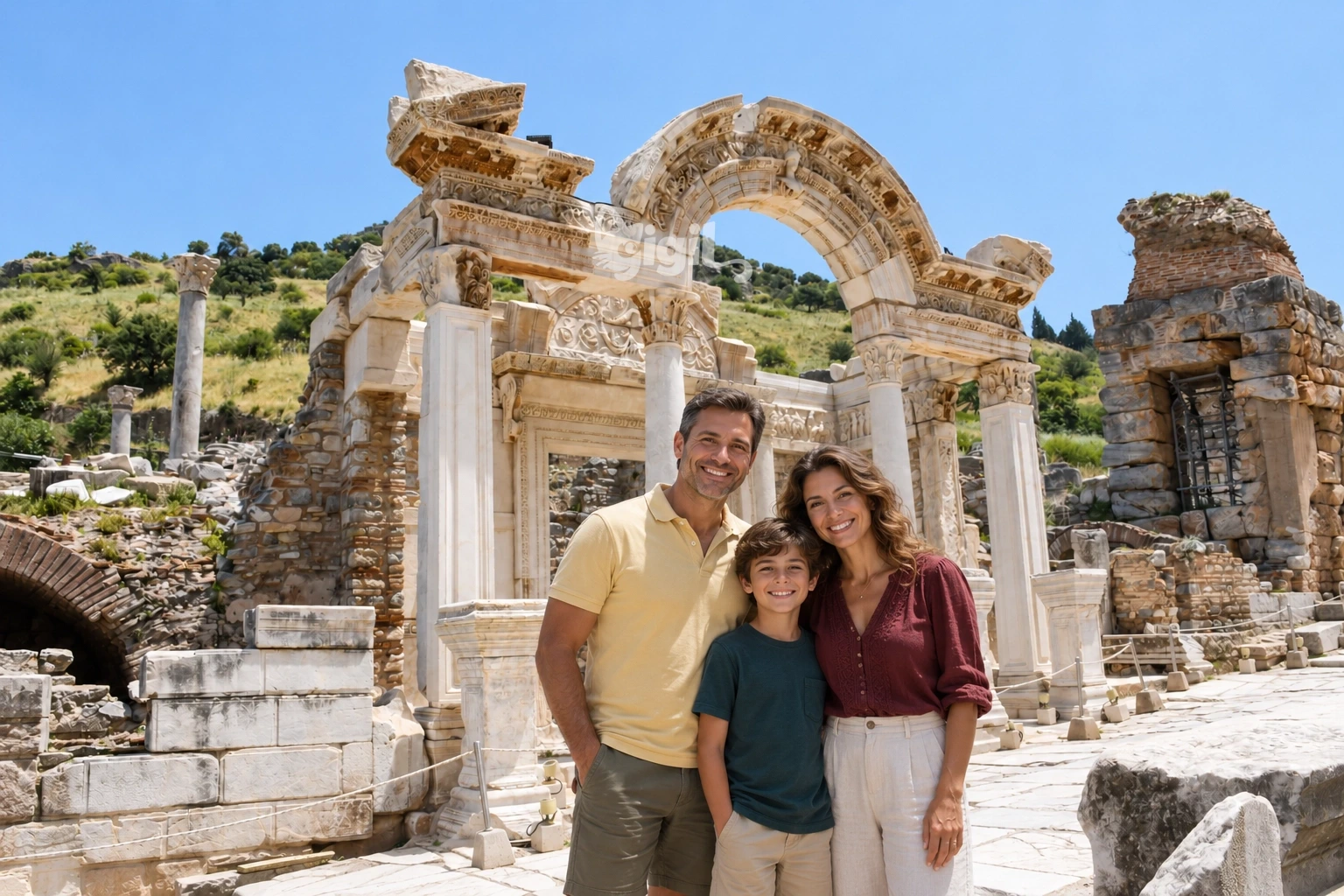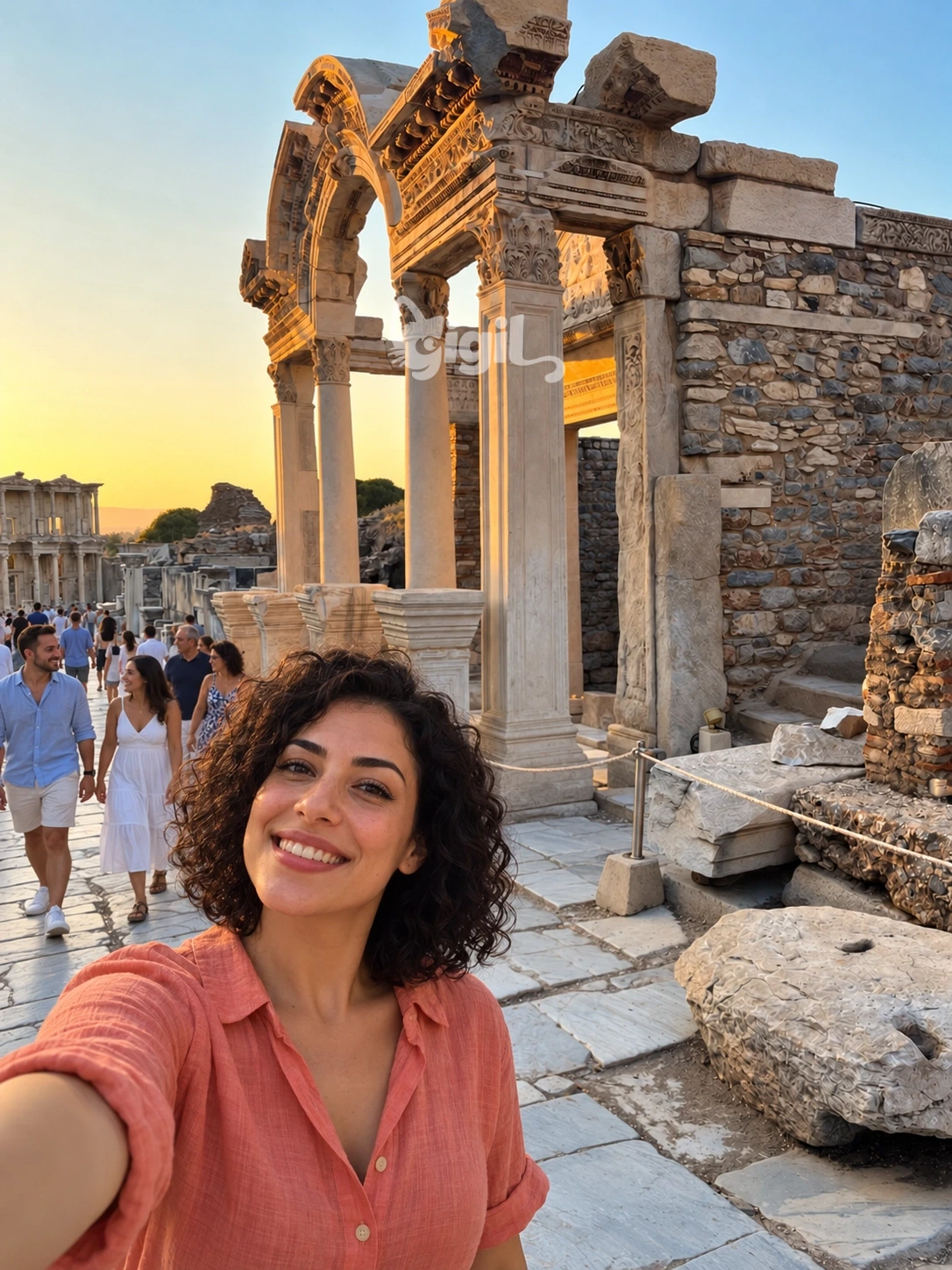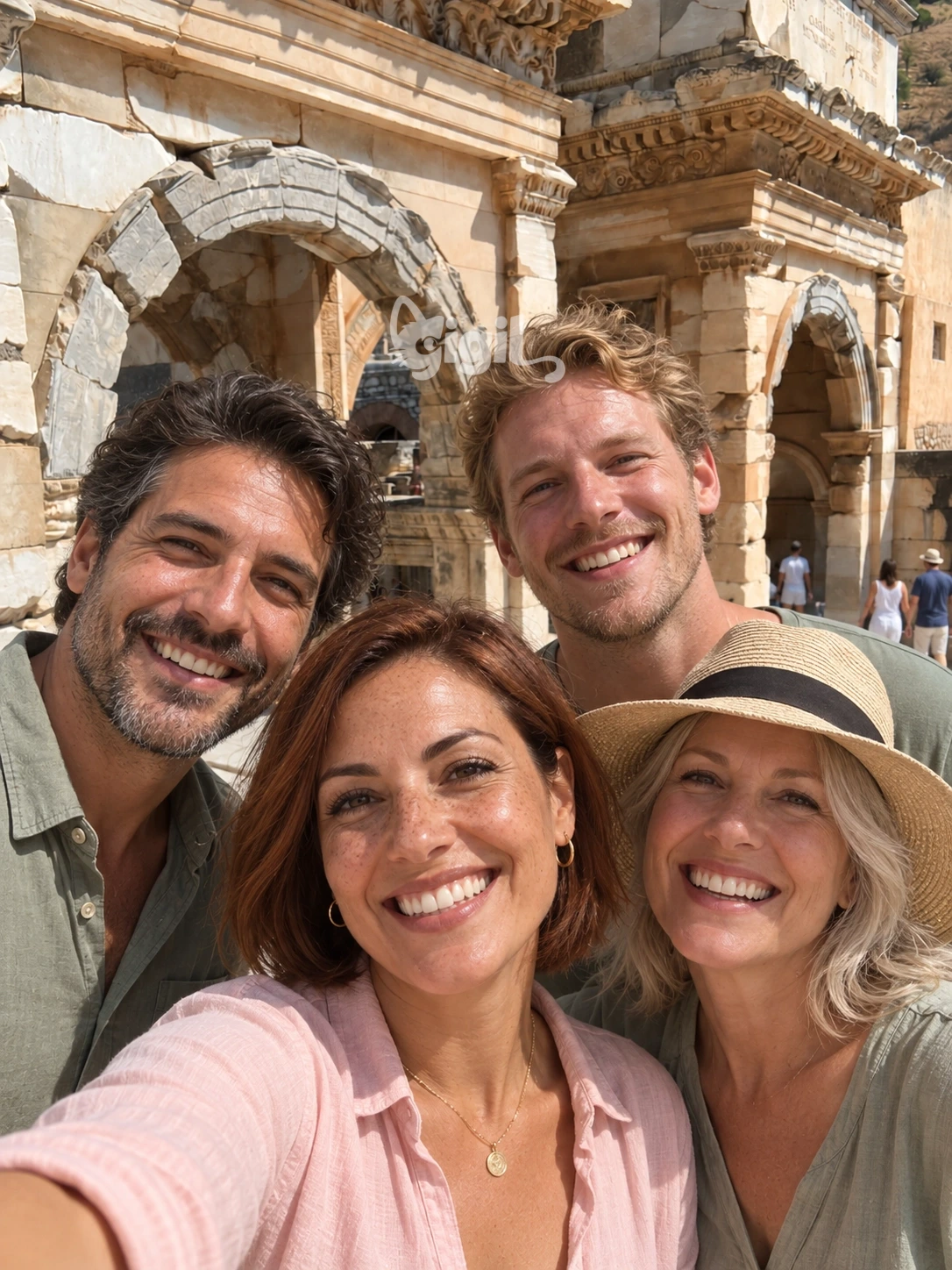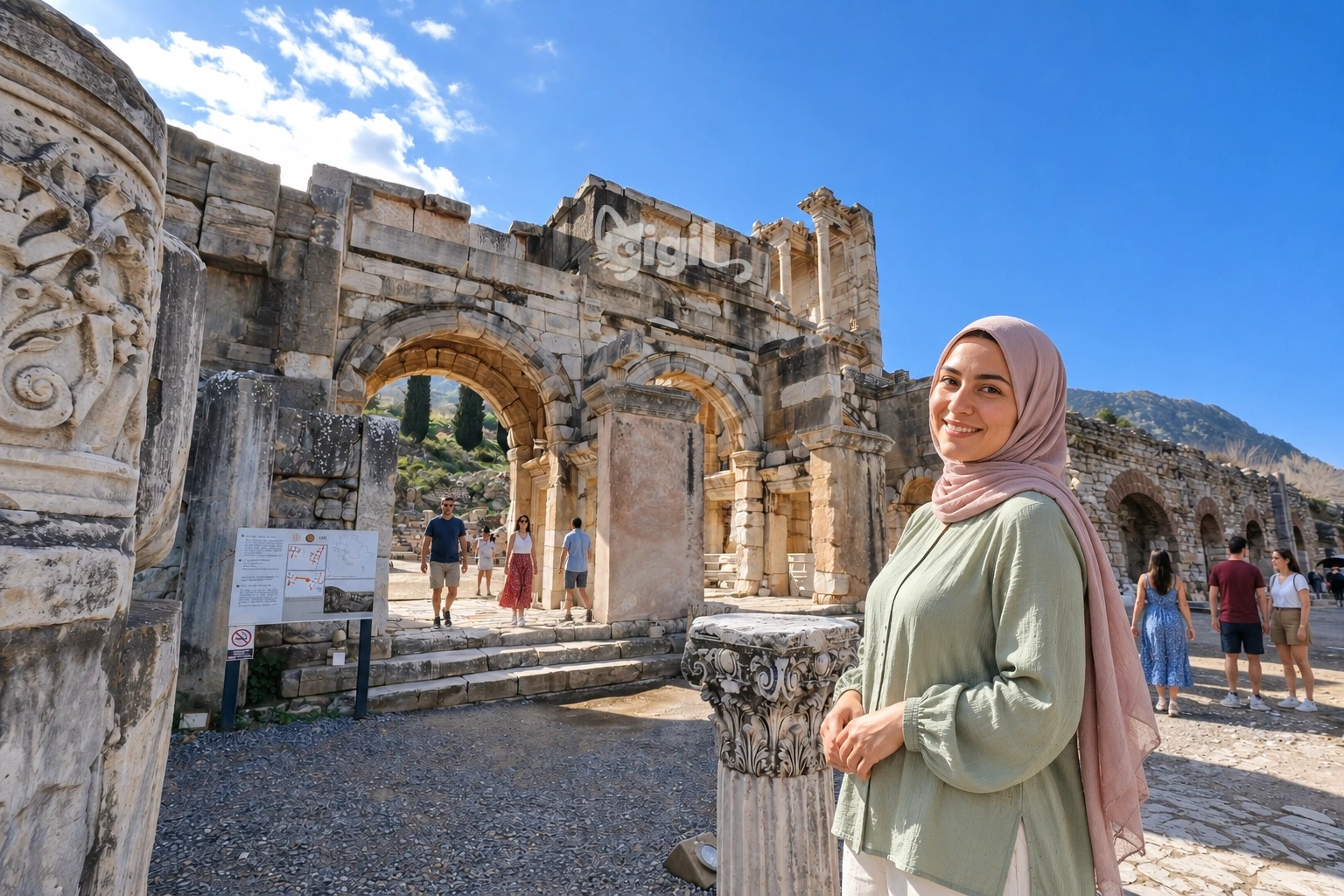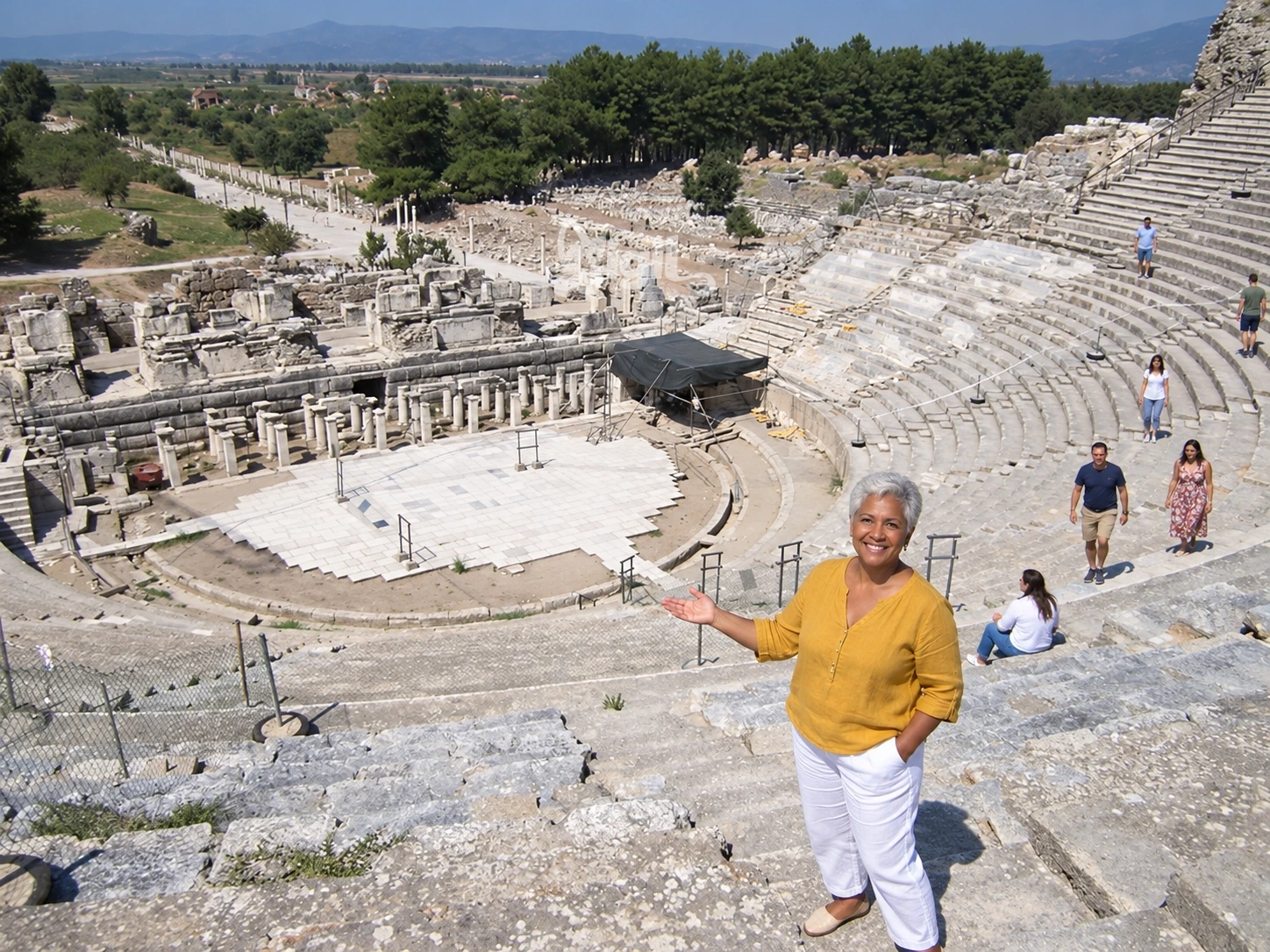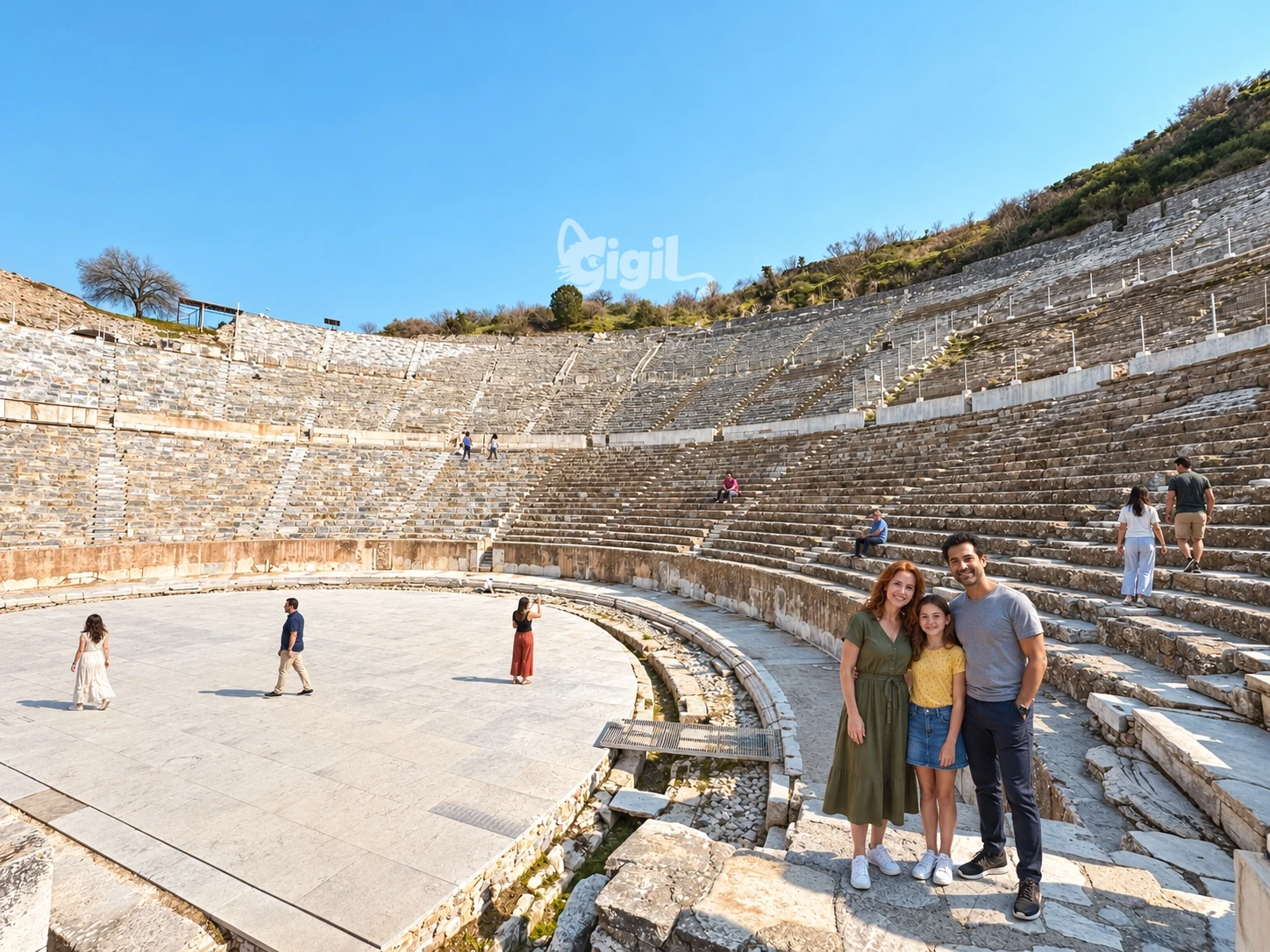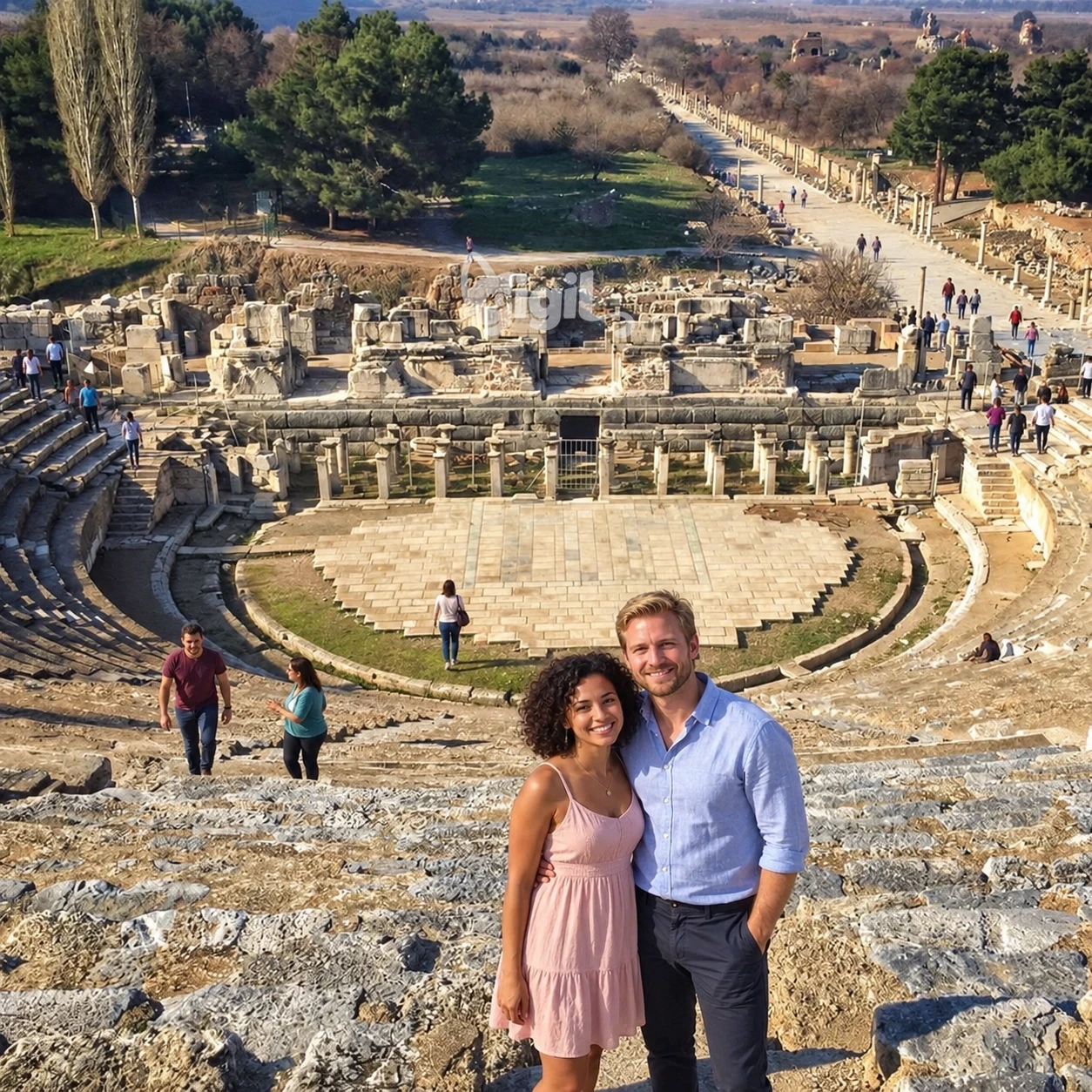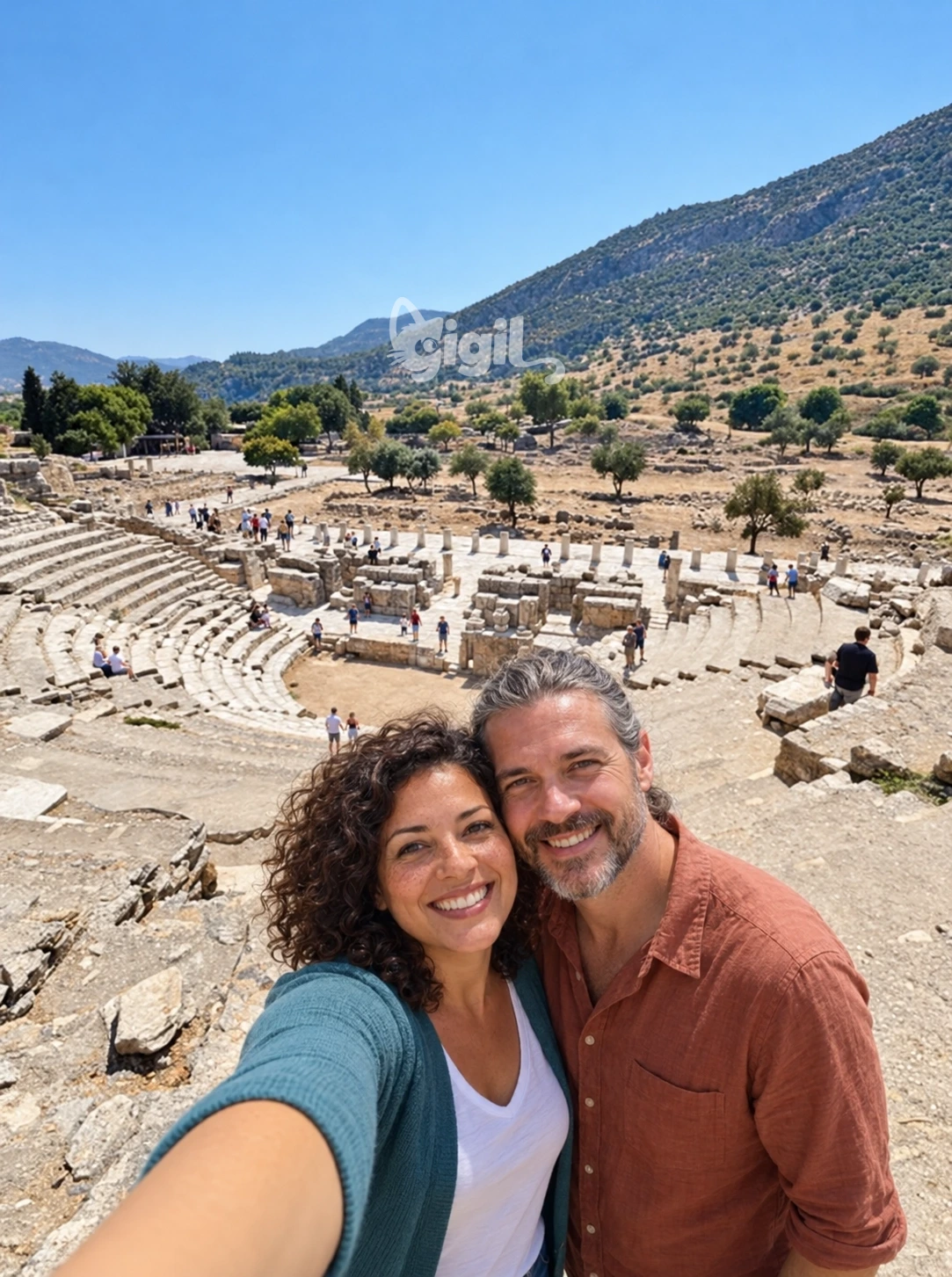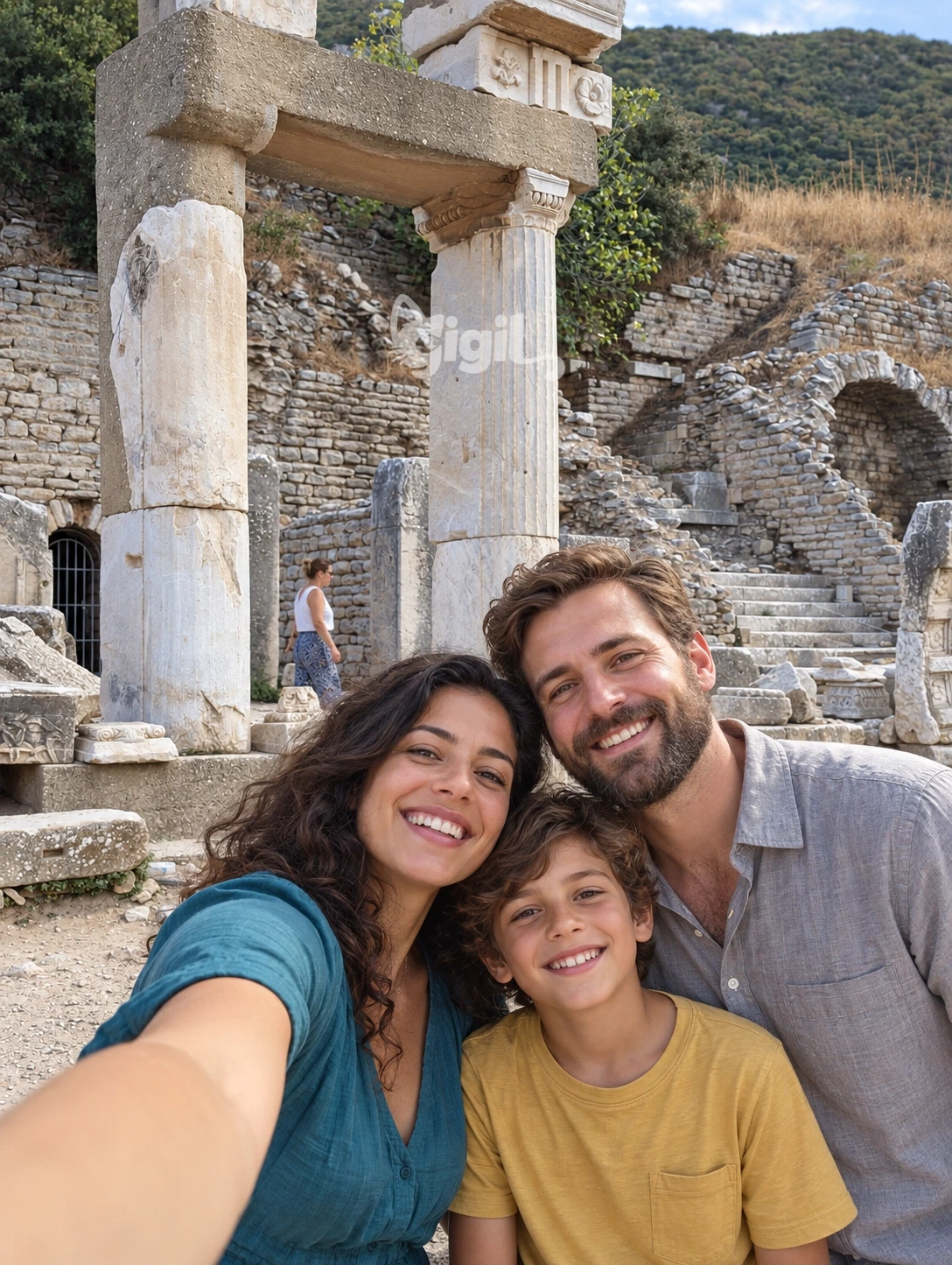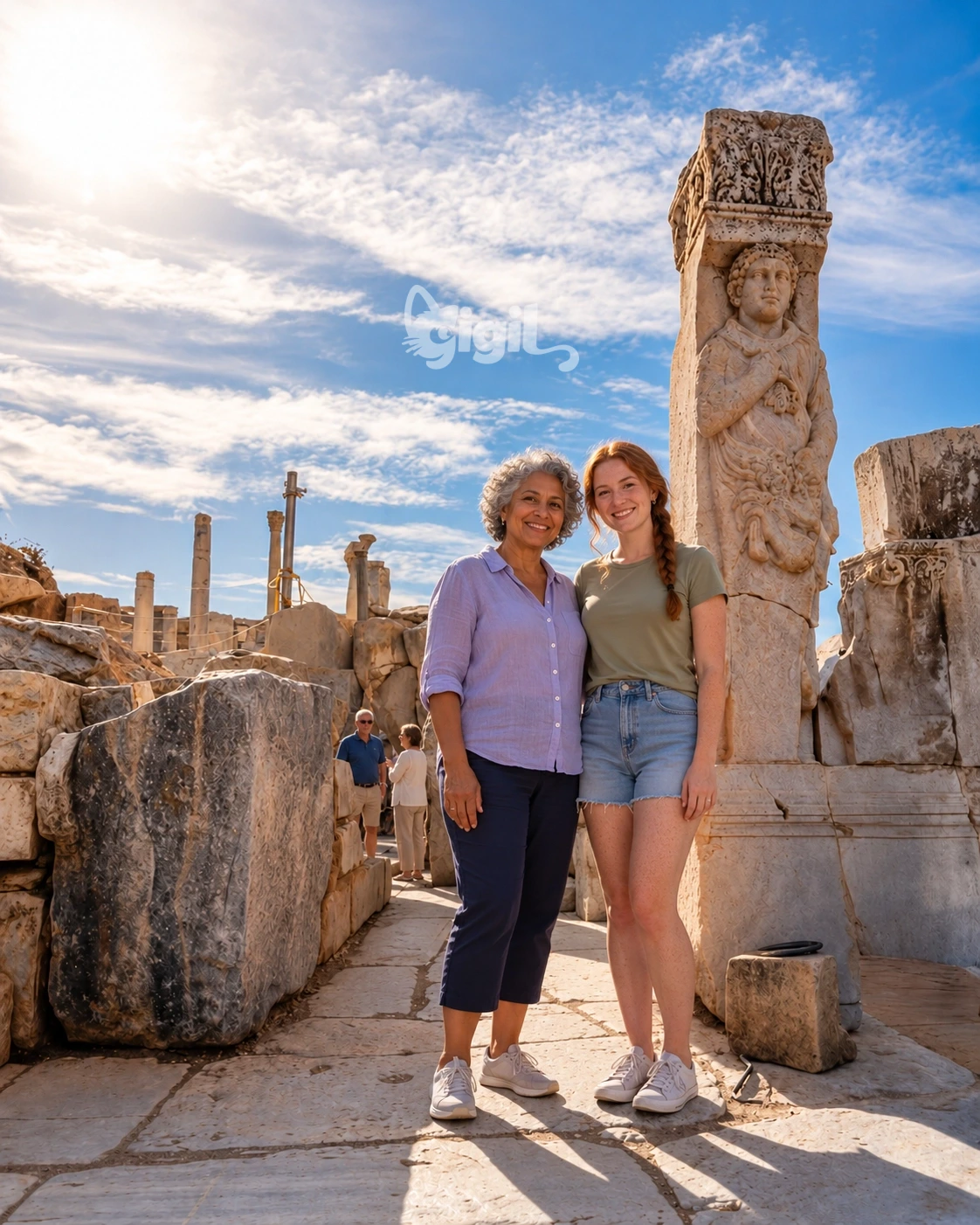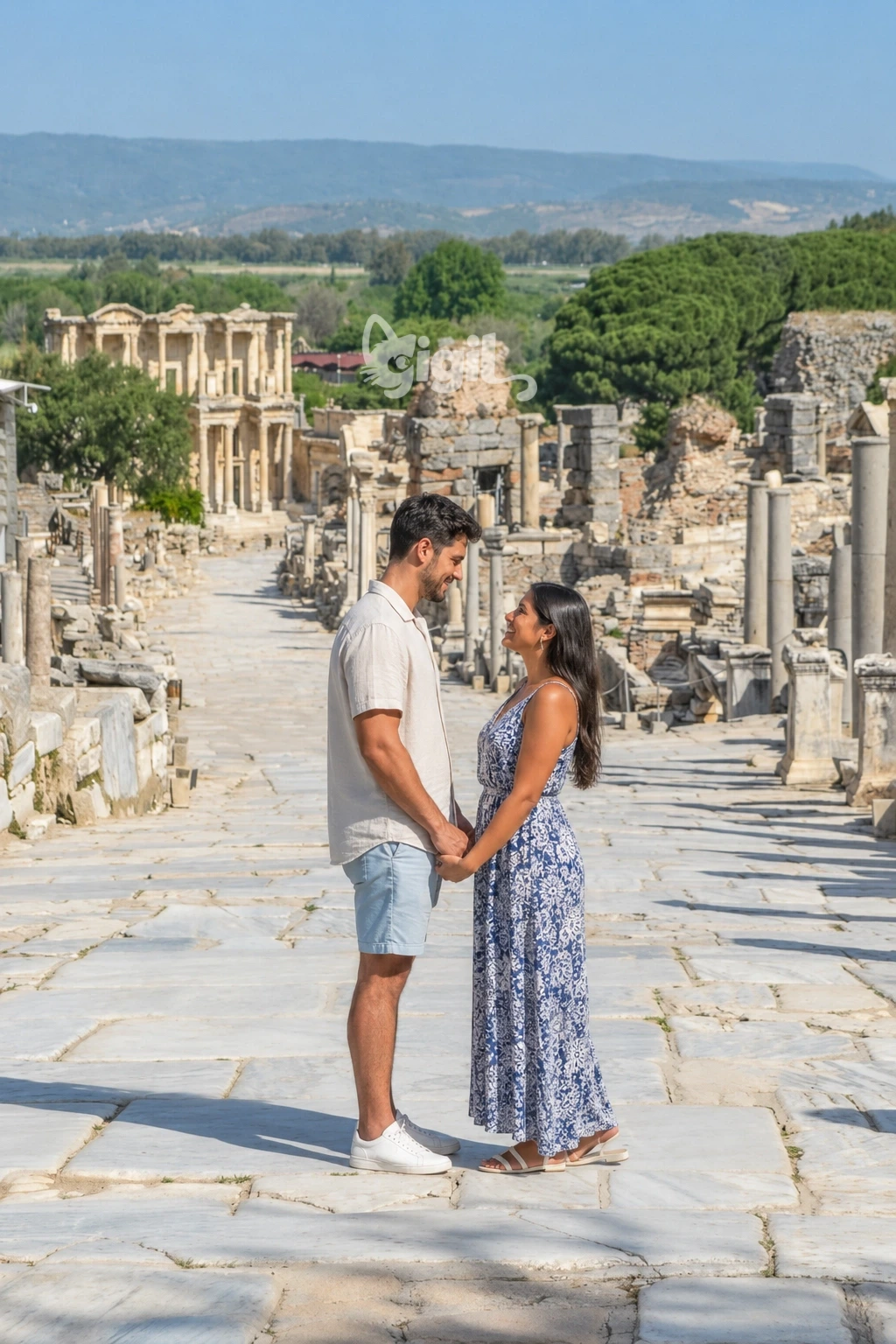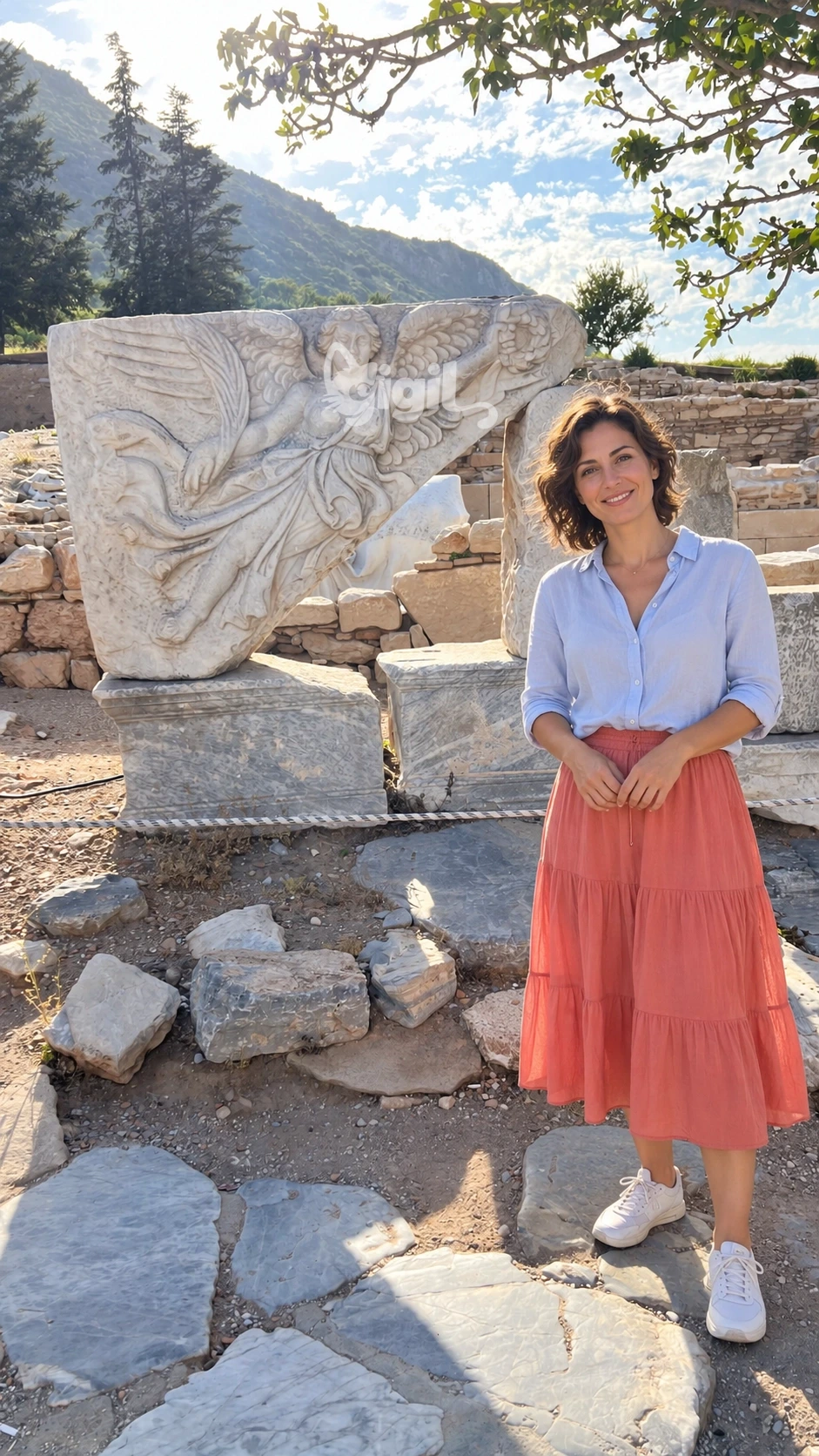








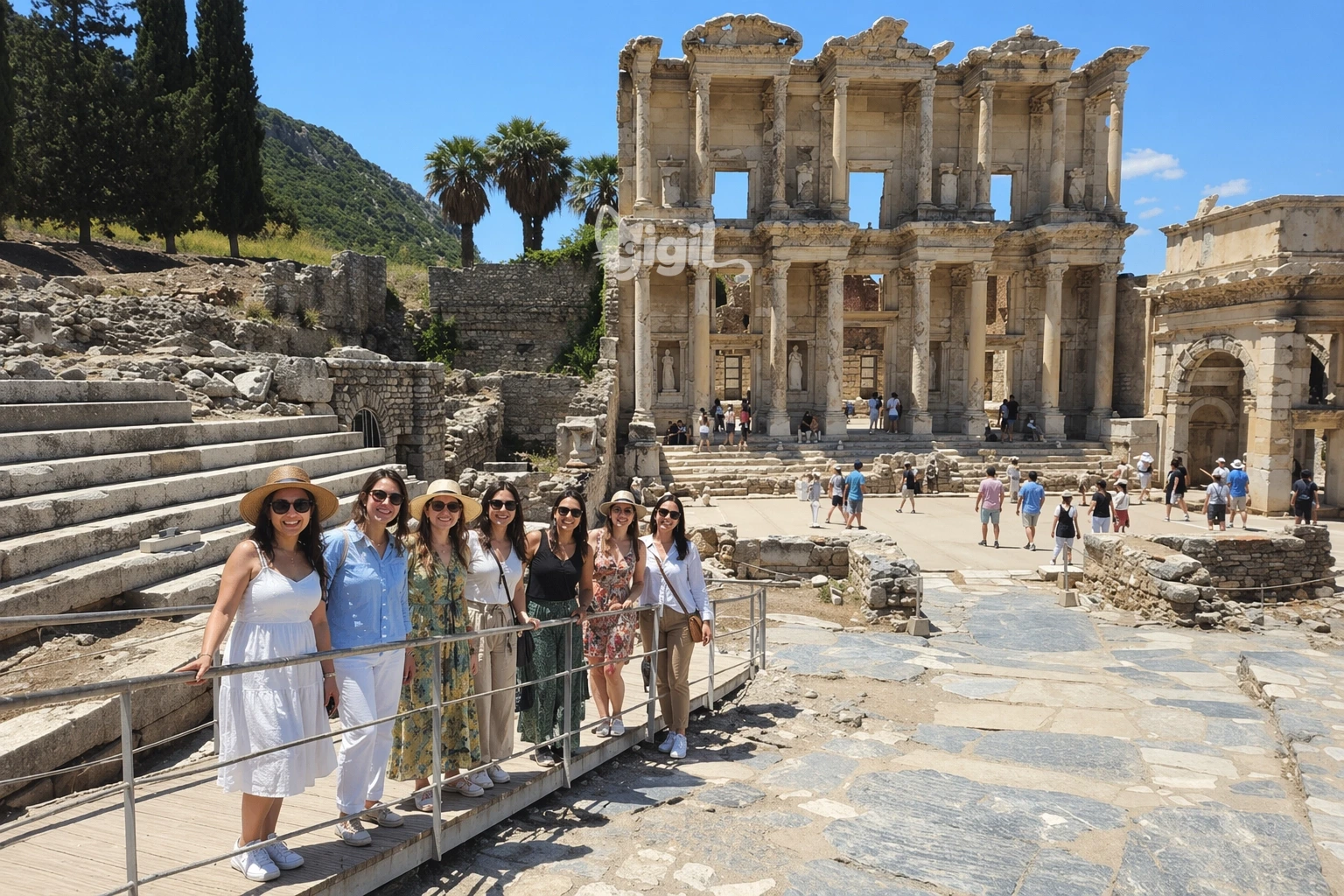
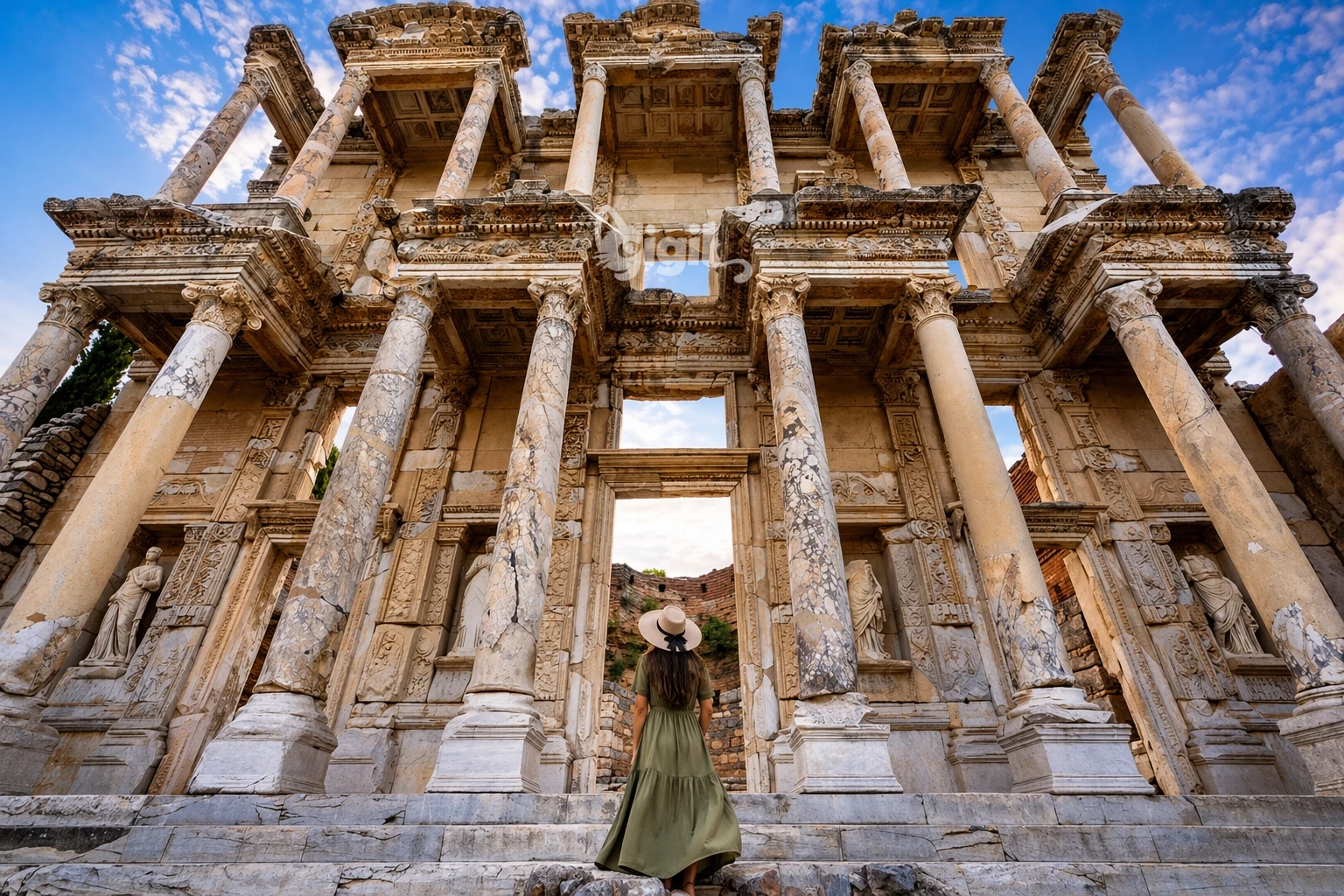
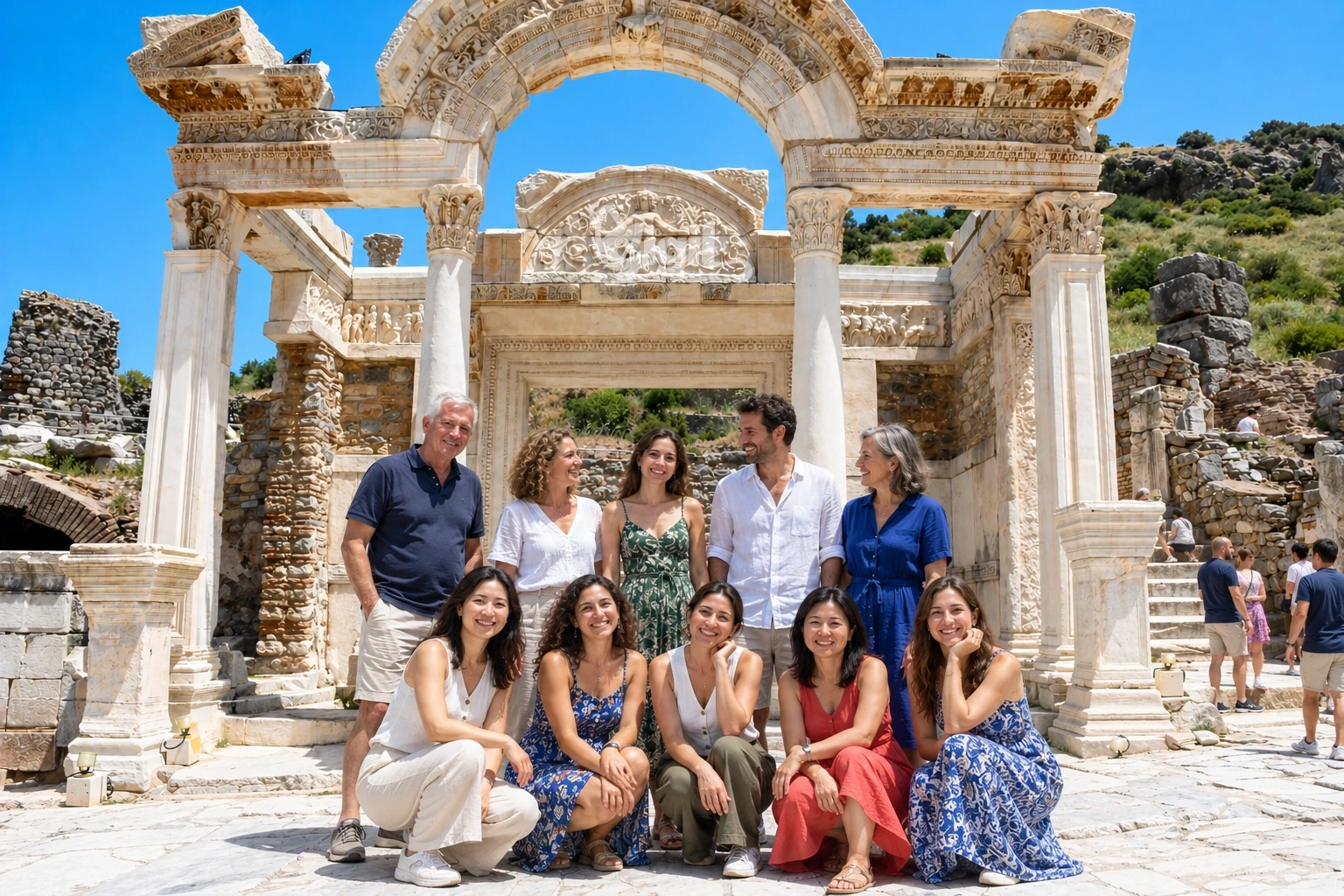
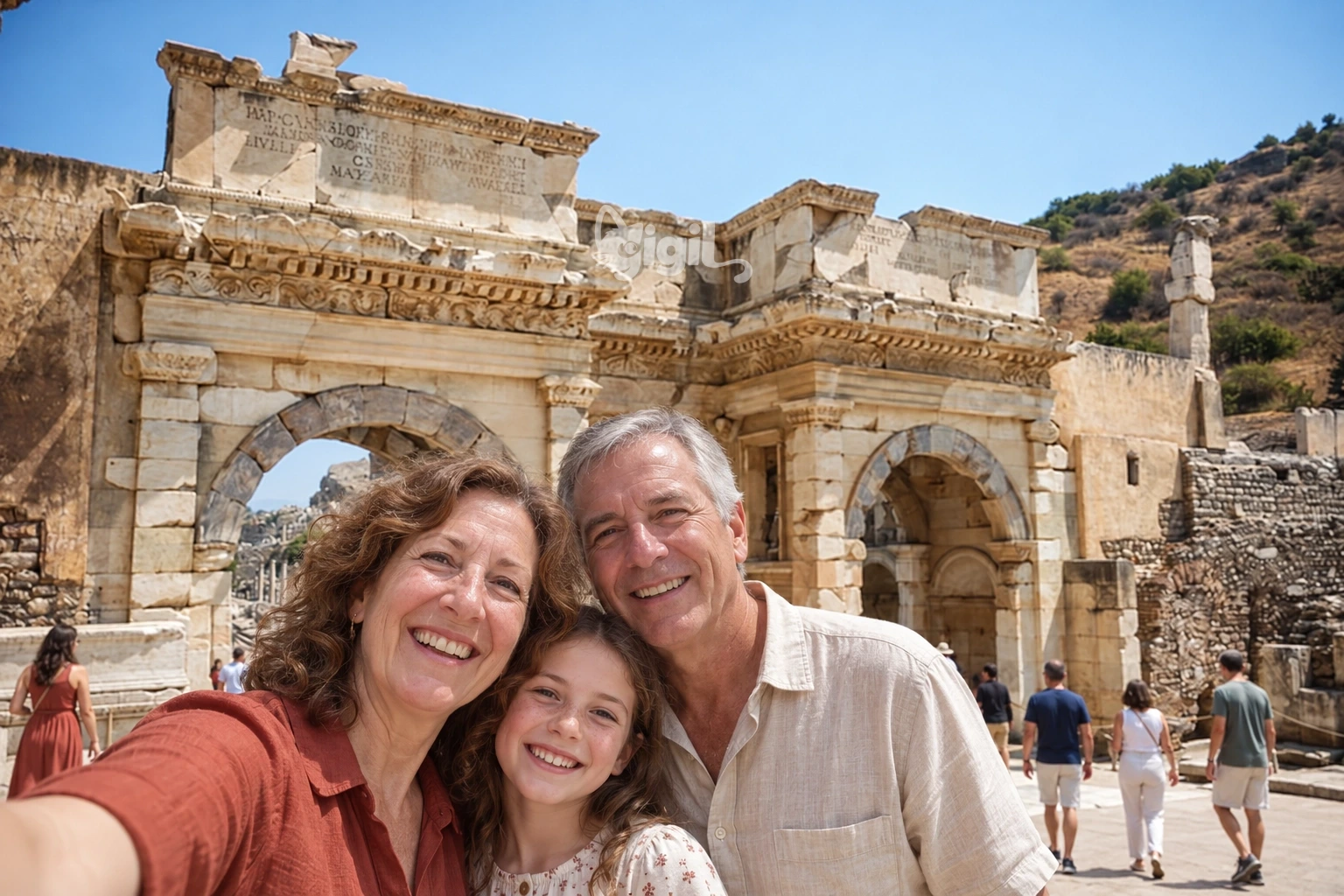
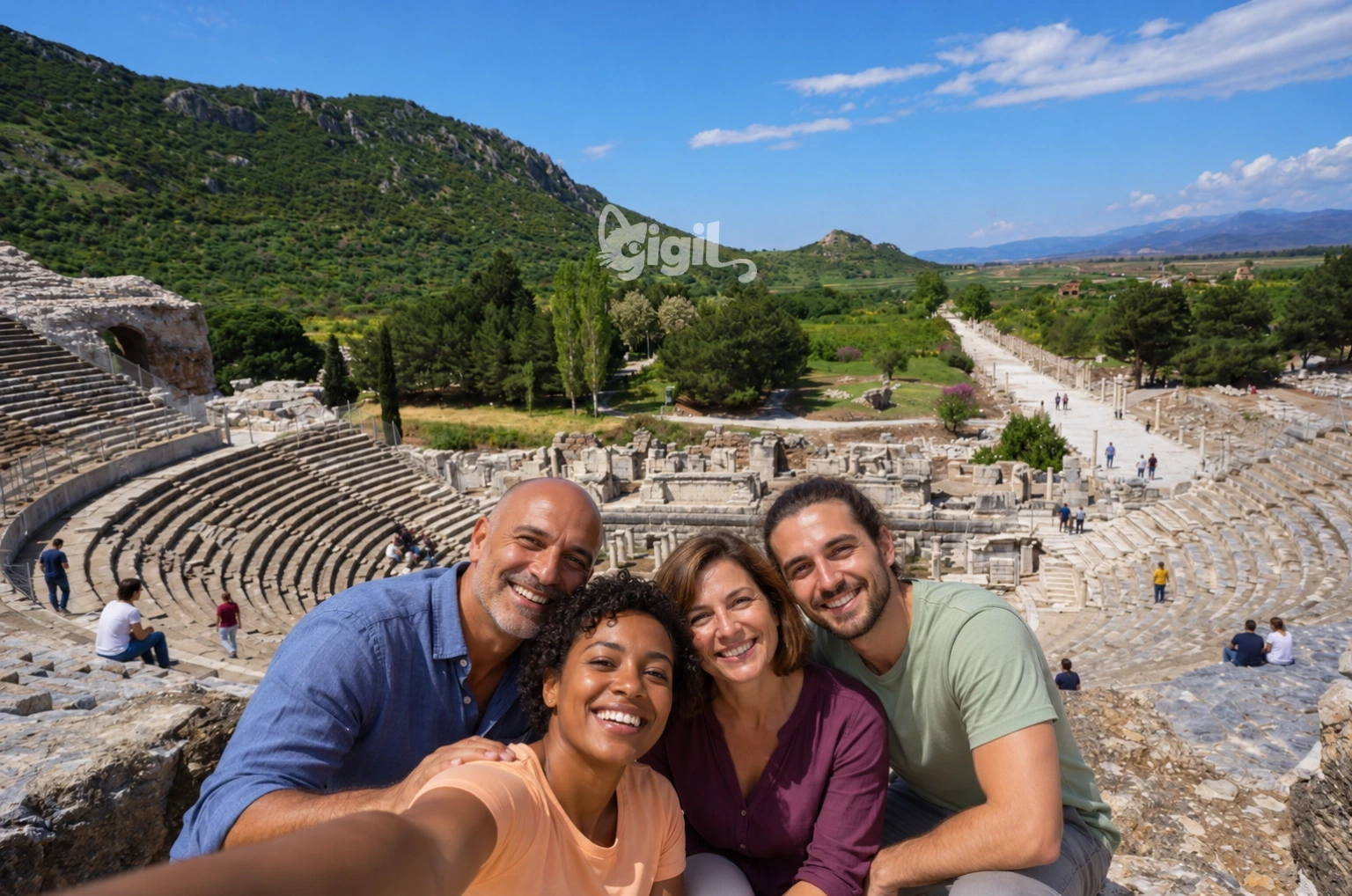
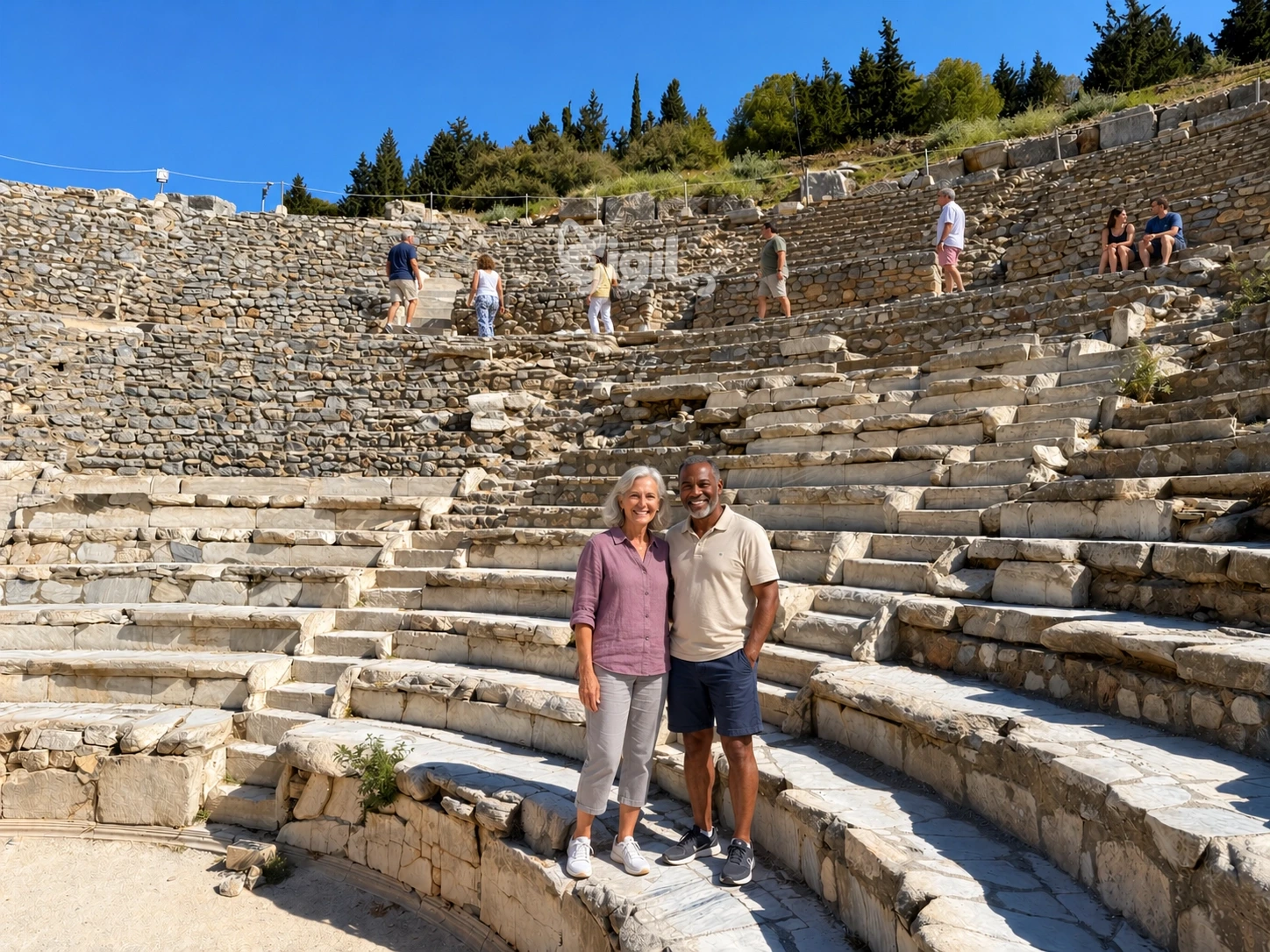
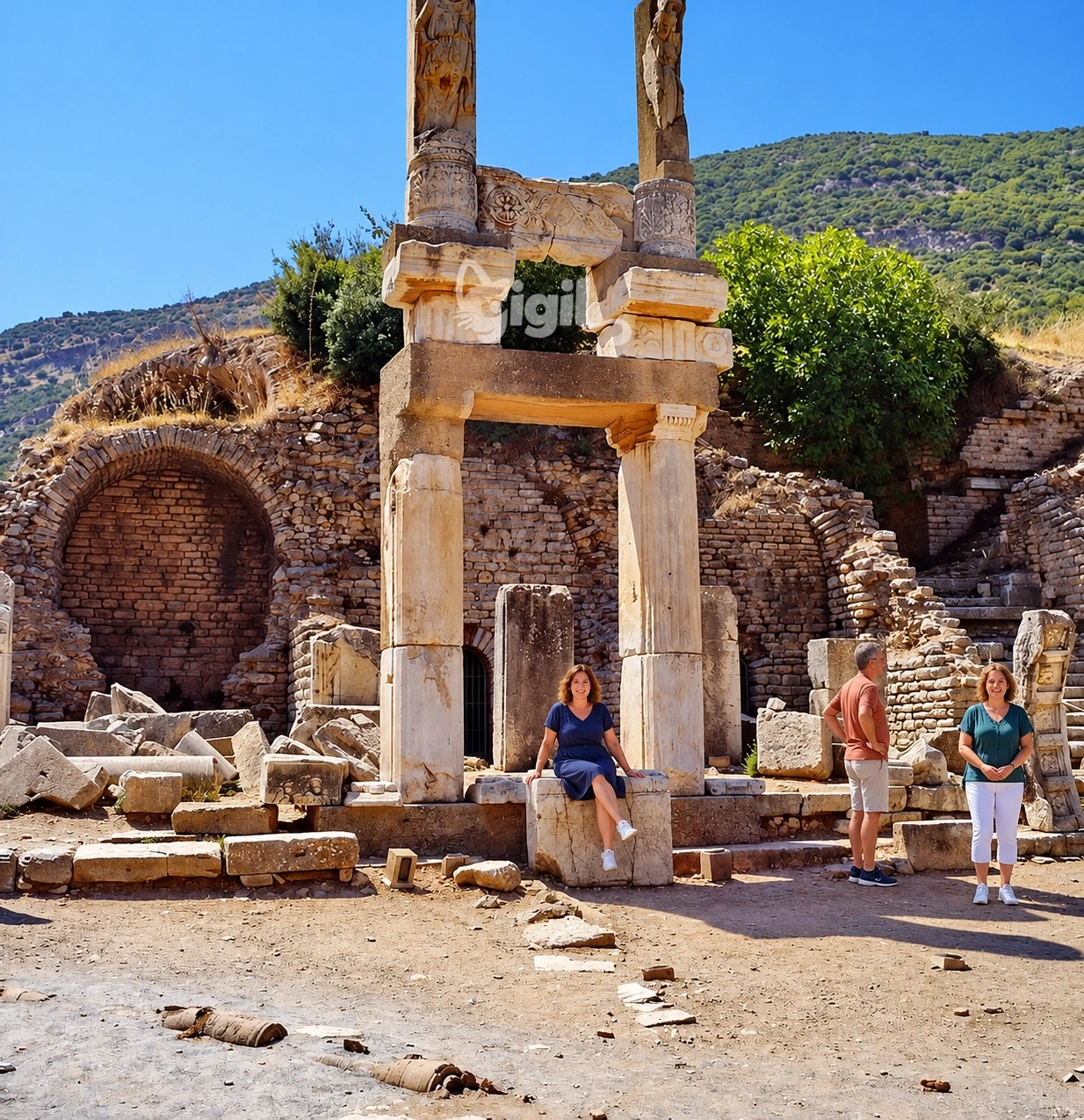
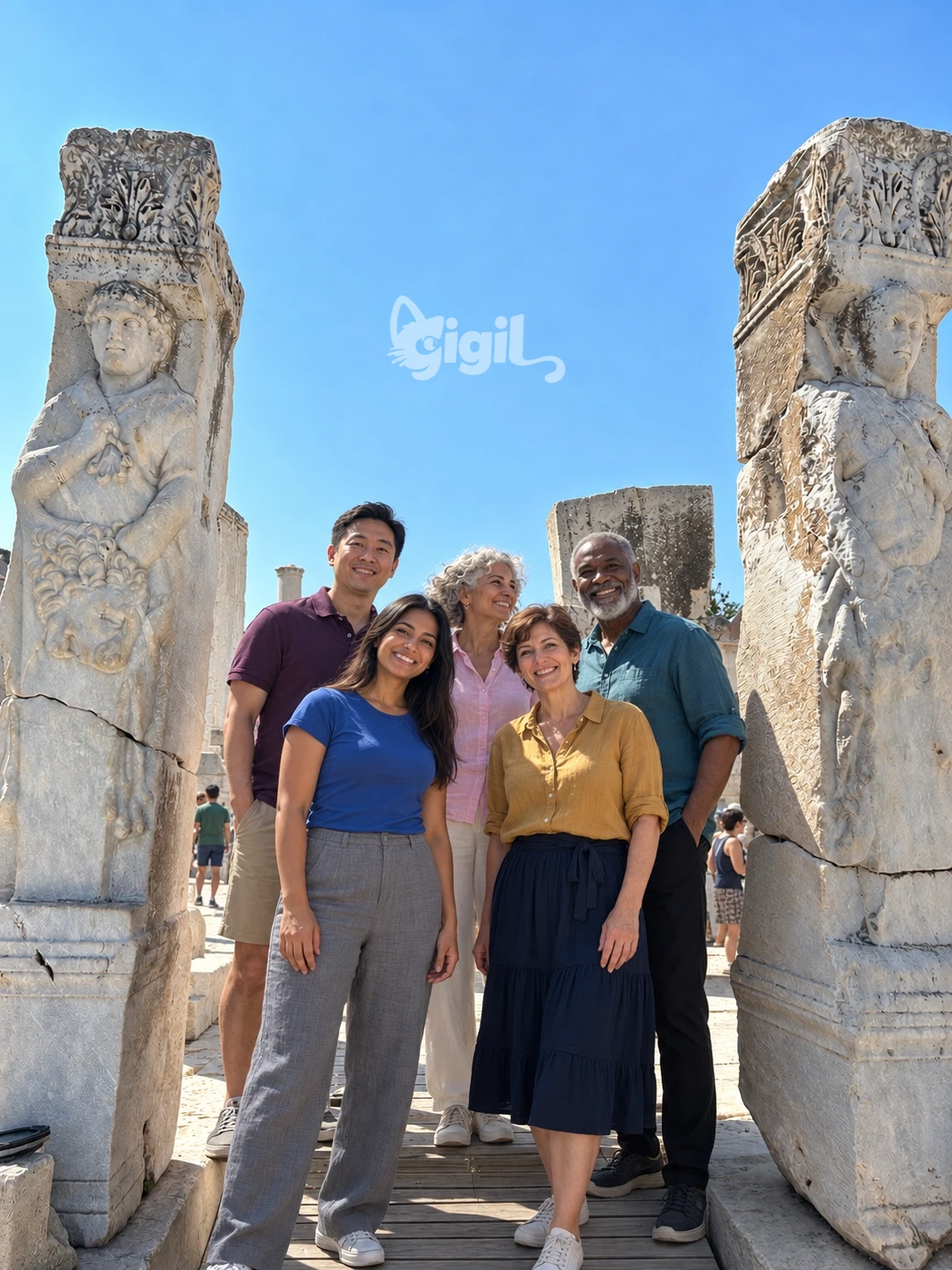
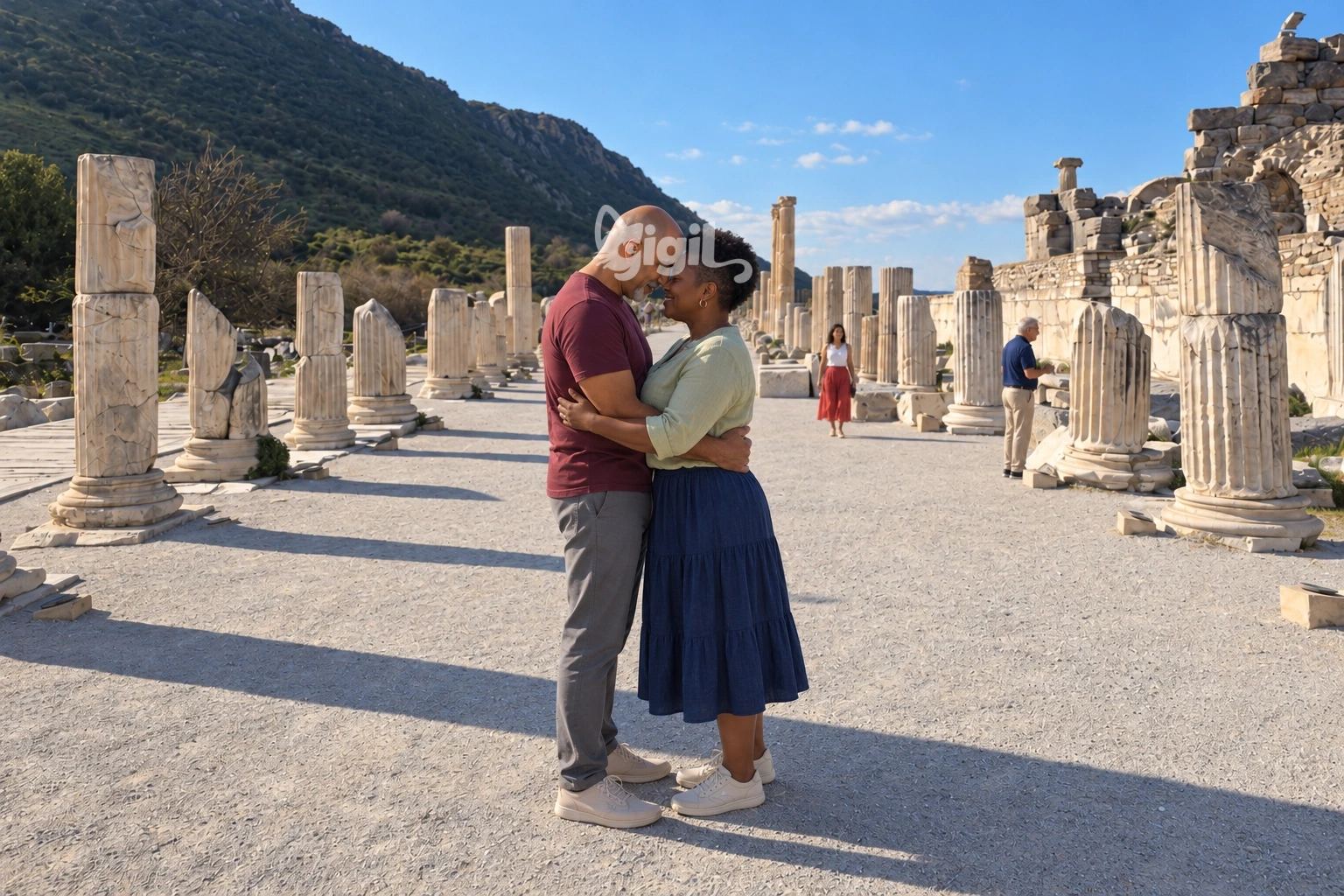
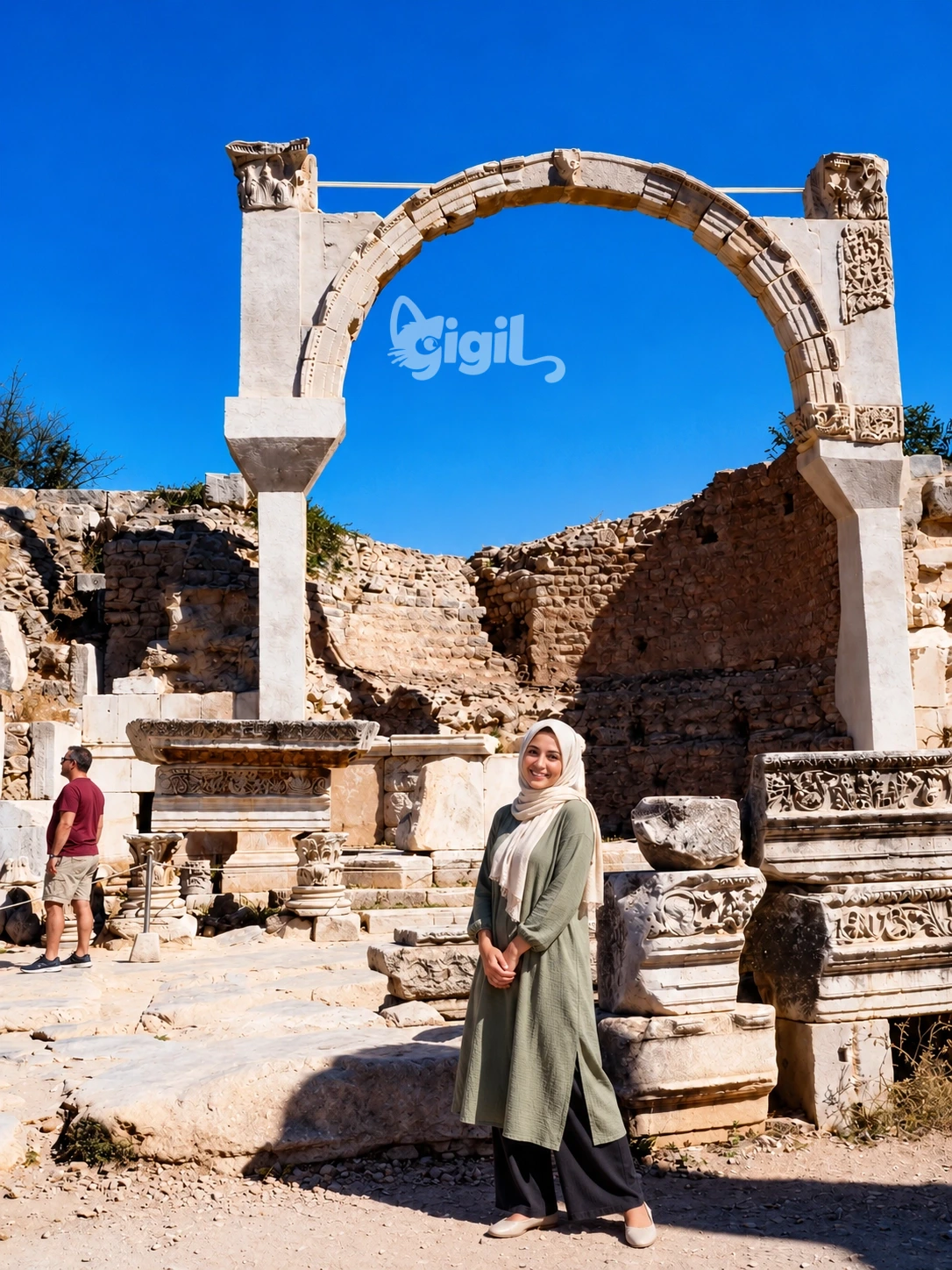
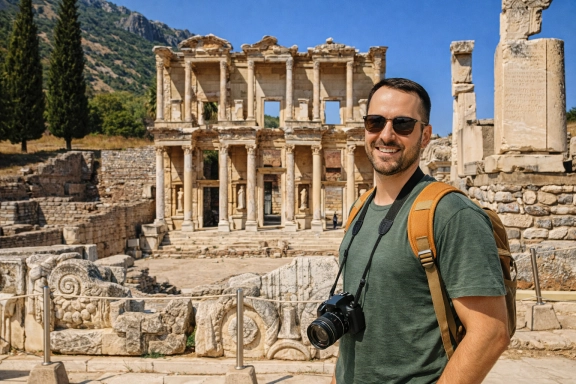
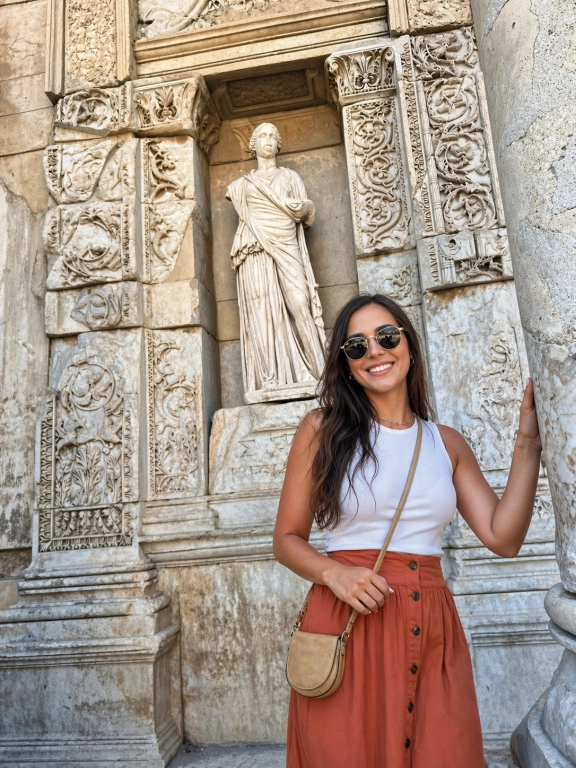
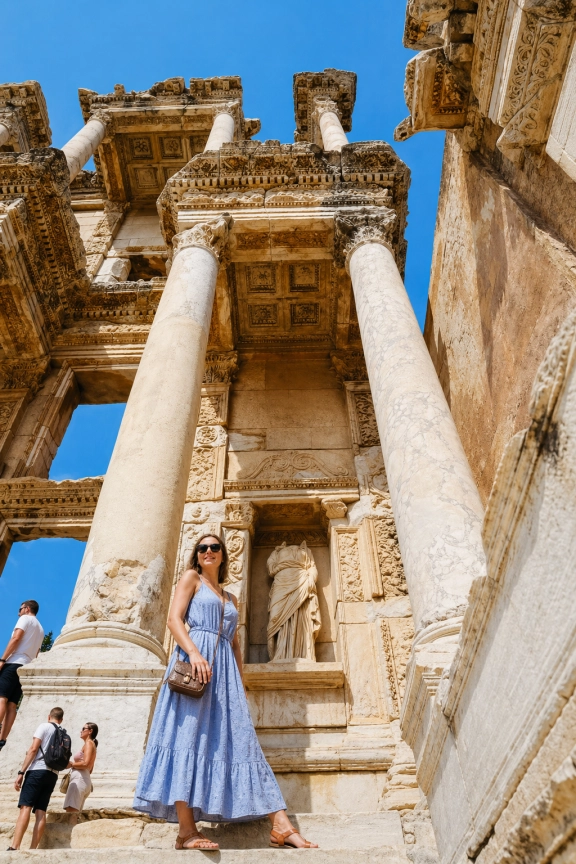
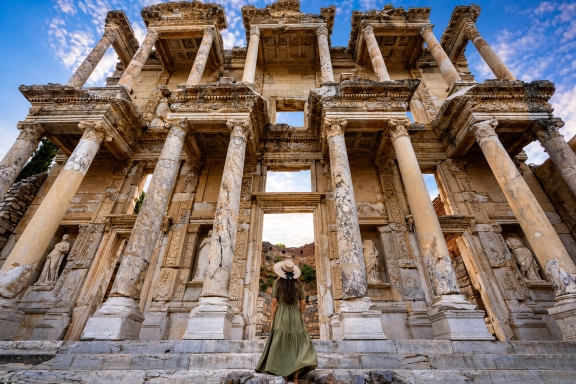
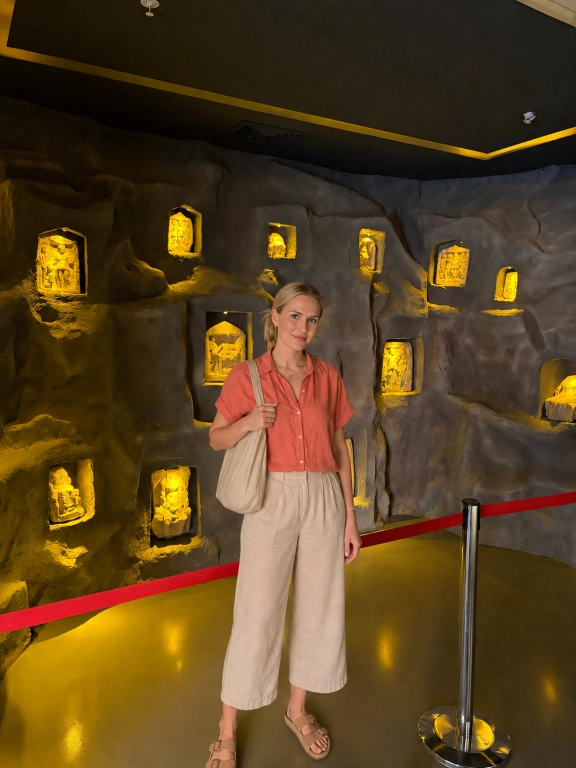
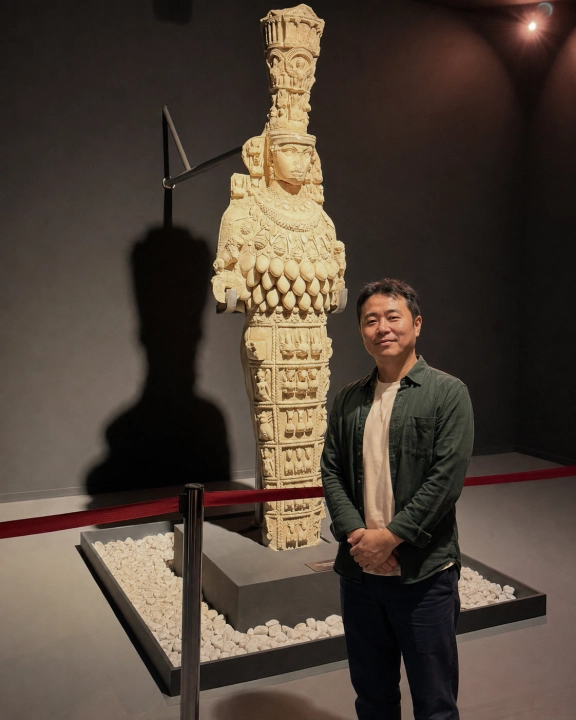
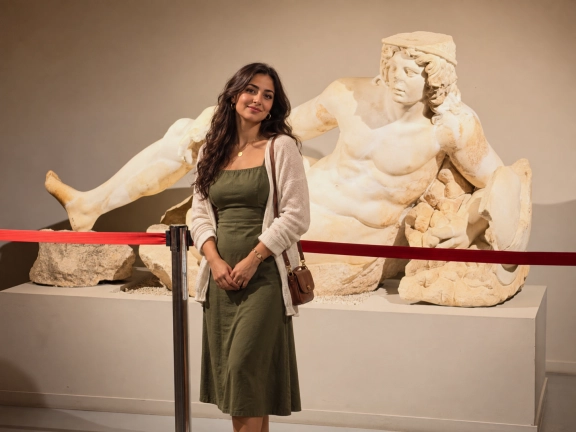
Look beyond individual columns at Ephesus Ancient City. The marble streets, civic buildings and gathering places reveal how public life occupied a connected network of spaces.
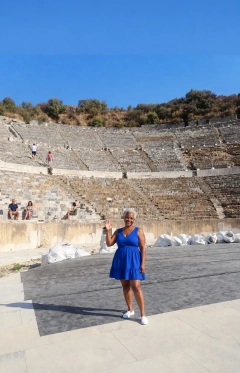
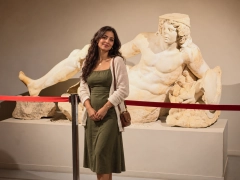
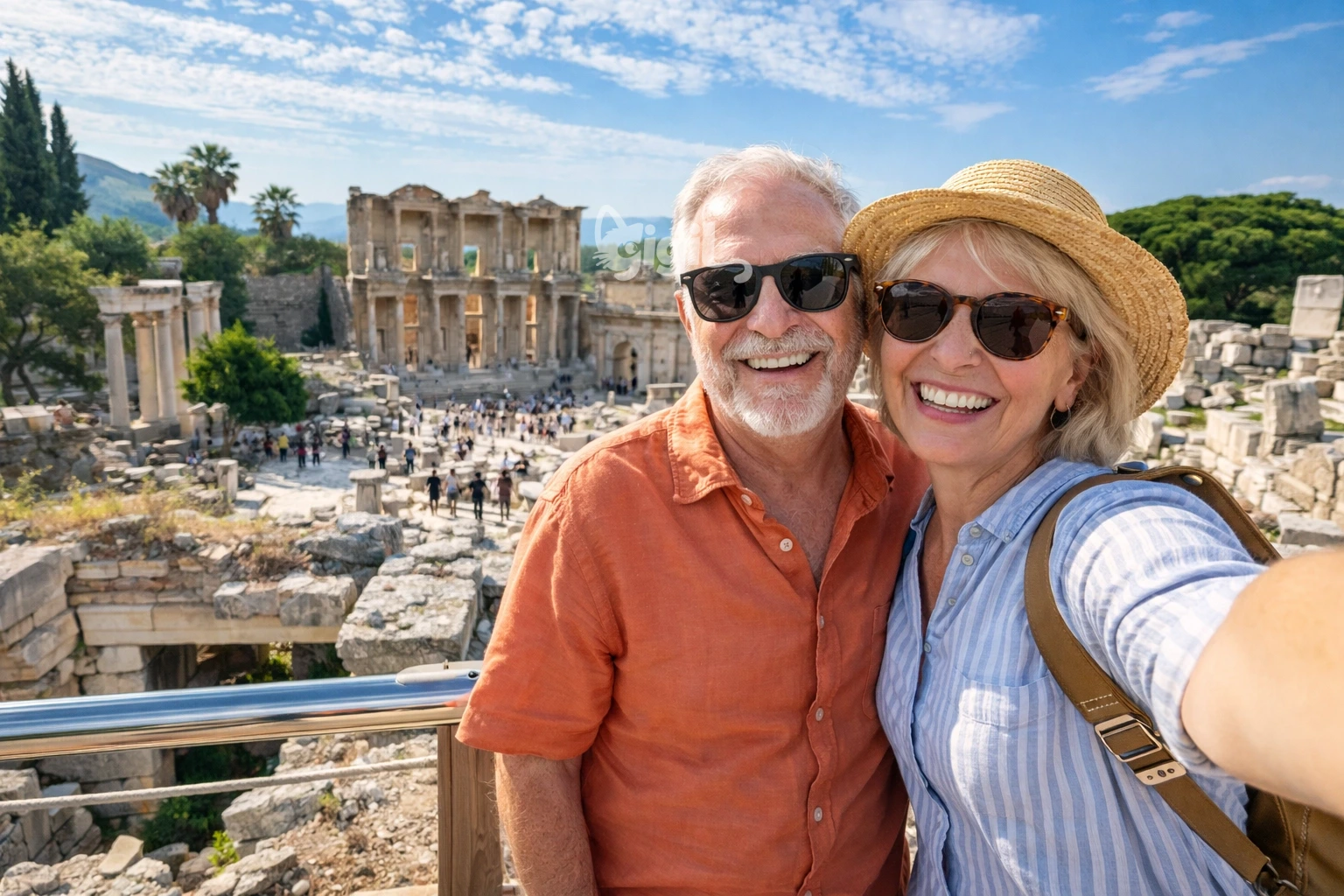
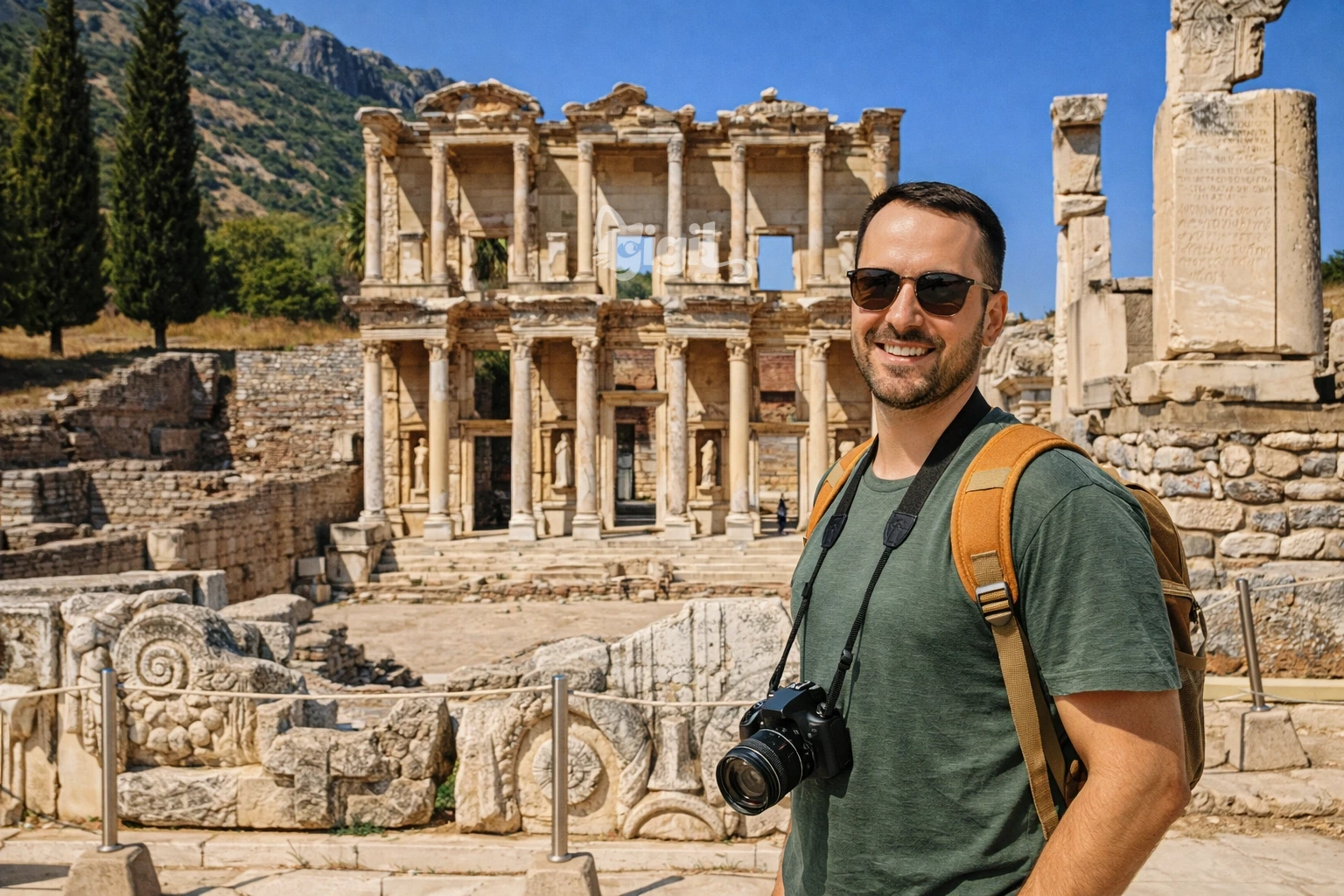
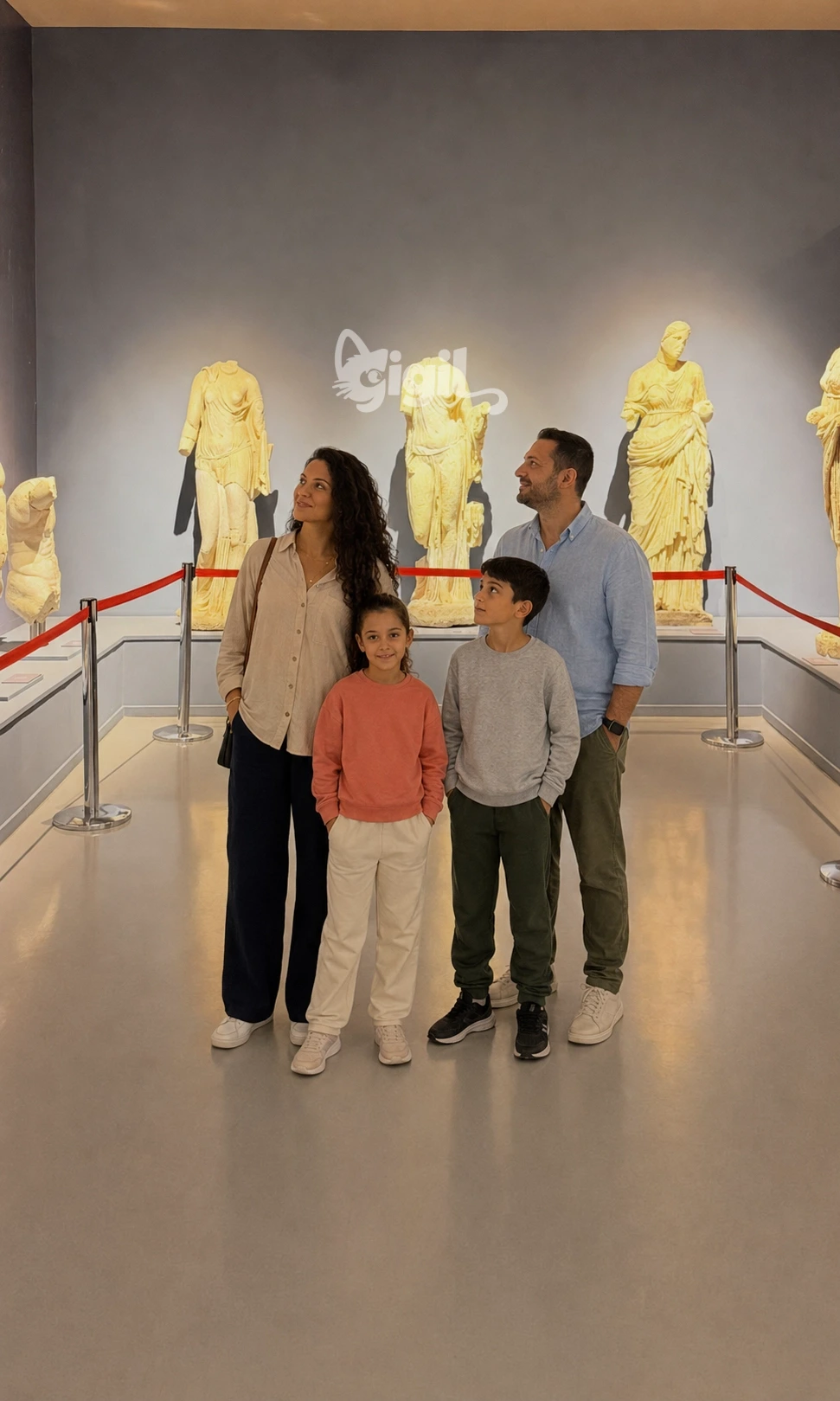
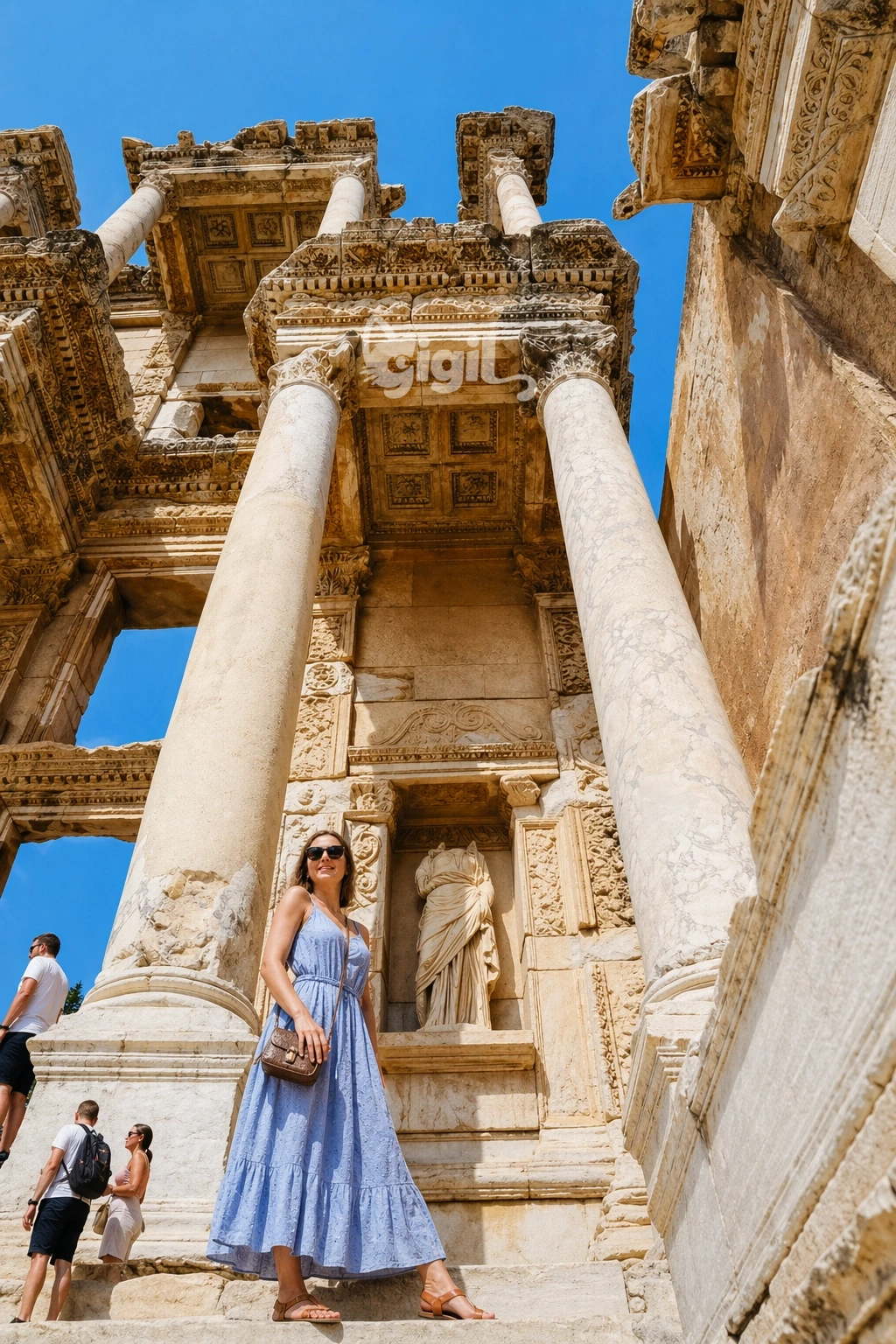
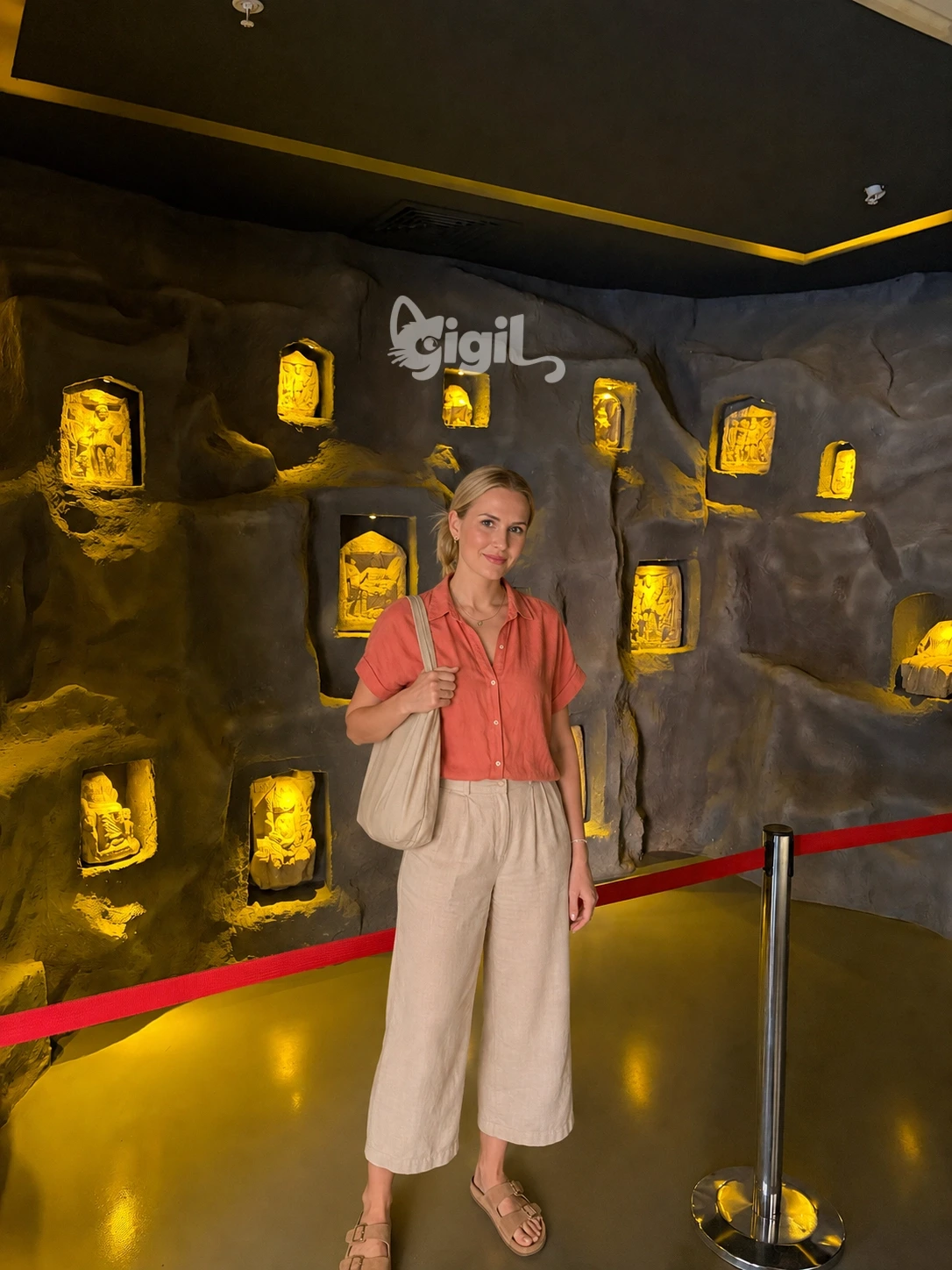
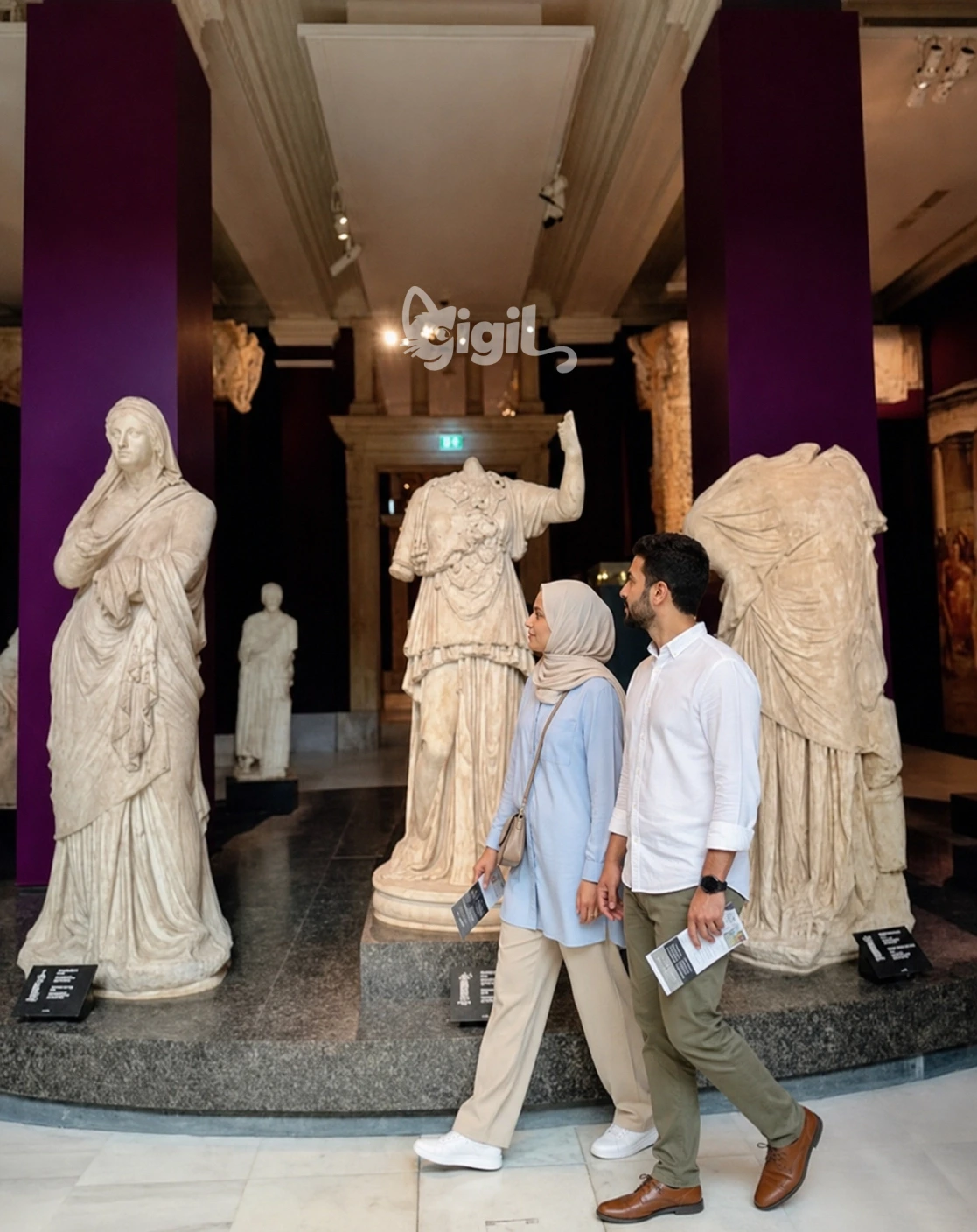
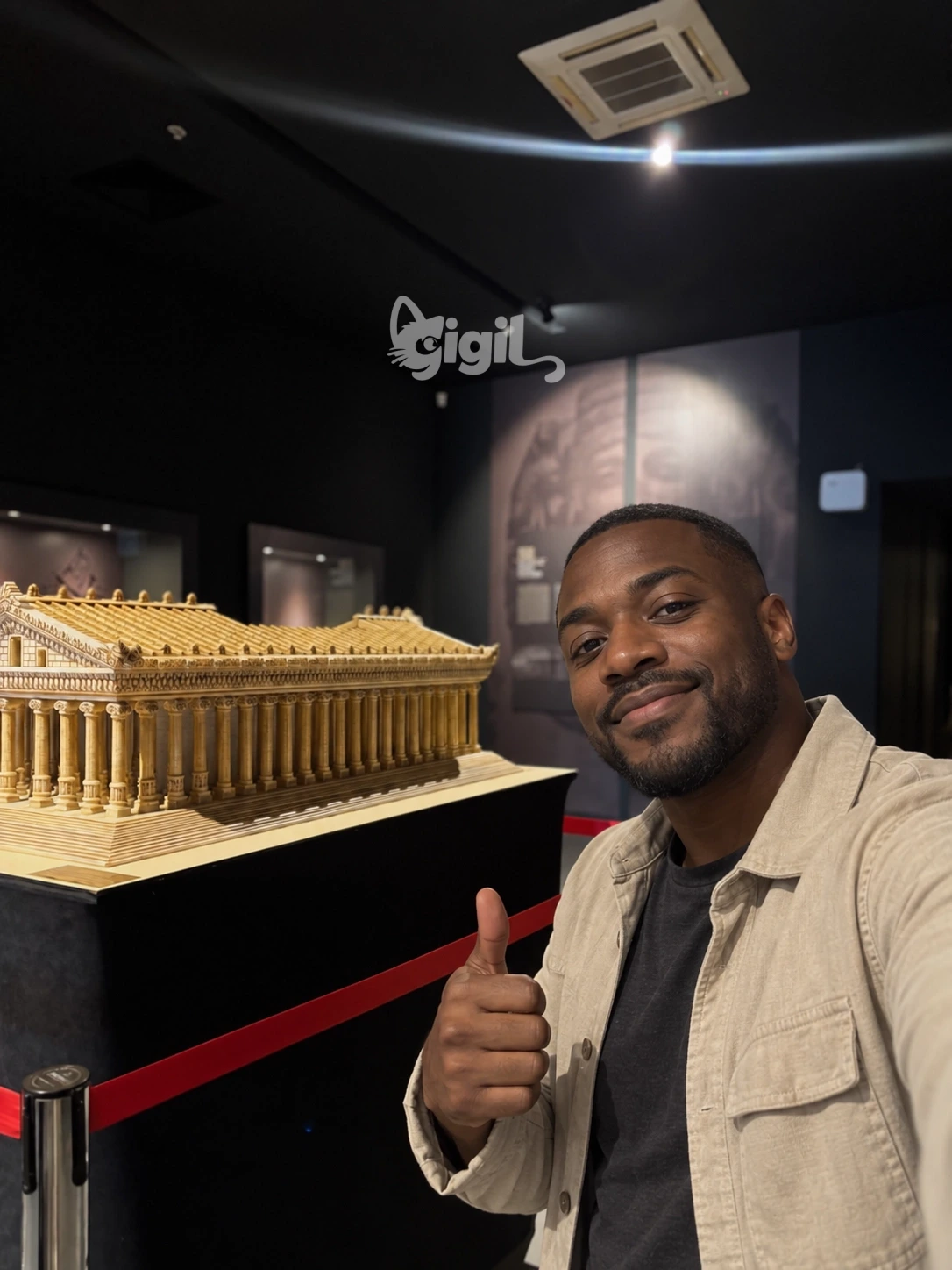
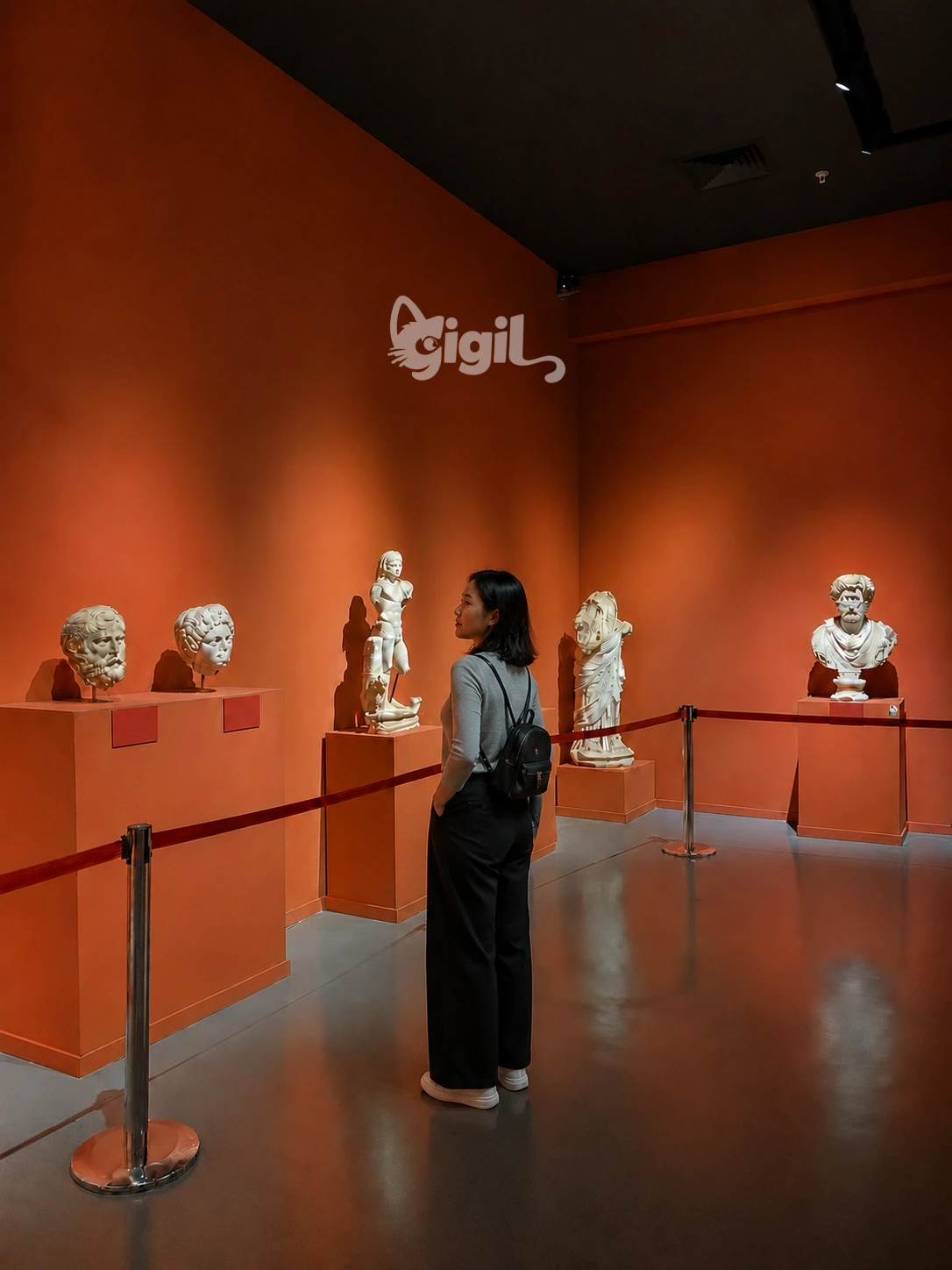
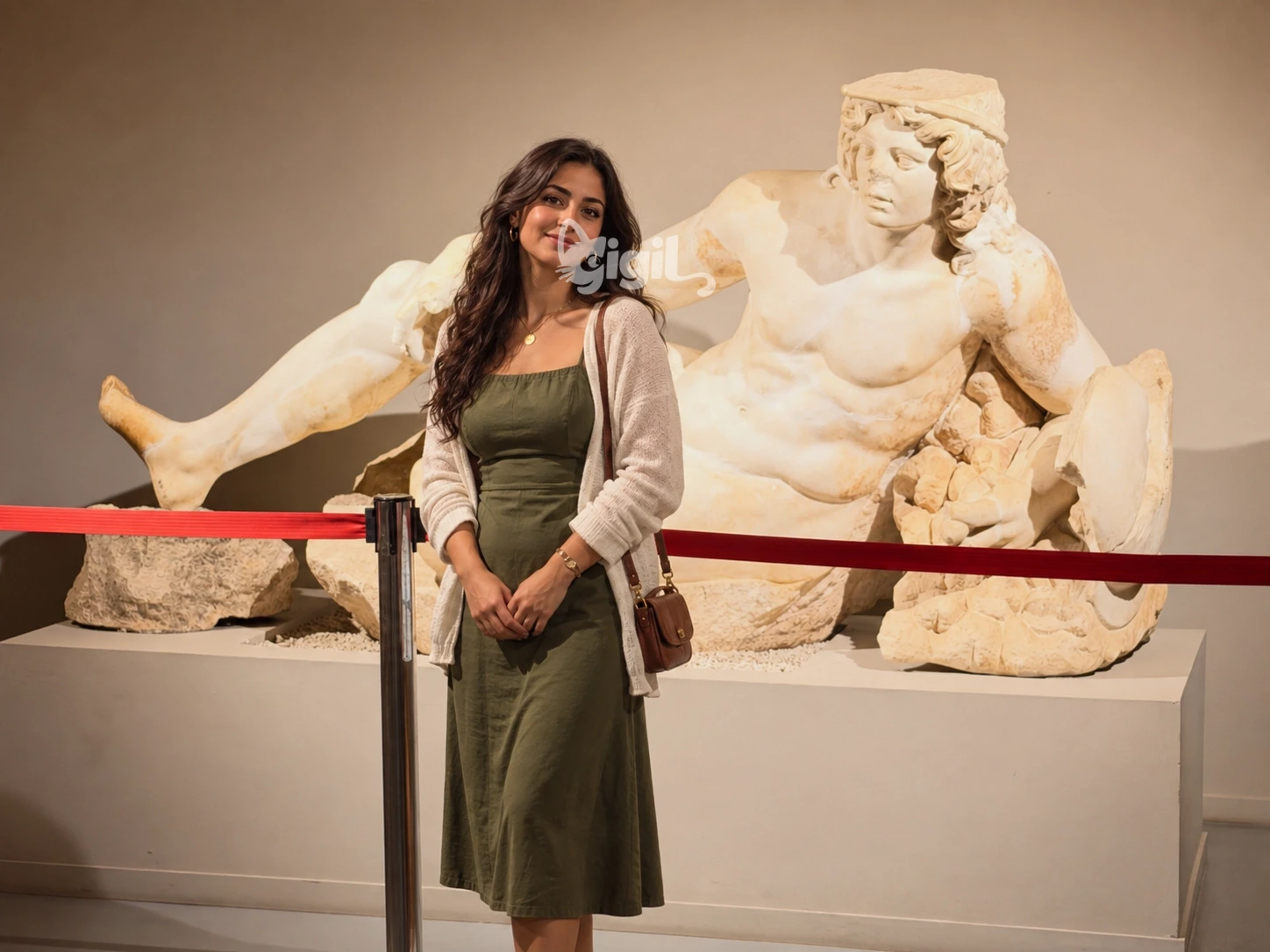
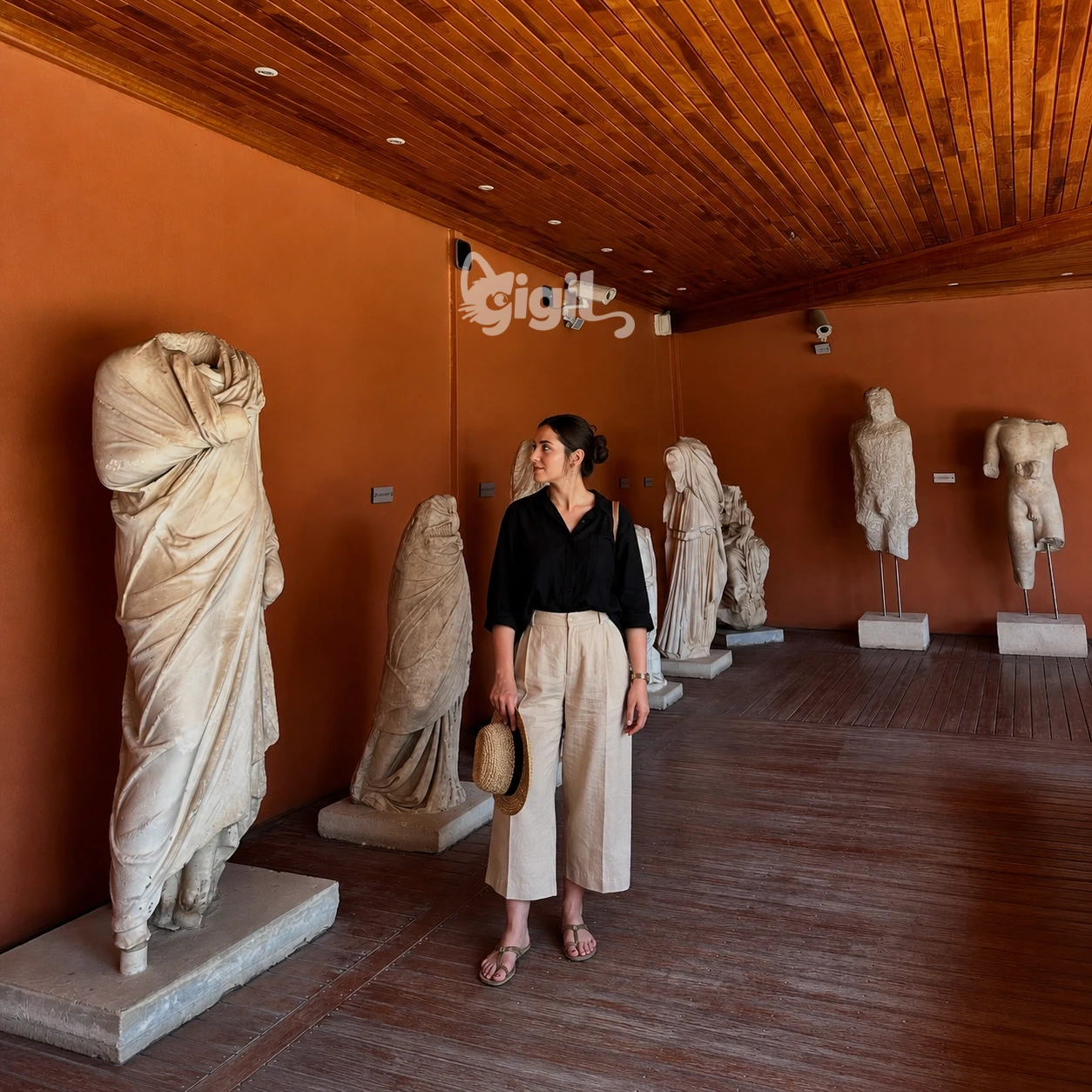
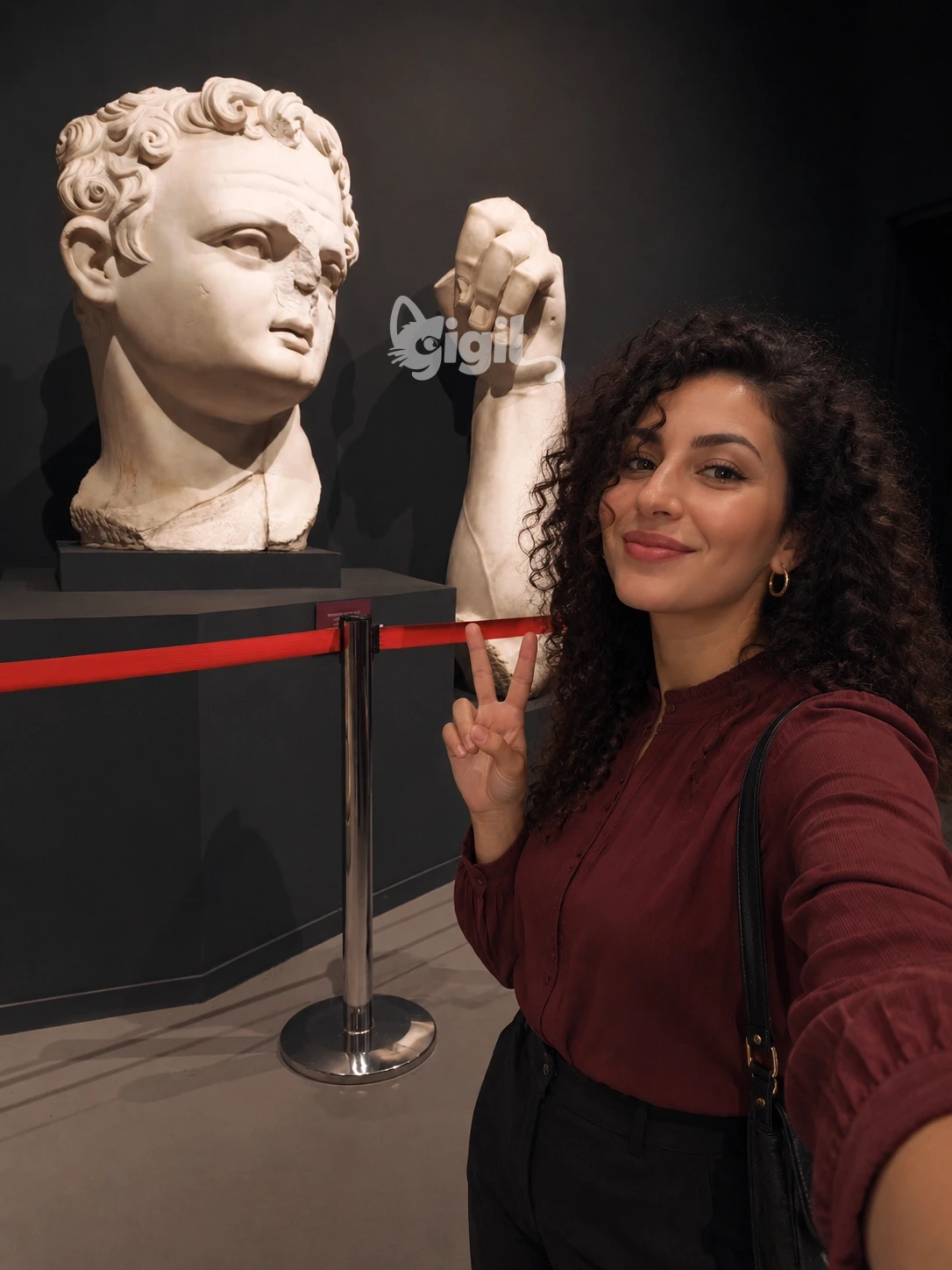
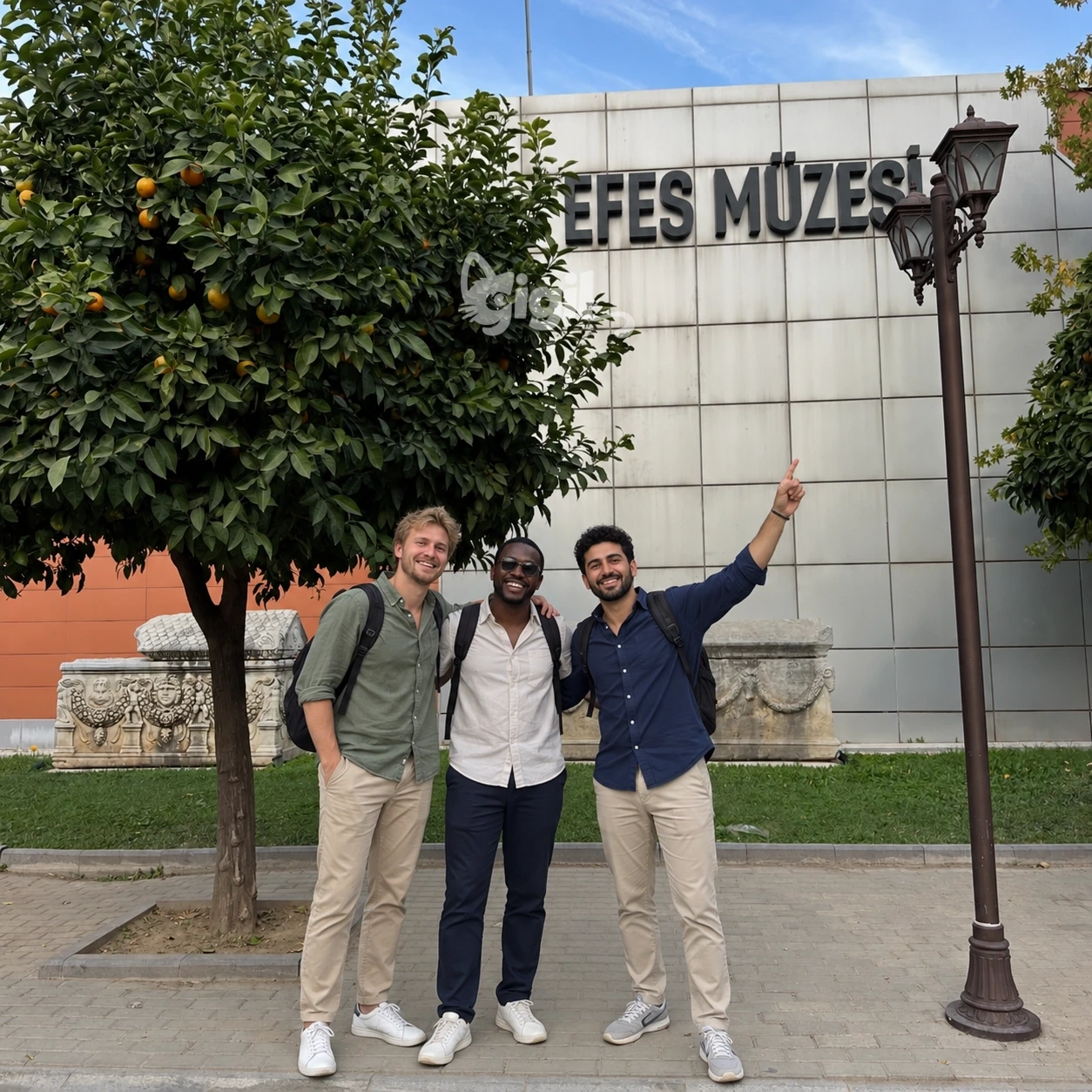
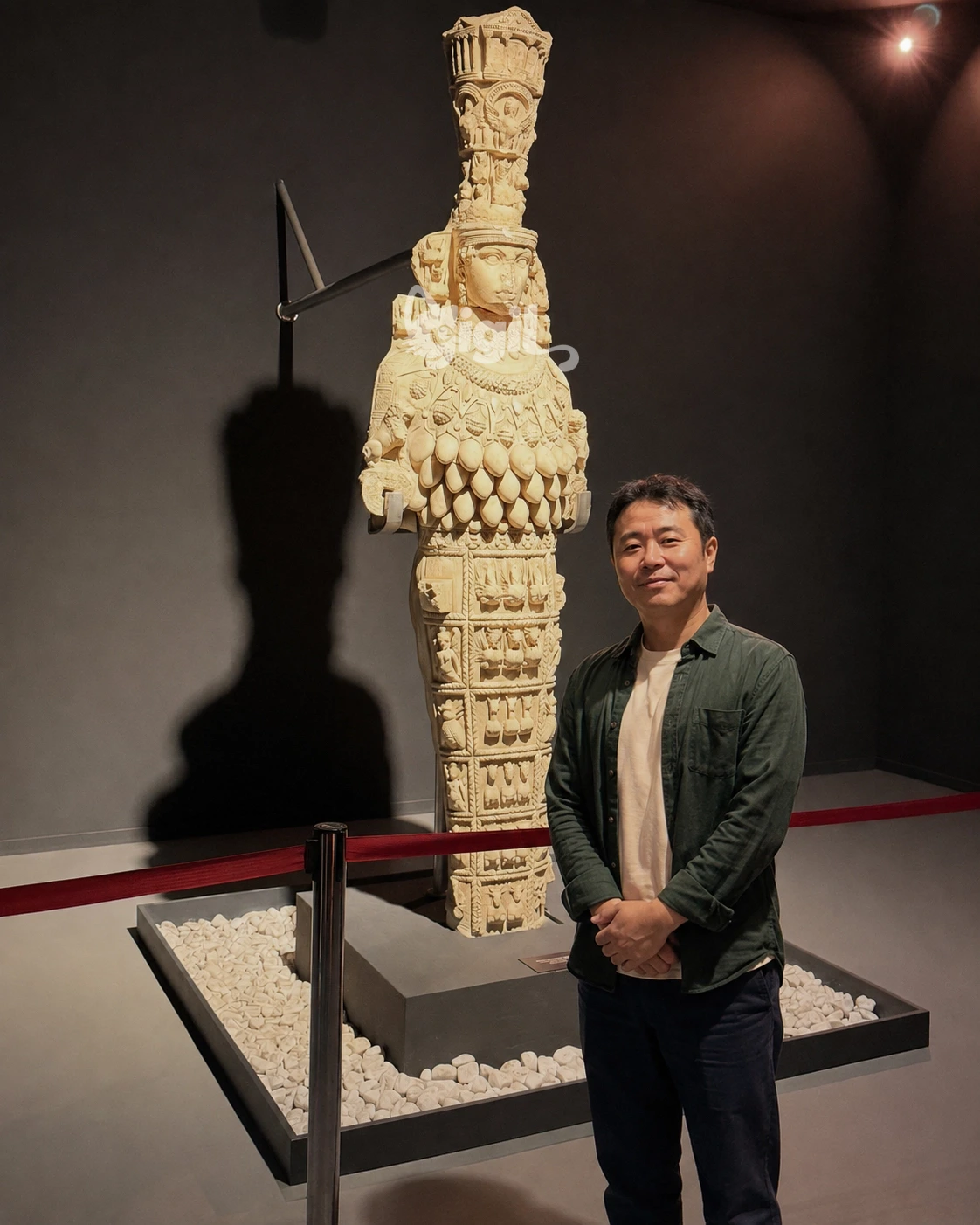
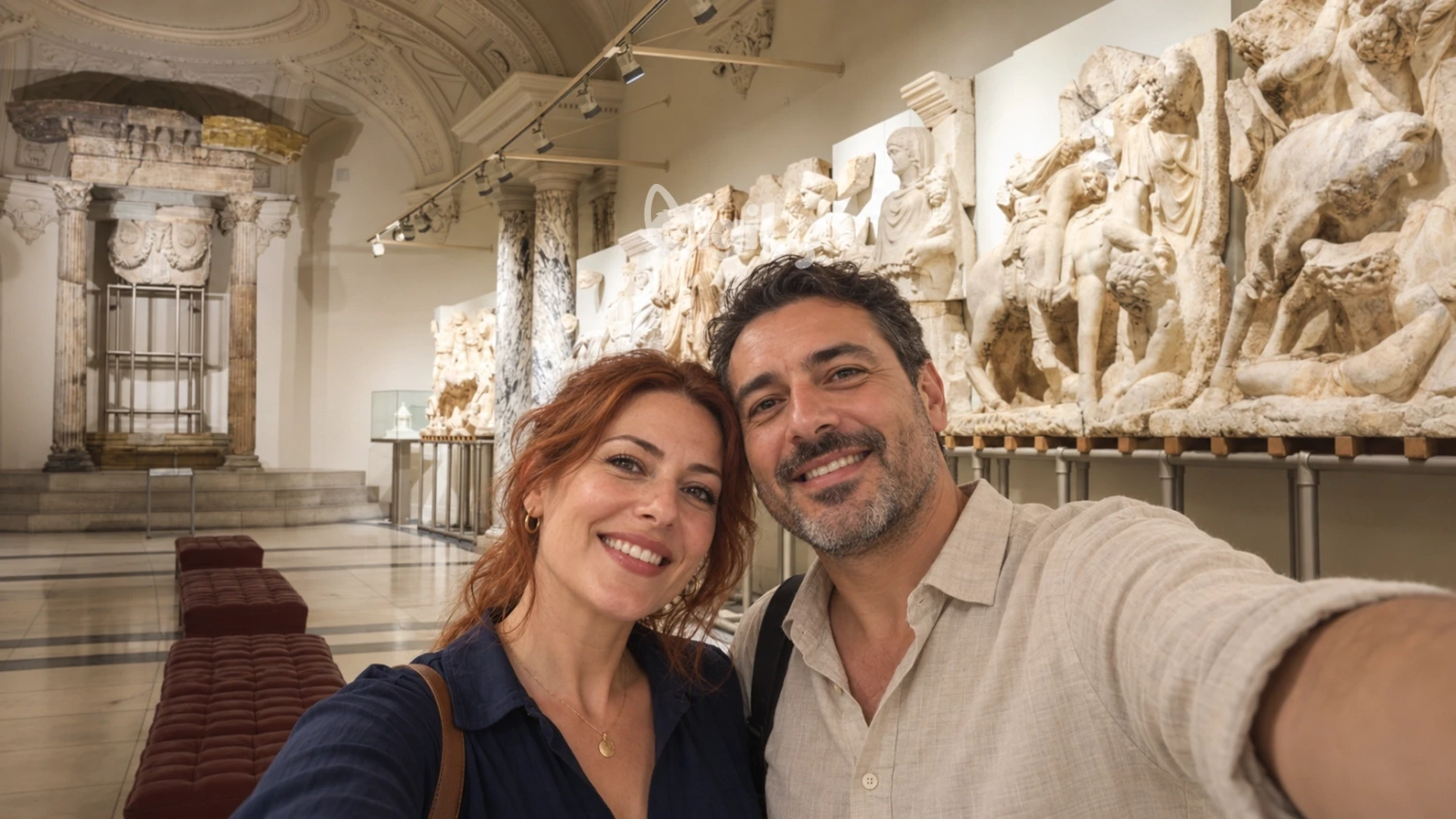
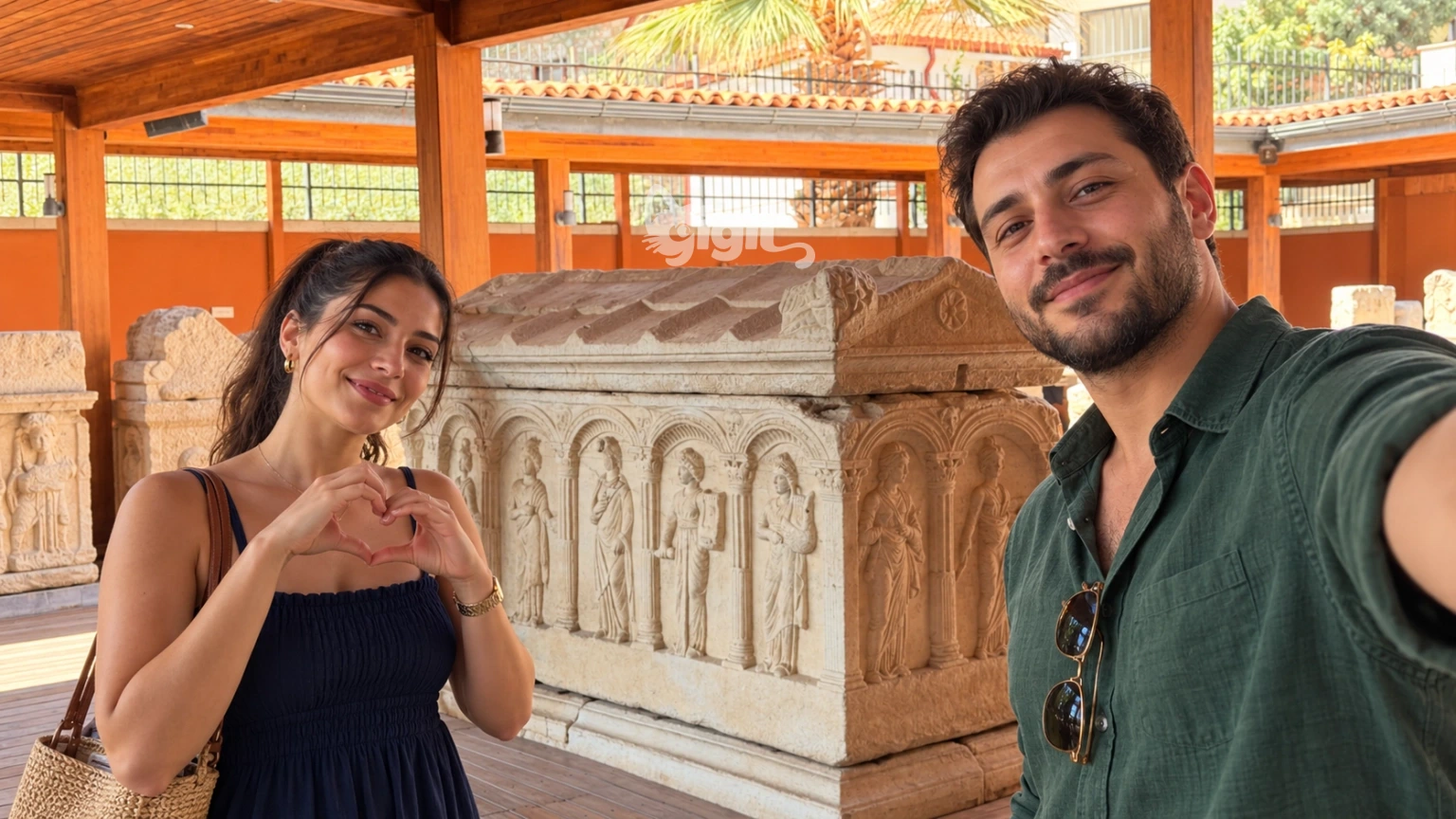
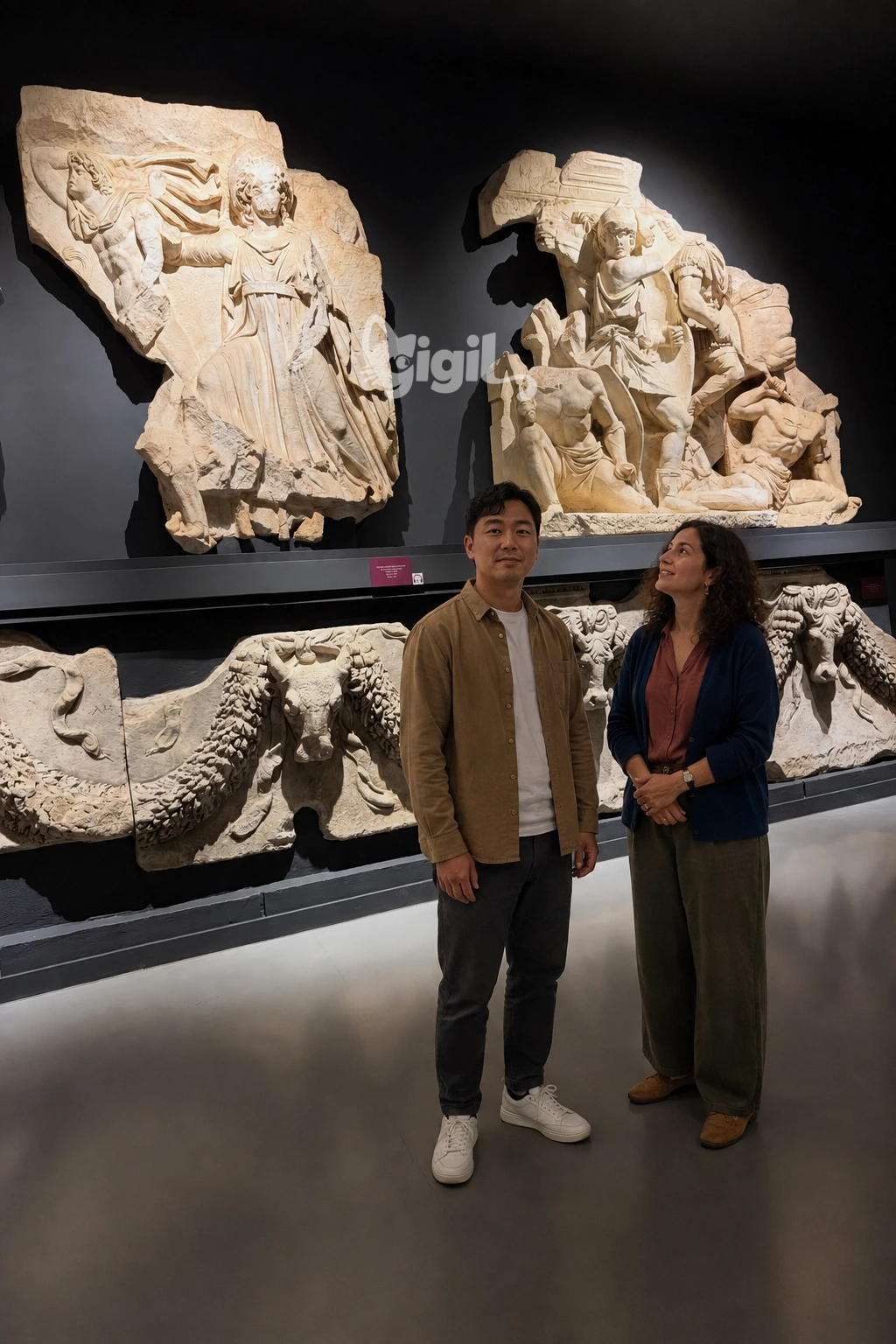
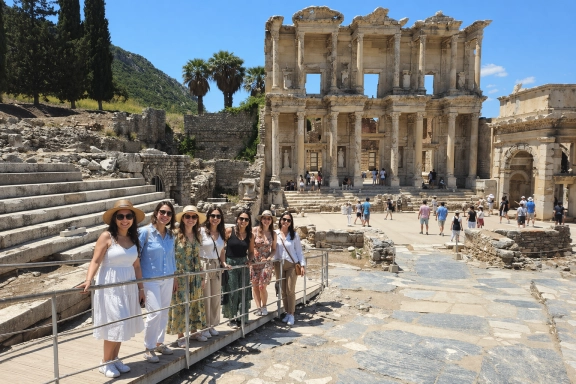
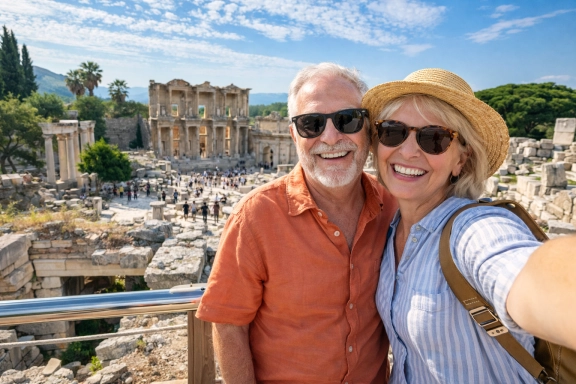
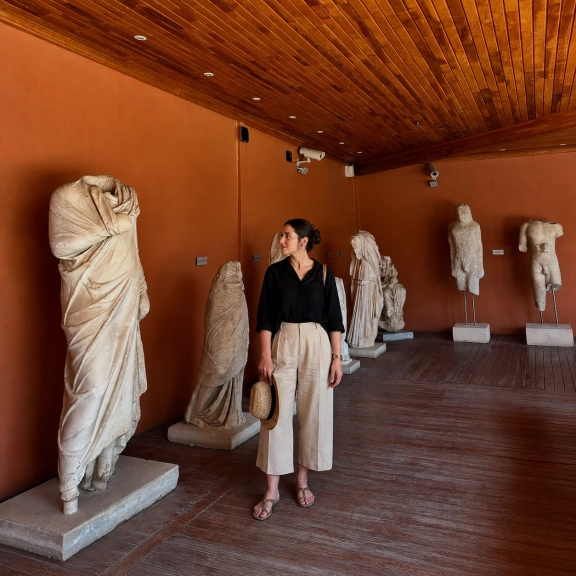
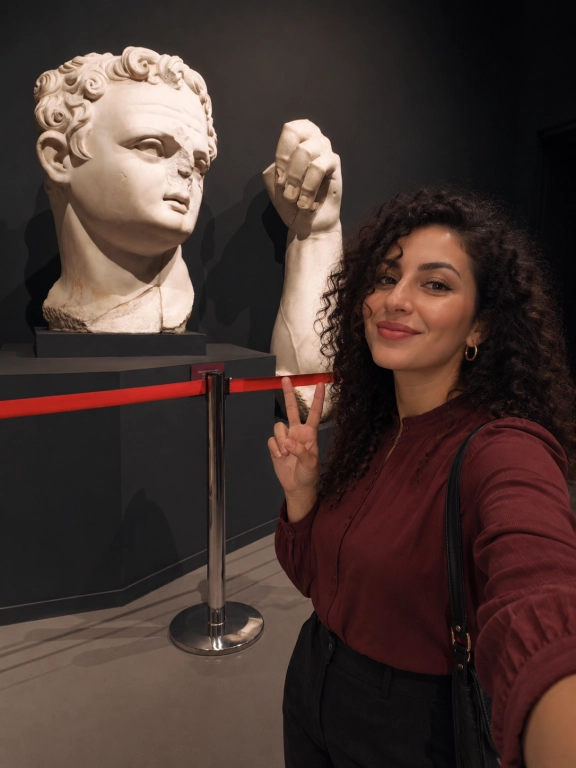
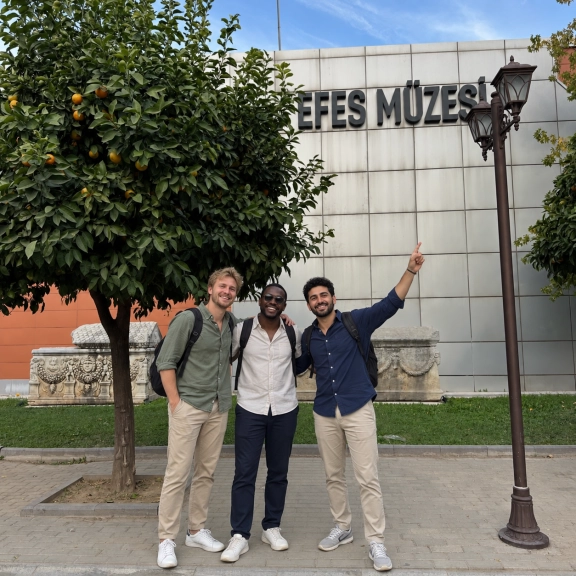
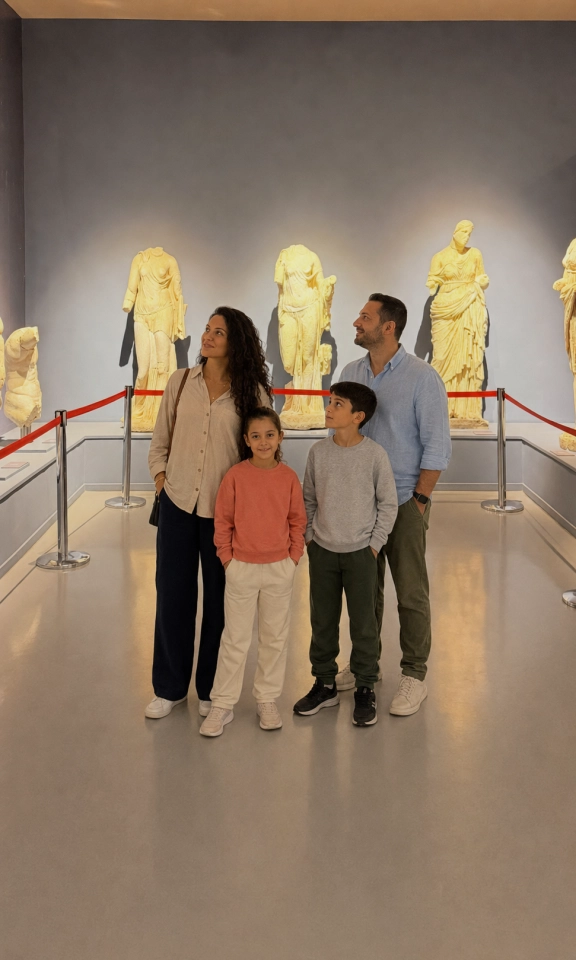
The Library of Celsus and Great Theatre help make the scale of the Roman city tangible. Observe their surroundings as well as their familiar forms, following only the open route. The museum after lunch provides a smaller-scale counterpart, using objects to extend what the architecture can tell you.
Questions
What do neighbouring ruins add to a famous monument?
They establish the public setting in which that monument was approached and used.
Should I imagine the whole city as one preserved scene?
No. What survives is uneven and reflects changes, loss and interpretation over time.
Why consider both library and theatre?
They show different forms of monumental architecture within the same urban environment.
What should stay in mind during lunch?
Hold onto one observation about the city that you would like the museum objects to illuminate.