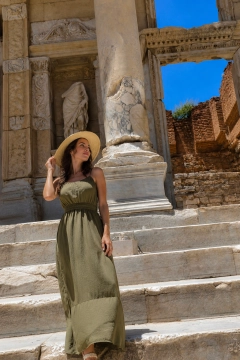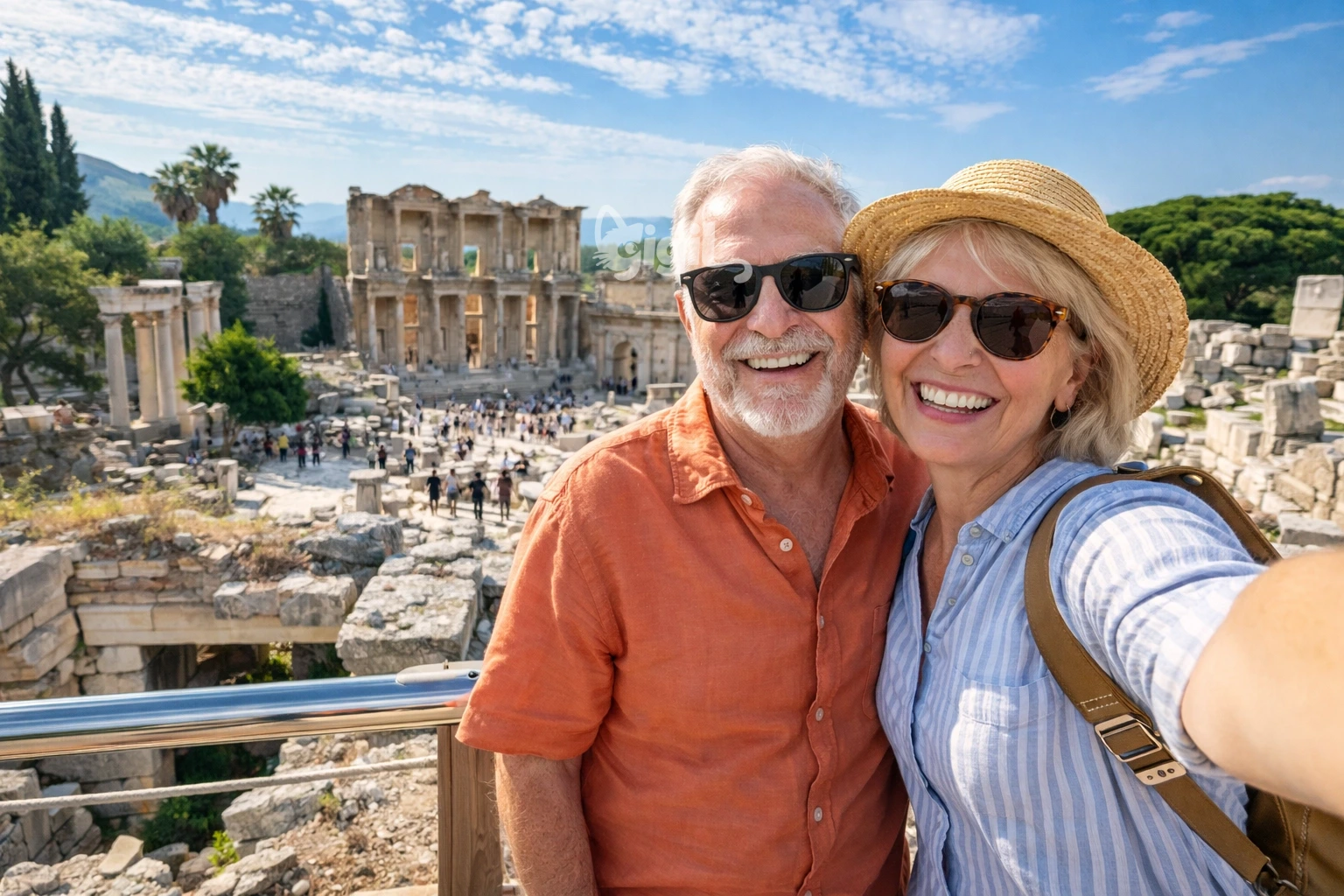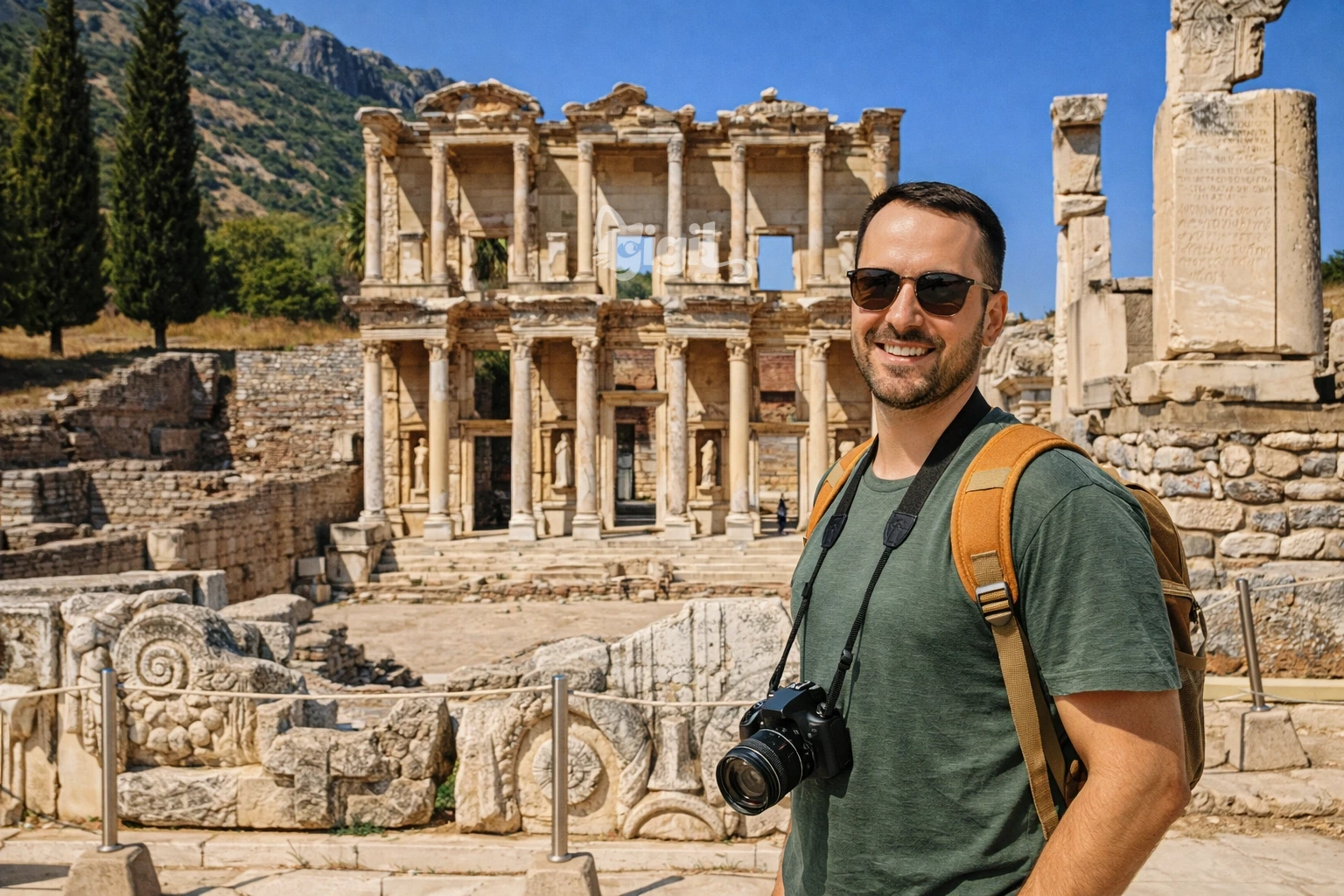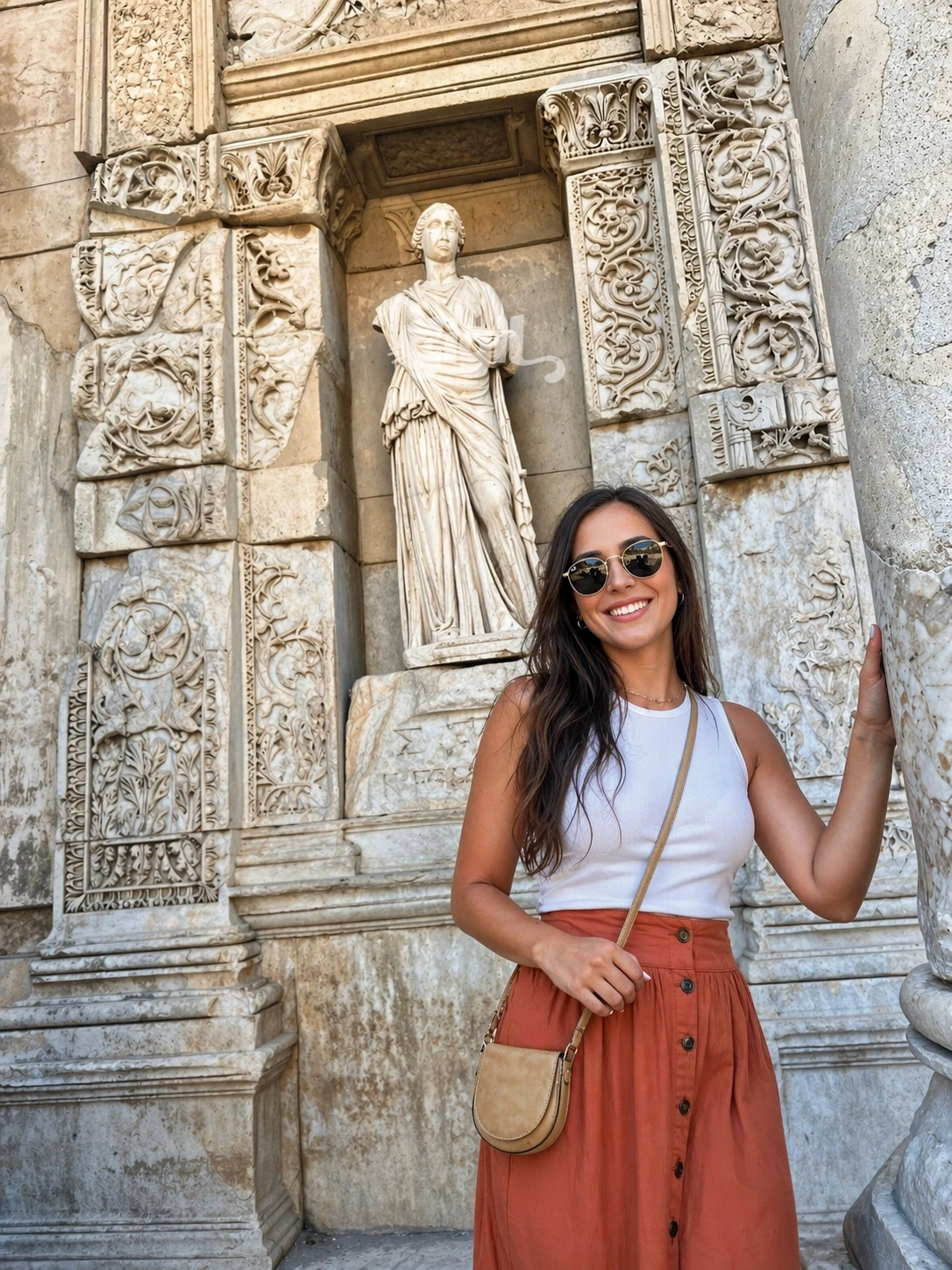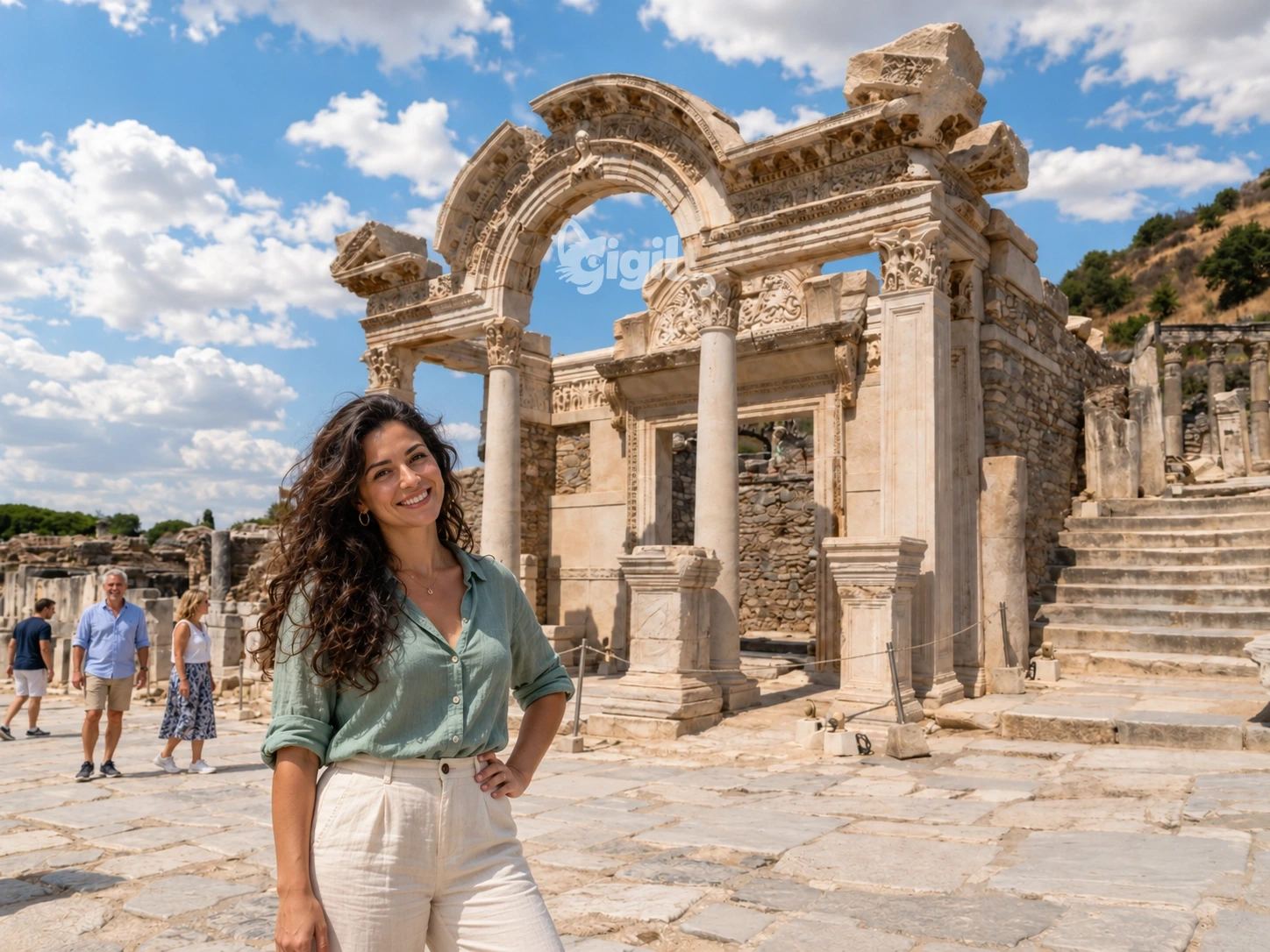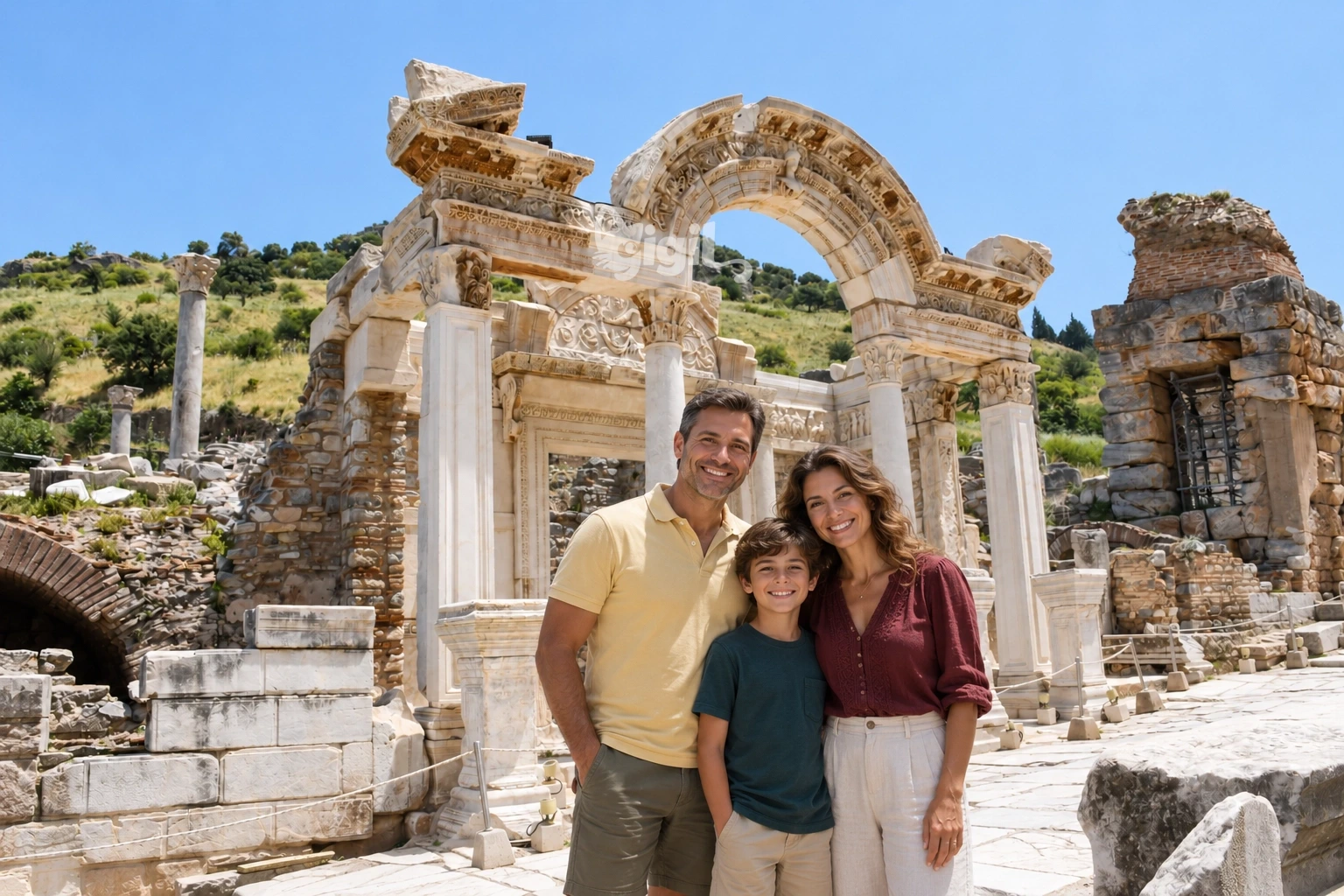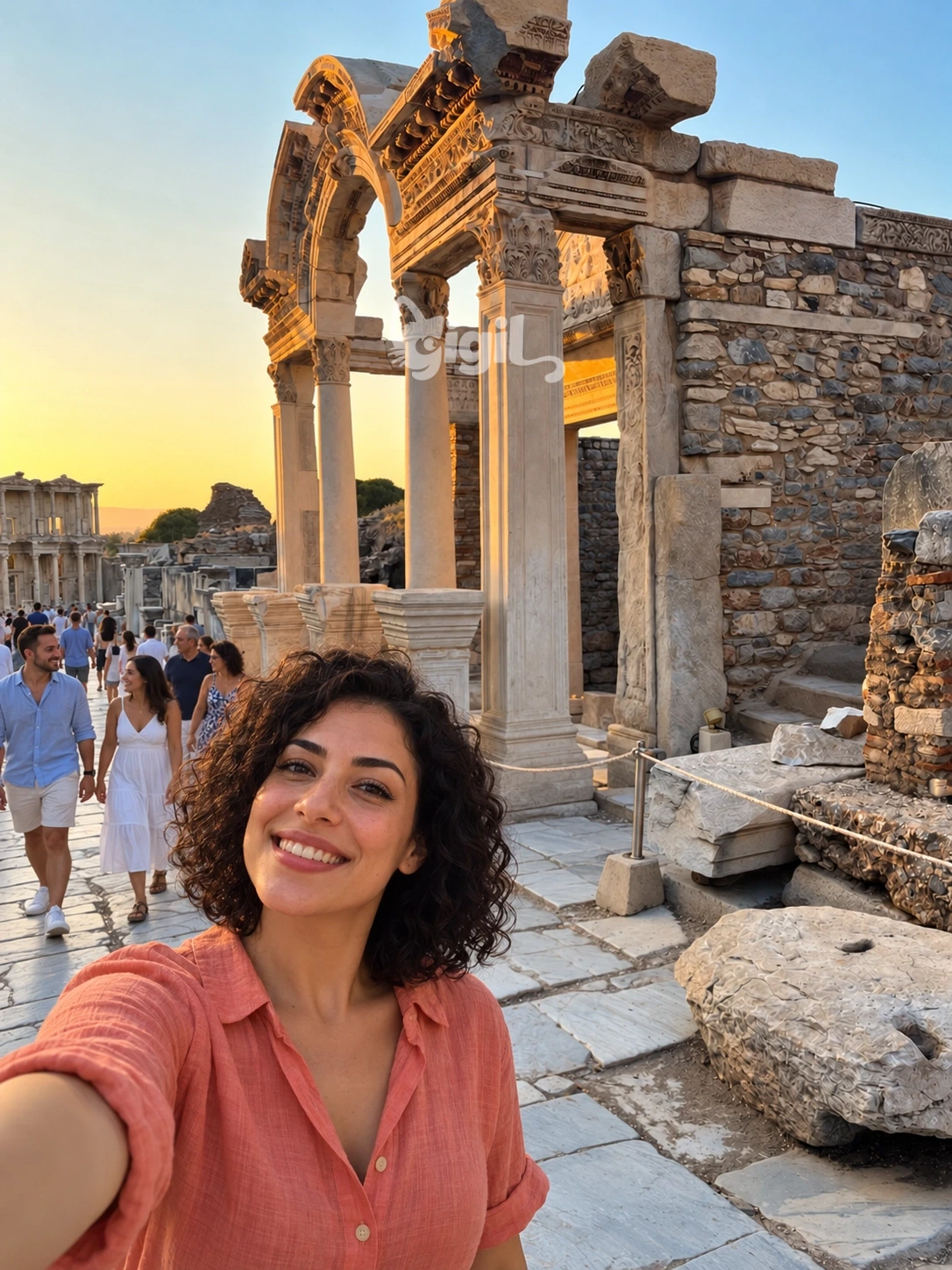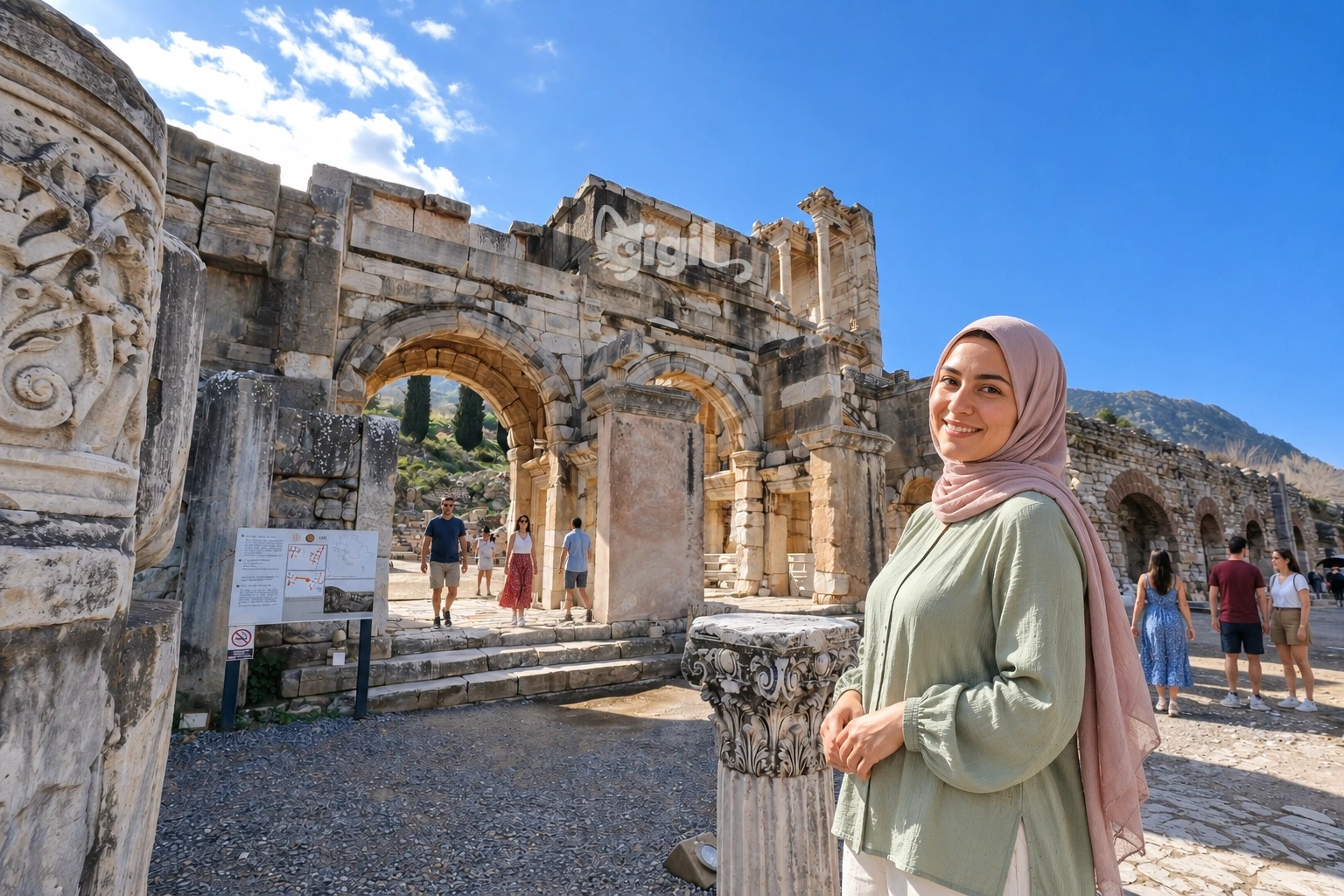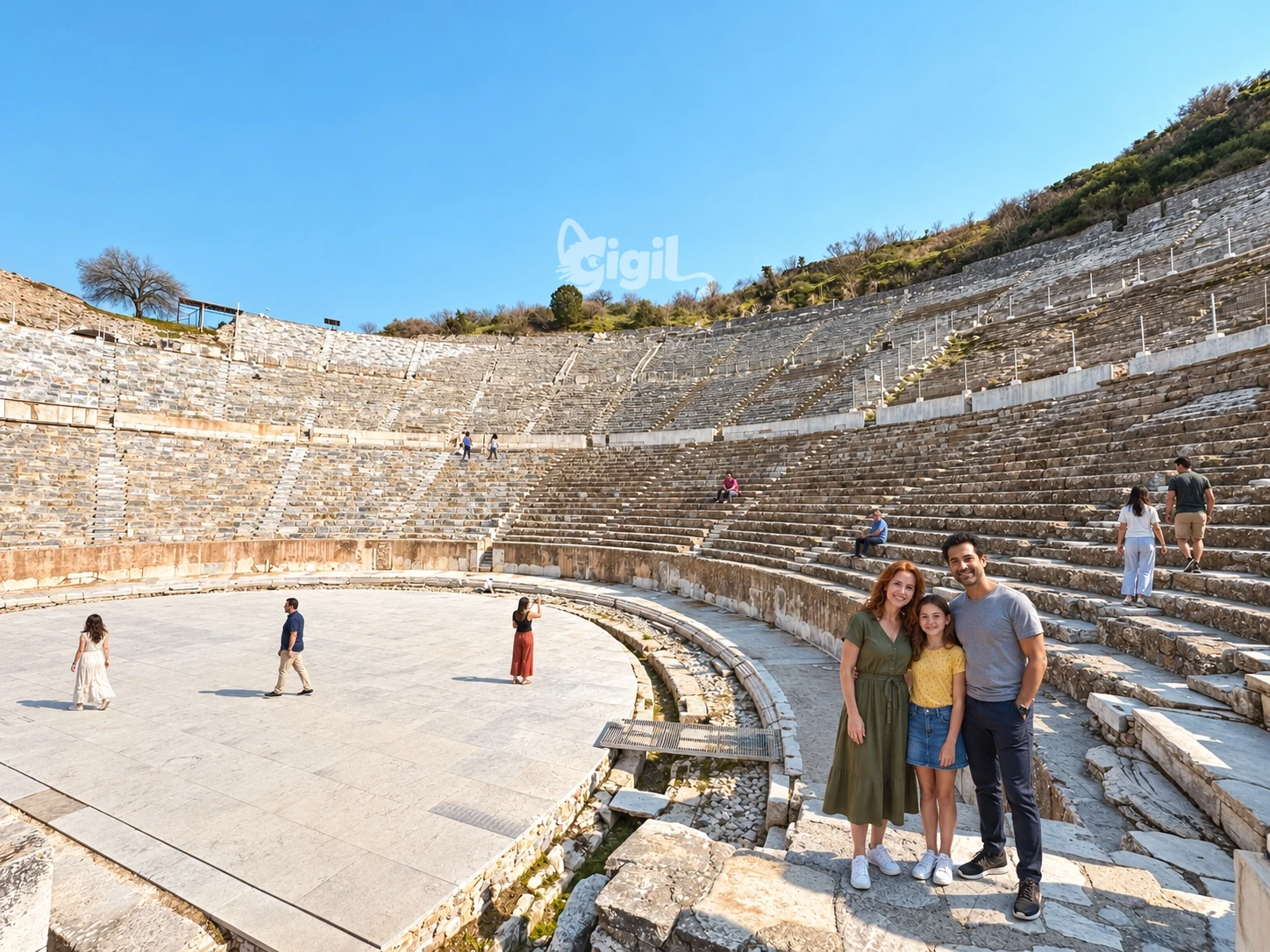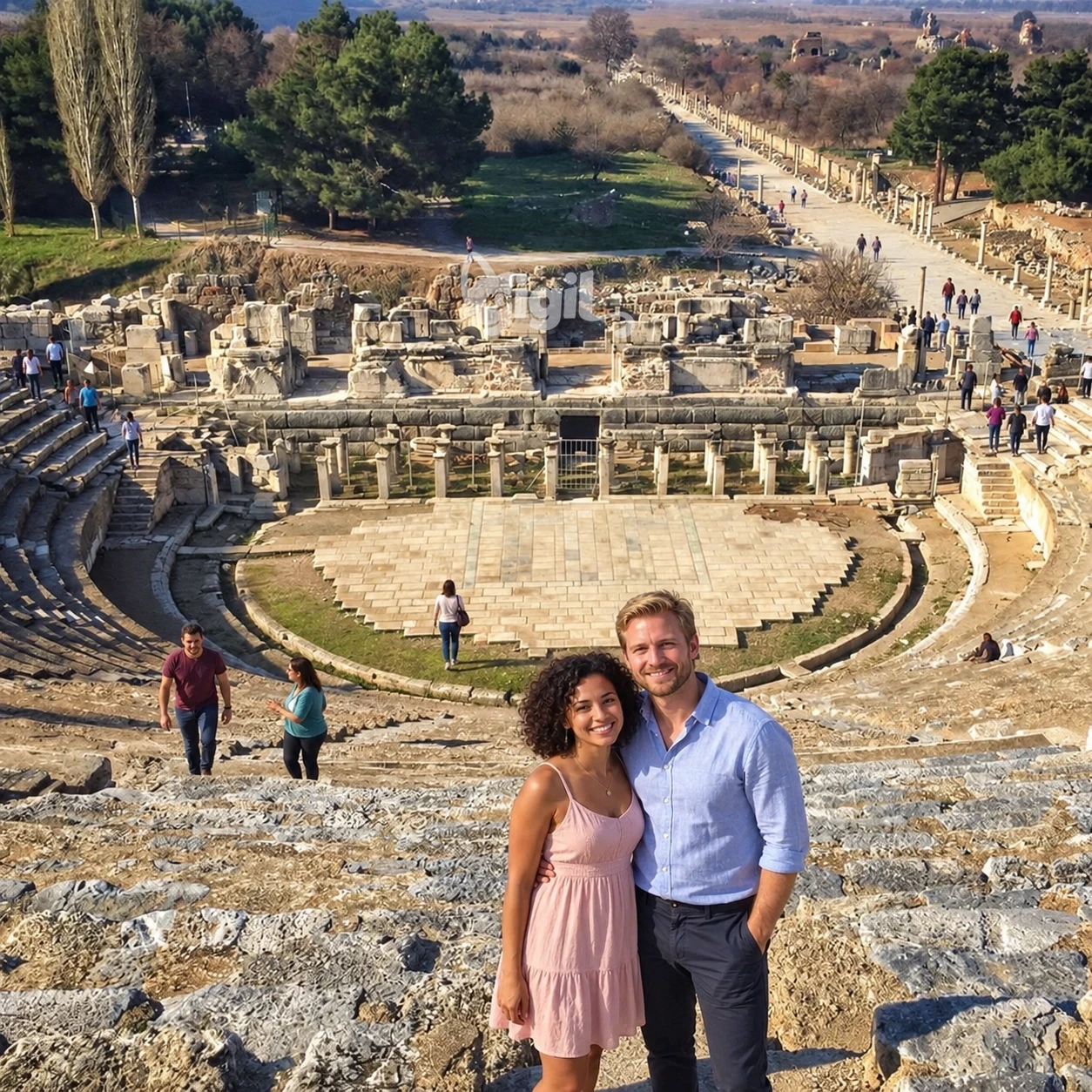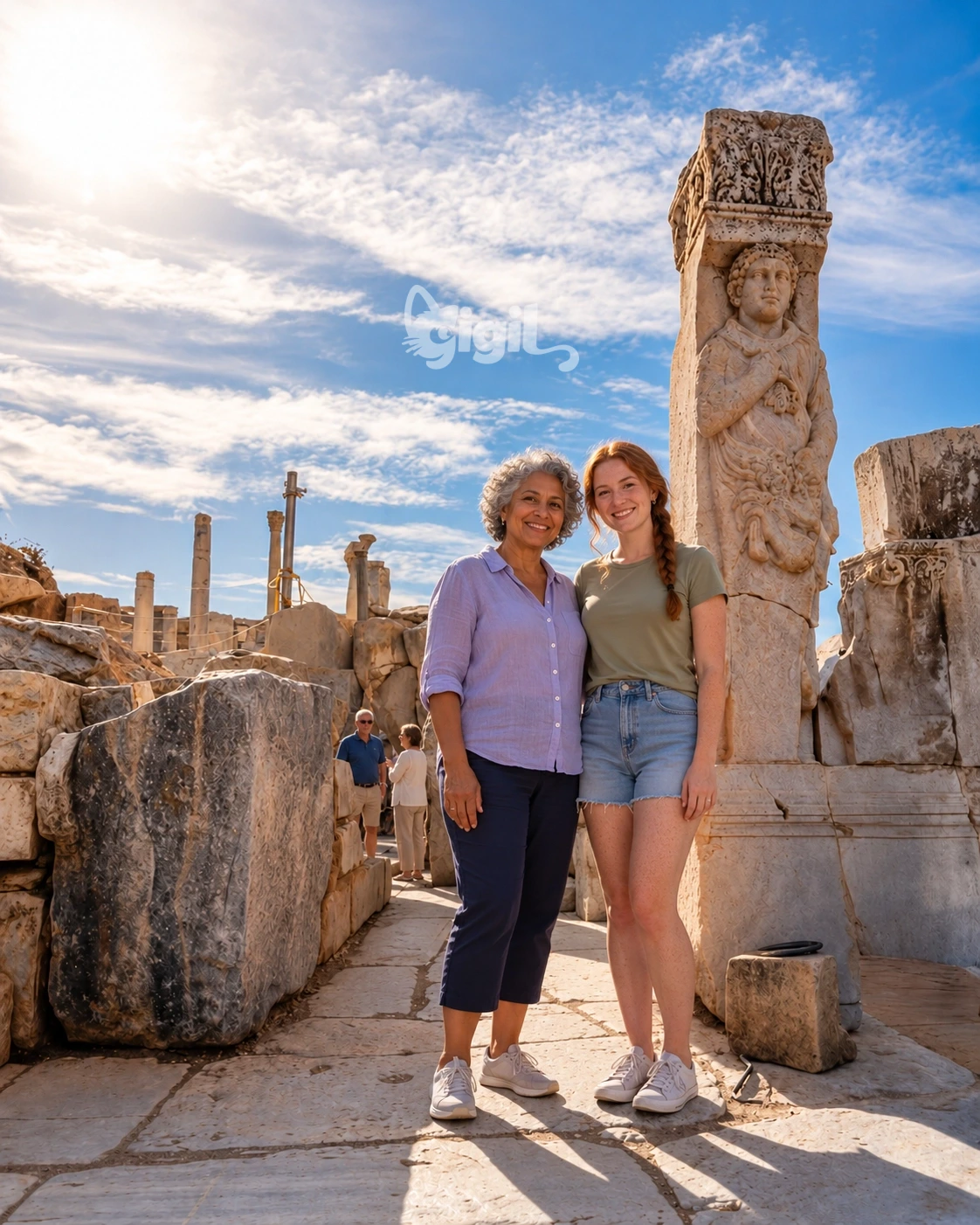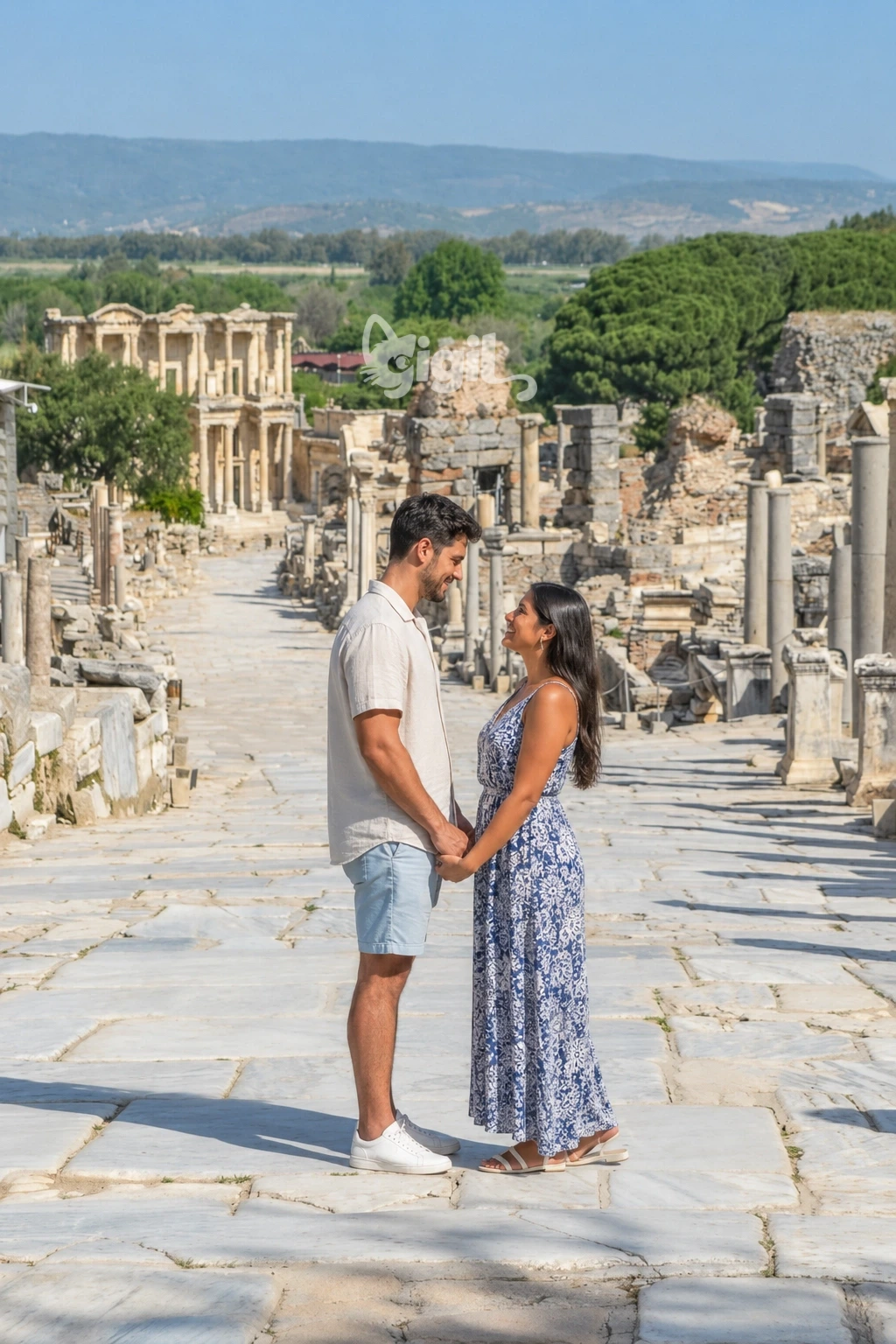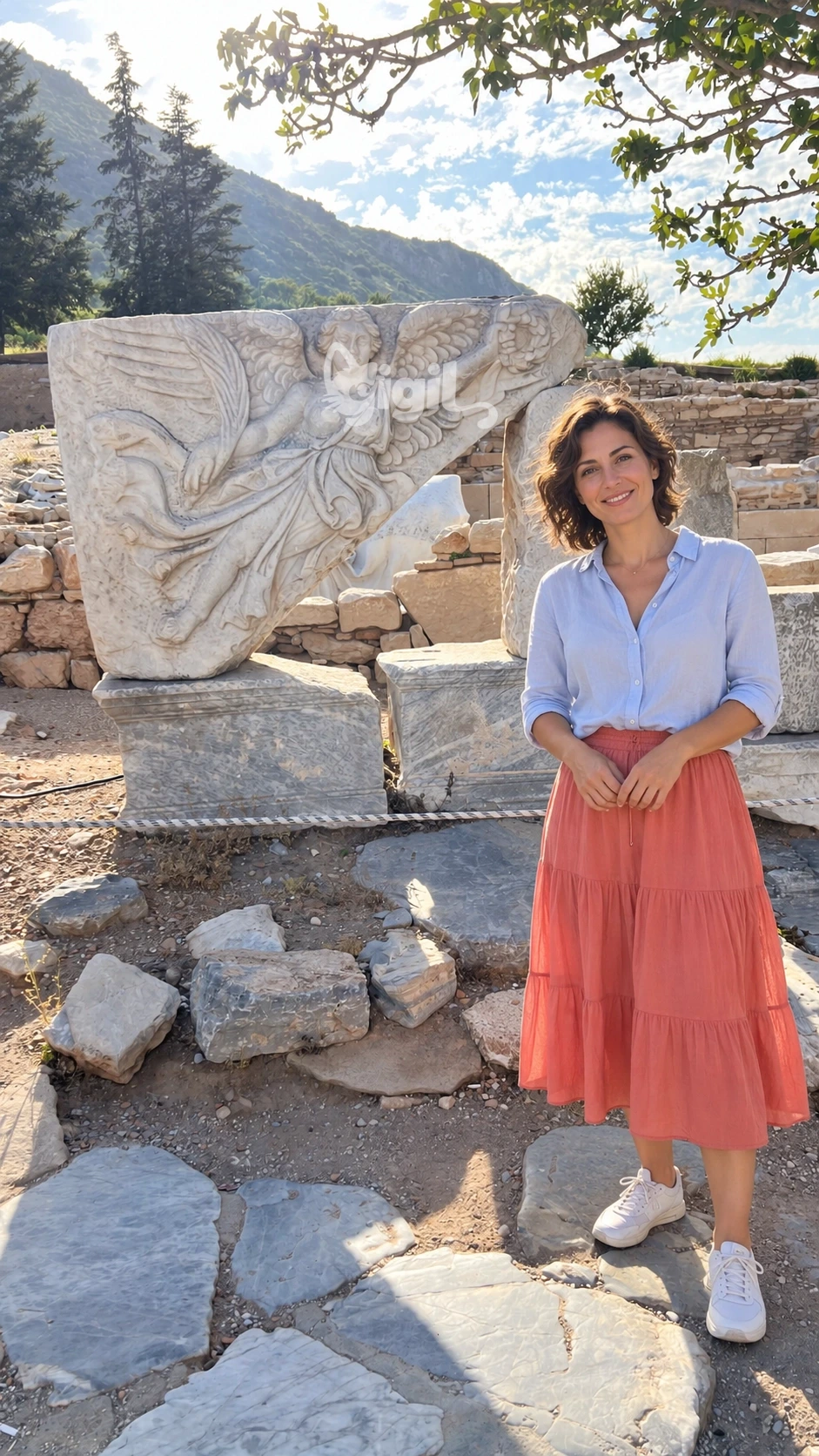








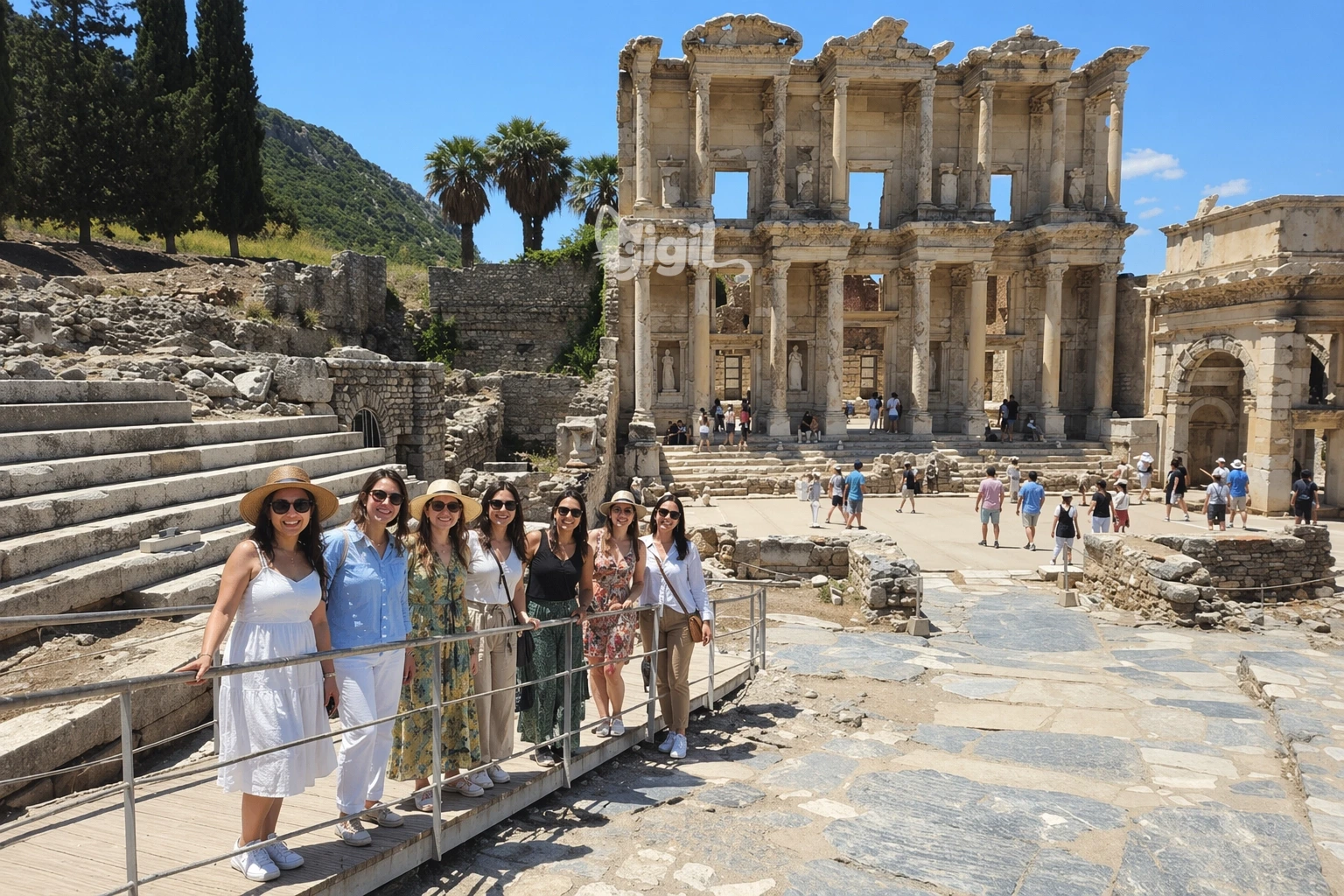
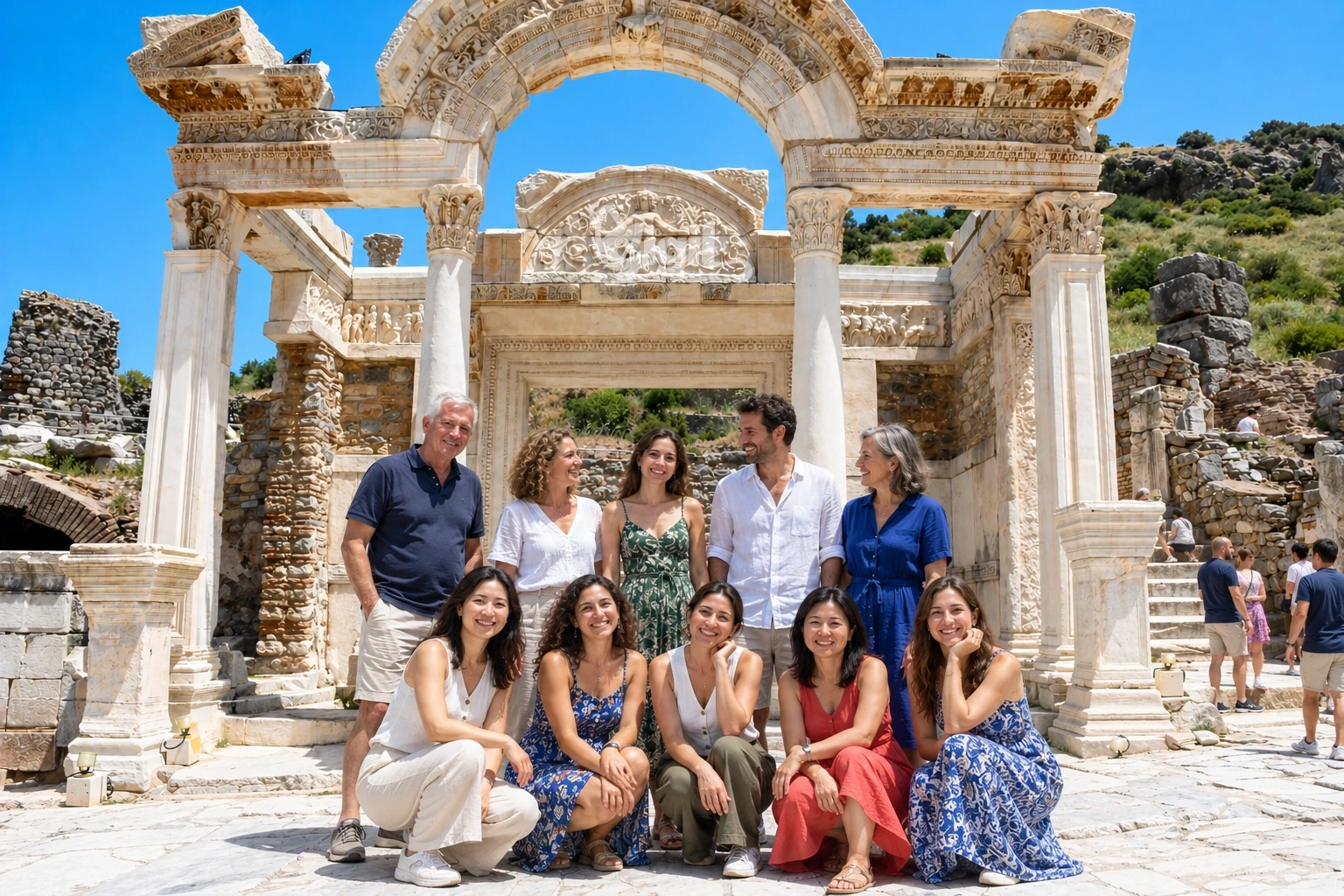
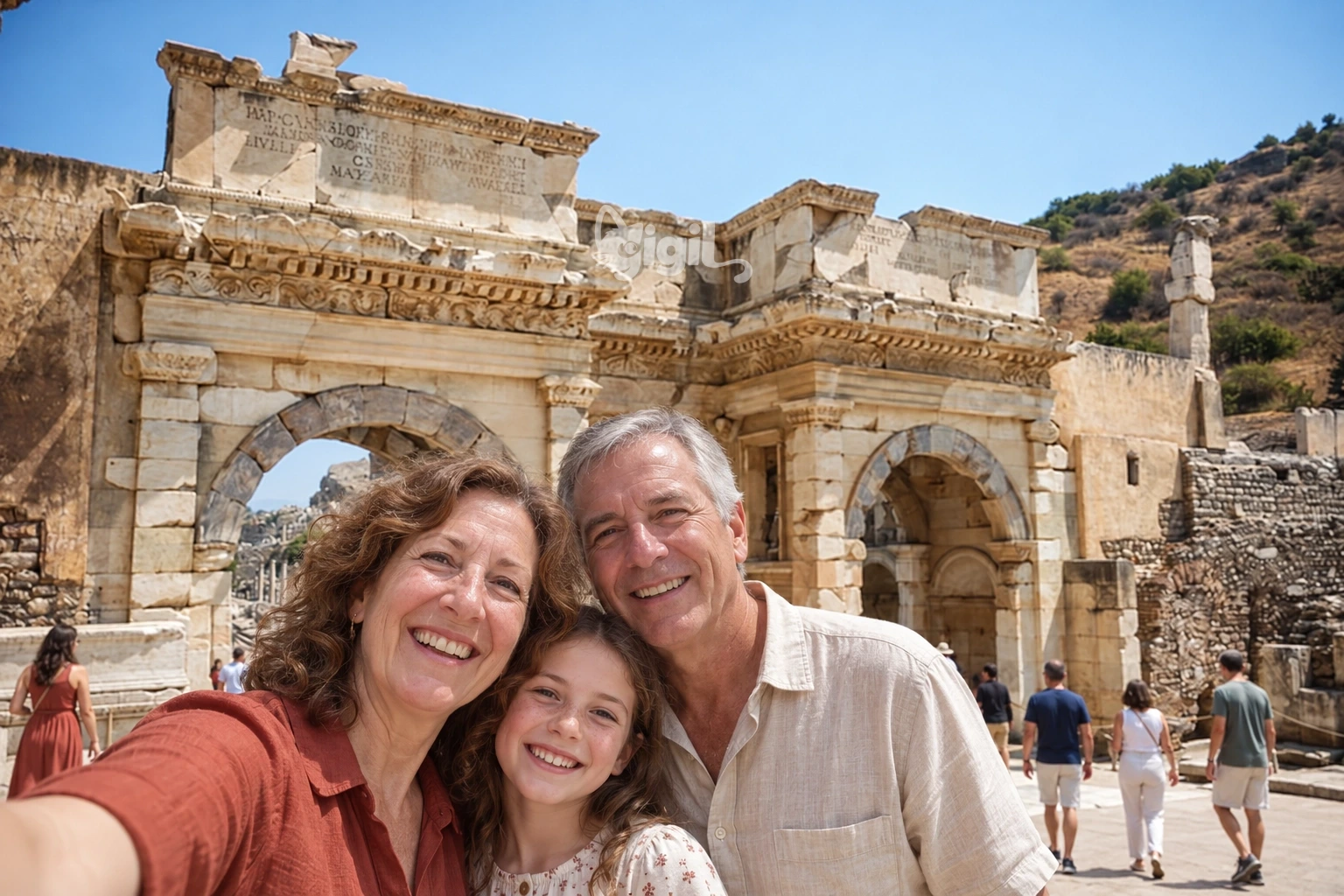
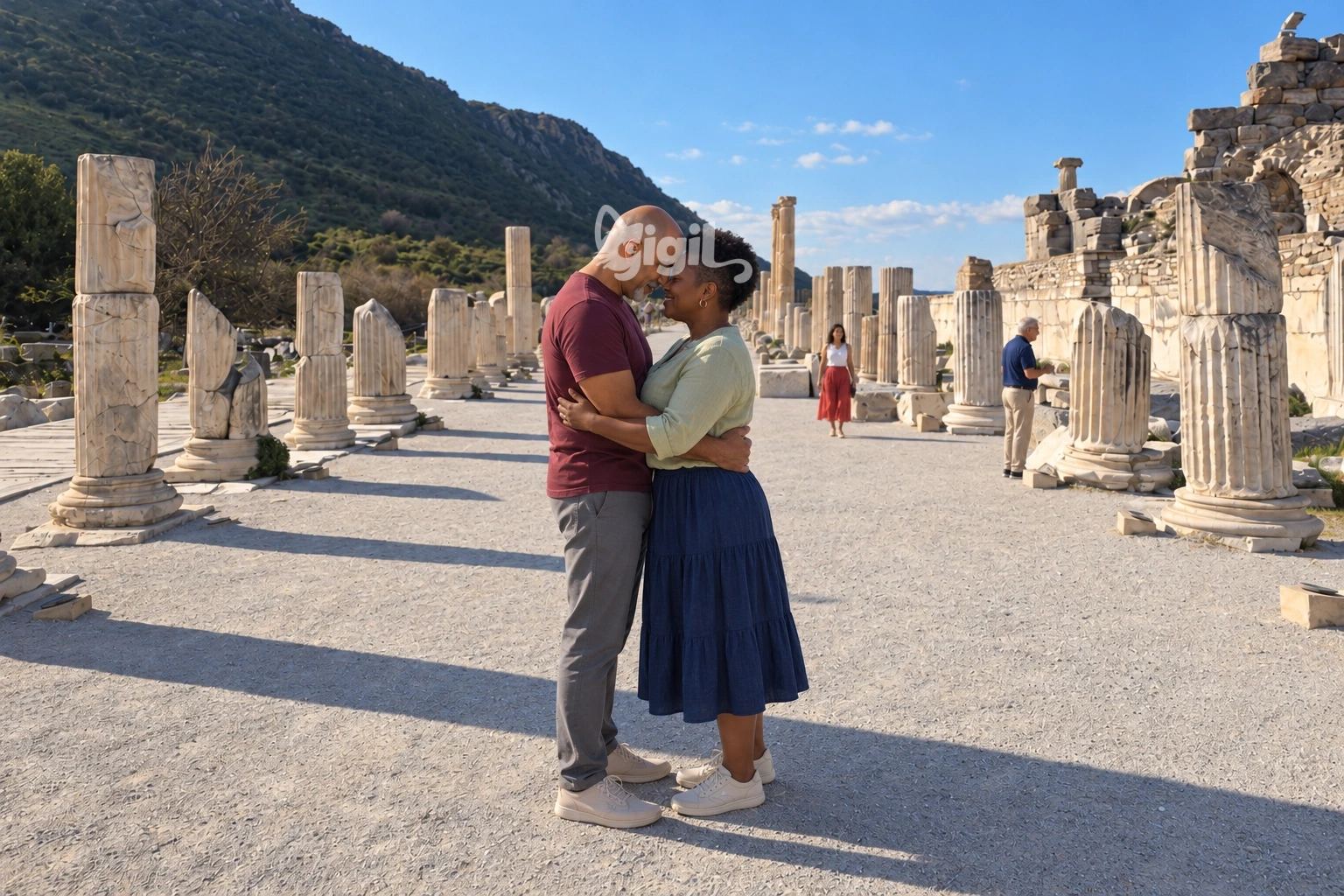
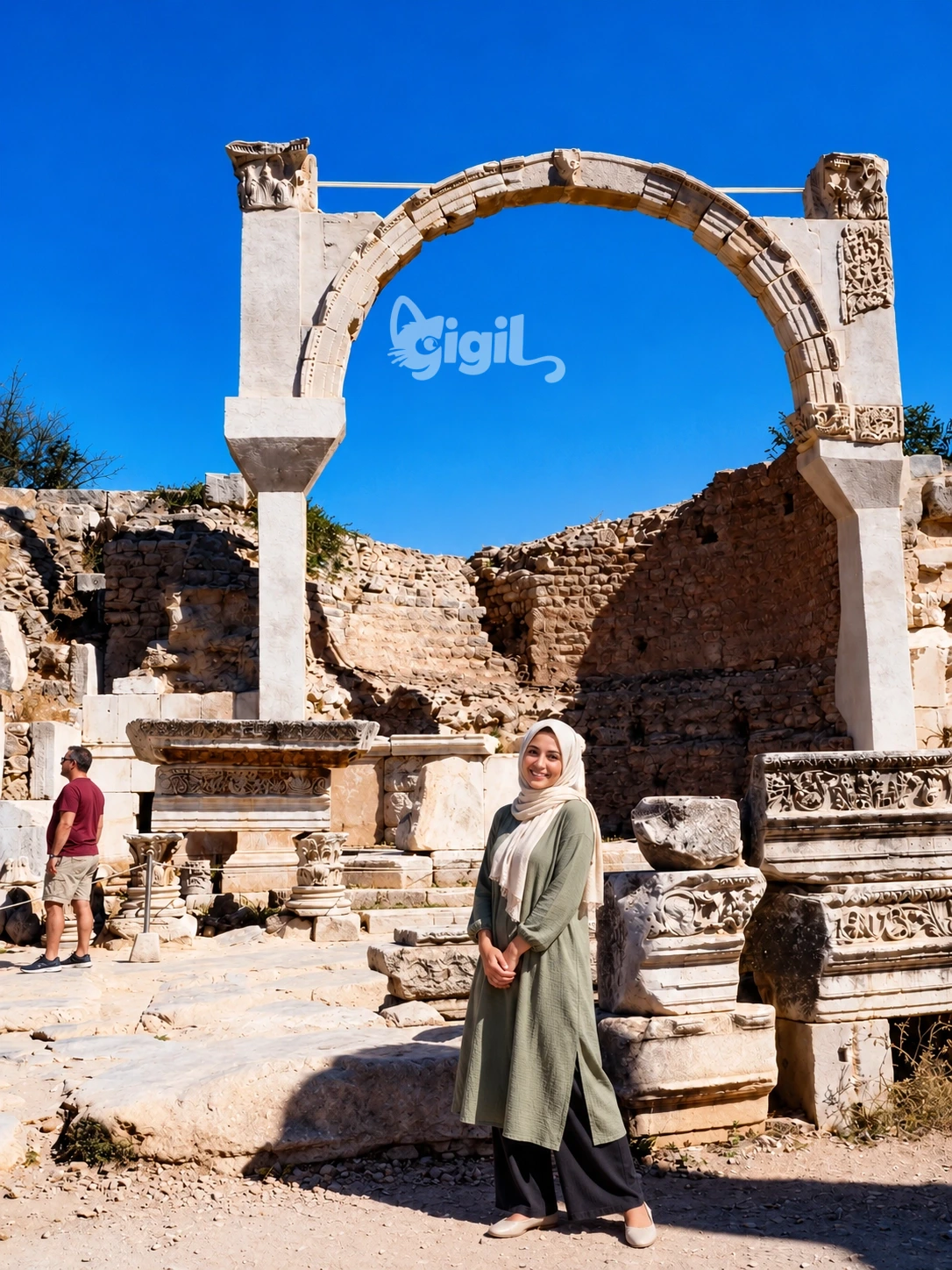
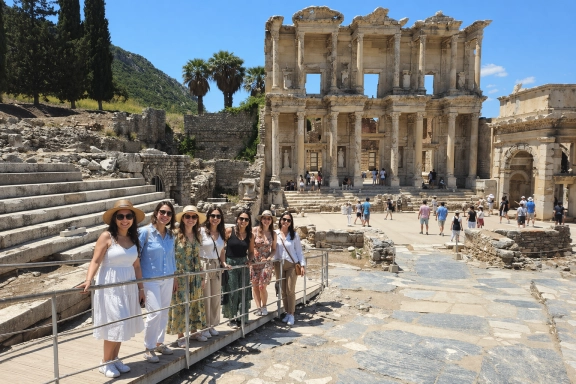
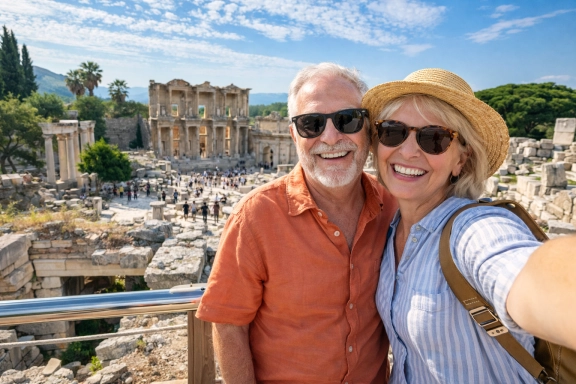
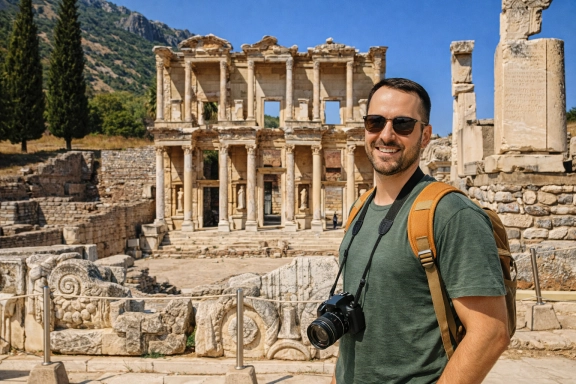
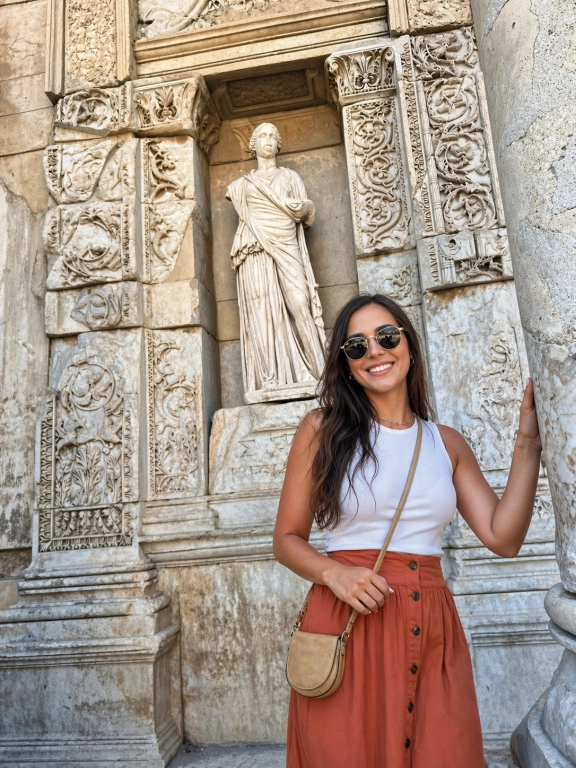
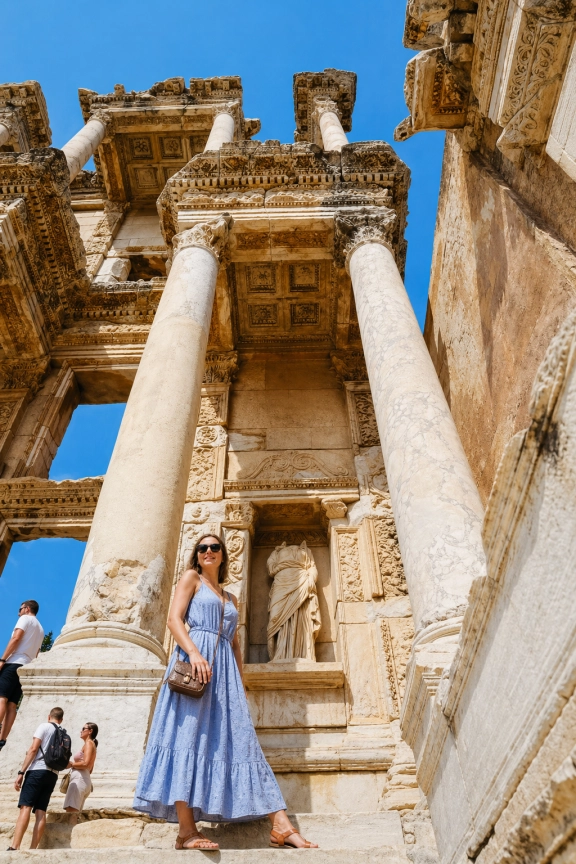
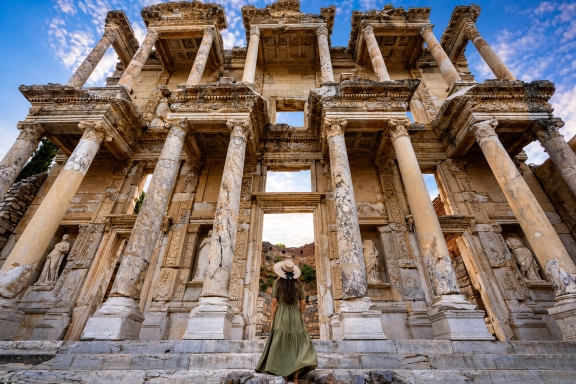
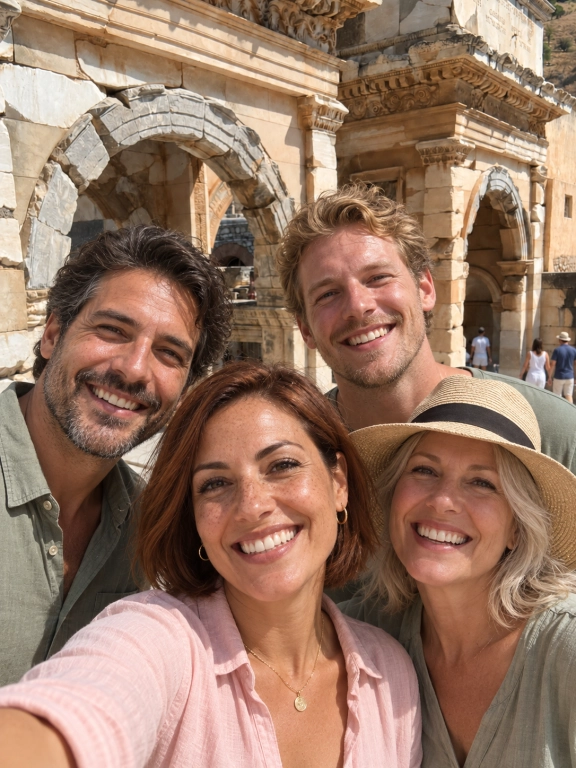
Think about movement while walking through Ephesus Ancient City. Marble streets link civic buildings and gathering areas, helping you see how a Roman townscape worked beyond its individual monuments.
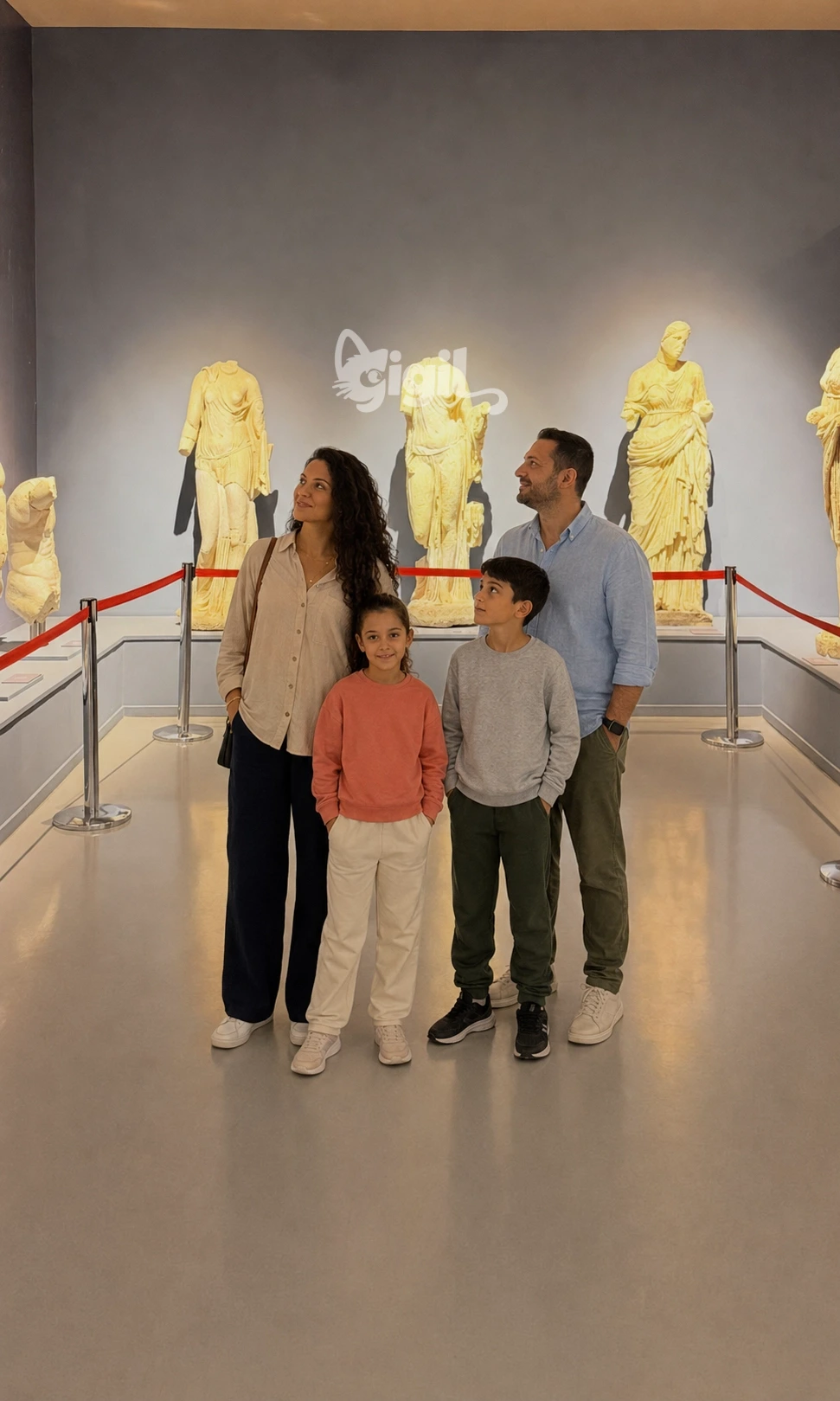
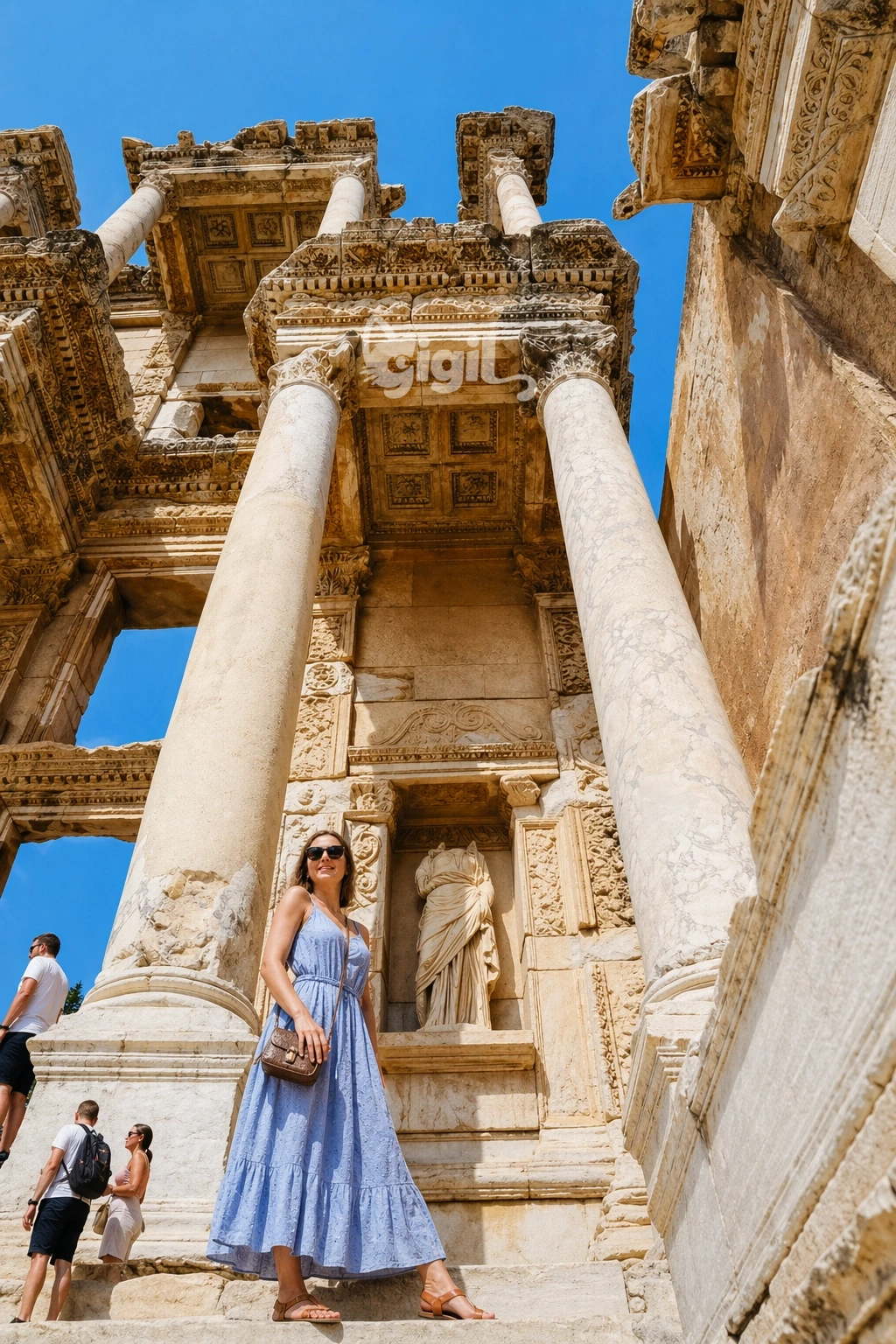
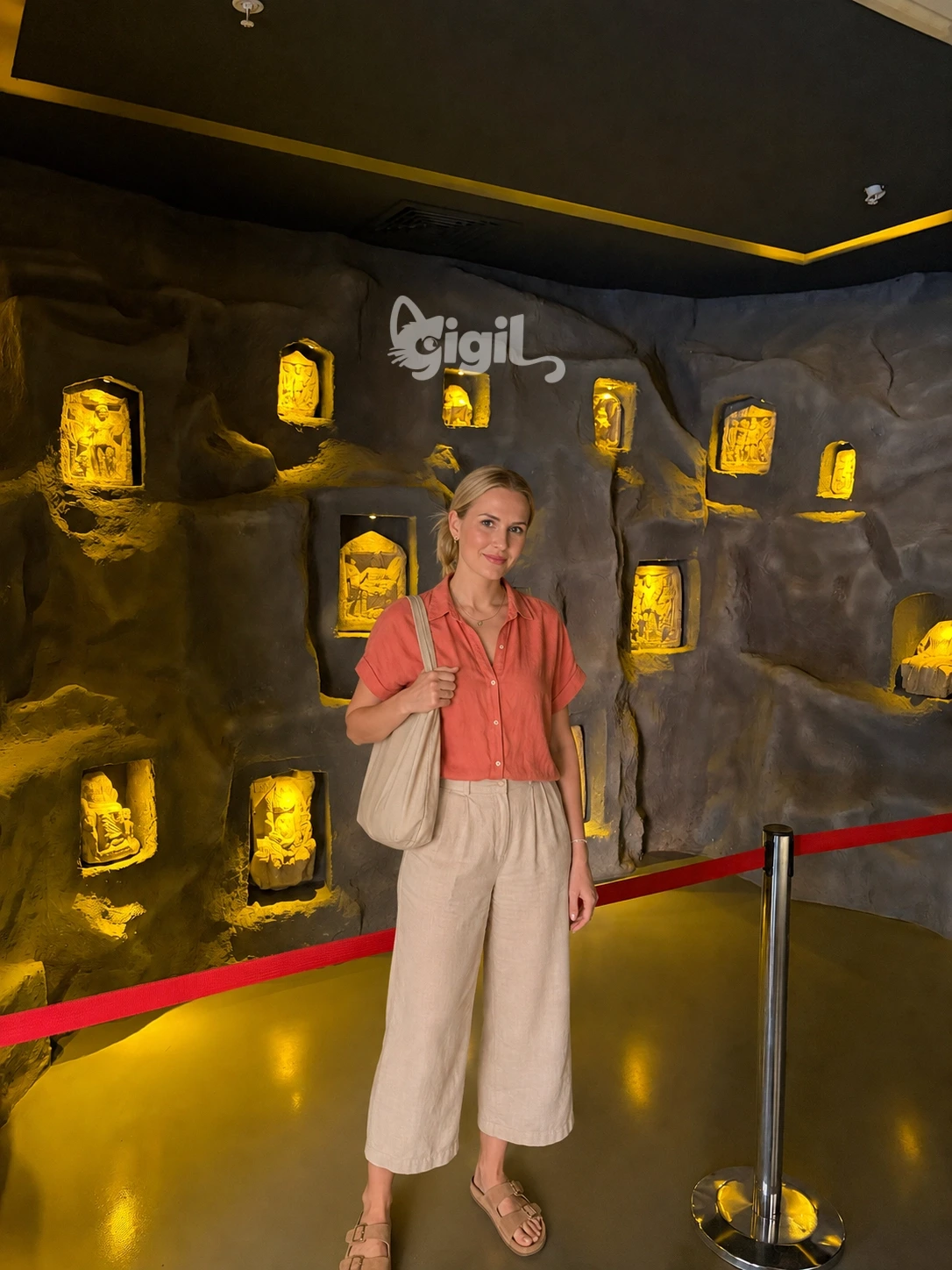
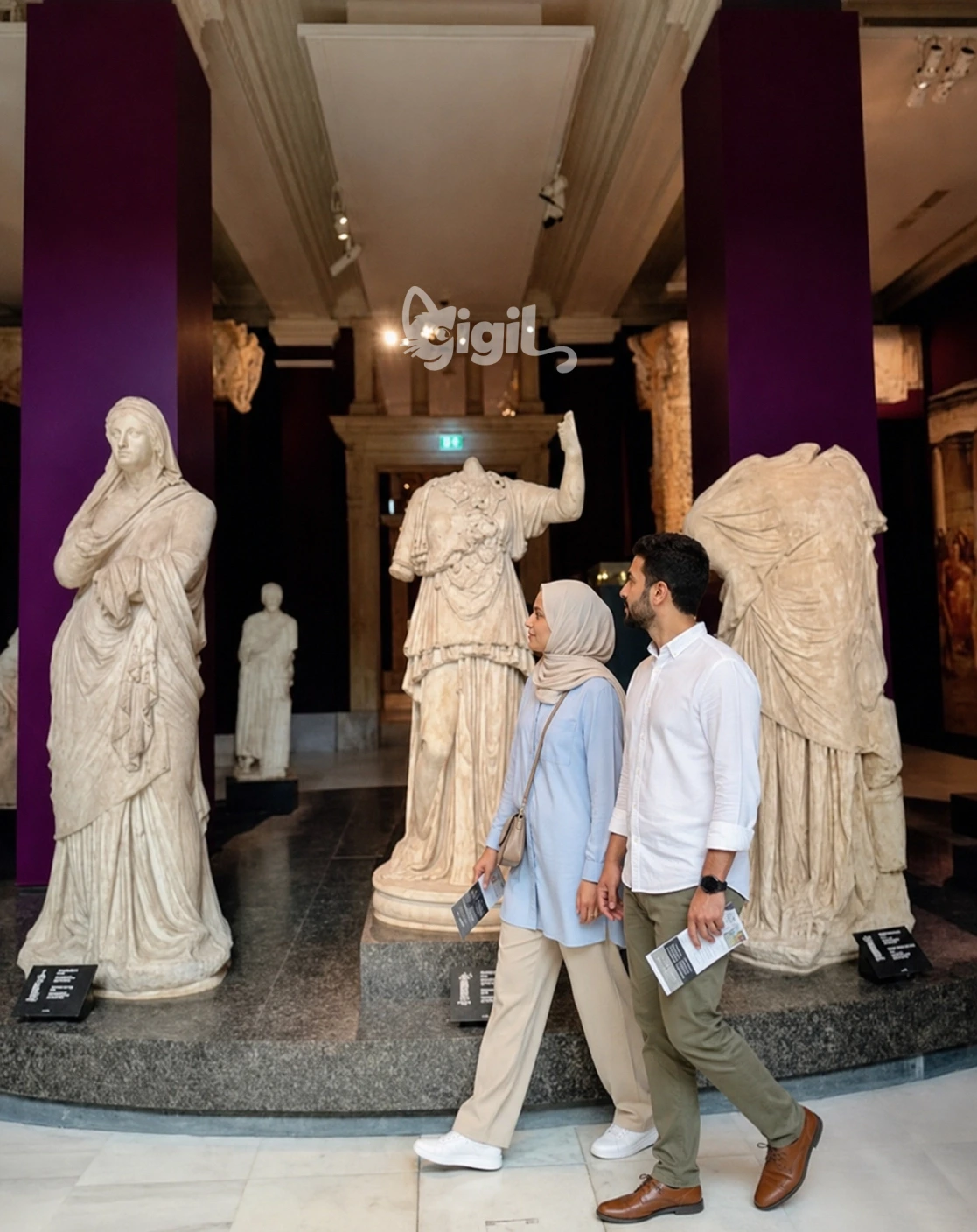
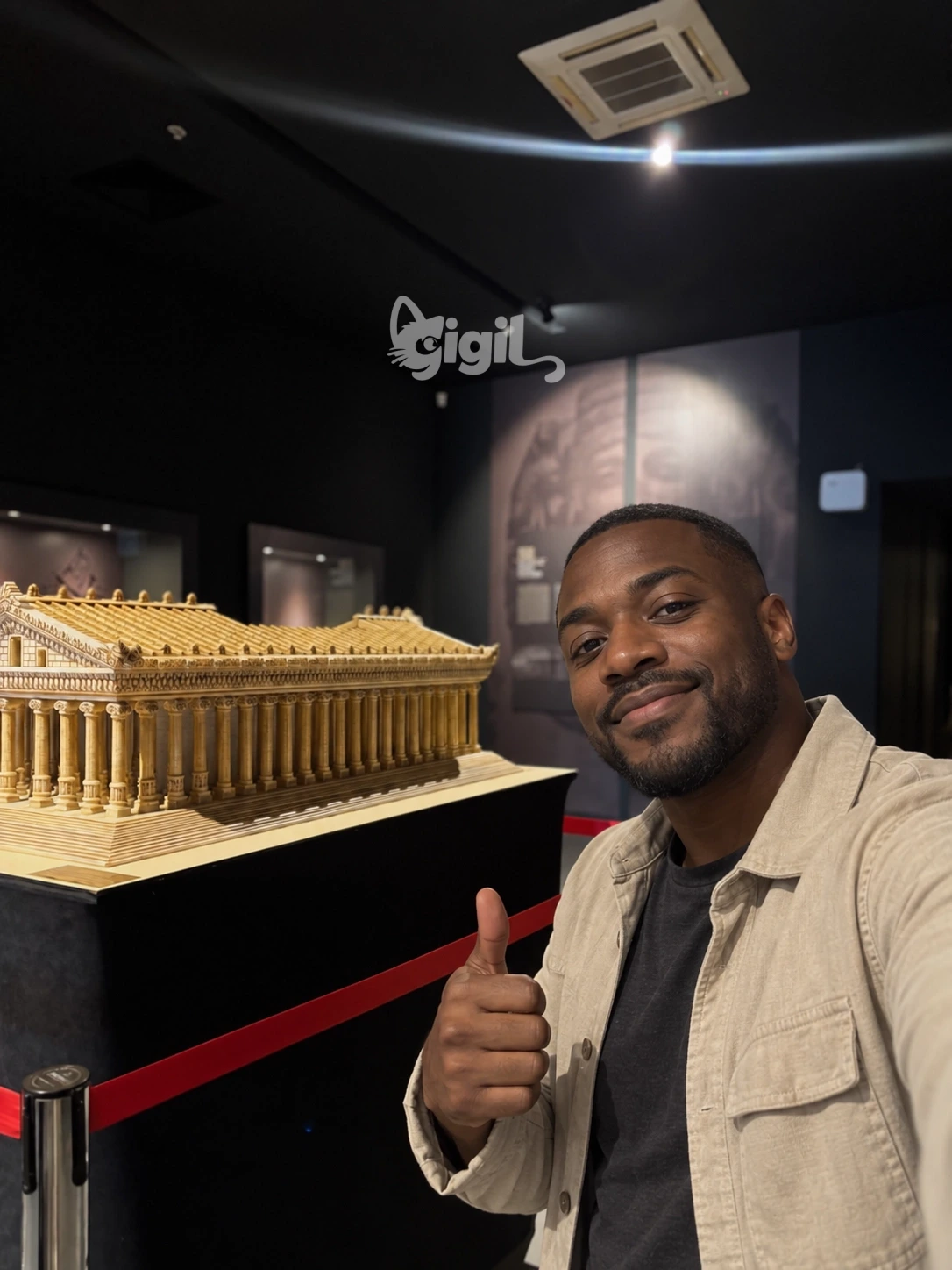
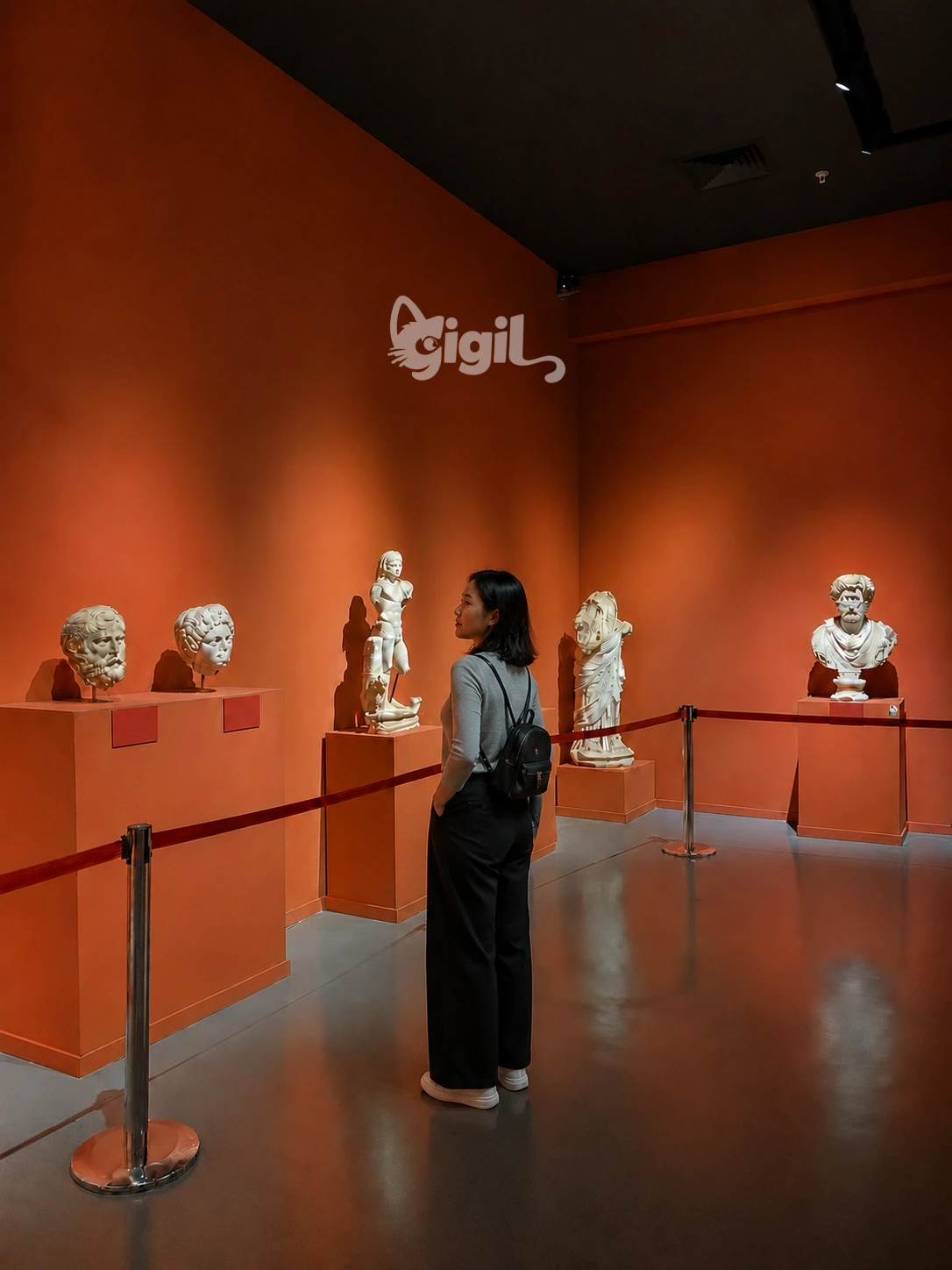
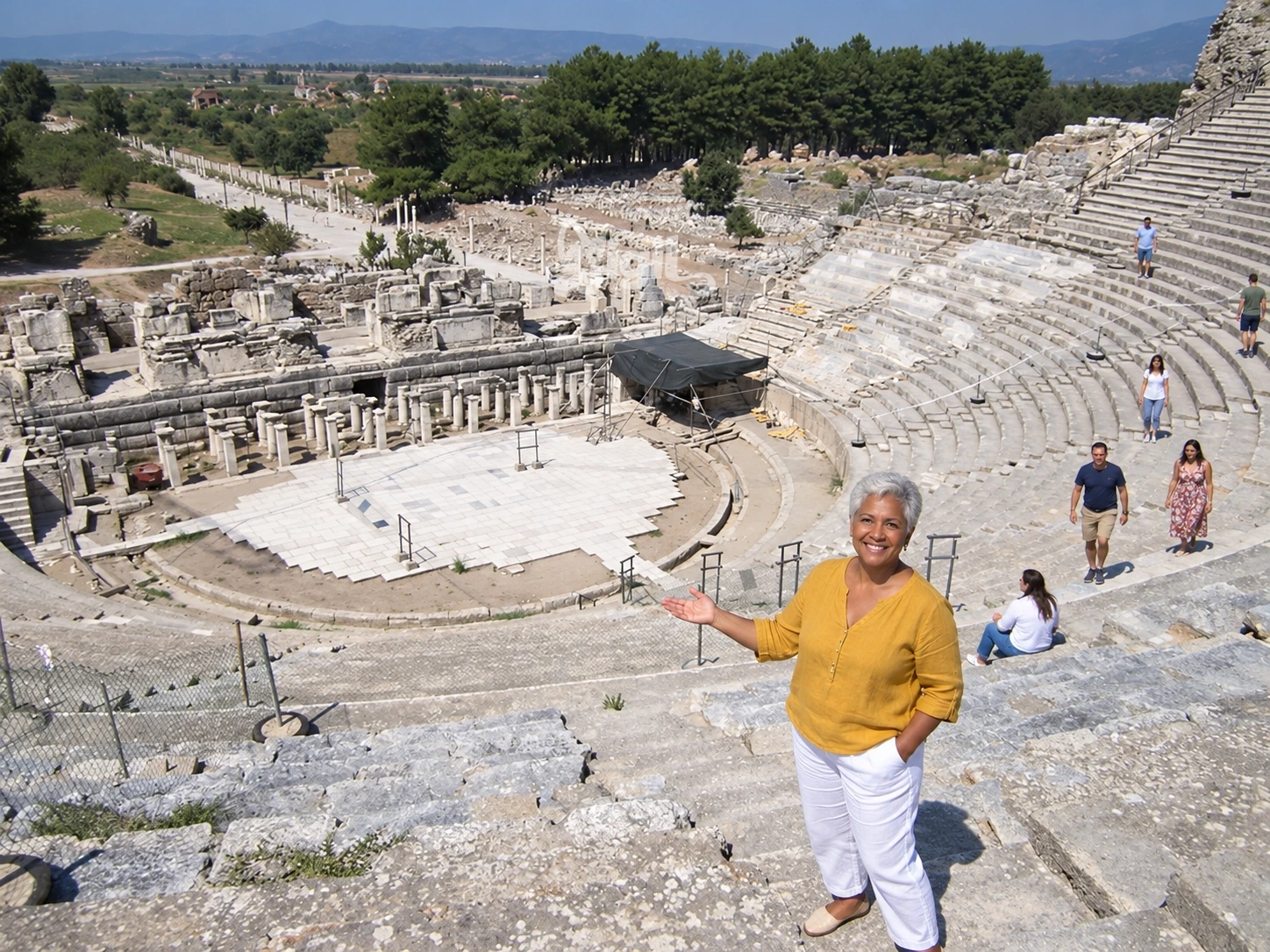
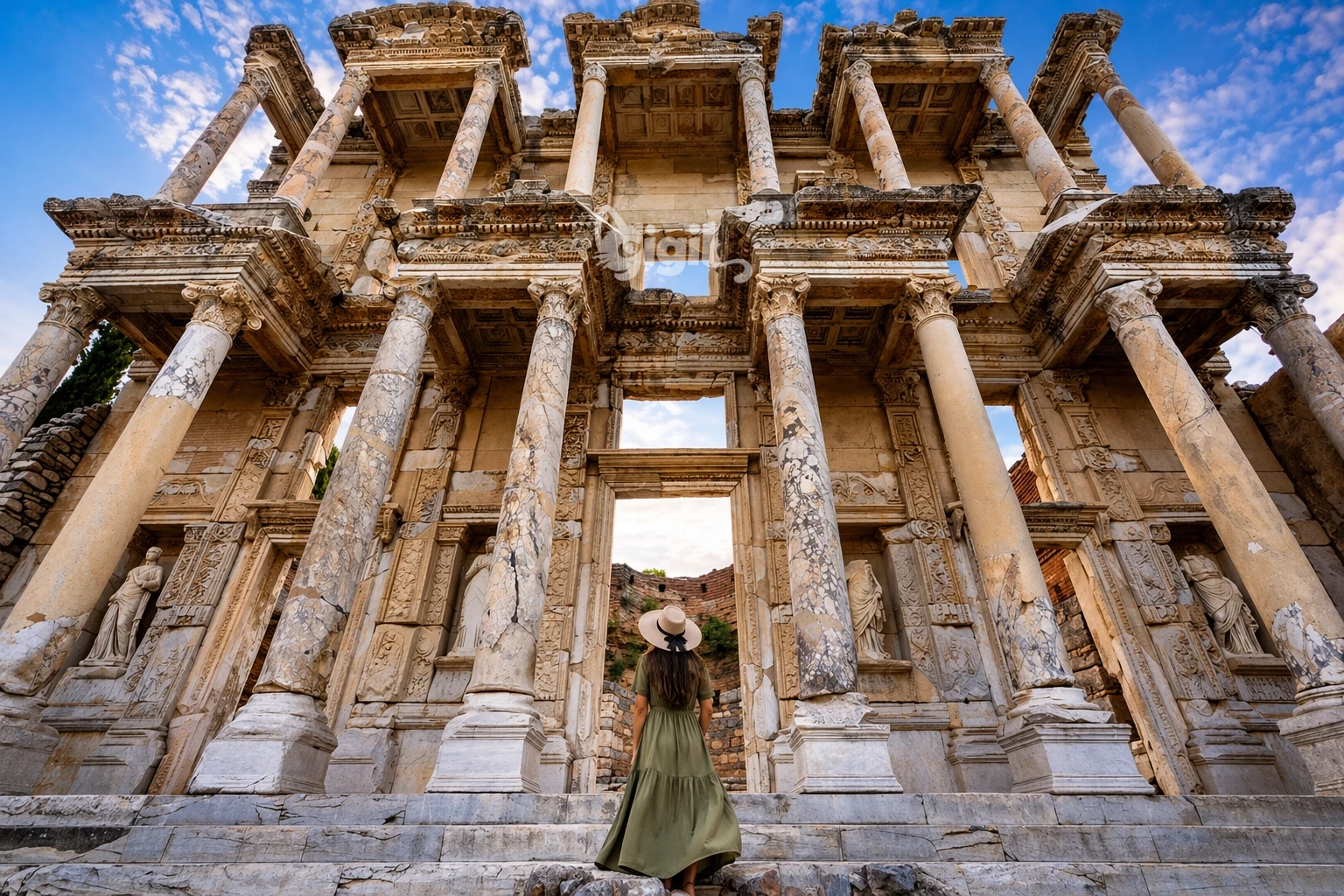
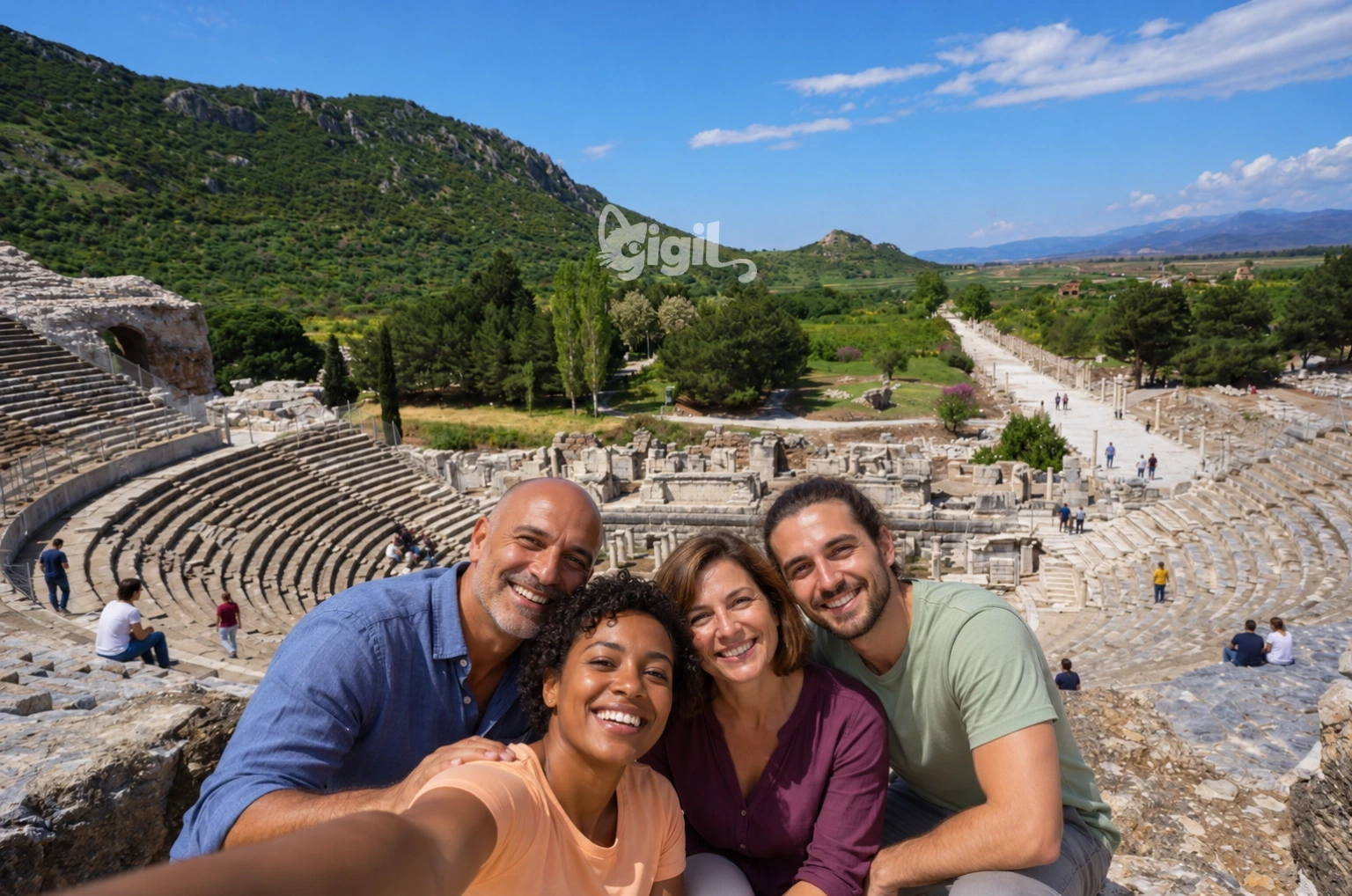
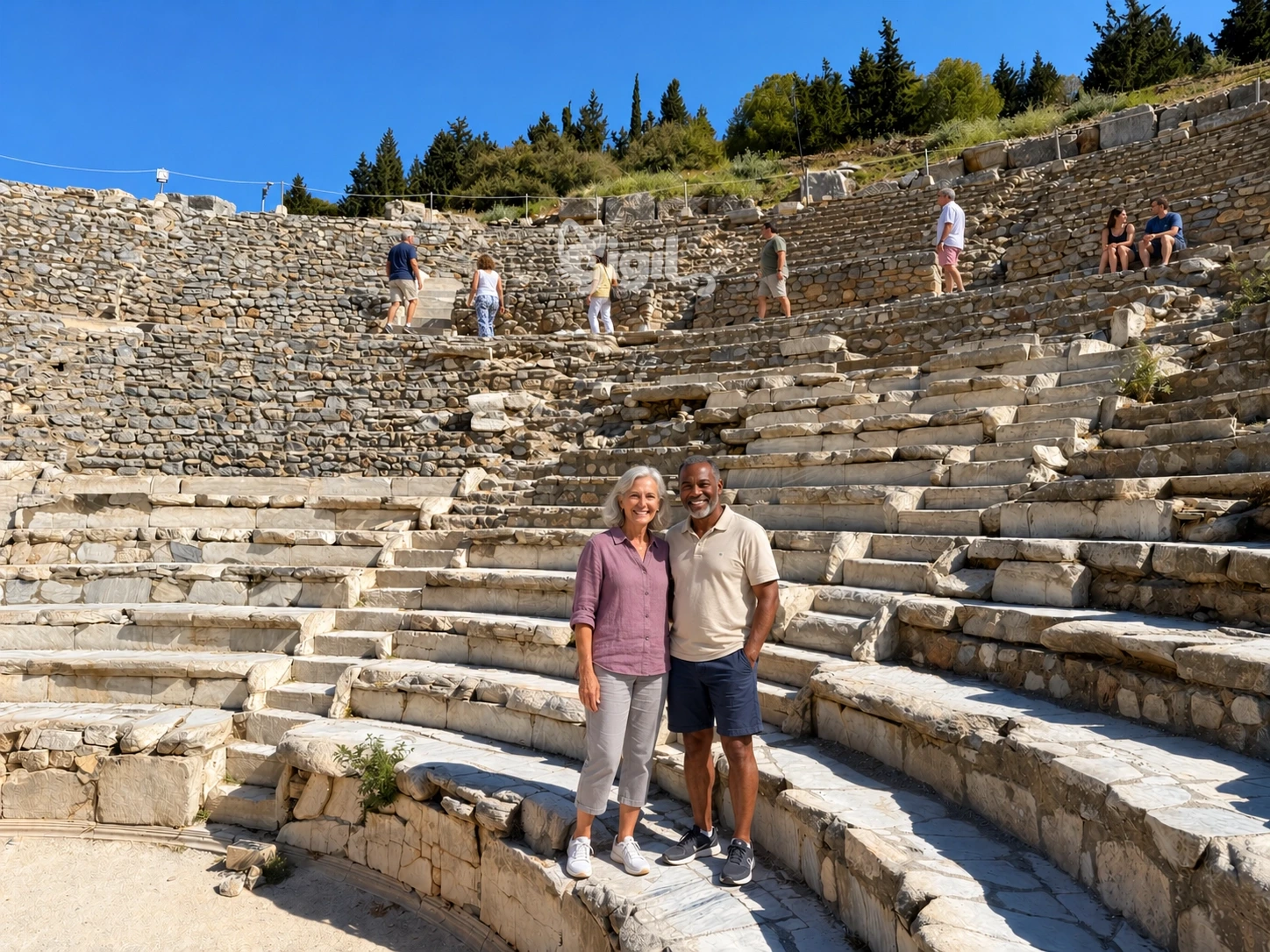
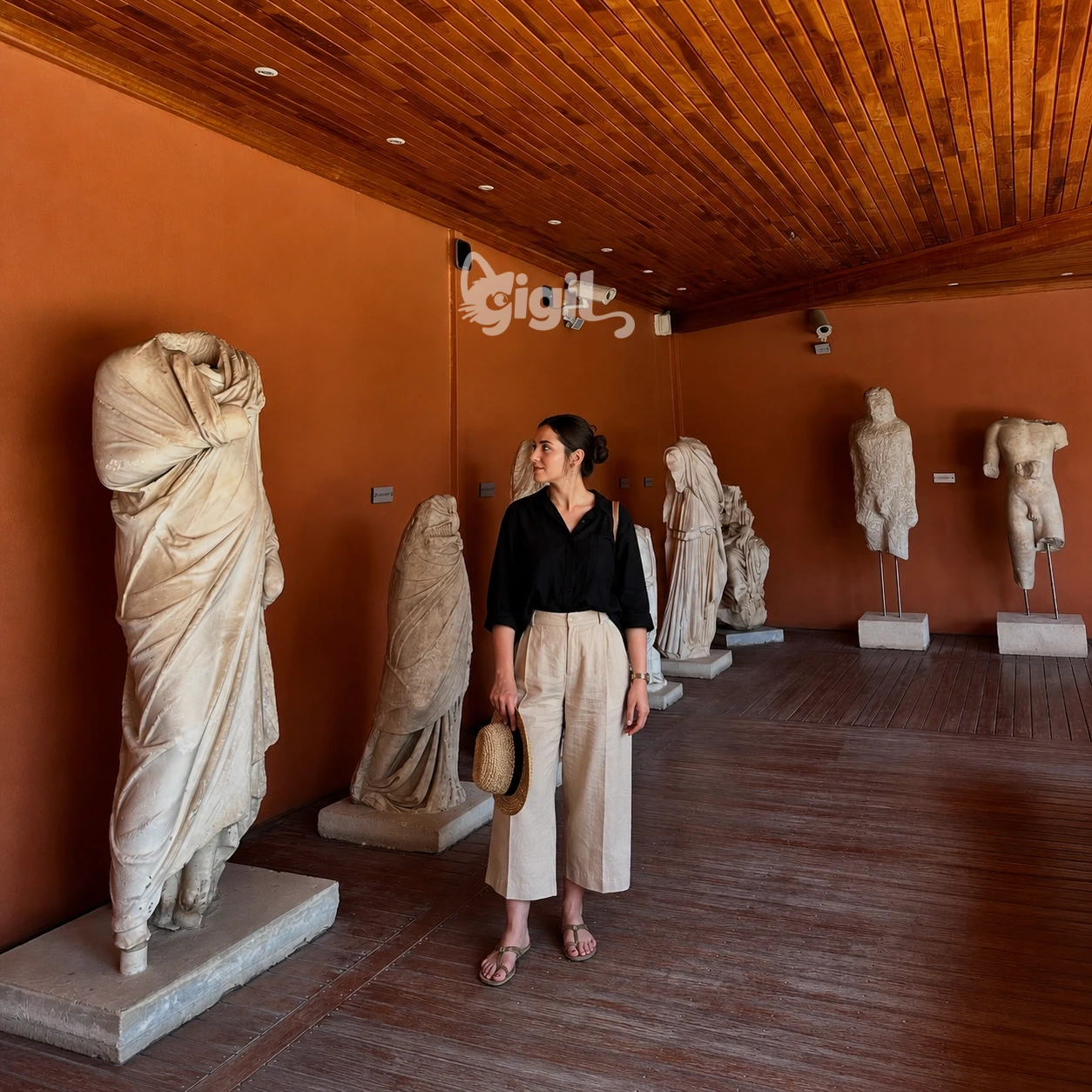
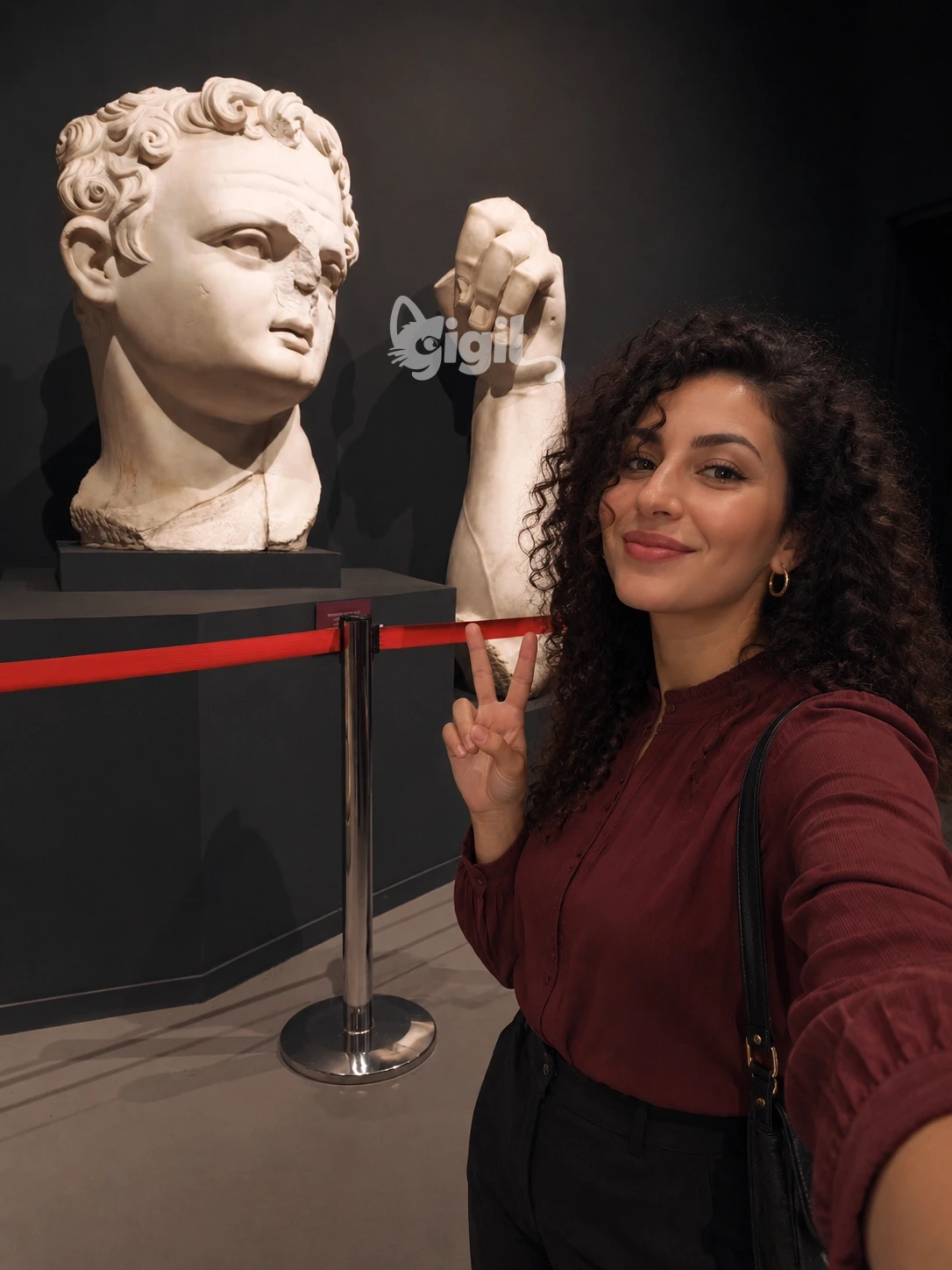
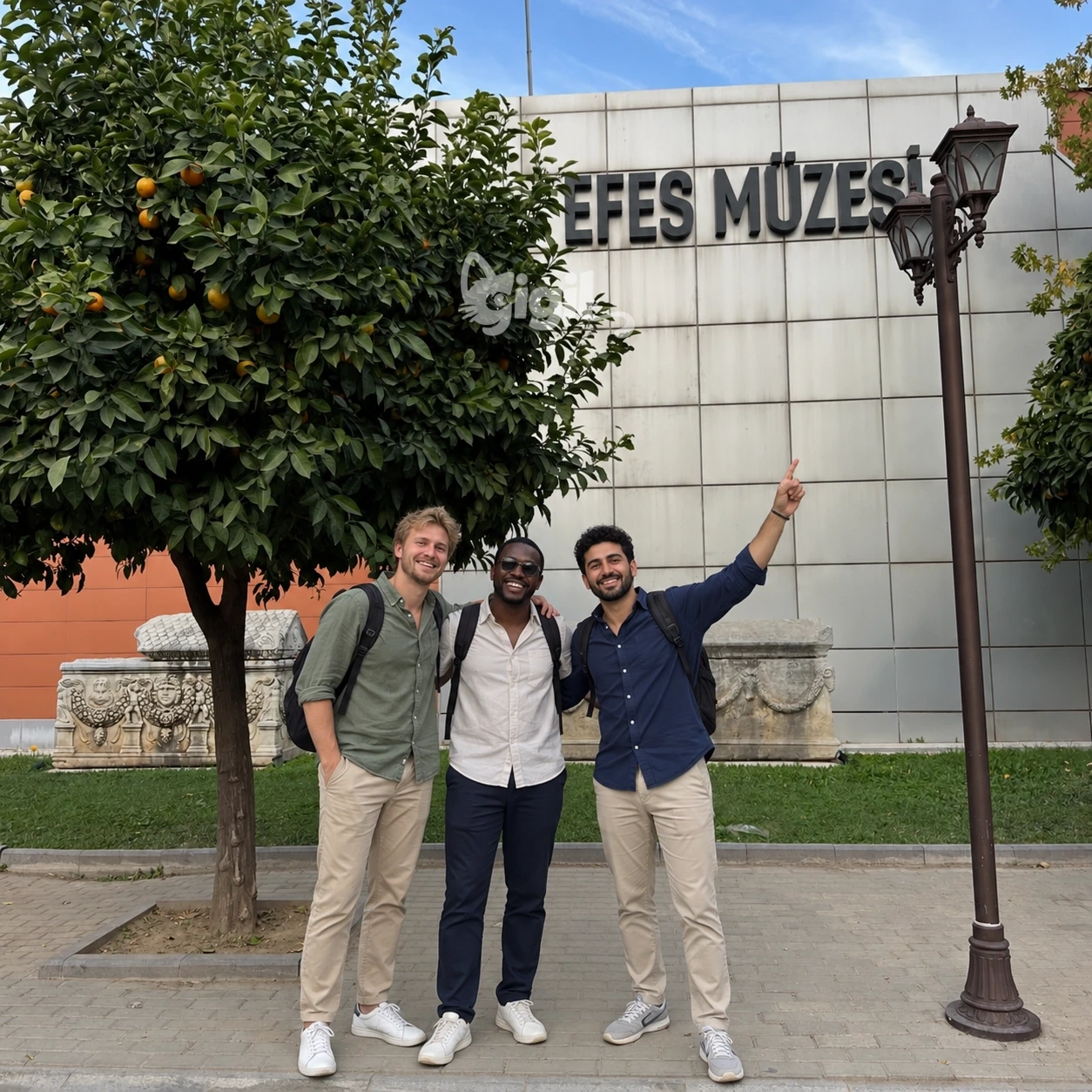
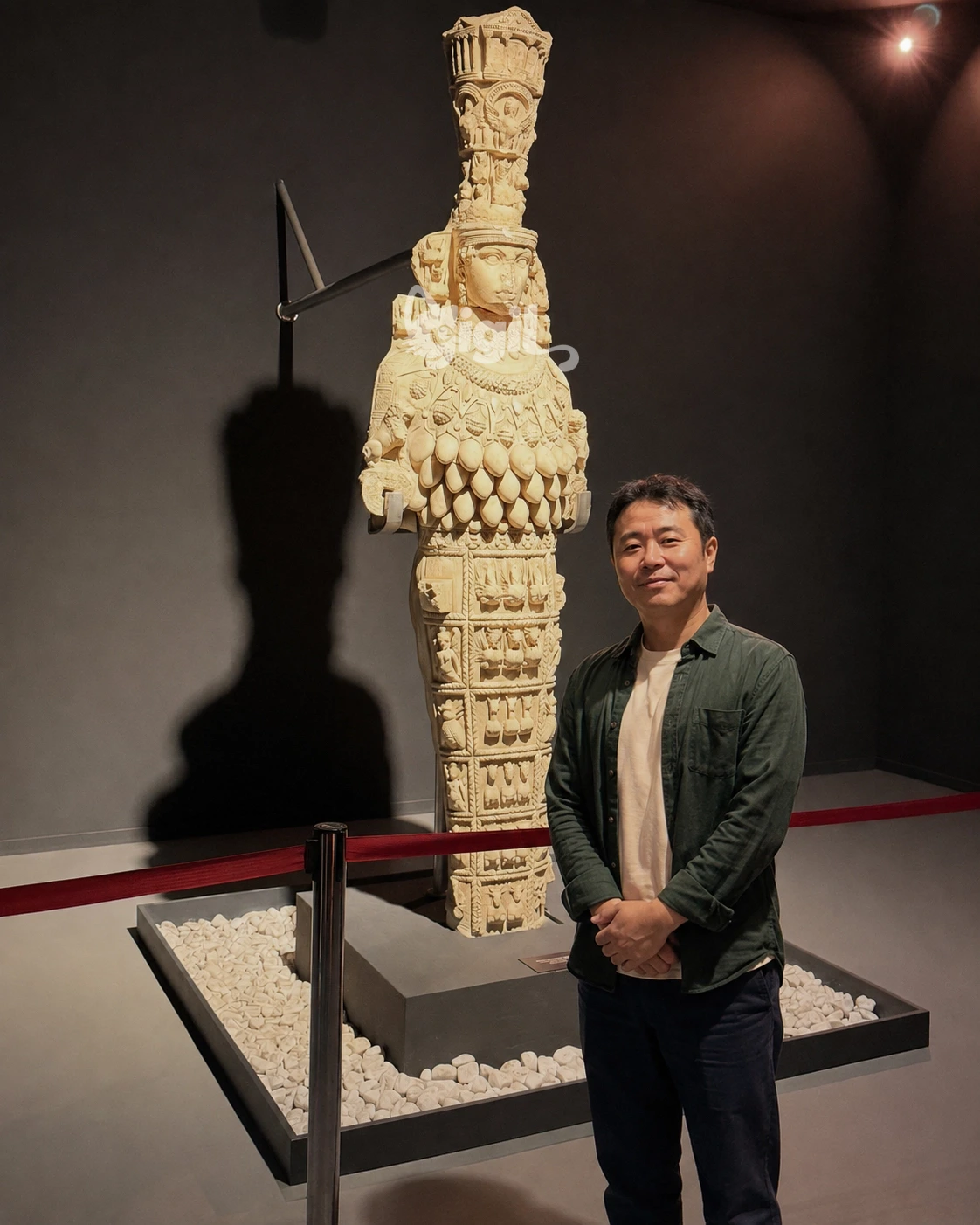
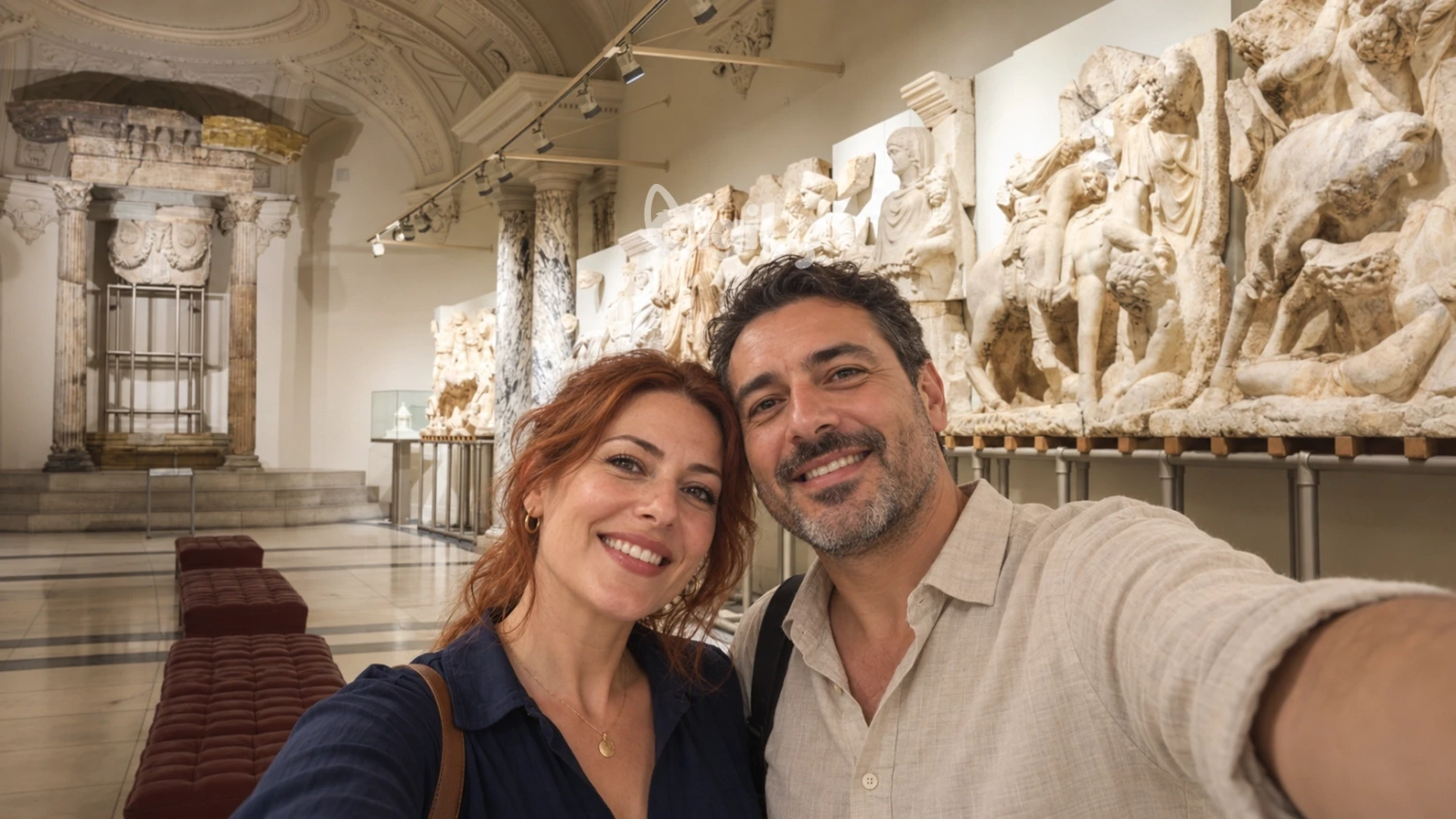
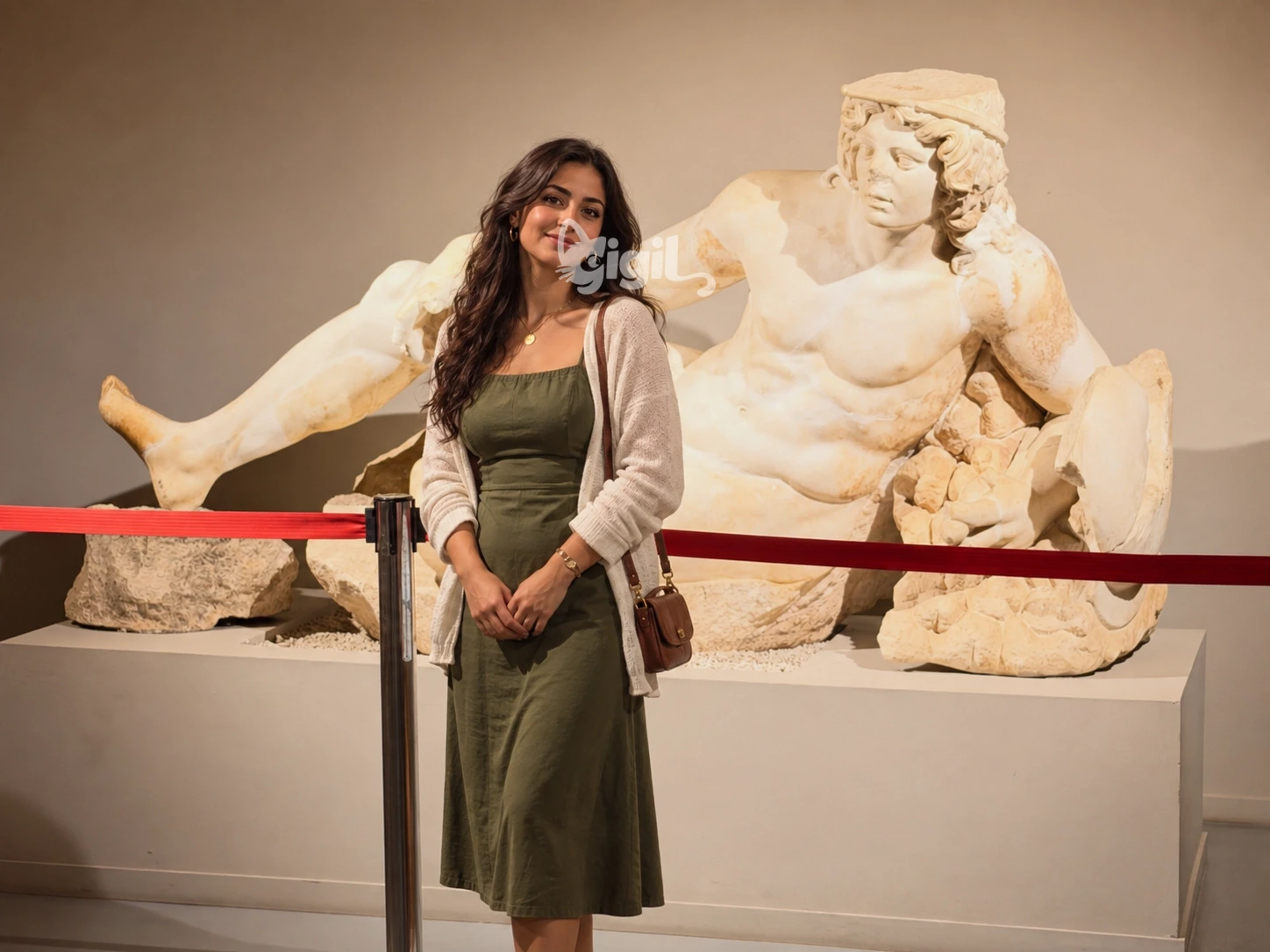
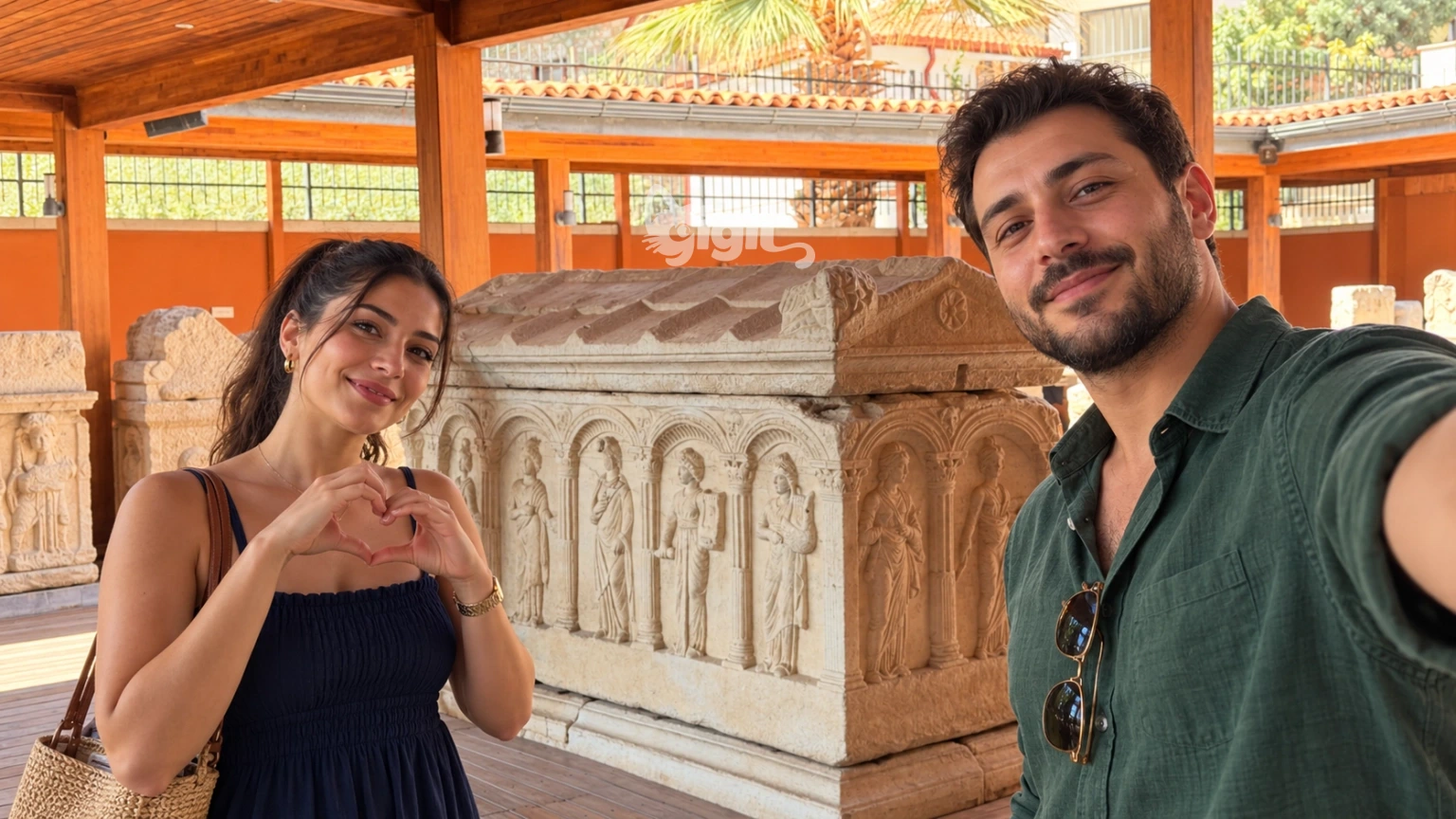
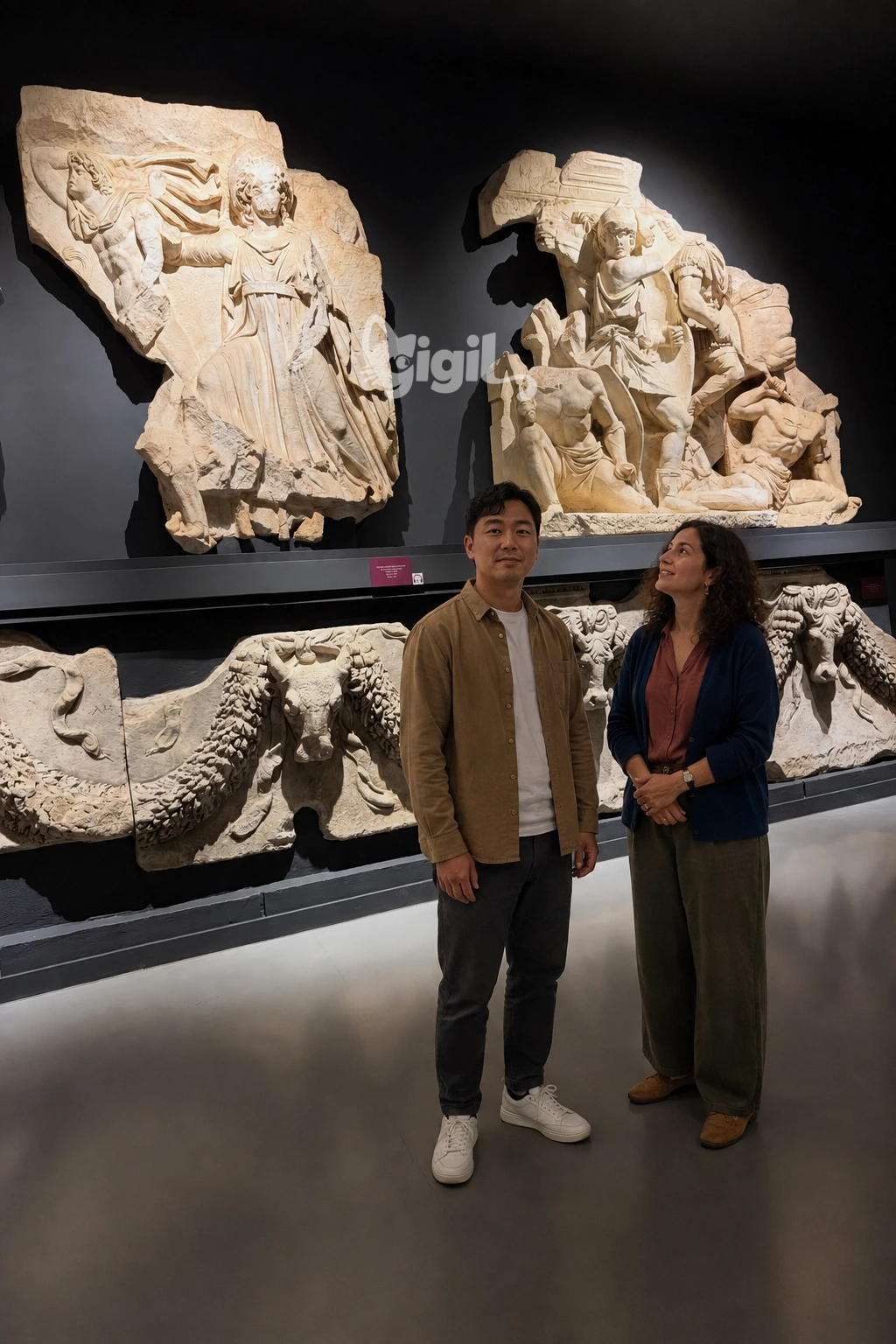
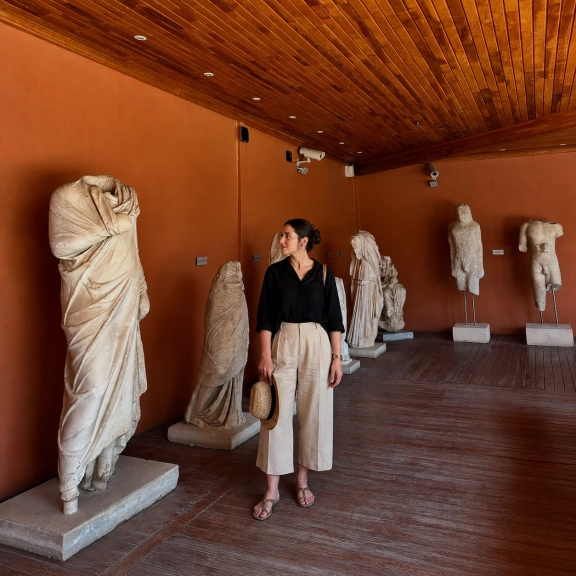
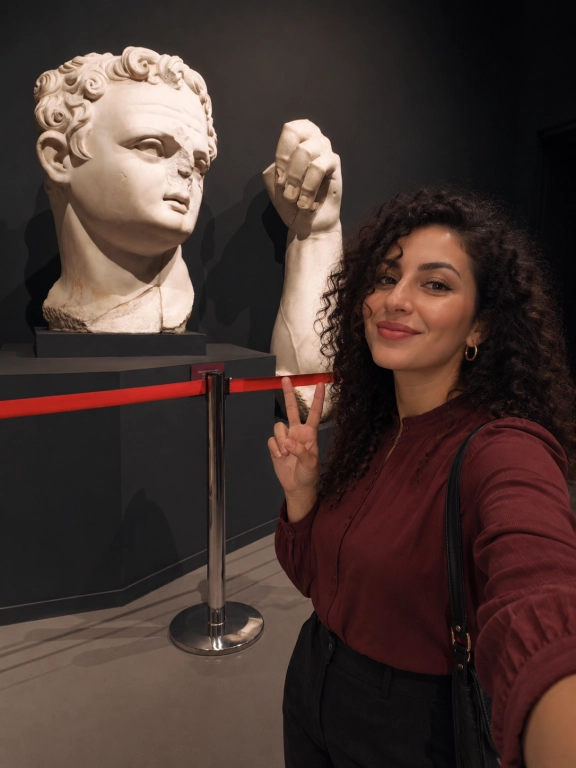
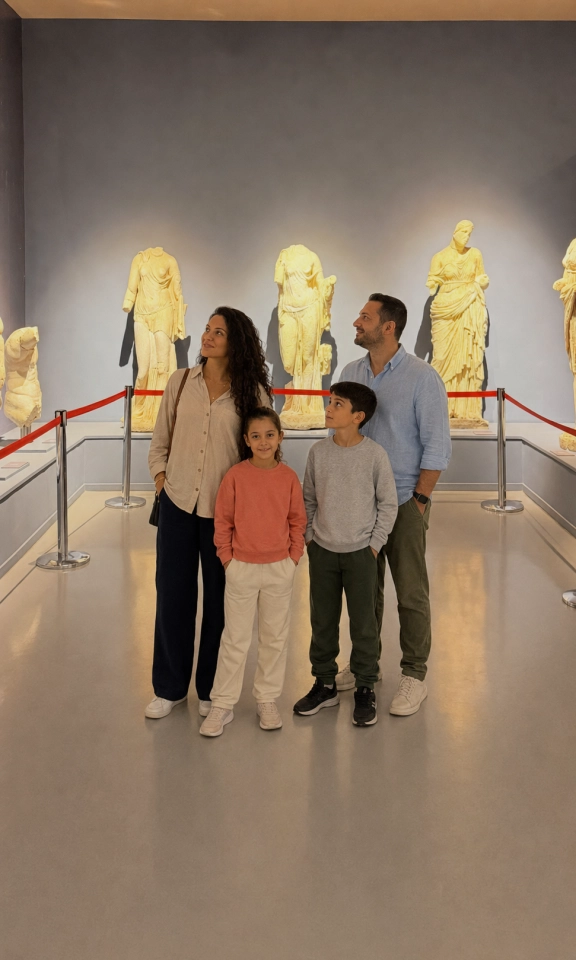
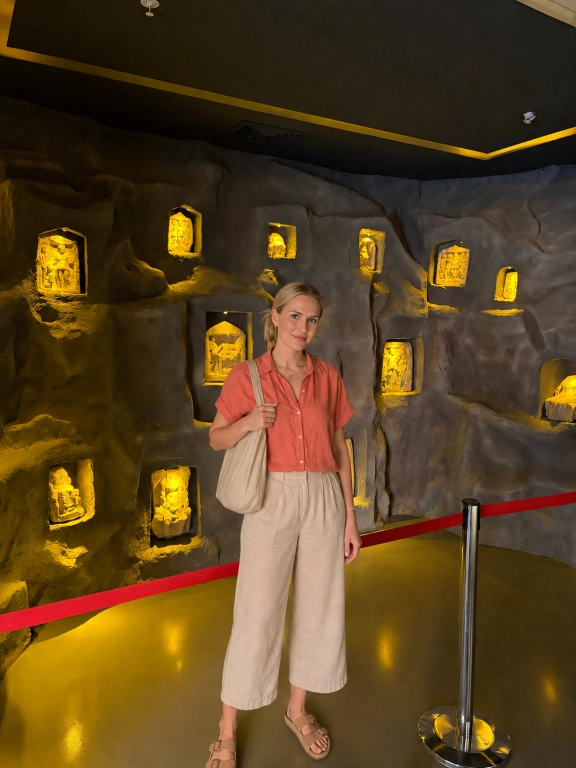
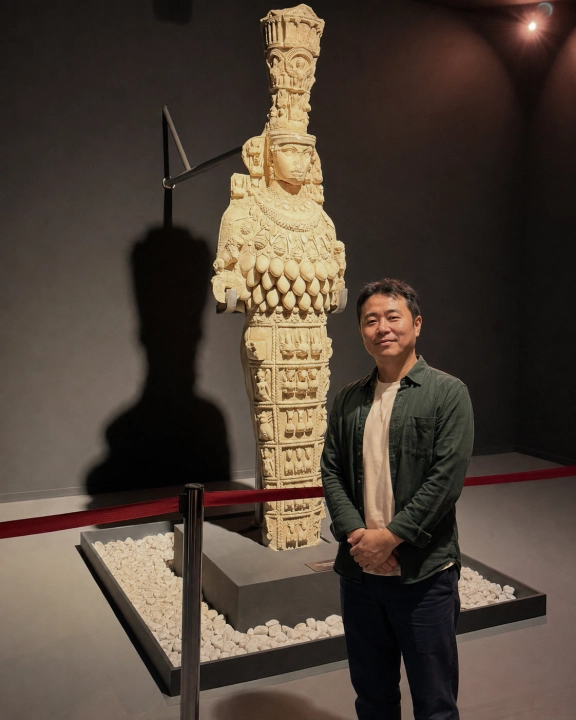
The Great Theatre and Library of Celsus are recognizable anchors in that townscape. Follow the open paths and look for a relationship between a building and the space in front of it. Later, the museum's sculpture and everyday finds offer a closer perspective on the communities behind these public settings.
Questions
What does movement help explain here?
The street network shows connections between places that otherwise appear as separate ruins.
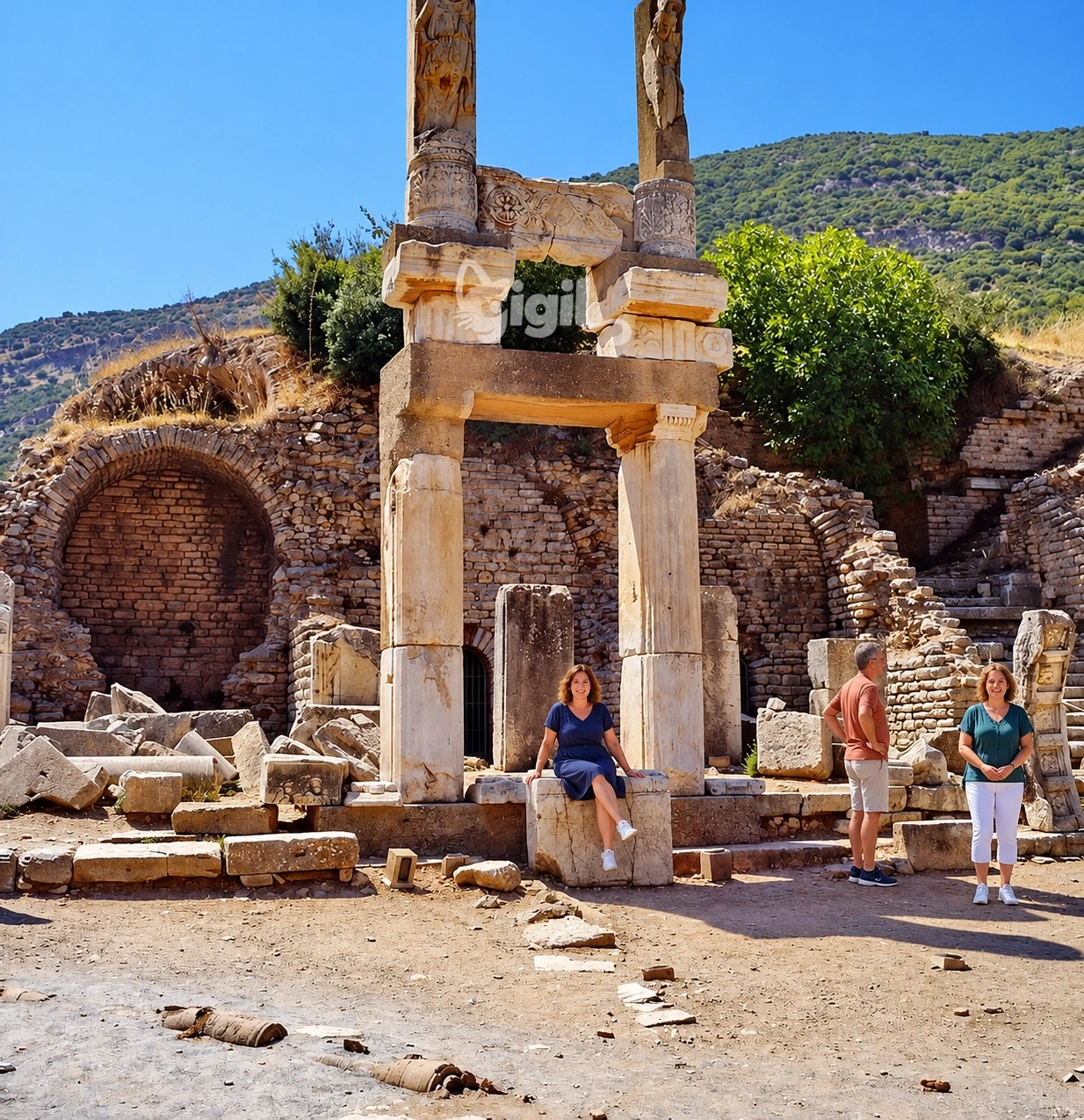
Why examine the area in front of a building?
It helps reveal how the monument related to neighbouring public space.
Does the Roman city have a longer background?
Yes. The wider history of Ephesus includes earlier and later phases as well as Roman development.
What question suits the museum afterwards?
Ask how objects can reveal aspects of life that large buildings leave difficult to see.