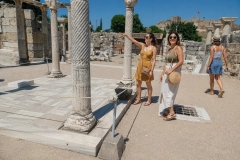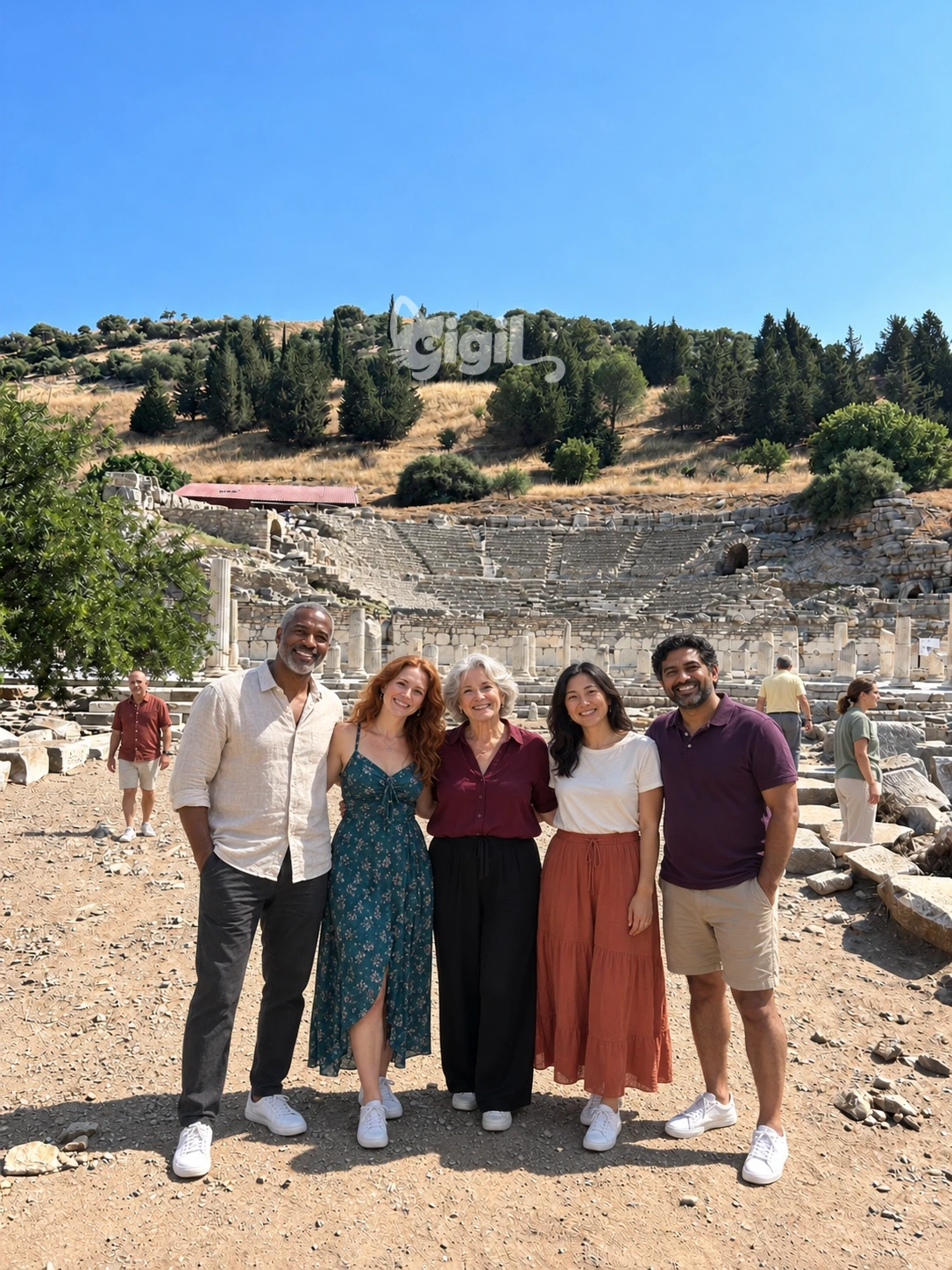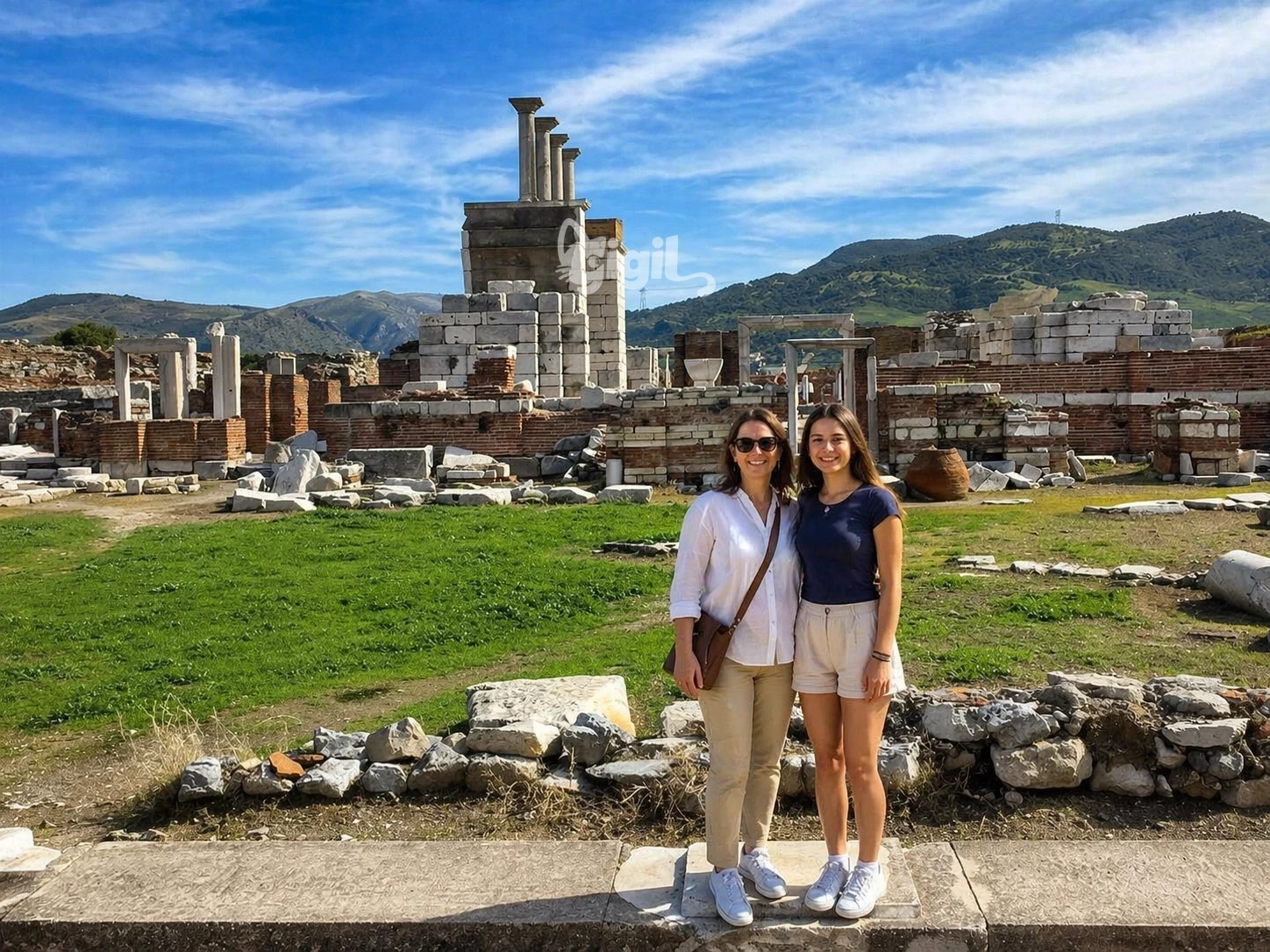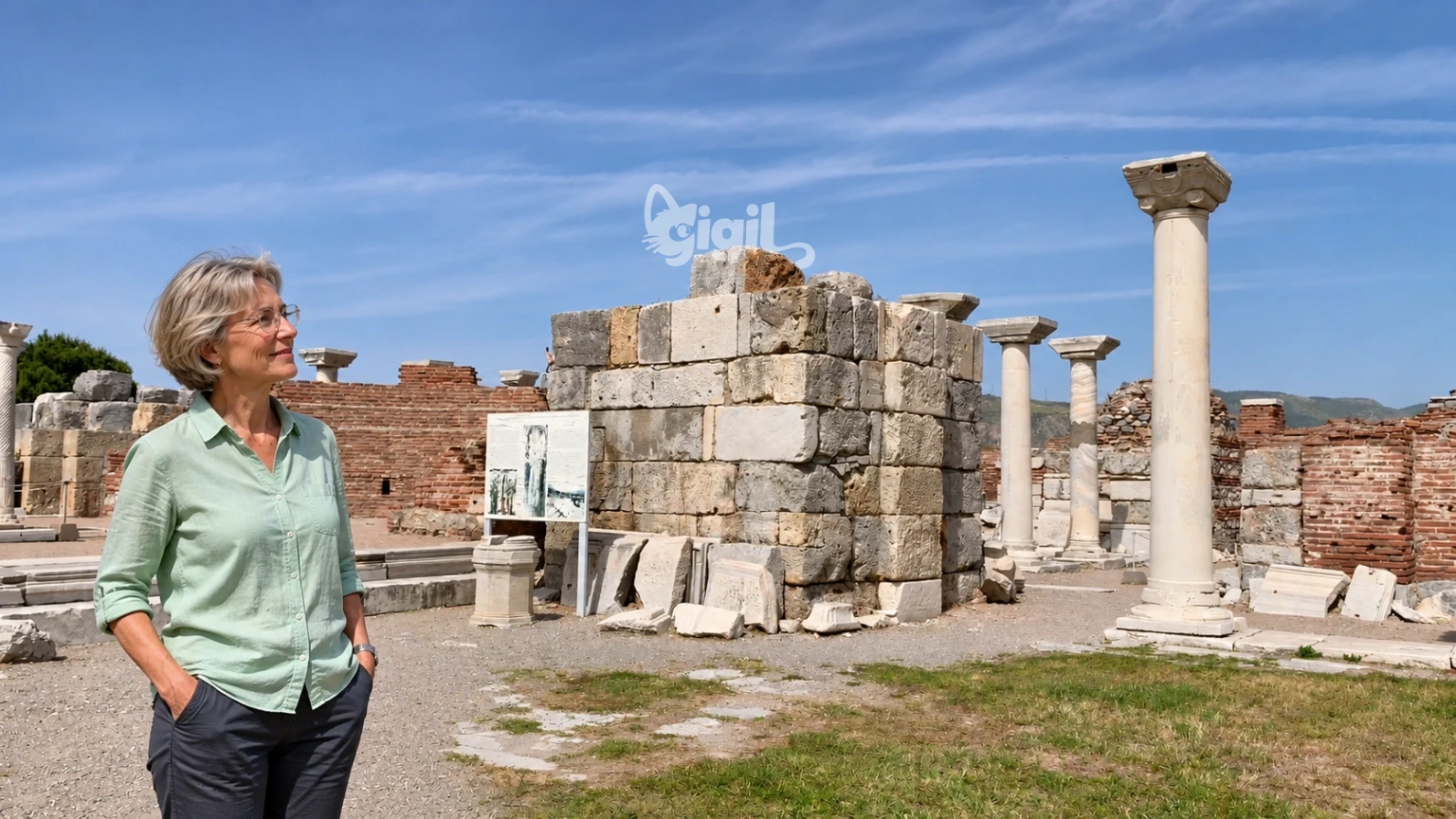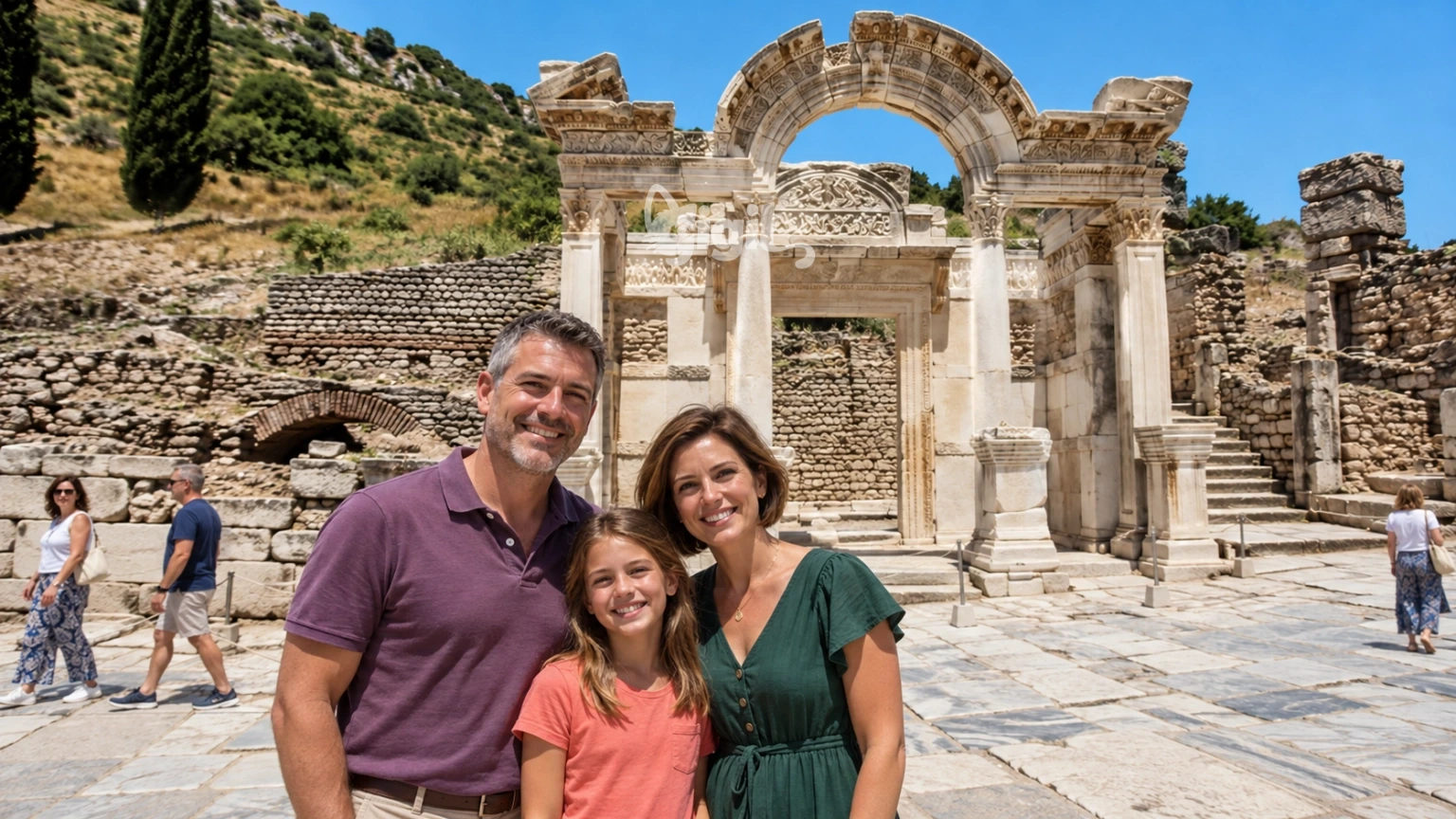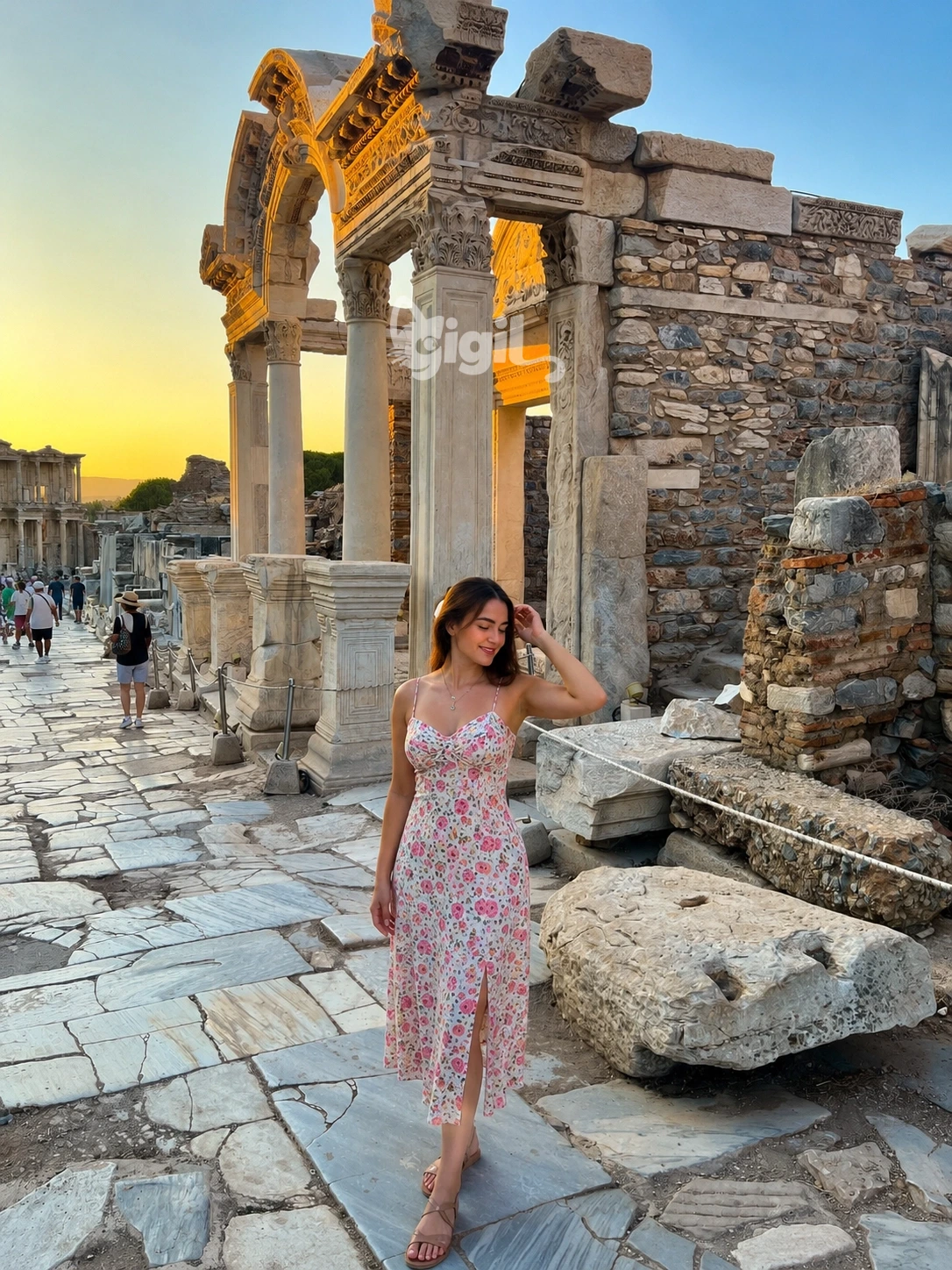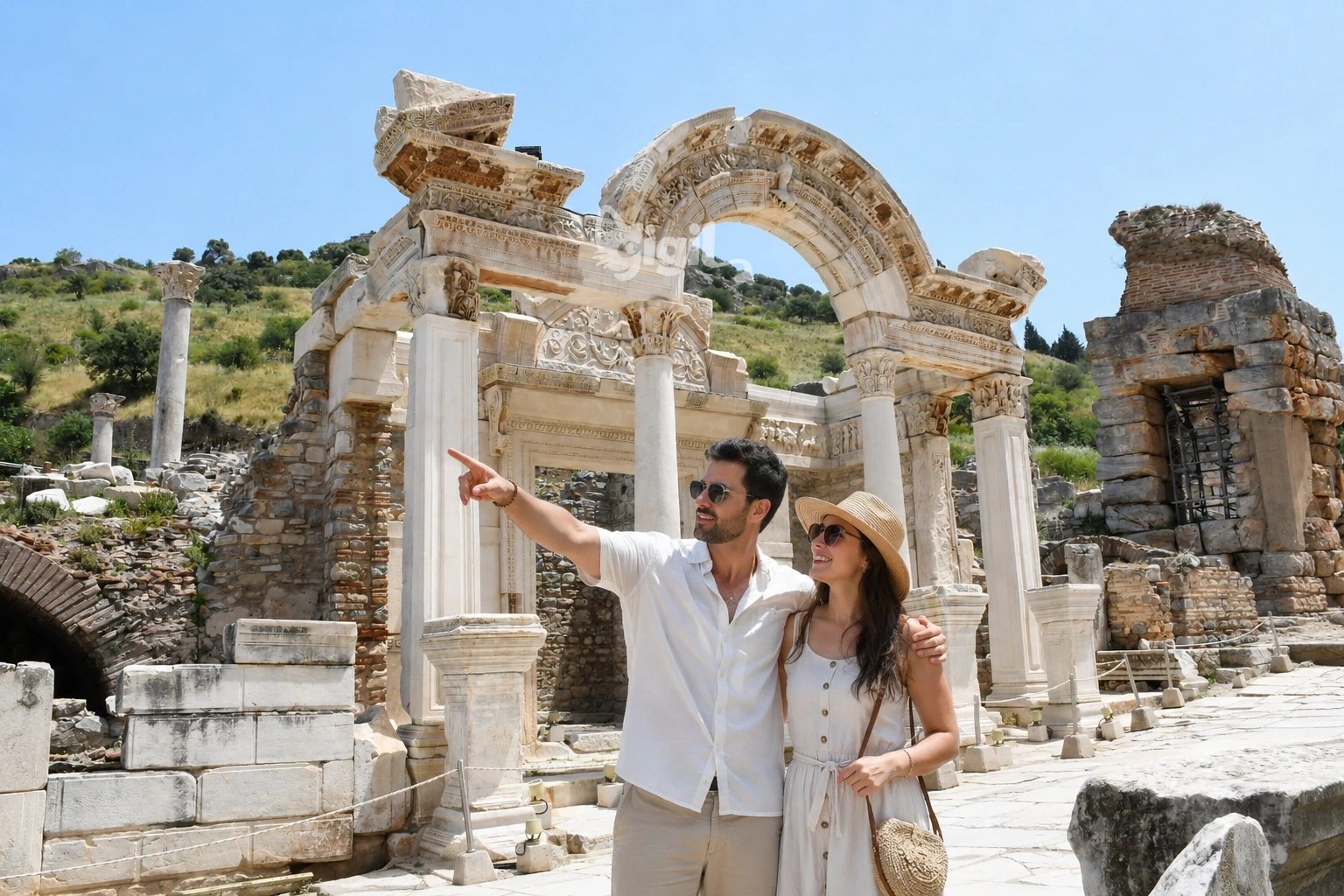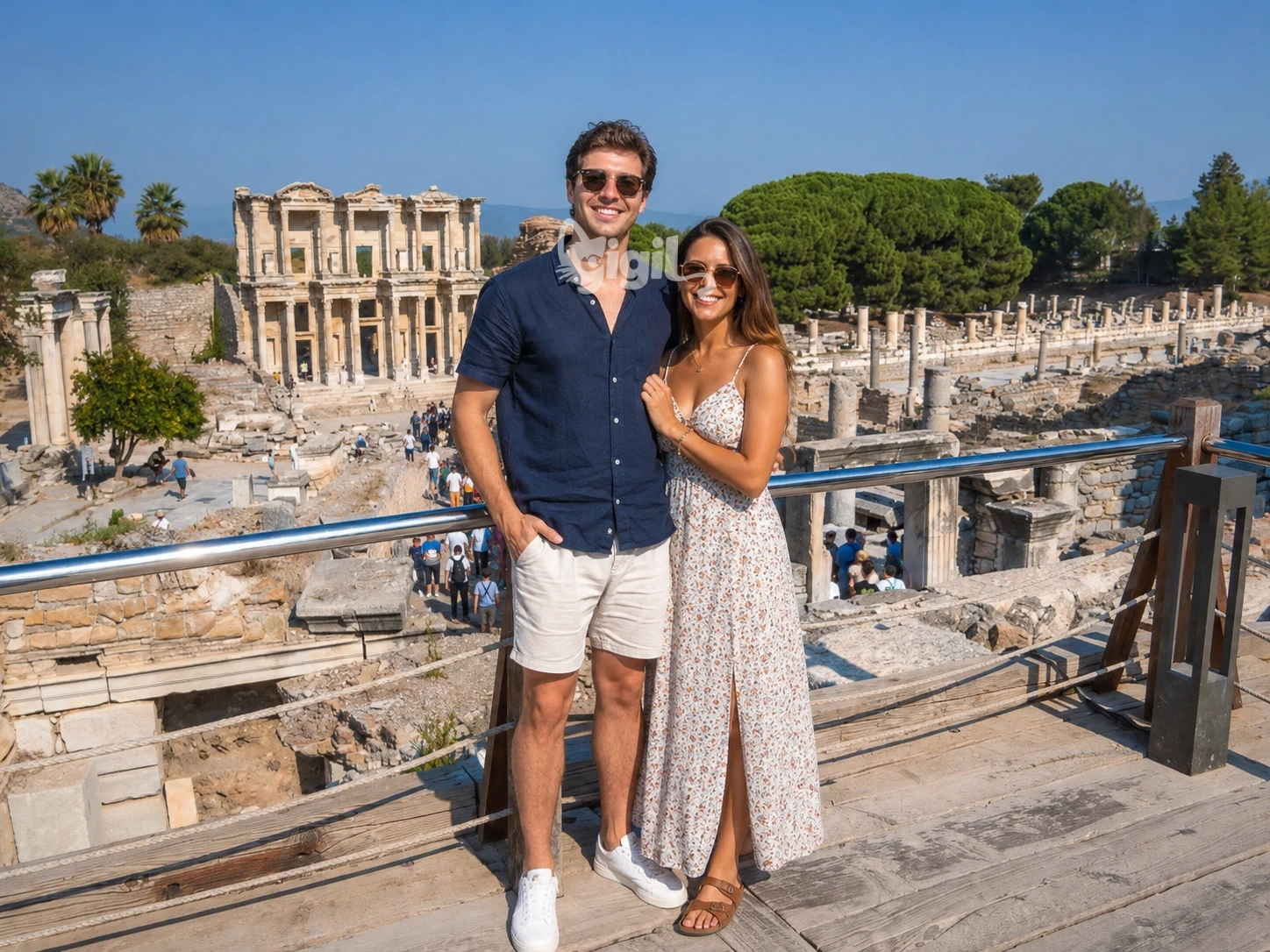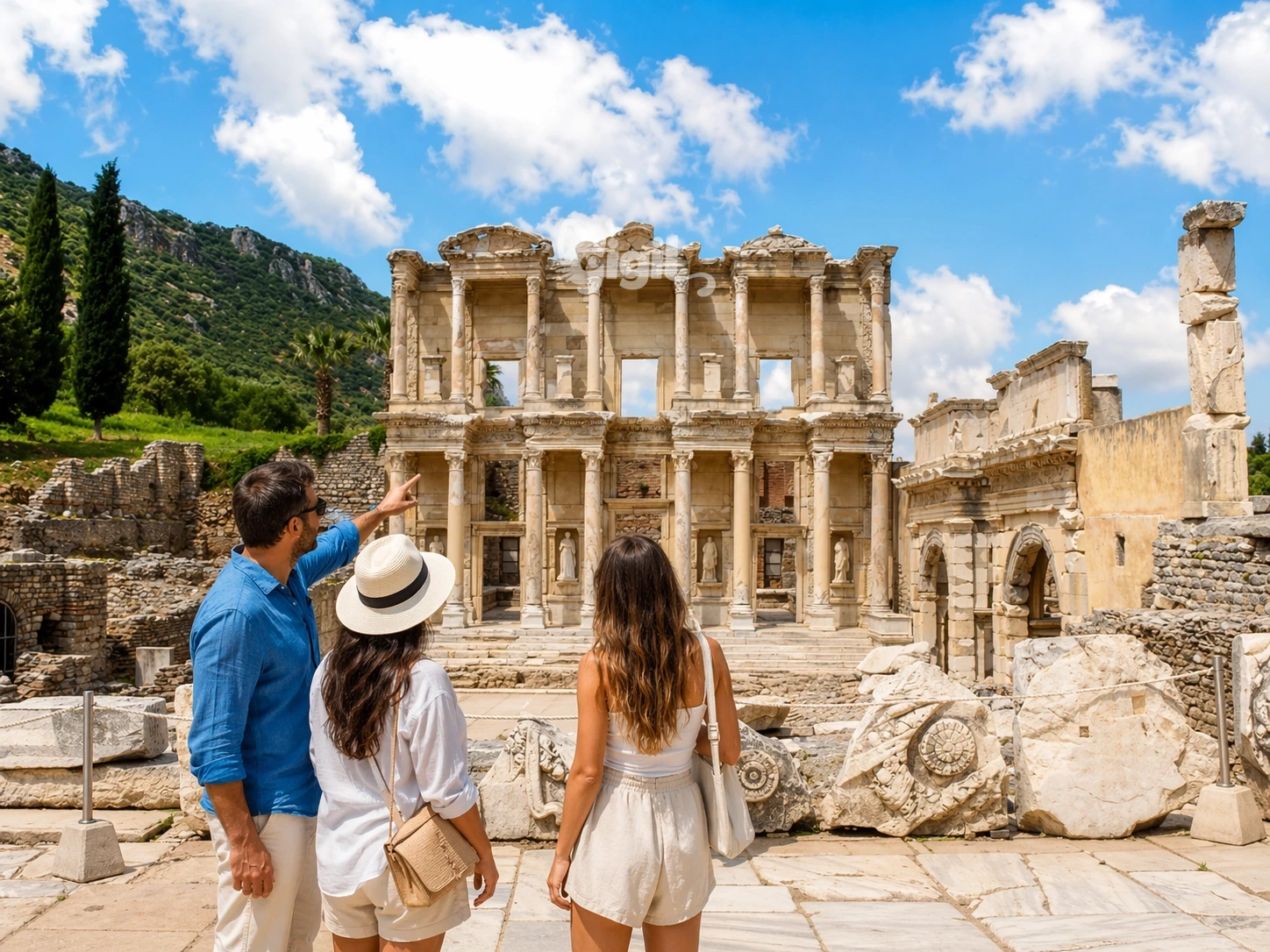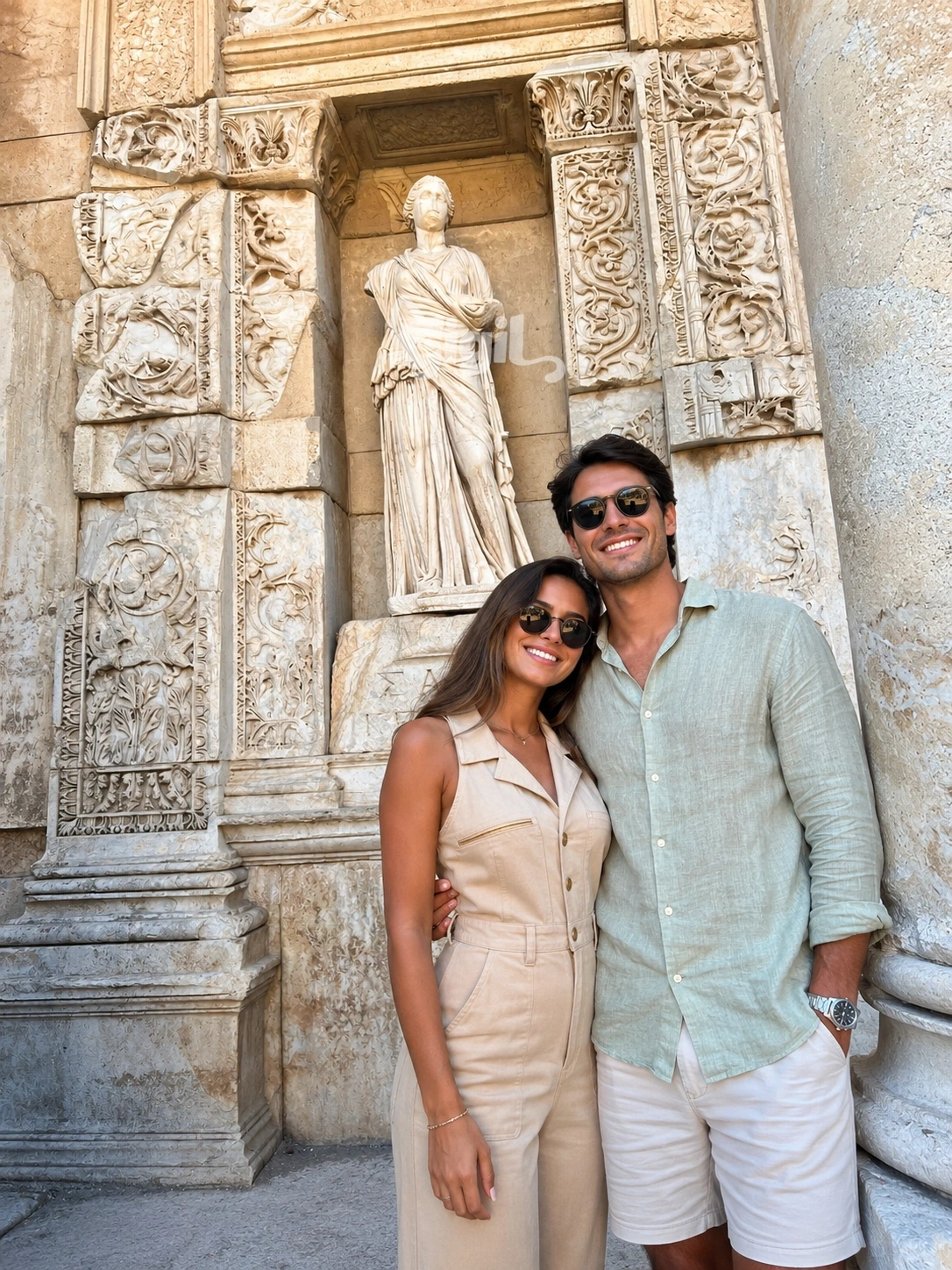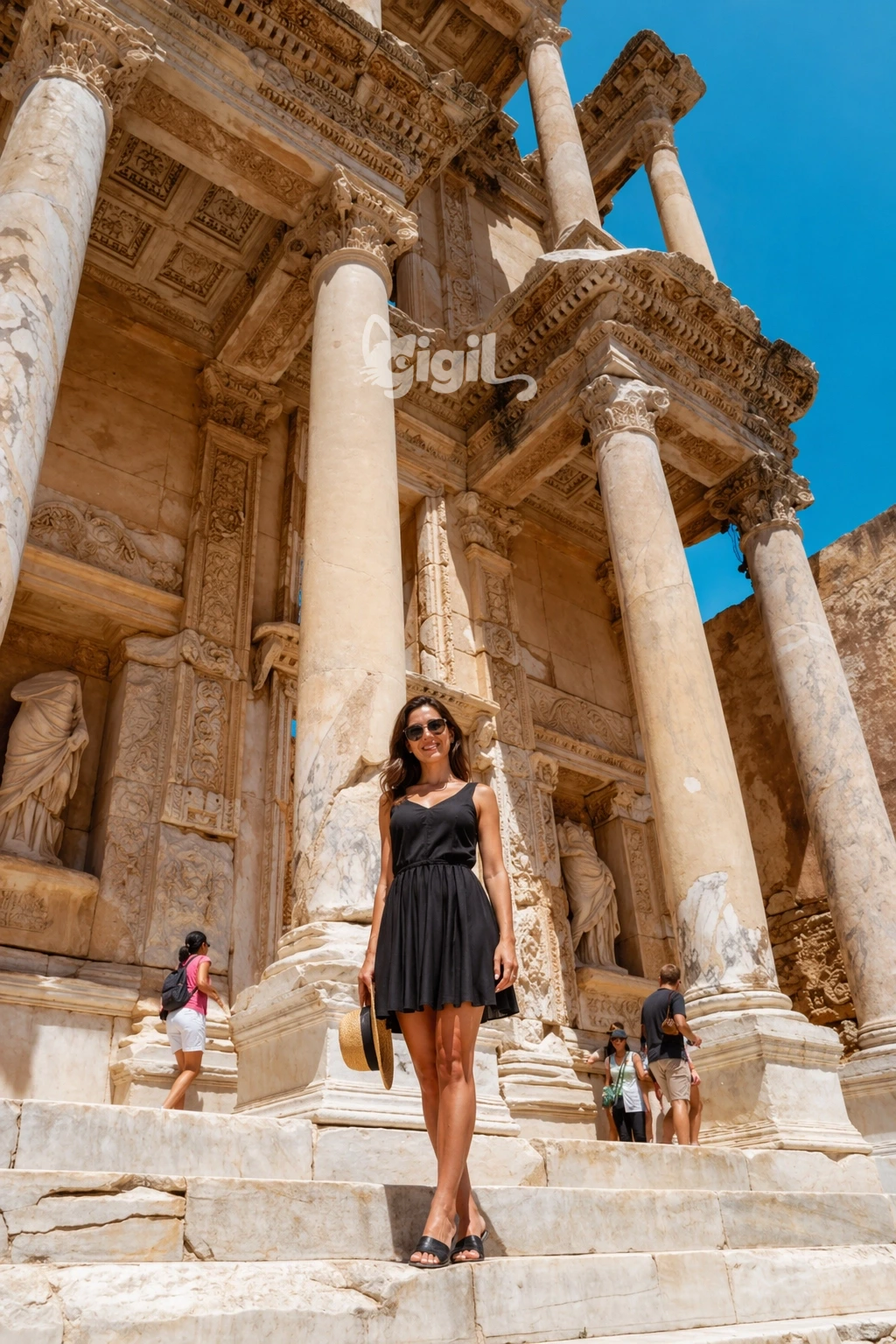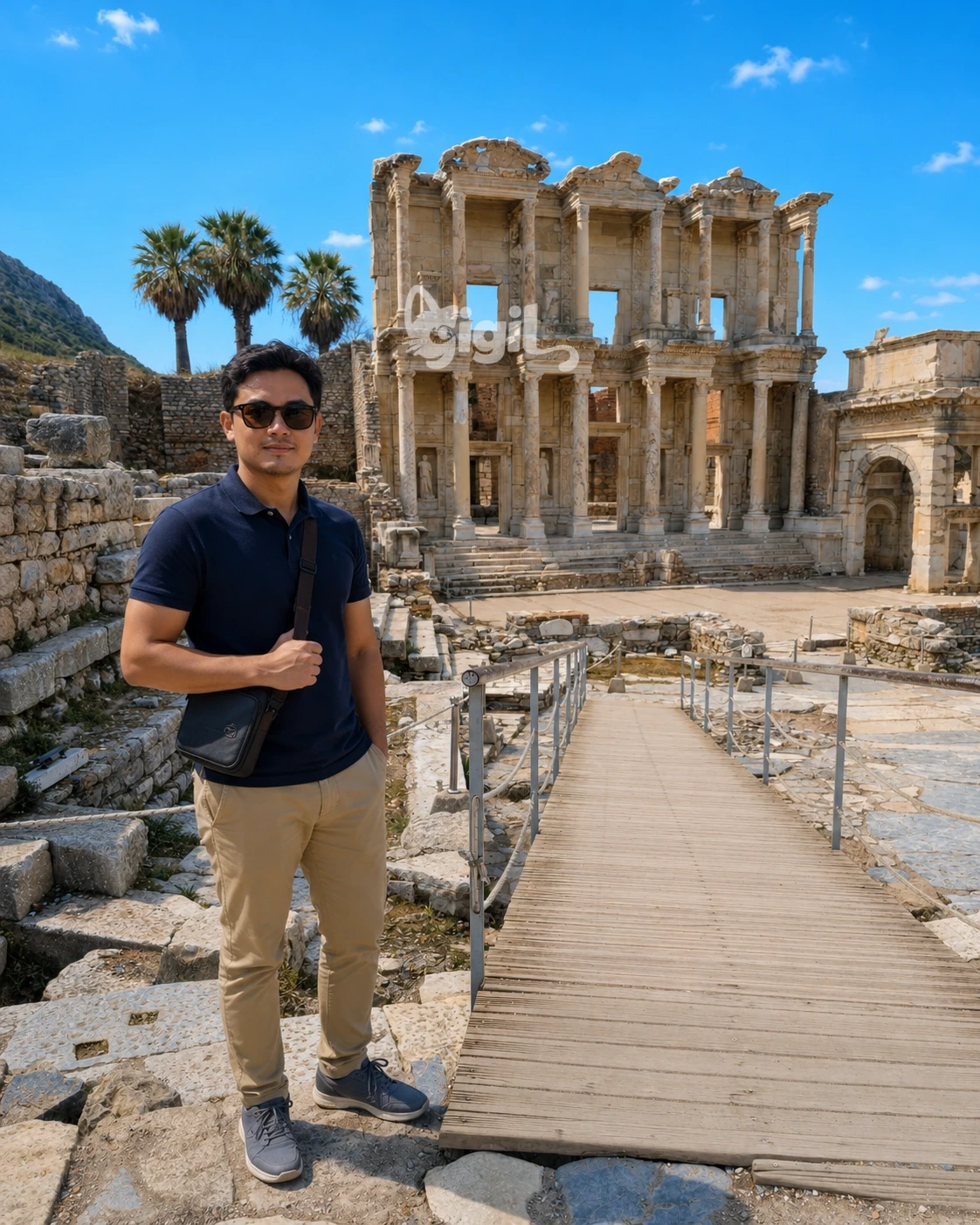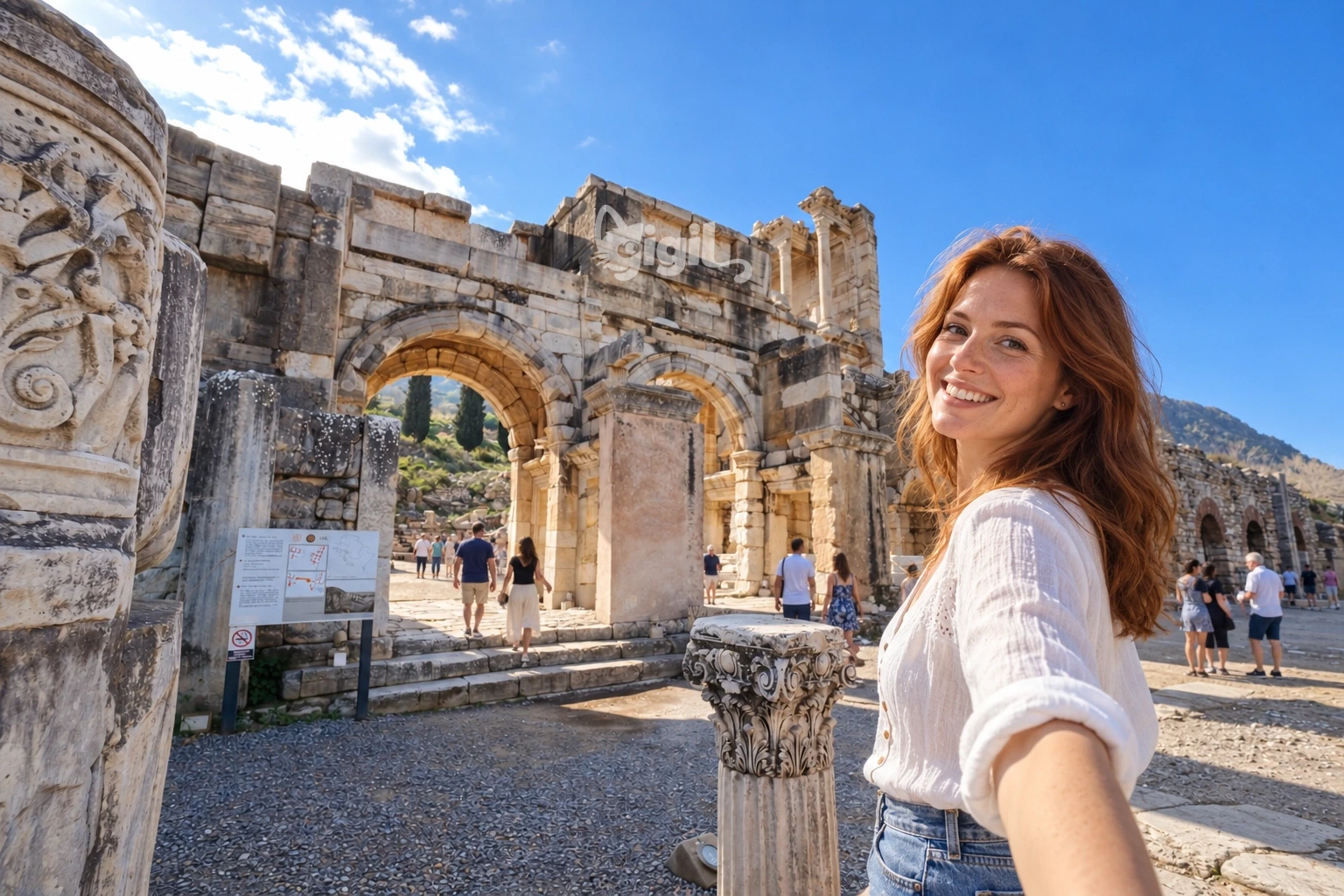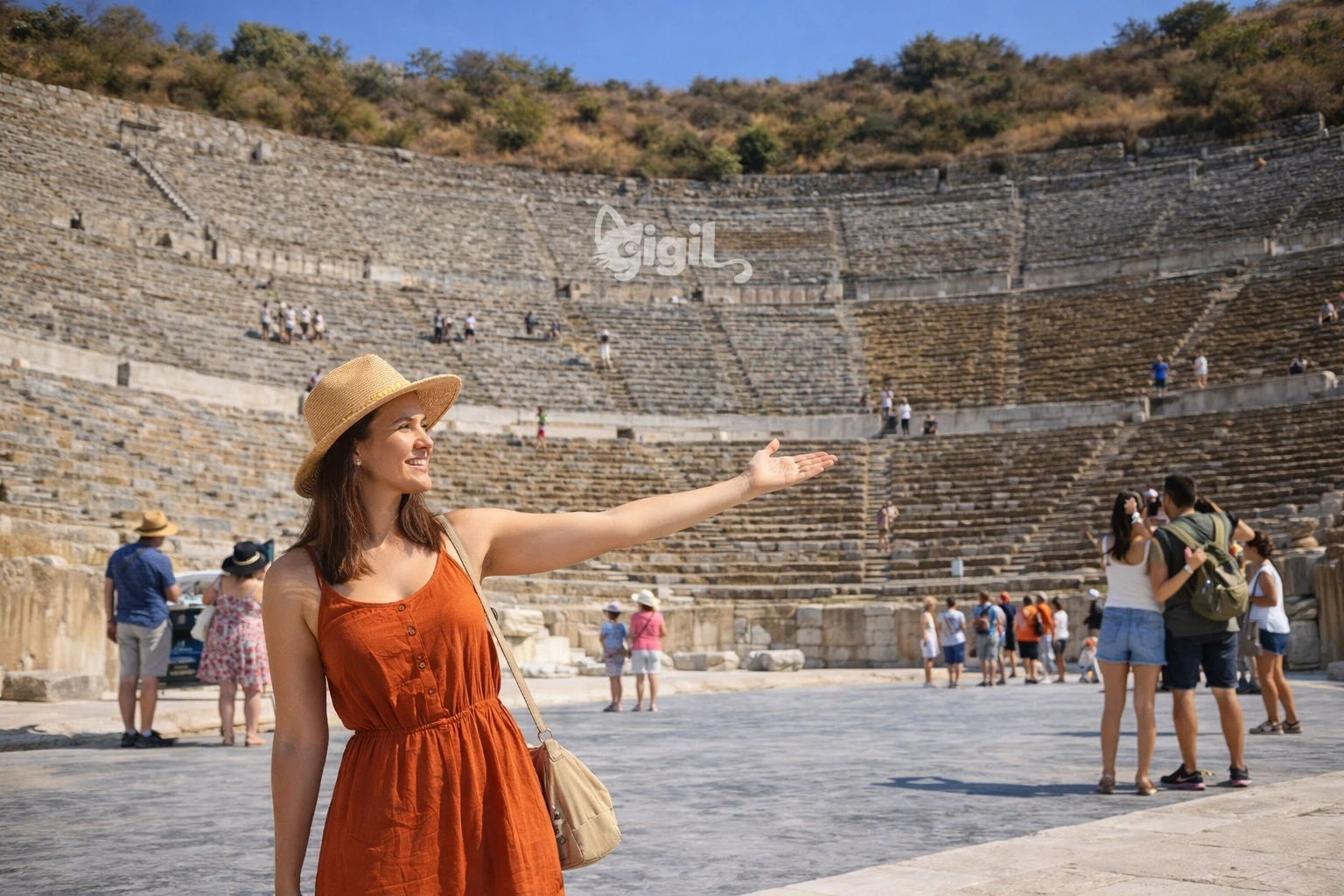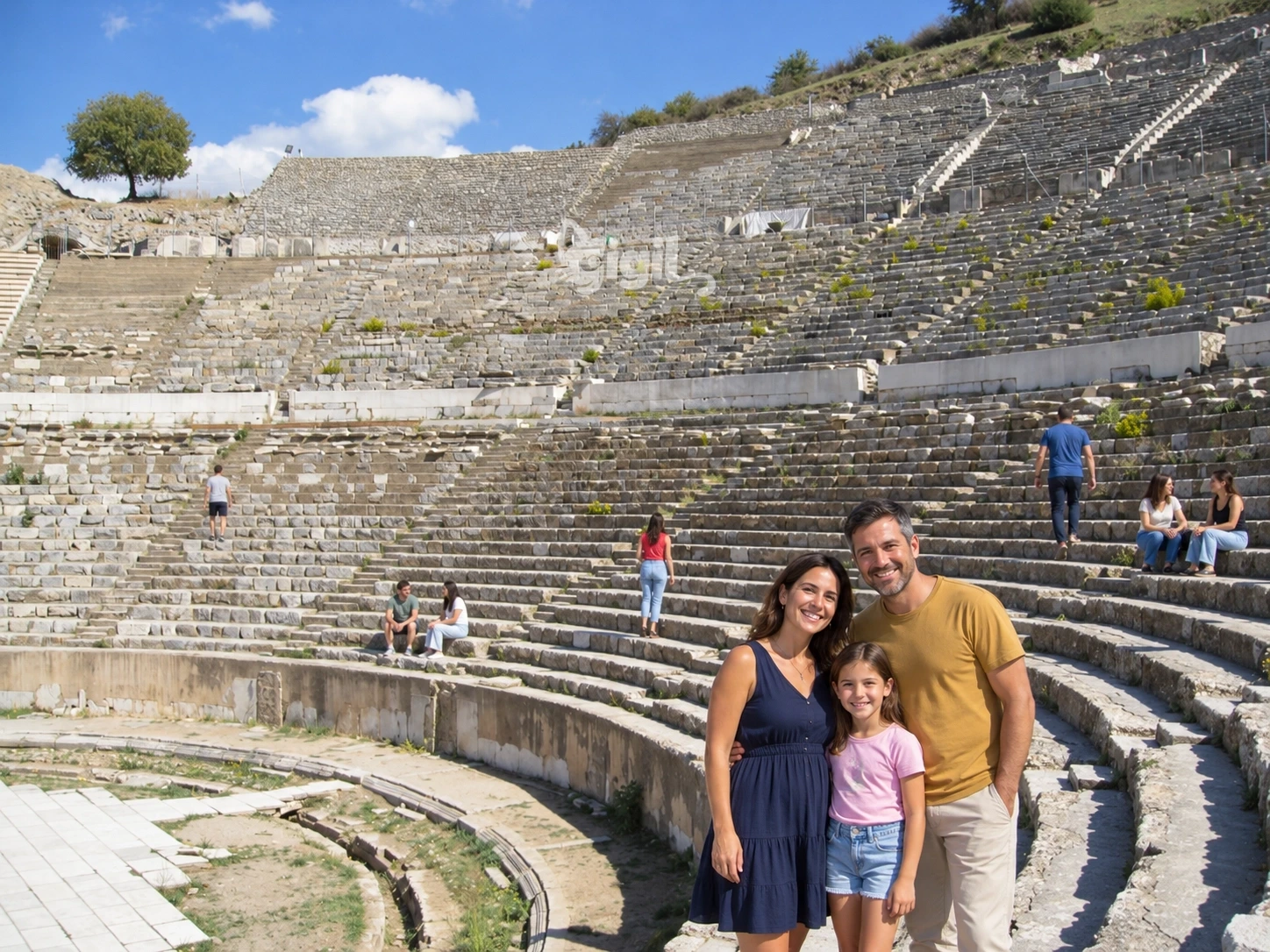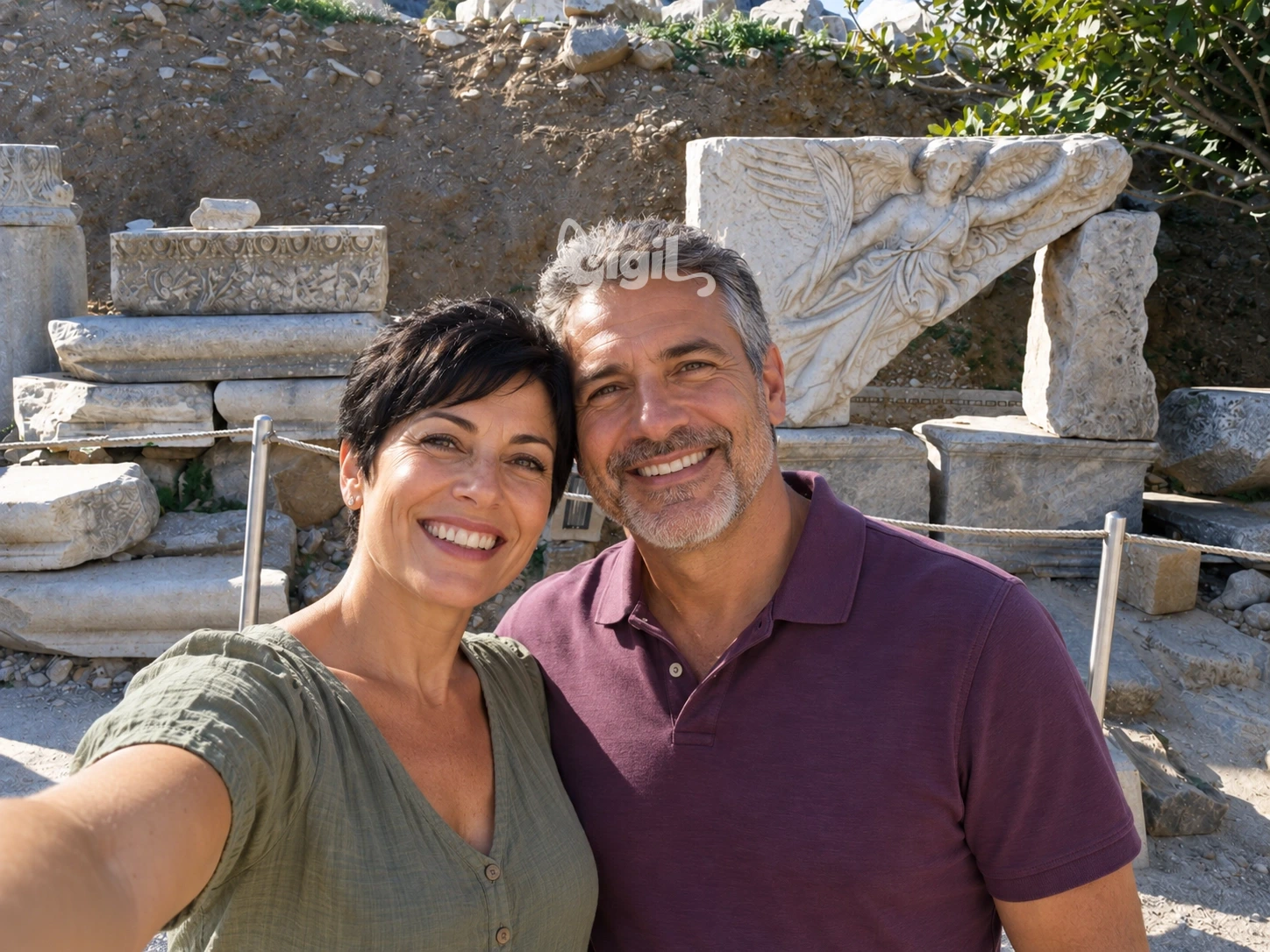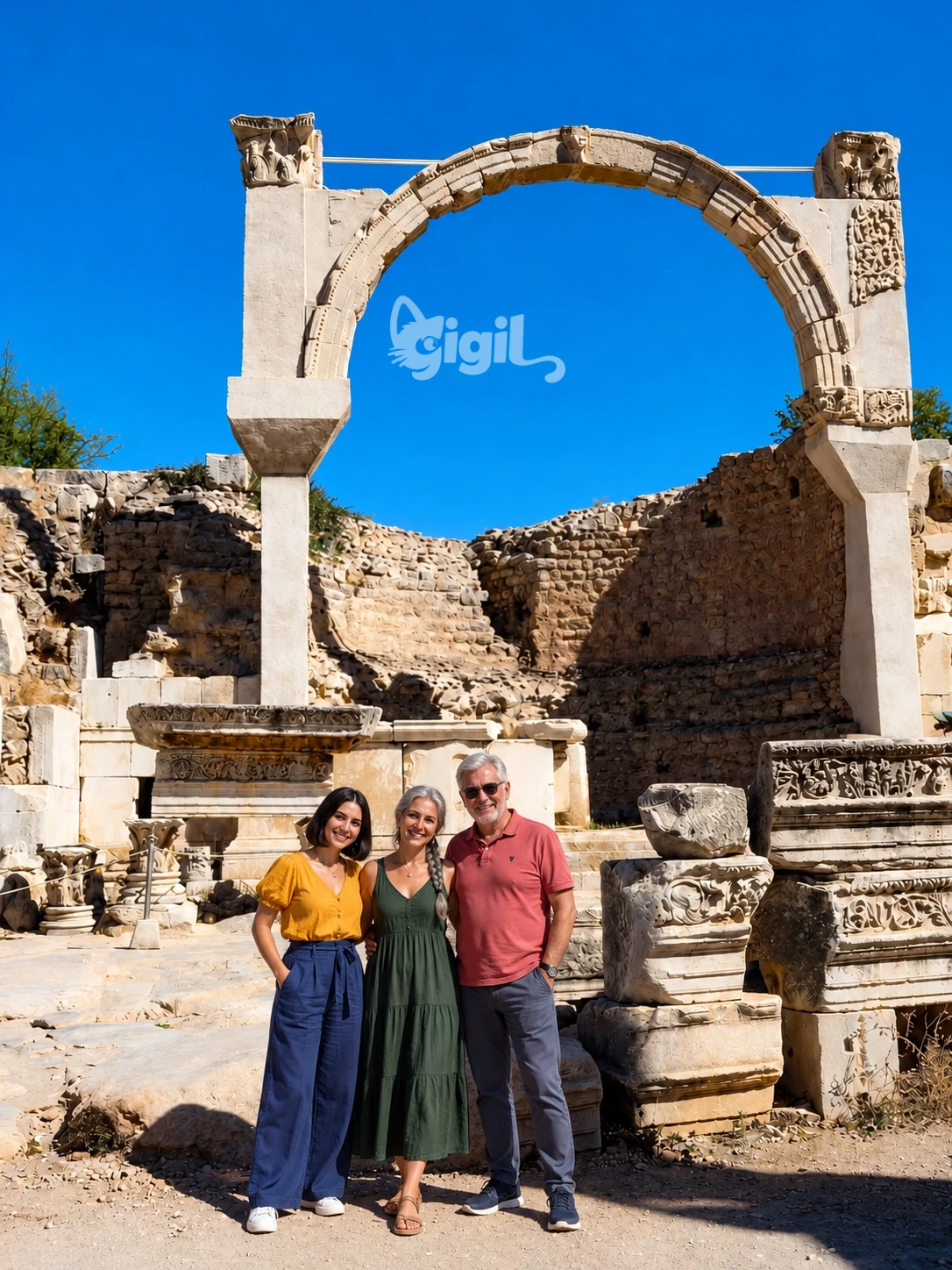








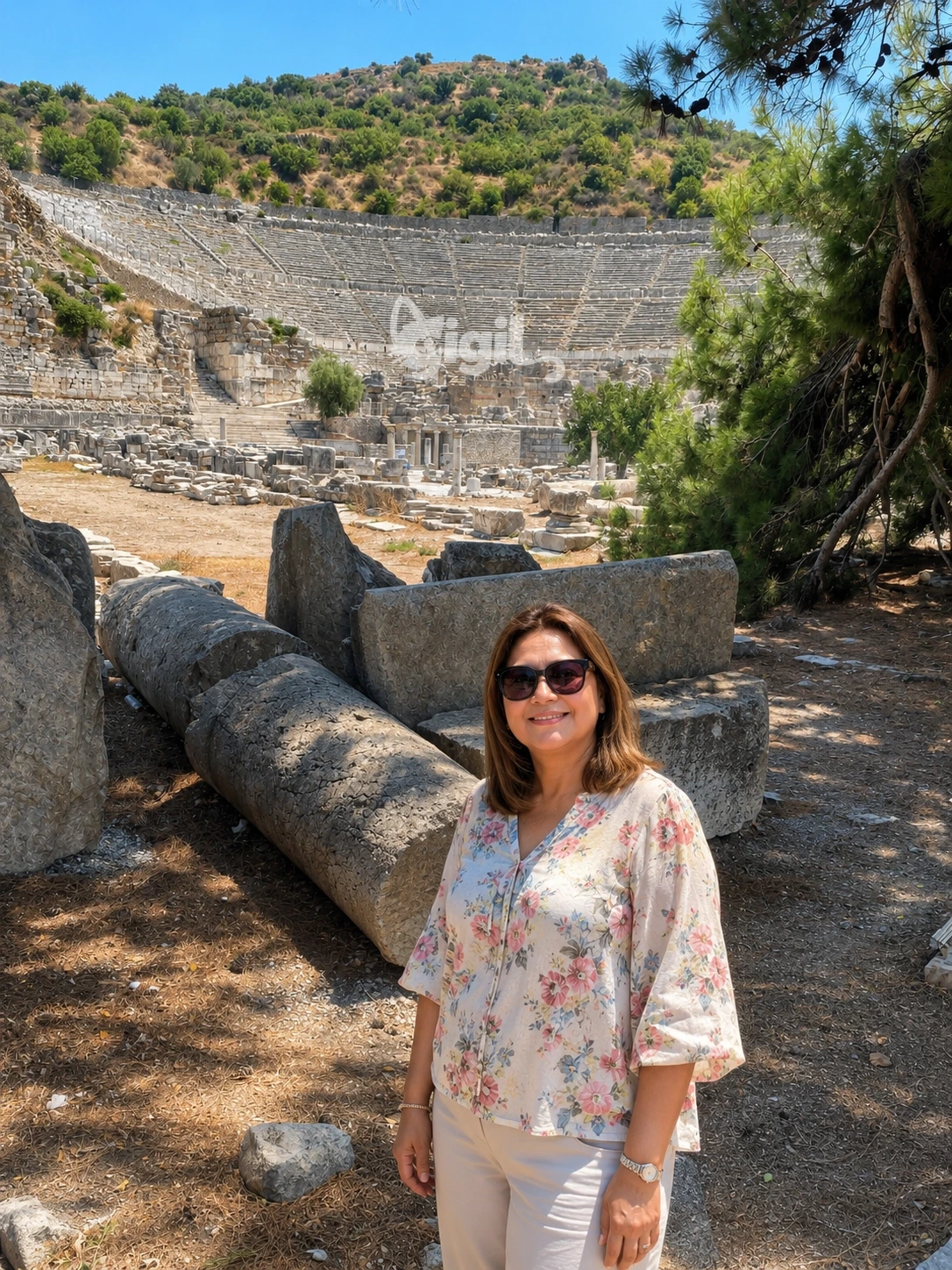
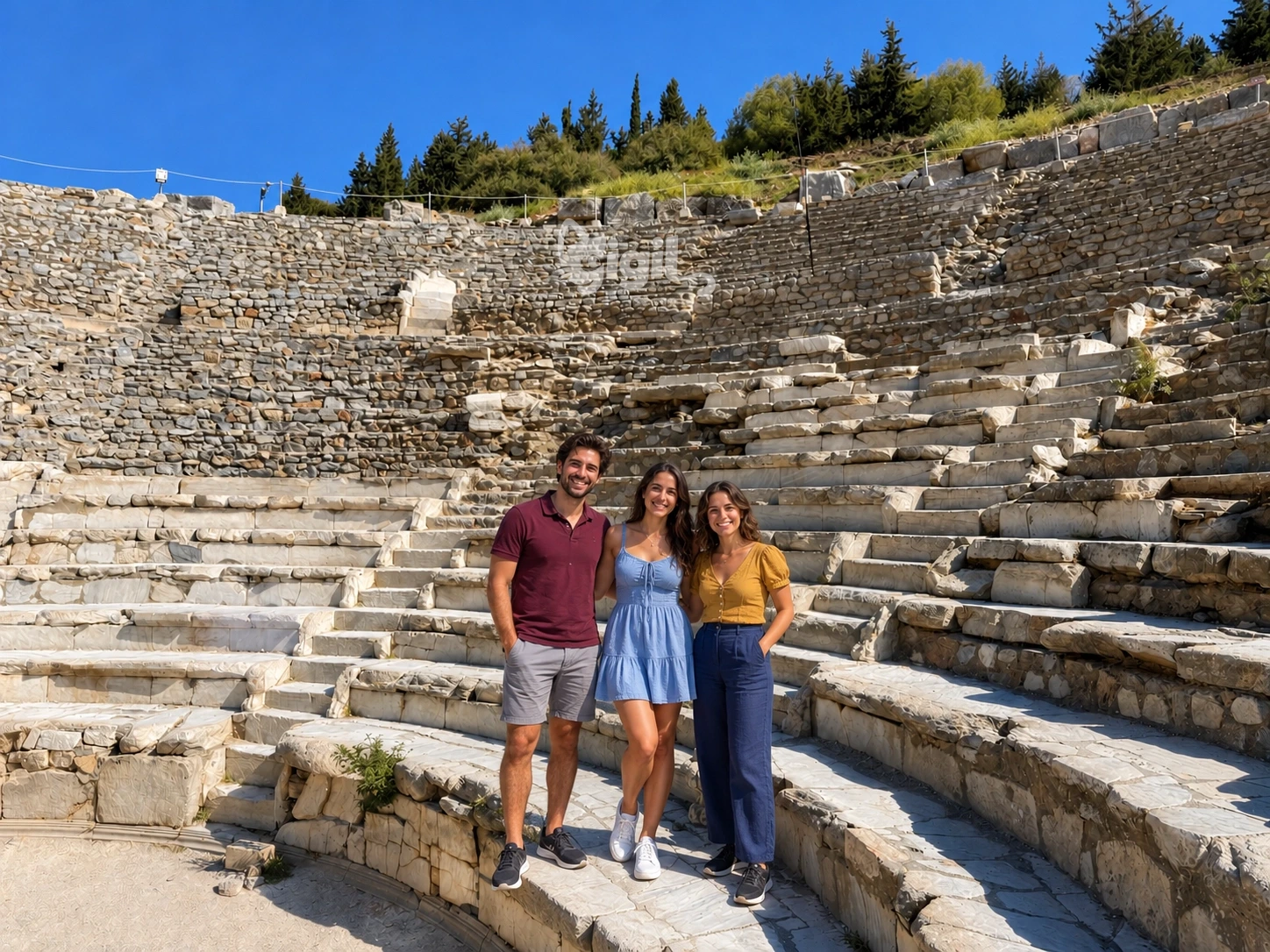
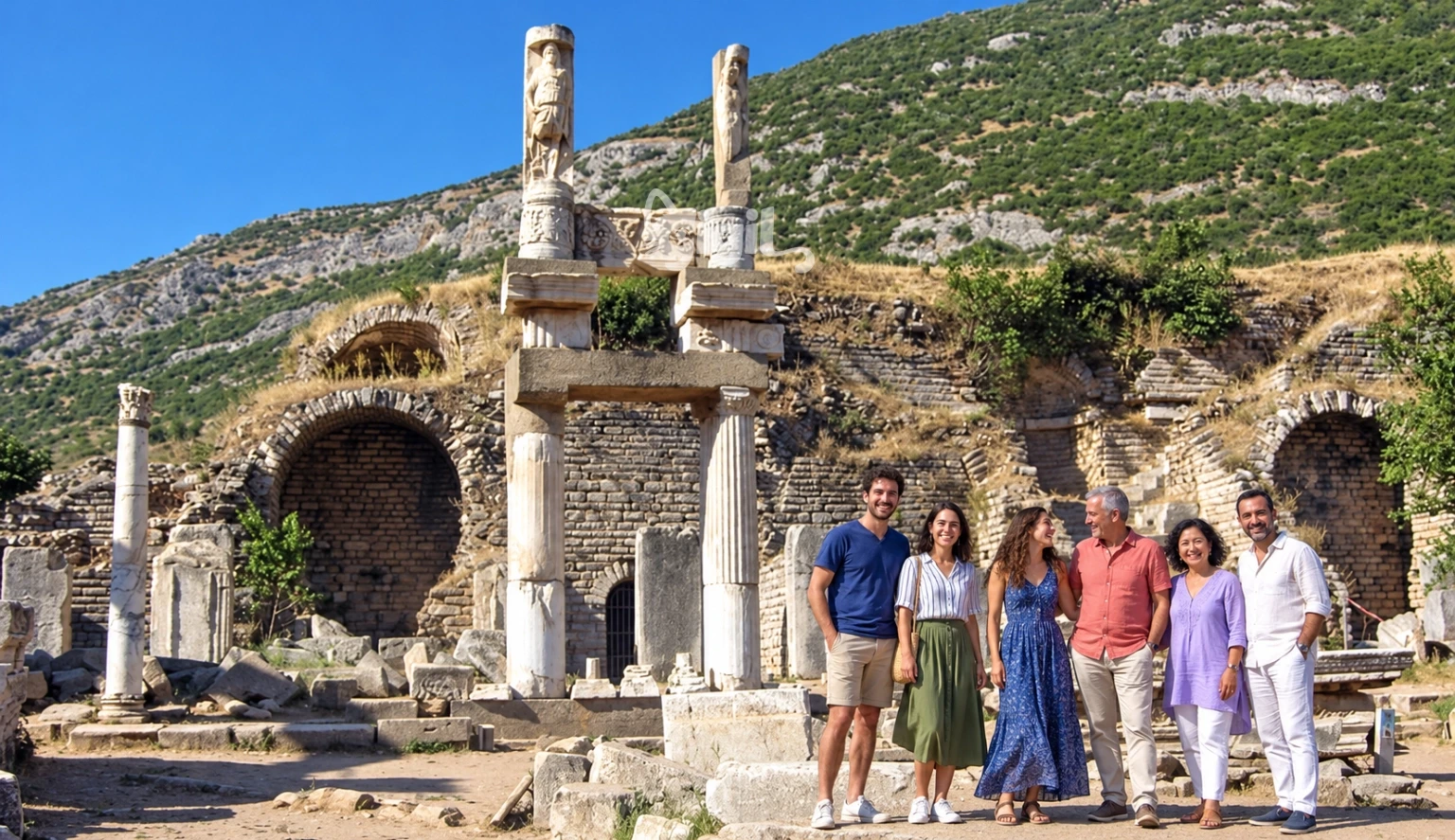
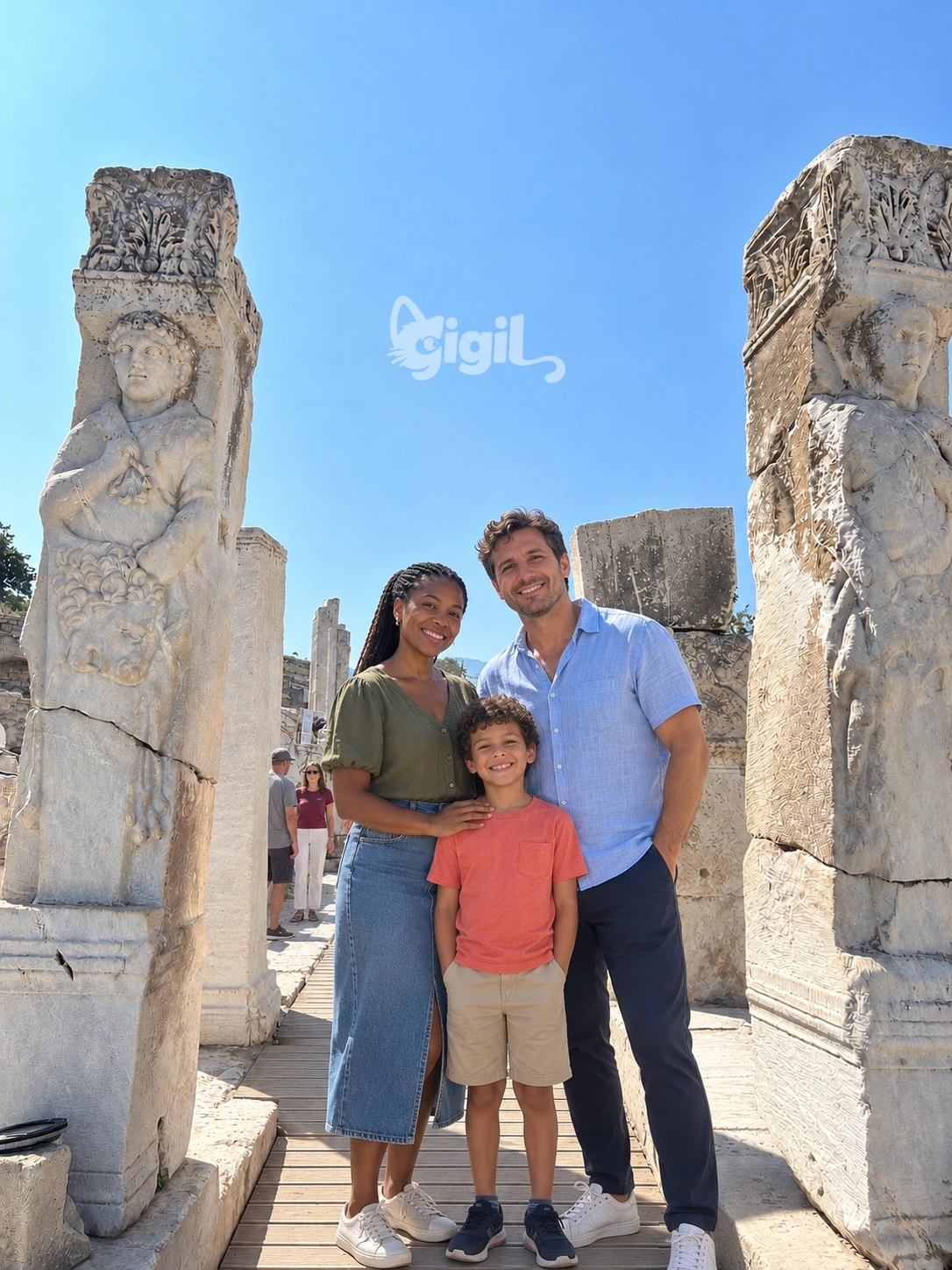
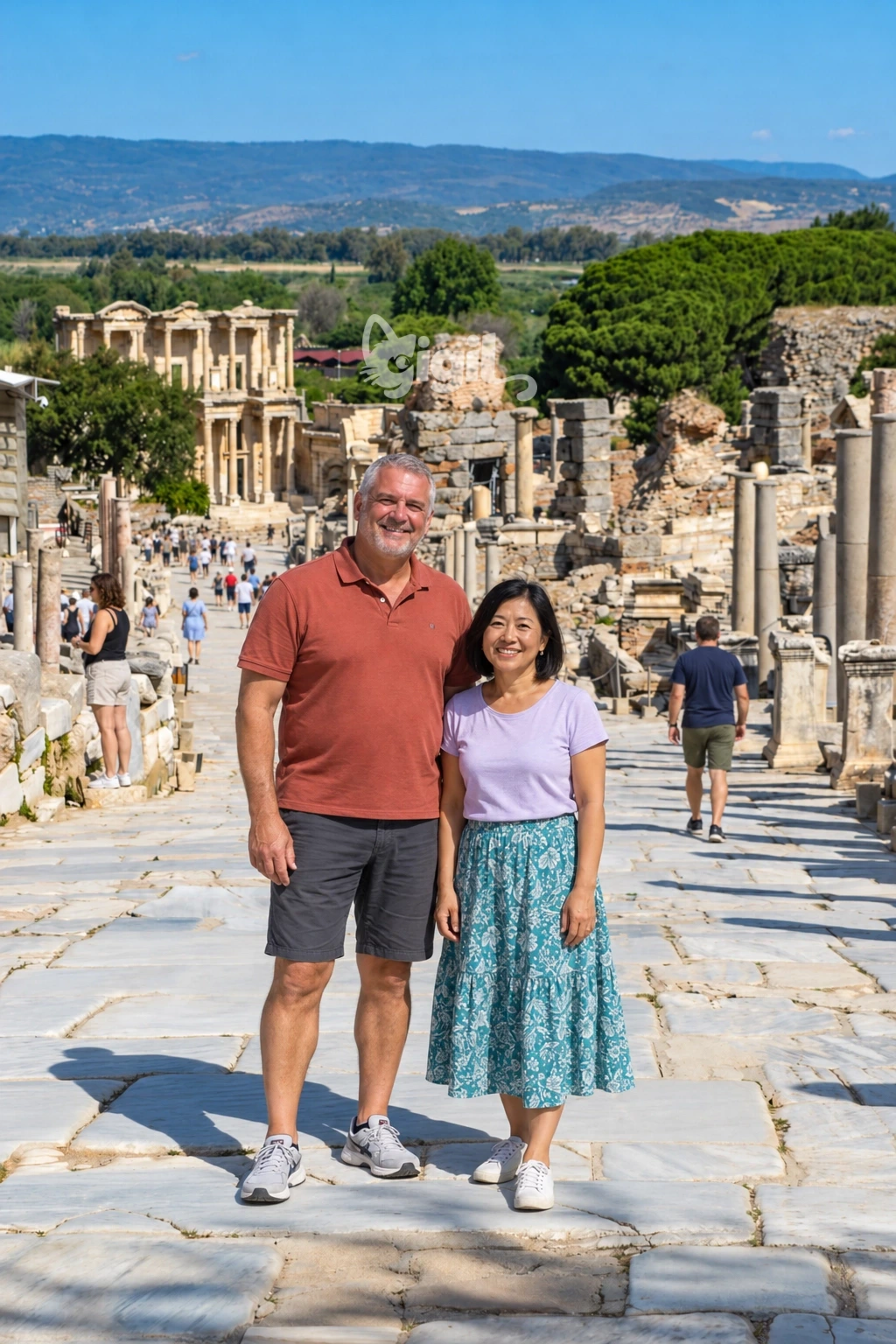
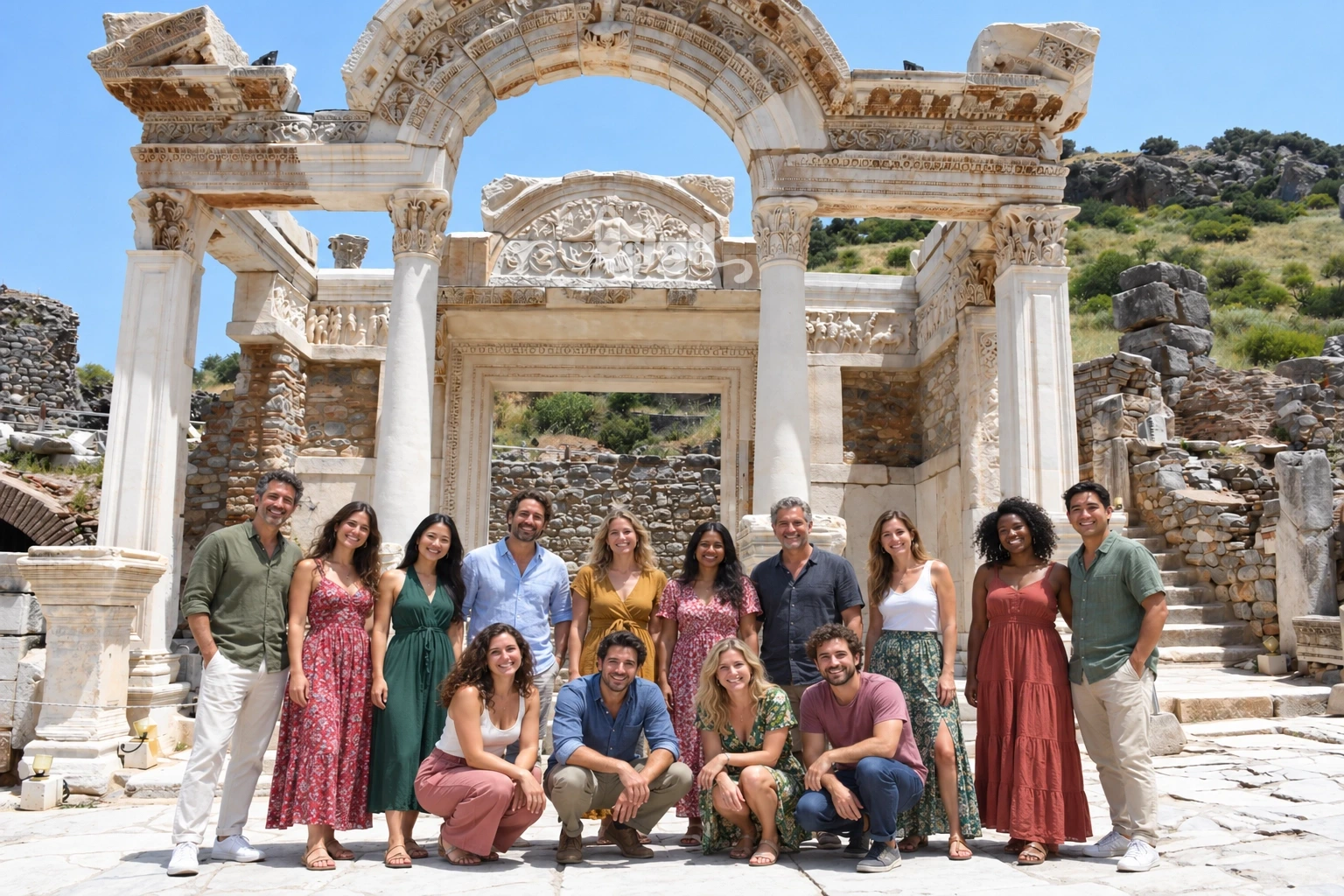
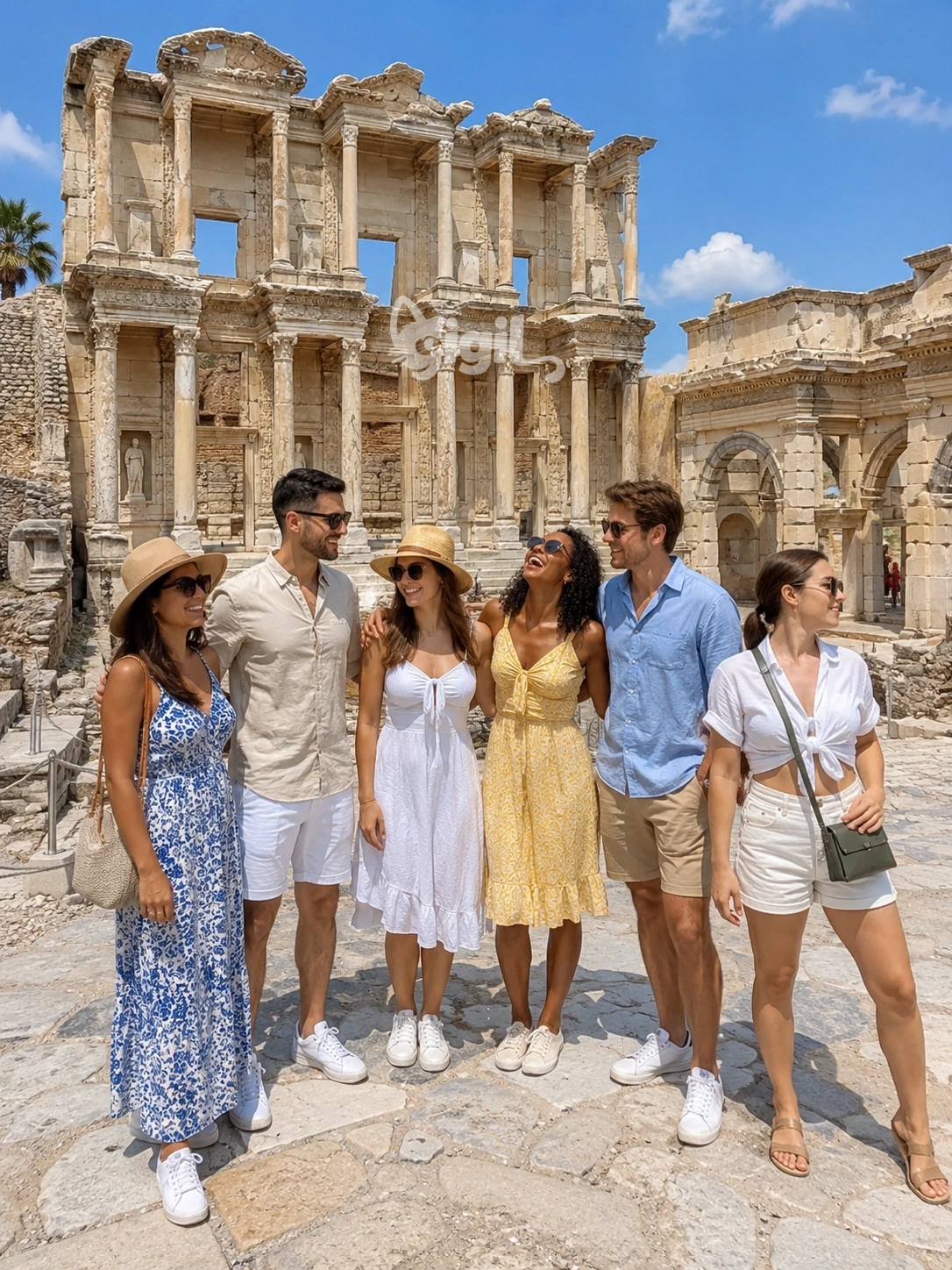
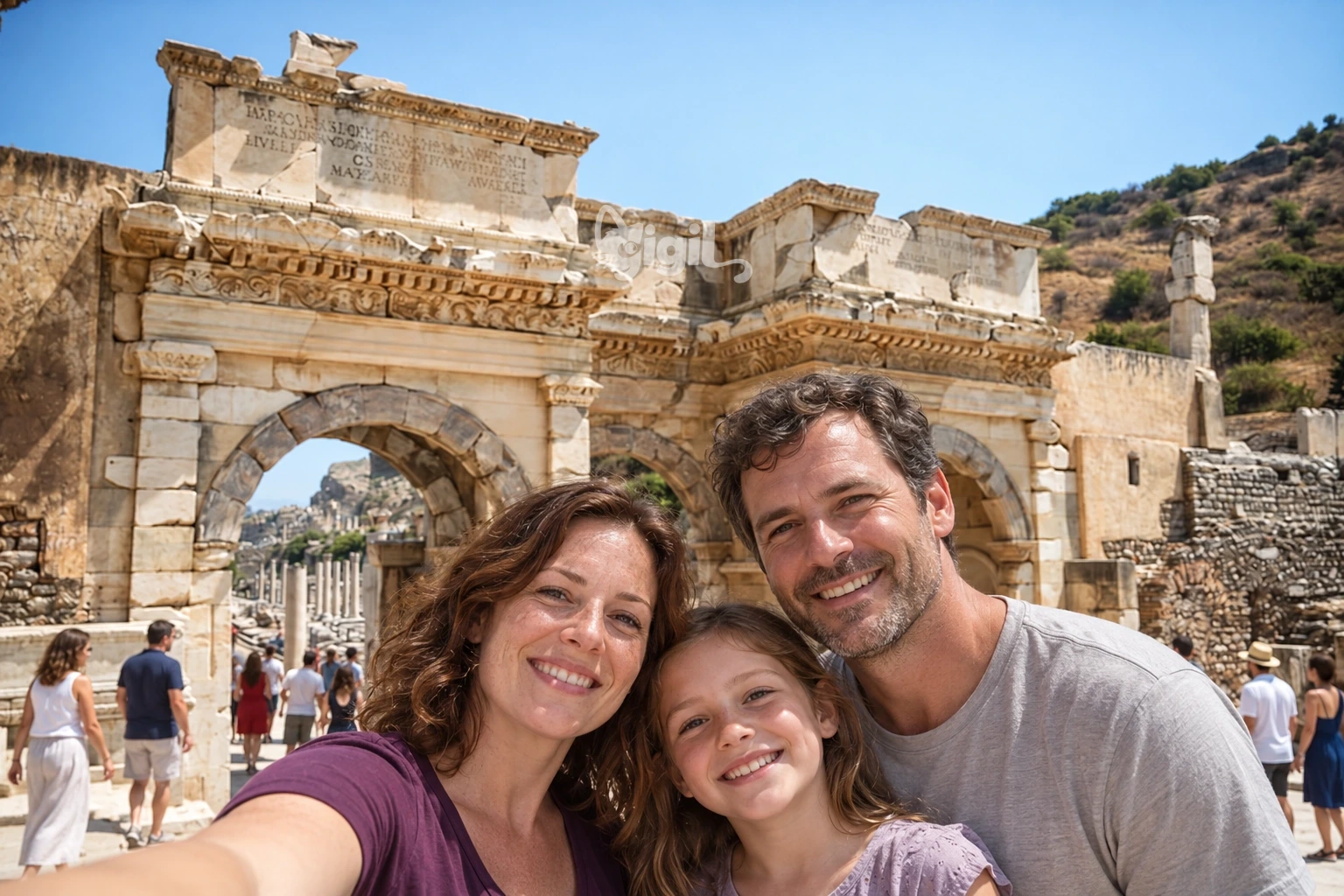
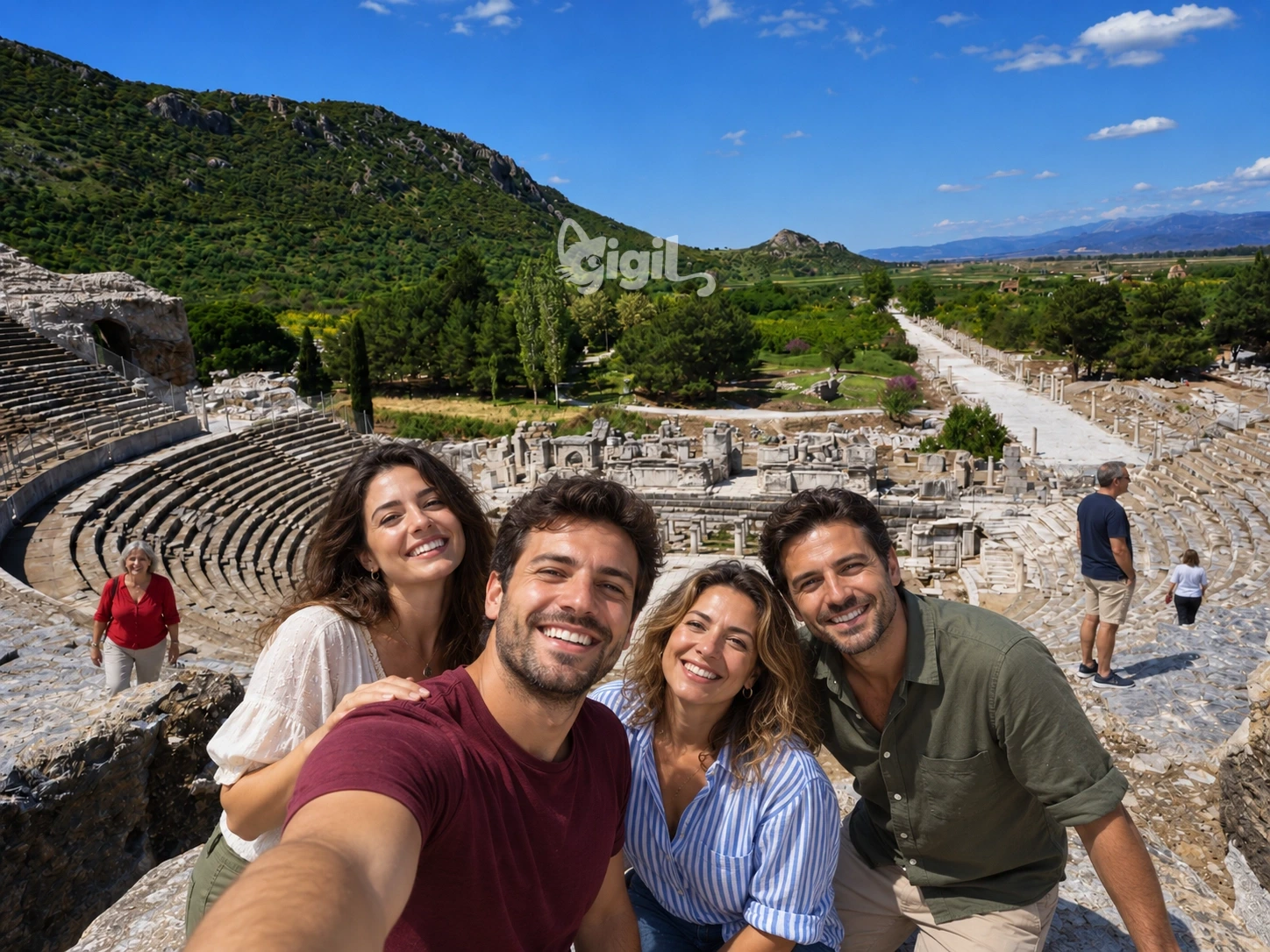
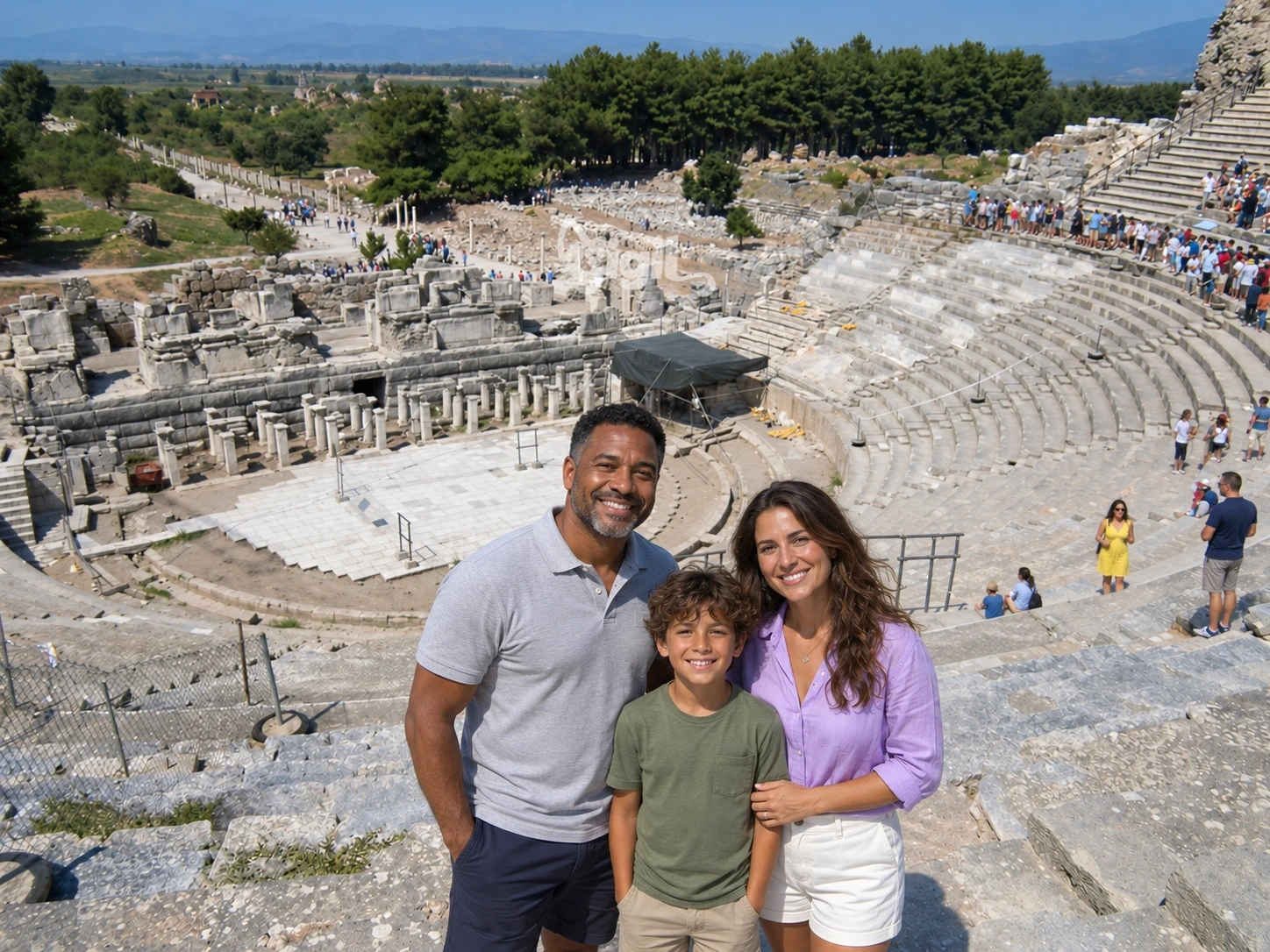
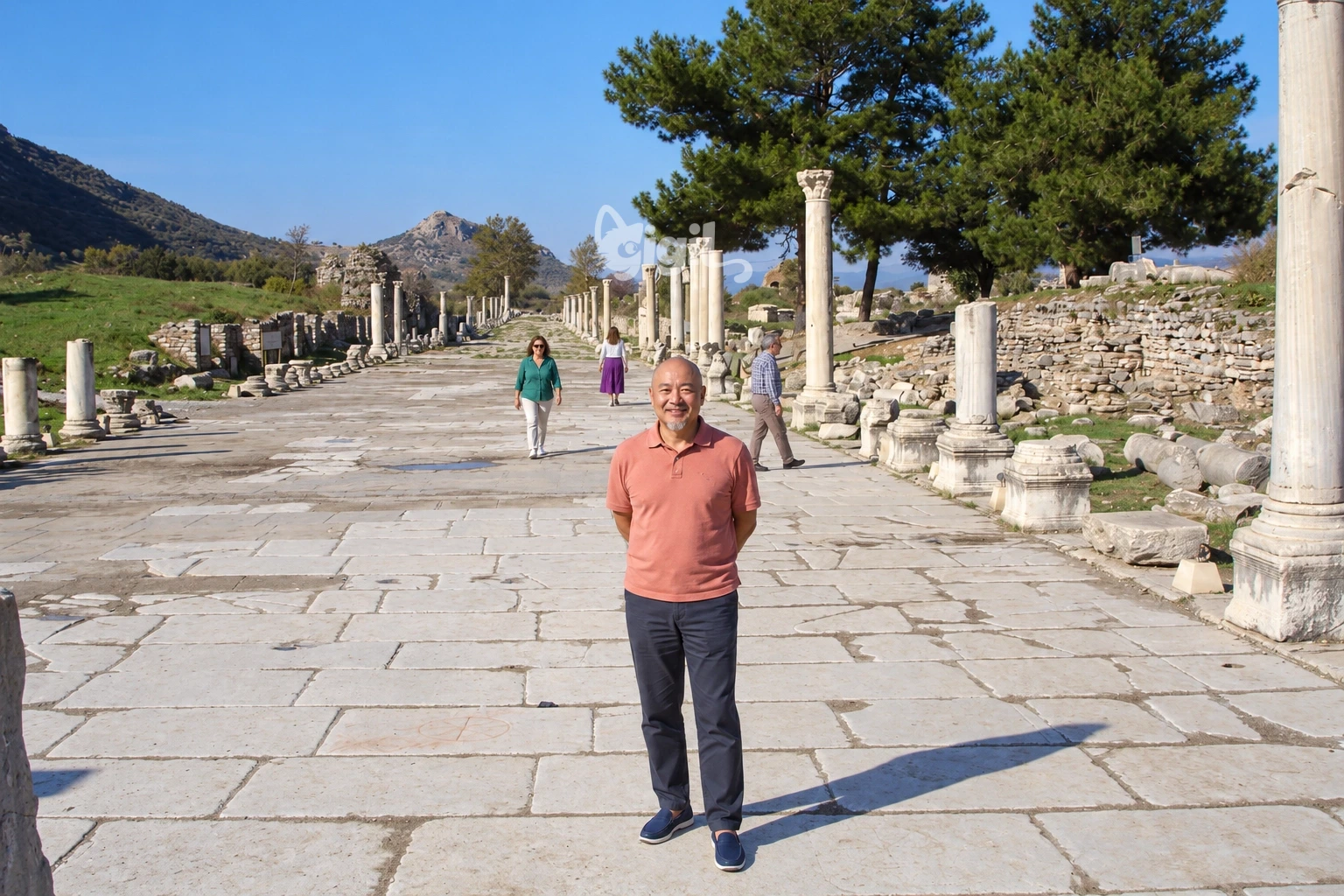
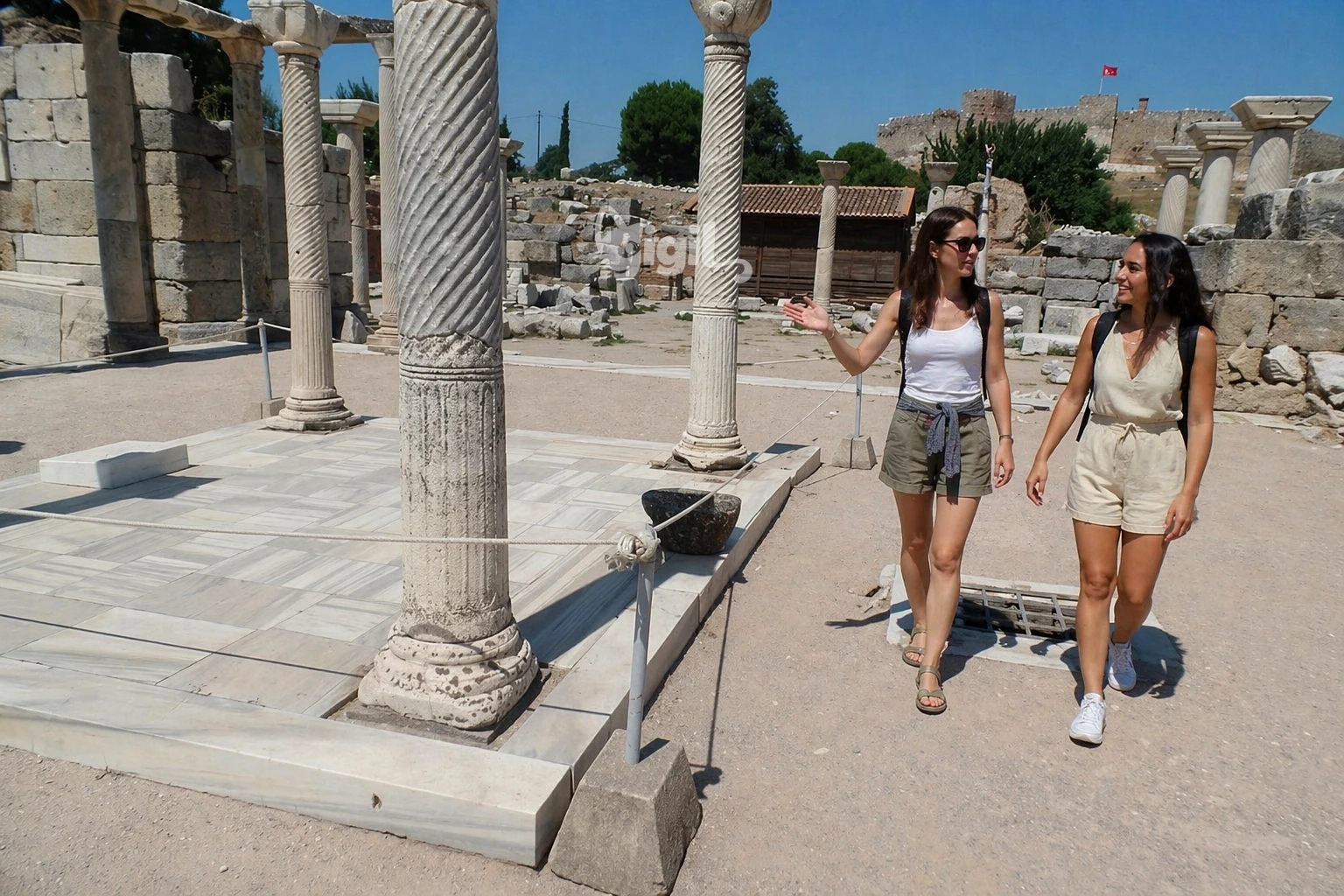
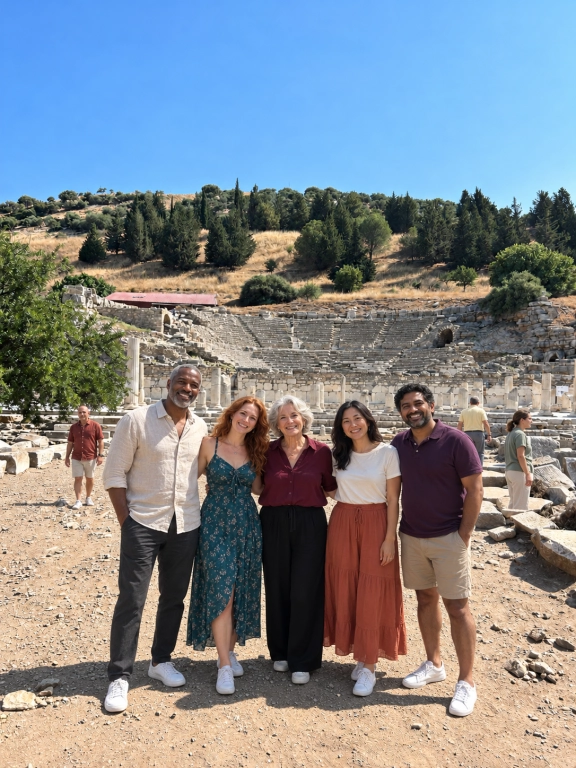
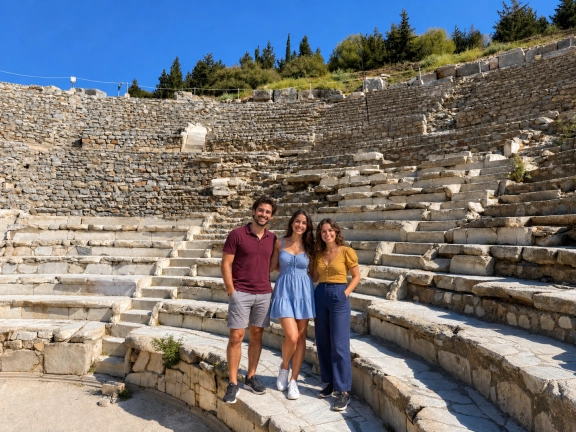
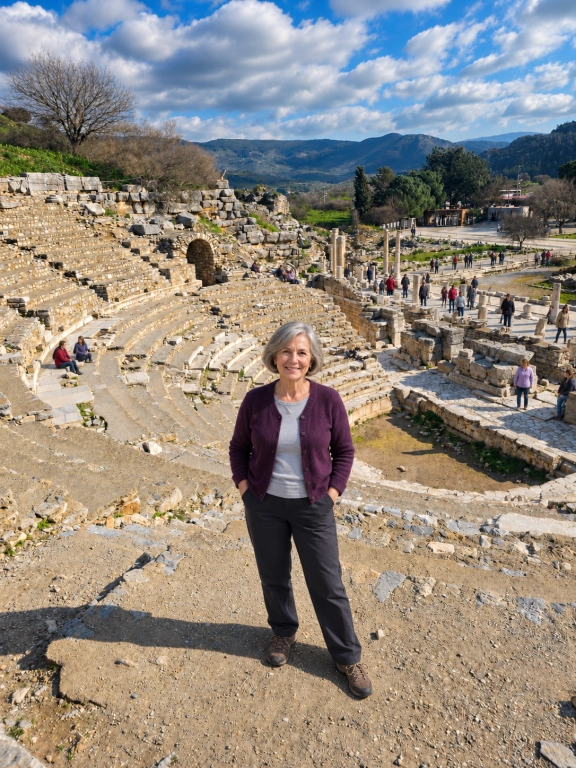
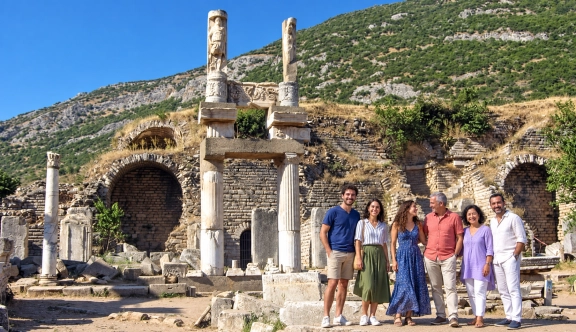
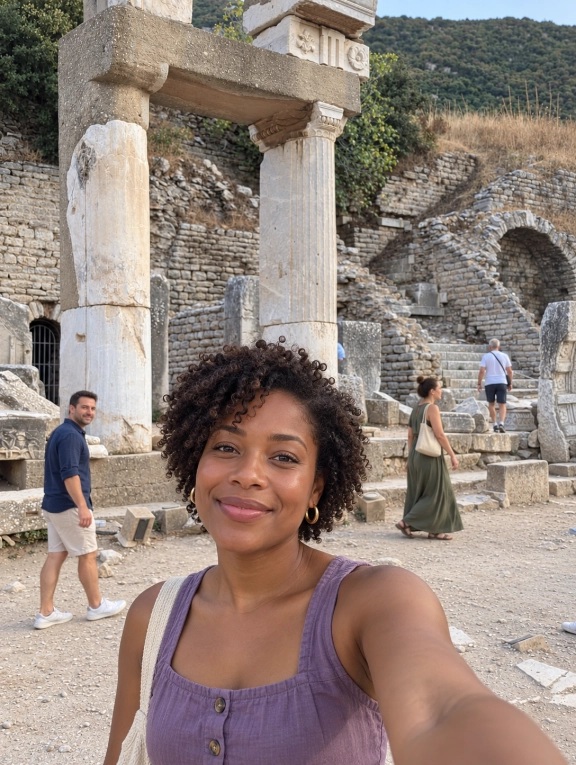
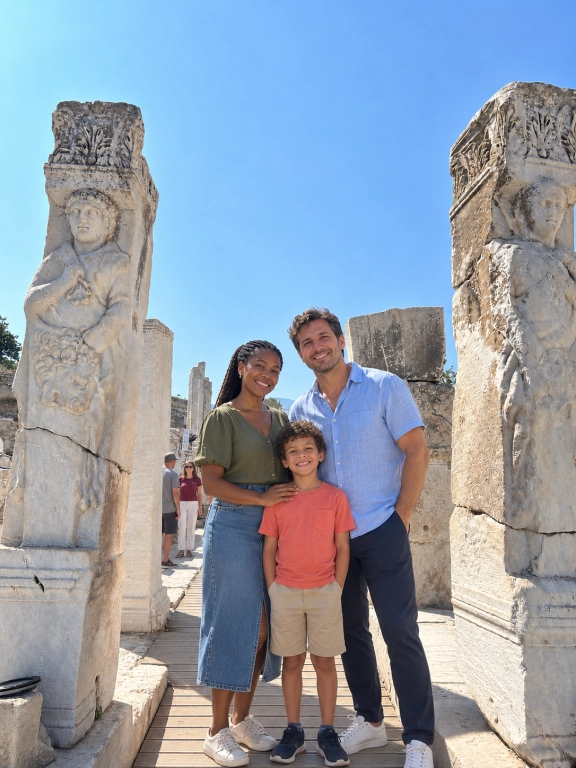
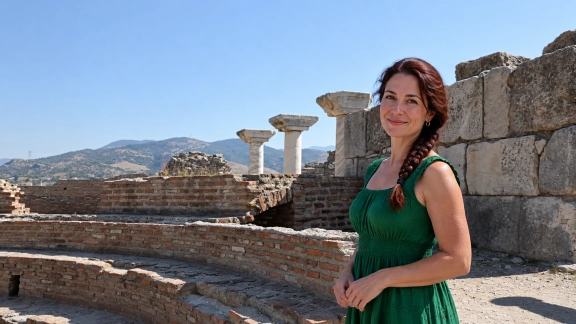
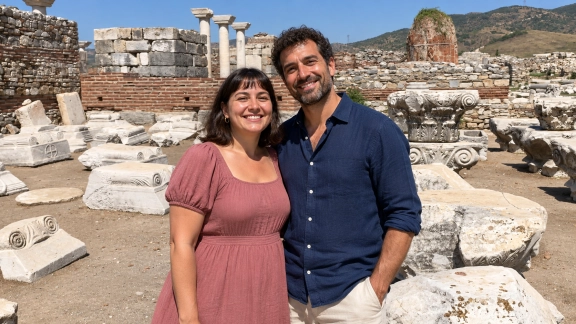
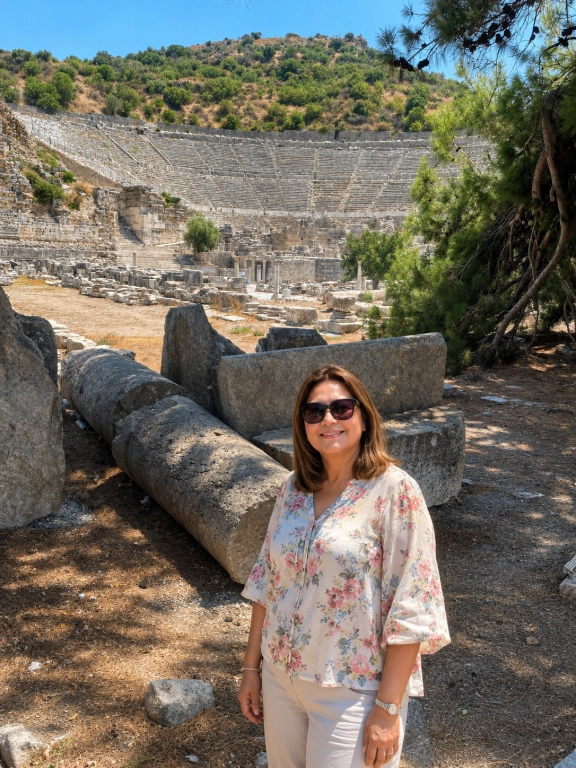

Ephesus reveals the organisation of a city through the relationship between buildings and streets. Place the Library of Celsus and Great Theatre within that larger pattern, noticing where routes open into spaces intended for public use.
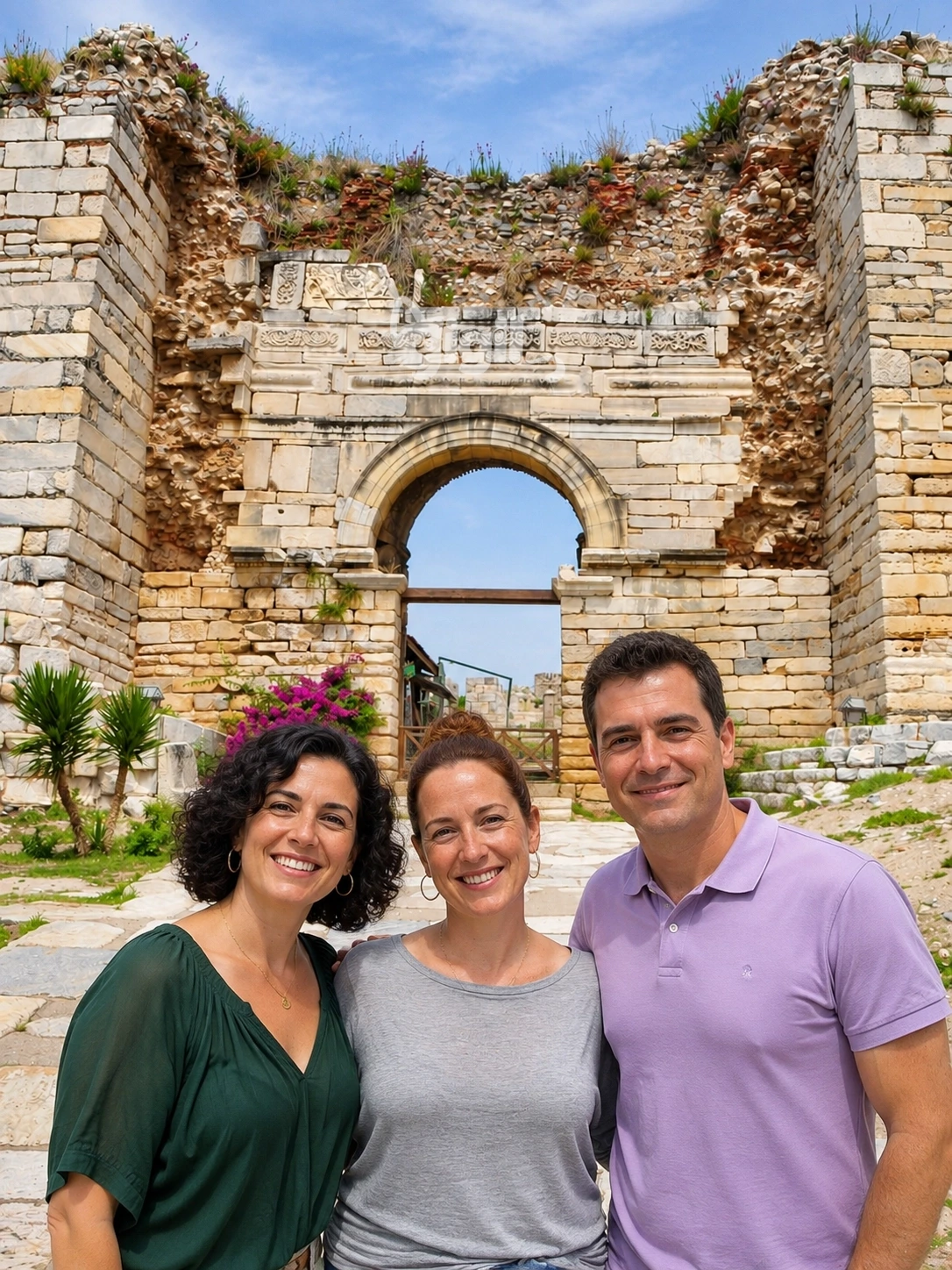
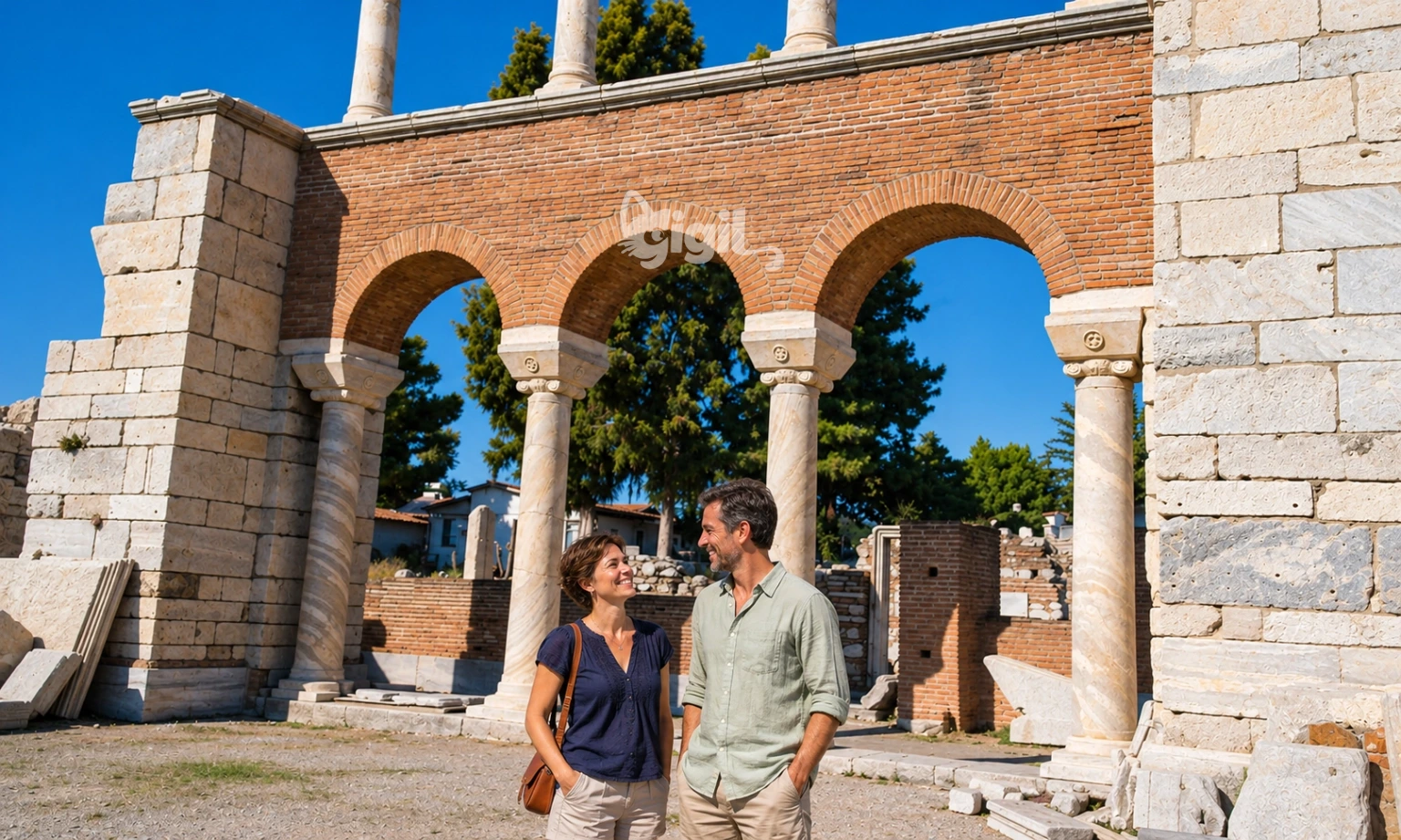
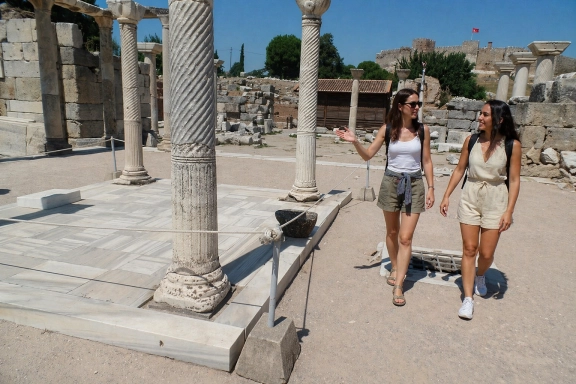
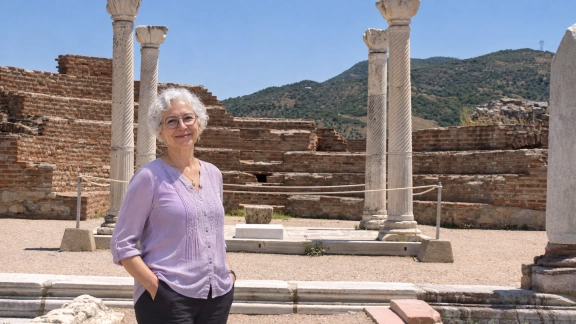
The surviving architecture is uneven, with reconstructed fronts beside much lower remains. This is a reason to compare details carefully: what stands can suggest former scale, but it cannot supply every missing part of the ancient urban environment.
Questions
Why notice where streets widen?
A change from a route into an open space can help you understand the organisation of public activity.
What does the Library of Celsus add to the visit?
Its reconstructed front provides a strong example of monumental architecture within the ancient city's public setting.
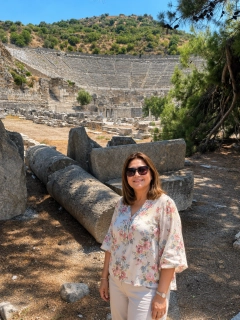
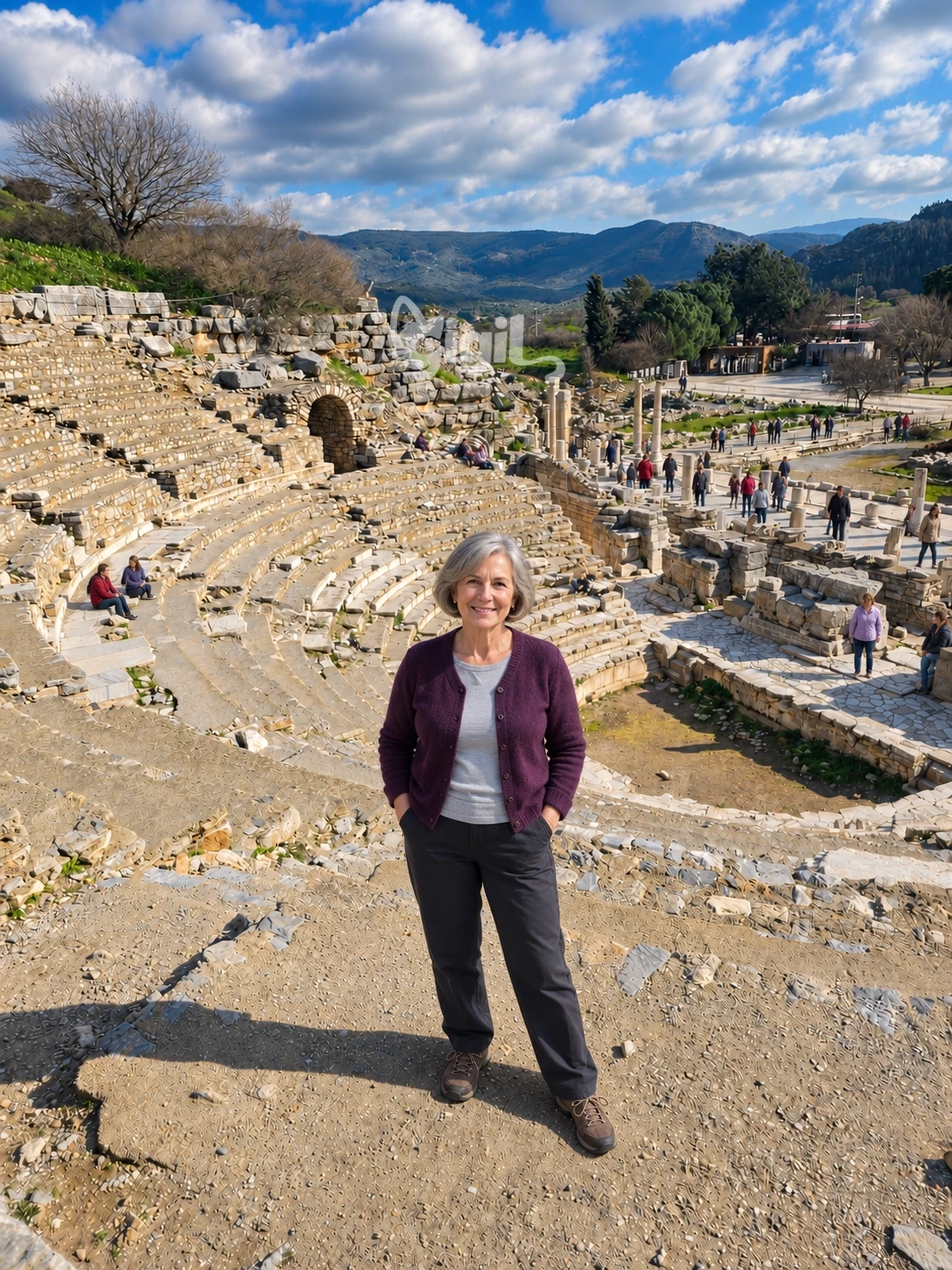
What can the Great Theatre show without exact capacity figures?
The extent of its audience space conveys the importance and scale of collective gathering.
Why should I avoid imagining all ruins as fully preserved?
The visible site reflects loss, excavation and conservation, leaving gaps that require interpretation rather than certainty.