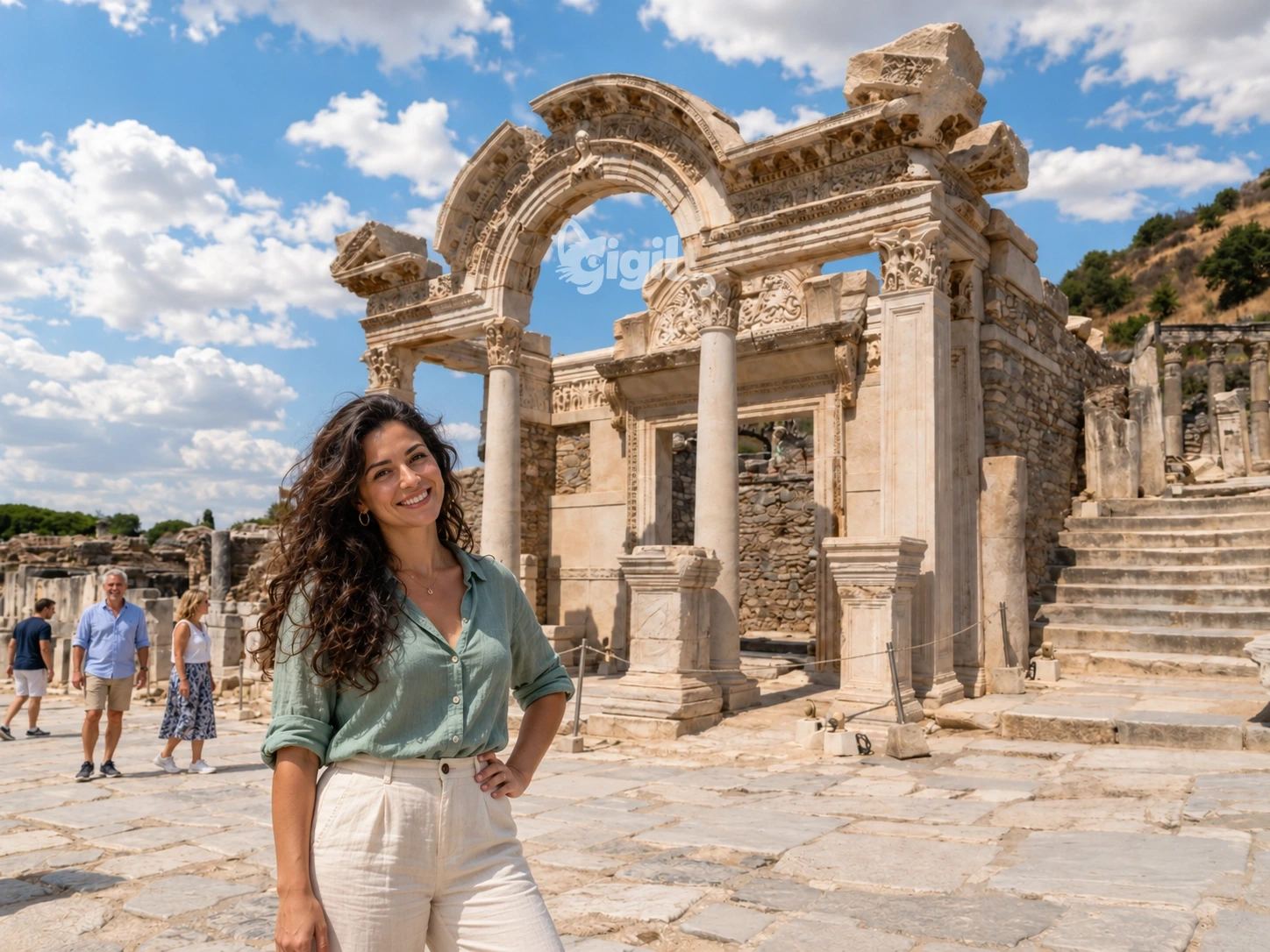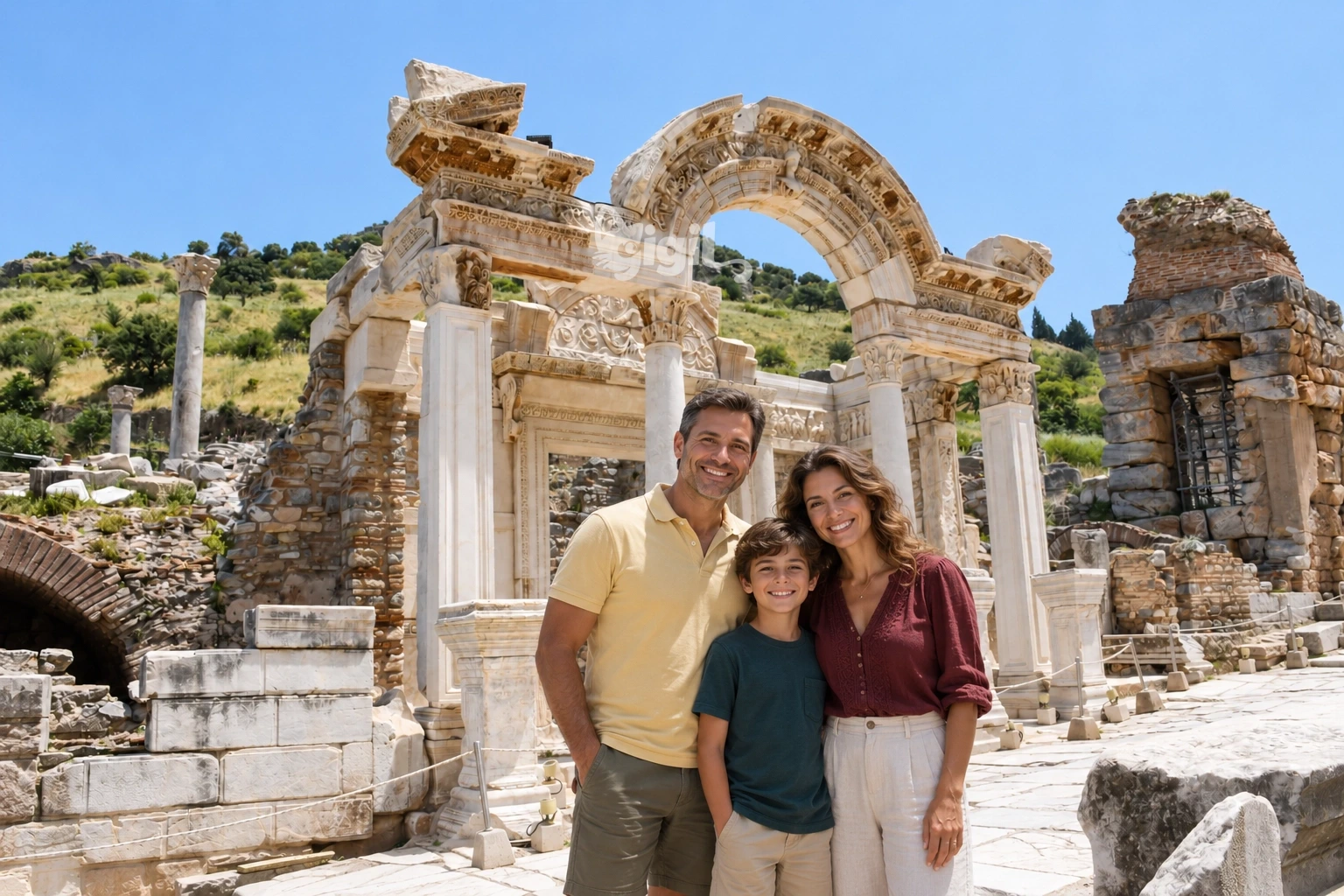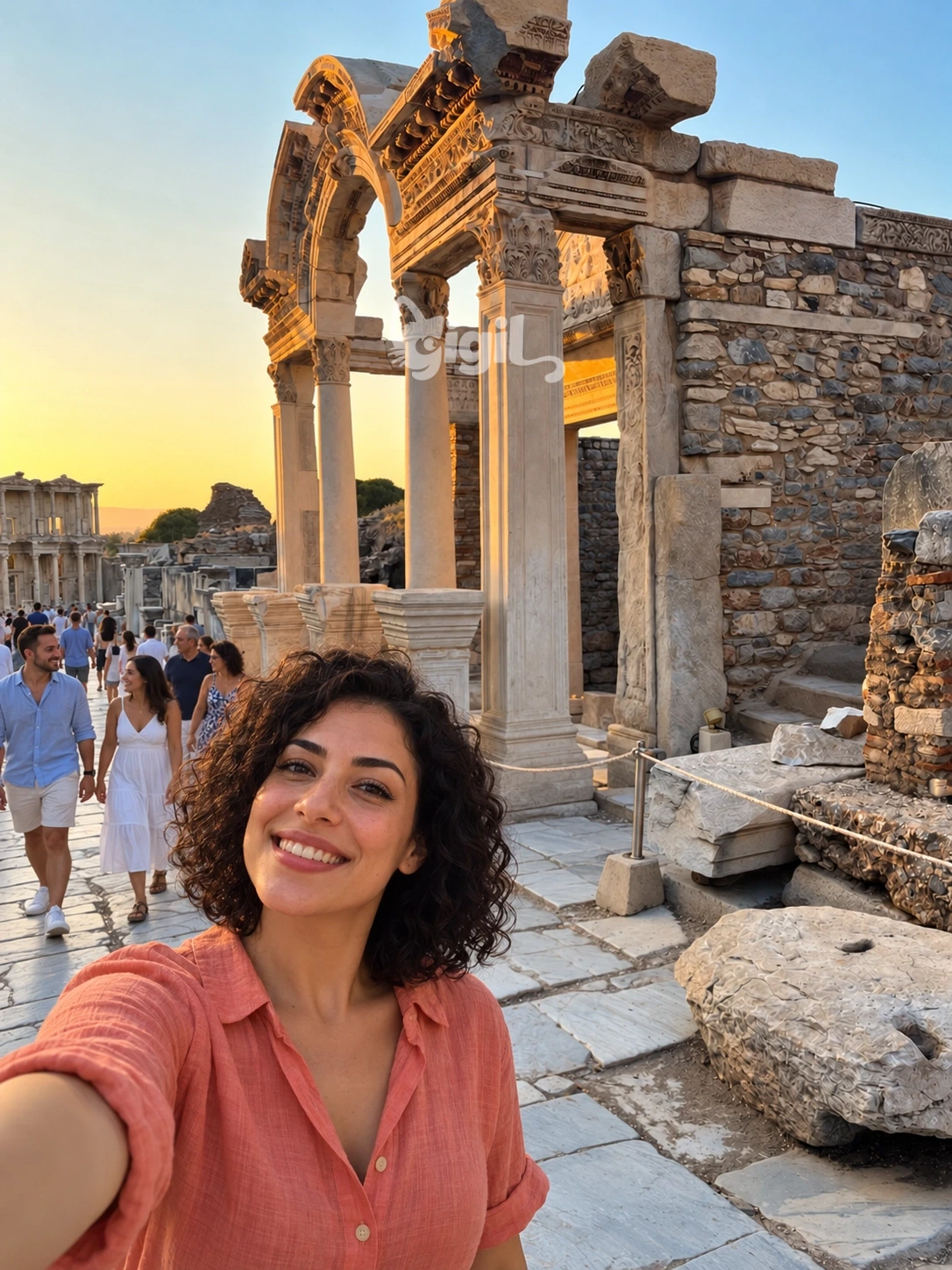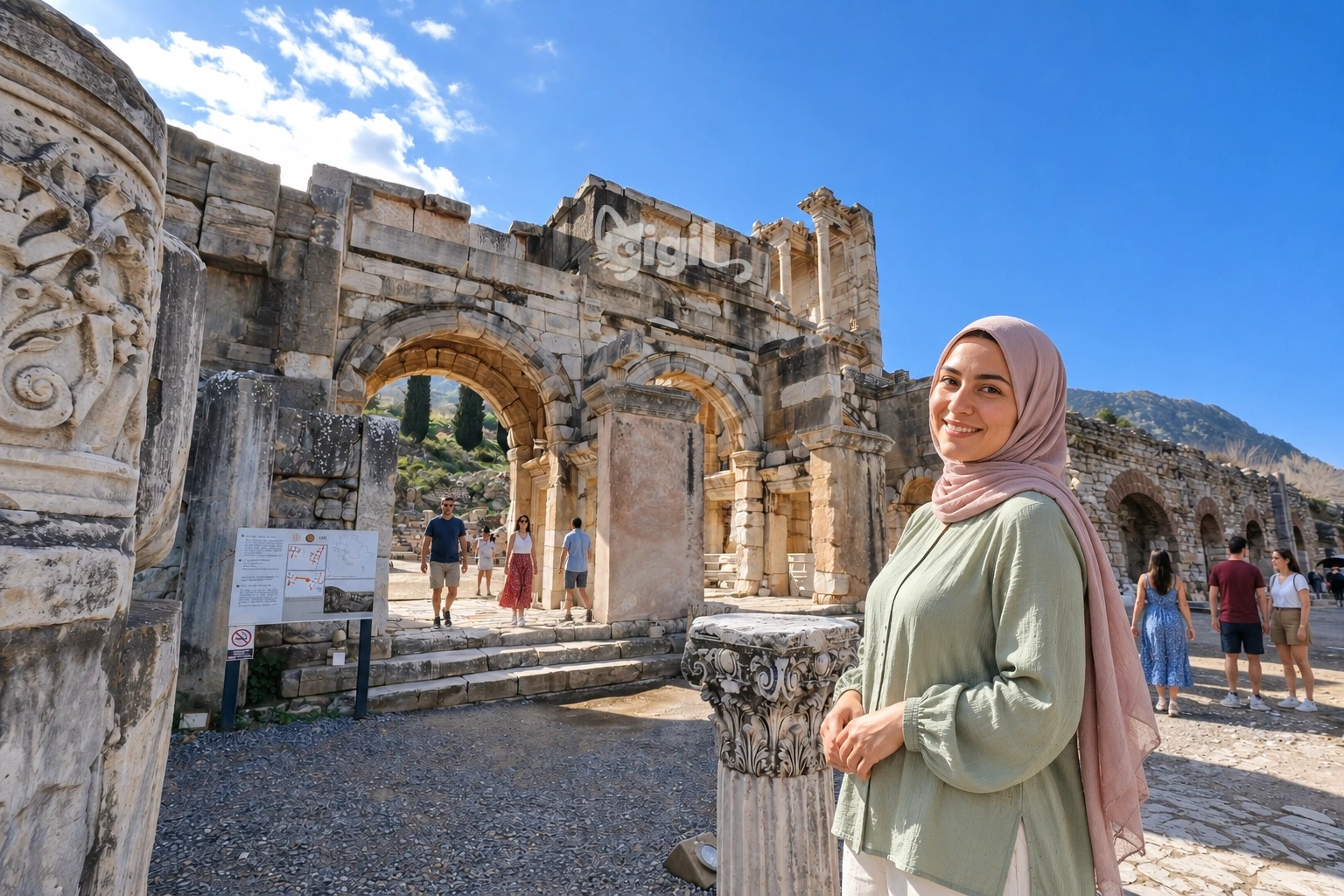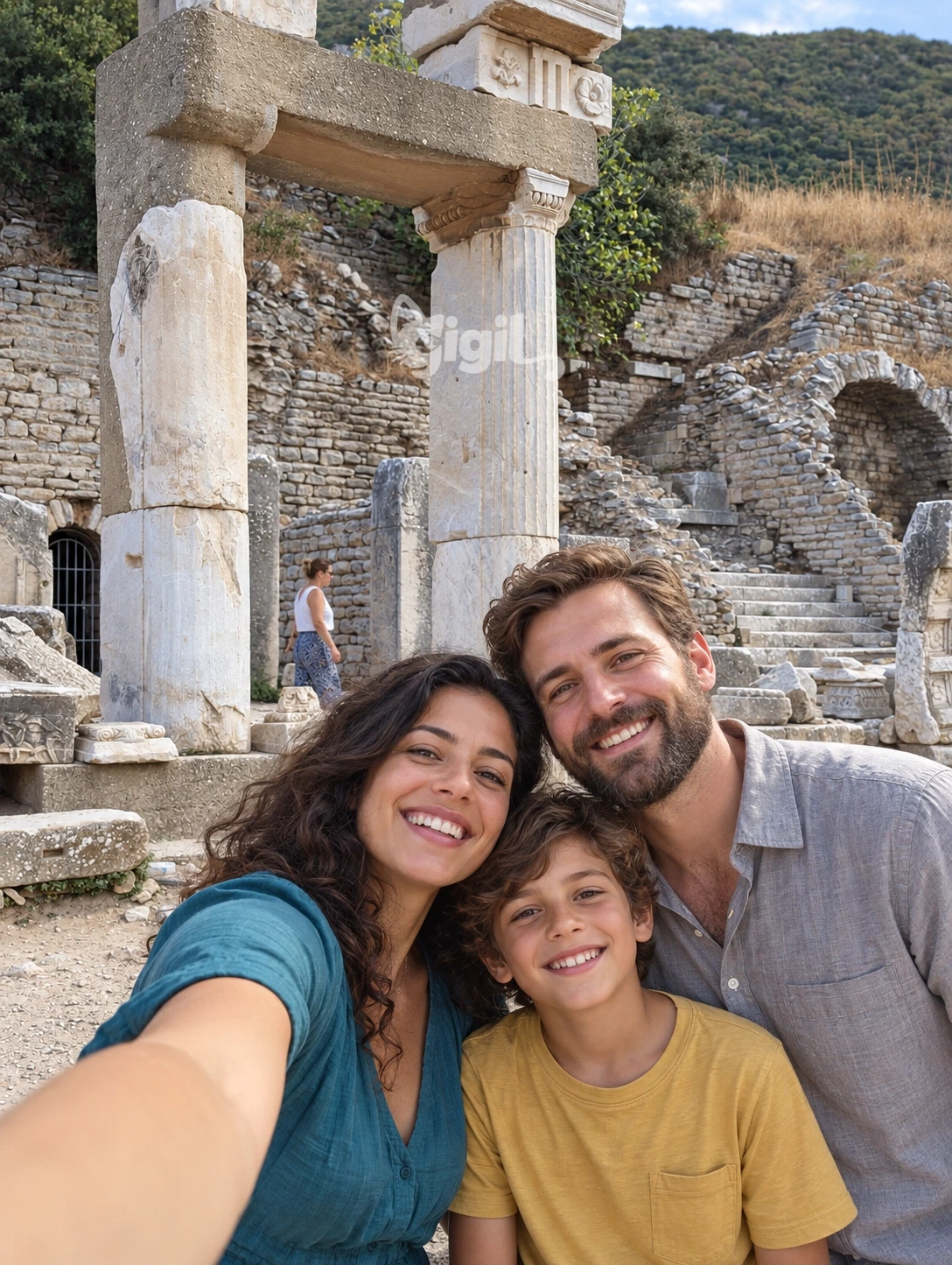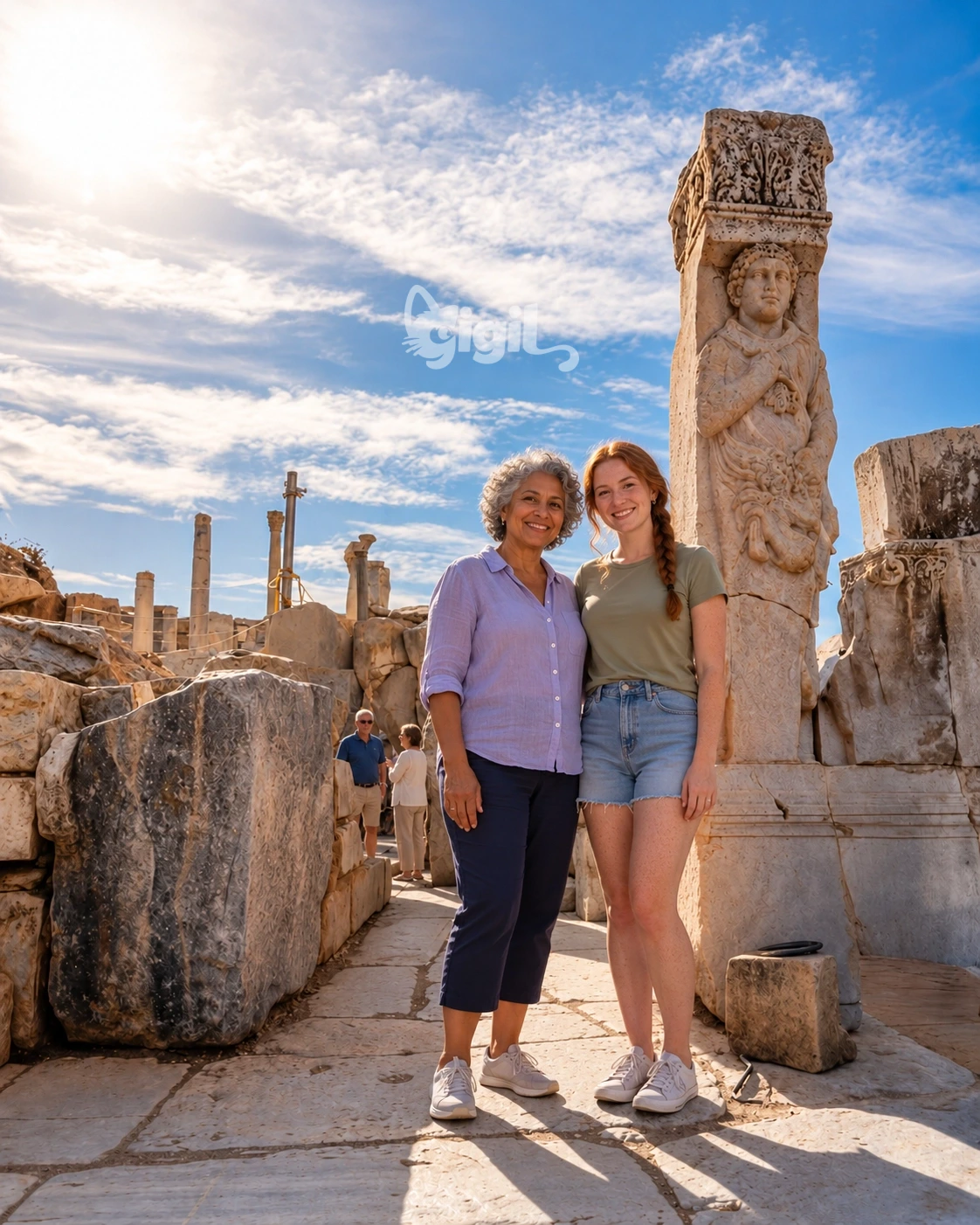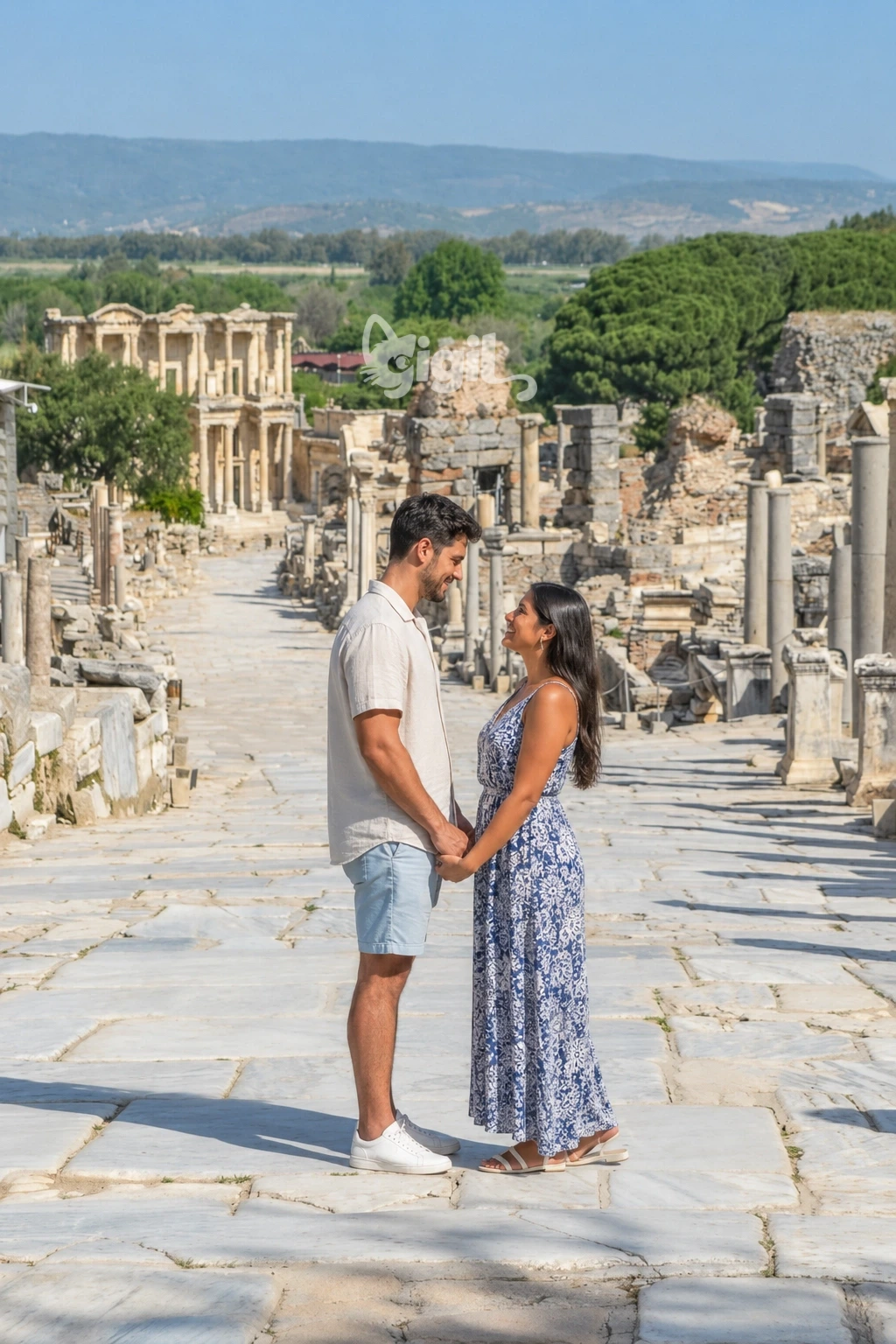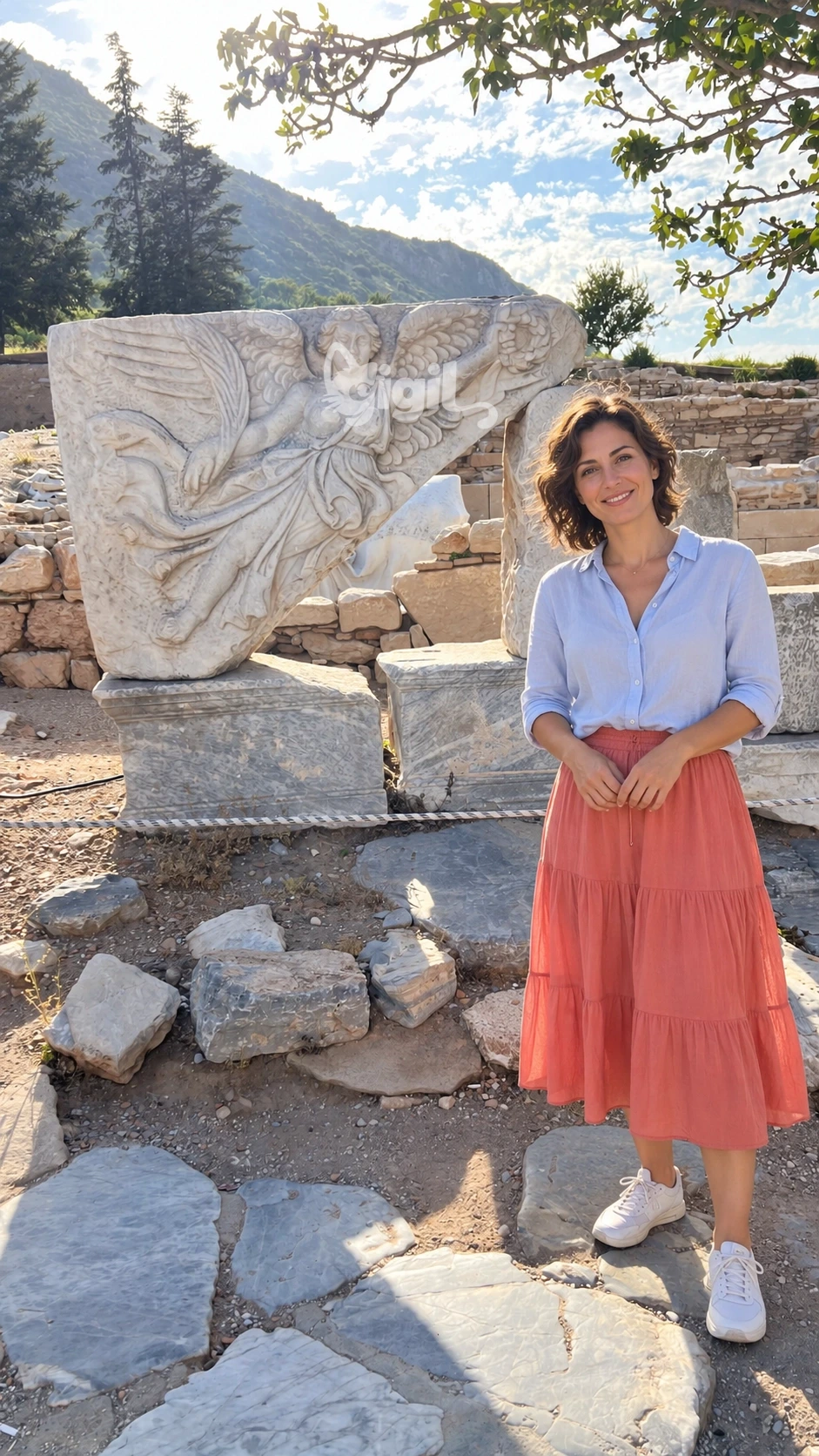
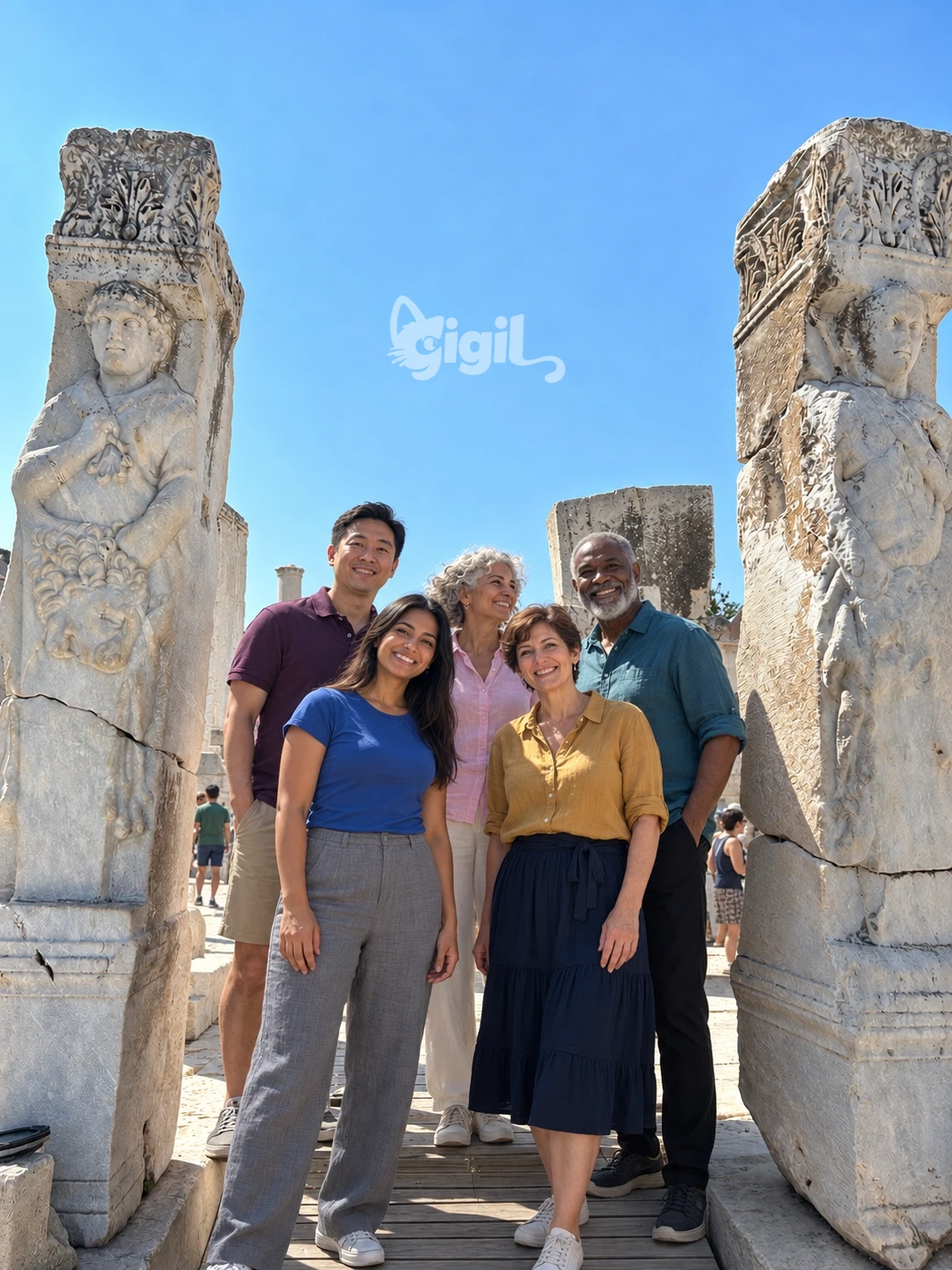
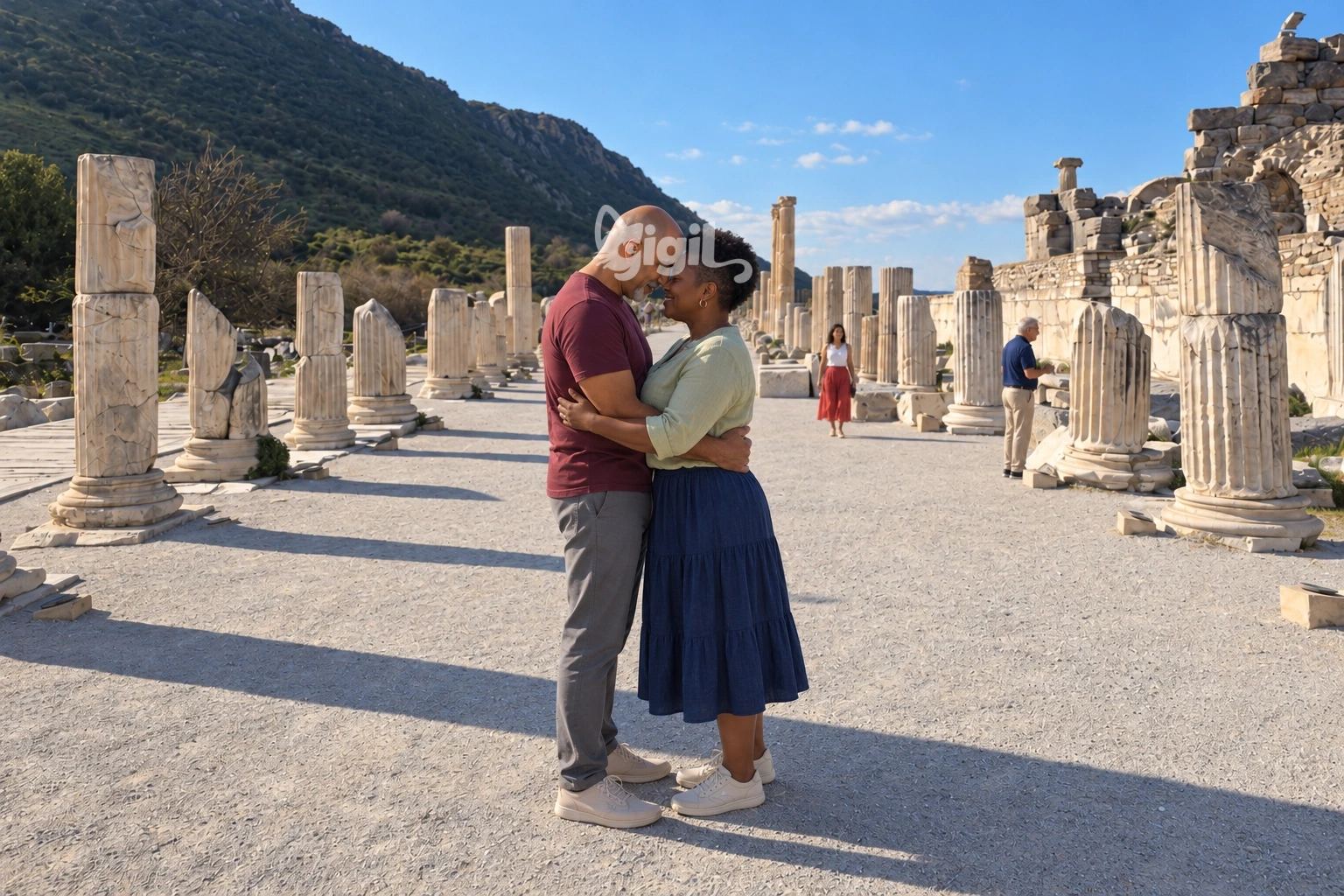
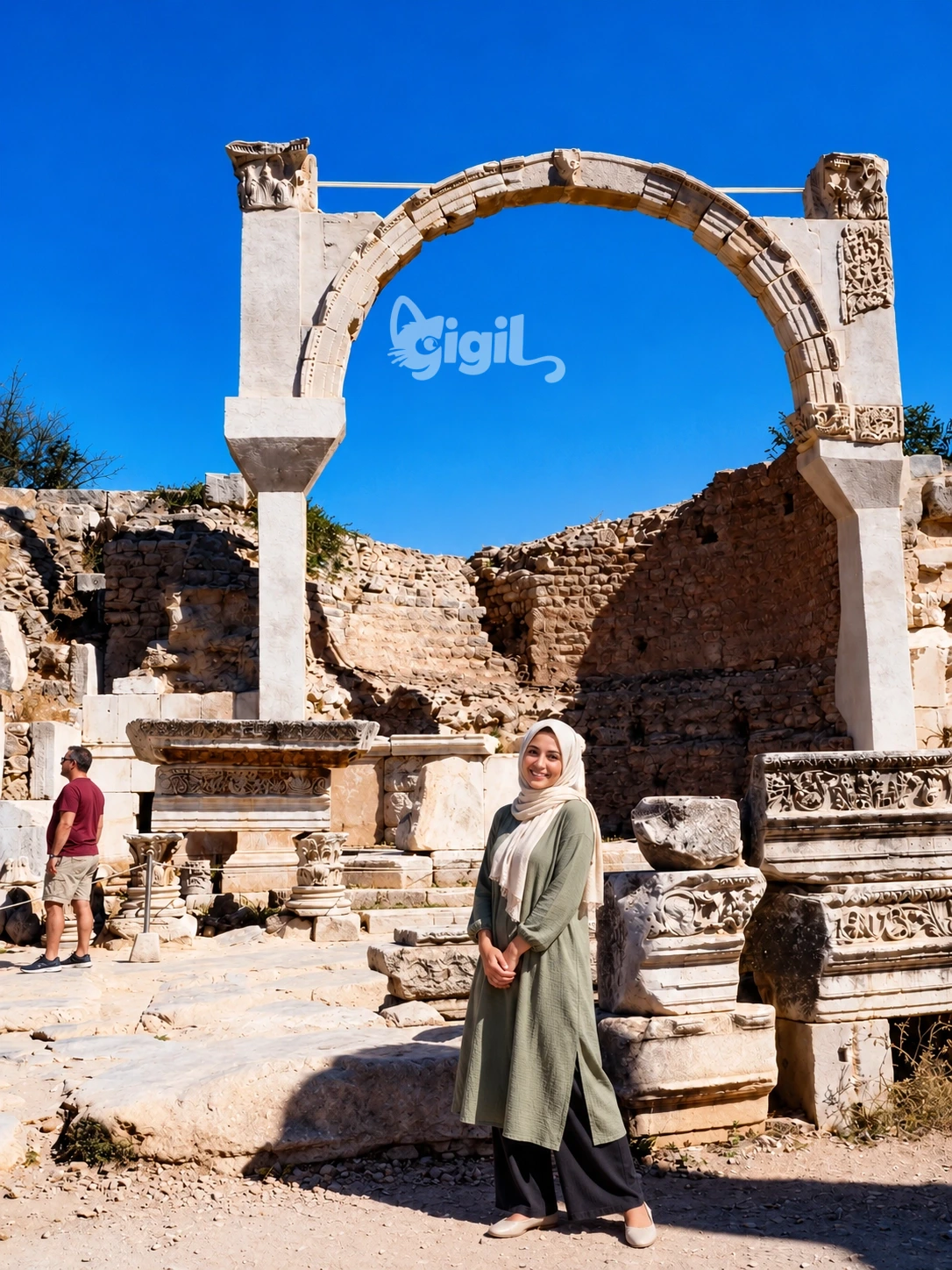
The landscape around Ephesus Ancient City no longer places its ruins beside an active ancient harbour. Its port-city past is a useful starting point for reading the streets and civic spaces that remain.
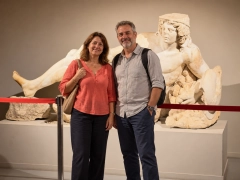
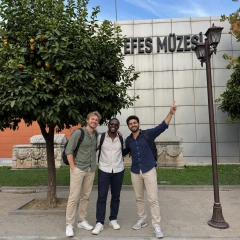
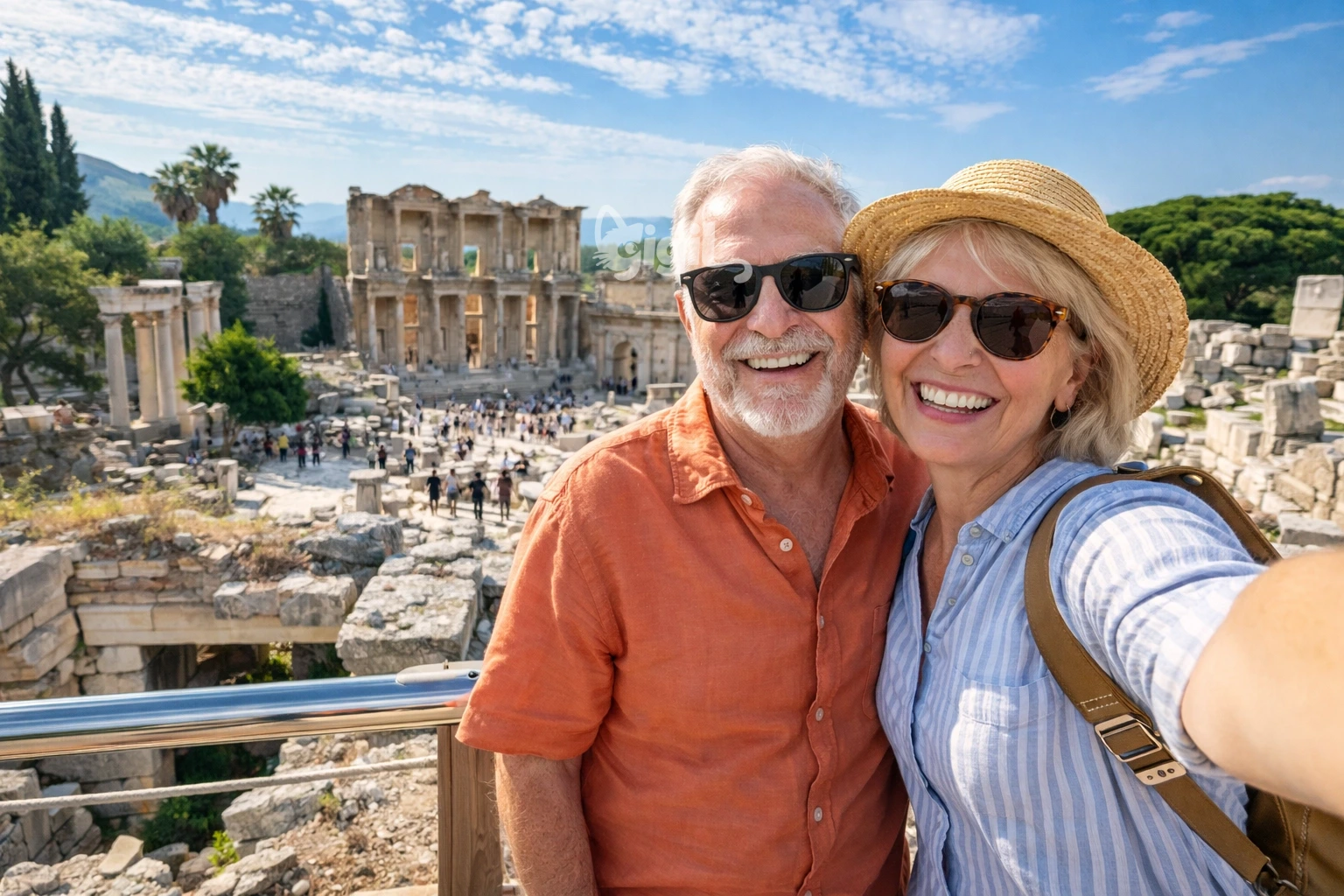
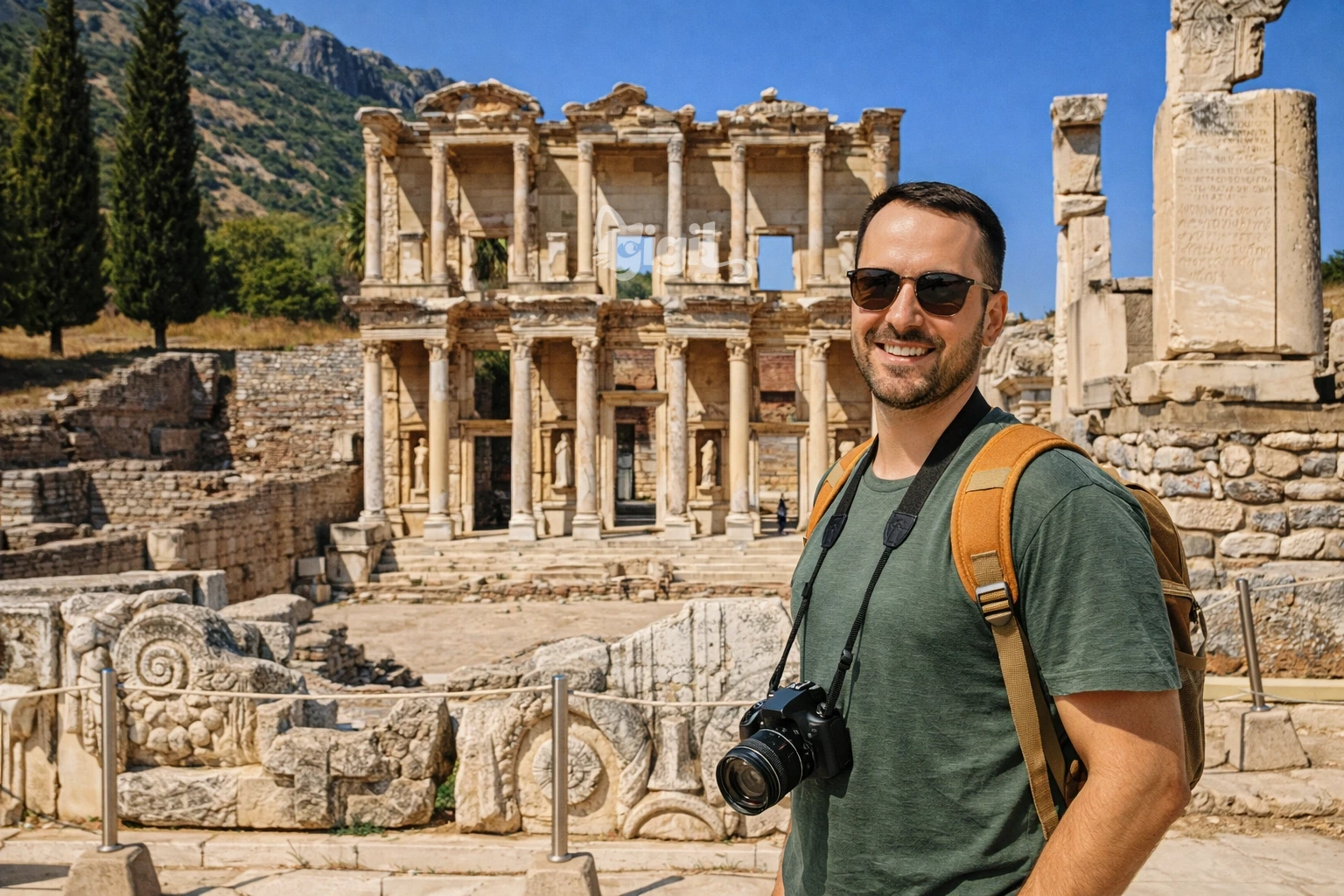
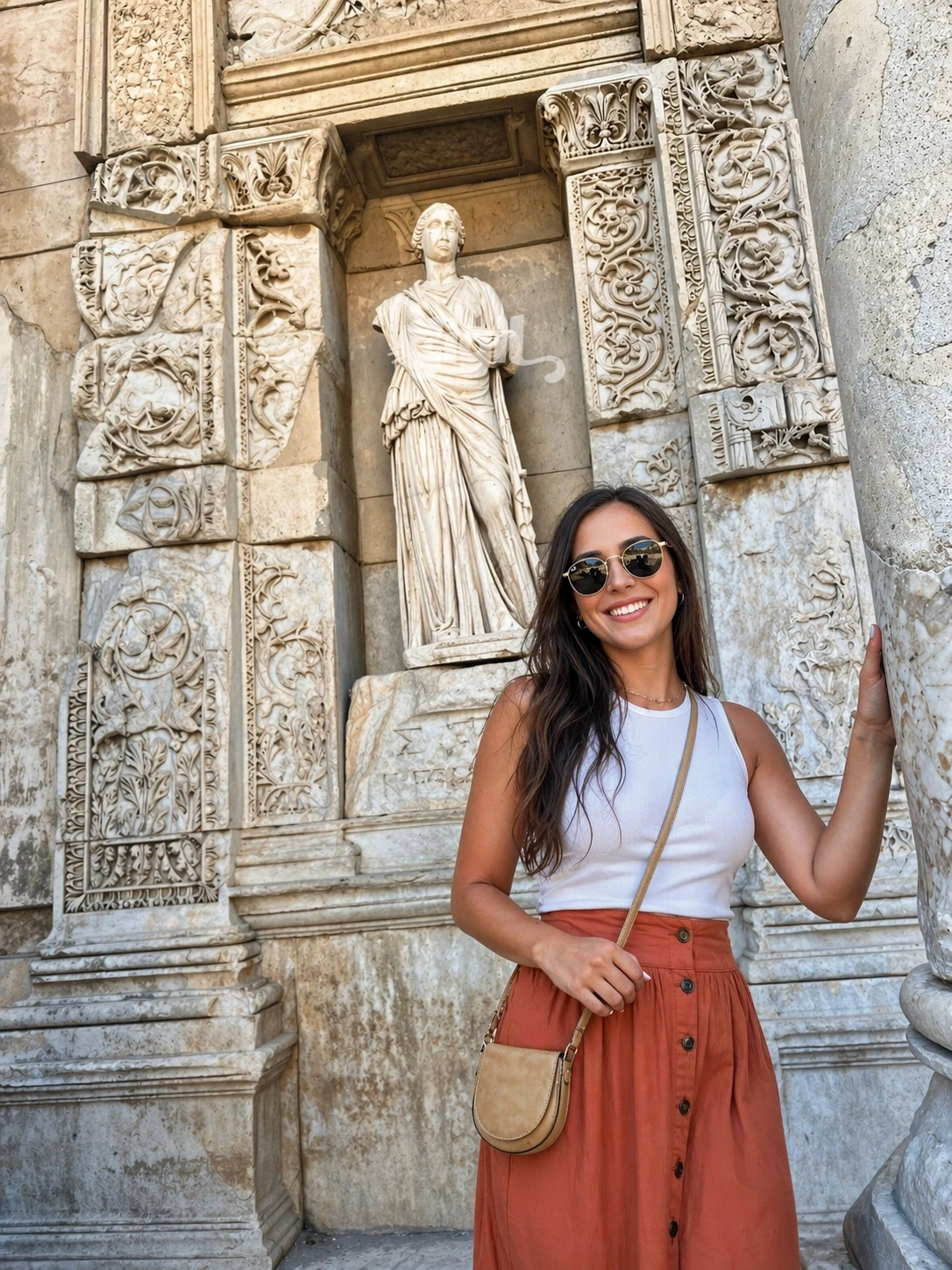
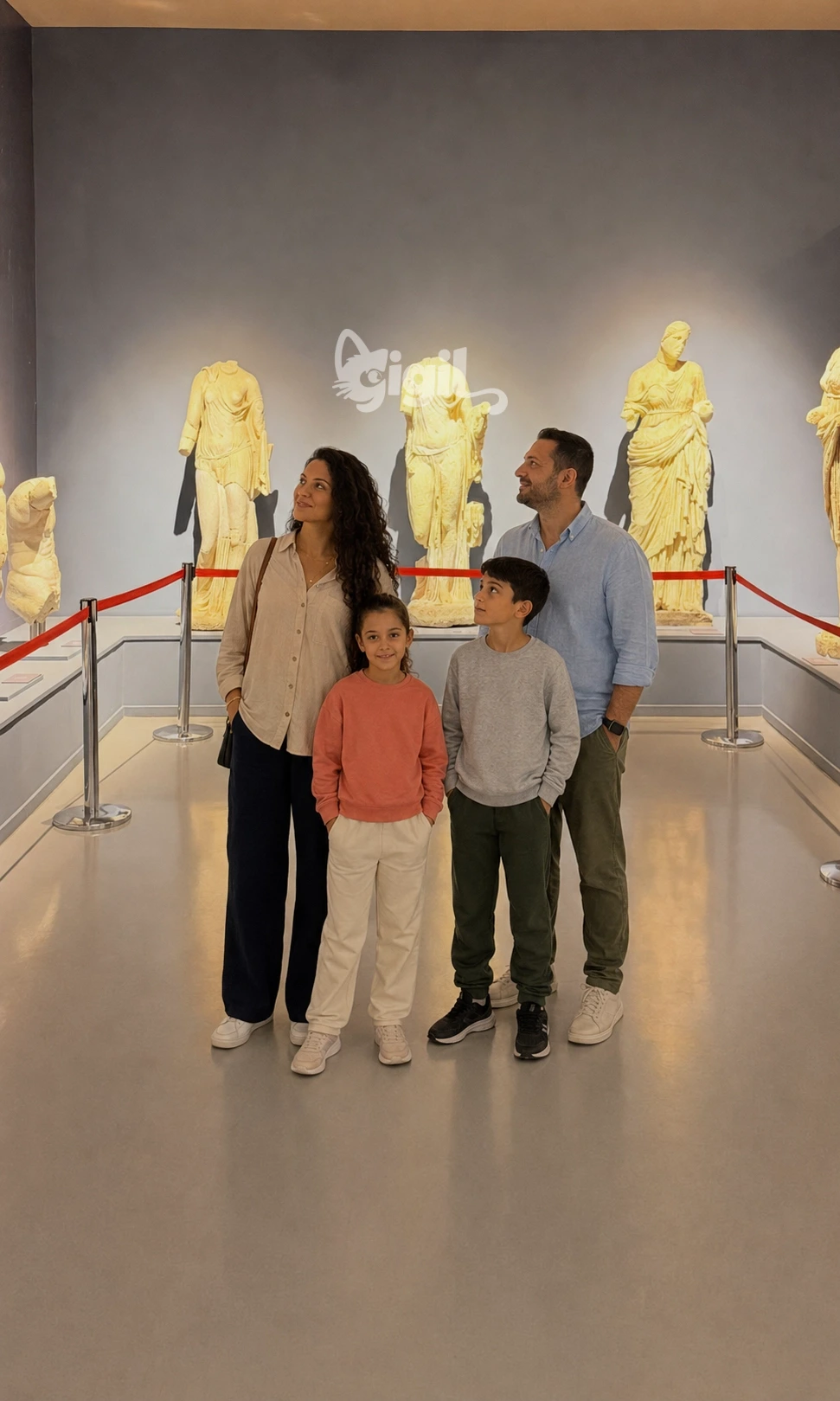
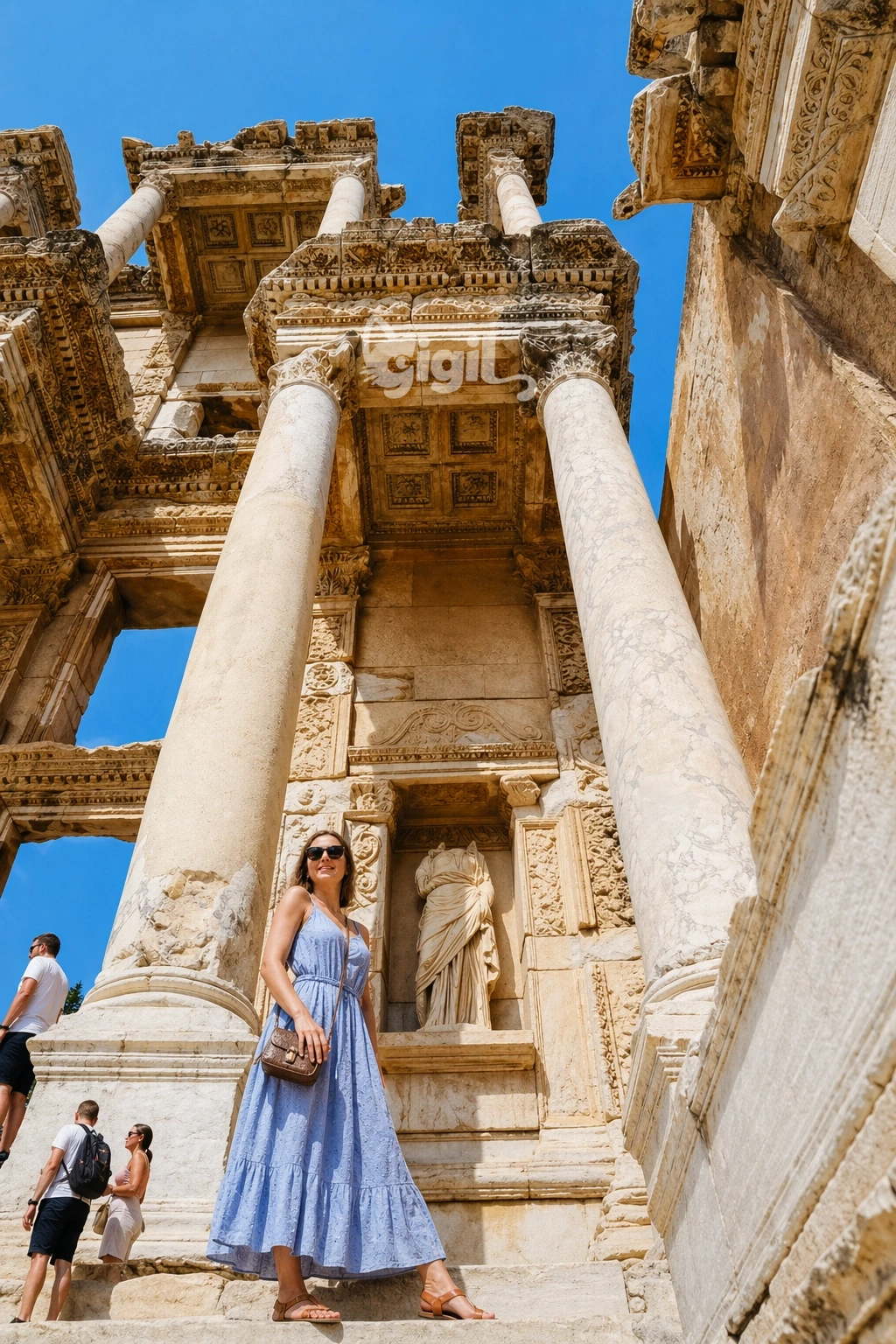
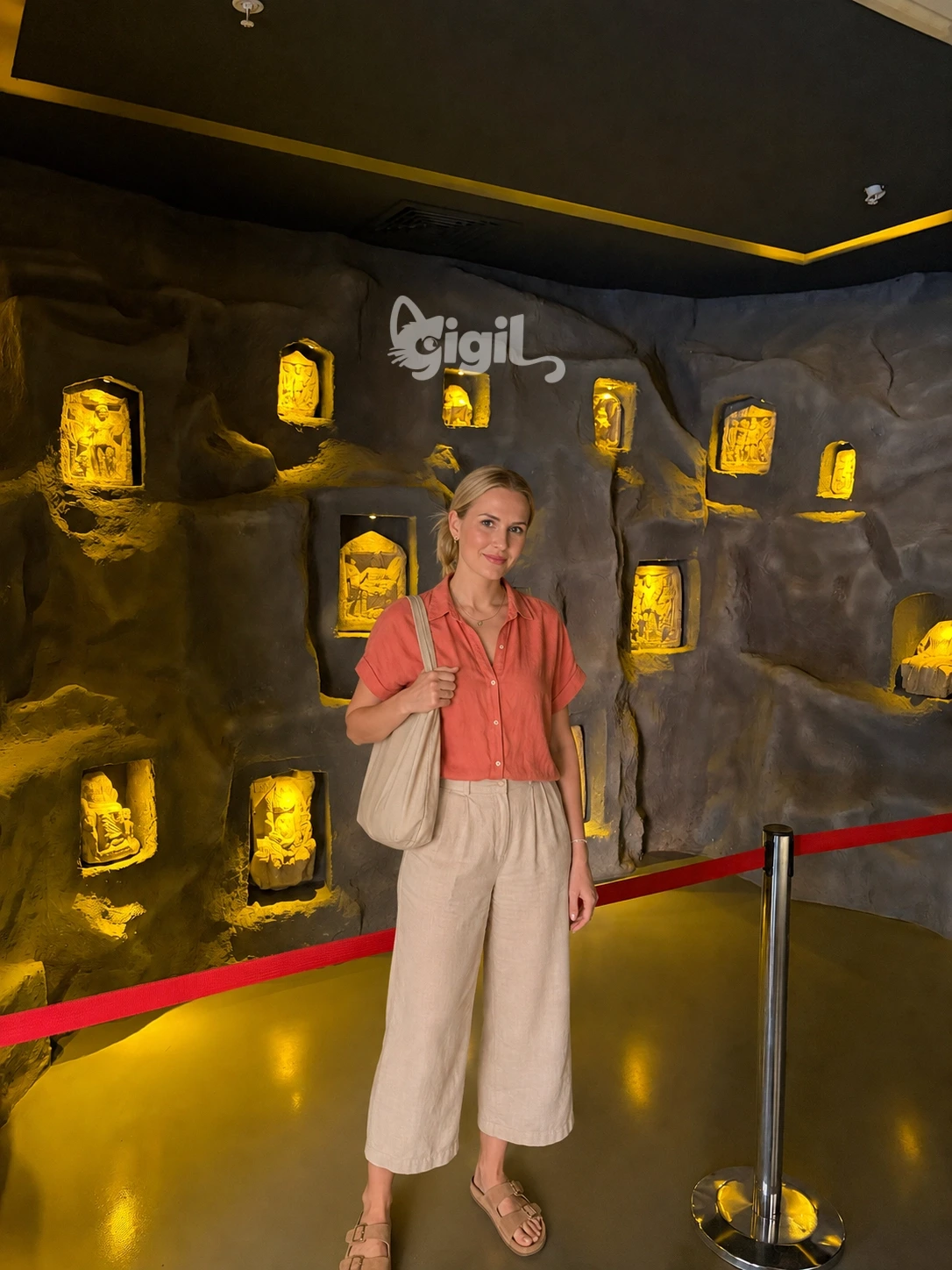
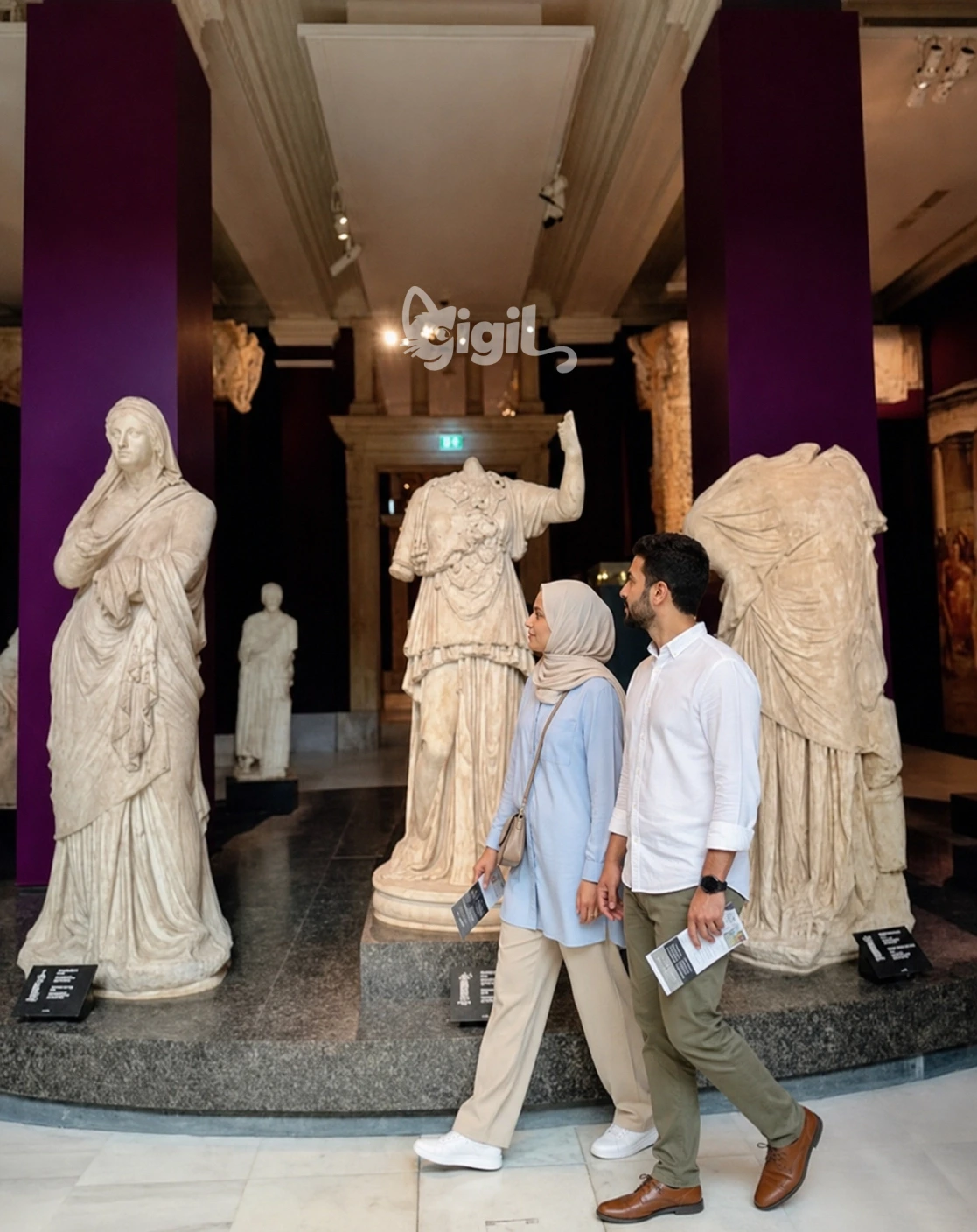
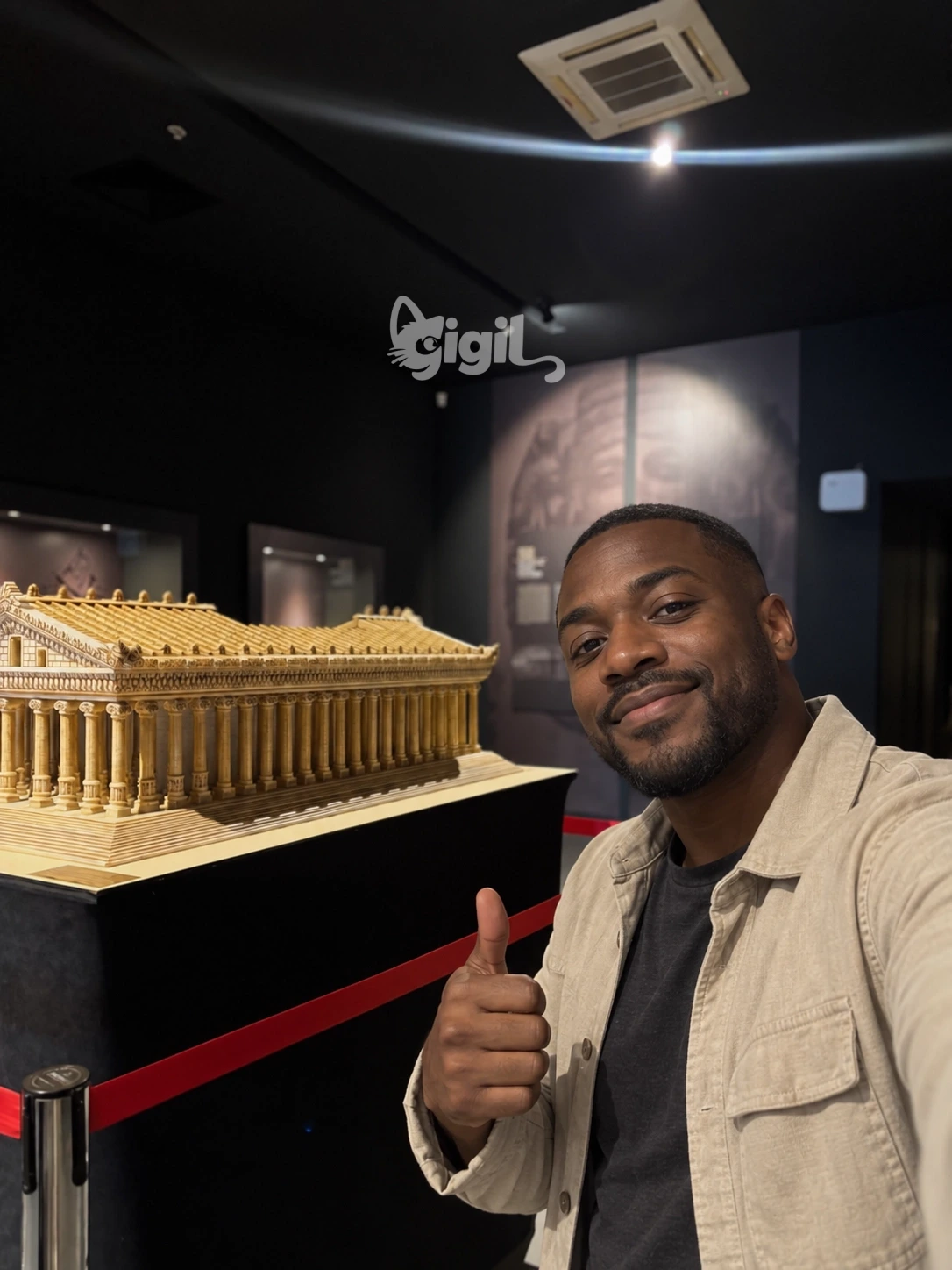
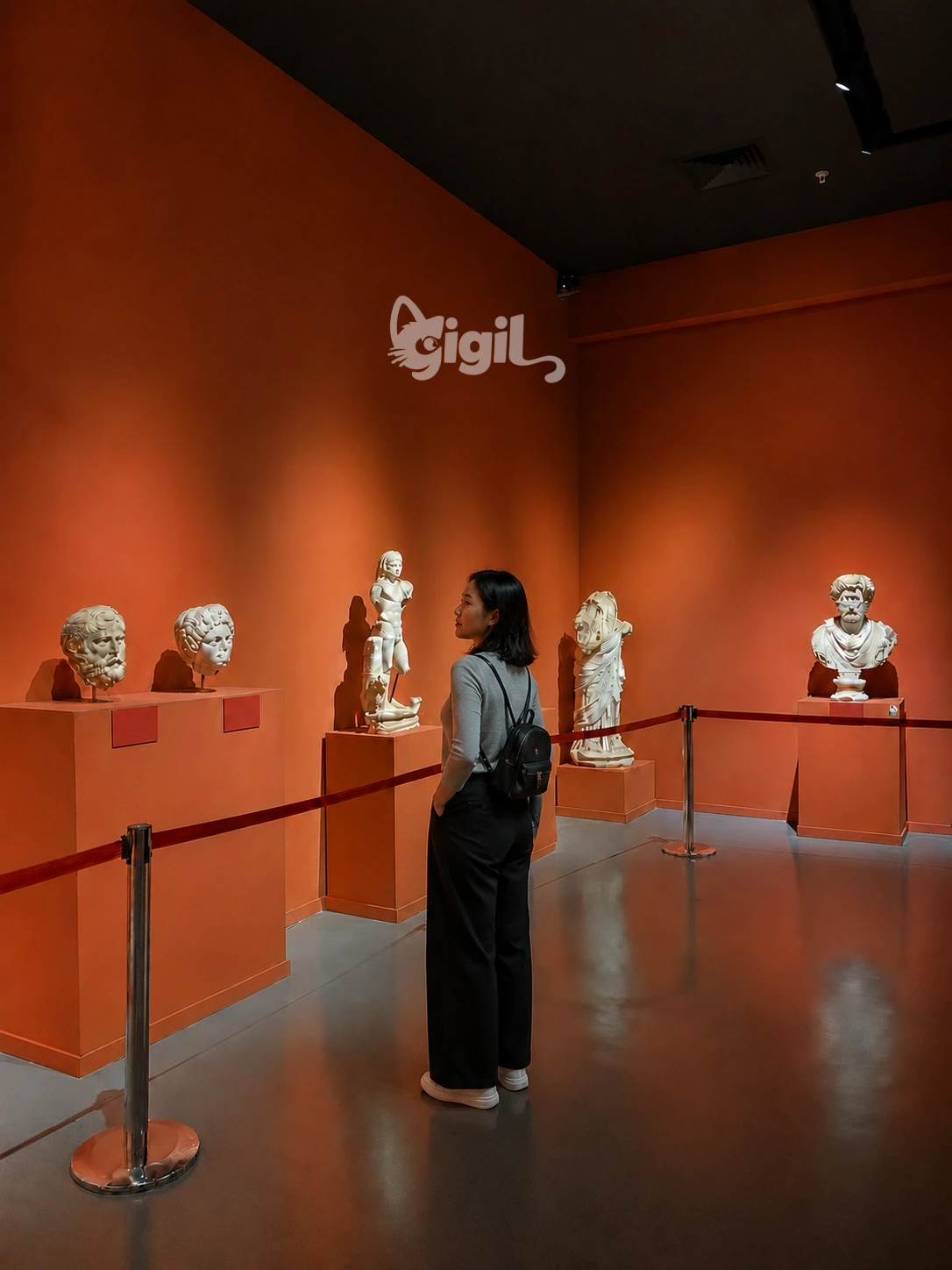
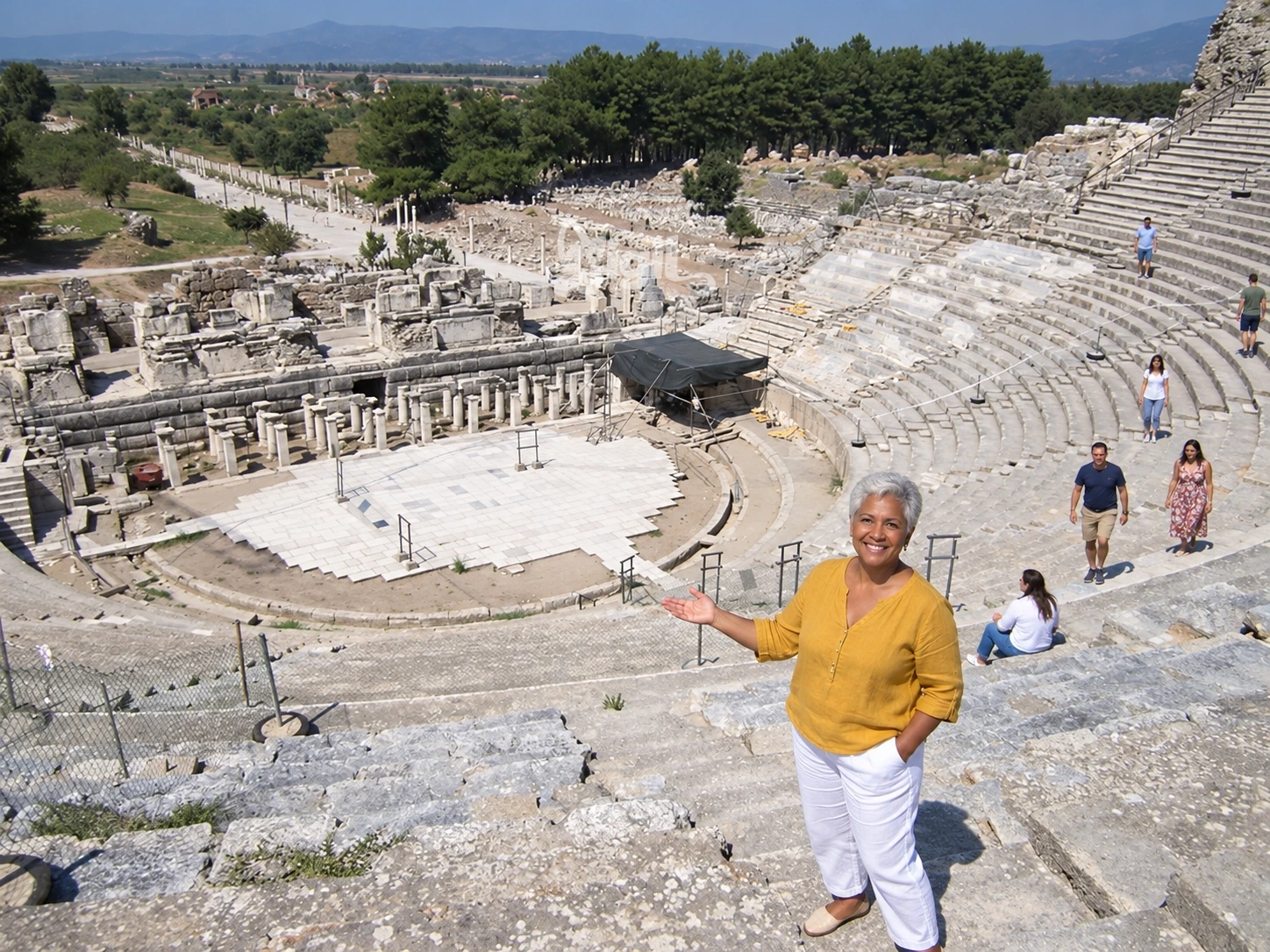
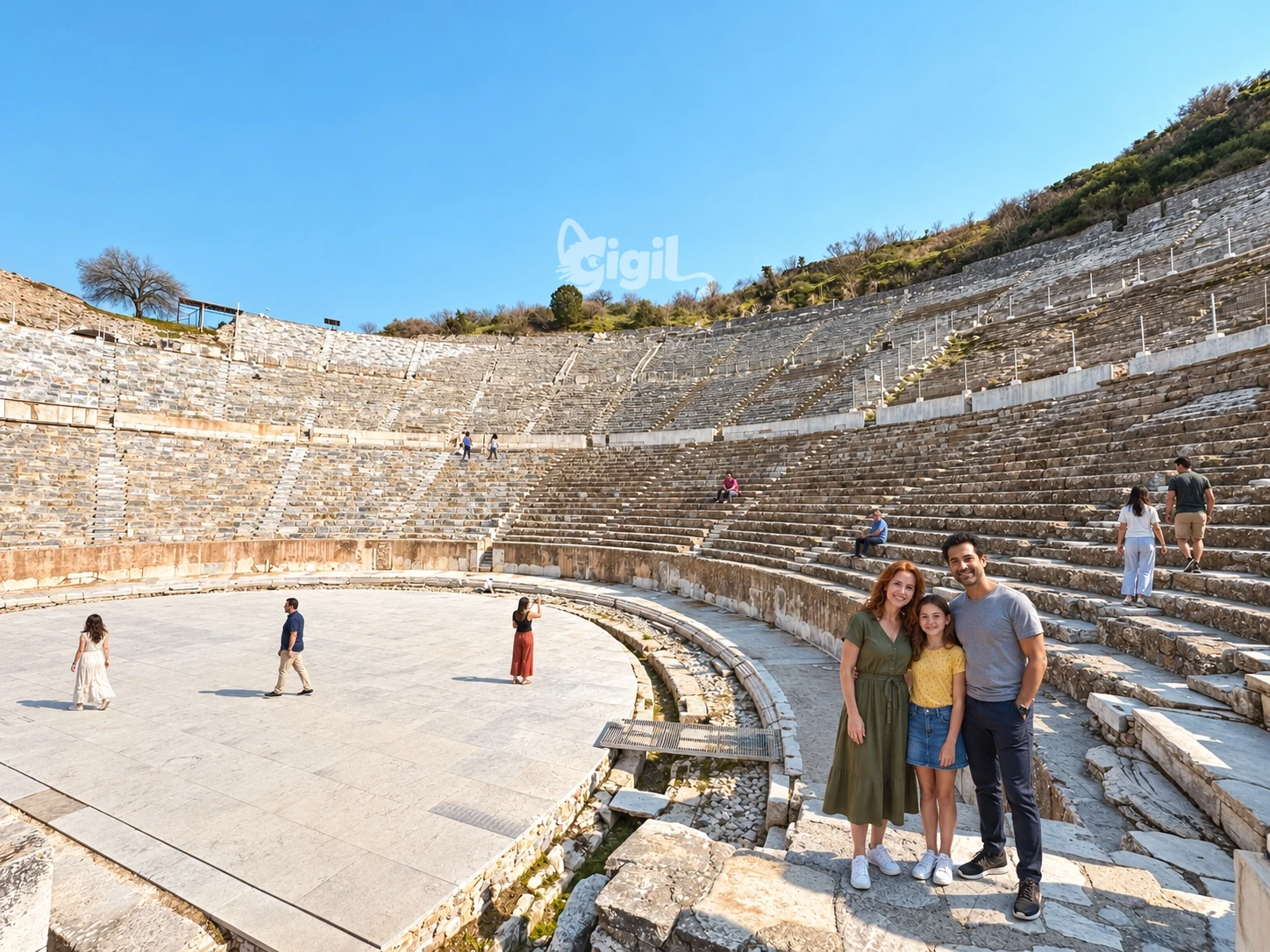
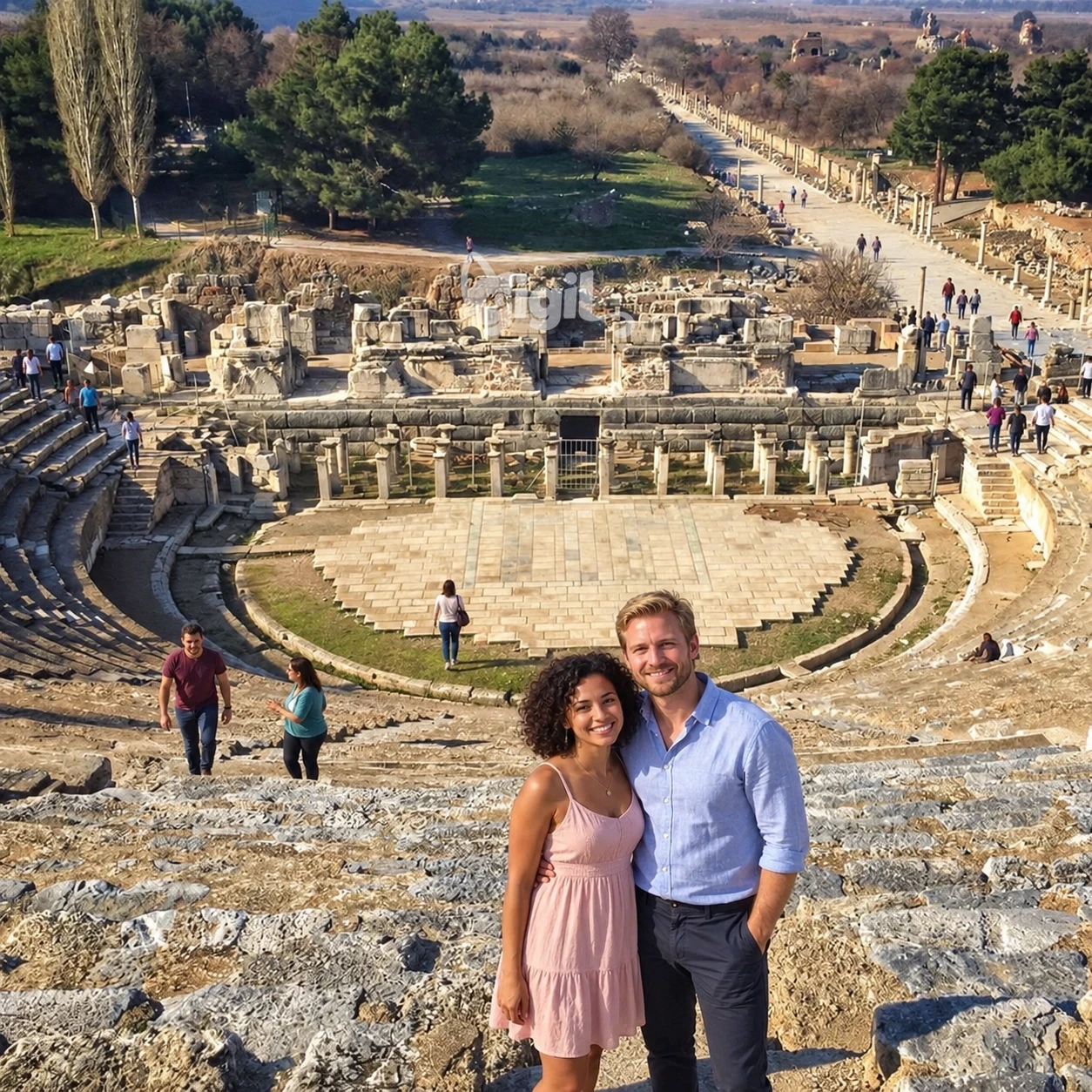
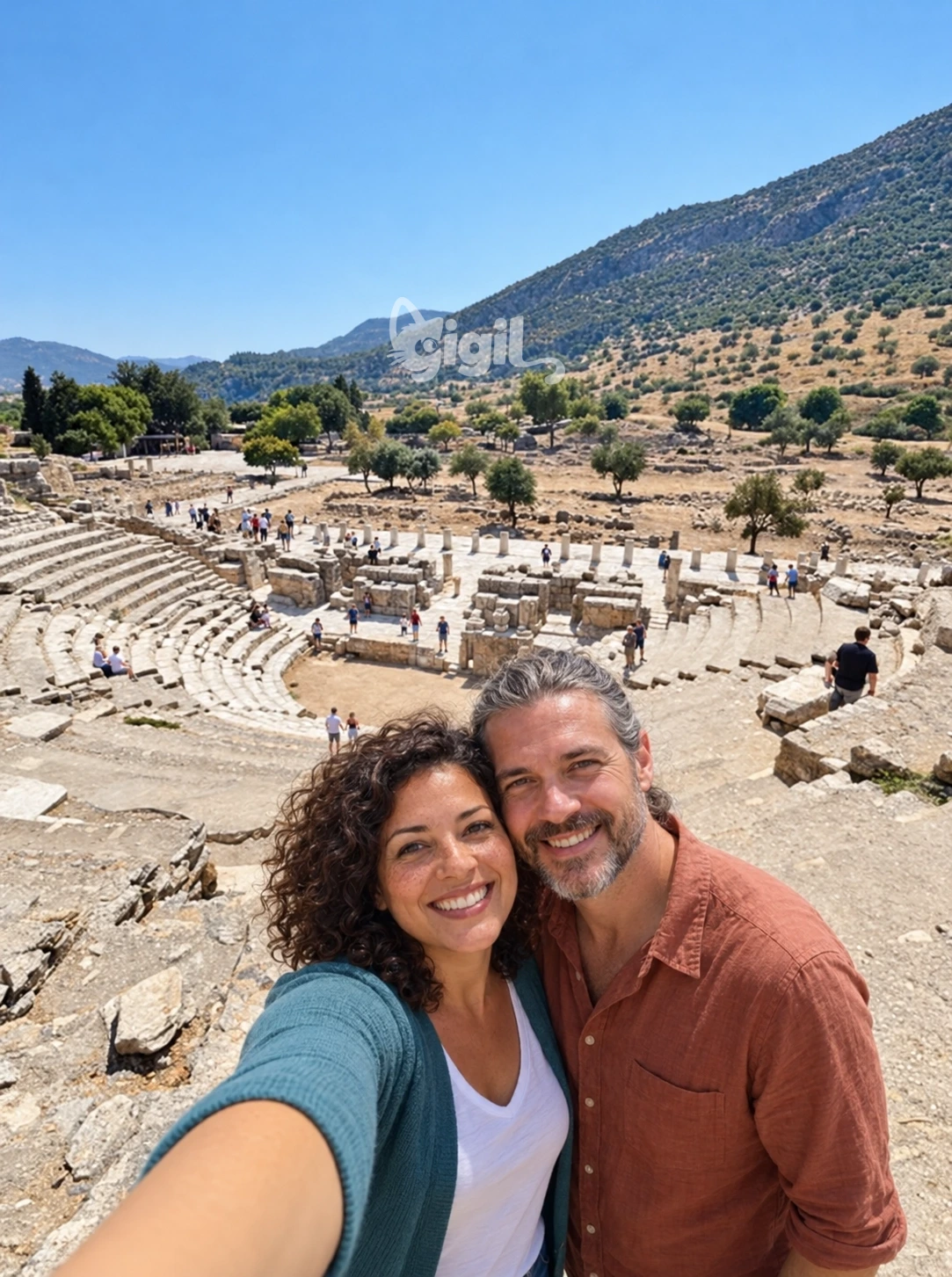
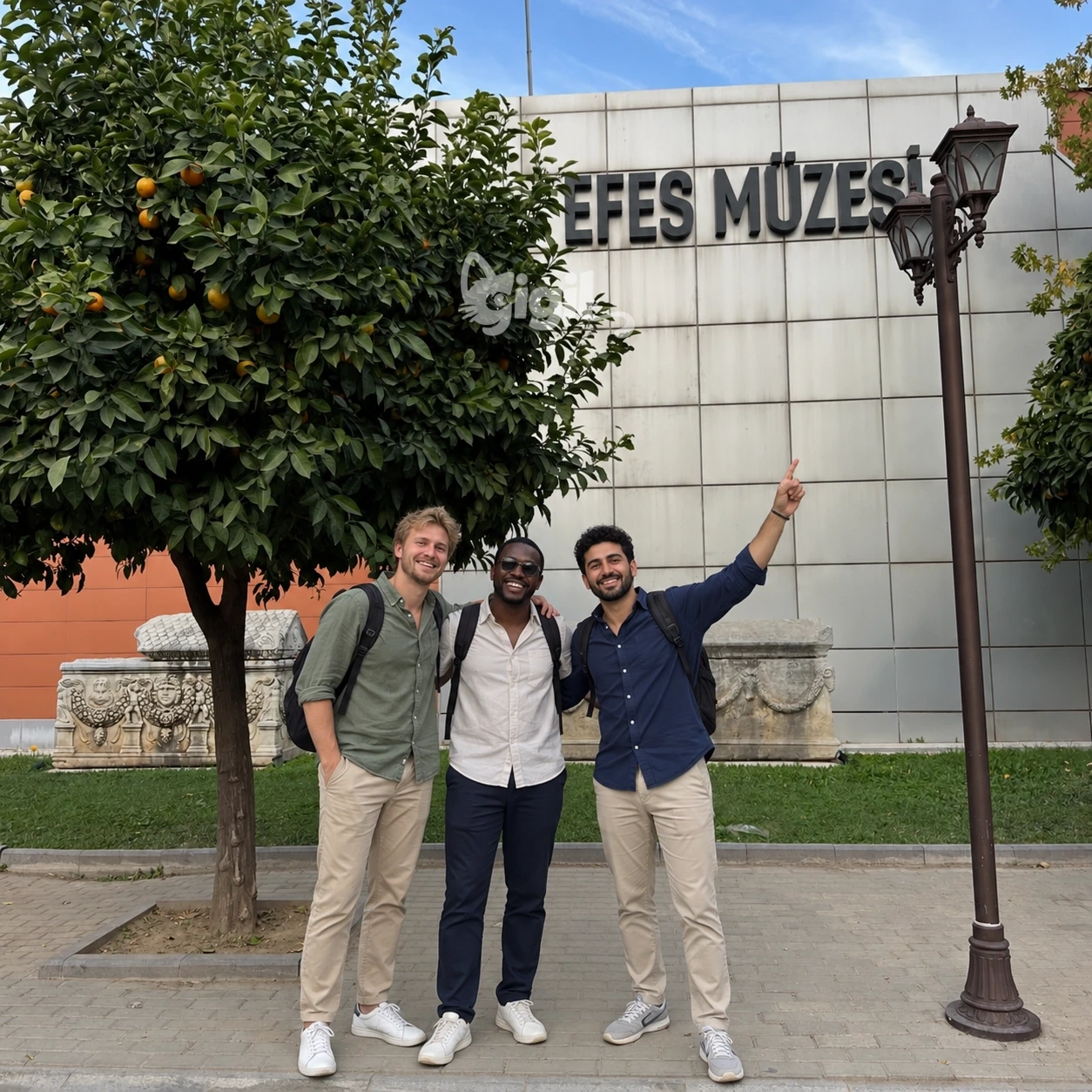
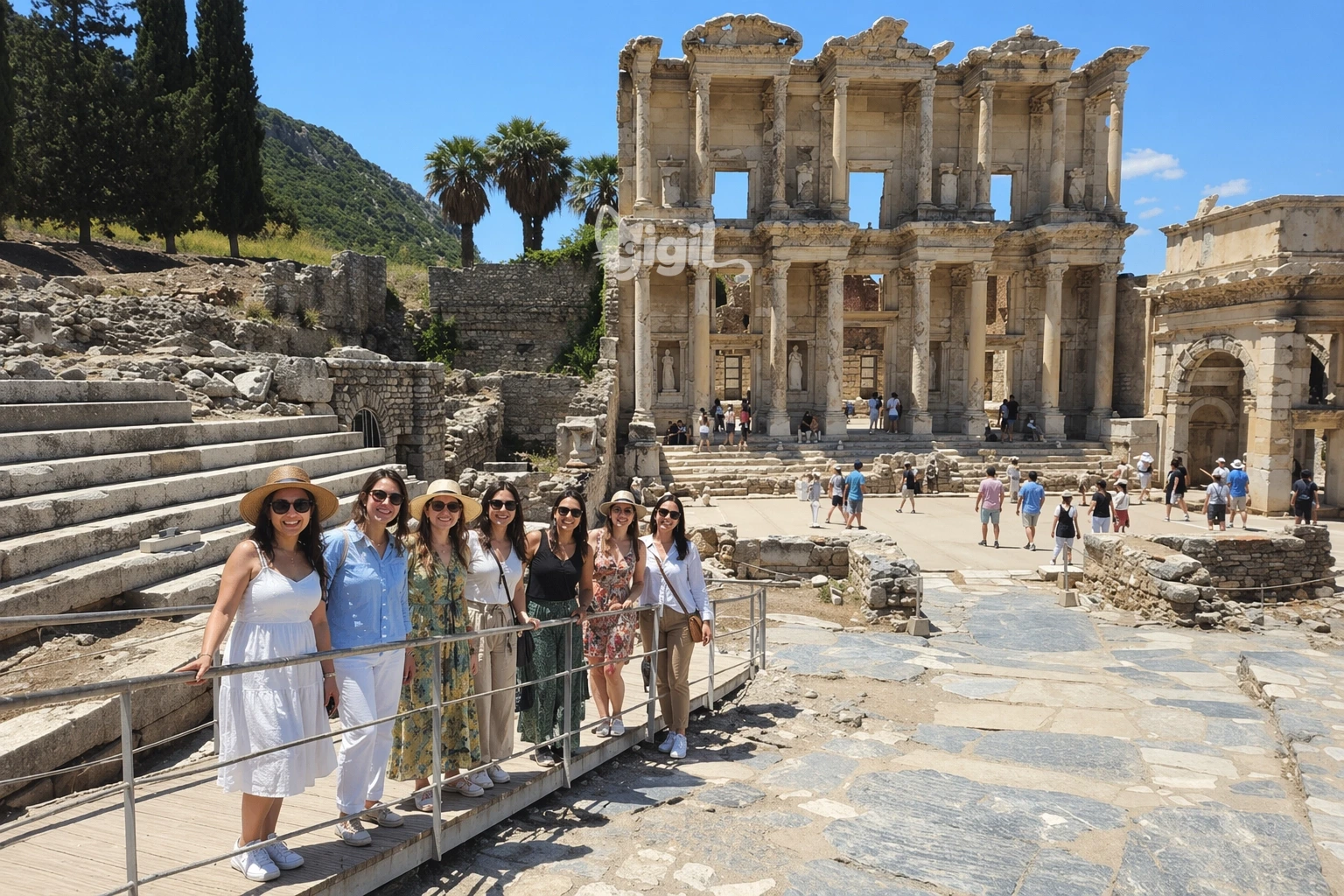
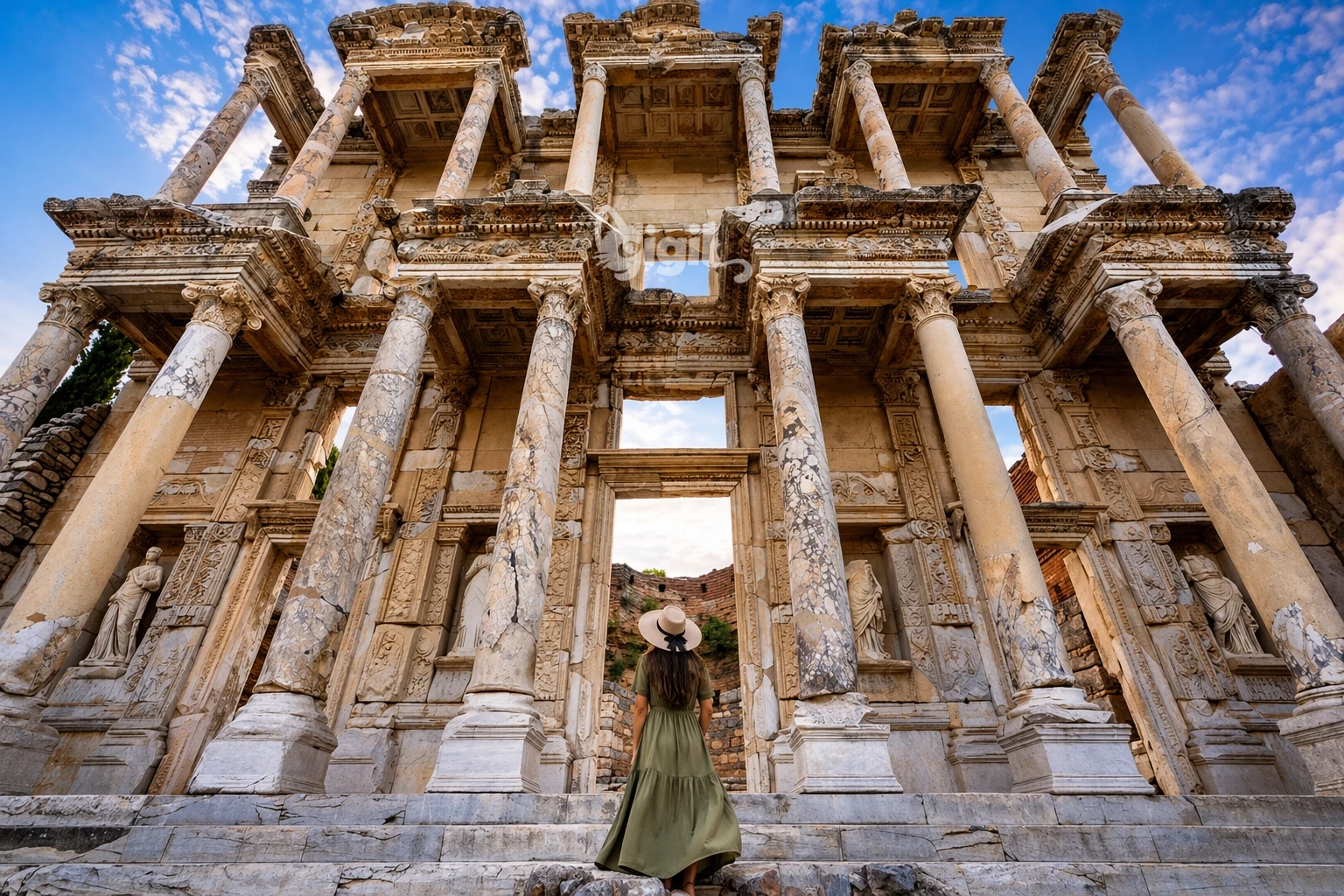
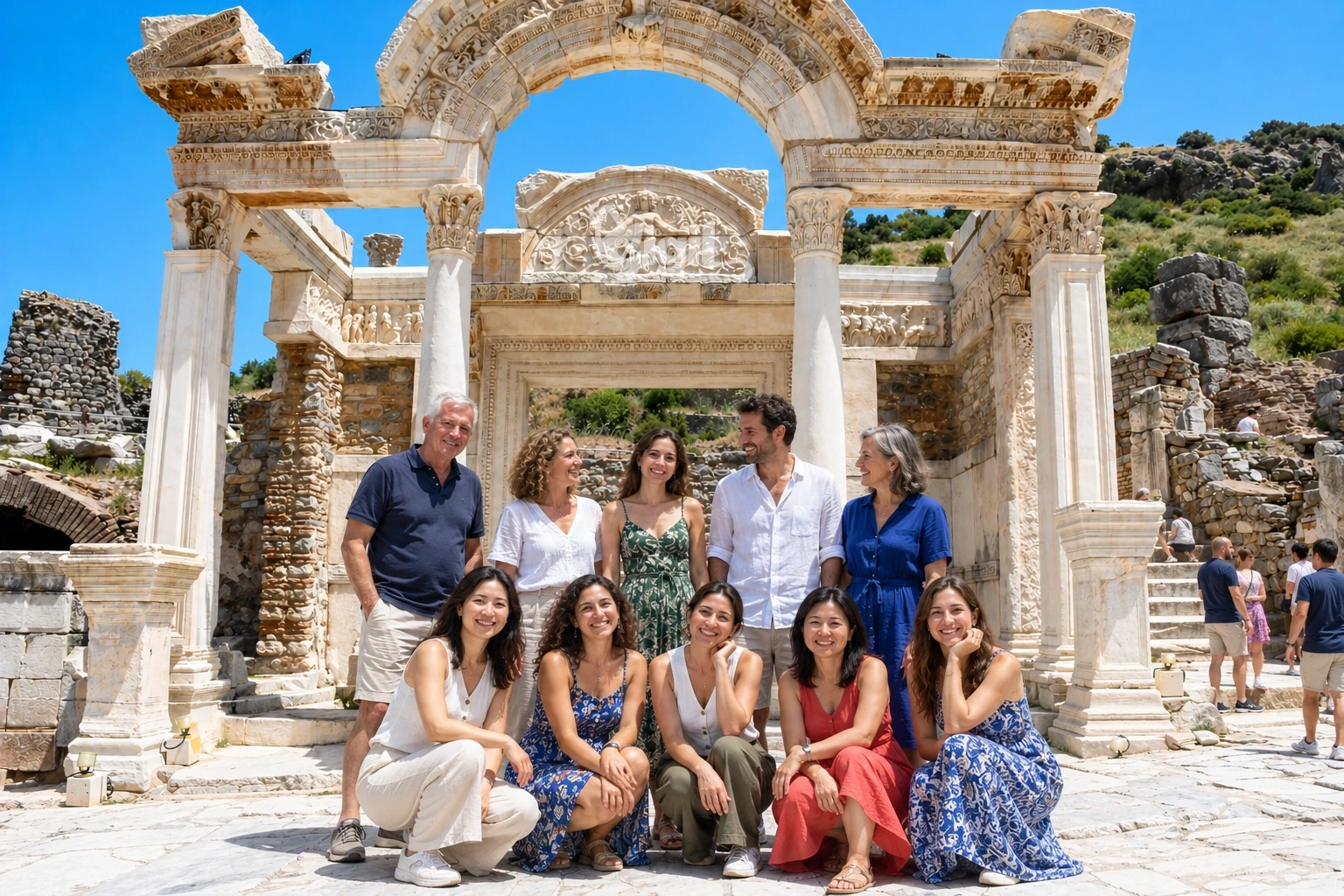
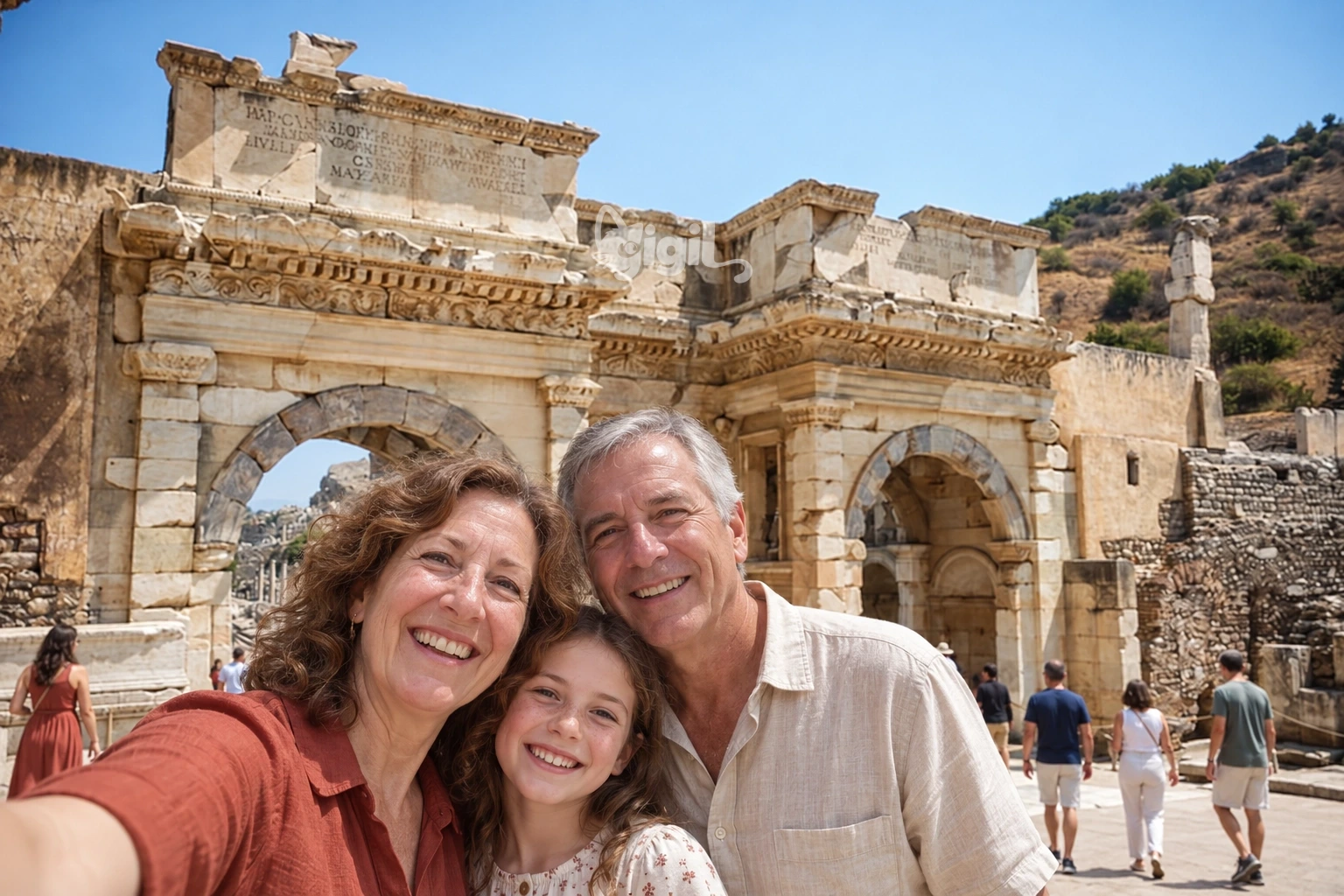
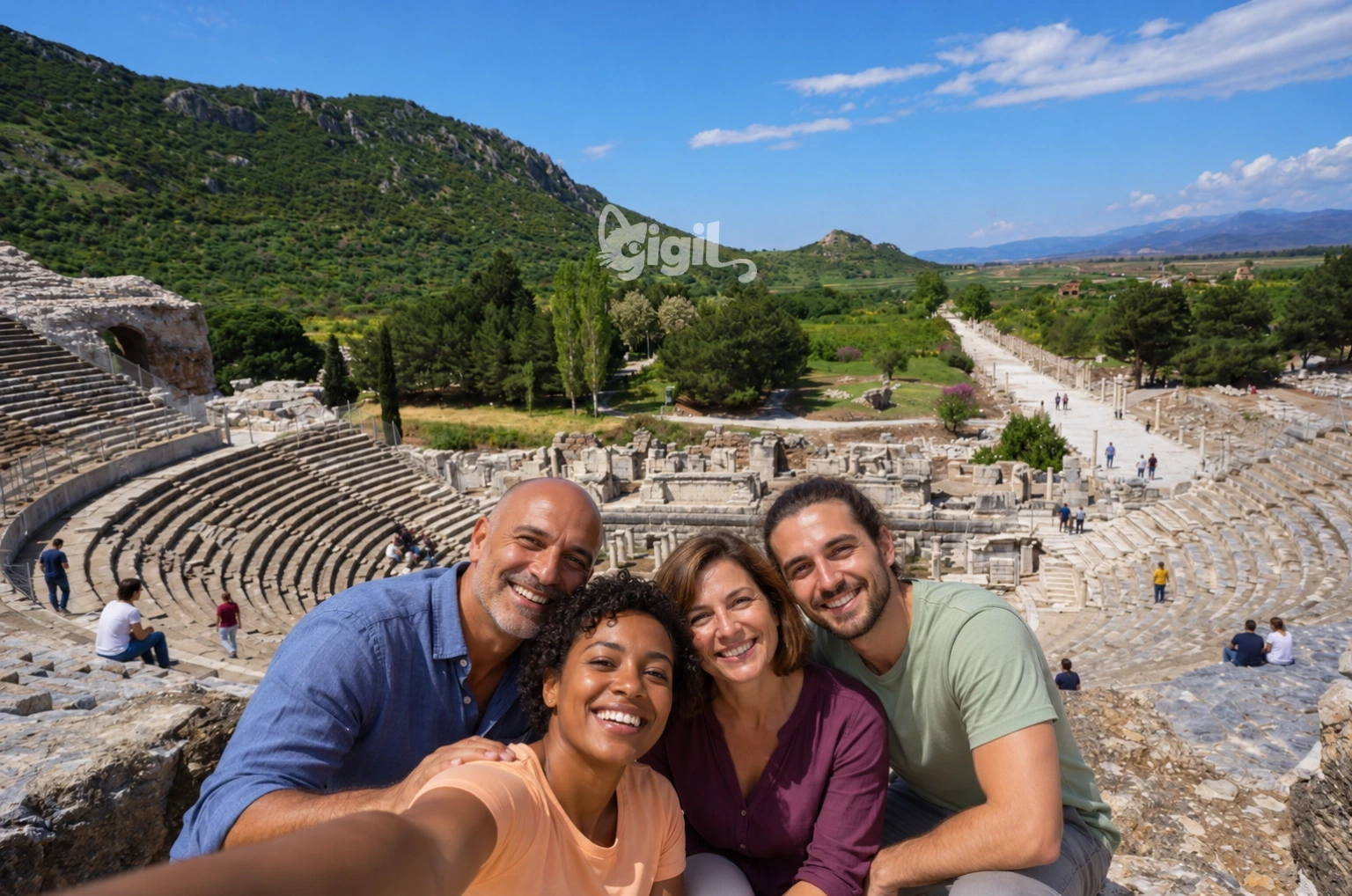
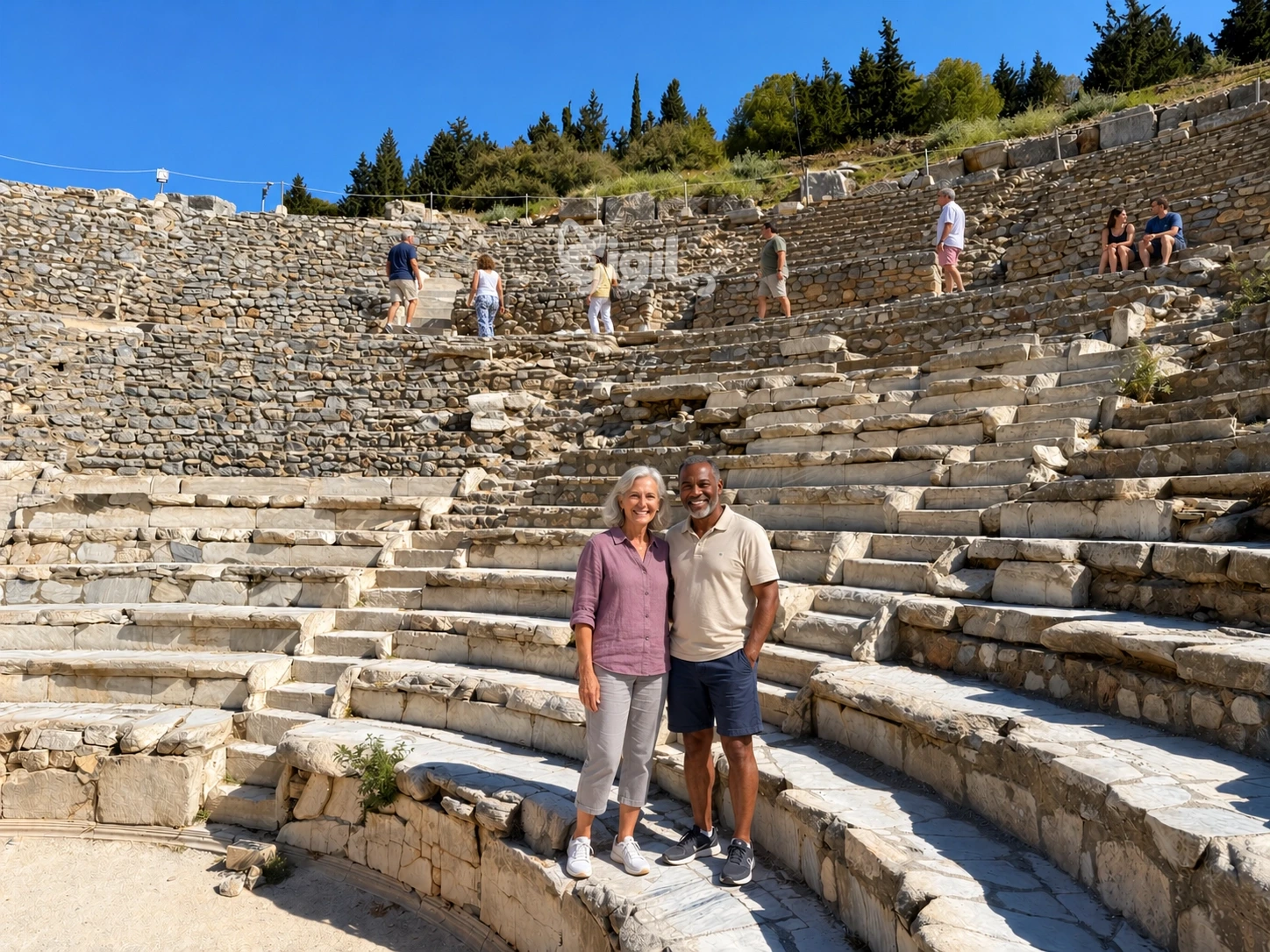
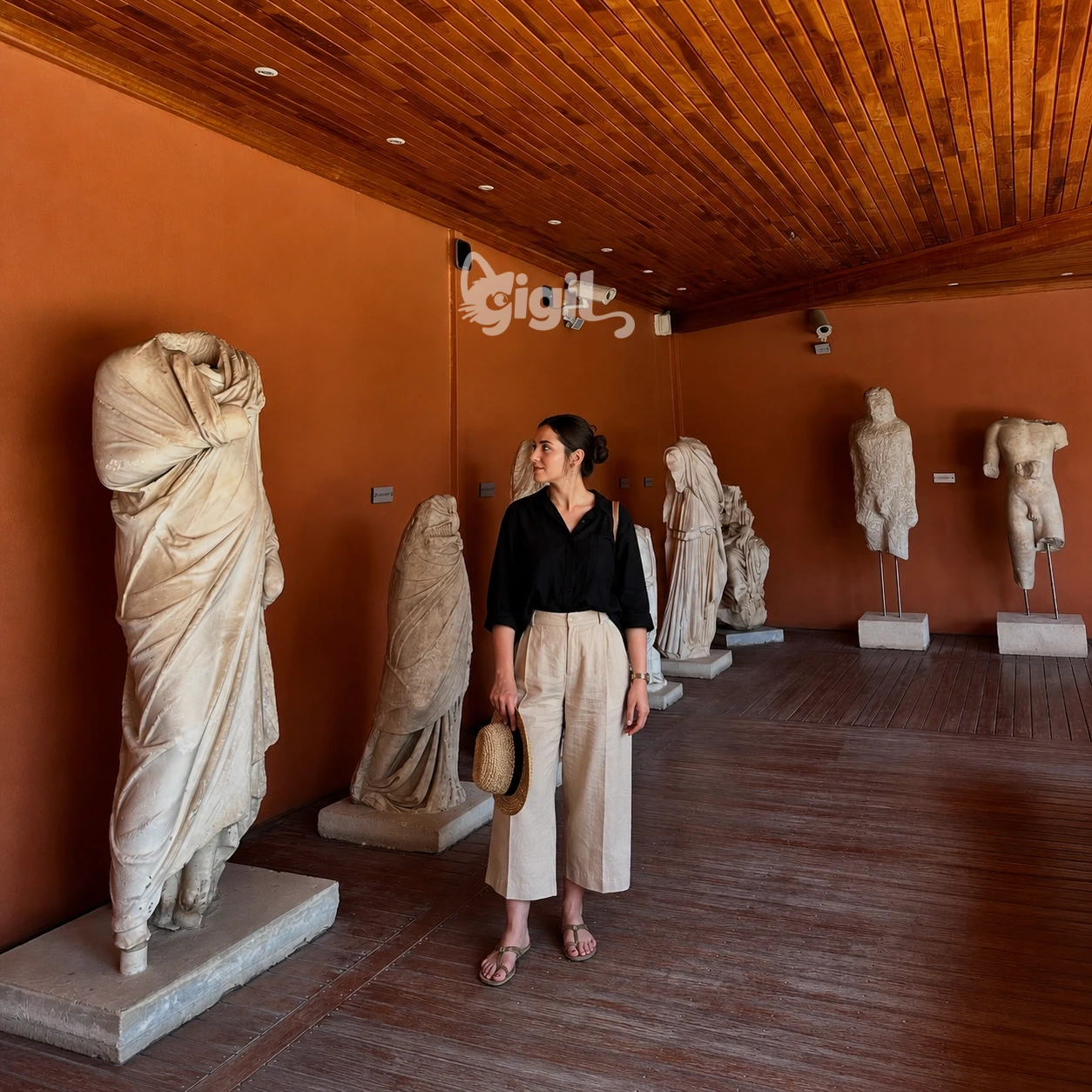
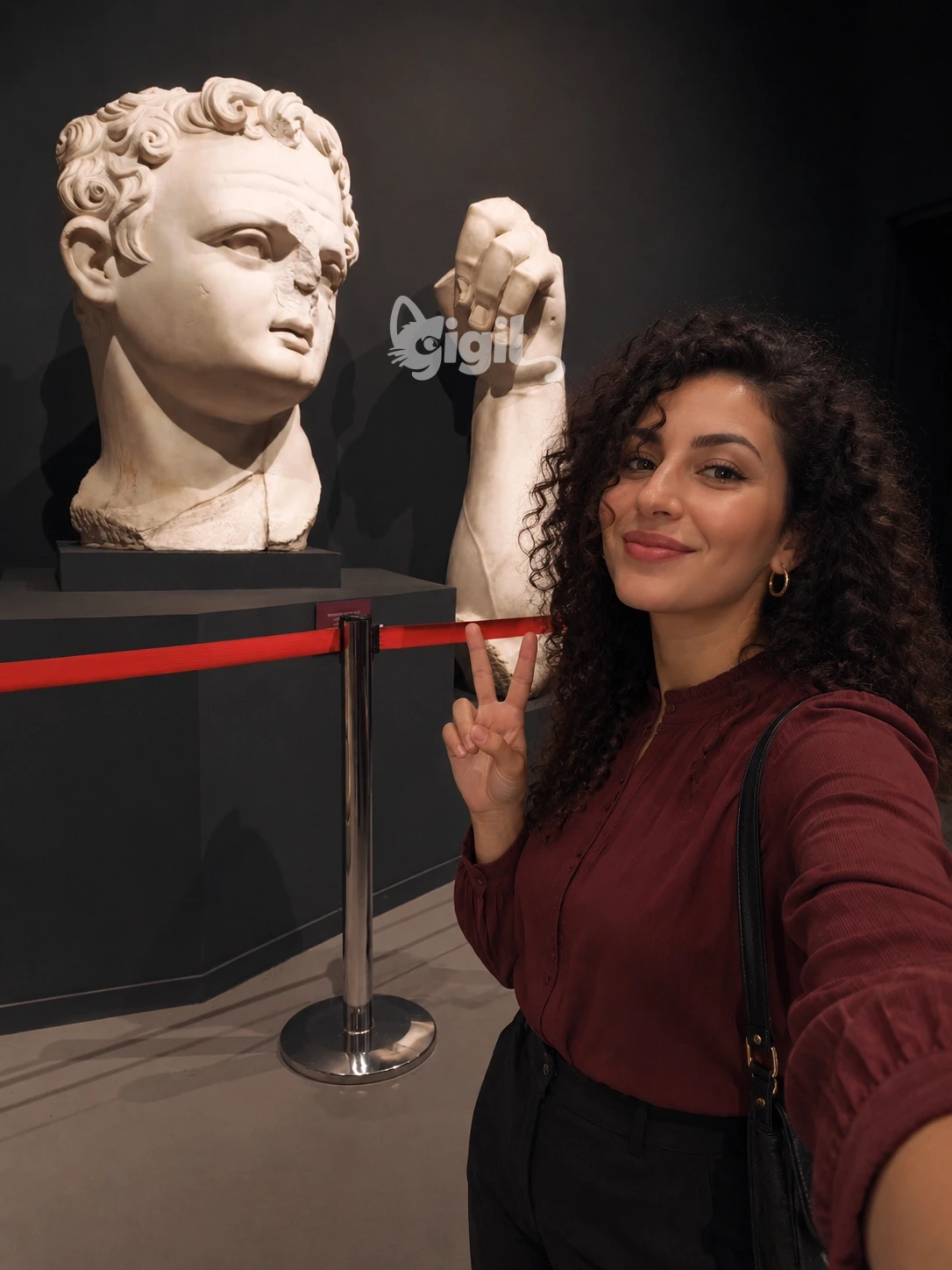
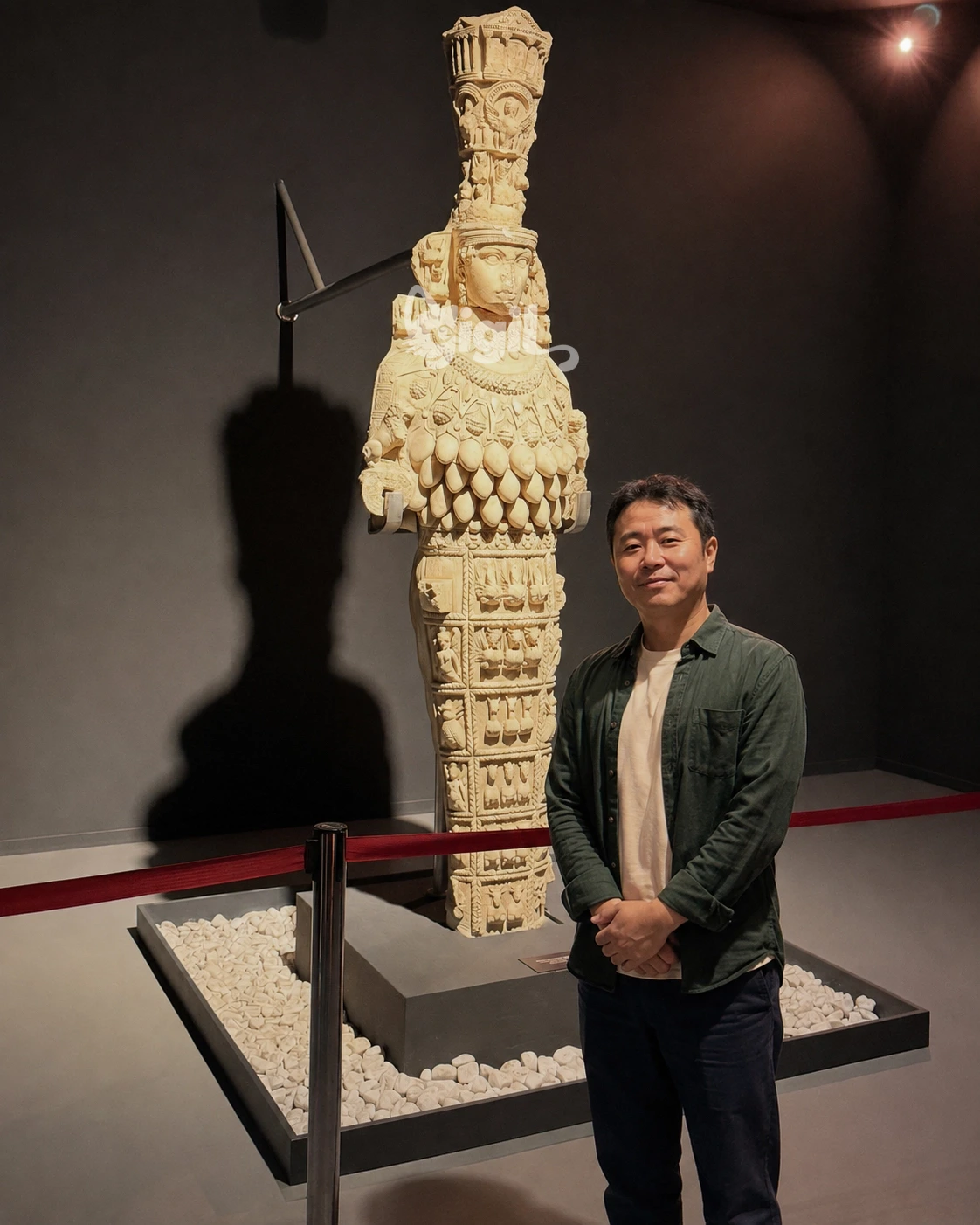
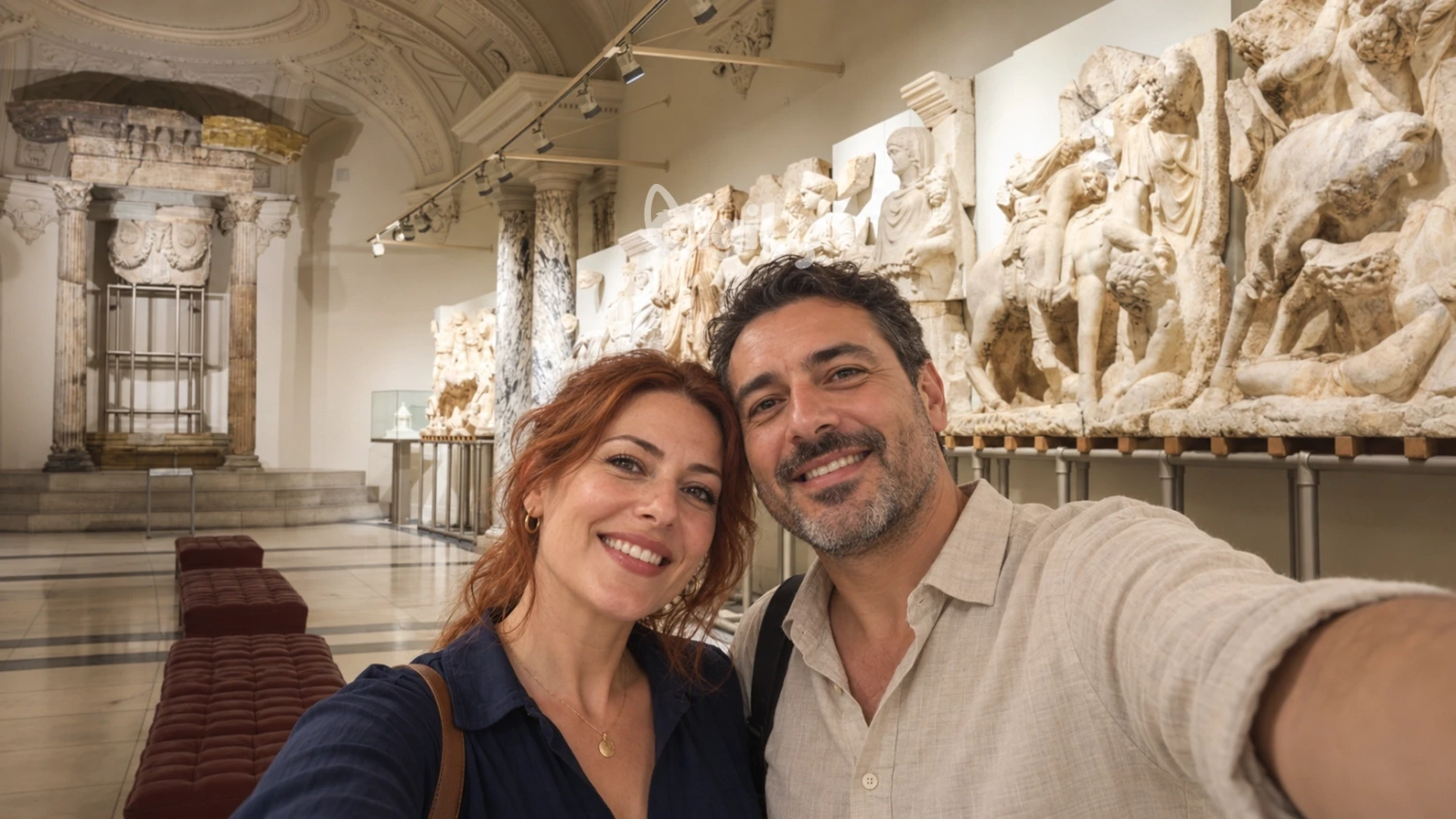
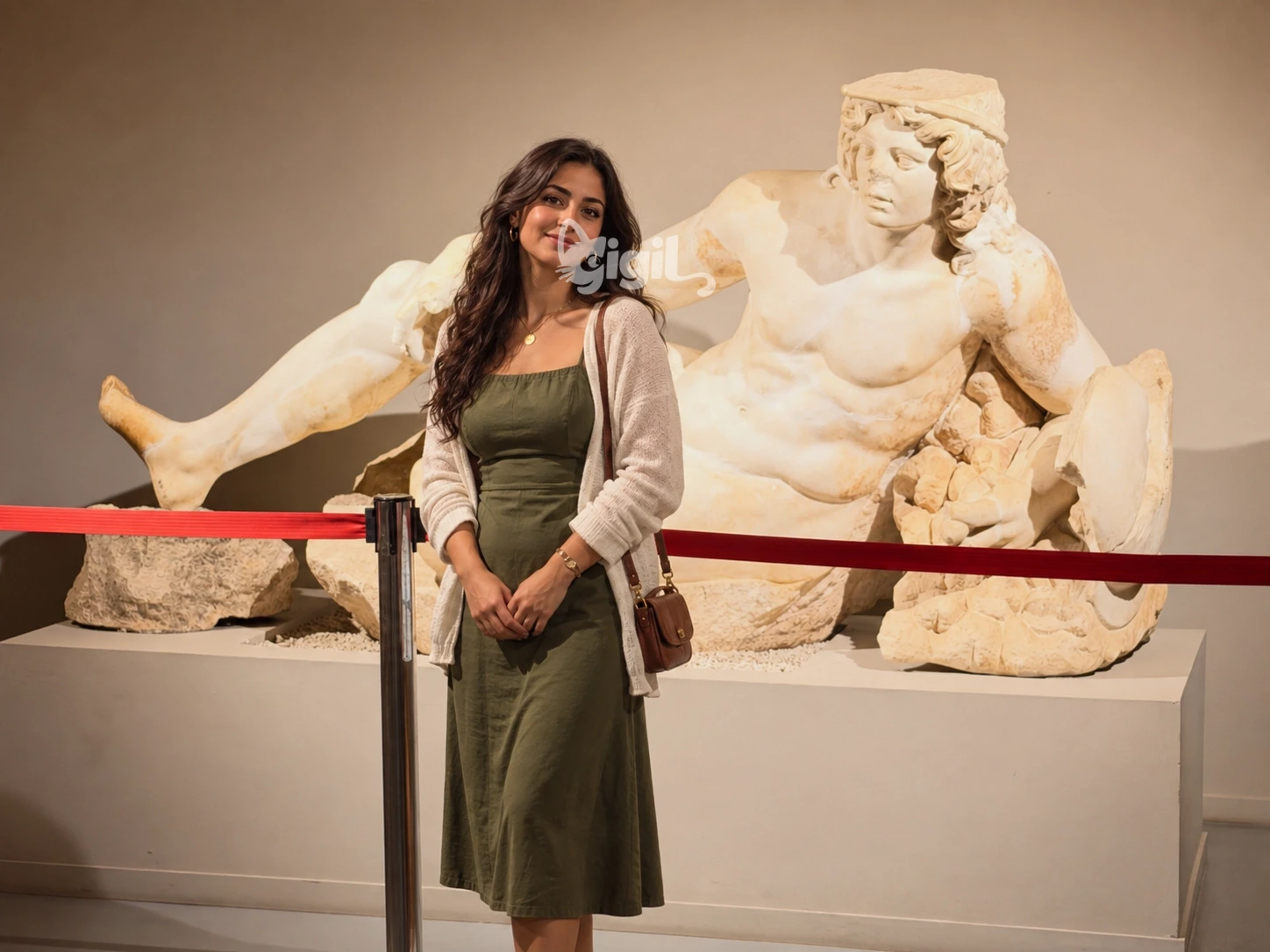
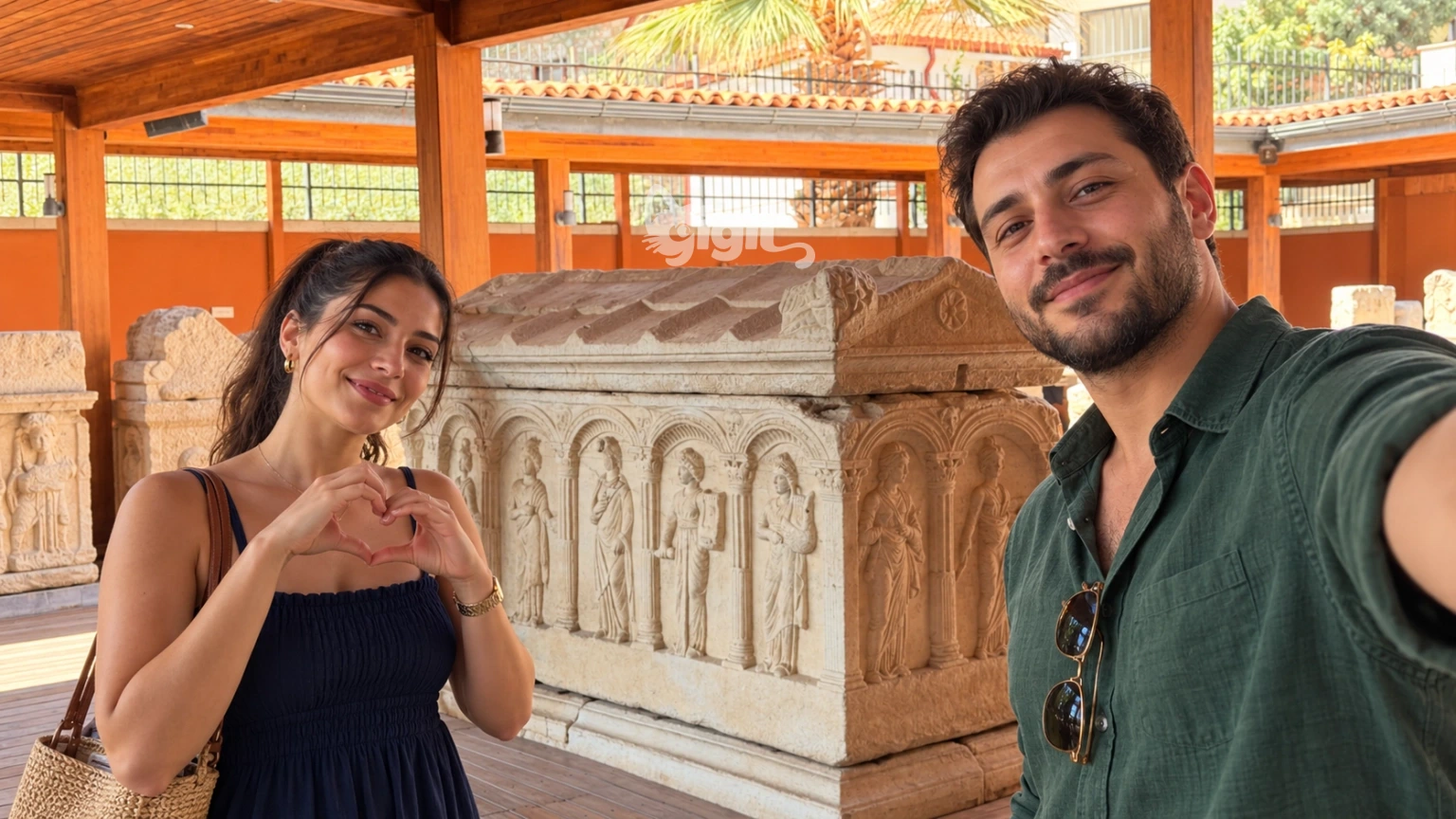
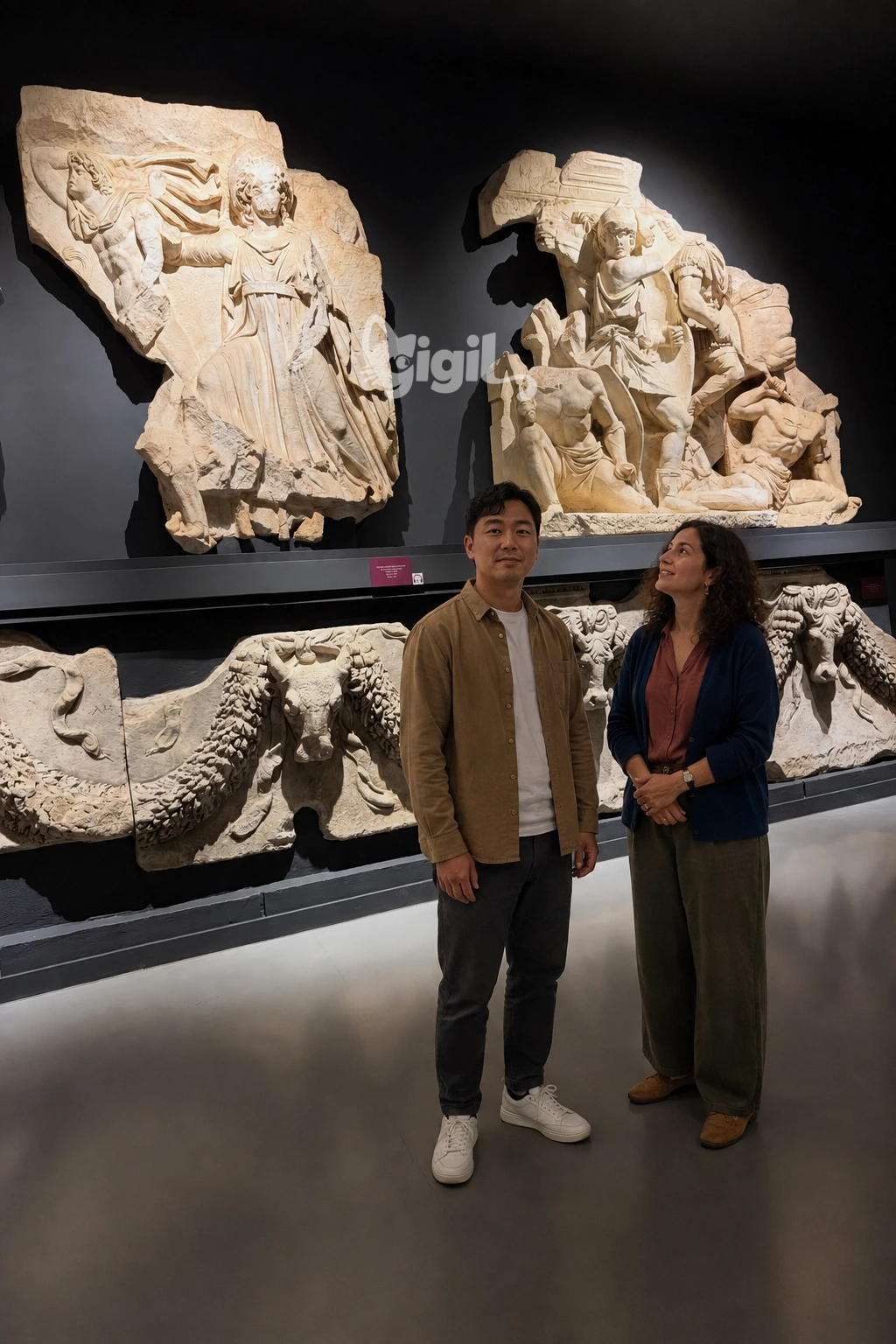
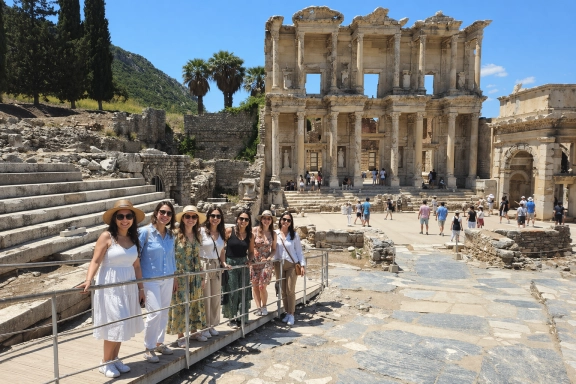
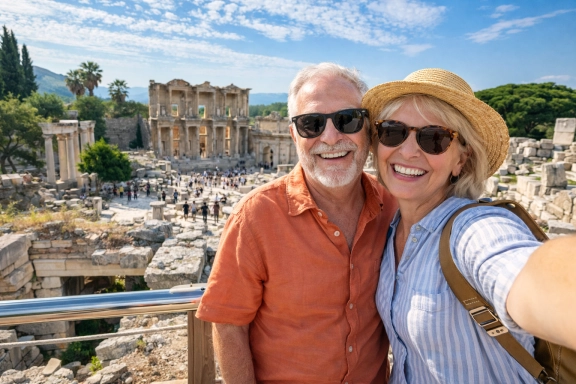
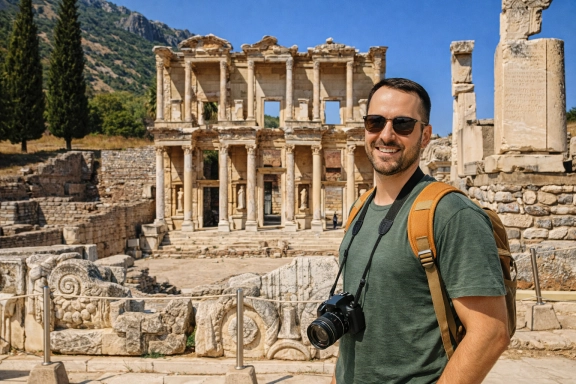
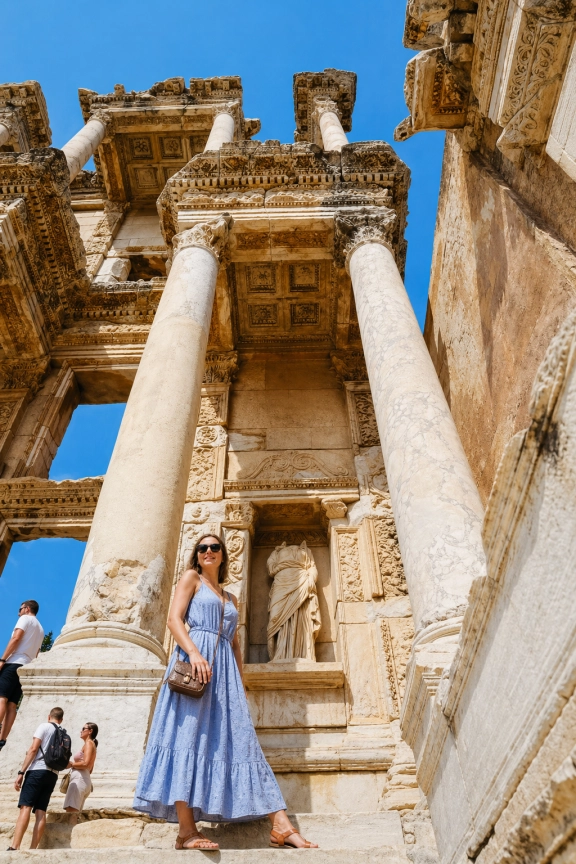
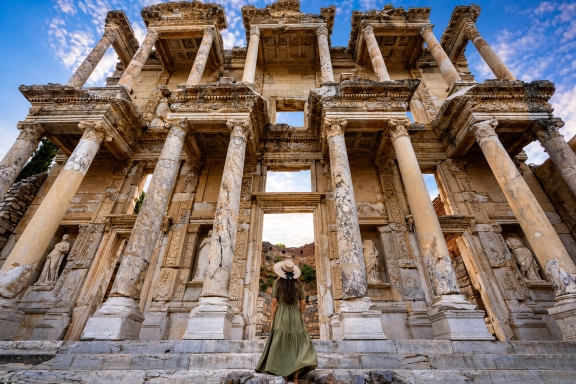
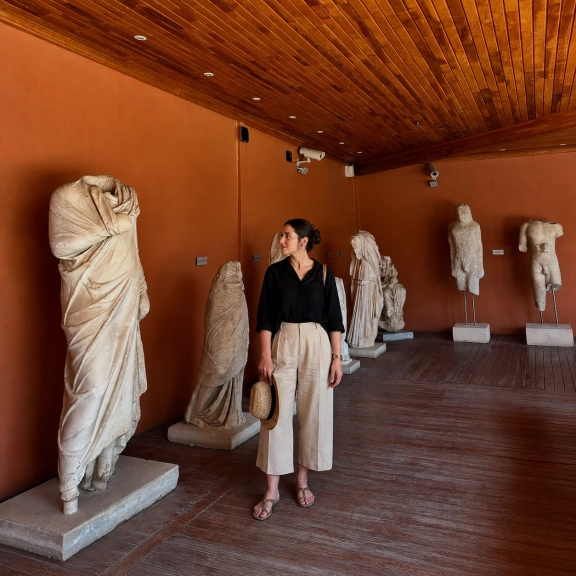
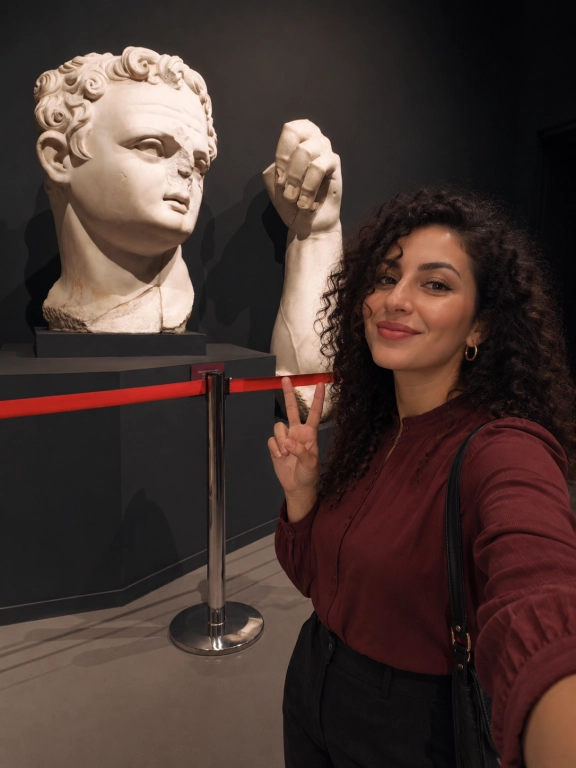
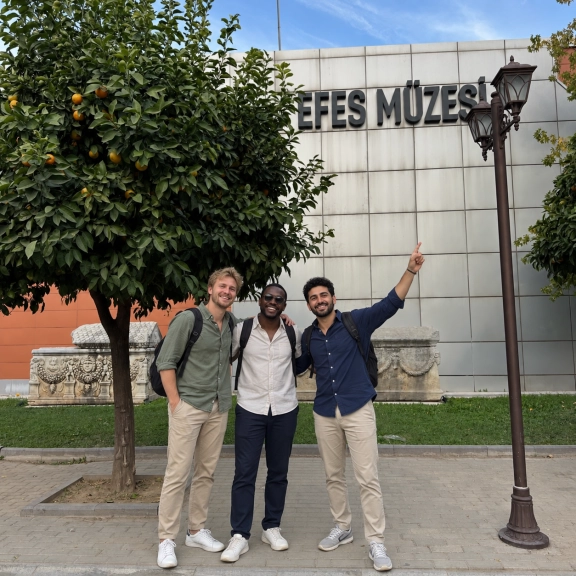
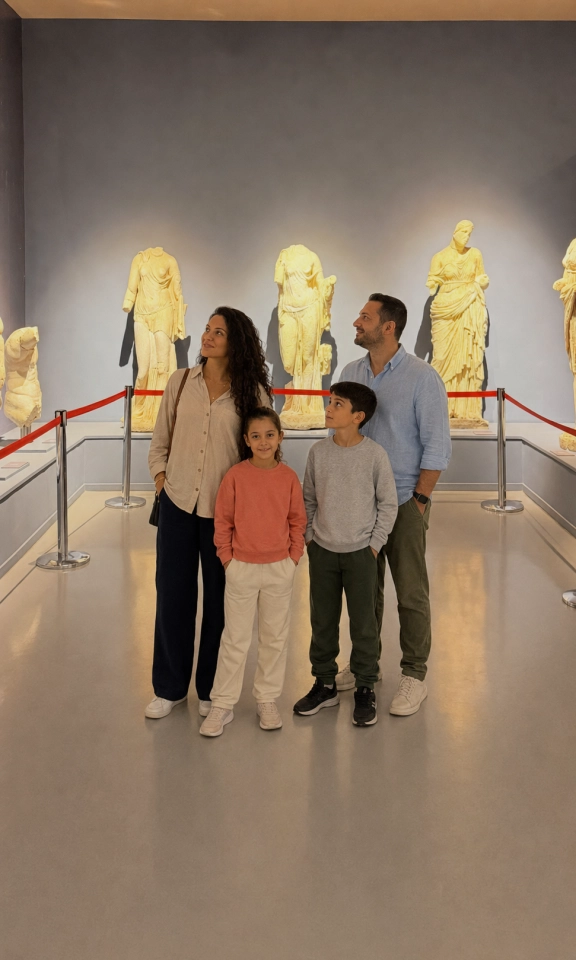
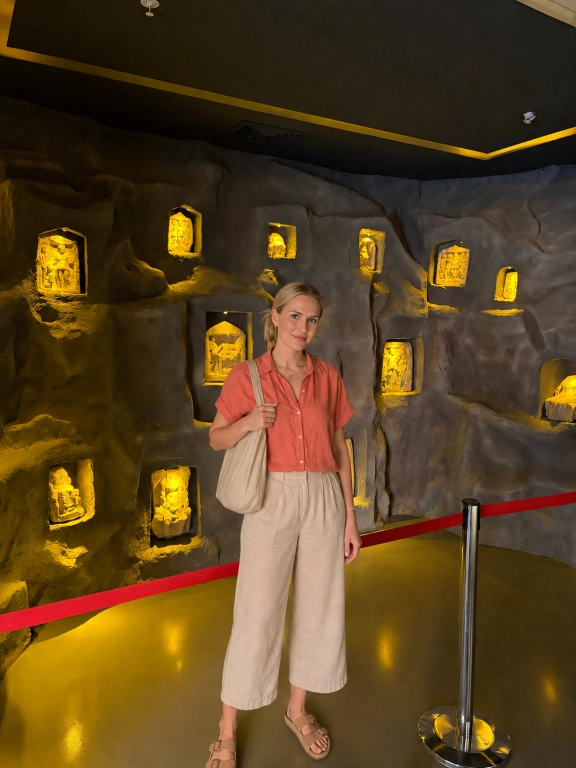
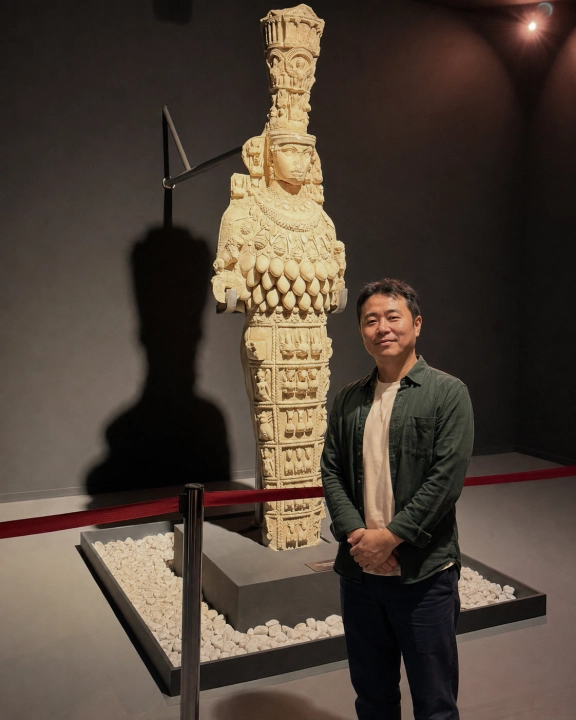
Within the Roman townscape, the Great Theatre and Library of Celsus offer major visual references. Follow the open paths and consider how the marble streets link different public settings. The museum after the meal stop adds smaller objects to this picture, helping connect the scale of the city with human experience.
Questions
What should I remember about the coast?
The ancient city belonged to a waterfront landscape that shifted over time.
Why follow the street network?
It helps organize separate ruins into a connected picture of public urban life.
Are the library and theatre the only useful evidence?
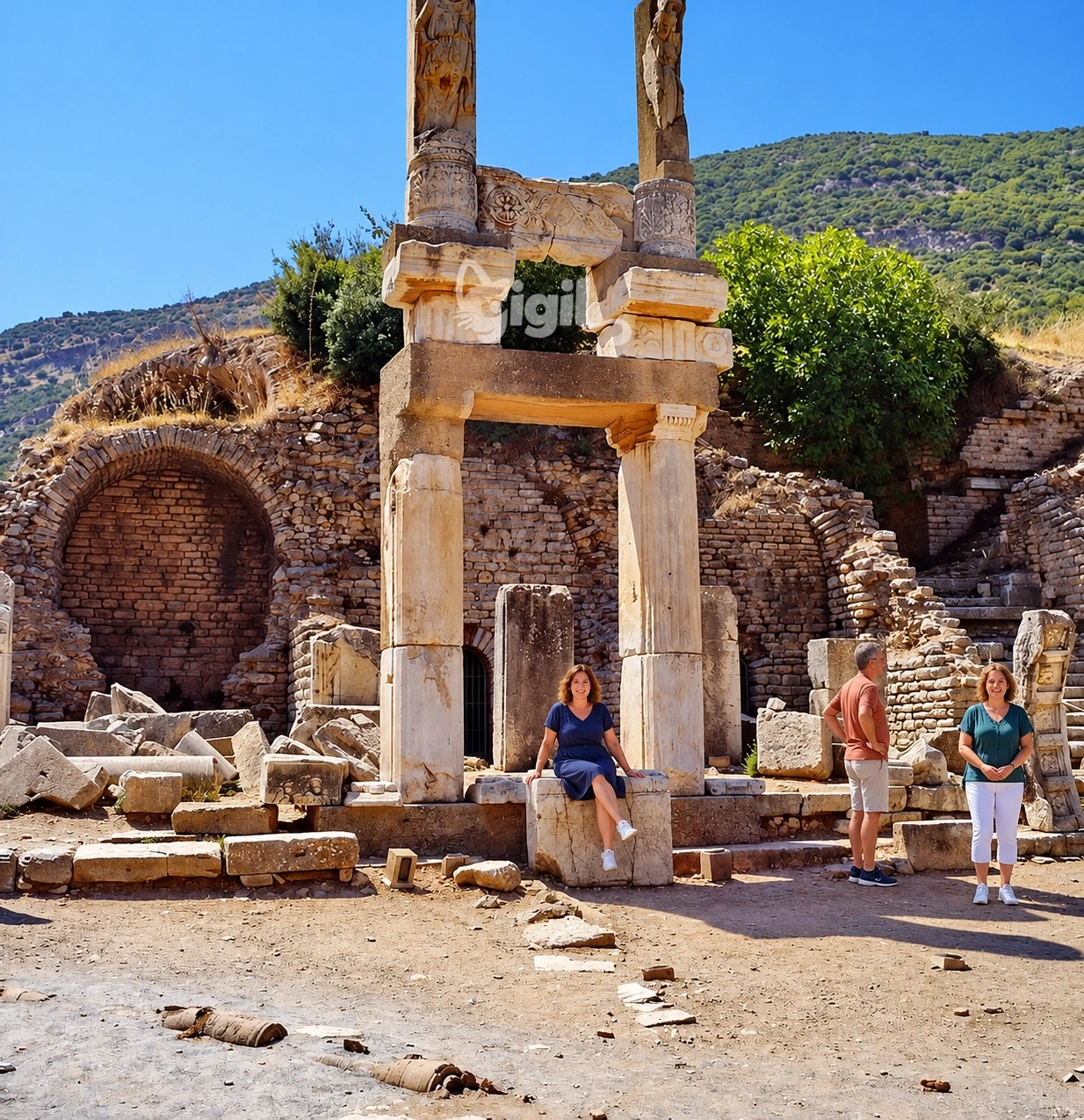
No. The spaces and architectural fragments between landmarks can also explain the city.
What is a useful museum comparison?
Compare an object's human scale with the scale of the public spaces you recall.