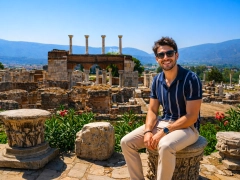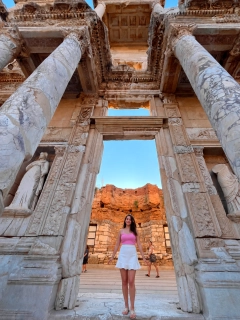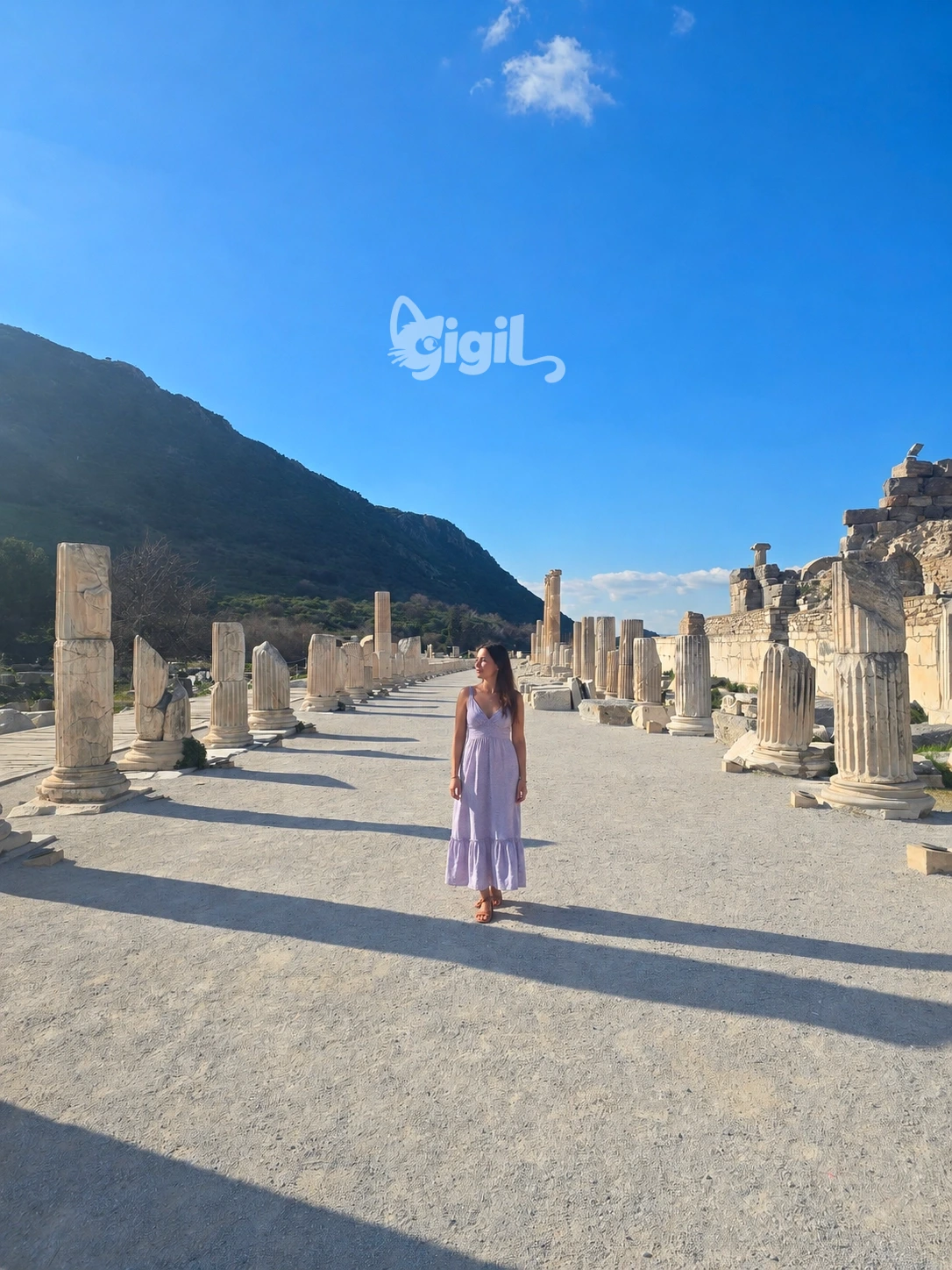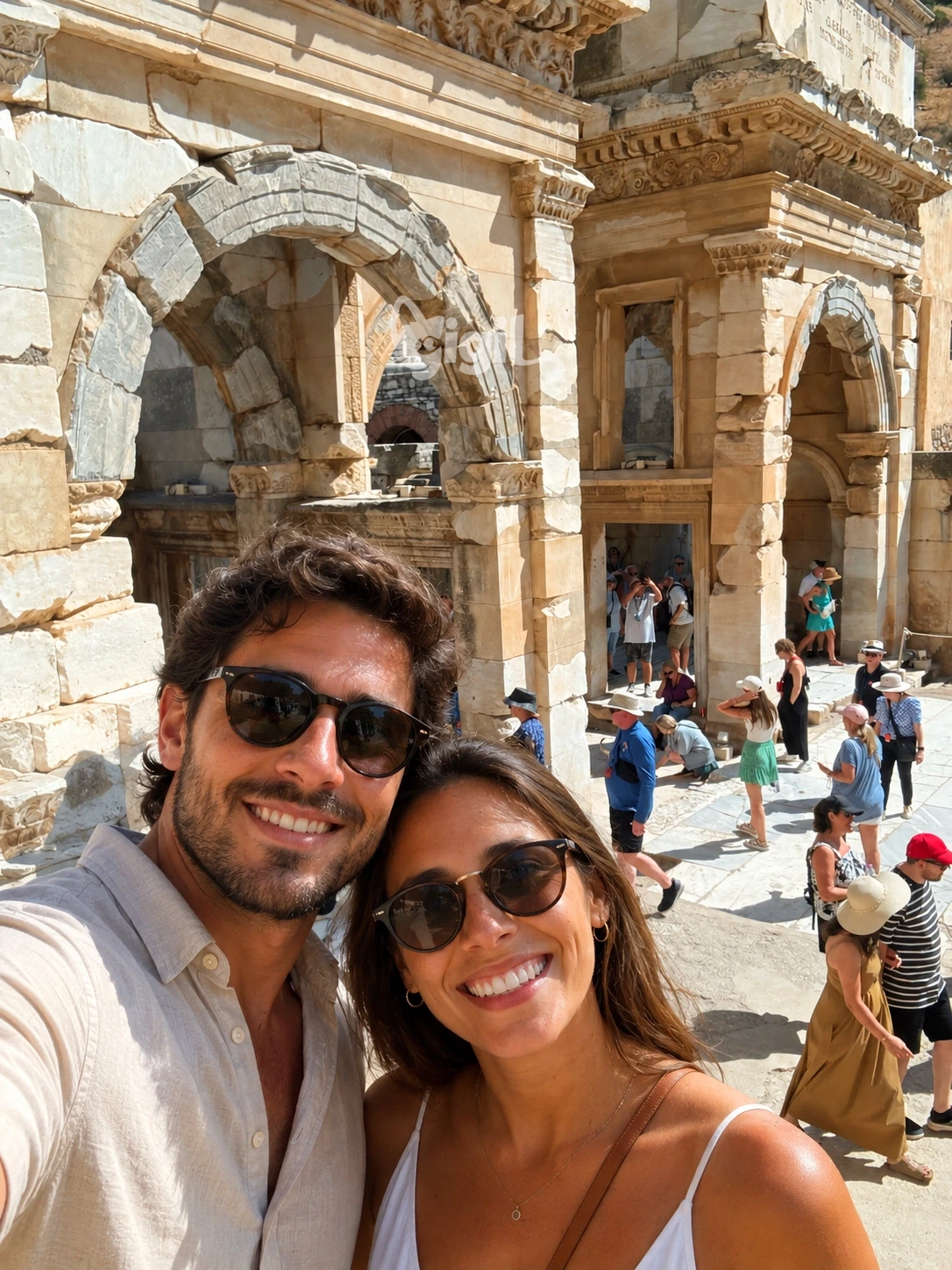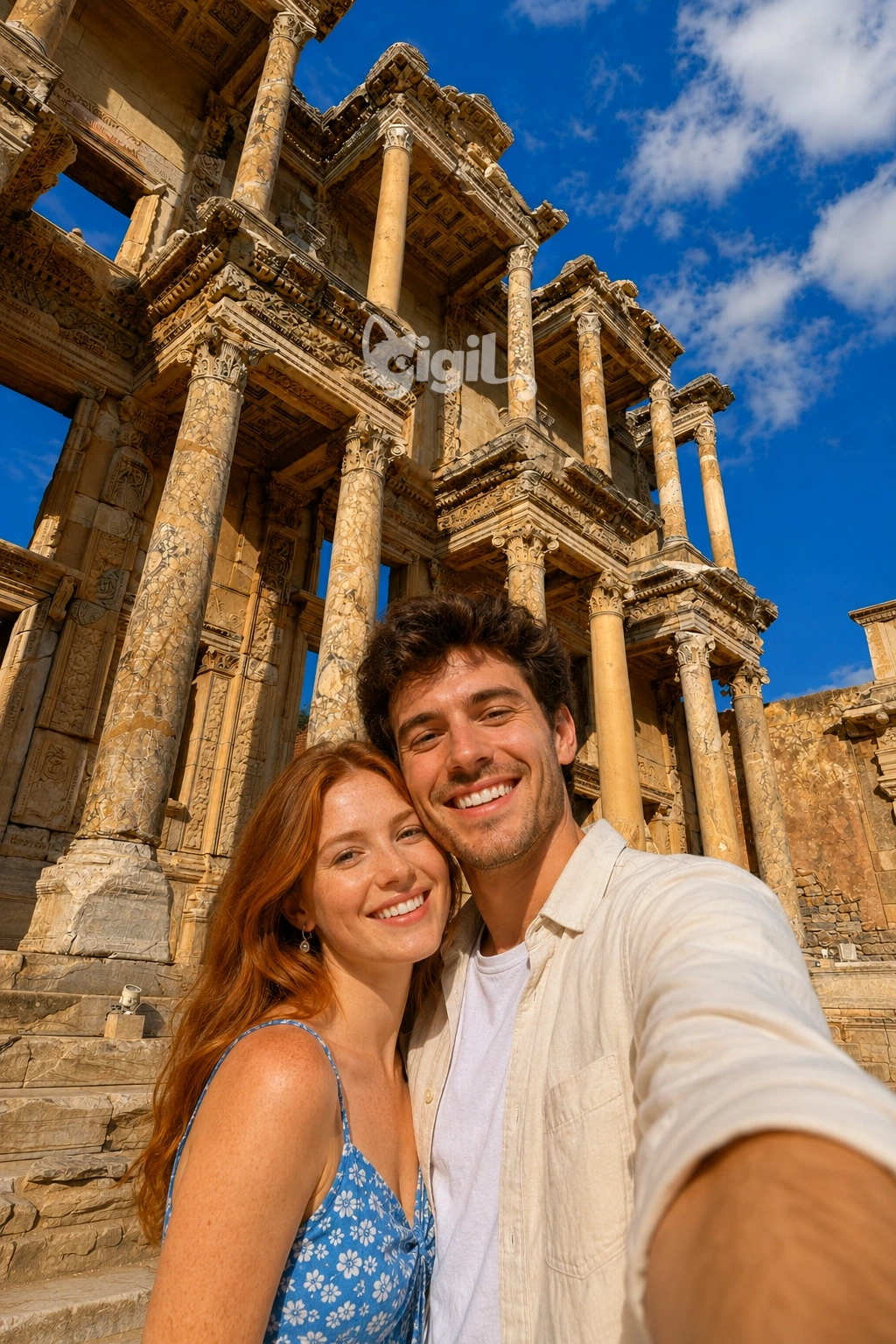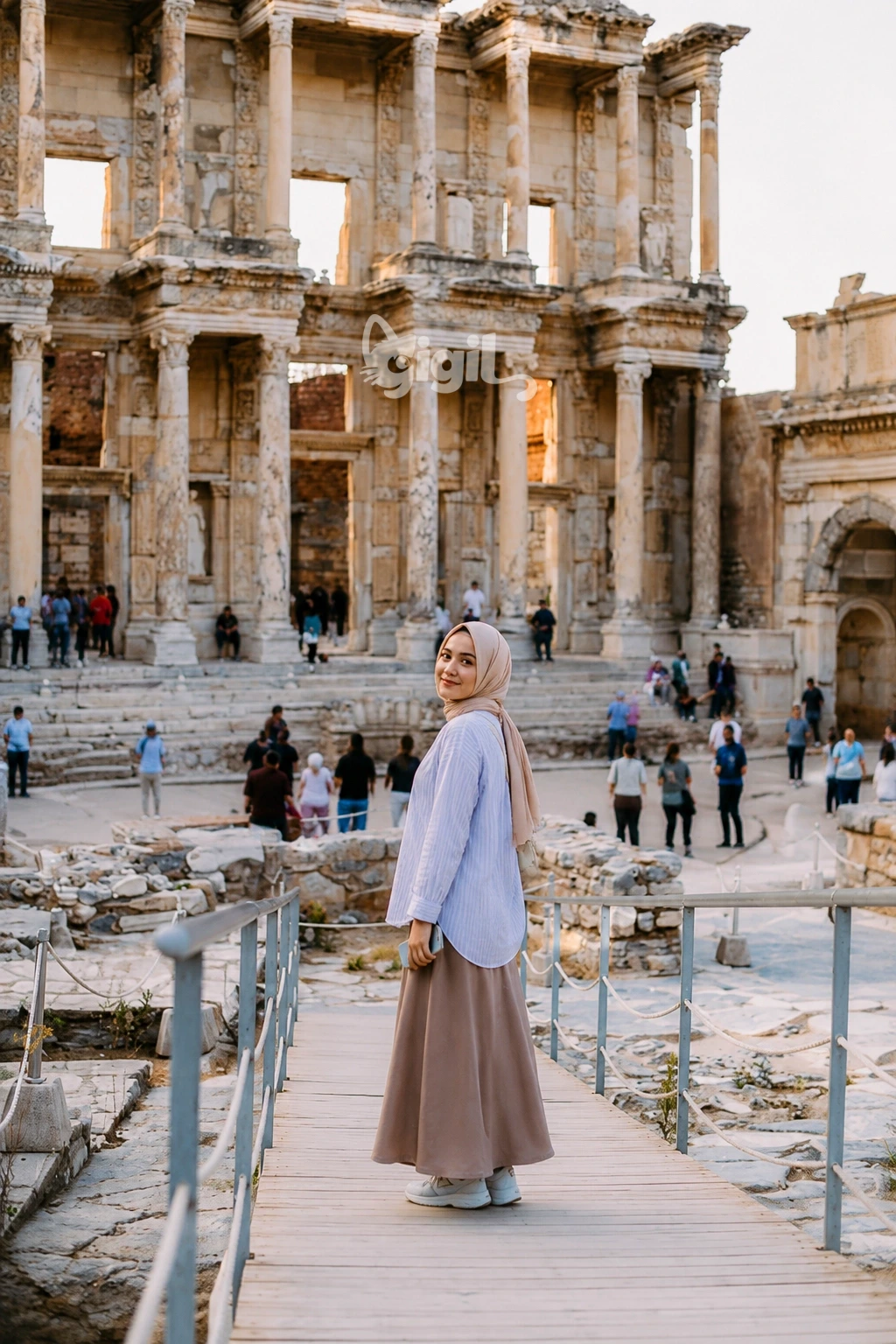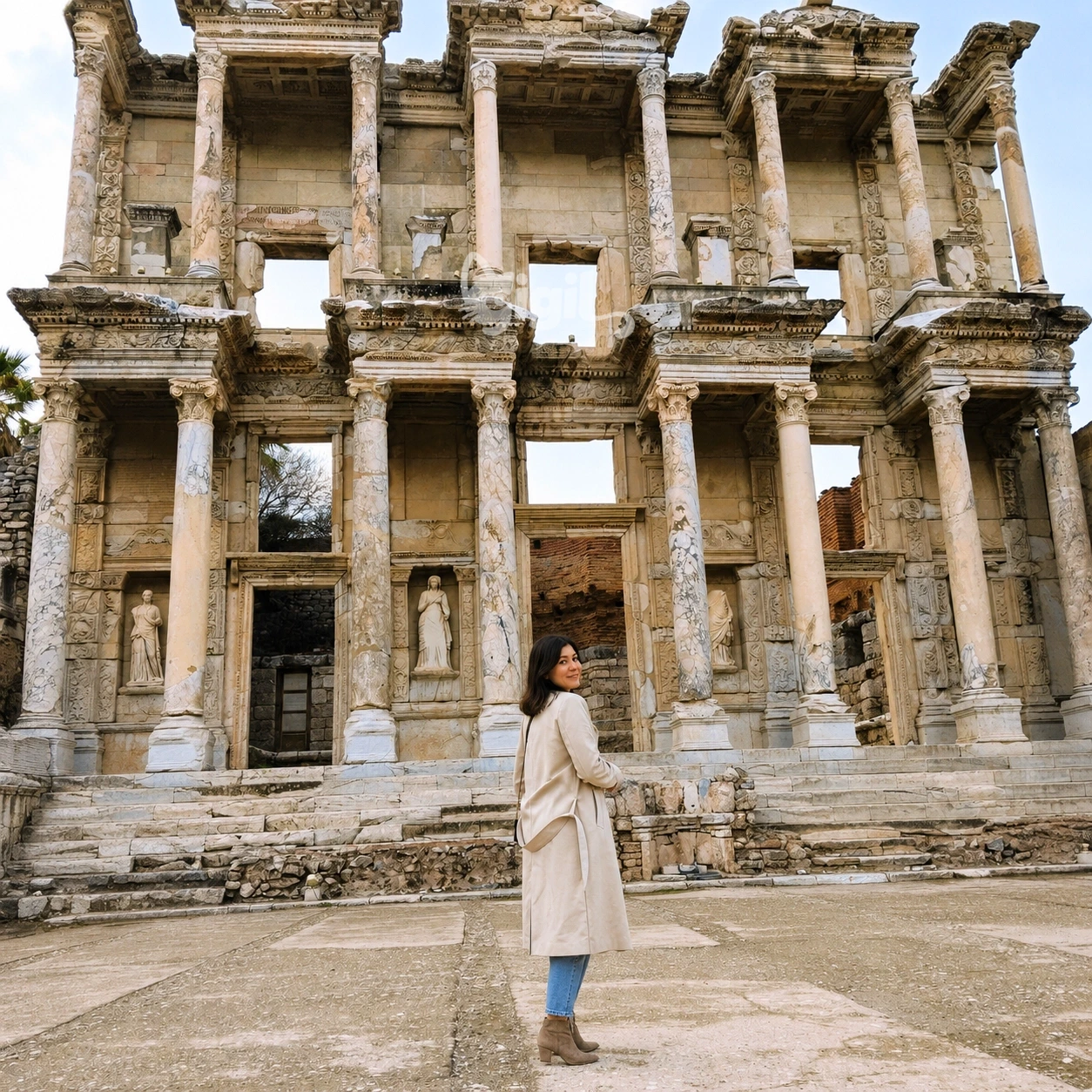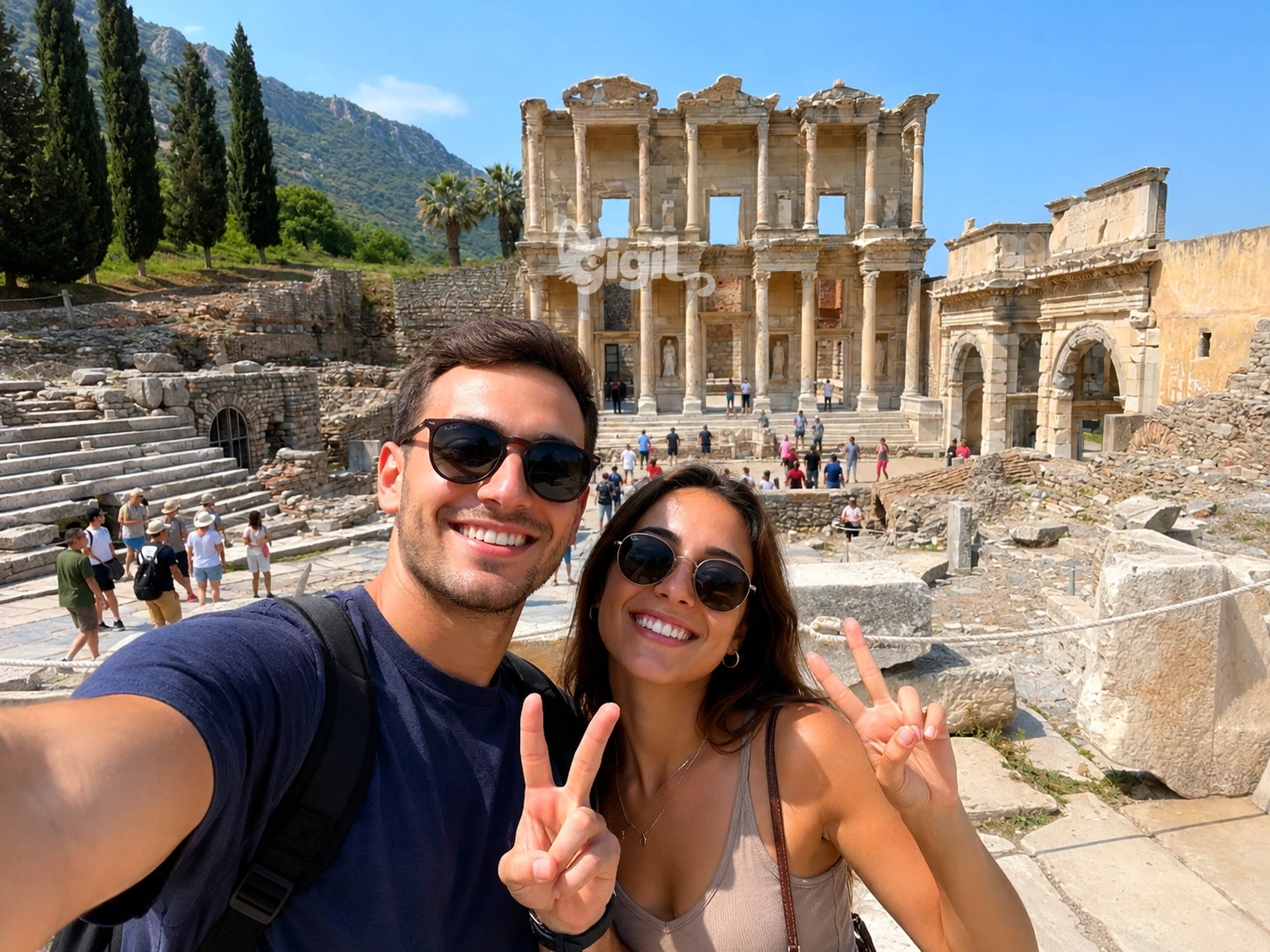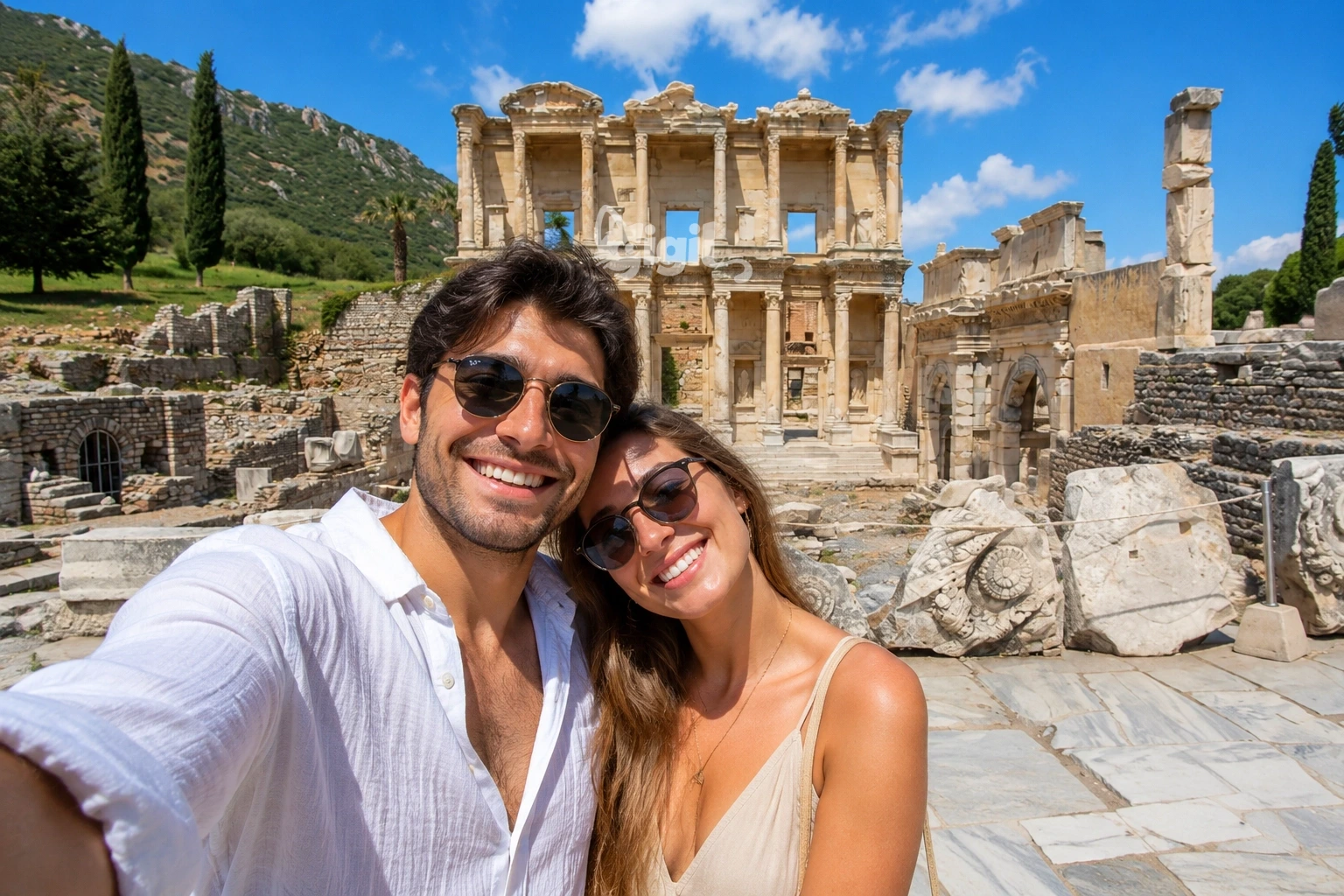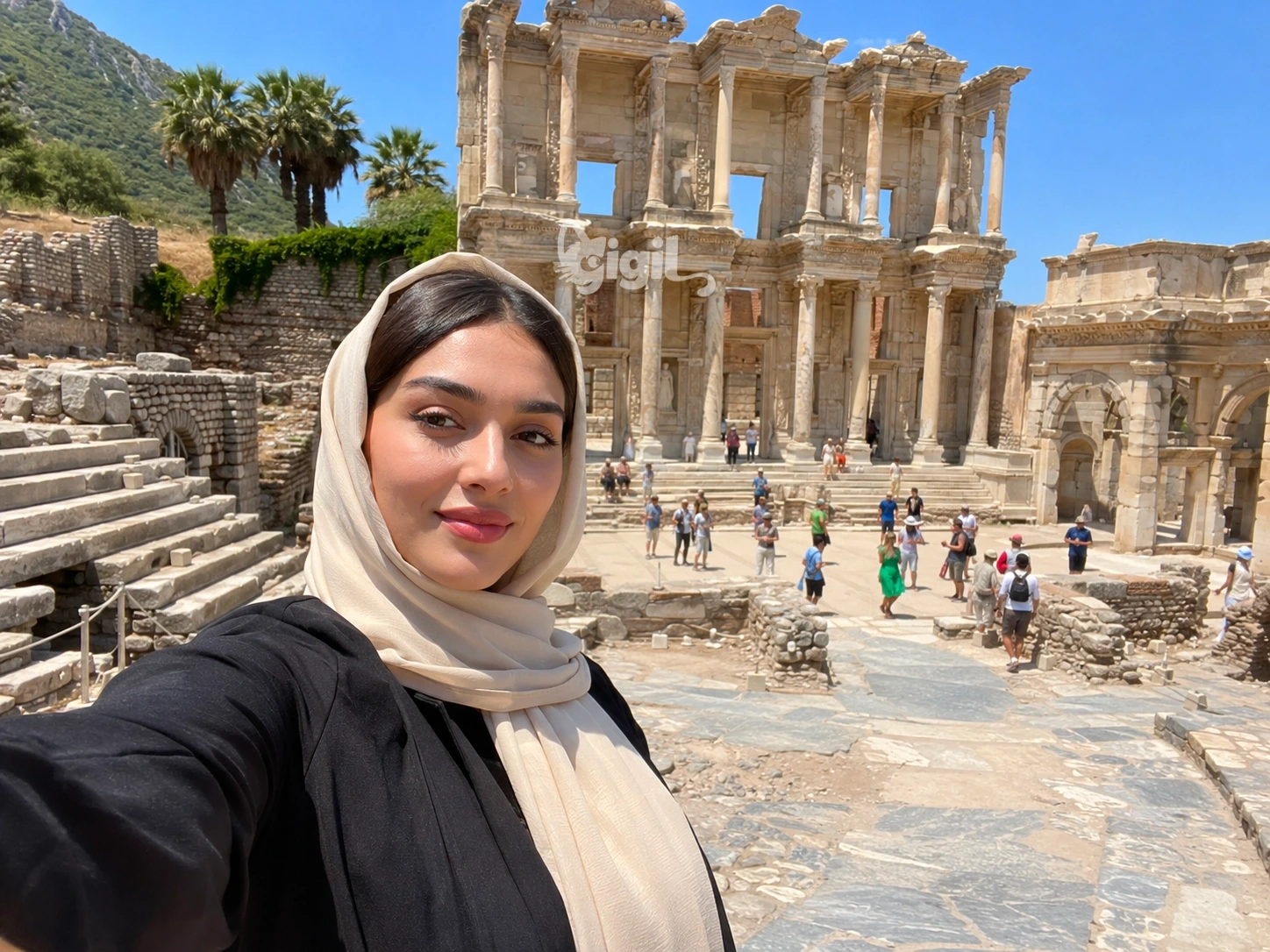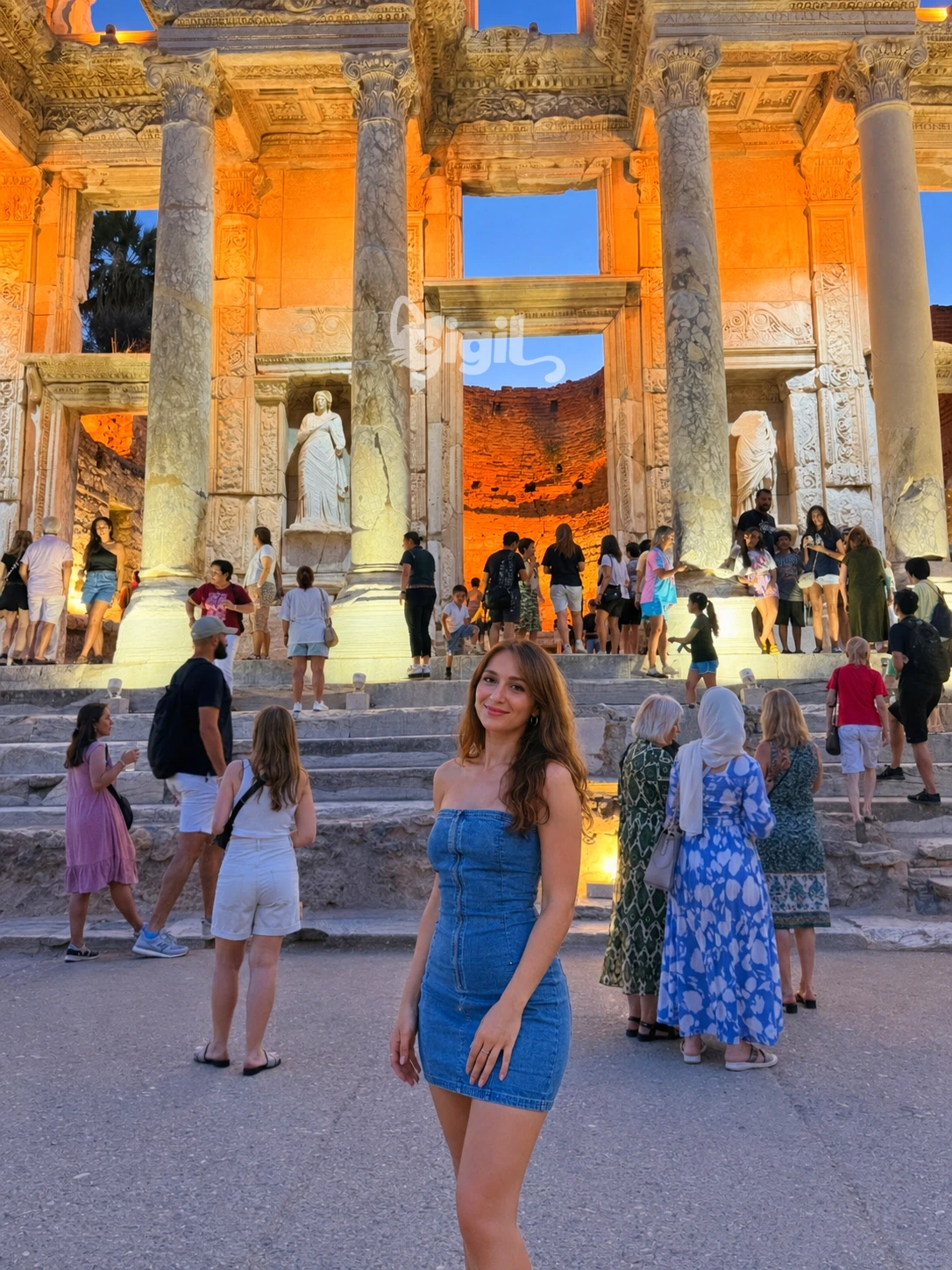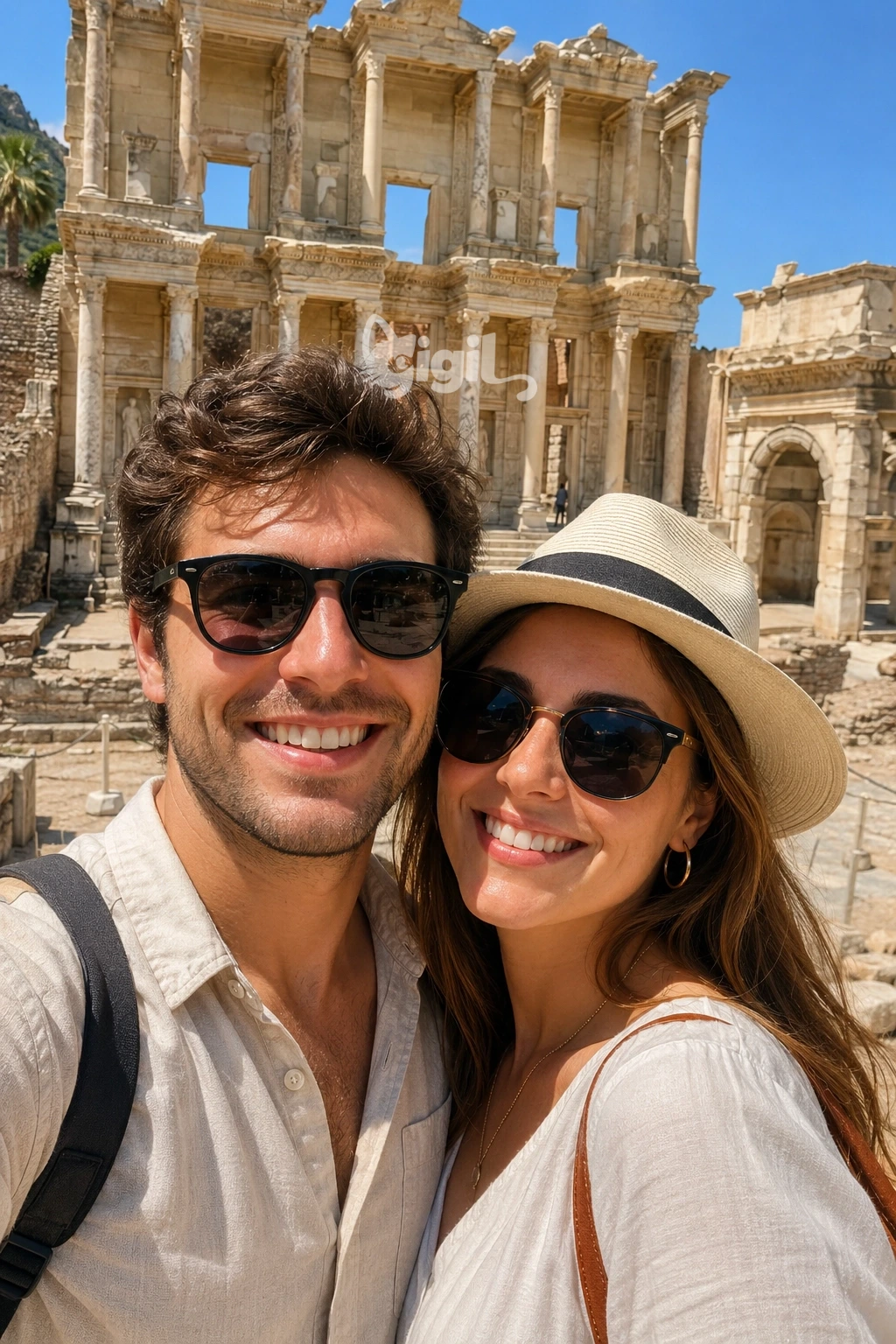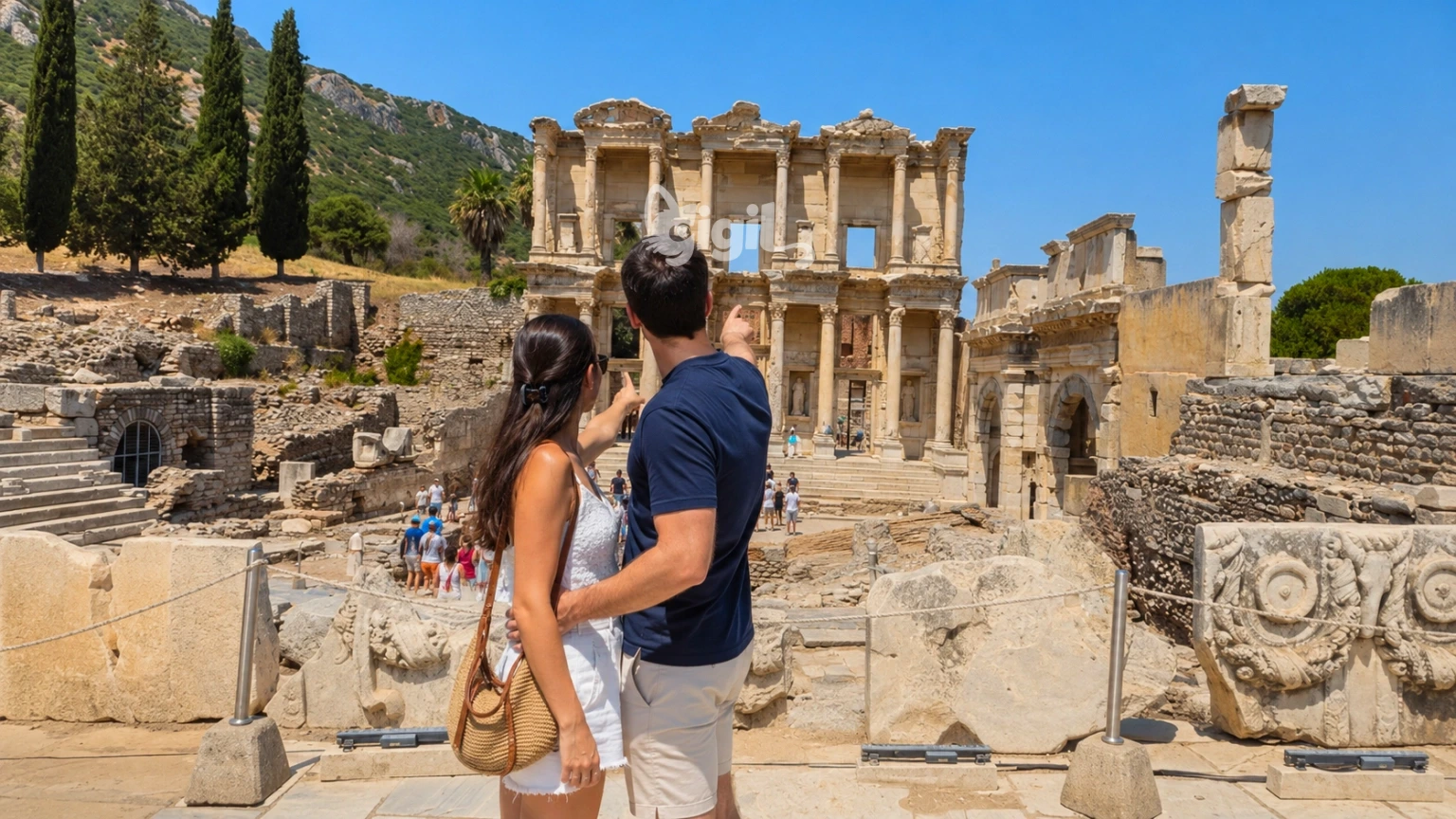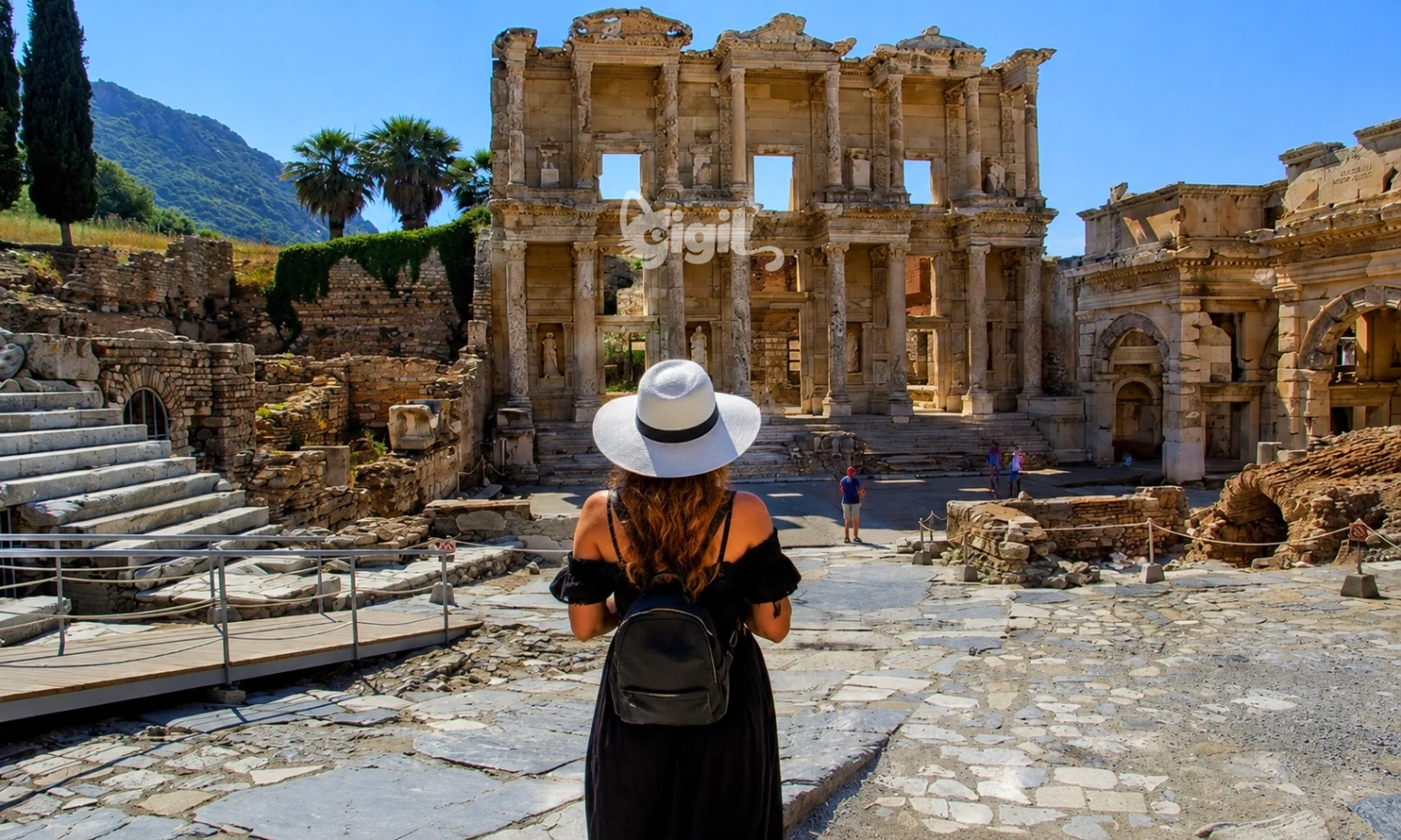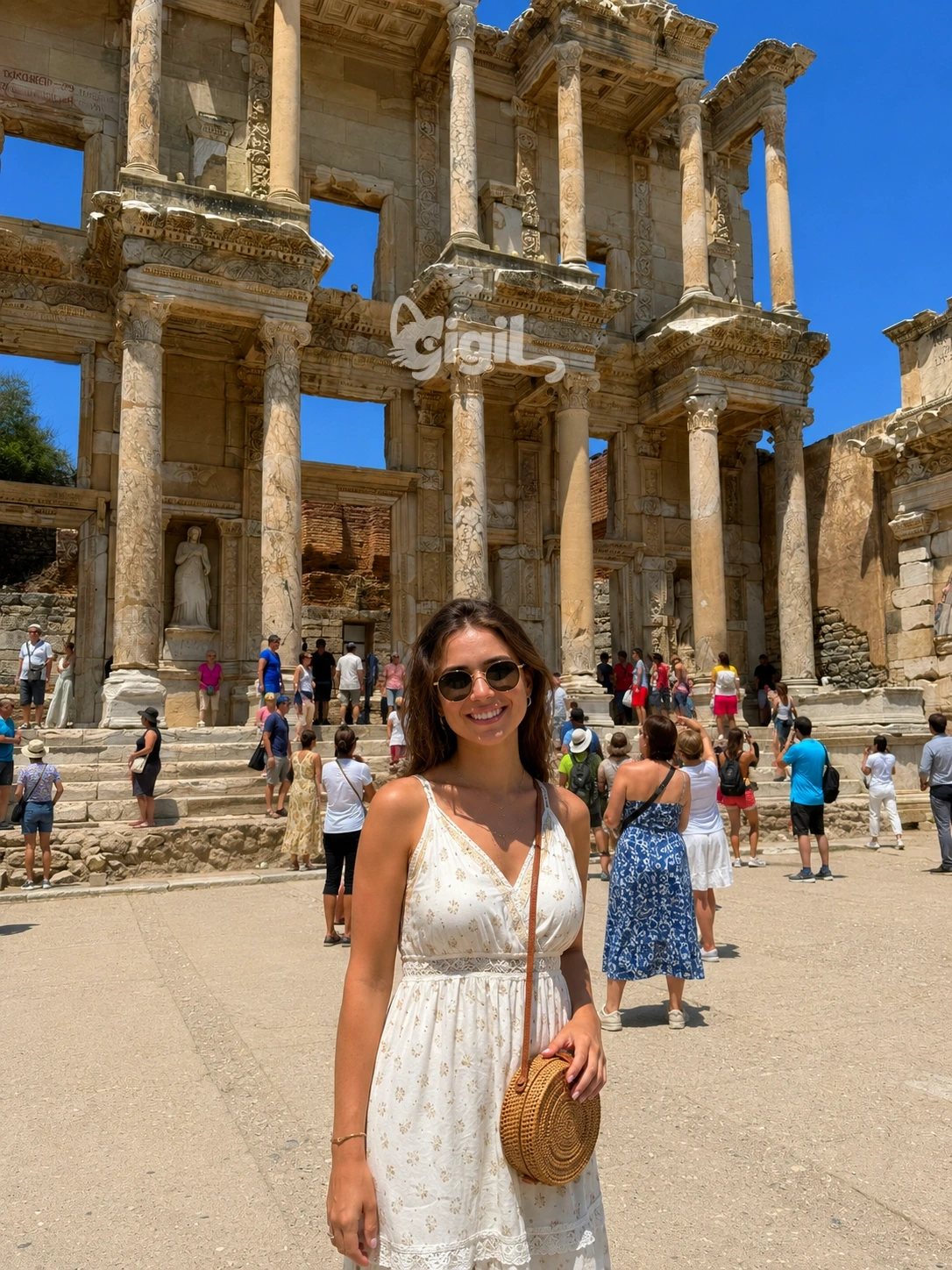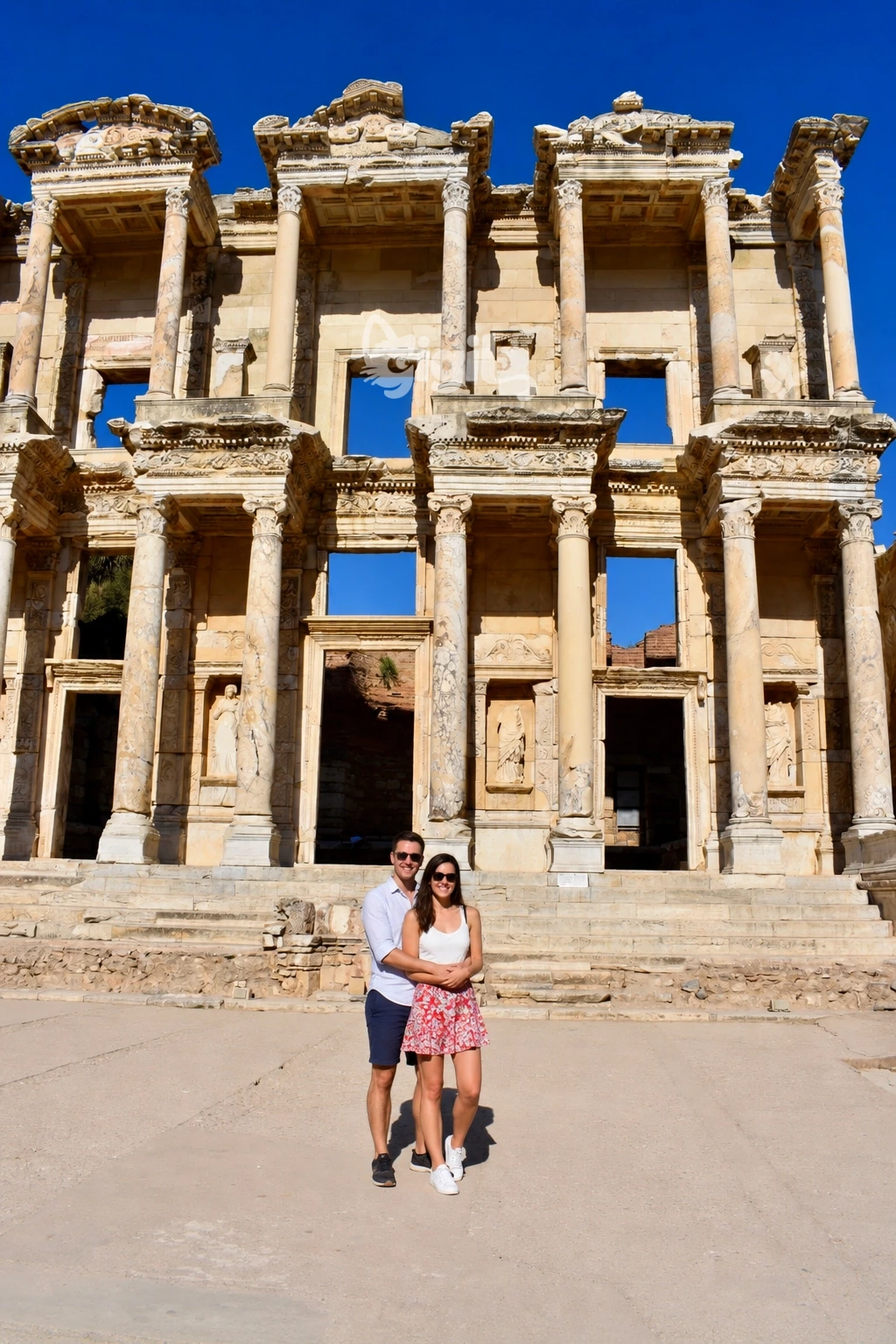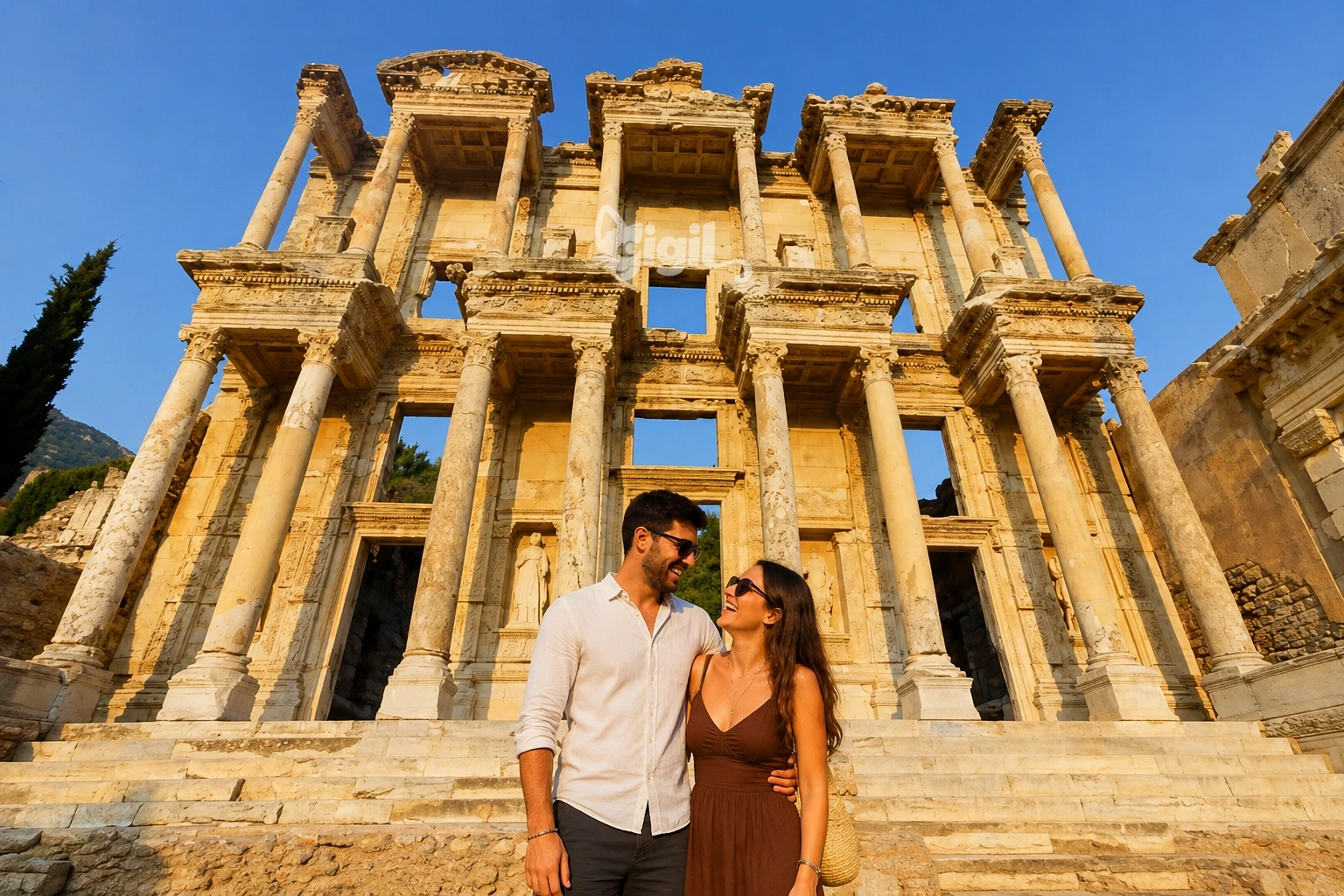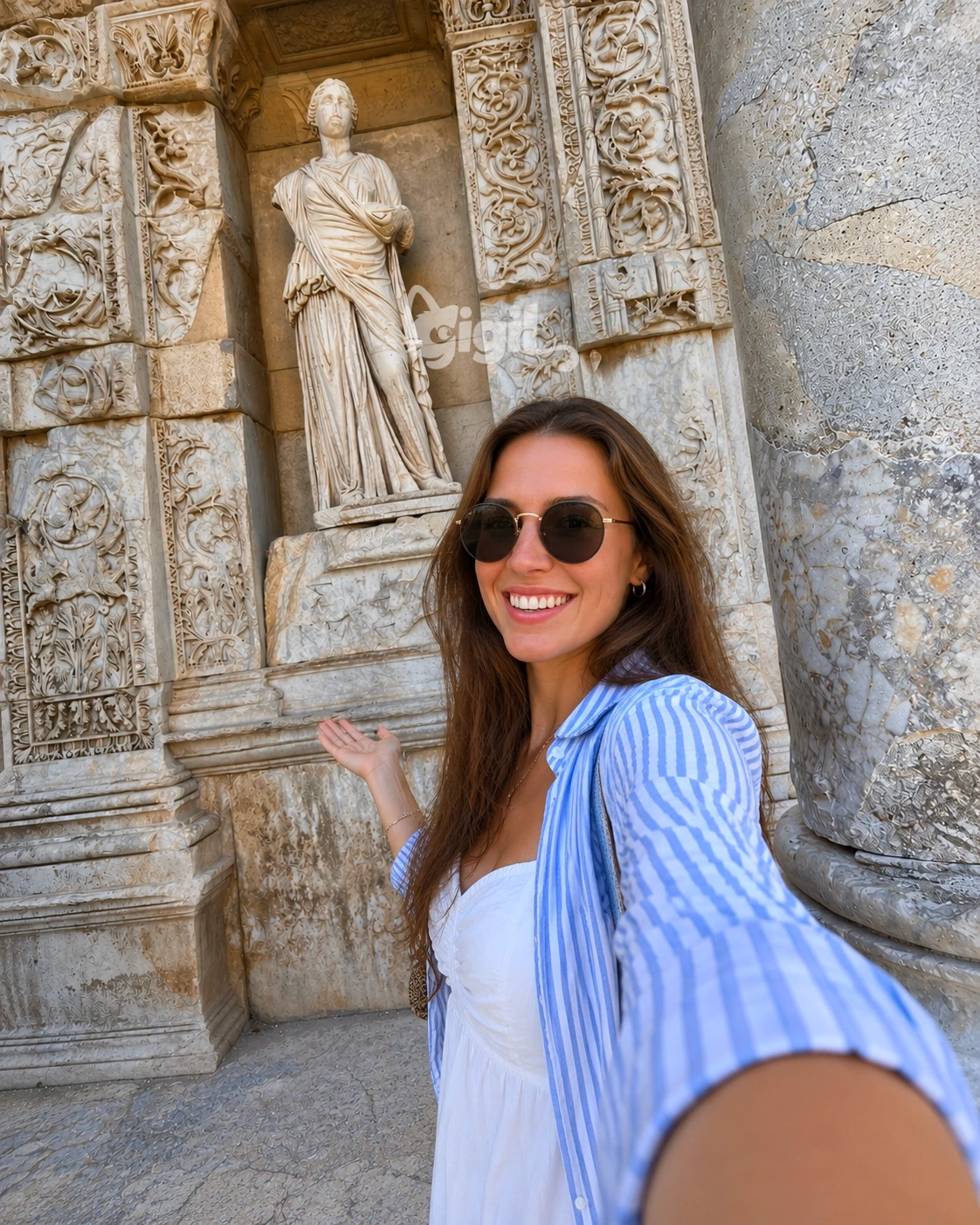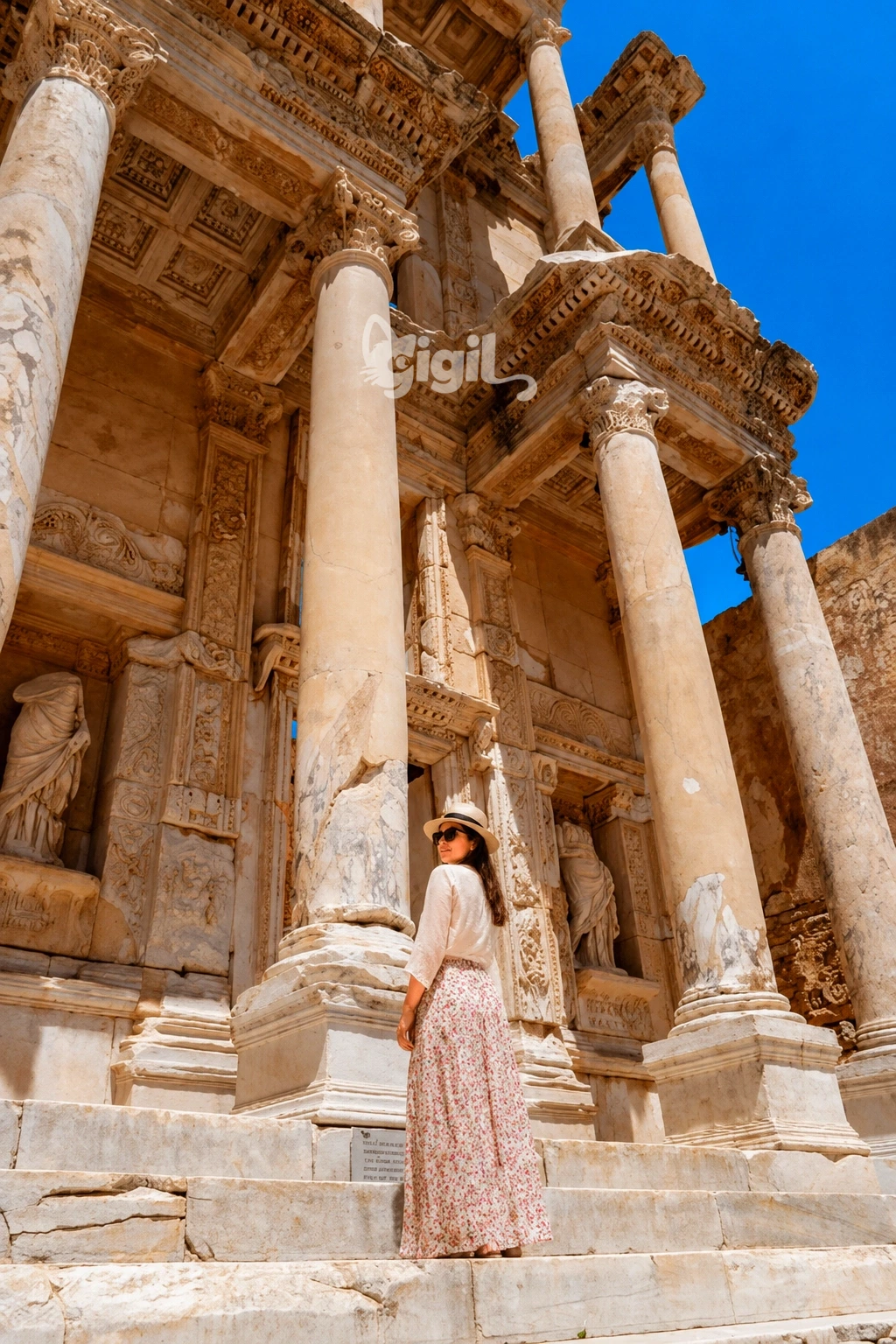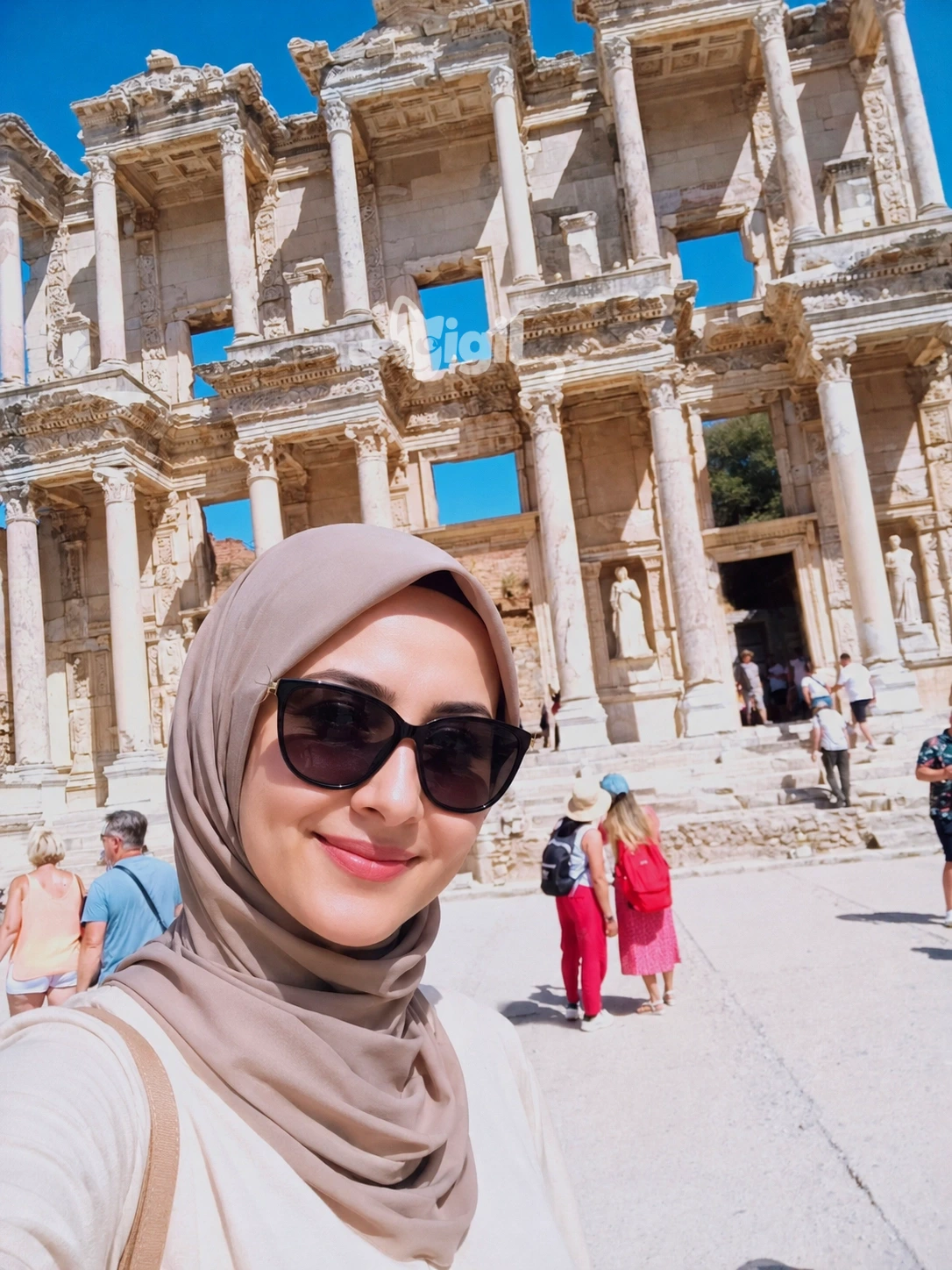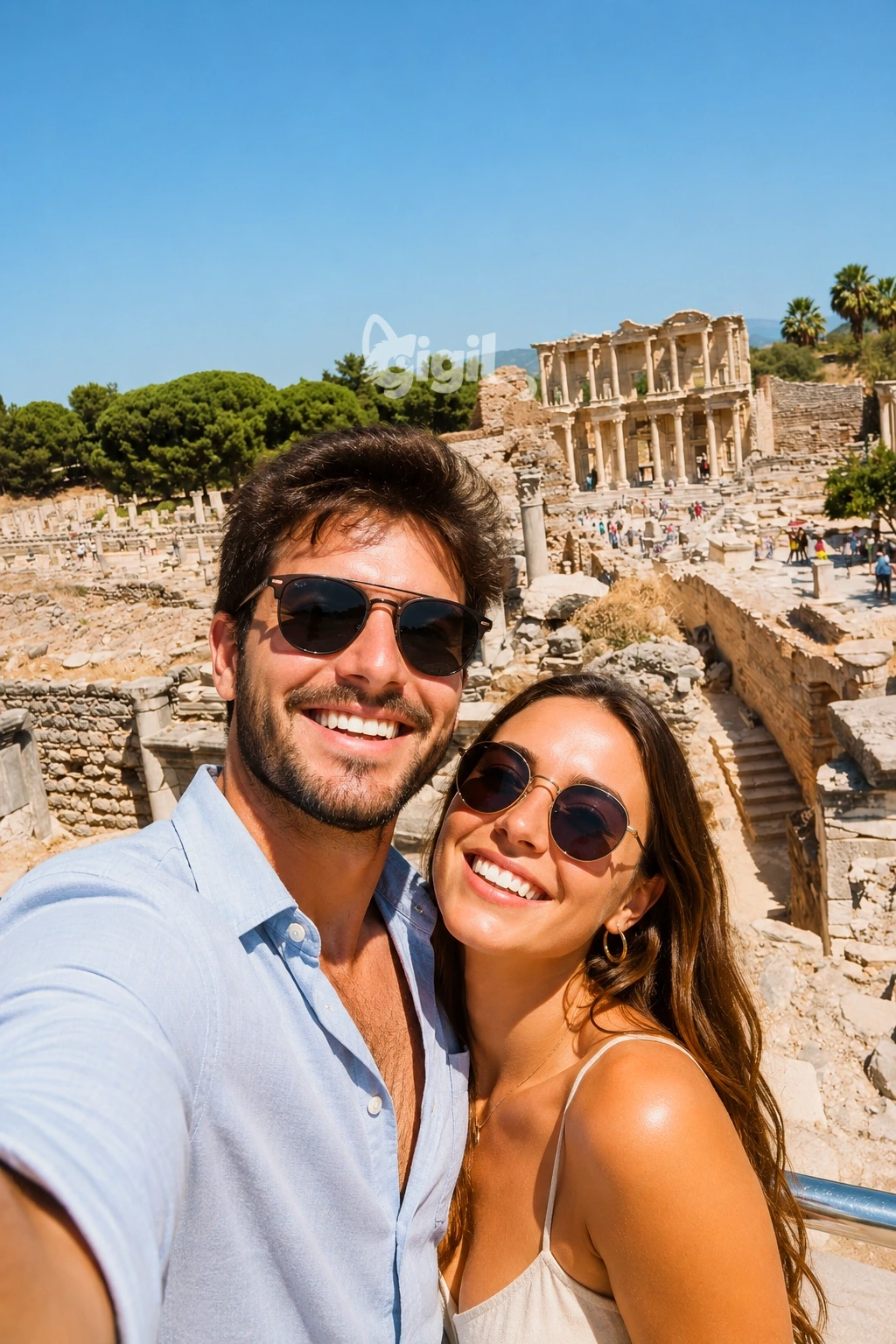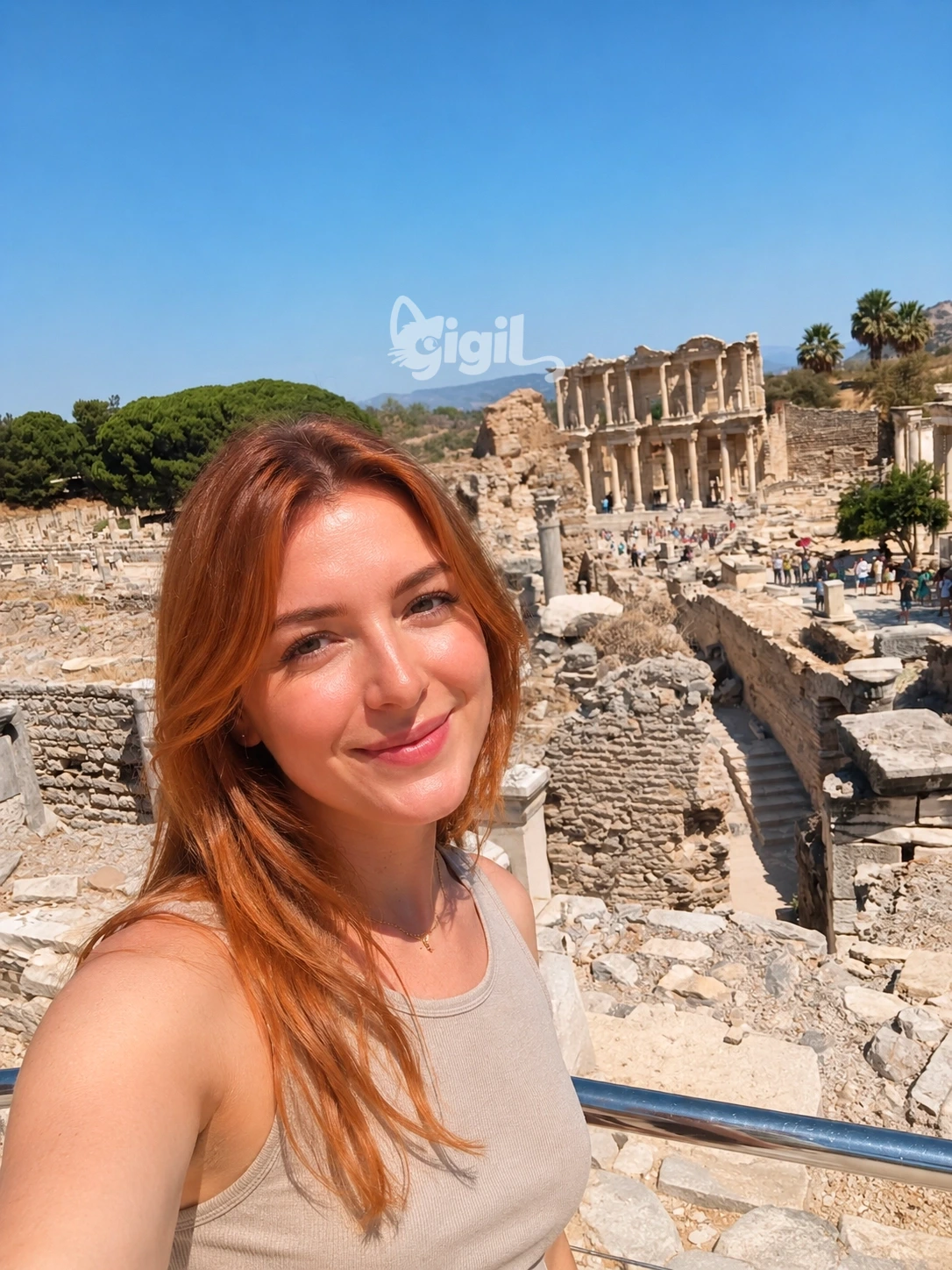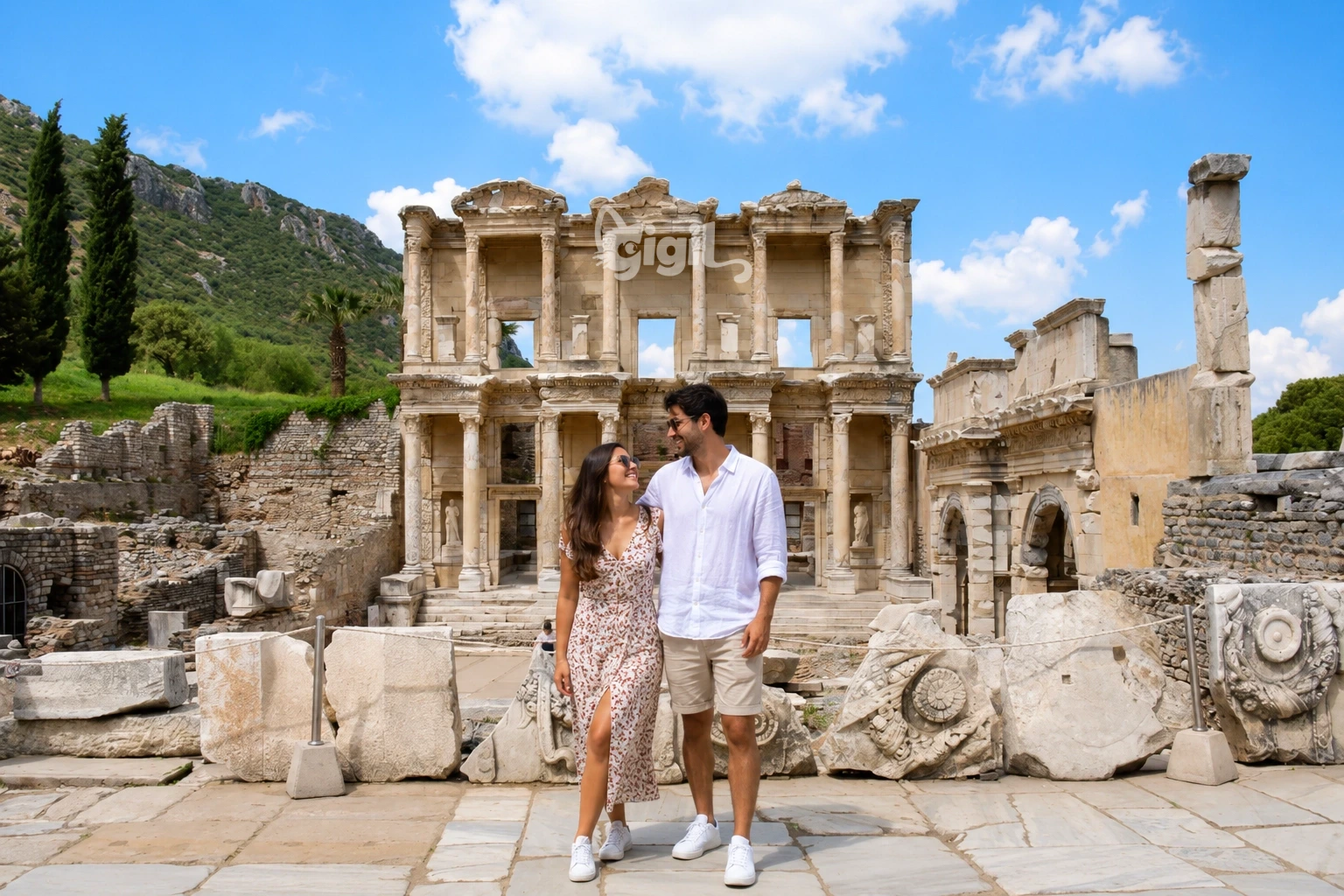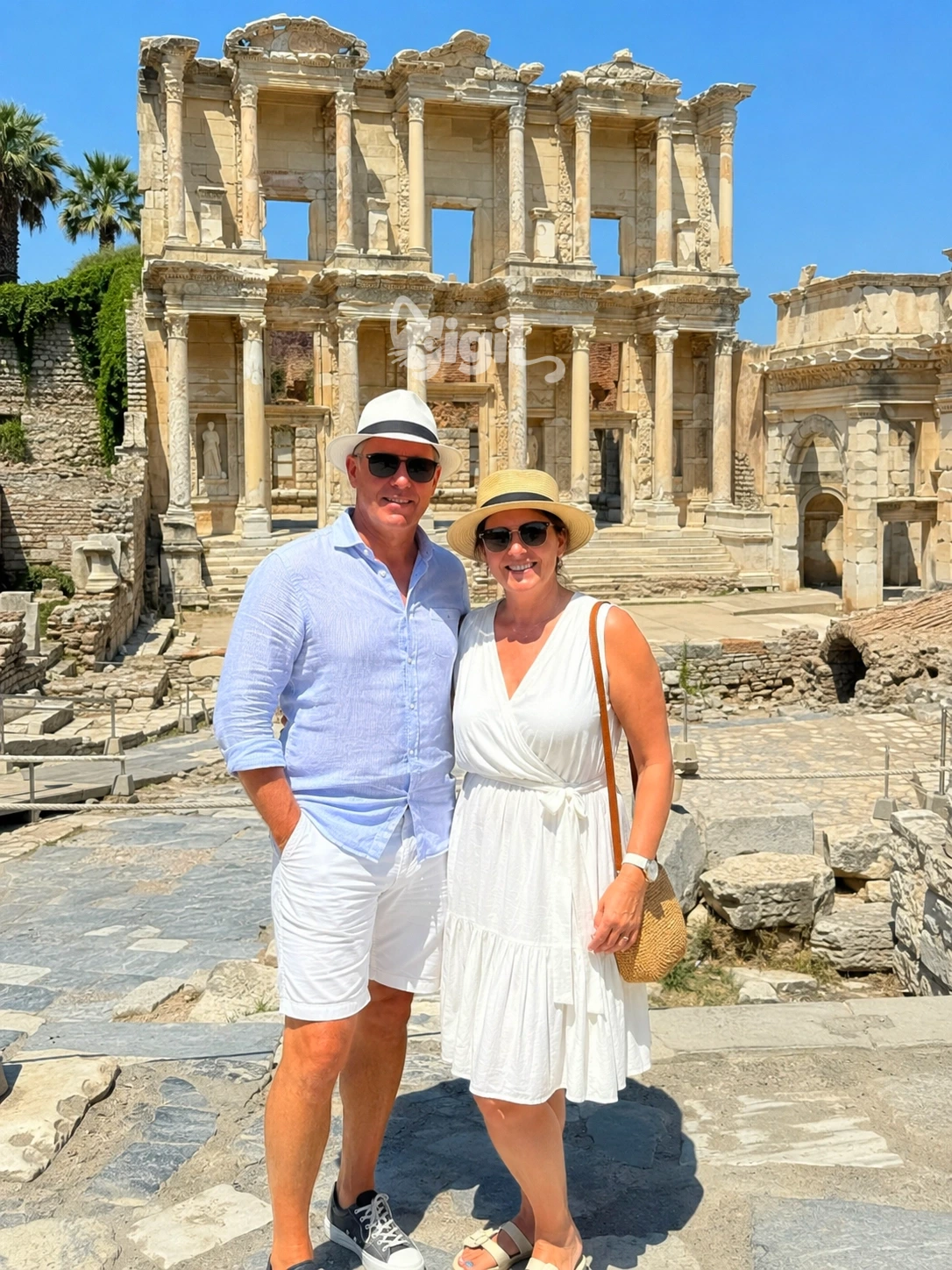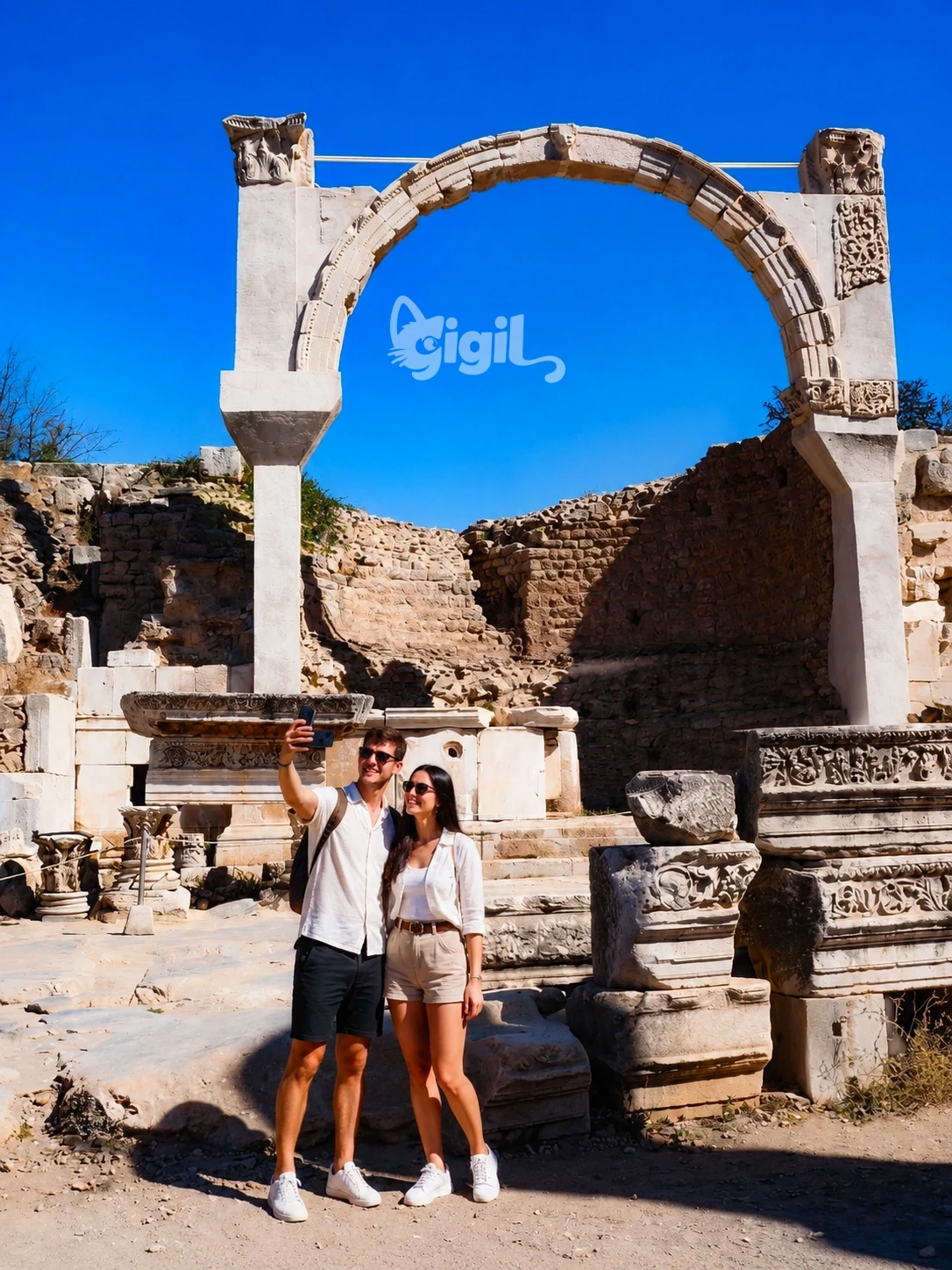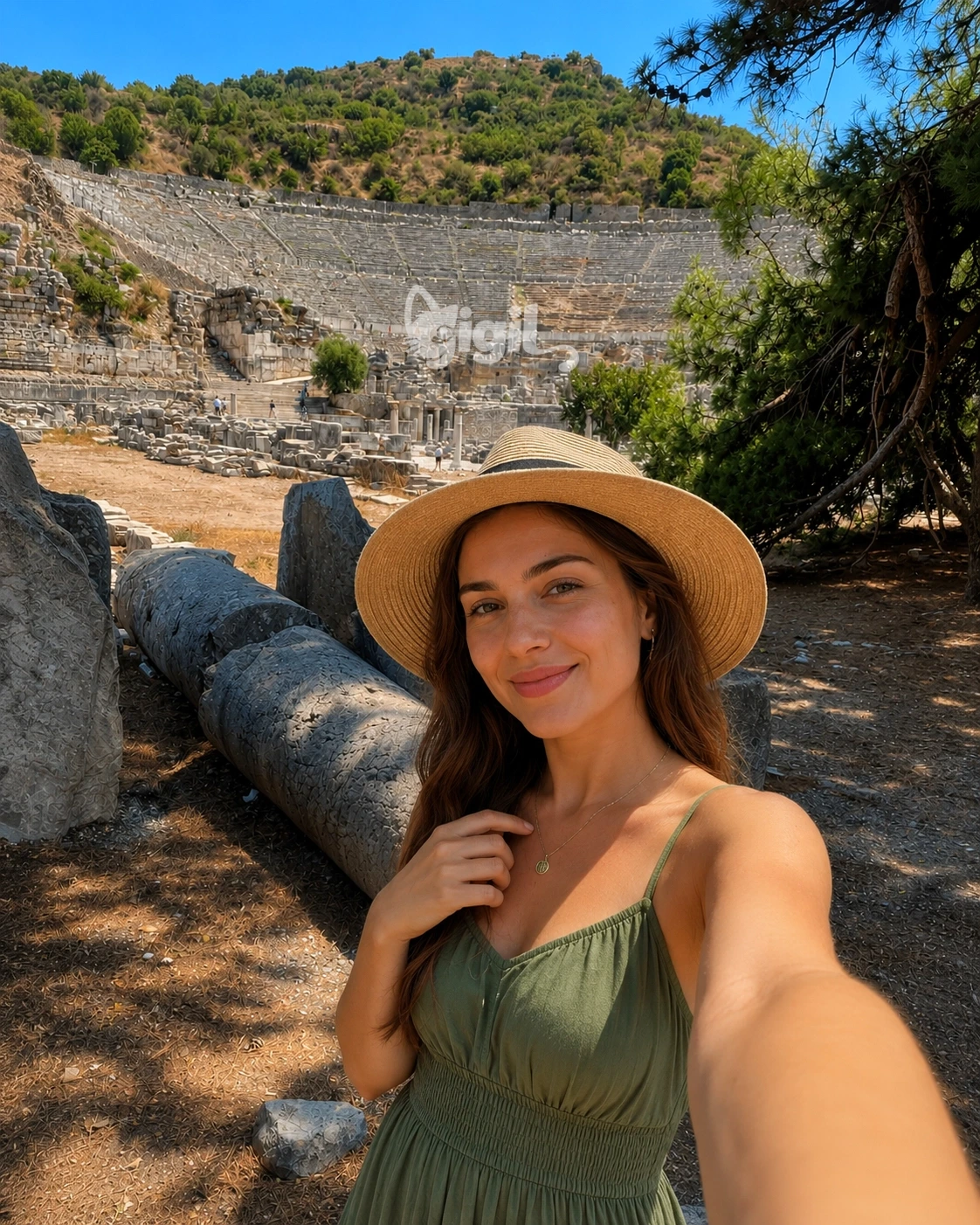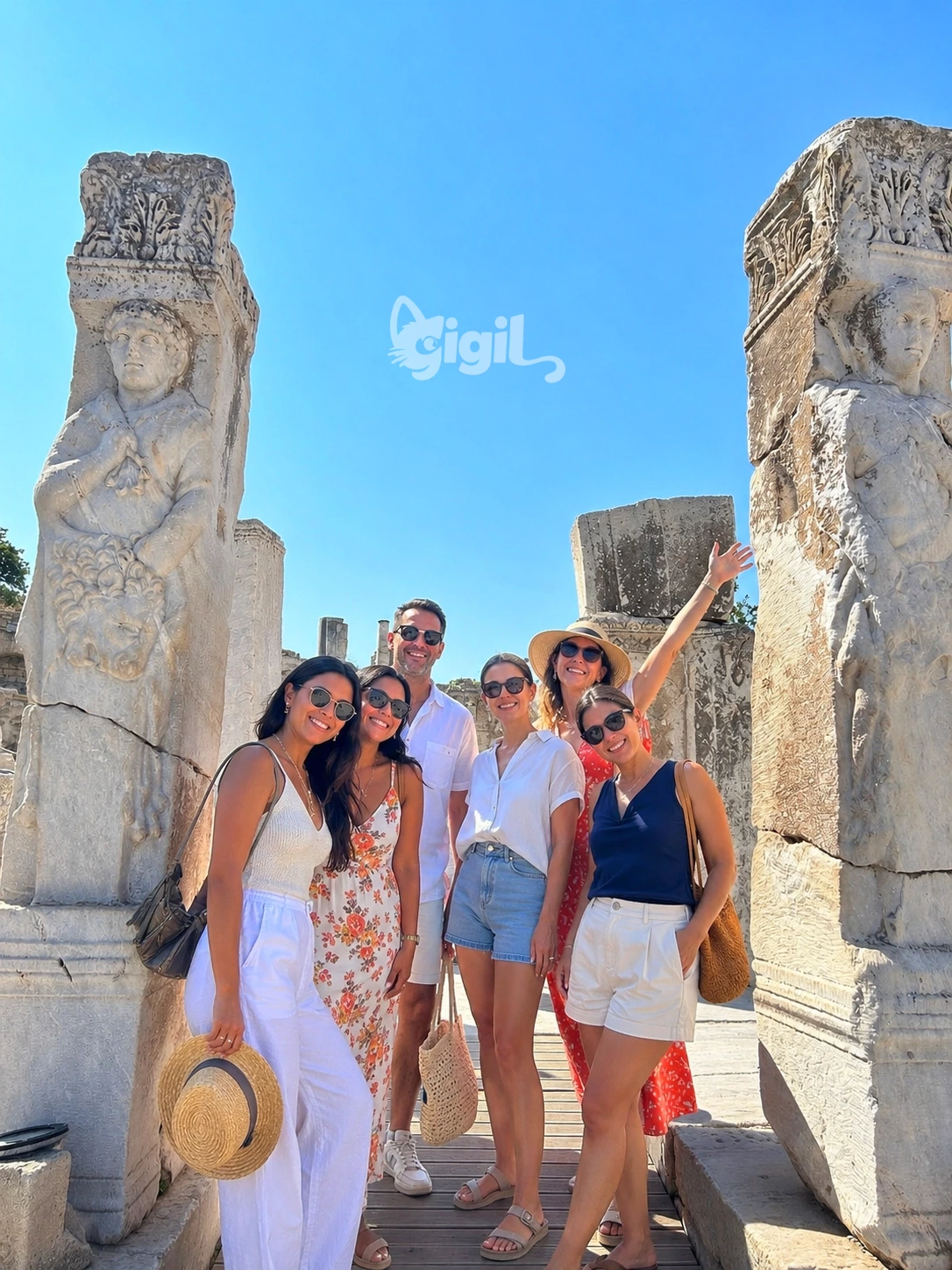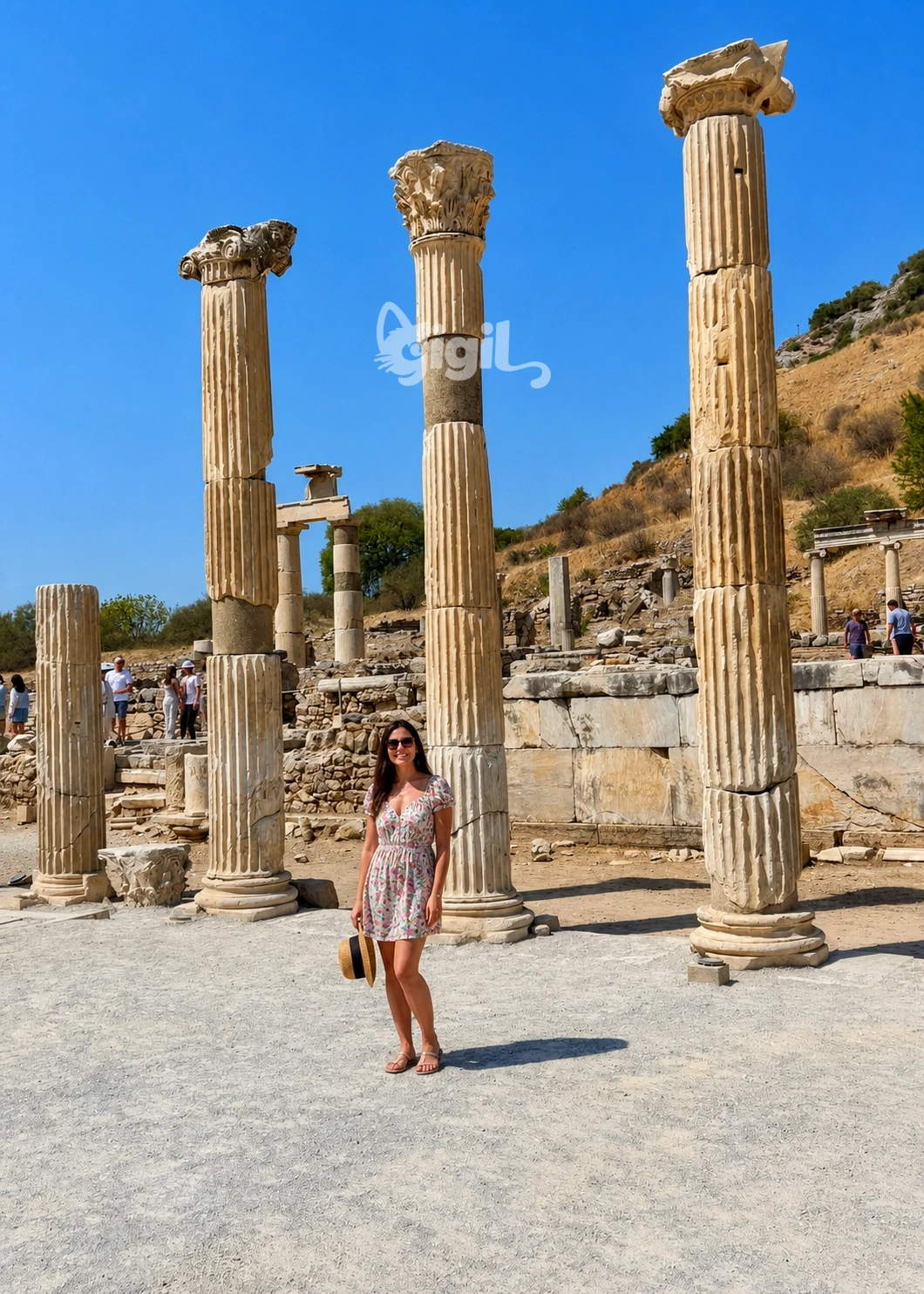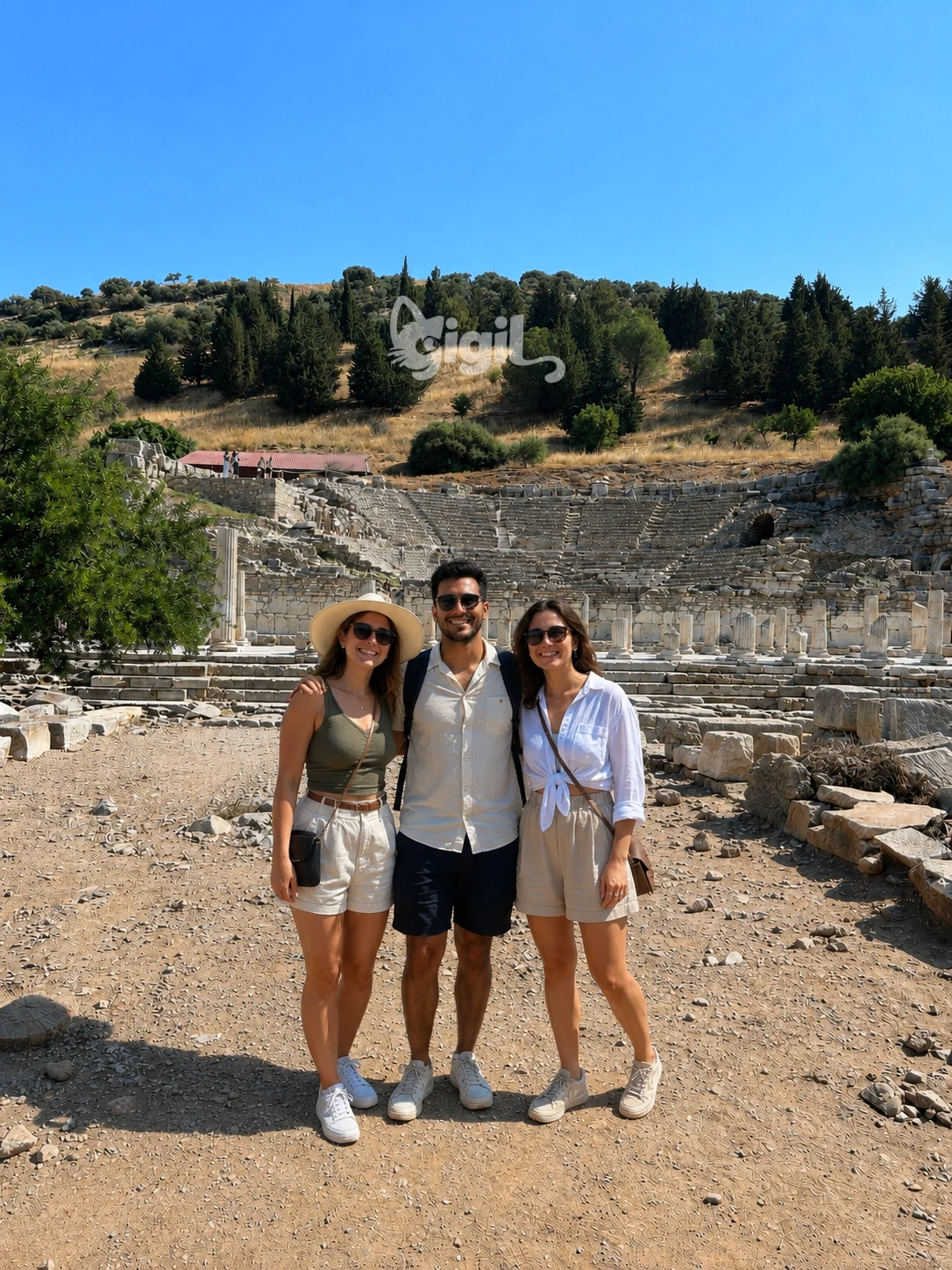
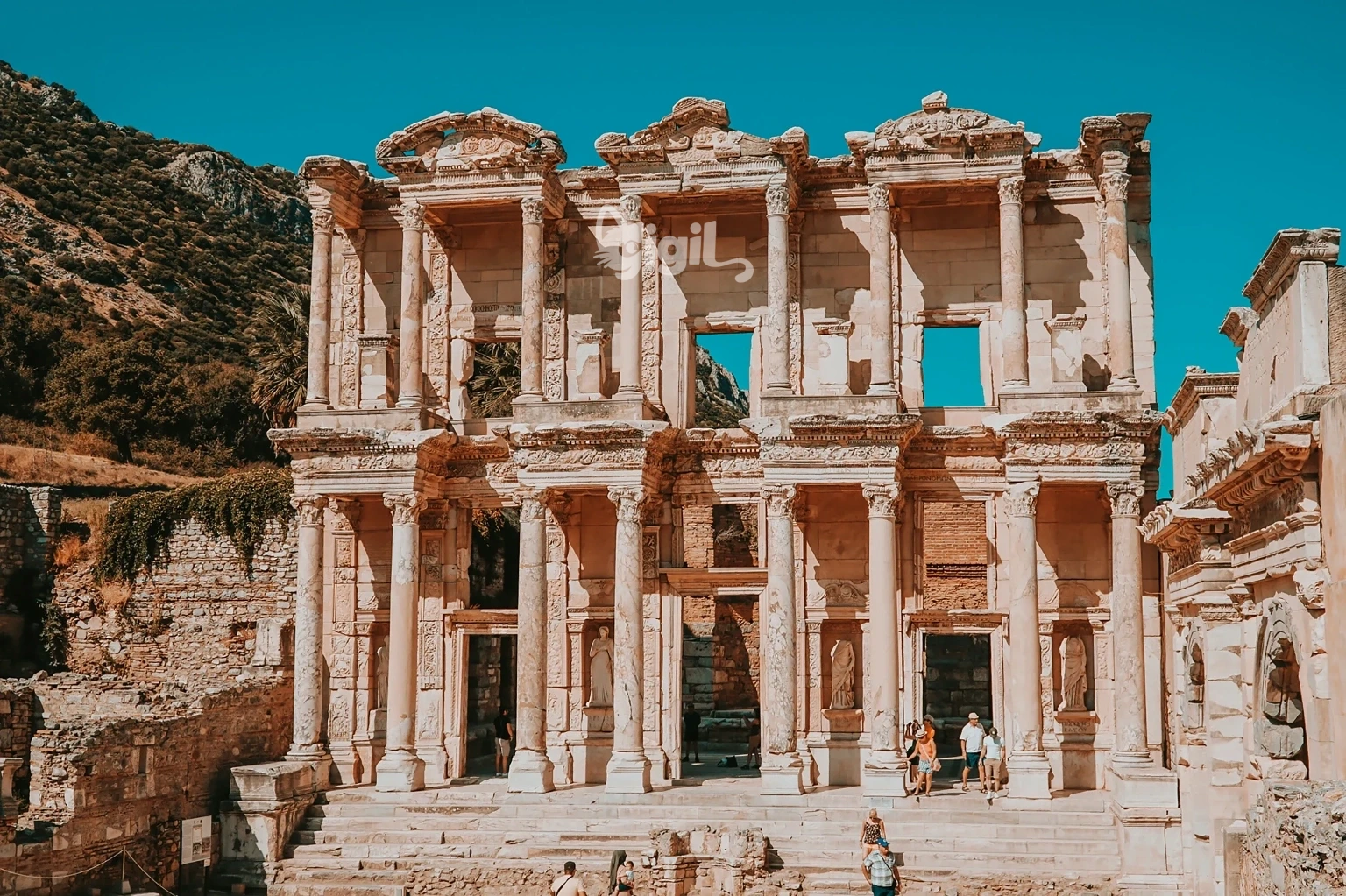
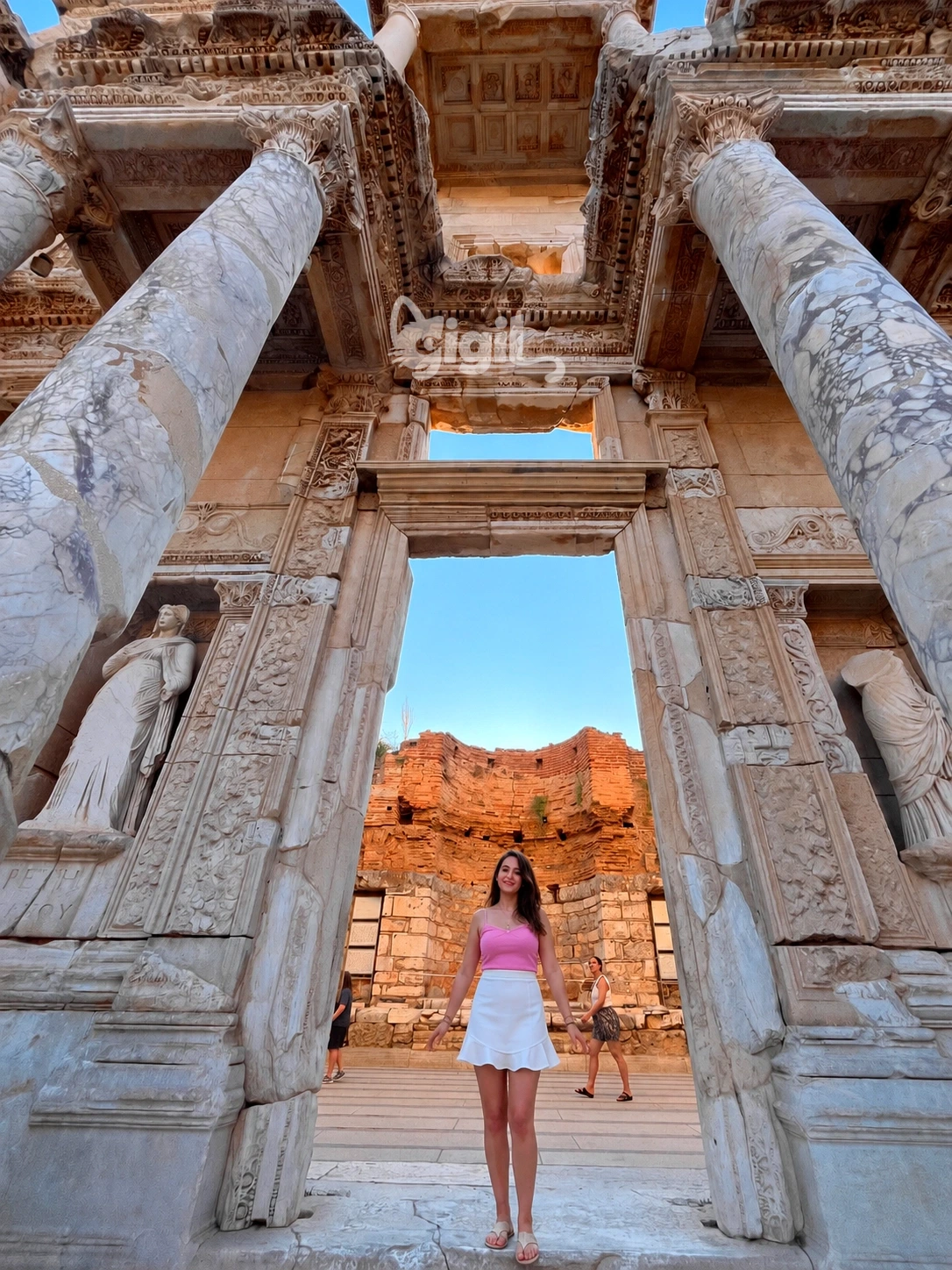

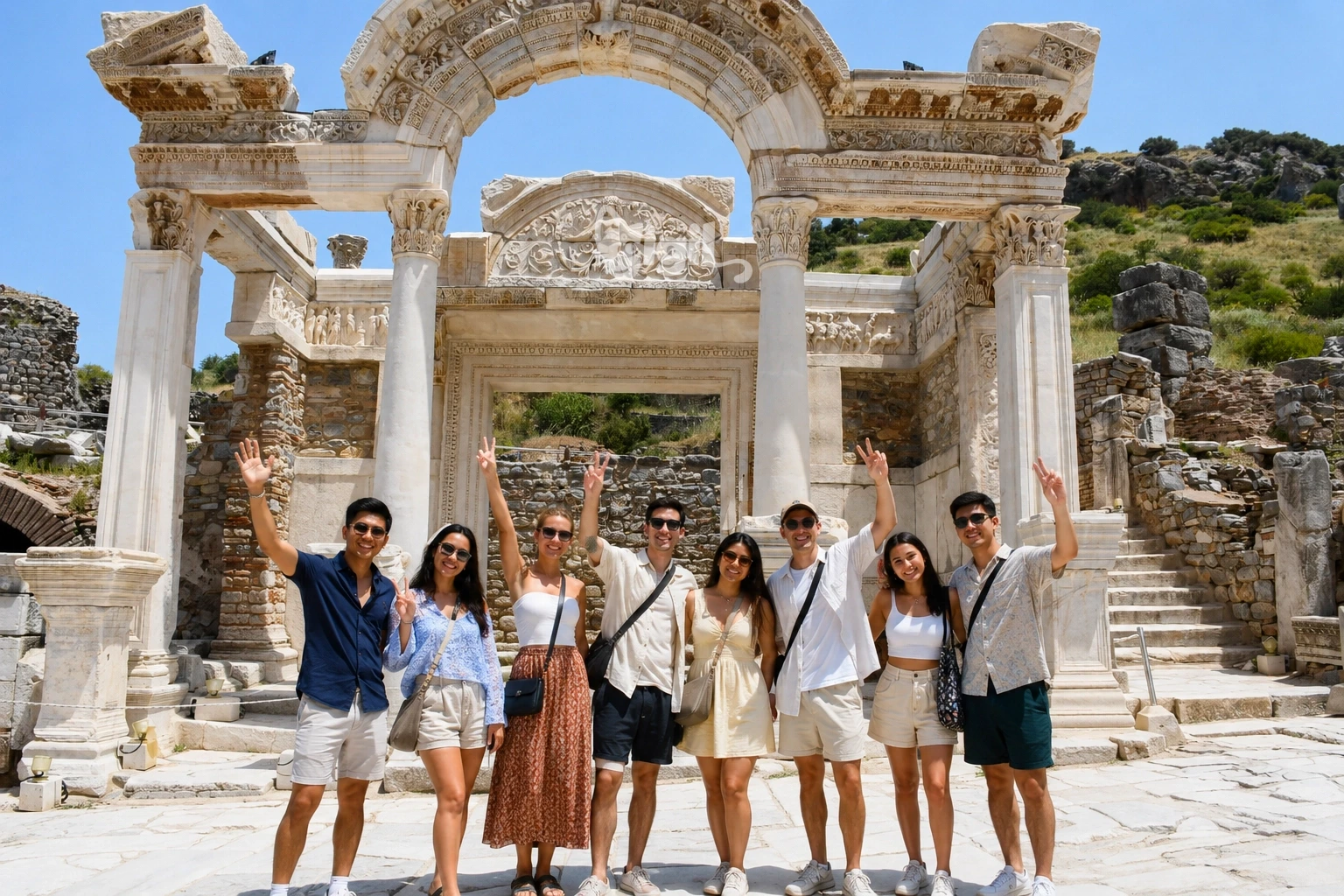
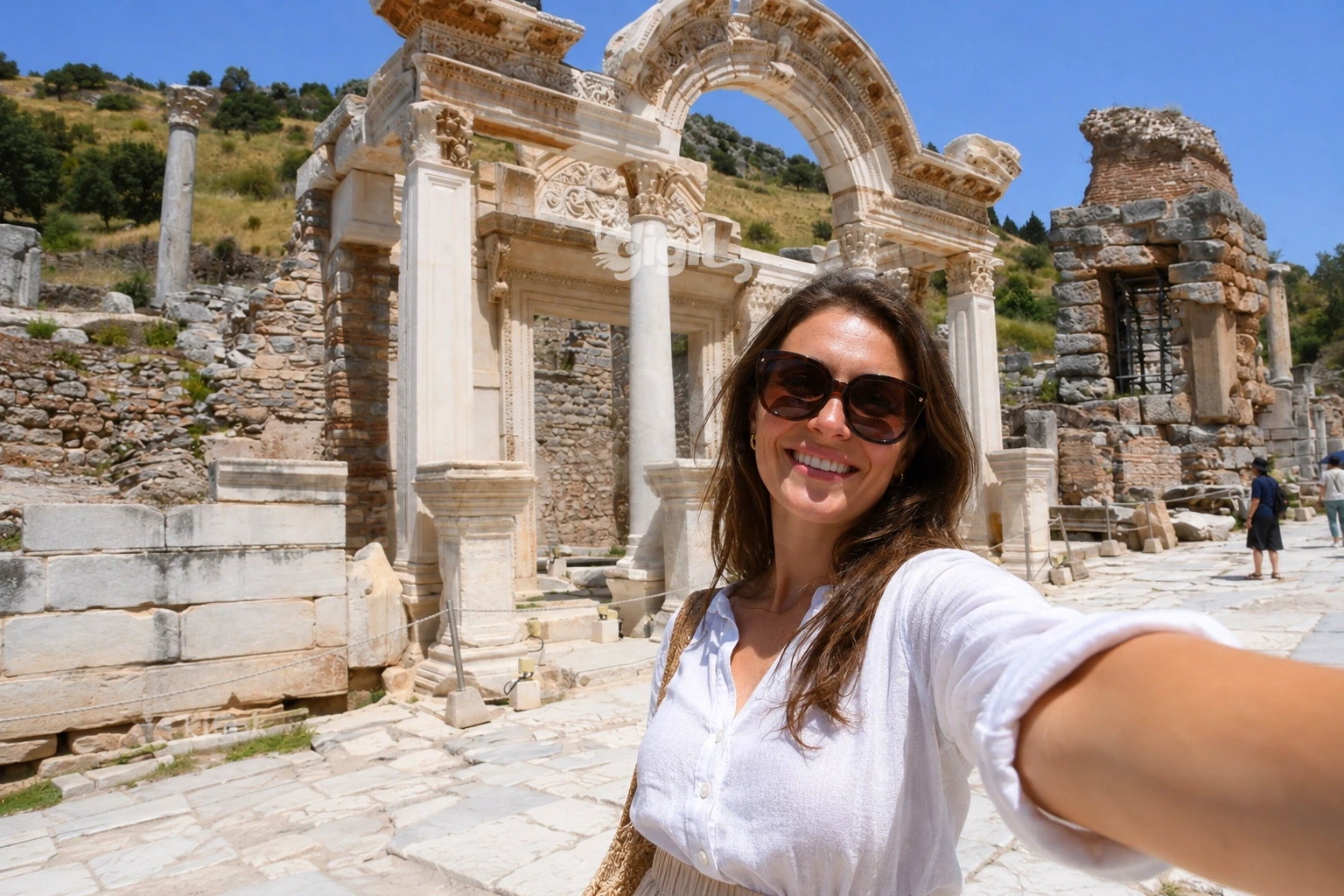
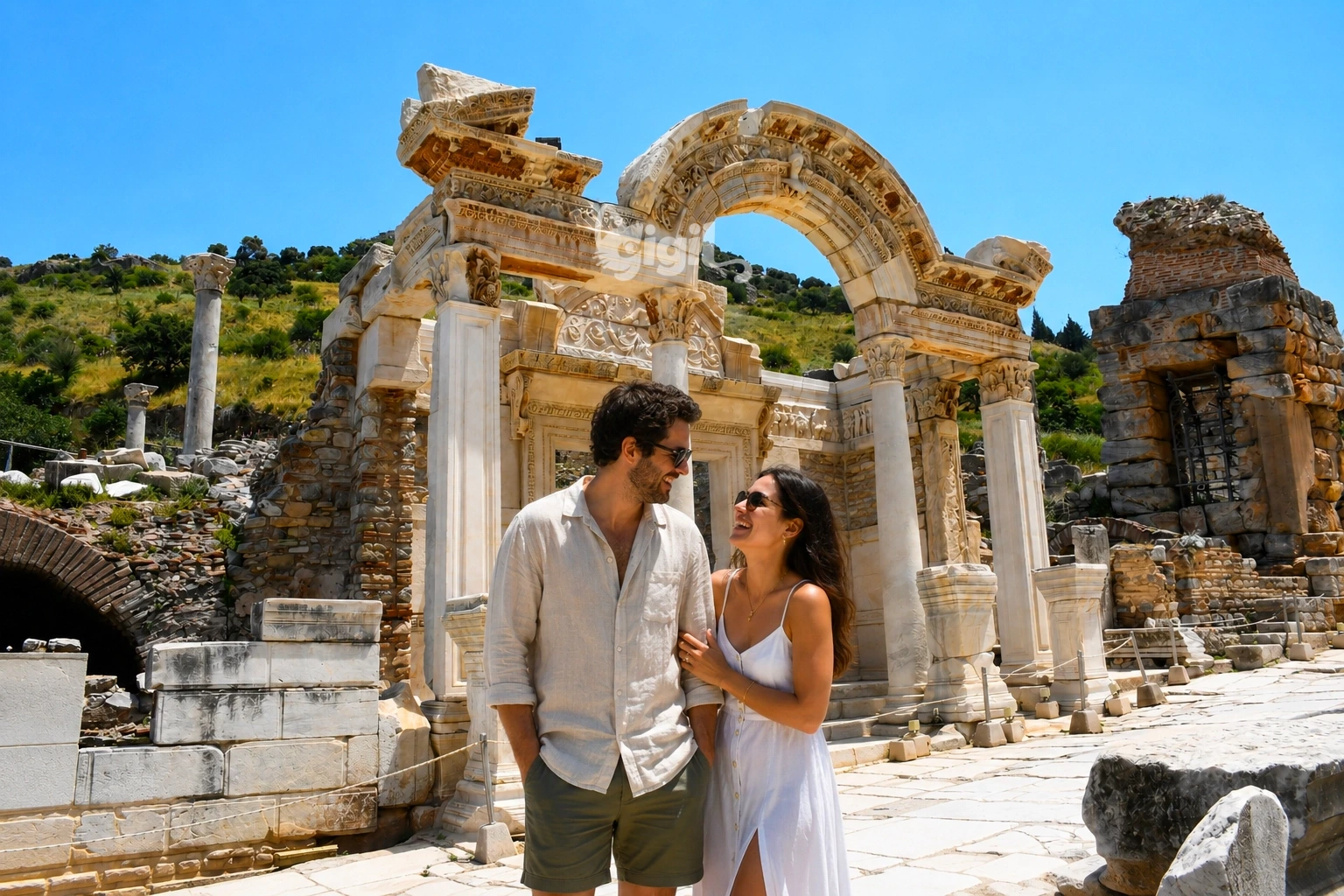
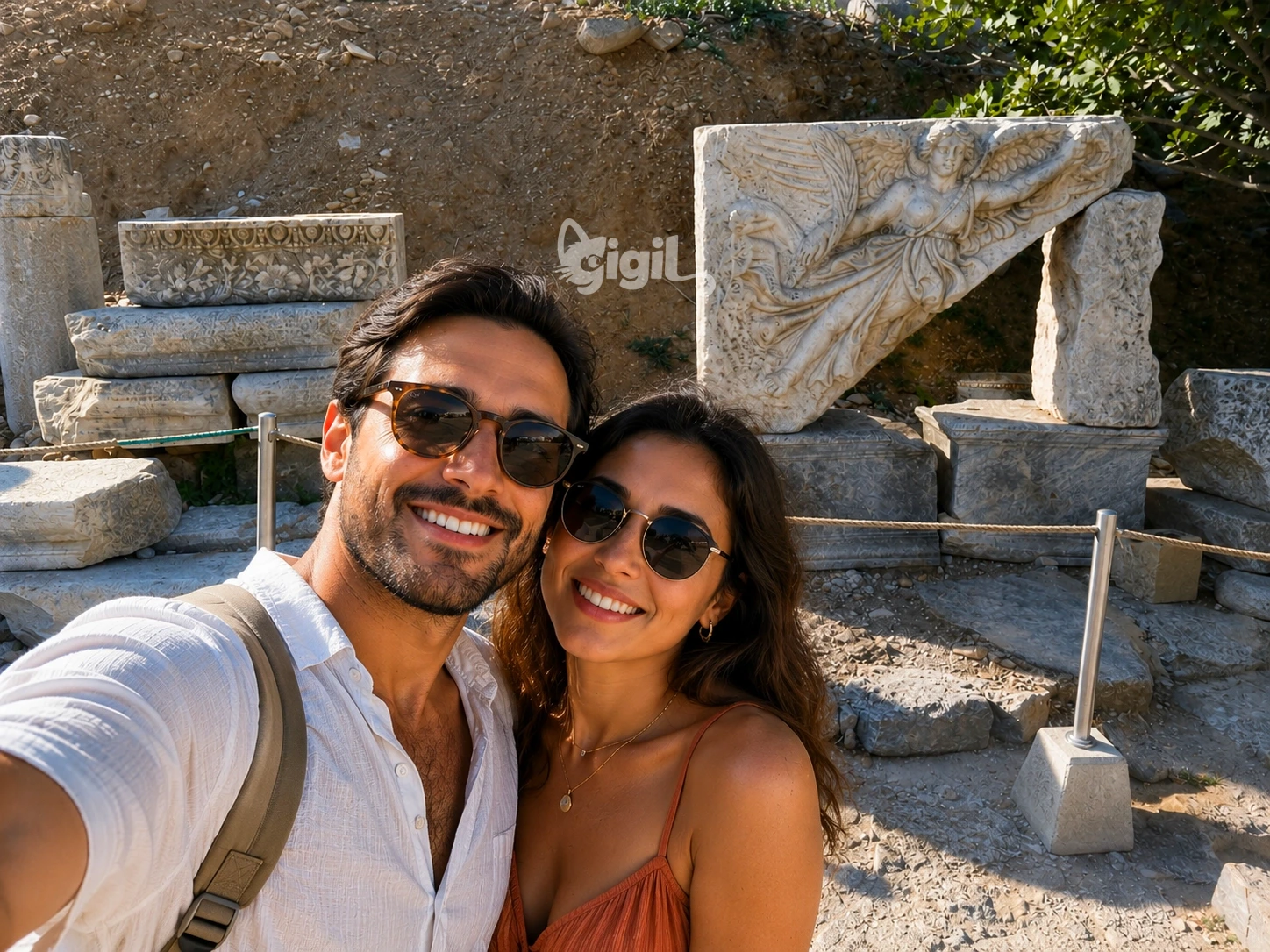
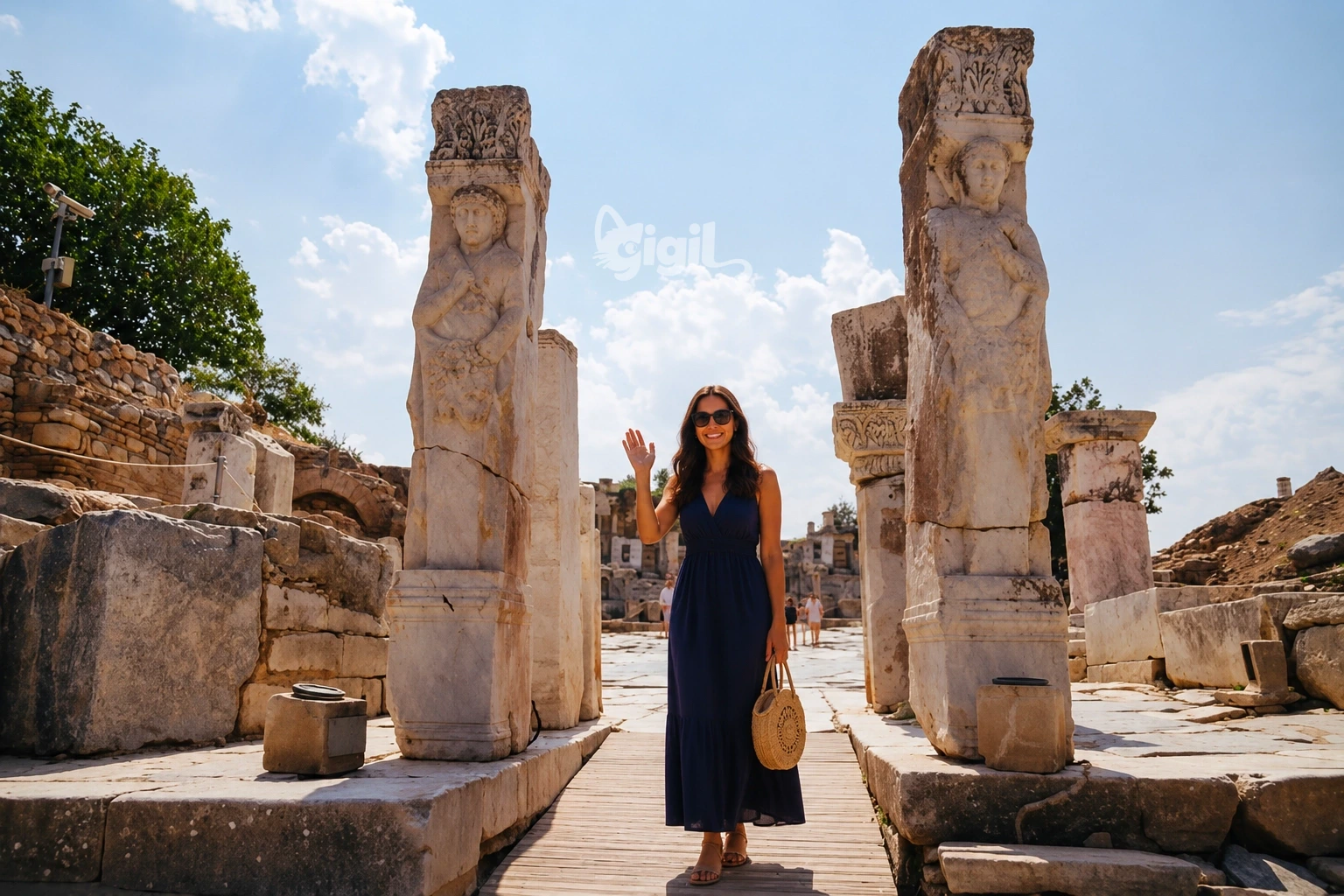
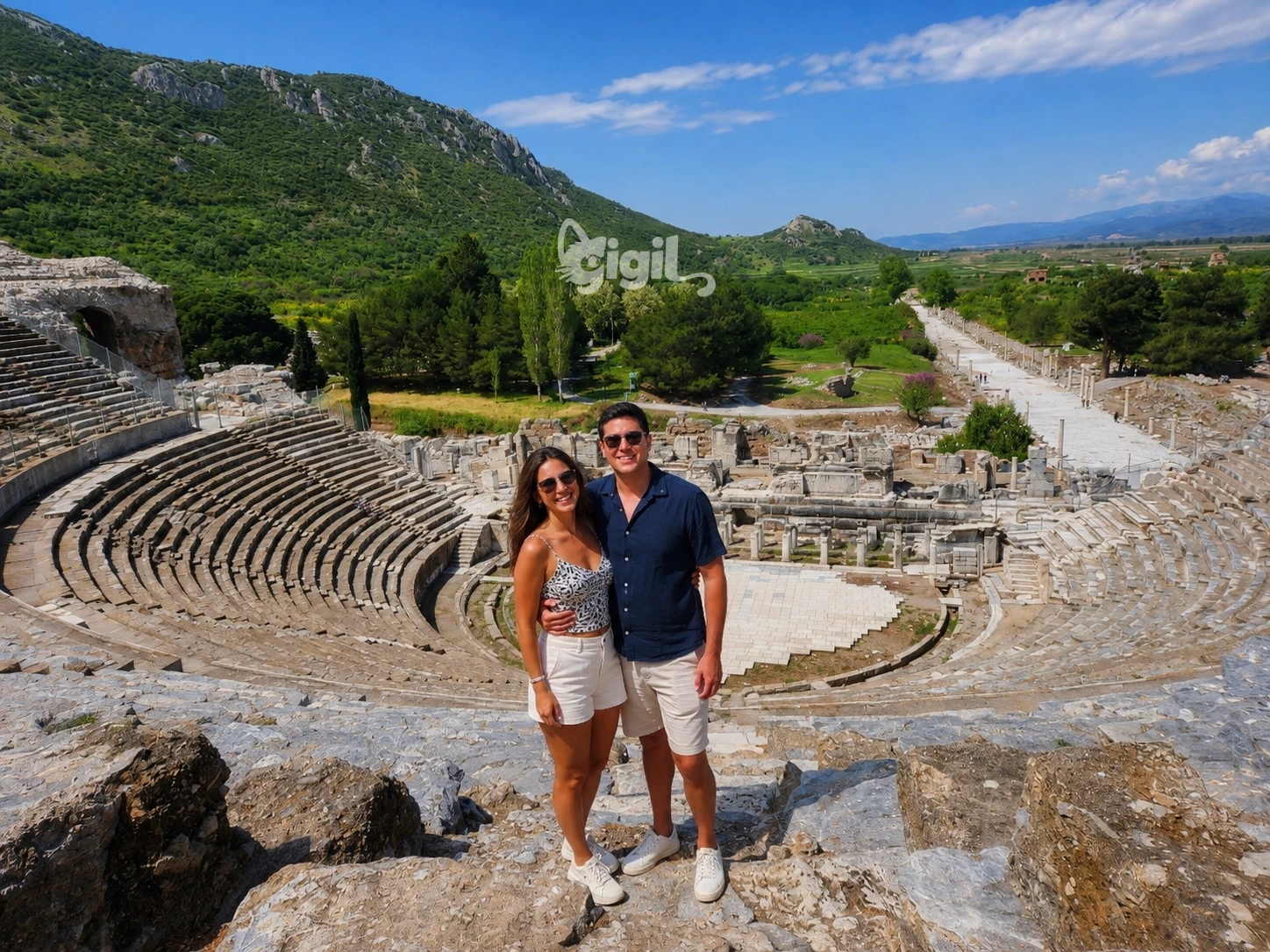
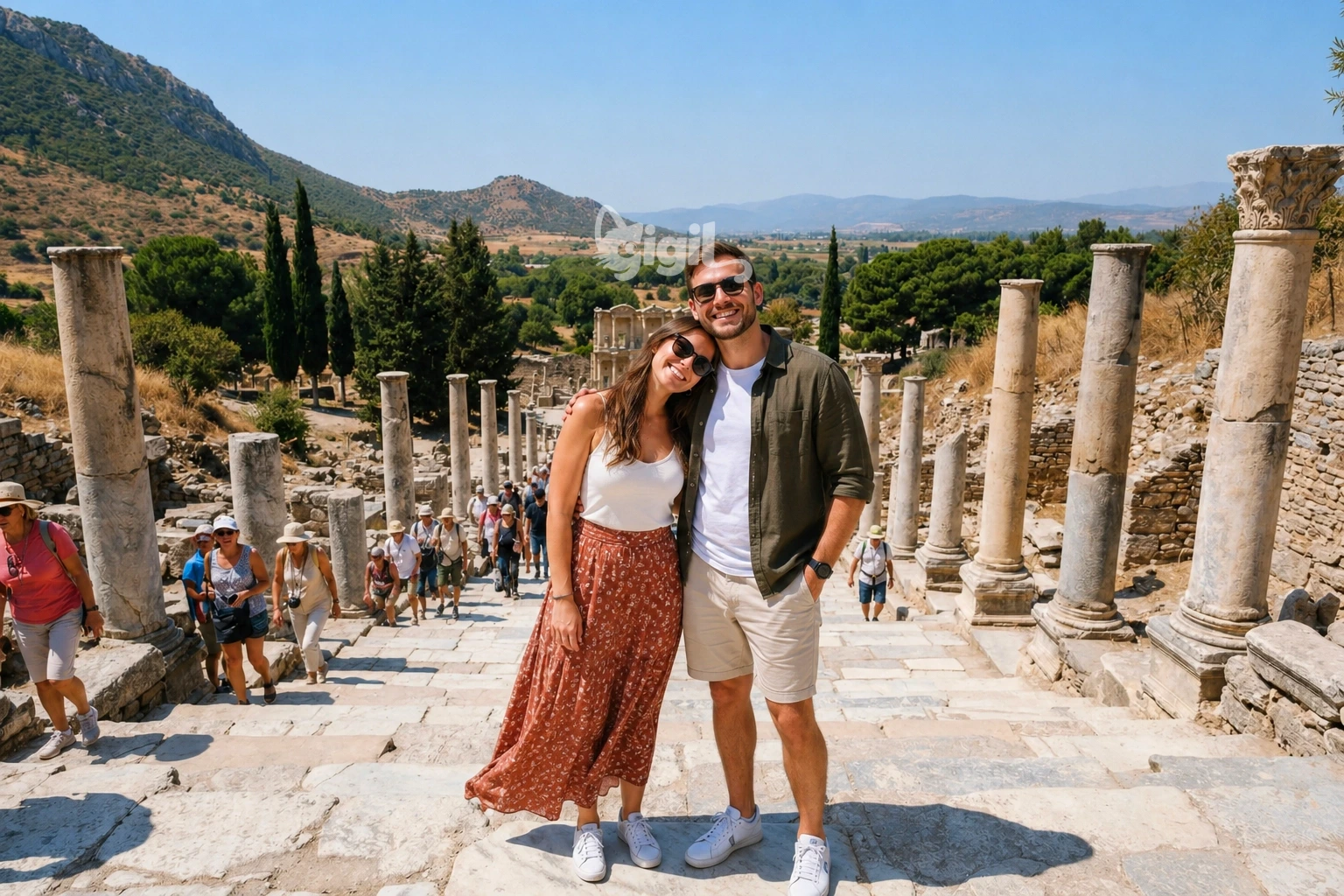
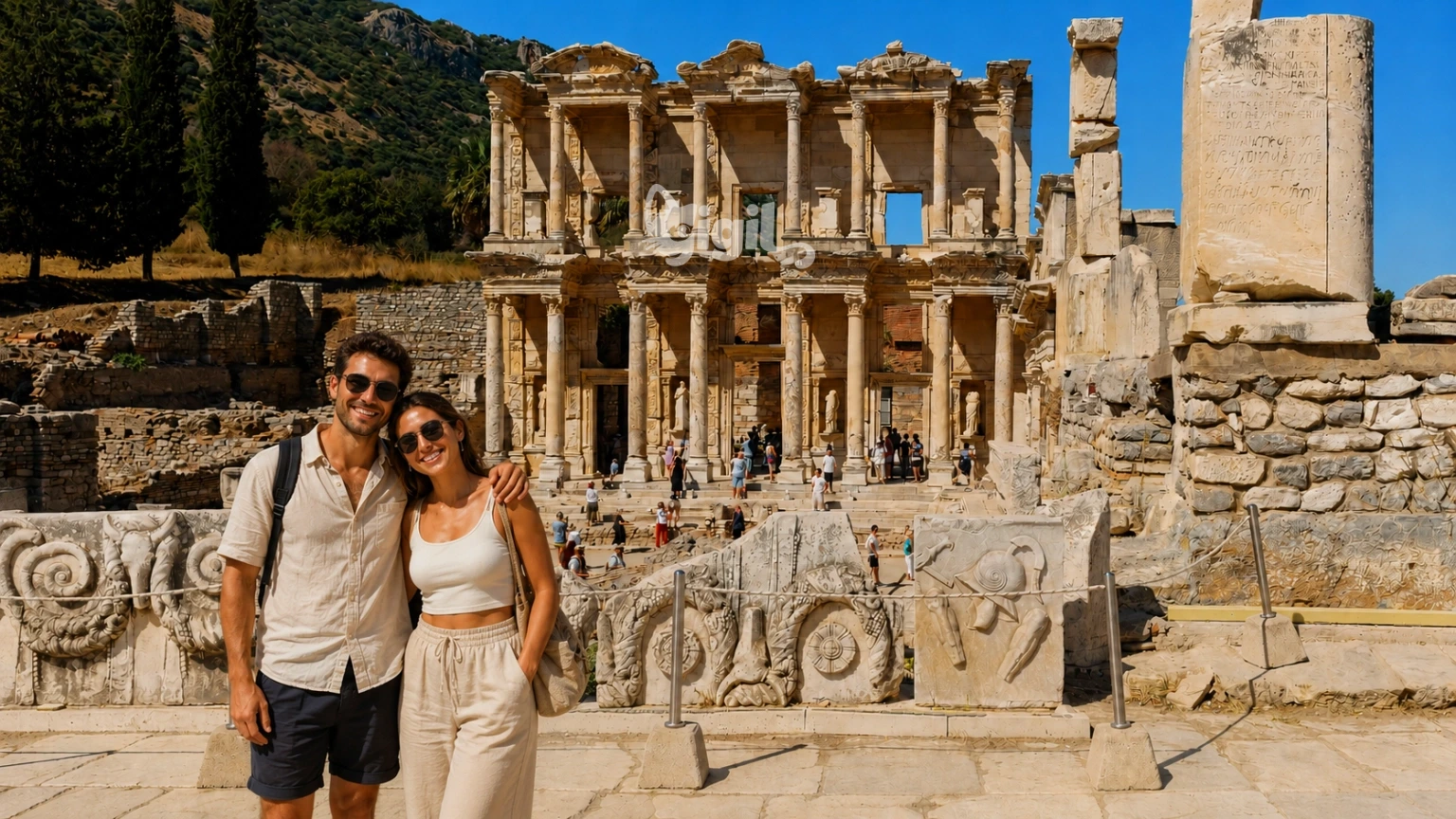
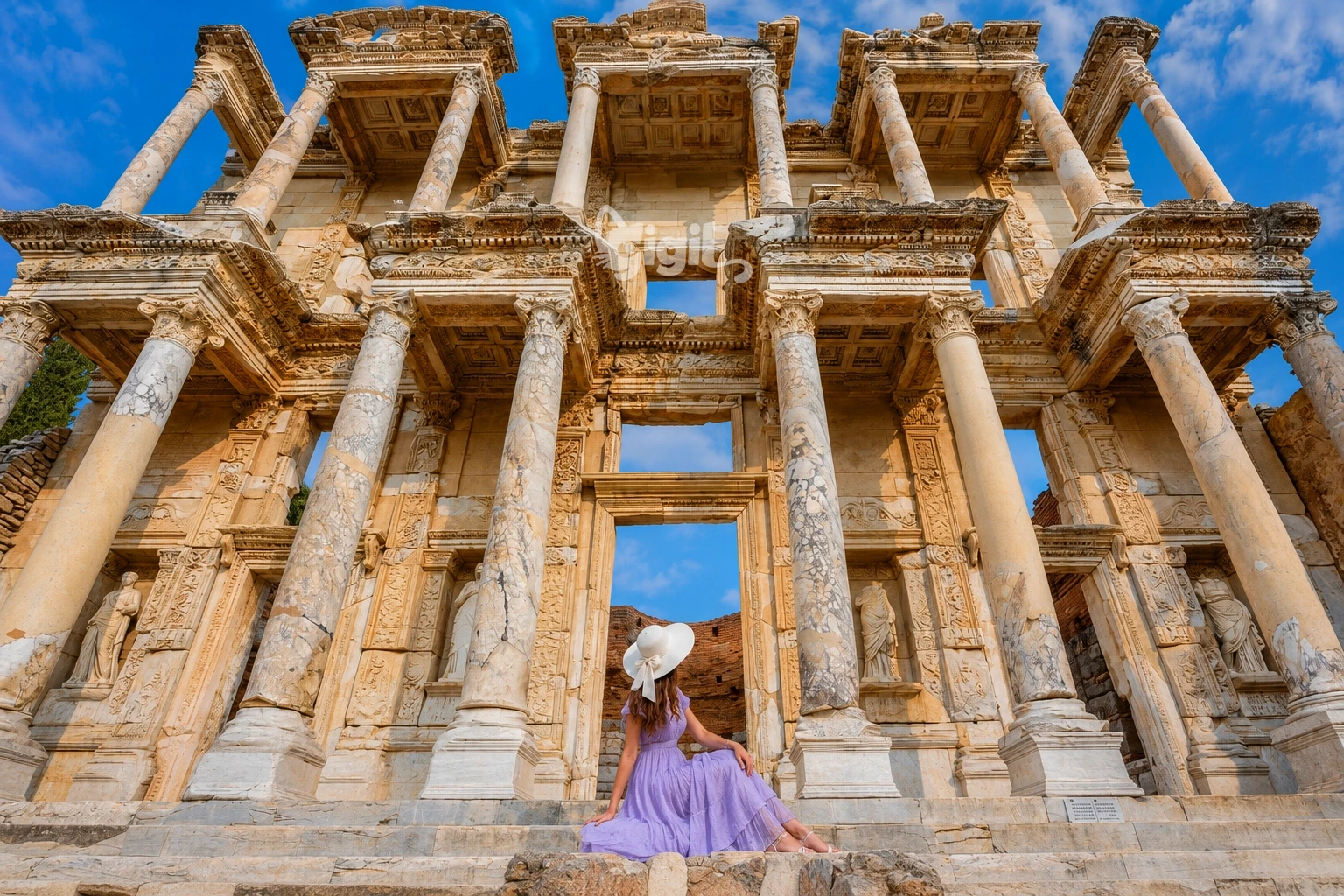
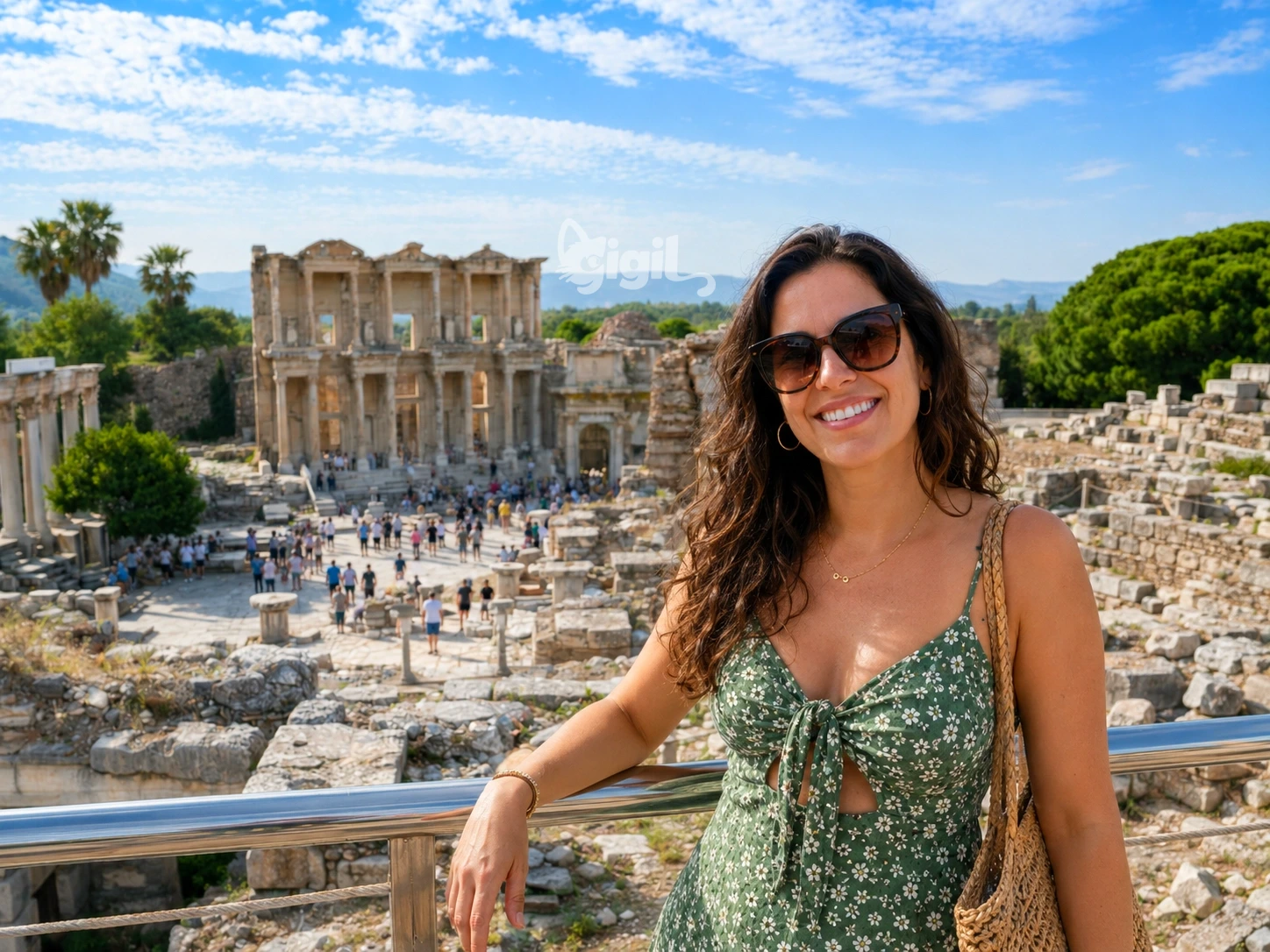
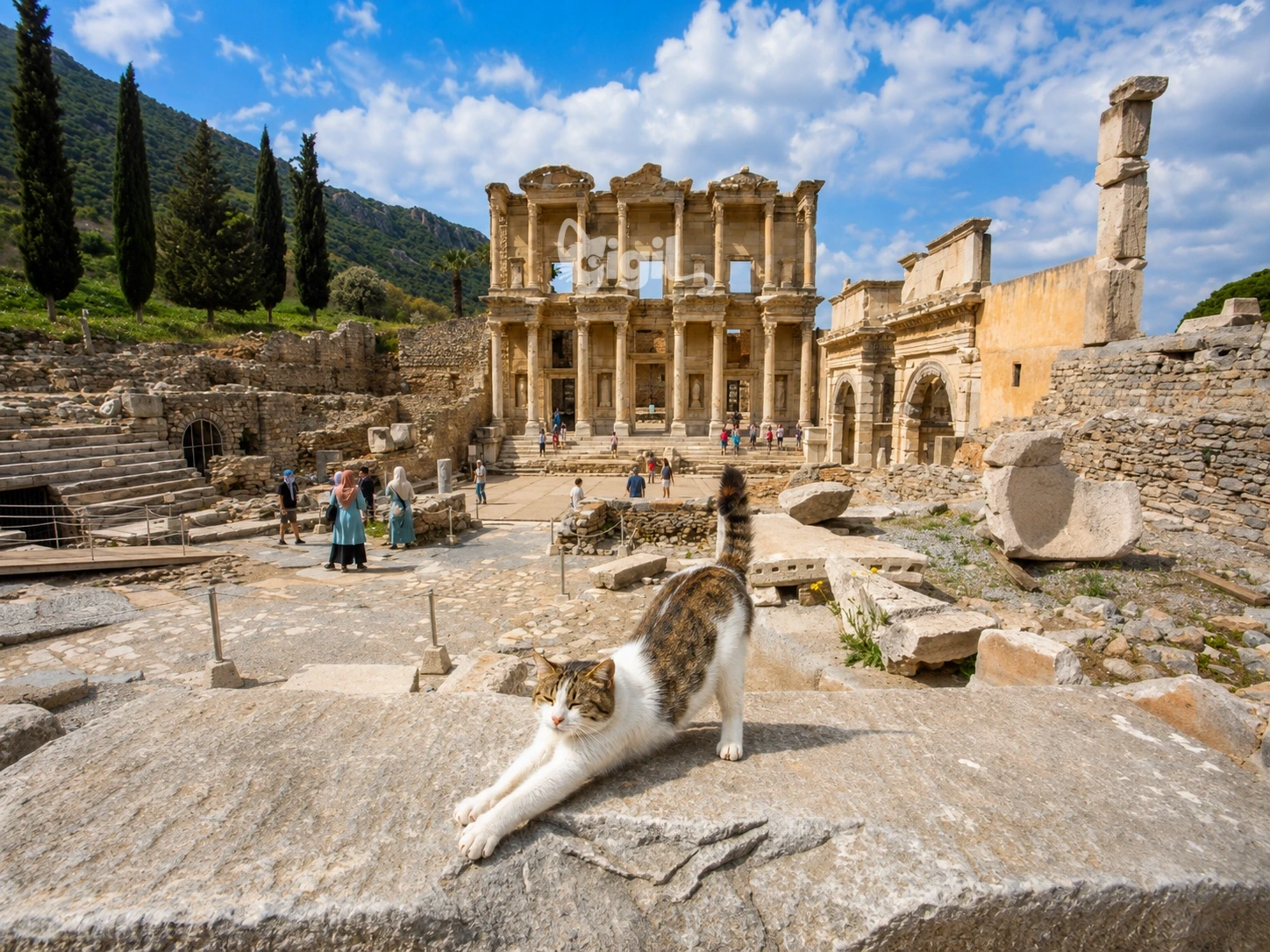


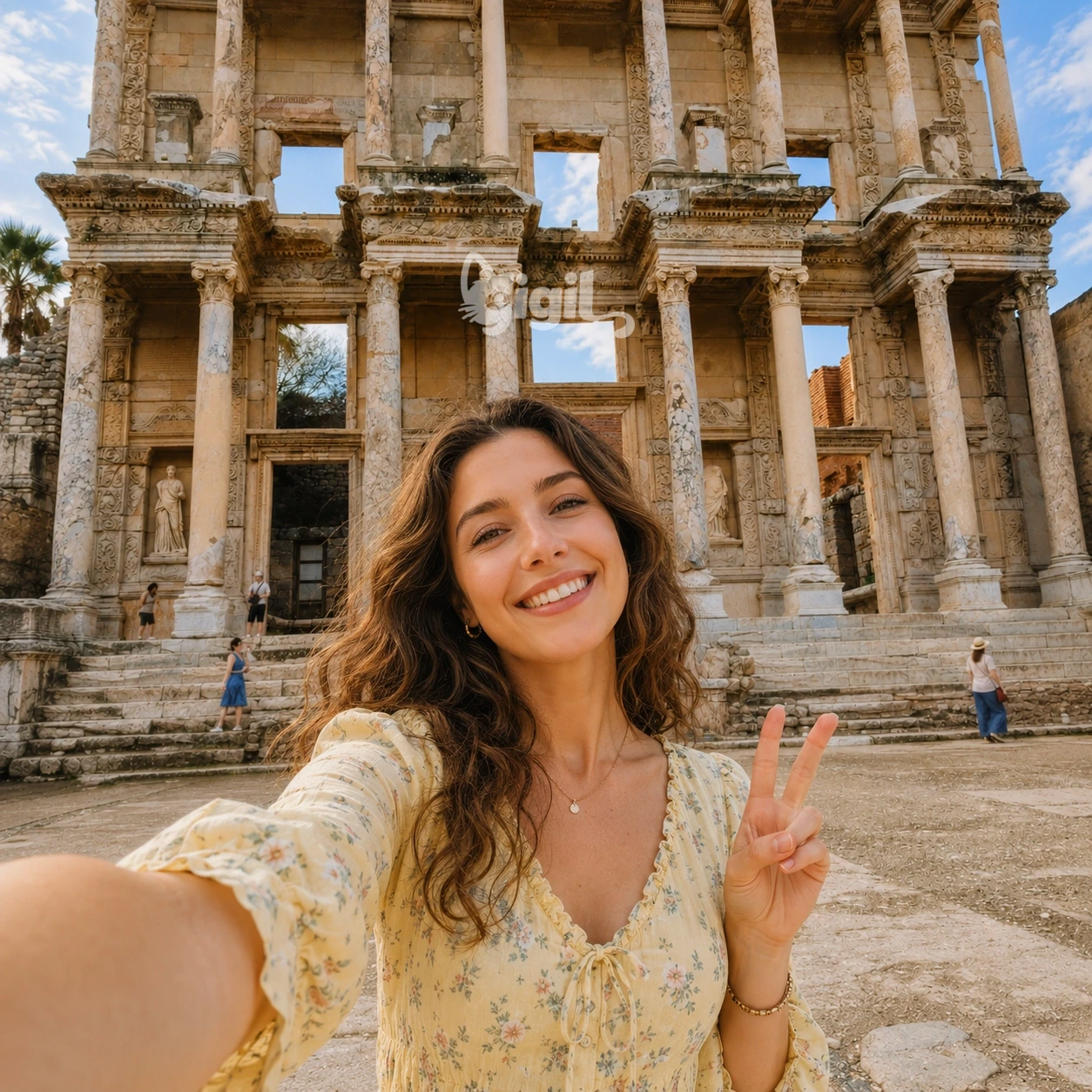
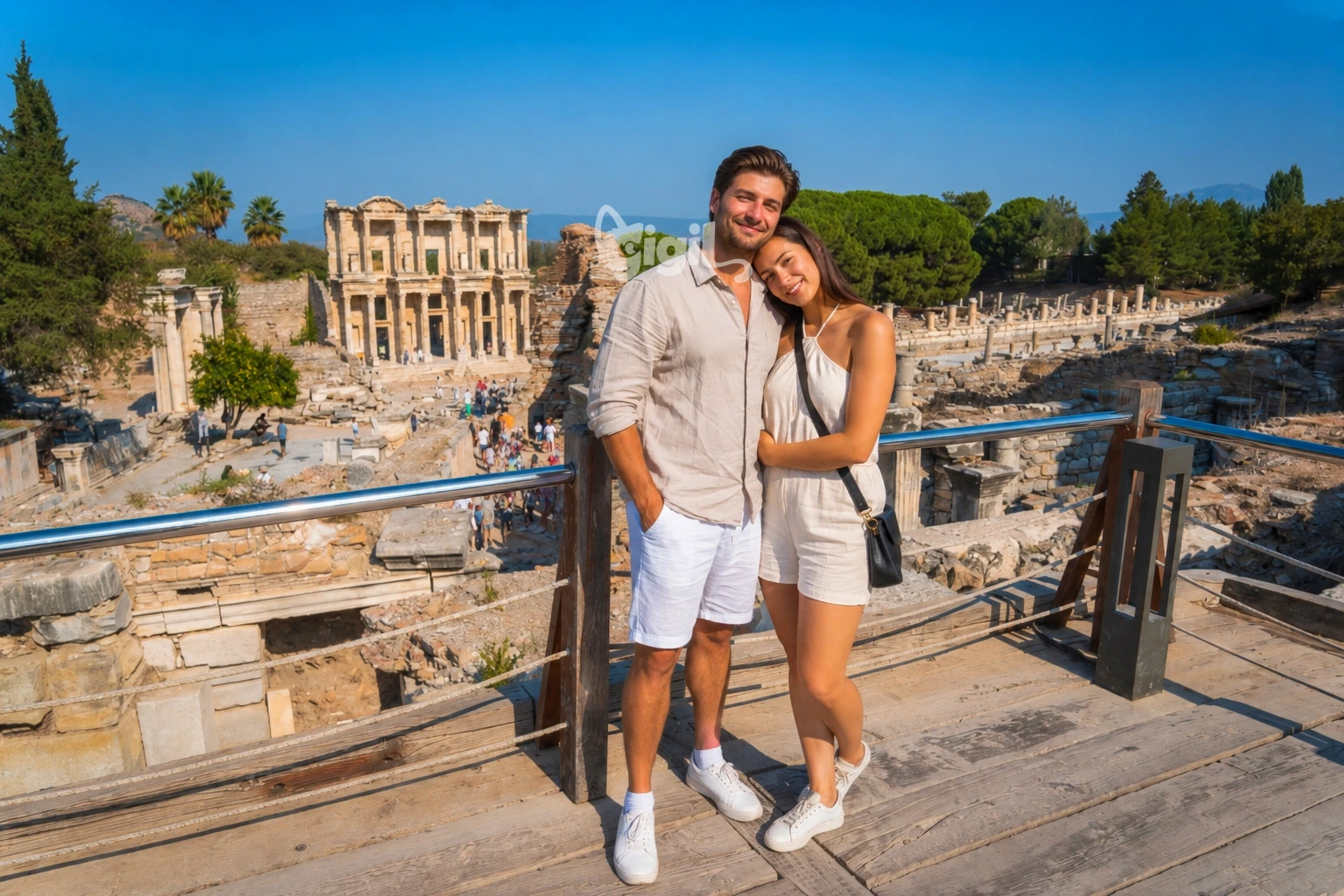
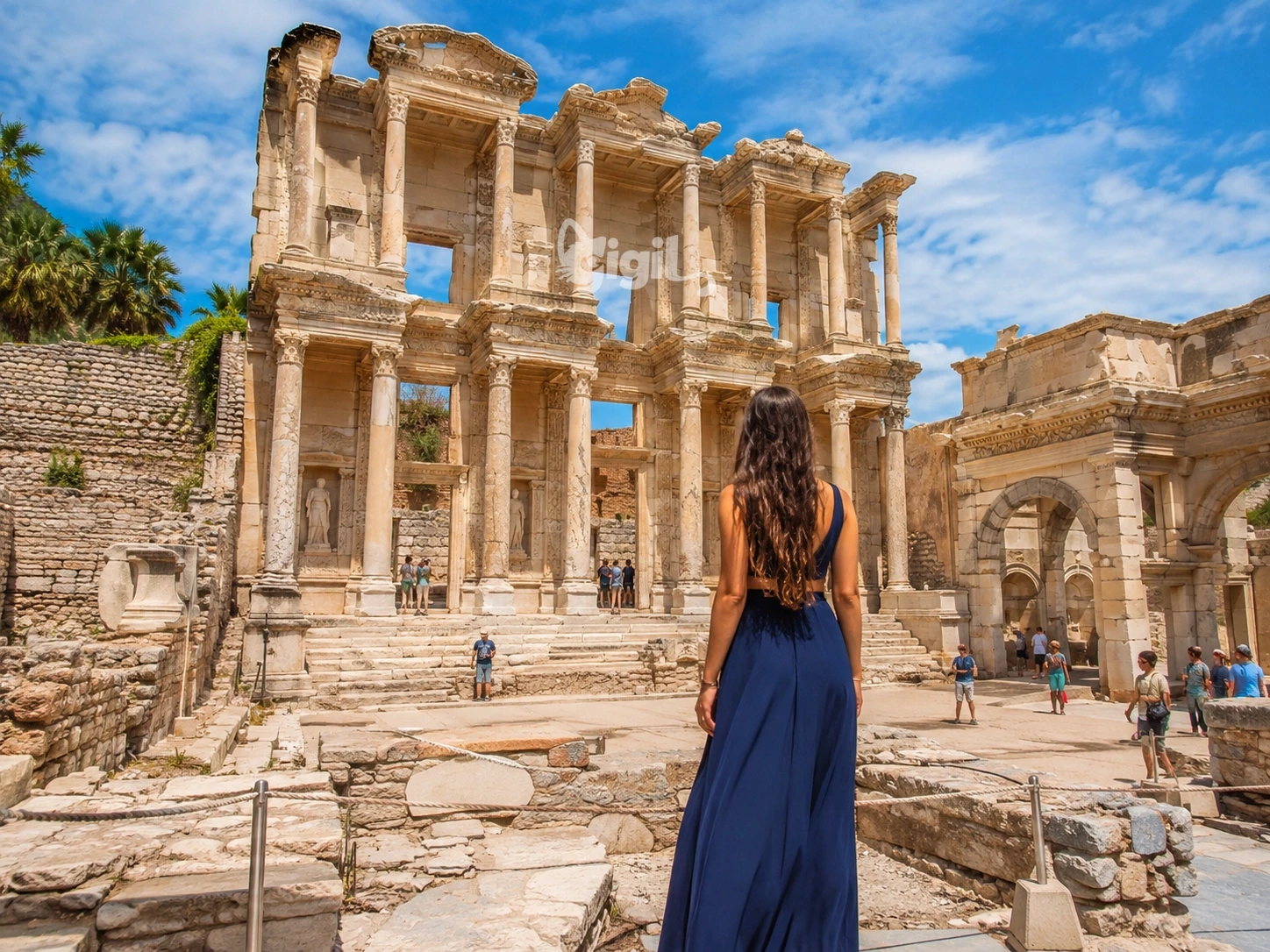

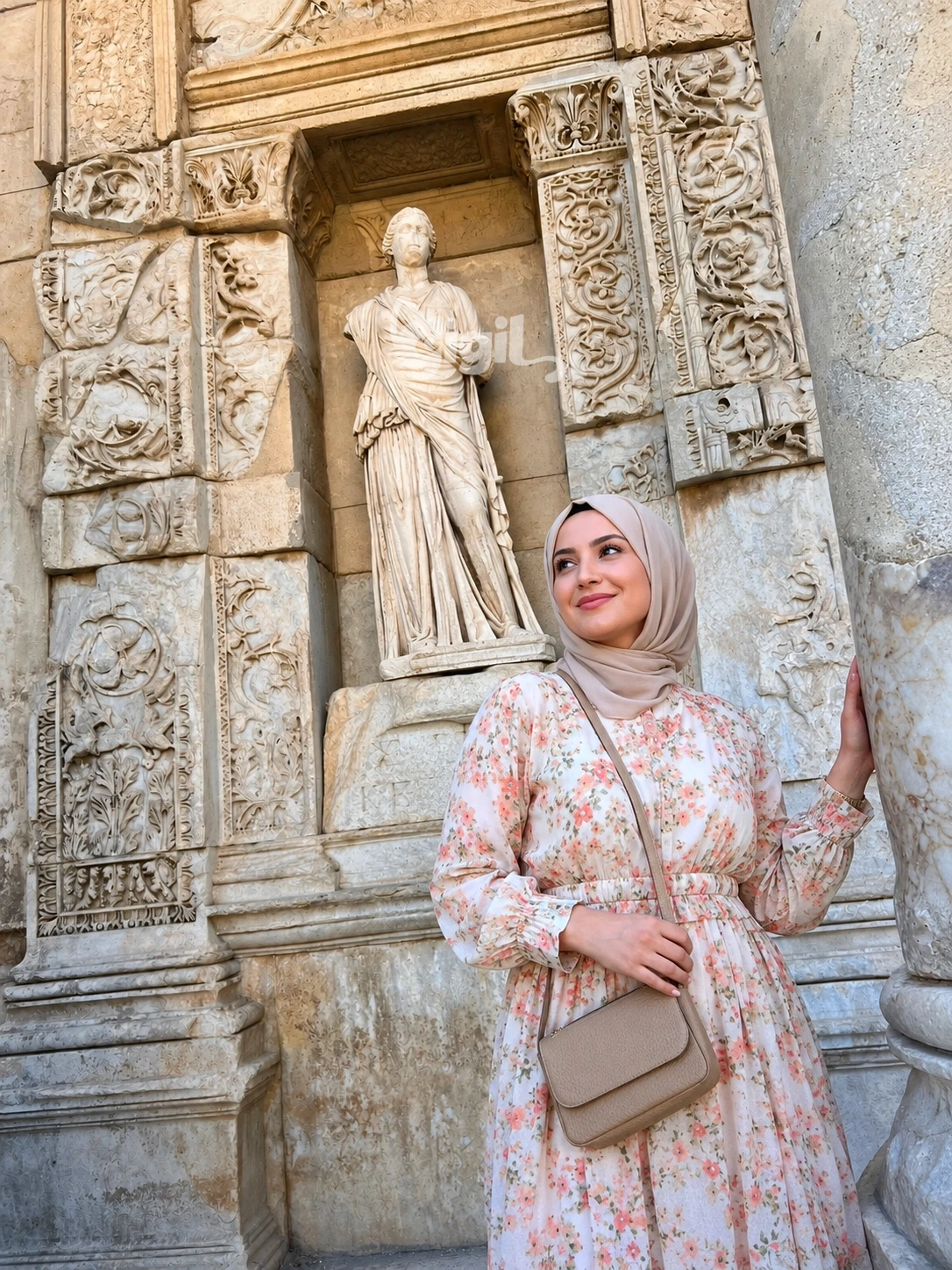
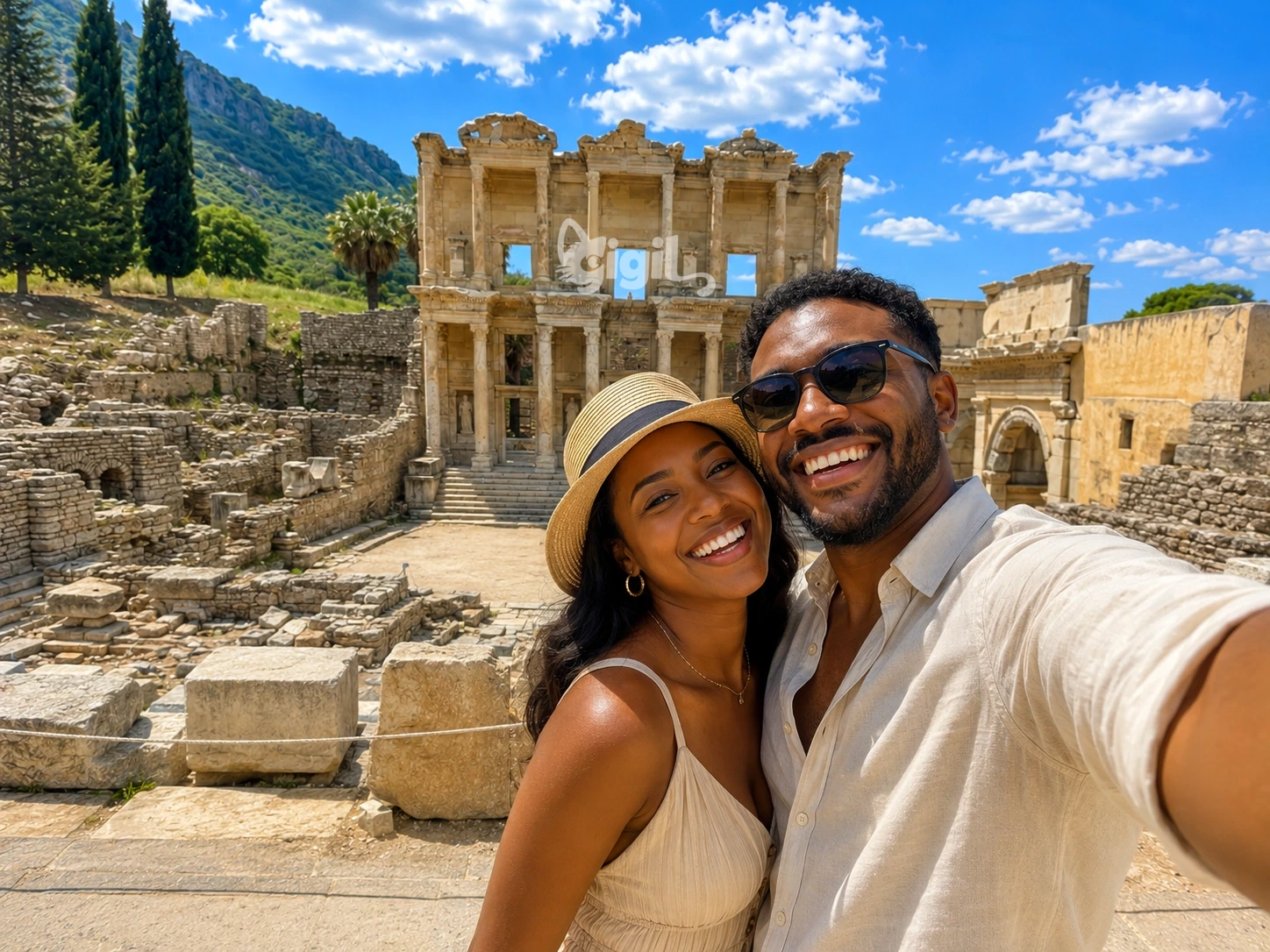
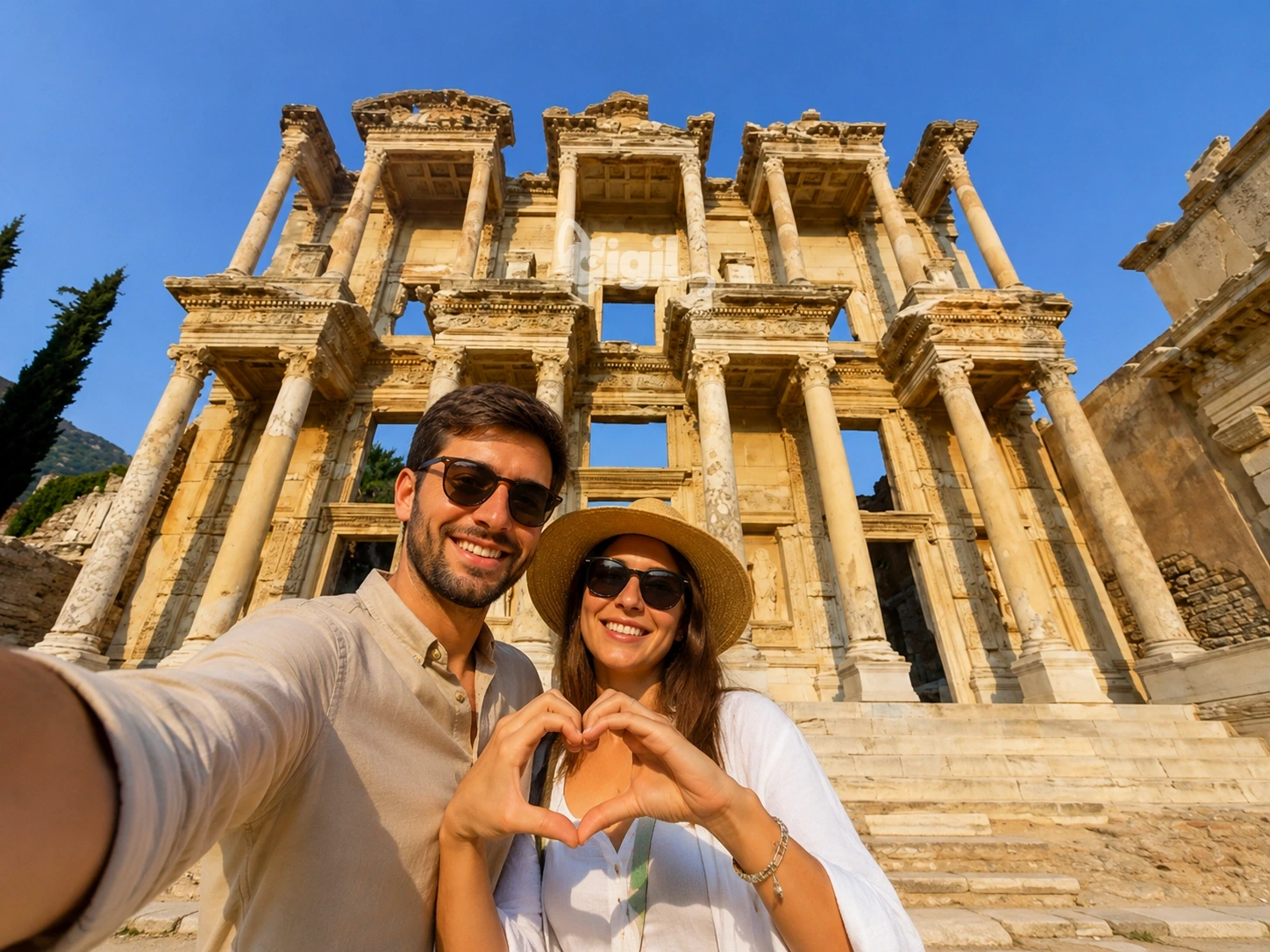
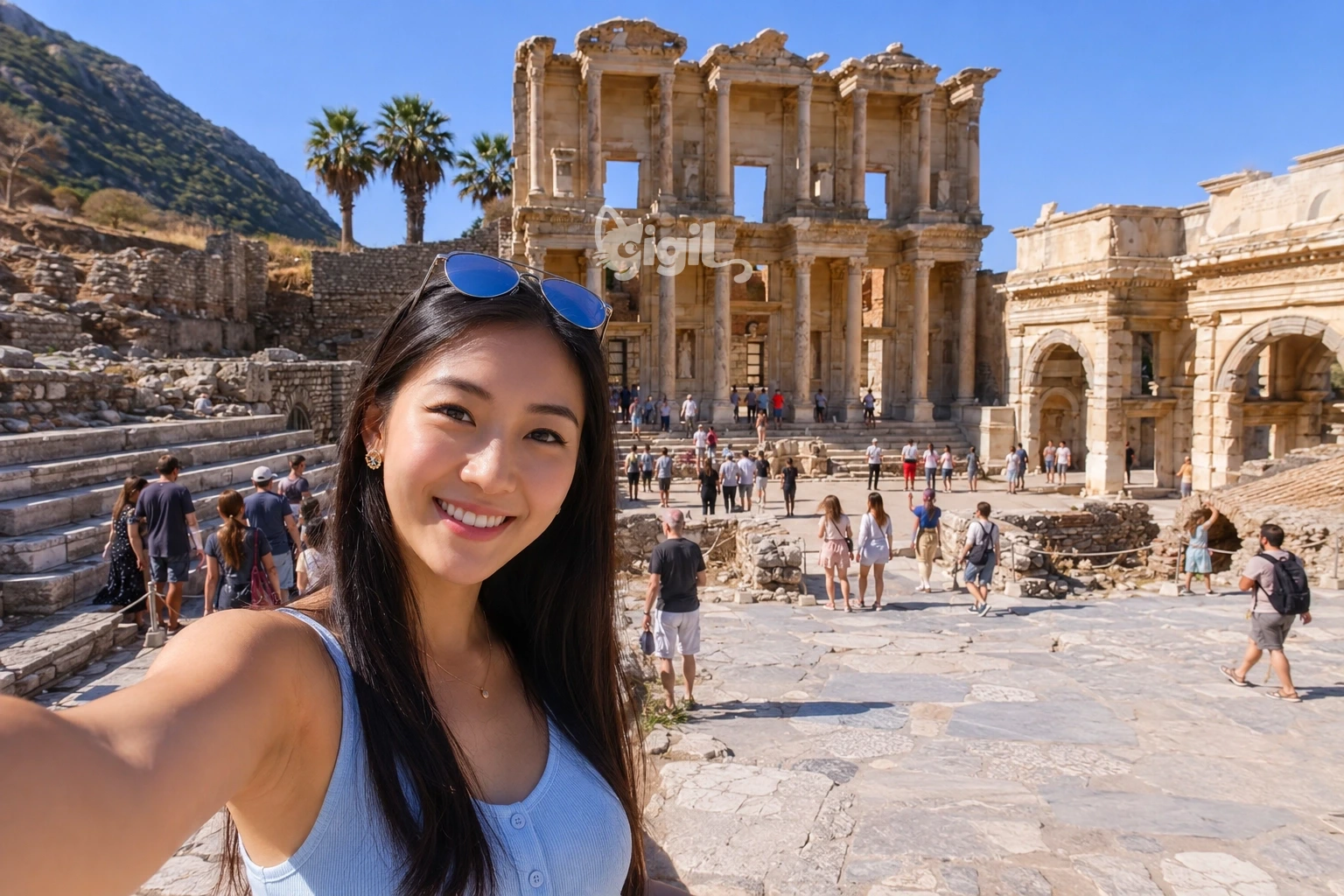
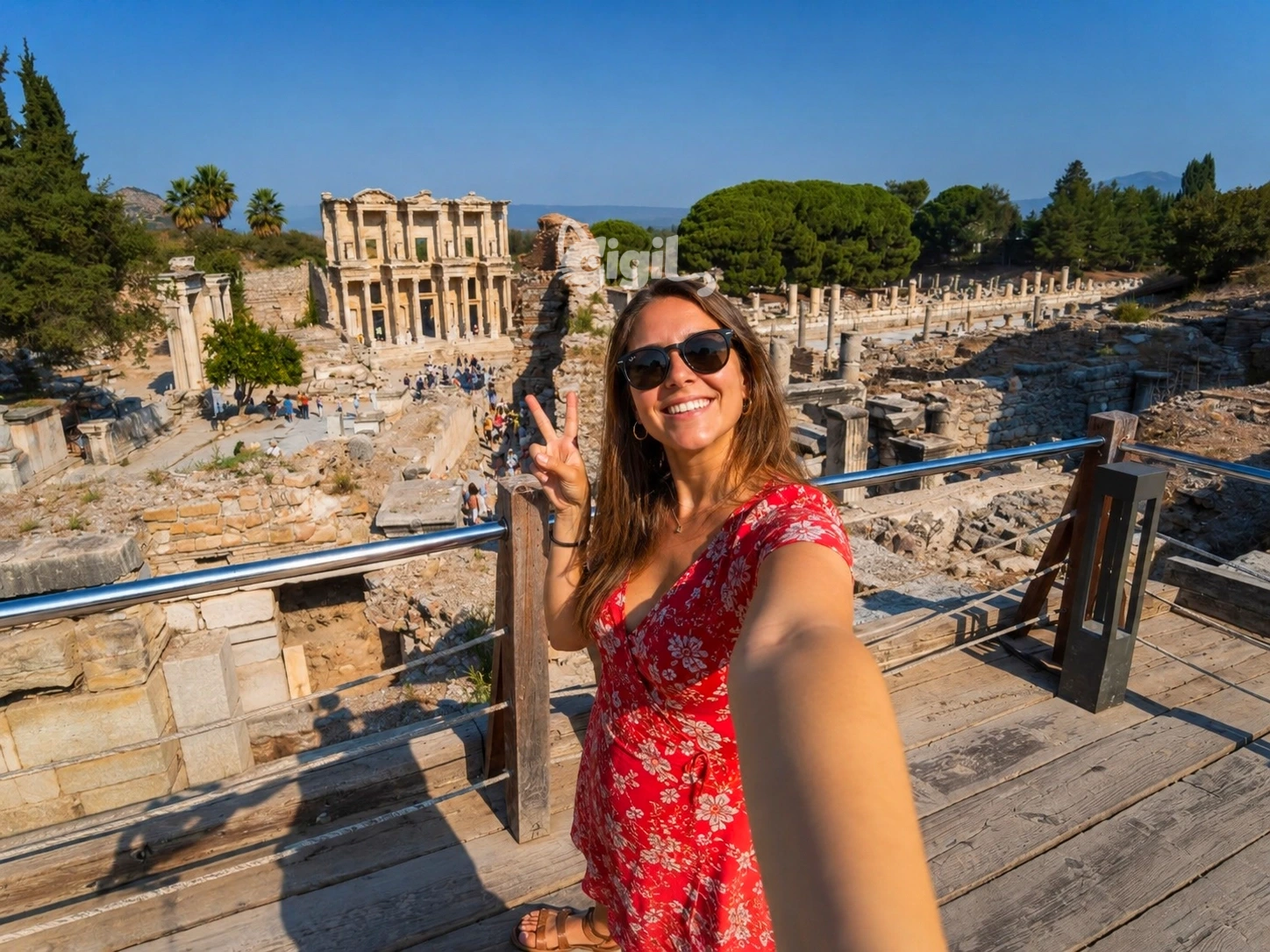
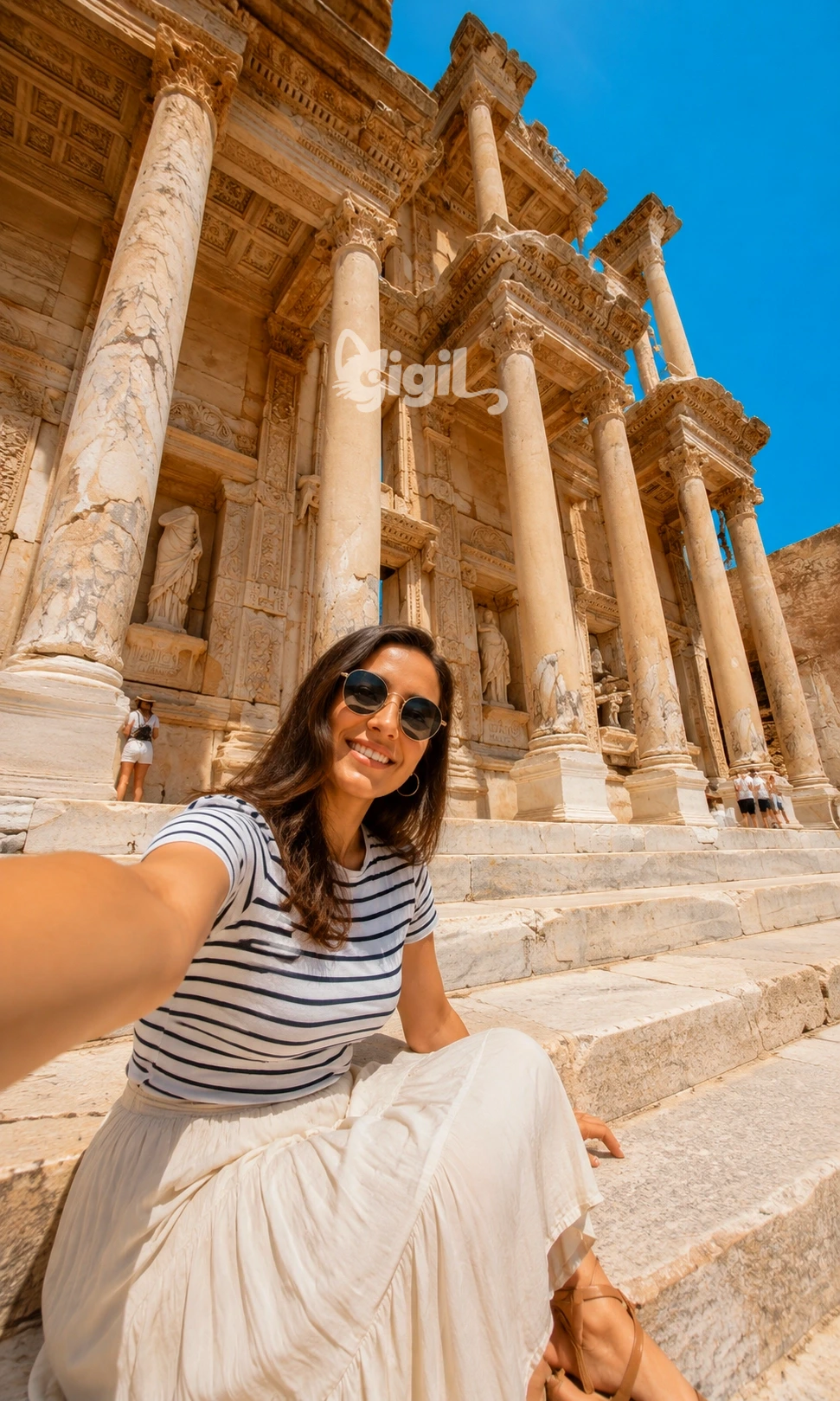
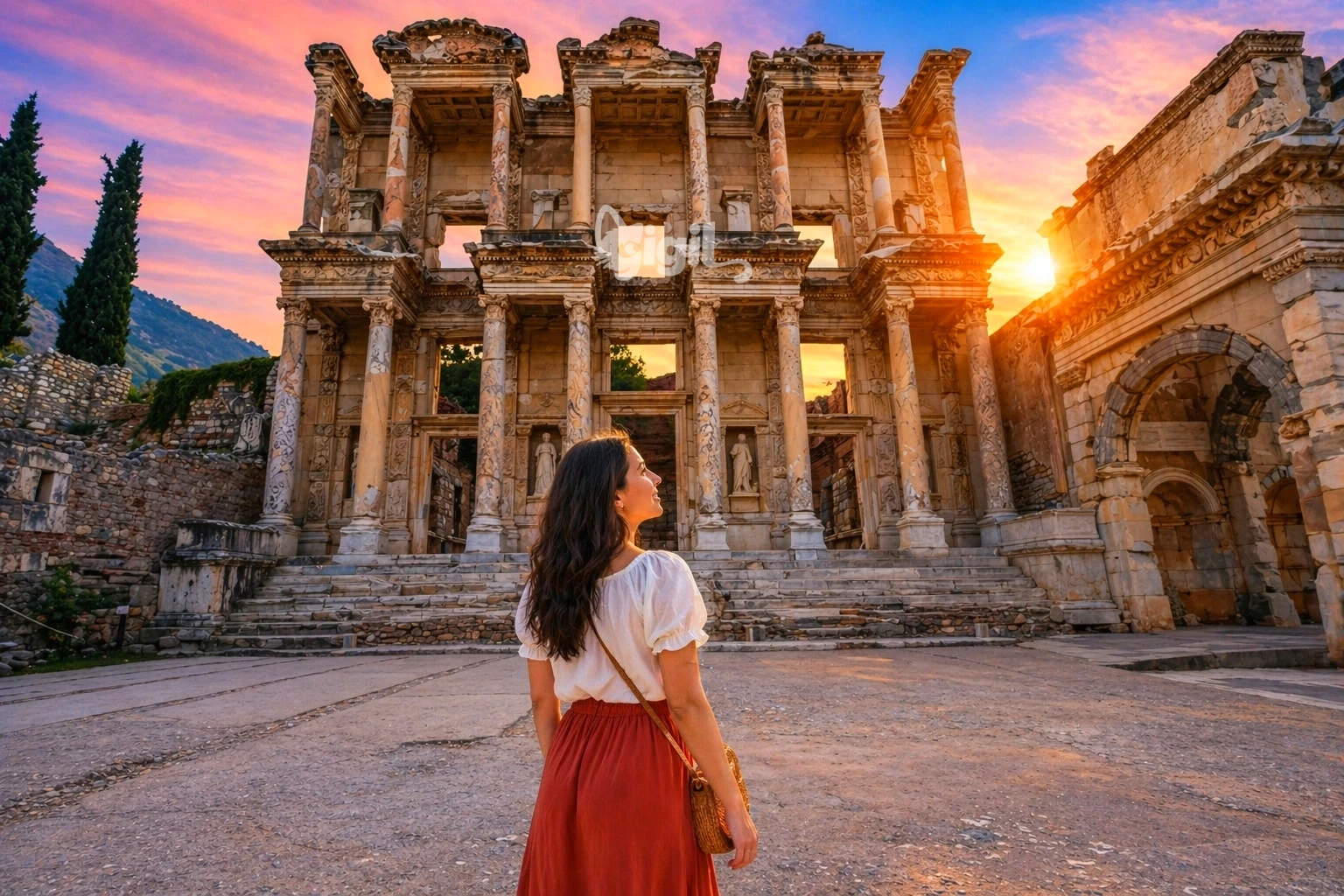
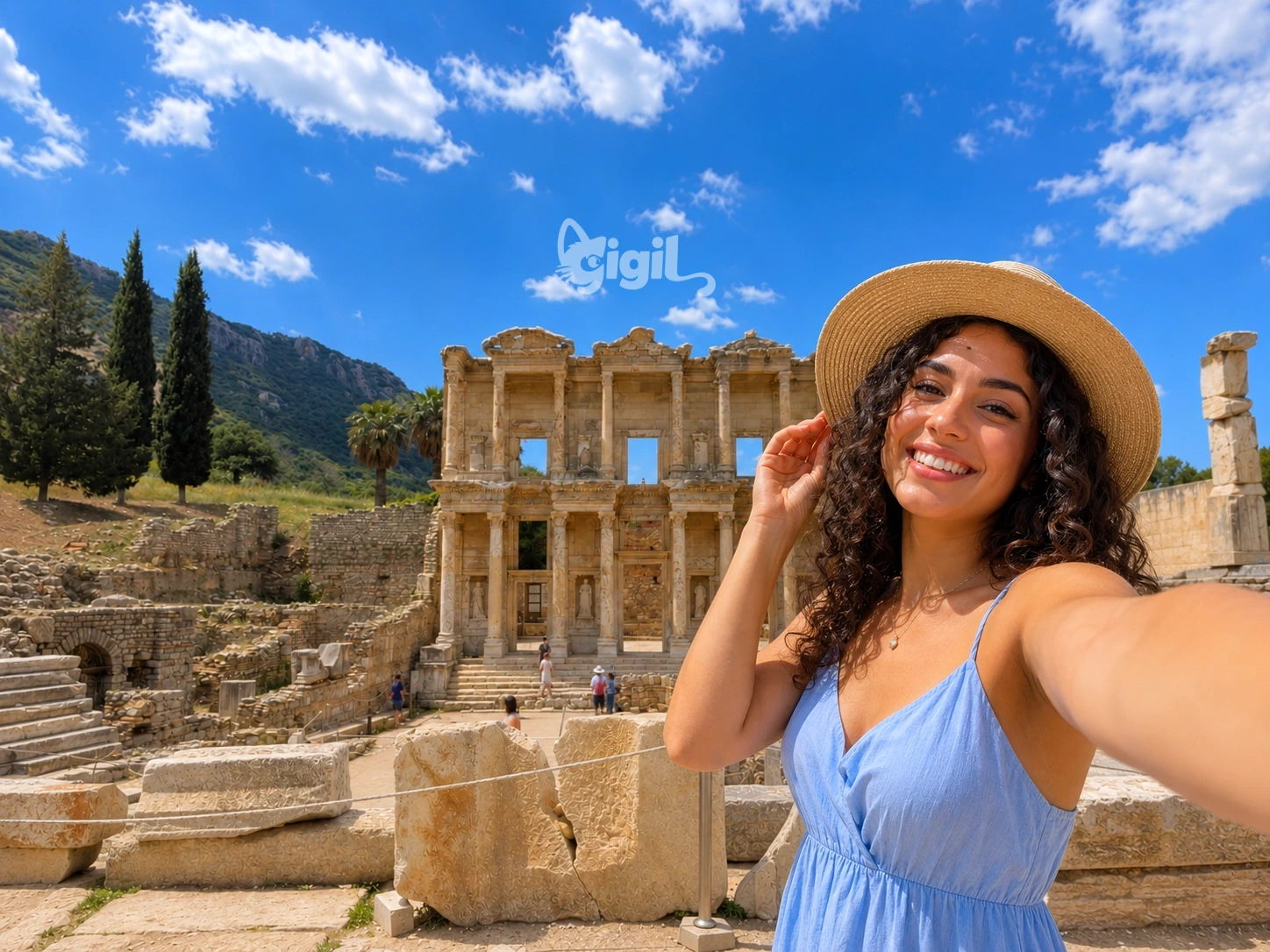
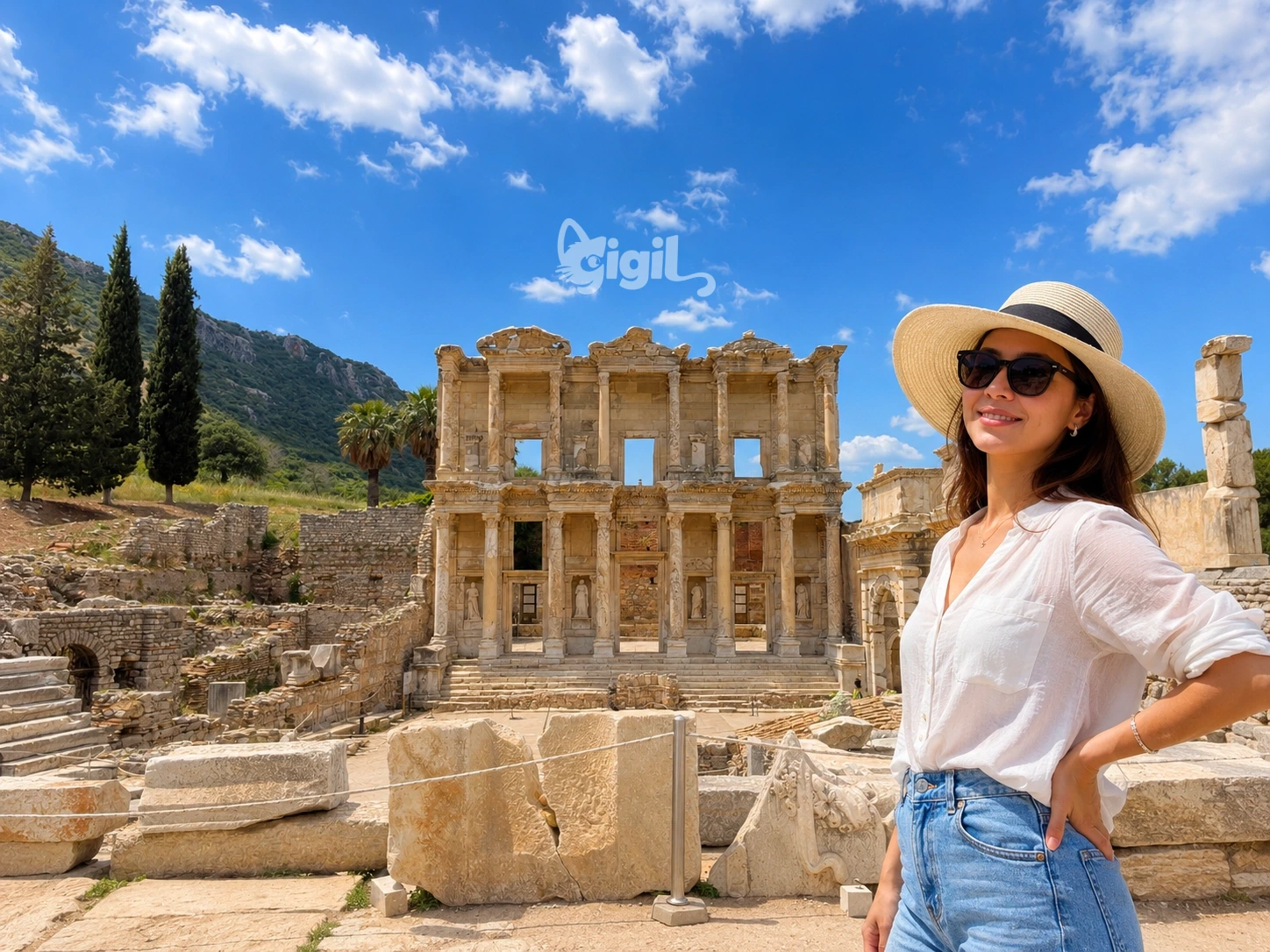
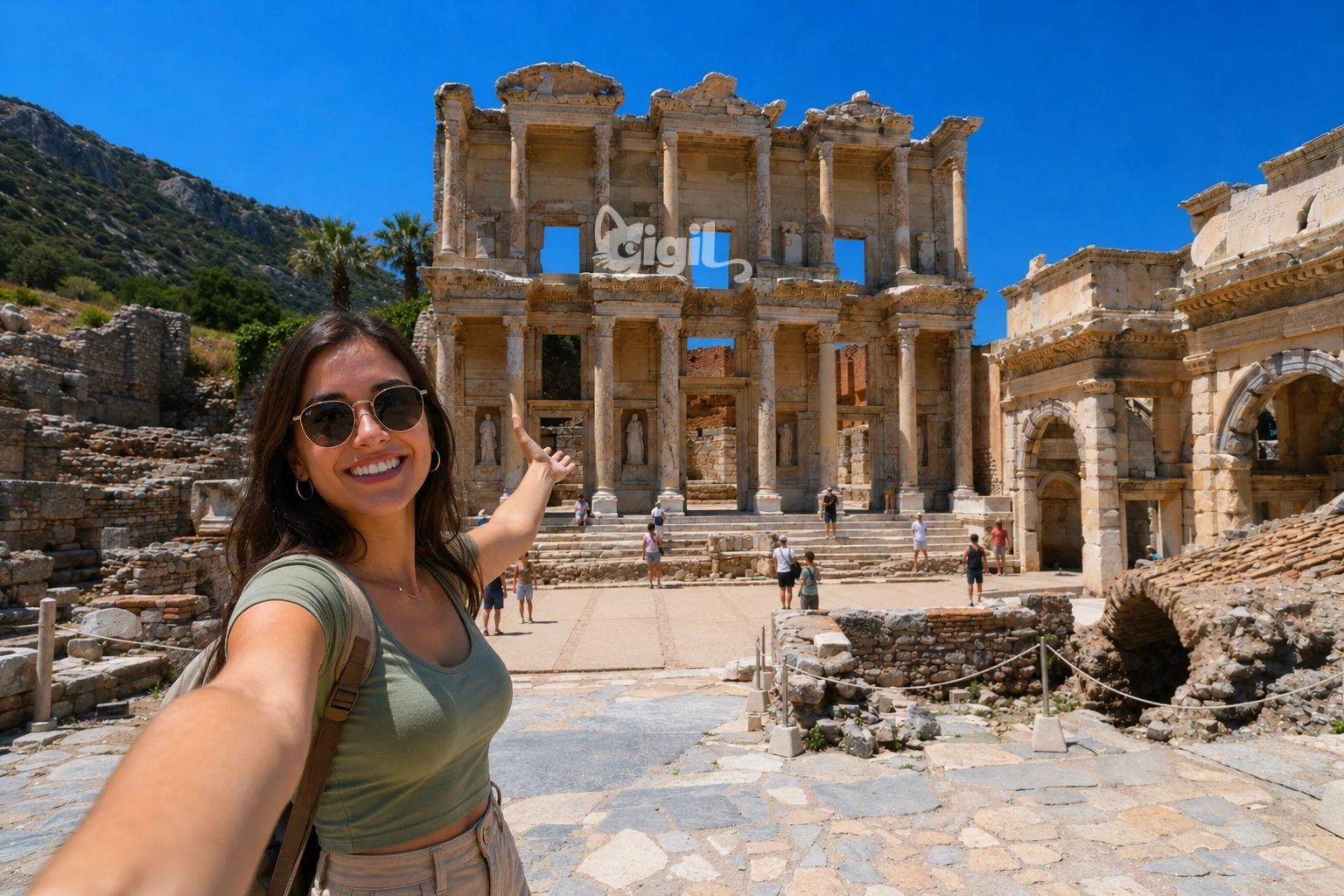
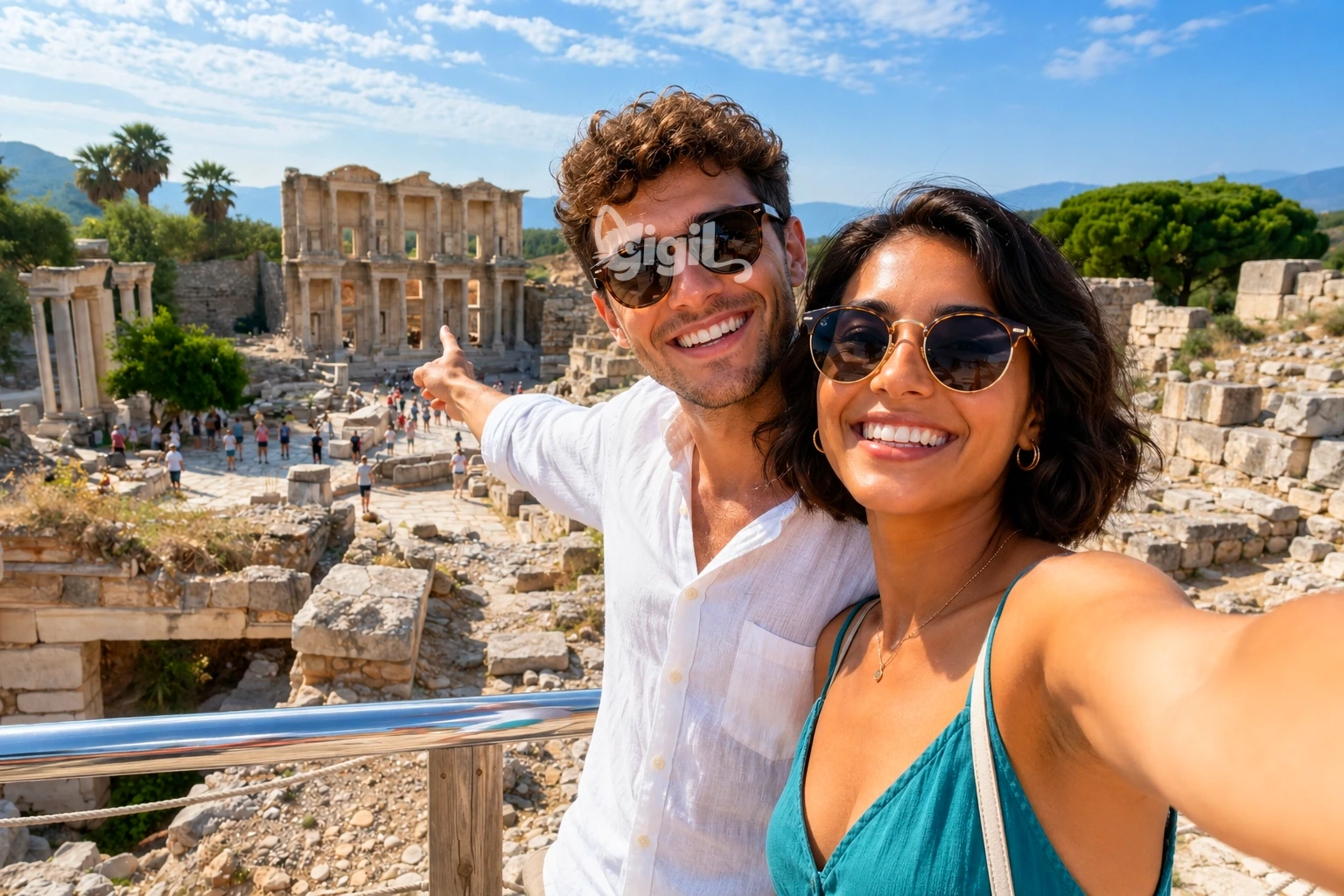
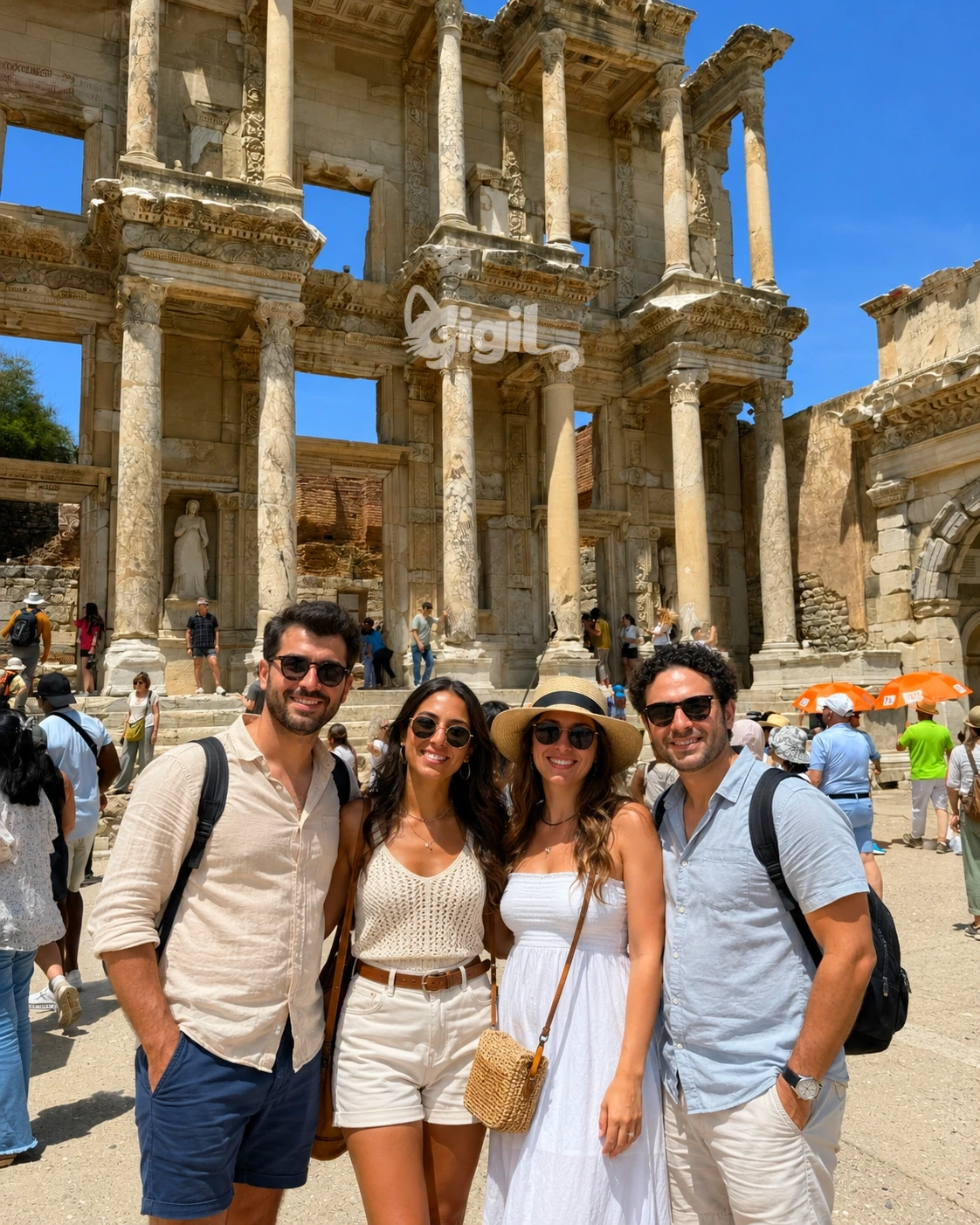

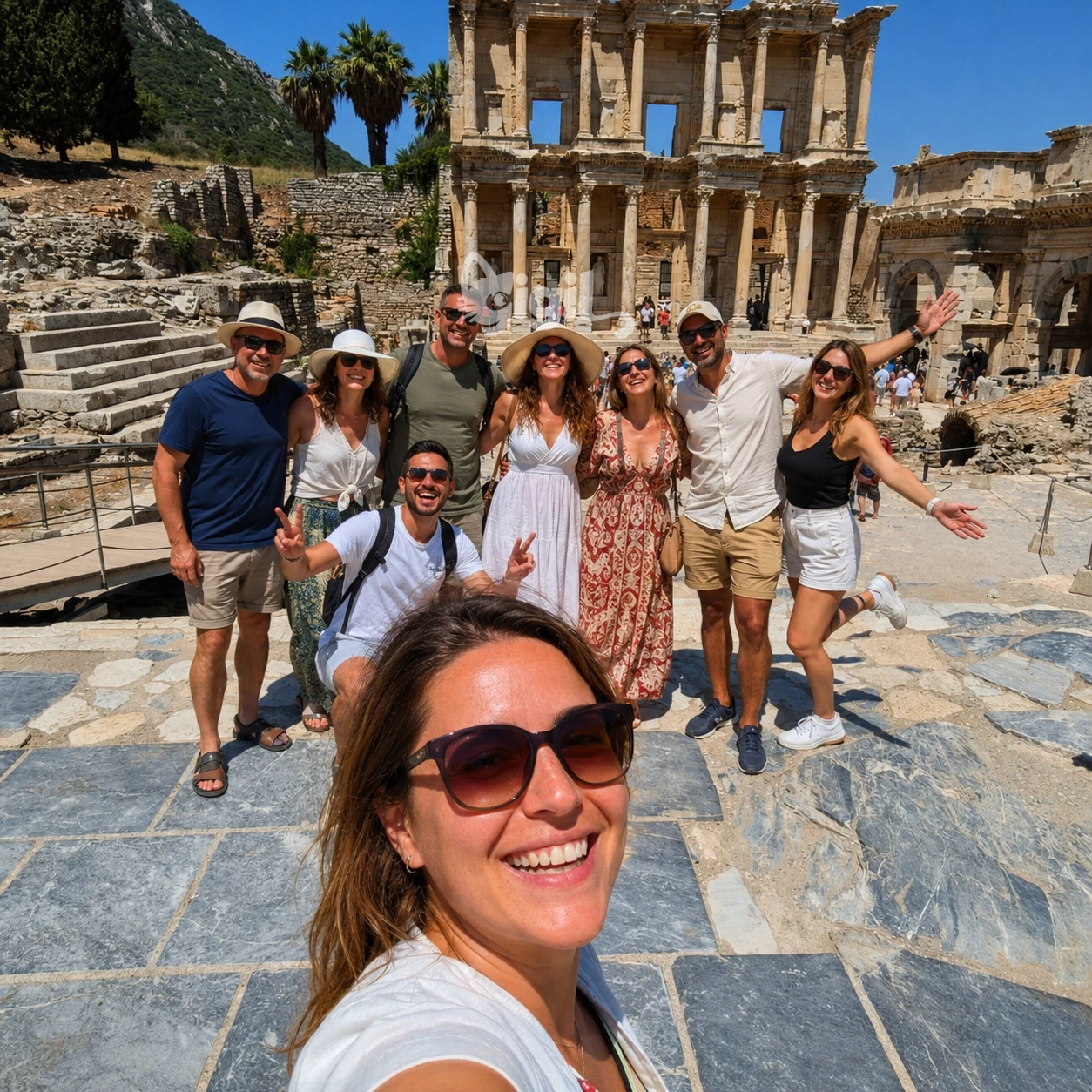
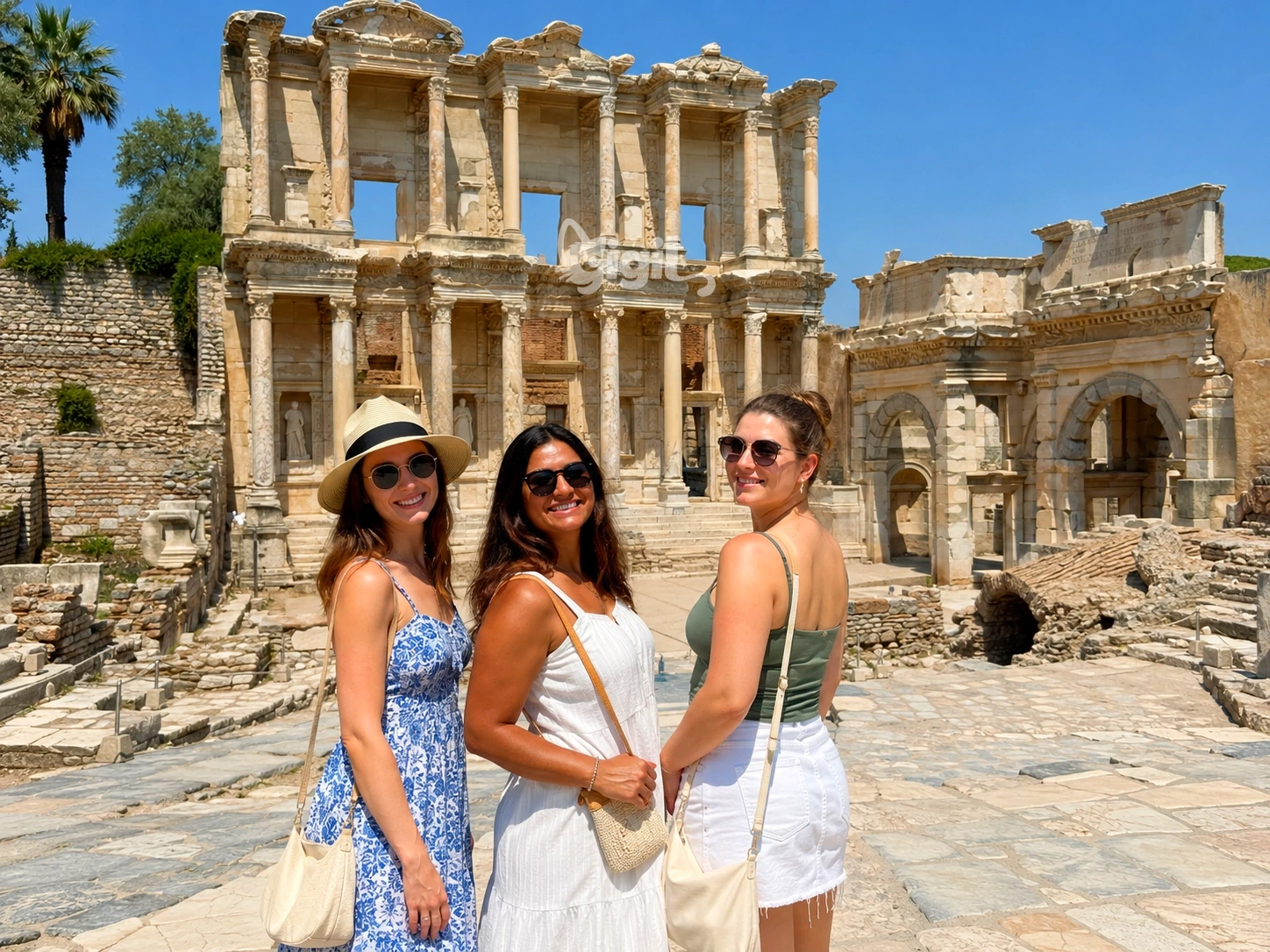
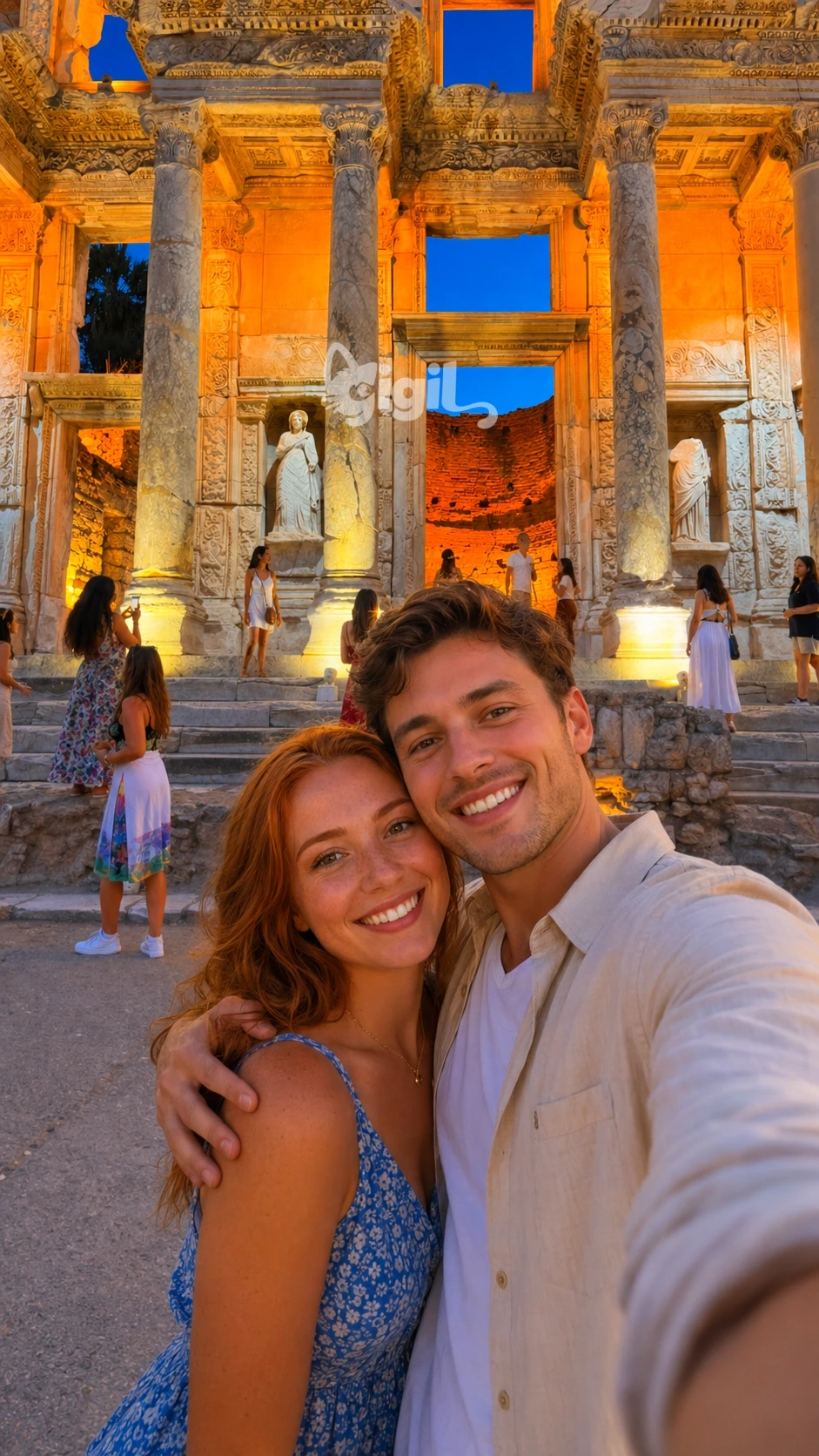
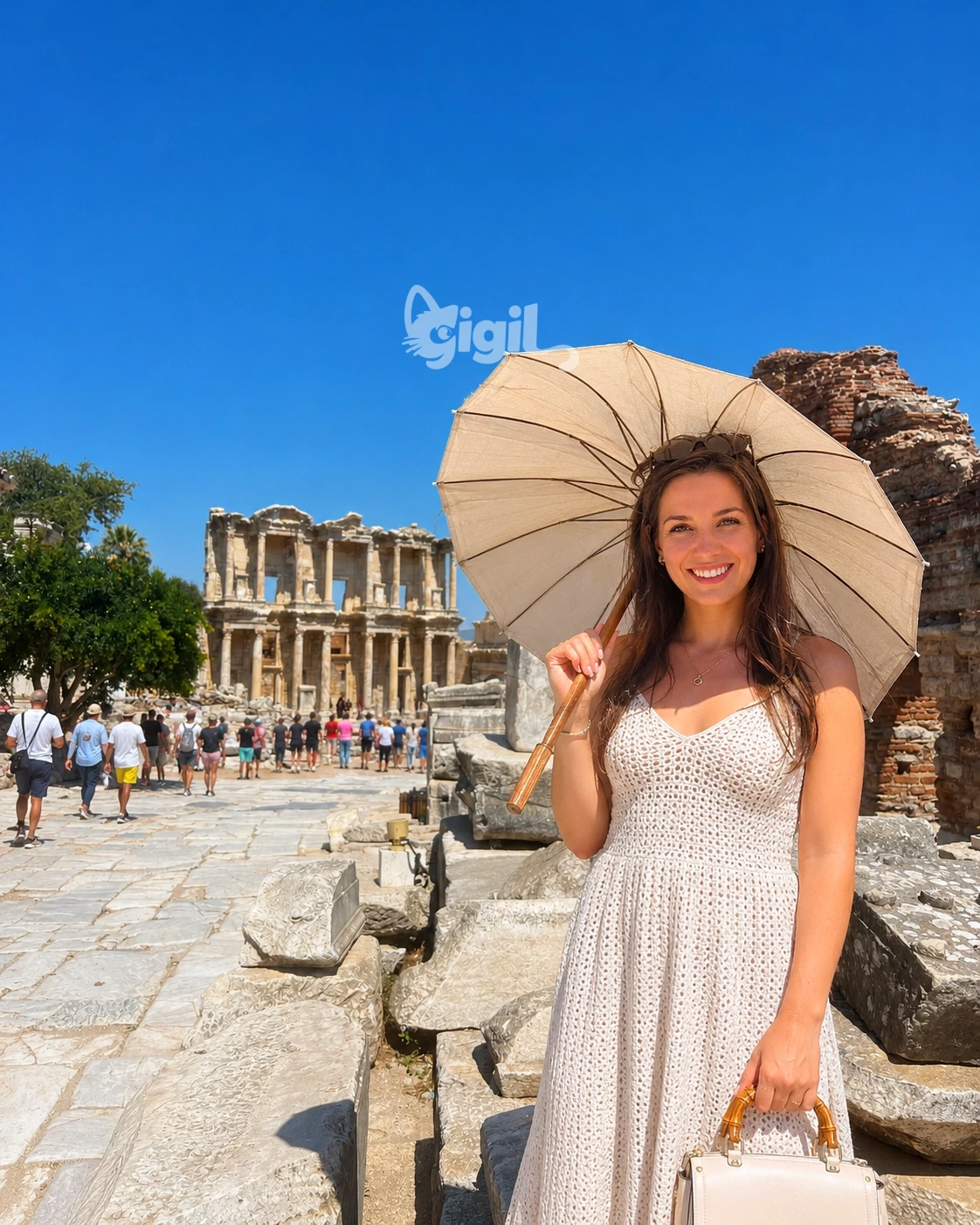
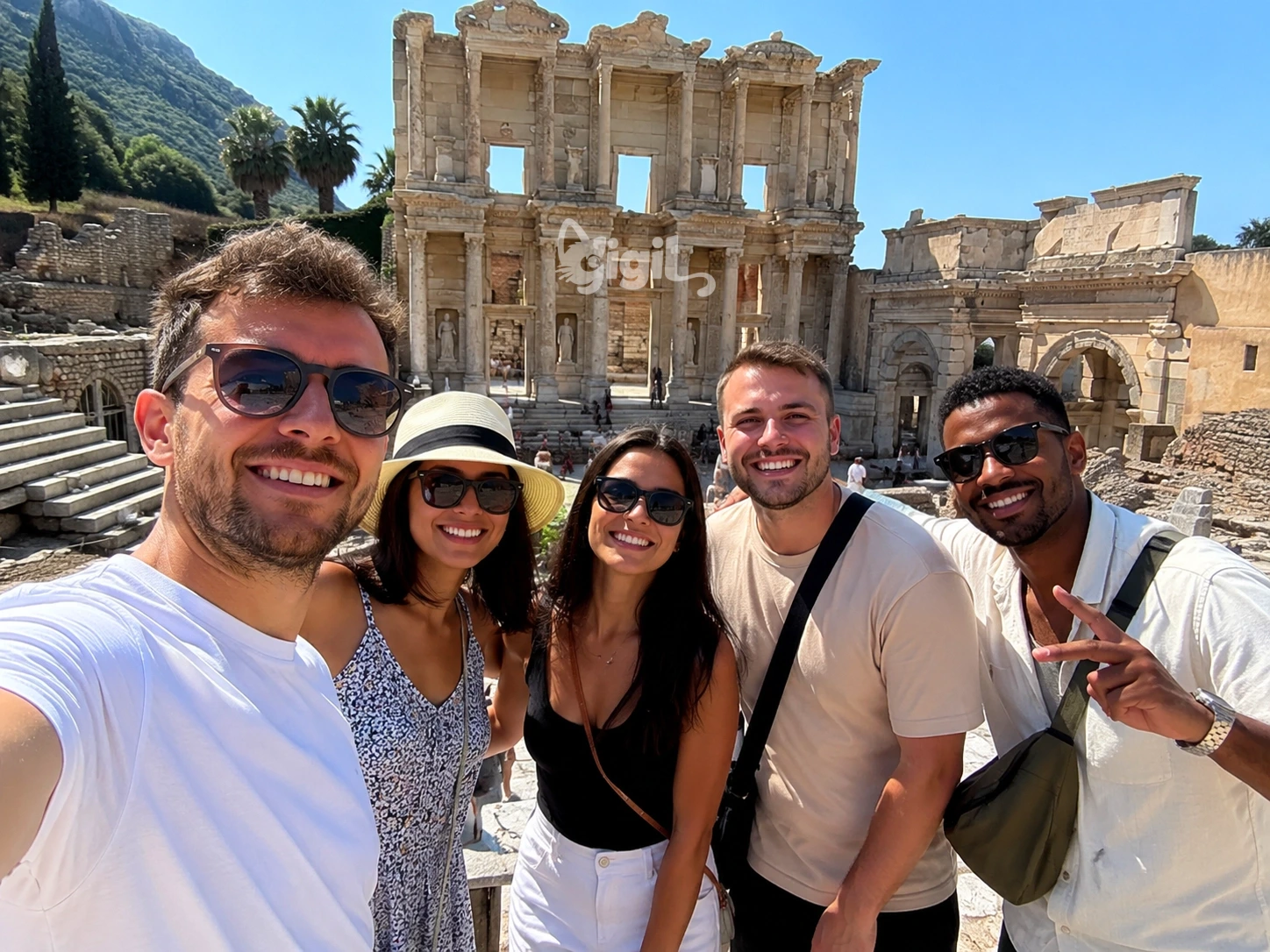
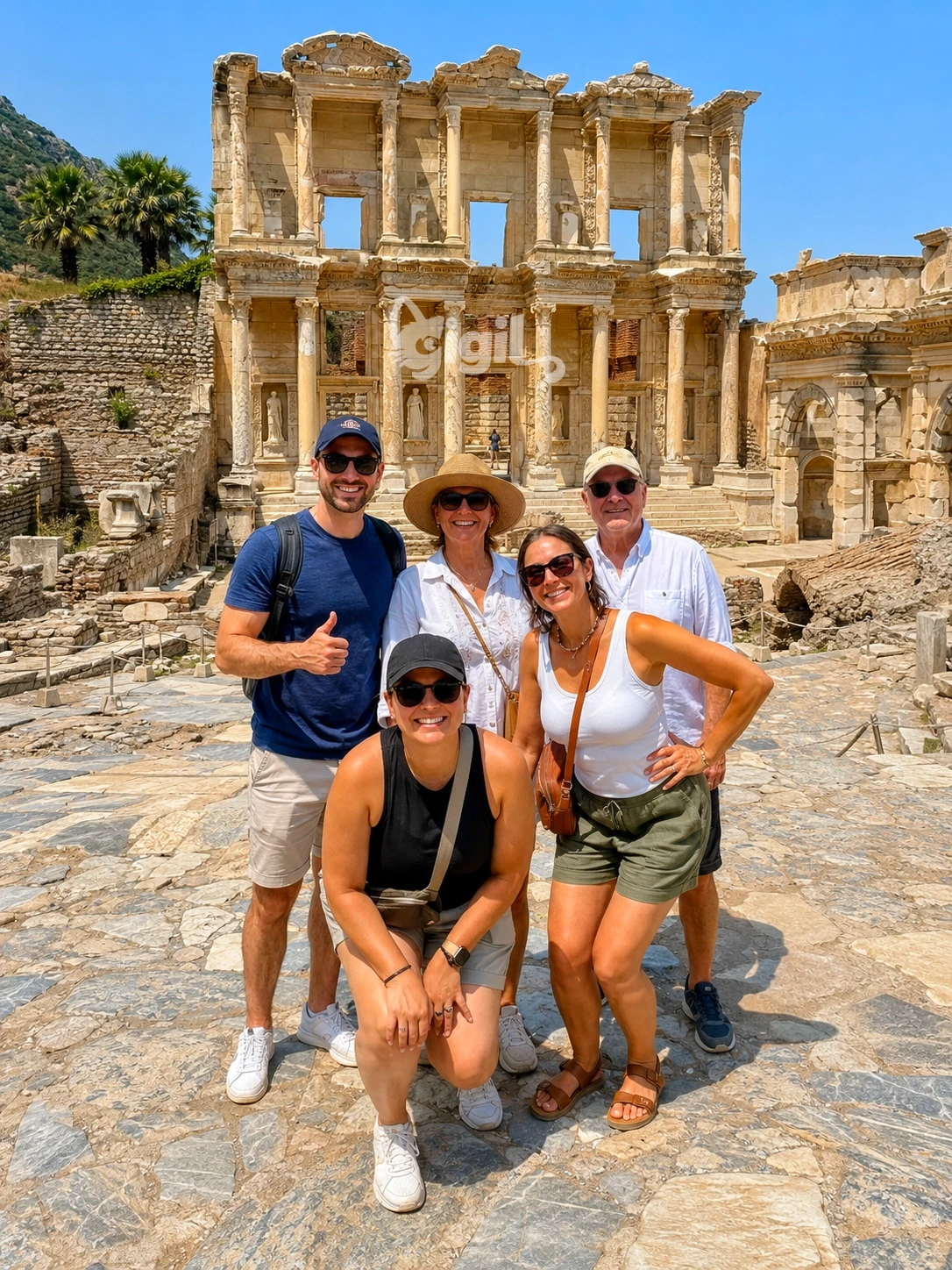
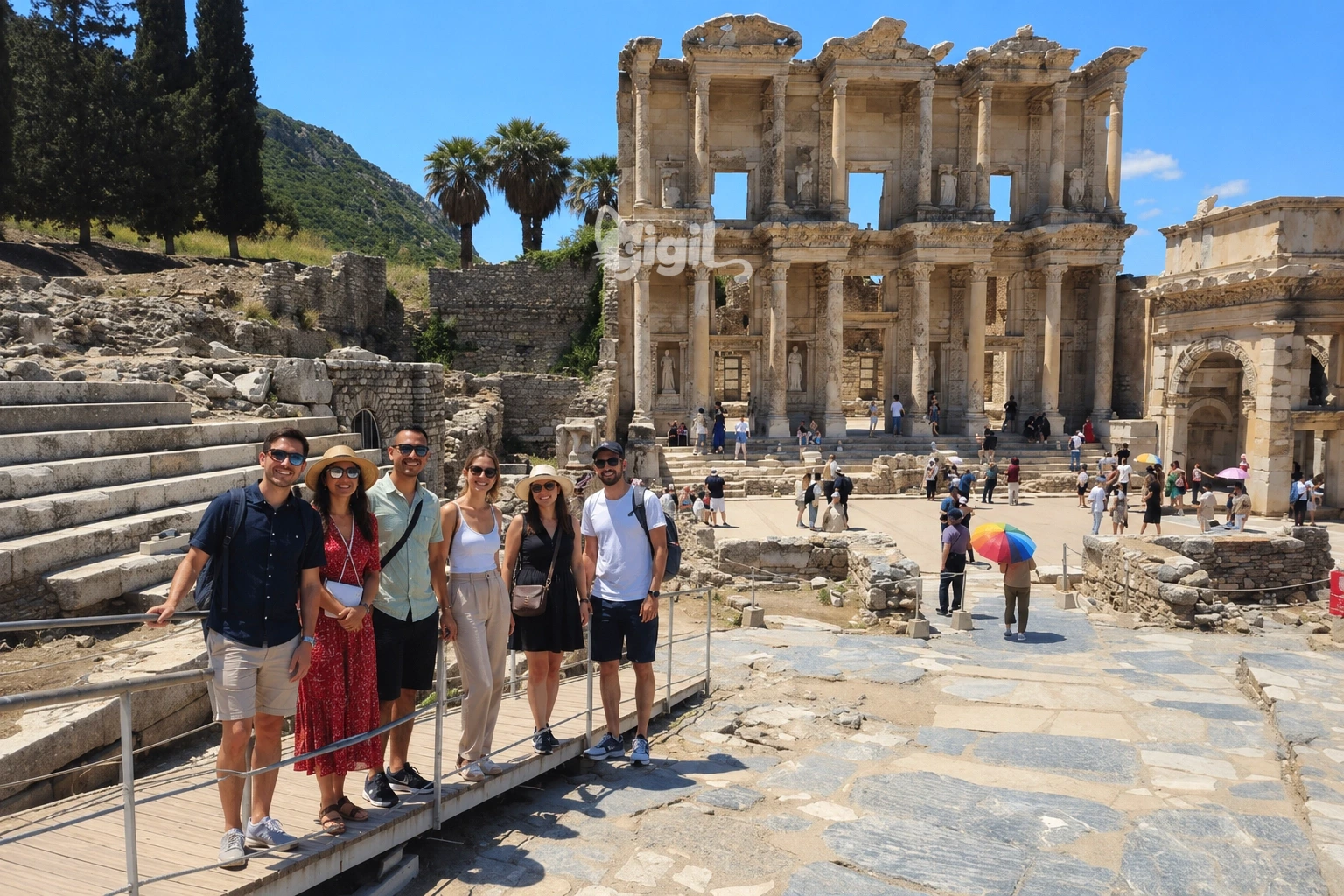
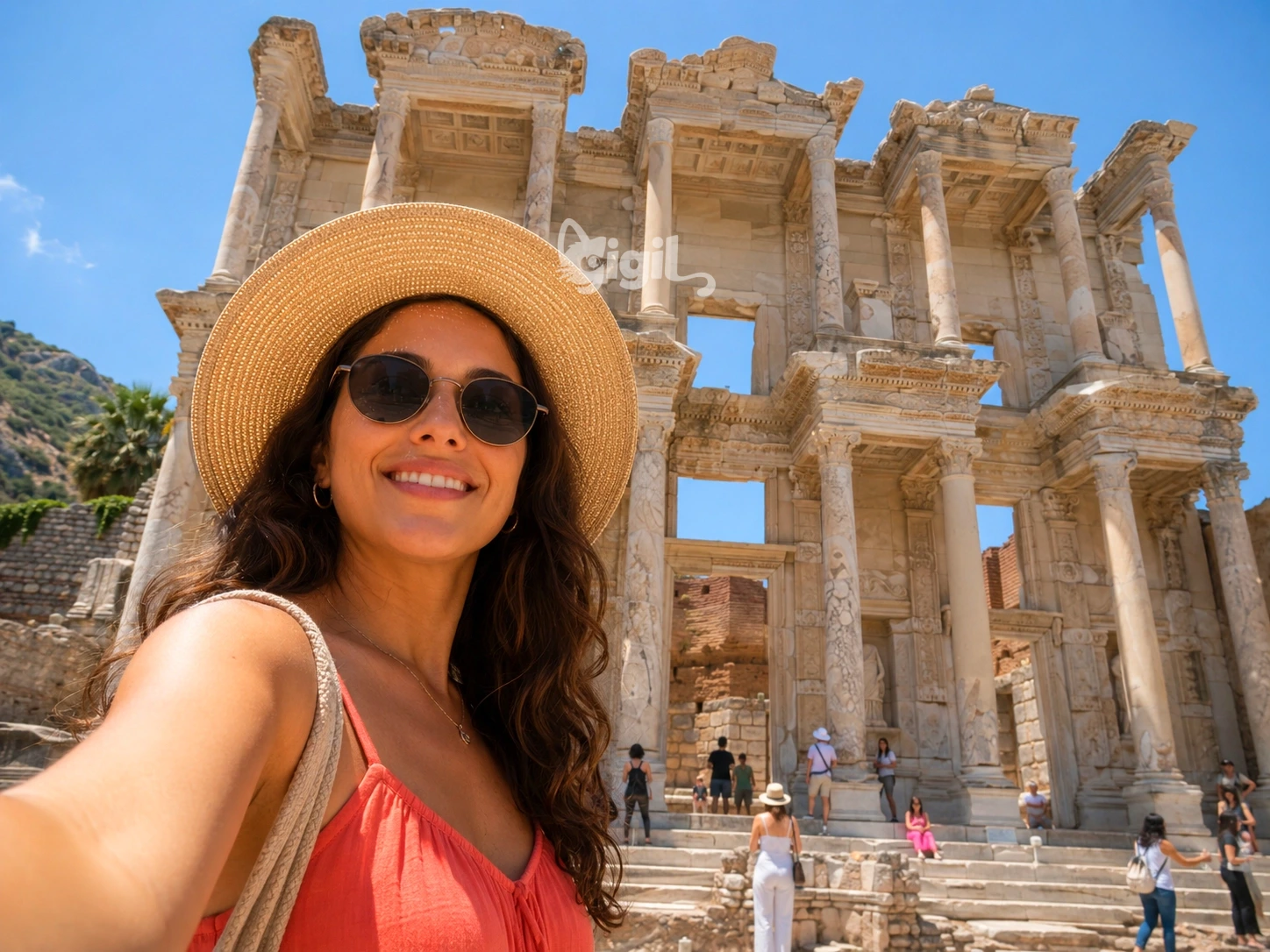
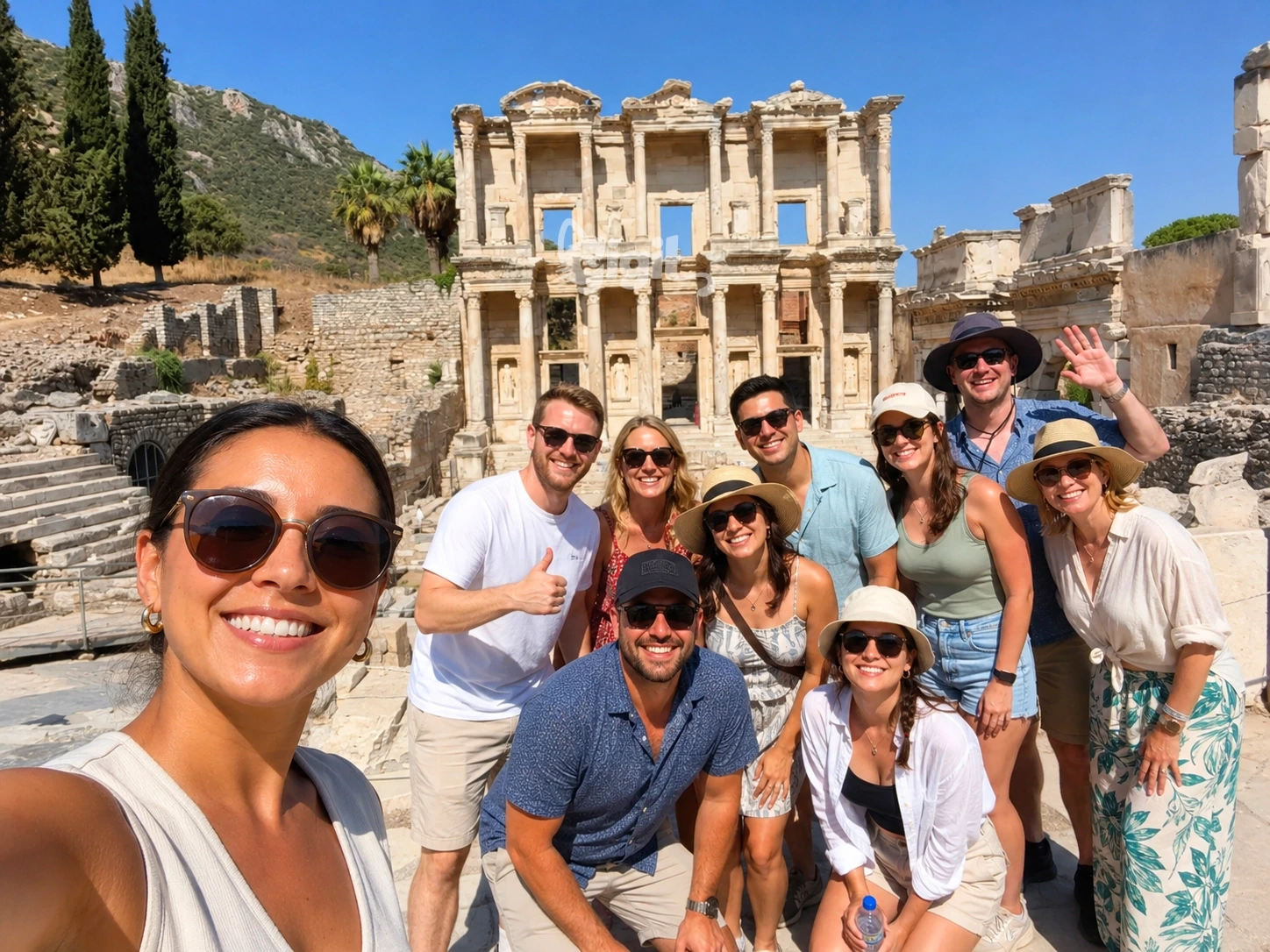
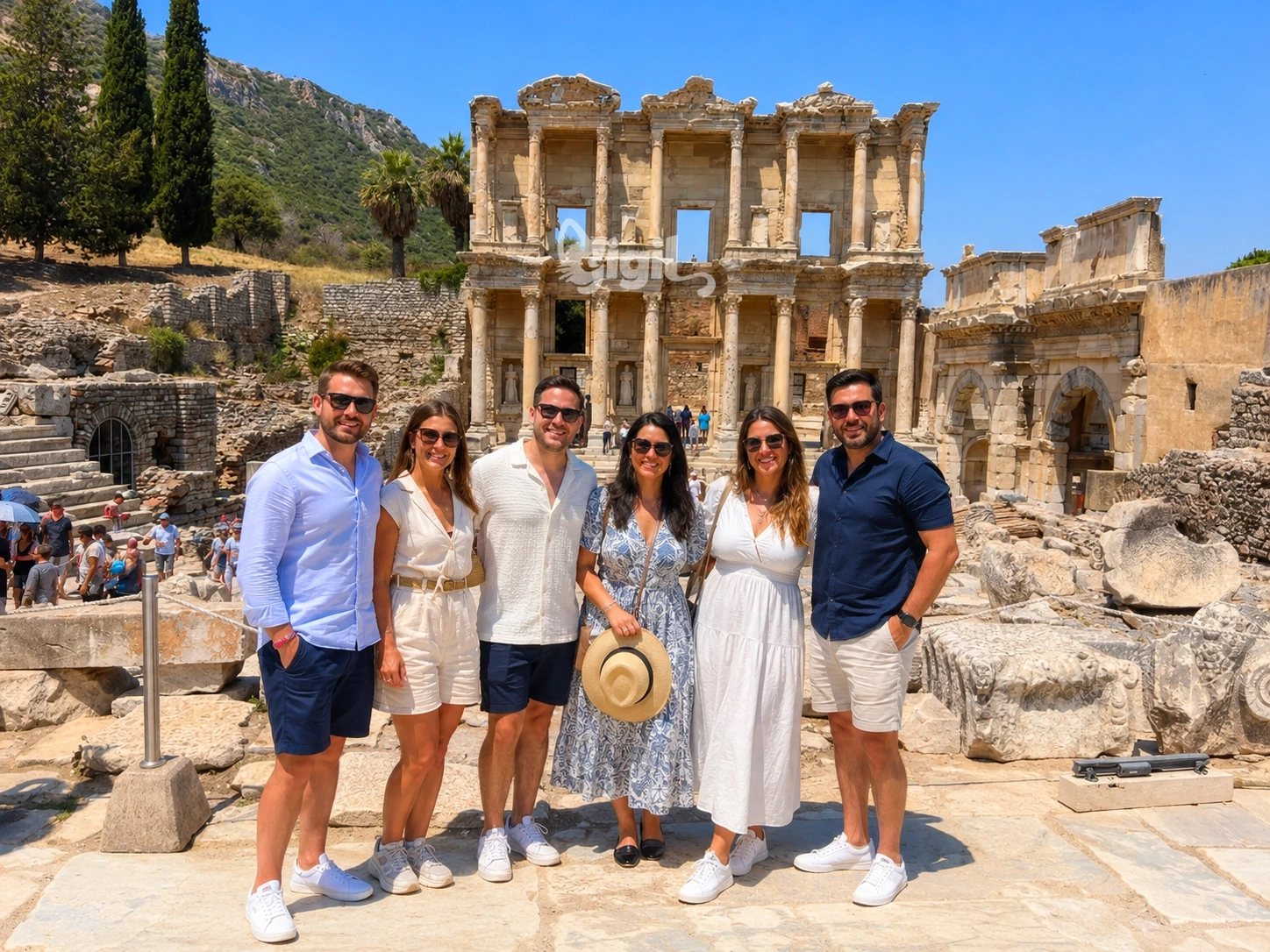
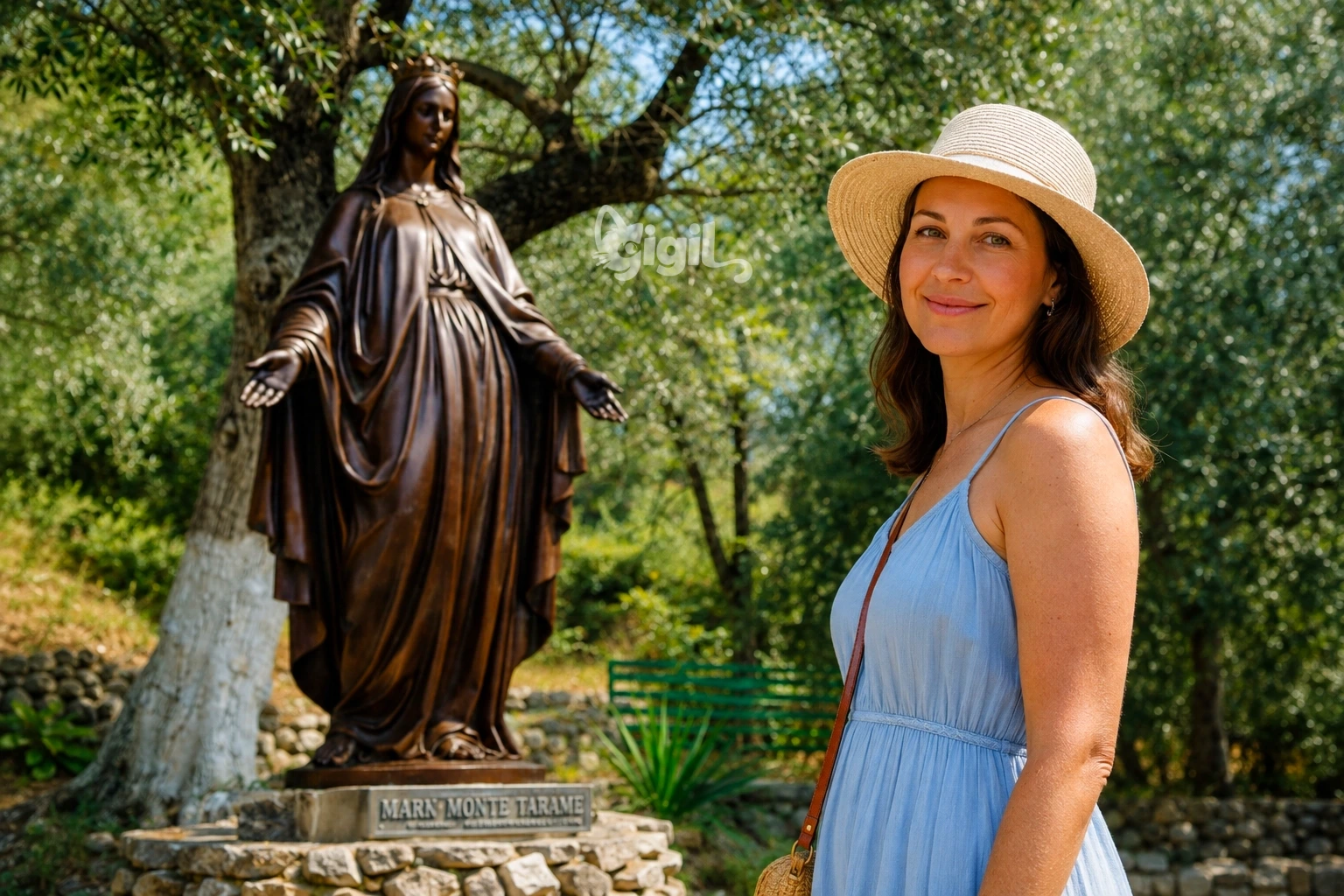
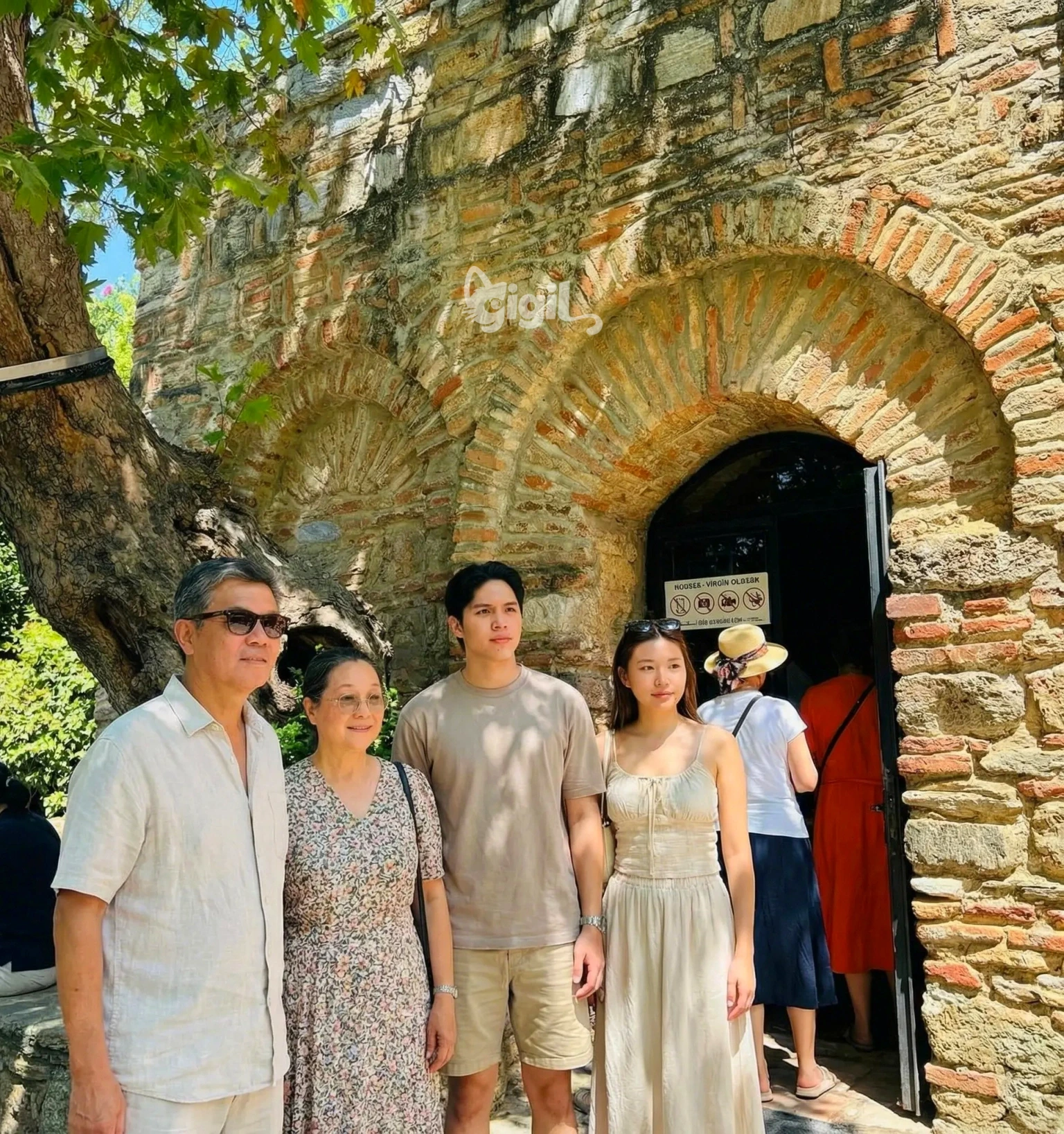
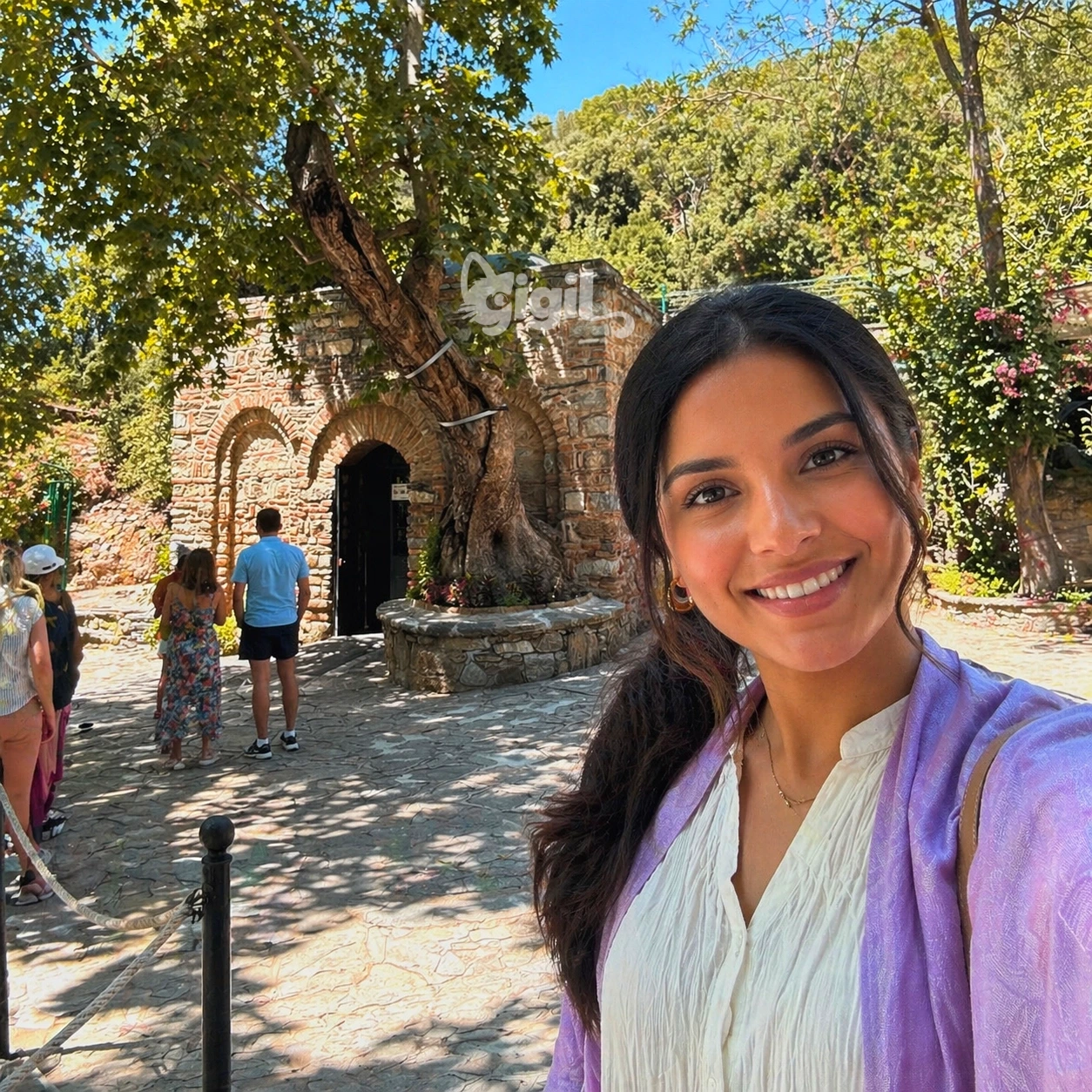
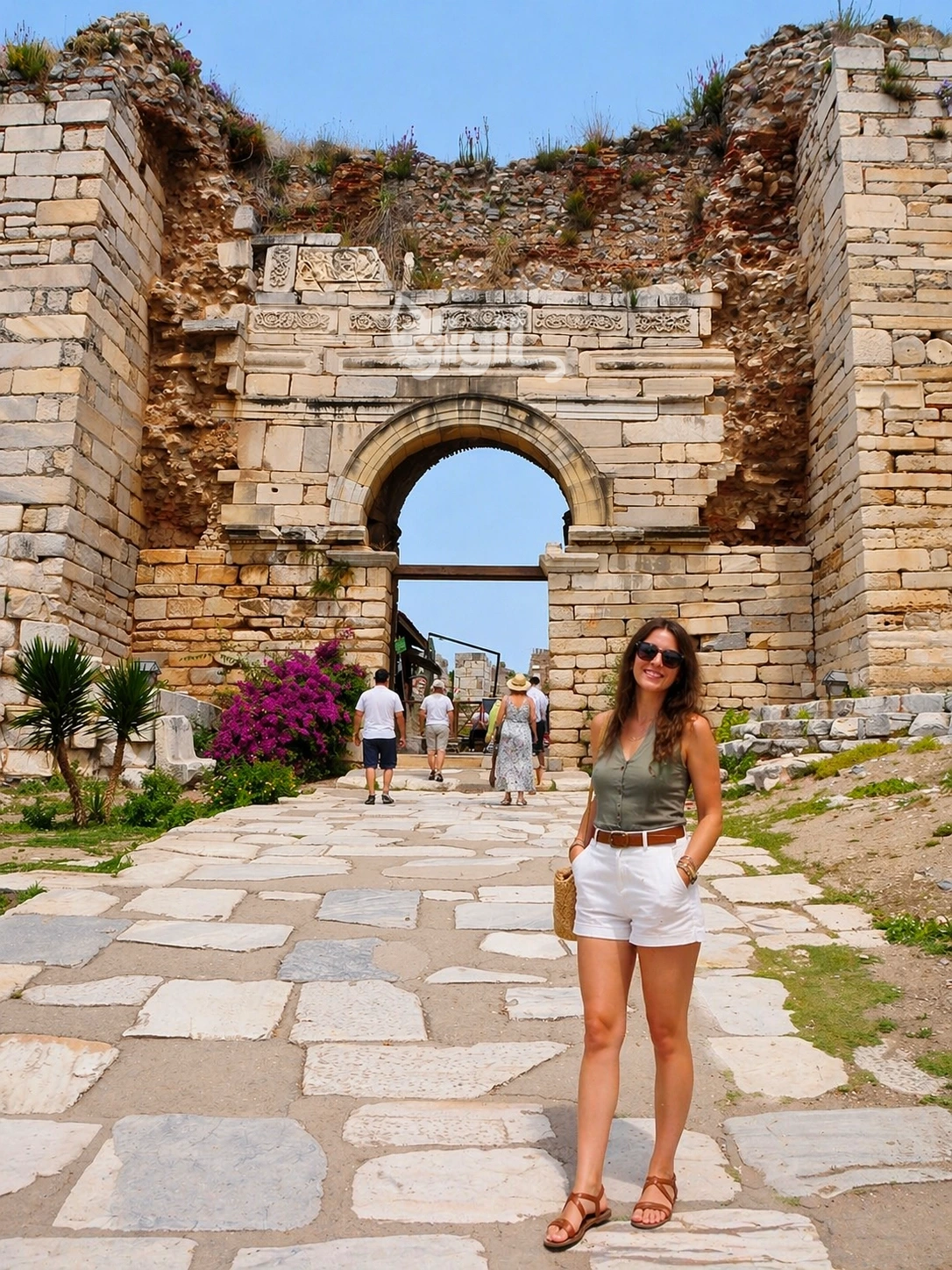
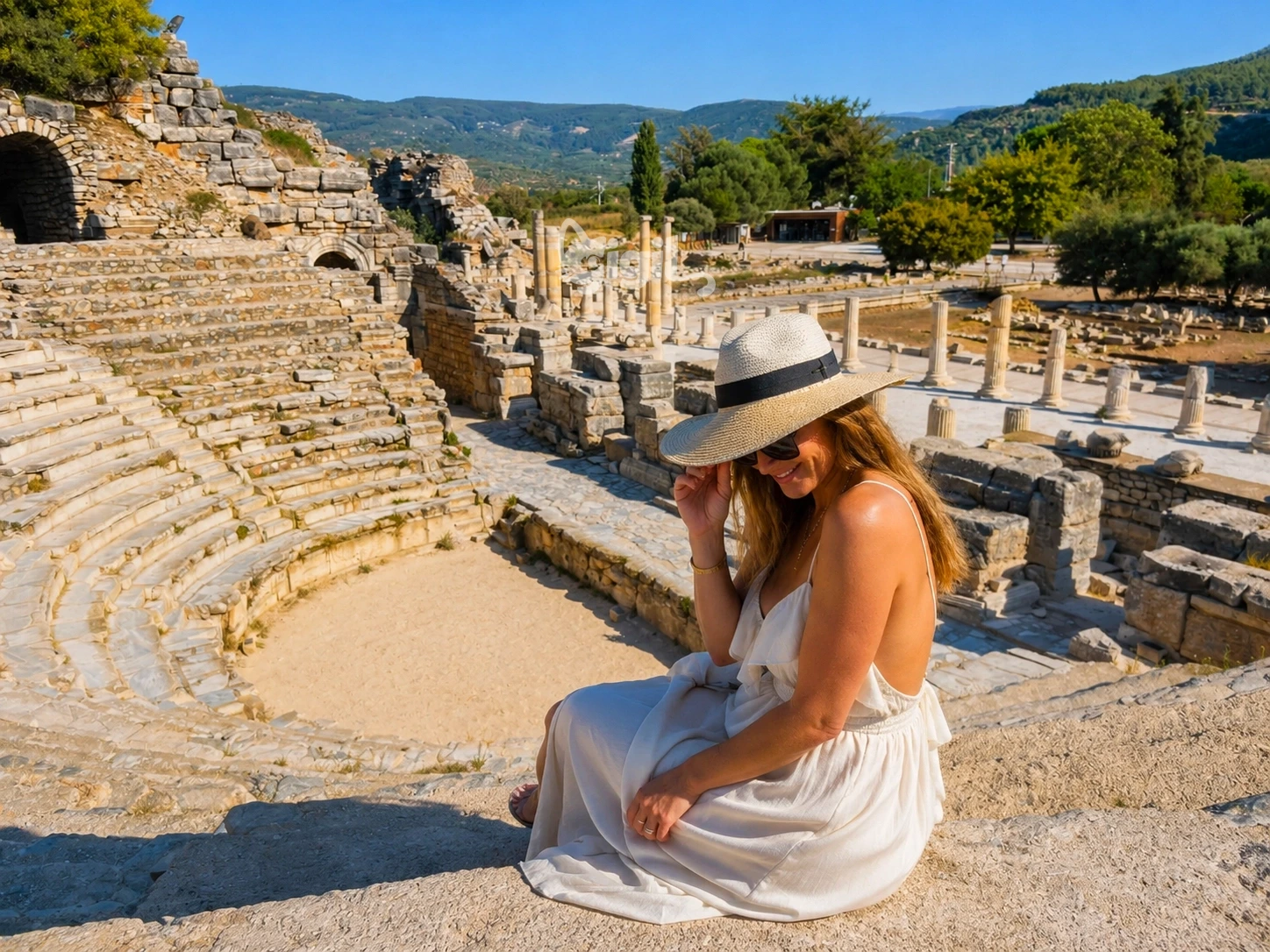
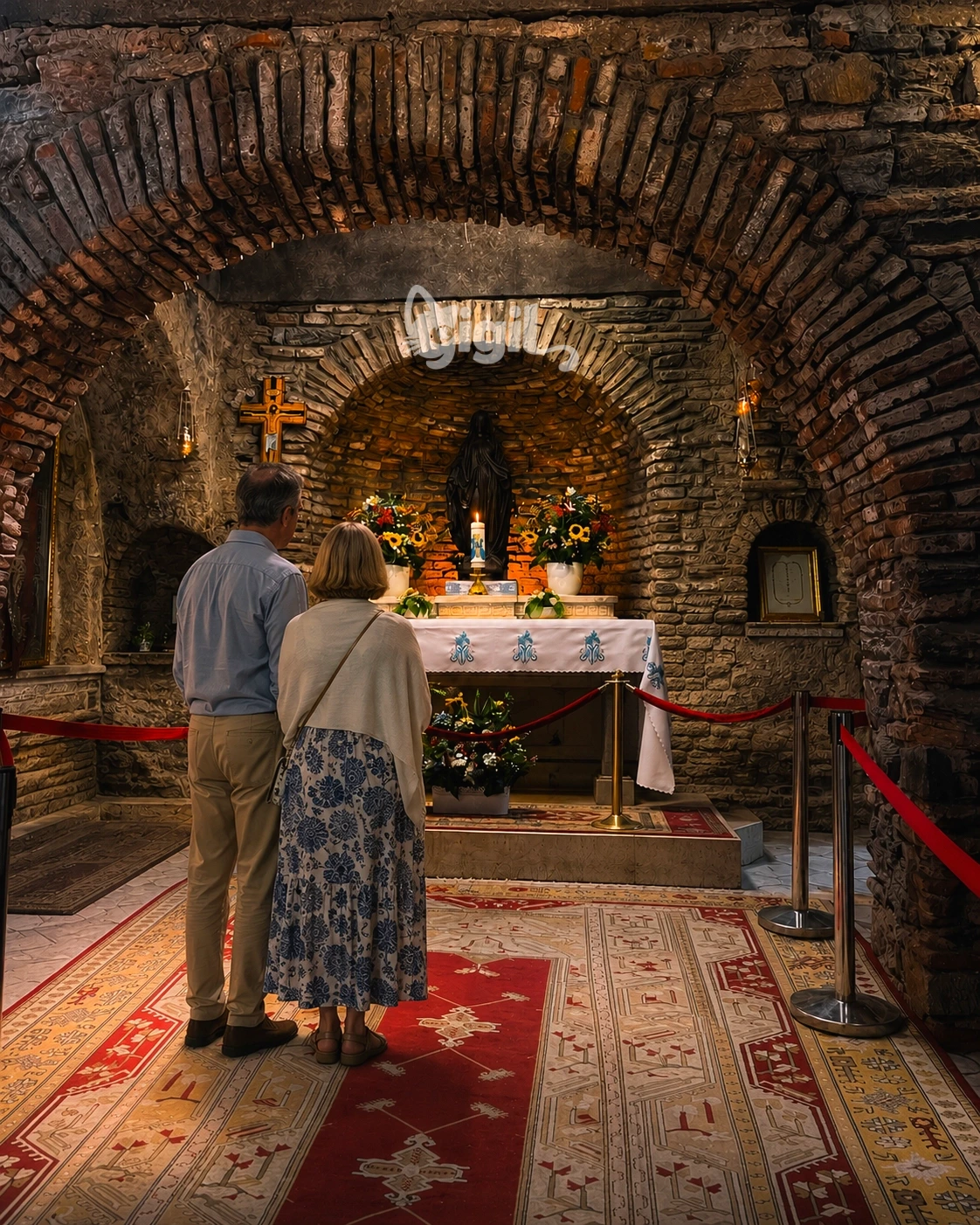
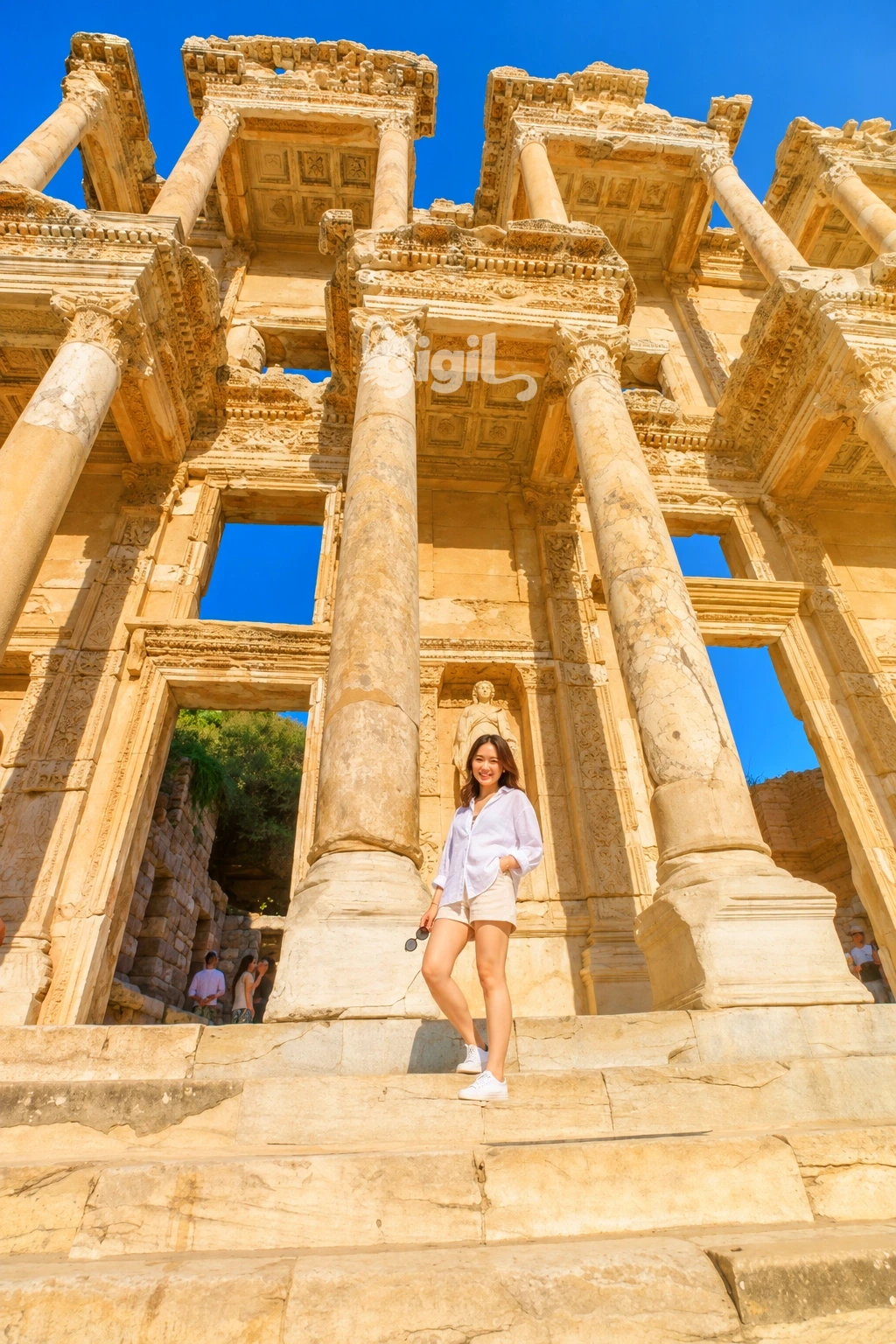
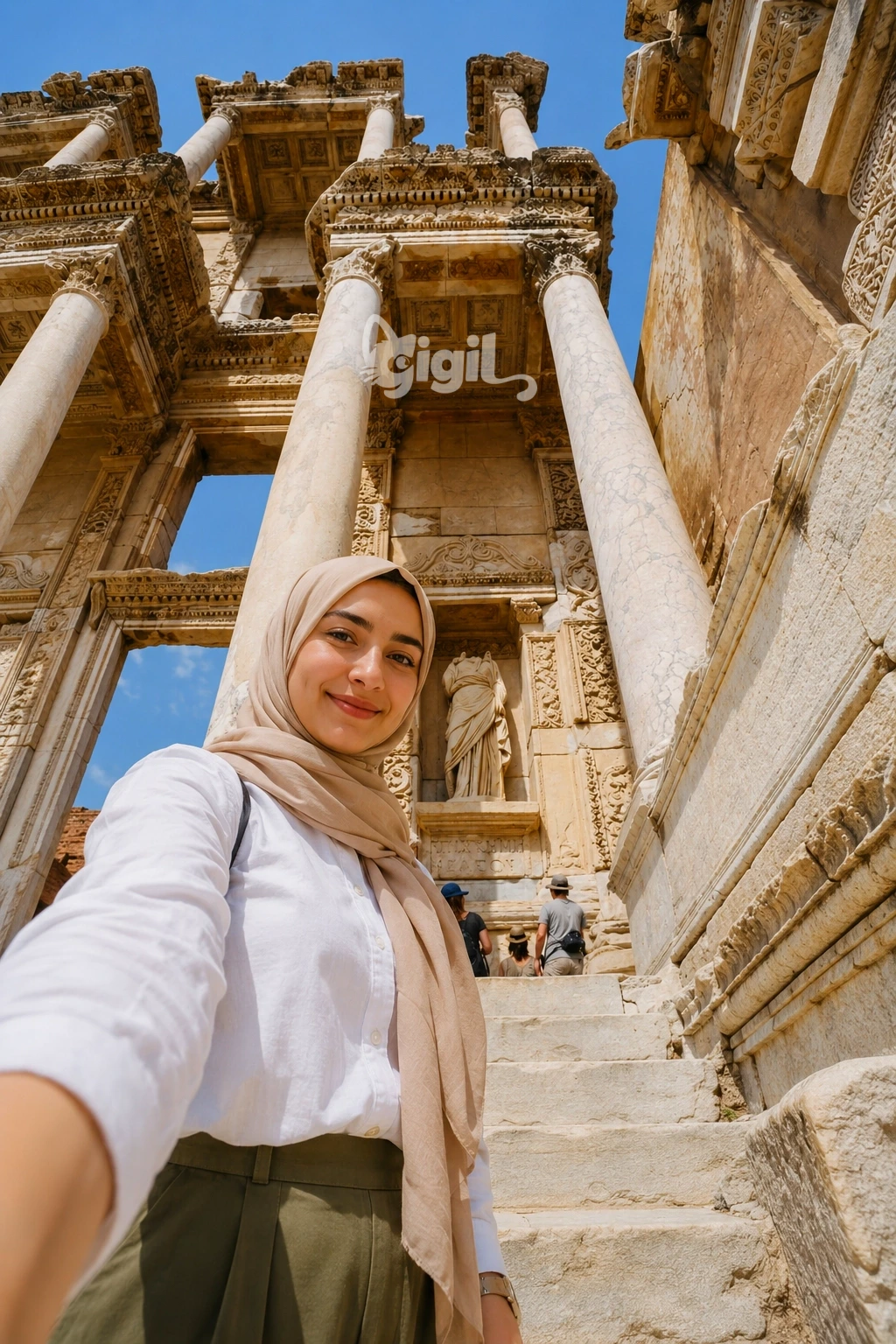
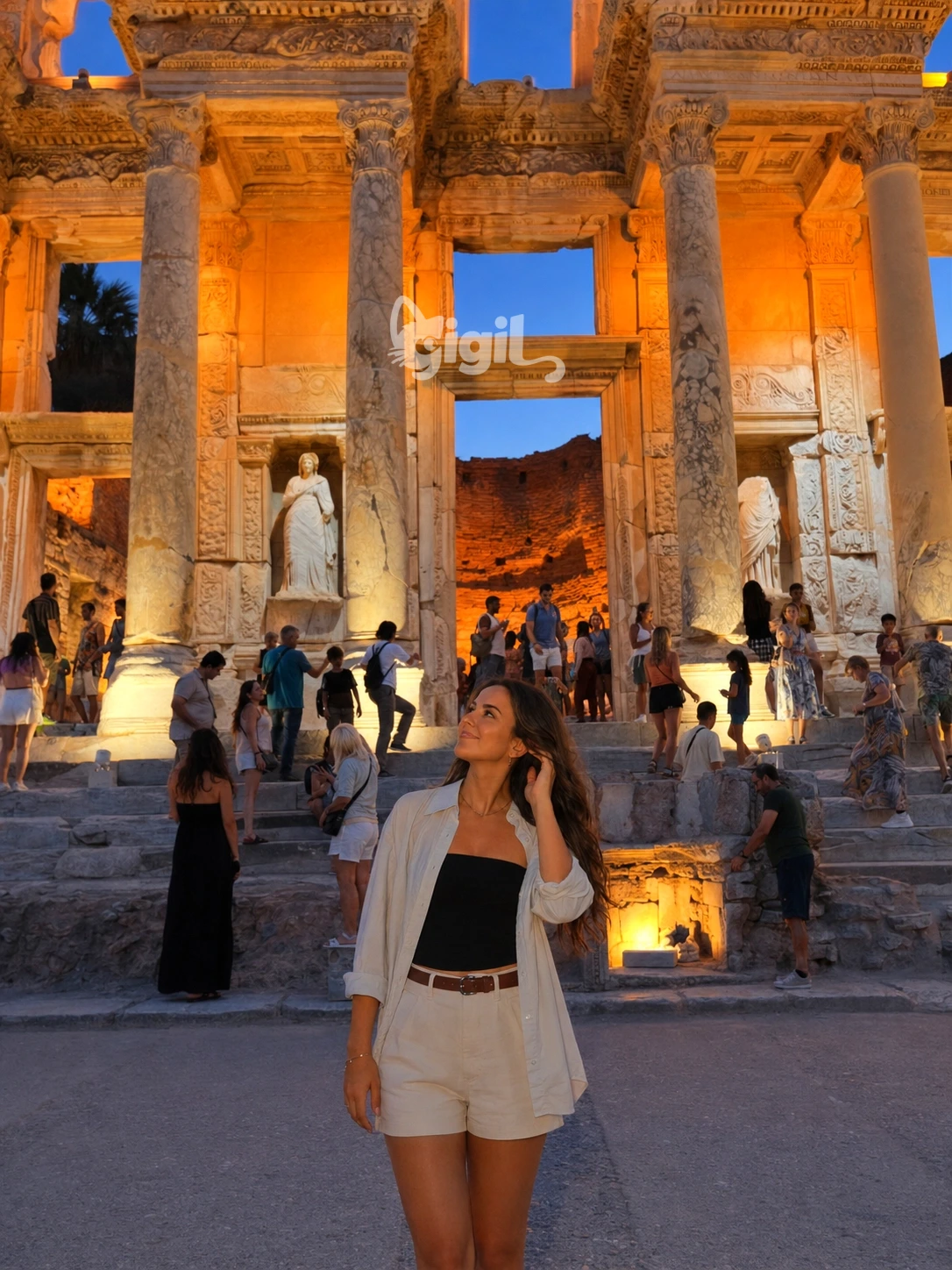
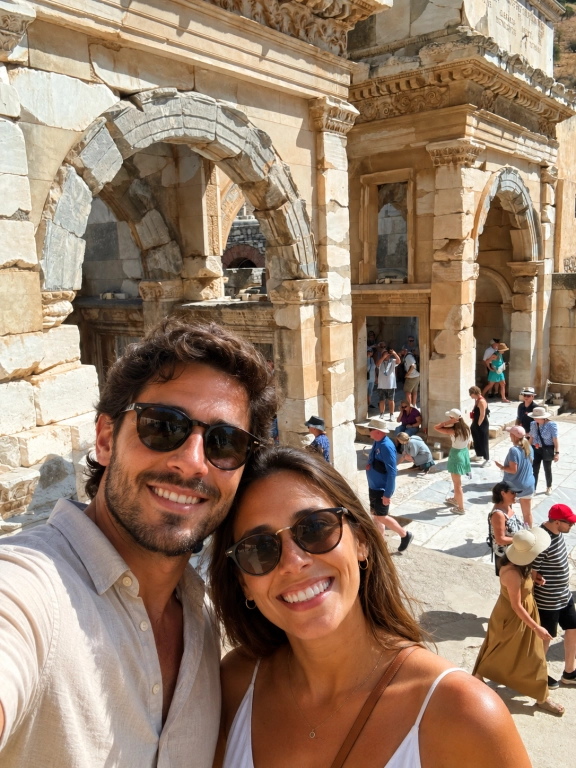
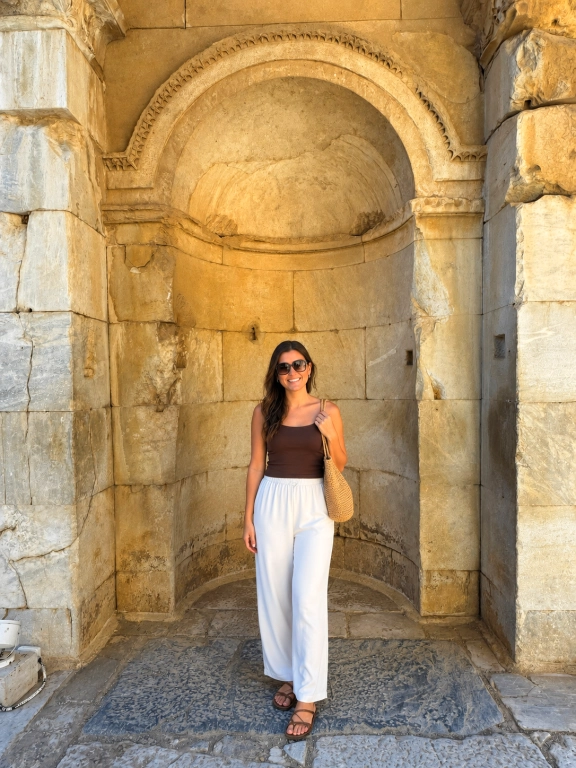
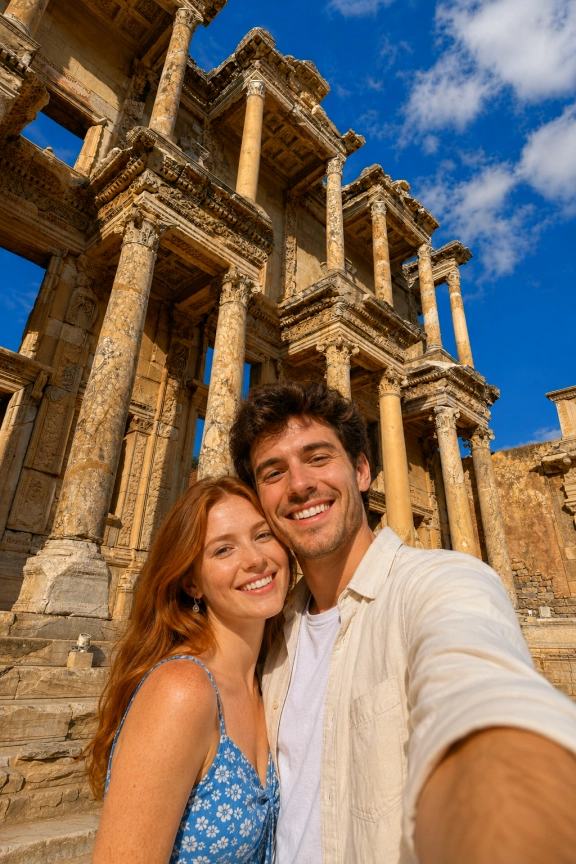
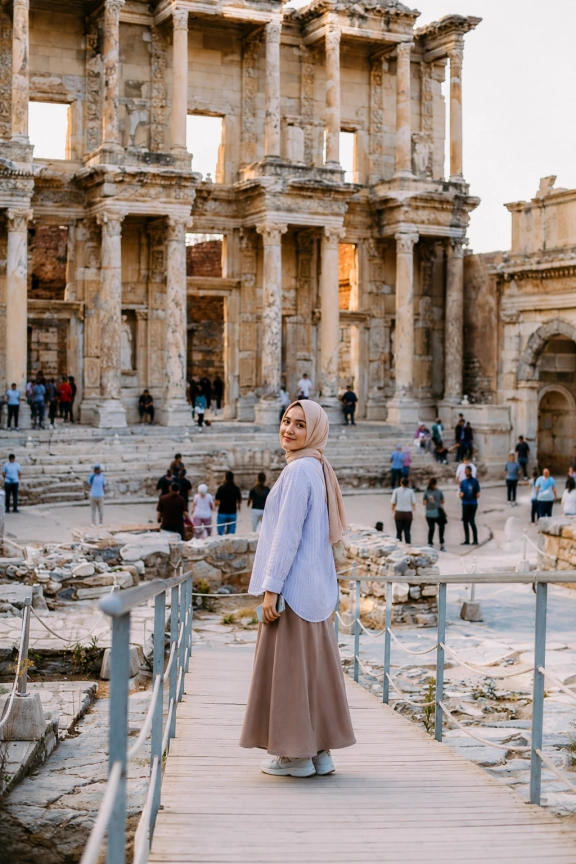
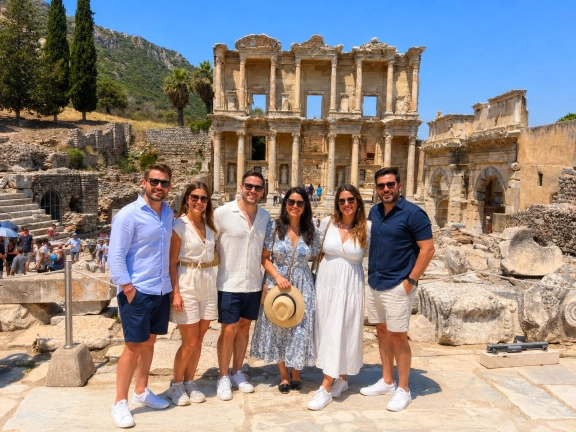
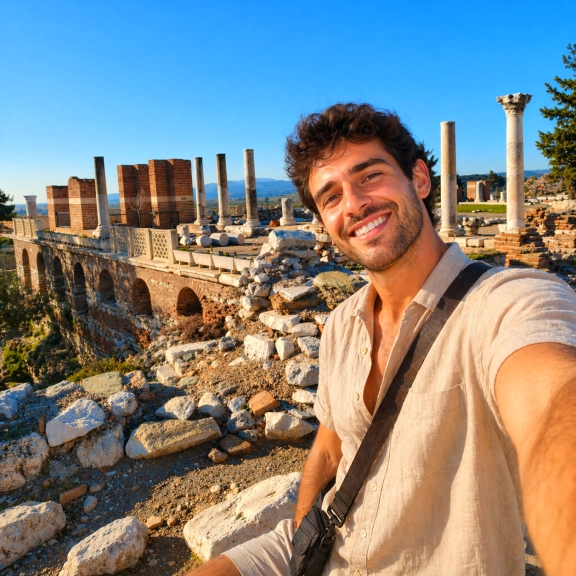
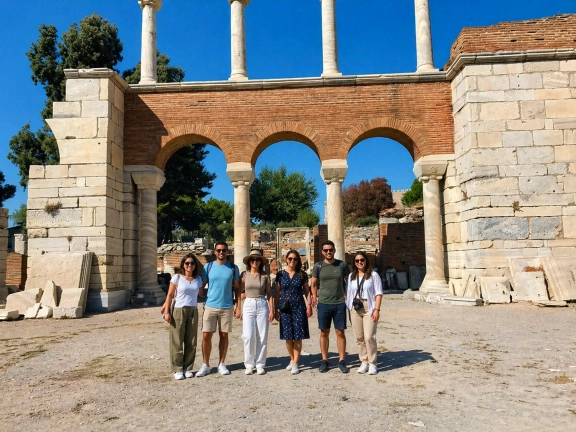
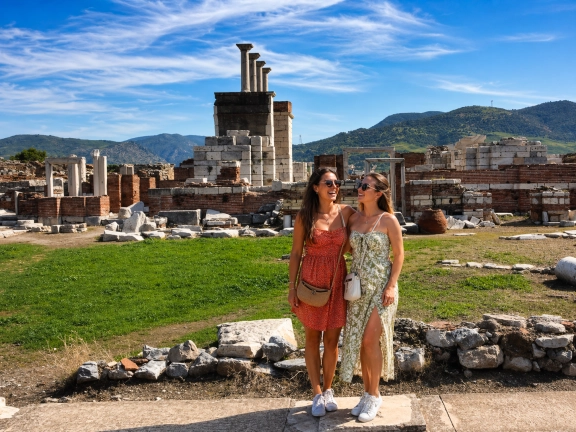
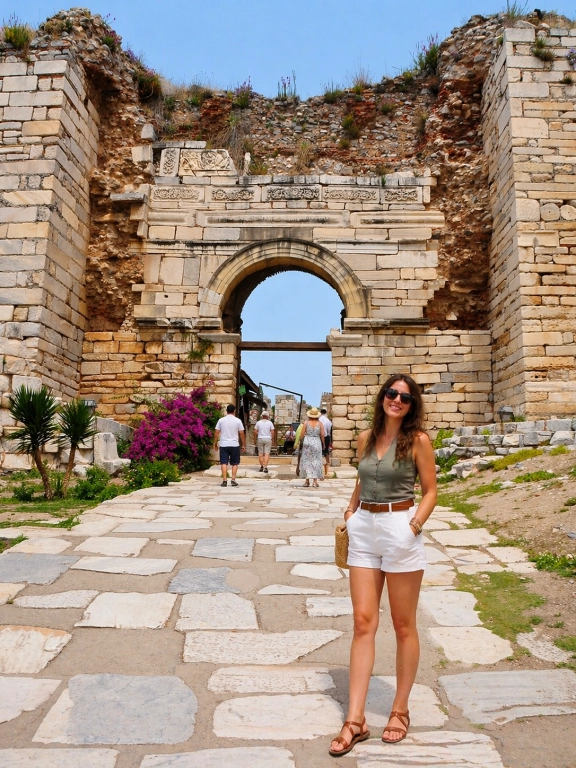
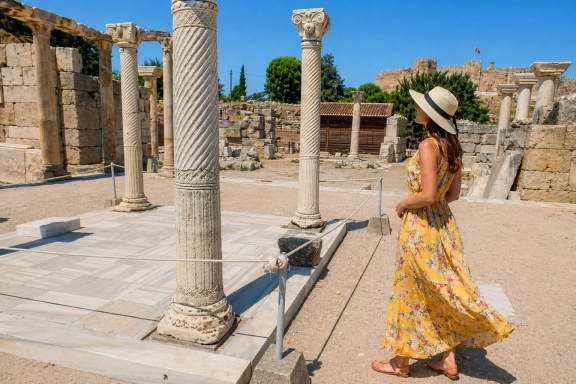
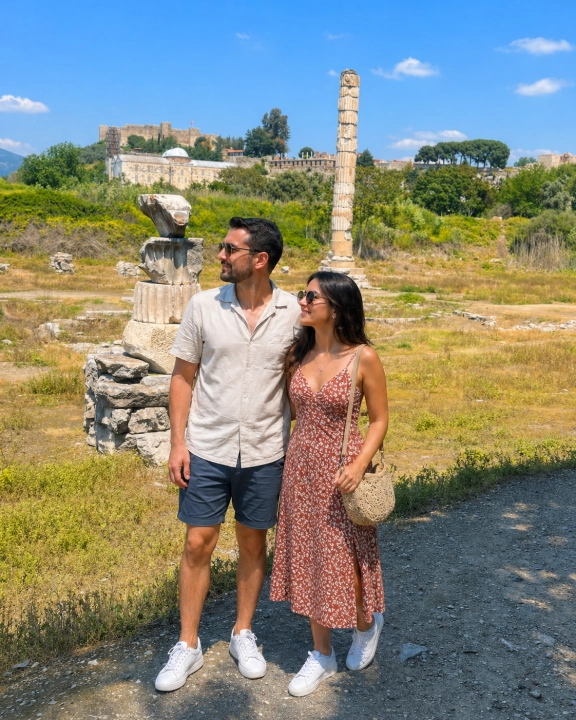

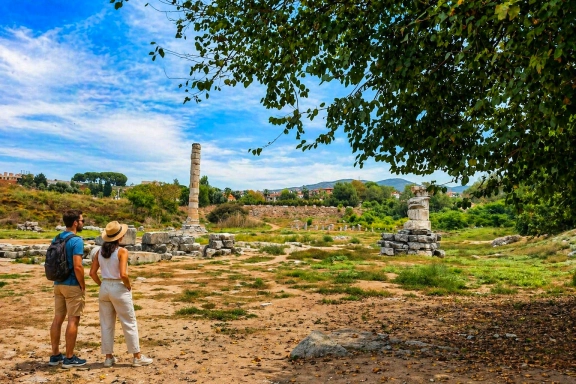
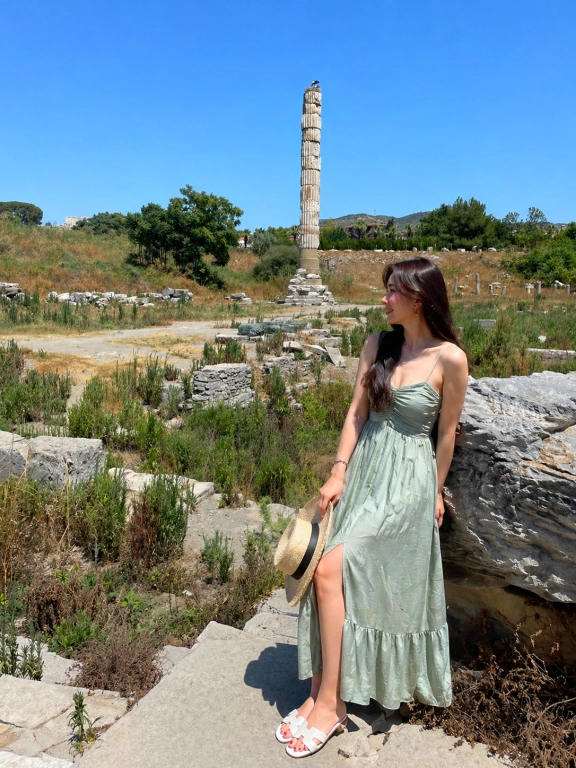
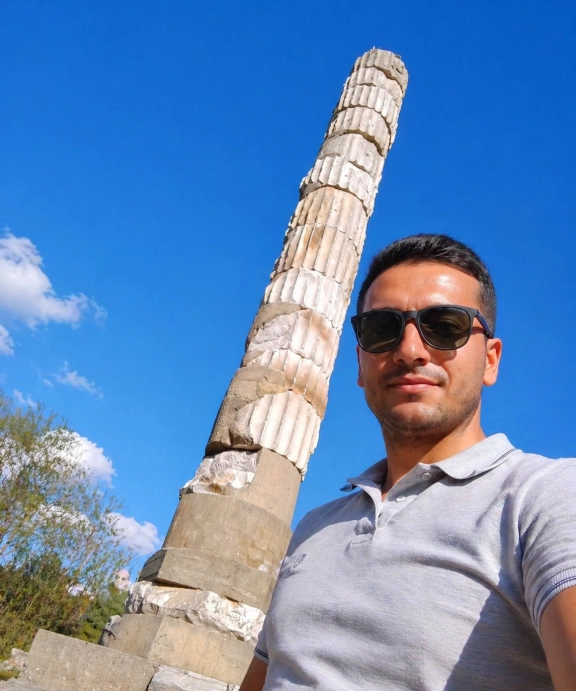
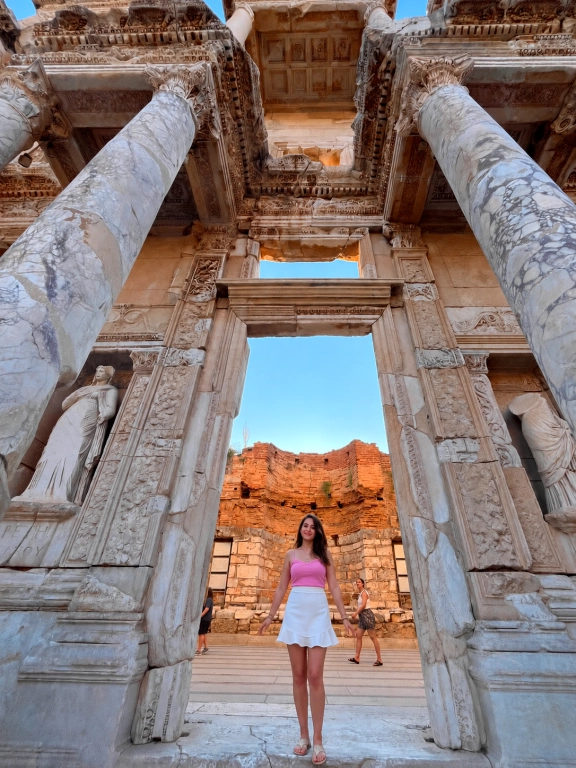
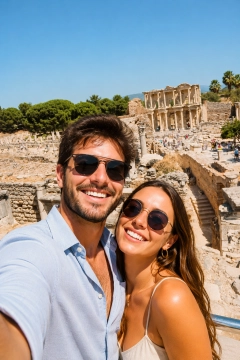
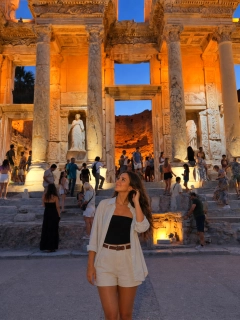

Ephesus Ancient City is best approached as a network of places rather than a sequence of isolated facades. Streets, public areas and monuments reveal an urban setting shaped by several periods. The Library of Celsus and Great Theatre are especially useful landmarks within that wider pattern.
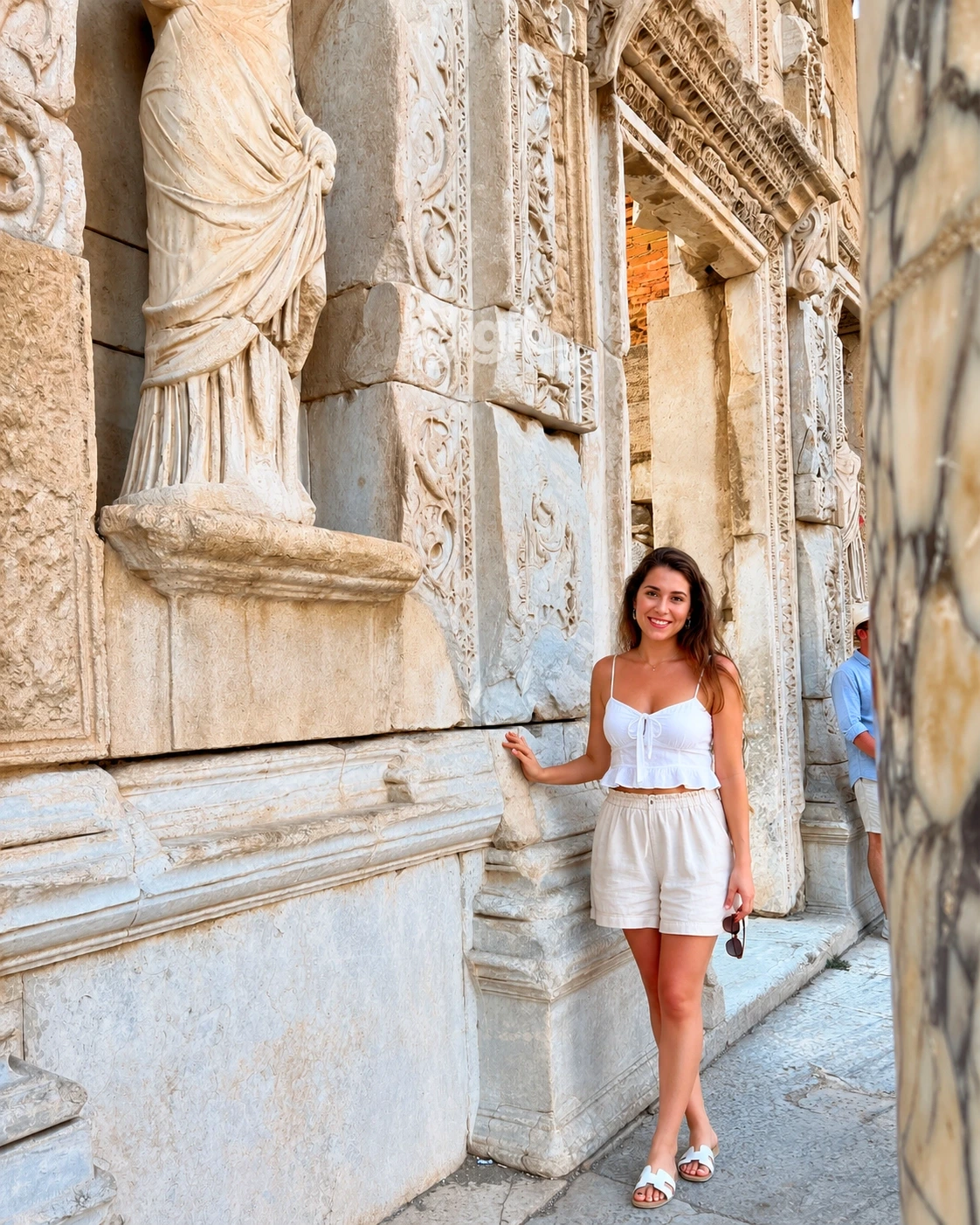
Observe how each available stretch of street relates to the buildings around it. The library's standing frontage reflects reconstruction, reminding visitors that archaeology includes conservation and interpretation as well as the survival of ancient stone.
Questions
What ties the different monuments together?
The street network and public spaces reveal how the city's buildings belonged to shared patterns of movement and activity.
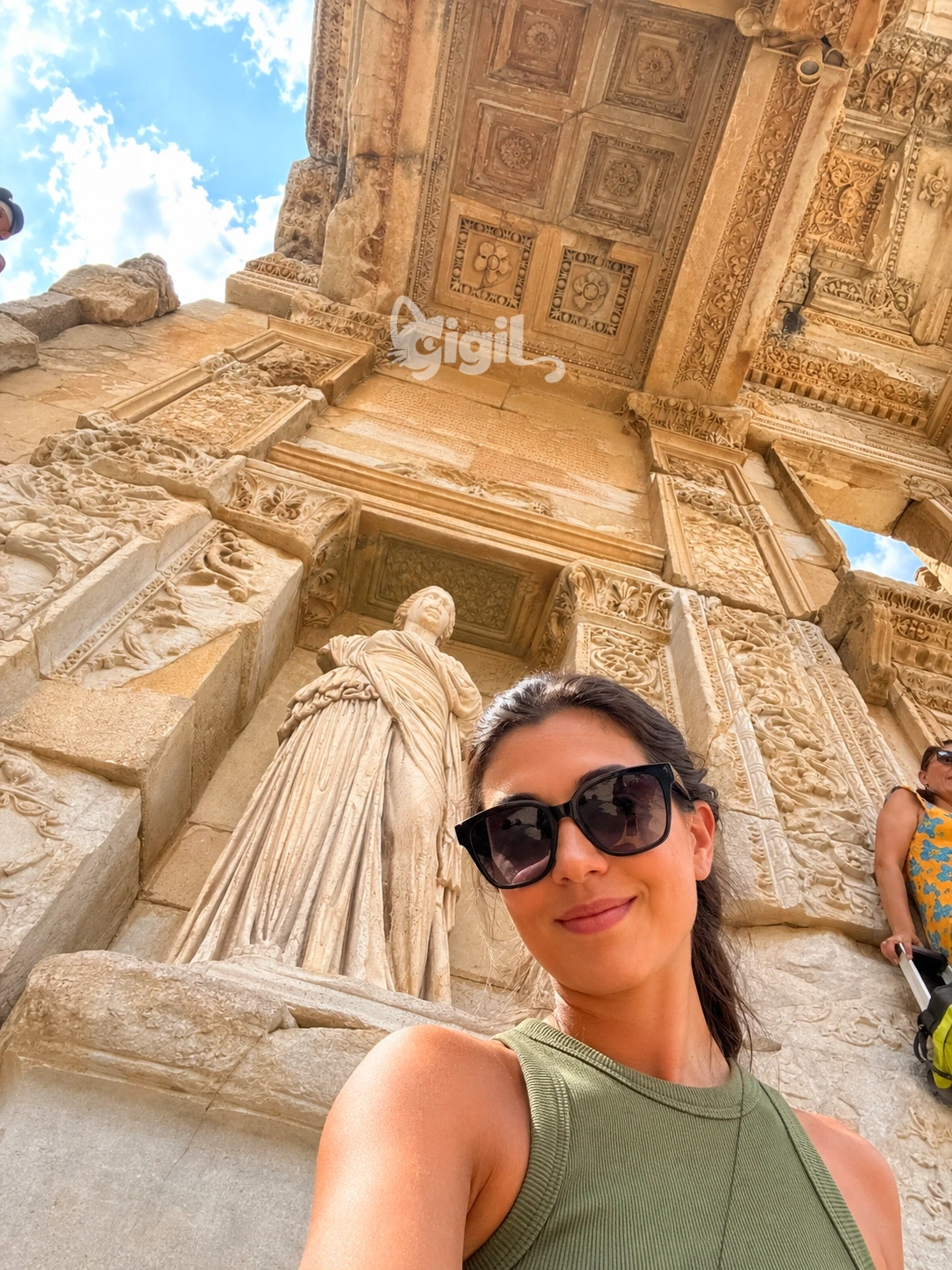
Was the library facade always preserved as it appears now?
No. Its current form includes a major reconstruction, with conservation continuing to protect the ancient material.
Why look at the theatre from a wider urban perspective?
Its scale helps place the city's gathering spaces beside the smaller streets and individual building fronts.
Should the city be assigned to only one civilisation?
Its remains reflect successive historical layers, with Hellenistic, Roman and Christian histories contributing to the broader story.