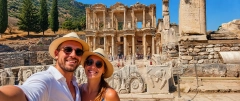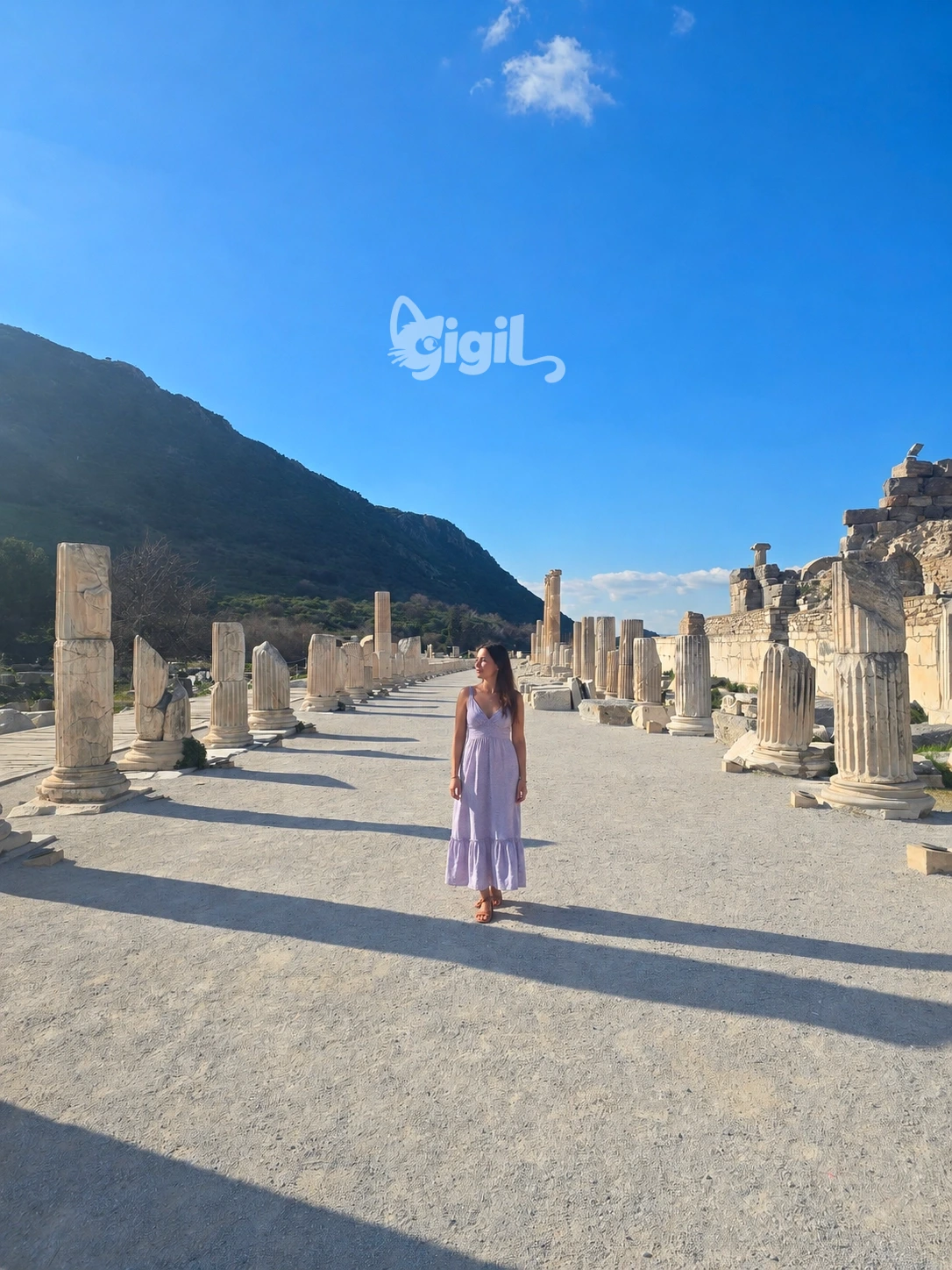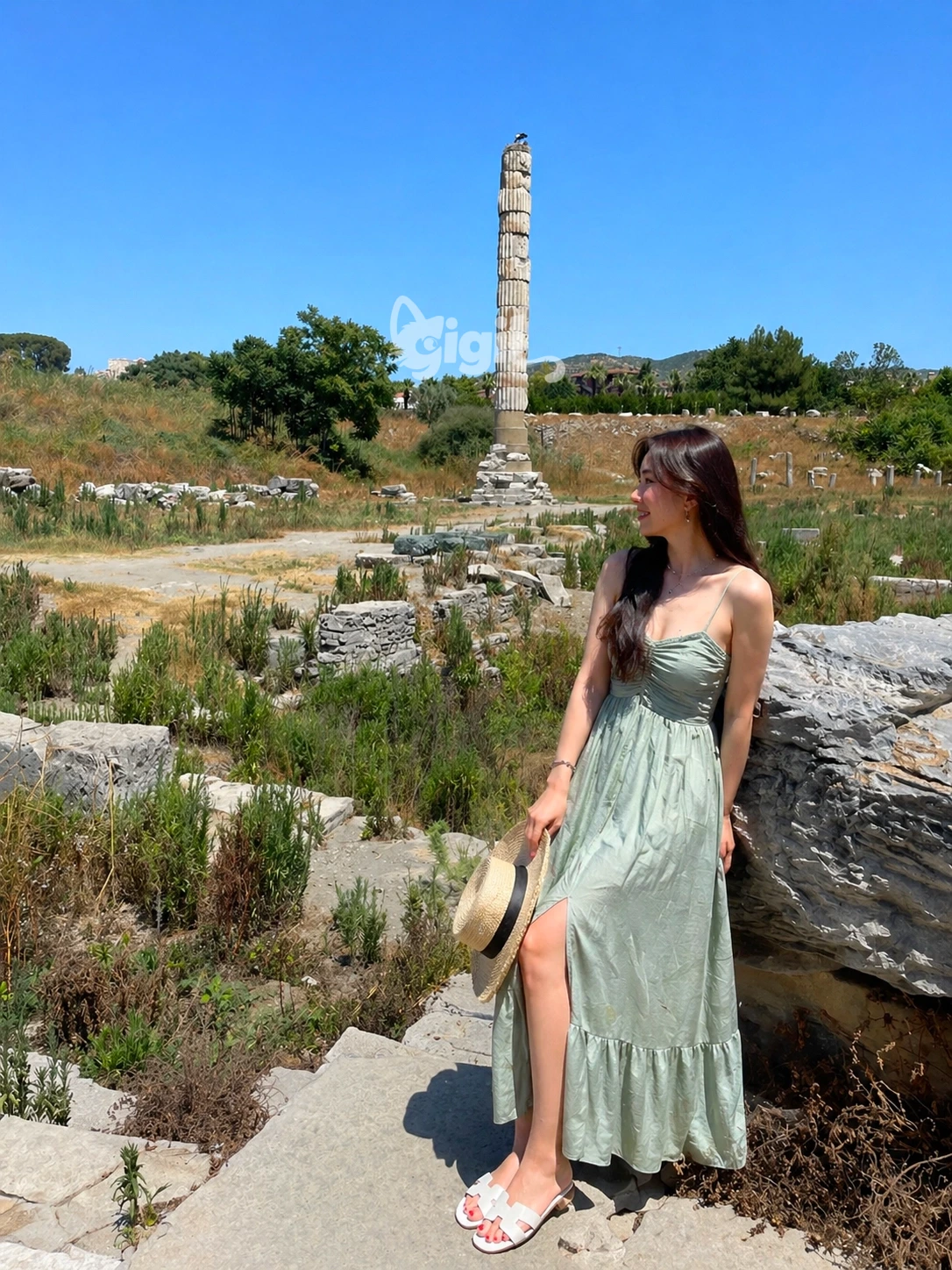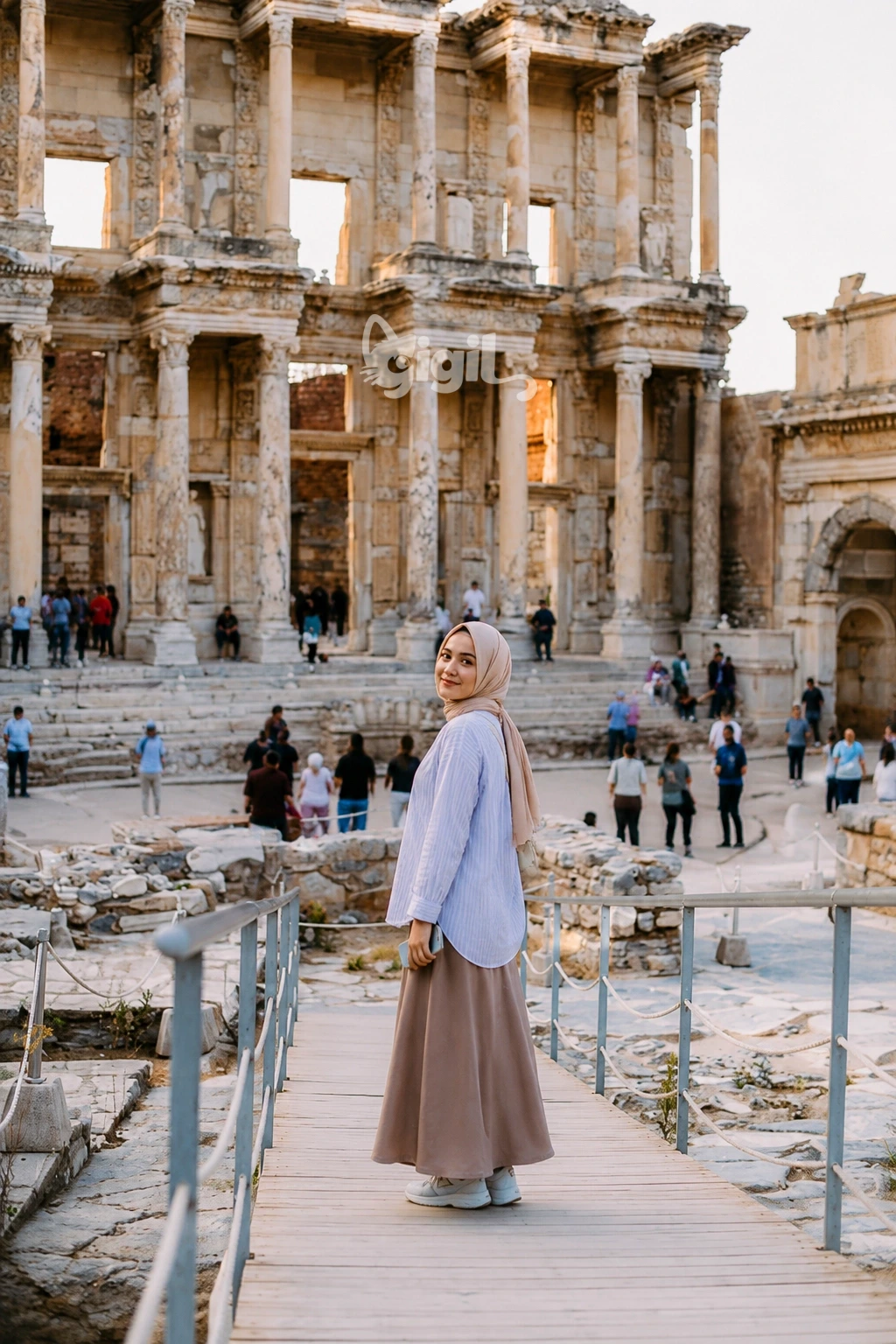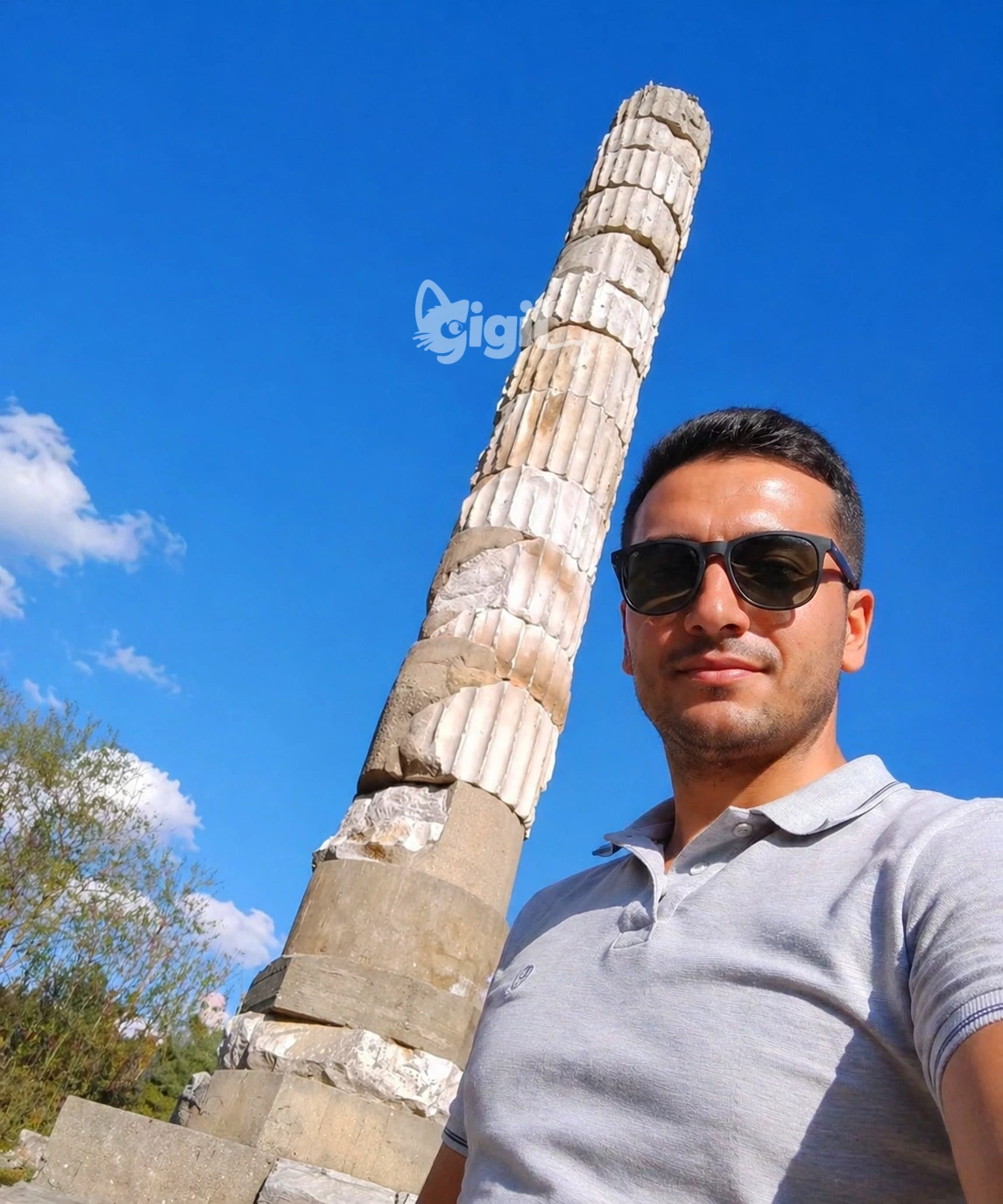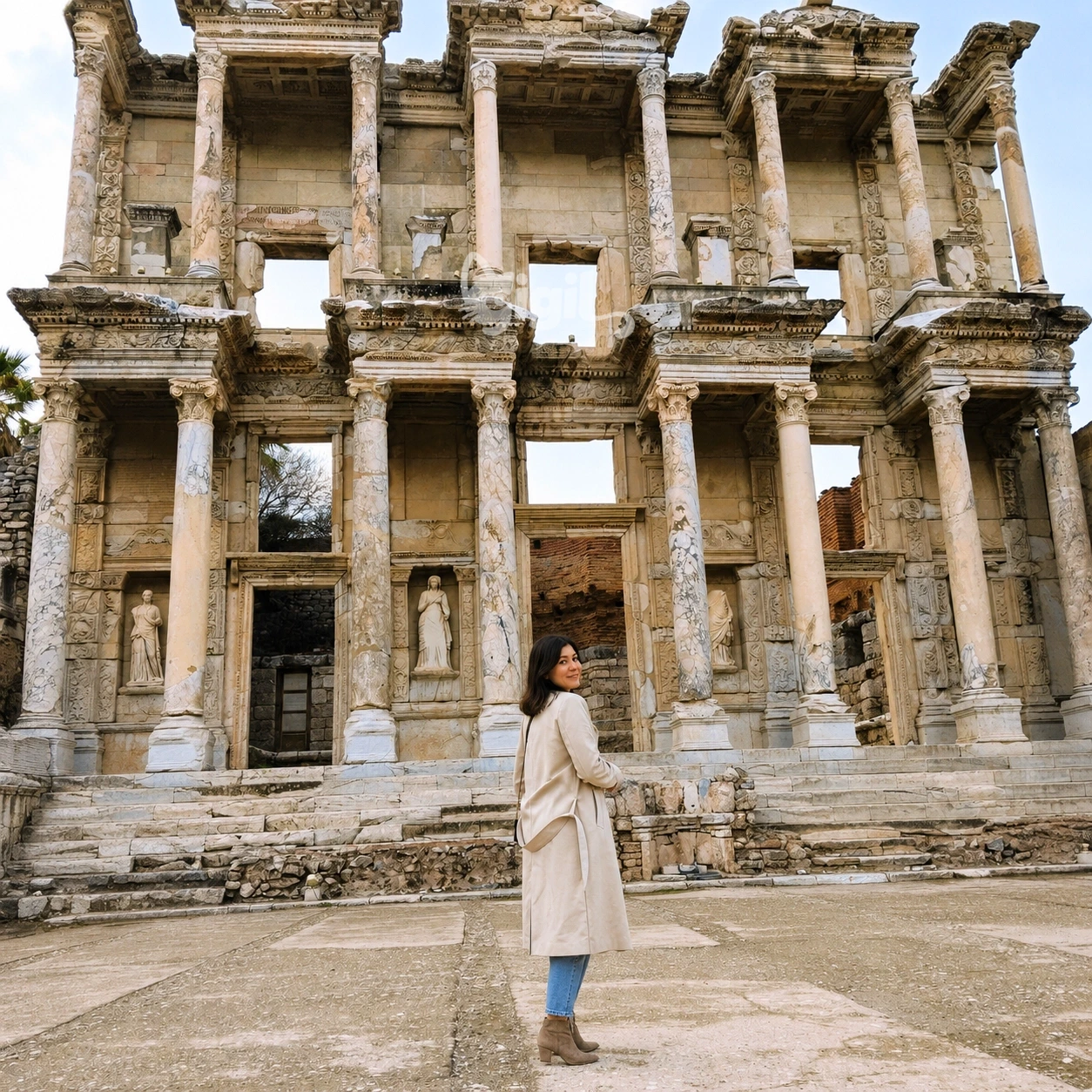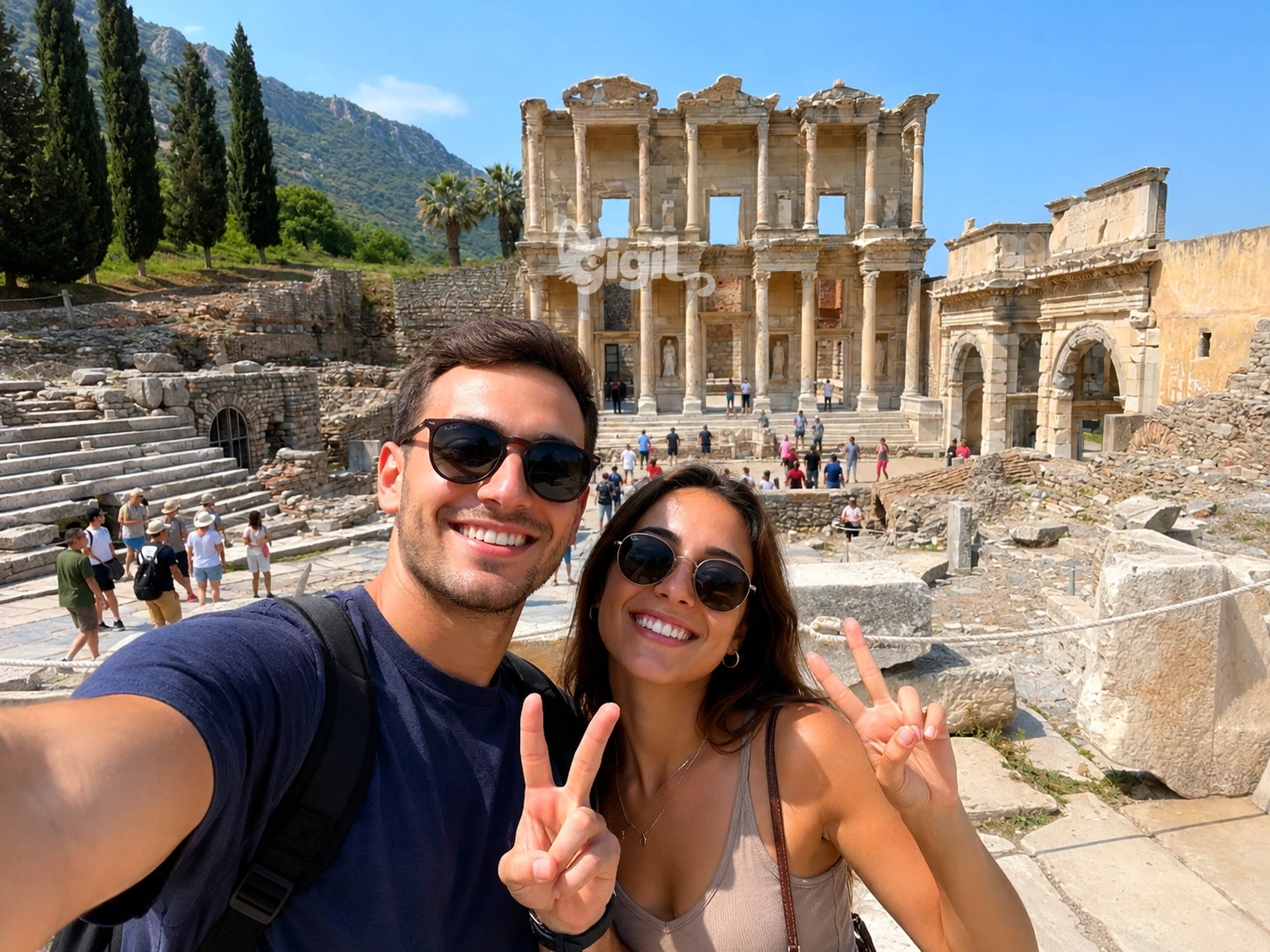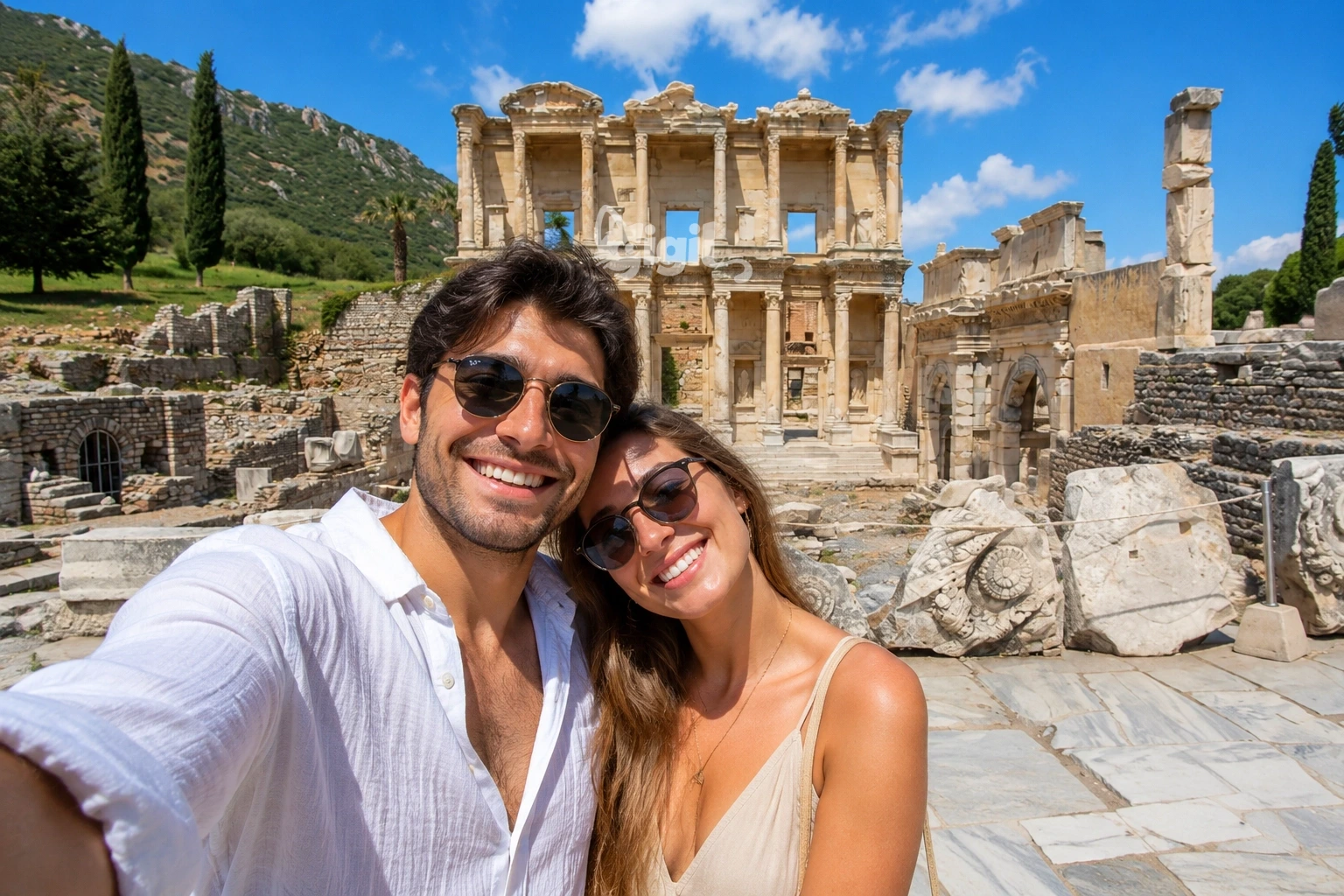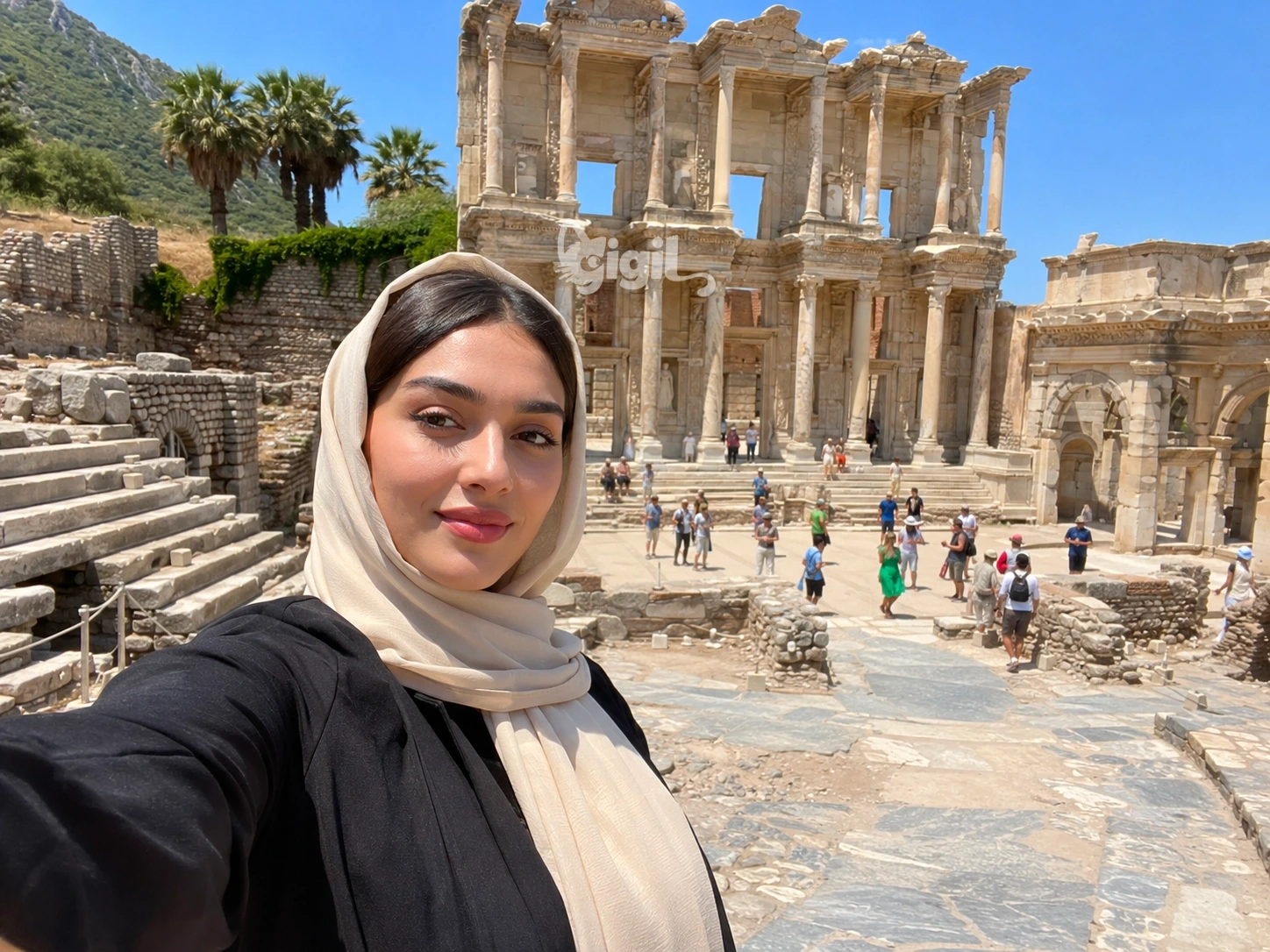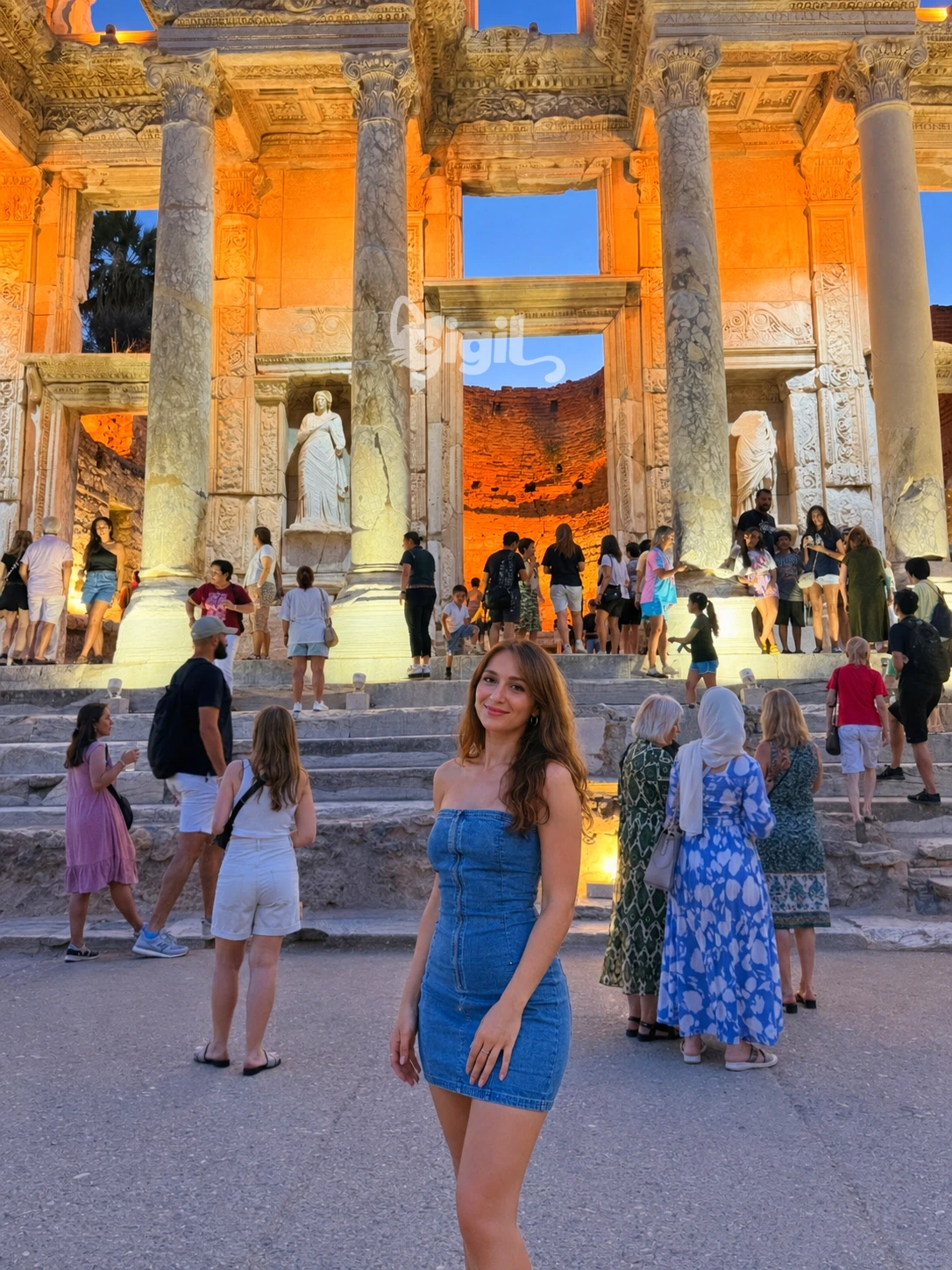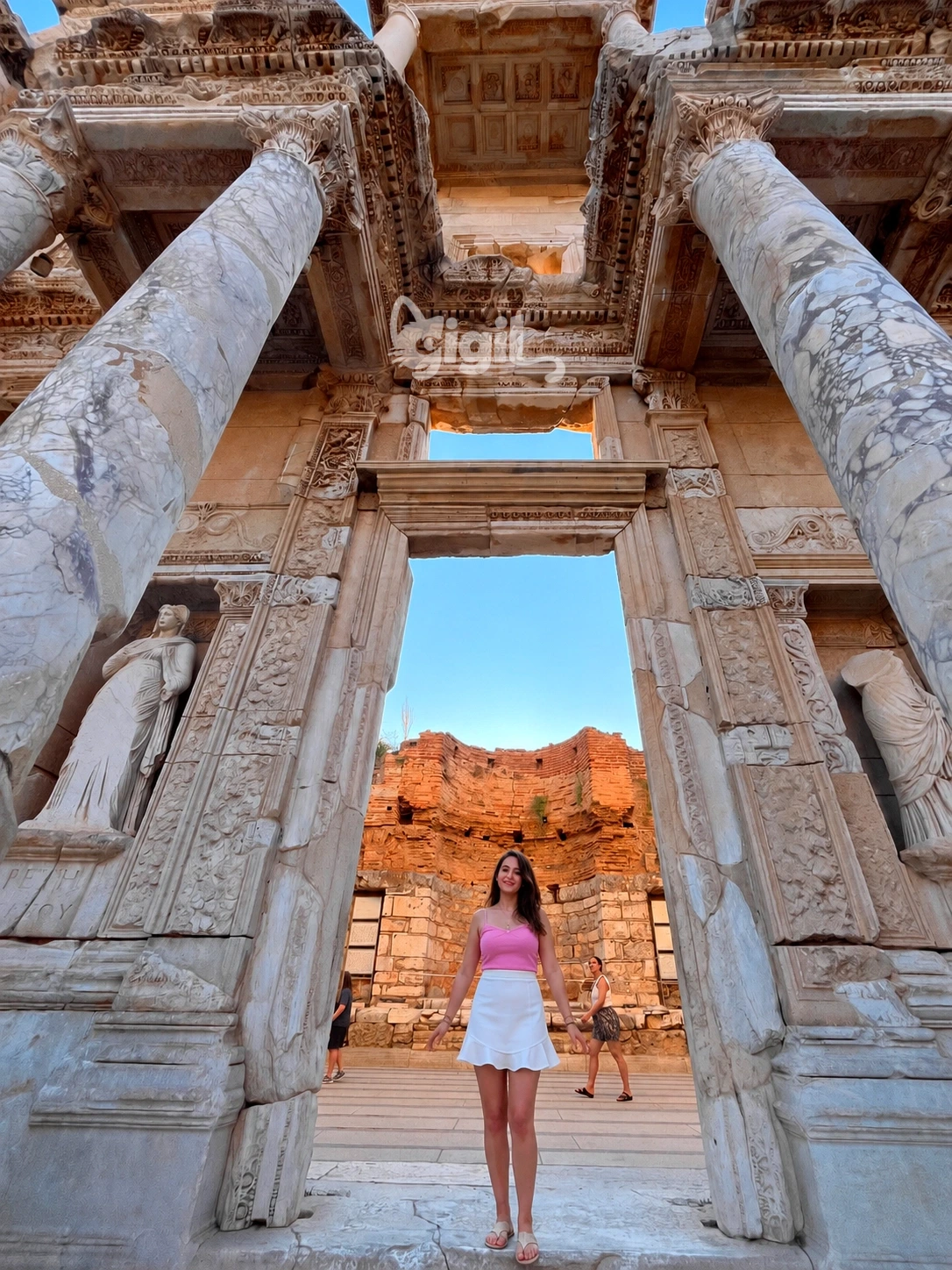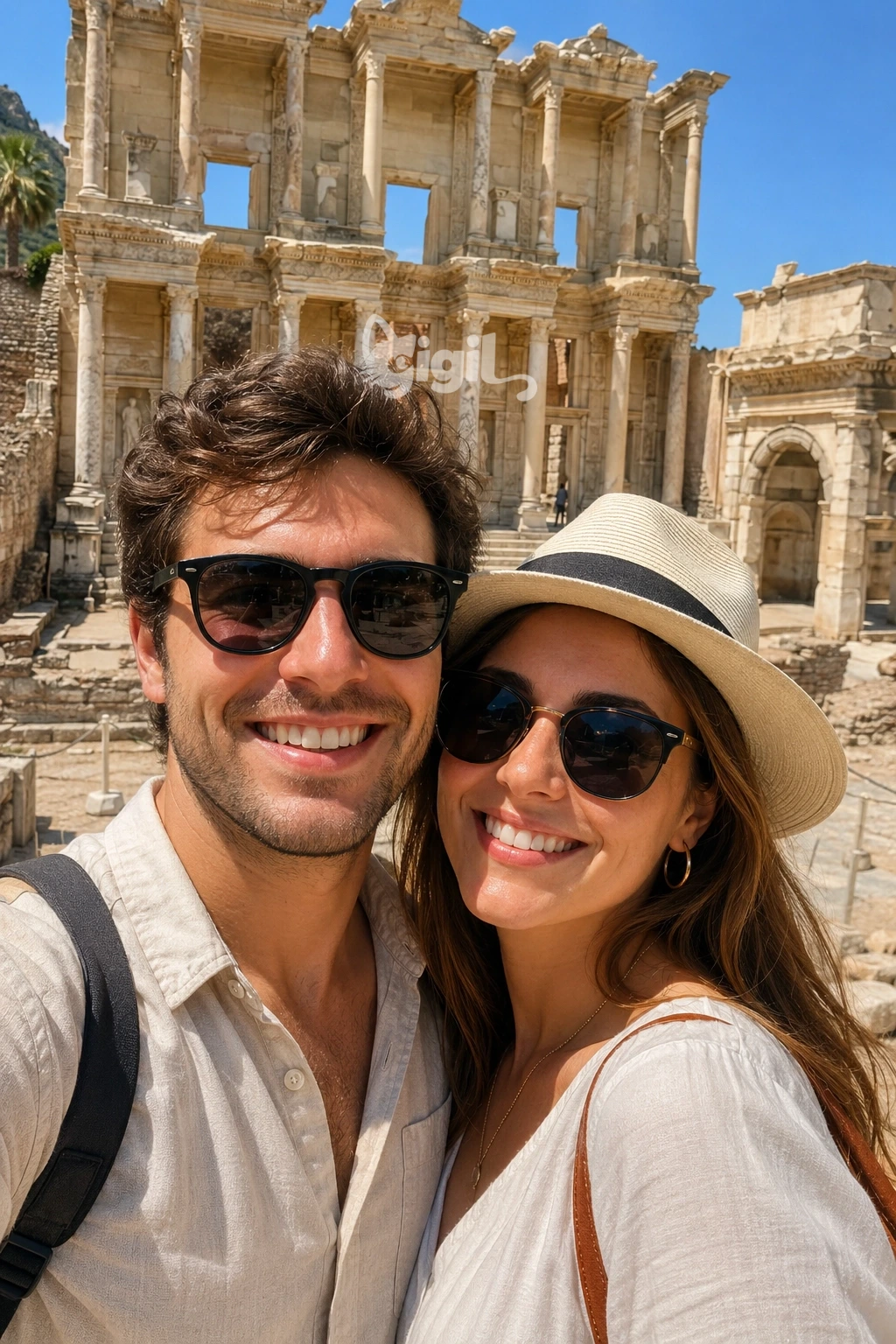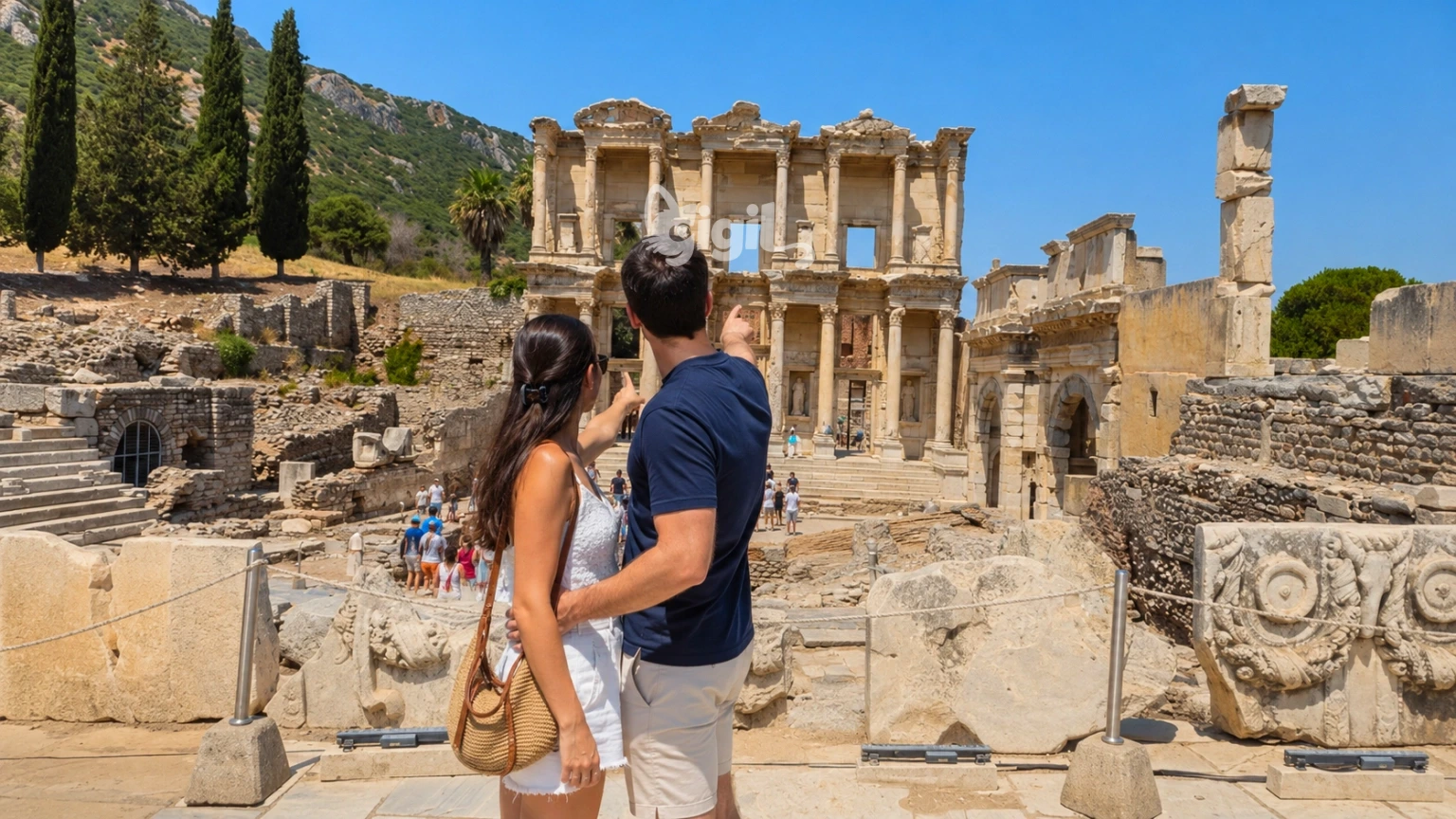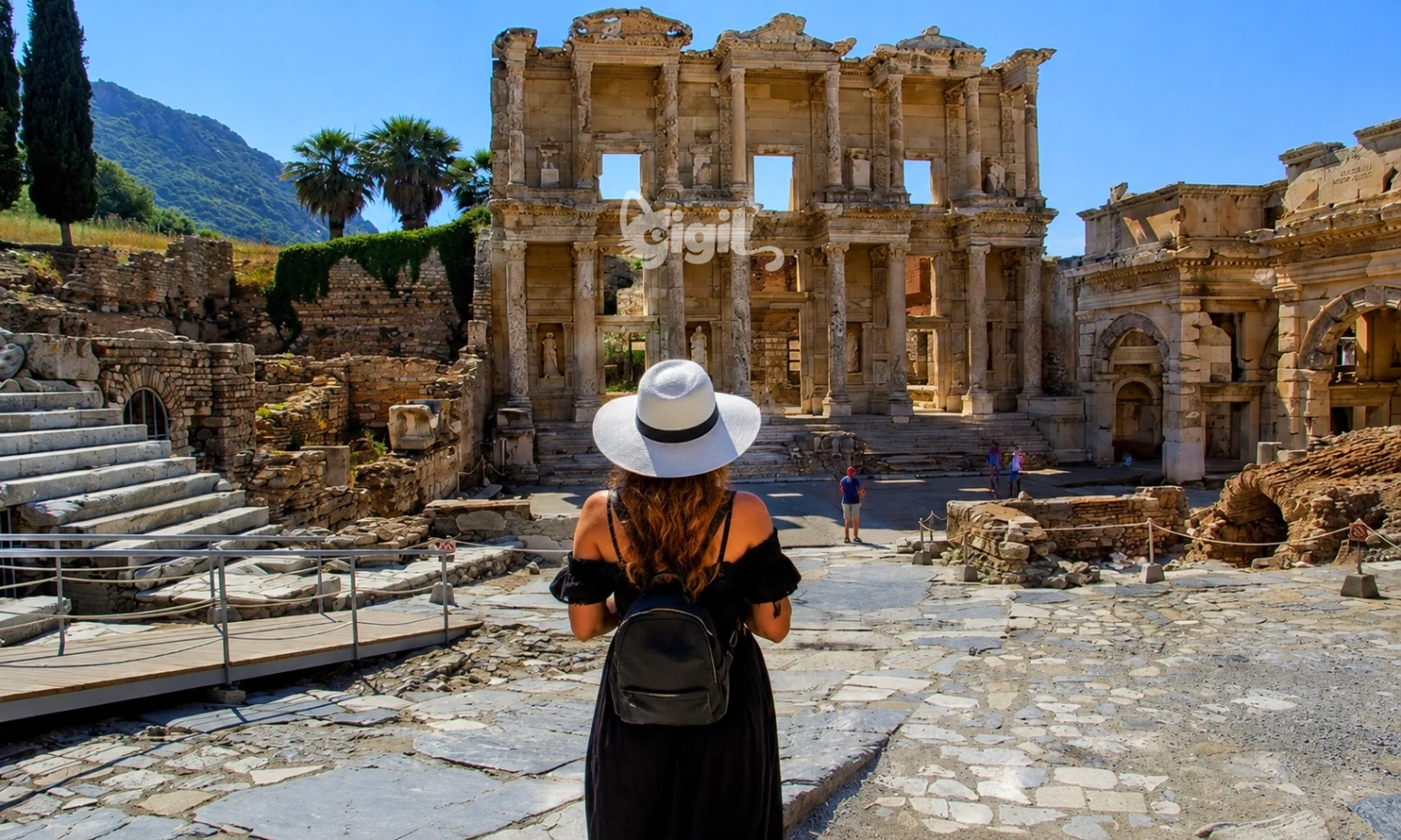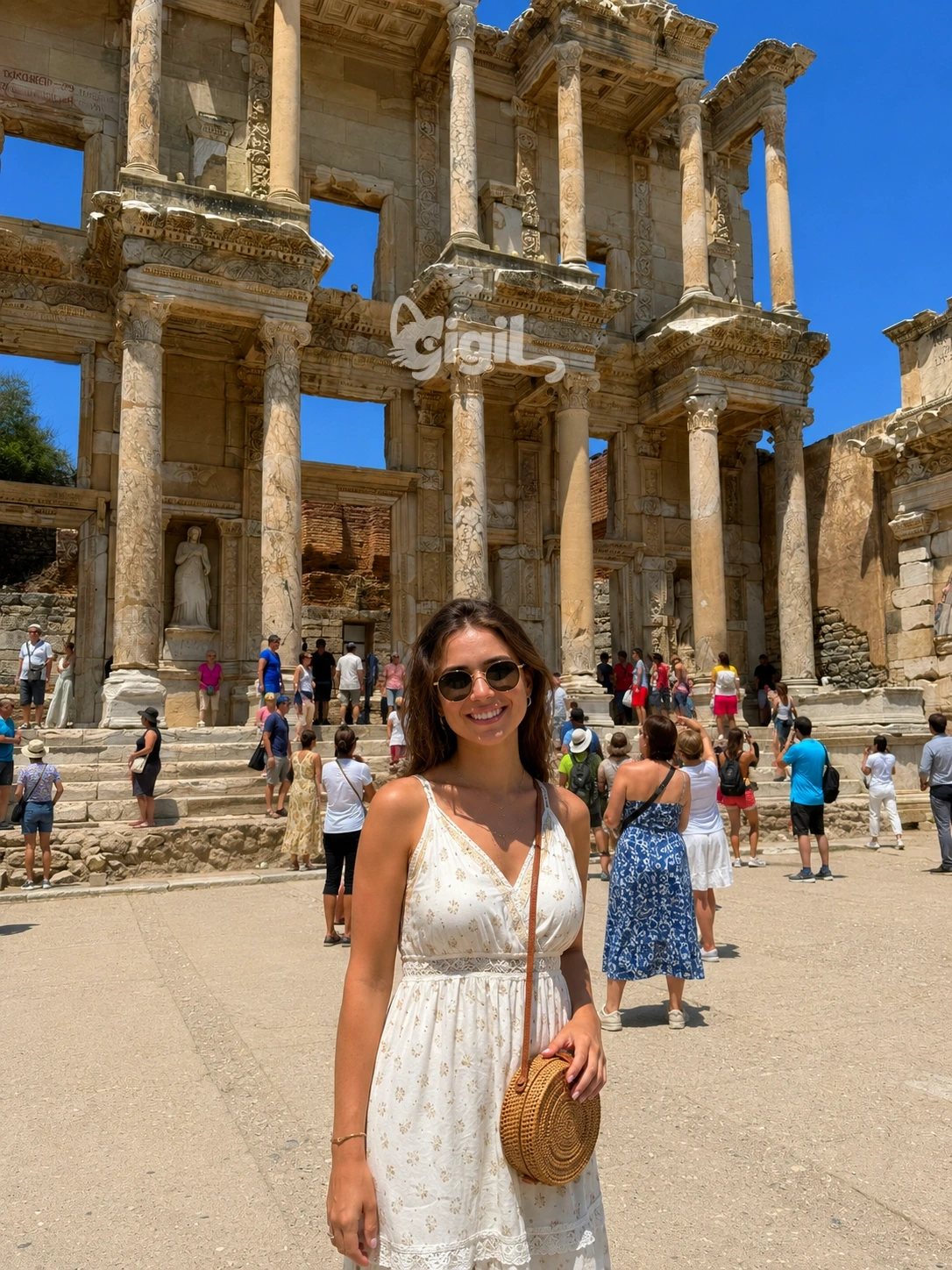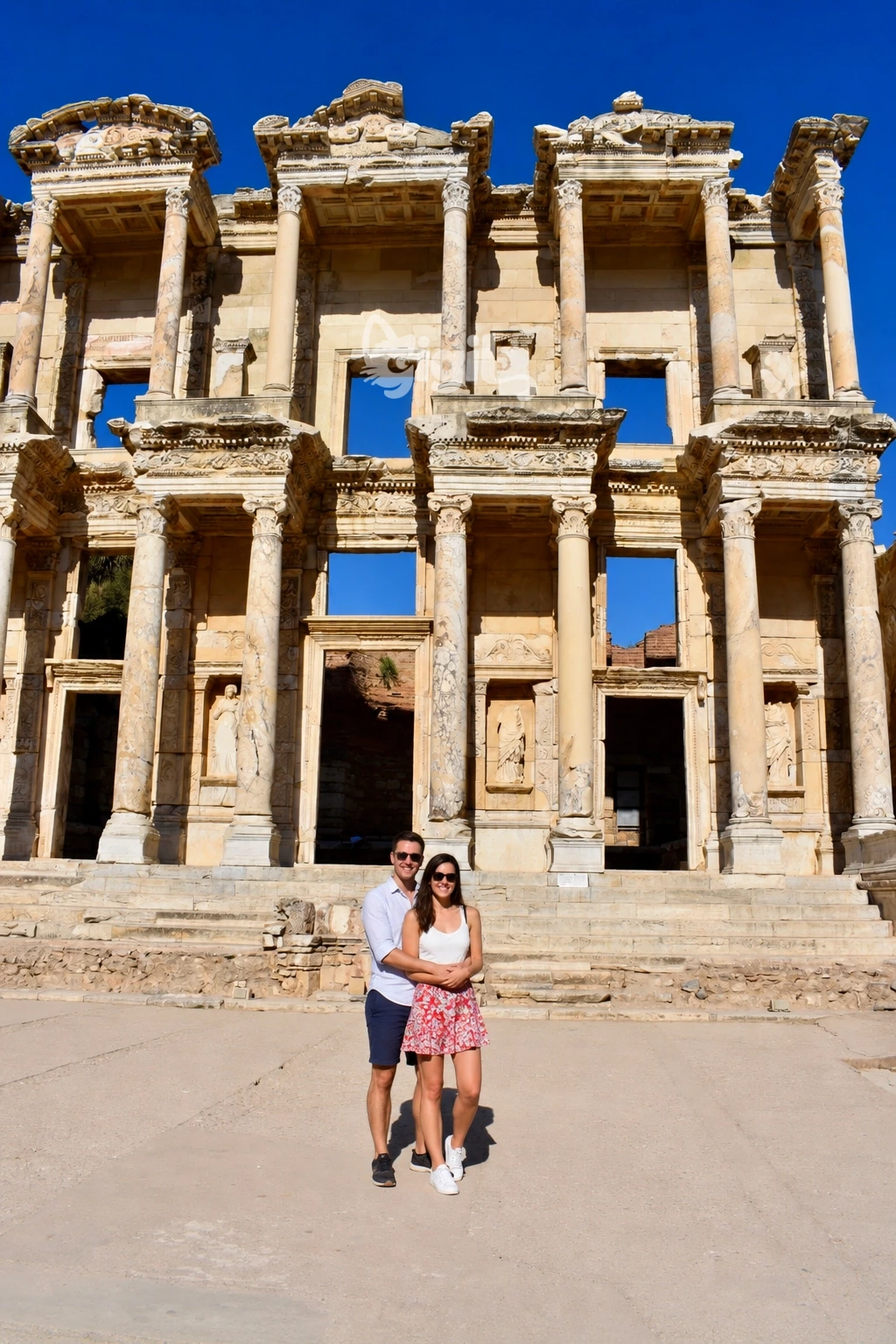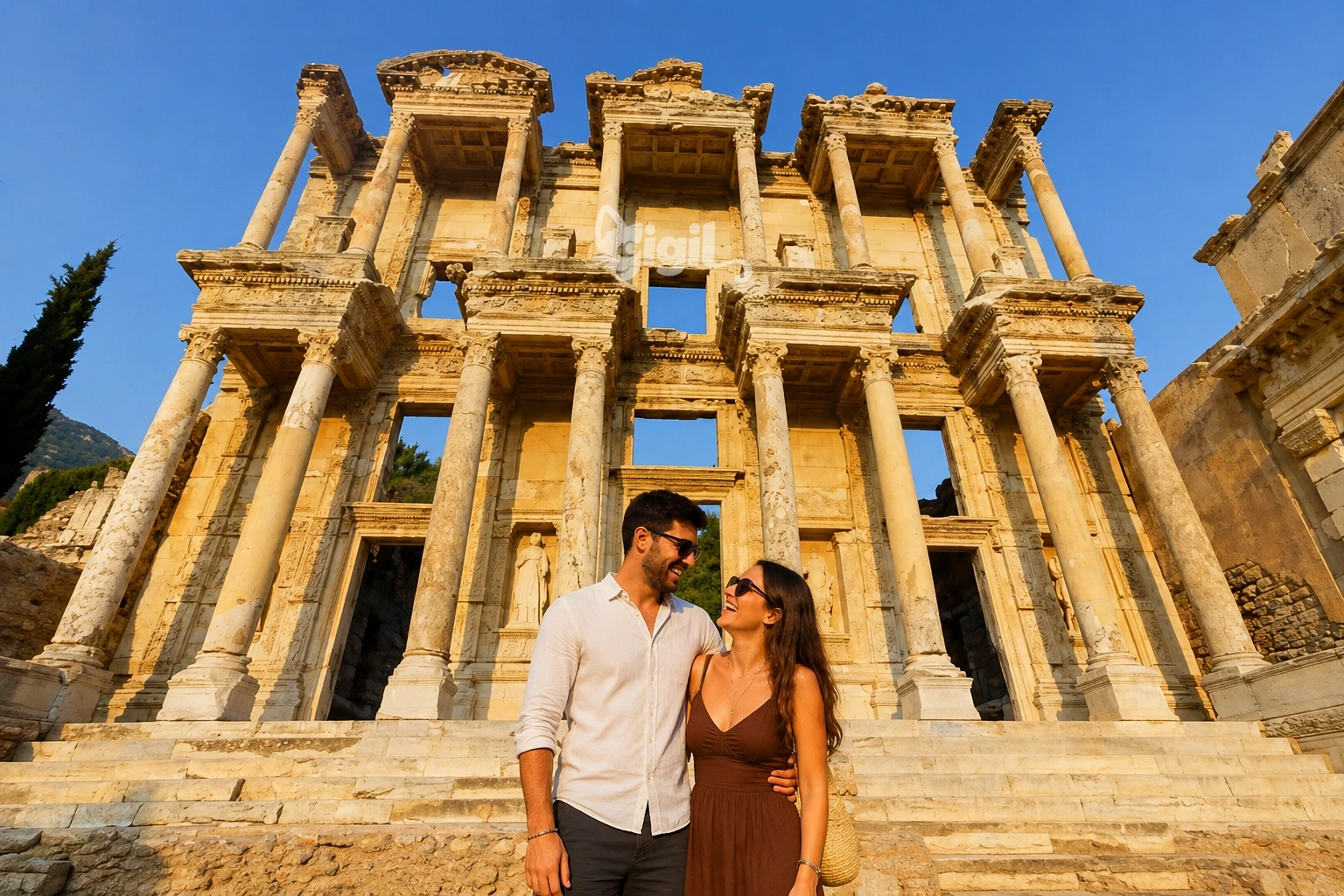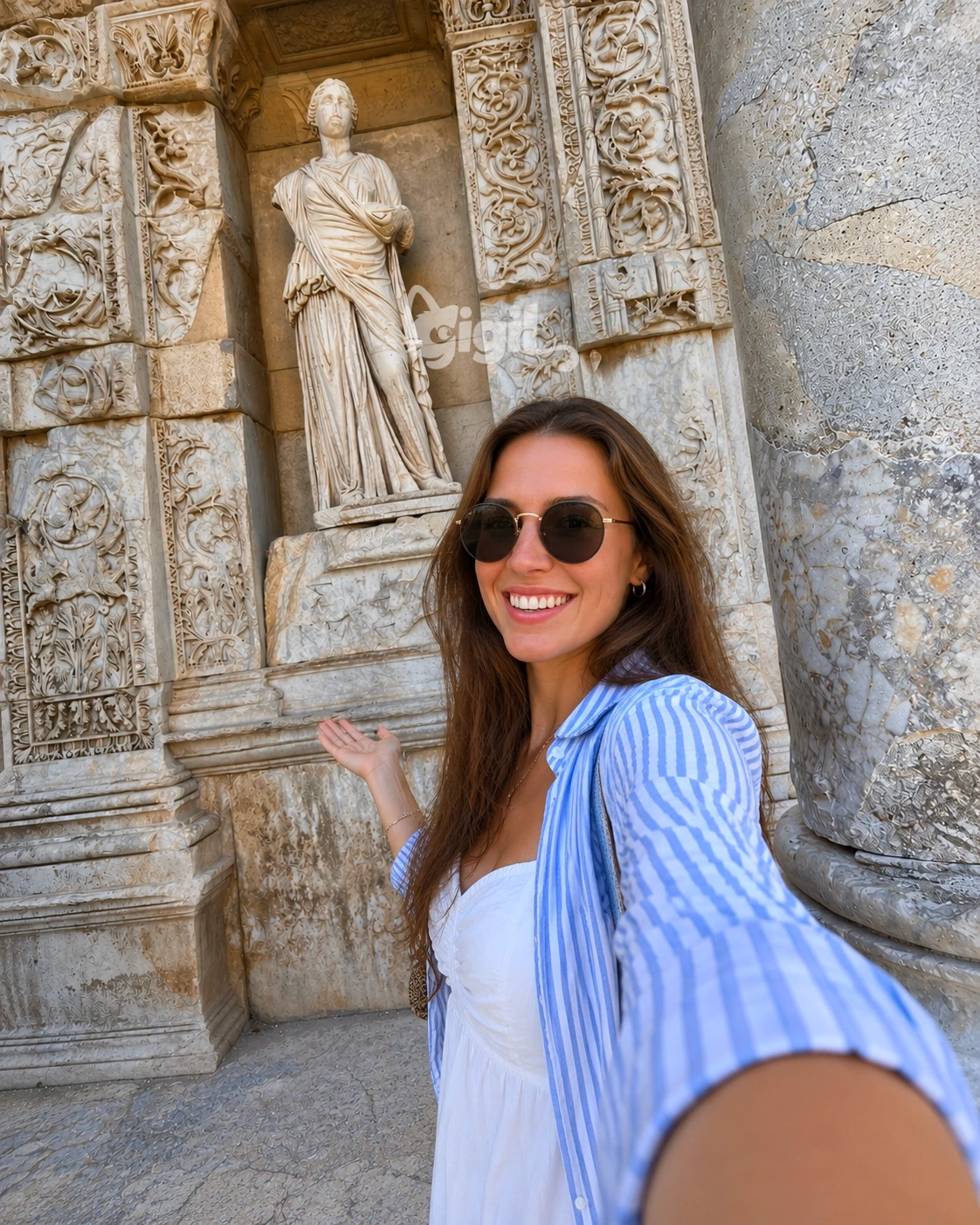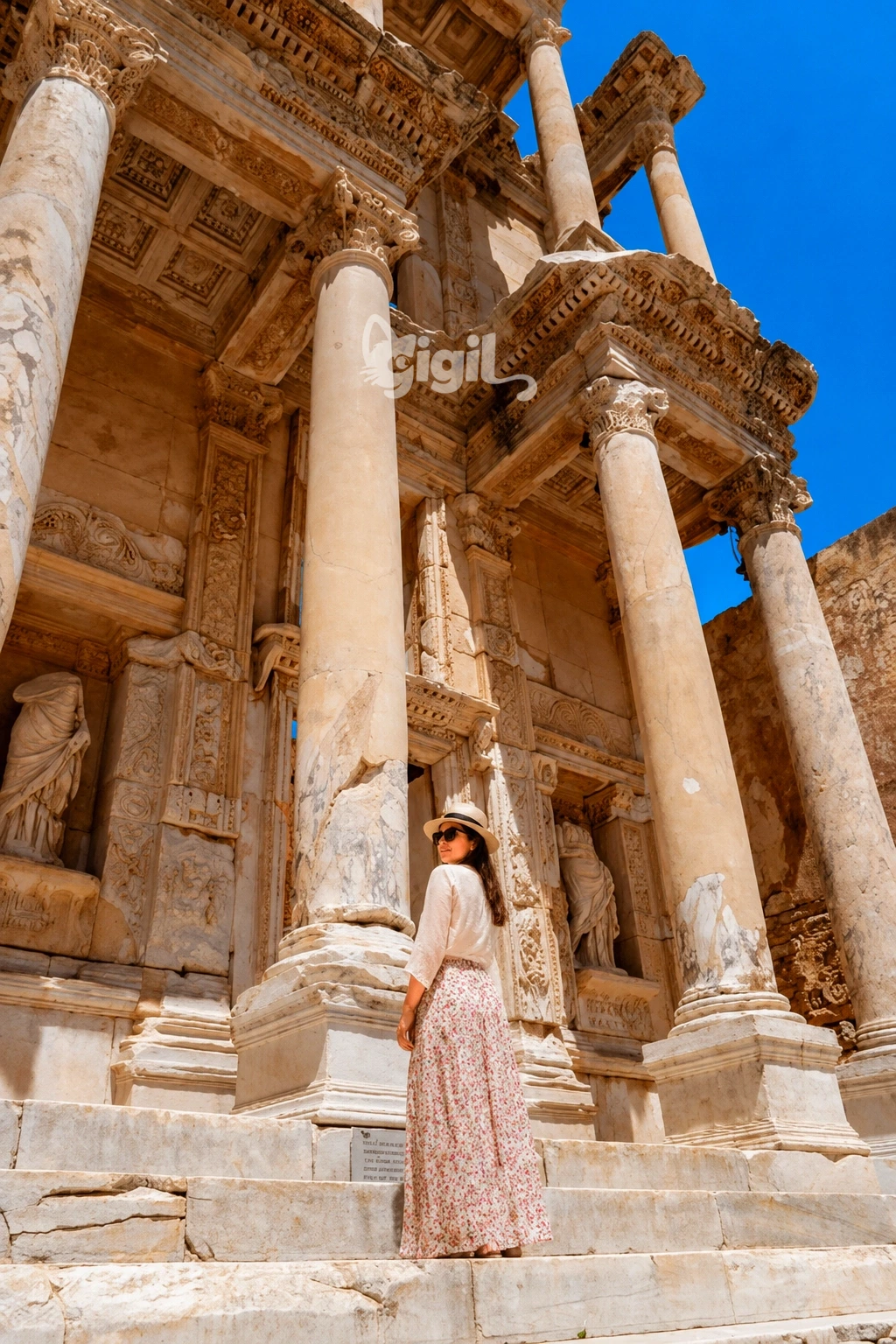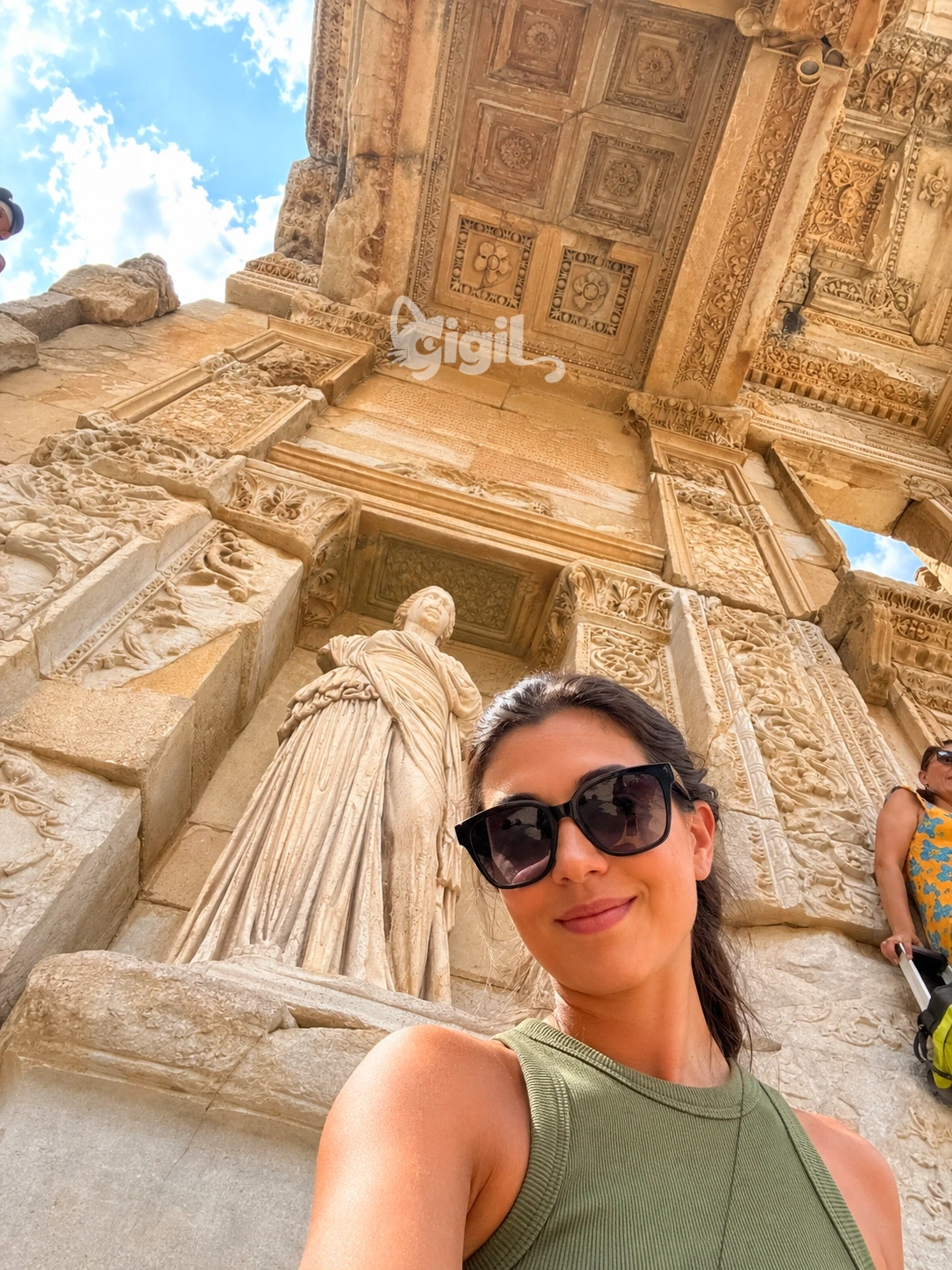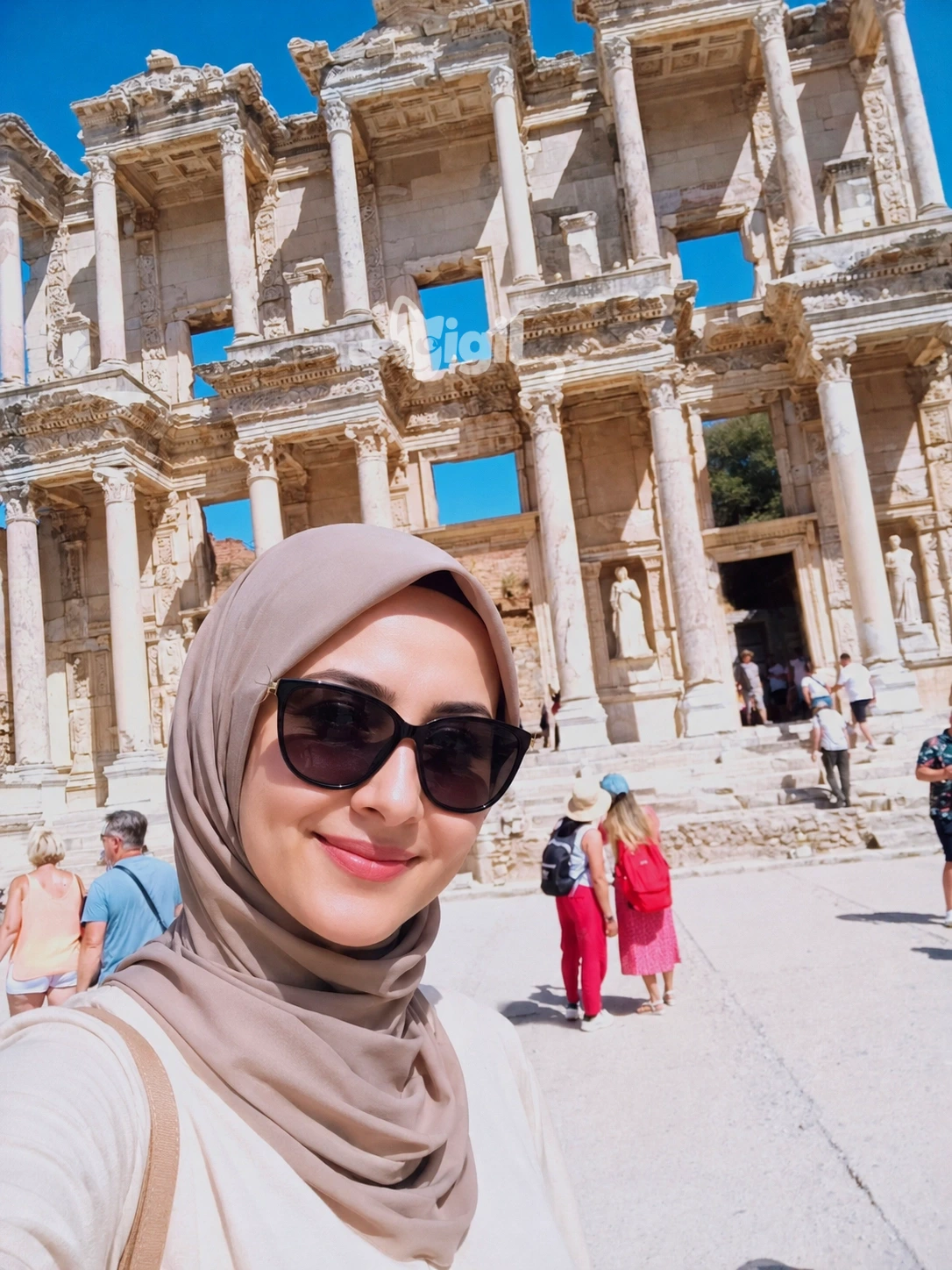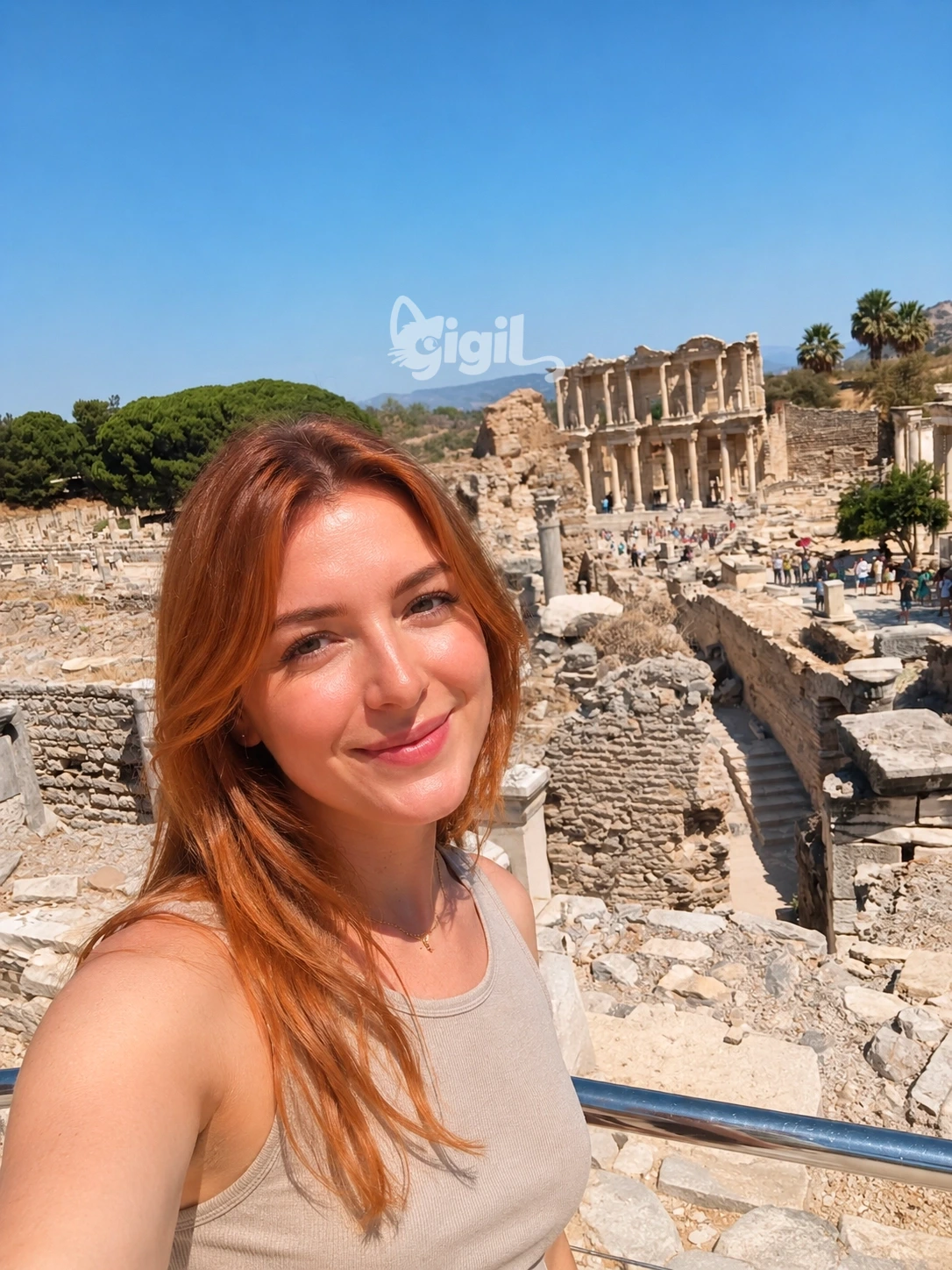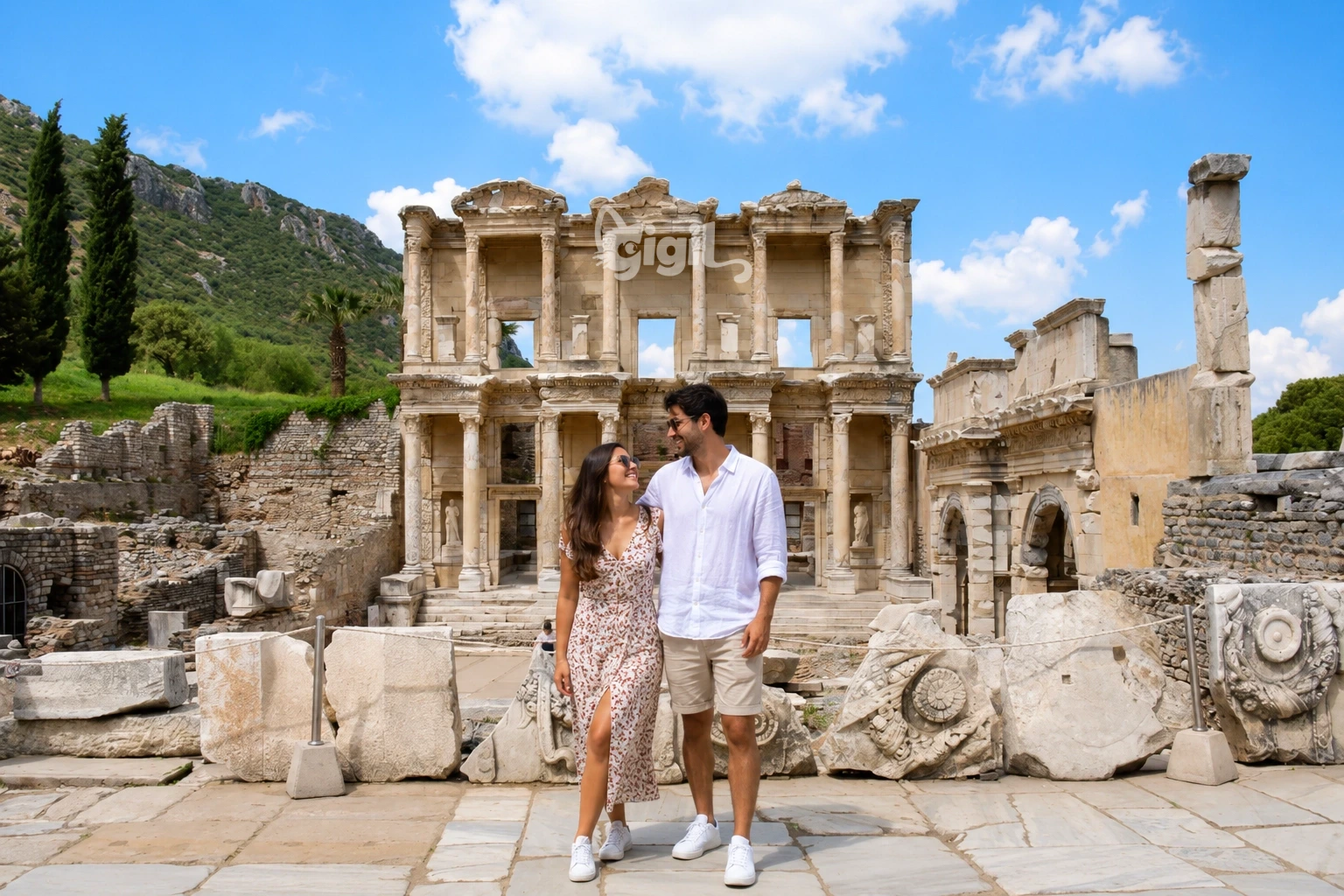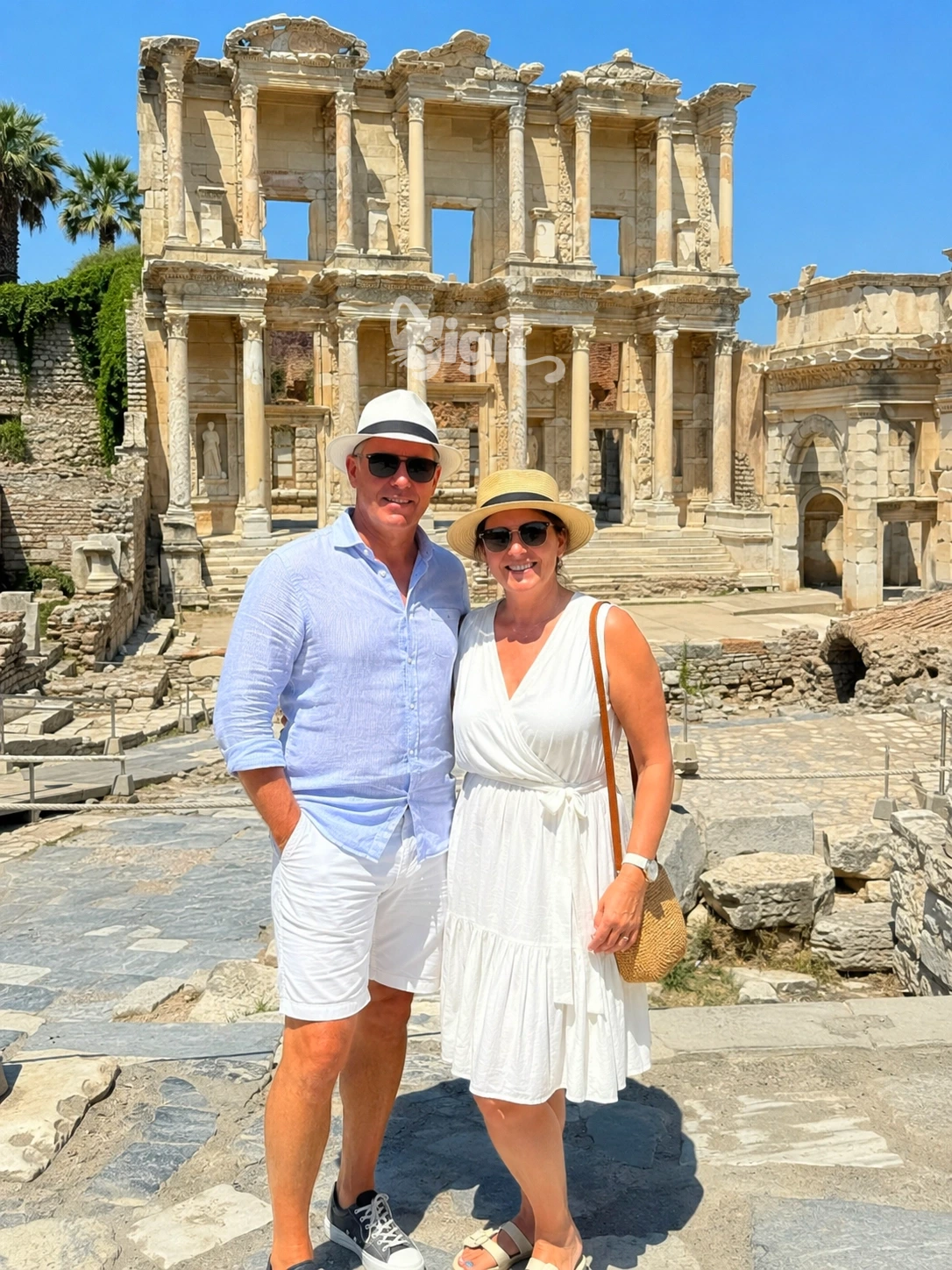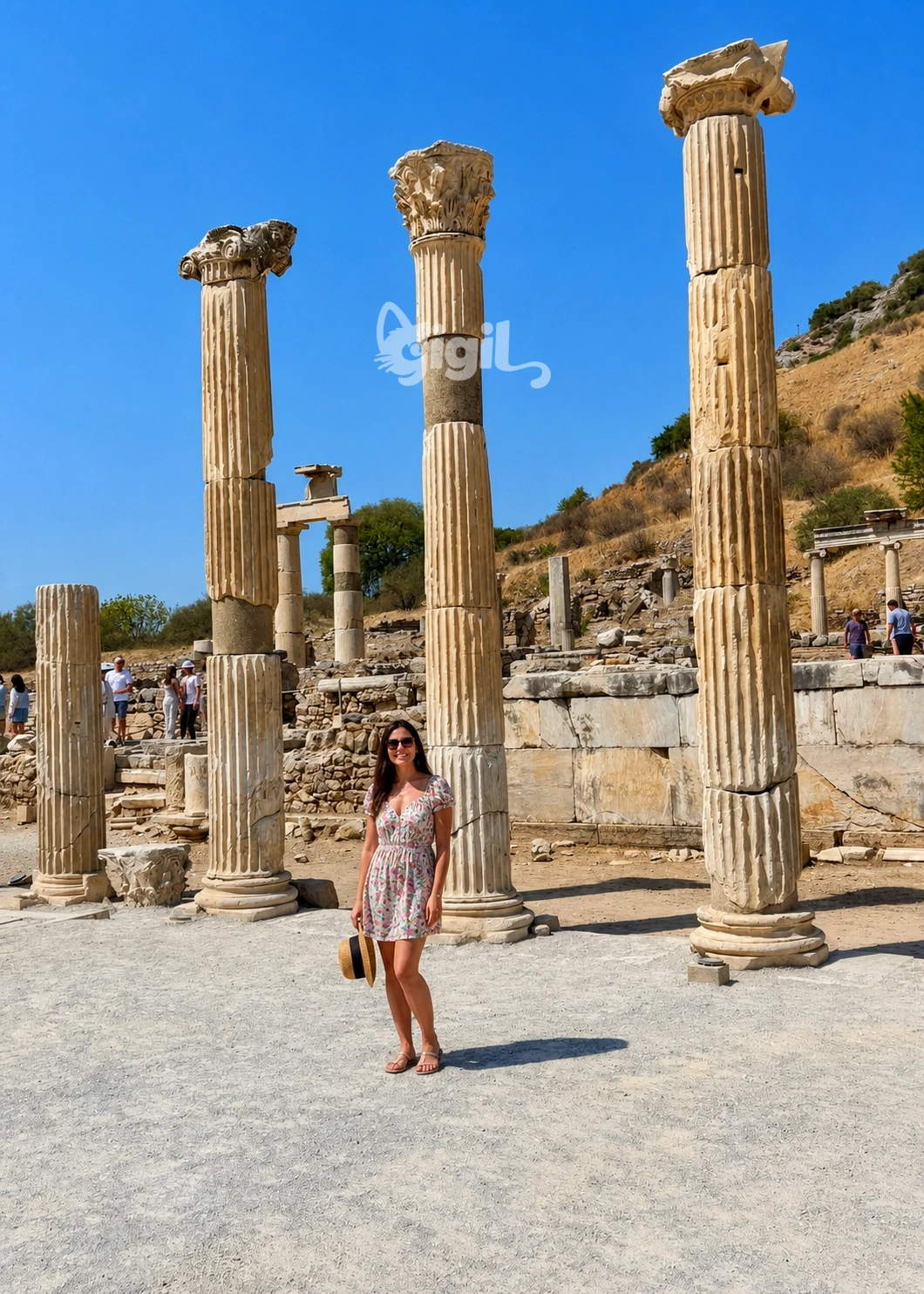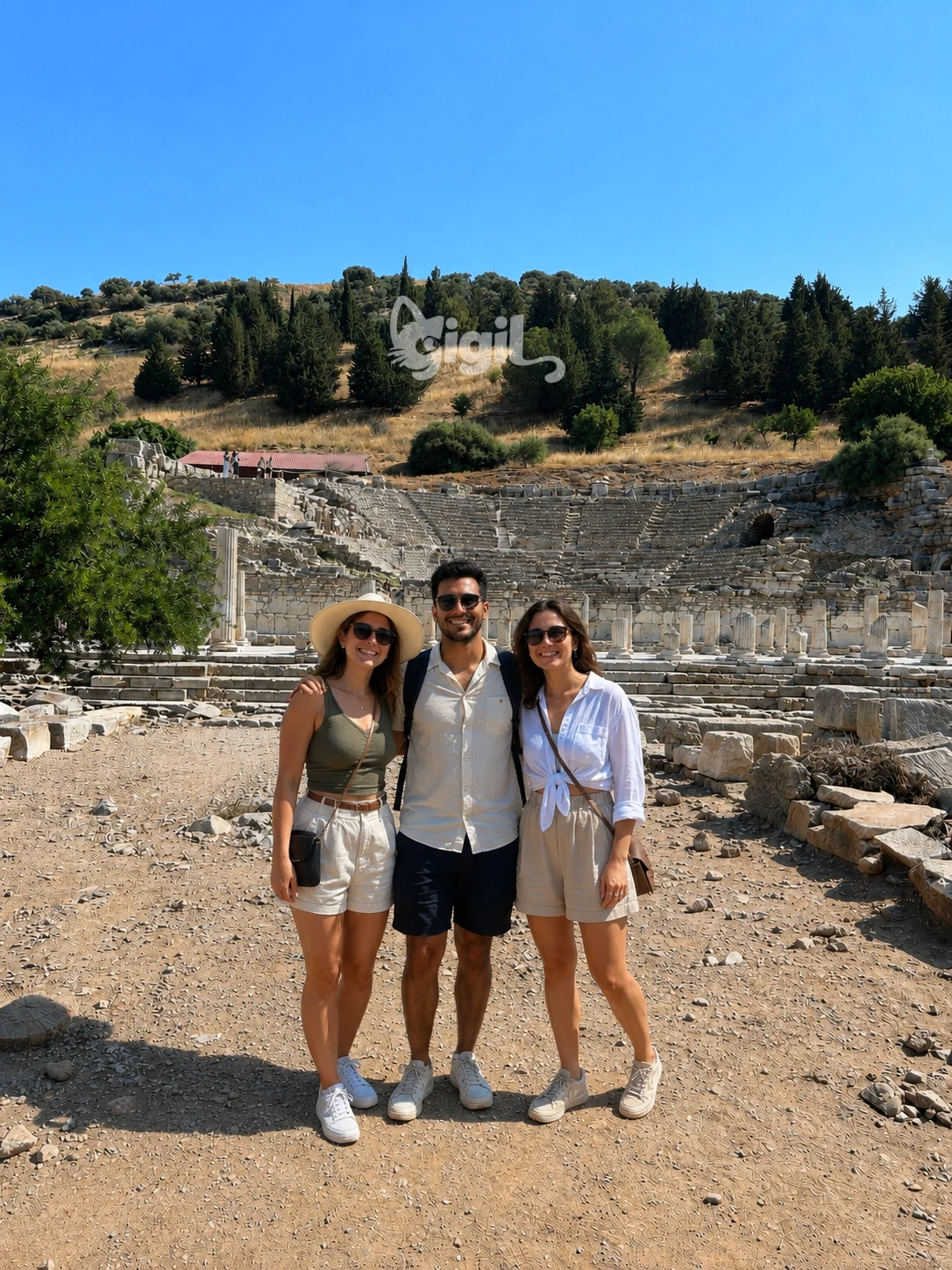
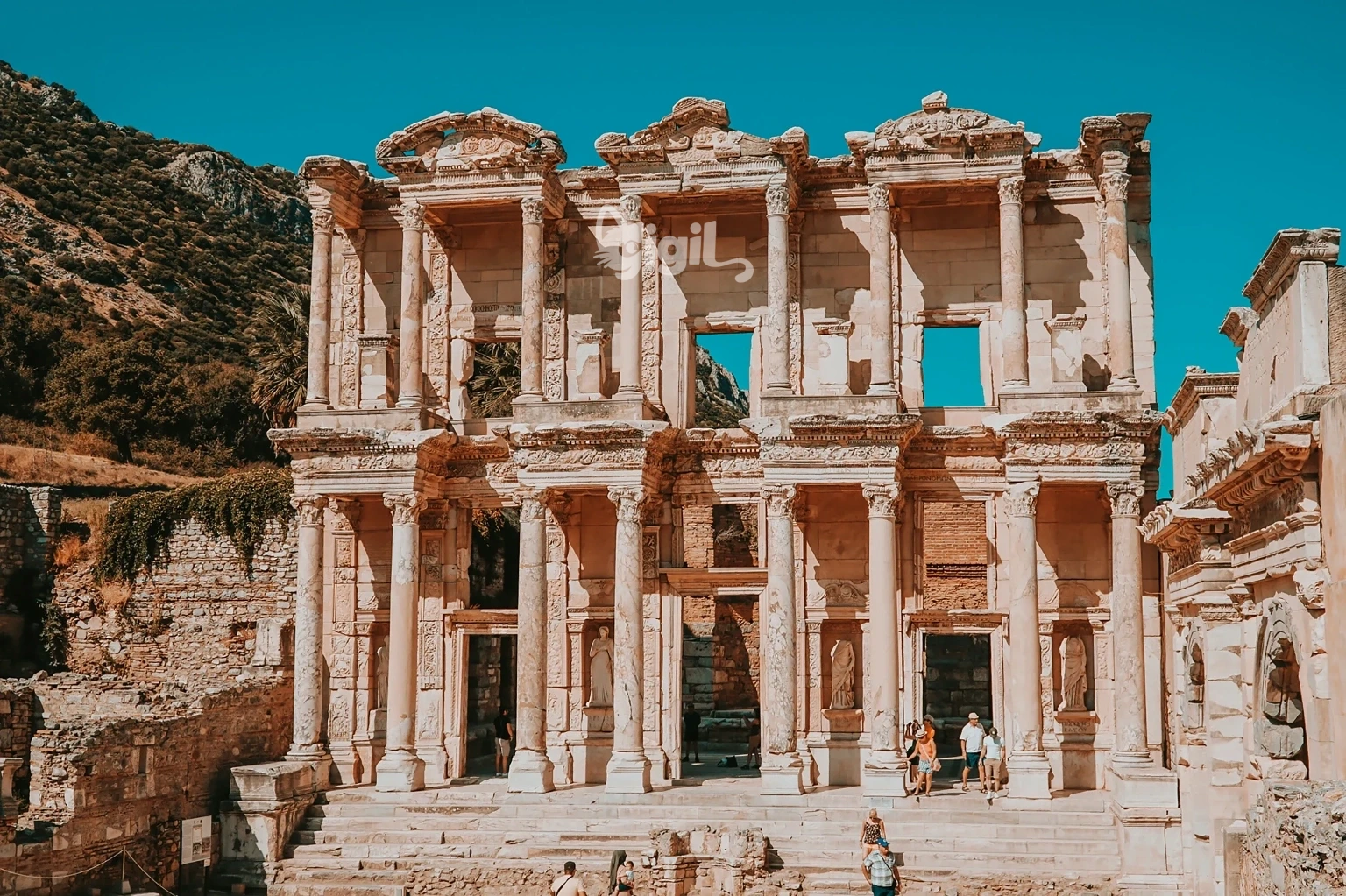
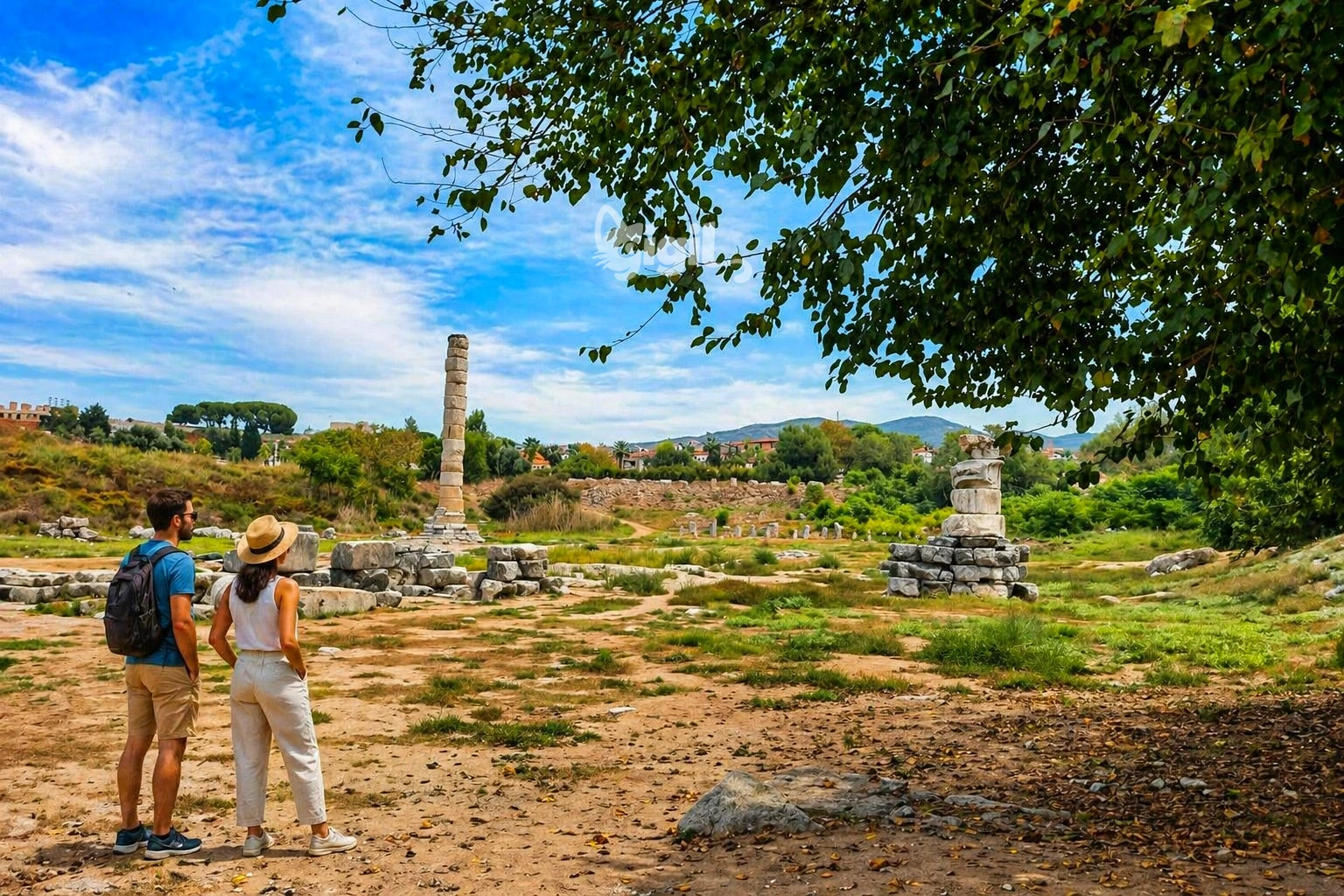
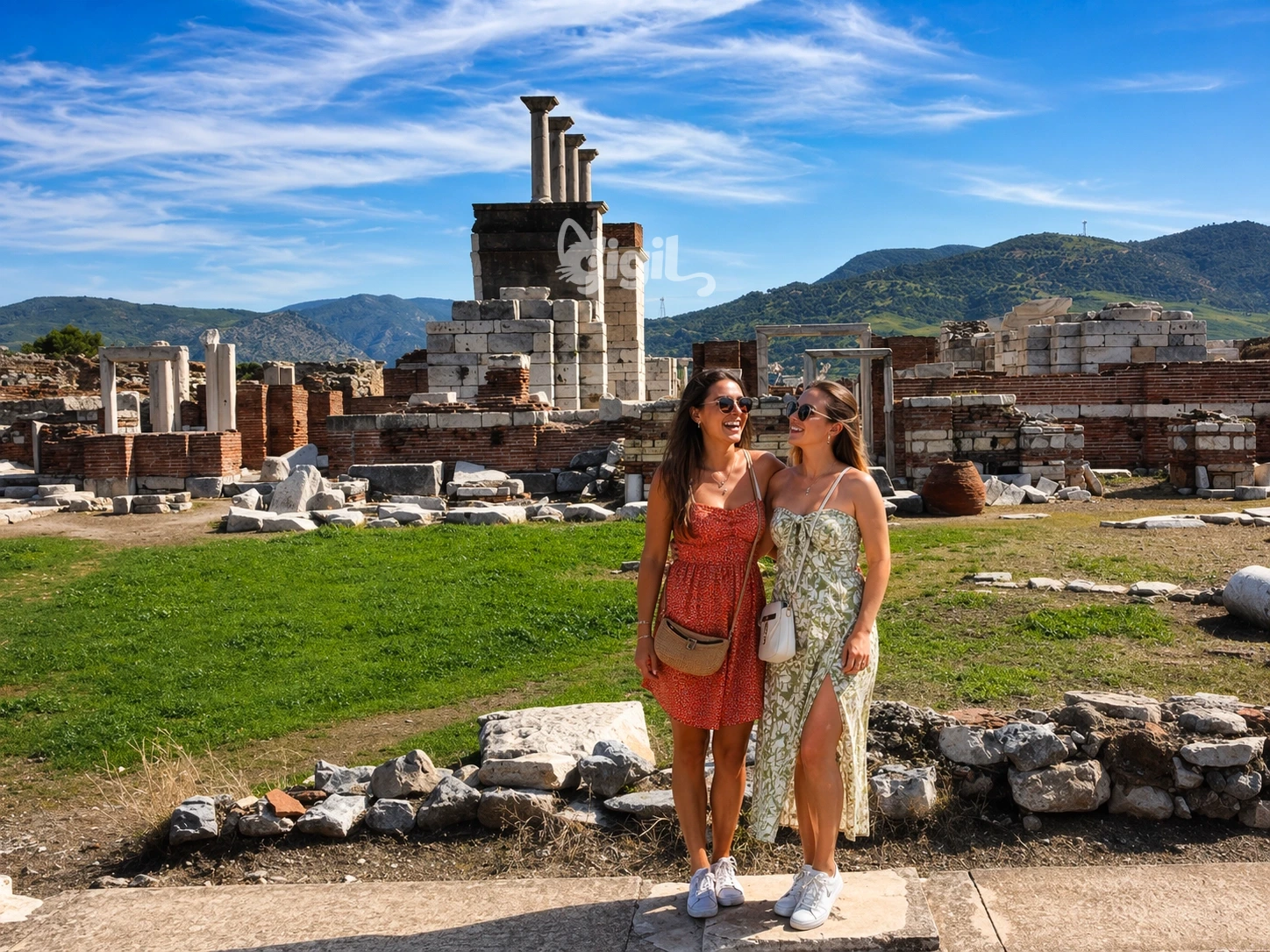
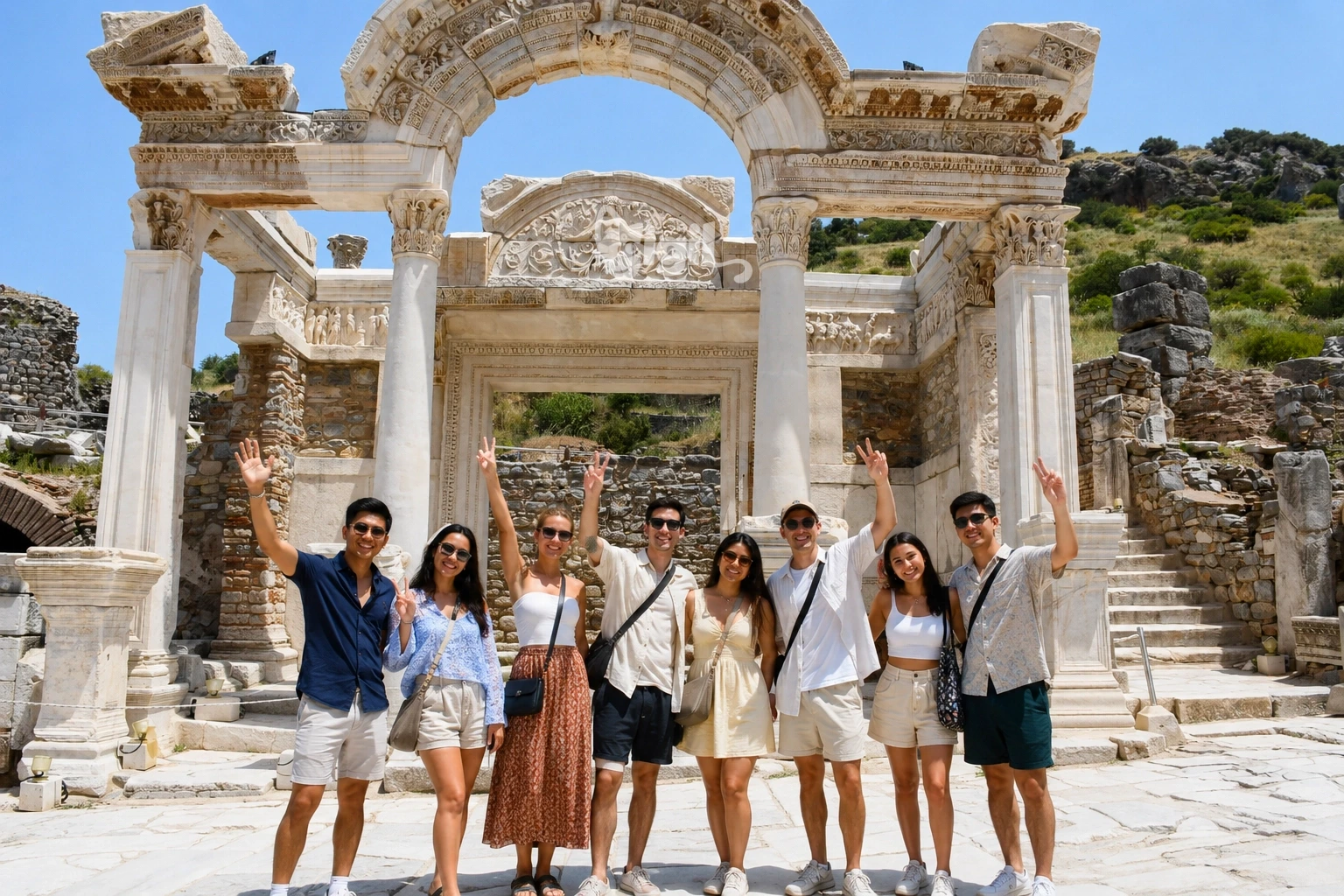
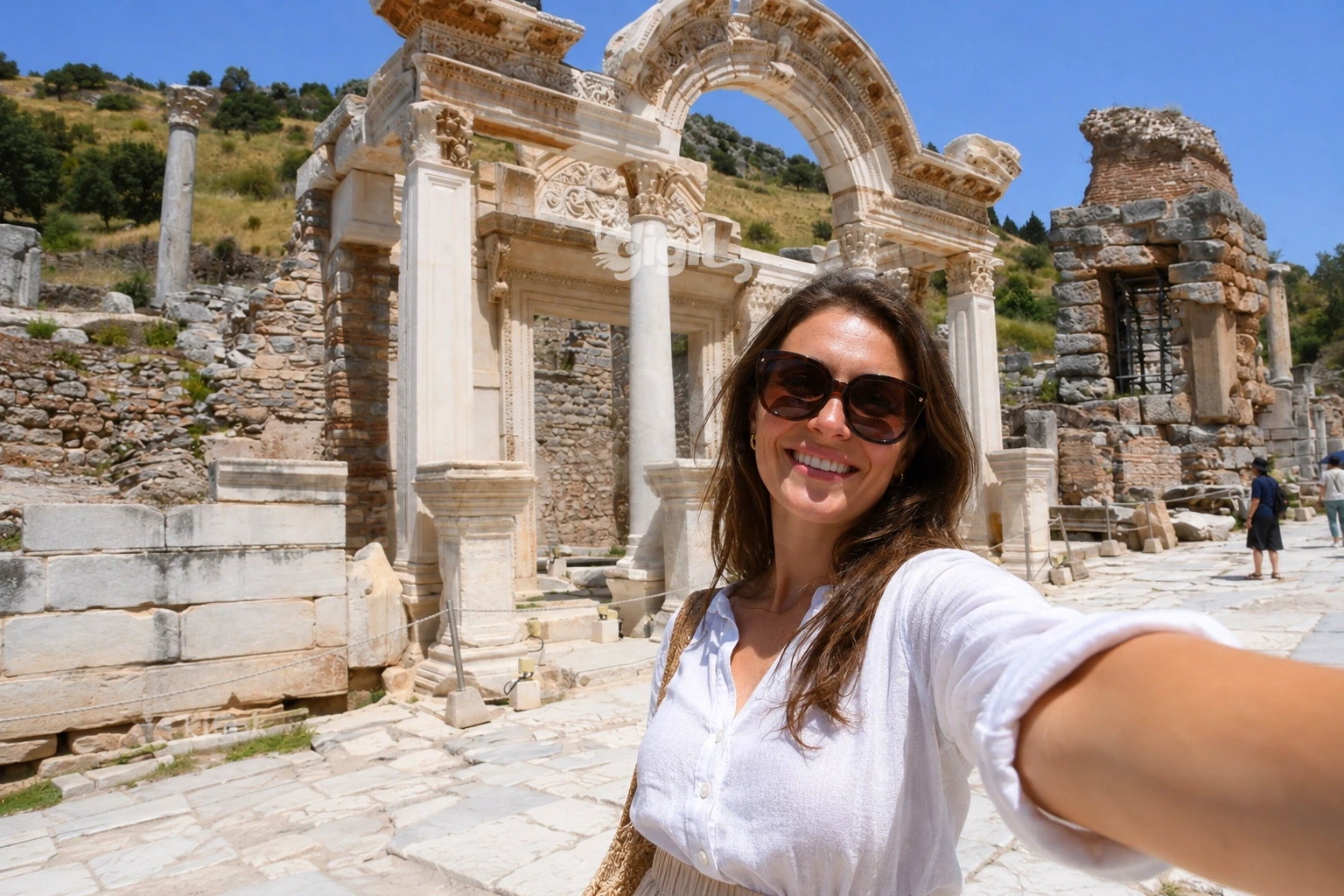
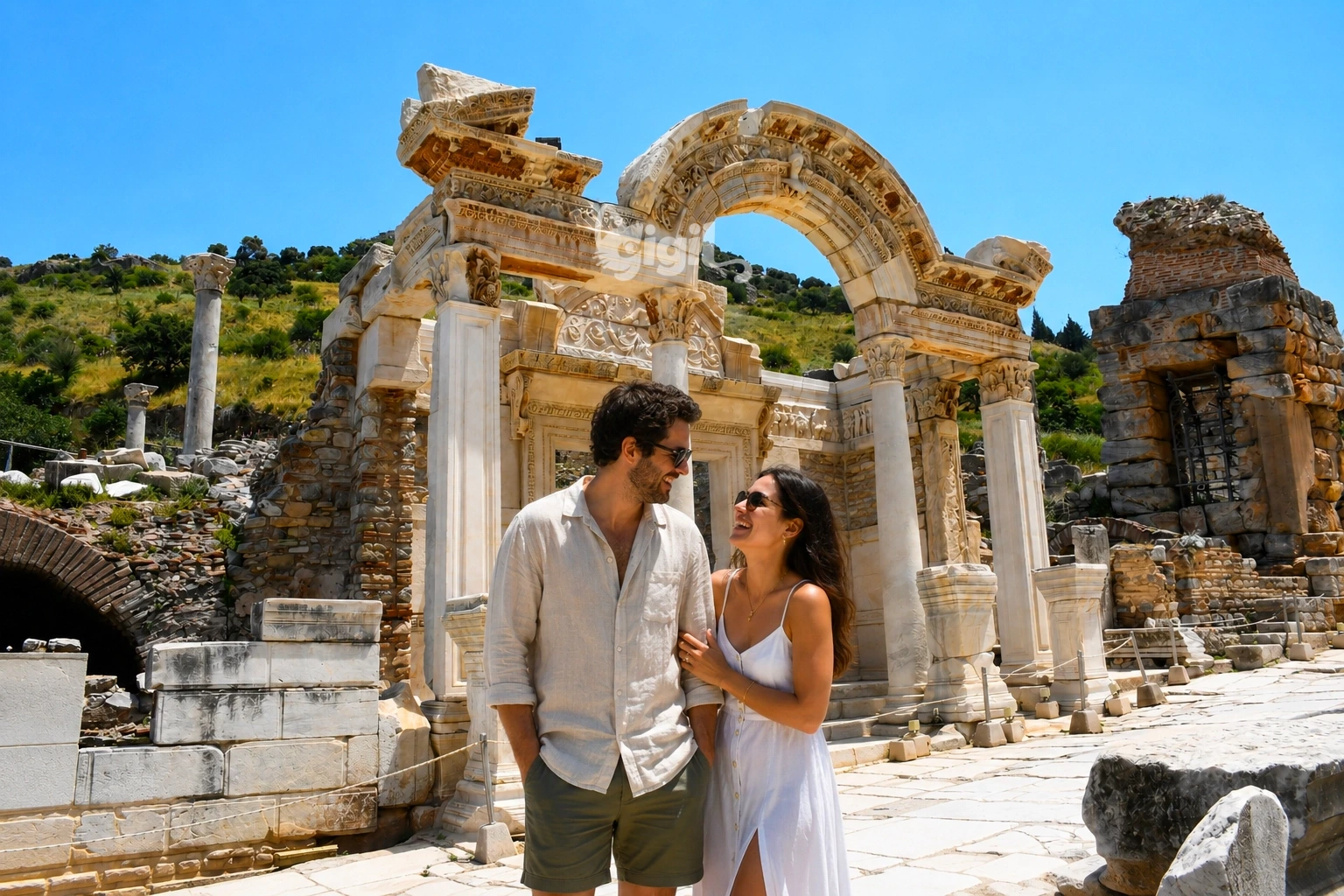
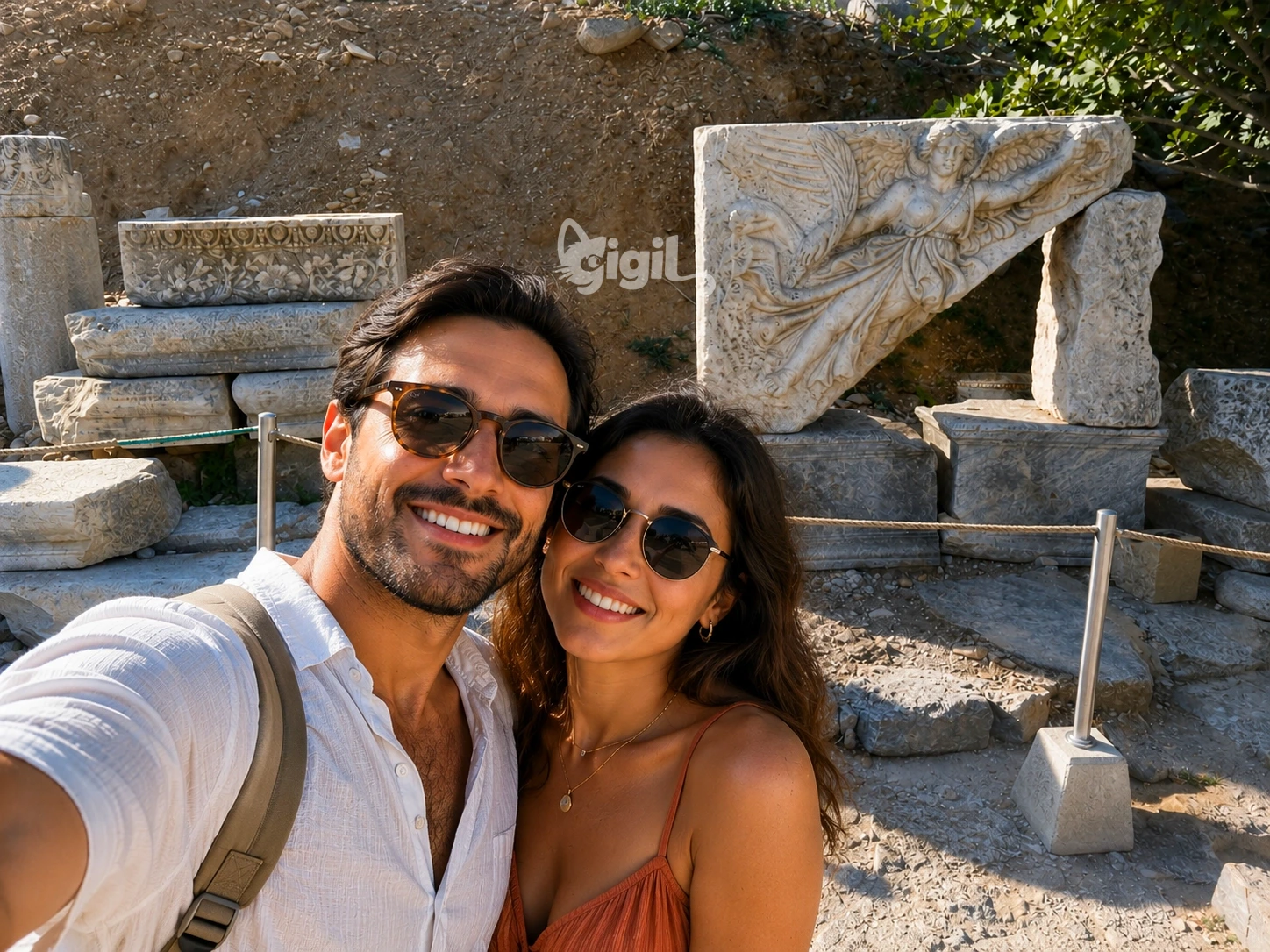
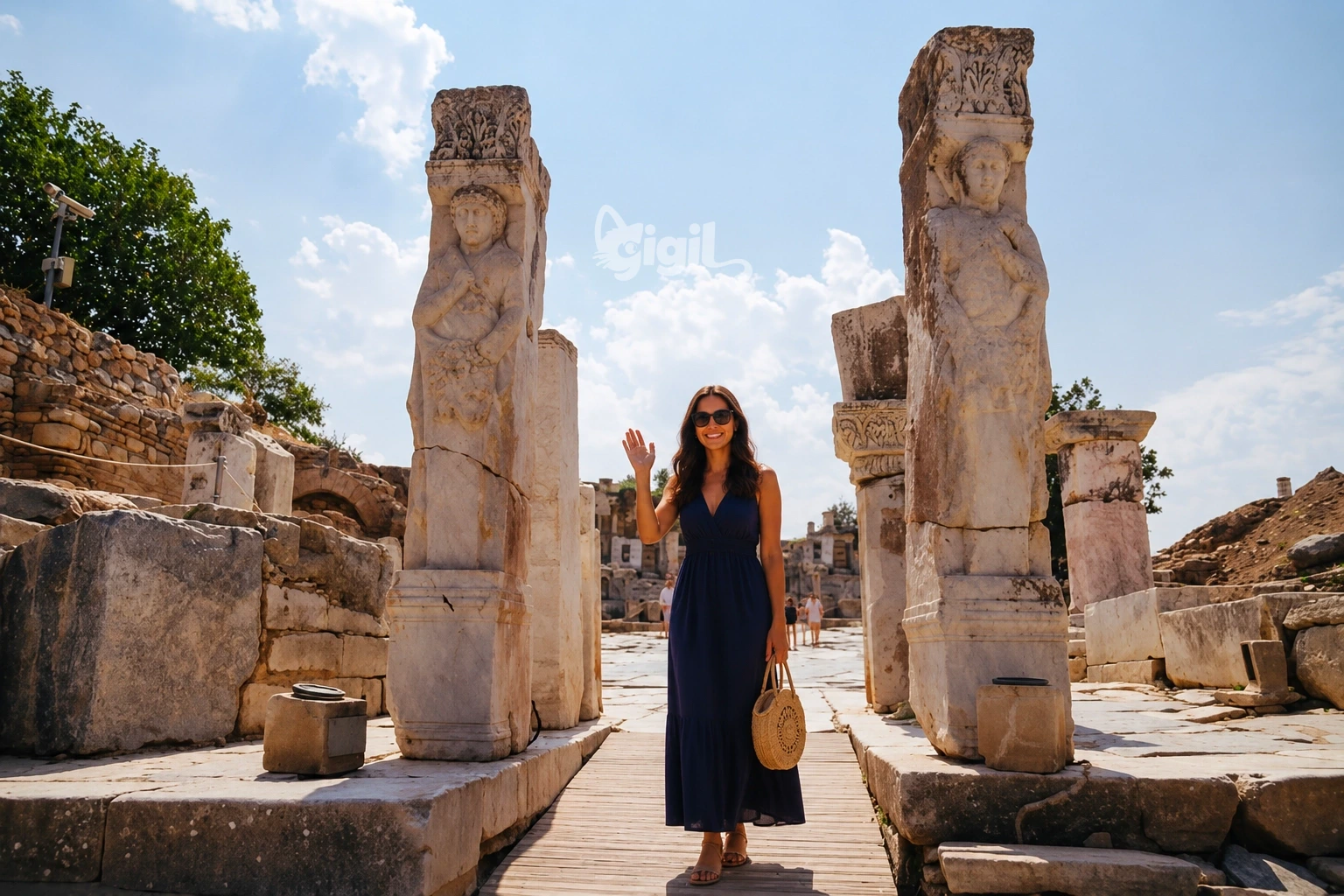
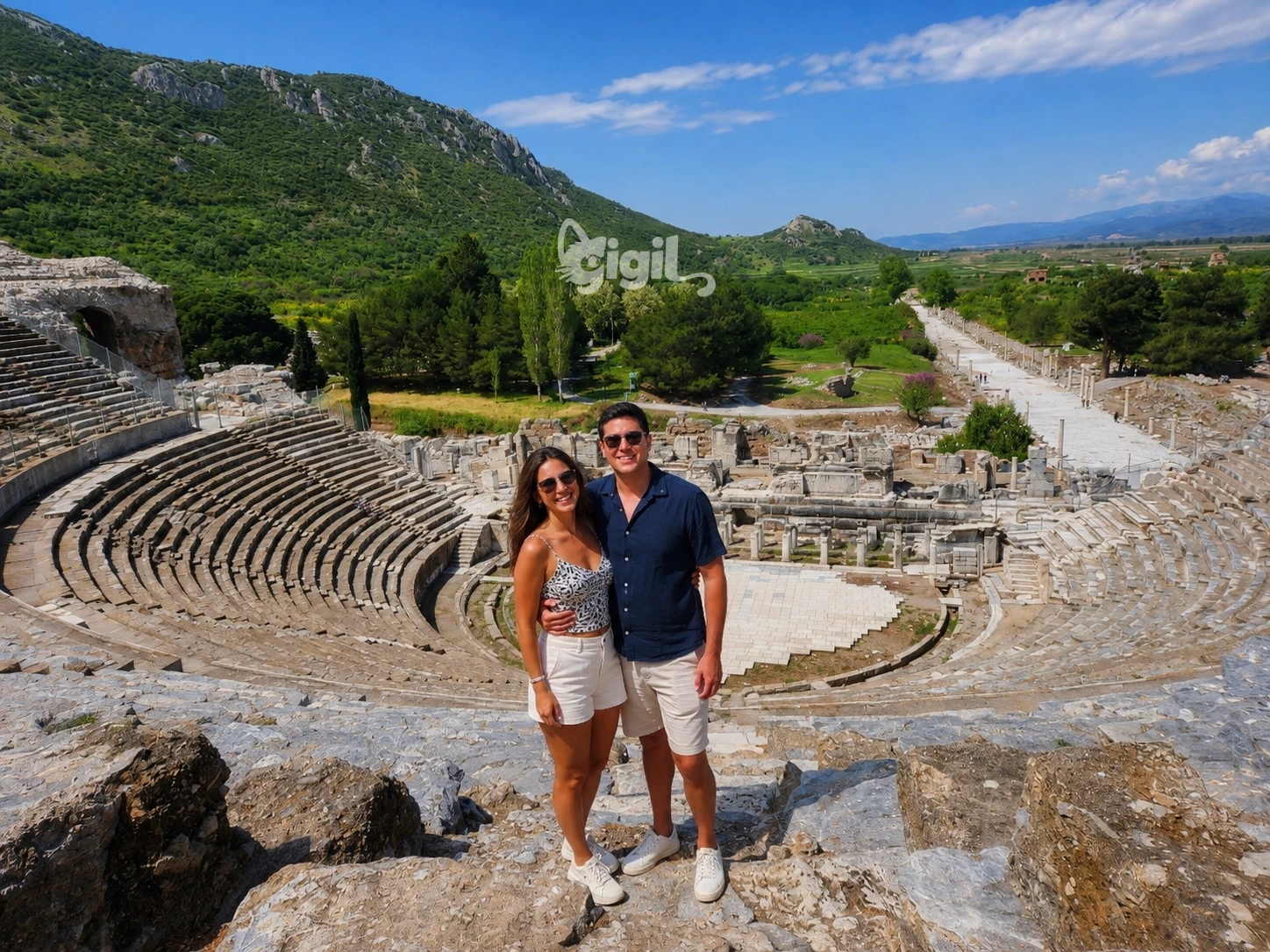
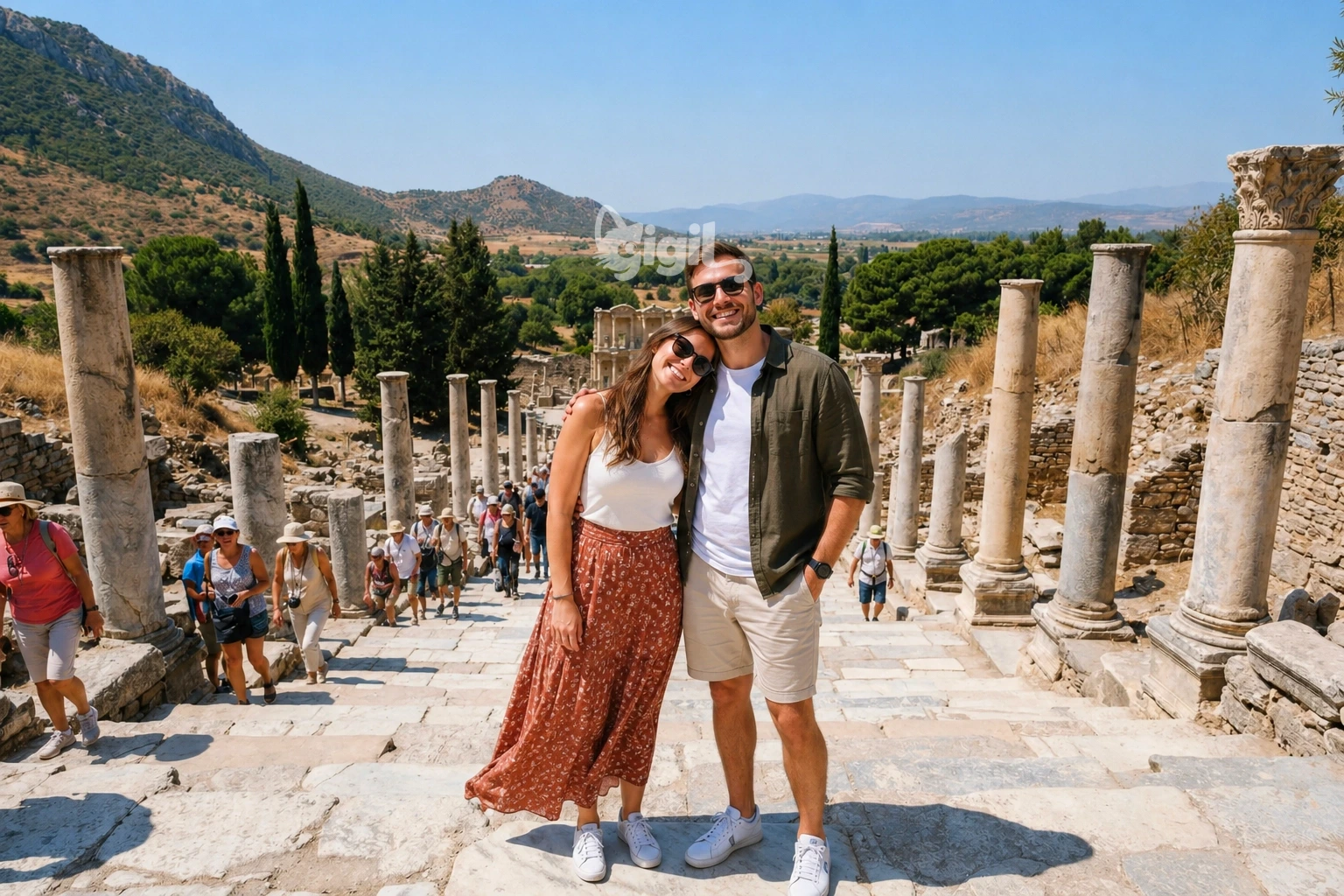
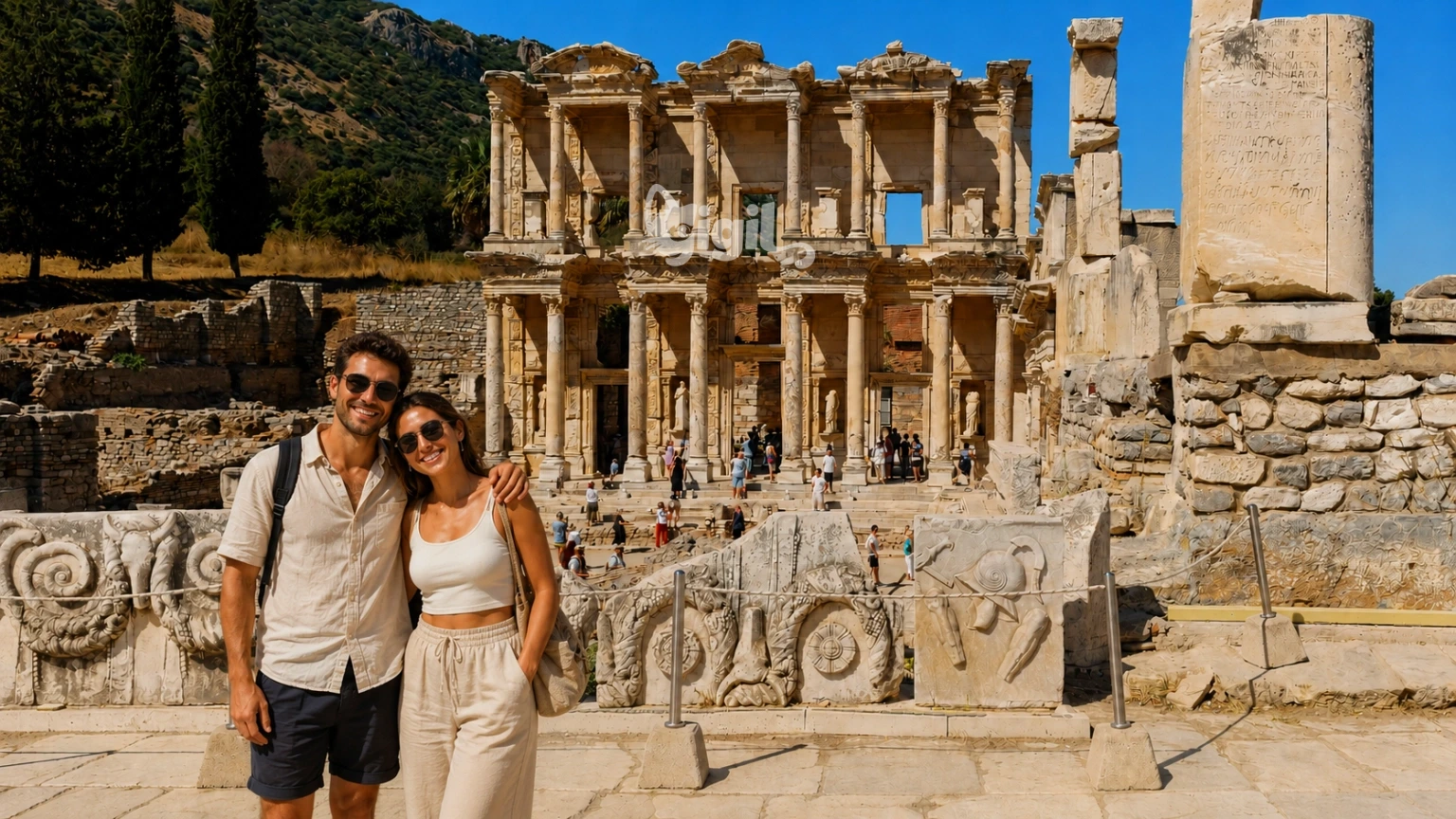
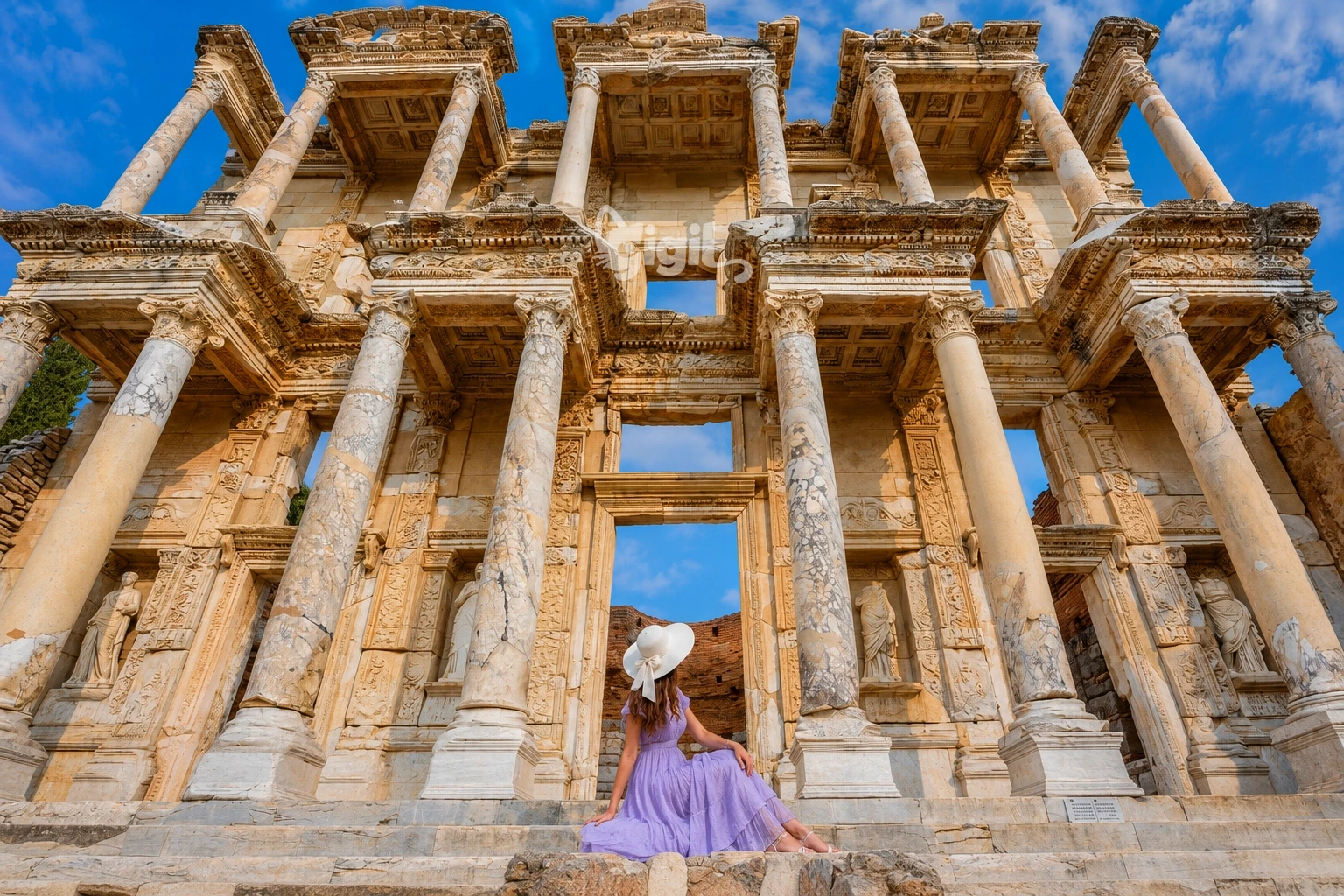
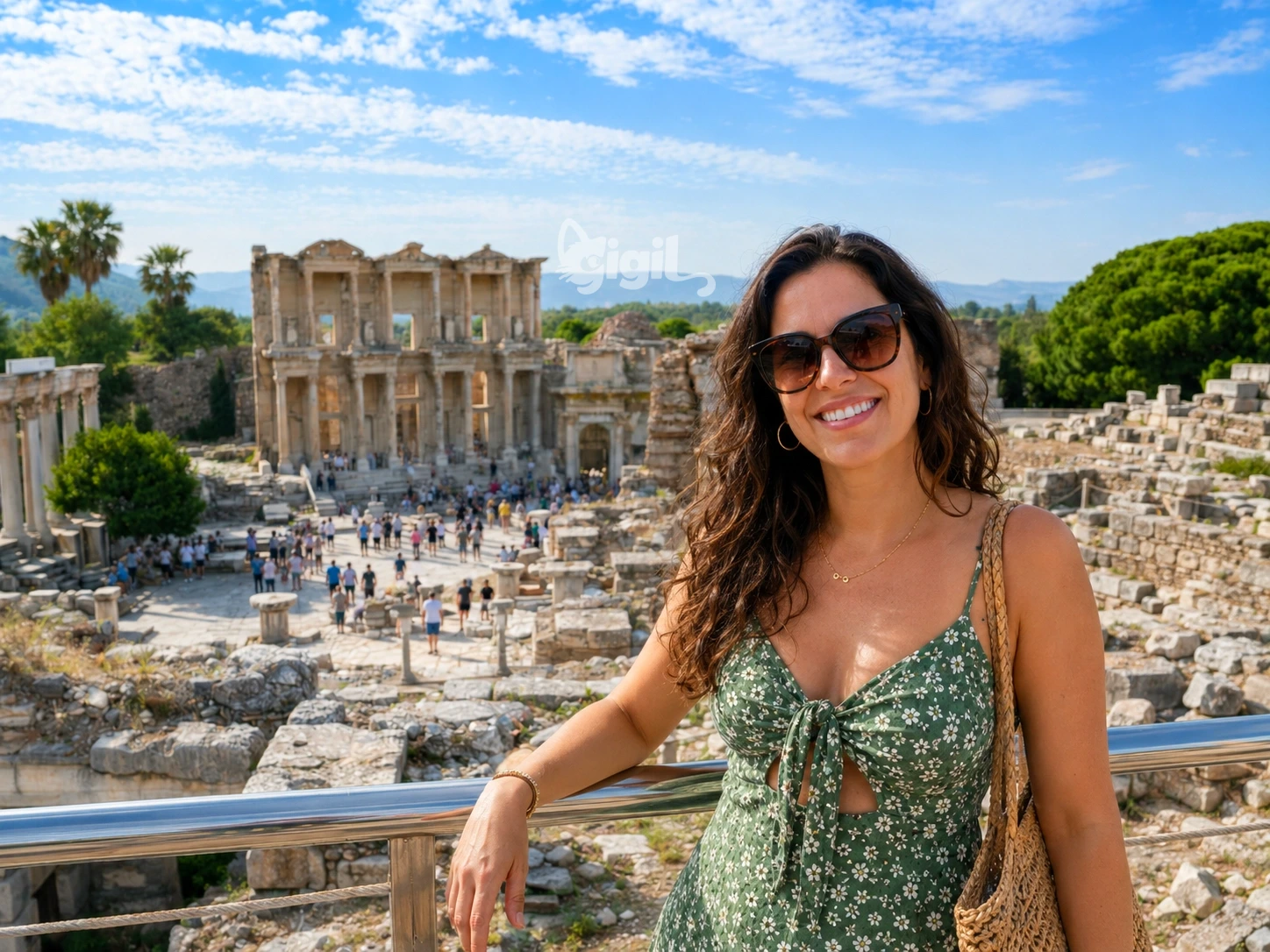
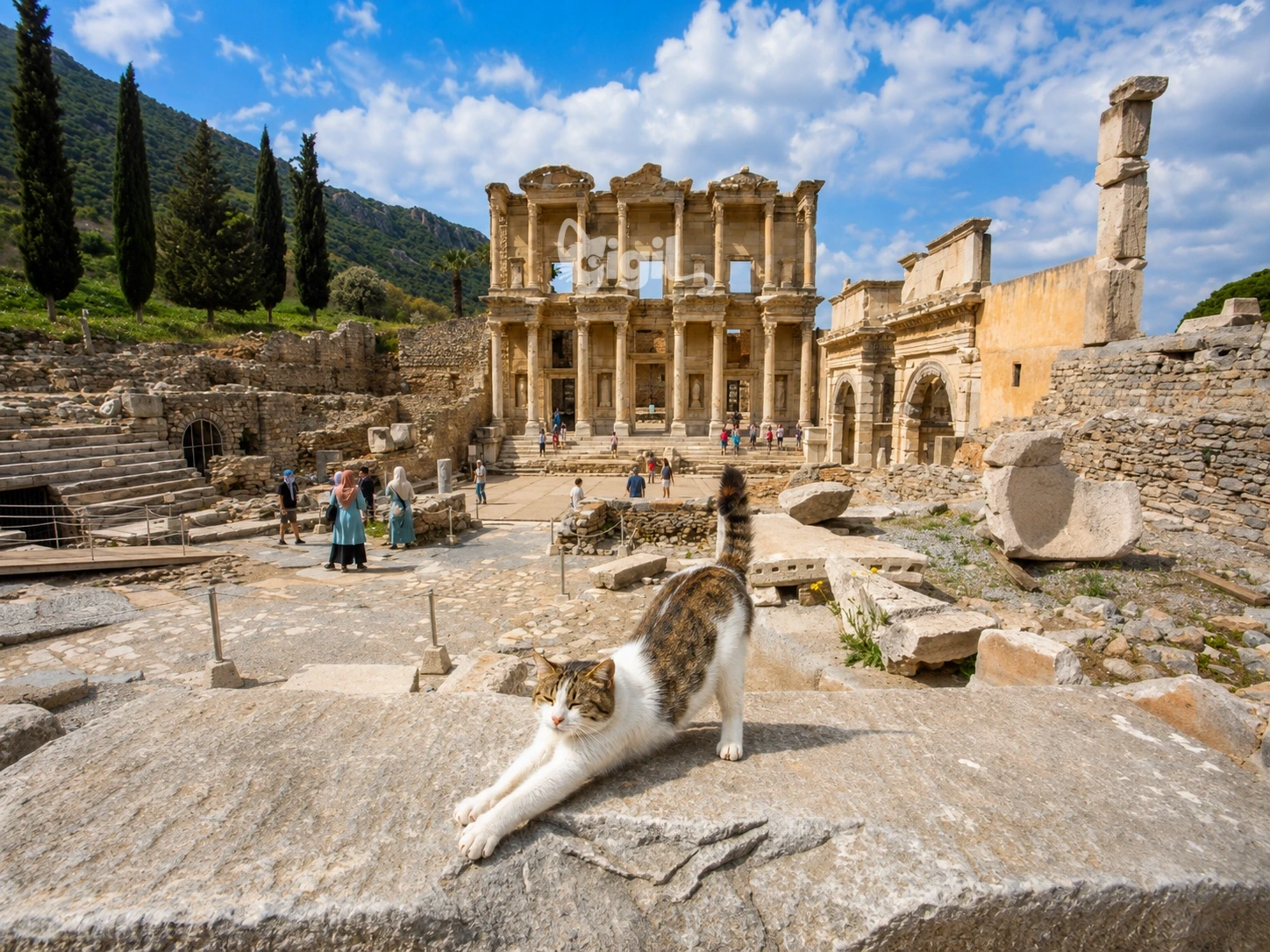


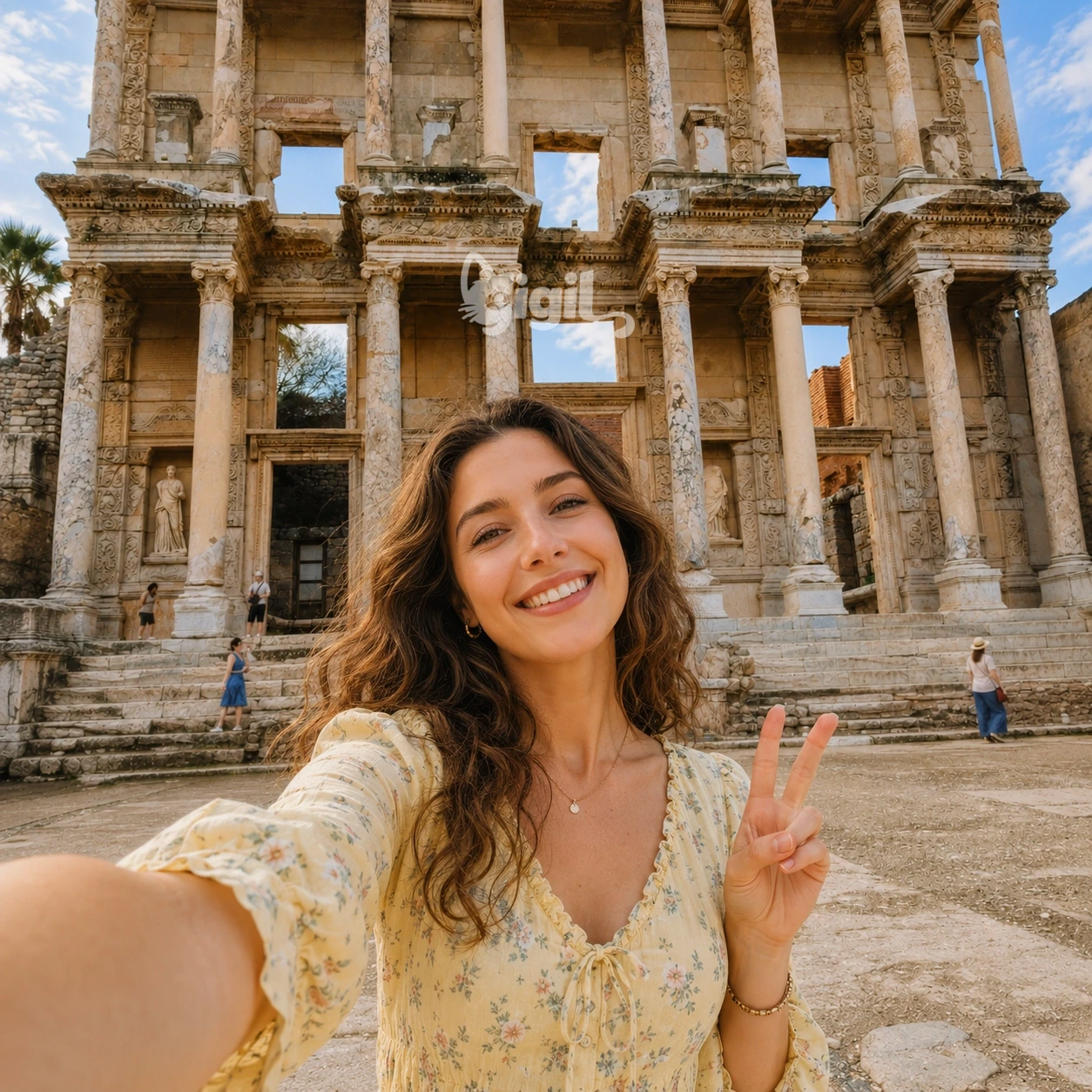
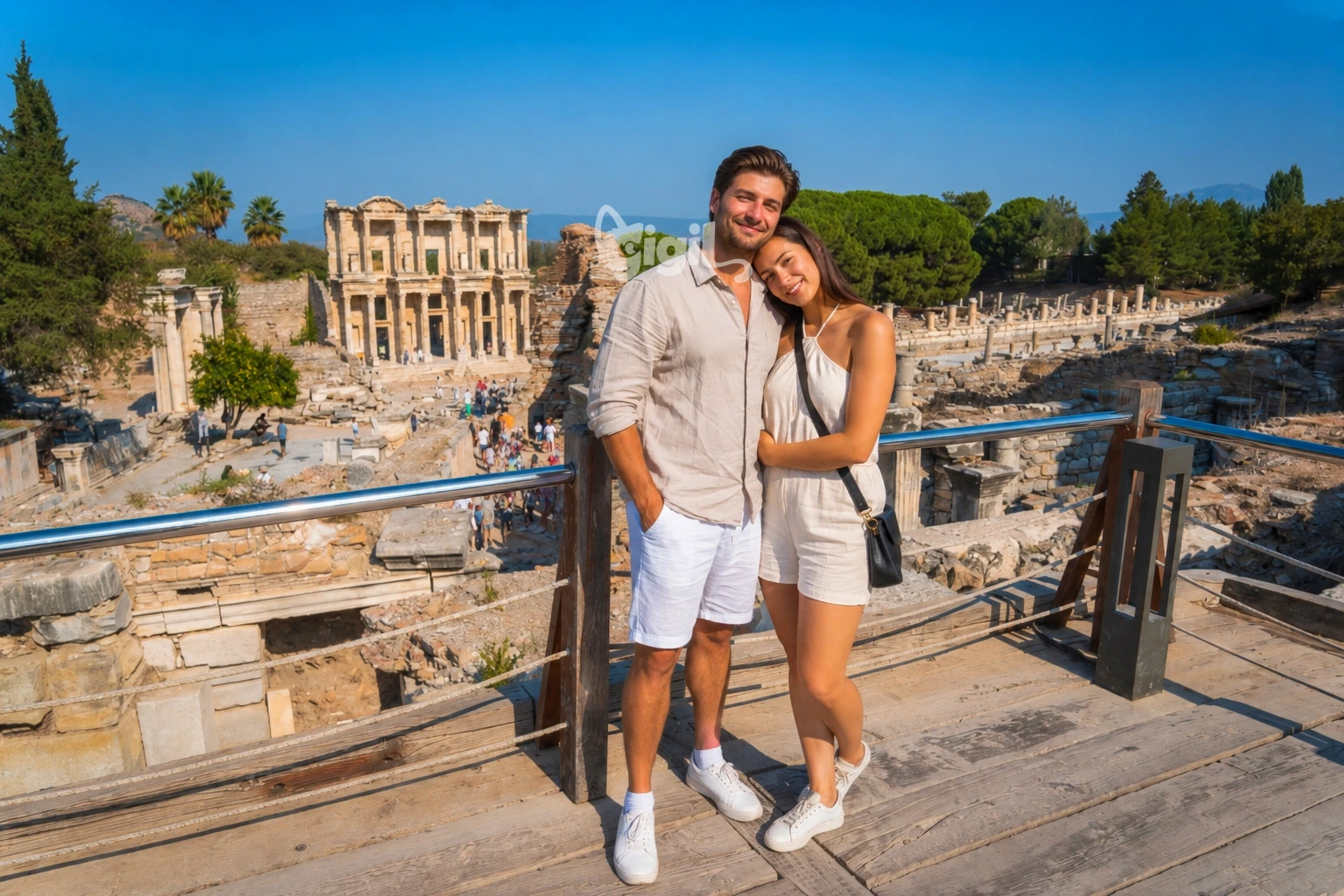
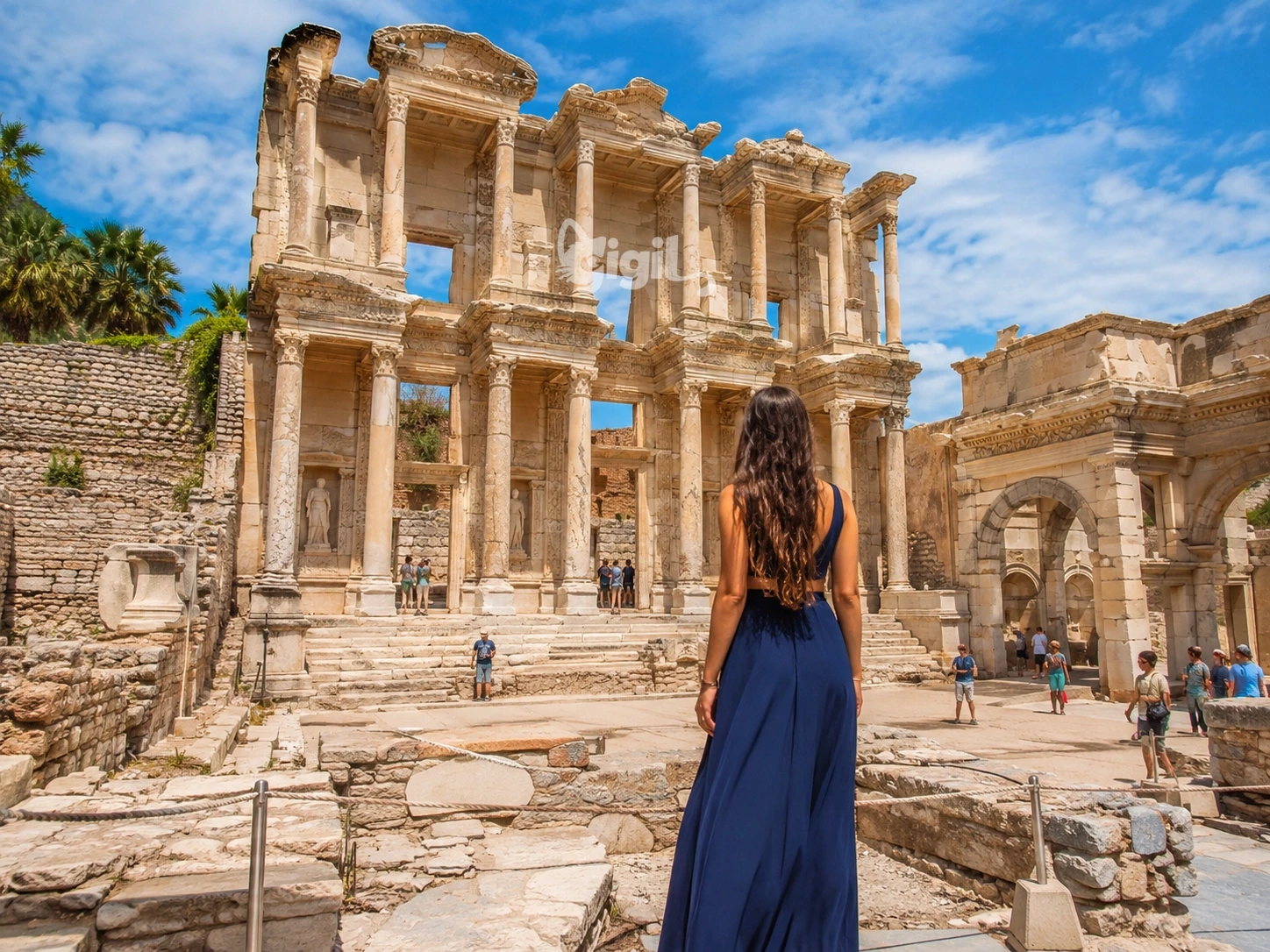

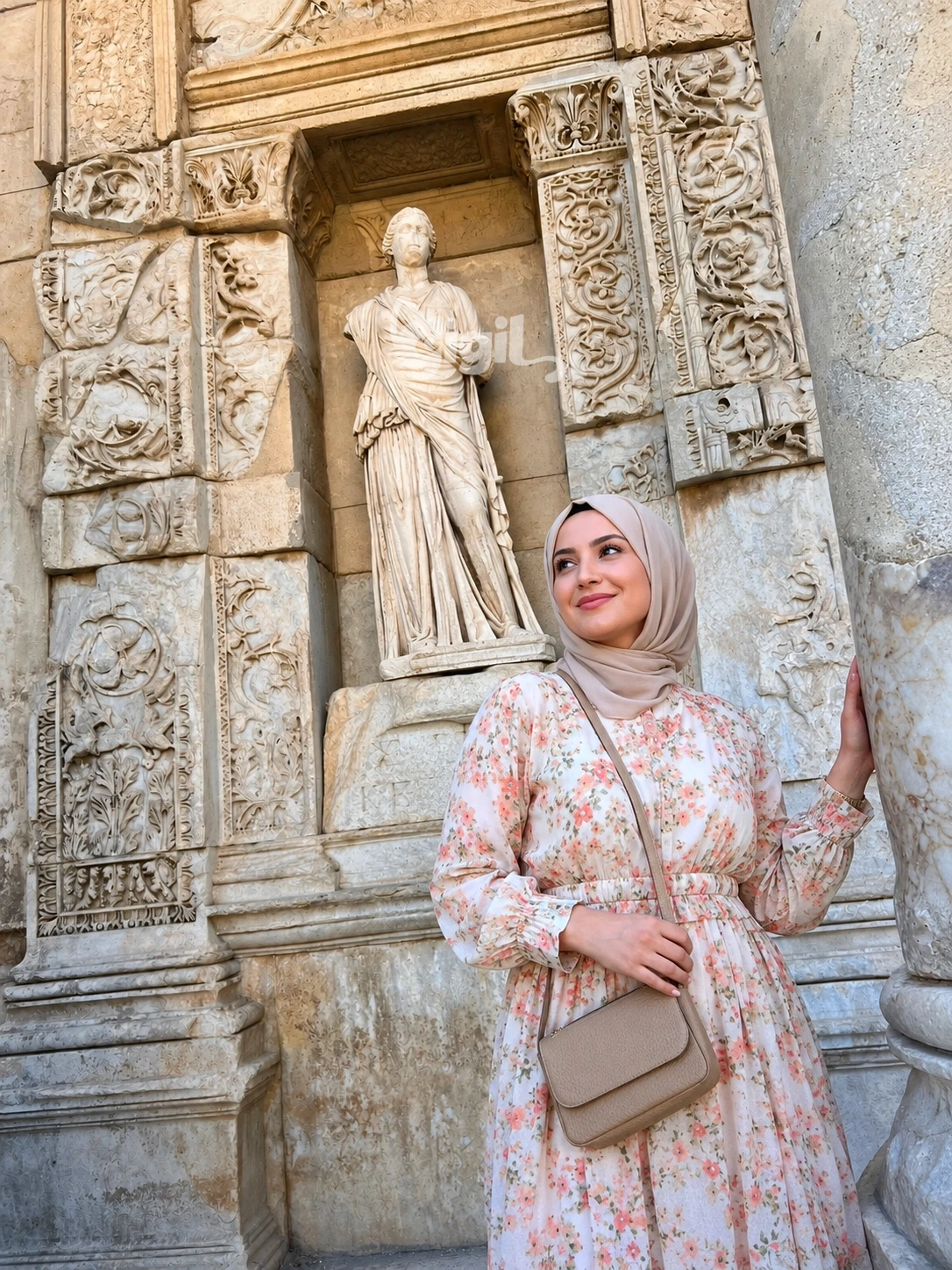
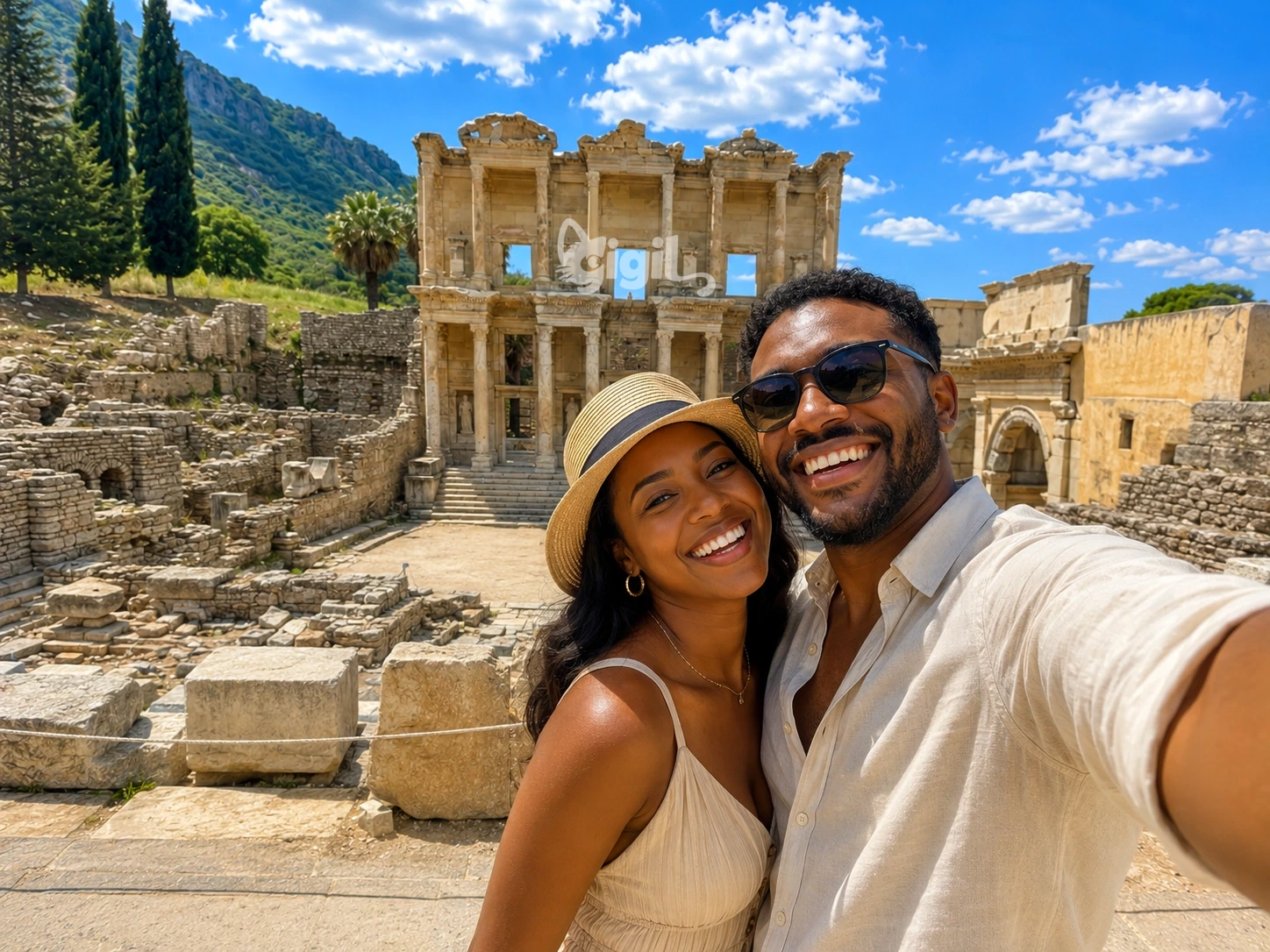
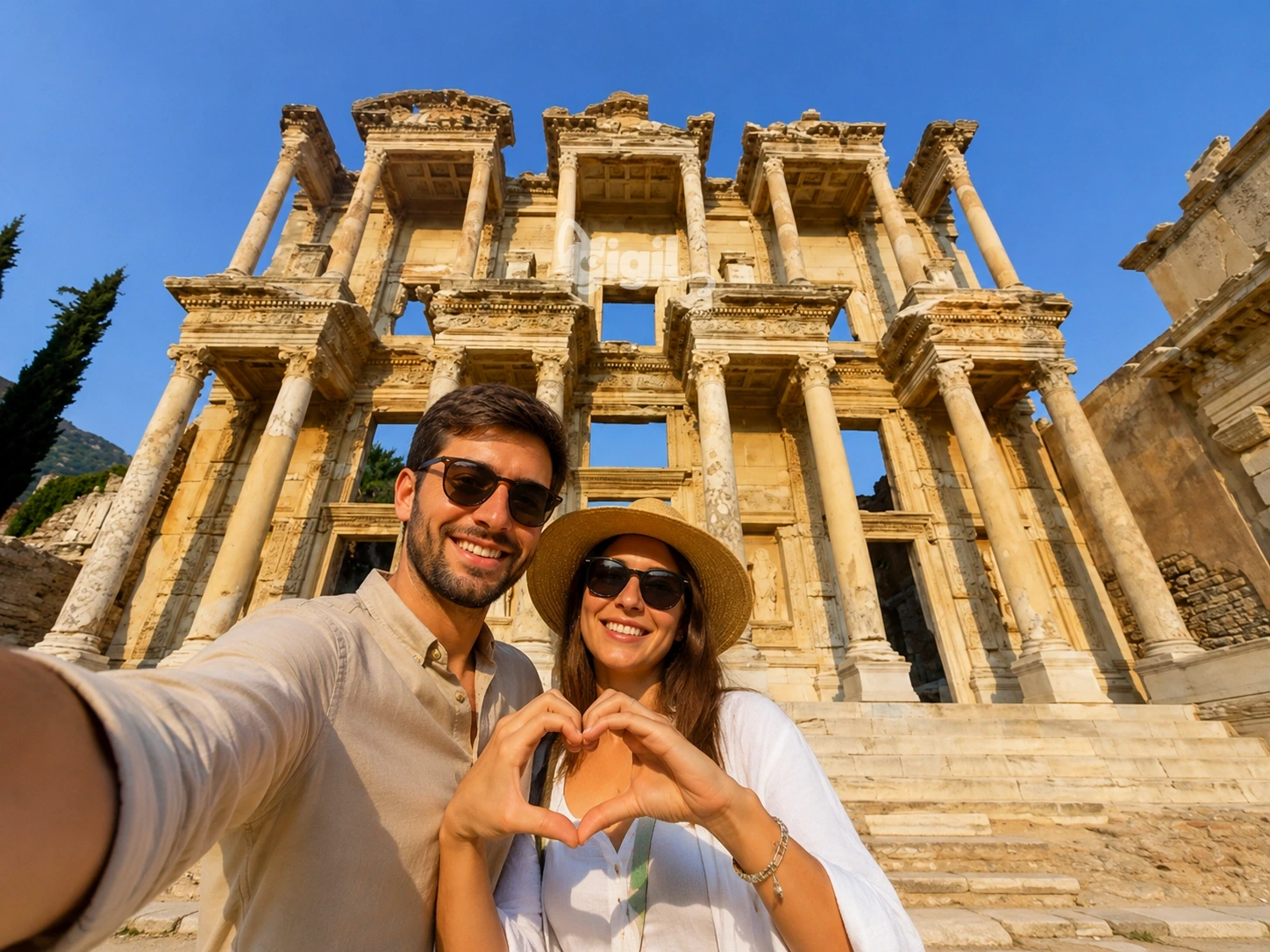
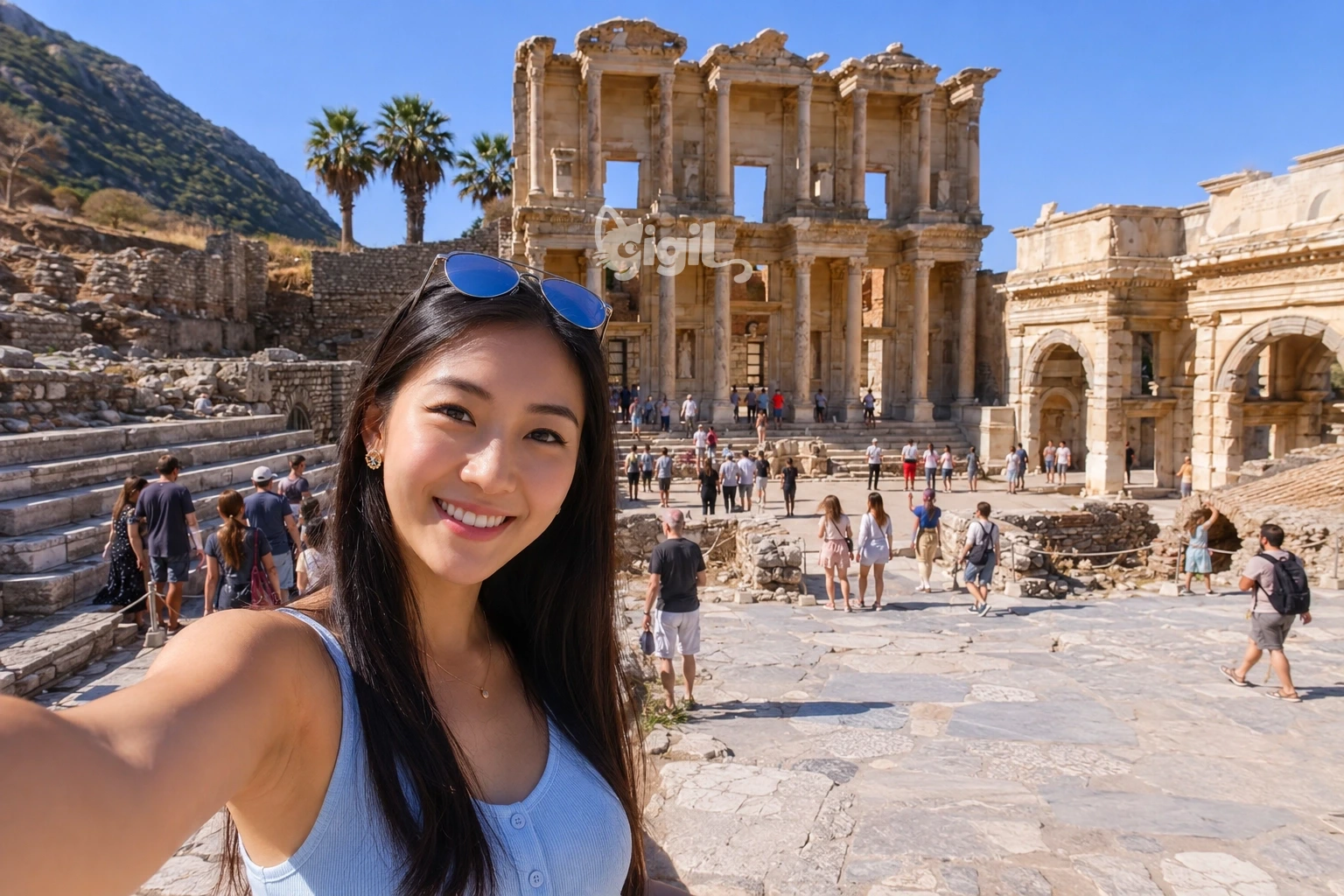
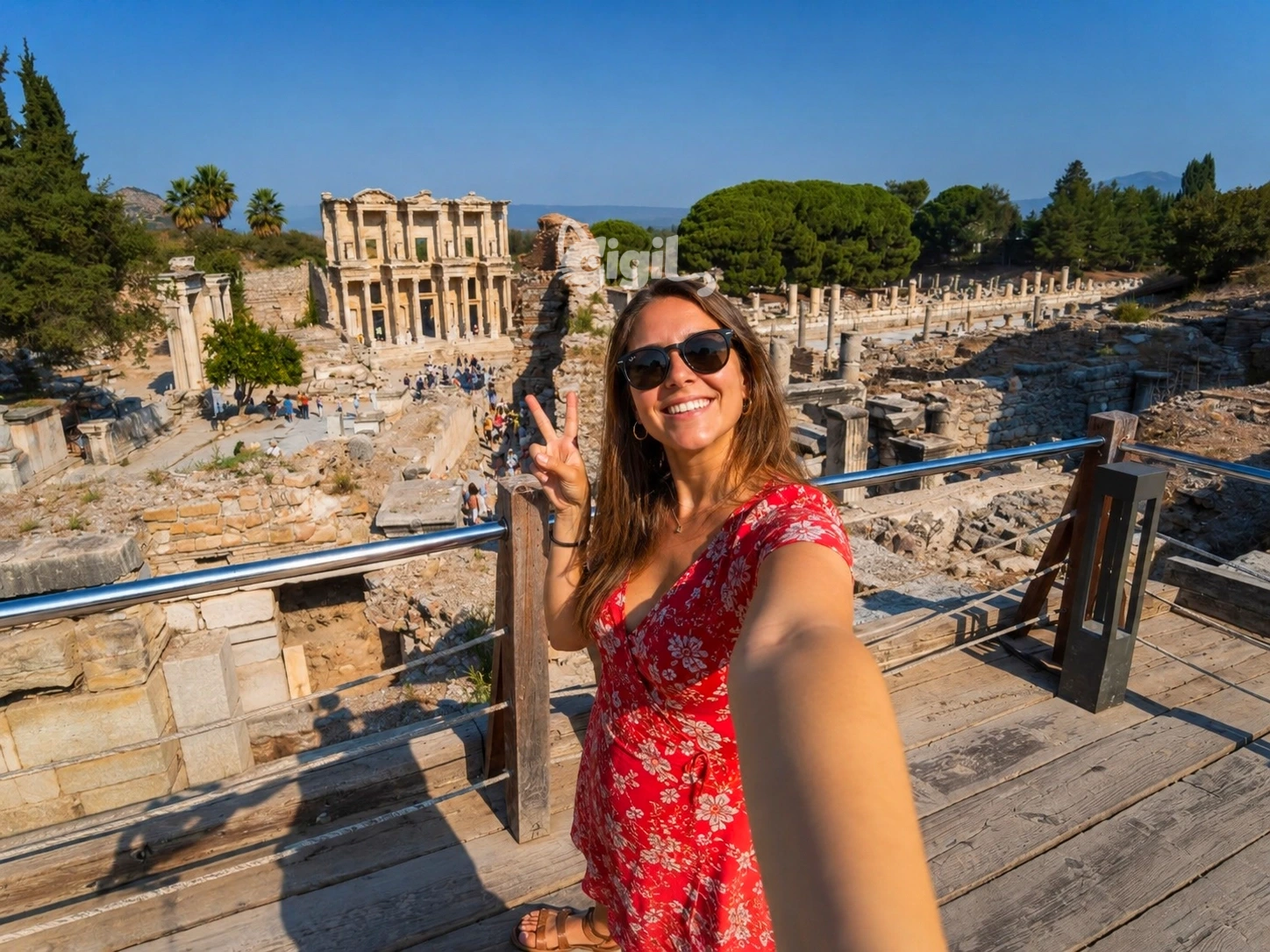
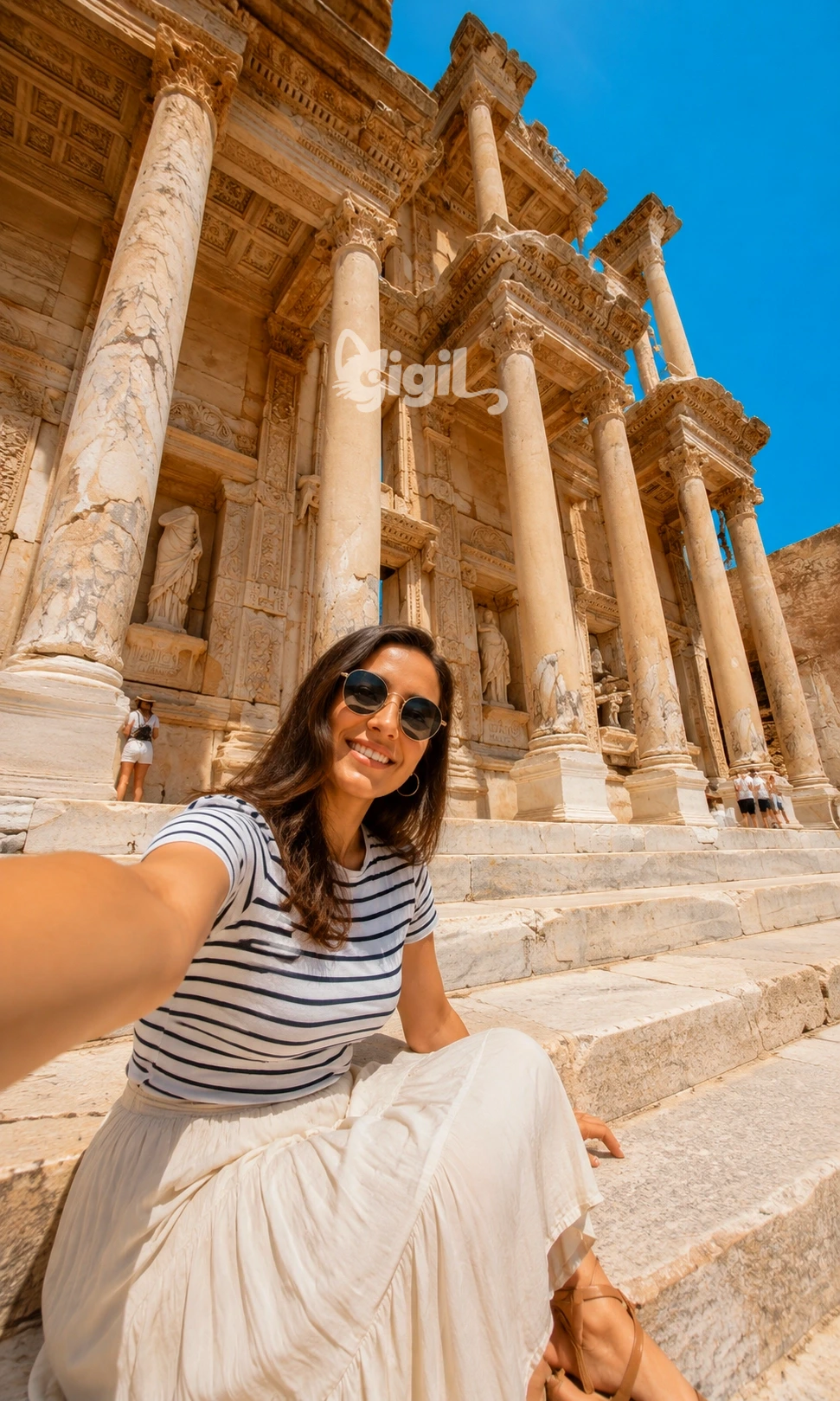
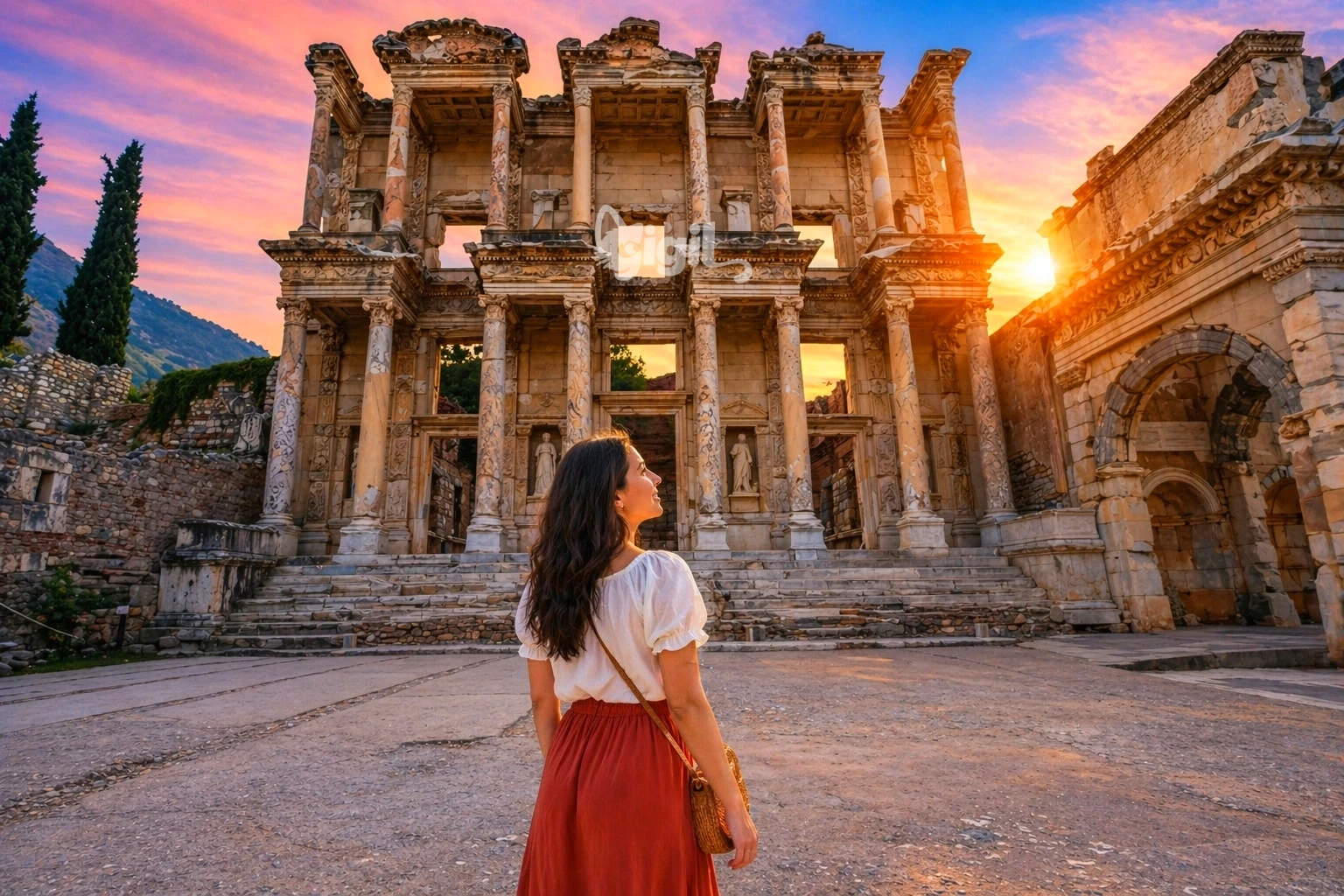
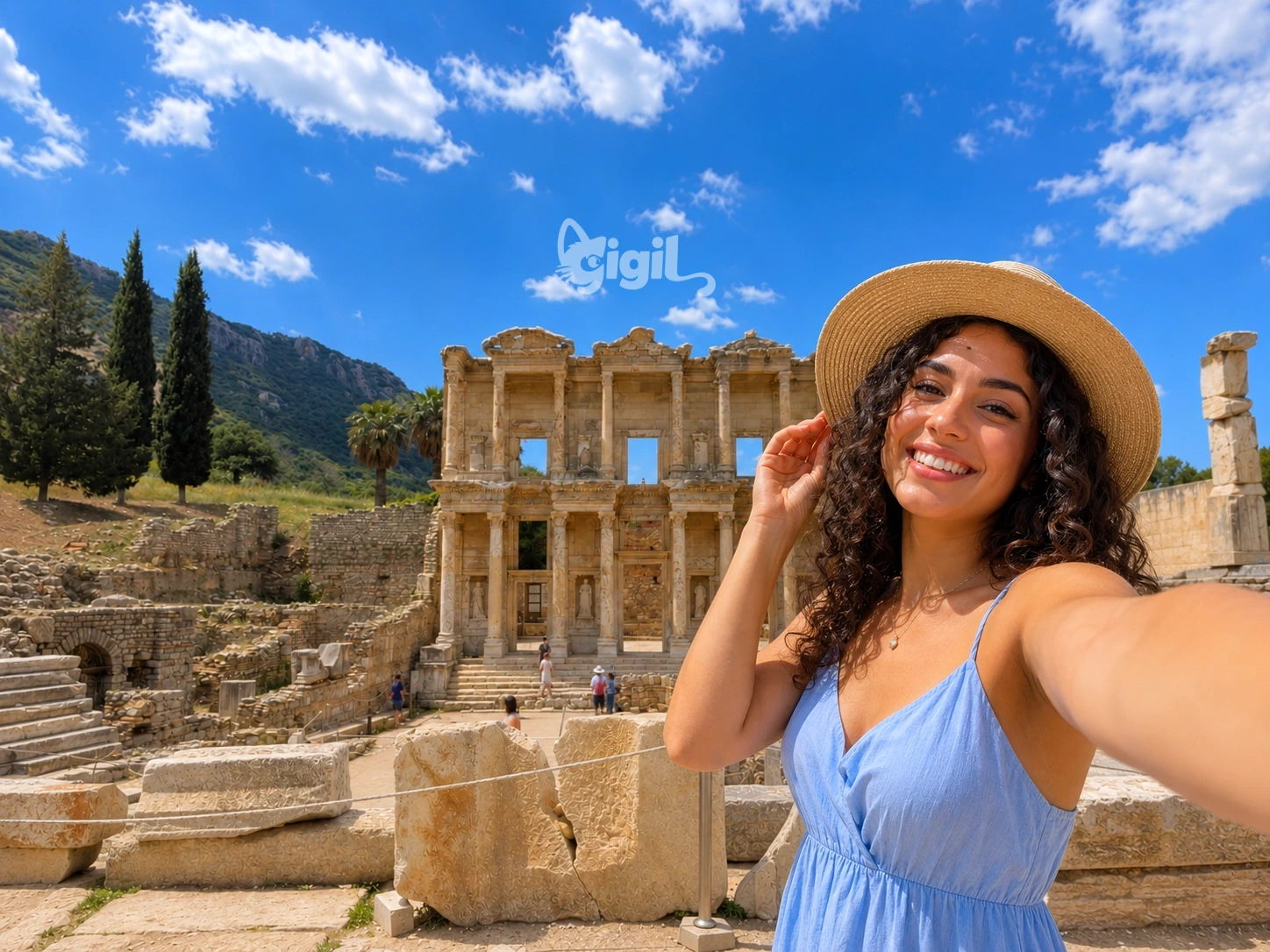
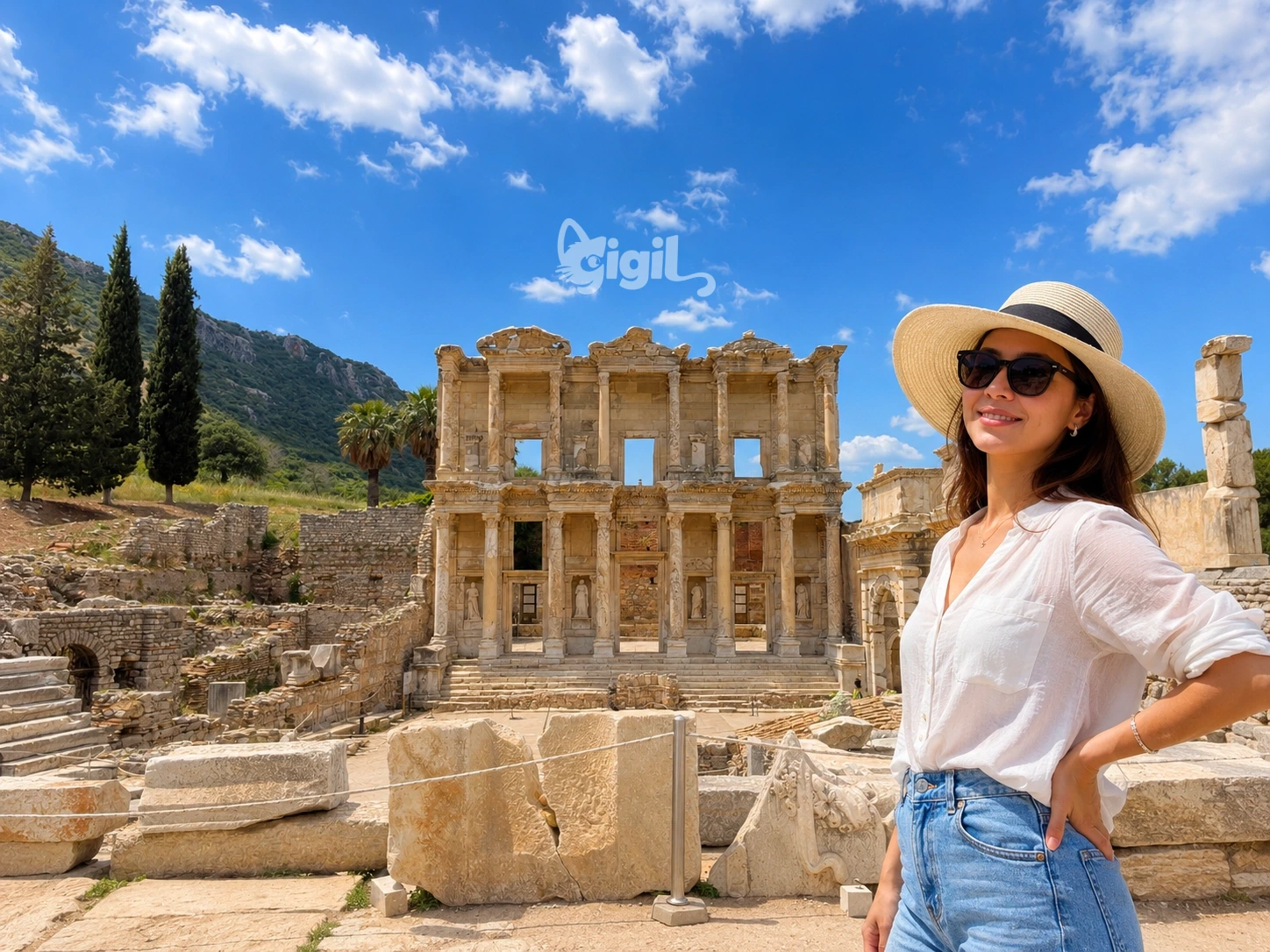
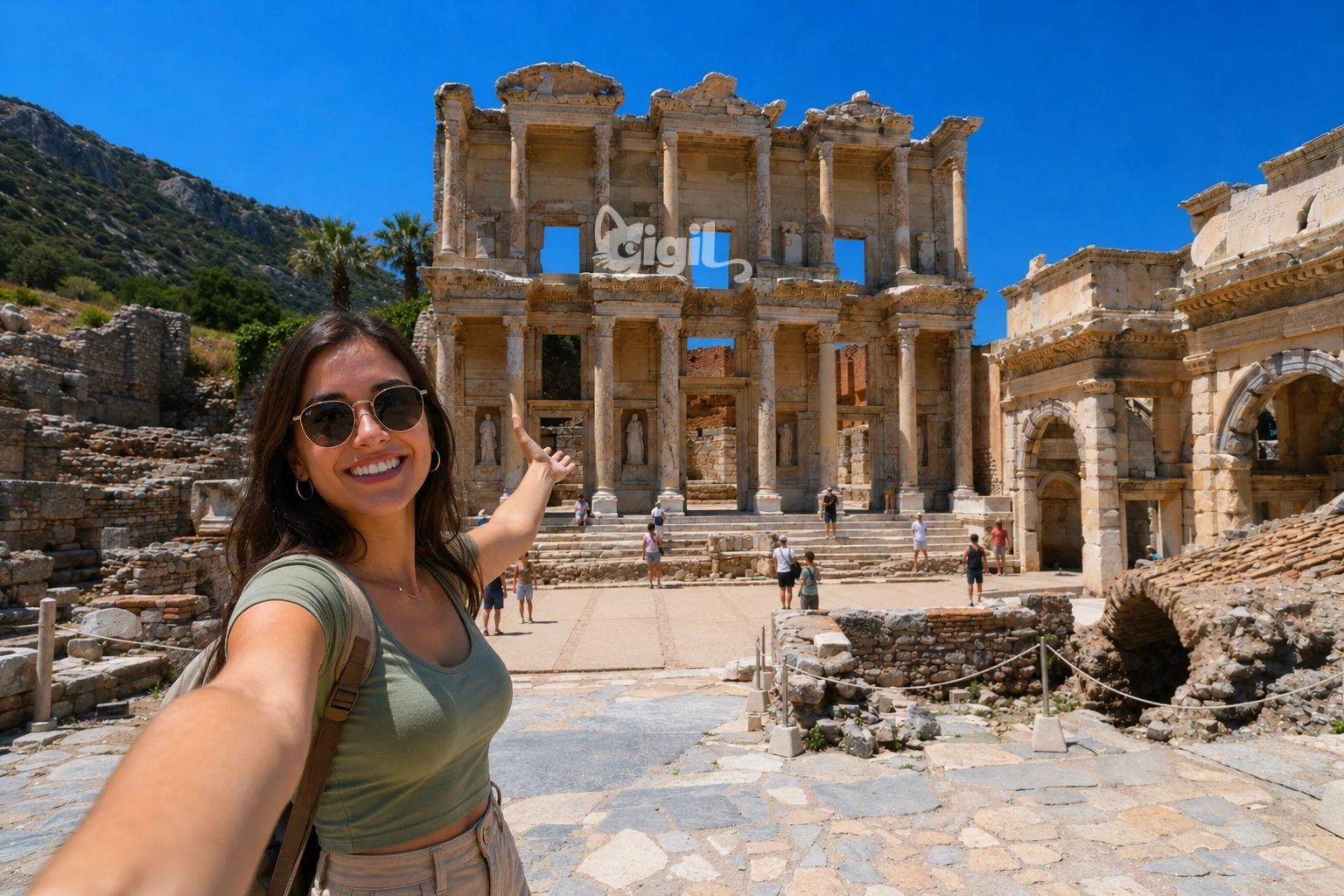
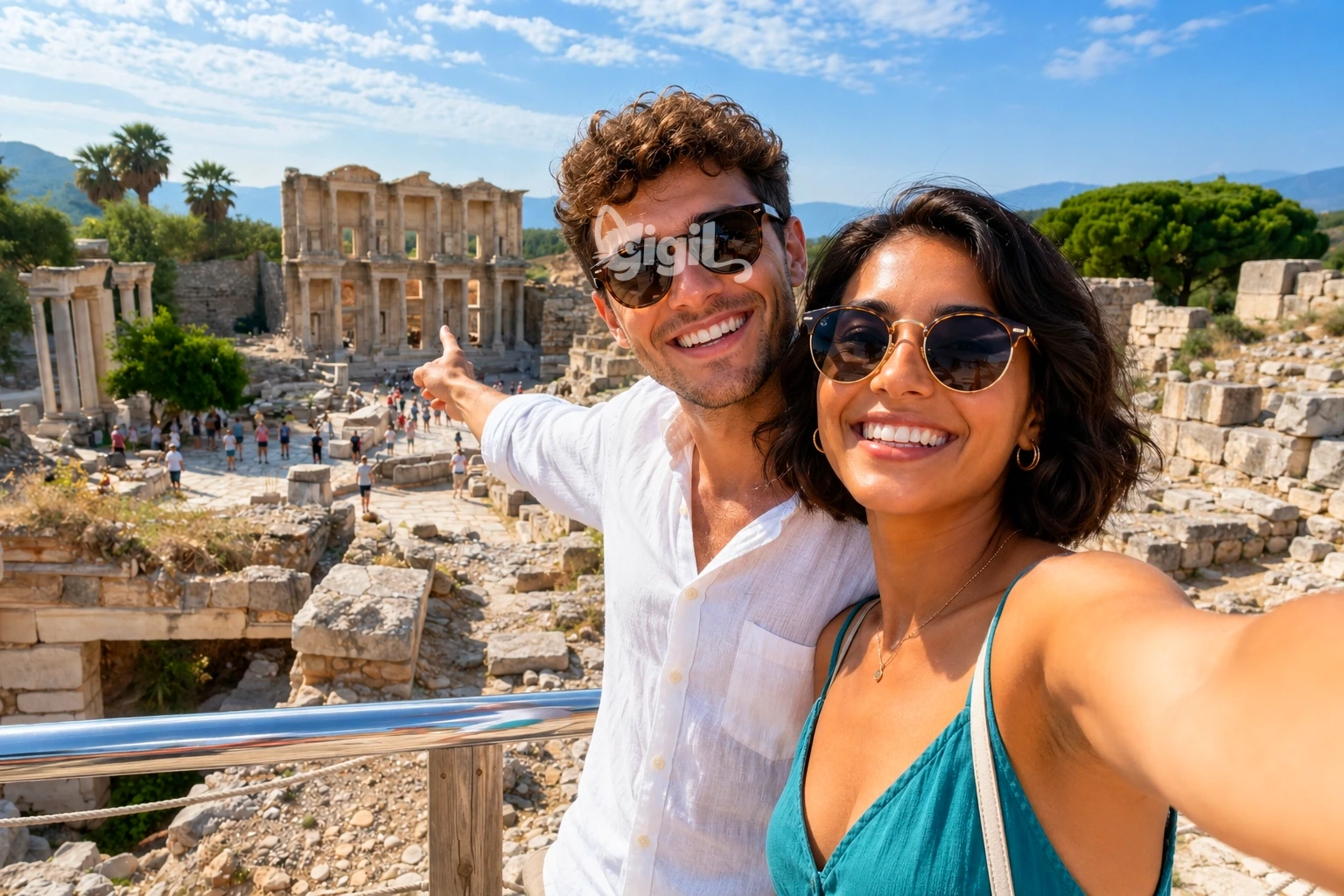
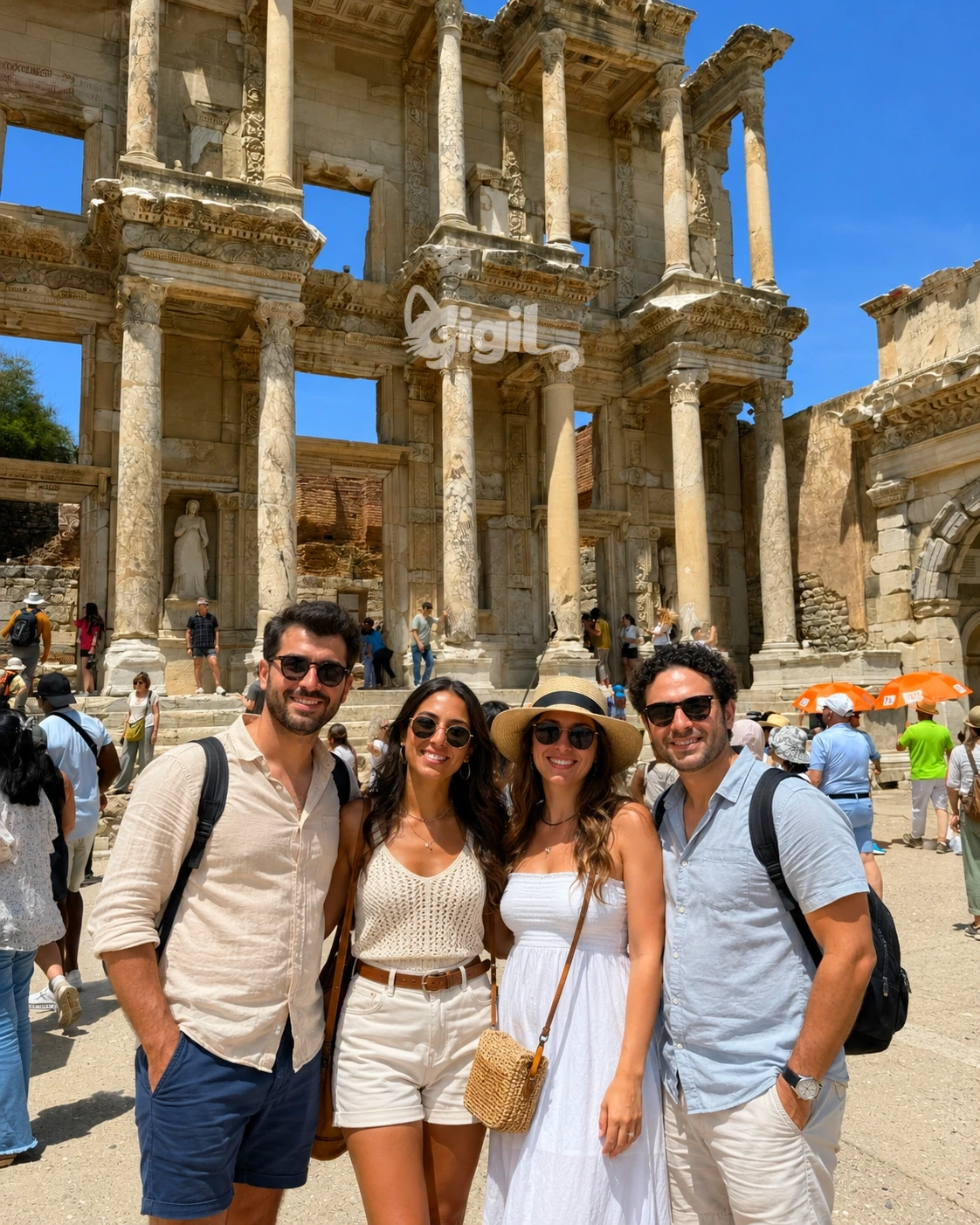

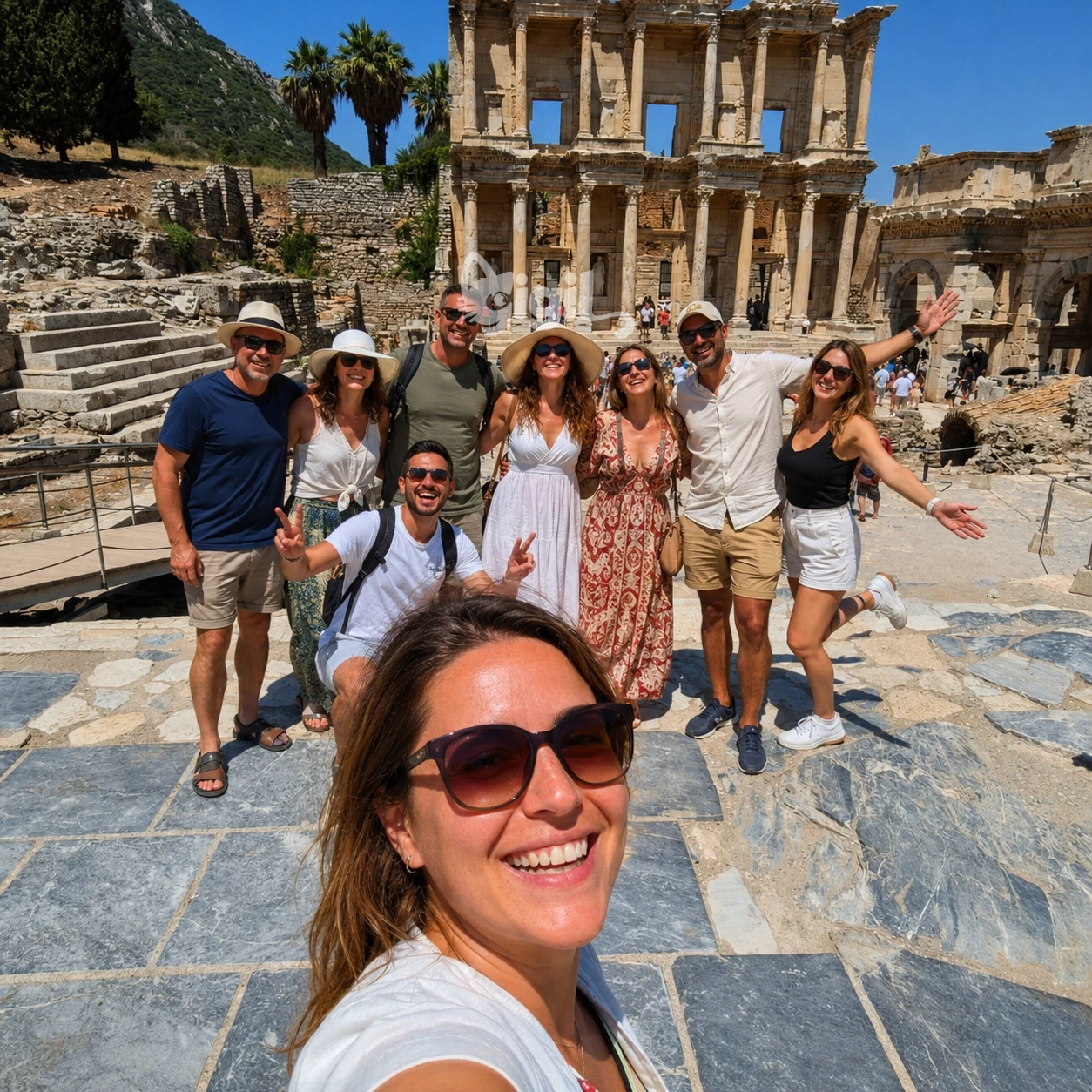
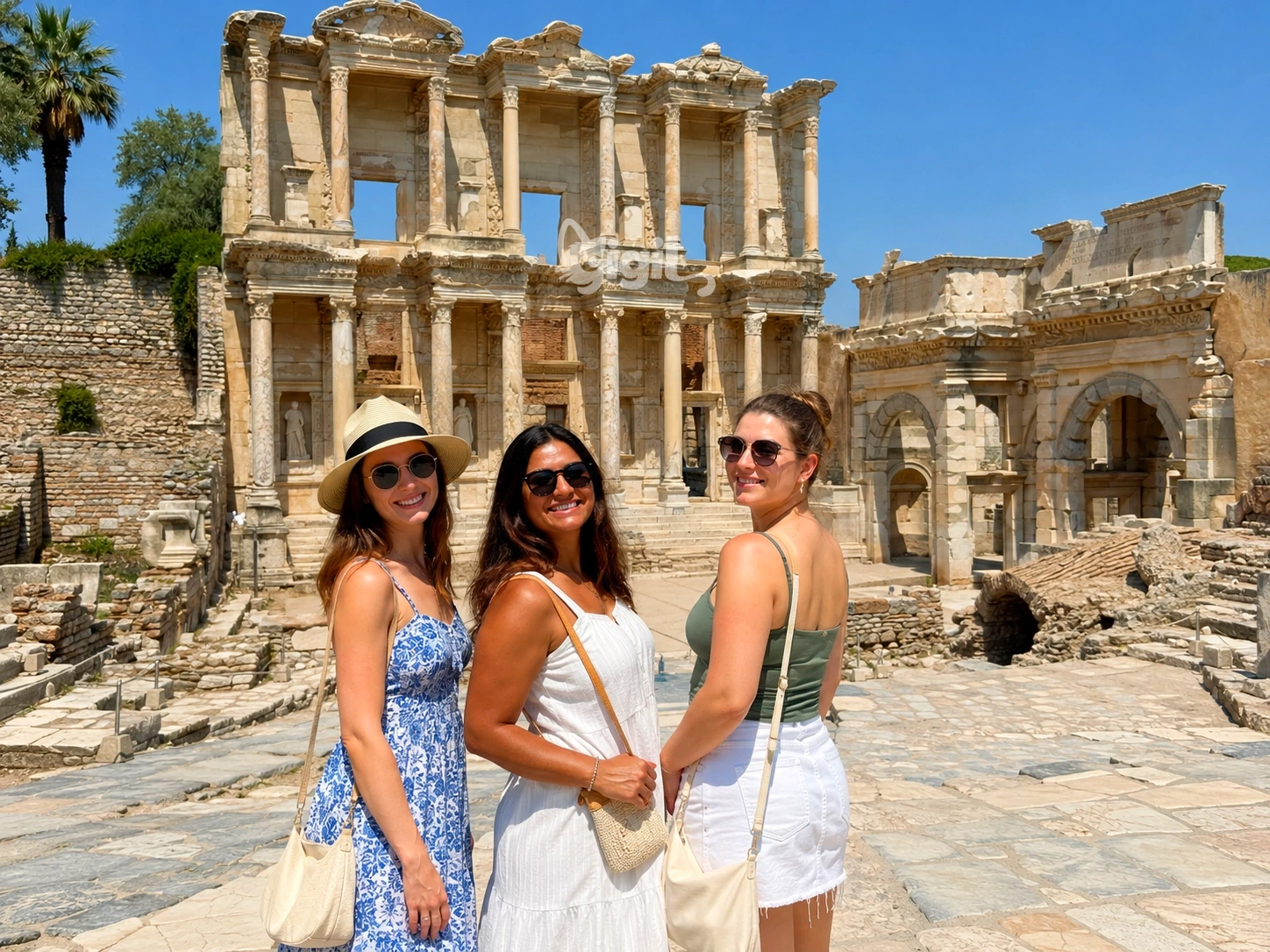
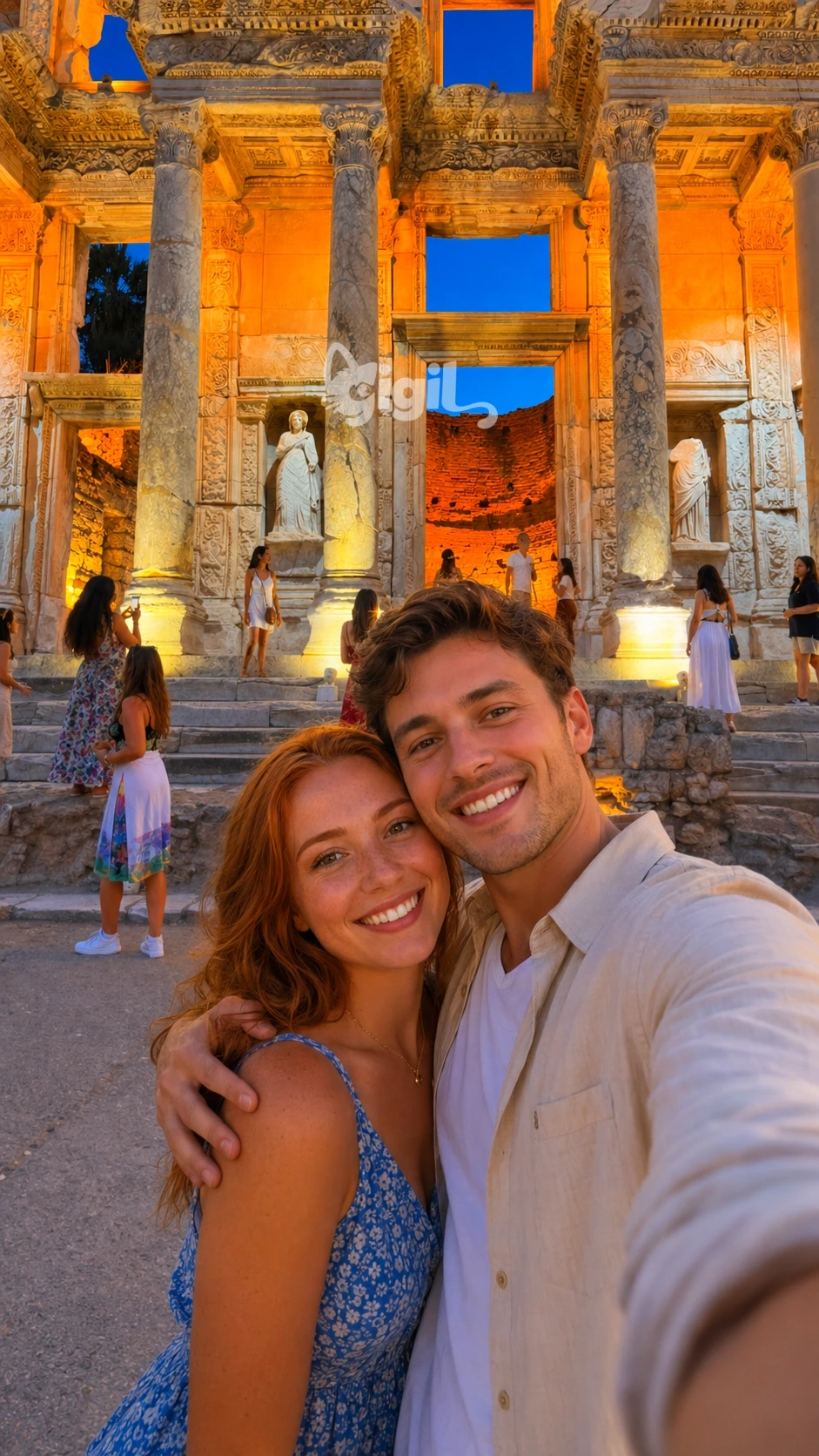
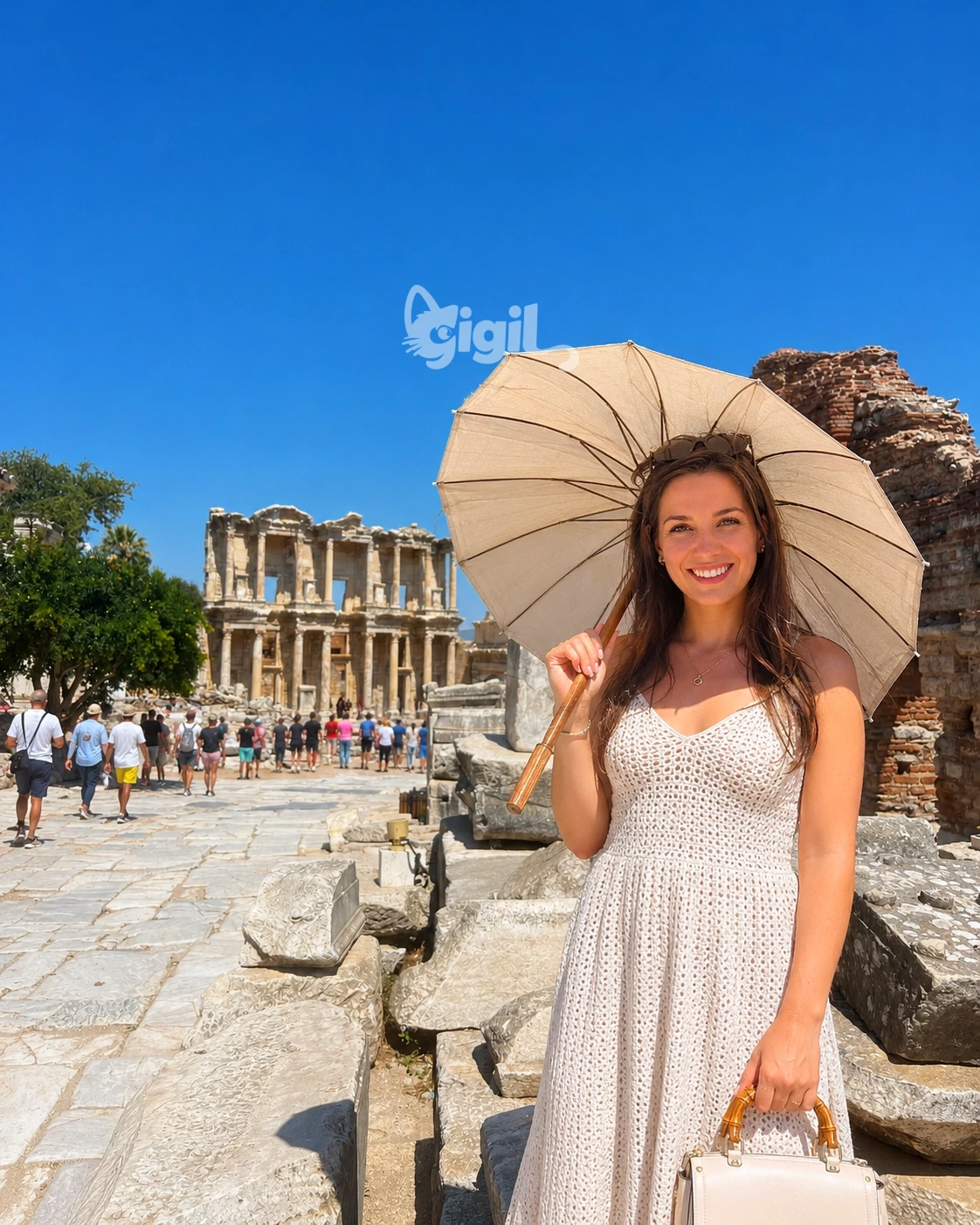
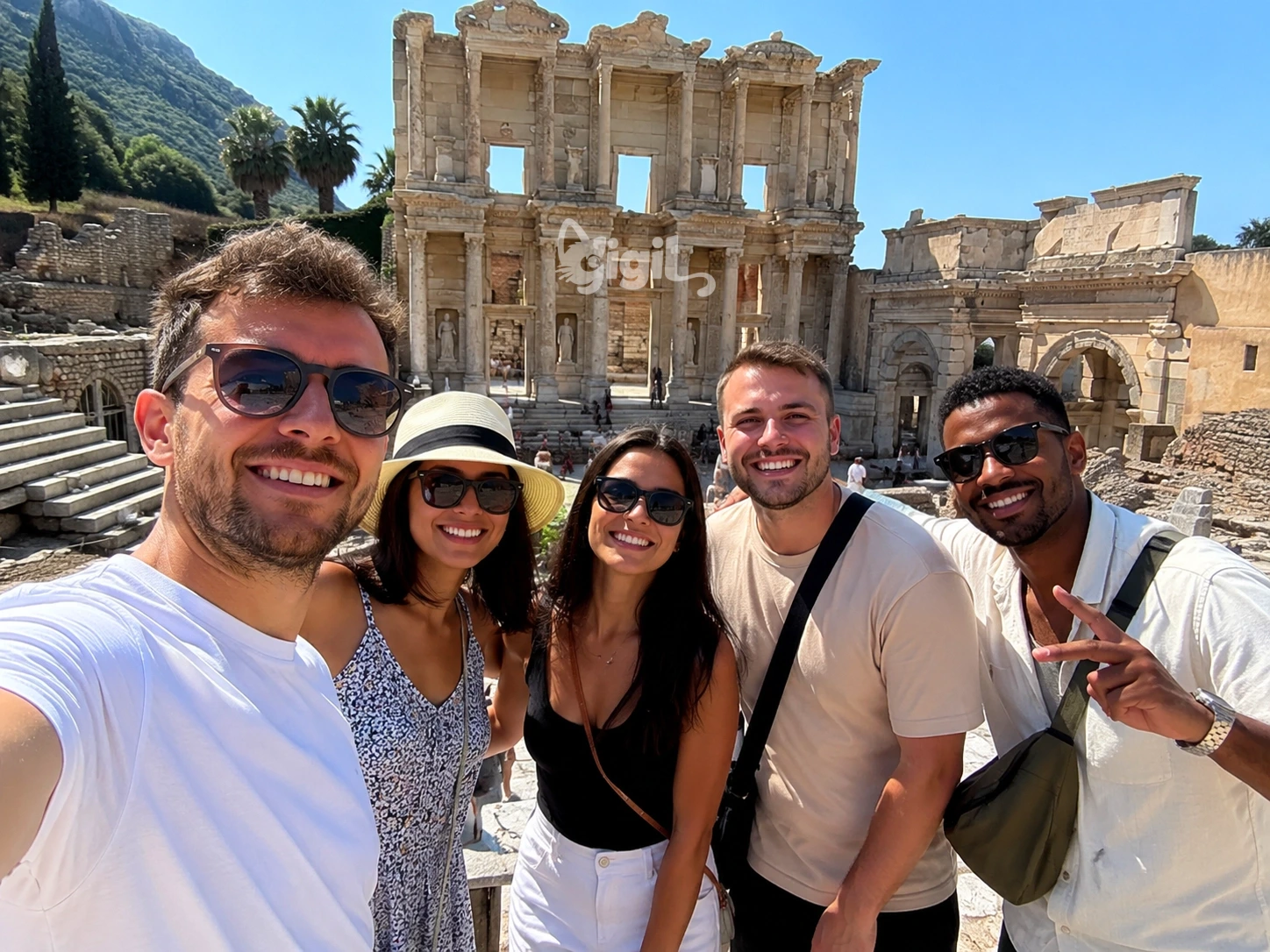
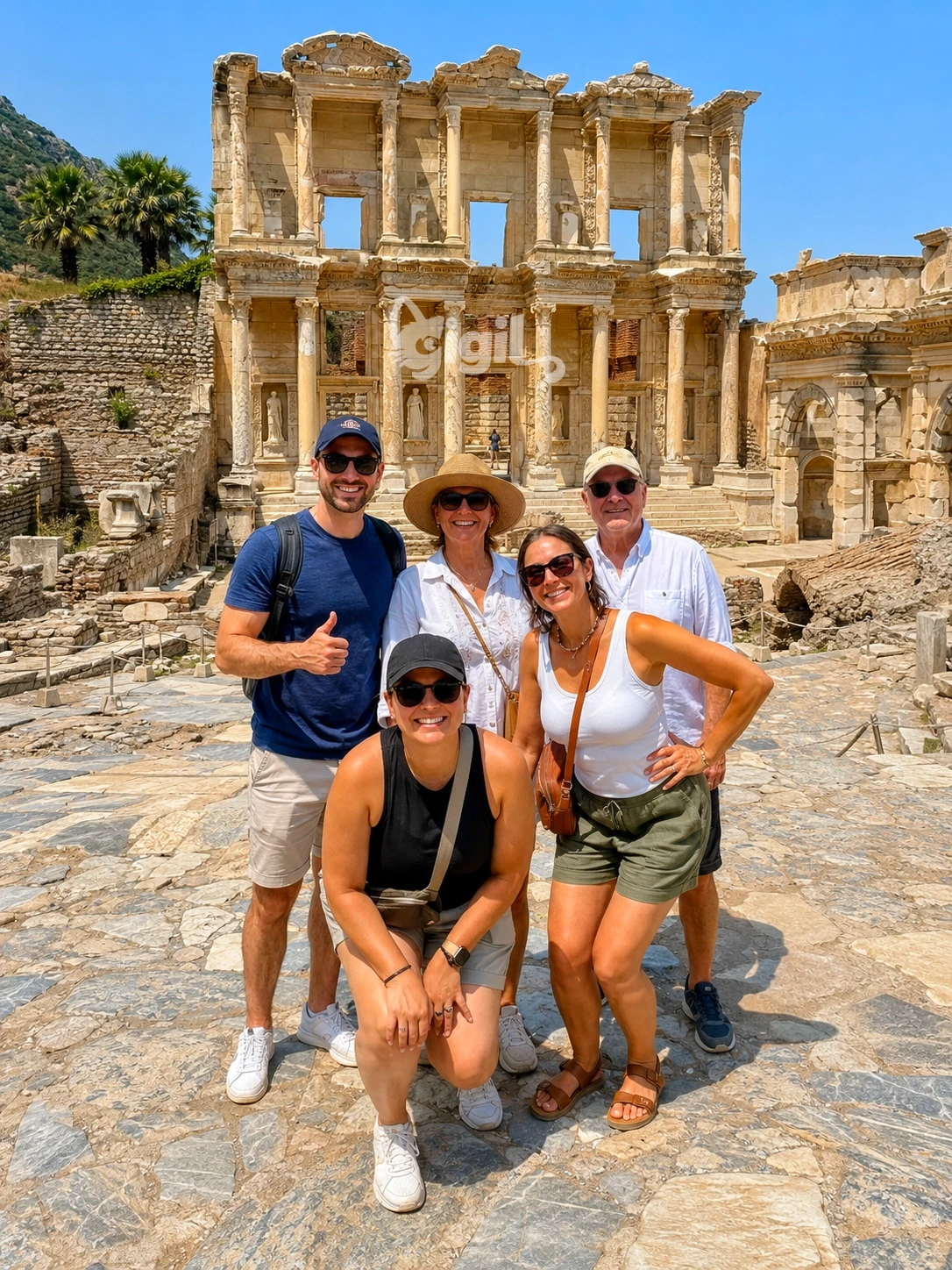
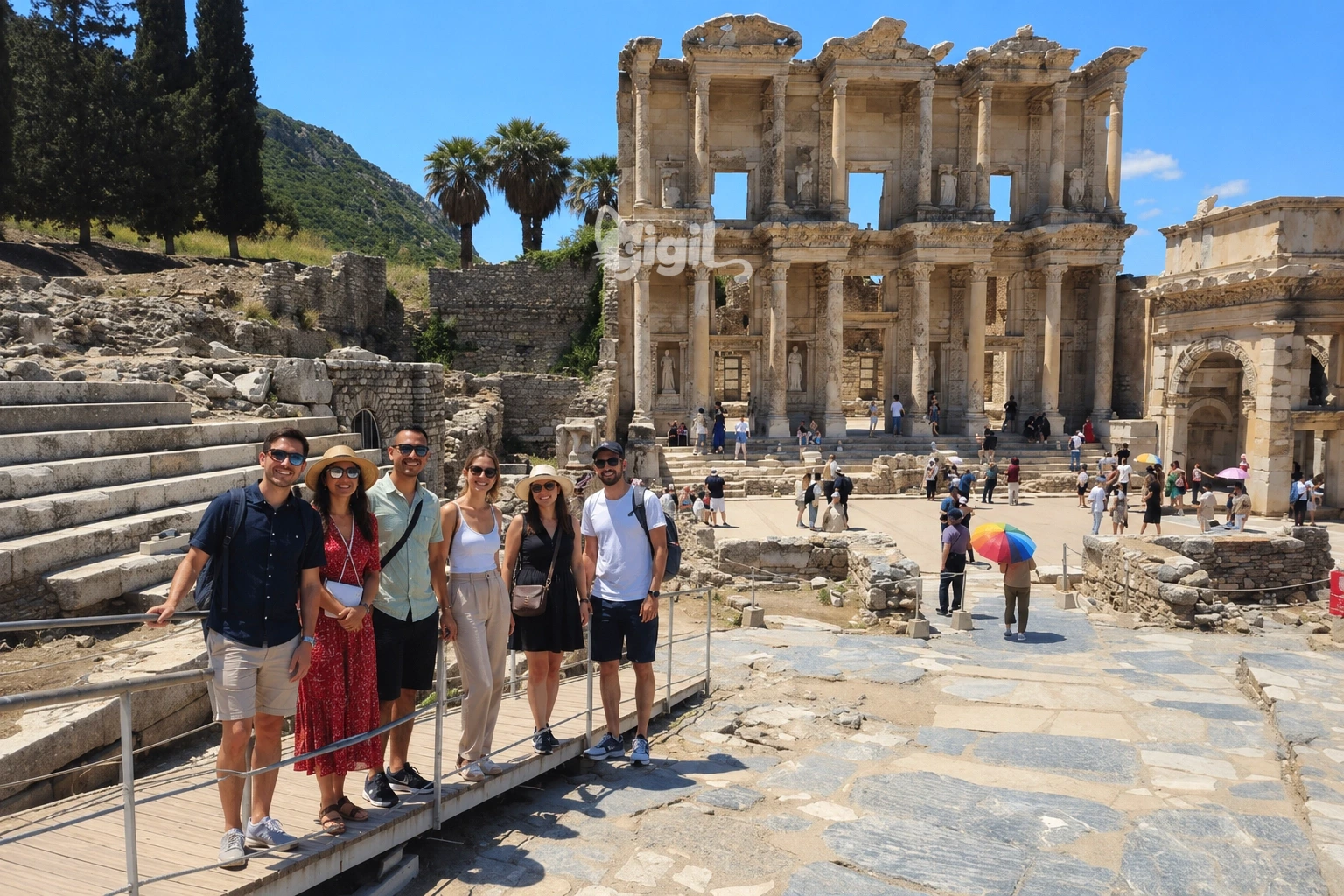
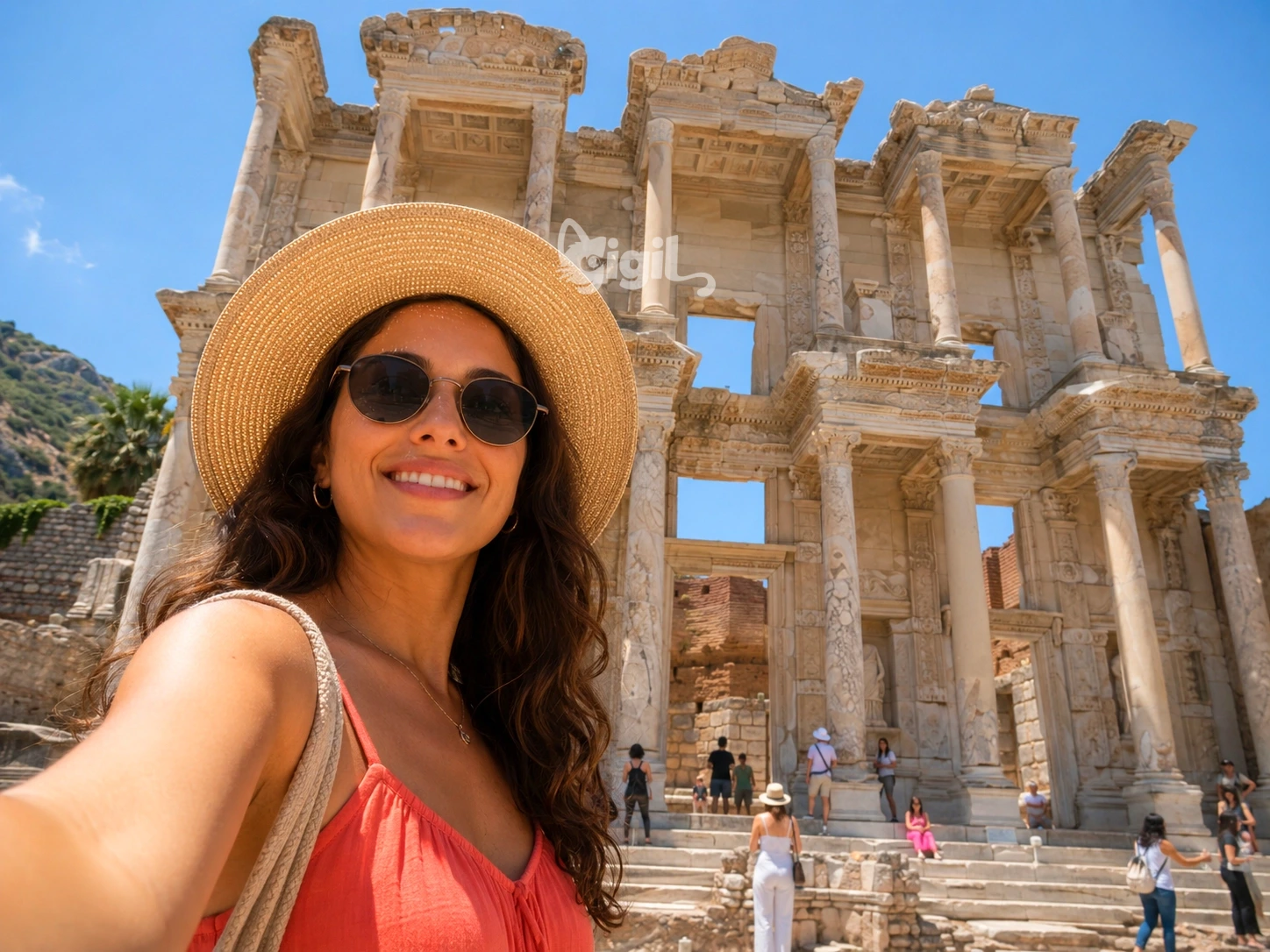
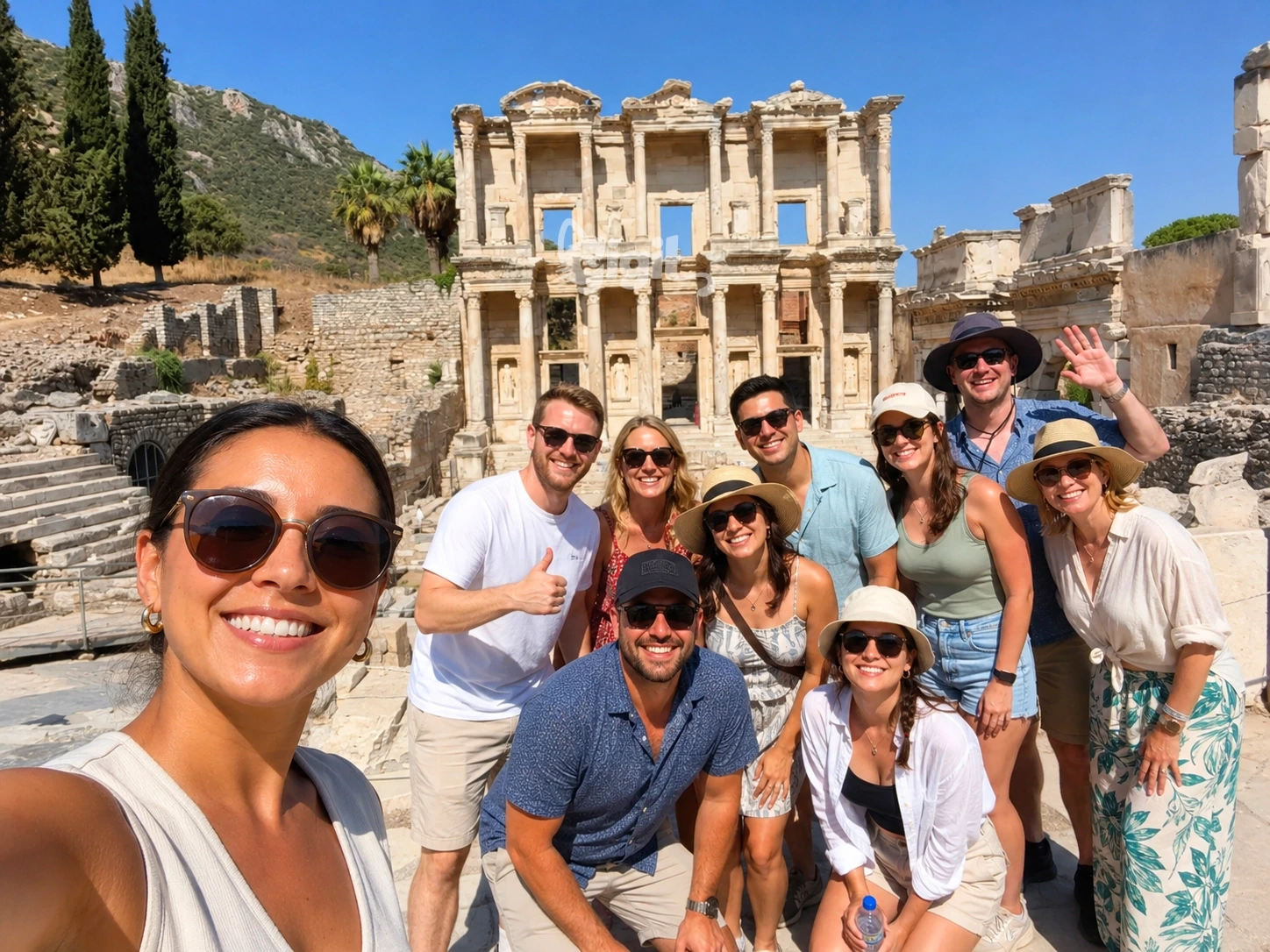
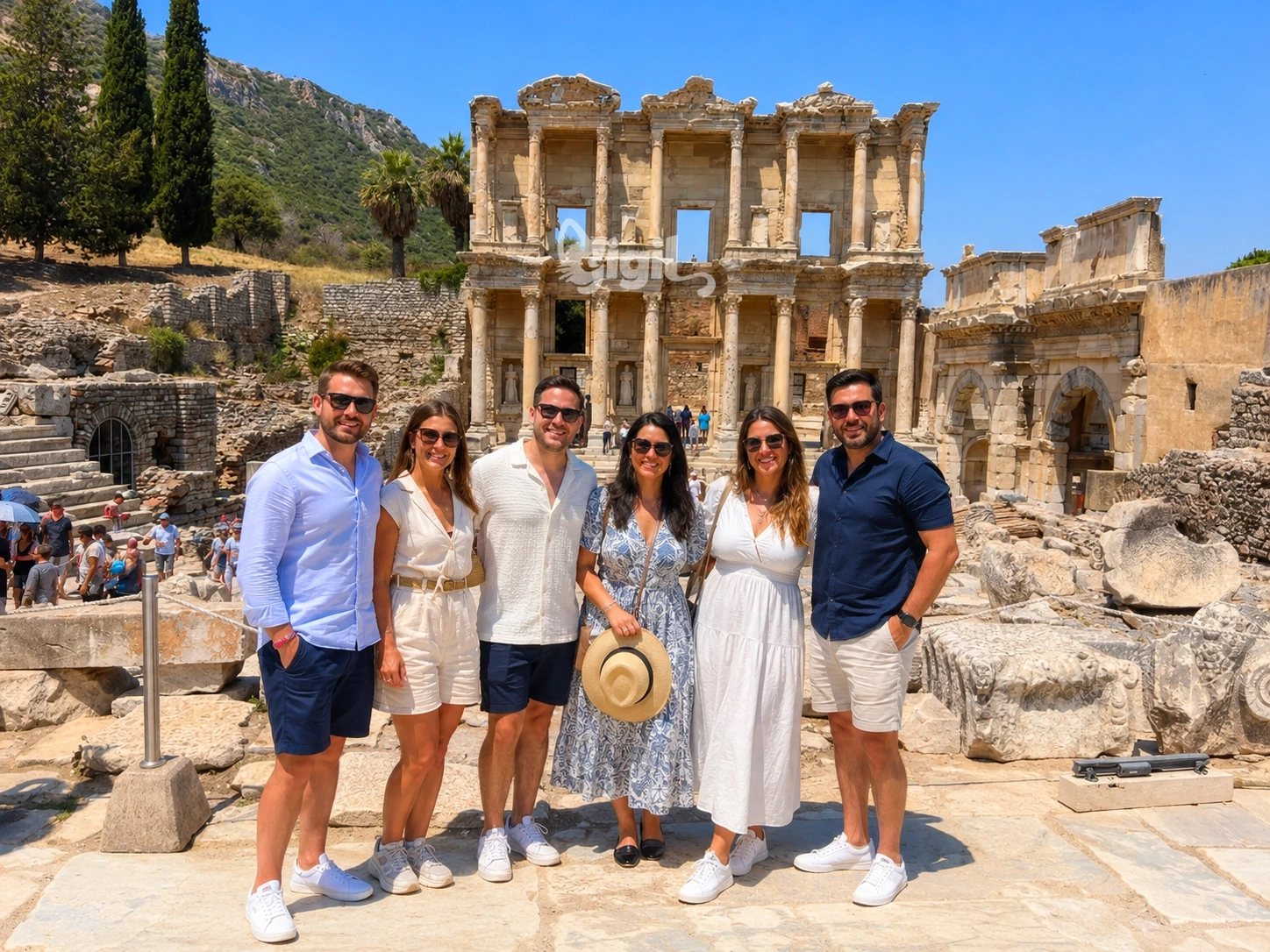
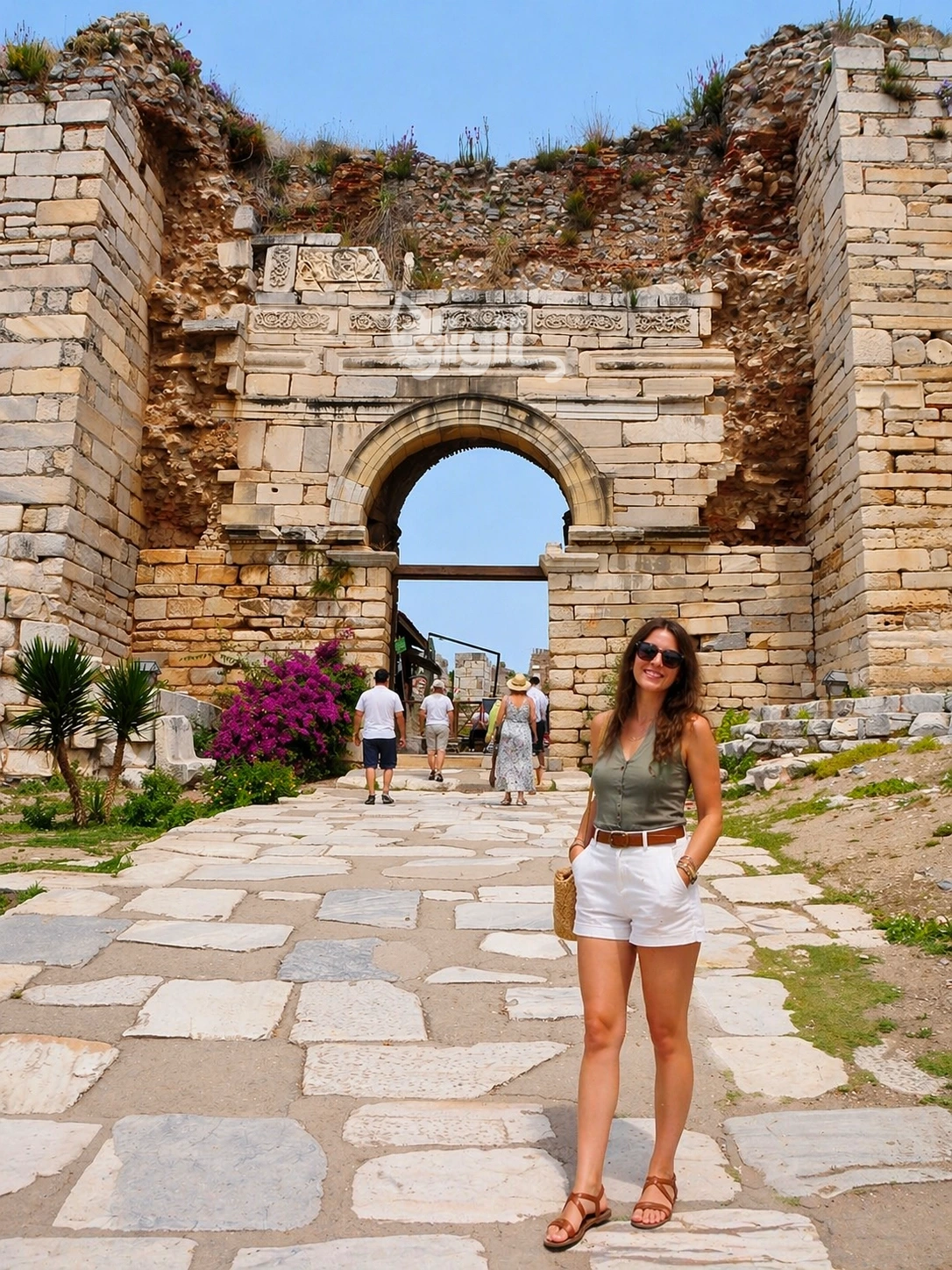
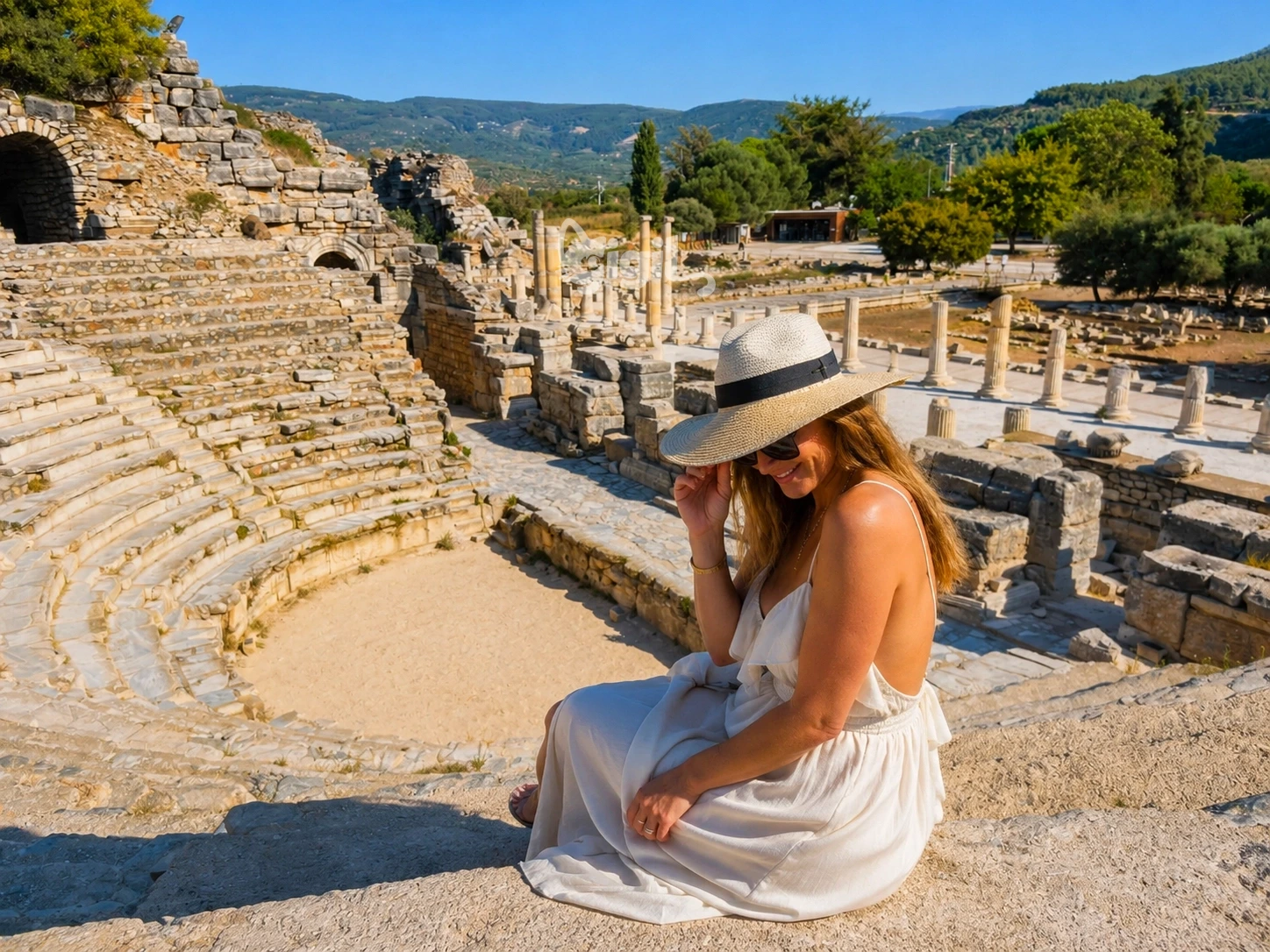
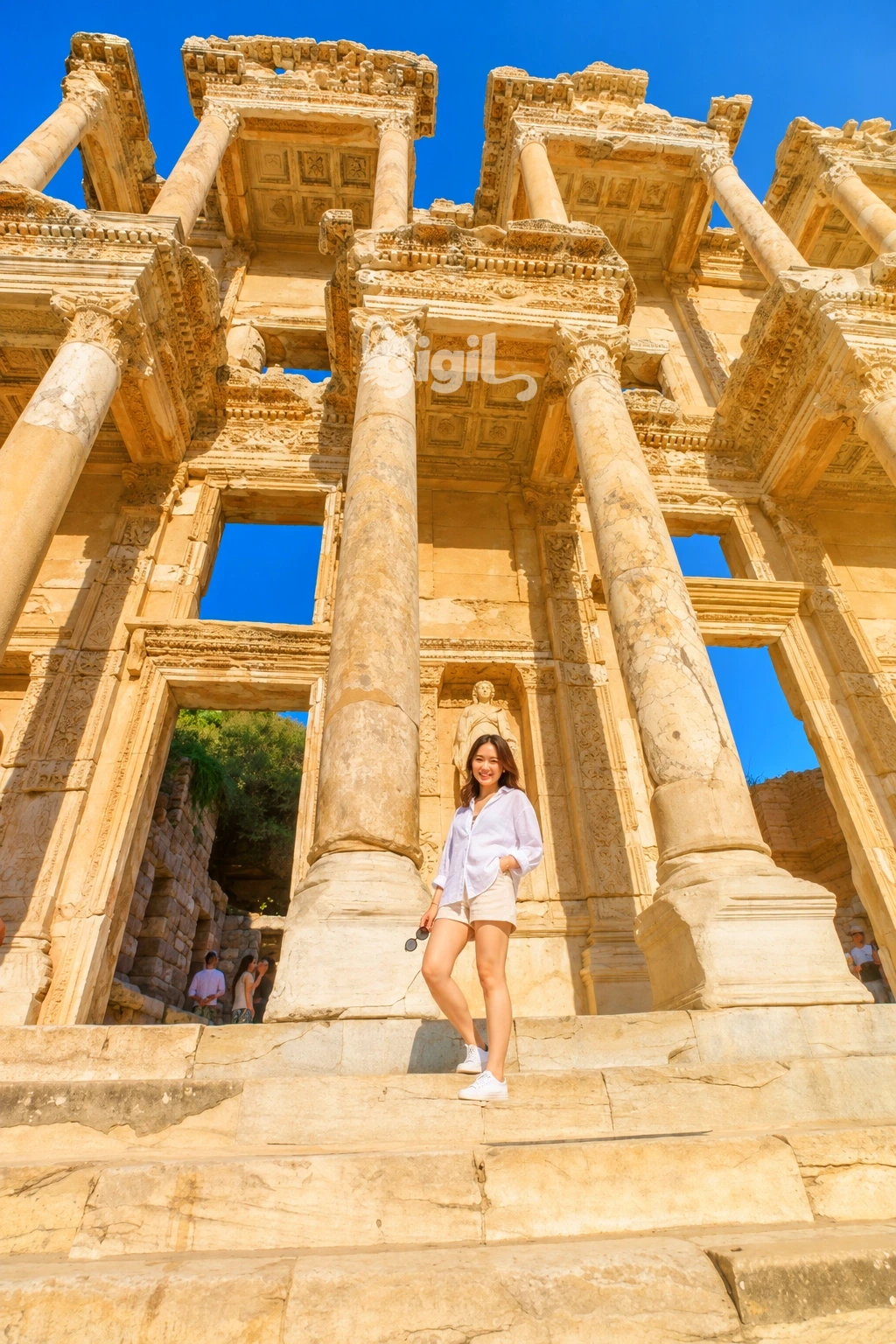
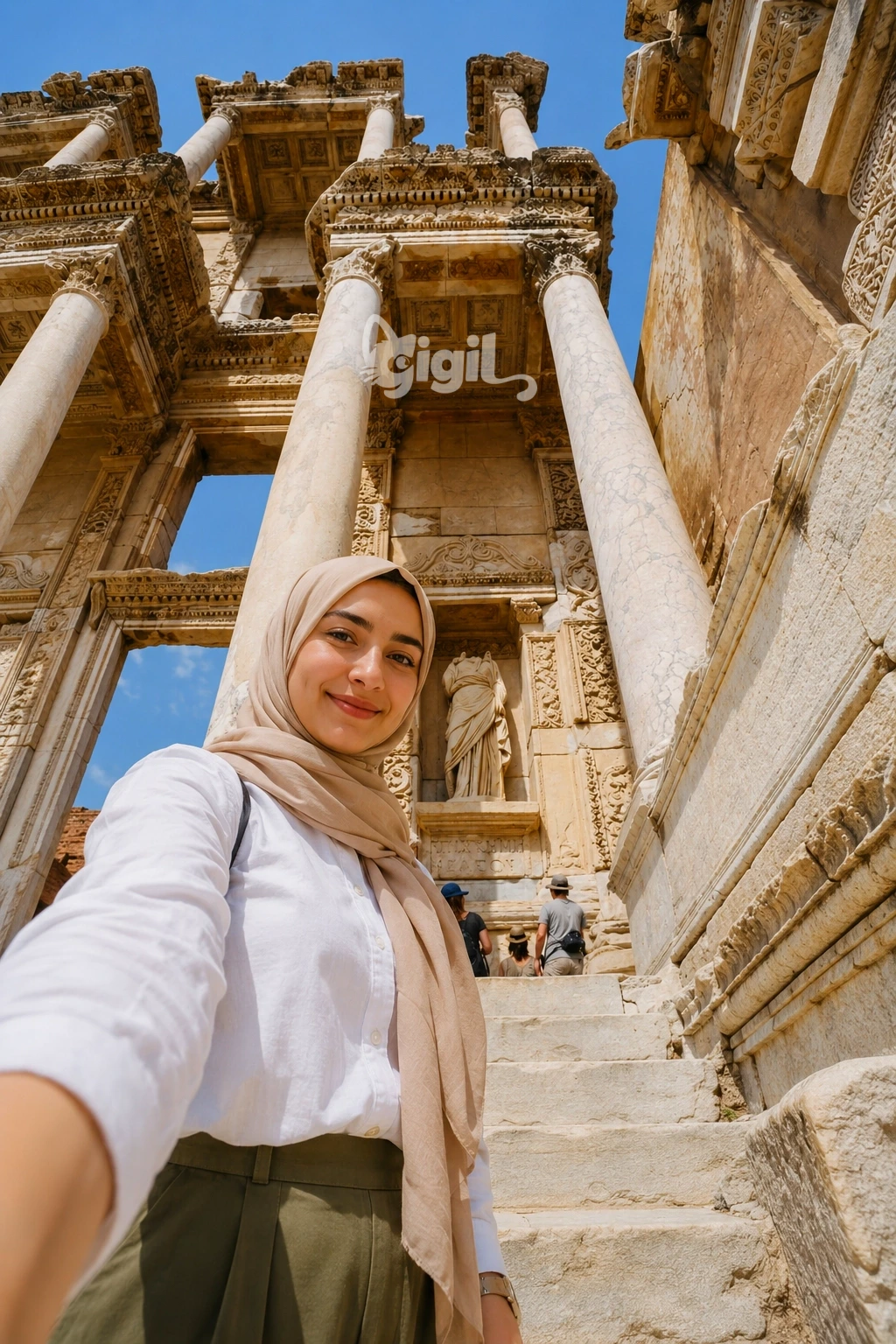
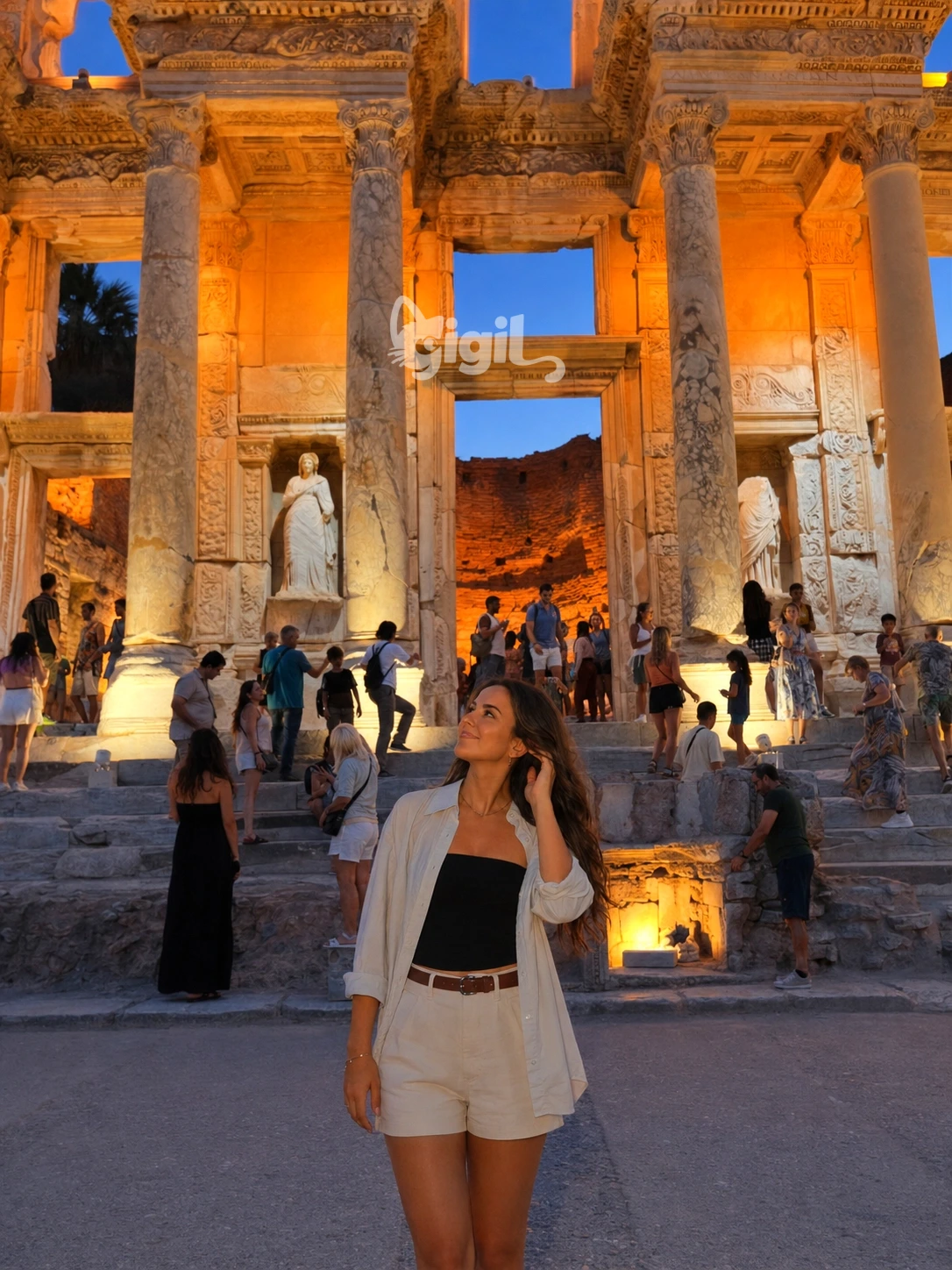
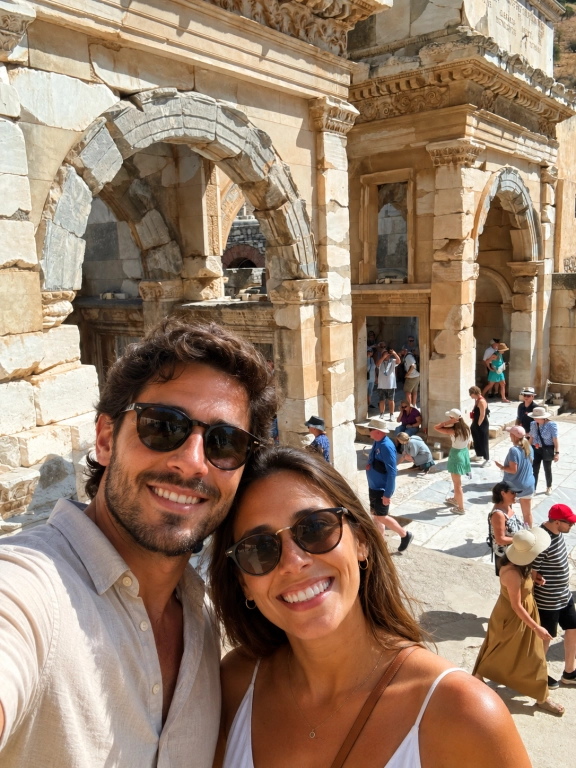
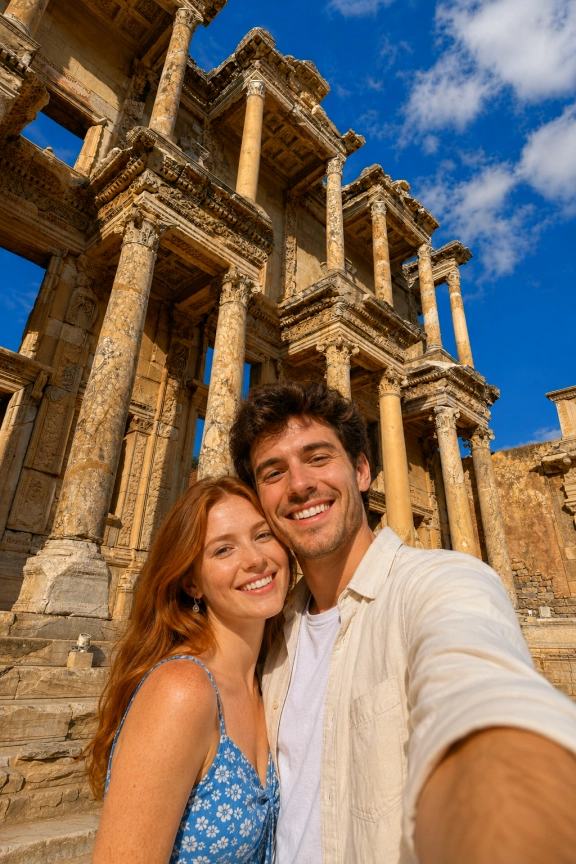
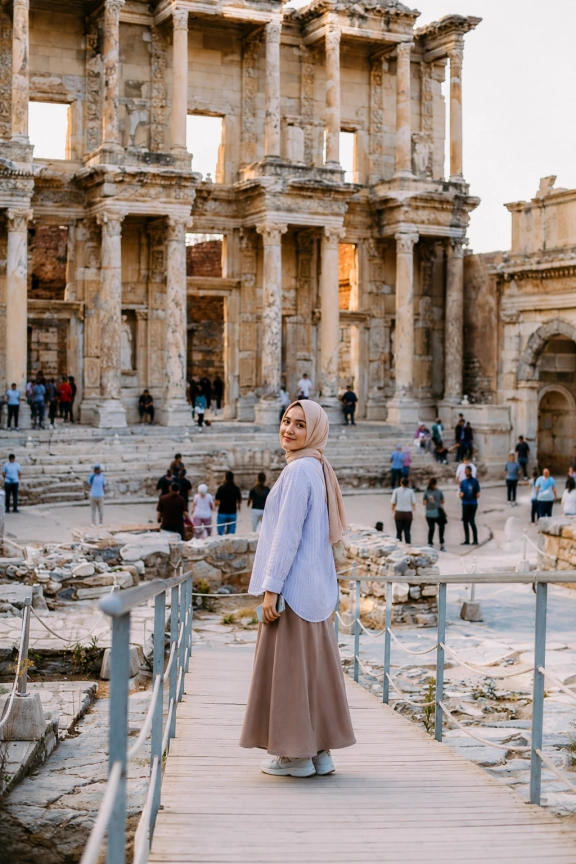
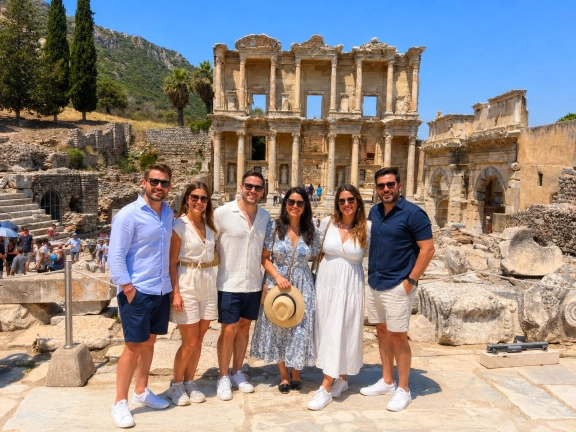
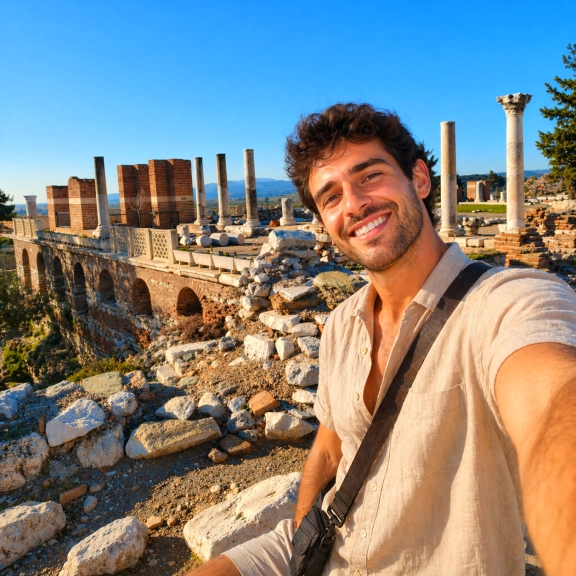
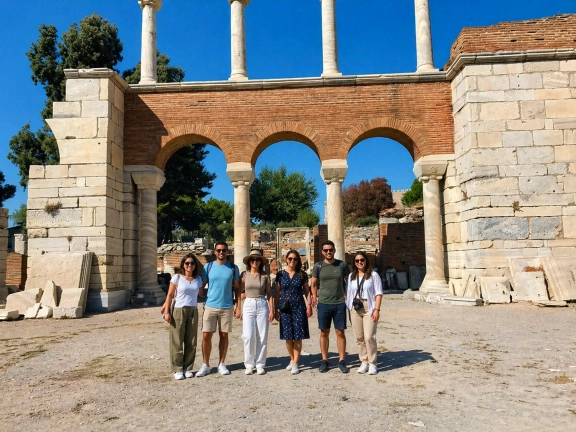
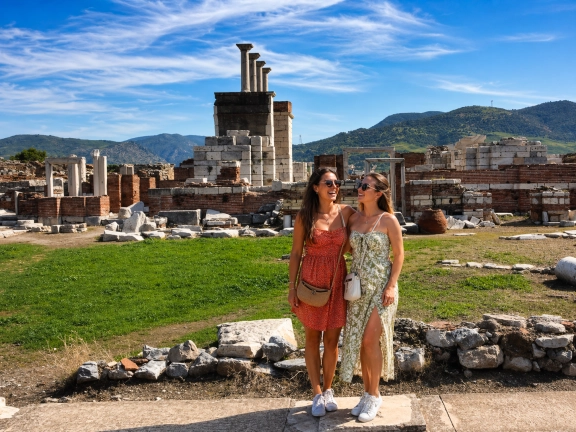
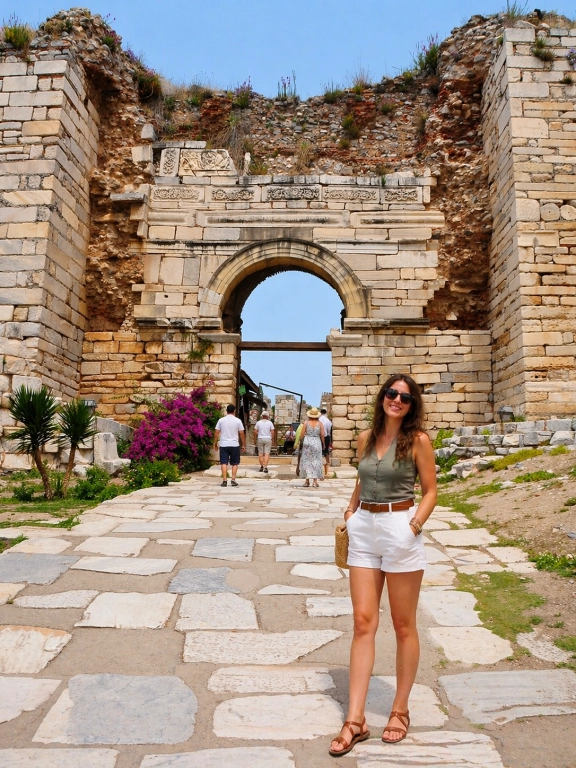
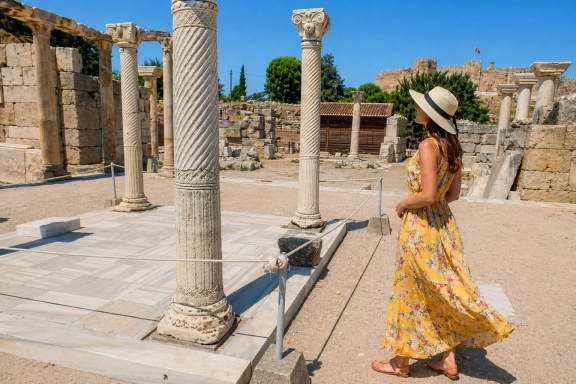
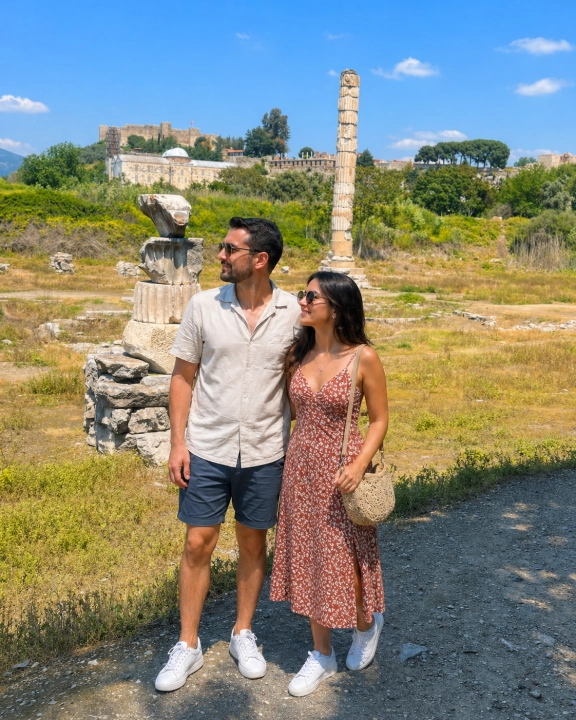

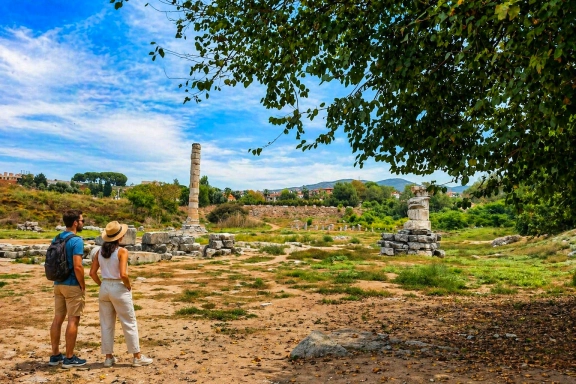
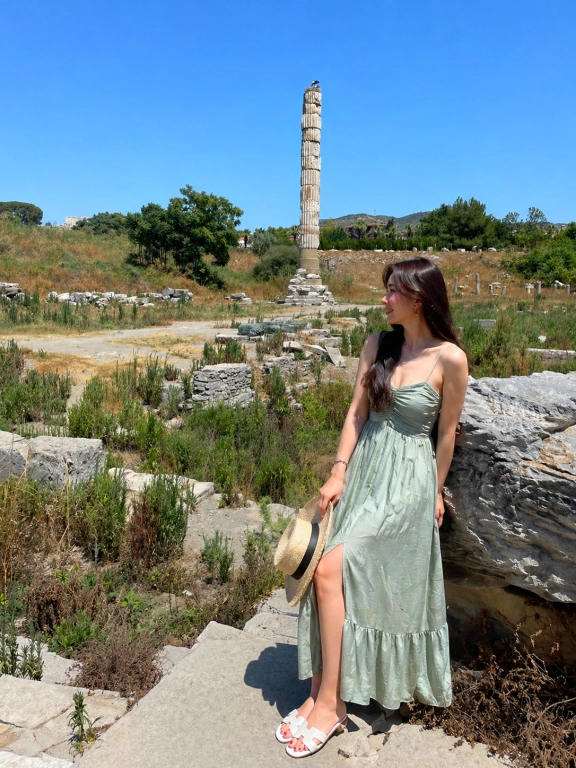
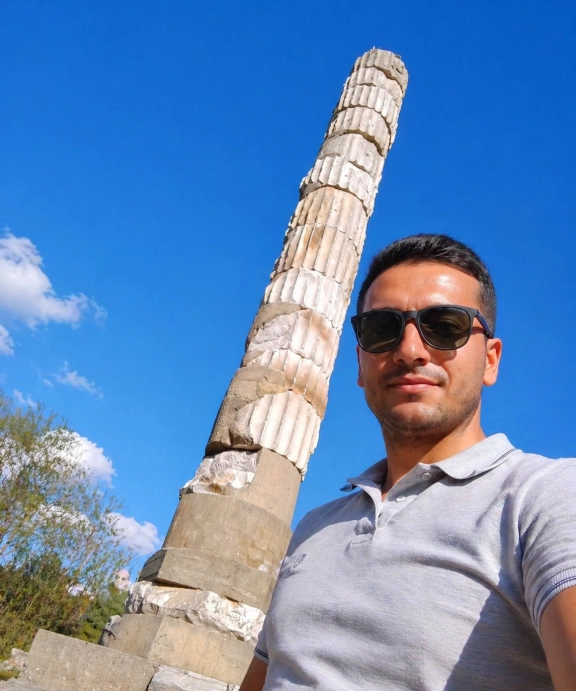
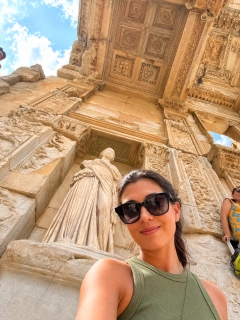
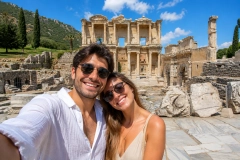
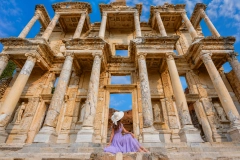

Ephesus Ancient City brings the region's sacred history into contact with a much broader urban world. Streets and public spaces connect the Library of Celsus, Great Theatre and other remains, illustrating a city shaped by civic activity as well as religious life.
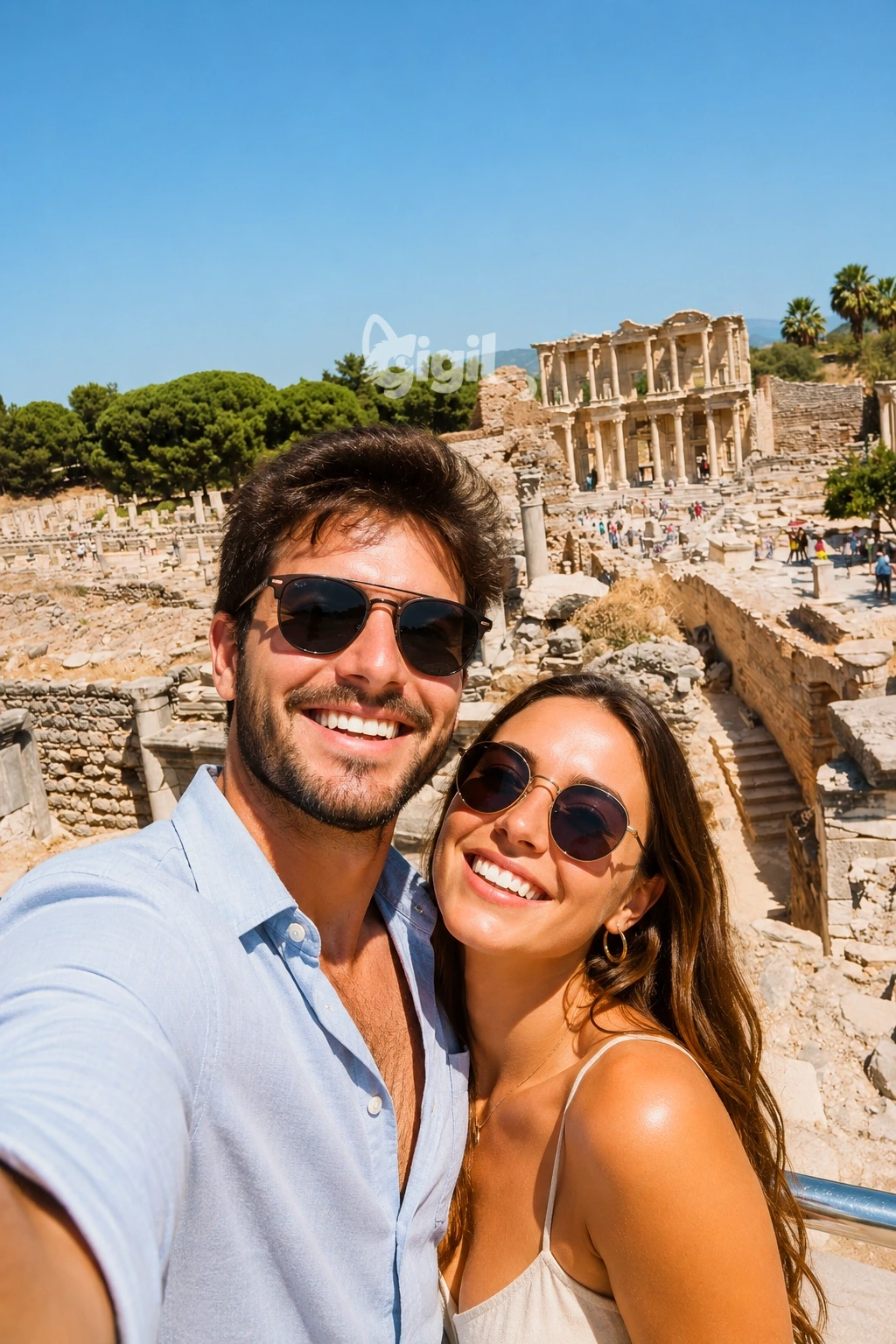
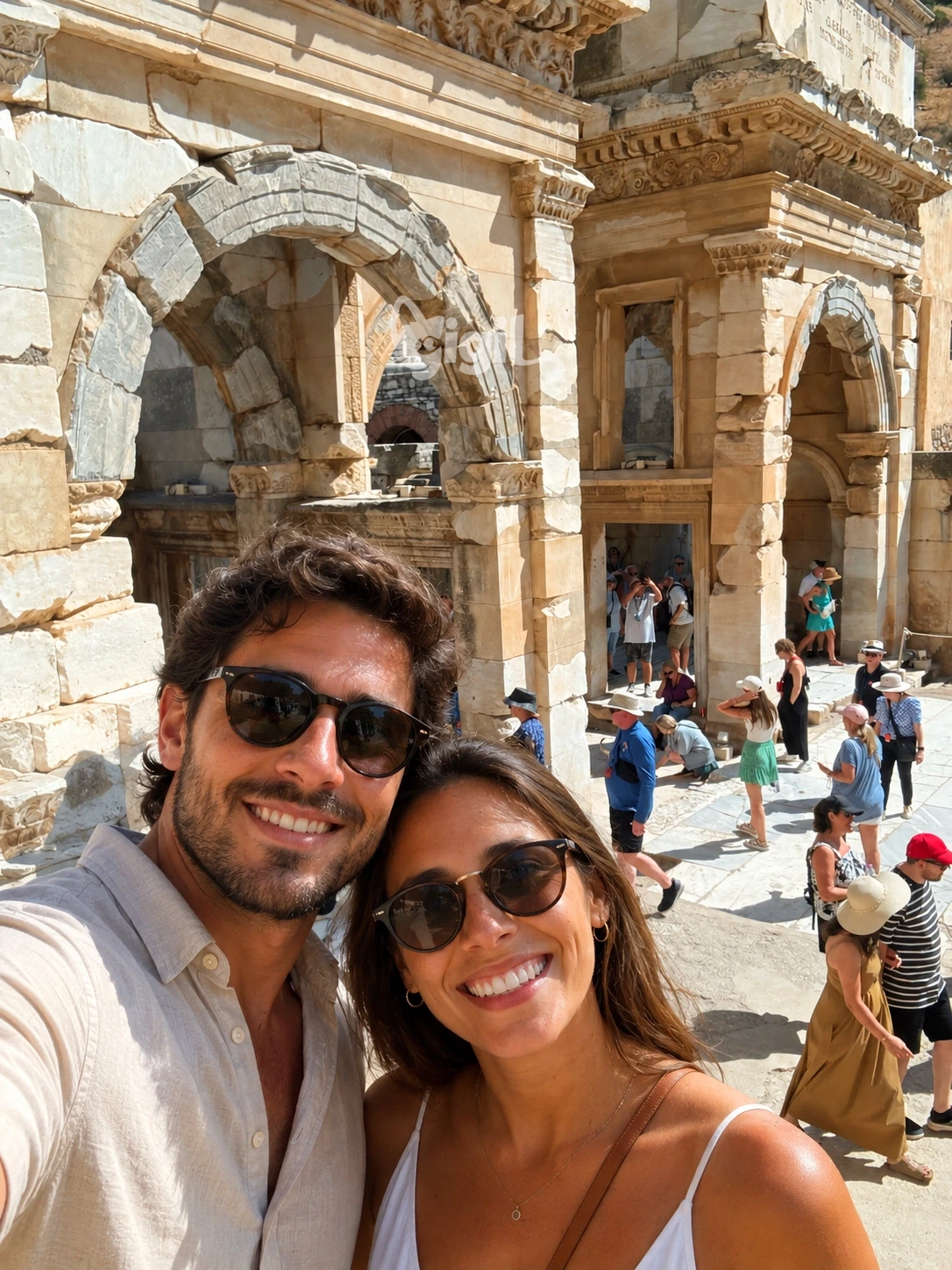
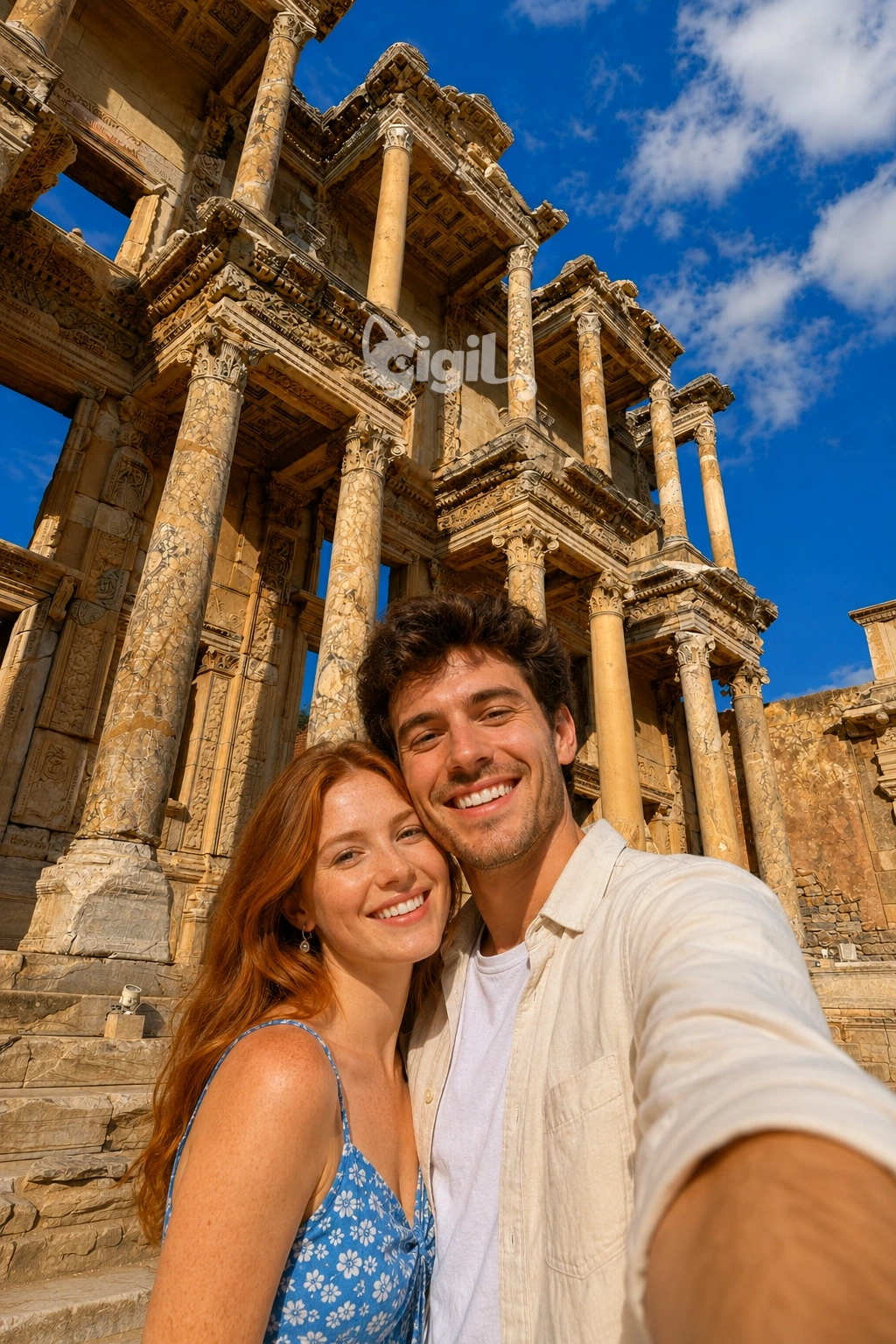
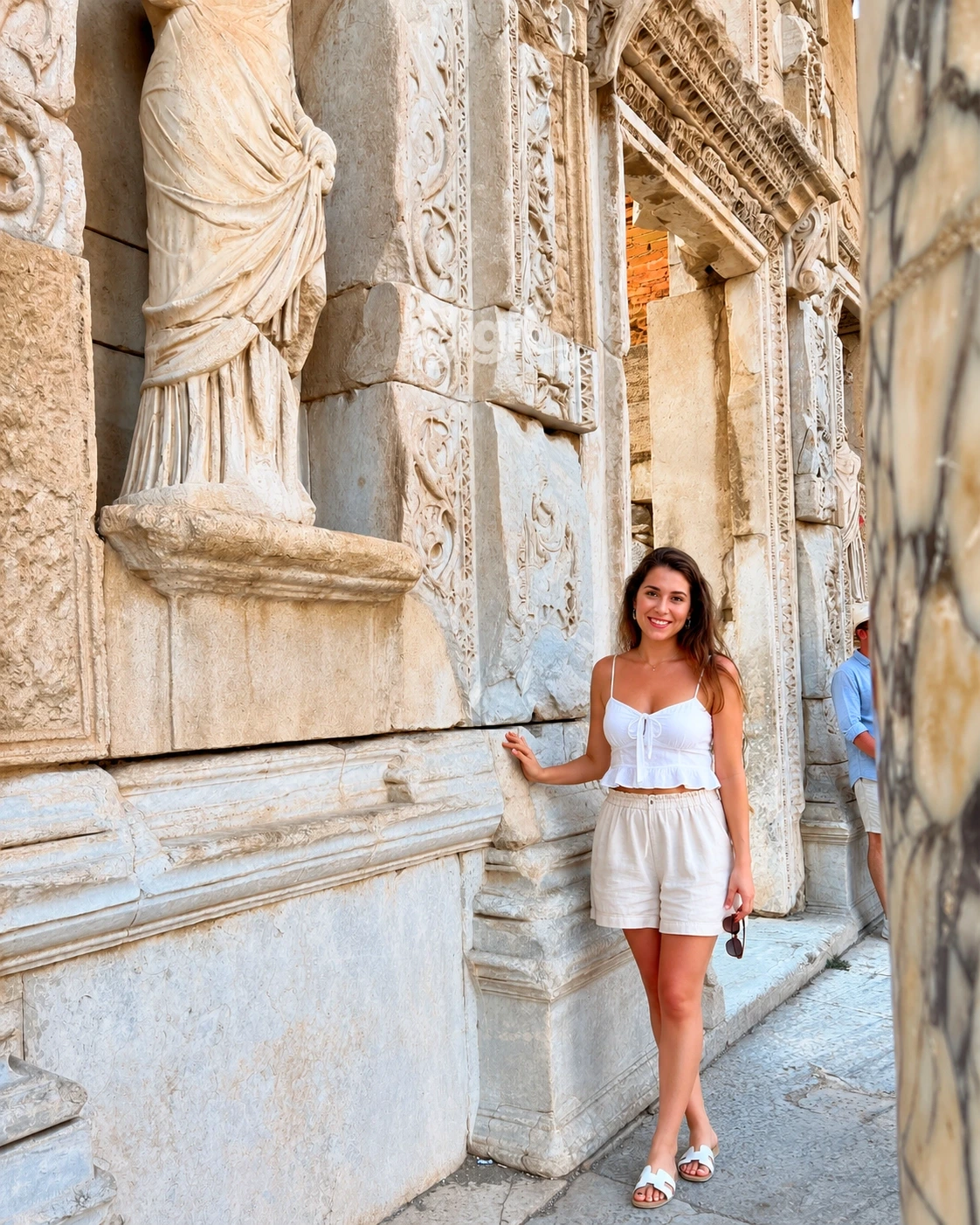
Read a monument's position before concentrating on its decoration. The library frontage has been reconstructed, making it a useful example of how surviving stone and later archaeological interpretation together shape the experience of the ancient city.
Questions
How does the urban setting deepen the heritage visit?
It places religious history alongside the streets and public institutions of the wider settlement in which people lived.
Why is the library not an entirely untouched survival?
Its facade was reconstructed using ancient components and later additions, with conservation continuing to protect the material.
What does the Great Theatre's scale make visible?
It suggests the public dimension of city life, where large groups could gather within a purpose-built architectural space.
What happened to the city's relation with the sea?
Changes in the coastal and river landscape transformed the earlier harbour connection rather than leaving an unchanged waterfront.