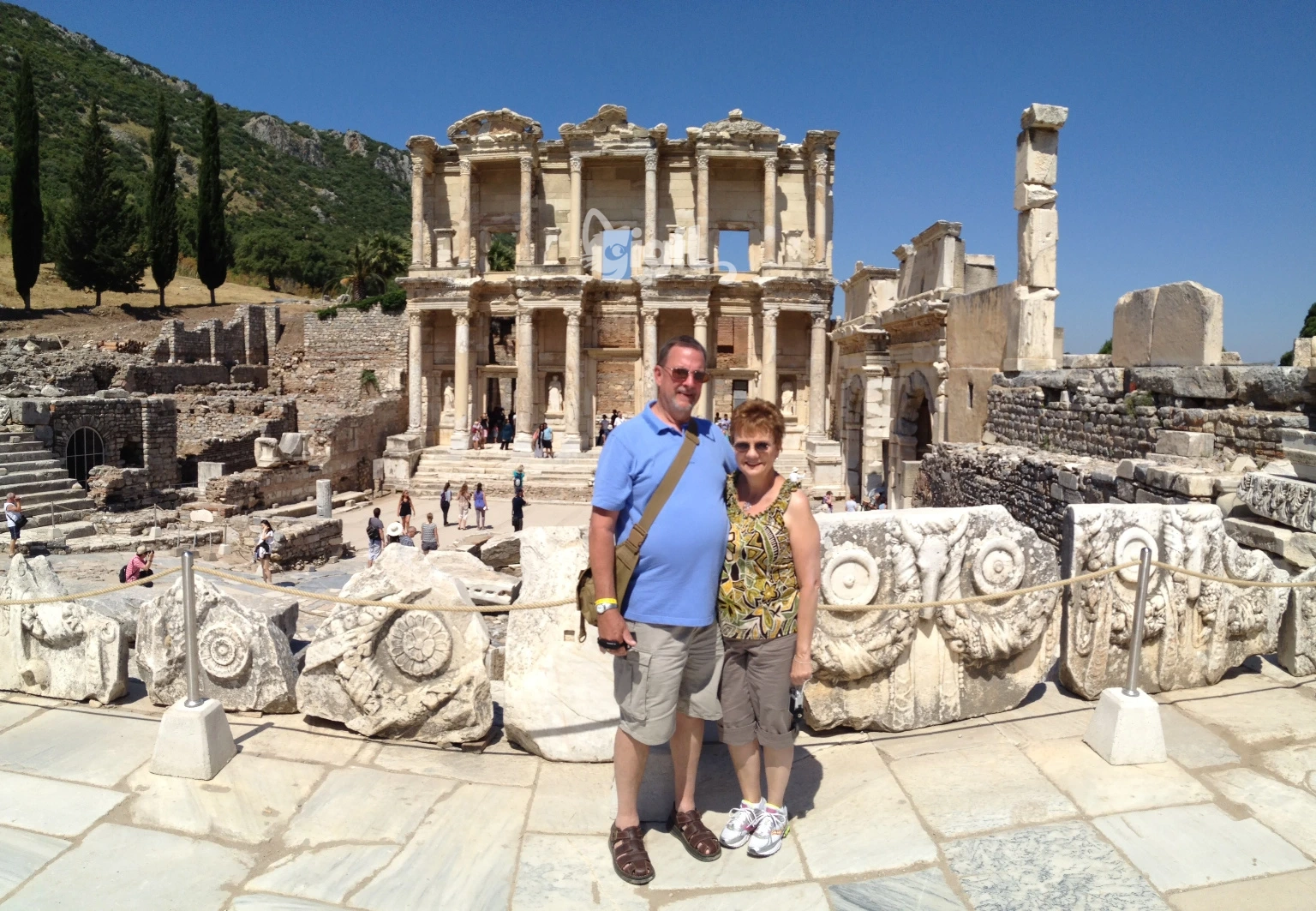
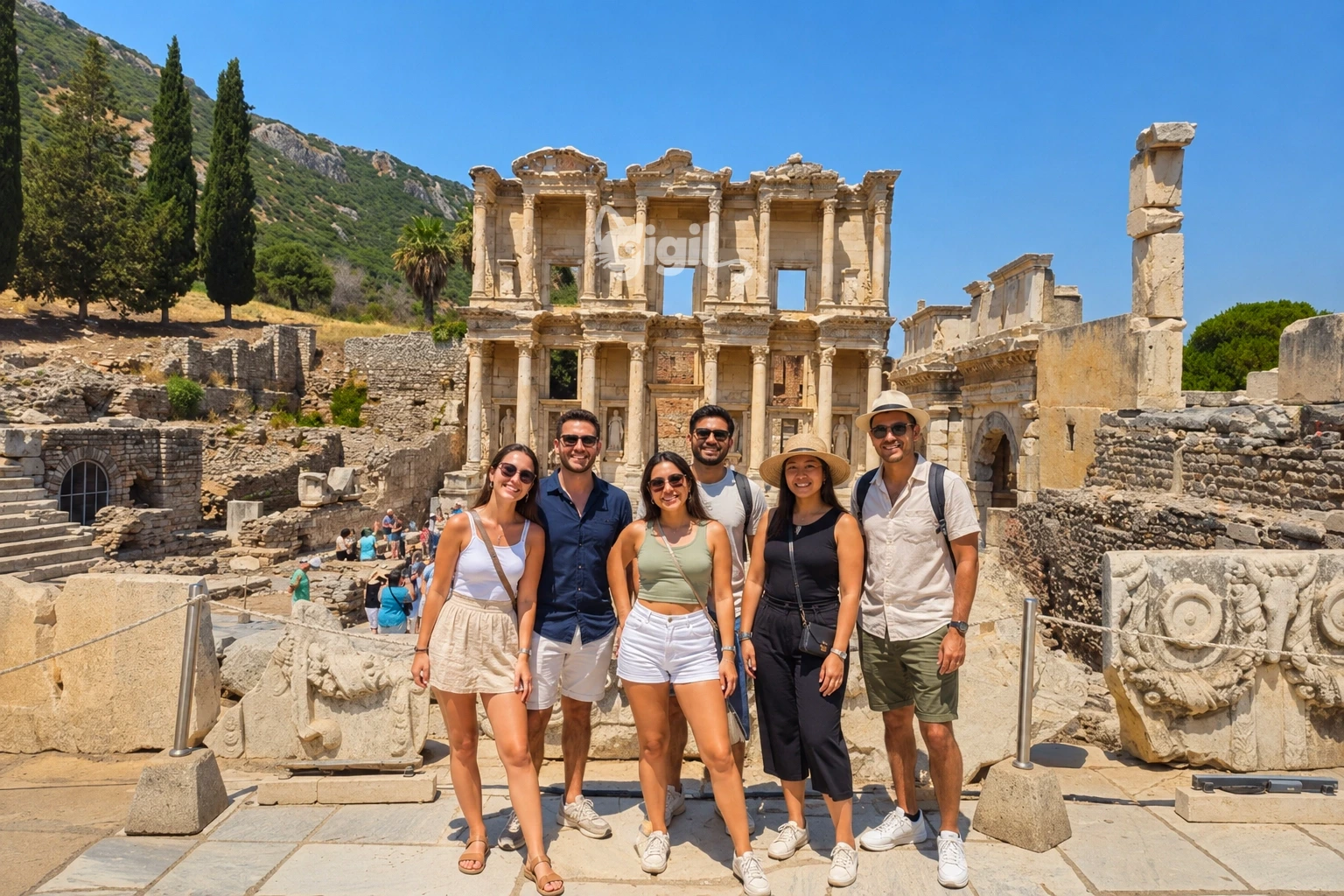
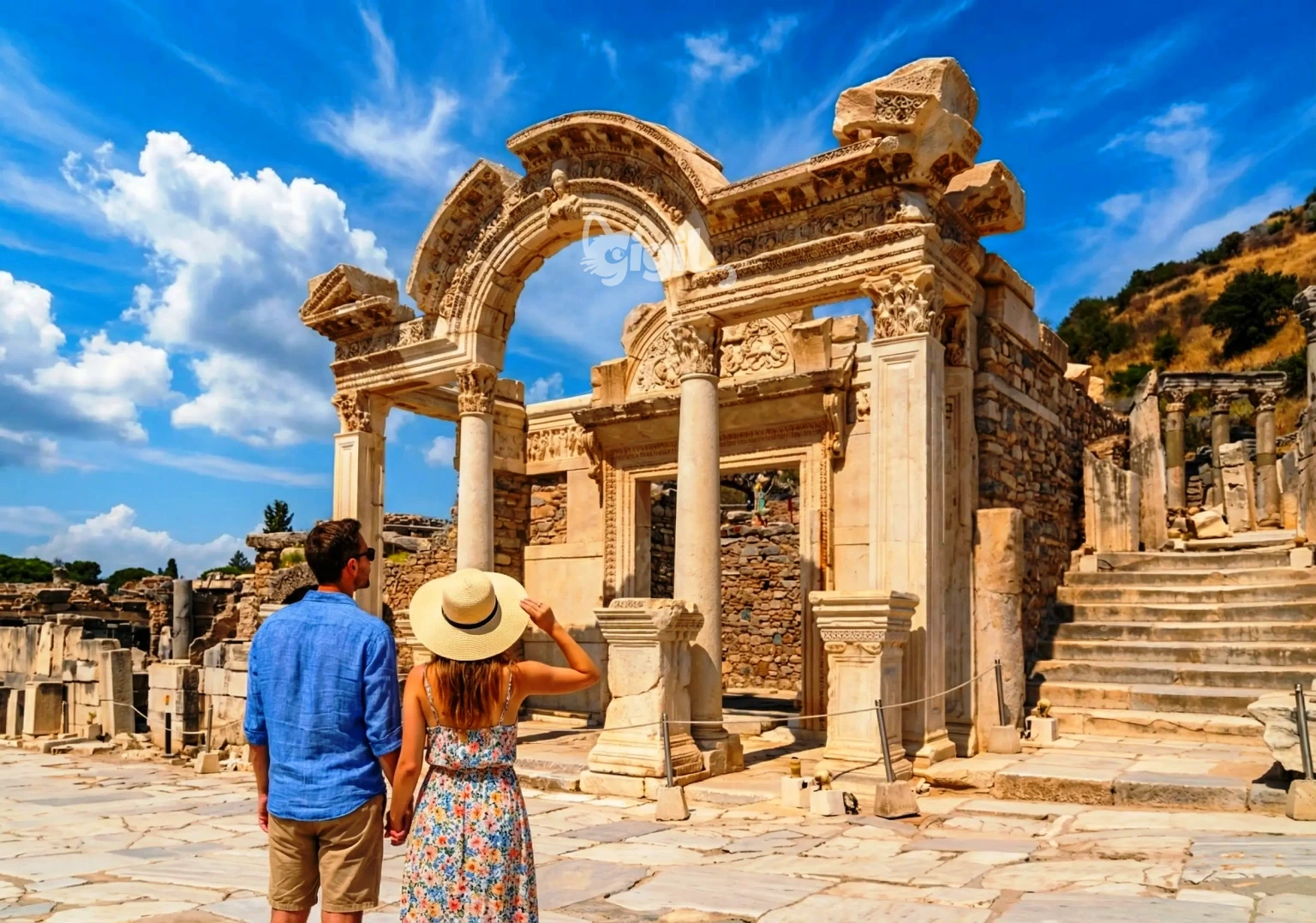
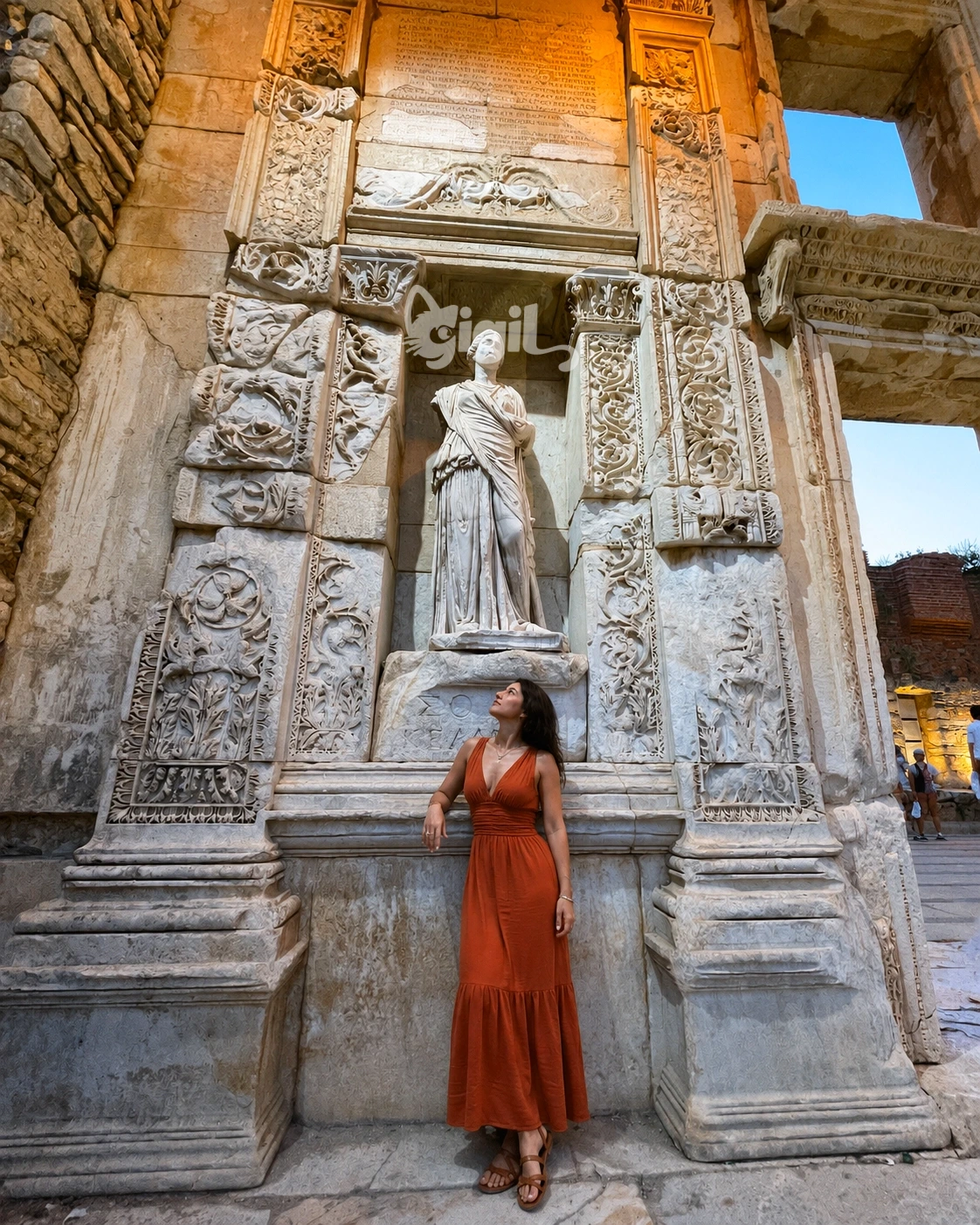
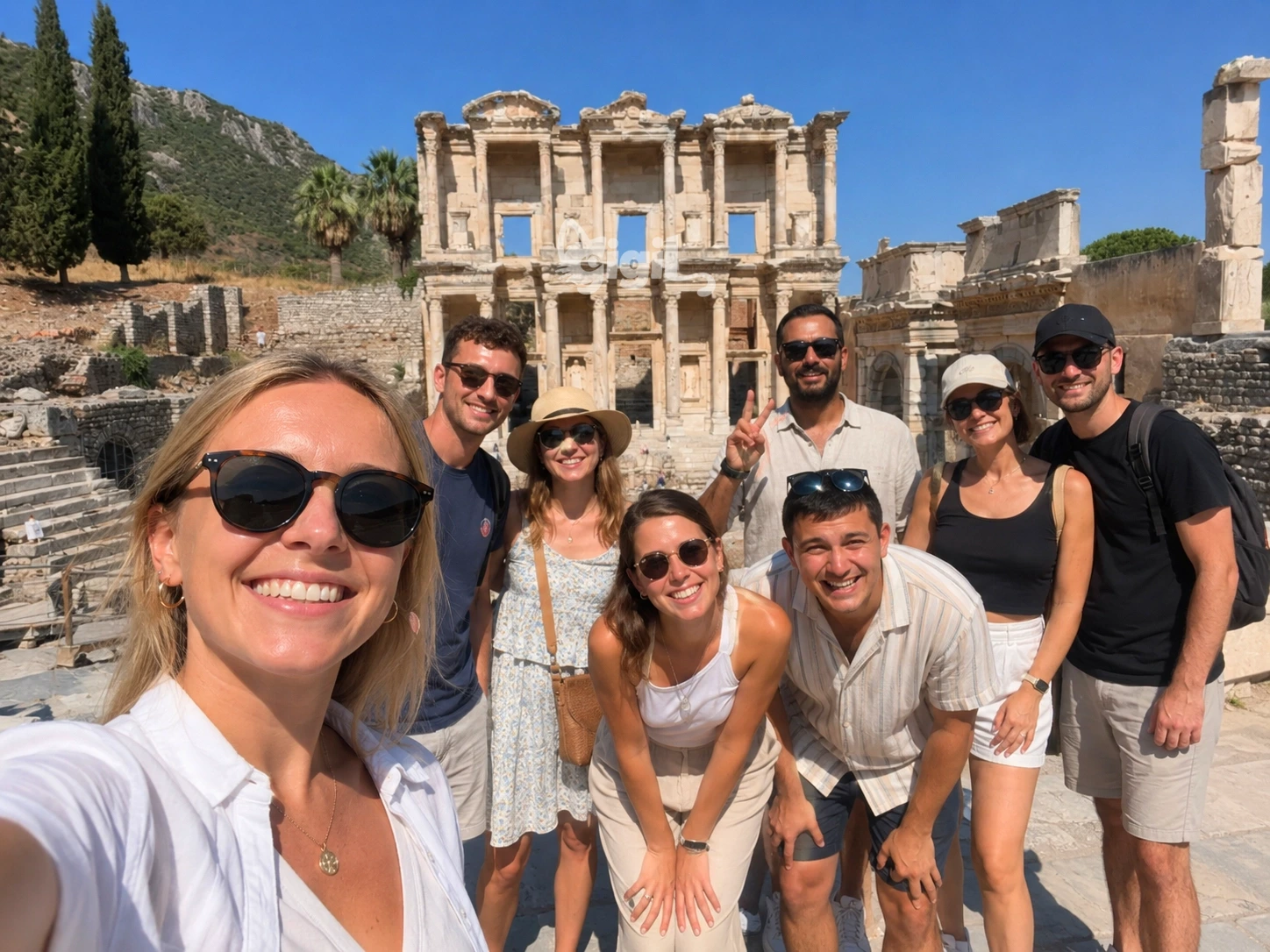
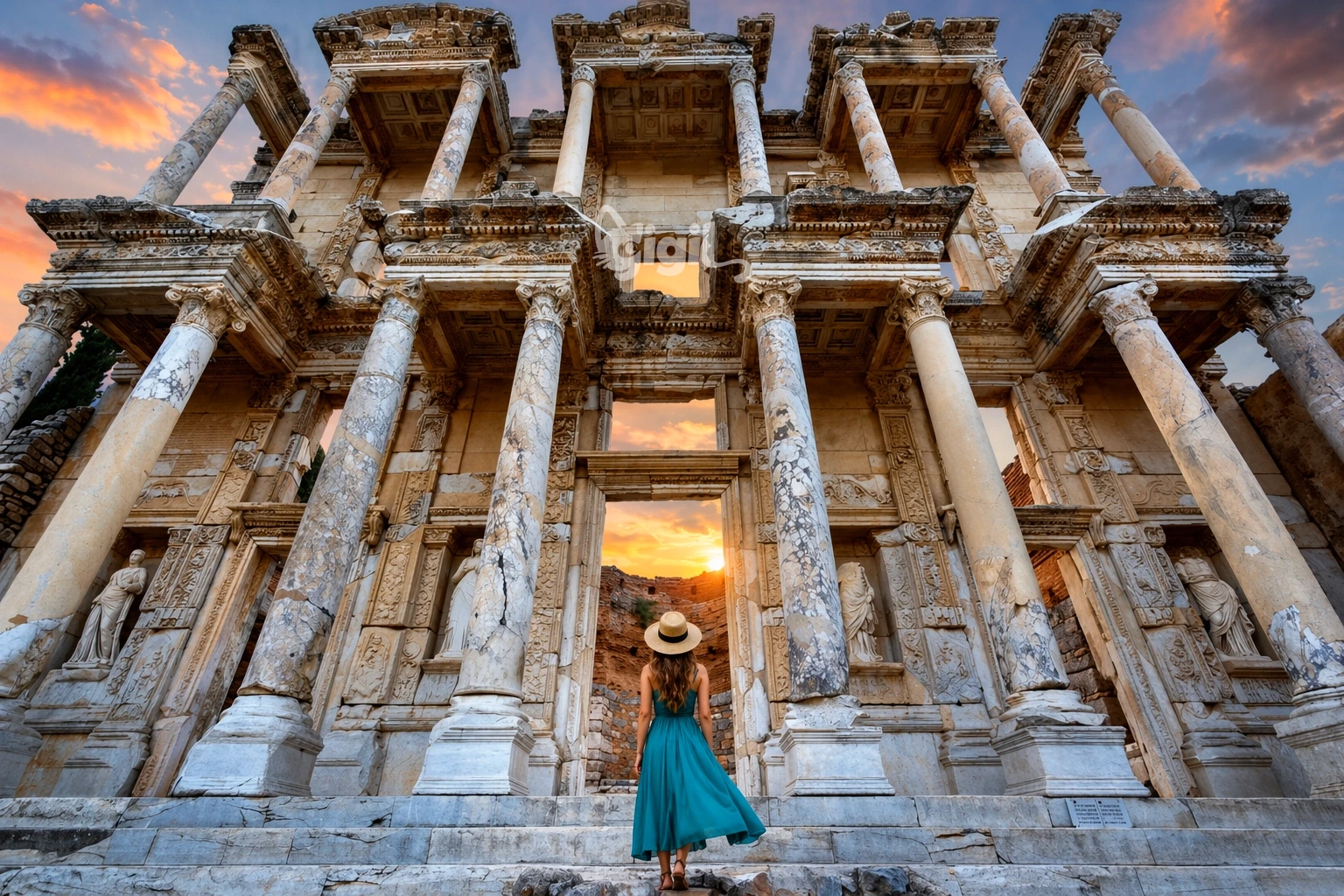
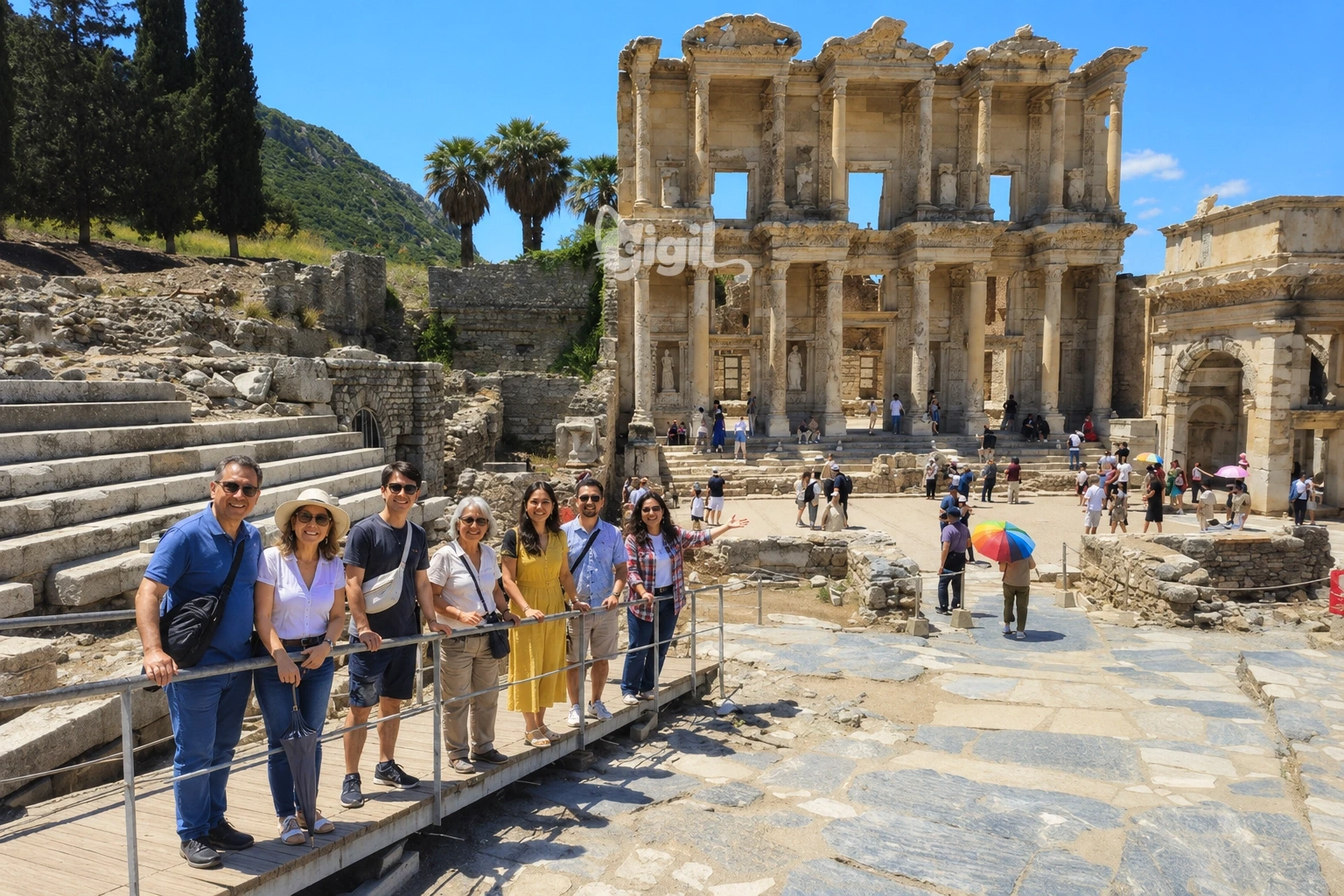
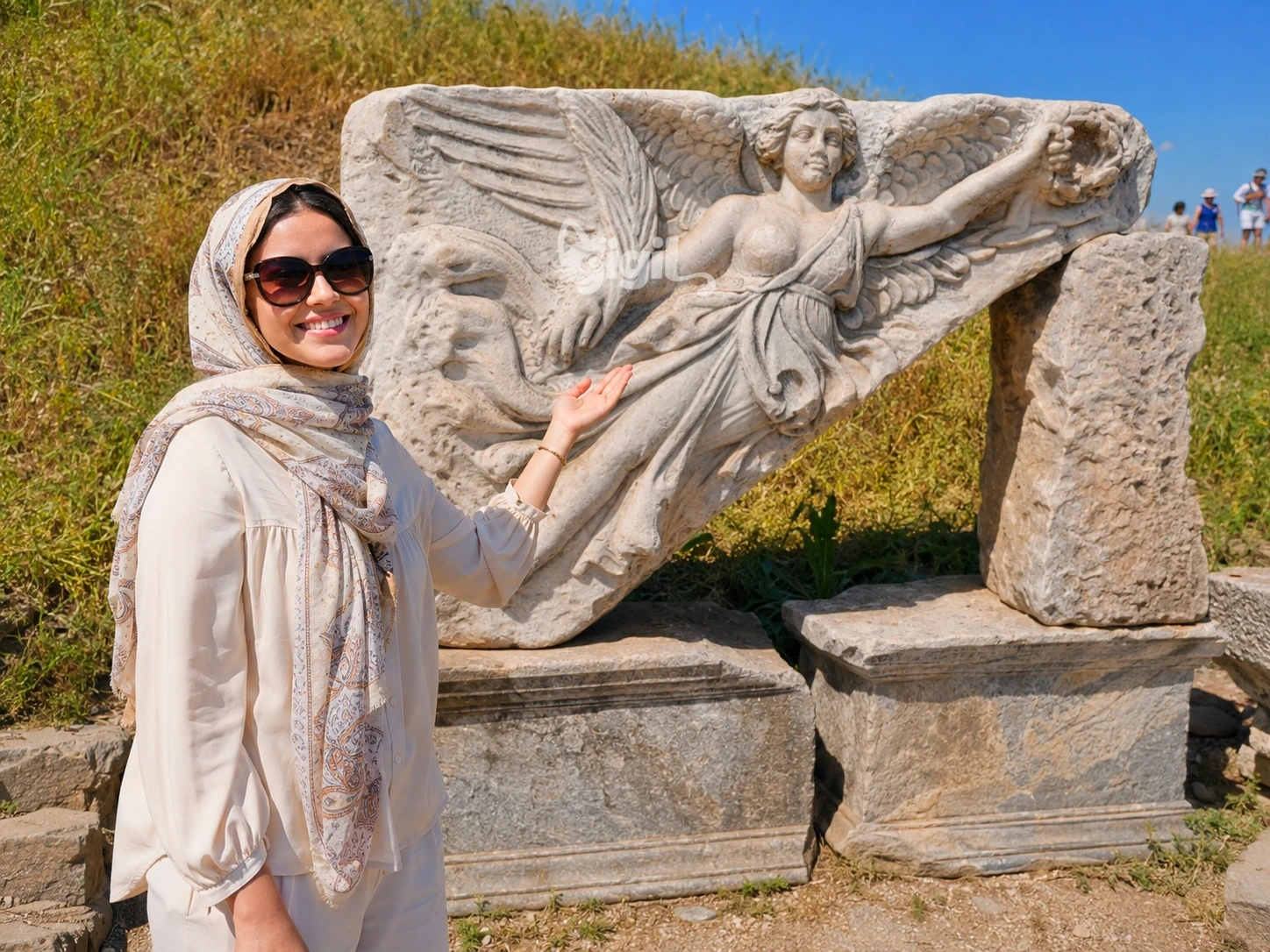
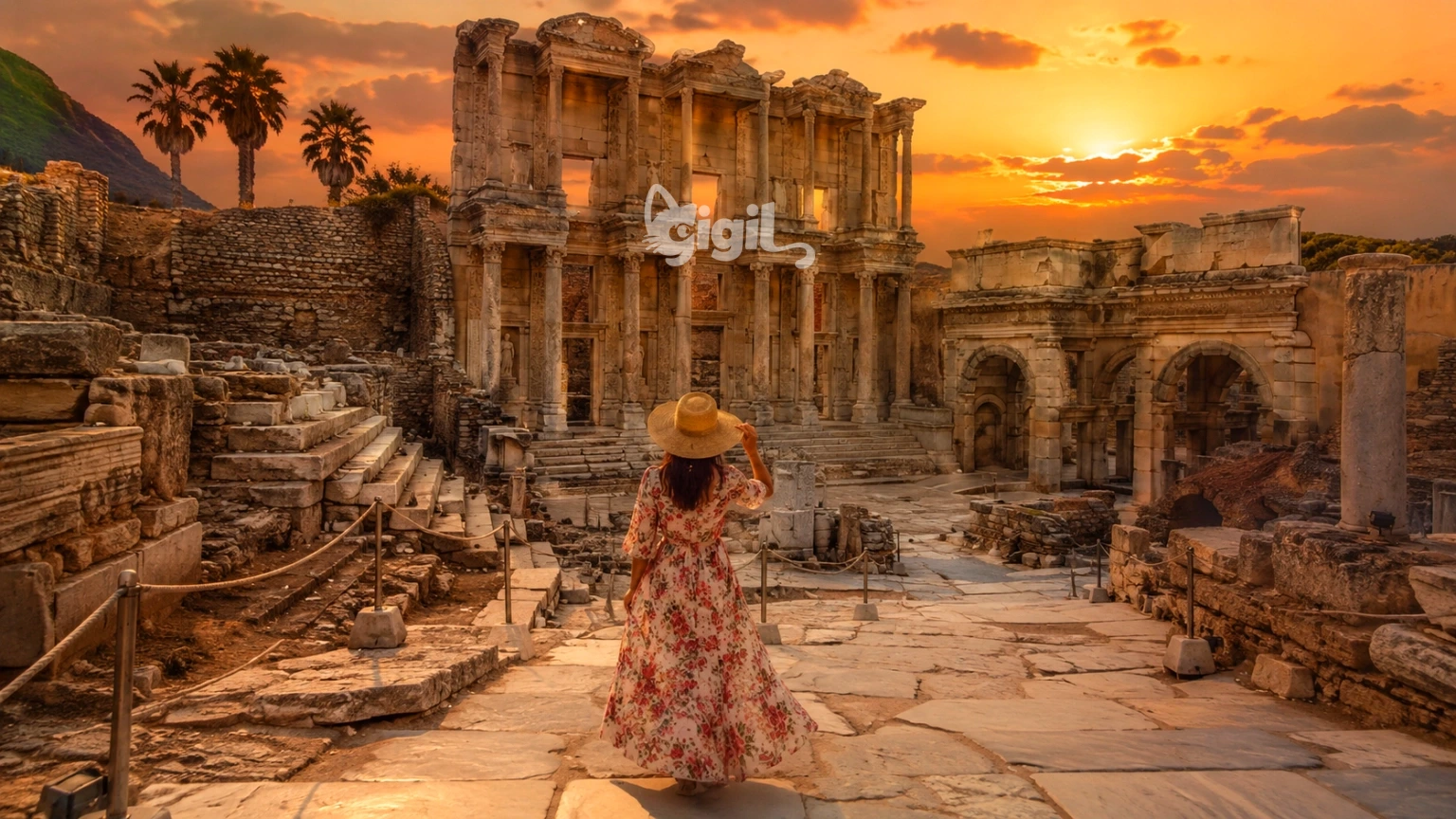
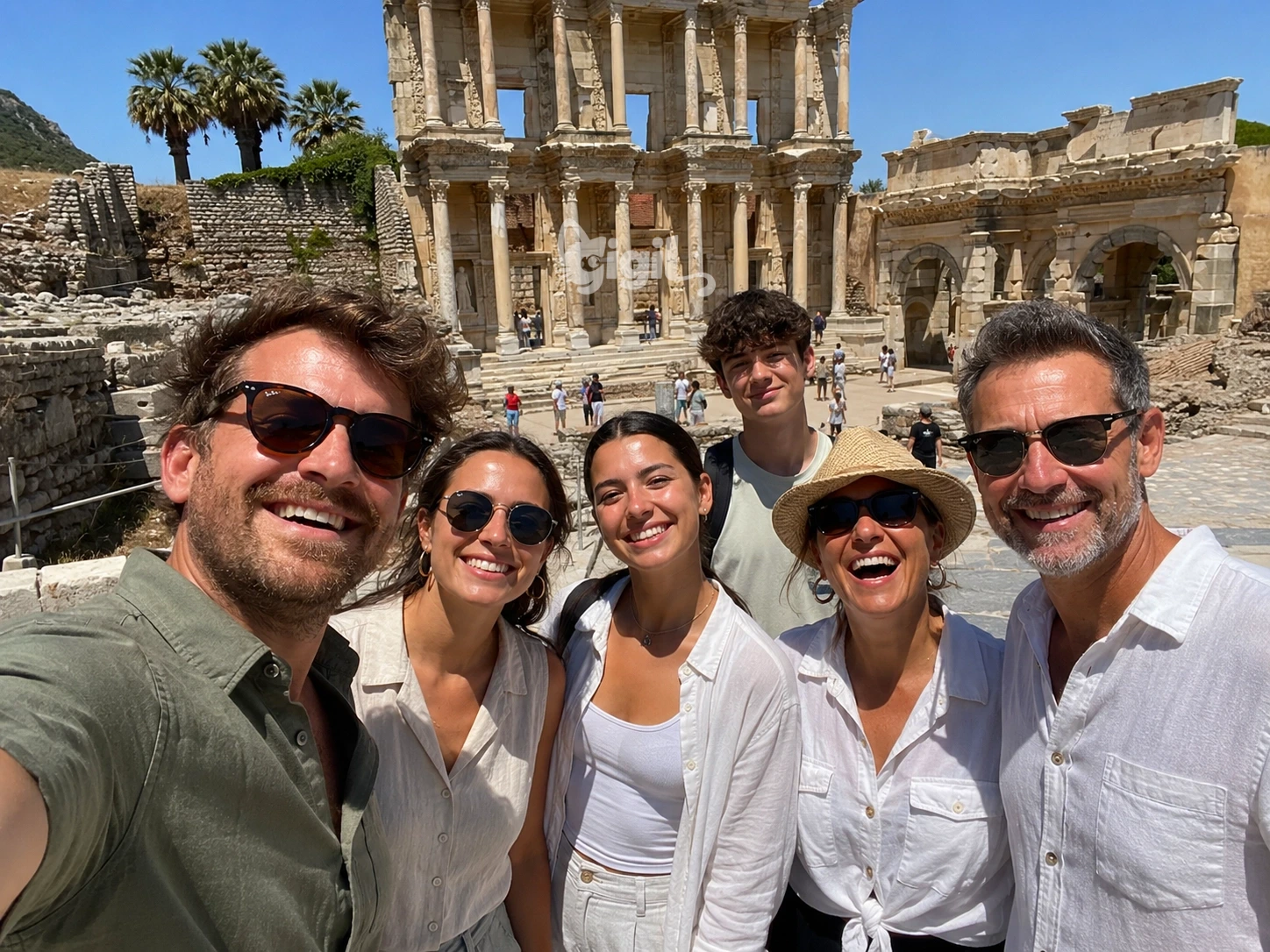
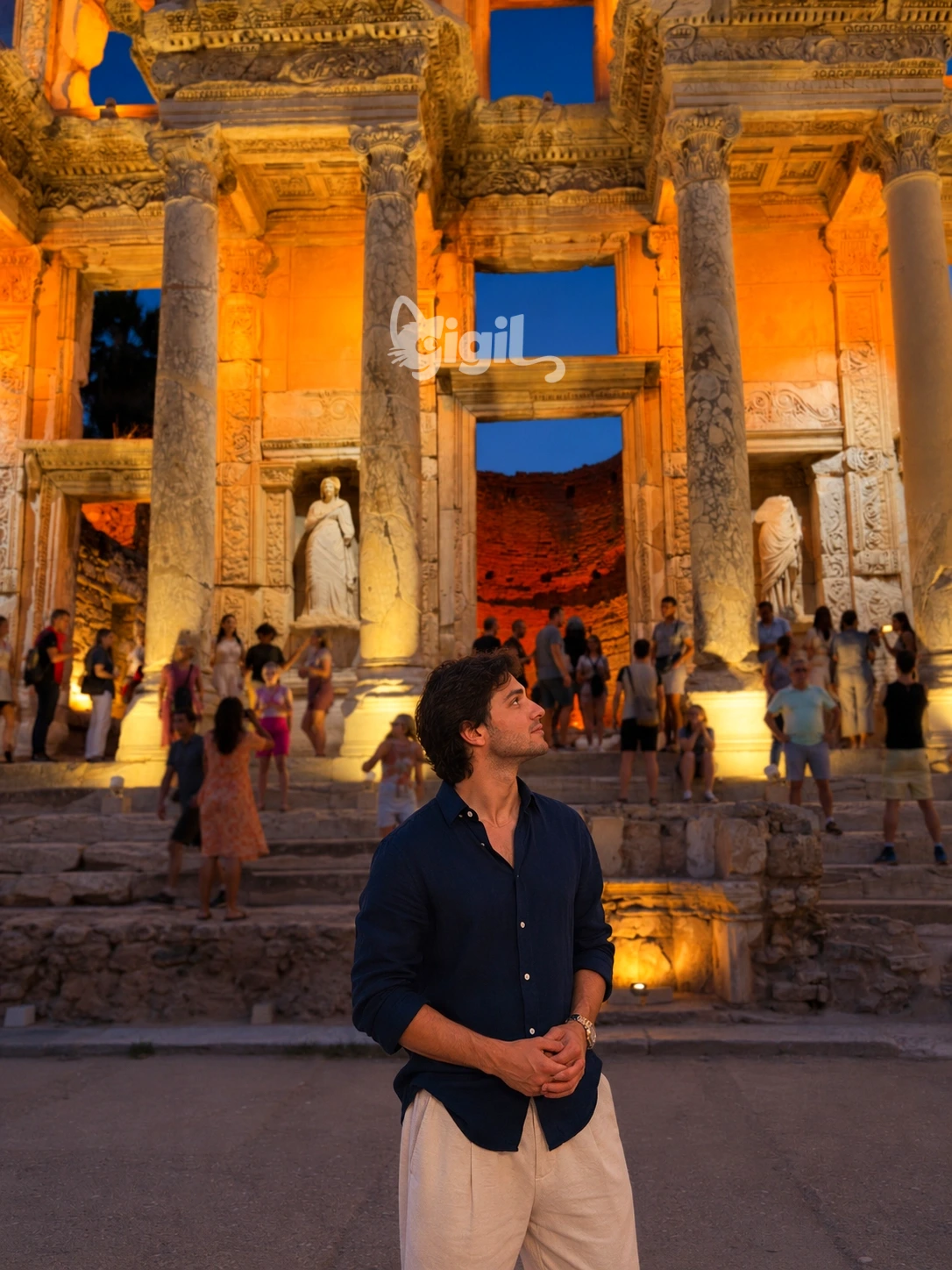
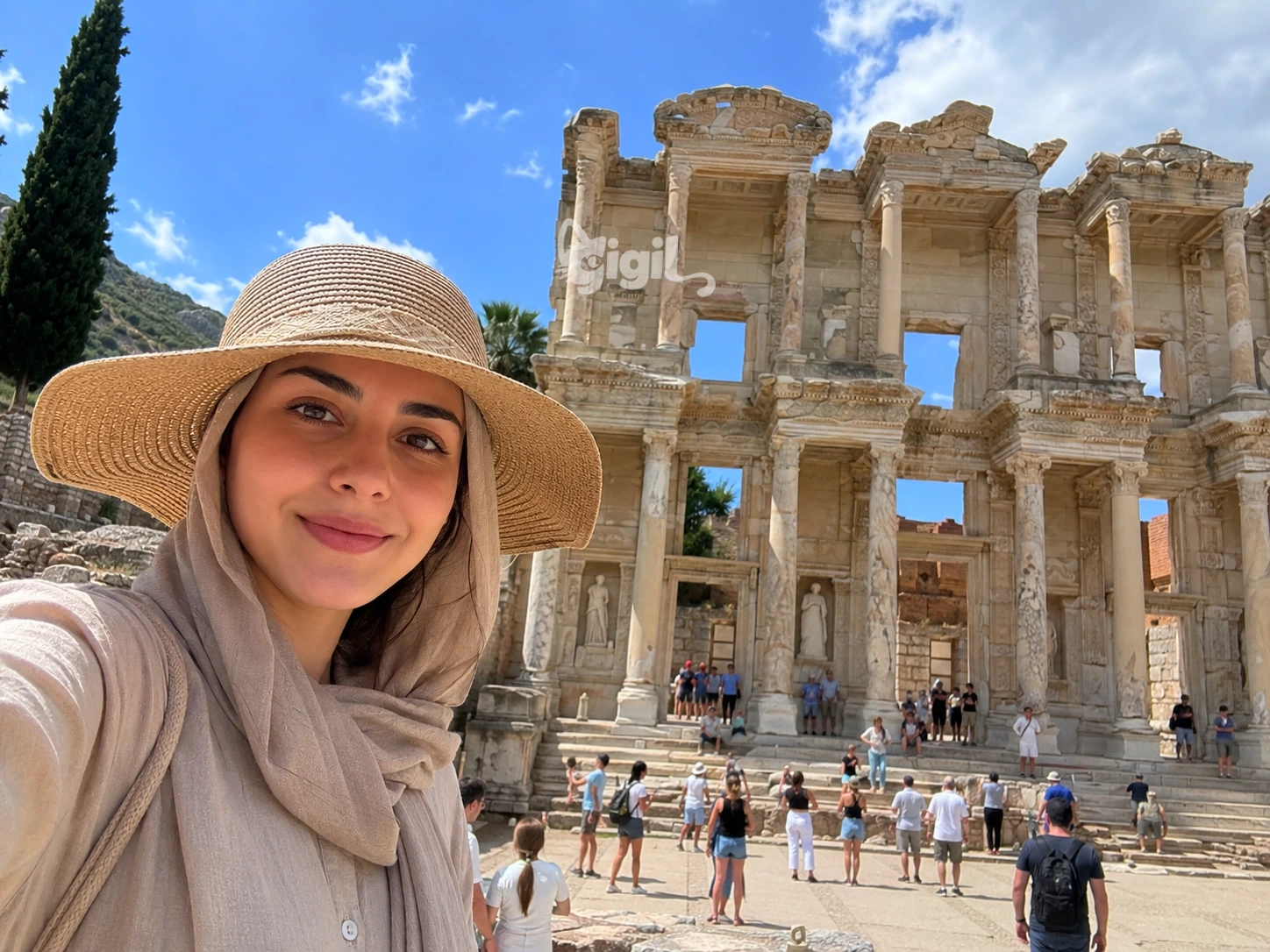
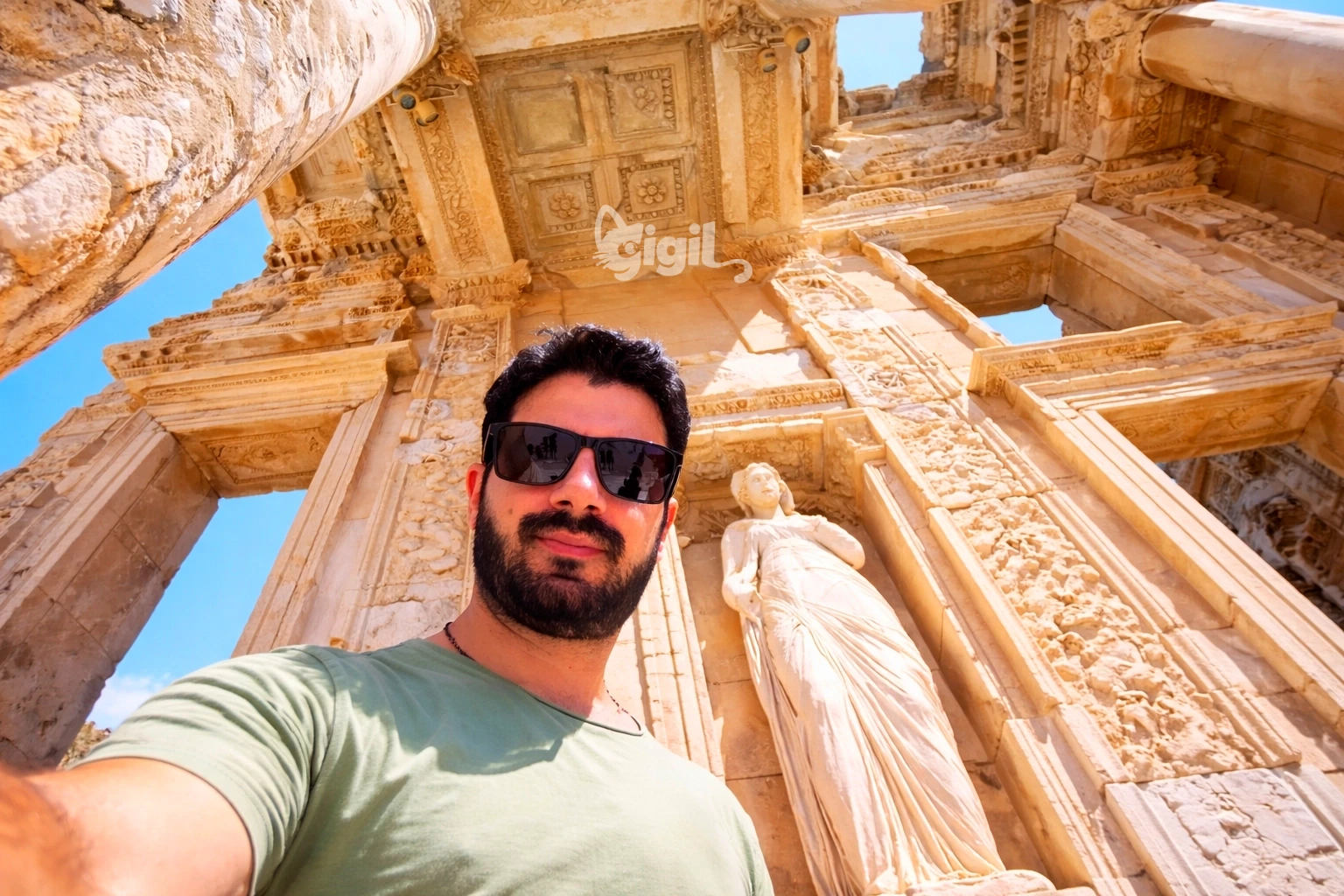
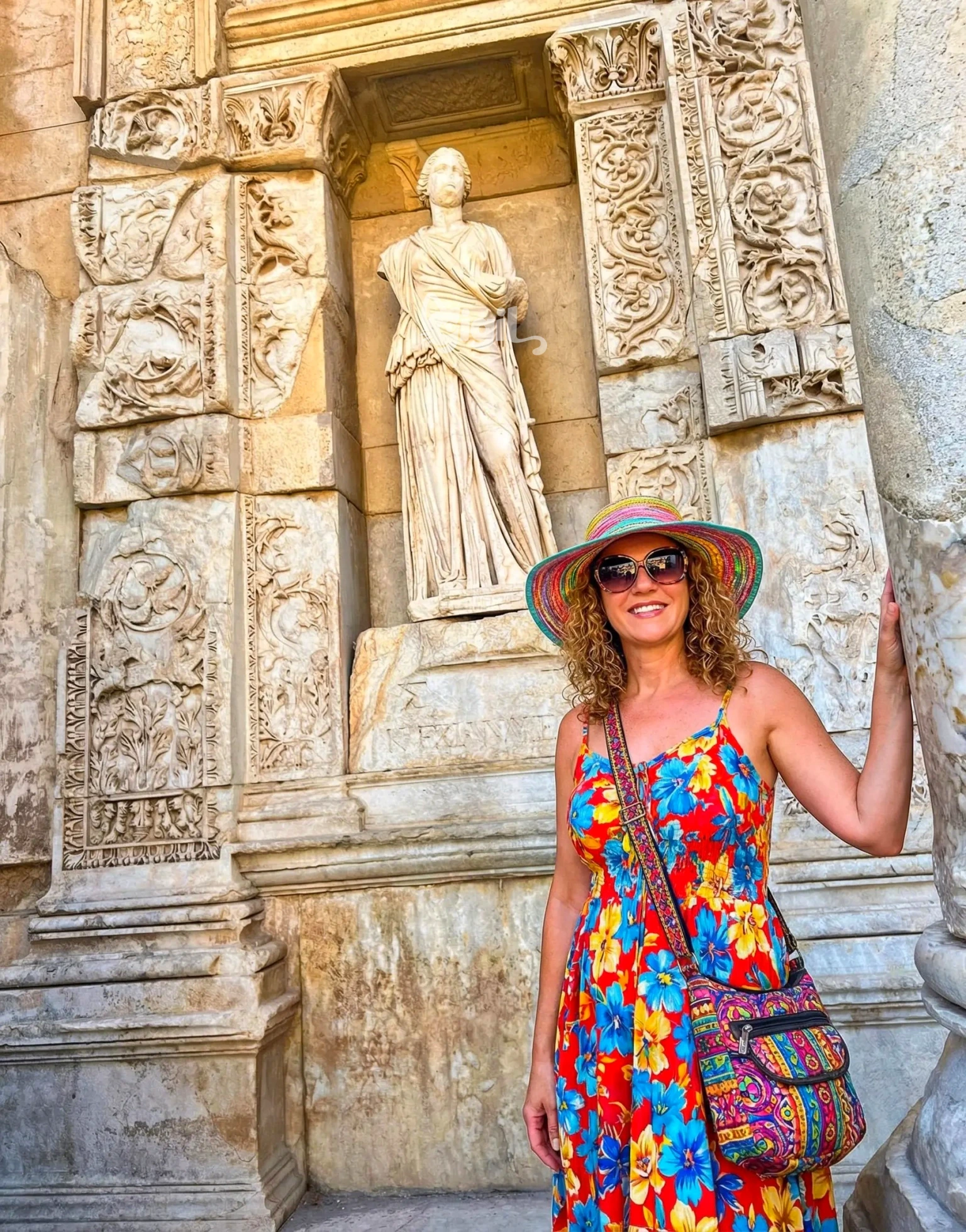
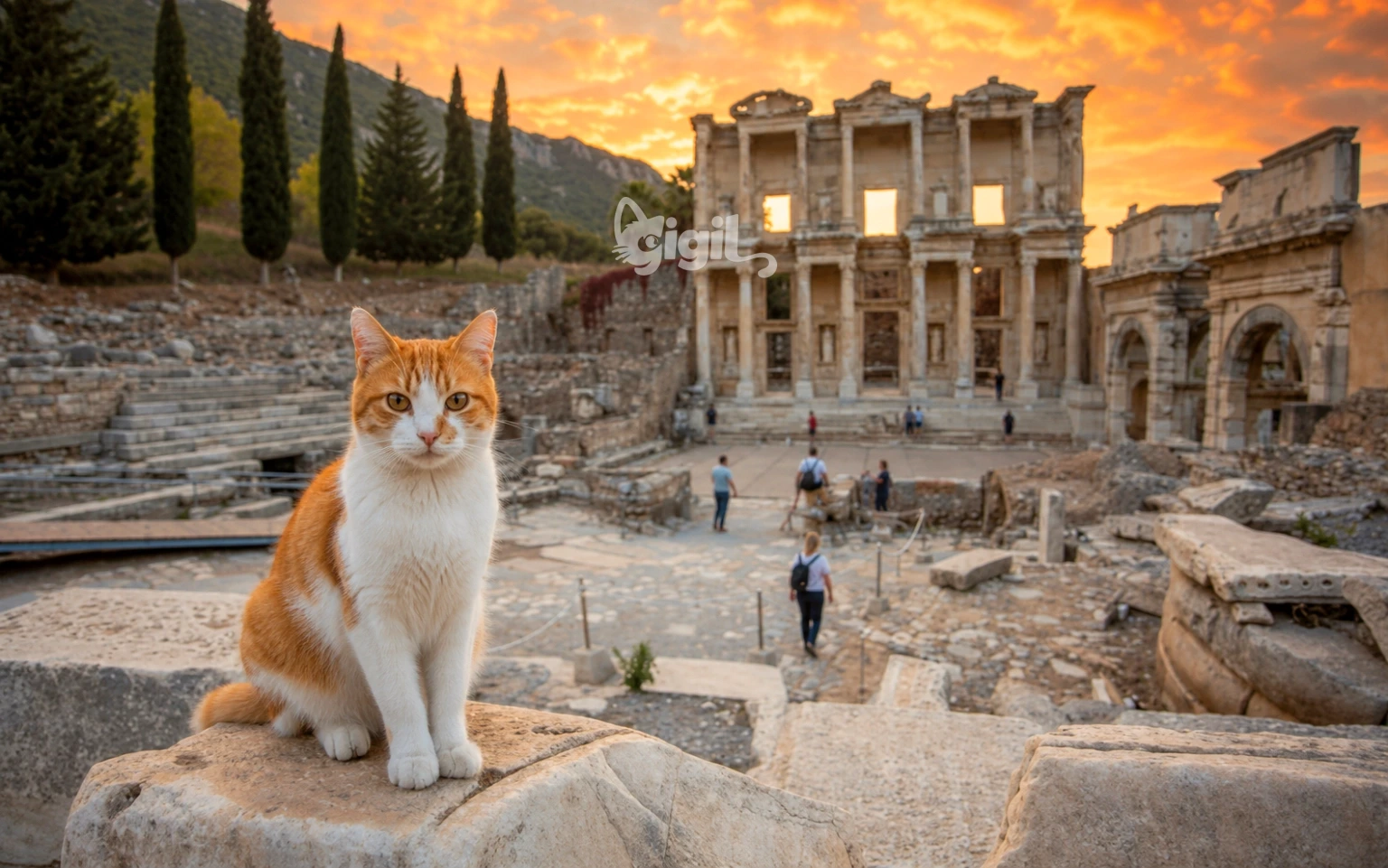
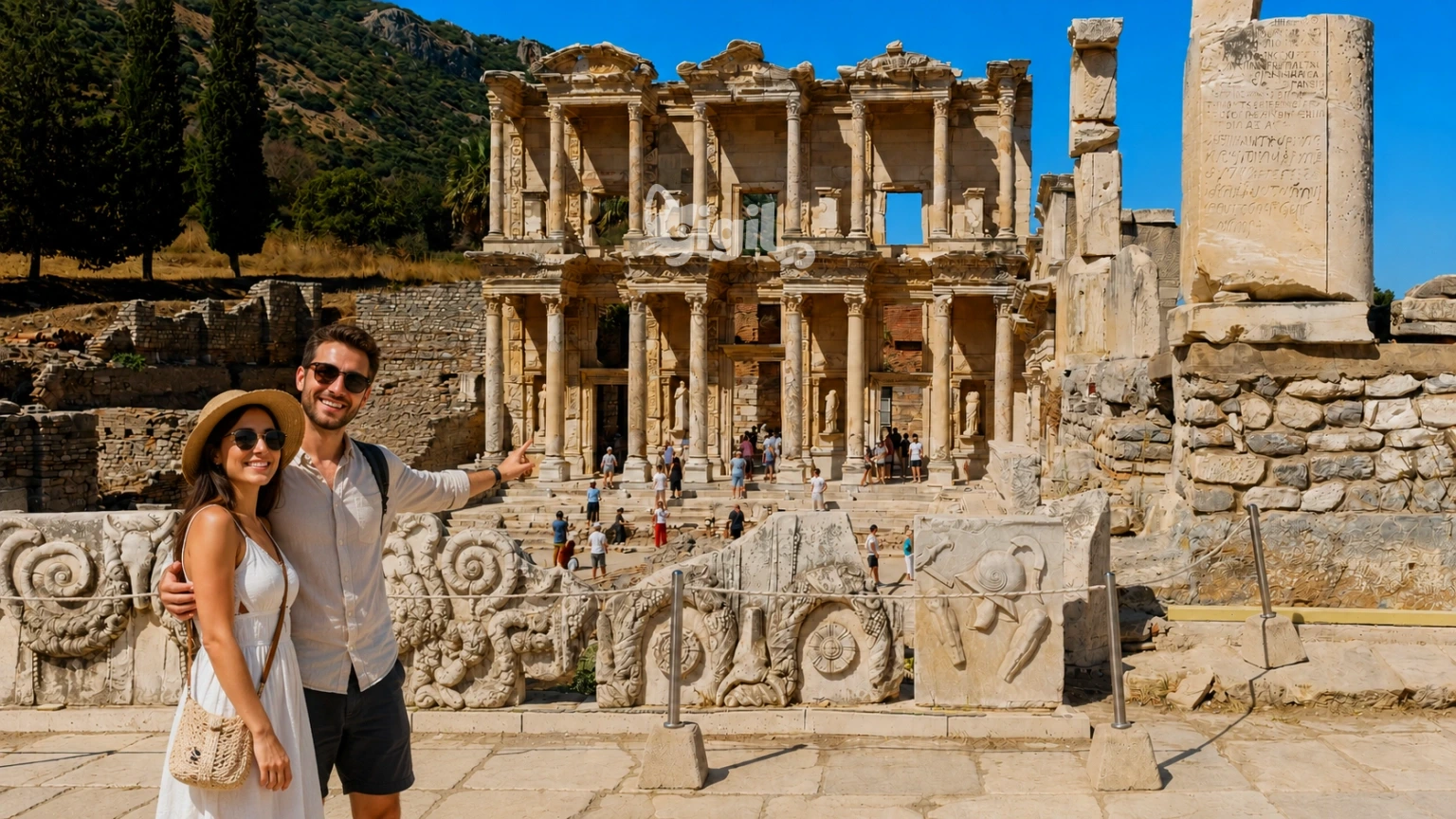
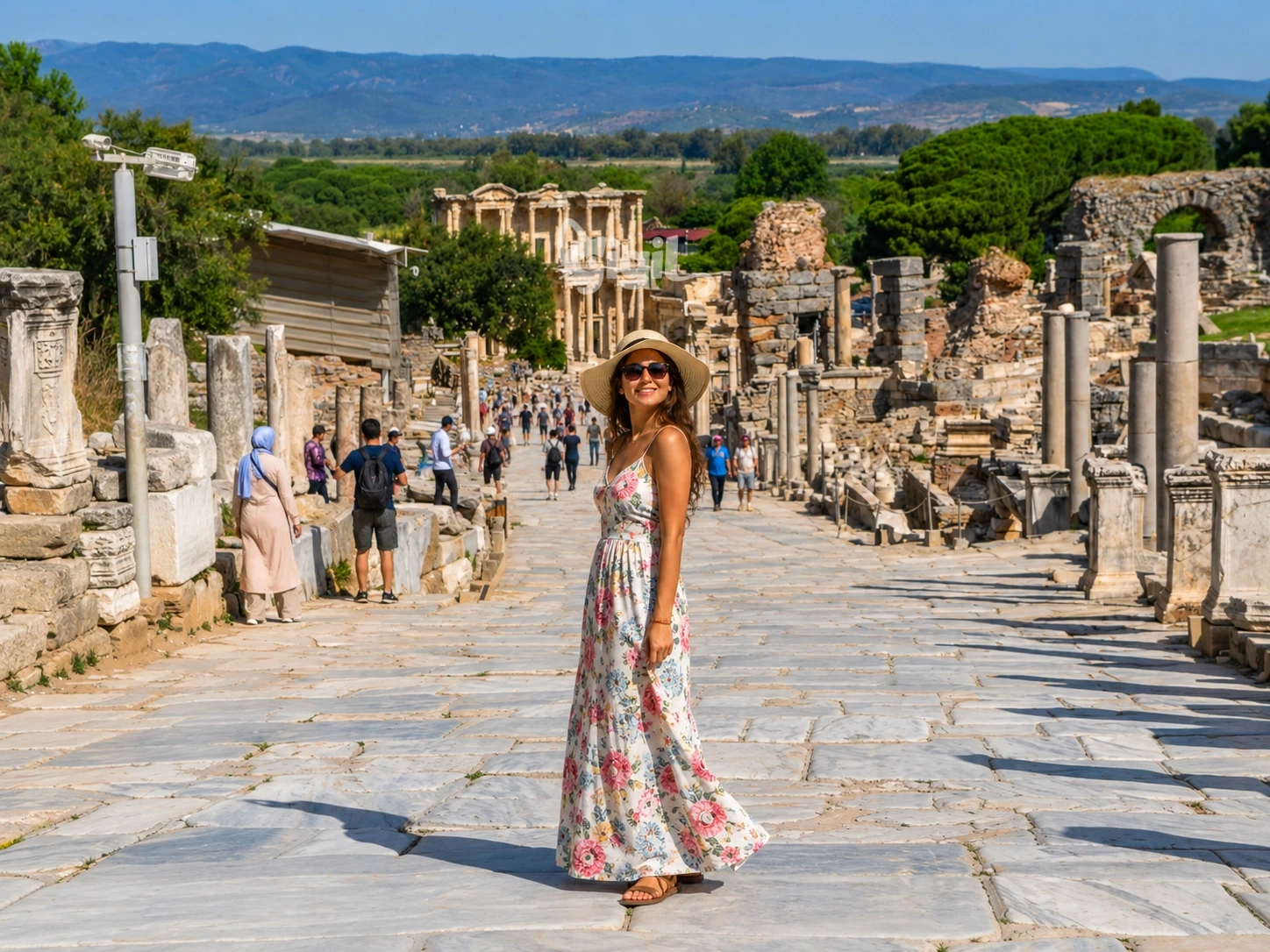
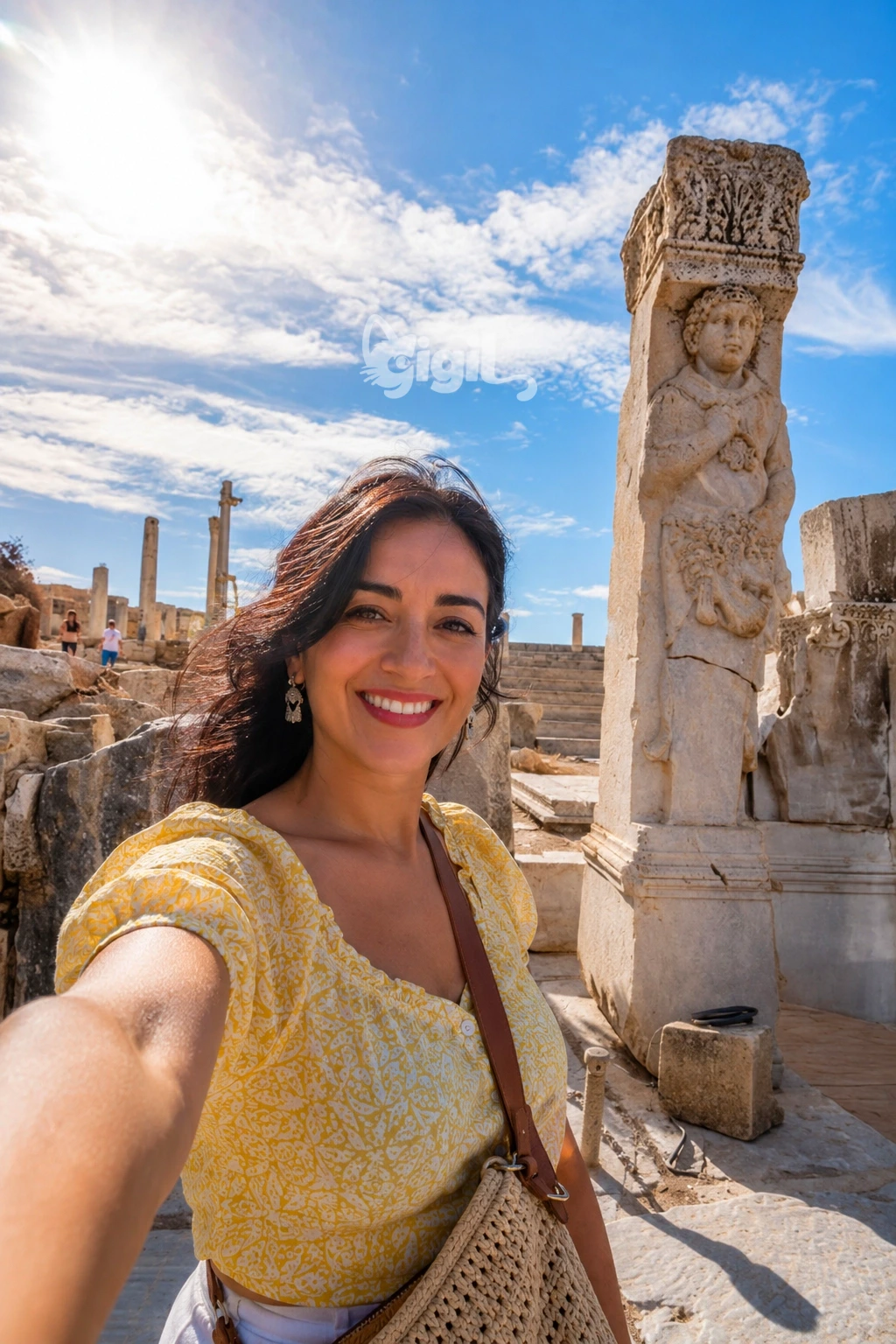
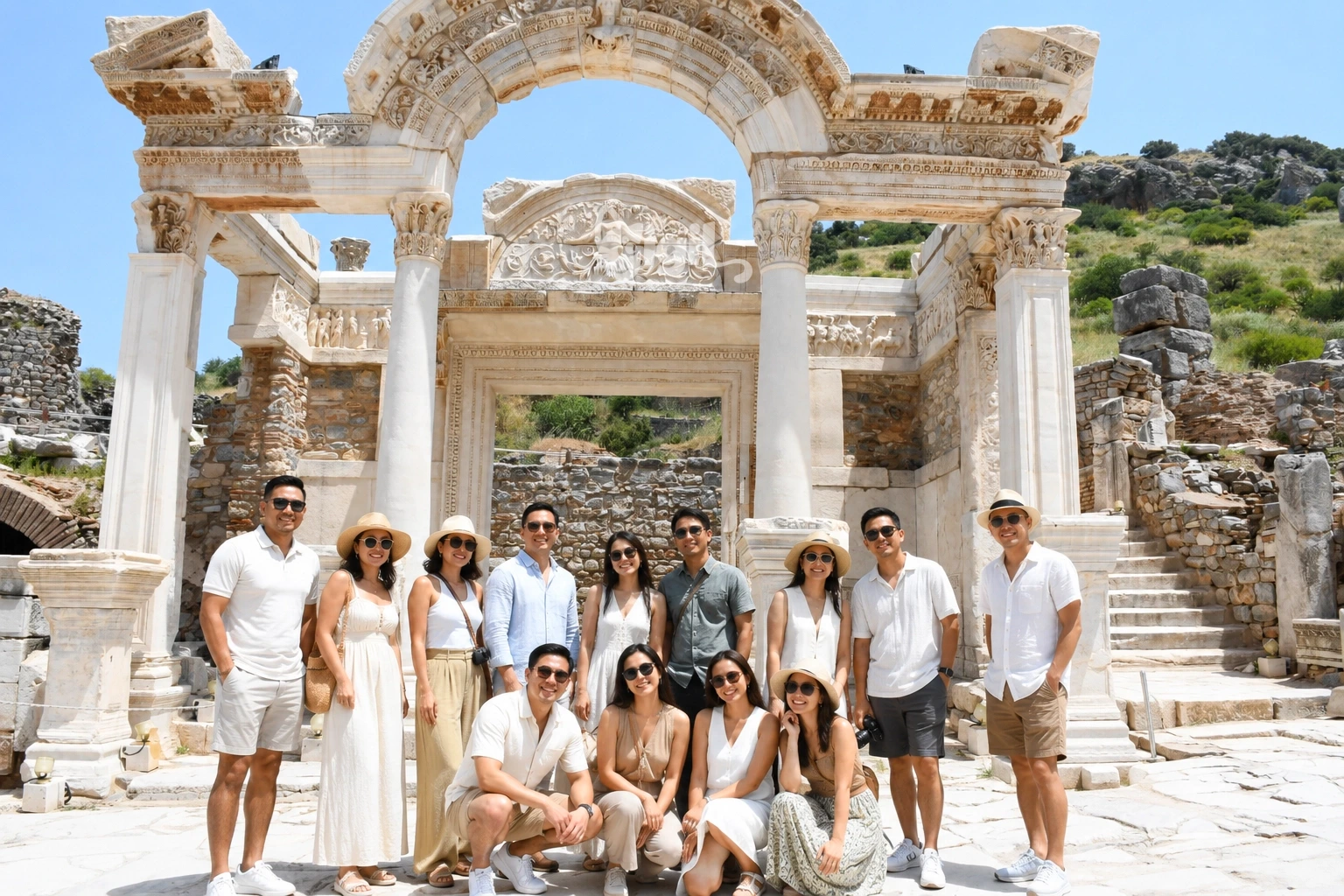
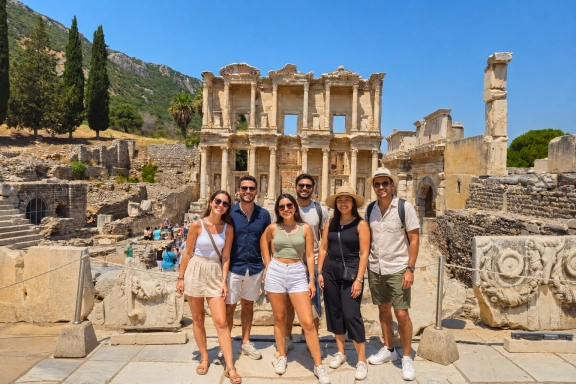
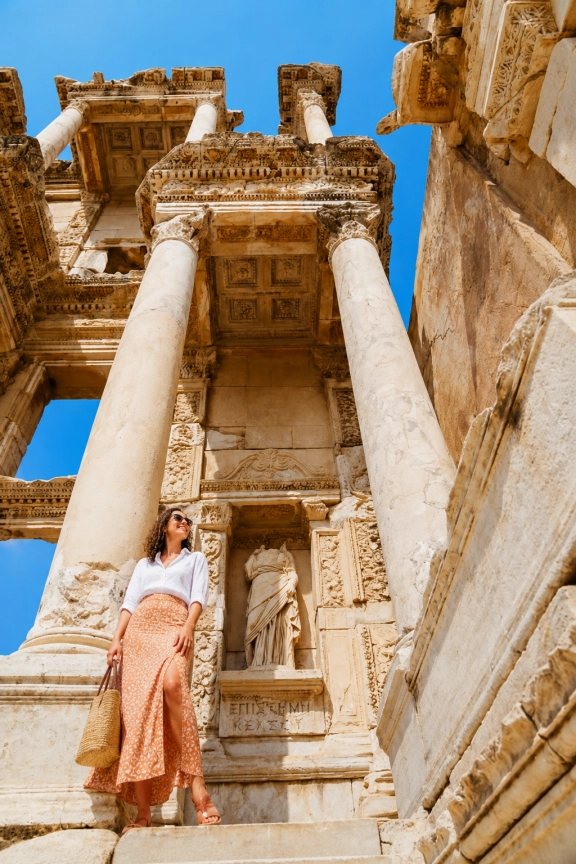
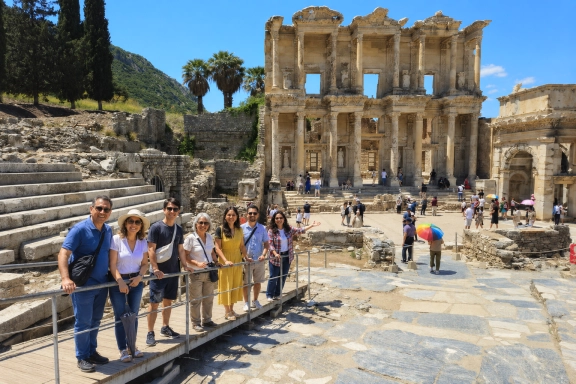
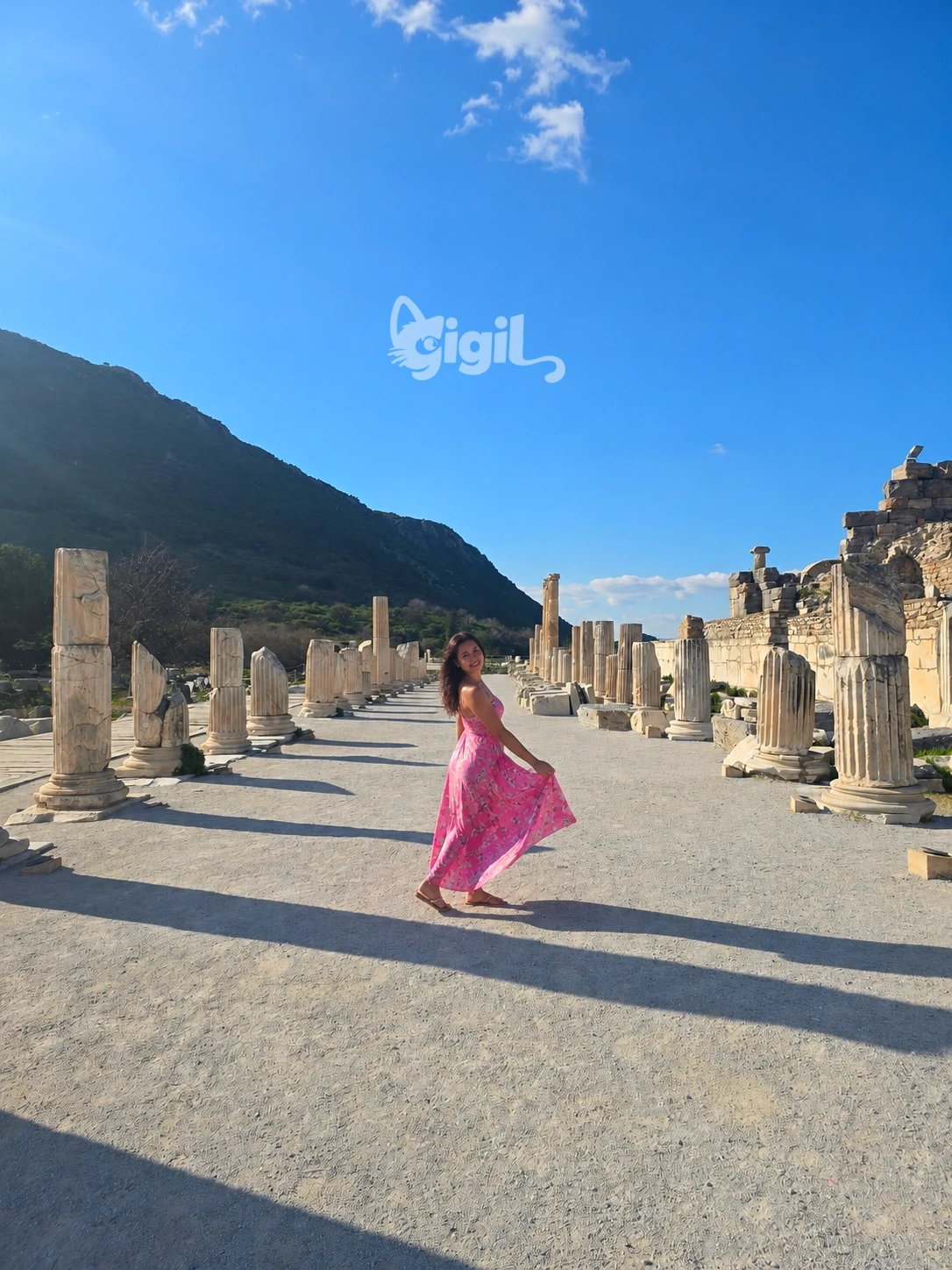
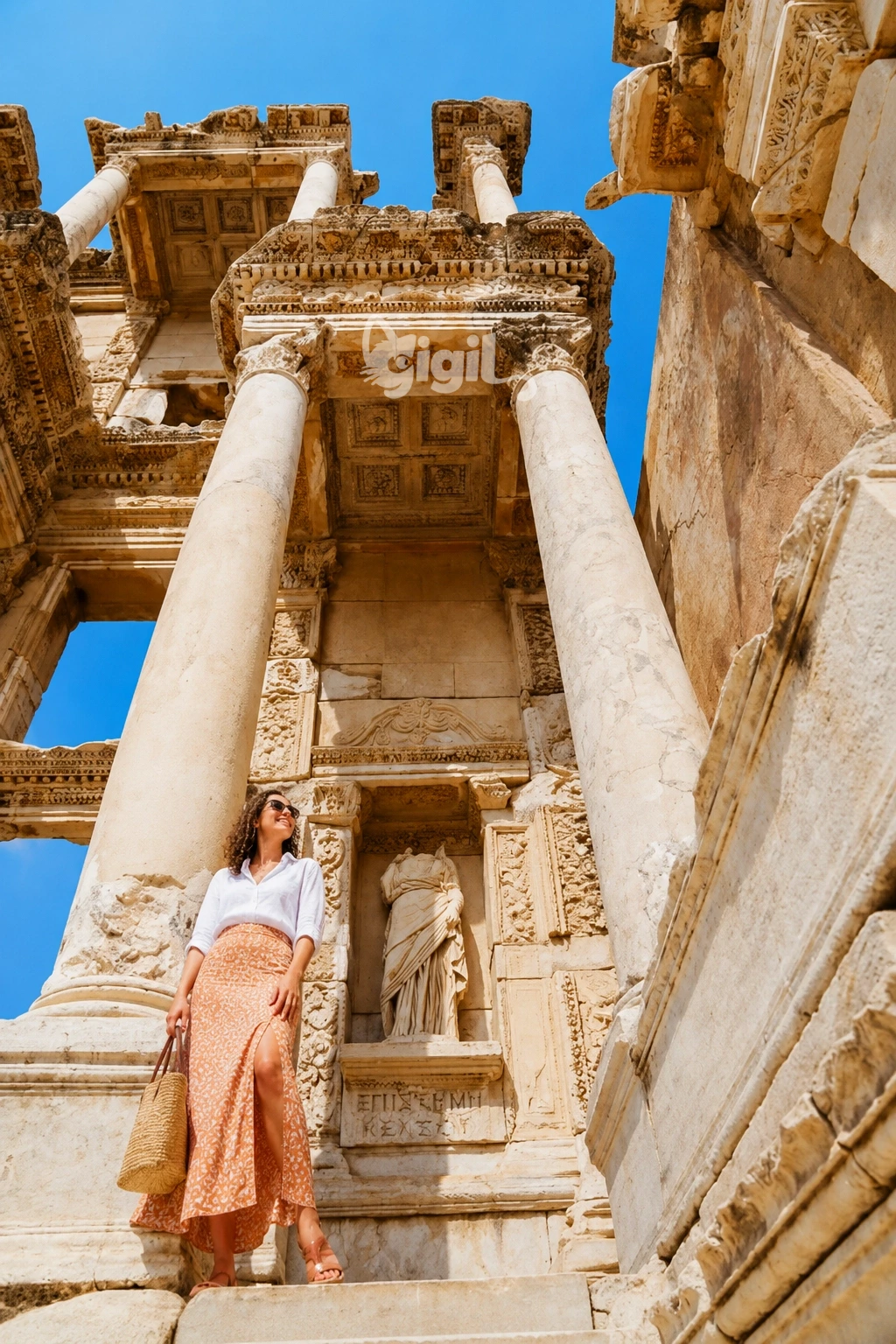
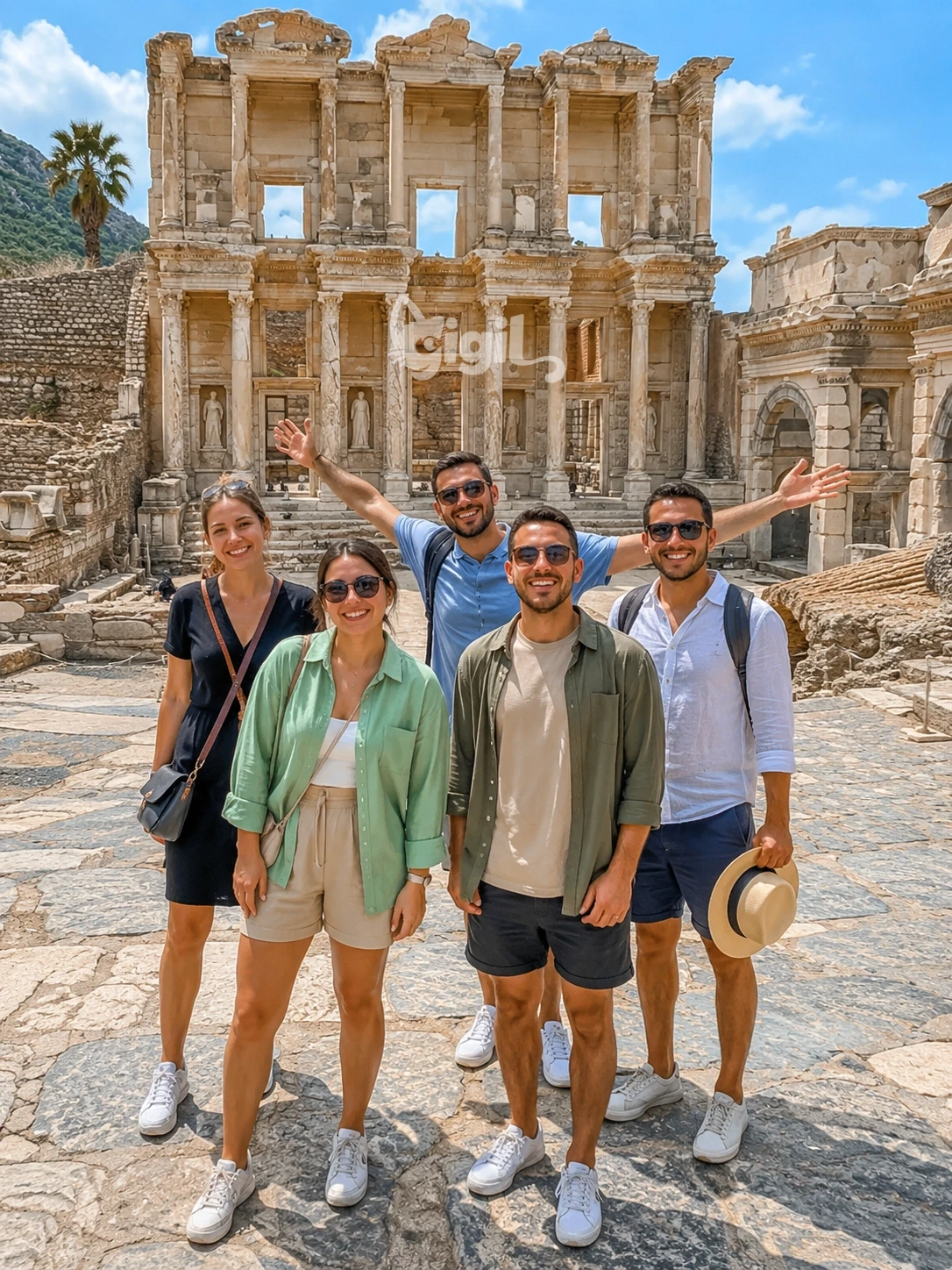
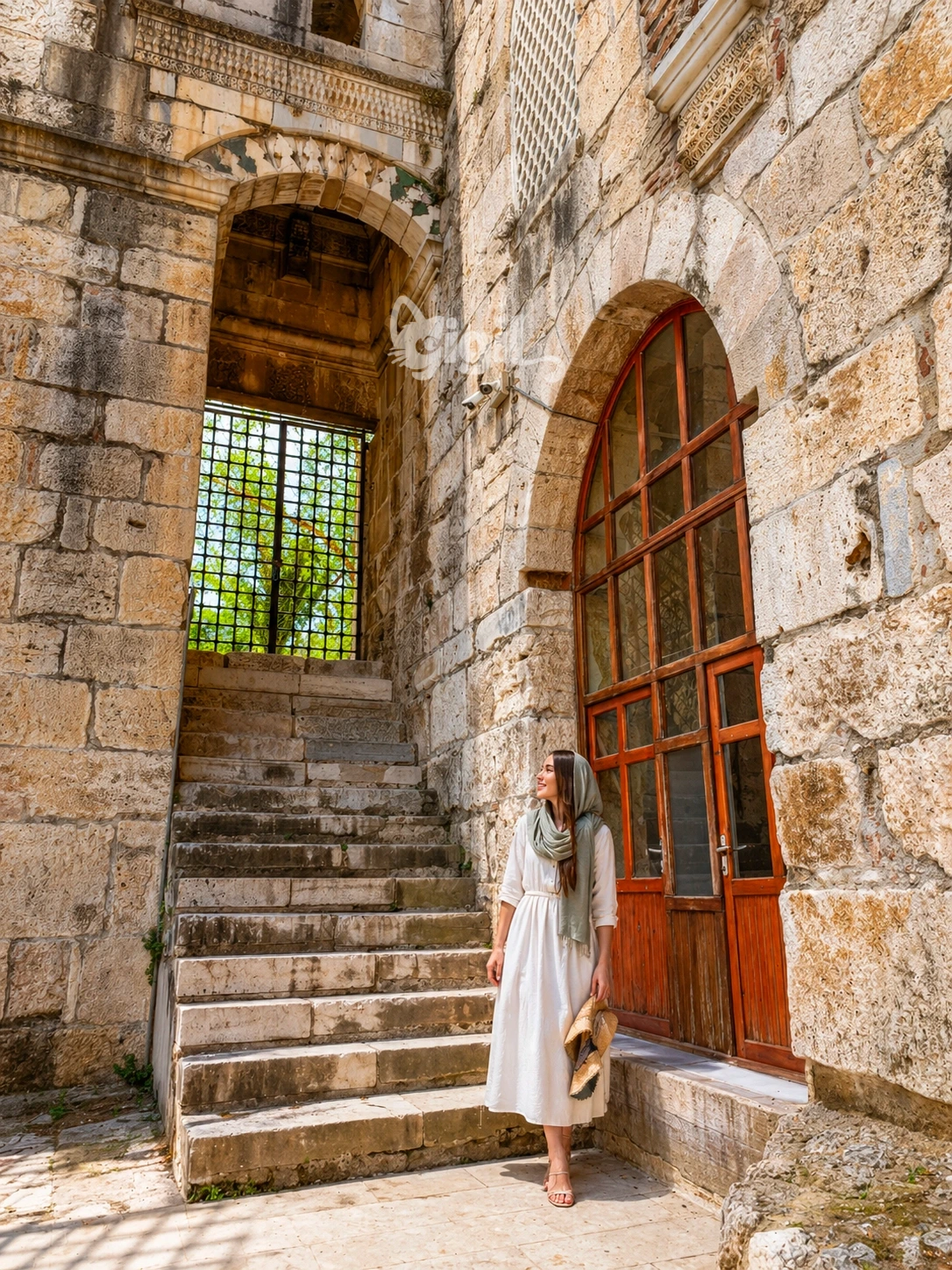
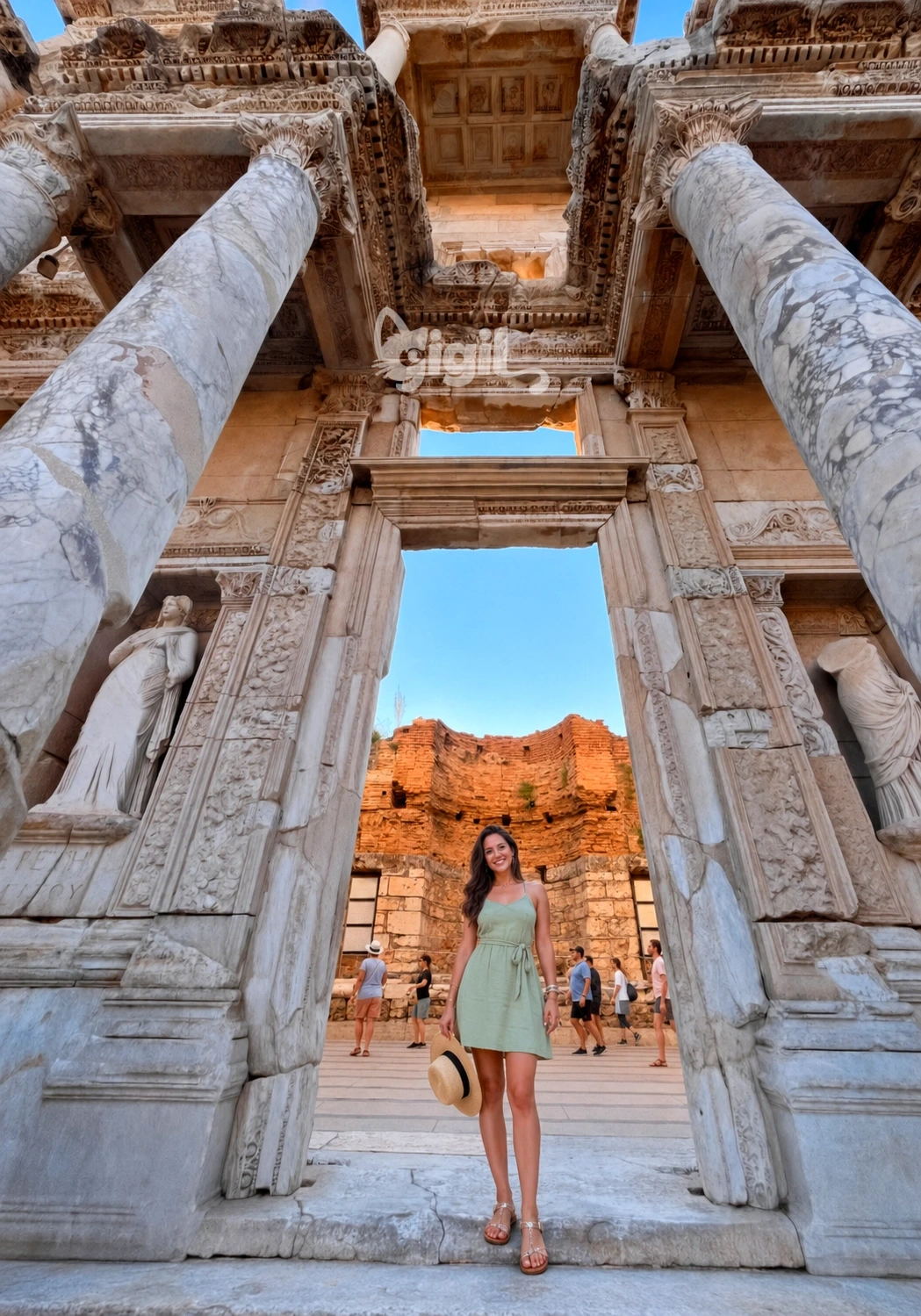
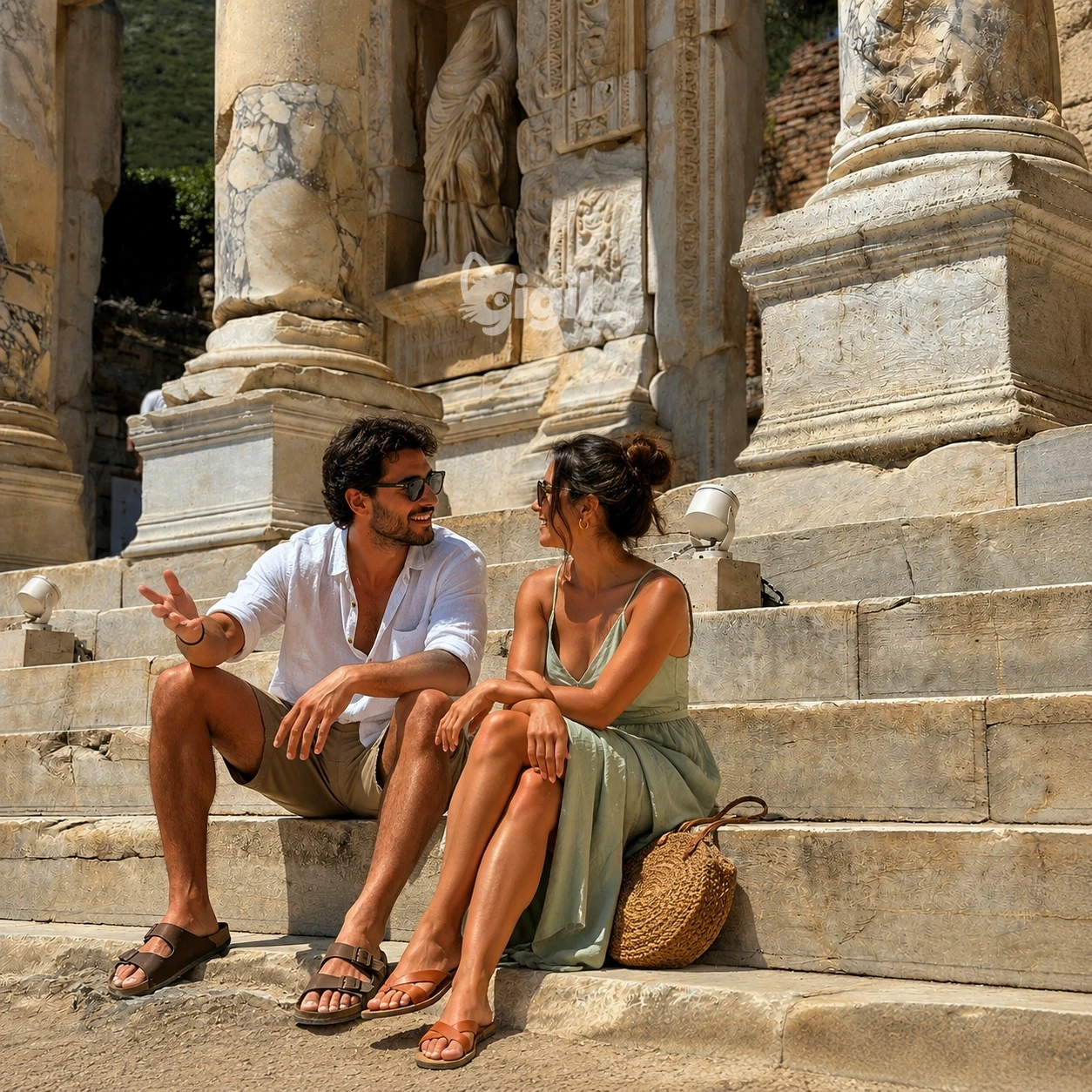
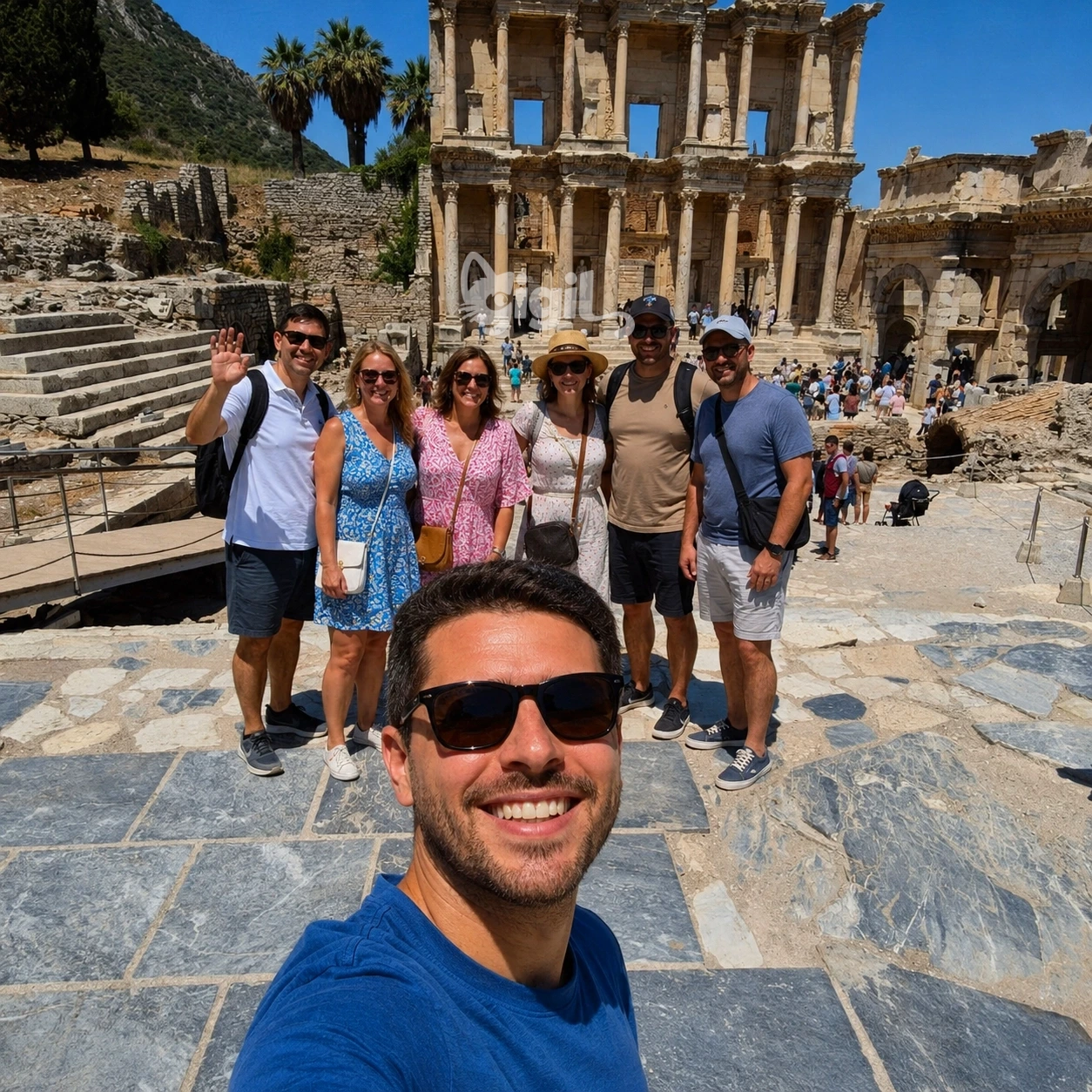
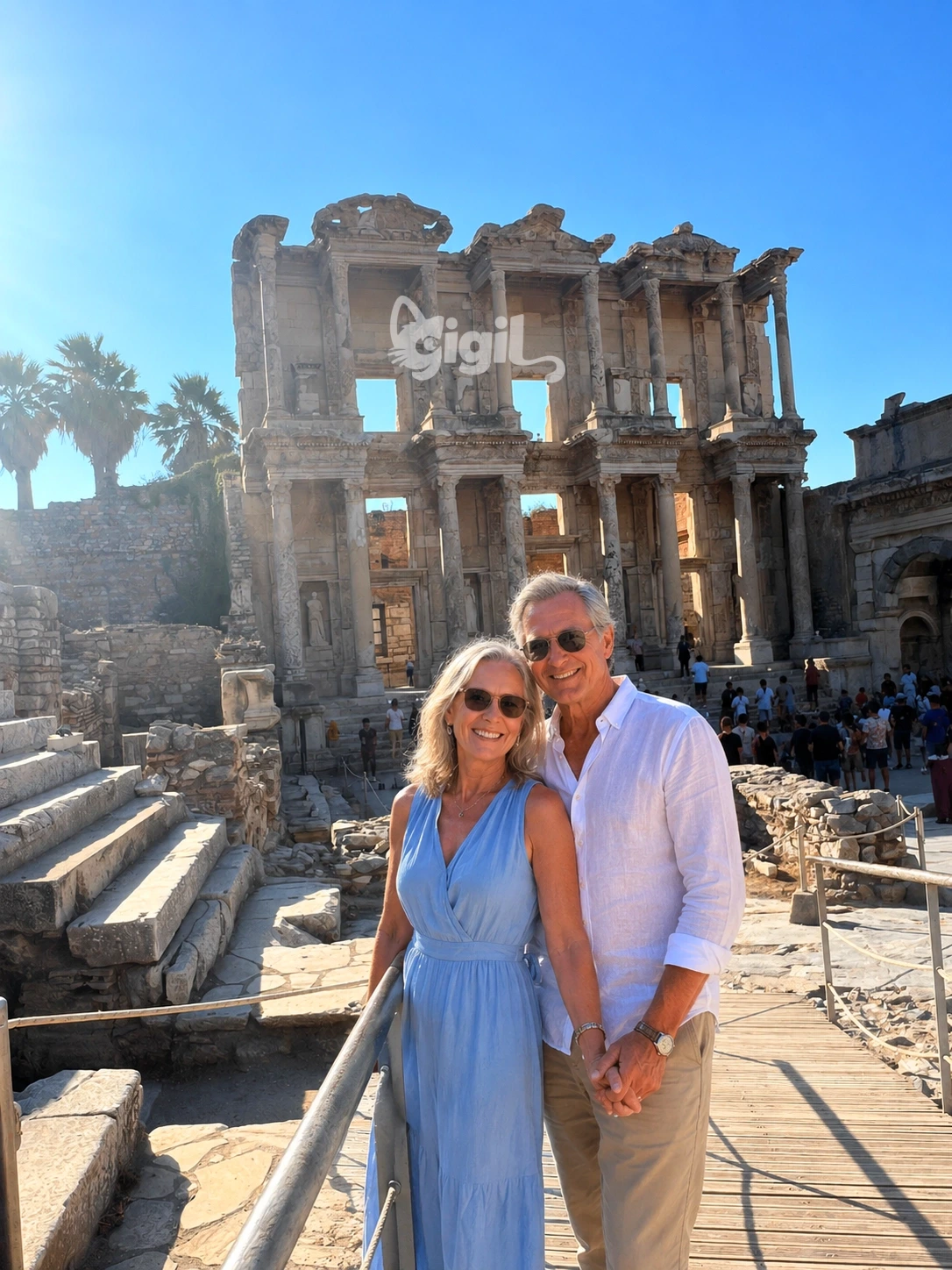
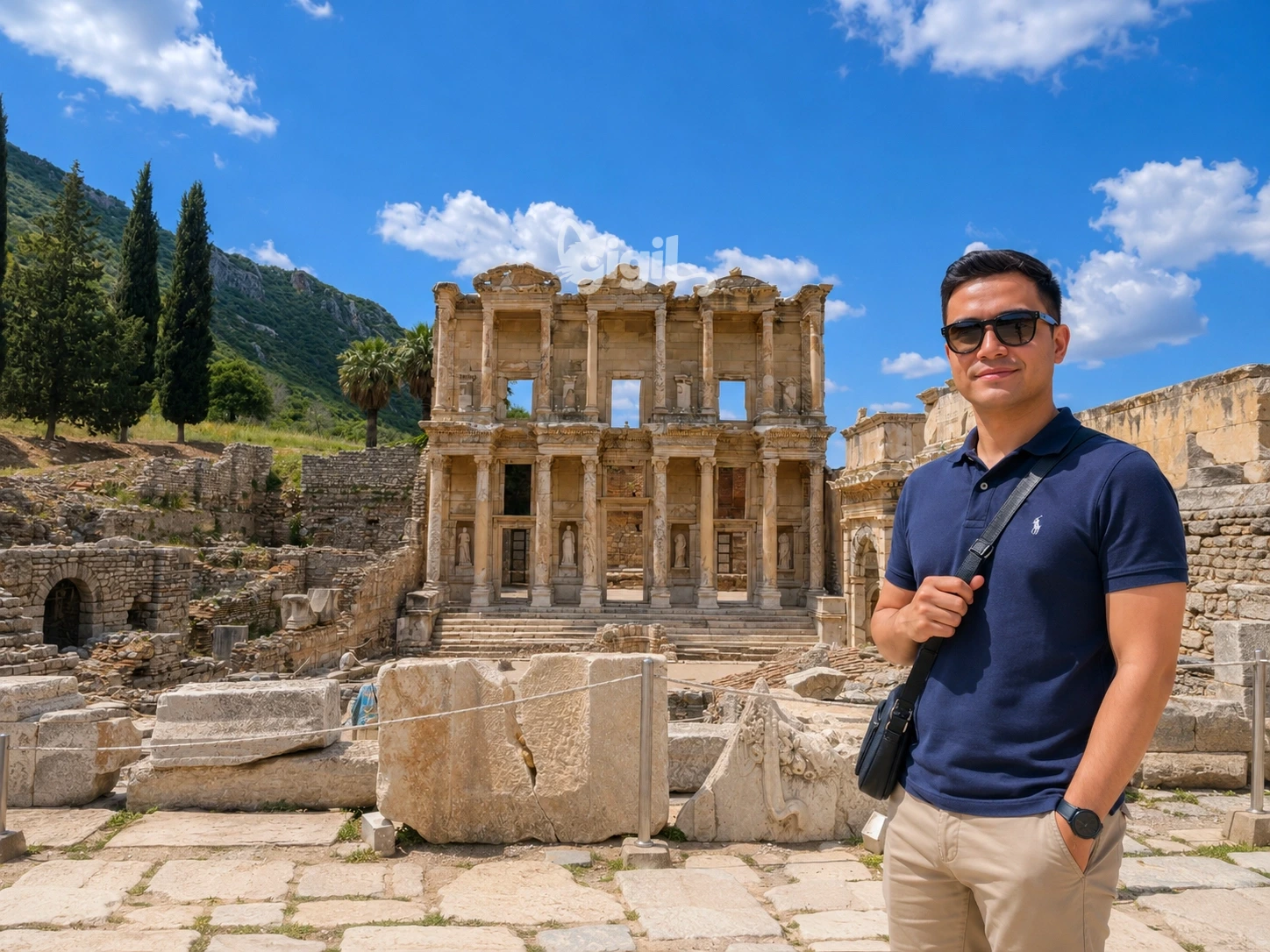
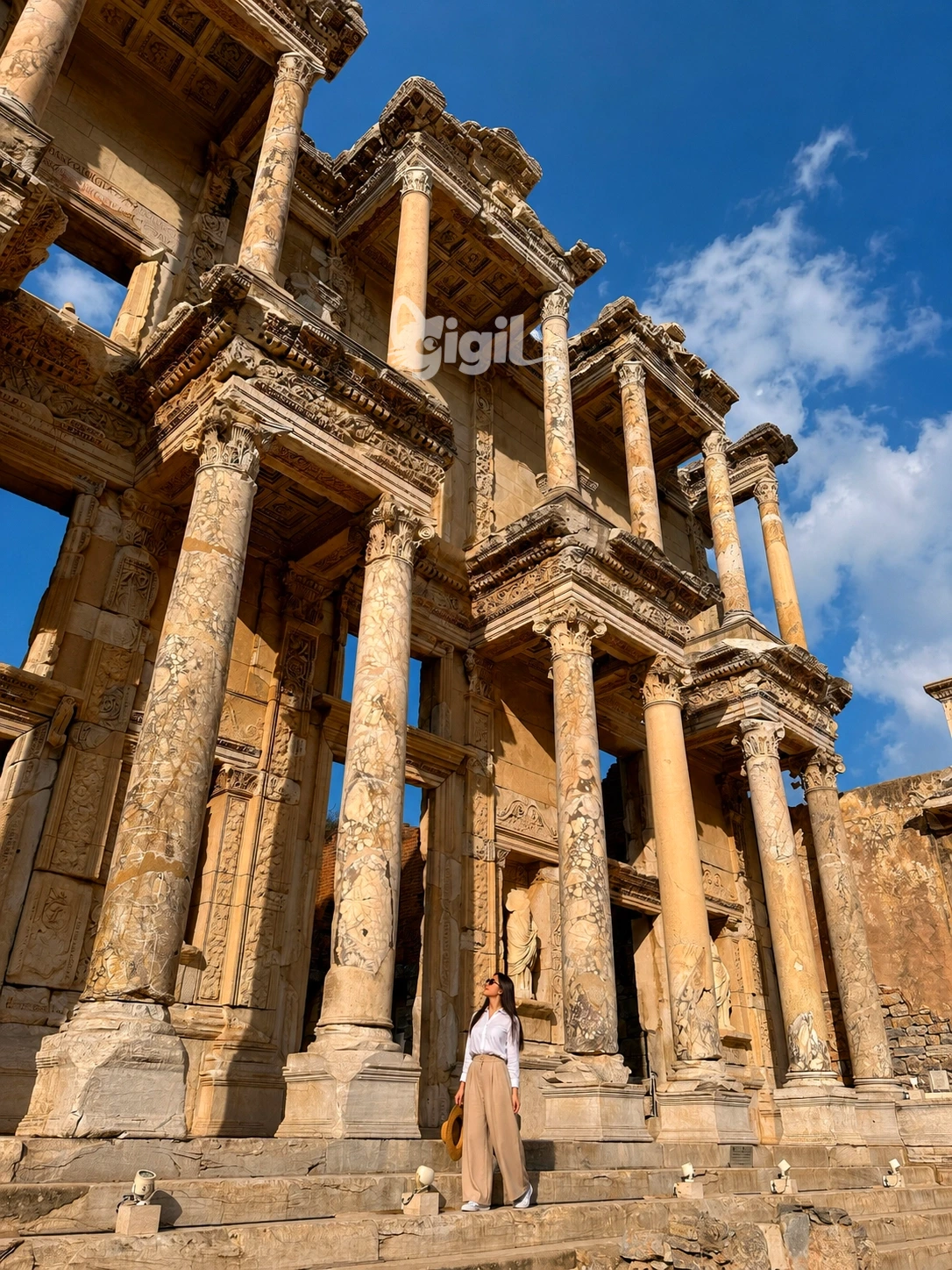
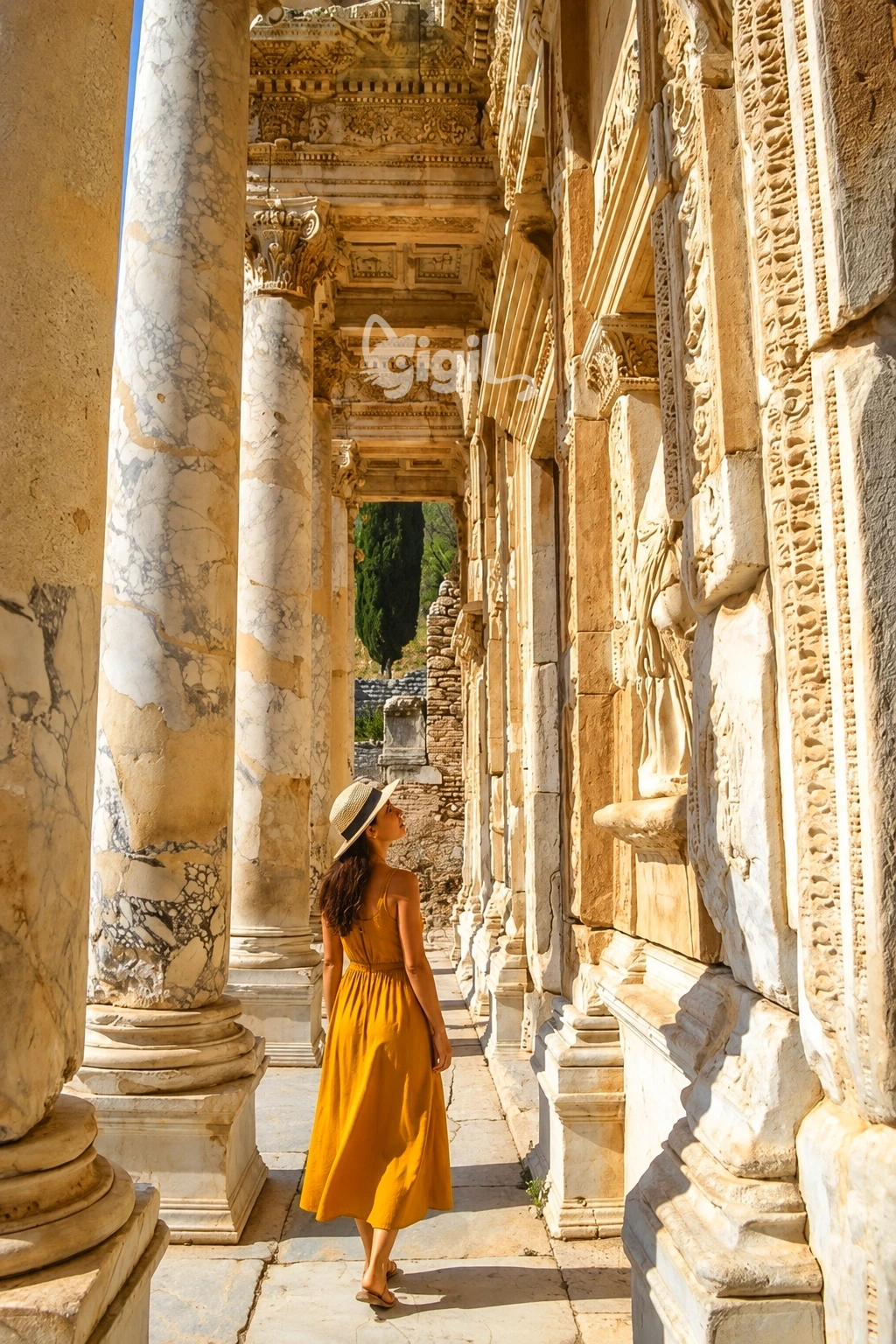
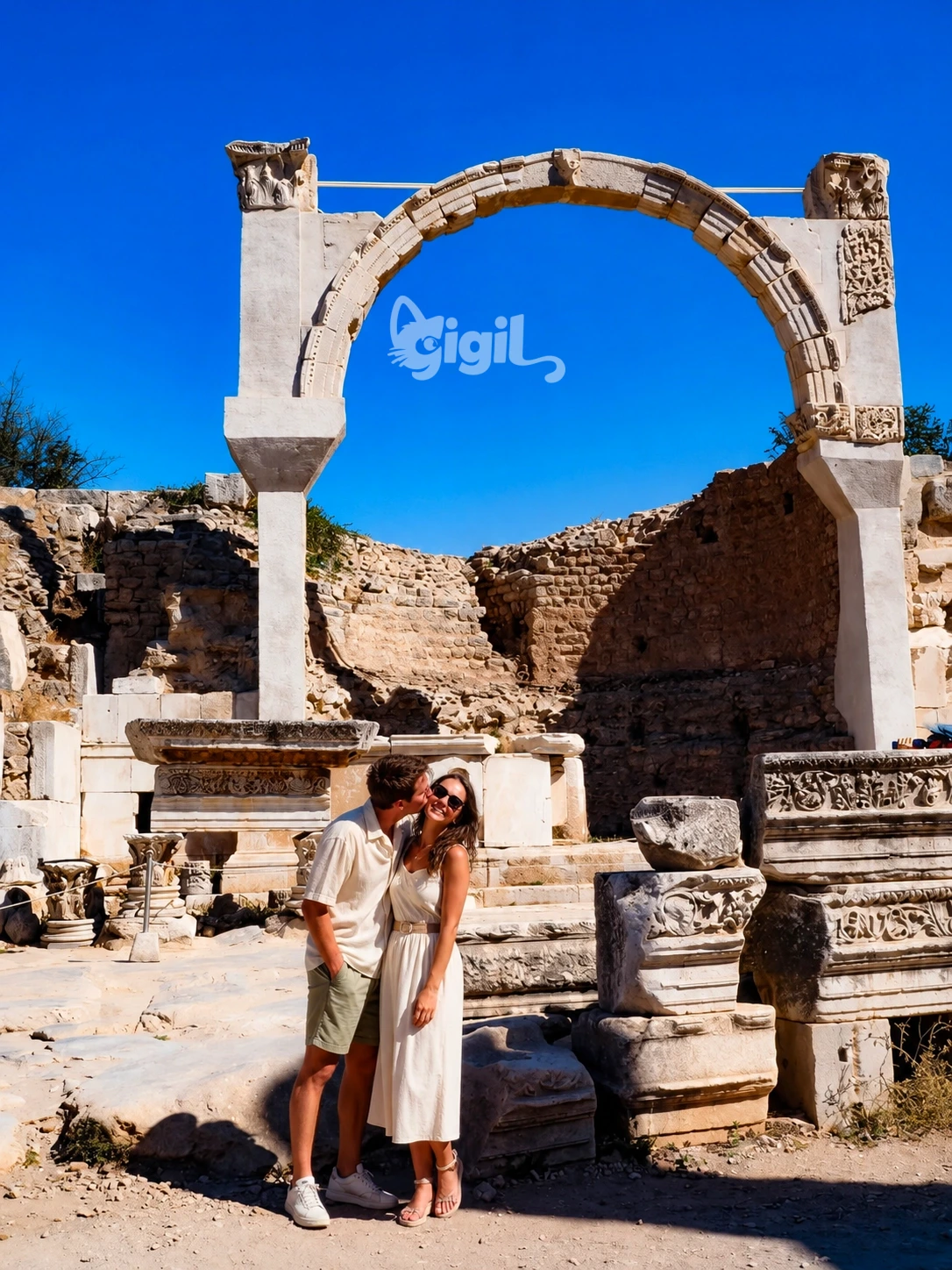
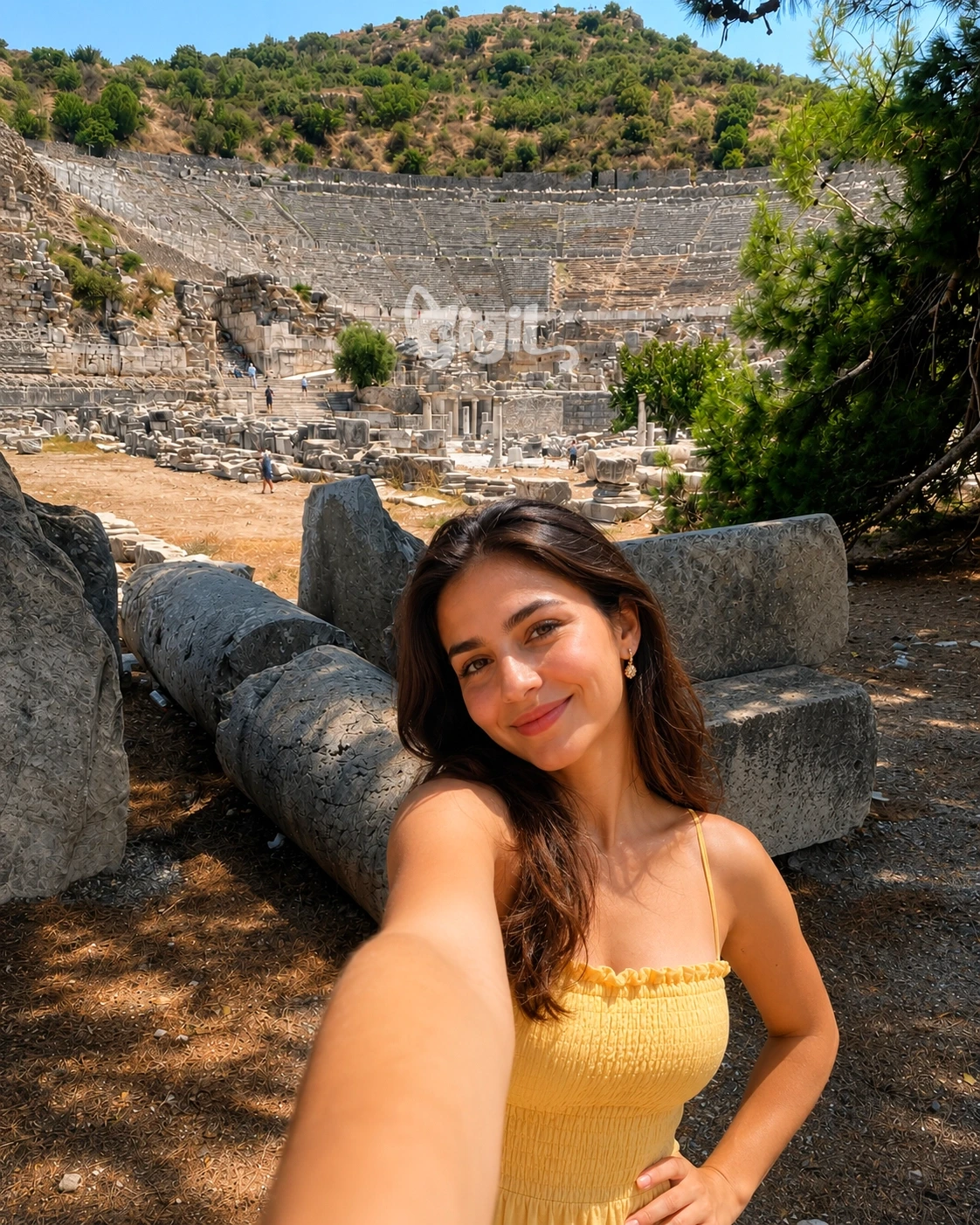
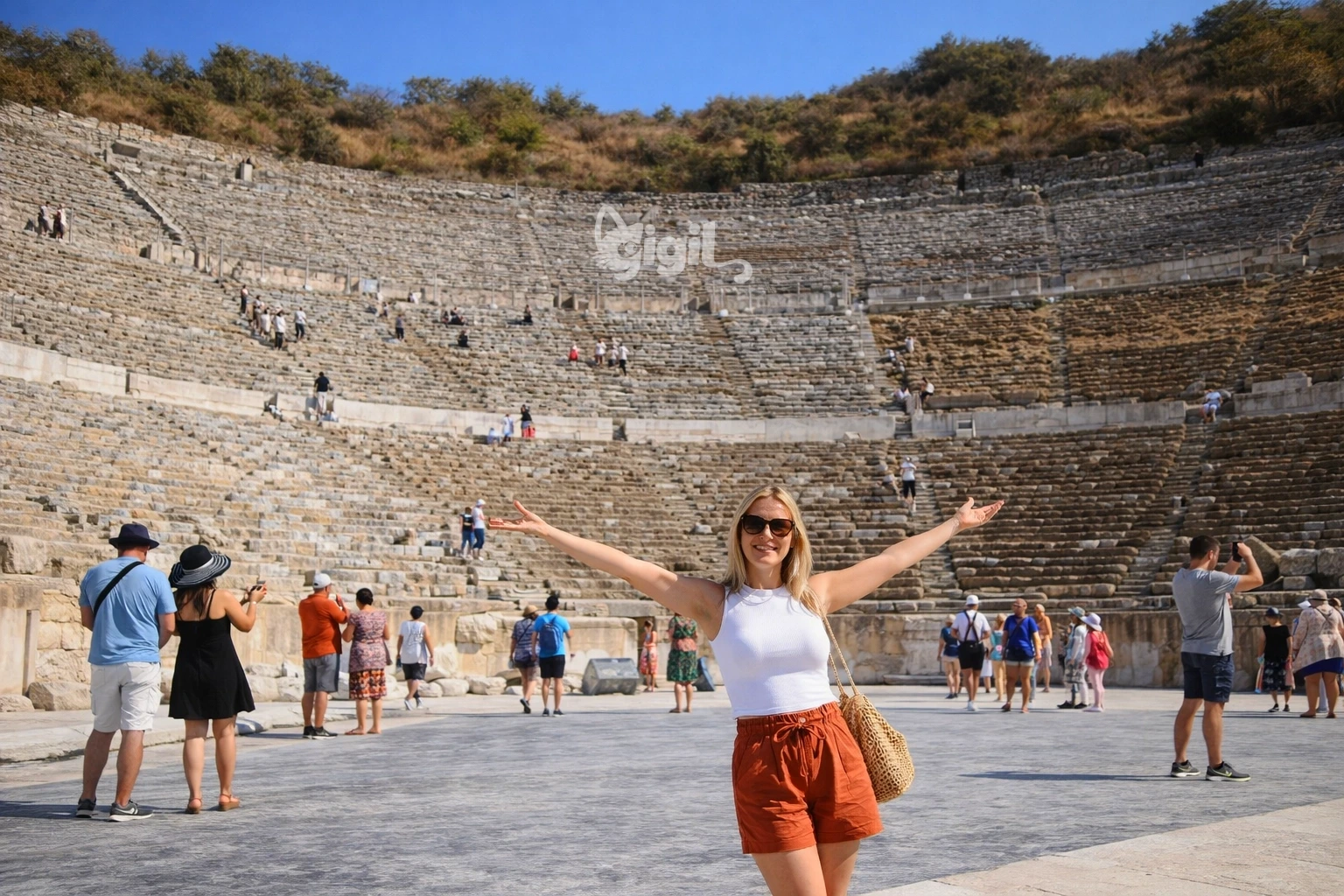
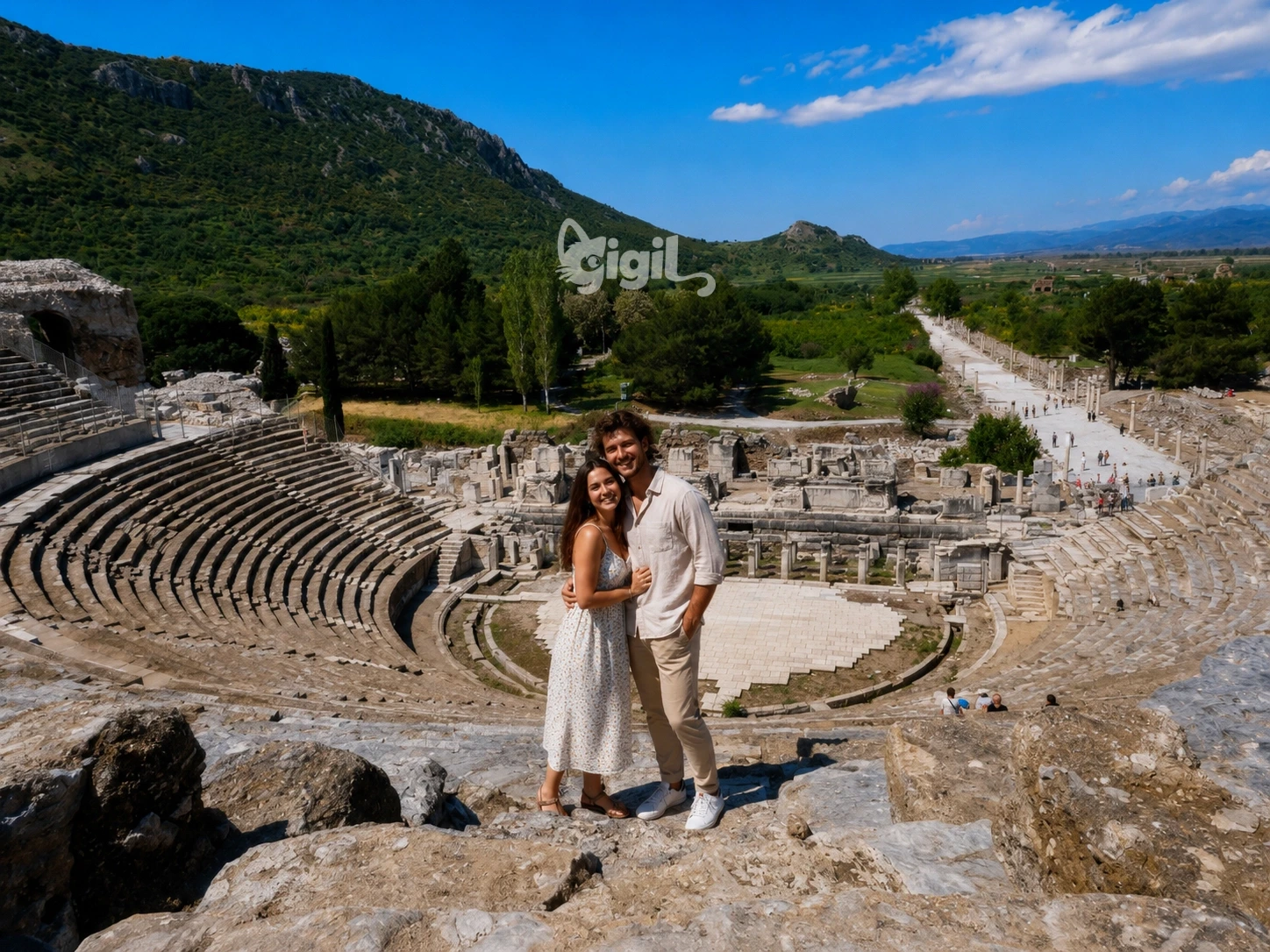
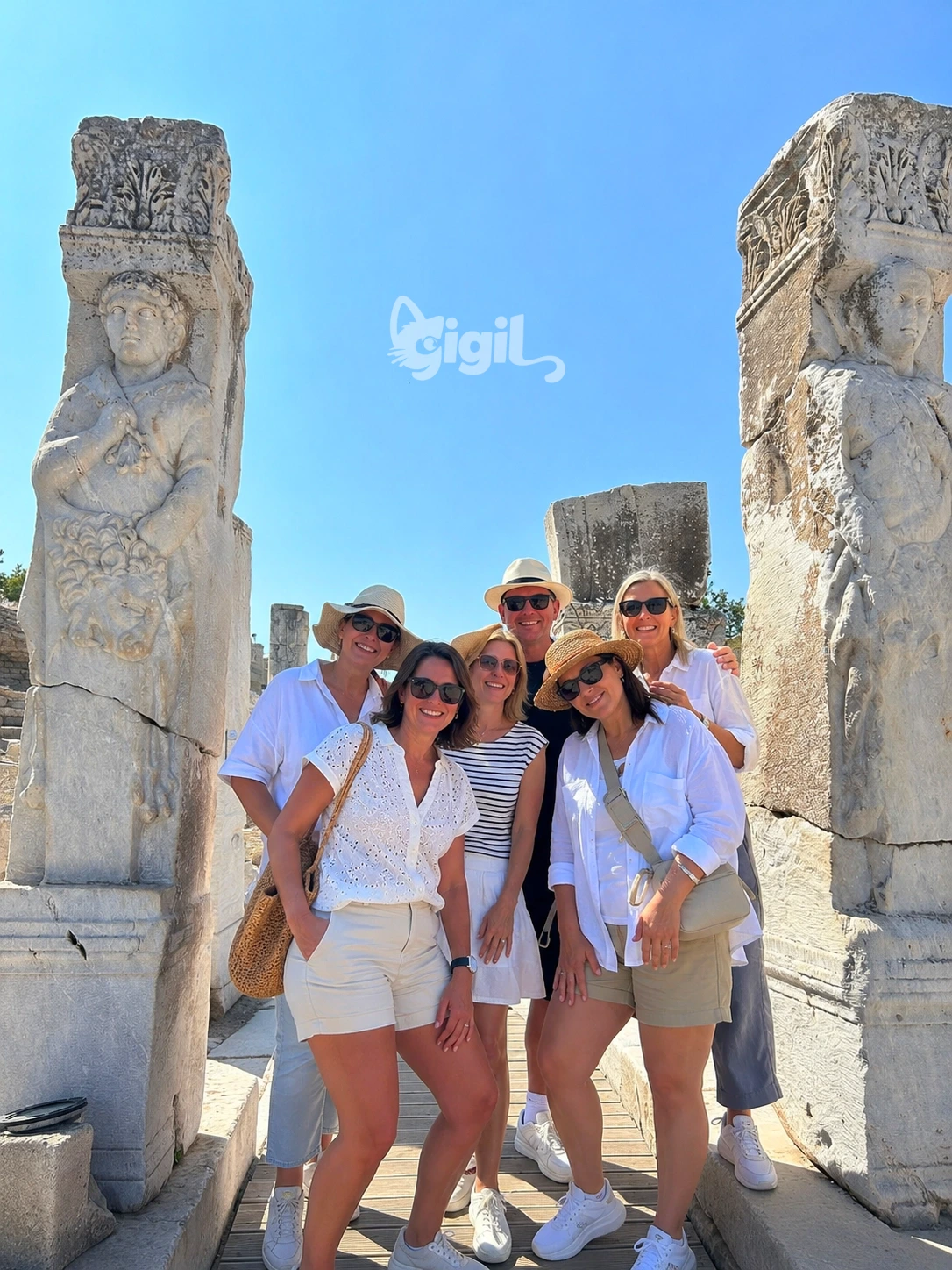
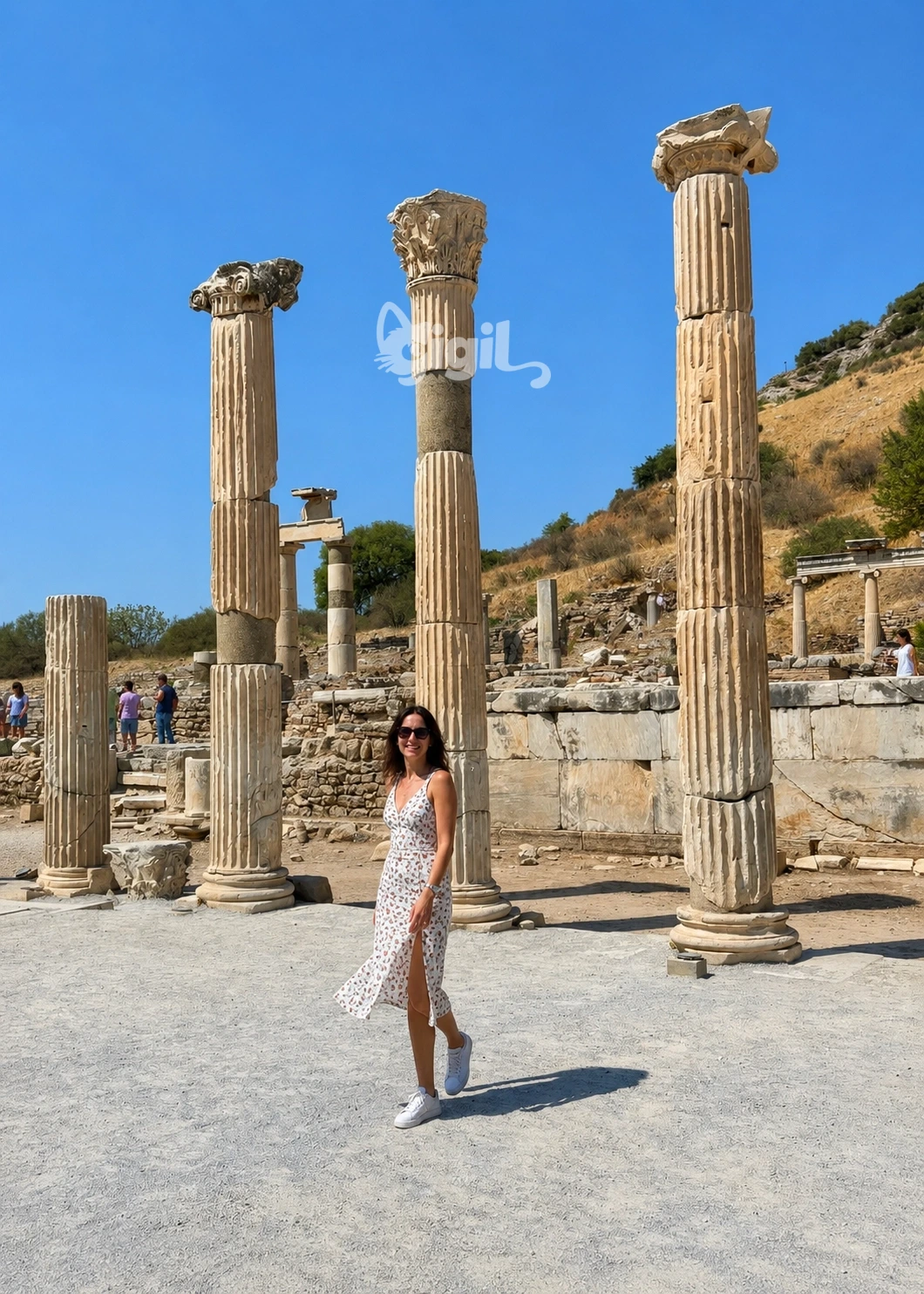
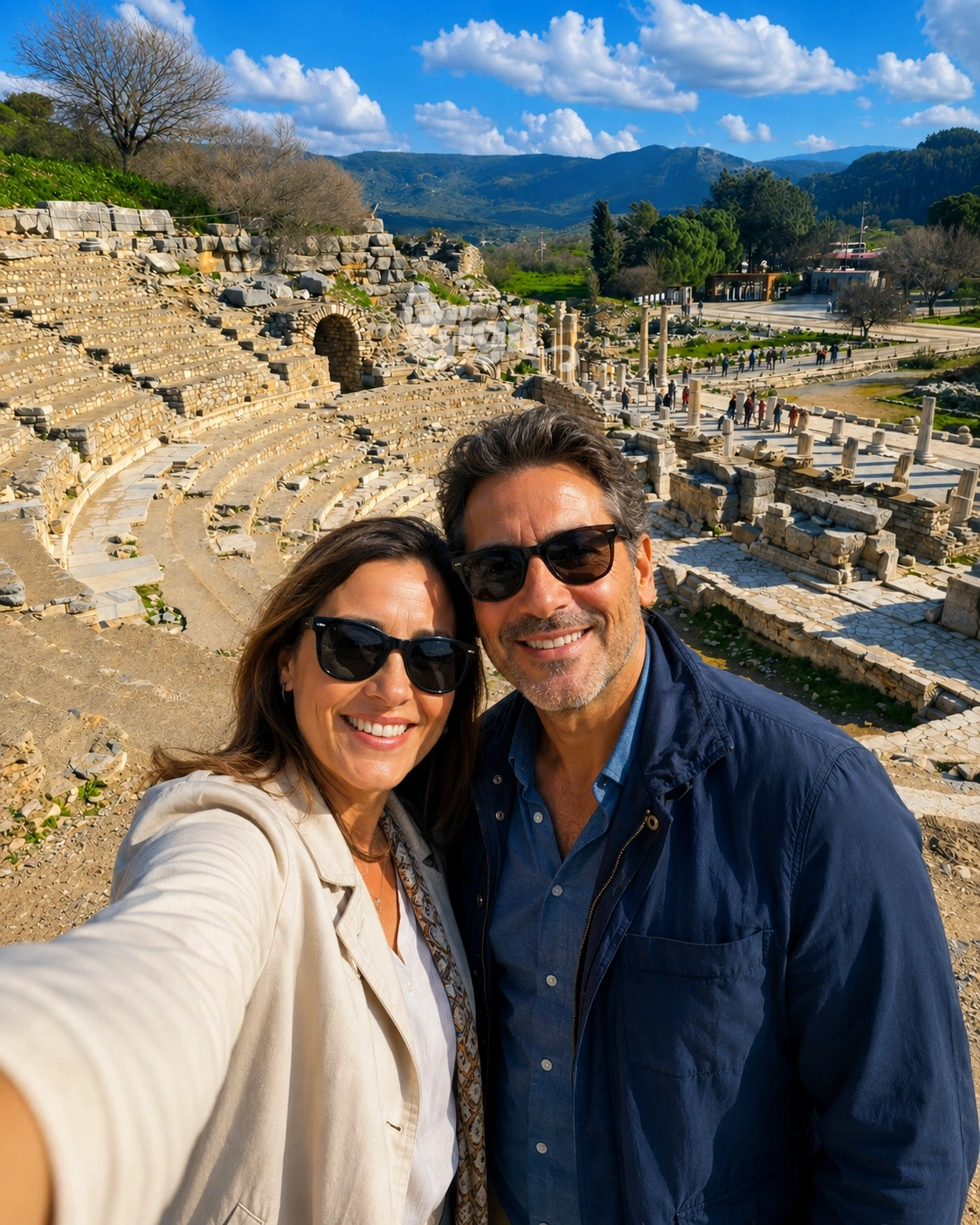
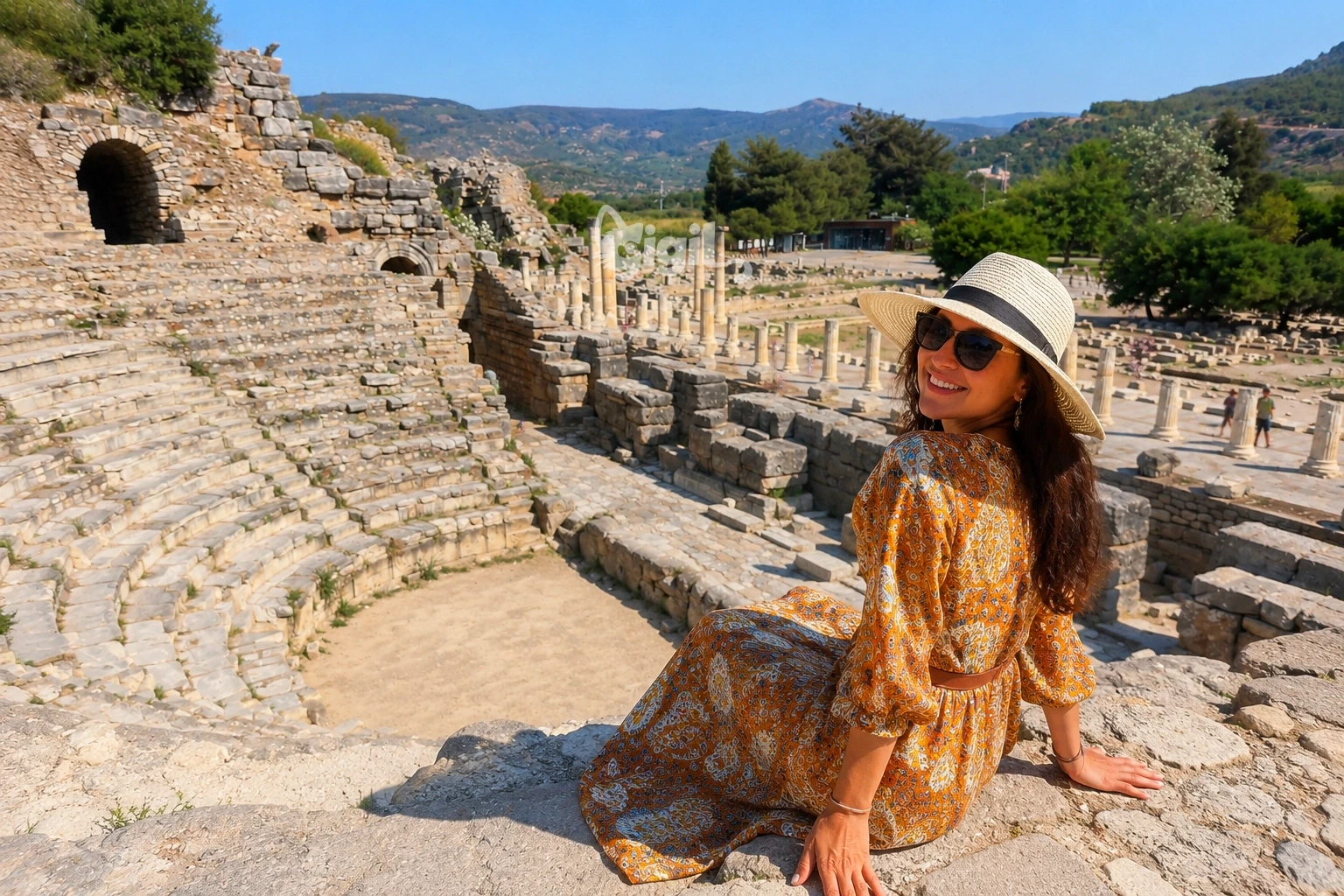
Ephesus Ancient City is the route's strongest archaeological experience. Its streets, theatre, agora areas, gates, inscriptions and Library of Celsus allow visitors to imagine how a major city was planned, used and displayed in the ancient world.
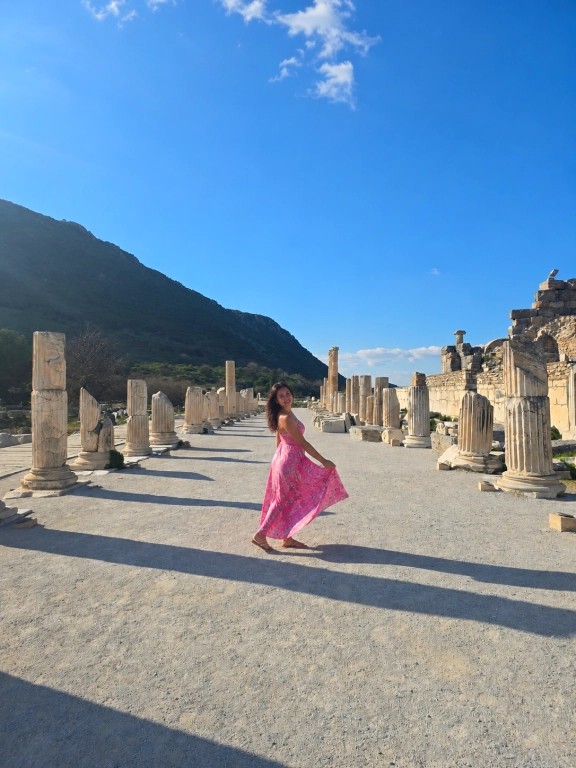
The value of Ephesus is in the connections between its parts. Marble streets lead to civic spaces, public monuments speak to status and power, and the city's former harbor identity explains why this inland archaeological site once had such wide influence.
Questions
Why is Ephesus considered more than a collection of ruins?
Ephesus still shows the organization of an ancient city. Streets, civic spaces, monuments and inscriptions work together to explain movement, public life and social status.
Which Ephesus features help explain the city best?
The theatre, Library of Celsus, marble routes, gates, agora areas and inscription details are especially useful for understanding how the city functioned.
What role did geography play in Ephesus?
Geography was crucial because Ephesus once depended on harbor access. When the coastline changed over time, the city's relationship with the sea also changed.
How should restored areas be interpreted?
Restored areas help visitors imagine former scale and form. They should be understood together with original remains, excavation and conservation work.