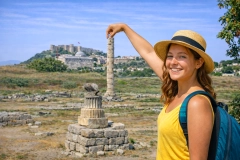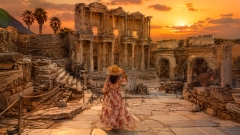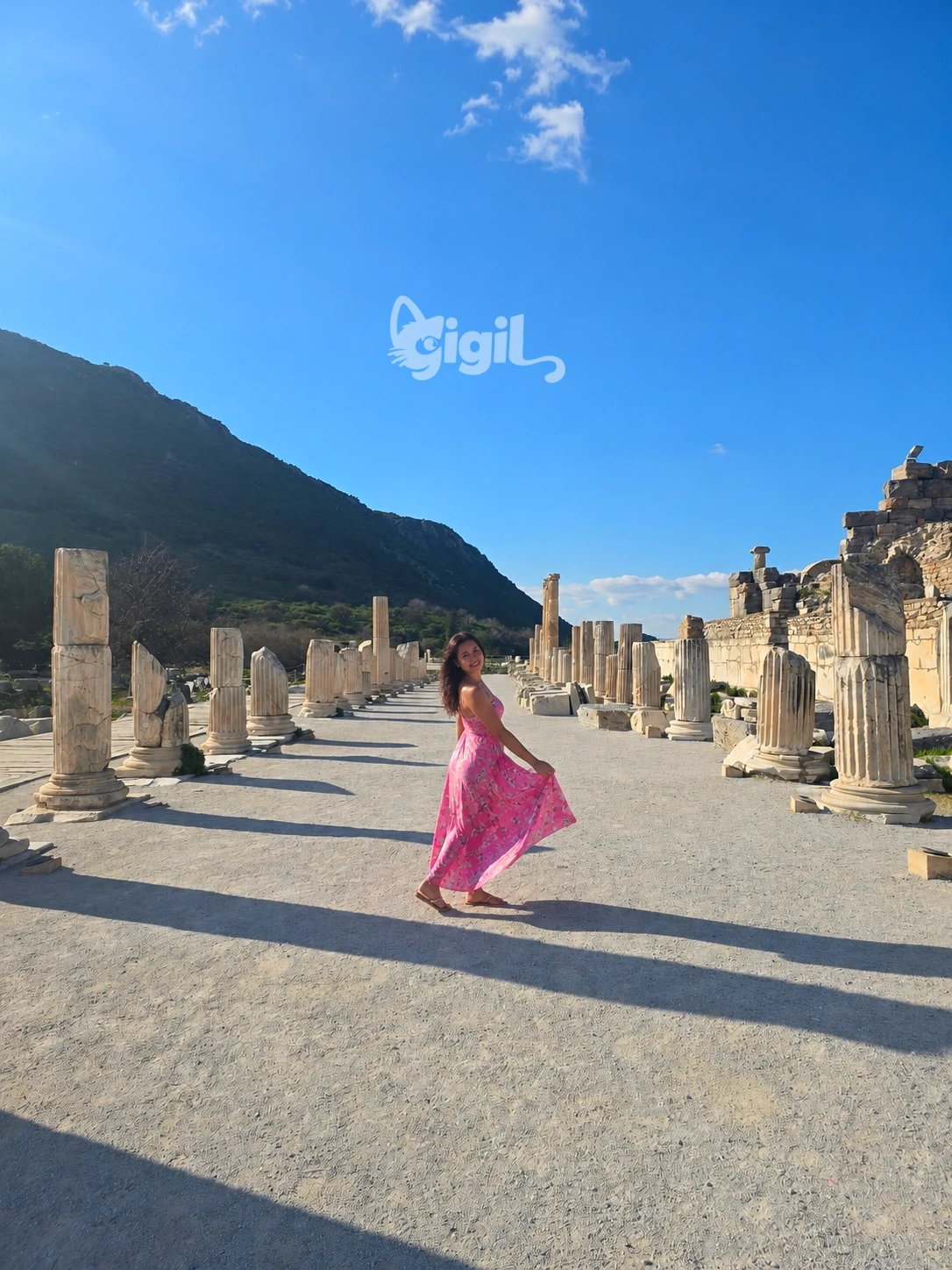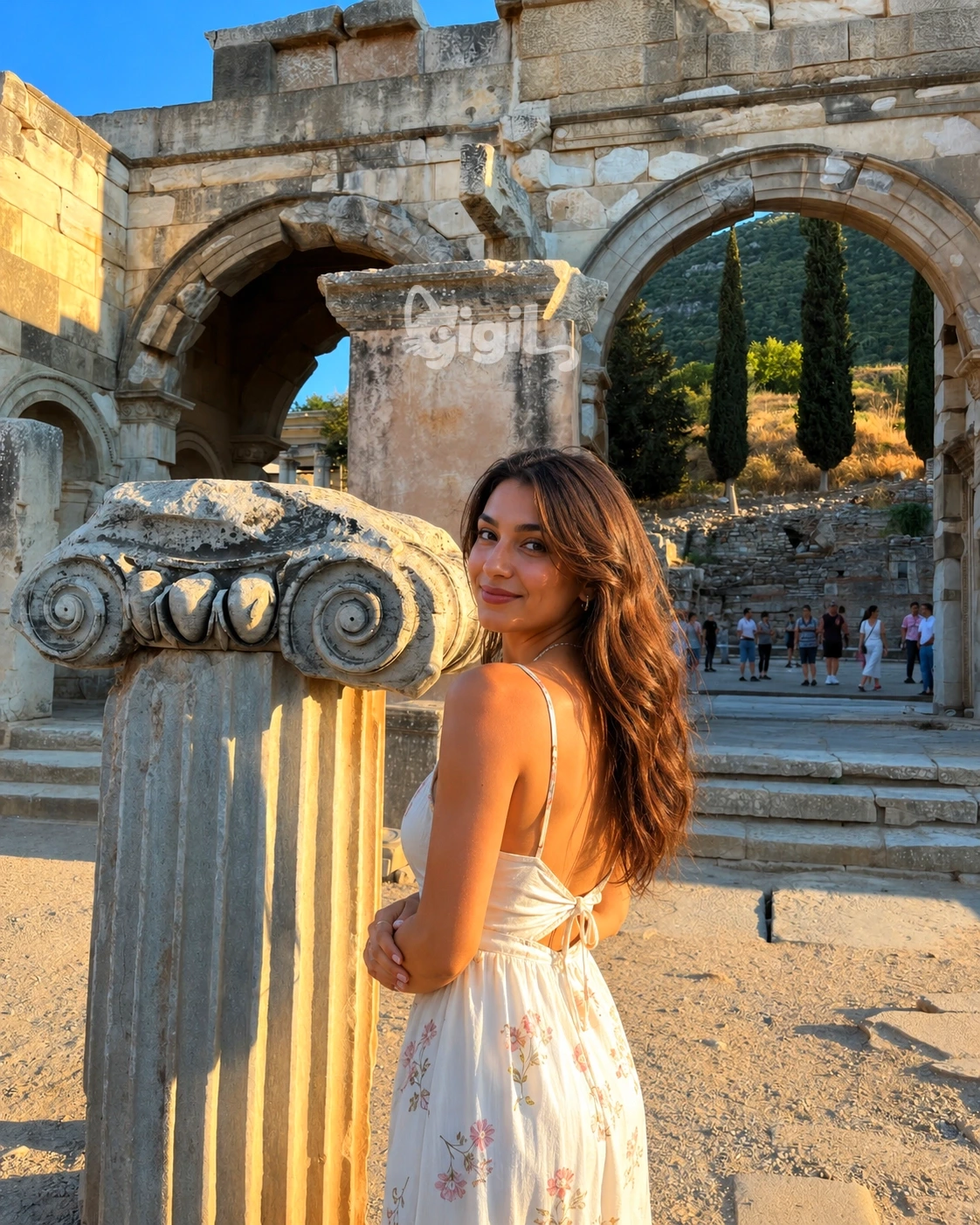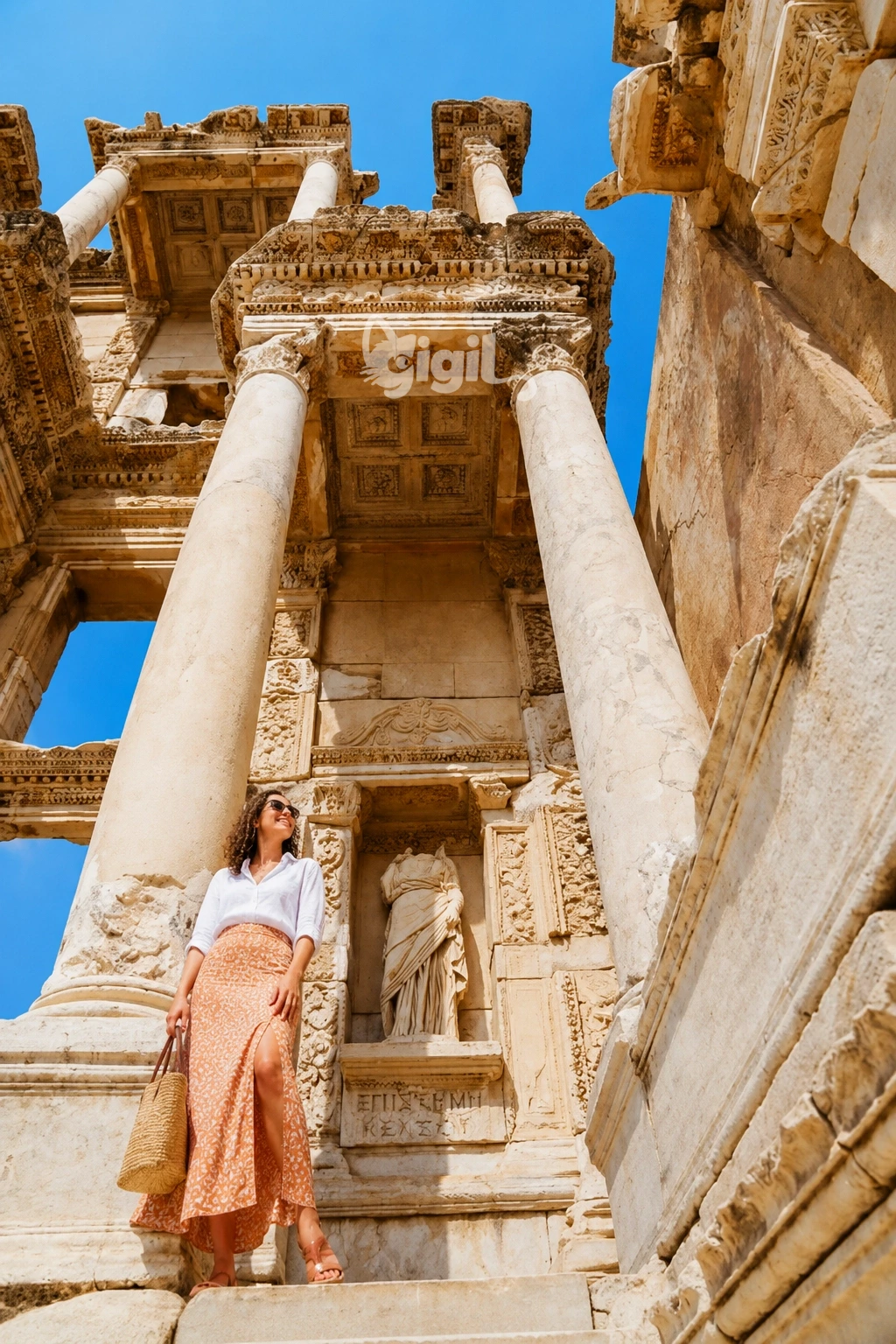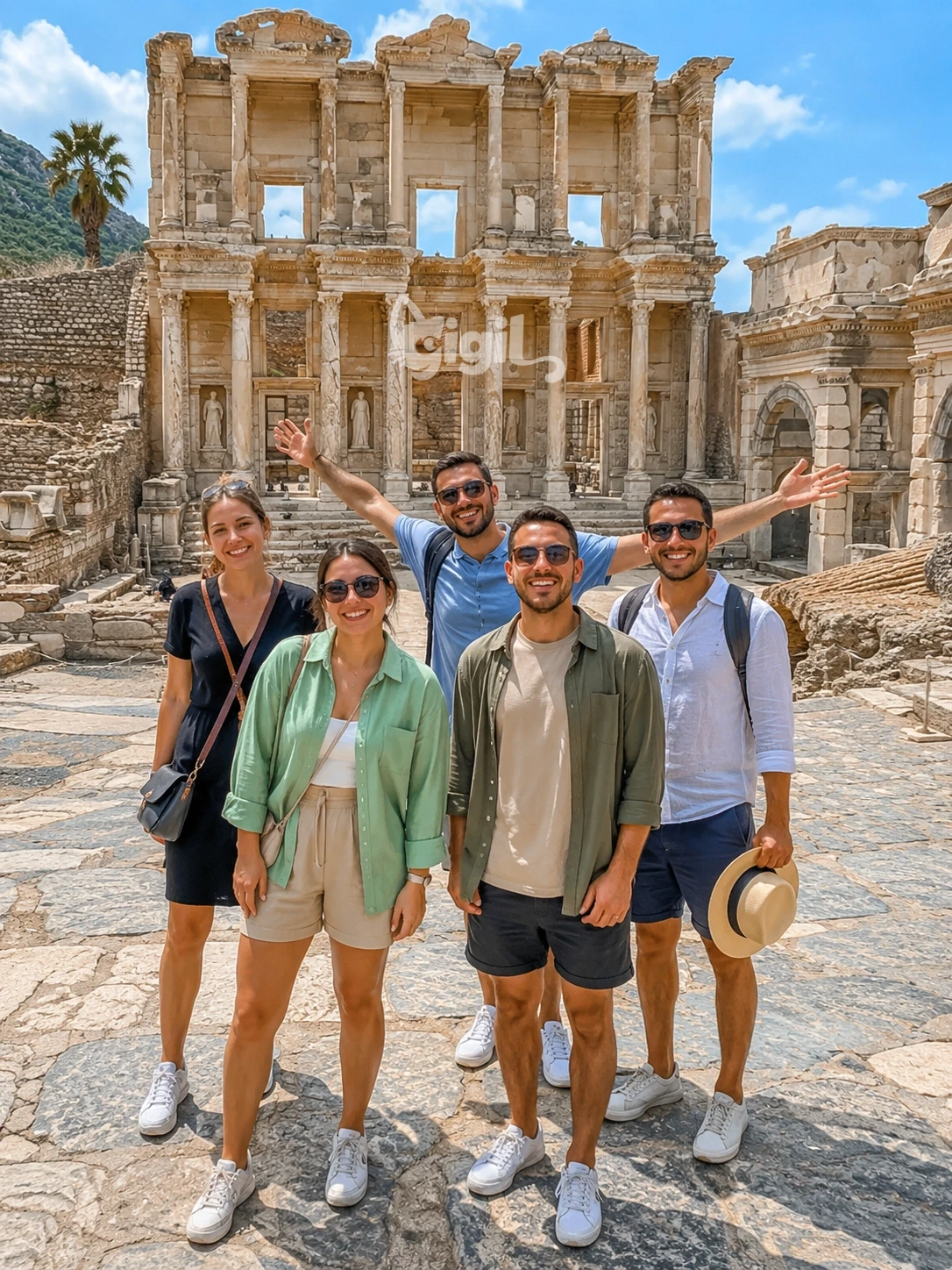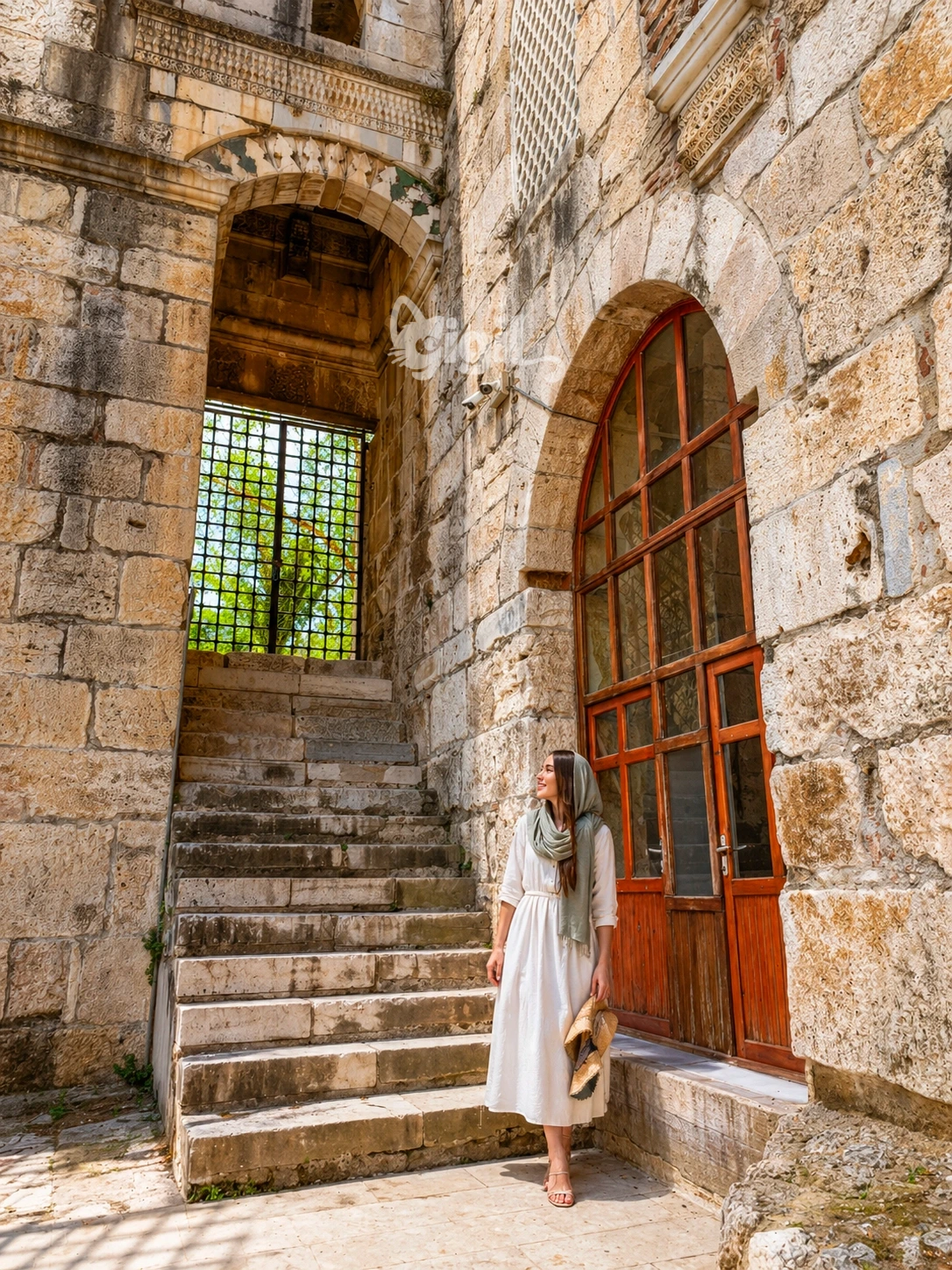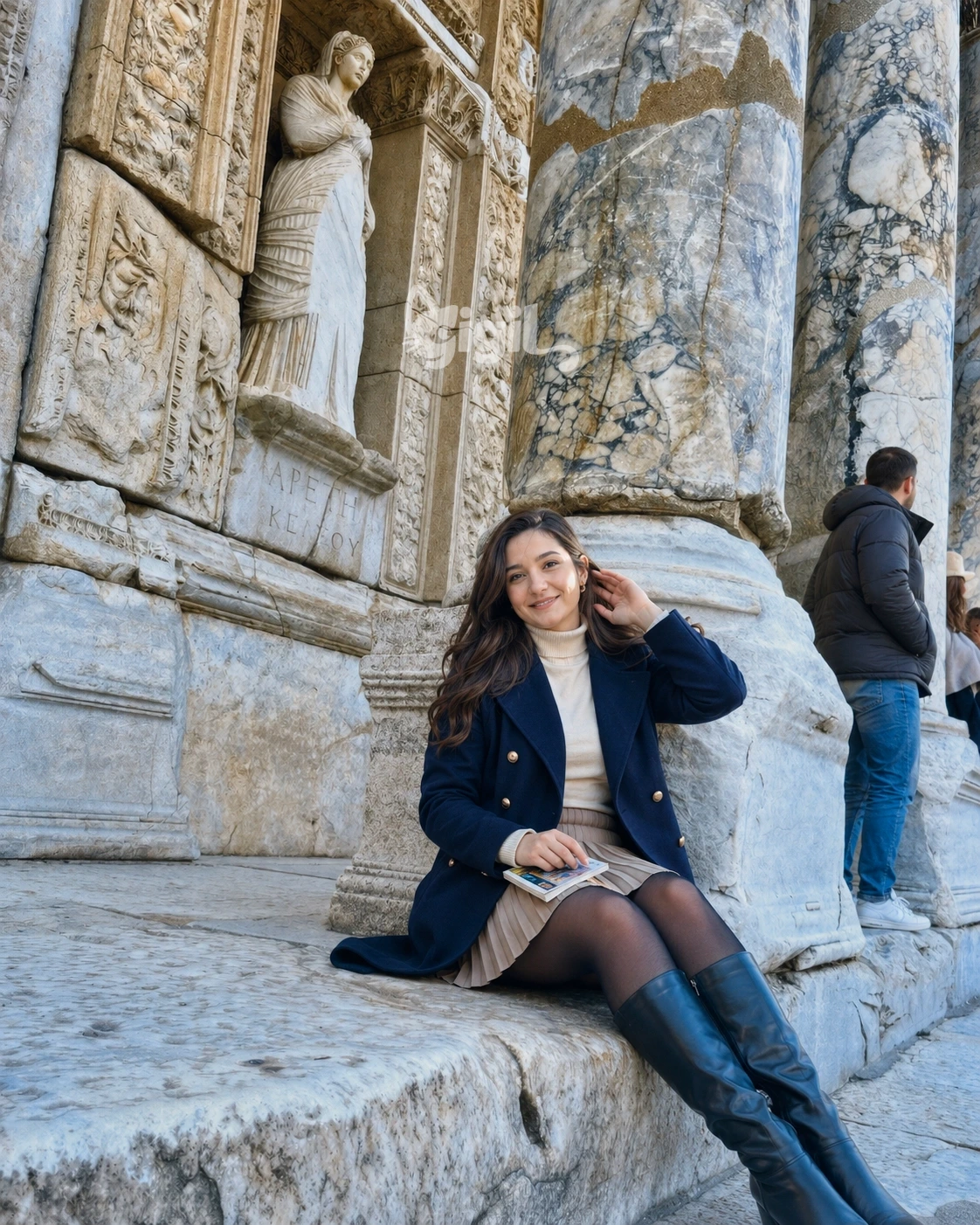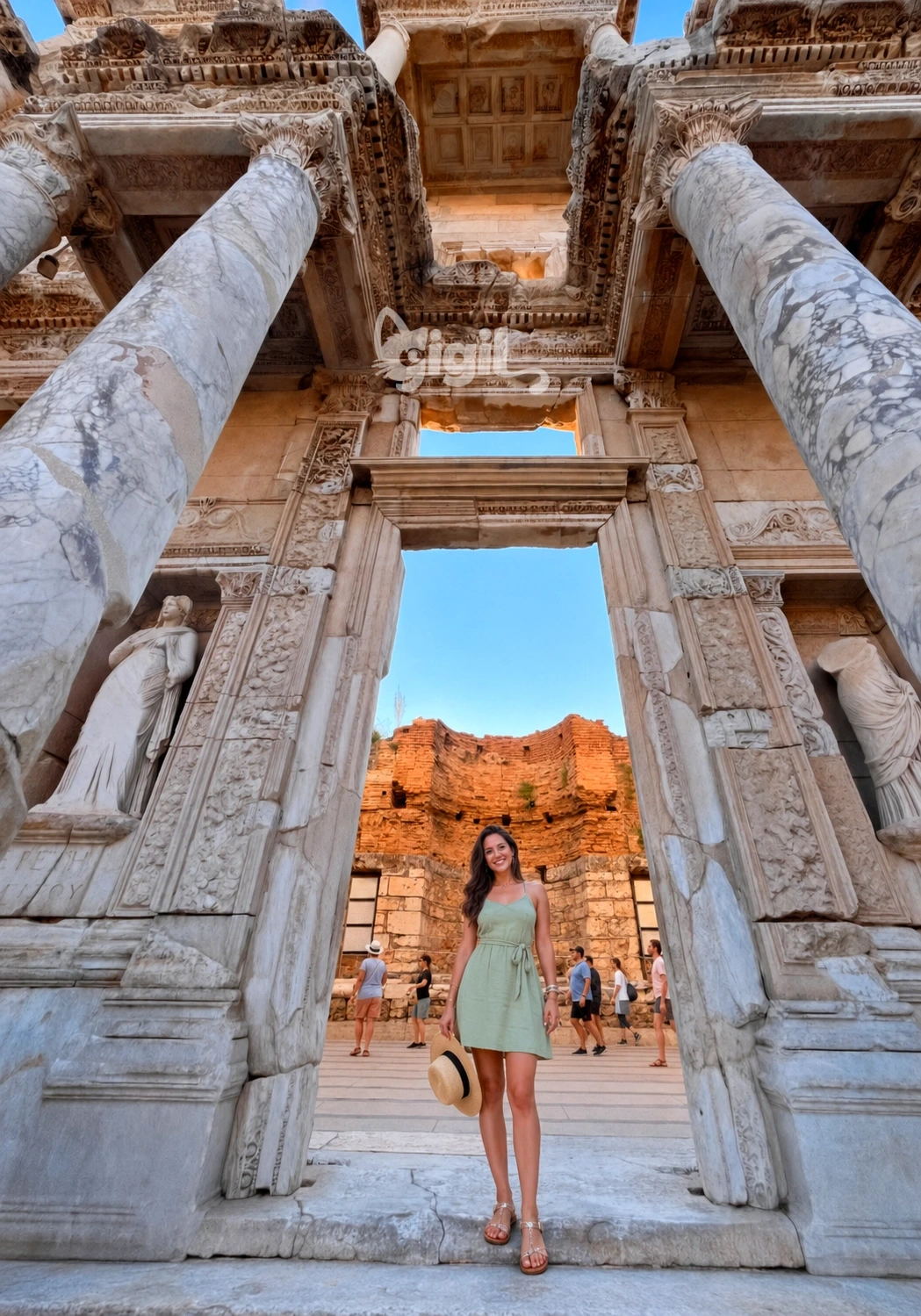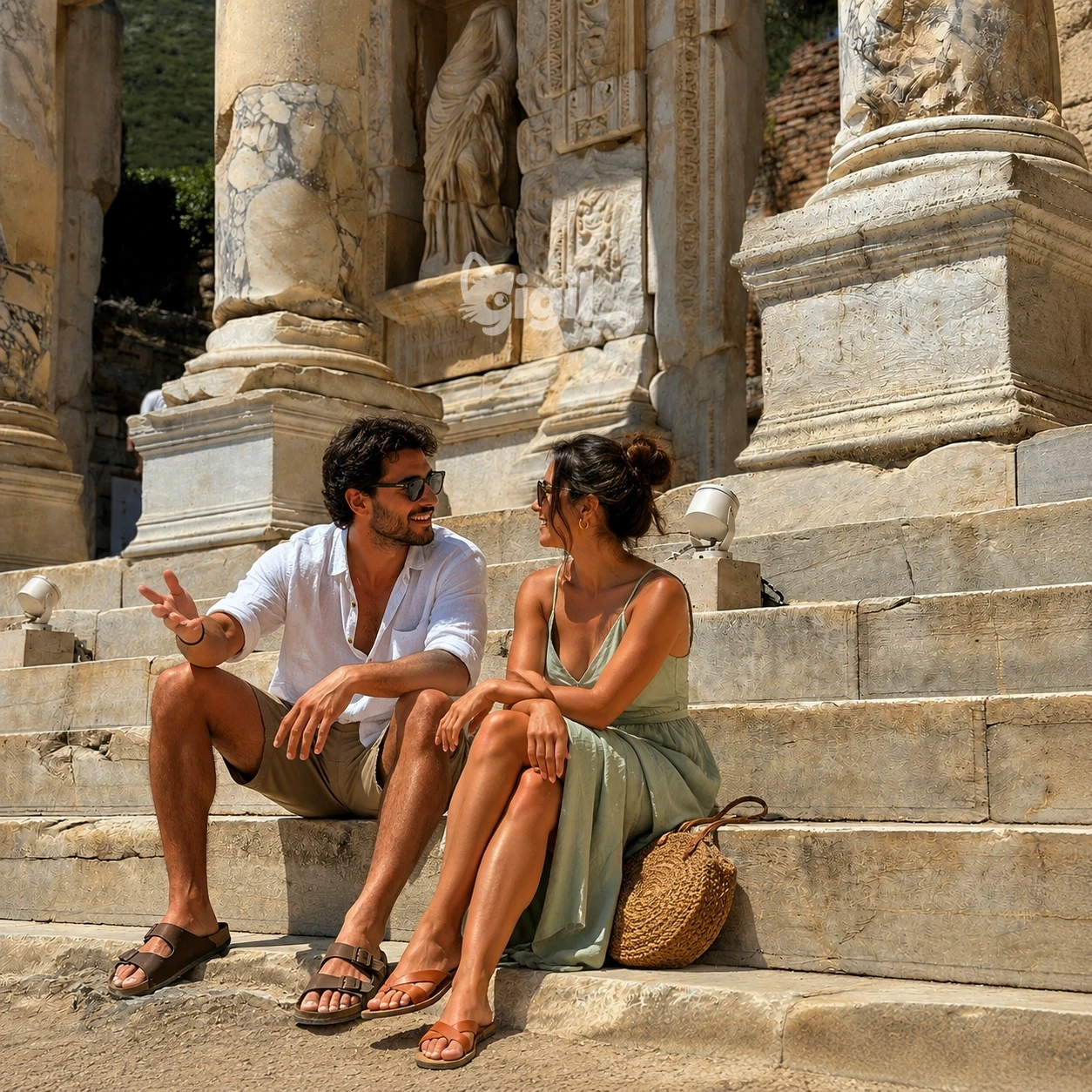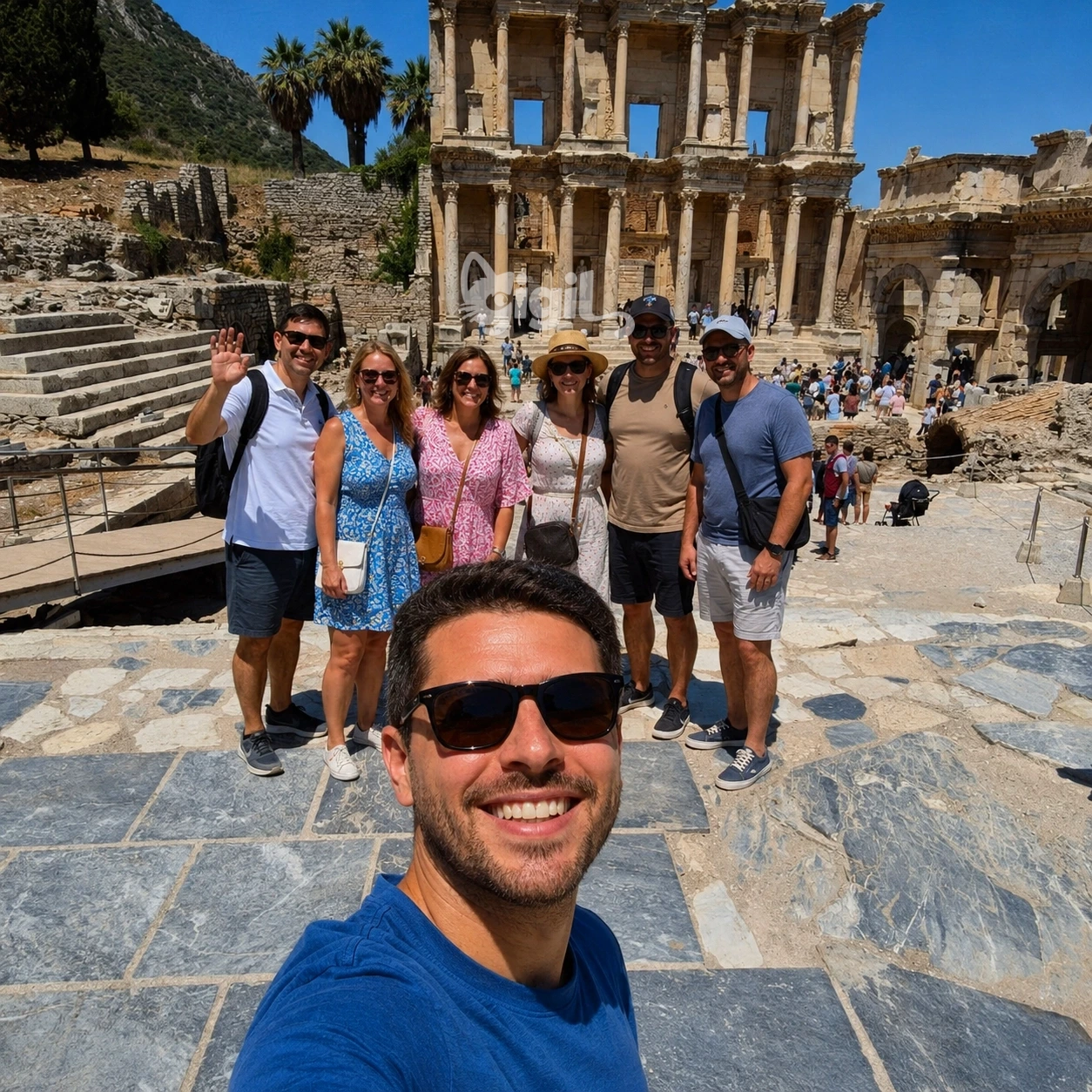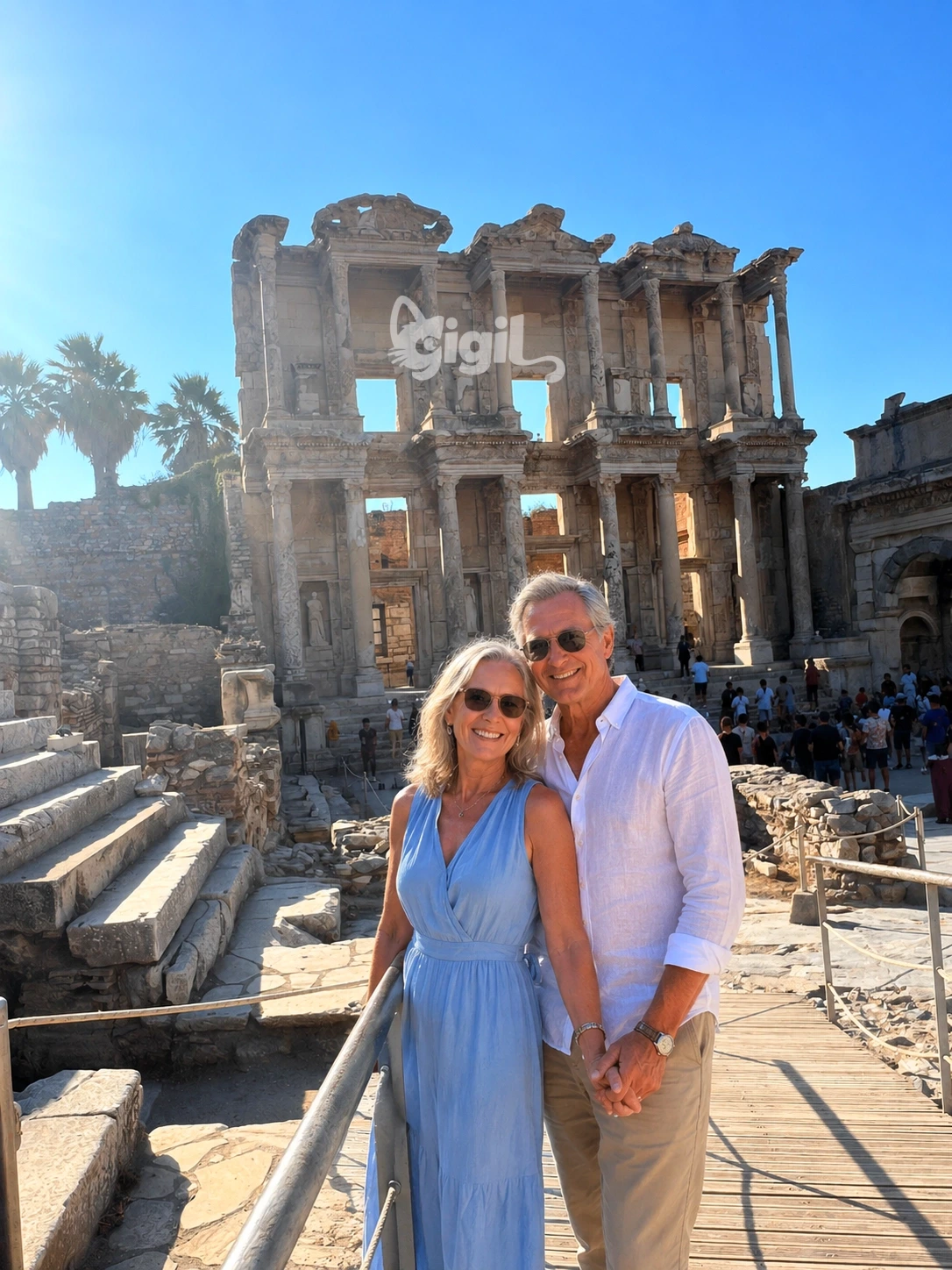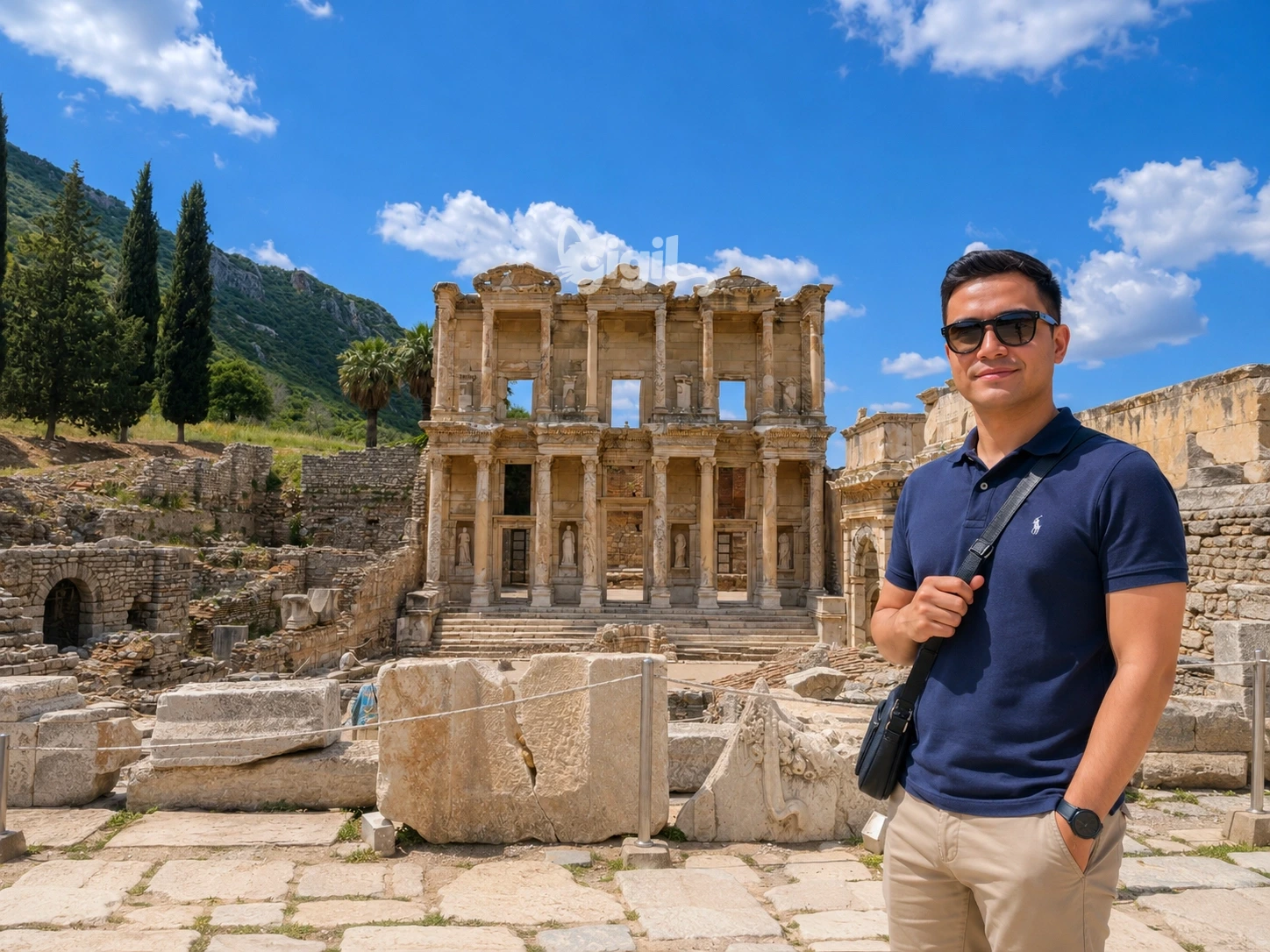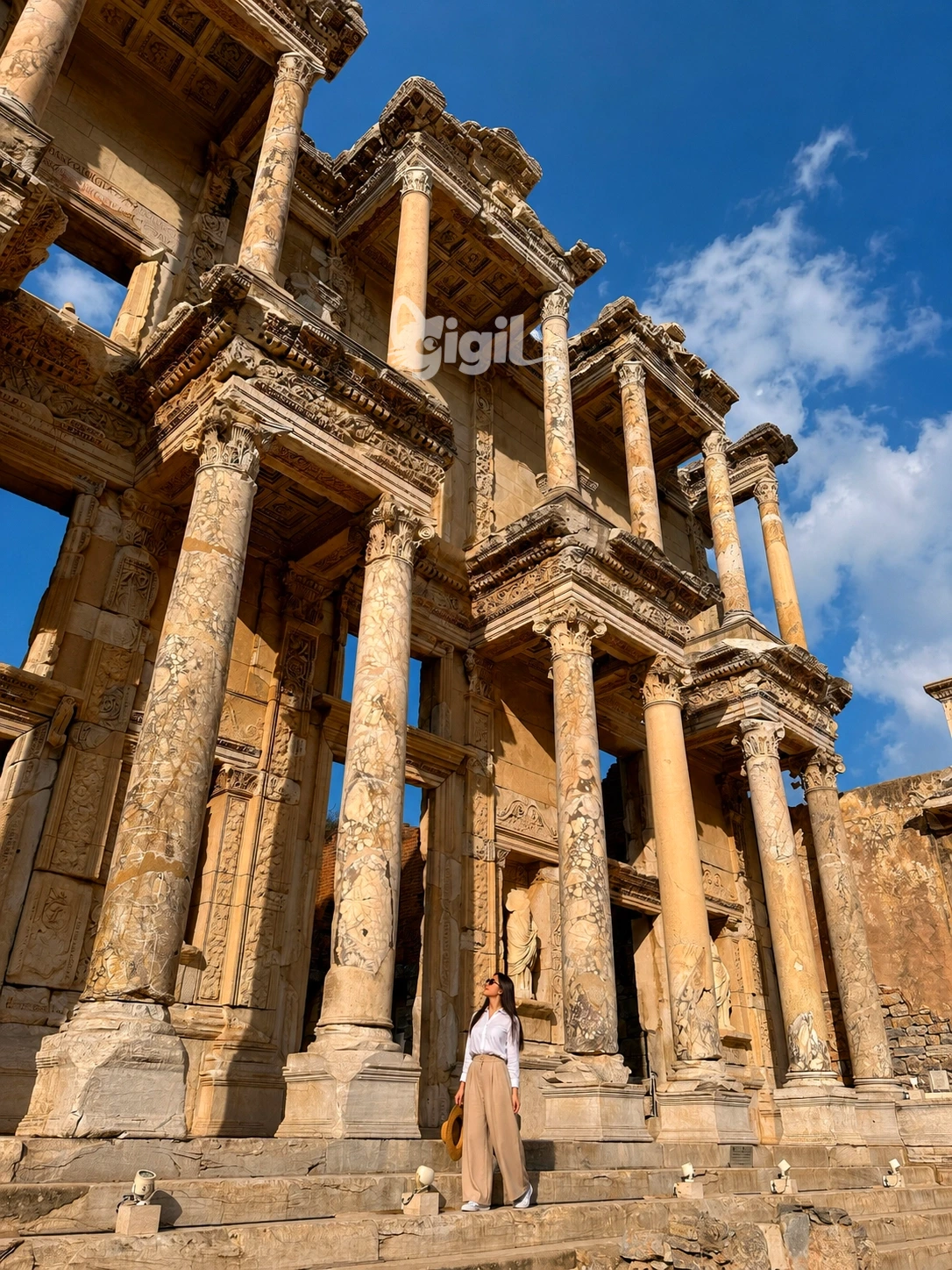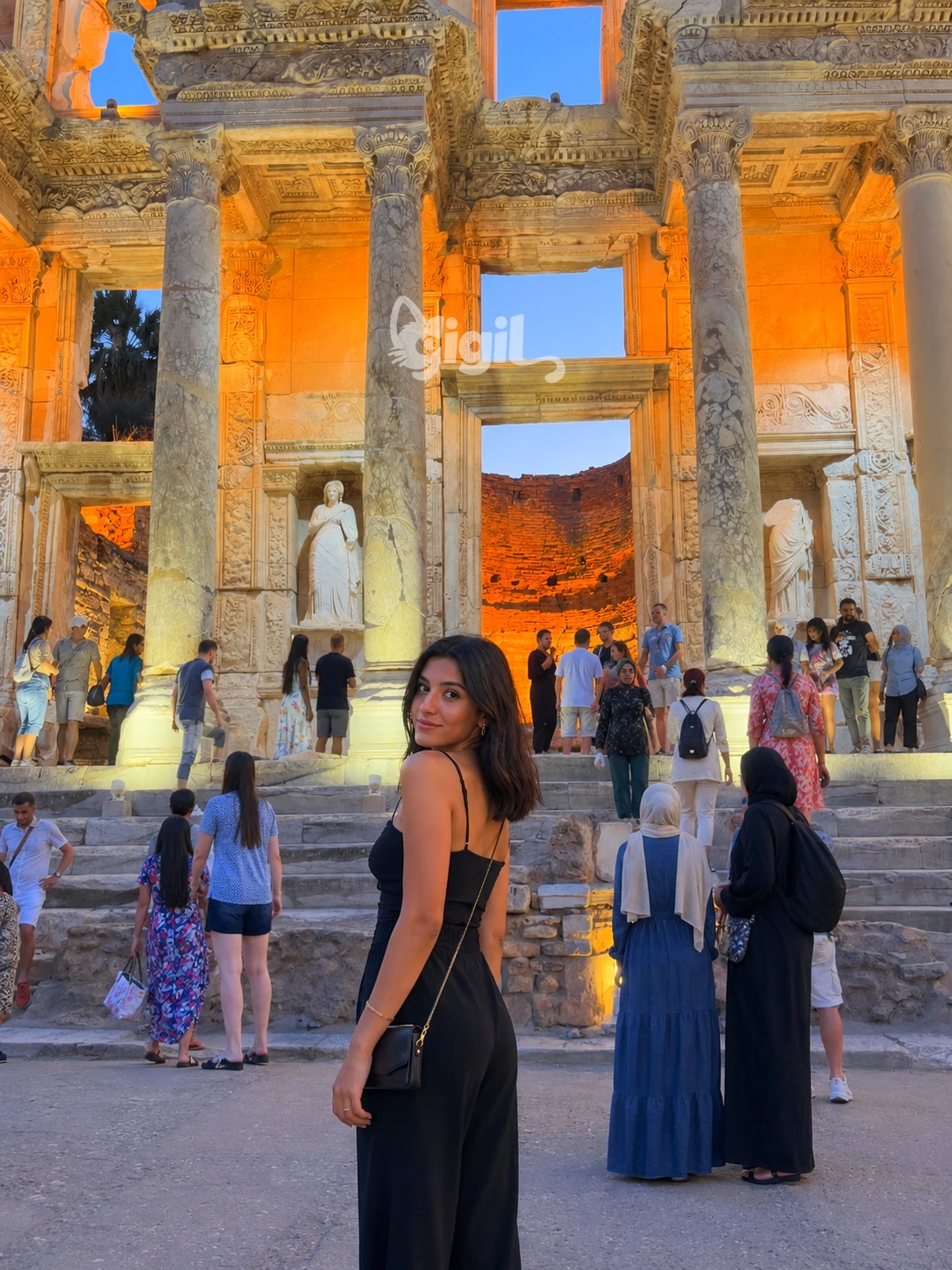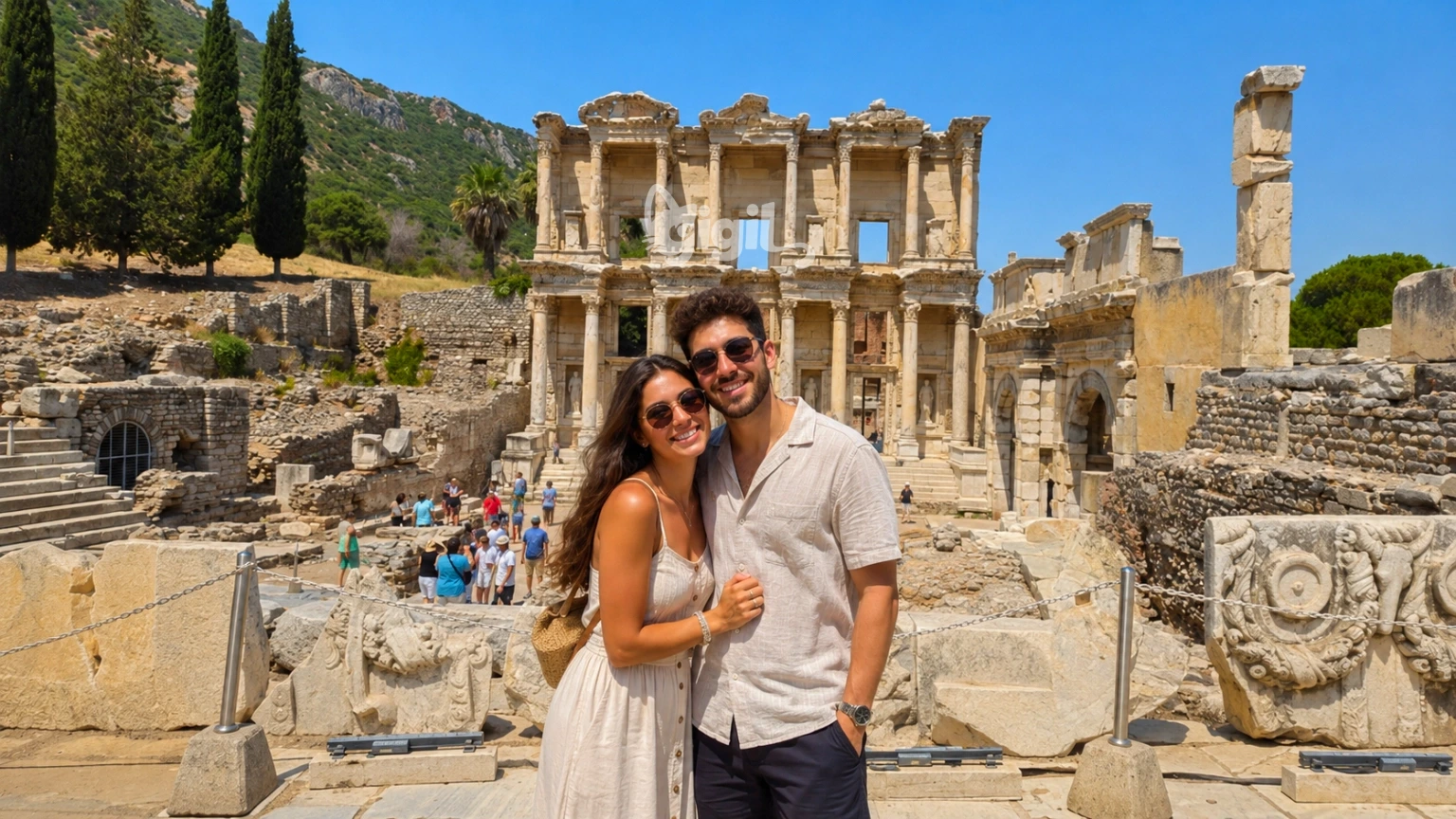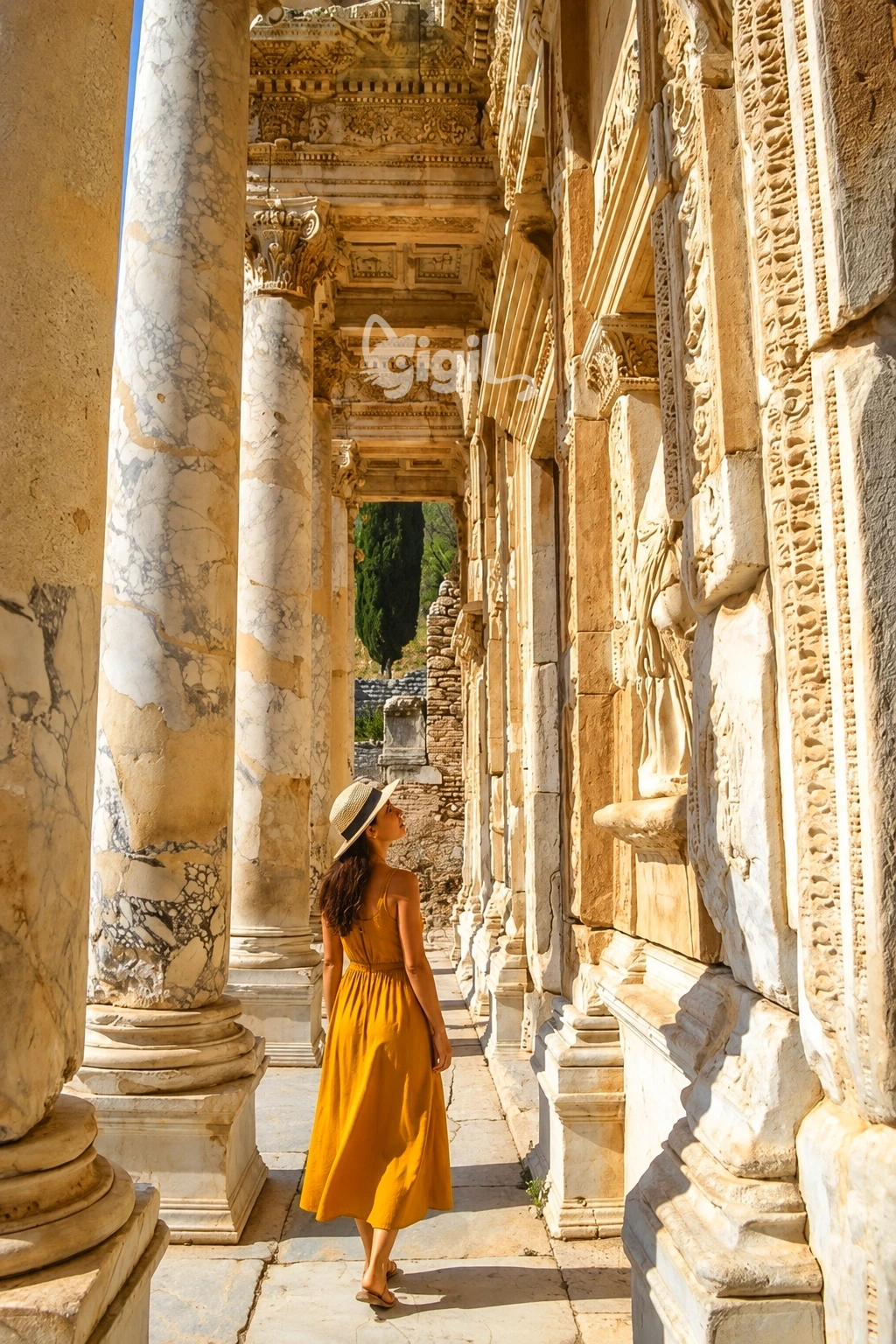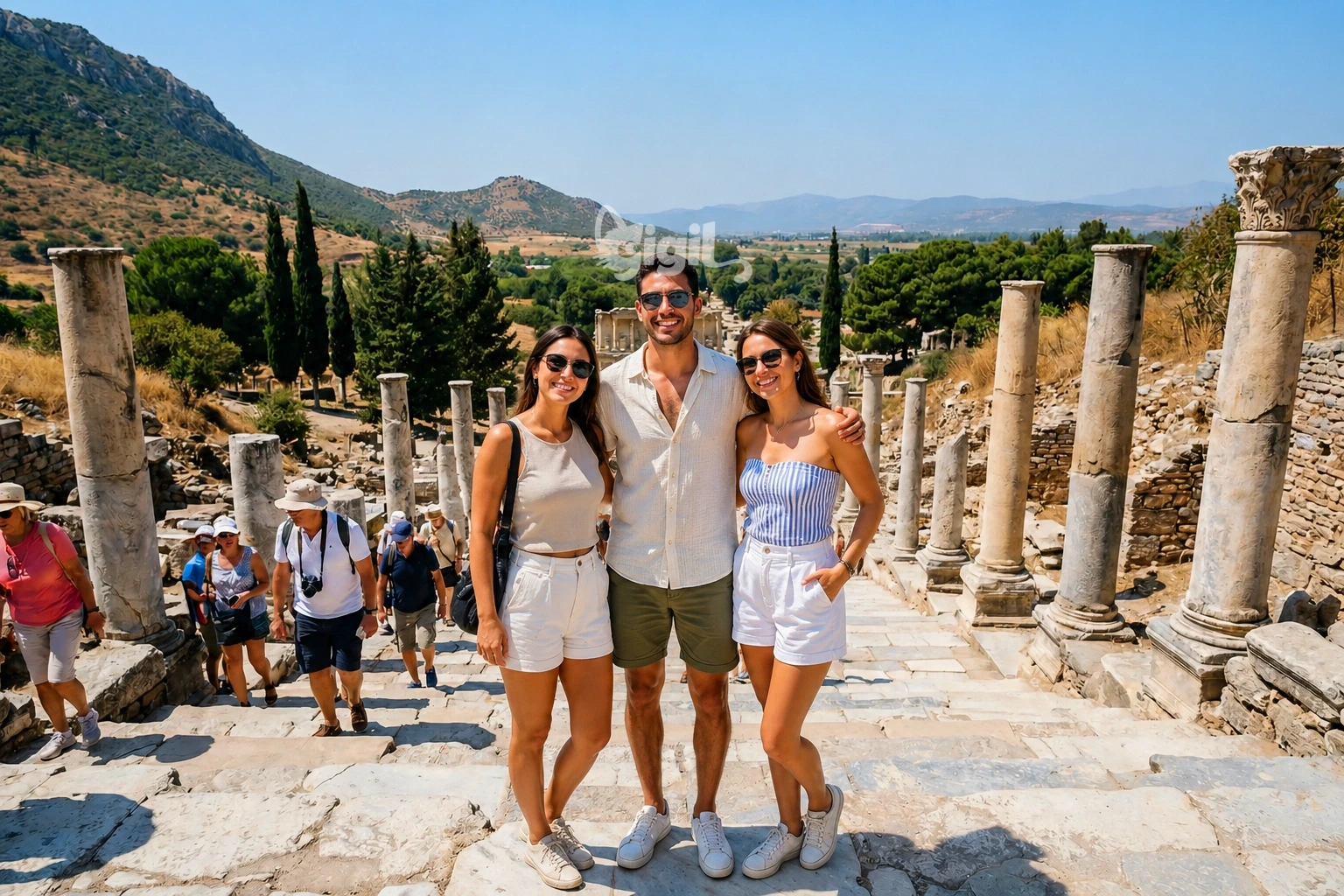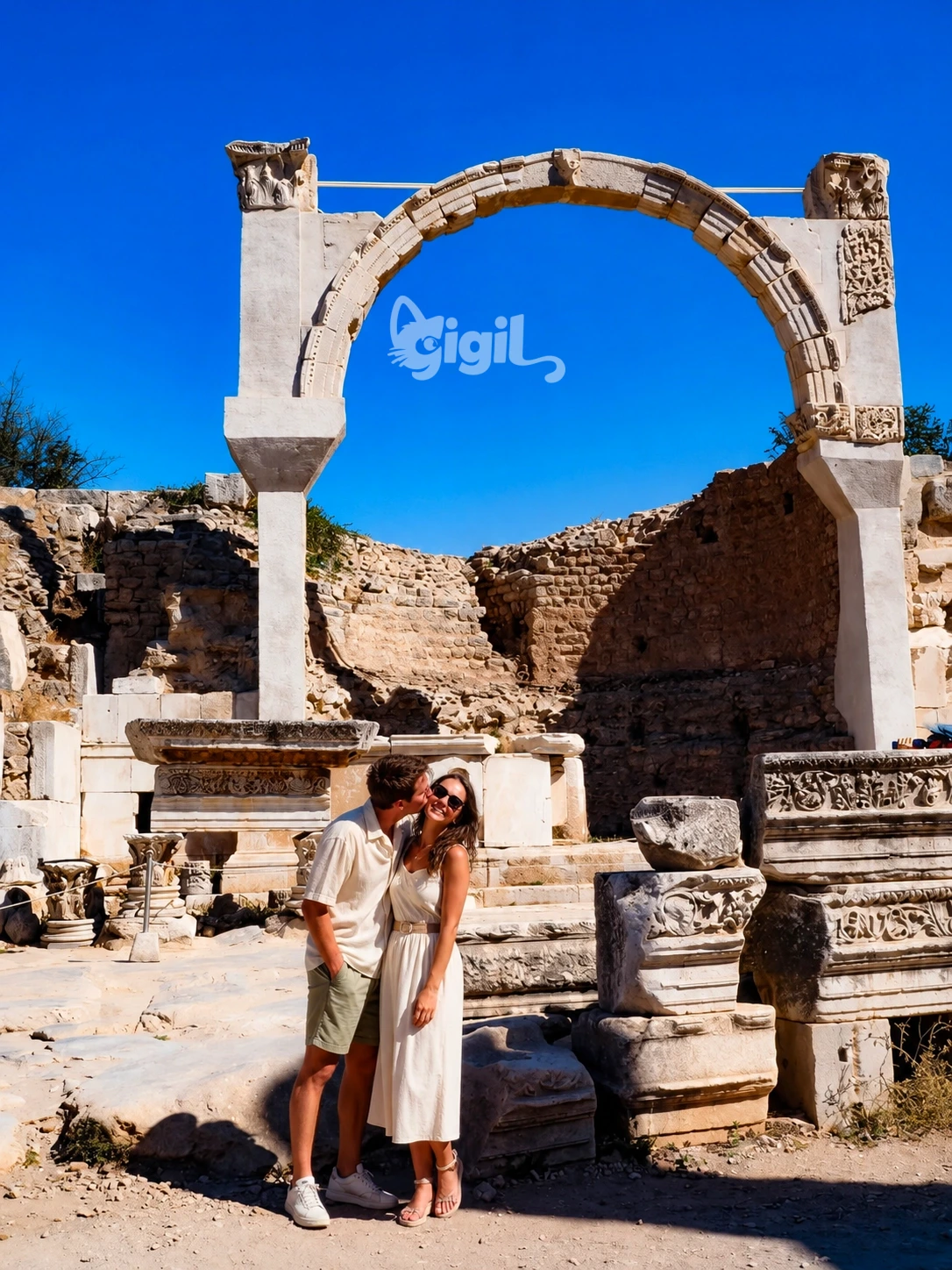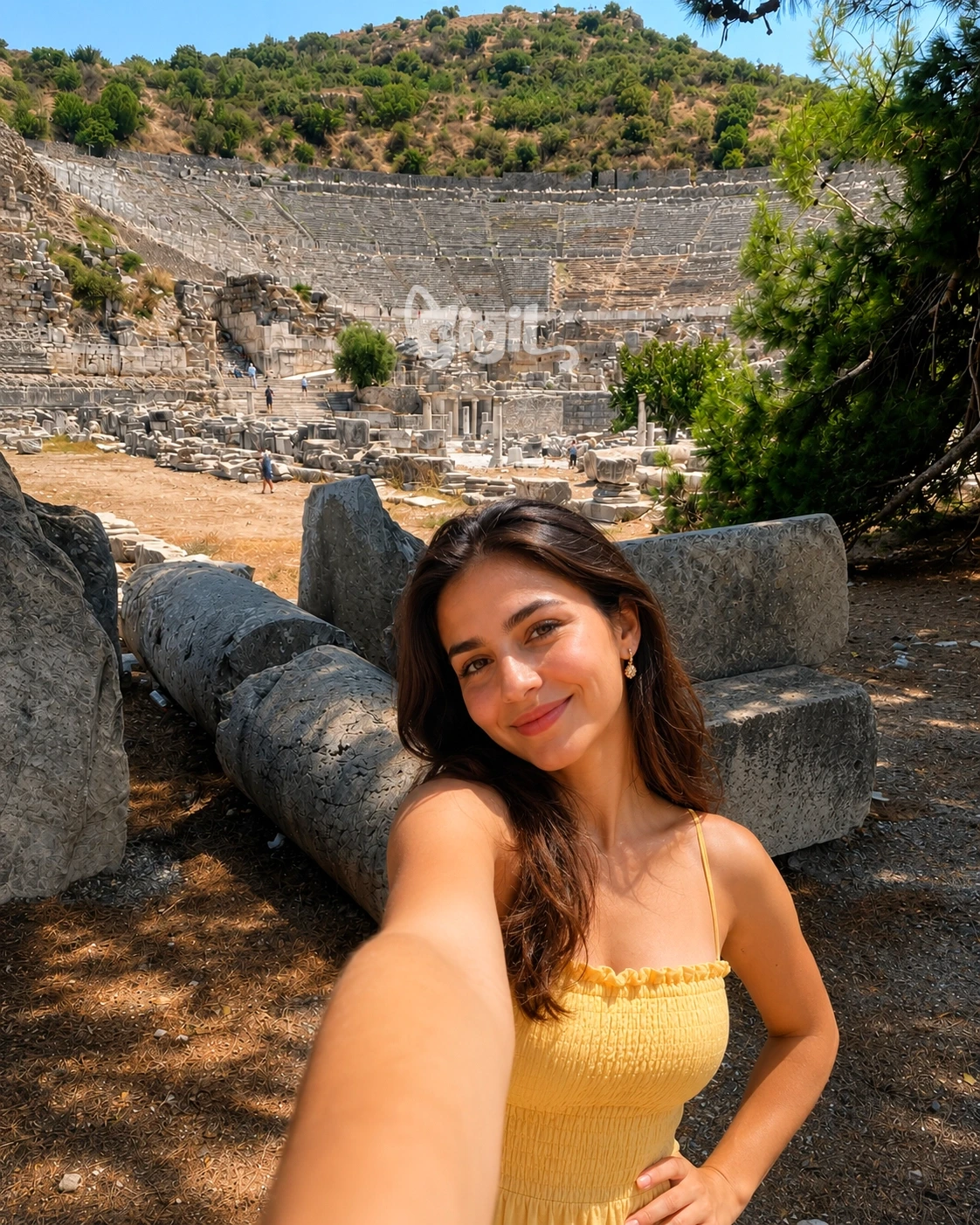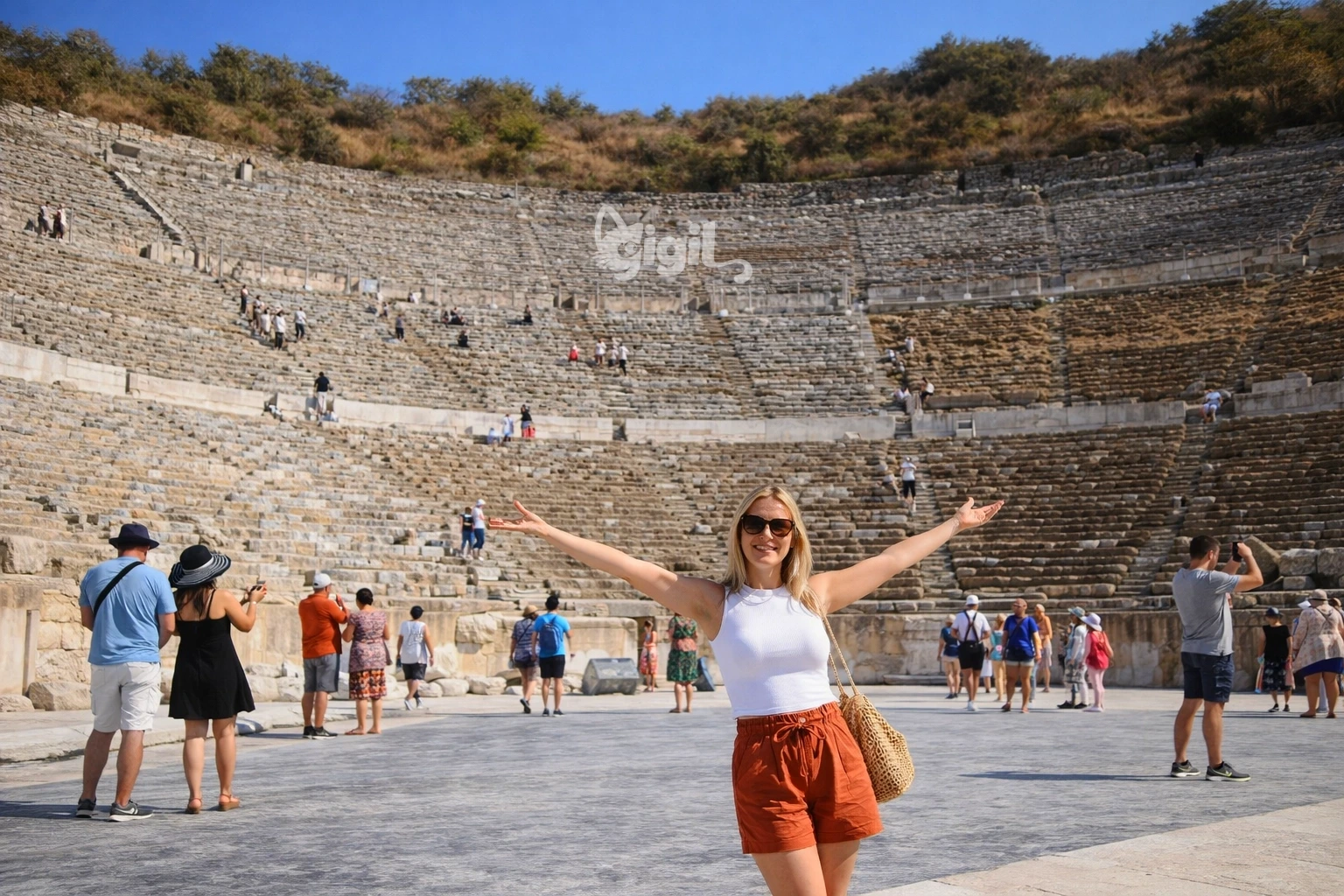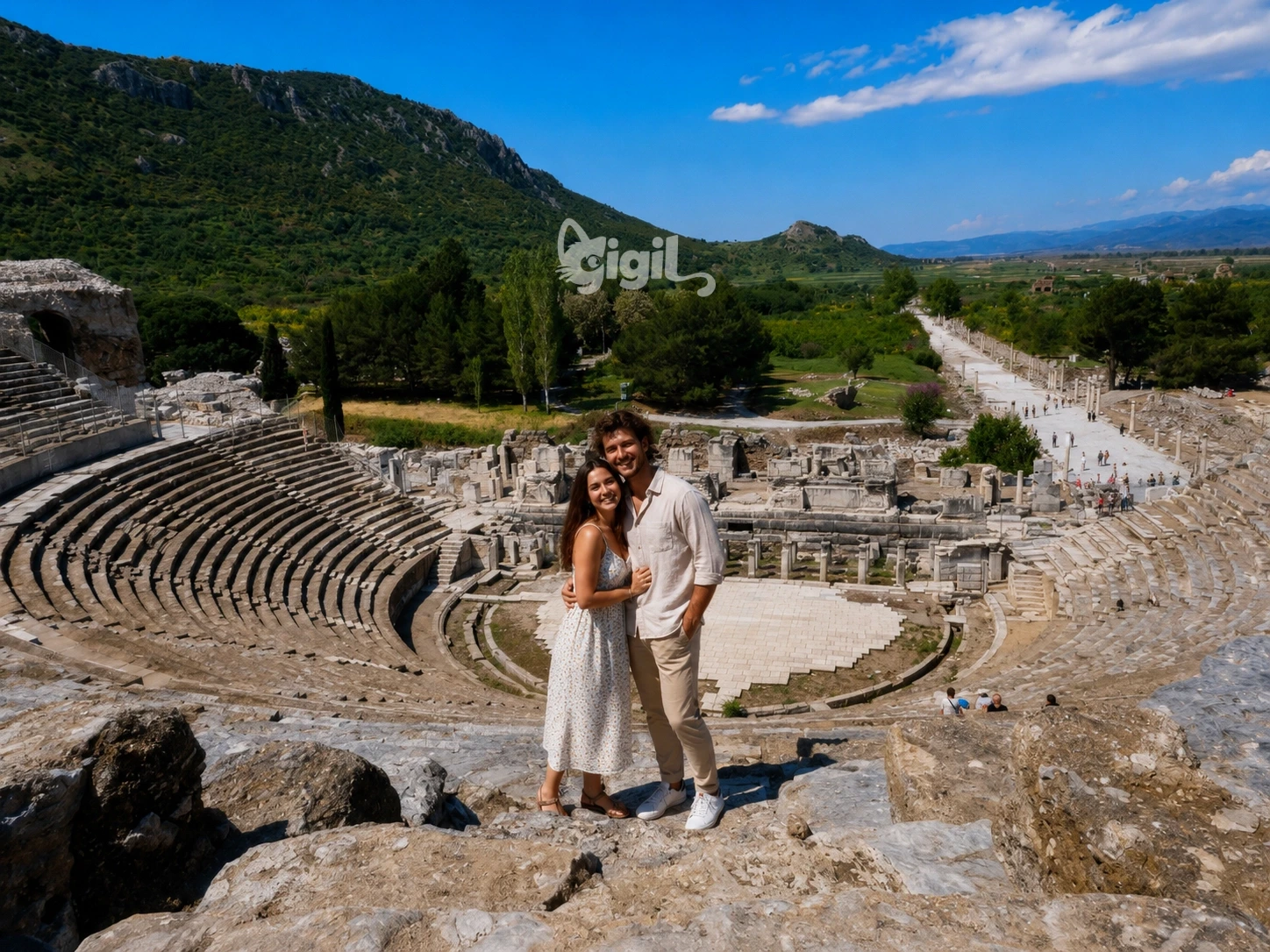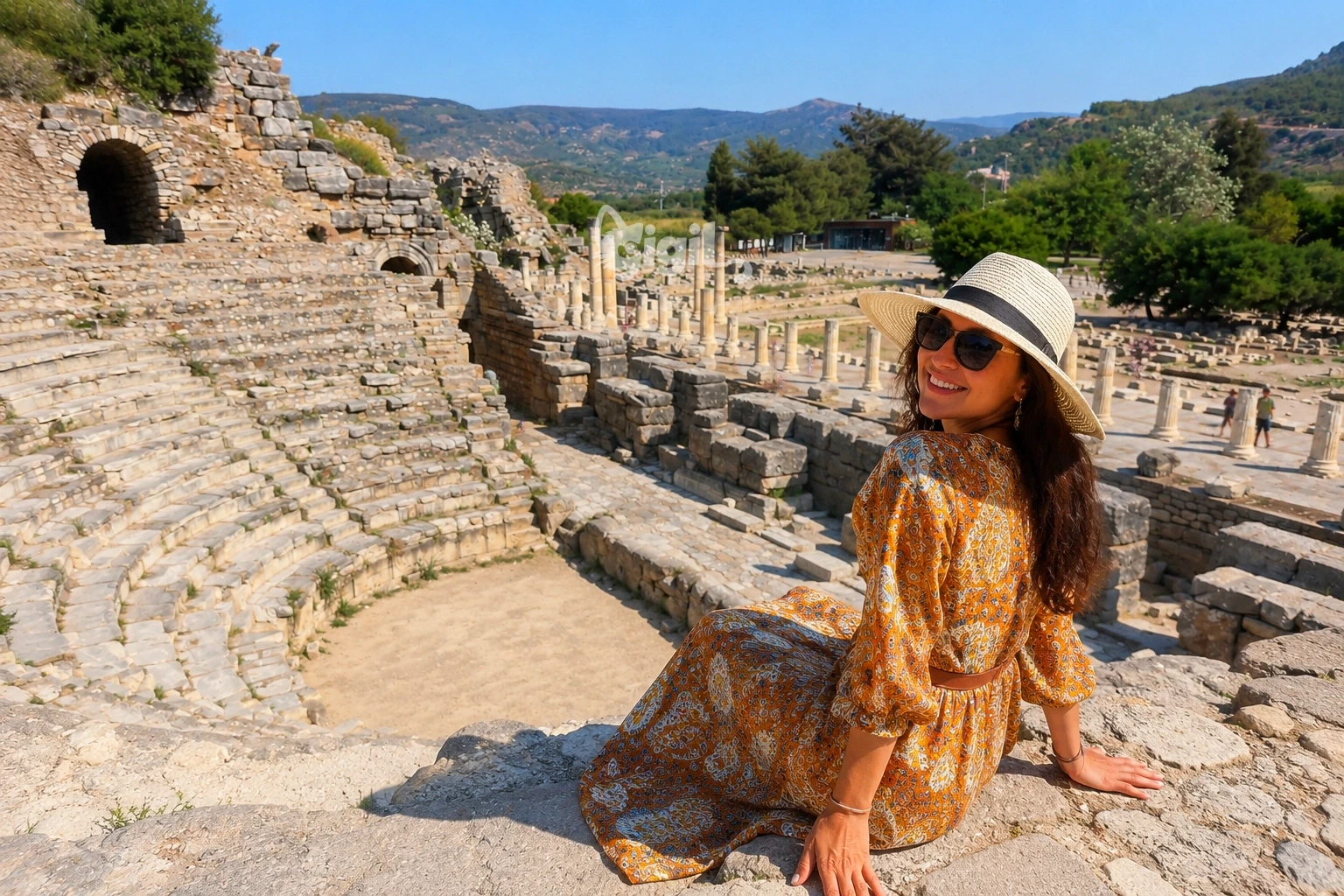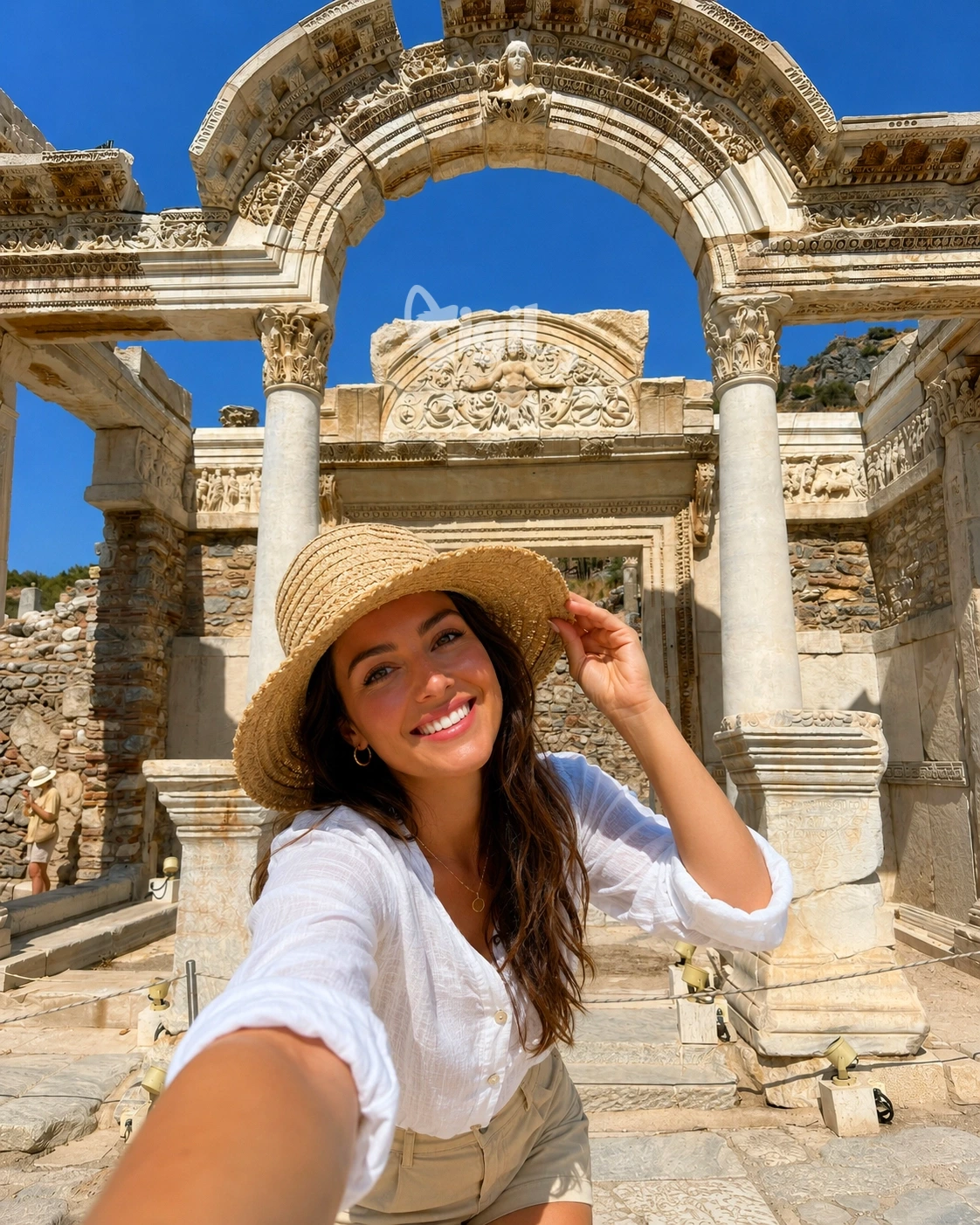
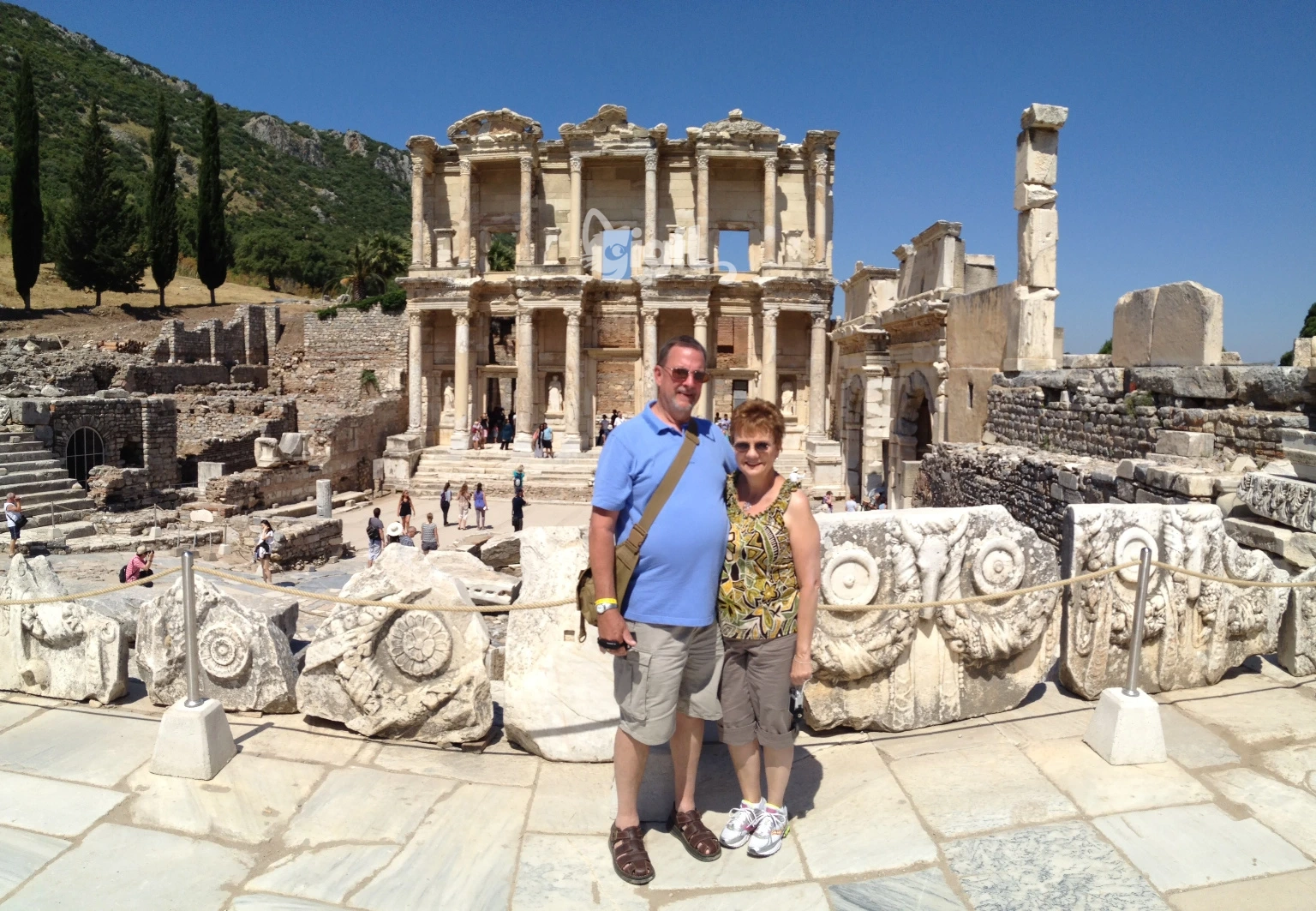
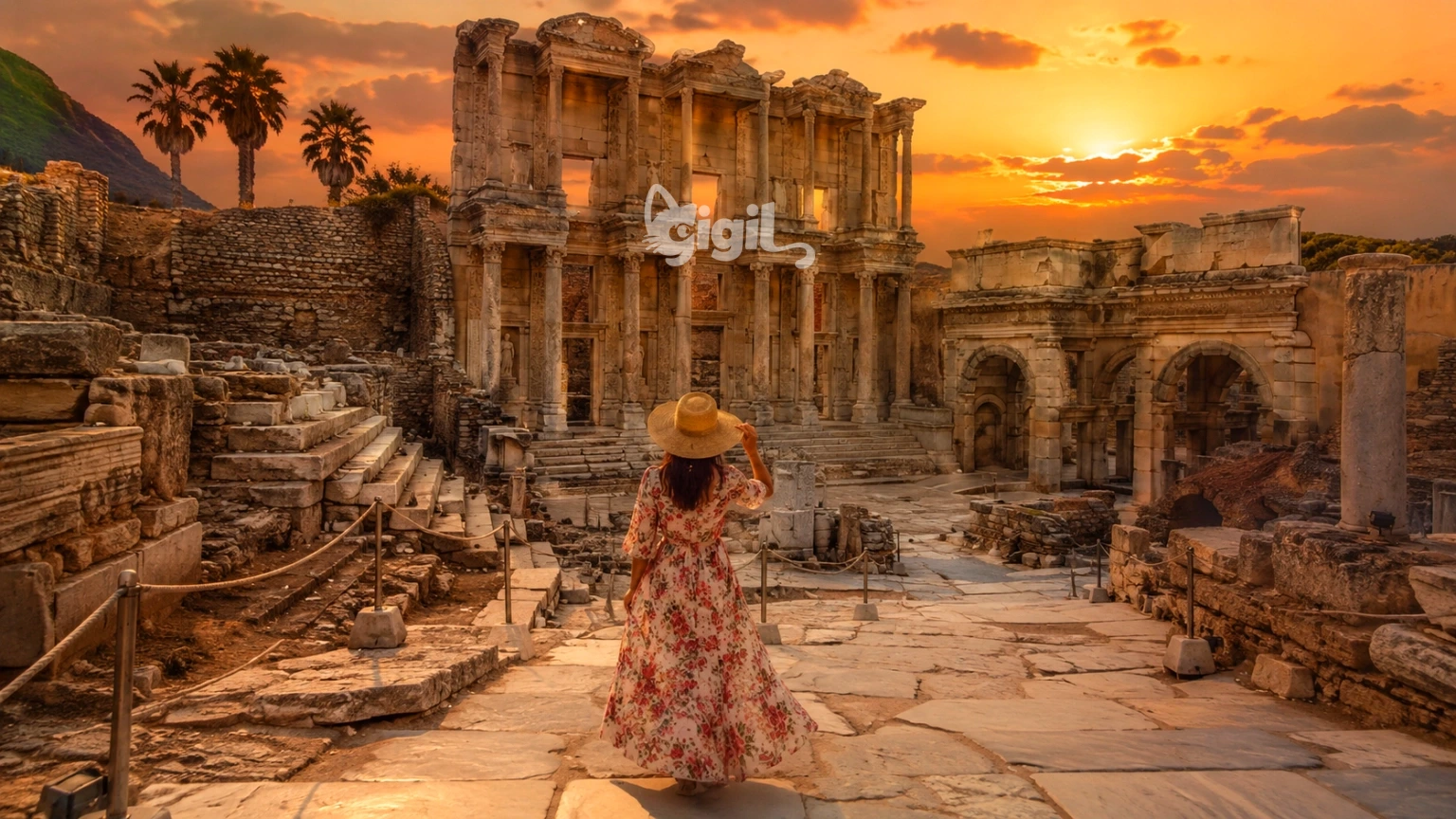

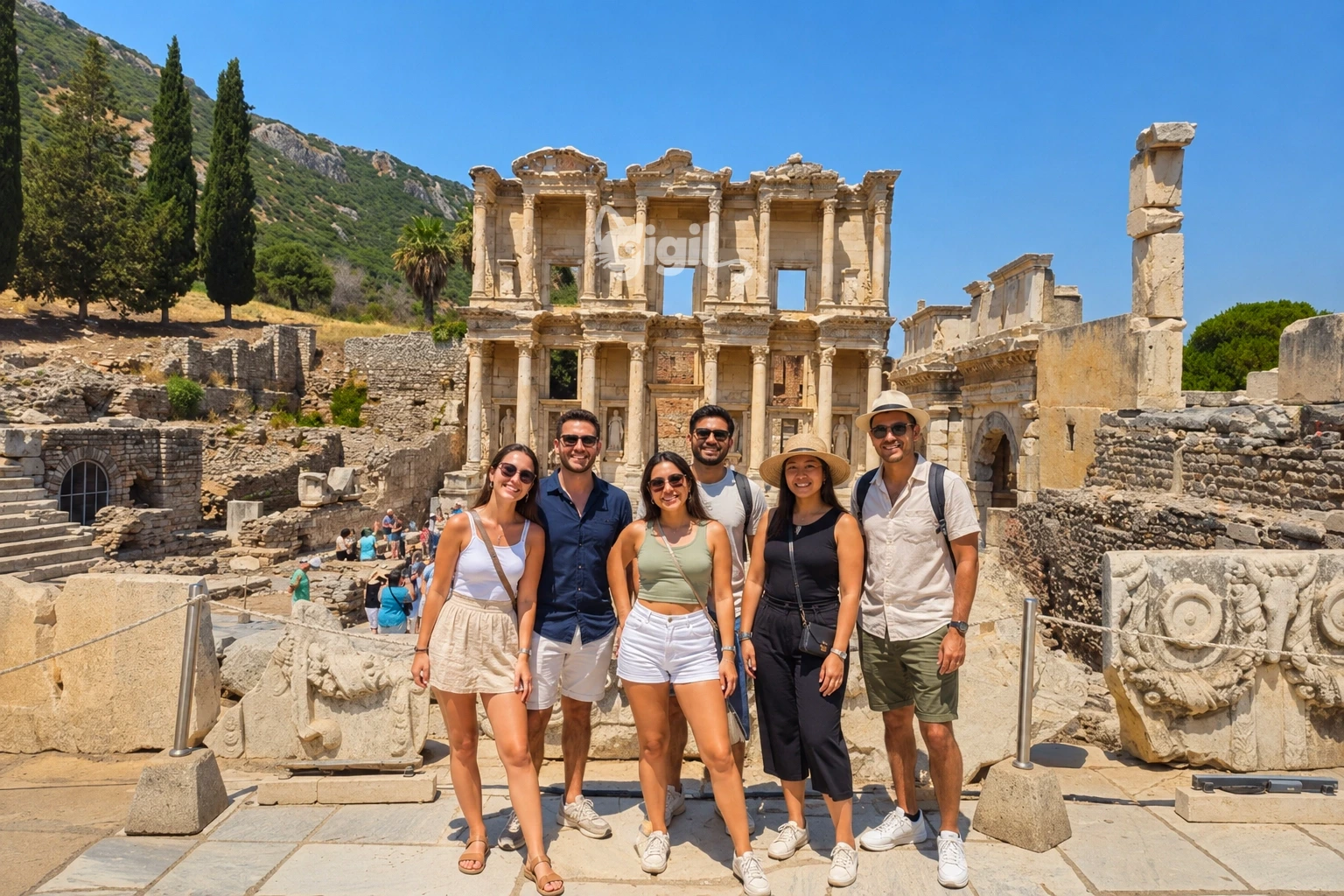

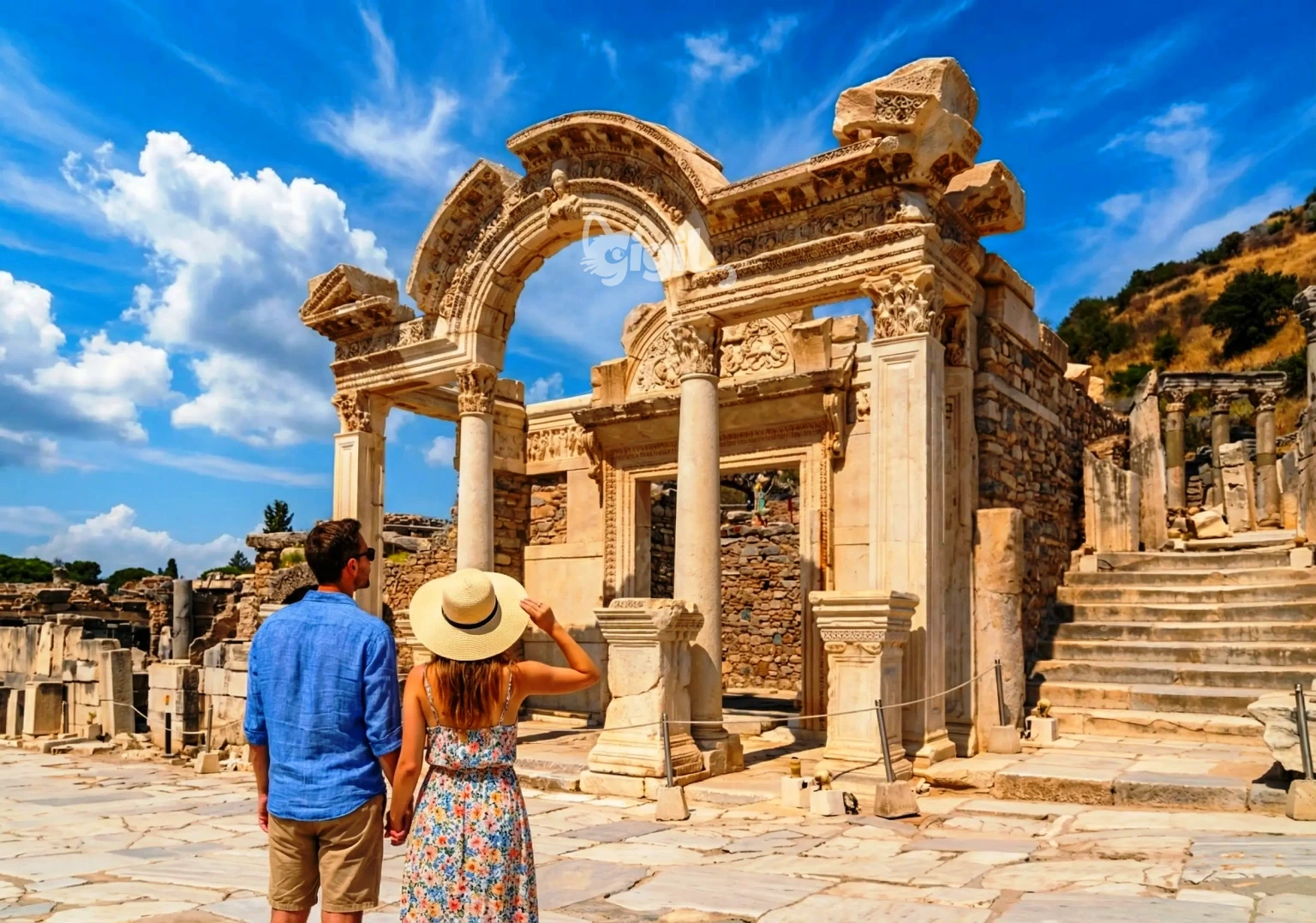
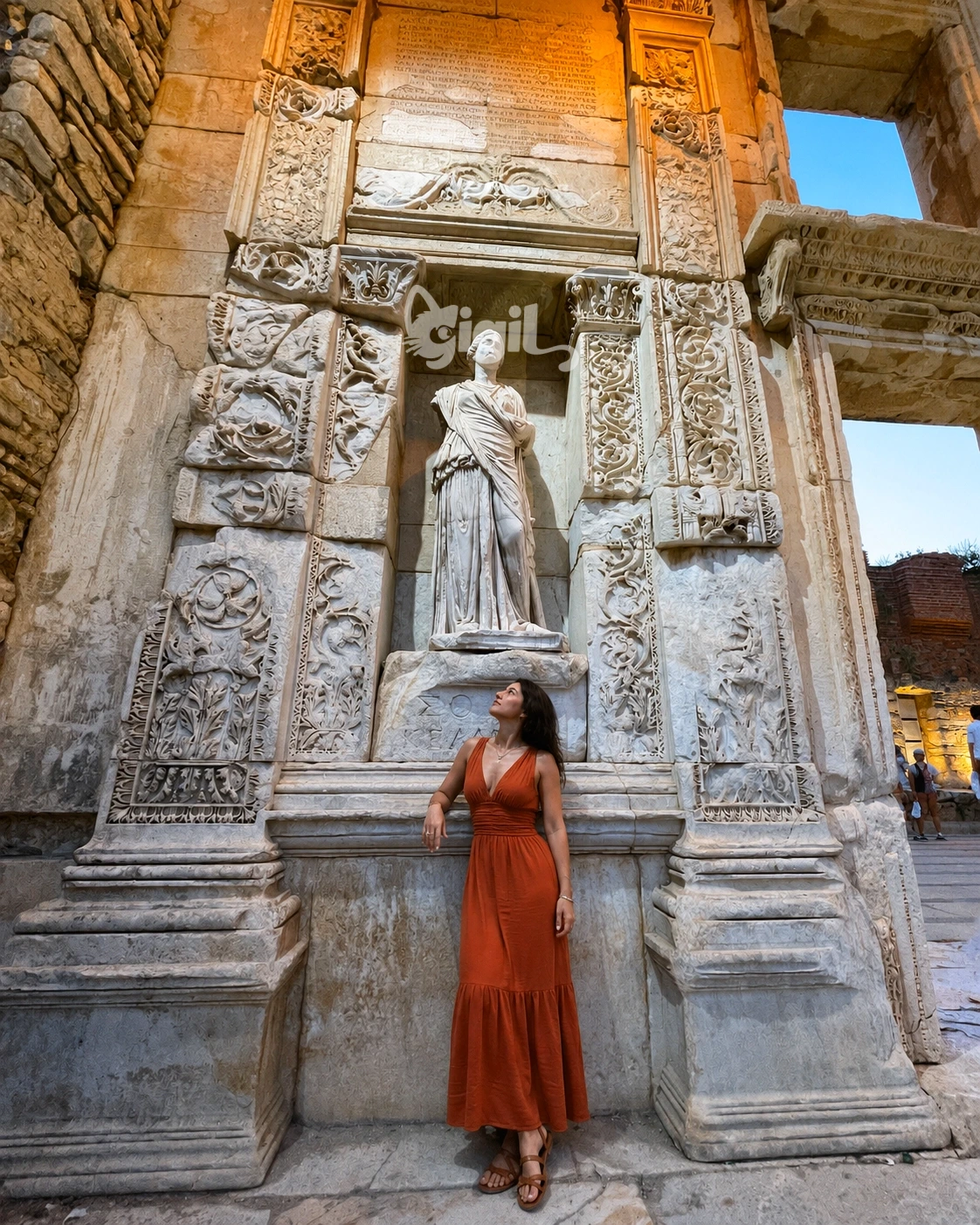
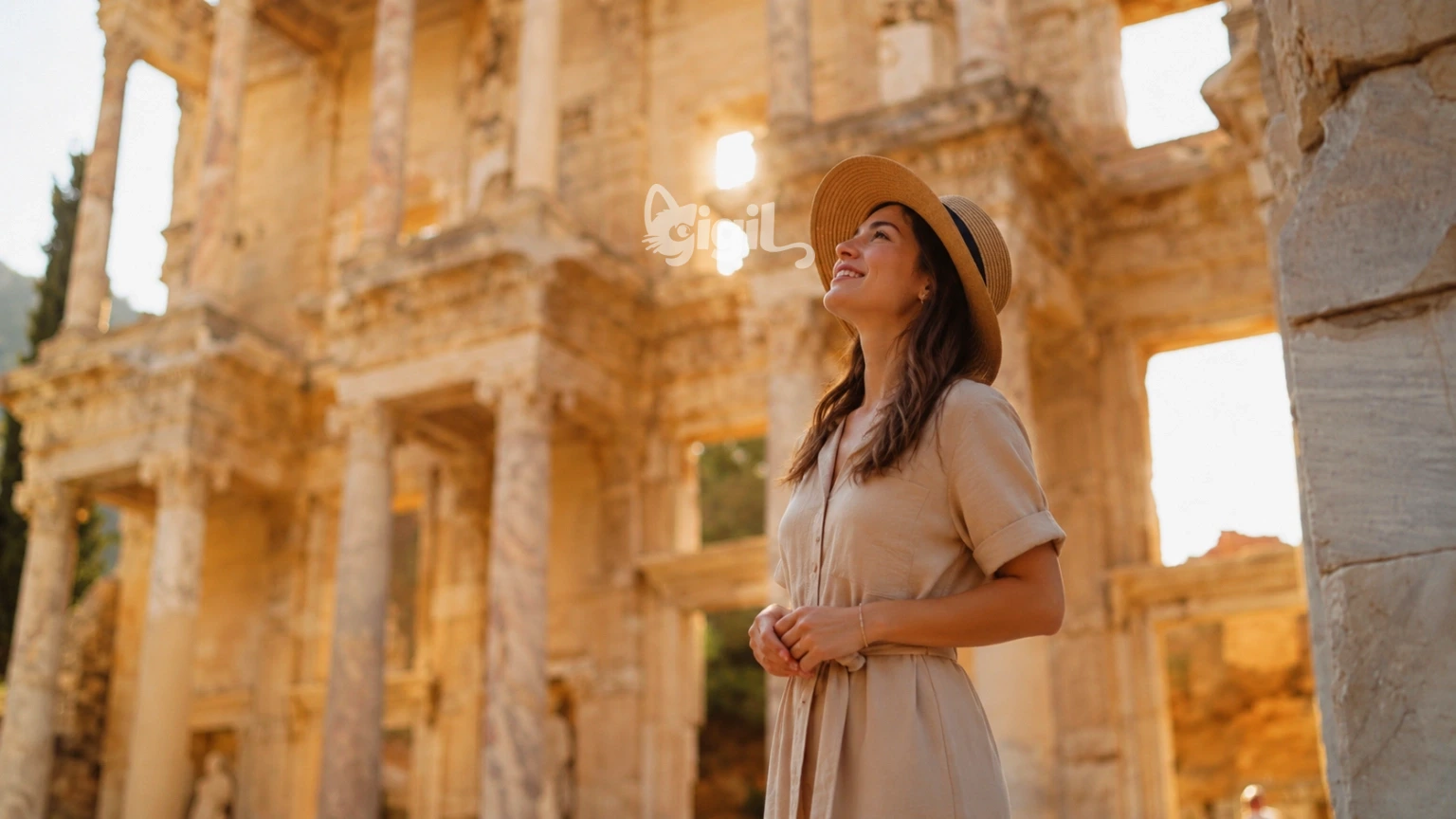
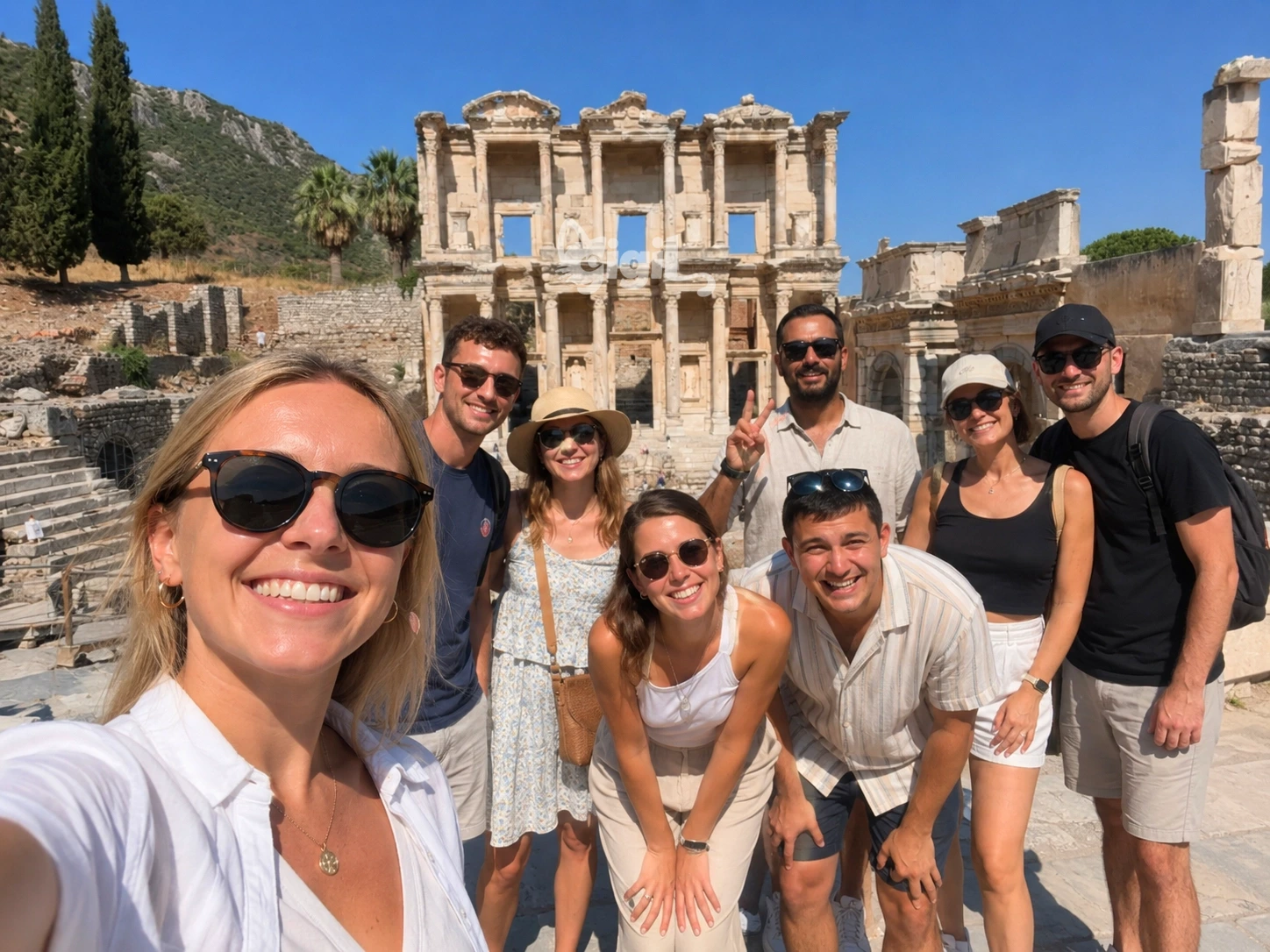
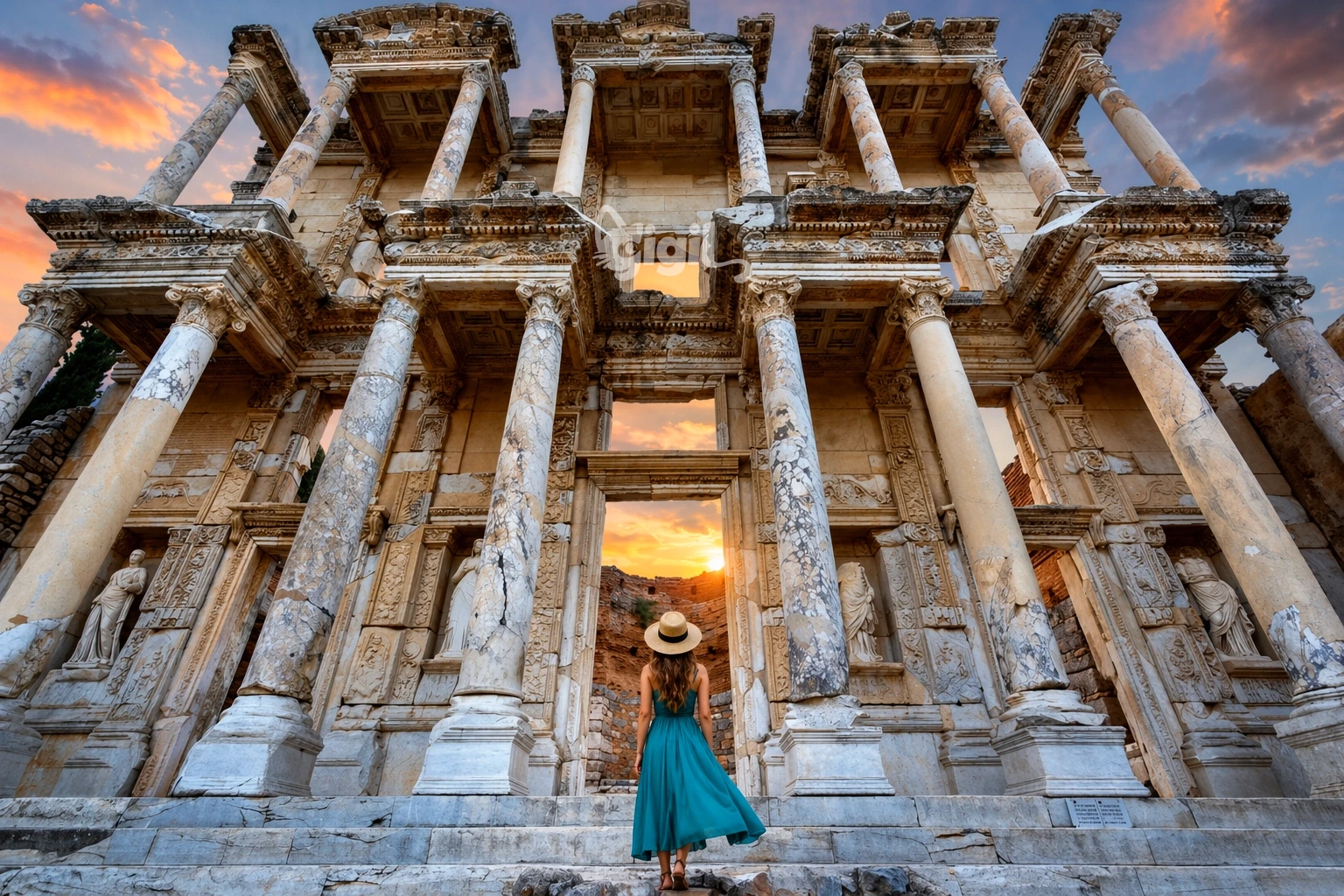
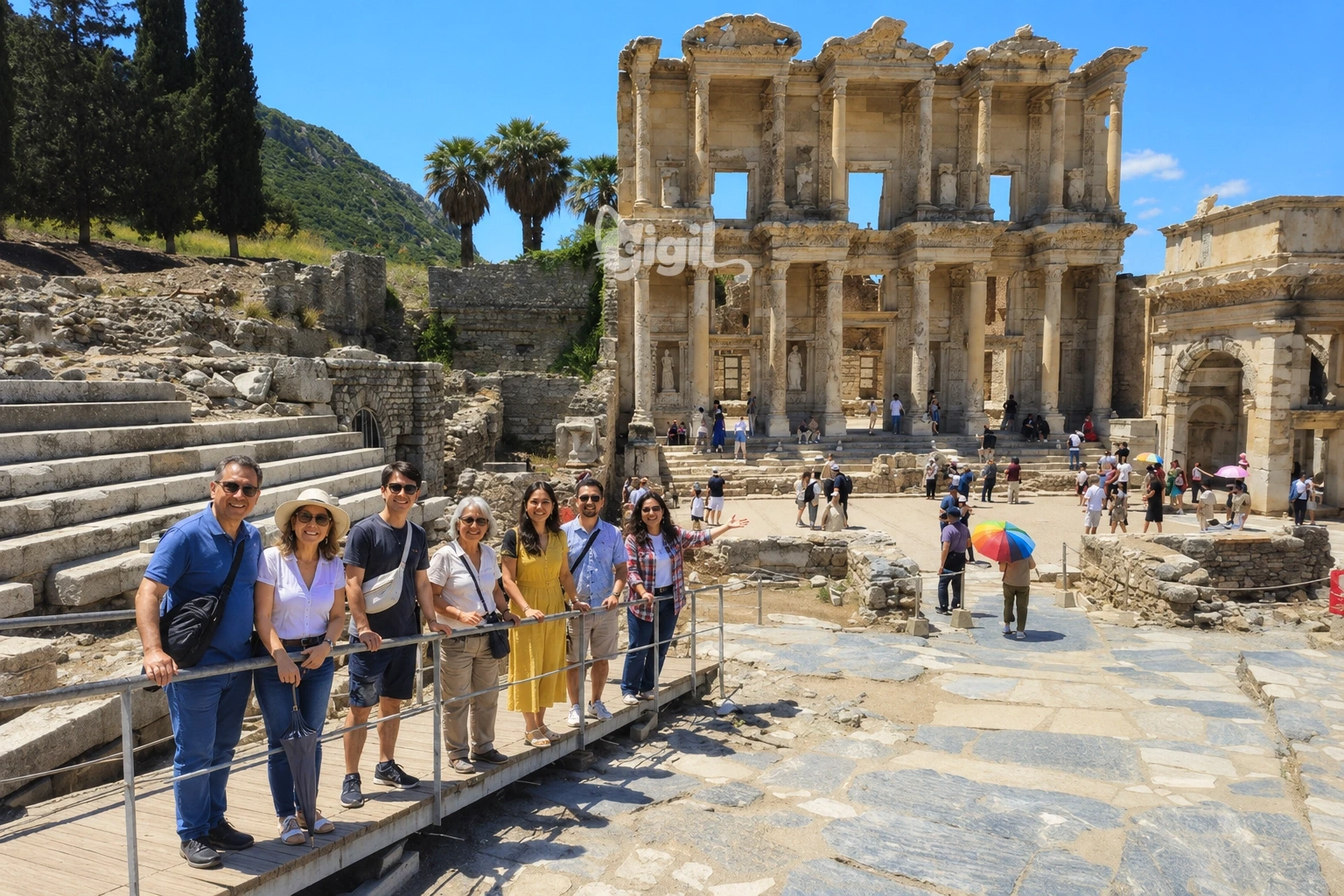
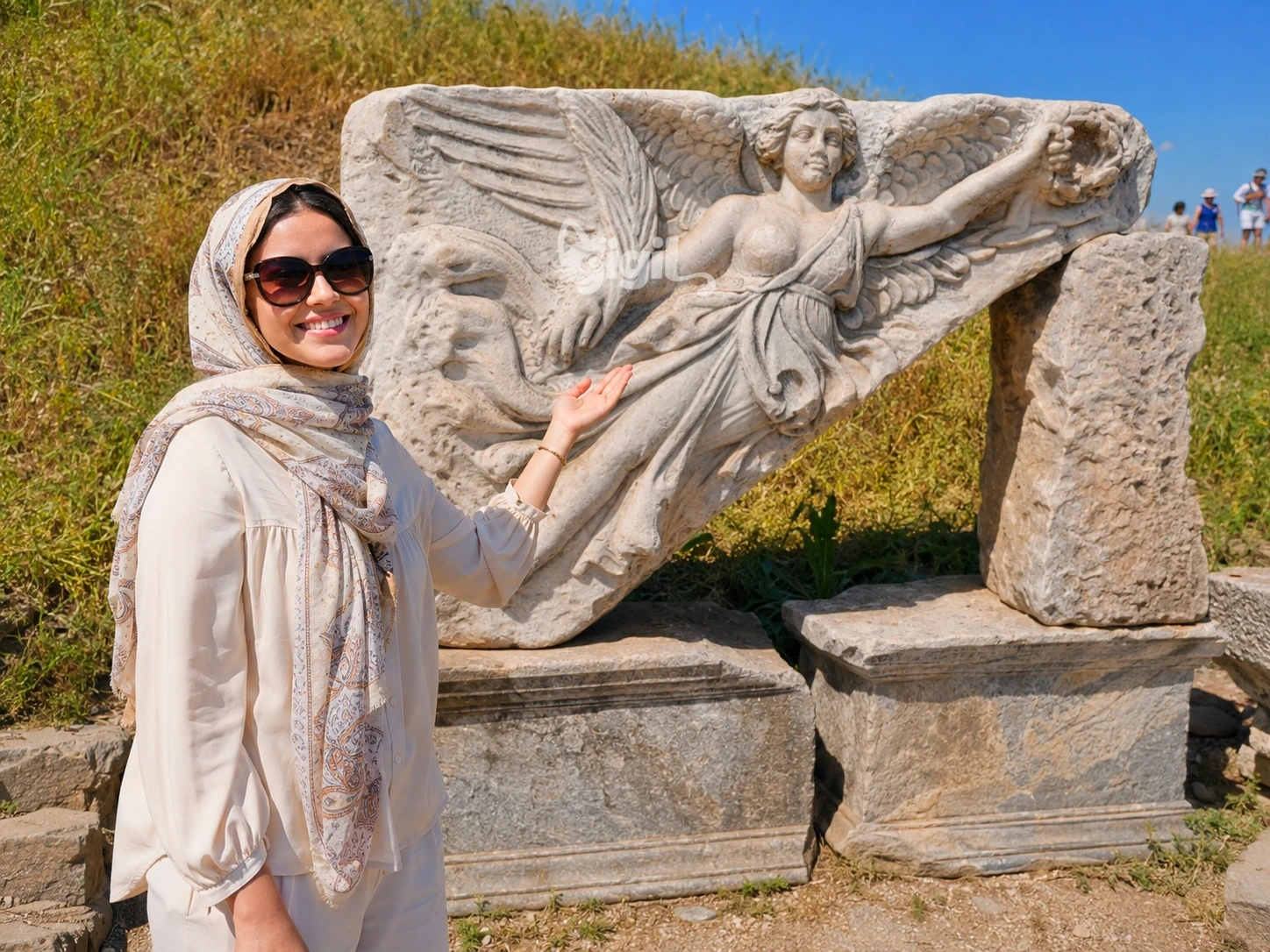
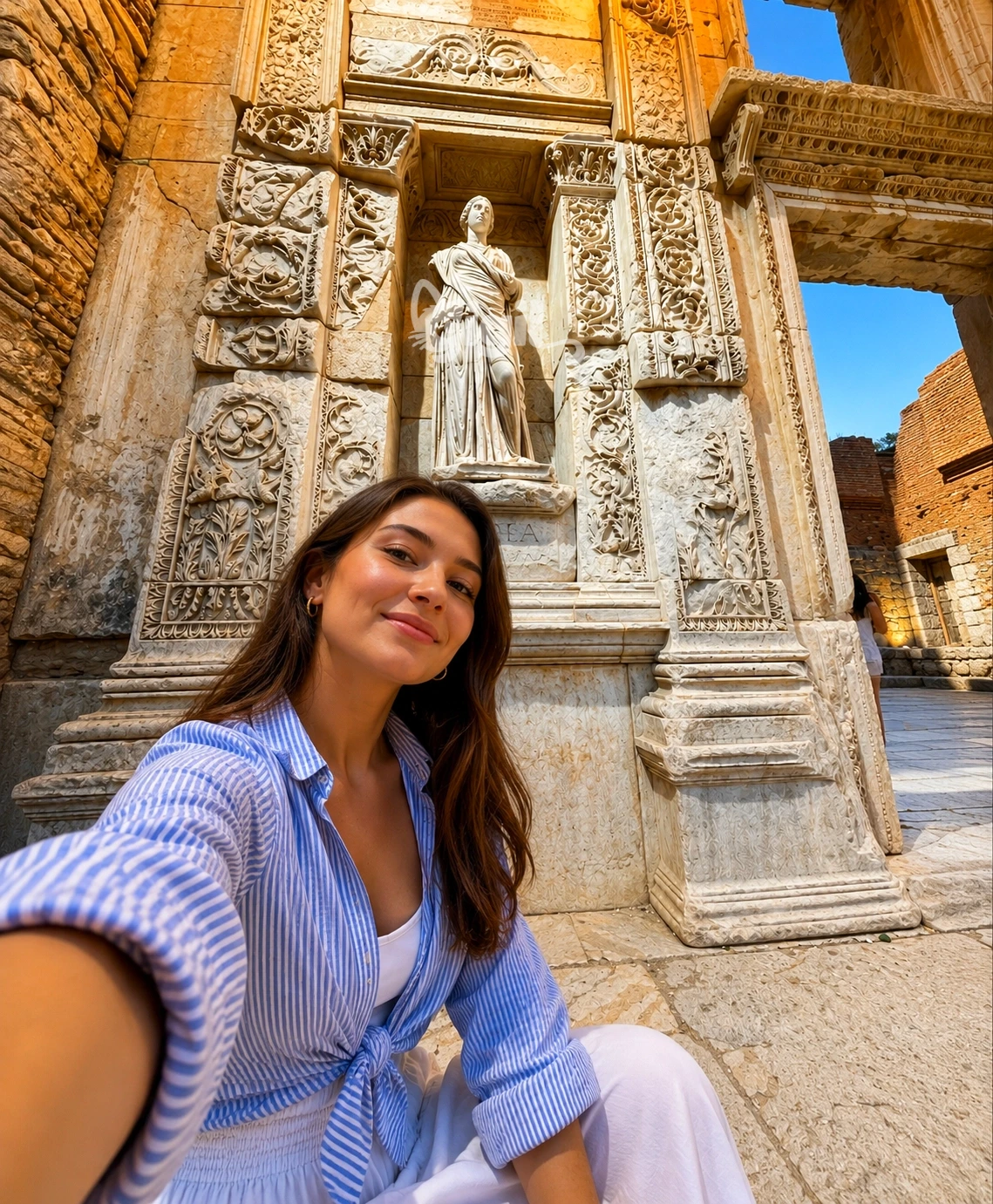
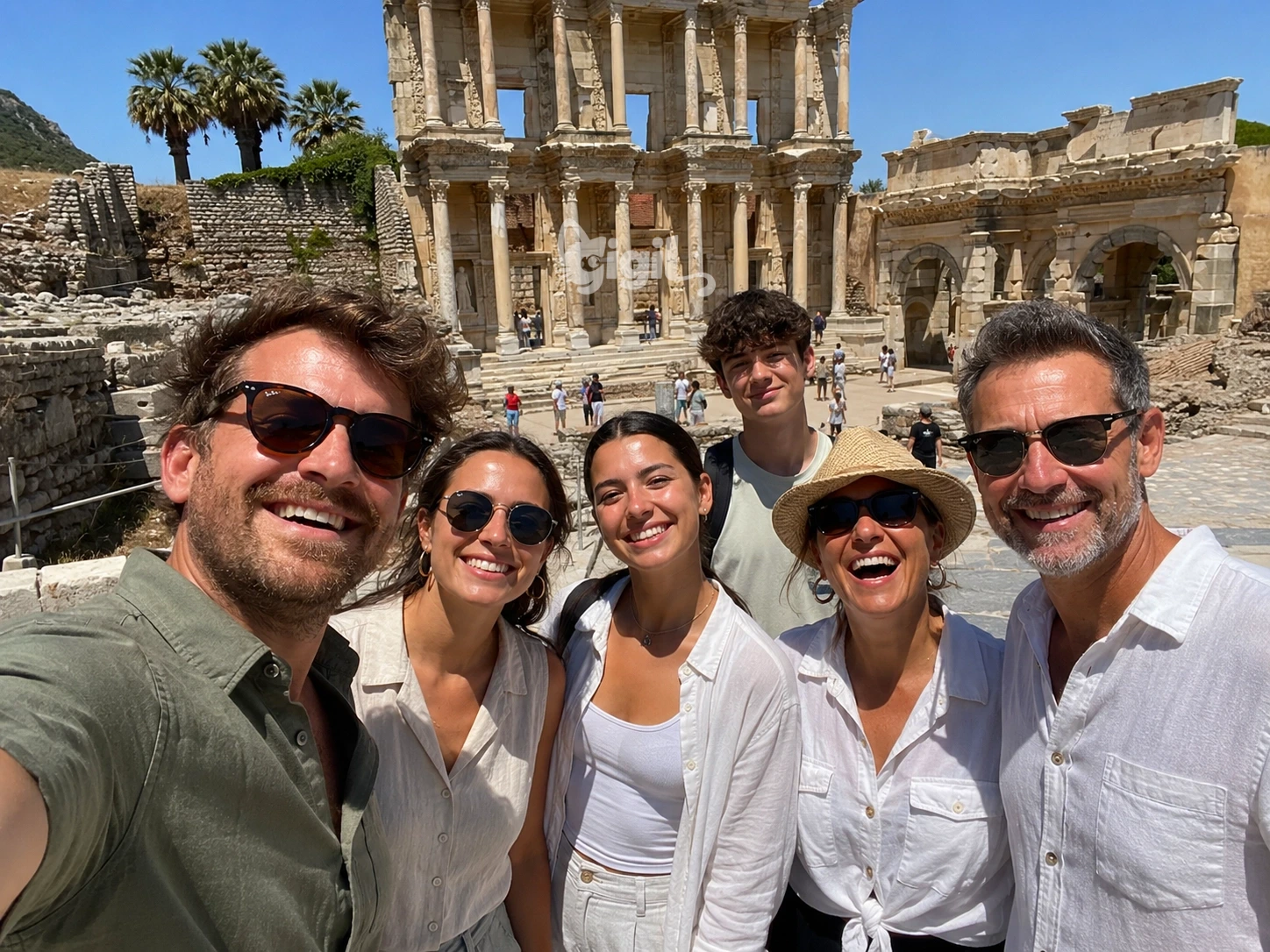
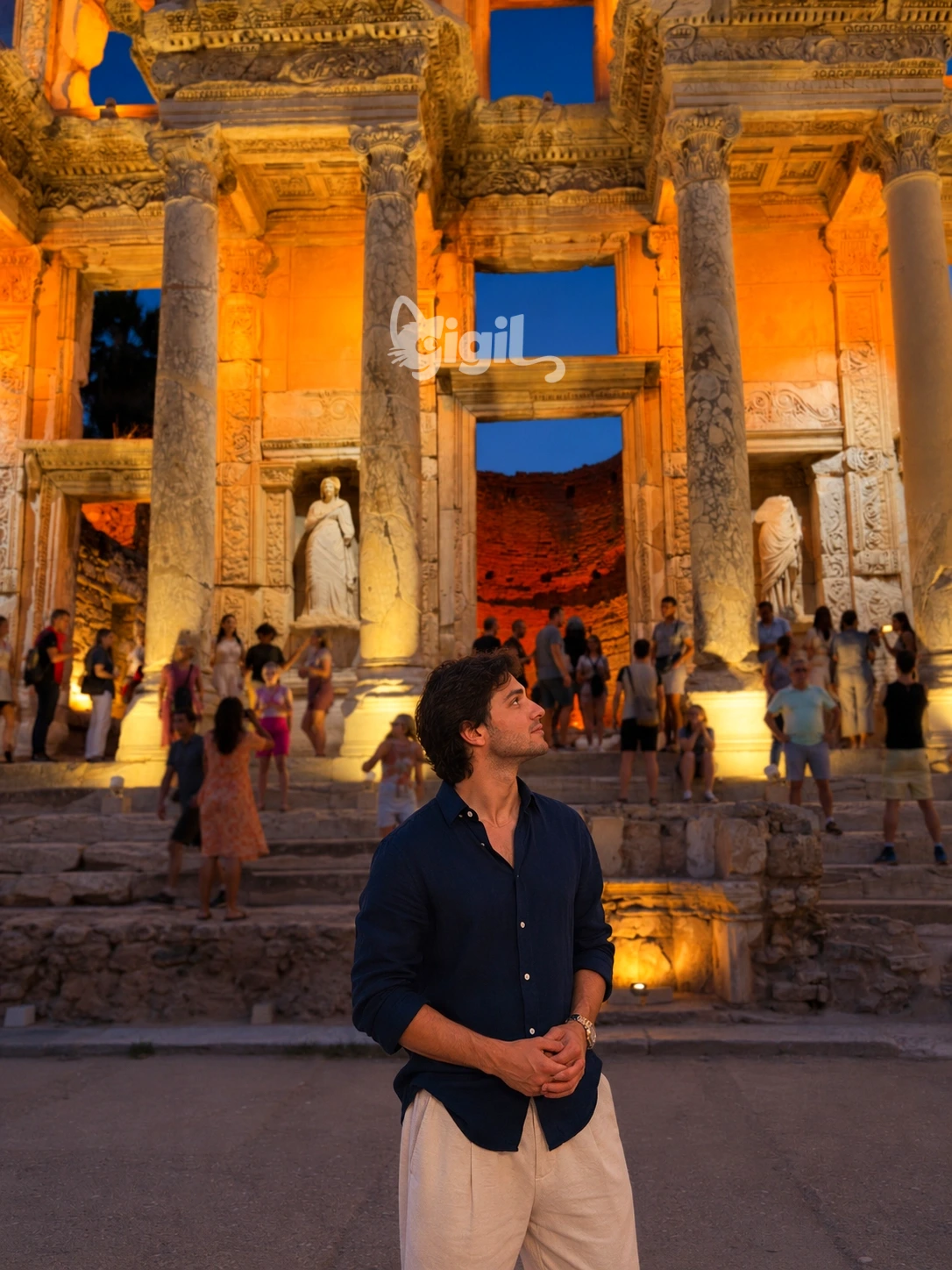
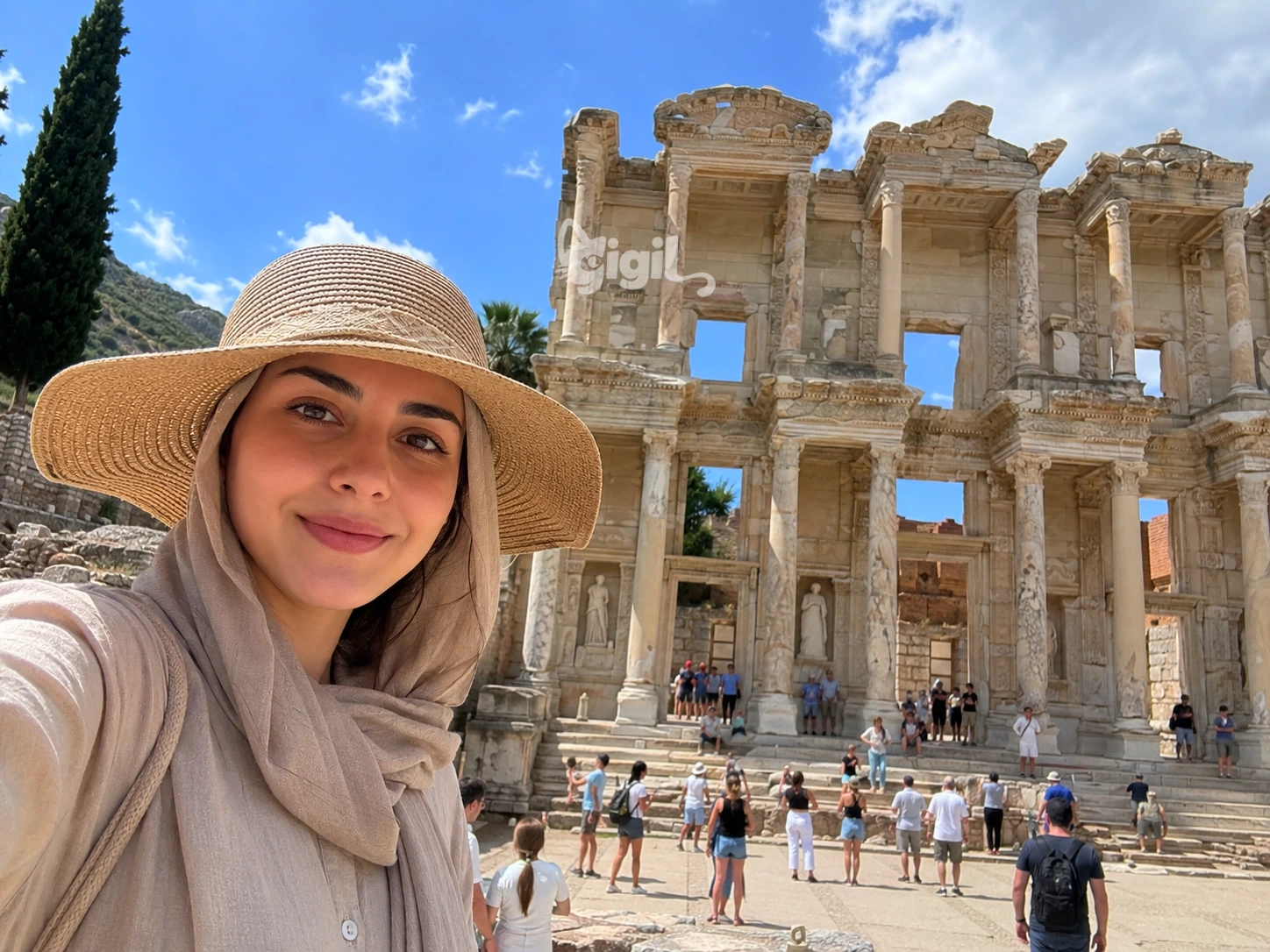
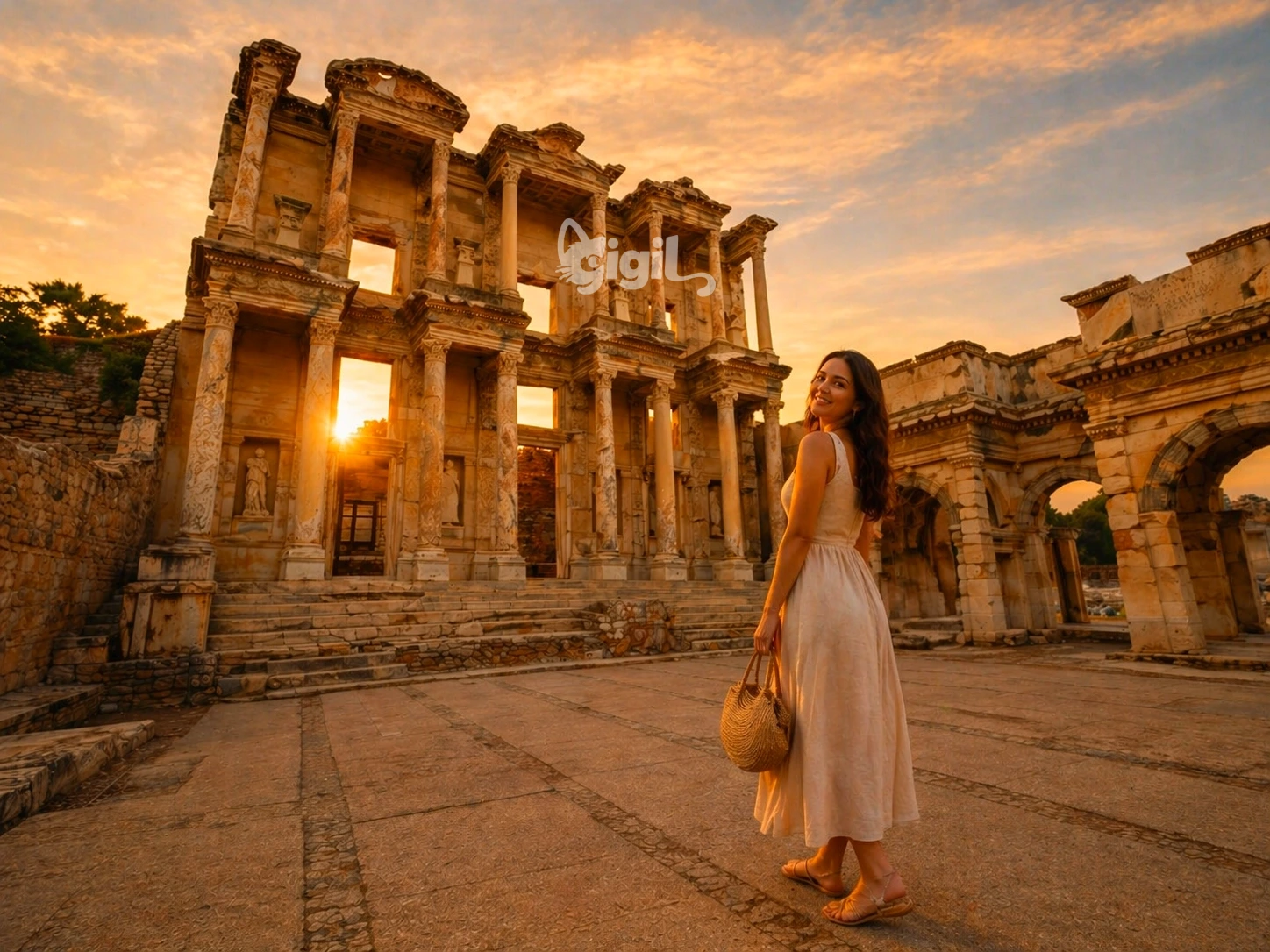
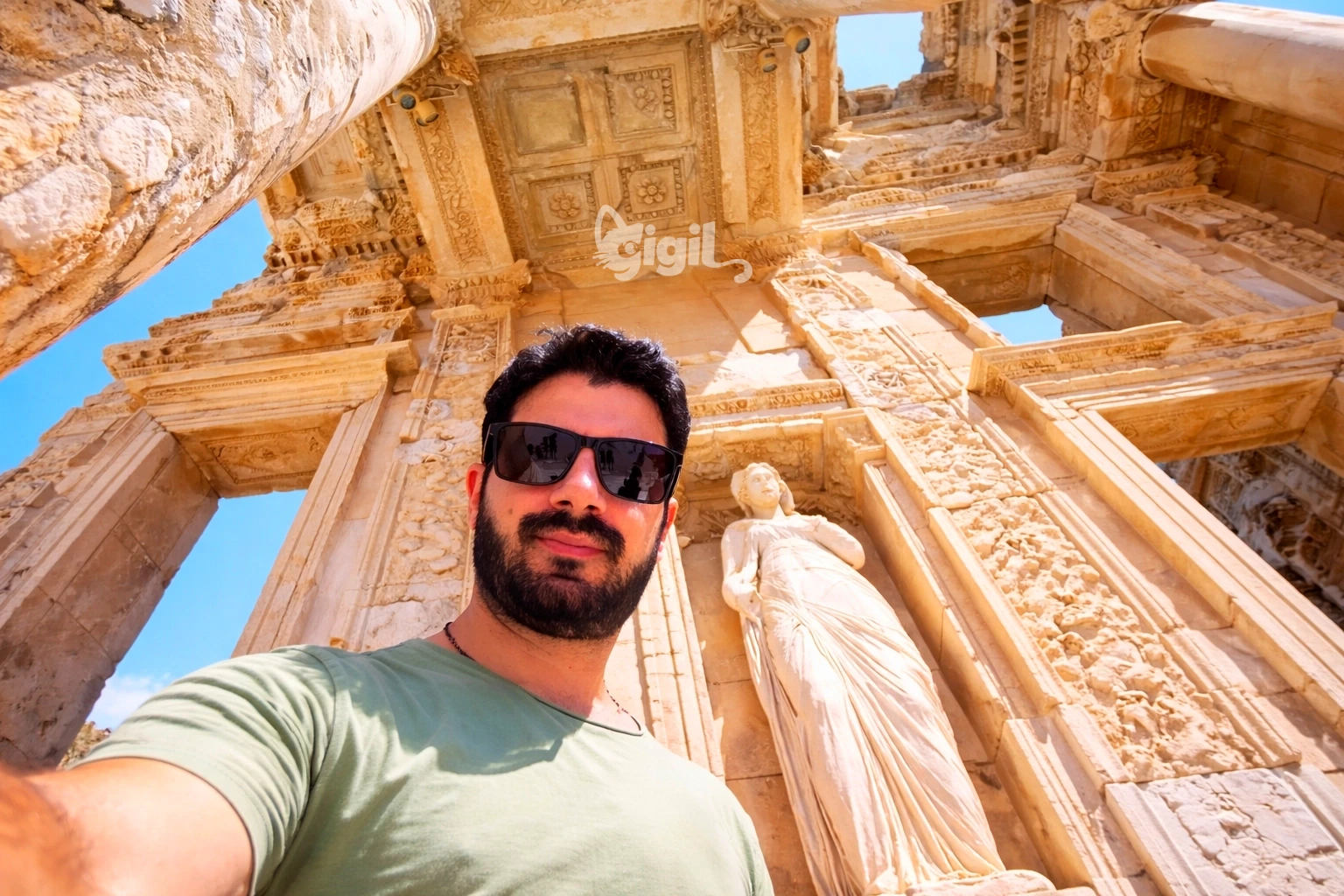
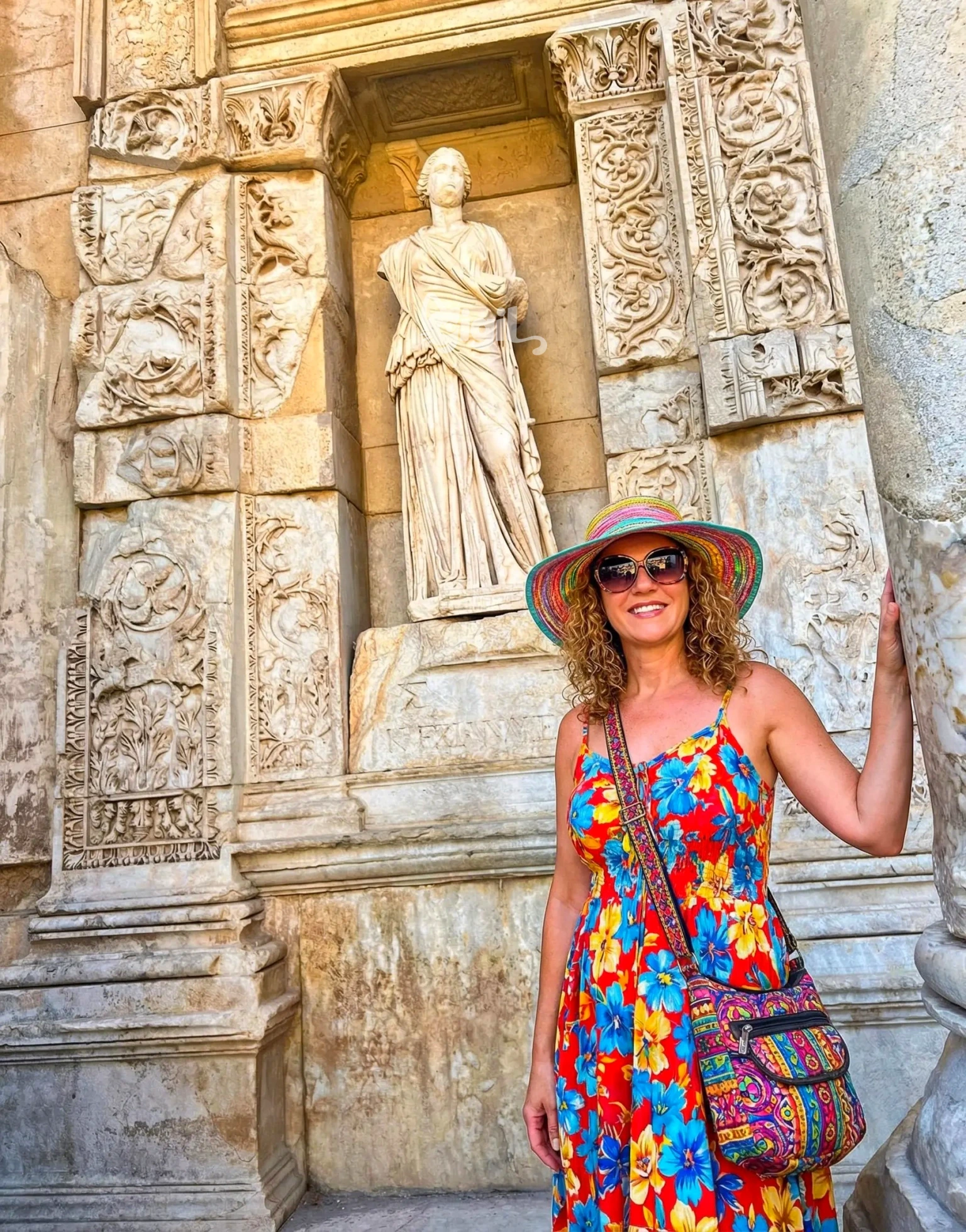
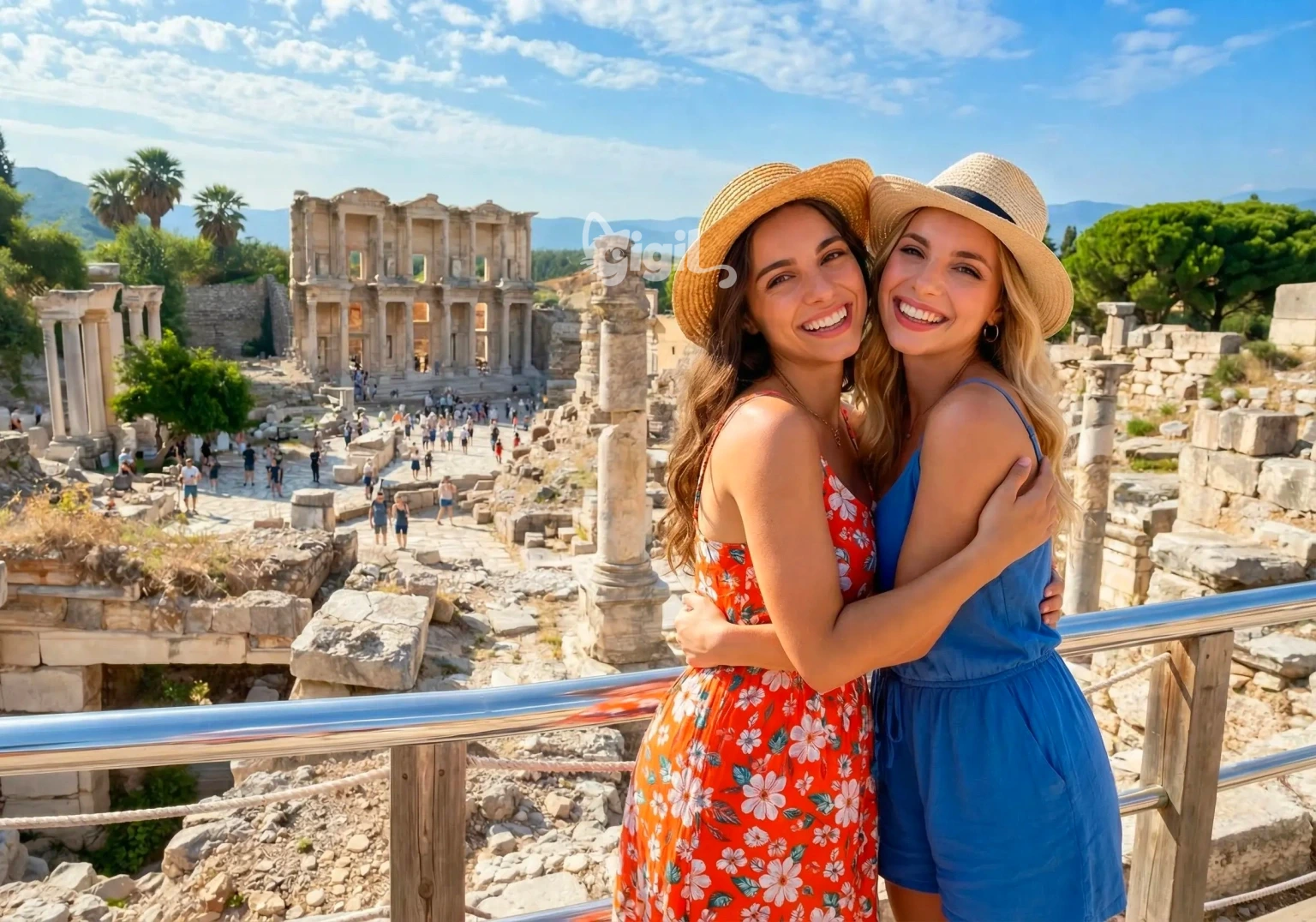
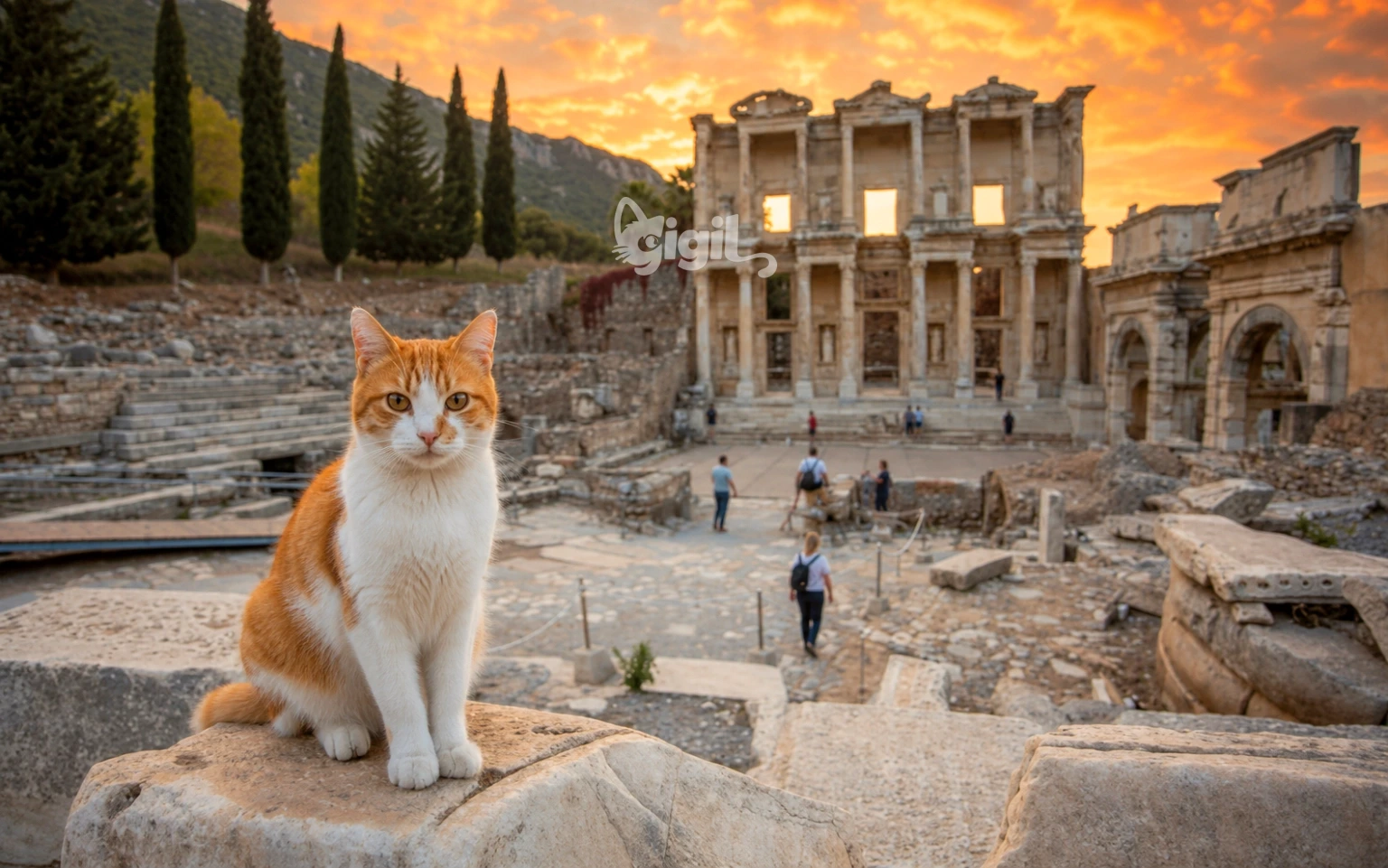
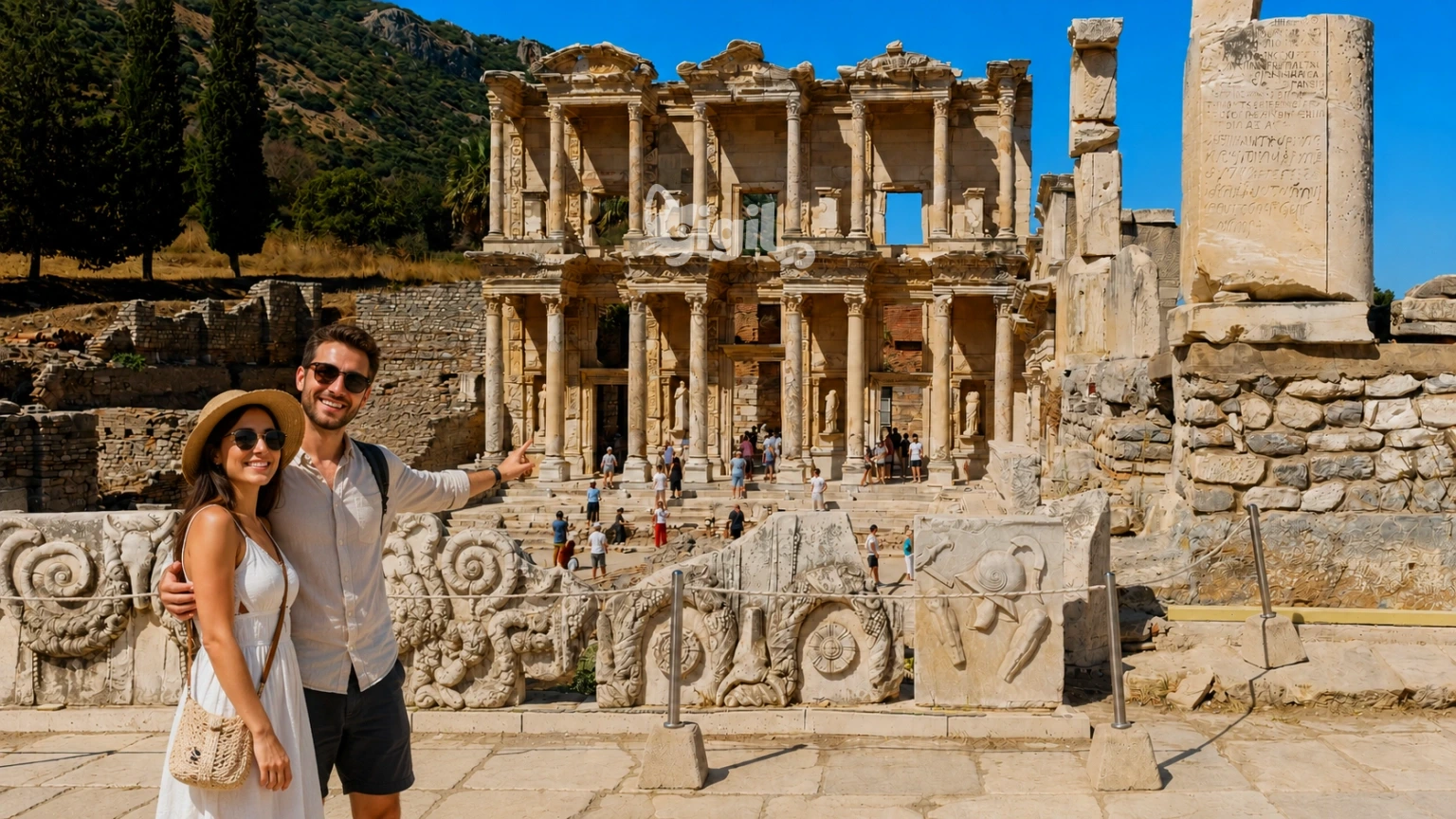
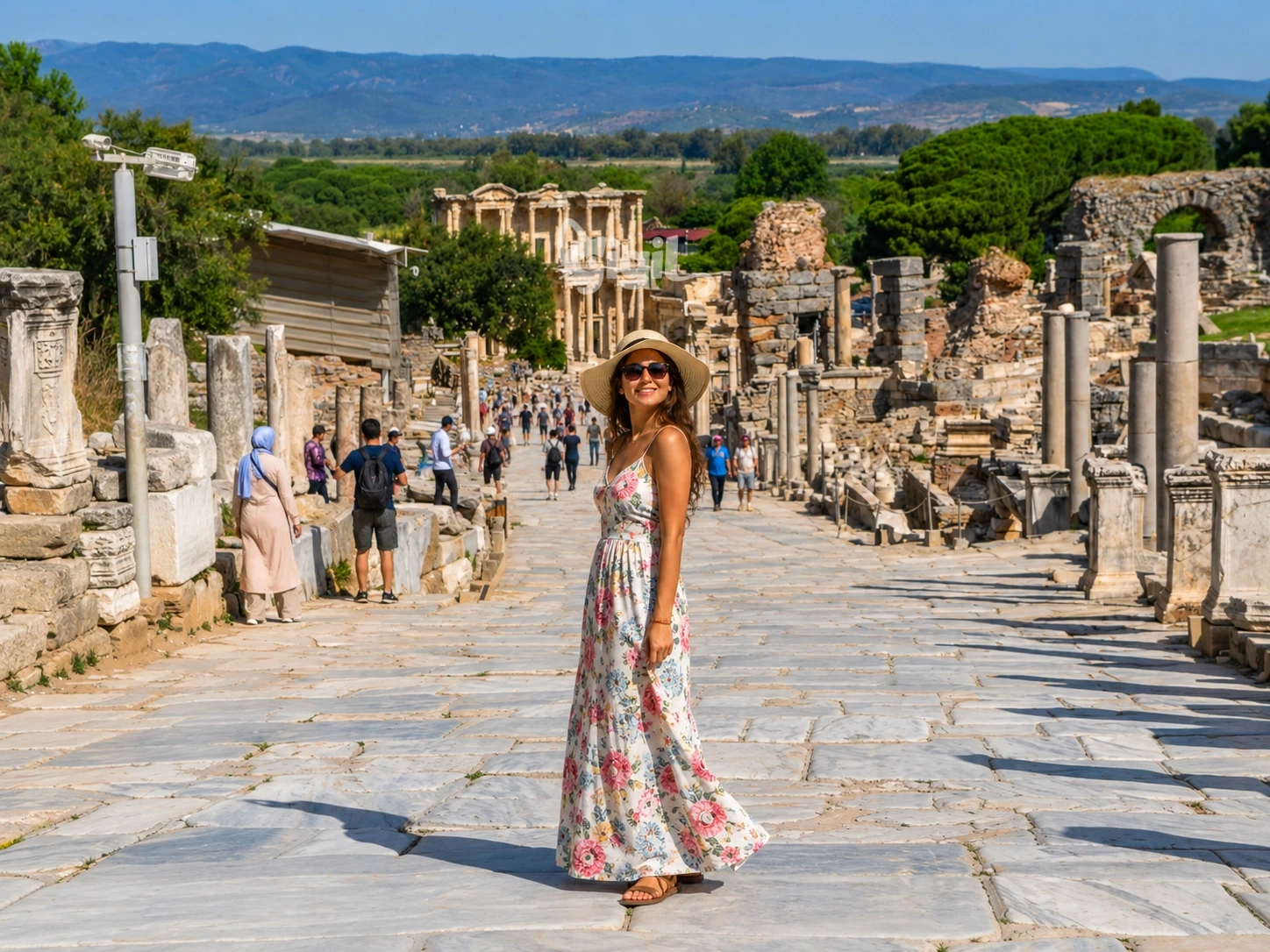
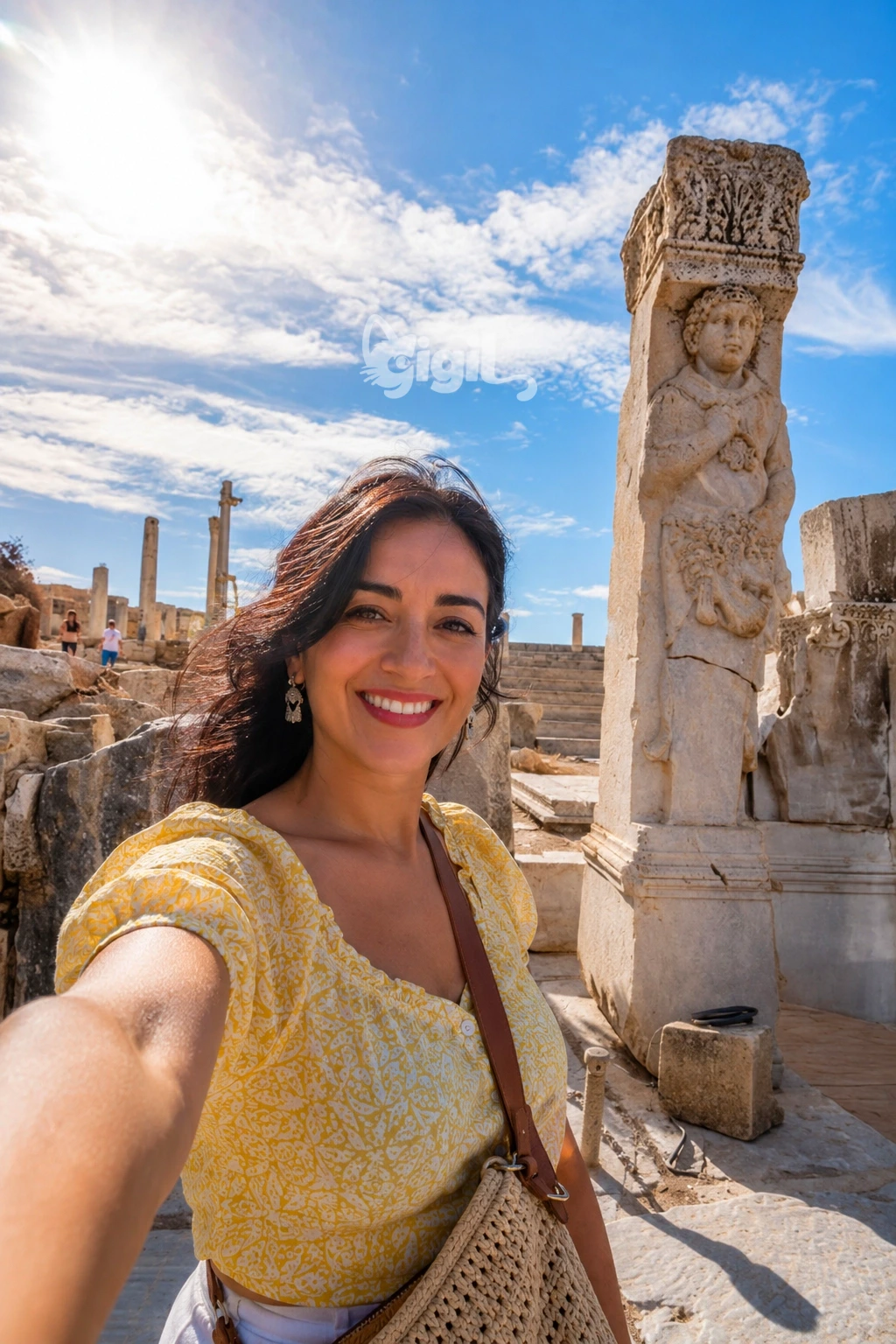
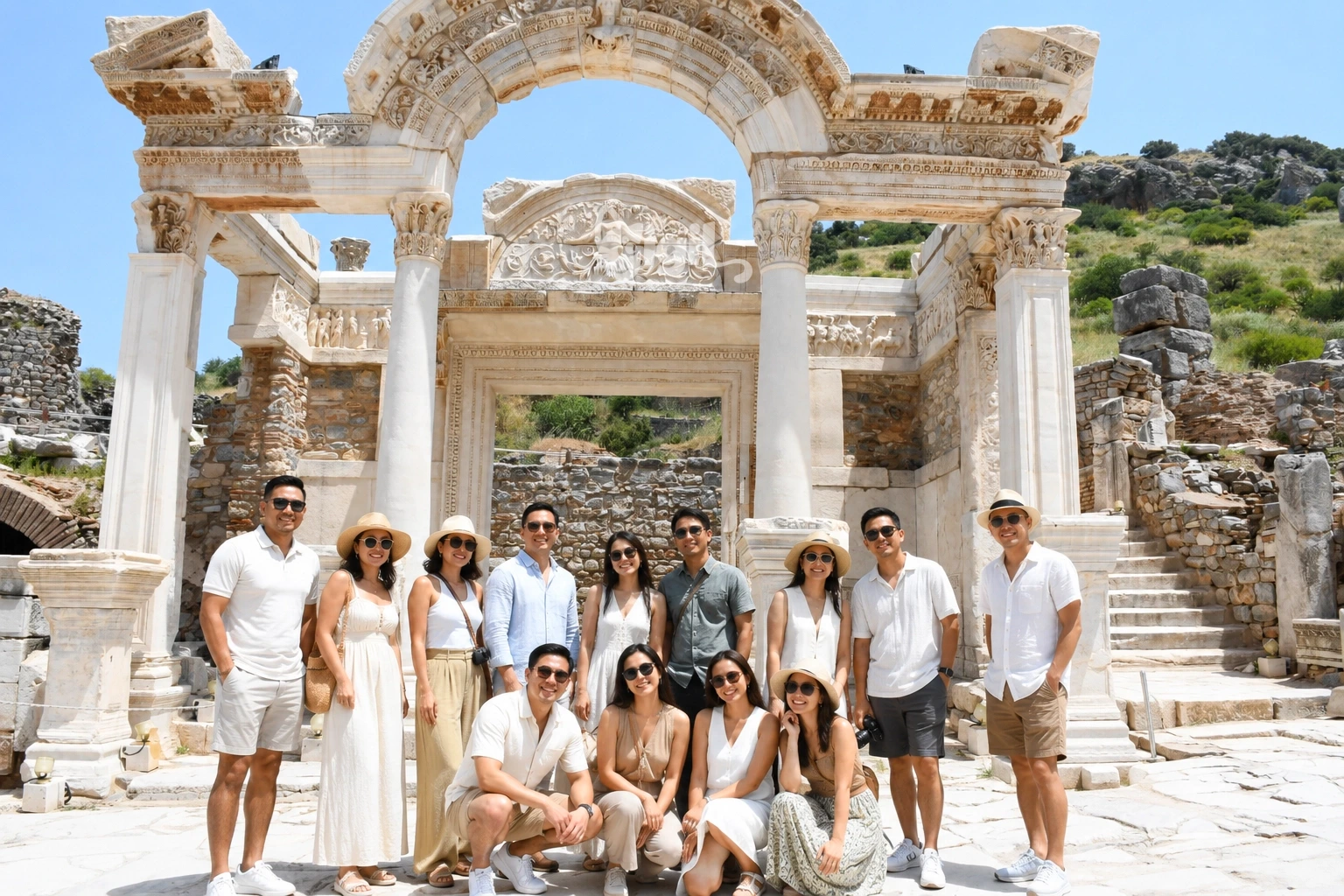

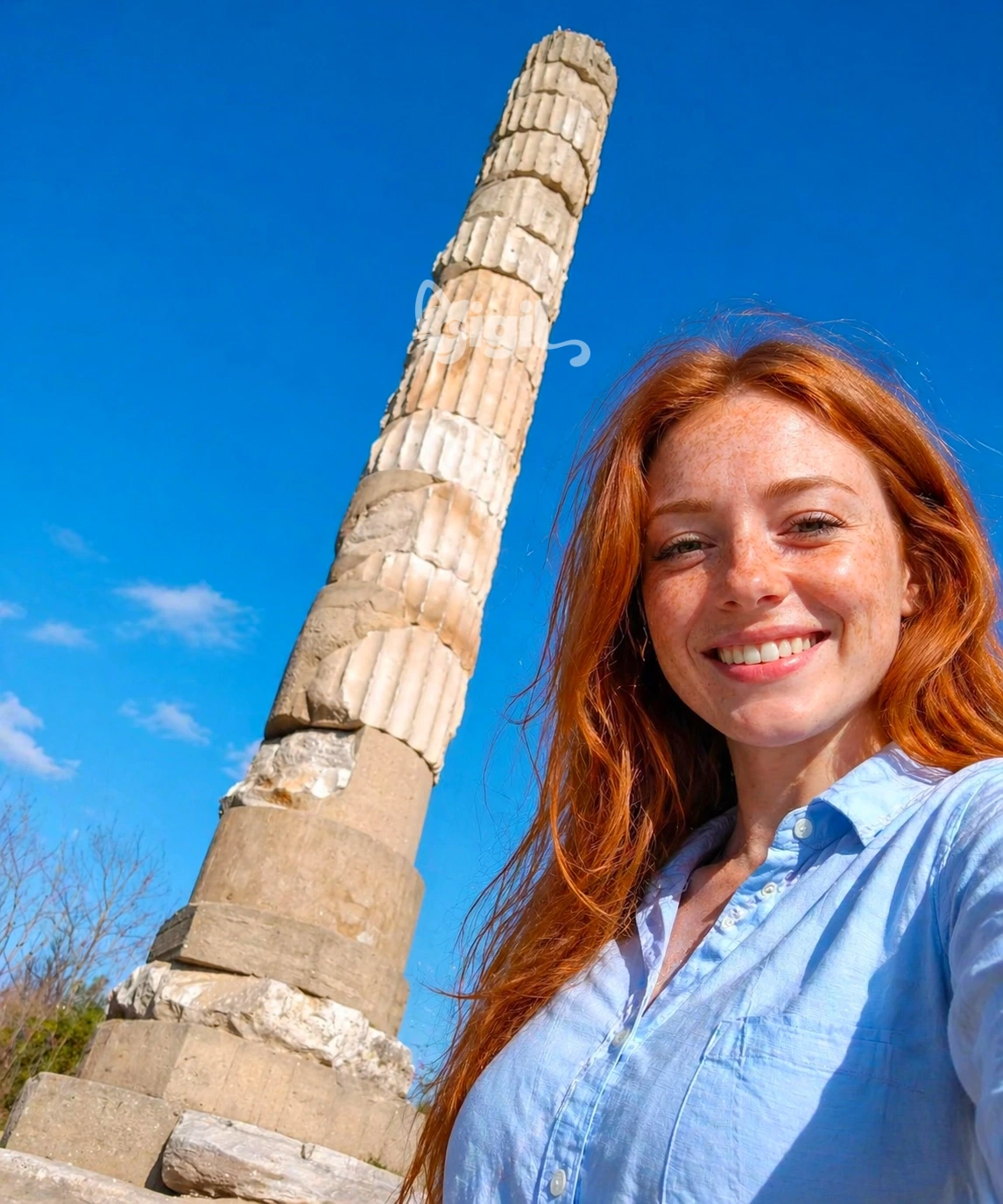

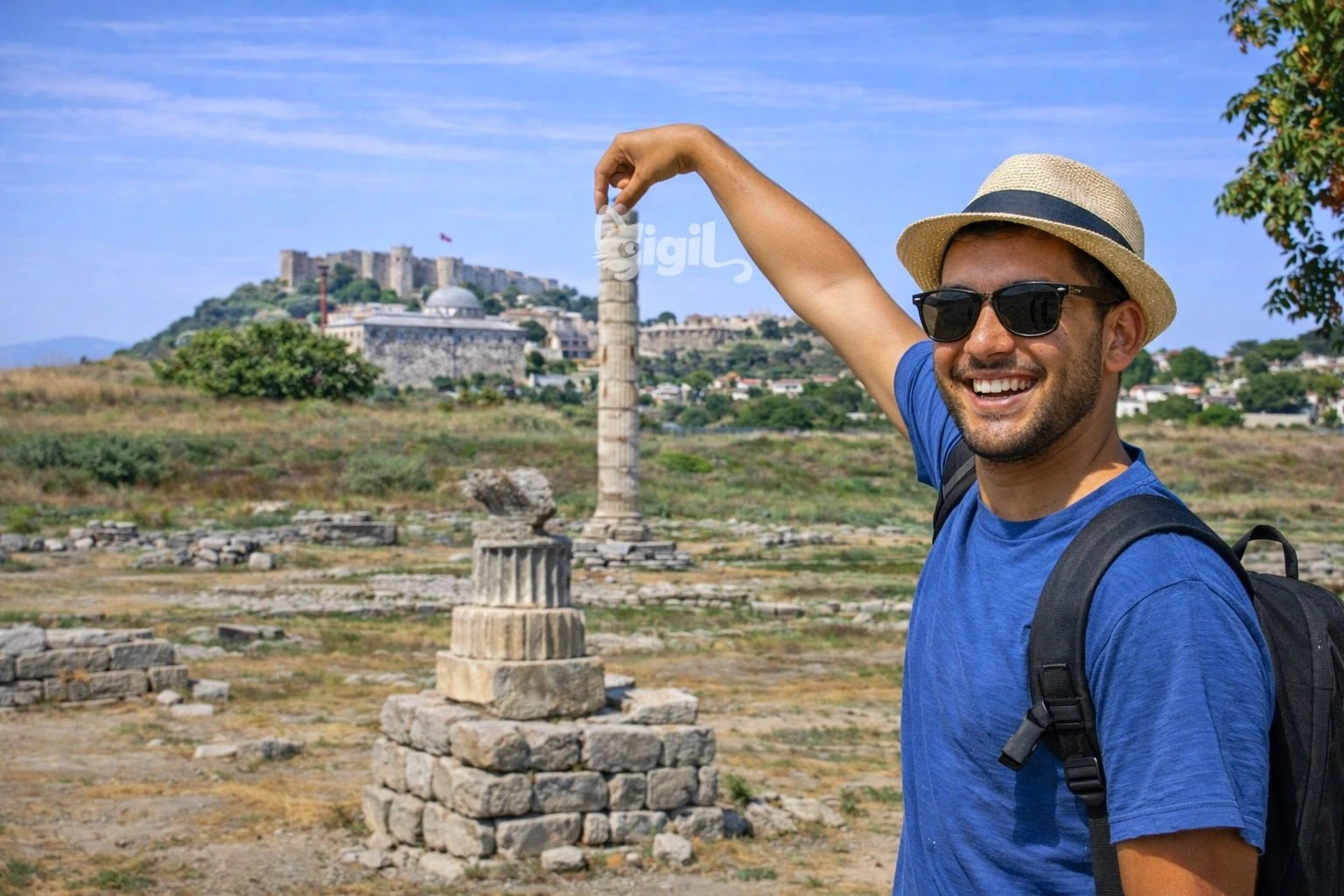
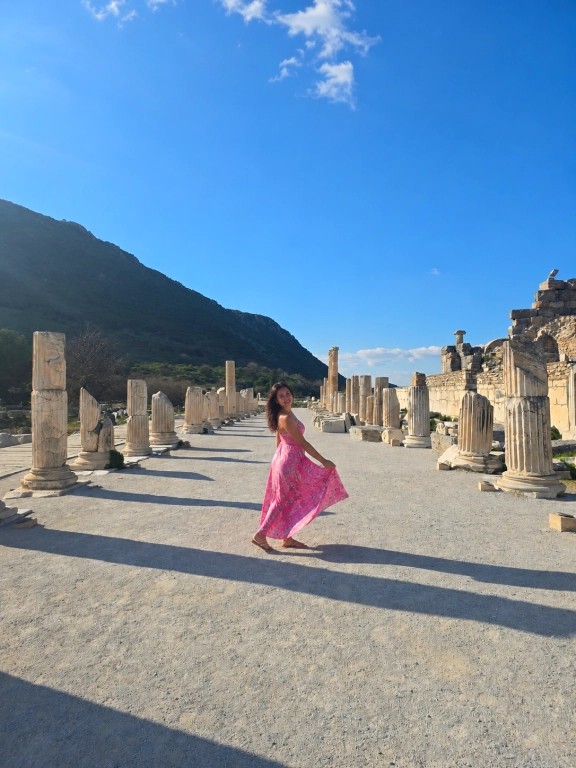
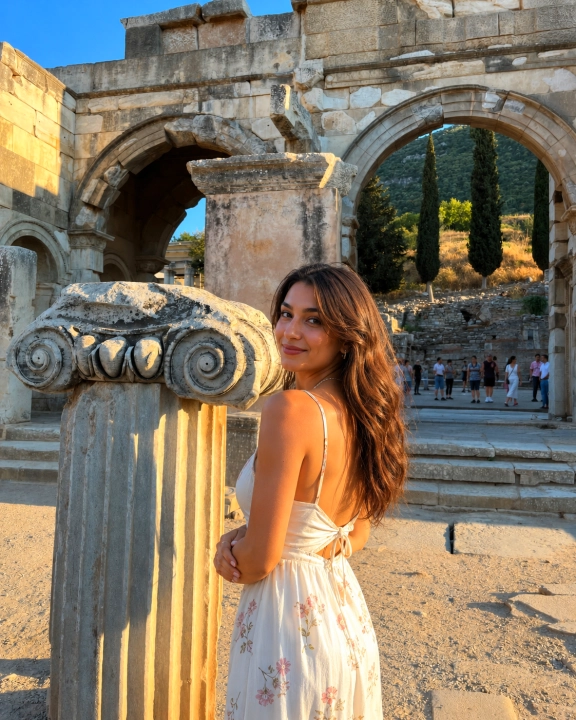
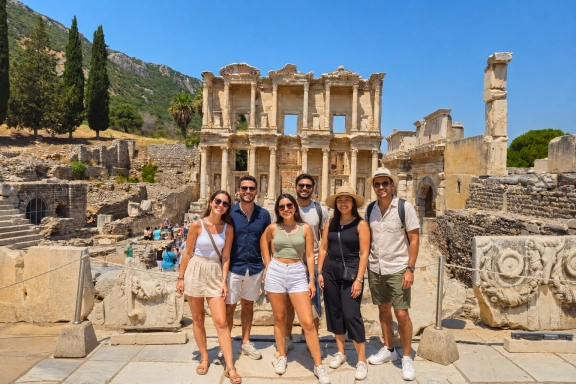
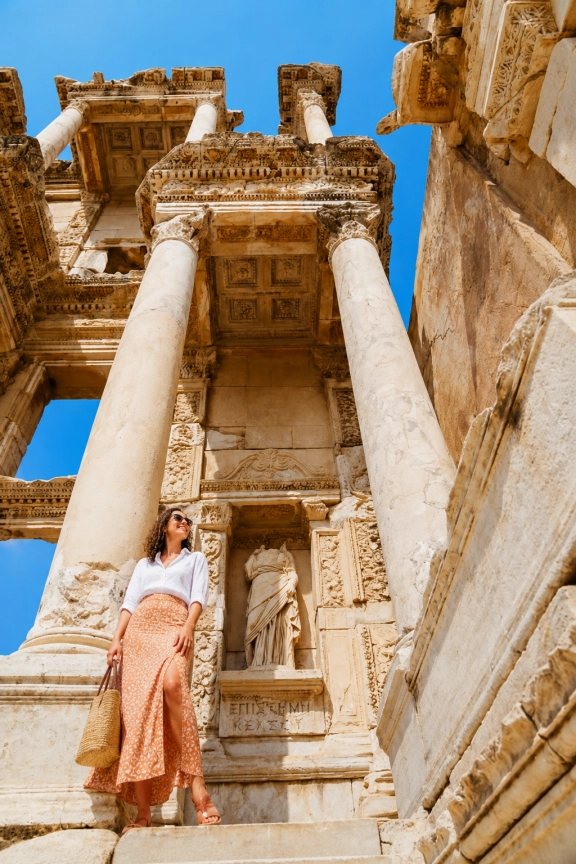
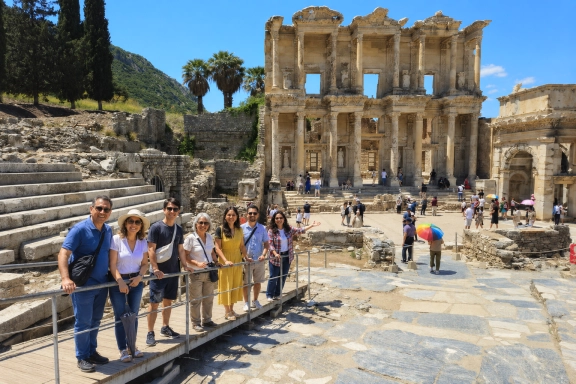
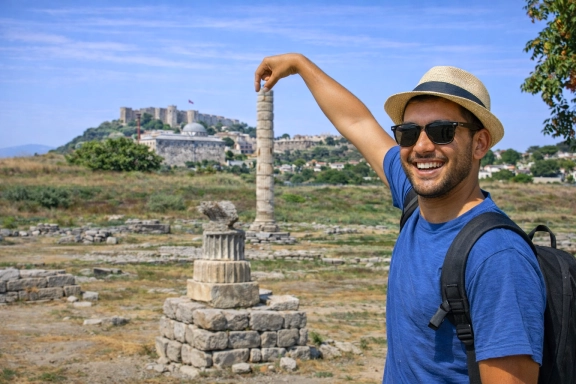




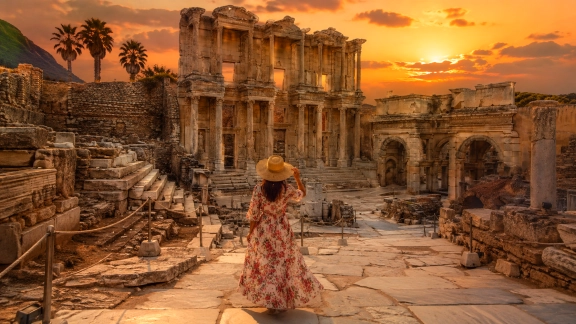
Ephesus Ancient City forms the main historical center of the private route. Its marble streets, theatre, agora spaces, gates, inscriptions and Library of Celsus show how public life and movement worked in a major ancient city.
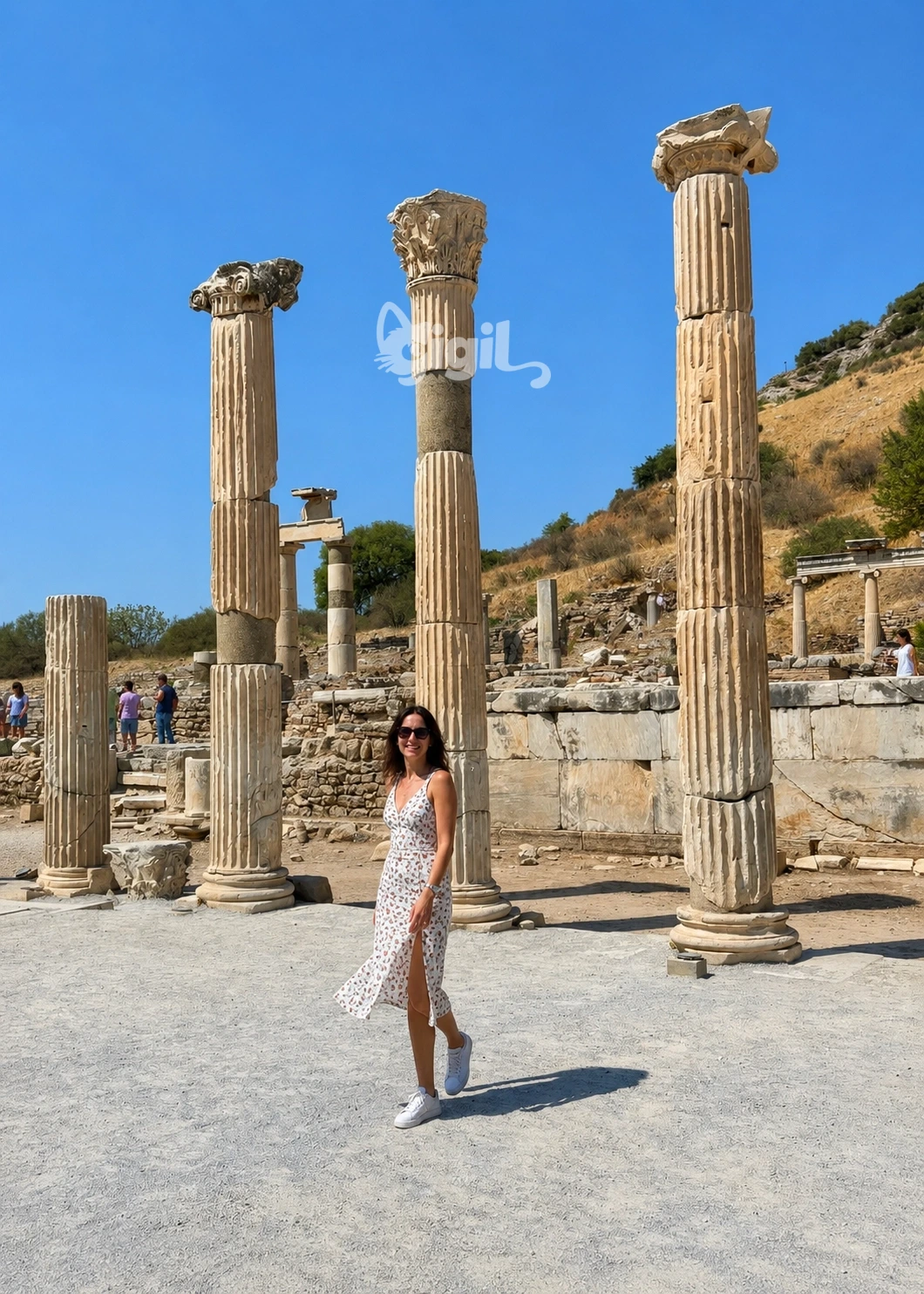
As you follow the route through the ruins, connect the visible spaces with the city's wider story. Ephesus grew through trade, religion and civic status, and its former harbor explains why this inland landscape once belonged to a powerful coastal city.
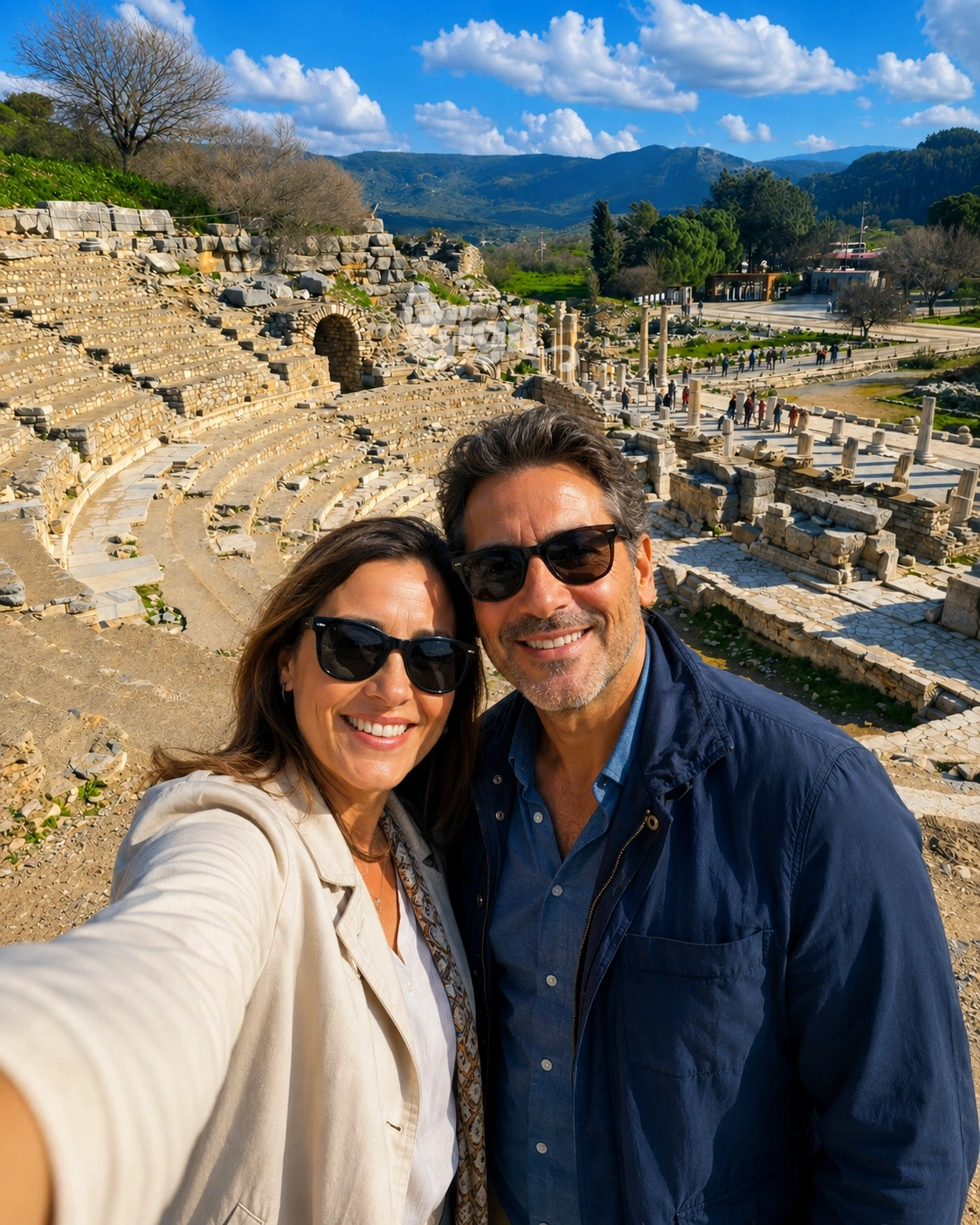
Questions
What makes Ephesus Ancient City the central stop?
It shows a major ancient city through preserved streets, theatre remains, public spaces, monuments, gates and inscriptions.
Which monuments help explain Ephesus?
The Library of Celsus, theatre, marble streets, agora areas, gates and inscriptions help explain public life and city planning.
Why is the former harbor part of the explanation?
The former harbor explains how Ephesus became wealthy and influential through trade before the landscape and coastline changed.
How should visitors view reconstructed details?
They help visitors imagine the ancient city, but they should be understood alongside original remains and modern conservation.