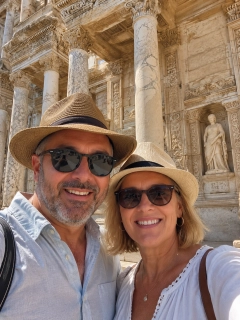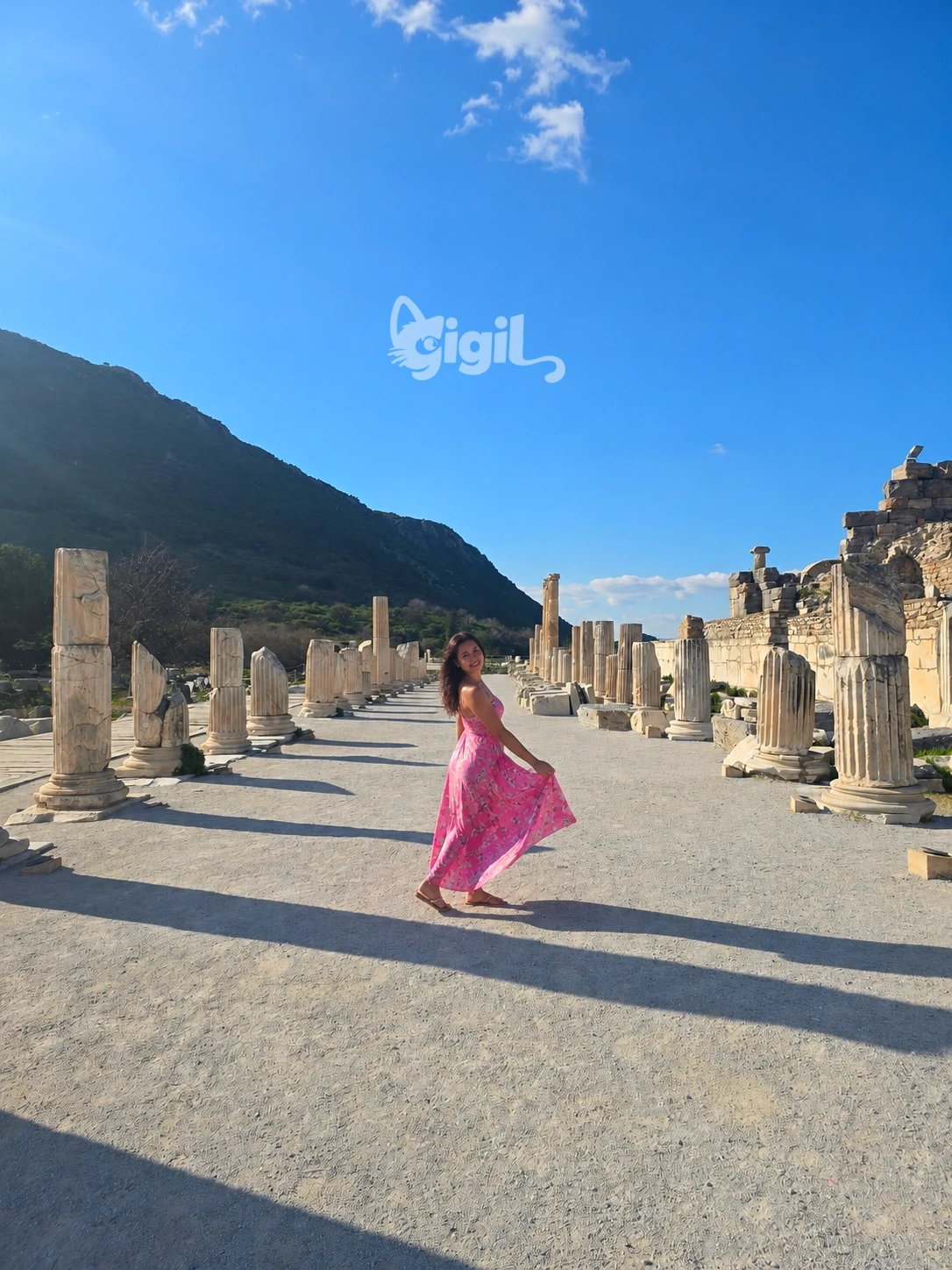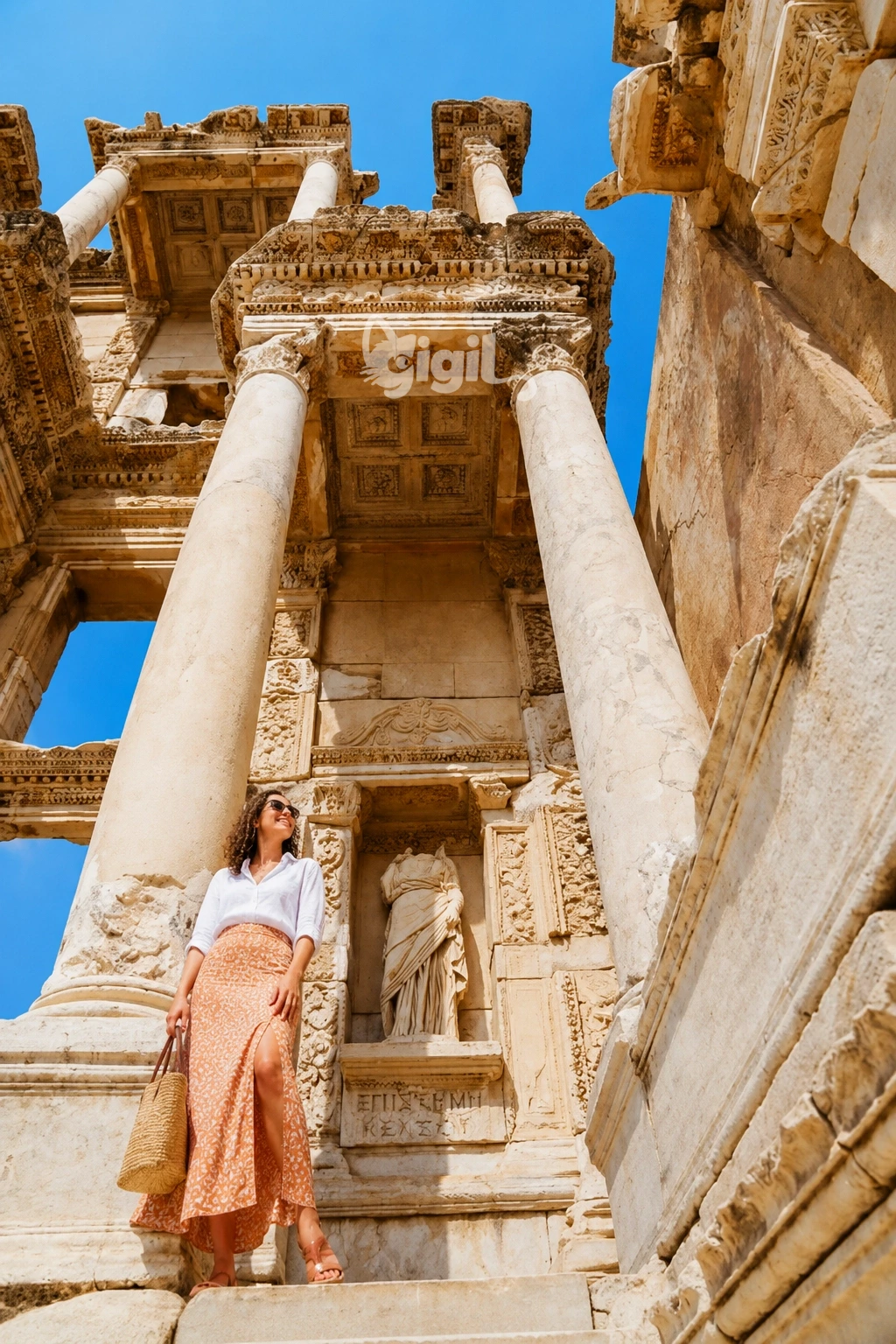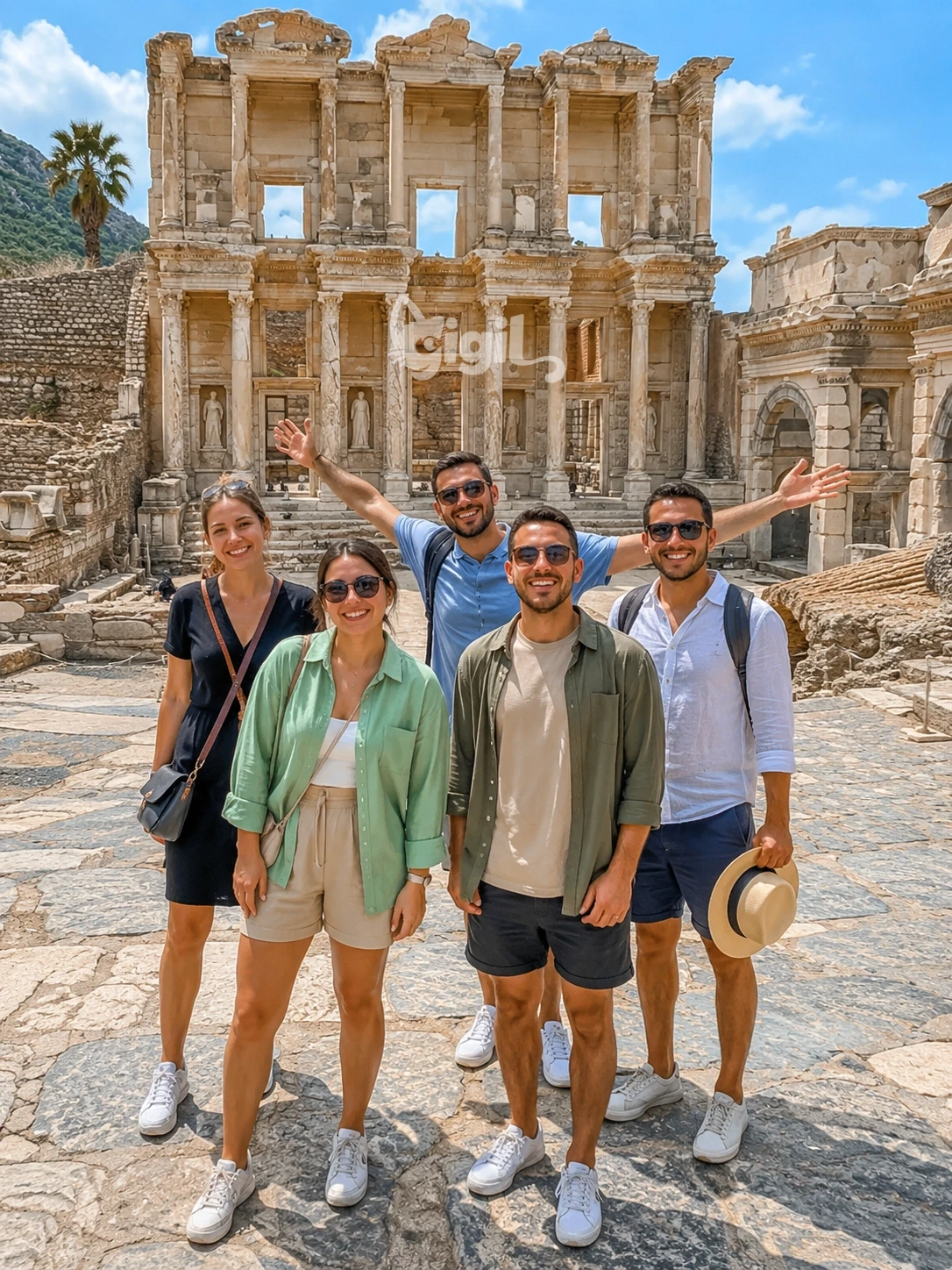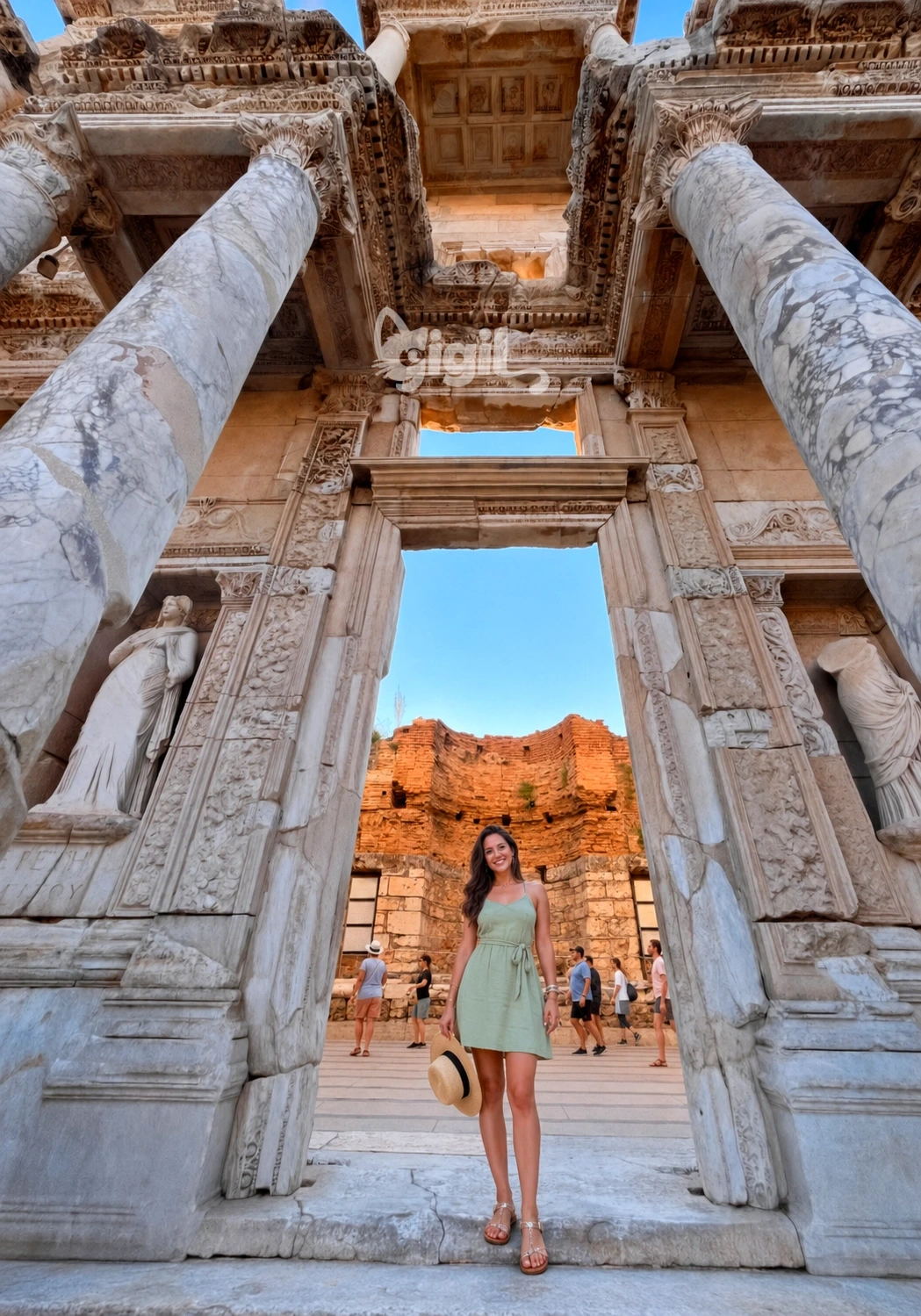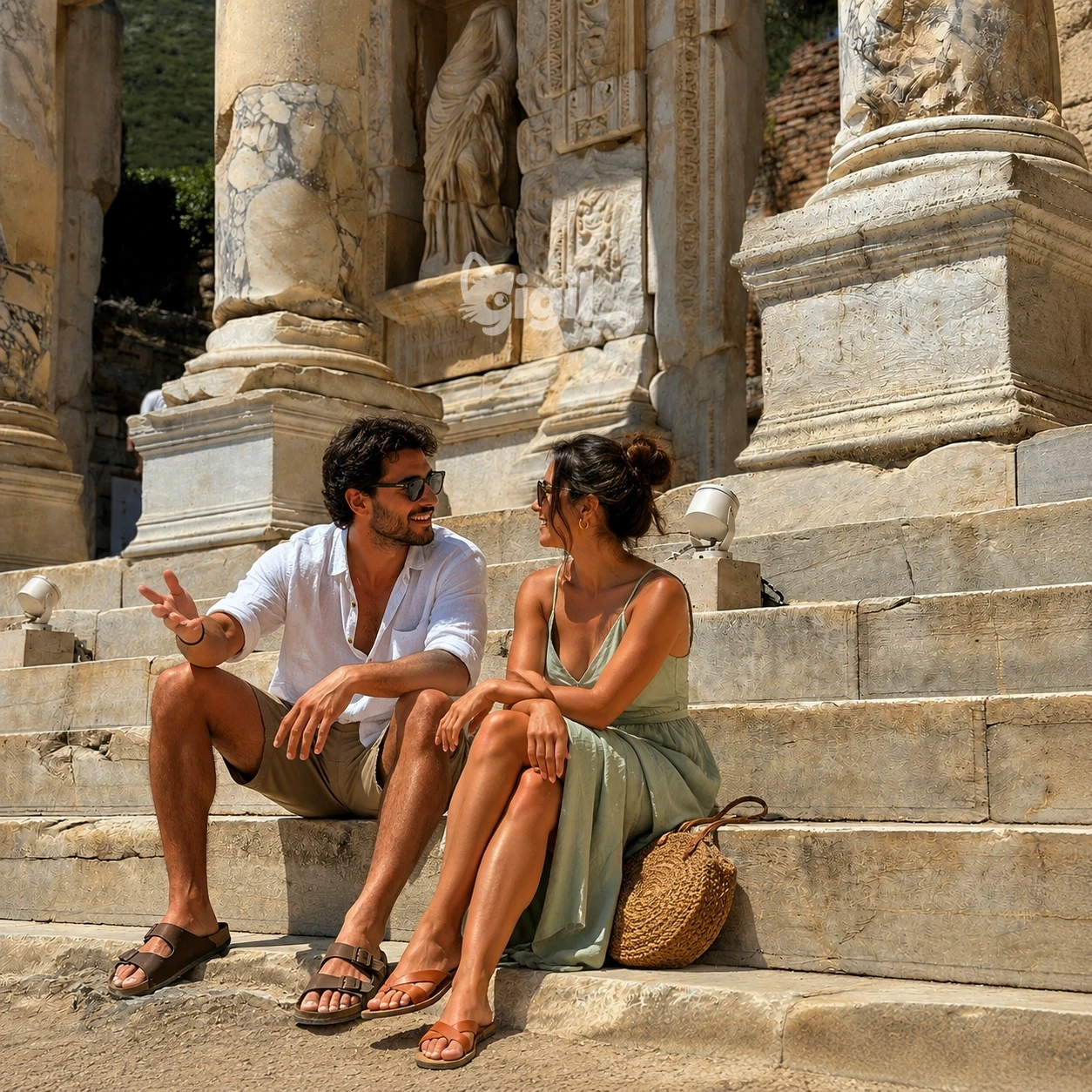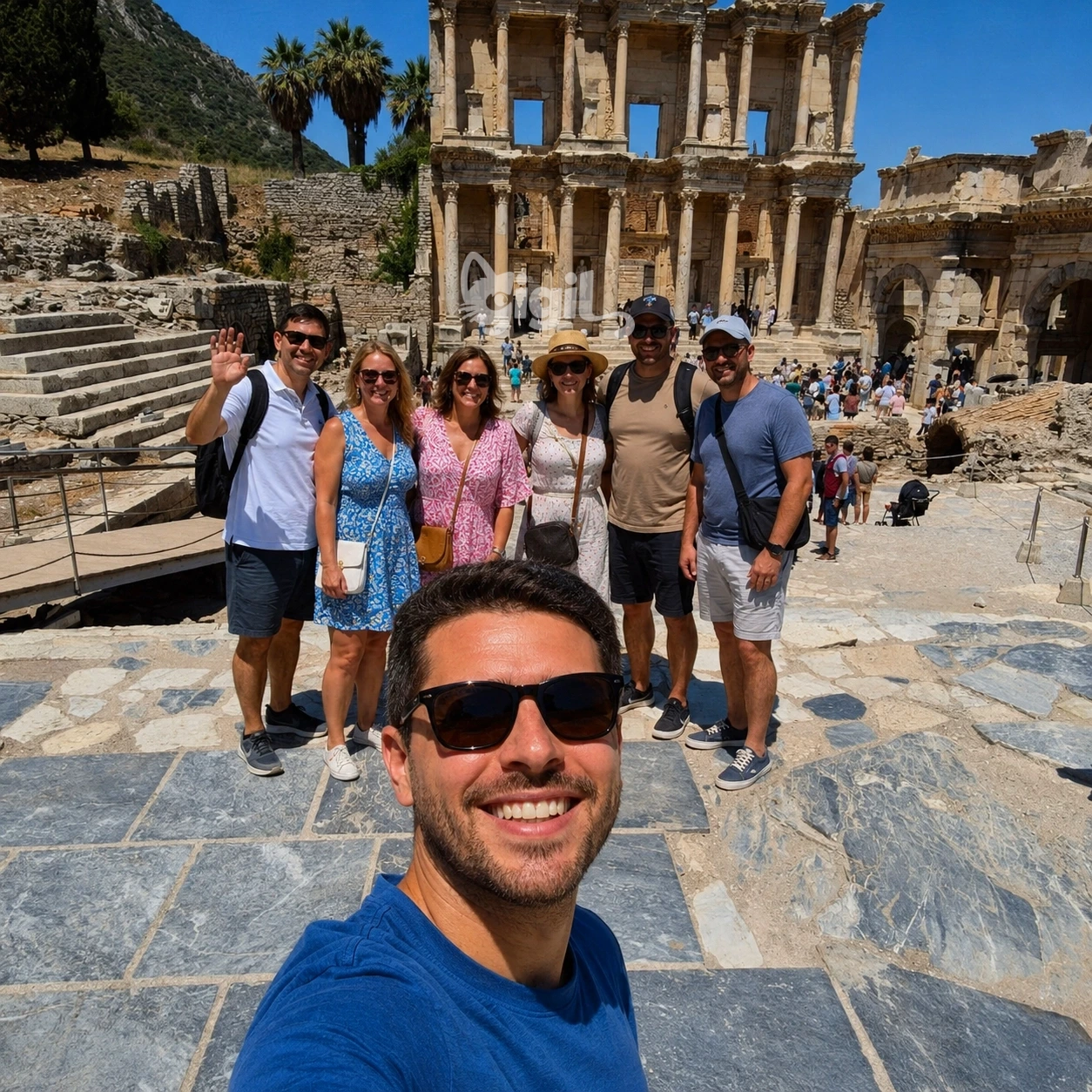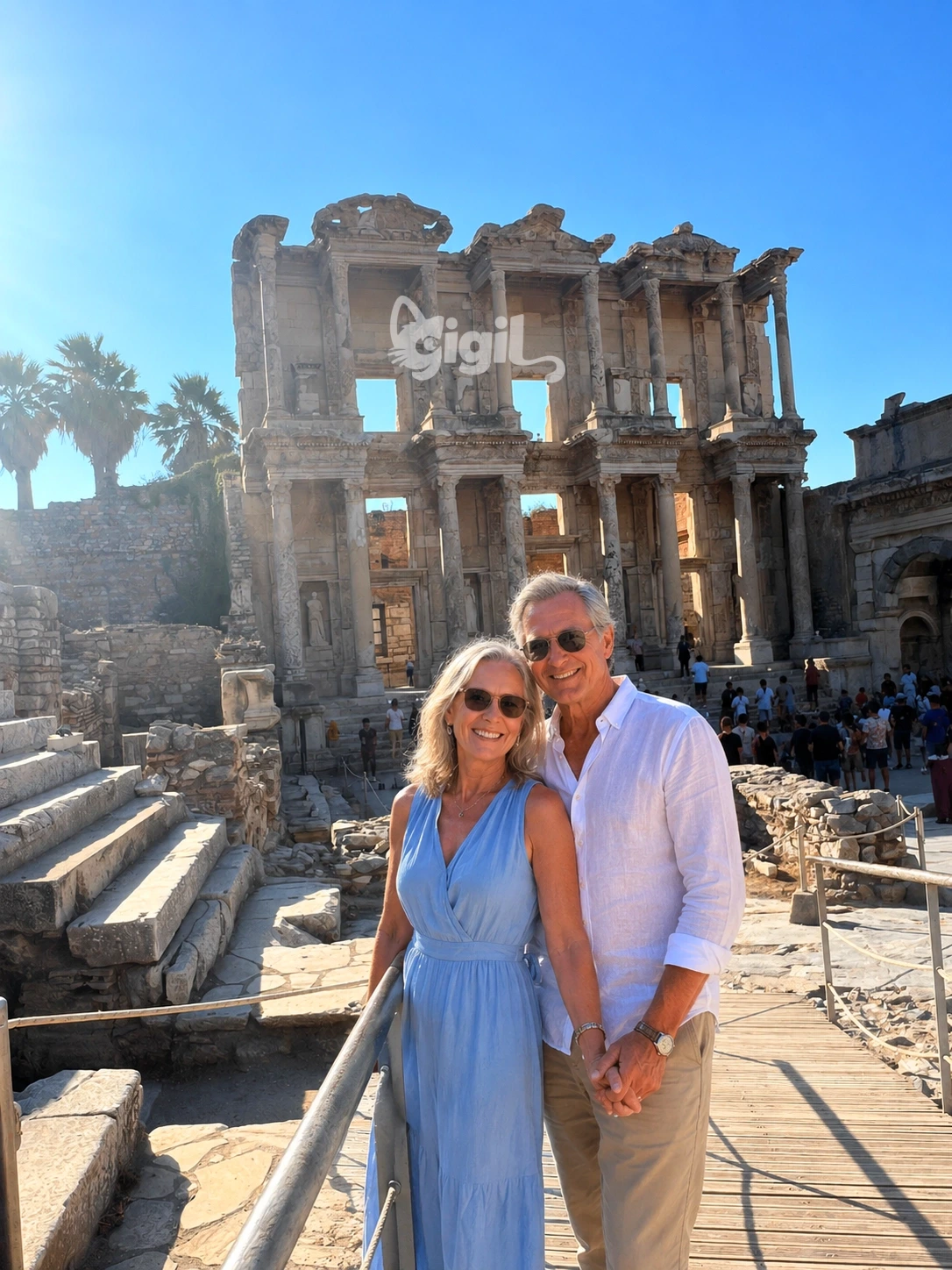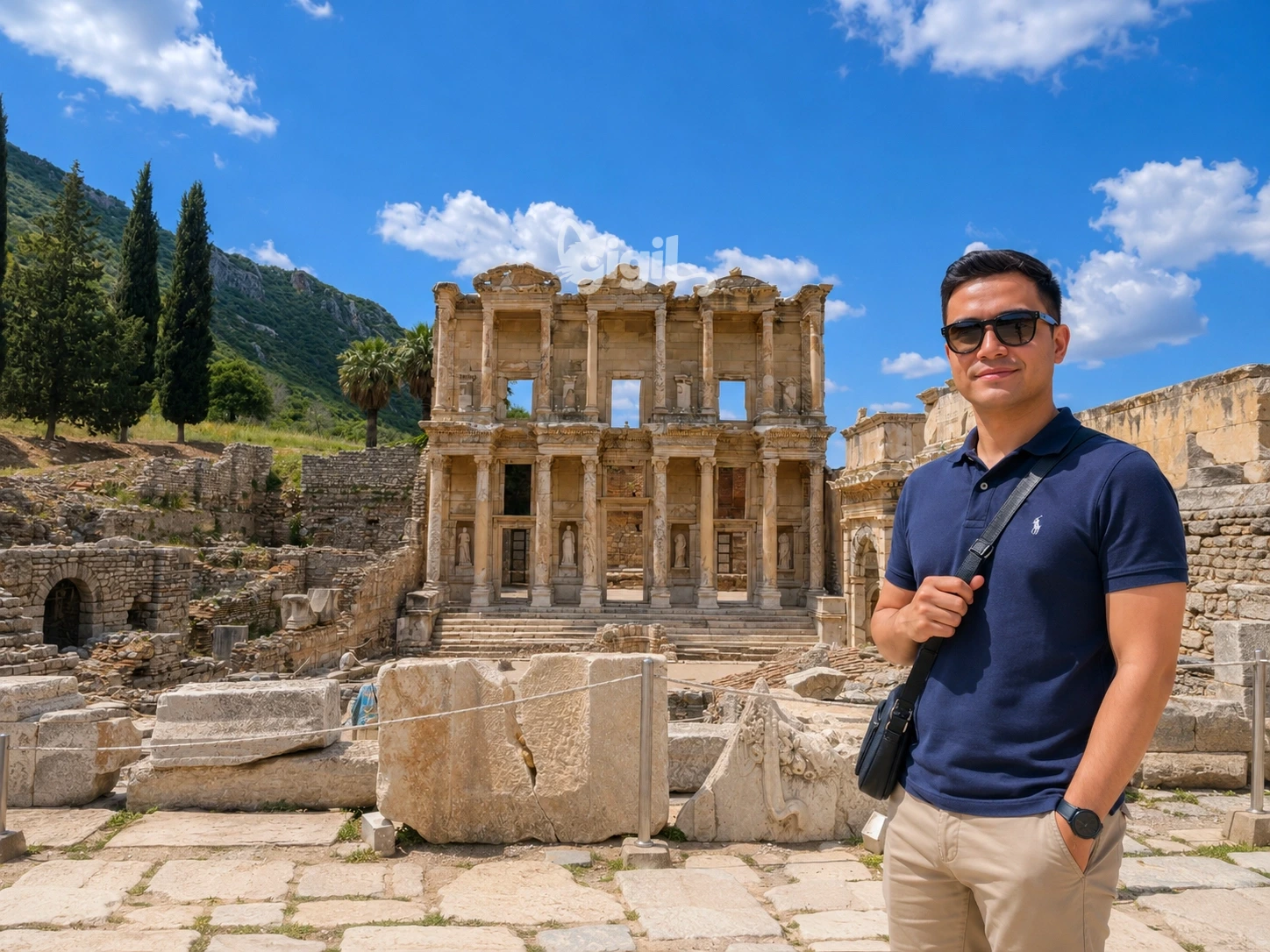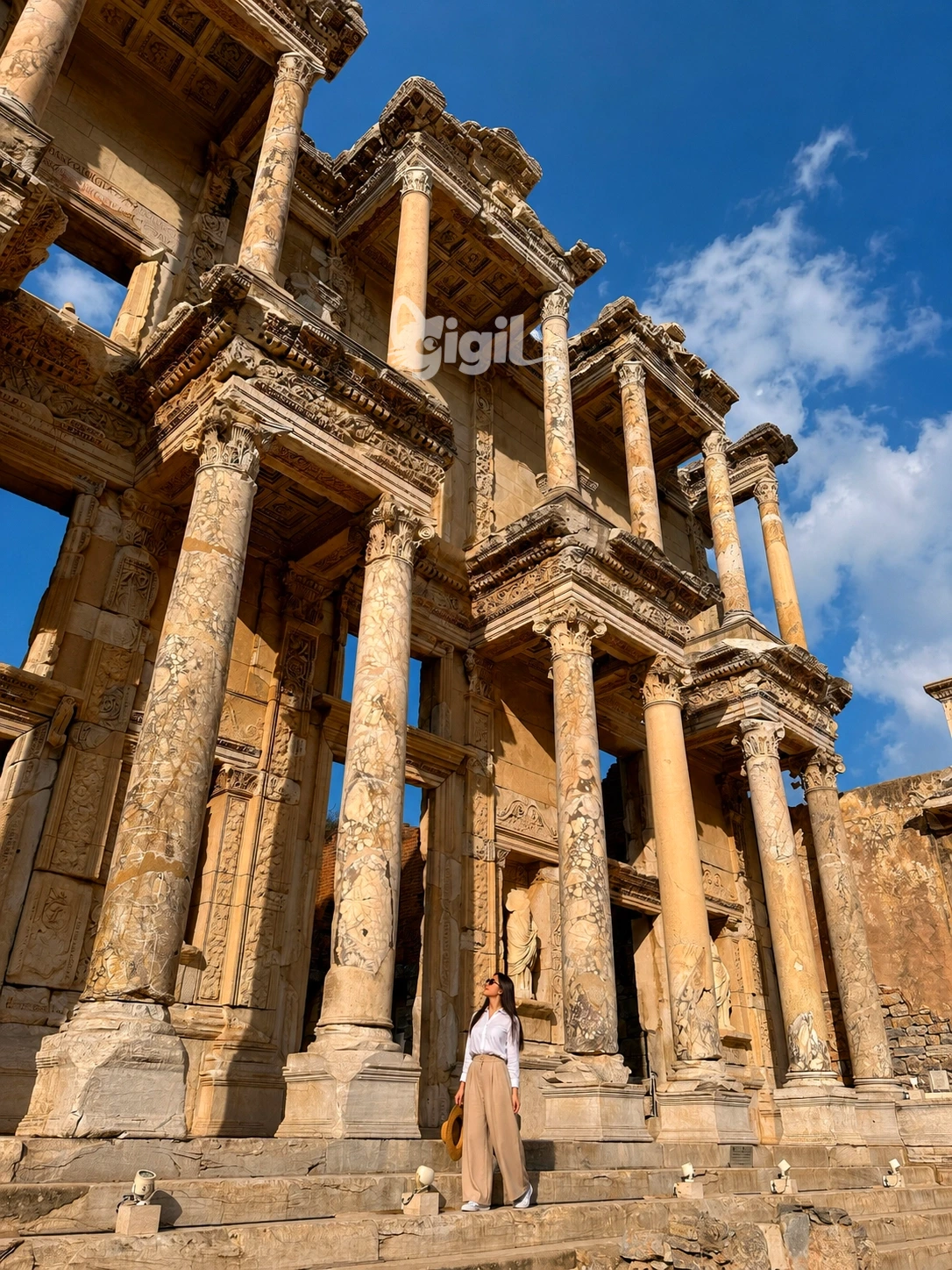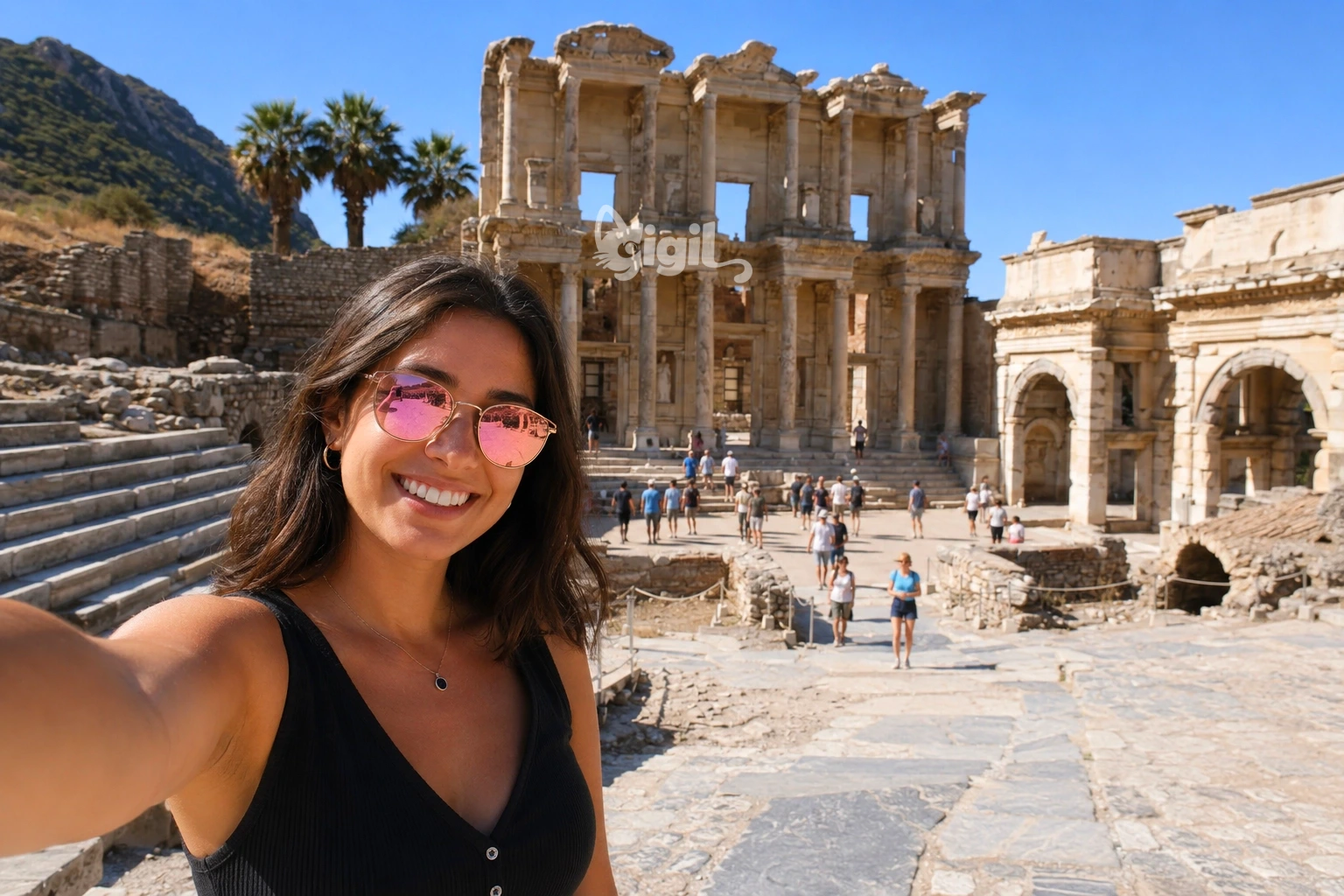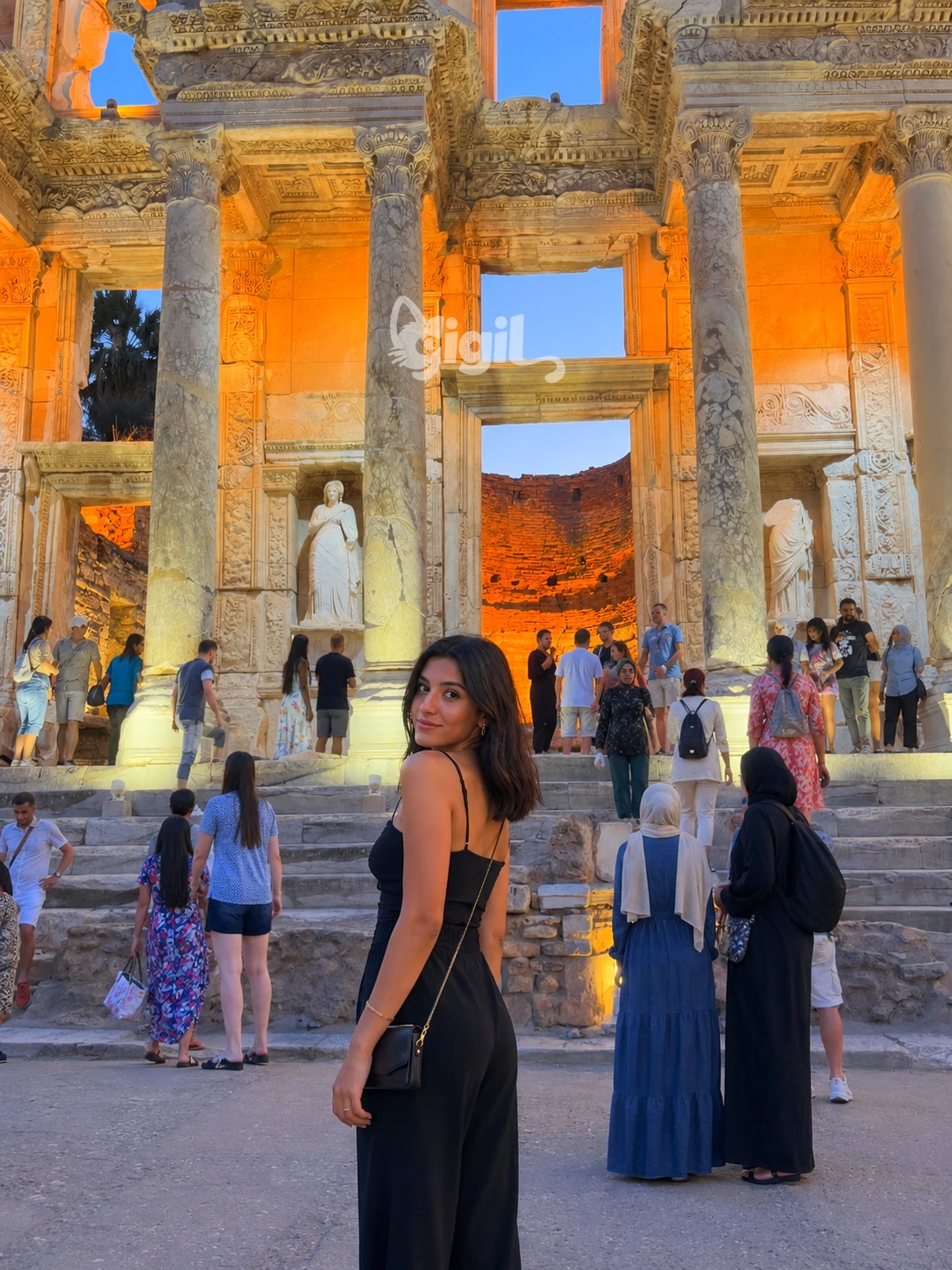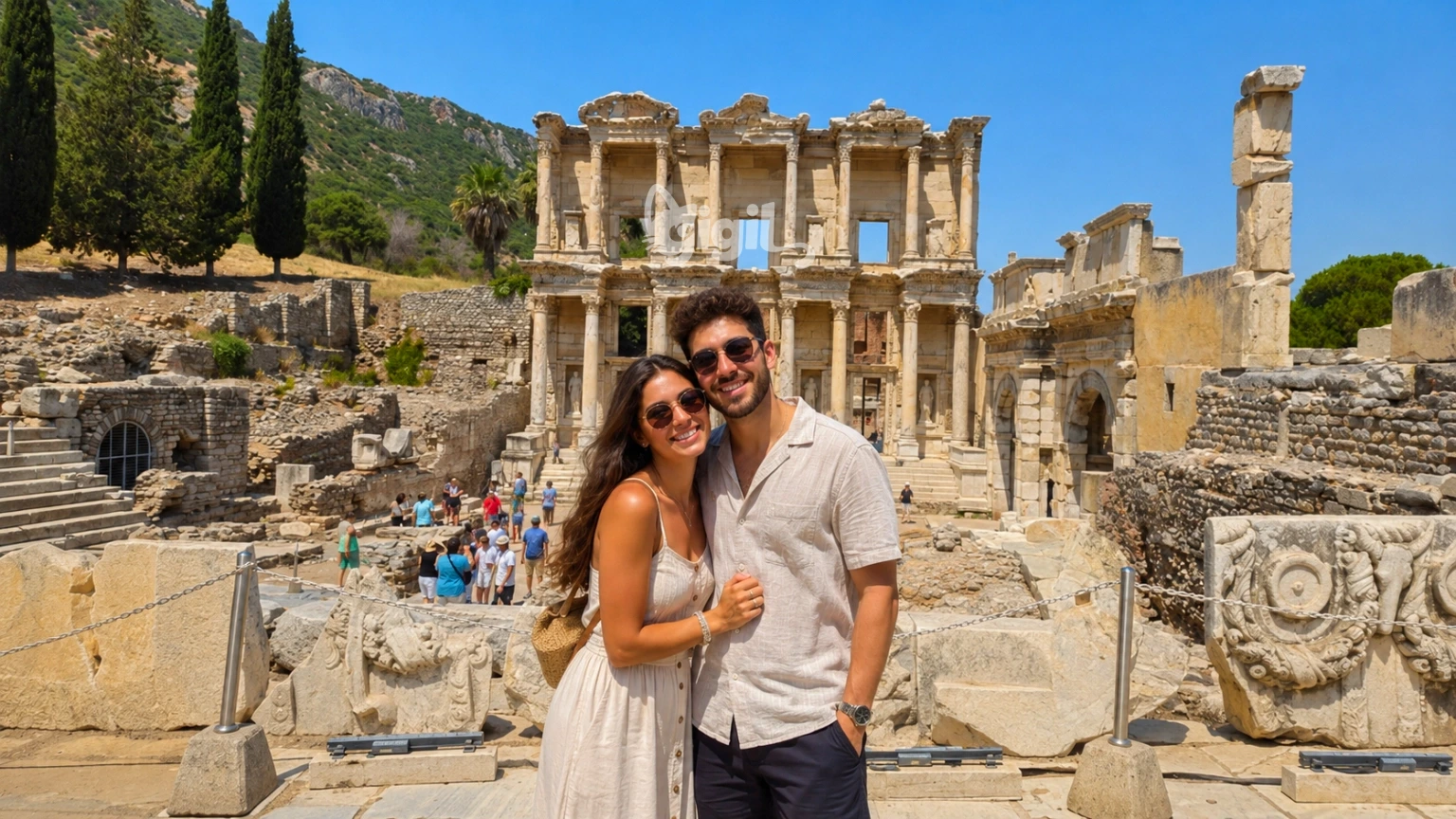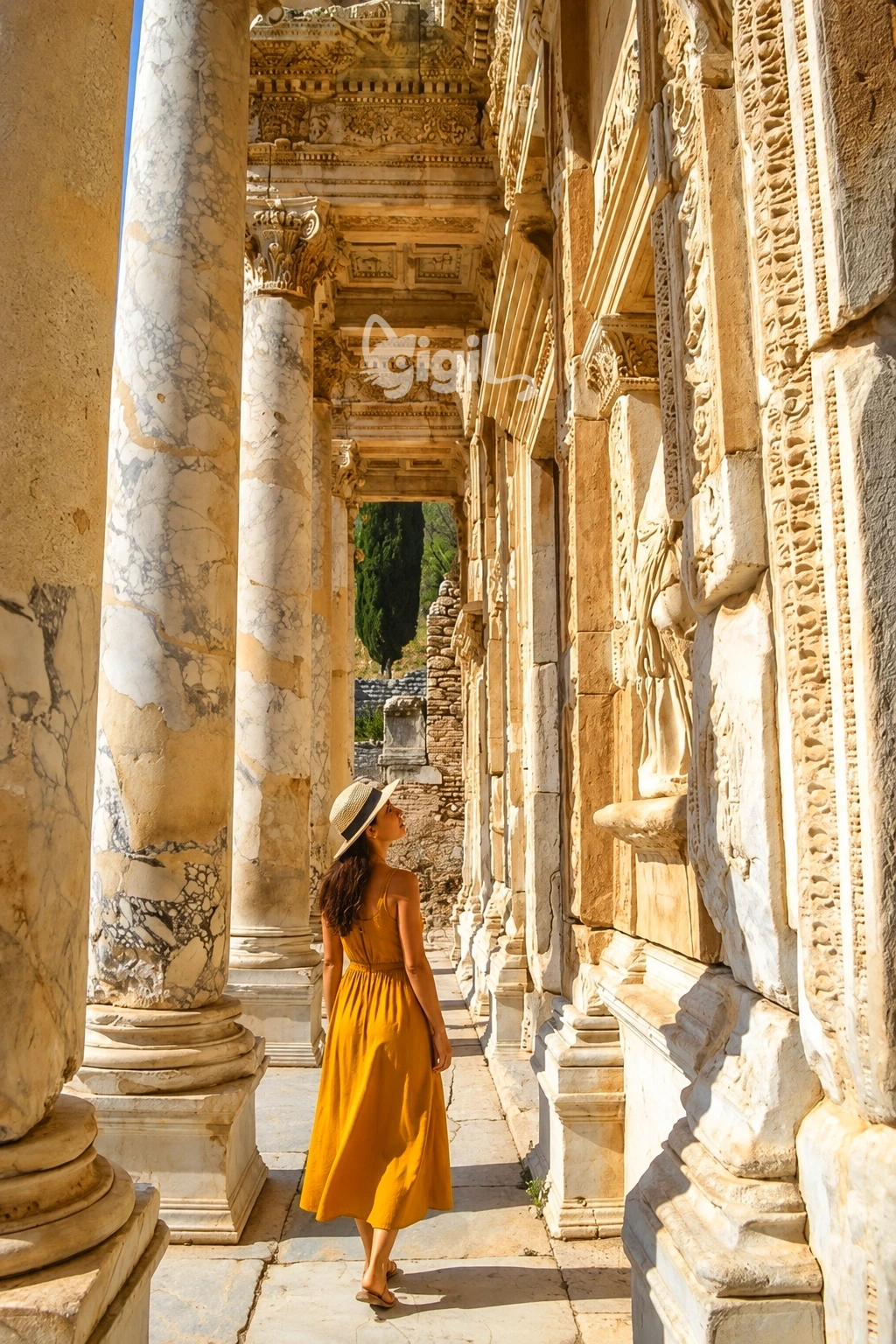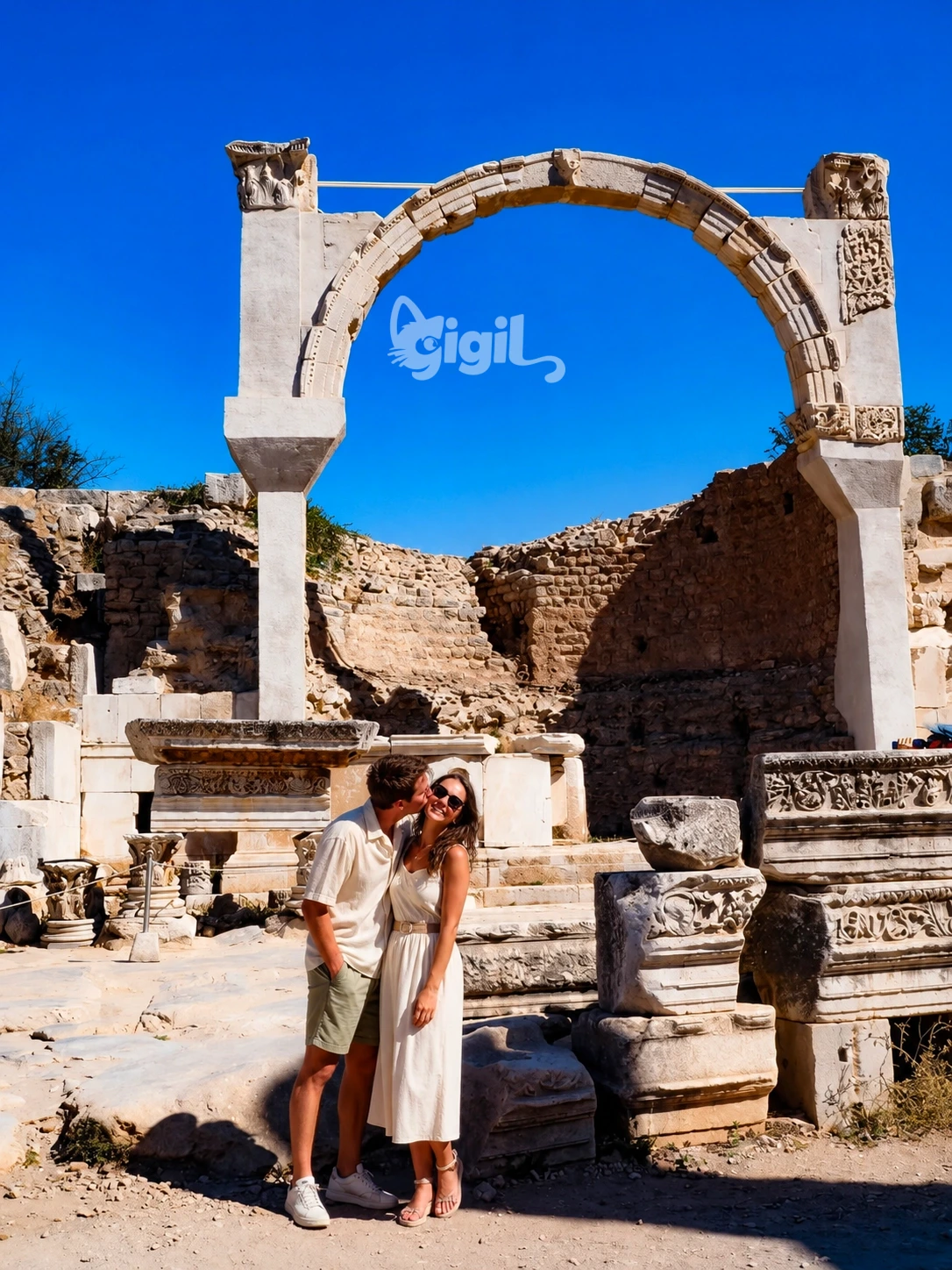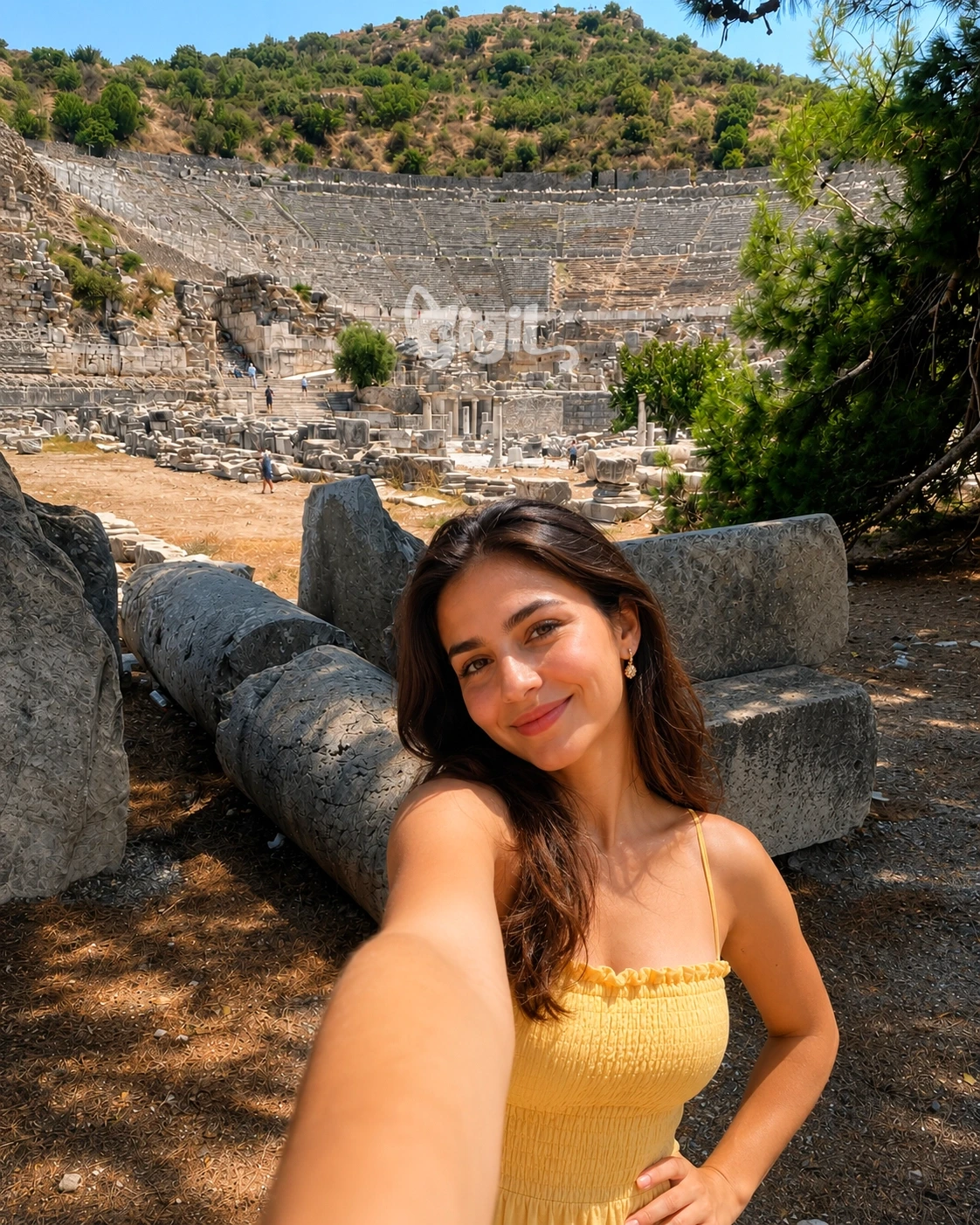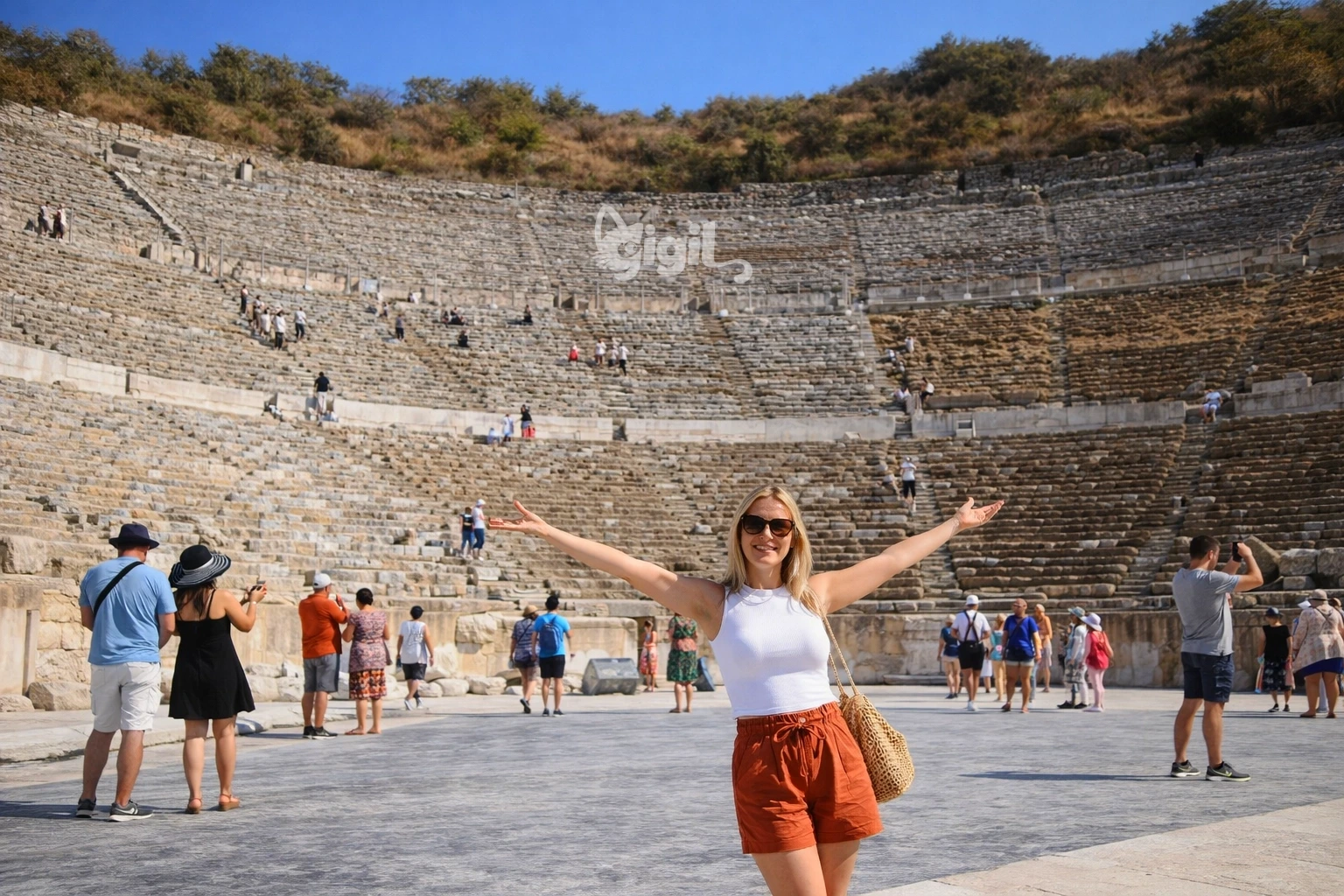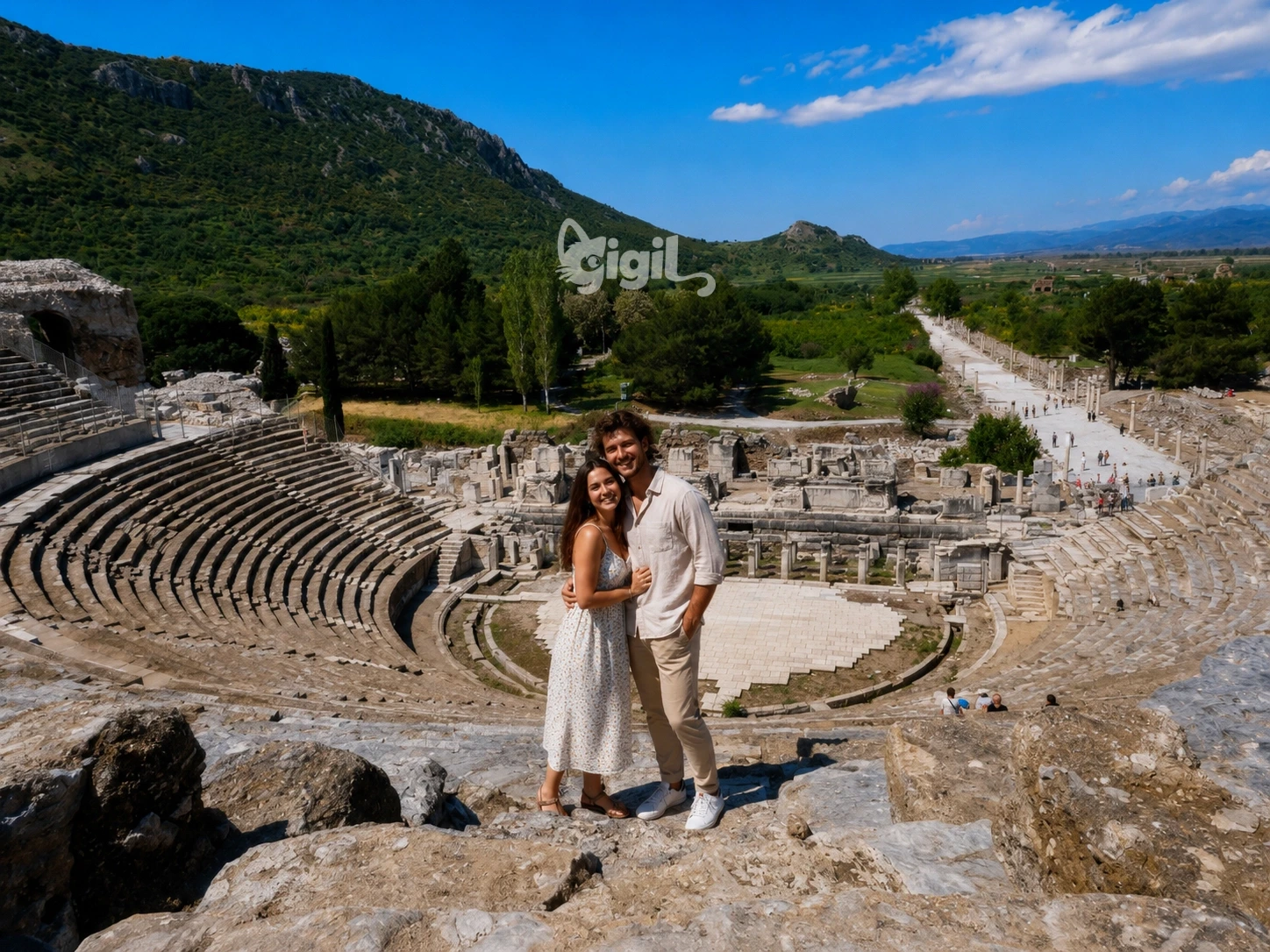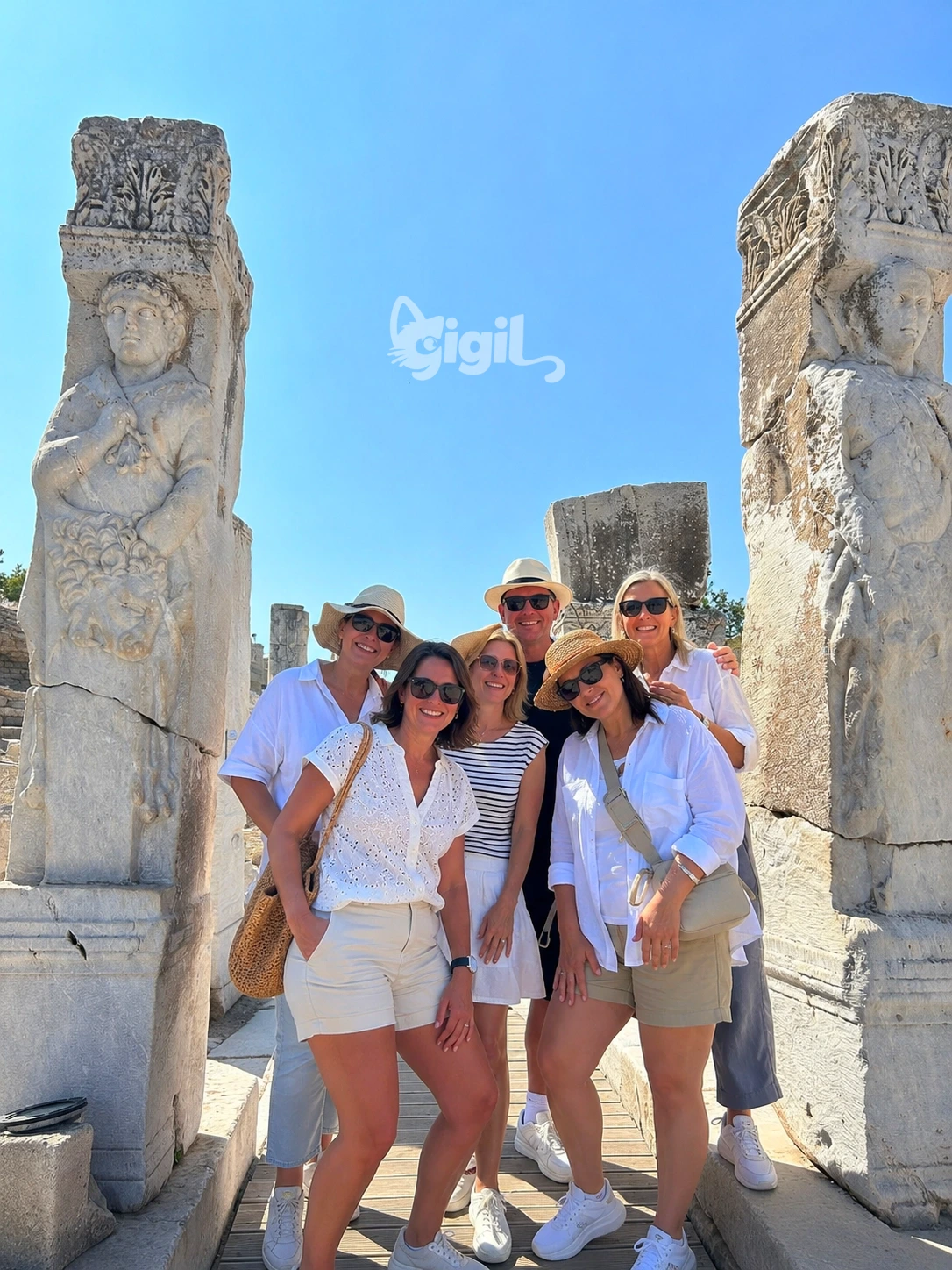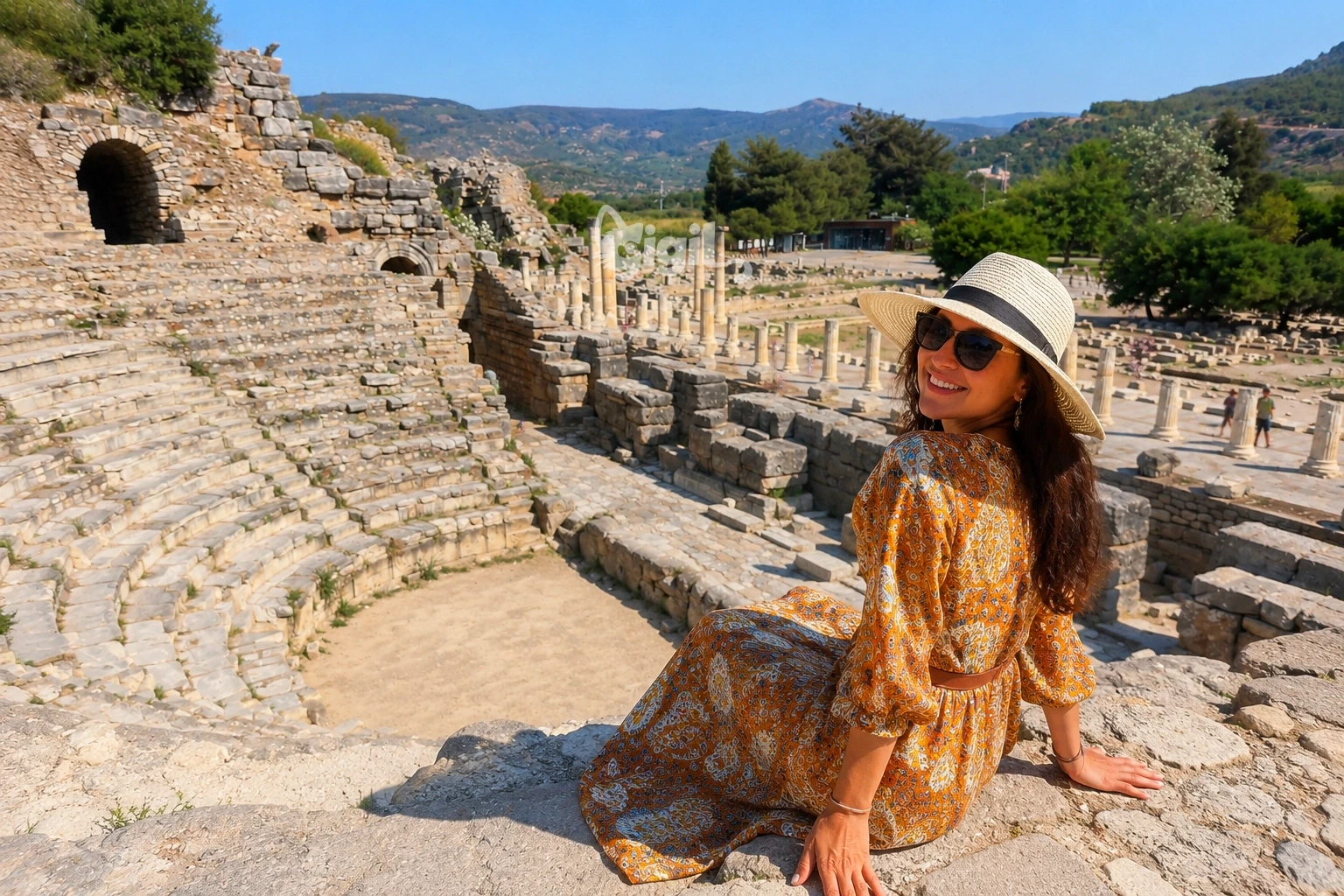








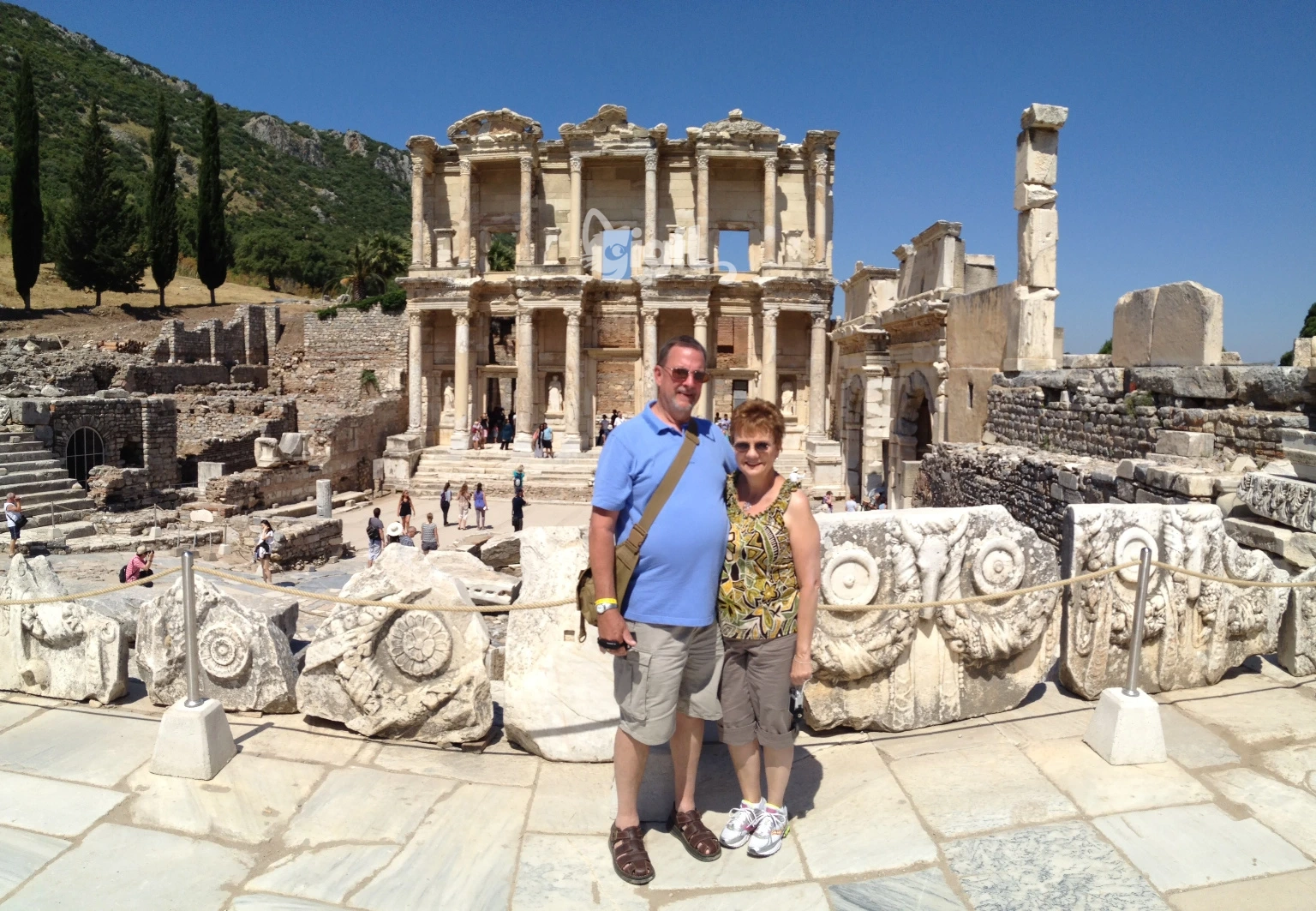

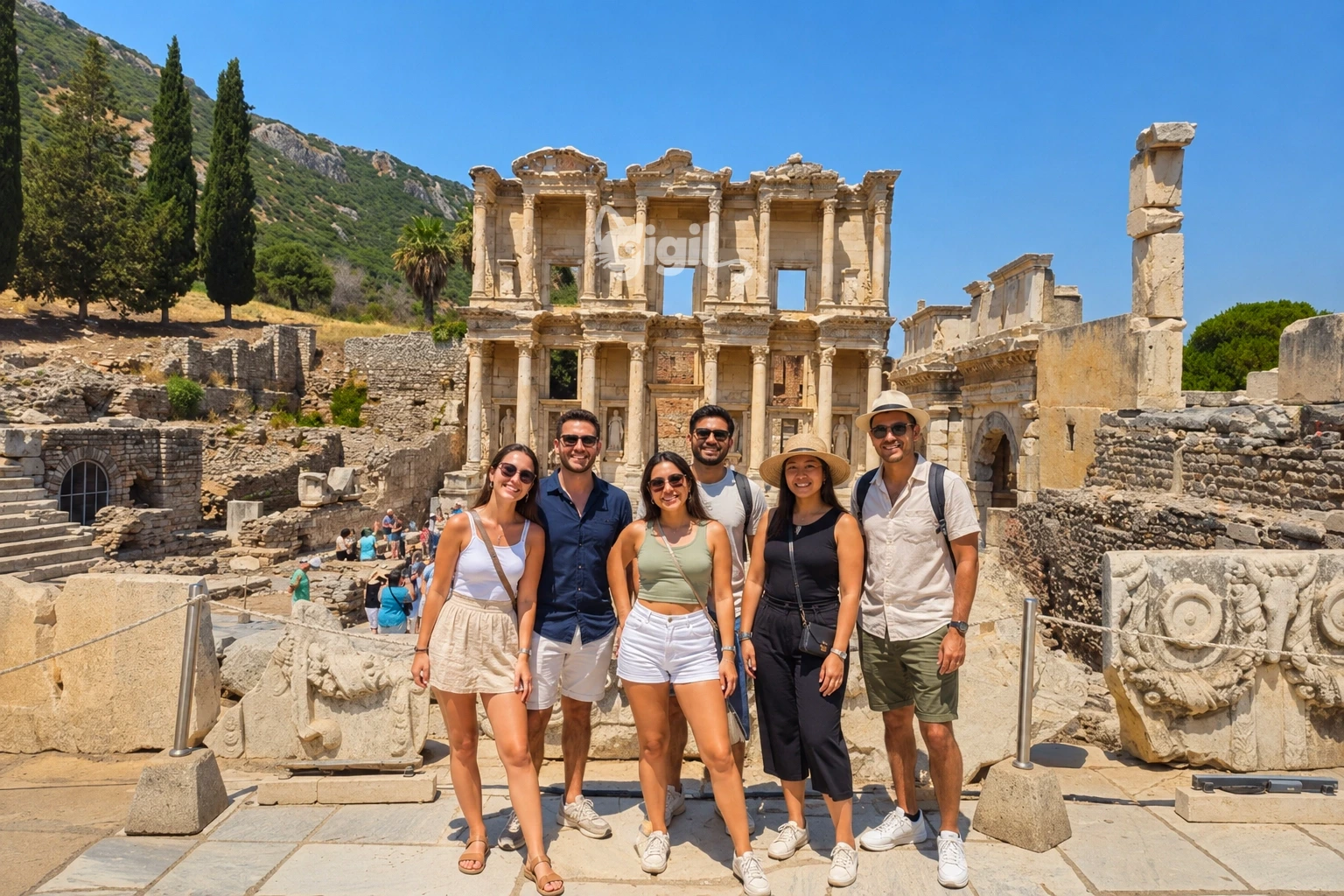

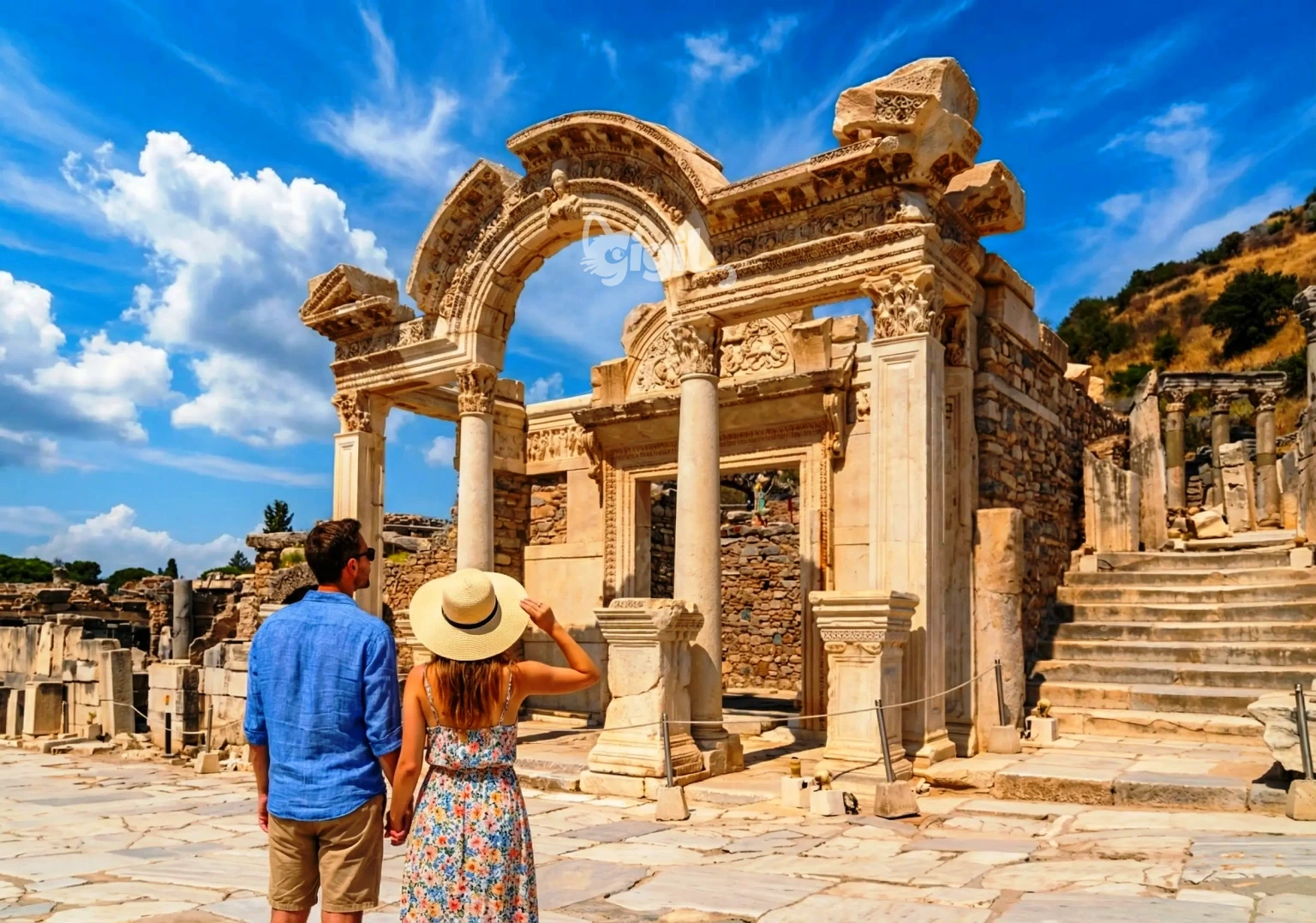
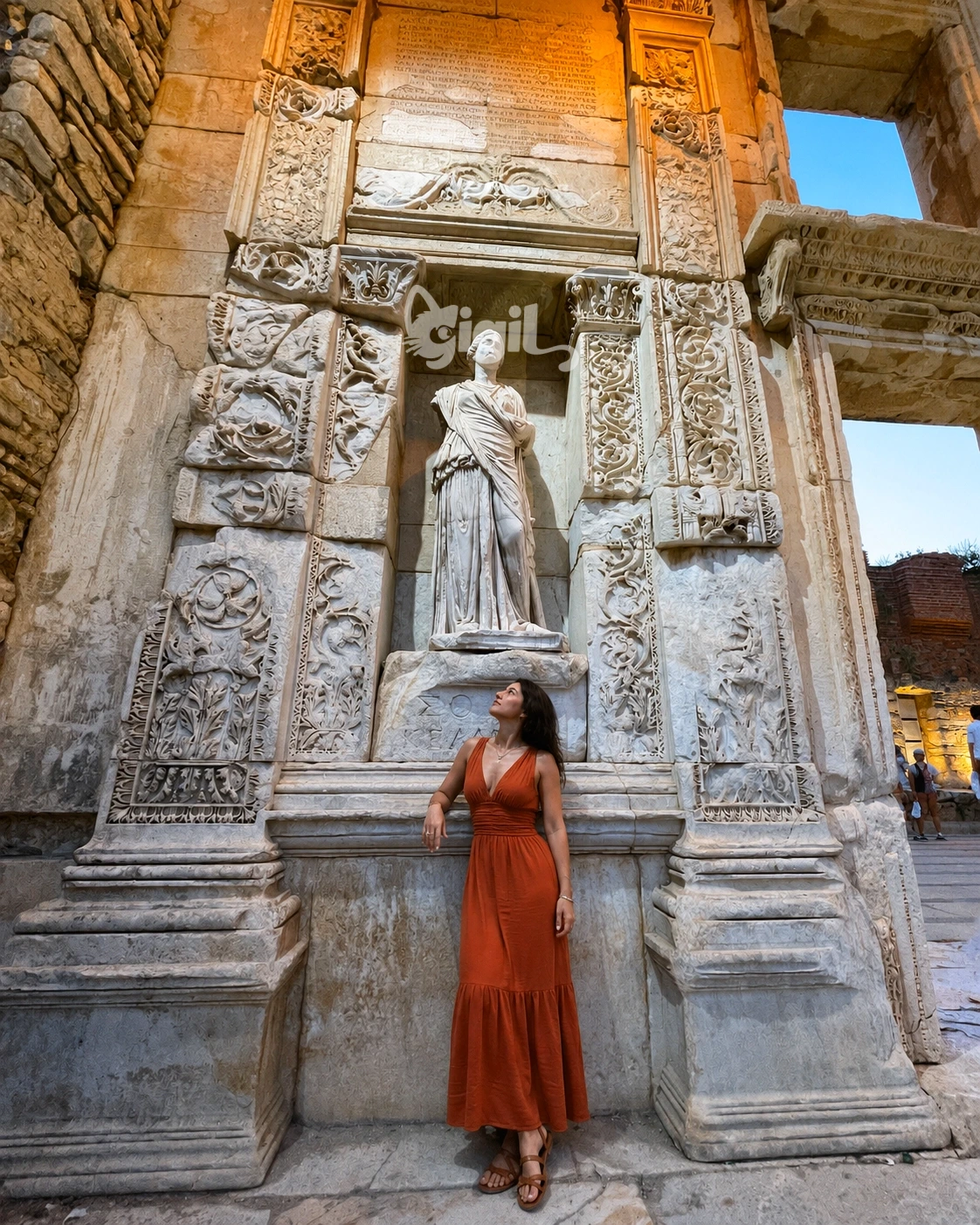


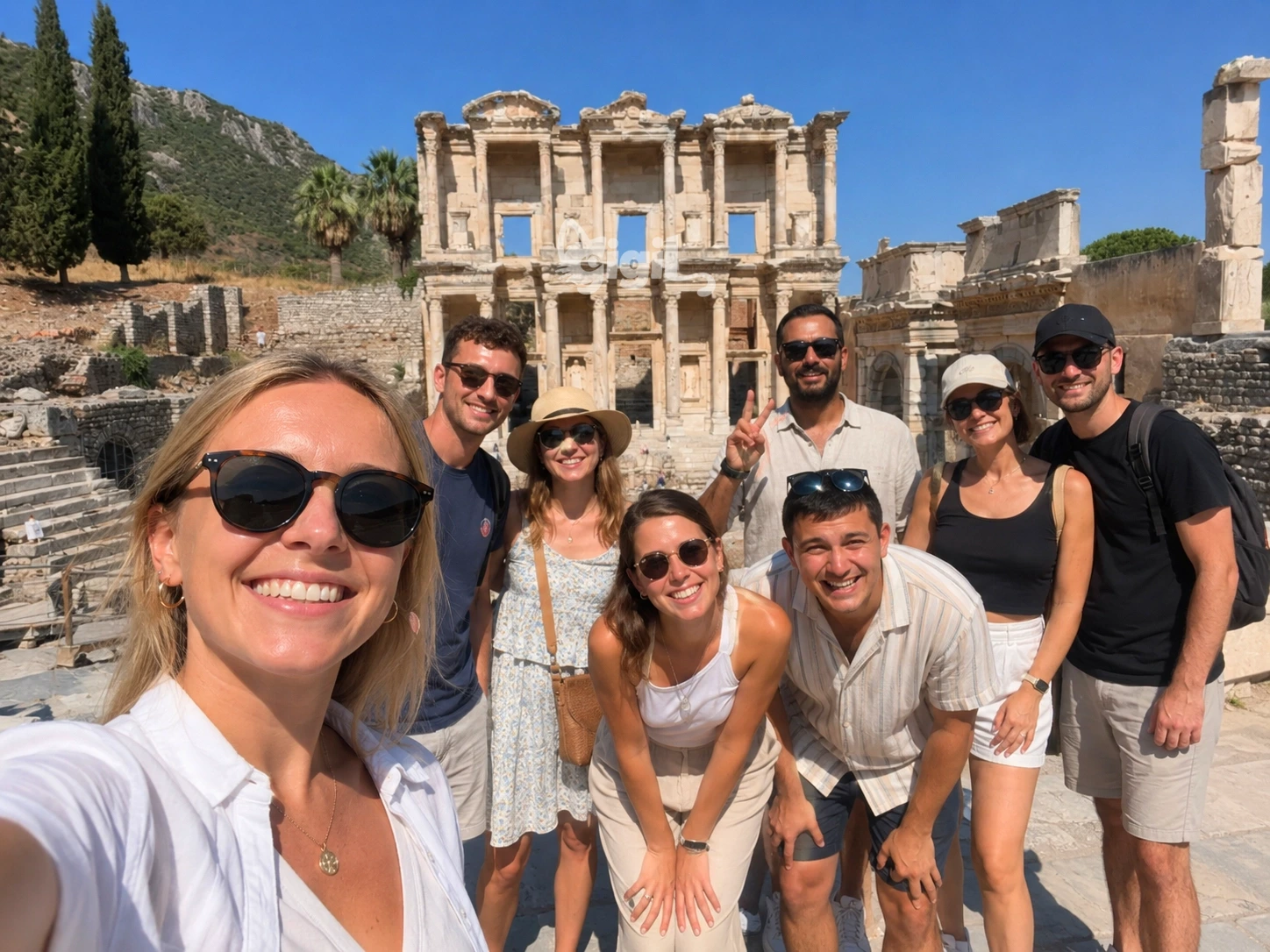
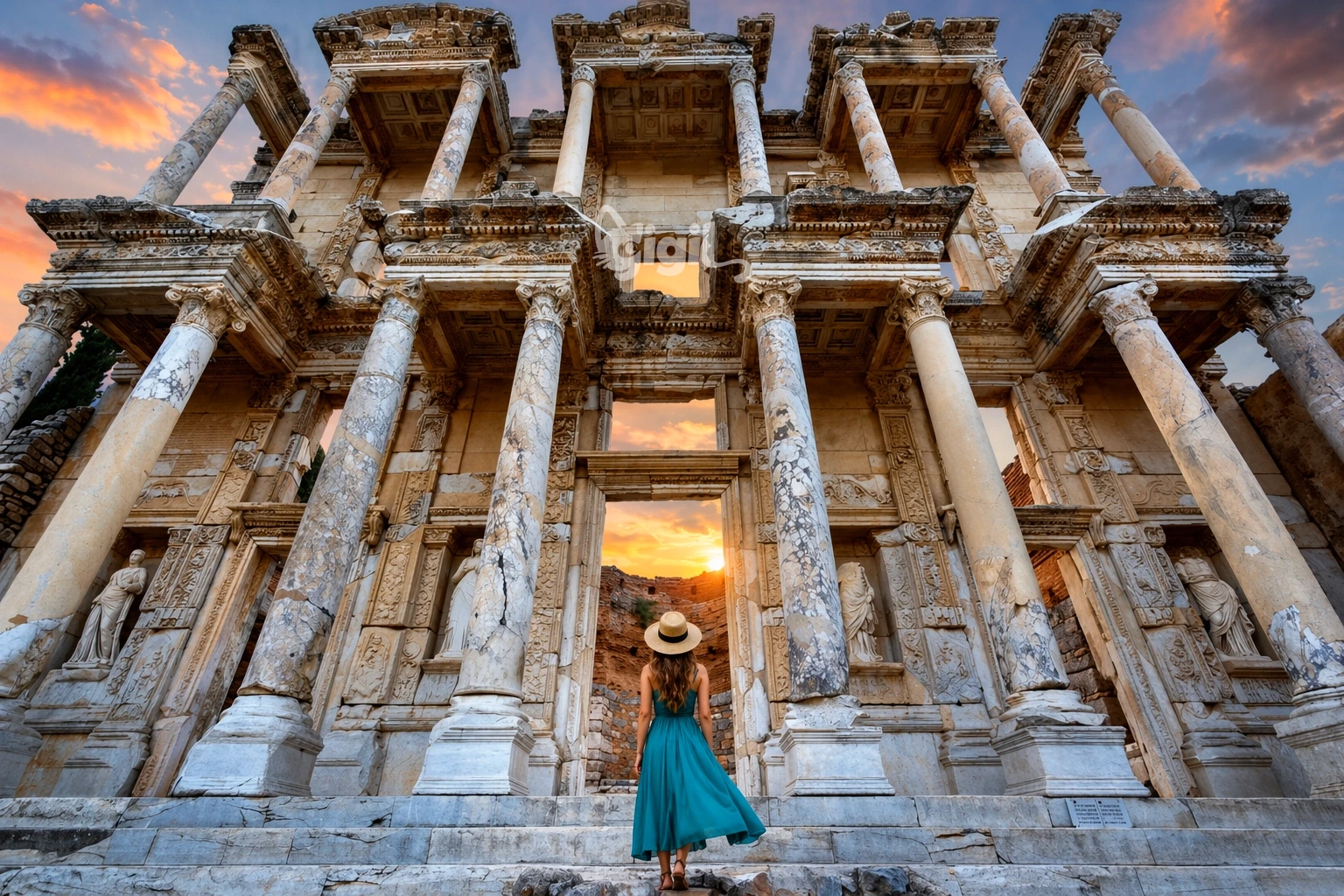
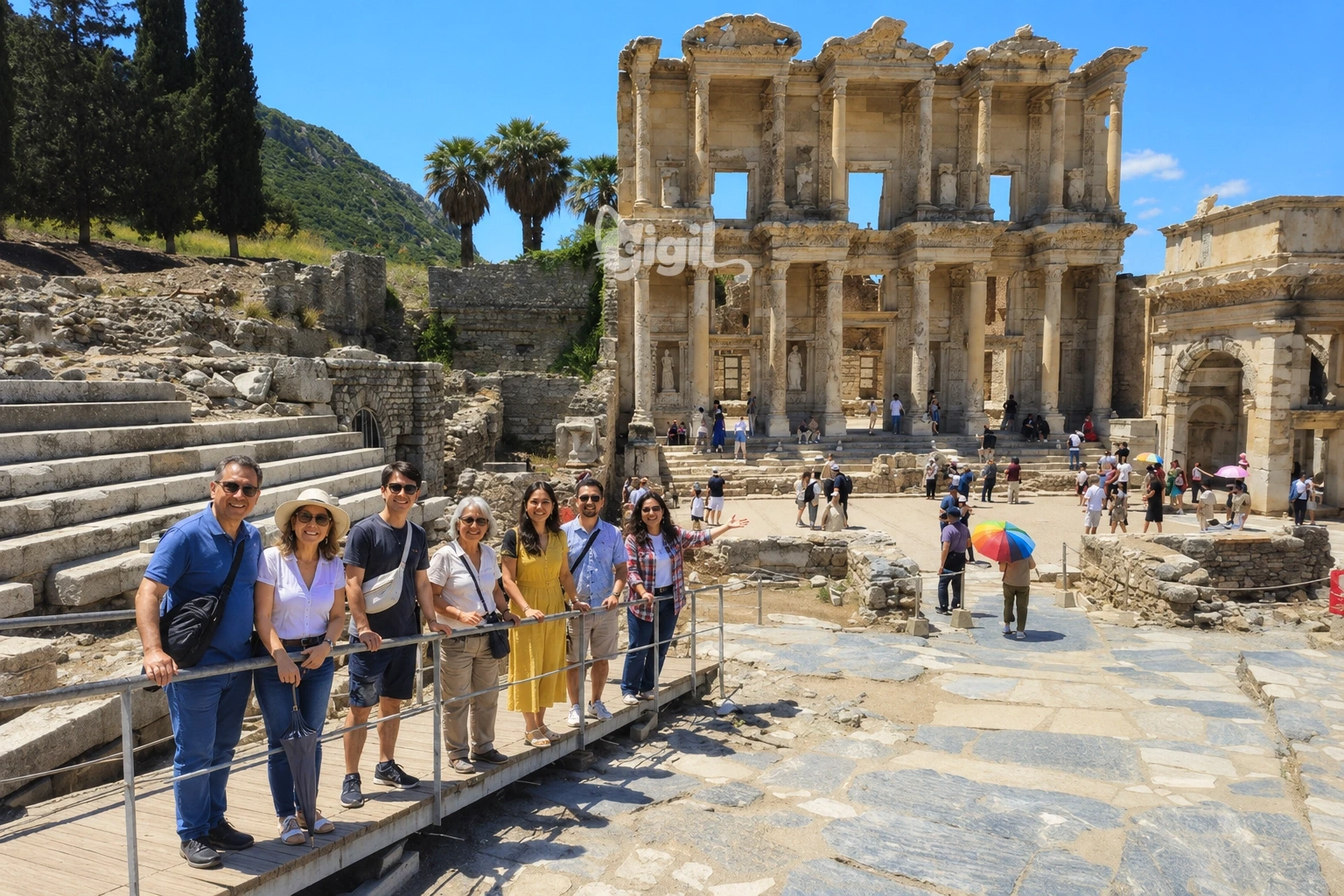
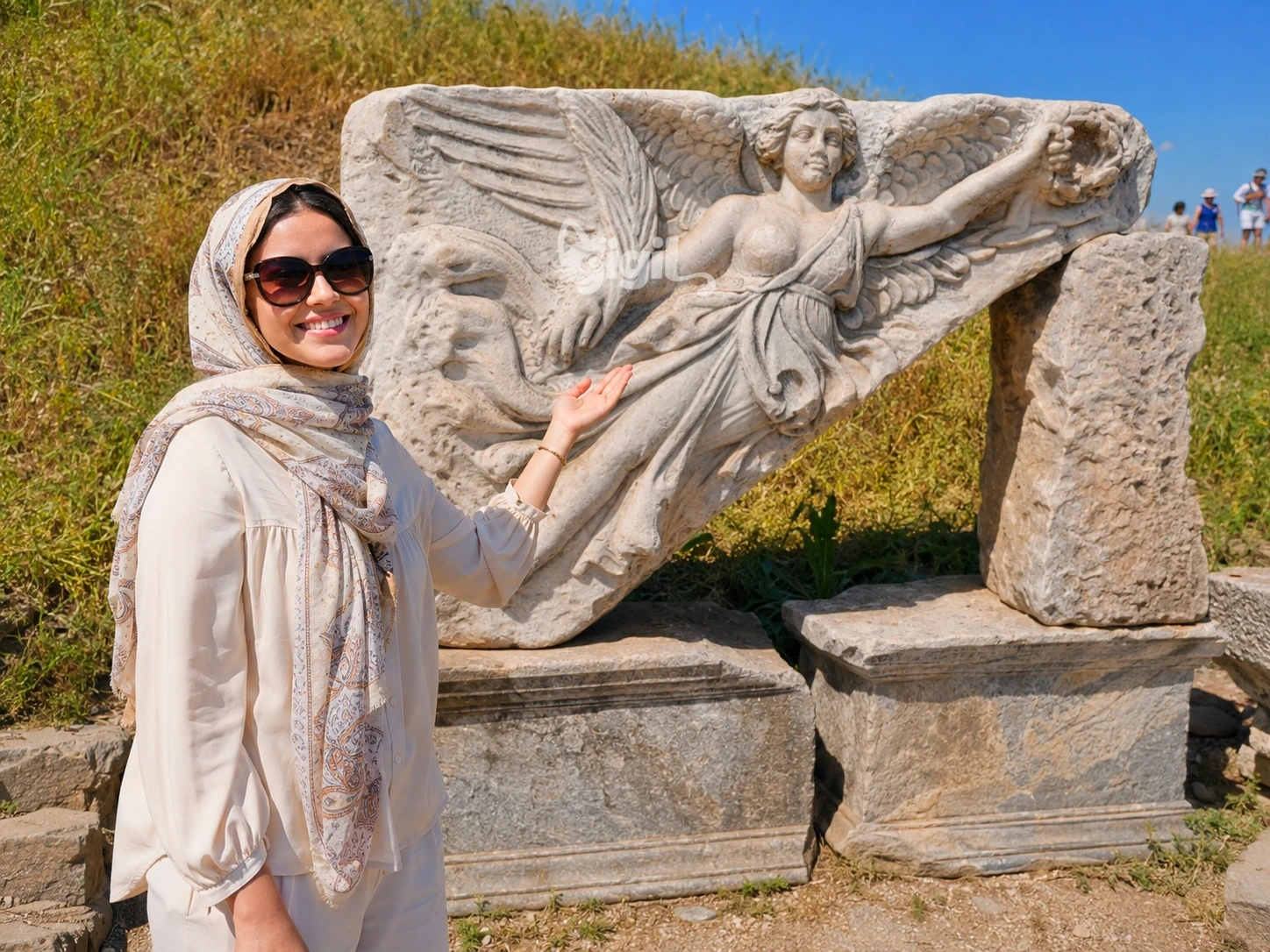
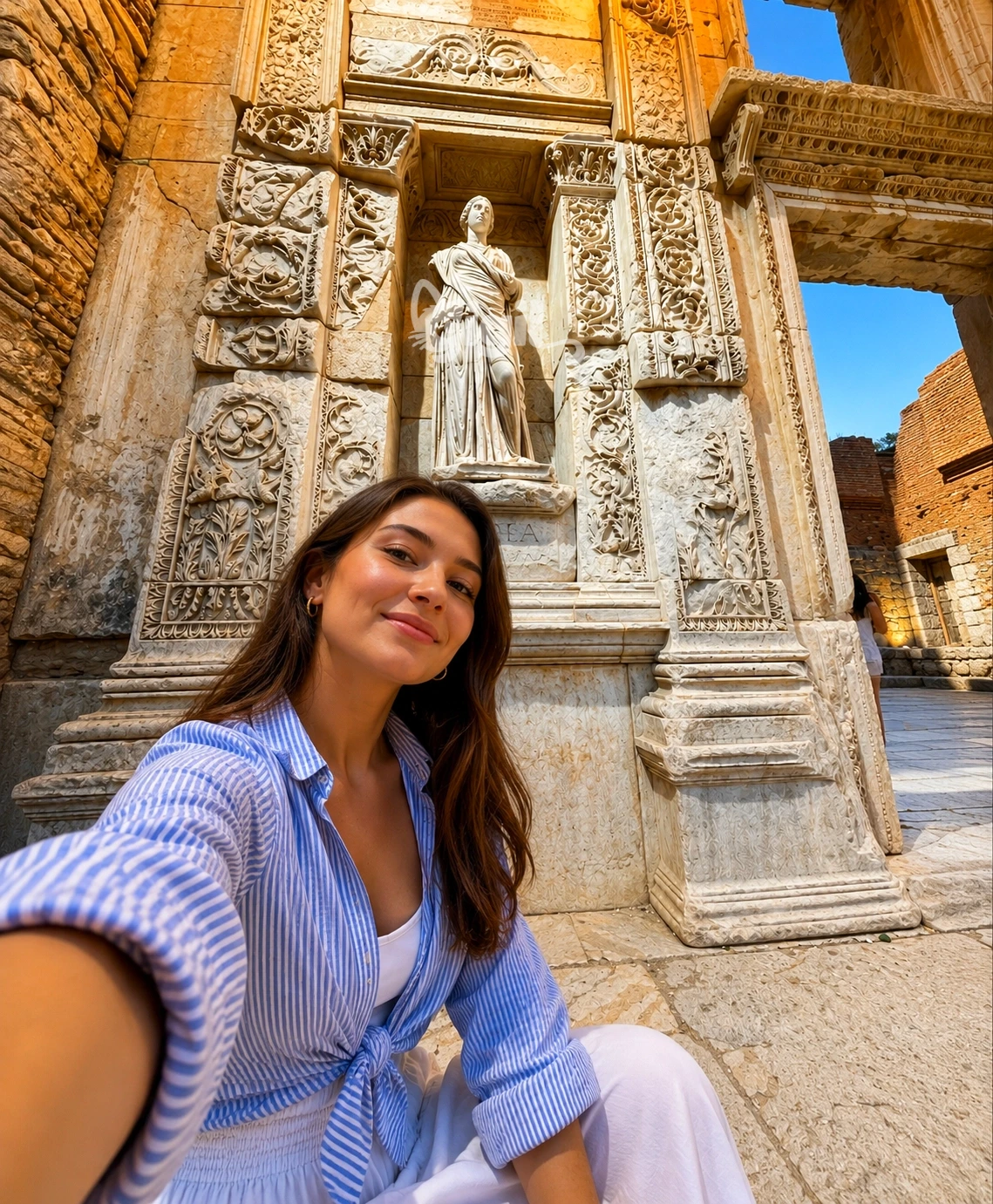
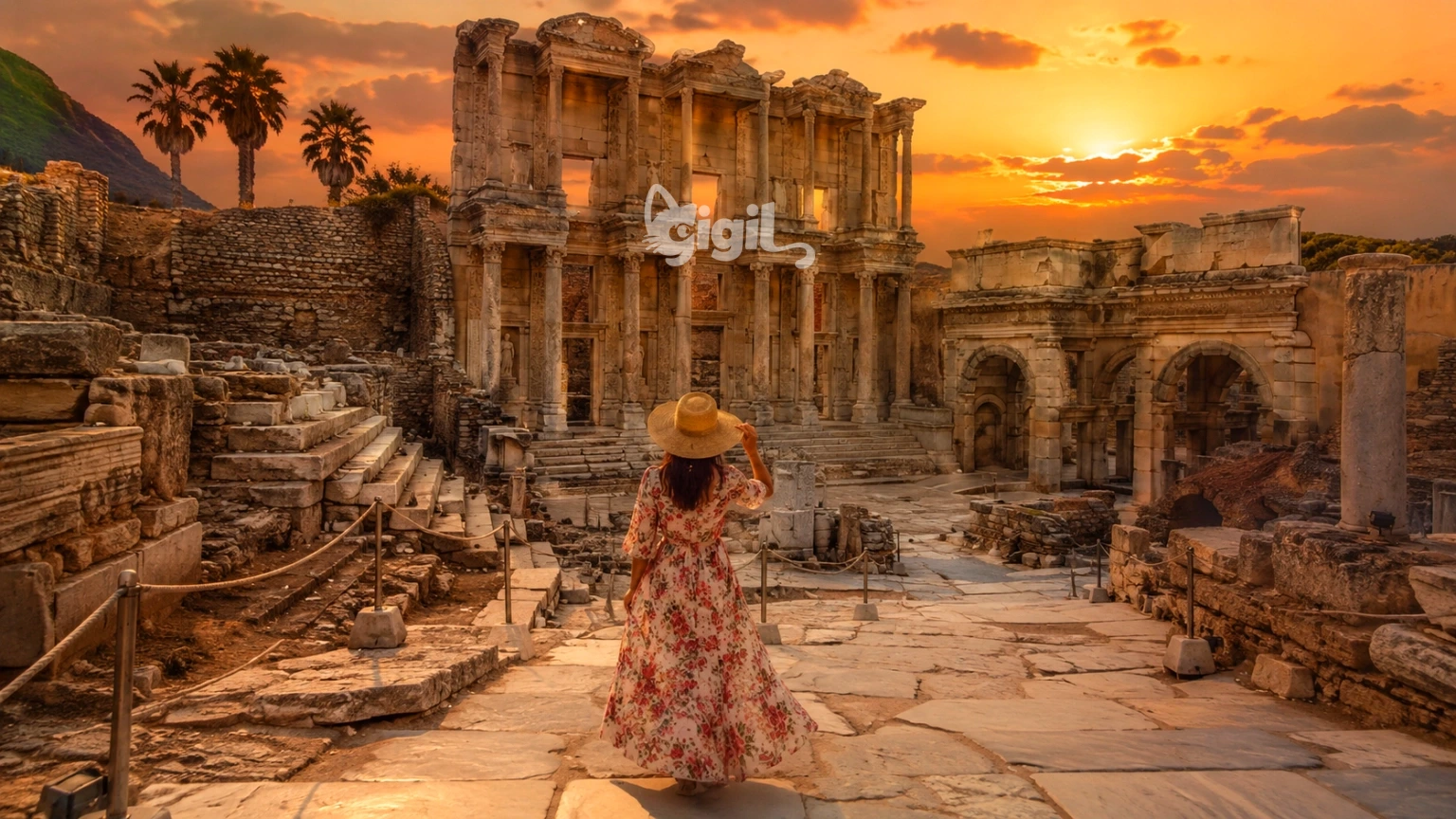
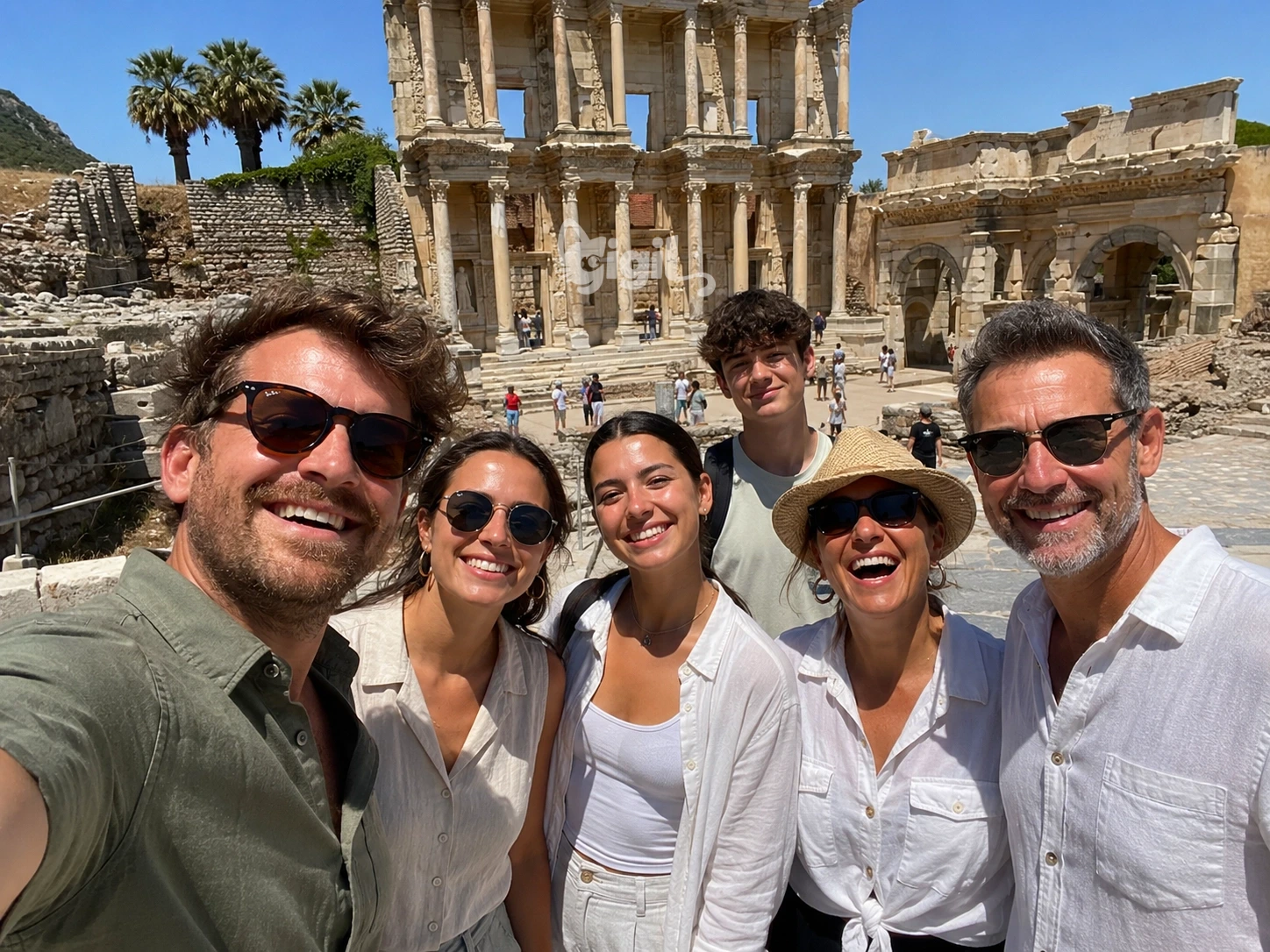
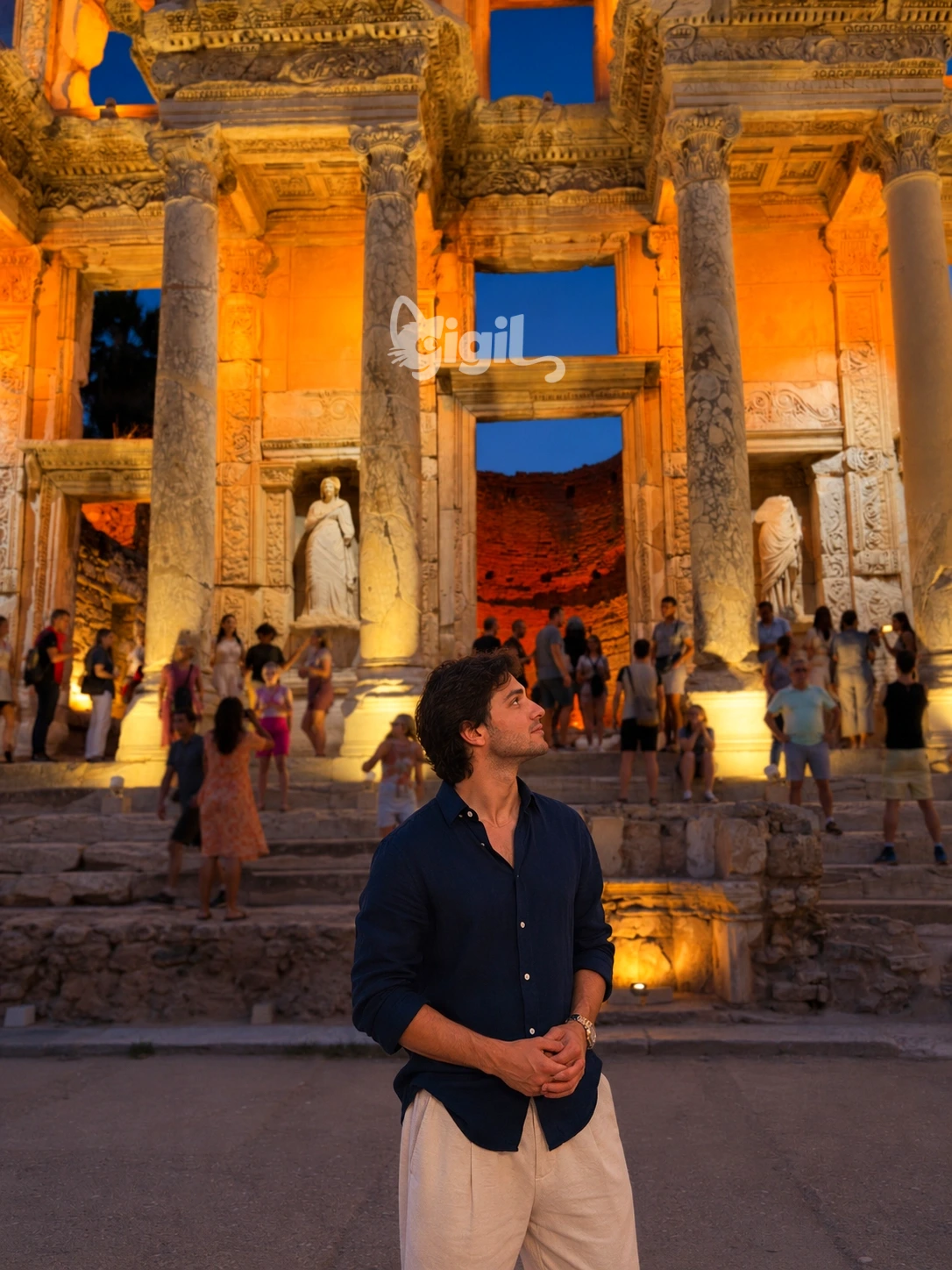
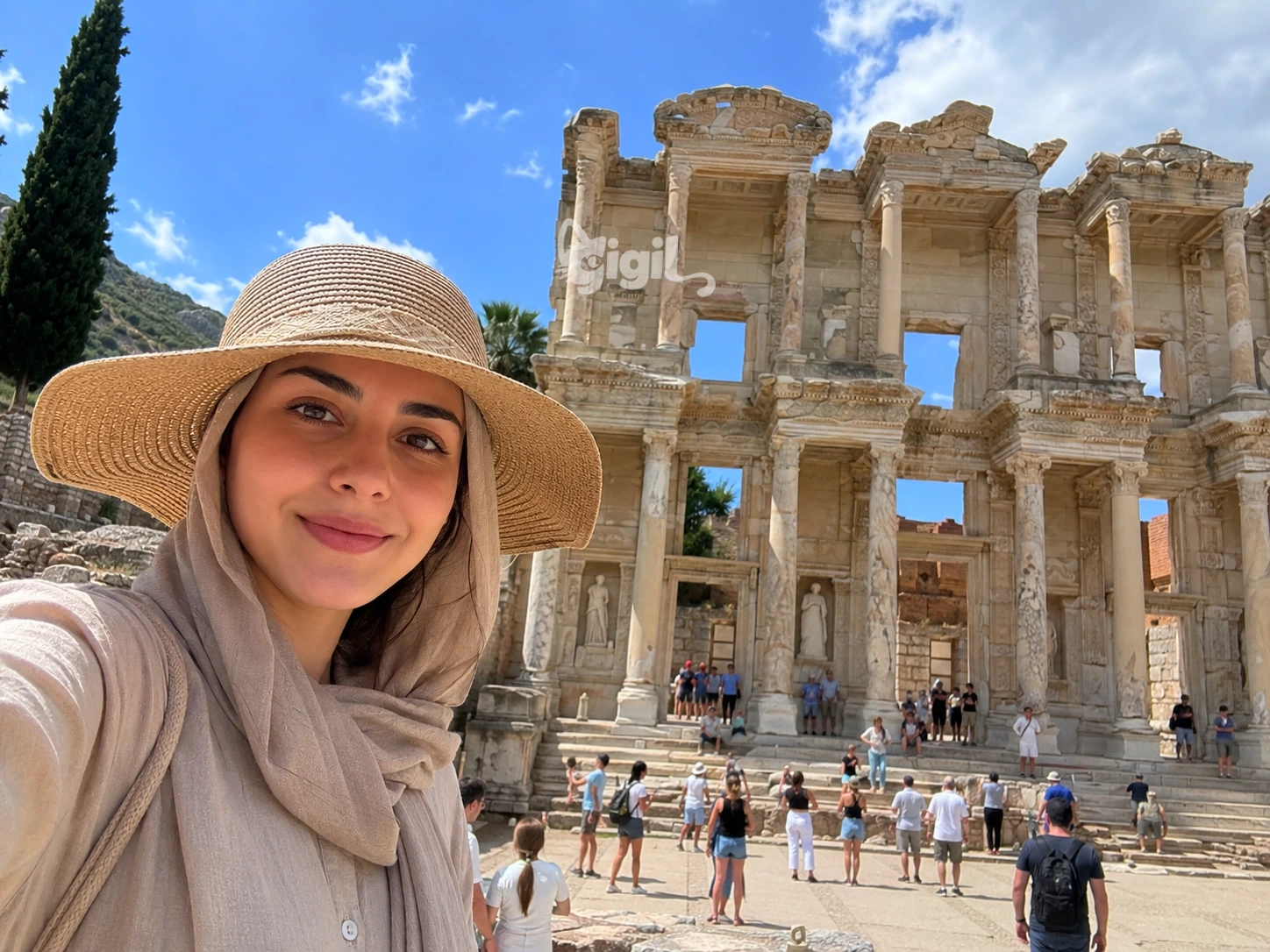

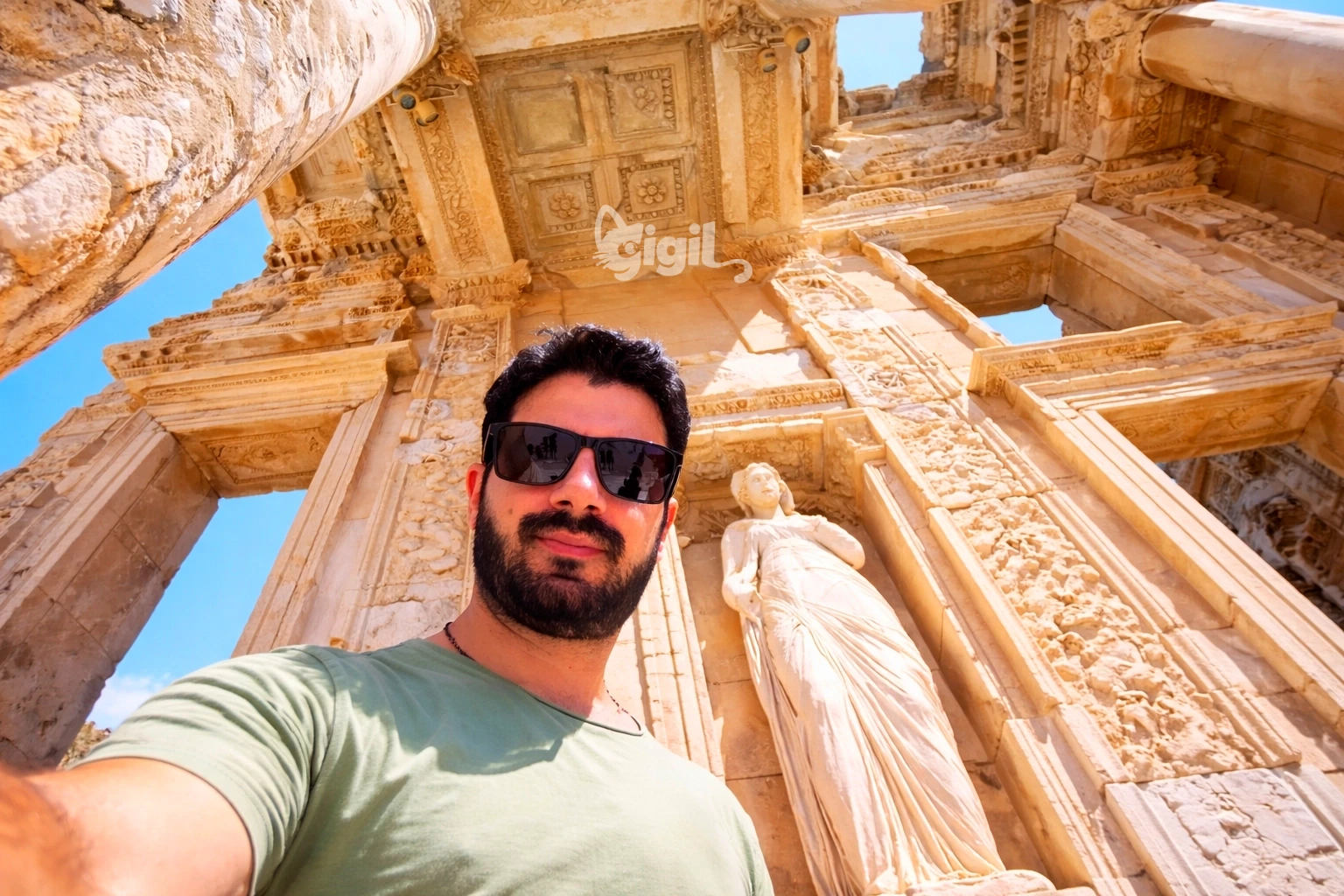
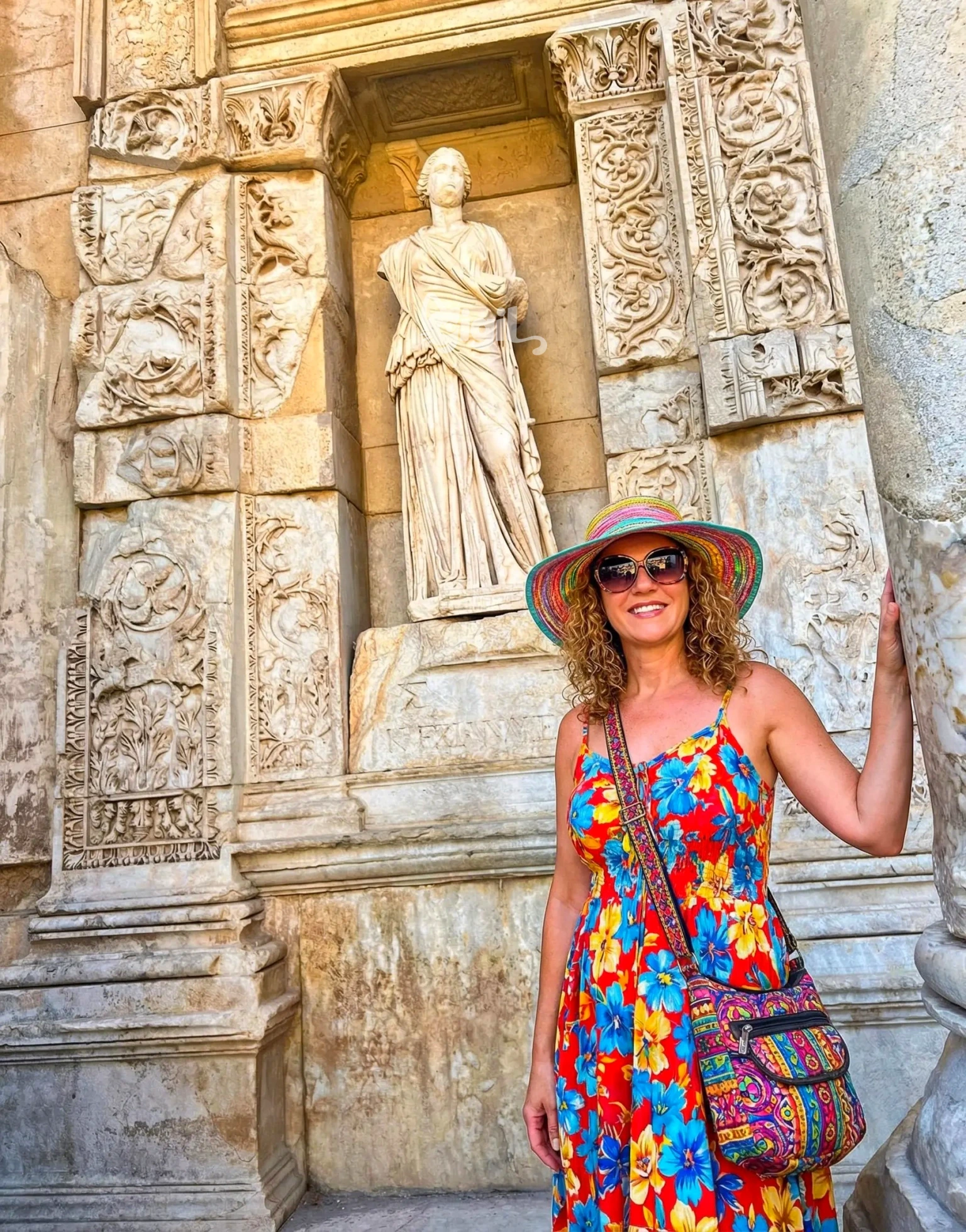

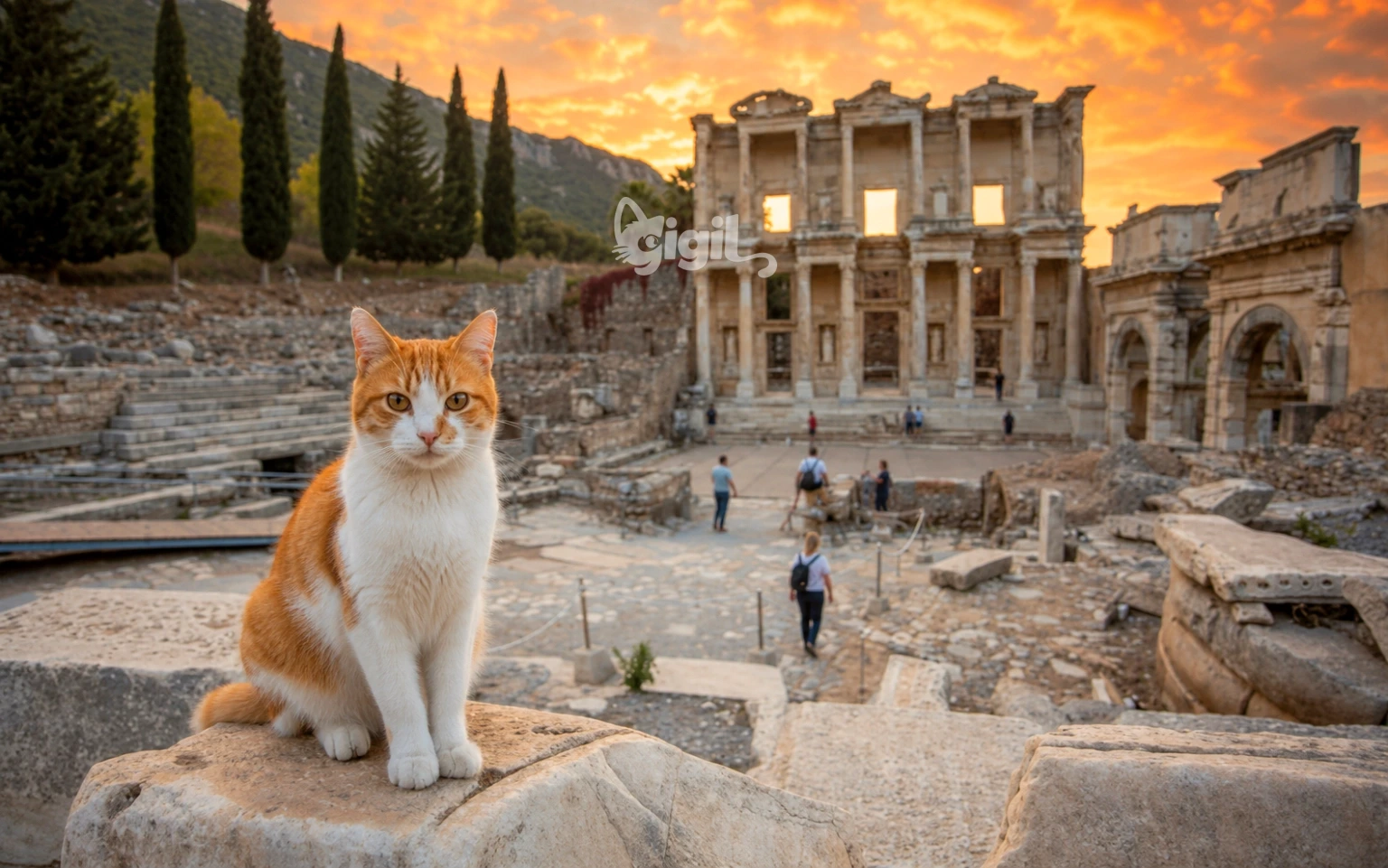
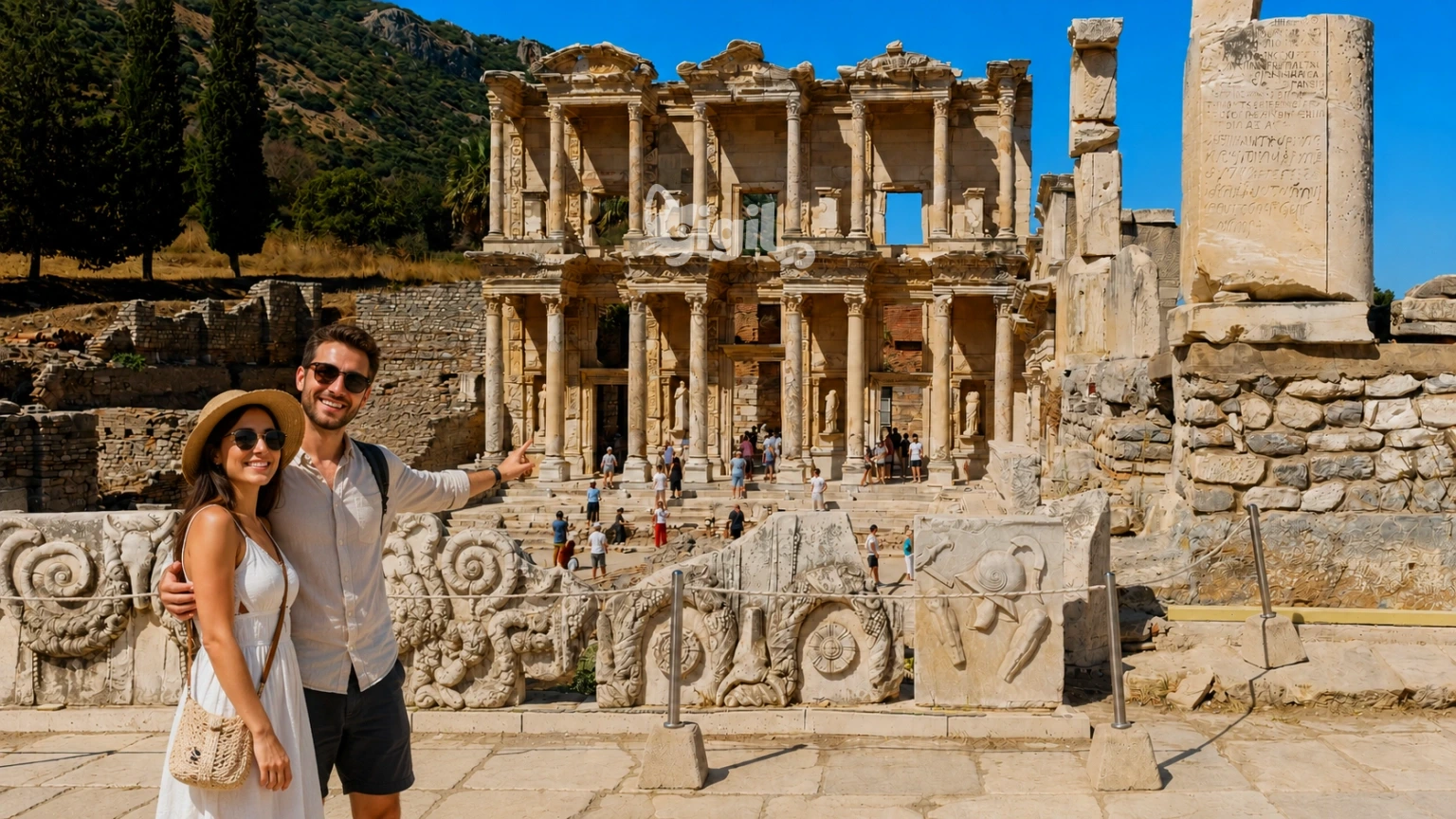
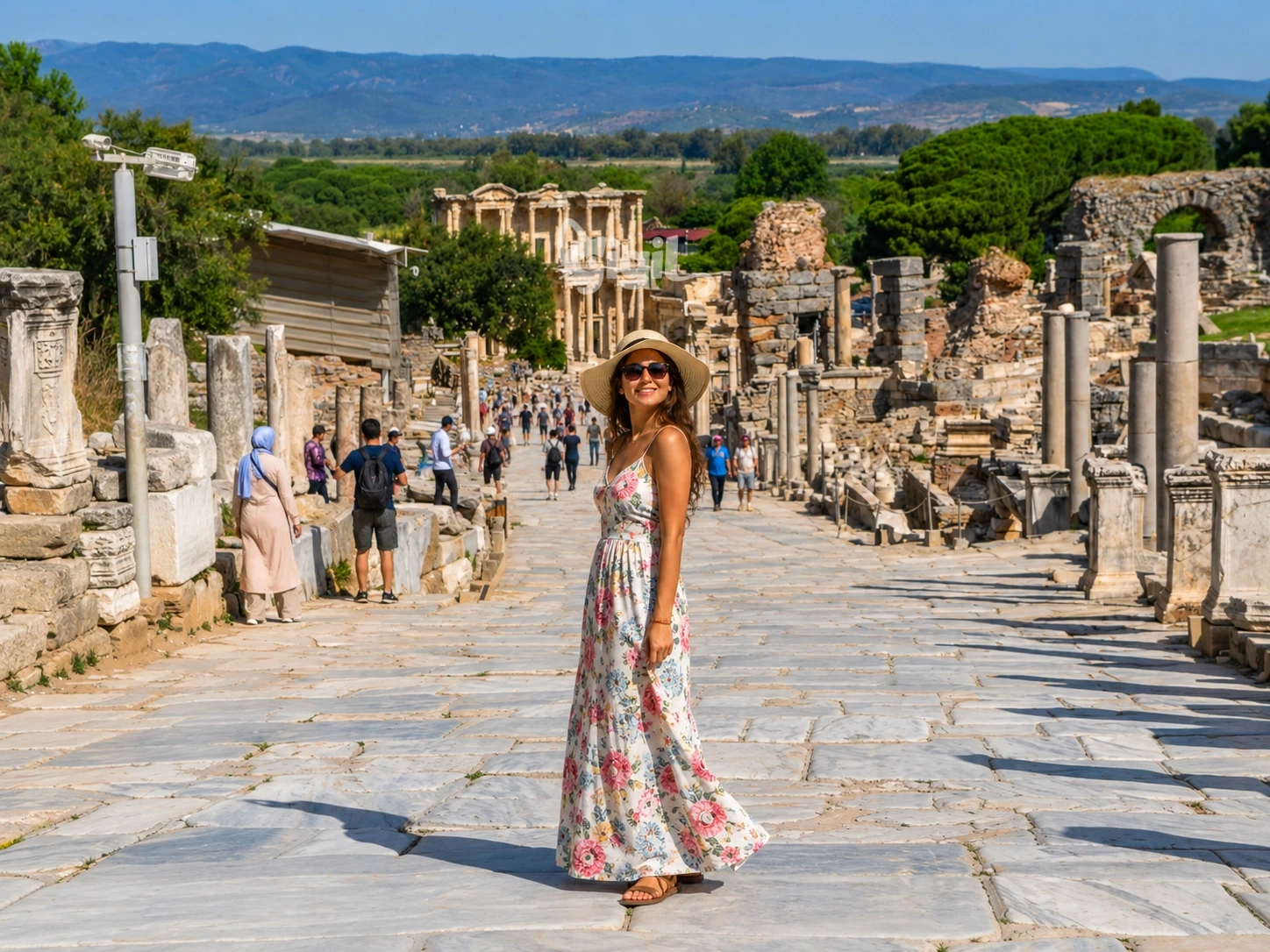
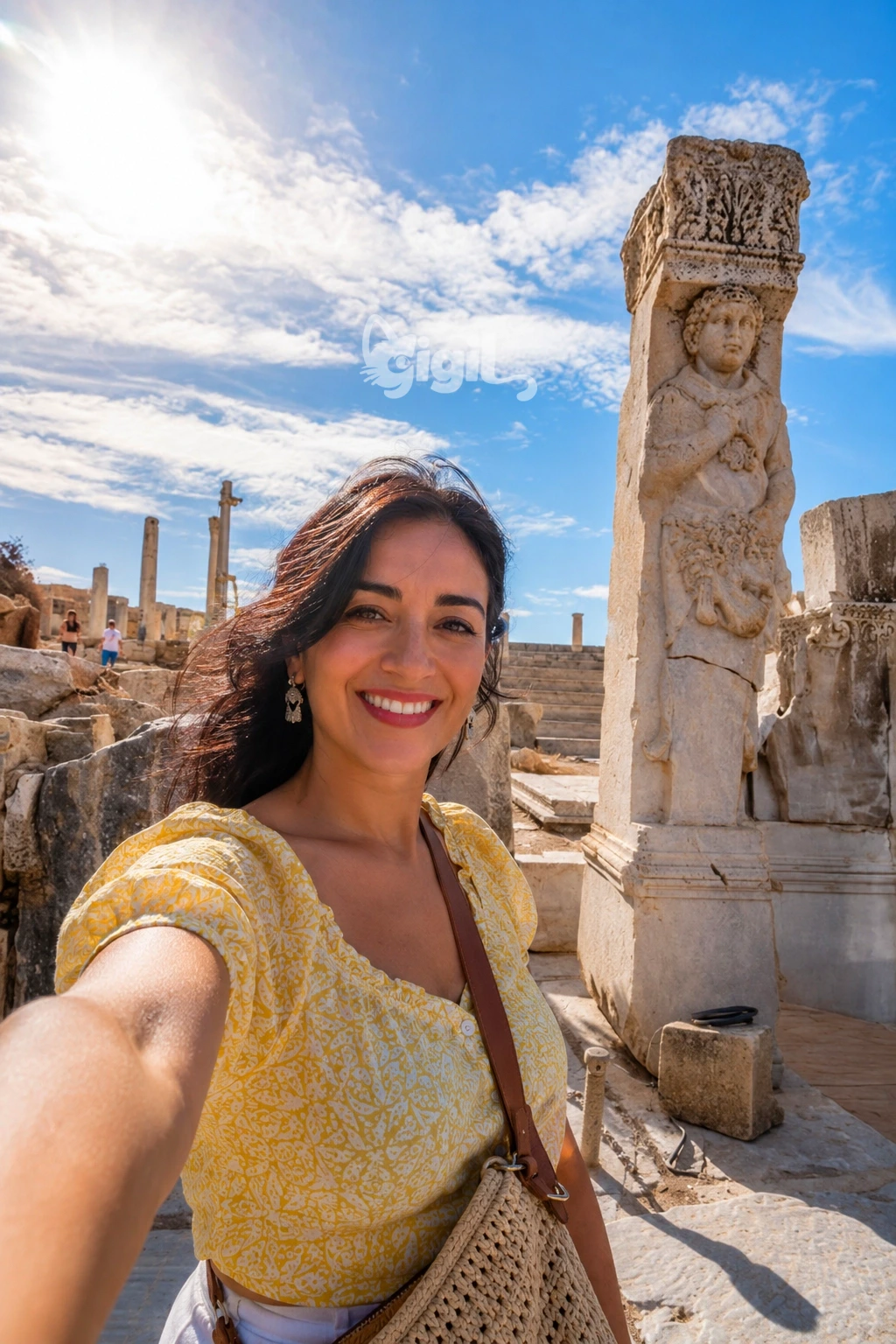
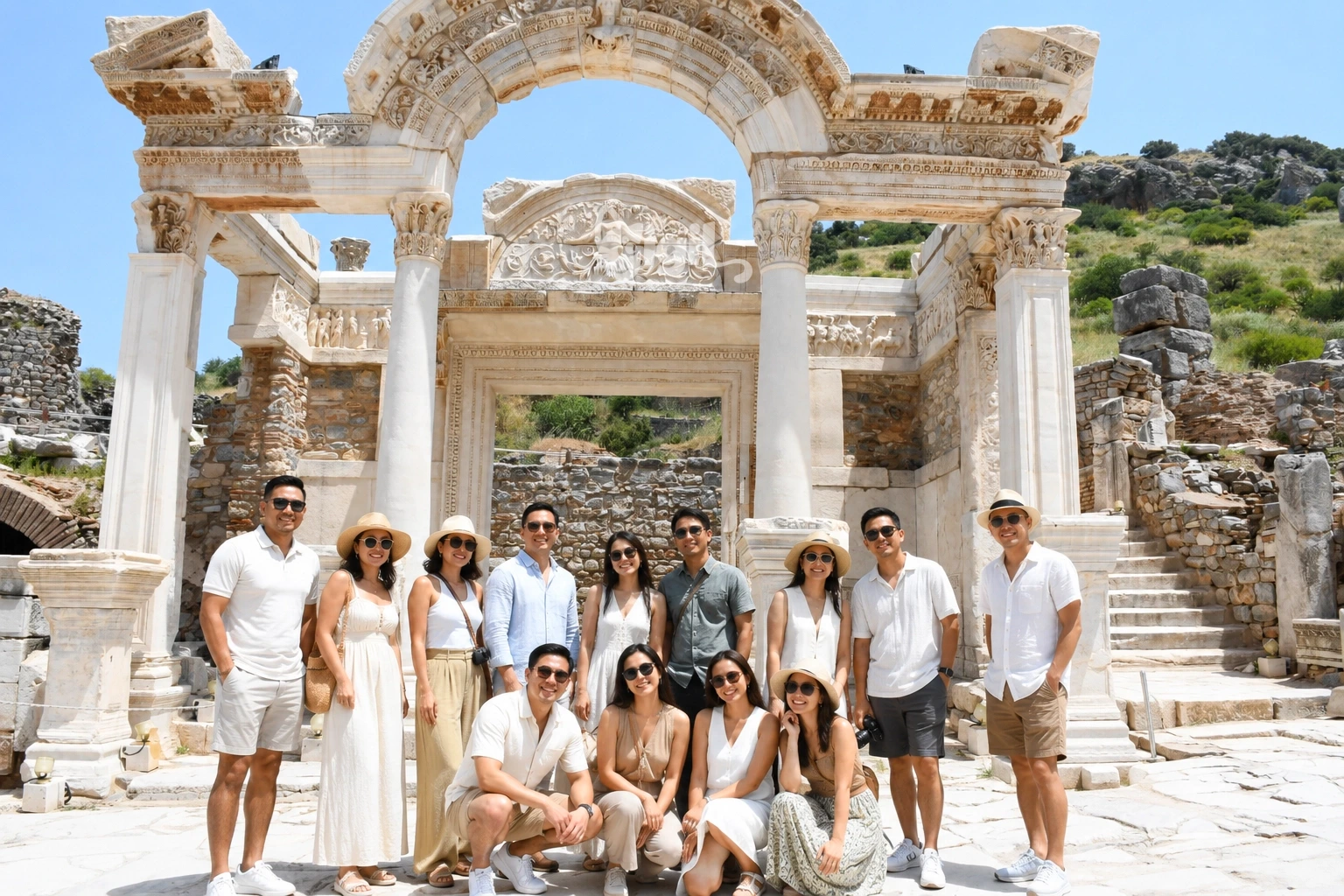



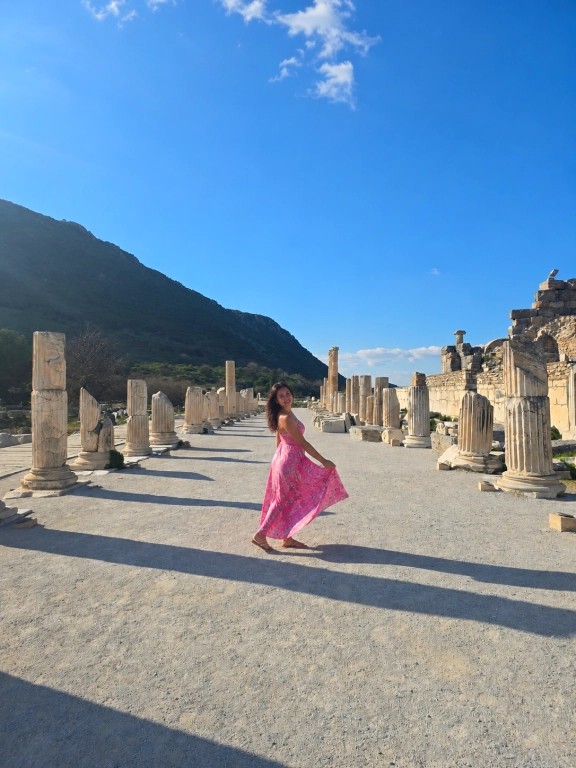

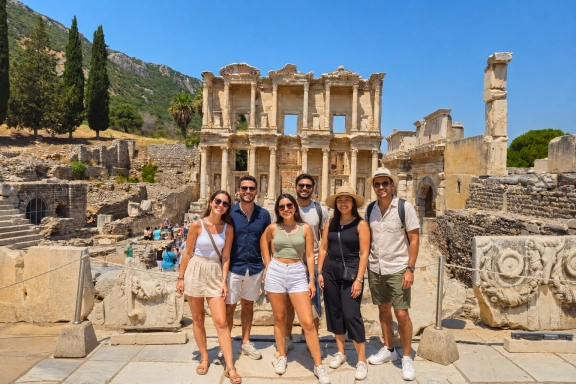
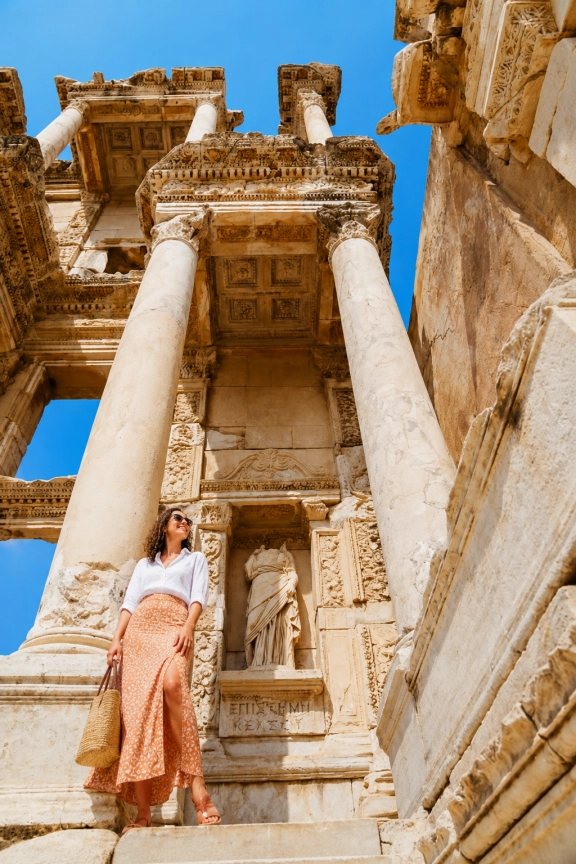
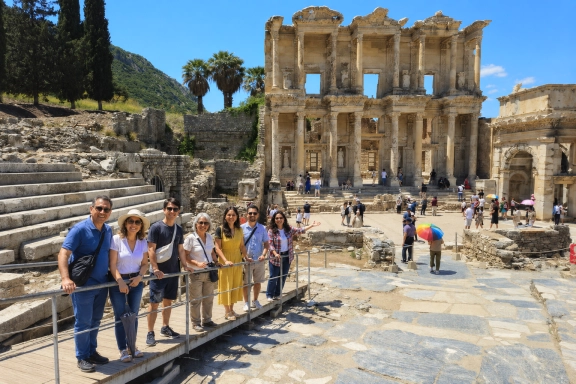
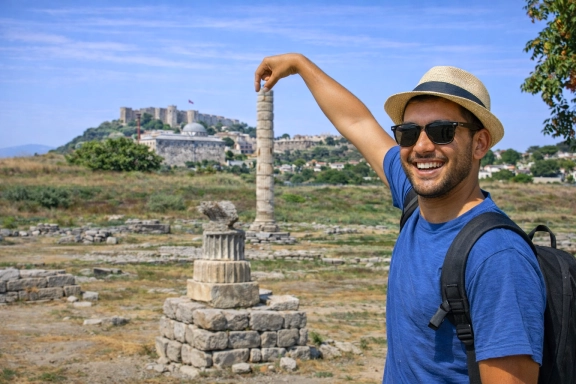





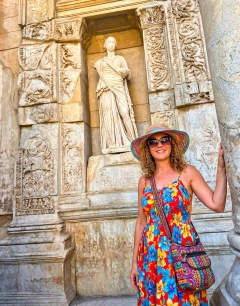
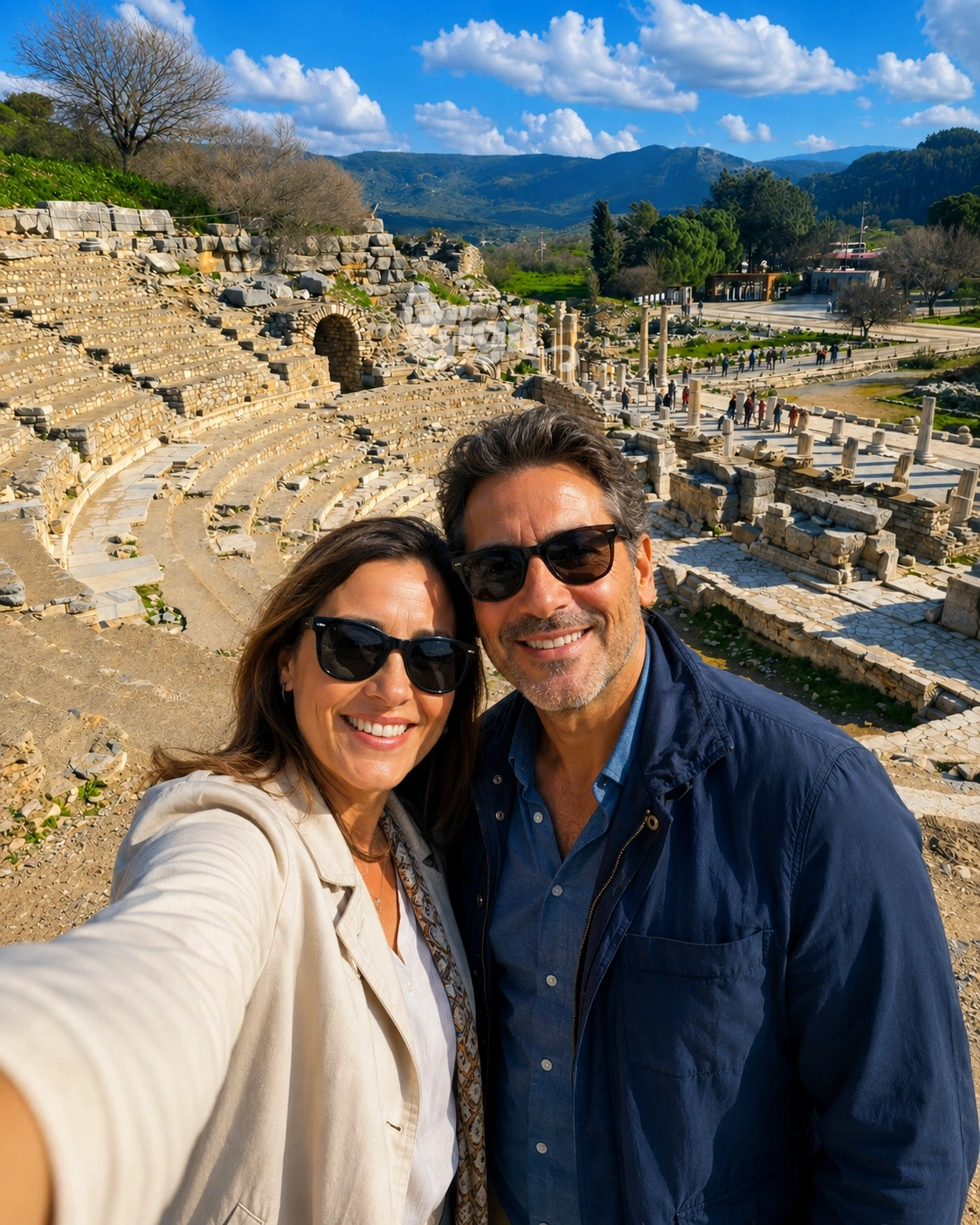
Ephesus Ancient City is the central archaeological experience of the route from Izmir. Streets, agora spaces, the theatre, gates, inscriptions and the Library of Celsus help visitors understand the city as a place of movement, status, commerce and worship.
The most useful way to read Ephesus is through its connections. Public spaces lead into monumental areas, restored facades help suggest former scale, and the city's harbor past explains why this inland site once had such importance.
Questions
What makes Ephesus a major ancient city site?
Ephesus shows a complete urban story through streets, public spaces, theatre remains, inscriptions, gates and the Library of Celsus.
Which features best explain life in Ephesus?
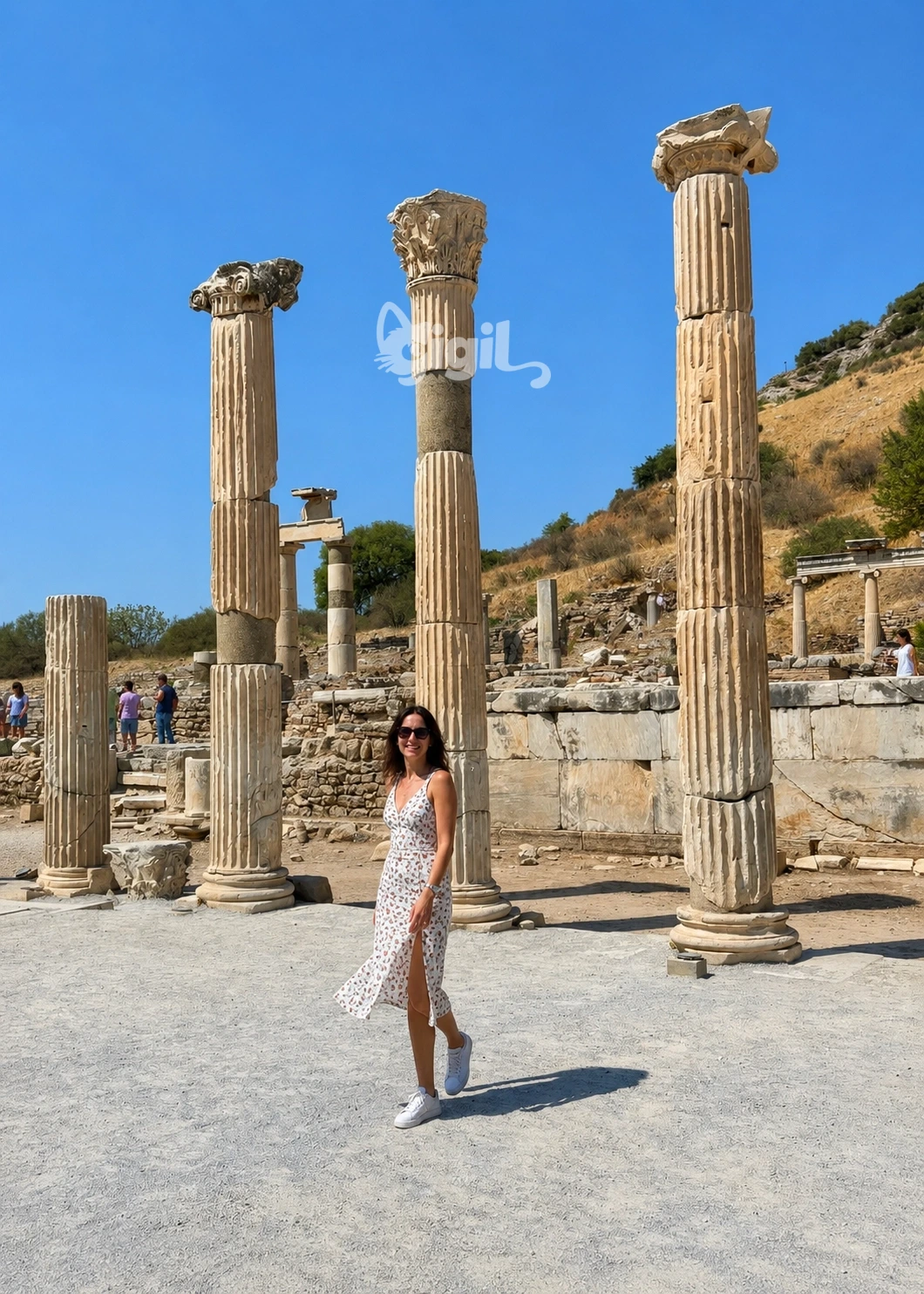
The marble routes, agora areas, theatre, inscriptions, gates and restored facades help explain public life, movement and status in the city.
Why does the former harbor matter?
The harbor helped Ephesus gain wealth and influence. Later natural change moved the coastline, changing the city's relationship with the sea.
Should restored areas be treated as part of the visit?
Yes. They help interpret the site, but visitors should understand them together with original remains and ongoing archaeological conservation.