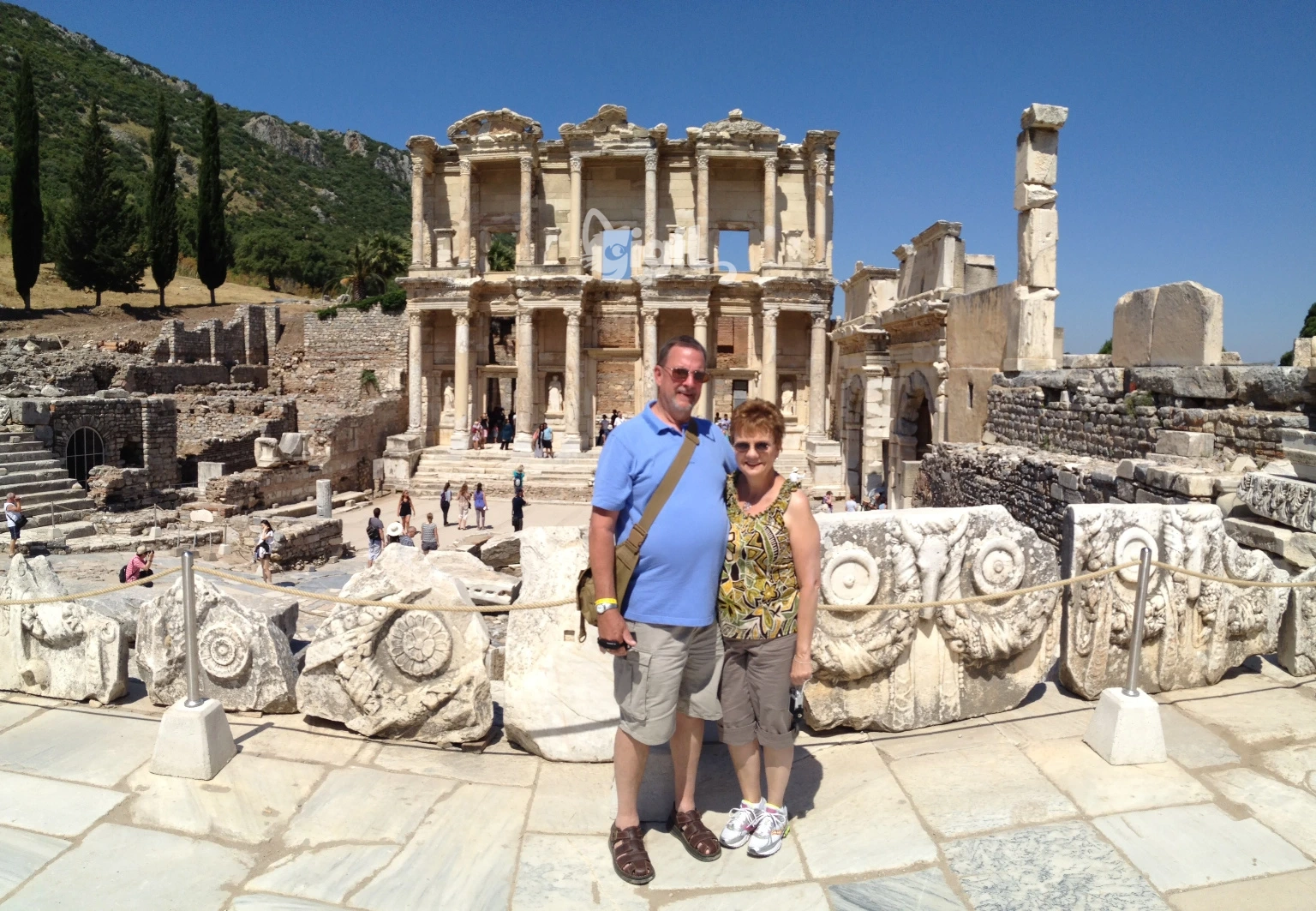
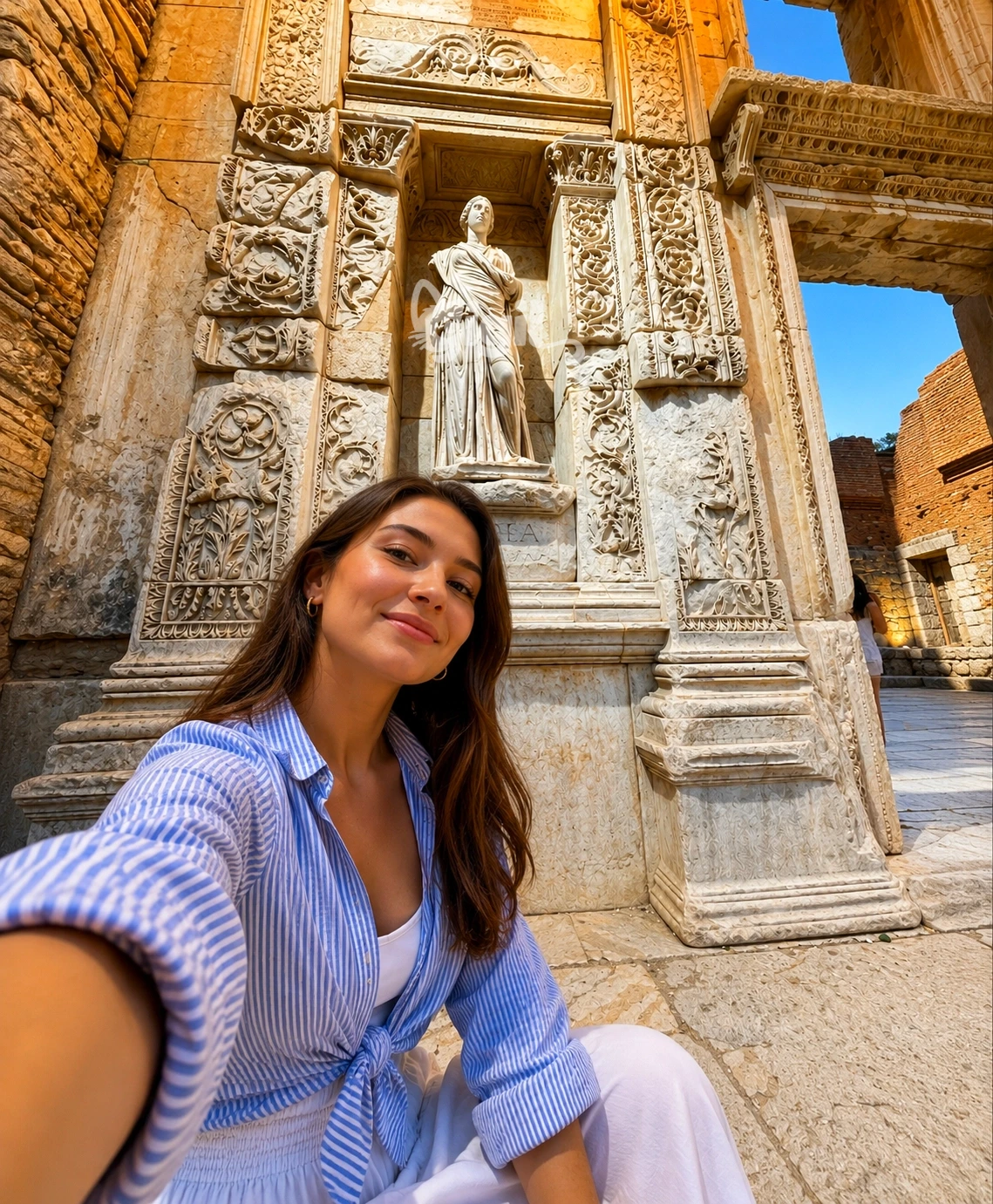
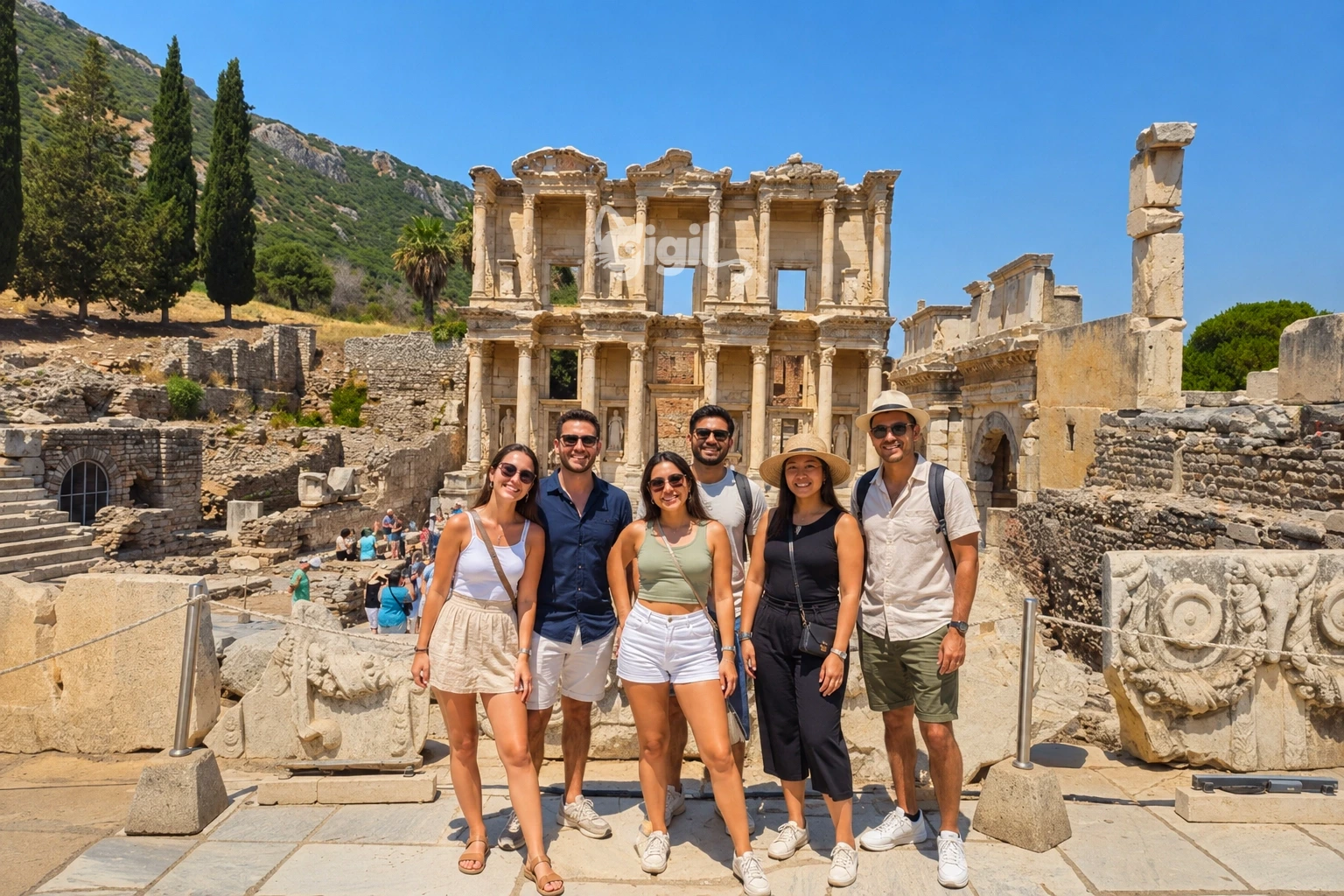
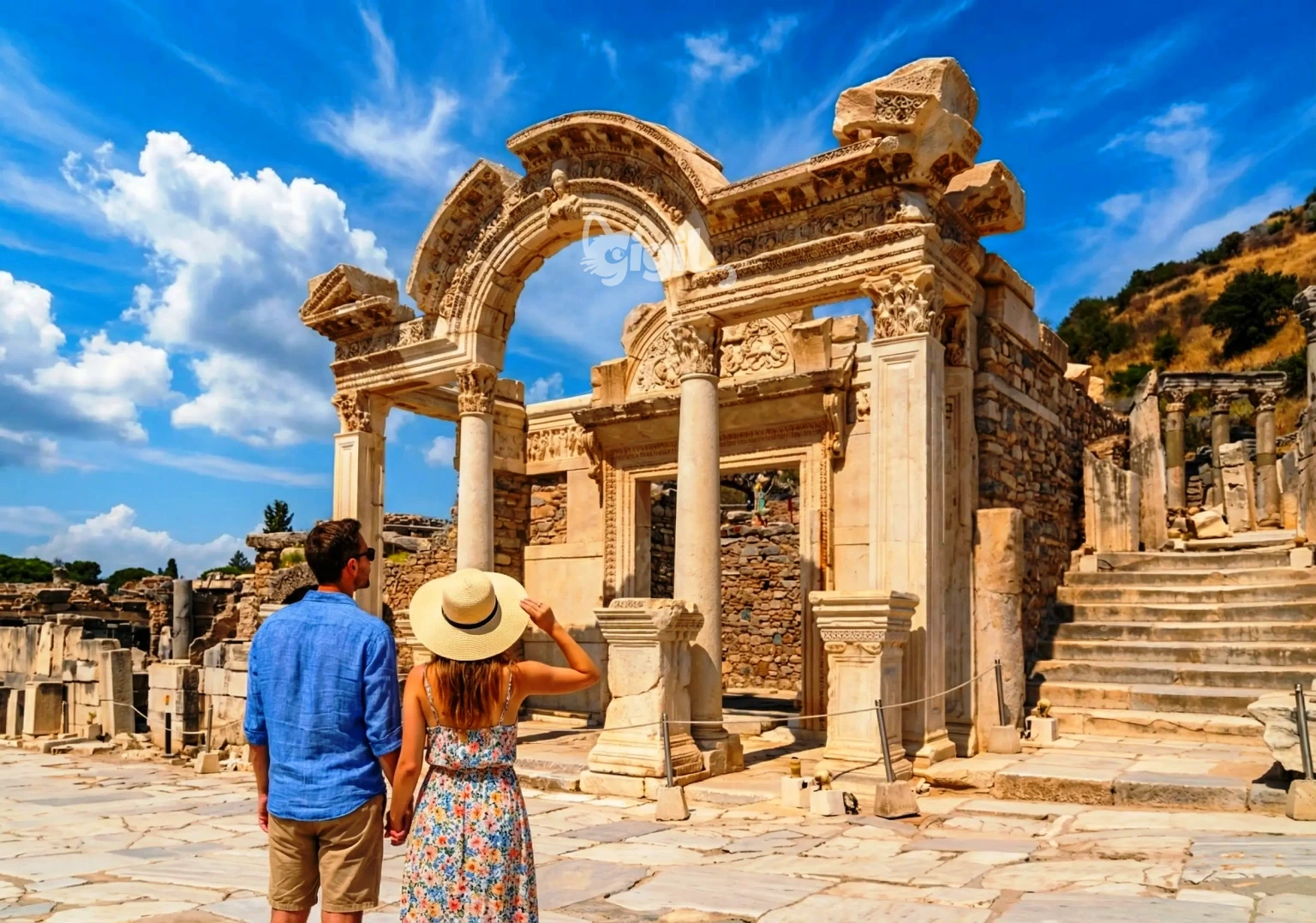
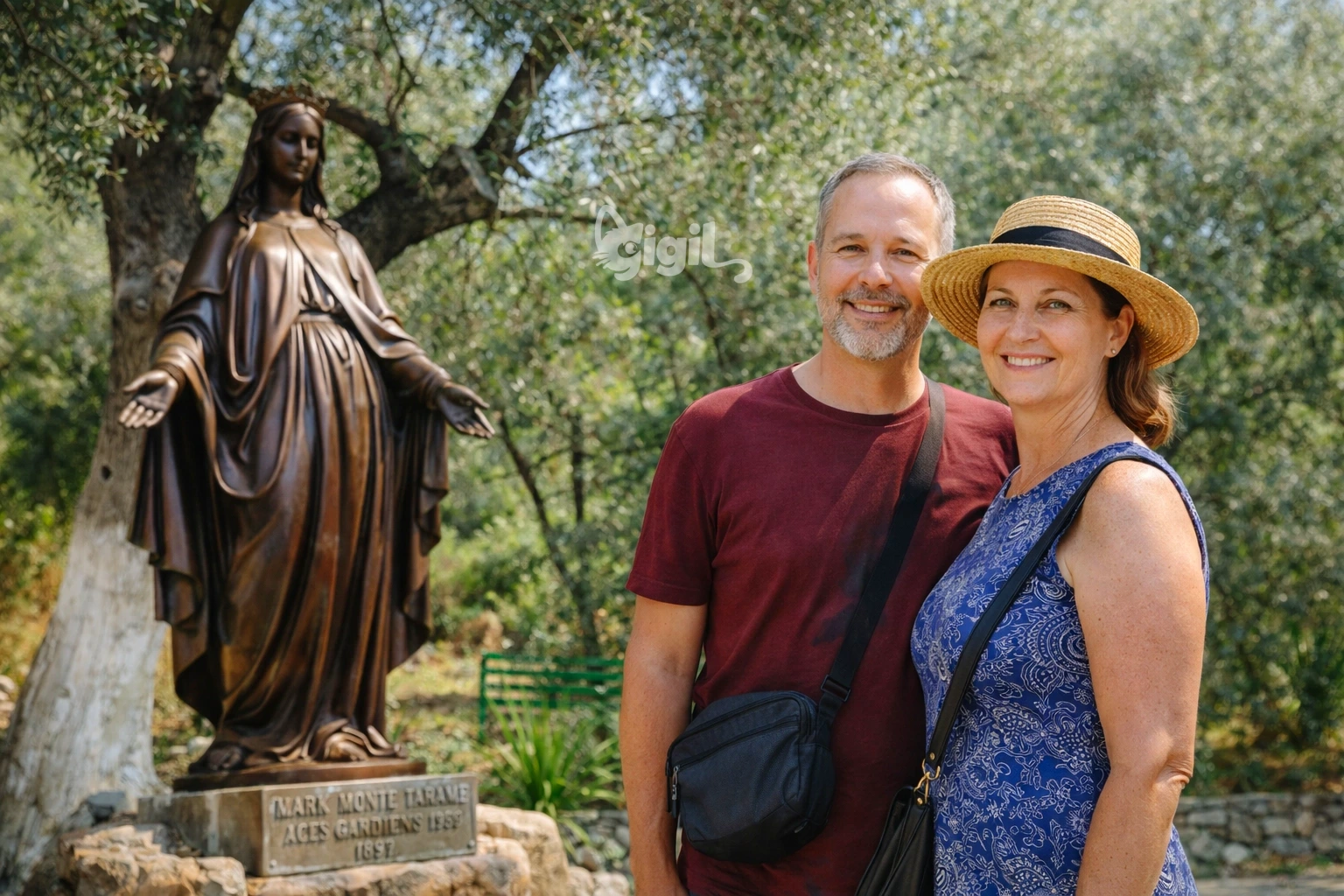
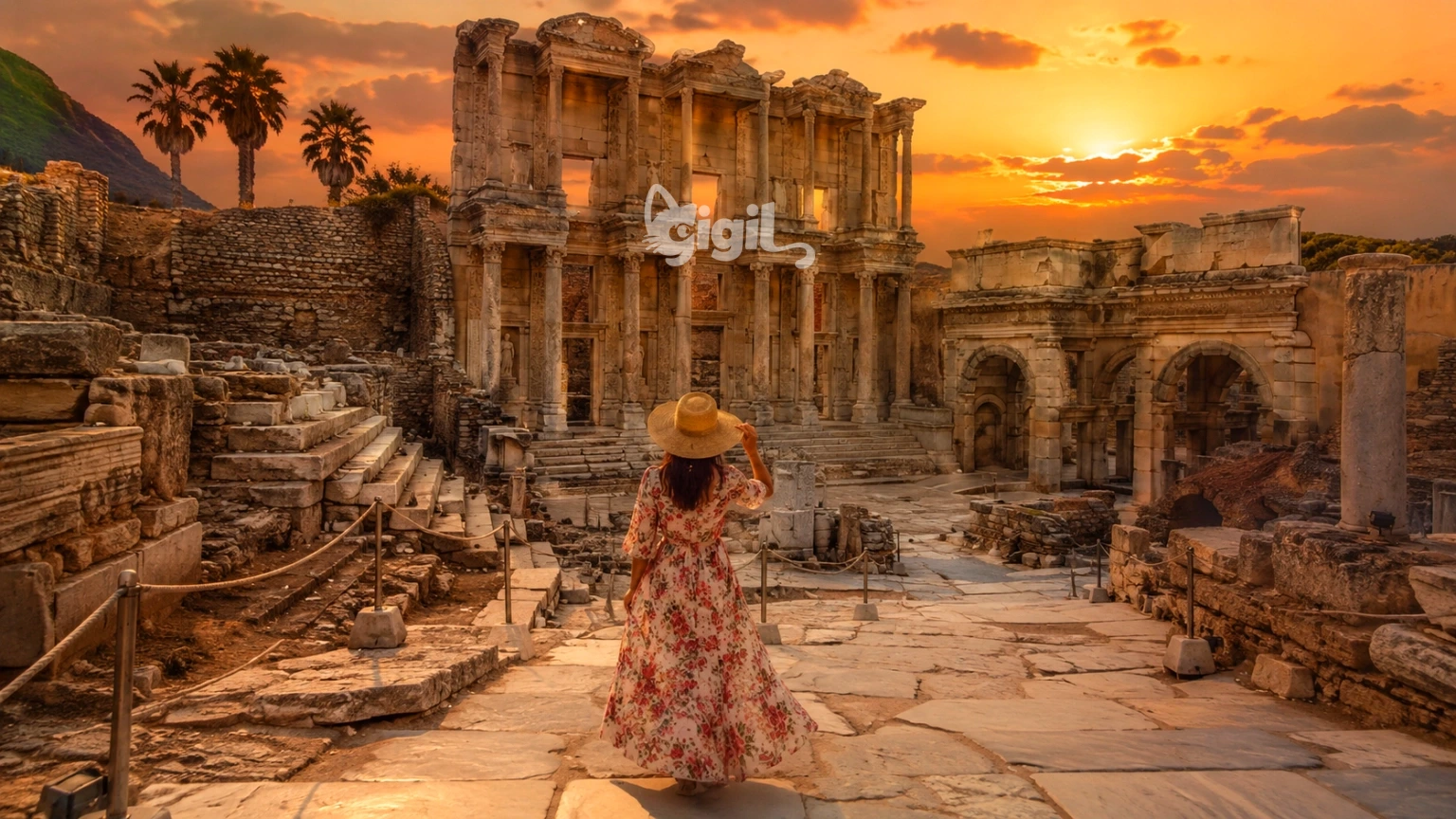
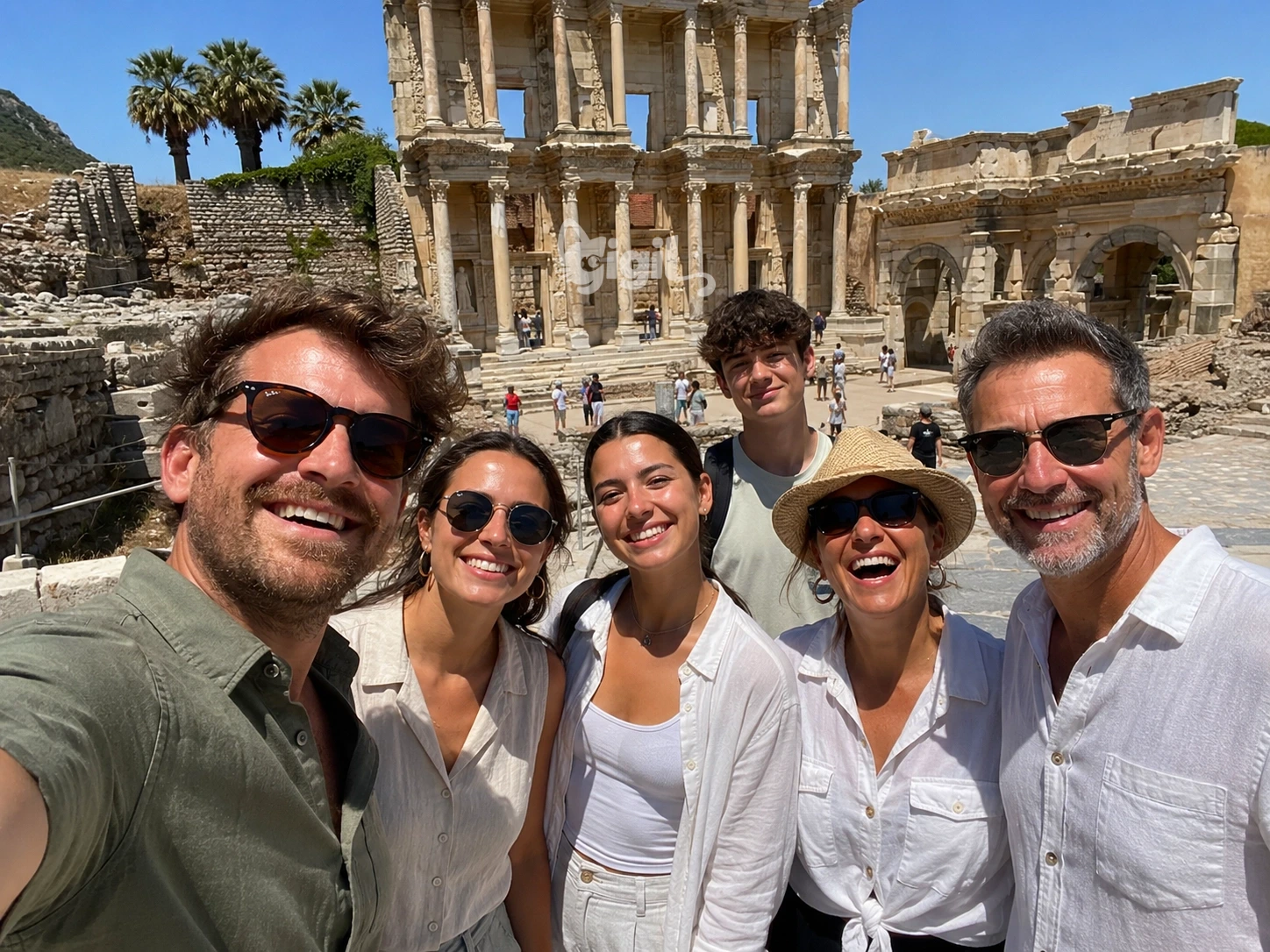
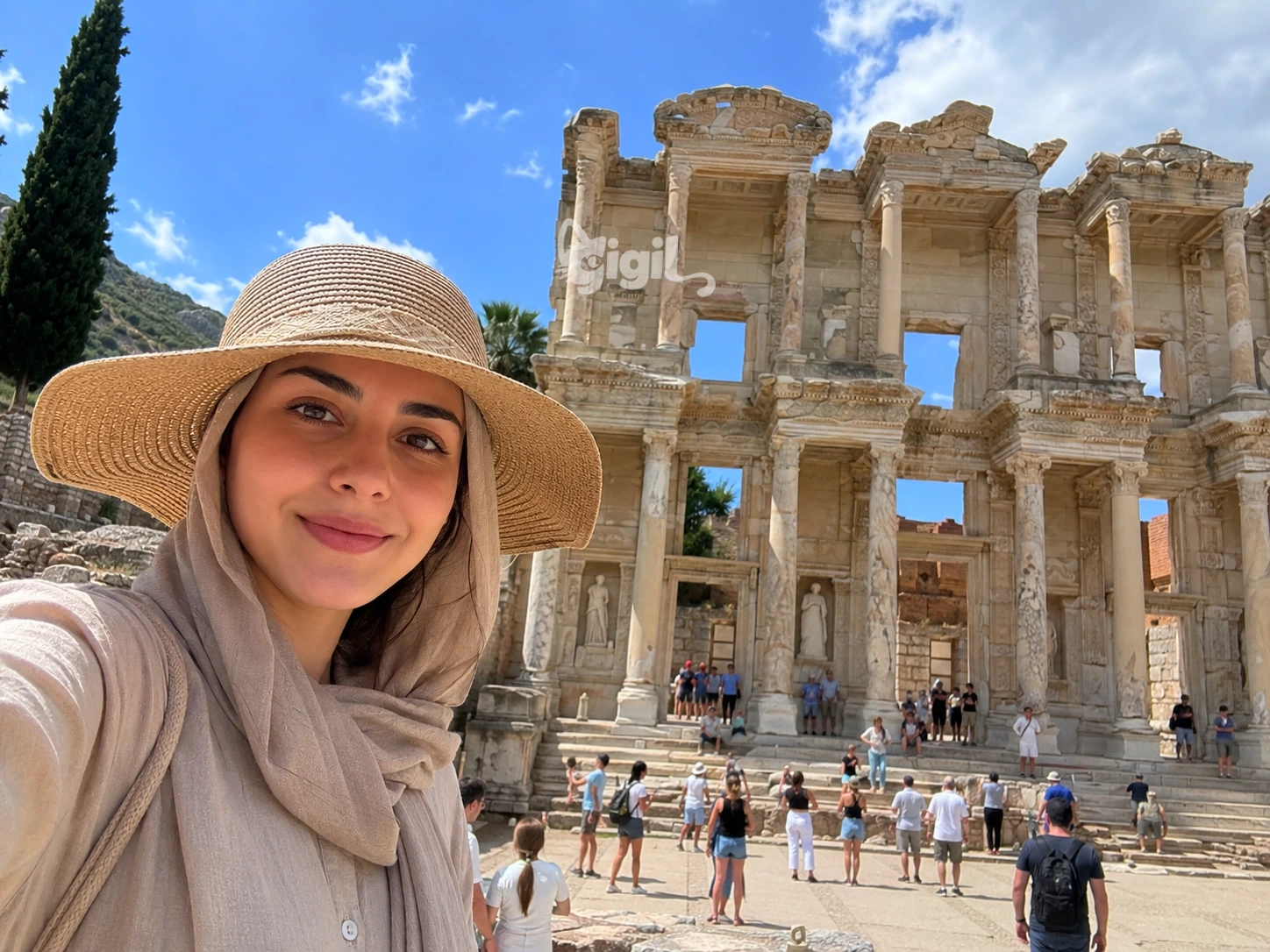
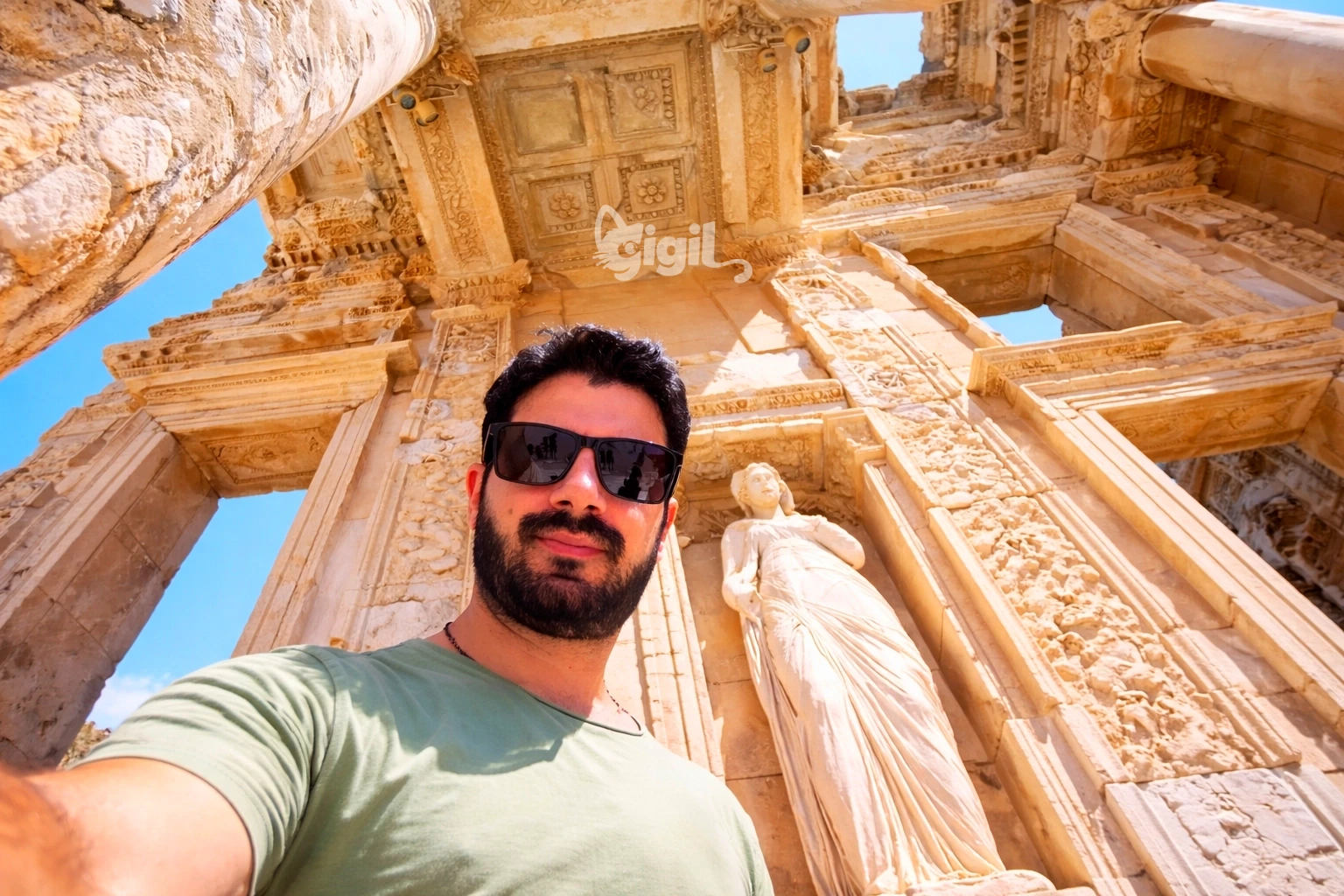
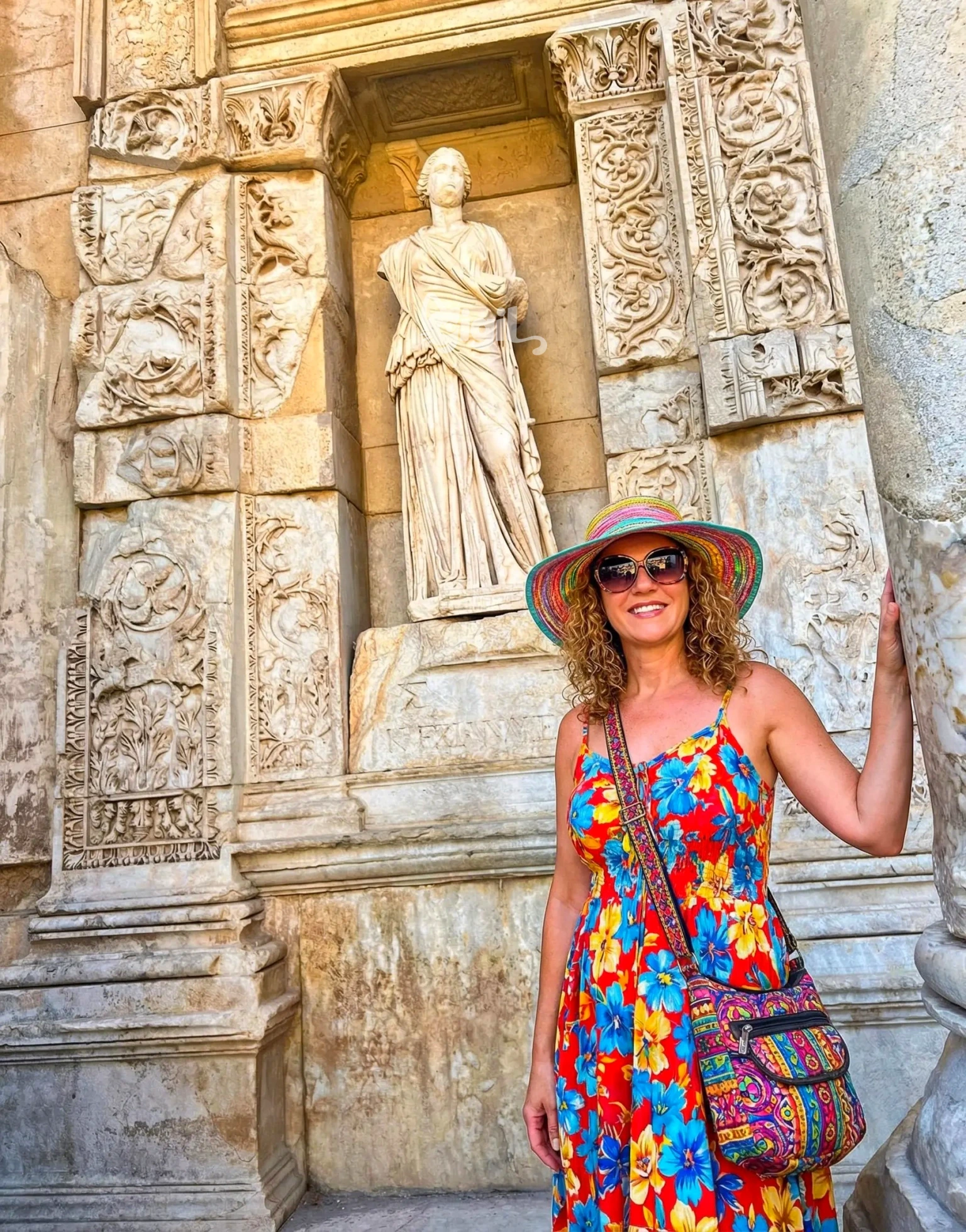
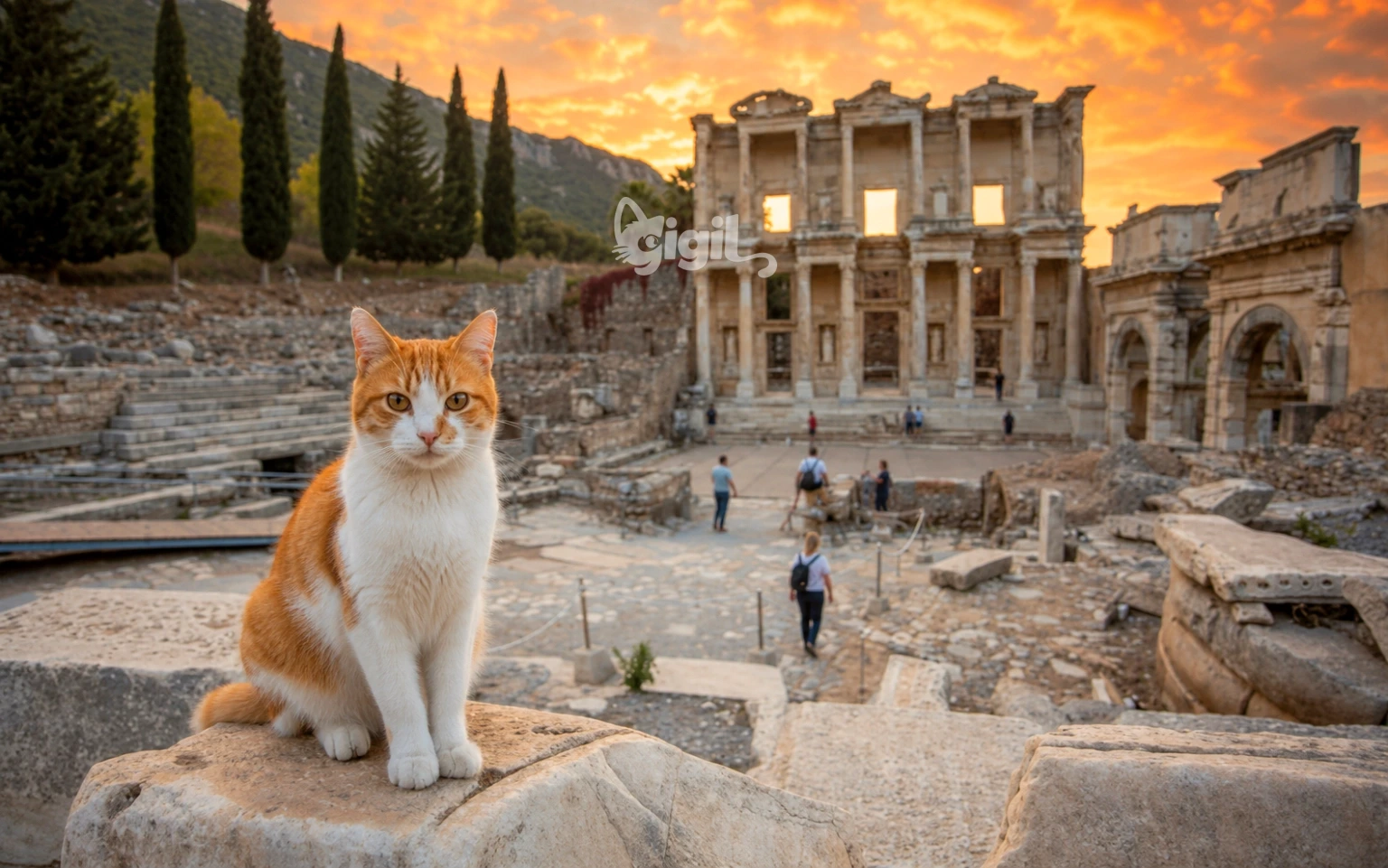
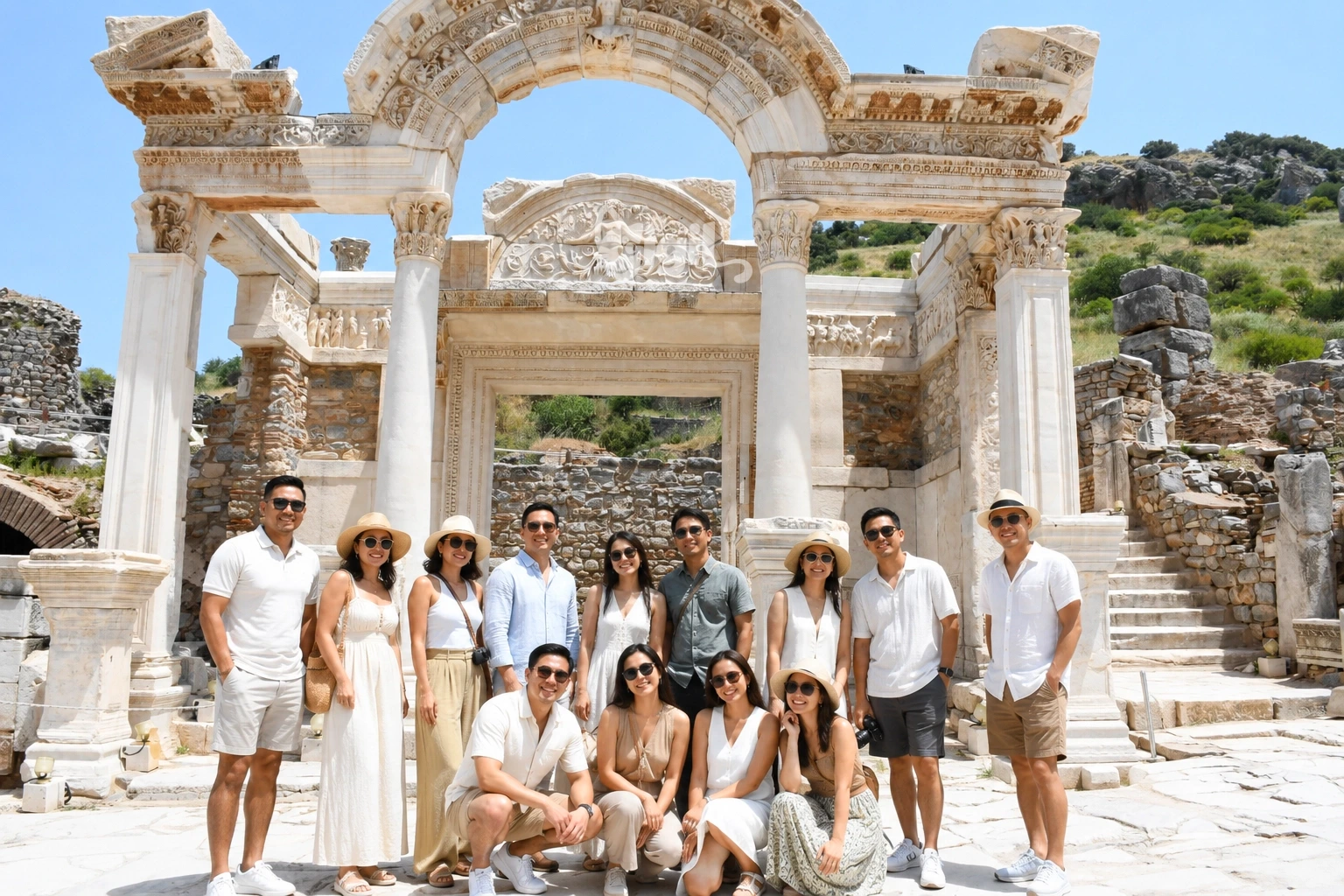
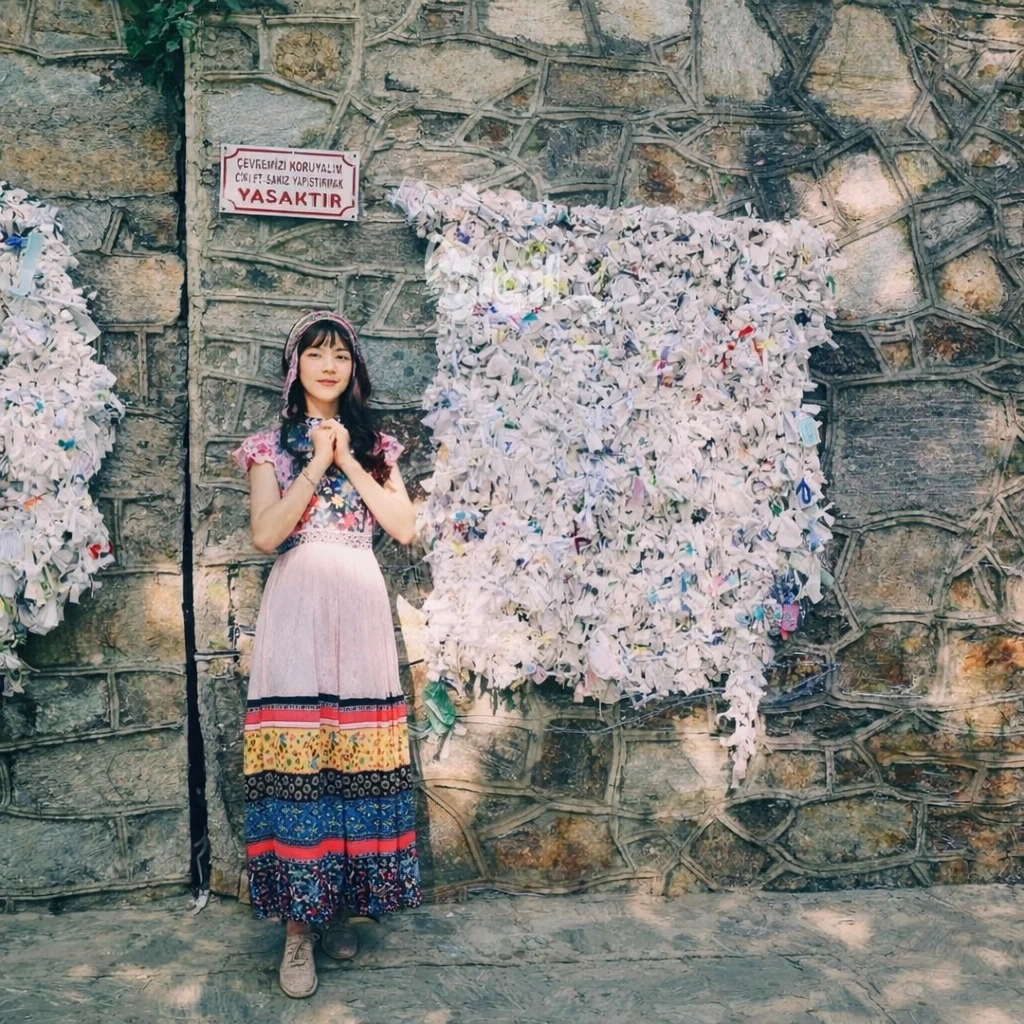
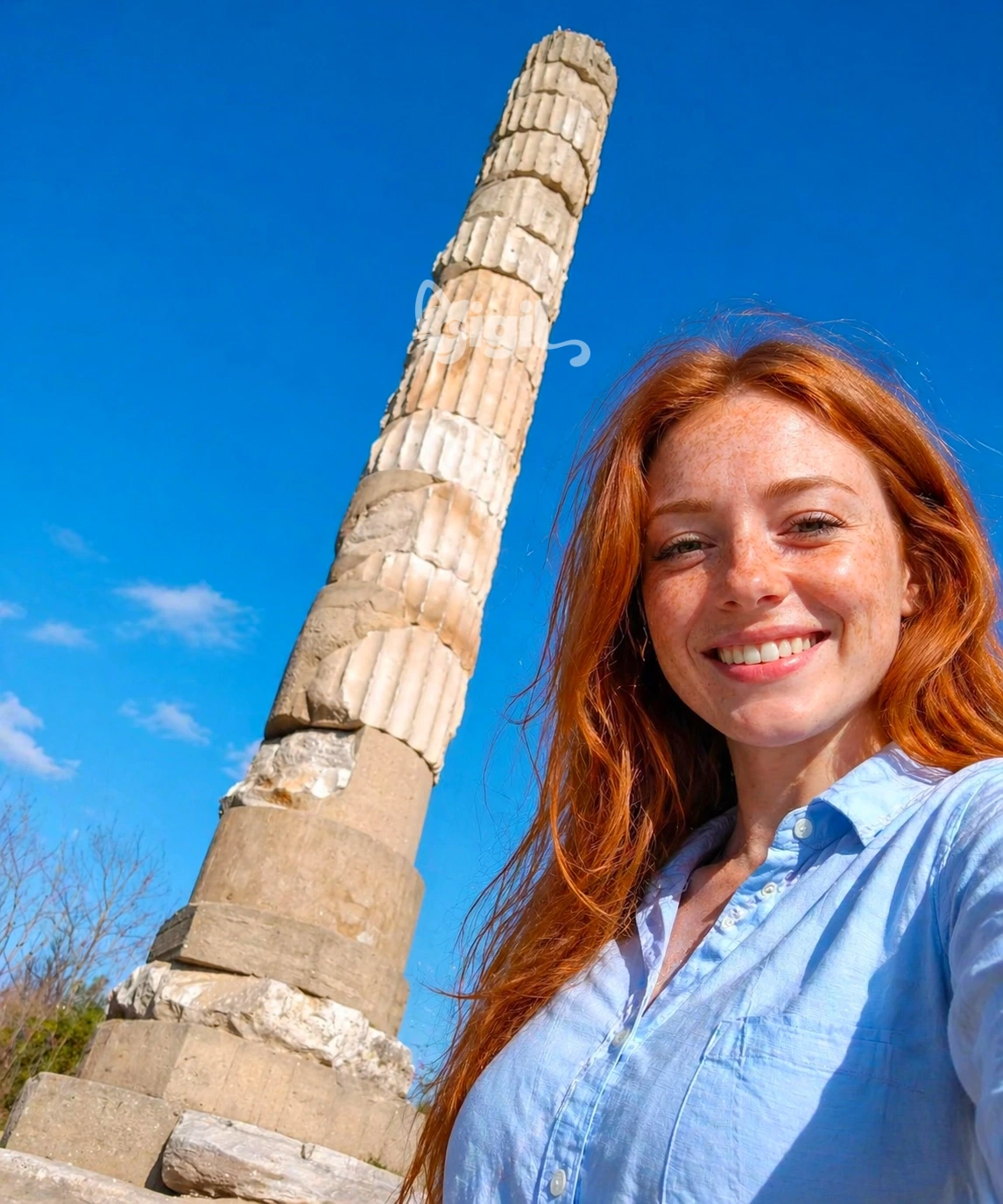
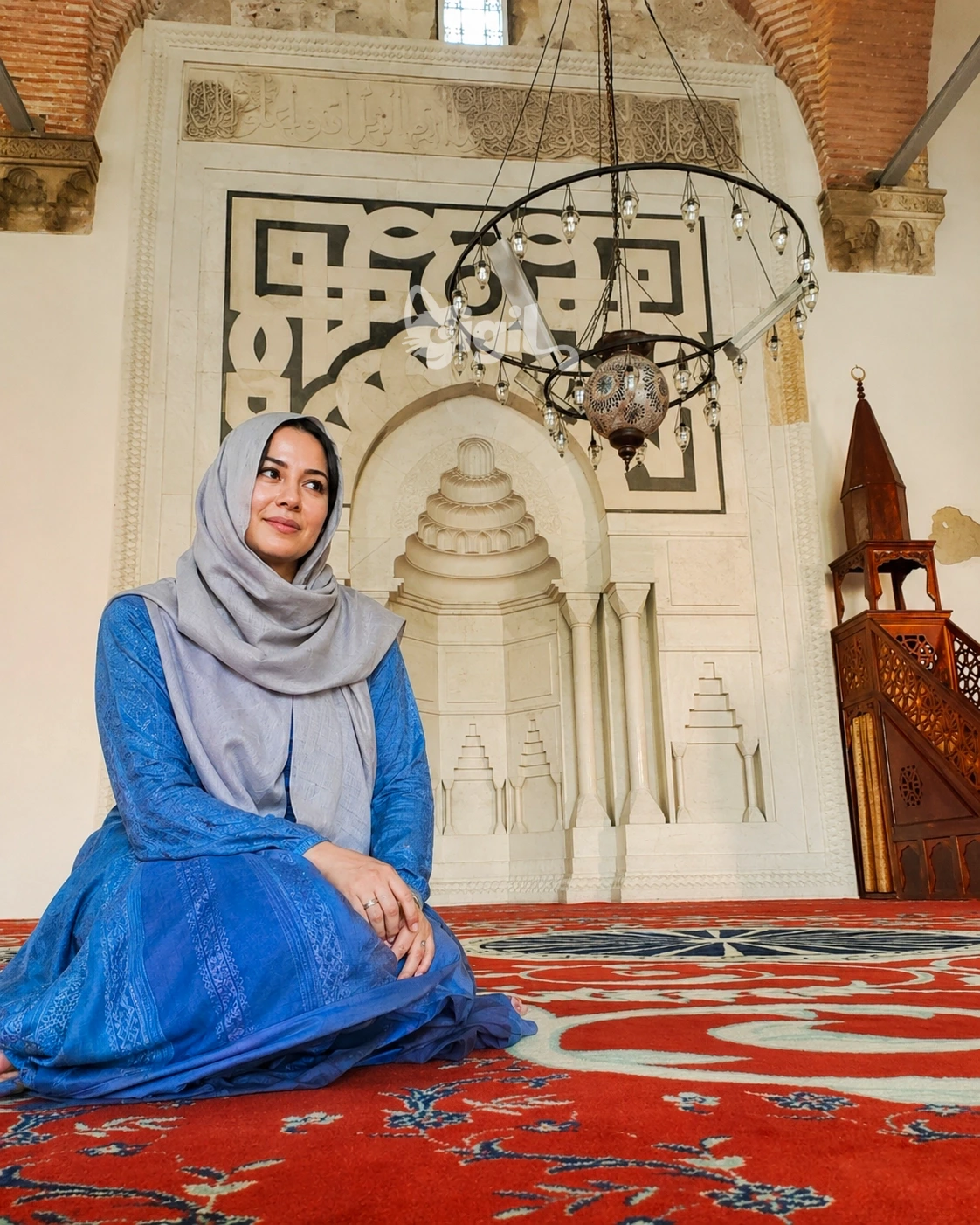
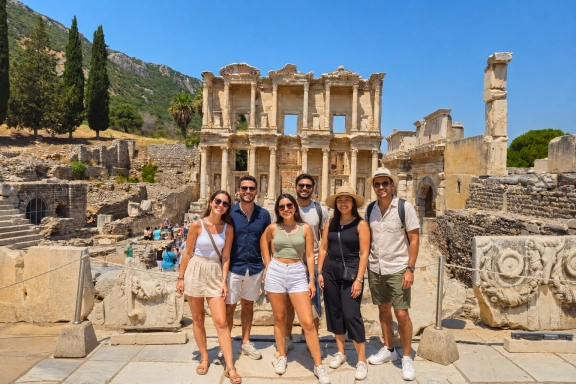
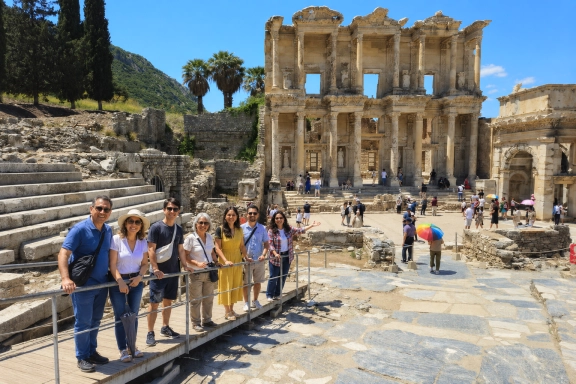
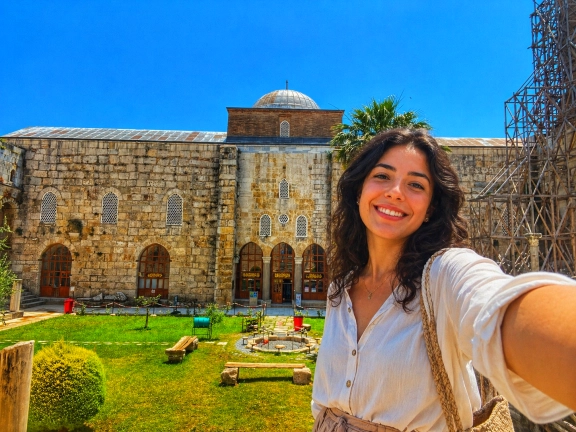
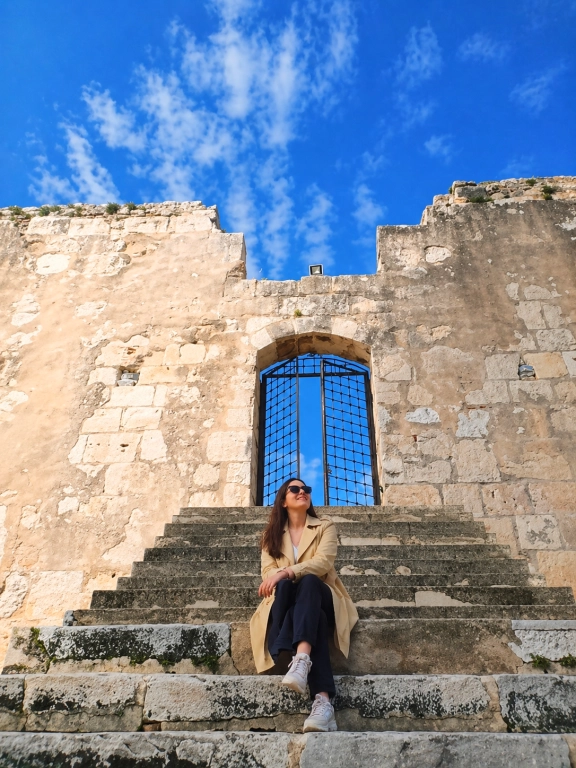
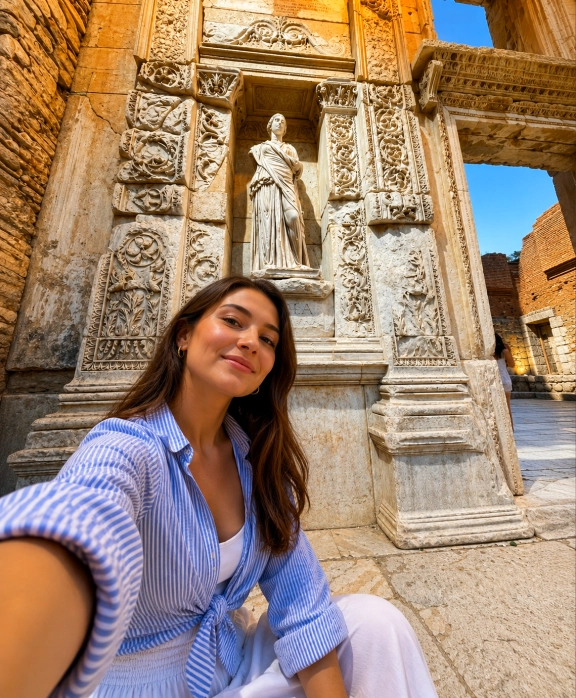
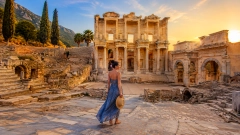
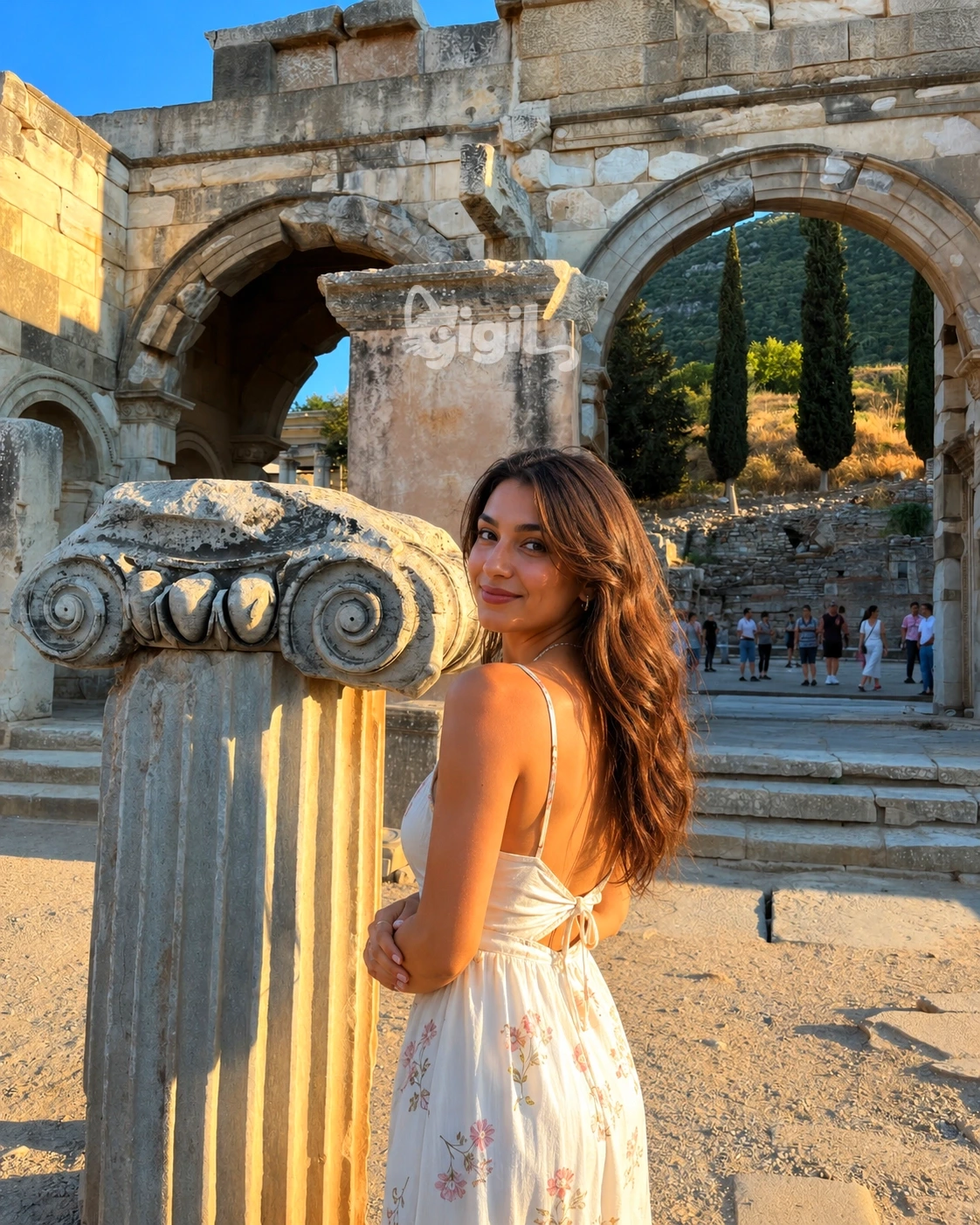
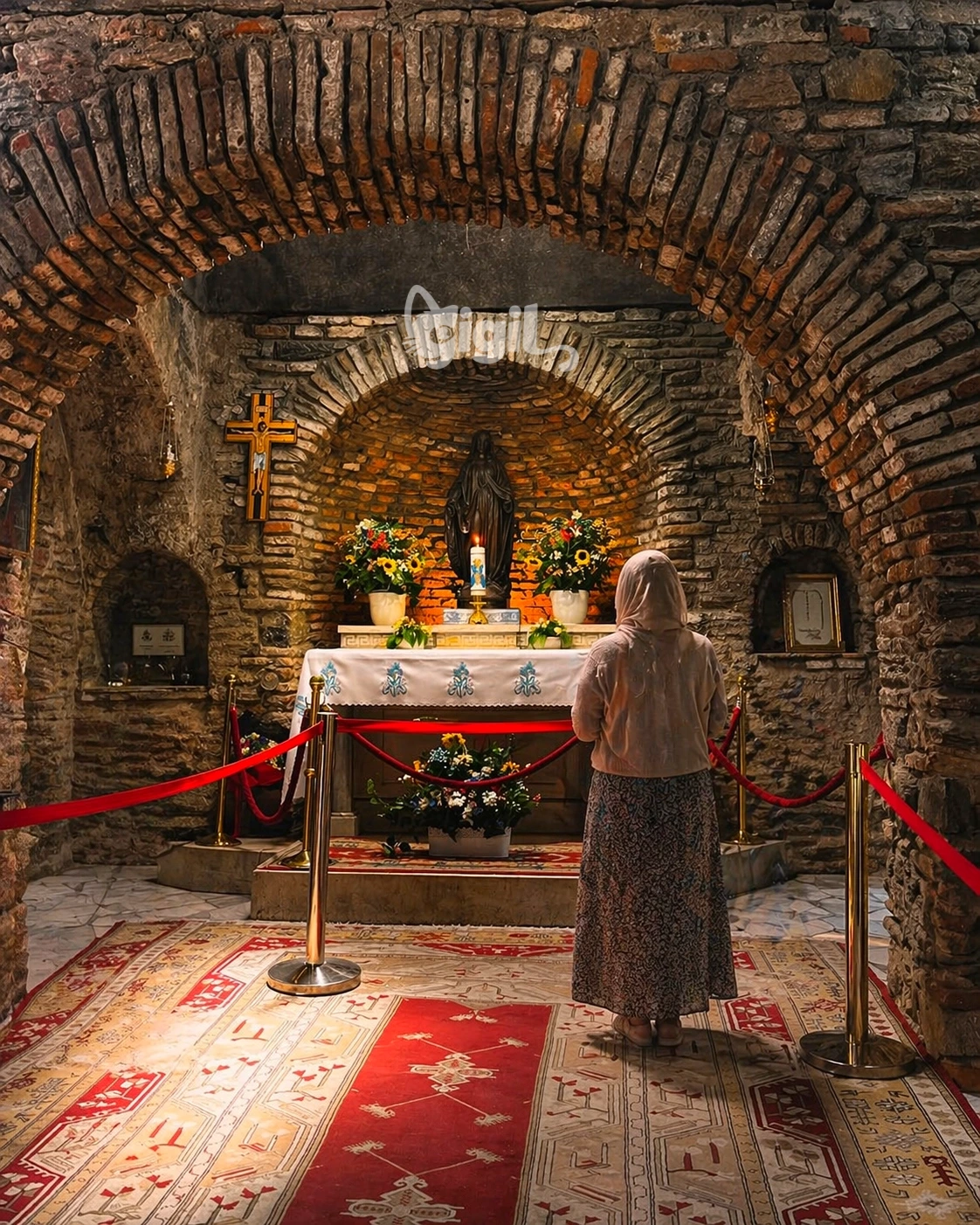
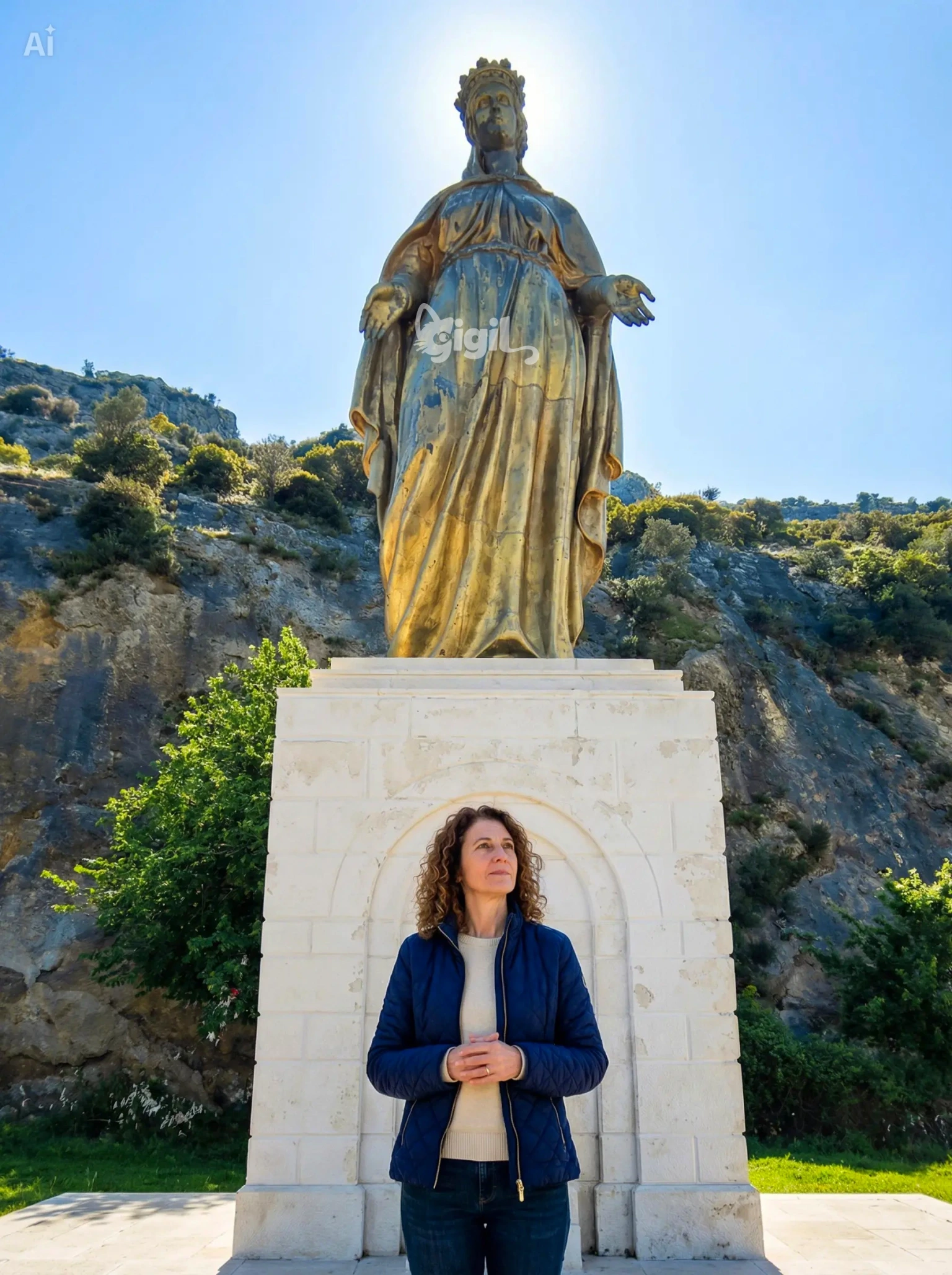
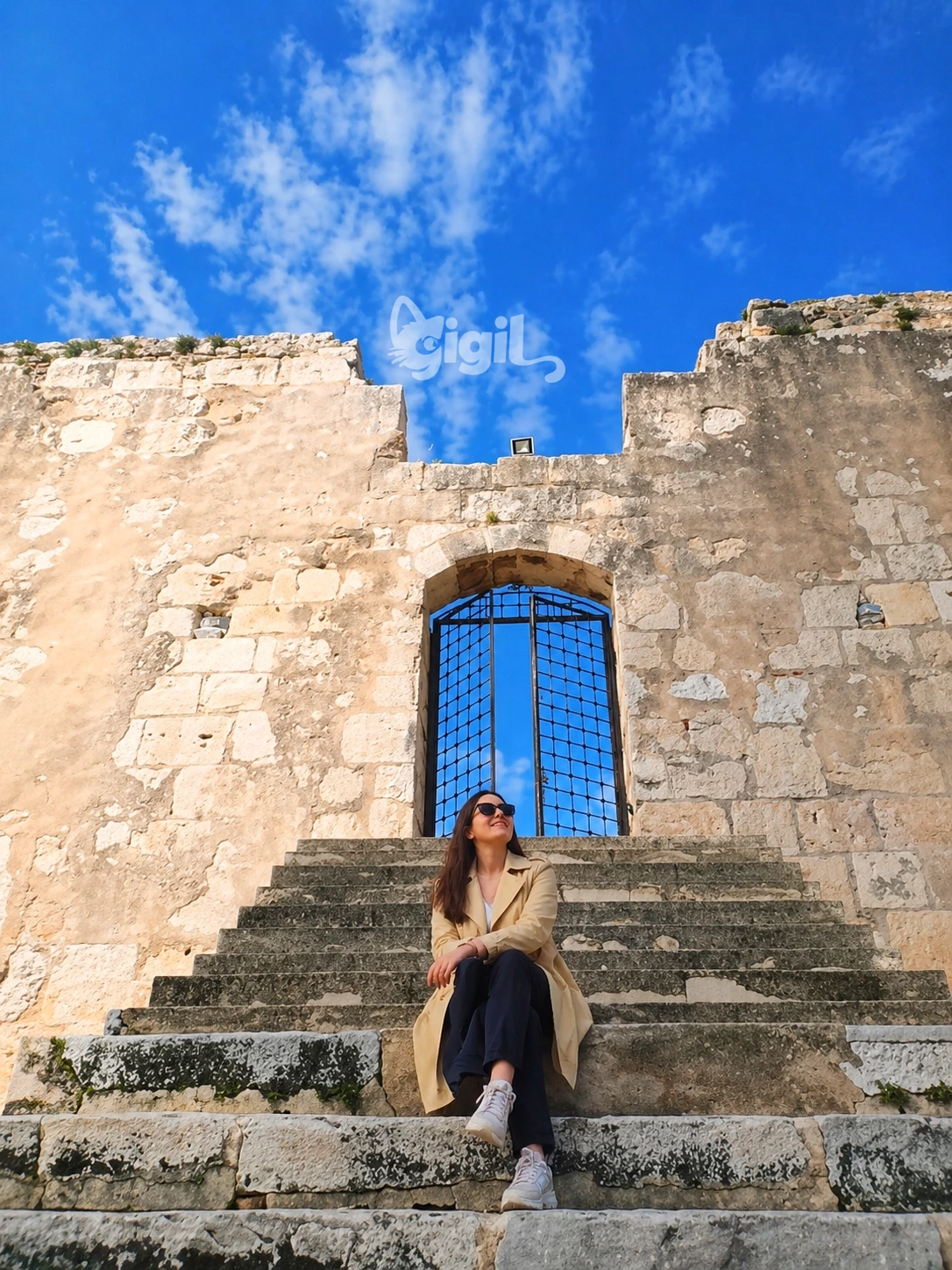
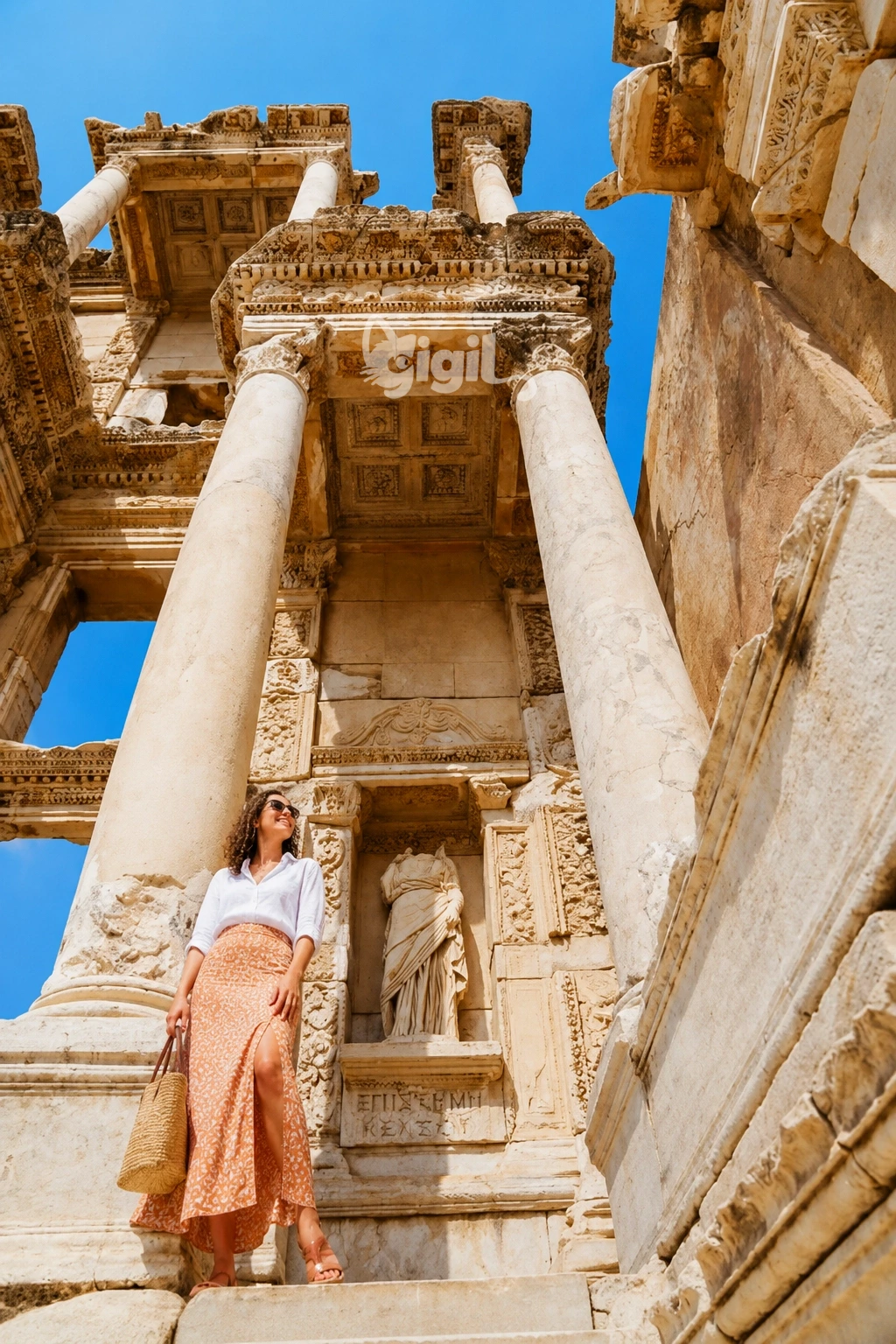
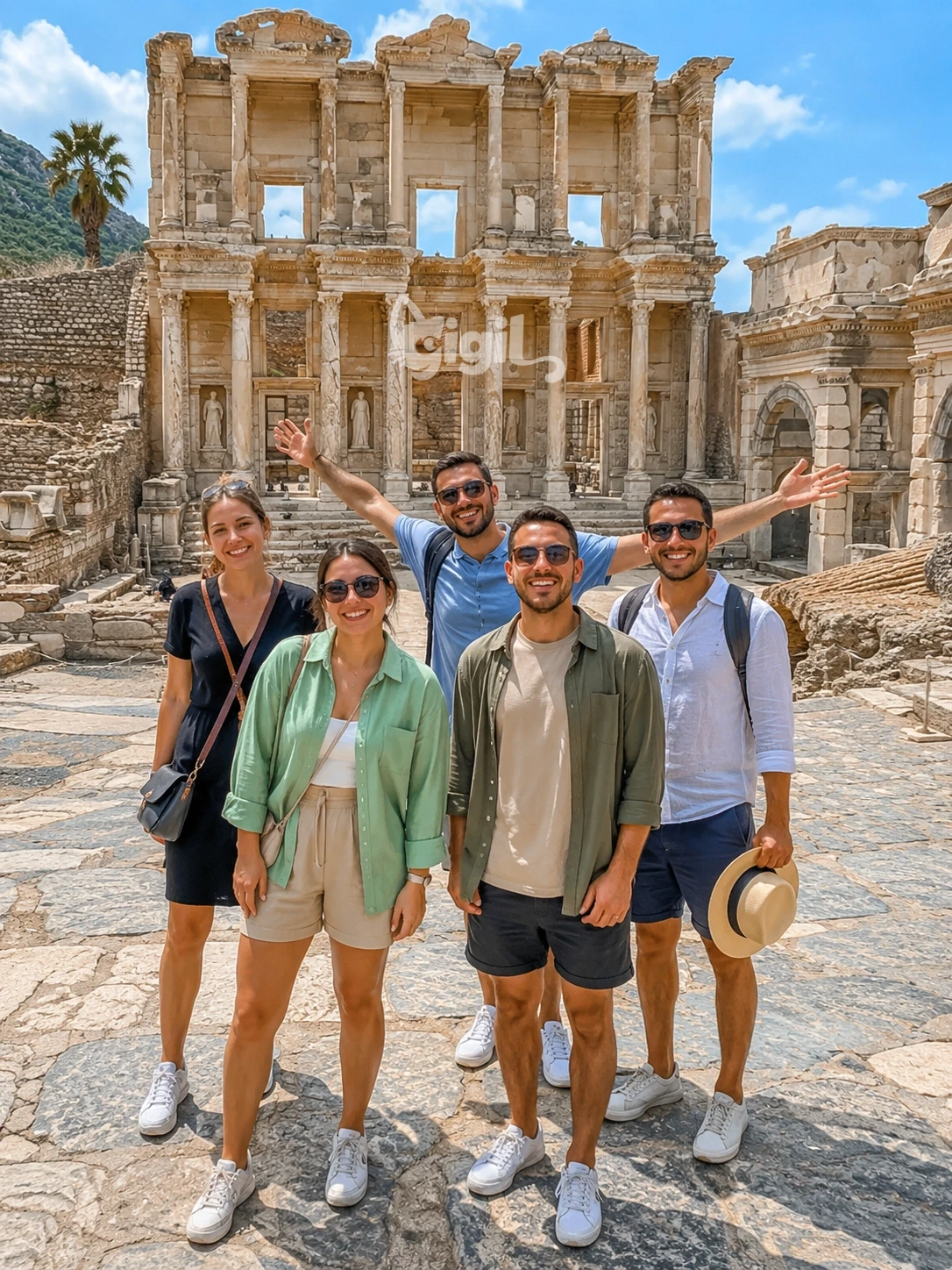
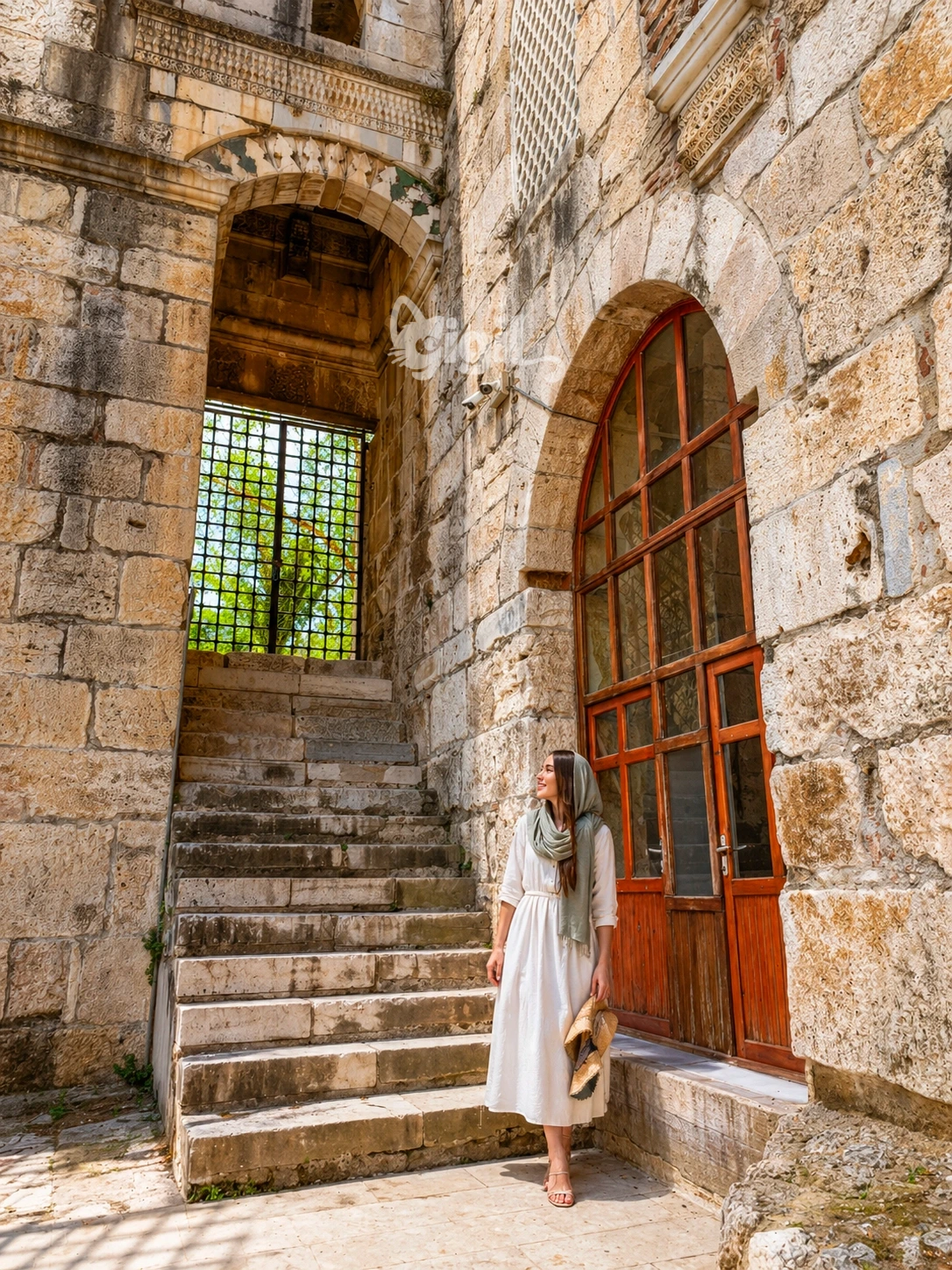
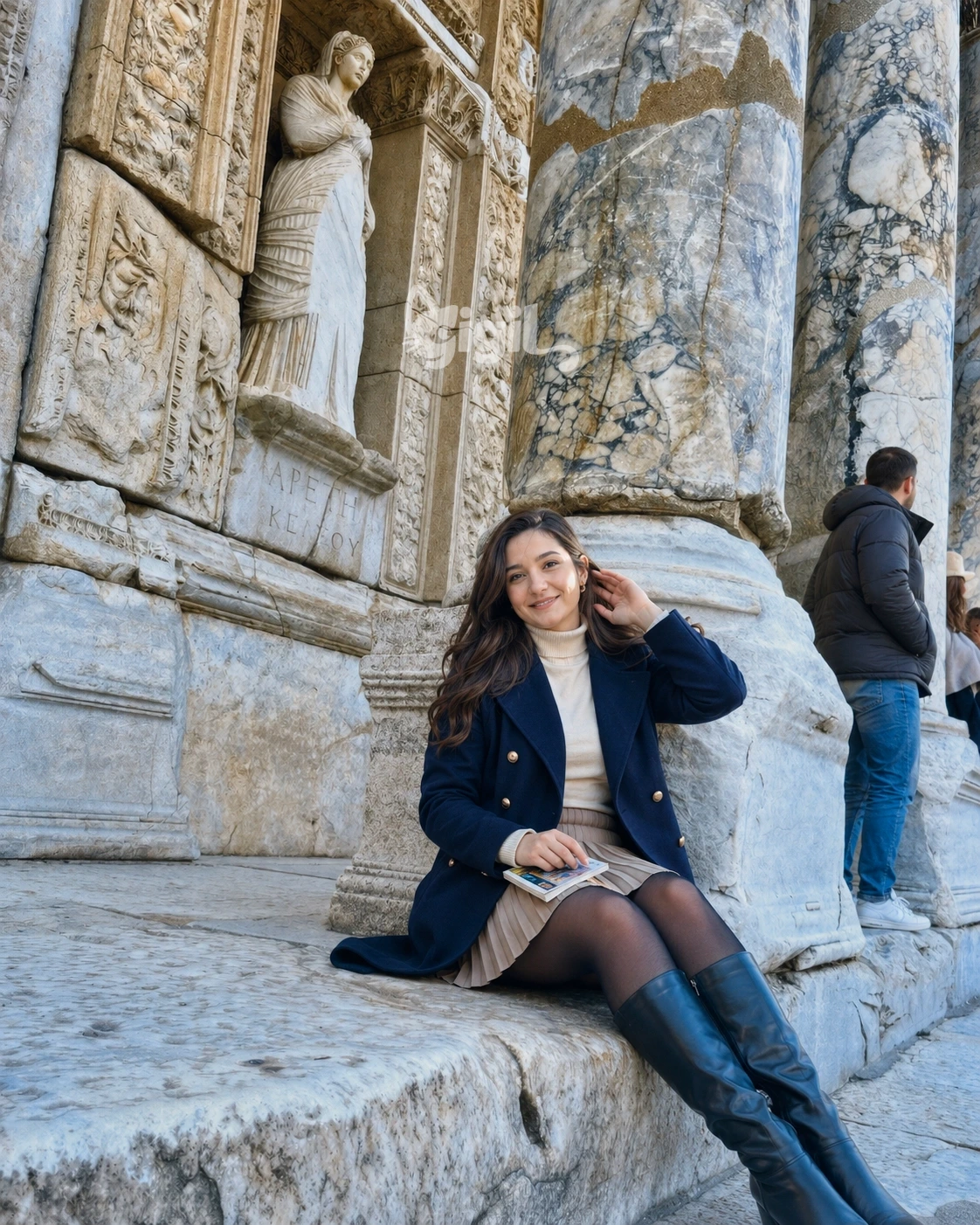
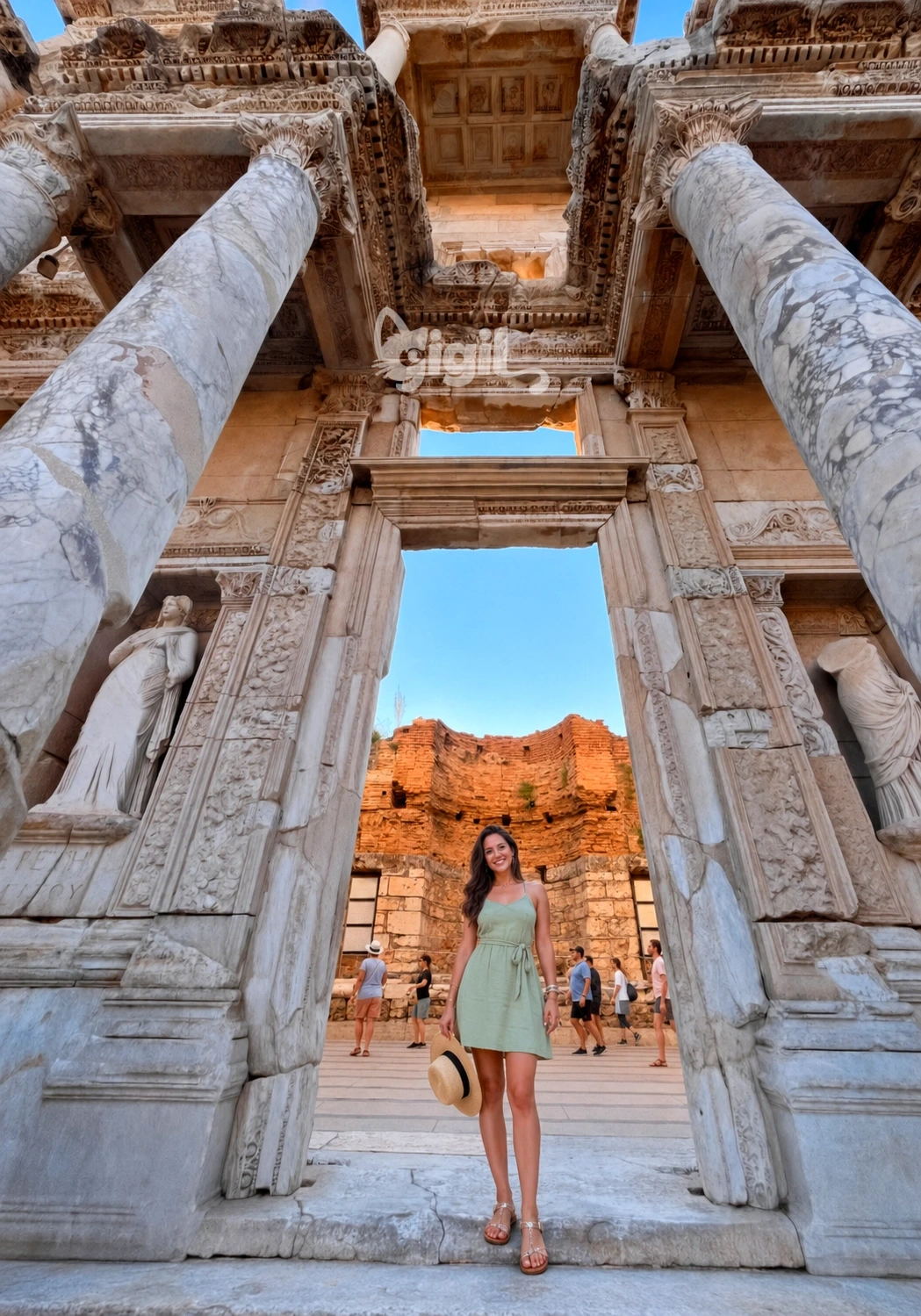
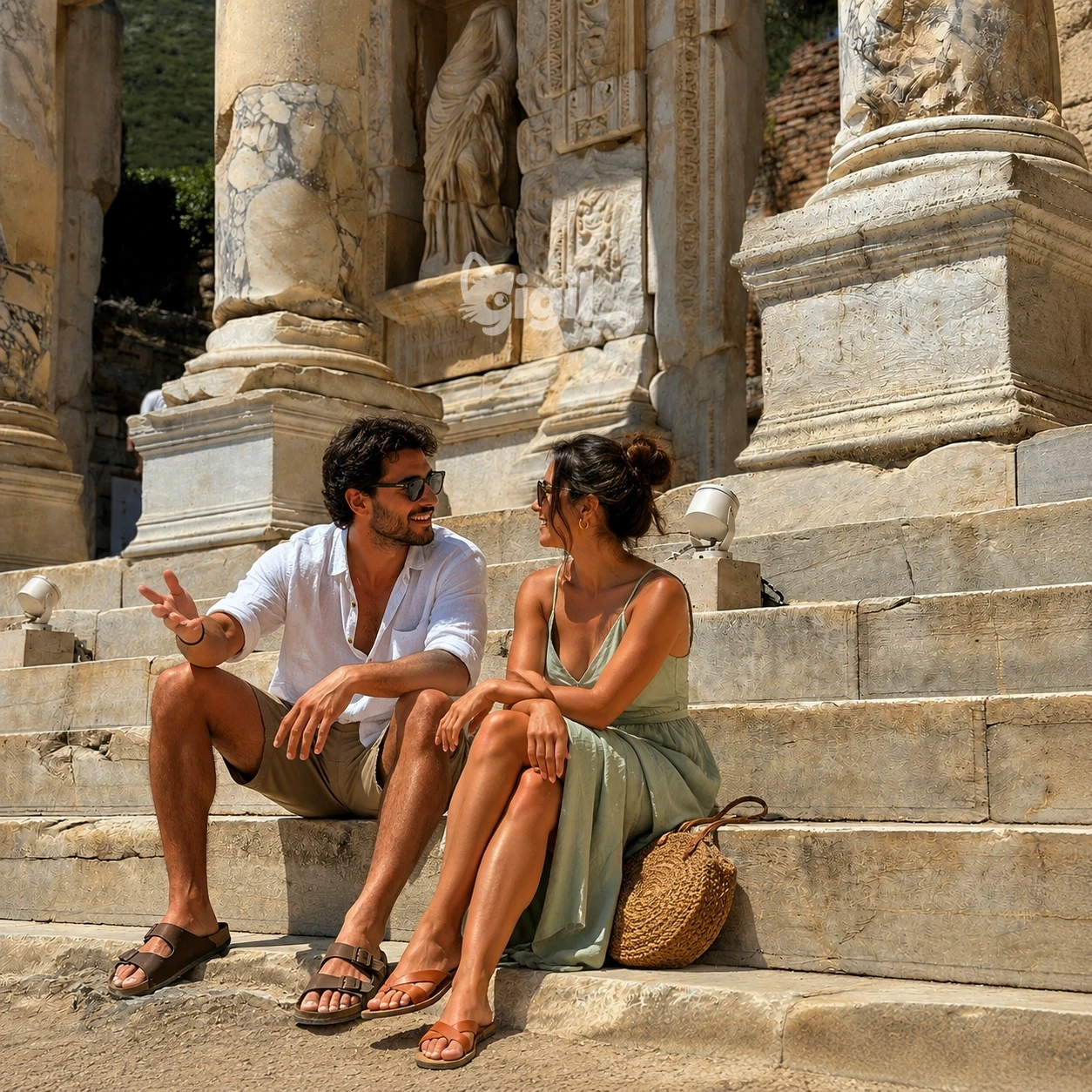
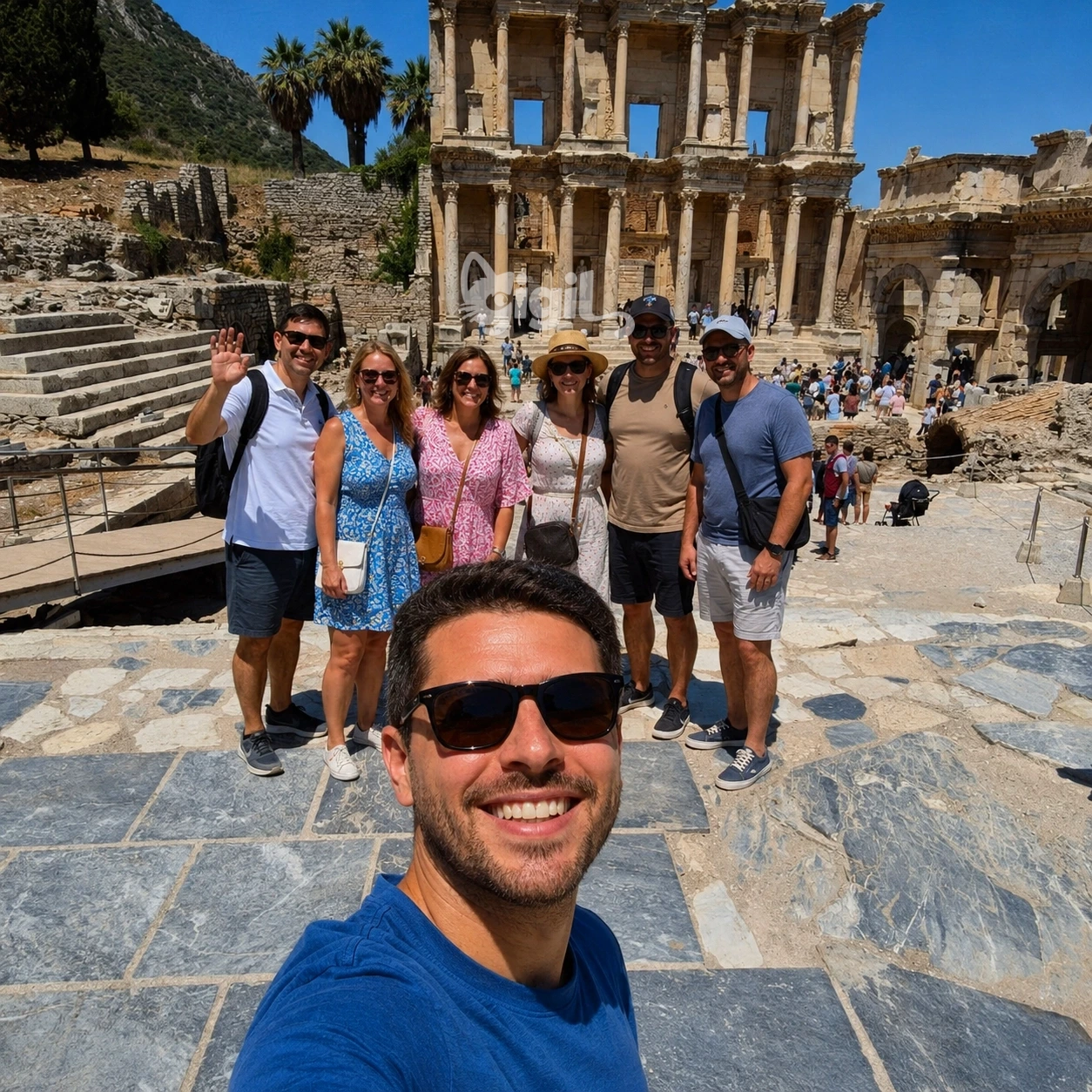
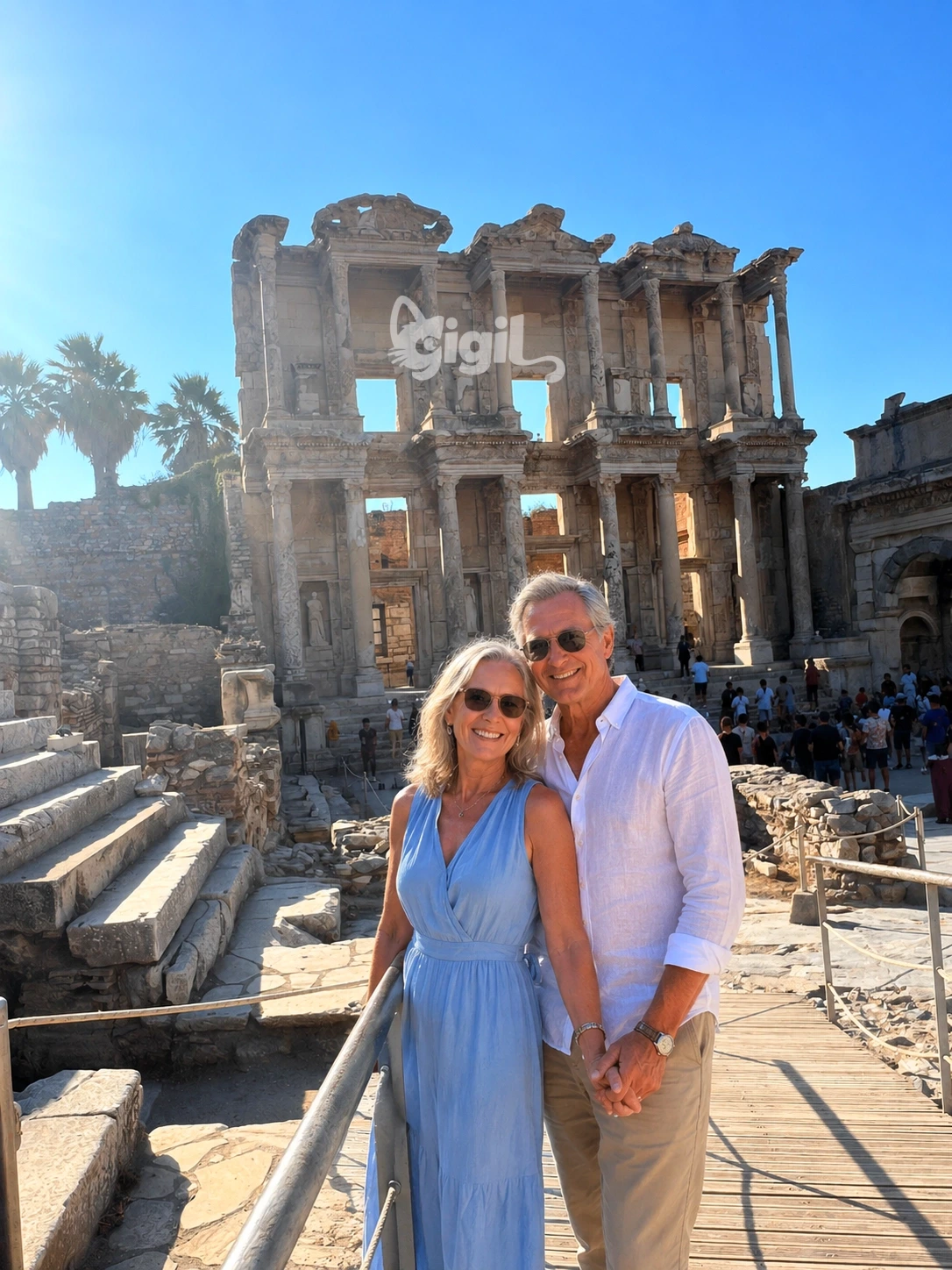
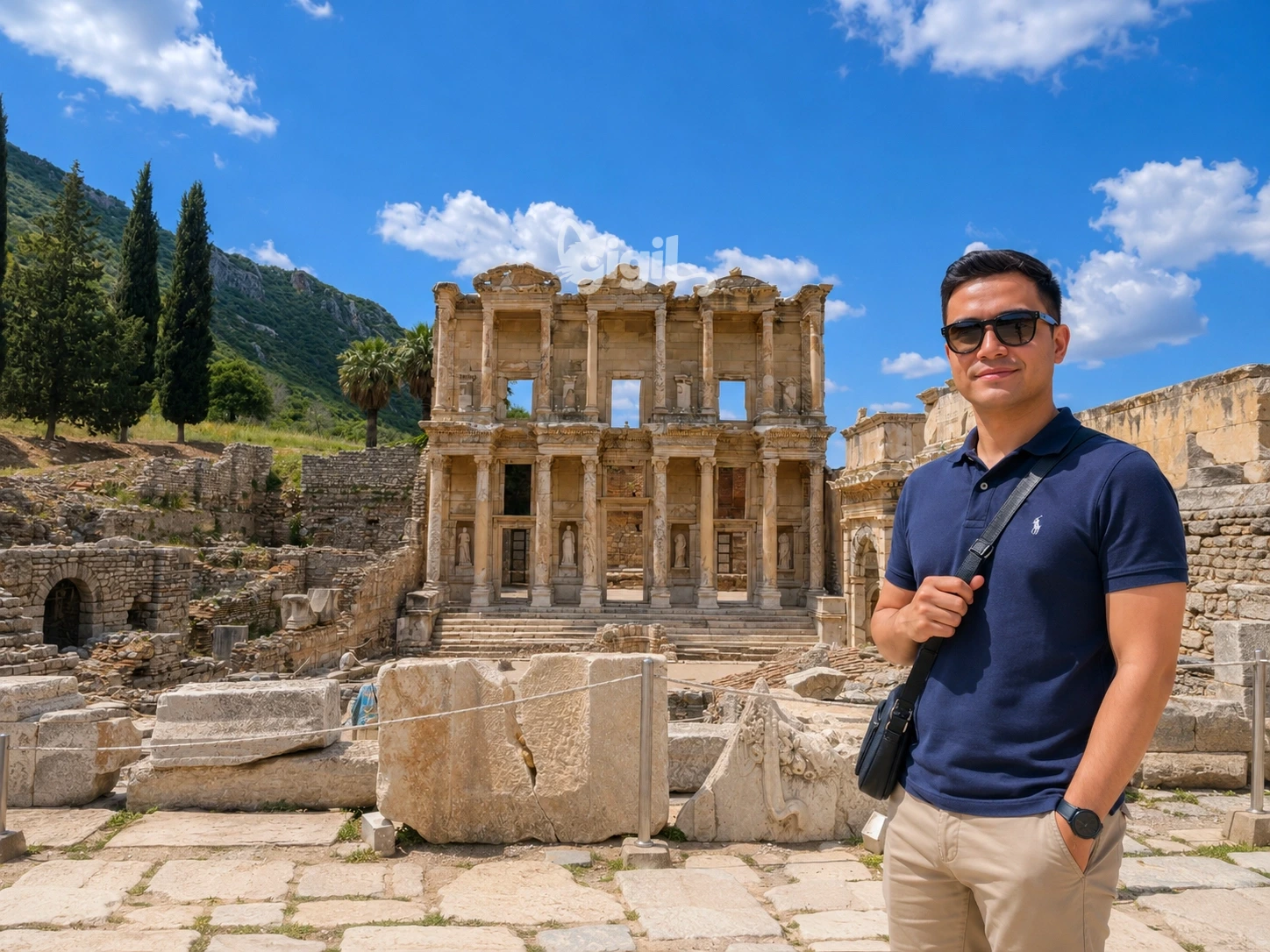
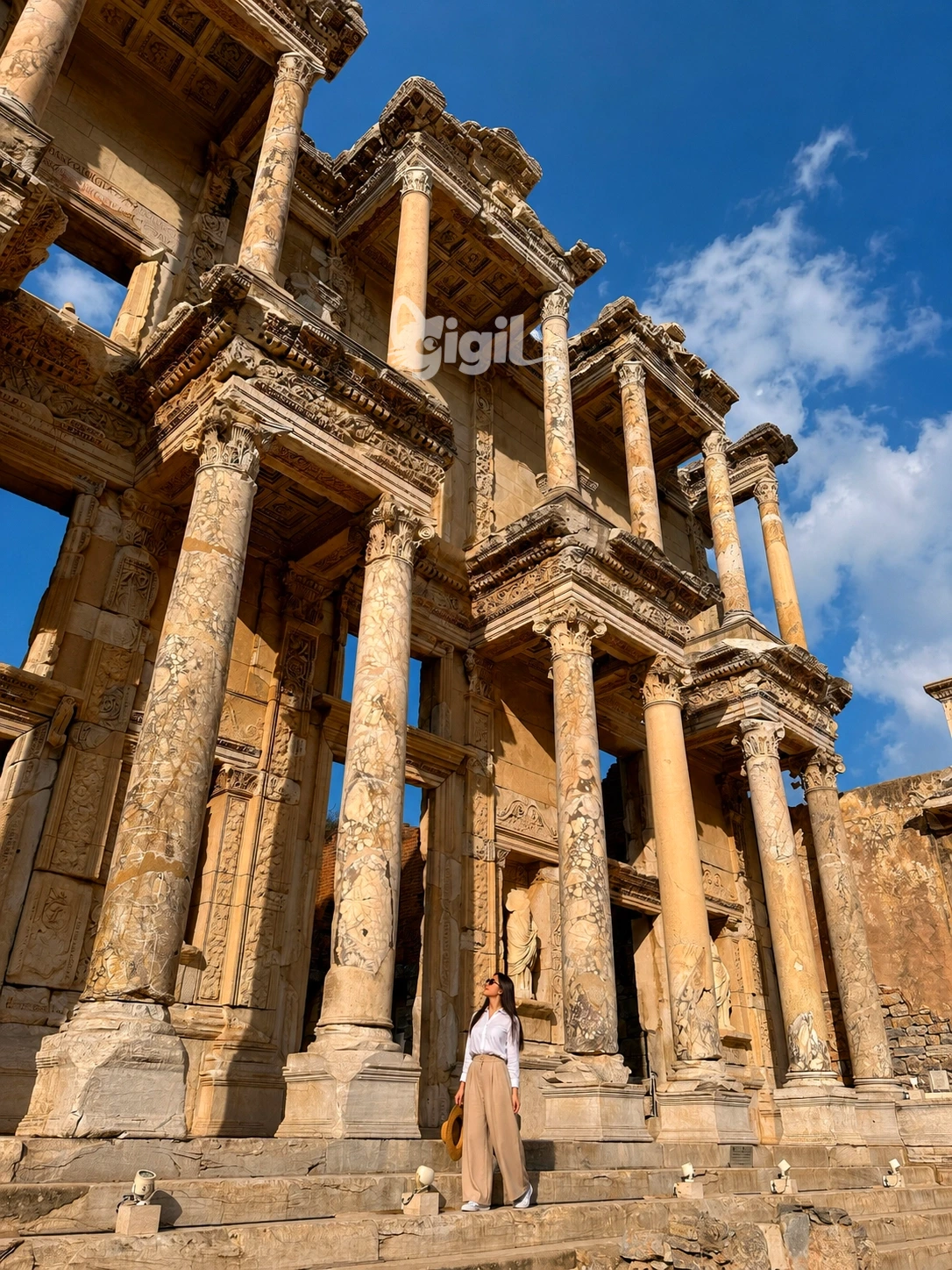
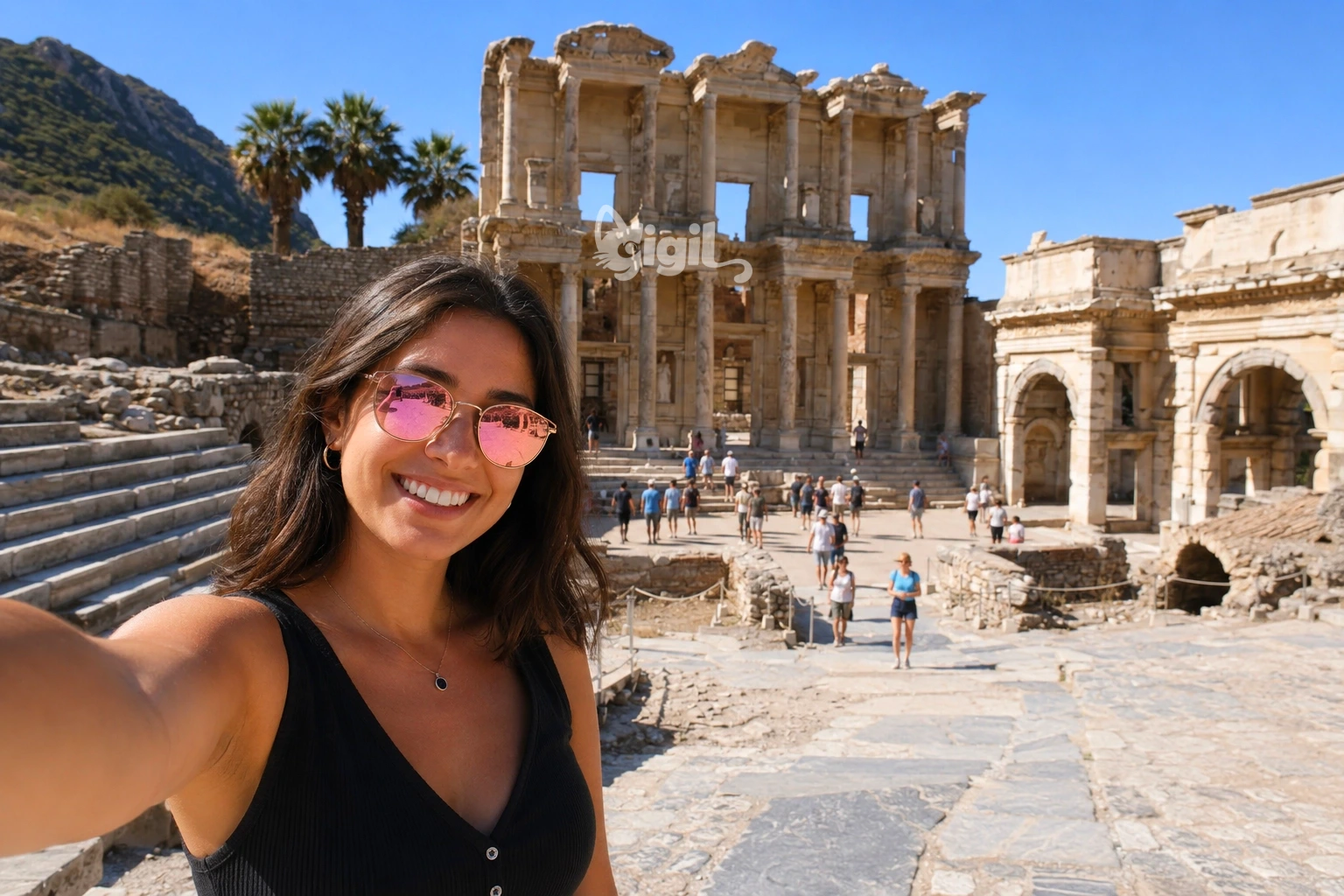
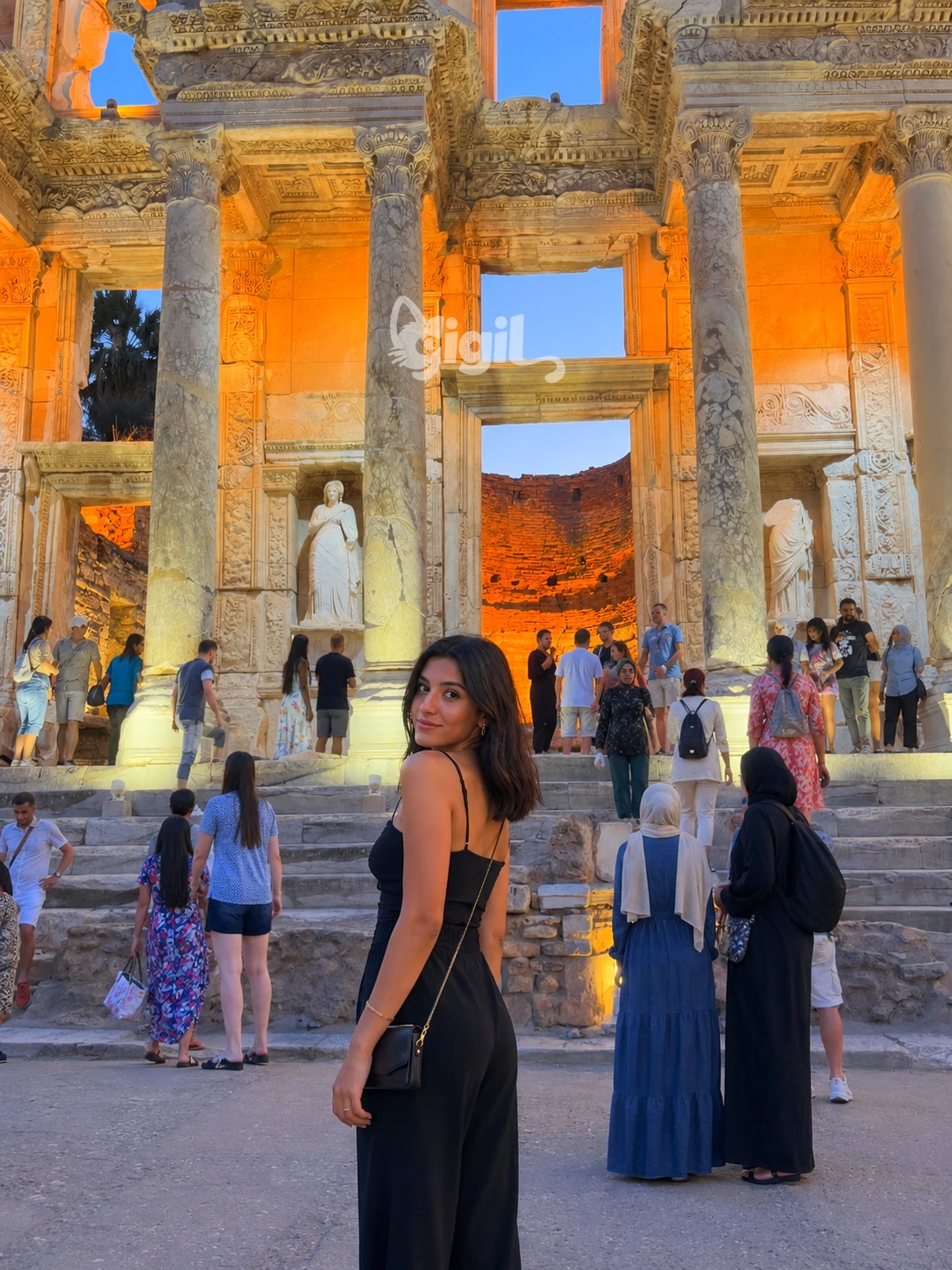
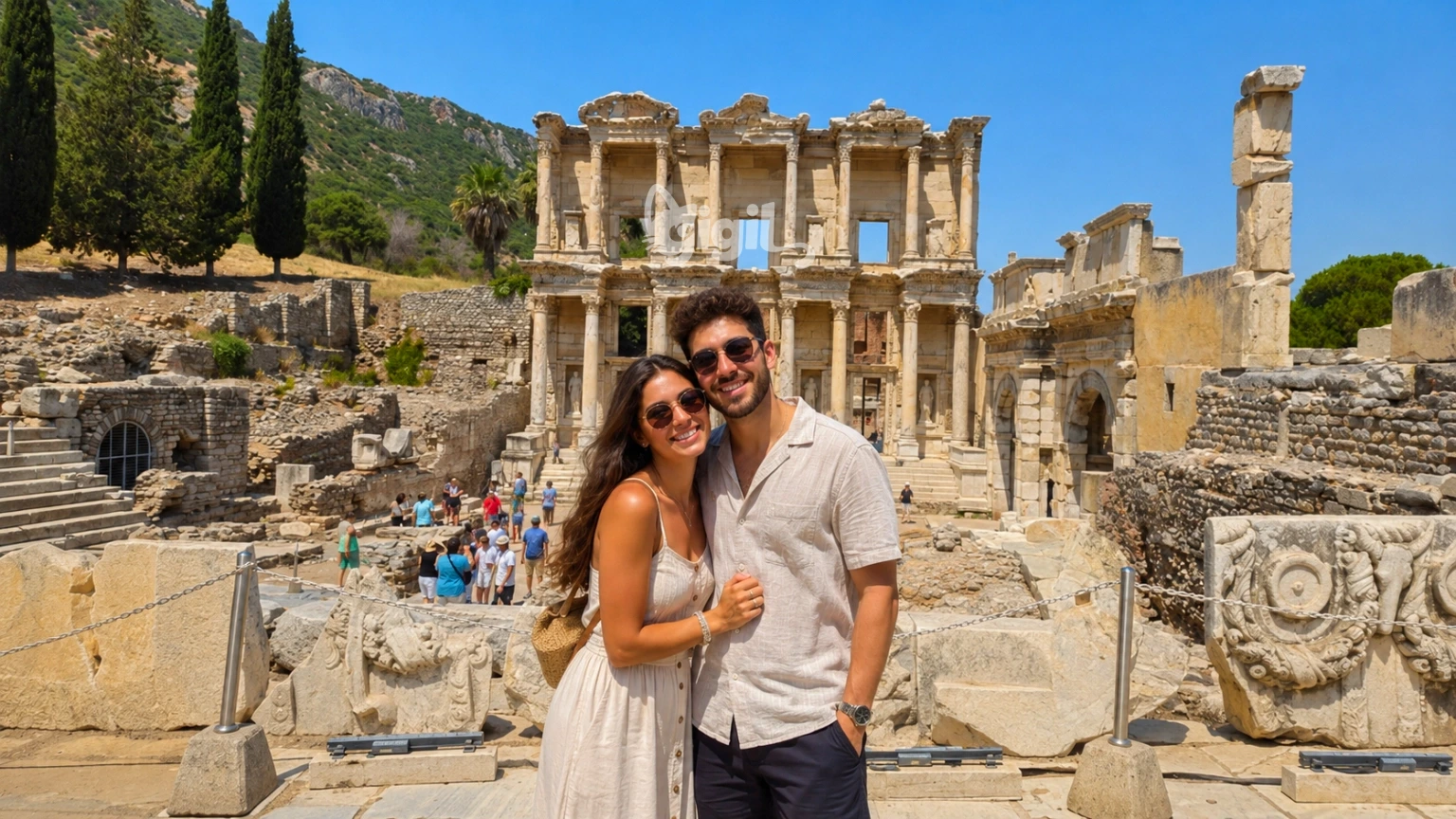
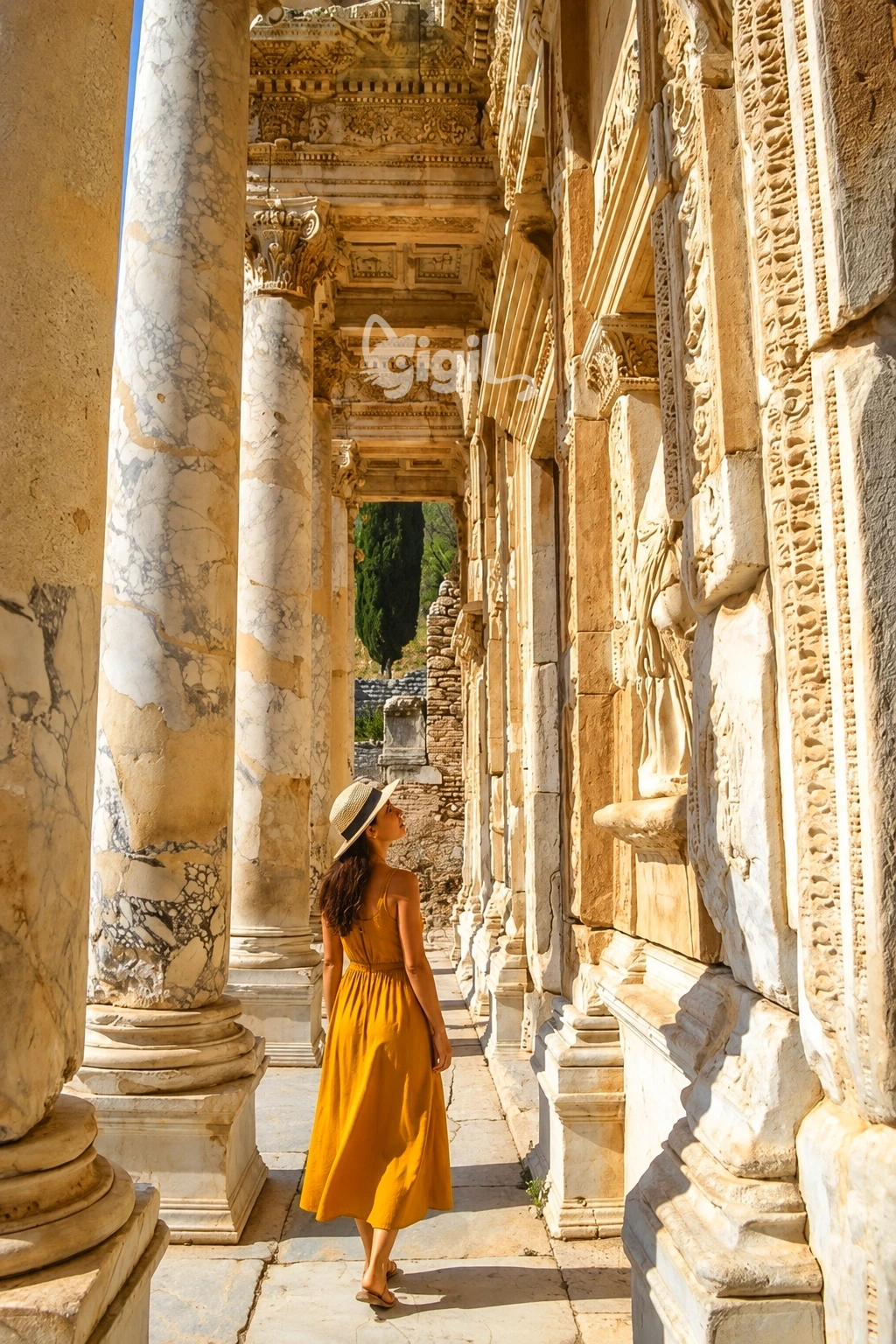
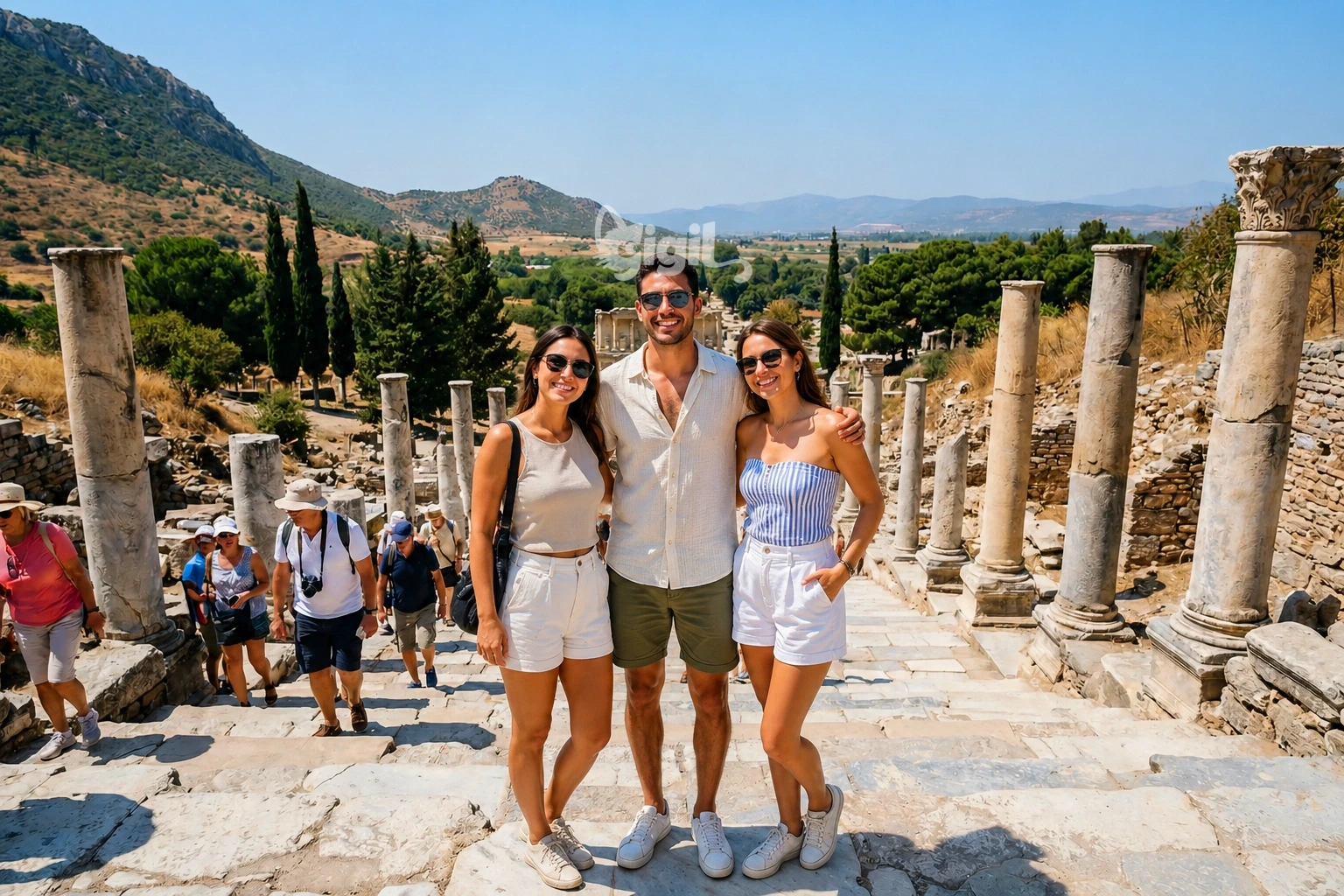
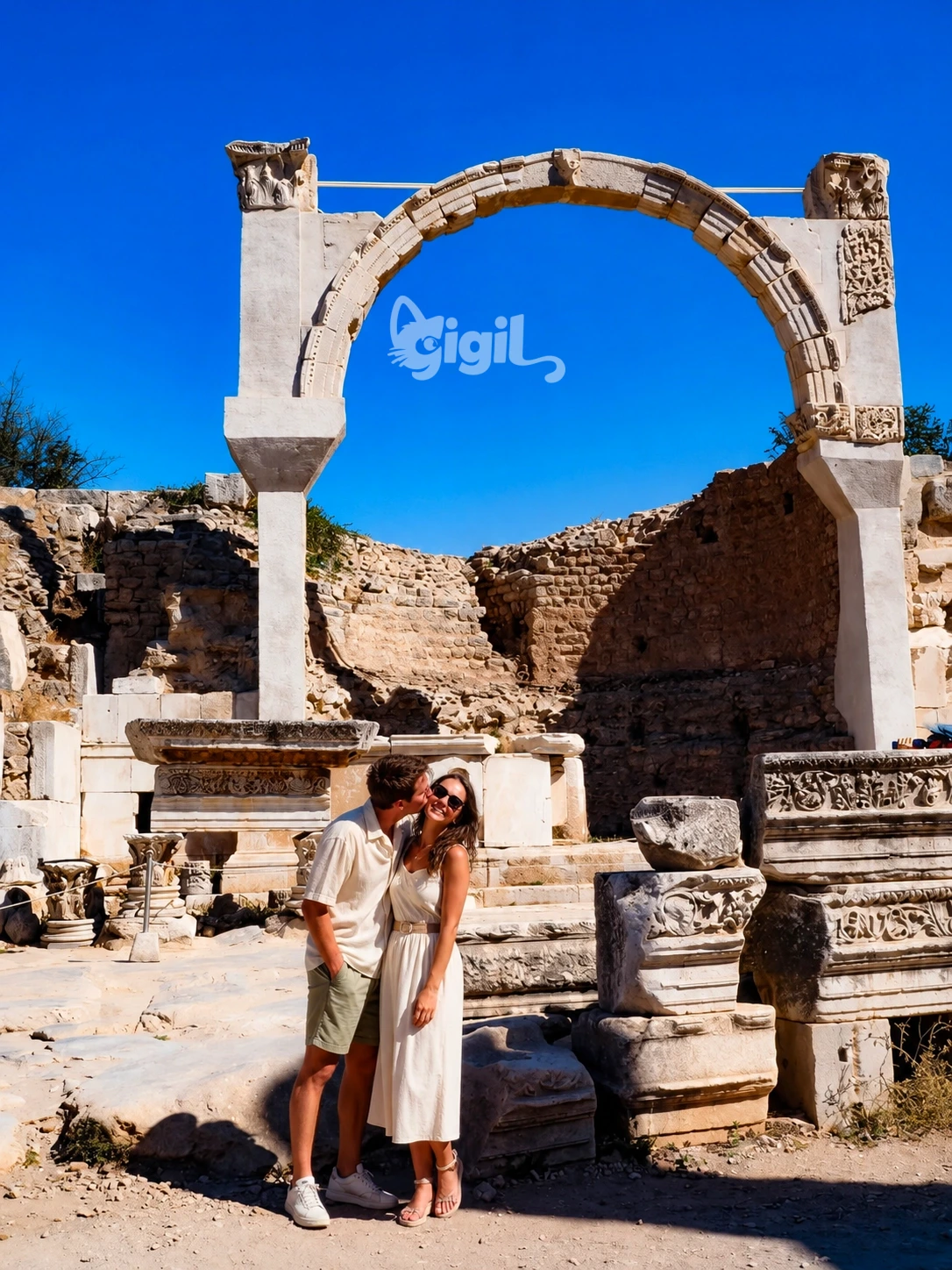
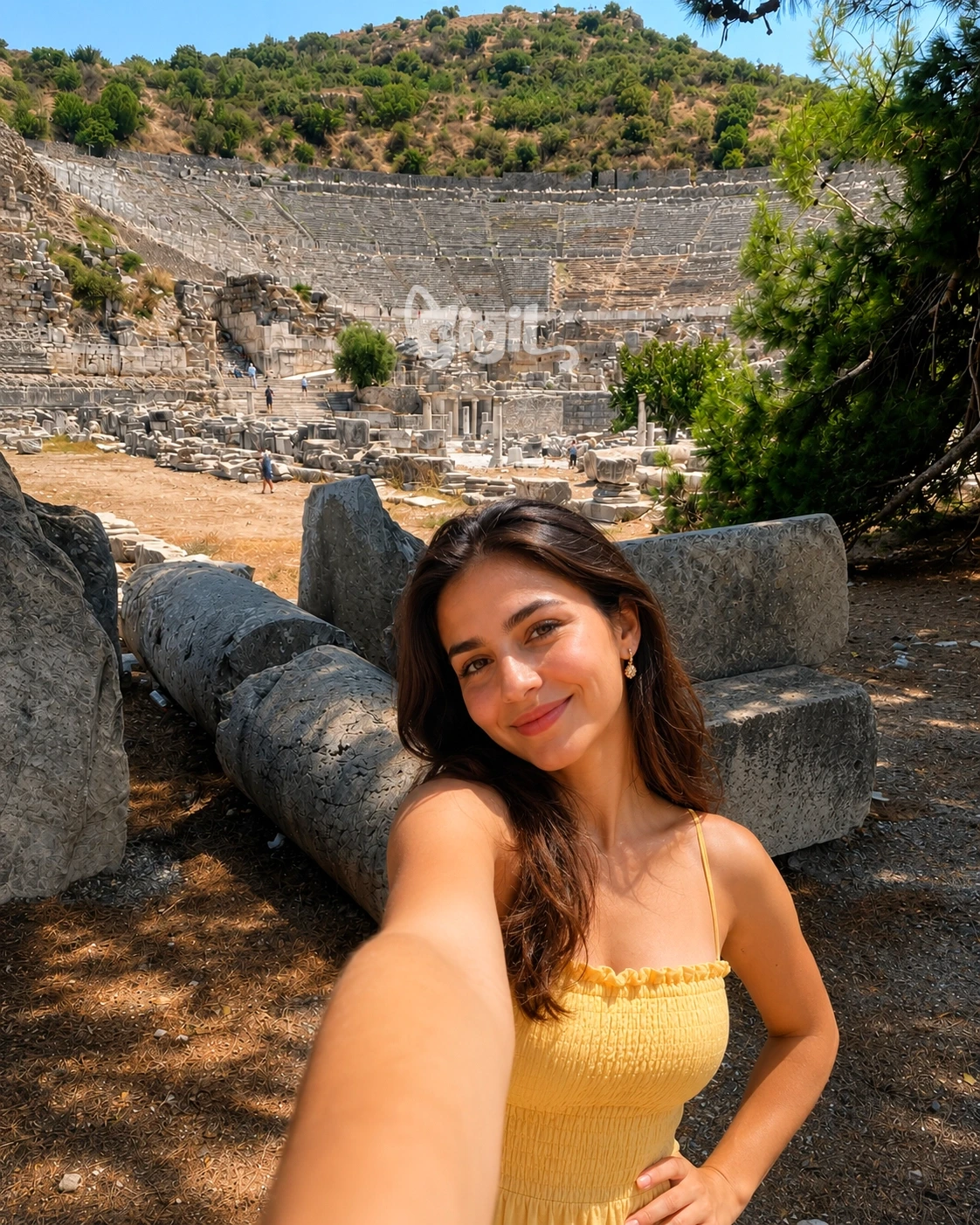
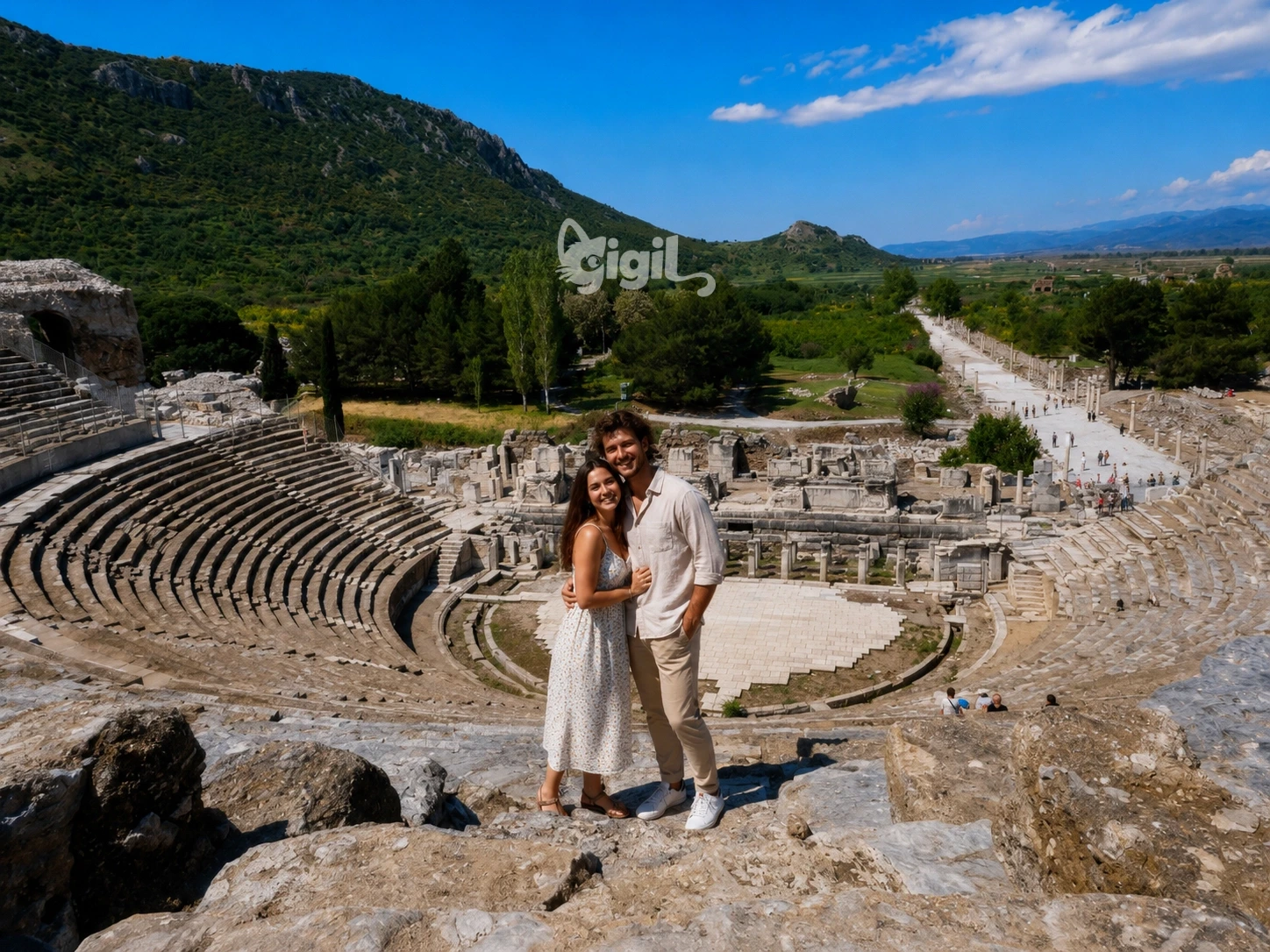
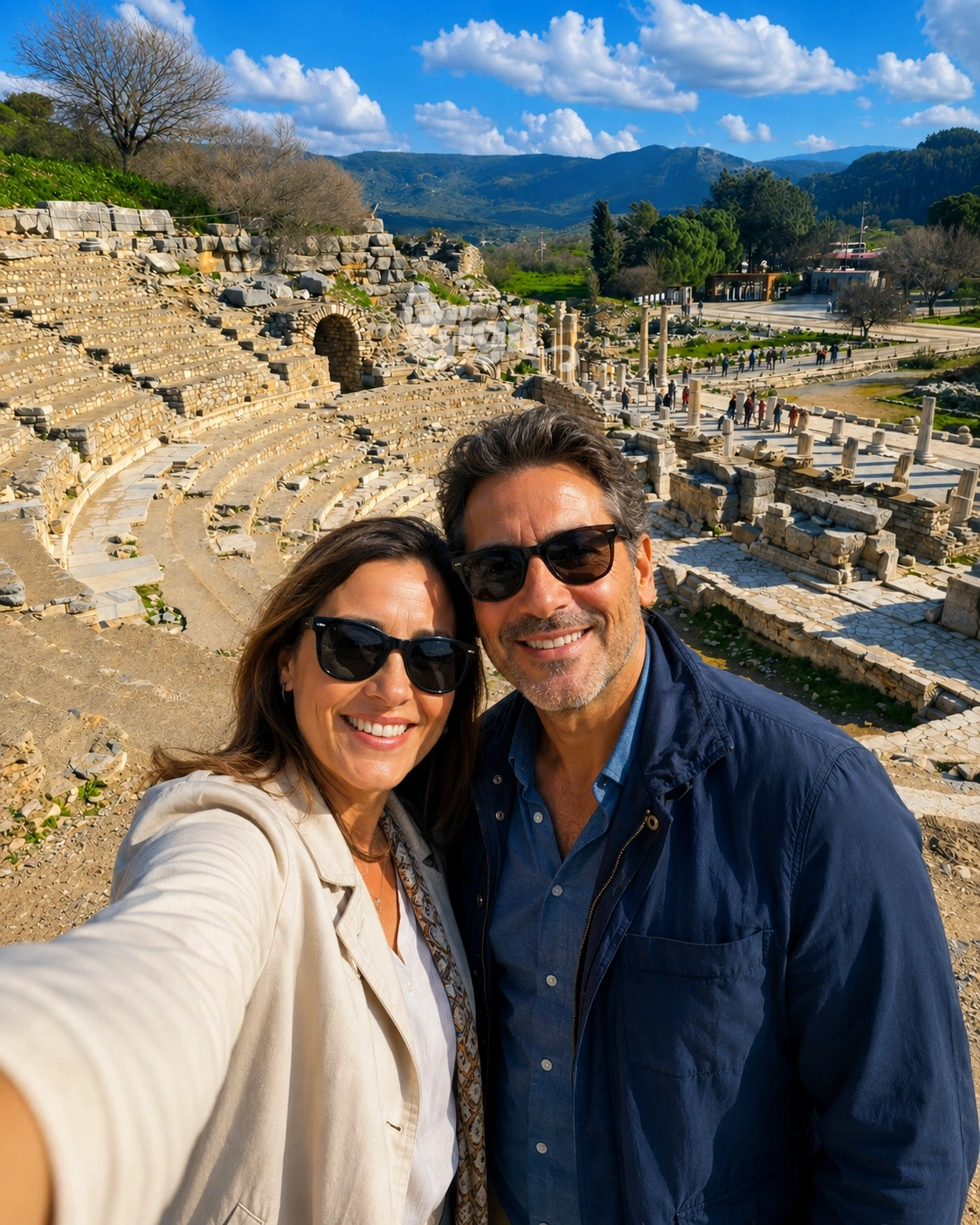
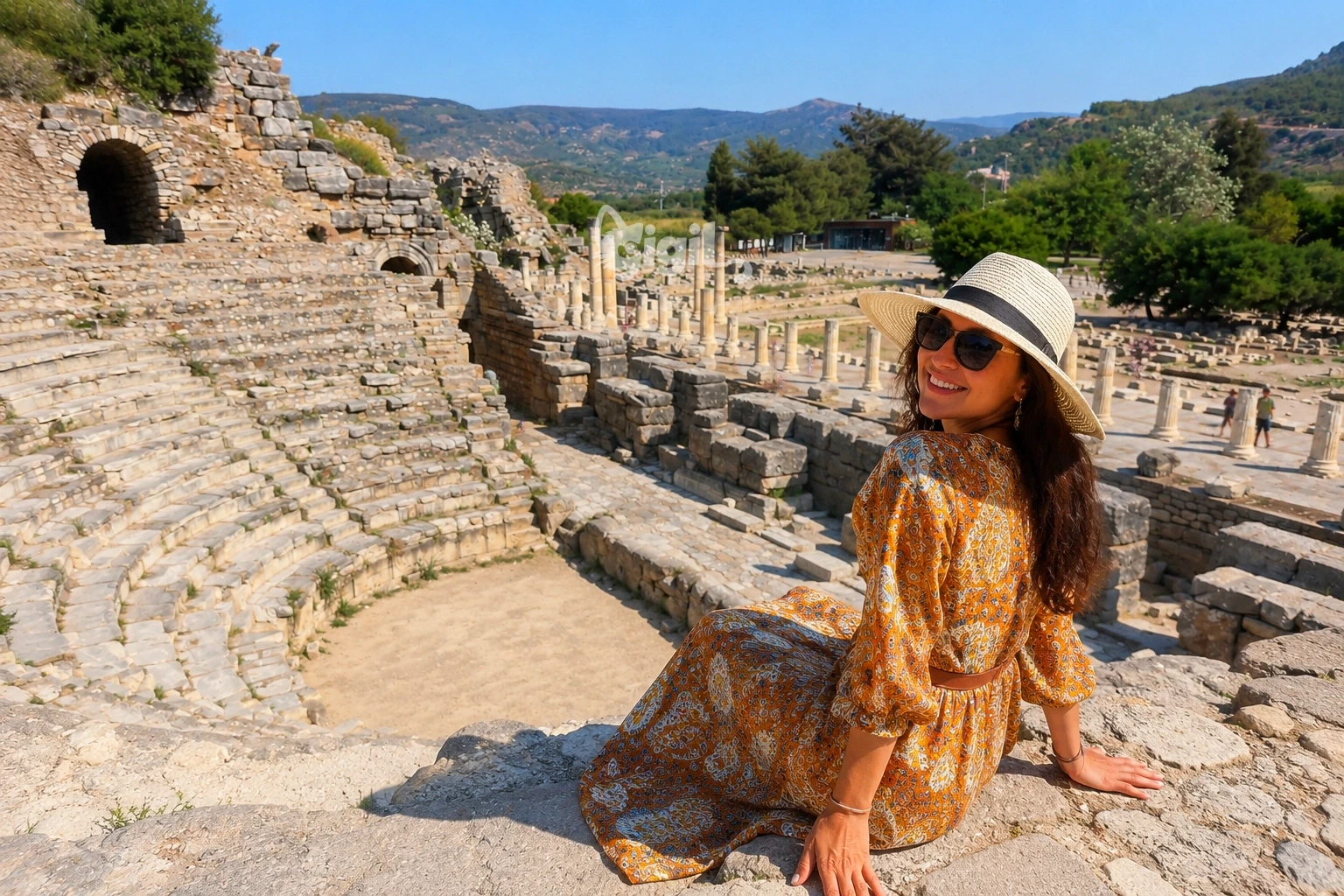
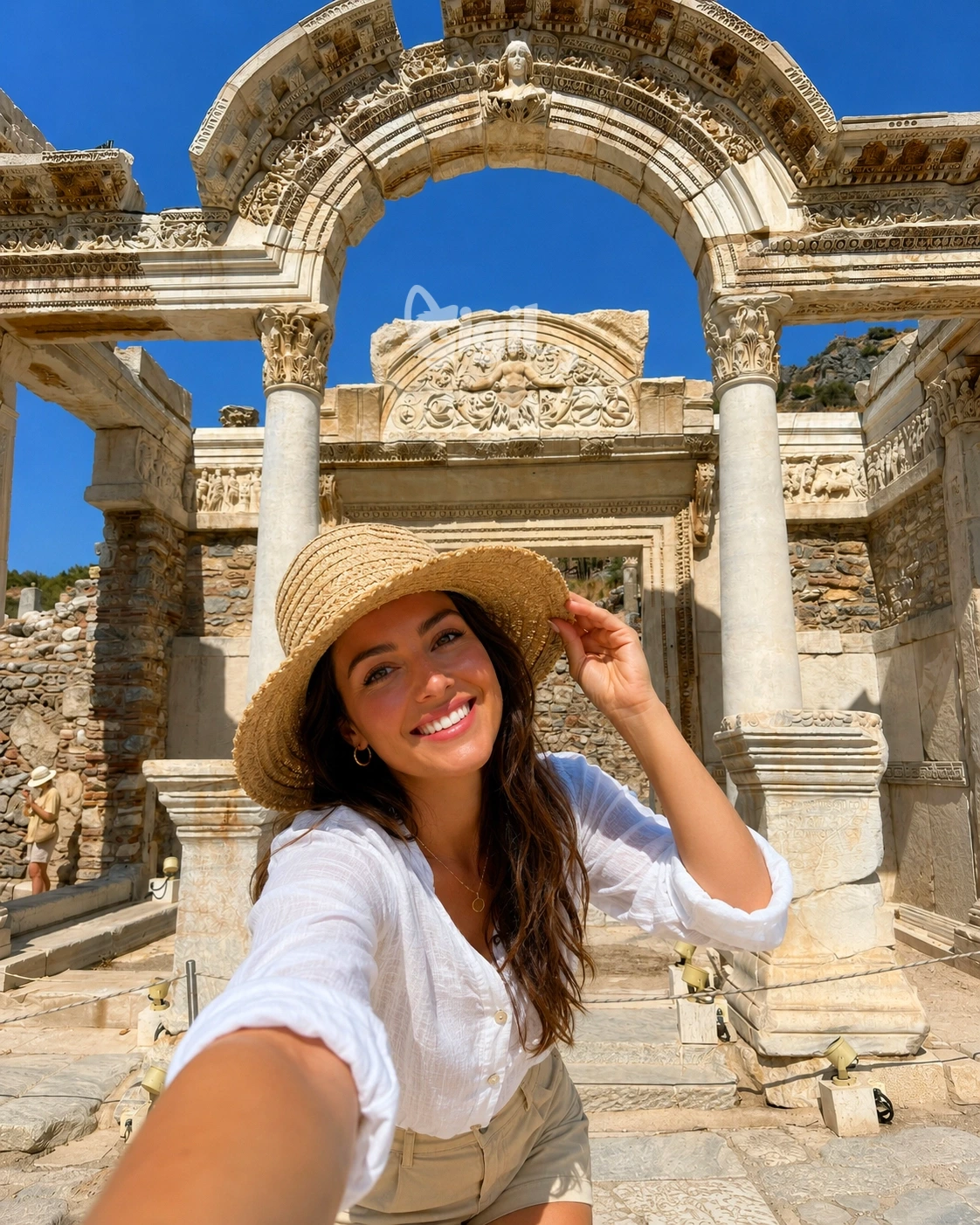
Ephesus Ancient City is the private route's central archaeological stop. From Selcuk, the visit feels especially connected to the surrounding landscape, because the ancient city, Ayasuluk Hill and nearby landmarks all belong to the same historical setting.
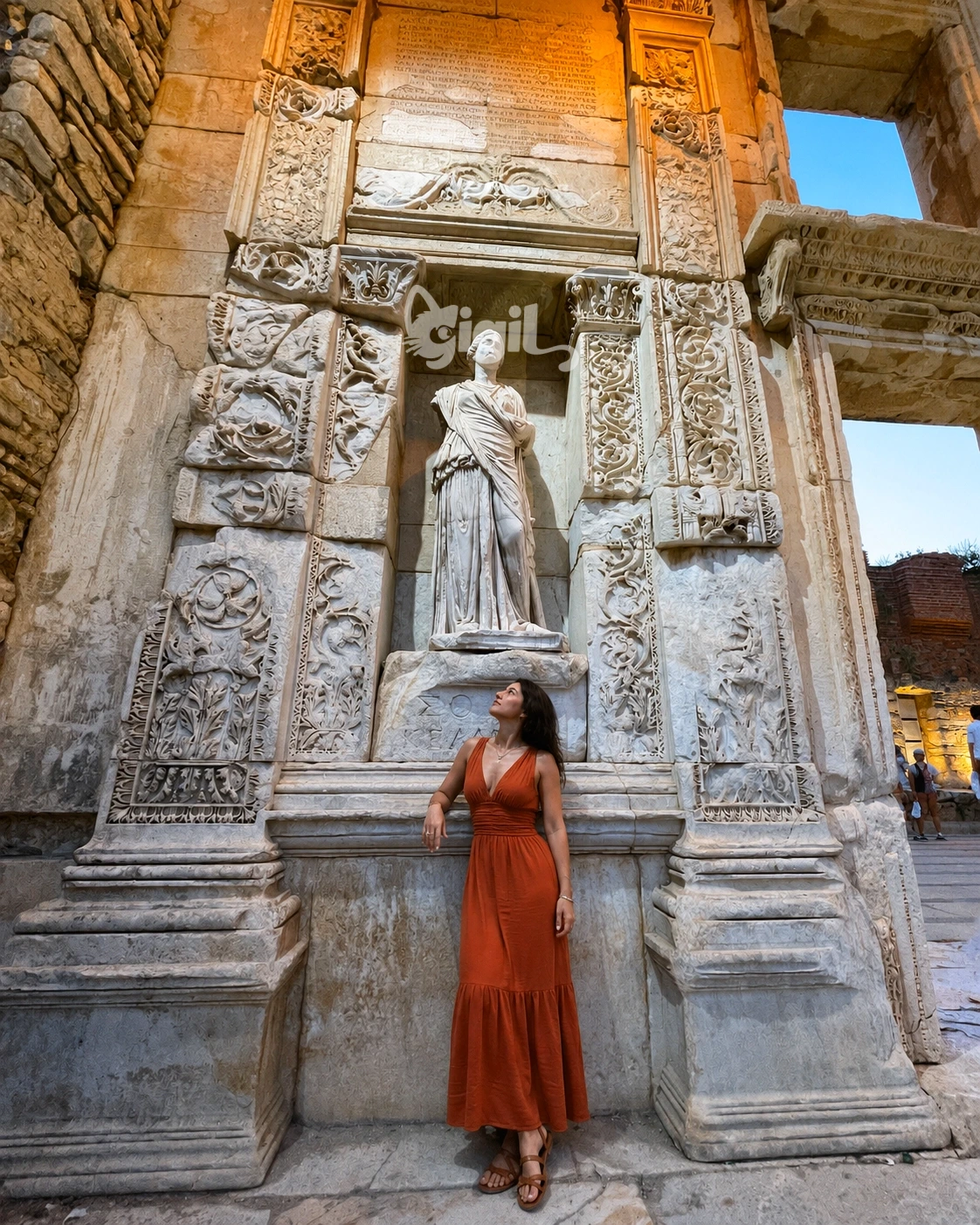
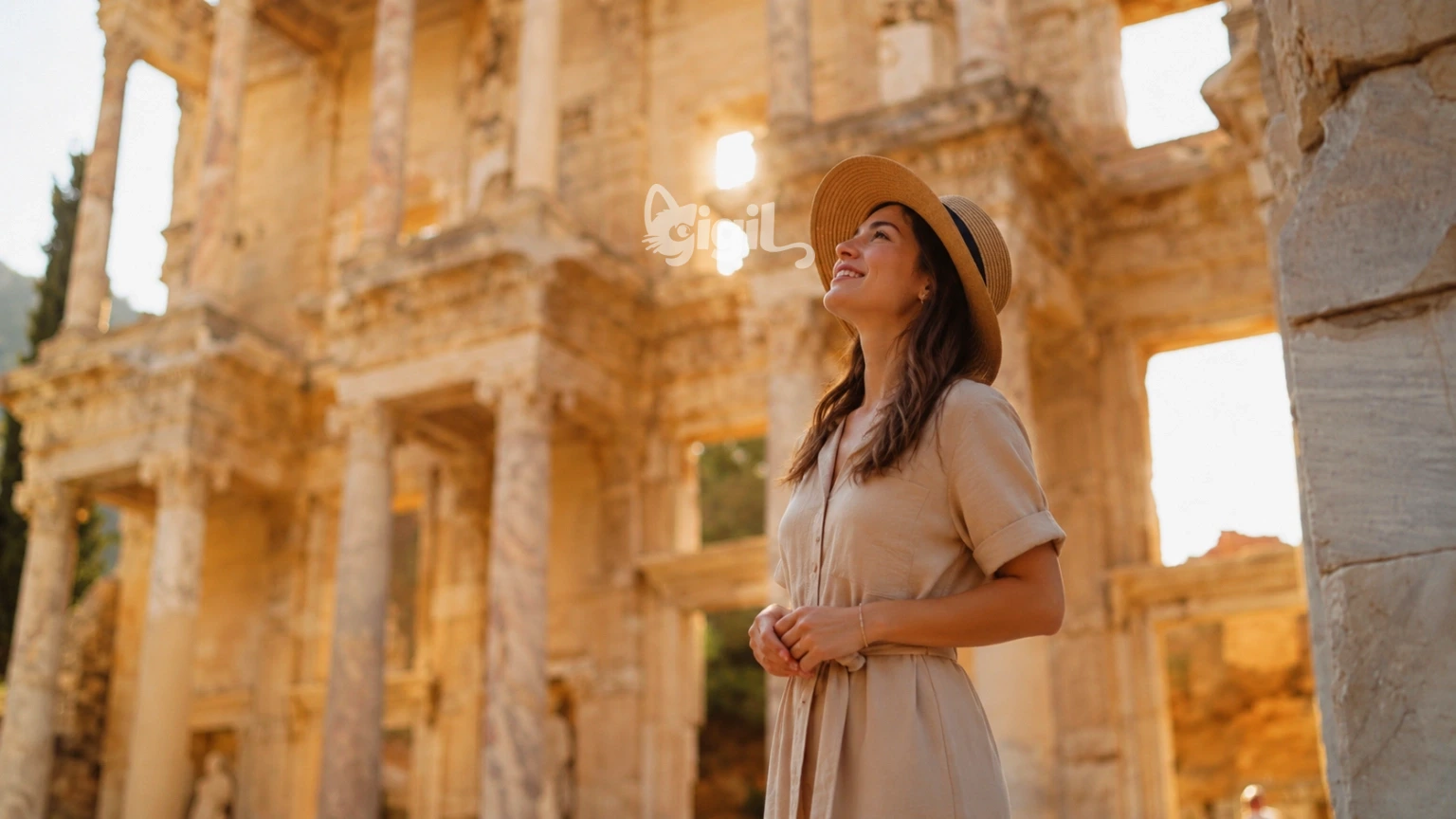
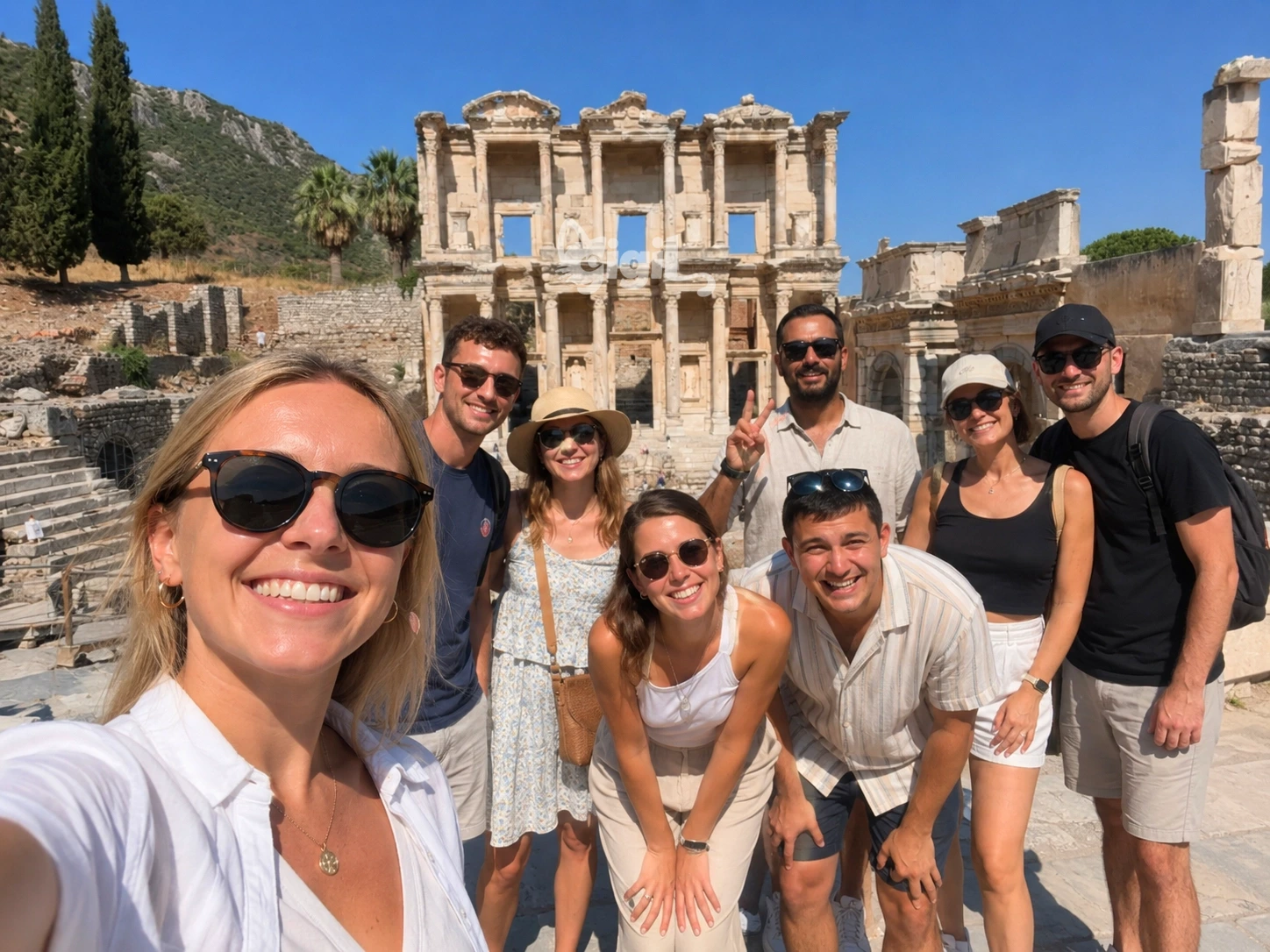
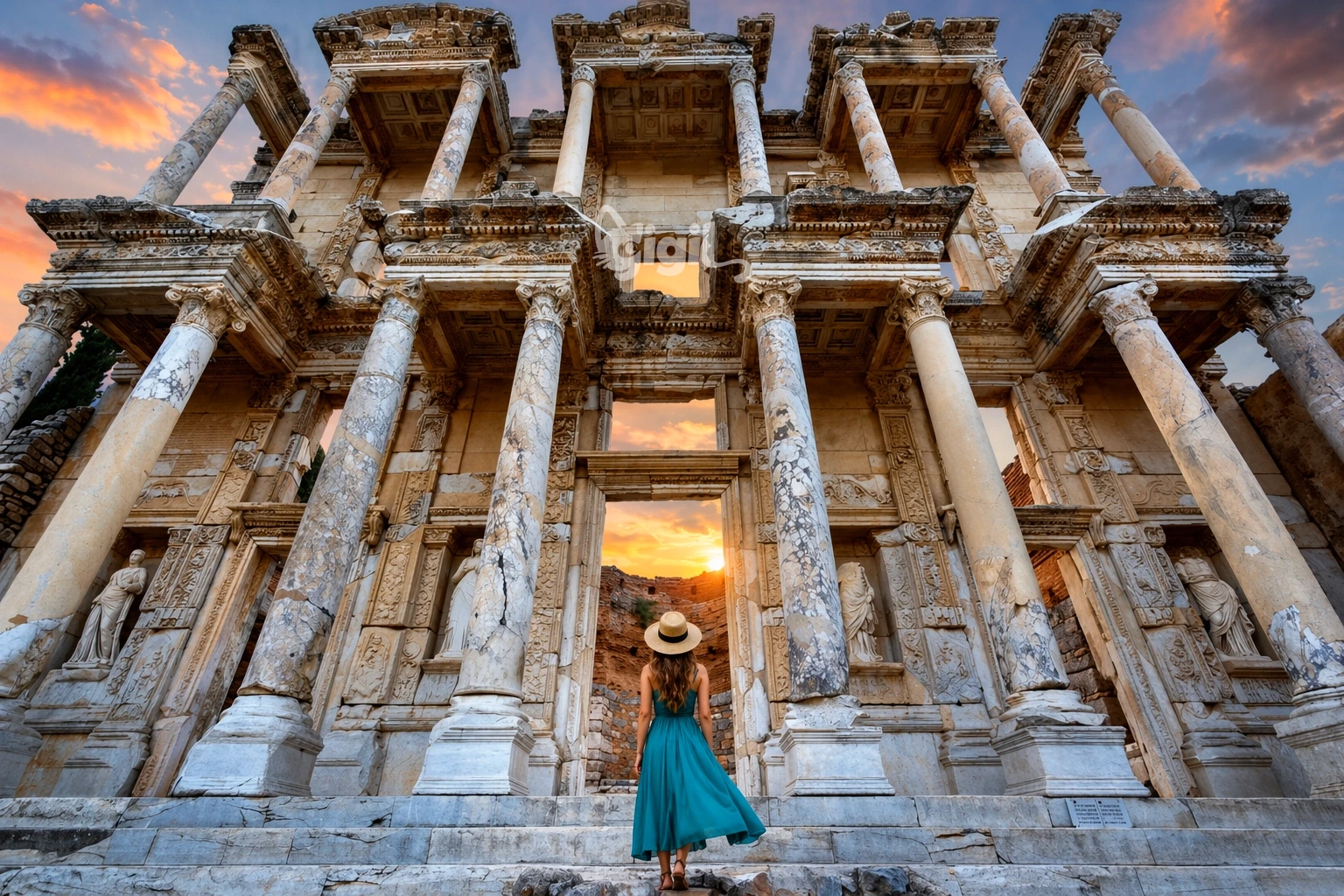
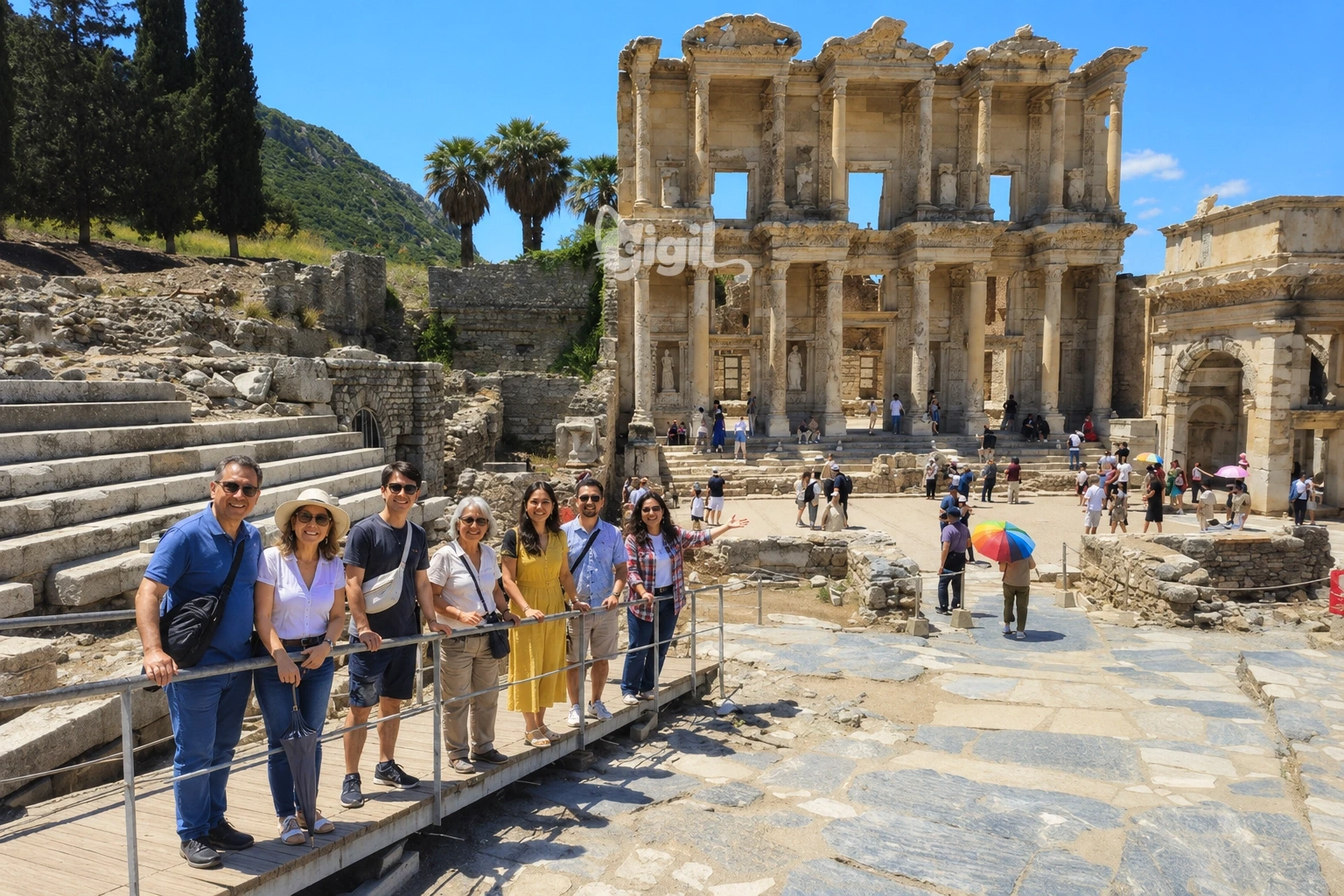
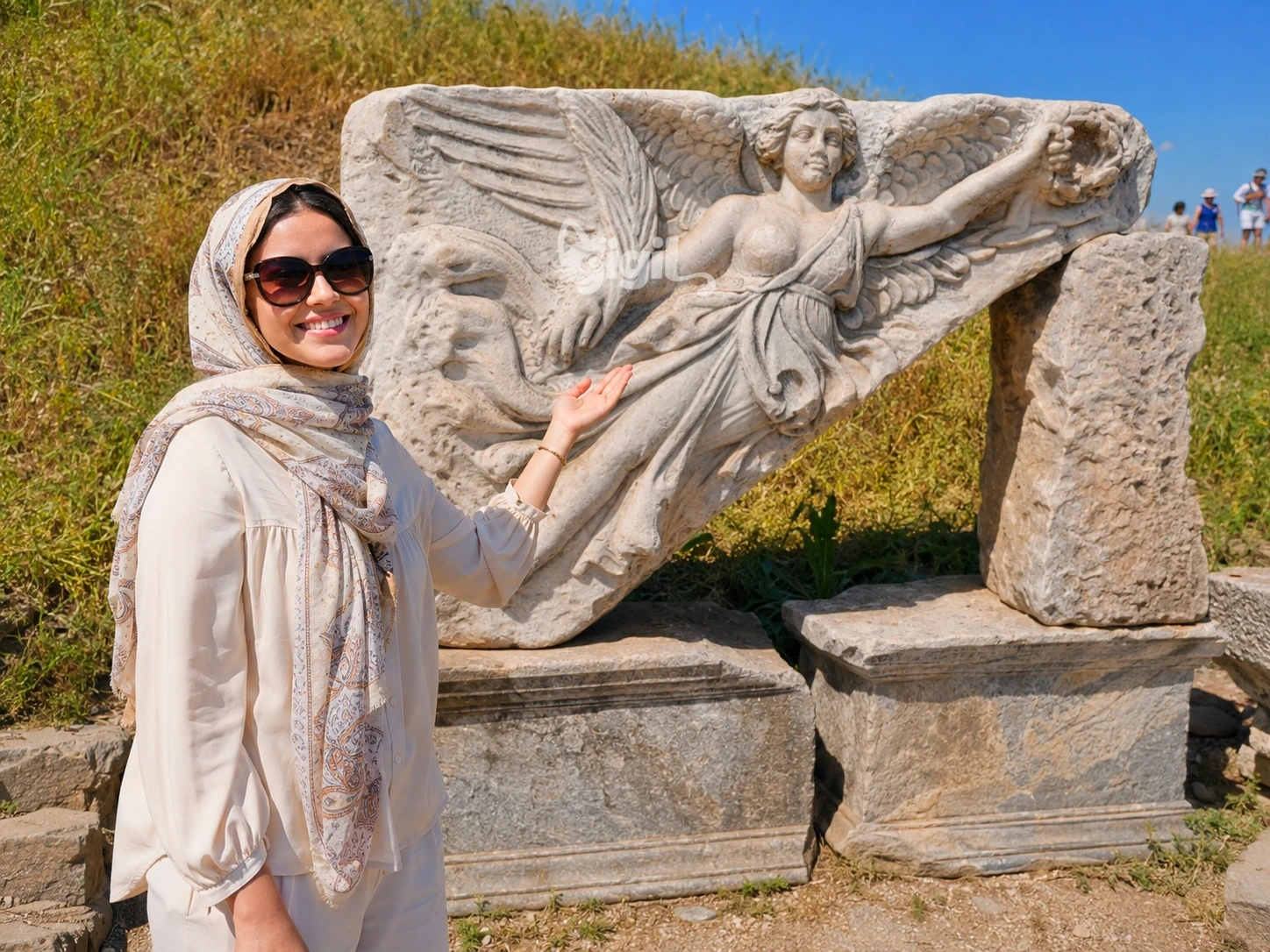
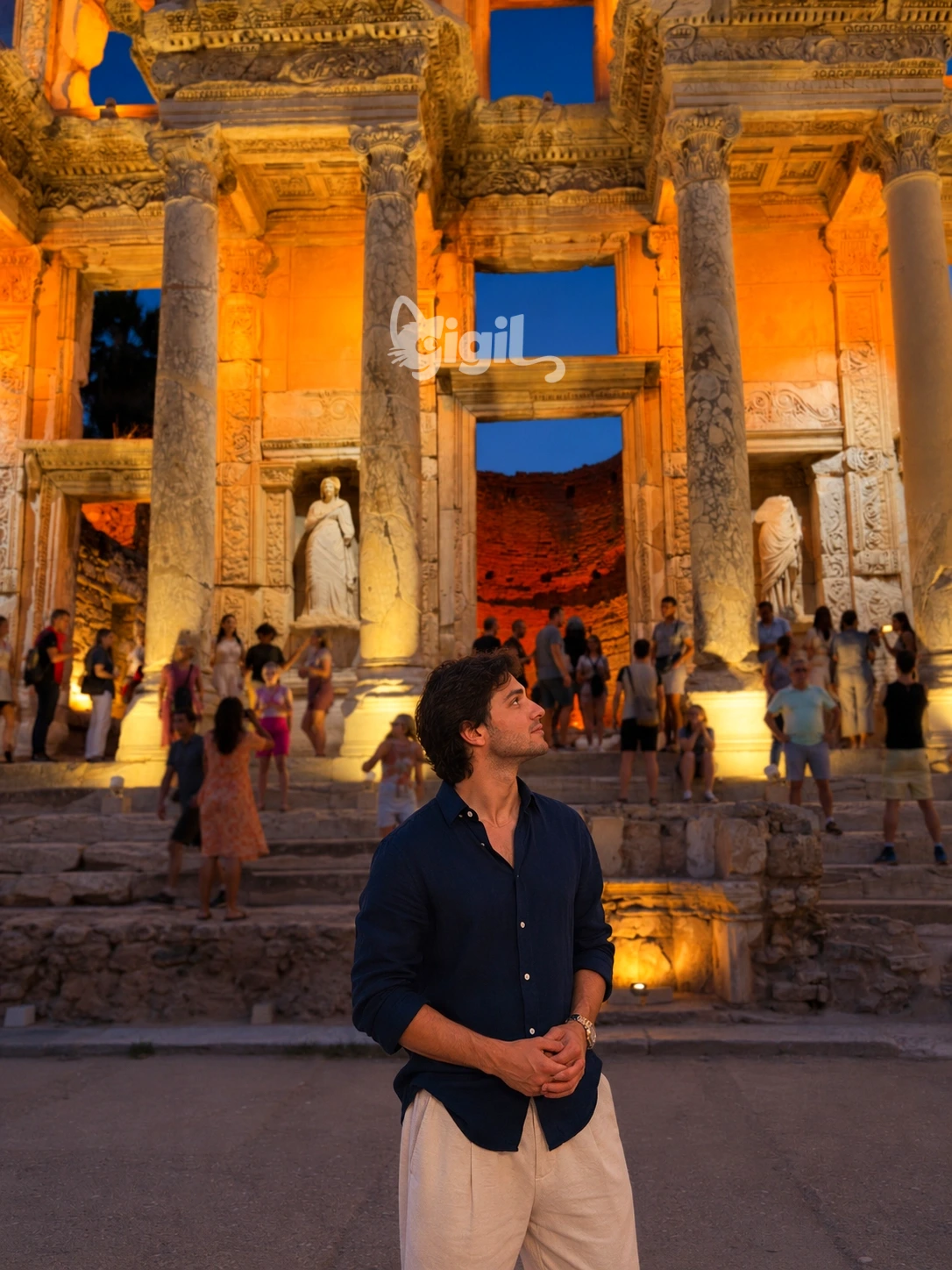
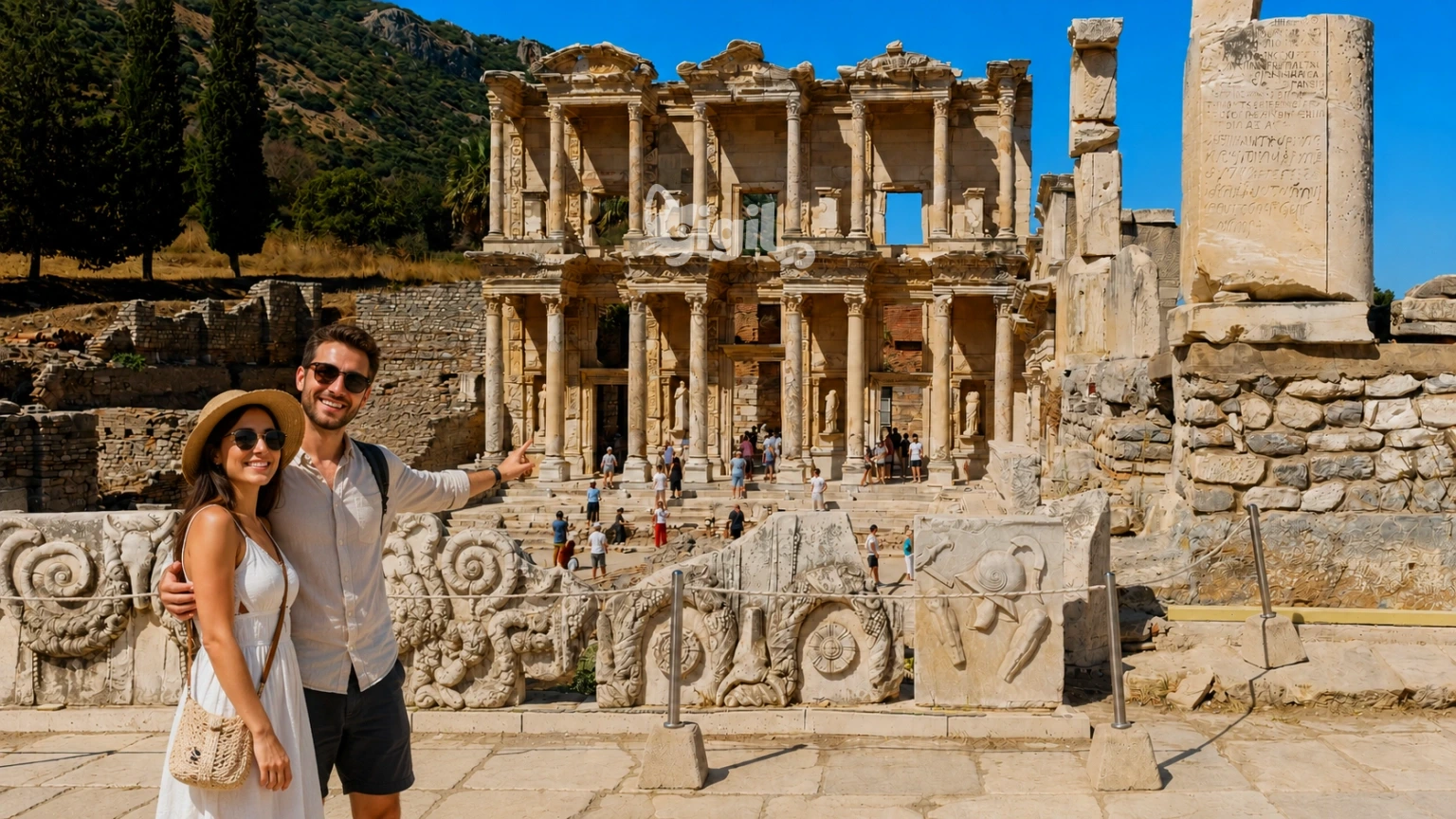
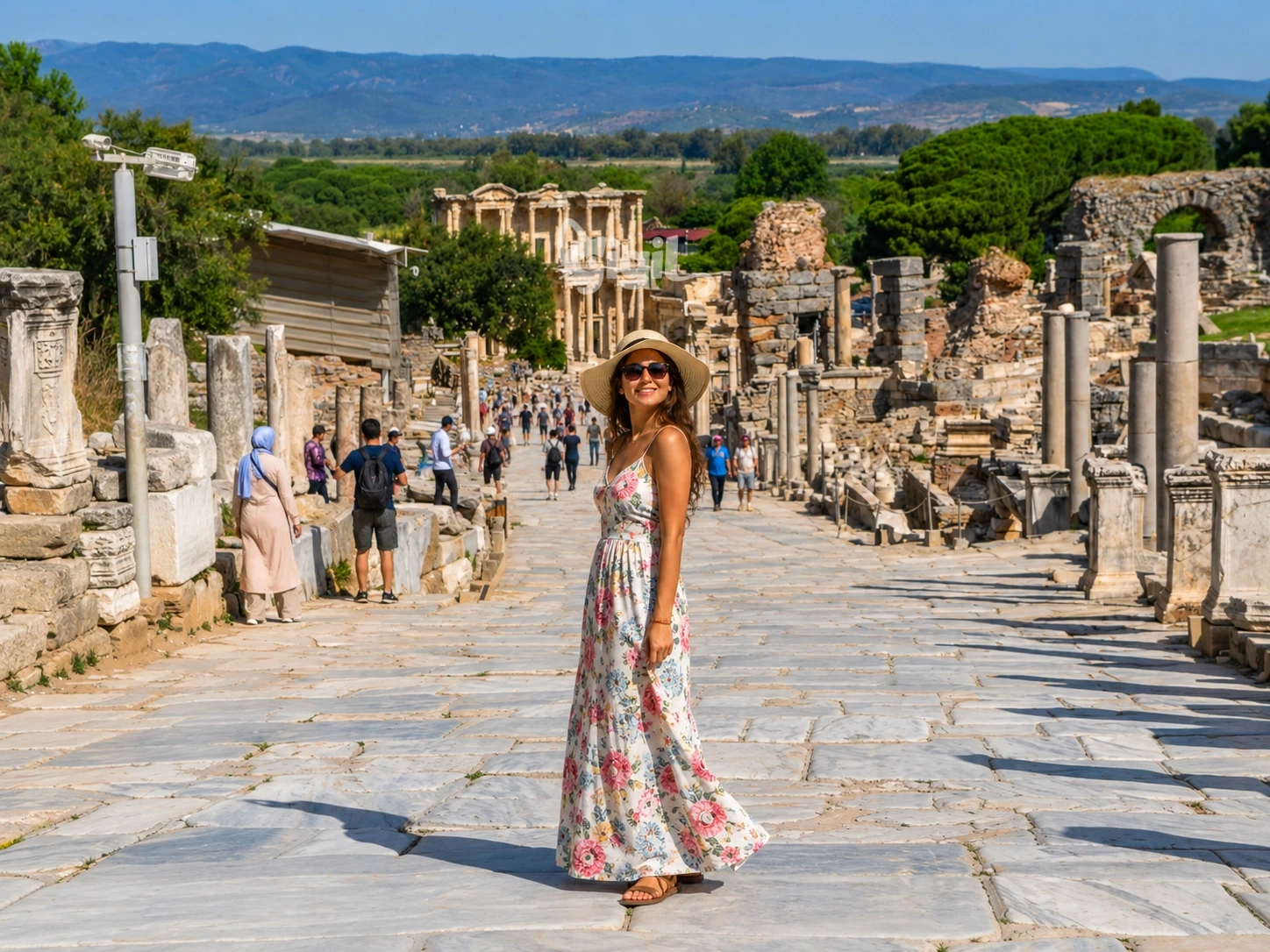
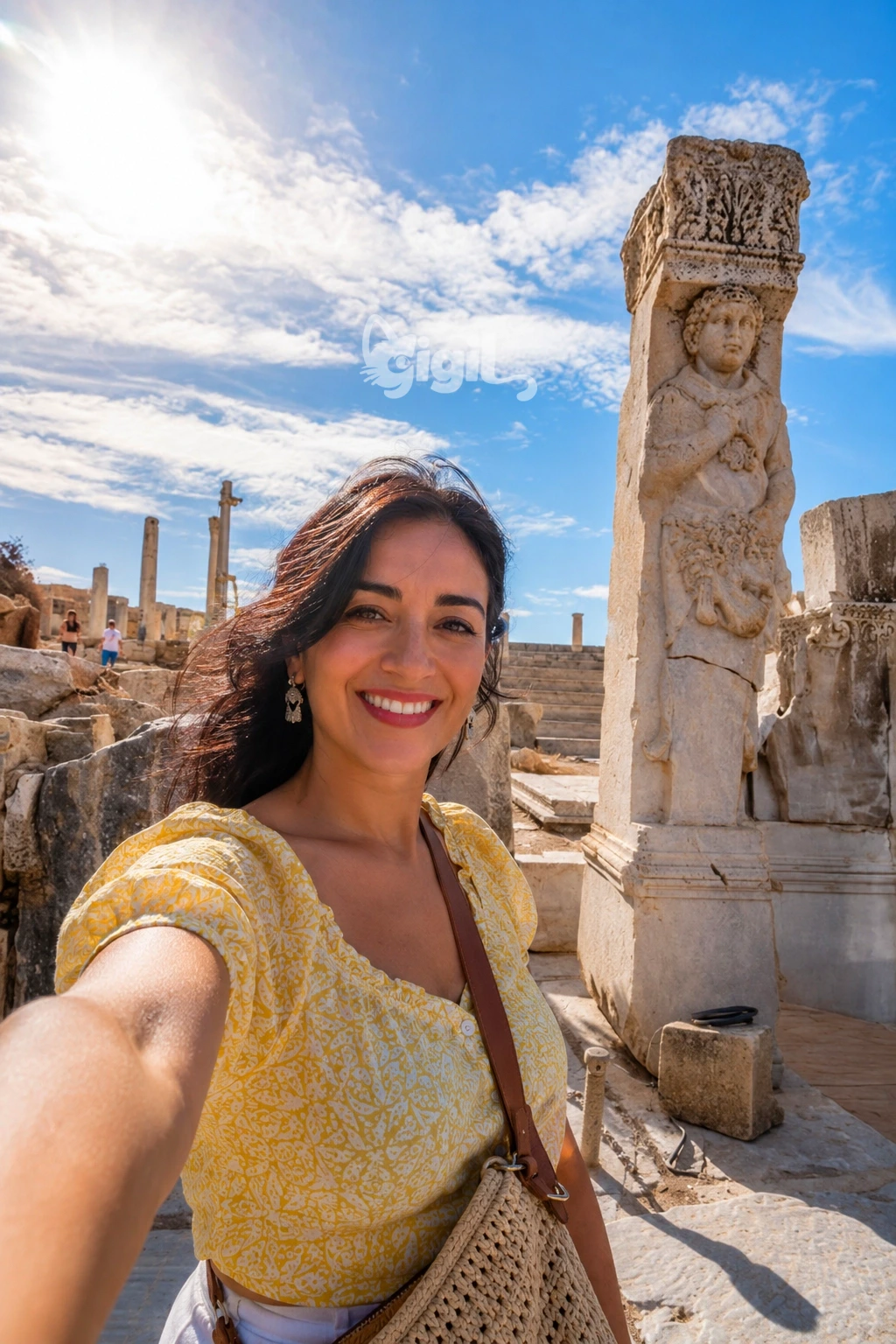
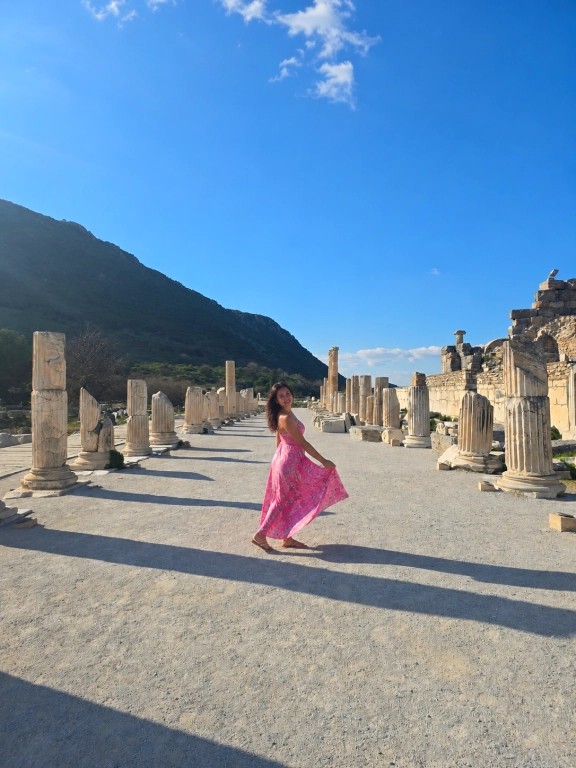
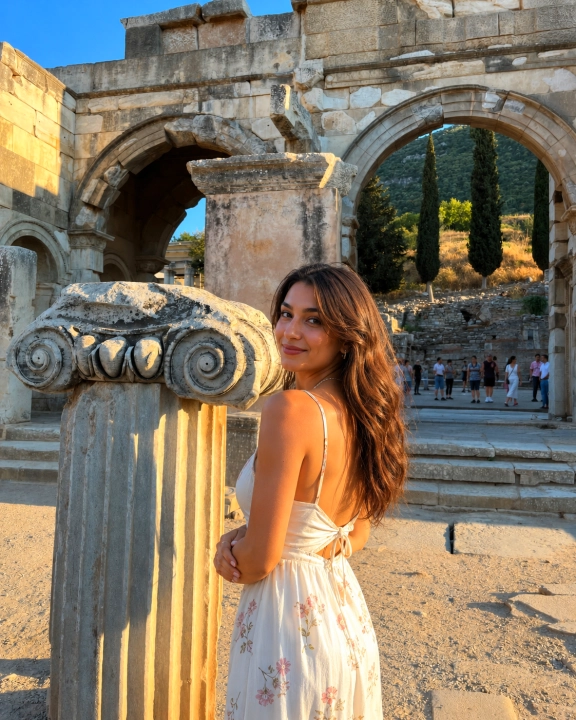
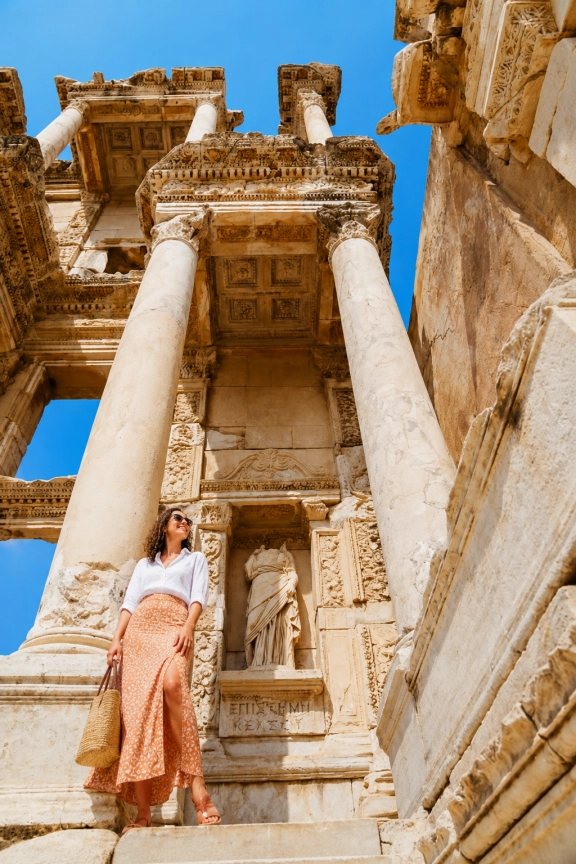
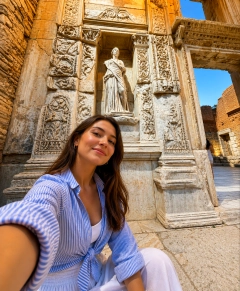
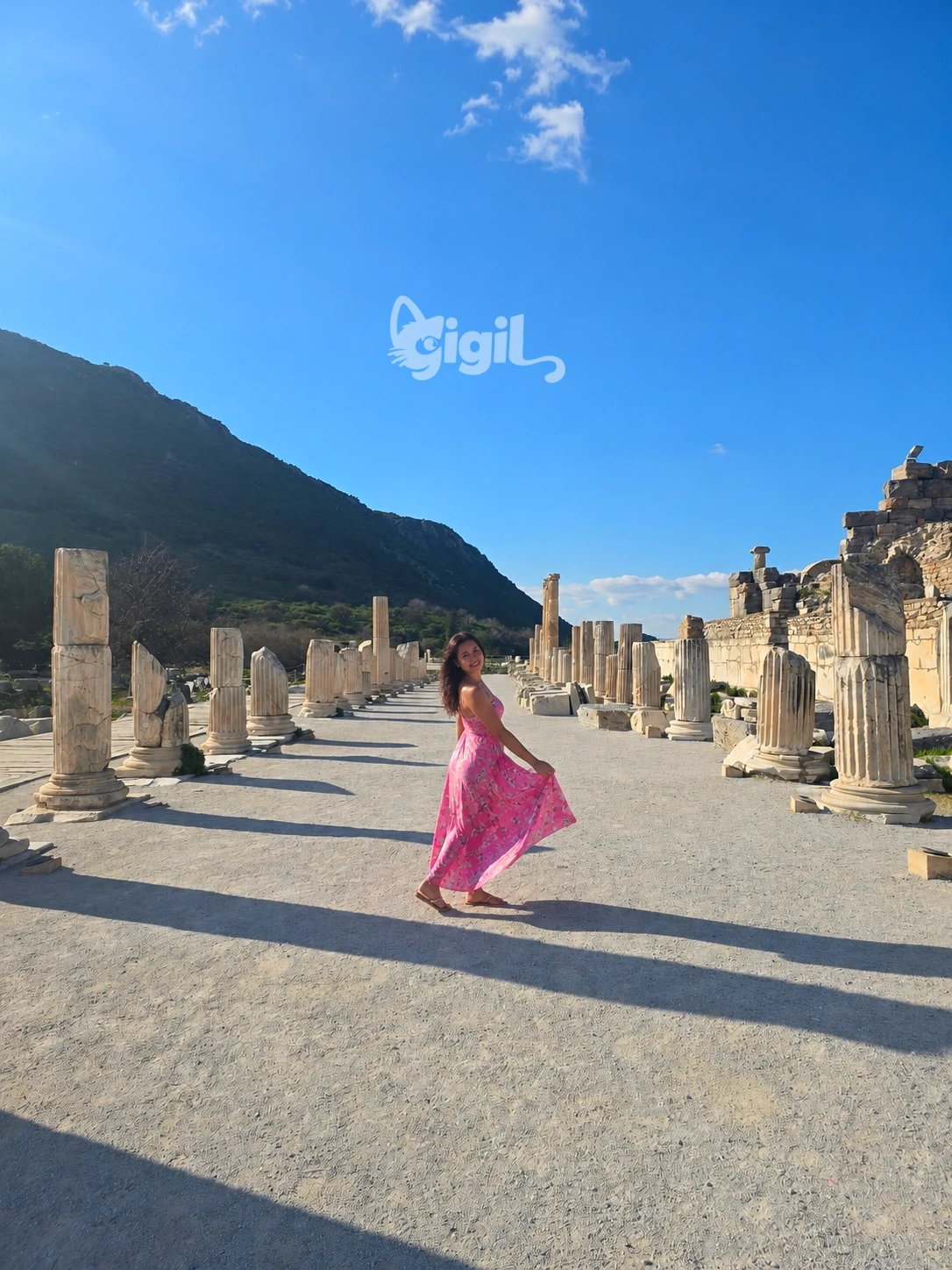
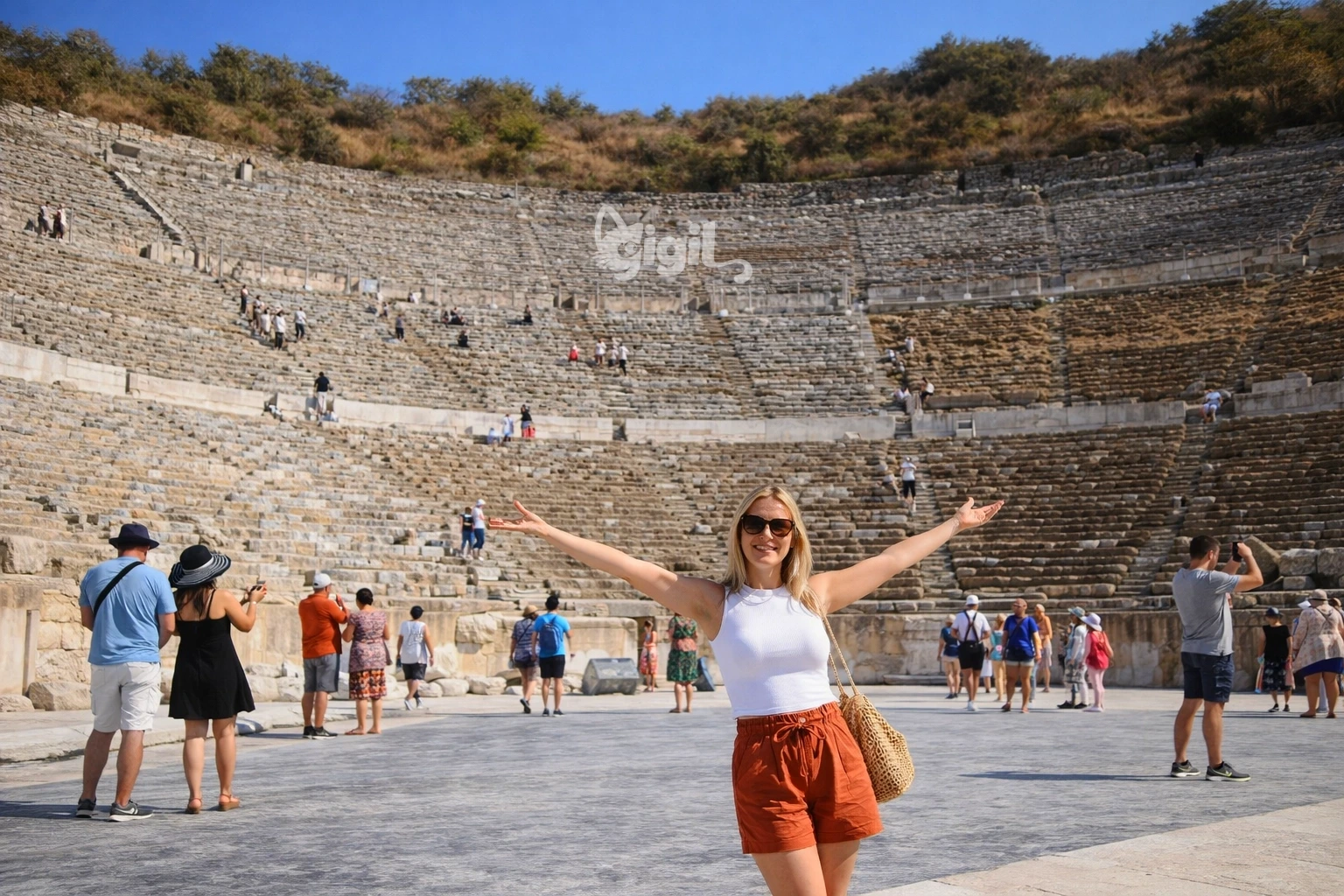
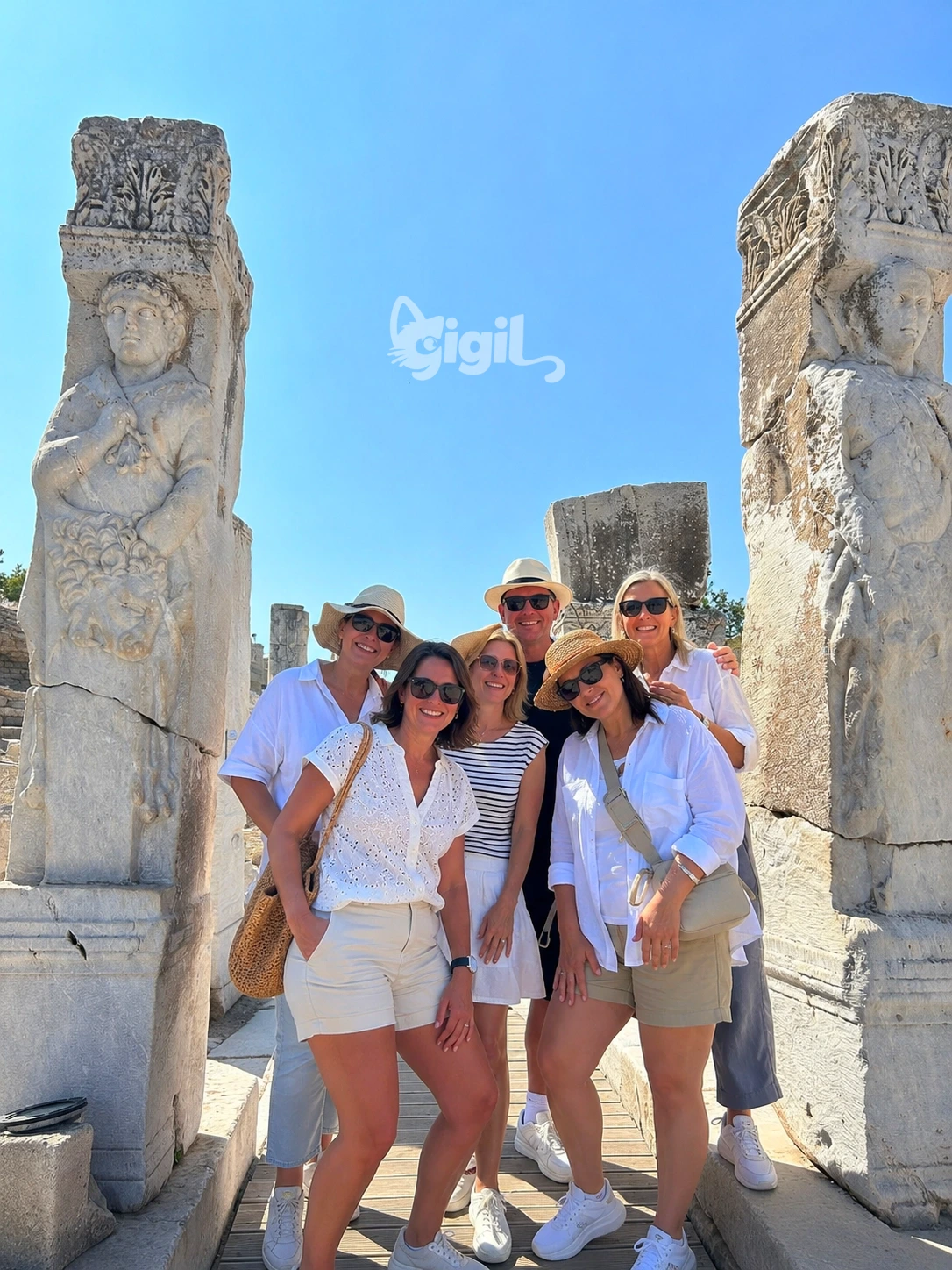
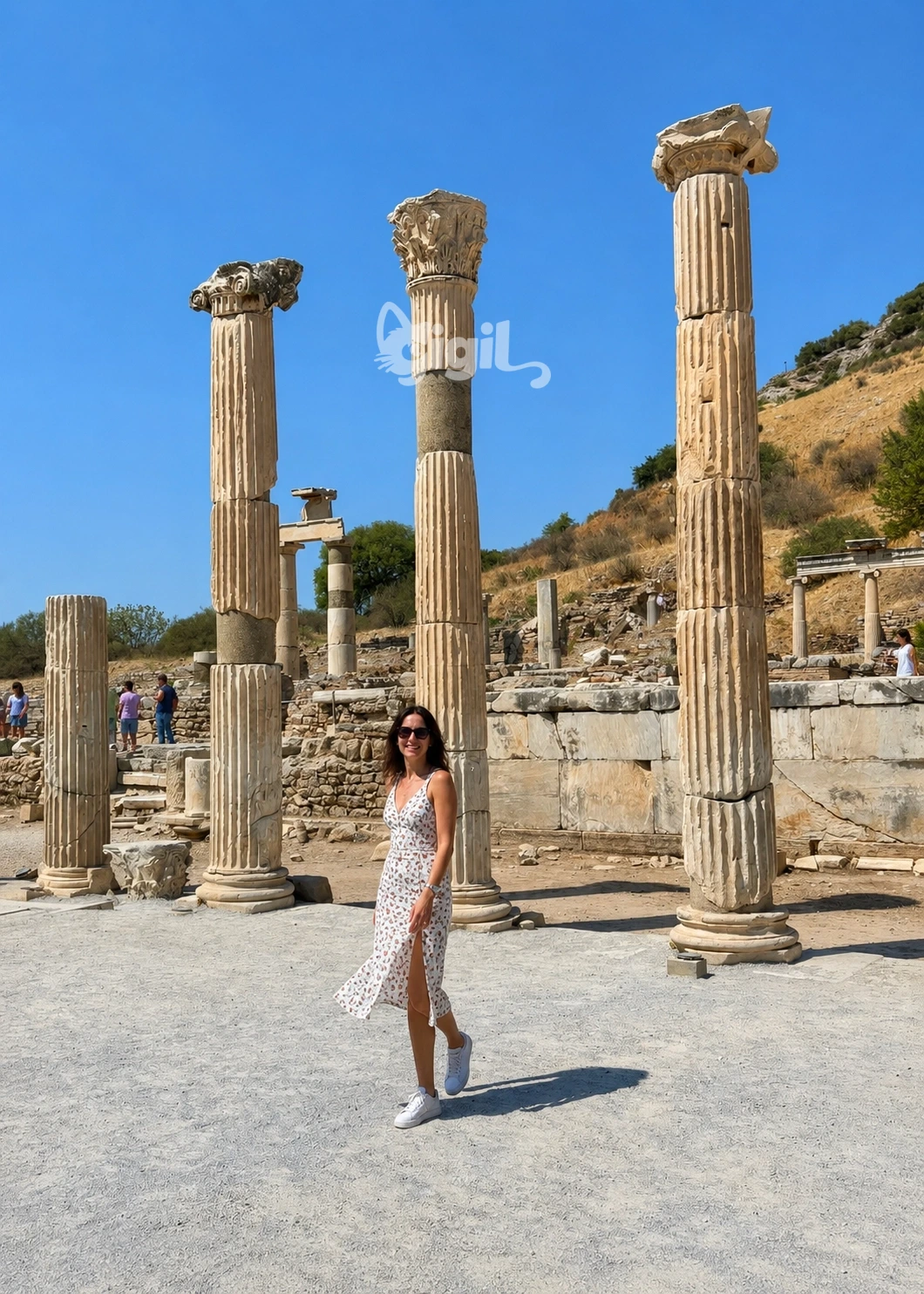
Inside Ephesus, follow how marble streets, theatre spaces, gates, inscriptions, agora areas and the Library of Celsus form an ancient urban plan. The site is most meaningful when its monuments are read together rather than as isolated ruins.
Questions
Why is Ephesus the main stop on this private route?
Ephesus is the main stop because it preserves the structure of a major ancient city through streets, public spaces, theatre remains, inscriptions and monumental architecture.
Which parts of Ephesus explain the ancient city best?
The Library of Celsus, theatre, marble routes, gates, agora areas and inscription details help explain the city as a connected urban plan.
Why does Ephesus feel connected to Selcuk?
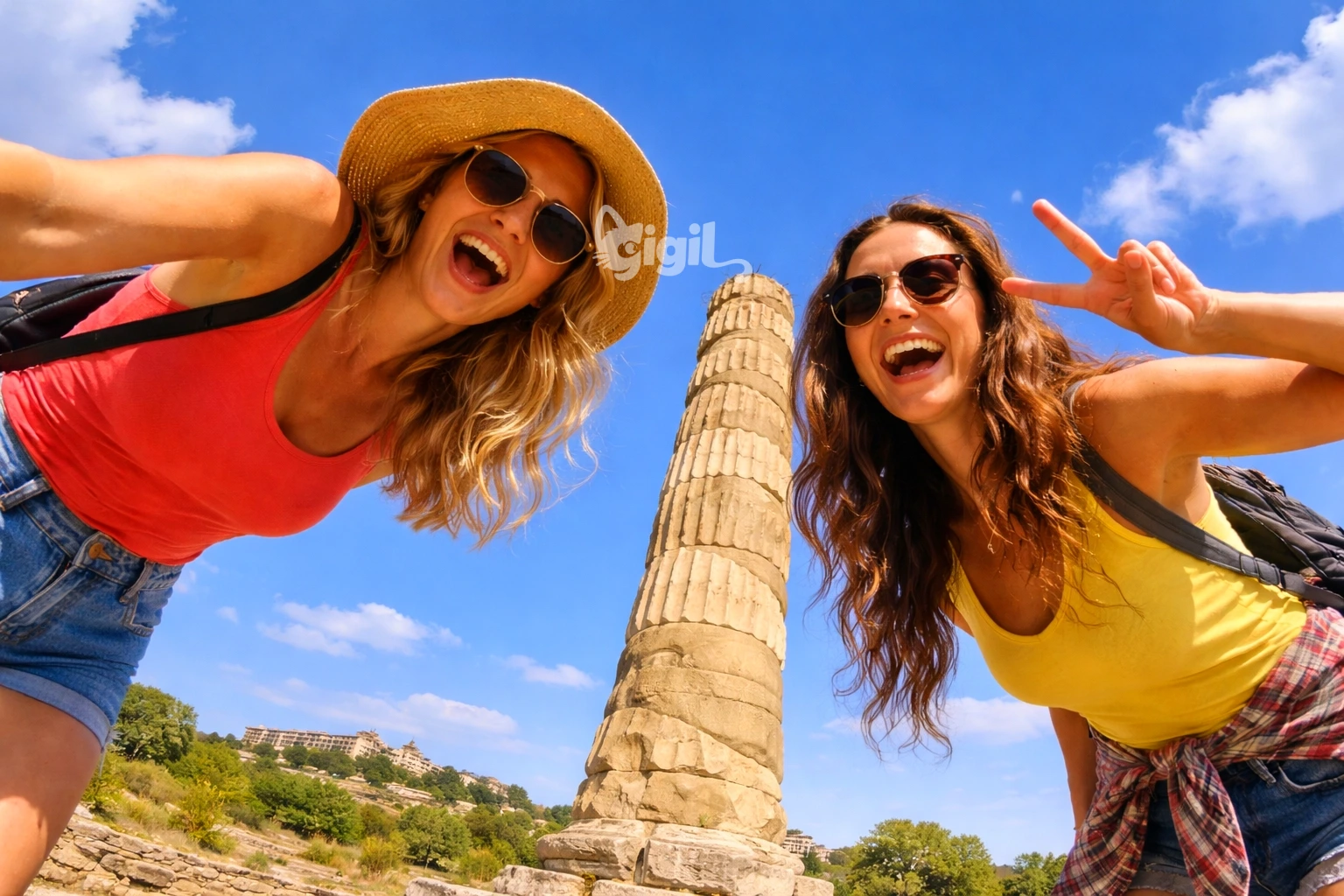
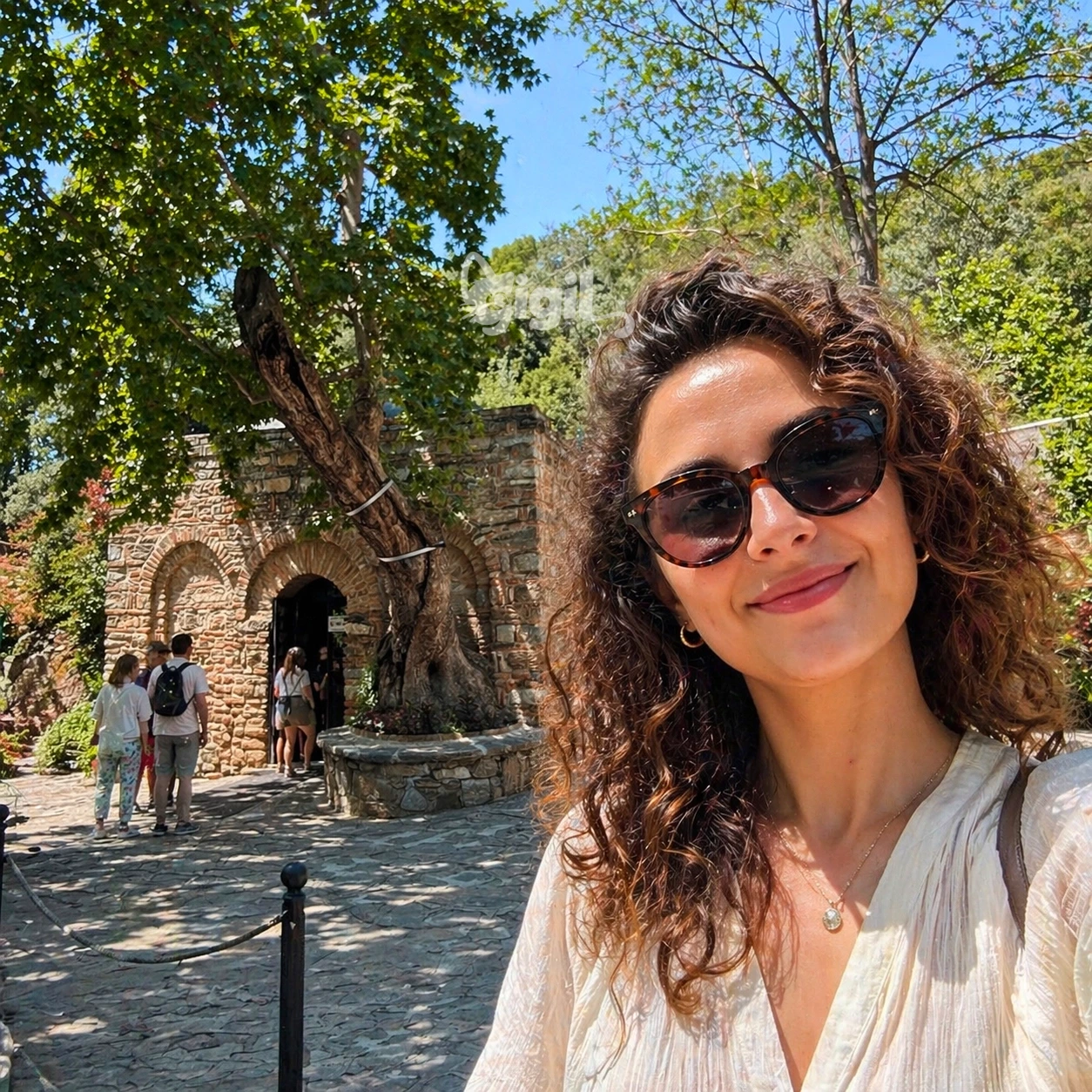
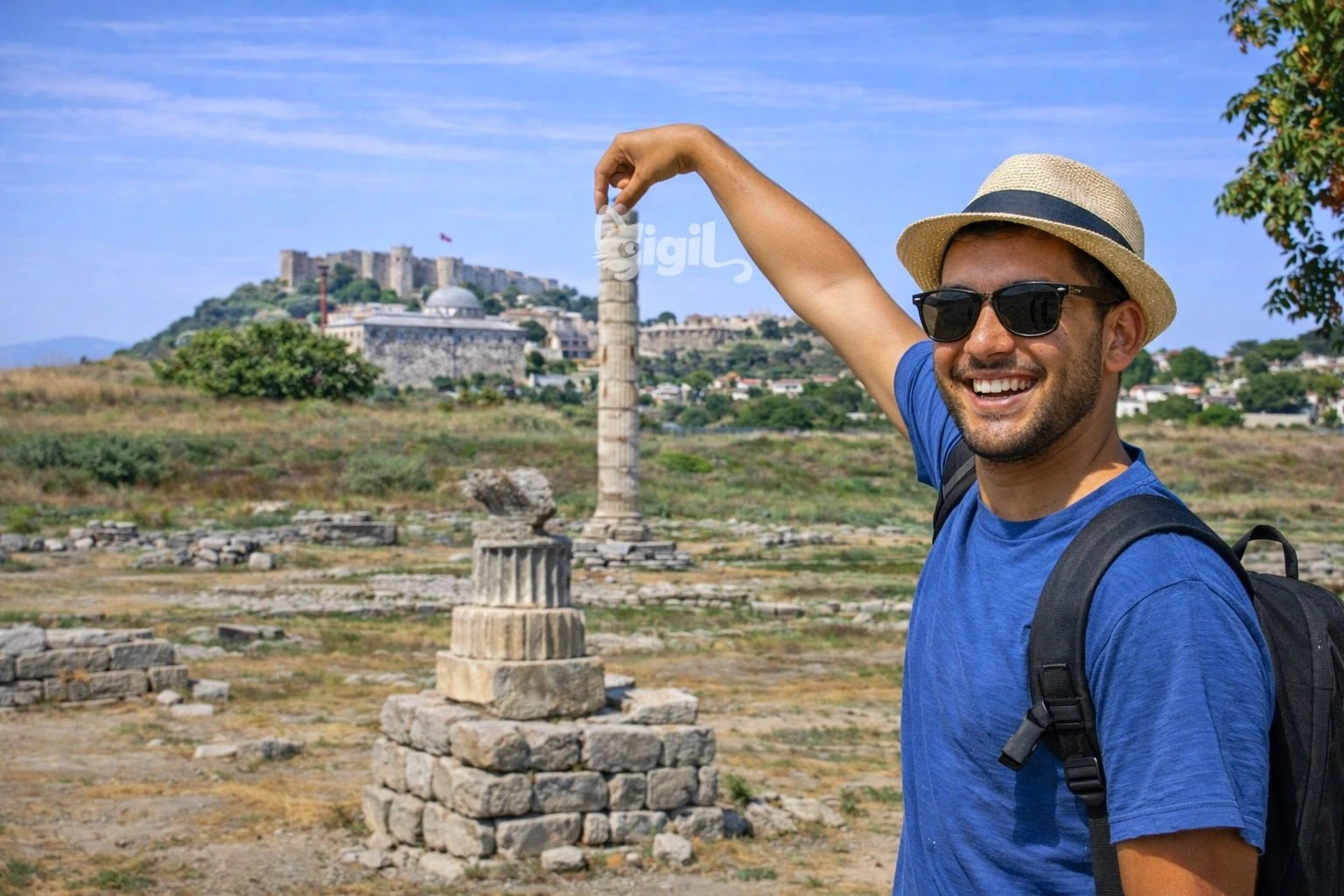
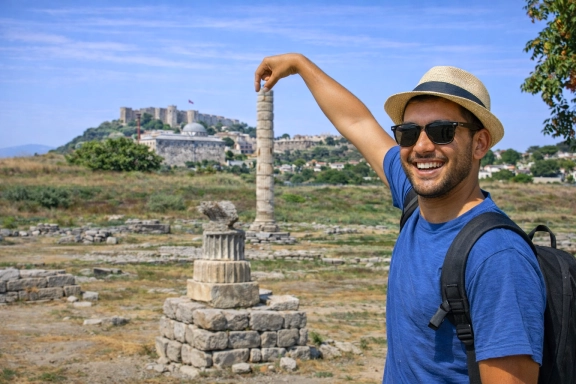
Selcuk and Ephesus share the same historical landscape. Nearby landmarks such as Ayasuluk Hill and the Artemis area help show the continuity of settlement around the ancient city.
How should restored sections be understood?
Restored sections support interpretation and conservation. They help visitors imagine scale while the original remains and archaeological context remain central.