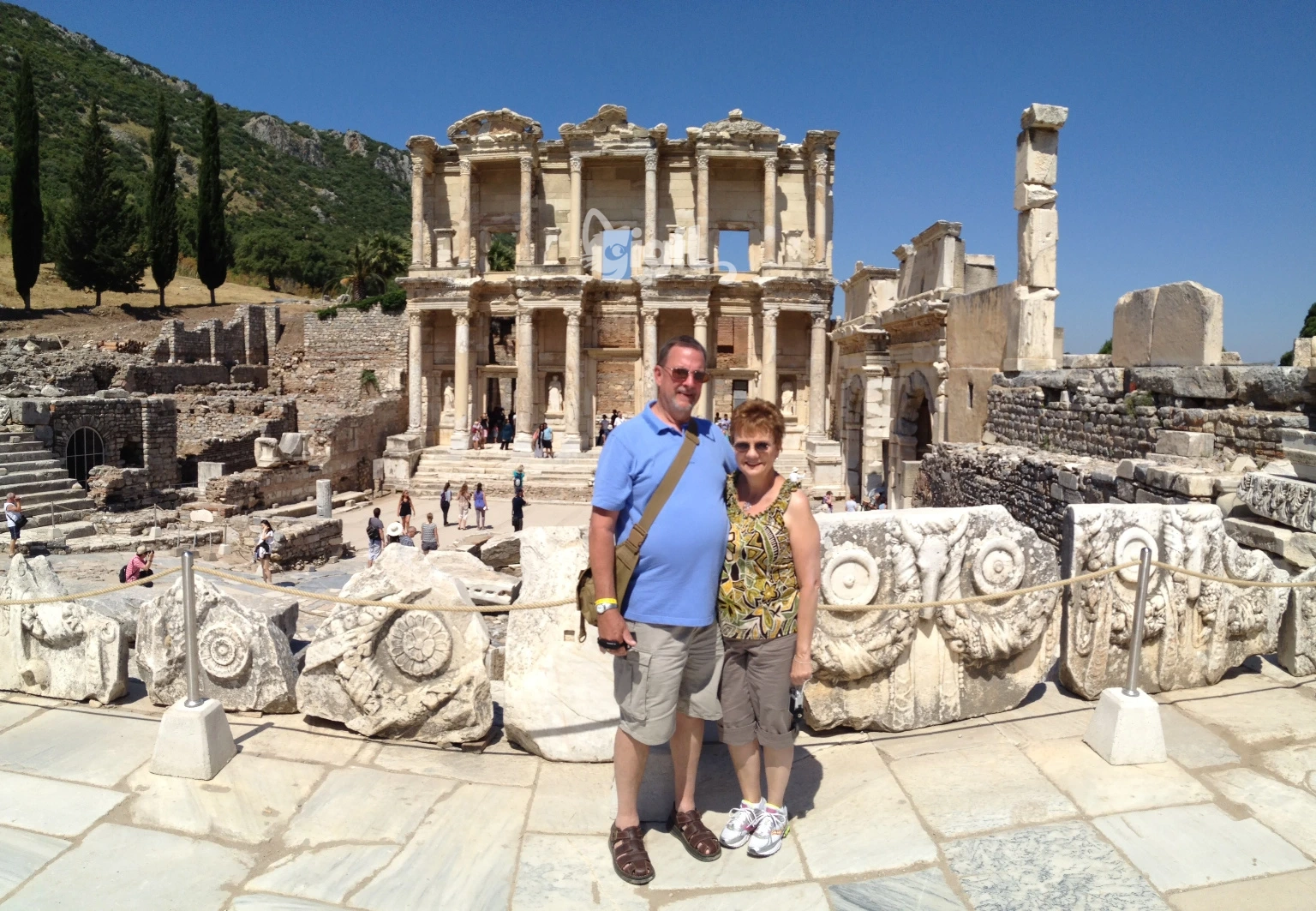
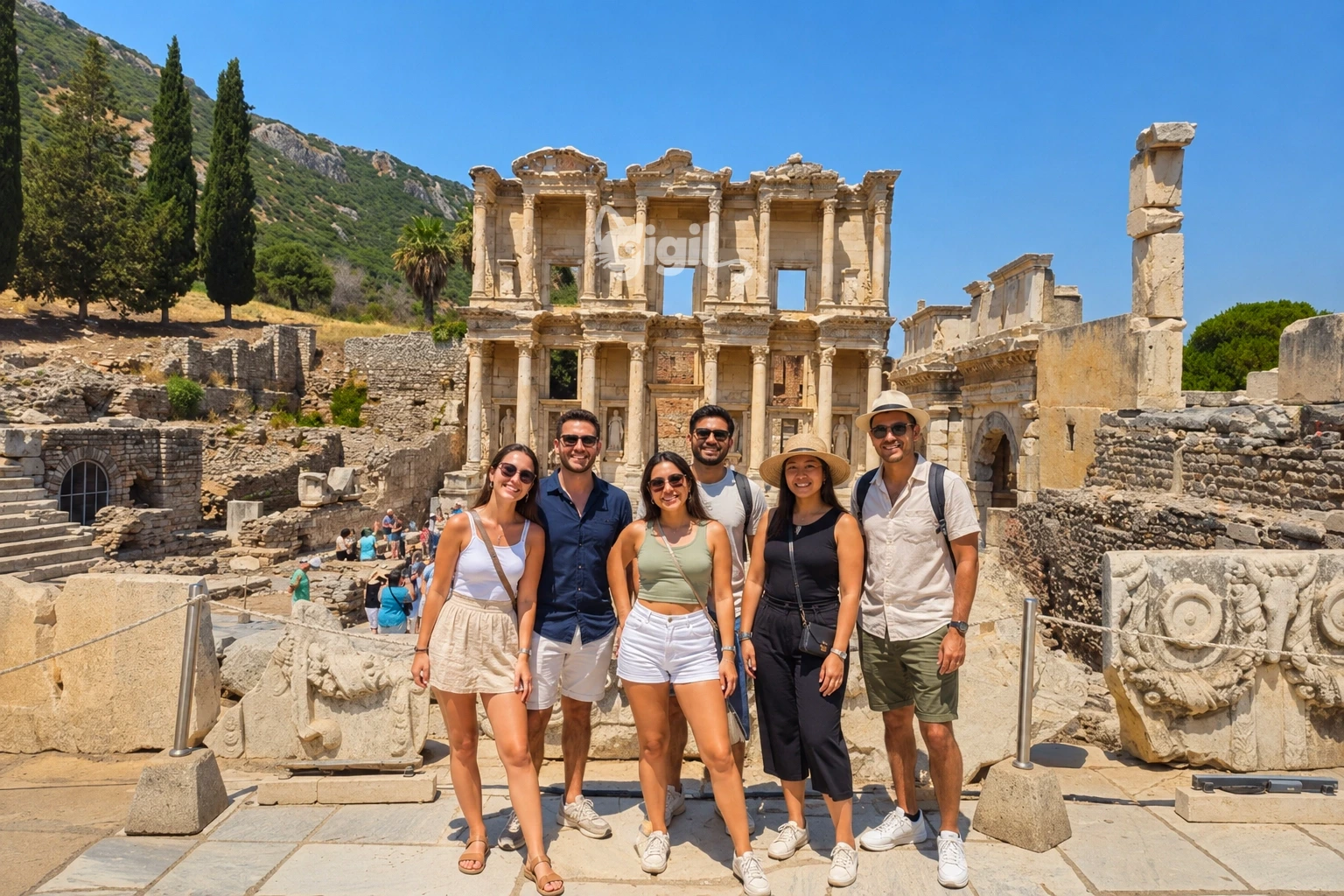
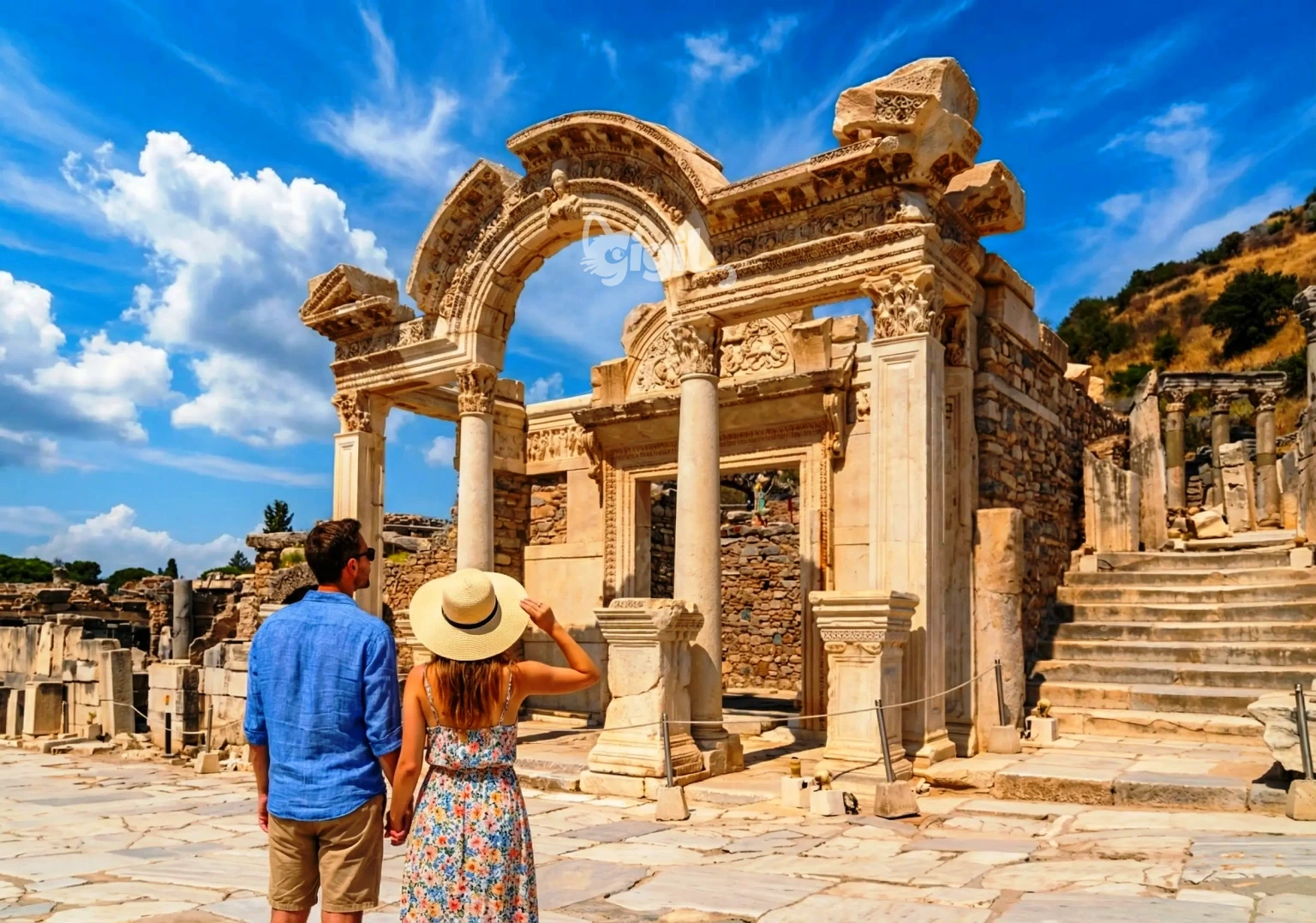
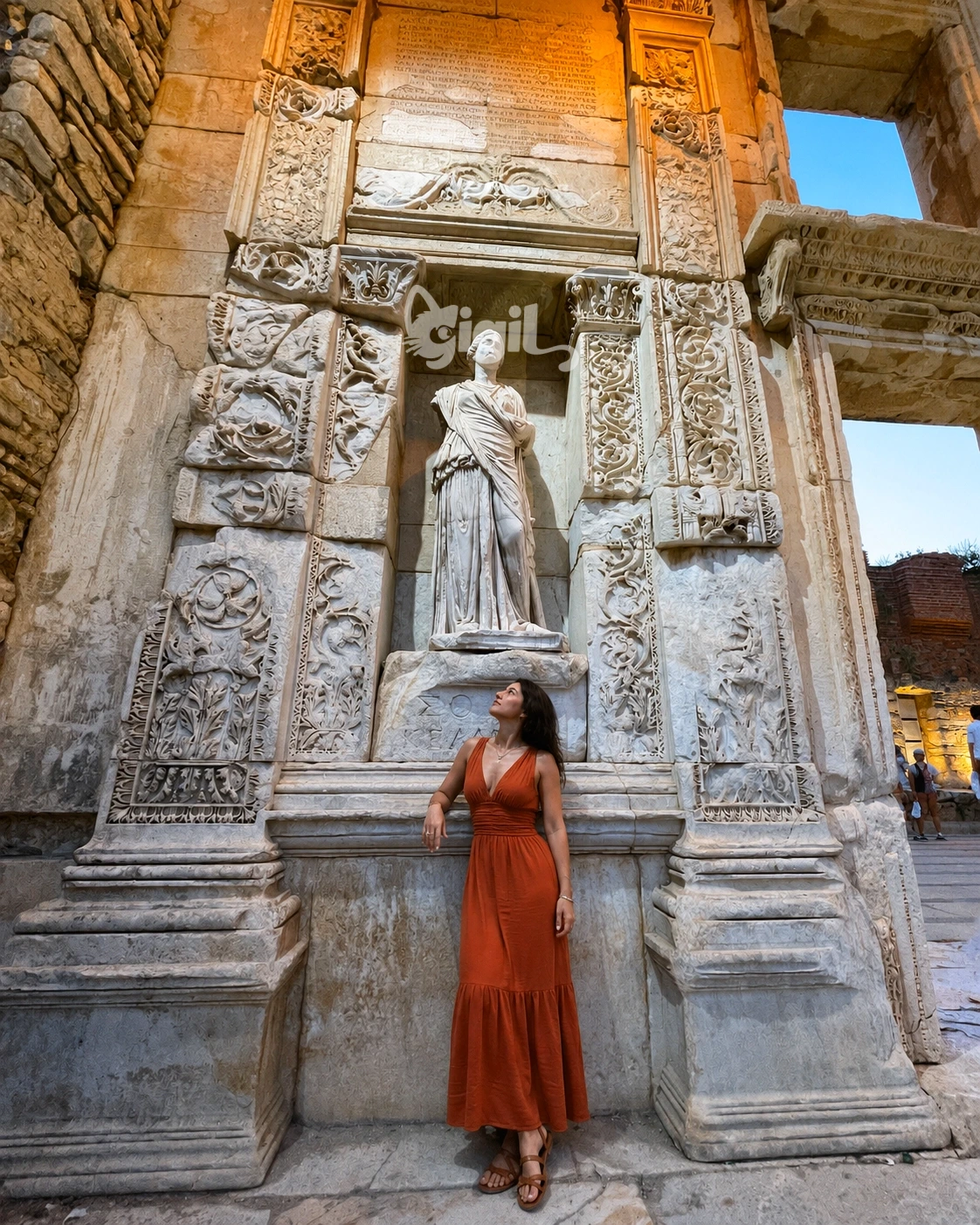
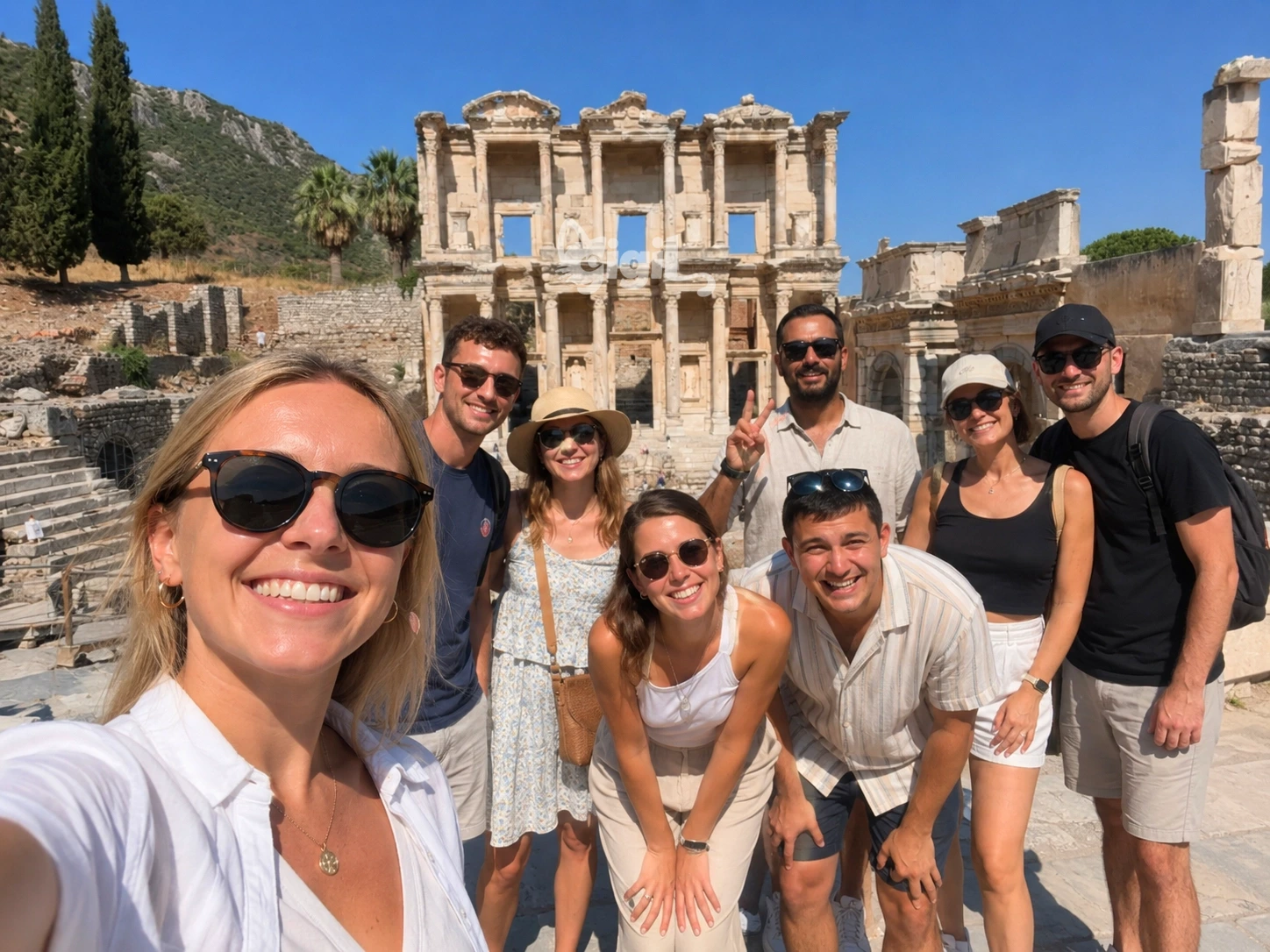
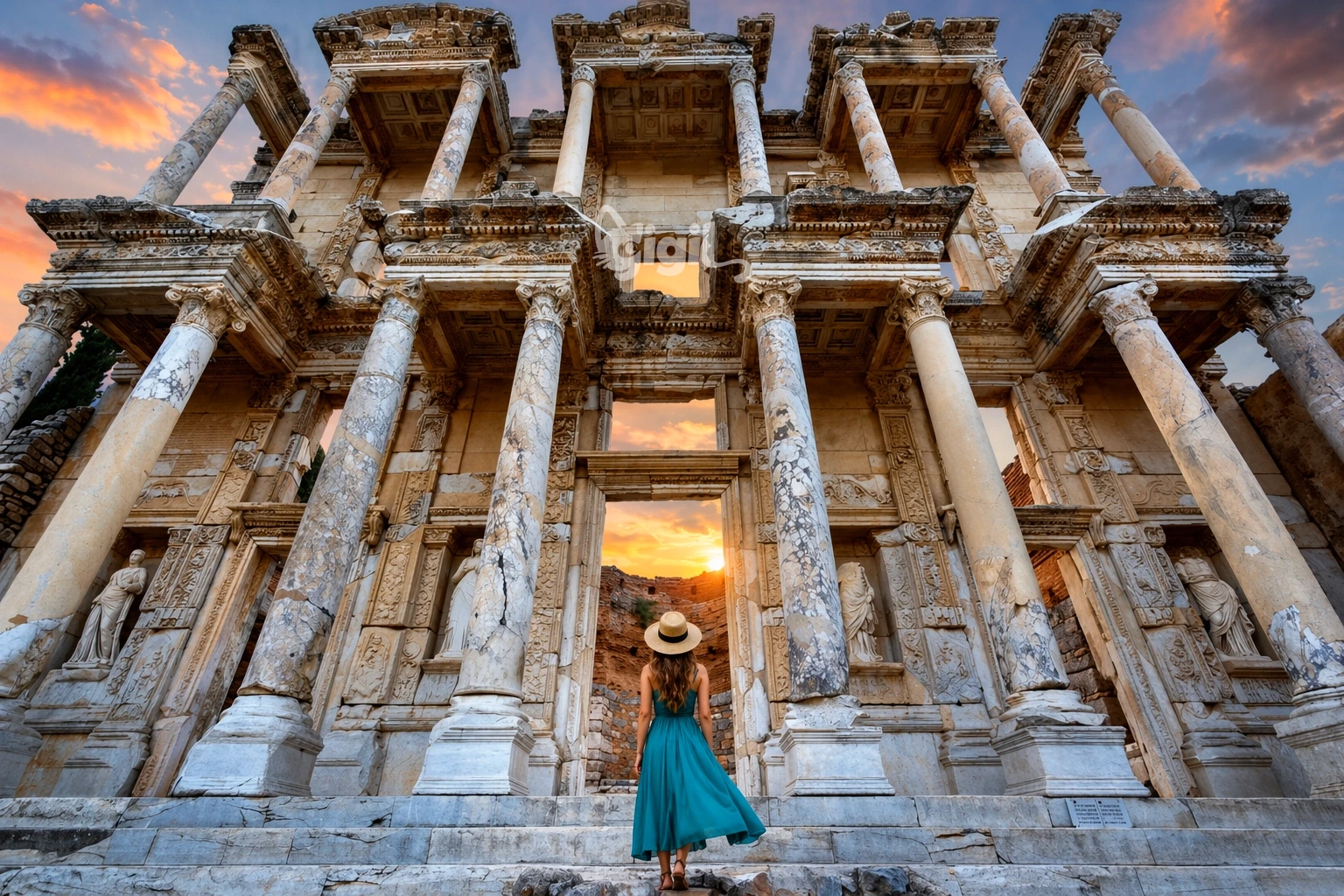
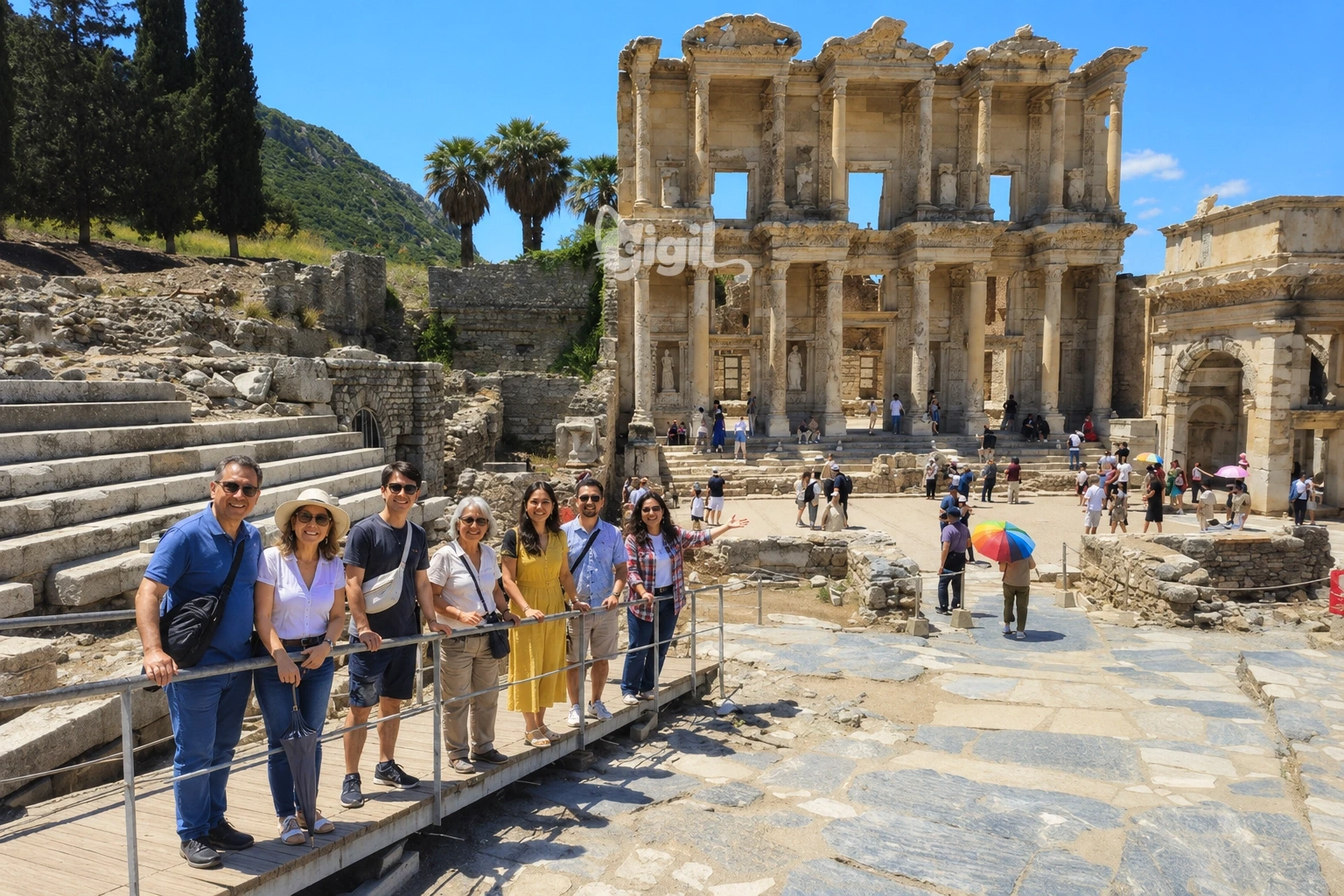
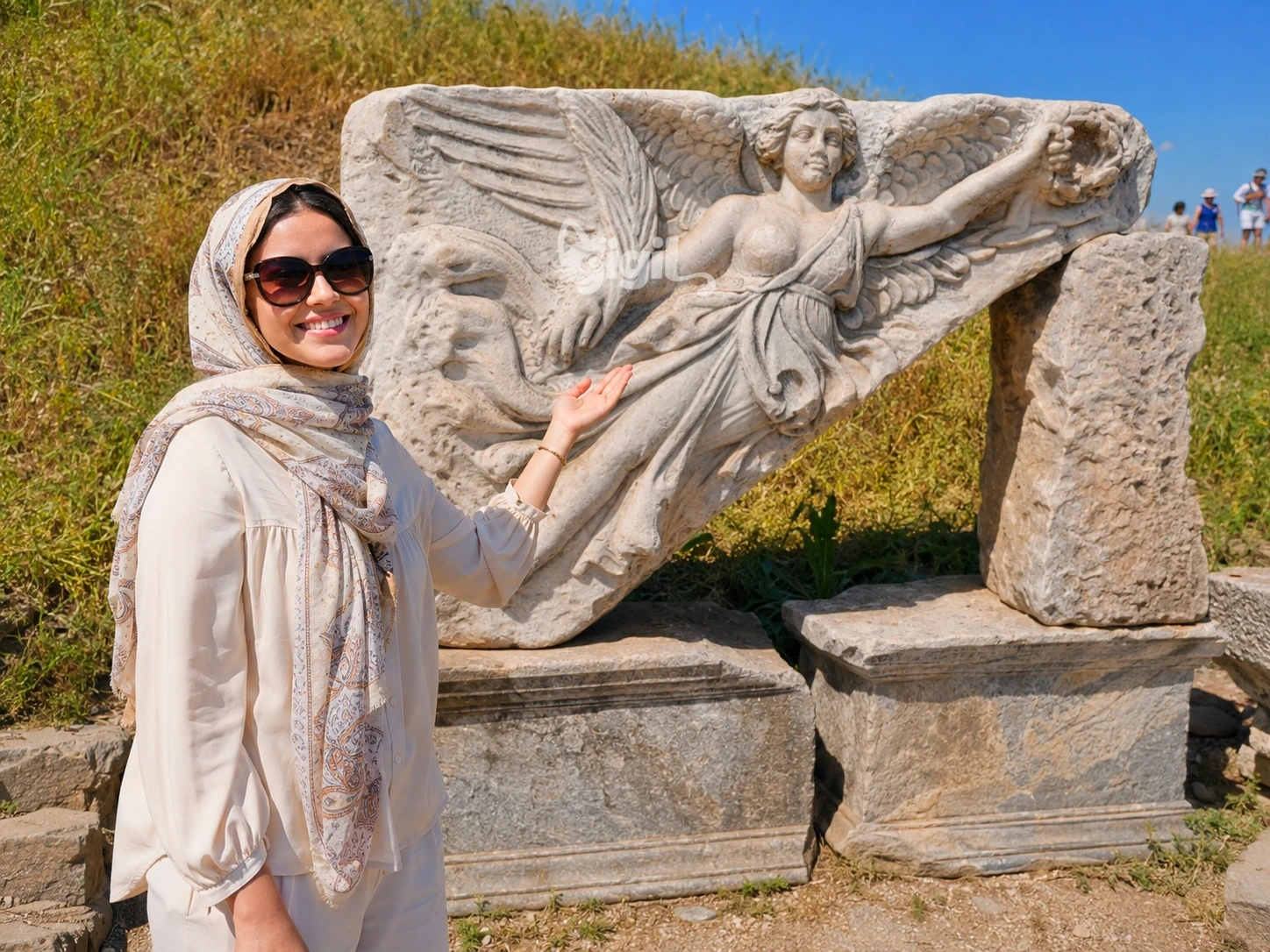
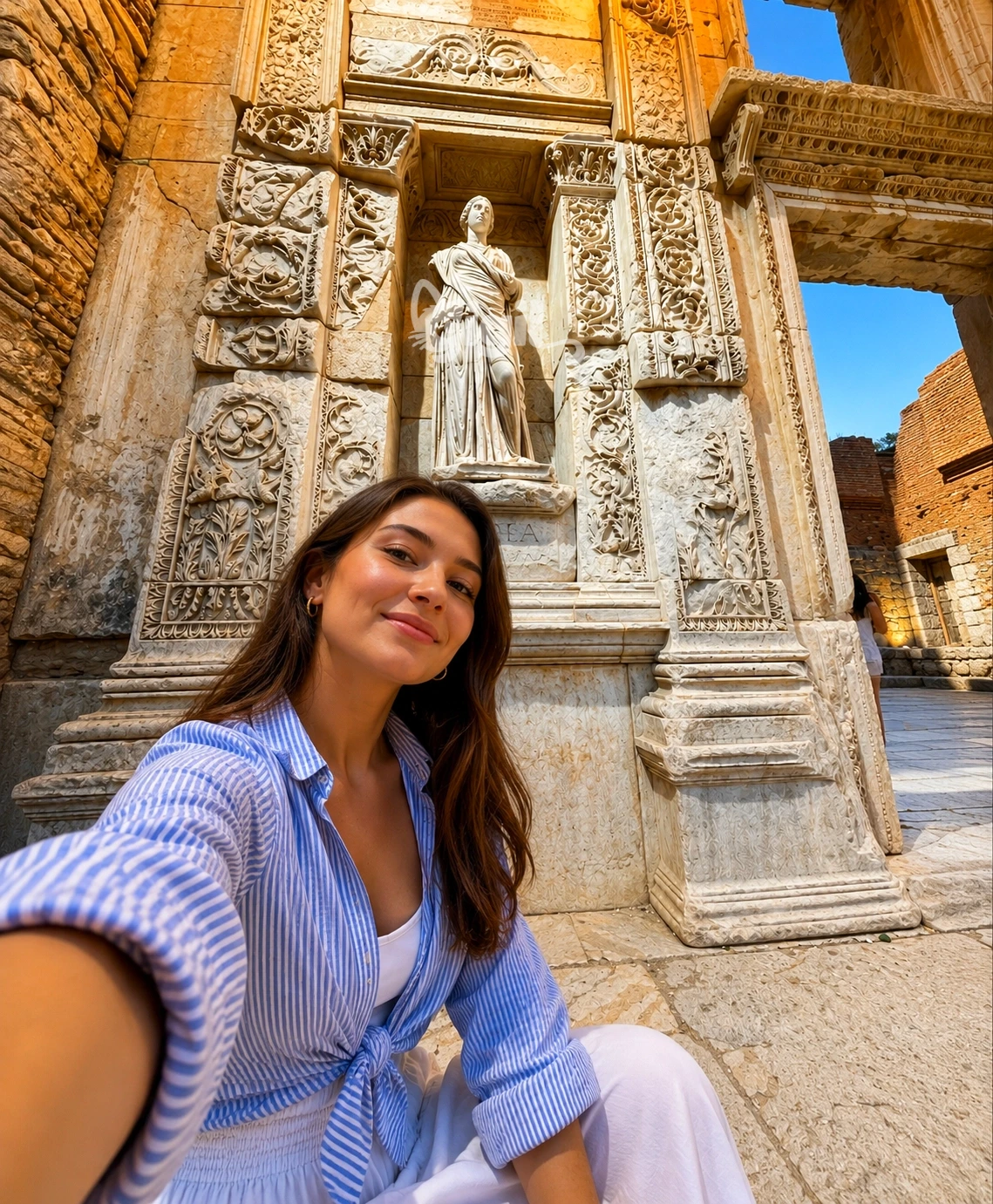
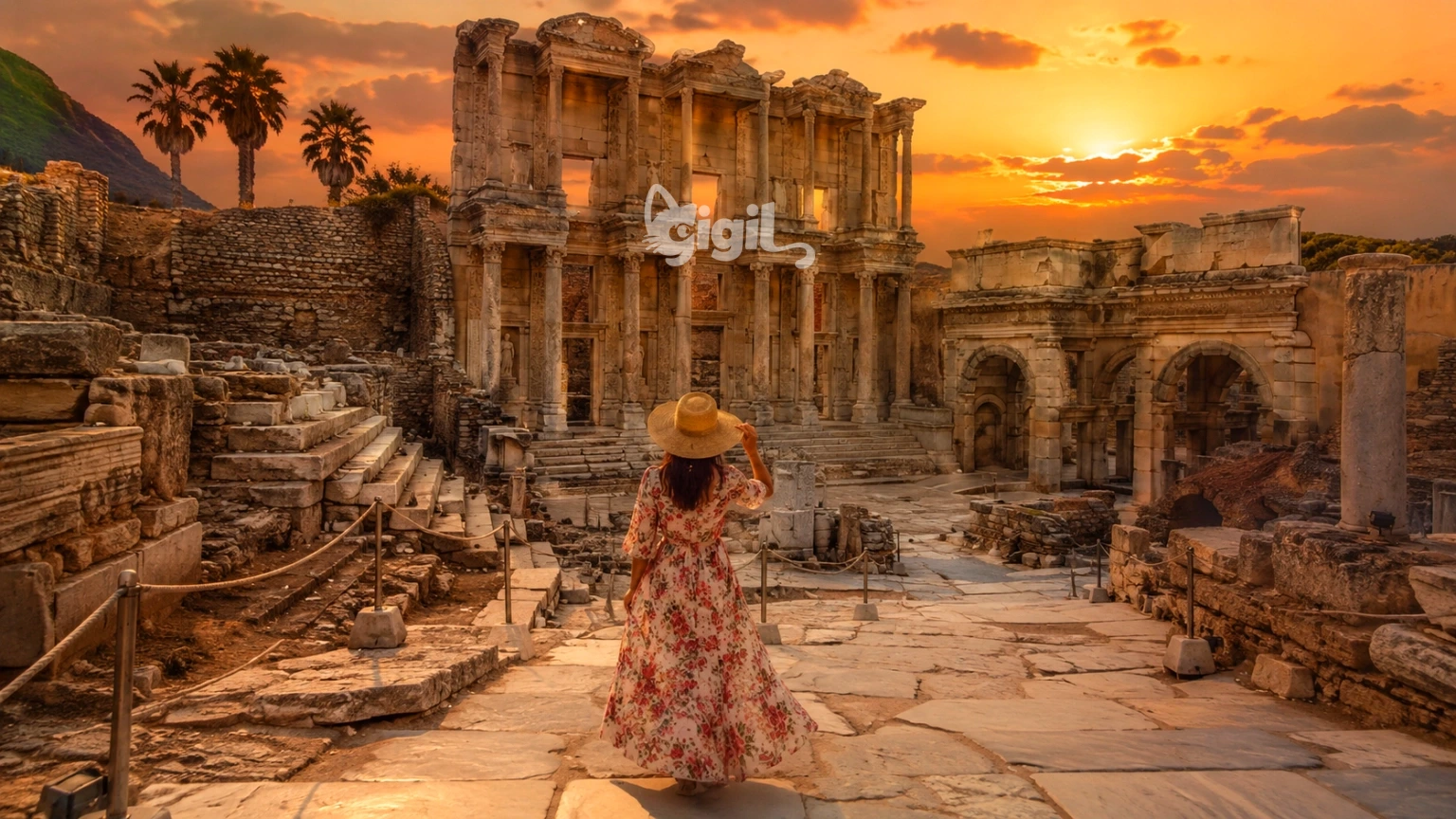
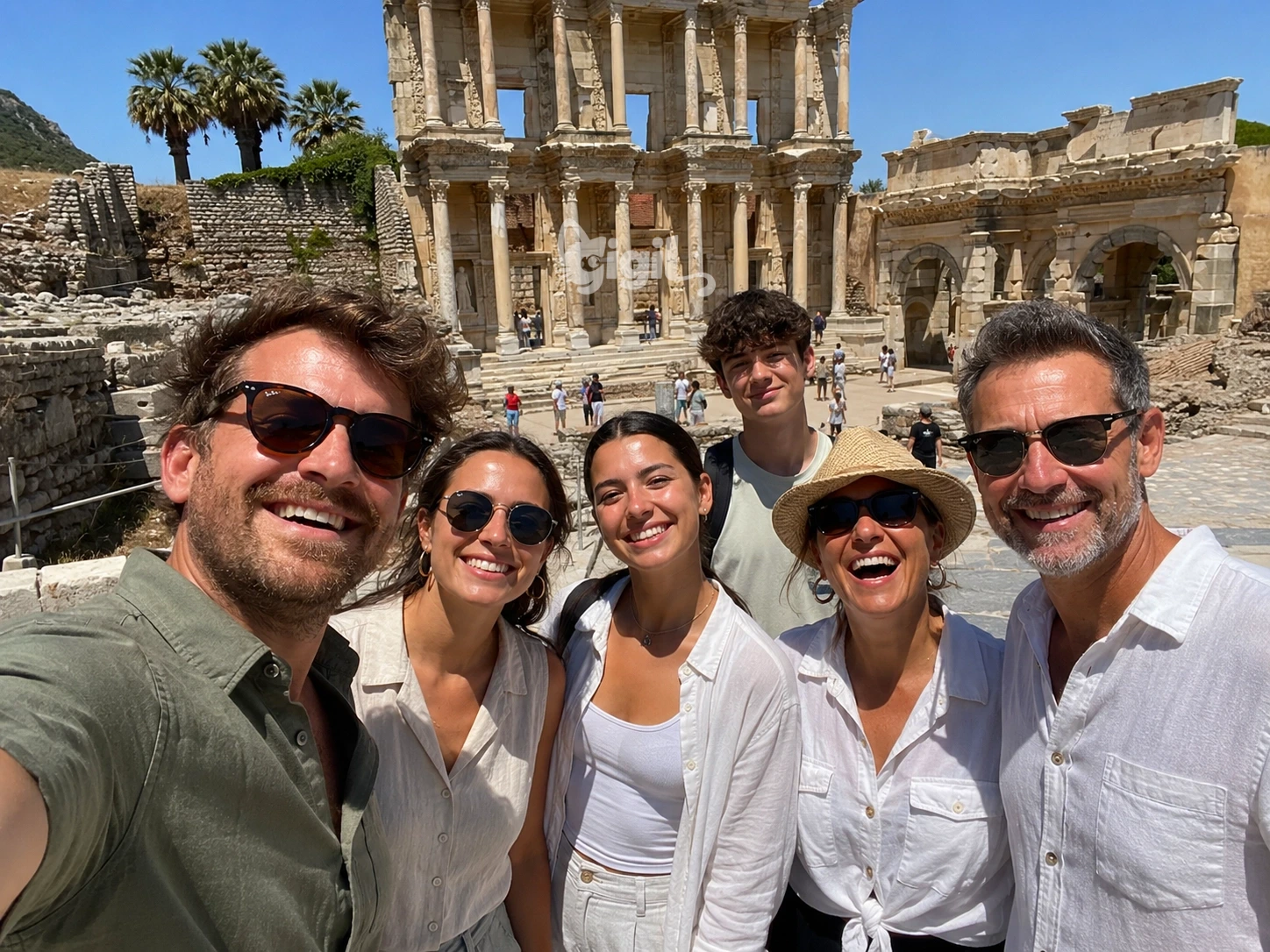
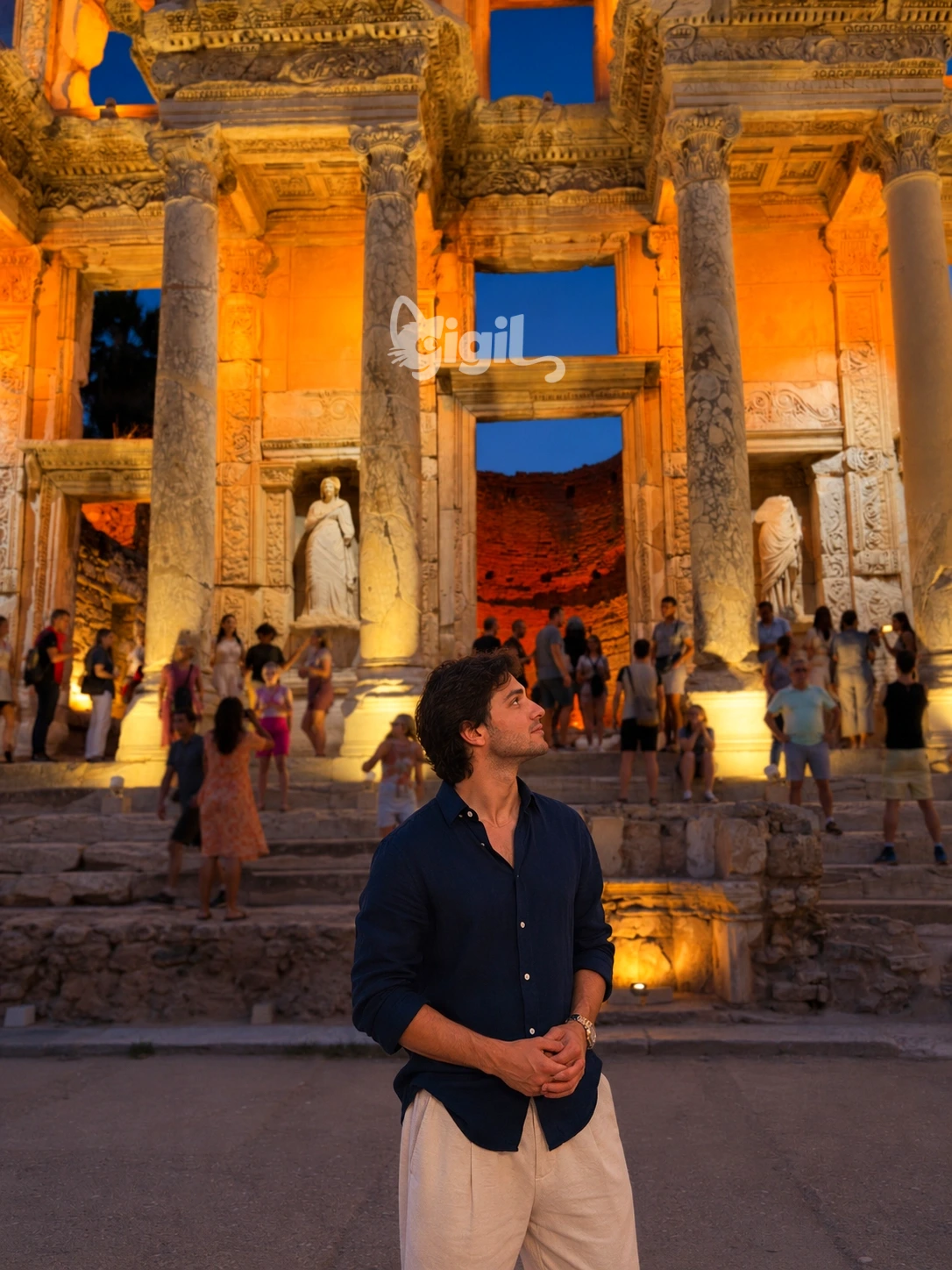
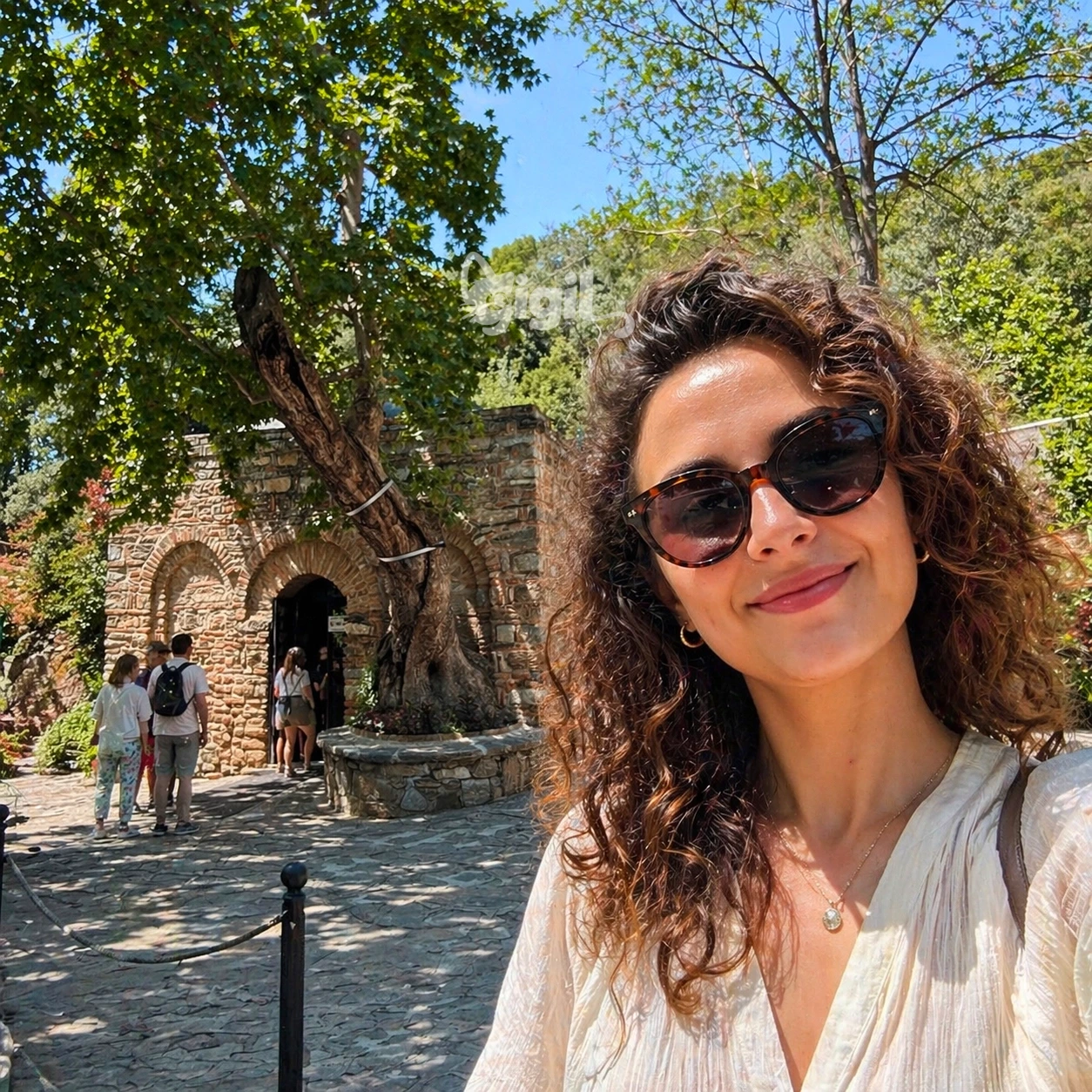
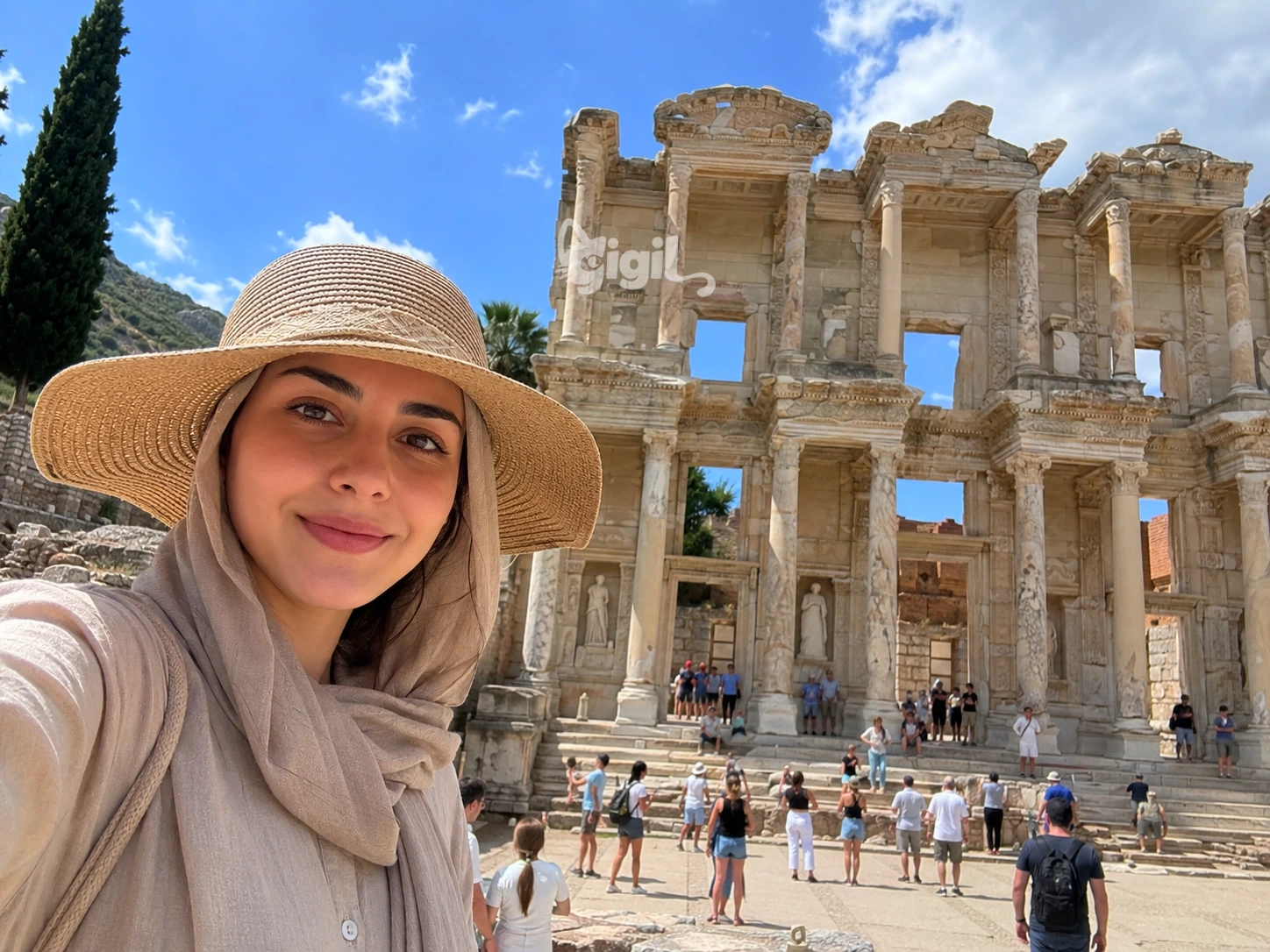
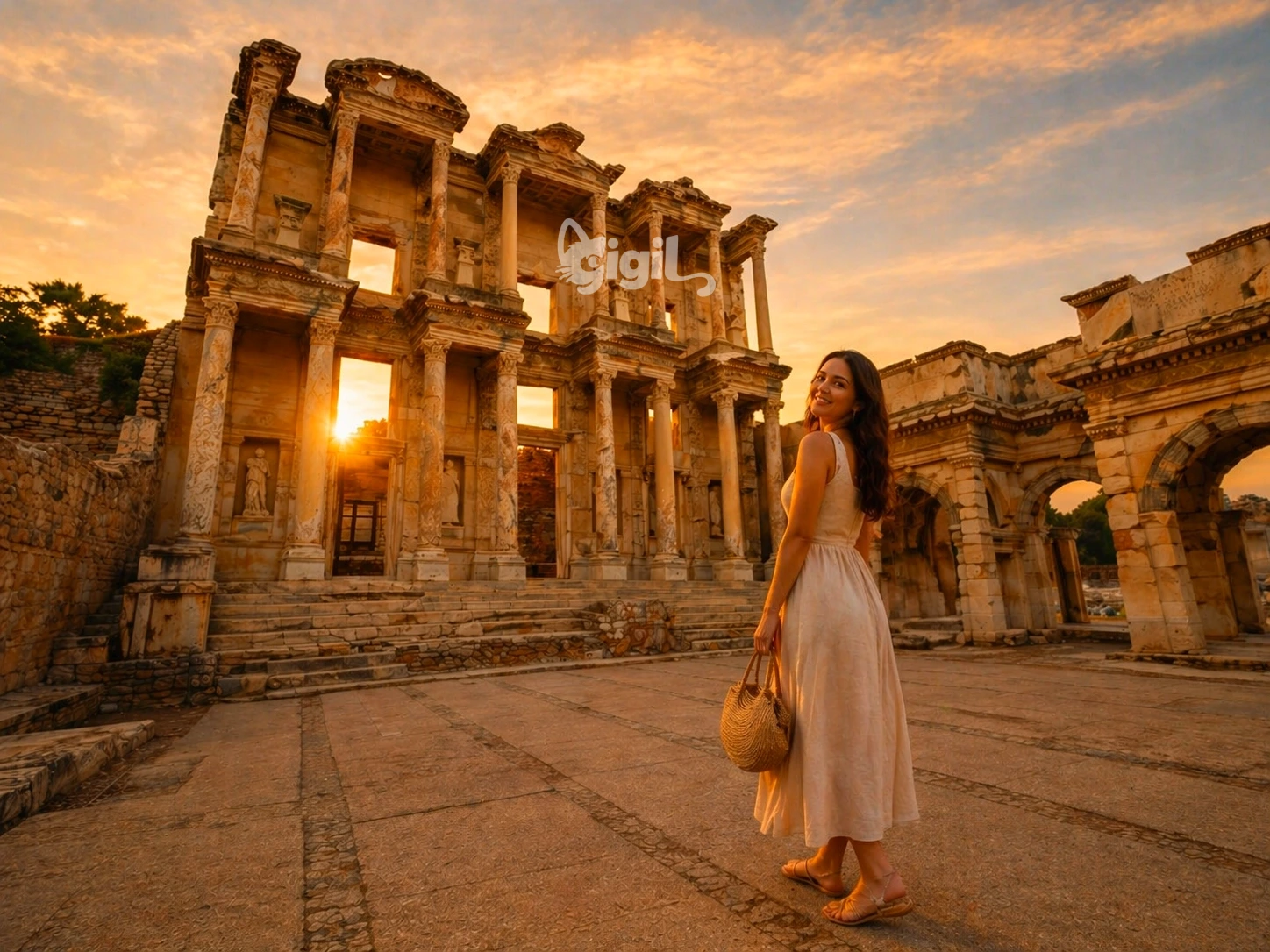
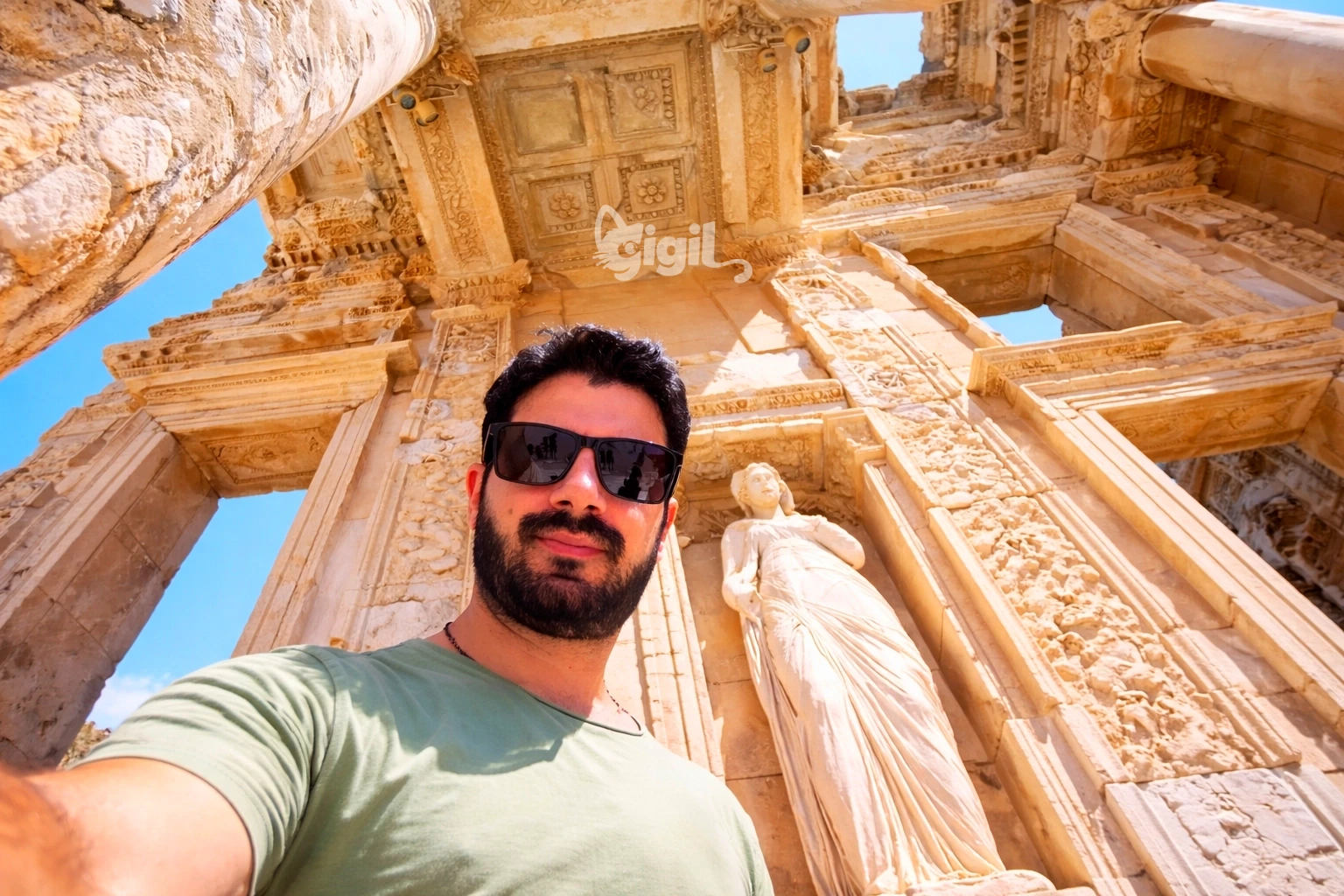
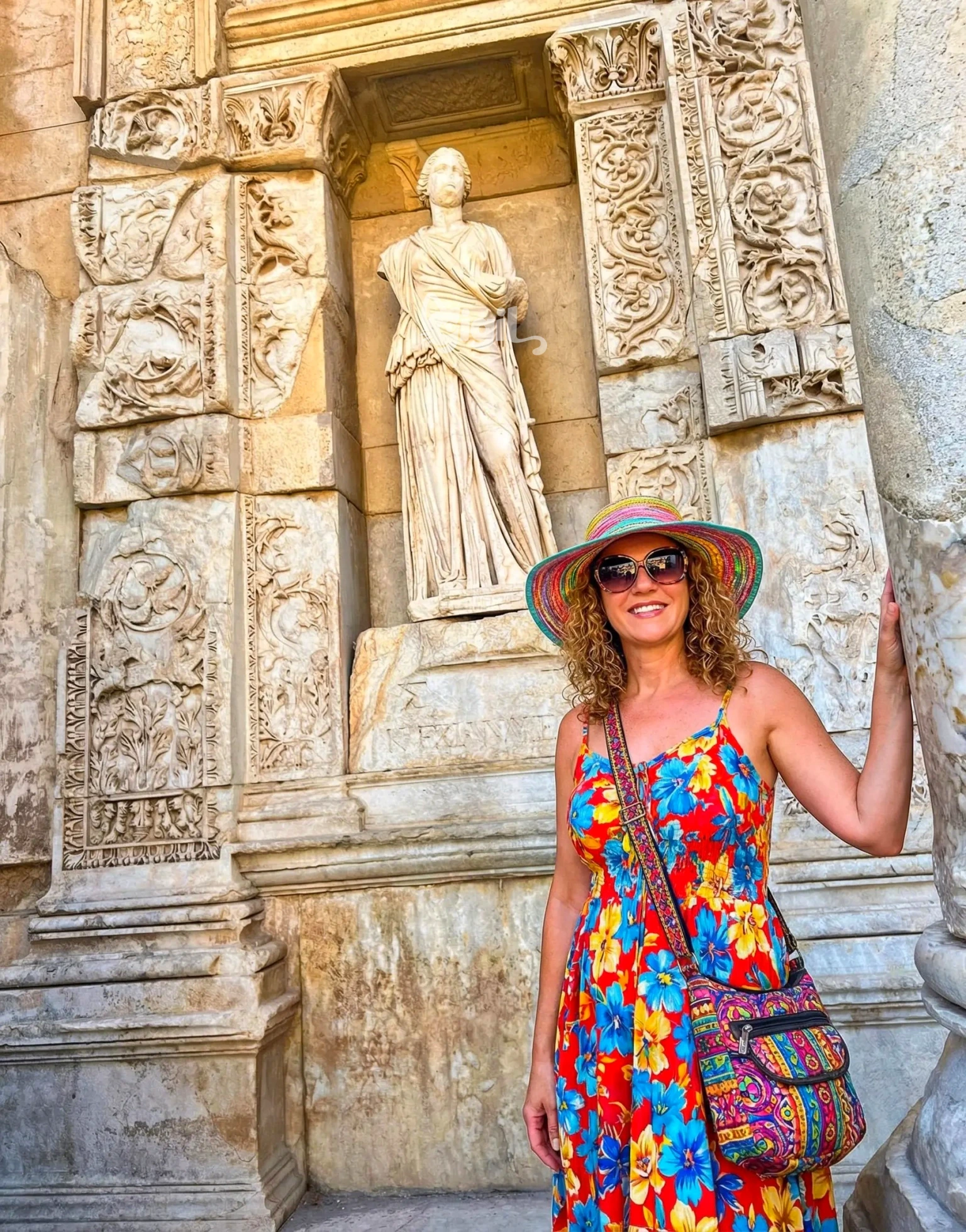
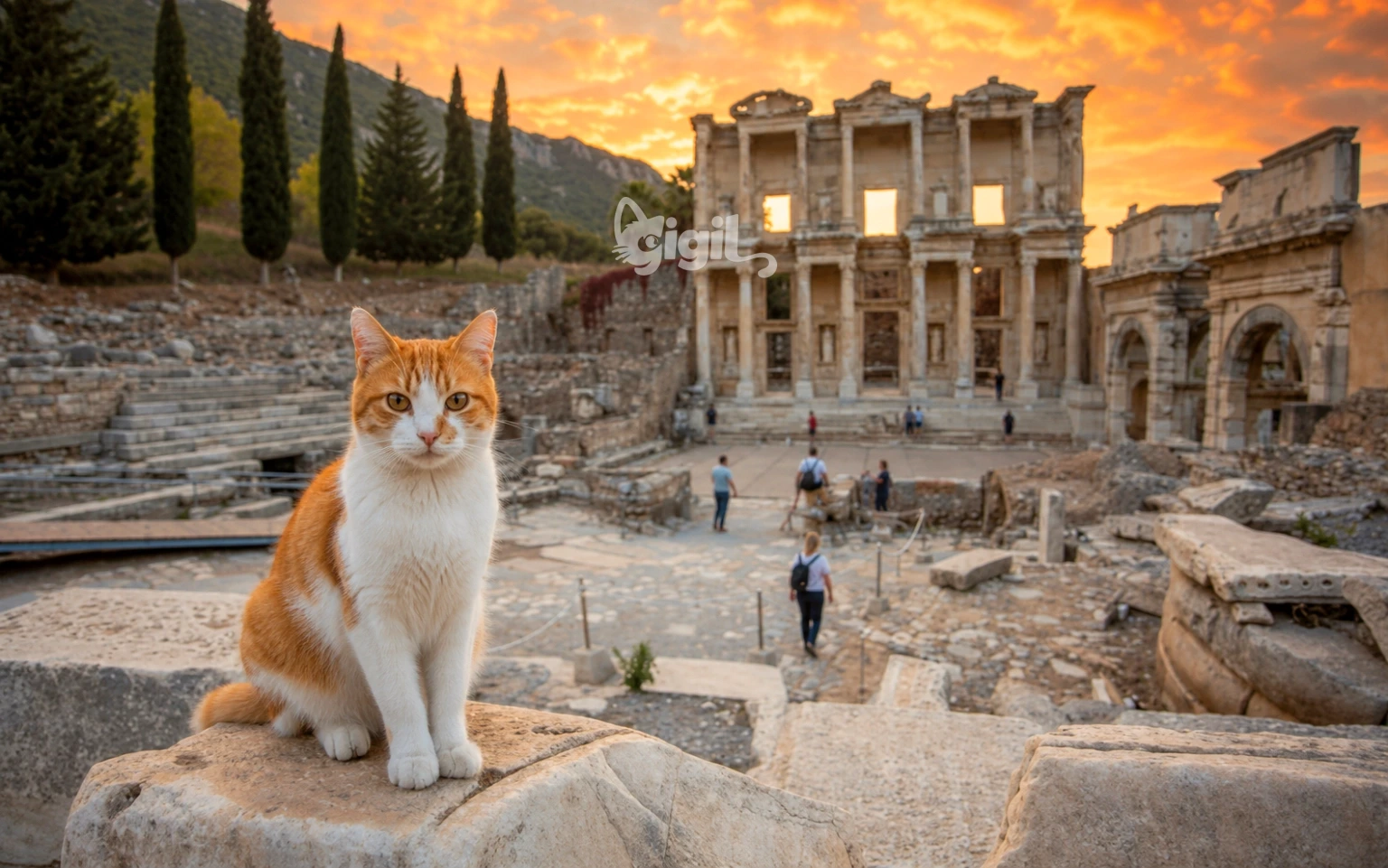
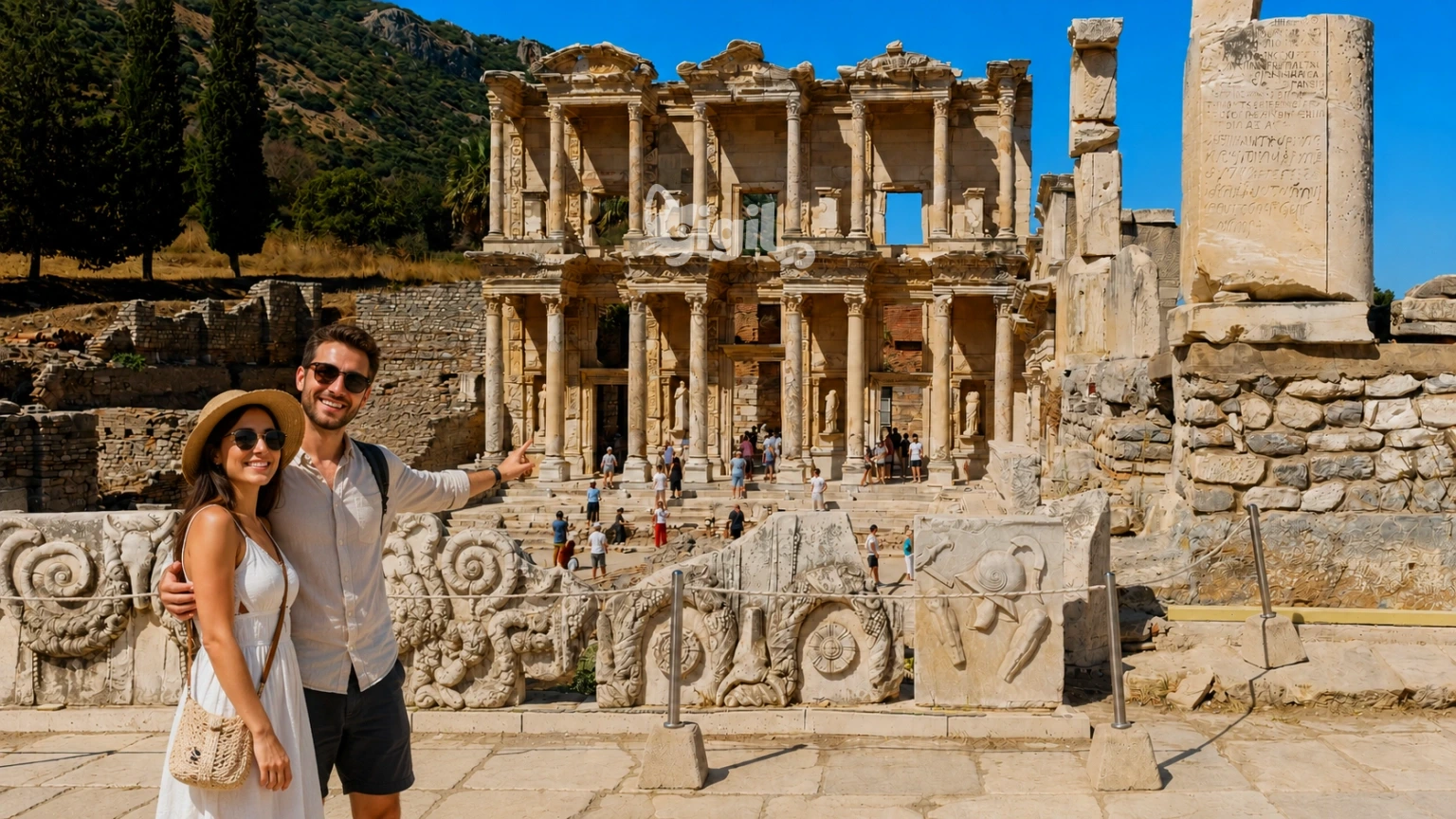
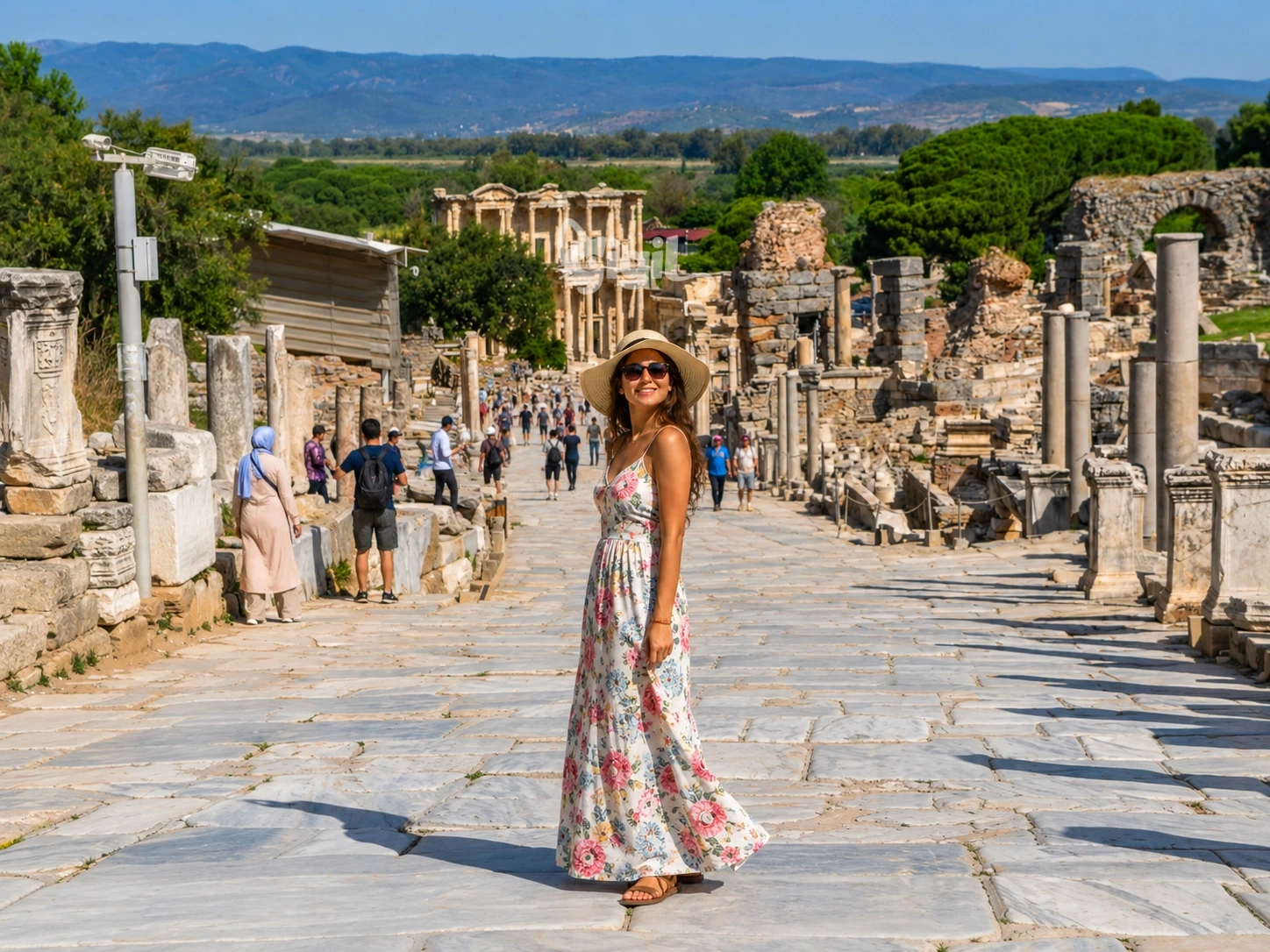
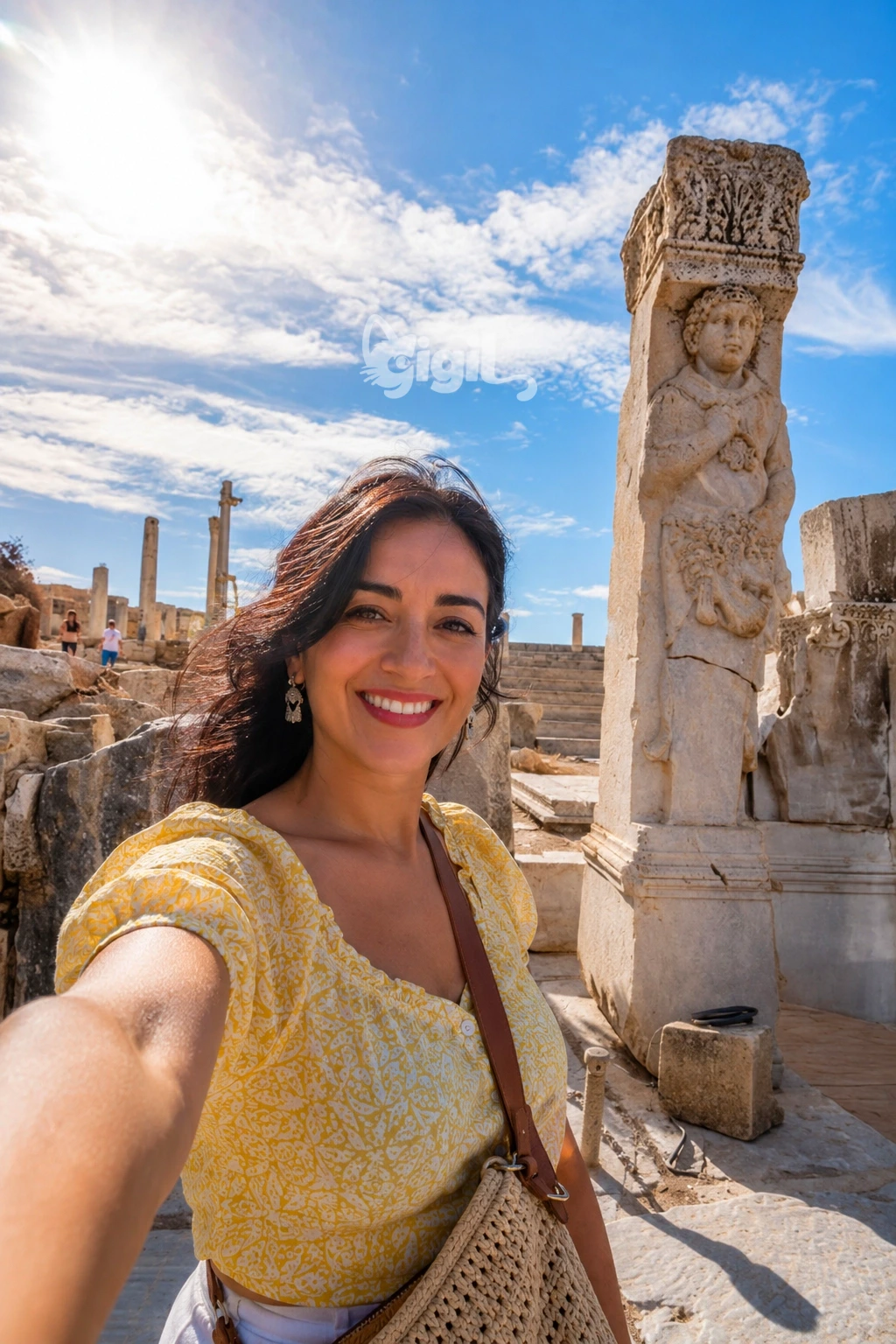
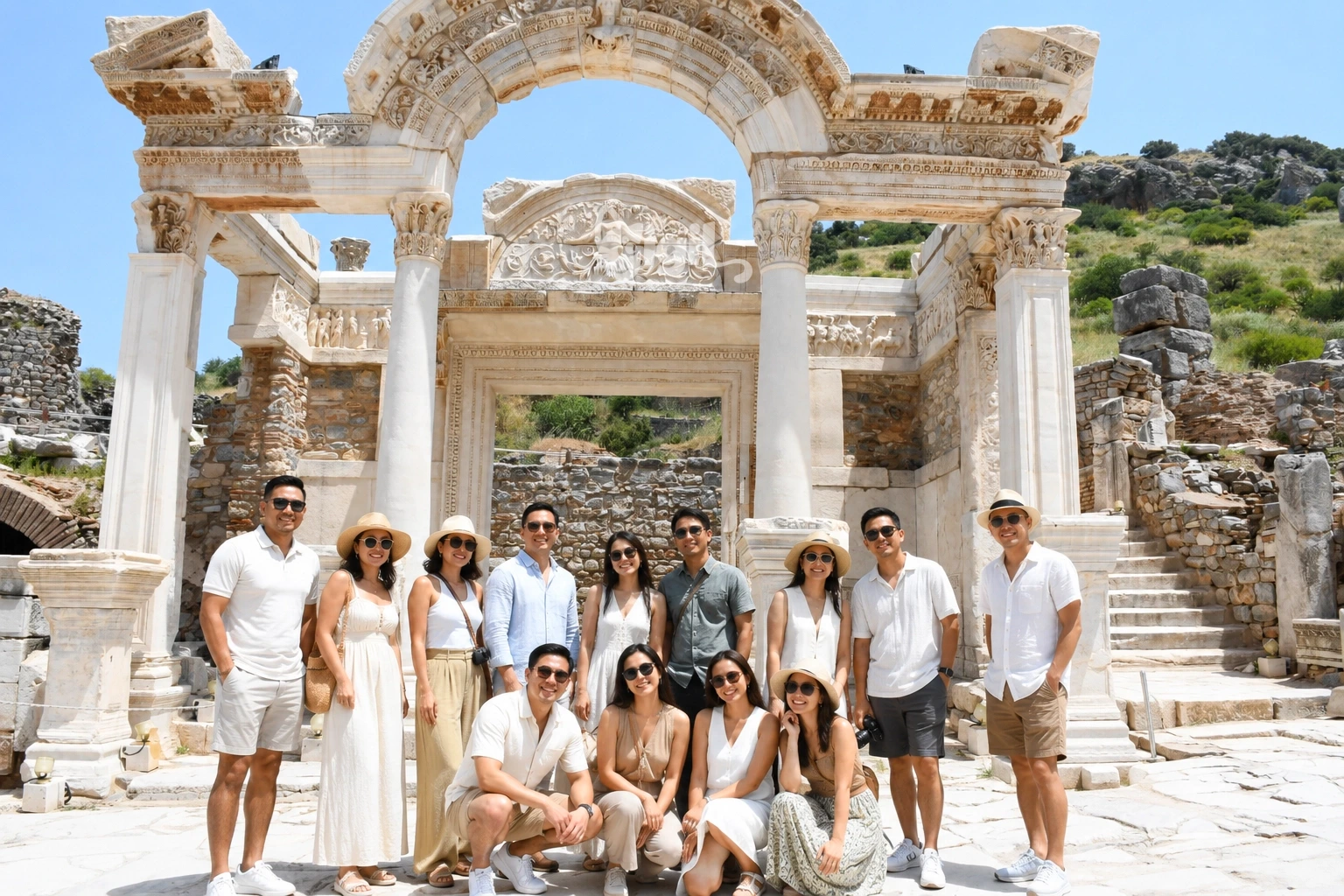
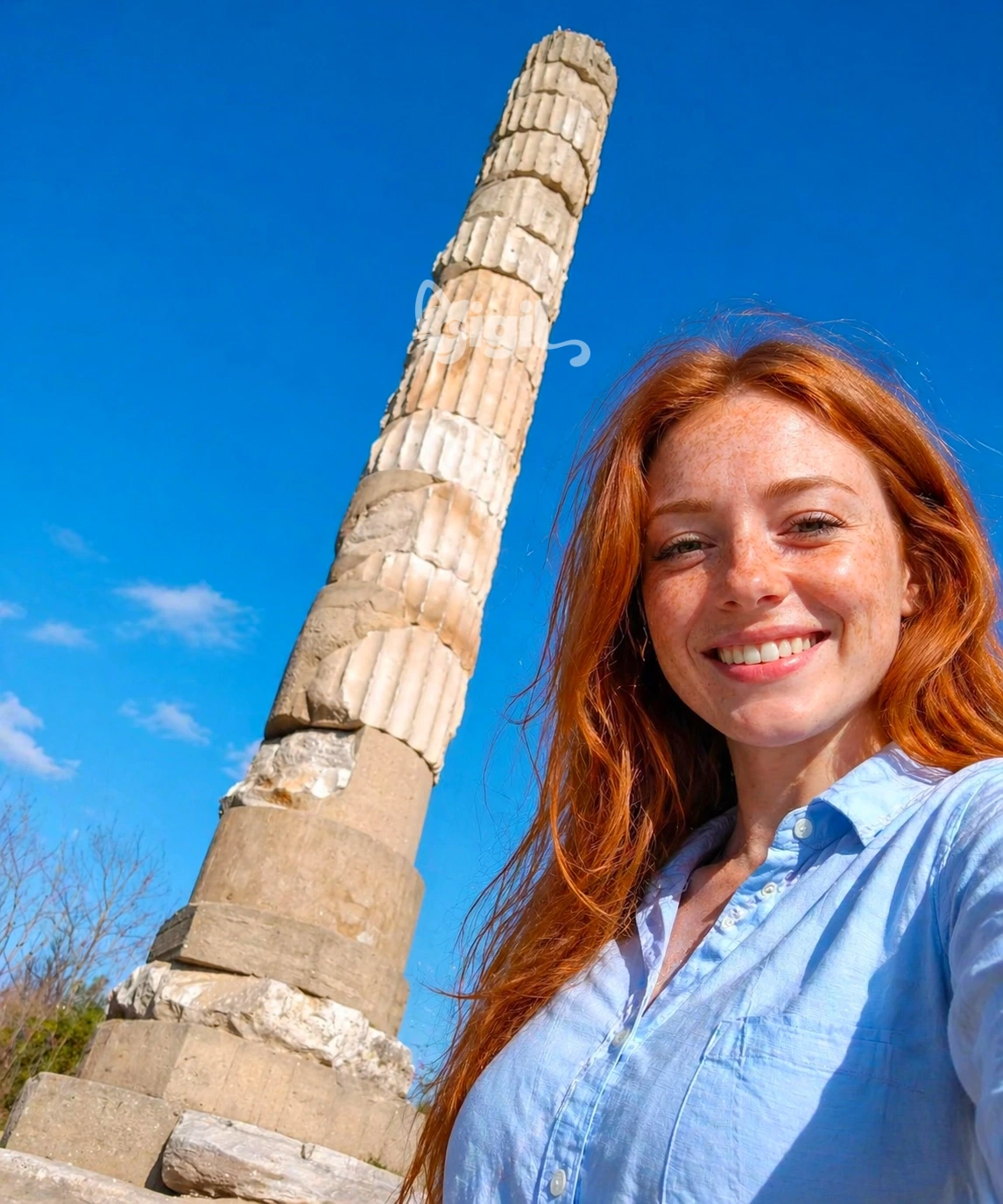
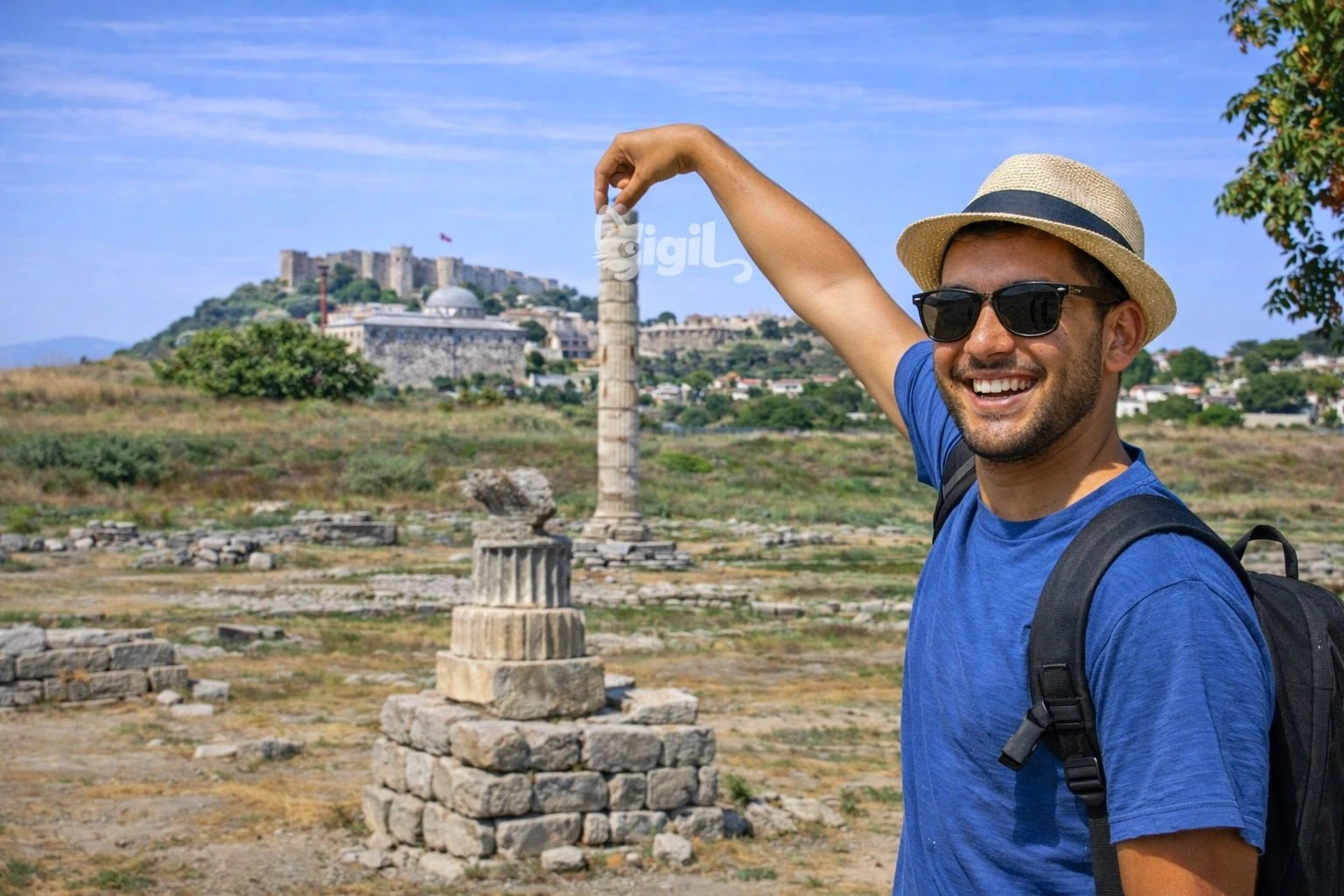
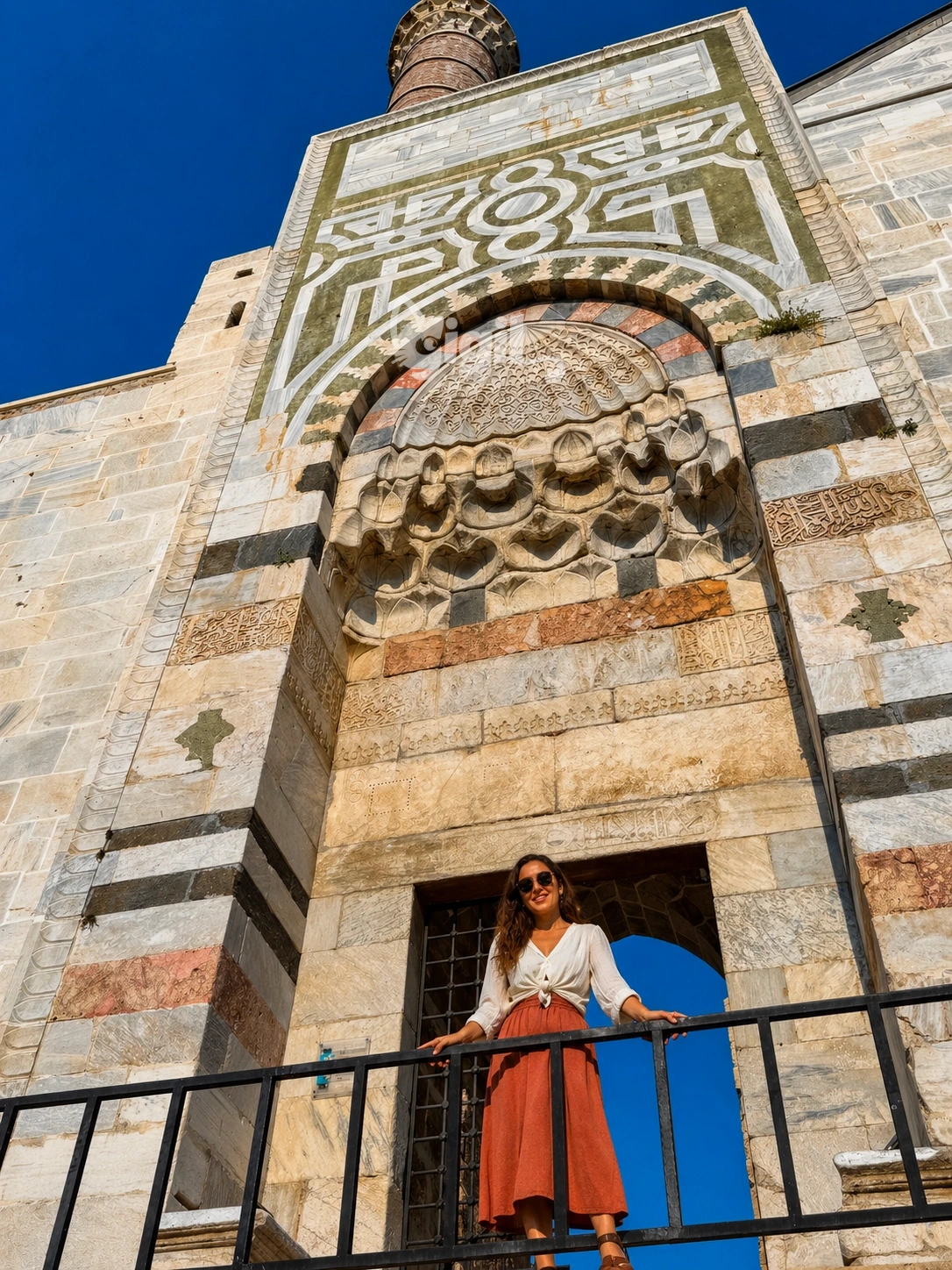
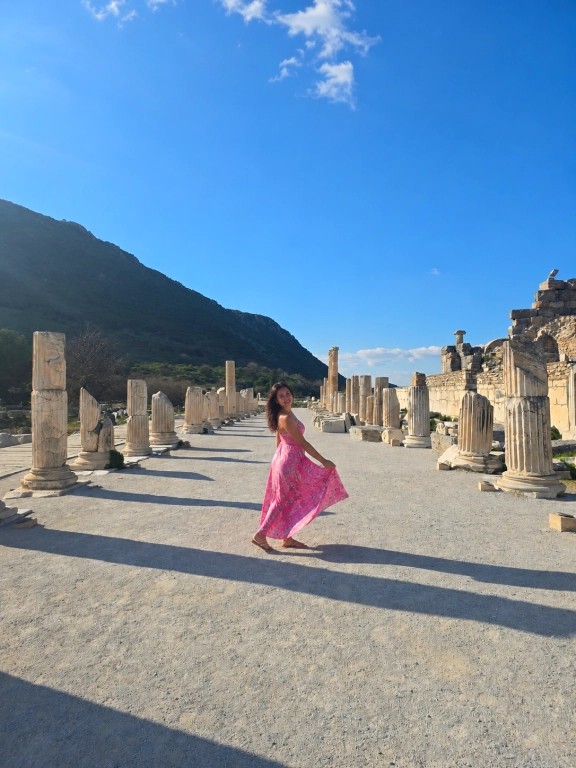
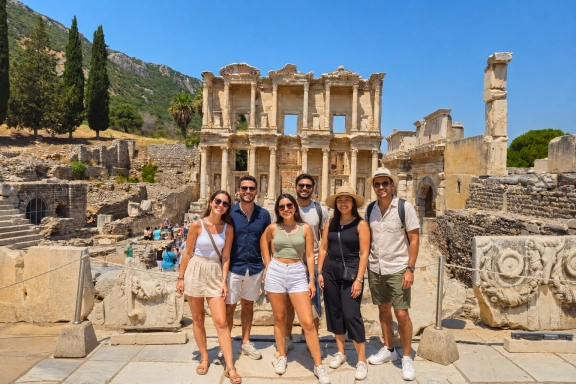
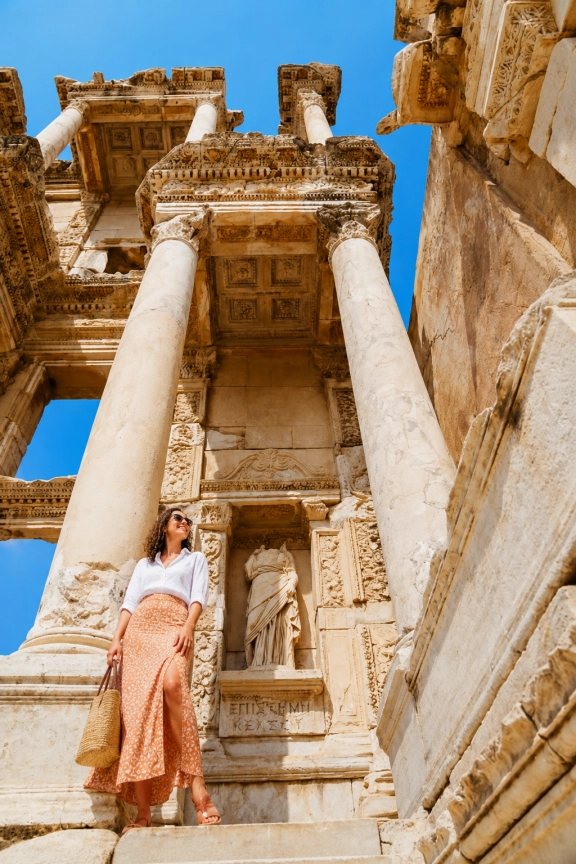
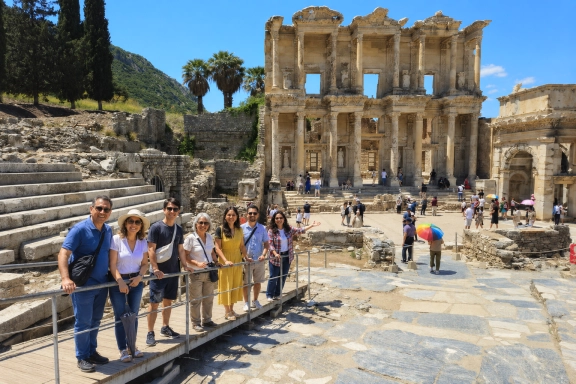
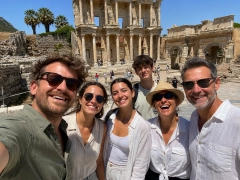
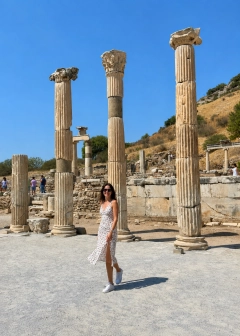
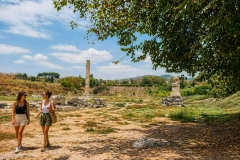
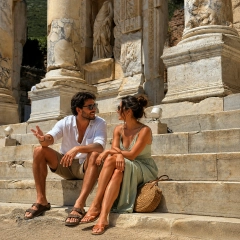
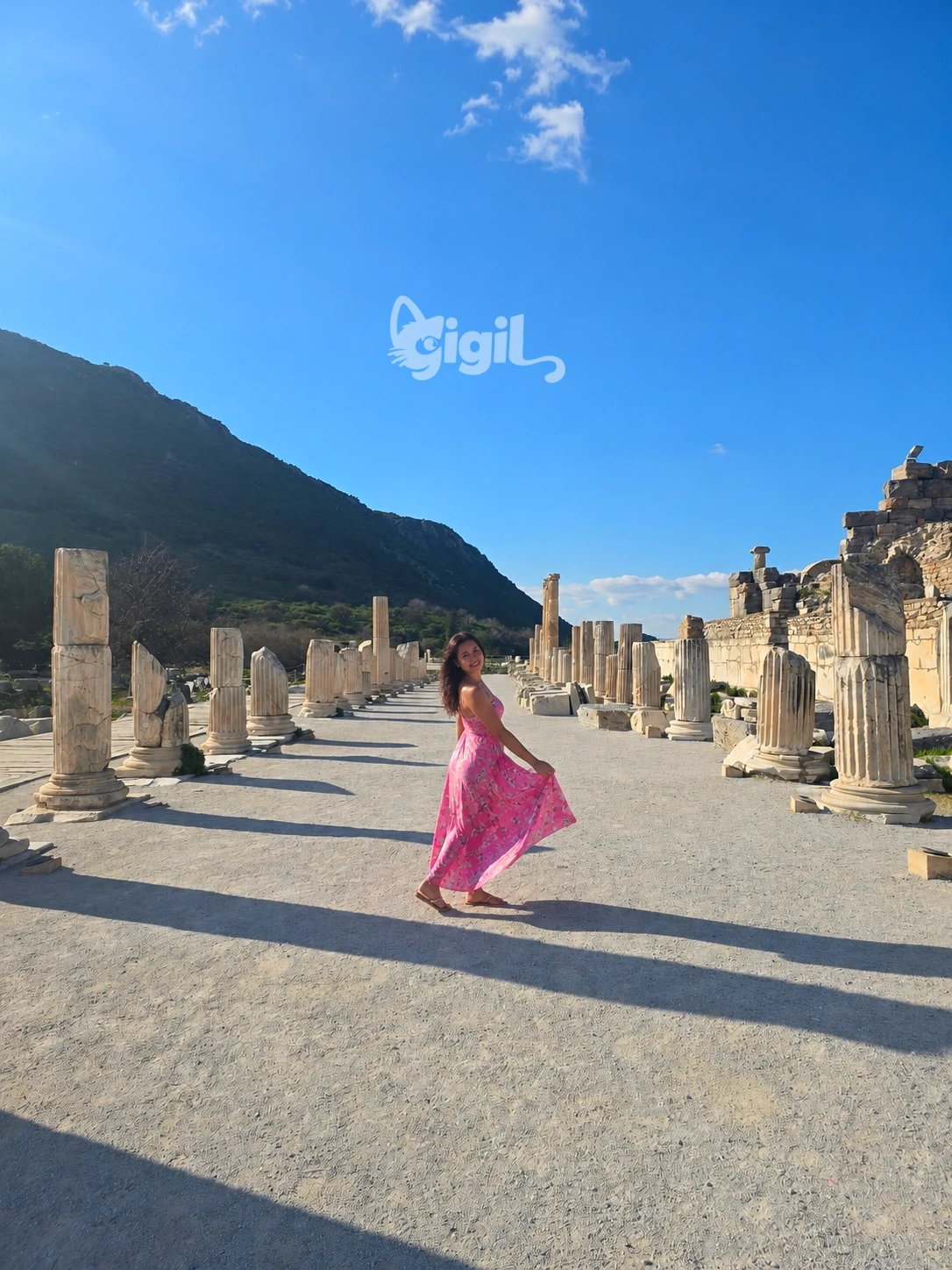
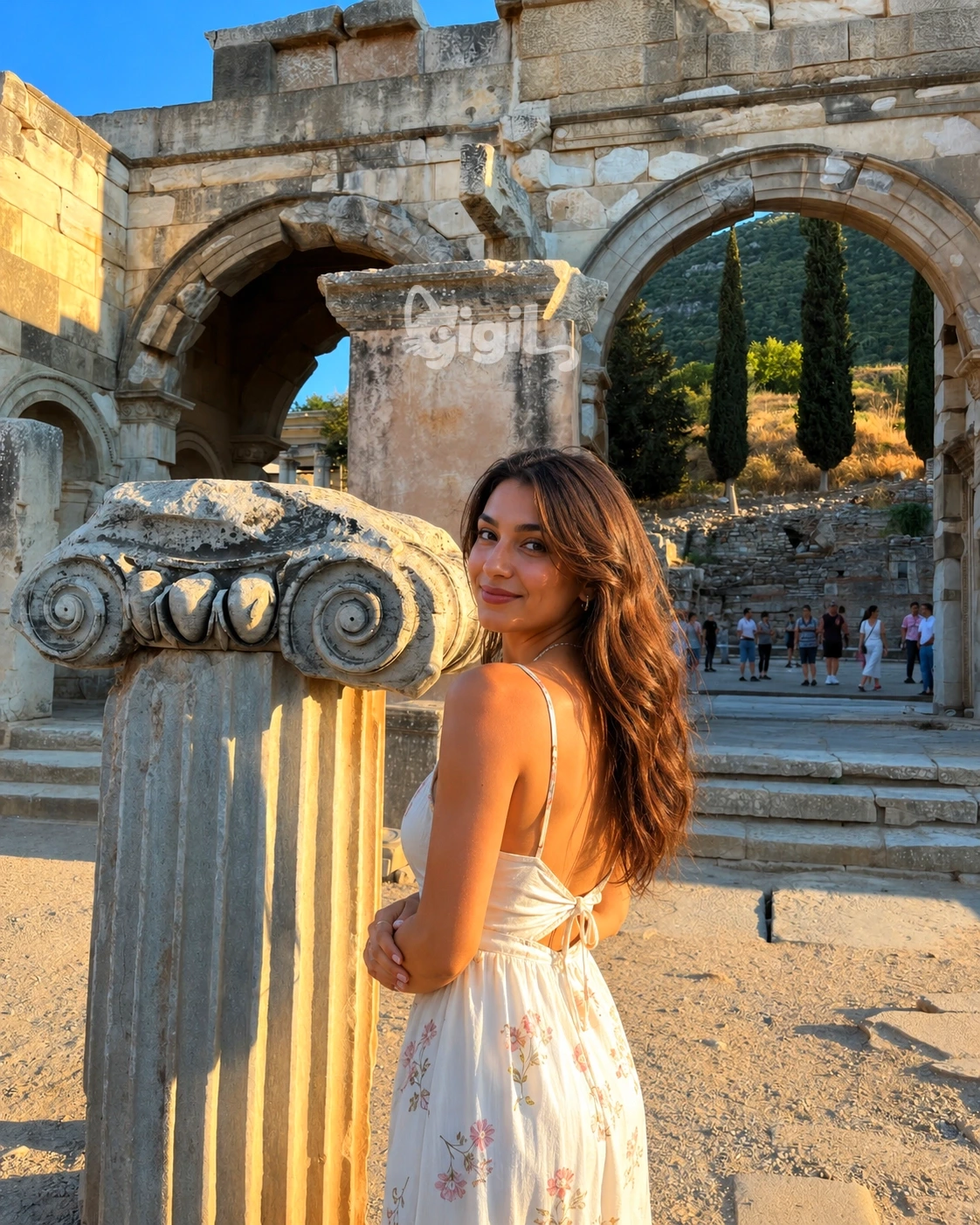
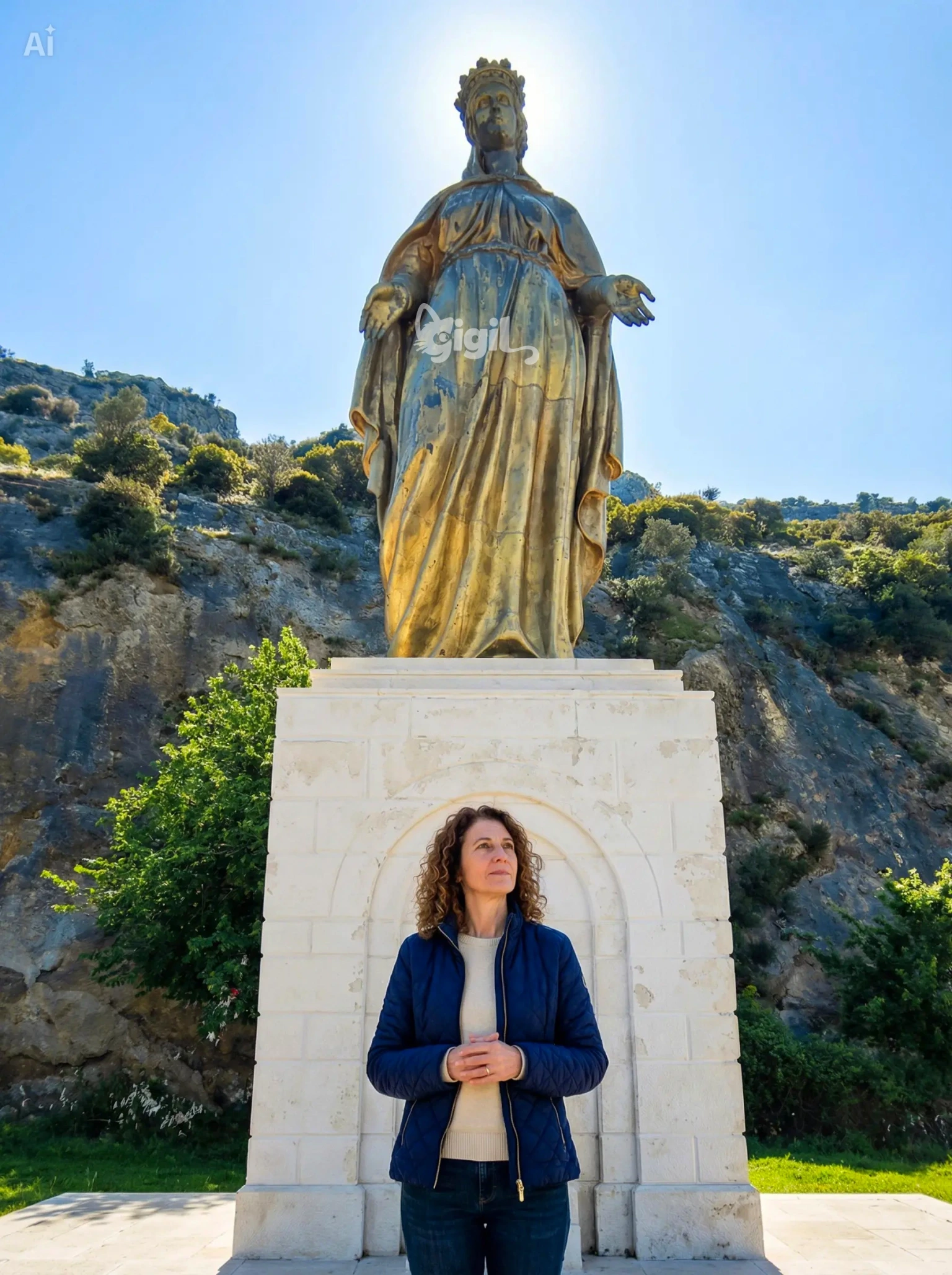
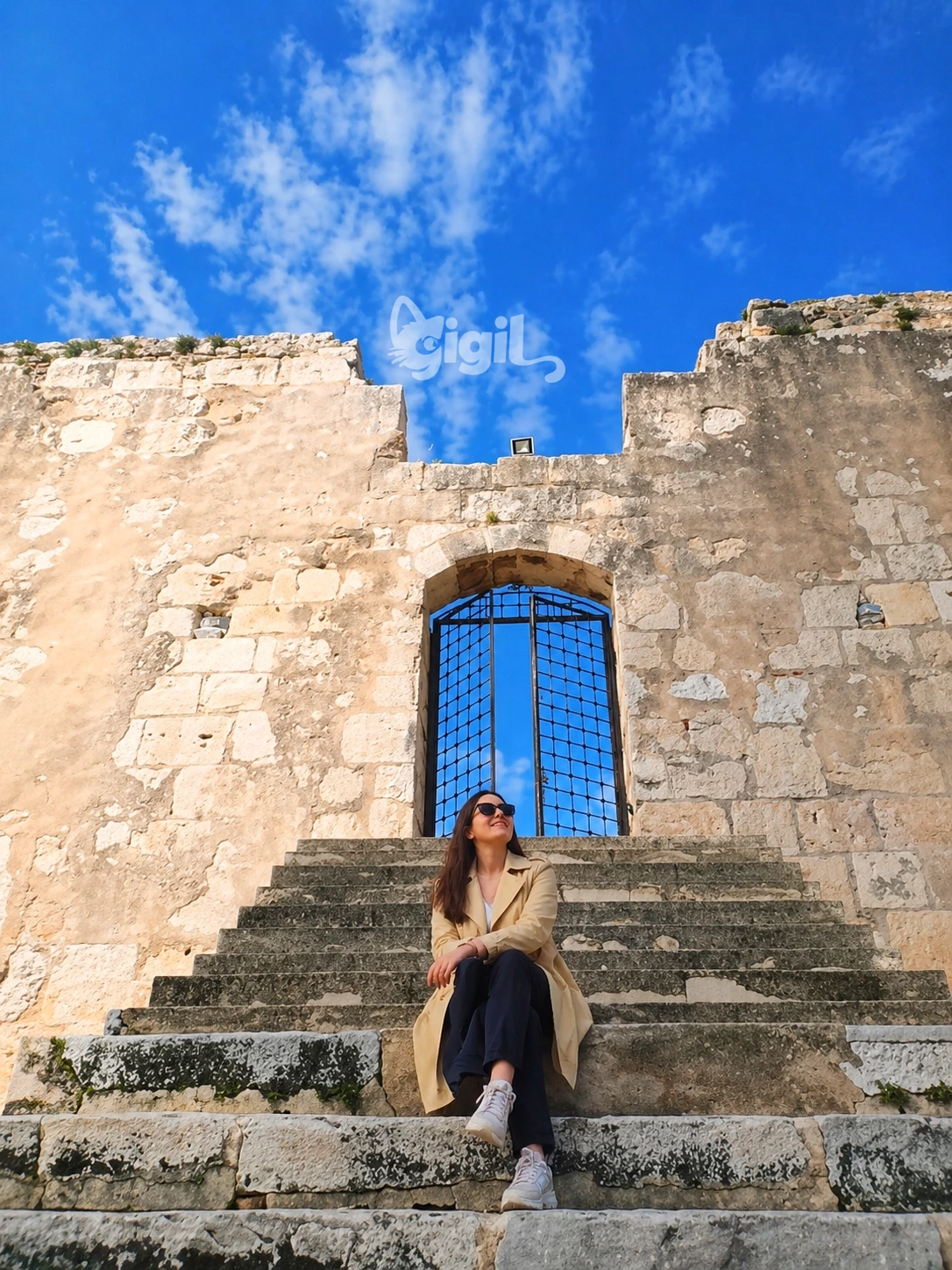
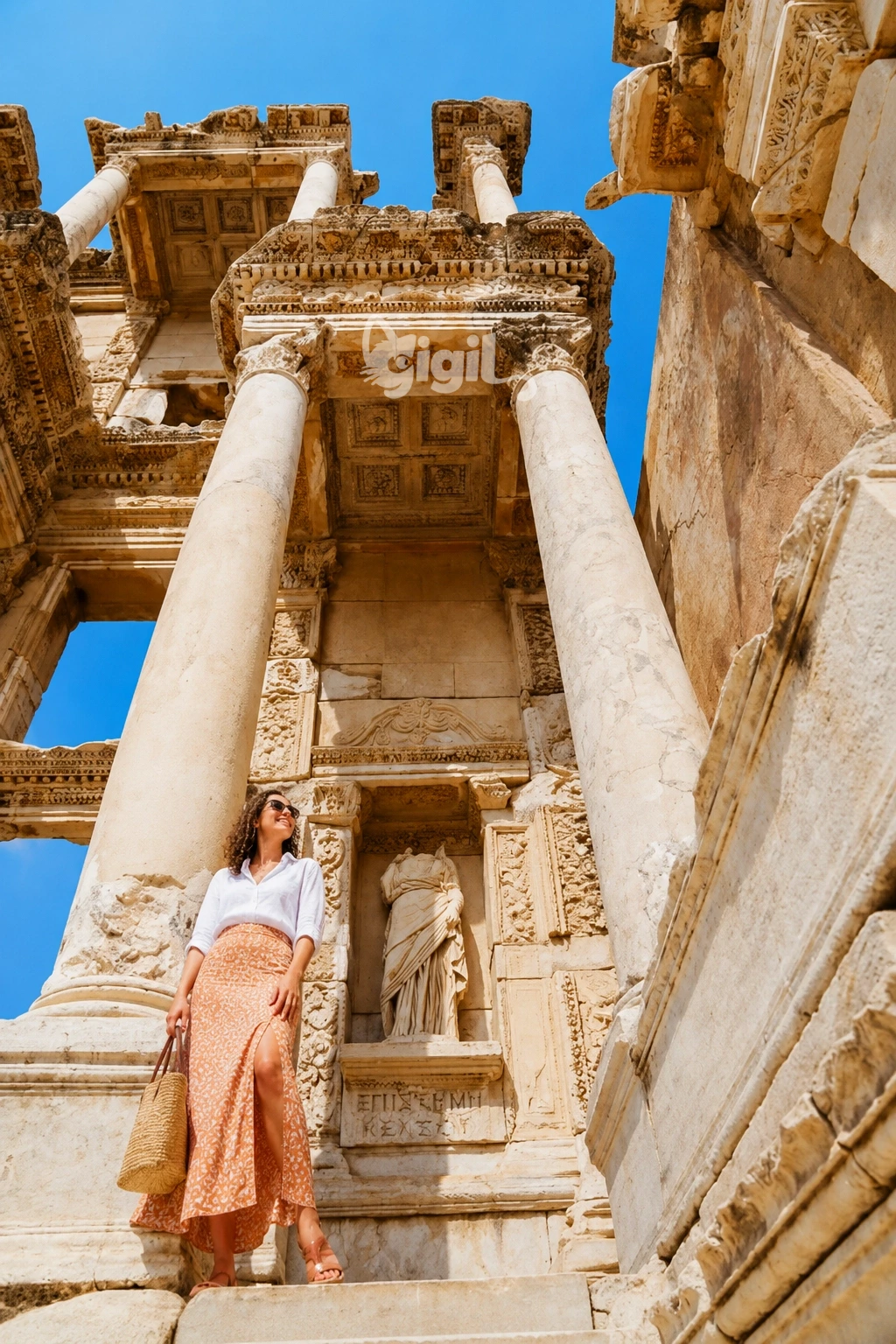
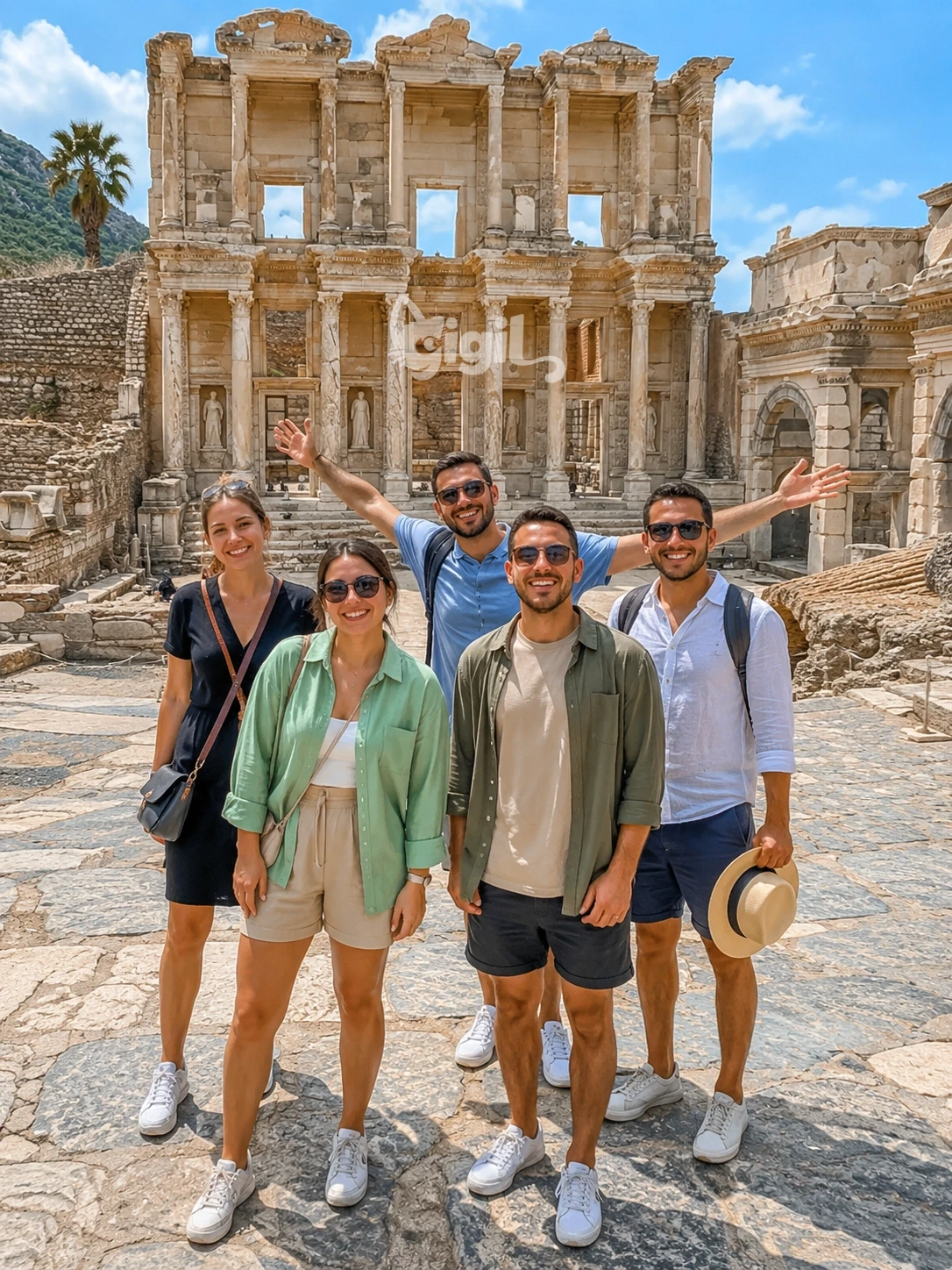
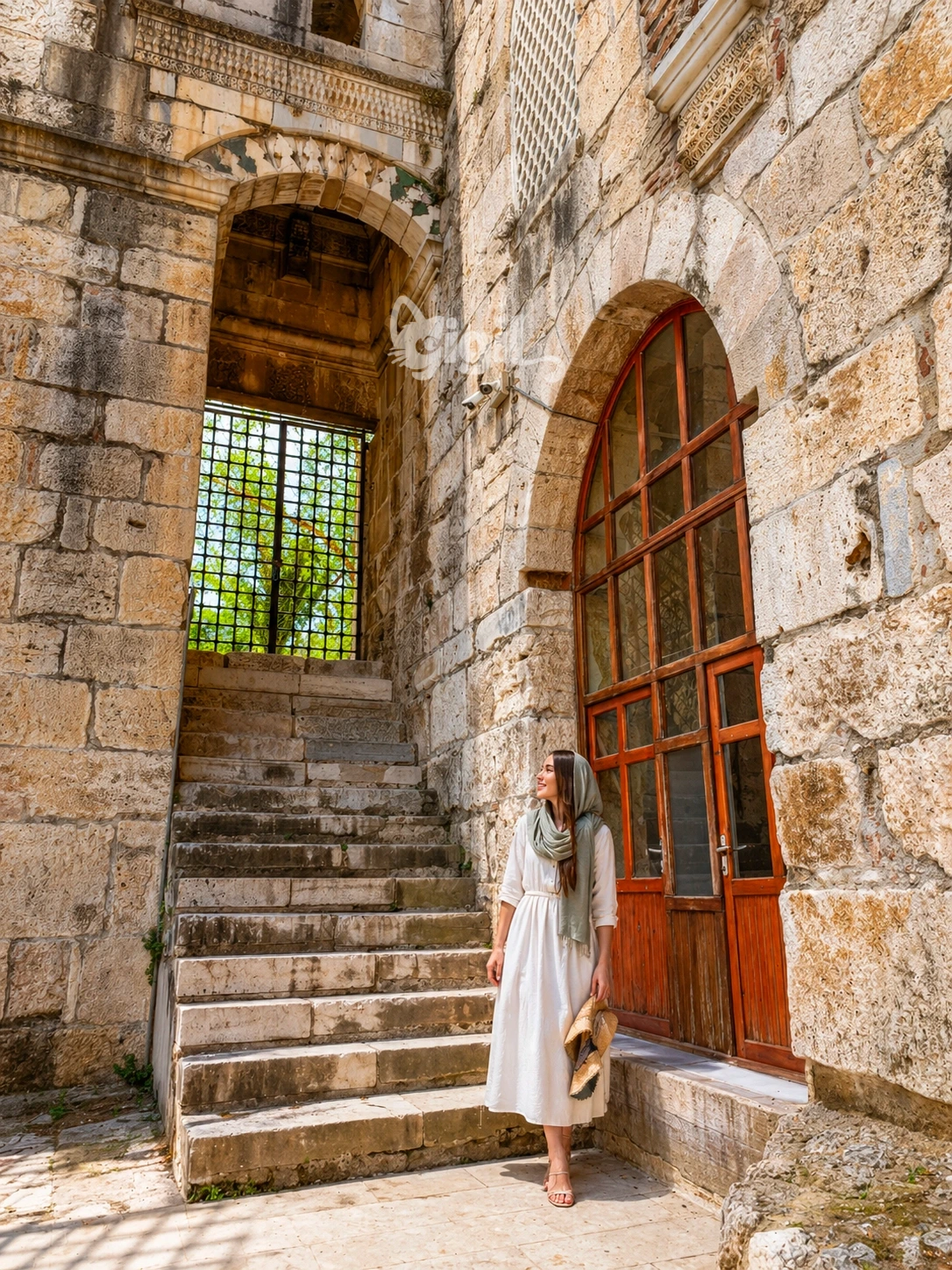
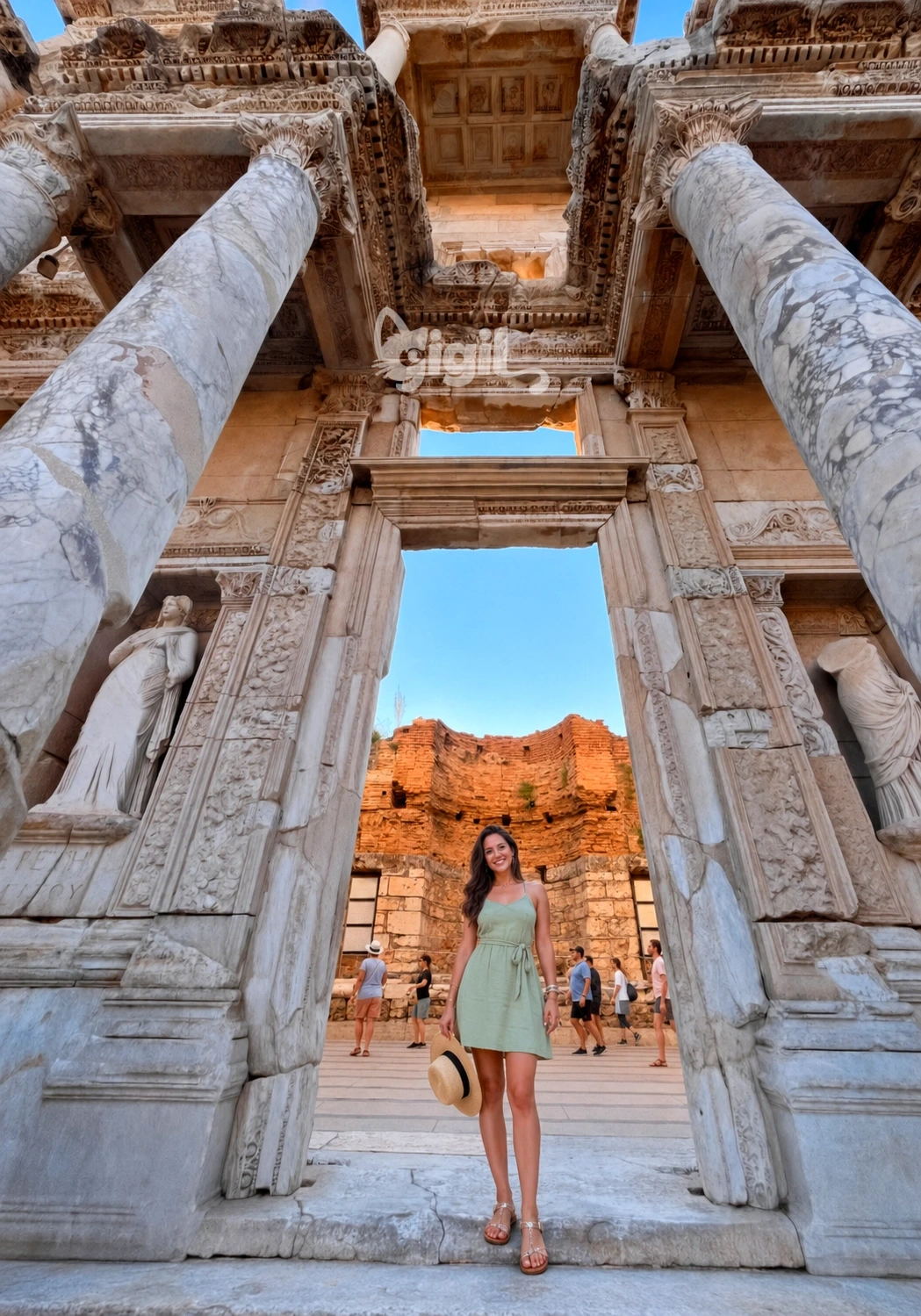
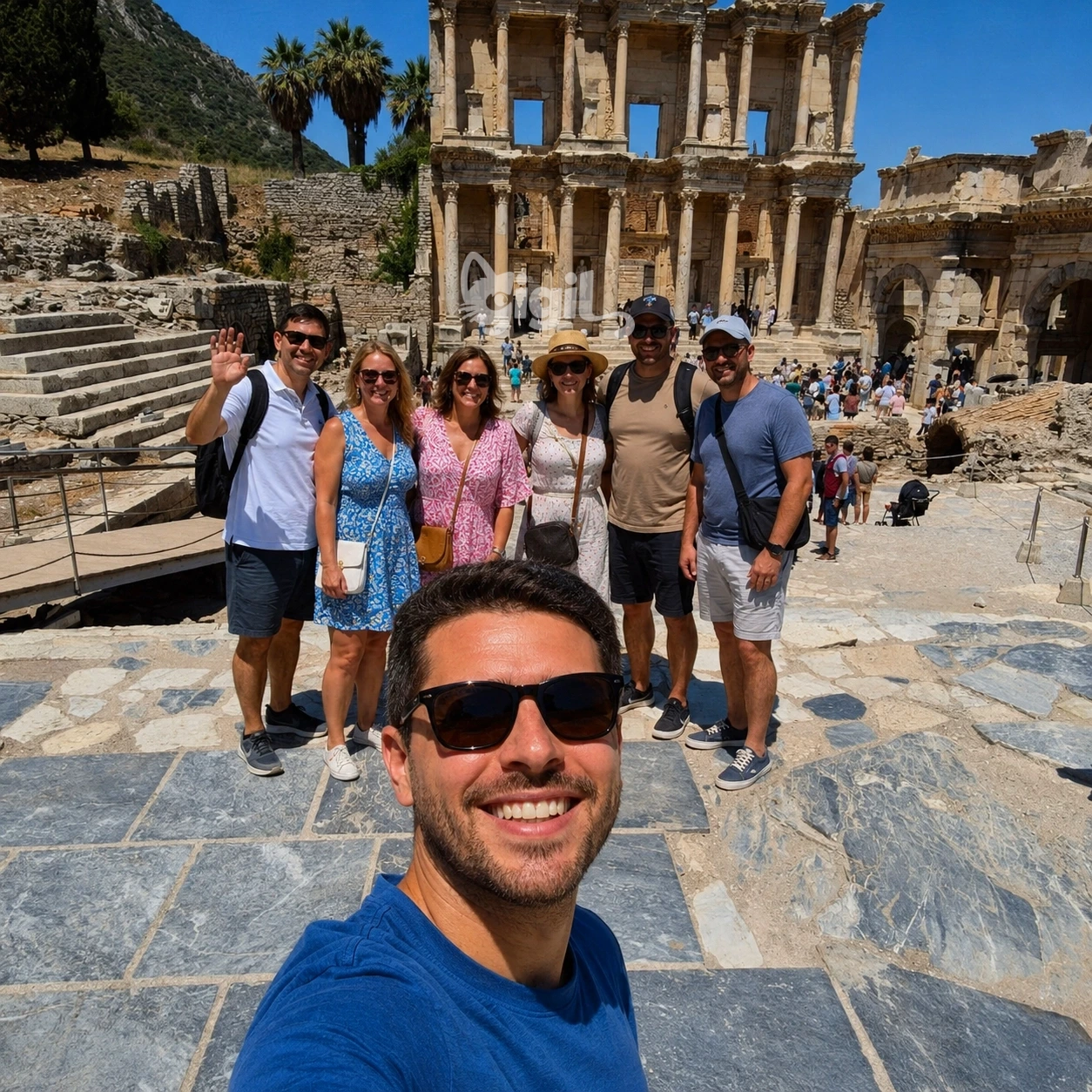
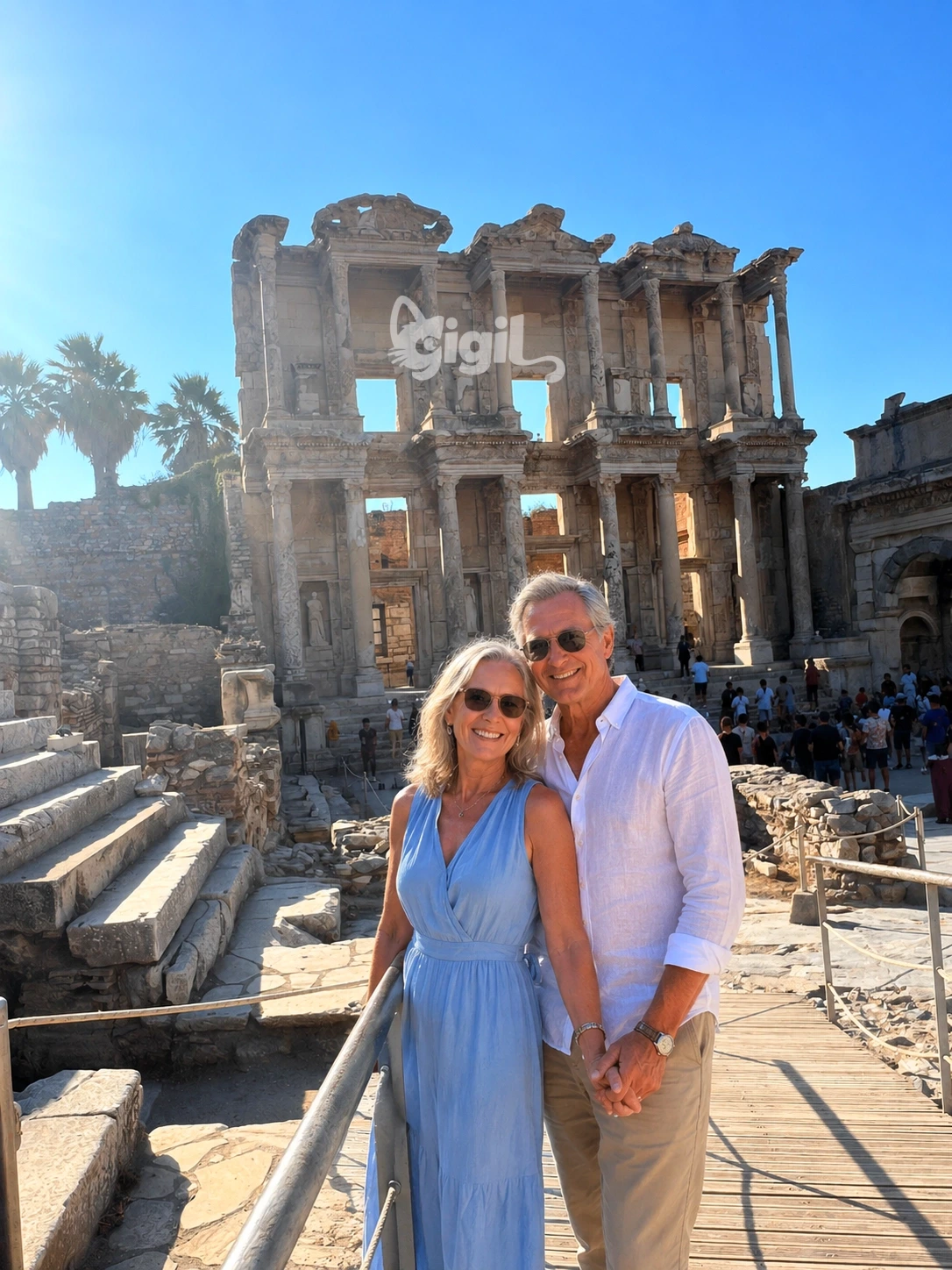
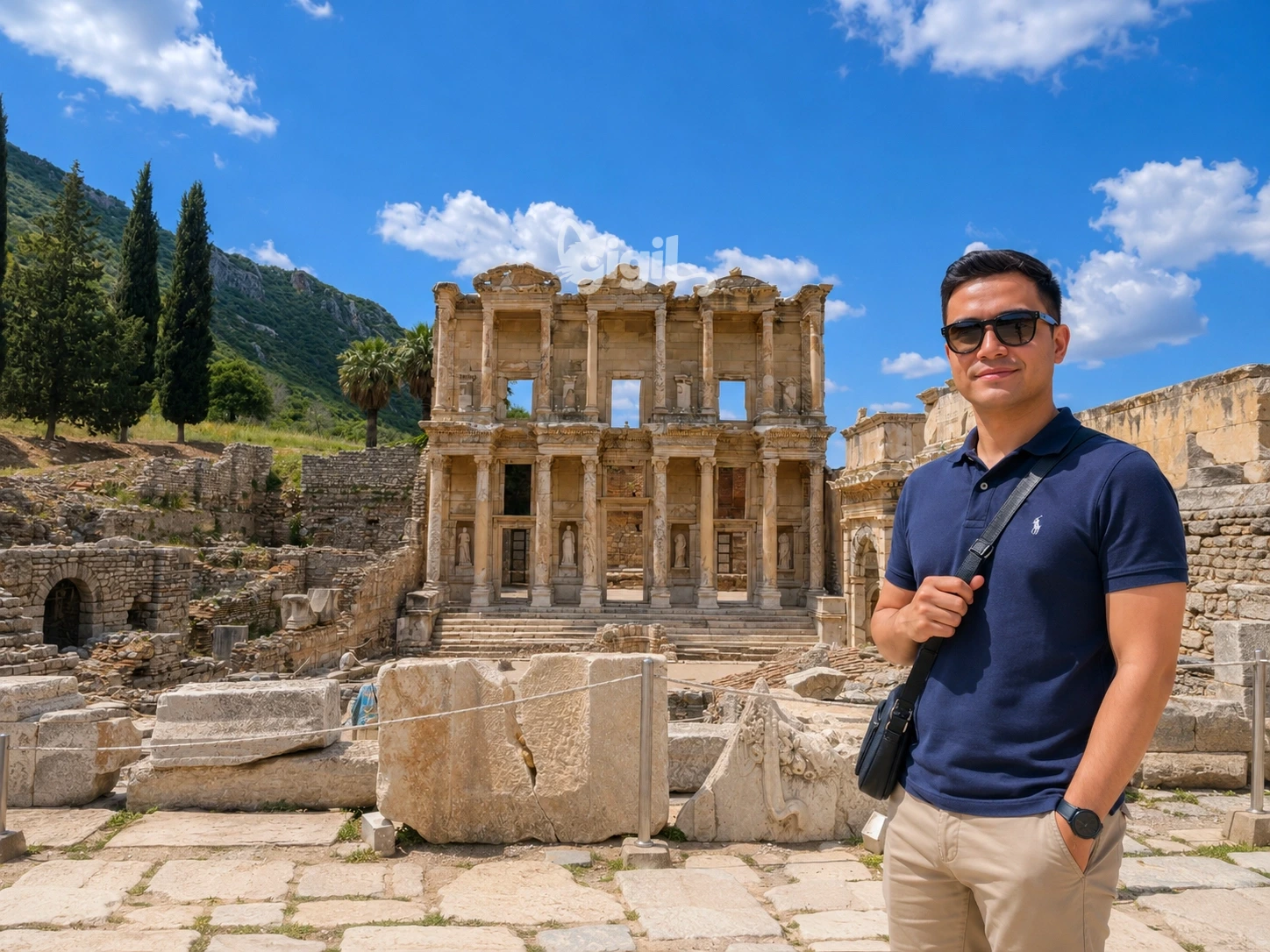
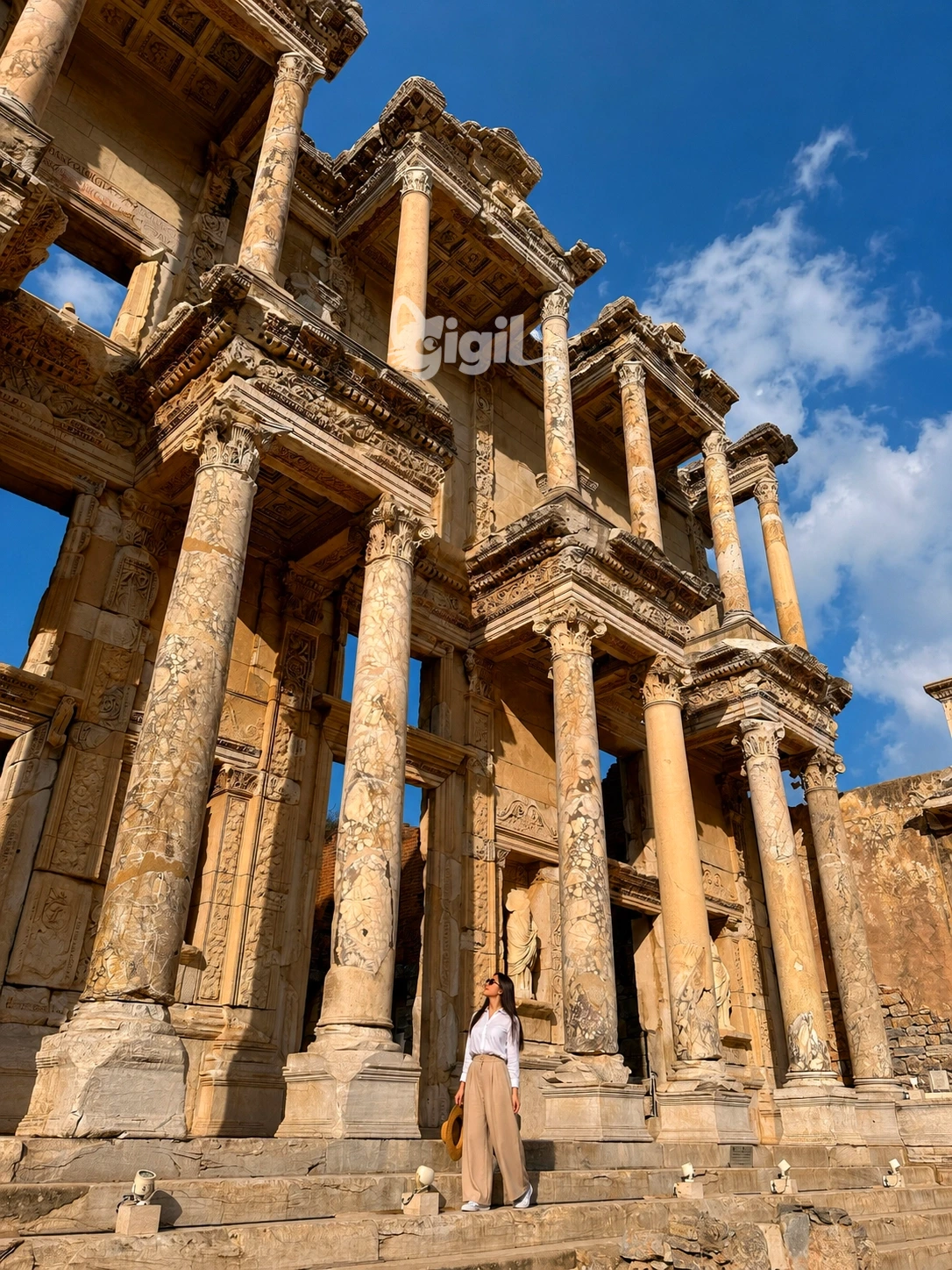
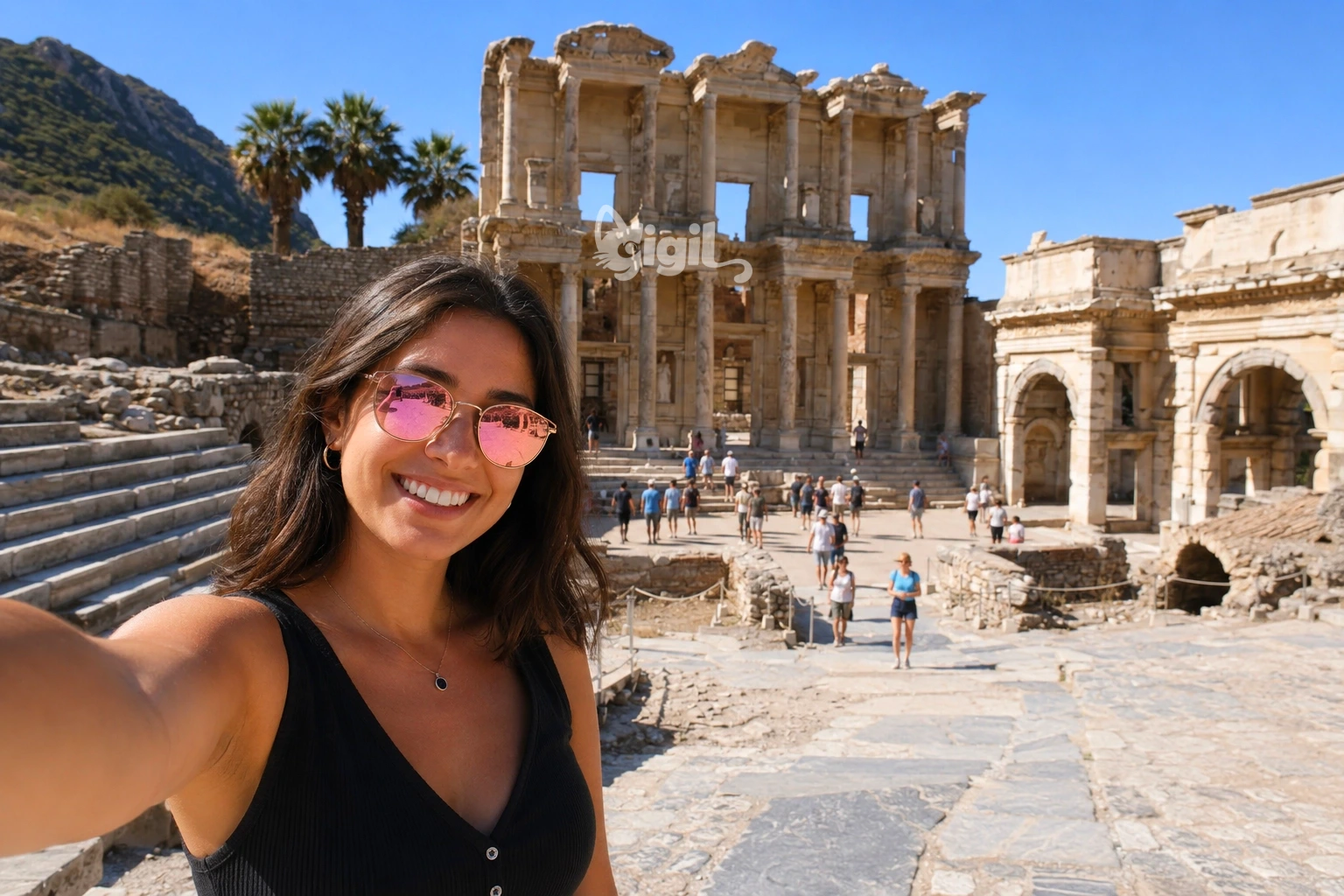
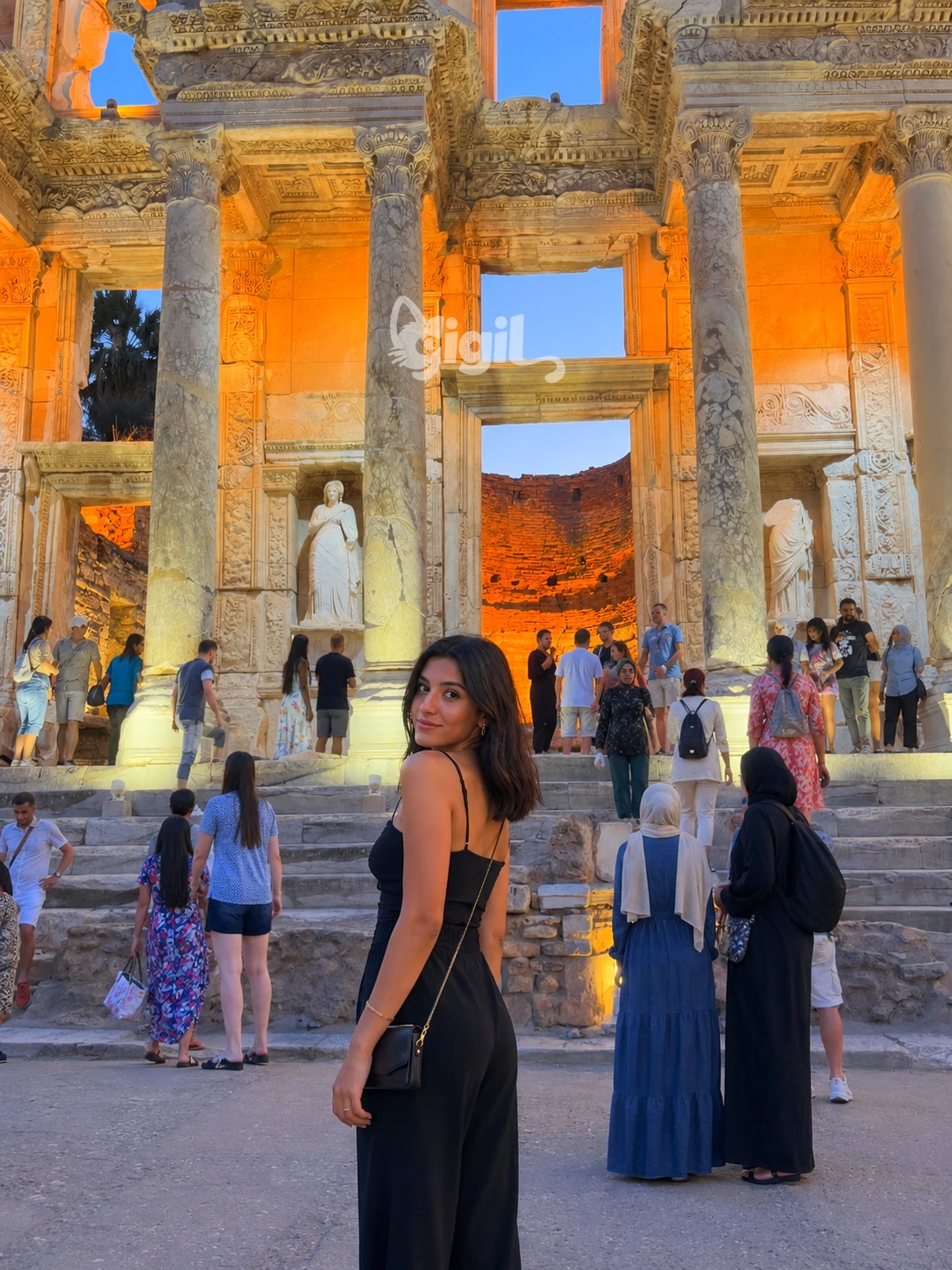
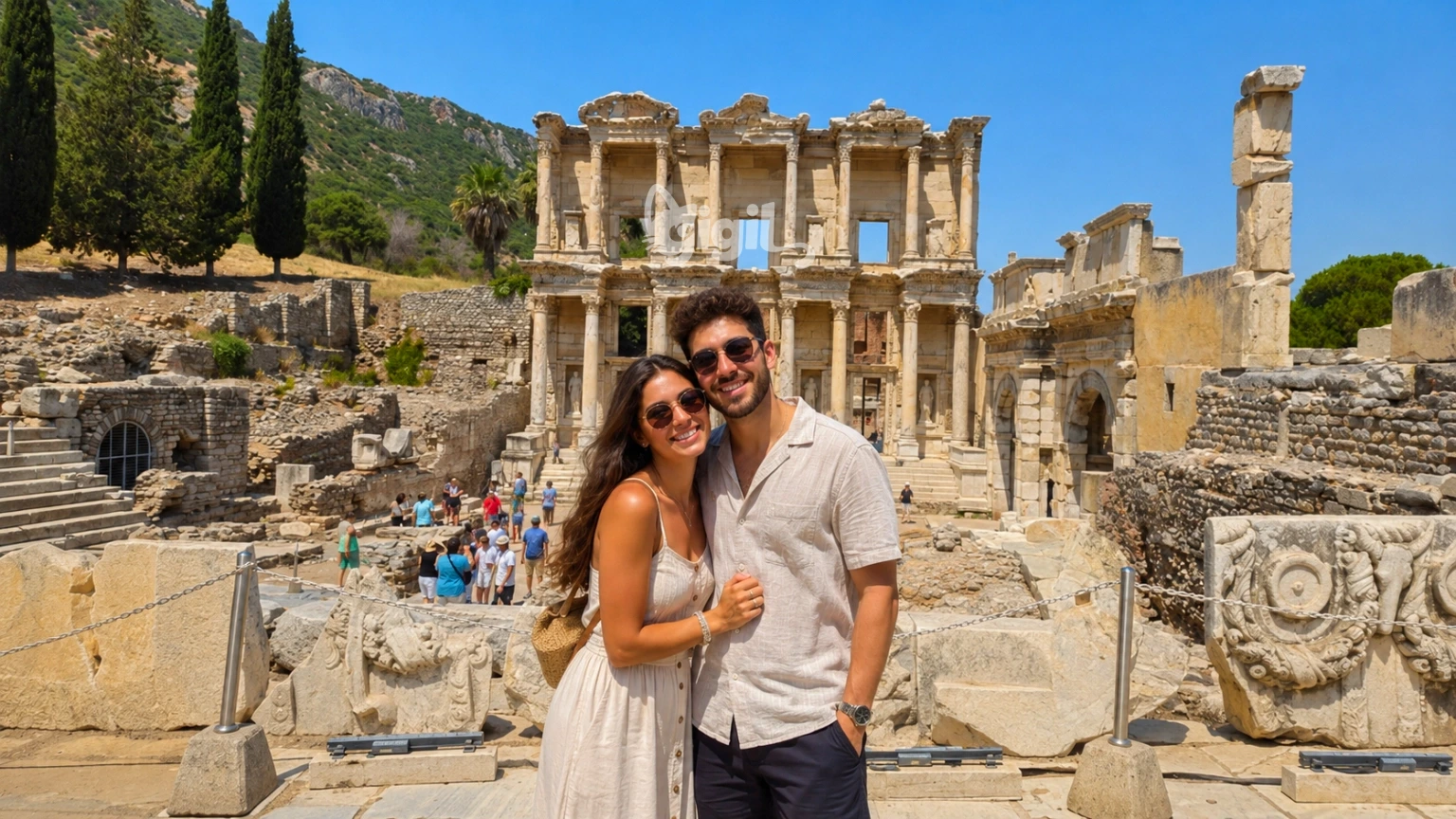
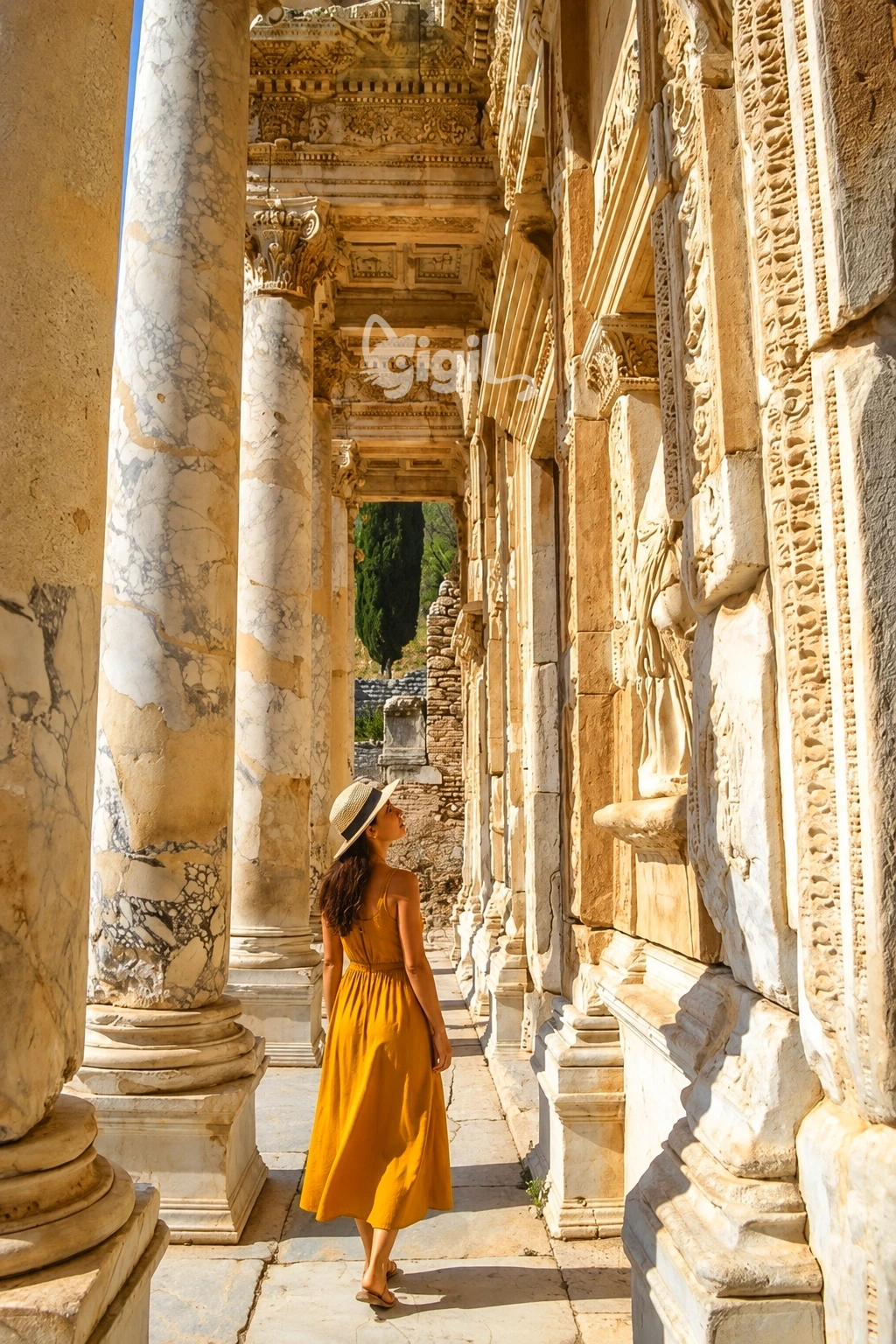
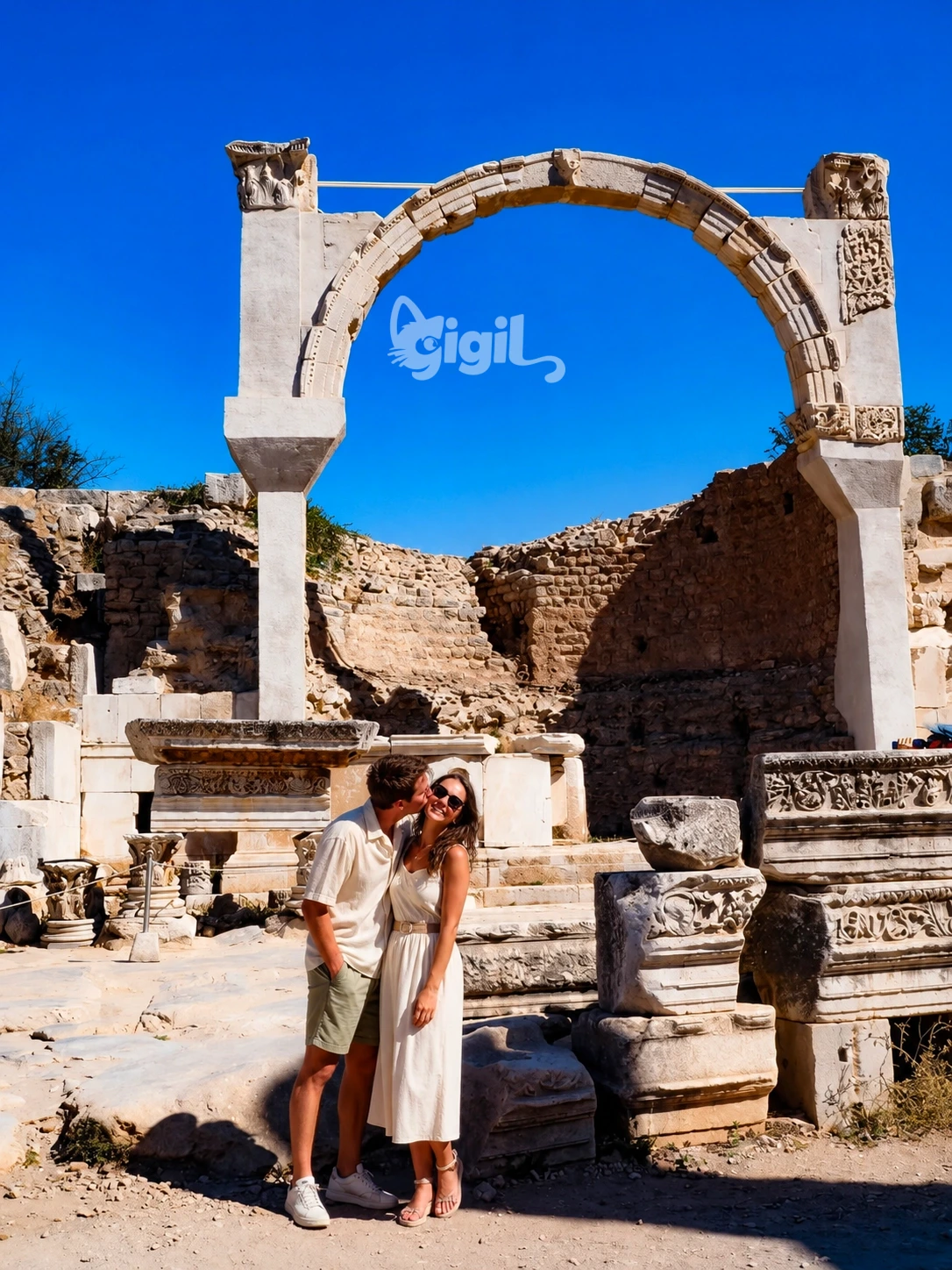
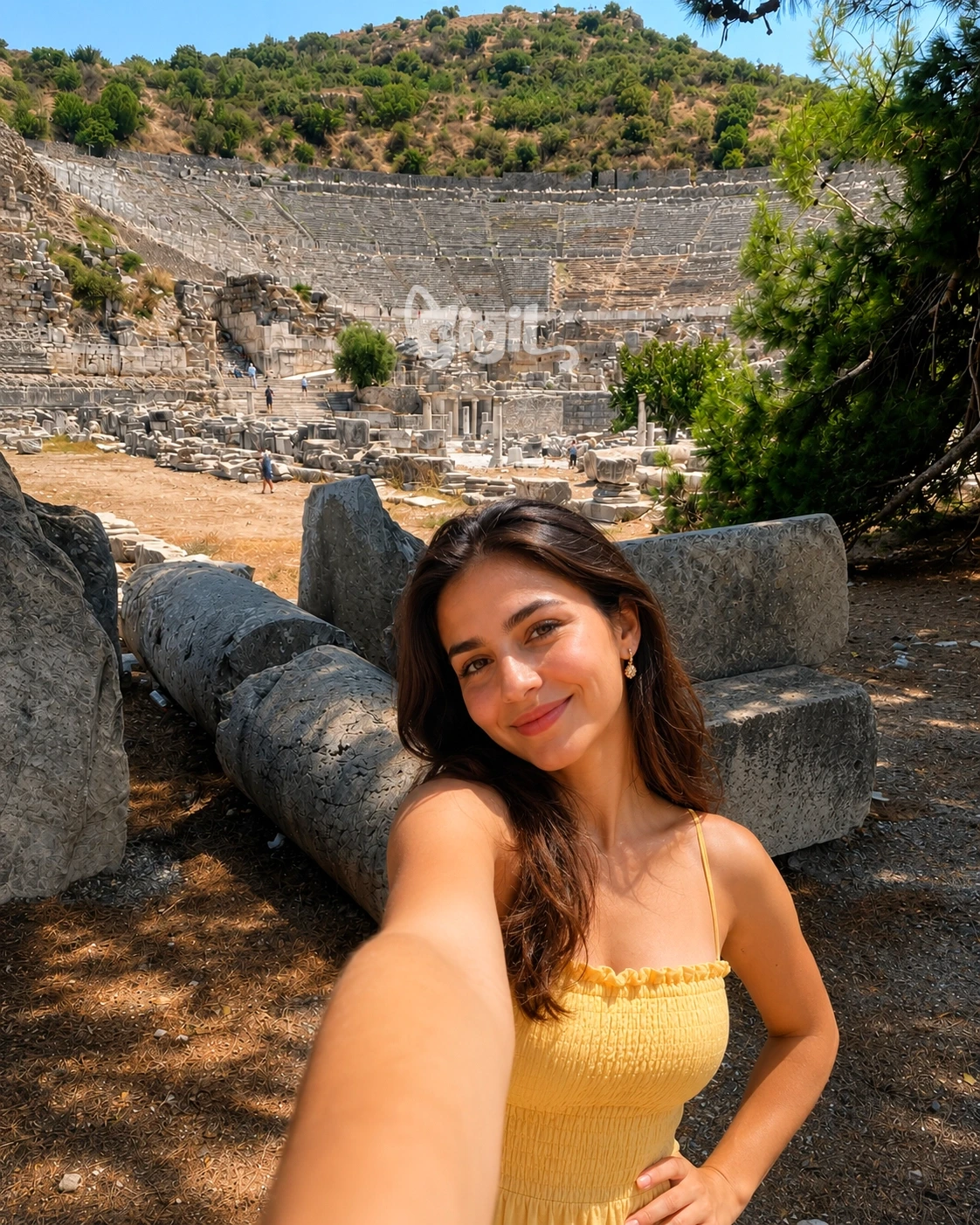
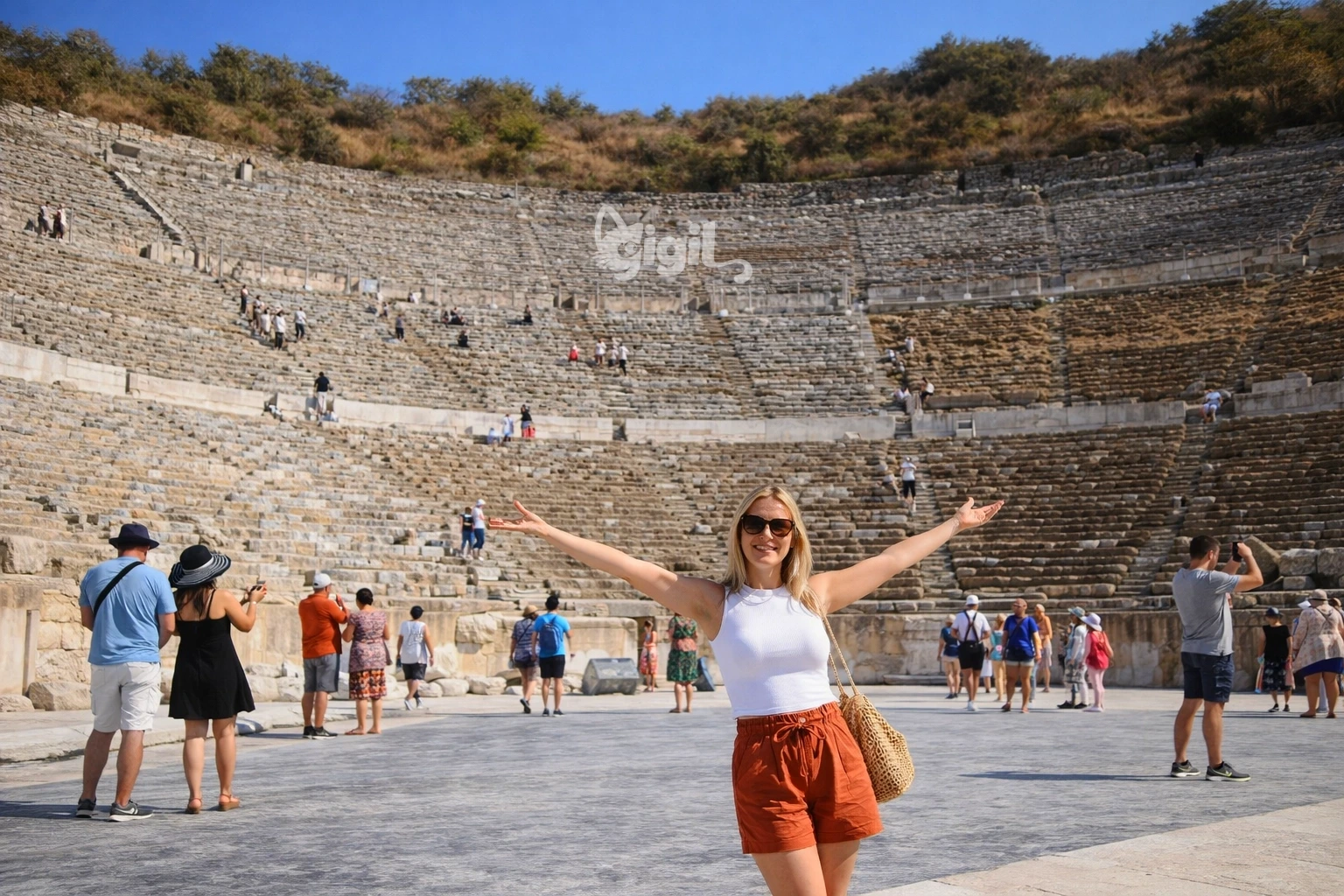
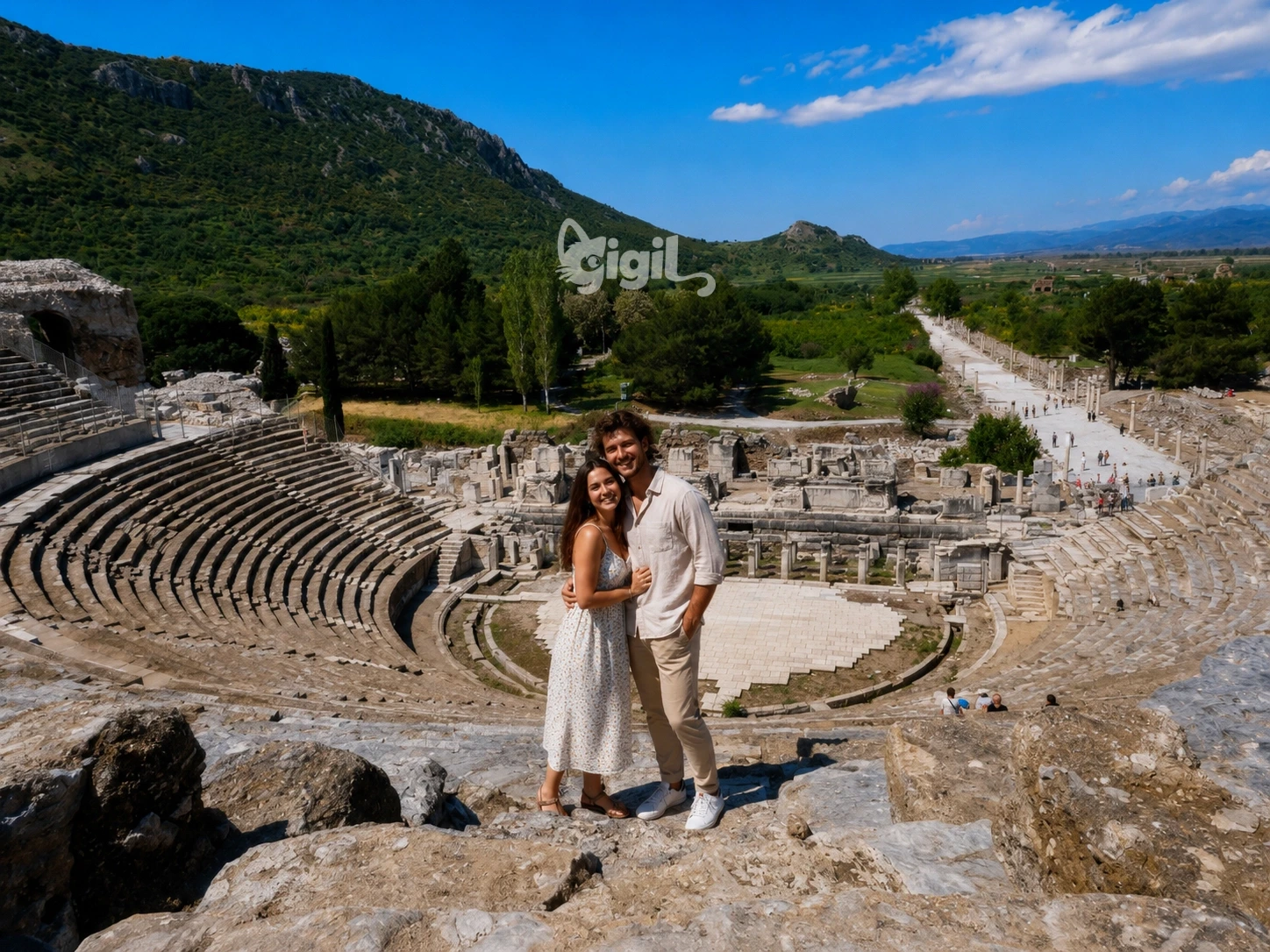
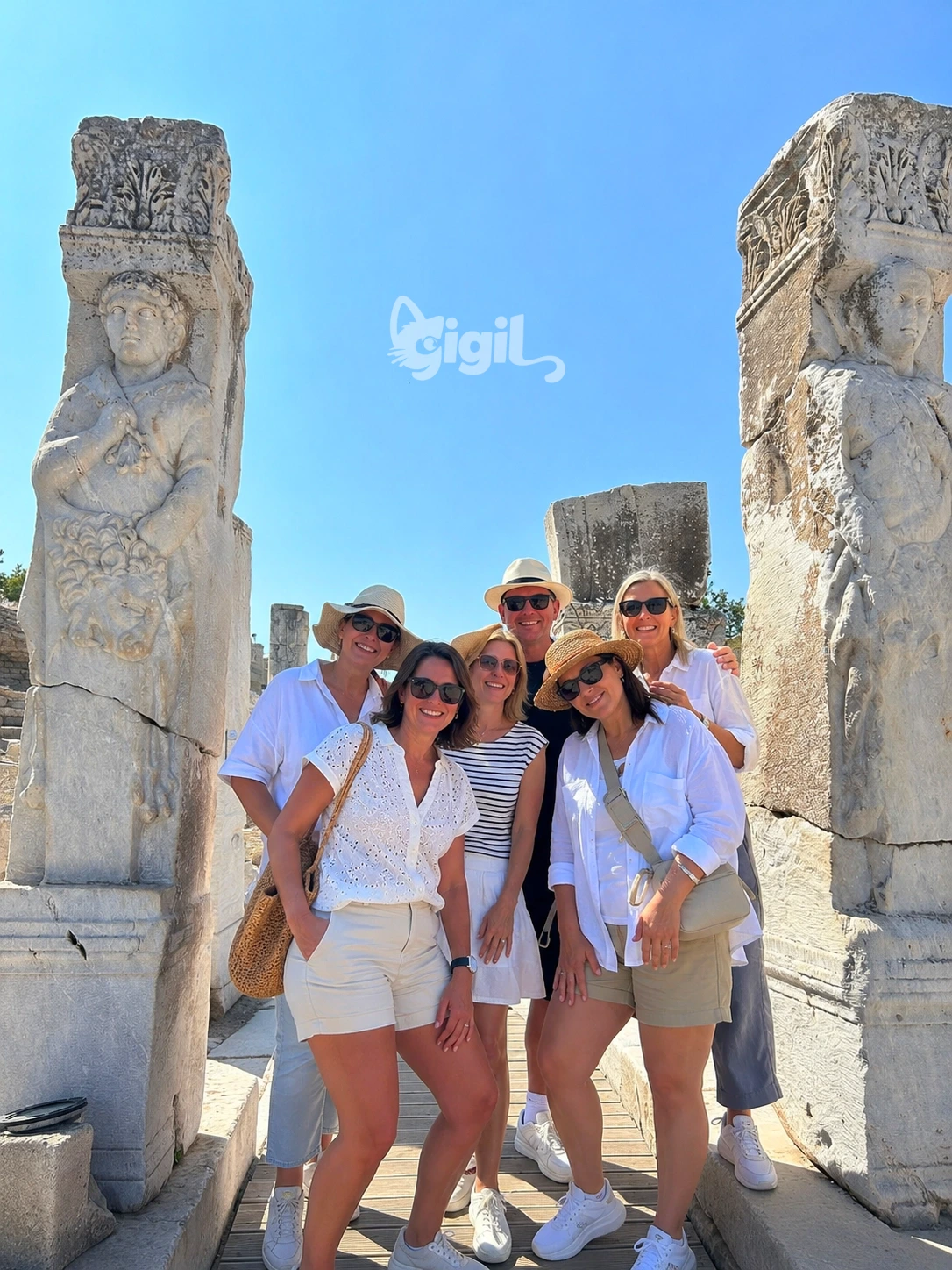
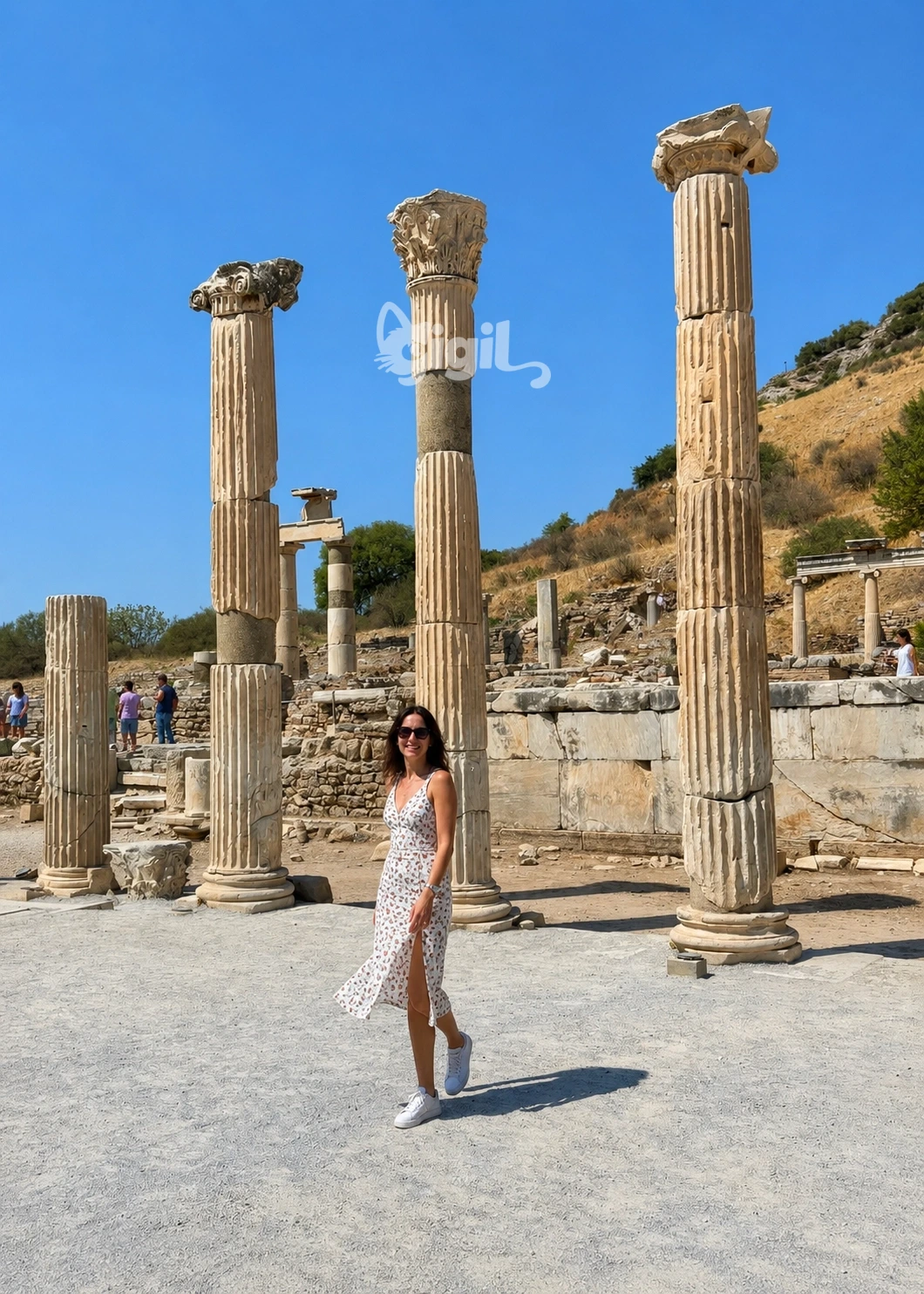
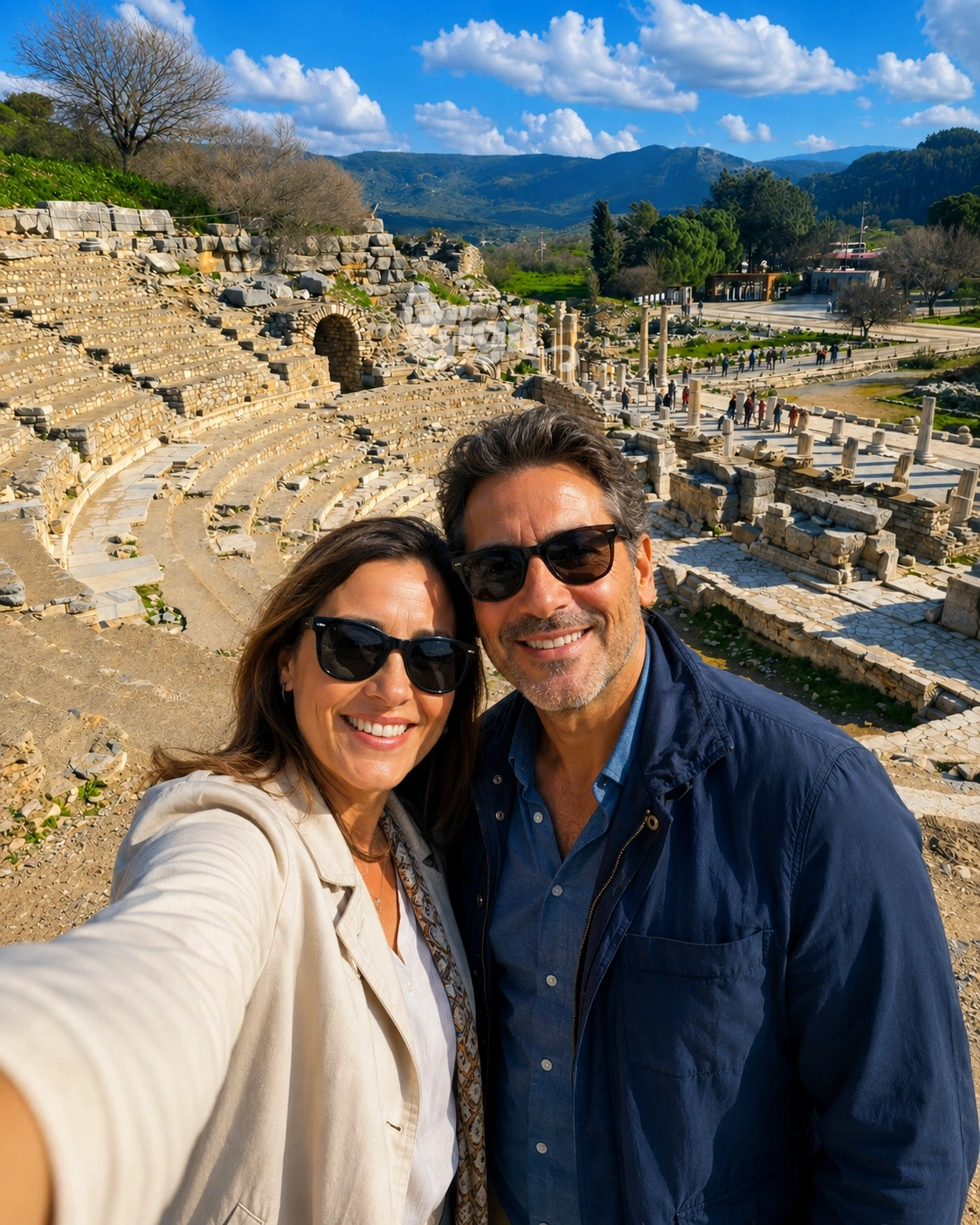
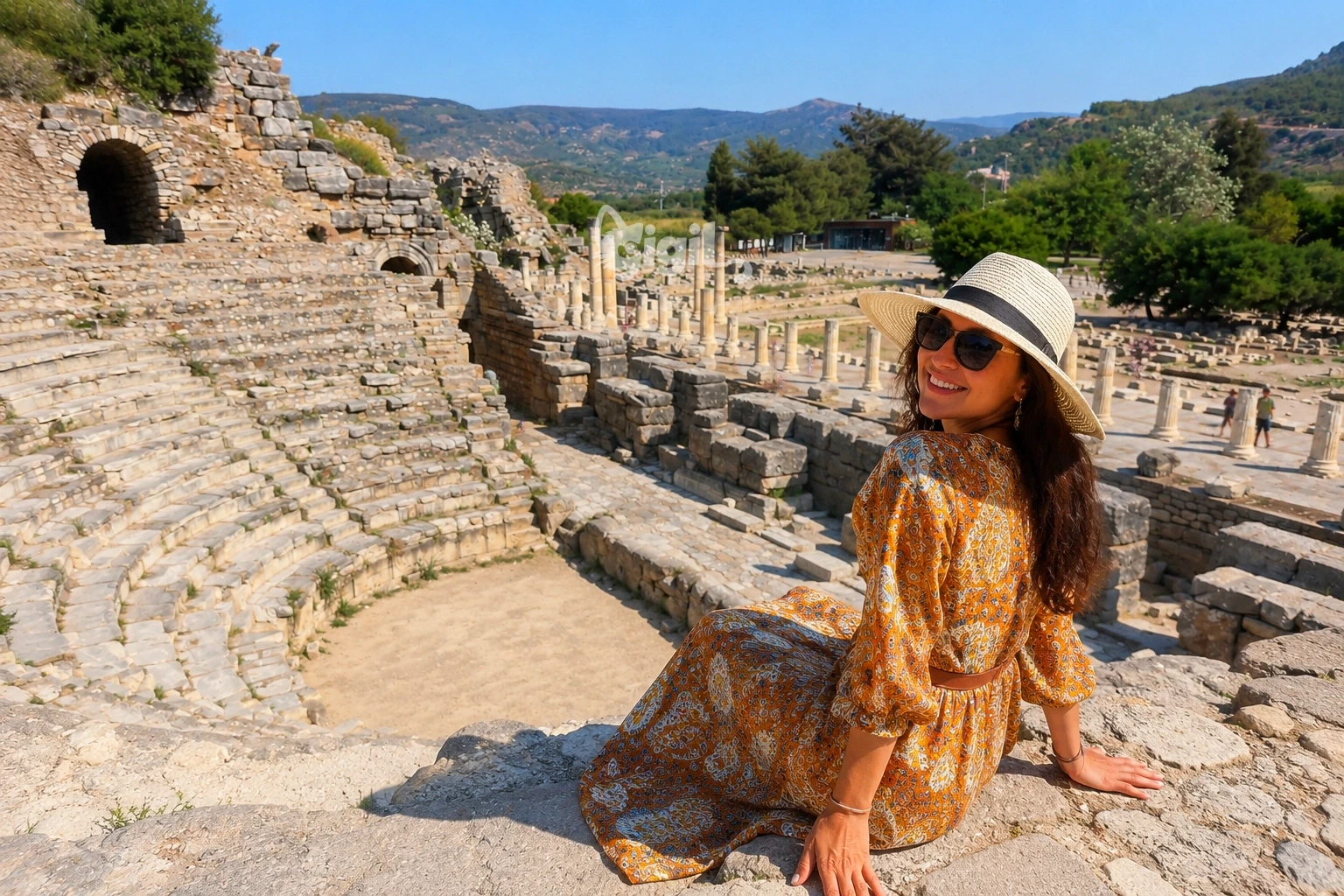
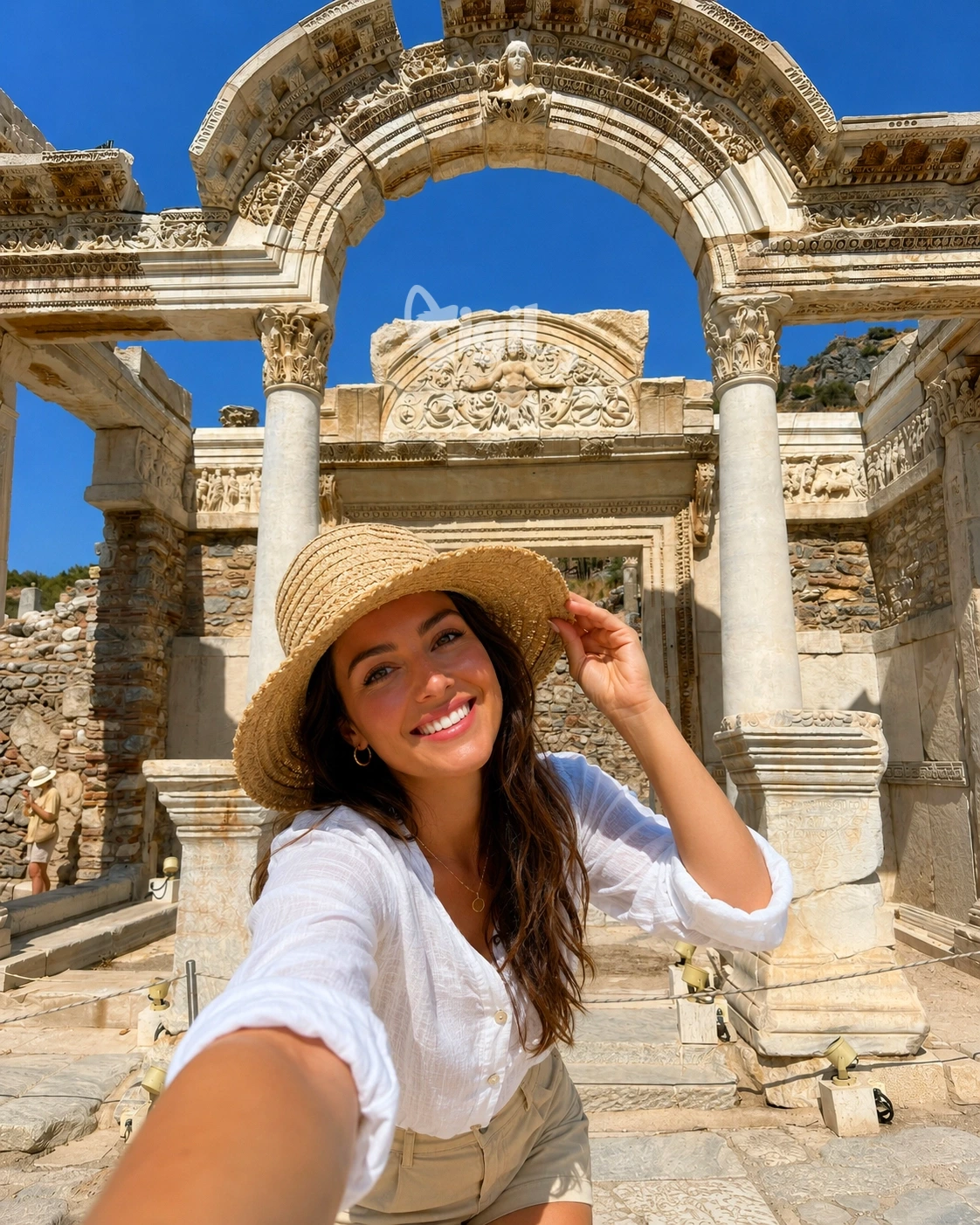
Ephesus Ancient City is where the private route slows down into the ancient urban story. The streets and public spaces show how a major Roman city worked: movement along marble routes, gathering in agora areas, performances and public life around the theatre, and cultural prestige around the Library of Celsus.
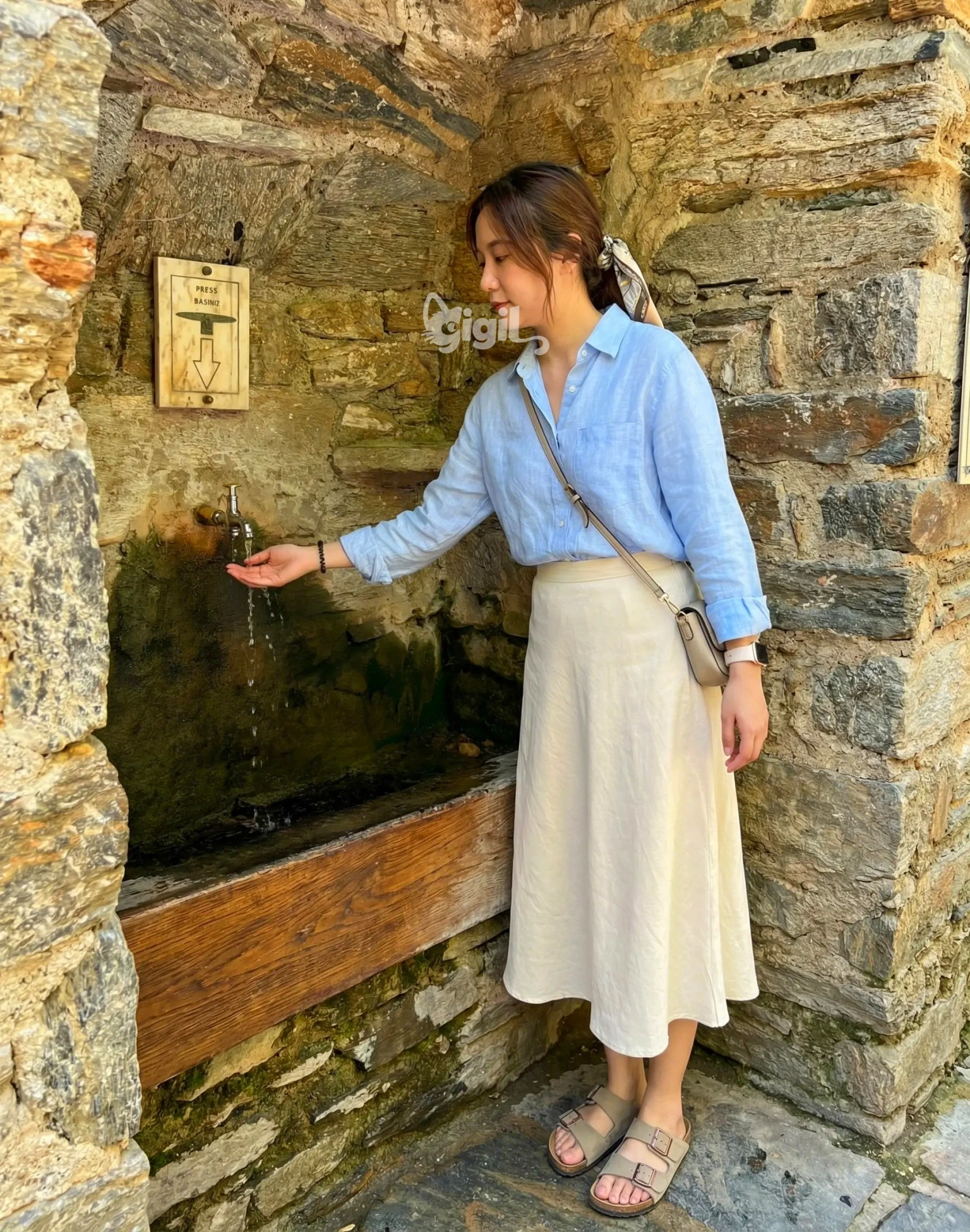
Rather than seeing each ruin separately, try to read the city as a connected plan. Fountains, gates, inscriptions, temple remains and civic buildings reveal a place shaped by trade, status, religion and changing geography, from its harbor identity to its later archaeological rediscovery.
Questions
What makes Ephesus more than a ruin site?
Ephesus can be read as a complete ancient city. Streets, public buildings, monuments, agora spaces and religious remains show how people moved, gathered, traded and represented power.
Which parts of Ephesus help explain city life?
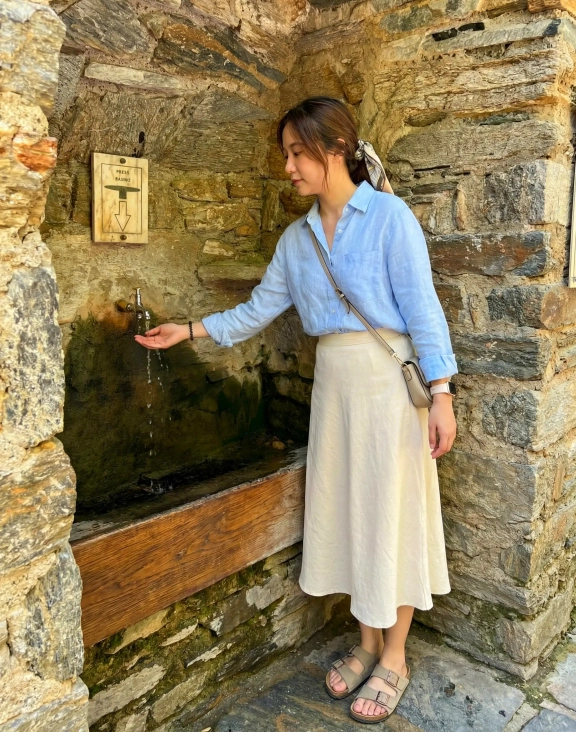
The marble streets, theatre, Library of Celsus, agora areas, gates, inscriptions and fountain remains all help explain the city. Together they show both public life and everyday urban movement.
Why is the harbor story important in Ephesus?
The harbor explains why Ephesus became a major city. Its commercial and political strength was tied to sea access, even though the ancient harbor area is no longer on the modern shoreline.
How should I understand restored monuments in Ephesus?
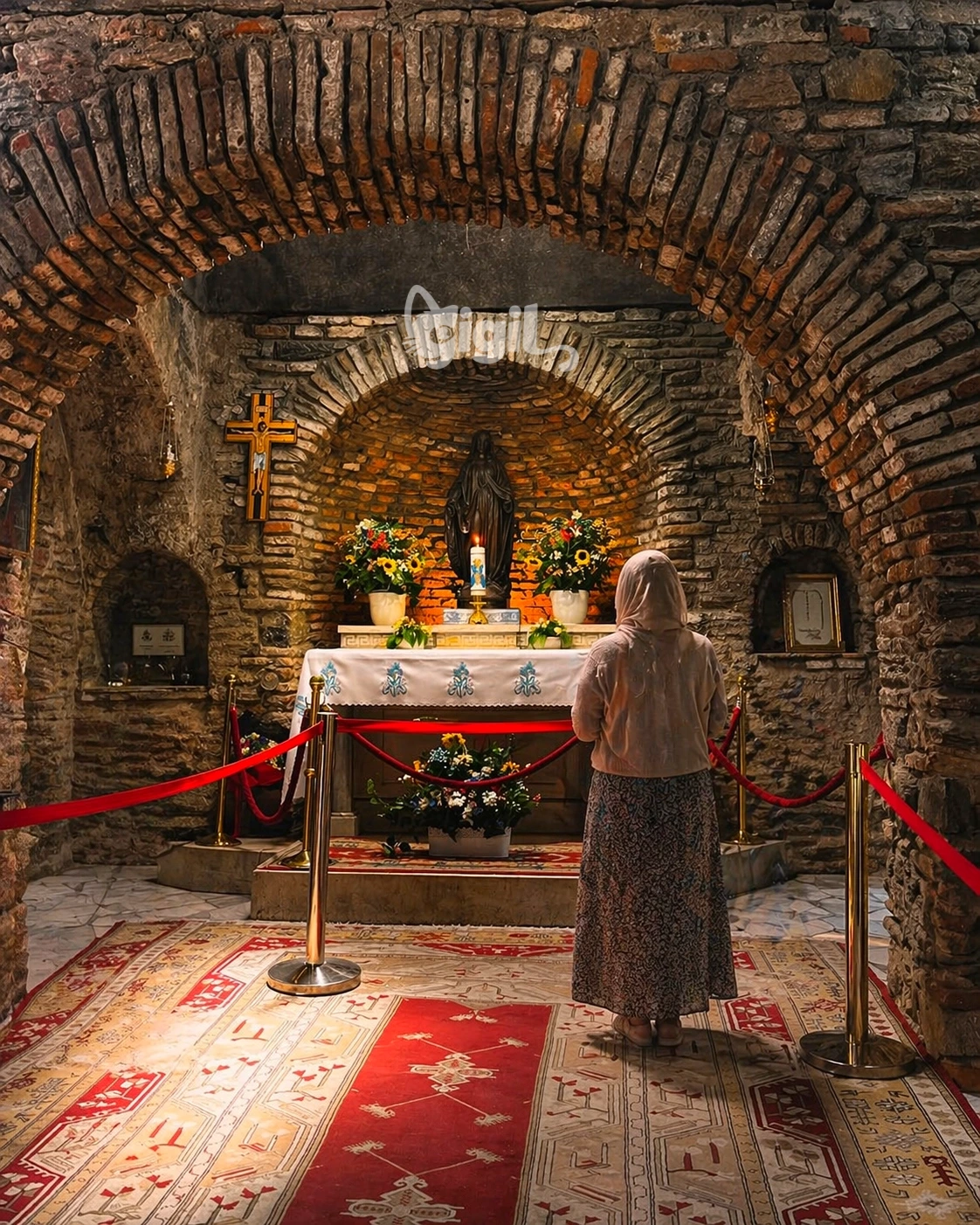
Restored sections help visitors imagine the former scale of the city, but they should be understood alongside original remains and archaeological conservation work.