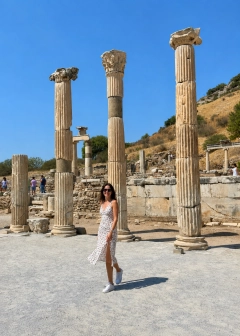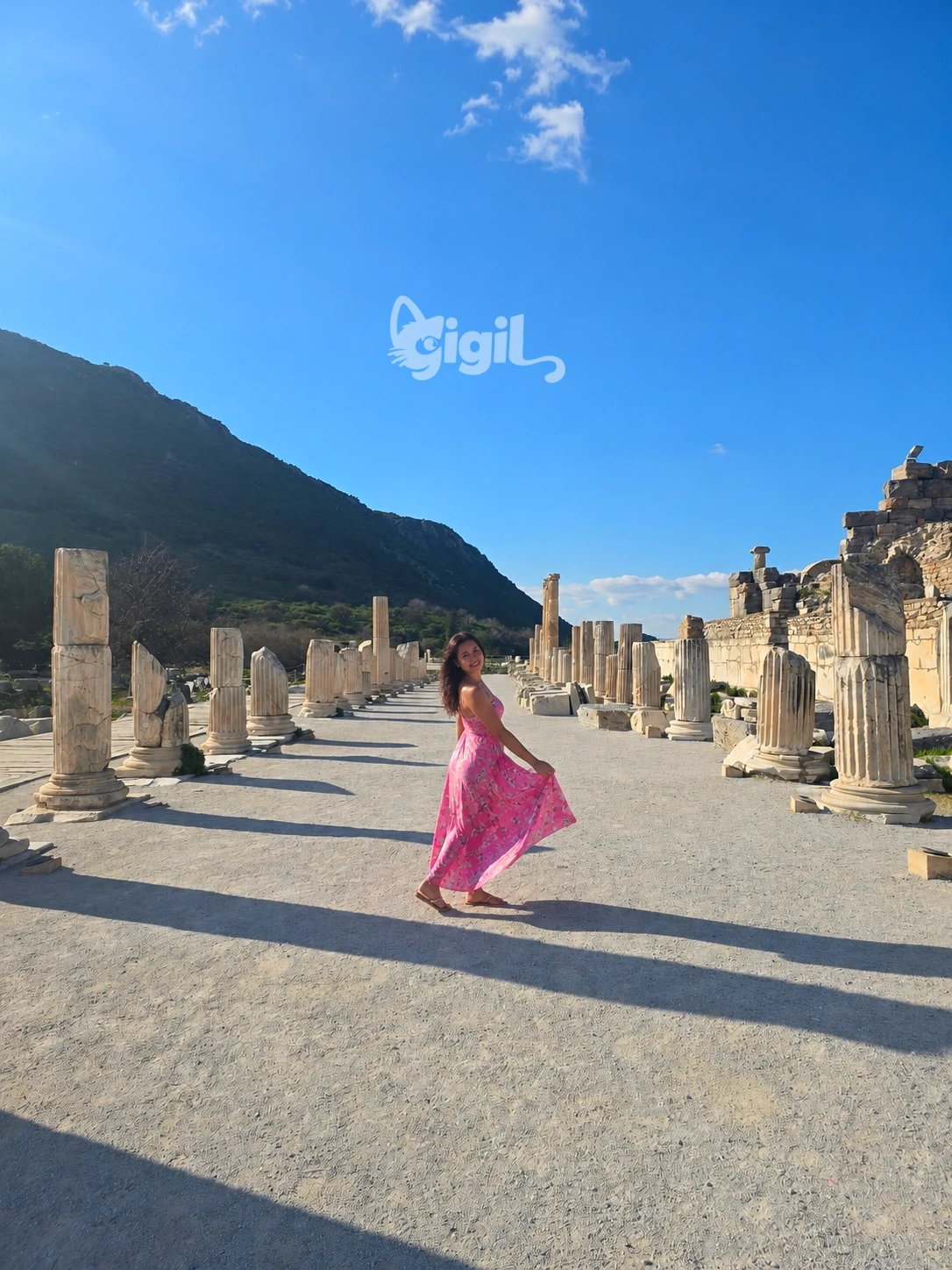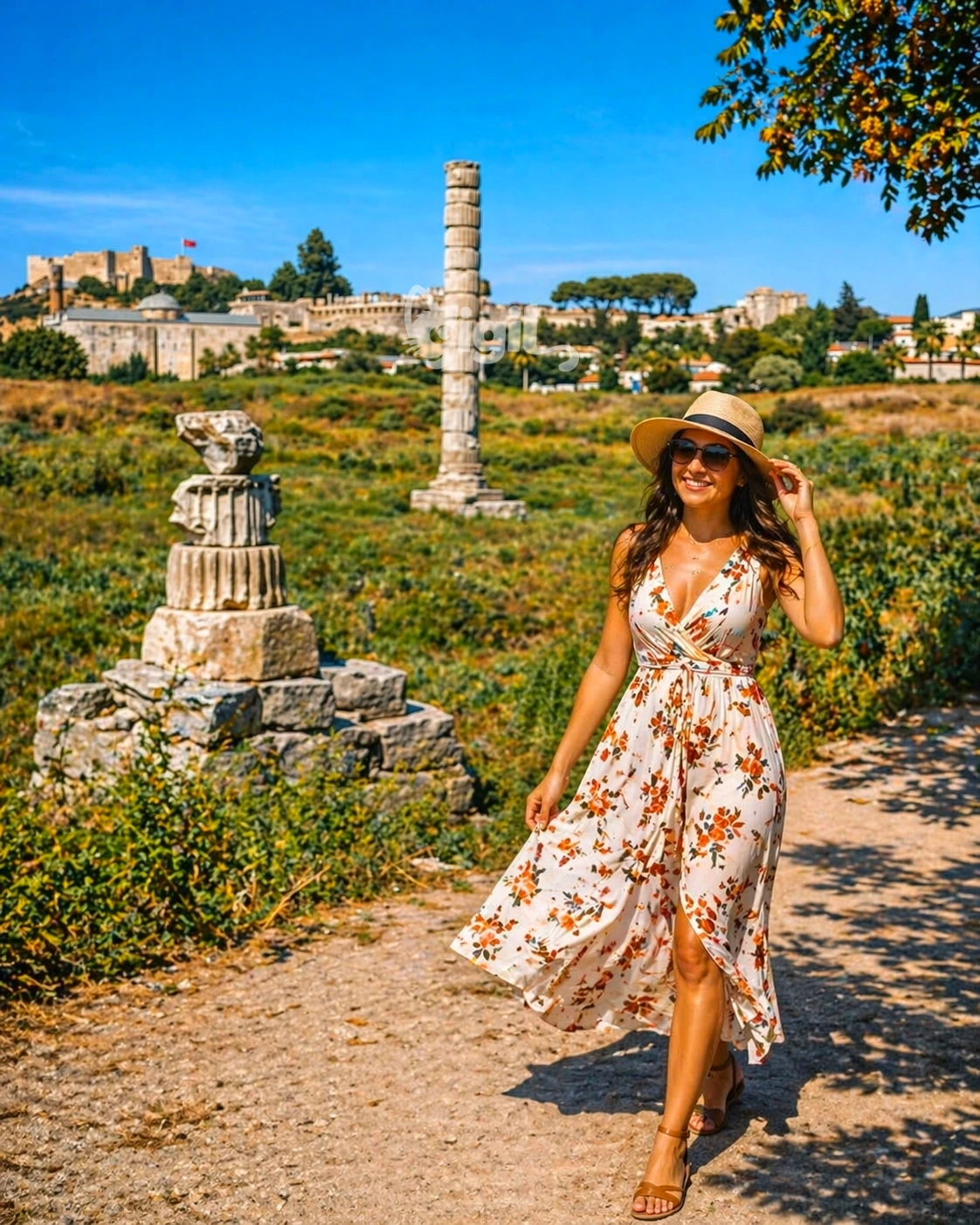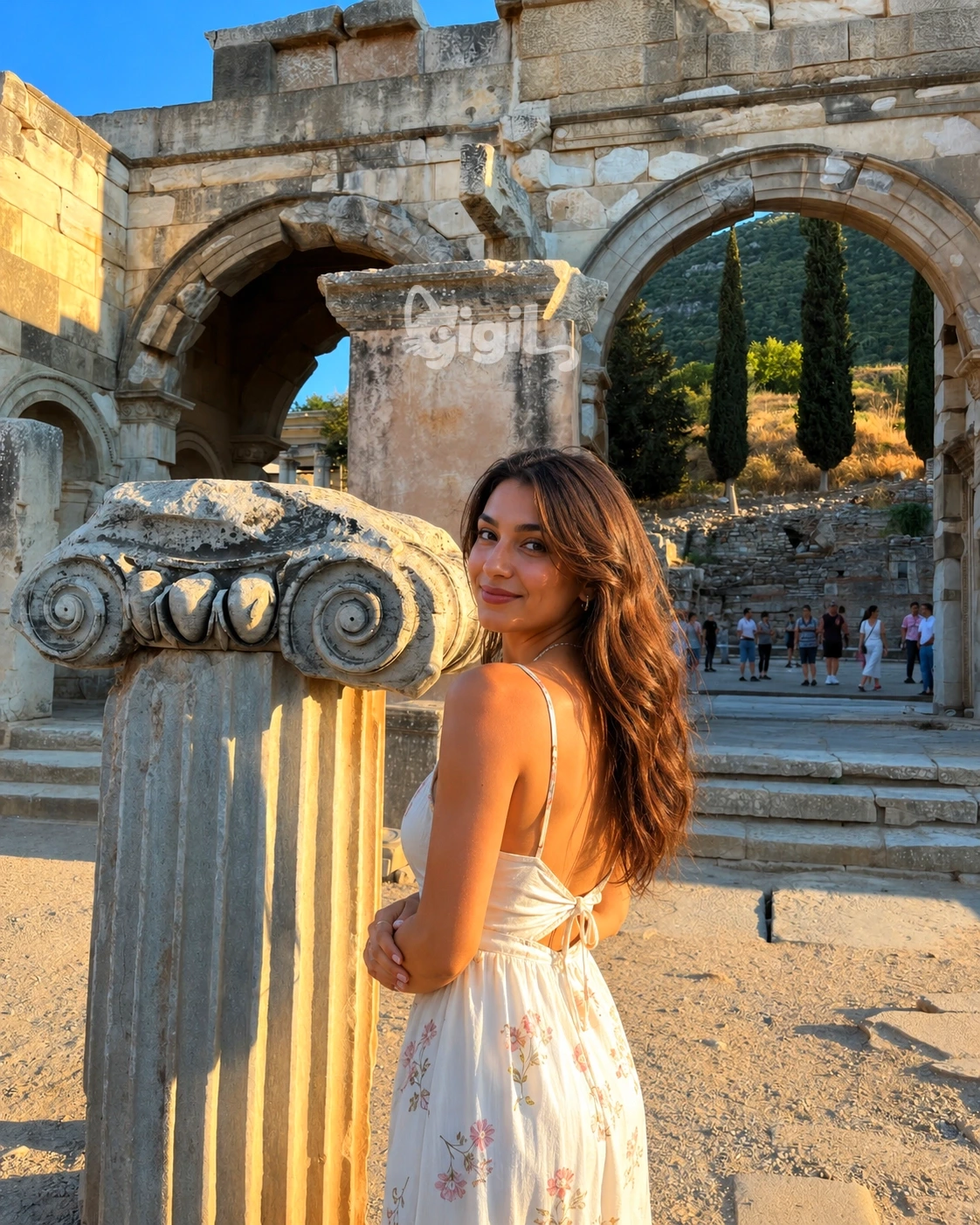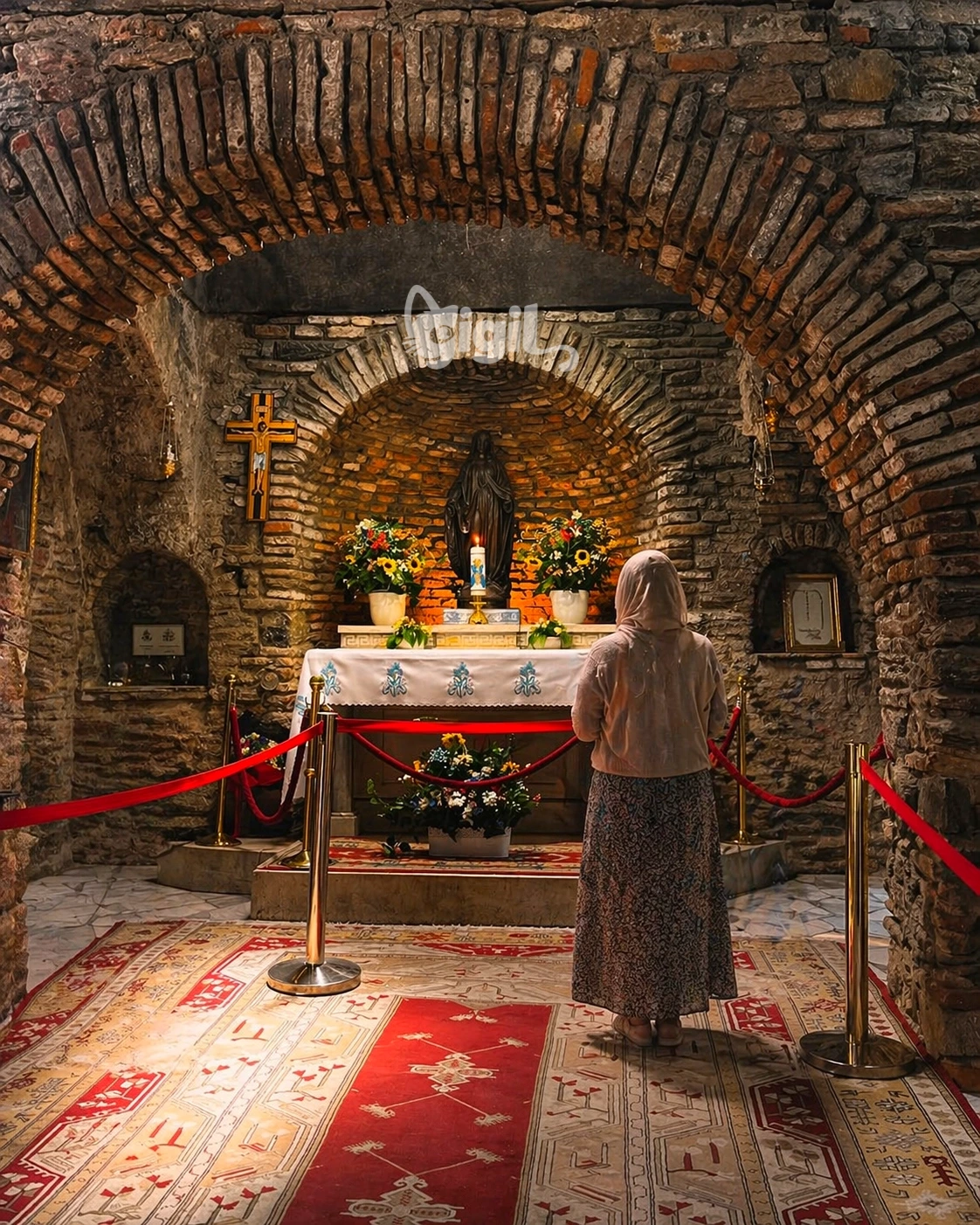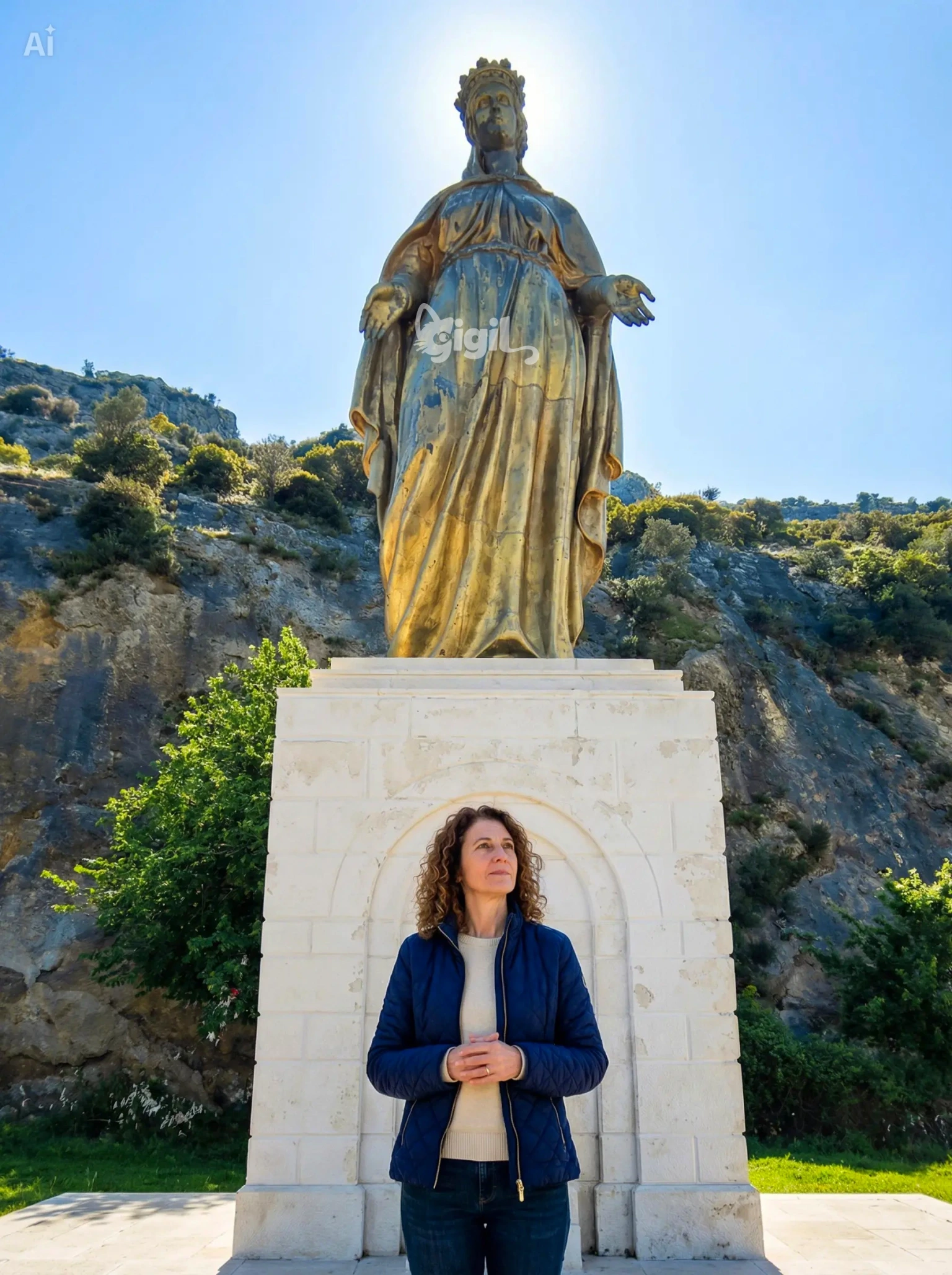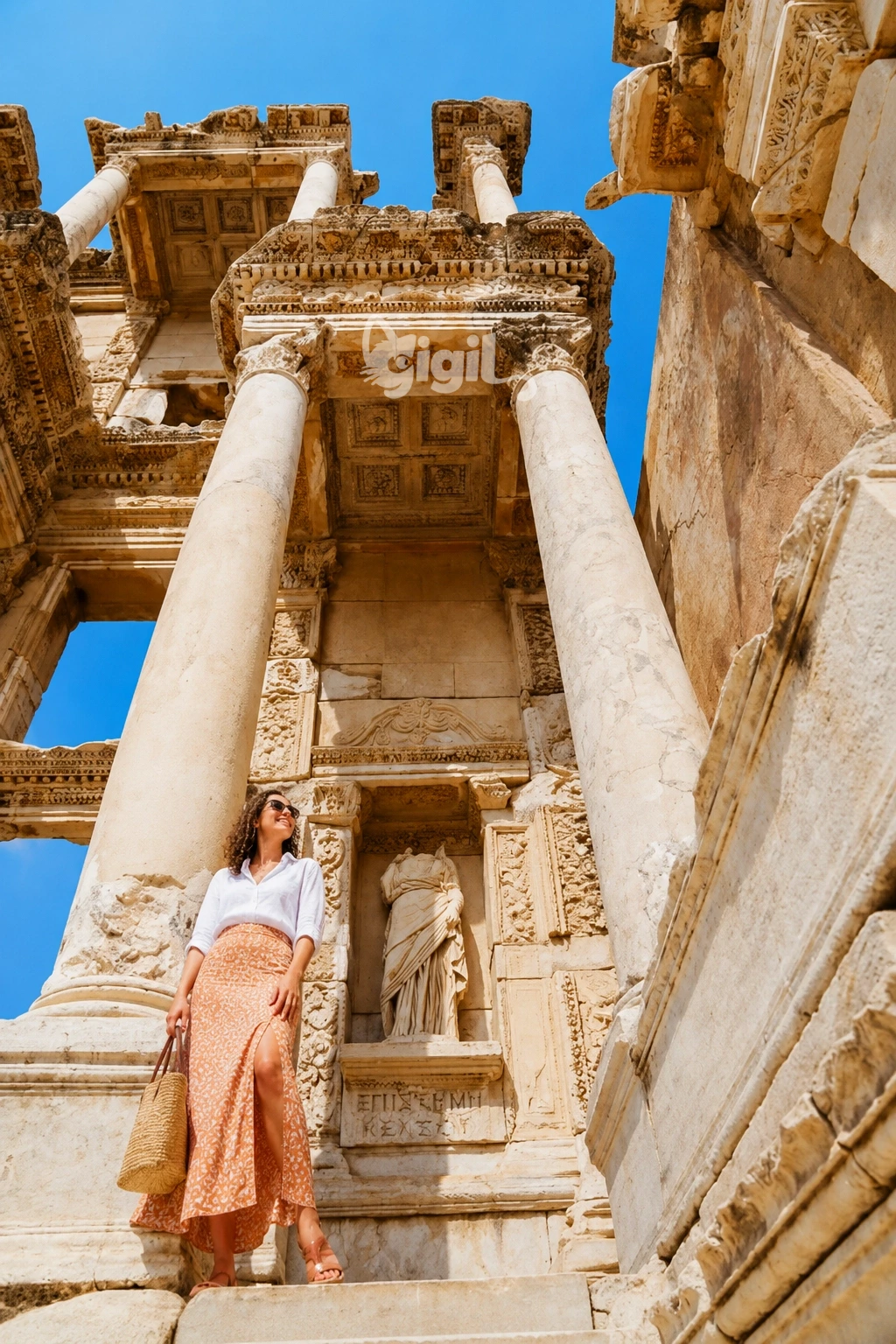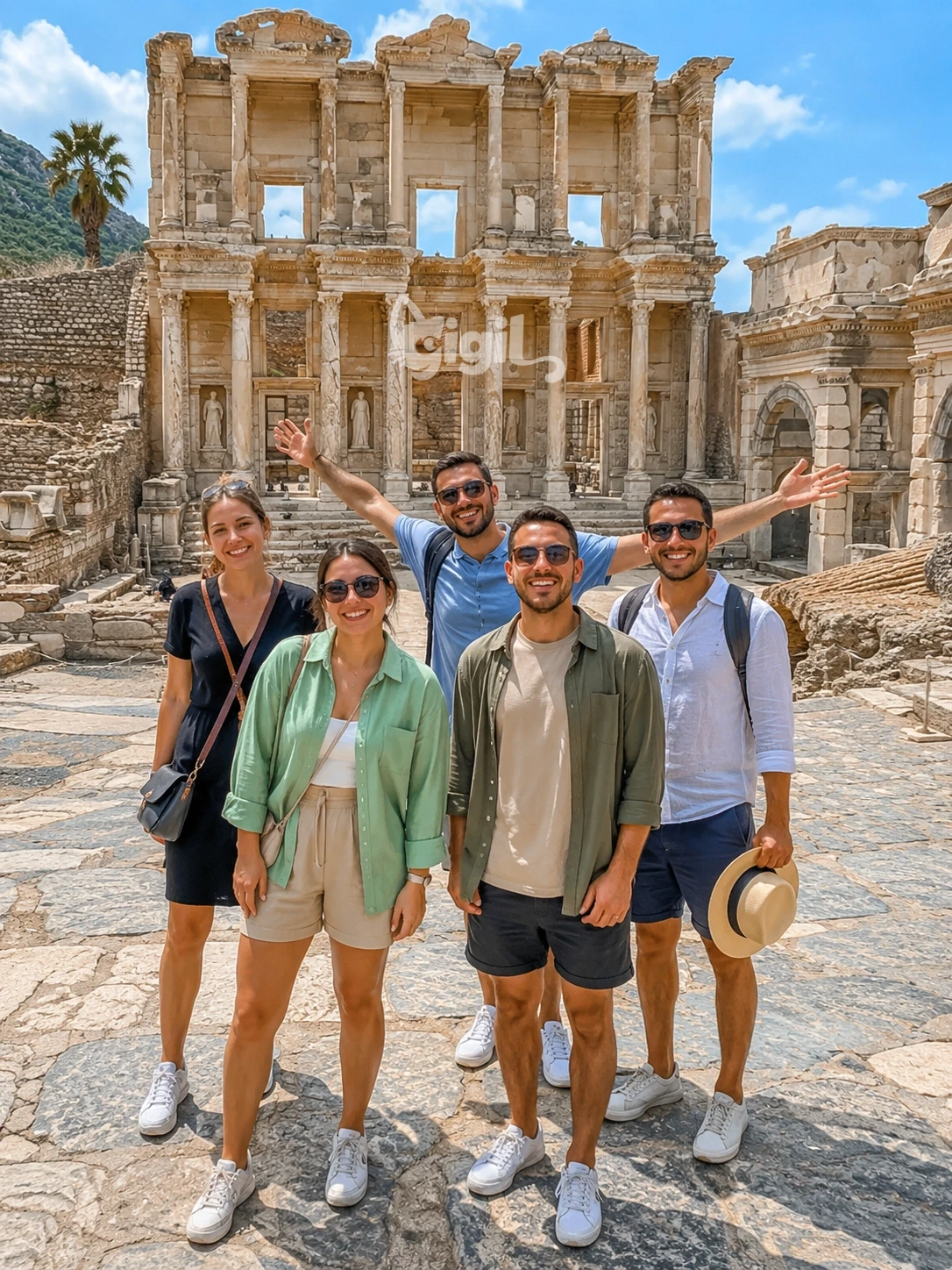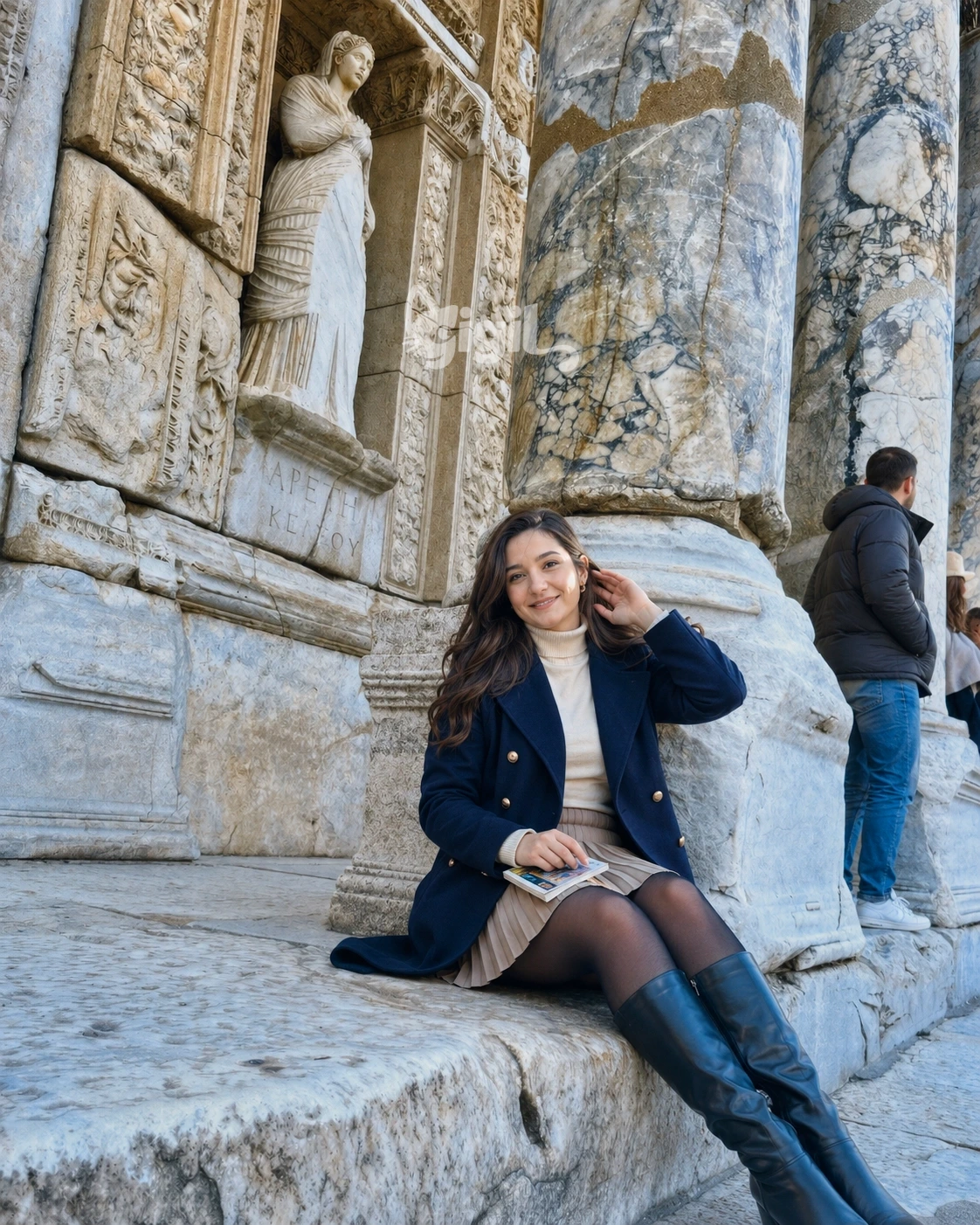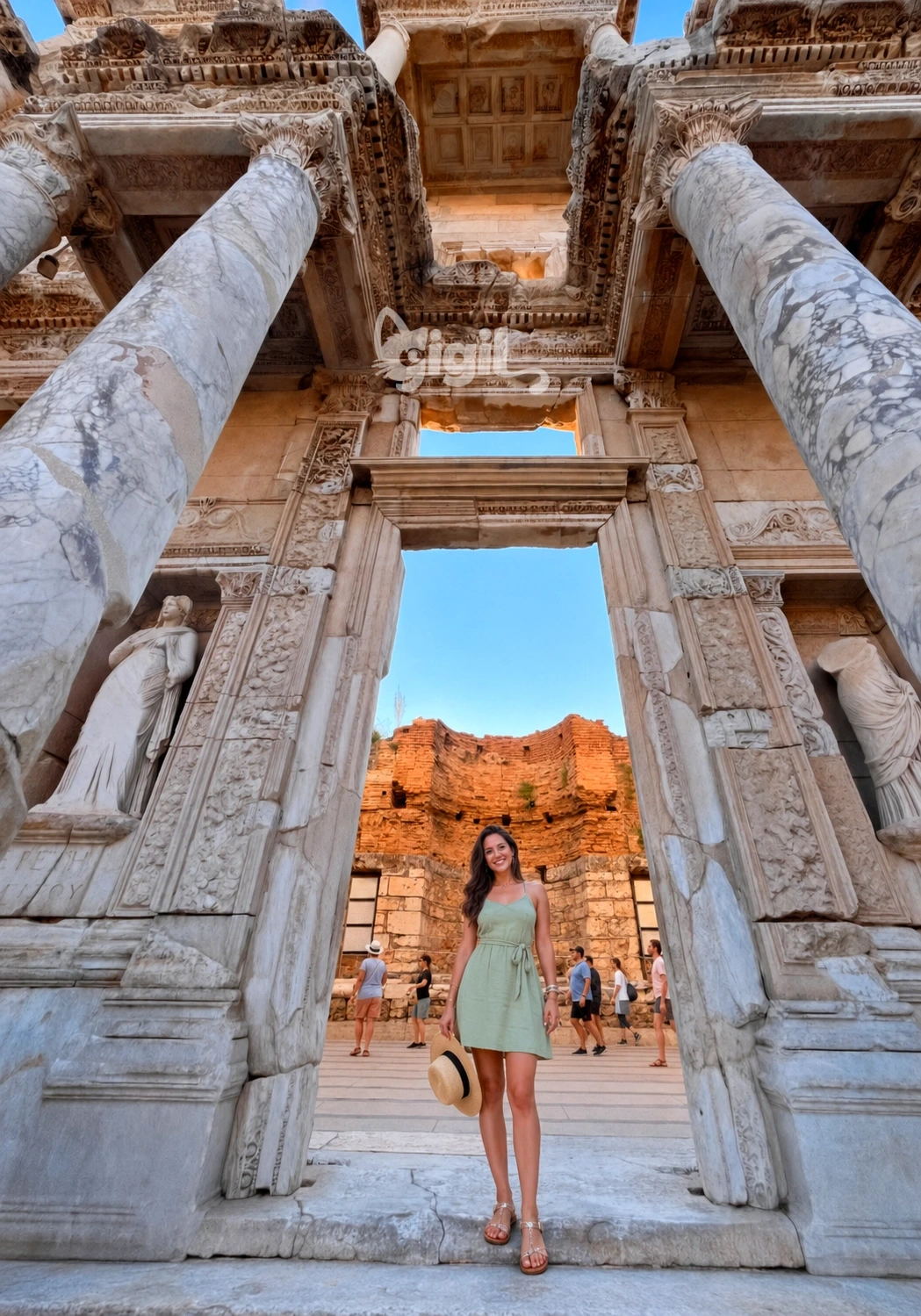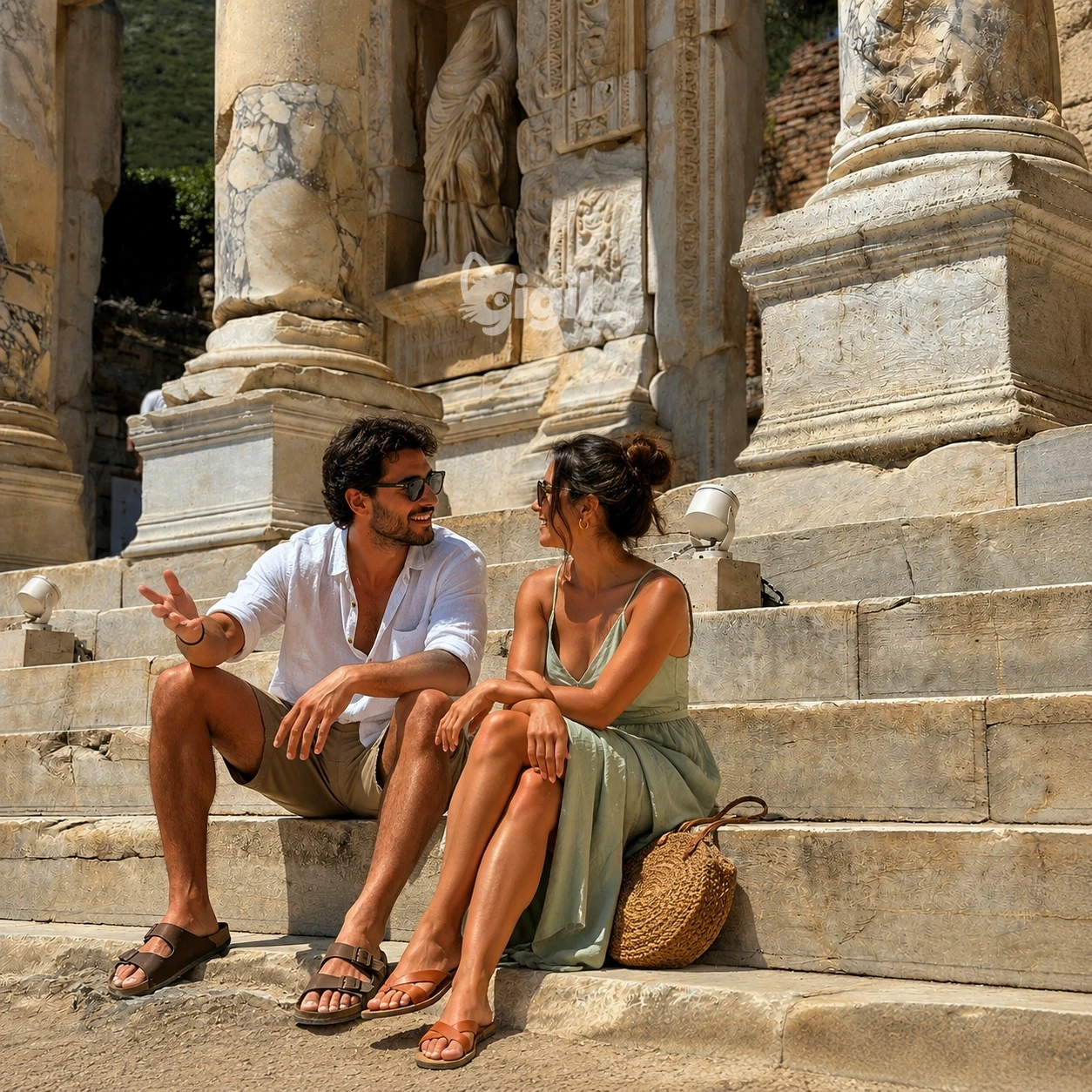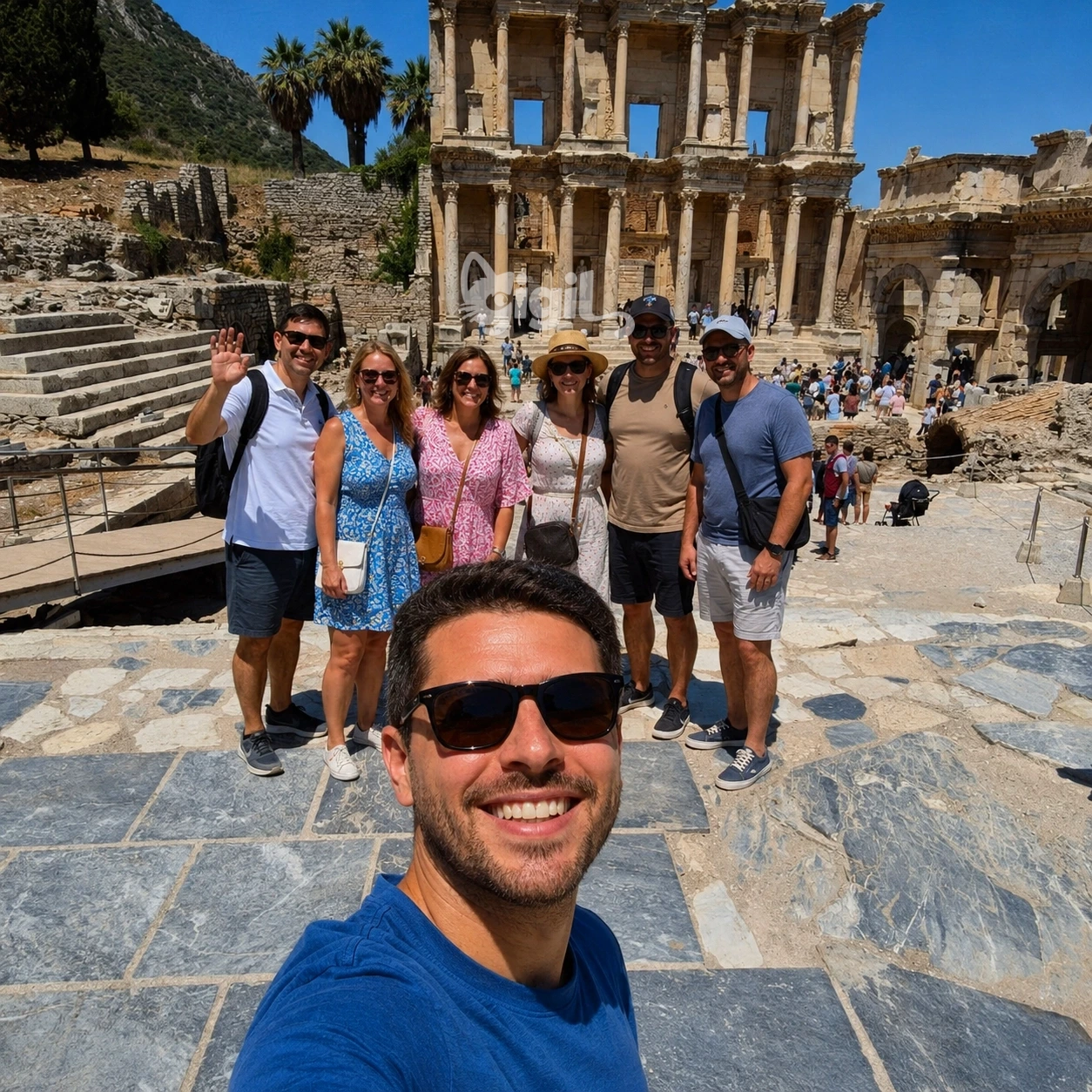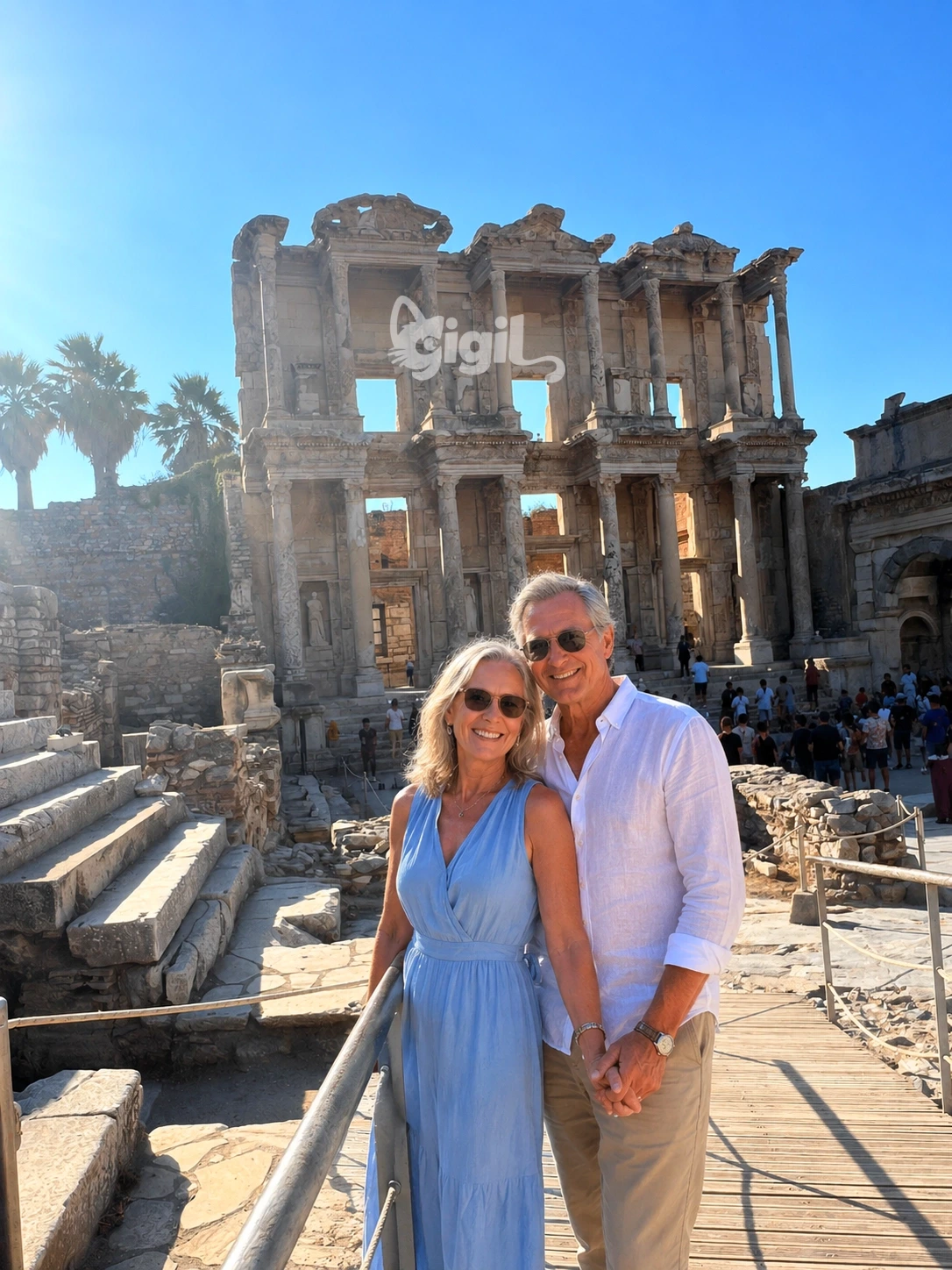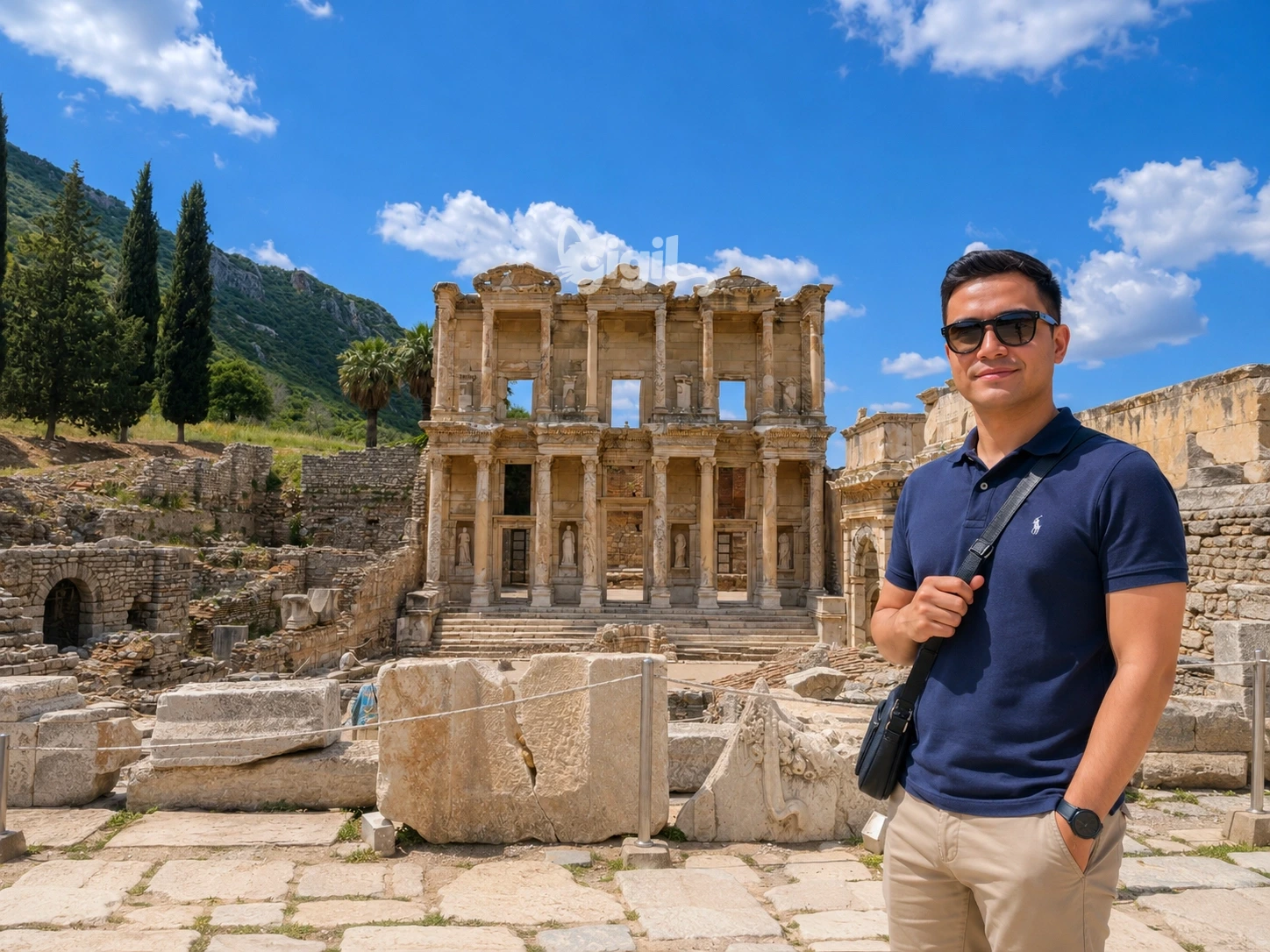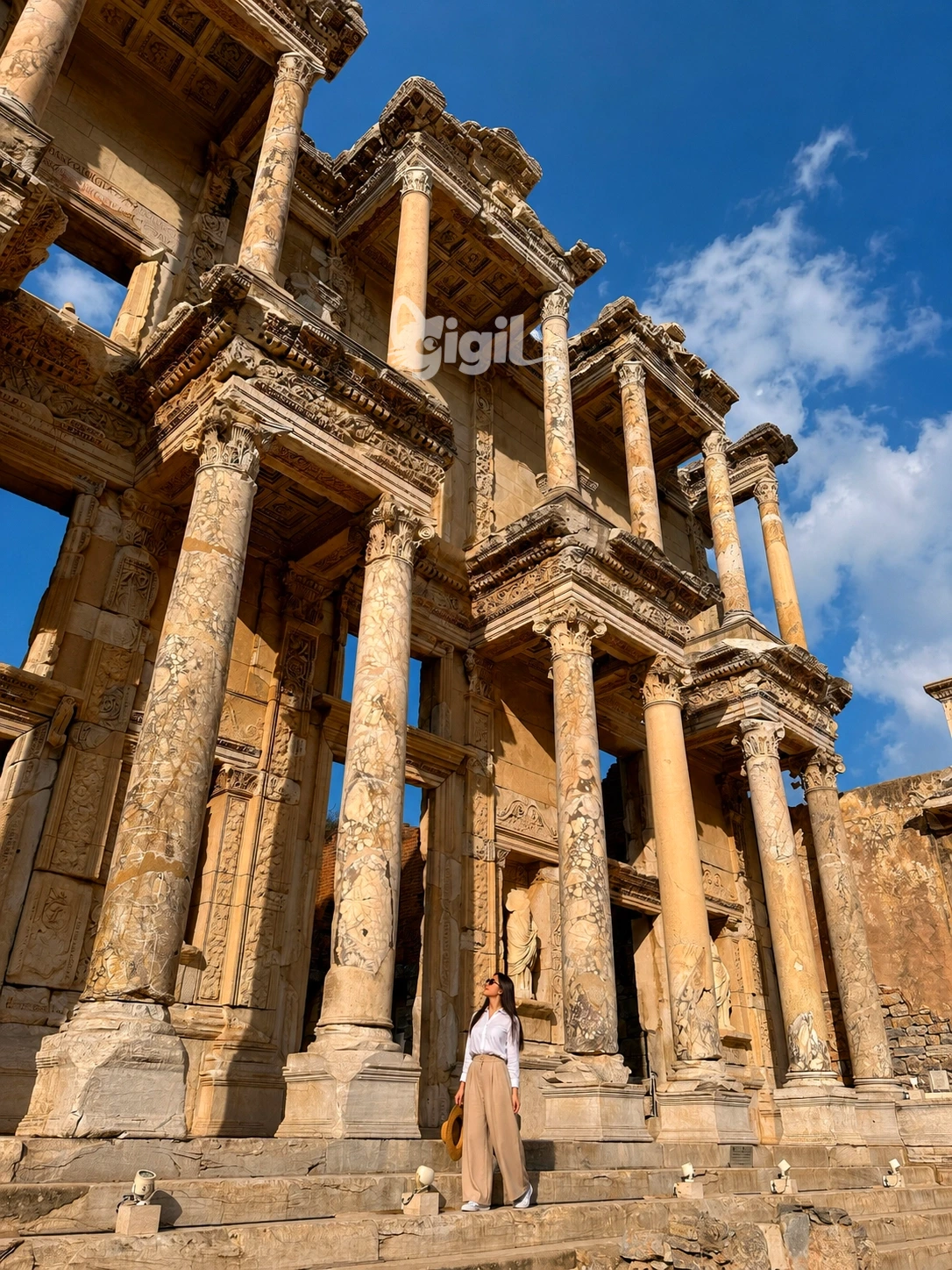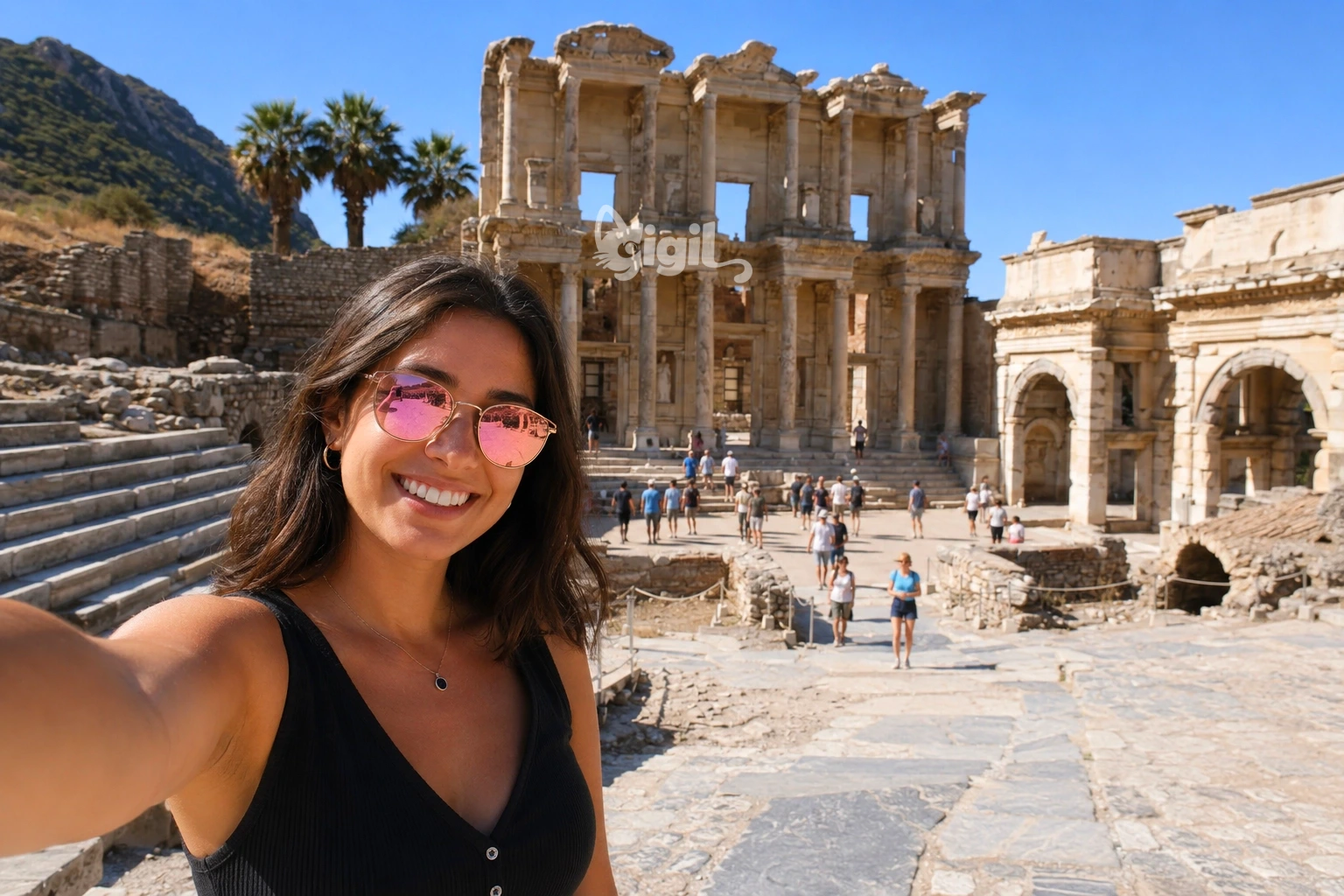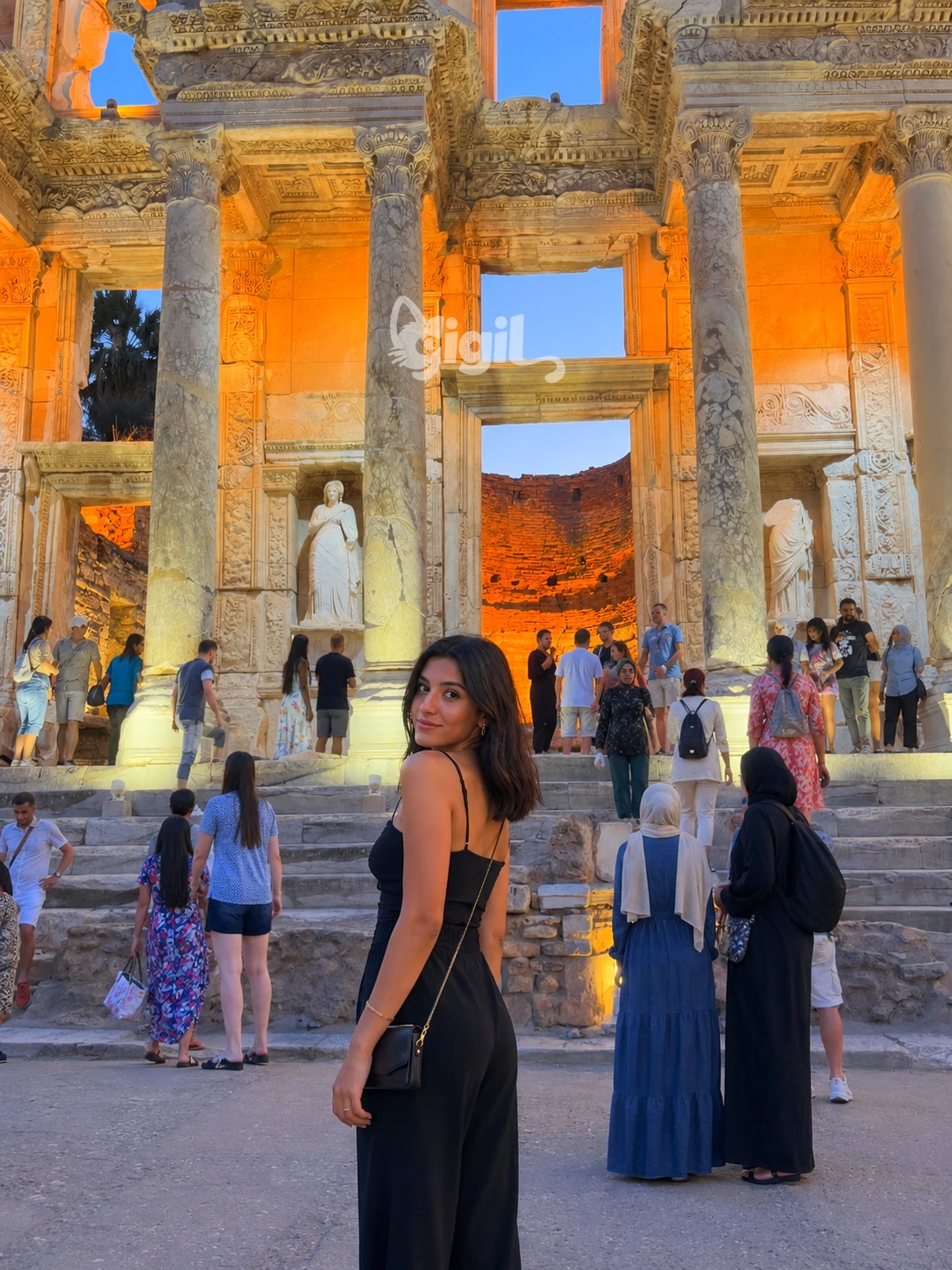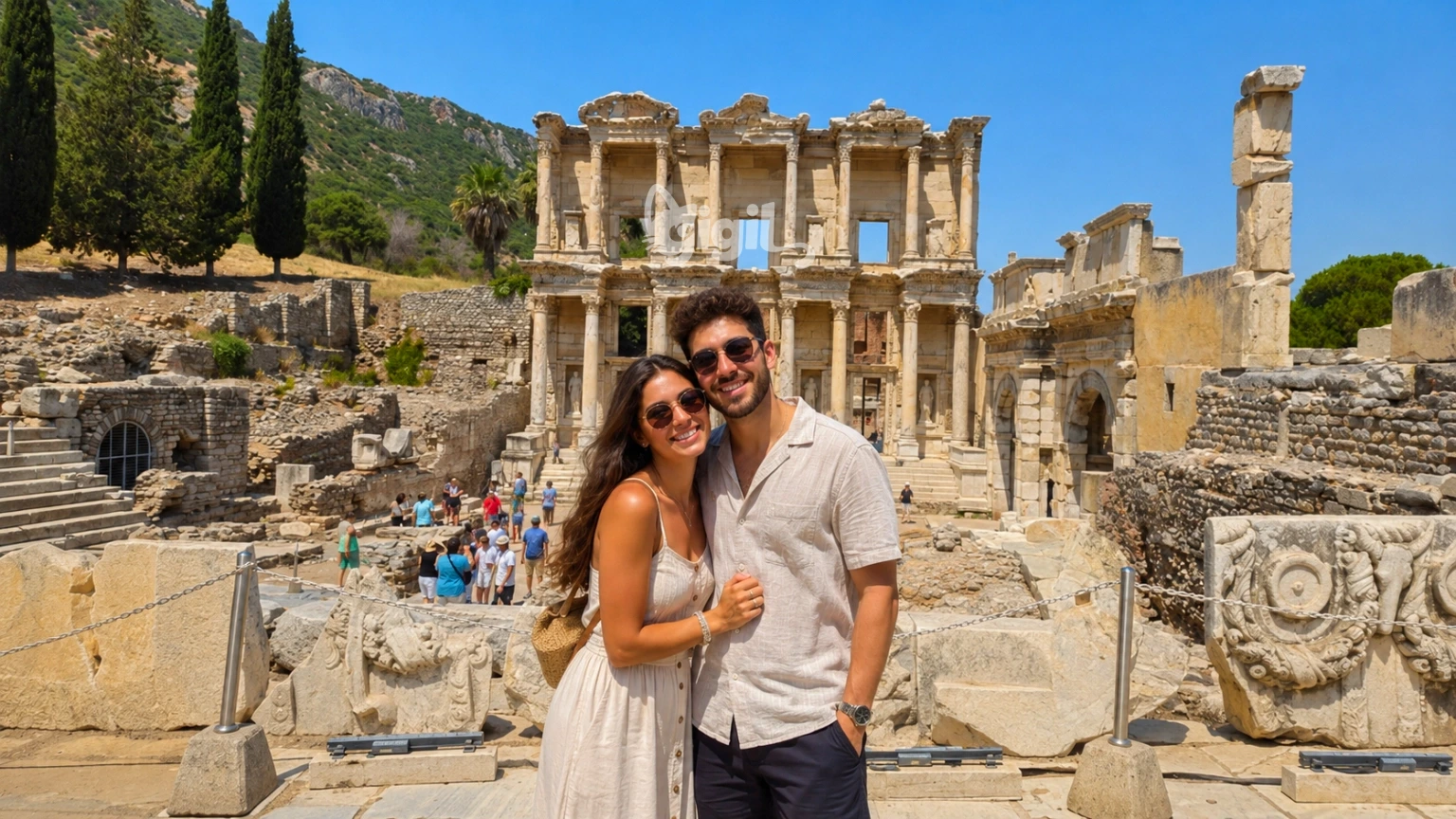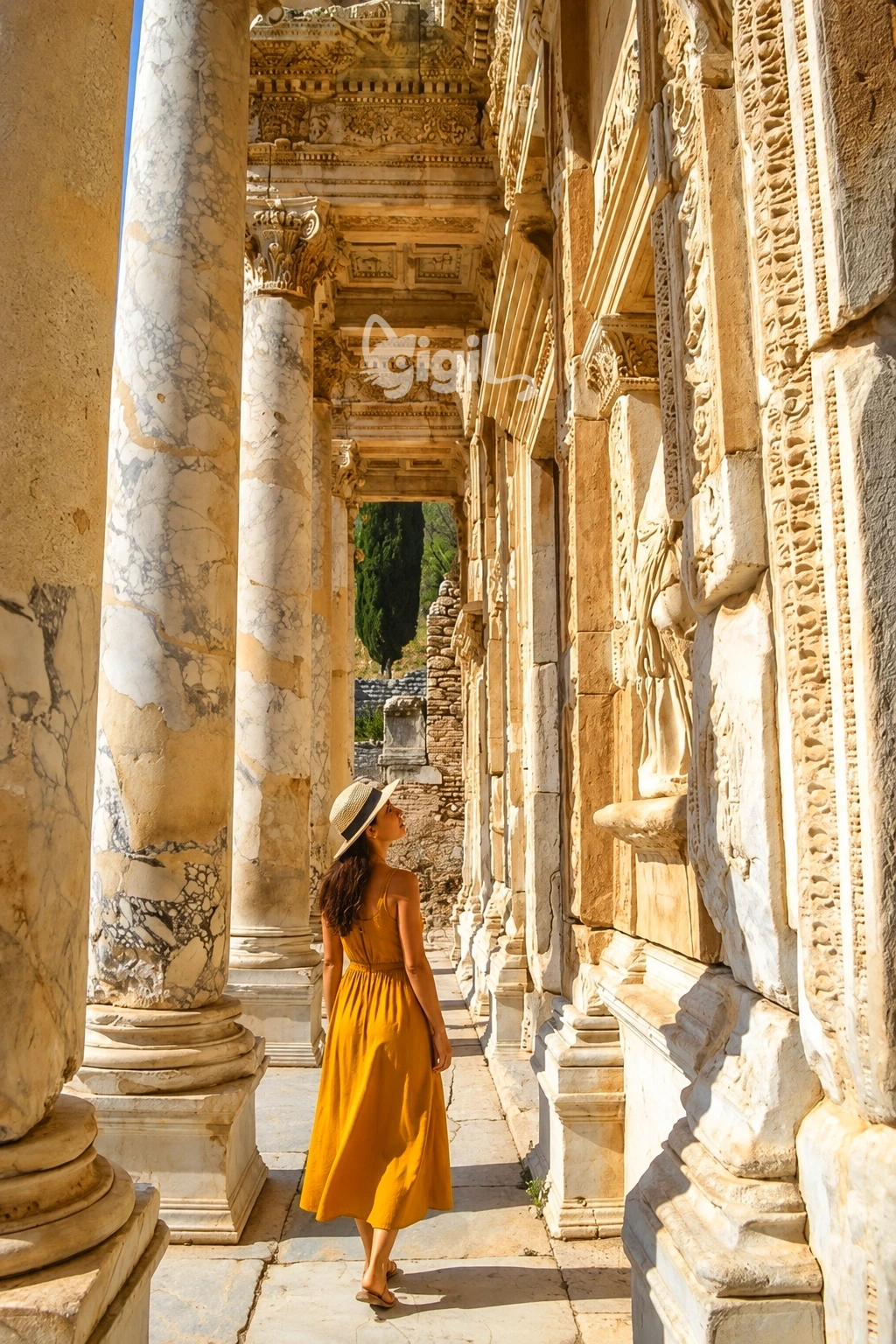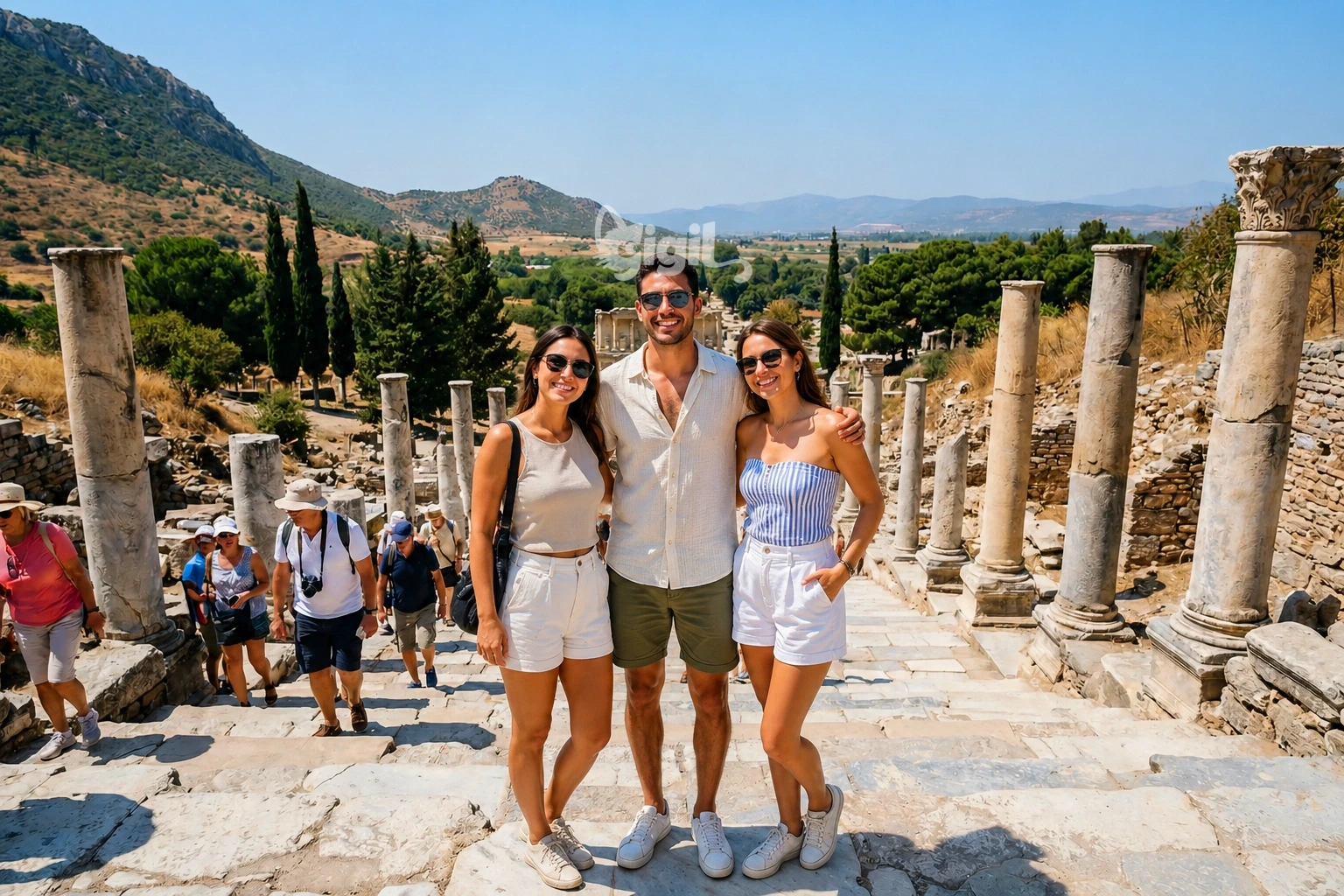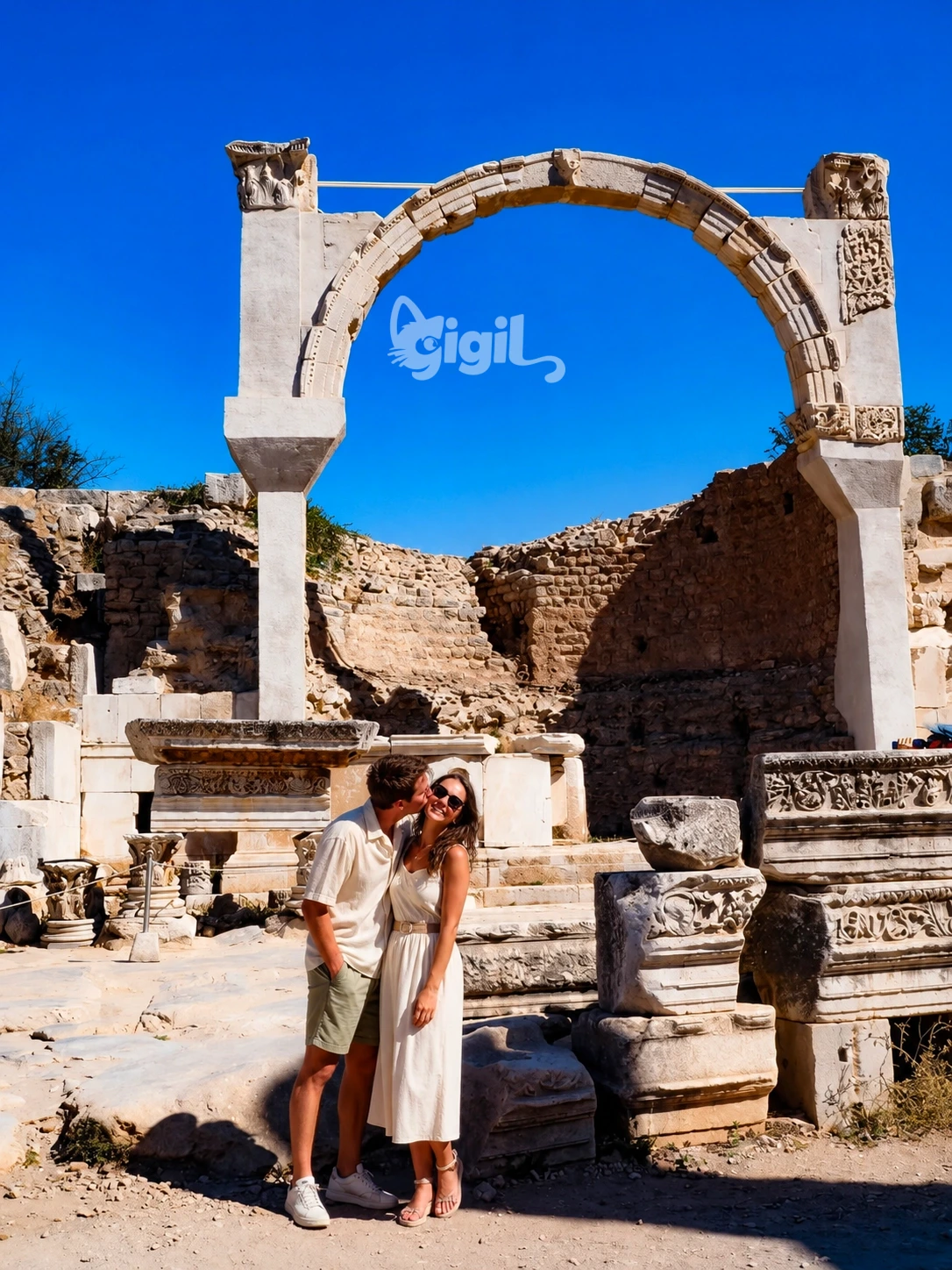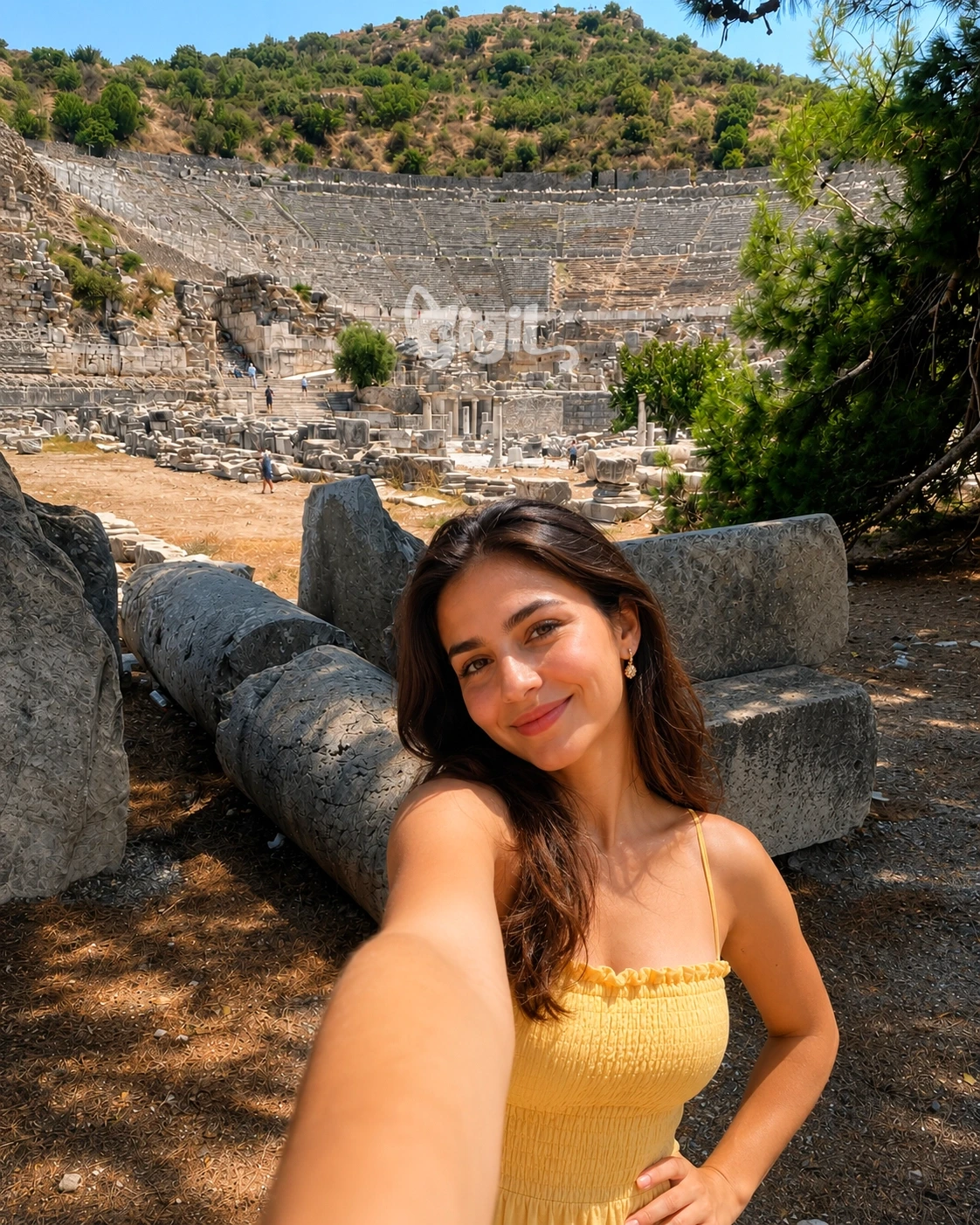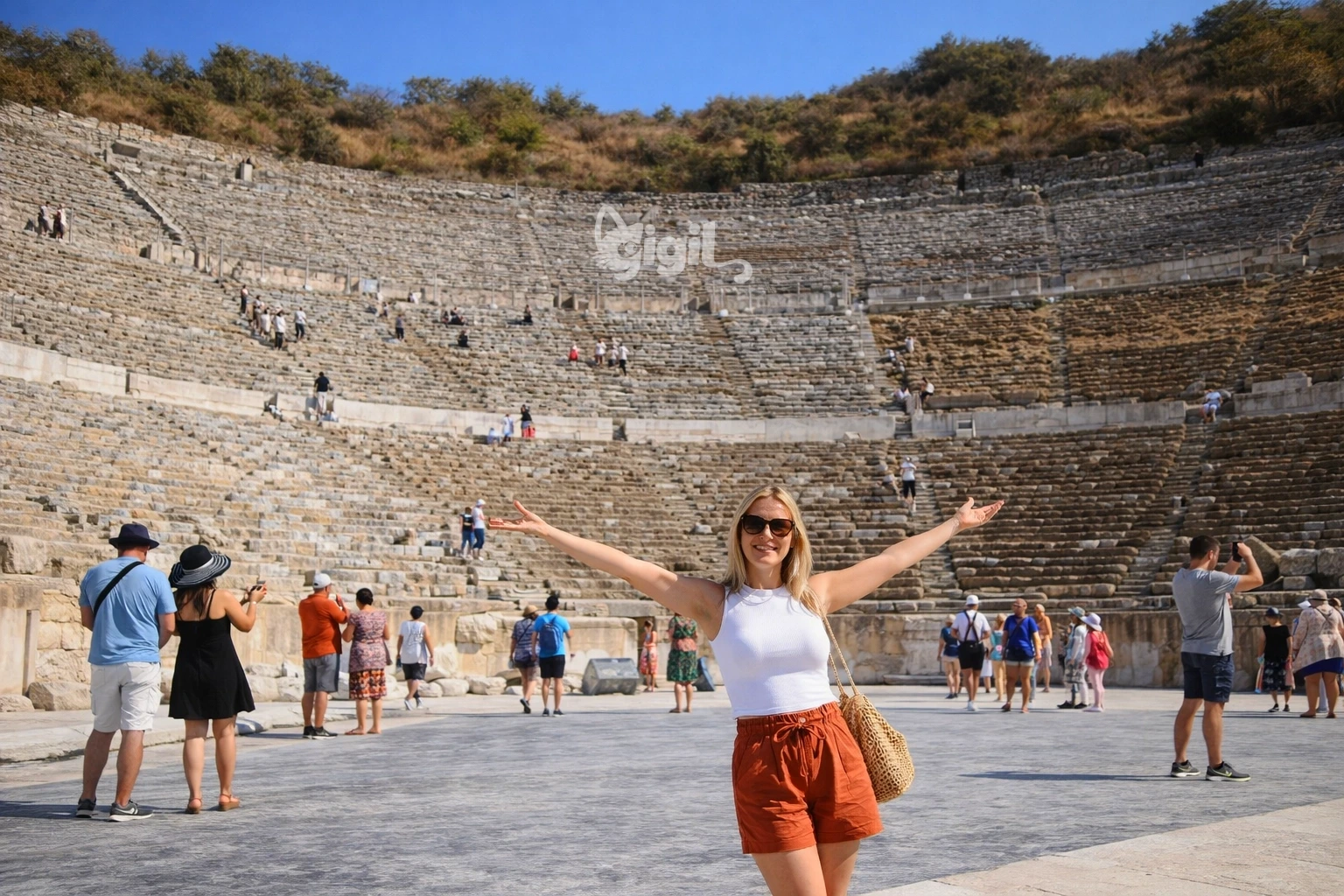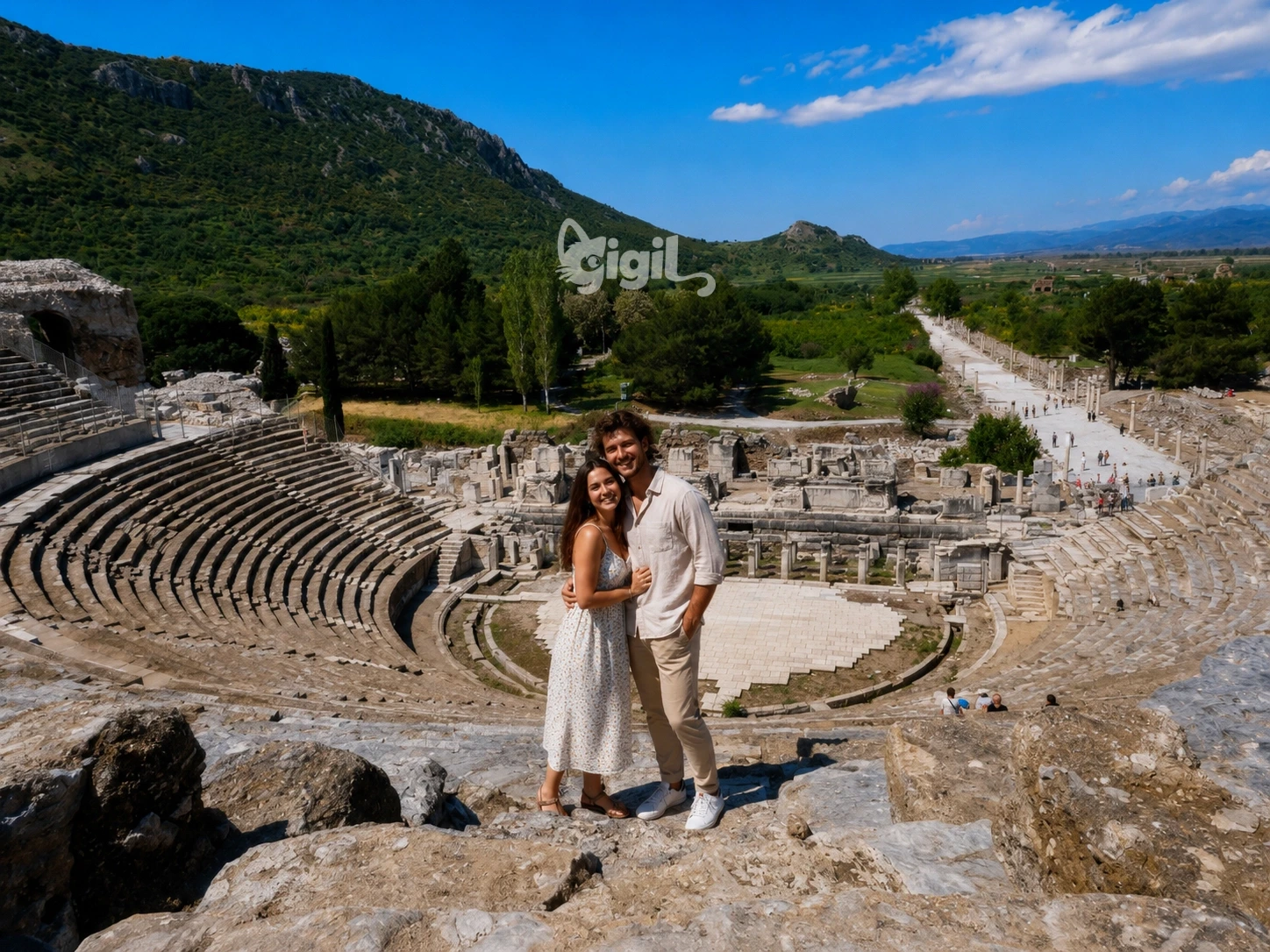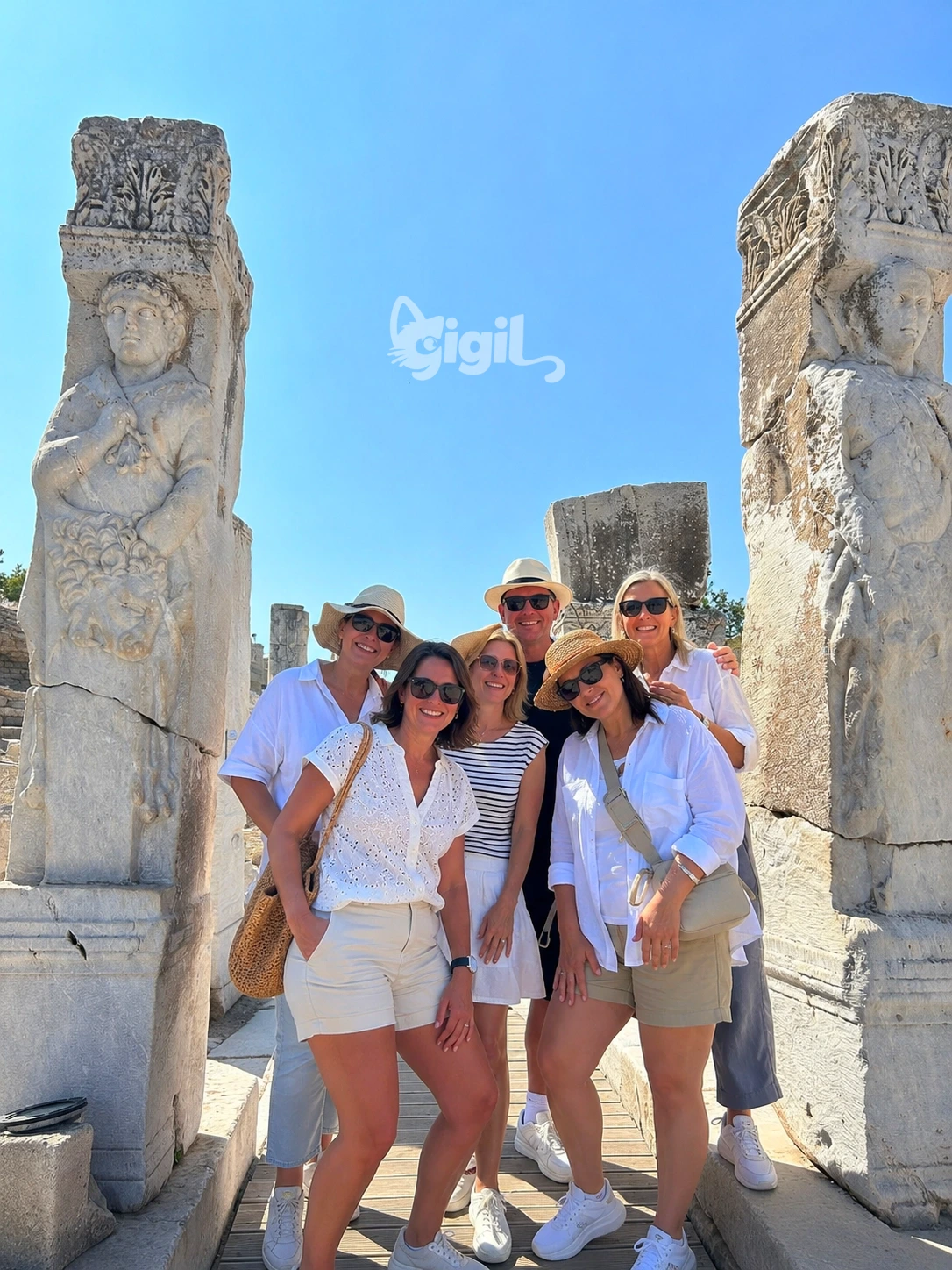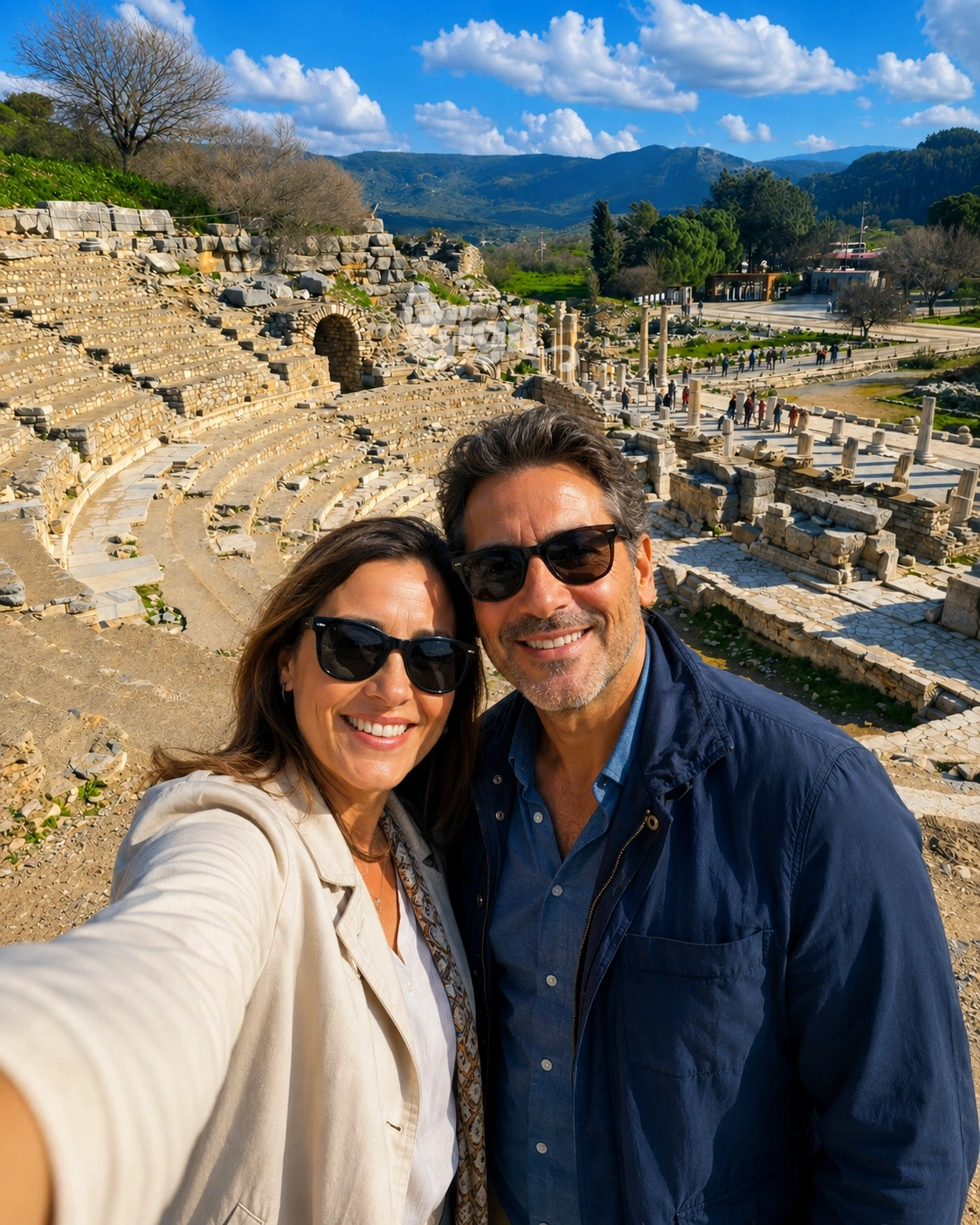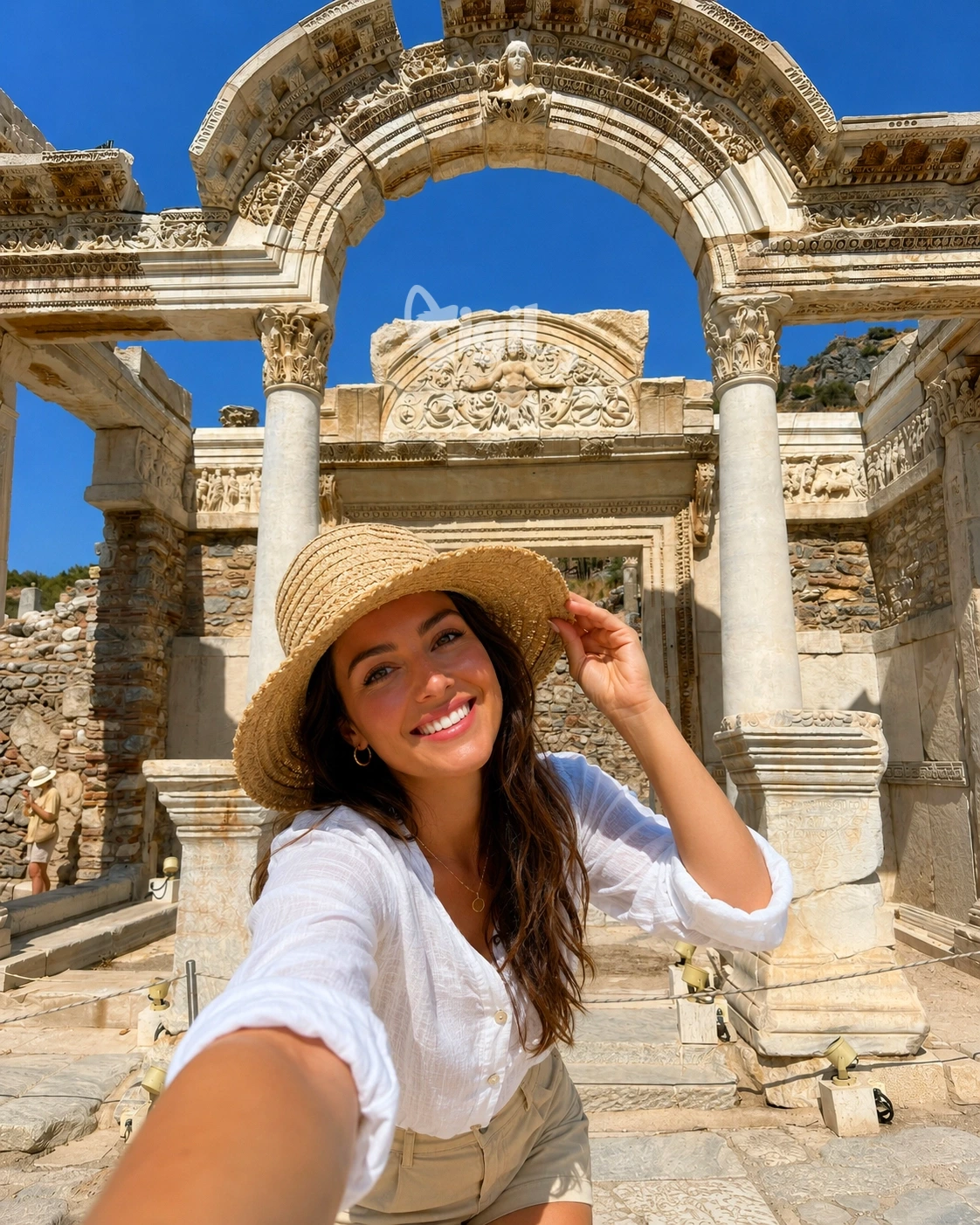
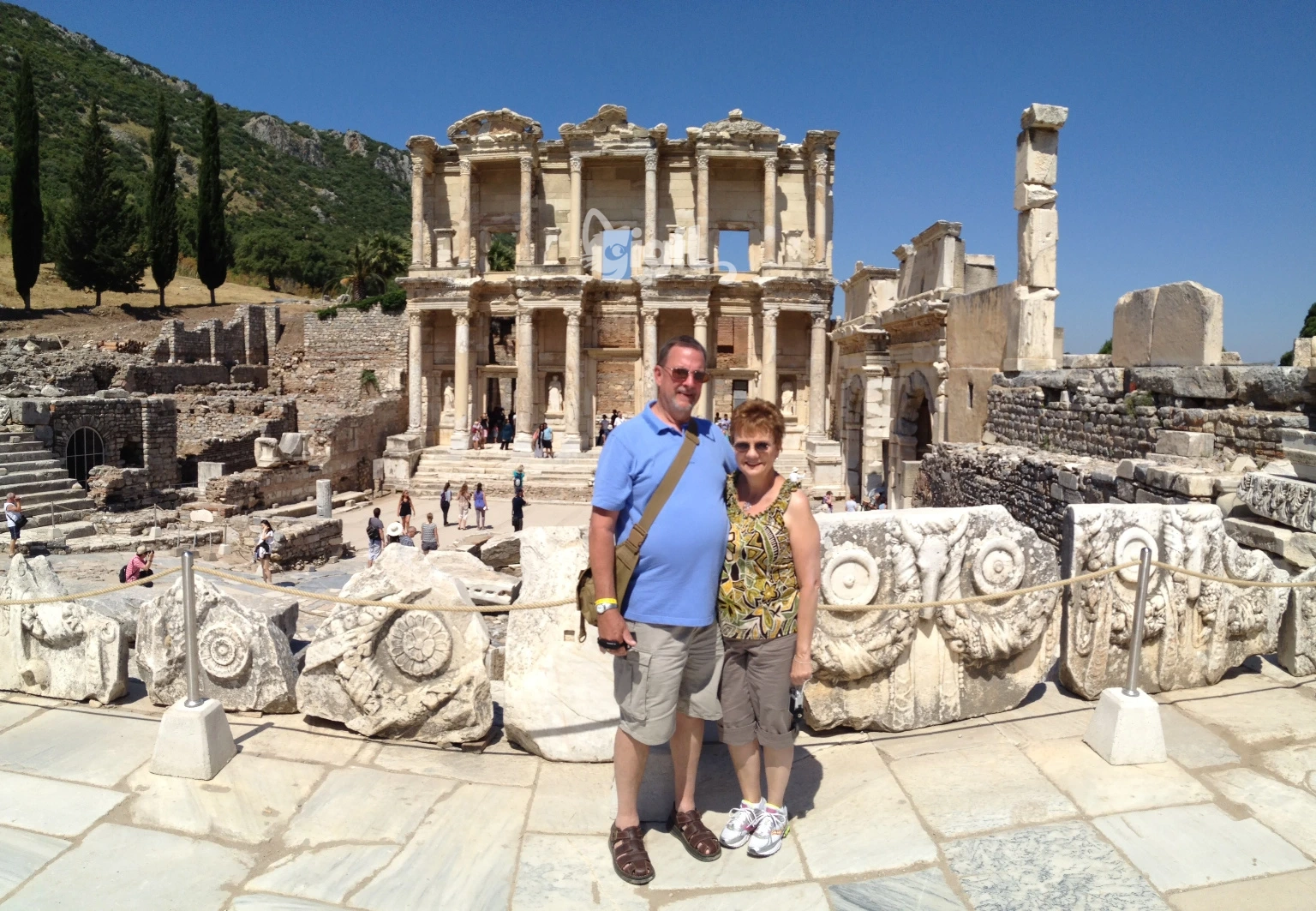
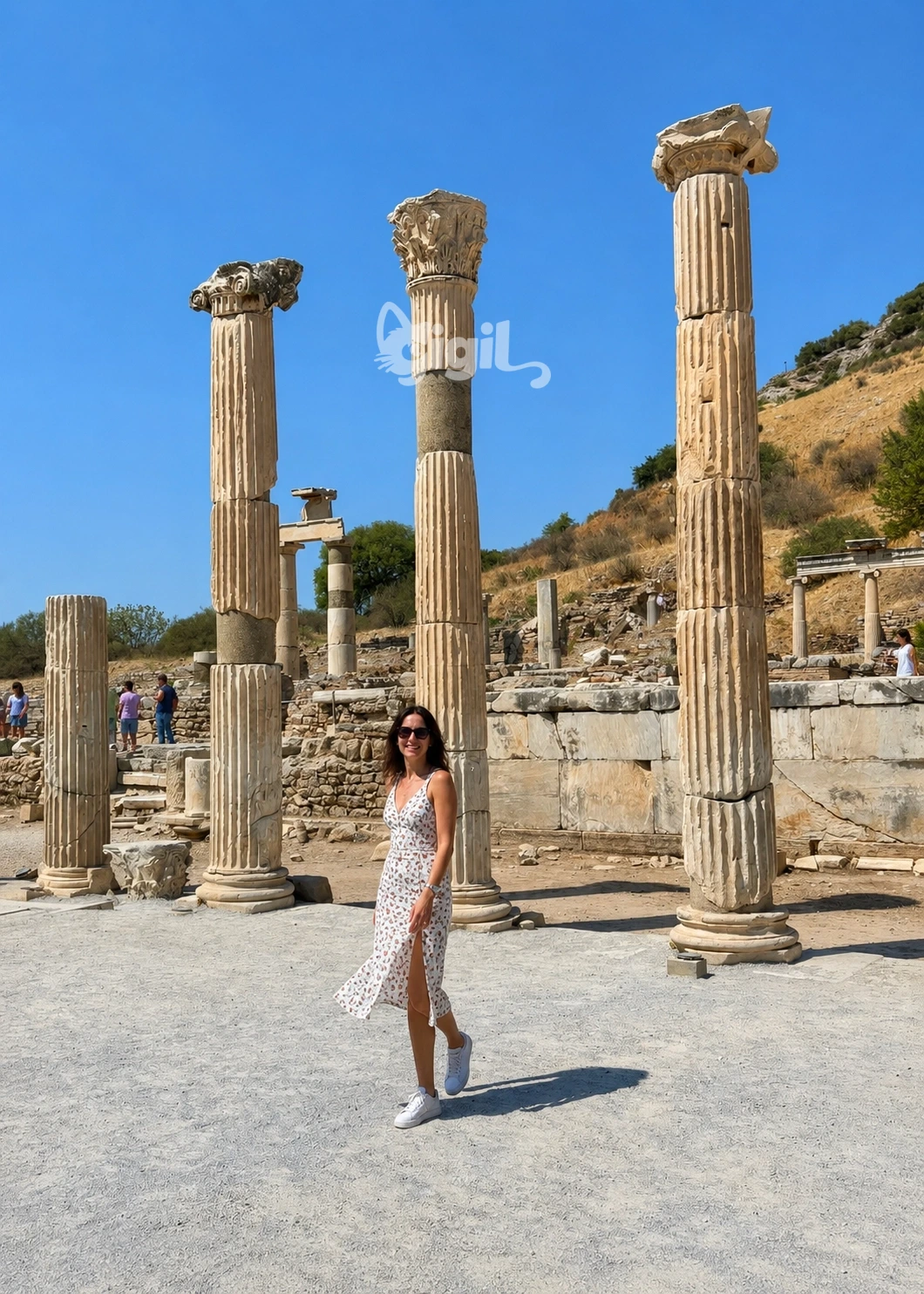

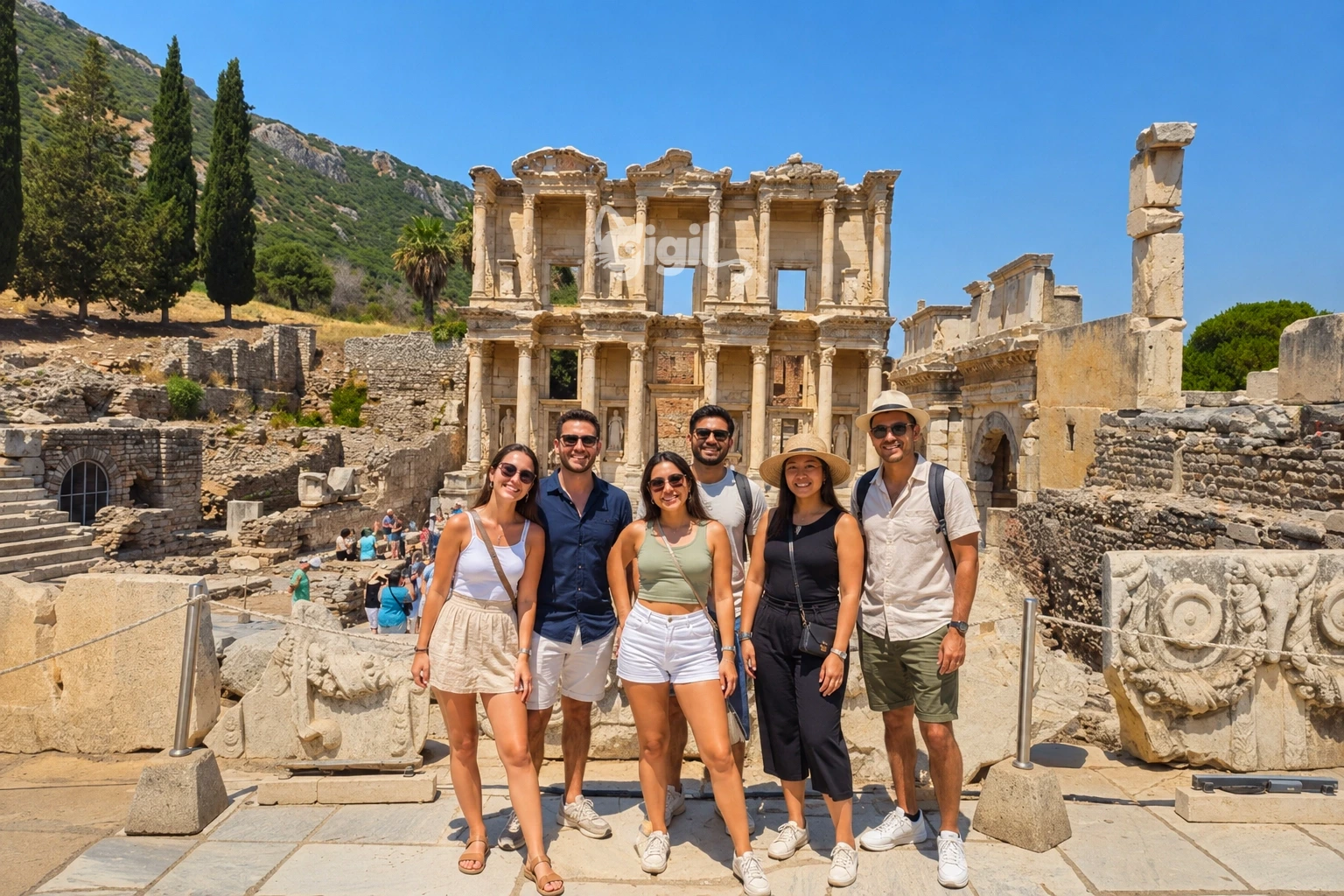

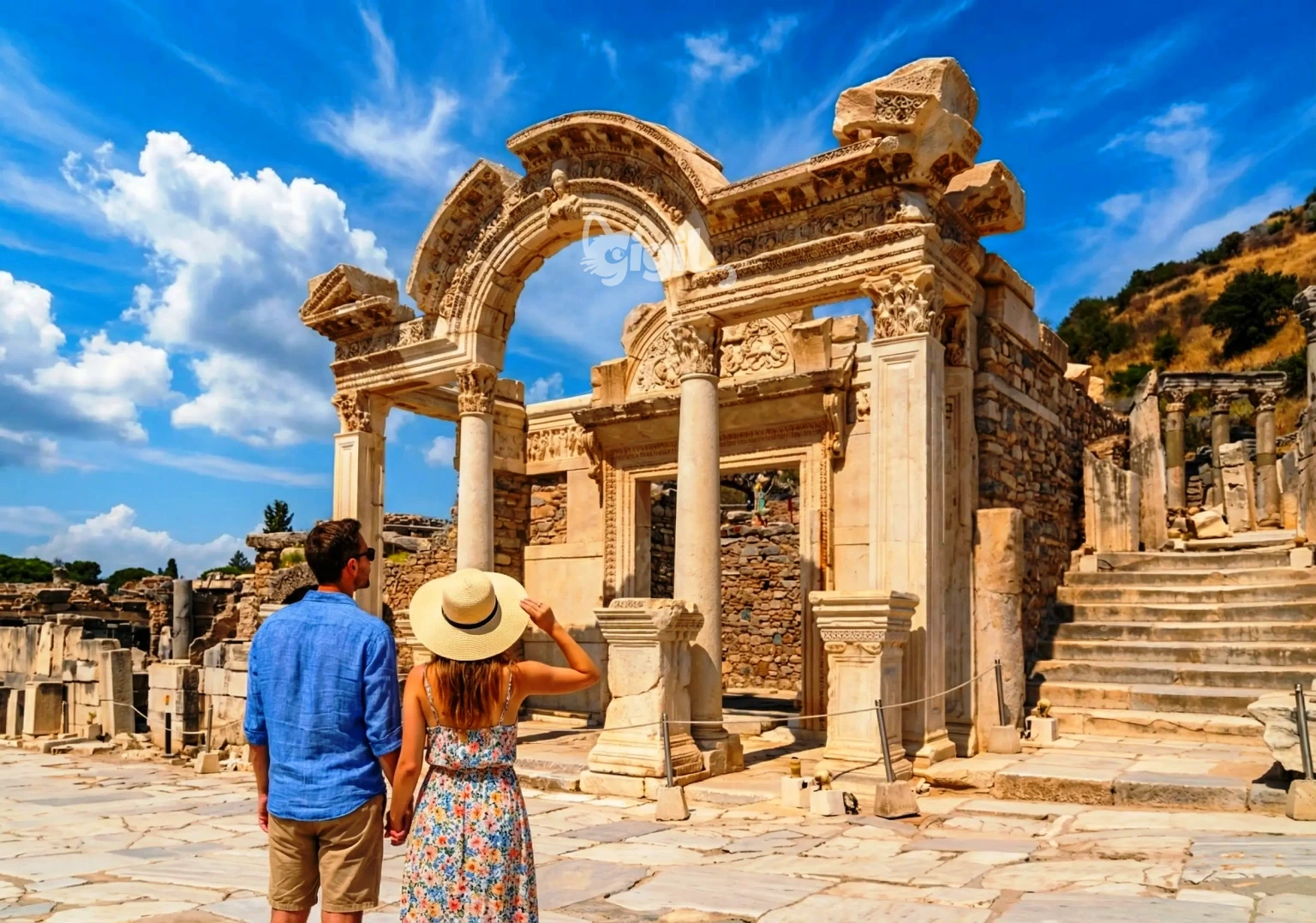
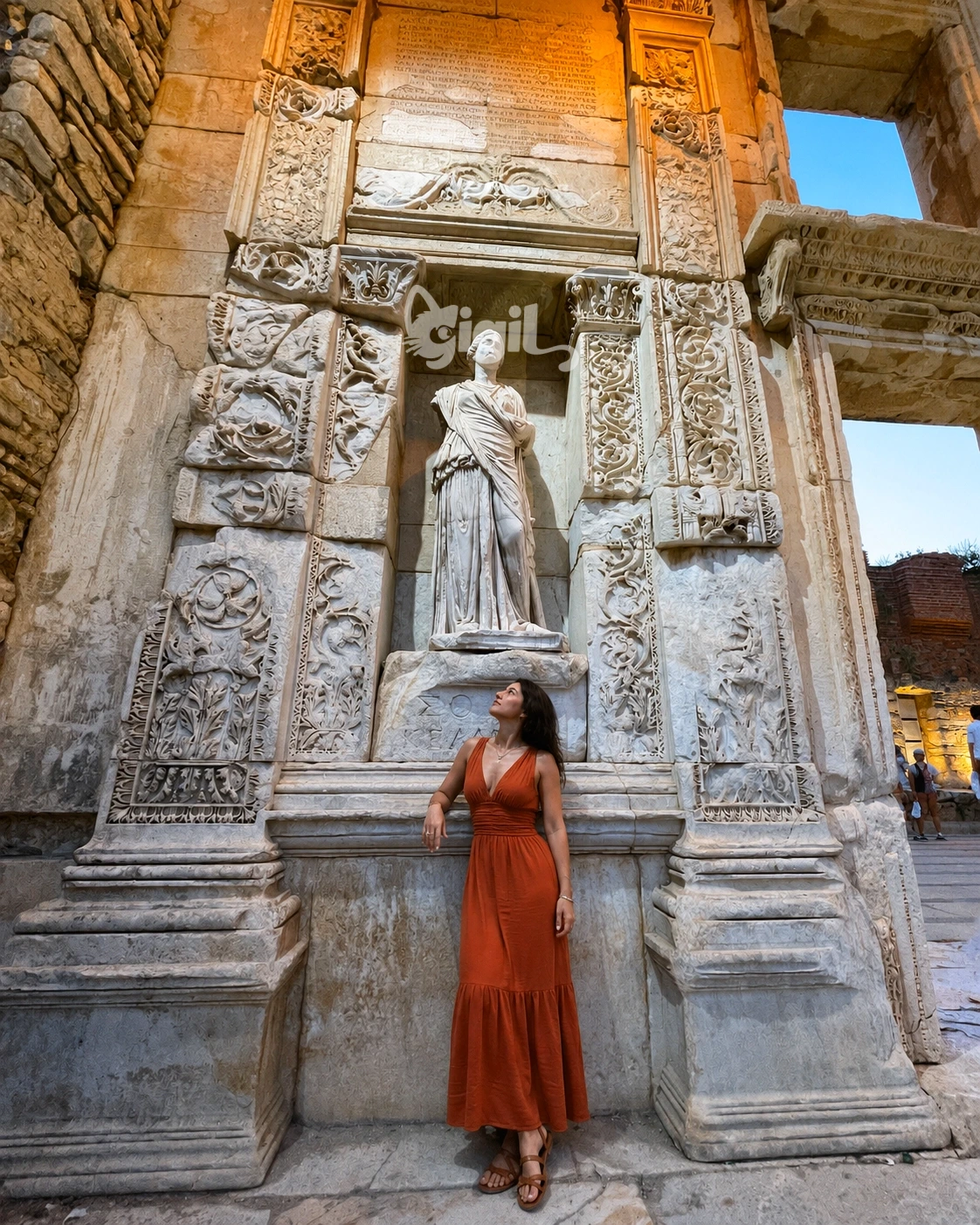
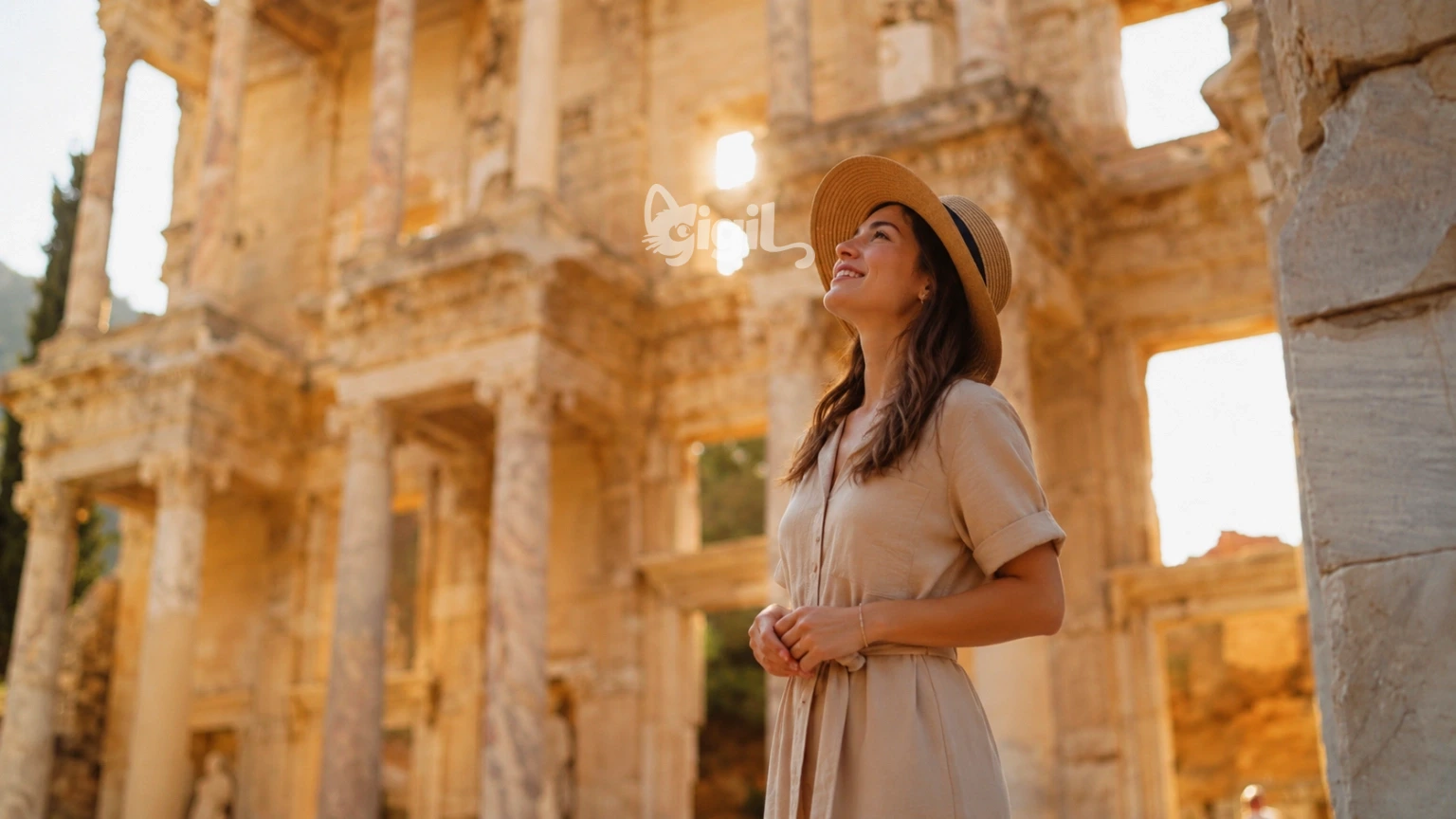
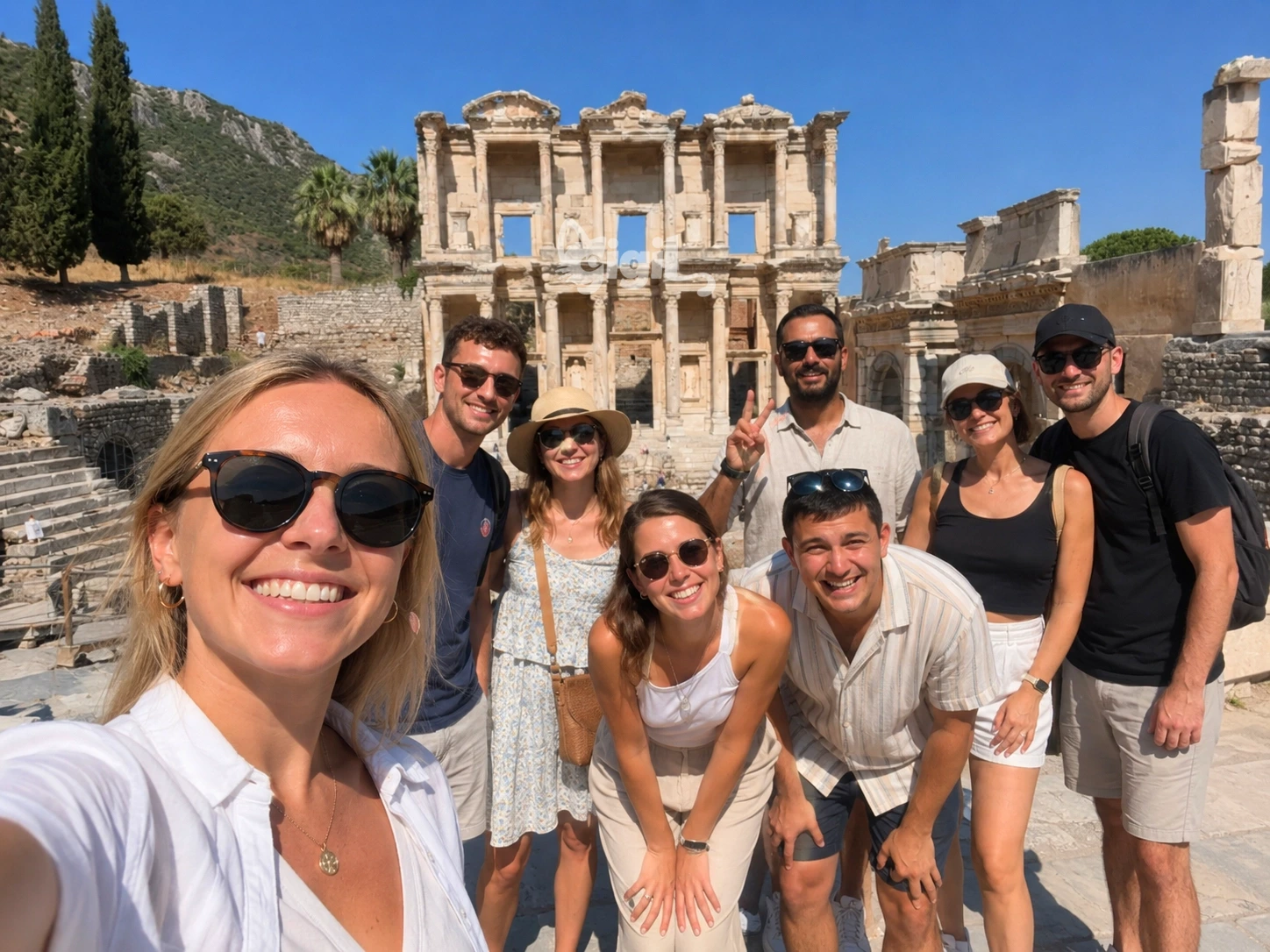
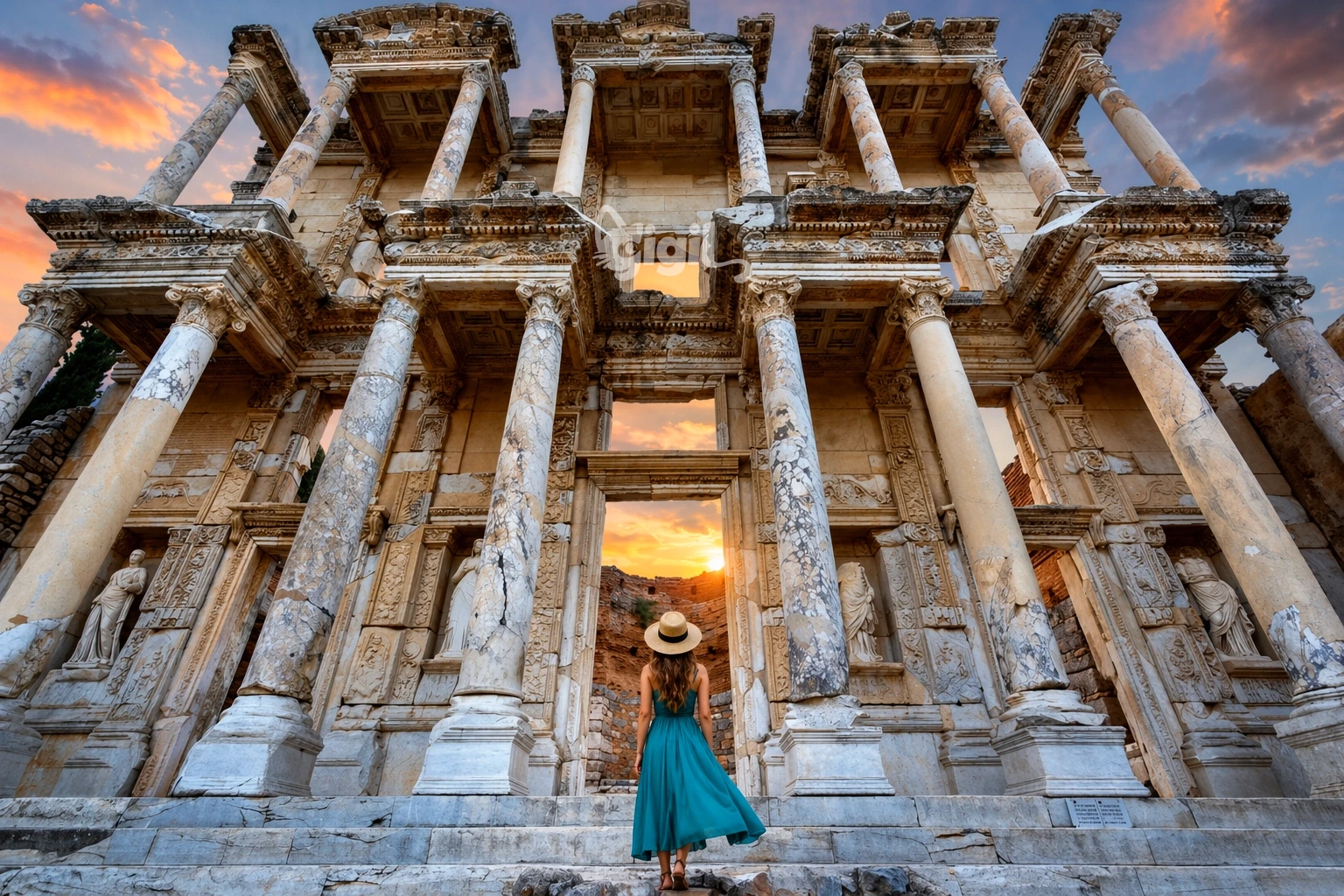
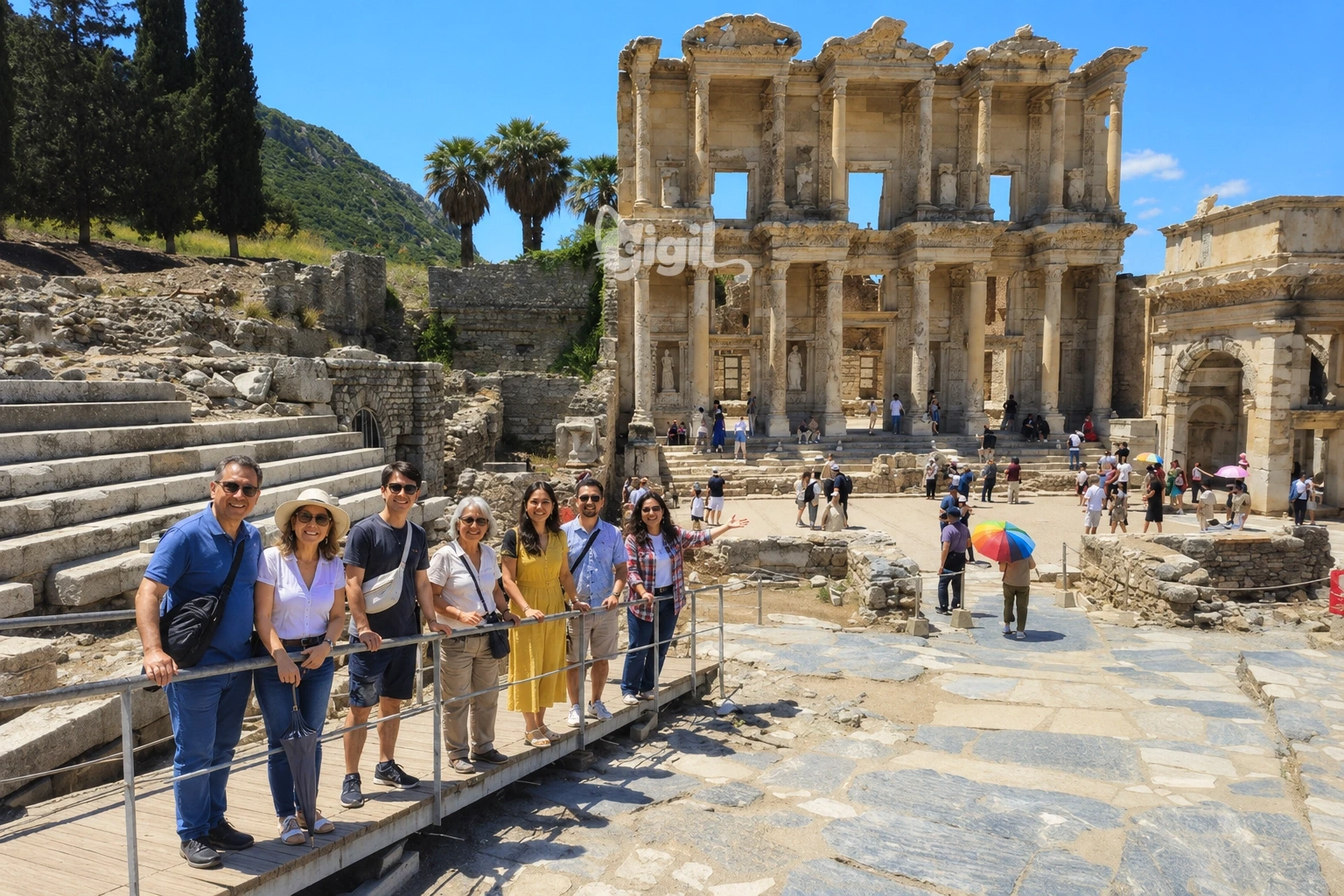
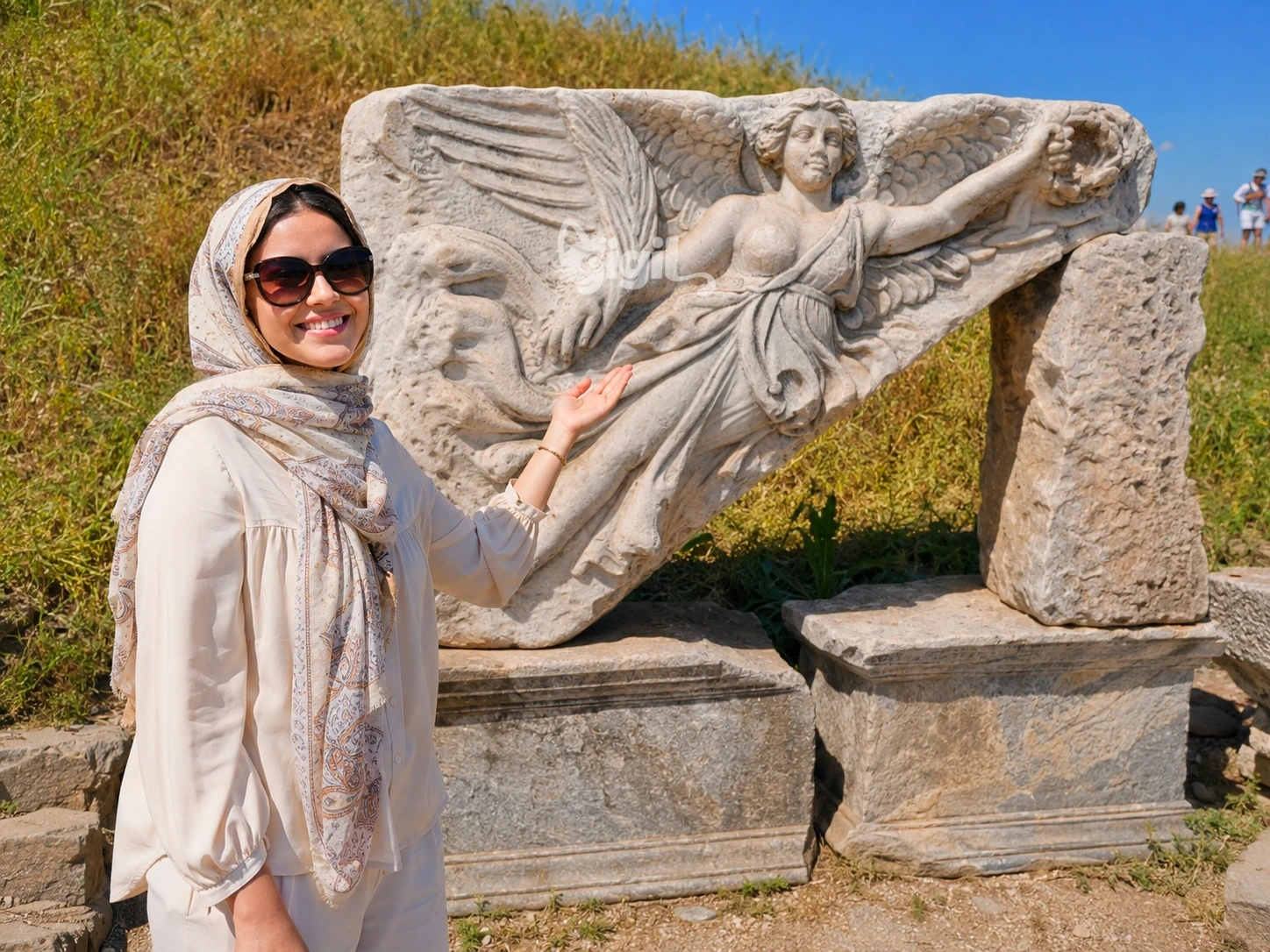
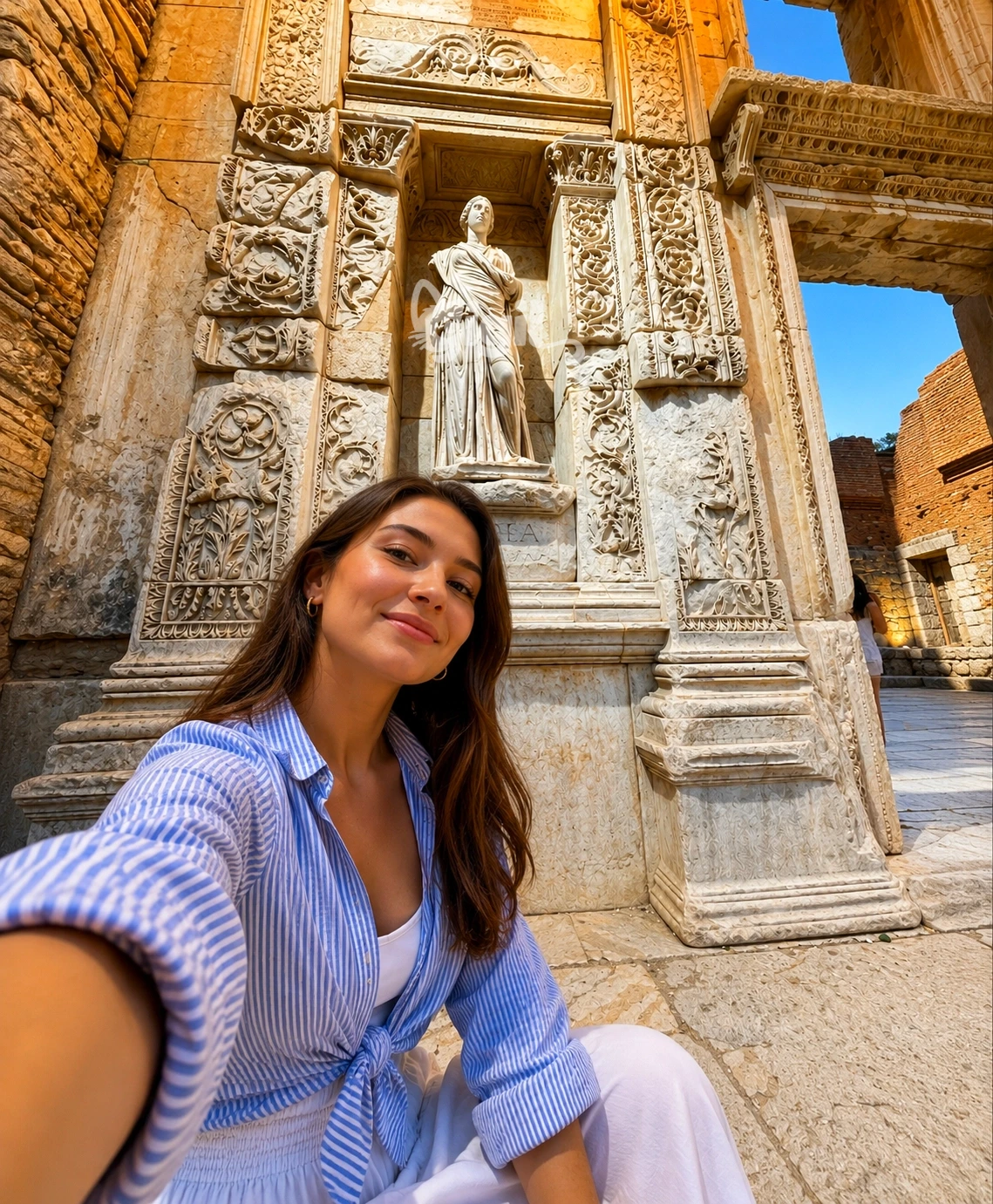
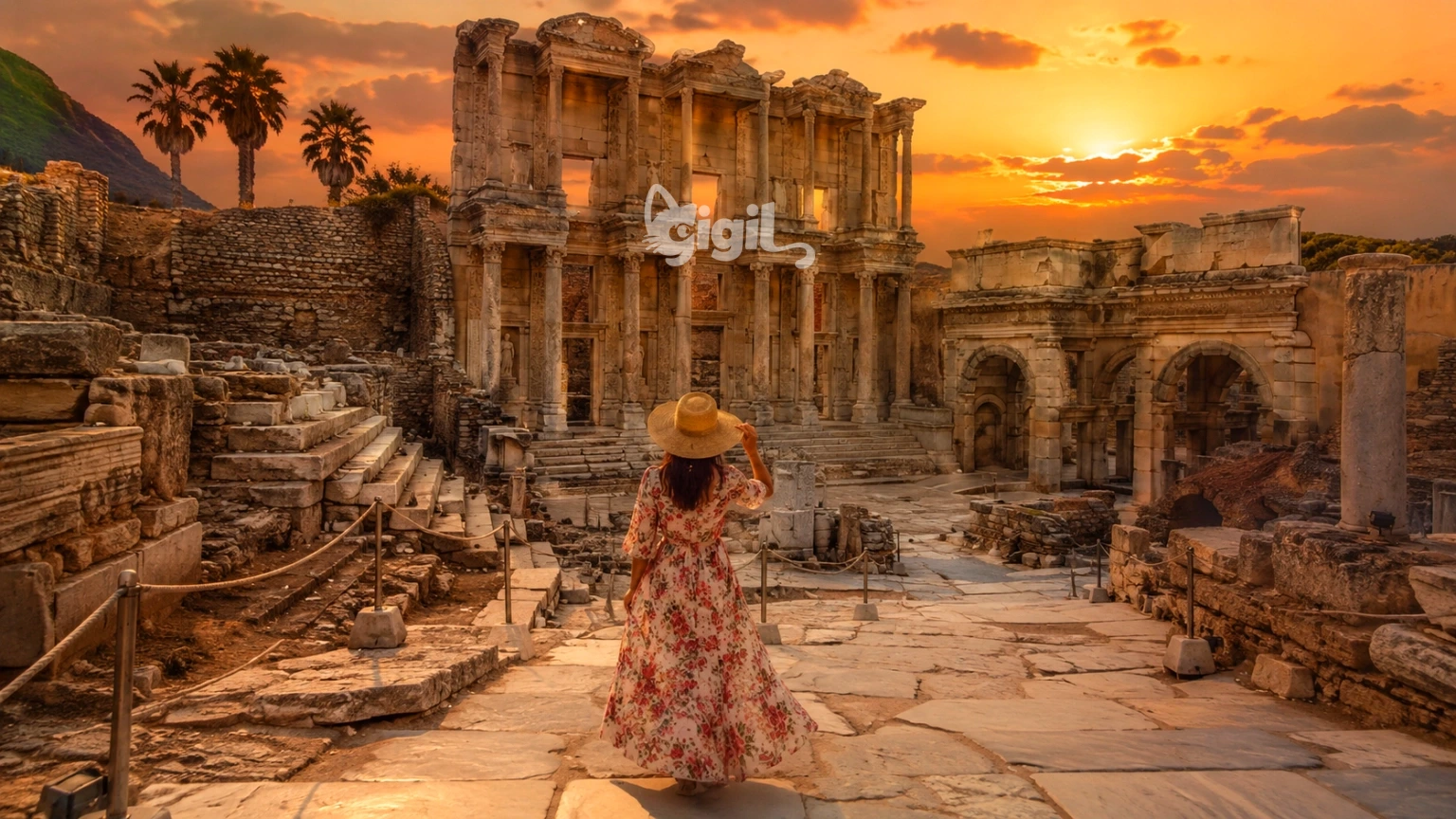
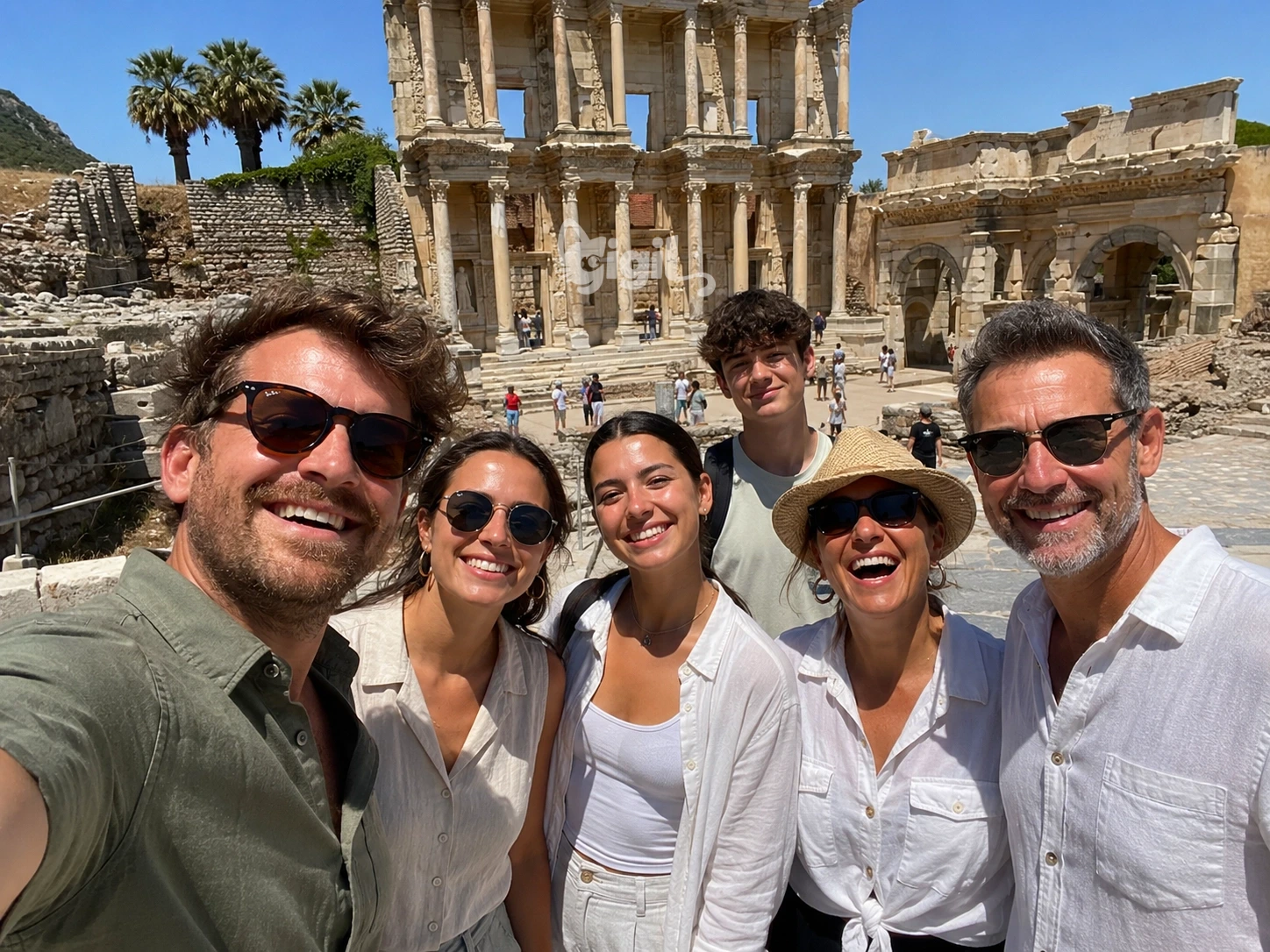
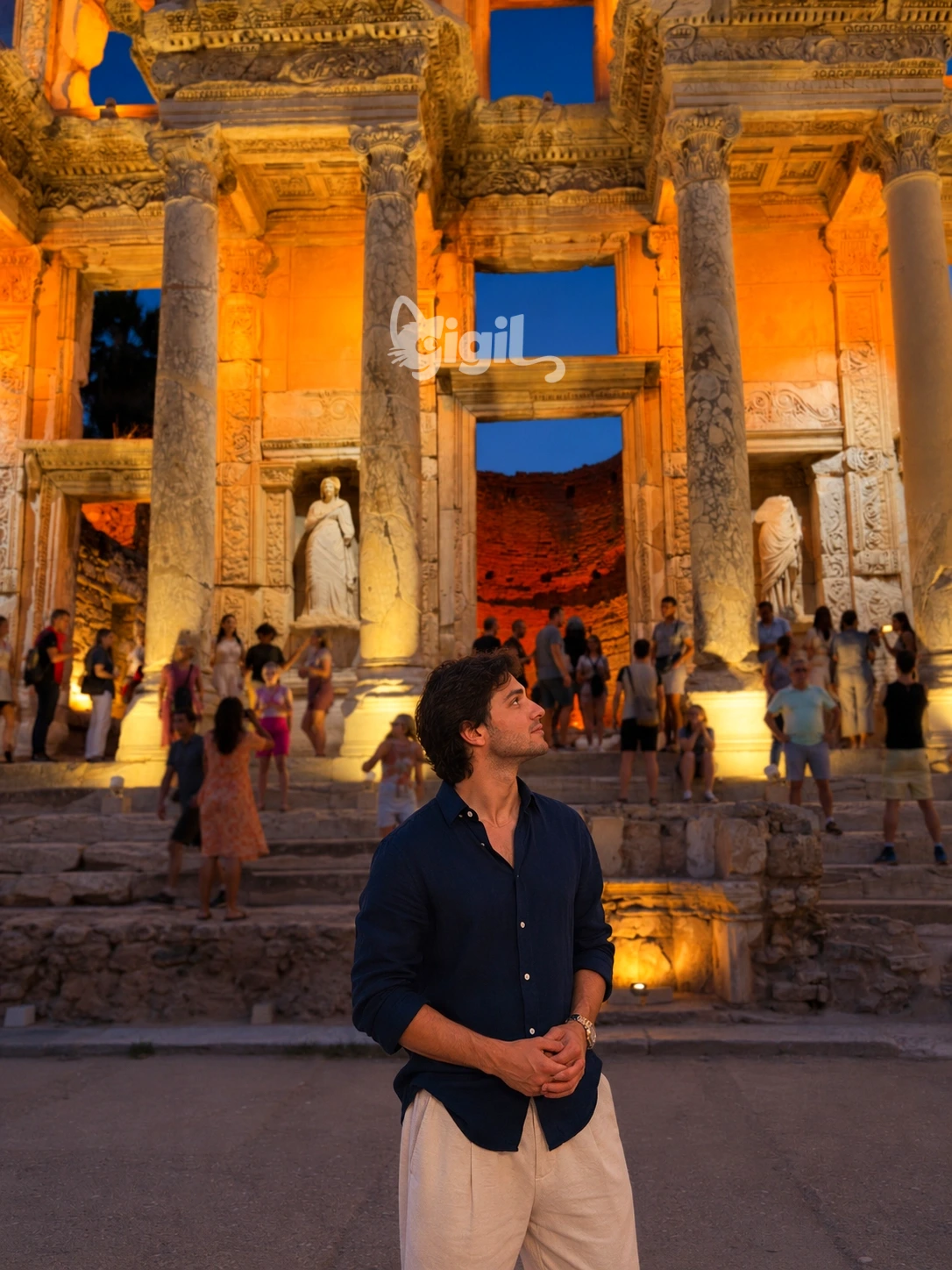
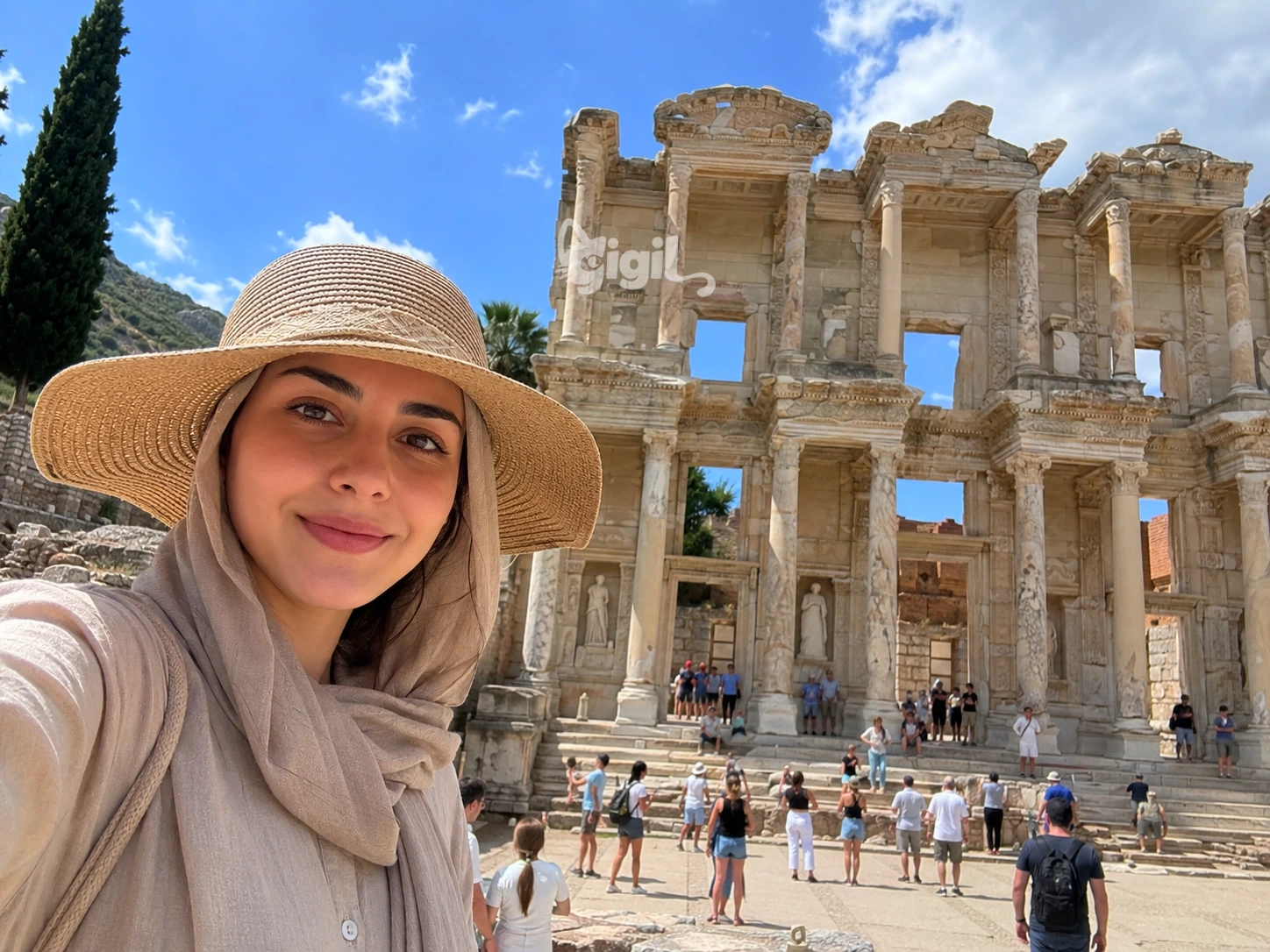
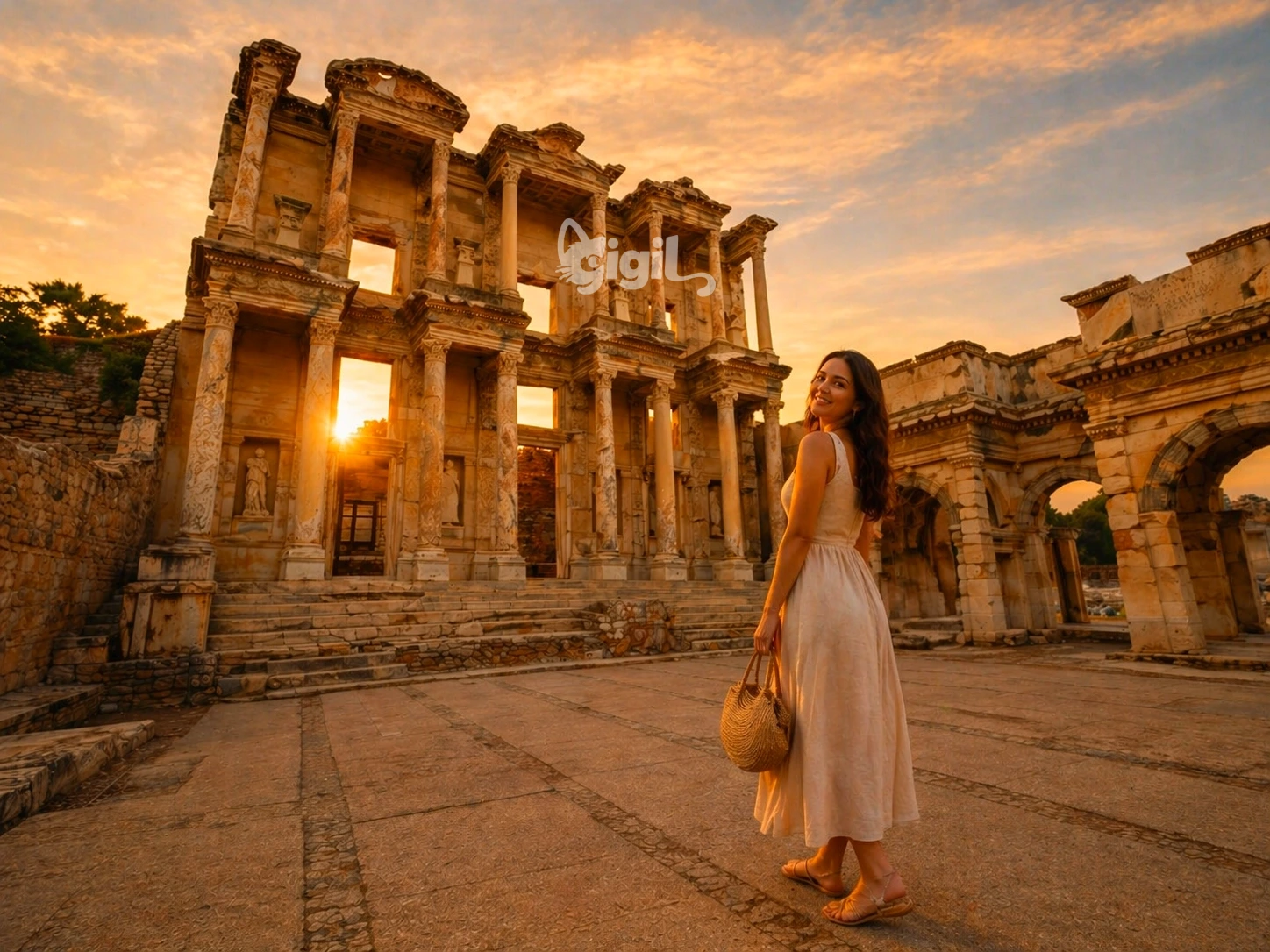
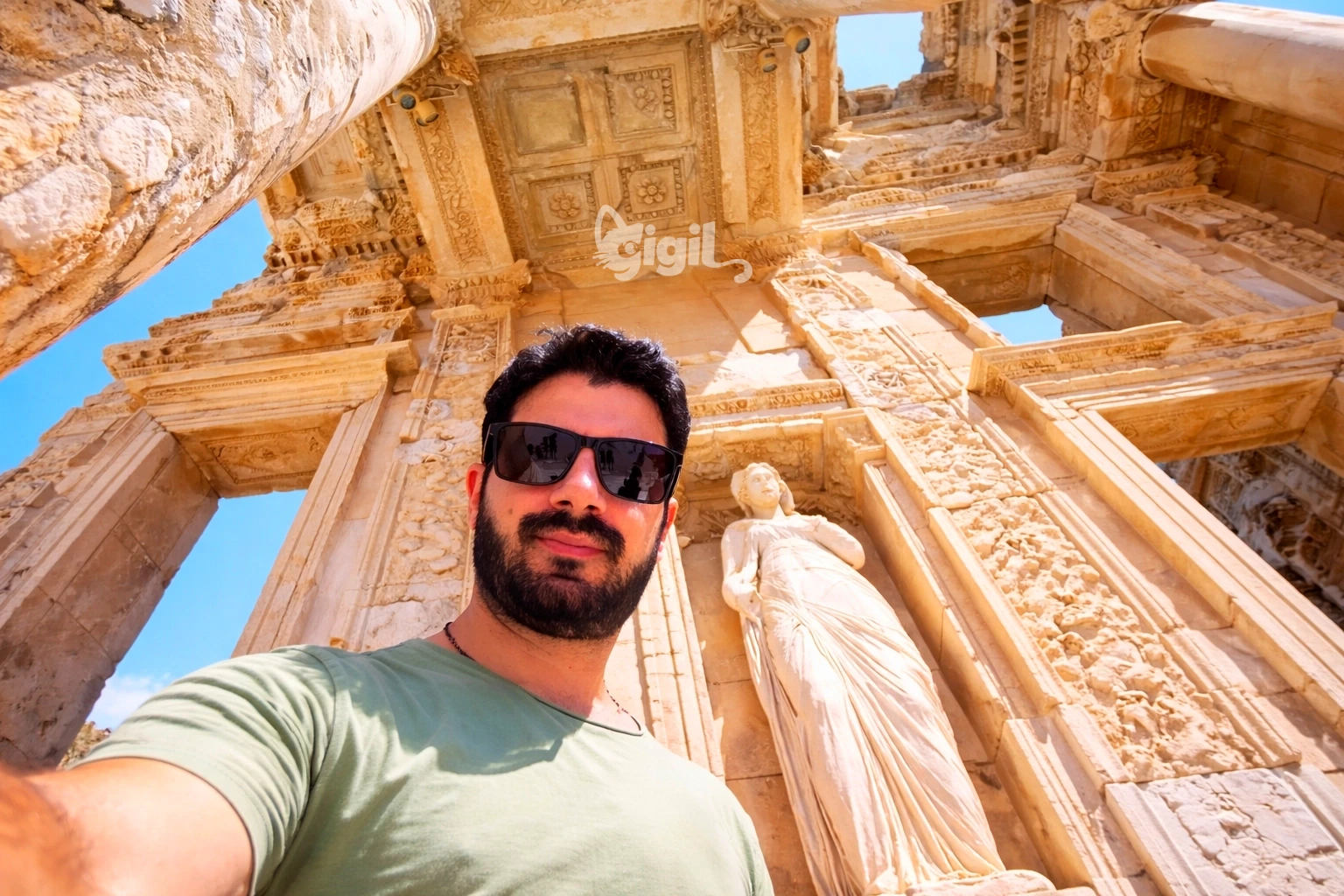
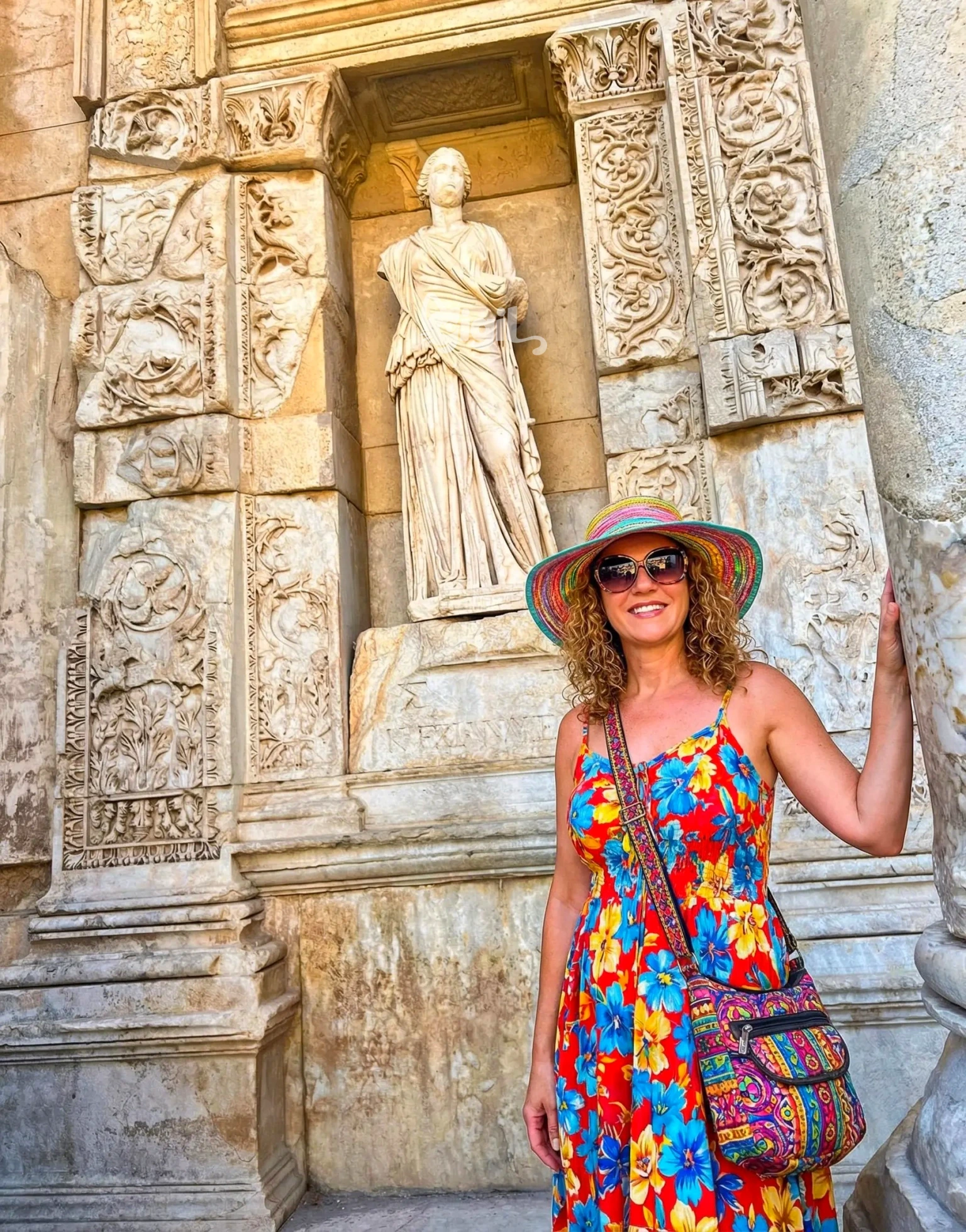
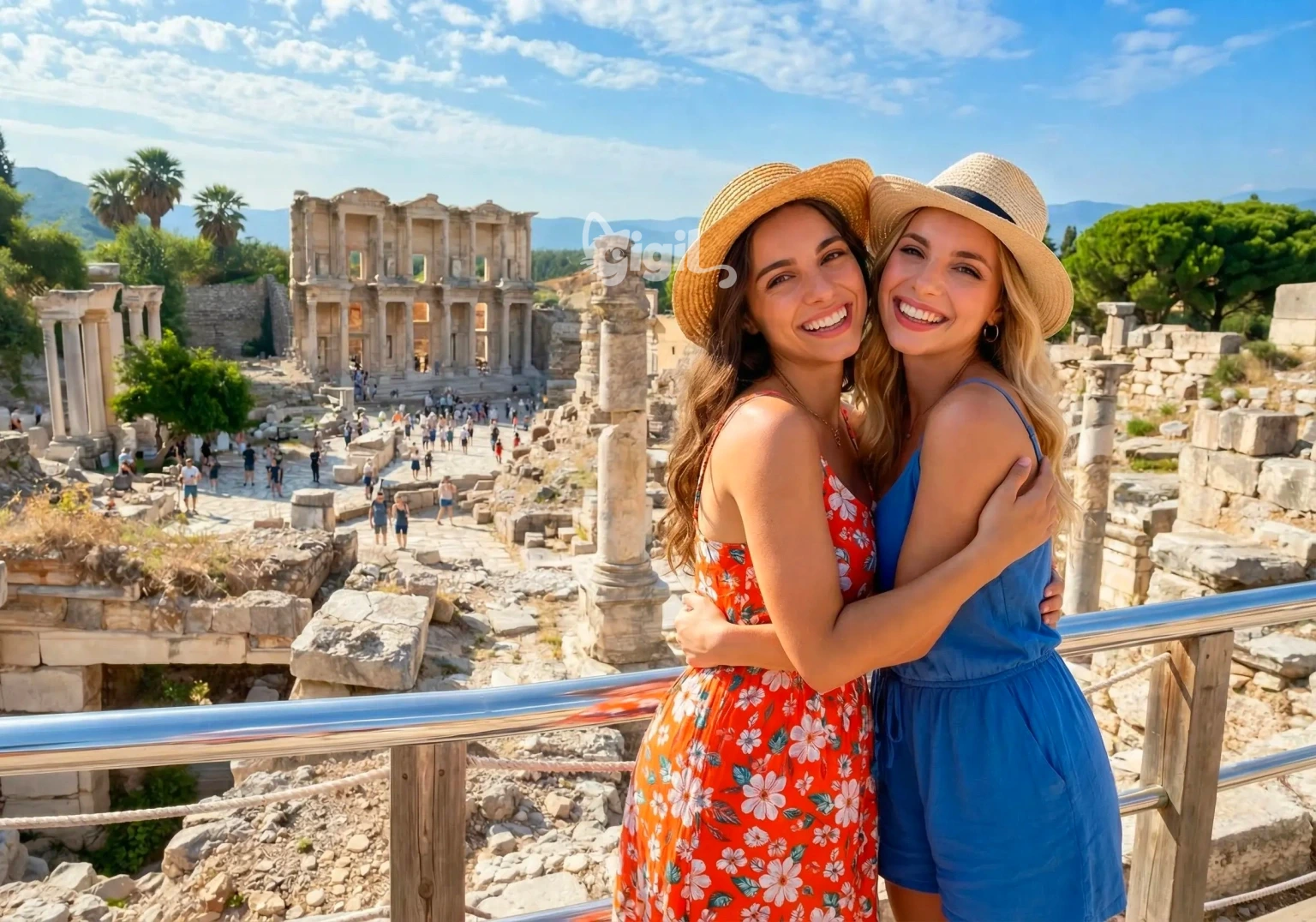
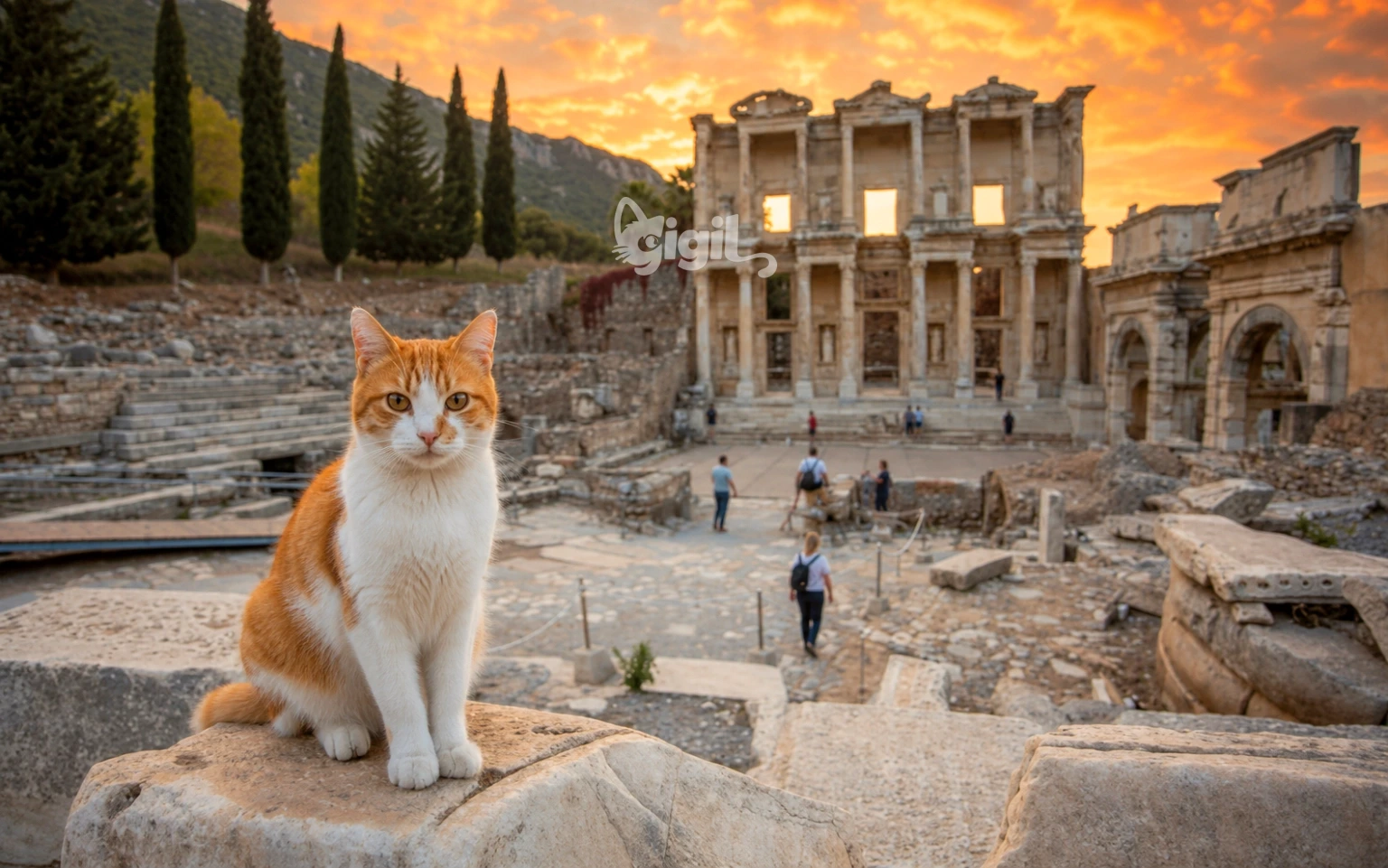
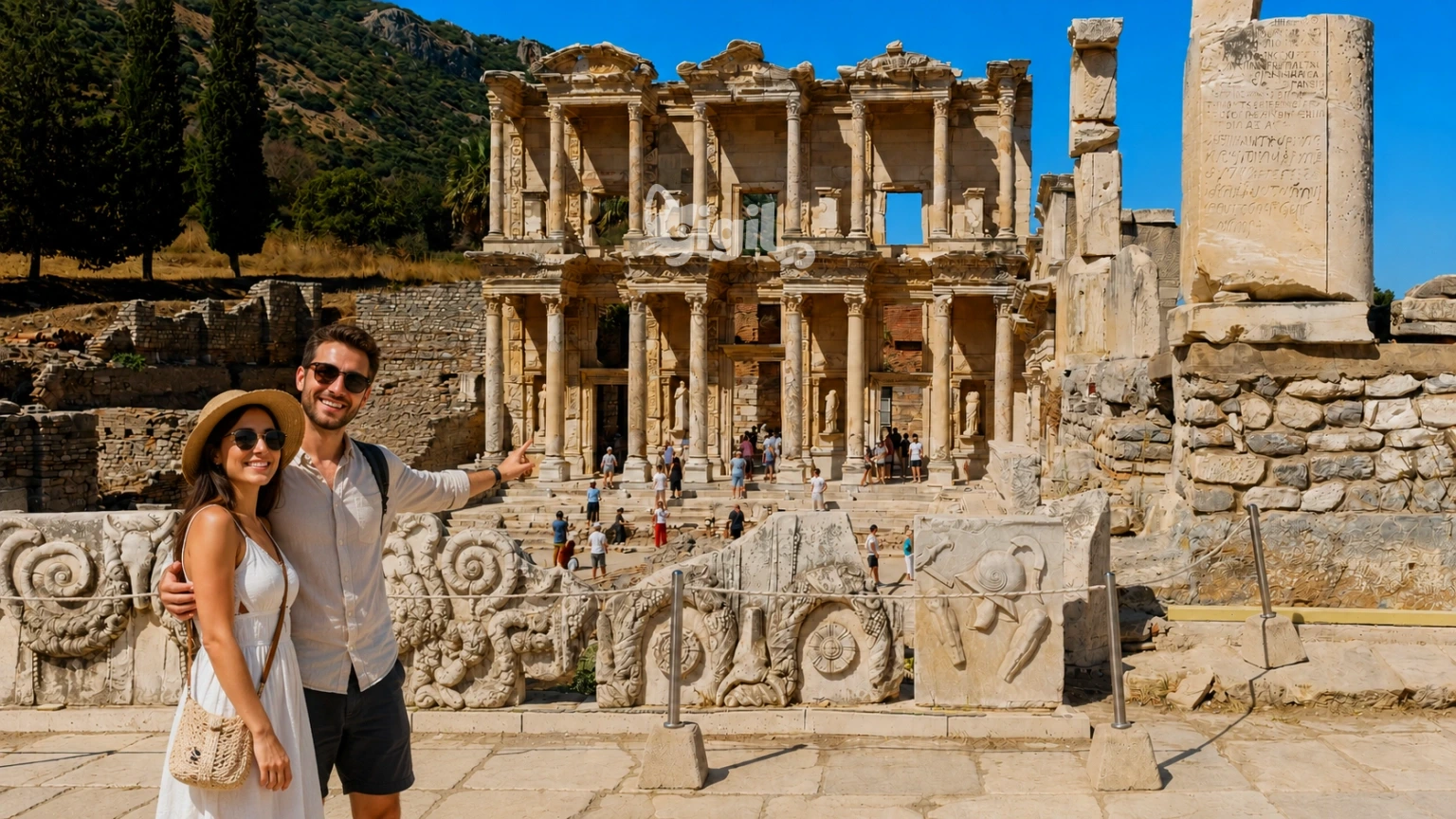
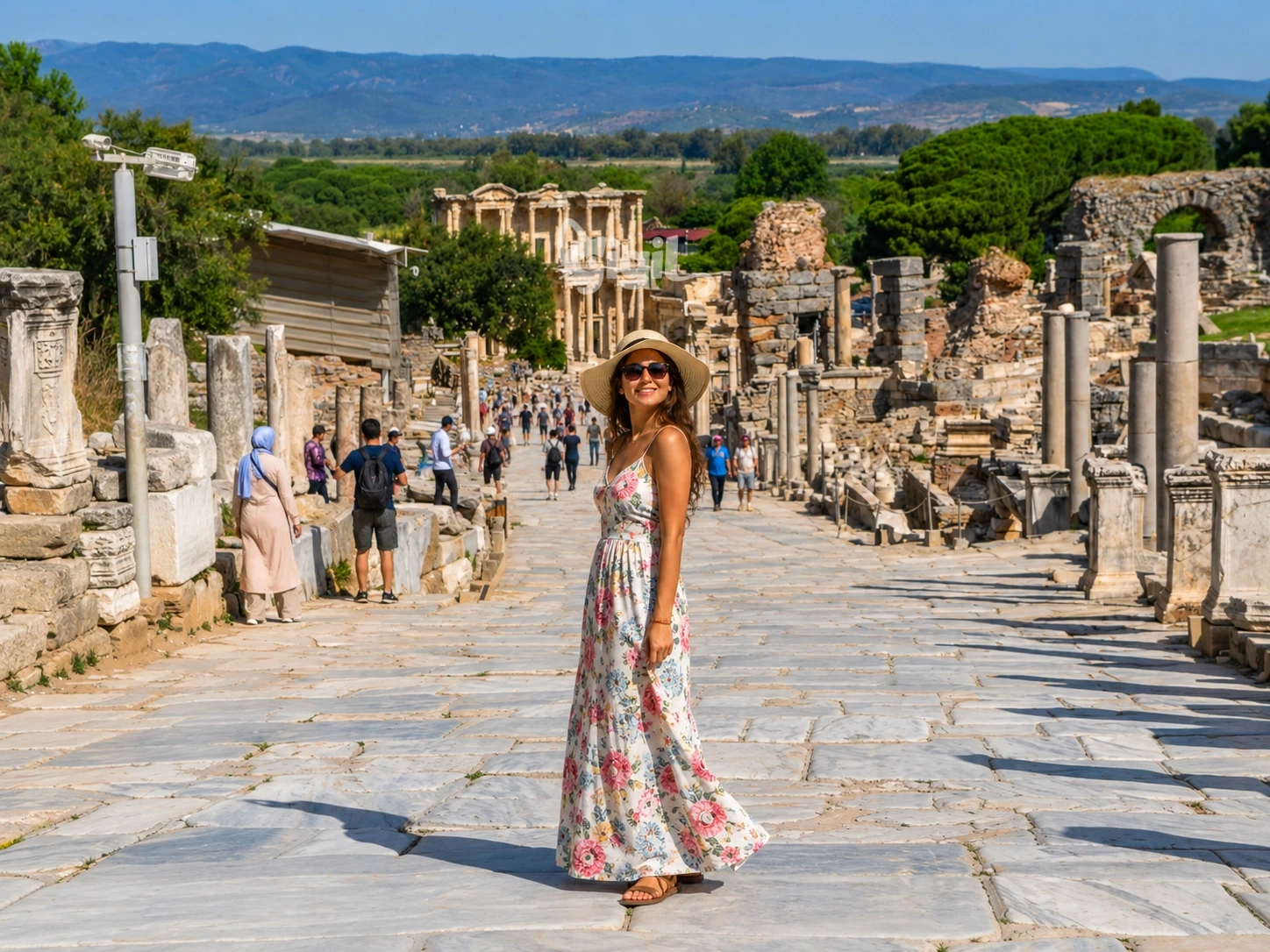
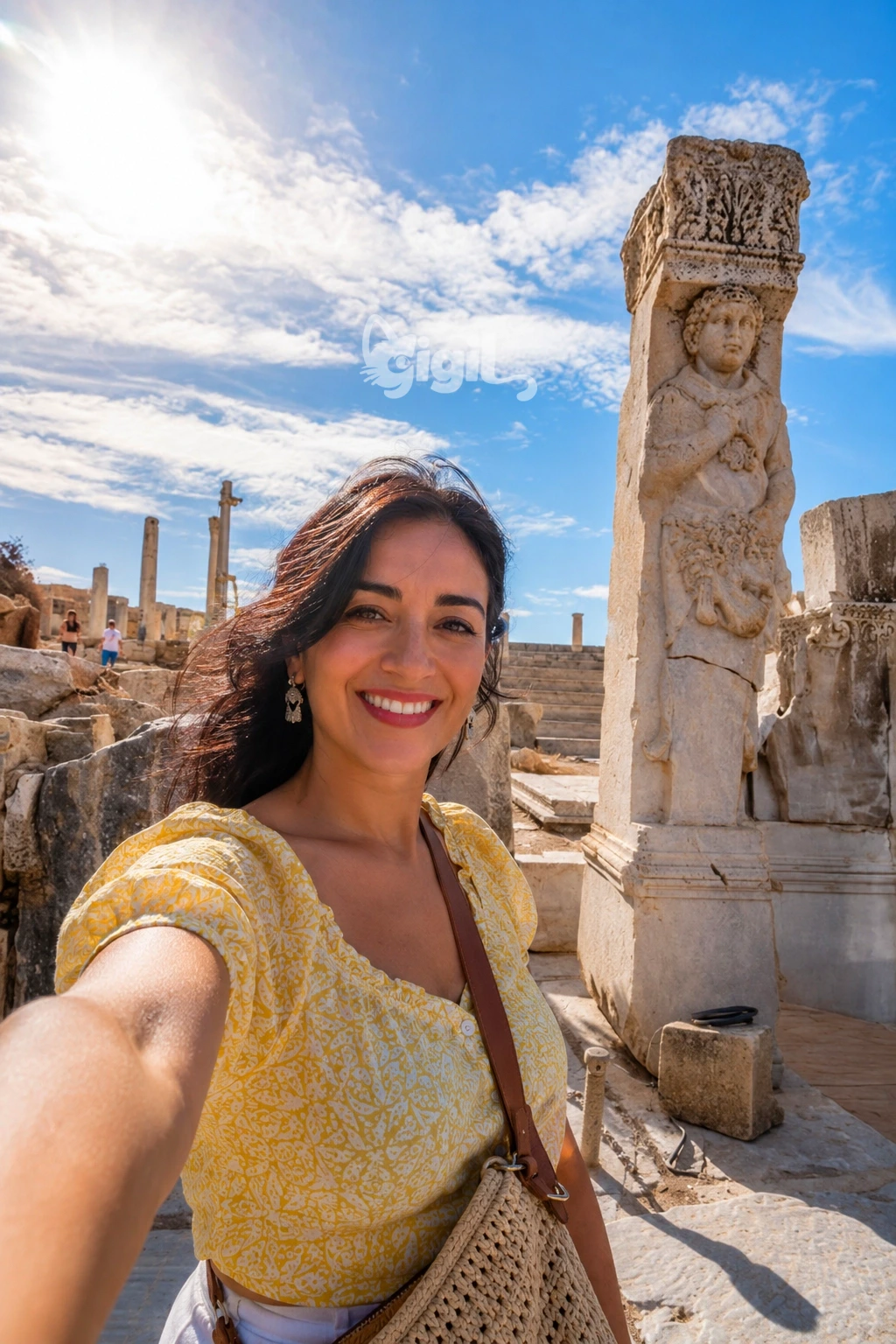
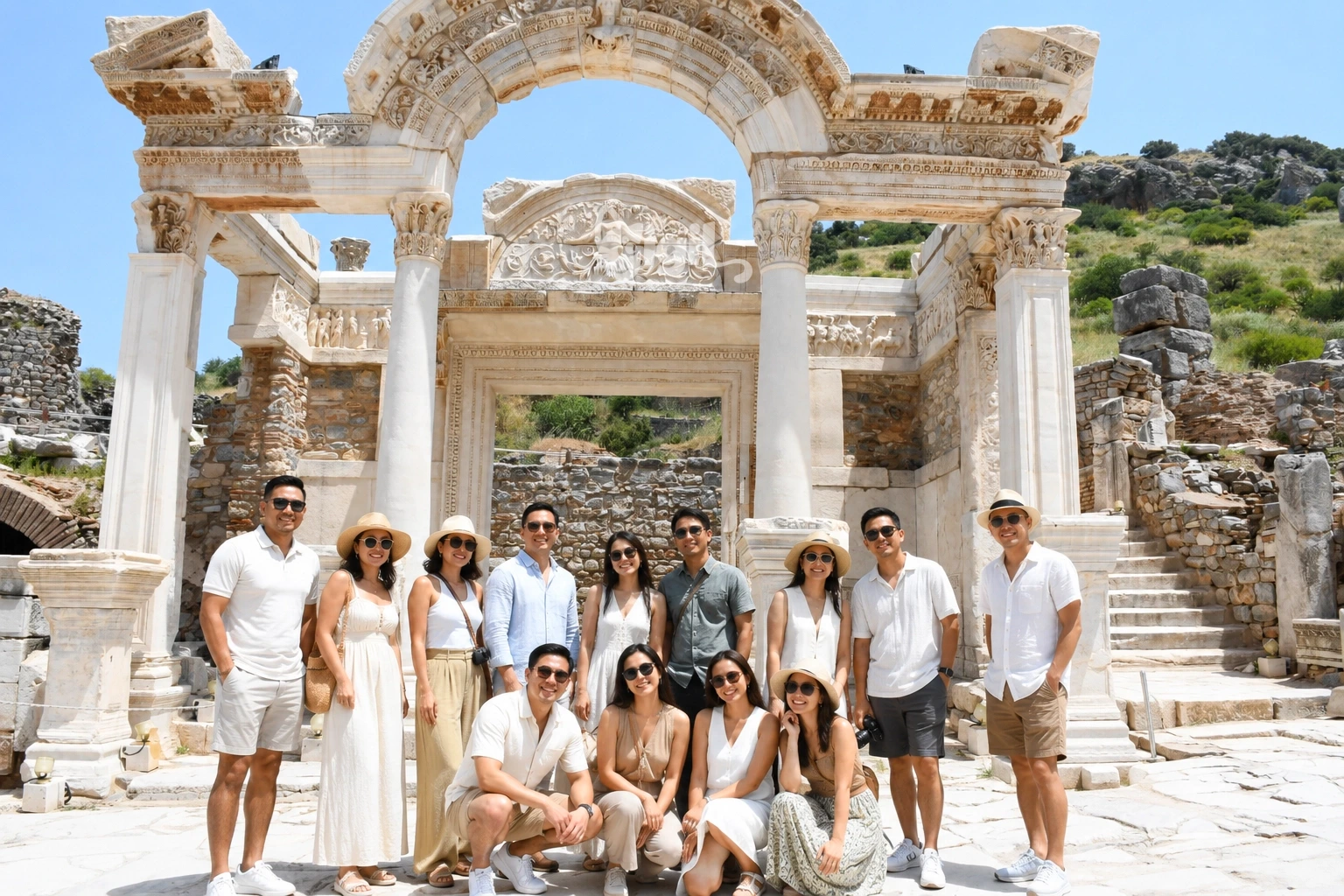


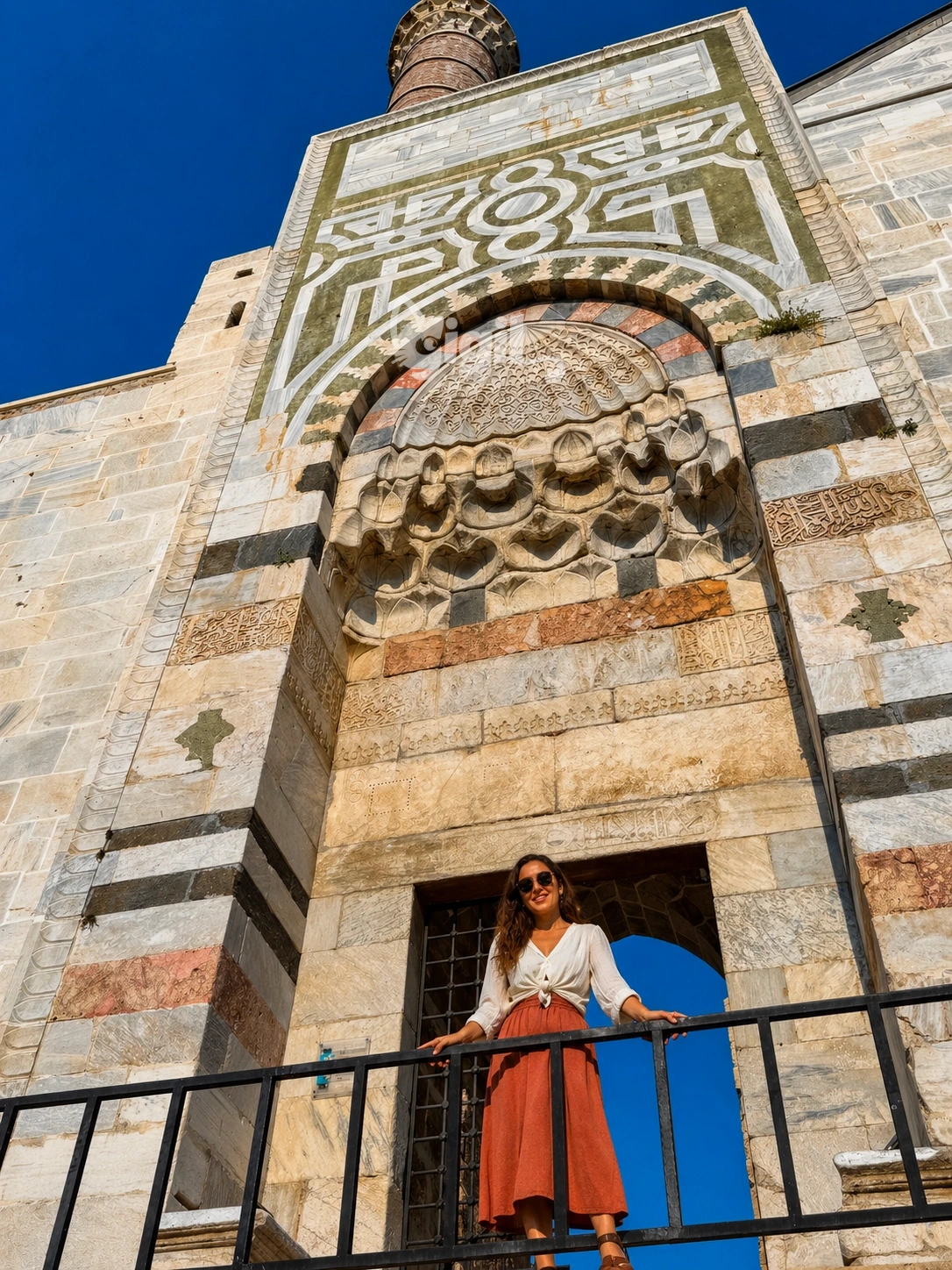
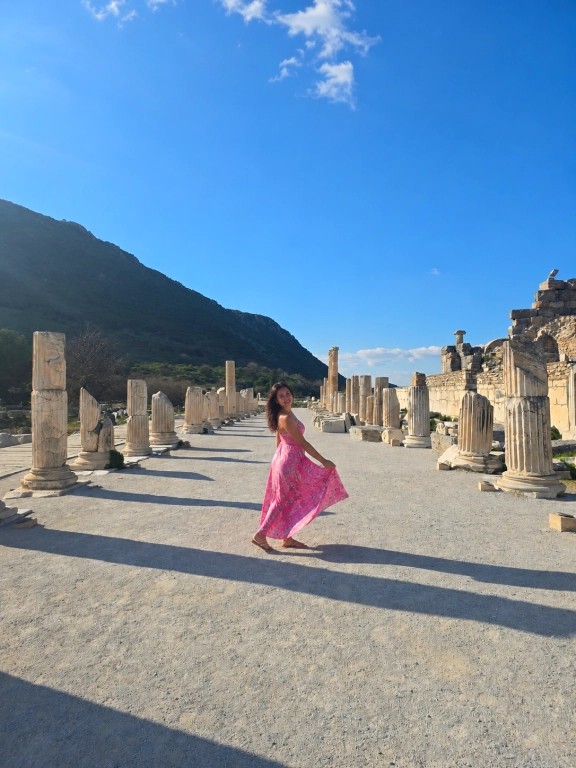
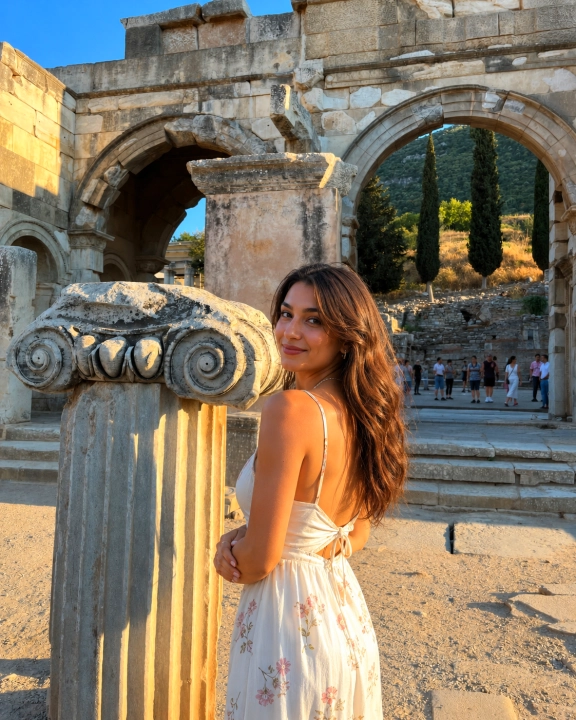
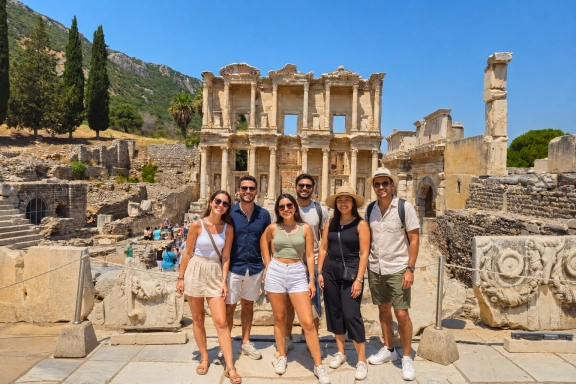
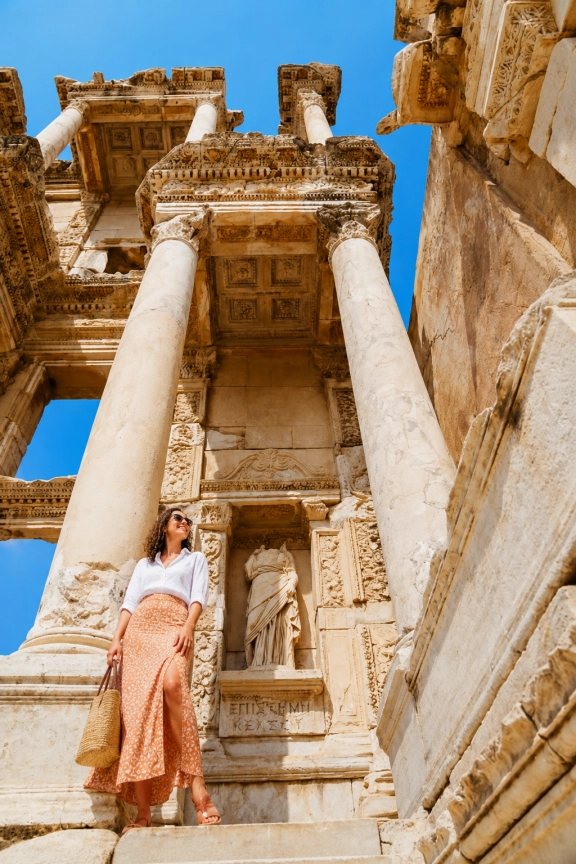
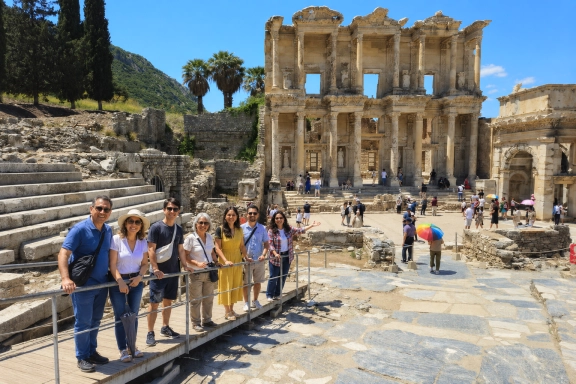
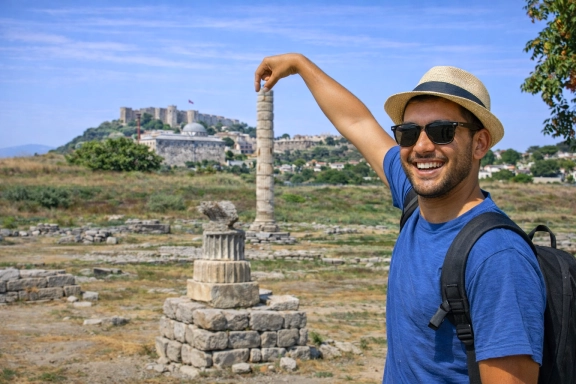

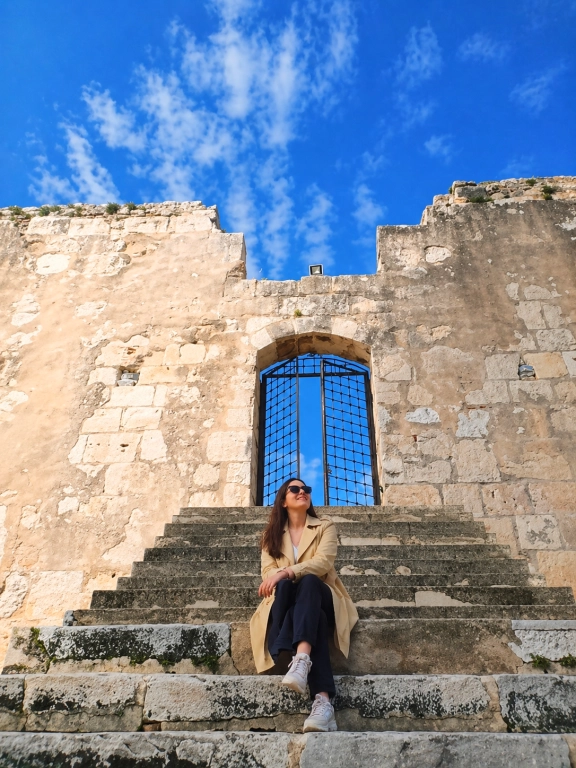



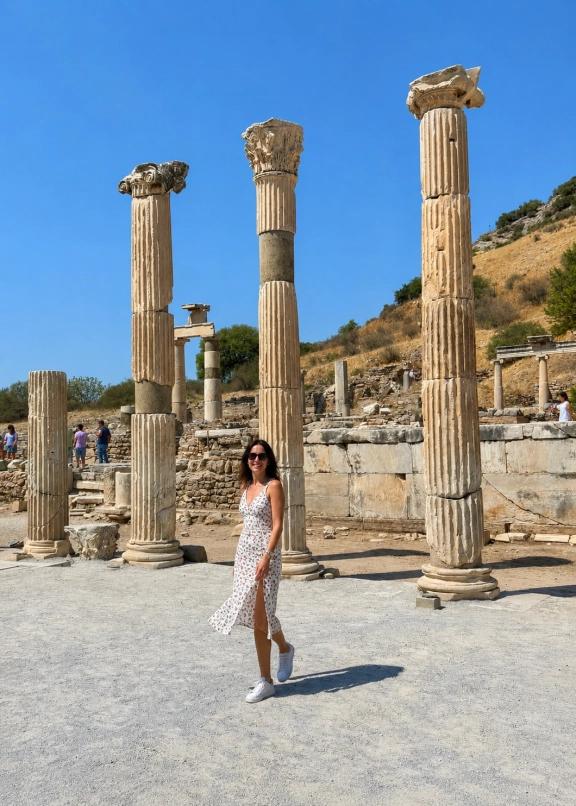
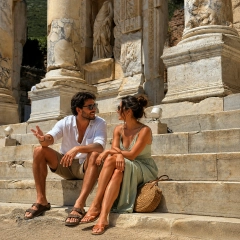
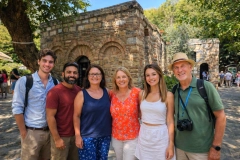
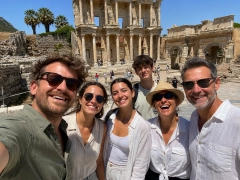
Ephesus Ancient City is the central historical experience of the private overnight bus route. Streets, theatre remains, agora spaces, gates, inscriptions and the Library of Celsus reveal how a major ancient city functioned.
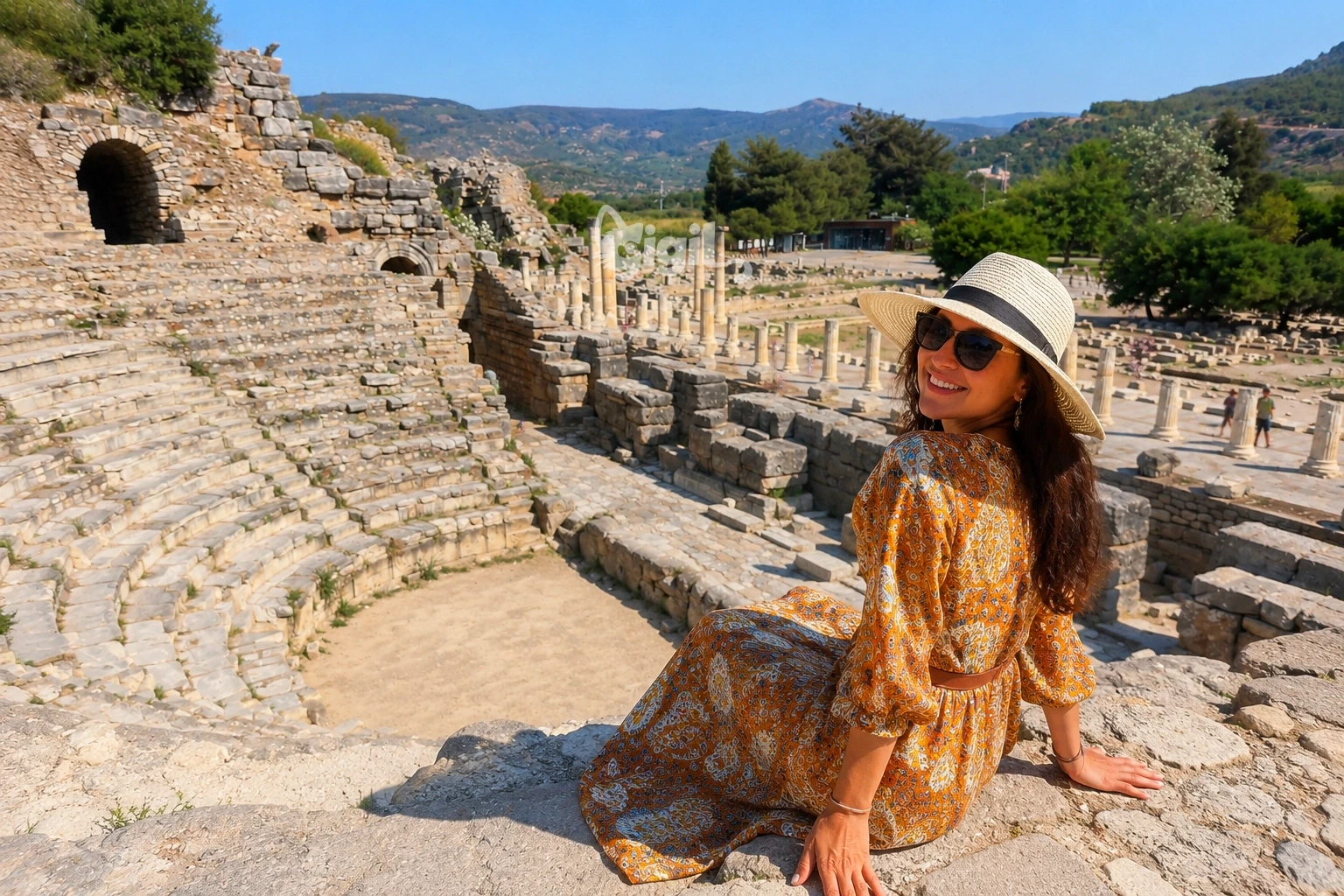
Follow the ruins as a sequence of connected public spaces. Civic life, trade, worship and status appear through the layout, while the former harbor explains why Ephesus gained regional influence before the landscape changed.
Questions
What makes Ephesus the central ancient site?
It shows a major ancient city through preserved streets, theatre remains, public spaces, monuments, gates and inscriptions.
Which monuments help explain Ephesus?
The Library of Celsus, theatre, marble streets, agora areas, gates and inscriptions help explain public life and city planning.
Why is the former harbor part of the story?
The former harbor explains how Ephesus became wealthy and influential through trade before the landscape changed.
How should visitors view reconstructed details?
They help visitors imagine the ancient city, but they should be understood alongside original remains and modern conservation.