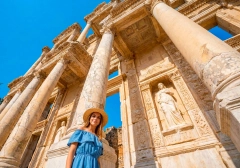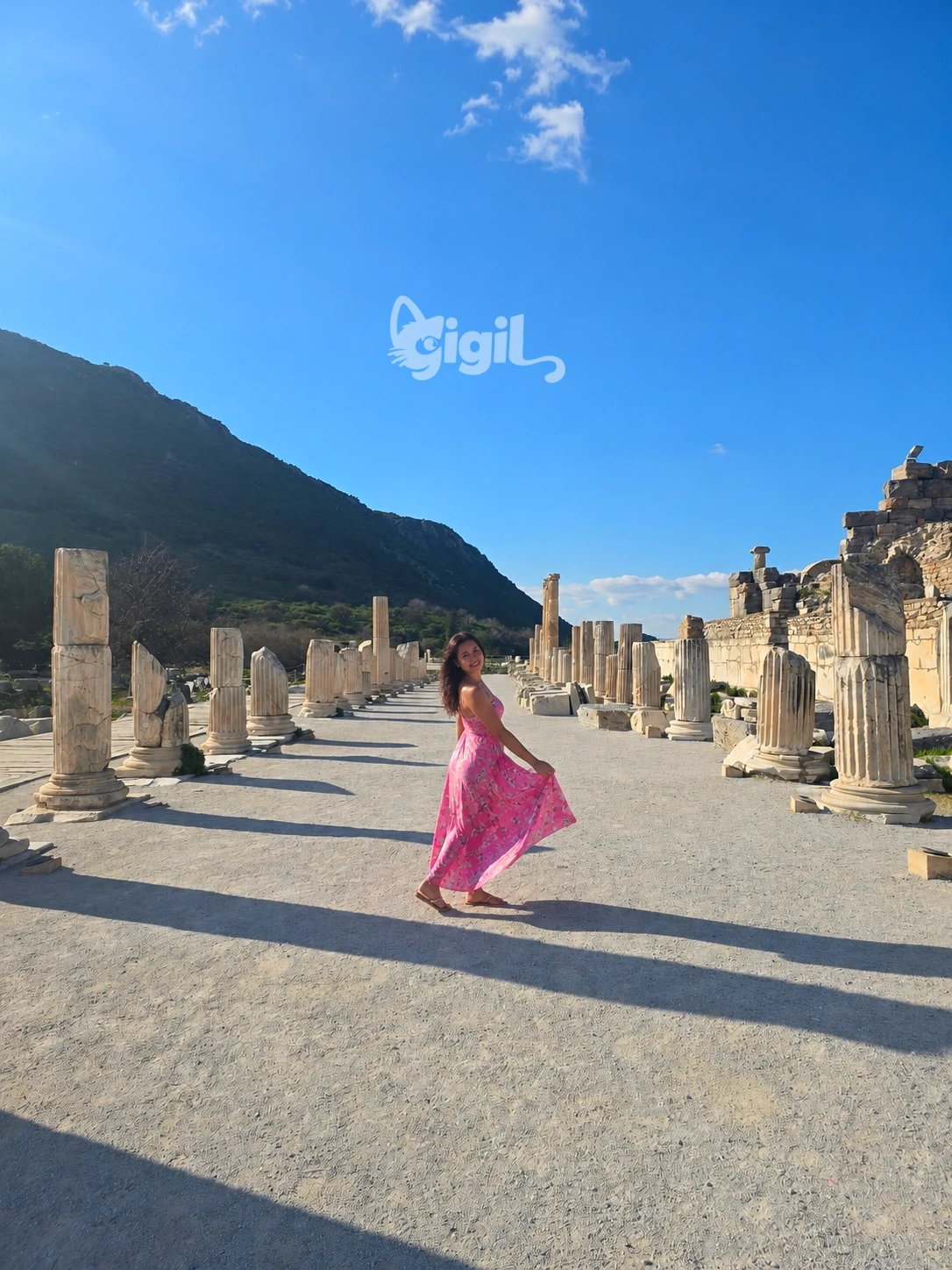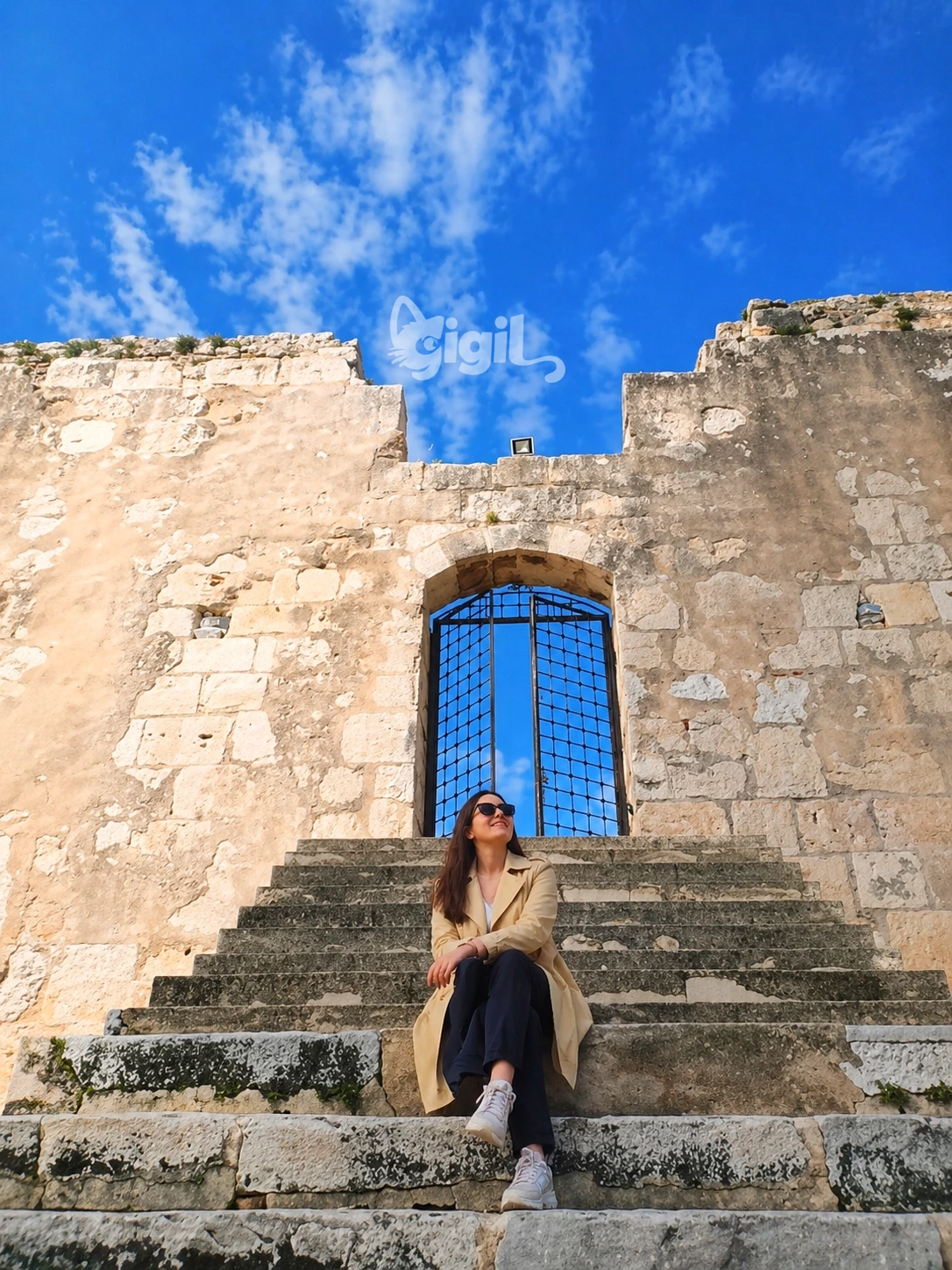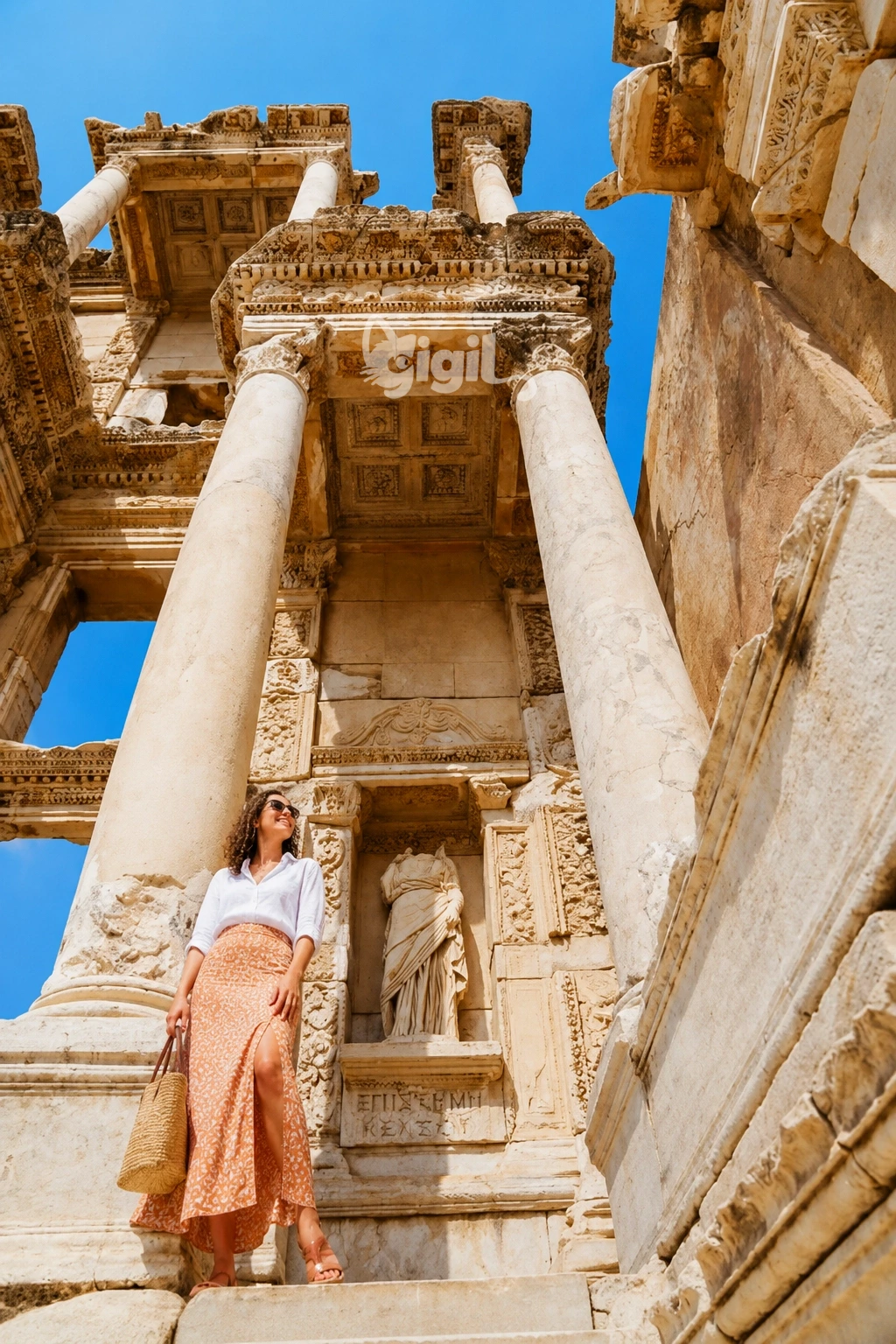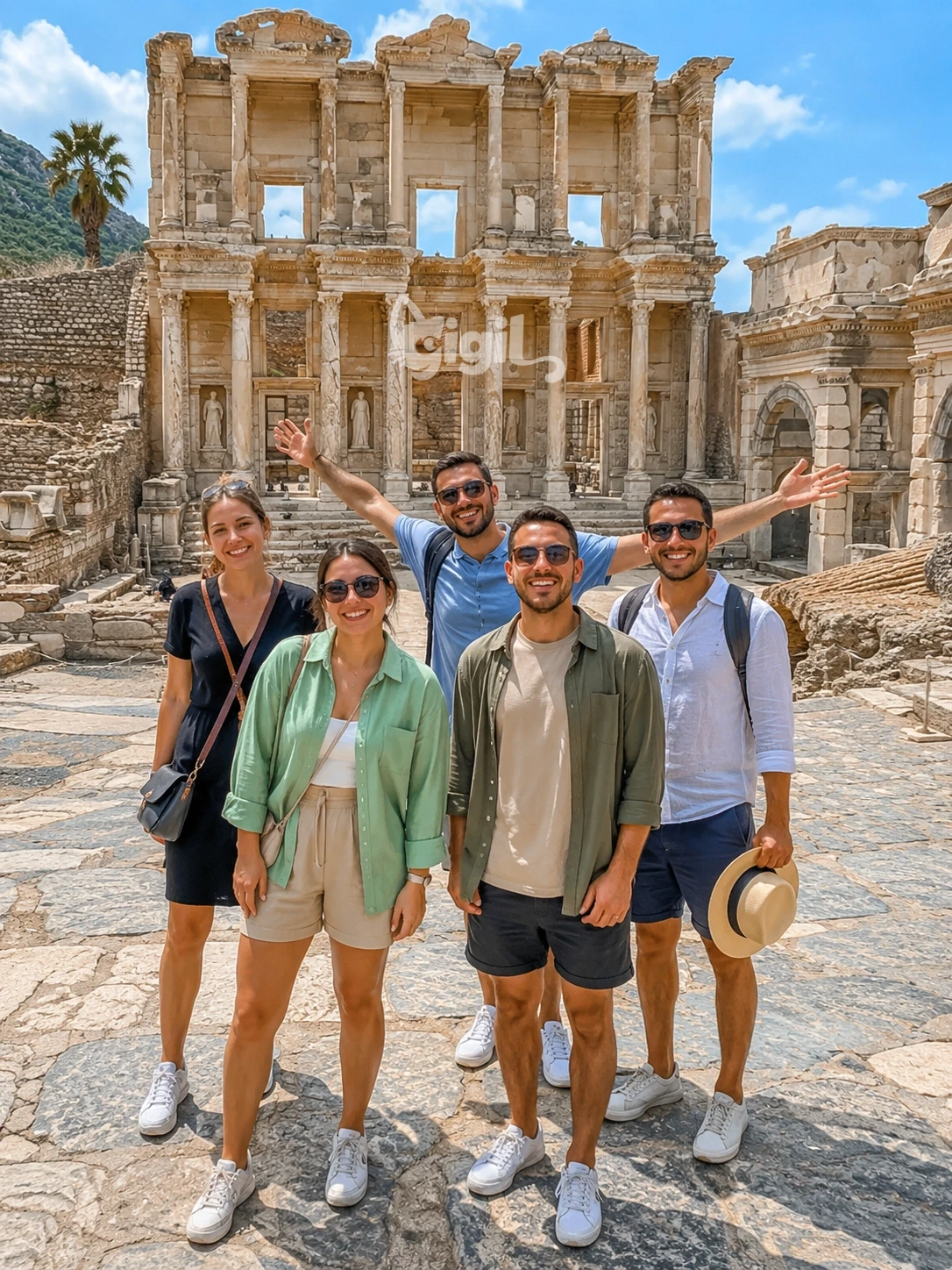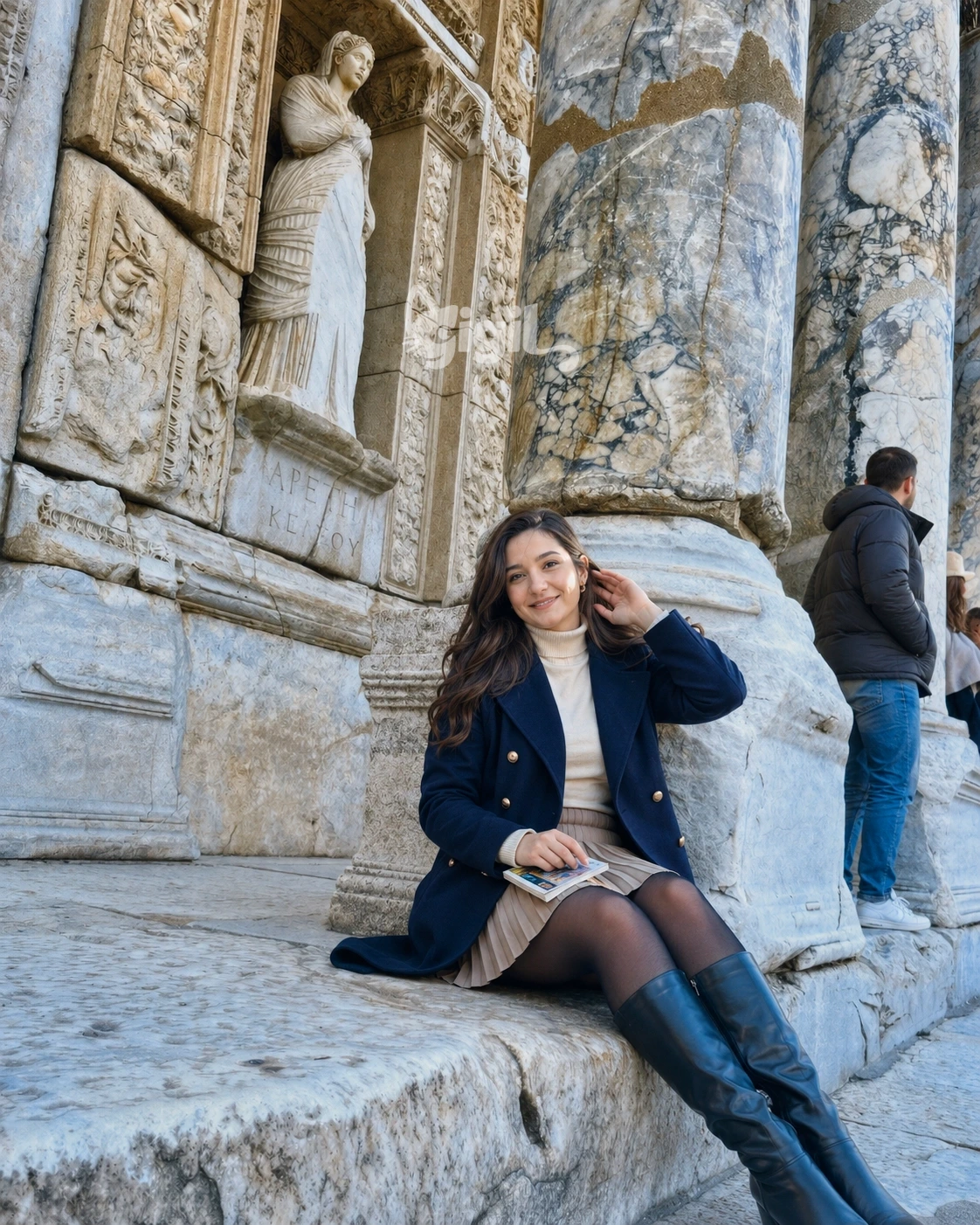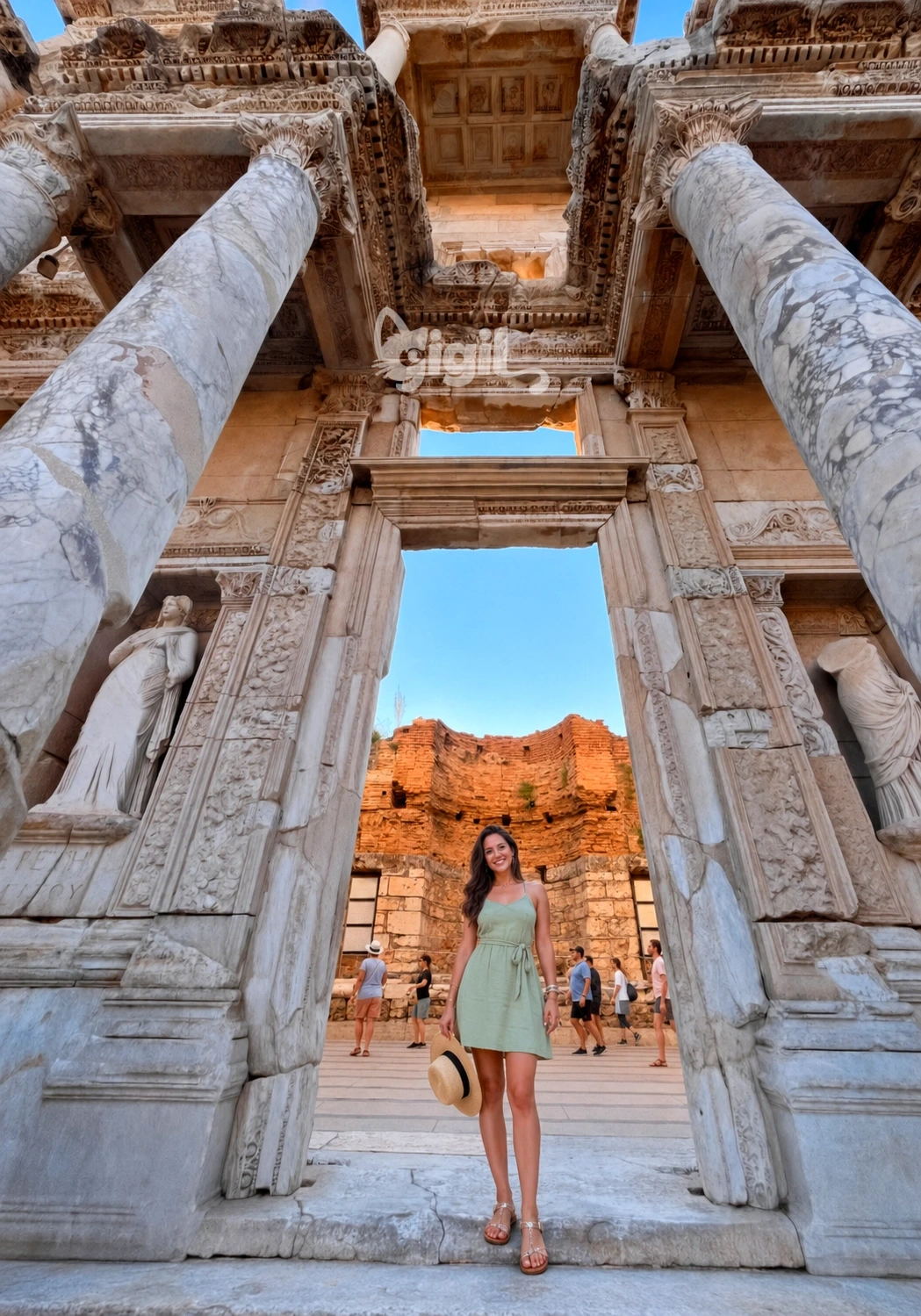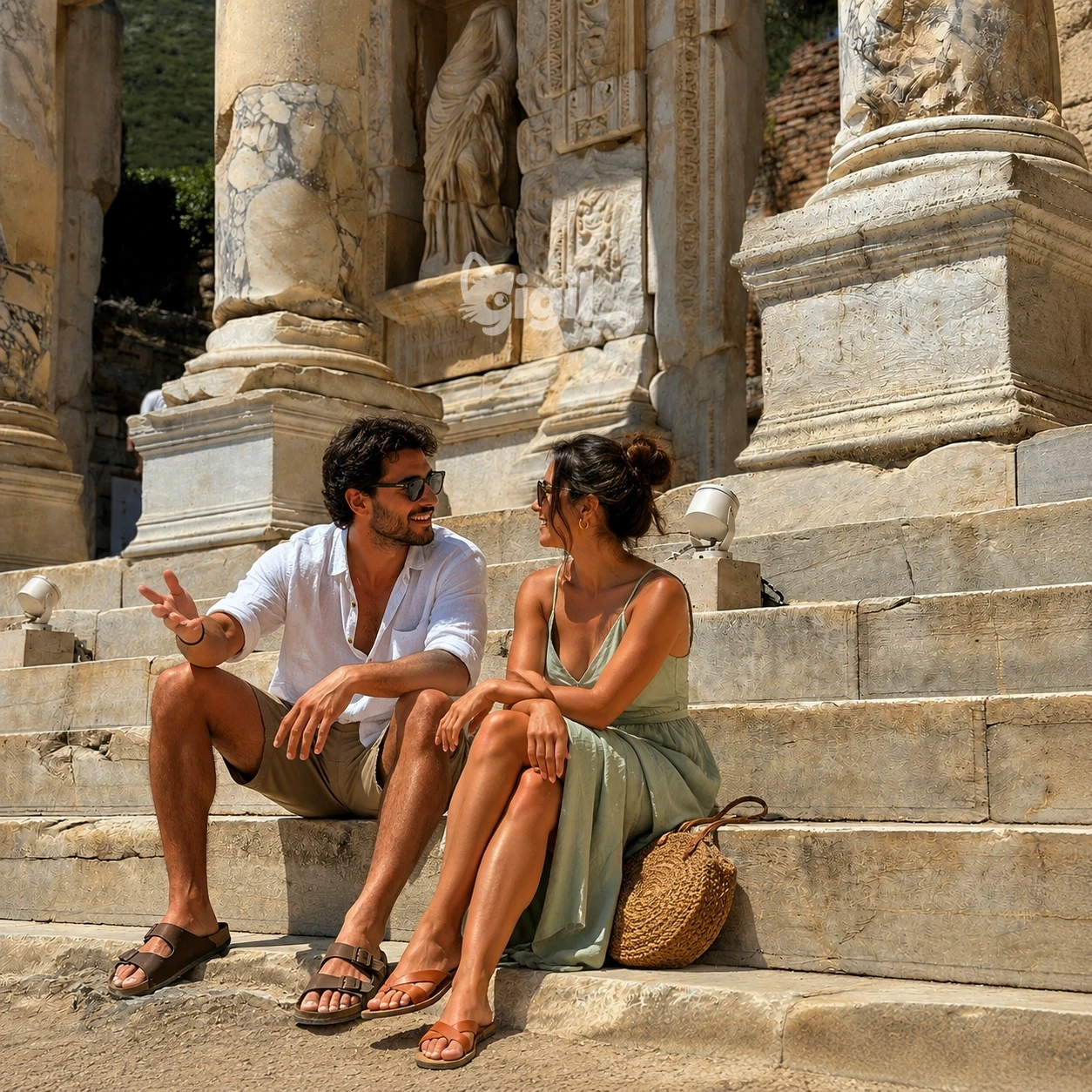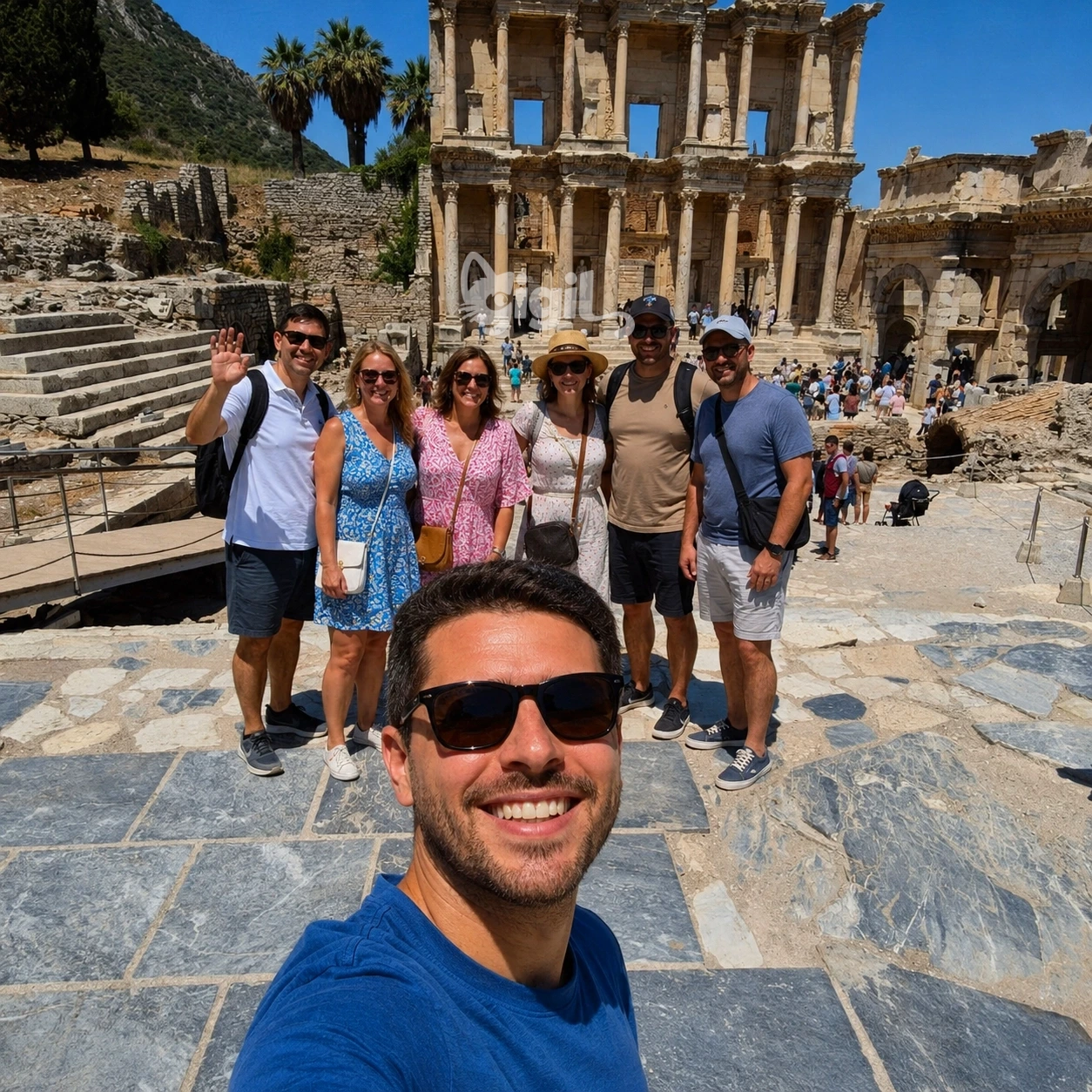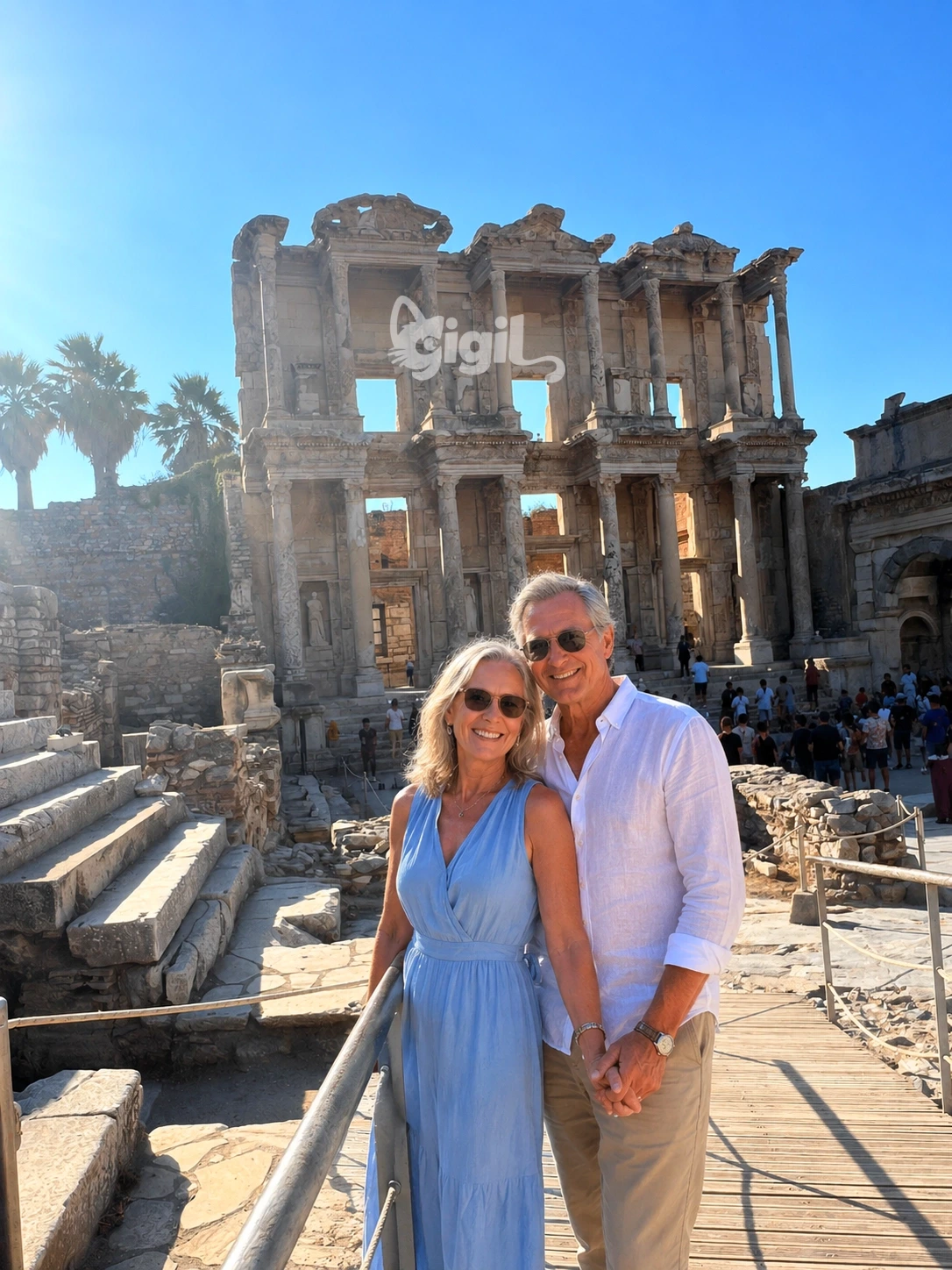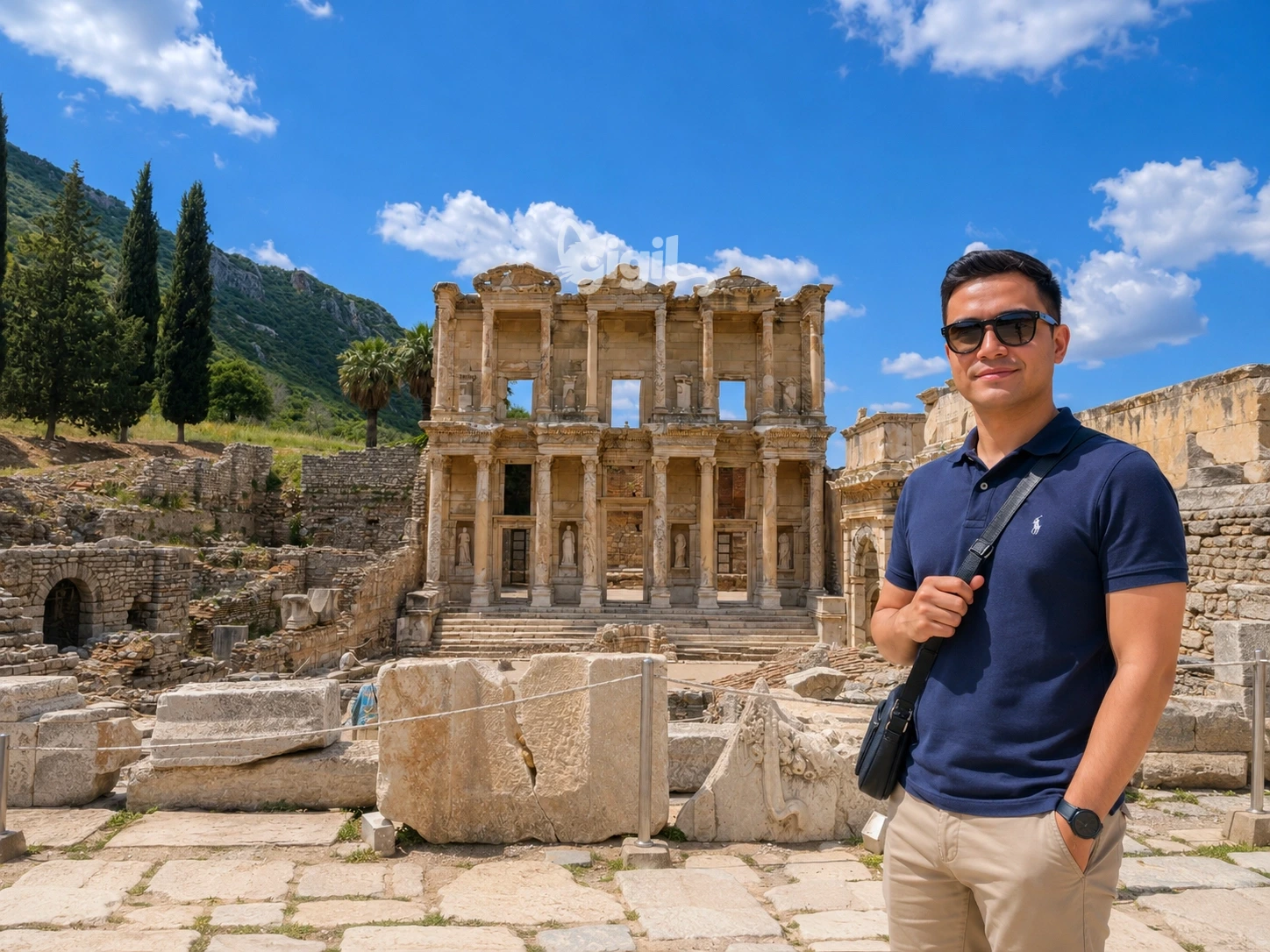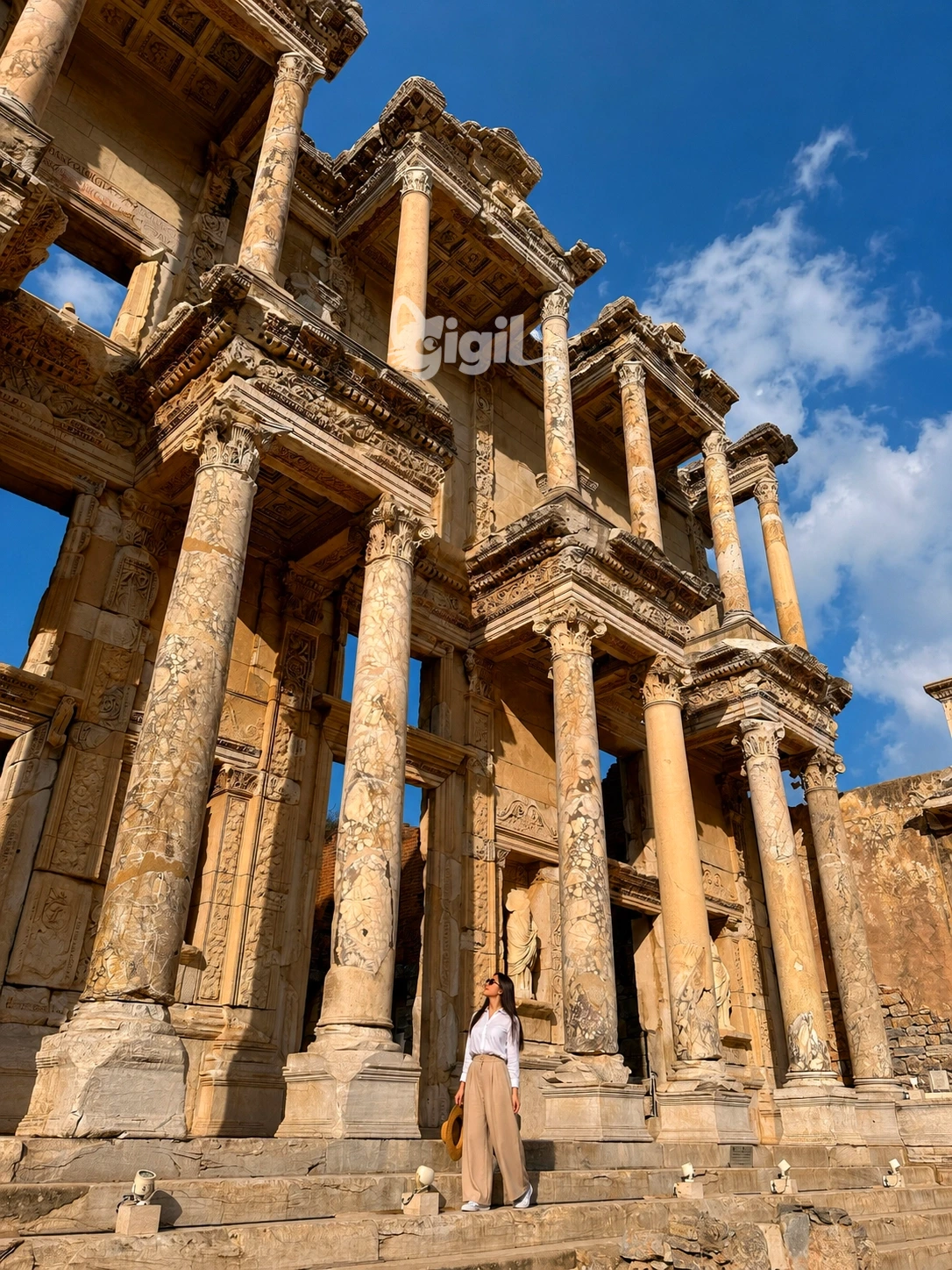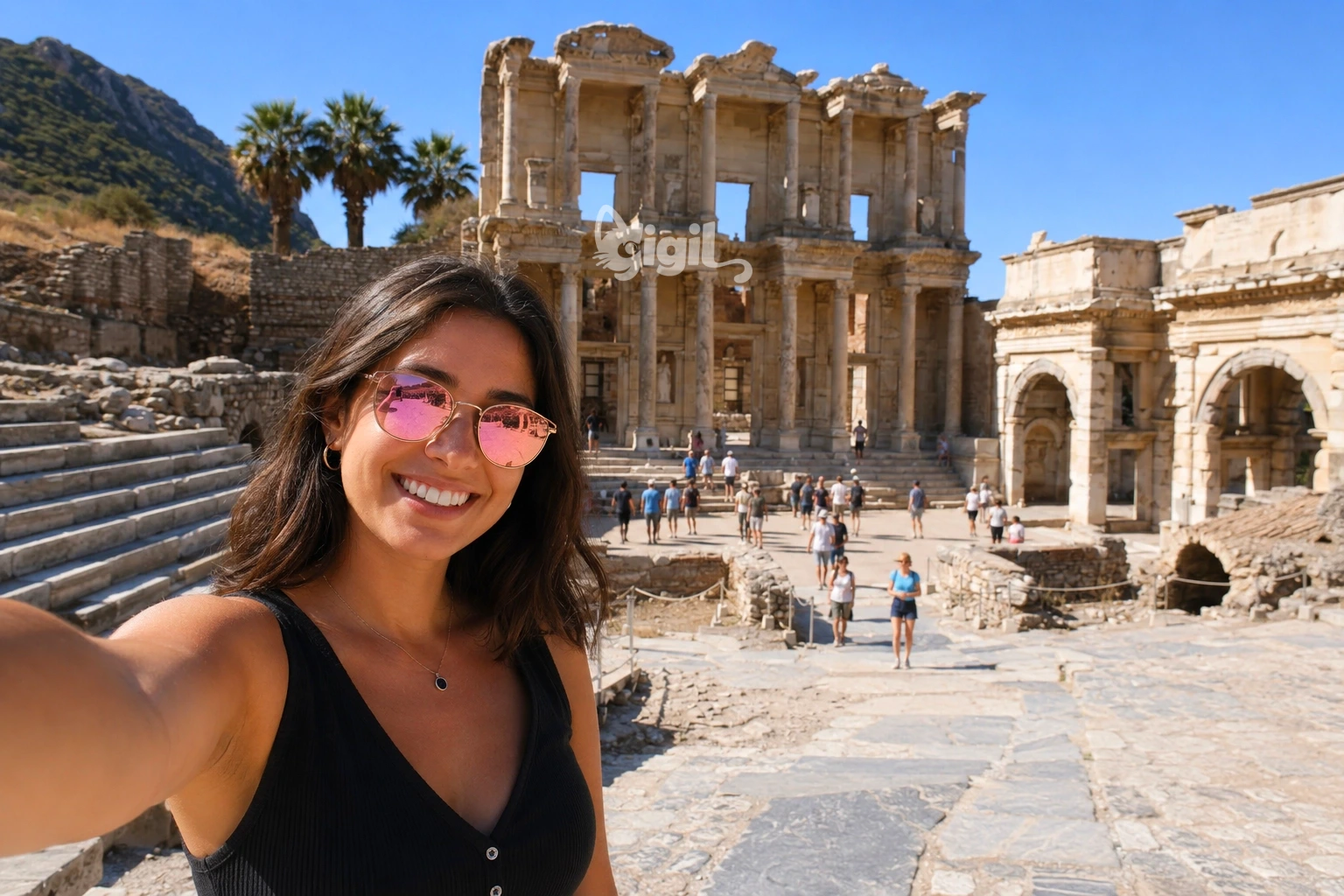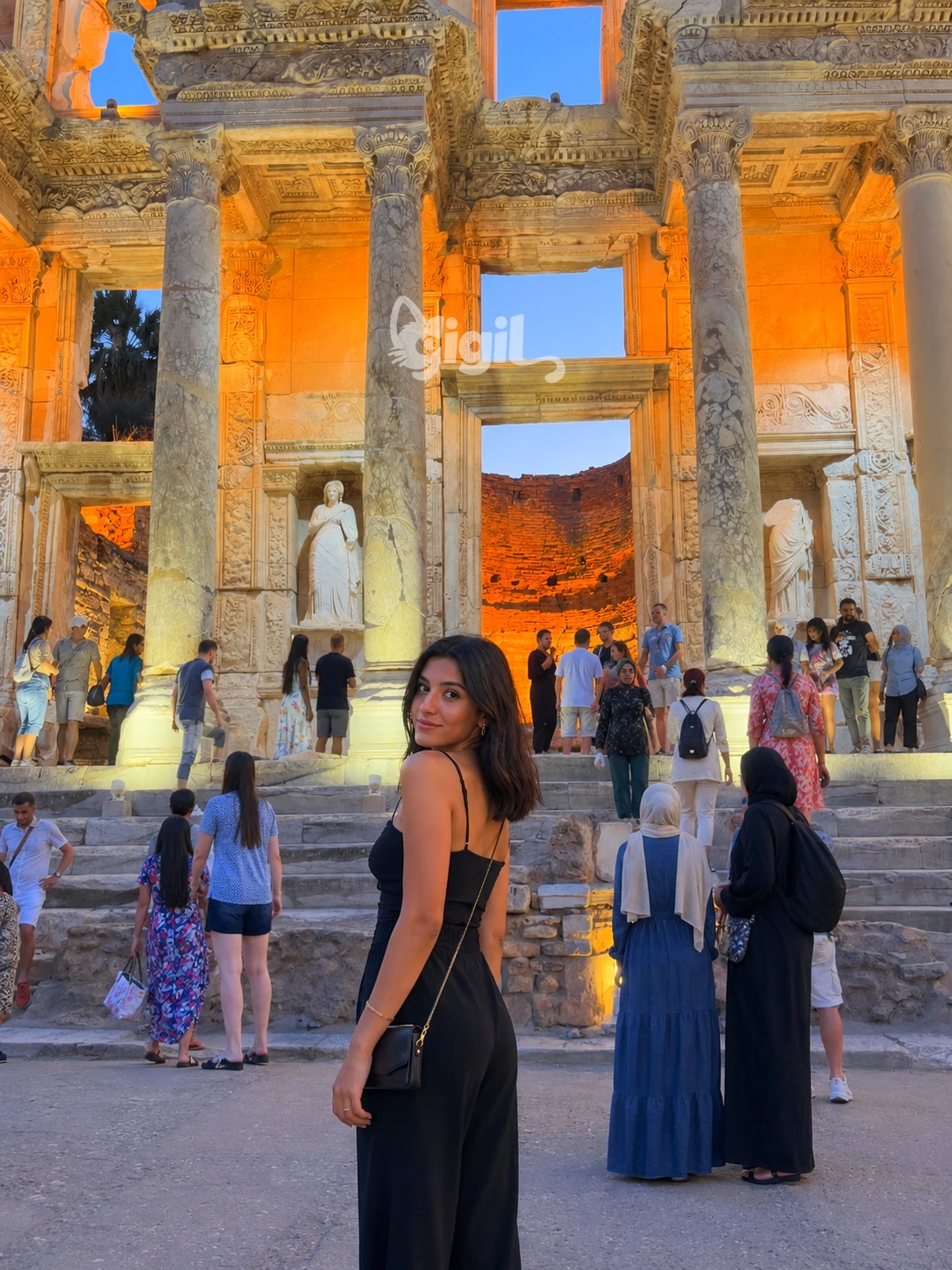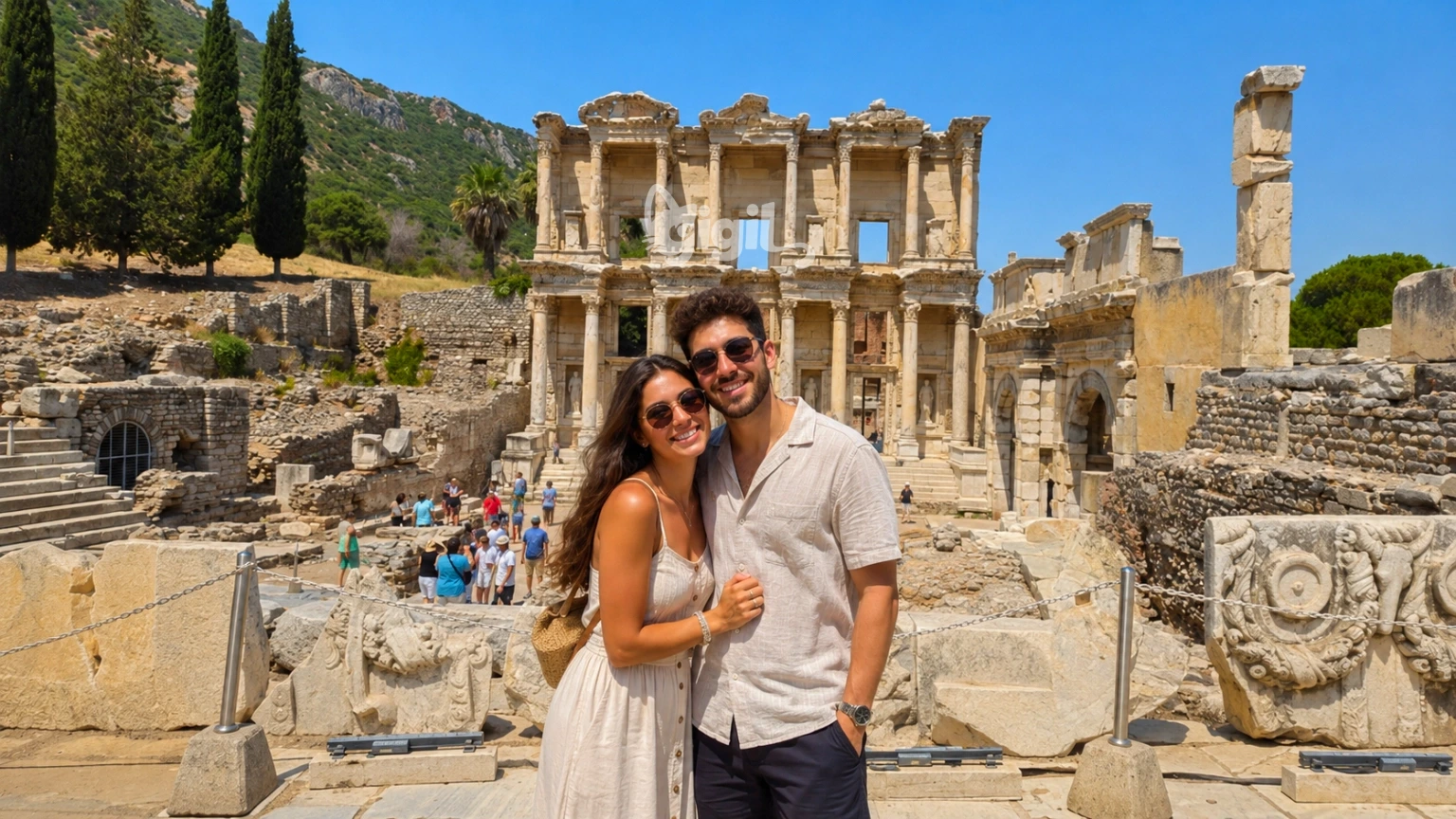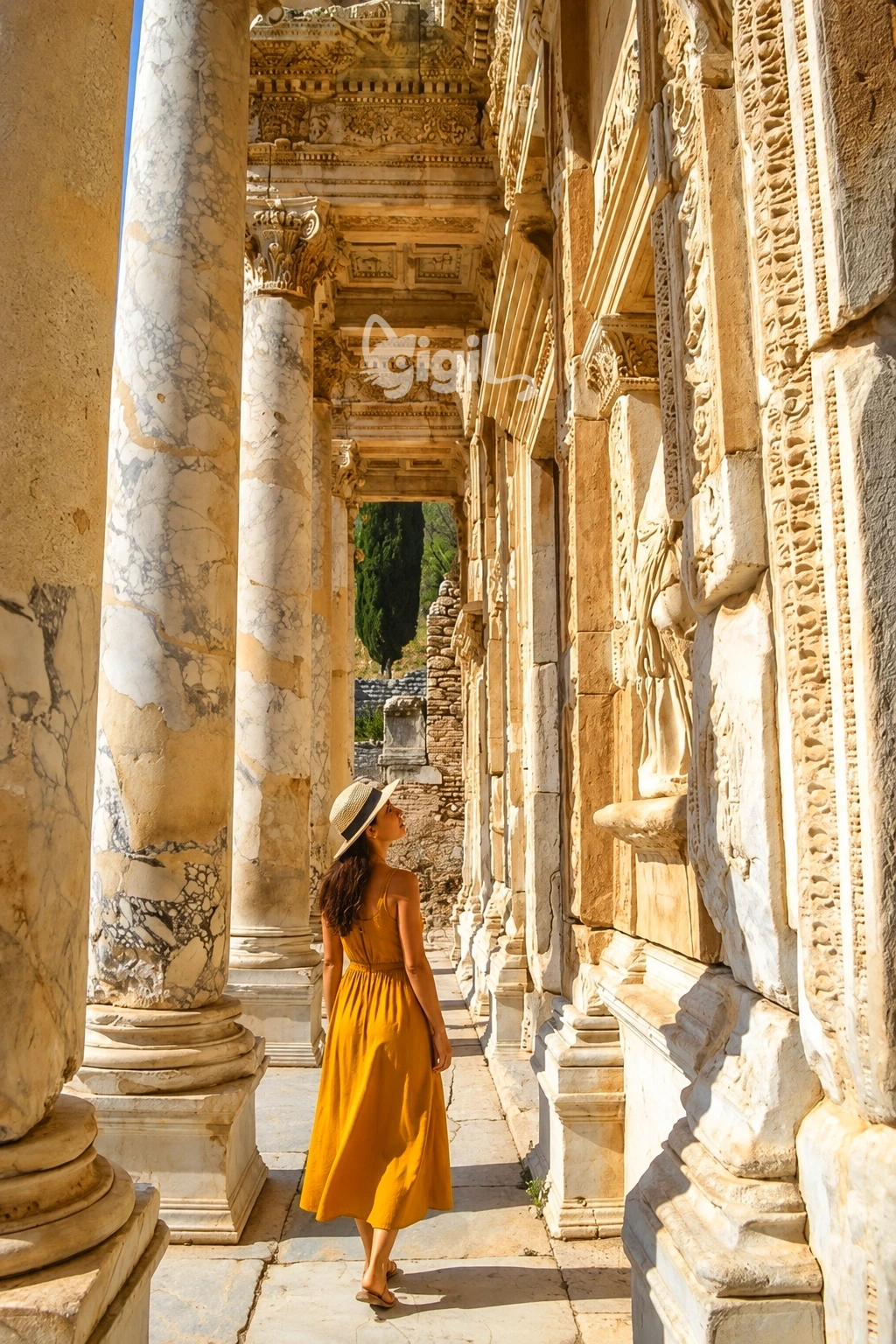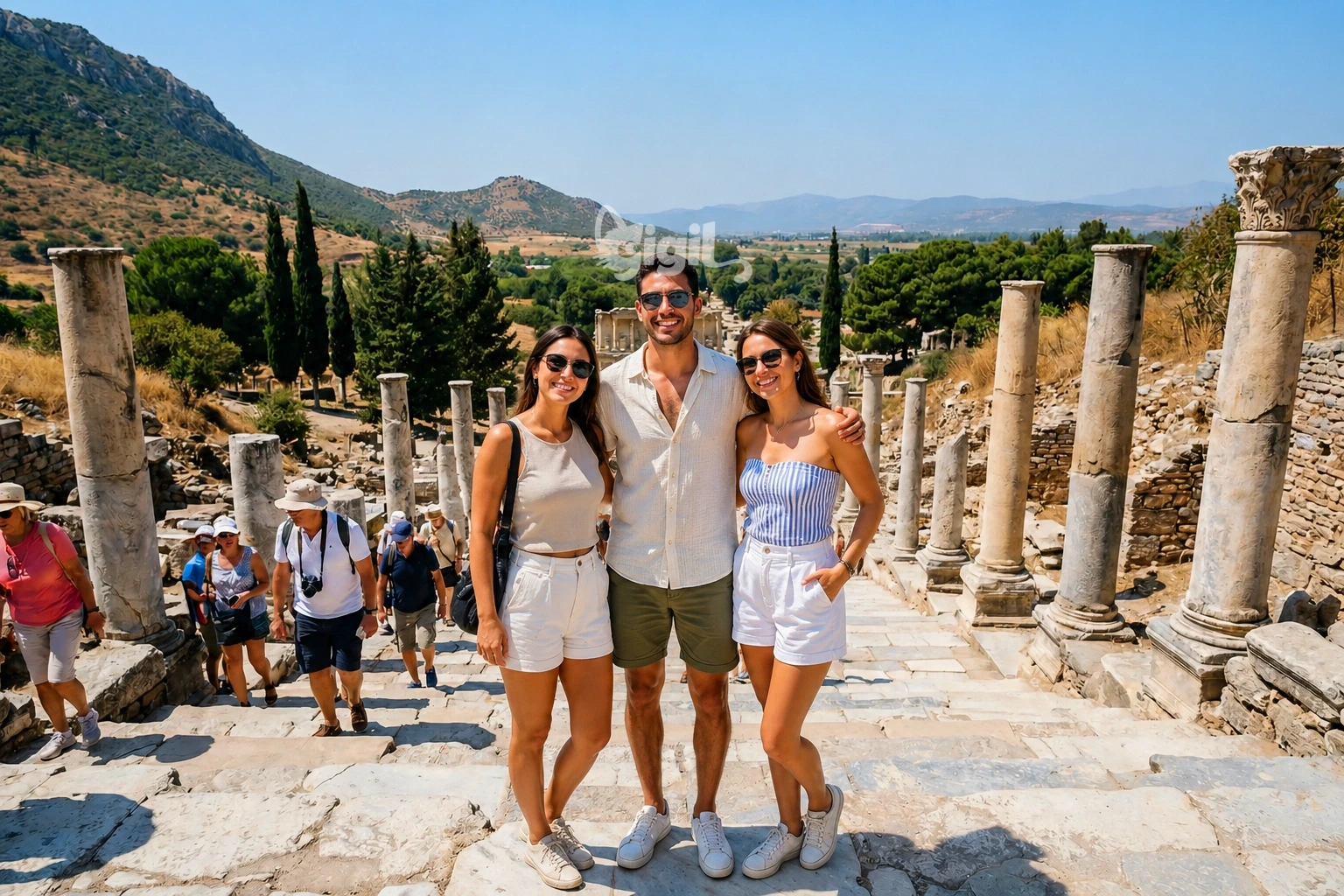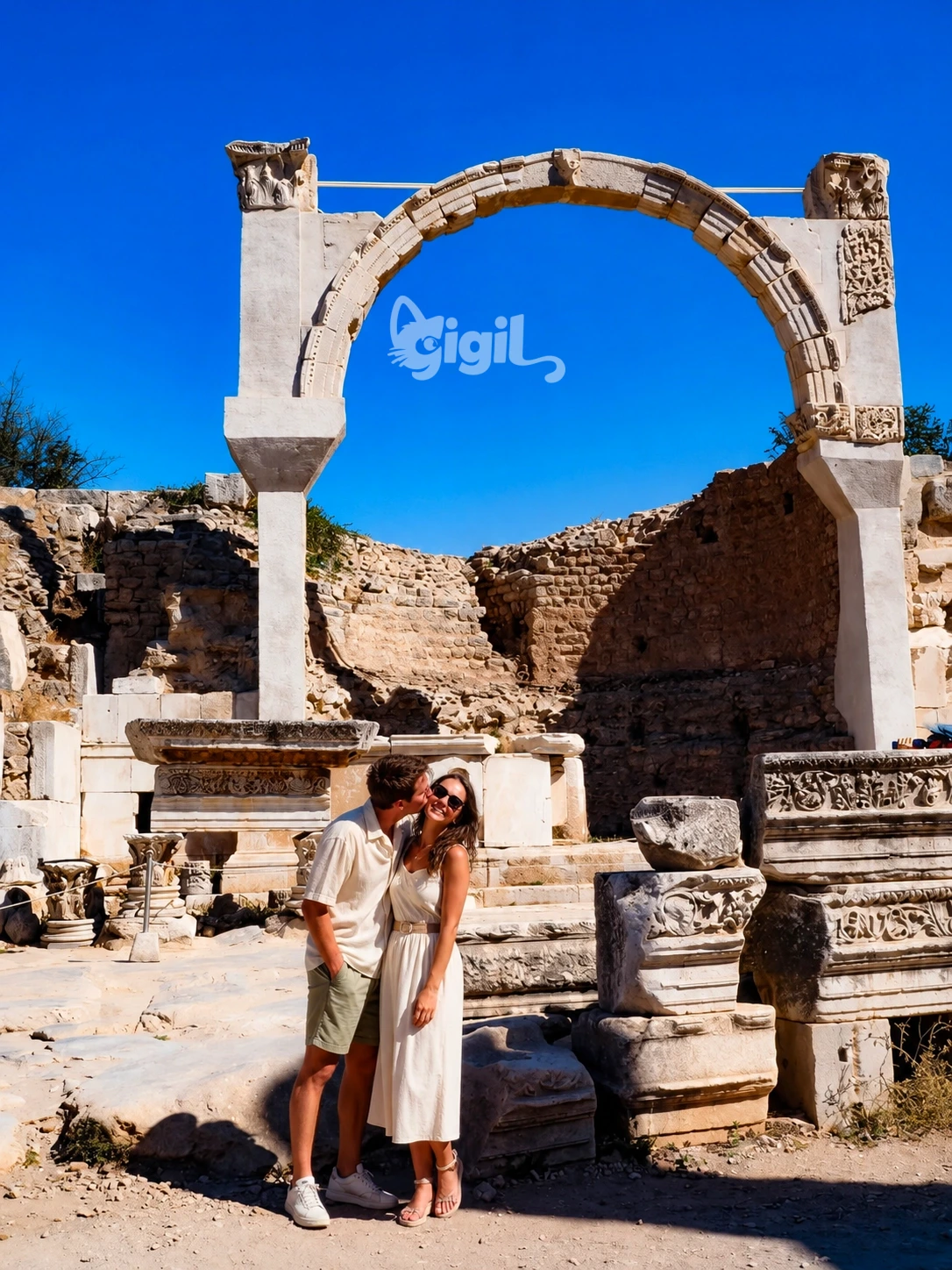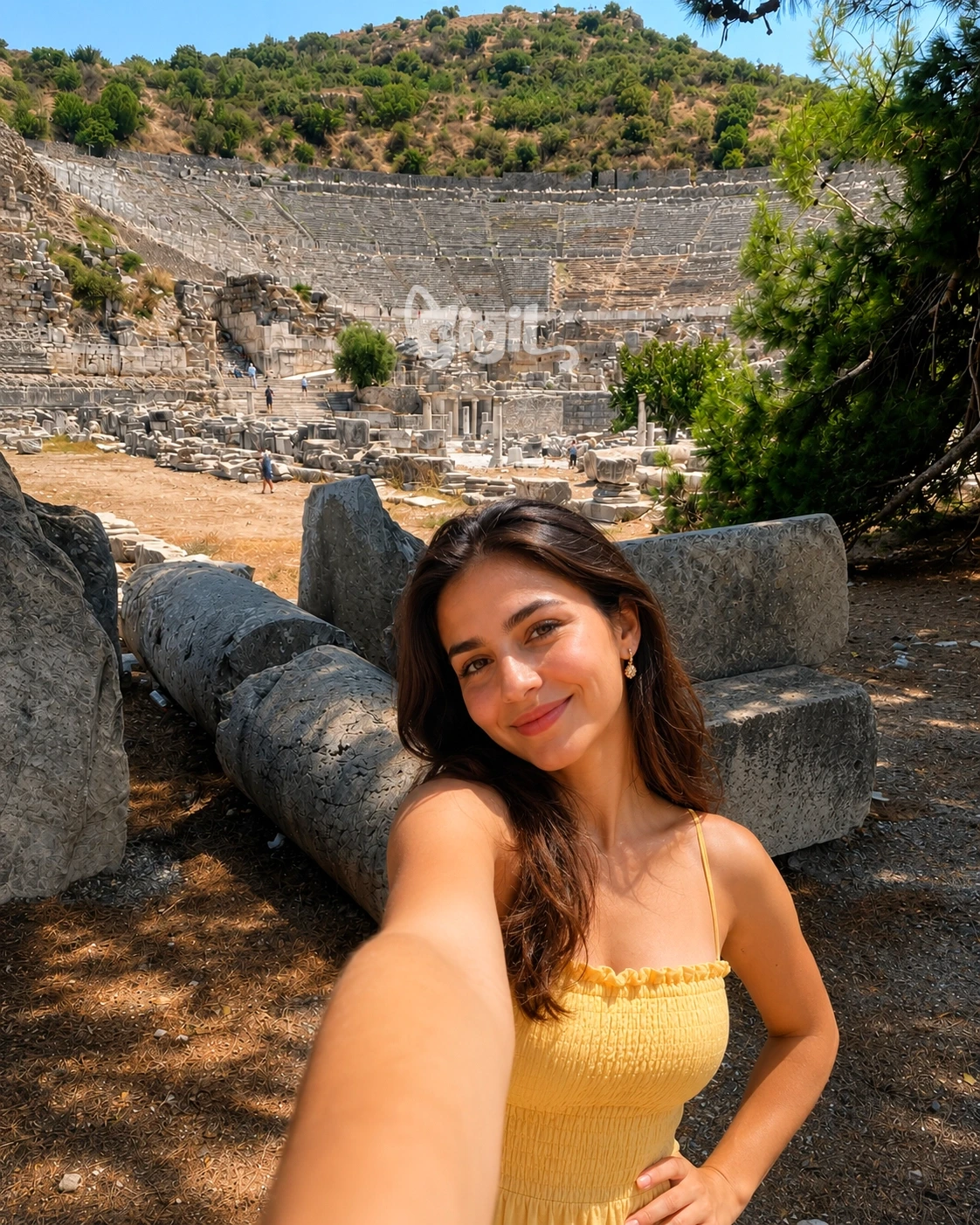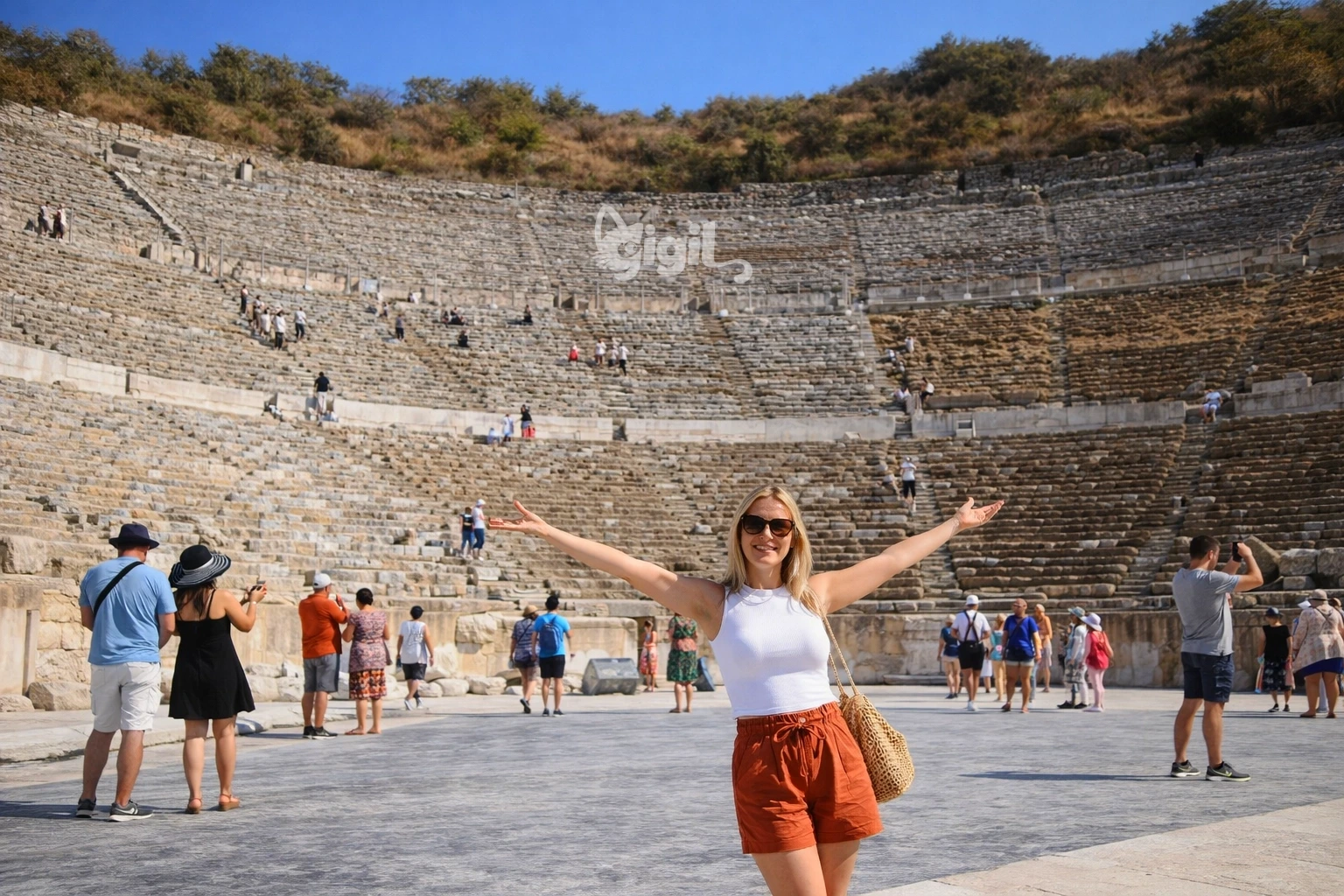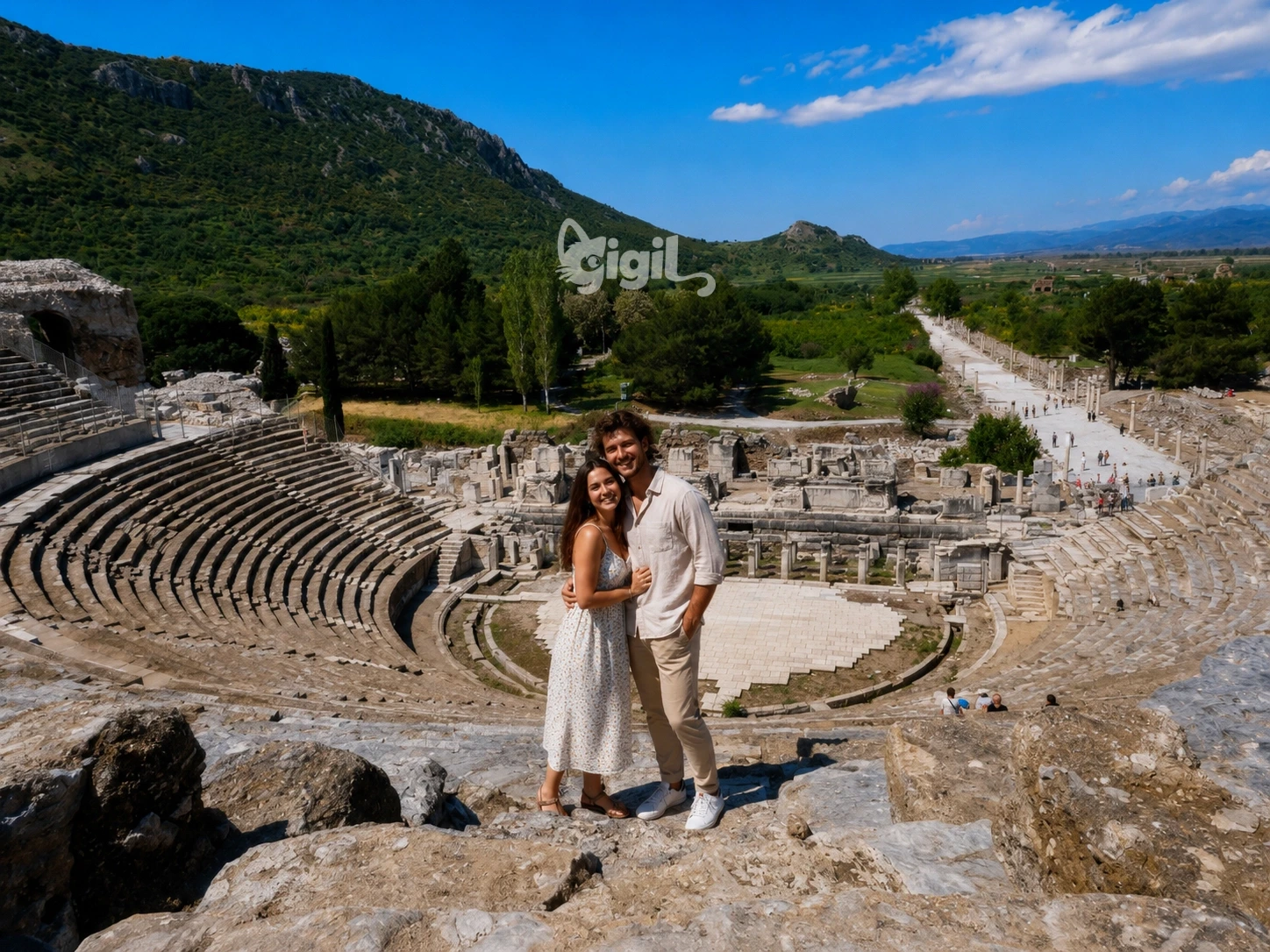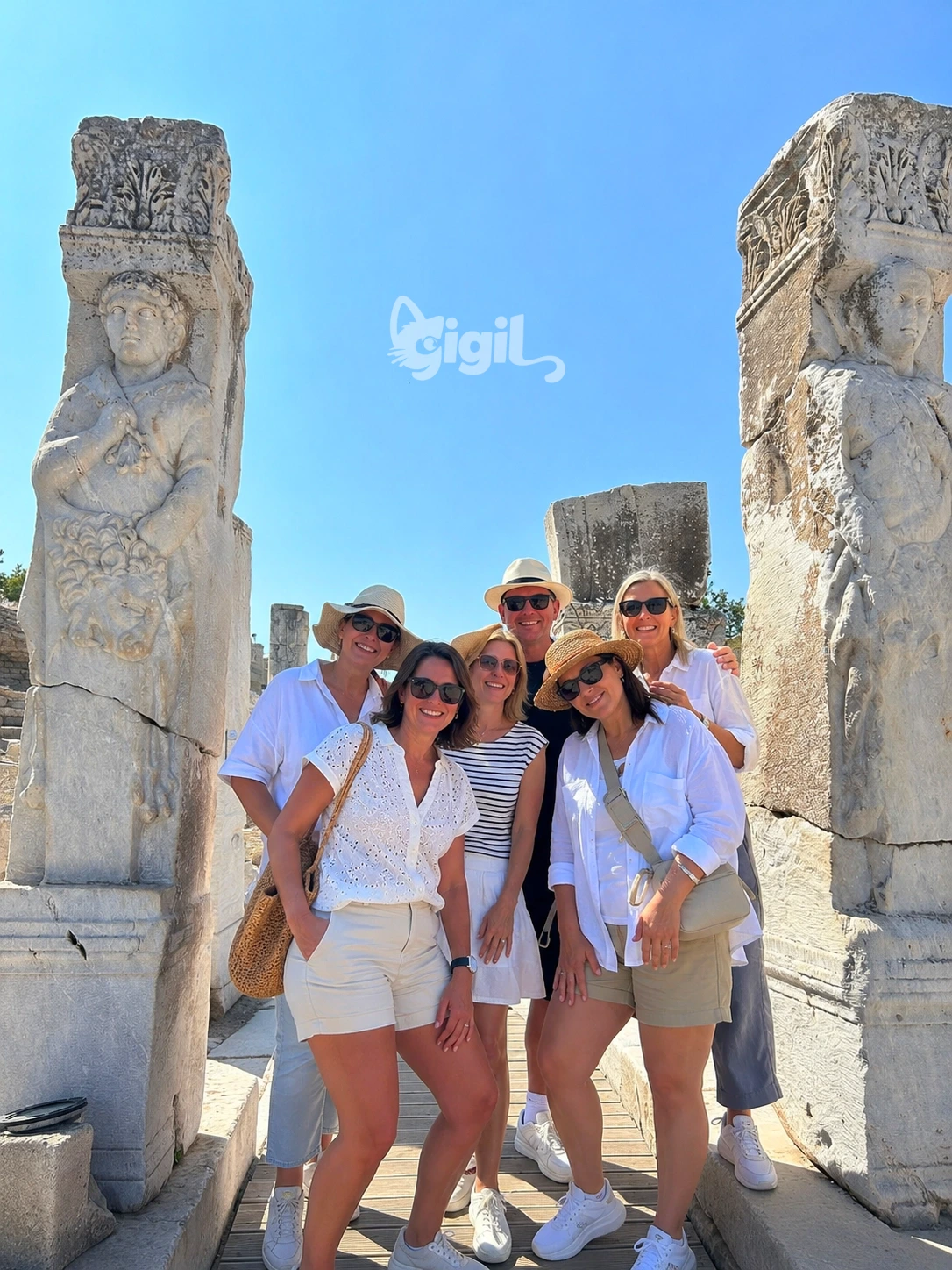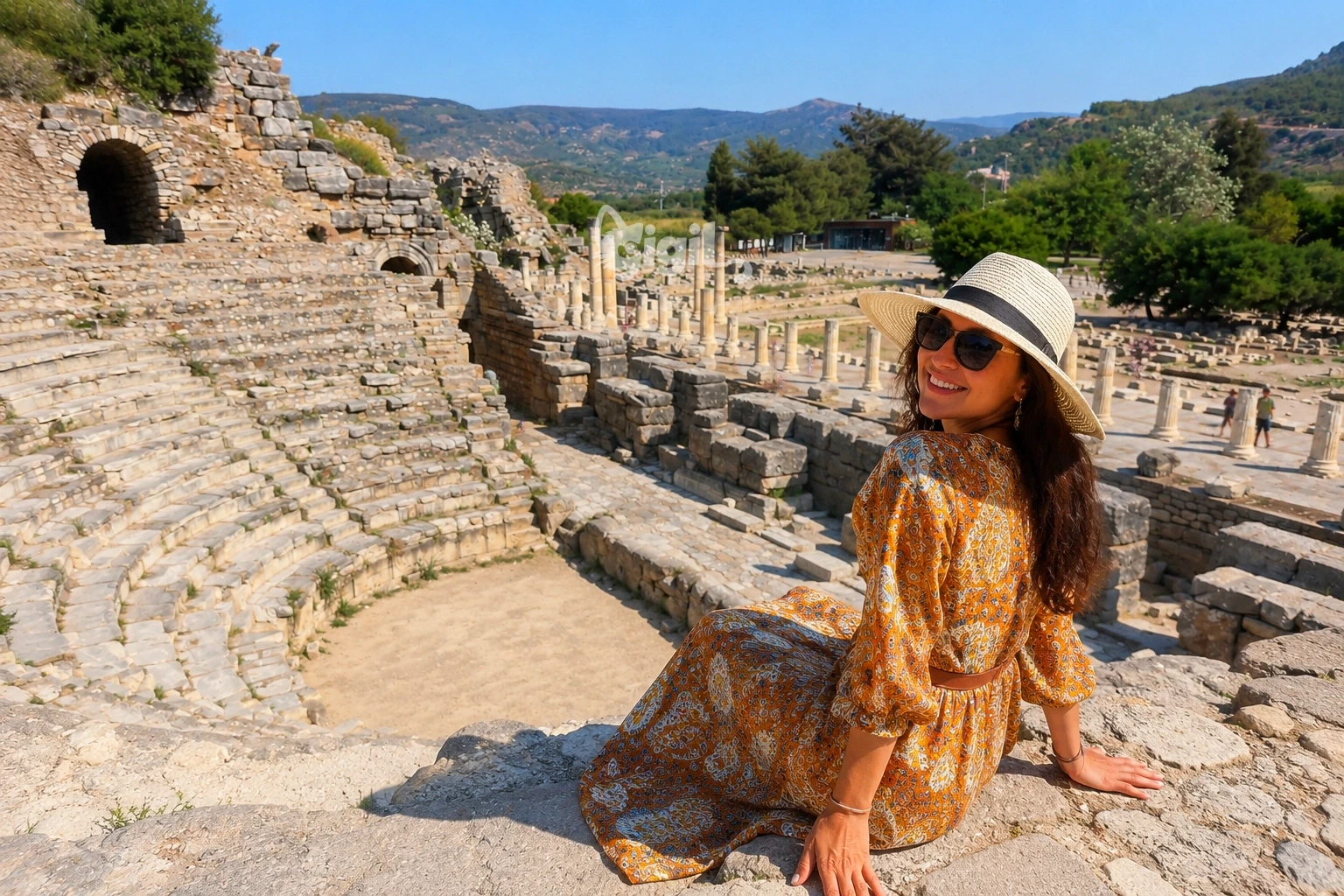
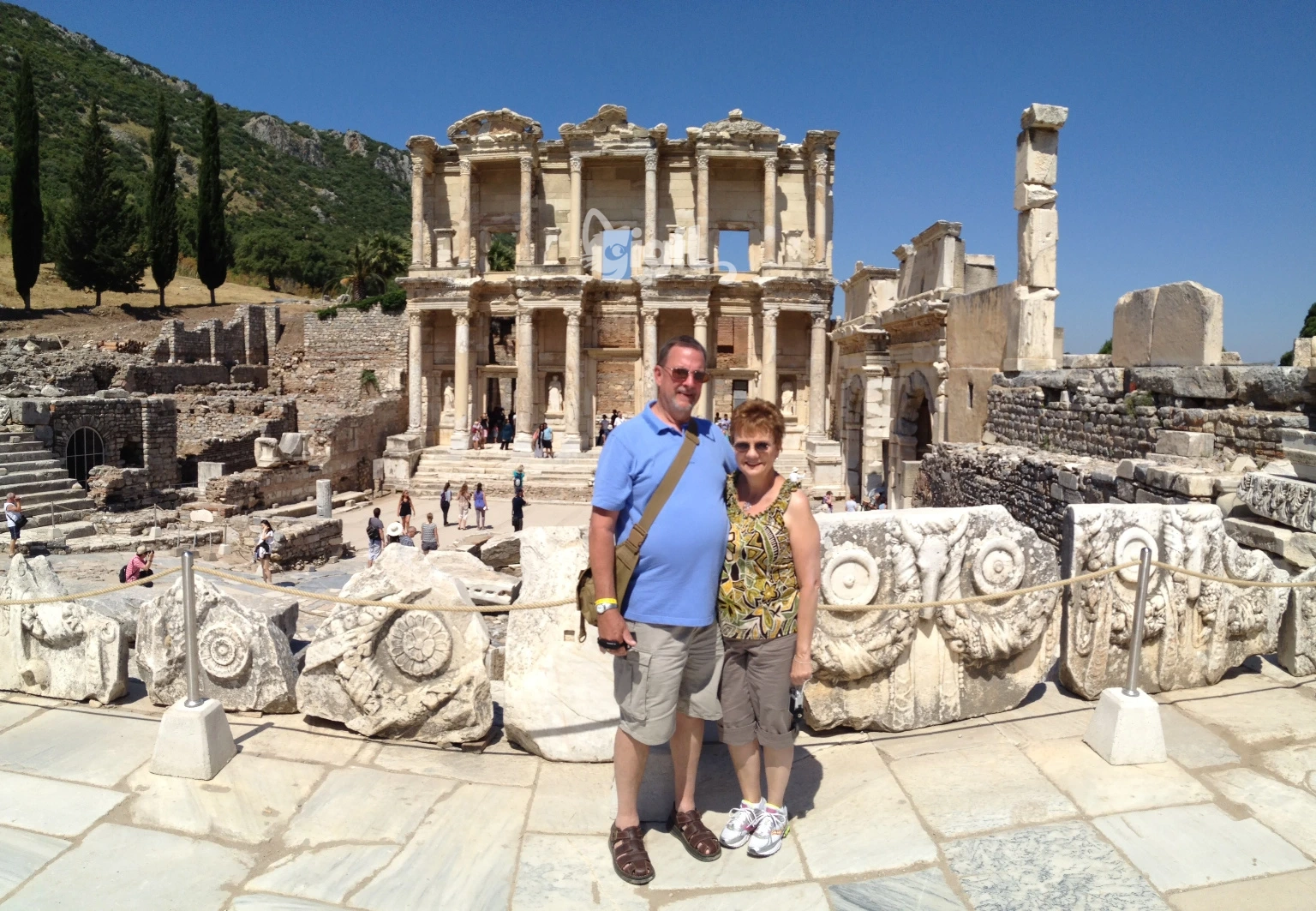
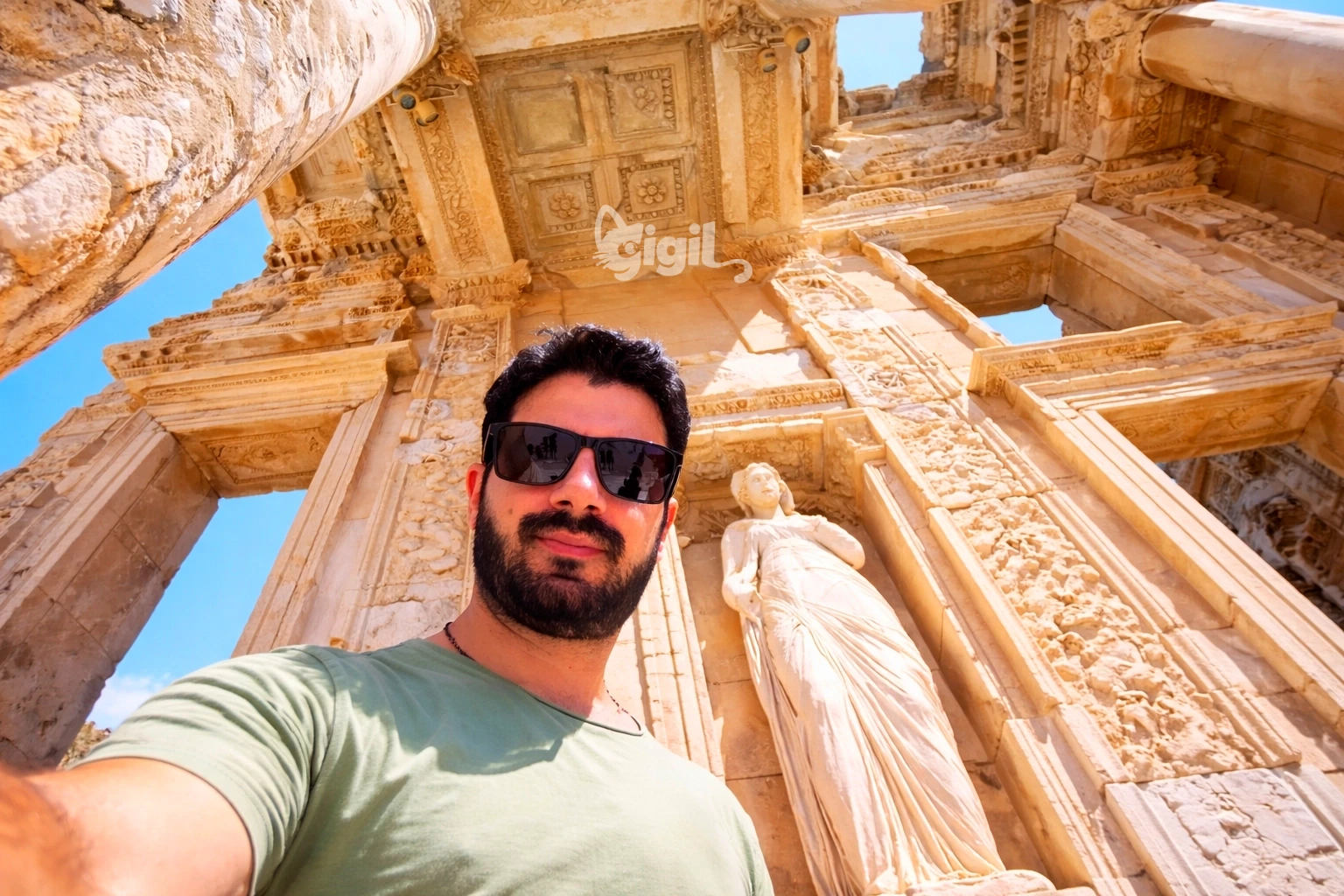

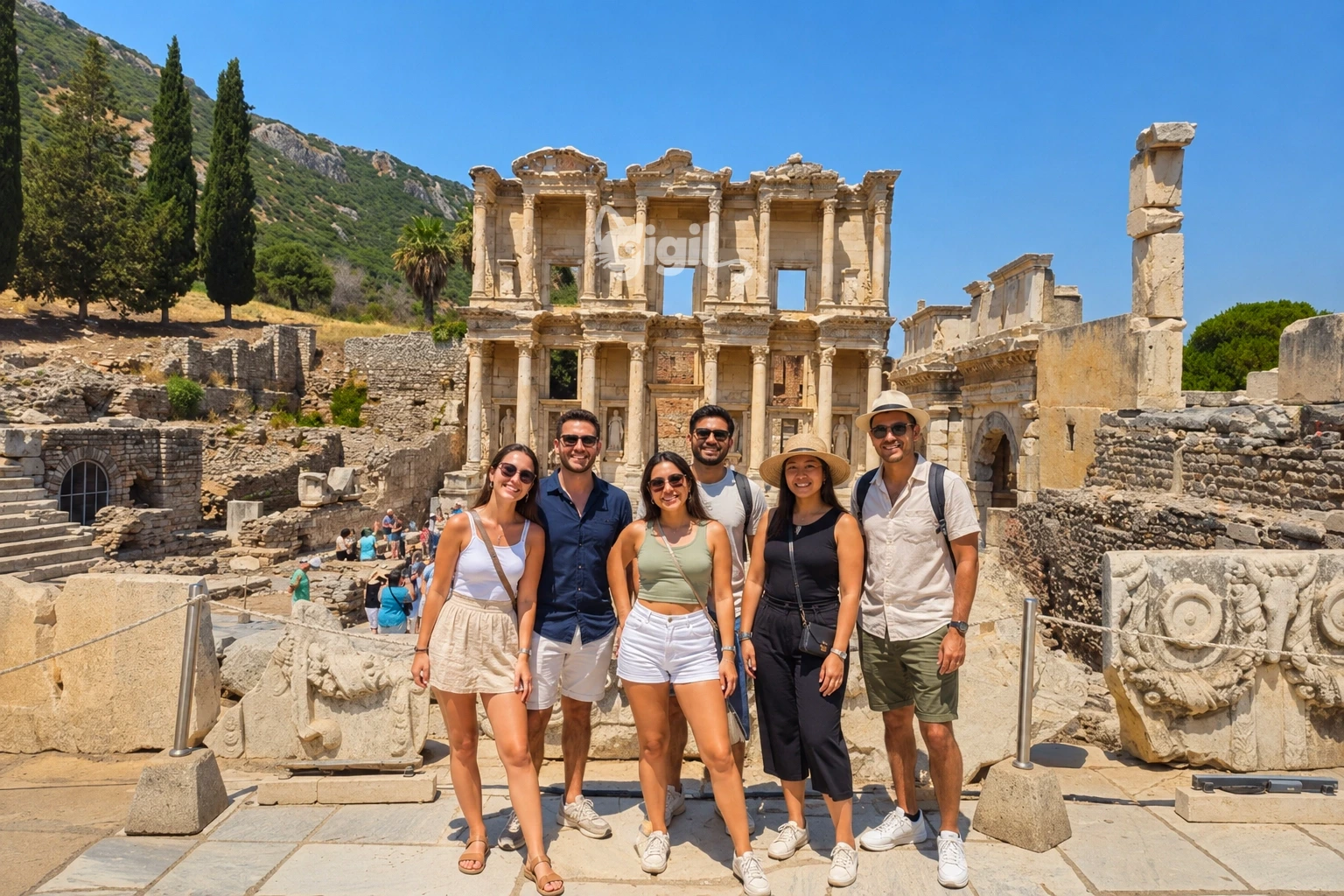

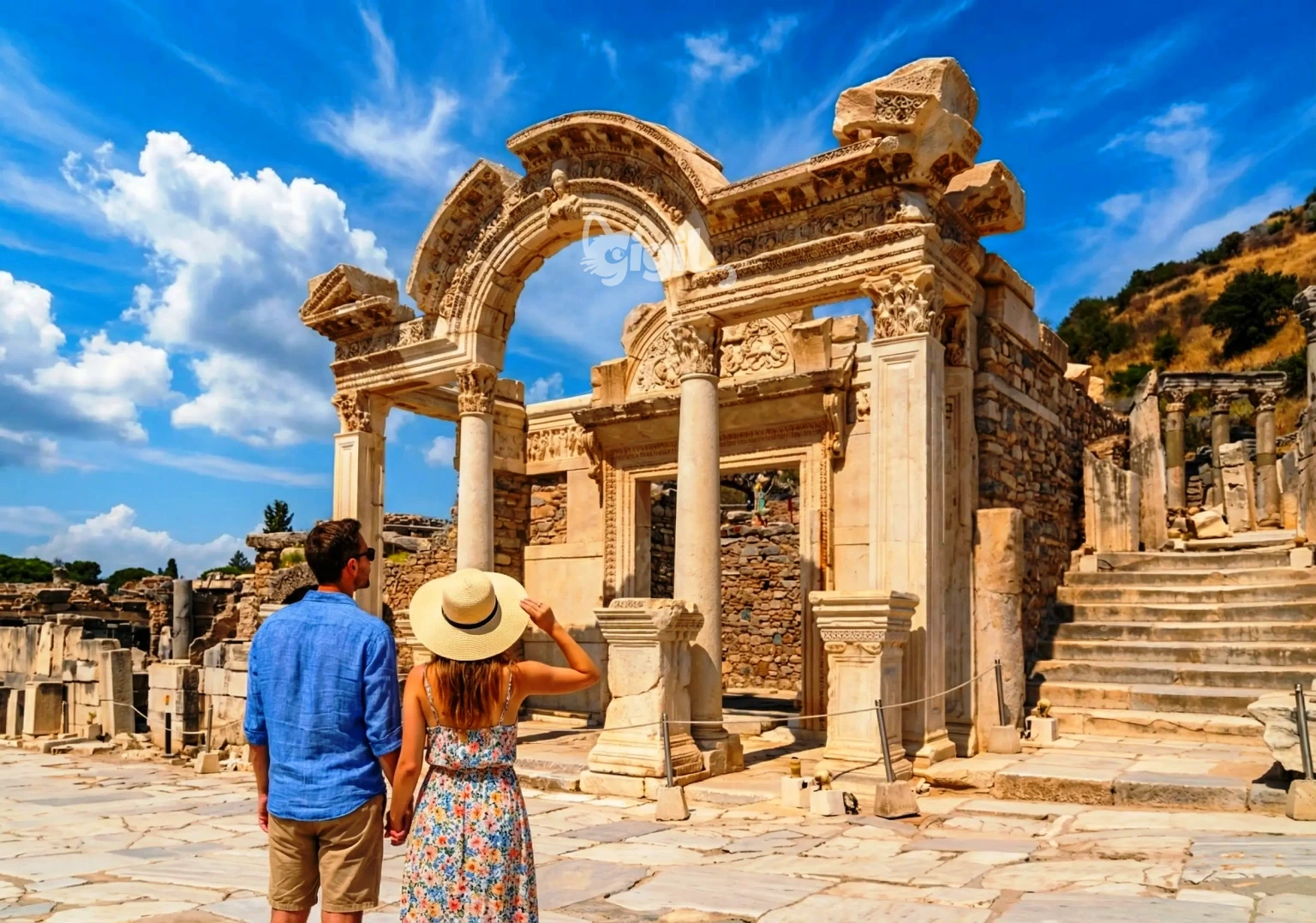
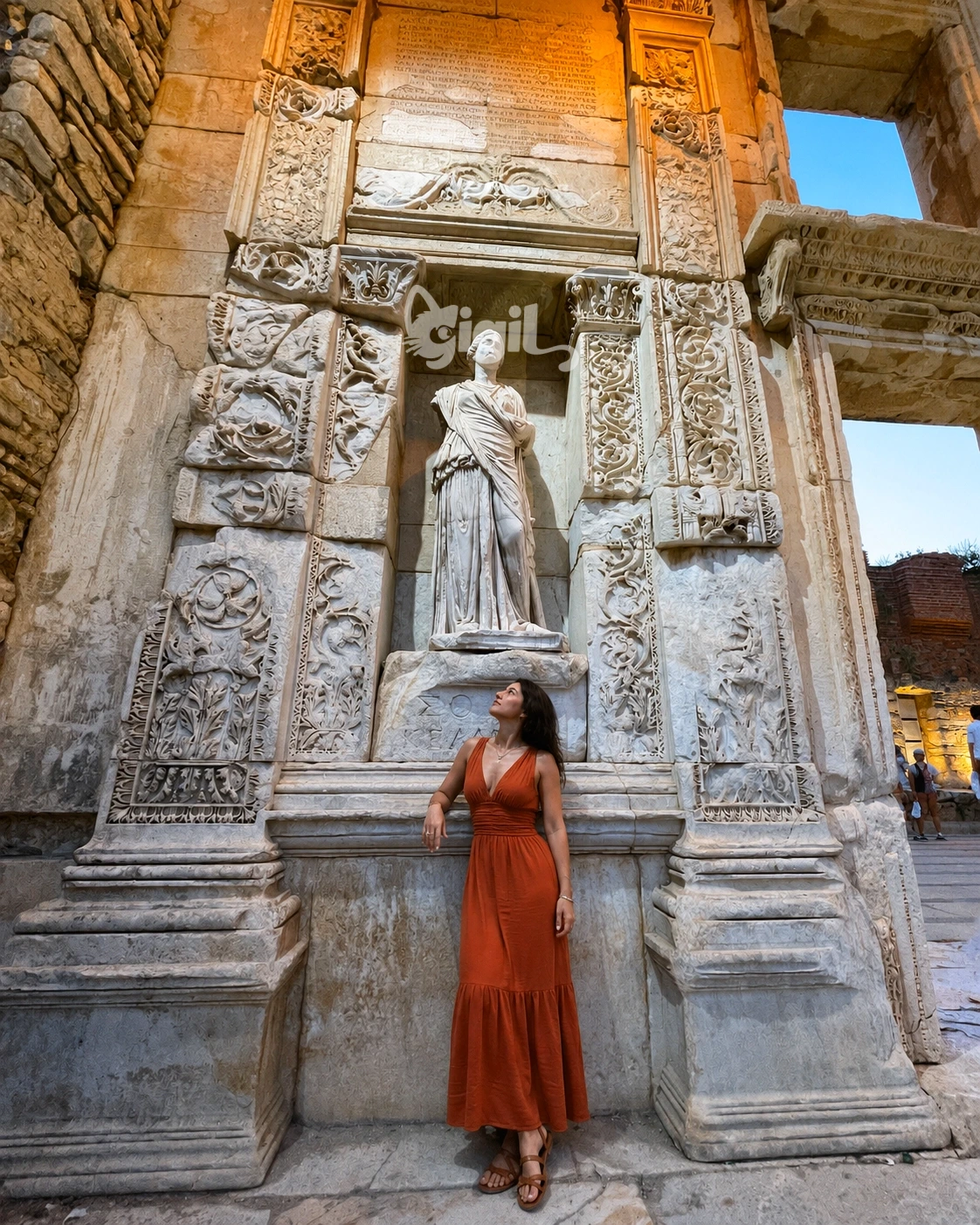
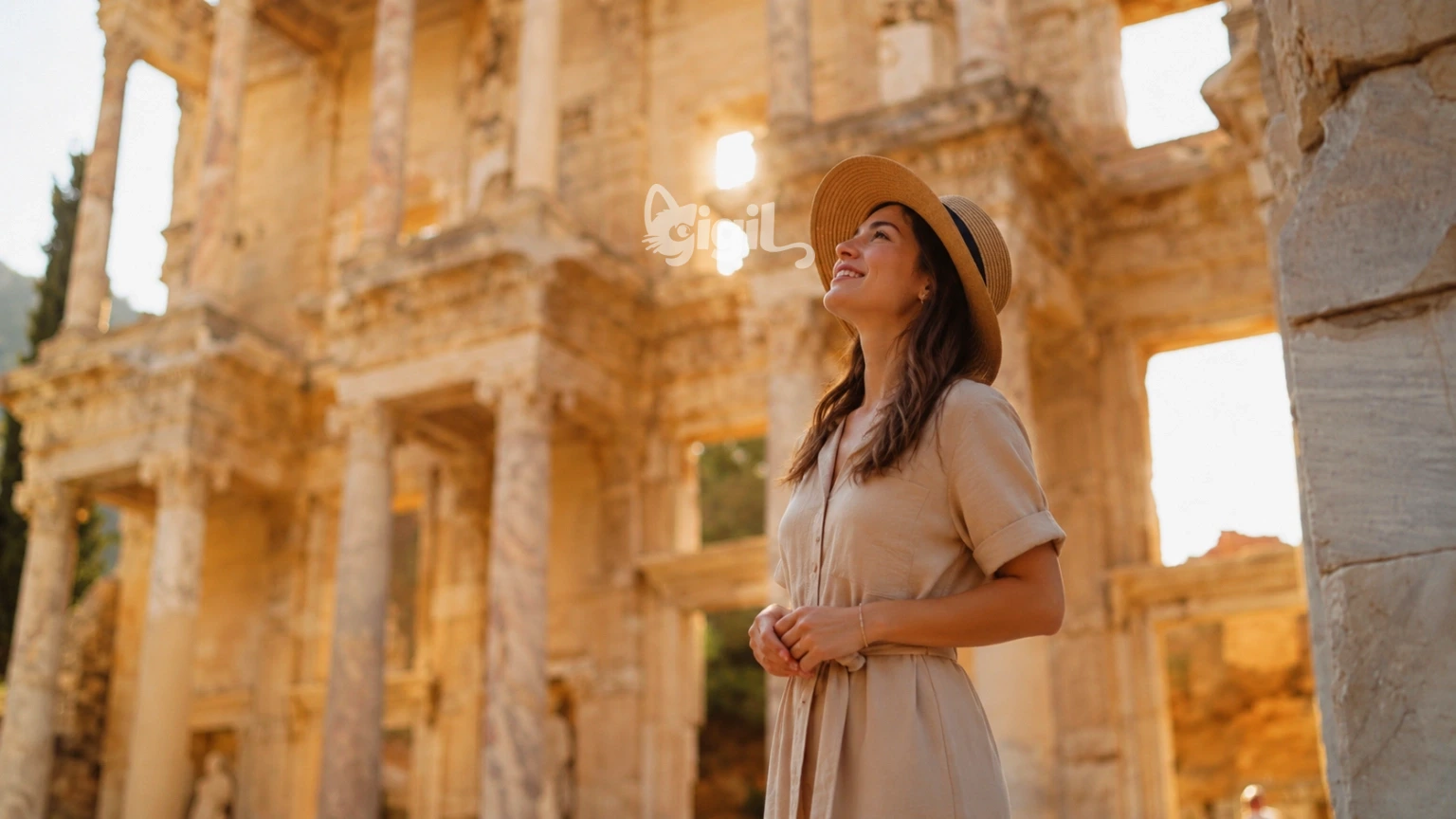
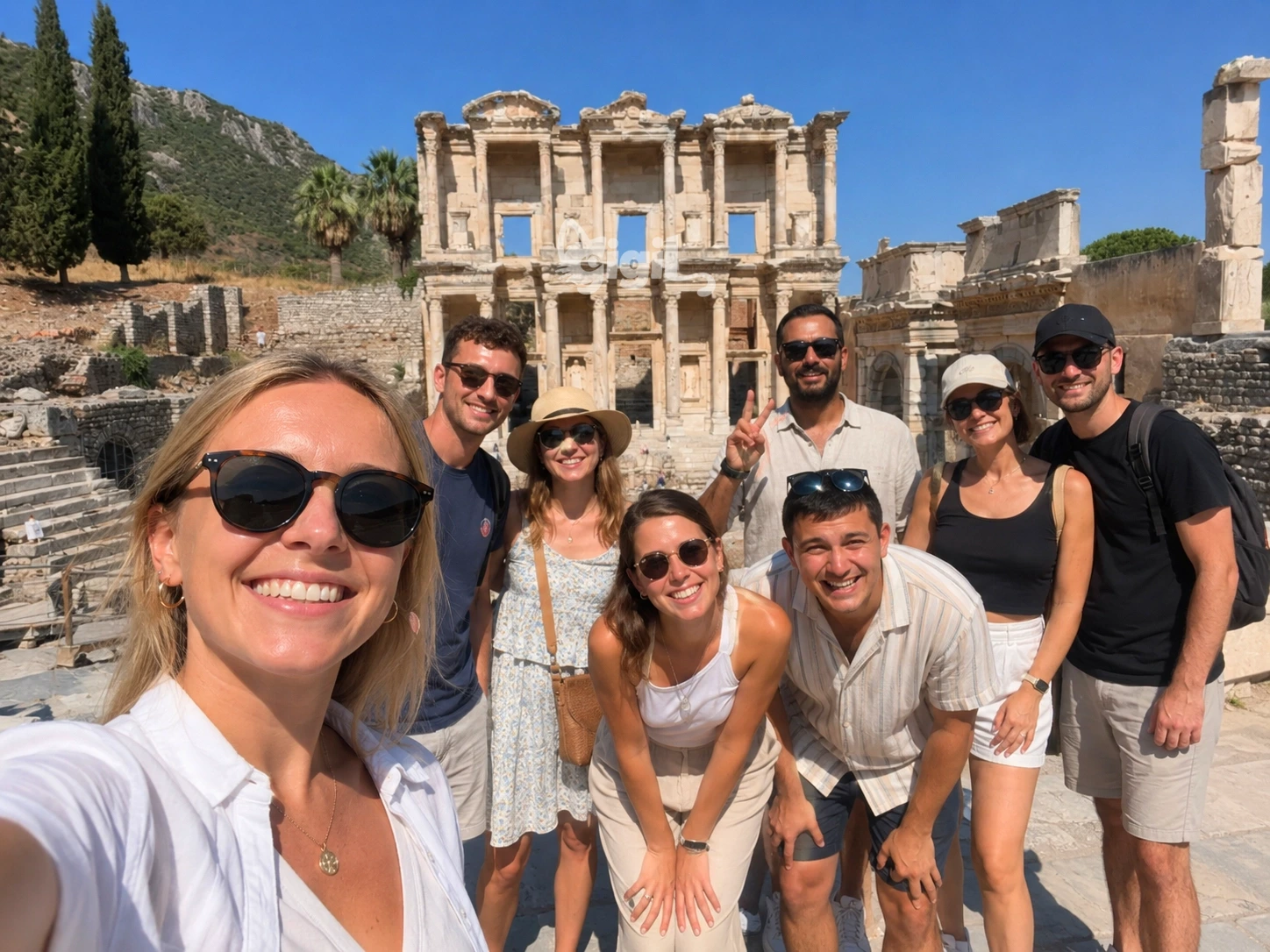
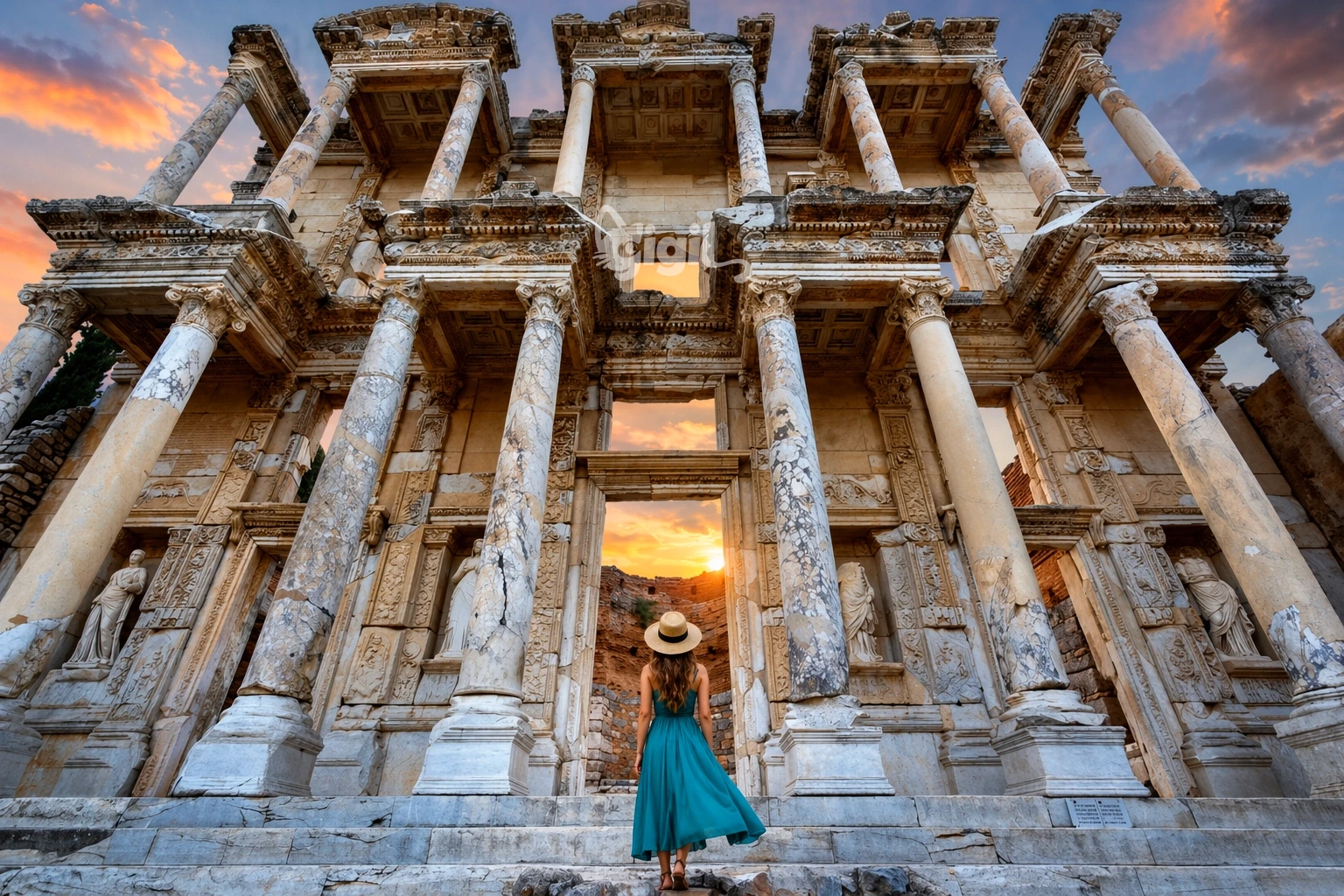
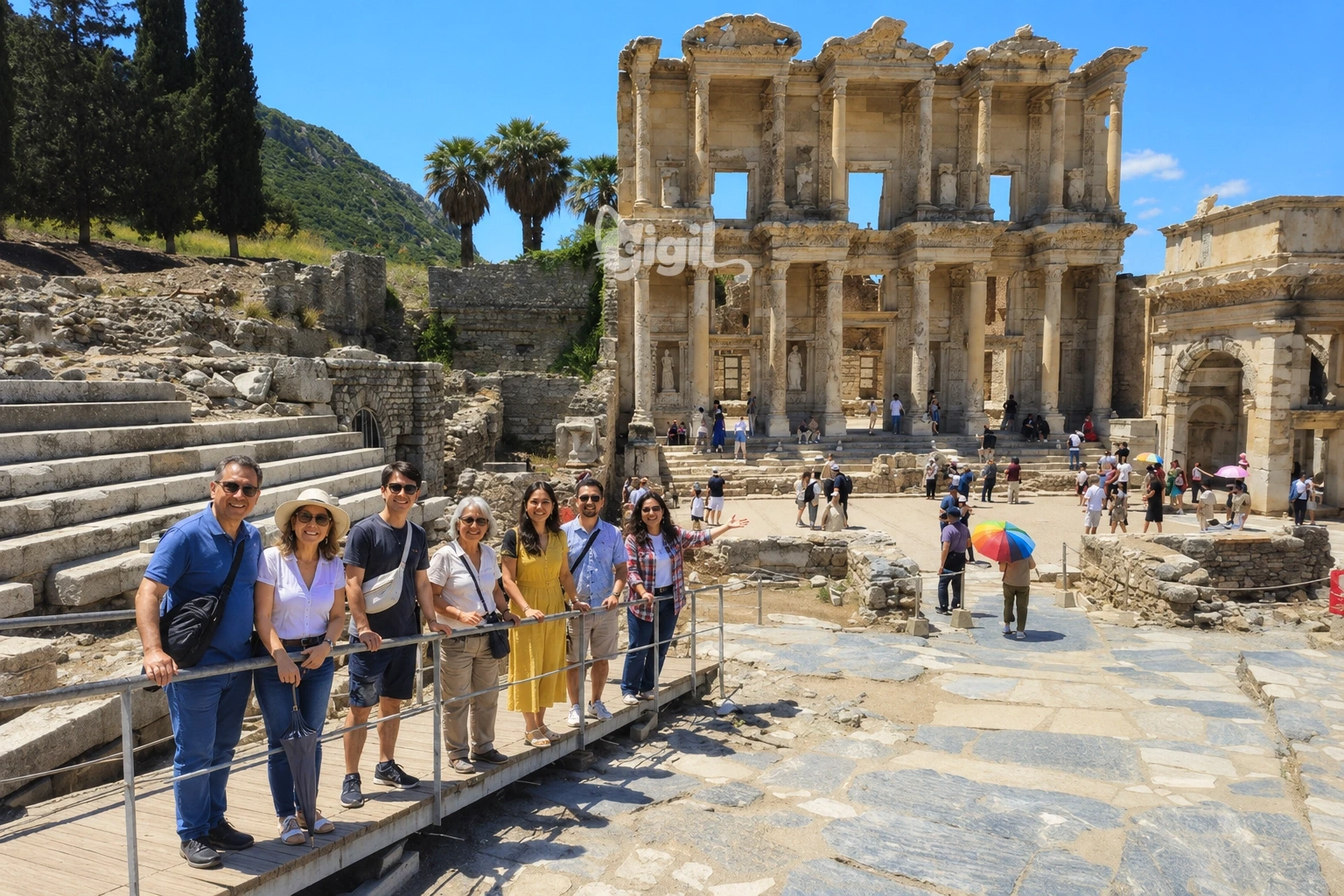
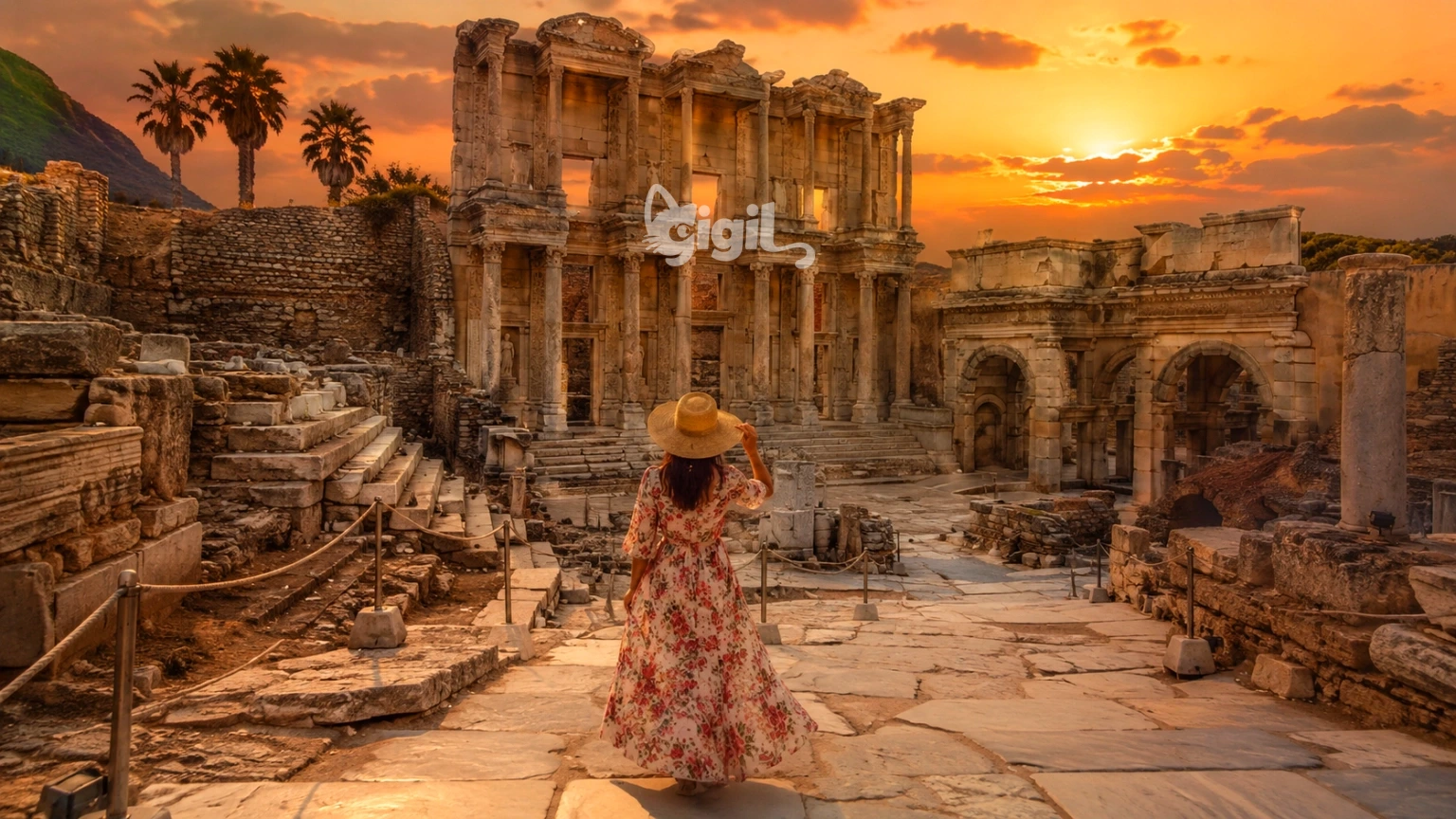
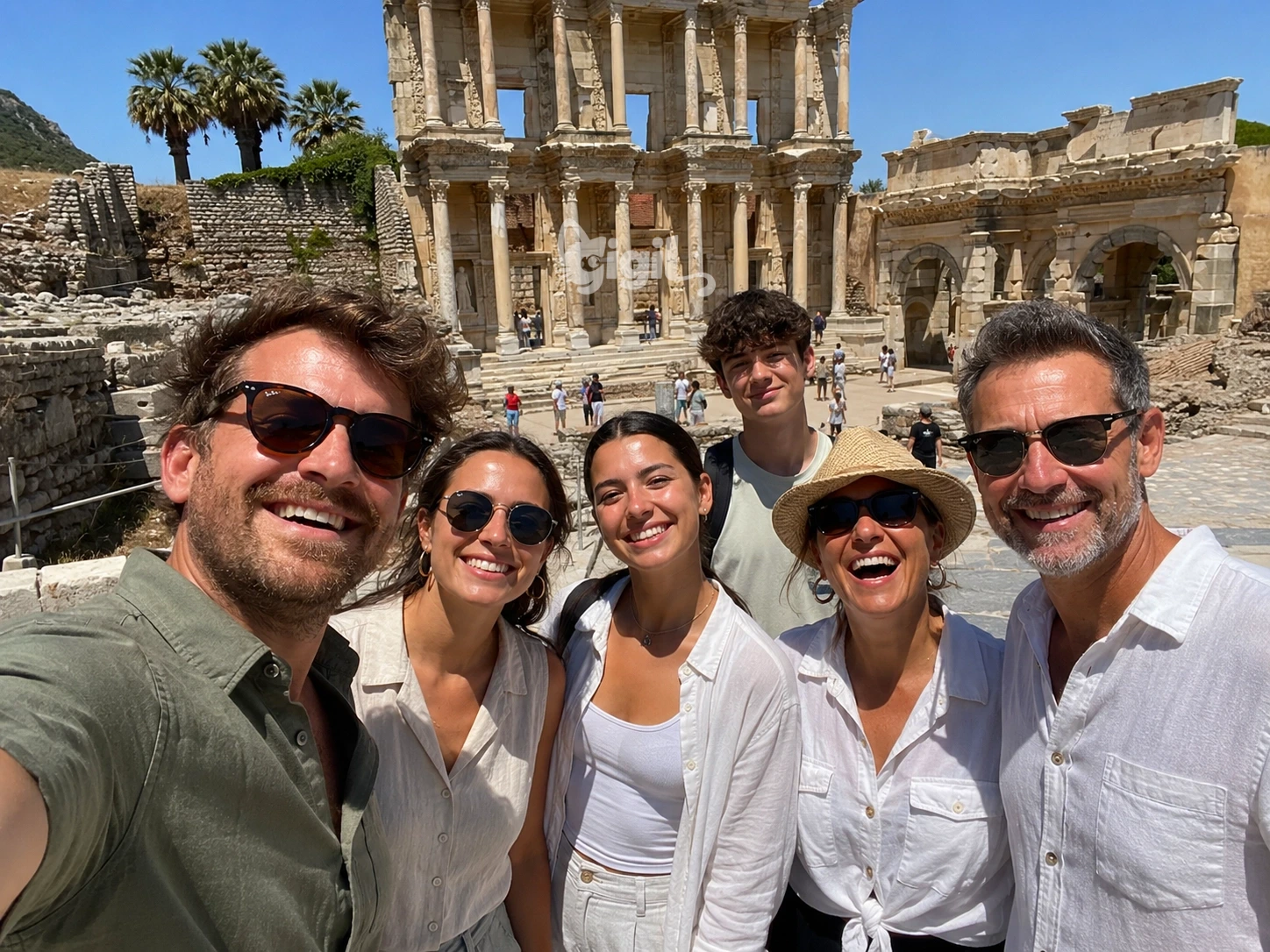
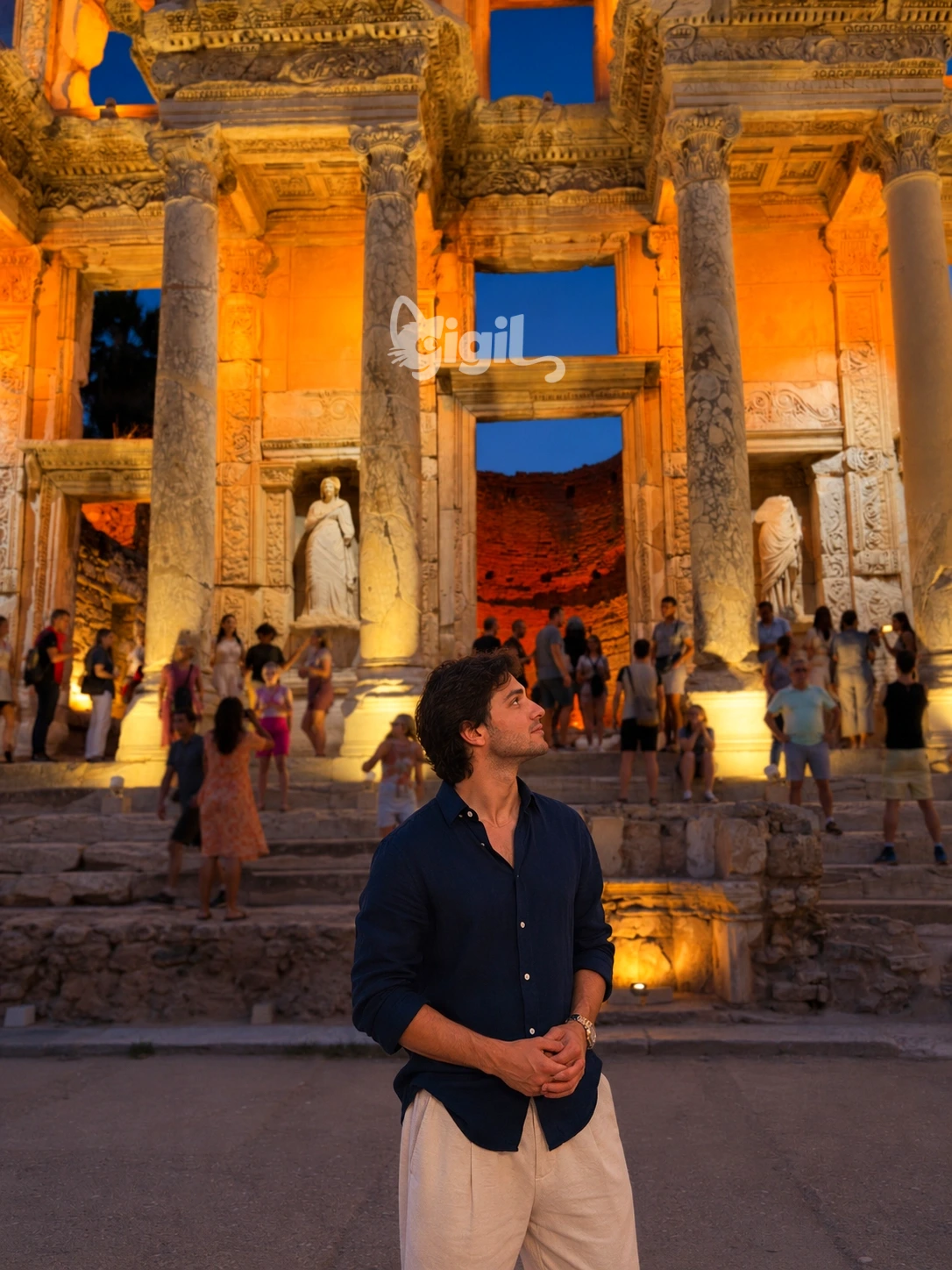
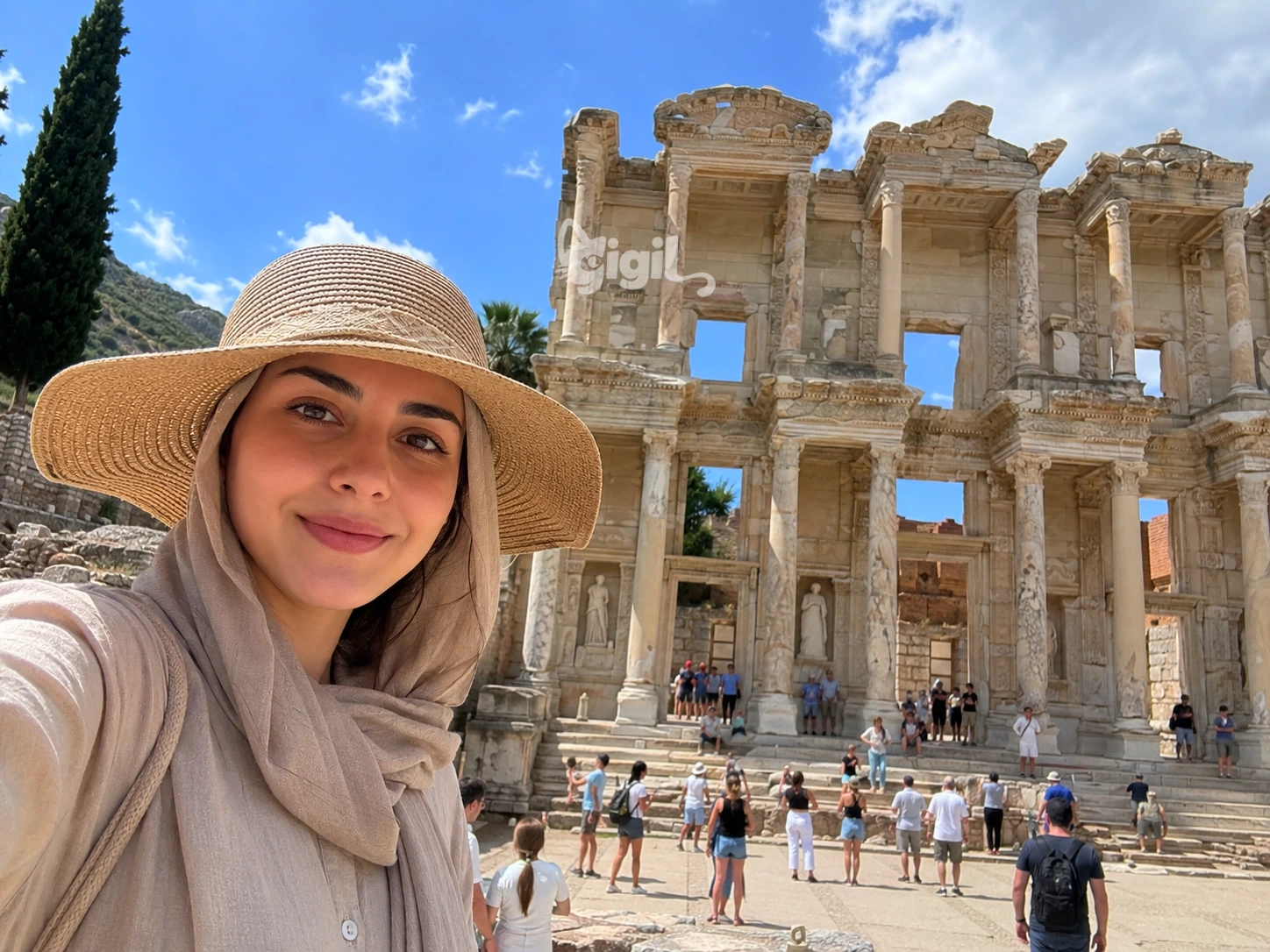
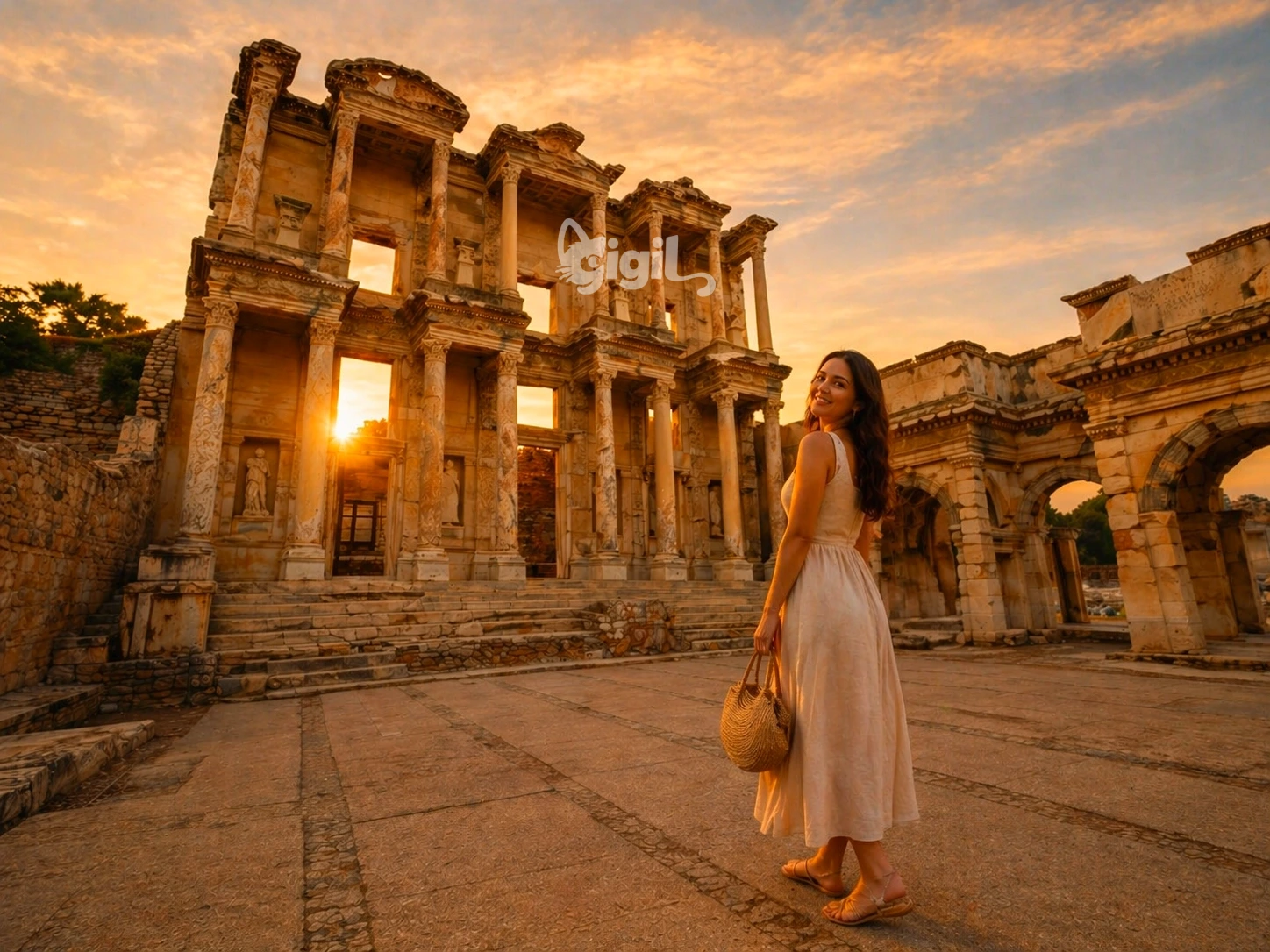
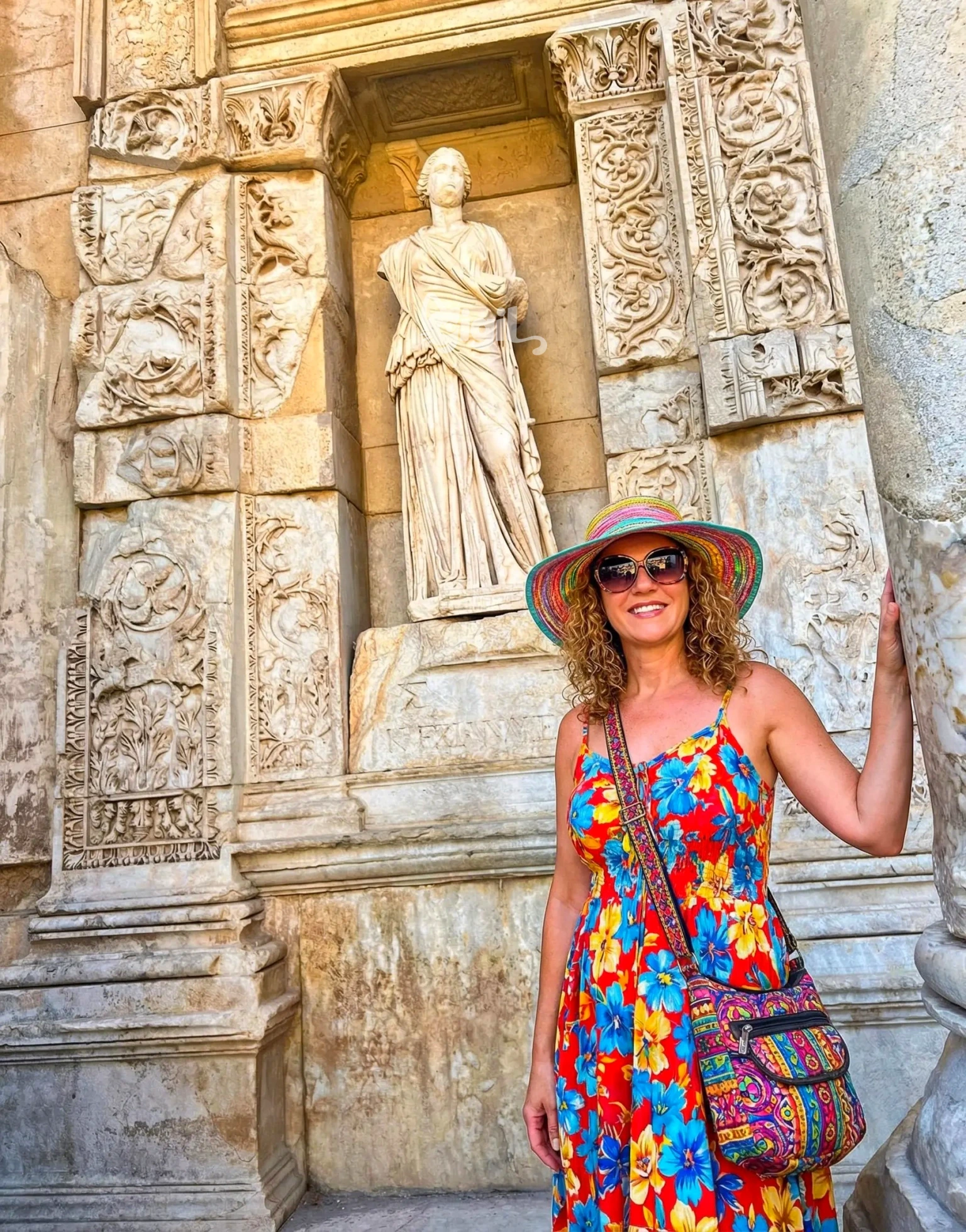
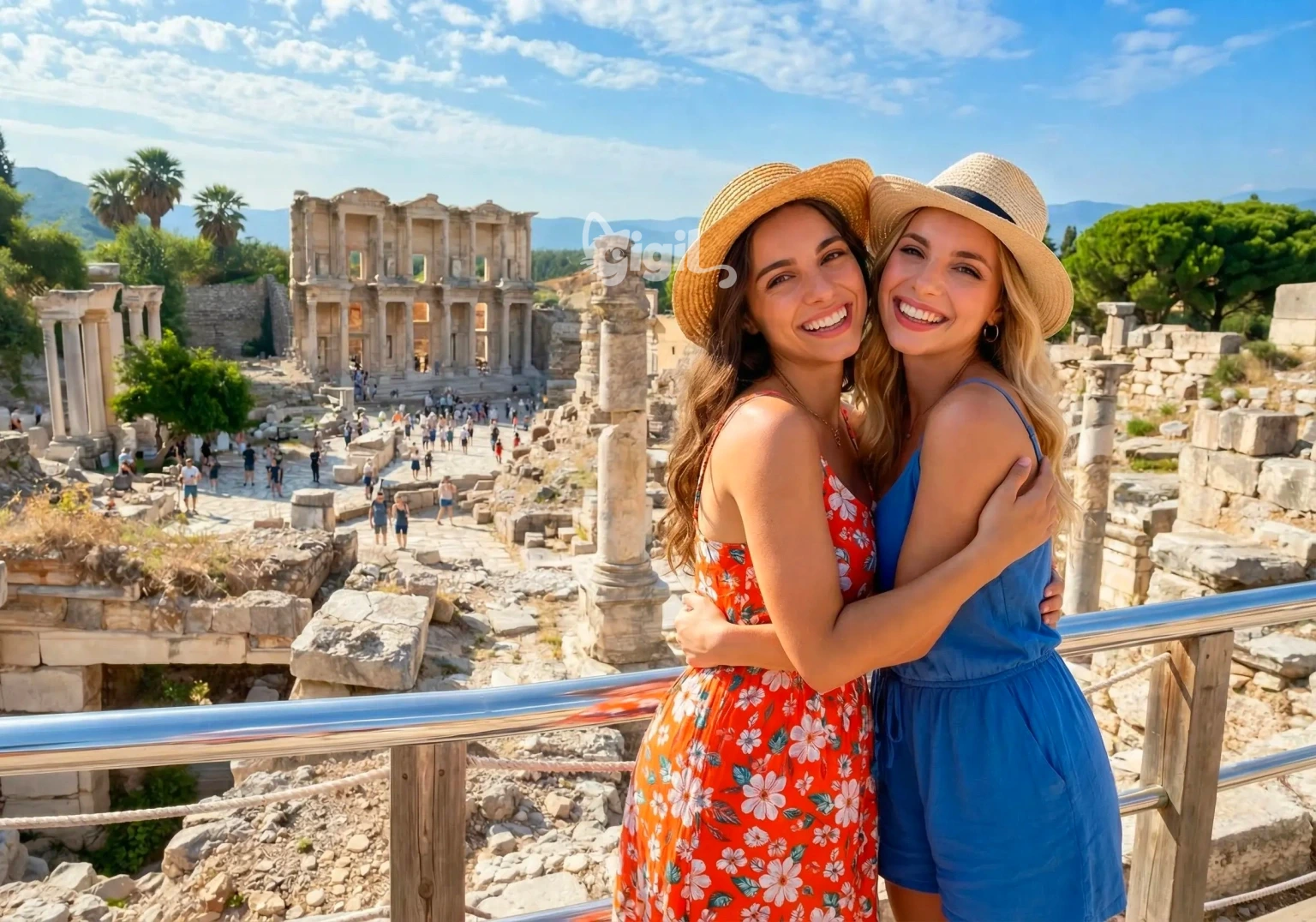
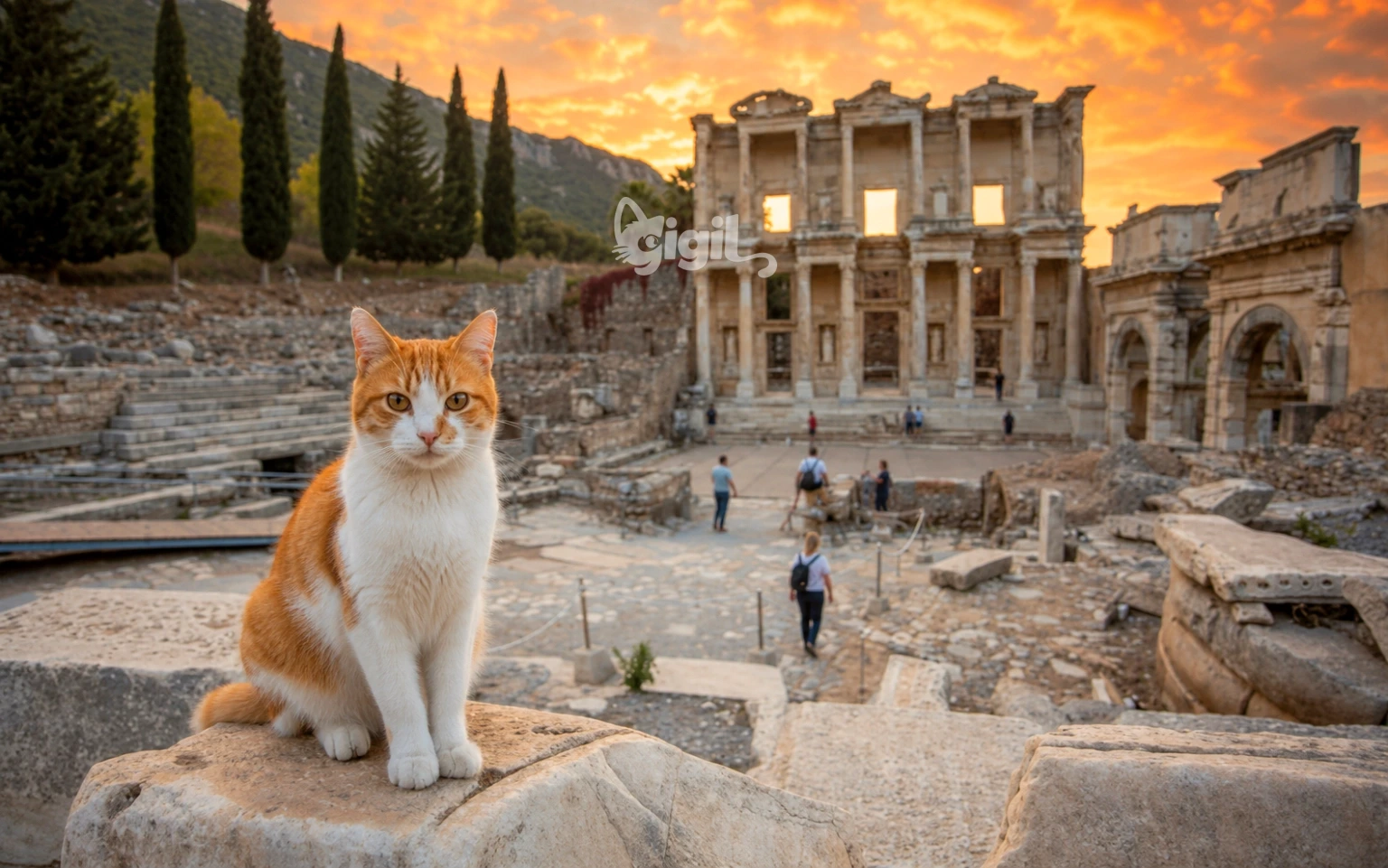
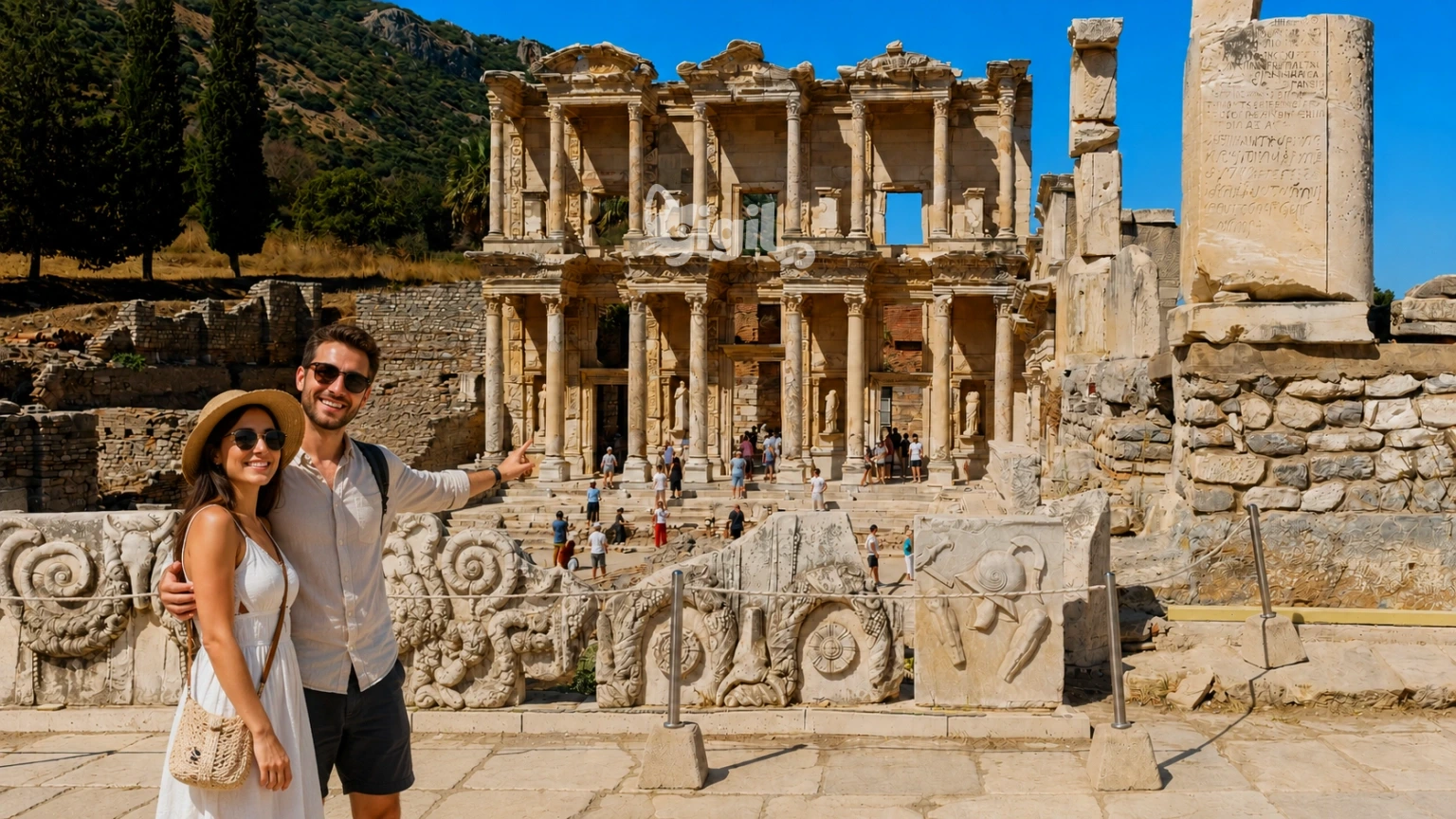
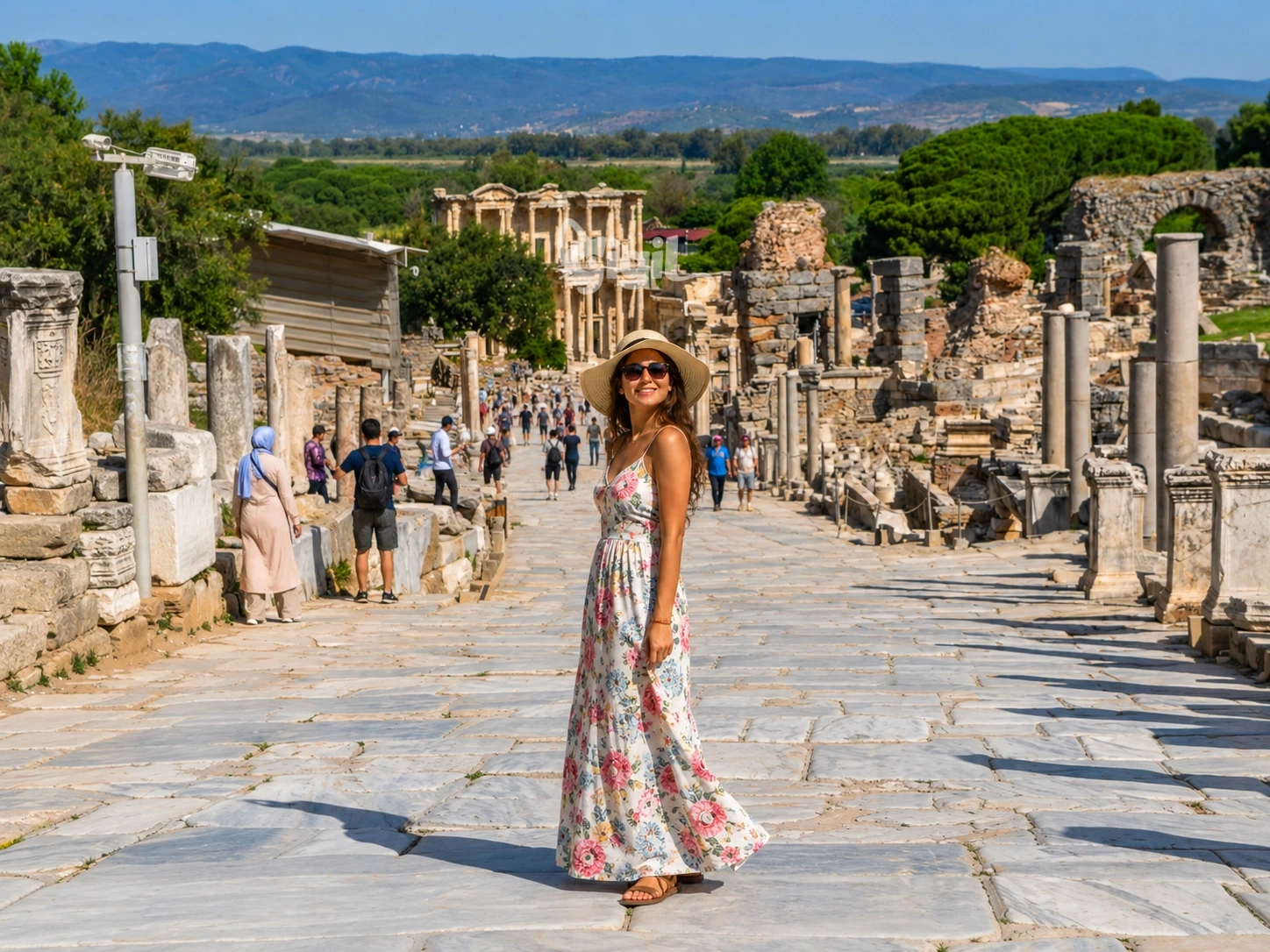
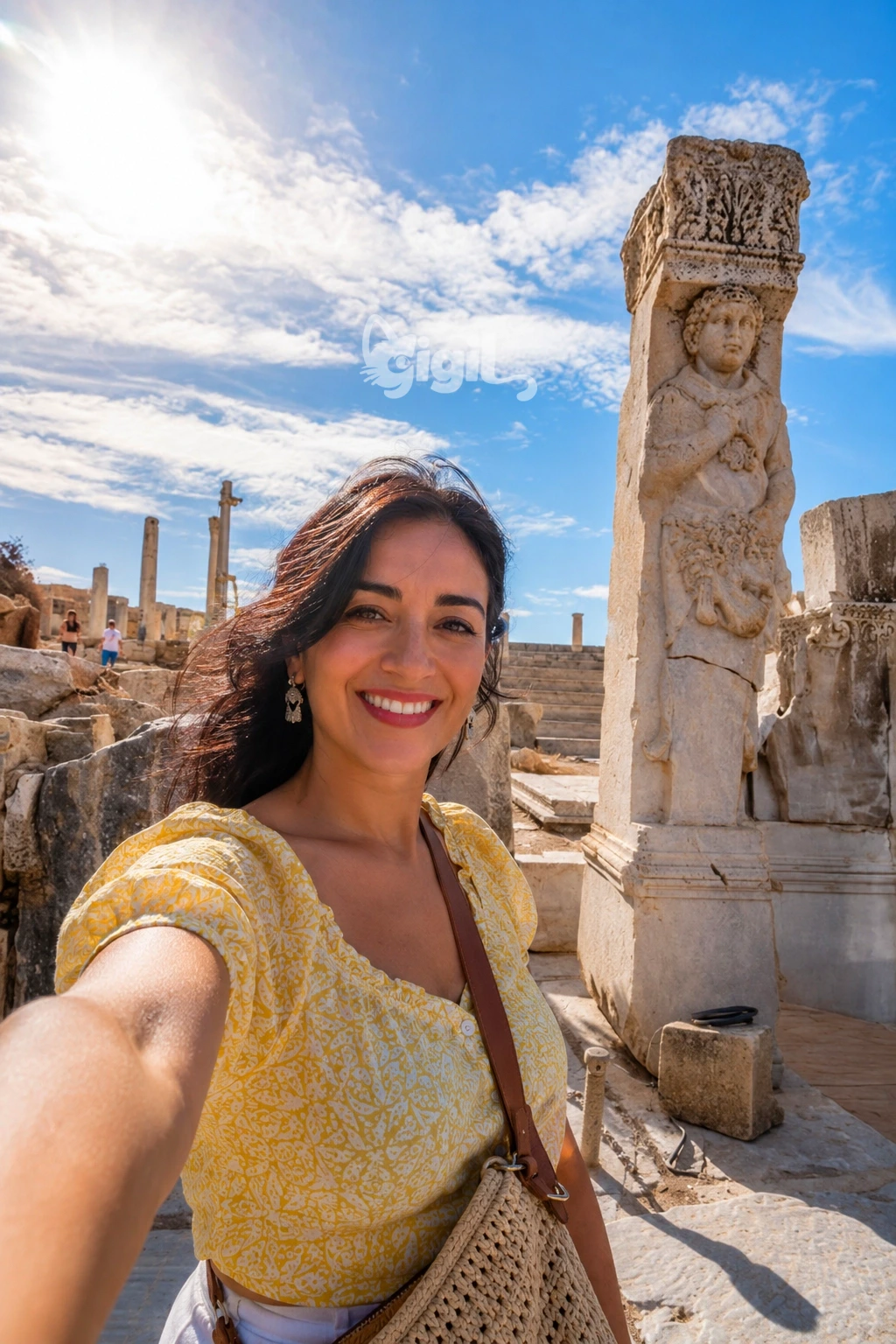
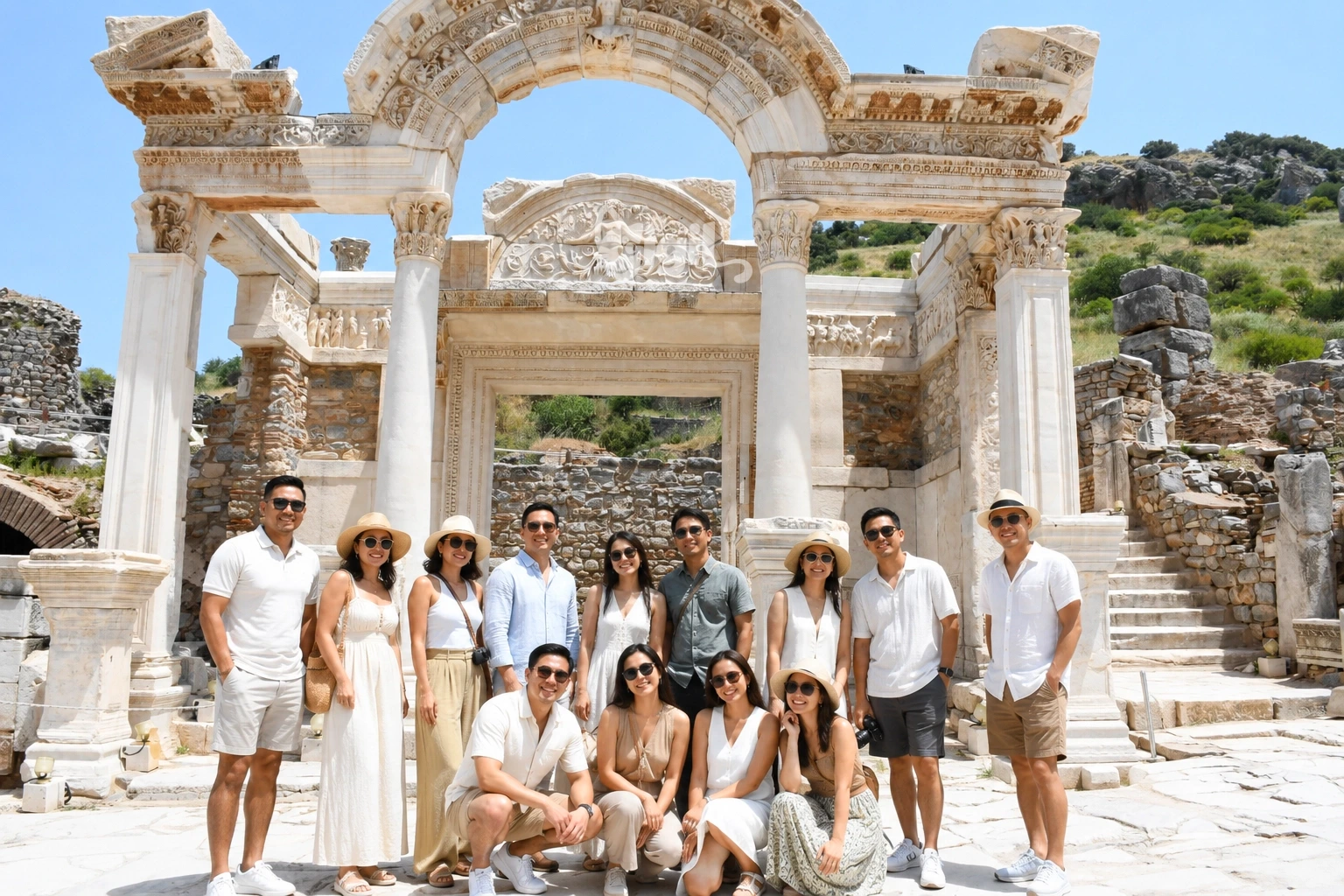

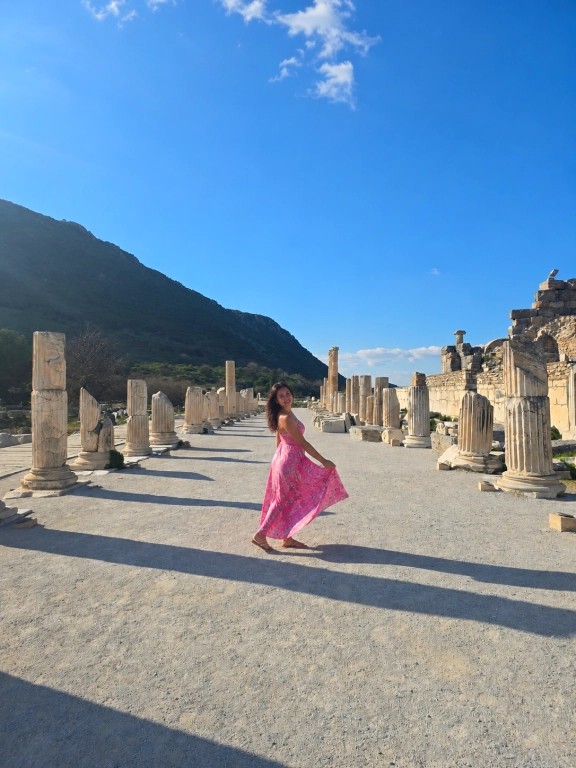
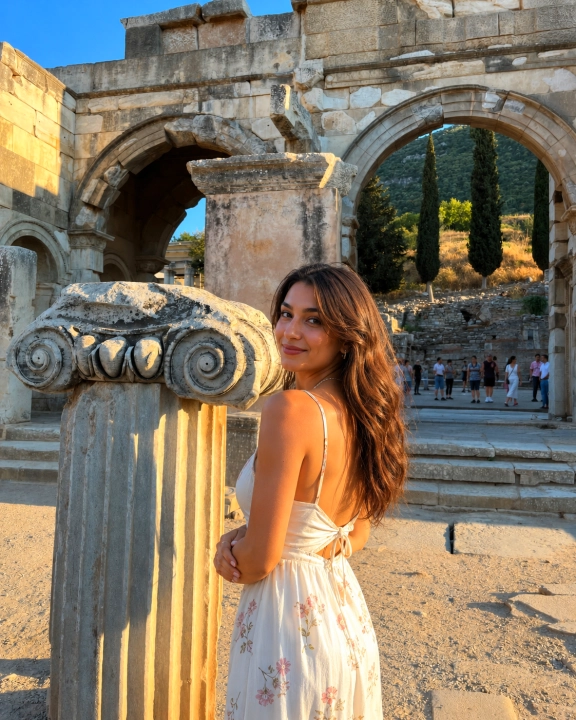
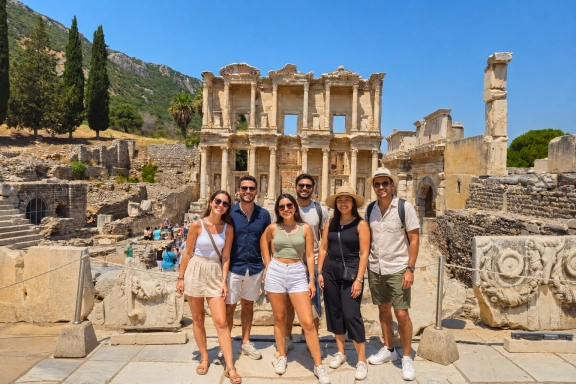
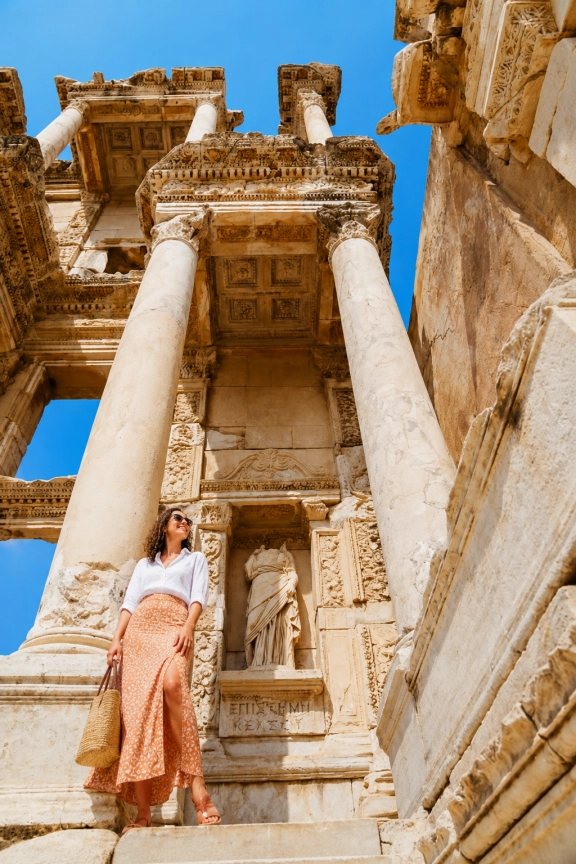
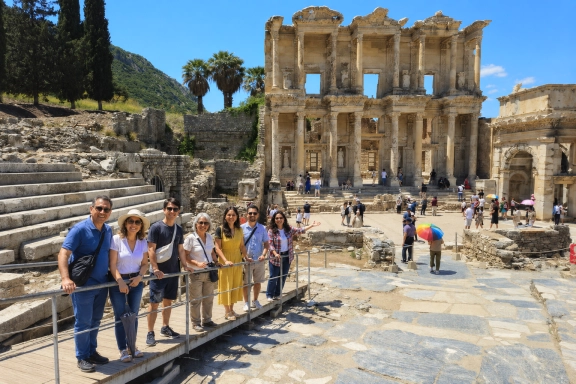

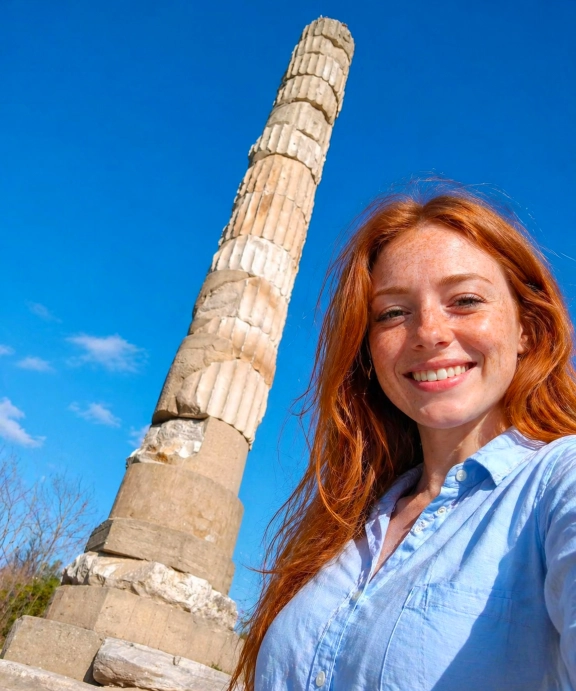
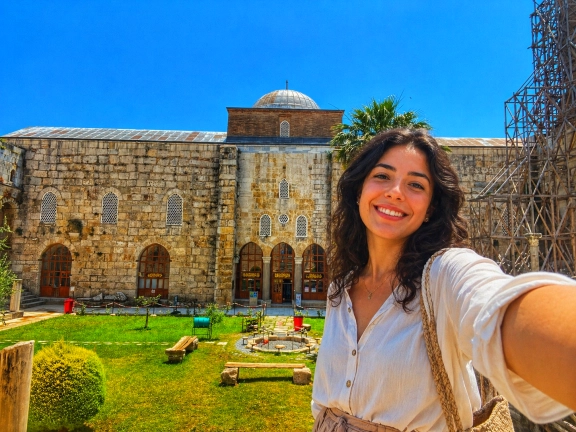
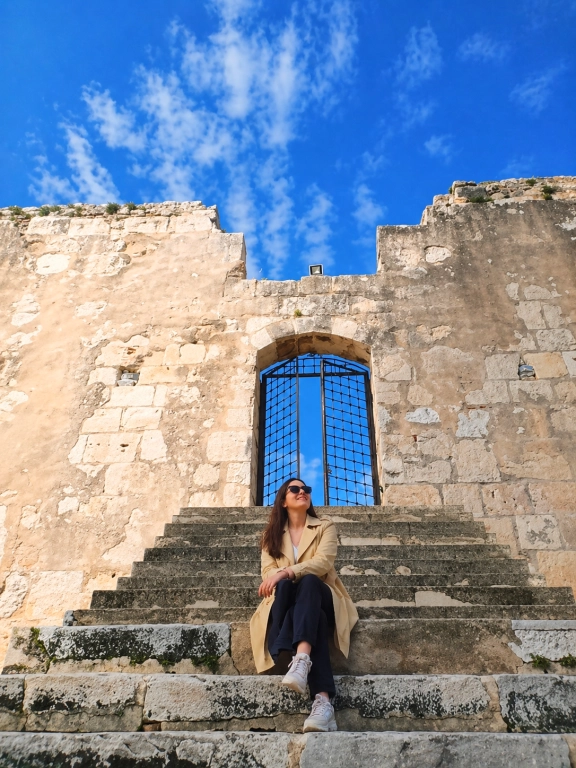

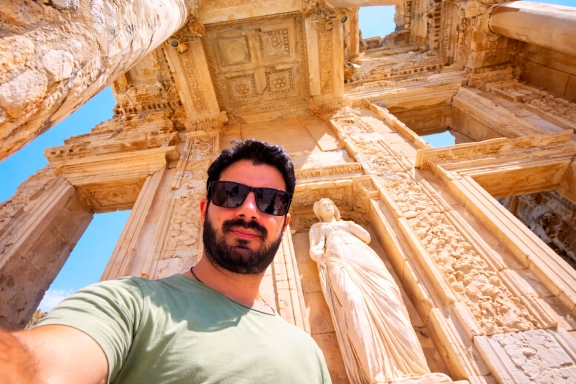
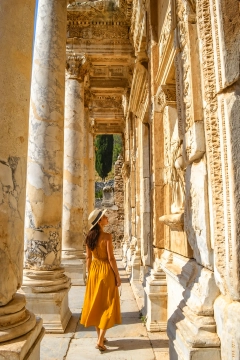
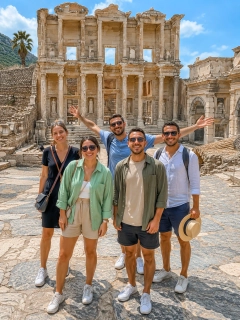
Ephesus Ancient City reveals the structure of a public urban world through its connecting streets. The library facade, theatre and agora areas suggest different uses of monumental architecture and open space.
Read the relationships as you move between them: civic display, gathering and exchange belonged to one city. The former harbour supplies the wider geographical context, while restored sections remind you that archaeology has helped shape the surviving landscape's present appearance.
Questions
What should connect the landmarks in my understanding?
Their positions within the street system connect different public functions of the ancient city.
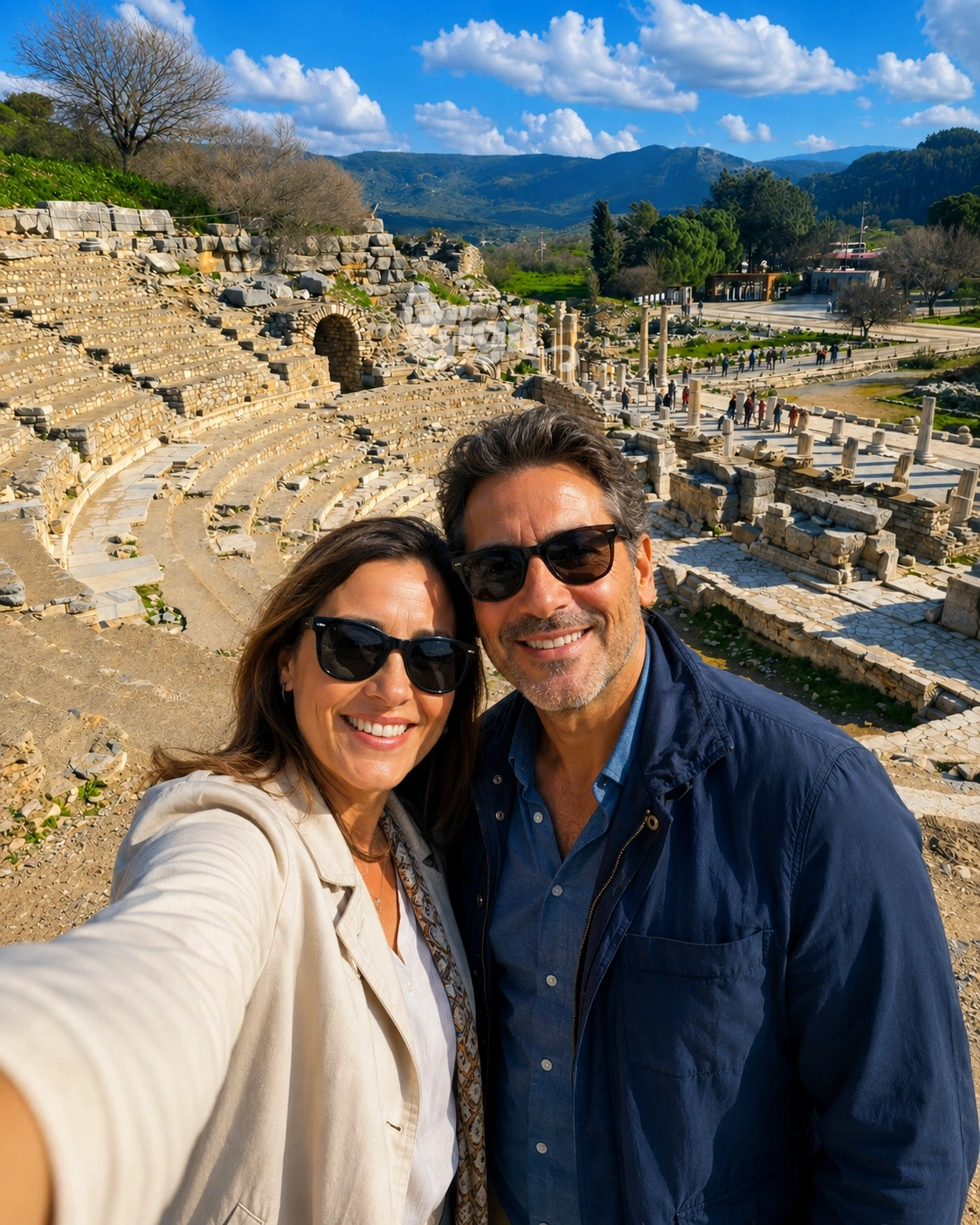
What do the open spaces contribute?
They offer context for gathering and exchange alongside the monumental buildings.
Why is the old harbour relevant?
It explains sea connections that helped the city develop before the surrounding landscape changed.
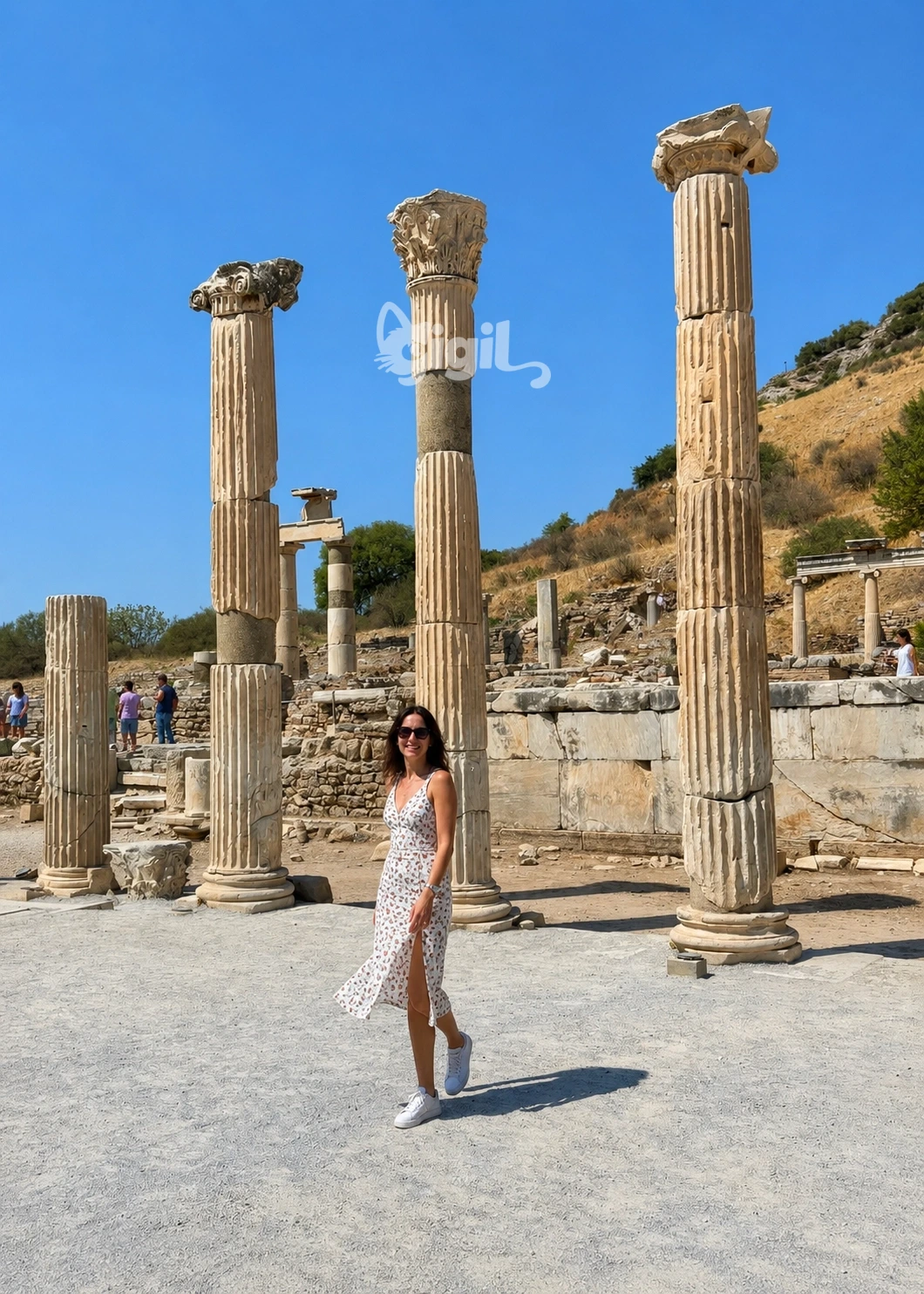
Is today's appearance wholly ancient?
No. Conservation and restoration contribute to the presentation of the surviving remains.